
Daniel Coats
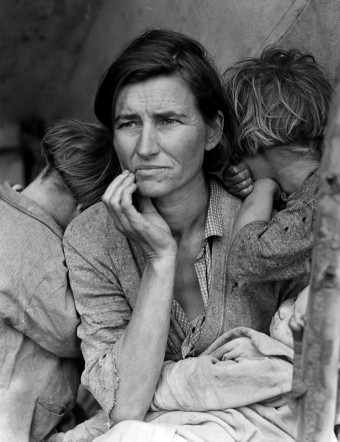
Barely anybody got out of the destructive effects of the Depression. People lost their homes, became unemployed, lost their land and farms, and lots of people lost each other. Women had the hard task of taking care of their families without any source of income and had competition for jobs. Women had the hardship of competing against men for jobs. Men had the upper hand just because they were male. Eleanor Roosevelt’s It’s Up to the Women helped spark a new hope and strength in the hardworking women during the Great Depression. Without women stepping up in the Great Depression, the United States may have never pulled through.
While men worked with a reduced income or didn’t work at all because no jobs were available, they walked the streets sometimes feeling defeated; when they got home, they felt like their families weren’t getting the best out of them. Now, all of the men didn’t give up and quit, and they weren’t always down on themselves. The point here is that usually women always had roles and were busy, unlike the men. The women (or housewives) technically always have a full-time job, and that is taking care of the family, cleaning around the house, cooking, and even using what money they have wisely. Women and men both have to be financially wise during hardships like the Great Depression.
Not all women were not married, though. Some were widowed, divorced, and abandoned to take care of the whole family by themselves. These women had to be twice as strong, sometimes having to find a job and take care of the family while others would shut themselves up and just eat practically a cracker a day to survive and keep their children alive. Women had to overcome the stereotypes of what constituted “women’s work.” In fact, they did, and, turns out, during the Depression the hiring rate of women went up to 25.4%, a rise since before the Depression was 24.3%. That’s a staggering difference of two million jobs. It’s even more surprising because it rose during the Depression, while men’s employment rates dropped significantly.
Throughout the Great Depression, women of different ages and races had different experiences. For example, the black women had already been going through hard times having to work anyways, so some considered the Depression just affected white folks for a while until they had to fight for their own jobs, but white women became so desperate as to work in the fields with the black women. The Mexican women didn’t fare too well, either. 33% of the Mexican population returned to Mexico, causing even more hardships and financial problems. Also, men were more likely to get hired for the heavy construction jobs and agricultural work, while women were forced into sewing rooms and other places to do “women’s work.” The minimum wage was set much lower for women. The black and Mexican women on top of all this faced racial discrimination.
Women had it worse in almost everything. New federal programs came around with welfare and aids, and usually they were centered on a household with a working husband and stay-at-home wife, at first. Unfairly, lots of women who were widowed or single with kids did not fit the profile to receive benefits, but with the help of women not giving up and speaking up, things changed. Such programs implied women only deserved benefits and certain financial aids if they had a relationship with a man.
Barely any women held high leadership spots in anything at this time, so when strikes and riots broke out for women’s rights, not much was being influenced. The only major voice women had was Mrs. Roosevelt. Eventually the few women leaders there were spoke out. Secretary of Labor Frances Perkins, Ellen Sullivan Woodward, and Molly Dewson were the major factors that really took advantage of the fact Mrs. Roosevelt was in a high position. They talked and planned with her and eventually got to oversee and add input for the social welfare initiatives and women relief projects. Also, they really influenced the Democratic National Committee by pressing hard for an issue-related reformed agenda. The Depression really impacted everyone negatively, but for the future, without the Great Depression, women might not be treated like they are now.
Few people escaped the devastating hit of the Depression. Men, women, and children were all affected in different ways. With the help of women, America rose out of the Depression and became a great nation again. Women and their movement were somewhat under the radar, but they persevered and eventually through speaking up, and not just protesting, they got work done. They didn’t riot and protest in the streets and then go home and just relax. They went out and worked hard and got into the work force. If there are any lessons to be learned here, the major one would be not to underestimate anyone and to have a purpose in everything you do and get it done. Just as the Bible says, “Faith without actions is dead”; so is trying to make a change but not actually doing anything.
Bibliography
McElvaine, Robert S. The Great Depression: America 1929-1941. New York: Times Books, 1984. 38-39. Print.
“Timeline of the Great Depression.” PBS. WHRO, n.d. Web. 12 Oct. 2014.
Ware, Susan. Women and the Great Depression. The Gilder Lehrman Institute of American History, 2009. Web. 10 Dec. 2014.
 Redeeming Pandora