
Daniel Coats
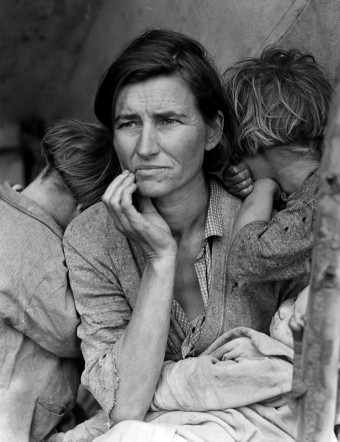
The Great Depression is remembered as one of the darkest periods in American history ever. A period where life was hard and desperate and where there was little hope for recovery. Consequences and effects from the Great Depression are still affecting America today and America will never be the prosperous flourishing country it used to be. Instead America is reinventing itself since this horrible era. The people of America had and still have pioneer spirits and stayed positive throughout the depression and that is how America got through the depression and picked itself back up and darted for the top. (Although nowadays we are going downhill again.) This unfortunate tragedy was so devastating that it affected many other countries, especially Europe. Because of God’s grace, leadership, and a plan, America was able to turn around and recover after many years of unemployment and poverty.
In October 1929 the stock market crashed, which triggered the Great Depression. This caused investment and consumer spending to plummet which lowers industrial output extremely meaning more unemployed citizens because of failing businesses. The main reasons behind the stock market crashing was actually happening during the “roaring twenties” when America was prospering. During this era income increased from 74 billion dollars in 1923 to 89 billion dollars in 1929. Although this seems great, the “Coolidge Prosperity” of the 1920’s was not shared evenly among all Americans (McElvaine 38). “According to a study done by the Brookings Institute, in 1929 the top 0.1% of Americans had a combined income equal to the bottom 42%; That same top 0.1% of Americans in 1929 controlled 34% of all savings, while 80% of Americans had no savings at all” (McElvaine 38). While the disposable income per capita rose 9% from 1920 to 1929, those with income within the top 1% enjoyed a stupendous 75% increase in per capita disposable income (McElvaine 39). As you can see this is a recipe for disaster.
Why was there this large and increasing difference from the rich and the middle class? Wages for jobs in manufacturing only grew 8% while productivity increased four times as fast. Production costs dropped and wages grew very slowly. Corporate gains grew 62 percent! Obviously money is not being distributed evenly. Henry Ford is a big example of corporate gains over wages growing. He made 14 million dollars a year while his workers were making an average of 750 dollars. In today’s money Henry would be making over 300 million dollars while his workers would be making around 18,000 dollars. This is absurd and was happening all over the U.S during the roaring twenties and into the depression.
Although it seemed that the Depression will finally come to an end with Franklin D. Roosevelt’s social security bill being passed and with industries beginning to hire people, unfortunately it did not work as well as everyone wanted it to. In fact, it didn’t really improve at all until the United States decided to take action and join forces with the Allies in World War II. Millions of jobs were created when the United States decided to up their game on defense and when the Japanese bombed Pearl Harbor, millions of more jobs were created when the U.S actually declared war after the fatal attack against the U.S. By the time the War ended, the U.S was back on top and the Great Depression was pretty much wiped out.
Lessons that can be learned from the Great Depression are when bad times come and there’s not much people can do individually about it, stay active with people and stay active in the community. It is easier to get through things with fellow friends and people. That is the main thing that kept people alive and hopeful and strong during the Great Depression. As well as having a positive mind set through hardships, people need to be wise financially. Now that Americans have credit, it is easier to have debt. Back then if you had no money, you had no money. Nowadays people can borrow and borrow and get deep into debt which not only hurts themselves but also the economy. We have already almost gotten into another Great Depression in 2007 (The Great Recession). If America does not want to go through another terrible era like this again Americans must become financially savvy and work together.
Bibliography
“Great Depression, The.” History.com. A+E Networks, 2009. Web. 12 Oct. 2014.
McElvaine, Robert S. The Great Depression: America 1929-1941. N.p.: n.p., 1984. 38-39. Print.
“Timeline of the Great Depression.” PBS. WHRO, n.d. Web. 12 Oct. 2014.

