Hello, friends. Here we are again: another Christmas, another New Year. For some of you, 2017 was rough, and for that I am sorry. For some of you, 2017 was a smashing good time, and for that I am happy for you. Ours was pretty good — can’t really complain about it, certainly not with all the natural disasters and social unrest and political turmoil that made life difficult for so many people this year. My wife got her Master’s degree, we have made significant improvements to our house, our kids stayed fairly healthy, we tried throughout the year to intentionally make good memories as a family, and that will continue to be an intentional plan going into 2018. I hope you can spend a significant amount of time in 2018 similarly doing enjoyable things with people you love (for God’s glory, of course).
I think I’ve mentioned in the past as I get older I tend to go through the years in patterns: springtime seems to be my main wargaming season; videogames tend to come in the summer and Christmas break, when I actually have time to stay up and play them without work responsibilities; summer is also the time I tend to read the things I want to read for the same reason; autumn seems to be the time I return to Genesis and Rush albums for no reason I can intuit; and Christmastime is also the time of year I remember how much I enjoy Jethro Tull. I suspect that has become a yearly thing because for several years there my sister-in-law and her husband got me a new-to-me Jethro Tull album for Christmas, so the band began to have a Christmastime connection with me.
When you get to the back page of this issue, you’ll notice we are going to begin a new series of album analyses on Tull’s folk rock trilogy, beginning with Songs from the Wood, if the Lord tarries. I don’t want to get ahead of ourselves here, but in case you are wondering what that has to do with Christmas, if it’s been some time since you’ve heard the album, the first side ends with the song of the title in this very article, “Ring Out, Solstice Bells,” a great song about the beginning of winter and the festivals and good spirits and celebrations of life that occur at this time. And since I’m sort of running out of ideas for Christmas-themed articles here, well, that seemed about as good as any for a title and a transition into a new series and a new year. I thought about using the George Harrison line “ring out the old, ring in the new” already discussed in this issue, but I didn’t want to seem that desperate.
For the last few Christmas issues, as you may recall, we have included some shopping tips for games, and while I hope you enjoyed our recent recipe recalls from several issues ago (our first ever reprints), I don’t really want to recap the same game recommendations here. Aside from the fact a fair number of the games we have recommended in the last couple of years have gone out of print and thus are rather difficult and/or expensive to track down, I’m not really a fan of straight repetition for its own sake. Instead, here is a smattering of games I have acquired recently, games I have either played a bit lately or am looking forward to getting to the table as soon as I can. Feel free to also use this list as an updated buying guide.
I have wanted to get my hands on Eminent Domain for a couple of years now (not to sound greedy or anything). It has a lot of things going for it that I enjoy: it’s a deckbuilding game, it’s got a space theme (and you know I’m a fan of that), it’s small, and thanks to the expansion, which I also picked up at the same time, it has a lot of setup variability and replay value because it has more content in the game than you will see on any given play, so each playing experience is different (so they say). I’m not a huge fan of the publishing company, Tasty Minstrel Games, but more so for niggling frustrations I’ve had with them than deep-seated and painful heartaches or anything like that, so for me to be eager and willing enough to get their game myself (instead of putting it on a Christmas list, say), tells you how much I’m looking forward to playing this one.
When 2017 began, I had two basic gaming goals: get a copy of Great Western Trail and get a Vital Lacerda game, a Portuguese designer of very thinking-heavy games. Halfway through the year, I finally got ahold of GWT for my birthday, which made it even more special. My wife and I played it a couple of times, and I got to play it a few more times with different alumni during summer gaming days, so for many reasons this game has become a personal favorite. Like Eminent Domain, Great Western Trail has a few different gaming mechanisms involved, but it makes it all work together very well. Much of the game is deckbuilding, in which your deck of cards is the herd you are driving from your ranch to Kansas City. Additionally, you can control regions of the trail by adding buildings and thus making the trail longer, potentially. You can also hire workers to make your trail-driving team more effective in different ways, either in acquiring better cattle, transporting them further and more lucratively, or improving your ability to make the trail itself more ideal to you and more difficult for the other players. Like many top-notch games of today, it has variety in set-up and a multitude of gaming paths toward victory, making each game a new, rewarding experience.
As you many recall, I’m not a fan of horror in any way. Edgar Allan Poe is pretty much my literary limit, and only in small, rare doses. True, Abbott and Costello Meet Frankenstein is my third-favorite movie of all time, but that’s not “real” horror, anyway. Arkham Horror is based on the H.P. Lovecraft world of scariness, which I will likely never read, but now that it is public domain, every second game that comes out has some sort of Cthulhu topping. The games from Fantasy Flight Game, though, stand out positively. I’ve played the board game version of Arkham Horror, and that was good, though, like most people, for time and space reasons (so to speak), it has been replaced by the wider Eldritch Horror. I am interested in getting the dice game version of this world, Elder Sign (I had the chance to get it this past summer but let it slip by in favor of a more family-friendly game because I’m swell like that), even though it may be rather similar to the others in the series. Arkham Horror The Card Game is a bit different from them in that it is a card game, in the sense you are a character doing the investigation of the dark forces trying to break into our world. Eldritch Horror certainly has a lot of decks of cards, but it does not have the same feel, since none of those cards are “yours,” and that personal element in the card game generates a different feel in the game, which I enjoy. It is also one of the newfangled “living card games,” which is secret code for “endless money hole.” The base game pictured above gets you four investigators, a slew of cards (equipment, abilities, weaknesses), and three missions connected by a story. After that, you can buy new stories, new expansions, all with new cards, ways to upgrade your character, different kinds of adventures, making the world/experience grow and continue … but, yes, you have to buy them. But, you’ve got them, and then you can play them again and again, perhaps as different characters, even after the “secrets” of the stories are over. It’s fine.
Remember a few moments ago when I said I wanted to get a Vital Lacerda game in 2017? Quest: completed. Thanks to the semi-annual sale at Noble Knight Games, and some gut-wrenching trade-ins I made days before it, I was able to get a brand new copy of The Gallerist, an intriguing game about making the best art gallery in town. I haven’t been able to get it to the table yet, but I’m hoping my wife and I will find some time during the upcoming break to get it to the table and play. I suspect she will win. Though, getting it to the table may be a bit difficult, considering what is quickly becoming one of my favorite games of all-time…
Gloomhaven is a huge game: hundreds of components, dozens of characters, dozens of missions: you may think it’s your typical fantasy dungeon crawl, but it is much more than that. It allows different paths of adventure, your characters have different life quests, different abilities, different battle goals, all of which add up to a sprawling, unique gaming adventure. It takes a lot of table space, takes a decent amount of time to set up and take down, but once you get into this fun world, you will not want to take it down anyway. It is a permanent campaign game with stickers and choices, but that all adds to the enjoyment of the experience. It may be difficult to get for a while, since it was a Kickstarter game, but it should be out sometime in 2018, and it is worth it. I’m really enjoying it; it will stay on my table for a long time to come.
Whew. Another year has flown by. On behalf of all of us here at Redeeming Pandora, especially Theodore Aloysius, the Polar Bear of Christmas, and Stringfellow Bartholomew, the Penguin of Presents, our special guest editors for this issue, we thank you for joining us on another wild ride. Here’s hoping 2018 is a year of joy, peace, patience, kindness, goodness, gentleness, self-control, faith, hope, and love for you and yours! See you next time, friends!
Whew, another school year and another season of Redeeming Pandora draws to a close. We had a few different ideas for how to close this one up: another “Too Soon” entry was on the docket, but considering the events of the year we thought we’d put that on hold for a little while; George Harrison’s Dark Horse album was going to be another “Forgotten Gem” entry, but as we are running out of space and time, we’ll save that for another issue as well.
Speaking of George Harrison, as this summer looms on the horizon, it’s time to reflect once again on how we shall be spending that summer. Last summer, as you recall, I spent a significant portion of the time eating pretzels, drinking sweet tea, and playing Final Fantasy XII. As enjoyable as that entire process was, it wasn’t the most salubrious compilation of life choices one could make. This summer, I’ll probably have to go outside sometime, more than for just mowing the lawn. We’ll see how that goes.
The main goal for this summer, familywise, as always is to spend a good deal of quality family time together, reading, Bible studying, playing games, going outside for walks and basketball and trips to the park … ing lot of Chick-fil-A. My children are expecting me to keep making progress on ChronoTrigger and Final Fantasy XII, so I don’t want to disappoint them on that. We’ll likely spend a good deal of time together trying to declutter: life’s too short to stock on possibilities and maybes. Better to trim down to the best and certainties (as far as possessions go, of course — I’m certainly not drawing the idea out to spiritual matters and the like).
Professionally, I have a few obligations to attend to this summer, none of them terribly exciting (probably redundant considering the use of the word “obligations” instead of “opportunities” or some such). The truly exciting thing planned for the summer professionally is, and here we are back at the “speaking of George Harrison” line from earlier, the preparation for our Critical Listening class about the Beach Boys, the Beatles, and their times. I’m planning on reading a dozen or so books about the fellows, listening to their albums nonstop, then somehow turning all of that into a class. That will be the exciting, i.e., tricky, part. I wasn’t alive for the 1960s. John Lennon was killed when I was about six months old. Dennis Wilson died before I was three. The Beach Boys have released about three real albums in my lifetime. But, on the other hand, most of what we talk about in my other classes happened before everyone in the world today was alive, so this won’t be all that different. I’m not terribly keen on the idea of putting together giant booklets of lyrics or slideshows of lyrics, but something will likely have to be done to enable better understanding of the words of those songs, especially the less famous ones. Small problems in this world, I know.
That’s certainly one of the advantages of this school: where else could I say “uh … I wanna teach an elective where we listen to the Beach Boys and Beatles all year”? Only at the same place where I can say “uh … I wanna teach an elective where we just play boardgames all year.” Good times, good times.
Speaking of boardgames, we are looking forward to another summer of boardgaming on Wednesdays. I hope you can make it to some of those sessions. Now that the air conditioning is working inside the house things should be enjoyable for everyone. We’ve refined our gaming collection a bit in recent months, trading in games we don’t need, acquiring good ones (on sale, of course, got to be moneywise) we can all enjoy.
Personally, I have been enjoying a lot of Pathfinder Adventure Card Game lately. It’s a sleek mix of RPGs and CCGs (don’t be bothered if those abbreviations don’t mean anything to you). Additionally, I have been enjoying a mild resurgence of wargaming. My father and I have finally played another game by e-mail after taking almost a year off (all my fault, really), this time about the battle of First Saratoga from the American Revolution. Soon we will begin the battle of Molino Del Rey from the Mexican-American War. Thanks to the aforementioned collection trimming trade-in, I was able to snatch up quite a few exciting games from Noble Knight Games during their spring sale:
· Halls of Montezuma, a much bigger game about the entire Mexican War
· Days of Ire: Budapest 1956, about the brief Hungarian revolt against the Soviet forces
· Not War but Murder, the battle of Cold Harbor just a few miles away from where I live (also of interest because it’s my first game from the acclaimed wargame magazine company Against the Odds)
· The Battle of Adobe Walls, the first in the Indian Wars of the American West series from Legion Games, another company I haven’t experienced yet
· A Victory Lost: Crisis in Ukraine, 1942-1943, about the failed Soviet counteroffensive against Germany that possibly could have ended the War in Europe had the Soviets won
· The Campaigns of Poland — Eylau, Friedland 1807, another iteration of the Napoleonic battle at Eylau, one that has a sentimental spot in my heart (in a matter of speaking) since it was one of the first battles my father and I played together several years ago; this version is also intriguing because it is the first game I’ve gotten from the French wargaming magazine Vae Victis, another acclaimed publication active today (the only problem for me is the magazine, of course, is in French — the rules have been translated, which is nice, but I can’t read any of the articles … guess I should learn some languages soon as well)
But we don’t have to play those games if you don’t want to. I’d be glad to play the other games we own if you’d prefer. Just so long as we have good times, good fellowship, and make the most of the brief time we have together, that’s what counts. Certainly I’m not saying boardgames are more important than studying the Bible, evangelizing, et cetera, et cetera — surely you know me better than that by now.
And so we come to the end of our sixth season, somehow twice as many issues than I originally thought we would have. What big plans do we have for issue 25? Well … same thing we do every issue, Faithful Reader: try to take over the world!
Don’t get me wrong: I enjoy being a teacher. But we all enjoy a break from the rigors of academic life once in a while, and since the end-of-the-calendar year holidays are especially enjoyable, spending them at home away is always the way to go, if it can happen. Certainly we at Redeeming Pandora are grateful for and to the men and women in the armed services who spend the holidays (and months of the year and more) away from home, oftentimes in dangerous situations. Being a teacher has never yielded challenges such as those, no matter how much we may rail against certain excursions into the backwaters (or floodwaters) of rural Chesapeake. So I hope I have a proper perspective on the extremely blessed life I have lived, especially having usually been able to enjoy several weeks off each year during the holidays. Sure, some years have been better than others, but we all experience that.
We’ve covered just about every subject by now in these holiday tradition articles, so it may be about time next year to revisit some old topics and see how life and things have changed over the years (when we began this enterprise, my wife and I had a four-month-old daughter — now we have a seven-year-old daughter and a five-year-old son, so some things have changed indeed). For now, I’d like to wrap up 2016, a challenging year for a lot of people for a variety of reasons (some of them even real), with a few thoughts on one of my favorite holiday traditions: playing video games for hours and hours and hours and hours.
I believe I have mentioned once upon a time there was a decently-sized stretch of holiday vacations in which I played Illusion of Gaia to its completion on Christmas Eve. The tradition started even before that with annual year-end plays of StarTropics. Some of the best Christmas breaks, though, featured lengthy plays of my favorite video game of all time, Final Fantasy VI. Some day soon I’d like to get back into that game, but first I have an obligation to my children to finish ChronoTrigger. We started that a year ago, but things and time and such got away from us this summer, so I still have to finish that up. In recent Christmas breaks, I’ve been playing more PS3 games, such as the Uncharted and God of War series (nothing says Christmas in this day and age like slaughtering Greek gods). Some of the Batman Arkham series have also started to associate themselves with Christmastime. Two main reasons explain this phenomenon: Christmastime is one of the few times of the year in which I have the freedom (and life energy) to play videogames; also, popular videogames get very inexpensive if you wait a year or two after their release, and thus make excellent stocking stuffers, and what would Christmas be without playing with your new toys/games?
Moments ago I mentioned I didn’t complete ChronoTrigger this past summer with my kids (I do most of the playing, they sit back and enjoy the story; it works out well for everyone, really). This was because I got distracted by another trip down memory lane, which happens to be the main subject of this oddly-themed Christmas article: Final Fantasy XII.
FFXII is at worst my third-favorite game, behind FFVI and ChronoTrigger, and it has been making some ground on ChronoTrigger. I admit I have not completed the entire game, though I have spent a fair amount of time playing it (over 130 hours, if the internal chronometer is to be believed), but I have played enough to get a good understanding of it. I played it shortly after it first came out, a decade ago, but somehow life’s circumstances took me away before I could make it all the way to the end (I suspect our move from Virginia Beach had something to do with it). For some time, I had a desire to get back into it, and this past summer I just decided to go for it. And that’s mostly how I spent my summer vacation, and, hopefully, a fair amount of my Christmas vacation.
The Story
You know I wouldn’t spoil anything without warning you in advance, but one of the benefits of not knowing the ending myself is I can’t tell you about it, so I will focus on the basics. FFXII takes place on the world of Ivalice, possibly the most fully-realized world in Final Fantasy history, in that it has a rich, noticeable history and a palpable present, with all nations and races full and developed and interactive. Even the great FFVI suffers in this respect at times: you’ll show up in a new part of the world because the game wants to introduce a new character, not because this location has a meaningful connection to the places you’ve already been. This is not so in FFXII: all races, all nations, all cities are aware of the others — they don’t always get along, of course, but the world is connected very cohesively.
Ivalice, like all worlds, has various nations, some of which prefer to have more international political power than others. The Archadian Empire has fallen into unscrupulous hands, and it is starting to gobble up surrounding nations. The Rozarrian Empire on the other side of the world is not terribly happy with that. Caught in the middle of these two war-impending empires is the Resistance. This is basically where our heroes come in. Various survivors of previous wars and insurrections (and other economic considerations) have banded together to reclaim what was once theirs, to fight for the freedom of the people, and to make the world a safe place of justice and freedom once again. The usual stuff of great stories.
What makes FFXII different, though, from the typical rebels vs. empire stories is both how unobtrusive this main storyline is to the playing of the game as well as the very engaging past of the world, as our heroes spend a good deal of their time learning about the past and its relics to understand present-day conflicts and solutions (it’s a great lesson for us today, as well).
I say the main storyline is unobtrusive, but I don’t mean it’s dull or short—only that you can enjoy playing this game for hours on end on enjoyable side-quests and level raising and whatnot and the game will not punish you for taking so long between plot points. Yes, there are important plot points and cut scenes and “once you do this you can never go back to how it was” events that change the game, but the game gives you plenty of warning and opportunity to commit to them or come back later if you need to raise levels, upgrade weapons and armor, restock your provisions, or whatever. You do need to advance the story some times to get access to the better equipment and spells and things, but by that point in the game, you’re ready and eager for it, anyway.
Magic is a key part of all Final Fantasy games, but one of the reasons I like FFVI so much is the significant magic vs. technology subplot. It’s not just conjuring up dark spirits to tamper in God’s domain. Similarly, FFXII takes the idea of magic and connects it to technology and supernatural forces, but one is never given the impression your spells are aligning you with the forces of darkness. The more you learn about your world’s past, and the forces that have shaped it for good and ill, the more your understanding of the supernatural and magic grows (always a good thing). The game doesn’t give you the impression the divine is just aliens you can control or conquer — in fact, the many characters of religious faith are presented in the best light as anyone in the game.
On the journey to gather allies, learn about the world, and attempt to stop a war before it destroys the world, our heroes find out some forces within the Archadian Empire are also working toward peace — but other forces are working to make the magic even more dangerous (thanks to technology), and we must take a more active role in the conflict for the slam-bang finish. That’s where I am in the game: a few events away from the finish. I’ll let you know how it goes (I hope).
The Characters
Once you get past a brief introductory scene that familiarizes you to the game mechanics and a bit of the backstory to the main conflicts involved, the game begins with our main character, Vaan, a refugee street urchin working odd jobs for a local merchant with big dreams of becoming a sky pirate (like a regular pirate, but on a flying airship). He has a lot of anger inside because of the losses he has suffered at the hands of the Archadian Empire, but on the whole he is an optimistic, energetic young guy who wants to see the world, treat people well, and learn (though he’s not yet so mature he knows it’s impolite to ask a woman her age). Even though Vaan has some significant connections to the major conflicts of the overarching story, he acts mostly as our advocate in the world, observing and learning, with little direct involvement in the present storyline itself (sort of like Nick Carroway in The Great Gatsby).
Vaan’s street urchin friend Penelo is the first other main character we meet once the present storyline begins, though she is the last to join the group. She, too, has suffered because of the Archadian Empire, but she, too, tries to keep her spirits up even in these troubled times. Part of the reason even the homeless are chipper at the start of the game is because the Empire hasn’t shown its true colors yet and material prosperity seems to be back again (odd how people are quick to ignore political morasses when personal economy seems healthy). Regardless, Penelo vows to keep her eye on her good friend Vaan for his own good. You’d think there’d be a bigger love interest story with these two, but there isn’t (and that’s not so bad).
The main story of our heroic rebels actually centers on Ashe (short for Ashelia), the young princess of our country Dalmasca who is leading the Resistance in disguise. It is her role to travel through the world, learn about her heritage and connection to the magical forces at work in the world (in her effort to destroy all magic once and for all), and restore Dalmasca’s freedom from the Empire (with or without destroying the Empire in the process). Her dominance in the ongoing storyline lends one to think of her as the main character instead of Vaan, but don’t let that bother you. Instead, think of it as a clever element of the game to give all the main group members a significant amount of screen time.
The brawn of the group is another loyal son of Dalmasca, Basch. We actually meet him in the prologue scenario, in which it seems his loyalty is a sham, but that is cleared up within about twenty minutes of playing the game, so I’m not spoiling anything, really. Plus, since he’s on the cover with all the other heroes, you know he’s got to be a good guy. He, too, has strong connections to the Empire and the overarching stories. Suffice it to say, despite his potential loyalty conflicts (I don’t want to spoil things for you, but let’s just say he has a brother who’s a high-ranking official for the Empire), he is a key member of the team, especially as his knowledge and experience guide the group during many side quests and even main plot events. Plus, as I said, he’s really strong against non-magical monsters, so giving him a war hammer or heavy axe and letting him have at it is pretty fun to watch.
Rounding out our main group (a comparatively miniscule group of six heroes, contrasted to the cast of fourteen in FFVI), we have a pair of real-life sky pirates: Balthier and Fran. Fran is a Viera (basically, a race of human-looking aliens … with bunny ears — but it looks far less silly than it sounds, believe me), and as such she has a strong connection to the magical elements of the world (called Mist), which makes her a strong magic user, though she’s also good with a bow. Balthier and Fran are basically the Han and Chewie of the team, if that helps, and, like Han, Balthier thinks he is the leading man of the story, adding a rather humorous element to a number of cut scenes and character interactions (and a lot of people seem to believe him, since Vaan oftentimes takes a narrative backseat to the other characters on the team). Balthier, too, has a strong connection to the Empire that causes him a good deal of pain, which he usually glosses over with charm and skillfully deflecting our attention to other things. He wants us to think he’s only helping the Resistance for the potential reward Ashe will give him when she regains her throne, but there’s more to it than that (yes, it’s that old story, but it comes off with enough differences that it’s not just a banal Star Wars rip-off). Fran, likewise, has outsider issues, being far from home and her race and having spent possibly too much time with the humans (“humes” in this game). I know that, too, sounds awfully familiar, but the game presents her character conflicts in fresh ways, even with the archetypal aspects to it all.
Along the way, our heroes gain temporary allies, travel the world, gain levels, make friends, restore order, learn lessons, raise levels, buy items, locate runaway cockatrices, save the world (I assume) and so much more. With a small cast of main characters this time, combined with the still-impressive cut screen (in-game movies) technology and voice acting, we really get to spend a good deal of time getting to know them, see them interact (which is usually the highlight of games and stories and such as this), and connect with them in multiple ways like any good characters from “literature.” Just because these characters and their story are in a video game does not make them any less meaningful or engaging as Hamlet or Walter Lee Younger or Nora Helmer or Anna Karenina or any of the highbrow gang. They are just as real, too. You can scoff, sure; I can take it. But if we live in a world that tells us people who transport a ball of air around a hardwood court or grass yard are heroes to be followed and emulated and lauded (and financially supported), I think it’s fair to say characters in a game with meaningful conflicts and needs and hopes and heartaches and dreams that resonate within us, characters with which we have a direct involvement through our decisions as game players, are just as real as literary heroes, historical heroes, and athletic heroes. And I know I’m not the only one who thinks that way. Plus, I’m a published author. You can trust me.
The Distinctives
So what’s so special about FFXII? How can you play for hours and hours without advancing the story (and have fun doing it, more than just the RPG-requisite level raising)? Here are just a few of the many enjoyable aspects of FFXII that make for a great holiday (or summertime) vacation pastime.
The Gambit System — in most videogame role-playing games, you have to manually tell all your characters what to do during every encounter: you fight that monster, you cast that spell, you use that item, round after round after round. FFXII does away with all that button pushing with the clever gambit system: dozens and dozens of context-sensitive commands you can “pre-program” for your characters to handle virtually all encounters without you having to tell them what to do every single time. Once you get the hang of it, it becomes a real time and thumb saver. You’ll be tinkering with and adjusting it throughout the game, plus you’ll be telling your characters what to do plenty, so there’s no loss of interactivity or feeling of control/guidance of these characters. All that’s lost is the repetitive nonsense.
The Battle System — unlike most RPGs that feature random encounters with monsters to give you experience (to raise levels and attributes and whatnot) and money (to buy new armor, weapons, items, etc.), FFXII gives us the “open world” feeling of seeing where all the enemies are, just like you are there in the plains, on the mountain path, in the castle, or wherever you are — you can actually see where the enemies/monsters are in the world. This makes so much more sense, and combined with the gambit system, you can have fun raising levels by running around the world, watching your heroes act and react naturally, all the while enjoying the fantastic musical score by Hitoshi Sakimoto (seriously, many of the themes of the soundtrack are gorgeous aural experiences). Additionally, unlike the usual “you get 287 gold pieces for defeating those blue slimes” (as if monsters would carry human currency), FFXII eliminates that thematic discrepancy by having you pick up “loot” from the foes you defeat:, loot that makes sense: wolves drop pelts, for example; bats drop fangs; skeletons drop bones and iron swords they were carrying. You, then, take the loot you pick up from your fallen foe (just like epic heroes) and sell it all back in towns for money, which you can use to buy what you need from other shops. Plus, the game has bonuses for fighting similar kinds of monsters, developing “battle chains” that can result in better and better loot as you take the time to stay and fight and raise levels — the game rewards you in many ways for doing what the game effectively requires you to do, making the gameplay experience that much more enjoyable. Plus plus, it makes a lot more thematic sense.
Crystals, Travel, and Non-linearity — as convenient as it used to be in older Final Fantasy games to be able to save your game practically anywhere in the world (other than in dungeons or in the middle of certain levels or areas except for special save spots), the hassle of having to buy cabins or tents or staying at inns sometimes meant a good deal of precious gold pieces going to that. The save crystals in FFXII eliminate that problem (I know earlier entries in the series use similar objects, like FFX, but they make better sense in FFXII). True, you don’t get some of the great nighttime dream sequences or cut scenes like in FFVI, but that’s a small price to pay for not having a price to pay.
Another convenience of certain save spot crystals in FFXII indeed are the orange transport crystals that allow you to instantaneously travel to various parts of the world you’ve been to before in the game, at the small cost of one teleport crystal. These don’t cost very much gp, and soon enough in the game you’ll have acquired so many of them anyway through picking up loot from fallen monsters, rewards for special tasks you accomplish, and other events in the game you may likely go through the whole game without paying for a single transportation crystal. As much as I love FFVI (and IV), so much of the first part of the game is a niggling feeling of “boy, when I get my airship, I’ll be able to go anywhere, do anything…” and suddenly you realize you are exactly like Vaan in FFXII, waiting for the freedom of travel. The teleport crystals in FFXII eliminate that feeling of impatience and limitation almost immediately in the game (which is like, thirty minutes of game time, small potatoes considering how long you will be playing it). You’d think you’d have Balthier and Fran’s airship early in the game when they join the party permanently, but events in the game damage the ship so you are on foot for most of the game. This does require you to walk through large sections of the world until you get to the various teleport crystals, but this is more beneficial for you, since it gives you the opportunity to fight monsters, gain experience, gain loot, raise levels (all the nitty gritty of classic RPGs, though made more fun be all the developments enumerated above).
These teleport crystals are possibly the key enabler of freedom from the main story. I mentioned earlier the story is fairly unobtrusive for most of the game, and this is true depending on how you play Final Fantasy XII. With the teleport crystals, you can easily leave the main palace or dungeon or next key plot point before you enter it, transport yourself somewhere else in the world, and spend hours doing sidequests or level raising or whatever, then teleport back to where the game “wants” you to be without any of the AI characters any wiser or frustrated at your “dilatory” behavior. That is true freedom you want in a game like this.
Growth — raising levels is considered by some jackanapes a “necessary evil” of RPGs: as the game progresses, the enemies get harder, you have to get stronger, faster, you need more hit points, more magic points, et cetera et cetera et cetera. These same Tom Fool wastrels use unkind words to describe the process of raising levels, fighting monsters somewhat mindlessly for hours on end solely to gain experience and dosh to get your characters stronger and buy them better stuff. I admit, for most RPGs, the process of gaining levels can be somewhat tedious, but as we have already indicated, that does not apply to FFXII. The background music, the gambit system, the onscreen encounters all add up to the most enjoyable level-raising experiences in RPGs (surpassing even FFVI in this respect, yes). But that’s not the point here. The point here is in addition to all that, level raising in FFXII is more than just getting your characters to their programmed maximum attributes: similar to (but improved from) FFX’s “sphere grid” system, FFXII uses the “license board” to allow you to customize each character. You decide what spells they learn, what weapons they can use, what armor they can use, and other customizable elements. As indicated above, some characters are naturally better at some skills than others (Ashe and Fran, for example, are naturally better at spellcasting than Balthier and Basch, say, and it’s wise to give them some spell gambits, especially as their healing spells are more effective than, say, Vaan’s). This licensing board system gives you great freedom (that word again) to customize the characters differently each time you play the game. As I said, I like to give Basch a war hammer or battle axe and let him smash opponents. Penelo is “supposed” to stay back and hurl spells or long-range weapons, but she’s a tough, fast kid, so I like to give her strong spears or poles to jump into the fray. Balthier’s guns are strong, but I prefer to give him a katana or other ninja blades and give him accessories that allow him to strike multiple times per turn. The game gives you far more options than these.
Side quests — the meat and potatoes of the game’s freedom and fun come from the side quests. I told you there’s a point in the game in which you travel the world looking for runaway cockatrices. That’s just one of literally dozens of optional side quests available throughout the game. You can get a fishing rod and learn how to fish for as long as you want. In addition, the more you engage with the characters (regular townspeople and the like), the more the game rewards you. Even these people are realized characters who change and are aware of the main events of the story, and when you encounter them in seemingly throwaway moments, you will meet them again in another part of the world, and frankly, that’s awesome. I don’t want to spoil too much of the rest of the game for you, but suffice it to say this game gives you plenty of reasons to play it for a long, long time.
Hold on, let me tell you perhaps the most clever side quest: the Hunts. You have to join it early in the game as a required plot point, but after that early incident the rest is optional. The Hunts are this terribly clever side quest that lasts the whole game in which various citizens of the world are having various problems (a huge snake is preventing a spice trader from importing his goods here, a young child’s pet turtle has somehow transmogrified into a giant snapping turtle of destruction there — you get the idea), and only you and your friends are up to the task of setting this fiasco right again. It’s a great way to earn unique items (for some things, the only way to earn rare items), travel familiar territory for new purposes, and just have fun, as each hunt has different requirements and aspects to it (they aren’t just “go here and beat up this thing and come back for your reward”).
But it gets better. Once you start making a name for yourself as a great hunter, you get to join the clan of fellow hunters, which enables you to get other nice treats, info on elite marks, and gives more cohesion to the world. Later in the game, you get the chance to join a second, more elite Hunt Club, in which ultra-rare monsters appear only during these hunts throughout the world, enabling you to get more elite items. Yes, sometimes these hunts can be devastating if you aren’t prepared or playing wisely (which may have happened to me a couple times this past summer), but that can be true of the main game as well. This massive, complex but not complicated series of side quests is just one of the many clever ways this game presents a unified, believable world from beginning to (I assume) end.
The important thing about the many and varied side quests throughout FFXII is not that they are basically “necessary” to get the good stuff to win the game. You can play through the main storyline just fine without any of these optional elements, and that will be a rich, rewarding experience all its own. Yet, the greatness that is the side quests of FFXII lies also in how much they reward you playing them. They give you great stuff, sure, but that alone would be meaningless if they weren’t as fun as they are. I said before they make the supporting characters you meet somewhat incidentally come alive more meaningfully, and that point should not be ignored. Without descending into sounding maudlin, the characters (main and supporting) and the side quests really make you want to spend time in this world. Yes, the world has a lot of problems (impending war, gigantic monsters that want to destroy you, crumbling ruins of forgotten technology and civilizations, alien beings trying to pull the strings on the development of all races, the usual), but like the opening song to Deep Space Nine or Star Wars, you just get overwhelmed with the feeling of “yeah, I want to be here for a while.” And the side quests especially allow you to do that in meaningful, enriching ways.
The Goods
No, it’s not “just a videogame.” Like the great works of art and literature, Final Fantasy XII causes us to look within and around and make ourselves and our world better. That’s what Christmas is partly about as well, isn’t it?
And, man, that musical score….
I’m very glad Christmas break is almost upon us again. I really want to get back to Ivalice and play more Final Fantasy XII. If you don’t have a PS2 (did I mention it is a PS2 game?), do not fear. Just in time for its 11th anniversary, I hear a remastered version is coming in 2017 to the PS4 (you have one of those, right?), complete with an even better licensing/customizing experience. If they keep the music and characters and story and other side quests in place yet improved with modern technology and whatnot, you will find this a fantastic experience.
Have a Merry Christmas 2016, everyone! Even if you don’t get around to playing Final Fantasy XII, we at Redeeming Pandora hope it will be a refreshing, leisure-filled time of quality family experiences, meaningful spiritual reflection and growth, musical memories old and new, tasty treats and savory snacks, nostalgic films, games and fun and shopping and games, and many, many days of lounging around at home for the holidays (preferably in your jimjams all day long — that’s my plan).
One of the most beloved children’s characters of all time is Santa Claus. There have been dozens of movies and books based on him, and nearly every continent has its own version or versions of him, but how did this so well-known character get his origins?
There are a few different ideas about how Santa Claus came to be, but the most accepted version is the one involving St. Nicholas. St. Nicholas was a monk born in roughly 280 A.D. near turkey. He quickly became known for both his fierce defense of Christianity and his kindness. One of the best examples of his caring spirit is one that was quite well known when he was still alive. Three girls were about to be taken into forced prostitution for life because their father was in deep debt. St. Nicholas secretly gave him three bags of gold to pay off the debt and gain his daughters back. Because of this and similar instances, St. Nicholas became known as the patron saint of children. According to Brian Handwerk, a writer for National Geographic:
The original saint was a Greek born 280 years after Christ who became bishop of Myra, a small Roman town in modern Turkey. Nicholas was neither fat nor jolly but developed a reputation as a fiery, wiry, and defiant defender of church doctrine during the “Great Persecution,” when Bibles were put to the torch and priests made to renounce Christianity or face execution. Nicholas defied these edicts and spent years in prison before Constantine brought Christianity to prominence in his empire. Nicholas’s fame lived long after his death (on December 6 of some unknown year in the mid-fourth century) because he was associated with many miracles, and reverence for him continues to this day independent of his Santa Claus connection.
Nicholas rose to prominence among the saints because he was the patron of so many groups, ranging from sailors to entire nations. “By about 1200,” explained University of Manitoba historian Gerry Bowler, author of Santa Claus: A Biography, “he became known as a patron of children and magical gift bringer because of two great stories from his life.”
In the better-known tale, three young girls are saved from a life of prostitution when young Bishop Nicholas secretly delivers three bags of gold to their indebted father, which can be used for their dowries. “The other story is not so well known now but was enormously well known in the Middle Ages,” Bowler said. Nicholas entered an inn whose keeper had just murdered three boys and pickled their dismembered bodies in basement barrels. The bishop not only sensed the crime, but resurrected the victims as well. “That’s one of the things that made him the patron saint of children.” For several hundred years, circa 1200 to 1500, St. Nicholas was the unchallenged bringer of gifts and the toast of celebrations centered around his day, December 6. The strict saint took on some aspects of earlier European deities, like the Roman Saturn or the Norse Odin, who appeared as white-bearded men and had magical powers like flight. He also ensured that kids toed the line by saying their prayers and practicing good behavior.
After his death, the story of St. Nicholas delivering gifts to children on his saint day (December 6th) was invented. However, after the Reformation saints began to fall out of favor with many people. This caused a problem to arise: people still wanted a day of giving gifts to their children but no longer wanted to claim St. Nicholas was the one behind it. This led to the story of Jesus as a baby delivering gifts to children on Christmas; however, baby Jesus wasn’t very scary and parents didn’t like the idea of having Jesus threaten the children. Once again, the story was adapted to depict Santa Clause as an almost demonic being who would whip or kidnap naughty and disobedient children.
The Dutch, however, didn’t like this version and reverted back to St. Nick. The Dutch brought this with them when they sailed to America. In the earlier 1770s they gathered to honor the saint. A newspaper from New York wrote about the Dutch and their St. Nicholas, then known as Sinter Klaas. After this it was temporarily thrown aside as Christmas became mainly a pagan drinking holiday.
However, this changed in the 1800s when writers made an effort to portray Christmas as a family holiday. This was first done in a book by Washington Irving, stating St. Nicholas gave presents to good children and switches to bad ones. Later, this was adapted again in an anonymous poem that completely tied St. Nick to Christmas, ridding him of any religious ties and giving him the name “Santa Claus.” The next year, 1822, Clement Clarke Moore wrote “The Night Before Christmas” for his children, which is still extremely poplar today. The book was first published anonymously the following year. It was thanks to this story that Santa Claus is known for having reindeer that fly his sleigh.
When Moore’s story was published a political cartoonist by the name of Thomas Nast sketched and published the imagery of Santa Claus that is still popular today. Both Moore’s story and Nast’s drawing depicted Santa Claus as a large and jolly old man with a rosy face and a big white beard. It was because of Nast Santa Claus in his red coat hat with white fur and black boots became popular with the majority of people. It is also thanks to him Santa Claus is associated with the North Pole, Mrs. Claus, and elves.
Also around this time, John Pintard (the man who founded the New York Historical Society) began promoting St. Nicholas as a patron saint of American society. This caused people to revisit the tradition of St. Nicholas delivering gifts to good children around Christmas and have open minds about the new version of Santa and traditions surrounding him that were being presented to the public. According to the St. Nicholas Center:
After the American Revolution, New Yorkers remembered with pride their colony’s nearly-forgotten Dutch roots. John Pintard, the influential patriot and antiquarian who founded the New York Historical Society in 1804, promoted St. Nicholas as patron saint of both society and city. In January 1809, Washington Irving joined the society and on St. Nicholas Day that same year, he published the satirical fiction, Knickerbocker’s History of New York, with numerous references to a jolly St. Nicholas character. This was not the saintly bishop, rather an elfin Dutch burgher with a clay pipe. These delightful flights of imagination are the source of the New Amsterdam St. Nicholas legends: that the first Dutch emigrant ship had a figurehead of St. Nicholas; that St. Nicholas Day was observed in the colony; that the first church was dedicated to him; and that St. Nicholas comes down chimneys to bring gifts. Irving’s work was regarded as the “first notable work of imagination in the New World.”
The New York Historical Society held its first St. Nicholas anniversary dinner on December 6, 1810. John Pintard commissioned artist Alexander Anderson to create the first American image of Nicholas for the occasion. Nicholas was shown in a gift-giving role with children’s treats in stockings hanging at a fireplace. The accompanying poem ends, „Saint Nicholas, my dear good friend! To serve you ever was my end, If you will, now, me something give, I’ll serve you ever while I live.”
Rudolph the Red Nosed Reindeer was added to the Santa Claus story in 1939 when Robert L. May wrote a poem to help bring customers to his store. The poem tells the story of a reindeer born with a glowing red nose. This, at first, leads him to be ridiculed and excluded by all the other reindeers and even Santa. However, one year on Christmas Eve heavy fog appeared and hindered Santa’s ability to see clearly. He then realized Rudolph was the solution and made him the 9th member of his elite team of reindeer. The year it was published, nearly 2.5 million copies were sold. 7 years later, when it was reissued, over 3.5 million copies were sold. In 1964 it was made into a popular film narrated by Burl Ives.
After Santa Claus became popular in America the legend finally made its way back to Europe to replace their demonic child-abusing versions of St. Nicholas, though not everyone was on board with the new tamer version. Santa was actually not popular in Russia until the 1900s when Stalin came to power.
It was ultimately World War II that caused the love of Santa Claus known today. America sort of brought their legend of Santa Claus with them everywhere they went, and it was much more well received than the Russian Father Frost.
American stores, specifically those of New York, are mostly responsible for the Santa Clauses at shopping centers. In the 1820s stores began using Santas to help advertise for Christmas shopping. Roughly 20 years later, in 1841, one store in Philadelphia set up a life-sized model of Santa Claus. Hundreds upon hundreds of children came to see him that year. Other stores adopted this as well, but they soon found out it was easier, let alone more appealing to the children, to have a live Santa Claus sit in the store. At the end of the century the Salvation Army began having its workers dress up as Santa Claus to help gain donations to pay for Christmas dinners for homeless or impoverished families. This tradition has been in place ever since.
This is, however, not the only version of Santa Claus still in existence today. Countries all over the world have slightly modified interpretations of the jolly old holiday gift-bringer. In France, children sing songs to Pere Noel and leave out shoes for him to fill with sweets and possibly small gifts while they are sleeping. In Mexico Santo Clos brings children larger gifts around Christmas. However, they receive smaller gifts after the New Year from Reyes Magos. In Russia children receive gifts from a woman named Babushka instead of from Santa Claus or Father Christmas. In Japan children receive Christmas gifts from a monk named Hotel-osho. Children are told he has eyes in the back of his head and can see everything so they will have extra good behavior around the holidays. Some Japanese families choose to ignore the legend of Hotel-osho and use the American version of Santa and his reindeer instead. In China children hang stockings to be filled with small gifts and all kinds of sweets by Dun Che Lao Ren (Christmas Old Man) during one of their festivals. Children will receive more small gifts and treats during the Chinese New Year. Some children in Norway receive their gifts from a goat-like gnome called Julebukk. Other children receive their gifts from Julenissen (Santa Claus) on Christmas Eve. Children in Ukraine might receive a few small gifts from Father Frost.
The history of Santa Claus is long and sometimes confusing. Cultures all over the world have different ideas of how this person came to be and what form he (or sometimes she) takes. However, two things stand true throughout every culture that tells of some Christmas season gift-bearer: parents want to pass on the generosity and joy that comes with Christmas gift giving to their children, and to some extent culture has shaped the way Santa Claus is portrayed and probably will continue to do so for many years to come. The evolution and history of Santa Claus is far from over
Bibliography
Handwerk, Brian. “St. Nicholas to Santa: The Surprising Origins of Mr. Claus.” National Geographic. National Geographic Society, 20 Dec. 2013. Web. 10 Oct. 2016.
“Origin of Santa.” St. Nicholas Center. N.p., n.d. Web. 12 Oct. 2016.
“Jesus is the reason for the season.” That is a quotation we in the Church have heard many times. Christmas from a Christian perspective is the day of the year set aside to honor the birth of our Lord Jesus Christ. Nativity plays and special church gatherings/services are designed specifically to honor Jesus on Christmas —His “birthday.” In Scripture Christmas is not a designated holiday like the Passover or Rosh Hashanah celebrations of the Jewish culture. So where then did this initial celebration come from along with the famous traditions millions of families have adopted as their own on the Christmas holiday? The answer is pagan rituals. Many Christmas traditions done all throughout the world and within the Church are indeed of pagan origin. Keep on reading for the specific origins of the Christmas holiday itself, Christmas trees, festivals/gatherings, Santa, gift giving, caroling, and a few traditions outside the States.
December 25th was first recognized as Christmas Day sometime around 273 AD. The first recordings of a “nativity” celebration by the Roman Church were in 336 AD. Because the Bible or other historical accounts do not exactly specify the actual date of Jesus’ birthday, we can never really know when He was really born. As Christians of the modern era, we could not imagine not celebrating Christmas because of its significance. The early Church however, felt the holiday was of complete irrelevance because it has no Scriptural backing. As the Church began to evangelize to pagan peoples, to keep their winter festivals they changed the focus to Jesus and over time the holiday was adopted. But before a specific date could be settled upon, it was custom Jesus’ birth celebration was originally combined with the Epiphany celebration.
Epiphany or Theophany, also known as Three Kings’ Day, is a Christian feast day that celebrates the revelation of God in his Son as human in Jesus Christ. In Western Christianity, the feast commemorates principally the visit of the Magi to the Christ child, and thus Jesus’ physical manifestation to the Gentiles. Moreover, the feast of the Epiphany, in some Western Christian denominations, also initiates the liturgical season of Epiphanytide. Eastern Christians, on the other hand, commemorate the baptism of Jesus in the Jordan River, seen as his manifestation to the world as the Son of God.
As time went on and evidence appeared from various historians of Christ’s birthday supposedly on December 25th, the day was then adopted by the Church as the day upon which his birth should be celebrated.
Similar to now, early Christians desired to convert nonbelievers to Christianity to grow the church and fulfill “The Great Commission.” The early Church dealt with mainly two other competing religions of their time, Judaism and Islam. However, most of their time working to convert nonbelievers was spent on the polytheistic people groups that occupied most of the world at the time, pagans. “Paganism is a term that developed among the Christian community of southern Europe during late antiquity to describe religions other than their own, Judaism, or Islam — the three Abrahamic religions.” Specific Christmas traditions inherently pagan are the decorating of a tree, feasts/festivals, mistletoe, and decorating with lights.
The Christmas tree as we now know it, is traditionally a green tree picked out by a family to be placed in the home, decorated, and the designated spot for presents. Decorating indoors with greenery during the winter solstice dates all the way back to the Roman Empire. It was first seen as a Christian Christmas ritual in the 17th century by Germanic pagan converts. During this period on Christmas Eve a nativity play of Adam and Eve was performed in churches as a way to honor/remember creation. A tree was used during this play called the “Paradise Tree” and decorated with fruit to represent the tree of the knowledge of good and evil.
The winter solstice is an astronomical occurrence that marks the shortest day and the longest night of the year. Paganism celebrates this day with a festival gathering. Festival gatherings throughout the winter months were also very common in paganism due to the cold nature of the season. Agriculturally speaking the harvest is during the fall so the time to “eat, drink, and be merry” is in the winter season. Also because the winter is very cold, the desire to congregate and be warm was a catalyst for many different types of pagan festivals then kept and altered slightly during the spread of Christianity.
Another pagan ritual is mistletoe. It originates from Norse mythology and folklore dating back to the eighth century. The Norse god Balder was the best loved of all the gods. His mother was Frigga, goddess of love and beauty. She loved her son so much she wanted to make sure no harm would come to him. So she went through the world, securing promises from everything that sprang from the four elements — fire, water, air, and earth — that they would not harm her beloved Balder. Leave it to Loki, a sly, evil spirit, to find the loophole. The loophole was mistletoe. He made an arrow from its wood. To make the prank nastier, he took the arrow to Hoder, Balder’s brother, who was blind. Guiding Hoder’s hand, Loki directed the arrow at Balder’s heart, and he fell dead. Frigga’s tears became the mistletoe’s white berries. In the version of the story with a happy ending, Balder is restored to life, and Frigga is so grateful she reverses the reputation of the offending plant, making it a symbol of love and promising to bestow a kiss upon anyone who passes under it.
Decorating with lights is now viewed as a fun family affair. Everyone participates in putting lights up, going to look at various lights around neighborhoods, and people even go to festivals of lights. Lighting our homes and various buildings during the winter months originates with pagans lighting bonfires and candles during the winter solstice to celebrate the anticipated return of light back to the earth. The god Sol Invictus was also celebrated with lights during the winter months. The early Christians adopted this ritual and changed the meaning to be a representation of Jesus as “the light of the world,” the light that guided the Magi to Jesus in the early first century AD. In our every-increasingly secular world, putting up lights on houses is just a common tradition amongst families during the Christmas season.
In elementary school I remember vividly getting in trouble for telling other children Santa Claus was not real. There was one instance I was made to write a formal apology to a classmate for denouncing the existence of Santa. Santa Claus, the omniscient gift giver who travels the world in one night to deliver presents, has existed since the third century. Santa Claus is the English version of the Dutch “Sinter Klaas” or Saint Nicholas. St. Nicholas died supposedly on December 6 AD 342. December 6th was then a day set aside for a feast in his honor. Saint Nicholas was born in Turkey in AD 282 in the city Patras. He came from a wealthy family and was made the Bishop of Myra at a fairly young age. Because of his generosity and acts of kindness on earth like giving gifts to the poor, the Dutch believed he returned on December 6th to give out presents or punishments. From this belief of the Dutch other tales were developed in his remembrance and variations of it have been told over the course of history. Dependent upon the country, “Sinter Klaas” is honored differently. The two main tales told after his death are titled The Three Daughters and The Children at the Inn.
The first story shows his generosity. There were three unmarried girls living in Patras who came from a respectable family, but they could not get married because their father had lost all his money and had no dowries for the girls. The only thing the father thought he could do was to sell them when they reached the age to marry. Hearing of the imminent fate, Nicholas secretly delivered a bag of gold to the eldest daughter, who was at the right age for marriage but had despaired of ever finding a suitor. Her family was thrilled at her good fortune and she went on to become happily married. When the next daughter came of age, Nicholas also delivered gold to her. According to the story handed down, Nicholas threw the bag through the window and it landed in the daughter’s stocking, which she had hung by the fire to dry. Another version claims Nicholas dropped the bag of gold down the chimney. By the time the youngest daughter was old enough for marriage, the father was determined to discover his daughters’ benefactor. He, quite naturally, thought she might be given a bag of gold too, so he decided to keep watch all night. Nicholas, true to form, arrived and was seized, and his identity and generosity were made known to all. As similar stories of the bishop’s generosity spread, anyone who received an unexpected gift thanked St. Nicholas.
Another one of the many stories told about St. Nicholas explains why he was made a patron saint of children. On a journey to Nicaea, he stopped on the way for the night at an inn. During the night he dreamt a terrible crime had been committed in the building. His dream was quite horrifying. In it three young sons of a wealthy Asian, on their way to study in Athens, had been murdered and robbed by the innkeeper. The next morning he confronted the innkeeper and forced him to confess. Apparently the innkeeper had previously murdered other guests and salted them down for pork or had dismembered their bodies and pickled them in casks of brine. The three boys were still in their casks, and Nicholas made the sign of the cross over them and they were restored to life.
From these tales people practiced gift-giving during the winter months and telling the tale of Saint Nicholas. The version of Santa Claus we have today has been tainted from the original version because of the immersion of the Christian society into the pagan cultures near the end of the first millennium. Sometimes in America we think our version of everything is universal everywhere. The American version of Santa Claus is an example of something that is not. Dependent upon the country, different tales have been passed down and changed by generations and generations of people.
Caroling is a time for people to gather in groups and sing songs about Christmas. Caroling is often done by choir groups or churches who travel through neighborhoods or various venues to share the gift of song with others. Caroling, believe it or not, is also a pagan ritual. The word “carol” means to sing and dance. During the first millennium many cultures “caroled” throughout the year as a means to celebrate during certain occurrences or praise acts of their gods or nature. Caroling during the winter months was originally a big part of the winter solstice festival. Tons of people would gather in a village square to sing and dance, praising nature for the return of longer days and shorter nights. When the Christians began converting the pagans, they found it very difficult to break them away from the many gatherings and rituals throughout the year. These evangelists instead tried to change the purpose of these festivals to be about Christ is some way. The most popular festival with a change of focus is our modern day Christmas. By changing the focus of the winter solstice festival, they also gave them Christian songs to sing during the winter months. These are our modern day “carols.”
The way one is brought up takes a huge role in the way she acts and the things she does. Similarly, where one is born geographically can often determine what one will do come certain times of the year. This is true for the Christmas holiday. Worldwide this holiday is a celebration of the birth of Christ, the arrival of Santa Claus, a celebration of the winter solstice, honoring of Saints, and many other things. We know how we celebrate here in the States, but what about other nations? In Sweden, Finland, and Denmark the beginning of the Christmas season begins on December 13th with the celebration of Saint Lucia.
The St. Lucia Day holiday is considered the beginning of the Christmas season and, as such, is sometimes referred to as “little Yule.” Traditionally, the oldest daughter in each family rises early and wakes each of her family members, dressed in a long, white gown with a red sash and wearing a crown made of twigs with nine lighted candles. For the day, she is called “Lussi” or “Lussibruden” (Lucy bride). The family then eats breakfast in a room lighted with candles.
The Germanic people groups of the early centuries brought us the tradition of decorating Christmas trees. The pagan ritual of decorating greenery during the winter solstice was a big part of their culture they did not let go after the spread of Christianity. Christmas trees were introduced to the English after the union of England’s Queen Victoria and Germany’s Prince Albert. Christmas trees first appeared in Pennsylvania in the 1820s upon the arrival of German immigrants. These are just two of the many example of people all around the world who have added to the history of the Christmas holiday we all so dearly enjoy.
It is hard to believe one of the top two most popular Christian holidays, Christmas, is inherently pagan. In the church, Christmas is all about Christ and celebrating His coming. In the world, Christmas is about Santa Claus, buying gifts, gatherings, and good food. The secular view of the Christmas holiday is focused solely on individuals, while Christians try their best to make it all about Jesus. How well are we, Christians, doing at trying to make Christmas about Christ?
With our consumer-based society, fast-paced life, and desire for instantaneous possession of material things, the purpose of Christmas I believe has been lost. The original purpose of the winter celebration was to honor the winter solstice —pagan. But the holiday we celebrate today as the Church is similar in practice but very different in focus — Christ. However, I do believe some of the Church has lost that focus. Christians are raising their children to believe in Santa Claus, causing their whole holiday to be about receiving presents instead of celebrating our Lord and Savior’s birthday. Churches have caught on to the new title of “X-mas” for the holiday. This is new title completely removes Christ from the picture. So, should we celebrate the Christmas holiday as believers even though it is inherently pagan? I believe so. Why? Because we have a new focus for which we celebrate. The problem comes when we as the Church forget this focus and fall in line with what the world is doing on this holiday. Always remember, “Jesus is the reason for the season!”
When the normal everyday person thinks about Christmas she normally doesn’t think about the birth of Jesus. Most people are concerned with traditions, food, and gifts. Today, more people are concerned with getting gifts than giving them. Many things have changed, like how many people view Christmas religiously, the importance of buying expensive gifts, and the amount of rest people get. The focus on what is most important has shifted. Spending time with family that haven’t been visited in some time is less important than making sure your house looks like it’s from a Hallmark Christmas movie to some people. How many gifts a person gets and how much the presents cost may be more valuable than the celebration of the birth of Christ to someone you know. We, as a people group, have developed and changed over the course of decades and centuries, so much so a widely celebrated holiday is completely different. By that I mean Christmas used to be a very public celebration, but it is now kept to families and parties with a limited amount of people at them. If that has changed then what else has?
It has come to my attention many children under the age of ten have phones, computers, tablets, and TVs much more expensive and much nicer than anything I had when I was as old as they are. I can’t even imagine what it is like for my parents and grandparents who have literally grown up having no cell phone or laptop to see kids of ten years play inside with video games as their form of entertainment instead of outside like they did. Young people, children and teenagers, seem to have a great want for electronic devices as a whole. Today’s generation has a better knowledge of electronics and how they work. Some people want to improve their knowledge and see what they can create and do with it. Others just want to have devices to entertain them and unintentionally keep them distracted from things outside of the Internet, even though almost everything is online today. This can keep teenagers who are not believers away from God and His word or even give them false information about who He is. Their want of physical things renders them unable to receive God’s promises.
Everyone has seen a little kid have a full out temper tantrum in a public store sometime in their lives. Most of the time, these tantrums happen because the child has been told he can’t have something. Around Christmas, when mothers take their kids with them to places like the grocery store, the amount of outbursts from children increase. This is because small toys and decorations are put out, which gives kids more things to want. They don’t care about making their dad a finger painting and giving it to him on Christmas; they care about getting new toys and playing with them immediately after they open the box it came in. The focus in children’s eyes during Christmas time seems to be about what they want. Many children are asked what they want for Christmas and what they will do with it if they get it. During times of war, kids didn’t get to tell what they wanted and why. They didn’t get to ask for a multitude of toys they wanted because there wasn’t enough resources or time to make the toys.
The Bible says good deeds will not get you into Heaven, but your faith will. This is specifically said in Ephesians 2:8-9, “For by grace you have been saved through grace. And this is not your own doing; it is the gift of God, not a result of works, so that no one may boast.” This means the things you do will not help you get into Heaven, but the faith and trust you put into God will allow you to pass through the gates of Heaven. Unfortunately, this is often forgotten all year ’round, especially during Christmas. Stories about Santa say you have to act well and do good things so you can get presents from him. If you aren’t seen as a good kid then you are punished and coal is put into your stocking instead of candy. This makes kids think from a very young age the only way they can receive good things is by doing good things. Now doing good acts is not at all bad, but thinking the things you do will get you places, like Heaven, is not a good mindset to have.
In a history class, you are obviously taught different things about different time periods. During the time of WWII, people were definitely less greedy than they are now. Children understood, to a certain extent, they couldn’t have everything they wanted because it was to be given to someone else or there wasn’t any more of what they wanted. All of the resources we have today were not available to them because of the state they were in. It was hard to be happy during Christmas because almost everyone knew someone in the war, fighting for their country and their lives. Jews in countries where Communism had control were unable to do the practices and traditions they believed in. They couldn’t even say they were a Jew without having some form of harm inflicted upon them. They had to stuff down their beliefs in order to live sometimes. Across the world, people were unable to buy gifts for everyone they knew because there were less jobs and less money, not even dealing with the fact more weapons were made than toys because of the war.
Going along with the fact religion was hard to express in certain European countries during WWII, religion was hardly spread to other people. Evangelism was minimal because Communist leaders said no religion was allowed and if you said you belonged to one then you could be sent to a concentration camps, possibly many different ones, or even killed on sight. No one in their right mind would tell others about Jesus in the middle of a common place where Communist soldiers walked around. Today, people do that: they hold meetings in public parks, or other places not secretive, and talk about Jesus. People stand out in the winter cold to tell people who happen to walk by them about the joy of Jesus Christ. Evangelism is more prominent than it was before because many people have more freedom to evangelize. They are not as scared to share the gospel.
Santa is a widely known fictional being who brings people gifts in the middle of the night. Many children believe in him, or believed in him at one point in their childhood, and they found great joy in the idea of him. Jesus is the Son of God who rose from the dead and has cleansed us of our sins. He has given us the opportunity to live forever with Him after we die if we have faith and believe in Him even though we cannot see Him. Unfortunately, some people prefer Santa to Jesus, even people who no longer believe in Santa. A reason people do not believe in Christ is because they do not want to commit to things in the Bible like the Ten Commandments, even though He can bring peace and joy to them. With Santa, there is only one commitment: to be good. This can seem quite appealing, causing people to like the concept of Santa more than they like the concept of Jesus. Most people like to do things the easy way and tend to lean toward the side of less work, which in this case is Santa. However, just because something takes less work does not mean it is better than something that takes a lot of hard work, no matter how hard people try to make that true. Being a Christian takes more work than saying you don’t believe in God, but being a believer is a much better life than going without knowing about God.
On social media, young people seem to care less about the things important to religion or important to the betterment of the world and more about making funny images to share with their friends or getting a certain amount of attention on their pictures they’ve posted. This means some things, like the religion in Christmas for example, can be forgotten. Because of a survey, we know only 39% of young adults ages 18-29 see Christmas as a religious holiday, comparing to 66% of adults aged 65 and older. This shows the value of Christmas has changed over time. The importance of Christmas is looked over or seen as useless by 61% of young adults, which is quite obviously more than half. Those who are older, specifically those who are older than 64, see Christmas is a religious holiday more than adults who are in their twenties. What happened? How did a whole generation just decide Christmas had nothing to do with Jesus Christ? Perhaps they were influenced by those you do not believe online. Maybe they were told if they viewed Christmas as a religious holiday they were stupid or less than those who didn’t view Christmas religiously. It may also be possible they think they will look cooler if they say they don’t believe. Either way, this may mean the percentage of young adults who see Christmas as a religious holiday will drop even lower in the following years.
Around Christmas, it is common for people to be more stressed than they usually are. There is a lot of running around to find the perfect gift, the biggest Christmas tree, or the prettiest home decorations, which can take a toll on someone. If you are struggling to find the one thing your friend asked you for, it might make your stress levels rise. Many stores try to alleviate this stress by being open 24/7, or maybe they’re just doing it for business purposes, but it doesn’t always help. Some stores also allow online shopping so you don’t have to go out in the Christmas shopping rush that looms over people’s heads. However, some people just like to physically go out and shop for what they need or want, even though it might cause them more stress. Many people try to shop early for Christmas presents and ask for Christmas lists a couple months before December. For example, on Black Friday, a multitude of people go out and buy all sorts of things because practically everything is on sale in some way, shape, or form. It is seen by many as a great opportunity to do most, if not all, of their Christmas shopping. It can be quite stressful because there are so many people trying to buy the same things as you when the items are limited. Many people just want to get their shopping over with, but that can just bring more worry and stress. If you try to get everything done before the “rush” then you are rushing yourself, which isn’t the best idea if you are trying to make every little thing about the presents you are giving absolutely perfect.
In 2014, the average American spent $860 on Christmas presents for people they know. This means the amount of money spent for Christmas gifts had increased by 35% in the last thirty years before then. Over time, the prices of the majority of items has increased. If something is expensive then it is most often seen as a better product than an extremely similar product with a smaller price. Because of that, people may buy more expensive things even though they don’t need to or it isn’t in their budget. Speaking of budgets, how come people have bought things that have increased in price over time when the average American income has only increased 6.5% since 1985? That just doesn’t fit well with the increase in the amount of money spent for Christmas gifts. People are buying things that cost a lot of money or that add up to a lot of money, but not everyone has the money to do so and live without having to knock some things down on their priority list.
On Christmas Eve, it is tradition for some families to drive around their neighborhoods to look at homes decorated with Christmas lights or inflated Santa Clauses. Many families also go to light set-ups like the one in Newport News Park on the weeks before Christmas. It is very common for American families to hang lights on the outside of their house, whether it be on the trim of their roof or the bushes and trees in their yards. Some families are more passionate than others and have an overwhelming want to have the best decorated house on their street. They want to outdo everyone else they know or see. This concept can be seen in the movie Deck the Halls, in which two neighbors compete against each other to see who can have the brightest Christmas lights that may be seen in space. Christmas lights are incredibly important to some people, more important than socializing with people they haven’t seen all year. Over time tangible things like lights and gifts have been focused on more than things like family and the birth of Jesus. You can be ridiculed greatly if you don’t have a Christmas tree somewhere in your house and will be told why you should have one, but if you don’t celebrate Christmas religiously than it is less common for someone to tell you why you should. Decorations seem to be more important than the real reason why Christmas is even celebrated.
In conclusion, Christmas has changed drastically in ways not in plain view for everyone, but if you think about it then it is quite obvious. When you look back and see how different Christmas was it makes you wonder how different Christmas will be in the following decades. The changes that have been made, from main focuses to decorations to beliefs, can be seen as bad, as good, or as the development of our world. Change isn’t inherently bad, but when changes are made to shift the focus away from Jesus and the truth He gives onto things of our human world, it isn’t the best change possible. All of the changes made that don’t fit with what the Bible tells us can be changed again. We have the opportunity to change things back to what God wants, instead of what our human brains want.
While you are having a fun summer vacation watching top-notch anime series and movies, I am hoping I will be organizing my Star Trek CCG collection. Not that it is in total shambles, mind you. Just because I haven’t played the game since Hanson was on the charts doesn’t mean my Star Trek CCG collection is in disrepair. What I mean is ever since the summer of 2015 I’ve felt like taking inventory of what I have, what I don’t have, investigating what it may take to fill in some of those gaps, and, ideally, actually play the game again. Despite popular opinion, I don’t really enjoy acquiring things just to have them: I do want to read the books I own, I do want to play the games I own, I do want to watch the digital video discs I own, et cetera. I’m not big on just having objects in my home just for the purported joy of ownership. It’s all God’s anyway, right?
I have no false hopes the electronic-bay will suddenly get giddy for my extras: “oh, you have 121 ‘Anaphasic Organism’s? Here’s a bajillion dollars!” I doubt I could get a ha’penny for all my “Anaphasic Organism”s, “Archer”s, “Phaser”s, et cetera put together. I’m sure the world has no need for my commons. Nor do I have any designs on selling my rares (no one ever believed the “I.K.C. Pagh” was “rare”). I’m not trying to get back the, shall we say, hefty amount of money that was paid for this decent-sized collection (I admit wholeheartedly my parents paid for most of it). I just want to know what I have.
Then I want to give most of it away. Are you interested?
I can tell you now it’s all 1st-edition stuff, basically up to Deep Space Nine and a bit beyond. It’s been awhile since I’ve really looked into the game, not counting a few dormancy-ending days last summer, so I’m not sure what I’m missing as far as what sets I have none of in the 1st edition. I’m hoping my brother will be able to get a few boxes of packs or whatnot at GenCon this year, maybe even dabbling in 2nd edition, but we’ll see. This past Christmas, my dad got us a box of Marvel Dice Masters booster packs, and Julia and Ethan and I had a good deal of fun opening them, seeing what cards and dice came in the packs, and then I had a swell time organizing it all, seeing what was missing, what we got … and all the fun of opening CCG packs back in the ’90s came back to me.
Coming from a long line of librarians, or a short line depending on your angle, organizing must be in my blood. Like, possibly, most who grew up in the CCG age, I spent a lot more time organizing, bindering, listing, organizing, and deckmaking than I spent actually playing the game. I’ve already told you the story of how I got the ultra-rare “Future Enterprise” card from a 97-cent discount pack from WaldenBooks my mom got me one summer afternoon, and how she got me the limited edition Kivas Fajo Collection as a pick-me-up after I broke my arm (it was only until later, when I grew up a bit, that I found out it is somewhat incongruous to spend a good deal of money for a gift to cheer up someone who just cost you a great deal of money on hospital bills as a consequence for doing what you shouldn’t have been doing in the first place — it must have been love). But that’s part of the fun with CCGs, really: much like Wordsworth’s dual-view of poetry, CCGs are both the overflow of powerful emotions (buying the boosters and seeing what new cards are inside … or more likely what duplicates you got again) and those powerful emotions recollected in tranquility (the calm joys of sorting, organizing, and checking off your growing collection). The only downside is the cost.
And storage. I’m out of storage space. Do you want to help?
Hey, if you come take my duplicates, we could maybe then starting playing the game together. Everyone wins. Give it a thought. Let me know. It’ll be fun.
P.S. — Are you interested in Decipher’s Middle Earth: The Wizards CCG?
P.P.S. — Even if you don’t want any anime or feel like starting your own hand-me-down Star Trek CCG collection, I hope you can come over for the summer gaming days. That may be even more fun.
P.P.P.S. — In any event, we at Redeeming Pandora are very grateful for your loyal readership over the years through all 20 exciting issues. I recently looked at issue 1 … man, we hit the ground running and we have been having a blast ever since. I say “we,” even though most of the team has fluctuated over the years, but the willingness of the ol’ staff to continue contributing, as evidenced in this very issue, has been a genuine delight for me, especially seeing how they have grown and improved after their time with us. Here’s to 20 more issues, faithful reader!
Enjoy your summer!
Remember: “wherever you go, whatever you do, whatever you say … say, say, say … say it with love!”
Over the years we have suggested a number of high-quality things you can do and enjoy during summertime and Christmastime. but we have hitherto neglected to address the important Spring Break. Part of the reason, I’m sure, is Spring Break tends to be shorter than those other breaks, and with its brevity comes a sense of panic, desperation, and obduracy — counterproductive to a mini-vacation, that’s for sure. Perhaps these brief suggestions on high-quality fancy experiences tp enjoy during the brief-yet-important Spring Break can help propel you through the doldrums of fourth quarter and whet your appetite for Summer Break 2016!
Watch Babylon 5 from the beginning (the only way to do it).
Go to the park for a nice, relaxing picnic lunch.
Play a fun board game or two, like those suggested in the last issue.
Walk to the nearest ice cream store, eat a large multi-topping ice cream treat, then walk back home.
Research and plan out your 2016 Yard Sale schedule.
Call up the Encyclopedia Britannica people and negotiate for one of the remaining Great Books of the Western World sets they still have in one of their secret warehouses.
Watch NewsRadio from the beginning and find out why Jimmie has fancy plans … and pants to match (it’s actually “Jimmy,” but you’ll soon find out why the switch).
Start reading The Wheel of Time. It’s never too late.
Read the brand-new instant classic by the great Dr. MacLeod, The Suffering Servant of the Lord, on sale now from ECS Ministries (www.ecsministries.org).
Watch Babylon 5 again. You’ll be glad you did.
See, plenty of great things you can do in just one relaxing week of Spring Break. Until next time, friends! See you for our big 20th issue!
Merry Christmas, friends! Instead of our usual panoply, we are going to focus on something a little different this year. One of the most important aspects of Christmastime is the quality togetherness with loved ones. And near the top of enjoyable, high-quality family-and-friends experiences is enjoying fun boardgames together. Recently, we went through an informal Hot 12 games countdown, inspired in part because many of you seem to still be living in the First Golden Ag of Boardgaming. While that is fine in its way, and if games such as Monopoly, Chess, Scrabble, Uno, Sorry!, and Risk still bring you a modicum of happiness, that’s swell, really — but you are likely unaware an entirely new, fresh universe of boardgames has exploded within the last couple of decades. We are currently in what has been aptly called The Second Golden Age of Boardgaming. One of the positive aspects of the global interconnectedness of recent decades (spurred on, no doubt, in part by the Information Superhighway) is the migration of European-style games (often called “Eurogames”) to the United States. Starting, by many accounts, with The Settlers of Catan, a new wave of game designs, game designers, and outright fun (the primary purpose of playing games, right?) has grown exponentially in our lifetime. Hundreds of new boardgames are being made and published each year, some huge (Twilight Imperium III, for example), some tiny (such as Sushi Go!), some for two players (Fields of Arle), some for dozens of players simultaneously (Ultimate Werewolf). Because it is a time for giving, we here at Redeeming Pandora humbly give you a small selection of the recent kinds of games that quite possibly surpass the original classic games. (Feel free to buy these for your family as presents.)
Don’t get me wrong: I grew up on the old games as well. We had many an enjoyable evening of Careers, Clue, Dutch Blitz variants, Trivial Pursuit, and many more. With all due respect to those games, this new generation of games is mind-bogglingly superior in almost every way. And, while we at Redeeming Pandora are often in favor of the classic instead of the recent (in virtually every other category of human experience, in fact), we are also in favor of being aware of the times, aware of what good things are happening in our own day, and boardgaming is certainly where it’s at today.
This list is partly inspired by the fellows over at The Dice Tower, an online forum for contemporary board game discussion. Tom Vasel, a fellow Christian and former mathematics teacher, started his online game reviews over a decade ago, and it has since blossomed into a significant news/reviews/and more avenue for, especially, new and forthcoming board games. While I don’t always agree with what they say over there (especially when they start talking nonsense about wargames), many times they provide helpful and enjoyable insights onto games, designers, and exciting new games on the horizon. The Dice Tower fellows did a Top 10 list about a year and a half ago about “better” games than the classics. Some of our suggestions are similar to theirs, some are rather different. Richard Ham, former videogame designer, of Rahdo Runs Through, another online game reviewer, is very enjoyable and intelligent in his reviews and is highly recommended, also.
Remember: this is not meant to shame you for enjoying other things. As I said, I’ve played and had some fun with these myself in the past. Consider this more of an opportunity to learn about things you will likely enjoy even more than what you are doing now (or remember doing in your own childhood). It’s time to move beyond Candy Land and Mouse Trap and enter the Realms of Gold of modern boardgaming.
Caveat: many of the games mentioned here will naturally overlap many of these categories. For example, Marvel Dicemasters is clearly a dice game, a heavily thematic game, and can be played in teams cooperatively. I have chosen (arbitrarily, as always) to list games, then, under the category that is more immediately identifiable for the game (according to my personal whim and fancy).
Cooperative Games
You probably didn’t know this kind of game existed, did you? If you are one of those people who would like to play games but don’t like the competitive nature of them (perhaps because you have had bad experiences with poor winners, “rules lawyers,” and other unfortunate gaming situations), there is good news! A lot of very enjoyable games in the last decade or so have been created called “cooperative games,” in which you and your fellow players are trying to work together to beat the game itself. These may be the games for you.
For many, the most enjoyable cooperative game out there today is Pandemic. You and your fellow players are a team trying to cure four diseases trying to take over the world. You have to work together to get the job done because if you don’t, the diseases will get out of control. This game has a good amount of variability, which enables a good deal of replay value, which is definitely a plus for games as investments. With different character roles and different setups each game, each time you play it is a new experience. Even so, Pandemic has a number of expansions available to change the game in different ways.
If you like grand stories, as I’m sure you do, once you have played a good deal of Pandemic, give Pandemic Legacy a try. I’m told it tells an epic story over a number of games, in which the playing surface and the game itself change from gaming session to gaming session.
A very enjoyable cooperative game that also is a very good “gateway”
game (a good game to introduce people to boardgaming, especially if they aren’t familiar with modern boardgames) is Forbidden Desert. You and your fellow players are a team of explorers (also with different roles/abilities like Pandemic, adding to the variability and replayability) trying to find pieces of Leonardo’s flying machine (sort of) before the desert swallows you up or you run out of water. The difficulty can be adjusted for new, intermediate, or advanced players. It’s also a short game, and while there is some tension in trying to “beat the clock” together, it’s a fun game providing a good deal of player interaction in a positive way, since you are all working together. Because of this, it’s also a great game to play with kids (my six-year-old Julia can play pretty well as her own character).
Another good cooperative game even more suited to a family gaming experience is Mice and Mystics. This is a storytelling fantasy game in which the players are loyal heroes-turned-mice adventuring their way through the castle in an attempt to overcome the villains and bring peace back to the troubled realm. It is a role-playing game fit for the whole family, with several expansions available to keep the fun and family togetherness going for a long time.
In stark contrast to Mice and Mystics is a definitely older-audience themed game, still with a great deal of story-telling fun: Eldritch Horror. Based on the macabre works and worlds of H.P. Lovecraft, Eldritch Horror is a story-telling, mystery-solving, globe-trotting adventure. It works well as a solo game; it works well with up to 8 players. As has been discussed here and elsewhere, I am no fan of horror. I am quite sure I will never read any stories by H.P. Lovecraft. However, I do enjoy this game. The horror element is there in part, but it’s a minor part and can be easily glossed over. It’s a dark mystery storytelling adventure. This, too, has a number of expansions, so it has a tremendous amount of replayability. You can be different characters each time, encounter different monsters each time, and investigate different supernatural mysteries and clues each game. As many of you know, it’s a bit of a streamlining of an older, similar game Arkham Horror, which is another fine cooperative dark mystery in the Cthulhu universe. I enjoy it, too, but it is longer and a bit scarier (it’s much closer in one town instead of traveling the world, so the menace is more palpable).
One of the most recent games on this list is also a cooperative storytelling adventure T.I.M.E. Stories. I haven’t played it, but I’ve seen videos about it, and it’s like a grown-up cooperative “choose your own adventure” system. The game system comes with one module called “The Asylum.” Once you’ve played it, you know it all and probably won’t want to play it again. But, more modules are out and more are on the way, so consider T.I.M.E. Stories more like a gaming system (like a Super Nintendo) and the modules are new game cartridges. The modules out now are fairly dark like Eldritch Horror, but the ones scheduled to be released soon seem lighter. It’s an intriguing system about managing time, solving mysteries, gathering clues, going back in time … it looks like Quantum Leap meets Groundhog Day meets Goosebumps.
Semi-cooperative Games
Now that you know about the exciting world of cooperative games (and, like this entire article, we’re only scratching the surface), for those who like an extra challenge, try a semi-cooperative game. Often, games of this ilk have one or two of the players secretly working against the rest of the group — possibly for personal victory objectives or possibly because that person is working for the villains the rest of you are trying to avoid/conquer. For me, the best among this group (not that I’ve played them all) is Battlestar Galactica. As a fan of the show, the theme of this game is mostly what makes it such a fun game. Even if you aren’t a fan of the show, the tenseness and rollercoaster nature of the game will give you a tremendously enjoyable gaming experience. Part of the wildness of the game comes from the possibility one or two of the players may switch sides halfway in the game, whether they want to or not — and while that may sound frustrating, since you know that’s a possibility before you start, it’s simply another element of strategy you have to add to the game. It’s good, tense fun. It also has expansions to make replayability and playing through the whole series a possibility.
On the fantasy side, Shadows over Camelot is another semi-coop game in which most of you are loyal knights trying to salvage Camelot from the inexorable forces of darkness (Mordred, traitorous Lancelot, invading Picts, and more) … yet it’s possible one of those “loyal” knights is a dirty traitor, but if he or she is playing wisely, you may not know it until it’s too late. It’s possible, certainly, to play without the traitor element: it’s a challenging enough game without that, so if you want to play a fun coop game set in Camelot with or without traitor tension, this is a very enjoyable, fast-paced game.
One game I’ll likely never play (in part because I don’t really like the theme) is the beloved and acclaimed Dead of Winter. I’m told if you like The Walking Dead or other zombie-themed things (I don’t know why you would), you will enjoy this game. It’s noted for its “crossroads” system, in which decisions are made and situations occur completely unique to every gaming experience that make each play different. With different character roles, variable missions, and random personal goals each time, it’s got a lot of replay value.
Deckbuilding
One of the more interesting innovations in games lately is the “deckbuilding” game mechanism. Hearkening back, in a way, to those CCGs of the ’90s, instead of building a whole deck and hoping you get the right cards eventually, deckbuilding games have you start out with a few basic cards and you get to decide what cards to add to the deck and build it yourself during the game. For many of you, Dominion is the popular choice for this genre of games, and that’s fine. It was among the first to make this newish mechanism popular and has been a beloved game for several years now, with many expansions and whatnot, but here are some that you may like as well (or more).
Paperback is especially interesting for those who like Scrabble. It is a word-building game, but you are also using letters (as cards in your hand and in your deck) to make words that will allow you to get more letters in your deck to make longer, more interesting words and perhaps special words that will give you bonuses and such. There is a competitive aspect to the game, like Scrabble, but unlike Scrabble you’ll never be stuck with a ZXCEEQF and nowhere to put it on the board. If you don’t like the competitive aspect, Paperback comes with a cooperative element, in which you and your fellow players are trying to make words to beat the built-in time mechanism (in a sort of reverse Klondike fashion). This is a great game.
For fans of the Marvel universe, a very enjoyable deckbuilding (and also cooperative) game is Marvel Legendary. You are SHIELD agents coordinating with powerful Marvel heroes to tackle the main villain and his henchmen. It takes strategy, cooperation, and a smidgeon of luck, but it is a fun game. The series has a large number of supplemental releases, so there’s a good chance many of your favorite Marvel heroes/villains are available or soon will be (though, they are slanted toward newer storylines and characters, so I’m a bit concerned some of my favorites from back in the day won’t get released, but that’s okay). If you would prefer to play as the villains against the heroes, check out Marvel Legendary: Villains.
On the flipside, a much more difficult game that may even be more enjoyable as a single-player game (since it gets more difficult the more people who play), is Shadowrun: Crossfire. This game is hard to win, but when you do, it’s a great feeling. Better than that, though, is the game grows the more you play. Unlike Dominion or Legendary, as fun as they are to play, once they’re over, they’re over. You start from the beginning every time. Shadowrun: Crossfire is like an RPG (which makes sense, since it’s based on an RPG universe), by this I mean if you win (or get a partial victory), your characters get experience points, and the more experience points you get you can add new abilities to your characters to change the game, often to make it easier. This allows you to play more difficult missions and makes the game more enjoyable and more challenging. I’m not usually a huge fan of challenging games, but I really enjoy this one. It, too, is also a cooperative game. Expansions are on the way for this one, too.
Dice Games
So you like rolling dice, huh? Miss those ol’ days of Yahtzee and 10,000 and other dice rolling games? If you like chucking dice, you may really enjoy King of Tokyo. It is a fast game that plays up to 6 people, so it’s a great game for many reasons. Each player takes the role of a classic/generic movie monster, each trying to become the King of Tokyo, either by being the most famous or, perhaps more enjoyably, the last monster standing. Like Yahtzee, it’s a dice rolling game about matching dice combinations, but it also adds cards for variety that makes its replayability level rather high. The Power Up expansion gives the different characters unique abilities, making it an even more enjoyable game again and again. (There’s a King of New York and other expansions as well.)
Another fun, fast dice game with a decent amount of theme tossed in is Bang!: The Dice Game. Like King of Tokyo, you roll the dice a few times to decide which actions you are going to take that turn, balancing helping yourself with attacking the other players, all in the Ol’ West. It’s an inexpensive, fast game that also has a good deal of replayability. I’m told it works great with 5 players, so get the whole family together.
Roll for the Galaxy is a different kind of dice-rolling game. Similar to some of the Civilization-building games discussed later, this game uses your dice to colonize worlds, ship goods, and develop technologies to advance your space-faring civilization. Like Bang!: TDG, this is a reimplementation of a card game you may also enjoy if you prefer card games to dice games (called Race for the Galaxy).
As with all the other games in this section, Marvel Dicemasters uses customized dice to simulate your favorite Marvel heroes battling against your favorite Marvel villains (and also other Marvel heroes, as is their wont). This game is customizable, has a number of sets (all of which are fully compatible with the others), and also gives you the exciting fun of collecting. The fun of CCGs back in the day, opening packs and hoping to get the cards you need, is here at a much cheaper level. The starter sets are inexpensive and complete games by themselves, but the additional fun of getting new cards, new dice, and new characters is also available fairly inexpensively. It’s a quick game, easy to learn, and great for Marvel fans who like rolling dice. Also, the designing team have a DC line if you prefer DC characters, a Dungeons & Dragons line, and a Yu-Gi-Oh! line. Something for (almost) everyone.
Party Games
Don’t get me wrong: Apples to Apples is nice and still is holding on, and we even use it ourselves once in a while. But it’s time on the whole to move on. When you have a group over and want to play a game, give the new Codenames a try. From the Web site CoolStuffInc.com (a good site from which to order these games, sometimes cheaper than Amazon): “The two rival spymasters know the secret identities of 25 agents. Their teammates know the agents only by their Codenames. The teams compete to see who can make contact with all of their agents first. Spymasters give one-word clues that can point to multiple words on the board. Their teammates try to guess words of the right color while avoiding those that belong to the opposing team. And everyone wants to avoid the assassin.”
Another kind of team vs. team party game is The Resistance. Whereas in Codenames you know who is on which side, you aren’t sure who is on your side in The Resistance. Through deduction and guessing and luck, you attempt to find out on which team the other players are and who is not being as forthright as you. A fun bluffing game with expansions available to make the game even more diverse and replayable.
If you miss the fun of Pictionary and the like, perhaps you should give Telestrations a try. It’s a bit like Pictionary mixed with Telephone, and a whole lot of fun and laughter throughout. If you were frustrated by Pictionary and others of its ilk, give this a try, especially if you enjoy having fun with fun people.
If you like trivia games such as Trivial Pursuit, or at least want to like them but always seem to end up getting the ridiculously hard questions and the people you know you are far smarter than end up getting questions like “Are you on the Earth or the moon?” you will probably enjoy playing Wits & Wagers, especially the Family Edition. You aren’t really supposed to know the answer, but if you think someone playing does have it (or is closer, since it’s basically guessing numbers and closest wins without going over, like The Price is Right), you can wager on that person’s guess and possibly get points for yourself. It’s good fun for the family and/or group, doesn’t frustrate you nearly as much as other trivia games, and is not nearly as long as those as well.
Another party game that works well as a family game is Rise of Augustus. It’s basically Bingo, but it has just enough strategy sprinkled on top of it to make it fun for adults as well. With teams, you can play this with a decent number of people, but for smaller groups it works even better. It’s another fast game you’ll probably want to play more than once in a night.
Filler Games
If you want to play a fun game and only have a few minutes, here are a few simple card games that will give you some fast fun. Star Realms is a very popular deckbuilding game that, unlike the cooperative deckbuilders above, is just about blowing up the other player’s spacefleet. It is very simple to learn, simple to play, but its simplicity is part of its streamlined fun. It’s a whole lot of fun for under $15.
No Thanks! is a clever sort of hand-eliminating game (think Uno but with strategy and fun). You don’t want cards because you get points for having cards and the lowest score wins. Instead of taking cards you can spend a chip to pass … but soon you’ll run out of chips and you’ll possibly have to take cards worse than the ones you didn’t want earlier. All of this clever strategy and hand management and such takes places in about twenty minutes.
Biblios is an interesting themed game about competing medieval librarians trying to construct the most influential library of rare and sundry tomes. You have to manage your gold and workforce well to dominate different categories that give different points — whoever has the most points wins, but you will all win because you’ve played a fun game in a short amount of time. And then you’ll want to read The Name of the Rose, and then your life will be even more rich and full.
Civilization Games
The other end of the spectrum from filler games are epic civilization games, one of my favorite kind of game (being a fan, as you know, of epic poems and epic TV series). Here are two faster-paced, simpler Civilization building games very accessible to new gamers – and two incredibly lengthy games that tells a grandiose story over one full day of gaming (one of which happens to be my favorite board game).
7 Wonders is a fast card drafting game (you decide which card you want to take, but you also have to ponder whether you want your opponents to get the cards you may pass on, too) in which you develop a civilization, build ancient Wonders of the world, and dominate. It’s a great “gateway” game, plus it has a number of expansions that add replayability and freshness. Even if you think the game is too simple, the Babel expansion will give it new life for you.
Nations the Dice Game is all about rolling dice to make your nation the dominant culture in the world from the ancient past to the modern day. Similar to deckbuilders, you are using your simple initial dice to acquire better dice, which enable you to increase the strength of your military, increase your food production, increase your cultural-literary output, and build helpful wonders and recruit helpful leaders. It’s actually much less complicated than I have made it sound, and it is a very fast game to understand and play. You’ll likely have difficulty playing it only once.
For the space-civilization conquering itch, perhaps Twilight Imperium IV will suit you. It’s a beloved game of interstellar conquest, exploration, diplomacy, and civilization building that certainly takes a decent amount of time to play, but the grand sweep of the gaming experience certainly pays off the time investment, especially if you like grand “space opera” tales (more on Star Wars later).
My favorite boardgame currently, possibly of all time (we’ll see) is undoubtedly Through the Ages. It’s a beast of a game, not difficult to play but as I said you have to carve out a day of your life to play it (unless you want to play the Basic game, which would only take a couple hours, but why would you want to deprive yourself of such a wonderful experience?). This game takes you on such an exciting, wonderful journey from Ancient times up to the Modern Age. It’s a card game at heart, but it’s easy to forget that since the immersion in Civilization building is so rich. You have to keep your people happy (an easy way to do that is through religion, which is a nice change from most Civ. games that treat religion as “mystical nonsense” only for underdeveloped simpletons), you have to feed your people, you have to develop science and art and culture … and it’s a total blast. Like with all of these games, you have leaders that help you, Wonders to build, possibly a military to expand (but becoming an overly dominant military power brings you more problems than benefits), colonies to explore, treaties to make, calamities to avoid, all the while creating a deep, satisfying story of your empire, a story you will remember for a long time. A 2nd edition is undergoing refinement while we speak, which is intriguing and also means the original is becoming more affordable by the minute.
“I Win!” Games (Racing and Area Control)
If you like the old race-around-the-board type games like Sorry! or Parcheesi and almost any other roll-and-move game from days gone by, perhaps a more enjoyable modern version you’d like even more is Jamaica. A pirate-themed racing game, Jamaica gives you more choices than simple roll-and-move games, but your choices are limited somewhat so you have to think both short-term needs and long-term strategy (though “long term” is likely only about thirty minutes). Once everyone knows what they are doing, it’s a fairly rapid game, which is thematically more enjoyable for a racing game. It has a few layers of strategy even with your limited choices, but it is still accessible for kids, once they get the hang of it.
Camel Up is a recent award-winning game about racing camels. Stay with me, now. You are trying to guess which camel will win the race and place your wagers accordingly (normally we at Redeeming Pandora would not enjoin our audience to gamble, but this is only a game, so have some vicarious fun). As with all races, sometimes the camels will run the way you want them to, then suddenly a camel will sneak under it and jump into the lead and it’s suddenly anyone’s race.
If you grew up on Risk and the first question that springs to your mind when someone mentions a board game is “So it’s like Risk?” (or “So it’s like Monopoly?”), the next three games may bring you back to those halcyon days of conquering the world, but now you might be able to have that sort of fun a tad bit faster. And actually have fun this time. Small World is a much-beloved goofy fantasy game basically all about area control (taking over spots on the board, which is effectively what Risk and Diplomacy were all about, when they weren’t busy destroying friendships and ruining families). Your fantasy race starts somewhere on the board, tries to dominate as much territory as possible, then gets replaced by your next race of world conquerors — but watch your back, since that’s what everyone else is trying to do.
If you like ancient world games, Cyclades may be right up your alley. You have to appease different Greek gods to do different actions (Ares for war, Poseidon for movement, Athena for wisdom/schooling, Apollo for wealth, etc. — most of it makes a fair amount of thematic sense), but you are competing with the other players for the god’s favor. Add the Titans expansion if you really want an Ancient-world Risk-like feel.
If Egypt is more to your liking than Greece, Kemet is probably the smash-em-up world-domination game for you. This is initially a more straightforward Risk-in-Egypt game (but fast and fun), but it has enough other strategic layers to make it more than just a mindless crush-your-enemies game. If you want to mix-and-match your Egyptian and Greek monsters for a mga-brawl, check out the C3K expansion that allows you to do just that.
Strategy Games
In one sense, most of these games are “strategic” (and hopefully by now you can see why games with strategy are more fun and more rewarding than purely deterministic games that dictate what you can do each turn and give you no real decisions or options), but I needed a generic category just to talk about some really fun games that don’t have much else in common other than being thought-provoking games of fun.
Ticket to Ride in its many incarnations are great “gateway” strategy games for you. If you haven’t played any boardgames since Risk or Monopoly and you are a bit hesitant to try one of the deeper games, Ticket to Ride or Forbidden Desert or 7 Wonders or King of Tokyo would be excellent places to start. Ticket to Ride is a simple set collection game in which you are collecting similar-colored train cards in order to turn them into railroad routes from one city to another. Completed rail routes get you points. It’s even simpler and more enjoyable than I’ve made it sound. The basic Ticket to Ride features the USA, and the other incarnations feature the country in their title, so plenty of options, plenty of variety, plenty of replay value, and plenty of good times.
A sort of medium-weight strategy game, Mission: Red Planet combines a lot of different kinds of game mechanisms such as area control and hand management, so it’s a good introduction to other ways to play games beyond rolling a die and moving around a board. You are racing the other players to Mars, but you need to do more than get there: sometimes you need to focus on stopping your opponents from sending their explorers. It gives you lots of easily comprehensible options and is a fast, rich game.
Have you ever wanted to play Star Wars? Here it is: Star Wars in a box … Imperial Assault. One of you gets to play as the Alliance, one of you gets to play as the Empire. True, one potential drawback to this is its modular nature, in that it doesn’t come with all your favorite characters and weapons and settings in the initial box. You have to buy the Han Solo pack, the Chewbacca pack, the Boba Fett pack, et cetera, but you could always ask for them for Christmas as great stocking stuffers along with more packs of Dice Masters, so that takes care of that problem. This is the highly accessible strategy game for Star Wars fans.
Deeper strategy is required for a very enjoyable game, Trajan. You and your fellow players are competing consuls, vying for Emperor Trajan’s approval by improving various aspects of Rome: rebuilding the infrastructure, hobnobbing with senators, shipping goods to allies, leading armies in conquest of new territories, and more. Using the centuries-old Mancala mechanism determines the actions you can take, but you also have the opportunity to create a string of bonus actions to get victory points all over the place. It’s not really as complicated as I’ve made it out to be, but it is a deep, rich strategic game with many paths to victory and fun you’ll want to play it again and again.
Le Havre is another deep strategic game about creating the most prosperous harbor by building ships, gathering goods, constructing special buildings, and, as always with designer Uwe Rosenberg’s games, feeding your people. A good deal of its depth consists in the fact you can only do one thing per turn. You have one choice: acquire resources or use a special building. And that’s what you do. Sometimes you’ll have enough money to buy a building, too, but not often. It’s an incredible brain-burning game that really helps you develop those strategic thinking skills you’ve wanted to develop.
Another unusual strategy game with an interesting theme is Rococo, in which players are competing dressmakers trying to get your gowns and suits on the most Parisian nobles attending Louis XV’s grand ball at the end of the game. You have to manage your action cards very well to get the resources you need, make the dresses, put the dresses on the right people in the right places, and string together bonus points and bonus actions as much as you can. It’s another enjoyable brain-burner (in a good way).
When you and your family is ready for something big, and you feel like getting into real historical simulations (I promised myself I wouldn’t put any wargames on this list), go all out with Here I Stand. One player is Luther trying to get the Reformation going; another is Pope Leo trying to squelch the Reformation. Another player is Henry VIII taking care of England (and trying to get a male heir); another is France, a fifth is Suleiman and the Ottomans, and a sixth player controls Charles V and the Habsburgs. It’s a card-driven game, in that you have a hand of cards that could either be events for the board or points for actions, depending on which nationality you are. It’s a big game, but it provides a great deal of historical immersion and tremendously fun gameplay. Once you’ve mastered this (!), check out the sequel, The Virgin Queen, about, you guessed her, Elizabeth I.
Worker Placement Games
Another innovative game design of late is “worker placement” games. Instead of moving lineally around a board, worker placement games have players place a certain number of workers (or rolled dice or what have you) on select portions of the game board that activate different game effects, such as gathering resources, advancing along information tracks, transporting goods from one place to another, or other game elements depending on what kind of game it is. One very enjoyable “gateway” worker placement game is Lords of Waterdeep. Don’t be fooled by the Dungeons & Dragons veneer, especially if you don’t like D&D: you are not really fighting monsters or casting spells. Instead, you are competing councilmembers or lords of the town hiring different heroes to go on quests that make your city a better place. You place your workers to hire different kinds of heroes, get money to hire them, get different quests that give you points (which translate into how well you have improved the town for the people), raise influence in the town, build new buildings that give you more options and faster/better resources, and much more. Even people who don’t like D&D/fantasy will have a very good time playing this. Once you’ve mastered it, get the expansion Scoundrels of Skullport to add more quests, more resources, more options, and more fun.
Another brain-burning strategic worker placement game from Uwe Rosenberg is Caverna, a fun, challenging game about Dwarf cave farmers conquering the wilderness and making their home a better place for their burgeoning family. You have to feed your family as always, but you have many options of how to pursue victory: you can cut down the forest and make spaces for sheep pens, pig pens, and horse pastures, or, perhaps, farmland to feed your family. Additionally, you can mine your cave for rubies or transform your cave into beautiful, useful rooms — many different kinds of rooms give different bonuses, different abilities, different reasons to play again and again. It’s a big, heavy box, but it comes with a whole lot of game that plays well for 2-7 players.
Finally, another diverse kind of worker placement game is the unique Keyflower. This clever game simulates a small city building game and a worker placement idea with a twist: if you send your workers to another person’s spot, you’ll get those resources but effectively your worker is moving to their town and you just lost a worker. You’ll get others later, but it’s an interesting variation. On top of that, you also have to use your potential workforce as auction currency, deciding if you want new tiles to add to your city (which you’ll need to do to gain points to win) or immediate resource benefits or long-term worker options. It’s a very clever game that doesn’t take a whole lot of time and does things differently but intuitively to combine for a unique, enjoyable thought-provoking package.
Whew. Was that too much? Go big and go home, that’s my motto. I’m not telling you you have to go out and buy all these games (I don’t own nearly all of them myself) — remember, the point of this was to tell you there is another kind of revolution going on in our lifetime: a boardgaming revolution. We are in what may be but the nascence of the 2nd Golden Age of Boardgaming. And, believe me, this was not the tip of the iceberg. This was the tipof the tip of the iceberg. This barely scratches the surface of the hundreds and hundreds and hundreds of great games made in the last couple of decades. If you like rolling dice, we’ve got fun dice games for you. If you like card games, card games have been taken to a whole new level of fun. Family games are no longer just silly, thoughtless roll-and-move games with no brains or strategy. Games based on beloved books, television shows, or movies are no longer just the cheap, bland, superficial tenuous tie-in games of yesteryear. This is an exciting time to be alive, especially if you enjoy having fun.
If you are reading this before Christmas, clearly any of these games would be an ideal present for one or more members of your family or friend-family. If you are reading this after Christmas, here are some ideas for those gift cards you got in your stocking, or ideas to start the New Year off right: quality experiences with people you love.
Do you want to salvage Family Time? Do you want something intelligent, social, interactive, inexpensive, sustaining, and worthwhile you can do together as a family or as friends (other than high-quality Bible studies)? Of course you do. Now that you and I have extirpated cynicism from our lives, it’s time to fill that hole with open-hearted generosity and heart-warming memories (and love, joy, peace, patience, kindness, goodness, faithfulness, gentleness, and self-control, of course).
Get one of these boardgames and salvage Christmastime and Family Time.
Unplug.
Declutter.
Relax.
Play.
Enjoy.
Laugh.
Love.
Live.
Merry Christmas! See you in 2016!
2022 Editor’s Note
A few of these games are out of print and very hard to get, sadly. Many of them are on new editions – for those of you playing along at home, I updated many of the pictures from the original article in 2015 with the new versions, new covers, and new editions (especially Twilight Imperium IV, which was only 3rd edition back in the day). I also have played more of these games since then, such as TIME Stories, in case you are wondering. Sure, a lot of good games have come out since then, and many games that are even better than some of these, but these are still enjoyable (if you can track them down).
Here we are again, friends. Another Christmas issue, despite all the hardships, all the setbacks, all the doubts, all the world-shattering, mind-numbing insanities of the age we are together again. See what good hope can do? We may end up rechristening our subtitle to “A Journal of Hope.” Not because many of you out there mention we tend to slant more toward “opinion” than “scholarship,” (which is not a completely fair assessment, considering most “scholarship” is basically “this professor’s/scienty-person’s opinion supported by other professors’/scienty-people’s opinions”), but because we see the world needs more hope now than it has for the past couple of millennia. We don’t want our 31st-century offspring to look back upon our day as The Second Dark Age. We’ll see. Just a thought.
Without a core group of students contributing to this volume (despite some welcome return authors), I was somewhat trepidatious if this year’s “Christmas issue” would end up being all that Christmassy, or if this would be our “Die Hard is a Christmas movie” issue. Yet somehow, no doubt through mysterious and wondrous Providence, a fair number of Christmas tidbits did appear, however tenuous the connection (which is about typical for our “Christmas” issues, come to think of it). Julian Rhodes reminds us it is cough and cold season (despite his remarks about art criticism standards being subjective). Katie Arthur mentions Christmas briefly in her essay; Professor Zylstra’s timely essay likewise has a patina of Christmastime in it, especially in his conclusion. Michaela Seaton Romero discusses Charles Dickens’s A Christmas Carol at some length as well. Quite exciting how these things are working on this year. I hope you are enjoying the ride as well. (The trickiest thing is getting the back-cover previews to come true without having to write them all myself … not that I mind doing that, of course.)
Looking back on the early years (without trying to sound silly, considering the “early years” were four and three years ago, but a gnat’s wing on the spectrum of Time), especially in some of my personal Christmas reflections, it is odd to see how things have changed within even such a short span. I suppose raising children will do that. Though certainly most of that is being accomplished by my gracious and overly-self-sacrificial wife. Certainly some things remain the same: I’m committed to remaining in my jimjams Christmas morning, even if I am the only one. My parents are visiting again this year, which as always will be nice (and not just because of the excuses to get milkshakes at Chick-fil-A or going out to new restaurants), but even if they feel compelled to get fully dressed before presents time, I will keep that tradition alive as long as possible. But some things even now don’t seem as important as they did even a few years ago — not the material things, which are increasingly less important each birthday or holiday season (no doubt a sign of my impressively-deepening maturity) — things that seemed to be necessary for each holiday season to be meaningful.
I’m fine if I don’t listen to every Mannheim Steamroller album this year; I’m fine if we don’t watch The Bishop’s Wife this year; I’m fine if we don’t watch It’s a Wonderful Life this century. It’s possible the annual compunction to do those things was a kind of anti-death-drive response, as if each Christmas had to be meaningful, had to be special, all the right foods had to be eaten, we can’t possibly forget to sing “O Little Town of Bethlehem” this time … “just in case.” But that’s really no way to live, especially around the holydays. I’ve had (probably less than) my share of “last Christmas” experiences, whether knowingly or not, and trying to make each one special “just in case” does a disservice both to our loved ones (as if cherished memories are not important enough as now) and more importantly Christmas itself. Christmas should be valued for its own worth, the truly wondrous riches of the Incarnation of our Savior and the beginning of the final phase of God’s redemptive processes throughout Time before even that existed. Christmas is not important dependent on our experience of it. And while I don’t want that increasing awareness within me to sound like a resignation of sorts (especially in light of our Death to Cynicism 2015 campaign), it is altogether likely it may be past time to resign ourselves from some things that seemed so important and necessary in our youth that truly are hindrances to delighting in not only this season but our entire experiences abiding in Christ richly as a whole.
This is starting to be a lot more serious than I intended it to be, but tough times demand tough talk, after all. But as Hamlet says, “Something too much of this.” You and I most likely originally thought of the Peanuts song when reading the title of this, but it turns out more accurately to refer to the Beach Boys’ lesser-known Christmas ditty “Christmas Time is Here Again,” a far more upbeat and energetic number than “the other one.” And that should renew our hopes and enthusiasm for the season. We all have painful memories of what did and/or never would happen at and around Christmases not-so-long-long ago, but for now let’s delight in what the season is and can be, an enjoyable time of traditions new and old, quality time with friends and family and, natch, “the reason for the season.”
Perhaps it’s the old age talking, but some of my seasonal music tastes are changing as well. Indicated above, I don’t necessarily need to listen to every Mannheim Steamroller album each year, but certainly the first two albums are a “must.” Their first Christmas album is about as pristine as an album can get, Christmas or no. It’s not that the more recent albums from there are “disappointing,” but part of what makes the first two so impressive is the counterpoint arrangements (and the fact they are carols, not just “songs of the season”). While this may seem contradictory in my character, as I have railed quite pronouncedly in the past (and authoritatively, don’t forget that part) against Christiany singers doing their own “modernized arrangements” of classical hymns, it is not the same thing. Slowing down or speeding up a beloved carol and/or adding a musically-enriching counterpoint or harmony is not in any way the same as adding irrelevant choruses with drastically dissonant chord progressions within the same song. When Mannheim Steamroller arranges a carol, it gives a new unity to the song, an entirely fresh and invigorating and moving approach to the work as a whole, without deceiving the audience into thinking “oh, good, this is one of my favori— hey, hey! What is happening here?” Mannheim Steamroller’s first two Christmas albums, especially, give us a better appreciation for the songs in their care.
Admittedly, that has nothing to do with changing tastes, but I do think my appreciation for these albums to which I’ve been listening for thirty years is deepening. What is really changing lately is my fondness for other modern-classical Christmas sounds, such as Harry Belafonte’s “Mary’s Boy Child,” the New Christy Minstrels’ first Christmas album (thanks to a chastisement from my father after an earlier Christmas article), and especially the deep, rich tones of Roger Whittaker. Something about the timbre of his voice, I suppose, evokes memories of gentler, simpler times (real or imagined). This phenomenon is akin to the Andy Williams Effect, I’m sure. “Those halcyon days” may not have been all that great at the time, but the nostalgia for them is powerful. Yes, must be the old age kicking in.
As we look back on 2014, we’ll likely rank it as one of the better years for our family. I know that sounds horribly selfish, as genocides, race warfare, international conflicts, biological epidemics, and the usual destructions have run rampant throughout the world of late (as is their wont — said without facetiousness). These truly are heartbreaking, and without trying to sound like I’m bragging, having prayed through Operation World this past year, my heart is becoming even more sensitive to the sorrows and needs of others around the world. But allow me to say for my family at least we will look back on this year fondly. It had its hardships, indeed, but nowhere near as challenging or enervating as others in recent memory.
Summer vacation this year saw an actual out-of-town vacation that did not involve driving to Iowa for the first time in over five years. I spent several weeks not on the computer. Days and days were spent reading actual books. Games were played, including approximately four hundred rounds of Go Fish. I got to play Panzergruppe Guderian and Here I Stand for the first time. Julia got her first library card, which began a continual life of going to the library as a family. True, that did have the unfortunate side-effect of me reading so many New 52 TPBs (as lamented earlier in this issue), but on the positive side it has enabled me to get and see dozens of good movies I hadn’t gotten around to yet (especially a number of William Holden, Burt Lancaster, Clint Eastwood, and John Wayne movies — so victory all around, there). No point for me in going to the library for books, really. I have my own.
What others planned for evil (notably something ironically named “affordable”), God used for good, enabling us to give up dependency on wholly flawed systems and live by faith far more, which has been both helpful financially as well as psychologically and spiritually vivifying. This will definitely be a key signifier of the fondness of this year.
Many of these positive elements (vacation, assuaging a potential financial disaster) are owed to, well, God, obviously, as we said, but also to the kindness and generosity of others, who deserve far more than brief mentioning here: thanks especially to Dr. and Mrs. Moore for the use of their Outer Banks vacation home for a very enjoyable week; and Mrs. Kucera’s tireless efforts while we were enjoying our summer vacation, working diligently to find better solutions to the seemingly-inexorable financial/insurance debacle (oh, for the good ol’ days, when “mandated insurance” used to be called “a protection racket” — where is the A-Team when you need them?). Another important hero for 2014 is our own Mr. Emry, whose tireless efforts in restoring one of my self-crashed computers has enabled me no longer to pack one up and take it to school every day, an enormous boon indeed.
One remarkable aspect of 2014 is we did not grill out one single time. Usually those are important moments in an enjoyable summer, but we managed to get through a summer without any grilling and still managed to stay comparatively trim and healthy. We’ll have to work on that for next summer, if the Lord tarries.
Another remarkable aspect of 2014 is not only did I buy a pair of drumsticks for the first time in over a decade (finally found a pair of Neil Peart signature ProMark wood tips! — which means we are basically best friends), but also for the first time in about a decade or so my drum set has seen the light of day (at least, it has been set up and played inside). I admit freely I am still as rusty as the old set of grilling tongs hanging in the shed, but that is working itself out bit by bit. I noticed the other day when playing I was channeling my inner Greg Nichols (or at least the Greg Nichols within all of us), mainly in that my ride cymbal stick hand was perpendicular to my arm in the same way he always played in jazz band. Ah, good times. Speaking of Greg, out of nowhere recently (California, to be more precise), Greg contacted me on a social networking Web site asking how I was and all that and asking for a replacement copy of the book I wrote back in the halcyon days of 1997-98. Of course, I was more than delighted not only to hear from Greg but also to fulfill his request. That series of communications, combined with writing up that exploration of Hold Your Fire has made this a rather reflective conclusion to 2014.
Well, friends, it’s about that time once again. Jack Benny and Co. are rehearsing their annual allegorical fantasy “Goodbye ’14, Hello ’15” (it’s been too long; we’ll need to add “listening to Jack Benny again” to the schedule for 2015). Have you any big plans for the New Year? Having rediscovered in 2014 what snacks taste like, it may be time again to break out the Wii Fit and see if I can’t regain that boyish figure, by which I mean as a boy I always figured I’d play video games my whole life, so I should get back to that. I have been hearing the call of Final Fantasy VI lately, and it’s awfully difficult to resist that call … though it may be easier depending on what games arrive (if any) for me under the Christmas tree.
I mentioned as well I want to read good books next year. I plan to finally read Euripides, Aristophanes, Herodotus, and Thucydides, at least (in translation, of course), some more Nero Wolfe adventures, and maybe some Marvel comics again (new to me and some old friends like Operation: Galactic Storm and Age of Apocalypse). I need to finish some longstanding works as indicated in previous summer reading lists, but we’ll see where the mood takes us. Keep it fresh, as the kids say.
As you’ve noticed by now, another concerted effort for 2015 is our Death to Cynicism campaign. Join us, won’t you? as we extirpate cynicism from our lives by walking in faith and caring about the world and living with openhanded and openhearted generosity. If nothing else in these troubled times, the decrease in gasoline prices alone should remind us (perhaps in Al Michaels’s voice) we should still believe in miracles. Chesterton reminds us pessimism occurs not when one gets tired of badness but when one gets tired of goodness. While pessimism and cynicism are not tantamount, the sentiment is still valid. Let us all eagerly await what wondrous gifts God is gearing up to lavish upon us in 2015!
Yes, the Christmas time feeling is in the air again!



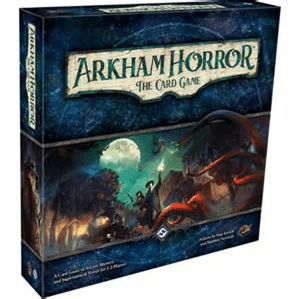

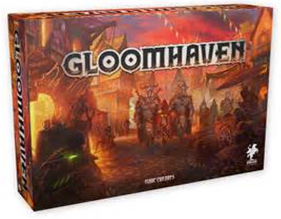

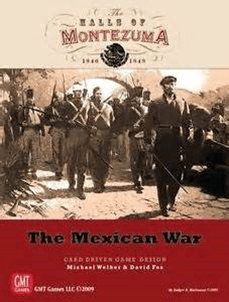
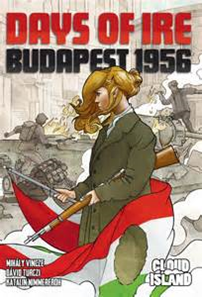

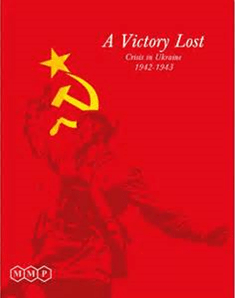


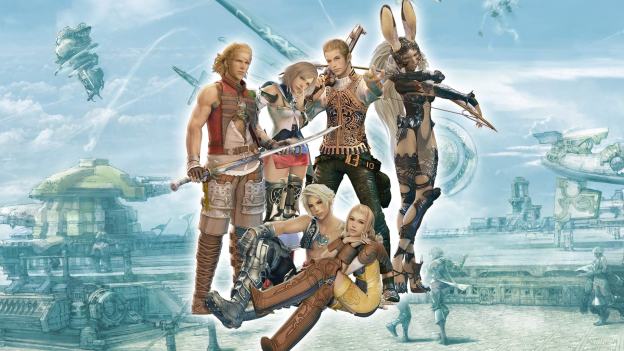




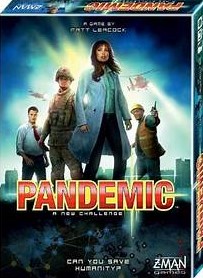
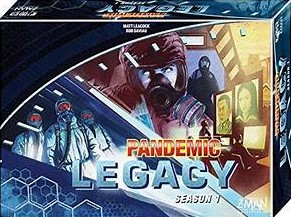
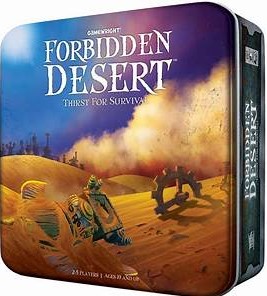
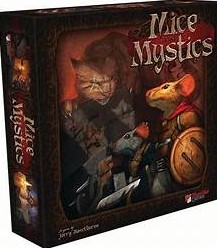
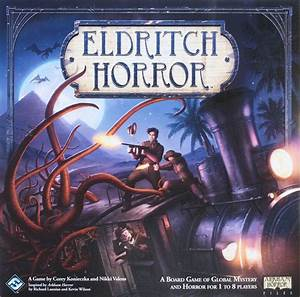

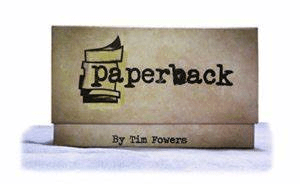
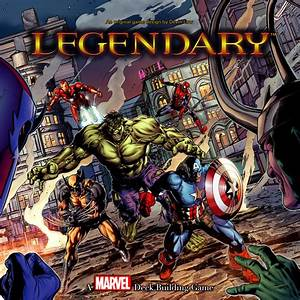
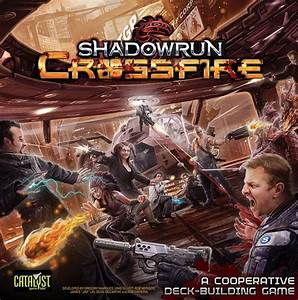
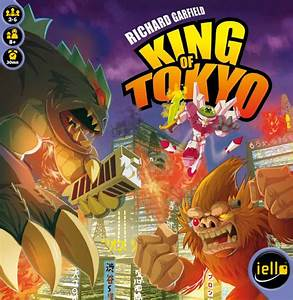
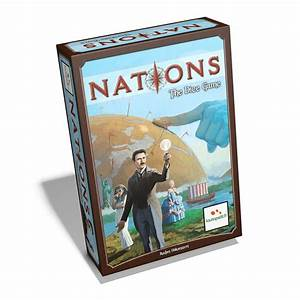


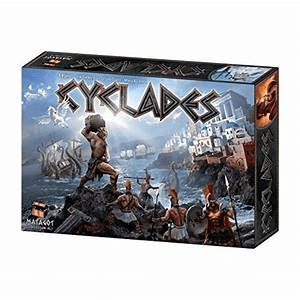
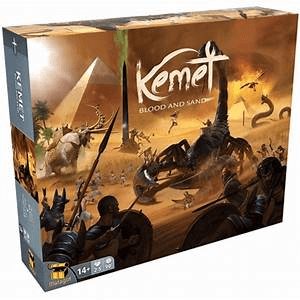
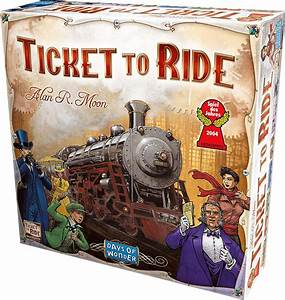
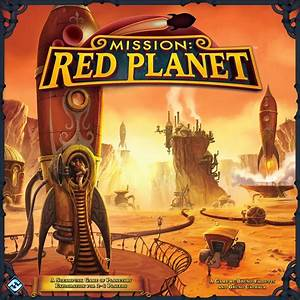



 Redeeming Pandora