
Destiny Phillips Coats
“Jesus is the reason for the season.” That is a quotation we in the Church have heard many times. Christmas from a Christian perspective is the day of the year set aside to honor the birth of our Lord Jesus Christ. Nativity plays and special church gatherings/services are designed specifically to honor Jesus on Christmas —His “birthday.” In Scripture Christmas is not a designated holiday like the Passover or Rosh Hashanah celebrations of the Jewish culture. So where then did this initial celebration come from along with the famous traditions millions of families have adopted as their own on the Christmas holiday? The answer is pagan rituals. Many Christmas traditions done all throughout the world and within the Church are indeed of pagan origin. Keep on reading for the specific origins of the Christmas holiday itself, Christmas trees, festivals/gatherings, Santa, gift giving, caroling, and a few traditions outside the States.
December 25th was first recognized as Christmas Day sometime around 273 AD. The first recordings of a “nativity” celebration by the Roman Church were in 336 AD. Because the Bible or other historical accounts do not exactly specify the actual date of Jesus’ birthday, we can never really know when He was really born. As Christians of the modern era, we could not imagine not celebrating Christmas because of its significance. The early Church however, felt the holiday was of complete irrelevance because it has no Scriptural backing. As the Church began to evangelize to pagan peoples, to keep their winter festivals they changed the focus to Jesus and over time the holiday was adopted. But before a specific date could be settled upon, it was custom Jesus’ birth celebration was originally combined with the Epiphany celebration.
Epiphany or Theophany, also known as Three Kings’ Day, is a Christian feast day that celebrates the revelation of God in his Son as human in Jesus Christ. In Western Christianity, the feast commemorates principally the visit of the Magi to the Christ child, and thus Jesus’ physical manifestation to the Gentiles. Moreover, the feast of the Epiphany, in some Western Christian denominations, also initiates the liturgical season of Epiphanytide. Eastern Christians, on the other hand, commemorate the baptism of Jesus in the Jordan River, seen as his manifestation to the world as the Son of God.
As time went on and evidence appeared from various historians of Christ’s birthday supposedly on December 25th, the day was then adopted by the Church as the day upon which his birth should be celebrated.
Similar to now, early Christians desired to convert nonbelievers to Christianity to grow the church and fulfill “The Great Commission.” The early Church dealt with mainly two other competing religions of their time, Judaism and Islam. However, most of their time working to convert nonbelievers was spent on the polytheistic people groups that occupied most of the world at the time, pagans. “Paganism is a term that developed among the Christian community of southern Europe during late antiquity to describe religions other than their own, Judaism, or Islam — the three Abrahamic religions.” Specific Christmas traditions inherently pagan are the decorating of a tree, feasts/festivals, mistletoe, and decorating with lights.
The Christmas tree as we now know it, is traditionally a green tree picked out by a family to be placed in the home, decorated, and the designated spot for presents. Decorating indoors with greenery during the winter solstice dates all the way back to the Roman Empire. It was first seen as a Christian Christmas ritual in the 17th century by Germanic pagan converts. During this period on Christmas Eve a nativity play of Adam and Eve was performed in churches as a way to honor/remember creation. A tree was used during this play called the “Paradise Tree” and decorated with fruit to represent the tree of the knowledge of good and evil.
The winter solstice is an astronomical occurrence that marks the shortest day and the longest night of the year. Paganism celebrates this day with a festival gathering. Festival gatherings throughout the winter months were also very common in paganism due to the cold nature of the season. Agriculturally speaking the harvest is during the fall so the time to “eat, drink, and be merry” is in the winter season. Also because the winter is very cold, the desire to congregate and be warm was a catalyst for many different types of pagan festivals then kept and altered slightly during the spread of Christianity.
Another pagan ritual is mistletoe. It originates from Norse mythology and folklore dating back to the eighth century. The Norse god Balder was the best loved of all the gods. His mother was Frigga, goddess of love and beauty. She loved her son so much she wanted to make sure no harm would come to him. So she went through the world, securing promises from everything that sprang from the four elements — fire, water, air, and earth — that they would not harm her beloved Balder. Leave it to Loki, a sly, evil spirit, to find the loophole. The loophole was mistletoe. He made an arrow from its wood. To make the prank nastier, he took the arrow to Hoder, Balder’s brother, who was blind. Guiding Hoder’s hand, Loki directed the arrow at Balder’s heart, and he fell dead. Frigga’s tears became the mistletoe’s white berries. In the version of the story with a happy ending, Balder is restored to life, and Frigga is so grateful she reverses the reputation of the offending plant, making it a symbol of love and promising to bestow a kiss upon anyone who passes under it.
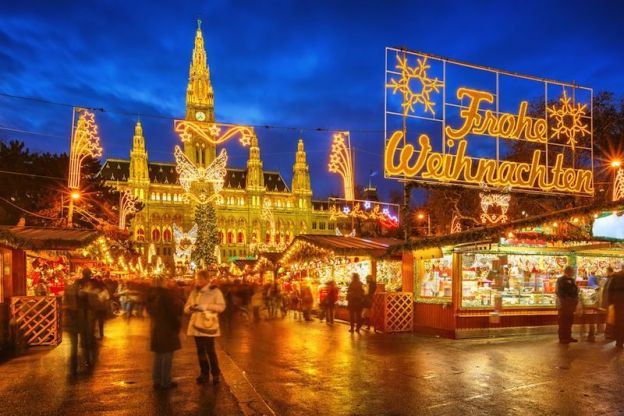
Decorating with lights is now viewed as a fun family affair. Everyone participates in putting lights up, going to look at various lights around neighborhoods, and people even go to festivals of lights. Lighting our homes and various buildings during the winter months originates with pagans lighting bonfires and candles during the winter solstice to celebrate the anticipated return of light back to the earth. The god Sol Invictus was also celebrated with lights during the winter months. The early Christians adopted this ritual and changed the meaning to be a representation of Jesus as “the light of the world,” the light that guided the Magi to Jesus in the early first century AD. In our every-increasingly secular world, putting up lights on houses is just a common tradition amongst families during the Christmas season.
In elementary school I remember vividly getting in trouble for telling other children Santa Claus was not real. There was one instance I was made to write a formal apology to a classmate for denouncing the existence of Santa. Santa Claus, the omniscient gift giver who travels the world in one night to deliver presents, has existed since the third century. Santa Claus is the English version of the Dutch “Sinter Klaas” or Saint Nicholas. St. Nicholas died supposedly on December 6 AD 342. December 6th was then a day set aside for a feast in his honor. Saint Nicholas was born in Turkey in AD 282 in the city Patras. He came from a wealthy family and was made the Bishop of Myra at a fairly young age. Because of his generosity and acts of kindness on earth like giving gifts to the poor, the Dutch believed he returned on December 6th to give out presents or punishments. From this belief of the Dutch other tales were developed in his remembrance and variations of it have been told over the course of history. Dependent upon the country, “Sinter Klaas” is honored differently. The two main tales told after his death are titled The Three Daughters and The Children at the Inn.
The first story shows his generosity. There were three unmarried girls living in Patras who came from a respectable family, but they could not get married because their father had lost all his money and had no dowries for the girls. The only thing the father thought he could do was to sell them when they reached the age to marry. Hearing of the imminent fate, Nicholas secretly delivered a bag of gold to the eldest daughter, who was at the right age for marriage but had despaired of ever finding a suitor. Her family was thrilled at her good fortune and she went on to become happily married. When the next daughter came of age, Nicholas also delivered gold to her. According to the story handed down, Nicholas threw the bag through the window and it landed in the daughter’s stocking, which she had hung by the fire to dry. Another version claims Nicholas dropped the bag of gold down the chimney. By the time the youngest daughter was old enough for marriage, the father was determined to discover his daughters’ benefactor. He, quite naturally, thought she might be given a bag of gold too, so he decided to keep watch all night. Nicholas, true to form, arrived and was seized, and his identity and generosity were made known to all. As similar stories of the bishop’s generosity spread, anyone who received an unexpected gift thanked St. Nicholas.
Another one of the many stories told about St. Nicholas explains why he was made a patron saint of children. On a journey to Nicaea, he stopped on the way for the night at an inn. During the night he dreamt a terrible crime had been committed in the building. His dream was quite horrifying. In it three young sons of a wealthy Asian, on their way to study in Athens, had been murdered and robbed by the innkeeper. The next morning he confronted the innkeeper and forced him to confess. Apparently the innkeeper had previously murdered other guests and salted them down for pork or had dismembered their bodies and pickled them in casks of brine. The three boys were still in their casks, and Nicholas made the sign of the cross over them and they were restored to life.
From these tales people practiced gift-giving during the winter months and telling the tale of Saint Nicholas. The version of Santa Claus we have today has been tainted from the original version because of the immersion of the Christian society into the pagan cultures near the end of the first millennium. Sometimes in America we think our version of everything is universal everywhere. The American version of Santa Claus is an example of something that is not. Dependent upon the country, different tales have been passed down and changed by generations and generations of people.
Caroling is a time for people to gather in groups and sing songs about Christmas. Caroling is often done by choir groups or churches who travel through neighborhoods or various venues to share the gift of song with others. Caroling, believe it or not, is also a pagan ritual. The word “carol” means to sing and dance. During the first millennium many cultures “caroled” throughout the year as a means to celebrate during certain occurrences or praise acts of their gods or nature. Caroling during the winter months was originally a big part of the winter solstice festival. Tons of people would gather in a village square to sing and dance, praising nature for the return of longer days and shorter nights. When the Christians began converting the pagans, they found it very difficult to break them away from the many gatherings and rituals throughout the year. These evangelists instead tried to change the purpose of these festivals to be about Christ is some way. The most popular festival with a change of focus is our modern day Christmas. By changing the focus of the winter solstice festival, they also gave them Christian songs to sing during the winter months. These are our modern day “carols.”
The way one is brought up takes a huge role in the way she acts and the things she does. Similarly, where one is born geographically can often determine what one will do come certain times of the year. This is true for the Christmas holiday. Worldwide this holiday is a celebration of the birth of Christ, the arrival of Santa Claus, a celebration of the winter solstice, honoring of Saints, and many other things. We know how we celebrate here in the States, but what about other nations? In Sweden, Finland, and Denmark the beginning of the Christmas season begins on December 13th with the celebration of Saint Lucia.
The St. Lucia Day holiday is considered the beginning of the Christmas season and, as such, is sometimes referred to as “little Yule.” Traditionally, the oldest daughter in each family rises early and wakes each of her family members, dressed in a long, white gown with a red sash and wearing a crown made of twigs with nine lighted candles. For the day, she is called “Lussi” or “Lussibruden” (Lucy bride). The family then eats breakfast in a room lighted with candles.
The Germanic people groups of the early centuries brought us the tradition of decorating Christmas trees. The pagan ritual of decorating greenery during the winter solstice was a big part of their culture they did not let go after the spread of Christianity. Christmas trees were introduced to the English after the union of England’s Queen Victoria and Germany’s Prince Albert. Christmas trees first appeared in Pennsylvania in the 1820s upon the arrival of German immigrants. These are just two of the many example of people all around the world who have added to the history of the Christmas holiday we all so dearly enjoy.
It is hard to believe one of the top two most popular Christian holidays, Christmas, is inherently pagan. In the church, Christmas is all about Christ and celebrating His coming. In the world, Christmas is about Santa Claus, buying gifts, gatherings, and good food. The secular view of the Christmas holiday is focused solely on individuals, while Christians try their best to make it all about Jesus. How well are we, Christians, doing at trying to make Christmas about Christ?
With our consumer-based society, fast-paced life, and desire for instantaneous possession of material things, the purpose of Christmas I believe has been lost. The original purpose of the winter celebration was to honor the winter solstice —pagan. But the holiday we celebrate today as the Church is similar in practice but very different in focus — Christ. However, I do believe some of the Church has lost that focus. Christians are raising their children to believe in Santa Claus, causing their whole holiday to be about receiving presents instead of celebrating our Lord and Savior’s birthday. Churches have caught on to the new title of “X-mas” for the holiday. This is new title completely removes Christ from the picture. So, should we celebrate the Christmas holiday as believers even though it is inherently pagan? I believe so. Why? Because we have a new focus for which we celebrate. The problem comes when we as the Church forget this focus and fall in line with what the world is doing on this holiday. Always remember, “Jesus is the reason for the season!”
Sources
http://www.livescience.com/25779-christmas-traditions-history-paganism.html
http://www.history.com/topics/christmas/christmas-traditions-worldwide
http://christianity.about.com/od/christmas/f/christmashistor.htm
https://www.bing.com/search?q=what+is+the+holiday+epiphavy&form= EDGNTC&qs=PF&cvid=cbe10fc66dca410bbf9339081799817a&pq=what+is+the+holiday+epiphavy&PC=ASTS
https://www.bing.com/search?q=definition+of+pagan&form=EDGEAR&qs= PF&cvid=b6cc677fde144e069df0c717544253bf&pq=definition+of+pagan&PC=ASTS
Christmas Traditions: Pagan or Christian?
https://www.bing.com/search?q=origin+of+the+christmas+tree&form= EDGNTC&qs=AS&cvid=f4e758f4decd460281ef90673084299b&pq=origin+of+the+christmas+tree&PC=ASTS
http://www.thewhitegoddess.co.uk/articles/mythology_folklore/mistletoe.asp
http://www.lone-star.net/mall/main-areas/xmas-santa-origin2.htm
 Redeeming Pandora