Category Archives: Music Reviews

Forgotten Gems: Welcome to the Real World

Christopher Rush

An Album of Absolutes

In the midst of the glory days of the ’80s (the 1980s, not to be confused with the glory days of the 1380s, for example), Mr. Mister released their second album to much acclaim and well-deserved fanfare.  Not too many albums, for example, have two Billboard #1s in succession, but Welcome to the Real World achieved just that with “Kyrie” and “Broken Wings.”  Yes, it’s that album.  But as with virtually all of our “Forgotten Gem” albums, it behooves us to remember this album is far more than two or three pop hits and some other stuff.  Oh no.  This is a top notch album — not just “solid,” but top notch, especially when one sees the whole picture this album offers.  Of the first five songs, four could very well be valid opening songs for the album.  They are that peppy and grand in scope.  More importantly, this album conveys to us the importance of living by absolutes: right and wrong exist, there is a proper way to live life, and reality is objective.  What more could one want from an ’80s pop rock album?

Black/White

From the opening track, Mr. Mister tells us the world is a paradox of opposites: we are both weak and strong, we draw ourselves to each other and we push each other away.  We have passionate difficulty treating each other consistently.  This is the relativistic kerfuffle we create for ourselves.  Into this confusion comes the reminder life is not truly a relativistic spectrum: absolutes exist.  Change can occur, surely — growth is possible, and so are mistakes.  At the beginning of the album we aren’t sure what those absolutes are, but the tangible dichotomies of day and night and black and white propel us toward the path of delighting in absolutes.  And love is the path: because of love, we know there is right.  Love, as strange as it is experientially, is right.  Love changes us, and we change because of love.

Uniform of Youth

A second solid candidate for opening number, “Uniform of Youth” is definitely grumpier lyrically than “Black/White,” which is likely why it was not chosen as the first thing audiences heard on the LP.  It would make for a good starting track, though, because it presents that youthful petulance of discontent one experiences when not living freely under the absolutes of God’s reality.  Such discontentment with the way things are materially and superficially seem to lend themselves to flight (“I don’t know if I’ll stick around / I don’t know, I just might leave town”).

Considering the song in its present location as the second on the album, we can consider some time passing from the opening song.  The juvenile transient love has brought discontent and irritation, and yet it has also brought a growing understanding of the failings of life (“Nothing’s perfect anyway / No one said that the world was fair”).  Even though absolutes reign, we flawed and selfish beings can make a mess of things.  The hero of this saga takes some small comfort (in a rather rousing musical chorus) in his youth while adjusting to what life is supposedly requiring of him (“I’ll just do what I’ve got to do” … “I wear the uniform of youth and I hold on”).  He is starting to be more aware of the need for meaningful growth and change in his life, which must be initiated by genuine love (“All I want is someone to care”), not the ephemeral, self-serving (though naively quaint) love of “Black/White.”

Don’t Slow Down

Another peppy track that would work well musically for the opening number, though that would mess with our narrative progress through the album, “Don’t Slow Down” picks up the emotional momentum once again.  No longer content with fitting in and passively letting love and society determine what happens to him, our hero has come to terms with previous failures and is finally prepared to commit to the love in front of him (“I look into your eyes, I see the dream that I’ve been searching for / I’ll search no more”).  Unfortunately, despite his enthusiasm for commitment, his enthusiasm is overweening, as evidenced by the chorus: “So don’t slow down, the wheels are turnin’ / The fire’s burnin’ in us now / Don’t slow down, don’t lose the magic / We’ve come too far to turn back now.”  Assuming for the moment this is not a plea for premarital physical dalliances (which would be unlikely anyway, considering the album and people writing the songs), we can interpret this as an ardent plea for nothing more than a continuation of the present experiences of life and love.  Whatever happy feelings and camaraderie they are experiencing, he simply wants it to continue with the same verve in which it is currently occurring.  The immaturity persists, despite the progress: he is too content with the little maturity he has made to give himself fully to absolute love.

Run to Her

Despite his attempts to keep the momentum going, their relationship has slowed down after all, along with the speed of the album.  “Run to Her” is the only slow song on the album, but it is not the typical fluff of ’80s ballads (1380s ballads, let’s not get confused).  In a sense, this is a mirrored, almost dream-like version of the previous song.  Lyrically it is similar: he is still looking into her eyes, reflecting on how much he enjoys being in relationship with her.  Yet there is a significant difference here: he has come to realize time is not something you can outrun.  Time’s wingèd chariot never loses its race.  “Time, it passes much too fast / And time, I want to make it last” — clearly his priorities are starting to mature, though they are still hampered by too much connection to this world.  His love for her is no longer just about sustaining the enjoyment of the relationship regardless of circumstances or consequences — now, the importance of it has developed into the beginnings of mutual respect and worth (“The sun was shining brightly / As we talked into the night”) — finally a genuine relationship is building.  He is starting to understand the absolutes of life lived correctly … but he still has some work to do.

Into My Own Hands

Continuing our hypothesis of potential opening tracks, “Into My Own Hands” makes an excellent candidate following our interpretive framework: were this the opening number, we would be introduced to a young fellow full of salt and vinegar (I think that’s how the expression goes, at least in Canada), confronted with everything this album is about: the nature of the world (whether ’tis absolute or relativistic), one’s place in the world, the brevity of life, how to grow into maturity, and the rôle(s) of love and fellowship in life.  Protracting the hypothesis, we would be faced with a rather impressive philosophical album (which we are regardless of this track’s proper position): the desperation of the singing narrator reminds us how crucial the proper answers to these issues are.

But we must examine the song where it is, and as such the interpretation is just as engaging.  After the maturity of grasping the brevity of life and the importance of actually living it, our hero shows a painful resurgence of his impetuousness: he’s going to both “[t]ake this life into [his] own hands” and “[t]ake this world into [his] own hands.”  He has indeed learned some lessons and lost some lessons.  “How wrong could I be?” he asks.  Well, pretty wrong it turns out, if one takes the obvious interpretation to hand: he thinks he’s got to be ruler of his domain, king of his castle, master of his fate.  But perhaps it’s not so self-serving.  Perhaps he is simply looking around at life, seeing some things that need improving, and realizes he is a big boy, he can help make his world a better place.  He’ll “take [his] stand” for justice and truth and righting all wrongs.  That sounds good, doesn’t it?

Is it Love

And just like that, once the record is flipped over to side two, our hero is met with the consequences of trying to live life his way, regardless of his intentions.  Now, the song appears to lead us toward believing our hero is asking this question of his lady and/or the world around him he is trying to save/improve/ameliorate/whatever.  The fault is with you people out there, our hero is implying, ignoring the fact his self-serving attempt at making people better and “loving” her is instigating fear in her, not reciprocated love.  We know better, of course.  He is asking this question of others, that’s true, but he is asking because the voices in his head, the dreams he’s been having these last few songs, have been asking him this very question: do you really want genuine love? is that what you are after? is that a value you want your heart to pursue, to embody?  There’s only one source for Real Love.

Perhaps you are skeptical of such an interpretation, and I admit it is rather generous on my part, but I think this total view of this song, in relation to the flow of the whole album to date (especially when paying keen attention to those lyrics, the key phrases about absolutes and the real world most especially — and real love is truly an absolute), this interpretation fits rather well.  Because then comes the next song.

Kyrie

Ahhh … yes.  This is the track we’ve been waiting for.  Don’t get me wrong (as often happens) — I’ve already said this is a top notch album in toto (not that Richard Page was ever in Toto beyond contributing background vocals).  But this is unquestionably the greatest song on the album.  We haven’t made much mention of the musical aspects of this album, replete as it is with synthesized drums, Bowser palace-like riffs, orchestra hits, and a panoply of ’80s (1980s) technological gems.  But I defy you to find anywhere, anywhere I say, a more energizing, heart-pounding, soul-uplifting moment in music history than the truly awesome moment in the post-bridge modulation mostly acapella chorus when the guitars and drums kick back in.  As great as Beethoven, U2, and the rest of the gang are in breadth and scope, this moment has got to be the best of all time.  And now back to our story.

Our hero has finally experienced (and understood) his moment of transcendental connection with the Divine — not in a pantheistic sort of sense, though wind is the force reaching into his soul.  Finally the One True God has gotten ahold of our hero, and he realizes how much he needs God, God’s love, and God’s way of living life.  By trying to take the world into his own hands, by asking other people if they want love, these were just variations on blending in with his uniform of youth — just his entire life of running away from the black and white nature of the real world of absolutes, of the divine: he has been hiding his whole life, hiding away from what he has suspected all along, and now God “reaches in to where [he] cannot hide” any more.  But it is not just about baring his fears and failures, oh no.  God “sets [his] feet upon the road,” allowing him to finally live life correctly.  Now that he has matured through his experiences, he can honestly reflect on his life:

When I was young I thought of growing old, of what my life would mean to me

Would I have followed down my chosen road, or only wished what I could be

We have seen his thoughts and hopes for his life in the first six songs of the album, and we know (and now so does he) what he would have made of it all, since it is the same for all of us.

Regardless of whether I have interpreted the verses correctly (and I, as always, am likely off at least a smidge here and there), there is no denying the chorus, especially in the way the song is sung (and the fact the music video frequently features band members, mostly frontman Richard Page, pointing up toward Heaven at appropriate moments in the song):

Kyrie eleison down the road that I must travel

Kyrie eleison through the darkness of the night

Kyrie eleison where I’m going will you follow

Kyrie eleison on a highway in the light

Note well: that third line is not a question.  He is not asking if God will accompany him along his journey of faith.  It’s simply a syntactical inversion to allow the vocalization of the lyric more efficient (and keeping in more with the medieval feel, say circa 1380s, instigated by the Latin).  Our hero has arrived at the point of calling upon God for mercy.  He knows this life is the life he has been called to live, and whether things go easily (“highway in the light”) or not so easily (“darkness of the night”), he knows God will follow (accompany, enable, abide, strengthen) him to live this life to which he has been called.

And now that he has finally reconciled with God and been redeemed (and thus enabled to love correctly and live correctly), it is time to reconcile with his lady love and the world he was trying to reshape into his world.

Broken Wings

Admittedly a few words in verse one make what would otherwise be an impeccable progression through the story of this album a bit tricky, but I think a little bit of exegetical prestidigitation will do wonders for our purposes.  Taking the position our hero has reconciled with God and been born again, he initially is somewhat discombobulated why he can’t just magically repair the damage his earlier self-centeredness did to their relationship now that he has found God.  What he does know correctly, at least, is their relationship will completely end if he can’t make it clear to her how crucial it is for her to experience the same transcendent justification sung about in the previous song.  The “I need you so” bits are not just frothy romance (okay, lust) lines typical of the, yes, 1980s: more than that, he feels she is “The One” for him (we’ll put discussions about the Biblicality of such a concept on the back burner for now), but more importantly he desires her to come to the same saving relationship with the Merciful God to whom he has sung so recently.

The question remains, then, whose broken wings are being sung of so hauntingly in this number.  Option A: they are our hero’s former broken wings, no longer needed since he has been reborn and is traveling through life with the Lord of Mercy down the highway in the Light.  Thus the broken wings are a symbol of his hiding (the uniform of youth, his desire to take the world/his life/their love into his own hands), his failures to live life according to the absolute standards of Real Love and Mercy designed and instituted by God (the “take what was wrong / And make it right” aspect of verse two would then be metonymous for taking the broken wings and learning to fly again).  Now that he is giving them over to her, he is both demonstrating his personal restoration with God and His world and asking for her forgiveness of the wrong he has done her, and thus showing her how she, too, can find restoration (her broken wings will be replaced and she will be reborn) and new life.

Option B: they are her wings.  Much of the above interpretation would still hold.  The second verse’s lines “We can take what was wrong / And make it right” may sound like all their renewal and rebirth will be instigated by their human efforts (possibly through physical dalliances, as many would erroneously interpret this song), but it’s important to remember the accompanying musical video features our hero in a church with the light of God shining upon him when it gets to the climactic chorus lines “And when we hear the voices sing / The Book of Love will open up / And let us in.”  That’s the only way her broken wings can be repaired/replaced and she can be reborn.  Our hero knows it’s not about human efforts.  The voices that have prompted him to call out Kyrie eleison are now urging them both to put their faith and find their renewal in the Book of Love, and clearly from the entire context that is the Bible.  Living by the Word of God is how we “learn to fly again” and “learn to live so free.”  Where else is freedom but where the Spirit of the Lord is? (cf. 2 Corinthians 3:17).

Now that we understand the Biblical subtext of the song, we can easily see the end of verse two (“Baby it’s all I know / That you’re half of the flesh / And blood that makes me whole / I need you so”) is not just some far-fetched (19)80s power ballad palaver.  Nor is it heretical “Jesus’ blood is not enough to save me” nonsense.  It’s not “your” half of the flesh, but “you’re” half.  It may be a small grammatical point, but it’s worth noting.  It’s about her personhood, not her maidenhead.  What else is he referring to but the created order of things in God’s real world?  When Adam was made, was he complete?  Not according to the Word of God.  Adam was not complete until a part of his flesh was removed, reformed into something like him but different, and then returned to him.  And what was this but marriage itself?  And what is marriage but a symbol of our relationship with God?  You bet your boots he “needs [her] so,” just, contextually, as he needs the Lord of Mercy.  As do we all.

And now that he has reconciled with her (I think it’s safe to assume this conversation has a eucatastrophic ending with her personal redemption in Christ), our hero can focus (with her assistance, no doubt) on reconciling with the world he tried to take into his own hands.

Tangent Tears

A few moments ago, we (okay, I) made a mild disclaimer of a caveatish nature concerning potentially mildly loose interpretation of the lyrics.  Well here we are again.  Most likely this song is about a guy sad because his gal has broken up with him against his will and he’s really sad and crying a lot, possibly so hard his tears are barely touching his cheeks (and thus “tangent” to his face).  In all likelihood, the premise for this lyric was a catchy alliteration Richard Page and/or John Lang found neat-o, and they built a song around it.  But let’s return to our High Narrative view of the album and try something out together.

What if our hero, having reconciled with God and his sweet boo, returns his gaze to the world and finally sees it for what it is, not what he wants it to be … and what he sees is the world in its true, fallen condition.  The world is a mess and seeing it for what it is brings him to tears.  Let’s not stretch the point too finely, saying the line “Who’s playin’ on your team, he has a certain flair” is about Satan or anything like that.  But if we stretch it just a skosh, the second verse (“you made my heart go blind / You act so cold but you still look so fine”) could be about how tempting the world looks even when one understands it for what it is. Something like that.  He can’t reconcile the world by himself, of course, but that’s not his job.  Now that he sees the world for what it is, the only thing he can do is to help other people see what the world is really like.

Welcome to the Real World

With a proper understanding of God, nature, himself, love, truth, right, and wrong, our hero has finally arrived where he needs to be, where we all need to be, and now his mission is clear: tell us what reality is really like.  His tears are of pain because of the sin in the world, surely, and his tears of joy most likely come from his newfound life and faith and his sweet boo’s new life.  Possibly, some time has passed as well, and he and his wife are welcoming a new child into the world and they are starting off well by teaching their child what reality is really like.  I will accept either perspective.  A happy ending all around.

Our hero has learned the Real World is one of absolutes: right and wrong exist as clearly as black and white (and just as starkly different).  You don’t really have the authority to live life however you feel like.  There is a right way (and sundry wrong ways) to live the human life.  The Lord of Mercy is in charge, and it’s best to let Him put your feet on the path you should take in life, not try to reshape the world into your own image or desires (and definitely don’t try to reshape your love interest into your image of ideal love).  The world has many wondrous things to experience (using “the world” in just the diverse totality of human experience and God’s created order, not in the “this world has nothing for me” super-spiritual sense).  “There’s so much to learn,” indeed.

The sooner we learn the lessons of Welcome to the Real World (the album), the better off we will be.  The “chains that were choking [us]” of our sinful natures will soon be but a memory.  We will know real love.  We will know how to treat other people.  We will know what our life’s purpose is — directing everyone we meet to the Lord of Mercy.  And here you just thought this was just another pop rock album of the ’80s.  Good thing we’re here for you.

See you next issue, friends!

Kyrie Eleison!
The Good (and Great?) Songs

Dave Thompson

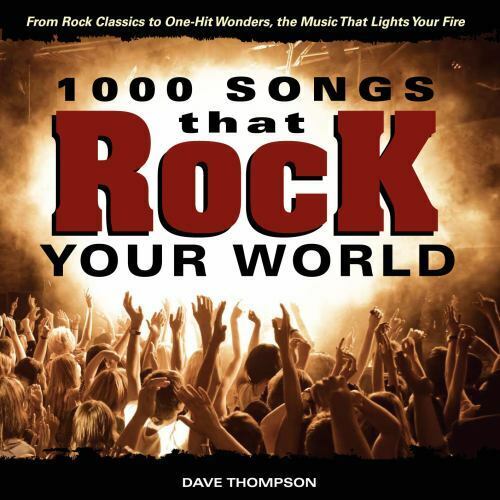
In 2011, Dave Thompson released a (to be generous) book featuring a litany of 1,000 songs that, according to the title of the work “rock your world.”  To be fair to Mr. Thompson, the book seems intended to be a visual treasure trove of rare photographs, tour memorabilia, miscellaneous album paraphernalia and more, with a few diversely-organized lists, and thus the book is in nowise intended as a scholarly treatment of the history of pop music and/or what makes a song great.  Fair enough.  As our purpose here is not to treat on the book itself directly (I’m sure I’ll do that in a future book review collection), we shall simply introduce Mr. Thompson’s list of the best 1,000 rock songs (or whatever) of all time (as of 2011).  This is not my list, but it has been an interesting experience trying to work through this list, especially as I have not heard of many of the artists and certainly fewer of the songs enumerated here.  Feel free to join in my personal challenge to listen to these 1,000 songs and, perhaps, reflect on their merit and come up with your own such list.

  1. Bus Stop                                                      Hollies
  2. Season of the Witch                                  Donovan
  3. Jungleland                                 Bruce Springsteen
  4. Won’t Get Fooled Again                            Who
  5. Rock and Roll                                              Gary Glitter
  6. Desolation Row                                          Bob Dylan
  7. While My Guitar Gently Weeps               Beatles
  8. Year of the Cat                                           Al Stewart
  9. Famous Blue Raincoat                              Leonard Cohen
  10. Gimme Shelter                                           Rolling Stones
  11. Rhiannon                                                    Fleetwood Mac
  12. Stairway to Heaven                                   Led Zeppelin
  13. Hey Jude                                                      Beatles
  14. Like a Hurricane                                         Neil Young
  15. Like a Rolling Stone                                   Bob Dylan
  16. A Day in the Life                                         Beatles
  17. Elemental Child                                          T-Rex
  18. Born to Run                                                Bruce Springsteen
  19. I Walk on Gilded Splinters                        Dr. John
  20. Shake Some Action                                   Flaming Groovies
  21. Smoke on the Water                                 Deep Purple
  22. Be Bop a Lula                                           Gene Vincent & His Blue Cops
  23. Wish You Were Here                                 Pink Floyd
  24. Life on Mars                                                David Bowie
  25. Trampled Underfoot                                 Led Zeppelin
  26. Musical Box                                                Genesis
  27. Number One Crush                                   Garbage
  28. I’m Not in Love                                           10CC
  29. Lily, Rosemary, & The Jack of Hearts    Bob Dylan
  30. Bridge Over Troubled Water                   Simon & Garfunkel
  31. She’s Not There                                          Zombies
  32. School’s Out                                                Alice Cooper
  33. Sympathy for the Devil                             Rolling Stones
  34. Past, Present, Future                                Shangri-Las
  35. Waterloo Sunset                                        Kinks
  36. Everyday is Like Sunday                           Morrissey
  37. America                                                       Simon & Garfunkel
  38. Layla                                                            Derek & The Dominos
  39. Heroes and Villains                                   Beach Boys
  40. Bad Moon Rising                                    Creedence Clearwater Revival
  41. I’m Eighteen                                                Alice Cooper
  42. All Along the Watchtower                         Jimi Hendrix Experience
  43. American Pie                                              Don McLean
  44. Celluloid Heroes                                        Kinks
  45. Bored Teenagers                                       Adverts
  46. See Emily Play                                             Pink Floyd
  47. All the Young Dudes                                  Mott the Hoople
  48. Baba O’Riley                                               Who
  49. Low Spark of High Heeled Boys              Traffic
  50. My Generation                                           Who
  51. The Boys are Back in Town                      Thin Lizzy
  52. The Next Time                                            Cliff Richard
  53. Bohemian Rhapsody                                 Queen
  54. In a Broken Dream                                    Python Lee Jackson
  55. Changing of the Guard                             Bob Dylan
  56. Instant Karma                                             Plastic Ono Band
  57. Suite: Judy Blue Eyes                                 Crosby, Still, & Nash
  58. Hocus Pocus                                               Focus
  59. Rosalita (Come Out Tonight)                    Bruce Springsteen
  60. Midnight Rambler                                      Rolling Stones
  61. A Man Needs a Maid                                 Neil Young
  62. A Groovy Kind of Love                             Mindbenders
  63. Dream On                                                   Aerosmith
  64. New York Mining Disaster 1941             Bee Gees
  65. Can’t Find My Way Home                       Blind Faith
  66. Superstar                                                       Carpenters
  67. Caroline Says II                                           Lou Reed
  68. God Only Knows                                         Beach Boys
  69. I Feel Fine                                                     Beatles
  70. Alright Now                                                   Free
  71. D’yer Maker                                                 Led Zeppelin
  72. Let it Be                                                         Beatles
  73. Don’t Fear the Reaper                                Blue Oyster Cult
  74. Satisfaction                                                  Rolling Stones
  75. 4th of July, Asbury Park (Sandy)               Bruce Springsteen
  76. Statesboro Blues                                          Allman Brothers
  77. Silver Springs                                                Fleetwood Mac
  78. Octopus                                                         Syd Barrett
  79. She’s Gone                                                    Hall & Oates
  80. Refugees                                                       Van Der Graaf Generator
  81. Tupelo Honey                                              Van Morrison
  82. Roadrunner                                                  Modern Lovers
  83. Reason to Believe                                       Rod Stewart
  84. Diamonds and Rust                                    Joan Baez
  85. You Really Got Me                                     Kinks
  86. I’m Waiting for the Man                            Velvet Underground
  87. Cowgirl in the Sand                                     Neil Young
  88. Imagine                                                         John Lennon
  89. Kashmir                                                         Led Zeppelin
  90. Bad to the Bone                    George Thorogood & The Destroyers
  91. Sultans of Swing                                          Dire Straits
  92. New Rose                                                      Damned
  93. Loser                                                              Beck
  94. Ballad of a Thin Man                                 Bob Dylan
  95. London Calling                                            Clash
  96. Who Do You Love                                      Juicy Lucy
  97. Across the Universe                                     Beatles
  98. Autumn Almanac                                       Kinks
  99. Roadhouse Blues                                        Doors
  100. Hotel California                                           Eagles
  101. House of the Rising Sun                             Animals
  102. Ball and Chain                              Big Brother & The Holding Company
  103. Do Ya Think I’m Sexy                               Rod Stewart
  104. Dust in the Wind                                          Kansas
  105. Sunshine of Your Love                              Cream
  106. Come Out and Play                                    Offspring
  107. The Boxer                                                     Simon & Garfunkel
  108. Highway to Hell                                           AC/DC
  109. Solsbury Hill                                                 Peter Gabriel
  110. Violet                                                             Hole
  111. Funeral for a Friend/Love Lies Bleeding Elton John
  112. Smells Like Teen Spirit                               Nirvana
  113. Take Me Out                                                Franz Ferdinand
  114. Sweet Jane                                                    Velvet Underground
  115. God                                                                John Lennon
  116. Dead Babies                                                 Alice Cooper
  117. What Have They Done to My Song, Ma    Melanie
  118. Stagger Lee                                                   Nick Cave & The Bad Seeds
  119. Another Day                                                 Paul McCartney
  120. Privilege                                                         Patti Smith Group
  121. Mother’s Little Helper                                Rolling Stones
  122. More Than a Feeling                                   Boston
  123. Brown Eyed Girl                                          Van Morrison
  124. Daydream Believer                                     Monkees
  125. Beautiful Day                                              U2
  126. Heroes                                                           David Bowie
  127. Don’t Let Me Be Misunderstood              Animals
  128. Helter Skelter                                                Beatles
  129. Wild Horses                                                  Rolling Stones
  130. Ballad of Dwight Frye                                Alice Cooper
  131. All Day and All of the Night                      Kinks
  132. White Rabbit                                                Jefferson Airplane
  133. Eloise                                                             Barry Ryan
  134. Sara                                                                Fleetwood Mac
  135. Up on Cripple Creek                                   Band
  136. Let It Bleed                                                   Rolling Stones
  137. Supper’s Ready                                           Genesis
  138. Abandoned Love                                        Bob Dylan
  139. I Love Rock ’n’ Roll                                   Arrows
  140. White Man in Hammersmith Palais        Clash
  141. 25 or 6 to 4                                                   Chicago
  142. Summertime Blues                                      Eddie Cochran
  143. Someone Saved My Life Tonight            Elton John
  144. Sweet Baby James                                      James Taylor
  145. Maybelline                                                    Chuck Berry
  146. These Days                                                   Jackson Browne
  147. Freight Train                                               Chas McDevitt Skiffle Group
  148. A Night Like This                                         Cure
  149. Don’t Think Twice, It’s Alright                 Bob Dylan
  150. You Keep Me Hanging On                        Vanilla Fudge
  151. That’ll Be the Day                                       Buddy Holly
  152. Hurdy Gurdy Man                                      Donovan
  153. American Woman                                       Guess Who
  154. On the Road Again                                     Canned Heat
  155. Walk This Way                                            Aerosmith
  156. You Can’t Always Get What You Want Rolling Stones
  157. Daniel                                                            Bat for Lashes
  158. Strawberry Fields Forever                          Beatles
  159. Mage Bus                                                      Who
  160. Good Vibrations                                          Beach Boys
  161. Help                                                               Beatles
  162. Dancing in the Dark                                    Bruce Springsteen
  163. I Still Haven’t Found What I’m Looking For  U2
  164. Somebody to Shove                                   Soul Asylum
  165. No Matter What                                          Badfinger
  166. #9 Dream                                                      John Lennon
  167. Rock and Roll Music                                  Chuck Berry
  168. Eight Miles High                                          Byrds
  169. Drive In Saturday                                        David Bowie
  170. Back Street Luv                                           Curved Air
  171. The Letter                                                     Boxtops
  172. Atlantis                                                          Donovan
  173. At the Hop                                                    Danny & The Juniors
  174. Heartbreak Hotel                                        Elvis Presley
  175. Supernaut                                                     Black Sabbath
  176. Napoleon Bonapart One and Two           Budgie
  177. American Girl                                      Tom Petty & The Heartbreakers
  178. Echoes                                                           Pink Floyd
  179. The Knife                                                      Genesis
  180. Shape of Things                                           Yardbirds
  181. Rebel Rebel                                                  David Bowie
  182. Gimme Some Truth                                    John Lennon
  183. Desperado                                                     Eagles
  184. Soldier Blue                                                  Buffy Sainte Marie
  185. Watching the Detectives                    Elvis Costello & The Attractions
  186. Go Your Own Way                                      Fleetwood Mac
  187. Josephine                                          John Otway and Wild Willy Barrett
  188. Paris 1919                                                     John Cale
  189. Someone to Lay Down Beside Me          Karla Bonoff
  190. Get Back                                                       Beatles
  191. Rising Sun                                                     Medicine Head
  192. Sad Eyed Lady of the Lowlands              Bob Dylan
  193. Breathing                                                      Kate Bush
  194. Bela Lugosi’s Dead                                     Bauhaus
  195. Psychotic Reaction                                     Count Five
  196. Autobahn                                                      Kraftwerk
  197. Lust for Life                                                 Iggy Pop
  198. Longview                                                      Green Day
  199. Almost Cut My Hair                                   Crosby Stills Nash & Young
  200. Truckin’                                                         Grateful Dead
  201. Everlong                                                        Foo Fighters
  202. Little Wing                                                    Jimi Hendrix Experience
  203. Ride Captain Rid                                         Blues Image
  204. They Don’t Know                                        Kirsty MacColl
  205. Takin’ Care of Business                             Bachman Turner Overdrive
  206. Jailbreak                                                        Thin Lizzy
  207. Sex and Drugs and Rock and Roll           Ian Dury & The Blackheads
  208. Lay Down                                                     Melanie
  209. Riot in Cell Block #9                                   Johnny Winter
  210. Wild Thing                                                    Troggs
  211. Free Bird                                                        Lynyrd Skynyrd
  212. How Soon is Now                                        Smiths
  213. Edie                                                                Cult
  214. I Fought the Law                                         Bobby Fuller Four
  215. Somebody to Love                                     Jefferson Airplane
  216. Tarkus                                                           Emerson, Lake and Palmer
  217. And You And I                                            Yes
  218. Badlands                                                       Bruce Springsteen
  219. Welcome to the Jungle                               Guns ’n’ Roses
  220. In the Ghetto                                                Elvis Presley
  221. Cryin’                                                             Aerosmith
  222. Pablo Picasso                                               Modern Lovers
  223. Ramblin’ Man                                             Allman Brothers
  224. Bittersweet Symphony                               Verve
  225. Great Balls of Fire                                       Jerry Lee Lewis
  226. Next (Aux Suivantes)                             Sensational Alex Harvey Band
  227. Fire and Rain                                                James Taylor
  228. It’s So Easy                                                  Buddy Holly
  229. Shoot Out at the Fantasy Factory            Traffic
  230. Then He Kissed Me                                     Crystals
  231. Karma Police                                                Radiohead
  232. Back in the USA                                          Chuck Berry
  233. Rock Around the Clock                             Bill Haley & the Comets
  234. Answering Machine                                    Replacements
  235. Black Metallic                                              Catherine Wheel
  236. After the Goldrush                                       Neil Young
  237. The Pretender                                               Jackson Browne
  238. Tangled Up in Blue                                     Bob Dylan
  239. Submission                                                   Sex Pistols
  240. Johnny Hit and Run Paulene                     X
  241. Touch Me I’m Sick                                     Mudhoney
  242. Fly Like an Eagle                                         Steve Miller Band
  243. Ooh La La                                                    Faces
  244. You Look Good on the Dancefloor         Arctic Monkeys
  245. Sebastian                                                      Cockney Rebel
  246. Black Sabbath                                             Black Sabbath
  247. What is Life                                                  George Harrison
  248. In Shreds                                                       Chameleons
  249. Epitaph                                                          King Crimson
  250. Jackson                                             Nancy Sinatra and Lee Hazlewood
  251. Everything’s Alright                                    Mojos
  252. Tom Traubert’s Blues                                 Tom Waits
  253. It’s Alright Ma, I’m Only Bleeding           Bob Dylan
  254. Alternate Title                                              Monkees
  255. Marie and Joe                                              Doctors of Madness
  256. Baby Jump                                                   Mungo Jerry
  257. Heart of Gold                                               Neil Young
  258. Protection                                                      Graham Parker
  259. That’s Entertainment                                 Jam
  260. Rocking in the Free World                         Neil Young
  261. It Might as Well Rain Until September    Carole King
  262. Come Together                                            Beatles
  263. Love Reign O’er Me                                    Who
  264. Losing My Religion                                     REM
  265. Pink Moon                                                    Nick Drake
  266. Cortez the Killer                                           Neil Young
  267. Everything I Own                                        Bread
  268. Waiting for the Sun                                     Doors
  269. Creep                                                             Radiohead
  270. Wonderful Tonight                                      Eric Clapton
  271. Time                                                               Pink Floyd
  272. Night Moves                                                 Bob Seger
  273. You Can Make Me Dance, Sing or Anything    Faces
  274. You’re So Vain                                            Carly Simon
  275. Starting Over                                                John Lennon
  276. Let’s Hang On                                              Four Seasons
  277. Good Riddance (Time of Your Life)       Green Day
  278. My Sweet Lord                                            George Harrison
  279. Isis                                                                  Bob Dylan
  280. A Hard Day’s Night                                    Beatles
  281. Big Eyes                                                        Cheap Trick
  282. I Get Around                                                Beach Boys
  283. Little Queenie                                               Chuck Berry
  284. Powderfinger                                                Neil Young
  285. Hello It’s Me                                                Todd Rundgren
  286. Not Fade Away                                            Buddy Holly
  287. Possession                                                     Sara McLachlan
  288. Everybody Hurst                                         REM
  289. Barbara Ann                                                Beach Boys
  290. Debris                                                             Faces
  291. Hallelujah                                                     Leonard Cohen
  292. Life During Wartime                                   Talking Heads
  293. Why Do Fools Fall in Love                  Frankie Lymon & The Teenagers
  294. Jessica                                                            Allman Brothers
  295. Lady Rachel                                                 Kevin Ayers
  296. The Only Living Boy in New York           Simon & Garfunkel
  297. Three Stars                                                    Eddie Cochran
  298. Devoted to You                                           Everly Brothers
  299. Oh Boy                                                          Buddy Holly
  300. So Long Marianne                                      Leonard Cohen
  301. Suspicious Minds                                         Elvis Presley
  302. Space Truckin’                                             Deep Purple
  303. Paranoid                                                        Black Sabbath
  304. The Carny                                                     Nick Cave & The Bad Seeds
  305. Roadrunner                                                  Bo Diddley
  306. Jeremy                                                           Pearl Jam
  307. Out Demons Out                                          Edgar Broughton Band
  308. Killer Queen                                                  Queen
  309. Hey Mr. Draftboard                                    David Peel
  310. Bedsitter Images                                          Al Stewart
  311. Shaking All Over                                          Johnny Kidd & The Pirates
  312. The Perfect Drug                                          Nine Inch Nails
  313. My Death                                                      David Bowie
  314. Heroin                                                            Velvet Underground
  315. Doll Parts                                                       Hole
  316. Pleasant Valley Sunday                             Monkees
  317. Born to be Wild                                            Steppenwolf
  318. Venus in Furs                                                Velvet Underground
  319. 24                                                                   Jem
  320. Lady Eleanor                                               Lindisfarne
  321. Who Knows Where the Time Goes          Fairport Convention
  322. Honky Tonk Woman                                 Rolling Stones
  323. Court of the Crimson King                        King Crimson
  324. Tutti Frutti                                                     Little Richard
  325. The Show Must Go On                               Queen
  326. Soho Square                                                 Kirsty MacColl
  327. Total Eclipse of the Heart                          Bonnie Tyler
  328. Don’t Bring Me Down                                Pretty Things
  329. Nite Klub                                                       Specials
  330. 96 Tears                                              Question Mark & The Mysterians
  331. Basket Case                                                 Green Day
  332. Lady Jane                                                     Rolling Stones
  333. Song for Europe                                           Roxy Music
  334. Clocks                                                            Coldplay
  335. A Salty Dog                                                  Procol Harum
  336. Baker Street                                                  Gerry Rafferty
  337. Badge                                                            Cream
  338. Coney Island Baby                                     Lou Reed
  339. For No One                                                   Beatles
  340. Blitzkrieg Bop                                              Ramones
  341. Revolution Blues                                         Neil Young
  342. Ghost of Tom Joad                                     Bruce Springsteen
  343. There Goes a Tenner                                   Kate Bush
  344. Barracuda                                                     Heart
  345. Fairytale of New York                                 Pogues
  346. Johnny Mekon                                             Radio Stars
  347. Maggie May                                                 Rod Stewart
  348. Proud Mary                                            Creedence Clearwater Revival
  349. Soft Wolf                                                      Grant Lee Buffalo
  350. Get Off of My Cloud                                  Rolling Stones
  351. Till the End of the Day                               Kinks
  352. Up the Junction                                            Squeeze
  353. Hold Your Head Up                                  Argent
  354. Winona                                                          Matthew Sweet
  355. Stuck Inside of Mobile with the Memphis Blues Again Bob Dylan
  356. Days of Pearly Spencer                              David McWilliams
  357. Positively 4th Street                                      Bob Dylan
  358. Funeral Party                                                Cure
  359. Running Up That Hill                                 Kate Bush
  360. Happy Xmas War is Over                          John Lennon
  361. Tales of Brave Ulysses                               Cream
  362. Purple Haze                                                  Jimi Hendrix Experience
  363. Locomotive Breath                                     Jethro Tull
  364. Firth of Fifth                                                 Genesis
  365. Nights in White Satin                                  Moody Blues
  366. Those Were the Days                                  Mary Hopkin
  367. Wake Up Little Susie                                  Everly Brothers
  368. Something Else                                            Eddie Cochran
  369. Chestnut Mare                                             Byrds
  370. Make Me Smile (Come Up and See Me)   Steve Harley
  371. Amoruese                                                      Kiki Dee
  372. Knockin’ on Heaven’s Door                     Bob Dylan
  373. John I’m Only Dancing                              David Bowie
  374. Alice’s Restaurant                                       Arlo Guthrie
  375. Jumping Jack Flash                                     Rolling Stones
  376. Paradise by the Dashboard Light             Meatloaf
  377. Me and Bobby McGee                               Janis Joplin
  378. Somewhere in Hollywood                          10CC
  379. Dreaming                                                      Blondie
  380. Here There and Everywhere                      Beatles
  381. Madame George                                          Van Morrison
  382. Life in Dark Water                                      Al Stewart
  383. Carol                                                              Chuck Berry
  384. Jailhouse Rock                                             Elvis Presley
  385. Peggy Sue                                                      Buddy Holly
  386. Midnight Rider                                             Greg Allman
  387. Wedding Bell Blues                                     Laura Nyro
  388. Memphis, Tennessee                                  Chuck Berry
  389. Tomorrow Never Knows                            Beatles
  390. Paint It Black                                               Rolling Stones
  391. Crazy On You                                              Heart
  392. Big Bad Moon                                             Joe Satriani
  393. Come Dancing                                             Kinks
  394. White Winter Hymn                                    Fleet Foxes
  395. Mona                                                      Quicksilver Messenger Service
  396. Invisible Sun                                                 Police
  397. Marquee Moon                                            Television
  398. Angie                                                              Rolling Stone
  399. I’m in Love with a German Filmstar       Passions
  400. Rain on the Scarecrow                               John Mellencamp
  401. Ruby                                                              Kaiser Chiefs
  402. Hello I Love You                                         Doors
  403. Born Too Late                                             Poni-Tails
  404. War Pigs                                                        Black Sabbath
  405. This Wheel’s on Fire                Julie Driscoll, Brian Auger & The Trinity
  406. Boxers                                                           Morrisey
  407. You Ain’t Seen Nothing Yet                      BTO
  408. Go Now                                                         Moody Blues
  409. 10:15 Saturday Night                                 Cure
  410. Down in the Boondocks                             Gregory Philips
  411. Universal Soldier                                          Donovan
  412. Bad Things                                                   Jace Everett
  413. Psycho Killer                                                 Talking Heads
  414. C’est La Vie                                                  ELP
  415. You Can’t Put Your Arms Around a Memory Johnny Thunders
  416. Light My Fire                                                Doors
  417. California Girls                                             Beach Boys
  418. Fireball                                                           Deep Purple
  419. Road to Cairo                           Julie Driscoll, Brian Auger & The Trinity
  420. Hey Hey My My                                         Neil Young
  421. Anyone Who Had a Heart                        Cilla Black
  422. My Life                                                         Dido
  423. Black Water                                                 Doobie Brothers
  424. Massachusetts (The Lights Went Out In)   Bee Gees
  425. Ashes to Ashes                                             David Bowie
  426. Nobody’s Fault But Mine                          Led Zeppelin
  427. Showroom Dummies                                  Kraftwerk
  428. News From Spain                                        Al Stewart
  429. Lullaby                                                          Cure
  430. Come As You Are                                       Nirvana
  431. Black Juju                                                     Alice Cooper
  432. We Are the Dead                                         David Bowie
  433. In the Air Tonight                                        Phil Collins
  434. Plaistow Patricia                                          Ian Dury & The Blackhearts
  435. Astronomy Dominie                                   Pink Floyd
  436. Rock Lobster                                                B-52’s
  437. This Flight Tonight                                      Joni Mitchell
  438. Kool Thing                                                    Sonic Youth
  439. I Don’t Want to Talk About It                  Rod Stewart
  440. Chapel of Love                                            Dixie Cups
  441. Self Esteem                                                   Offspring
  442. Sweet Little Rock ’n’ Roller                       Chuck Berry
  443. Black Magic Woman                                 Fleetwood Mac
  444. Girl Don’t Come                                          Sandy Shaw
  445. Meet on the Ledge                                      Fairport Convention
  446. Who Does Lisa Like                                    Rachel Sweet
  447. Rock ’n’ Roll High School                         Ramones
  448. Space Oddity                                                David Bowie
  449. Summer Breeze                                           Seals and Croft
  450. It’s the End of the World As We Know It     REM
  451. How Long                                                     Ace
  452. Where Do You Go to My Lovely             Peter Sarstedt
  453. Too Much to Dream Last Night               Electric Prunes
  454. Jeepster                                                          T-Rex
  455. We’re an American Band                          Grand Funk
  456. It’s My Life                                                  Animals
  457. Under Pressure                                             Queen & David Bowie
  458. A Whiter Shade of Pale                              Procol Harum
  459. Faith Healer                                          Sensational Alex Harvey Band
  460. White Punks on Dope                                 Tubes
  461. Tusk                                                               Fleetwood Mac
  462. Sunny Afternoon                                         Kinks
  463. It’s All Over Now Baby Blue                     Bob Dylan
  464. Hey Lord Don’t Ask Me Questions    Graham Parker & The Rumour
  465. Fifteen Minutes                                            Kirsty MacColl
  466. Bachelor Boy                                               Cliff Richard
  467. It’s My Party                                                Lesley Gore
  468. Alive                                                               Pearl Jam
  469. Subterranean Homesick Blues                 Bob Dylan
  470. Hasten Down the Wind                              Linda Ronstadt
  471. Another Girl Another Planet                      Only Ones
  472. Sara Smile                                                     Hall & Oates
  473. When We Were Fab                                    George Harrison
  474. Dead Man’s Curve                                      Jan and Dean
  475. Jack the Ripper                                            Morrissey
  476. Have You Ever Seen the Rain               Creedence Clearwater Revival
  477. Gold                                                               John Stewart
  478. Dead End Street                                           Kinks
  479. Passion                                                          Rod Stewart
  480. It Doesn’t Matter Anymore                       Buddy Holly
  481. Suzanne                                                        Leonard Cohen
  482. Eve of Destruction                                      Barry McGuire
  483. Down in the Tube Station                          Jam
  484. Berlin                                                             Udo Lindenberg
  485. The Night They Drove Old Dixie Down   Band
  486. Death Disco                                                  Public Image Ltd
  487. (I Don’t Want to Go to) Chelsea          Elvis Costello & The Attractions
  488. I Don’t Like Mondays                                Boomtown Rats
  489. Ghost Town                                                  Specials
  490. Anarchy in the UK                                      Sex Pistols
  491. No Rain                                                         Blind Melon
  492. Promised Land                                             Johnny Allen
  493. Change                                                          Sparks
  494. Johnny Remember Me                               John Leyton
  495. Blind Willie McTell                                      Bob Dylan
  496. White Light White Heat                             Velvet Underground
  497. Song for Guy                                                Elton John
  498. Gimme Some Loving                                  Spencer Davis Group
  499. Little Deuce Coup                                       Beach Boys
  500. Rosalyn                                                         Pretty Things
  501. Spirit of Christmas                                      Steve Ashley
  502. Blockbuster                                                  Sweet
  503. Can’t Get Enough                                       Bad Company
  504. Standing Outside a Broken Phone Booth with Money in my Hand Primitive Radio Gods
  505. Journey from Eden                                     Steve Miller Band
  506. California Dreamin’                                    The Mamas & The Papas
  507. Three Steps to Heaven                               Eddie Cochran
  508. Emma                                                            Hot Chocolate
  509. Criminal World                                            Metro
  510. It’s Only Love                                              Beatles
  511. Wishing Well                                                 Free
  512. Whole Lotta Shakin’ Goin’ On                 Jerry Lee Lewis
  513. Wild World                                                    Cat Stevens
  514. Burning of the Midnight Lamp                 Jimi Hendrix Experience
  515. Love Me Tender                                          Elvis Presley
  516. City of New Orleans                                    Arlo Guthrie
  517. Zombie                                                          Cranberries
  518. Zoom Club                                                   Budgie
  519. Parisienne Walkways                                  Gary Moore
  520. Rita Mae                                                       Bob Dylan
  521. Ace of Spades                                              Motorhead
  522. One of These Nights                                    Eagles
  523. Tomahawk Cruise                                       TV Smith
  524. Willin’                                                            Little Feat
  525. Brothers in Arms                                          Dire Straits
  526. Jennifer Juniper                                            Donovan
  527. Berlin                                                             Lou Reed
  528. This is Hardcore                                           Pulp
  529. Pretty in Pink                                                Psychedelic Furs
  530. All I Have to Do is Dream                         Everly Brothers
  531. Rikki Don’t Lose That Number                Steely Dan
  532. Werewolves of London                              Warren Zevon
  533. Porpoise Song                                               Monkees
  534. Metal Guru                                                   T-Rex
  535. Since I’ve Been Loving You                     Led Zeppelin
  536. Hey Joe                                                         Jimi Hendrix Experience
  537. Friday on My Mind                                     Easybeats
  538. Fox on the Run                                            Sweet
  539. Lucille                                                            Little Richard
  540. Virginia Plain                                                Roxy Music
  541. The Weight                                                   Band
  542. Jack and Diane                                            John Mellencamp
  543. Leader of the Gang                                     Gary Glitter
  544. Ever Fallen in Love                                     Buzzcocks
  545. Leader of the Pack                                      Shangri-Las
  546. Radio Activity                                              Kraftwerk
  547. First of May                                                  Bee Gees
  548. Halloween Parade                                       Lou Reed
  549. Rock On David                                            Essex
  550. I’ve Seen All Good People                         Yes
  551. The Witch                                                     Cult
  552. Never Turn Your Back on Mother Earth Sparks
  553. Bat out of Hell                                             Meatloaf
  554. I Don’t Want to Know                                Nils Lofgren
  555. Pride (In the Name of Love)                     U2
  556. I Want to Kill You                                       David Peel
  557. The Air That I Breathe                               Hollies
  558. Young Americans                                        David Bowie
  559. Muswell Hillbillies                                        Kinks
  560. Dance Me to the End of Love                  Leonard Cohen
  561. Andmoreagain                                             Love
  562. Woodstock                                                   Joni Mitchell
  563. Folk Song                                                      Jack Bruce
  564. Maybe Baby                                                Buddy Holly
  565. Glory Box                                                     Portishead
  566. 16 Again                                                        Buzzcocks
  567. Money                                                           Pink Floyd
  568. Immigrant Song                                           Led Zeppelin
  569. The Wind Cries Mary                                 Jimi Hendrix Experience
  570. Iron Man                                                       Black Sabbath
  571. Blackberry Way                                          Move
  572. Oliver’s Army                                         Elvis Costello & The Attractions
  573. Californication                                             Red Hot Chili Peppers
  574. Walk Away Renee                                      Left Banke
  575. For Your Love                                              Yardbirds
  576. We Gotta Get Out of This Place               Animals
  577. Apache                                                          Shadows
  578. Village Green                                                Kinks
  579. Roundabout                                                 Yes
  580. Brass in Pocket                                            Pretenders
  581. All Shook Up                                                Elvis Presley
  582. The Sounds of Silence                                Simon & Garfunkel
  583. Hippy Hippy Shake                                    Swinging Blue Jeans
  584. Matchstalk Men and Matchstick Cats and Dogs Brian & Michael
  585. I Want You, I Need You, I Love You     Elvis Presley
  586. Hello Spaceboy                                           David Bowie
  587. Sharp Dressed Man                                     ZZ Top
  588. I Hate Banks                                                Mojo Nixon and Skid Roper
  589. Cathy’s Clown                                             Everly Brothers
  590. Rubber Bullets                                             10CC
  591. Expecting to Fly                                           Buffalo Springfield
  592. God Save the Queen                                   Sex Pistols
  593. To Know Him is to Love Him                   Teddy Bears
  594. Big Yellow Taxi                                           Joni Mitchell
  595. Blue Jean Bop                                          Gene Vincent & His Blue Caps
  596. Girls and Boys                                              Blur
  597. Elenore                                                          Turtles
  598. Red Right Hand                                           Nick Cave & The Bad Seeds
  599. Johnny B. Goode                                         Chuck Berry
  600. High and Dry                                                Radiohead
  601. Sunday Bloody Sunday                             U2
  602. My White Bicycle                                        Nazareth
  603. Excerpt from a Teenaged Opera              Keith West
  604. Bo Diddley                                                    Bo Diddley
  605. Ebony Eyes                                                  Everly Brothers
  606. Glad All Over                                                Dave Clark 5
  607. Speedway                                                     Morrissey
  608. Harvest Moon                                              Neil Young
  609. Dancing Barefoot                                        Patti Smith Group
  610. Police Car                                                      Larry Wallis
  611. America                                                         Nice
  612. Mr. Soul                                                         Buffalo Springfield
  613. Hurt                                                                Nine Inch Nails
  614. Stay with Me                                                Faces
  615. Pipeline                                                          Chantays
  616. For You                                                         Judy Tzuke
  617. Young Turks                                                 Rod Stewart
  618. Sheep                                                             Pink Floyd
  619. I Walked with a Zombie                            Roky Erickson
  620. Nineteenth Nervous Breakdown              Rolling Stones
  621. Silhouettes                                                    Herman’s Hermits
  622. Starman                                                        David Bowie
  623. A Touch of Grey                                          Grateful Dead
  624. Happy Together                                          Turtles
  625. Search and Destroy                                     Stooges
  626. New Ways Are Best                                    TV Smith
  627. The Jack                                                        AC/DC
  628. Trouble Coming Every Day                      Mothers of Invention
  629. Sweet Child of Mine                                   Guns ’n’ Roses
  630. Moonage Daydream                                  David Bowie
  631. Kiss Me on a Bus                                         Replacements
  632. Achilles Last Stand                                     Led Zeppelin
  633. Peaches                                                         Stranglers
  634. Here Comes the Night                                Them
  635. Love Will Tear us Apart                             Joy Division
  636. I Can’t Explain                                            Who
  637. Je T’aime                                                Serge Gainsbourg & Jane Birken
  638. Starless                                                          King Crimson
  639. Veronika                                                       Tricky
  640. Reward                                                          Teardrop Explodes
  641. AC/DC                                                           Sweet
  642. Sonic Reducer                                              Dead Boys
  643. Hypnotized                                                   Fleetwood Mac
  644. Dead Leaves & The Dirty Ground           White Stripes
  645. In a Gadda Da Vida                                   Iron Butterfly
  646. Roxette                                                          Dr. Feelgood
  647. Eight Days a Week                                      Beatles
  648. Memory Motel                                             Rolling Stones
  649. Cincinnati Fatback                                      Roogalator
  650. Volunteers                                                     Jefferson Airplane
  651. Blinded by the Light                                   Bruce Springsteen
  652. I Wanna Be Sedated                                  Ramones
  653. The State that I Am In                               Belle and Sebastian
  654. Tupelo                                                           Nice Cave & The Bad Seeds
  655. Vincent                                                          Don McLean
  656. California Uber Alles                                  Dead Kennedys
  657. Eastbourne Ladies                                      Kevin Coyne
  658. 1984                                                               Spirit
  659. The End                                                         Doors
  660. Saturday Gigs                                               Mott the Hoople
  661. Haitian Divorce                                           Steely Dan
  662. Centerfield                                                    John Fogerty
  663. Sweet Home Alabama                               Lynyrd Skynyrd
  664. Daydream                                                     Lovin’ Spoonful
  665. First We Take Manhattan                         Leonard Cohen
  666. Song to Comus                                            Comus
  667. Rooster                                                          Alice in Chains
  668. Perfect Day                                                   Lou Reed
  669. It Don’t Come Easy                                    Ringo Starr
  670. Flash                                                              Queen
  671. SWLABR                                                      Cream
  672. 2000 Light Years From Home                  Rolling Stones
  673. Capital Radio                                               Clash
  674. Ballroom Blitz                                              Sweet
  675. Run Run Run                                               Jo Jo Gunne
  676. Melissa                                                          Allman Brothers
  677. I Am a Rock                                                 Simon & Garfunkel
  678. Let’s Make the Water Turn Black           Mothers of Invention
  679. China Girl                                                      Iggy Pop
  680. Death Is Not the End                                  Nick Cave & The Bad Seeds
  681. Shots                                                              Neil Young
  682. Overnight Sensation                                    Raspberries
  683. Cygnet Committee                                      David Bowie
  684. New Age                                                        Velvet Underground
  685. No Fun                                                           Stooges
  686. The Last Resort                                           Eagles
  687. Itchycoo Park                                              Small Forces
  688. Rat Trap                                                        Boomtown Rats
  689. Moondance                                                  Van Morrison
  690. White Riot                                                     Clash
  691. Band on the Run                                         Paul McCartney & Wings
  692. Ballad of John and Yoko                          Beatles
  693. 24 Hours from Tulsa                                  Gene Pitney
  694. Andy Warhol                                                David Bowie
  695. I Feel Like I’m Fixing to Die Rag             Country Joe & The Fish
  696. Are Friends Electric                                     Tubeway Army
  697. Say Hello Wave Goodbye                         Soft Cell
  698. Saturday Night                                             Bay City Rollers
  699. Rebellion                                                       Arcade Fire
  700. Needles and Pins                                          Searches
  701. August Day                                                   Hall and Oates
  702. Hold the Line                                               Toto
  703. Abacab                                                          Genesis
  704. Where Have all the Good Times Gone    Kinks
  705. Da Doo Ron Ron                                         Crystals
  706. Telstar                                                            Ronadoes
  707. Fell in Love with a Girl                                White Stripes
  708. A Lover’s Concerto                                     Toys
  709. The Only Living Boy in New Cross          Carter USM
  710. Sheena Is a Punk Rocker                           Ramones
  711. Mad Eyed Screamer                                   Creatures
  712. Devil Woman                                               Cliff Richard
  713. Strange Brew                                                Cream
  714. Play with Fire                                                Rolling Stones
  715. When Will I Be Loved                                Everly Brothers
  716. Broken English                                             Marianne Faithfull
  717. Move It                                                         Cliff Richard
  718. Alone Again Or                                            Love
  719. Alley Oop                                                      Hollywood Argyles
  720. Deuce                                                             Kiss
  721. To Bring You My Love                              PJ Harvey
  722. Cherry Bomb                                               Runaways
  723. Two Princes                                                  Spin Doctors
  724. Maybe                                                           Chantels
  725. Living Next Door to Alice                          Smokey
  726. Brown Sugar                                                 Rolling Stones
  727. Jane Says                                                      Jane’s Addiction
  728. Surf’s Up                                                       Beach Boys
  729. I’m Going Home                                         Ten Years After
  730. The Joker                                                      Steve Miller Band
  731. Atomic                                                           Blondie
  732. Plush                                                              Stone Temple Pilots
  733. Arizona                                                          Alejandro Escoveda
  734. Master of the Universe                               Hawkwind
  735. I Wanna Be Your Dog                                Stooges
  736. Going Up the Country                                Canned Heat
  737. All Apologies                                                Nirvana
  738. C Moon                                                         Wings
  739. Hole in My shoe                                          Traffic
  740. Deal                                                                Grateful Dead
  741. The River                                                      Bruce Springsteen
  742. Carry On My Wayward Son                     Kansas
  743. Love Will Come Through                           Travis
  744. Presence of the Lord                                   Blind Faith
  745. Piece of My Heart                        Big Brother & The Holding Company
  746. Hell is Round the Corner                            Tricky
  747. Aqualung                                                      Jethro Tull
  748. Indian Reservation                                     Paul Revere & The Raiders
  749. Spinning Wheel                                            Blood, Sweat and Tears
  750. Radio Free Europe                                      REM
  751. Lovecats                                                       Cure
  752. Queen B*tch                                                David Bowie
  753. This Corrosion                                              Sisters of Mercy
  754. Ciao                                                               Lush
  755. Terry                                                              Twinkle
  756. Lake of Fire                                                  Meat Puppets
  757. Jump                                                              Van Halen
  758. Pictures of Lilo                                             Who
  759. Route 66                                                       Depeche Mode
  760. Metal Postcard                                             Siouxsie & The Banshees
  761. Coz I Luv You                                             Slade
  762. I Got You Babe                                           Sonny and Cher
  763. Sweeter Memories                                       Todd Rundgren
  764. 20 Flight Rock                                              Eddie Cochran
  765. I’m Ready                                                    Fats Domino
  766. Ruby Tuesday                                             Rolling Stones
  767. Lola                                                                Kinks
  768. Lithium                                                          Nirvana
  769. When the Sun Goes Down                         Arctic Monkeys
  770. Everyday                                                      Buddy Holly
  771. What’d I Say?                                              Ray Charles
  772. Killing Moon                                                 Echo & The Bunnymen
  773. Something in the Air                                   Thunderclap Newman
  774. For What It’s Worth                                    Buffalo Springfield
  775. Mrs. Robinson                                              Simon & Garfunkel
  776. San Francisco Nights                                  Eric Burdon & The Animals
  777. She Sells Sanctuary                                     Cult
  778. Shattered                                                       Rolling Stones
  779. Gloria                                                             Patti Smith Group
  780. Radio Radio                                            Elvis Costello & The Attractions
  781. Mississippi Queen                                        Mountain
  782. Boys and Girls                                              Bryan Ferry
  783. Green Manalishi                                          Fleetwood Mac
  784. Monkberry Moon Delight                            Paul McCartney
  785. Stoned Soul Picnic                                       Laura Nyro
  786. A Hard Rain’s A-Gonna Fall                     Bob Dylan
  787. Jesus of Suburbia                                        Green Day
  788. Love is Like Oxygen                                   Sweet
  789. Homeward Bound                                      Simon & Garfunkel
  790. Pinball Wizard                                              Who
  791. Close Watch                                                 John Cole
  792. Reconnez Cherie                                         Wreckless Eric
  793. Jet                                                                   Paul McCartney & Wings
  794. The Rocker                                                   AC/DC
  795. Trans-Europe Express                                Kraftwerk
  796. It’s Different for Girls                                 Joe Jackson
  797. Song to the Siren                                          Tim Buckley
  798. Crystallised                                                   XX
  799. Nature’s Way                                               Spirit
  800. A Certain Girl                                               Yardbirds
  801. Lost Cause                                                    Beck
  802. Termination                                                  Iron Butterfly
  803. Wear Your Love Like Heaven                  Donovan
  804. Kiss on the Lips                                            Joan Jett
  805. Walk Don’t Run                                          Ventures
  806. Soul Sacrifice                                               Santana
  807. Whole Lotta Love                                       Led Zeppelin
  808. Dark End of the Street                                Linda Ronstadt
  809. Under the Bridge                                         Red Hot Chili Peppers
  810. Because the Night                                       Patti Smith Group
  811. Delilah                                                           Tom Jones
  812. Don’t Forget to Dance                                Kinks
  813. Morning Glory                                              Tim Buckley
  814. I’m a Man                                                    Bo Diddley
  815. Madman Across the Water                       Elton John
  816. Breakdown                                           Tom Petty & The Heartbreakers
  817. Seether                                                         Veruca Salt
  818. Louie Louie                                                  Kingsmen
  819. Caring Is Creepy                                          Shins
  820. Holiday on the Moon                                 Love and Rockets
  821. Angeline                                                        Faithless
  822. Alcohol                                                          Kinks
  823. Tobacco Road                                             Nashville Teens
  824. Monkey Gone to Heaven                          Pixies
  825. Back Street Girl                                            Rolling Stones
  826. Do the Strand                                               Roxy Music
  827. The Girl Can’t Help It                                 Little Richard
  828. Pack Up Your Sorrows                               Richard and Mimi Farina
  829. I Just Wanna Make Love to You             Rolling Stones
  830. Sunburn                                                         Muse
  831. Star                                                                 Stealers Wheel
  832. Everyone Says Hi                                        David Bowie
  833. Pandora’s Box                                             Procul Harum
  834. The Carnival Is Over                                  Seekers
  835. No Regrets                                                    Walker Brothers
  836. Stand by Me                                                 John Lennon
  837. Without You                                                 Nilsson
  838. Time of the Season                                     Zombies
  839. Willie & The Hand Jive                              Eric Clapton
  840. Eminence Front                                           Who
  841. Remember Walking in the Sand               Shangri-Las
  842. Love Is the Drug                                          Roxy Music
  843. Amos Moses                                            Sensational Alex Harvey Band
  844. Suffocate                                                      Green Day
  845. Nantucket Sleighride                                   Mountain
  846. Life’s a Gas                                                  T-Rex
  847. Surf City                                                        Jan and Dean
  848. Black Heart                                                  Marc & The Mambas
  849. Strange Kind of Woman                            Deep Purple
  850. La Grange                                                     ZZ Top
  851. Reno, Nevada                                              Richard and Mimi Farina
  852. Bullet with Butterfly Wings                       Smashing Pumpkins
  853. Big Black Smoke                                         Kinks
  854. Do Wah Diddy Diddy                                 Manfred Mann
  855. Hurricane                                                      Bob Dylan
  856. St. Petersburg                                                Robyn Hitchcock
  857. Wrecking Ball                                               Emmylou Harris
  858. Sister Morphine                                            Rolling Stones
  859. London Boys                                               David Bowie
  860. You Can’t Judge a Book by Its Cover    Bo Diddley
  861. Walking on Thin Ice                                   Yoko Ono
  862. When We Meet Again                                Nicole Reynolds
  863. The High Road                                            Broken Bells
  864. A Night In                                                     Tindersticks
  865. SOS                                                                ABBA
  866. Lalena                                                           Donovan
  867. Second Skin                                                  Gits
  868. No Milk Today                                            Herman’s Hermits
  869. Opal                                                               Syd Barrett
  870. Ohio                                                          Crosby, Stills, Nash, & Young
  871. House of Fun                                               Madness
  872. Do You Realize                                            Flaming Lips
  873. Straight to Hell                                             Clash
  874. All the Things She Said                               Tatu
  875. Rave On                                                        Buddy Holly
  876. Come Back                                                  Mighty Wah!
  877. Ballad of Easy Rider                                  Byrds
  878. Tired of Waiting For You                           Kinks
  879. Crazy                                                             Gnarls Barkley
  880. Brand New Cadillac                                    Vince Taylor
  881. Radar Love                                                  Golden Earring
  882. Refugee                                                 Tom Petty & The Heartbreakers
  883. Freshmen                                                      Verve Pipe
  884. Whole Wide World                                      Wreckless Eric
  885. 50 Ways to Leave                                       Paul Simon
  886. Old Wild Men                                               10CC
  887. Child in Time                                                Deep Purple
  888. Back On the Chaingang                             Pretenders
  889. Desire                                                             U2
  890. Panic                                                              Smiths
  891. Kick Out the Jams                                       MC5
  892. Far Far Away                                               Slade
  893. Southern Pacific                                          Neil Young
  894. Silver Machine                                             Hawkwind
  895. Drag                                                               Low
  896. Communication Breakdown                    Led Zeppelin
  897. Helen Wheels                                               Paul McCartney & Wings
  898. No-One Knows                                             Queens of the Stone Age
  899. Golden Age of Rock ’n’ Roll                     Mott the Hoople
  900. Jenny Was a Friend of Mine                     Killers
  901. Maybe I’m Amazed                                   Paul McCartney
  902. Roland the Headless Thompson Gunner Warren Zevon
  903. Tush                                                               ZZ Top
  904. I Can Never Go Home Anymore             Shangri-Las
  905. Whipping Post                                              Allman Brothers
  906. The Jean Genie                                            David Bowie
  907. I Want to See the Bright Lights                 Richard Thompson
  908. Blank Generation                                        Richard Hell
  909. Ferry Cross the Mersey                               Gerry & The Pacemakers
  910. Runaway Train                                            Soul Asylum
  911. King of the Rumbling Spires                      Tyrannosaurus Rex
  912. Bye Bye Johnny                                          Chuck Berry
  913. One Headlight                                              Wallflowers
  914. Stoney End                                                   Laura Nyro
  915. Buddy Holly                                                 Weezer
  916. Nowadays Clancy Can’t Even Sing        Buffalo Springfield
  917. Story of the Blues                                        Wah!
  918. Adam Raised a Cain                                  Bruce Springsteen
  919. God Gave Rock ’n’ Roll to You               Argent
  920. Magic Man                                                   Heart
  921. Oxford Comma                                           Vampire Weekend
  922. Dirty Deeds Done Dirt Cheap                    AC/DC
  923. On the Radio                                                Cheap Trick
  924. Alone Again Naturally                                Gilbert O’Sullivan
  925. Another Brick in the Wall                          Pink Floyd
  926. Fire                                                             Crazy World of Arthur Brown
  927. Tell Laura I Love Her                                 Ricky Valance
  928. Here’s Where the Story Ends                    Sundays
  929. Brand New Key                                           Melanie
  930. Duncan                                                          Paul Simon
  931. I’m a Boy                                                     Who
  932. Take the Money and Run                         Steve Miller Band
  933. Ballrooms and Mars                                   T-Rex
  934. When Do I Get To Sing “My Way”?       Sparks
  935. Tunnel of Love                                            Fun Boy Three
  936. Your Woman                                               White Town
  937. Merry Xmas Everybody                            Slade
  938. July Flame                                                    Laura Veirs
  939. New Year’s Day                                           U2
  940. If You Go Away                                          Marc & The Mambas
  941. Political World                                              Bob Dylan
  942. As Tears Go By                                            Marianne Faithfull
  943. TV Eye                                                          Stooges
  944. Seven Nation Army                                    White Stripes
  945. Hound Dog                                                   Elvis Presley
  946. You Wear It Well                                         Rod Stewart
  947. Hey Nineteen                                               Steely Dan
  948. Talking Airplane Disaster Blues                Phil Ochs
  949. This Town Ain’t Big Enough For Both of Us Sparks
  950. My Hero                                                        Foo Fighters
  951. Race with the Devil                                 Gene Vincent & His Blue Caps
  952. Prince Charming                                          Adam & The Ants
  953. Sex and Candy                                            Marcy Playground
  954. Love U More                                                Sunscreen
  955. Sylvia                                                             Focus
  956. Conquistador                                               Procul Harum
  957. Fun Fun Fun                                                 Beach Boys
  958. Loaded                                                          Primal Scream
  959. On the Beach                                               Neil Young
  960. Blowing in the Wind                                    Bob Dylan
  961. Kodachrome                                                Paul Simon
  962. Vienna                                                           Ultravox
  963. Love and a Molotov Cocktail                  Flys
  964. Garden Party                                                Ricky Nelson
  965. Crying in the Rain                                       Everly Brothers
  966. Boy in the Bubble                                       Paul Simon
  967. Everyday is Halloween                              Ministry
  968. The French Song                                          Joan Jett
  969. Worcester City                                             Eliza Carthy
  970. Dance to the Bop                                    Gene Vincent & His Blue Caps
  971. Get It On                                                       T-Rex
  972. Radio Radio Radio                                     Rancid
  973. Samba Pa Ti                                                 Santana
  974. End of the World                                         Skeeter Davis
  975. Fade Into You                                              Mazzy Star
  976. July Morning                                                Uriah Heep
  977. In Bloom                                                       Nirvana
  978. Rowche Rumble                                          Fall
  979. I Wish You Would                                       Yardbirds
  980. Good Morning Little Schoolgirl                Yardbirds
  981. ME-262                                                         Blue Oyster Cult
  982. Paraffin                                                         Ruby
  983. I Guess That’s Why They Call it the Blues Elton John
  984. Ex-Girlfriend                                                 No Doubt
  985. March of the Black Queen                        Queen
  986. Rock ’n’ Roll Suicide                                  David Bowie
  987. In the Summertime                                     Mungo Jerry
  988. Rock the Casbah                                         Clash
  989. Megalomania                                               Black Sabbath
  990. Carrie                                                             Cliff Richard
  991. Dope Show                                                   Marilyn Manson
  992. Shipbuilding                                                  Robert Wyatt
  993. Semaphore Signals                                     Wreckless Eric
  994. Mandolin Wind                                         Rod Stewart
  995. Jackie                                                             Scott Walker
  996. Shake Your Money Maker                        Fleetwood Mac
  997. Granny Takes a Trip                                   Purple Gang
  998. Indian Summer                                            Doors
  999. Jive Talking                                                  Bee Gees
  1000. Telephone Line                                           Electric Light Orchestra

As I said, I don’t have my identity wrapped up in this list, so if you disagree vehemently about anything, I’m sure I do, too.  (No Men at Work?  No Collective Soul?  No “With or Without You”? Rubbish.)  I don’t consider this list authoritative in any possible sense, but I have found it has told me of artists and songs I’ve never heard of, and even if I don’t treasure them like this fellow does, the experiences outside my rather diminutive personal preference bubble have been good for me.  Thus I’m not saying I am recommending all these songs to you, certainly with far less certainty than Mr. Adler’s list of books, but we have never been ones to shy away from ideas in any medium (other than those obviously crazy ones, of course, like skydiving), so what do you say?  Will you take the 1,000 song challenge?  I apologize for the goofy WordPress spacing, which I couldn’t really adjust for all 1,000 entries. Feel free to download this and turn it into your own checklist.

As of this writing I’m a whopping 1% finished, not counting the songs I’ve already heard before discovering this list.  Slow progress, but progress nonetheless.  I’m sure we shall revisit this list in the future as I travel further along it.  As always, we’d love to hear from you about this list, your list, or practically anything at all.  Cheers!

Work Cited

Thompson, Dave. 1000 Songs that Rock Your World. Iola, WI: Krause Publications. 2011. Print.

Forgotten Gems: Business as Usual

Christopher Rush

Man at Play

Of all the albums we’ve explored in the Forgotten Gems series (and its ill-defined offshoot Overlooked Gems), Business as Usual by Men at Work is likely the album I’ve least listened to.  One of them had to be, statistically, so that’s not a big deal, but it is significant enough for me to mention it.  I’ve had it for some time, though I certainly did not listen to it when it immediately came out (like some albums we’ve explored) though mainly because I was one year old at the time.  When the series was first conceived, I knew immediately the entire lineup of albums I wanted to explore, which we did in our initial run before our hiatus.  Now, though, as we have the time to luxuriate in whatever fancy comes our way, I have noticed my listening habits, while not necessarily “expanded,” have broadened enough to focus on the peripheral music of my youth, giving it more due attention now as I am slightly more mature than I was when such music first entered my awareness.  Boy, that was a complicated sentence.  The point of which is to say I have been listening to this album acutely lately, and I have been favorably impressed by it, especially as it is timely for us even thirty-five years on.

Side One

I am using the LP designation here not because I own it but simply for ease of reference.  I own the remastered 2003 compact disc release with bonus tracks.  Such is one convenient feature of coming late to an album such as this: nice bonus tracks (though we will leave the argument of digital sound quality versus vinyl quality sound alone for now).

“Who Can It Be Now?” is one of the two songs you likely remember from this album and the group, even if you don’t immediately recall the band name or album title (or even, like me, the names of the band members).  One of the driving forces of this series has been “the entire album is good, not just the famous tracks,” and while that is certainly true here for this album, let’s not overlook how good the famous songs are just because they are famous — that is also too easy to do; as odd as it sounds, we don’t always appreciate the songs we like (and not just because radio deejays told us to like them).  Certainly this song gives us the distinctive Men at Work sound: Greg Ham’s saxophone.  Such is not to say they were the only band with a significant saxophone component, but Greg Ham’s saxophone riffs on “Who Can It Be Now?” announce this is not just the same-old pop-rock experience, even if the song has become commonplace.  Certainly Colin Hay’s Australian timbre adds to the distinctive nature of the band and the album, and their nationality certainly informs a good deal of the social issues discussed on this album and others (as it always does for every artist).  Lyrically, it seems like a simple “Go away, I’m tired” song buoyed by a catchy musical score, but the tail-end of verse two gives us a glimpse of the deeper lyrical skill of Colin Hay.  There may be some connection to Pink Floyd’s The Wall, here: the “he” knocking all this time may be the narrator himself, not an external force, if the narrator is a hidden psychological facet of the main person.  “I’ve done no harm, I keep to myself; / There’s nothing wrong with my state of mental health. / I like it here with my childhood friend; / Here they come, those feelings again!”  If the “he” knocking is the conscious mind of the narrator trying to rescue the actual singing voice person, perhaps the knocking is a positive thing after all, and the whole song is a deep exploration of identity, health, sanity, and society.  The Pink Floyd connection would be then if the knocker is a friend or someone trying to help the person come out of the shell/supposed security that may be doing more harm than good.  The bridge, though, could disabuse this interpretation, sending it all into a Kafka Trial-like or Dostoyevsky Crime and Punishment-like situation.  Or the person is just bonkers and paranoid.  In any event, there’s more to it than just a catchy pop/new wave song.

“I Can See It in Your Eyes” has a dreamlike quality about it, caught up in a prescient awareness of the impending future, memories of the distant past, and a sharpening awareness of the present.  The electronic sounds undergirding it aid the mystical, introspective aspects, which is rather impressive considering how early on in the electronic music age this came to us.  As the narrator’s understanding strengthens throughout the song, I’m not sure if we are to grow in sorrow for him or appreciation, as his ability to appraise the situation and her needs/desires does not imply deeply felt regret: he may be ready to move on to something more as well, now that he is a more cognizant person himself.  Losing her could be what they both need.  (Personally, I found this song ironically refreshing as I recently threw away a number of old high school photographs days before hearing it again, and I, too, did not feel sad about it — it was very freeing.  I have my memories and other photographs; I don’t need to keep all the stuff of the past.)

“Down Under” is an odd one.  It’s the other famous one you remember, the jaunty groove with a chorus that makes you think it’s a patriotic song about how proud they are to be Australian.  But that’s not really what it’s about.  Australia, like all countries, has a complicated past, and this song tries to remind us about that, not encourages us to wave flags and slam a Foster’s into us as fast as possible in blind devotion and celebration.  The narrator of the song is some travelling drug addict (“head full of zombie”; “Lying in a den in Bombay”) who benefits greatly from the kindness of strangers, many of whom give him food, and despite their generosity and international camaraderie, he still thinks he is superior to others because of his material prosperity and his country’s prosperity — a prosperity, like all 1st World countries’, derived at least in historical part from plunder, conflict, stereotyping, oppression, and the like.  Not to forget the gender distinction of women in a positive light and men doing nothing but plundering and chundering (vomiting).  But still.  It’s a catchy tune, and the song does not want us to think so wholly lowly of Australia as I may have just made it out to sound.  It’s a song that reminds us our patriotism must be tempered by a proper understanding of history, for good or ill.

The quintessential Men at Work/Greg Ham saxophone shines through in “Underground” as well, so much so you may think this “Who Can It Be Now?” if you aren’t paying enough attention immediately, though you’ll recognize it as Men At Work instantly.  This is a very clever song, one of the more overtly political commentary tracks on the album.  The opening lines tell us we have a responsibility not to give in to the Decision Makers and Thought Police (or whomever) who have taken over: keep fighting the good fight.  The eponymous “underground” seems to be where the rich and powerful live now that life on the surface of the planet has become some post-apocalyptic 1984/V for Vendetta dystopia of bureaucratic food lines and gun control.  The end of the song seems like we are on some sort of commando raid among the wealthy elite in the underground, adding to the dynamic atmosphere and energy of the number, always driven by the saxophone line.

I would normally pronounce the title of the next song “helpless aww-TOM-a-tahn,” but that’s not how the song says it: “helpless auto-MAY-ton.”  We can forgive this pronunciation, as it occurs, I think, solely to fit the metrical pattern of the lyrical line, and since Homer did that all the time and Shakespeare and Milton did that all the time, surely Men at Work can do it here.  I’m no expert on New Wave music, but I suspect this song may be the most New Wavy of the album; at least it’s the most sci-fi contemporary of the album, coming out around the same time as John Sladeck’s Roderick and a little after Asimov’s Bicentennial Man (though several other robot-themed movies and novels had been out for some time, certainly).  It does have that mechanical sound to it, indeed, driven by the synthesized sounds of the keyboard.  I don’t have proof the band read any of those, but it is odd how this song came out at a time when robotics was seeing not just a resurgence but the beginnings of palpability (Data on Next Generation is only about five years away).  This song sounds a little different as well being sung not by Colin Hay but by saxophone/flute/keyboard man Greg Ham.  In our present age of all-powerful and frightening cyborgs and Terminators and Information Superhighway-powered Drones and Probes, a song about a “helpless” automaton seems even more bizarre.  Sure, some of the rhymes may seem a little forced, but don’t they usually, though?

Side Two

Side two opens with a song seemingly innocuous, especially in the relative shallowness of its verses, but the song has become frighteningly more relevant today than when it first came out: “People Just Love to Play with Words.”  We live in an age in which it seems each year They decide to redefine some term or concept or idea: marriage, love, justice, family, words ending in –phobic, respect — all sorts of words, for good or ill, have been redefined lately, and while it has not been “playing,” and has very serious ramifications for all of us who have a more accurate grasp on reality, it has a similar sort of capriciousness to it (albeit a more anti-traditional vindictive capriciousness, if such a thing is possible).  I certainly don’t want to delve too much into contemporary political commentary (longtime readers surely know by now I have very little involvement in the “now” anyway), but it has been a very bizarre thing to witness, a phenomenon more manifest by this song, even if the song did not intend to prophecy the deconstructive 21st century.

“Be Good Johnny” may seem naïvely simple, but it is another clever song from Men at Work making this album far richer than most think it is (which, of course, is the point of this article).  This is a prequel to “Johnny B. Goode,” in which young Johnny is being confronted by all sorts of authority figures who assume living life their way is the way to go.  Now, we have just lamented somewhat the current trend of rejecting tradition (a trend that has been around for so long it has effectively become a tradition itself, ironically), but the traditions of this song are not really good ones: they’re just the safe, convenient anti-individual sort of thing Society wants you to do (as good-intentioned as the grownups may be) — don’t rock the boat, do the things we all love doing (football, cricket), learn a trade not important beautiful life things — those sorts of “traditions.”  Instead of all that palaver, young Johnny just wants to dream and yet he still manages to be a good boy and honor his parents, even if he isn’t on some sort of fast track to a lucrative career.  The catchiest part of the song is the repetitive but fun chorus, even though the chorus consists solely of tendentious authoritative advice, none of which Johnny needs.  Combined with the dialogue and various musical sections, this is a very good song.

The middle of the second side is another overtly socio-political commentary track, “Touching the Untouchables,” and I admit I suspect my interpretation of this song could be way off.  Surely our initial thoughts when hearing or reading the title of the song is “it’s about India,” but I don’t think it’s directly about India.  Since Men at Work are from Australia not England, I’m not sure there’s an immediate visceral/historical connection there — though, it could have some connections to the caste system, indeed; Colin Hay is a very intelligent songwriter.  It seems to me this song is about the financially struggling, the homeless, the downtrodden of society, the ones we sort of think we want to help, but as the song says “in the end you know / You turn away.”  It’s an important message, yet even in its criticism it does not descend into excoriation.  “What can I say?” is the response to “You turn away,” not “What a filthy unchristian hypocrite you are, rich guy!”  Musically, it’s very much a product of its time, with a Police-like reggae/New Wave rhythm, but it’s very distinct from the Police, especially in the saxophone triplet-like interjections during the chorus — they are very hard to describe and initially seem out of place, but the more one listens to the song the more these bizarre sounds fit completely with the complete musical/lyrical experience.

One gets the sense by this point the album is slowing down.  “People Just Love to Play with Words” is jaunty, “Be Good Johnny” is only slightly slower if at all, “Touching the Untouchables” uses a much different reggae-like 6/8-feel, all leading into “Catch a Star,” another reggae/not-reggae song with a grove totally distinct from the rest of the album (I almost said “fresh,” there, sorry).  It’s the most “traditional love song” on the album, and since it sounds nothing like a traditional love song nor musically what the title may imply rhythmically or tempo-wise, that’s saying something about Men at Work’s creativity (even if only for such a vibrant yet brief period).  In a world of isolation and complication and destruction, it’s nice to have someone you love with you along life’s journey.  I’m not sure if the “star” is the sweet boo the narrator has by him through this thing called life, but that interpretation works for me — maybe it’s something like having successfully wished for love on a falling star, he caught the star and got his wish fulfilled.  I don’t know.  But it’s a nice number and not worthy of being denigrated as an album filler.

Finally, “Down by the Sea” shows how patient the band can be.  “Underground”’s longer-than-expected introduction previewed this for us as well.  It may seem disproportionate to call Men at Work a “patient” band here, since most of the album offerings are about 3:30 long with “Down by the Sea” the only truly long number (almost seven minutes), and as a band they only released three albums in just over five years of corporate existence (with most of this crew not even on the third album), but since numerical statistics are poor support for authentic temperament, I eschew those in favor of focusing solely on this song as proof the band could sustain a musical and lyrical experience if they wanted to.  It’s somewhat hard to tell how many verses this song has (four, maybe five), considering the interludes or pre-choruses or choruses or whatever the kids are calling them are so different from each other.  Musically, the band blends exceptionally well on this final dream-like number.  Jerry Speiser’s drums are exceptionally complementary here (their sound throughout the album has a distinct ’80s quality about them, especially in the timbre and duration of the cymbal crashes).  Greg Ham’s wind instruments are almost lyrical themselves; John Rees’s bass and Ron Strykert’s guitar likewise support the entire tonal experience.  It’s quite tempting to call this my favorite song on the album, in part because it is so unlike the rest of the album, and yet these ten distinct songs all sound wholly and quintessentially Men at Work songs.  That the song is about languorously living on the beach with no cares is icing on the cake, as the kids say.  And you know how much I love the ocean.

Man at Rest

There’s nothing “usual” about this album: the songs are all distinct yet united, the sounds are noticeably familiar yet refreshingly unexpected.  The lifestyles and experiences sung of are both cautionary and introspective.  Put aside the labels; ignore the overly-familiar “greatest hits” aspects that lend to too-easily-trite pseudo-appreciation.  This is a top notch album from a time when experimentation and synthesization threatened to replace “great” with “different” for different’s sake.  Get this album and enjoy it again and again.  Perhaps it will take you back to a simpler time, clarify your thinking about life and love and government and society and individuality, or better yet encourage you to go live by the sea and cast away your worries and your cares.  What more could you want from an album?

2022 P.S. – I now do own the album on vinyl, if that makes you feel better. If it doesn’t, it’s still true.

Blind and Deaf and Remembered: Ludwig von Beethoven

Emma Kenney

Ludwig van Beethoven is one of the most renowned composers and pianists to walk the earth, even nearly 200 years after his death. Credited with writing 9 symphonies, 32 piano sonatas, 5 piano concertos, 16 string quartets, and countless other works, the man left quite an impact on the world. However, the life of this musician was not as splendid as one might be inclined to assume.

It is unknown for certain when Beethoven was born, but due to when the musician was baptized — December 17, 1770 — it is readily accepted he was born on or very near December 16, 1770. He was the oldest of three children born to Maria Magdalena and Johann van Beethoven in Bonn, Germany. Beethoven was introduced to music by his father at a young age, first in the form of the clavier, and then in the form of the violin. However, this was not a pleasant experience for the boy as his alcoholic father was often physically abusive toward him. There are multiple accounts of the little boy being beaten, deprived of sleep, or thrown into the family cellar by his father for any mistakes or hesitation while practicing music. Still, the boy developed not only talent but a love for music as well and performed his first concert at the age of seven on March 26, 1778. His father announced he was only six, because Mozart had been six at the time of his first performance. This ultimately led to Beethoven believing he was younger than he really was, even after being presented with his baptism certificate. It is unknown whether his brothers, Caspar and Johann, were also trained as musicians when they were born.

Meanwhile, the boy was attending Tirociniun, a local Latin school. He struggled to maintain proper grades, as school did not come easy to him. It has been theorized the composer might have been dyslexic. In his own words, “Music comes to me more readily than words.” Beethoven, however, did not have to struggle with school for long. He was withdrawn from school to study music full time with Christian Gottlob Neefe, the Court Organist, at the age of 10. Under Neefe’s wing, Beethoven published his first composition by the age of 12 and became the official Assistant Court Organist in 1784 at the age of 13. Finally, in 1787, the court sent him to Vienna to study music and composition. Legend states here Beethoven studied under Mozart, but there is barely enough evidence to support Beethoven having met Mozart, let alone studied music theory and composition under him during this short time. Only a few weeks later the boy returned to Bonn after receiving word his mother’s health was failing. By this point, he was the one supporting his family as his father’s drunkenness worsened and prevented him from being a productive member of society.

Beethoven returned to Vienna in 1792, hoping to study music under Joseph Haydn, who was accepted as the greatest living musician of that time. He did indeed study piano with the man, as well as counterpoint with Johann Albretchsberger and vocal composition with Antonio Salieri, both of whom were also considered top musicians of that age. Word spread of this rising musician with a gift for improvisation, and Beethoven made his debut in Vienna on March 29, 1795, supposedly performing his piano concerto in C Major. Soon after his debut Beethoven published his “Opus 1,”  which turned out to be incredibly successful both in terms of monetary gain and critical review.

Still Beethoven’s success continued to grow, leading to his performance of his Symphony No. 1 in C Major at the Royal Imperial Theatre of Vienna. His performance was incredibly successful, leading to become even more famous and anticipated. This piece successfully established him as one of the top composers of the age, though the musician would later grow to detest that composition.

After this performance Beethoven continued to compose. His work of that era included a popular ballet titled The Creatures of Prometheus performed at the Royal Imperial Theatre of Vienna over 25 times and “Symphony No. 3” (also known as the “Eroica Symphony”), published in honor of Napoleon in 1804 directly after he declared himself emperor. The “Eroica Symphony” yet again established Beethoven as something spectacular. This piece was incredibly different from anything that had been composed up until that time. In fact, it was so different in style during rehearsals the musicians struggled to understand how it was to be played.

After this, Beethoven decided he was ready to leave Vienna. Before he could do so, his friend Countess Anne Marie Erdody struck a deal with him. As long as he stayed in Vienna he would be paid a large annual sum, allowing him to live without worry of supporting himself or his family. By accepting this deal, Beethoven became one of the world’s first independent composers, not working for a church or any other group. This granted him complete freedom over what he was allowed to write and when he would write. Between his musical freedom and the large sum he was receiving, Beethoven experienced some of the best conditions musicians had been granted up until then.

Unfortunately, things would not continue to be easy for the composer. Around this time, Beethoven realized he was going deaf, though he would do everything within his power to conceal this fact from the public knowledge for as long as he possibly could. The weight of this deafness caused the man to fall into a numbing depression and struggle with suicidal thoughts, as well as an anger and hatred toward mankind. The man had already been an introvert up until this point, but after this he became downright antisocial and hostile. He fought with everyone around him, and he even went as far as to attempt to break a chair over the head of on of his closest and only  friends of that time, Prince Lichnowsky. He wrote:

I must confess that I lead a miserable life. For almost two years I have ceased to attend any social functions, just because I find it impossible to say to people: I am deaf. If I had any other profession, I might be able to cope with my infirmity; but in my profession it is a terrible handicap….O you men who think or say that I am malevolent, stubborn or misanthropic, how greatly do you wrong me. You do not know the secret cause which makes me seem that way to you and I would have ended my life — it was only my art that held me back. Ah, it seemed impossible to leave the world until I had brought forth all that I felt was within me.

Despite his increasing deafness and hostility toward the world and everyone who was occupying it, Beethoven continued to compose, at times claiming music was the only thing convincing him to keep going in life and not take his own life. He composed over 100 pieces during this era, ranging from overtures and trios to symphonies and concerti. His work during this time included the incredibly famous and beloved “Moonlight Sonata” and Fidelio, which was the man’s only opera.

One theory for Beethoven’s deafness is arterial disease, as it explains not only his deafness but also his quick temper and moodiness. It is more readily accepted, however, the cause of his hearing impairment and ultimately deafness was the nasty typhus he battled over the summer of 1796.

Beethoven’s challenges continued in 1815 after the death of one of his brothers. He engaged in an enormous custody battle with his sister-in-law over her son and his nephew, lasting for seven years. Ultimately, Beethoven won the legal feud but lost the respect of many of his family members, including his nephew. Soon after this, Beethoven lost the majority of his beneficiaries and began to struggle financially to support himself and the family he felt such loyalty to and responsibility for.

However, Beethoven’s challenges were not over even here. The musician, who was entirely deaf by this point, lost his eyesight as well. What would have ended the musical careers of most composers only seemed to spur Beethoven on. During this period of his life Beethoven composed some of his most beloved pieces, such as his Missa Solemnis. During this period he also composed what can possibly be considered his most famous piece of all time, his “Symphony No. 9,” simply referred to by many as “Beethoven’s Ninth.”

Before going blind, the composer fell in love with a woman by the name of  Antonie Brentano. He wrote her a letter over the course of two days in 1812, but he never sent it. The letter stated: “My heart is full of so many things to say to you — ah — there are moments when I feel that speech amounts to nothing at all — Cheer up — remain my true, my only love, my all as I am yours.”

However, nothing would ever happen between the two. Unfortunately Brentano was already happily married when the composer developed feelings for her. It is believed she was the only woman Beethoven could ever bring himself to love.

The musician passed away on March 26, 1827 at the age of 56 in Vienna, Austria due to a post-hepatitic cirrhosis of his liver. Recently scientists examined fragments of his skull. They found high levels of lead, which causes some to believe the man died of lead poisoning instead. However, this theory is controversial and highly unpopular with most, as immediate evidence was found at the time of Beethoven’s to point to post-hepatitic cirrhosis of the liver. Yet another theory for Beethoven’s death is he died of a common cold, but once again this theory is not readily accepted, especially within the medical community.

He died without a family to bear his legacy or a son to carry on his lineage, as he never married or had children of his own, between his distaste for humanity and his supposed relentless heartbreak over Antonie Brentano. The closest thing he had was his nephew, Karl van Beethoven, who still hated him at this point in time. Though he didn’t have a family of his own, he had a large number of supporters. An estimated 20,000 people attended his funeral. The man’s last words were, “Plaudite, amici, comoedia finita est,” which translates from Latin to “Applaud, friends, the comedy is over.”

Beethoven faced many challenges over the course of his life; the odds were almost always stacked against him. Even so, Beethoven worked to overcome all he faced in order to produce the music he so loved. Through every situation, even overwhelming depression, he clung to music in order to find purpose. He faced financial peril, blindness, and deafness, and still the man is known as one of the greatest composers to have ever walked the face of the earth. Ultimately, Beethoven is a perfect example of why one should never allow challenges to stop one from achieving one’s dreams, even when those challenges seem like they should reasonably end all possibility of success, such as deafness to a musician.

Bibliography

“Beethoven Piece Is Discovered After 192 Years.” CORDIS. University of Manchester, 25 Oct.  2012. Web. 20 Sept. 2016.

“Biography: Beethoven’s Life — Ludwig Van Beethoven’s Website.” Ivbeethoven. Ivbeethoven, n.d. Web. 24 Sept. 2016.

“Ludwig Van Beethoven Biography.” Biography.com. A&E Networks Television, n.d. Web. 19 Sept. 2016.

Forgotten Gems: All Things Must Pass

Christopher Rush

I have been spending a good deal of time lately listening to the Beach Boys and post-Beatles solo albums, partly in preparation for a forthcoming elective, but mainly for the pleasure of listening to quality music.  My wife even got tickets for us to see Brian Wilson, Al Jardine, Blondie Chaplin and Co. last August for the 50th Anniversary Tour of Pet Sounds.  I admit I hadn’t listened to that album too much in comparison to the other Beach Boys’ albums, but we did prepare for the concert by listening to it a few times (I was able to snag a copy for myself at a family reunion in July).  Additionally, my father leant me a number of his albums he wasn’t planning on listening to soon, and he even got me my own copy of George Harrison’s debut lyrical album All Things Must Pass.  I have been listening to this one quite a bit, because it is very good.  I don’t think it is fair to compare it to Pet Sounds, but I would be willing to say it is better than any Beatles album.  That’s a very bold statement, I admit, but if you listen to All Things Must Pass, with or without the 30th anniversary bonus tracks, you may at least have to reexamine your view of the Beatles: if John Lennon and Paul McCartney knew they had George Harrison in their band, why was he allowed only a few songs on their albums, especially by the end? especially when so much of All Things Must Pass is far superior to so much of the entire Beatles canon?  But don’t take my word for it (I’m sure you won’t).  Let the work convince you.  For simplicity’s sake, I will touch upon only a few of my favorite highlights, in the hopes you will experience the work in its entirety soon and frequently.

Disc 1

The album begins very relaxed and tranquil, with “I’d Have You Anytime,” a lovely patient song co-composed with Lucky Wilbury (better known as Bob Dylan).  It may seem like an atypical choice for an opener to a rather liberating mega-album, especially considering how many other peppy/rocky songs are included in this opus, but further reflection draws us to the complete propriety of this track as the opening.  “Herein is something wholly unlike what you are used to from the Beatles,” says this opening number.  “I am free.  Time for something new.”  I’m certainly not accusing the Beatles of being insincere, mind you (I’m sure they were, and at the moment of this writing I haven’t seen Ron Howard’s Eight Days a Week, which will likely shed light on their depths), but this opening number, in its almost laconic beauty, subtly yet forcefully presents a fresh sincerity sorely needed not only in those likely painful mid- to post-break-up times (plus all the other crazy things going on in the late ’60s) but certainly as much today.

My favorite songs on disc 1 are “Wah-Wah,” “Isn’t it a Pity,” and “Let it Down.”  Let’s toss “Run of the Mill” in there as well.  That’s not to say “What is Life,” “My Sweet Lord,” “If Not for You,” or “Behind that Locked Door” are bad songs.  Truly, this mega-album does not have any bad songs.  I’m just telling you the ones I like the most.  “If Not for You” and “Behind that Locked Door” are very enjoyable slower, quieter numbers.  So is “I Live for You,” a bonus track from the anniversary edition.  The balance and diversity are quite enjoyable throughout, especially as it is not just the typical slow-fast-slow-fast or fast-fast-slow-fast-fast-slow sort of song lineup.  It’s possible “slow” songs dominate the album, but some of them are tenuously “slow” at best – but none of that matters, since it’s such a great album.  Why are these my favorite of the disc?  “Wah-Wah” I like because of the “wall of sound,” thanks to Mr. Phil Spector.  The musical interludes are especially enjoyable.  Admittedly it’s not the most lyrically profound song, but its jubilant nature and instrumentation make it very fun.

“Isn’t it a Pity” is close to a perfect song in most respects: lyrically it is, if not profound, challenging and thought-provoking; musically, the build-up to the “Hey Jude”-like conclusion is very satisfying, coupled with its extreme patience rhythmically.  “Let it Down” is perhaps more complex lyrically, and its patience is similarly an enjoyable part of this song.  Initially, the “pacing” may seem like the typical “quiet verse”/“loud chorus” contrast, which is not a “pacing” issue at all, really, but the impressive pacing for me is seen better in the spread of syllables throughout the verses, the stark contrast between the slow rhythm of the music and the multiple syllables George is singing on top of the melodic line.  It’s the near-talking relaxed nature of it all that is so distinct for the song, especially when combined with the dramatic, heavily-punctuated (musically) terseness of the chorus (lyrically).

The title of “Run of the Mill” initially gives us the impression it will be about something basic, almost banal, and it almost is: it is your choice how you will live your life, what you will find important, what you will find offensive, how you will lose friendships.  I suspect it may have some additional layers about being in charge, as if we all own our own mills (or the mill is metonymic for life itself) and we have the “run” of it – and while that sort of sounds clever I haven’t fully followed it through (but again I suspect Mr. Harrison had that and more in mind when coming up with this faceted ironic title).  Another reason I like it, in addition to the generally peaceful musical accompaniment, is its similarity to Babylon 5, my favorite show (and also the best of all time, coincidentally enough).  Both the show and this song boil life down to very important, basic truths: it’s your life, stop blaming other people, take responsibility for your choices, remember your choices have significant consequences, and live correctly.

Disc 2

As with disc 1 (or record 1, if you prefer), if I mention a few selections as my favorites that’s only a sign I have accomplished something very difficult, like identifying which bites I enjoyed most from a favorite pizza pie.  All these songs are very good.  It’s possible disc 2 is superior to disc 1, but that’s not something worth investigating seriously.  “Beware of Darkness,” “All Things Must Pass,” “I Dig Love,” and “Hear Me Lord” are among my favorites (assuming I don’t need to reiterate my enthusiasm for “Isn’t It a Pity” version two) of this disc.  “Beware of Darkness” is another nearly-perfect musical experience.  Setting aside for now (as we covertly have done thus far) the Eastern mystical connections of the song, the philosophical truths of this song should not be ignored: watch out for dangerous aspects of life, especially the mental dangers that so easily entangle, disrupt, and damage us.  Illusions (“Maya”), false views of reality, should be avoided whenever possible.  I can’t find anything Biblically wrong with these premises.  Yes, the Bible says it is better to go to a house of mourning than a house of joy, but the Bible also says sorrow lasts for a night yet joy comes in the morning (Psalm 30:5b), also the Man of Sorrows came to give life, and in His presence are joys forevermore and an absence of tears (“but in Thy presence Joy entire” says Milton in Paradise Lost, book 3, line 265).  So, just as Shakespeare says in Twelfth Night, sorrow has its proper time and season but should not move in forever, when George Harrison says “[t]hat is not what you are here for,” it’s hard to disagree with him when he aligns with Milton, Shakespeare, and the Bible.  Additionally, the use of internal rhyme as well as end-line rhyme propels the song along quite rhythmically conjoined with the fine, soothing musical elements of the song.

Remember what I just said about “Beware of Darkness” being near-perfect and its lyrics aligning pretty much with the Bible and all that and the music being very soothing?  I think it was about fifteen seconds ago.  Pretend I just said it all again for “All Things Must Pass” without the “near-” and “pretty much” parts, and you’ve got how I feel about the eponymous track on this mega-album.  It’s likely my favorite of the bunch (perhaps tied with “Isn’t it a Pity”).  It’s a perfect song for when you are feeling down; it’s a perfect song for when you are feeling good (memento mori, everyone, memento mori).

“I Dig Love” is a fun, lighthearted, the-clever-side-of-George-Harrison, unserious groove that adds to the diversity of the mega-album’s musical offerings.  Mr. Harrison has proved irrefragably he can pen moving, intellectually profound songs.  No one should be thinking he is doing that here.  Even so, hidden among the humorous litany of love sources (some of which may be inappropriate but only if interpreted as such), Mr. Harrison slides in a wholly-Biblical “And try to live love, come on, that’s where you should be.”  I don’t think we can argue against that.

“Hear Me Lord” … well, let’s get into it, then, shall we?  We’ve been putting it off all album long.  What should we, as thinking-listening Christians, do in response to George Harrison’s 30-some-year foray into Hindu mysticism and Hare Krishna spirituality?  I’d say … nothing.  Don’t do a thing about it.  Now, I’m not saying YHWH and Krishna are the same Being.  I’m not saying there are many paths to salvation.  I agree with Milton when he has God say “As many as are restor’d, without Thee none” (Paradise Lost iii.289, emphasis added), that no one will return to Paradise apart from the salvific work of Christ.  Surely you know I believe that by now.  But did anyone get around to telling that to George Harrison?  He surely sounds like one wholly receptive to the possibility for humankind’s restoration to Heavenly peace.  Perhaps no one got around to telling him something other than Hinduism.  Would it do any good to excoriate the album now?  No.  Should we tell everyone to stop watching The Muppet Movie?  No.  Should we listen attentively and respectfully, with the ability to, shall we say, cull the wheat from the chaff?  Yes, I think so.  Do I like “My Sweet Lord”?  Sort of.  I think it would be a perfectly true song if you change a few words here and there, but I still think it would be valid to sing most of it directed toward a different audience than what Mr. Harrison intended – and I don’t think that would be “disrespectful” in any way to Mr. Harrison or his art.  Why would redirecting something made in all sincerity “according to one’s lights” as the kids say toward its proper destination be “disrespectful” or other recriminatory words some of you could likely conjure up?  I don’t think it is.  Similarly, I sing “Hear Me Lord” toward YHWH, and perhaps Mr. Harrison did in his way as well.  (One could likely say the same for much of his final album, Brainwashed, which we may explore together soon as well.)  As the final song on this album, not including the Apple Jam EP, we cannot just dismiss the intensity with which Mr. Harrison implores the divine: help me, Lord; forgive me, Lord; hear me, Lord.  It sounds very sincere to me, and I don’t think he is calling upon Rama, or Vishnu, or Brahma, or Shiva, or even Krishna (though I could certainly be mistaken about that).  It sounds very much like a song King David would sing, and so can you, and so can I.  (Those mmmms at the beginning, especially, are fantastic.)

Not much needs be said about Apple Jam: it’s a pretty fun and impressive collection of mostly instrumental numbers, made all the more impressive when you find out who the musicians are playing these riffs.  “Thanks for the Pepperoni” may be my favorite, but that’s not saying much of anything: they are all very enjoyable (though “It’s Johnny’s Birthday” understandably has the least replayability of the bunch, to no one’s discredit).  Sure, there is some general similarity among the tracks, but closer attention can dissect their differences, if you feel up for it.  If not, that’s okay, too: enjoy the riffs from an all-star collection of musicians.

So In Conclusion To Sum Up

All Things Must Pass is a very good mega-album.  Some tracks are better than others, but there aren’t any genuinely “weak” tracks on it.  The more you listen to it, the better it gets, which seems like an unnecessary thing to say about a very good mega-album (sort of obvious, that).  My only complaint is it is on two discs so I have to keep switching them (not a problem for you kids with your digital versions and your hula hoops and your fax machines).  As we have discussed, one does not need to feel bad about listening to George Harrison sing “Hare Krishna”; instead, be reminded of the genuine need so many people have for communion with the divine, then go out and share about the hope you have within you with gentleness and respect.  Then delight in the great diversity of musical and lyrical brilliance of All Things Must Pass.  You will be forever glad you did.

I don’t want to sound hyperbolic (who, me?), but listening to All Things Must Pass, especially attentively for the first time, feels akin to getting back the use of an organ or limb for the first time in a long while.  It’s that good, that useful, and that beautiful.

Overlooked Gems: Holland & Mount Vernon and Fairway (A Fairy Tale)

Christopher Rush

Intro: Packing Up and Moving On

With the creative freedom seemingly to do whatever they want, the Beach Boys in 1972 do something pretty unusual: pack up an entire recording studio and ship it to the Netherlands to make a new album in a new and familiar setting, giving us what feels almost like an ode to 19th-century Western America: Holland.  The album has nothing to do with its eponymous country, as far as I can tell, other than the time on the other side of the Atlantic moved many of the Boys to write about the land they left behind and other feelings of uncertainty and loss in this unusual time.  On one hand their creativity was unleashed; on the other hand, many old familiar faces were not around, especially Bruce Johnston and Brian Wilson.  Still, Holland is a remarkable album capturing the dynamism of the Beach Boys during an unusual era.

Holland Side One

Much has been said in several places about “Sail On, Sailor”: how it was originally not submitted to be on the album, how the production company rejected the album without a potential “hit” song (10 years into the Beach Boys’ career the studio still has control over their albums!), the resurrection and lyrical reworking of the song, et cetera.  It’s easy to imagine what the album would be like without this song — just start the album from track two.  Still, the song fits very well with the entire vibe of the album, and its connectivity to the album is so strong it feels strange thinking the album was intended to exist without it.  It sets the dominant mood of the album very well, making a nice up-tempo(ish) bookend with “Funky Pretty.”  “This is a mellow album with a lot of heart,” says this album.  “We’re on an adventure of mildly languorous enthusiasm.  An adventure of reflection.”  They are sailing, but this isn’t the Sloop John B.  They are all Huckleberry Finns rafting down the river.

“Steamboat” continues that aura perfectly well.  Instead of a raft, though, the medium of the languorous journey of reflection is now a steamboat chugging along at a moderate pace.  Instead of considering it too slow, as some apparently do, it’s better to embrace it as a call to patience, a call to slow your life down and enjoy what is happening in your life — and if you can’t enjoy what is happening in your life now, do what you can to fix that and get to a more enjoyable place of peace and tranquility.  This is a bit ironic, then, considering for Mark Twain the steamboat was an exciting symbol of maturity, progress, and change.  It was the opposite of Huck’s raft, yet here the Beach Boys equate them.

“California Saga” is an impressive, wistful look back at the land the Beach Boys have physically departed during this time.  “Big Sur” feels like the raft and/or steamboat has docked, and we are relaxing on the beach for a while, which makes sense, since Big Sur is a magnificent coastal site in California.  “The Beaks of Eagles” is a very evocative product of its time: this song definitely matches the way the Beach Boys look in the studio, especially Mike Love, whose spoken word voice is rather powerful in its sincerity and quietude.  It reminds me very much of the beginning of Centennial.  “California” is a sharp turn toward what could easily be mistaken for a goofy romp, with the almost honky-tonk sounds and unusual lyric.  Yet, it is a very intelligent tribute to California the way only someone who knows it and loves it could be — it’s like an inside joke but one that invites strangers to take part and learn about what is so wonderful about the subject matter.

Holland Side Two

Continuing this remarkable atmosphere of smooth sailing down the river, Carl Wilson’s fantastic “The Trader” is both a politically-driven artifact of its time and a transcendent piece of beautiful music enjoining us to get to a peaceful place and relax and listen to it and the world around us.  The first half of the song is very much a diatribe against Imperialism, possibly a diatribe against Columbus Day, but it, too, is very evocating of Centennial — that must be part of the reason I enjoyed listening to this album so much (to be taken both ways) this summer.  I should really watch Centennial again.  The second half is definitely one of my favorite parts of the album.  The quality of Carl Wilson’s voice around the “Eyes that see beyond tomorrow / Through to the time without hours / Passing the Eden of flowers / Reason to live” section is fantastic, both vocally and lyrically.  We are far away from the Beach Boys of the ’60s.  Getting to a quiet place where you can listen to this son is definitely a “reason to live.”

“Leaving This Town” shifts the mood again to a somber, sorrowful song about leaving more than just a town: “Sometimes it’s hard to make it through the day / Sometimes it’s hard to find my way / Sometimes it’s hard to notice the changing days / When your friends have all gone / Leaving this town for another one.”  It reminds me of both the end of summer before all of us going off to college for the first time, some leaving early, some of us not leaving at all.  Then, too, it reminds me of that bizarre last day of a college year: nothing feels quite so strange as walking around campus a few hours after graduation, when all your friends have packed up and driven off and all the halls and rooms of laughter and memories and shared moments are still and silent and empty.  This is a very powerful song, but despite its potential for melancholia the music, especially the near-funky bridge, refrains from succumbing to despair.  There is still optimism undergirding this song.  Perhaps we will all return to this town again someday, together — or, better yet, we will all be together again somewhere else better, sooner.  Additionally, this song is a great demonstration of the new life and musical talent Blondie Chaplin and Ricky Fataar brought to the band for a little while.

Dennis Wilson’s second contribution to the album, along with “Steamboat,” is another beautifully quiet song “Only with You.”  It easily recalls “Make it Good” and “Cuddle Up” from Carl and the Passions — “So Tough,” but it’s possibly even better than those.  Dennis’s songs weren’t necessarily the most lyrically complicated, but genuine love and passion don’t need floridity and profundity.  The simplicity of these lyrics, the powerful yet restrained way Carl sings these words, and the sweet musical accompaniment make this a very enjoyable contribution to this album.  It is yet another variegated emotion on an excellent album that has been too often dismissed and neglected.

The album wraps up with Brian’s only new contribution, a laid back groove called “Funky Pretty” that mingles a bit of their Transcendental Meditation experiences with the album’s motif of lost love.  Neither an up-tempo rocking conclusion (which would, after all, feel out of place on this album), nor a slow ballad typically ending most generic pop-rock albums, “Funky Pretty” is its own groove, an unhurried ditty with unabashed humor, astrological linguistic rigmarole, and a sprinkling of wistful missing love.  Sometimes, if you don’t have enough words to make it to the end of the musical line, you just got to let the music carry you through.  The ending of the number is a treat, as many layers of vocals and voices imbricate in a positive, carousing manner.  It’s easy to imagine the Boys standing around the studio singing their different lyrics into their microphones, smiling and laughing while memories of “Barbara Ann” shenanigans flit about a much older, wiser, sadder, hairier group of top-notch musicians.

Mount Vernon and Fairway (A Fairy Tale)

This is an experience, that’s for sure.  It’s best to do what Brian says and listen to it in the dark.  Thanks to modern technology, we can listen to it in its entirety without having to flip over the record and break the mood halfway through.  It’s a remarkable version of how the Beach Boys came to be, as if told from a children’s fairy tale, and that’s the only thing I can say about it directly without spoiling any of it for you.  I can appreciate why the other Boys didn’t want to include this on Holland originally, especially as they were supposedly about moving forward and doing new things, finding new sounds (even if their subject matter was about the past and land they left, too), and Mount Vernon is wholly unlike where the rest of the band was going and what it was doing, but Carl made a good decision in including it as an EP, even if it furthered the rift between the Boys and Brian for a few more years.  Brian Wilson had a gift, and though it was damaged and delayed and possibly thwarted at times, he still managed to share a great deal of beauty with us in a comparatively short amount of time.  This is a gift from a genius to us all.

Outro: Maturing Beach Boys in the Tumultuous ’70s

This was a strange, exciting time for the Beach Boys collectively (not to ignore or belittle Brian’s issues at the time).  Carl is starting to come into his own, Dennis is blossoming as a real musician (if you don’t necessarily like his voice or the simplicity of his lyrics), Al is contributing even more intelligent numbers and growing as a lyricist, and the contributions of Blondie Chaplin and Ricky Fataar prove the Beach Boys were not just a flash-in-the-pan ’60s-only one-trick-pony group.  Oh, yes: and Mike Love is still being Mike Love.  They could adapt to the times, grow as musicians, and be relevant and creative and worthwhile as ever.  In a time of change and uncertainty, the early ’70s-era Beach Boys responded with fresh, enjoyable music.  Go get a copy of Holland & Mount Vernon and Fairway (A Fairy Tale) today and enjoy them.

Overlooked Gems: Two for the Road

Christopher Rush

So Tough, Carl and the Passions

I recant my earlier declaration it may be satisfactory to simply get some Greatest Hits volumes of the Beach Boys.  I spoke from a place of ignorance, as well as an overweening personal recent antagonism to “Fall Breaks and Back to Winter (W. Woodpecker Symphony),” so please ignore my earlier comments.  You should get all the Beach Boys albums, especially this one.  The two-album releases of the Beach Boys canon from a years ago are still fairly easy to track down, especially in the age of online shopping, so you can get this along with another impressive early-’70s release Holland (which may have been the Beach Boys’ version of what Songs of Innocence was for U2, especially when you add in Mt. Vernon and Fairway (A Fairy Tale)).

What makes this album so good, you ask?  Your hesitation and trepidancy are understandable: this album is quite different from what we normally think of as “the Beach Boys,” especially since Brian Wilson is mostly absent, Bruce Johnston is gone, and two new band members, Blondie Chaplin and Ricky Fataar, bring new sounds and styles.  Yet these differences (with all due respect to the personal and professional frustrations many in the band were experiencing at the time) bring a freshness and enthusiasm and strangely enough a freedom.  This album doesn’t really sound like “a Beach Boys album” because the Beach Boys don’t seem to be trying to sound like themselves.  I’m certainly not casting aspersions on anyone (especially since my working knowledge of the creative practices of the Beach Boys is not what it used to be), but this album sounds like a reinvigorated group of guys who are delighting in creating enjoyable, meaningful music free from any external constraints or internal restraints (though I admit I could be totally wrong about that).

“You Need a Mess of Help to Stand Alone” and “Here She Comes” are good openers for an album about new directions for the band.  I didn’t look up the lyrics this time, though I have listened to the album a few times before writing this (as I usually do) and I read a bit of the liner notes from the 2000 re-release (as I usually don’t), so I don’t agree “Here She Comes” doesn’t fit on the album — it fits well considering this is an album of diverse sounds and styles.  It’s an album in which the different guys get to show off and experiment.

“He Come Down” may frustrate some of you, since it does approach the realm of blasphemy in a way, but you don’t really have to think of it as blasphemous since it’s more about the guys experimenting and learning about world religions (nothing wrong with some of that).  True, they do make Jesus, Maharishi, and Krishna seem equal and similar, but you can get over that easily because they’re wrong.  Maybe they realize that now.  At least they got 1/3 of the song correct.  You can easily add one word (“don’t”) to the other choruses and make it an even better song.

Side one ends with “Marcella,” the most “classic Beach Boys”-sounding track on the album.  For this it’s apparently considered the best of the bunch, though you can decide that for yourself.  Side two opens with “Hold On Dear Brother,” which I am absolutely convinced is about Brian.  The “traditional waltz” gets a clever Beach Boys twist, as the chorus drops a beat or two, making it difficult to dance to but impressive musically, in addition to the very heart-felt and moving lyrics.  You can tell me this song was wholly the work of Fataar and Chaplin, the least Wilsony of the group of all time, but that won’t move me one iota away from the deep-seated conviction this song is a tribute and love song and plea to Brian Wilson.

Sandwiched between the two Dennis Wilson songs “Make it Good” and “Cuddle Up,” “All This is That” is another remarkably different-sounding entry on this album.  It, too, “suffers” (though I’m not sure that is fair) from its Transcendental Meditation and Cosmic Humanism influences (or whatever they called it back in the day) — but even so, it’s a very nice, peaceful song.  In their favor, the Beach Boys at least seem more authentic in their Eastern spiritualism than another group popular at the same time from a different country.  No, I am not trying to excuse any of this or encouraging you to experiment with other religions, obviously.  You can still enjoy good music when you hear it, though.  The Dennis Wilson songs are equally impressive.  They are very good pieces of music, even if you don’t enjoy the timbre of his voice.  The orchestration adds to “Cuddle Up” very well, making it, indeed, a fitting end to a good album.

It may say Carl and the Passions on the cover, but this is a Beach Boys album.  It’s not the “classic” era, which may or may not have zenithed with Pet Sounds, but it’s still the Beach Boys.  A newer, fresher, freer Beach Boys.  They had their troubles, undoubtedly, but this album is a testament to the ability of the boys from Holland, California to reinvent themselves not for the sake of cash flow but simply for the love of making music and expressing their artistic identities.  So Tough is a very enjoyable album.  Mr. Christgau didn’t like it, so you know it’s good.  Don’t miss it.

War Child, Jethro Tull

Two-and-one-half years later, on the other side of the planet and in a wholly different musical universe, Jethro Tull released what many consider (inappropriately) an important “bounce-back” album, War Child.  I disagree with its status as a “bounce-back” album, since A Passion Play is not nearly as bad as many people think it is.  As with most things of its ilk, A Passion Play’s negative reception tells us far more about the listening world than about the album.  Since War Child did achieve a decent amount of success upon its release, and since it did feature a couple of Tull’s greatest hits, perhaps it would be more accurate according to our rather arbitrary categorizations to label War Child a “forgotten” gem instead of an “overlooked” gem, but arbitrariness aside (at least, former arbitrariness in favor of present, new arbitrarinesses) War Child may have been overlooked as a whole more than forgotten, since those hit tracks are still with us.  Perhaps it is counterintuitive to say “this album has been overlooked because it has a few greatest hits” on it, but how many casual Jethro Tull fans can name the albums from which the hits came?

Another potentiality for War Child being overlooked (or forgotten) is its tendency toward cynicism.  Here we are, promoting our Death to Cynicism 2015 campaign, and I am promoting an album that suffers from cynicism.  These things happen, I suppose.  The entire album is not a pessimistic, cynical lambaste of its subject matter, at least (“Ladies,” even if it is satirical, is such a lovely song musically it’s difficult to be displeased with it in any way).  At times, some of the numbers reveal Ian Anderson’s frustrations, perhaps in part because of the antagonistic reception Passion Play had fresh in his creative mind.

It’s possible a decent amount of the patina of cynicism can be burnished away by assessing it more as sly satire against those with the presented attitudes.  “Sealion,” for instance, may be more humorously intended than outright contemptuous.  “Skating Away on the Thin Ice of a New Day” and “Bungle in the Jungle,” certainly the breakaway hits of the album, ask us to consider them upbeat, jaunty tunes, even though the lyrical material isn’t quite so positive.  The periodic anti-organized religion themes of Ian Anderson’s repertoire sneak in for a few moments in these hits, but it’s easy again to either overlook them or attribute them to Anderson’s general attitude of the time.  Besides, he’s wrong, so don’t get silly about it.

The album is perhaps not as sublime as Thick as a Brick (but, hey, what else is?) or overtly cohesive as Aqualung (even if Mr. Anderson doesn’t think that is as cohesive as everyone else does), but it’s a much more solid album from beginning to end than it seems to be considered.  It is a significant shift again in the Jethro Tull direction, again in part because of their reaction to the Passion Play reaction, but it’s a fine showcase of what Jethro Tull was capable of, even in their mildly frustrated early-mid career before their “grass roots self-revival” beginning with Songs from the Wood.  The bonus tracks from the early ’00s release give us a further glimpse of the diverse musicality of the group, especially the orchestral directions spirited along by the potential movie of the album.  Apparently the 40th anniversary 4-disc set has even more previously unreleased material, including more about the scrapped film project, but I don’t have that yet as of this printing.  Some day.

In the meantime, go listen to War Child, especially in a situation in which you can listen attentively to all the sounds and lyrics.  It’s much better than just “the album with ‘Skating Away’ and ‘Bungle’ on it.”  Give it a try or three.

The Music of Radiohead: A Contemporary Response to Postmodernism

Julian Rhodes

Any fan of British alternative/progressive rock, or at least rock in general, should have some measure of familiarity with Radiohead, which, along with bands like Oasis, Nirvana, The Smashing Pumpkins, and The Verve, has over time become one of the most successful and influential British rock bands of the late ’90s and beyond. Radiohead’s style has changed over the years, as they began with a rougher grunge feel with their debut album Pablo Honey and afterwards began a transition to a melodic unamplified feel with the seven albums that followed. Upon the release of their iconic and well-received album OK Computer, they began to incorporate electronic elements, thus creating a fusion of acoustic rock and mellow electronics that evolved into their trademark sound. Radiohead has sold more than 30 million albums worldwide, with the band’s work appreciated among critics and audiences alike, placing them as one of the greatest rock bands of all time.1

In this analysis I plan to focus on the stylistic traits of their music, with a large emphasis on the philosophy of the band through examination of their lyrics, particularly dwelling on the three albums they released between 1997 and 2001: OK Computer, Kid A, and Amnesiac. Radiohead’s music tends to capture a particular emotional mindset of teen angst and paranoia toward the advancements of the modern age, whilst borrowing ideas from philosophies such as spiritual existentialism, nihilism, and postmodernism. It is easy to mistake the band’s image as catering to the teen angst mindset, but upon further listening experiences and examination of their material, I have realized the popularity of their content has stretched far beyond that assumed target age group. If angst is their primary emotional channel, it is not a juvenile hormonal angst, but rather an existential angst that stretches beyond circumstantial situations and addresses the basic human fears and emotional trials that confront us on a daily basis. There is a great deal of maturity in both the ideas and craftsmanship: the music itself is beautiful, but most importantly, the poetry is well-written.

And it should indeed be called poetry — the important thing to remember with all art is it inevitably is laden with connection to all art that came before it, and the poetic medium undergoes rebirth through every century and every decade. I do not doubt the greatest poets of our day are hiding behind the masks of musicians. This is why it is important to examine their work because it has achieved that perfect balance of cultural recognition and artistic value. It is poetry popularized, and therefore gaining an understanding of the artistic statements the band presents will further an understanding of it has contributed to the shape of the music world today, and by extension, postmodernist culture, if indeed their music can be considered postmodernist.

The song that originally catapulted the band into fame, “Creep,” is still their most well-known song, despite the fact they have produced eight albums since the song’s 1992 release. The most down-tempo song on their debut album, Pablo Honey, gained popularity perhaps because of its simple but powerful description of the universal unrequited love theme. The song depicts a basic unrequited love scenario: the insecure and self-loathing dreamer is tongue-tied in the face of unapproachable beauty. In the song’s second verse (I don’t care if it hurts / I want to have control / I want a perfect body / I want a perfect soul) there is such a perfect rhythm of ubiquitous human desire, the nagging and ever-present feeling we are imperfect, followed by (I want you to notice / when I’m not around / I wish I was special / you’re so very special) — the same mistake we always make, in thinking we will find personal happiness and fulfillment in someone else’s validation of us. The scene crumbles beautifully as the second chorus fades into the bridge: (…she’s running out the door / she’s running out the… run, run, run, run…). The story ends here, in the same way it has ended for many of us lovers, at one point or another in our lives. Ironically, the album Pablo Honey has scarcely met with the same success as its hit single; it is often derided by true fans as Radiohead’s worst album, featuring generic and undeveloped tracks more referential to earlier styles of rock than anything else. Nonetheless, it has been named as one of the most influential albums of the decade by Classic Rock2 and one of the best rock debut albums of all time by the BBC.3

Their second album, The Bends, has met with even greater success, charting at #4 at the UK upon its initial release, reaching triple platinum status.4 The album is full of high points, beginning with the wobbly pianos of “Planet Telex” and ending with “Street Spirit (Fade Out)” and its beautiful closing line (Immerse your soul in love / immerse your soul in love), chilling when sung in context with the rest of the song. But the song that stands out to me more than any other on this album is Radiohead’s second celebrated hit single, “Fake Plastic Trees.” As can be inferred from the song’s title, the lyrics focus on the ways in which modern life has become superficial, hollow, and plastic. In the song, a woman owns a watering can rendered useless to her because all the trees in her house are fake, while her husband sits and muses on his former job as a plastic surgeon. Their relationship, like the plants they have surrounded themselves with, has grown plastic and devoid of emotion. They put up façades as they try to fulfill the wishes of those around them (…if I could be who you wanted / If I could be who you wanted / all the time…), yet the strain of constantly trying to maintain the artificial images they construct exhausts them (…and it wears her out / it wears her out…). The song, at its beginning, sounds just as tired as the feeling it is trying to convey- only an acoustic guitar and a soft organ, so our attention is drawn to the strained voice of the storyteller. Yet the song has an amazing buildup. As the couple’s emotions build, drawing nearer and nearer to a genuine and passionate love, the guitar changes from acoustic to electric, bringing to the song to its apex. To describe it further would be pointless; I will leave off here and say it is a song no one should go without hearing at least once.

Now to draw attention to the band’s most famous album: OK Computer, one of the greatest rock albums of the 1990s, and possibly the best example of postmodernism in pop music. I use the term postmodernism here in reference to not only the nihilist atmosphere produced by the album but also the chaotic electronic musique concrete elements that find their origins all the way back in the folds of the late Dada movement. The album even shares part of the purpose of the musique concrete genre itself — to use electronic sounds to create a kind of music that illustrates the presence of technology in modern life. The link is evident, and the theme was even more relevant at the time of OK Computers release. The end result, however, is far from chaos. It speaks madness, but there is method in it. The chaos is tied together with a strong beat, mellow guitars, and piercing lyrics. It is described as containing themes of “rampant consumerism, social alienation, emotional isolation, and political malaise.”5 Even lead vocalist Thom Yorke comments on the album’s fragmentation. “I’m just taking Polaroids of things around me moving, too.”6 He continues, “It’s like there was a secret camera in a room and it’s watching the character who walks in — a different character for each song.”7

I’ll begin by addressing a song often referred to as the “Bohemian Rhapsody” of the nineties: “Paranoid Android,” the second track on the album, is its masterpiece. It is also the most musically complex; a true classic of post-Britpop approximately six-and-a-half minutes in length dynamic in melody and tempo throughout while remaining coherent on the whole as a piece of music. The song begins with a gentle guitar riff and a feeling of discomfort — lyrics speaking unfulfilled desire for solitude amidst the buzz and confusion of noisy company (Could you please stop the noise? / I’m trying to get some rest / From all these unborn / chicken voices in my head…). The final social withdrawal is triggered when a random stranger begins to launch into an unsolicited tirade against him (Off with his head, man / off with his head, man / why don’t you remember my name?). It is helpful to know: this segment of the song was inspired by an unpleasant experience Thom Yorke had at a bar in L.A., as he watched a woman explode into a violent tantrum when someone accidentally spilled a drink on her. The tension in the song mounts with the buildup of the feedback, tearing down the mellow feel the song had constructed in the first verse, signaling the increasing hostility of the forces closing in on the song’s narrator. Then comes one of the most beautiful moments in any rock song, ever: the electric guitars cut out, the beat slows the pace of a heartbeat, and the acoustic guitar strums softly like rain on a roof, and voices in the background sing a capella as if in a choir. As this steady tempo is kept, the lead vocal sings repeatedly and desperately: (Rain down, rain down / Come on, rain down on me / From a great height / from a great height). The hero of this song is broken and opening himself. He is reaching out for communion with the Divine, longing for a religious experience, for God to rain down love and mercy upon him. Yet the divine moment is interrupted — as the connection is nearly made, the faint bond is severed as all the worries and cares of the world seep in like water seeping over the top of a dam, whispering in his ear: (That’s it sir, you’re leaving / the crackle of pigskin / the dust and the screaming / the yuppies networking / the panic, the vomit / the panic, the vomit / God loves his children / God loves his children). The last remark is made sarcastically, as the narrator believes God has abandoned him. The song then descends into a violent chaos of sound, treading backwards through all of the melodies from the beginning of the song, bringing things to a dramatic and explosive conclusion as the narrator loses himself in nihilism.

“Subterranean Homesick Alien” is simpler; it tells a story of a man who fantasizes excessively over UFO encounters. The imagery of the song is conjured up for us by a beautiful guitar intro accompanied by celestial synthetic vibes reminiscent of an old ’70s sci-fi film. The following song, though, “Exit Music (for a Film)” is not only one of my favorite Radiohead songs but is also in my top three songs of all time. It was written for the Baz Luhrmann film Romeo + Juliet and plays after the end credits, and the song was reportedly inspired by the chilling moment when Juliet kills herself at the end of Franco Zeffirelli’s 1968 Romeo and Juliet. No matter what version of Shakespeare’s play the song aligns itself with, the words and the melody remain the same, ready to attach themselves to any tragic tale of young star-crossed lovers choosing to die together rather than live in a society that forbids them to be together. Not that I’m a huge fan of this, absolutely not. It’s simply how the song tells the story. Recorded in an echoing hall with a stone staircase, the song begins with a sad guitar strumming borrowing a tune from Chopin’s Prelude No. 4, along with Yorke’s resonant vocals whispering the poetry into the mic. As the first chorus begins, a synth choir enters in the background, signaling the curtain of night falling over the elopement — but it is not until the chorus ends and the second verse begins when we first feel inescapability of fate. For in the second verse, played behind the vocals are noises that sound like the universe is literally caving in on the two of them — to create these sounds, Yorke went to a playground and taped small children playing on the equipment, and then reversed it in the studios. The stanza for this verse appropriately reads (sing us a song / a song to keep us warm / there’s such a chill / such a chill) for what happens next is truly chilling. The moment that next trembling note hits, there’s not a single time I’ve listened to it I haven’t gotten goosebumps. It’s rare a song is as immersive as this one is; few make you feel as Romeo and Juliet are passing through death’s doors you are passing through with them. As the vocals shout out the words (now we are one in everlasting peace) there’s a serene triumph and beauty to the story never there before, and in spite the two lovers mutter out to their families they hope they choke each other in the senseless feud. We forget so easily Romeo and Juliet never discovered the feud was resolved after their death — they died believing the fight would go on until the bitter end. In any event, the song is in a word: haunting. It deserves multiple listens.

To follow, “Karma Police,” one of the more successful singles on the album, is powered by a piano, acoustic, and drum lead for the verses and chorus, in which the song’s narrator, feeling irritated with other people, starts wishing they would get what they deserve, that the “karma police” would catch up to them eventually. What’s really beautiful about this song, though, is its spiteful tone makes a complete turnaround and the song redeems itself after the second chorus. After the vengeful (this is what you get / when you mess with us) the narrator immediately shifts into a joyful and melodic moment of (phew! For a minute there / I lost myself, I lost myself) a refrain that repeats until the end of the song. There’s a feeling of relief that is always welcome, that feeling when you’ve been doubting your own integrity and good nature because of negative feelings you’ve had toward yourself, toward other people, because of insecurity. That line (for a minute there / I lost myself) has always been extremely powerful for me because it’s in small epiphanies like this people find their identities; they say “No — wait. That’s not me. I’m a better person than this,” and then they pick themselves up and start making themselves something more like who they really see themselves as being, or who they really want to be.

Following the electronic decay of “Karma Police” are the abrupt computer generated words (Fitter / happier / more productive…) which begin the song “Fitter Happier,” if it can even be called a song. It’s really a monologue narrated by a computer that sounds like Stephen Hawking’s voice panel. It is perhaps the most depressing track on the album, but it is the most powerful because it says so much more than could be said with mere songs. The track consists of a series of disconnected sentences and slogans strung together in short succession. Halfway through, a soft yet ominous piano comes in and begins to grow louder in sound, building up along with other ambient noises only to fall out at the very end of the track to allow the listener to close in on the harrowing final statement. The lyrics are too good to not post here in their entirety: Fitter. Happier. More productive. Comfortable. Not drinking too much. Regular exercise at the gym, three days a week. Getting on better with your associate employee contemporaries. At ease. Eating well. No more microwave dinners and saturated fats. A patient better driver. A safer car. Baby smiling in back seat. Sleeping well. No bad dreams. No paranoia. Careful to all animals, never washing spiders down the plughole. Keep in contact with old friends. Enjoy a good drink now and then. Will frequently check credit at bank. Favors for favors. Fond, but not in love. Charity standing orders. On Sundays Ring Road Supermarket. No killing moths or putting boiling water on the ants. Car wash, also on Sundays. No longer afraid of the dark or midday shadows; nothing so ridiculously teenage and desperate. Nothing so childish. At a better pace; slower and more calculated. No chance of escape. Now self-employed. Concerned, but powerless. An empowered and informed member of society. Pragmatism, not idealism. Will not cry in public. Less chance of illness. Tires that grip in the wet. Shot of baby strapped in backseat. A good memory. Still cries at a good film. Still kisses with saliva, no longer empty and frantic like a cat tied to a stick driven into frozen winter s***. The ability to laugh at weakness. Calm. Fitter, healthier, and more productive. A pig in a cage on antibiotics.

Of course the album has its other small rarities — for example, “Electioneering,” a song about political compromise, (When I go forwards, you go backwards / And somewhere we will meet), or “Climbing up the Walls,” which was written based on the murmurings of mental patients Thom Yorke encountered while working in the asylum as an orderly. But the last jewel worth mentioning is the bittersweet lullaby “No Surprises,” the album’s ninth track. The lyrics tell of a depressed and lethargic life in its dying throes, yet it’s played with relaxing and nostalgic chimes and a sorrowful yet optimistic melody (A heart that’s full up like a landfill / a job that slowly kills you / bruises that won’t heal / You look so tired, unhappy / bring down the government / they don’t, they don’t speak for us / I’ll take a quiet life / a handshake of carbon monoxide / no alarms and no surprises, please). We feel there is both sadness and disappointment with the present world and happiness in the glimpse of a beautiful afterlife on the other side (Such a pretty house, such a pretty garden). Its melancholy poetry paired with the sleepy instrumentals bring for a very exquisite kind of sadness I have never seen achieved elsewhere, making “No Surprises” my favorite “sad song” and one of my ten favorite songs, ever.

The album opens and closes the same way, with a song about a car crash. The glitchy opening song “Airbag” uses the lyrics (…an airbag saved my life / in an interstellar burst / I am back to save the universe) to describe the feeling of wonder and empowerment one gets from realizing one has survived a near fatal car accident. To bring it back, the album’s closing song appears to narrate the thoughts of perhaps the same driver moments before the crash that happened prior to the beginning album, thus creating a cycle. The song’s soothing acoustics seem to narrate events in extreme slow motion, while the lyrics in contrast speak of going too fast (Hey man, slow down, slow down / Idiot, slow down, slow down). At a first glance, these may be the words that the man is shouting at the other driver — but perhaps it’s more likely the man is shouting at himself. Realizing he is on the brink of death, he sees he has not only been driving too fast, but he has also been going through his own life too fast. He’s been hurrying this way and that without stopping to take in the scenery, and now his short time on this earth may be over.

Kid A is an album I consider to be, in many ways, OK Computer’s close brother. The music and themes are similar, but Kid A has a darker, colder, and more bizarre feel to it — there’s not a song on the album with the kind of loud guitar choruses you hear in songs like “Electioneering.” The album creates a similar atmosphere of paranoia and reclusion, yet it bears a feeling different from the frantic buzz of the present; rather, it seems to reflect the emptiness of the digital cities and empty wastelands of a distant future. Yorke describes it as a speculation as to the possibilities of life after the modern age passes away, of a generation after the apocalypse. The title “Kid A” is a reference to the first cloned human. The sounds are experimental: primarily electronic, with a few soft guitars and often computerized vocals. If I mentioned OK Computer conveyed postmodernist ideas, Kid A illustrates this even further. The artwork for the album is bleak and abstract, the band’s style is in many places minimalist, and the lyrics for some songs like “Idioteque” were produced through what Tristan Tzara calls “dada poetry” — writing down phrases and pulling them out of a hat. What I find most interesting about the album, however, is its peculiar success. Kid A went platinum in its first week of release in the UK and became the first Radiohead release to top the charts in the United States. OK Computer was an album that demanded a worthy successor, and for one of the few times in rock history, a band has produced a follow-up just as good as, if not better than, the first. Rolling Stone, Pitchfork, and The Times all praised Kid A as the best album of the 2000s, and both Rolling Stone and TIME magazine name it as one of the 100 greatest albums of all time. Kid A introduced rock listeners to new styles of music previously unrecognized and changed the course of the band as it moved to the electronic ambient sounds it would use for the next decade and a half.

The album has a superlative opening: a beautiful C-minor chord on an electric keyboard, followed by a short succession of glitching vocals, then switching over to a major chord to begin the lyrics. The song “Everything in its Right Place,” and the main refrain, is nothing more than the words in the title itself: the song is a frenzy, detailing mankind’s incessant need to bring order to everything and simultaneously his incapability to do so. The music itself presents this wonderfully, as he sings for the need for everything to be in its right place, divided into black and white categories (There are two colors in my head / there are two colors in my head), the music slowly begins to spin out of control amidst the buzz of electric equipment — yet as the vocals dissolve and the cacophony takes over, there’s suddenly a uniting melody that wasn’t evident before, a final major chord rising up amidst the madness to show disorganization can be beautiful. The next song, “Kid A,” begins with the space age sound-effect of an electric whirr, something sounding remotely like a spaceship passing over head. It then changes to a pattern of notes played out on chimes, soon accompanied by deep low notes. All of the vocals on the song are computer distorted, and for a reason: Thom described the subject matter as “brutal and horrible,” within the softly spoken and easy to miss lyrics we find the words (We’ve got heads on sticks / you’ve got ventriloquists). The words no sooner arrive than they leave, and we are greeted with a sudden rush of instrumentals, as the gentle Congo drumbeat rises and the strings pour down like a waterfall. As the chimes from the beginning make a reappearance, we have one final phrase before the beat picks up and the piece falls apart: (rats and children follow me out of town / rats and children follow me out of town).

Several following songs bear interest: “Treefingers” and “Motion Picture Soundtrack” are both largely instrumentals-focused, and both “Optimistic” and “In Limbo” feature vocal echoes and rich acoustic guitar rhythms. “How to Disappear Completely” is the most sorrowful track on the album, something like “No Surprises,” but more straightforward, and more chilling (I’m not here / this isn’t happening), perfectly capturing the desire to simply leave your environment by dissolving into thin air. The frantic jazz riffs of “The National Anthem” along with the tense and eerie lyrics of “Morning Bell” (Where’d you park the car / where’d you park the car / Clothes are all alone with the furniture / Now I might as well / I Might as well / sleepy jack the fire drill / running around around around… / cut the kids in half / cut the kids in half) all serve to create a sense of building tension in the songs. Yet the most interesting and noteworthy track on Kid A would have to be “Idioteque,” which begins with a simple disco-reminiscent beat followed by a four-chord synth progression borrowed from electronic composer Paul Lansky’s experimental computer piece Mild und Leise. The postmodern style of songwriting affords the opportunity for a variety of interpretations, as the song as a whole is literally a collage of ideas. The song’s tone is slightly more ominous than some of the other tracks on the disc, the lyrics beginning as follows: (Who’s in the bunker / who’s in the bunker / women and children first / and children first / and children / I laugh until my head comes off / I swallow till I burst / until I burst / Until I…). As the chorus changes to a major key, we hear the words (Here I’m allowed / everything all of the time). Modern society aims to have no limits; the happier a society is, the easier it is to control. We forsake absolute values to allow minorities the rights they feel they deserve, as long as they’re consuming goods to grease the economic wheel. Meanwhile, factions scream for attention as they proclaim the existence of impending environmental disaster (Ice age coming / ice age coming / throw it in the fire / throw it in the fire / throw it in the / We’re not scaremongering / this is really happening / happening…). And yet we’re perfectly ready to ignore serious issues because we don’t want to be removed from our comfortable bubble of consumerism and gluttony. The album ends with the sad but beautiful lyrics of “Motion Picture Soundtrack,” which begins with a quiet organ but in its dying throes bursts forth into warm harp scales. This may be the song heard at the last remaining campfire in an ever-growing snowstorm. The album ends with the words (I will see you in the next life), closing off with a character declaring their belief in reincarnation, a concept that will be explored in the following album Amnesiac, possibly a “reincarnation” of Kid A.

Having gone on for so long, I don’t know how much I can say about Amnesiac. While Kid A is about the distant future, Amnesiac seems to point to the distant past, and as can be implied from its title, a past forgotten by the souls reincarnated. The album draws heavily on ancient mythology and historical themes: “Dollars and Cents” mentions “wandering the promised land,” “Like Spinning Plates” says (you feed me to the lions), “You and Whose Army” references the Holy Roman Empire, and “Pyramid Song” was inspired by an exhibition of Egyptian artwork Thom Yorke visited. In his comments on the album, Yorke compares London to the labyrinth of Minos, and on the cover of the album is the weeping minotaur. We are not Theseus. “Dollars and Cents,” a song with wavering guitars and tingling percussion reminiscent of the clinking sounds of the currency in its title, describes how as members of society, we are always trying to be constructive toward each other in conversation, in our careers; yet, at the same time, human beings seem to destroy everything they touch. No, we are not the hero wandering the corridors of the labyrinth — we are the beasts placed in the labyrinth to devour him. Amnesiac is more than just an analysis of the past, though. It ties together the themes of the past with modern imagery, it plays with our memory as it gives a reprise rendition of “Morning Bell” put on the album to sound like a “recurring dream”; we’re remembering something from an earlier album, but it’s distorted, stretched out like a reflection in a funhouse mirror, as if our memory of it is conflicting with what we’re currently experiencing. That’s why the alternate title of the track is “Amnesiac.” What the album does is it brings the past, the present, and the future together. It includes within it echoes and reflections of OK Computer’s present and Kid A’s future. Humanity is not always dealing with the same problems, but it is always dealing with problems. We still feel, we still laugh, we still love, and we still weep. Time is irrelevant. We are the same.

Amnesiac begins with a song entitled “Packt Like Sardines in a Crushd Tin Box,” a title so cramped there’s not even enough space for all the letters in some of the words. The song begins with a metallic beat, followed up with low synthetic tones, and the lyrics (After years of waiting / nothing came / after years of waiting / nothing came / I’m a reasonable man get off my case / get off my case / get off my case). The song is supposedly about rush hour in the London underground, and though I really should examine it further, I would like to turn most of my attention to the second track, “Pyramid Song,” which Yorke hails as the best song the band has ever recorded. With songs like “Exit Music,” “Paranoid Android,” “No Surprises,” and “Idioteque,” it’s very hard for me to agree with him, but “Pyramid Song” is a worthy contestant in the running. The song romantically and poetically handles the Egyptian view of the afterlife and infuses it with modern emotion, beginning with a stony piano chord progression, haunting vocals, and strings and percussion that fall like water during the instrumental chorus. The lyrics read (Jumped in the river, what did I see / black-eyed angels swam with me) the river is the River Nile, the River Styx, or both — it is the river crossed in the voyage of death. The narrator of the song is already dead; the black-eyed angels are the black-eyed crocodiles that swim in the river. (And all my lovers were there with me / all the past and future / and we all went to heaven in a little rowboat / and there was nothing to fear, nothing to doubt.) This originates from the Egyptian belief a man’s possessions, servants, and wives will travel into the next life with him. For an Egyptian, life was spent in preparation for the afterlife — the Egyptian culture was death-centered. In that perspective, this is not a sad song; this is a happy one. It describes the fulfillment of an event one has spent one’s whole life preparing for. As a Radiohead song, it is the only one I can bring to mind that treats death optimistically. There is a great element of peace in it and possibly an element of hope as well. But better than that, the song is beautifully orchestrated — it has an exemplary progression and a pining atmosphere with it that most alternative music today cannot compare to.

The following song, “Pulk/Pull Revolving Doors,” is a mixture of electronic sounds that don’t seem to follow any specific beat, paired with words spoken through auto-tune that describe the various types of doors, symbolic of the different people, opportunities, and decisions we encounter in life. The song ends on the echoing warning (But there are trap doors / that you can’t come back from). The song after that, “You and Whose Army?” is one of my favorites on the album, as it begins with a muffled and timid voice calling out threats and challenges (Do you think you can take us on?) but then, as the confrontation escalates to a fight, the soft strumming guitar is quickly joined by a drumbeat and piano, and the voice raises to a full shout — when the song is through, both sides have been bluffing, and both sides have broken promises. Another notable track, “Like Spinning Plates,” starts with the most dizzying musical intro I have ever heard: a series of whirling electronic notes, growing suddenly loud, suddenly soft in quick succession as the background instrumentals slowly come in, present Radiohead’s trademark paranoid feel, but this time in a different way than ever before. The album closes with the song “Living in a Glass House,” where the band achieves the jazz sound they always wanted to, but never could, produce. The jazz is not the smooth jazz of lounge radio but the harsh jazz used in Duke Ellington’s music, the kind of jazz Radiohead paid homage to in tracks like “The National Anthem.” The style is intended to replicate that of a New Orleans funeral, and the lyrics concern the impossibility of privacy in the modern age, as a woman tries to paper her windows, but this is futile because she lives in a glass house, where every passerby can see her daily activities. The last two lines sum up the growing transparency of modern lifestyle despite our efforts to prevent it (Well of course I’d like to sit around and chat / but someone’s listening in).

While I’d hesitate to call Radiohead one of my favorite bands due to subject matter and perspective, I do not hesitate in the least to recognize the quality of the work they have produced. They are one of the best bands to have emerged within the past twenty years, continuing the tradition of alternative/progressive rock, forging ahead by experimenting with styles, and illustrating that music can still be meaningful and thought-provoking.

References

1 Jonathan, Emma. “BBC Worldwide takes exclusive Radiohead performance to the world.” BBC. 3 May 2011.

2 Classic Rock/Metal Hammer. “The 200 greatest albums of the 70s, 80s & 90s.” March 2006. Archived at muzieklijstjes.nl.

3 Spicer, Al. Radiohead Pablo Honey Review. BBC, 2008. <http://www.bbc.co.uk/music/reviews/j5xm&gt;.

 4 “1996-02-10 Top 40 UK Albums Archive”. Official Charts Company. <http://www.officialcharts.com/charts/albums-chart/19960204/7502&gt;.

5 Wikipedia. OK Computer. (13 Mar 2015). <http://en.wikipedia.org/wiki/OK_Computer&gt;.

6 Sutherland, Mark (24 May 1997), “Rounding the Bends”, Melody Maker.

7 Sutcliffe, Phil (1 October 1997), “Death is all around”, Q.

Songs of Innocence, pt. 2: Omnia vincit amor: et nos cedamus amori

Christopher Rush

Having listened to this album a number of times in the last few months, I can assure you it is a much better album than you probably think it is.  In its way, it is superior to even The Joshua Tree and possibly Achtung Baby, keeping in mind “its way” is its ultra-personal nature.  It is a wholly introspective, open window into the making of these men and their musical influences, possibly the most revealing album a band has ever put out, which makes the “self-gratifying and grandiose” palaver spewed out at the album’s unusual release all the more embarrassing to those who served the vitriol.  I am not, however, qualified to comment on the historical influences that generated not only this album but the band we have loved for decades, so I do not pretend to comment on them too much.  You, the faithful reader, can track them down in various places (I hope, too, my old buddy Steve Stockman will write another book about these recent albums as well).  Instead, I will comment on what I think of when I hear these songs (especially in context of other U2 songs and albums) and what (if not the same thing) makes them so good.  Without further ado, let us semi-briefly explore these songs.

“The Miracle (Of Joey Ramone)”

Unlike the slow-building openers “Where the Streets Have No Name” or “Zooropa,” “The Miracle” just starts — even more abruptly, really, than “Vertigo” or “Zoo Station” (or any of the others).  We feel like we have walked in two seconds after it started, and while that is initially jarring, it fits well with the point of the album.  This isn’t The Wall — it doesn’t have to begin with birth and build slowly up to a life story.  Boom.  Here is the start.  Here is the point where the rising action is about to begin.  This isn’t season one, episode one; this is season one, episode eighteen, and things are about to change for the better (in some cases).

Much of this album gives us the impression we are re-covering old ground, doing what Frost said is practically impossible, but we are doing it with fresh eyes and fresher ears.  The almost pep-rally nature of “The Miracle” is unusual for U2 and brings a lot more energy than we are probably expecting, considering the band isn’t getting any younger and a retracing of one’s roots often has the laconic feeling of Wordsworth not the immediacy of Keats (I should probably say Byron or Shelley, but as we all know Keats is far superior).  Even so, this is an energetic song.  Retracing their roots has brought that energy the band needed — not merely to remain “relevant” — and this is an energetic album.

The lyrical freshness of the album matches the reinvigorated musical energy.  “I was chasing down the days of fear” and “I wanted to be the melody / Above the noise, above the hurt” is as lyrically excellent as “So Cruel,” and you know how much that says.  I love that last line of the bridge “And we were pilgrims on our way.”  We should have been listening to the albums of U2 as a pilgrimage, shouldn’t we?

I’m not Ramones-knowledgeable enough to know what makes them so beautiful, but I’ve had similar experiences in my intellectual, spiritual, aesthetic pilgrimage to know what is being described so enthusiastically, and I hope you have, too.  I also know what it is like to take myself too seriously, and it is especially refreshing this album finds a very good balance in presenting their (sometimes painful) youth and influences seriously while simultaneously commenting on their naïveté with the knowing raised eyebrow of old age (I suspect more of this will come in the companion album Songs of Experience).  The self-effacing humor of the pre-bridge is one such knowing raise.

One great element of this album is that self-awareness, manifesting in this instance by the different choruses.  After the verses communicate the feeling, the memory, the experience the song is capturing, the choruses often metamorphose from “here’s what we were like” to “here’s what we appreciate better and what you can learn now” ideas.  The final chorus of this song is truly great: I, too, “get so many things I don’t deserve.”  The thought “All the stolen voices will someday be returned” is as uplifting and enthusiastic eternity-anticipating line as you will ever hear.  It usually brings me to tears.  It does anticipate “The most beautiful sound I’d ever heard.”  It will indeed be beautiful to hear again the voices of those who have been stolen (by death, surely, not by God).  That will be a miracle, indeed.

“Every Breaking Wave”

Here is one of the all-time greats.  Musically, this is great.  Lyrically, great.  It’s great.  You probably think that’s circular reasoning, and perhaps it is (okay, it is), but this song added to “The Miracle” make for as impressive a 1-2 start to an album as The Joshua Tree.  Here is a song concerned with our infatuation with fear, our unwillingness to slough off our uncertainties as if they are comfy blankets, our trepidancy to risk.  We are so reticent to acknowledge what we can see, what we know: the waves will keep coming, we don’t have to chase them.  Chasing them, trying to control the world and the waves is not the way to succeed at life.  It’s that hubris that siphons from us our courage.  It’s time to stop futilely chasing after the waves and let them take us.  That’s the only way to get where we want to go.  The spiritual implications are glaringly obvious.

Lyrically, the inverted word orders at time may be for the rhythm of the phrases, but they add to the weight of maturity undergirding an album that could easily have devolved to self-pastiche.  (I hope that doesn’t sound as pretentious as it sounds.)  My favorite part is the “I thought I heard the captain’s voice / It’s hard to listen while you preach” section.  True, having just read The Tempest twice with two different groups of sophomores, this section about shipwrecks and waves and shores resonates a little more loudly than it might during the summer, but the reminder we can’t hear The Captain when we are trying to give the orders is always a timely reminder.  It’s impossible not to love this song.

“California (There Is No End to Love)”

The trademark Bono “oh” gets new life in this album, as remarkable as anything else here.  Despite the backlash against their exploration of American music during the Rattle & Hum era, U2 goes where it needs to go, learns what and where it needs to learn, and unashamedly (and less unabashedly than in their less-temperate youth, shall we say) lets us know about it.  They aren’t the Beach Boys, but then again the Beach Boys weren’t always the Beach Boys, and California is big enough to influence just about anyone.  Just because my brief personal experience of California wasn’t all that great doesn’t mean U2 isn’t allowed to enjoy Zuma or Santa Barbara (or not enjoy it, as may possibly be the case here).

Instead of knowing beauty and truth are (almost) the same thing, it’s likely more significant and efficacious for us to know there is no end to love.  Most of the song may give the impression of a light, frothy sort of “love is forever” sort of palliative, despite the revelations of the rather painful experiences couched in the first two verses … until we get to the end of the second verse.  It’s one thing to write about and sing about painful experiences — we’ve heard that before (though not as often in U2, not their own painful experiences but certainly Ireland’s pain) — but suddenly the typical “cry in the mirror a lot” notion morphs into a more honest admission “I’ve seen for myself / There’s no end to grief” — and that acknowledgment of man’s prison of grief, eternal if left to himself and his fallen nature, reveals itself as the true basis for why “there is no end to love.”  It’s not the simple “I’ve had fun times on the beach, so life is good.”  It’s not “we’ve found each other, so love is forever.”  Love is a reaction to and the only fitting salvation from grief.  Since grief does not end (in this lifetime) love will not end (ever).  I don’t know of a more comforting thought, really.

I haven’t quite sussed out the last two lines about stolen days, though I suspect the use of “stolen” is different from the “stolen” in “The Miracle,” since it seems to me we are the ones doing the stealing in “California,” stealing days of happiness and moments of love and joy away from the grief.  We certainly don’t want to give those back, and perhaps they are enough, in the end.  That makes sense, I suppose.

“Song for Someone”

This is one of those songs if you just listen to it casually once or twice without paying attention to the words you get a very faulty misapprehension of how good it is.  That could be said about the entire album, of course.  From the first line, whatever “write good lyrics” pills Paul Hewson has been taking in the last five years pays off again.  I mentioned “So Cruel” earlier; perhaps this is a companion or sequel, as it is about healing and restoration.  We have a great lyrical irony, in that this song purports to be universal (if my assumption about the “someone” being fit for anyone doesn’t take us all to Pleasure Island), though it frequently references private conversations and personal experiences.  Again we have the modified chorus trope: the third line in the three choruses is different each time.  (I can imagine the uproar if the second version was “with or without” instead of “within or without.”)

The best and worst parts of this song come at the end.  The final chorus begins with a wonderful pair of lines: “And I’m a long, long way from your Hill of Cavalry / And I’m a long way from where I was and where I need to be.”  I’m not under the impression the “Someone” this whole time has been Jesus … though, come to think of it, that would be totally awesome (and change the meaning of this song drastically).  Hold that thought.  The second of that pair is a wonderfully honest line about how far Bono has come in his spiritual journey and how far he still has to go — not since October have we heard anything this direct (except “Yahweh,” perhaps).

Now, if the “Someone” is actually Jesus throughout the song, and thus most of the “you”s are also Jesus, that would indeed elevate this song exponentially in both my appreciation for it and, more importantly, its quality.  The first two lines of the song don’t seem to fit with that interpretation, though, especially as it would be unthinkable to say to Jesus “my scars are worse than yours, you know.”  But then, Jesus does have eyes that can see right through us.  He does “let [us] in to a conversation / A conversation only we could make.”  He does “break and enter [our] imagination / Whatever’s in there it’s [His] to take” — that fits, too.  The last line of verse two, “You were slow to heal but this could be the night,” also doesn’t seem to fit either, however.  Also, I don’t know why Jesus would let the light go out, but perhaps the choruses are directed toward us, the audience: the listener is the “you” of the chorus.  We can’t always see the light though we should have faith it is always there; we can’t always be the world we want to be; we have the responsibility not to let the light go out.  If most of the “you”s are Jesus, the line “If there is a kiss I stole from your mouth” would take us immediately back to “Until the End of the World” and “When Love Comes to Town.”  I’m not sure about the whole song, but there’s no denying whose “your Hill of Cavalry” it is.  Maybe Jesus is the “someone” the song is for, and we are the “someone” the song is to?  Regardless, this is another superb song.

The worst part of the song I alluded to above is only that after this great last version of the chorus (or bridge, maybe), we very much desire one final round of “And this is a song, song for someone,” but we don’t get it.  Maybe the live shows.

“Iris (Hold Me Close)”

This song feels like it escaped from The Unforgettable Fire, and since that is one of my favorite U2 albums, that’s clearly not a slight.  It’s a lyrically diverse song, even if one is tempted to dismiss it because of the musical sound.  Initially I was a bit disappointed by this one, musically, but it does grow on me, especially as I understand the words better.  “Iris” plays a few roles in this song, emphasizing the “seeing” theme of the song and possibly being an actual woman named Iris.  Of course, once we find out Iris Hewson was Paul’s mom and this is another overtly personal song about Paul’s young life, that part comes into sharper focus.  The Freud fans will likely latch on to this notion and interpret the ending refrain as “one needs to free oneself from one’s parents in order to fully become the person one is to be,” but I think it’s more Robert Burns than Freud.  As Burns says, if we could see ourselves the way others see us, we would be much more free to be who we should be.  And truly, as Christians, we know there is no better (or no other way at all) to be truly free to be ourselves than to be ourselves in Christ.  All in all, it’s a very moving song by a man who lost his mom when he was very young, a man letting his mother know she is always with him and possibly wants her to be proud of him.  I don’t think there is doubt about that.

“Volcano”

“Volcano” makes you wonder if this album has been locked in some Island vault since the mid-’90s and has suddenly escaped.  It’s hard not to find this song somewhat goofy, though its message is important like the rest of the album.  This album impresses you the more you learn about it and the influences that have shaped it (again, resources elsewhere can help far better than I can) and the keener one hearkens to the thematic/lyrical motifs strewn throughout multiple numbers.  Waves and seas, eyesight and insight, identity, faith and doubt … sure some of those are fairly typical U2 fare, but the intentional lyrical development of certain phrases and ideas in multiple numbers creates an impressive unity to this album easily unnoticed by the casual listener/hearer.

Even with the dangerously goofy dance-techno-like beat of the chorus, which comes dangerously close to undermining the seriousness of the lyrics, the variety within the song works to a good effect, taken as a whole.  The “You were alone / … You are rock n roll / You and I are rock n roll” breakdown toward the end gives the song a helpful push to the conclusion the chorus alone wouldn’t have given it, since its (the chorus’s) sound may have been too repetitive to make for a strong enough finish.  The basic message seems to be a warning for easily-hotheaded people about the dangers of that, which, while not anywhere close to unique for a message, does not appear all that frequently as a peppy remix-like number.  I need to appreciate this song more than I currently do.

“Raised By Wolves”

U2 has been singing songs about Ireland’s war on terror for about 40 years now, but it has never been so personal as this song.  It’s a straightforward song for the most part, though it does have some lyrically impressive lines (“My body’s not a canvas” … “Boy sees a father crushed under the weight / Of a cross in a passion where the passion is hate”).  The bridge, “I don’t believe anymore / I don’t believe anymore,” is for me the most inscrutable section of this song.  If it is about young Paul Hewson rejecting the faith that has brought about (supposedly) these sorts of things, that’s understandable, though that doesn’t seem to mesh with the history of U2’s music (especially with “I Will Follow” and October coming closer to this life experience than War, and War, we must remember, ends with “40”).  If it is older Paul Hewson not believing in something, that is even less credible.  I just don’t get it yet, but that’s not a bad thing.

The chorus is likewise thought provoking, partly because I don’t have a good grasp of it, either.  Musically, it’s an edgy song, certainly the edgiest political song since “Love and Peace or Else,” and that edginess makes the song.  The way Bono sings the chorus is also a highlight of the song.  I suspect the line “Raised by wolves” is a negative thing, if it is a comment on how his generation was led/affected/burdened by the terrorism and conflict (certainly he is not referring to his own parents or any of the band’s parents, since they have always been open about the tremendous support their families always showed them).  But the next line “Stronger than fear” presents itself as a positive thing, as far as I can tell.  Then the final two lines, “If I open my eyes, / You disappear” return to a negative idea.  It’s another song that would improve with understanding its origins, but it is also translucent enough to assure us of its quality, even if its full meaning is immediately opaque.

“Cedarwood Road”

Another overt homage to friends and experiences of their youth, though this time the overall impression almost dares us to consider it positive, despite being replete with echoes of bombings and loss and pain from the previous song (again, the continuity and overlapping and motif spreading throughout the album snowballs our appreciation for this album the more we grasp it).  Guggi is one of Bono’s lifelong friends, a fellow survivor of those dark times, though he didn’t survive quite so successfully.

The music of this song is perhaps its most noteworthy component, so to speak.  Say what you will about The Edge, and I’m sure you will, he can still come up with some catchy, integral licks (“The Miracle” has some catchy riffs, too).  They only seem familiar because he makes them fit so well.

This is an album of great song endings (even if I think “Song for Someone” ends one section too soon).  “A heart that is broken / Is a heart that is open” is a fantastic line, though our enthusiasm for it is likely tempered when we remember (to what limited degree we can appreciate it) the great volume of pain that generated its profundity.

“Sleep Like a Baby Tonight”

I don’t have much to say about this song.  It has my least favorite line on the album, “Tomorrow dawns like someone else’s suicide.”  It has that “Babyface” feel to it, and we jump, not cynically I trust, to a conclusion there is more here than our initial impressions give us, since U2 and lullabies don’t mix.  As I’ve said, I haven’t done a whole lot of research, since I wanted this exploration to be mostly my own experiences and reaction, but what little I saw (mostly accidentally) about this song indicated this is about a priest (the kind of priest Alan Moore writes about in V for Vendetta … yeah, that kind of priest).

Does that make this a bad song?  Certainly not.  Unpleasant?  Perhaps.  Is it a social problem we should know about, do something about, bring to an end?  Certainly.  Musically, it’s another impressive stretch for a band most people likely thought had run out of ideas, even if it reminds us of an earlier song.  Bono’s falsetto gets a healthy workout once again, another facet of U2 most people likely thought had faded into the mist.

“This Is Where You Can Reach Me Now”

I’m sure you already knew Joe Strummer, to whom this song is dedicated, was The Clash’s front man, telling us this song reflects the influences The Clash had on young U2 back in the day.  I’m not as familiar with The Clash (or any in the punk scene, apparently) as I probably should be, but what little I do know makes the sound of this song (and its military theme) wholly believable.  It’s a very straightforward song, as far as I can tell, though it’s also highly probably I’m missing out on a great deal of meaningful subtext.  It’s also quite likely I’m misinterpreting much of this album, but that has never stopped me before.

“The Troubles”

Another very personal song (yes, we’ve said that eleven times now, I understand), this one is about the pain of abusive relationships and the freedom that comes from escaping it and reaffirming one’s self worth and value.  Musically, it’s another impressive stretch for the band.  Lyrically, it’s another remarkably courageous display.  If the last half of the album is not as “enjoyable” as the first half, it’s only because the honesty and openness make us uncomfortable, not because it’s an inferior half.  I’m not a big fan of rehashing my painful memories (though someone should tell that to my subconscious, since it’s a big fan of running that tape about 12x a week) — I doubt I’d have the courage to write almost a dozen songs about some of my positive life-shaping experiences, let alone the negative experiences.  Thank you, men.  The people who find you “no longer relevant” must have thought the same thing about Don Quixote … and look how well that ended for them.


So there you have it.  I like this album a great deal, and I think you should, too.  It will definitely go down in U2 history as one of their best.  I don’t know how many more albums these four have in them — hopefully we will not have to wait so long for Songs of Experience (considering their recently-announced tour, “The iNNOCENCE & eXPERIENCE Tour,” is purportedly going to focus on Innocence songs one night and Experience songs the following night in pairs, that gives great gusto to our hope).  If they release Experience in a year or two, then, a few years later, top it all off with Man, I’d be quite satisfied (though if they can release several albums in the coming decades, that’s fine with me, too).

It holds up to the scrutiny.  It is an incredible gift, not just because it was free.  I did get the 2-disc deluxe edition for Christmas from my wife, which was a very pleasant surprise.  The bonus disc songs, including alternate takes of “The Troubles” and “Sleep Like a Baby Tonight,” while perhaps less “canonical” improve our appreciation of these songs even more (though I haven’t listened to them enough yet to say more).  The 30-minute acoustic set is definitely worthwhile, and the otherwise unreleased songs are obviously a must-have for U2 fans (those who don’t get the special Japanese releases, of course).

You probably have this album, whether you wanted it or not.  Let’s not rehash that again.  Instead, now that you know about it more, give yourself a tremendous boon and listen to it carefully.  Soak it in.  Embrace the honesty, the openness.  Even if you don’t fully interpret everything correctly, as I most assuredly have not done myself, appreciate it for what it is: a superlative album from one of the great bands of all time.

It’s an album about many things, but it is fundamentally an album about love.  Don’t chase love like every breaking wave.  Let it take you.  Love, as we know, conquers all.  Let us, too, surrender to love.  You’ll be glad you did.