Category Archives: Issue 16

Summertime Blues and Grays

Christopher Rush

You saw what I did there, didn’t you: the ol’ switcheroo.  It started out like a reference to that song, fitting enough since we are about to embark on summer vacation 2015 (as of this writing), but then it became an American Civil War reference.  Pretty clever, if I may say so myself.

As you may recall from earlier issues this season, we (my family) had a very enjoyable Summer 2014.  We say that with some hesitancy, of course, since so many terrible things went on in the world, thanks to real-life Armies of Darkness marching around doing horrible, horrible things.  Perhaps some day the Forces of Light will get around to doing something about them — but we don’t want to be cynical.  Our Death to Cynicism 2015 Campaign is rolling along — how’s it going for you?  Perhaps this summer will allow you time to reflect and focus on purposefully extirpating cynicism from your, though we know wholeheartedly it can only be done by the power of God — it’s certainly not something we can just work out of ourselves, no offense to the Benjamin Franklin fans out there.

But as we were saying, we are going to do our best to make Summer 2015 at least as good as Summer 2014.  We may even fix our central air conditioning this year.  It was our fault for buying a system with broken coils and no Freon in the first place, so it makes since we should pay for something under warranty.  Life is strange some times, but you just have to press on and put cynicism behind you.  We have some plans to make 2015 different from 2014 (you can’t just hope it happens, you have to plan for them).  We’ll probably get back to the library, work on our math and reading skills (mine, too), maybe even head on up to the Gardens a few times, especially before those other kids get out of school (no offense to them).  We’ll probably schedule our summer a bit more this year, but since form and structure never hinder creativity only enhance it, no doubt that will only enhance the experience of the summer as well.  If all goes according to general plans, I’ll even be back home for my birthday for the first time in quite a while (I’m rarely back there for my birthdays, as you may recall).

In the meantime, we are bringing back Historical Gaming for the coming school year, which always seems like a good idea three months before it starts happening.  We have set aside most of our summer Wednesdays to have the kids come over and learn how to play these sorts of wargames (or conflict simulations, if you prefer).  We’ll see how that works out, won’t we.  It’s all part of another of my finely-tuned cosmic plans of helping other individuals who have no desire to be helped.  Perhaps the guise of gaming will be an avenue in which the assistance will be successfully transferred, desired or not.  Sometimes you have to be sneaky.

The original Francis Tresham version, not the one Sid Meier “borrowed” years later

We’ll also play other sorts of fun games, too: my brother got me Marvel Legendary for an early birthday present this year, and despite my initial reservations about it I am really enjoying it.  I’m hoping to get some expansions for my real birthday coming up.  I’m still not sold on Marvel Dicemasters, yet, but that’s okay — I don’t need all the games in the world.  We’ll try to get some good ol’ Civilization and Battlestar Galactica in as well, perhaps even some Arkham Horror if things really go swimmingly.  On our visit back home, my brother has some plans to play some other things I’ve never played yet, which will be nice.  Ideally we’ll get some Adventures of Robinson Crusoe and perhaps some Mage Wars in.  Maybe we’ll all have another go at Here I Stand, if I can remember to pack it.

I did put some other classics on my birthday list: Cosmic Encounter (probably the only genuine “classic” on the list), Twilight Struggle, Summoner Wars, and Jamaica.  I put more wargames on the list, of course, though I disguised them under “Things I Need for School.”  We’ll see how that goes.  Some people I know are not as susceptible to sneakiness as others.  I already got Forbidden Desert, but since it was for my birthday and was accidentally shipped to my house, my mom says I can’t play it until my actual birthday.  That’s fine.  I can wait.  It’s nice to have that, though, since that will be one I can play with the kids sooner than a lot of the other games on the list or already in the collection (though Julia usually wins when we play Carcassonne).

It’s been interesting to get back into more family-style board games.  We are indeed in a 2nd Golden Age of Boardgaming.  Of course, the resurgence in popularity of boardgames has its downside, as with all avenues of popular culture (people still write bad books that somehow get published, people still make bad music that also somehow still gets produced).  This is neither the time nor place to weigh in on Kickstarter, though it does at times seem like the American Idol version of game design: a modern-day get-rich-quick sort of scheme without going through the tried-and-true avenues of design and distribution — but I could be totally wrong.  It’s a new day, after all.  Tough times demand tough hearts, as we know.  Things aren’t the way they used to be, and that’s not all bad.  As with everything else, we can delight in the positives, overlook or excoriate (or improve) the negatives, and move on with life, always further up and further in.

I have written elsewhere of my general plans for what I want to read this summer, though if I am going to be spending so much time on the road, brushing on reading and writing skills, “going to Busch” (as the kids say), reading and preparing for and playing games, playing in the yard and going to parks, who knows if I’ll have a lot of time for reading books.  People expect you to read books, though, as an English teacher, and for no sensible reason they get deeply offended and antagonistic when you admit (freely and without shame, unlike their reactions) you haven’t read a book they have read.  This happened the other day in class.  I calmly reminded them their mathematic teacher hasn’t counted all the numbers in the universe, so why should I be expected to read all the books in the universe?  That quieted them.

Even so, I certainly do want to get some good books read.  I definitely need to re-cleanse my reading palate after having read yet another book by Mark Noll and another by John Eldredge (I know, I know), things I vowed I would never do again.  But they happened, and here we are.  It made me tougher, as they say.

I still have those long-term books hanging around, gathering too much dust:

  • Mason & Dixon, Thomas Pynchon
  • The Mirror and the Lamp, M.H. Abrams
  • Asking the Right Questions: A Guide to Critical Thinking, Browne and Keeley
  • The Demon Princes, Jack Vance
  • The Ancestor’s Tale: A Pilgrimage to the Dawn of Evolution, Richard Dawkins
  • Socialism: An Economic and Sociological Analysis, Ludwig von Mises

And here you thought I just read Star Wars books.  Though, since I haven’t finished those books yet, you could accurately so I have been mostly reading just Star Wars books.  Ever ambitious, completely unsatisfied with already having too much planned and too much to do, I have also loosely committed to reading other things as well:

  • The Guns of August, Barbara Tuchman (you know me and Tuchman)
  • The Courtship of Princess Leia, Dave Wolverton (I’m not going to stop reading Star Wars or Star Trek novels just because)
  • Centennial, James A. Michener
  • Guards! Guards!, Sir Terry Pratchett (much missed)
  • The Man in the High Castle, Philip K. Dick
  • The usual generic commitment to keep going with Chris Claremont’s run on X-Men and New Mutants (this will be the year, I promise)
  • The Manuscript Found in Saragossa, Jan Potocki
  • The Dragon Reborn, Robert Jordan (might as well get going on that)
  • Prisoner’s Base, Rex Stout (I say this like it will be the only one I’ll do — you know Nero Wolfe stories are like Pringles™)
  • Histories of Thucydides and Herodotus (got to keep going with the Great Books of the Western World — one volume a year will not be a fast enough pace if I want to finish them before my 80th birthday)

Not bad for a general plan.  Could be worse.  I could have to get a job over the summer.  Next year.  As Ivanova says, “no boom today.  Boom tomorrow.”

Well, friends, we made it through another season.  Our comeback year is at an end.  Thanks to the alumni for making this issue so diverse and exciting.  Thanks, too, to the current students and recent graduates who have contributed throughout the year in this year of More Better Different.  Next year, as F. Scott says, “we will run faster, stretch out our arms farther.…  And one fine morning —”

Have a great Summer 2015, Friends!

Overlooked Gems: Two for the Road

Christopher Rush

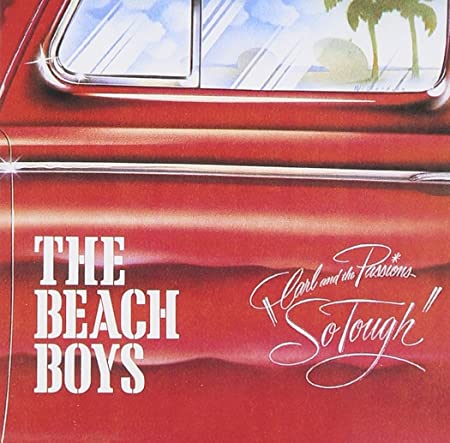
So Tough, Carl and the Passions

I recant my earlier declaration it may be satisfactory to simply get some Greatest Hits volumes of the Beach Boys.  I spoke from a place of ignorance, as well as an overweening personal recent antagonism to “Fall Breaks and Back to Winter (W. Woodpecker Symphony),” so please ignore my earlier comments.  You should get all the Beach Boys albums, especially this one.  The two-album releases of the Beach Boys canon from a years ago are still fairly easy to track down, especially in the age of online shopping, so you can get this along with another impressive early-’70s release Holland (which may have been the Beach Boys’ version of what Songs of Innocence was for U2, especially when you add in Mt. Vernon and Fairway (A Fairy Tale)).

What makes this album so good, you ask?  Your hesitation and trepidancy are understandable: this album is quite different from what we normally think of as “the Beach Boys,” especially since Brian Wilson is mostly absent, Bruce Johnston is gone, and two new band members, Blondie Chaplin and Ricky Fataar, bring new sounds and styles.  Yet these differences (with all due respect to the personal and professional frustrations many in the band were experiencing at the time) bring a freshness and enthusiasm and strangely enough a freedom.  This album doesn’t really sound like “a Beach Boys album” because the Beach Boys don’t seem to be trying to sound like themselves.  I’m certainly not casting aspersions on anyone (especially since my working knowledge of the creative practices of the Beach Boys is not what it used to be), but this album sounds like a reinvigorated group of guys who are delighting in creating enjoyable, meaningful music free from any external constraints or internal restraints (though I admit I could be totally wrong about that).

“You Need a Mess of Help to Stand Alone” and “Here She Comes” are good openers for an album about new directions for the band.  I didn’t look up the lyrics this time, though I have listened to the album a few times before writing this (as I usually do) and I read a bit of the liner notes from the 2000 re-release (as I usually don’t), so I don’t agree “Here She Comes” doesn’t fit on the album — it fits well considering this is an album of diverse sounds and styles.  It’s an album in which the different guys get to show off and experiment.

“He Come Down” may frustrate some of you, since it does approach the realm of blasphemy in a way, but you don’t really have to think of it as blasphemous since it’s more about the guys experimenting and learning about world religions (nothing wrong with some of that).  True, they do make Jesus, Maharishi, and Krishna seem equal and similar, but you can get over that easily because they’re wrong.  Maybe they realize that now.  At least they got 1/3 of the song correct.  You can easily add one word (“don’t”) to the other choruses and make it an even better song.

Side one ends with “Marcella,” the most “classic Beach Boys”-sounding track on the album.  For this it’s apparently considered the best of the bunch, though you can decide that for yourself.  Side two opens with “Hold On Dear Brother,” which I am absolutely convinced is about Brian.  The “traditional waltz” gets a clever Beach Boys twist, as the chorus drops a beat or two, making it difficult to dance to but impressive musically, in addition to the very heart-felt and moving lyrics.  You can tell me this song was wholly the work of Fataar and Chaplin, the least Wilsony of the group of all time, but that won’t move me one iota away from the deep-seated conviction this song is a tribute and love song and plea to Brian Wilson.

Sandwiched between the two Dennis Wilson songs “Make it Good” and “Cuddle Up,” “All This is That” is another remarkably different-sounding entry on this album.  It, too, “suffers” (though I’m not sure that is fair) from its Transcendental Meditation and Cosmic Humanism influences (or whatever they called it back in the day) — but even so, it’s a very nice, peaceful song.  In their favor, the Beach Boys at least seem more authentic in their Eastern spiritualism than another group popular at the same time from a different country.  No, I am not trying to excuse any of this or encouraging you to experiment with other religions, obviously.  You can still enjoy good music when you hear it, though.  The Dennis Wilson songs are equally impressive.  They are very good pieces of music, even if you don’t enjoy the timbre of his voice.  The orchestration adds to “Cuddle Up” very well, making it, indeed, a fitting end to a good album.

It may say Carl and the Passions on the cover, but this is a Beach Boys album.  It’s not the “classic” era, which may or may not have zenithed with Pet Sounds, but it’s still the Beach Boys.  A newer, fresher, freer Beach Boys.  They had their troubles, undoubtedly, but this album is a testament to the ability of the boys from Holland, California to reinvent themselves not for the sake of cash flow but simply for the love of making music and expressing their artistic identities.  So Tough is a very enjoyable album.  Mr. Christgau didn’t like it, so you know it’s good.  Don’t miss it.

War Child, Jethro Tull

Two-and-one-half years later, on the other side of the planet and in a wholly different musical universe, Jethro Tull released what many consider (inappropriately) an important “bounce-back” album, War Child.  I disagree with its status as a “bounce-back” album, since A Passion Play is not nearly as bad as many people think it is.  As with most things of its ilk, A Passion Play’s negative reception tells us far more about the listening world than about the album.  Since War Child did achieve a decent amount of success upon its release, and since it did feature a couple of Tull’s greatest hits, perhaps it would be more accurate according to our rather arbitrary categorizations to label War Child a “forgotten” gem instead of an “overlooked” gem, but arbitrariness aside (at least, former arbitrariness in favor of present, new arbitrarinesses) War Child may have been overlooked as a whole more than forgotten, since those hit tracks are still with us.  Perhaps it is counterintuitive to say “this album has been overlooked because it has a few greatest hits” on it, but how many casual Jethro Tull fans can name the albums from which the hits came?

Another potentiality for War Child being overlooked (or forgotten) is its tendency toward cynicism.  Here we are, promoting our Death to Cynicism 2015 campaign, and I am promoting an album that suffers from cynicism.  These things happen, I suppose.  The entire album is not a pessimistic, cynical lambaste of its subject matter, at least (“Ladies,” even if it is satirical, is such a lovely song musically it’s difficult to be displeased with it in any way).  At times, some of the numbers reveal Ian Anderson’s frustrations, perhaps in part because of the antagonistic reception Passion Play had fresh in his creative mind.

It’s possible a decent amount of the patina of cynicism can be burnished away by assessing it more as sly satire against those with the presented attitudes.  “Sealion,” for instance, may be more humorously intended than outright contemptuous.  “Skating Away on the Thin Ice of a New Day” and “Bungle in the Jungle,” certainly the breakaway hits of the album, ask us to consider them upbeat, jaunty tunes, even though the lyrical material isn’t quite so positive.  The periodic anti-organized religion themes of Ian Anderson’s repertoire sneak in for a few moments in these hits, but it’s easy again to either overlook them or attribute them to Anderson’s general attitude of the time.  Besides, he’s wrong, so don’t get silly about it.

The album is perhaps not as sublime as Thick as a Brick (but, hey, what else is?) or overtly cohesive as Aqualung (even if Mr. Anderson doesn’t think that is as cohesive as everyone else does), but it’s a much more solid album from beginning to end than it seems to be considered.  It is a significant shift again in the Jethro Tull direction, again in part because of their reaction to the Passion Play reaction, but it’s a fine showcase of what Jethro Tull was capable of, even in their mildly frustrated early-mid career before their “grass roots self-revival” beginning with Songs from the Wood.  The bonus tracks from the early ’00s release give us a further glimpse of the diverse musicality of the group, especially the orchestral directions spirited along by the potential movie of the album.  Apparently the 40th anniversary 4-disc set has even more previously unreleased material, including more about the scrapped film project, but I don’t have that yet as of this printing.  Some day.

In the meantime, go listen to War Child, especially in a situation in which you can listen attentively to all the sounds and lyrics.  It’s much better than just “the album with ‘Skating Away’ and ‘Bungle’ on it.”  Give it a try or three.

Susan B. Anthony: A Singular Leader

E. J. Erichsen Tench

The onus of leadership is incredibly high in our society; leaders must take command, while at the same time following, must inspire, while at the same time encountering reality, and must imagine wide possibilities, while at the same time ensuring work is accomplished at the base level.  To be a leader is to carry a great deal of responsibility; to be a spiritual leader is to carry out virtues of humility and servanthood.  As a business major whose degree is meant to support my martial arts, visual arts, and social justice work, I was hard pressed to find a leader in my field of study who could fit all the above requirements.  I turned to the basics of my vocation interests and realized I pursued all my interests as a female, and not very long ago in our human history, my vocational interests would have been staunchly closed to me.  I decided to focus on the leader who made it possible for me, as a woman, to pursue my outspoken interests.  Without the leadership of Susan B. Anthony, I would not be in the school or vocational position I currently enjoy. 

Susan B. Anthony was born in 1820 to a common couple of Quaker persuasion.  While her upbringing was common and normal, her parents would heavily influence the social justice giant she later became.  Her father, Daniel Anthony, “introduced [his children to] self-discipline, principled convictions, and belief in their own self-worth” (Barry 11).  He provided the strong force of self-discipline and steady conviction that would characterize Anthony’s later work.  Daniel and his wife, Lucy, were the first individuals in Anthony’s life who woke her to the realization men and women were not politically or culturally equal.  While her father believed in equal schooling and voting opportunities, he balked at the idea of having “a woman overseer in [his] mill,” which Anthony would later recall as one of the common inconsistencies in her gendered upbringing (18).  Lucy Anthony impressed upon Susan Anthony the reality the married woman had to sacrifice her identity to “long years of selfless toil” in “a kind of suffering” (48-9).

It was this peculiar insistence that married women lose their identity that began to awaken in Anthony a sense of deep injustice.  As she finished school and began work as a teacher (the only position open to women who did not marry), she noted her tight-knit circle of female family members and friends was constantly shrinking due to marriage.  “[M]arriage [conventionally] meant that a woman must subordinate all other friendships and relations to the relationship with her husband,” always resulting in daughters and sisters breaking off deep, emotional ties to other women in order to focus these solely on one man, who was still allowed to maintain deep relationships with his family and friends (Barry 36).  Susan B. Anthony noted as a single woman, she was able to “creat[e] her own separate identity in her work at a time when other young women, like her sister Guelma, were learning to establish their identities through their husbands” (39).  As a single woman, she was also able to keep the wages she earned, even though she “did not overlook the fact that she earned one-fourth of what her father was paid for teaching in Rochester and one-half of the eighteen dollars a month her younger brother Daniel R. was earning in a district school” solely because of her gender (47).  A married woman would have to turn over all her funds to her husband, in addition to losing any possible representation before the law, along with losing any legal authority over her own property or children.

While these marital gender-based disadvantages enraged Anthony, the tipping point in her silent brooding was the issue of alcohol.  Like many temperance workers, Anthony noted married women had absolutely no protection from alcoholic and immoral husbands.  Unique to Anthony, and one of the reasons behind her leadership brilliance, she understood without political representation, married women were unable to seek self-protection or to speak out.  With no ability to divorce for cases of abuse and marital negligence, and absolutely no way to support themselves, married women had nowhere to turn.  While the problem was moral and cultural, no tangible relief could be accomplished while women had no political voice; the only way to have political voice was to vote.  Unfortunately, women were not allowed to vote.

Susan B. Anthony realized she had to campaign and work for complete legal and cultural equality for women.  As such, in 1848, Anthony “wove the issues set forth in her … Declaration of Women’s Right (in which she had demanded full rights, including the vote for women) into the problem of intemperance (Barry 68).  It was at this time Anthony joined forces with Elizabeth Cady Stanton, who, as a married woman, personally understood and felt the legal and personal losses she had to suffer.  The two became the most inspirational and effective women’s rights power couple of their century, forging a friendship that outlasted Stanton’s marriage in time and depth.

Susan B. Anthony and Elizabeth Cady Stanton essentially led the women’s rights movement until their deaths.  While women would not be able to nationally vote until fourteen years after Anthony’s death in 1906, the two women impacted their culture in incredible ways.  They managed to convince the United States to allow women to attend colleges alongside men, to allow married women custody rights over their children, property rights, ownership rights, the ability to sue and be sued, more equal pay for female employees, and the ability to vote in four of the states.  In addition, they shook the cultural ideas that allowed men to suppress women in the first place.

While Anthony was a child, the Jacksonian ideal of the self-made man was flaunted for all young white boys; they were “part of the foundation of the new, proud, and growing democracy, in which it was believed that [they], regardless of…class or station in life, could grow up to be president” (Barry 15).  However, with “all the talk about the aspiring common man in search of his unlimited potential, what could be said of the common woman?  Unlike her husband, there was no place for her outside the home, no national themes or grand philosophies to eulogize her” (16).  Susan B. Anthony expanded the cultural boundaries for women by allowing them legal and political rights.  Since women had more chances to earn income, they were more free to pursue their own interests and to create for themselves an identity apart from their husbands. 

Since Stanton was married, Anthony experienced the continual pains of watching her women-friends and lovers submit themselves to men who burdened them with household duties and encroached on their identities.  She encouraged women to challenge the very idea of two individuals of different roles marrying.  With the emphasis on different roles, true legal and cultural equality could never be gained.  She argued “the doctrine that love must prevail in woman while wisdom prevails in men” resulted in a world where “‘woman must look to man for wisdom — must ever feel it impossible for her to attain wisdom equal to him’” (130).  For Anthony, “real love could only exist between two free individuals who came together in equality.”

Leaders show their quality by how they handle challenges.  While Anthony was an incredibly driven individual, she often had to sacrifice her desire for total sexual equality in order to create unity between various women’s movements.  While she desired mutual submission and love between wives and husbands and the ability for wives to divorce abusive husbands, many other women’s groups, such as the American Woman Suffrage associations, wanted a more conservative approach that did not challenge prevailing religious ideas about marital hierarchy (296).  In order to preserve unity, Anthony agreed to narrow her focus down to gaining national suffrage.

Another key challenge in Anthony’s call for equality came from the Republican party and the temperance and abolitionist groups led by men.  Anthony was a key supporter in abolitionism and the right for both men and women of color to vote.  However, male abolitionists continually refused to work with her because of her insistence for suffrage.  In a devastating blow to Anthony, the Republican party took powerful ends to “deliberately exclude women from both the protection of citizenship and the right to vote[.  The] Republicans wrote the word ‘male’ three times into the [14th] amendment,” thus ensuring women had no loopholes with which to argue for voting rights (164).  “The designation of sex had never before appeared in the Constitution.”  Forced with such obstinacy, Anthony improvised by supporting the male’s abolitionist work through speaking at their events, while separating their support from her suffrage work.  This break in unity resulted in the men’s movements receiving more support, while Anthony lost a great deal of influence during the Civil War.

Susan B. Anthony was an incredibly determined individual with a desire to “focus on what is good for others” (Patterson 1).  In her personal work, she demanded thoroughness and utter dedication from her subordinates.  Her ability to encourage the heart was most keenly felt in her personal relationships with her women friends; she showed deep “appreciation for individual excellence” and was hugely emotionally supportive (Kouzes and Posner 99).  For those outside her circle, her emotional warmth was less apparent.  Not a particularly humble individual to work for, her intra-personal strengths of character were most strong when it came to modeling the way, inspiring a shared vision, challenging the process, and enabling others to act.  She modeled the way through “find[ing her] voice by clarifying [her] personal values and then expressing those values” through her speaking and writing (39).  Her ability to unite all women from all different racial and class backgrounds was a result of her ability to “envision the future by imagining exciting and ennobling possibilities” (53).  Through challenging the legal and cultural processes of the day, she enabled others to act by banding together to change an “unacceptable [status quo]” (89, emphases in original).

Susan B. Anthony is an incredibly interesting person to study; I am hugely in her debt.  Without her work, I would not be able to attend school alongside other men, would not be able to own my own property, would not be able to keep earning my own money once married, would not be able to keep my own name, would not have legal custody over any future children, would not be able to have a life and vocation of my own, would not be able to divorce an abusive spouse, and would not be able to vote.  Her dedication to her work, even when the results were not apparent to her, encouraged me to continue working to better the students I teach and to continue addressing themes of redemption in my art.  It is this dedication in the face of opposition that most challenged me and, I think, most strongly illustrates Susan B. Anthony’s qualities as a leader.

While she was not specifically a Christian, her “spiritual belief in immortality, which meant for her a rejection of the idea that we leave nothing behind us after death, sustained her particularly because her political work often did not bring her immediate rewards” (Barry 96).  This was particularly encouraging for me.  In my on-line work to combat sexism, racism, heterosexism, and childism in media and culture, I know I may never see the positive impact my work has.  Much social justice work is thankless and involves one generation setting the stage for the next generation.  In Susan B. Anthony’s case, she was able to see some of her work gain success, but she died before universal suffrage was granted to women.  She kept her strength through understanding the results of her actions were what mattered.  This is something very close to what N.T. Wright argues for: “looking at Christian behavior [as active virtues bringing about redemption] means that we approach ‘ethical’ questions — particularly questions about what to do and what not to do — through the larger category of the divine purpose for the entire human life” (69).  Susan B. Anthony was working for a life to come, laying down her health and existence to accomplish something grand and redemptive for womenkind.  Her ethical virtues were shaped by a desire to better the human life, something completely in line with the Christian’s duty.  As a leader, she was incredible and an inspiration for generations to come.

Works Cited

Barry, Kathleen. Susan B. Anthony: A Biography of a Singular Feminist. New York: New York University Press, 1988. Print.

Kouzes, James M. and Barry Z. Posner (ed.). Christian Reflections on the Leadership Challenge. San Francisco: Jossey-Bass, 2006. Print.

Patterson, Kathleen. “Servant Leadership: A Timeless Leadership Style.” Christian Leadership Alliance. Asuza Pacific University, 2011. Print.

Wright, N.T. After You Believe: Why Christian Character Matters. New York: HarperCollins, 2010. Print.

War: Beneficial But Unwanted

Justin Benner

There is nothing better than reading a poem that contradicts the title in almost every way. That’s the way Stephen Crane’s “War is Kind” poem is. It’s not Stephen Cane if it isn’t a graphic or extremely blunt description of war. However, in this poem he takes a slightly different approach. While he still talks about death and blunt descriptions, he is showing war is not kind but rather war is awful and brutal and almost downright inhuman. This is coming from the same author as who wrote The Red Badge of Courage, his most famous — and most brutal — story. This poem is almost a critique on human attitude toward war. Americans in the 21st century are sick of war; when this was written, it was quite a few years post-Civil War. Americans post-Civil War were also very tired of war. Having just fought an extremely bloody Civil War killing hundreds of thousands of men, it is easy to see how American writers might be antagonistic toward war.

“War is Kind” isn’t really a long poem. It stands at a nice 5 stanzas long, each stanza being on average anywhere from 3-5 lines long. It starts off by talking about a woman whose husband has been shot and killed. We can tell by context her husband was most likely in a cavalry unit in the Civil War. The good old cavalry are always the first to die not only in Historical Gaming class but also in literature. But the stanza ends with “Do not weep. War is Kind.” This seems like a rather harsh and unwarranted statement after just having her husband die

In the second stanza Crane makes the statement: “These men were born to drill and die. The unexplained glory flies above them.” This statement makes perfect sense coming from a realist. Realism accepts no deeper meaning in any form of reality so Stephen Crane observes men enlist in the thousands, drill, and subsequently die for “the unexplained glory.” This unexplained glory, I believe, is patriotism. Upon face value, patriotism is simply a reason for men to charge headfirst into almost certain death for glory. So once again Crane’s realism shines through. But he doesn’t stop there with his graphic descriptions. He then goes on in the third stanza about a man who has been shot in the chest and dies grasping his chest and falling into a trench.

The fourth stanza is more symbolic than anything. It starts off describing the flag, but then talks about how war teaches men the “excellence of killing.” War has been a kill-or-be-killed situation ever since the Middle Ages. The “excellence of killing” is in reference to the training a soldier might receive about how when told to fire at the enemy he must obey and shoot, lest he be shot first.

The last stanza talks about a mother, a mother whose “heart hung humble as a button. On the bright splendid shroud of your son.” This mother has lost her son to war. In fact in three out of the five stanzas, the writer switches the affected party. In the first stanza it’s a maiden, in the third it’s a babe (which could be replaced with child or young adult), and the fifth culminates with the mother. Each party is affected by a different death, yet all connected. Each of them has lost a spouse/parent to war, hence the irony in the title.

This poem is a harsh reminder there is nothing pretty about war. War has always existed in mankind ever since man’s downfall. War is an ugly, harsh place where death and fear reign strong. Soldiers during World War I described it as hell. But God can still use war in His grand plan. He told the Israelites to go to war many times in the Old Testament. Even the worst of things in life can turn out for good.

“…a time to love and a time to hate, a time for war and a time for peace…” Ecclesiastes 3:8.

Reading Between the Lines of Genesis 4-6

Seraphim Hamilton

If we accept that Genesis 4-6 happened, then there must have been a lot of history that’s not reported to us. If the history of the world from the creation to the Flood is more than a literary construct, then there are 1,656 years of history that are condensed into three chapters. For context, this about the amount of time from the cutting of the Abrahamic covenant to the arrival of Christ. This is something which interests me, and luckily, there are clues in the text as to what is actually going on. James Jordan has written some interesting essays called “Getting Real in Genesis” that have stimulated my thought.

Genesis 4. Cain kills Abel. Most of what we imagine about this situation is dead wrong, and we should be able to figure that out. Cain and Abel are clearly not the only people on the scene here, because Cain goes out and builds a city. Moreover, we see from Genesis 5 Adam is 130 years old when Eve bears Seth. If we assume a period of two years between Abel’s death and the birth of Seth, then the murder of Abel takes place 128 years after the expulsion of man from Paradise. Given that man lived to nearly a thousand, the time when childbearing was possible was much more extended in the antediluvian world. And we know from Genesis 5 each of the antediluvian patriarchs had plenty of children unreported to us.

So in Genesis 4, there are many more people than Adam, Eve, Cain and Abel. Cain and Abel were their first two kids. But then they continued to have children. Cain and Abel probably had their own children. And grandchildren. And great grandchildren. There are thousands of people on the scene once we get to 128 AM (Anno Mundi, in the Year of the World). Moreover, the text informs us this occurred at the “cutting off of days” or harvest-time, the turn of the year.

This is a time for liturgical celebration in Israel’s festival year, as well as the festival years of most ancient cultures, indicating this is a part of God’s primeval revelation to mankind. We’re told Adam was to “guard and cultivate” the world. Guarding is priestly, cultivation is royal. Adam is Priest-King. But Cain is a cultivator of the ground, and Abel is a guarder of sheep. As with Christ and His children, the roles of priesthood and kingship devolve separately upon the descendants of Adam. So, in 128 AM, it’s the turn of the year, and it is time for Adam to lead the entire human race in worship. Cain is crown prince and Abel is high priest.

This has been going on for over a century, so Cain and Abel know what to do. Abel would bring a blood sacrifice to the gate of Paradise (just a little west of where they lived), and Cain would bring the firstfruits of his harvest on top of Abel’s blood sacrifice. But one year, Cain decides he should be able to celebrate his own liturgy. We know what this looks like from Israel’s history as well — the kings decide liturgical celebration shouldn’t be the exclusive privilege of the priests. And we know God does not like it when this happens.

So when Cain celebrates his independent liturgy at the gate of Eden, the flaming sword of the cherubim come crashing down upon his offering, and he is publicly humiliated in front of the entire human race — thousands of people.

This is what enrages Cain. He brings Abel out into the field and murders him.

Given the sheer amount of people involved at this time, the result was likely chaotic. God publicly demands Cain move east, to the land of Nod, and Cain summons whomever will join with him to ally with him. Hundreds do. And Cain builds a city after the name of his son — City (or Enoch). A couple years later, Eve bears a new priest — Seth, who begins again to lead Adam’s faithful children in liturgical worship. All the while, Cain’s civilization begins to expand.

Cain knew his wife, and she conceived and bore Enoch. When he built a city, he called the name of the city after the name of his son, Enoch. To Enoch was born Irad, and Irad fathered Mehujael, and Mehujael fathered Methushael, and Methushael fathered Lamech. And Lamech took two wives. The name of the one was Adah, and the name of the other Zillah. Adah bore Jabal; he was the father of those who dwell in tents and have livestock. His brother’s name was Jubal; he was the father of all those who play the lyre and pipe. Zillah also bore Tubal-cain; he was the forger of all instruments of bronze and iron. The sister of Tubal-cain was Naamah. Lamech said to his wives: “Adah and Zillah, hear my voice; you wives of Lamech, listen to what I say: I have killed a man for wounding me, a young man for striking me. If Cain’s revenge is sevenfold, then Lamech’s is seventy-sevenfold” (Genesis 4:17-24).

This is Cain’s dynasty — the kings of the city of man. From their names, we can tell something about who they were. According to James Jordan (read more in his series of studies, Trees and Thorns)

  • Enoch: City
  • Irad: Man of the Untamed City
  • Mehujael: He Who Strikes Out Against God
  • Methushael: He Who Kills the Peace of God
  • Lamech: King

Whether these were the actual names of the heirs of Cain’s dynasty or a commentary on the nature of Cain’s dynasty by the Sethites is irrelevant: this is the text as we have it, and we are to understand the progress of Cain’s civilization by it. It’s not that difficult to decipher what is occurring here. Cain builds a city after the name of his heir, City. Enoch bears the man of the untamed city — the city of man is descending further into evil, and beginning to expand. The Man of the Untamed City bears He Who Strikes Out Against God. Mehujael is a conqueror — he moves out of the land of Nod and begins to dominate the other lands of the world, as the Cainite civilization goes global. He Who Strikes Out Against God bears He Who Kills the Peace of God. Methushael’s eye is on the land of Eden, where the Sethites are. He’s beginning to attack the people of God. We’ll discuss why in one moment. The wickedness of Cain’s dynasty reaches its fullness in King:

And Lamech took two wives. The name of the one was Adah, and the name of the other Zillah. Adah bore Jabal; he was the father of those who dwell in tents and have livestock. His brother’s name was Jubal; he was the father of all those who play the lyre and pipe. Zillah also bore Tubal-cain; he was the forger of all instruments of bronze and iron. The sister of Tubal-cain was Naamah. Lamech said to his wives: “Adah and Zillah, hear my voice; you wives of Lamech, listen to what I say: I have killed a man for wounding me, a young man for striking me” (Genesis 4:19-23).

King is the fullness of Adam’s fall. Adam seized the Tree of Kingship, and in Lamech, kingship reaches its very worst. As Moses warned in Deuteronomy 17, and as Samuel reinforced, kings want to take, take, take. So Lamech takes two wives — an attack on marriage. He’s the climax of Adam’s history through Cain, so he bears a New Cain: Tubal-Cain. And a New Abel: Jabal. Tubal-Cain gets ores out of the ground as Cain was a cultivator of the ground. Jabal develops new modes of animal husbandry as Abel was a guarder of sheep. But there’s something new. Jubal begins to compose music. Remember another king, much later in history: King David does the same thing. He organizes the Levitical choir around the Tabernacle, and he writes Psalms. King Lamech also writes a Psalm, but it’s an evil one:

I have killed a man for wounding me,

A young man for striking me,

if Cain’s revenge is seven-fold,

then the revenge of the King is seventy-seven fold!

What we see here is the great sin of all kings: presumption against God. God, in spite of Cain’s sin, swore to protect king. King Lamech therefore presumes God will protect all sinners, no matter how wicked — after all, he’s the true king. If I commit a sin an order of magnitude worse than Cain’s, then God is my servant — He will avenge my blood an order of magnitude more.

With this said, let’s turn to the line of Seth and figure out what’s going on.

This is the book of the generations of Adam. When God created man, he made him in the likeness of God. Male and female he created them, and he blessed them and named them Man when they were created. When Adam had lived 130 years, he fathered a son in his own likeness, after his image, and named him Seth. The days of Adam after he fathered Seth were 800 years; and he had other sons and daughters. Thus all the days that Adam lived were 930 years, and he died. When Seth had lived 105 years, he fathered Enosh. Seth lived after he fathered Enosh 807 years and had other sons and daughters. Thus all the days of Seth were 912 years, and he died. When Enosh had lived 90 years, he fathered Kenan. Enosh lived after he fathered Kenan 815 years and had other sons and daughters. Thus all the days of Enosh were 905 years, and he died. When Kenan had lived 70 years, he fathered Mahalalel. Kenan lived after he fathered Mahalalel 840 years and had other sons and daughters. Thus all the days of Kenan were 910 years, and he died. When Mahalalel had lived 65 years, he fathered Jared. Mahalalel lived after he fathered Jared 830 years and had other sons and daughters. Thus all the days of Mahalalel were 895 years, and he died. When Jared had lived 162 years he fathered Enoch. Jared lived after he fathered Enoch 800 years and had other sons and daughters. Thus all the days of Jared were 962 years, and he died. When Enoch had lived 65 years, he fathered Methuselah. Enoch walked with God after he fathered Methuselah 300 years and had other sons and daughters. Thus all the days of Enoch were 365 years. Enoch walked with God, and he was not, for God took him (Genesis 5:1-24).

Just as with the dynasty of Adam through Cain to Lamech, I’ve taken you seven generations through the line of Adam through Seth to Enoch. We ought to assume the generations of Seth and the generations of Cain moved roughly contemporaneously with each other, and when we do that, we discover something very interesting. Remember that Enoch means “city.” What we should figure out from this is Enoch’s father Jared began to build cities in the land of Eden. Up to this point in time, while Cain’s civilization (recall He Who Strikes Out Against God) had been developing into a global society, the Sethites were building villages in the land of Eden. As with later in history, the wicked often reach cultural advances first, because they’re willing to break the rules. But with Jared, the Sethites finally develop enough technology to begin to construct cities.

This is when we get Methushael: He Who Destroys the Peace of God.

In other words, once the Sethites began to construct cities, their civilization looked ripe for conquest. The armies of the Cainites began to invade the land of Eden.

Now, what do we know from later in Israel’s history? We know that when the Gentiles begin to invade the land, the temptation is for the royal house to make an alliance with the pagans in order to defend the land. This is what is happening in Isaiah 7, when King Ahab fears the alliance of Assyria and the Northern Kingdom. Take a look at the language Isaiah 30:1-2 uses for this sort of temptation:

“Ah, stubborn children,” declares the Lord, “who carry out a plan, but not mine, and who make an alliance, but not of my Spirit, that they may add sin to sin; who set out to go down to Egypt, without asking for my direction, to take refuge in the protection of Pharaoh and to seek shelter in the shadow of Egypt!”

And what happens when Israel’s kings begin to make marriage alliances with the wicked? Prophets begin to prophesy against them. This is what occurs with Elijah, who confronts Ahab and his wicked pagan wife, Jezebel. Elijah, of course, is ultimately taken into Heaven in a chariot of fire.

Back to Genesis 4-6. So what’s happening? The Sethites have begun to build cities. Methushael is leading his armies into the land of Eden, ready to conquer it. And the Sethites are utterly terrified. So here’s what they do:

When man began to multiply on the face of the land and daughters were born to them, the sons of God saw that the daughters of man were beautiful. And they took as their wives any they chose. Then the Lord said, “My Spirit shall not abide in man forever, for he is flesh: his days shall be 120 years.” The Nephilim were on the earth in those days, and also afterward, when the sons of God came in to the daughters of man and they bore children to them. These were the mighty men who were of old, the men of renown (Genesis 6:1-4).

The refrain of Genesis 5 is the sons of Seth had “other sons and daughters.” The “sons of God” here in Genesis 6 are, as in Deuteronomy 32, the fallen angels. And in Genesis 12, Pharaoh sees Sarai is “beautiful” and wishes to make a marriage covenant with Abram through her. Remember that Abram is a prince, and Pharaoh wants to extend his dominion over the land of Canaan through a marriage alliance with Prince Abram. This is what is going on here. Satan already dominates the world through Cain, but he wants to dominate the last little bit of the world through the Sethites.

When he sees the Sethites are terrified of conquest, he makes an offer: Make a marriage alliance with me, and I’ll give you victory.

The sons of God then go into the daughters of Adam, and they bear Nephilim, giants. These Nephilim were the “mighty men” before the flood. Later in the Bible, Nimrod is called a “mighty man.” He’s a conqueror. Joshua and his armies are righteous “mighty men.” They conquer the land of Canaan through the power of God. We ought to understand the mighty men of Genesis 6, then, as the conquerors who resulted from the union of the sons of God with the line of Seth.

Now, we can find something very, very interesting. I noted that when the kings of Israel began to make marriage alliances with the pagans, Elijah came to prophesy against them and was ultimately taken up into heaven. This is what happened with Enoch:

Thus all the days of Kenan were 910 years, and he died. When Mahalalel had lived 65 years, he fathered Jared. Mahalalel lived after he fathered Jared 830 years and had other sons and daughters. Thus all the days of Mahalalel were 895 years, and he died. When Jared had lived 162 years he fathered Enoch. Jared lived after he fathered Enoch 800 years and had other sons and daughters. Thus all the days of Jared were 962 years, and he died. When Enoch had lived 65 years, he fathered Methuselah (Genesis 5:14-21).

Note the contrast here. It takes longer to bear Enoch than it takes to bear any of the other sons. Why? I submit that this is because Jared’s earlier sons went astray — they gave their daughters in marriage to the sons of God, and they produced conquerors. Enoch is a later son born to Jared, and Enoch begins to prophesy against the royal house of Seth:

It was also about these that Enoch, the seventh from Adam, prophesied, saying, “Behold, the Lord came with ten thousands of his holy ones, to execute judgment on all and to convict all the ungodly of all their deeds of ungodliness that they have committed in such an ungodly way, and of all the harsh things that ungodly sinners have spoken against him” (Jude 1:14-15).

And just like Elijah, Enoch is taken into Heaven.

Let’s recap where we are:

Cain moved into the land of Nod with hundreds of people. He built a city, and over time, Cain’s city began to expand into a global civilization with high technology. Once the Sethites began to build cities in the land of Eden, Cain’s heir decided to conquer it. The Sethites were afraid, and made a marriage alliance with fallen angels. Through this marriage alliance, the Sethites produced conquerors of their own, and Enoch began to prophesy against the fallen royal house of Seth. Enoch is the seventh from Adam, and King Lamech from Cain’s line is the seventh from Adam.

So here’s the question. Why, after Lamech’s three sons, do we not see any more descendants of Cain?

My suggestion is the key is in the identity of the Nephilim — conquerors. Through their union with the sons of God, the Sethites produced conquering kings. My suggestion is these conquerors were successful, and they defeated the Cainites and wiped out their royal house. The line of Seth ruled the world, but they had done so at the expense of their own relationship with God.

It’s when their victory was secure, and when half-demon, half-human (I’ll write more about the mode of their union another time) kings were ruling the throne, that:

The Lord saw that the wickedness of man was great in the earth, and that every intention of the thoughts of his heart was only evil continually. And the Lord was sorry that he had made man on the earth, and it grieved him to his heart. So the Lord said, “I will blot out man whom I have created from the face of the land, man and animals and creeping things and birds of the heavens, for I am sorry that I have made them.” But Noah found favor in the eyes of the Lord (Genesis 6:5-8).

Thanks for reading.

A Case for Biblical Creationism

Stephen Widlacki

Generally, people are interested in finding the truth behind the things about which they care and would prefer to know what they believe is in fact true rather than just simply believable. This desire of knowing the truth about things is applicable to any issue, but one of the more popular issues among debaters today is how the universe and everything in it came to be. It is an important issue because its truth holds the answers to all other broad questions of life such as what is right versus what is wrong, what the purpose of life is, are humans the most advanced life in existence, etc. The answer to this question of the universe’s origin has never been universally accepted, but instead humanity is divided into many groups with different beliefs concerning this topic, which include religious and non-religious personal theories. Among these diverse beliefs are two very popular ones which sharply disagree. These beliefs are Biblical creationism and the atheistic Big Bang theory partnered with the theory of macroevolution. You are probably familiar with these beliefs if not a follower of one of the two yourself, but even if that is not the case, the exploration of this issue will result in the all-important answer of which one of these beliefs is true and is therefore the reason for our universe’s existence.

The topic of Biblical creationism vs atheistic theories of the universe’s origin is a presently popular issue which stirs up much debate all around the world, especially in the United States. The theory of microevolution was introduced to the world by Charles Darwin in the 1830s after his trip to the Galapagos Islands (Wilkins). He made the discovery of seemingly occurring adaptations and minor changes by animals to better suit their environments. This is supported by observation and reason and also agreed on by creationists, but many people who were not believers in a god used this discovery to create a theory of a more exaggerated and larger scale evolution called “macroevolution,” first introduced in the year 1927 by Russian entomologist Iuri’i Filipchenko (Wilkins). The theory claimed to nullify the necessity of God and grew quickly as a topic of interest in many countries.

Biblical creationism is the belief that all things which exist are the result of the divine command of God recorded in the Bible’s first book of Genesis. It is and has been held as truth by followers of the Bible since it has existed and, according to the Bible, since the first man and woman were made. Biblical creationism calls for the necessity of an intelligent designer in order for the perfect and orderly functions of nature to exist, and the Bible is man’s primary and perfect way of understanding that designer.                                                     

The Big Bang theory has existed since the year 1929 when Edwin Hubble made the observation that as galaxies are farther from our own they seem to move faster away from it (“Big Bang Theory”). This discovery led to much thought over how our universe could be explained without God and it was later accepted by many that there was a beginning point of origin for our universe which galaxies move away from, and there must have been a physical and scientifically explained occurrence that started it. This over many decades became the current Big Bang Theory.

The uncommon terms which I will be using during my thesis are macroevolution, microevolution, primordial, and intermediates. Macroevolution is “any evolutionary change at or above the level of species or the change of a species over time into another” (Wilkins). Microevolution is “any evolutionary change below the level of species, and refers to minor changes or adaptations within a species that better equips it for its environment” (Wilkins). Primordial means “constituting a beginning; giving origin to something derived or developed; original; elementary” (Wilkins). An intermediate is “an organism that was truly between two different types of organisms” (Smart).

This issue is important to every person whether atheist or creationist. Atheists believe knowing the truth how our universe came to be is important because facts are what allow people to learn truth and prosper in life. Creationists believe knowing the truth of how our universe came to be is important because we must give credit and worship to the God who made it and because not living a Christian life dedicated to God leads to eternal anguish. All people should know the truth and both atheism and creationism provide reasons why. There is good which comes from knowledge, and all people strive to find it and benefit from it.

My thesis is Biblical creationism is far more plausible than the popular atheistic theories of the Big Bang and macroevolution. I will prove this with three arguments: the universe requires a supernatural origin due to its inability to self-exist and the Bible provides us with the vital knowledge of this origin, an intelligent designer is needed to keep the universe following the orderly fashion which it does and the Bible clearly explains that God does this, and the Bible has been proven correct by historical and archaeological discoveries providing a good reason to believe its account of creation. I will then refute two counterarguments: the Big Bang is responsible for the origin of the universe due to an observation of galaxy movement and macroevolution is an existent process which better equips all living things for their environments and the fossil record shows it in motion.

My first confirmation point which proves my thesis is the universe requires a supernatural origin due to its inability to self-exist and the Bible provides us the vital knowledge of this origin. All people can find through simple reasoning that the cause of all created things had to have been existent without having to have been created itself, since nothing cannot create something. Existence itself cannot just be on its own, nor could it spawn out of a lack of pre-existent things. “The law of energy conservation (First Law of Thermodynamics) says that nothing new is created or destroyed. That means that the universe did NOT create itself. Nor is there any law of nature that can account for its own origin” (“Evolution vs. Creationism or Creationism vs. Evolution”).

All things which are physical must have an origin, so our universe had to have one as well. God is the only option which can serve as the necessary cause of the universe which did not need to be created to exist. This is because God is as described in the Bible, a being of unlimited power who is not bound by anything and is the everlasting creator of all things. Any way of explaining the origin of the universe without a creator gets stuck trying to explain how anything else could have existed by itself at the very beginning of all things and how it caused the first steps of its origin process. “The beginning [of the universe] had to be of supernatural origin because natural laws and processes do not have the ability to bring something into existence from nothing. The supernatural cannot be proved by science but science points to a supernatural intelligence for the origin and order of the universe. Where did God come from? Obviously, unlike the universe, God’s nature doesn’t require a beginning” (Ranganathan).

If the universe always existed, then it would have to be the creator of all which it contains. The universe however, being mindless and powerless to create things, cannot be the creator of the intricately designed things which it contains since it is lifeless and in control of nothing. Intelligence and order exist in the universe, and that means that the cause of these things was intelligent and orderly. The Bible tells us about God’s self-existence in John 1:1-3, which says “In the beginning was the Word, and the Word was with God, and the Word was God. The same was in the beginning with God. All things were made by him; and without him was not anything made that was made.”; and Genesis 1 covers the entire account of God’s creation of the world over the course of 6 days by simply ordering all things to exist through His omnipotence. The origin proof is one of the most powerful defenses for creationism which exists and is not often discussed by atheists themselves despite its importance.

My second confirmation point is an intelligent designer is needed to keep the universe following the orderly fashion which it does and the Bible clearly explains that God does this. Without a creator, the universe would have to be on its own and devoid of intelligence and the ability to design things to follow order. Our universe however, is quite orderly and allows not only repeating processes, but complex life to exist comfortably on our Earth. Orderly things on Earth such as the ever-repeating water cycle which nourishes life on the planet, the perfect distance of the sun from the Earth which creates a comfortable and lighted climate for sustaining life, and the very existence of life on Earth and its ability to think, experience pleasure, and willingly reproduce so more life can come upon the Earth all show plainly that this planet was designed to sustain life. Such perfection is often overlooked or taken for granted, but it should not be because the very fact that this perfection exists means that the cause of it was also perfect and orderly. “All scientific observations point to the fact that life only comes from life. This scientific law is referred to as the Law of Biogenesis. Hence, to get life you need life” (Harber, 31). If the universe has no creator, then there is no way for something with intelligence to arise from its dead and intelligence-devoid nature.

Life, in order to exist requires care and self-sustaining benefits which keep organisms living without any effort on their part required. All life which exists have these provided processes which could include automatic blood circulation, self-continuous breathing, and the transferring of visuals from the eyes to the brain to allow sight. These processes are made up of pure order which means that they could not have come out of chaos. The second law of thermodynamics states “matter and energy in the universe that is available for work is decaying and running down” (Gallop). This means all order in the universe can only be made by pre-existent order and never created by chaos.

Life is always striving for improvement and perfection. Even the theory of macroevolution recognizes this and claims that life always evolves to better fit its environment. A creator is required for life to exist because unless there is an intelligent designer, there is just a non-intelligent environment which has to be responsible for the perfect design and processes of life, and a powerless and mindless environment cannot act to accomplish anything. The Bible emphasizes how God created the Earth with meaning many times such as in Isaiah 45:18 which says “For thus saith the LORD that created the heavens; God himself that formed the earth and made it; he hath established it, he created it not in vain, he formed it to be inhabited: I [am] the LORD; and [there is] none else.”

My third confirmation point is the Bible has been proven correct many times by historical and archaeological discoveries providing a good reason to believe its account of creation. The Bible tells of rulers and people which are proven through historical findings to have been real, and it is known and accepted even by atheists Jesus was undoubtedly a real person who cannot be ignored by historians due to the historical proof of his life on Earth. Many of the stories of the Bible have been found to be completely accurate in its text according to what historical findings have proven over time, and none of them have been found to be wrong about what they tell. In other words, everything the Bible says and that has also been found and studied by mankind has been proven to be accurately documented in the Bible. Once such example is the discovery of the first archaeological record of King David outside of the Bible’s text which was made by archaeologist Gila Cook in 1993 in Tel Dan, Israel. It is a stone which dates back to 850 B.C. (about 150 years after David’s reign) and carries an account of King David’s reign in Israel. It has come to be known as the “House of David Stone” (Brown).

Another example of the Bible’s historical support took place in 1990 when a burial cave was discovered in the Peace Forest area of Jerusalem which contained ossuaries of 12 people from the beginning of the A.D. era. One of these ossuaries contained the remains of the high priest Caiaphas who resided at the trial of Jesus (Burrows). In 1961, a limestone block was found in a Roman amphitheater in Caesarea Maritima which bore the inscription “Tiberieum, (Pon)tius Pilatus, (Praef)ectus Iuda(eae).” The stone was one of dedication to Pontius Pilate who held the trial of Jesus, and this became the first evidence of the existence of Pilate outside of the Bible’s text (Burrows). The ruins both cities Sodom and Gomorrah have been discovered, Cornelius Tacitus, recognized as the “greatest historian of Rome” A.D. 56-120, wrote of Jesus suffering under Pontius Pilate, and the three-piece Grave Stele of Mycenae shows a drawing of Egyptians on chariots chasing a group of unarmed people into a parted body of water with the fugitives emerging on land on the other side of the water as the Egyptians drowned, recording the parting of the Red Sea in Exodus (Burrows).

The Bible is in contradiction to atheism and its theories so the fact history supports the Bible and shows it to be true about many things suggests that it is also true about the rest of what it says. “Interestingly, the historical account of how everything came to exist has no conflict with what we can observe using scientific method. That is, the things that the Bible says about how the universe was created and how the animals, man, and woman were created, along with the historical account of the great global flood, these events of the past are all in line with what we can observe in the present” (“Scientific Method Uncovers Facts That Support Creation, NOT Evolution”). The Bible remains to be supported by historical findings, but macroevolution lacks historical evidence of its claims and reasons for why and how its processes take place, as there are no historical findings which show the theory to be true. The theory remains flawed and unproven, but the belief of Biblical creationism continues to gain more support due to the continuous discoveries of Biblical claims to be historically proven, as well as the application of scientific laws only supporting the necessity of an intelligent designer rather than supporting the view that our orderly universe is the result of a chaotic occurrence.

Despite the proof of the validity of Biblical creationism, not everyone agrees with the case. There are resisting claims against creationism which can be well summoned up into three large counterarguments. The first counterargument is the Big Bang is responsible for the origin of the universe due to an observation of galaxy movement (Fraser). This argument claims only one fallacy, the Big Bang is responsible for this occurrence. It is observable science galaxies are continuously moving away from our own and space is expanding continuously, and it is quite sensible to think the universe began at one point where the expansion started, but the evidence for an explosion of all matter in existence into empty space and leading to the creation of all that exists in this orderly world today does not exist.

If the universe did start at one point and expand from there up to this day, then God is still the only rational argument for it happening. The fact that because galaxies are moving away from our own suggests that our universe was created at one point means only one thing: our galaxy probably began at one point. This does not support the Big Bang over creationism in the slightest, but simply fits in with the Big Bang’s claims. The observation actually fits with the claims of Biblical creationism more so than with the Big Bang. God, with His unlimited power and divine nature could have simply chosen to create the universe at one point if He intended to. God is not limited by human thinking and can do whatever He wants however He wants. This means God is not ruled out by the idea of a single point of origin for the universe but is instead the only solution for the idea which has support behind it, and that support is the widely-accepted text of the Bible.

The Big Bang claims a single substance contained all the matter in existence at the origin of our universe, but eventually let go of its stability and thus shot all of the matter into space where fusion of elements created all things extant over time. Even if there ever was a supply of compacted matter in existence at the origin of our universe, there is still no explanation for where it came from or how it got compacted into this substance. There is no evidence for the existence of this substance or for any of these claims. The empty space for the matter and the substance to exist in had to have been created somehow because they are lacking in intelligence and the ability to act and therefore could not bring the things which they contain into existence (Harber, 43).

The Big Bang was not composed from just one brief thought, but was formed over years of scientific inquiry being applied to the discussion of how the universe could have started at a single point. Rather than through observation, each step of the theory was made through imagination combined with what had been known of the way the universe worked at the time of the theory’s birth and that is still what is done for the progression of the theory today. However, even atheists are beginning to deny the plausibility of the Big Bang theory in our current world. The theory is admittedly rejecting of the laws of physics, and recent corrections within quantum equations used to measure density show the so called “early universe” before the Bang took place never could have contained as much density as our universe contains today, so matter would have to be created and the law of conservation of mass would be broken if the theory was true (Luntz). There is no way of knowing if there ever was a substance containing all the matter in existence or how the substance and the matter got there, there is no way of knowing that planets and stars formed the way the Bang suggests they did, and there is not even any way of knowing if the universe actually started at a single point. The claim that the observation supports the Big Bang over creationism is simply false because although it fits fine with both, creationism actually has a supporting foundation (Bible) for the idea whereas the Big Bang has only imagination.

The belief in the God of the Bible is different than belief in the Big Bang because rather than being thought up, the information that we have of God is taken from the Bible, which has been proven to be very accurate in its writings going back thousands of years in history. The Big Bang theory on the other hand, is left without any other background than being made through educated guessing and personal thought. When there is no proof of something, it is hard to believe in, but when there is not even any evidence of something, it is pointless to believe in.

The second counterargument against my thesis is macroevolution is an existent process which better equips all living things for their environments and the fossil record shows it in motion. The theory states fossils of the less developed lifeforms of the past would be found at deeper levels of the Earth’s crust than fossils which exist of the more developed and more recent lifeforms of today, and that is supposedly what has been found (Vuletic). To refute this claim, according to the theory of macroevolution rock layers and formations should be consistently deposited regionally and globally, but this is not the case. “Most often, rock formations are inverted, folded, inserted, repeated, or missing, and fossils are in reverse order from that demanded by evolution. Such inconsistencies are found throughout the world and are completely consistent with catastrophic geologic processes (that is, earthquakes, volcanism, flood, sedimentation, orogeny, and erosion) occurring within a short period of time” (Gallop). The way fossils are found within the Earth is not static, but varies in each place where excavations are done. Sometimes fossils of extinct animals are found deeper than fossils of more recently existent animals, but at other times it is quite the opposite.

There have never been any fossils found which show the transition between different phases of a creature’s evolution. “Instead of filling in the gaps in the fossil record with so-called missing links, most paleontologists found themselves facing a situation in which there were only gaps in the fossil record, with no evidence of transformational intermediates between documented fossil species. The entire history of evolution, from the evolution of life from non-life to the evolution of vertebrates from invertebrates to the evolution of man from the ape, is strikingly devoid of intermediates: the links are all missing in the fossil record, just as they are in the present world” (Morris). This is defended by evolutionists with the claim evolution occurs too slowly for it to be observed, but if that is the case and there are no transitional fossils found which can show it at all, the claim stands unsupported. It is a theory and nothing more, so it remains unproven and unsupported by even the fossil record which it uses for evidence.

Macroevolution is a theory which is, though said to be beneficial, a senseless and unsteady process according to what evolutionists believe it has accomplished. It also has no way of describing why or how the environment strives to format the life it contains to live more easily when it has no means of reasoning or acting. If the universe has no intelligent designer behind it, then it could not constantly strive to make the life it contains better like it does according to evolution. These evolutionary changes ironically often turn out to be rather unnecessary and inconvenient for the “betterment” of the creatures undergoing the changes. For example, a bird according to evolutionists did not exist at the time of dinosaurs because dinosaurs evolved into birds over millions of years. It seems to them because many dinosaurs share many of birds’ characteristics like their body shape and foot structure, their bipedal nature, and their means of reproduction through egg-laying, and because dinosaurs no longer seem to exist on this Earth, dinosaurs evolved into birds and they are ancestors of our modern flying feathery animals. This type of reasoning proves to be illogical. There is no reason for dinosaurs, being the largest land creatures on Earth and reigning supreme on the food chain, to evolve to become smaller and grow feathers and beaks rather than remain the dominant creatures of the animal kingdom. This shows that these evolutionary changes are not even beneficial to the creatures.

Another reason macroevolution is illogical is the intelligence-lacking environment could not possibly make up the design for useful things life feathers for example, which are clearly and undeniably designed for flight if it has no way of designing things or thinking. There is no reason for a large carnivorous animal to become smaller and inferior to its previous stage of life, there is no reason for fish designed to breathe in water to adapt to breathe air and walk on land, and there is no way for the environment to come up with the working designs for any such changes and apply them to living things. There is also no explanation for how the first life came to be successful and remain alive when it supposedly takes millions of years for evolution to suit organisms for survival. The process of macroevolution would require the work and thought of an intelligent designer even if it were real, so to claim the environment alone is enough to create a system of adaptation for living things, much less allow the existence of living things, is severely flawed. “The idea that microscopic creatures evolved into higher level creatures and finally into man–this concept is scientifically impossible with what we currently know using science. It is only popular because of wide-spread ignorance at the highest levels. The idea that life could be generated spontaneously from non-life is equally unscientific. The idea that matter could generate from nothing or that matter in the universe is infinitely old is equally unscientific” (“Scientific Method”).

The concluding fact is the laws of science, historical records, and plain logic all suggest that Biblical creationism is far more supportable than the opposing atheistic theories of the Big Bang and macroevolution. As discussed, when taking into account the details which cause all things to operate and continue on to follow a perfect order, there is no way to make sense of any theory which argues against the supported truth of God’s existence and His process of creation. No other explanation can be given for the existence of our orderly universe and remain strong when thoroughly compared to Biblical creationism.

Using this new knowledge, you can now apply your own thoughts and reason to the issue and discover more truths about it which have not yet been found. Regardless of your views whether changed or unchanged, you should continue your understanding of this subjects and discover through your own careful research that Biblical creationism is the true explanation for the existence of our universe and all that is in it. The debate between creationism and atheistic theories will continue on until it is universally shown to the world that one of the two beliefs is true, but realization is done individually so it is your individual responsibility to share the knowledge you now have of the true nature of Biblical creationism and keep those who lack this knowledge from living their lives accepting fallacies.

Works Cited

“Big Bang Theory.” Big Bang Theory. N.p., 2002. Web. 01 Mar. 2015.

Brown, Simon. “Bible Discoveries.” THE HOUSE OF DAVID INSCRIPTION. N.p., 2012. Web. 25 Mar. 2015.

Burrows, Millar. “Recent Archaeological Finds that Prove the Bible is Accurate.” Freewebs. N.p., 25 Mar. 2015.

Comfort, Ray. Defender’s Guide for Life’s Toughest Questions: Preparing Today’s Believers for the Onslaught of Secular Humanism. Green Forest, AR: Master, 2011. Print.

“Evolution vs. Creation or Creation vs. Evolution.” Scientific Proof Against Evolution. N.p., n.d. Web.

Fraser, Cain. “What Is The Evidence For The Big Bang?” Universe Today. N.p., 18 Nov. 2013. Web. 25 Mar. 2015.

Gallop, Roger. “Evolution — The Greatest Deception in Modern History.” Creation Science Today. N.p., 2011. Web.

Ham, Ken. The Lie: Evolution. Colorado Springs: Master, 1987. Print.

Harber, Frank. Reasons for Believing: A Seeker’s Guide to Christianity. Green Forest, AR: New Leaf, 1998. Print. 

Luntz, Stephen. “Quantum Equations Suggest Big Bang Never Happened.” N.p., 10 Feb. 2015. Web. 11 Feb. 2015.

Morris, Henry M. The Genesis Record: A Scientific and Devotional Commentary on the Book of Beginnings. Grand Rapids: Baker Book House, 1976. Print.

—. “The Scientific Case Against Evolution.” The Institute for Creation Research. N.p., n.d. Web. 

Ranganathan, Babu. “The Science Supporting Creation.” creationismnow.blogspot. Np., 12 Big Bang Theory. N.p., 2002. Web. 03 Feb. 2015.

“Scientific Method Uncovers Facts That Support Creation, NOT Evolution.” Seek Find. N.p., Nov. 2010. Web.

Smart, Laurence D. “The Evolutionary Use of the Terms, Primitive, Intermediate & Lineage.” N.p., 1993. Web. 04 Feb. 2015.

Taylor, Paul S. The Great Dinosaur Mystery. Elgin, IL: Chariot Books, 1987. Print.

Tremblay, Francois. “Argument From Evolution.” Argument From Evolution. N.p., 24 Sept. 2004. Web. 26 Mar. 2015.

Vuletic, Mark. “In Defense of Evolution.” In Defense of Evolution. Rev. Ed. N.p., 2006. Web. 26 Mar. 2015.

Wilkins, John. “Macroevolution: Its Definition, Philosophy and History.” N.p., 23 Sept. 2006. Web. 01 Mar. 2015.

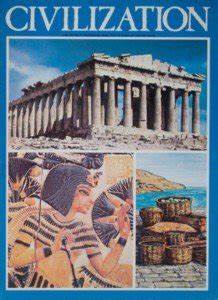
Designer Babies

Schyler Kucera

Have you ever thought about choosing your child’s physical features and abilities? What would you think if you could walk into the doctor’s office and design your perfect baby? What if you had the option to make sure your baby would have blond hair, blue eyes, were tall or thin, maybe strong? What if you could make sure your child inherited the smart chromosome or the athletic chromosome? Would you take it? It seems like you could create the perfect baby, but there are consequences and issues with this procedure, consequences and issues parents are not aware of.  The debate on whether parents should be allowed to genetically modify their babies to determine physical features and abilities is of immediate concern.

Genetic modification of human fetuses to alter physical traits and abilities is known as a designer baby. Oxford English Dictionary defines a designer baby as “a baby whose genetic makeup has been artificially selected by genetic engineering combined with in vitro fertilization to ensure the presence or absence of particular genes or characteristics.”

In the mid-1990s, embryologist Jacques Cohen came upon a new way for helping infertile women have children. His method of doing so is known as cytoplasmic transfer. Cytoplasmic was intended to save the eggs of infertile women who had undergone repeated attempts at in-vitro fertilization. “In-vitro fertilization (IVF) is a complex series of procedures used to treat fertility or genetic problems and assist with the conception of a child. During IVF, mature eggs are collected (retrieved) from your ovaries and fertilized by sperm in a lab. Then the fertilized egg (embryo) or eggs are implanted in your uterus (Mayo).”  Cytoplasmic involved injecting the cytoplasm found inside the eggs of a fertile donor, into the patient’s eggs. The first baby conceived through the cytoplasmic transfer was born in 1997 (Brownlee).

Since the 1990s, because of these new techniques and scientific ideas for the future such as selecting traits for a superhuman have stoked public fears about babies. Back then, most of these ideas were purely theory, but now several methods for genetic selection are either already possible or will become a reality soon.

For instance, parents can choose to screen embryos created through in-vitro fertilization (IVF) for sex or diseases. Scientists have also recently released a method of extracting defective mitochondria from a woman’s egg and replacing them with healthy mitochondria from a donor egg. New tests are now available to detect fetal DNA in a woman’s blood stream.

Parents may not be able to screen their future babies for genes that display intelligence, hair color or athletic ability yet, however the company 23andme recently applied for a patent on such tests. Soon it will be possible to screen the entire genome of a fetus (Ghose).

The thought process of designing the “perfect” baby has a few additions during the in-vitro finalization process. When the egg is taken out and in the lab, the egg is altered to be what the parents want. The doctors can alter the DNA and change traits such as hair color, eye color, sports ability, strength, the immune system, IQ levels, and skin color. Fetuses altered in this way are designer babies. The rest of the embryos that aren’t perfect or don’t resemble what the parents are looking for are just discarded into the trash (Naik).

One should care about this issue because the research on this process and the debate on whether parents should be allowed to choose their child’s characteristics are happening right now. The debate on if doctors and scientists should be allowed to continue scientific research on this topic is also happening right now. If enough people fight against designing babies then we can prevent designer babies as the future for our children or grandchildren.

In order to prove parents shouldn’t be allowed to genetically modify their unborn babies, I will confirm three arguments: it takes away individuality, creates bigger social gaps, and has undiscovered consequences.  I will then refute three counterarguments; it can help the child be more successful, it will create an all powerful super race, and people already modify their children outside of the womb, so what’s the difference, its my child and I can do what I want.

My first argument is parents shouldn’t be allowed to modify a fetus because it takes away individuality. Not everyone would look the same: some parents may prefer blue eyes and some may prefer green eyes. Some may want a darker skinned baby and some a fair skinned baby. However, this does change the human race as a whole. Many more people will be pretty, healthy, and intelligent because those are desired traits. If parents could pick every characteristic and feature for their child then they would think that they created the generally accepted perfect individual. Once you create that “perfect” individual then everyone wants to have that “perfect” baby. Even though parents have different ideas about what the perfect baby is, all those ideas will be used and everyone will be alike. There would be no individuality. It would be like everyone was a clone. When a parent picks everything about their baby the child isn’t able to be himself or herself. The child is no longer able to become who they were supposed to be.

The parents are trying to choose and control their child’s life. Allowing the parents to choose the traits and abilities of their unborn child takes away from the child’s right to find out his or hers own talents and abilities and decided what they want to do. With the modifications the child will be expected to do what the parents what him to do in order to use his modifications for money well spent. The child will feel the pressure from his parent to pursue the abilities that are enhanced, such as athletic ability. The outcome of the child’s life will already be determined. For example, parents decide that they want a baby that will grow up and be very athletic, then they will modify that gene so that he can be a sports legend. They are trying to control what that child will do in life, the child’s outcome.

This can create bad relationships between children and parents. Thomas H. Murray, a bioethicist at the Hastings Center, a nonprofit research center in Garrison, N.Y. says, “One of my concerns is if we let parents think they are actually choosing and controlling, then we set up all that dynamic of potentially tyrannical expectations over what the child will do or be.” If parents believe they got the baby they wanted/created and the baby doesn’t match that expectation, problems will rise between the child and parent. Murray then gives this example: “You could clone Michael Jordan, but Michael Two might want to be an accountant” (Agar). However what’s done is done. The parent of that Michael Two has already pre-ordained what the child is going to be good at. They have altered his abilities to make him better at athletics, but what happens when he doesn’t want to be an athlete? The parents then didn’t get what they wanted and may be disappointed or upset with the whole process. They paid for an athlete but didn’t get one (Ghose). This will cause family strife.

My second argument against designer babies is if we allow doctors to produce children who are considered to be superior because of their particular modified genes then we risk introducing new sources of physical discrimination creating larger social gaps. For example, babies modified to have blue eyes could lead to biases against brown-eyed people, leading to the belief blue-eyed people are the richer people and brown-eyed people and the poor people, because the blue-eyed people could afford to genetically alter their eye color (Ghose). Physical traits wouldn’t be the only things affected with this, though. Attributes such as athletic ability and intelligence would all come down to how much money your parents have and whether they were able to afford the genetic modifications causing a social discrimination.

Designer babies also cause an increased social gap among the social classes. People today are still fighting everyday for the equality of races. The modification will only add to the fight for equality. The modifications are so expensive only rich people will be able to afford this modification, creating a huge separation and having one class practically run the world while the middle and lower class eventually just die out (Rende). The world doesn’t grow or prosper with “sameness.” Society needs diversity, different views and ideas to grow. Creating a clone world is not progress. It stops progress.

Discrimination between the sexes will get worse as well. Men are considered higher than woman in most cultures in the world today. For example a society like the Chinese who favor the male child over the female child. The male child is believed to be more skilled and have more opportunities than the female. The male child also carries on the family name. If parents had the right to choose whether they were going to have a boy or a girl, then the logical choice for parents would be to have a boy. This is because the boy has the most potential to succeed in that society. If parents choose to have boys, then the population of girls would decrease. To take it to the extreme, the world could go so far into a deficit of females that there would not be enough females to keep up the population. Like the Chinese, the world would go into a reproduction problem, not having enough girls. Parents should not be allowed to choose to have a genetically modified baby because it will lead to discrimination and increased social gap (Rende).

My third argument against designer babies is there are several unknown scientific consequences, and it can be considered human testing. Richard Rende, an Associate Professor in the department of Psychiatry and human Behavior at Brown University says, “If we start altering a gene here or there, even with the best of intentions, we could majorly mess up a lot of other important things in a baby’s DNA—giving babies unpredictable, potentially deadly, and possibly never-seen-before disadvantages.” If something goes wrong and heath conditions worsen then that perfect baby isn’t so perfect. Scientists would be dealing with real human lives, lives that didn’t even give consent. Fifty percent of the embryos created through in-vitro fertilization die and several of the embryos developed mutations. The mutated embryos are then discarded as well.  One cannot know for certain whether the procedure is going to be successful at all and changing the physical appearance and abilities of your child is not worth the consequences. No one knows what will really happen if a child is genetically modified. The baby has the possibility of dying. Not one child’s life is worth giving up to find out these consequences and mutations.

The long-term effects of the procedure on the baby are also unknown. There are concerns about whether the modified baby will grow up and have reproduction problems, or later develop a mutation. The concern is that a big problem will later appear in the modified babies lifetime.

Since not all the consequences are unknown then isn’t it considered human testing without human consent? Even though some may disagree a fetus is a human, no one can disagree a baby born who grows up is a human being. In that case, the babies did not have to chance to say no to these procedures now affecting his/her life. The child now has to live with the consequences of the modifications all because his/her parents decision they wanted a certain trait or characteristic. There are a bunch of unknowns consequences during and after the modification that are putting human lives at risk and the modifications are not worth pursuing.

An example of a modification that had an unpredictable consequence was scientists genetically modified a mouse to be more intelligent. This allowed the mouse to remember things and do things a regular mouse wasn’t be able to do. Such as remember not to take the cheese from something that will hurt him or not to get close a cat. However, under observation, the mouse had become uncontrollably angry and mean, trying to kill the mice around it. Because of the alteration of the gene of intelligence, the consequence was anger. How can we be sure enhancing the genes of our unborn child would not do the same? We wouldn’t know until the procedure was performed and the baby was under observation. Again it’s wrong to perform this testing with all the uncertainties on a baby, a human who will grow up living with these unknown consequences (Barnard).

Even with all these problems some people believe having their unborn baby altered for the desired physical traits and abilities should be allowed. The first counterargument is parents believe they should be allowed to alter their unborn babies’ traits and abilities because the child has a better chance at being successful. They believe with the ability to make their child smarter, the child will get better grades and get into a great college that will lead to a job, which pays a lot more, or in another situation creating the ultimate athlete, one who will dominate and bring in a lot of money. If they have the option to make their child’s life successful then those parents believe they have to right to choose it (Ghose).

The problem with this argument is these parents are stating the only way their child can be successful is through money. Success isn’t only just about money. Success has different definitions for different people. One could define success as money, one as having a big family, and one might say success is just being happy. With those different definitions, are they really making their child successful by giving them the abilities to make money?

There is also the point many very smart people today are just lazy: they aren’t using the gifts they have been given to get a good job and “ be successful” in the eyes of those parents above; a lot of those students are playing video games and letting their lives play out. Just by giving someone the ability to do or be something doesn’t mean the individual will take it. Parents shouldn’t be able to alter their babies just because they believe it opens up an easier path to success for their child because that’s not true. Success has many definitions, and this procedure will not make your child automatically successful.

The second counterargument raised is parents believe they have the right to modify their unborn child because it allows for the human race to create a higher level of society. Some people believe if they had the ability to choose, more parents would have more intelligent, logical children. They believe this would help stop conflict caused by people with inferior genes (Ghose). People believe with this new superior race, society will reach unimaginable limits.

The problem with this argument is allowing parents to choose the traits of their unborn baby would create that social gap between the classes. There would just be one mega race. There would be the people who could afford the treatment and the people who couldn’t. The ones that could afford the treatment would be treated differently from those who couldn’t afford the treatment. This would create a huge separation between upper and lower class. Those who could afford the modifications would look down on those who couldn’t afford the modifications.  If we create a society that is perfect then those who aren’t perfect will be separated. In the long run the weaker society would die out and we would have sameness running the world. Cultures would be left in the dark because they would eventually die out. Creating a superior race is bad because ideas, ways of doing things, diversity, and humanity would die out. 

The last counterargument why parents believe they have the right to alter their babies is because people already modify their child outside the womb, so what’s the difference and it their child they can do what they want. Parents design their babies through the education, religion, and morals they press upon their children while they live under their authority. Since parents are allowed to influence them in their life outside of them womb, there is no difference when doing it inside the womb (Waldman).

This argument is flawed because there is a difference between children outside the womb being influenced by their parents and an unborn baby being altered in some fashion without any ability to understand what is being done to them by the parents. Children grow up and move away from their parents and have a choice about religion, where to go to college, where to get a job, and how they are going to live. When parents modify their babies in the womb there is no going back. What’s done is done. That child is genetically altered to be athletic, be really tall, or with blond hair.

Secondly the alterations don’t give people morals or beliefs. Morals and beliefs come from outside the womb. Once born the child hears different beliefs and different ways to live and decides to follow what he or she believes. Physical alterations inside the womb through procedures to change physical traits are not the same as having a child growing up under a particular influence. An influence doesn’t make a child tall, athletic, smart, etc. Influences change how one thinks or acts. The responsibilities of a parent are instruction, moral instruction, taking care of the child, loving the child, and keeping that child safe. Parents need to let God be God and allow Him to put the children together, fashioning what they are going to look like and what their strengths and gifts will be. Parents shouldn’t try to mastermind their child’s genetic make up.

People believe they should be allowed to alter their child because it’s their child and they can do what they want. They believe they shouldn’t be told what they can and can’t do with their baby. If they wanted their daughter to have blue eyes and blond hair then no one has the right to stop them. If a couple wants to have a son they could alter to be stronger and more likely to have an athletic superstar, then they should have the right to choose that gene to modify. They are the parents and they want the right to choose what they believe is best for their child (Waldman).

The problem with this is they shouldn’t have the right to choose to modify their baby just because they want them to have different colored hair or eyes or be athletic. They shouldn’t have the option to select genes to preordain what their child will be good at. The child should have the same ability as their parents did in discovering their talents and weaknesses. Being able to decide what they want to pursue.

The debate is happening right now on whether parents should be allowed to modify the physical characteristics of their unborn baby. If we don’t take a stand on stopping the research and allowing parents to choose having this modification done, then our voice will be lost and the modifications will be legal. If we don’t take a stand against it then we will have designer babies walking around in a few years. The middle and lower classes won’t be able to afford the modifications and life will drastically change for the worst for our kids and grandkids. Being able to choose the physical characteristics of your baby is not worth the known and unknown consequences. Genetically modifying your baby is wrong. Now you know why parents must not be allowed to genetically modify their unborn babies for physical features and abilities. Hopefully you will take what you have learned and talk with others. By doing this we can win the debate on this topic and be a designer baby free country and world.

Works Cited

Agar, Nicholas. “Designer Babies: Ethical Considerations.” Actionbioscience. 1 Jan. 2006. Web. 11 Dec. 2014.

Barnard, Emily. “The Ethics of ‘Designer Babies.’” The Ethics of Designer Babies. 29 Apr. 2013. Web. 11 Dec. 2014.

Brownlee, Shannon. “Designer Babies.” Washington Monthly. 8 Mar. 2002. Web. 25 Mar. 2015.

Ghose, Tia. “Children to Order: The Ethics of ‘Designer Babies.’” LiveScience. TechMedia Network, 13 Mar. 2014. Web. 11 Dec. 2014.

Murray, Thomas. “Designer Babies: Ethical Considerations.” The Hasting Center. Web. 25 Mar. 2015.

Naik, Gautam. “A Baby, Please. Blond, Freckles — Hold the Colic.” The Wall Street Journal. 12 Feb. 2009. Web. 14 Dec. 2014.

Rende, Richard. “Genetically Engineered Babies: Good Or Bad Idea?” Parents. 20 Feb. 2013. Web. 11 Dec. 2014.

Waldman, Paul. “In Praise of Designer Babies.” The American Prospect. 10 Oct. 2013. Web. 3 Feb. 2015.

Driesch’s Mechanics and Life

Jared Emry

[Hans] Driesch defined a machine as “a typical configuration of physical and chemical constituents, by the acting of which a typical effect is attained” (102). The main issue with Driesch’s definition is the question of what typical means, because the difference between typical and atypical is the basic distinction within the definition. Additionally, all his proofs lie on this line between typical and atypical as set by the definition. Dictionary.com defines typical as “pertaining to, of the nature of, or serving as a type or emblem; symbolic.”

Driesch makes the argument that because life can have relatively atypical results, it cannot be mechanistic in nature. One of the atypical results is cells can be transplanted from one region that will develop into organ A to another region that will develop into organ B and yet both organs will still be formed properly. Another atypical result is cells can similarly be implanted, but from another related species and those cells will still allow the first creature to form its organs while the cells remain uniquely the same. A third atypical result is the organism grows despite the external pressure placed on it to prevent it from forming in the required three dimensional space typically thought to be needed.  This is atypical because a machine typically acts in regard to three dimensional space and has to be constructed in regard to three dimensional space and thus cannot have function at right angles to that plane.

There are two kinds of possible definitions for typical in the context of Driesch’s definition of a machine: a mathematical definition and a practical definition. The difference between the two options is predictive identifiability versus the possibility of absolute variable cognition. Predictive identifiability is the idea typicality is based on major traits that can be known in such a way as to perceive the most likely outcomes. Typicality, based upon a predictive identifiability definition, would be the use of variables of greater hamegin (perception of having relative influence on a given outcome) to analyze probable outcomes while combining the variables of lesser hamegin into a statistical average based on observations. The possibility of absolute variable cognition is the idea that typicality is the standard all relevant variables can be known well enough to create a formula that allows all possible outcomes to be known based on the inputs of all the relevant variables. In this form, typicality refers to all possible outcomes associated with necessarily anything and to be atypical would be to be unnatural. Also, the possibility of absolute variable cognition is not necessarily practical due to the difficulty of manipulating variables and the possibility the variables can’t be cognitively understood. The practical definition refers to predictive identifiability, whereas the mathematical definition refers to the possibility of absolute variable cognition. Driesch’s usage of typicality seems to be more closely related to the former rather than the latter. Essentially, Driesch’s concept of Entelechia could be seen as covering up the minor and relatively unknown or unknowable variables with a constant; it may not be the most precise or accurate way to describe any given biological entity, but it allows for identifiable outcomes to be predicted.

The use of the possibility of absolute variable cognition as the standard for typicality in Driesch’s definition is at best a topicality violation or at worst a strawman fallacy. Driesch is not directly implicating the supernatural in his theory and is still using the word “typical.” If he were to mean the word “typical” with a possibility of absolute variable cognition kind of definition, then he wouldn’t have to even use the word “typical” because it would be redundant. His description of how life responds in an atypical way also shows how there is distinction to be made in the natural world between typical and atypical. The only option that remains is typicality as predictive identifiability.

The use of predictive identifiability in Driesch’s definition of a machine must be applied to discern what is typical and what isn’t. While Driesch does not claim Entelechia is supernatural, he does make it apparent it is unknowable on certain levels; a distinction is made between the ability of the human to know Entelechia and the reality of Entelechia. Similarly, even if the functionality and causality of Entelechia is known, it still does not necessitate absolute variable cognition. It would still require the knowledge of how each and every variable interact in order to create each possible outcome. If such knowledge is beyond human compression, the use of predictive identifiability is a must. These distinctions are more than enough to create the need for distinct classifications. What is beyond human capability cannot be equally regarded with that which is within. According to Driesch’s definition, there cannot be a machine that is unknowable for a machine must always produce typical outcomes relative to known inputs. At the moment a machine can produce an atypical outcome, it can’t be classified properly as a machine. In this way, biologic entities cannot be considered to be mechanistic because it is impossible to know the entirety of life’s causalities, functions, and outcomes. The definition does not require that something that isn’t a machine is life; other options may include inanimate objects, a planet, or the universe.

The machine is classified by its definition based primarily upon the possibility of human comprehension in regards to a set of variables interacting in a three-dimensional space. Driesch’s idea of a machine does not require a concept such as Entelechia because it is fully knowable; the machine can have absolute variable cognition.

Works Cited

Driesch, Hans. The Science and Philosophy of the Organism; the Gifford Lectures Delivered Before the University of Aberdeen in the Year 1907. London: A. and C. Black, 1908. Print.

“Typical.” Dictionary.com. Dictionary.com, n.d. Web. 20 Oct. 2014.

God and Gender-Inclusive Language

Alison Emry Widrick

Inclusion is a dangerous game. It is really easy to seek to include some group at the expense of another. I think this is particularly dangerous as to how we understand and interact with God. We have to be careful in how we talk about God so we as finite humans and as Christians are able to understand the One we worship.

I will not deny terms that are normally considered female are sometimes used to describe parts of God’s nature, but more times than not, male language is used instead. Jesus tells us to call God our Father (as opposed to Mother, or Parent, or maybe Pleterion) because there are characteristics of a father that apparently are well-suited for use in describing something about God’s nature. If you believe the Bible is the inspired Word of God, then if nothing else you have to admit there is some reason God chose to refer to Himself using primarily male language.

While our picture book representations of God are, naturally, mainly from the collective heads of the people who were trying to figure out how to depict God, we as humans have to have some referent for our words. All words are composed of a form (the word we say) and a referent (the thing we are referring to by the word).  This is how the human mind deals with information, organizing it into how we understand the world.  We need language to be in terms we can understand.

In our linguistic world are “male” and “female.” No widespread neutered terms exist. Some cultures do have more than two social genders, and there are people of ambiguous gender, but no one is inherently genderless. It is important to note that, anthropologically speaking, gender has little to do with biological sex and everything to do with the prescribed roles a person is expected to play along some culturally-defined category. While these gender roles frequently divide along the lines of biological sex, they do not have to, and what is considered normal for one gender in one culture may be considered normal for a different gender in another culture. Therefore gender norms are socially constructed, and none are really inherently better than any other. Even so, everyone is fitted into some category. They have to be, so we have a way to talk about people in relation to others. To create an image, albeit mental, of something outside of gender would be beyond what is easily relatable to us for us to understand. We need some way to speak about God, so we are reduced to fitting Him into a gender category. English has only two options for this category: male or female.

Because God uses so much male language to refer to Himself, a male picture of God is to be expected. This creates a mental image much easier to relate to than some vague neuter inherently impossible for us to relate to because we have no words by which to understand it. To neuter God would be to call Him an “it,” which has serious connotations in English, reducing God to the status of a castrated animal or inanimate object. We in English lack the language to talk about a personal entity without putting that entity into some gendered category.

So instead of being mad about the use of male language used to talk about God, it seems much more useful to think about what it means to attribute personal attributes to God, regardless of the perceived gender the words used. How do male terms enhance our understanding of who God is? How do the female terms do the same? The fact God uses male terminology to refer to Himself does not, in and of itself, mean He is inherently male. Though I and many others would affirm God is male for various reasons, most of the terms people argue about do not necessarily require God be male, but instead that male attributes can be ascribed to Him. Likewise, female terminology also applies female attributes to God regardless of the gender or non-gender you believe God is.

All language ever does is refer listeners to some idea by making reference to some object or idea in the understood world the listener already knows. To fail to do this is to fail to communicate, and both the speaker and the listener end up frustrated at best and confused at worst. We as humans understand the world through our language. Therefore God, who gave us language in the first place, chose to let us know Himself through our language. He then needed to use terms we can understand so we can relate to Him. He chose to do so through primarily male language.  Who are we to try to neuter Him?

A Review of The Fifth Wave

Alex Touchet

An ominous alien craft appears over earth.  It assaults Earth with a series of four waves of destruction.  The first is in the form of an electromagnetic pulse that shuts down every electronic device on the planet.  This initial attack results in the deaths of around half a million people.  As technology becomes obsolete, the aliens drop a large metal rod onto a geographic fault line, creating a gargantuan tsunami that wipes out coastal cities on every continent.  This wave’s death count is over three billion.  The third assault is a plague called the “blood plague” or the “fourth horseman.”  Its mortality rate is nearly one hundred percent, and it decimates around ninety-seven percent of the remaining human population.  The fourth wave is the activation of an alien consciousness inside select human beings that were “infected” in the mental invasion of 1995.  These humans, called “silencers,” proceed to hunt down remaining survivors with cold precision.

The story follows two survivors: Cassie is a girl searching for her lost brother, and Ben is a survivor training in what is said to be a resistance-oriented military.  Their story is closely entwined with Evan, a silencer who narrowly spares Cassie’s life for sentimental reasons he himself does not entirely grasp.  This disparity between characters is one sign of Rick Yancey’s literary mastery.  He doesn’t fall victim to the trope of the “strong young female surviving a post-apocalyptic world,” such as Suzanne Collins (The Hunger Games) or Veronica Roth (Divergent).  Yancey gives multiple differing perspectives that have an individual voice and personality.  Ben often uses militaristic language while narrating, while Cassie exhibits a more feminine personality unique to her character.  This dual-perspective approach is a tactic many authors avoid.  One of the only other stories where I have seen it flawlessly executed is Worm (a completed Web serial) written by Wildbow.

Rick Yancey succeeds so well with this novel because he openly approaches a genre often marred with a painful multitude of stereotypes and clichés and circumvents them.  He foresees how the story might become predictable and tosses in a plot twist.  He writes his characters not as mirror images of the over-used stereotypes of dystopian fiction, but as real (and blatantly flawed) people.  Cassie had romantic feelings for Ben before the Waves decimated the planet, and so when her brother pops up in Ben’s squad of trainees, the reader expects a clichéd romance to occur.  While this setup inherently seems a little too unrealistic to make sense, Yancey does not take the expected route of playing matchmaker with two broken survivors connected by preexisting relationships.  He sets up a controversial connection between Cassie and Evan the alien-boy before Cassie ever even reunites with Ben and her brother.  This sort of “always one step ahead” approach destroys the sense of familiarity readers often feel toward predictable stories and demands their attention.

One of the most complicated characters in the story is Evan.  He is a walking contradiction.  Silencers are the epitome of efficient destruction, so it makes little initial sense when Evan falls for a member of the race he was programmed to kill.  Even though he has the brain of a hostile alien, there is something about Cassie (and humans in general) that forces him to rethink his priorities.  He has fallen in love, which may not be too unique as a plot point by itself, but is not an event created merely to inspire emotional connections around a love-interest.  Instead, it is a doorway that opens up new possibilities and questions concerning the silencers and their role in humanity’s extinction.  It also demands the question: “Why does Cassie fall for him as well?”  Normally, in stories where a character’s world and family has been destroyed by a hostile invader, the protagonist feels imperatively obligated to seek some form of vengeance.  Forgiveness is often rejected for the sake of “justice,” or more appropriately, revenge.  Jean Valjean is possibly one of the only protagonists I have ever observed to willingly forgive an antagonist, regardless of their wrongs and choices.

Yancey, once again, crosses out another typical cliché and instead gives Cassie the ability to look past Evan’s nature.  When she first discovers the real Evan, she is torn between her love for him and mistrust for his kind.  However, she finally decides he is worth the risk. She is not blinded by his mere connection to the aliens; she sees him for who he really is and how he treats her.  She understands the weight his betrayal of his own race holds and reciprocates when she falls in love with him.  This mutual romance demonstrates what is at the core of Yancey’s novel.  In a broken world where the enemy’s final attempt at annihilating humanity is to tear apart their ability to trust each other, two individuals reach across the divide and hold onto one another.  This is the most powerful element of the novel, because it exemplifies one of the characteristic traits of humanity: its search for community and its thirst for connection.

Yancey plays a long and deliberate game with his characters while making sure they don’t conform to typical cliché guidelines.  Every little detail of the plot has been designed to fit into a larger, much more complicated plan.  Ben and Cassie’s little brother have been trained along with the rest of their barracks by soldiers to “kill aliens.”  They have become cold-blooded and efficient.  Mr. Yancey allows readers to begin to discover early on the military camp is not as it seems.  It becomes increasingly obvious the soldiers may not be true human soldiers, but the characters themselves are unaware and continue to make decisions that force them into worse situations.  This forces the reader to arrive at conclusions before the characters themselves, adding a new element of conscious discovery not present in most novels.  When the soldiers are revealed to be alien agents training children to hunt down and kill their own species, readers are practically screaming at the until-then oblivious protagonists.

While The 5th Wave is definitely not a reinvention of the genre, Yancey succeeds in multiple aspects of the story usually overlooked by most other authors.  He changes the protagonists often enough to provide more variety than a book such as The Hunger Games could ever accomplish.  He takes obvious (and expected) clichés, and then turns them on their head.  His mastery of his individual characters is evident with how well he handles their separate, broken identities.  He even approaches the primary question that plagues almost every alien invasion story ever: “Why do they want us dead if they don’t need anything we have?”  This is probably the main reason I liked the book so much.  It approaches elements of science fiction other authors seem to take for granted.  This novel is not the best teen science-fiction ever written, but it is definitely a favorite worth picking up.