Music: it is known as the universal language. All cultures have some form of music, and just as cultures change, so does music. Music is a building that will never be completed; each trend and fad contributes to the next. Think that if some primitive man didn’t think to tighten an animal skin over a circular piece of wood, we would never have the snare, tom, and bass drums we have today. Every musician throughout all of history has been influenced by someone else; Mozart to Lil’ Wayne have/had an influence. This is even true today with the rise of electronic music such as dubstep, techno, dance hall, etc. It is true the instruments for these genres to even exist are somewhat recent inventions, but nonetheless their roots can be clearly traced. To truly understand a genre of music or an artist, one must trace their influence.
We now stand on the verge of a new musical era; the days of rock and hip-hop dominating the radio are coming to an end. Now there are all sorts of new kinds of music; techno has been sweeping Europe for the past decade, and now dubstep looks to take over America. Where did these kinds of music come from, though? The recent rage over electronic music can be easily traced. The first major event to get the ball rolling was the invention of the electric guitar.
In 1931, Adolph Rickenbacker introduced the first patent to make a guitar that could be played through an electric amplifier. This invention was later improved with a solid body by Gibson Les Paul and Leo Fender (who actually came up with the idea first is widely debated) in 1941. The invention of the electric guitar was the first step in bring electronics into music. The next invention was similar to the guitar: the electric bass guitar. The electric bass was invented in 1947 by Leo Fender (that’s not debated). The invention of both these instruments may not seem important to modern day electronic music, but many inventions for the recording of these instrument are crucial to the start of electronic music. These inventions also got many music engineers and producers to start exploring other ways to make more instruments electronic.
The next invention to start the electronic era is obvious. In the 1940s, many people made claims to its invention including the Russian government; no one can say for certain when it was introduced or who made it, but in the 1940s the synthesizer was made. When the synthesizer first came out, most people didn’t even think to put it in music. The original synthesizer was made more for scientific experiments in order to understand sound waves rather than used for music. Then in 1958, Dr. Robert Moog, an American scientist, made some of his own modifications to the original synthesizer; he made it more “musically usable.” Dr. Moog added smoother tones and more keys to make it easy to play.
Dr. Moog’s invention was not well received by most musicians. It would take years for his instrument to become more popular. In July 1965, a major event happened in the history of electronic music. A young graduate of the UCLA film school named Ray Manzarek was walking on Venice Beach in Los Angeles, when he came upon another UCLA film school graduate writing poetry. The man’s name was Jim Morrison, and that chance meeting was the creation of The Doors. The Doors put a demo together and managed to release it just two months after getting together. The demo was well received by the local Los Angeles crowd but got no national attention.
The Doors were revolutionary in their use of the Moog synthesizer, but before they could make it big another band had to pave the way. The Beach Boys were the first band to use a Moog synthesizer to break onto the charts. In October 1966, the Beach Boys released the single “Good Vibrations”; the song took 90 hours to complete and was at the time the most expensive song ever recorded, costing $40,000. It was the first song ever to be a number one hit using a Moog synthesizer. This opened the door for The Doors.
In November 1966, The Doors released their self-titled album; they also released their first single “Break on Through,” which did not have much radio success. The band decided to edit their seven-minute ballad “Light My Fire” down to three minutes, releasing it as their second radio single. “Light My Fire” achieved great radio success and brought The Doors popularity with the masses. Critics did not all find this new use of the synthesizer pleasing to the ear. Many critics complained that the synthesizer wasn’t a real instrument, that it took no skill to play, and that it sounded too spacey. The synthesizer had been used in songs before 1966, but no song with a synthesizer reached the popularity that “Good Vibrations” and “Light My Fire” did.
The Doors brought major attention to the use of the synthesizer as a lead instrument; they revolutionized the use of electronic music. The Beach Boys may have had the first hit using a synthesizer, but it was The Doors who really made it popular. Shortly after the release of The Doors’ album, other bands began to experiment with the synthesizer. The following year The Beatles released the album Sgt. Pepper’s Lonely Hearts Club Band; the album has a few songs using the new electronic instrument, mainly on “A Day in the Life.”
Jim Morrison in a later interview before his death said, “I see a new era in music, a mix between the rock we have now and electronics. I see a single man using tapes and a keyboard being able to replace whole bands.” Morrison would never live to see his vision come true, but if one looks at modern day music, it has come. The modern day DJ only needs himself and a keyboard. Listen to dubstep or techno and see the advances in musical technology since the ’60s. Jim Morrison never got see what he started, but, nonetheless, it was the band he started that got the public interested in electronic music; The Beach Boys helped, but The Doors were the real original electronic band.
When last we were together, our parting thoughts were about the impending excitement of the forthcoming summer and the potential for enjoyable, self-directed reading time. I hope you were able to spend some portion of this past summer break doing just that: reading what you wanted, free from assignments, discussions, and tests — of course, ideally you did discuss what you were reading with friends and family, sharing and gathering thoughts, reactions, and insights about how your reading aligned, to whatever degree, with reality. Ideally, at times, you read for the sheer pleasure of doing it, too. True, some of your reading was no doubt for the required summer work, so you had to write some brief responses to some easy questions, but that never interferes with too much of your vacation time.
My plan for the summer, enumerated for all the world to see, certainly helped me at times, but, as is often the case, I was carried by various unnamed whims and fancies to read other things I had not even thought of when I first made that list last spring. Ironically enough, shortly after school started this fall, I began reading The Pleasures of Reading in an Age of Distraction by Alan Jacobs. His main premise is reading is and should be pleasurable, and the best way to maintain that experiential satisfaction is to read what we feel like reading, not just reading books from people’s lists of “must-read” books, since that is more of a chore than a quality reading experience. He convolutes his ideas by arbitrarily distinguishing between whim and “Whim,” a neologistic piece of thaumaturgy no one who can outwit a used teabag will find convincing, and arguing against an outright hedonistic approach to reading by urging us to read higher quality things. I could tell early on, from his initial diatribe against Mortimer Adler as an elitist (as if that is somehow a bad thing), it wasn’t going to be a good book. His premise is somewhat sound, but the notion we shouldn’t read books just because they are on “must-read” lists and someone tells us to do it instead of letting “Whim” lead us to the book at the right time is, fundamentally, preposterous. Most of the great reads we experience are from recommendations or gifts from people we trust — at least that’s how it’s been for me. Perhaps you disagree — in that case, read Jacobs’s book and tell me what you think. Of course, if you do, you will contradict what you claim you believe. A nasty pickle.
My motivation for going off the lists for a time may seem akin to what Jacobs urges, but I wasn’t intentionally rejecting any external authority to guide my reading. I did read a few things from the list I made, and I enjoyed some of them more than others. Unlike Jacobs, I have no problem reading things because people tell me they are good — most of the time, they are right. I don’t always think “the classics” are great, but usually they are. I found King’s Solomon’s Mines horrible, but I finished it and now can explain to people why I don’t like it primarily because I finished it. Jacobs’s urging to stop reading books we don’t like is rather weak-willed. So, too, is his argument against “having read” things. There’s nothing fundamentally wrong with reading books primarily to “have read” them. The experiential pleasure of the moments of reading is so ephemeral, he seems to be arguing, as mentioned above, for a hedonistic approach to reading with no substantial foundation for it. “Having read” books is a great position to be in, even if you were only motivated to read the books because you got them from some list or were assigned to do it, even if you didn’t like the book you read.
The book I read first was my required reading, Saving Leonardo by Nancy Pearcey. Apparently some confusion existed about whether this was actually the book assigned to the faculty to read during the summer, but I can distinctly remember being told to read it, so I did. It’s fairly easy to tell how influential Dr. Schaeffer was on Pearcey, which is not a negative thing, but it soon makes one wish one was reading Dr. Schaeffer instead of Ms. Pearcey. Saving Leonardo is her humanities sequel to her previous work Total Truth (God in science). It was fine, and it gave me quite a few helpful ideas for Intro. to Humanities, but again, it might be better to go with the works of Dr. Schaeffer instead, if you need a Christian perspective on art.
I made some minor progress through Mason & Dixon, but I got carried away with my rediscovered enjoyment of comic books and graphic novels to really want to struggle through Pynchon’s painfully-clever prose. I had a fine time reading Chris Claremont’s From the Ashes, Wolverine, and X-Tinction Agenda (though he didn’t write all those issues), and they motivated me to read more of the Chris Claremont issues I have long owned without yet reading: I finally read Mutant Massacre, too. It was quite interesting to see the development in the teams and their stories at a quick pace, reading different crossover events over a decade’s time in rapid succession. As we all hopefully know, Chris Claremont is widely regarded as the greatest writer in X-Men history, creating some of the most memorable characters and storylines of all time. Ironically enough, the first X-Men comic I ever bought was Uncanny X-Men 281, the first issue after Claremont’s 15-year run, so I have been playing catch-up ever since. Finally reading many of his stories this summer was enjoyable, though he certainly did earn his reputation as a verbose wordsmith. It takes a lot longer to read his issues than, say, Peter David’s issues (as you may recall from last year’s article on the great X-Cutioner’s Song crossover), but the effort is well worth it. Having finally acquired the four issues of the Magik limited series, I read that early into the summer — it was far more sorrowful than I was prepared for, but the resolution of it was quite impressive. Toward the end of the summer, I finally acquired and read the thoroughly astounding God Loves, Man Kills graphic novel, which is so far superior to X2 it’s not even worth discussing. Everyone should read God Loves, Man Kills, even those who are not fans of comic books, graphic novels, or the X-Men (if such people even exist). Another Claremont highlight of the summer was finally getting started on the New Mutants. I’ve been collecting those back issues for a while now, but since the earliest ones are often quite expensive (I have been avoiding ordering comics on-line, since deep down I feel like that’s sort of cheating), I haven’t read any of them yet — until I recently learned many of them have been collected in fine quality, comparatively inexpensive trade paperbacks: the recent reissuing of so many classic Silver, Bronze, and Copper Age stories and series is the only good decision Marvel has made for about a decade (everything seemed to fall apart with the whole Onslaught thing). Some might say buying trade paperbacks is even worse cheating than ordering individual issues, but that’s a price I and my honor are willing to pay (especially if I get them as gifts). I enjoyed New Mutants Classic 1, including long-sought-after Marvel Graphic Novel #4, and just before the school year started, I ordered and began New Mutants Classic 2. Good times. Then I decided to start X-Men from the beginning — this is taking some time, but it is quite interesting to see where it all began (and in order).
With my decade-long hiatus from graphic novels complete, I thought it was also time (now that I’m now firmly entrenched in adulthood) to move on to more grown-up kinds of graphic novels, so I began reading Fables, Y: The Last Man, and, at the end of the summer, The Sandman. These are series you definitely want to wait for; though they are all “good” in their own narratively-creative ways, journeying through them must be intentional for intellectual purposes, since they offer few accurate insights into reality — but knowing their fallen answers can be beneficial in a roundabout way, too, if done at the right time, after one is firmly secure in one’s proper Biblical spiritual maturity.
Also toward the end of the summer, I slogged my way through Shadow Lord by Laurence Yep. This was supposedly a Star Trek novel, but Yep communicates quite clearly and early he has no genuine intention of writing a Star Trek novel, but instead he is one of those “I want to be a serious writer, but only the Star Trek people are accepting submissions, so I’ll pretend to write a Star Trek book even though I have no idea who these characters are or how to write (for) them, and that way I’ll be a published author” writers. The book is not a total washout, but it is thoroughly disappointing as a Star Trek book. Unlike The Final Reflection, Shadow Lord does not succeed as an atypical Star Trek book, primarily because, as I just mentioned, Yep has no interest in writing about the Star Trek characters accurately. His Mr. Spock characterization is especially atrocious. Yep has him making jokes, grabbing hands, and several other inaccuracies that anyone even mildly familiar with his character would not make (certainly not anyone earnestly trying to tell a Star Trek story). The story is a jumbled conglomeration of things Yep likes: cavalier swordplay, “witty” heroes, Indiana Jones-like serials, samurai, and pre-Victorian musketry. It’s almost like he thought “I wonder what would happen if Indiana Jones and d’Artagnan found themselves under a shōgunite.” As I said, it’s a bit of a mess. The one saving element of the story is Lord Bhima, the last survivor of the old guard, who is willing to sacrifice himself and, more importantly, his honor, to side with the (lacking in discernible motivation) antagonist even in horrific regicide (which is downplayed in seriousness, unfortunately, and utterly forgotten by the end of the book) — all to prevent their planet from succumbing to a far-worse fate: Federation influence. Had Yep made this a real Star Trek book, from the perspective of a world divided over its willingness to join/be influenced by the Federation, and not just crammed all his hobbies into one book without caring about the Star Trek universe, this could have been something good. I’m not glad about the content, but I’m glad I have now read it.
Since I’m still not half-way through Mason & Dixon, I knew it wouldn’t be right to start Don Quixote, so I didn’t. I tossed in Voyages of the Imagination and Elfstones of Shannara more for giggles, since Voyages is an incredibly long (and useful) resource on the history of Star Trek fiction, which I am slowly working through, but it’s not really a book designed to be read through. I started Elfstones several years ago, and my bookmark is still where I left it, but the motivation to return to it is another ephemeral sensation. I read the first half of “Madame Crowl’s Ghost” by Le Fanu (not the book, just that story), learned a fortiori why Le Fanu is considered a master of suspense and terror, waited several weeks to finish it (once my sleeping patterns had returned to normal), and decided I really did not need to read the rest of Le Fanu’s book (this became part of the motivation for an article appearing later).
I was quite surprised (in a thoroughly disappointed sort of way) how few resources are out there related to the kind of program Intro. to Humanities is supposed to be. Most of them are variations on what we already do in the English department, just at exorbitant prices and from atheistically-biased perspectives. This enabled me (in a thoroughly out of desperate necessity sort of way) to create the program from scratch. Due to the time-consuming nature of such an endeavor, I was forced to eschew the plan to complete Colossians and Philemon from Prison Epistles last year. Some day. No doubt the same day I get around to Copleston.
The other two from the list I got to were Slaughterhouse-Five and Where There’s a Will. I got the Vonnegut book from Sarah Haywood, one of the most underappreciated students we’ve ever had at Summit. It was typical Vonnegut and better than Cat’s Cradle, and I’m glad I got the chance to read it (even if he is usually wrong about how the world works). Rex Stout’s Where There’s a Will was a very good Nero Wolfe mystery. It was a fast-paced, sleek mystery showing off his improved pacing over the earlier stories.
Off the list, I read some more Italo Calvino (Why Read the Classics?), got back into Centennial, Avengers: The Contest (another recent TPB I’ve been trying to get ahold of for years), Literature: A Crash Course, Books are Tremendous (books are, but this little pamphlet wasn’t), The Historical Novelist’s Obligation to History (a difficult pamphlet to find from the author of Andersonville, but worth it), and lastly The Core: Teaching Your Child the Foundations of Classical Education (seriously … don’t bother). The books I most enjoyed reading not on my list were the final four M*A*S*H books: M*A*S*H Goes to Texas, M*A*S*H Goes to Montreal, M*A*S*H Goes to Moscow, and M*A*S*H Mania. When I say “enjoyed reading,” though, I don’t mean that I necessarily enjoyed the content. Texas was certainly the worst of all the Herbert Butterworth installments, and Richard Hooker’s finale with Mania is painfully flawed on many levels. They had good moments, though, enough to make reading them worthwhile (in addition to the great pleasure of having finally read all installments in the series), despite what Jacobs says about reading “just because.” After that, I moved to the James Bond series. I finished Casino Royale during the calm, quiet moments when we were without electricity during the recent hurricane and Live and Let Die a few weeks after that. Be prepared to find few similarities with the movie incarnations early in the novel series.
All in all, it was a good reading summer (one of the few highlights of an otherwise taxing and draining season), mainly because I went into it with a plan and also enjoyed the freedom to follow whatever reading mood I was in when I wanted to be more spontaneous. I’m still looking forward to reading The Demon Princes, TheMan in the High Tower, Othello, Last and First Men, Asking the Right Questions, and The Princess Casamassima (and the other 11,000 works sitting around the house). It would be good to read those. At the very least, it will be good to have read those.
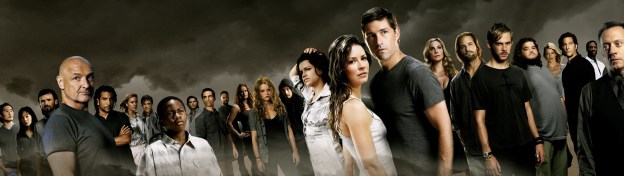
Murder, monsters, unity, and magic are all regularly seen on the exciting show Lost. Every episode either ends on a maddening cliff hanger or a warm feeling of love and peace among all the stranded people on the island. While Lost is intriguing and enjoyable to watch, there are many issues I have with the program.
A great deal of events or key things the show makes a point to center on are just not tied in well to the plot or just dropped all together. When Desmond Hume is first seen on the show, he is working out in the first hatch, makes breakfast, and then injects himself with some sort of serum from a cabinet. Again in the show, when Desmond runs away from the hatch and leaves the button-pushing to Locke and Shepherd, he grabs food and supplies, including the mysterious serum from the cabinet with a pneumatic injector. What the serum is used for is completely unknown. After continuing to watch Lost, no mention of this serum ever arose again. There was one point where a pneumatic injector was used to treat Claire’s sickness, but the serum used for the treatment was not the same as Desmond’s. The writers didn’t use the serum again or explain it for the rest of show, which I find annoying because they made such a point to film it and its use.
Michael’s son Walt was another writing error by the staff of Lost. He was abducted by “the Others” after Michael, Sawyer, and Jin tried to find the shipping lanes after constructing a raft out of bamboo and plane parts. While the abduction was occurring, “the Others” stated Walt was a special boy, and they had use for him. Later in the plot after Michael went out into the island alone to look for Walt, he was captured by “the Others.” They again told him his son Walt was a very special boy. Michael and Walt left the island soon after that incident, and Walt and his father were gone from the story for a while. Walt later resurfaced in a vision to John Locke and told him to finish his job. Why did John Lock see Walt and not someone else? For Locke to have seen the ghost of Boone would have made much more sense. Lock was actually close to Boone, not so much Walt. What was ever special about Walt in the beginning to merit abduction by “the Others”? These are the kind of gaps in the writing of Lost that reflect the writers’ negligence.
Throughout the Lost series was a main recurring theme: everyone is equal, and we can all get along no matter what our backgrounds are. Consider the evidence. In the plane crash is an Iraqi Muslim soldier, an American doctor, an American murderer, a conman, a crippled man, and a Korean couple as the main characters. As the show progressed, oftentimes the episodes would end playing slow inspiring music showing all of the characters looking out for each other, loving each other, living in harmony. In and of itself, it’s not a bad message; in fact, the opposite: it’s an inspiring message. What the writers of Lost were trying to do was show the pettiness of fighting over trifling things like race, background, or preferences. In the end we’re all human. The writers went too far when in the final episode of the final season they directly compared Eastern mysticism, Islam, and Christianity as equal. Jack Shepherd was talking with his father in the back room of the church in front of a stained glass window. On this window was a Christian cross, the Islamic crescent moon, the yin-yang, and the Star of David, among other religious symbols. They finally reached the crux of their main point: all religions are the same, and all paths lead to heaven, their heaven being unity and fellowship in their own personal heaven where nothing goes wrong for them. Christ said “I am the way, the truth and the life, and no one comes to the Father but through me.” The Bible clearly says that Christianity is the only way to salvation, yet the writers of Lost ignore that.
What is the bright light that must be guarded from misuse by evil mankind? No one ever knows. In fact, Jacob doesn’t even know what the bright light is, what it is used for, why it exists, and why it must be protected. Those same questions were asked enough by the characters themselves, but the customary responses were, “It doesn’t matter,” “We have to keep moving,” or “You’re not ready to know yet.” Ignoring the question all together was also another response. Did the writers just not want to explain it, or did they just not know what to make the light be without it being too absurd? Another loose end in the Lost plot, I suppose.
My biggest issue with the plot of Lost was the portrayal of Jacob’s brother, also the Black Smoke Monster, as evil. What has he done that’s so evil? He’s killed people, yes, but only because he was provoked to do so out of necessity. When Jacob and his brother were born, their mother was murdered by a woman on the island guarding this mysterious light in a cave. She raised the boys as her own, but then Jacob’s brother discovered the truth about his origins and tried to go back across the sea to his homeland. His mother’s murderer knocked him unconscious and destroyed his means of getting home. All that Jacob’s brother wanted to do was go to his real home, be with his real mother (impossible now since the woman killed her, for no reason at all, and if so, left unexplained) and see the world. Those were never bad things.
Jacob’s brother then killed his mother’s murderer and in turn was murdered by his own brother. If anyone is evil it should be Jacob. He was jealous of his brother because his fake mother loved him more than she did Jacob. Jacob threw his brother into the bright light, which turned him into the Black Smoke Monster (another fact unexplained). So, the main characters of Lost are being directed and ordered by Jacob, a man who killed his own brother out of a jealous rage because he avenged the death of their real mother and only wanted to go to his real home.
All in all, Lost is enjoyable, interesting, and a fun show to watch. Six seasons of 45-minute episodes with only these discrepancies is not that bad of a review. If you can’t stand dropped plot points then don’t watch it, because the end of the series will be a severe disappointment to you, and all the countless hours you’ve spent in watching it will seem like one big waste.
The whiteness of my surroundings grabbed me. Everything was white. There was nothing beneath me and nothing above me. I was floating in an endless space of white. I decided to leave this place and travel to a hilly area with trees taller than mountains and mountains smaller than pebbles. I liked it there. The fan that I held in my hand must have been battery powered because I struggled to find an outlet anywhere. Many kids were playing by a tree, so I approached them to see if I could find some food. One kid, taller than the rest but also uglier than the rest, came out from the crowd and told me to follow them into a door located on a tree. Of course, I had to follow them because they all had screwdrivers for teeth. As I stepped through the door, they all grabbed me and threw me on a table and began to saw off my leg. Fortunately, it did not hurt. But I was afraid that not having a leg would hinder my ability to move. So I began to kick the kids off of me. I punted them as far as I could. The room we were in was not lacking in space and all of the walls were made of rubber. This made it hard for me to completely ward off all of the kids. I continued to kick them to the other side of the room, which probably could be measured by the length of four or five microwaves. We were all very small. I used the many spears that were strategically placed around the room to ward off my opponents.
After a gruesome five hour battle of standing in one place with one leg (they had succeeded in the amputation of my other leg), I decided to jump on a raft and leave the kids alone. The raft I boarded was sturdy, and I made sure that it could float by weighing it on a scale nearby. It was deemed floatable by my good friend, Targus. Targus was a talking backpack, and I never went anywhere without him. He had the responsibility of carrying all of my necessary personal belongings such as ham, my laptop, and a few other miscellaneous possessions. The raft we boarded was moving fast, too fast. I could not stand up any longer because the power of the wind forced me to kneel. My surroundings were blurry blobs of Jell-O and Targus was excited, too excited. He began to jump all around and sing songs about his homeland. Not knowing what else to do, I joined in. We sang for what seemed like hours upon hours about friends, family, and food. He told of his origins and of his family back home. He told me of his urges to make more of his life and accomplish goals and tackle great feats. I pushed him off the raft because I decided he would be better off dead than a backpack incapable of doing anything with his life.
The raft had not slowed down, and I was wondering how and when I should get off. This thought was timely and appropriate because a sign was coming up on the left that read, “David, get off here, right now.” I hopped off the raft and proceeded toward the sculpture of a dolphin that was located approximately 90 miles ahead of me. My vision was pretty good, I guess. A 90-mile walk on one leg seemed somewhat miserable, so I decided to fashion a prosthetic leg out of a nearby branch. The branch did not work as a leg, so I burned it and cooked some sort of ill-smelling meat over it. The dolphin sculpture seemed too good to be true, so I decided I would turn around and get back on the raft. Disappointed in my failure to reach the dolphin, I hopped slowly with my head hung low, too low. My head was so low that I began to step on my face. I crushed my eyes with my leg. My face began to bleed, and I couldn’t see anything. Everything was red. For hours I hopped while crushing my own face and bleeding profusely through the opening’s of my skull. The trek was tiresome, but eventually I reached the raft.
It was then that I decided to lift up my head and forget my failures of not reaching the dolphin. So I wiped off my face with the towel that appeared in my hand. Luckily, the towel was red so I would not have to worry about my mom getting mad about the blood staining it. I had to weigh the raft again so I knew for certain it could float still. So I took it to a weighing station over by the dolphin that I could not reach earlier. But then I realized I had made it to the dolphin so I did not need to use the raft anymore. The dolphin was large and made of pure marble. I sat down beside it and cooked some meat over a fire. I looked in the distance and saw a mob of very angry looking geese approaching me extremely rapidly. I thought back to math class; good times there. The geese looked as if they wanted to hurt me so my natural reaction was to hurt them. They began to flap their feathers and everything slowed down. The light dimmed, and the music began playing. The geese flocked towards me, and I propelled them in different directions with the use of my incredibly fast Neo-like fists. Feathers flew everywhere and were so dense and thick that I had to use Clorox window cleaner to clean the skies. This was a daunting task because the sky is so big. With no motivation I eventually gave up. My loss of motivation must have been contagious because the herds of geese began to turn away seeing that they were never going to get to me. I sat back down and continued eating my meat. The music stopped and the lights brightened. It was time for rest. So I went to sleep.
My eyes closed and I began to dream of my childhood friends. We ate ice cream on my front porch; we played tag in my backyard; we watched the sun go down on a hill near my house. Everything seemed right and most of all, true. My family was there for me, and my heart was at ease. Truth was living in my dreams, and the tasks I performed earlier in the day melted away by the sweet simplicity of indifference. Waking up was harder than ever. My body felt heavy like a rock and I felt like the air was water, pressing down on my every ligament. But I got up anyways and hopped away from the sculpture which had so perfectly acted as my dwelling place. I began to hop faster and faster, striving to reach a destination unknown to me. My arms pumped rigidly, back and forth. My leg pulsated with the sound of my heart. Eventually I reached a hole in the ground. I jumped in and regretted the act immediately. Harrison Ford was standing on his tippy-toes whipping snakes. I wanted to leave this hole full of snakes so I called for Targus. He came, as always. He has never let me down. He pulled me out of the hole, and I hugged him and threw him on my back. I then floated away from that place and traveled to a pool where Targus and I could listen to music and swim. We did flips off the diving board, and I hobbled around the pool making fun of myself for losing my leg. The sky became dark and from the clouds appeared a man who told us he was going to kill us. He blew wind stronger than a hundred hurricanes toward our direction, and Targus and I went inside. As I was making my way to my car, a tree fell on my only leg. I screamed, woke up, went to the bathroom, got dressed, ate breakfast, brushed my teeth, drove to school, and began to learn.
Ever since 9/11 this has become a more and more important question. A couple days after the event, George Bush called for a National Day of Prayer at the National Cathedral. At the service, there were members of many different religions present — Hindus, Muslims, Christians, Judaists, Buddhists, etc. They had prayers that addressed God collectively — as “The God of Abraham, the God of Muhammad, and the father of Jesus Christ.” On Oprah a couple weeks later, the statement was made that “We all worship the same God.” This raises the question. Aren’t all religions basically the same? Don’t they all lead to the same God, just through different ways? It’s a question worth examining.
I think the objection that all religions are the same assumes little knowledge of religions in general. If this idea is really researched, we find all religions are fundamentally different. The main disputed idea between religions is also the most central — WHAT is God? Does a being called God exist? Is there one God, or many? Many African religions believe there are many gods; some Buddhists believe there is no God. The three main monotheistic religions — Judaism, Christianity, and Islam — agree that there is one God. BUT they disagree on who He is and what He’s like. Jews and Muslims believe God is personal — Christians believe that and more — that He is triune, three persons and one God. Neither Muslims nor Jews agree that Jesus is God incarnate — and reject the crucifixion and therefore resurrection (the cornerstone of the Christian faith). Most Buddhists and Hindus agree that God is not personal. So not only can the world’s religions not agree on what God is, but who He is and what He is like, as well.
We could try to reduce these religions to commonality, even just for the three monotheistic religions. They all believe in one God, and that we should be good to our fellow man. That’s the basis of religion, right? The fatal problem comes in that when we reduce religions to their “least common denominator,” we are robbing them of the distinctions that makes them what they are. The reason Muslims do good is so they will be accepted by God — this is fundamentally different from Christians, who do good because they are already accepted and loved by God. What is real and true is the foundation for what is good and right. The fact that both religions attempt to follow the golden rule cannot be separated from the fact of WHY they follow it! The difference there reveals the bigger difference of who they think God is (purely judgmental vs. loving and judgmental). We cannot take those characteristics of God away in order to make the religions agree with each other for the simple reason that we are taking away core beliefs of each religion. They are irreconcilable differences.
Now that we see how all religions cannot be the same, we face the objection that “even if they all contradict each other, they can all be equally true.” This is simply not true. A common objection to Christianity is that it is hateful to claim one religion to be true and all the others false. Isn’t that unfair and judgmental? The very nature of truth HAS to be exclusive. For example, either God exists or He does not. Both cannot be true at the same time. If it is true my pencil is red, then it is false it is blue, green, purple, pink, yellow, or any other color other than red. That’s not judgmental; it’s simply the nature of truth. All religions claim they have the truth that leads to God and by that must reject all other claims of truth.
Of course, some people hold to the objection that truth really IS relative, meaning it is definable for each person — in that case it really would be judgmental to say that one person’s religion is right and everyone else’s is wrong. First of all, the statement “All truth is relative” is itself absolute and therefore contradictory. Secondly, if I decide my own truth then I decide my own morals. Then there should be no laws against murder, rape, or child abuse. After all … isn’t it my right to choose it is moral for me to murder someone? In that case laws against such things would be unjust … and that’s obviously not the case! We can’t create our own morals, and we can’t create our own truth. The nature of truth is exclusive, so either Christianity is true and Islam is false, or Islam is true and Christianity is false — same with every religion.
Of course that does not mean tolerance is not important — there is a difference between arguing your position and killing someone for not accepting it. Everyone has the right to his own opinion, and if you’re going to argue you’re right, I think you’d better have a good reason for it, while showing respect to the other position. “It is the mark of an educated mind to be able to entertain an idea without accepting it.” — Aristotle.
To examine this all from a Christian perspective, we can see though all religions are fundamentally different, it is undeniable some religions do have things in common — like believing there is one God. From my perspective, it is evidence for Christianity that we see some bits of truth in other religions — because I believe that man is made in the image of God and reflects Him necessarily, even if only to a small degree.
The famous line “We Will Never Forget” is extremely proper — everyone born before the date of September 11, 2001 will never forget where they were when they heard about the terrorist attacks. I was seven years old sitting in a classroom struggling to read a book aloud in front of my class. I was so frustrated being in front of my peers and not being able to read as eloquently as they did. So when the principal of my school ran into our room and quickly made all of us sit in the main hallway where the television was playing, I didn’t mind. I hadn’t taken into account the tears that were streaming down her face or the gasps of terror that were going on around me. I was just so happy for the attention to be off of me. When each of my classmates had taken a seat in front of the television I began to soak in what I was seeing. I watched a plane hit one of the towers of the World Trade Center. I saw images of people jumping out of buildings and the people running from a building that had just collapsed. They were covered in white dust. Immediately, as a seven-year-old child, I panicked thinking my mom was working in the building that had been struck. She was due to give birth to my sister that day. My mom, being my mom, must have known how scared I was because she called the school. She reassured me that she was okay, and that she wasn’t in the buildings. She also told me that my uncle, who was coming down from New York to be with us when my sister was born, was all right, too.
2,996 people died that day. Approximately only twenty people were rescued from the rubble. On September 4, 2011, I had the privilege to meet the last survivor pulled out from the debris, Genelle Guzman-McMillan. Her day started off as any other day. She arrived at work at 8:05 AM. She got to her office, which was on the 64th floor and started catching up with her friends on what they had done over the weekend. Then the building shook, and her coworkers all exchanged concerned looks. She didn’t think it was very important though, because she was from Trinidad and thought it was just an earthquake. They resumed their day. No alarms went off. No warnings were issued — they were completely unaware a plane had just struck 30 floors above. After an hour or so they felt the building shake again. This is when Genelle knew something was wrong. She looked out her window and saw papers flying in the sky and a smoky haze. Genelle and her friends hurried to their conference room and turned the television on. This is when they saw there had been a possible terrorist attack, and the planes had struck both of the buildings. Genelle and her coworkers all decided to walk down the stairs; she then called her boyfriend and told him to meet her outside the building. As they traveled down the stairs, they were not in a hurry. They figured the building was sturdy enough — they even had passed a fireman on the way down who told them they were doing okay and they should be fine. Genelle was holding her good friend Rosa’s hand to help comfort her. When they reached the 13th floor, Genelle needed to remove her boots that she had just bought a week prior to 9/11; they were four inches high. She let go of Rosa’s hand and as soon as she bent over, the walls caved in. She was pinned to the floor and fell thirteen stories. She remained conscious the entire time. She remembers the falling sensation, the people’s screams and cries. When she hit the ground her head was pinned between two concrete pillars, her legs crossed and her body in a fetal position. The only thing that was free to move was her left arm.
Genelle told herself repeatedly, “This cannot be happening, it is just a dream. Just a dream.” She closed her eyes and opened them again hoping that she would wake up. The dust was in her nose and mouth. She realized it wasn’t a dream — she was alive, and a 110-story building had just collapsed on top of her. She heard a man’s voice call out for help three times — and then it stopped. Genelle laid under the rubble. She wanted to cry but her body was incapable of producing tears. She felt like her head was going to explode. Genelle recalls extreme temperatures — at one point she was so hot she was sure she was going to burn alive, as if a fire were right underneath her. And another time she was so cold, her teeth were chattering. She moved her left arm around to feel around her, looking for anything to pull over her body to keep her warm. She felt a piece of cloth and pulled on it but could not get it. She later found out it was a fireman’s body; she was tugging on his coat. Genelle laid there for 27 hours, giving up the will to survive. She did not care to live a Christian life before; she always thought she’d get “right” with the Lord around the age of 65. She didn’t care to live a “conservative” life as Christians do; she’d rather party and get drunk every night. Suddenly Genelle began to think of her daughter who was 12 at the time. She began to think of her boyfriend, her family. She wanted to live, to see her daughter and family again. She thought of her mother who was a Christian; she always called Genelle and asked her to change her life and follow Christ, and every time Genelle dismissed her. Genelle decided to cry out to God, begging for his forgiveness and his mercy to pour over her. She asked God to save her, promising him if he did she would live for him. She asked for a sign, anything to show her he existed and he loved her, that she would survive. She cried out that same prayer for about an hour.
Genelle then decided to reach her arm up, to feel around so maybe someone would see her. A hand grabbed hers and said “Genelle, I’ve got you.” She did not tell him her name, but a wave of relief came upon Genelle. She said, “Thank you, God,” and then asked his name. “Paul,” he said. “I’m going to stay with you until they find you. I’m not going to let go of your hand. They will be here soon; I’m not going to leave you.” Paul held her hand until rescue workers found her. It took the workers one hour to remove all of the rubble from on top of her. She had been buried for twenty-seven hours. A line of people had formed, and they all passed her down to the ambulance. The people cheered and clapped as she was brought to the hospital. She was the last person alive to be recovered from the tragedy. All of her coworkers had died. When she got to the hospital her boyfriend rushed to her side in tears. Immediately, Genelle told him to write down the name Paul, the man who saved her life. He did, and to this day she has not been able to find him. She believes he is an angel.
When I heard her story, I couldn’t stop myself from crying. I had met Genelle when I was twelve years old, but I wasn’t mature enough to understand the weight of what had happened to her. Five years later, she was sitting before me with her husband (her boyfriend during 9/11); they married in November, as soon as she was released from the hospital. She has two children with him, one is six years old, the other is two. Genelle’s survival was a miracle. She survived one of the worst acts of terrorism the world has ever seen. She fell thirteen stories and had 97 floors crumble on top of her, and she is still fully functional: mentally and physically. But this Genelle is not the Genelle before September 11, 2001. She is now a best selling author for her book Angel in the Rubble and travels the world telling people about God and how he saved her. Her story has saved thousands of souls. A day so tragic to our nation — God has used to save many people. We will never forget September 11, 2001. And we should never forget that only our God can use something so terrible to show his love for us and to bring glory to him.
Perhaps the most exciting aspect of heading into summer break is the welcome return of “world enough and time” to get back to more authentic leisure. Part of that anticipation is the opportunity finally to read the books we have been wanting to read for awhile, now that the daily obligations of math problems, required reading, projects, studying, and other important but time-consuming aspects of the typical school day are set aside for a time. True, there is still a paltry amount of required summer reading to be done, though that is not too much of a burden, now given the freedom to choose one book from a diverse list of high-quality options (the foreign language reading is already selected, but they are quite terse). Before you start to think you are the only ones looking forward to the time to choose what you want to enjoy, please note the teachers are as well. For some of us, the summertime looks to be even busier than the school year — hopefully this is only for a season, and soon we can all be-at-work only as much as we need to so we can fully be-at-leisure. Keeping in mind, of course, that genuine leisure is a solitary lifestyle of knowing and worshipping God, and that reading, discussing, and working are all aspects of life to help prepare for that, here is a list of things I’m hoping to read this summer. Feel free to use this as a more specific guide to help you choose what you may enjoy reading this summer for extra credit or simply for their own intrinsically valuable experiences. Don’t be too impressed, though — when the school year rolls back around, I’ll probably have only read two or three. G.I. Joe is not going to watch itself.
7. Madame Crowl’s Ghost and Other Tales of Mystery, Sheridan LeFanu
8. Voyages of Imagination, Jeff Ayers
9. Elfstones of Shannara, Terry Brooks
10. Several books on Humanities to prepare for next year’s elective
11. Remaining commentaries on Colossians and Philemon to finish up Prison Epistles work
12. The Demon Princes, Jack Vance
13. Slaughterhouse Five, Kurt Vonnegut, Jr.
14. The Man in the High Castle, Philip K. Dick
15. Othello, William Shakespeare
16. Asking the Right Questions: A Guide to Critical Thinking, M. Neil Browne and Stuart M. Keeley
17. The Princess Casamassima, Henry James
18. Last and First Men, Olaf Stapledon
19. Where There’s a Will, Rex Stout
20. A History of Philosophy, Frederick Copleston, SJ, CBE
Like I said, this is an ideal list — undoubtedly the schedule ahead will not permit the time for enjoying all of these works, and that’s not so bad, either. The point is it’s important to have a plan when going into situations like this. Always have a book with you, wherever you go. Always keep your book list of what you want to get with you at all times. You never know when something will happen. Yes, spontaneity is a good thing in certain circumstances, but if you head into the summer thinking “well, I’ll get to it,” you won’t. Make a plan, make some lists, and keep them handy. Remember: leisure isn’t something you “make time” for— it’s a lifestyle and a lifetime of observing the world around you and getting to know God better so you can worship Him accurately the rest of your days.
Despite the sudden proliferation of “Pandora”-titled things this past year, none of them were the inspiration for the name of this scholarly journal. Similarly, before the theme of the 2010-2011 was announced to us as being about “redemption,” the title for this scholarly journal was already “in the works,” as the kids say. So though it may have appeared to be a combination of recent things, the name has its origin in older, far different sources.
The “Pandora” is, as you can probably suspect, the Pandora of classic Western mythology, especially out of Hesiod’s works (though you may have heard of her from other summary/anthology sources). Since she opened the jar (it wasn’t a box, really) out of curiosity and not malice, as an individual she doesn’t need “redemption” in that sense, as if she had willfully done something wrong and needed internal restitution, even though some accounts of her tale make her out to be somewhat tawdry. The history of Pandora, her story, and its variations is complicated — fortunately, though, the most genuine origin of the inspiration of the title does not really come from those literary sources (not directly). The real source of both parts of the scholarly journal’s title is the video game series God of War (the main trilogy, not the miscellaneous sub-stories). The God of War series is M-rated, for good reasons. We are not urging you to go out and play them, especially if you are under seventeen, and even then not without parental (and conscience) consent. There’s a lot of violence/gore, some unclothedness, and some intense scenes of ruthlessness — it’s definitely not for the faint of heart or young of spirit. The point, then, here, is to look at the story and explain why it’s so good (despite the saucy parts), good enough to supply the title of this journal.
Ares Unleashed
The first God of War game is mostly a flashback frame story: it begins about five minutes before the game is over, with Kratos (the…hero) giving into despair, believing “the gods on Olympus have abandoned me.” Throughout the game, various incidents and encounters trigger further flashbacks into Kratos’s history: once the proudest, strongest Spartan warrior, Kratos’s life was about to end at the hands (and hammer) of the Barbarian King. Before the Barbarian King can finish him off, Kratos appeals to Ares: if Ares will help him destroy his enemies, Kratos will become Ares’s servant. Ares responds by bestowing (after a fashion) the Blades of Chaos on Kratos, the weapons that allow for such rapid gameplay (much better than the button-mashing of street-fighting games). Kratos serves Ares for years waging a war on all of Greece until the fateful night Kratos attacks a village of Athena worshippers. Defying the village oracle, Kratos storms a hut and accidentally kills his own wife and daughter, whom he thought were far away. He knows Ares is behind it: Ares intended to use the removal of this final connection to humanity to make Kratos into a heartless, machine-like warrior; instead, Kratos renounces his affiliation to Ares. The oracle curses Kratos as the hut burns to the ground; the ashes of his family are bound to his body, turning him into the “Ghost of Sparta.” For ten years, Kratos serves the other gods in hopes they will remove his nightmares and guilt. They do not. Poseidon asks Kratos to kill the Hydra and save his seas; this is when the player gets control over Kratos and the game begins. After working through the first level and killing the Hydra (the first of only 3 bosses in the game), Kratos’s patience with the gods is at an end. Athena asks him to do one last favor and the gods of Olympus will finally forgive him: kill Ares, who is now out of control and destroying Athens itself. Kratos agrees, believing he will be able to avenge his family and finally be rid of his nightmares.
Kratos fights into, around, through, under, and above Athens for a good third of the game, sometimes aided by the gods and their magic/weapons (including an easy victory over Medusa). After a mysterious encounter with a gravedigger, Kratos meets Athens’s oracle, who tells Kratos the key to destroying rampaging Ares is finding Pandora’s Box, which is strapped to the back of mighty Cronos in the Desert of Lost Souls. Kratos wends through the desert, killing some Sirens along the way, and summons Cronos. After three days of climbing up him, Kratos comes to Pandora’s Temple. This is the majority of the game (at least it feels like it). Kratos fights through the many levels and tests of the Temple, solving puzzles and slaying monsters all the while. Once Kratos secures Pandora’s Box (a very large, intimidating box of fire), the player wonders how he is supposed to carry this all the way down Cronos and through the desert back to Athens. Ares solves that problem by killing Kratos, sending him down to Hades, and capturing Pandora’s Box for himself. Kratos struggles through Hades and is rescued by the mysterious gravedigger just in time to find he is too late to save the Athenian oracle. With a little bit more Olympian help, Kratos confronts Ares for the last time. Through physical and psychological battles, Kratos eventually conquers Ares…only to find the gods of Olympus forgive his blasphemy but will not take away his memories of his family, bringing us back to the beginning of the game. Athena prevents Kratos from ending his life and gives him new blades as the replacement god of war. Kratos takes his place on Olympus.
Fate Unravelled
Kratos has not done much better than Ares as the new god of war, and the gods of Olympus regret their decision. Kratos has been leading his Spartans against Greece again; during an assault on Rhodes and its Colossus, Zeus tricks Kratos into sacrificing his divine powers, eventually killing him with the same sword that he used to end the War of the Titans so long ago. In Hades a second time, Kratos meets Gaia and becomes a part of her plan to lead the Titans in revenge against Zeus. In order to do so, he must turn back time and conquer the Sisters of Fate: Lakhesis, Atropos, and Clotho. With Pegasus’s assistance, Kratos begins his next adventure. With the aid of Titans (sometimes at their expense), Kratos finds the Island of Creation, wrangles the Steeds of Time, and wages a one-man campaign against the myths of Greece: Prometheus, Icarus, Theseus, Perseus, Euryale (Medusa’s sister, but you knew that already, right?), and even the Barbarian King again all get in Kratos’s way…oops.
Kratos defeats Cerberus (after he finishes munching Jason) and filches the Golden Fleece out of his throat. After defeating Icarus (and taking his wings), Kratos encounters Atlas and learns more of Zeus’s story and why the Titans are against him. With his help, Kratos resumes his quest for the Sisters of Fate. At the Palace of the Fates, Kratos does some dastardly deeds, kills the Kraken, and resurrects the Phoenix, who takes him, finally, to the Temple of the Fates. After the most annoying bell-ringing sequence you’ll ever experience in your life, Kratos works his way to the Sisters of Fate, dispatching them in appropriate fashion. Once Kratos controls the Loom of Fate, he returns to the moment of Zeus’s betrayal, igniting the final boss battle of the game. During his multi-part confrontation with Zeus, Kratos learns from Athena that he is Zeus’s son! Zeus did not want his own son to usurp him like he did his father Cronos. This only motivates Kratos more. Returning to the Loom, Kratos travels back to the War of the Titans and brings them back with him to the present, setting the stage for the final chapter.
Pandora Unchained
The finale of Kratos’s story (or is it…?) came out for PS3, ratcheting up the graphics, details, gameplay, and, unfortunately, the sauciness. Some might be disappointed in that most of the “new” weapons in this game are just minor variations on the familiar blades; additionally, the story is much more vertical, in contrast to the widespread horizontal levels in the first two games (this is due, primarily, to the nature of the game being mainly an assault on Mt. Olympus, so it couldn’t be helped too much). The game is also shorter than the first two, which made the initial PS3 release price a bit of a challenge (though that shouldn’t be a problem by now). These niggles aside, it’s an impressive game. The creative studio is different from the first two, so the design and story changes are quite noticeable; we might never know fully what the original ending would have looked like had David Jaffe and the original team finished the story themselves; even so, the story and ending provided by the God of War III we have is a great gaming and emotionally-moving experience.
Picking up right where God of War II left off, Kratos and the Titans assault Mt. Olympus. The first twenty minutes of the game is as incredible a gaming experience (especially the Poseidon battle) comparable to the opening twenty minutes of Saving Private Ryan as any you’ll play (rivaling many individual scenes even of Final Fantasy VI, but not the entire game). During the early conflict, the Titans cast off Kratos as a means to an end. Having been completely betrayed by virtually the entire pantheon of Greek mythology, Kratos resolves to bring it all to an end. His final journal is started by a resurrected Athena — though she has changed quite a bit from the being Kratos once knew (the similarities to the end of Assassin’s Creed II are eerie). Along the way, Kratos returns to Hades, is tested by the Judges of the Underworld (Minos, Rhadamanthus, and Aeacus), climbs the Chain of Balance, and quenches the Flame of Olympus. He also encounters (read “kills”) Peirithous, Hephaestus, Hermes, Hercules, Hades, Helios, Hera, Poseidon, Daedalus, Perses, and Cronos himself. It’s pretty intense. During the mostly-vertical journey, Kratos learns that the key to final victory is, once again, Pandora’s Box. In order to get to it this time, he needs the help of a rather unlikely source…Pandora herself.
After each victory over a god of Olympus, Kratos makes the world worse: Hades’s death means the chaotic release of the souls in torment, Helios’s death darkens the sun, Hermes’s death results in a plague, Hera’s death is an end to plant life — it seems the game is about destruction, vengeance, and chaos…but it’s not.
Once Kratos breaks the Chain of Balance and raises Daedalus’s Labyrinth up to the heights of Mt. Olympus so Pandora can quell the fires of Olympus and open her Box, he realizes that the only way Pandora can “open” the Box is by her own death. With Zeus looking on and taunting them both, Kratos decides at the end to prevent Pandora from killing herself — he won’t let another innocent girl die because of him. Pandora, though, will not listen to him. In a chaotic scene, Pandora sacrifices herself for the good of others and the Box is opened again. This time, instead of giving Kratos the power to destroy a god, the Box is empty. Enraged, he assaults Zeus again. Gaia intervenes, resulting in her own death and seeming death of Zeus through Kratos impaling them with the Blade of Olympus. Before Kratos can depart, though, the spirit of Zeus sends Kratos into his own psyche. Feeling the weight of his life and crimes, Kratos sinks into despair again, only to be rescued by Pandora. She saves him and leads us to one of the most touching moments in video game history, the reconciliation of Kratos and his family, as he finally forgives himself for what he did. With this renewed self-awareness, Kratos frees himself from his past and can finally conquer Zeus once and for all.
…It’s About Hope
When it is all over, the mystical Athena returns for the contents of Pandora’s Box, refusing to believe Kratos that it was empty. We now learn why Zeus betrayed Kratos in the first place and the true nature of Pandora’s Box. Zeus sealed all the evils in the world in the Box; knowing it would be opened one day, Athena placed hope inside it as well before Zeus shut it. When Kratos first opened it against Ares, the evils of the world infected not mankind but the Olympians. Athena wants the hope back so she can rebuild the now-chaotic natural world and hold dominion over the mortals her way. Kratos will not let this happen; he plunges the Blade of Olympus into himself one last time, releasing hope and its power back for all mankind. Athena, enraged and disappointed, abandons Kratos as he fades away. After the credits, a trail of blood intimates Kratos may still be alive.
The story is all about hope. Hope is not for the weak, despite Kratos’s claim: hope, says Pandora, is what makes us strong, what makes us human; it is why we are here. There is a monumental amount of truth in what she says. Hope is one of the three key virtues according to 1 Corinthians 13:13. True, love is more important, but that does not mean we should ignore genuine hope. Hope is not a groundless, amorphous “gee, wouldn’t it be swell if…” emotion that flitters about willy-nilly. “Hope is the thing with feathers.” Hope is that ground upon which our faith is based, the assurance that God is Who He is, whether we see it (believe it) clearly in the moment or not.
“Babylon 5 was the last of the Babylon stations. There would never be another. It changed the future and it changed us. It taught us that we have to create the future or others will do it for us. It showed us that we have to care for one another, because if we don’t, who will? And that true strength sometimes comes from the most unlikely places. Mostly, though, I think it gave us hope, that there can always be new beginnings. Even for people like us.”
God of War is about hope. Redeeming Pandora is about hope, joining Pandora’s willing sacrifice to make hope a palpable part of who we are, how we think, how we live…and how we die. Being a Christian — being human — is about…hope.
Scott and Jean were not yet married (though she was still alive again). Cable was still a mysterious figure. We weren’t sure who Stryfe was. The newly-launched X-Men and X-Force titles had not-yet participated in a major X-Titles crossover. The New Mutants had recently become X-Force and were, in effect, part of the problem now. Bishop had just arrived from the future, and we still didn’t know what he meant to the team. We had so many questions, but we were certain that the future would be impressive — like the Edwardian Age, optimism abounded. What came next did not disappoint (not the real fans).
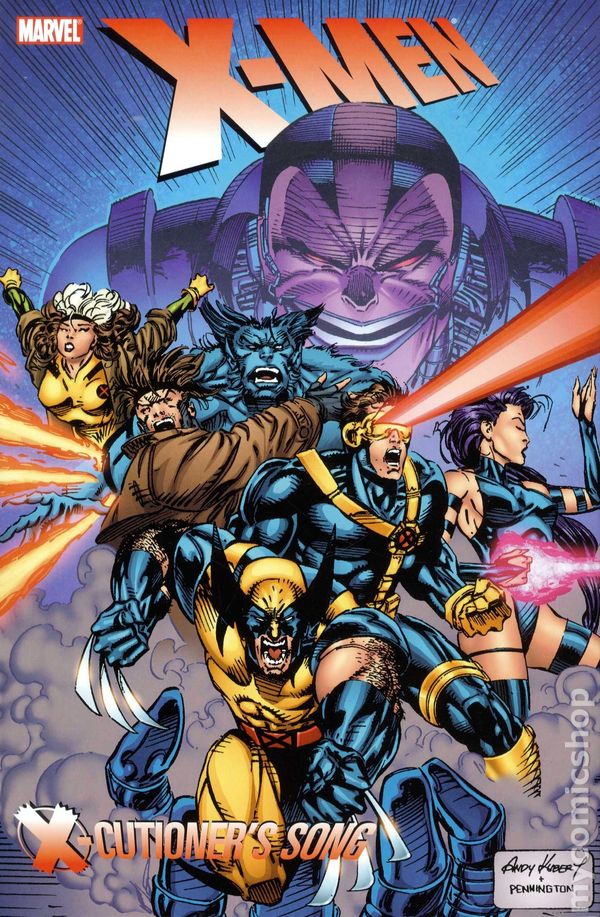
X-Cutioner’s Song is an oft-overlooked great crossover in the history of the Children of the Atom. Before Onslaught, the House of M, and Grant Morrison came along and changed everything (again and again), the revitalized X-Titles were hitting a new stride, despite the great talents of yesteryear (Chris Claremont, especially) no longer being a part of the process. A simplicity still existed that seems lost today. X-Cutioner’s Song, about to turn twenty years old, deserves a second look. As is our wont, we won’t reveal all the plots, subplots, and exquisite details that abound throughout the series — you should read it for yourself, even if you don’t know the difference between Cyclops and Havok.
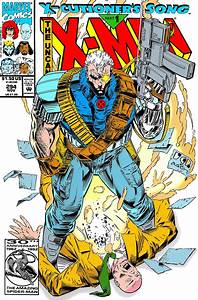
Part 1 — Uncanny X-Men 294: “Overture”
Though this will sound rather hyperbolic, Uncanny X-Men 294 is about as close to perfect as a comic book can get. The better issues of comics, for me, fall in two categories: monumental (and believable) significant changes and laid-back, “day in the life” episodes — admittedly, two ends of a rather vast spectrum. UXM 294 has both. For most of the issue, we see various X-Teams going about their day: Scott and Jean are relaxing at Harry’s Hideaway; Bobby and Peter are shopping for groceries; Warren is on a date; Guido, Jamie, and Pietro are sitting down to watch Charles Xavier on television. Bishop and Rogue are on perimeter detail, discussing previous occurrences (it’s always nice when the characters remember events from previous issues), and so are Ororo and Remy (two unlikely pairings), all surreptitiously guarding Xavier as he prepares to address the gathered crowd about unwarranted mutant bigotry. As is often the case, these relaxed “day in the life” experiences are interrupted: Scott and Jean are attacked and kidnapped by Apocalypse’s Horseman and Stryfe (pretending to be Cable) shoots Xavier in front of everyone. Just like that, the relaxing day becomes the beginning of a very good and vastly underrated cross-over: X-Cutioner’s Song. The only thing that prevents this from being a full five-star great issue is the ambiguity of Scott and Jean’s kidnapping: one moment the roof is collapsing, the next we are told they have been spirited away — a minor confusion, but it is still confusing. Other than that, the issue is remarkable for its brief character moments and its scenes of conflict and tension.
Part 2 — X-Factor 84: “Tough Love”
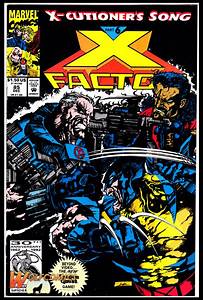
A great deal of the success of this issue is the unique pencil work of Jae Lee. For the longest time, when first reading X-Factor back in ’92 when these issues came out, I could not tell why the artwork was so much edgier for the issues in this crossover than the issues before and after it; it was not until much later I realized (by looking at the credits, finally) the penciler, Jae Lee, did his only X-Factor work on the three issues of this event. Though his exaggerations of muscles (Bishop’s especially) can get a bit extreme, his artwork for this issue is admirably suited to the story; his penciling of the characters and their taut emotions both in their concern for Xavier and their anger at having to fight their own, albeit temporarily rogue, friends and former understudies is fitting. Equally fitting is Peter David’s writing. He has admitted to being a character-driven writer, and this issue exemplifies that important attribute of better comics, even in the midst of a story-driven multi-part crossover. Archangel’s moment of anger at Apocalypse, Strong Guy’s humor even in the most awkward moments, and Quicksilver’s lines throughout the issue are all great examples of Peter David’s skills. Being the second part of a series is a challenging role to fill, and X-Factor 84 does a remarkable job keeping the pace and tension going after Uncanny X-Men 294.
Part 3 — X-Men 14: “Fingers on the Trigger”
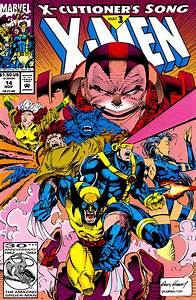
The cover of X-Men 14 is a bit misleading, considering Cyclops is in suspended animation during the issue, being transported by Mr. Sinister to the Mutant Liberation Front. Additionally, this issue suffers (though only slightly) in that it has to be a joining episode of a multi-part story arc essentially acting as the set-up issue to the exciting second part of the battle between the X-Men/X-Factor unit and X-Force, completed next in X-Force 16. Since it is a set-up issue, we have a lot of travelling panels, “here’s what we’re going to do next” conversations, and rapid oscillation among the various plot threads and teams involved. That’s not necessarily a bad thing, for the overall story, but it does diminish the enjoyment of this particular issue qua issue; however, some of the brief character moments make this issue worthwhile and surprisingly enjoyable even for a transition issue. Havok’s internal struggles over confronting and capturing X-Force are a great touch, elaborated on further in X-Force 16: he works for the government, but he is still a part of Xavier’s dream. The discussion of said dream is also one of the better moments in this issue, as Wolverine (ever the cynical one) intimates it might be time to give up on the “dream” and realize it is all a “nightmare.” Having to attack their former pupils (for attempting to assassinate their mentor, no less) certainly adds to the uncertainty of this time in the X-Teams’ existences and personal lives.
Part 4 — X-Force 16: “Jacklighting”
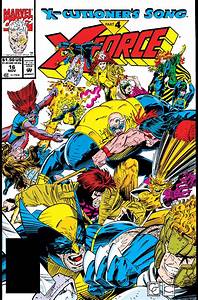
Underlying this crossover is Xavier’s dream: humans and mutants can live together in harmony, free of hatred and bigotry. In the previous installment, Gambit and Wolverine speculated it was past time the X-Men realized the dream was illusory and the pragmatic realities of their day should make them realize the world is a “nightmare.” The dream is tested in X-Force 16, as X-Factor and the Blue Team X-Men fight X-Force again. Cannonball’s leadership is also tested again: he knows they are no match for the older, more experienced teams, and he even has to leave some wounded mates behind in their tactical retreat; eventually he surrenders, knowing full well Wolverine would kill them to get what he wanted.
The changing nature of the X-Universe is furthered in the issue by Bishop’s confrontation with Mr. Sinister. Bishop’s lack of hesitation in pulling the trigger pleases Sinister, which is not a good sign for the Dream. Wolverine, Bishop, Cable — they and their interactions all point to the changes in Xavier’s dream in the years ahead, climaxing (for now) in the events of the Second Coming event and its aftereffects. The storyline of the X-Cutioner’s Song moves ahead with this issue: Sinister tells Val Cooper who is behind it all, Cable prepares to confront him, and Stryfe reveals himself to Cyclops and Jean Grey. The final page of the issue, though, is the best part: once X-Force is in captivity, Havok asks in desperation, “What do we do now?” He is clearly not just asking about how to save Xavier’s body — if the followers of Xavier’s Dream can’t even trust each other, how can the Dream survive outside of mutantkind?
Part 5 — Uncanny X-Men 295: “Familiar Refrain”
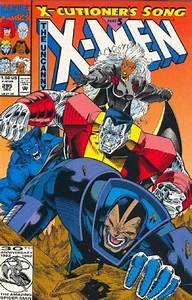
Part of the interesting nature of the X-Cutioner’s Song crossover is the relative newness of many characters we now take for granted, especially Bishop and Cable. Cable had only been around for a couple of years; we still did not know if he was Cyclops’s son taken into the future (or if Stryfe was). Before the traitor of the X-Men turned out to be Xavier (and later Bishop himself), Bishop was a mysterious young man from the future, like Cable, who didn’t yet fit in despite his commitment to them. With those mysteries going on, Archangel’s unresolved anger over Apocalypse’s transformation of him from the Angel adds to the tension of seeking out Apocalypse’s help to rescue Xavier, the father of the X-Men as a whole. Stryfe’s first encounter with Cyclops and Jean Grey in the previous installment of the crossover included him calling them his father and mother (in quotation marks), and now his revenge on them begins in earnest (though since his mother is Madelyne Pryor, not Jean Grey, his anger with her is misplaced) — all for the purpose of finding out why they treated him the way they did, sending him into the future (though it was actually Cable). Even before The Adventures of Cyclops and Phoenix, the effects of that series shaped the direction of the X-Men for a time. Though Stryfe does not become a major villain in the future of the X-Men, his existence is important here and now. The issue is fairly strong, especially with all of its sub-plots. The one irritating aspect of it is that suddenly Wolverine and Bishop have gone off to Department K, though we never knew they were going there. Their unexpected run-in with Cable is a little forced, but the humor sprinkled in the issue, especially from Wolverine, helps alleviate the slightly jarring plot progression.
Part 6 — X-Factor 85: “Snikts and Bones”
Though this issue is another “transition” episode between major points along the X-Cutioner’s Song plotline, Peter David’s emphasis on character moments make this a much more engaging transition than X-Men 14. The unique (and dark) Jae Lee pencil work makes the melee combat scenes extra taught (especially Bishop’s muscles). Cannonball’s decision to help the X-Teams in their investigation into the Mutant Liberation Front is a good one (for his maturation), though I would have liked to have seen a scene of him telling the rest of the imprisoned X-Force that he is going out on a work visa. Wolverine is especially lucid in this issue, showing his open-mindedness in listening to Cable — which is also a good decision for his character, but it strikes as a little odd, especially with his “anti-Dream” talk earlier in the crossover. Cyclops’s scene of impulsive frustration (though after hours of solitary incarceration) is a sign of his tough-as-nails personality in post-M-Day issues a decade after this storyline, but it seems a smidge out of place here. His reaction to the realization he just optic blasted children and Jean is fitting with his character. It is a good coupling with Stryfe’s scene with Jean in the previous installment, but the episodes are too brief, especially since the crossover is now half-over. The most interesting scene is Archangel’s accidental decapitation of Kamikaze. Archangel’s reaction is apropos; Boom Boom’s reaction is likewise apropos for her character, and the juxtaposition of her immaturity and his maturity is remarkable — especially after all of Archangel’s talk about wanting to assassinate Apocalypse.
Part 7 — X-Men 15: “The Camel’s Back”
This may be the weakest link in the chain of X-Cutioner’s Song. It’s not that we expect non-stop action and major plot points throughout all twelve episodes in the crossover; the story is certainly allowed to transition from set piece to set piece with intervening respites. What sets X-Men 15 apart from other linking issues, though, is that it lacks the good character moments that bolster the story-movements in those other episodes. Though Colossus has a good moment pondering his brother’s recent actions, Strong Guy’s interruption does not improve the scene, even in a comedic way. Similarly, Stryfe’s moment of humiliation for Scott and Jean in this issue is too bizarre to provide a good continuation of his vengeance scheme. The dialogue throughout the issue suffers: Reaper is too casual at the beginning, Stryfe is too congenial with Zero, Beast is too easily angered with Moira, and Scott and Jean — despite being major motivations for the story — have again almost nothing to say. The X-Teams get beat up in this issue: Boom Boom’s jaw is broken (perhaps fitting punishment for her juvenile reaction to Kamikaze’s death in the previous episode) and Rogue is temporarily blinded. Stryfe’s quick dismantling of the Dark Riders begs the question — why would Apocalypse have such a weak team around him? Havok again has to ask someone for advice on what to do next — before it was a sign of his deep emotional struggle with their plight; now he just looks indecisive and weak. The story moves along a little bit, thanks to Stryfe and the dismantling of the Mutant Liberation Front, but little overall progress is made.
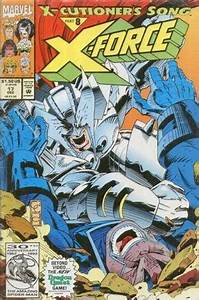
Part 8 — X-Force 17: “Sleeping with the Enemy”
Part of the impressive and enjoyable aspect of this crossover is that the “big battles” come in a progressive series: the story presents the one about to happen as the real climactic battle, but when it’s over, we know the next one is going to be even more significant. Such development does not happen as successfully in many crossovers. The battle between Stryfe and Apocalypse seems like it should be bigger, even though it occurs at the beginning of the issue. When it ends, we know that more important things are about to happen. Finally, we hear from Cable about his history with Stryfe — that he doesn’t even know yet why they have the same face is part of the creative atmosphere of the time: here was an interesting mystery in the X-Universe that did not require major retcons or total multi-series changes (Disassembled, Civil War, Dark Siege, etc.). The Stryfe/Apocalypse connection is also enjoyable, but a bit confusing if you are unfamiliar with their appearances/history. Why Stryfe is glad the Dark Riders so quickly turn to him is odd, considering his disgust with them in the previous installment for being so weak — perhaps having weak acolytes is acceptable if they are your weak acolytes. The comedic snippets in this issue are better than the attempts in X-Men 15: Wolverine’s struggle with Graymalkin’s anti-smoking programming is a highlight. Other character moments help this issue succeed: Rahne’s talk with her former teammates, Siryn’s realization she was involved not with Madrox but one of his duplicates, and Cannonball’s confrontation with Havok reminds us he (Guthrie) is fit to lead after all (Havok again comes off as a bit weak and thoughtless). Finally Scott and Jean get to do something again, though it’s only for a couple of panels. Their relationship is presented well as something good in this issue — the later destruction of it will forever be a dark spot in Marvel’s history. Archangel’s confrontation with Apocalypse at the close of the issue is a good reminder of their connection and just how integral Apocalypse was in the development of the X-Universe in the ’80s and beyond.
Part 9 — Uncanny X-Men 296: “Crescendo”
This issue does a fair amount with not much material, which is impressive considering the couple of flaws in it: the beginning is confusing, made more so by the incorrect footnote from Bob Harras on page one; when did Cyclops and Jean encounter the Dark Riders?; the missing footnote on page 22 (though the issue doesn’t have page numbers for some reason) — the references to years-ago back issues are more important than references to issues in the same crossover. It’s also a bit confusing how the Dark Riders got to the moon so quickly from Egypt, after Stryfe just swayed them over in the previous episode. Aside from those aspects, this issue does have some good moments. The “story thus far” recap by Bishop, Cable, and Wolverine is interesting enough to prevent being tedious. Cyclops and Jean’s kiss before they head into more danger is another great aspect of their good relationship in the good ol’ days, before more recent writers felt free to destroy one of the best things about the X-Men and Marvel Universe. It’s about time Scott and Jean finally got to do something substantial for the first time since the beginning of the crossover (before they were captured by Caliban). Stryfe’s reaction to their sacrificial response to his test is great, even though one could make the argument not enough time in the series has been given to him and them. Some might prefer his realization to be in subconscious thought bubbles instead of editorial rectangles, but that is not as important as the event itself. Stryfe is no longer certain Scott and Jean abandoned him…what has he left now?
Part 10 — X-Factor 86: “One of These Days…Pow! Zoom!”
So late into a crossover, one might expect an issue to drag any potential momentum down — not so with this final David/Lee match-up. This pair did great things with these three X-Factor issues, but Lee may steal the show here. The best moments in this great issue are wordless images from Lee. Few great authors would allow the images do all the narrating, even in comics — Peter David proves his greatness by letting Lee’s images tell everything we need, both in a comic scene and a heart-wrenching romantic scene. The image progression of Scott and Jean running out of oxygen and turning to spend their last moments embracing is one of the best moments in Marvel’s history. Later, the comic wordless scenes of Cable, Wolverine, and Bishop waiting for Graymalkin to recalibrate for the Moon are a great progression (especially Cable whittling a Domino statuette). David does get some great character lines in, though: Havok gets some leadership skills back with his humor, Strong Guy’s comedic moment is far superior to the weak scene with Colossus a few issues before, and Cable’s “hour and a half” line is priceless. Stryfe’s tearful confrontation of Cyclops and Jean is what the series (at least their section of it) has been waiting for — genuine emotion. That Storm and Havok listen to Warren in letting Apocalypse finish saving Xavier from the techno-organic virus is a good testament not only to their good leadership skills but also Warren’s strength as a character and original X-Man. This is a stupendous issue.
Part 11 — X-Men 16: “Conflicting Cathexes”
Admittedly, this issue suffers structurally, in that it is the final set-up piece before the grand finale of the crossover, so we shouldn’t be too harsh on it. It does have some good character moments: Cannonball’s brief confrontation with Cable and Archangel’s lines to Bishop are great — “His life has been marked by pain and loss,” says Bishop of Apocalypse. “And that’s an excuse, Bishop? Which one of us hasn’t gone through the same? You just don’t see us choosing to mark everyone else’s life with the same brand of hatred that’s inflicted on us,” replies Warren. That sums up ’90s X-Men, pretty much. By this point in their lives, all of the X-Men had gone through an awful lot of turmoil and heartbreak…but they were still there, fighting to protect a world that hated and feared them — even fighting against other mutants. It was never about sheer force, which Bishop acknowledges. That the beginning of the issue tries to reject that (in Wolverine) is part of why the issue is somewhat flawed. Other smaller scenes and tidbits detract from the issue as well, but it does serve its overall purpose of drawing the various plot strands and character groups together for the final act.
Part 12 — X-Force 18: “Ghosts in the Machine”
Sometimes the finale of a major crossover can be a giant letdown; sometimes the payoff is not worth the investment. Neither of these is true of X-Force 18: this is a marvelous conclusion, bringing us fully (and finally) to the heart of what Stryfe and X-Cutioner’s Song have been about from the beginning — family (one could make the case for “love” as well). In one sense, there was no “need” to bring in Apocalypse to the story at all. Stryfe could have certainly shot Xavier with a regular plasma gun or something, not a techno-organic virus only Apocalypse could cure. The reason he was brought in to the series seems to be the great scene of weakened Apocalypse and Archangel here: Warren declares (and possibly realizes for the first time) the true part of him that makes him himself was not altered by Apocalypse — he is not truly his son. Havok’s weak moments throughout the series are forgotten in his personal confrontation with Stryfe: he finally voices his perspective at being a Summers but not Scott Summers, and he seems to begin to cope pretty well (for the time being — he’s one of the worst-treated characters in Marvel’s history). Underlying this crossover is the question “who is Cable?” Is Stryfe or Cable the son Cyclops had to send into the future? Though this crossover was supposed to answer that question, it didn’t…which is much more satisfying as an ending, surprisingly enough. That Scott starts to suspect that Cable is, to Jean’s surprise, is a great way to conclude the song. Keeping the mystery alive (especially while delivering an emotionally moving conclusion) is far superior to answering the question and then having the writers retcon it all twelve years later (the current fashion). Some may think Stryfe’s desire for togetherness is too sappy of a motivation — they are mistaken. The epilogue, Stryfe’s “pox on all mutantkind,” is of course the release of the Legacy Virus. That later writers of X-Books did not know what to do with it is not the fault of this storyline. Sinister’s stoic response to being tricked by Stryfe is consistent with his equipoise throughout the series. X-Cutioner’s Song is a story about family, about belonging, being together, and how (much) the Children of the Atom have to sacrifice in order to do that, even a little. This is a great story that shows us the heart of many of these great characters.
Epilogue — Uncanny X-Men 297: “Up and Around
This is the best comic issue I have ever read. As an epilogue to a great crossover, Uncanny X-Men 297 has the perfect mood: quiet. Some might argue the issue needs Cyclops and Jean to reflect on what just happened to them: perhaps, but they already did that (albeit briefly) in X-Force 18. Now is the time for the other refrains of the song to reach their codas. Rogue and Gambit spend some time together as she recovers (on the roof) from her temporary blinding in the crossover, though in a way that finally allows Rogue to speak her mind about what she needs, her desire for Gambit, and her great disappointment (irately so) that they can’t be together: Gambit’s power is to charge up objects and throw them away — Rogue certainly doesn’t want that to happen to her; she’s a woman, not a thing. After some hours of separation, Gambit finally returns and offers Rogue what he can, a blanket and some reassuring words — for now, his presence is enough. The thread of Warren and Hank rebuilding Harry’s Hideaway is the greatest series of panels probably ever. What’s great about it, as with the entire issue, is the genuineness of the emotions and dialogue. Finally we get some reflection on where the original X-Men used to be, how things were in the old days before Hank and Warren turned blue (literally and figuratively). It’s so easy to forget they started out as students, as kids, writing term papers and struggling with their personal issues before Magneto, Apocalypse, the Sentinels, and the M’Kraan Crystal changed everything (again and again). Hank’s laughter and Warren’s reflection on his old attitude are superb. Better still is Hank’s encouragement to Warren, especially after Warren’s own confession to Apocalypse the day before: he has struggled through his experiences (we all have), but he has come through them truly human and mature. The final thread of the issue is Professor X’s moments with Jubilee, as he enjoys a few hours’ ability to walk again. That he spends them with Jubilee is a great touch — the two ends of the good X-Universe spectrum. The quiet scenes of his reflections on losing his mobility, gaining it again, and imminently losing it again are excellent character and narrative moments. The final two pages are some of the most moving in X-Men history, rivaling the great Cyclops and Jean moments earlier in the crossover. This issue shows us what Professor Xavier’s Dream is all about: it’s not about fighting evil mutants and bigoted humans; it’s about love.
Addendum – Stryfe’s Strike File
Being a completist, I had been searching for this comic since 1992. I finally found it for 25 cents in 2010. Shortly thereafter, I began finding it in every comic store I visited — strange how that happens. The issue serves its purpose well, and the writing, though defamed by some, is aptly written as the writings of the deluded and maniacal Stryfe. It’s challenging to view the X-world through the eyes of a recently-arrived crazy man. The first appearance of Holocaust is here; more notable is Stryfe’s comment that he isn’t supposed to be in this timeline — two years before the Age of Apocalypse. Similarly, Threnody’s first appearance is here, almost a year before she appears in X-Men 27. Before Colossus becomes an Acolyte, Stryfe says it’s coming. It’s odd to think of Bishop and Wolverine as lesser players than they think they are, especially considering Wolverine’s stratospheric popularity. Too bad Stryfe could not see Scarlet Witch’s future destruction of the X-Universe a decade in the future. His comments about Cannonball are perhaps the kindest things ever said about Sam Guthrie. The frame story of Professor X reading through these files is a nice narrative device, but it’s more impressive that, despite his desire to know what Stryfe knew, he purges the files — the X-Men will face the future, together, without the perspective and machinations of madmen like Stryfe.
The Song Remains Supreme
The good news for you is we are living in an age in which Marvel has recommitted to releasing its classic crossovers and series in remastered hardcover and trade paperback sets (some at better prices than others if ordered on-line). Instead of trying to track down the separate issues in the various comic book stores around town, you can simply wait a couple of months and order the future hardcover release scheduled to come out August 2011 (with both Uncanny X-Men 297 and Stryfe’s Strike Files, you lucky duck, you — no waiting eighteen years needed). True, it might be more enjoyable to track down the issues and look at the advertisements for Aladdin the movie and Hook the SNES game, but if you are just interested in reading one of the better X-Men stories at a time before the crazy retconning and character destructions of the 2000s, getting a copy of X-Cutioner’s Song is the way to go. It’s a great story with some of the best character moments in X-Men history.
Isaac Asimov was an avowed secular humanist and a science fiction writer. Since worldviews will always color and form books and other artistic works, it is possible to trace themes of Asimov’s humanism in the first of his major science fiction trilogy, Foundation. Apart from the humanist strains, Asimov also worked in foundational elements of Marxism. The purpose of this paper is to explore the strains of Marxism within Foundation and find the comparisons between Asimov and Marx in religious, socially materialistic, and fatalistic ways.
The main component of any worldview is the religious component. The ideas of the metaphysical universe will color all the rest of the laws of the universe in Foundation. In order to understand the worldview of Foundation and the worldview of Marxism, one must understand how Asimov and Marx portray and discuss religion.
In Foundation, religion is brought up as an older belief, one that a scientific Empire like Trantor does not believe in. Religion is an explanation for what the inhabitants of Foundation cannot explain. For the Foundation itself, located on Terminus, religion becomes a tool by which the Foundation peacefully maintains its defense; it becomes a crowbar by which the Foundation holds sway over less intelligent and advanced empires. For the empires the Foundation deals with, such as Anacreon, religion contains all the technological knowledge they possess, entrapping the inhabitants within the technological mind frame the Foundation wants them to have, thus ensuring they cannot advance and threaten the somewhat defenseless Foundation.
This use of religion to dull down Anacreon’s desire to defeat the Foundation is similar to how Marxism views religion. “Soviet premier Nikita Khrushchev said, ‘Communism has not changed its attitude of opposition to religion. We are doing everything we can to eliminate the bewitching power of the opium of religion’” (Nobel 68). As Doctor Nobel summarizes from the Marxist’s view of religion:
The idea of God, insists Lenin, encourages the working class… to drown its terrible economic plight in the “spiritual booze” of some mythical heaven…. Even a single sip of this intoxicant decreases the revolutionary fervor necessary to exterminate the oppressing class…, causing the working class to forfeit its only chance of creating a truly human heaven on earth: global communism.
(Nobel 65)
In Marxism, religion tones down the proletariat’s desire to revolt. In Foundation, religion keeps Anacreon peacefully dependent upon the Foundation. Anacreon is less willing to attack the Foundation because their entire way of life suddenly depends on the religious technologies and beliefs given to them. The religion infiltrated in by the Foundation destroyed Anacreon’s desire to rise up, be free, and seek to conquer new areas.
With Foundation and Marxism’s denial of the supernatural and religious aspects of reality, the laws of the universe are merely materialistic and mathematically quantifiable substances. This includes psychological history, economics, and sociology. The very roots of the Foundation are based in psychohistory, an idea that the actions of massive groups of people can be mathematically predicted and quantified. This allows Hari Seldon to predict the overall path of the Foundation and prepare its rulers in advance. This materialistic idea of psychohistory reduces mankind to a robotic and mathematical system, where only masses count and human behavior can be reduced to externally-influenced behavior, excluding the free will of individuals. With free will, the people would knock Seldon’s mathematical variables out of place. “[Seldon] worked with mobs, populations of whole planets, and only blind mobs who do not possess any foreknowledge of the results of their actions…. Interference due to foresight would have knocked the Plan out of kilter” (Asimov 3:2).
This idea of predicting the behavior of the masses through materialistic laws is foundational to Marxism. “Karl Marx says, ‘It is not the consciousness of men that determines their existence, but, on the contrary, their social existence determines their consciousness’” (Nobel 412). Marx’s atheistic and materialistic worldview led to the belief that humans’ behavior could be materialistically governed and always worked on set laws.
Similarly, just as Seldon concentrates not on the individual but the masses, so — as Lenin says — “historical materialism made it possible for the first time to study with scientific accuracy the social conditions of the life of the masses and the changes in these conditions…. Marx drew attention and indicated the way to a scientific study of history as a simple process which, with all its immense variety and contradictions, is governed by definite laws.”
(Elkins)
This belief is necessary for Marxism. Communism is attained when the masses revolt together; their revolt is predicated by economic conditions that act as external stimuli to impact how they behave. For Seldon and Marxism, material forces are the causes by which humans act. The forces that govern humans’ sociological acts are materialistic economic forces that lead to social evolution.
The idea of man bettering himself over time through materialistic forces governing his way is entrenched in Foundation. The entire history of the Foundation is the story of its upward struggle for existence. On a large scope throughout the trilogy,
Seldon’s Plan predicts the fall of the decadent First Galactic Empire (read Roman Empire), the rise of the Traders and Merchant Princes (read bourgeoisie and nationalism), the growth of the First Foundation (read postindustrial, bureaucratic-technological society), its interaction with the long hidden Second Foundation and the eventual creation of the Second Galactic Empire, a civilization based on “mental science” (read Asimov’s utopian vision?).
(Elkins)
On a smaller scale, the Foundation shows its own social evolution. Within the social evolution in the first books, a major interplay between religion and economics takes place, much like Marx’s idea that economics propel history and erode away religion.
The Foundation’s original setup was for the preservation of materialistic human knowledge in Part 1, which moved next into preserving the Encyclopedia in Part 2. Part 3 brought in the idea of preserving the Foundation itself and the setting up of the first mayor, Salvor Hardin.
Salvor Hardin parallels the dialectic struggle in Marxism. While the Encyclopedists are content to focus on preserving the past and remaining entrenched in their present state, Hardin believes in progress and continual movement upward. “Have you ever thought of working onward, extending their knowledge and improving upon it? No! You’re quite happy to stagnate. The whole Galaxy is, and has been for space knows how long” (Asimov 2:3). Hardin understands the dangers of remaining socially stagnate.
Hardin’s idea is to dull the rebellious idea of the Foundation’s threat through taking over their enemies with religion. His emphasis on a peaceful takeover and the use of religion is partially contrary to Marxism. Marx would argue Hardin’s belief that “violence is the last refuge of the incompetent” (Asimov 3:1) as a deficient means to socially progress. The use of religion to dull down the social progression of opponents ties in with Marxism, as explained before. Even though Hardin sees non-Marxist peace as the means to social progression, the religious days of the Foundation have an end and are replaced by the greater workings of economics, as Marxism teaches.
The Merchant Prince Hober Mallow, in Part 5, represents the rising social progression of the Foundation through the replacement of religious power with economic power. Trading becomes the crowbar by which the Foundation maintains its weak defenses and impressive power of its enemies. Much like the dialectic clash found in Marxism, the Foundation’s clash of religion and economics (Marxist thesis and anti-thesis) leads to the next stage of the Foundation’s social progression (the Marxist synthesis).
The last streams of Marxism found in Foundation involve the overall sense of historical fatalism. “[Marx] writes, ‘Men make their own history, but they do not make it just as they please; they do not make it under circumstances chosen by themselves, but under circumstances directly encountered, given and transmitted from the past’” (Nobel 412). This is exactly the case with the Foundation. Hari Seldon has foretold the Foundation’s entire history through psychohistory, and now the masses will simply fulfill the materialistic equations Seldon deduced. The Foundation does not make history as they please, but are already on a programmed plan created by Seldon. “Circumstances directly encountered” have already been calculated by Seldon.
In Foundation and in Marxism, the individual and his choices do not matter in the long run. No one can escape the plan Seldon has foretold.
Asimov’s characters are not tragic heroes. They are nondescript pawns, unable to take their destiny into their own hands. There is no fear or pity to evoke a tragic catharsis. Instead there is complacency. The Foundation Trilogy ends on a note of one-upmanship. After all that has happened, history is still on its course and Hari Seldon wins again.
(Elkins)
In Marxism, no matter what happens, the world is predestined to socially evolve toward Communism. Every action only furthers the gradual progression toward a global Communist world.
Isaac Asimov’s Foundation is riddled with and internally structured by the ideas of Marxism, whether or not Asimov was an avowed Marxist. Religion is a means to subdue the social progression of Anacreon, just like religion in Marxism dulls the proletariat’s desire to revolt. Social progression and the history of humankind can be materialistically calculated through psychohistory, just like in Marxism social progression is pushed forward through materialistic economic processes. Foundation holds to a fatalistic structure that Seldon’s plan will be accomplished, no matter what, just as Marx holds to a fatalistic belief in the eventual victory of global communism. In religious, socially materialistic, and fatalistic ways, Foundation is elementally similar to Marxism.
Bibliography
Asimov, Isaac. Foundation. Bantam Dell, 1951.
Elkins, Charles. “Science Fiction Studies, #8,Volume 3, Part 1, March 1976.” Web. 4 Dec. 2010. Web.
Noebel, David A. Understanding the Times. 2nd ed. Summit Press, 2006.