Category Archives: Archives

Biblical Womanhood

Madison Coffey

Imagine a gift so precious you cannot put a price tag on it. Its price is far above jewels: a blessing from God bestowed on a father and mother; a soul to love, raise, nurture and  guide. What a responsibility! What an honor. That is what the gift of a child is. As stated in Psalm 127:3, “Behold, children are a heritage from the Lord, the fruit of the womb a reward.” I will tell you about a woman named Carolynn. Carolynn worked very hard from the time she was in elementary school. Her parents have always taught her to work hard, study hard, and keep her grades up as high as she could by herself so she could learn and strengthen these skills for when she needed them in her future, like in college and any career path she might take. Carolynn was thankful for her parents’ direction; she grew up getting straight As every year. She grew up, and graduated valedictorian, with great honor. Carolynn went to college to be a surgeon, and while she was there she met her husband. Before long, she and her husband had a beautiful baby girl. But once she had her daughter, she realized she really wanted to stay home with her and help nurture her baby and be there for every step and every milestone she would hit throughout her life. Her husband is also a surgeon, so both of their incomes are more than enough for the three of them. Carolynn has the choice: she could quit her job and raise her daughter, or she could continue working and have hardly any relationship with her child and hire a nanny to raise her for her. If she chose this she would not know very much about her daughter; the nanny would potentially have to inform Carolynn of her child’s likes/dislikes. She could miss so many important milestones of her child’s life while never being there to raise her. Carolynn would come home at night to tell her daughter goodnight but nothing more. I believe, although Carolynn has worked so hard to get where she is today in her career, she should stay home to raise her daughter. She is financially able to and she’s not choosing her job over her child. Choosing your job over staying home to care for your family, I believe, is against God’s will.

My thesis is women should not give up their God-given roles as a wife/mother, if given the choice. I will first give a brief history of when women in America began to leave their traditional Biblical roles to help us understand why this issue is prevalent today. Before the Civil War, women lived the lives I would say reflected how God preferred them to live. Women would stay at home to take care of their children and perform household chores, while the men were generally the ones working out in the workforce to maintain a steady income for the family. This soon began to change after the Civil War; the role of women was now the opposite. Women began to fight for working rights, and they wanted to gain a sense of political and  even economic working freedom. They felt more freedom because they were doing work men did. A major shift in the workforce around this time occurred. African-American women became a very important part of the labor force. They needed to earn a steady income after they were freed from slavery. Middle class white women also began to enter the workforce. While many husbands left America to fight in WW2, the women had to go out and find themselves jobs in the workforce in order to adequately provide for their entire family. This gave women their first taste of independence because they were doing what men usually did, but this feeling ended when the men returned from World War II. The men came home and wanted to get their jobs back, which meant the women would lose their jobs and return to the more feminine jobs. This history didn’t end with World War II.

Women’s lives were changed giving them an opportunity to not be given the label of a regular housewife. Around the 1960s and ’70s, a feminist movement started to peak. There were two waves the movement focused on. The movement began, in a way, with Elizabeth Cady Stanton and Susan B. Anthony in the 19th century, culminating in 1920, when women won the right to vote with the 19th Amendment. This renewed feminist movement in the ’60s started to touch on every area of a woman’s experience of life, including family, sexuality, and work. It focused on taking apart workplace inequality, such as the denial of certain jobs that were better and had a higher salary than jobs women could get. In 1964, a Representative of Virginia named Howard Smith proposed to add a prohibition of gender discrimination into the Civil Right Act being considered at the time. The Congressmen mocked him, but the law was later passed with the amendment act, from a Representative of Michigan named Martha Griffiths (Tavanna). The most recent event we have seen reflecting the history of women entering the workforce was the 2016 presidential election, when Hilary Clinton came close to becoming the first woman President of the United States of America (Burkett).

To better help us all understand the issue and its importance, I will now define the term “main provider.” “Provider” in Merriam Webster’s dictionary means “One that Provides; especially breadwinner.” The term “breadwinner” according to Webster’s dictionary is “A member of a family whose wages supply its livelihood.” My third term I want to explain is “Helpmeet.” In Hebrew, “helpmeet” is derived from the word Ezer. Ezer, which is commonly translated as “help,” is a combination of two roots, one meaning “to rescue,” “to save,” and the other meaning “to be strong.” Just as the roots merged into one word, so did their meanings. The word “helpmeet” is seen in Genesis 2:18 in the KJV version: “ It is not good that the man should be alone; I will make him an help meet for him.”

A suitable wife is compatible with her husband in many respects — physically, mentally, emotionally, and spiritually. This doesn’t mean the man and woman are the same in everything, only that they fit together in harmony. They complement each other. This issue is important because women today who strive for the historical norm to be stay-at-home wives/mothers are looked down upon. But the most important thing to understand is this is how women were ordained to be by God. This can be seen in Proverbs 31:10. God says the worth of an excellent wife is far above jewels. “An excellent wife, who can find? For her worth is far above jewels.” In Titus 2:3-5, Paul firmly counsels the older women to teach the younger women, among other things, “to love their husbands and children, … to be busy at home.”

In order to prove women should not give up their God-given roles to be a wife/mother if given the choice, I will confirm three arguments: first, Proverbs 31 is a good basis for how women can glorify God; second, God’s original intention for the creation of woman was to be the man’s helpmeet as read in Genesis 2:1; third, a mother’s role in the lives of her children is crucial in a child’s development. I will then refute three counterarguments: 1) How wanting to be a wife and a mother is unrealistic. 2) When God wrote about how He wanted a woman to live her life, He was referring to that day and age. This is the 21st century, things have changed. 3) What if God doesn’t call me to be a wife or mother?

My first confirmation argument is God gives us a biblical example and definitions of what a woman should strive to be like and things she should try to accomplish. In Proverbs 31:10-31, God details the attributes of a virtuous wife/mother or ideal woman. I do realize no human being is perfect and we could never be the perfect wife and mother, but God does detail what a mother and wife should strive to look like and do in order to glorify Him. This passage begins by talking about virtue: the first line in verse 10 tells women they are precious and worthwhile. Verses 11-12 state the wife has the heart of her husband entrusted in her hand and she will do him good for the rest of her life. This means the husband trusts his wife to never commit adultery against him. He trusts her with his heart. Verse 15 goes more into the mother’s role: “She riseth also while it is yet night, and giveth meat to her household, and a portion to her maidens.” This verse specifically talks about how God expects the woman to wake up early in the morning even just to make food and feed her family. In verse 23, God says a woman’s husband should be known in the gates when he sitteth among the elders of the land. The husband is respected among the elders because of her reputation. In verse 24-25, “She maketh fine linen, and selleth it; and delivereth girdles unto the merchant. Strength and honour are her clothing; and she shall rejoice in time to come.” God says the wife should want to learn how to make fine linen and sell it, and she should have strength and honor to present herself  every day. This relates to my argument because this was part of the way the wife actually contributed to helping make money with her husband, while being at home and still able to take care of her family’s needs. In verse 28, God says her children will rise up and call her blessed, and her husband also, and he praiseth her. A woman cannot achieve these attributes when she is away from her family. From this passage in the Bible, you can tell God really desires women be at home and helping their families, as opposed to how some families are today in which mothers don’t even have time to take care of their families because they choose to work rather than being home when they didn’t have to be. This does not apply if working is a necessity rather than a luxury or choice.

My second confirmation is God’s original intention for the creation of  a woman was to be a man’s helpmeet. Genesis 2:18 says, “And the Lord God said, ‘It is not good that the man should be alone, I will make him a helpmeet for him.’” There you have it. God created the woman to be a helper to the man. The reason Eve was formed was to complete Adam. She was made uniquely suited to complement/fulfill his needs. Eve was not designed to be like Adam, she was designed to be the opposite of what he was. Eve possessed all of the qualities Adam did not have, including the different responsibilities he couldn’t complete. While women do much to help and assist men in their stewardship, women have been given a stewardship uniquely theirs, which is every bit as important as men’s stewardship. It’s important to understand the purpose of God creating us was to be the helpmeet of a man.

My third confirmation is being a stay-at-home mom affects a child’s ability to function throughout his or her life. Home is where bonding takes place. When a child attaches, that child can learn to trust people. Learning to trust people is essential for having healthy and successful relationships in life. The home is where the child learns who he or she is. We are all created uniquely by God, including our spiritual gifts and talents. The most effective place for children to learn is in the home. It’s important that a child’s mother is always available to the child. In Erica Kromisar’s book Being There, she gives scientific evidence that demonstrates how important it is mothers be with their children and be the caretakers of their children, especially in the first three years of life. Komisar writes, “Babies are much more neurologically fragile than we’ve ever understood.” She cites the research of a neuroscientist named  Nim Tottenham from Columbia University: “‘that babies are born without a central nervous system’ and ‘mothers are the central nervous system to babies,’ especially for the first nine months after birth.” You might wonder what exactly this means, as did I. Komisar explains, “Every time a mother comforts a baby in distress, she’s actually regulating that baby’s emotions from the outside in. After three years, the baby internalizes that ability to regulate their emotions, but not until then.” So we can conclude a baby’s very neurological health depends on the continual connection with the mom for 3 years, which can’t happen if the mom leaves the home. And as Komisar tells us, this happens in the course of a mother being with her child. Every time she comforts the baby, the baby’s own central nervous system is actually not just being comforted but being developed (Taranto). Motherhood is a ministry of availability. If we are going to make the important decision to have a child, then we should make sure we follow through with the commitments and the obligations that go along with having and raising a child.

The first counterargument I will refute says, “wanting to be a wife and a mother is unrealistic.” Some people say it’s a selfish goal. Some wouldn’t even consider wanting to be a wife or mother a goal at all. I argue wanting to be a wife and mother is not a selfish goal at all. If this goal is what my God has put on my heart to pursue, then that reason alone is enough to show it isn’t selfish. But a bigger reason is the fact people think women who are wives and mothers JUST sit around all day and cook and maybe clean the house, but that is nowhere near all that they do. She JUST brings forth life into the universe, and she JUST shapes and molds and raises those lives. She JUST manages, directs, and maintains the workings of the household, while caring for children who JUST rely on her for everything. She JUST teaches her children how to be human beings, and, as they grow, she will JUST train them in all things, from morals, to manners, to the ABCs.

I have to go through people giving me a disappointed look or tone all the time when I actually tell them what I want to do, every time someone asks me the classic questions everyone is obligated to ask a graduate, especially “What do you want to do when you graduate?” Usually my answers are exactly what people today want to hear: it usually sounds like, “Oh, I probably am going to college and start out majoring in graphic design and see where I go from there.” But really inside, I don’t want to go to college; I want to get married and maybe have a part-time job. But if I told people that, they would probably look at me like I’m the stupidest person on earth. Why? Usually they say, “Do you know what kind of world we live in today, Madi? You’re not being realistic, you have to go to college and get a good degree so you can be prepared because our economy is so bad and it’s only going to get worse. It isn’t today like how it was when God wrote that in that time of the Bible. Go to college and get a good paying job.”  This leads to my second refutation point.

The second counterargument I will refute is the idea “Our society has changed, God wrote Proverbs 31 for women in that culture at that time. Society is different now; women have different roles than the did hundreds of years ago.” The first thing I will say to that is Malachi 3:6, “For I am the Lord, I change not.” Hebrews 13:8 says, “Jesus Christ is the same yesterday and today and forever.” Numbers 23:19 says, “God is not human, that he should not lie, not a human being that he should change his mind. Does he speak and then not act? Does he not promise and not fulfill?” Nowhere in those verses does it ever say anything like, “As times goes by and the cultures and society changes, then these things that I have listed about women will change and you will no longer have to try to strive to accomplish these things.” The world might change, but God does not change. God does not change His laws and beliefs to suit our ways.

This reminds me of an old story my grandfather used to tell me. There once was an older couple driving down the highway on their way to church, as they have every Sunday for the past 20 years of marriage. One Sunday morning, the couple pulled up beside another couple at a stop light; the older wife looked at the other couple in the car next to her. She turned away from them with a depressed and angry look on her face. Her husband noticed his wife was upset, so he said, “Sweetie, what is the matter, why do you seem upset with me all of a sudden?” His wife answered, “Don’t you remember how we used to sit so close to each other like that? We don’t anymore; we have changed.” Her husband looked at her while sitting in the driver’s seat and said, “I haven’t moved from where I’m sitting.” In this case, the husband represents God. The wife had drifted apart from her husband; in the end of the story she realizes she was the only one who could have moved, away from her husband. The same goes for Society and God: He never changes or moves, only we do.

The final argument I will refute is “What if God doesn’t call me to be a wife or mother?” I will respond with this simple answer: if God doesn’t call you to get married, then He is calling you to serve Him in another mission field. Paul tells us in 1 Corinthians 7:7-8: “I wish that all men were as I am. But each man has his own gift from God; one has this gift, another has that. Now to the unmarried and the widows I say: It is good for them to stay unmarried, as I am.” Notice he says some have the gift of singleness and some the gift of marriage. Although it seems nearly everyone marries, I understand it is not necessarily God’s will for everyone. I’m speaking to those women who are being called by God to get married, and those women only. Anyone who isn’t being called to get married is being called to devote her entire life to spreading the Word of God.

The point I want to make clear is we all need to understand college isn’t for everyone. Do not be discouraged to live the Biblical life women once used to go by. God has called men to live a certain way; God has called women to live a certain way. There is no shame in living the way God has designed us to be. God has written down biblical roles a woman is to do her best to follow. Although none of us is perfect, we should do our best to follow how God wants us to live. We have to remember God is powerful enough to bless us if we live the way we are supposed to live, despite the “pressures” of economic circumstances today. God will enable us to live how we should regardless of how society thinks we need to live, no matter the “standard of living.” God would not tell us He wants us to be a certain way, and then not let us be able to just because the world has made it harder to do so. God never changes, and his purpose for man and woman has not changed either.

Works Cited

“The 1960s-70s American Feminist Movement: Breaking Down Barriers for Women.” Tavaana, tavaana.org/en/content/1960s-70s-american-feminist-movement-breaking-down-barriers-women.

Burkett, Elinor. “Women’s Movement.” Encyclopædia Britannica, Encyclopædia Britannica, Inc., 2 Aug. 2016, http://www.britannica.com/topic/womens-movement.

“Provider.” Merriam-Webster, Merriam-Webster, http://www.merriam-webster.com/dictionary/provider.

“Thursday, November 2, 2017 – The Briefing.” AlbertMohler.com, albertmohler.com/2017/11/02/briefing-11-02-17/.

Taranto, James. “The Politicization of Motherhood.” The Wall Street Journal, Dow Jones & Company, 27 Oct. 2017, http://www.wsj.com/articles/the-politicization-of-motherhood-1509144044.
Neither Geek Nor Nerd

Christopher Rush

I prefer to think of myself as someone who has an accurate grasp of what is important in life.  That is not to say I always prioritize life’s opportunities correctly: I don’t know any other languages, I haven’t memorized the Bible, I don’t know how to fix … things.  Yet, in the variegated realms of what we used to call “pop culture,” I think I’m fairly well traveled.  While today it is becoming de rigueur to brandish the appellations “geek” or “nerd,” as if we have survived the great Name-calling Wars of 1989 and those terms are now badges of honor, I posit they are hollow terms, and, more importantly, they are not for me.

From the outset, I would like to forestall any connections with other cultural situations in which certain terms have been, shall we say, appropriated or re-appropriated or the like.  This is not meant to be a variation on that social situation.  Rather, I’m just going to say things at you, as is my wont, about a topic that has no meaningful connection to real history, real people, or real life.  And this topic is innately such.

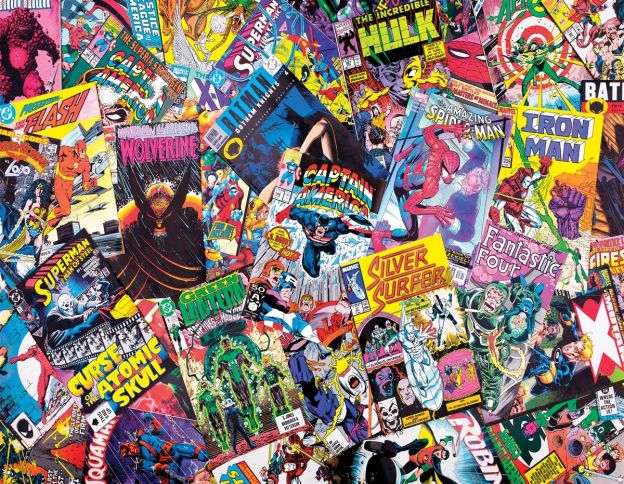
Long-time readers of the journal will remember I have spent what we could generously call a healthy amount of time playing video games, watching science-fiction television, playing roles in games, reading science fiction and fantasy literature (I mean, “literature” or whatever), and sundry similar activities.  I’ve opened more packs of Marvel Universe Cards (especially the best set, series three from 1992) than you’ll ever see in your lifetime even if you live to a hundred and three.  I’ve paused through more commercial breaks recording episodes of Star Trek (the first four series) than you will ever see in your lifetime even if you live to three hundred and one.  You couldn’t push majick “skip ad” buttons in my day.  We had to use our hands.  It was like a baby toy, yes.  I’ve stood in line for over an hour to get Orson Scott Card’s autograph … not on Ender’s Game, no siree.  Too obvious.  I went with the first two books of his I read: How to Write Science Fiction and Fantasy and Hart’s Hope.  If you haven’t read Hart’s Hope, get it today and read it today (but it’s not for the faint of heart, let me warn you now).

I used to subscribe to a few comic book series: Captain America, The Avengers, The Fantastic Four, The Uncanny X-Men, The X-Men, and Generation X.  I would bag them and board them and label them and catalog them.  I’ve spent hours of Saturdays (months of Saturdays) arranging notebooks full of The Lord of the Rings: The Collectible Card Game cards, tearing 3”x5” notecards in half to mark places in what you would call baseball card storage sheets for missing cards.  I’ve printed off dozens of walkthroughs for computer games you’ve never even heard of but I’m completely sure are far superior to any of the “app” games these kids are into today.  I’ve written down more 32-digit save game codes in my teenage years than you’ll get trophies of (I’m not quite sure where that last one was going).  You kids today with your spawn points and your automatic save spots and your hula-hoops … you don’t know what struggle is.  Talk to me after you’ve tried BattleToads.  Yeah, and I’ve torn out and filed more sections of Nintendo Power than, well, you get the idea.

But I’m not a geek.  And I’m not a nerd.

I don’t dress up and go to conventions.  My brother does that and he’s great at it, but that’s not my scene.  Maybe one day I’ll get to a convention before Jonathan Frakes turns 80, though there’s a better chance my family will get to some sort of boardgaming convention first.  We will not be dressing up as our favorite boardgame characters, though.  Some people do, you know.  Come to think of it, my dad and I did used to go to a few baseball card shows back in the day.

I have recently taken up painting tabletop boardgame figures, as some of you know.  I’m not any good at it, but it is an enjoyable hobby, another thing my brother has known and practiced for thirty-some years.  I’ve taken most of the winter season off from this hobby, since the weather isn’t conducive for priming (something you need to do outside if you don’t have an airbrush), plus we needed the table for holiday meals, and thesis season really cuts into one’s free time, and you know how it goes.  Once we get back from Spring Break, I’ll get back into it.  I’ll then be ready to take the next step and start assembling some tabletop miniature figures, assuming the weather hasn’t dried up the paint and glue hibernating in the garage all winter.  I have a decent-sized box full of Warhammer™ Space Marines waiting for me to build.  That does not mean I’m keen to start playing Warhammer™, but if you’re up for it, I suppose we could work something out.  I’d like to get a starter set or two of the Batman Miniatures Game, and maybe a few Age of Sigmar things.  But I have no grand plans for making terrain and turning the garage into a warehouse for miniatures and such.  Not yet.

But let’s get to the heart of the matter.  I’m not a geek or a nerd.  Back in the day, they were terms of insult for people who liked the sort of things I liked: comic books, video games, RPGs (the non-lethal kind), sci-fi and fantasy, and the rest of it.  Superman and Batman were almost 50 by the time I came onto the scene.  The Fantastic Four and Avengers and X-Men were pushing 30.  Star Trek had been a cult classic for almost twenty years.  Dungeons and Dragons was over a decade old and had weathered the well-intentioned pharisaical backlash of the sorts of people you can imagine engaged in that well-intentioned-yet-pharisaical backlash.  And yet, “we” were the enemy.  Avalon Hill and GenCon and even Atari had been around for some time, yet we were the outcasts.  The International Business Machine and Texas Instruments and Macintosh were quickly becoming staples of schools and households, yet we got laughed at and picked on and, well, I never got beat up, but I’m sure some of my generation did.  I never watched Freaks and Geeks or Drumline … why would I?  I lived it.  I don’t need to see someone’s vision of what it may have been like, even if they went through it, too.  That’s one of the reasons I have no pressing need to see Stranger Things.  I was there, kids.

But I don’t want to misrepresent why I’m neither a geek nor a nerd, and I suspect I have already mislead you, especially with that last paragraph.  Excuse the multiple negatives, but I don’t consider myself those things not because I got called mean names by the hooligans I went to school with back in the day.  I’m not rejecting those names because they conjure up painful memories and hurt feelings and tears into my pillow after school.  I didn’t really go through that.  Sure, I was ridiculed and laughed at once in a while, and I’ve experienced my share (if such a thing has “shares,” fair or otherwise) of mockery for the things I enjoyed (but that was mostly for my last name, especially as we were in the exciting finale of the Cold War era).  But it never scarred me or hampered me or anything like that.  And I don’t say that lightly, as I know those sorts of playground cruelties did cause some damage to people I knew long ago.  I’m not a geek or a nerd because, in truth, those words are nothing.  They are empty.  Hollow.  They don’t exist.

I like RPGs and comic books and sci-fi and fantasy because they are intrinsically worthwhile endeavors.  They are high-quality ways to get into one of the most important, most fundamental aspect of who we are as human beings, especially as imago dei human beings: they are stories.  They feature engaging characters and thrilling conflicts and thought-provoking themes and exciting storylines.  These are the best tools to fire our imaginations and invigorate our understandings of actual reality.  RPGs and comic books and sci-fi and fantasy aren’t merely escapes from the “real world” — they are perhaps the best way to help us understand ourselves and the world (outside of the Bible, of course), better even than mathematics and physics and the natural sciences.  They do a fine job telling us what and how, but the Humanities, stories, art, they tell us why.  You can’t get that from kicking a ball around the grass or throwing a ball through a hoop.  No offense, sports.  But you are less real than rolling dice to see how much damage a magic missile does to the hobgoblin four feet away from my 12th-level half-elf warrior-rogue.

Sports don’t tell us stories — sure, lots of writers create stories around what happens in a season or a game or whatever, and the biographies of athletes can be very riveting and truly inspiring.  But sports are competitive, telling you or your team you aren’t as good as that person or that team over there because you didn’t score enough points and thus all your efforts for the past four months have been a total waste.  (I understand there are ancillary benefits such as health and spending time with friends and hand-eye-coordination and sportsmanship and leadership and all that, sure, pretty much all of which can be done by joining the orchestra or playing board games instead, but that aside, I know what you’re going to say about how great sports are, but my point here is competition.)

Competition is a virulent disease, and real life abhors it.  The gospel has nothing to do with competition.  RPGs and comic books and sci-fi and fantasy have “competition,” but none of it is truly real human beings pitted against other human beings (often in dangerous activities that somehow make you “healthy”) in danger of “losing.”  If you “lose” in an RPG, you can go back a bit and try again.  For some reason, sports referees don’t let you do that.  Even when board games require competition, you still are using your imagination, developing your strategic and tactical thinking skills, spending time with friends, honing your “sportsmanship” by having fun with your friends — and though games can sometimes come down to “stop him from achieving that goal,” that won’t be a good experience for the people involved and it will likely not happen again.  Unlike most sports, that usually come down to “stop that person from doing that” in every game, often by knocking the guy down or embarrassing her by tricking her in front of her family and friends in the stands (like strikeouts in soft/baseball).  There’s no “I hope they fail” in the Realms of Gold, something sports depends and thrives on.

RPGs and comic books and sci-fi and fantasy and board games invite people in, enable you to create and think and engage, ennoble you to translate the ideas you encountered on a spaceship or in a dungeon to treat the real people you know and haven’t met yet better, to make the world a better place because you know good exists and evil exists and you can be a force for good.  Stories make us not just better people but also more human.  Even with Matthew 11 in mind, Jesus knew the power of stories and told quite a lot of them — not just to further confuse those who didn’t get it, but also to further engage those who got it.

And they still do that today.

I suspect, and this is only lightly and uncritically, the people who are going around proudly brandishing “I’m a _________ Geek!” or “I’m a __________ Nerd!” (say, “I’m a Harry Potter Geek!” or “I’m a Star Wars Nerd!” or whatever) are only doing so because, as I intimated quite some time ago, the Wheel has turned, as it always does, and now the kids who used to bully have come to realize the things they cared about weren’t (past tense) all that great and the things we care about are (present tense), so possibly they are trying to act like they were one of us all along or this is how they apologize.  And since they don’t remember our names, only the names they called us, they have revived those terms now as badges of cool (or whatever the kids are calling it these days).  I could be wrong.  It’s been known to happen.

Surely that would only cover the people my age and a bit older.  As for the kids, well, they’ve grown up in a world of marketing and pseudo-awareness of these hobbies*, and the People Who Love Money have been telling them for a while it’s cool to be a geek or a nerd (since the bullies of yesteryear are the advertising firm owners and marketing strategists and CEOs and CPAs of today — funny how that works out).  So, naturally, since it wasn’t their generation’s fight, the terms mean nothing negative to them.  And that’s fine.  They have their own battles to fight.

So, I’m not a geek, and I’m not a nerd.  I just know what’s important in life.

Being human.

Especially a human being in the image of God.

When “real life” does its best to siphon all hope and happiness out of us, RPGs and comic books and sci-fi and fantasy and boardgames give us hope.

And that, faithful friends, is what Redeeming Pandora is all about.

See you next issue!

*The false awareness of these Realms of Gold is quintessentially demonstrated by the reboot movies and series of the last couple of decades.  With the exception of Battlestar Galactica, complete misunderstanding and downright rejection of the original source material in terms of theme, message, and purpose dominate the “reboot” world today: the G.I. Joe and Transformers movies of late epitomize that utter rejection of the original source material.  And before you counter with “weren’t they just advertisements for the toys?” allow me to forestall your query with the riposte “even if they were, their quality of storytelling, engaging characters, and high-quality moral didacticism far outshine any pecuniary concerns, and thus their value transcends both the kind of dumbed-down programming for children today as well as the adulterated revisions of these worlds by today’s “creative” teams.  (For a great example of how inestimably superior the shows we had back in the day are to the schlock kids have been force-fed for years, go watch Fraggle Rock and then any Nick, Jr. or Disney XD show today.  You’ll never watch contemporary programming again.)  And before you double-counter with the idea “you can’t technically have a pre-emptive riposte,” I’ll just nod and say “yes, that’s true.”

“But wait, aren’t the people making some of the modern-day versions of things, like the Marvel movies and such, people who grew up on the very same RPGs, comics, books and whatnot you did?  What if these new versions and those who proudly proclaim ‘I’m a geek!’ and ‘I’m a nerd!’ are the people who enjoyed them when they were young and suffered the verbal slings and arrows of those bullies just like you did?” you may ask.  To which I can only say, mildly hubristically and mildly self-effacingly, “maybe they are, but if they are the ones changing everything for ‘today’s audience,’ they clearly did not understand those things for what they were.  Perhaps I understood and appreciated them better because I could filter them through absolute moral standards from God and His Word.”

Now, if these same people of my generation suffered the verbal assaults of “geek” and “nerd” and have now in their older years translated those terms into those “badges of honor” of which we earlier spoke, well, then, to each his own.

Live and let live.

A Tull Trilogy, pt. 1: Songs from the Wood

Christopher Rush

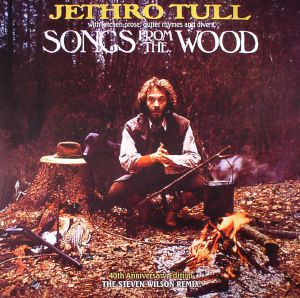
I have been waiting for this literally all year.  On January 1st, 2018, thanks to the generosity of a few dear friends of mine, I was finally able to order the 40th anniversary edition of Songs from the Wood, one of my favorite Jethro Tull albums (not that I’ve heard them all yet, so let’s say “thus far”).  It’s distinct among Tull albums, especially in what we could call the 2nd phase of the band, what some would likely call the “classic” Tull era (from Aqualung in 1971 to Stormwatch in 1979), in that it is mostly optimistic and upbeat.  Ian Anderson has never struggled with finding satirical and almost cynical approaches to the various realms of life upon which his gaze and talents alight, but Songs from the Wood is both a musical shift and a lyrical shift toward invitation, reflection, and downright delight.  Since it is Ian Anderson, a few songs have a, shall we say, piquant bite to them, but it wouldn’t be Jethro Tull without a little spice.

As I said, I have been literally waiting all year for this edition to arrive.  And waiting.  Twice, our friends at the Mega-On-Line Shopping Site (you know which one I mean), sent me e-mails telling me in effect “we can’t find it, we’ll send it soon,” turning my 2-day shipping experience into a 10-week experience.  Now, before I sound (more) like a horribly self-centered 1st-world donkey, I’ll press on to say the delay was most likely Providential, forcing me to focus on the great deal of work I had to do for my recent Master’s License renewal course as well as all the annual excitement and commitment that goes into Thesis Season.  Sure enough, as I should have expected, the very afternoon I finished my final project for my on-line course, this magisterial 3-cd/2-dvd package arrived, unannounced and unexpected.  So now I have time to enjoy it, but not enough time for me to review the album as well I had wanted.  Ah well.  Let’s just get to it.

Side One

It’s not “folk rock,” let’s get that straight from the beginning.  That’s Bob Dylan with an electric harmonica.  This is Jethro Tull looking back at the diverse and mythical history of England and delighting in what it found in the nooks and crannies of rural ol’ England.  “Songs from the Wood” is such a cheerful, welcoming, medieval jester-like song, as is pretty clear from the harmonies, the intelligent and graceful lyrics (in the literal sense), and the diverse musical sounds.  Even when it picks up and starts rocking, reminding us this is a superlative group of talented musicians, we are well on our way to feeling much better, thanks to this album.

“Jack-in-the-Green” is basically Tom Bombadil.  There’s no way around it.  It is a complete Ian Anderson number, as he wrote the words (as usual) and he plays all the instruments on this song (it is known).  It starts out very fairy-in-the-woods-like, as most of them do on this album, but pretty soon the critical mind of Anderson turns from magical romp to contemporary critique: “will these changing times, motorways, powerlines” prevent humans from enjoying Nature how you want us to? he asks.  But before the potential despair can take root, so to speak, Anderson rejects it outright: “Well, I don’t think so.  I saw some grass grow through the pavements today.”  There is still hope for the restorative power of nature.

“Cup of Wonder” would likely be my favorite song on the album were it not for the final track of this side, to be addressed soon.  I don’t want to keep saying “it’s a tribute to the mystical heritage of rural English beliefs,” but it is, though tinged with a bit of Anderson’s slightly erroneous beliefs on Christian usurpation of pagan holidays.  For me, the music and, as is almost always the case with Tull, the vocal timbre of Anderson’s voice make a lyrically intelligent song a total aesthetic experience to be enjoyed again and again.  (Even if about ancient pagan holidays.)

We noted before this album, while mostly free of the harsh cynicism of early classic Tull like Aqualung and Passion Play, still has its piquant moments, and “Hunting Girl” is certainly spicy, being about an impromptu amorous romp between a noble lady and a regular common guy who knows he could get in a lot more trouble for their spontaneity than she ever could.  Still, the greatness of this song comes in the sheer greatness of the musicians in the band during this era: Martin Barre’s guitar brilliance, John Glascock’s bass, the dual keyboards of John Evans and David Palmer, and the vastly underrated drumming virtuosity of Barrie Barlow.  It was a golden lineup, and this album makes the most of it.

The first side of the album ends with my favorite of the album, “Ring Out, Solstice Bells” — it’s not a Christmas song, being about the winter solstice, and in fact, if Ian Anderson is to be believed, it’s sort of an anti-Christmas song, returning to that earlier notion of Anderson mistakenly thinking early Christianity foisted itself on a lot of pagan traditions and holidays, since “if you can’t beat them, join them,” as he says in the 40th edition liner notes.  Well, I disagree, and it’s such a musically wonderful song, I’ll just keep enjoying it, even if for the “wrong” reasons.

Side Two

Side two opens with another great Tull mini-opera, with sundry sections and atmospheres and evocations and beauty and fun and wonder.  It’s basically about the joys of an old-fashioned garden fête, such as the one a young Paul met a slightly less young John and the world was changed for the better.  Great things can happen when you stroll through a British park festival.  It does have a smidge of that “Hunting Green” sauciness, okay more than a smidge, but the musical motifs override the lyrical eyebrow-raising suggestions.  It’s a complex, impressive number.

“The Whistler” could also vie for my favorite of the album were it not for “Cup of Wonder” and “Solstice Bells.”  It starts out for mystical and menacing, but the chorus dives into as energetic and enthusiastic a rouser as one could ever ask for.  It will probably make you think of Gandalf if he were a bard, coming through town all mysterious and shady, then suddenly he spins around and smiles and a few fireworks shoot off and we’re all clapping and dancing and singing along.  Jolly good fun, this.

The only really sad song on this album, “Pibroch (Cap in Hand)” tells the tale of a man who has been far away from home, off doing his duty, only to find upon his return a strange man’s boots in the hallway.  He has returned, humble (cap in hand), ready to make amends to his wife, but she’s no longer his, apparently, and so he leaves without even seeing her.  But, as is often the case during this season of Tull, the musical length and diversity of the number, coupled with the aforementioned greatness of the musicians’ abilities, easily distract us from the sorrow of the lyrics.  Thanks to some mid-’70s mixing board magic, Martin Barre’s guitar somehow sounds like wailing bagpipes, and suddenly we are off on another mini-opera, whose hardness and strength perhaps give our poor fellow hope for a new day.

But that’s another story.  This collection of songs from the wood, having been brought to us by some dispenser of “kitchen prose and gutter rhymes” is ready to call it a day with “Fire at Midnight,” a quiet, encouraging tune that reminds us our love will be waiting for us when we return from a good day’s work.  We can sit by the fire, enjoy the comfort of a home filled with warmth and love, but we (as men, especially) must remember we still have an active role to play in creating an atmosphere of selfless and expressed love, expressed through words and actions in all rooms of the house, not just in the room where we find our slippers and pillow.

And so, Songs from the Wood draws to a gentle, cozy conclusion. It’s Jethro Tull, so it has its edgy moments, but here they are brief and winking.  It’s a positive, enjoyable album from a great band in its prime.  Get a copy, whether the expansive 40th anniversary edition or not, and enjoy it.  It will make you feel much better.

A Hard Day’s Write

Dylan Fields, Noah Eskew, and Peter Runey

The Beatles’ third album, A Hard Day’s Night, was a major stepping stone for the Beatles as they reached the American audience like they had never done before. Following the production of the movie the Beatles then produced the soundtrack album. The movie had an incredible effect on the film industry as well as the album, as it produced two number one singles, “A Hard Day’s Night” and “Can’t Buy Me Love.” Both singles reached number one in America and England. This album also showcased the writing ability of legendary songwriters John Lennon and Paul McCartney. Unlike their two previous albums, Please Please Me and With The Beatles, all thirteen songs on A Hard Day’s Night were written by John and Paul.

Ringo Starr, the drummer of the Beatles, accidentally made the name of the album, according to John Lennon in a magazine interview:

I was going home in the car and Dick Lester suggested the title A Hard Day’s Night from something Ringo had said. I had used it in In His Own Write, but it was an off-the-cuff remark by Ringo. You know, one of those malapropisms. A Ringoism where he had said it not to be funny, just said it. So Dick Lester said we are going to use that title, and the next morning I brought in the song. ’Cause there was a little competition between Paul and I as to who got the A-side, who got the hit singles.

This album musically strays away from the pop sounding cover songs the Beatles had previously produced. A Hard Day’s Night has more of a rock-n-roll feel to it. The album is predominately written by John, as he is the primary songwriter for nine of the thirteen tracks that on the album. Paul sings lead on the title, other than that John is the lead singer for the eight other songs he wrote. Paul McCartney wrote “And I Love Her,” “Can’t Buy Me Love,” and “Things We Said Today,” while Paul McCartney and John Lennon wrote “I’m Happy Just To Dace With You” together. Ringo Starr does not sing lead vocal on any songs on A Hard Day’s Night, which is one of three albums where he does not including Let It Be and Magical Mystery Tour.

The ideas behind the Sgt. Pepper’s Lonely Hearts Club Band album started with Paul McCartney in 1966.  Shortly after the Candlestick Park incident, some speculated the Beatles might not make music together again. This is probably due to George’s public display of disenchantment with being a “Beatle” and the circus life that came with it. But realistically speaking, all four of the guys had to be mentally and physically spent. They had just made their way through southern United States after John’s infamous comments on Jesus. And because of that and other sorts of chaos surrounding them, they at some points felt their lives were in danger. However, the band had too many contractual obligations to just quit making records. So Paul and John went on their respective sabbaticals. John filmed a movie and Paul went to France.

While Paul is in France, he begins to cook up new ideas for songs. The Beatles were always good listeners, and so Paul begins to draw more and more influence from American psychedelic music. The Warlocks (later the Grateful Dead) Jefferson Airplane, 13th Floor Elevators, and even The Peanut Butter Conspiracy were some of the bands that would influence the next Beatles sound. Paul liked the adventurous names these bands had, and thought maybe his band should do something fresh and maybe go by a different name. So within Paul’s mulling through band name ideas, he came up with the name Sgt. Pepper’s Lonely Hearts Club Band.

Hence, Paul’s idea for the concept of the album was to perform the album live as SPLHCB. But, this idea didn’t seem plausible to George and John, so things didn’t quite get that far. The concept of the album still feels like a live performance. The way the songs run together is very much like a concert.

Other elements of the album are affected by the band’s mentality to “go for broke” as George Martin puts it. They wanted to push the artistic envelope as much as possible. The Beatles wanted to take their time and create their greatest musical masterpiece, using all kinds of effects, instruments, and new sounds.

When talking about the aura surrounding SPLHCB, one must look at the album artwork. The idea was to have the scene of a funeral service for “The Beatles” and to erect a new persona, Sgt. Pepper’s Lonely Hearts Club Band. The figures on the album cover are representative of the guest list to such a funeral.

I would say the genius of this record lies in its duality. The songs fit together excellently as a concept, yet they still stand upright separately. Many of the songs on this album don’t require a concept to make sense, but they add a lot to the concept when in context. The lasting impact is also quite impressive, with many Web sites and magazines citing it as the greatest album of all time. It seems as if The Beatles accomplished their goal. Branching out farther than ever, they probably created their greatest (quality and impact) artistic accomplishment.

Abbey Road was first released on September 26, 1969, and was also the final Beatles album to be recorded but not their last to be released. Let It Be, though mainly recorded in January 1969, was finally released in May of ’70 alongside the film Let it Be. The recording process itself was completed on August 25, 1969, which was almost a month before John Lennon told the other Beatles he wanted to leave the band. His decision was made on September 12, just before the Plastic Ono Band performed at the Toronto Rock and Roll Revival festival, and he told the rest of the group at a meeting a week later.

Abbey Road was considered a rock album that incorporates other genres like blues, pop, and progressive rock. It also makes prominent use of the Moog synthesizer and the Leslie speaker. Side two contains a medley of song fragments edited together to form a single piece. An example of this would be “Golden Slumbers,” “Carry That Weight,” and “The End” (in that order), all of which continue straight into the next without interrupting or changing the sound as a whole very much. The album was recorded in a bit of a more enjoyable atmosphere than the Get Back/Let It Be sessions earlier in the year, but there were still plenty of disagreements within the band, mainly concerning Paul’s song “Maxwell’s Silver Hammer.” John had privately left the group by the time the album was released, and McCartney publicly quit the following year. A 16-minute medley of some short songs makes up the majority of side two, closing with the line “and in the end, the love you take is equal to the love you make.”

Following the somewhat live feeling of the Let It Be recordings, for Abbey Road, The Beatles returned to the North London studios to create carefully-crafted recordings with ambitious musical arrangements. Interestingly, 12 of the songs that appeared on the finished album were played during the filmed rehearsals and sessions for Let It Be back in January.

For the first time ever on a Beatles album, the front cover contained neither the group’s name nor the album title, just that iconic photograph taken on the street crossing near the entrance to the studios in London in ’69.

Abbey Road entered the British album chart at no.1 in October and stayed there for a total of seventeen of its 81 weeks on the chart. In the US, it spent eleven weeks at #1 during its initial chart stay of 83 weeks.

For the first time, both Billy Preston and George Martin recorded with the Beatles, both of whom played Hammond organs and harpsichord. They also joined the Beatles on a few “live” (in actuality they were private showings, some for films or television) performances.

It is commonly thought The Beatles knew Abbey Road would be their final album and wanted to present a fitting farewell to the world. However, the group members denied they intended to split after its completion, despite a realization their time together was drawing to a close. George Martin said the following concerning the topic of finishing the Beatles:

Nobody knew for sure that it was going to be the last album — but everybody felt it was. The Beatles had gone through so much and for such a long time. They’d been incarcerated with each other for nearly a decade, and I was surprised that they had lasted as long as they did. I wasn’t at all surprised that they’d split up because they all wanted to lead their own lives — and I did, too. It was a release for me as well.

20th Century Fox vs. Agatha Christie

Hannah Elliott

Recently, 20th Century Fox produced a movie based on Agatha Christie’s Murder on the Orient Express. It was interesting to see this classic book brought to life with some of today’s most successful actors and actresses, such as Johnny Depp and Penelope Cruz. However, like most motion pictures based on books, there were several differences between the movie and original book. Some were insignificant and some were significant enough to change big aspects of the book. Even though the plot of the movie followed the book, there were a multitude of differences related to the story line, characters, clues, and murder.

One difference related to the story line was the movie began with a case Poirot solved concerning a stolen relic and three suspected holy men. He exposes the true thief, the policeman, and explains how he put the clues together. This scene never takes place in the book. Poirot also has to take a ferry first before getting on the Orient Express. This is where he meets Mary and Arbuthnot. In the book, these characters board a train instead of a ferry. A love interest is also added to the story. Poirot carries a portrait of a woman to whom he refers as “my sweet Katherine.” This is not explained and is left as a loose end.

One of the most significant differences is the combination of Doctor Constantine and Colonel Arbuthnot. The only character in the movie is Doctor Arbuthnot. This changes the story a little bit because the doctor is not as involved as he is also a suspect. Greta Ohlsson, the Swedish missionary, is replaced by Pilar Estravados, a Spanish missionary and nurse. And lastly, Antonio Foscarelli, the Italian car salesman, is renamed Marquez and is a Latin car salesman. We see suspicion shift from the Italian, like in the book, to Colonel Arbuthnot and Marquez due to race.

The snow drift incident is also altered in the movie to provide more action and setting opportunity. The snow drift causes a very intense derailing of the train. In the book, the whole train is encompassed and no one is able to exit and go outside. In the movie, the characters are stranded but not trapped inside. This allows the suspects to leave the train and Poirot to interview his suspects outdoors. There is also a team of men that come to the rescue to fix the engine in the movie that do not exist in the book.

Poirot also states he has a more personal connection with the Armstrong case as he received a letter from Colonel Armstrong asking for help in solving the kidnapping of his daughter, Daisy. This is connection is not made in the book but is now why Poirot feels obligated to solve the case.

There are also some differences about the murder and clues in the movie. Ratchett asks Poirot to protect him over dessert and threatens him with his gun when he refuses to “watch his back.” The threatening letters written to Ratchett are made with cutout letters instead of being written by multiple people to avoid being traced to one person. He also proceeds to tell Poirot himself about the letters, unlike the book in which MacQueen tells him about the letters. Poirot actually sees the woman in the red kimono after Ratchett is dead, unlike the book where he has to rely on the suspects’ description of her. Poirot is actually the one to find Ratchett dead in his compartment and he tells the whole car about the murder at the same time. Hubbard states she locked her own door and is not sure how the man got in her room and she personally finds and gives the button from the Wagon Lit Conductor uniform to Poirot. Mary is also proven to be left-handed, whereas in the book the only possible lefty is Princess Dragomiroff. The red kimono is found to be inside Poirot’s suitcase not on top, which is odd because everyone at that time locked their suitcases. It is also explained the valet’s toothache was a thyroid condition in order to add more emotion to the movie. Mrs. Hubbard was stabbed with the murder weapon instead of her just finding it in her sponge bag. And lastly, all 12 suspects stabbed Ratchett at the same time.

There are also a few scenes added to the movie to provide more action. In one scene, MacQueen runs from Poirot and leads him down unstable stairs because he fears he has figured him out. He confesses to stealing money from Ratchett but Doctor Arbuthnot vouches for his alibi. An altered scene in the movie pertains to Mary and Poirot, in which he asks her instead of Bouc for help in answering 10 of his most difficult questions about the case. One last scene added is a fight between Poirot and Arbuthnot. Poirot accuses Mary of killing Ratchett and her knight in shining armor comes to defend her. Arbuthnot shoots Poirot in the arm and Bouc has to save him.

The ending of the book is the last, most significant difference between the movie and the book. Poirot still proposes the same two solutions as in the book, with just a few alterations in the second solution. He states Princess Dragomiroff was Daisy’s godmother, MacQueen’s father tried the maid involved in the Armstrong case who killed herself, and Pierre Michel was the brother of the maid. In the book, he allows M. Bouc to decide what he wants to tell the cops, stating he is sympathetic toward the killers. However, in the movie, it is much more dramatic. Poirot states he cannot live with the injustices that have taken place and proceeds to place a gun on the table in front of the conspirators. He tells them they will have to kill him to keep him silent. The action escalates as Mrs. Hubbard picks up the gun and pulls the trigger on herself. The gun turns out to be unloaded and Poirot decides to “live with the imbalance” and tell the police it was a lone assassin who escaped. The movie ends with Poirot being called away to another case in Egypt, probably referring to another famous mystery created by Agatha Christie.

Overall, the movie follows the basic story line and plot, with just some added details. The most significant change is the amount of violence added to the movie. Almost every man possesses a gun, whereas in the book, Ratchett is the only man to have a gun and it is only for self defense. Also multiple fights take place and the character of the timid and protective Count is warped into a violent and aggressive man. To have a successful movie nowadays there must be action, love, and violence, all three of which take place in Murder on the Orient Express.

Religion in British Literature

Tarah Leake

A popular theme in British literature exemplified during Anglo-Saxon era, the Medieval era, and again in the Neoclassical era was that of religion. During the Anglo-Saxon era, life was heavily affected by the threat of conquest and war as seen through the Norman Conquest. Possibly because of the lingering presence of death, people gravitated toward old, recited tales and religious works. Christianity helps spread literature, and oral traditions unite groups of people. A popular piece of literature from this era is the Junius Manuscript, which is similar to today’s well-known Message Bible. The manuscript contained a poetically-rephrased account of Scripture passages and lessons. Editors have titled the four sections of the manuscript “Genesis,” “Exodus,” “Daniel,” and “Christ and Satan.” The first three express poetic adaptations of the popular Old Testament narratives. The fourth division of text combines several New Testament occasions, both real and prophesied, which feature moments of Christ’s victory over Satan. This compilation helped artistically capture God’s word in a way that had not commonly been done until then.

Another example of Old English literature was that of the monk, Bede, known more commonly as The Venerable Bede. He authored many works that helped frame a religious outlook on the occurrences of this world and provide moral instruction. Religion’s influence in British literature did not cease after the Norman invasion; it continued into Middle English, better known as the Medieval era.

The Medieval era brought an even stronger focus on religious devotion and instruction. As the Crusades began to take shape, Christians were expected to prove their obedience and loyalty to God. People would not be willing to sacrifice their lives for God’s will if they could not understand exactly what His will was. Illiteracy was common in these times, especially regarding the complex text of Scripture. Wishing its authority to thrive, the Church began to instruct its members through morality and miracle plays making it far easier to comprehend for those who could not read the word themselves. The Church was not alone in its pursuit of righteousness; several other works of literature focused on cultivating positive, moral habits although not necessarily religious ones. An example of this is Sir Gawain and the Green Knight. This ballad proposed many moral notions such as hospitality toward others, loyalty in friendship (to the point of sacrificing your life for another’s), and steadfastness in one’s promises.

As the Church gained power and influence, it became naturally susceptible to corruption, as any institution would be. When the institution that should display the highest levels of integrity and morality, as they taught to others, began falling into the deceit of wealth and power, an English poet and author would take note. Geoffrey Chaucer, author of The Canterbury Tales, came from a religious upbringing and Catholic school. When he was older, Chaucer became an esquire to King Edward III and rose up to the point of engaging in a few diplomatic journeys on the King’s behalf. Chaucer’s experience not only allowed him to be awakened to the crime and extortion within the government, but his religious childhood also contributed to his ability to identify the fraud happening within the Church. In The Canterbury Tales, Chaucer uses the traditional style of oral storytelling to convey his disapprovals of the lack of morality in society. As the pilgrims tell their stories, some characters seem to have no purpose while others seem to represent either moral characteristics Chaucer praises or fraudulent, hypocritical ones Chaucer detests. He especially focuses on those in the Church who are bribed with money and more concerned with women than helping people, such as the Friar and Pardoner. Chaucer however does acknowledge the Church is not completely devoid of good people, as seen with the Parson, who is decent and dedicated to his congregation. However, it is not difficult to perceive Chaucer had a fairly condescending view of the Church.

Religion in British literature reappears during the Neoclassical era roughly two hundred years after Chaucer’s tales are published. The Neoclassical era brings about the Age of Enlightenment and with it a dramatic shift in society’s focus to glorify man. The Age of Enlightenment emphasizes reasoning and logic as being the most powerful aspects of mankind. Man arises on the highest pedestal and this requires mankind to unite and harmonize since they are the most perfected and intelligent species. Although it should unite the masses, instead the Age of Enlightenment causes a division in the people as those considered more intelligent and logical view themselves higher than the rest. The entirety of the government’s role shifts from being less consumed with regulating its populace and more concerned with protecting the rights of man and property. This shift demonstrates a need for God’s reality more than ever. Authors and poets alike begin dedicating works to bringing the light of righteousness back into their people’s dark hearts.

Mankind was completely consumed with itself, so an obvious demand for humility and reassessment asserts itself. Author John Milton steps in and answers this call for a reevaluation of values in life. Milton starts at the beginning of time with his famous epic poem Paradise Lost. Through Paradise Lost, Milton wishes to accurately express the story of how man fell so far from God’s grace and transgressed his will for a bite of fruit, and how Jesus offered himself in man’s place. Although Milton does utilize creative freedom, he depicts the events in Scripture in an easily understood and conceivable manner, without at all discrediting the intended message. Paradise Lost benefits readers of any century by helping to identify just how imperfect man is and how fortunate he is Christ took God’s wrath in his place. One can only imagine the illuminating impact this book would have had on a people whose society was overtly captivated by exalting human will, a complete contradiction of religious morals and God’s will.

In 1749, roughly eighty years after Milton published Paradise Lost, Samuel Johnson wrote a poem entitled “The Vanity of Human Wishes.” In this poem, Johnson illustrates the futility of the carnal pursuit of greatness and happiness in this material world. He compares well-known, wealthy figures in society with commoners and scholars. He explains no matter what social class someone thrives in, everyone experiences disappointment and dissatisfaction in life because everyone is human. This world will never completely please mankind because it was not created for that purpose. This example of Johnson’s work is heavily influenced by Old Testament values and Ecclesiastes’s chapter one message of the downfalls of vanity. Throughout the early 1750s, Johnson reached his career climax writing over two hundred entries of his famous periodical, The Rambler. As the title suggests, his writings were often random in style and topic, but he clarified that no matter what topic he discussed, it would be centered on stimulating wisdom in readers with a tone consistent with God’s word. Johnson’s wise, straightforward expression of the importance of eternal value over earthly value would have been especially significant for those alive during his time of the Enlightenment. Unfortunately, much of his work would not reach popular levels of interest for years to come.

God’s will shall be done no matter what humans decide they want to happen. Each time mankind has slipped away from God’s set morals and laws, He finds a way to call them back to Him. The beauty and intrinsic value of literature is simply one of the many avenues for God to reach His people, as seen through His inspired, written Scripture. When faced with the threat of death and war, God offered his promises for Christ’s victory and goodness in the Junius Manuscript and the writings of the Venerable Bede. When the centuries uncovered a side of both Church and man that was bloodthirsty and power-hungry, God gifted individuals like Geoffrey Chaucer, John Milton, and Samuel Johnson with spiritual vision. Chaucer recognized the bribery spreading throughout the Church prevented them from placing God’s will above all else as they should. As the Enlightenment blinded humanity with false goals of personal success and material happiness, John Milton creatively captured the essence of God’s undeserved grace provoking an admittance of humility within its readers. Johnson, inspired by his wife’s religious devotion, used his poetic insight to convey to people that no matter the social class every person is composed of the same ingredients and all will experience defeat in this broken world. Mankind simply cannot glorify itself and its own needs, because everything about this world is flawed and imperfect.

In the midst of chaos and moral obscurity, God never abandoned His children, working through the incredible works of British authors and poets to answer the calls of His people.

Bibliography

http://www.oxfordbibliographies.com/view/document/obo-9780195396584/obo9780195396584-0145.xml

https://www.biography.com/people/geoffrey-chaucer-9245691

https://www.britannica.com/biography/Samuel-Johnson

Poems

Dylan Fields

Life is a Beach
Oh yeah, we are going to the beach today
Let’s get your swimsuits on and go out and play
We will go and build sandcastles in the sun all day
We dig holes and bury each other
We will run and jump into the waves
We lay in the sun and try to turn ourselves orange
We drink and party ’til we can’t remember
We make fun with each other and talk about tomorrow
We listen to music and visit with each other
We fall in love and make memories
We read a book and watch others play
Time to go home, but, wow, what a day

Columns
Columns are marvelous
They hold up the entire ceiling
They keep the roof over our heads
We stand and look up and stare at them
They provide unyielding support
They don’t whine
Or complain
They just stay and hold the building up
They are strong and supportive

Dark Poem
I was in a dark room
With a dark bird
With a dark note
With dark words
With dark letters
Did I mention it was dark?
Very dark
Too dark
Quite scary
I hear dark noises
Coming out of a dark-looking corner
Super dark
Wow, how dark is that!
Pretty dark, huh
Actually, wait, that’s too dark
Turn the lights back on
Oh … that’s better

In Defense of Mrs. Bennet

Joanna Larson

Oftentimes, readers of Jane Austen’s Pride and Prejudice like to make fun of Mrs. Bennet. She’s obnoxious, loud, and constantly nagging all five of her daughters to find a husband. We feel second-hand embarrassment for the way she intrudes upon her daughters’ lives, and the extremes she goes to in pursuit of finding them suitable matches. There are still mothers like this nowadays, but back in the early 19th century, it was necessary for mothers to have this kind of attitude because women were expected to marry early and raise a family.

In the early 19th century, a woman’s social status was almost completely dependent on that of her husband. Although feminism was making small accomplishments, women were still expected to marry at a young age, have many children, and keep the house in order. Many times, they married for social and financial security, rather than love. In Pride and Prejudice, Charlotte Lucas is an example of this predicament; unmarried at 27 and not particularly good looking, she knows she needs to find a man, and she needs to find one fast, lest she die an old maid. When Mr. Collins enters her life, she sees her opportunity and takes it. She doesn’t love him, nor is she attracted to him; she thinks of him as “neither sensible nor agreeable” (Austen 91), but Charlotte knows no one better will come along. Elizabeth is shocked at how Charlotte would be so willing to marry Mr. Collins, especially since he had proposed to her just a few days prior.

“I see what you are feeling,” replied Charlotte. “You must be surprised, very much surprised — so lately as Mr. Collins was wishing to marry you. But when you have had time to think it over, I hope you will be satisfied with what I have done. I am not romantic, you know; I never was. I ask only a comfortable home; and considering Mr. Collins’ character, connection, and situation in life, I am convinced that my chance of happiness with him is as fair as most people can boast on entering the marriage state.”

When Elizabeth asks Charlotte how she could ever be happy with a man like Collins, she responds, “happiness in marriage is entirely a matter of chance…It is better to know as little as possible of the defects of the person with whom you are to pass your life” (17). Charlotte is content to be with someone who will provide her with a roof over her head and a decent social standing. If she doesn’t like him as a person, that is something she’s willing to live with. Marrying someone for financial security rather than love would most likely be viewed as selfish by today’s standards, but for Charlotte, it is a necessary move to make. During this time, marriage was a woman’s lifeline. Austen tells us, “Without having ever been handsome, she (Charlotte) felt all the good luck of it.” Charlotte is at peace with her decision; the very opposite of what Elizabeth would have been if she married Mr. Collins.

Mrs. Bennet wants the best for her girls (by “best,” I mean financially supported), and she goes to extreme and oftentimes foolish lengths to “help” them find suitors. When she finds out the young and eligible Mr. Bingley is coming to town, she immediately wants to set him up with her daughter Jane. Before she knows anything about his character or morals, she tells her husband, “Oh! Single, my dear, to be sure! A single man of large fortune; four or five thousand a year. What a fine thing for our girls!” (1). After hitting it off with Mr. Bingley at a ball, Jane receives an invitation to dine with him and his sisters at their home in Netherfield Park. Normally, Jane would take the carriage, since Netherfield Park is too far a distance for any civilized woman to walk alone. With the full knowledge that this will embarrass her poor daughter, Mrs. Bennet makes Jane ride to Netherfield Park on horseback; she knows it is going to rain, which, in turn, will force Jane to stay at the Bingleys’ house until the weather clears up. Her plan works perfectly; too perfectly, actually. By the time Jane reaches the house, she is soaked and falls ill with a fever. She is forced to recover at Mr. Bingley’s house, and Mrs. Bennet isn’t apologetic. In fact, when she goes to visit Jane and see how she is feeling, she encourages Mr. Bingley to let Jane stay longer, which is just unnecessary. Staying in Mr. Bingley’s presence for a longer amount of time presents more opportunity for him to fall in love with Jane, or so Mrs. Bennet hopes.

Jane is not the only daughter Mrs. Bennet hounds over. Before Mr. Collins marries Charlotte, his intention is to marry Elizabeth Bennet. He is the heir to the Bennet household, and even though he is the most pompous, idiotic man you could ever meet, Mrs. Bennet gives him her blessing to ask for Elizabeth’s hand in marriage. When Elizabeth gently declines his proposal, Mrs. Bennet is infuriated Lizzy would turn down such an offer. She tries to console Mr. Collins’s wounded pride by telling him, “Lizzy shall be brought to reason. I will speak to her directly. She is a very headstrong, foolish girl, and does not know of her own interest; but I will make her know it” (82). Of course, Lizzy’s position is not swayed. She will not marry Mr. Collins. Mrs. Bennet resolves to never speak to Lizzy again, which of course doesn’t happen, but it goes to show how serious she was about her marrying Mr. Collins.

It also seems Mrs. Bennet is a little too hurried in getting her daughters out on the social scene. We know Lydia, the youngest Bennet, is brought out at a very young age. The typical age of “coming out” was around seventeen. At seventeen, a young woman was supposed to start looking for suitors. For whatever reason, Lydia came out early, and she is boy crazy. Her mother does nothing to stop this childish attitude; she encourages it in fact. When the regiment comes to town for the season, both mother and daughter are ecstatic. Surely one of the hundreds of young men will be an able husband. Although she is criticized by others, Mrs. Bennet still encourages Lydia to go to balls and does nothing to tame her wild behavior. Eventually, Lydia runs away with Mr. Wickham, and the two elope. Of course Mrs. Bennet is distraught one of her daughters runs away from home, but the thing on her mind isn’t if Lydia is okay, it is whether Wickham is going to marry her. All the sisters know Wickham never intended to marry Lydia, but after Mr. Darcy pays him off, all Mrs. Bennet cares about is  her daughter is married, and the family is saved from social ruin.

There are many reasons to view Mrs. Bennet as a bad mother. She is nosy, embarrassing, and often out of line. She is so obsessed with finding husbands for her daughters she forgets to take the time to enjoy life and enjoy time with her children.  It seems if she had just calmed down and let her daughters live their own lives, everyone would’ve been happier. If she really loved her girls, she wouldn’t have been so annoying, right? No. I believe she acts this way because she loves them. Yes, she is out of bounds on many occasions, but because of their particular situation, she was doing her best to make sure all her girls were taken care of. After Mr. Bennet’s death, the estate would not go to any of the girls. It was pledged to another; so for her, it was love second, a roof over their heads first. While it is perfectly acceptable to laugh at Mrs. Bennet’s antics and mock her embarrassing behavior, I hope readers can gain more understanding as to why she acts the way she does.

Bibliography

Austen, Jane. Pride and Prejudice. New York, Modern House, 1995. Print.

Rothman, Joshua. “On Charlotte Lucas’s Choice.” The New Yorker, The New Yorker. 18 June 2017. http://www.newyorker.com/books/page-turner/on-charlotte-lucass-choice.

The Wit and Wisdom of Jane Austen in the Modern Era

Emmy Kenney

We’re back once again with another one of these epic honors papers. I spent the first half of the adventure we call “senior year” comparing classical British literature to its modern interpretations; however, this quarter I thought I would try something a bit different. Now, something important to note about me is Jane Austen is one of my top ten favorite authors, at least of the moment. I own a copy of each of her novels and multiple of some of them, and for Christmas I was gifted a beautiful addition to my collection: The Wit and Wisdom of Jane Austen edited by Joelle Herr. This lovely little book is a collection of some of the best and most popular Jane Austen quotations from both her published novels and personal letters. This book has been one of my many joys going into this new year of 2018. I’ve spent many evenings reading and pondering over the various things Austen wrote.  This brings me to my big idea: this quarter we’re going to look at some of those lovely little quotations and talk about them in reference to current society as well as Christianity and the Bible.

First, let’s talk about a little gem from Emma (a novel to which I am particularly biased). “I suppose there may be a hundred different ways of being in love,” says the novel’s namesake. One thing I’ve noticed during my short time on this earth so far is society likes to tell you love looks like one thing and one thing only, if love even matters at all. Magazines, television, and music all like to tell you if you aren’t engaging in the way they tell you to love, you are somehow less worthy. However, we see time and time again in the Bible love is so much more than that. Certainly, the world knows a form, although they are often wrong about the timing, but the world misses so much about what love truly is. Society too often forgets love is putting other people before yourself and it is having not just a kind attitude but a kind heart toward those that wrong you. It’s showing patience on your most frustrating days, and, more than all, when it is true it never fails. In this way Emma got it right. Love looks like hundreds of different things. It’s giving half your lunch to a classmate because they forgot theirs at home. It’s helping your siblings with their chores even when you’re a bit cranky. Love is putting others first even and especially when you gain absolutely nothing from it.

Now let’s discuss a quotation from Mansfield Park. “Every moment had its pleasures and its hopes.” In today’s day and age, it is so easy to get caught up in the chaos of the world and to lose sight of hope. Just look around you. There’s war and hunger, death and destruction. It can feel like there is no hope at all. It certainly is no help that the media would much rather show you those type of things than anything even somewhat resembling hope. However, when we look a bit closer we can see there is hope indeed. There are good things even in the hardest times: gorgeous sunsets on bad days, time to read during unexpectedly long time waiting at the doctor’s office, opportunities to connect with people through tragedy. This isn’t to say bad times don’t happen; they most certainly do. However, there are still good things, and more than that, there is always hope for the future, especially as Christians. We can know that because we are Christians, no matter how awful the things we must go through are, we can have hope and look forward to eternity with our Creator in Heaven. Thanks to this, every moment for those who build their foundation upon Christ can be filled with joy and hope for the future.

“She loved everybody, was interested in everybody’s happiness, quick-sighted to everybody’s merits; thought herself a most fortunate creature, and surrounded with blessings in such an excellent mother, and so many good neighbors and friends, and a home that wanted for nothing.” This is another quotation from the novel Emma. The first section in particular stands out to me. It is quite apparent this is not how many people live their lives. We are selfish and spiteful before we are caring and loving. We too often chose to point out flaws in others than to praise their accomplishments, and we further our own happiness before thinking of the happiness of others. All we must do is take a look at the world around us to see the results of that. This is quite unfortunate indeed, because that first section of the quotation reminds me greatly of how Christ acted and how we are called to live. Christ loved without fail, and he was quick to put other people before Himself, to the point He gave up His very life for a people who did not and do not deserve it. I can’t help but wonder what the world would look like if we chose to love others, truly care about them, and see the good in them instead of just their shortcomings and failures. I do believe the world would be a very different place to live.

Now we shall discuss what should be a favorite quotation of book lovers everywhere. “I declare after all there is no enjoyment like reading! How much sooner one tires of anything than of a book!” This is from Jane Austen’s Pride and Prejudice. I must admit this quotation is a personal favorite of mine. It is quite sad to think of how quickly society is moving away from a love of books to focus on a love of television and movies. Now, this isn’t to say there is anything wrong with enjoying those; I enjoy a good movie myself. However, the fact it comes at the expense of good literature is quite disappointing. There are so many good books out there today, and they are so accessible for us. We have book stores and libraries, paper books, e-books, and even audio books. The possibilities and opportunities are endless.

“Give a girl an education, and introduce her properly into the world, and ten to one but she has the means of settling well without further expense to anybody.” This quotation comes from Mansfield Park. It shocks me how relevant this still is. Though many people don’t realize it there are still debates over female education. It is not merely an issue of past centuries; it is an issue of today as well. Feminism is quite the movement in today’s day and age, and while modern feminism is often warped far beyond what it should be, there are aspects that are quite important to it, such as a support of women’s education. It should be appalling, I believe, that to many people and societies a woman’s education does not matter. They are often shoved to the side and buried beneath without even a chance. Though as Jane Austen points out, educating women isn’t exactly a further expense. It is even safe to reason, in fact, that it could highly benefit a nation or society’s economy. When women are educated they can work, and when they can work, it essentially doubles the potential income for a family and for a nation.

Next, we discuss a quotation from Northanger Abbey: “There is nothing I would not do for those who are really my friends. I have no notion of loving people by halves; it is not my nature. My attachments are always excessively strong.” This quotation touches on the importance of true friends. In a world where so many people are motivated only by their own success it is important to find the friends that will support and stand by you. It is important also for us to be this type of friend. We’ve already talked about what the Bible says love looks like, and this falls under that. We are to put others, including our friends, before ourselves. One verse brings up the idea friends are good because they can support and help each other, which quite ties into the idea of being willing to do anything for a friend. Often times we are too afraid of getting hurt to truly invest. I know I am certainly guilty of this. However, it is important for us to form “excessively strong attachments” so we can help and support our friends like we are called to do.

I must, shockingly, bring up another quotation from Emma. This quotation also discusses the idea of friendship. “Business, you know, may bring money, but friendship hardly ever does.” So many people are caught up in the idea of money they don’t have time to form relationships or ever to care about people at all. The love of and desire for money creeps into people’s hearts and they are willing to give up everything, including friendship, to gain money for their personal benefit. While friendship doesn’t help one make money, it is far more valuable. Through friendship some of the best memories are formed. Friendships give you people in your life who care about you and are willing to support you. One chooses friendship not because it furthers their career or increases the number of dollars in their bank account. Friendship is so much more than that, even if society today is quick to disagree with that.

Now, you might be wondering why I bothered talking about the quotations of some lady who’s been dead for years. What was the point? I hope you will see there is so much to gain from this. We can gain wisdom and reason how to apply it. We can explore themes we might not have otherwise thought of or brought up. These quotations have helped me at least to realize some important points, both about society today and myself. They’ve helped me realize areas in my life that need improvement and ways society is missing the mark in regard to some quite important topics. Jane Austen created strong characters and strong quotations, and her wit and wisdom leave so much for us to learn and explore, and through exploring her writing we can hopefully do just that.

Back to Ballantine

Christopher Rush

As you may recall from our first issue this volume-year, a scant five months ago, I mentioned a few entries from Ballantine’s Illustrated History of World War II, an engaging series that soon outgrew WW2 and expanded out to the rest of the violent century (up until the early 1970s when that shift in publishing focus occurred).  You’ve read enough from us over the issues why we study history and simulate history through analog simulations and such, so I need not apologialize for that here.  Thus, let’s just present a few more reviews of the books I managed to squeeze in as the months of 2017 turned in to the months of 2018 (and, like you, even though this year is rapidly approaching 25% over, I needed to look at the computer’s calendar to be reminded which year we currently are in).


The Raiders: Desert Strike Force (Campaign #2), Arthur Swinson

Rating: 4 out of 5.

Another very good entry from the old Ballantine’s Illustrated series, The Raiders focuses on the American version of the North African Campaign. I’m a bit surprised this was the second in the Campaign Series, considering the first was Afrika Korps from the German perspective, why they would do the same subject matter back-to-back, but since this theater is so interesting, with such a magnetic personality on the German side, and such rare (since the American Revolution, really) tactics on the Allied side (with, as we learn from this book, if we didn’t know from the movie or television show, similarly magnetic personalities), it certainly provides enough for two entries. (‘’m guessing; I haven’t read the first one yet.) This gives an engaging history of the Long Range Desert Group, though it changes direction after the first chapter (we are introduced to a small group who seem to be the stars of the show, but then chapter two gives us a new cast of characters for the rest of the book). It almost reads like fiction at times: surely these heroic escapades, harrowingly near-misses, dramatic adventures, and et cetera could not have happened in real life? But according to Arthur Swinson, they did, and who are we to doubt the Ballantine’s Illustrated History of World War 2?


Patton (War Leader #1), Charles Whiting

Rating: 3 out of 5.

As great as the Ballantine’s Illustrated series of series is, this entry may have been a bit better had it come out later, when the series transmographied into History of the Violent Century. Then, we could have read more about Pre-WW2 Patton, which, while possibly not as interesting to most, is the less-trodden ground about this controversial figure. Most of this book is likely rather familiar to Patton fans, of which I am not one (not to be read in a critical way), but I suspect it was written to communicate to the non-fans, anyway. We get a brief pre-WW2 sketch in the introductory chapter, but it doesn’t give us much. The majority of the book gives us Patton in WW2, the highlights, the lowlights, the mistakes, and the triumphs. Through it all, Mr. Whiting reminds us of Patton’s irascible personality, which at once enabled him to accomplish what his allies could/would not as well as brought about his own demise. I had forgotten what a tragic, senseless death Patton suffered, getting paralyzed in a jeep crash a few months after WW2 and dying a few days later. Mr. Whiting gives us some interesting summations at the end, as well as some thoughtful commentary throughout, but his penchant for reminding us of Patton’s personality combined with the lack of WW2 information (again, I understand the premise of the series) prevent me from giving it four stars. I realize after typing that sentence how ironical that is, but it was not intended. (Or was it…)


Stalingrad: The Turning Point (Battle #3), Geoffrey Jukes

Rating: 3 out of 5.

Mr. Jukes does a fair job presenting the exciting nature of this battle, though his tone throughout does not help the work. It’s not that he makes jokes and whatnot, but his attitude toward some of the leaders and their decisions involved, especially on the German side, is at times a bit too antagonistic on the ad hominem level. I’m not saying they were wonderful people, since I have no knowledge of their characters, but Mr. Jukes is at times too dismissive and at other times derogatory, if even in a subtle way. I’ve made too much of a deal about it, but it was there. Similarly, despite the subtitle’s intimation how important this battle was, Mr. Jukes’s conclusionary paragraphs sound like nothing that happened in the battle mattered after all, effectively dismissing not only the military significance of the events but also the human cost of the defense of Stalingrad itself — not the best way to end this book, I thought, which is sad, considering how great the rest of the series for the most part has been.

On the positive side, as I mentioned, he does a fine job of bringing the ebb and flow of the battle (series of battles, really) to life in a dramatic fashion, from the Russian personalities involved to the heroic and sacrificial stands of the Russian soldiers, and from the perspectives of the beleaguered German military leaders who didn’t want to do what Hitler made them do to the cocksure German soldiers who somehow, perhaps one could say Providentially, became the hunted and not the hunters. This would make a great movie, especially if it were four or more hours long and really presented this battle well. I think I’ll check out some other accounts of this key battle and possibly try to get my copy of The Stalingrad Campaign to the gaming table.


Hitler (War Leader #3), Alan Wykes

Rating: 3 out of 5.

It’s got to be a difficult task writing an engaging biography about one of humanity’s worst, and Mr. Wykes proves how difficult it is to quantify “evil” in a world that rejects absolute moral standards. Mr. Wykes takes the foundational position Adolf Hitler had syphilis, and that is supposed to explain effectively everything, in combination with his patriotic ire at the German surrender in World War 1 admixed with his learned hatred for all-things Jewish. His long-standing untreated syphilis was responsible for Hitler’s ravings, his megalomania, his obduracy, and his maniacal military decisions especially from Stalingrad to the end. Mr. Wykes never comes out and says it directly, but the reader gets the vague impression we (as humanity in general) are supposed to be thankful for Adolf’s disease and the pseudo-medical people around him who mis-treated him.

What are we expecting when we read a biography of such a person? That may be as of much importance as learning about the person him- or herself. It’s doubtful we are looking for validation of our collective animosity — there haven’t been too many people who have been fundamentally mistreated by history without the opportunity for proper scholarship restoration these days, and certainly history has not been too unkind to Hitler. I was looking for insight on what, if anything, made him good at his job — how did this guy rally a nation around him, or at least a powerful coterie of people around him who then in turned snatched a country away from someone else and took it in such a horrible direction? I didn’t get a lot of that from Mr. Wykes, since his overall focus was Hitler as a military leader during World War 2. We get a little bit about the pre-war events, though we are usually directed to the more thorough biographies for that, and I don’t have the stomach for that just now. For instance, I’m still wondering why, if so many of his high-ranking generals and whatnot hated him and hated what he was doing to Germany, why they didn’t just take out a gun and shoot him and sacrifice themselves to the retribution of the SS or whomever? Mr. Wykes does not explore that, but that could be because it is all speculation and not their biography.

What interesting tidbits I did get about Hitler’s generalship early in the war were intriguing, and from this section perhaps comes the strongest intimations of how grateful we should be for his disease, assuming Mr. Wykes’s wholly-physical explanation for Hitler’s “evil” or “mania” is correct, with which I’m not in full agreement. We are told Hitler brought about such a successful blitzkrieg because he, unlike the generalship he “inherited,” shall we say, and the generalship in complacent England and France and everywhere else in western Europe, did not think in terms of WW1 combat. This perplexity is compounded by the radical change in warfare during World War 1 itself, not only the different way it was fought with trenches and mustard gas as the usual motifs, but also the introduction toward the end of armored tanks and their revolution in warfare again should have led the allies to realize no one would think of warfare in Napoleonic terms again. Mr. Wykes does treat briefly on the Treaty of Versailles and how foolhardy it was, which may be the explanation: the “good guys” assumed they had so permanently beaten Germany down surely no “civilized” world would have started a war again. And that is generally, what our textbooks tell us, the western world mentality during the ’20s after all.

Hitler, strangely enough, learned from WW1, saw what worked, assumed his enemies had grown flabby and content with their “heroic” emasculation of Germany, and used their tactics against them and basically bullied them into retreat and panic for years. Had Hitler not reneged on his treaty with Russia and squandered so many troops on the Eastern Front, WW2 would likely have gone quite differently. [Editor’s note: since originally writing this, I’ve read of quite a number of instances in which “that one fatal decision” sealed the fate of Germany and WW2 and the world — it’s a popular theme for WW2 historians.]

And it is here that Mr. Wykes’s explanation of Hitler’s flaws seem like wishful thinking: the syphilis exacerbated Hitler’s jealousy of his military advisers and field commanders (a jealousy begun by his own mediocre performance in WW1 and the love of his life wooed away by higher-ranking officers or something like that) caused him to ignore their sound advice at times; similarly, the disease made him require total control over the armies, even preventing army commanders from ordering reinforcements and other immediate-concern military decisions one would suppose an army commander actually on the front lines should be able to make without having to request permission from the head of the country hundreds of miles away.

For many reasons such as these, all of them effectively centering on Hitler’s ego and his sickness, we are left with the impression Hitler had an uncanny ability to understand warfare and his enemies better than almost anyone else alive at the time, but his own personality and his disease brought about his own destruction and Germany’s as well … and in the end we are supposed to feel like we caught a lucky break. I’m not fully convinced by all this, but the only way to understand the issue more is to do more research, and as I intimated above, it’s such a distasteful topic I don’t know if I can do that anytime soon.


D-Day: Spearhead of Invasion (Battle #1), R.W. Thompson

Rating: 3 out of 5.

Despite the potential downfalls inherent in being a first in a series, D-Day by Thompson presents itself as a rather developed introduction to the series and a concise overview of perhaps the world’s busiest day ever. One may prepare to be a bit overwhelmed by the data involved (regiment information and the like, mainly), considering the sheer volume of manpower involved in this event, but even in the paragraphs that start to amass loads of numbers, Thompson contextualizes them fairly well and hurries the reader along quickly to more human elements (not to say the numbers of soldiers and their groupings were not “human”).

One enjoyable aspect for me was Thompson’s emphasis early on concerning the attitudes of the Allies involved, especially the air forces. I can understand their perspective: if they, as heavy bombers, especially, were doing such damage to the Axis powers especially in their infrastructure, why bother with such a massive infantry assault? It’s easy for us today to generalize the “highlights” of WW2 and other major historical events, and just assume everyone was like-minded, but Thompson does a good job of bringing to life early on the diverse mindsets going into the battle from both sides (or, all sides, considering the less-than-chummy attitudes of Americans not named Eisenhower to Montgomery and other British generals). The section on Rommel was especially intriguing, as Thompson paints Rommel as a noble, intelligent military mind, and as later entries in the series do, we are lead to feel miraculous intervention alone brought the ending of WW2 how it occurred (despite the occasional comments from Thompson to the effect of a fatalistic approach to an Allied victory).

Thompson brings some aspects of the actual battle to life in a very engaging, first-person in-the-action sort of way. The chapter on the eastern British paratroopers assaults, especially, was very riveting. It was one chapter I wish had more detail but in a positive way, which is an ideal compliment for this series: its best entries make you want to seek out more expansive versions of the subject matter, and while D-Day is as massive a day as humanity has ever seen, this book encourages you to learn even more about it.


Their Finest Hour: The Story of the Battle of Britain, 1940, Edward Bishop

Rating: 3 out of 5.

I’ve said before I don’t have any internal compunction toward interest in naval or aviation battles. I don’t like to play naval or aviation wargames, though I have seen Crimson Tide and Memphis Belle and a few other movies about them (not anytime recently, I must say). Thus even though I really enjoyed the Ballantine book about the development of Japan’s naval armada (much to my own surprise), I did not go into this book with a lot of zeal. I was interested in the “Battle of Britain” as a historical occurrence, but not as an air battle (if that makes sense). Like a few of you out there, I sort of intuitively assumed the “battle” was not just one afternoon, since I sort of collated “the blitz” in with it (from my scant knowledge of C.S. Lewis and the evacuations and such), but I did not know the “battle” was about four-to-five months long, depending on your range. I still am not sure why it is not a “campaign,” but I would be fine if the only reason is because of the alliterative effect of its current nomenclature.

I thought Mr. Bishop did a fine job balancing the technical aspects of the battle with bringing the event to life in an engaging narrative. Perhaps part of my apathy toward naval battles is the tendency for some technical-minded authors to go overboard (so to speak) with the data: tonnage, identification insignia, and a whole lot of other numbers I will not guess at to stop embarrassing myself about military matters. Mr. Bishop does a fine job, as I said, of telling us the technical matters in small amounts, just enough to make us feel like we know what kinds of planes were involved but not so much we are stuck in a technical manual. Just when you start to forget what the abbreviations for the planes are, he’ll give you the full word/model again, and you’ll feel confident again.

As an early entry in the series, it’s possible the early kinks of a new venture could be present. In this case, Mr. Bishop switches into full Union Jack mode by the end, and while I enjoyed the length of the conclusion (something I have indicated I missed in later entries in the series), Mr. Bishop gets about as close to singing “God Save the Queen” as I have ever read in a book about England. Though, to be honest, most of the books about England I have read were by satirists (Douglas Adams, Spike Milligan, John Cleese, and the gang). Still, I don’t say this as a criticism. It was a fairly rousing, patriotic ending, and that’s actually refreshing. It’s hard not to get caught up in the enthusiasm of how “the few” saved England, and how the resolute British citizen bit their thumb in Germany’s direction and went back to work each morning after sleeping in the subway. It’s easy to look back at history with a dispassionate “of course that’s what happened,” but Mr. Bishop evokes the fear, the sorrow, the uncertainty, the relief, and the joy of the Battle of Britain.