
Christopher Rush
Half a Score and Seven Years Ago…
It’s not true that I don’t like Christian music. If you read last year’s series on forgotten musical gems, you delighted in some of the most truly Christian music produced in recent memory, regardless of whether the albums were candidates for Dove Awards. I enjoy Christian music. Like all intelligent beings, however, I don’t like things because of their labels but because of their intrinsic merit (and/or potentially their symbolic merit, given the situation). We have already bemoaned elsewhere the general vapidity of what passes for Christian music in popular circles today, so we certainly need not recapitulate that theme here. What is worth noting (as we continue our year-long focus of revisiting old friends and tying up loose ends) is the high-water mark of Christian music: 1995. In addition to the beloved Michael W. Smith album I’ll Lead You Home, 1995 was the year that gave us perhaps the two most important and best Christian albums in the modern musical era: dc Talk’s Jesus Freak and Jars of Clay’s eponymous full-length debut album. Though they were both released late in the year and didn’t start amassing their widespread worthy acclaim until essentially 1996 (the summer we heard those albums nonstop), 1995 was the year the modern era of Christian music began. Yes, Sandi, Amy, the Steves, Keith, and Michael (and Carman and Petra and Psalty) had been doing great stuff in the ’70s and ’80s, but their work had rarely travelled beyond the boundaries of in-house Christian listening circles. Not to say that non-Christian listening audience acceptability is a requisite for good Christian music (often that is a sign of the opposite), but these two landmark albums in question here are an obvious demarcation point in the quality and direction of contemporary Christian music. When I say “quality” I am not saying what came after these albums were necessarily better, I am saying they became the new standard to which all that has since come has been and should be judged. If that is not the case, then they are definitely worthy of being considered forgotten gems.
Jars of Clay
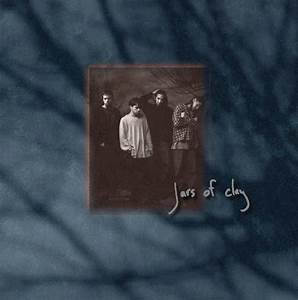
Most of us can agree had Jars of Clay done a Harper Lee and not released another thing after this album, they would still have cemented their status of “mandatory listening.” Upon first listening to this album, opening with “Liquid,” one is immediately struck with the unique Jars of Clay sound. What Emily Dickinson did for poetry, Jars of Clay did for music — no one can copy it because it is truly unique. Musically the album travels a diversity of tonalities and moods, yet somehow they are all recognizable as Jars of Clay. It’s not that they do anything really “groundbreaking” technically. I’m not saying they invented backtracking, overdubbing, or things like that. I’m saying it’s a great album with a distinct, unmatchable sound.
Since this is something you probably have access to, and is only “forgotten” in the sense you haven’t thought about it for a while (which, come to think of it, is exactly what “forgotten” really means) — perhaps in contrast to many of last year’s “forgotten gems” which may have been entirely new to you — we need not dwell on the particulars of this or the next album too much. You probably remember the experiences and feelings of where you were when you first encountered Jars of Clay. As mentioned already, the opening sounds are arresting: part synth, part medieval chant, part deceptively pop — I dunno … it’s just Jars of Clay. The lyrics of “Liquid” are likewise deceptively simple: repetitive, yes, but true. “Sinking” continues the mood and appreciation: we are finally listening to something fresh, something true, and something better than just “contemporary Christian music.” Obviously “Love Song for a Savior” is a top ten (or so) greatest Christian song of the 20th century. Those poor saps in the secular world didn’t know what they were doing when they played it on radio stations and malls the country over (just like “Flood”). That’s fine. People in the kingdom of darkness usually don’t know what they are doing (but we shouldn’t make fun of them for it). It made soundtracks all over and deservedly so. Three songs into the album, three distinct sounds, three remarkable demonstrations of musical skill and devotional precision — this is what Christian music is supposed to be.
“Like a Child” is likewise an enjoyable and encouraging and challenging song. No one is going to stop the album when this comes on. Same for “Art in Me.” It helps remind us of Ephesians 2:10 but not in a pedantic way, which is just what Christian aesthetics should do. By the time we get to “He,” we think we have the “Jars of Clay sound” down, and though the song doesn’t do anything to change our growing impression of who they are, it expands our awareness of their range of topics. They had an ability to sing about topical things as well as transcendental things in a way that made it all important and worth listening to, even if the subject is one we would normally dismiss in anyone but our favorite artists. Some consider it the best song on the album (of course, there are those who say that about every song); some forget it exists — but it’s there. Don’t skip it. The extended outro is a gripping yet comforting reminder of who God is — not in the most profoundly intellectual way, perhaps, but this is a musical album, after all, not a systematic theology monograph. “Boy on a String” is a great reminder of two important things: 1) Jars of Clay is a musically diverse band, and, more importantly, 2) they are here to worship God more than entertain us — that they worship God in a way that also entertains (and challenges and motivates) us is a nice bonus, really.
“Flood” may have been most people’s first experience of Jars of Clay, and that’s just fine. Hearing it on what the kids call “secular radio stations” was a bizarre experience, but I don’t think (if memory serves, which it may not do in this instance) I heard it over the Dubuque airwaves before I heard it toward the end of the album in the kitchen of Lake Geneva Youth Camp. The backlash against Jars of Clay for having a “crossover” hit is inscrutable to me — what part of “in the world but not of the world” is so difficult to grasp? All of it, yes … I know. But it shouldn’t bother us when others also enjoy hearing a song by a Christian musician — it’s not like the message or authenticity of the song or artist was compromised when they wrote it. They weren’t pandering. They were just making superior music, like all Christian artists should be doing. “Worlds Apart” is possibly the finest aesthetic experience of the album, which is saying a great deal, all considered. It asks questions we often ask (with a haunting musical accompaniment we usually imagine for ourselves anyway). “Blind” is a good album closer, despite being musically unlike most of the album. Again we are treated to the diversity and skill of Jars of Clay’s musicality. It is a calming, mellowing conclusion (before the secret bonus conclusion). “Four Seven” is a good bonus, a more up-tempo “by the way, this is who we are and why” secret ending to a top-notch album, all the more remarkable for being a debut album.
Now that you have been reminded of an album you used to listen to with great regularity, I suspect if you were to dig it out again and give it another listen you would be pleasantly reminded why you spent all those hours listening to this exquisite album in the first place.
Jesus Freak
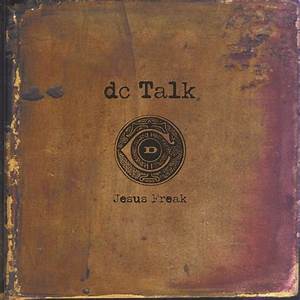
You put this in and you think … wait, is this dc Talk? You check the jewel case and realize yes, yes it is. The new and improved dc Talk. If you need to think of it in these terms, it was the band that made tobyMac happen (does that help?). Hopefully you have a good working memory of this album and have only slightly forgotten it, so little needs be said about it here. But when does that stop us here at Redeeming Pandora?
“So Help Me God” is arguably not the best song on the album, but it does give us a good dose of the new sounds and attitude of the band — despite all the times we listened to Free at Last, Jesus Freak was, frankly, a welcome relief and definitely a step toward full maturity for the band (perhaps realized on Supernatural). “Colored People” was another good song, far more musical and intelligent than a lot of their previous album. It wasn’t my favorite song on the album, but listening to it again now, the musicality of it is refreshing. “Jesus Freak” was probably my least favorite song, perhaps because it seemed to be trying too hard musically to be hip. It was too much like Free at Last for my taste — and I enjoyed Free at Last. The guitar solo also was not pleasant to listen to — and this is coming from a guy who enjoys a great number of Angus Young guitar soli. Part of my disfavor was the term “freak,” most likely. It was part of that whole “the term ‘Christian’ is blasé, now — we need to be fresh and hip for a new generation” movement that did more harm than good for the church. Without trying to sound hubristic, I knew it was shash from the beginning. I get the basic sentiment of the song, what it is intending to say: “don’t be afraid to be a Christian — reputation is less important than piety.” Yes, I get it (and got it even then). But being devoted to Christ is not “freakish.” The world was created by and intended for subservience to God — it’s those who reject that that are the freaks. So for me this is the low point of the album (not counting “Mrs. Morgan” and the “reprise” later). Others lapped it up like syrup on pancakes, and I was fine just letting that go.
Unquestionably, though, one of the real treats of the album is the fourth song, “What If I Stumble?” That is a great song from beginning to end, even if the beginning makes you think your cd player has skipped to a Seals and Crofts album. The sentiment is still powerful, even today (hopefully that’s not a sign of lack of spiritual maturity). dc Talk next takes a once-popular song, “Day By Day,” from a lackluster musical, Godspell (no offense), and makes it interesting and enjoyable. “Between You and Me” continues the atmosphere of greatness. Critics look at this and pick on its lyrical simplicity (again missing the entire point of the worshipful atmosphere). Certainly I’m in favor of intellectual profundity (you have been paying attention these three years, right?) in musical worship and doctrine, but sometimes lyrical concision performs that even with a “simple” hook. Repentance begins with a simple act of realization and confession of one’s wrongdoings — often with a simple declaration as repeated here. “Like It Love It Need It” is a better song than is usually accredited — give it another listen and hopefully you will agree. Even though it says rock-and-roll won’t save you in a rock-and-roll song, it’s not really ironic, since none should be expecting rock-and-roll to save them. Part of the success of the song is its critique of self-righteous Christianity … and we all know there’s enough of that around. Present scholarly journals excepted, of course.
If I say to you “In the Light,” would that be enough to cause you to dig out your old Jesus Freak album and listen to it again? I know it would for me. Don’t feel bad for listening to this song an average of five times an hour for the rest of your life. It is clearly the apex of the album and evokes genuine emotion every time you hear it. I, too, am still a man in need of a Savior.
“What Have We Become?” is a not-so-subtle critique of contemporary Christianity and rightly so. It is strong but not harsh, penetrating but not pejorative. Musically, it is one of the better selections on the album, showing off again the great decision of the group to do real music this time around, singing well and not just rapidly speaking lyrics at us with electronical backbeats. “Mind’s Eye” is another solid song, blending musical skill and intelligent lyrics. “Alas, My Love” ends the diverse album with another new sound: a proem of sorts, finishing up with a solid musical outro both eerie and energizing. Give it all another go.
That was a Year
I can’t prove any cause and effect, but after that came Bloom by Audio Adrenaline (probably made before the two albums discussed) and Newsboys’ Take Me to Your Leader in ’96 (though some would say their Going Public in ’94 was better — let’s not argue). ’96 also saw the debut of Third Day. MercyMe was just starting out and certainly owes a great deal of their success to the albums of ’95 (and ’94 and ’96, sure). The more recent bands the kids seem to like also owe a great deal to these albums: your Casting Crowns, your Switchfoot, your … well, frankly, I would just embarrass myself to guess as to what the kids are listening to these days — let’s just say the whole positive, encouraging crowd owes a great deal of its ontology to Jars of Clay and Jesus Freak. 1995: now that was a year. Go dig these albums out of your garage or wherever you keep your ’90s memory-bilia and remember and re-enjoy a couple of foundational forgotten gems. You may even realize they are much better than the provender being offered to you today as gourmet fare.
 Redeeming Pandora
Wondering if you’ve encountered the excellent music of Andrew Peterson and his Rabbit Room cohort whose purpose is to create quality music and art that tells the story of creation fallen, redeemed, and remade in Christ. Highly recommend. I had almost given up on Christian music until I was introduced to this. They are committed to rich lyrics and complex music. Truly enjoyable. Many of them were inspired by Rich Mullins who similarly resisted the draw of a commercialized Christian music in favor of truly valuable and meaningful art.
LikeLike
Yes, we are familiar with Andrew Petersen very much. We even knew him “back in the day” before his books and all that. I’m glad he has been a positive influence for you.
LikeLike