
Tag Archives: tim seaton

Is Space Exploration a Good Investment?

Tim Seaton

Space exploration is a hotly debated topic right now in the world. Some people question if it is worth the time, money, or if it is even important. Countries put millions into space programs, so obviously it is important to them, but what is the result of this investment? Is investing in space exploration so important it is worth the time and money spent on it? If it is, then we should continue investing in it; but if not, then why waste the effort on it?

There are some reasons why space exploration is not a good investment. Some of these reasons are people thinking it will use too much of our resources, we could use the fuel used for the space program here on earth, space exploration is only important to a select few right now, and almost all the planets are too far out to reach in a lifetime.

We could manage our resources by not focusing on space travel right now. We could be improving our technology now and then using it to create more affordable space travel. It could save us tons of time and money instead of starting it now. Also, natural resources are limited on the earth. When we are sending people into space, we are using up some of those resources that can’t be easily replaced, if at all. We should be using our resources to better our planet now, and when it is better, then we should invest because that is when it will become important.

Also, we could be using our fuel for gas here on earth where we could lower prices, save money, and use that extra money to go into research for items that would make space exploration more affordable and easier than it is now. We would be wasting fuel by going to Mars and trying to establish a colony there because Mars is so far away, and they would have to take our limited amount to there at one time. It would be a waste of fuel and space to try and take it all up at one time, so why do it at all? Wait until we can use fuel more efficiently. We use money for the use of other projects that in turn can help the pace program, but we should use the money for projects that will definitely help us on earth until it is necessary.

Right now, space exploration is only important to a few people compared to the whole rest of the world. The price from a Virgin Galactic airlines space flight that is 5 minutes long for one person is $250,000! That is a whopping $50,000 a minute. A flight in a two seater rocket from Xcor will be $95,000 a person. All of the available options right now are much too expensive for anyone but millionaires and billionaires, and even they may be hesitant when they see the exorbitant prices set in place, even when they have the money to do it. They will want to use their wealth on things that are better than what other celebrities have. No common folk can pay these prices, so why invest in what you can’t and won’t make much money on? Put that toward something actually useful like making new technology for businesses that are producing items every person can use.

Also, most of the stars and planets are too far off to reach in a lifetime. Jupiter at its closest is 377,866,000 miles away from us. It would take us 4 years to travel to Jupiter with our modern technology, but as our technology advances, we are able to decrease that time and the amount of money spent to make that trip there and back. We should wait until we can use our resources better and make the time shorter.

There are also many good reasons why space exploration is important. Some of them are understanding and protecting our planet, new technology, answering big questions, international co-operations, long-term survival, fuel, and promoting scientific education, new discoveries, and mapping the solar system and seeing back to our planet.

First, space exploration is important because it helps us understand and protect our planet. For example, when we were trying to build a spaceship to fly through space, we had to learn what the gravity was so we can know how much thrust and fuel we need. We had to know what materials weighed so we could find the escape velocity of the ship. Every little variable played a key part of getting that ship into space. From this we learned just a few of the many wonders and interesting ideas the universe holds for us to discover. If we have all of what we have here on earth, what could we find on other planets humans have never set foot on? We should explore to find out what is there, and so this is important to us as humans and our society advancing. We need to keep exploring what will help us as a society.

Another reason space exploration is important is because of the technology that can be created for the space program. When we are making spaceships, we are finding and creating more and more technology we can use for other reasons. We are finding ways to make ships faster and more aerodynamic. We can apply this to other man-made objects like cars to make them better. We are creating new computers that are smaller and making programs for them we can use in those objects. Many of the technologies we are creating for spaceships can be applied to many other products, so it is important because it helps us improve what is happening here on earth as well as other planets. One example is the parachutes spaceships use upon entry back into the atmosphere. The parachute material was found to be a great material to make tires out of, so now there are tires and parachutes made out of the same material. Also, there are the red light emitting diodes. There is chemical detection used for leaks in spaceships, and so we use that here on earth as a chemical detector in radioactive plants to detect leaks. They help growing plants in space, and they have been converted to help on earth with healing humans. We can keep innovating things like this so we can use more and more of this technology on the earth. We can use pretty much anything if we are creative enough to find uses.

Space exploration will also help with answering big questions. One of the most hotly contested questions is are we the only ones out there in the universe? Some others are how did the universe come to be? and how did life originate on the earth? When we are flying through space, we are able to explore places and find answers to these questions. We can use space exploration to answer questions if we look hard enough, long enough, and use the right resources and manage them. Space exploration will also open up new questions to us as we explore more and more of space. If we keep exploring, we will have new questions opened up to us that will help us understand the world and space more. One example of this is the probe we sent past Jupiter. It found out the big red dot was a storm and Pluto was a dwarf planet. We can keep answering these questions we have by exploring more and more of the galaxy.

Space exploration fosters international cooperation. When countries see a common goal, they will combine. The space program promoted global cooperation. The United States, Russia, Canada, Japan, Belgium, Germany, Denmark, France, England, and many more made an agreement to work together for the good of humans to explore space. Before, the U.S. and Russia had the Cold War in which they were both trying to get to the moon before the other did. This feud stopped when the U.S. got there first and an international alliance was made for the sake of space exploration. Many ships sent into space have had crews of many different countries. Space exploration is drawing countries who used to be enemies together as allies. The more we keep finding common goals like this, the more we can keep cooperating with those countries.

Long-term survival may also rely on space exploration. Right now, the earth’s population is growing at a crazy rate. Eventually, the world will not be able to hold everybody. Currently, manned missions are being planned to go to Mars to start a colony. The companies running it are hoping for the astronauts to start up the livable arrangements so others can move in and make more room on the earth. If we moved 1 billion people, then we could free up considerable space for others on earth. We have some technology to be able to get to planets, but we are not prepared yet. It is important to get there because humans’ long-term survival may rely on us getting there and being able to live. When others say space exploration is only important to a few, it isn’t. We don’t know when we will need more space, so why not start now? We should be prepared for the worst to happen. If something like a nuclear war happened, would we not want to be able to leave and go to a clean and unspoiled planet?

There is also fuel we do not have here on earth. The fossil fuels here on earth are slowly becoming a less and less reliable source because they are being used up and unable to be replenished fast enough, so sources will eventually run up along with the oil. We will need more fuel soon, and that can be solved by mining fuels on the moon. The main one that would provide us with the most fuel is helium 3. This substance could fuel us a lot better than what we have now. It could last longer and give us more fuel. It would also help with our long-term survival. This is definitely a good reason why we should explore space.

Exploring space also helps up with being able to map out space and find new objects. With the Hubble Telescope, we have been able to find out about new galaxies and stars. We have been able to track weather patterns with satellites. Space exploration has made all of this possible. We are able to warn people of hurricanes coming toward them days in advance because of the satellites and space exploration. We have been able to map out our galaxy because of space exploration. Many things here on earth have been made possible by space exploration, so it is obviously important to us and we should continue doing it.

We should also explore because once you start exploring and advancing technologically, you start decreasing your ability to keep creating more new technology. We should be able to continue that exploration of finding new technology by continuing the space exploration. One example of this is zero gravity. If we had not explored space, we would never know about this. We should keep exploring because we will find more out.

Finally, space exploration is important because of kids. Space exploration encourages scientific education and kids to delve deeper into the science of it. When people have something that interests them, they want to learn more about it. Through the space program, kids hear about it and are interested in it. They want to know about it and what they can do with it. It interests them in a whole new topic. It pushes us to the limit of what we can do. We are always facing new problems we find, and so it is showing when you face a problem head on, it be easier than trying to avoid it. One example of this is being educated in science class. When we learn about space, we are able to learn about science and the interesting pieces of it, so students get hooked and want to learn more.

In conclusion, there are many parts to each side of this argument. Because of the ability to further our technology, protect the planet more, help students become better educated, obtaining resources we don’t have here on earth, long-term survival, international cooperation, and answering big questions, I say the benefits outweigh the harms. Therefore, I think investing in continuing space exploration is a good idea.


Ecology 101

Tim Seaton

The world as we know it is declining in its beauty and increasing in the amount of pollution that harms it. We see more and more factories in place of the trees. We see more smoke than we do clouds in numerous places. We see the artificial lights of man instead of the stars of the heavens. We see roads and stores where nature used to reside. All of this is because men are taking nature and turning it into places for them to make money. We make the world worse for our gain. If we continue this, we may not have anything left to gain from.

There are lots of negative ways we are making the environment less healthy because of our advancements. Some of them are pollutants leading to acid rain, deforestation, landfills, the creation of nuclear energy that leads to radioactive waste disposal, pesticides, smog, and soil pollution. These are all pollutants men have enabled to happen with the technology we have. We could have none of these if we figured out a way to effectively use and create energy.

First off, there is acid rain. Acid rain is any form of precipitation with high levels of nitric and sulfuric acids. It can also occur in the form of snow, fog, and tiny bits of dry material that settle to Earth. Acid rain comes down and decreases or totally ruins the plant it falls on. We can stop this by decreasing the usage of the objects that create the acid rain. Andrew L. Lewis Jr. said, “Saying sulfates do not cause acid rain is the same as saying that smoking does not cause lung cancer.” He is stating things we do and create are causing us problems as definitely as smoking causes cancer, so we need to stop. We need to stop creating what is making the problems, because, until we do, there will be problems.

Next deforestation is a big problem. Deforestation is the destruction of forests in order to make the land available for other uses. An estimated 18 million acres (7.3 million hectares) of forest, which is roughly the size of the country of Panama, are lost each year. This could be a rain forest or any other type of forest or even just some trees. We can stop illegal deforestation by putting people to patrol areas where it is illegal or have some sort of security measure. We can stop legal deforestation by being content with what we have and not needing to be bigger and better than everyone else. Prince Charles of Wales said, “Forests are the world’s air-conditioning system — the lungs of the planet — and we are on the verge of switching it off.” He knows that as deforestation is happening, the air that flows in the world becomes thicker. Even though each tree makes very little difference, altogether, if every tree is dead, we will be dead. We need to take any efforts to stop deforestation from happening.

Pesticides are another way of pollution. We use pesticides to kill bugs or other harmful organisms. We use harmful substances to the bugs and other organisms, but they end up harming our plants also. When we are using the pesticides, we are basically killing off part of our economy. We use money on the crops and the pesticide and end up wasting them both. We need to stop using pesticides and find something else that will help kill the bugs off but keep the plants alive. Masanobu Fukuoka once said, “The final principle of natural farming is no pesticides. Nature is in perfect balance when left alone.” He is pointing out that before we added harmful things to the plants and nature, it was perfect, so why do we need to add them?

Nuclear Energy is another negative way we affect the environment. We are harming the universe. It is defined as the use of nuclear reactions that release nuclear energy to generate heat, which most frequently is then used in steam turbines to produce electricity in a nuclear power plant. The term includes nuclear fission, nuclear decay, and nuclear fusion. We can stop nuclear energy by finding different ways to create lots of energy efficiently and easily. Mark Z. Jacobson has been quoted saying, “Every dollar spent on nuclear is one less dollar spent on clean renewable energy and one more dollar spent on making the world a comparatively dirtier and a more dangerous place, because nuclear power and nuclear weapons go hand in hand.” He is noting that when we spend a dollar on nuclear energy, we may as well be spending a dollar to make the world dirtier.

Radioactive waste disposal from nuclear energy is also a problem. It is burying what we humans cannot handle. Even when buried, it will slowly spread out, although after a long time the waste will be totally dissipated. In this time, there is the possibility it could seep into waterways or into the ground our animals eat from. It is also harming the ground it is in. That ground will not be able to be used for a long time after that, so we should not even consider this option. James Buchan said, “For 50 years, nuclear power stations have produced three products which only a lunatic could want: bomb-explosive plutonium, lethal radioactive waste and electricity so dear it has to be heavily subsidised. They leave to future generations the task, and most of the cost, of making safe sites that have been polluted halfway to eternity.” He is taking a stance on the fact that right now, we are not doing anything positive with nuclear energy and the waste it makes, so why use it at all.

Next are oil spills. They are made by man’s error in their creations. They are the release of a liquid petroleum hydrocarbon into the environment, especially marine areas, due to human activity and is a form of pollution. The term is usually applied to marine oil spills, where oil is released into the ocean or coastal waters, but spills may also occur on land. It often kills many animals in the water and makes that water unusable, but it also happens on land. It makes the land unusable like water, but it can release fumes that affect the area around it. It can kill wildlife and forests there. It also wastes the oil and the resources spent to obtain it. We can stop this problem by creating objects less flawed or by finding other effective means of getting the oil. Billy Nungesser said this about the BP oil spill in 2010: “They said the black oil wouldn’t come ashore. Well, it is ashore. It’s here to stay and it’s going to keep coming.” Even when we don’t think oil spills could hurt the environment much, we couldn’t be much farther from the truth. Almost every animal who comes in contact with it is hurt for life, if they don’t first die because of it. The land is rendered unusable for a long time after it happens.

Next is smog. Smog is defined as fog or haze combined with smoke and other atmospheric pollutants. Some of the ways we can stop smog are to stop creating smoke or other pollutants. We can have more eco-friendly cars such as electric or hybrid cars that use the sun for some of their “fuel.” We can create objects that will cut down on pollutants. Michael Connelly once said, “The setting sun burned the sky pink and orange in the same bright hues as surfers’ bathing suits. It was beautiful deception, Bosch thought, as he drove north on the Hollywood Freeway to home. Sunsets did that here. Made you forget it was the smog that made their colors so brilliant, that behind every pretty picture there could be an ugly story.” He is stating that even when something like sunsets look beautiful, there is often an ugly story behind it, in this case, the smog.

Another pollutant problem we have is soil pollution. This is when humans put things we are not supposed to into the dirt. Some examples of this are toxic chemicals, pesticides, lead, sewage, and metals. Others include acid, solvents, and herbicides. Leftover ash can get in the ground through coal production and disposal. Pesticides are also a type of soil pollution. When it is sprayed, the excess seeps into the ground and can stay there for longer than 40 years. When we are putting these in the ground, we are putting harmful substances there. We can stop this by just stopping the polluting we are doing. Wendell Berry said about soil pollution, “The soil is the great connector of lives, the source and destination of all. It is the healer and restorer and resurrector, by which disease passes into health, age into youth, death into life. Without proper care for it we can have no community, because without proper care for it we can have no life.” He is saying that with the soil being polluted, we will not have most of our lives and our needs cannot be fulfilled.

Landfills are places where lots of damage is being done. People think landfills are great ideas, but they have their flaws also. They are a place to dispose of refuse and other waste material by burying it and covering it over with soil, especially as a method of filling in or extending usable land. They are harmful, though, in some ways. When we put electronics in landfills, we are accidently putting in toxins such as arsenic, mercury, cadmium, PVC, solvents, and even some lead. All of these are harmful not just to the land but potentially to the humans working there as well. We can eliminate this risk if we find better ways to dispose of the waste, such as recycling our waste. We can use this possibly to create more energy or at least not have to release more pollutants creating more energy. “A landfill-based system presents substantial long-term risks of increased water and air pollution. Landfills are often viewed as nuisances in communities, they provide few jobs to the local economy, and may depress surrounding property values. Once a landfill closes, the land has limited use for future development. Thus, the social costs of shifting to a landfill based system are great, especially in communities.” This shows landfills aren’t that much of a help to the world right now. It lowers the value of everything around it and doesn’t allow for much to be done with it after it is closed.

We also have many good ways we help nature. Some of these are finding ways to create less pollutants, wildlife conservation, recycling, and landfills. They are all ideas that have shown how to create energy efficient ideas that don’t create pollution either. They can be made even better if worked on and spark ideas for even better inventions.

First off, there are many ways we can create less pollutants. One example is alternative fuel/hybrid cars. These are vehicles that run on a fuel other than traditional petroleum fuels. It also refers to any technology of powering an engine that does not involve solely petroleum. Some of these cars are the Toyota Prius, Ford Escape, and the Honda Civic. They all use gas at some times, but their main fuel is the battery that charges between drives. Most companies are starting to develop hybrids that run mostly on fuel. They are able to be used and not be polluting the universe any more than necessary. Companies are making more and more hybrids to save money, gas, and not pollute the earth as much.

Next there is wildlife conservation. This is protecting areas of importance for wildlife, flora, fauna, or features of geological or other special interest, which is reserved and managed for conservation and to provide special opportunities for study. We have been able to keep endangered species from becoming extinct. This has happened with the gray wolf, the brown pelican, the Aleutian Canadian goose, and many others. There are hundreds of wildlife conservations and national parks, which both provide safe havens for animals worldwide. We make more and more every year. Security around some conservations are extra protection for the animals, yet some poachers still get into them and kill animals. We need to try and have all animals in wildlife conservations or other safe havens or they might go extinct as well. With wildlife conservations, we can also protect the plants that are there. We need to protect them because they are a key part of our nature’s way of life also.

Recycling is another great way to protect nature. Recycling is converting waste into reusable material. We do this by first loading our recycling into trucks. We then put items into hoppers in which the material is funneled into different stations where workers sort it into what it is made of. Trash continues on the line and is sent to landfills, and recycling items are sent to be sorted more. They are then put into machines that smash glass bottles and put them in separate containers to be recycled. All the other material goes into a conveyor that drops off metal and plastic and lets cardboard and papers go. These are hand sorted and go into sorting bins that lead to a fiber baler to be recycled. Plastic bottles go into the container baler. Metal cans are put on a separate baler to be recycled. David Korten said,

To achieve true sustainability, we must reduce our “garbage index” — that which we permanently throw away into the environment that will not be naturally recycled for reuse — to near zero. Productive activities must be organized as closed systems. Minerals and other non-biodegradable resources, once taken from the ground, must become a part of society’s permanent capital stock and be recycled in perpetuity. Organic materials may be disposed into the natural ecosystems, but only in ways that assure that they are absorbed back into the natural production system.

He is pointing out the fact we need to be able to return what we have used so we do not run out of resources or make the earth a terrible place. If we do, then we will not have a society that runs or works like we have it intended to.

Finally, there are landfills. As stated earlier, landfills are a place to dispose of refuse and other waste material by burying it and covering it over with soil, especially as a method of filling in or extending usable land. Landfills have some good properties that come along with the bad ones. They are able to extend land that is somewhat useable. They let the government monitor the waste disposal. Maybe the most needed reason for landfills is it allows all the problems stray waste can leave to be concentrated in one area. People may ask, how is this good? It allows all the chemicals to be concentrated in one area, leaving all the other land to be good for things that need soil such as growing crops. It lets us gather waste so the country can know what is being used. We can learn much about people just from the trash and waste they produce.

In conclusion, we definitely need to find more ways to create energy efficiently yet eco-friendly because it is one of the biggest problem causers for pollution. We need to find better ways to kill the nuisances that don’t harm crops, the ground, or the farmers spraying it.  We need to find ways to make oil transportation that will not fail, and we need to find ways to make more safe ways of making energy and eco-friendliness. We need to make the world a better place. We need to take care of the world God gave to us. He wants us to care for it, not make it a place filled with pollution and war. Not a wasteland of hate and ugliness. We need to be better stewards of the land we have been given.

Drugs

Tim Seaton

Drugs are a growing problem for teens in our society. They affect them negatively in many ways. They are seen being used in schools and not just public schools. Students in private and Christian schools are not immune to the temptation either. Kids are enticed to use them by their friends and sometimes fall prey to the myth using them “just once” won’t hurt them. Drugs are addictive, drawing in users until more and more time and money are spent procuring the drugs and being high on them. Research shows drugs lower life satisfaction, lead to poorer physical and mental health, and increase relationship problems for users. They negatively affect people by numerous means and can have an impact on users for the rest of their lives.

The number one reason for people using drugs is people around them. When kids are able to get their hands on drugs, whether by buying them or by any other means, they are going to make sure their friends know about it. Then their friends might want some of their stash if they use drugs. Most teens see various people using substances. They see parents, friends, and other people smoking, drinking, and sometimes using other substances. The teen social scene often revolves around drinking and smoking. Through social media, kids urge each other to use them and show off when they do. A teen is just as likely to start using a substance if it is readily available. They will use what they can find, whether cigarettes or pot or marijuana. If they see all their friends enjoying it, they are more likely to do it because they want to fit in. In their minds, they see drugs as just another part of a regular teens life.

Popular media is another factor in why kids may want to do drugs. In a recent study, 47% of teens agreed TV shows and movies made it look like drugs were okay to use. It also showed 12-17-year-olds who saw more than three “R”-rated movies per month were seven times more likely to smoke cigarettes, six times more likely to use marijuana, and five time more likely to drink alcohol than kids who hadn’t watched “R”-rated films.

Different rebellious teens choose different substances to use based on their personalities. Alcohol is the drug of choice for the angry teenager because it frees him to behave aggressively. Methamphetamine, or meth, also encourages aggressive, violent behavior, and can be far more dangerous and potent than alcohol. Marijuana, on the other hand, often seems to reduce aggression and is more of an avoidance drug. LSD and hallucinogens are also escape drugs, often used by young people who feel misunderstood and may long to escape to a more idealistic, kind world. Smoking cigarettes can be a form of rebellion to flaunt their independence and make their parents angry. The reasons for teenage drug-use are as complex as teenagers themselves.

Kids also use drugs to escape things or for self-medication. Depending on the substance they are using, they may feel blissfully oblivious, wonderfully happy, or energized and confident. Since the teenage years can be tough and take a toll on them, they often feel depressed. When they are given the chance to use something that can calm them down like marijuana, they will take it. They use any drug that appeals to them at the time that will express their emotions.

Perhaps the most avoidable cause of substance abuse is inaccurate information about drugs and alcohol. Many teenagers have friends who claim to be experts on various recreational substances, and they’re happy to assure her the risks are minimal. Educating teens can be the best way to avoid drug usage in their lives. Parents are also a leading factor for adolescents to stop using drugs. Since they have grown up with them, the child will believe and follow what their parents say most of the time, unless swayed to otherwise by a group of people who have influence over them.

Some signs people may be using drugs are bloodshot eyes, bad grades, loss of interest in topics they are usually interested in, frequent hunger, frequent smell of smoke on clothes, or unusual tiredness. Some other ways to identify if someone you know is abusing drugs is by seeing unusual behavior. If someone starts stealing for no reason when he usually won’t, that is a sign he may be using drugs. Another way to tell is if he stops meeting requirements for work or school he usually meets. Some other ways are slurring of speech, drowsiness and being tired when he shouldn’t be, emotional changes, and a lower body temperature. If you see many of these signs, ask because people are more willing to open up about an addiction if confronted first.

Many teens use drugs often. One in five teens have abused prescription medications, according to the Centers for Disease Control. Approximately 21% of 12th graders have admitted to using marijuana in the past month. 1 in 3 parents believe there is not much they can do to prevent their kids from using drugs despite the fact parents are the leading factor in drug usage prevention. More teens die from prescription drugs than heroin and cocaine combined every year. In 2013, more high school seniors regularly used marijuana than cigarettes. 22.7% used marijuana and only 16.3% smoked. 60% of seniors see marijuana as a harmless substance, even though the “thc” (the harmful substance in marijuana) is nearly 5 times stronger than 20 years ago. By eighth grade, 28% of adolescents have consumed alcohol, 15% have smoked, and 16.5% have used marijuana. Young kids who hear drugs are dangerous are 50% less likely to use them after hearing it from their parents. 6.5% of high school seniors use marijuana daily, up by 5.1% five years ago. Less than 20% of twelfth graders think occasional use is harmful. Around 50% of high school students think it isn’t harmful to use cocaine once or twice.

Many drugs are used by teens now since they are more readily available. One of the most used drugs is marijuana. As stated before, marijuana is a calming drug often used by teens to calm themselves down. In a recent study, more than 1 in 3 Americans said they have used marijuana in their lifetime. Using it often can affect your body and mind. Teens use it in any way they can, whether putting it in food, through drinks, or straight up. No matter how it gets in your body, it still affects you in harmful ways. It affects almost every organ in your body. It also affects your immune system and your nervous system. When you smoke it, the effects take place almost instantly. If the marijuana is used through foods or drinks, the effects may take a little while to start, but both smoking and through food and drink have effects that usually end after 3-4 hours. Smoking it can lead to a heart rate two times greater than normal. This is why some people have a heart attack right after they smoke pot. It can affect your breathing, make you have a lower blood pressure, and can also affect your blood sugar. Research has not been able to show if marijuana affects lung cancer, but we do know it irritates your lungs, which is why smokers will often have a bad coughing and breathing problem. Other physical effects include dizziness, shallow breathing, red eyes and dilated pupils, dry mouth, increased appetite, and slower reaction times. This leads to a doubled chance of an accident while driving after using a substance. Most people use marijuana to make them feel more relaxed, happy, or withdrawn from society. Some mental problems are a distorted sense of time, random thinking, paranoia, anxiety, depression, and short-term memory loss. Like the physical effects, mental effects can wear off after a few hours. Though you may have heard marijuana isn’t addictive, it is. 10% of people who use it say they have become dependent on it. Doctors aren’t sure if marijuana is a gateway drug that leads people to use “harder” drugs like cocaine and heroin. The “thc,” (tetrahydrocannabinol) the main mind-altering object in marijuana, has increased by a wide margin over the past few years. The leaves used to have around 1%-4% of thc in them, and now they have around 7% in them. Scientist are worried this will raise the dependency rate and the psychological effects of the drug. Even when buying it legally as a medicine, it is still hard to tell how much thc is in the medicine, so the effects can be differing. Marijuana can also affect you even more negatively if you have problems like liver disease, low blood pressure, or diabetes. Research shows a link between marijuana use and mental health problems like depression, anxiety, suicidal thoughts, short-term psychosis, and schizophrenia. While it’s not clear if marijuana causes these conditions, it can make them worse.

Another heavily used drug is alcohol. Alcohol has been classified as wine, beer, whiskey, vodka, spirits, gin, liquor, and many others. It is accessible to people through legal means and illegal ways too. They can access it at bars where alcohol is drunk and used as the main source of entertainment. It is used at parties, sometimes legally, sometimes not. It is used at homes in the form of wine and beer. Not all alcohol is bad to use occasionally. Since the age limit for drinking is at 21, kids at or above that age can legally drink and buy alcohol. They can then take it anywhere, and there are no restrictions, they can get drunk with nobody there to keep them in check. They use it, and then they don’t or can’t think and so they go and drive or do something else stupid. Often, this ends up in a car accident and many times death of either them, passengers in their car, or death in another car.

Alcohol can affect many parts of your body. Your brain is interfered with as the alcohol takes effect and so it can’t think right, and it messes with your timing also. It also affects your heart. If you drink over a long period of time or too much at one time, it can cause cardiomyopathy, arrhythmias, stroke, and high blood pressure. Research does show drinking a little bit of alcohol can help protect healthy adults from developing coronary heart disease. Heavy drinking also takes effect on your liver and can lead to many problems and liver inflammations including steatosis, or fatty liver, alcoholic hepatitis, fibrosis, and cirrhosis. Damage can happen to the pancreatitis also. Alcohol causes the pancreas to produce toxic substances that can eventually lead to pancreatitis, a dangerous inflammation and swelling of the blood vessels in the pancreas that prevents proper digestion. Drinking alcohol can also lead to a greater risk of certain cancers, such as mouth, esophagus, throat, liver, and breast. Drinking too much alcohol can also weaken your immune system, making your body easier to target by diseases. Chronic drinkers are more liable to contract diseases like pneumonia and tuberculosis than people who do not drink much. Drinking a lot on one occasion slows your body’s ability to ward off infections, even after up to 24 hours.

Children who have parents who abuse substances are affected even by their parents drinking. Often kids are sexually abused by drunk parents. Sometimes, kids are physically or verbally abused in extreme ways. Sometimes the kids are forced to hide their parent’s addiction for fear of being hurt. Often, these kids are left at home and neglected for hours on end. They are ignored and so their needs aren’t being met, leaving them helpless. Often, people in prison had tumultuous upbringings from drug abusing homes. Lots of them even knew about friends who abused drugs, but their family did it, so they figured it was fine to do.

This goes to show kids aren’t affected by just what they do, but also by those around them. They get influenced and go with what their friends do and what their family does. If you know people who use and abuse drugs, stand up to it and show them it is unsafe, unhealthy, and sinful. We need to have those examples in society of people who have led others to be healthy, God loving people who came out of their addictions because others stood up for what was right. Could you be the person who leads a friend out of an addiction and makes their life so much better? If you think so, have them call 1-888-744-0069 for the addiction hotline for help. Drugs are definitely a negative influence on our lives, planted there by Satan to lead us deeper into the bottomless pit of sin. Don’t let him influence you. Submit yourselves, then, to God. Resist the devil, and he will flee from you.

Bibliography

“10 Reasons Teens Abuse Alcohol or Drugs.” Drug and Addiction Treatment Centers Promises. Promises Treatment Center, 15 Feb. 2016. https://www.promises.com/articles/teens/10-reasons-teens-abuse-alcohol-or-drugs/. 09 Nov. 2016.

“11 Facts About Teens And Drug Use.” DoSomething.org. Dosomething.org, n.d. https://www.dosomething.org/us/facts/11-facts-about-teens-and-drug-use. 09 Nov. 2016.

“Drug Addiction.” Symptoms. Mayo Clinic, n.d. http://www.mayoclinic.org/diseases-conditions/drug-addiction/basics/symptoms/CON-20020970. 09 Nov. 2016.

“The Effects of Alcohol Use.” DrugAbuse.com. Drug Abuse.com, 29 Jan. 2016. http://drugabuse.com/library/the-effects-of-alcohol-use/. 09 Nov 2016.

Media in Today’s World

Tim Seaton

Media is a big part of our world today. It has a significant effect on people, whether they realize it or not. People watch TV and change their beliefs or ideas based on what they see and hear. We are able to see this through the world and our friends. When we see the media, we might see all about a superstar’s family and relationships, how they look, what they are like, what they own, and occasionally about their religion. We as people are so wrapped up in the world of media we can often don’t see we are wasting time. God has calls us to be stewards of His world, and when we are using so much time on media, we are taking time away from caring for the world. We should be using this time to take care of the world we have been granted and enjoy it.

Media has many positive and negative effects. Even when we are just looking at the news, we are affected by it. Media can make us more aware of what is happening on local, national, and global levels. We can learn about local flooding, national elections such as the presidential election, and we can learn about global wars we are involved in like the war we are in with ISIS.

The media can help us spread the word of God. Billy Graham and Franklin Graham use the media to spread the Gospel. Through the media, we have heard about Franklin Graham’s exploits to have Christians stand for what we believe in. We have heard of how the Christians in Asia stand up to ISIS even though they know they will be killed ruthlessly. They are doing somewhat what God did. He stood up for what He believed in, just like what we believe in today and what those people in Asia are doing. We hear about all this through the media.

The media also has the capacity to affect us negatively. We see every day how people criticize each other and try and show how they are better. They brag about how they have the better things and how they have more money. They are trying to use social media to gain popularity and have more than the others. This isn’t necessarily what people intended media for. They didn’t want to have people be negative and to be non-esteeming to others. When people are using media, they don’t realize how life isn’t all about how much money and property they have and how much better than the others. They may like to think it is what life’s all about, but it isn’t.

Another bad influence of media on us is the fact it draws us away from God. It is quite obvious some people use it for their own recognition and to gain popularity. James 4:16-17 comments on boasting: “As it is, you boast in your arrogant schemes. All such boasting is evil. If anyone, then, knows the good they ought to do and doesn’t do it, it is sin for them.” This is saying to us we need to make sure we don’t boast. It says in the Bible it is evil, so the topic is addressed, and yet, we still do it because of our sin nature. We want to be the most famous and richest person, so we are going to boast. It is Satan driving us to do this, but we need to drive him out and not give in to his evil ideas. We should try to be as close to God as possible in our nature. We can never be God, but we can be as good as we can. It is also saying when we know of something that is right in God’s eyes to do, but then we don’t do it, we are sinning. This ties into media. When we are using media, we are choosing what we see and don’t see. We know what is right and wrong, and when we choose to let others do the wrong thing and we have a chance to stop it, we are sinning in God’s eyes. The same goes for us. If we have the opportunity to stop something wrong in our lives, but we let it sit and fester in us, we are sinning because we make no attempt to stop it.

We can’t go a day without seeing the effects of media. As we see almost anybody, they have their phones out and are using Snapchat, Instagram, or any of the other media apps. We use media every day and it affects us. We need to realize even adults are affected by it. The younger generation is even more affected by media because we were born into the digital age when all these new media apps and electronic devices are being created. Media has been tracked to numerous health concerns in youth. Some kids are prone to seeing media as a reason doing drugs, having sex, and doing other things we have been told not to do are okay to do. They aren’t. And media isn’t necessarily trying to paint that picture. Now, sure. Sometimes those things are put in to make the movie or show more appealing, and yes, it does happen in real life. But that doesn’t make it right. We are told by our parents it isn’t right and we shouldn’t do it, and they definitely are wiser than us, so I think we should trust them when they say it’s wrong.

I also want to make the point media affects our moral roots. For some people, it is believing in Jesus. For others, they don’t believe in any god. And still for others, there are other gods like Allah or Baal they believe in. Our morals as Christians are sex before marriage and drugs are bad, among many other things. Some people don’t see it that way, but in America, our morals are those things are bad, so we shouldn’t do them. In society, since we are quite often judged by what we have and what we wear; people use social media to show what they have and then they try and show how they are better than people who don’t have what they do. We think we absolutely have to have what all the famous people have. They have all the nice stuff, so that means we have to have the nice stuff too, right? Wrong. We don’t have to have all of that stuff if our life isn’t aimed at attaining those things. Our life should be focused on God and how we can show Him through us. Media portrays all these things as ones we must have. It praises selfishness, a virtue we know is not a good one to have. Media is telling us the possession of fame and fortune will make us a valuable person. Through research, it has been shown many youth have developed eating disorders, lower self-esteem, psychological complications, and have experienced other difficulties by taking negative ideas from television, radio, and other mediums for media. Negative media influences can warp the values and conducts we should have as teens that are supposed to steer us in the right direction.

In school, it has been shown kids who watch lots of TV have a smaller vocabulary of words and have lower test scores than that of kids who watch small amounts of TV. It has also been shown these kids cannot read as well as those who watch less TV. Watching lots of TV has also been shown to affect you later in life. People who watched less TV in their teen years of life were shown to have gotten higher college degrees than those who watched more.

Using media doesn’t just affect us mentally either. It also affects us physically. It has also been shown if you watch more than two hours of TV or use a computer for more than two hours a day, then you are more likely to be obese when you grow up. This goes to show media can affect us negatively even long after we see it or use it. When we spend our time looking at media, we are spending time looking at things that probably are just useless wastes of time when we could be out doing sports or doing something else productive. Why do we really need to know what is happening on the other side of the world with someone’s clothes? We really don’t because unless you are a clothes designer, we don’t need to know whether pink clothes are trendier than green ones. We may like to, but our lives don’t depend on it either. Lots of the things we do on computers and TVs are just for fun and are things we don’t have to do. Media just wants us to think all of these things on our screens are more important than other things we could be doing.

We see ads and commercials everywhere. We see them on the side of roads while we are driving, but we especially see them when we are using our screens. When we are watching TV, we see multiple commercials in between each segment of the shows we are watching. When we are browsing the Internet, we see ads on Web sites, and when we are using our apps, lots are sponsored, so there are ads there, too. All these ads greatly influence people and what they buy. Even though the consumers who buy the products are usually adults, the ads are often aimed at the kids of the parents. If the advertising is effective, then the kids will most likely ask their parents to buy it for them. Marketers have used media successfully to gain consumers through kids. They have especially targeted the 12 and under age group. They have found great success in this age group. They have gotten their parents to spend over $500 million a year on them.

Media also leads us to stereotyping. When you are watching a show, look at the characters and realize how much they fit together perfectly, just like puzzle pieces. In real life, not everybody is like that. Look around at school or work and see if everyone rarely ever has conflicts. All the people on ads are edited to erase imperfections. Even when we know this, we will still be affected by these because we think just maybe we can look like him or her. Maybe we will look just a little better than we are, just like they do. I don’t want to be a naysayer, but we probably will never be like them. Media also shows a lot of prejudice toward certain people. In video games, 64% of the characters are males. On TV, 74% of the characters are Caucasian. This all goes to show we are prejudiced toward people who are the majority of the totals.

Media also teaches kids being violent is acceptable. In video games, often the way to win is to knockout an opponent. In some video games, it even comes down to kill or be killed, or kill or lose the game. Often in movies, the way the good guy comes out victorious is by defeating the bad guy in a violent way. A study has shown young kids have a higher chance to be bullies in school if they watch violent movies and TV and play violent video games. Seeing violent behavior in the virtual world can translate into violence in our lives as humans, where it really can hurt people for life, not just in a game.

A study done by the RAND Corporation shows teens are twice as likely to engage in sexual behavior and acts if they see sexual acts or behavior in the media they look at. Many objects in media say sex as a thing most people do before we are married, and since everyone else does it, it is okay if you do it, too. Often, TV and movies display teens who have sex as the “cool ones,” whereas we as Christians think those people are people we don’t want to hang out with or even be around because they can and probably will negatively impact us because of what they saw on media.

There are many ways to use media safely and at acceptable times. When you are eating, don’t watch TV, but instead talk to others. Don’t watch TV while doing homework because it will distract you and you will not be able to accomplish anything you are trying to do. Set a time limit for media such as TV, video games, and social media. Once you reach that limit, do something that exercises your brain for at least a minute for every minute spent using media. You can keep your media in common spaces such as a family room or addition so you won’t be tempted to use them after your time is up. When you are with visitors, make sure they are aware of your amount of allowed media usage. When you are looking at an advertisement, think about who the ad is targeting, whether the ad could really be true, and what makes it appealing to you or others. Be able to separate the fake things from reality in media and use your judgment about what to use and what not to use.

I don’t want to make it sound like media is a bad thing. In fact, I think it is a great thing if we can just use it for the right purposes. Media is a positive thing that has been turned negative by people who are trying to one-up each other. It wasn’t meant that way. A little bit a day isn’t a bad thing unless you use it for bad purposes. Calling and texting isn’t bad. Playing video games isn’t bad. Using Twitter and Facebook and all the other social media apps we have today isn’t bad. It is when we let Satan into our hearts and let him take control and use it for those negative things that are out there. We need to learn to turn away from the sin nature we have as humans and follow God not just in reality but in our media life, too.

Bibliography

http://www.pamf.org/teen/life/bodyimage/media.html

How Does the Media Influence People?

Jesus, the Perfect Leadership Example

Tim Seaton

Jesus is our perfect leader we can rely on whenever we need Him. He came to the earth and died for us, then rose again just to save us. That was His mission and reason for being on the earth.  He was God’s son and He wants us to come to Heaven and believe in Him. He wants us to lead a life as close to what He lived as we can, even though nobody other than He ever was or will be perfect. He is the perfect example of a good leader because of what He accomplished and what He did while He was here on earth.

Leadership is when you are in a position to set the example for others or the ability to lead others. Leaders should have a selfless heart that is willing to put their needs after the needs of the people they are leading. Jordan French of BNB Shield said, “Leadership is serving the people that work for you by giving them the tools they need to succeed. Your workers should be looking forward to the customer and not backwards, over their shoulders, at you. It also means genuine praise for what goes well and leading by taking responsibility early and immediately if things go bad.” He is talking about the world’s version of a good leader, and he has some good points.  However, to find the very best example of a leader, we should look to Jesus as our example.  We have the opportunity to be able to influence people in a good way and show them the love and kindness of Jesus Christ He showed us before He was on earth, while He was on earth, and still today.

A good leader always has a mission or purpose in mind and is focused on accomplishing it.  Jesus is a great example of this. He was absolutely focused on His one mission: to save the world and nothing else. He exhibited many excellent leadership qualities during His time on earth.

One characteristic of excellent leadership is being humble. A good leader is never overly confident in his abilities. He encourages others to keep going when there are tough times, and he never boasts when he does better than everyone else. He doesn’t build himself up and tear others down to make him look better or to raise himself to glory. Instead, he lower himself to enable him to help others and show them the grace of God. Jesus demonstrates grace and humility by coming to the earth and dying for us in our place. Leaders, like Jesus, don’t build themselves in false ways. Instead, they do it through actions they perform and words they say.

Another leadership characteristic is being authoritative. When you assert power over others, it doesn’t have to be a dictatorship. It can be a time like Jesus’ where He ruled His followers not by fear, but by respect for Him and His teachings. One time, He turned money tables over that were in the temple because it was wrong to have them in there. Multiple times, He drove the demons out of people with His authority over the heavens and the earth. He demonstrated authority by doing these and many more things that showed his authority over humans and Satan.  Like Jesus, great leaders act with an understanding that they have authority.

Another example of Jesus being a leader is how He showed great self-restraint even when it was incredibly difficult because of His needs and desires. When He went into the wilderness, He was able to resist Satan by telling him scripture and not falling into the temptations any other man probably would have fallen into. While on the earth, He faced countless more tough things, yet He faced them all in perfection. While we might not be perfect like Jesus, our goal should be to try to show this same kind of self-restraint. Jesus was definitely a good leader. He taught others the ways they should live through His example. Demonstrating  the right thing to do is a characteristic of leadership. He showed self-restraint when He was tempted to do the wrong thing, choosing what was right. Showing this restraint is leadership because it is showing one can be trusted to make the right decisions when needed.

A fourth quality is His ability to connect with His followers and build strong relationships. He did this by talking to His disciples away from everybody else, and then talking to everyone else in sermons. He built relationships by interacting with anybody who wanted to hear the gospel and then explaining the gospel to them. Communicating with the people under you is a big part of being an effective leader people respect. Some great examples of connecting and with people is Jesus’ miracles. Some Jesus performed were feeding the 5,000 on the mountain, raising Lazarus from the dead, making the crippled walk again and the blind see. He told the disciples to fish off the other side of the boat where they had been fishing all day, and they caught more than their boats could hold. He healed people by just touching them. He calmed raging storms in the middle of the sea. But maybe the biggest miracle of all was raising Himself from the dead after three days. When He was about to leave the earth, He gave the disciples instructions for when He ascended to heaven, on which they followed through because He was their leader and friend and they respected Him. It shows how much of an impact Jesus really had on people throughout His time on earth, even though He was an enemy of the Romans. When the people saw He actually cared for him, he was immediately looked at and seen as a leader because of His relationship with them. He was able to influence people to follow him and to be more Christ-like by interacting and communicating with His followers.

Another characteristic of being a leader is serving others in whatever ways you can. As a leader, you cannot expect to be able to sit there and have them do all the work for you. Leaders should lead by example, not by telling people what to do. When you serve others, you are letting them know they are important to the cause they are helping. Jesus dedicated His entire life to being a servant to His followers. One passage that ties into being a leader and serving others is Luke 22:24-27: “A dispute also arose among them as to which of them was considered to be greatest. Jesus said to them, ‘The kings of the Gentiles lord it over them; and those who exercise authority over them call themselves benefactors. But you are not to be like that. Instead, the greatest among you should be like the youngest, and the one who rules like the one who serves. For who is greater, the one who is at the table or the one who serves? Is it not the one who is at the table? But I am among you as one who serves.’” Jesus lived out this truth. When you are a servant, you have the opportunity to see how a leader really can affect you. If you then rise to a leadership position, then you are able to use what you saw when you were a servant to being a leader.

Another characteristic of strong leaders is the ability to create teams and figure out how people work together. Jesus gathered the disciples as His followers. They left everything behind and became His faithful followers. People listened to Him and believed in Him in part due to His dedicated followers. He understood each disciple had strengths and weaknesses and was able to work with them anyway. As a leader, you need to be able to communicate well with people who are under you as well as those who are above you. If you don’t then your groups could be unbalanced and unhelpful to each other, and therefore, result in  an ineffective team. Jesus was great at this.  He chose good people who were willing to leave behind their lives and follow Him because of His ability to pull them together.  As a leader today, this same skill of being able to put together a good team is still of utmost importance.

Another important characteristic of an outstanding leader is the ability to share what you believe in and inspire others to believe in the same thing. When you can speak with clarity to other people you are leading, then they are going to trust you more and relate to you. He showed and inspired His disciples to follow His message. If you aren’t able to communicate and inspire, then people may not be willing to follow your lead.

A final characteristic of a leader Jesus demonstrated so perfectly is being able to realize a higher authority and recognizing who it is. Jesus prayed daily to God, even though in heaven they are equal. He did this out of respect to God. He also prayed to God on the cross when He was about to die asking God to spare Him, but He knew He had to go through with it if He was going to save humans. As a leader today, we need to be able to realize we have a higher authority in teachers, parents, and especially in God. If we recognize that, then we can finally realize we aren’t the ruler of the world, even when we think our ideas are better than what others have. In honoring a higher authority, we are saying we understand the value of leadership, authority, humility, and demonstrate we are willing to listen to others.

Following Jesus’ leadership skills can apply to us today even though many good leaders were around before we were alive. Jesus was alive 2,000 years ago, yet he still influences people today in a positive way. This supports the fact He was a good leader. If He could do this, then shouldn’t we strive to do the same? Jesus still has great influence in our world and would be considered a leader still, 2,000 years after He walked on the earth. This proves just how effective He was as a leader.

In conclusion, I want to make sure people are aware being a good leader, or a bad one, can affect people’s lives immensely. We have the ability to make purposeful decisions about how we will lead. If you choose to be a good one, then you will be able to know you have possibly helped lives turn for the better. Follow Jesus’ example of a good leader. When we are leading in this way, we are showing God’s love to everyone under us or above us and is learning from us how to be a good leader. We can be leaders anywhere we go at any time if we follow Jesus’ example.

Being Trustworthy Shows Character

Tim Seaton

It is important to be trustworthy. When you are trustworthy you tend to have more leeway in life and decisions. People viewed as trustworthy often get more privileges and more freedoms. If people find you untrustworthy, then you won’t be able to do many things in life that are worthwhile. Others won’t trust you with their belongings or want to hang out with you. They won’t trust anything you say or do. They will just think you are trying to get yourself to sound better than you actually are.

There are two primary ways others will begin to view you as trustworthy. One of these is through the character qualities you demonstrate. Some of these characteristics are honesty, dependability, sincerity, integrity, and selflessness. The other primary way is by your actions. Examples of these could be following rules set before you, always telling the truth, even when it gets you in trouble, finishing the tasks given to you, being a good student, and being consistent in work.

In contrast, certain actions can lead to a person being seen as untrustworthy. When you are deceitful to get yourself out of trouble, disobey rules set for you, leave tasks unfinished so others have to complete them for you, are inconsistent at work, in school, or at home, or are disruptive and self-centered, you are viewed as untrustworthy. As previously stated, both actions and characteristics can display trustworthiness or untrustworthiness.

Luke 16:11-12 talks about trustworthiness: “So if you have not been trustworthy in handling worldly wealth, who will trust you with true riches? And if you have not been trustworthy with someone else’s property, who will give you property of your own?” These verses are saying when we are not trustworthy in handling something obvious like the resources we ourselves have here on earth, other people will not let us use their wealth. They will also be far less likely to trust us with friendship and property they may give you, and instead take things back they had given you. Demonstrating you are worthy of people’s trust is an important task to grow in relationships.

Another great verse that helps us think about trustworthiness is Proverbs 22:1. It reads, “A good name is more desirable than great riches; to be esteemed is better than silver or gold.” This shows having a good name, which is also a good reputation, is one of the best things to have after a relationship with God. A good name is hard to repair once it has been established as untrustworthy. It is hard to replace that perception because you have to gradually show others they can trust you again. It takes time and consistency to make up what was lost. Your reputation precedes you, so if you have a good reputation, you will be known as a trustworthy person by others you may not even know.

One way to know about trustworthiness is to look at people who are and aren’t trustworthy. We can learn much from the examples of others.

Many politicians are known as liars and cheaters; therefore, we tend not to trust any of them. Many try to mislead voters about opponents so they can be believed as the better candidate and be selected for an office. When someone they are supporting is running for an office, they use their power to make them look like they are good candidates and vice versa with candidates they oppose. We know they often make promises, then it appears they don’t fulfill them. This leads to the impression politicians are just out for their own benefit, not for the benefit of the people they claim to represent. This has led people to the assumption many politicians are not trustworthy, coining the term “slimy politicians.” When asked who they trusted, people said politicians would be last, and only 13% of them said they would trust them. This illustrates the fact once trust is lost, it is extremely hard to regain. When promises are not kept, even when there might be really good reasons why because of the deals that must be made in politics, people’s views become established. Thus, the overall perception in our country politicians can’t be trusted exists.

But not every politician has a reputation of lying a lot. One politician who was selfless and definitely was not a liar was known by the name of “Honest” Abe, Abraham Lincoln. The name caught on when Abe was a young boy. As legend has it, it all started when he found some change on the ground and realized a customer had dropped it, so he had left that customer a few cents short. He took the change after work that day and walked all the way to her house just to give her a few cents. Another time, he had given a lady a little bit less tea than she had paid for, so he boxed it up and walked it to her house after work that day. The lady had never even realized she didn’t have all the tea she had bought until Abe brought the rest of it. This reputation followed him into his career as a lawyer and later as the President of the United States. He also stood by what he had said, even at great personal cost, such as his life, during and after the Civil War.

One person who was selfless, and was therefore very trusted, was Mother Teresa. She was trustworthy because people knew she would do what was right for everyone, not just her. At the young age of 18, she decided to devote her life to missionary work for God. In 1948, she founded the Order of Missionaries of Charity. Since she had given up all of her money to charities, she often had to resort to begging for food and supplies on the streets wherever she lived. She said her mission was to take care of “the hungry, the naked, the homeless, the crippled, the blind, the lepers, all those people who feel unwanted, unloved, uncared for throughout society, people that have become a burden to the society and are shunned by everyone.” Her order helped found orphanages, hospices, and charity centers worldwide. At the end of her life, Mother Teresa had founded 517 missions in over 100 countries. For her selfless work, she received numerous awards in multiple countries all over the world, including the prestigious Nobel Peace Prize in 1979. Being given this award among many others shows her selfless work was universal. She wanted to aid as many people as she could, no matter where they lived, and no matter how poor or rich they were or if they could give any money for her services. Mother Teresa is definitely a trustworthy person, as we can tell by her countless actions and deeds for the good of others.

George Washington was a well-known, dependable, and trustworthy man. He was one of the most powerful men in the 1700s. He led the whole army for the thirteen revolting colonies. He could have been the leader of one of the most powerful countries in the world. Instead he decided to turn the power down and let the people decide who they wanted to be the president. He was voted to be president, but after his second term, he decided to drop out of leadership and become a citizen because he had no want to be in power for long. He thought a dictatorship was what they had escaped from, so why go right back into one. He helped write the Constitution and he was the president of the Constitutional Convention where the Constitution was written. When he was faced with the decision to be all-powerful and lead a nation until he died, Washington did what almost no man on earth would do. He gave up endless power and let others take it while in certain limitations. This shows he was trustworthy because even though he had endless power under his finger, he chose to limit his and other’s power. This showed he was trustworthy because he led people for their good when others would have led for their own good, not of the people. He chose to make the power of him and others limited so evil would not reign over the land of the free and the home of the brave.

Being untrustworthy can affect you in negative ways. At home when your parents don’t trust you, they might restrict the freedom you have. They may take your phone or computer away, or they may not let you go places. Maybe they won’t let you do sports and other extracurricular things after school or they may not let you hang out with friends. This could also happen when you are hanging out with friends who don’t trust you. They may not want to tell you about things happening, they may not want to help you out when you need it, or they may just not even want to be near you. When you are at school and a teacher doesn’t trust you, he may make you have detention if he even thinks you are doing something wrong, he may assign you extra homework, or he might make you sit at the dreaded front of the class. All these things are ones you can avoid by just staying trustworthy and trying to always do the right thing.

One way you can become untrustworthy is when you exaggerate. When you do, people don’t believe you and they start not being able to trust you. When we exaggerate, we are trying to get people to believe something or someone is better or worse than it actually is. The same goes for when we have to correct ourselves when we are talking. When we correct ourselves repeatedly, even if the change is accurate, people think you again are just trying to make yourself sound better than you actually are. They think, “well why did he say the wrong thing in the first place? Did they just forget, or were they actually trying to make themselves sound better?” People find it hard to trust you because they cannot differentiate between the truth and what is false and made up. We need to make sure our words are precise and easily understandable, or we may find ourselves not trusted by others, even if we have neither said nor done anything wrong.

Being trustworthy earlier in life can be influential in getting a job and other big things later in life. If you are not a trusted person at a job as a younger kid and you are trying to get a job, you may not get a good reference from your previous employer. A poor report from a former employer doesn’t really help when you trying to get a job. It can also affect what happens in a job. When you are in a job and your employer has a shift they need picked up or they have a big project for somebody, if you are not seen as a good employee, you may not get the shift or project. When an employer has seen you as trustworthy, they will be more likely to offer you a promotion or give a good report to your next employer than if you were untrustworthy.

There are a few ways you can tell if you are trustworthy. One way to tell is to see if you seem committed to whatever you are doing. If you are not committed, then you may not be trustworthy to the people who are watching you work. If you have previously held a job and your employer has told you he or she was impressed with your work, then they may think you are trustworthy and capable of doing other jobs. If you are reliable with the little decisions and things asked of you, that will help you be seen as more trustworthy for the bigger things in life. When your actions speak louder than your words, and your actions speak loudly in a good manner, you will be seen as trustworthy, therefore be seen as someone who can take on big responsibilities. One other way is by just asking other people you trust to give you a straight answer about you being trustworthy or not.

There are many reasons someone might choose to be less than honest. Some reasons you may try and get by without telling the truth are because you want to look cool in front of your friends, you may want to escape punishment, you might want to get out of doing something, or you may want to get benefits you only get if you aren’t honest about something. You may think it helps in the short term, and maybe it does, but in the long term, it will only hurt you. I know some people are more trustworthy only around parents or only around friends. I personally think I am one of the people who are more honest around parents than friends. I think this is because I feel if my friends really knew about why I can’t do everything, they may not respect me or want to hang out with me at all. I feel like I can be more open with my parents because they can help me through anything that is happening, even if they are not happy with why it is happening.

This all leads back to what Jesus says and how He wants you to live. You should be trustworthy and not be lying or doing wrong things just to feel more accepted and to look cooler. Even if you don’t think anyone will see and it won’t be bad, little things turn into big things and God sees everything. You need to know we are being watched and judged by God even when nobody else is.

Bibliography

Campbell, Denis. “Trust in Politicians Hits an All-time Low.” Guardian News and Media, 26 Sept. 2009. https://www.theguardian.com/politics/2009/sep/27/trust-politicians-alltime-low. 17 Sep. 2016.

Reemer, Geoffrey. “Who Is the Most Selfless Person in History and Why?” Quora, 20 Sept. 2014. https://www.quora.com/Who-is-the-most-selfless-person-in-history-and-why. 17 Sep. 2016.

Are We Citizens of the World?

Tim Seaton

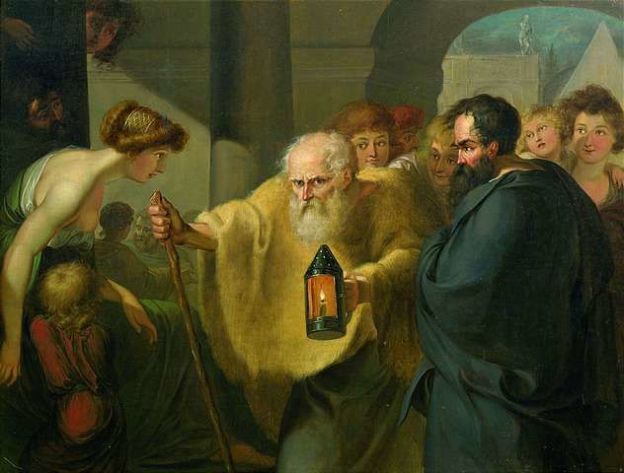
Diogenes was a famous but controversial Greek philosopher who supposedly lived an unconventional life. Amongst other things, he is known for his witty sayings, including one that is particularly well known: “I am not an Athenian or a Greek, but a citizen of the world.” What did he mean by this? Did he mean the world should all be united under one rule, or he just didn’t want to be classified with a specific cultural group? Did he think he was “worldly,” in the sense he knew and understood the ways of the whole world? Is this a quotation those of us are living now, in our current world, can identify with in the same way as Diogenes meant? How should followers of Christ respond to this idea of being a citizen of the world?

The stories of Diogenes’ life and history are colorful, though it is hard to differentiate between what is true and what are exaggerated tales. Diogenes originally lived in Sinope, Turkey until he was exiled for a scandal involving the state currency. He then ran away to Athens, Greece with a slave named Manes. Shortly after arriving, Manes left him, and he said, “If Manes can live without Diogenes, why not Diogenes without Manes?” He became a philosopher and decided he wanted to study under an acclaimed philosopher named Antisthenes. Despite Antisthenes’ lack of willingness to take on a student, Diogenes was relentless in his pursuit and the older philosopher tolerated, if not welcomed, the uninvited student. Here in Athens, he debated with Plato about what a man was. “A featherless biped” was Plato’s definition. Diogenes went out, plucked a chicken, came back and told Plato, “Behold, I have brought you a man.” Shortly after this, he started living in a barrel on the street with just a few possessions. He sometimes wandered the streets with his lantern looking for an honest man, but all he said he found were beggars and liars. On a fateful journey while taking a ship to Aegina, his transportation was captured by pirates. He was taken to Corinth where he was sold as a slave to a man named Xeniades. Xeniades began to know Diogenes better, and he was impressed with how smart he was, so he assigned Diogenes the task of being a tutor for his sons. He stayed there for a long time as a tutor and helper. When he was released from bondage, he started pursuing philosophy again. It was during these days Diogenes established himself as a formidable philosopher. Diogenes died in Corinth, some say at the age of 89. Supposedly he died either by suffocating himself, eating a raw octopus that gave him a deadly disease, or a dog bite that became infected: all colorful and imaginative ends, which may or may not be true, for a humorous but self-centered character.

Diogenes helped to establish the Cynic Philosophy. This is the inclination to believe people are motivated purely by self-interest, and reasoning and natural things should be the bases for decisions. Cynics were similar to Stoics in they led a simple life with few possessions. However, this was not because they felt anything was inherently bad about having things, but because they didn’t want to be held to a particular culture’s standards of how to live. They didn’t want to be tied to a specific religion or cultural group. The name “cynic” comes from the Greek word κυνικός (kynikos),which means “doglike.” Cynics believed in living out their beliefs in their everyday lives, rather than just talking about them. Diogenes was a poor man by choice, since Cynics believed in a simple life in order to be free of the expectations of culture. His only possessions were a barrel to live in, a clock, a lantern, and a bowl. In fact, he smashed his only bowl when he saw a little boy drink with his hands and realized a bowl wasn’t really necessary or needed.

When Diogenes was alive, Greece was not at war with other countries. It raises the question as to whether Diogenes would have still proclaimed to be a citizen of the world rather than of Athens or Greece if it had been in a time of war. Perhaps if they had been at war, he wouldn’t have been so eager to separate himself from the bonds of his culture because the Greeks would have been fighting against other countries. A war might have increased his loyalty to the place he lived and made him more willing to conform or be part of the culture he lived in. But without a war to unite him with the culture around him, perhaps he had no reason to want to adjust to the surrounding culture’s standards.

Since Diogenes was a slave in Greece, one might find it likely he would believe in the Greek gods and goddesses. Instead, he scorned people who believed in gods because he thought reason should be the ultimate method for making every decision. This may be one of the reasons he called himself a citizen of the world, because he did not want to be confined by the conventions and unreasonable beliefs of any culture.

Being poor could have affected his lifestyle and worldview. Diogenes thought many belongings were unnecessary to have in life. Some of these were riches that bought someone more than was really needed. One didn’t need a big house, or even a house at all. He demonstrated this by living in a barrel. Lots of fancy clothes also weren’t needed as long as you had some. He believed an unreasonable culture demanded life be cluttered with these signs of prosperity and status.

Diogenes disdained cultural conventions and scorned those who followed them. He thought you should instead follow your own reasoning and base your decisions off of that. He also believed in the idea of shamelessness, declaring if one can do something in private without shame, then it should be without shame in public as well. He thought if eating in the house was okay, why not eating in public at a market, even though it was culturally inappropriate in his day. He thought if going to the bathroom in private facilities was acceptable, then wouldn’t it be okay to go in public places as well? To prove his point, he actually did these things, demonstrating the Cynic belief you should “live” what you believe and not just talk about it. When Diogenes felt like doing something, he did not care what people thought of him or if they were comfortable with it or not. He was not concerned with respecting or honoring others.

A “citizen of the world” could be defined as a person who is at home in any country, not confined by the conventions of a specific culture. Is this what Diogenes was proclaiming? One could argue this because Diogenes did not want to conform to whatever the standards of the culture would try to require. He wanted to be able to go anywhere and do anything at any time. When Diogenes was alive, the broader world was inaccessible to him and his peers. What could be known and explored was limited in a sense. He couldn’t have timely knowledge of things happening elsewhere in the world. The true disparity of far-flung cultures couldn’t be completely discovered and explored. Because of this, the world and its differences weren’t fully able to be grasped or understood.

The world as we know it is in stark contrast to that of Diogenes’. The known world is larger, but at the same time it is far more accessible. Advances in technology have dramatically transformed our world. Today, we can receive news from the opposite side of the world. We can hypothesize the weather anywhere in the world for days ahead. We can see the results of terrorist attacks anywhere they happen. We can instantly find out about natural disasters and see how much devastation they cause. We can find out when major political characters die in different countries or governments oppress their people. We can learn about space exploration programs that have started or will be starting soon. We can use the Internet to look up how kids in Africa or anywhere else in the world live. We have phones from which we can send texts and call someone across the world. We have computers from which we can send and receive e-mails from anyone instantly. We have planes, cars, and motorized boats we can use to get places faster and farther. Now the only problem with electronics is they can distract us from the real world.

If a modern-day teenager were to declare he is a citizen of the world, he may mean he has traveled extensively or he wants to travel around the world to see things firsthand. This is a realistic possibility, which it wasn’t in Diogenes’ day. This is a little different than Diogenes being a citizen of the world. Diogenes is referring to not being in a specific culture and conforming to it. A teen is just talking about how someone is able to travel all the way across the world in a few hours.

This statement could also have another meaning to someone from our time in history. It could also mean people are so in touch with everything they feel deeply impacted by it. They are impacted by it because they can get news anytime, and they know about the different circumstances, unlike Diogenes who was only in touch with the surrounding areas. We are not limited to only knowing about what is happening in our city and state or even country, but we can know about everything, everywhere, right away. We are a citizen of the world because can know about everything.

This statement could also mean one feels a responsibility to address the things happening in the world. When something goes wrong, a person could personally feel responsible for it even though he might not be able to stop it or change what would happen. Modern governments are trying to help stop ISIS and aren’t concerned only with their own countries. If there is a natural disaster, individuals may help out by collecting money or going to help. Maybe they donate money to charities helping people around the world in need of help. They could join the Peace Corps or conservation groups or become a missionary. Being a citizen of the world nowadays might mean actually doing things that could have an impact all across the world.

When Diogenes proclaimed himself a citizen of the world, it seems he only thought of himself and what would make him happy, not of others or what they would want. He thought only of his own self-interests. Now, rather than this thought excluding the rest of the world and focusing on selfish views, people might have a much broader view due to the fact the rest of the world can be known in a much more real way. Being a citizen of the world might mean knowing, doing, or even going there.

The Bible says we should think of others before ourselves. Take Philippians 2:34. It reads, “Do nothing out of selfish ambition or vain conceit. Rather, in humility, value others above yourselves, not looking to your own interests but each of you to the interests of others.” This is directly opposite to what Diogenes and his fellow Cynics believed. Cynic philosophy was all about being motivated by self interest, not wanting to help or consider others. As Christians, we must be able to recognize and view ourselves with humility and consider others first. Whereas Diogenes believed being a citizen of the world meant being free from the responsibility to consider the desires of others, Christians should view it as an opportunity to live in service to others whom we value more highly than ourselves.

Bibliography

“Diogenes of Sinope.” Wikipedia. Wikimedia Foundation, 21 Aug. 2016. https://en.wikipedia.org/wiki/Diogenes_of_Sinope. 7 Sept. 2016.

“Diogenes the Cynic.” Diogenes the Cynic. University of Chicago, n.d. http://penelope.uchicago.edu/~grout/encyclopaedia_romana/greece/hetairai/diogenes.html. 7 Sept. 2016.

Mark, Joshua J. “Diogenes of Sinope.” Ancient History Encyclopedia. Ancient History Encyclopedia, 02 Aug. 2014. http://www.ancient.eu/Diogenes_of_Sinope/. 7 Sept. 2016.

Piering, Julie. “Diogenes of Sinope.” Internet Encyclopedia of Philosophy. University of Arkansas at Little Rock, n.d. http://www.iep.utm.edu/diogsino/#H1. 7 Sept. 2016.

My Parents Hate Me

Tim Seaton

My parents hate me. No, really — they do! They always tell me actions speak louder than words. Their actions are speaking pretty loudly right now! Need a computer for school? Buy it yourself. Got a problem with a teacher? Go talk to her. Want to go on the senior trip to Europe? Start saving now because that is a lot of money. Need a ride to practice? Go get a ride or you’re going to run laps for missing practice. Need a lunch because you forgot yours? Sorry, but it looks like you are going to be really hungry today.

Don’t they care about me? I am their only son after all. I’m supposed to be carrying on their legacy, but how can I do that when it seems like they are really trying to make things harder for me? I thought parents were supposed to be helpful, caring, and compassionate, protecting and providing for their kids. All the other parents are being nice and buying their kids iPhones, iPads, and computers. Why can’t they get me one? Obviously, it is hard being me.

I lost my jacket. It could’ve happened to anyone, but of course it happened to me. Actually, this was the 6th or 7th time this had happened. It was never lost for good until the last time. My parents left me jacketless for the whole winter. They said I could have a jacket when I bought a new one with my own money, which I eventually did. I finally got it when there was a big end of winter sale. Then there was that computer I needed for two classes at school. This wasn’t for gaming, it was for school. Needed. For school. It seemed reasonable to me they would buy me this computer. After all, this was mandatory for those classes. I’ll give you one guess about who bought that computer. With his own money. Me. Not my parents.

My parents have decided to make me pay for things other parents may not make their kids pay for. They are using words like “money management” and “stewardship.” Basically, stewardship is taking care of the resources we have. It is also using our money wisely. I guess it makes sense I would have to make money and spend it to learn about stewardship.  This is important to them because they have known people who have not spent their money wisely or taken care of their things. Therefore, they have not had money in times of need. They don’t want that to happen to me.  It will also help down the road when I am in my twenties and thirties. Some people don’t know how to manage their money, so they are not prepared to live independently. They have had to live with parents or friends. They should have experience saving and spending, so they can decide what to buy and what not to buy and understand how much things cost and how quickly money is used up.

To my parents, and yes, to me as well, this is related to stewardship. Stewardship is also important to God. The Bible shows stewardship in Genesis 2:15. “Then the Lord God took the man and put him in the Garden of Eden to work it and keep it.” Man had to manage the garden’s resources just like we have to do now with our resources. Stewardship is shown in this verse because man is having to grow food in the garden to live and so they are having to manage their resources.

Then there was my retainer. I broke it. It was only out of its case for four hours, but that was long enough. Snap went my retainer. I had to pay for this one as well, and let me tell you, it was expensive. $220 worth of expensive. Did I know it should always be in its case, especially when I was at work with a backpack full of heavy books?  Well … yes. Was I a little careless and irresponsible? Yes.

Turns out, everything has consequences. Sometimes they are small and sometimes they are big, but they are always there. My parents gave me a talk about responsibility. Part of responsibility is showing care over things and accepting consequences as they come. The consequences in this case were pretty obvious. Of course, not all consequences are financial. Sometimes it could be the loss of screen time or the ability to hang out with friends. The bigger goal is to help avoid the potential dramatic life changing consequences from poor decisions made later in life by helping me recognize consequences and learn to be responsible now.

My parents say responsibility is important, and I guess I can see it. Turns out, God agrees with my parents. He shows us He does in Romans 6:23. “For the wages of sin is death, but the gift of God is eternal life in Christ Jesus our Lord.” Sin has consequences for which we have to take responsibility. Thank goodness God stepped in for us and took the consequences of our sin on Himself.

Now, they are going to make me pay for my senior trip to Europe. It takes a long time to save up that much money! I started in sixth grade. My sister did too. She had to pay for all of her trip, so I know my parents are serious about me having to pay for all of mine. I love to see how much money I have earned over a pay period, but I already know it is earmarked for something else. Ugh.

Why would they make my sister and I do this? I guess they are just trying to help us learn how to plan ahead, organize, and work toward a goal. Later in life, I will have to know how to plan ahead. For example, if I want to take a nice vacation, I will need to have some money saved up to be able to take it. If a car breaks down unexpectedly or a relative dies, I need to be able to cover the expenses. When we are not aware of long term possibilities and haven’t planned for both known and unexpected needs, we won’t be prepared for them.

My parents also want us to set long term goals and practice working towards them. I’ve had odd jobs for several years, but this summer I had to get a real job to start earning toward the trip. This meant I had to take time to fill out an application, complete forms for underage labor and safety, and take almost all of my paychecks directly to the bank.

God must think my parents are right because He talks specifically about planning ahead. He says in Luke 14:28, “For which of you, desiring to build a tower, does not first sit down and count the cost, whether he has enough or not.” God must want us to be wise and be able to know how to plan ahead. Otherwise he wouldn’t give us this parable teaching us to plan ahead.

I really want a phone. All my friends have one, so why not me? I have promised to take care of it and offered to pay for it. I have begged for years to get a phone, but every time the answer is “no. You can get one when you get your driver’s license.”

Why can’t I get a phone? I know I don’t absolutely need one, but it sure would be convenient to have one! They just tell me I have to be patient. Instant gratification isn’t all that important and it isn’t really healthy either, because it gives an unrealistic view of real life. Patience is the opposite of demanding instant gratification and is the capacity to accept delay without anger. My parents seem to think having patience and waiting for good things will help me understand the real value of things. And so I wait.

God must really enjoy proving my parents right because he gave us Proverbs 14:29. The first part of this verse reads, “Whoever is patient has great understanding.” When we are patient, we will grow in understanding of the important things in life.

I worked hard this summer, sitting outdoors and sweating in the hot sun for a long time. I had to deal with grumpy people who didn’t care about the pool rules I was supposed to be enforcing. I didn’t get to do a lot of fun things with my friends. A lot of days, I didn’t even get to hang out with them because I was working. I didn’t get to go fishing with them. They got to have all the fun while I was working at a lousy pool. Why was I doing this? I have to pay for my senior trip. To do that, I have to have a job.

My parents insist I will enjoy it more if I pay for it. Unfortunately, I think they might be right. Many people think we value things more we earn ourselves or spend our own time to attain, rather than it just being given to us. Appreciation of the true value of things is important.

Appreciation has been described as the recognition and enjoyment of the good qualities. One verse I relate to this is Psalm 110:4. “Enter His gates with thanksgiving and His courts with praise. Give thanks to Him, bless His name.” Our appreciation for Him should grow daily as we see what new things He has in store for us. We should also be appreciative of what our parents do for us, even if we don’t think it was helpful at all.

So my mom didn’t bug me about writing this article. She reminded me a couple times, but that was it. Of course, this means tonight, the night before it is due, I have to stay up very, very late. Tomorrow, I will be really tired and probably grumpy. I have done this multiple times. I have neglected projects so my work hasn’t been my best. I haven’t studied for tests because I figured I already knew the information … but my grades said I didn’t. And my mom just sat by and let me fall flat on my face like this!

My parents think it’s a great idea to let me do my work … or not … and get the grade I earn. They are OK with teachers giving me a bad grade if that’s what I earned! They expect me to work with excellence, so when I get a bad grade and haven’t worked up to my potential, there are always unpleasant consequences.  They talk about learning from my mistakes. I should make a mistake once and hopefully never make it again.

God must really approve of my parents because He gave us another verse that agrees with them. Colossians 3:23 says, “Whatever you do, work at it with all your heart, as working for the Lord, not for human masters.” No matter what we do, we should try our best and do it for God’s glory, not our own. When we do excellent work, we are showing God we are going to do our best for Him.  When we don’t, the natural consequences are great learning tools.

Guess what happened when my teacher marked me as tardy but I didn’t think I was? I had to go talk to him on my own after school. And that time I didn’t get the grade I thought I deserved? I had to take it up with the teacher on my own.  And then there was the time I didn’t get to play in a game. They sent me off to go talk to my coach by myself.

My parents are making me take up my own problems with others. I always dread this and it feels incredibly hard to do. As I do it more and more, it gets easier and easier every time. My parents tell me this is building my independence. In real life, I will have difficult situations I have to deal with, so I should start practicing and learning now when my parents can still back me up.

One verse that points to practicing things is Philippians 4:9. “What you have learned and received and heard and seen in me — practice these things, and the God of peace will be with you.” This points out practicing things is good preparation for real life. My parents would say it is even better to practice when you have someone to back you up. Once again, God and my parents are in agreement.

So maybe my parents don’t hate me after all. Now I realize the reason my parents have been seemingly being mean to me was because they love me. What’s more important to them than an easy life and having the things I want is building a strong character that will prepare me for life and make me into a man who lives the way God wants me to live. It’s hard being me, but I wouldn’t have it any other way.