Tag Archives: tanner rotering

A Few Misconceptions about Military Funding

Tanner Rotering

When you think of your children’s future, what comes to mind?  Do you imagine them having a quality education, a successful career, a happy family, a safe home, and all the freedoms that we enjoy today?  Do you imagine them as happy, healthy, and financially secure?  Regretfully, while this is how we like to think of our children’s future, the truth is much more menacing.  We often take for granted the many freedoms and privileges that we as Americans have, and if we are not more careful concerning the preservation of these freedoms and privileges, others will not hesitate to take them away from us.  Currently America is headed toward a very unsightly demise, and we have to do something about it.

The current military expenditures of the United States Federal Government are not adequate to ensure the security of the United States.  Despite the relative peace that Americans enjoy in the modern age, the choices made in the near future concerning America’s military budget have the potential to permanently alter America’s direction.  With the rising national debt and the recurrent national deficit, well-intentioned reformers risk cutting the programs in the federal government that are most important to the well-being of the United States and that are most in need of federal funding.  In the midst of the “War on Terror” many ill-advised officials are crippling America’s long-term security by stripping the military of its large-scale conflict capabilities in order to make way for a counter-insurgency focus.  Despite inflation and the costly wars in Iraq and Afghanistan, the military budget is left underfunded due to an alleged lack of funds while President Obama’s controversial health care plan, the trillions of dollars in stimulus money, and countless entitlements are funded without a second thought by many in Congress.  Without a strong military, America is susceptible to countless threats in the modern world, many of which, while not openly hostile to the security of United States, are still a threat to American interests.  If America cannot retain its current status as leader of the free world, there will be no free world.  Thus, in order to avoid this grim prospect, it is imperative that the United States Federal Government substantially increase the federal military budget.

The purpose of this paper is to refute a few common misconceptions concerning the military budget.  When the issue of increased military funding is brought up, several common arguments are made against such an increase.  The first of these arguments states that because we are already spending more money on our military than the rest of the world combined, we do not need to spend any more.  This argument is founded on the critically false assumption the amount of money spent by the military has a one-to-one correlation to both the quantity and quality of the forces produced and maintained by the military.  In other words, people who make this argument often do not realize that the “higher-tech” something is, the more expensive it is, and thus, when the budget is limited, the military generally has to make sacrifices in quantity in order to attain the higher quality (and vice versa).  Because of this trade-off, the military must maintain a balance between more expensive advanced technology and less expensive conventional technology — between technology and numbers.  It is also important to recognize that, because there are multiple combat scenarios in which the United States may have to deploy its military forces, not all technologies are constructed for the same purpose.  More advanced technology is often procured and maintained in order to fulfill very limited and yet very important roles.  For example, certain military UAVs (Unmanned Aerial Vehicles) are outstanding for collecting intelligence and for eliminating certain targets, but currently they are not a competitive form of technology for air superiority; much less advanced manned-aircraft is still capable of out-performing modern UAVs in air-to-air combat.  Because the United States Military has to maintain a careful balance between the quality and the quantity of its forces, because it has multiple roles to fill pertaining to defense, and because a unique technology is often required for each specific combat scenario, the current military budget cannot be assumed to be fully designated to one single aspect of its defense procurement.  Thus, while the United States Military may be spending more money than all of the other nations on earth put together, it cannot then be assumed that America could, for example, easily be victorious in a war with every other nation, because not all of America’s military funding is spent on preparing for this one scenario.  Most countries are not as committed to so many objectives world-wide as is the United States.  Even if there were only one simple objective toward which every nation devoted its military budget, spending a specific amount of money in one nation is not going to bring the same results as spending that same amount of money in another nation.  There are too many variables involved in the process to make such a simple comparison.  These variables include the price of materials, the items purchased, the price of labor, the procurement process, etc.  Thus it should be clear military spending cannot be correlated on a one-to-one ratio to military preparedness for every possible conflict, and thus, one cannot assume because we spend more money than any other nation on earth, we are also better matched for any conflict with any other nation on earth.  One should not judge the benefits of any policy purely by the amount of money spent to achieve its end.

A second common argument some will present for why we should not increase military expenditures asserts that, because of our massive national debt and incessant national deficit, we ought to be cutting military spending rather than increasing it.  While the national debt and the national deficit are certainly significant problems, that does not necessarily mean we should cut every government program.  Instead we should carefully determine which programs ought to have their funding cut, and which programs ought to remain the same or have their funding increased.  National security must not be compromised.  We cannot risk the existence of the United States for the financial security of the United States.  It would do us no good to save a large sum of money by cutting back our military budget in order to reduce the deficit if such an action threatened the existence of the United States as a nation.  There are many alternative programs which can be cut instead of the nation’s already underfunded military program.  Max Boot, in “Impact of Past Defense Cuts Should Warn of Risks” at washingtonpost.com argues that our current defense budget is “eminently affordable.”  At less than four percent of America’s gross domestic product, he says, the relative amount of money which the United States spends on defense is significantly less than it has been throughout the past century.  Citing the example of the “post-Cold War drawdown,” Boot also draws attention to the historical impacts of cutting the defense budget.  While it would be beneficial to eradicate any truly wasteful spending within the military’s budget (though one must be careful what one classifies as wasteful), it is not feasible such an action would free enough money to cover all of the gaps in the military budget.  Thus, in spite of the mounting national debt, we must still increase the funding for the United States Military.

Finally, the third counterargument makes the claim that, because the United States has been able to quickly develop new technology and prepare for conflict in the past, America should postpone any large military budgetary increase until a conflict which necessitates such an increase presents itself.  The fundamental flaw with this argument is the fact it completely ignores the new pace of warfare that has developed as a result of the tremendous technological breakthroughs in the past century.  While a purely reactionary defensive policy may have been sufficient to maintain security in the past, it is no longer a feasible strategy for the 21st century; warfare has developed much more of an emphasis upon preemption.  In the past, America has relied largely upon its geographical insulation to act as a temporal buffer from conflict.  Because the United States is separated from much of the world by the Atlantic and Pacific Oceans, historically the United States has been either left alone or has had a substantial amount of time to prepare for battle because of the tremendous amounts of time it would take to cross the ocean by ship.  In the modern world, however, America does not have the privilege of either remaining isolationist or of waging war purely on a reactionary basis.  Because of the interconnectedness of the modern global economy and because of significant advances made in the technology of warfare, the American military must be ready to take action upon a moment’s notice.

American interests are so tightly interwoven with the well-being of countless other economies worldwide that America cannot afford to sit back and not take action when an ally or even a competitor’s security is threatened.  In order to protect America’s trading options, the American military cannot wait until American soil is threatened, but instead it must always be fully capable of deploying anywhere in the world to meet any potential threat.

Modern technology also plays a role in the necessity to anticipate hostilities before they actually occur.  Because modern technology enables quicker communication, quicker mobilization, better networking, faster calculations, faster vehicles, more precise munitions, longer flight times, more powerful weapons, and a whole range of other benefits, the pace of warfare is based upon much shorter time frames.  For example, in World War II, in order for American forces to attack the Japanese homeland, American aircraft carriers had to sail within several hundred miles of the Japanese islands to enable a successful bombing mission.  Because the aircraft had much smaller combat radii than modern aircraft, they had to be deployed much closer to their destination, and this took time.  Modern aircraft, on the other hand, can fly around the world without having to land to refuel.  This means we have to always be prepared to defend ourselves because we don’t have months to prepare while the enemy gets their forces into position.

The fact that technology was much less complex than it is now has significant implications for strategy as well.  In former decades military weapons like airplanes and tanks could be designed, constructed, and sent to the battlefield fairly rapidly.  The technology wasn’t very complex, and it didn’t involve nearly as many components as it does today.  A single company could produce the machines of war largely within its own facilities with its own materials.  In modern times, however, military weapons not only take much longer to develop, perfect, and produce, but the manufacturing process incorporates innumerable intricate, highly specialized parts which are produced by a large variety of companies.  It is no longer reasonable to assume America would be able to design and construct such complicated machines of war on a purely reactionary basis after we have perceived a threat.  It takes the military many years to develop the modern weapons of war, and to expect it to happen overnight is preposterous.

Proponents of this third counter argument may argue that instead of focusing on simply having the “best” technology, we should focus instead on obtaining the technology that best exploits the weaknesses of our enemies.  While it is true taking advantage of opponents’ weaknesses is a valuable tactic in war, proponents of this theory, like Martin Van Creveld in Technology and War, often take it too far.  They claim that because the fundamental principle upon which technology is founded is a system of consistent cause and effect in which an action will always create the same outcome, and because conversely war is founded upon the inconsistencies and unpredictability of one’s opponents, technology and war are fundamentally opposed in their natures (311-320).  Proponents of such theories are not arguing that technology should not be used in war, but that the value of technology is strictly limited to the ability with which it can exploit the enemy’s weakness.  This is not completely accurate, however.  Clearly the human element of warfare adds a sense of unpredictability, but this does not mean anything which utilizes consistency is then necessarily opposed in nature.  Though warfare often involves a series of variables, the laws of physics are constants that can be utilized by means of technology to predict and limit the impact of the variables.  Most will recognize that though the formation of technology is based upon the uniformity of natural causes, the application of technology is more flexible.  Therefore, technology and warfare are not fundamentally opposed in nature since technology can be used in harmony with warfare.

Because of technology’s unique ability to limit the impact of various unknowns in warfare, its applications are much broader than simply exploiting an enemy’s weakness.  Often a superior technology is useful because of factors completely independent of an enemy’s weakness.  For example, radar (when it was first invented) was not useful simply because it exploited a specific weakness of the enemy.  It was useful because it provided vital intelligence concerning enemy positions.  There wasn’t some fundamental flaw unique to the tactics or technology of the enemy that gave value to the technology of radar; it was a new capability all together that could be used by either side.  Some might argue the very fact the enemy could be detected by radar was a weakness, but before radar this was not a problem.  Instead, radar created this weakness in the enemy by creating an advantage for the developing nations.  Thus technology does not have to only exploit enemy weaknesses, but instead it can actually create enemy weaknesses.  Further, technology often has strategic military power completely independent of a specific conflict and should be developed preemptively in order to gain a tactical advantage.  The only way these technologies can be adequately funded, though, is by increasing the military budget.

Though it may be hard for us to imagine a scenario where very desperate measures would be required of us, world stability can falter in the blink of an eye, leaving us in a situation in which we wish we had spent more money ensuring our security.  The unthinkable has happened before.  Remember Pearl Harbor?  Despite the general complacency concerning our security, America was taken completely off guard.  This time, however, we cannot afford to wait to begin preparation until we have been attacked.  Because of the incredible advances in technology in the modern age, warfare is contingent upon much shorter timeframes.  With the advances made in rapid deployment capabilities, precision targeting, efficient communication, and sophisticated weaponry, preemptive modernization is critical to the security of the United States.  Thus, it is absolutely imperative that the United States Federal Government substantially increase the federal military budget.

Necessary Precautions

Tanner Rotering

Airsoft, which is the recreational use of imitation firearms capable of firing plastic BBs, is a rapidly growing pastime in the United States.  Ranging from target practice to organized war gaming, the many uses of airsoft paraphernalia are highly appealing to those looking for an exciting way to incorporate the great outdoors, strategy, athleticism, friends, and, of course, guns into one glorious activity.  Yet there are very real dangers associated with this sport that are important to be aware of, even if you do not intend to play airsoft.  Airsoft is an extremely enjoyable activity and a wonderful way to spend time with friends, but if you are not willing to take the necessary precautions to ensure others’ and your own safety, then you don’t deserve to use an airsoft gun.  Without a proper understanding of the dangers of even holding an airsoft gun, you risk your safety, the safety of those around you, your freedom, and even your life.

The first precaution necessary when playing airsoft is avoiding the obvious risk of bodily damage to the participants.  Airsoft guns are capable of firing BBs at very high speeds often ranging anywhere from one hundred to five hundred feet per second depending on the power of the gun and the mass of the BB used.  While being shot by one of these BBs will not inflict any serious bodily harm, they can leave a pretty serious welt in some cases, occasionally even breaking the skin.  If you get shot in the eye, however, it’s a whole different story.  Being shot in the eye by an airsoft gun can lead to anything from temporary damage or eye surgery to permanent blindness, but even if you are fortunate enough to endure such an injury without any permanent effects it will still hurt like crazy!  Despite what one is inclined to think about the odds of such an injury, there are countless instances around the country of such accidents, but at the same time, there is an extremely easy and extremely effective way of avoiding them: wear your eye protection.  Eye protection options range from impact resistant glasses, to high strength goggles, to paintball masks.  Personally, I would strongly dissuade the use of any eye protection that does not completely wrap around the eyes in such a way that blocks BBs from coming in at any angle.  Also make sure that your eye protection is strong enough to withstand countless impacts from a very high-powered gun.  If your eye protection isn’t strong enough to withstand anything you might possibly encounter on the battlefield or shooting range, even if you are not being shot at, then do not shoot at all.  Also remember that ricocheting BBs can be just as dangerous as BBs shot directly at you.  You just don’t want to take any chances.

Though it is important to remember to always wear eye protection, it is just as important that you ensure that everyone remotely near where you are firing is also wearing the appropriate eye protection.  Whenever you play airsoft, you are responsible not only for your own protection, but also for that of everyone around you.  Imagine the guilt that you would have if you blinded your friend for life.  It simply is not worth the risk of so drastically reducing the quality of life for your friend for the rest of his life simply because of the inconvenience of making sure that he wears his eye protection, not to mention the fact that you could have to pay the medical bills.  Sure, you might look a little paranoid and your friend might even get mad at you for asking him to take these precautions, but any true friend would recognize that this short term inconvenience far outweighs the long term implications of the potential alternative.  Again, if the necessary precautions are not being taken, don’t play.  Too many times I have seen people wearing eye protection for ninety percent of the time, but taking it off just because they are only watching the conclusion of a match.  Until all guns have come to a cease fire and are put on safety as well as are pointing away from any human target, it is imperative that all eye protection remains on.

The second necessary precaution when playing airsoft is avoiding the risk of bodily damage to the public and of physical damage to property.  Always be careful of where you play airsoft.  For example, don’t shoot your airsoft gun in a place where there will be people who do not have the proper protection on even if they are not participating in the fun.  Just because they aren’t smart enough to go out and join you doesn’t mean they don’t have value as a human being.  In addition, if someone does happen to wander too near to your airsoft activities, make sure that you take the time to inform them of the situation and of the need for eye protection.  In addition to ensuring the safety of the public, it is also important to ensure the safety of the surrounding property.  Generally, it’s not a good idea to play airsoft around automobiles since the paint and windows can easily be chipped or cracked.  Also, don’t shoot in the direction of housing in order to avoid denting the siding, cracking windows, or chipping wood.  Finally, make sure that if you are having an airsoft battle, your opponents don’t have to risk damaging personal property if they are to have a chance at hitting you.

Finally, the third necessary precaution, and perhaps the most important, is ensuring that you are abiding by all federal, state, and local laws and regulations regarding the sale, possession, and discharge of airsoft guns.  If nothing else, you should at least be aware of these two federal laws since they will be applied universally no matter where you are in the United States.  First is the law mandating that you must be 18 years or older in order to purchase an airsoft gun (though you do not have to be 18 to legally use an airsoft gun).  Thus, if you are not yet 18, make sure that you get your parents to purchase any airsoft gun you want.  The second law that you should know is extremely important and is perhaps the most important thing that you could possibly learn from this article.  Whenever you purchase an airsoft gun it should always come with a blaze orange tip attached to it.  As you may or may not be aware, this orange tip is often the only distinguishing factor that makes it recognizable as an airsoft gun and not a real gun!  Federal law states that “No person shall manufacture, enter into commerce, ship, transport, or receive any toy, look-alike, or imitation firearm (‘device’) covered by this part as set forth in Sec. 1150.1 of this part unless such device contains, or has affixed to it, one of the markings set forth in Sec. 1150.3 of this part, or unless this prohibition has been waived by Sec. 1150.4 of this part.”  This particular law goes on to specify the specific markings (of which one is required) as either, one, “A blaze orange…solid plug permanently affixed to the muzzle end of the barrel as an integral part of the entire device and recessed no more than 6 millimeters from the muzzle end of the barrel,” two, “A blaze orange…marking permanently affixed to the exterior surface of the barrel, covering the circumference of the barrel from the muzzle end for a depth of at least 6 millimeters,” three, “Construction of the device entirely of transparent or translucent materials which permits unmistakable observation of the device’s complete contents,” or four, “Coloration of the entire exterior surface of the device in white, bright red, bright orange, bright yellow, bright green, bright blue, bright pink, or bright purple, either singly or as the predominant color in combination with other colors in any pattern” (note that the law does specify a very specific “blaze orange” color in the full text for the first two distinguishable features).  Though it is difficult to find a definitive answer on whether it is lawful to remove the orange marking on the end of airsoft guns after the purchase, I would strongly advise against it for several reasons.  First of all, the phrase “permanently affixed to the muzzle end of the barrel as an integral part of the entire device” leads one to believe that the marking is intended to be permanent and not to be removed.  Though this does not definitively state that it cannot be removed after purchase (as this law is about the commerce regarding such imitation firearms), it could also be argued that if you intend on transporting your airsoft gun, then the appropriate marking should remain intact.

In addition to the legal reasons why you should leave the orange marking on your gun intact, it should also be common sense.  Because airsoft guns are often so incredibly realistic looking, to take off the orange tip would be to remove the gun’s ability to be distinguished from a real firearm.  If people in your community see you brandishing a gun that they believe to be real, it is highly likely that they will be highly distressed and potentially even call the police.  Also, in many instances, when the police encounter an individual with what appears to be a genuine firearm, they simply do not have the time to carefully inspect it to determine its authenticity.  In many cases, out of concern for their own lives or out of concern for the lives of others, police have been forced to shoot and even kill individuals who were brandishing airsoft guns because they were not able to distinguish it from a real weapon.  Often the police have to make split-second decisions in these sorts of things, so it is important that you leave your orange tip on your airsoft gun at all times, even if it will make you a little more visible during an airsoft match.  After all, most of us would rather be seen and shot by an airsoft BB than by a real bullet.

There are also various state laws worth researching if you plan on “airsofting” locally.  Though you hopefully won’t have to deal with the implications of these laws specifically, ehow.com also references a few interesting local laws on the subject.

Virginia does not require a permit to buy or carry airsoft guns either.  If they are misused, however, state law considers airsoft guns the same as firearms.  Using an airsoft gun in a robbery or other crime is a Class 1 misdemeanor, punishable by a year in jail and a $2,500 fine — the same as with a real gun.  Criminal use of a gun, including airsoft, on or within 1,000 feet of a school is a Class 6 felony; the penalty may range from one to five years in prison.  State law also specifically absolves police officers of civil liability if they shoot in defense of self or others — even if the suspect’s gun is airsoft.

Though I am not sure if this is federal, state, or local law, it is also illegal to brandish or use your airsoft gun in any public place.  No matter where you play, however, always ensure that you know the laws beforehand.

Before concluding I believe that it would be appropriate to tell a short story about a personal experience of mine concerning wise airsoft gun usage.  Just a short time ago, I felt like performing a few minor adjustments on my very own airsoft gun.  It being a nice day outside, I, like many times before, decided to do a little target practice next to the woods adjacent to my church.  After receiving permission from my pastor and his wife, who were actually at the church at the time, I proceeded to begin the process of adjusting my scope.  To my great satisfaction, I was able to successfully place the cross-hairs almost precisely where the BBs were going.  Thinking it wise to test my gun out at a longer range, I began to slowly position myself farther and farther back from the woods, which I was shooting into, and closer and closer toward victory Boulevard (from which my church is only about 75 yards).  About thirty minutes later I was in the process of taking off my scope, when lo and behold — [Wheeeeeeeeeee-Whoooooooooo] — along comes not one, not two, not even three, but FOUR police cars!  As I slowly turned around, my heart sinking, it began to dawn on me that, yes, they were indeed coming for me.

As the police stepped out of their vehicles and fanned out toward me, I began thinking about what they might say.  After all, I wasn’t breaking any laws, was I?  No, I don’t believe I was breaking any laws, but, as it turns out, a woman driving by on Victory Boulevard had called in some Hooligan with a gun about to shoot up a local church.  What a thought; and yet, she didn’t know any better than to think I was holding a real fully automatic assault rifle.  I did have the orange tip on my gun, but the woman driving by was likely not able to see it easily from the distance and the speed at which she was driving by; though even if she had seen the orange tip, she might not have recognized that it indicated that my gun was not a real firearm.  This just goes to show that you have to be extremely careful where and how you use your airsoft gun.  Many people do not realize the difference between a real gun and an airsoft gun, especially if there is not an orange tip attached.  I count myself very blessed, however, first, because I was not actually holding the gun when the police showed up (since that would have increased their need for caution and potentially escalated the tension and possibility of me being shot), and second, because I had my orange tip firmly attached to the end of my barrel.  For, what do you know, one of the officers informed me that the reason he was able to identify it as an airsoft gun was by the orange tip.  For all I know that little piece of brightly colored plastic could have saved my life.

Needless to say, everything turned out all right.  I wasn’t arrested, though the police did write down some of my information; I apologized to the police and to the woman who called me in for my lack of wisdom and for causing all that trouble, and my pastor and his wife decided to allow me to continue to reside in their house.  I will say, however, that I plan on being much more careful where I decide to shoot my airsoft gun from now on.  I hadn’t technically done anything illegal, but deciding to use my gun so close to a heavily traveled roadway definitely was not a very wise decision.  I also felt really awful for causing so much trouble for the police department that had to dispatch officers to what, as they may have thought, could have been a serious firefight.  Also, as one of the officers told me, if they had got into an accident responding to the call, things could have gotten much more serious.

So what you can you learn from all of this?  First of all, always be mindful of the physical safety of those you play airsoft with as well as yourself, by always wearing your eye protection.  Second, be wary of those around you who are not necessarily going to involved in the airsofting, but who could be put in harm’s way, as well as the personal property you could potentially damage and have to pay for.  Third, always be informed of and abide by all federal, state, and local laws concerning airsoft guns.  Finally, don’t just think about what is legal; think about what is wise.

Bibliography

“Airsoft Gun Laws and Safety: Find Airsoft (air Guns, Air Soft) Information.” Accident and Injury Center — Accidents and Injuries. Web. 16 May 2011. Web.

“Airsoft Guns Vs Paintball — Differences and Regulations.” Federal Firearms Laws. 07 June 2009. Web. 16 May 2011. Web.

Custodio, Philip. “Laws Regarding Airsoft Guns in VA | EHow.com.” EHow | How to Videos, Articles & More — Trusted Advice for the Curious Life | EHow.com. Web. 16 May 2011. Web.

“US Airsoft Law — Airsoft Forum.” AirsoftForum.com — Airsoft Forum and Military Simulations. 31 Mar. 2004. Web. 16 May 2011. Web.

Counterpoint: Scripture Alone – A Biblically Supported Truth

Tanner Rotering

The doctrine of Sola Scriptura or “Scripture Alone” is one of the most controversial subject matters between the Catholic/Eastern Orthodox Church and the Protestant Church.  Because the source from which one derives truth is the foundation of one’s belief system, the positions which these churches hold to concerning this issue determine their positions on countless other doctrines as well.  Thus, a correct understanding of the sufficiency of the Holy Scriptures is vitally important to every Christian, and, as a result, I feel it necessary to address the doctrine after the grossly inaccurate representation of the issue by my well-intentioned colleague, Mr. Hamilton.

Before delving into the heart of the issue, it would be beneficial to clear up a few things concerning the history of the doctrine of Sola Scriptura.  First of all, Martin Luther did not contrive the doctrine of Sola Scriptura as justification for his separation from the Roman Catholic Church as if he needed an excuse for his actions.  Instead, his belief in the principles of Sola Scriptura was actually one of the reasons why he was separated from the church in the first place.  He had realized the importance of relying solely upon God’s Word for truth long before he was separated from the Roman Catholic Church.  In addition, he did not choose to separate himself from the Roman Catholic Church, but instead he was forced out of it.  Luther actually wanted to reform the Roman Catholic Church from the inside, but he was not given the opportunity to do so, being excommunicated by the pope.  So instead of developing the doctrine of Sola Scriptura in order to justify himself for his separation from the Roman Catholic Church, his adherence to it was one reason why he was excommunicated by the Roman Catholic Church in the first place.

Next, the doctrine of Sola Scriptura is in no way “repulsive” to the scriptures.  The scriptures clearly testify to their own authority.  Let us start with the Old Testament’s authenticity as the inspired word of God.  By the time of Jesus, the Old Testament had already been firmly established and accepted by the Jews as divine authority.  Michael J. Vlach, a Ph.D. in systematic theology, says in “How Did the Old Testament Become the Old Testament?” the following about the books of the Old Testament:

There are twenty-four books in the Hebrew canon.  These twenty-four books correspond exactly to the books in the English Protestant Bibles that numbers thirty-nine.  The difference is in the enumeration of the books.  (For example, the Hebrew Bible does not divide Samuel into 1 and 2 Samuel.  The same goes for the Kings.)

By the time of Jesus, all of the books of the Old Testament had already been compiled and agreed upon by the Jews.  They consisted of the very same books in our Bible today.  There are various reasons why we can know that they are all authoritative.  First of all, Jesus himself refers to the Law of Moses, the Prophets, and the Psalms, which in turn correspond to the three divisions which the Jews divided the scriptures into: the Law, the Prophets, and the Writings (Vlach).  In Luke 24:44 Jesus says, “This is what I told you while I was still with you: Everything must be fulfilled that is written about me in the Law of Moses, the Prophets, and the Psalms.”  Luke 11:49-51 is another instance where Jesus’ words indicate that the Jewish compilation of the Holy Scriptures was complete.  Jesus says,

Because of this, God in his wisdom said, “I will send them prophets and apostles, some of whom they will kill and others they will persecute.”  Therefore this generation will be held responsible for the blood of all the prophets that has been shed since the beginning of the world, from the blood of Abel to the blood of Zechariah, who was killed between the altar and the sanctuary.  Yes, I tell you, this generation will be held responsible for it all.

Note that the murder of Abel and the murder of Zechariah are the first and the last murders recorded in the Old Testament, recorded in the first and last books of the Jewish Old Testament, Genesis and Chronicles (see Genesis 4:8 and 2 Chronicles 24:20-22) (Keller 134).  In addition, in John 5:39-40 Jesus says, “You study the Scriptures diligently because you think that in them you have eternal life.  These are the very Scriptures that testify about me, yet you refuse to come to me to have life.”

If Jesus knew that the Jews’ compilation of the Old Testament was faulty in some way, he likely would have told them so, but instead of telling them that their compilation was faulty, he tells them that the scriptures they study are the very scriptures that testify to him.  If they were not divinely inspired would Jesus have said that they testify to him?  Jesus does not refer to any errors in the Jews’ compilation in Matthew 5:17-18 when he declares,

Do not think that I have come to abolish the Law or the Prophets; I have not come to abolish them but to fulfill them. For truly I tell you, until heaven and earth disappear, not the smallest letter, not the least stroke of a pen, will by any means disappear from the Law until everything is accomplished.

Not only is the Jewish Old Testament referenced as a whole, but, as Brian R. Keller says in his book Bible: God’s Inspired, Inerrant Word, “All the books of the Old Testament canon are in some way quoted or alluded to in the New Testament except for the books of Esther, Ecclesiastes, and Song of Songs” (137).

It is also evident from Scripture that the 39 books of the Old Testament we use today are the infallible word of God.  In 2 Peter 2:20-21 Simon Peter makes this very clear: “Above all, you must understand that no prophecy of Scripture came about by the prophet’s own interpretation of things.  For prophecy never had its origin in the human will, but prophets, though human, spoke from God as they were carried along by the Holy Spirit.”

The Old Testament (and the Bible as a whole for that matter) is not simply the writings of men.  Scripture is inspired.  Or as Paul says in 2 Timothy 3:16, “All Scripture is God-breathed….”  Paul also confirms the divine origin of the Old Testament in Romans 3:2, when he says, “What advantage, then, is there in being a Jew, or what value is there in circumcision?  Much in every way!  First of all, the Jews have been entrusted with the very words of God.”  Thus, it is evident from Scripture that we not only possess the appropriate compilation of the Old Testament books, but that they are also God’s word.

The 27 books of the New Testament as appear in the Protestant Bible are also the appropriate canonical books to be regarded as Holy Scripture.  They are not canonical because the Church declared them to be canonical.  God’s word does not rely upon the “Church Fathers” or anyone else to establish the truth of the Bible.  While it is true that the Church recognized the 27 books of the New Testament to be canonical, the church did not impart any authority to scripture nor did it gain any authority by recognizing it as scripture.  In fact, while we may look to the early Church Fathers for confirmation of what we believe, we should not look to them as anything greater than what they are: mere men.

So how can we be assured that the 27 books of the Bible are God’s word?  To start, the canon was based on the teaching of the apostles.  The apostles were those closest to Jesus, and they were promised the Holy Spirit.  In John 14:26, Jesus tells his apostles, “But the Advocate, the Holy Spirit, whom the Father will send in my name, will teach you all things and will remind you of everything I have said to you.”  Later in John 16:12-15, Jesus tells them,

 I have much more to say to you, more than you can now bear. But when he, the Spirit of truth, comes, he will guide you into all the truth. He will not speak on his own; he will speak only what he hears, and he will tell you what is yet to come. He will glorify me because it is from me that he will receive what he will make known to you.  All that belongs to the Father is mine. That is why I said the Spirit will receive from me what he will make known to you.

The letters of Paul, though not one of the twelve, also can be taken as Holy Scripture as 2 Peter 3:15 and 16 indicates.

Bear in mind that our Lord’s patience means salvation, just as our dear brother Paul also wrote you with the wisdom that God gave him.  He writes the same way in all his letters, speaking in them of these matters.  His letters contain some things that are hard to understand, which ignorant and unstable people distort, as they do the other Scriptures, to their own destruction.

Richard L. Gurgel in This We Believe notes that “Peter’s fascinating reference reveals that already while Peter was alive the letters of Paul were gathered and recognized as inspired portions of Holy Scripture.”  David Kuske in Biblical Interpretation: The Only Right Way notes that “[t]he apostles often reminded believers that their words were the spirit’s words” and “[t]he apostles indicated that the words they spoke were, therefore, on par with the Old Testament Scriptures.”

In 1 Corinthians 2:12-13 Paul states, “What we have received is not the spirit of the world, but the Spirit who is from God, so that we may understand what God has freely given us.  This is what we speak, not in words taught us by human wisdom but in words taught by the Spirit, explaining spiritual realities with Spirit-taught words.”  Perhaps even more emphatic is 1 Thessalonians 2:13: “And we also thank God continually because, when you received the word of God, which you heard from us, you accepted it not as a human word, but as it actually is, the word of God, which is indeed at work in you who believe.”

Gurgel also says the following about the New Testament canon.

The books of the New Testament come from the first generation of Christians- those who lived at the time of Jesus.  Our faith is founded on the teaching of the apostles themselves.  The long life of the apostle John also helps verify the list of books in the New Testament canon.  John lived to about A.D. 100 and was a reliable witness to the authenticity of any letters that claimed to be inspired apostolic writings.

There were doubts about the authenticity of some of the New Testament books during the time of the early church, specifically Hebrews, James, Peter, 2 John, 3 John, Jude, and Revelation.  These books (along with those of the Old Testament books whose canonicity has been questioned) are referred to as the antilegomena, while those that were well established as canon were called homolegoumena.  The antilegomena were doubted usually either because of their content or their authorship (Kuske 33).  These doubts were put to rest by 300 a.d.

While the position of the early church concerning these antilegomena confirms the canonicity of these books, once again, this does not mean that the early church has any divine authority.  The early church simply lived closer to the times of the apostles; they were better able to verify the authenticity of the scriptures.  This does not mean that they created the canon, simply that they recognized it and were instrumental in sharing it with future generations.  This is a critical distinction.  Keller points out, “The chosen apostles of our Lord Jesus Christ either wrote or approved every book of the New Testament canon” (141).  Apostolicity is still the historical guiding factor because, as the Bible says, the apostles were divinely inspired.  Therefore, the Bible’s canonicity is still rooted in the Bible.

Yet, there is an even more crucial way in which we as Christians recognize the true canon of scripture.  Because the truly canonical books are truth from God, they are self-evident.  As the “Statement on Scripture,” in Doctrinal Statements of the WELS puts it, “The Canon, that is, the collection of books which is the authority for the Church, is not the creation of the Church.  Rather, the Canon has, by a quiet historical process which took place in the worship life of the Church, imposed itself upon the Church by virtue of its own divine authority.”  This statement seems like a very bold thing to say.  The books of the Bible proved themselves to be canonical?  While the church councils publically recognized the canonicity of the New Testament, the Bible had been showing itself to be canonical.

Hebrews 4:12 supports this idea, demonstrating the power of God’s word.  “For the word of God is alive and active.  Sharper than any double-edged sword, it penetrates even to dividing soul and spirit, joints and marrow; it judges the thoughts and attitudes of the heart.”

The authority of the Bible is demonstrated by the Bible itself.  The books themselves illustrate the reliability with which they can be accepted as God’s Word.  Romans 10:17 testifies to the power of God’s Word, saying, “Consequently, faith comes from hearing the message, and the message is heard through the word about Christ.”  Jeremiah 23:29 says, “‘Is not my word like fire,’ declares the LORD, ‘and like a hammer that breaks a rock in pieces?’”  1 Peter 1:23 shows us that it is by God’s Word that we are born again: “For you have been born again, not of perishable seed, but of imperishable, through the living and enduring word of God.”  Romans 1:16-17 confirms this idea as well:

For I am not ashamed of the gospel, because it is the power of God that brings salvation to everyone who believes: first to the Jew, then to the Gentile.  For in the gospel the righteousness of God is revealed — a righteousness that is by faith from first to last, just as it is written: “The righteous will live by faith.”

Thus it is evident that both the Old and New Testaments of the Protestant Bible are both canonical and divinely inspired.  Because the Bible is divinely inspired, it is one hundred percent true.  In John 17:17, Jesus prays to the Father “Sanctify them by the truth; your word is truth.”  Proverbs 30:5 says, “Every word of God is flawless; he is a shield to those who take refuge in him.”  Numbers 23:19 says, “God is not human, that he should lie, not a human being, that he should change his mind.  Does he speak and then not act?  Does he promise and not fulfill?”  Furthermore, this canonicity and divine inspiration is evident from the Bible itself.  This is essentially to say that not only is the Bible completely authoritative, but also it is completely authoritative of its own merit; the word of God does not need any external authority to establish its authenticity.  The Holy Scriptures verify their own authority.

The Word of God is infallible, but is it possible that any other source has equal or greater authority?  The answer from the Bible is a resounding “NO!”  How could anything be as or more authoritative than God’s Word?  Isaiah 8:20 illustrates the insufficiency of any other source.  “Consult God’s instruction and the testimony of warning.  If anyone does not speak according to this word, they have no light of dawn.”  The Bereans of the New Testament recognized this fact.  Acts 17:11 says, “Now the Berean Jews were of more noble character than those in Thessalonica, for they received the message with great eagerness and examined the Scriptures every day to see if what Paul said was true.”  The Scriptures are completely sufficient as well.  We know that it is sufficient because it contains all that we need to know concerning salvation.  As Keller points out, “John 20:31 explains why we have the words of Scripture.”  John 20:30-31 say, “Jesus performed many other signs in the presence of his disciples, which are not recorded in this book.  But these are written that you may believe that Jesus is the Messiah, the Son of God, and that by believing you may have life in his name.”  As shown previously in Romans 10:17 and Romans 1:16-17, faith comes from hearing the gospel.  The Scriptures are the only source we possess where we can read God’s Word, therefore only Scripture ought to be looked to for doctrinal truth.

Keller makes this point blatantly clear.

No one has the right to add to God’s Word.  No one has the right to subtract from God’s Word.  No one has the right to change the meaning of God’s Word in any way.  That is the case for every pastor, teacher, or layperson.  That is the case for the pope too.  It is wrong to add human ideas or traditions to the Bible and consider them God’s Word.  It is wrong to try to brush certain teachings of Scripture under the rug because they are not very popular today.

Keller then goes on to point out two more key verses concerning this idea.  Deuteronomy 4:2 says, “Do not add to what I command you and do not subtract from it, but keep the commands of the Lord your God that I give you.”  Galatians 1:8 says, “But even if we or an angel from heaven should preach a gospel other than the one we preached to you, let them be under God’s curse!”

Now we come to the issue of “tradition.”  Mr. Hamilton does well to make the distinction between the tradition of God and the tradition of men.  On that point I most heartily agree with him.  Our interpretations of what those traditions are and what their implications are for us are the real points of contention.  The “apostolic traditions” referred to in Mr. Hamilton’s two key support passages, 2 Thessalonians 2:15 and I Corinthians 11:2, are simply the gospel teachings.  As R. C. H. Lenski says concerning Second Thessalonians 2:15’s use of the Greek word for “tradition,”

The use of paradoseis does not contain something rabbinic, for this term is used in the Gospels and also by Paul in Gal. 1:14 and Col. 2:8 to denote Jewish and human “traditions.”  Here and in 3:6 and in I Cor. 11:2 the word = the gospel teachings, “truth” (v. 13), “the truth” (v. 10, 12), the plural to indicate the different parts of the gospel truth.  The word itself points only to transmission: the things given or handed over from teacher to pupil.  Romanists have appropriated it and refer it to teachings handed down in the church and not recorded in the Scriptures; but this late Romanish use has nothing to do with Paul’s use.  In I Cor. 11:2 Paul also has the corresponding verb (443).

 The NIV translation makes this point more clear.  It reads, “So then, brothers and sisters, stand firm and hold fast to the teachings we passed on to you, whether by word of mouth or by letter.”  The written teachings passed on to the Thessalonians (i.e. the letters) are Holy Scripture, and the teachings delivered by the word of mouth most definitely were in agreement with their letters.  Thus these passages in no way refute the weight with which Christians recognize the Holy Scriptures as having.  Even if one was to claim the possibility that some additional teachings were issued by the apostles’ word of mouth besides that which is recorded in scripture, there is no way that we can know what these doctrines are since they were not recorded.  If they had been recorded and shown to be authentic, they would have been recognized as scripture, but the early church recognized no such writings as divinely inspired except that which they included in the canon.  Some may claim that they were passed on by oral tradition and recorded later, but there is no way to verify the accuracy/authenticity of these oral transmissions.  Therefore, we must still adhere to Sola Scriptura.

Let me again clarify.  I am not denying that the traditions (i.e. the teachings) of the apostles were not divinely inspired.  No, in fact, I agree that the teachings of the apostles were divinely inspired.  As demonstrated earlier in this article when discussing the criteria of Apostolicism for canonicity, the Holy Spirit spoke through the apostles.  What I am saying is that the apostles taught the same gospel both in their letters and in their word of mouth, and that we only have access to the written teachings of the apostles (the Bible).  The doctrine of Sola Scriptura does not deny that there is truth that is not recorded in the Bible (like in some of the Apostles’ oral dissertations); it only says that Scripture is the only inerrant, authoritative, doctrinally foundational source of truth that we have access to, and that it is completely sufficient.

Whenever discussing the doctrine of Sola Scriptura another point of contention that almost invariably arises is the authority of the Church.  What type of authority does the church have and what type does it not?  Is the decree of the visible church infallible?  If so, which visible church is infallible?  What are the powers and responsibilities given to the Church?  All of these are relevant questions when addressing the relationship between the church and scripture.

Let us review the distinction between the visible and invisible church.  The invisible church is comprised of all believers, while the visible church is comprised of all who confess to be believers.  The term “invisible church” refers to what we generally think of as the Church.  The invisible church is “a chosen people, a royal priesthood, a holy nation, God’s special possession” (1 Peter 2:9).  It is comprised of the “family of believers” (Galatians 6:10).  It is Christ’s body (Ephesians 1:23) and “God’s household” (1 Timothy 3:15).  Galatians 3:26-27 says, “So in Christ Jesus you are all children of God through faith, for all of you who were baptized into Christ have clothed yourselves with Christ.”  Romans 11:20 clearly shows you must have faith to be in the invisible Church.  Ephesians 4:3-6 puts special emphasis on the unity of this invisible church: “Make every effort to keep the unity of the Spirit through the bond of peace.  There is one body and one Spirit, just as you were called to one hope when you were called; one Lord, one faith, one baptism;  one God and Father of all, who is over all and through all and in all.

“Why do we call all believers in Christ the invisible church?” you may wonder.  We call it invisible because man, unlike God, cannot judge the heart.  No one can definitively ascertain whether anyone else is a believer or not.  While it is true that all faith should invariably lead to good works or “fruit” as the Bible tells us, this still does not mean man has the ability to judge who is saved and who is not.  Luke 17:20-21 says, “Once, on being asked by the Pharisees when the kingdom of God would come, Jesus replied, ‘The coming of the kingdom of God is not something that can be observed, nor will people say, “Here it is,” or “There it is,” because the kingdom of God is in your midst.’”  Note that an alternate translation for “is in your midst” for this passage is “is within you.”  The reason we call the body of all believers the invisible church is simple.  Edward W.A. Koehler in A Summary of Christian Doctrine says, “Because faith, by which men become members of the Church, is invisible to human eyes, therefore the Church itself is invisible to man” (239).

It is important to mark the distinction between the invisible church and the visible church.  Koehler says, “Briefly stated: The invisible Church is the total number of those who HAVE true faith in their hearts; the visible Church is the total number of those who PROFESS the faith.  The invisible Church is hidden in the visible church.”  Koehler also notes,

The faith, by which men are members of the Church, is itself invisible (Luke 17:20.21) but it manifests itself in various ways.  All true believers will confess their faith; “with the heart man believeth unto righteousness, and with the mouth confession is made unto salvation” (Rom. 10:10); (Matt. 10:32).  They will also prove their faith by a godly life, letting their light shine before men, that they may see their good works and glorify their Father in heaven (Matt. 5:16).  They will nurse their spiritual life by making diligent use of the means of grace; “he that is of God heareth God’s Word” (John 8:47); (1 Cor. 11:26).  Thus by their confession of faith, by their godly life, by their attendance upon public worship the believers become recognizable to others; these things are the outward evidence of their invisible faith.…  The total number of those people whom we must regard, on the basis of their confession in word and deed, as Christians, constitute the visible Church (244, 245).

There are many organizations which form the visible church, which we refer to as churches or sometimes as denominations.  While we refer to these as churches, many of these are not true churches since they do not teach only true biblical doctrines.  As James F. Korthals writes in his article “The visible church” in the January 2009 issue of Forward In Christ, “A true visible church is one that not only knows the truth but also proclaims the truth of God’s Word in its entirety.”  It is important to recognize, however, that this does not mean that no one within one of these heterodox visible churches is a member of the invisible church.  Nor does it mean that everyone within a true visible church is a member of the invisible church.  Koehler summarizes this relationship between the visible and invisible church very poignantly.

The invisible Church is the only saving Church.  Since faith in the vicarious atonement of Christ is the only thing that saves (John 3:16), and since the Church embraces all those who have this faith, it is apparent that membership in this Church saves.  Whoever rejects the faith, by which one is a member of this Church, cannot find salvation in any other religion.  It is not true that every one is saved in his own fashion, no matter what his faith may be.  Christ says: “I am the way, the truth, and the life; no man cometh unto the Father, but by Me” (John 14:6).  However, no visible church body, or denomination, may claim that it is the only saving church, as the Romish Church does.…  According to the Bible teaching “no salvation outside of the Church” applies to the invisible Church alone (241).

It is evident that the visible church can be further subdivided into true and false (or orthodox and heterodox) churches as well.  In addition, the New Testament warns us of false teachers and deceivers.

Considering what we know about the visible and the invisible church, what can we say about the authority of the church?  As Mr. Hamilton points out, 1 Timothy 3:15 says, “if I am delayed, you will know how people ought to conduct themselves in God’s household, which is the church of the living God, the pillar and foundation of the truth.”  Does it then follow that “the Orthodox Catholic Church” can “define the revealed truth”?  Of course not!  First, we must ask ourselves whether “church” here means the visible or the invisible church.  It is clear that we could not consider heretics and false teachers to be part of the pillar and ground of truth, therefore we must assume that the church being referred to is the invisible church, the body of believers, the body of Christ.  While it is true that these true believers are part of the visible church, they are not the only ones within the visible church, and therefore the visible church as a whole is not the pillar and ground of truth.  R. C. H. Lenski says the following about the meaning of the Greek concerning the word “household” in 1 Timothy 3:15.  “Οἶκοs = ἐκκλησία = not the family in a house but the ‘assembly,’ the church members themselves.  They are this ‘house,’ which is called ‘house’ because God dwells in them.  This is one of the many beautiful expressions for the unio mystica, in this case it is collective with the reference to the church” (606).  Thus this is not a reference to any church body but rather the church as the body of believers.  It is not “the Orthodox Catholic Church” that is the pillar and foundation of truth, but rather all believers.

Next we must consider what it means that the church is the pillar and foundation of the truth.  It does not mean that the church is given the authority to establish what God’s word means in some form of divinely ordained privilege to give life and meaning to the scriptures.  The Church has no authority over Scripture; rather the Scriptures are the guide for the Church.  Each and every member of the church is able to understand and believe in Scripture because of the Holy Spirit’s work in his or her heart.  First Corinthians 2:13-16 says,

This is what we speak, not in words taught us by human wisdom but in words taught by the Spirit, explaining spiritual realities with Spirit-taught words.  The person without the Spirit does not accept the things that come from the Spirit of God but considers them foolishness, and cannot understand them because they are discerned only through the Spirit.  The person with the Spirit makes judgments about all things, but such a person is not subject to merely human judgments, for, “Who has known the mind of the Lord so as to instruct him?”  But we have the mind of Christ.

Likewise, in John 8:47, Jesus says, “Whoever belongs to God hears what God says.  The reason you do not hear is that you do not belong to God.”  The gospel is that truth of which the church is the pillar and foundation, and we find that gospel in the Scriptures.  Lenski says,

 The gospel = “the truth.”  As ἀλήθεια, “reality,” this truth exists independently and is dependent on no pillar, foundation, or other kind of support.  Every reality, and above all this eternal one, is simply there, and that is all.  Yet this Gospel truth which God sent into the world is not just there to be there, i.e., in existence; it is to save men, and thus men it has saved, the living God’s church, bear it as a pillar, yea as a foundation bears its superstructure.  The church thus bears God’s saving truth for all the world.

Because believers are able to believe and understand God’s word through the work of the Holy Spirit, they have the responsibility to study, apply, guard, and spread this news.  In this sense they are the pillar and foundation of the truth.  The Church has no authority to establish the meaning of the Scriptures; it simply has the ability to correctly interpret them, but only because of the Holy Spirit.  It has the authority to teach, but only that which is rooted in Scripture because God’s word is the ultimate authority.

The Church has no authority to teach anything except that found in scripture.  1 Timothy 6:3-4a says, “If anyone teaches otherwise and does not agree to the sound instruction of our Lord Jesus Christ and to godly teaching, they are conceited and understand nothing.”  The Church has no authority to claim anything but what the Bible teaches.  Everything else would be such “traditions of men” (cf. Matthew 15:1-9).  Jeremiah 23:30-32 says,

“Therefore,” declares the Lord, “I am against the prophets who steal from one another words supposedly from me.  Yes,” declares the Lord, “I am against the prophets who wag their own tongues and yet declare, ‘The Lord declares.’  Indeed, I am against those who prophesy false dreams,” declares the Lord.  “They tell them and lead my people astray with their reckless lies, yet I did not send or appoint them.  They do not benefit these people in the least,” declares the Lord.

No one, not even church leaders such as pastors or priests have the authority to teach anything except what is found in Scripture.  These leaders derive their authority only from Scripture.  They have no authority of their own (Koehler 254).

In fact, there is no such thing as the “Apostolic Priesthood.”  Koehler notes that “[t]he keys of the Kingdom were not given to Peter alone (Matt. 16:19), but to the Church (Matt. 18:18).  Peter never claimed primacy or lordship over the Church for himself (1 Peter 5:3); he calls himself just “an apostle” “also an elder” like the others (1 Pet. 1:1; 5:1)” (254, 255).  It is interesting to note that Mr. Hamilton makes reference to Matthew 18:18 as a proof passage showing that Jesus gave the keys to the Apostles, but if you read the chapter in context, it does not specify “the twelve” nor does it use any other terminology that would imply that this is being addressed only to the twelve apostles.  Instead, verse 1 only refers to the disciples which could include anyone who was following Jesus (which included more than just the twelve apostles).  Koehler says,

A comparison of [Matt. 16:19] with Matt.18:18 clearly shows that the power to bind and to loose is given to the church or the local congregation.…  In the case of the incestuous person at Corinth, action was taken by the congregation (1Cor. 5; 2 Cor. 2:6-10).  Although hypocrites within the congregation externally participate in the exercise of this power, they do not share in the right of possessing it, since it properly belongs to those only who have received the Holy Ghost (John 20:22-23), and who by faith are the royal priesthood (1 Pet. 2:9) (255-256).

Mr. Hamilton uses Acts 1:20 as a support passage for the “Apostolic Priesthood” as if the passage somehow supports the continual selection of successors for the Apostles.  It is evident from the context of the passage, however, that this passage is referring only to the replacement of Judas.  Peter himself notes that “the Holy Spirit spoke long ago through David concerning Judas” and not about every apostle.  The fact that this reference is referring only to the replacement of Judas is made even more abundantly clear in verses 21-22 where Paul notes the purpose/criteria of this replacement: “Therefore it is necessary to choose one of the men who have been with us the whole time the Lord Jesus was living among us, beginning from John’s baptism to the time when Jesus was taken up from us.  For one of these must become a witness with us of his resurrection.”  In addition to the fact that nowhere in Scripture is a continual replacement or succession of the Apostles ever mentioned, no one would be able to meet the criteria of being a witness to Jesus’ resurrection as was the case in Judas’ replacement for very long.

Finally, Titus 1:5 is even less of an appropriate support passage than Acts 1:20.  That elders were to be appointed does not mean that these elders were successors of the apostles or that they were infallible.  Koehler notes, “The prophets and apostles are infallible teachers of the Church, because they spake under the inspiration of God (Eph. 2:20; 2 Peter 1:21; 1 Corinthian 2:13)” (255).  Our religious leaders, on the other hand are not.

I would like to bring up one final point concerning the alleged “Apostolic Priesthood.”  Though Mr. Hamilton does not present this specific argument, many will claim that Matthew 16:18 supports such an “Apostolic Priesthood” because of Jesus’ words, “And I tell you that you are Peter, and on this rock I will build my church.”  The “rock” which Jesus states that he will build his church on is not Peter.  The word for Peter used in the Greek is Petros, while the word used for the rock upon which Christ will build his church is petra.  Despite what the Catholic Church may have believed the Greek to have indicated, two distinct words are used in this passage, and the rock upon which Jesus said he would build His church is actually the confession made by Peter in verse 16: “Simon Peter answered, ‘You are the Messiah, the Son of the living God.’”  Thus the theory of the “Apostolic Priesthood” can hardly be considered scriptural and we must again conclude that the only authority for Christian doctrine is Scripture.

Some will claim that this concept of the sufficiency of Scripture is a relatively new idea that began with the Reformation.  In reality, however, even the early Church Fathers recognized this foundational principle of the Christian faith.  Gregory L. Jackson, in Catholic/ Lutheran/ Protestant: A Doctrinal Comparison of the Three Christian Confessions, provides several quotations from the early Church Fathers.  He says, “The tactic of arguing for the insufficiency of Scripture (and therefore the necessity of another source, whether it be the book of Mormon or Mary Baker Eddy’s Science and Health) is old rather than new, and countered long ago.”  He provides the following excerpt from the writings of Irenaeus.

When they are proved wrong from the Scriptures, they turn and accuse the Scriptures themselves, as if they were not correct and were without authority, both because they speak now one way, now another, and also because the truth cannot be found from Scripture by those who do not know the traditions; for (so they say) the truth was not given through the epistles, but through the living voice, etc.

Jackson also provides a quotation from St. Augustine:

If you believe the report about Christ, see whether this is a proper witness; consider what disaster you are headed for.  You reject the Scriptures which are confirmed and commended by such great authority; you perform no miracles, and if you performed any, we would shun even those in your case according to the Lord’s instruction Mt. 24:24.  He wanted absolutely nothing to be believed against the confirmed authority of the Scriptures, etc.

Some will claim, in spite of such quotations, that the early Church Fathers actually promoted the Orthodox/Catholic idea of Apostolic Tradition.  While it is true that the early Church Fathers did adhere to a form of Apostolic Tradition, it is very different from the form advocated by the Orthodox and the Catholic theologians.  The “Apostolic Tradition” was simply the teachings found in Scripture.  Thus the “Apostolic Tradition” of the early church was actually in support of the sufficiency of Scripture.  Irenaeus said: “We have learned from none others the plan of our salvation, than from those through whom the gospel has come down to us, which they did at one time proclaim in public, and, at a later period, by the will of God, handed down to us in the Scriptures, to be the ground and pillar of our faith.”

William Webster explains the truth of the matter:

The word tradition simply means teaching.  Irenaeus and Tertullian state emphatically that all the teachings of the Bishops that was given orally was rooted in Scripture and could be proven from the written Scriptures.  Both men give the actual doctrinal content of the Apostolic Tradition that was orally preached in the churches.  From this, it can be seen clearly that all their doctrine was derived from Scripture.  There was no doctrine in what they refer to as Apostolic Tradition that is not found in Scripture.  In other words, the Apostolic Tradition defined by Irenaeus and Tertullian is simply the teaching of Scripture.

Webster also quotes Church historian Ellen Flessman-van Leer from Tradition and Scripture in the Early Church.

For Tertullian, Scripture is the only means for refuting or validating a doctrine as regards its content… For Irenaeus, the Church doctrine is certainly never purely traditional; on the contrary, the thought that there could be some truth, transmitted exclusively viva voce (orally), is a Gnostic line of thought… If Irenaeus wants to prove the truth of a doctrine materially, he turns to Scripture, because therein the teaching of the apostles is objectively accessible.

There are many other quotations from by the Church Fathers affirming the fact that the early church relied solely upon the authority of the Holy Scriptures.  St. Athanasius said, “The holy and inspired Scriptures are fully sufficient for the proclamation of the truth.”  St. Gregory of Nyssa affirmed the importance of every doctrine being in compliance with Scripture when he says, “Let the inspired Scriptures then be our umpire, and the vote of truth will be given to those whose dogmas are found to agree with the Divine words.”  He also said “we are not entitled to such license, namely, of affirming whatever we please.  For we make Sacred Scripture the rule and the norm of every doctrine.  Upon that we are obliged to fix our eyes, and we approve only whatever can be brought into harmony with the intent of these writings.”

St. Augustine of Hippo is also in agreement with the doctrine of Sola Scriptura saying,

Let them show their church if they can, not by the speeches and mumblings of the Africans, not by the councils of their bishops, not by the writings of any of their champions, not by fraudulent signs and wonders, because we have been prepared and made cautious also against these things by the Word of the Lord; but [let them show their church] by a command of the Law, by the predictions of the prophets, by songs from the Psalms, by the words of the Shepherd Himself, by the preaching and labors of the evangelists; that is, by all the canonical authorities of the sacred books.

St. Cyril of Jerusalem declared,

For concerning the divine and holy mysteries of the Faith, not even a casual statement must be delivered without the Holy Scriptures; nor must we be drawn aside by mere plausibility and artifices of speech.  Even to me, who tell you these things, give not absolute credence, unless you receive the proof of the things which I announce from the Divine Scriptures.  For this salvation which we believe depends not on ingenious reasoning, but on demonstration of the Holy Scriptures.

St. John Chrysostom said, “Regarding the things I say, I should supply even the proofs, so I will not seem to rely on my own opinions, but rather, prove them with Scripture, so that the matter will remain certain and steadfast,” and also, “They say that we are to understand the things concerning Paradise not as they are written but in a different way.  But when Scripture wants to teach us something like that, it interprets itself and does not permit the hearer to err.  I therefore beg and entreat that we close our eyes to all things and follow the canon of Holy Scripture exactly.”

St. Basil is yet another early Church Father who confirmed the doctrine of Sola Scriptura.  He also makes the place of the “traditions of the fathers” clear saying, “We are not content simply because this is the tradition of the Fathers.  What is important is that the Fathers followed the meaning of the Scripture.”  The fact that only doctrines from scripture ought to be taught is also made clear in this quotation from St. Basil.

What is the mark of a faithful soul?  To be in these dispositions of full acceptance on the authority of the words of Scripture, not venturing to reject anything nor making additions.  For, if “all that is not of faith is sin” as the Apostle says, and “faith cometh by hearing and hearing by the Word of God,” everything outside Holy Scripture, not being of faith, is sin (all quotations in this section taken from Angelfire).

Though the testimony of the early Church Fathers should not be considered as divinely inspired or authoritative, the fact that they recognized that the Scriptures ought to be recognized as the only authoritative source of Christian doctrine is supportive of the fact that the doctrine of Sola Scripture has been around since the earliest years of the church even if the doctrine was not referred to as “Sola Scriptura.”  After all, it is clearly supported by the Bible.

The emphasis on the doctrinal principles of “Scripture Alone,” though largely neglected by the Catholic Church, soon blossomed in mainstream Christianity with the advent of the Reformers.  The fact that Sola Scriptura was neglected by the majority of professing Christians during the height of Catholicism, however, in no way reduces the authority of the doctrine.  Jesus said in Matthew 24:24, “For false messiahs and false prophets will appear and perform great signs and wonders to deceive, if possible, even the elect.”  We can be assured, however, that the gates of Hell will never prevail over the church.  Matthew 16:18 says, “And I tell you that you are Peter, and on this rock I will build my church, and the gates of Hades will not overcome it.”  Some will say that because the gates of Hell will not overcome the church, Protestants cannot hope to justify their beliefs, drawing attention to the extended period of time between the early church and the Protestant Reformation.  In other words, these people construct an argument that follows the general logic chain “because there can never be a time when the church is nonexistent, and because the protestant church was nonexistent during the Middle Ages, the Protestant church cannot be the true church.”  There are several major flaws in this line of argumentation, however.

First of all, there is a fundamental misunderstanding of the two usages of the word “church.”  There is both the visible church and the invisible church, as discussed previously.  Therefore, despite the fact that there may have not been an orthodox visible church during the Middle Ages, it is not then true that the invisible church was therefore nonexistent during this time period as well.  Even if not a single completely correctly teaching visible church existed during the Middle Ages, this does not mean that believers were not present.  Romans 11:1-6 presents an outstanding example of a time when, despite what the situation appeared to be, God had preserved a remnant.

I ask then: Did God reject his people?  By no means!  I am an Israelite myself, a descendant of Abraham, from the tribe of Benjamin.  God did not reject his people, whom he foreknew.  Don’t you know what Scripture says in the passage about Elijah — how he appealed to God against Israel: “Lord, they have killed your prophets and torn down your altars; I am the only one left, and they are trying to kill me”?  And what was God’s answer to him?  “I have reserved for myself seven thousand who have not bowed the knee to Baal.”  So too, at the present time there is a remnant chosen by grace.  And if by grace, then it cannot be based on works; if it were, grace would no longer be grace.

Secondly, we know from Matthew 16:18 that the gates of Hell will not overcome the church, and thus that the invisible church will always exist, but scripture does not say that there will always be perfect doctrinal understanding within this body of believers.  Thus, even if there were periods of time where no believers accepted doctrines like Sola Scriptura, that does not then necessitate that Sola Scriptura is a false doctrine.  Because it is possible to be a believer but not believe in Sola Scriptura, this doctrine may have not been held by anyone during the Middle Ages, but this does not mean that there were not any believers during this time.  Thus the truth that the gates of Hell will never overcome the church is still compatible with the doctrine of Sola Scriptura.

Some also argue Sola Scriptura is self-contradictory because it is not found in the Bible.  While it is true that the Bible does not say the words “Scripture Alone,” it is clearly a biblical principle as illustrated above, and thus not self-contradictory.  Just as Christians believe that there is one God in three (and only three) persons even though the Bible does not say the word “Trinity” or “there are only three persons in the Trinity” because such a doctrine is scripturally supported, so we also believe that there is only one source of God’s Word we can use for doctrinal truth.

In conclusion, because the Holy Scripture (the canonical sixty-six books of the Protestant Bible) is God’s word, and because God’s Word is inerrant, the Holy Scripture is one hundred percent accurate.  In addition, because the Holy Scripture is the only divinely-inspired source God has given to us, we must rely solely on the scripture for doctrinal issues.  This doctrine is clearly supported by the scriptures themselves.  The church is only authoritative insofar as its teachings are based upon scripture.  If they are not in congruence with scripture, they are nothing.  Thus, Christians ought to affirm the doctrine of Sola Scriptura in order to avoid the many snares and pitfalls the world sets up against us.  It should be a comfort to Christians to know the Bible is completely sufficient, and we have all that is necessary for salvation.  Let us never forget the significance of the words of Psalm 119:105: “Thy word is a lamp unto my feet, and a light unto my path” (KJV).

Works Cited

The Ancient Fathers on “Sola Scriptura.” Angelfire. 06 Mar. 2011. Internet.

BibleGateway.com. 20, 26, 27 Feb. 2011. Internet. Note: Unless taken from a quotation or otherwise indicated, all scripture references were taken from the NIV found at BibleGateway.com.

Berkley , Warren E. “2 Thessalonians 2:15 — Stand Fast & Hold the Traditions.” Interactive Bible Home Page. July 1996. 27 Feb. 2011. Internet.

Gurgel, Richard L. This We Believe: Questions and Answers. Milwaukee: Northwestern, 2006.

Jackson, Gregory Lee. Catholic, Lutheran, Protestant: a Doctrinal Comparison of Three Christian Confessions. St. Louis, MO: Martin Chemnitz, 1993.

Keller, Brian R. Bible: God’s Inspired, Inerrant Word. Milwaukee: Northwestern, 2003.

Kiecker, James G. “Fading Power.” Editorial. Forward In Christ. Oct. 1994. Wisconsin Evangelical Lutheran Synod (WELS): Northwestern. 27 Feb. 2011. Internet.

Koehler, Edward W. A. A Summary of Christian Doctrine; a Popular Presentation of the Teachings of the Bible. St. Louis: Concordia, 1971.

Korthals, James F. “The Visible Church.” Editorial. Forward in Christ. Jan. 2009. Wisconsin Evangelical Lutheran Synod (WELS): Northwestern. 26 Feb. 2011. Internet.

Kuske, David P. Biblical Interpretation: the Only Right Way. Milwaukee: Northwestern, 1995.

Lenski, R. C. H. The Interpretation of St. Paul’s Epistles to the Colossians, to the Thessalonians, to Timothy, to Titus, and to Philemon. Minneapolis: Augsburg, 1961.

Vlach, Michael J. “How Did the Old Testament Become the Old Testament?” TheologicalStudies.org. 20 Feb. 2011. Internet.

Webster, William. “Sola Scriptura and the Early Church — What Did the Early Church Believe about the Authority of Scripture?” Christian Answers® Network™. 06 Mar. 2011. Internet.

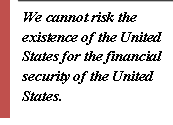
How to Interpret the Constitution

Tanner Rotering

Essentially, there are two prominent ideologies on how to interpret the Constitution.  One such ideology is called “Strict Constructionism.”  This technique for Constitutional “interpretation” is based on the idea that the Constitution should be “interpreted” based on what the Constitution actually says and on what the founders intended those words to actually mean.  (Though the strict definition does not actually include the considerations of the original intent of the Founding Fathers, the term “Strict Constructionism” is often used to include this “originalism.”)  The second method of interpretation for the Constitution is based on the idea that the Constitution is a “Living Constitution.”  Proponents of this view state that the Constitution should be interpreted based on the needs and ideas of the day since the Constitution was simply an embodiment of certain principles to be applied.  Of these two views, the ideology of “Strict Constructionism” is the only theory that is legally sound and beneficial to the United States of America.

The purpose of a constitution is to establish certain rules and principles for a civilization and for its government.  These rules are intended to establish a certain foundation upon which a nation is to be built and run.  This foundation is intended to preserve order and to protect the rights of citizens.  If these rules and principles are able to be “interpreted” differently than how they were originally written or intended, like the proponents of the “Living Constitution” claim they are, then there is essentially no purpose to having a set of rules in the first place.  But because there obviously was a purpose of having a definitive set of rules in the Constitution, we can conclude that they were not intended to be loosely interpreted in various ways.

If the Constitution was intended to merely be an embodiment of certain principles to follow, why would it be so specific in how those principles were to be carried out?  Clearly the Constitution was intended not only to promote certain ideals, but also to propose a specific way in which to implement such ideals in order to optimally achieve them.  If government officials think that they can achieve such ideals differently, good for them, but they have no authority to implement these alternative techniques without the Constitution.

The fact that the Constitution does list a specific procedure for altering itself further discounts the claims of the Living Constitutionalists.  That procedure is the amendment process.  If the Constitution was intended to be altered through interpretations by Supreme Court Justices, then the Constitution would say so, but because the Constitution specifically lists only one such process (the amendment process), we must assume this is the only intended way to change the Constitution.

The Supreme Court should not be considered the ultimate authority on “interpreting” the Constitution, as if the Constitution was not clear in its intent.  Instead, the Supreme Court should be considered the ultimate authority on applying the Constitution, as in deciding how the clearly written rules of the Constitution are to be applied to specific situations.  This distinction could be considered a trivial point, but it is key to expressing what exactly the purpose of the Constitution is: a binding contract.  Binding contracts are not intended to be “interpreted” based off of changing conditions, but rather they are intended to be definite and unchanging unless a legally sound mutual agreement is made to dissolve the contract.  In politics, this technique is the constitutional amendment.

In addition to being legally unsound, the idea of a Living Constitution is also a potentially catastrophic philosophy for the well-being of the United States.  If the Constitution could be changed (because that is essentially what is happening when the Supreme Court misinterprets it) simply based upon the judgment of nine individuals, then our “democratic republic” would actually be an oligarchy.  In fact, our nation has already experienced many such instances in which these nine individuals have made decisions that completely ignore the intended meaning of the Constitution.  Because the idea of a Living Constitution has gone largely unchallenged in the political arena, there is a risk that this trend will continue, leaving the possibility of further unlawful alterations of the Constitution.

With this risk of what is essentially a Constitutional violation comes the risk that many of the rights protected within the Constitution will also be violated.  If the Constitution has no binding authority over the officials of the United States of America, then these officials could essentially do whatever they want.  Already laws have been made that restrict the right to bear arms within certain cities like San Francisco because officials have “interpreted” the Second Amendment not to mean that each individual has the right to own a gun.  That is clearly not an accurate interpretation of the Second Amendment which says, “A well regulated Militia, being necessary to the security of a free State, the right of the people to keep and bear Arms, shall not be infringed.”  The decision that one cannot own a gun in San Francisco clearly was one based on the philosophy of a living Constitution since a strict literal interpretation based on what the intent of the Constitution is would not lead to such a decision.  The Second Amendment says that the right of the people to keep and bear arms shall not be infringed.  Under governments where gun rights are restricted, it is much easier for the government to oppress the people or for a military coup to occur since the citizens have no access to weaponry.  This was a major concern for the American colonies due to the recent oppression by the British government.  Thus, a violation of our Second Amendment rights further weakens our ability to protect ourselves.  But under the “Living Constitution” view, these concerns are supposedly no longer applicable since that “could never happen in America!”  Why not?  The natural trend for a government to try to take more and more power should be proof enough that this threat is possible in America as well.  After all, power corrupts.  Clearly, the “Living Constitution” is a dangerous philosophy due to its potential to lead to the violation of citizens’ rights and not just the right to bear arms.

Whenever there is any question concerning the meaning of the Constitution, the most probable intended meaning should be used since the meaning of a work is best known by the author himself.  Thus, when in doubt, Supreme Court Judges should look to the Founding Fathers.  Though there was some disagreement about the meaning of the Constitution even amongst the Founding Fathers, the meaning of most of the Constitution was well understood, and for the parts that weren’t, the Supreme Court should refer to the general consensus among the Founding Fathers concerning what that specific passage means, if available.  If the meaning is still not clear after all of this, then the Supreme Court should then use its own judgment based upon what it thinks would be the most just decision.  Only after the intentions of the Founding Fathers are considered should the Supreme Court ever use its own opinions since the Constitution is a set of principles which ultimately drew their meaning and origin from the men who gave them life.

Clearly, the Constitution should be applied through “Strict Constructionism,” since this is the most legally sound way to do so, and because without this method the rights of American citizens are at risk.

Works Referenced

“Constitution for the United States of America.” Constitution.org. 10 and 12 May 2010. Internet.

Linder, Douglas. “Theories of Constitutional Interpretation.” Exploring Constitutional Law. 10 and 12 May 2010. Internet.

“Strict Constructionism.” AllExperts. About, Inc. 12 May 2010. Internet.

“Strict Constructionism.” Wikipedia: The Free Encyclopedia. Wikimedia Foundation. 10 and 12 May 2010. Internet.

“The United States Constitution.” U.S. Constitution Online. 10 and 12 May 2010. Internet.

Secession, Not Slavery

Tanner Rotering

The article in the Richmond Times-Dispatch by Charles F. Bryan, Jr. entitled, “Yes, Slavery Caused the Civil War” (published August 15, 2010) presents a very poor case for Bryan’s point of view.  Bryan argues that without the issue of slavery, the South would have no reason to secede from the Union.  While this is true for the most part, this does not mean that “Slavery Caused the Civil War.”  In reality, the war was primarily concerned with the issue of secession from the Union.  The South fought the North because the North was infringing upon (as the southerners viewed it) their right to secede from the Union and form their own confederacy of states.  While the issue of slavery was the cause of secession, which was the cause of the war, to say that slavery caused the war is taking a logical liberality that is not fully warranted.  It is logical to say that without slavery, the Civil War would have never happened, but it is not logical to say that slavery was the cause of the Civil War, because it was only a motivation behind the cause.  To prove this point, imagine if the North and the South had still disagreed concerning slavery, but the South had not seceded.  Would there have been a war?  Of course not!  Slavery had existed for years beforehand, but no war had resulted.  The instigating factor that caused the war was secession.

There would not have been a civil war if the North had not desired to take back the South, and the North would not have wanted to take back the South if the South had not seceded from the Union.  In his first inaugural address, Lincoln says

I therefore consider that in view of the Constitution and the laws, the Union is unbroken; and to the extent of my ability I shall take care, as the Constitution itself expressly enjoins upon me, that the laws of the Union be faithfully executed in all the States.…  I trust this will not be regarded as a menace, but only as the declared purpose of the Union that will constitutionally defend and maintain itself.…  The power confided to me will be used to hold, occupy, and possess the property and places belonging to the government, and to collect the duties and imposts; but beyond what may be necessary for these objects, there will be no invasion — no using of force against or among the people anywhere.

This clearly illustrates that Lincoln in no way intended to show aggression toward the South except for the purpose of preserving the Union.  In Lincoln’s second Inaugural address he expresses the same notion.

While the inaugeral [sic] address was being delivered from this place, devoted altogether to saving the Union without war, insurgent agents were in the city seeking to destroy it without war — seeking to dissole [sic] the Union, and divide effects, by negotiation.  Both parties deprecated war; but one of them would make war rather than let the nation survive; and the other would accept war rather than let it perish.  And the war came.

One might consider this point to be a contradiction to a point made above concerning the differentiation between a cause and a motivation behind a cause.  Slavery motivated secession and secession motivated the North to take back the South, so wasn’t secession simply another motivation behind the cause of Northern aggression?  Once again, here is a slight misinterpretation of the issue.  The North trying to take back the South was not the cause of the war; it was “the war.”  In general the most immediate and fundamental motivation of the initial aggressor can be considered the cause of a war, and in this case it is secession.  While the North was not technically the first to take military action directed toward the South, it was the first to aggravate the other side by not removing its forces from enemy territory, but instead, sending supplies into aid these forces.  Regardless of whether these actions were justified, the North was the first aggressor and its aggressions were indeed intentional.  Lincoln knew that the conflict would break out between the Union and the Confederate States of America, and he wanted to justify his military actions by allowing the South to take the first shot at Fort Sumter.

Lincoln did not initiate the war to eradicate slavery.  Lincoln began to pursue Emancipation for the slaves only after the war had already begun.  He decided that, in order to put the South at a tactical disadvantage, he would emancipate the slaves in the states that had seceded, but again, this was not the cause of the war; it was a reaction that occurred because of the war.  In 1862, Lincoln said, “If I could save the union without freeing any slaves I would do it; and if I could save it by freeing all the slaves I would do it; and if I could save it by freeing some and leaving others alone I would also do that.”  Also, in his first inaugural speech he says, “It is found in nearly all the published speeches of him who now addresses you.  I do but quote from one of those speeches when I declare that ‘I have no purpose, directly or indirectly, to interfere with the institution of slavery in the States where it exists.  I believe I have no lawful right to do so, and I have no inclination to do so.’”  Congress also had no intention of interfering with the institution of slavery but only of maintaining the Union.  In 1861, Congress adopted a resolution which stated, “This war is not waged … for the purpose of overthrowing or interfering with the established institutions of those States, but to maintain the States unimpaired; and that as soon as these objects are accomplished the war should cease.”  Clearly the North did not begin the war because of slavery but because of secession.

All of Charles F. Bryan, Jr.’s arguments are essentially proving that the South seceded to preserve slavery, but this does not prove that slavery caused the war.  The conflict concerning slavery caused the secession and secession caused the war.  Many people may consider this a trivial distinction, but understanding the cause of the Civil War is a fiery issue today, and if one is going to argue for hours about it, one ought to  pay close attention to this important distinction.

Because of Southerners’ reliance upon slavery they considered states’ rights an important issue.  The Confederate States of America was based upon the idea that states have a right to secede from the Union because the Union was a voluntary organization formed by the consent of the states themselves.  Lincoln, along with many other Northerners, believed otherwise.  He considered the Union to have been formed by the consent of the people, as a perpetual, never-ending institution.  This debate was at the heart of the issue of secession, and this was the real philosophical conflict that lead to the martial conflict known as the Civil War.

The Best First-Person Shooter Game

Tanner Rotering

All right folks, the question of the day is, “What is the best First-Person Shooter Game?”  What do you all have to say?  Is it Call of Duty Modern Warfare 2?  No, of course not!  How about the newest Medal of Honor game?  Not a chance.  Call of Duty Black Ops?  Nope, wrong again.  Perhaps much to your surprise, none of these are correct.  The best first-person shooter game out there is … Battlefield Bad Company 2!  All right, all right, now I understand that many of you gamers in the “audience” are audibly guffawing right now, avidly defending your favorite game with passionate, if not reasonable protests, but this really is a great game.  Admittedly there is no completely objective standard for determining the “best first-person shooter game,” but I would strongly advise you to consider the following arguments for why Bad Company 2 is one of the best, if not the best, first-person shooter games that you could possibly own.

So what makes Battlefield Bad Company 2 such a great first-person shooter game?  Essentially it all boils down to these 7 components of game-play: graphics, realism, weapons and vehicles, customizability, maps, role diversity, and variety in game mode.  These 7 components of Battlefield Bad Company 2 are so skillfully executed that they create a truly one-of-a-kind gaming experience.  Obviously there are other games which may surpass Battlefield Bad Company 2 in one or more of these areas, but I believe that none of these games blends all of these components together as successfully as Bad Company 2.

Let us begin with graphics.  Again, there is really no objective standard for judging these sorts of things, so you will just have to see for yourself … but here are a few key traits of Battlefield Bad Company 2’s graphics.  First of all, the graphics are realistic without being too gory.  You don’t see people’s heads or legs getting blown off like you do in other more “graphic” games.  Instead you simply see a small amount of red when someone is shot (though you will see the occasional soldier flying through the air after a huge explosion).  Another bonus is that the game doesn’t try to be so realistic that it just looks bizarre.  I’m sure that we’ve all seen a game like that before.  You know, the games which don’t have quite enough money to purchase quality software, the ones that make people look just realistic enough that you recognize how much of a failure the graphics really are, the ones that make everyone look like Frankenstein’s monster.

So now that we’ve established what the graphics are not (gory and mediocre) we can delve into what they are.  One exceptionally realistic aspect to the game’s graphics is the landscape.  Foliage is extremely realistic, and the shading is phenomenal.  In fact, you can hide in the shade in sunny maps in the same way that you would be able to in real life.  This is exceptionally helpful for the dedicated sniper who relies heavily upon stealth.  The water is exceptional also.  Buildings, vehicles, and weapons are also extremely realistic when it comes to graphics.

Next is realism.  This is perhaps one of the most impressive aspects to Battlefield Bad Company 2’s game play.  For starters (and this alone sets Bad Company 2 apart from the other contenders) is the fact that the game utilizes a completely destructible environment.  Not only can you knock down trees with your tanks, but you can shoot out holes in cement walls to give yourself a nice protected firing position.  What’s really impressive is that you will even be able to see the gridirons within the cement wall once you blow some of it away, but even this isn’t the best part.  Not only are the foliage and obstacles completely destructible, but so are the buildings themselves.  A player can do anything from knocking down the door, to blowing out a wall, to collapsing the entire building on all of the opponents inside.  Though you can destroy the environment, you can also just shoot through most walls too.  All of these features drastically enhance the strategy and the grandeur of the game.

There are a few more features to the game that enhance the realism of the battlefield experience.  The audio quality is one of these features.  Being able to hear what is going on around you in the combat-zone can be just as important as being able to see what is going on around you.  Whether it is the groan of a collapsing building, the rumble of an approaching tank, the clink of a grenade on the floor next to you, the approach of an enemy soldier, or the sound of your enemy’s knife impacting the wall just inches from your head, if you listen to the surroundings, you can be more adequately prepared for the approaching situation.  The key to the greatness of Battlefield Bad Company 2’s audio is two-fold.  First, the volume of a particular noise is dependent upon how close the source of that noise is to the player, and second, even the smallest actions from reloading your gun to walking through a bush emits an audible noise.

Another component to Battlefield Bad Company 2’s superb realism is the physics behind the trajectory of fired rounds.  In many games, a bullet will continue to fly at the same velocity and altitude across the entire map or until the bullet is stopped.  In Battlefield Bad Company 2, just like in real life, the rounds of tanks, hand-held weapons, etc. actually drop with time.  Thus if you are a sniper, you will have to aim slightly above your target in order to get a head-shot (depending, of course, on how far away the target is).  Also, when you fire a shotgun in real life, you don’t expect the rounds to suddenly stop and fall to the ground after 20 feet, but that’s what happens in many games like Call of Duty Black Ops.  In Battlefield Bad Company 2, however, the shotgun rounds will continue beyond a mere 20 feet even if the rounds aren’t as powerful as they were during the first 20 feet.  As my brother Thomas puts it, “Battlefield did shotguns right.”

The third aspect of Battlefield Bad Company 2 that makes it great are the vehicles and weapons.  Many first-person shooter games do not have any vehicles at all, but Bad Company 2 not only has small vehicles like Quad Bikes (a type of ATV) but also larger vehicles like HUMVs, M3A3-Bradley APCs, M1A2 Abrahm Tanks, T-90 Tanks, two types of boats, and even BMD3-AA Mobile Anti-Aircraft vehicles (a special type of tank that, according to anandtech.com, is equipped with “dual 23mm AA cannons” and a “30mm Grenade Machinegun”1 in addition to two machine guns).  What really sets Battlefield Bad Company 2 apart from many other first-person shooter games, however, is the use of aerial vehicles.  One can fly everything from UAV1 RC Scout choppers (equipped with a machine gun and a target designator capable of summoning an aerial strike), to AH64-Apache Attack Helicopters.  Many of these vehicles have the ability to transport several soldiers who can utilize additional mounted weapons or their own individual arsenals to support the driver/pilot.  These vehicles add an extremely critical component to game play.  Not only do they provide the opportunity to wreak havoc on the enemy through the use of superior firepower, but they also contribute to the formation of a unique class of soldier, the engineer.  The ability to attack from land, sea, or air drastically increases the number of ways to play the game.

The weapons are also extremely well designed.  Each weapon’s unique balance of damage, accuracy, and rate of fire gives it a unique edge in the battlefield.  Other more subtle characteristics of each individual weapon (such as clip size, recoil, and type of iron sights) also make each weapon unique.  In fact, the performance of each gun in general (as well as the way that each gun is maneuvered in the 1st-person view)  is arguably better than that of any other 1st-person video game.

The huge number and type of weapons themselves also improve Battlefield Bad Company 2.  The fire-arms include the AEK 97, the AN94, the 9A91, the UZI, the PKM, the XM8LMG, the M24, the GOL, the M9, the 870 MCS, the USAS12, the NS 2000, the S2OK, the M93R, the M1911, the VSS, the QBY88, the MG36, the M249, the PP 2000, the SCAR, the M416, the XM8, the F2000, the M 16, the XM8C, the UMP 45, the QJY88, the MG3, the SV98, the M95, the MP443, the M1A1, the SPAS12, the SPAS 15, the T194, the MP412, the SVU, the M60, the AKS74u, and the AUG.  If you could actually recognize every one of these guns, I am truly impressed, but even if you know anything at all about guns, you probably recognized names like the M 16, the SCAR, the M1911, the AUG, the UZI, the UMP 45, and some of the AK-47 variants.  The list includes various sniper rifles, automatic assault rifles, shotguns, machine-guns, hand-guns, automatic pistols, and a few other types of weapons.

While the guns are great, one can also use more specialized weapons like RPG7s, various types of rocket launchers including the M136 (which features an optical guidance feature), grenades, Anti-Tank Mines, a power tool (used for repairing friendly vehicles or dismantling enemy vehicles), ammo kits, motion sensors, defibrillators, health packs, mortar strikes, explosives (with a remote detonator), a knife, 40mm grenade launcher attachments … you get the idea.  Many of these special pieces of equipment, like the defibrillator (which enables you to revive fallen comrades), add entirely new potential strategies and entirely new opportunities for destroying the enemy forces.2

This brings us to the fourth key factor which makes Battlefield Bad Company 2 so awesome: customizability.  As was mentioned above, each soldier has a large variety of weapons to choose from.  Most of these weapons can be customized with various attachments and upgrades, while you can also customize your abilities and vehicles with upgrades as well.  Such attachments/upgrades include sights, silencers, precision barrels, lighter equipment, precision ammo, and the like.  Not only do these options provide variety and give one the opportunity to adapt one’s weapon to the situation at hand, but they also serve as rewards for skill and experience.  As one gain’s points from various online accomplishments, one unlocks different weapons, upgrades, and attachments.  The opportunity to “unlock” these options provides for a rewarding gaming experience as well as a competitive hierarchy that distinguishes the rank 50 veteran who has played every day of every week for the past year from the “n00b” who just got the game.  While it is true that other games like Call of Duty Modern Warfare 2 have arguably superior unlock systems with more options, at least in Battlefield you don’t have to exit the match to make your “custom class.”  The vast number of ways to get points also makes the unlock system  more exciting.  One can gain points for getting kills and kill-assists; for saving a team-mate; for avenging your teammate; for destroying vehicles; for getting double or triple kills; for healing, reviving, or resupplying your teammates; for receiving various pins such as M-COM defender pins, submachine gun efficiency pins, savior pins, nemesis pins, combat efficiency pins, and squad retaliation pins; for setting a charge on an M-COM station; for disarming a charge on an M-COM station; for destroying an M-COM station; and the list goes on and on.  You can also collect the dog tags of the players that you knife.  While it may not have the best customizability feature of all the first-person shooter games out there, it does have one of the best and this instantly sets it apart from  many of the lesser quality first-person shooters.

Fifth is “maps.”  The maps in the Battlefield Bad Company series are some of the best videogame maps out there.  Perhaps the key to their greatness is their size.  Each map is extremely large compared to those of games like Call of Duty Modern Warfare 2.  This size allows for many more potential strategies for achieving the desired objective (which varies depending on the game mode) and produces a much larger range of potential engagement situations per map.  For example, in an extremely small map that consists of one building, there is a very limited number of possible ways that you might engage your enemy, i.e. they might come through that door, shoot through that window, come around that corner, or jump off the roof.  In a map like this, game play becomes far too predictable and it becomes too much of a simple test of reaction time.  In larger maps, the number of possible “engagement situations” increases exponentially.  Now you must be prepared to engage the enemy in thousands of different battlefield situations depending on your position, the enemy’s position, your teammates’ positions, etc.  Thus the size of the maps is a key bonus for Battlefield Bad Company 2, but size isn’t the only thing that makes Battlefield Bad Company 2’s maps great.

The balance between urban and rural combat is also superb.  This balance provides opportunities for various different types of combat.  Urban environments produce more fast-paced, close-quarters combat while rural environments are often more prone to involve engagements at longer range.  The tactics involved in these different environments are also different, especially when buildings can be completely demolished.

The diversity of map types also helps to make Battlefield Bad Company 2 much more enjoyable.  The battlefield environments range from deserts to jungles, from islands to mountains, and from submarine bases to refineries.  Lighting also varies from map to map.  It is sunny in some maps and cloudy in others.  It is even night-time at one map, producing a whole new set of challenges.  There are also unique advantages for each team depending on the map (and the game mode).

Role diversity is also an integral aspect to warfare in Battlefield Bad Company 2.  Players can choose from a variety of “classes” between lives, each of which has a different set of weapons.  The four classes are assault, medic, engineer, and recon.  Each class performs a specialized task for the team, and when these classes work together, they can greatly enhance the teamwork capabilities within the match, simulating real warfare.  Each player has the ability to choose to “spawn” at the location of one of his squad-members.  Depending on which class each member of the squad chooses, the cooperative dynamic of that squad can shift dramatically.  If the squad includes a medic, that player can heal his fellow squad members (or anyone on his team for that matter) while another player, who is playing as an assault class soldier, can resupply the engineer in the squad with ammo so that the engineer can protect the squad from enemy vehicles.  All the while, the recon (or sniper) player can provide cover fire as well as the occasional mortar strike.  This is only one possible way to utilize the classes available in Battlefield Bad Company 2, and the possibilities are endless.  Because each player’s class is denoted by a unique symbol, teammates can easily spot imbalances in various areas of the battlefield and act accordingly.

And, last but not least, is the variety in game mode options.  While many first-person shooter games have a plethora of game mode options, Battlefield Bad Company 2 has some of the best.  One of the most unique game modes is “Rush.”  This game mode designates one team as attackers and the other team as defenders.  The defenders are tasked with defending the M-COM stations, while the attackers must destroy the M-COM stations.  The attackers are given a certain number of reinforcements to destroy each pair of M-COM stations and as soon as one pair is destroyed, a new segment of the map is made available until either the attacking team has destroyed all of the M-COM stations or the defending team has depleted all of the attacking team’s reinforcements.  Each side has its own set of challenges and advantages, and this type of game play keeps each game fresh with different opportunities for winning based on the unique strategies of each player.  “Rush,” along with the other game modes, provides the player with many variations of the online multiplayer experience such that it is virtually impossible to have the same battle twice.  Perhaps this strategic element is what makes Battlefield Bad Company 2 great.  The vast number of ways to approach the game, concerning each individual’s use of class, customization, vehicles, teamwork, strategy, etc. all provide countless ways to play the game.

There are so many good things that I could say about Battlefield Bad Company 2, but I simply do not have the time or the patience to tell you all of them.  In fact, just writing this paper is driving me mad, because every second that I spend telling you about how great a game it is, is another second that I wish that I could be playing it myself, right now.  So, instead of listening to me ramble on about my favorite video game, you should get out there and try it for yourself.

End Notes

1The AT Battlefield Bad Company 2 F.A.Q.  http://forums.anandtech.com/showthread.php?t=2020118.  Accessed November 17, 2010.

2YouTube: Battlefield Bad Company 2 Weapons, Gadgets, and Specializations Overlookhttp://www.youtube.com/watch?v=LR3yNYLIN-0.  Accessed November 17, 2010.

The Real Relationship Between Christianity and Faith

Tanner Rotering

In Western culture, science is often viewed as the most authoritative standard for determining truth available to mankind.  According to some modern scientists, reality is that which can be perceived, that which is tangible and material, and nothing else.  Experimentation and “objective” observation, they will say, is the only way that we can appropriately perceive reality; human reason is the only tool for interpreting such perceptions.  A Christian, however, knows that such claims are not accurate.  Science is not the Christian’s only tool for determining truth, and human reasoning is not as reliable as some would like to think that it is.  The foundation upon which Christianity stands is a strong faith in God as understood through His inerrant word, the Bible.  In order for a Christian to appropriately discern between truth and falsehood, he must understand what role science plays in his life in relation to his faith.  If he does not understand this delicate relationship, he will easily waver in his faith and fall into many snares, giving the devil a foothold in his heart and in his mind.

So, what role should science play in the mind of the modern-day Christian?  In order to answer this question, one must understand what science is and how it should be used.  Merriam-Webster’’ Collegiate Dictionary Eleventh Edition defines science as “knowledge or a system of knowledge covering general truths or the operation of general laws esp. as obtained and tested through scientific method” or as “such knowledge or such a system of knowledge concerned with the physical world and its phenomena.”1  Because the physical world was created by God and because God set its phenomena into place, science can help us gain a better appreciation for the majesty and divine attributes of God.  Romans 1: 20 says, “For since the creation of the world God’s invisible qualities — his eternal power and divine nature — have been clearly seen, being understood from what has been made, so that men are without excuse.”  Psalm 19:1-2 says, “The heavens declare the glory of God; the skies proclaim the works of his hands.  Day after day they pour forth speech; night after night they display knowledge.”  These verses clearly show how the natural world is evidence of the creator and how the natural world tells us about his “invisible qualities.”

Science is not just a tool for providing evidence of the supernatural, however.  Because God created the world with order, a systematic study of His creation can lead to a deeper understanding of how to utilize the natural order to help improve the quality of life for mankind.  Genesis 1:14-15 is one example of how God created the natural world with order.  “And God said, ‘Let there be lights in the expanse of the sky to separate the day from the night, and let them serve as signs to mark seasons and days and years, and let them be lights in the expanse of the sky to give light on the earth.’  And it was so.”  God clearly intended for man to understand the world around him as is evidenced by this reference to the lights in the expanse of the sky.  By studying the world around them, men can improve the quality of life for all of mankind.  Technology has been used in the past to drastically improve quality of life in countless ways.  Technology is not inherently beneficial, but if used wisely for the benefit of mankind, it is a gift from God.

In addition to understanding what science is, a Christian must also have a firm understanding of what the Bible is, and what it means to have faith in God.  The Bible is a compilation of inspired books concerning God and His relationship to mankind.  The Bible relates the story of the Creation of the universe; the fall of man; the promise of the Savior; the history of Israel; the Prophecies about the Savior; Jesus’ birth, life, teachings, death, resurrection, and ascension; records of the early church; epistles from the apostles; and many other things.  All of this is not simply a compilation of things written by men, but a book written by God.  2 Timothy 3:16-17 says, “All Scripture is God-breathed and is useful for teaching, rebuking, correcting and training in righteousness, so that the man of God may be thoroughly equipped for every good work.”  2 Peter 1:21 says, “For prophecy never had its origin in the will of man, but men spoke from God as they were carried along by the Holy Spirit.”  Because Scripture is inspired by God, the omnipotent, omnipresent, and omniscient creator of the universe, it is infallible.  Nothing in the scriptures is deceptive, incorrect, or inaccurate, because God is never deceptive, incorrect, or inaccurate.  Because the Bible is God’s word, it is the ultimate authority, and the Christian must treat it as such.

Many critics will claim that the Bible as we know it today is a corrupted version of the original manuscripts.  This claim, however, is completely false.  Throughout the centuries, tedious care has been put into the transmission of the Bible.  The amount of textual variance between different manuscripts is extremely small and the variations are relatively insignificant.  In fact, no doctrinal issues arise from such minor variances.  The “Dead Sea Scrolls” is one unique piece of evidence for the faithful transmission of the Word of God.  These ancient Biblical manuscripts affirm that almost nothing has changed over the years concerning the content of the Bible.  We must trust God to preserve his Word for us, and we can see that he has faithfully done so in the past.

One final key premise to determining the relationship between faith and reason concerns what it means to have faith.  Hebrews 11:1-2 says, “Now faith is being sure of what we hope for and certain of what we do not see.  This is what the ancients were commended for.”  Throughout Hebrews 11, various heroes of the faith are mentioned and elaborated upon.  It is clearly shown that, though their faith was not “blind,” it did contradict human reason and understanding.  In other words, faith is believing something even if it doesn’t make sense to one’s self and even if one doesn’t understand how it works.  The reason a Christian has faith is because God gave it to him, and the only reasoning that should be in involved in spiritual matters is reasoning based upon faith.  Even then, one must also be careful not to rely too much on one’s reason because all of man’s faculties have been corrupted by the fall.  While reason can be used to support one’s faith, one should not rely too heavily on it.  After all, a Christian does not reason his way to faith; faith is a gift of God (see Ephesians 2:8).

So, in light of all of this, how should science interact with a Christian’s faith?  As stated above, science can be used to improve the quality of life for man and to support the Christian faith.  But what about when science appears to contradict the Bible?  What then?  The Bible is God’s Word and thus, infallible, while science is man-made and fallible.  Thus, when the two appear to contradict, one must always side with the more reliable source.

There are several explanations for how science could point one way while God’s Word could point another.  Either, A) the natural order could really point in the wrong direction, B) man’s observation of creation could be flawed, or C), man’s interpretation of what he observes could be flawed.  The plausibility of the first scenario is debatable, but regardless of whether a reasonable interpretation of the natural order could lead to an incorrect conclusion, we must still side with the Bible.  If it is possible for nature to point us in the wrong direction, and if our conclusion contradicts the Bible, then we must side with the Bible, for either nature itself may be pointing us in the wrong direction or our observation/interpretation may be flawed.2  If it is not possible for nature to point us in the wrong direction, and if our conclusion contradicts with the Bible, then we still must assume that either our observation or our interpretation was flawed.  Because man is fallen and sinful, our faculties are corrupted.  Both our physical senses (sight, smell, taste, touch, and hearing) as well as our mental faculties (such as emotions, reasoning, and decision-making) cannot be trusted unquestionably.  Sin has corrupted us and our “glasses” are cracked and tinted by sin.  1 Corinthians 1: 18-25 says the following:

For the message of the cross is foolishness to those who are perishing, but to us who are being saved it is the power of God.  For it is written: “I will destroy the wisdom of the wise; the intelligence of the intelligent I will frustrate.”  Where is the wise man?  Where is the scholar?  Where is the philosopher of this age?  Has not God made foolish the wisdom of the world?  For since in the wisdom of God the world through its wisdom did not know him, God was pleased through the foolishness of what was preached to save those who believe.  Jews demand miraculous signs and Greeks look for wisdom, but we preach Christ crucified: a stumbling block to Jews and foolishness to Gentiles, but to those whom God has called, both Jews and Greeks, Christ the power of God and the wisdom of God.  For the foolishness of God is wiser than man’s wisdom, and the weakness of God is stronger than man’s strength.

In addition to our fallen human nature, another inhibiting force upon the powers of science is the nature of science itself.  Because science is “such knowledge or such a system of knowledge concerned with the physical world and its phenomena,”3 strictly speaking, raw science does not take the supernatural into account.  Science cannot prove the existence of angels and demons.  It cannot explain the miracles of Jesus.  It cannot explain the creation of the world.  Because reality is composed of both the natural and the supernatural, science is missing half of the story.  The Bible, on the other hand, as the Word of God, is perfect and takes into account both the natural and the supernatural.  While the scope of science is limited, God’s word is not.  Christians must always supplement (and sometimes temper) their science with their knowledge of the supernatural which they glean from the Bible.

Many people will often try to “reinterpret” the Bible in light of modern scientific discoveries.  This also is very dangerous since it is often trying to explain the supernatural in terms of the natural.  One still risks compromising the meaning of the Bible when one tries to “interpret” the Bible based off of science.  To compromise in such a way in order to get science and the Bible to agree is placing science equal to the Bible.  Instead, a Christian should interpret his science with the Word of God.  Earthly reason can be ever so dangerous to one’s faith, and thus interpretation of scripture should be limited strictly to textual analysis.  We require reason to understand what we read and to interpret the effects of context, translation, etc., but to go beyond this is dangerous.  One needs to limit the external sources used to “interpret” scripture in order to avoid faulty interpretation or the corruption of its meaning.

Macroevolution is one such scientific theory concerning which a Christian can encounter this dilemma if he places too much weight on science.  Strict Macroevolution not only denies the existence of God and of a seven day creation, but it in turn denies that man has a purpose, that there is such a thing as sin, and that Jesus was the son of God.  While many Evolutionists will back up their claims with what appears to be sound reasoning, we must always view such a theory in light of what the Bible says.  Thus, Christians must utterly reject the theory of evolution because it contradicts with what God’s word tells us, not to mention the fact that it is very poorly supported.  As soon as one begins to “interpret” scripture based on external sources, one risks corrupting one’s faith.  It is a dangerous path to take.

Thus, one must be very careful how one uses science in relation to God’s Word.  While science can be useful to the Christian, he must always place God’s Word as superior to the fallen wisdom of this world.  “Trust in the Lord with all your heart and lean not on your own understanding; in all your ways acknowledge him, and he will make your paths straight” (Proverbs 3:5-6).

End Notes

1Merriam-Webster’s Collegiate Dictionary Eleventh Edition.  Springfield: Merriam-Webster Incorporated, 2003, p1112.

2Many will claim that it is impossible for nature to point in a direction opposite that which is true because God is an orderly God and He displays himself through nature.  They will claim that if God were to have nature point in the wrong direction, then God would be deceiving us.  Nowhere, however, does the Bible say that everything in nature is understandable.  If God tells us in a special revelation what is true, how can we say that if we see something different in nature, then for nature to be incorrect, God would be deceiving us; God is telling us what is true.  He may have even included specific information in order that we are not deceived by the way things appear.

3http://www.biblegateway.com