

Tag Archives: sydney harris

Reflections on “Ode to the West Wind”

Sydney Harris

This ode, written by Percy Shelley, is one that tells a story of wishful thinking. The speaker uses the many functions of the wind to convey the power it has. He speaks to the fact wind drives away the autumn leaves, places seeds in the earth, brings thunderstorms and the cyclical “death” of the natural world, and stirs up the seas and oceans. He explains these functions in a way trying to connect with the wind. He pleas to the wind for it to act in the way it does, but on him. He wishes, with the help of the powerful force of nature, to have his ideas and works spread out and dispersed throughout the world. He wants the wind to be as harsh and real in his life as it is in the winter months. He knows the West Wind of autumn is wild and rough but is always followed by spring, a time of beauty and growth. He wants the wind to blow away all of the negative things in his life and create a new spirit in him, like it does for the leaves of the winter or the waves of the ocean. He wishes to be moved into a new version of himself, to fulfill his full potential.

In the beginning of the first canto he addresses the wind, describing it like a breath of Autumn. He talks about it as a magician banishing evil, the way it blows away dead leaves. He then says it carries seeds to their places around the earth and leaves them they’re until Spring comes for them. The wind burying seeds in the ground is like a charioteer taking corpses to their grave. He thinks of the spring wind as blue and as the cause of all revival of nature. He says it blows like a clarion and all the seeds bloom, filling every “plain and hill” with “living hues and odours.” The last few lines depict the speaker describing it as a “Wild Spirit” that’s omnipresent. It’s the “Destroyer and Preserver,” as winter brings death but gives way to revival of spring. He ends saying “hear, oh, hear!”, wanting the wind to hear his unknown request.

The second canto is a continuation of his description of the West Wind. The clouds, in his words, are scattered through the sky like dead leaves in a stream.  The leaves fall from the trees like the clouds fall from the sky, all working together to balance our weather. This is all to indicate a storm that is coming. He uses the simile of clouds being like angels of rain and lightning. He then goes into a detailed description of what the West Wind is like during a storm. The thunderclouds, “locks of the approaching storm,” disperse through the West Wind or the “blue surface.” He says the thunderclouds to the West Wind are like the Mænad’s locks of hair are to the air. A Mænad was one of the fierce women who spent time with the Greek god Dionysus. Their hair was wild and crazy and that’s the point he used to connect the two. He then uses a melancholy metaphor to describe the power the West Wind has. He says it’s like a funereal song played as the past year comes to an end. As the storm comes, the thunder, lightning and rain will be like the tomb being rolled over the grave. He ends, again, asking the wind to hear him but we don’t exactly know what for.

In the third canto, he details the weird and strange things the West Wind does. The Mediterranean is awoken, making the wind and storm begin to come. This happens because the sea had been calm and still during the summer, while on vacation like the Romans. During the summer, the Mediterranean dreams and sees the “old palaces and towers” along Baiæ’s bay, overgrown and unkempt. The Atlantic then breaks itself into “chasms” for the West Wind. He uses all these words to say the wind disrupts the water, creating waves but is at the service and will of the West Wind and all its power. The speaker talks about how all the see plants hear the West Wind and become disheveled and go all over the place in fear and hurt themselves. The canto ends the same way the others have, with the speaker asking for the wind to hear him.

The fourth canto begins to reveal the request the speaker has for the West Wind, beginning with him wishing he was a “dead leaf” or a “swift cloud” the West Wind could carry or he wishes he was a wave that could be rocked by the West Wind’s “power” and “strength.” He has hopes of becoming free and as “uncontrollable” as the West Wind. The speaker will even settle with just having the same type of relationship he had with the wind when he was younger, when they were “comrades.” He reflects on when he was younger and was faster and stronger than the West Wind. He clarifies wanting to feel the same way he did in the past, youthful and strong, is the only reason for coming to the West Wind. He wants to be given the same treatment as the waves, leaves and clouds, saying “I fall upon the thorns of life! I bleed!” Time has made life dull and hard for him along with his spirit, which is no longer “tameless, and swift, and proud” like the West Wind.

The last canto depicts the speaker asking to become an instrument. He wants the West Wind to turn him into a lyre. During his time, the æolian harp, a type of wind chime, was a popular instrument during the Romantic era. The harp is played by simply setting it in the wind, which is what the speaker longs for. The speaker says he wants to be used by the wind in whatever way the West Wind wants to use him. He wishes to be blown by the Wind like the branches are, leaves attached or not. His pride has been stripped of him like the leaves on the trees, and both are dying.

He then goes as far as to ask the “fierce” spirit of the West Wind to take over his soul and live in him. His thoughts are like the dead leaves and if the West Wind could control them, maybe instead of dead leaves, they can be something that dies but can grow again in the springtime. The speaker suggests the words of his poems are being blown around into the world as “sparks” and “ashes.” The speaker describes himself as the “unextinguished hearth” the sparks come from, a fire that is slowly dying but still there.

He ends, returning to his wish of being played like an instrument, referring to himself as a trumpet the wind should blow its prophecy through. His last line is “If Winter comes, can Spring be far behind?” This simple question holds more weight than meets the eye. He needs the answer to be “yes” because he knows he can’t take much more of the torturous winter that is his life at that moment. 

This is composed in a set of separate sonnets brought together. It is formed so that one must continue reading to find out how the story ends. It leaves the reader on edge, going through everything in real time with the author. This has Romanticism seen all throughout it. Romanticism stressed strong emotion, imagination, freedom from classical art forms, and rebellion against social conventions. He provides the reader with the chance to envision what the wind is really like with all his analogies. He had been overtaken, he felt, by society and all that had happened to him and wanted the wind to free and renew him. It provides a sense of hope for things to come and is very optimistic.

From a Christian perspective, this is resonating with me due to personal struggles. In life, there are many ups and downs and as a Christian, it’s hard to believe God hears all my prayers. But, like the speaker had a hope, the faith like a mustard seed, and constant belief that better must come stays alive. God tells us, “Trust in the Lord with all your heart, and do not lean on your own understanding. In all your ways acknowledge him, and he will make straight your paths” (Prov. 3:5, 6). In this verse we can be reassured God will never forsake us and if we continue to praise him in the bad times He will always see us through. This year has been a series of highs and lows for me, and in the bad times I often want to give up and question why God is testing me in the way He is. But, when I get to my lowest point, I step back and think, who am I to be feeling the way I do, and what kind of faith do I have to believe God can’t get me out of my little situation. Trust in God is imperative, especially in the bad times. Even if you don’t believe in God, simply keeping a positive mindset will get you so much farther in life.

In the Bible, the greatest example of faith and hope I know is Job. He had everything he could possibly want and more: family, money, and notoriety. He served God but he had everything; it was easy to. God let Satan attack Job to just show him how strong his servant was. He had literally everything stripped from him even to the point where Satan took away his health and Job was dying. He was in the hardest time in his life, the worst season or the harshest winter. He still believed in God’s plan and the hope that tomorrow will be better than the day before. In God’s timing, he renewed Job’s health and gave him what he had and so much more for his faith.

The speaker in the ode may not have gone through what Job did but he still showed faith and hope and that is recognized. I appreciate this poem and the reminder it gave me personally to do as God says in John 16:33, “I have told you these things, so that in me you may have peace. In this world, you will have trouble. But take heart! I have overcome the world.”
Should Atheism Dominate the World?

Sydney Harris

Rationalism follows economic progress and everyone is already an atheist now.  Everyone on earth is an atheist toward the thousands of gods they don’t believe in.  At some point, they will realize that fantasy affords us nothing and that they believe in their preferred god for the same bad reason everyone else believes in theirs and their children believe in monsters or Santa.  God does nothing for us.  I’m speaking of the concept, not a person.  It explains nothing, it changes nothing, it fixes nothing, it builds nothing, but in its name we kill and destroy.  Human progress is toward a world of truth, reason, and a rejection of the exploitative nonsense called religion, gods with it.

I found this quotation on a debate Web site as to whether atheism will soon drive out religion.  This excerpt disturbed me along with the previous arguments we have discussed in our class.  The other arguments we have discussed are all atheistic views from authors like Darwin, Nietzsche, and others.  These views include the present argument they imply that says atheism will dominate, God is not a necessary and quite frankly an amateur thing ignorant and uneducated people believe in, and natural selection was and has been evident in society and we are better for it.  Arguments like this in my opinion are very idiotic and while I won’t judge these men for their warped ideas, I will establish my beliefs and the reason why I believe in not a god, but the only God.

The above quotation really stuck out to me because this person, along with many, many others probably, stated religion is nonsense and irrelevant in today’s society.  They also said everyone is an atheist, which, to me, is not true.  I cannot be an atheist to something that does not exist.  According to Google, an atheist is “a person who disbelieves or lacks belief in the existence of God or gods.”  So, to me, an atheist is someone who simply chooses to not believe in God.  I have a friend who is currently struggling with religion and knowing the truth and the lies.  She has always been aware of God and His existence, but because she had a close relationship with an atheist who passed on, she doesn’t want to accept the fact that person might be in eternal death.  So, she chooses not to believe in God, because to her and many people around the world, disbelief is always easier and less painful.  It’s exciting in some ways but becoming too vulnerable and getting hurt or finding out you were wrong is too scary for some.

The quoted author also says religion has changed nothing, progressed nothing, and has just as a whole done nothing to better society.  This is strange to me, and I guess it should be as this man has no credentials but I could understand his point better than the authors we have read.  This country was established as “one nation under God,” on perhaps not all Christian beliefs but religious morals and beliefs, which in my opinion was a huge progression from before.  Christianity has given so many people good morals and a good set of rules to live by and the religion in itself, through missions and outreach, it has helped so many people, local and international.  Most missionaries are Christian or come from a religious-based organization.  Similarly, many companies that have accomplished so many accolades were discovered and founded by Christians and religious people.

However, say we did live in a world founded and dominated by atheism.  Do we really think we would be living in the same country we live in today?  The answer is most likely “no” because although some atheists and agnostics live positive lifestyles and are for doing well to yourself and humanity, there are way more that use it as an excuse to act crazy.  Celebrities like Ke$ha and Miley Cyrus encourage people to let loose, party hard, and have no cares.  This is a very dangerous message to send our youth, and if we lived in a nation founded on like principles, to live the way you want and not care, who knows where we would be.

We must be careful as Christians to be strong  and represent the religion in a way pleasing to God. Oftentimes we say one thing and mean another or show something completely different.  I know, from experience, other countries would not survive in an atheistic world.  Countries like the Dominican Republic, Haiti, and others are and are becoming more corrupt and to be a believer there is a very sacred thing.  The Christians there are extremely cautious to be set apart in the way they dress speak and in everything they do.  Atheism and belief in other gods has caused countries like those to become focused on the wrong things with the wrong people in command.  Even the policeman and government cannot be trusted.  This will become America when we put ourselves and our wants before God.

I strongly believe we will not thrive in a world where it is pushed to live the way you want.  I know many people, Christian and non-Christian are itching to have a reason to not care and waste their lives.  I think if our world is surrounded by people who think our world popped out of nowhere and there is no point in living everyone would be sad. It is depressing to know your life is useless because once you die everything is over and dying is inevitable so what’s the point.  We must strive as believers to conquer Satan’s hold on the Earth and not let the wicked ways of the world turn our hearts from the love of God.

Work Cited

Anonymous survey.  http://www.debate.org/opinions/will-atheism-one-day-be-the-worlds-dominant-belief-system.

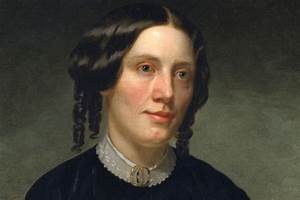
Harriet Beecher Stowe

Sydney Harris

In the struggles of feminists and those who simply love equality, women in American and worldwide history were subjected and depicted as needed only in the kitchen and the bedroom.  I believe the phrase in plain terms is “barefoot and pregnant.”  Although this was the norm and still is in some areas of the world, we as women and citizens of the United States have pressed and worked relentlessly to have the freedoms and rights we do today.

Numerous ways and vessels have been used to get us to the point we are at today.  One of the various methods by which we have expressed ourselves is through writing.  Writing is a medium of human communication that represents language and emotion through the inscription or recording of signs and symbols.  As females they were not able to successfully relay their thoughts through speaking, so writing was a breakthrough.  One of the earlier and most influential female writers through the generations was Harriet Beecher Stowe.  Stowe was the author of the beloved and well-known novel Uncle Tom’s Cabin.

Stowe was born June 14, 1811, in Litchfield, Connecticut.  Her father, Lyman Beecher, lived his life committed to social justice.  She was an author and philanthropists, Stowe was awarded with national fame when she released anti-slavery story Uncle Tom’s Cabin.  Her novel added to the heat of sectionalism before the Civil War.  She died in her home state in 1896.

She and her 12 siblings were raised by their father, a religious leader, and his wife, Roxanne Foote Beecher, who died when Harriet was a child.  Her 7 older brothers all became ministers, including famous leader Henry Ward Beecher.  One of her sisters, Catharine, was an author as well, shaping Harriet’s views.  Another, Isabella, was a leader in the fight for women’s rights.  She learned how to make logical arguments around the table from the boarders they housed from Tapping Reeve’s Law School.  She started her formal education at Sarah Pierce’s Academy, one of the earliest to push girls to study academics and not only the arts.  Stowe attended a school run by Catharine, run the same classical way of learning usually only provided to men.

At 21, she moved to Cincinnati, where her father was the head of the Lane Theological Seminary.  Lyman took a strong abolitionist stance against pro-slavery in 1836.  Stowe found friends with like beliefs in a local literary association called Semi-colon Club.  This is where she met fellow member and seminary teacher Calvin Ellis Stowe.  The two later married and together became a powerful couple in the fight for the abolition of slavery.

In 1850 Congress passed the Fugitive Slave Law, creating stress among abolitionists and free slaves in the North.  Stowe decided to express her feelings in the only way she knew, through a literary representation of slavery.  She attributed her book on the life of Josiah Henson and her own observations and beliefs.  The first part of Uncle Tom’s Cabin appeared in the National Era in 1851.  It was published as a story the next year and immediately became a best seller.  Her emotive depiction of the devastation slavery had brought upon families and kids caught the attention of the entire nation.  The book was accepted with open arms by the North but both Stowe and her novel provoked hostility in the South.

Her book was staged by fans in performances and the main characters of Tom, Eva, and Topsy achieved great iconic status.  She met Abraham Lincoln when she traveled to Washington D.C. during the Civil War.  Stories say he greeted her saying, “So you are the little woman who wrote the book that started this great war.”  She explains herself when asked why she wrote the book that, “I wrote what I did because as a woman, as a mother, I was oppressed and broken-hearted with the sorrows and injustice I saw, because as a Christian I felt the dishonor to Christianity — because as a lover of my county, I trembled at the coming day of wrath.”

So, she pressed on and wrote more books like The Mayflower: Sketches of Scenes and Characters among the Descendants of the Pilgrims in 1843.  “The Coral Ring,” the same year, was a short story that promoted temperance and an anti-slavery tract.  She also produced numerous articles, essays, and short stories regularly published in newspapers and journals.  She wrote for the rest of her life.  None of her later works compared to the reaction she received from Uncle Tom’s Cabin, but she remained well-known and respected in the North and in the communities of reformed minds.

She passed away in Hartford when she was 85.  She was buried at Phillips Academy in Massachusetts.  Her epitaph reads “Her Children Rise up and Call Her Blessed.”  There are many landmarks dedicated to all of her accomplishments, and her memory will last forever across the eastern United States and probably farther.  The Harriet Beecher Stowe House in Maine is where she lived and wrote her historical book.  Bowdoin College bought the house, and today it’s a museum with items of Stowe’s and a library.  Samuel Clemens, otherwise known as Mark Twain, is her neighbor and the houses are open to the public.

Her passion for writing in a time when women and their thoughts were not even acknowledged allowed her to speak in public and direct her thoughts and views when it was rare for females to hold their own voice.  She could also contribute to the Stowe family household income.  She said in a comical but true quotation, “If you see my name coming out everywhere — you may be sure of one thing, that I do it for the pay.” A female legend she was and will forever be.

Bibliography

“Harriet Beecher Stowe’s Life.” Harriet Beecher Stowe’s Life. Harriet Beecher Stowe Center, 2015. Web. 06 October 2015.

“Harriet Beecher Stowe.” Bio.com. A&E Networks Television, n.d. Web. 06 October 2015.

Prayer

Sydney Harris

We’ve been reading The Essence of Christianity in class, and the author Feuerbach has stated some intriguing facts.  He believes as he states, “As in Jehovah the Israelite personified his national existence, so in God the Christian personified his subjective human nature, freed from the limits of nationality.”  He seems to be insinuating we as Christians have made God to be a simply pure and perfect version of us as humans.  He also says “But nature listens not to the plaints of man, it is callous to his sorrows.  Hence man turns away from Nature,” explaining we defy nature and the way the world is supposed to work by creating God.  He appears to say we only imagine Him in our minds to satisfy our own needs and insecurities.

He goes on to talk about prayer and how when we pray we are praying to a nature-like being.  He goes back to how nature doesn’t shift to accommodate the needs of us as mere humans.  Therefore, he concludes God doesn’t listen to us so our prayers are simply a way to make ourselves feel better, which is wrong to me.  As Christians we pray to God because He is alive and working in our lives.  He loves us and is a relational God who answers our prayers.  He doesn’t always answer in our time, but He is always on time.

Feuerbach states our religion is a selfish one and we think we are bigger and better than everyone else.  He says “what is prayer but the wish of the heart expressed with confidence in its fulfillment.  What else is the being that fulfills these wishes but human affection, the human soul, giving ear to itself, approving itself, unhesitatingly affirming itself?”  This point really bugs me because our religion in whole is shown through love, service, and sacrificing our time and ourselves for the betterment of the kingdom.  When we pray it’s a demonstration of us being humble and thanking and asking God to help us through situations we know we can’t accomplish by ourselves.

To say we live our lives separate and thinking we only care about ourselves and our salvation is incompatible with all we stand on.  We as Christians are as the Bible says “in the world but not of the world.”  We don’t (or shouldn’t) exclude others apart from the religion because our mission is to win those souls to Christ.  We simply don’t get intertwined with the sinful ways of this world because of our morals and because we always want to continue to grow in Christ.

“God is the affirmation of human feeling,” he states later.  He goes on to say prayer alters the course of nature due to the fact we are praying for God to change the course of how things are going.  This is false because we know whatever God does in our life is for the good.  He says all good things go to the ones that love Him. We ask God simply have his will in whatever situation that happens.  Whether it be the continuation of whatever is going on at the moment or if God would intervene and, yes, defy nature, in that He performs miracles to show His power.

Feuerbach also says, “But audible prayer is only prayer revealing its nature; prayer is virtually, if not actually, speech.”  This personally made me really upset because our religion is not a practice; it’s a relationship with our creator.  To say us talking to our Lord and very real Savior is only speech to ourselves is very rude.  Nothing we say at any time in our life is simply meaningless.  The Bible says out of the heart the mouth speaks.  Whether our words have power or not they display what we are thinking, and when we pray we’re displaying our issues and our gratitude to God.  It is really ignorant to say just because you don’t believe in something it’s completely wrong and the people who practice it are just selfish people trying to make it all up for themselves.

As Christians we are not to condemn anyone like most other religions do.  We are to love and spread God’s Word.  You can’t be mad at people because of how they were raised.  Some people are born into Muslim, Hindu, or Atheist families; it’s not their fault.  They obviously are going to believe the religion they are taught from birth.  But, the other religions don’t have relationship with their God.  They are left in question of how this all came to be and if their religion is true because they have zero contact with the deity; it is all mere faith.

The Christian religion is based a whole lot on faith, but we have the amazing opportunity to talk and be spoken to, to experience His presence.  This is how we know He is alive and in us because He is with us at all times, the one thing no other religion can say.

The few things Feuerbach stated I do agree with are prayer is a concentration and dismisses all other distractions and ideas floating in our mind.  When we pray we are focused on one thing and one thing only, connecting with our Heavenly Father and spending quality time with Him.  I also agreed partially with the statement, “He who feels himself only dependent, does not open his mouth in prayer; the sense of dependence robs him of the desire, the courage for it….  But the child does not feel itself dependent on the father as a father; rather, he has in the father the feeling of his own strength.”  To me this said those who typically need the help are always or more often too scared to pray and ask for help because of the fear prayer might not get answered or for other reasons.  But, the one who is confident in their situation is more likely the one praying because there is nothing to be afraid of.  I know, at least for myself, I tend to do this a lot.  When everything is going okay I simply pray thanking God and I sometimes don’t have the right heart while I’m praying; I’m not sincere.  But when things get tough, I sometimes pray for help but it can be hard when you hear time and time again if you simply ask it will be given to you and it doesn’t happen.  So it’s not that I take God off the shelf when I need Him but more of the opposite sometimes.  The last part of his quotation goes along with what I just said in that when we are solid we pray sometimes just to look good and thank God for what we think we have done, and we’re simply giving Him credit because that’s what we think we’re supposed to do.  This is wrong and his generalization is actually a real problem in the church.  We often have too many Christians and not enough believers.

He ends saying this sweeping generalization based on his tiny bit of knowledge on prayer: “Omnipotence does nothing more than accomplish the will of the feelings.  In prayer man turns to the Omnipotence of Goodness; which says simply, that in prayer man adores his own heart, regards his own feelings as absolute.”  This statement isn’t true, because the whole point of us putting aside our pride and praying to God isn’t because we love ourselves.  It’s because we are trying to get closer to the God we know and serve.

Ludwig Feuerbach tries to discredit our religion in so many ways, but none of them are valid when you think about our doctrine and what our practice actually entails.  It makes sense he wouldn’t understand because he doesn’t know the relationship we have.  We know and are sure in our religion so we don’t have to spend all of our time trying to defend ourselves and disproving other religions with no real support.  So far I have accepted his arguments because, sadly, that was his view, but I will never understand how he could have thought that and believed it his whole life.

The Role of God vs. The Role of the gods

Sydney Harris

We’ve recently read the Iliad in English class, which is the epic tale of bravery, courage, and vengeance.  The story depicts the quest for honor and glory among the gods and men.  This story is a Greek and Trojan tale, so therefore includes Greek and Trojan gods and goddesses in them.  Divine intervention was a major part in Homer’s Iliad.  The gods that are seen most in this book are Zeus, Hera, Athena, and Poseidon.  Most of the gods have favorites and are on a particular side to win.  Although, as the just and highest god, Zeus is equal in loyalty to both the Greeks and Trojans.  Even when his son Sarpedon is about to die, for example, he lets the outcome go unaltered.  The gods in the Iliad are extremely active in the lives of their people in a very obvious and straightforward way.

As Christians we have one deity we look to for help and wisdom, and that is God.  God is also very involved in our lives and cares deeply for us.  He wants our praise and worship like the Greek gods but doesn’t do harm to us if we don’t.  He is jealous but doesn’t show His wrath upon us like the gods repeatedly do throughout that time period and in the book.  He doesn’t pick sides and is only doing and deciding what is right and good.  He answers our prayers like the gods in the Iliad do but not always the way we want Him to. He has been very evident in the history of this world, nation, and personal lives of everyone who accept Him.

History has opened a lot of doors for questions in relation to where is God when you need Him or how He lets bad things happen.  As Christians we struggle with answering this question for people and frankly ourselves.  In the Bible it states God is all-powerful and wise and just.  So, when bad things happen, we wonder how a wise and loving God would do such a thing.  We also know the earth is Satan’s domain, and he wishes to kill, steal, and destroy.  God doesn’t use His power over Satan because He knows he won’t stop, and He is righteous and will never force us to worship Him.  Bad things happen because sin entered the world through Adam and Eve and cannot be completely removed until Jesus comes back and recreates a new Heaven and Earth.

In history the Greek gods and goddesses have been known to not be perfect and make a lot of mistakes.  They have bad tempers, do what they want with humans, and don’t care for anyone but themselves.  The only way they would show mercy to you is if you were their child (or a demi-god), or you gave them sacrifices.  These gods committed adultery, murder, and a list of other things any normal deity figure would not do.  The Greek and Trojan people had no concept of one god making the whole universe and everything in it, so they made up their own gods.  They knew the stories and theories they made weren’t true, but they compromised the truth so they could do what they wanted.

The Christian God is the only way to Heaven or anything after death through His Son Jesus, who died for our sins.  He made the Heavens, Moon, Stars, and everything in it.  Our God is personal and real, the main difference between the two.  He wants to be involved and relevant in each single person out of the billions of people He uniquely created for a purpose.  He cares enough about us to give us rules and regulations and abides by them, earning our respect.  We have a reverent fear of God, but the gods only create a natural fear in their believers.  A lot of religions today are about works and just the religion, not the relationship.  That’s what Christianity is all about, the relationship we create with our Heavenly Father and how we share His love with others while we are on this planet.