
Tag Archives: melissa yeh

Critical Countdowns

Peter Runey, Dylan Fields, Noah Eskew, and Melissa Yeh
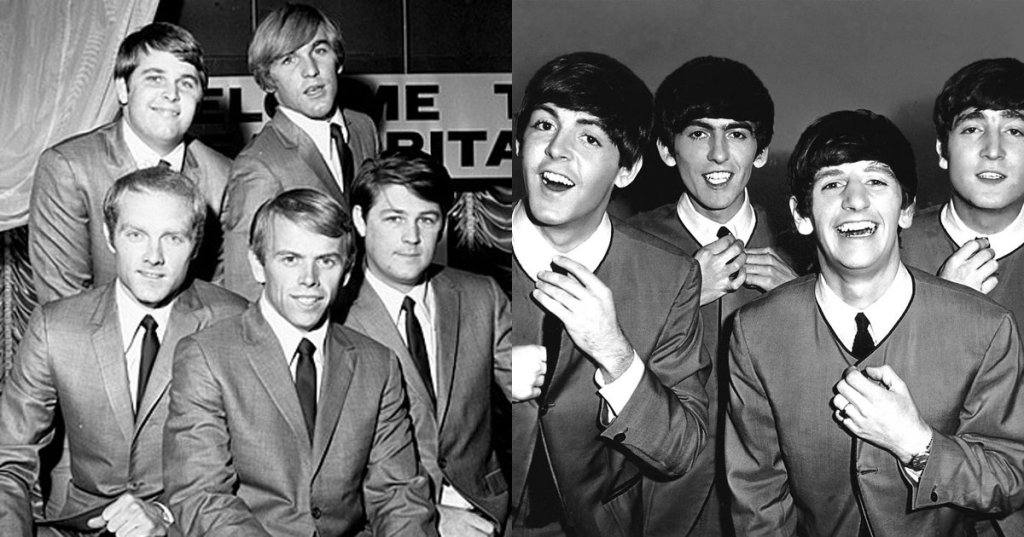
Peter Runey’s Critical Listening Top 10

1. “Nobody Loves You (When You’re Down and Out)” by John Lennon

2. “Come Together” by The Beatles

3. “A Hard Day’s Night” by The Beatles

4. “Get Back” (Live on the Rooftop) by The Beatles

5. “Don’t Let Me Down” by The Beatles

6. “Golden Slumbers/Carry That Weight” by The Beatles

7. “Good Vibrations” by the Beach Boys

8. “Band on the Run” by Paul McCartney(/Wings)

9. “The Long And Winding Road” by The Beatles

10. “Lucy In The Sky With Diamonds” by The Beatles

This was extremely difficult to boil down to the top ten, however these are my thought-through, most profound songs of the Critical Listening class this year. While many of these carry real-life meaning to me since they’re attached to a fond memory of mine, some of these I admire purely based on their musical and lyrical quality.

“Nobody Loves You (When You’re Down and Out)” — John Lennon creates one of the most uniquely-sounding songs I’ve heard from him, whether it be from his solo career or from the Beatles. He incorporates a string orchestra as well as trumpets/horns, all the while still retaining the same classic Lennon vibe from the Beatles so many loved. Lyrically, Lennon takes a creative approach to exposing the fact people tend to only show love when they want it in return (“I’ll scratch your back and you scratch mine”), as well as the fact often great people are only admired and recognized for their accomplishments when they’re “six feet in the ground.” Ironically, Lennon gained even more of a following of his ideas upon his assassination.

“Come Together” — Despite the fact Lennon is known to be involved with the use of psychedelics, few can say the Beatles’ music became any less unique when they began using. Lennon crafts an incredibly artistic song beginning with a deep bass masking whispers of “shoot me, shoot me,” most likely referring to heroine. At this point, John Lennon was becoming a figure in many a cultural and even political scene (as an influencer not a participant) and used the song as somewhat of an anthem for the freedom to use psychedelics. Despite its intentions, I find this song to be one of the most creative and catchy songs the Beatles ever produced.

“A Hard Day’s Night” — I could tell an incredibly long story of a memory attached to this song for me. Instead, I’ll just say this song became very relevant to me on one special night in the Shenandoah mountains.

“Get Back” (live on the rooftop) — This song mostly holds its meaning to me since it was the final song to be performed live by the Beatles. I found it amusing that their desire was to be dragged off the venue by police since the concert was considered to be an unannounced public interruption, however the concert ended with a mere “pull of the plug,” so to speak, from the local authorities. It’s not just a special song but also a special performance since it was the last time the four ever played together in public.

“Don’t Let Me Down” — There are a few reasons why I love this song. The first of these is this was also played at the final rooftop concert. Another reason is Paul and John both harmonize beautifully in this song, which makes John’s raw, heartfelt message of love to Yoko Ono that much more special.

“Golden Slumbers/Carry That Weight” — While these are technically two separate songs, the track was ordered so “Golden Slumbers” could carry seamlessly into “Carry That Weight” as part of a 6-part climactic medley in Abbey Road. I love “Golden Slumbers” because it begins simply with Paul and a piano playing a sheet of music he found on his grandfather’s piano with his own words put to it.

“Good Vibrations” — While this is the only Beach Boys song that made the list, it’s definitely one of the most enjoyable listens of the years. I appreciate the upbeat rhythm and lighthearted melody. The Beach Boys have mastered the art of crafting songs perfect for driving in a car with the windows down on a summer day, and this is certainly one of those.

“Band On The Run” — Paul branched out with this song. He begins to step out of his shell of his creativity since he no longer experiences the same pressures of being in the Beatles now that he was in control of his own solo career. On this track, Paul, in a way, mixes three songs into one, making a roller coaster of a song, but not to the point where it’s distracting to the listener. Paul’s musical brilliance really shines when somehow he pulls off a silky-smooth transition from the magnificent blare of brass and electric guitar instruments into an acoustic guitar/drum combination for the rest of the track.

“The Long And Winding Road” This is easily one of the most emotional song from the Beatles, aside from maybe “Blackbird.” Paul takes the listener on a journey down a long and winding road with this song but leaves the listener with little conclusion or sense of achievement. It’s inferred that the end can’t be reached, and it’s unattainable. Obviously, this is how Paul must’ve felt at some point in his life, and he depicts this season of life very effectively and eloquently.

“Lucy In The Sky With Diamonds” — This song is believed to be a reference to a drug known as LSD, which was likely being used by at least one of the band at the time. One thing I do appreciate about the times when the Beatles were under the effects of drug usage is their creative thinking tended to be much more outside the box, which resulted in unique tracks like “Lucy In the Sky.” The song doesn’t make much sense, lyrically, but to me it doesn’t have to in order to appreciate its special sound.

Dylan Fields’s Critical Listening Top 10

1. “A Hard Day’s Night” — Beatles

2. “Come Together” — Beatles

3. “Little Deuce Coupe” — Beach Boys

4. “Don’t Let Me Down” — Beatles

5. “Maybe I’m Amazed” — Paul McCartney

6. “Wouldn’t It Be Nice” — Beach Boys

7. “All Things Must Pass” — George Harrison

8. “Help Me Rhonda” — Beach Boys

9. “Pease Please Me” — Beatles

10. “The Monster Mash” (Live) — Beach Boys

This list was a whole lot harder to make than I anticipated it being. Many of these songs may not be my favorite for their musical aspects but the stories behind them. I will be explaining why each song is special to me throughout the course of this paper.

“A Hard Day’s Night” — This is the epitome of Critical Listening music for me. It may not be my favorite critical song musically but the story behind it makes it what it is to me. In the beginning of the year when Critical Listening was just starting, we had just heard this song and Pete and I were jamming to it non-stop. We literally had this album on repeat every time we were in the car. That being said one day I had the bright idea to go on a road trip/camping trip to the Shenandoah mountains with Pete and Pedro. The trip started off great: we were having a ton of fun and everything was going great. We arrived in the mountains and that’s where things started going wrong. There was a police car involved and we had to stay in an overpriced dirty motel instead of camping out. We got to camp out the second night and it was decently fine from then on out. So fast forward to the ride home, Pete throws on this song and it just made sense. That trip was “A Hard Day’s Night.” So every time I hear this song I think about this trip, the bad parts but mostly the good.

“Come Together” — This song has been one of my favorite Beatles songs since the start of the class. I love the intro of this song. I think the crazy thing about the beginning and throughout the song is John is saying “shoot me” and ends up getting shot and killed; he obviously want talking about guns in the song but it is still ironic. I am going to say this for a lot of these songs and I could probably say this for all of them but this was a song me and Pete loved to jam to in the car.

“Little Deuce Coupe” — I really don’t like this song musically, but the story behind it is what makes it one of my favorite Critical Listening songs. One of the first times we were listening to this song in first semester I think it was Pete that started singing the chorus obnoxiously at a super high pitch, then I would sing low, then Noah would go high with Pete. This turned into a thing we did. We would just sing “Little Deuce Coupe” as obnoxiously as we could. We did it everywhere, in the classroom, in the halls, in the parking lot, everywhere.

“Don’t Let Me Down” — My first memory of this song was the video of them playing on the roof around the time they were breaking up and all the people come out of their houses to watch. After we watched that in class I had it stuck in my head and I was jamming to it non-stop and apparently Pete did too because I was texting him one night and I said I was jamming out to the Beatles and he said he was, too, and I texted him “Don’t Let Me Down” was a banger and as I hit the send button I got a text from him saying basically the same thing. We always kinda joked about that.

“Maybe I’m Amazed” — My words while listing to this song for the first time were “Dang, I like this song … Oh, dang, I really like this song!” This song was one of those rare cases of love at first hearing of a song; most songs take me a couple times to listen to them to really like them. This one was not the case; I had this song stuck in my head for about a whole month after I listened to it one time. I remember jamming to this with Pete while going from thrift shop to thrift shop looking for pianos to cure our addiction to music.

“Wouldn’t it Be Nice” — Every time I hear this song I see Joanna and Sarah on stage at the Battle Cry talent show. This song makes me think of my class and all the memories we shared together. It’s crazy how music will do that to you.

“All Things Must Pass” — This has been my theme song for the past couple of weeks with so much changing. I am going from one huge part of my life to the rest of my life. This is the end of the beginning for me and I can really relate to this song right now. I loved high school and made so many memories here but like everything in life all things must pass, good things or bad they all will pass.

“Help Me Rhonda” — I don’t really have a story behind why I like this song, but this could easily be my favorite Beach Boys song. It’s just so free spirited and groovy and I dig that. This is in my top ten in any genre for jam out sessions in the car.

“Please Please Me” — This was my first song in Critical Listening I really liked. I listened to this song and the entire album a whole lot at the beginning of the class. I still really like this song and it brings me back to Noah, Pete, and me dancing all around room 103 all first semester.

“The Monster Mash” (Live) — I don’t like this song for its musical sense unless it’s around Halloween, but this song was a classic in the first semester of Critical Listening. Noah and I would sing this obnoxiously all the time and it was so much fun. I remember sitting in our second period study all just doing our math homework and singing “He did the mash … He did the monster mash! … It was a graveyard smash.” That song was just a lot of fun to me.

In conclusion, I loved this class and I’ve said it before but I’ll go ahead and put in in writing, this was my favorite and most beneficial class I ever took at Summit. Not to take anything away from the other classes or teachers, but this class had such an impact not only in my taste for music but it really did impact my life. It brought Noah, Pete, and me closer, and they are some of my best friends I have. It also made me open my eyes to music: I discovered so much more music and even made me want to get in the realm of creating music, which I was not successful in at all. It also played a huge roll in choosing my thesis topic because music was constantly on my mind during that time. Mr. Rush, thank you for offering this class and putting up with us even when I was rolling around on the cart or playing with the music stand; I truly appreciated this class.

Noah Eskew’s Favorite Five, yea Six Beatles Albums

What are the top 5 Beatles records? I would put that question in a top 5 list of unanswerable questions. However, I have determined my 6 favorite Beatles records based on the ratio of songs that left a memorable and positive impression on me over the total number of tracks on the LP. The one fault to this method is it doesn’t account for how much I enjoy a specific track; it instead simplifies it to: Did I like it? For example, I thoroughly appreciate the songs “I’ve Got a Feeling,” “For You Blue,” “Across the Universe,” and “Get Back,” which are all featured on Let It Be, but the rest of the album leaves much to be desired. The outcome of this process slightly surprised me (in regards to the resulting order), even though my previous general idea was almost precise.

#5 A Hard Day’s Night

With this album I found seven of the thirteen songs appealed to me. The title track begins with a special strum of a chord. To this day, few can identify what note is exactly being played. The lyrics are highly relatable to anybody who’s been hard at work. Plus, the guitar solo is swung in a manner that’ll make the guitar player and the average listener happy. In this song, the Beatles prove within the context of pop sensibility they can remain true to their musicianship. “I Should Have Known Better,” “If I Fell,” and “I’m Happy Just to Dance with You” also add to what is truly a solid start to this album. “Can’t Buy Me Love” is practically a Beatles staple. With a catchy chorus, and rather true lyrics in the verse, this hit did not disappoint. Lastly, my favorite song of the entire work is without question “You Can’t Do That.” With a jangly guitar intro, John’s impeccable attitude-filled vocals, and Ringo’s driving drum and cowbell groove, this song has placed itself among my favorites.

#4 Magical Mystery Tour

There are seven songs of the twelve on this compilation of which I am fond. The title track kicks off the record with a catchy repeatable chorus, and in between choruses we get a glimpse of the mysteriousness to be experienced in the following minutes of the LP. “Your Mother Should Know” is yet another classic involving Paul and the piano. The piano riff bounces along lightheartedly, while the lyrics are a fun alternative to some of the other strange styles during this period. The hits that have emerged from this compilation included such smashes as “Hello, Goodbye,” “I Am the Walrus,” “Strawberry Fields Forever,” and “All You Need is Love.” Part of the genius behind the Beatles’ discography is their ability to churn out the hits with fun and catchy choruses, but simultaneously the ability to entertain with more eerie sounding progressions as well.

#3 The Beatles (The White Album)

Out of the 30 tracks produced on this double album, I like listening to 18 of them. If I always had the time required, I would not skip any of the first 12 tracks (except maybe “Wild Honey Pie”). The first dozen on disc 1 could be an album by themselves. This, above all the other albums, shows the individual musical personality of each of the four Beatles. This is probably due to the fact the group did not spend much time together in the studio compared to previous sessions. Paul thrives on “Back in the USSR” (the driving rock ‘n’ roll tune), “Ob-La-Di, Ob-La-Da” (the happy and hopeful pop song), “Martha My Dear,” “Birthday,” and “Helter Skelter.” George offers some of my favorite Beatles numbers of all time such as “Savoy Truffle,” “While My Guitar Gently Weeps,” and “Piggies.” John ventures into interesting lyrical processes by incorporating the stories of other Beatle songs into the phrases of “Glass Onion.”

#2 Sgt. Pepper’s Lonely Hearts Club Band

Many magazines and other award-givers rank this work as the greatest album of all time. Combining the sounds of the psychedelic rock movement with those magical Beatle melodies, the Fab Four did indeed produce one of the most revolutionary records ever. Eight of the songs stick with me years after hearing them. Tracks one through five have the flow of a live performance. “Fixing a Hole,” “Getting Better,” and the reprise of the title tracks remain my favorites for their interesting lyrics, simple but solid guitar parts, and energy that really speaks to me.

#1 Tie Between: Revolver & Rubber Soul

Within these two records begins the change of the Beatles’ career. They move from the lovable mop-tops into the genius musicians that have pulled themselves out of live performances in order to further their art. They begin to incorporate eastern influences into their songs, but yet again don’t shy away from their rock ‘n’ roll identity. Each of these albums included 14 tracks, and each of the albums included 9 tracks that I love. “Nowhere Man,” “Think For Yourself,” “What Goes On,” and “I’m Looking Through You” are my favorites from Rubber Soul. “Taxman,” “I’m Only Sleeping,” “She Said She Said,” “Good Day Sunshine,” and “Got to Get You Into My Life” are my favorites from Revolver.

Melissa Yeh on “Band on the Run”

With the Wings album, Paul McCartney released “Band on the Run” in 1973.  The song has different interpretations based on history and listeners agree it is well composed and one of his most memorable.  The most popular and speculated-on theory from this song concerns the reflections and aftermath of the breakup the Beatles underwent from Paul McCartney’s perspective.  He confirms in an interview the song was influenced by one of the many long meetings where George Harrison remarks on the regrets of the events going on at the time.  “If I ever get out of here, thought of giving it all away, to a registered charity.”  For this phrase especially, he wishes they could have spent more time on the music, focusing on the good, and the wealth was not worth that happiness; instead it should have been devoted to charities.  The song then develops his freedom from the tension of the break-up and his ability to pursue what he wants to without being burdened by the obligations the band held over him.  When asked about if the song was in association to the break-up, Paul McCartney responds, “Sort of, yeah.  I think most bands are on the run.”  In another comment, one listener feels the song is not as much about the break-up as people think the song is.  In fact, it’s completely absurd and almost obsessive to relate everything back to the Beatles.  In another part of the song, articles and listeners have alluded to the line “and the jailer man and sailor Sam were searching everyone,” being connected to the incident in Sweden in 1972.  Paul McCartney and all of group Wings were arrested on drug charges.  Thus, the police were searching them at the time.  Later comments express McCartney’s plead for focus away from these types of charges and on what matters most, the music.  Overall, the song is about a prison escape and the shift from captivity to freedom.  “Stuck inside these four walls, sent inside forever,” describe the jailed prisoner, cut off from the outside world.  Again the prison is referred to in “if I ever get out of here.”  The explosion symbolizes the escape and again the band is running from police, “in the town they’re searching for us everywhere, but we never will be found.”

When talking about the instrumental in working with the theme of that escaped prisoner, the composition itself embodies the mood of the song.  Paul McCartney has been noted for his ability to combine multiple songs into one; here there are three distinct melodies. The first transitions into the second from verse one to two, beginning at, “if I ever get out of here.”  The tempo speeds up slightly and moves into a minor key through an instrumental break.  This represents a sense of sadness and regret in the tone of the song.  The third begins after the dramatic instrumental charge into the verse, “Well, the rain exploded with a mighty crash as we fell into the sun.”  The song modulates from A minor into C major, now with a new and happier tone from what it was before.  The movement of the song captures that feeling of relief and freedom.

What moved me to choose this song followed from the moment where as I was sitting in class, I heard the first chord and immediately decided I like this song.  Don’t get me wrong, I enjoyed the music in class, but none of the songs had caught my attention as quickly as this one.  While in the bus in Germany passing through the countryside, I remember going through a tunnel or under a bridge and right as the song changed from the second part into the third, the bus flew into the open again into the light with long fields surrounding us.  That moment McCartney creates of an explosion into freedom was more than what I can describe in words.  With that, this song will always tie me back to the memory with our class, driving past landscapes in Europe.

Bonus Track: Mr. Rush’s 5 Mandatory Beach Boys Non-canonical Albums for Real Fans

1967: Sunshine Tomorrow Wild Honey is one of my favorite BB albums, and this 2017 release of many WH outtakes, alternate versions, and unreleased live cuts, including the entire Lei’d in Hawaii album, make this essential.  As if that wasn’t enough, it has Smiley Smile outtakes and a beautiful a cappella version of my favorite BB song, “Surfer Girl.”  Don’t miss this.

Endless Harmony Soundtrack — This collection of rare cuts accompanying the biopic is a monumental gift.  You’ll get a fresh look at a band you think you know, a fresh look that will only reinforce your love for them.

Hawthorne, CA — Thanks to the success of Endless Harmony, Capitol Records continued to open the vaults of rare cuts, radio spots, demos, and more.  Just when you thought you heard it all, you learn you haven’t heard anything yet.  It’s disjointed at times, but it is more BB tracks, which is what we want.

Made in California 1962-2012 — This 6-cd panoply of the band’s career is pricey but worth it.  It has a lot of rare live tracks, alternate versions, and much forgotten work from Carl and Dennis.  If you’re a real fan, you need this mega-set.

Ultimate Christmas — Not only does this have the entire original Christmas Album, it collects all the tracks for the unreleased second Christmas album plus all the rare promos, singles, and other Christmas goodies.  It’s a must-have.

*2023 Editor Note: Be sure to get the original version of Ultimate Christmas! The recent streaming versions delete the best song on the collection, “Christmastime is Here Again.”

Asian-Americans: Perspectives

Melissa Yeh

Two years ago, I heard the story of a Chinese man who decided he was going to leave everything he knew and start living in America.  In order to pursue this, he had to start from the bottom.  He was able to arrive in the United States and did what was quite expected of most Asian immigrants; he began working in a Chinese restaurant, the small sort for late nights and comfort food.  There were no former colleagues or friends when he arrived; everyone he passed was a stranger.  He had no education for English.  Slowly but surely, he worked hard and long enough to bring the rest of his family over, his wife and two sons.  His oldest son was three years old when he left; the younger was only a year old.  And yet, the man found his passage to America, not by plane or any easy means, but through small fishing boats.  Without any familiarity of friends or family, not to mention he had no knowledge of the language, he raised himself from the bottom to create his own connections and opportunities.  Alone, he managed all of this.  For ten years, he managed all of this.  For ten years, he did not see his wife and his two sons while they grew.  Willingly, he went through this time in his life all for the sake of hoping his sons would be given beyond the opportunities he had.  This man was my grandfather. 

How do you struggle with good things people say about you?  Suppose success is something you are set up to reach and exceptionally pushed toward, would there even be any issue?  Above average academics, high standards in extracurricular activities such as music or other fine arts, and community involvement are all commendable goals to strive for.  By all means, this should be a positive and an acceptable mentality.  However, I still find myself asking, “Why do strife and broken relationships exist between parents and children despite these positive objectives?  Why are self-image and worth damaged and cultural identity lost between generations?  Why does the eldest child leave for college estranged from parents with a shattered relationship left in its wake?  Moreover, why am I describing strangers I met from a retreat in New York?  Why am I describing a student I met from St. Louis on a mission trip?  Why am I describing not one, but four of the close friends that have left for college from my church?  Why am I afraid I will be describing myself one day?”

For Asian-American students, the results of exposure to stereotypes and pressures of expectations are oftentimes overlooked in severity through how it affects identity and worth within Western society.  The most common stereotype is known as the model minority stereotype and it is defined as a minority group who are successful in education/academics and overall quiescent in manner (“The Model Minority”).  The Immigrant Bargain is defined as children recognizing the struggle and hardship their parents underwent and using it as a driving force to perform well for their parents; overall, they want to guarantee their parents’ effort in bringing the family to the states was not in vain (Bronstein and Chan 183).  In knowing the trials my own grandfather underwent to allow the fortunate opportunities I have today, I bear a deep sense of respect to not waste the hard-earned efforts and comfort my family sacrificed. 

This is a relevant issue, as Asian Americans across the country silently struggle with this exact problem as well as with their own cultural identity, feeling out of place for being raised differently.  The loss of awareness and connection to understanding their own culture leads to misunderstandings that damage relationships between parents and children.  Self worth is oftentimes dependent on merit, leading to an unhealthy mental state.  Currently, another issue arises in the lawsuits claiming Ivy League schools are discriminating against Asian Americans.  The problem is not so much that the schools may or may not be guilty but the fear such discrimination incites in students who are aiming for top universities.  They fear with the expectation from parents looming over them, how will they overcome the odds stacked against them in college admissions?  They question if their diligent efforts will ultimately prove futile. Overall, these issues affect how Asian-American students need to understand their own culture and determine self worth. 

In order to prove the detrimental psychological effects of stereotypes and expectations on Asian-American students are overlooked and need to be addressed properly, I will confirm three arguments: Western stereotypes negatively influence self-image, the cultural expectations placed on Asian-American children are incorrectly based on merit, and Asian Americans lack awareness for mental health in identity and self-worth.  I will refute two counterarguments: the psychological issues in Asian-American students are solely founded on the ignorance of stereotypes from Western culture and society, and the psychological issues of Asian-American students derive solely from the harsh standards in parenting and expectations. 

My first argument follows how Western stereotypes negatively influence self-image for Asian American students, despite seemingly sounding positive.  Upon mention of the ethnicity, Asian, the most common image that comes to mind is East Asian culture consisting of those based in China, Japan, or Korea.  American society oftentimes fails to include people of Indian or Pacific Islander heritage as Asians.  In addition to the assumption where one is always either Chinese, Japanese, or Korean, Asian Americans are oftentimes seen as foreigners, regardless of assimilation into society.  A second or third generation Asian American will still be asked where he or she is from regardless of the fact he himself and his parents may have been born and resided in America for their entire lives (Bronstein and Chan 182).  The most common Asian conception is the model minority stereotype.  Though people may not connect the name, the idea has been widespread across America since the 1960s.  The model minority is a minority group who has attained prosperity and is well educated and quiescent (“The Model Minority”).  In essence, the stereotype will portray Asians as good at math and always achieving high-standing scores in academics.  At first, these definitions may not give any appearance of insult or negative proportions.  Yet if the wording were to be changed to, “Asians must be good at math and cannot afford to get anything other than high standing scores in academics,” the tone and meaning shifts.  Now, these attributes have garnered urgency and have become required standards of behavior.  The insult derives from associating an entire people group with one characteristic, no matter how positive it may be.  The expectations in these standards rise to communicate Asian-American students must naturally have the ability to succeed in grades, especially in math and science.  Furthermore, Asian Americans have begun to feel displaced or flawed for not embodying the model minority.  This thinking, beginning at a young age, continues to influence an unhealthy attitude of how they view themselves.  Young teenagers develop a motivation not founded on wanting to succeed and do well, but rather on the need to fill a quota to feel normal.  The feeling of alienation and estrangement generates distance from identity from cultural differences (Wu and Lee 3).  In addition to the insecurity created by the smart Asian stereotype, those who do not excel in academics because of disorders such as ADHD are hurt even more by this stigma (Wong).  Asians cannot be naturally smarter on any level; there is no foundation for this notion.  The stereotype, no matter how “kindly meant,” is hurtful and detrimental.  Therefore, it must be rejected. 

A second perception claims all Asians generally have an introverted demeanor, in which being quiet is misinterpreted as submissive and unassertive.  When this stereotype is applied in a work environment, Asians rarely achieve high positions in careers such as CEO positions or other director/president titles in large organizations.  In a study conducted by the Buck Gee, Janet Wong and Denise Peck, Asian-American executives who put together data from Google, Intel, Hewlett Packard, LinkedIn and Yahoo for a report published by Ascend, an Asian-American organization, they concluded, “In 2014, whereas 11% of law-firm associates were Asian, 3% of partners were.”  Though Asians are perceived to find success in high school and gain entrance into top tier-universities, the same success is not true for life after college.  A study of Fortune 500 CEOs was conducted by Richard Zweigenhaft and he found, “In 2000 eight of the five hundred were Asian-American, and in 2014 ten were, whereas the women’s tally in the same period rose from four to twenty-four.  Academia, similarly, is stuffed with Asian-American professors, but among America’s 3,000 colleges there are fewer than ten Asian-American presidents (“The Model Minority”).”  In this light, the influence of the stereotype is subtle but still noticeable, since Asians are known as “hardworking yet submissive” but are exploited and kept from their potential.  The lack of respect for opportunities in high authority positions is less commonly recognized, and though it is not necessarily resentment, it does career limit opportunities (Bronstein and Chan 184).

The latest concern in relation to self-image and academic opportunities is the lawsuit and other concerns pending toward Ivy League Schools in racial discrimination against Asian Americans in admissions, particularly Harvard University.  While Affirmative Action acts as a strong advocate in achieving balance in diversity, this is not the case for Asian Americans.  These students feel they must have higher scores than other non-Asian applicants to gain admissions (Jaschik).  While Harvard is being investigated and the Asian Advocacy organizations continue to push for access to records of the admission process, the effect of this issue is significant to those applying and how it alters their view on chances of gaining admissions.  If the racial discrimination has been occurring in Ivy League schools, then the likelihood of entering these schools has decreased, and Asian Americans who apply are being held to an unjust higher standard.  This discovery has created a newfound worry for Asian students, wondering whether their hard work and effort put into academics was worth enough.  Students want to please their parents and perform well, but now the stakes are even higher than they were before.  Moreover, this frame of mind can pit Asian-American students against each other in unhealthy competition.  Another response from Asian-American students might conjure hatred toward African Americans and Hispanic students who supposedly gain entry through lower standards.  Harvard Law Professor Alan Dershowitz even states, “Discriminating against Asians in order to make room for other minorities does not seem right as a matter of principle” (Hartocollis and Saul).  Another fear arises for the question, “If Harvard is allowing this, than how many other schools are as well?”   Many different articles I have researched testify top performing students with near perfect SAT/ACT scores, academics, and extracurricular activities have been rejected without explanation from Ivy League Universities.  Michael Wang had a 36/36 on the ACT, and become a finalist in piano competitions, math competitions, and debate tournaments, yet was rejected from six of the seven Ivy Leagues he applied to (“The Model Minority”).  Austin Jia had a high GPA, near perfect score on the SAT and ACT, involvement on debate team, held the position of tennis captain, and participated in state orchestra, but was rejected from four Ivy League schools (Hartocollis and Saul).  Evidence for whether discrimination is evident is still a matter of inquiry, but the important observation to draw is each student believed success was set up from the achievements they had worked on in high school and were confused and devastated when it was not so.  With high-achieving students to compare themselves to, younger Asian-American students see themselves all the more negatively for not hitting those marks.  The deepest problem occurs when the focus dwells on the perspective that since not even the best could achieve what their parents hope to see their child one day reach, there is no hope for them to even try to.  The perception in which students see themselves needs change for the better. 

The second argument to affirm my thesis is the cultural expectations placed on Asian-American children are incorrectly based on merit.  Asian immigrants first arrived on the West Coast bringing their traditions and worldviews with them.  Buddhist, Taoist, and Confucian philosophies heavily influenced and defined behavior and lifestyle.  These emphasized harmony, family, and group needs over the individual’s needs (180).  Cultural influences relied the most on family, the model family being two parents who cared for their elderly parents and established clear rules and discipline for their children.  The cycle continued when the children became adults and had families of their own.  In interaction with their children, parents are generally not physically or emotionally affectionate in an open manner toward their children.  The effort to communicate care was demonstrated through respect to a sense of responsibility.  The crucial understanding of respect for elders is a monument in culture as it can dictate long-term decisions such as career, marriage, and location for where the children decide to live.  Therefore it is not uncommon to see children choosing academic paths in college, career, or spouse as their parents preferred over their own passions and interests (183).  To choose otherwise is to be seen as disrespectful and ungrateful.  This pressures the child to follow what others determine for him, even if he has no desired interest or enjoyment in the decision. 

In 2011, Amy Chua coined the term “tiger mom” in her book describing Chinese mothers as superior in how they raised children, as opposed to the western archetype.  With incredibly strict guidelines since their early childhood, her two daughters were raised forbidden from any dating, sleepovers, and they were absolutely required to play the piano or violin and receive only A’s in academics.  They could not participate in any drama plays (due to the amount of practice time it required), not play any other instrument of their choice, and had to choose tutoring and music over their social life.  This meant her two daughters underwent difficult tutoring for advanced classes and extensive lessons in piano and violin (Chua 10). In an article Chua states, “The solution to substandard performance is always to excoriate, punish, and shame the child.”  This was literal, as oftentimes and even in public she would criticize her daughters when they were failing and yelled at them, calling them garbage, lazy, and cowardly.  Though not always as extreme, the mentality behind this is quite common among the majority of Asian parents.  Oftentimes, it will result in resentment and stress for both the parent and child.  The practice of breaking down a child for discipline is damaging and when strict discipline becomes verbal abuse, two main reactions follow; as a consequence, the child will either suffer incredibly low self-esteem or accumulate unspoken hostility for his parents.  Like pressure building in a balloon, the unsolved tension will burst into outspoken hatred from the child, and can ultimately destroy the relationship (Wu and Lee 732). 

My third argument is Asian Americans lack awareness for mental health in identity and self-worth.  In addition to their expectations and ideals, Asian parents typically discourage acknowledging any lack of mental health unless extremely severe.  Otherwise, it is dismissed and the desire to seek help in terms of counseling is not only considered unnecessary but also frowned upon (Bronstein and Chan 185).  Experiencing this attitude and refusal to acknowledge attention to mental health, the child can perceive the relationship is built on vulgar methods of criticism and lack of affection.  Amy Chua’s method employs verbal abuse within the environment to stimulate academic discipline.  In a national study led by Michael Spencer, Juan Chen, Gilbert Gee, Cathryn Fabian, and David Takeguchi, the number of Asian Americans utilizing mental health services was found to be significantly lower than the non-Asian population.  They conducted the study through a series of questions asking about formal and informal means of mental health-related service use, racial discrimination, language proficiency, and barriers to service use.  Informal means consists of seeking online self-help chats, or relying upon religious leaders in the community; formal means consist of seeking counsel from professional psychiatrists.  They concluded,

In the United States Asian Americans have a sizeable burden of mental illness, with a 17.30% overall lifetime rate of any psychiatric disorder and a 9.19% 12-month rate over a 12-month period.  Only 3.1% of Asian Americans use specialty mental health services, compared with 5.59% of African Americans, 5.94% of Caribbean Blacks, 4.44% of Mexicans, 5.55% of Cubans, and 8.8% of the general population.  In a study by Abe-Kim et al., only 8.6% of Asian Americans sought any mental health services compared with 17.9% of the general population.

Since Asian Americans were more likely to use informal means of mental heath services, the discrimination and condescension toward mental health concerns proved to be a root cause in discouraging mental health.  Another factor was the lack of clear communication due to the language barrier for immigrants.  In another study conducted by the research team at the University of Maryland School of Public health, authors Meekyung Han and Helen Pong concluded,

Extra-familial intervention, such as seeking professional psychological help, is often considered shameful, a violation of the family hierarchy and harmony, and potentially disgraceful to the family. Our study suggests that, because Asian American community college students grow up in a culture in which family hierarchy, emotional restraint, avoidance of shame, and “saving face” are prevalent, these students’ foremost significant barrier to engaging professional help is the stigma of mental health issues, as learned and constructed within the family and cultural context (Han and Pong 10).

As parents do not encourage mental health as a significant priority, children continue to focus on accomplishing the task in front of them regardless of the strain it produces and accumulates over time.  If this occurs, the student creates a negative image of himself built on merit and achievement only.  Students will only continue to aim higher and higher without realizing or accepting the need to satisfy success will never truly be reached.  No matter how much the individual attempts to continue striving for higher scores or better performances, the ultimate reality remains: perfection is out of reach.  This mentality drives the unrealistic mantra, “I have to do better,” and it also leaves students susceptible to constantly comparing to others in academics and extracurricular activities.  At the end of the day, when a student collides into failure, not only does he feel defeated, but the impact of such defeat can become much more devastating on self-image.  The stress builds over frustration, helplessness, and lowered self-esteem.  Failure is inevitable, and if parents do not communicate that failure is only a part on the process, or even worse do not know how to communicate the fact at all, the consequence of a strain and lasting damage on the relationship between the child and their parents ensues.  The child perceives his efforts and work are not enough, which builds in her mind, replaying every mistake and regret on what should have been done. 

On the other hand, the alternative approach follows from feeling deep resentment toward parents for not allowing the child to pursue what he wants to; there is no room for compromise and are prohibited from what he enjoys either for no reason whatsoever or unjust, controlling reasons.  Conflicting ideals are a common issue: disagreement on career paths, college choices, etc., all factor into more tension between them.  Furthermore, on top of pressure from family, the perception society holds adds to the anxiety and indecision over what to follow.  The narrative society asserts emphasizes following what an individual desires in life; anyone holding him back is an obstacle to his happiness.  With both the expectation of parents and society’s idea for pursuing individual happiness competing for influence, the student becomes more and more agitated and conflicted over whom to follow.  Koko Nishi’s article, “Mental Health Among Asian Americans” summarizes the sources of stress commonly found in students:

Parental pressure to succeed in academics, discussing mental health concerns is considered taboo in many Asian cultures and as a result Asian Americans tend to dismiss, deny or neglect their symptoms, pressure to live up to the “model minority” stereotype (a view that inaccurately portrays Asian Americans as successfully integrating into mainstream culture and having overcome the challenges of racial bias), family obligations based on strong traditional and cultural values, and discrimination due to racial or cultural background, and difficulty in balancing two different cultures and developing a bicultural sense of self (Nishi).

With each of these perspectives, the self-image Asian Americans have assembled from society’s perception and familial cultural perception are detrimental to their self-worth and image; both aspects have the potential to change in a positive manner. 

The first counterargument I will refute is the psychological issues in Asian-American students are solely founded on the ignorance of stereotypes from Western culture and society.  This is incorrect because the assumption fails to understand from where the stereotypes and mentalities derive.  In order to understand these stereotypes, immigrant history is necessary to identify the origins behind them.  The stereotype that all Asians are Chinese, Japanese, or Korean is found offensive because it fails to recognize Indians and other Southeast Asians such as Vietnamese, Cambodian, etc.; yet the three ethnicities are only better known because they have had longer and larger presences in America (Bronstein and Chan 180). In the 1840s-1860s, the Chinese were the first nationality to immigrate; they worked as laborers and were placed in ghettos.  They were also the first to be barred from immigration as only men could arrive and were prohibited from marrying.  The Japanese experienced similar conditions in the 1880s, as did the Korean and Filipino groups that immigrated in 1903-1920.  In each situation, policies were enacted in response to the fear that a growing community was a threat to the workforce.  The height of anti-Asian sentiment occurred during the internment camps for Japanese Americans in WWII with over 110,000 sent away from their homes (181-182).  Furthermore, Chinese citizens were also placed in the camps due to the similarity of appearance.  When the immigration ban was lifted in 1965, an influx of Chinese, Japanese, Korean, Indian, and Filipinos moved in hopes of better opportunities (182).  Thus, while not excusable, many of the Asian American stereotypes derive from historical background.  The failure to recognize or implement Asian American immigration into education results in ignorance.  The stereotypes are not a misunderstanding, but a direct cause of psychological issues in Asian-American students today.  They trace from immigrant history, dealing with the aftermath of abuse, racism, and oppression.   

In addition, media has a large role in creating the Asian image.  The constant exposure to media and characters created in movies and television shows have an impact on how Western society views Asian Americans.  Especially in Hollywood, the identity created by films and television shows have started with stereotypical roles: the IT guy, the math nerd, or Chinese man #2.  Examples include Mr. Yunioshi in Breakfast at Tiffany’s or Dong in Sixteen Candles.  Whitewashing has raised controversy among the Asian community not only with Mr. Yunioshi in Breakfast at Tiffany’s, but also currently with films like Ghost in the Shell, Aloha, Batman Begins, and Doctor Strange.  Whitewashing communicates that Asian leads are near impossible to have and find.  In the same way, Asians then are only cast as minor characters, oftentimes as stereotypical roles.  In an age permeated with technology and media, the idea presented here is discouraging to young Asian Americans who are only exposed to the stereotypes people who look like them play on television.  Controversy on cultural appropriation and need for better Asian-American media representation has been addressed, but not nearly enough as it should change what is seen on screen.  Until incorporated well enough into mainstream media, the ideal broadcasted by Hollywood remains a constricting view of how Asians are portrayed in society.  It affects not only how others see Asian Americans, but also how they see themselves.  Hence, this is a direct misrepresentation that negatively affects Asian Americans today, especially for the youth who have constant exposure to media.       

The next counterargument I will refute is the psychological issues of Asian-American students derive solely from the harsh standards in parenting and expectations.  This argument is incorrect because this statement fails to acknowledge the mentality behind Asian culture.  When examining Asian parenting based upon a Western mentality, the ready observation is Asian parenting is cruel and inappropriate.  Now imagine switching the mentalities on how Asian culture views Western culture on the topic of parenting.  If Asian households encourage their children to be respectful and caring towards their elders and family as priority, the logical reaction is to wonder why Western households are so reluctant to focus and devote their time around the children as priority instead of the parents.  As Amy Chua states in the article about her book Battle Hymn of the Tiger Mother, “The Western narrative wants to respect the child’s individuality, encourage to pursue their passions, support their choices, with only positive reinforcement, and nurturing environments, but by contrast Chinese parents believe in what their children are capable of to prepare for their future and arm them with skills, work habits, and inner confidence.”  Asian parents believe in following safe career paths and academics that will guarantee success and a stable future where one can provide for their grandchildren and entire family. 

The notion of sacrifice is incredibly significant to parents.  Immigration is an immediate example of this.  Parents recognize better opportunities for education and career and thus travel halfway across the world to unfamiliarity and discomfort, all for the sake of their children.  In turn follows the Immigrant Bargain, in which children recognize that struggle and hardship their parents underwent, driving them to perform well for their parents and that their effort to bring the family to the States was not in vain (Bronstein and Chan 185).  It is true there is a higher standard set for students but the parents want the best for their child, and when the child cannot accomplish the task in front of him, the parents push him because they believe he can do it.  Hard work and discipline build character.  Thus choosing the parents’ recommendation over passions is acceptable when it means a secure financial future and guarantees provision for future family and care for parents.  It does not mean all passions are rejected for the sake of blatant hatred for letting a child want to pursue something enjoyed.  The value of family is the priority and community rests on the unified family near each other. 

Once while eating dinner, my grandfather exclaimed I was holding my chopsticks too high.  He took the superstition quite seriously where the farther up I hold chopsticks, the farther away I will live from the family when I am married.  Immediately it felt constraining to not have the freedom to venture away, but in an instant I realized the sentiment that he only wanted me to remain closer to visit often and spend more time together.  Perhaps Asian parents are not verbally affectionate, but to say “I love you” was not through the outright “I love you,” but communicated through  “Are you eating enough?” “Are you doing well in school?” When you consider how the majority of society demonstrates affection, these questions seem overbearing and nagging, but in reality it truly indicates care for wellbeing.  It is without doubt their own parents did the same to show love.  This was best demonstrated in a short film titled “What Asian Parents Don’t Say,” a comedic take on communication and lack of openness between parents and children.  Two friends contrast how they relate to their parents; at first glance, the Asian friend feels as if his communication is askew or stunted, but realizes it is only said differently.  Thus, Asian parenting is misunderstood in communication and in comparison to Western parenting.  The intentions are built on heath, stability, and comfort for the future of their children as adults. 

After doing research and listening to several testimonies from Asian Americans and their struggle in identity, I have learned the occurrences and thoughts among these students are incredibly similar.  They are similar in academic pressure, self worth, and familial issues.  It was not until I finished research that I realized the conclusion would be largely based in change starting in attitudes and perceptions.  If there is no foundation in altering how people think, the changes in behavior or any other action will not hold in the long run. 

For those who have not grown up within an Asian community or have not had the chance to learn about East Asian culture, take a step back to look through the perspective of Asian parenting.  Truly look at the motives and values within an Asian-American family before discounting any method.  Blindly criticizing and judging without understanding the full story is not justified, not only in this situation but also in any circumstance.  By sympathizing with parents’ desire for the best for the children, common ground enables understanding into comparing and contrasting strengths and weaknesses of the ideal model for raising children.  As for how non-Asian peers or adults view Asian-American students, there must be awareness and ability to relate to children in how they are raised.  This allows for healthy growth and encouragement for Asian-American children from a young age.

For Asian parents, especially Asian immigrants, you should not disregard Western values out of ignorance.  To understand Western values of raising children you cannot dismiss and classify status through merit-based achievements.  Only focusing on accomplishments is detrimental to a child’s self worth; they live in a society where school preaches the ideology “pursue what one desires,” while parents insist on pursuing financial security in options regardless of personal desire.  It is honorable to believe in a work ethic and discipline to succeed, but the idea will lose meaning when the motivation behind becomes founded on the need to always perform better or attain higher academic scores.  The emphasis here also falls on encouraging mental health and understanding a child’s hope to please those wishes conflict and create anxiety and stress to maintain academic goals and excelling in other activities.  In a study conducted to promote mental health by Tsu-yin Wu and Joohyun Lee, the results found that open communication was a key to disclosure and growth in relationship between the parent and child (Wu and Lee 9).   

For Asian-American students, understanding where your parents are coming from is crucial.  The method by which they were raised is still present in their attempt to convert into parenting within their current environment.  The generation gap tends to break communication between parents and children, and the lack of acknowledgement of background and culture leads to a broken relationship.  It is incredibly easy to compare yourself to the people around you, and when no one is familiar with the culture in which you are brought up, the temptation overwhelms you into thinking there is something wrong because you are different.  When ignorance concerning your heritage follows, take the time to simply explain for future improvement rather than jumping to accuse another of being intentionally and maliciously racist.  Lastly, your self worth is not built on the grades you receive, the scores you attain, or the achievements you receive.

This thesis is very much a personal account and journey, but also much more as it is a continuous problem for first- and second-generation Asian Americans.  This struggle to find self-identity and worth is evident in my close friends, in the people I meet in church conferences, and also in the testimonies of strangers.  All relate specifically to the urgency felt and supposed need to fulfill an academic standard.  The immediate answer is to change how worth is measured alongside accomplishment.  The wrong response often turns to holding someone else responsible for the disappointment in how we view ourselves.  One side of the spectrum turns to hating peers and accuses them of ignorance and discrimination.  The opposite side turns to hating parents and culture in feeling insufficient from pressure or outraged at the expectations placed upon them.  I think we want our parents to be either heroes or villains.  As heroes they are the perfect family and as villains we are justified in fighting against them.  I think the hardest thing to realize is they are humans.  It is easy to blame, yet our challenge is to forgive.  The broken communication and estranged students from parents continue to run within Asian-American families today.  We have every power and voice to make the first step.  Forgiveness is not a blink of an eye but a long storm to move through; the relief and freedom from pain will heal the broken relationships within generations and culture.  This issue ends within our generation. 

Works Cited

Barbash, Fred. “Why Asian American Kids Excel. It’s Not ‘Tiger Moms.’” The Washington Post, WP Company, 8 Apr. 2014, http://www.washingtonpost.com/news/morning-mix/wp/2014/04/08/forget-tiger-moms-asian-american-students-succeed-because-its-expected-say-scholars/?utm_term=.518790214e52.

Bronstein, Phyllis, and Connie S Chan. “Psychological Issues of Asian Americans.” Teaching Gender and Multicultural Awareness: Resources for the Psychology Classroom, American Psychological Association, 2007, pp. 179–193.

Chua, Amy. Battle Hymn of the Tiger Mother. Bloomsbury Publishing, 2014.

—. “Why Chinese Mothers Are Superior.” The Wall Street Journal, Dow Jones and Company, 8 Jan. 2011.

Han, Meekyung, and Helen Pong. “Mental Health Help-Seeking Behaviors Among Asian American Community College Students: The Effect of Stigma, Cultural Barriers, and Acculturation.” Research Gate, 18 Aug. 2016.

Hartocollis, Anemona, and Stephanie Saul. “Affirmative Action Battle Has a New Focus: Asian-Americans.” The New York Times, The New York Times, 2 Aug. 2017. http://www.nytimes.com/2017/08/02/us/affirmative-action-battle-has-a-new-focus-asian-americans.html.

Jaschik, Scott. “The Numbers and Arguments on Asian Admissions.” Inside Higher Ed, 7 Aug. 2017, www.insidehighered.com/admissions/article/2017/08/07/look-data-and-arguments-about-asian-americans-and-admissions-elite.

“The Model Minority Is Losing Patience.” The Economist, The Economist Newspaper, 3 Oct. 2015, http://www.economist.com/news/briefing/21669595-asian-americans-are-united-states-most-successful-minority-they-are-complaining-ever.

Nishi, Koko. “Mental Health Among Asian-Americans.” American Psychological Association, American Psychological Association, http://www.apa.org/pi/oema/resources/ethnicity-health/asian-american/article-mental-health.aspx.

Spencer, M., Chen, J., Gee, G., Fabian, C., Takeuchi, D. (2010). “Discrimination and Mental Health-Related Service Use in a National Study of Asian Americans.” American Journal of Public Health, 100(12), 2410-2417.

Wang, Phil, director. What Asian Parents Don’t Say. Wong Fu Productions, 24 Dec. 2015.

Wong, Jin. “Why The ‘Smart Asian’ Stereotype Is Not Flattering.” The Odyssey Online, 25 Aug. 2017, http://www.theodysseyonline.com/why-the-smart-asian-stereotype-not-flattering.

Wu, Tsu-Yin, and Joohyun Lee. “A PILOT PROGRAM TO PROMOTE MENTAL HEALTH AMONG ASIAN- AMERICAN IMMIGRANT CHILDREN AND THEIR PARENTS: A COMMUNITY-BASED PARTICIPATORY APPROACH.” International Journal of Child, Youth and Family Studies , vol. 6, no. 4, ser. 1, pp. 731–745. 1, journals.uvic.ca/index.php/ijcyfs/article/view/15055/5995.

Pinter’s Picture in The Dumb Waiter

Melissa Yeh

Playwright Harold Pinter’s 20th-century works still hold an important influence on modern pieces today.  Through his life, he developed his passion for literature and a unique style in his plays.  His use of pauses coined the terms Pinteresque and Pinter Pause, which communicate tension and oftentimes a menacing play behind the awkward silence.  The Dumb Waiter indicates the classic traits Pinter paints in each of his works and achieves a blend of comedy and seriousness in an absurd situation.

Through his talent in the various areas of poetry, acting, and directing, Harold Pinter best expressed himself through his plays.  He gained recognition for the style of dramas in the postwar revival of British theatre.  Born on October 10, 1930, Pinter experienced the affected society by war, while also developing his creativity.  In his biography published in the 1960s, the dramatist reveals the hundreds of poems and short prose pieces, written in monologue or dialogue form, and all composed before the age of twenty.  This led to his involvement in theater, establishing his passion as a playwright and eventually, as a director.  After, Pinter dedicated time and career to acting, focusing on roles in Shakespeare’s Hamlet and The Merchant of Venice, and then on to many other roles across a range of different genres.  Through this, he met Vivien Merchant, an actress at the time, and married her in 1956.  In the same year, Pinter wrote his first play, The Room, the first of his style he introduced to the world of theater.  He went on to write more, including The Birthday Party and The Caretaker.

Reaching the 1970s, Pinter moved on to experiment with screenplays and refine his own work in plays.  The height of his fame peaked in 1975, which also gave him attention, more likely unwanted, concerning an affair.  Lady Antonia Fraser was the subject of his drama, to which Pinter chose to be with while still married to Vivien Merchant.  He left his wife in 1978, leaving a bitter break and ending in Merchant’s death in 1980.  Merchant and Pinter’s son was also affected and estranged himself from Pinter.  Entering the 1980s, Harold Pinter then became more vocal in his political beliefs.  He joined groups and associated himself to a cause that advocated for the rejection and opposition of war.  While his earlier plays had underlying and subtle references to oppression and other issues, they were not the direct theme in the play.  Those written in the 1980s were political by obvious nature.  However, these plays were not quite well received but also not an extreme matter of negative review.  They simply lacked the praise and interest attained before in past works.

In the meantime, Pinter’s relationship with Lady Antonia Fraser grew in strength and how well they fit each other.  They completed each other in thought and speech; for example, during one dinner party, Harold was seen to be protesting and ranting, his wife regarded his ideas with a Chinese proverb, “If you sit by the river long enough, the bodies of your enemies come floating by,” to which Pinter responded, “Not good enough, I want to be the one who pushed them in.”  Pinter’s character was always reflected in his plays, and his thoughts are still seen in glimpses through his distinct tone as a playwright.  Through time, his audience began to identify the shape his pieces took.  Harold Pinter went on to receive the Nobel Prize for Literature in 2005; he passed away in 2008 and was remembered through the theater named after him in 2011: The Harold Pinter Theater.

During his career as a playwright, Harold Pinter achieved his technique and brand throughout the years.  From his style, the terms “Pinteresque” and “Pinter Pause” originate to describe elements within plays today.  The two are closely related in its reference to Pinter’s key use of silence; Pinteresque refers to the awkward silence pointing to a hidden menace lurking behind, while a Pinter Pause, which referred to a stop in the dialogue, creating tension and confusion.  The use of silence was a trademark element for Pinter, as it served to withhold motives and information.  This unspoken dialogue had an ominous feel and threat from one character to another or to both characters altogether.

Another notable feature of Pinter’s plays was the ending and meaning often left for interpretation to the audience.  Pinter gained recognition for the unknown allegorical or symbolic revelations, initially receiving negative critique.  In one interview, he states, “A character on stage who can present no convincing argument or information as to his past experience, his present behavior or his aspirations, nor give a comprehensive analysis of his motives, is as legitimate and as worthy of attention as one who, alarmingly, can do all these things.”  The constant uncertainty present in his plays took time for playgoers to understand and appreciate, something that came along much later into his career.  A factor evident in many of his pieces, Pinter would use betrayal as a frequent theme within his plots.  Many speculated it related to his affair with Lady Antonia Fraser and betrayal of his wife, Vivien Merchant; however, the emotion of regret behind it was always a mystery, as his plays did not expand as much on his personal reflection.  Yet in an interesting turn, Pinter had the ability to employ humor within his works.  The Dumb Waiter was well received for the comical banter while being set within a seemingly grim and serious background.  On the whole, Harold Pinter continued to work on his use of ambiguity behind meaning.  Even his main actors began to develop it in their portrayal of his plays: Ralph Richardson who acted in the play No Man’s Land remarked on the characters and the response of the viewers, saying, “We’re a mystery to ourselves and other people.”  Thus, Pinter was successful in demonstrating his use of silence and obscure meanings.

Published in 1957, The Dumb Waiter is one of Harold Pinter’s earlier plays, about two hit men in a hotel basement waiting for orders on their next task.  Ben sits on the bed reading over a newspaper, while Gus paces around the room.  It is all very minimal, from the amount of characters to the entire set only in one room for the whole time.  The play reflects many of the characteristics his works feature, even being one of the first few plays he had written.  Pinter himself spoke on the influence of Samuel Beckett, another dramatist at the time who had a similar style in his works to Pinter.  The Dumb Waiter especially found parallels to Beckett’s Waiting for Godot.  Both authors use the silence within a pause to convey a mysterious atmosphere filled with menace.  The use of pauses is most evident in the conversation between the two hit men; the plot builds to the reveal of Ben raising his gun at Gus in receiving the order to kill him.  In each chain of dialogue, the audience can recognize that Ben sees himself above Gus who constantly questions about the task they will receive and who they will have to kill.  When Ben refuses to answer these questions directly, he turns to throw off the question by redirecting Gus’s attention to another topic.  For instance, the conversation began in a casual manner about the room they waited in, but when Gus even suggested switching the conversation, Ben responded by alluding to a story he was reading in the paper.  This reoccurs the very next page, after their discourse on the article; Gus asks what time their contact, Wilson, will get in touch to which Ben does not even answer at all until Gus has to repeat it again.

The tension continues to grow each time this occurs. As for why these characters respond this way, the two have differing personalities and ideals surrounding their job they must carry out.  Ben not only sees himself as the one in charge but also is very evident and violent about it.  His speech reflects his thrown around anger, even at minor and unimportant matters.  At one point for not being able to light the gas to make tea, Ben explodes at Gus, yelling, “THE KETTLE YOU FOOL,” while putting his hands around his neck at arms length and shaking him back and forth.  On the other hand Gus is consistent in being inquisitive whether it is about the their next job or the reason why they do it.  His character also demonstrates more care for whom they have to kill and whether the person actually deserves to die or not.  Each time, Ben alludes to answering these questions in a condescending reply on something unrelated, mostly being the newspaper.

Yet while Pinter writes with such intimidating characters, he manages to bring comedy into the moments before the two men have to execute their next task.  Throughout the entire play, the banter between the two is as if a dysfunctional married couple was arguing every five minutes about the most mundane problems.  They transition from making the other prepare tea to why the toilet is no longer working.  When they discover messages being sent down from the dumbwaiter, they scramble to send anything back up regardless of the fact they have no idea why or of it would benefit anything concerning their job, much like their conversation being one-sided and almost useless as Ben will eventually betray Gus.  They also find a tube that limits the audience to find out what the authority figure is saying through Ben, who repeats the message to Gus, who repeats the message repeated by Ben.  The conversation often falls into an absurd foolishness to the advantage of comedy Pinter was trying to convey.

The Dumb Waiter is an excellent play as it is also an excellent play on words.  The two hit men, Ben and Gus, wait for their next order and stupidly clamber around with a dumbwaiter in a basement room.  Harold Pinter’s ability to effectively use silence in his plays is seen with Ben’s pause each time Gus asks a question he does not want to answer.  Overall, Pinter’s career in theater accomplished great feats, awarding him the Nobel Prize for literature, and leaving a legacy for future playwrights.

Works Cited

“Drama Analysis: The Dumb Waiter – Ink9GEnglishI.” Ink9English.

“Harold Pinter: the Most Original, Stylish and Enigmatic Writer in Post-War British Theatre.” The Telegraph, Telegraph Media Group, 25 Dec. 2008.

Kuska, Martina, et al. “By Harold Pinter and by Edward Albee a Soulpepper Theatre (Toronto) Production Study Guide.” THE NATIONAL ARTS CENTRE ENGLISH THEATRE PROGRAMMES FOR STUDENT AUDIENCES.

Pinter, Harold. The Caretaker and the Dumb Waiter: Two Plays by Harold Pinter. Grove Press, 1960.

“Broken Curses” and “The Princess and the Curse”

Melissa Yeh and Tarah Leake

For their Honors English task, Melissa and Tarah created their own fairy tale in two versions: Melissa told it in the traditional style, and Tarah told it in a contemporary Disney fashion.

“Broken Curses,” Melissa Yeh

In a quiet kingdom just beyond the distance, there lived a princess.  She possessed all the characteristics of an ideal maiden; she was beautiful, graceful, and as delicate as a flower.  At least that is what the kingdom painted her to be.  In all reality, she was just as any other girl.  The only difference was the tragic turn in her life.  At sixteen, a dreadful curse fell upon her, a misfortune resulting in the devastation of the king and queen.  Two years.  That is what her disease entitled her to.  Fully aware of everything that had suddenly become of her life, the princess paused, furrowing her brows, closing her eyes, and then sighing deeply.  She decided she would simply accept it and make the most of it.  However, the king, queen, and the rest of the kingdom thought differently.  They became overly sensitive around the princess, putting up masks of synthetic happiness in attempt to comfort her. The entire kingdom pitied her, all except two people.  These two were her handmaid and a blacksmith’s apprentice.

Although to anyone else they were royalty, a servant, and a commoner, to themselves, they saw three of the closest friends, inseparable to all costs.  The trio shared all secrets and kept all secrets.  The friendship rooted from as young as little children to all the more closer for those last two years.  The princess’s life was beginning to close, and the other two felt it as well.  They spent their final years going the distance, ignoring forced sympathies that had become ritualistic chants lacking emotion.  They followed only the setting sun on the horizon, leaving worries and regrets in the last room.

This time they had wandered into the forest just beyond the castle walls.  The boy apprentice held a sword he had recently finished making, swinging it around as if in a dance, cutting through the wind.  The maid sat on the ground against the trunk of a tree watching the boy.  The princess perched herself above the maid on a tree branch near the edge of the cliff with a view of the whole kingdom before her.  She was staring into the afternoon sky.  The sunlight filtered through the leaves and the branches, scattering spotlights here and there.  She marveled at the warmth of the sunlight mixed with the coolness of the shade.  Silence, absolute silence between the three slowed time, the kind of silence that held comfort.

“Remember,” the princess began, still looking at the sky, “the rose cake?”

The maid glanced up, and the boy lowered his sword, both smiling.

A very young princess enters the scene, along with a young maid in training, both the same age.  The princess had snuck out once again, this time, climbing out of a castle window.  After running through the streets, they had stopped at the sight of an enormous rose cake.  As if in a trance they were drawn to it immediately.  The delicacy and the fragrance tempted the young girls.  The maid then shook her head, grabbing hold of the princess’s arm.  Just as they were about to leave, a boy spoke behind them.  Startled, the two girls spun around facing a boy they had never seen before.  The young maid prepared for the girls’ escape, should the boy call out. To their surprise, he waltzed up to the enormous cake, which, when compared next to each other, were about the same size.  He stood up on his tiptoes, taking out three chunks of the dessert.  He proceeded to shove one of them into his mouth, while holding the other two out to the princess and her maid.  The girls turned toward each other, hesitated for a moment, then grabbed the cake from the boy’s hand.

After a little while, the three were sitting on the floor lost in laughter and cake.  The boy asked for the names of his new friends, and when the princess told him, he nodded and continued as he had no clue the princess was right beside him.  An hour later, the baker came in with a couple and found the children asleep on the ground, curled up next to each other.  He nearly fainted from the fact the wedding cake had been half eaten, and also from the fact the very princess of the kingdom had somehow appeared in his bakery.

“Then the castle guards brought me in as if I was some horrendous criminal,” the boy recalled.

“You couldn’t stop crying for three hours,” the princess added in laughter.

“I had to explain everything to the king and queen for you,” the maid mentioned, shaking her head.  She stopped and leaned forward,  “Do you remember the bear?”

The princess at the age of twelve sat staring at the field outside the castle library distracted from the book she had in hand.  Her maid was seated across from her, focused on her story.  Out of nowhere, the boy appeared in front of them, a sly grin painted across his face.  At once the girls dropped their novels, jumping up to accompany the boy on each side.  That day they secretly went backstage of the traveling circus that had been visiting the kingdom.  They roamed through the tents meeting and casually talking to the members.  Eventually they found themselves in the area with all the animals in their cages, where no one else seemed to be around.  They stood up close to the metal bars, watching the different behaviors of the animals, completely fascinated.  Each animal seemed to amaze the three children more than the last one.  Approaching one corner, they noticed a cage was empty.  At first they joked around: the princess stood inside the cage, pretending to be an animal, until the maid noticed a sign hanging off sideways on the other side.  Peculiarly, the words had been faded and three lines were marked across the words.  It resembled a claw.  She squinted, her stomach dropping as she realized it read: bear.

The boy, who stood next to the maid, also recognized the words on the sign.  He heard a low growl behind him and saw the princess’s eyes completely widen.  Immediately he grabbed the maid’s hand and dragged her into the cage with the princess, shutting the door.  The trio backed to the far end, farthest from the large brown bear clawing at the cage.  They clung to each other, each quivering in absolute fear.

Eventually, relief flooded through them as they heard multiple voices behind the bear, luring it away from the cage.  The men that appeared, halted, shocked to see the princess and two others had been trembling in the bear cage at a circus.

“After that we agreed never to enter a circus again,” she noted.

All of the sudden, the princess swung forward, falling off the tree.  The boy rushed forward, just in time to break her fall; he leaned her against the tree as she had fainted.  She was sweating and feverish, though she had showed no signs of it before.  The maid dropped to her knees checking her forehead.  Looking up urgently, she felt the princess’s breath become slow and start to fade.  But the boy and the maid did not move an inch.  For this situation had happened before.  The first time, they darted back to the castle with the princess in the boy’s arms.  A few minutes later she was back to normal.  The next time they were in the library, when the princess passed out; yet before the physician even arrived, she had returned to normal.  The same happened another time, then another, then almost every week.  The trio, however, refused to acknowledge that any day now, they would lose her.  For losing her meant losing a part of them, a relationship broken and never to be repaired again.  Their souls were woven together and tightened through the fact that she was quickly going, but at the same time would completely wreck them in the process.

They waited. Five minutes went by.  Then ten went by.  The boy began pacing to and from the tree, back and forth between the sunlight.  “We should take her back to the castle,” he said restlessly.

“This happened last time,” the maid insisted, holding the princess’s hand tightly.

“I don’t think we should stay here, I mean, better safe—”

“You’re just overthinking it.”

“Perhaps you’re underestimating it.”

“Are you giving up on her, then?”  The maid stared, making direct eye contact with him.

“Giving up?” the boy frowned.

“Can’t you wait just another moment?  Or are you just waiting for the moment she finally gives?” the maid snapped.

“How could you assume that?” his voice rose in anger.  “I don’t want this any more than you do, but we can’t do anything about it and—”

“We should be trying to do something about it.  We’ve ignored it for long enough.”

“We’ve gone over this.  The princess specifically decided no one would try to look for a cure; she knew this was inevitable.”

“You would just sit there uselessly without even trying to solve the problem whatsoever?”  She got up on her feet, facing him with the princess in the grass in between them.

“You would disrespect her wishes?”

“Listen to yourself, talking as if she has already left us.”

“Yet you talk as if deaf to everything that has been going on.  It’s pointless, your words are only a maid’s speculation,” he finished, sharply.

The maid looked crestfallen.  “As if someone like the princess would acknowledge someone as lowly as a blacksmith’s apprentice.  To think that must be the only reason you’re here; if I had this curse, no one would give a second look,” her voice cracking as she felt anger and heartbreak rush through her body.

The boy raised his hand and slapped her across the face.  “You’re right,” he hissed, making direct eye contact with her.

The maid completely drowned out all other rational decisions.  Noticing the boy’s sword next to her, she snatched it up with both hands.  Only seeing red, she plunged the sword deep through the boy.  Her stomach plummeted as she looked up to see the princess’s face.  The princess’s face, stained with tears, displayed disappointment and sorrow.  Realizing what she had done, the maid let the sword fall from her hands.  She had been right; the princess’s collapse was just like any other time.  When the princess awoke to hear the argument and see the sword, she pushed herself in time to shove the boy out of the way.  The boy cried out in agony when he saw the ailing princess and what the maid had done.  The boy noticed the princess begin to fall backwards over the cliff.  In an attempt to save her, the boy grabbed her arm to pull her back.  However, it was too late, as he misjudged the distance, sending both of them over the cliff, plunging down a long drop.  The maid reached her hand out, screaming and sobbing.  Her head collapsed into her hands.  The curse had broken.


“The Princess and the Curse,” Tarah Leake

Once upon a time there was a beautiful kingdom called Merryland. All those in the kingdom were pleasant, kind folk. All helped one another and sought to bestow no harm. None was fairer than the young princess, Evangeline. Evangeline was anything but selfish and carried no hate in her heart. Her two closest friends were Millie, a maid of the castle, and Will, a boy apprentice. The three were the best of friends, but Will always cared for Millie in a fonder way. However, he was far too shy to mention it.

One bright day in Merryland, a sudden darkness enveloped the kingdom.  The people, frozen in fear, heard a stern voice call from the skies. A shapeless figure declared, “Within one year’s time, before the princess of your kingdom turns sixteen, she shall die at the hand of one she trusts the most.” The darkness dispersed. The frantic Merrylanders ran to the palace to seek comfort and explanation. The king assured the people the princess would be protected and never harmed. The people felt calmed, but Evangeline feared the worst.

And so, Evangeline was kept locked away in the palace for one year. She was not permitted to leave nor accept visitors. Even Millie and Will were prohibited from seeing their dear companion. Millie and Will made several attempts to sneak into the castle and see Evangeline, but time and time again they failed. After a while, Millie and Will accepted the fact they might never see Evangeline again.

Evangeline trusted no one, for the threat had made her paranoid. She refused to eat food made by any cook she knew the name of. She refused her music lessons, her father’s goodnight kisses, and her mother’s lullabies. Evangeline shut herself away from everything and everyone, for she was destined to die at the hand of someone she loved. This rejection and fear had upset not just herself, but her mother as well. The beloved Queen Elvina fell ill and tragically passed in her sorrow.

The night before Evangeline’s sixteenth birthday, Millie and Will sat in the fair forest and shared stories of their time together. The three met when they were simply toddlers running around the palace courtyard. Millie was one year older than Evangeline, but that made no difference. They spent every moment together as if they were sisters.

On a bright spring day, the adolescent Millie and Eve were playing when suddenly they discovered a rose cake. It was a beautiful cake made for a beautiful couple. Young Evangeline cared not to whom it belonged, rather, she went for a bite. Millie grabbed her arm and with a stern glance proclaimed, “We can’t eat this. It’s not for us!” Suddenly, a third voice was heard from behind the shadows, “Sure it is!”

“Who’s that? Who’s there?” Millie inquired. A young boy stepped into the light.

“I’m…” he paused and looked at the names on the cake, “Groom.” He finished.

“Really, you’re name is Groom?” Evangeline giggled.

“I’m Bride,” Millie began to play along, “Look here is a cake for ‘The Bride and Groom.’ That must be for us!” she declared. The three began devouring the cake, when in walked the baker and King Gregory himself. Outraged, King Gregory made the three apologize to the baker. Millie, however, had to scrub the bakery from floor to ceiling. The three were friends ever since, but Will always noticed that when they got into trouble, Millie would receive stricter punishments from the King. King Gregory never seemed to be fond of Millie, but Will figured the King wasn’t fond of either of them.

“Ahhhh yes,” Millie sighed. “I remember the rose cake.”

“That wasn’t even as much fun as the fair!” Will continued.

When Evangeline was twelve, she requested Millie, Will, and herself be allowed to attend a fair in the neighboring kingdom. King Gregory, cautiously, agreed. The three ran around, giving the nanny a frightful headache. They had sweets of all kinds and saw things they’d never seen. At one point, they found themselves by an open cage and the nanny was nowhere in sight. Evangeline stepped inside the cage and began acting like an animal. Will joined in, but Millie stood staring idly at the sign on the cage. It was old and scratched up, but she could barely make out the words, “B-Be-Bar….”

“BEAR!” Evangeline screamed. Will grabbed Millie’s arm, pulling her into the cage, and closing the door. The bear clawed at the children between the bars. Millie looked at Will in amazement and gratefulness. “Thank you,” she whispered, withholding her tears. Will smiled and Evangeline continued screaming until someone came and lured the bear away and freed the kids.

“I was so scared,” Millie recalled, “but somehow you made me feel safe.”

Will smiled, “That’s why we’re such good friends. We always look out for each other.”

“We can’t just sit around!” Millie exclaimed. “It is Evangeline’s birthday, and she is just as much our friend!”

“You’re right,” Will prompted. “We have to find a way into the castle to see her.”

“I think I know how…” Millie smirked.

Millie’s mother was the head maid at the castle and was a beautiful and loving person. Millie and Will had not asked for her help before because they couldn’t bear to get her in trouble, but tonight they had no such worries. Millie explained to her mother they simply had to celebrate Ev’s birthday. With a concerned smile, her mother let the friends into the castle. They entered the kitchen and Millie explained she could climb up the laundry chute into Evangeline’s bedroom. Millie’s mother warned the children to be careful, for there were extra guards, since this was the forsaken night. Millie climbed up the chute and Will followed behind.

Millie reached the top. The room was dark and she could not focus her eyes on any one thing.

“Evangeline?” she whispered quietly, “are you here?” Suddenly, a quick, piercing pain shattered through Millie’s lungs. The lights turned on and Evangeline stood holding the dagger.

Will hopped out of the chute, “Happy Bir…” he stopped staring at Millie’s body on the floor. He collapsed. “Wh…How could you do this?!” Will screamed at Evangeline. She was staring, in shock of what she’d done.

“I’m…I’m sorry…I was so worried and I heard someone coming up the chute…I didn’t think it would be you two!” Evangeline cried. King Gregory and the guards came rushing in along with the servants, led by Millie’s mother, Wendolyn. She screamed at the sight of her beloved daughter.

“You monster,” she screamed, not at Evangeline, but at King Gregory, “This is all your fault!”

Everyone turned to look at the King for a due response. “Evangeline, Will, there’s something you need to know….” Wendolyn’s voice shook while her hands curled into fists.  She explained before Evangeline had been born, the king was in love with her. When Millie was born, the king had already been engaged, so he rejected Wendolyn and his illegitimate daughter and made them servants in his own castle. The curse was meant for his daughter, the eldest heir to the throne. The kingdom assumed it was Evangeline, but by blood the curse fell to young Millie.

The King looked down, ashamed of his actions, and admitted Wendolyn’s story was true. The guards took King Gregory to the jailhouse, for it was a terrible crime to lie in the kingdom of Merryland. Evangeline cried while holding her sister’s hand. Will looked at Wendolyn, “Is there anything I can do?” he begged, but Wendolyn shook her head.

“True love’s kiss!” Evangeline shouted. “Will! You must. True love’s kiss breaks all curses and evil.” Will was silent with wide eyes. “Come now,” Evangeline grinned, “I’ve been friends with you for too many years not to pick up on these things. Please, Will, you are her only chance.” Will held Millie’s head and stroked her long, blonde hair. He leaned close to her young, porcelain face.

“Millie,” he whispered, gently, “Come back to me,” and with a kiss more romantic and powerful than any had seen before, Millie’s porcelain skin returned to her sun-kissed color, her cold, blue lips became pink and plump, and her green, sparkled eyes opened.

“How could I ever leave my true love and best friend?” she smiled. The whole event was explained to Millie and the kingdom. Evangeline reformed her friendship with the two, and Evangeline and Mildred co-ruled the kingdom with more grace and kindness than any other before. At age eighteen, Queen Mildred and Will wedded, demanding a rose cake with “Bride and Groom” written on it for the wedding. Merryland was at peace once more. The three companions were together at last. And all lived happily ever after.

The Depiction and Ideals of Women in Fairytales

Melissa Yeh

In the classic stories of the poor maiden girl who turns into a princess, or the frail, beautiful girl rescued by the prince, the typical archetype takes a particular form paired with specific attributes.  Fairytales build characters to inspire children, as the female protagonists become a role model to young girls.  For these protagonists, the usual stages of the their life are the good girl, the good wife, and the good mother.  Their behavior sets an ideal in beauty and innocence, usually remaining passive in nature.  This leads to their dependence on other characters.

Fairytales are designed to leave an impression on children.  They are designed to teach children how they should behave regularly each day.  Through the interactions of the characters, a framework or model is created to shape the belief system of the child at a young age.  At the same time, the journey the characters go through present a sense of life; they invoke curiosity, “their spirit of wonder,” as well as a growing anticipation to know the outcome.  The natural response of the child is to root for poetic justice and to have a desire for a sense of adventure, all woven into the child’s imagination, creating a lasting impression.  The characters themselves express a range of emotions, attitudes, and feelings.  These include heartfelt love, compassion, faithfulness, and tenderness; the hero figure promotes justice and resolve but also carries virtues such as mercy and diligence.  The characteristics the female protagonist holds also impact the reader at the same level.  Her standards and attitude toward not only other characters but also herself leave an impression and provide an example to the child.  Eventually it leads to developing ideas about family life, what priorities should be determined, and the most important values in life.  However, these personalities have constantly changed along history from the moment they were first written.  As history changes, the standards people uphold also change.  This paper only analyzes how the original fairytale descriptions and plots depict women.   The fairytales reflect the behavior of ideal women in a different time frame, while expressing fantasy and teaching moral lessons to children.

When describing the gender ideology of the main female character, the components can be divided into three highlighted stages in her life: the good girl, the good wife, and the good mother (Erum para. 10).  Not every fairytale covers each stage, yet recurring aspects in different stories build the model of the ideal character.  The good girl stage is the most frequently seen in fairytales.  The stereotype promotes qualities where the young girl is obedient, submissive, and gentle.  Take Cinderella, for instance: she begins with a perfect life with her father and mother, and tragedy befalls her; her mother becomes ill and passes away (Beust & Hale 74).  Her response in significant as she proceeds to continuously listen to instruction and prays to God daily.  Her submissiveness withstands the torment the stepsisters and stepmother put her through.  She remains humble and diligent, never complaining and waiting patiently.  Obedience is emphasized; Cinderella is rewarded for hers through a supernatural agent.  In the Charles Perrault version (and the Disney version), her anguish of being unable to attend the ball is answered by the appearance of a fairy godmother (Beust & Hale 76).  She gives Cinderella a beautiful gown, a coach, and glass slippers.  In the Brothers Grimm version, Cinderella runs to the tree by her mother’s grave, where a white bird flies by to drop anything she wishes for.  In this case, the bird drops a gold and silver dress.  On the other hand, a famous example of disobedience is Red Riding Hood.  Her mother specifically tells her to stay on the path to her grandmother’s house.  As the story goes, she strays off the path and as a result, gets eaten by the wolf.  As children do, Red Riding Hood learns from her mistake, knowing not to repeat it in the future.  The second time another wolf appears she ignores him to avoid his evil intentions (Beust & Hale 315).  Another part of the typical responsibilities the good girl has is taking care of household chores.  She has this expectation, which is meant to influence readers, being young girls, to have the same expectation.  Cinderella worked morning until night; she carried heavy pails filled with water, cooked meals, and washed the floors (Beust & Hale 75).  Snow White was expected to cook food for the dwarves, make their beds, wash, sew, and knit; the home is her responsibility (Beust & Hale 304).

The next stage the female character encounters is the good wife (Erum para. 17).  She is subordinate to her husband and passive.  This does not mean she is unhappy; she is perfectly content with her life and never complains.  Shortly after, she enters the stage of being a good mother (Erum para. 18).  The goal in her marriage is to give birth to healthy children.  In Sleeping Beauty, the king and queen long for children.  The queen especially feels shame for being unable to bear a child.  When they receive the princess, they are overjoyed (Beust & Hale 272).  Rapunzel also has the similar situation where the king and queen desperately want a child.  The mother figure is symbolic toward a good household.  Cinderella’s godmother was helping and caring toward her (Beust & Hale 76).  The absence of a good mother disrupts the harmony of the household.  In Hansel and Gretel, when the good mother dies, the loss affects their lives, as their stepmother wants to leave them to starve in the forest (Beust & Hale 202).  The cycle starts from the good girl to the good wife to the good mother who parents another girl, so the cycle restarts.

General characteristics a female protagonist has are beauty, grace, honesty, and forgiveness.  Another underlying message is it is a prerequisite for a lady to attract a gentleman.  Snow White is known as the “fairest if the land” according to the fairytale; her beauty invokes jealousy especially in the evil queen (Beust & Hale 300).  At the same time, it saved her from the huntsman sent to kill her.  It also influences the reaction of the dwarves, no anger when she was in their home, and the prince who never even talked once to her.  For Cinderella, her stepsisters tried to guarantee she would not go to the ball, to eliminate the competition for the prince’s hand in marriage (Beust & Hale 78).  Even at the ball, she catches the attention of everyone around her.  Specifically her small feet define her femininity and no other girl could fit into the glass slippers (Nanda para. 7).  Masculine traits were less desirable.  Another major characteristic is her passive roles.  She mainly waits patiently for the male lead to come and rescue her from her life.  She is submissive and self-sacrificing as a wife and then a mother.  Rapunzel is stuck inside her tower.  Sleeping Beauty is immovable under her spell.  Cinderella must wait until the prince finds her with the other glass slipper.

These characters teach a lesson, each reflecting that of the women and ideals in the time periods of when the original plots were written.  They define beauty and what is attractive; the move in grace in peaceful manner.  They represent the shape of a role model for young girls.

Bibliography

Beust, Nora E. and Jeanne Hale. Mostly Magic. Eau Claire, WI: E.M. Hale, 1958. Print.

Erum, Tazreen. “The History of Gender Ideology in Brothers Grimm’s Fairy Tales.” The History of Gender Ideology in Brothers Grimm’s Fairy Tales. Academia, n.d. Web. 12 Nov. 2015.

Nanda, Silima, Dr. “The Oxford Companion to Fairy Tales.” (2002): n. p. Valleyinternational.net. IGNOU. Web. 12 Nov. 2015.