
Kasamira Wojcik
“A city on a hill.” That phrase has often been used to describe the United States of America. What does it mean? It means a society is meant to stand as a beacon to which other societies look up as an example, and that is exactly what America used to be. It had a government run by the people and for the people. The culture had a religious base, which resulted in an emphasis and belief in morality and virtue. Its people were hardworking and independent citizens who originally came with the hope of a new and better life. This is what America was, and she shone brightly because of it, but that is no longer the case. America’s culture and government are in decline. As a result, its light has dimmed over the decades and can no longer be looked up to as a good example for other societies to follow.
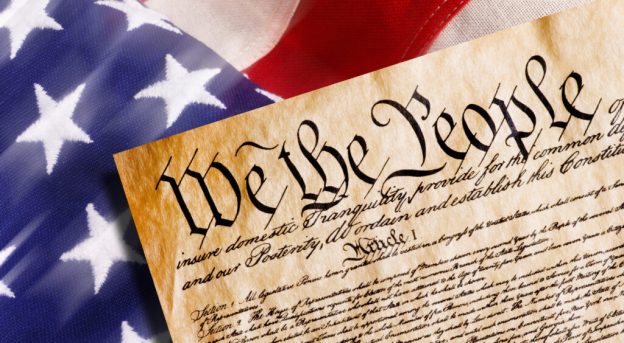
It would be good to first show where America stood concerning culture and government when it was founded so as to have a better understanding of how much it has declined since that point. In Colonial America, the society was built upon a Christian base due to the effects the Reformation had on the colonists who came to America, and the God of the Bible was generally accepted (Schaeffer 110). This led to a specific way of thinking involving the beliefs man was made in the image of God, there was absolute truth, and there were certain inherent, inalienable rights. It also led to the expectation of certain standards to be upheld, such as honor, virtue, and integrity. Americans held certain values about law, government, and themselves: 1) “a higher law than themselves,” 2) they “self-identified as God’s people,” 3) they strove to be “a virtuous people,” 4) they “valued orderly and decent government,” 5) government should provide “just and equal application of the law,” and 6) government’s power and structure should be documented “using written constitutions” (Bourgoine, “Derailment” 2). The belief in a higher law and identifying as God’s people can be seen in the opening of the Declaration of Independence, “We hold these truths to be self-evident, that all men are created equal, that they are endowed by their Creator with certain unalienable Rights, that among these are Life, Liberty and the pursuit of Happiness” (US History 1). The valuing of orderly and decent government can be seen in the writing of the Constitution. If they had not valued it, they would not have laid out a document that dictated the role of government and its boundaries, which included checks, balances, and the separation of powers. This also shows the people’s value of using written constitutions to document government’s power and structure. The opening of the Constitution shows the people’s value of providing just and equal application of the law and the desire to be virtuous: “We the People of the United States, in Order to form a more perfect Union, establish Justice, insure domestic Tranquility, provide for the common defense, promote the general Welfare, and secure the Blessings of Liberty to ourselves and our Posterity, do ordain and establish this Constitution for the United States of America” (United States Senate 1).
There was also the belief in such a thing as objective, absolute truth. According to Merriam Webster, the definition of truth with a lowercase “t” is, “The property of being in accord with fact and reality,” while the definition of truth when capitalized is, “A transcendent fundamental or spiritual reality.” Colonial Americans believed in this capital “T” Truth, and this can be seen in the values of a higher law, viewing themselves as God’s people, and the desire to be a virtuous people (Bourgoine, “Derailment” 3). This was a part of their culture. Culture is defined as, “The set of shared attitudes, values, goals, and practices that characterizes an institution or organization” (“Culture”). For example, this can be seen in the Massachusetts Bay Colony charter which states, “Inhabitants there, may be soe [sic passim] religiously, peaceablie, and civilly governed, as their good Life and orderlie Conversation, maie wynn and incite the Natives of Country, to the Knowledg and Obedience of the onlie true God and Savior of Mankinde, and the Christian Fayth, which in our Royall Intention, and the Adventurers free Profession, is the principall Ende of this Plantation” (American History 1).
Due to the nature of my argument, historical evidences of the decline will be shown in more specific detail throughout my confirmation. For purposes of the historical background here, I will simply state what government’s original purpose was. Government’s only job was to create and uphold the law, but in order to fully understand this statement, there must first be an understanding of the terms “law” and “government.” Law, in its original purpose, existed to protect life, liberty, and property. It can be defined as “the organization of the natural right of lawful defense. It is the substitution of a common force for individual forces. And this common force is to do only what the individual forces have a natural and lawful right to do: to protect persons, liberties, and properties; to maintain the right of each, and to cause justice to reign over us all” (Bastiat 2-3). This law is created and maintained by the government. “Government,” as defined by Merriam Webster, is, “the organization, machinery, or agency through which a political unit exercises authority and performs functions and which is usually classified according to the distribution of power within it.” Government is the substitute common force for individual forces mentioned in the definition of law, and its purpose is to protect the rights of people, liberty, and property constantly (Bastiat 2).
John Adams, the second President of the United States and one of the writers of the Constitution, once said, “Our constitution was made only for a moral and religious people. It is wholly inadequate to the government of any other” (Bourgoine, “Derailment” 4). If what Adams said is true, then America is in a great deal of trouble because it is no longer a country with a moral and religious people. We have moved away from a Christian worldview and Biblical truth, and the negative effects of this can be seen in both culture and government, resulting in the mistreatment of fellow human beings, rights being taken away, and an overreach of government power. This affects each and every one of us because this is the country we live in. So, if the country is declining, we will feel the effects of it in our schools, our communities, and in our government. Since the powerful elite who have created this unholy situation clearly have no intention of changing it, the responsibility for returning the country to what our Founders (and, likely, God Himself) wanted it to be rests solely on us. We as Biblically-minded citizens have the obligation to be aware of what the country’s existence is based upon as well as actively pursue repairing the ruins of our country’s government and cultural condition. We are responsible for repairing the moral decay of our country, and we have a great deal of work ahead of us.
In order to prove America’s culture and government are in decline, I will prove three arguments: 1) Americans have rejected faith and Biblical morality, which has caused cultural decline, 2) a rejection of limited government has resulted in government going outside of its intended sphere of responsibility, and 3) Americans have become too heavily reliant upon government. I will then refute two counterarguments: 1) government should have more power because it will benefit the country, and 2) the country is culturally in a better place now than it was a couple decades ago.
The first argument for my thesis states Americans have rejected faith and Biblical morality, which has caused cultural decline. As previously stated, America was founded upon a Christian base and with the belief in the existence of God, but this in no longer the case. America’s worldview has shifted, and now the majority holds the viewpoint of secular humanism and progressivism. Secular humanism is “a religious and philosophical worldview that makes mankind the ultimate norm by which truth and values are to be determined; a worldview that reveres human reason, evolution, naturalism, and secular theories of ethics while rejecting every form of supernatural religion” (Myers and Noebel 494). Progressivism is “the belief in human progress; the belief that political systems can be used to create economic prosperity, minimize risk, and advance society” (492). With this worldview and this belief came a shift in cultural values. Faith went from faith in God to faith in Man, absolute truth was replaced with science and reasoning, belief in the supernatural was replaced with materialism, and morality (belief in a set right and wrong) was replaced with the belief right and wrong was what you made it. This is the worldview of the majority of American culture today (Bourgoine, “Derailment” 4-5). Americans used to accept faith and Biblical morality, but now those things have been rejected for a secular worldview and arbitrary morals. The rejection of faith, for example, can be seen in the ban of prayer in public schools. The rejection of Biblical morals can be seen in the rampant use of pornography in today’s culture, whether it be online, in movies, or in advertisements.
People’s worldviews have significant impact on the decisions they make, whether they realize it or not. Their worldviews cause them to have certain presuppositions about the world around them and the people in it, and these presuppositions translate through their actions (19). Those who do not believe in God or absolute truth, rather than base their decisions on something concrete, instead turn to man and what they themselves feel is right, which is constantly changing and differs from person to person. This leads to people performing actions that are immoral and/or harmful to themselves or others and the cultural need to accept their actions as acceptable or even encouraged because the individual supposedly knows what is best for himself. These things can include dressing immodestly, lying, cheating, premarital sex, abortion, and homosexuality, among other things. Though these things existed in the Founding Era, the difference now is these actions are viewed as acceptable and/or encouraged. In the minds of the people performing actions like these, they see what they are doing as permissible because it benefits them, and to them they are the highest authority. There is no one else they need to answer to. If that were the case, they would be correct, but they are not. The base America has chosen is Man. As a result, the culture has declined due to the now arbitrary nature of what is viewed as right and wrong and the immoral actions that stem from that belief. A good example of this can be seen in the popularity of the book and movie series of 50 Shades of Grey. It showcases premarital sex, a relationship that focuses on the sexual aspect and removes the emotional side, and contains sexually explicit scenes. The movies and books portrayed these as acceptable, and the American people showed their desire to see the movie by it being number one at the box office and breaking the record of money made on an opening three-day weekend by earning $81.7 million where the previous record was $56.3 million. The book also reached number one on USA Today’s top selling booklist for twenty weeks straight, another new record (McClurg 1). Between all three books in the series, over 45 million copies have been sold in the United States. The American people have turned from faith and Biblical morality and instead prefer to follow their own desires and make their own right and wrong.
My second argument for my thesis is a rejection of limited government has resulted in government going outside of its intended sphere of responsibility. The purpose of government is to protect the rights of the people, liberty, and property. In Colonial America, this is the intention it was created with. Many of the Founders had come from countries where the governments had become too involved in the people’s lives, and it was one of the reasons they decided to come to the new world. So, with this in mind, the Founders created a Constitution that limited government’s power and put checks and balances on the decisions it made. They did this so the power would rest in the people’s hands and so the States would be able to govern themselves. Since then, this has changed.
Due to the Progressive movement, there is now the commonly-held belief government and other political systems can be used to “create economic prosperity, minimize risk, and advance society” (Myers and Noebel 492), which shows decline because these goals were outside of government’s intended role. As noble as they sound, they result in dictating ways of living for all citizens, far beyond the scope of states’ rights and individual pursuits of happiness. This overstepping of responsibility can be seen in some of the decisions the government has made in recent years. One of the more significant decisions was the legalization of gay marriage. At the time there were thirty-seven states that had legalized gay marriage prior to the Supreme Court’s decision and there were thirteen states where it was banned (ProCon 1). Then the Supreme Court’s decision required gay marriage to be sanctioned in all states. The issue with this is summed up beautifully in a quotation from the dissent written by Supreme Court Justice Antonin Scalia after the decision on gay marriage was made.
[I]t is not of special importance to me what the law says about marriage. It is of overwhelming importance, however, who it is that rules me. Today’s decree says that my Ruler, and the Ruler of 320 million Americans coast-to-coast, is a majority of the nine lawyers on the Supreme Court. The opinion in these cases is the furthest extension in fact — and the furthest extension one can even imagine — of the Court’s claimed power to create ‘liberties’ that the Constitution and its Amendments neglect to mention. This practice of constitutional revision by an unelected committee of nine, always accompanied (as it is today) by extravagant praise of liberty, robs the People of the most important liberty they asserted in the Declaration of Independence and won in the Revolution of 1776: the freedom to govern themselves (Field 1).
This is a prime example of government overstepping its boundaries and interfering in the matters of the State. The issue is the government infringed upon the sovereignty of the States by requiring all of them to sanction gay marriage.
When the government gains more power like this, people should become wary. Government has shown its decline in how it has now stepped out of its intended purpose of protecting the interests of the people and replacing it with what those in power think is best. “The desire to organize and control society for a social purpose inevitably resulted in a drift toward unlimited (i.e., totalitarian) government … such a government would destroy the Rule of Law and replace it with arbitrary government” (Myers and Noebel 16). This rejection of absolute law and replacing it with arbitrary law is a direct result of the Progressive Movement and its ideas. Arbitrary law is law that is constantly changing, very often with the purpose of either fitting the times or propelling the agenda of the one(s) who changed the meaning of the law in the first place.
One of the best examples of arbitrary law is the idea of the “Living Constitution.” The Living Constitution can be defined as follows:
Based on changing conditions and the lessons of experience, the adaptive, or “living Constitution” approach treats the Constitution more as a political than as a legal document and holds that constitutional interpretation can and must be influenced by present-day values and the sum total of American experience. Insisting that each generation has the right to adapt the Constitution to its own needs, proponents of this approach regard the Constitution as a “morphing document” than means, from age to age, whatever the society, and more particularly the Court, think it ought to mean (6).
Note how this approach calls for “constitutional interpretation” that must be “influenced by present-day values and the sum total of American experience,” meaning what the Founders originally intended in writing the Constitution is up for debate. The reasoning behind this approach is they were not facing the issues coming up today, and so what they wrote needs to be adapted. This shows the abandonment of things like absolute truth and replacing it with what man thinks is best. And who is to decide the interpretation of the Constitution? The answer is the Court and its judges, as stated by a Supreme Court Justice: “We are under a Constitution, but the Constitution is what the Court says it is” (6). This is, for example, how abortion became legalized. The Courts “discovered” how the right to privacy also pertained to women’s choices regarding abortion, when for the past two hundred years since the Constitution was written this was not the case.
To cite a more current example, if you were to look online at the United States Senate Web page and went to read the Constitution there, you would find an introduction provided by the editor of the site, a column with the Constitution, and, beside that, a column with an explanation of what the Constitution is saying. The introduction says
[The Constitution is] more a concise statement of national principles than a detailed plan of governmental operation, [it] has evolved to meet the changing needs of a modern society profoundly different from the eighteenth-century world in which its creators lived. This annotated version of the Constitution provides the original text with commentary about the meaning of the original text and how it has changed since 1789 (United States Senate 1).
This shows the Constitution is being interpreted, and then these interpretations are what are being used to judge today’s cases. This arbitrary law and the increased power of government shows how government has declined in the abandonment of absolute truth and the movement away from government’s original purpose. Those in government have now begun to look out more for their own interests as opposed to the people’s and have been seeking more power to do so, which eventually leads to a society ruled by a small class of individuals that makes its own economic decisions over the general will of the people.
The third argument supporting my thesis is Americans have become too heavily reliant upon government. Americans, from the beginning, have been hard workers. They had to be; otherwise they never would have survived after coming to the new world. The people relied on their own work and business in order to provide for themselves and for their family. The government provided a very small role in this other than protecting the people’s rights of life, liberty, and property so they would be able to continue to care for themselves and their family. Another type of right set forth in the Constitution for the purpose of protecting the people were negative rights, rights that put “constraints on the power of government, boundaries that the government can not cross” (Bourgoine, “Derailment” 8). These were put in place so the government would not gain too much control, and, as a result, infringe upon the lives and financial freedoms of its people. The problem is it is not government’s job to provide for people and make sure they are taken care of.
Now the power of government has increased. One of the main reasons government has gained as much power as it has is because the people have become more reliant upon it to survive instead of relying on themselves or other family members. This has come mainly in the form of positive rights, which are “rights the government is obligated to provide or deliver” (8). These rights were first implemented by those in power who had a Progressivist way of thinking. One of the best examples is President Franklin Roosevelt. In a speech to Congress in 1944, Roosevelt made mention of the people’s rights of life and liberty, which was a direct reference to the rights in the Declaration of Independence. He was mentioning these rights in relation to what he called “inalienable political rights,” such as “free speech, free press, free worship, trial by jury, freedom from unreasonable searches and seizures” (qtd. 9). He then stated, “As our Nation has grown in size and stature, however — as our industrial economy expanded — these political rights proved inadequate to assure us equality in the pursuit of happiness…. We have come to a clear realization of the fact that true individual freedom cannot exist without economic security and independence” (qtd. 9). Roosevelt was saying in order for the people to be able to be happy, they first needed to be economically equal, and the political rights provided in the Bill of Rights were inadequate for this task.
His solution for this was economic rights. These economic rights would guarantee things such as a job, good education, food, clothing, medical care, and a home. These things do not sound bad at all. The issue here is Roosevelt was petitioning for these things to be provided by the federal government, which would make them positive rights, as opposed to the State or the individual providing them. This resulted in a change in the relationship between the government and its people, and government was once again stepping outside of its intended purpose. The government, rather than protecting the people’s rights so they may have the freedom to live freely and have the necessary protection in order to provide for themselves, is instead providing for the needs of the people and are legally required to do so. The government is now, through their own actions, seeking to make all people equal (9).
The derailment shifted the framework from equality of “opportunity” (to pursue happiness) to the need for equality of “outcome,” and government becomes the means for achieving equality via economic rights provided by and guaranteed by the government. We shifted from equality that comes from being God’s creation to equality defined by the government, without a foundation of faith and objective truth. It shifted the nation … [to] a government that must treat its citizens unequally in order to redress life’s inequities and redistribute wealth according to that government’s arbitrary (not based on objective Truth) view of who needs more and who can do with less (11-12).
Over the past seventy years, these economic rights have been implemented into today’s society. They have most often taken the form of government programs such as “Medicare, Medicaid, Aid to Dependent Families with Children, food stamps, government unemployment insurance, government-backed student loans for college, and … ObamaCare” (12). This forced dependence upon government has contributed to America’s decline because the people are no longer supporting themselves. They instead are relying upon a government to take care of them when originally it was not even the government’s job to do this. Even worse, people believe they deserve this support and that is the reason government exists. It has also allowed government to gain more power due to the fact Americans have come to the point where they need these government programs in order to survive because they do not have the money they need to pay for things on their own. This is partially the result of all the taxes the federal government is requiring in order to pay for these mandatory programs. It ends up being an ever-growing, vicious cycle that, as time goes on, will become harder and harder to stop until it is completely out of control.
The first counterargument against my thesis states government should have more power because it will benefit the country. This view is held mainly by liberals and progressives. They wish to use government to equally provide resources and opportunities for all people in the nation. Along with protecting people’s legitimate rights and freedoms, they believe it is the government’s job to alleviate all social ills. They believe the government should have the authority to solve the nation’s problems (Bourgoine, lecture).
These are nice ideas, but the belief giving government more power will allow it to be able to solve the nation’s problems is wrong. The main reason is because the people in government are sinful human beings who, when given power, have a bad tendency to abuse it and use it for their own benefit just like anyone else. As a result, the will of the people in power takes precedence over the will of the citizens. The proper role of government is to protect the people’s life, liberty, and property, but when the government’s will is set above that of the people’s, such as the recent gay marriage overruling of several states’ laws, then government is now overstepping its boundaries and no longer fulfilling its role (Bourgoine, lecture).
An area in which this overreaching of authority can be seen in one recent and prominent example is the Affordable Care Act (ACA). Also known as ObamaCare, it was, according to ObamaCare Facts, a law whose main focus was “on providing more Americans with access to affordable health insurance, improving the quality of health care and health insurance, regulating the health insurance industry, and reducing health care spending in the US.” Before the ACA was put into place, people’s health care was run by independent health insurance companies, and the government was not involved in this. After it was established, it gave government a monopoly over health insurance in the country. This was bad because, contrary to what was said it was going to do, it did not regulate the health insurance industry or reduce health care spending, nor to the degree it was promised did it provide more Americans with affordable health care. Instead of regulating the industry, the majority of independent companies had to close because they were not able to pay for all of the things needed to be covered under the new regulations. As a result, there was, for the most part, only the insurance provided by the government, which caused more people to rely upon the government rather than providing for themselves. Instead of the cost of health care going down, it went up. This was due to all the things insurance companies were now required to provide for every person (whether they actually needed it or not) in addition to or instead of the things they were providing before (Discover the Networks 1).
As for the claim many more Americans would be insured, it did not live up to its expectation. Originally, about 50 million people were uninsured, which was about 15% of the American population. It was estimated this number would drop to 22 million by 2016, but this did not happen. Instead, there are still 31 million who are uninsured, which is about 10% of the population and does not include those who lost their health insurance due to the ACA. The government went through extensive measures in order to provide more Americans with health insurance, and, though it did cause a big change, it was not for the better, nor did the government accomplish what is said it would do (Furchtgott-Roth 1).
Another result of the ACA, which is not quite so obvious, is the redistribution of wealth that took place. The majority of people ended up paying more money than they did before in order to help pay for those who did not have enough money to pay for their own insurance. This especially can be seen between the younger generation and the older generation, who are on Medicaid. The younger people end up having to pay for services they do not need or want due to the new regulations regarding what health insurance companies must provide. Then this extra money they had to pay goes toward paying for the older people’s free Medicaid or subsidized coverage they receive as benefits from the government (Discover the Networks 1). All of this creates a reliance on government, and people stop providing for themselves and instead begin to expect the government to take care of them, which was never government’s purpose in the first place.
The second counterargument against my thesis is the country is culturally in a better place now than it was a couple decades ago, specifically concerning its acceptance of different things, such as homosexuality. Now, this topic has been widely discussed, especially in Christian circles, but it is still worth mentioning due to the amount of significance it holds. The country’s culture has changed drastically just within the past twenty years in the area of marriage. A large number of Americans would say this is a good thing because it “promotes equality and non-discrimination in society” (Lipp 1). It may be true it promotes equality and non-discrimination, but that is not the real issue at hand. The real concern is over the fact the government literally redefined the definition of marriage. It is entirely possible the government could have made laws regarding the treatment of homosexuals so as to help combat the poor treatment they received without changing the meaning of marriage. This shows a decline in culture due to the rejection of absolutes, such as the absolute of God’s Biblical definition of marriage.
This change shows how far America has declined from its traditional values as a culture. It shows America has less and less acceptance of religions such as Christianity, because that is where the concept of a traditional marriage between a man and a woman comes from. Homosexuality has always been around no matter the time period, but never before has it ever been sanctioned by the government under the title of marriage. American culture has entered into a new state of mind, in which all people are allowed to have their own view of what is right just so long as they do not offend anyone else with their beliefs in the process. This shows decline because it is exhibiting how a rejection of Biblical absolutes that have been replaced by a need for tolerance and the idea of individual right and wrong. Instead they themselves decide what is right. It also shows how there is now a lack of free speech which comes as a result of the fear of being hated and seen as “bigoted” or “small-minded” only because they do not agree with the other person’s point of view (Bourgoine, lecture).
America has changed from what it once was and not for the better, and nothing will improve if meaningful action is not taken. When the Constitution was written, Benjamin Franklin was asked by one of the citizens if they had a republic or a monarchy. Franklin replied with, “A republic, if you can keep it” (McManus 1). It was up to the American citizens to make and maintain their country, and that is still the case today. This goes for both culture and government. America is going down a dangerous path, and people need to have the courage and be willing to take a stand to try to change that. If no one does, then can anyone really expect things to get better? What constitutes a nation is not its governments or businesses, it is the people. Without the people there is no country, and it is ultimately the people who decide what direction the country will go.
If America is to stay a city on a hill, a good example for other nations to follow, then something must change: the people must change. America must regain its Christian base and its acceptance and reliance upon God. Nothing can stand apart from God, and if the rest of the nation is to ever learn and love Him, Christians today need to make an effort to see that happen. We are called to be in the world and to spread God’s Word, but that will never happen if we just sit back and hope for the best. The Church should not stay quiet; we are meant to be lions. We could do this by being involved in government, being involved in our communities, or even just being involved in our own neighborhoods. For example, you can become involved in your local school boards and town meetings, advocating for wise policies that allow for Biblical values in schools and communities. You could seek out meaningful relationships with neighbors, inviting then to Church or Church-sponsored events, showing them the benefits of a Christian life and values through your own actions. You can strive to be a wise and well-informed citizen, being aware of the different political platforms and potential candidates. You could be someone like Martin Luther King, Jr., who speaks out against oppression and decline, having the courage and willingness to take a stand for what is right. The common factor among all these things is being involved, being involved in the lives of the people around us and showing and spreading God’s Word by loving others. The people must change, and God has called His people to help facilitate that change. If they do not, then this country’s light will fade until it has eventually gone out, and it will be too late. Do not let it come to that point. Instead, act now so America may once again be known as a city on a hill.
Works Cited
American History. “Charter Of Massachusetts Bay 1629.” American History: From Revolution to Reconstruction and Beyond, n.d. Web. 20 Mar. 2017.
Bastiat, Frédéric. The Law. Trans. Dean Russell. New York: The Foundation fro Economic Education Inc. 16 Nov. 2012. Print.
Bourgoine, Daniel. “Derailment of the American Political Tradition: Advancing beyond Kendall and Carey’s Basic Symbols of the American Political Tradition.” Unpublished. 30 Nov. 2014. Print.
—. Summit Christian Academy, Yorktown. Lecture.
“Culture.” Merriam Webster, 2017. Web. 26 Feb. 2017.
Discover the Networks. “ObamaCare: Before and After.” Discover the Networks, n.d. Web. 30 Jan. 2017.
Field, Chris. “12 Must-Read Quotes From Scalia’s Blistering Same-Sex Marriage Dissent.” The Blaze, 26 June 2015. Web. 22 Mar. 2017.
Furchtgott-Roth, Diana, “7 Ways ObamaCare Failed Americans and Shortchanged the Country.” The Fiscal Times, 25 Mar. 2016. Web. 30 Jan. 2017.
“Government.” Merriam Webster, 2017. Web. 26 Feb. 2017.
Lewis, Andy. “‘Fifty Shades of Grey’ Sales Hit 100 Million.” The Hollywood Reporter, 26 Feb. 2014. Web. 19 Mar. 2017.
Lipp, Murray. “7 Ways the U.S.A. Benefits From the Legalization of Gay Marriage.” The Huffington Post, 2 June 2016. Web. 30 Jan. 2017.
McClurg, Jocelyn. “‘Fifty Shades’ is No. 1 on USA TODAY’s list.” USA TODAY, 15 Feb. 2015. Web. 19 Mar. 2017.
Mckenna, Derek. “To its critics Roe v Wade (1973) exemplifies the Supreme Court’s capacity to make itself a super legislature; to its supporters it was a courageous decision in constitutional interpretation. Discuss.” Unpublished. 2017. Print.
McManus, John F. A Republic, if You Can Keep It. The New American, 6 Nov. 2000. Web. 19 Feb. 2017.
Myers, Jeff, and David Noebel. Understanding the Times: A Survey of Competing Worldviews. Manitou Springs: Summit Ministries, 2015. Print.
ObamaCare Facts. “What is the Affordable Care Act and what does it mean for American healthcare?.” ObamaCare Facts, n.d. Web. 30 Jan. 2017.
ProCon. “State-by-State History of Banning and Legalizing Gay Marriage, 1994-2015.” ProCon, 16 Feb. 2016. Web. 22 Mar. 2017.
Schaeffer, Francis A. How Should We Then Live?.Wheaton: Crossway Books, 2005. Print.
United States Senate. “Constitution of the United States.” United States Senate, n.d. Web. 5 Mar. 2017.
US History. “The Declaration of Independence.” US History, n.d. Web. 14 Mar. 2017.
 Redeeming Pandora