
Tag Archives: emma kenney

American Foster Care: A System in Need of Reform

Emma Kenney

A child is curled up, shaking underneath her bed. She knows her guardian will be home soon, and she waits in dread for that moment. Maybe he won’t be drunk this time or angry or in the mood to see her. Maybe he’ll be so tired he will go straight to bed. She’s been in this new home for about six months now, and she hasn’t seen her case-worker since the day the woman had dropped her off with this man. She’s been removed from the custody of her birth mother after the single parent had been evicted from her old apartment. Child Protective Services has rightly said the streets were no place for a child, and the girl could be reunited with her mother after the woman found a stable job, and new apartment and got back on her feet. The new home had seen nice enough at first, but once it was apparent her case worker wasn’t coming back to check on her, the abuse had begun.

This story sounds awful, right, and it must be an over-exaggerated example or an anomaly? Unfortunately, this happens within the American foster care system more often than one would hope. The system is broken and in need of repair. I will be arguing “the American (government) foster care system needs to be reformed.”

To understand fully why the foster care system needs to be reformed it is necessary to understand what exactly the foster care system is meant to be. Foster Care is defined by the National Adoption Center as, “a temporary arrangement in which adults provide for the care of a child or children whose birth parent is unable to care for them.” In simple terms, this means the foster care system is supposed to remove children from inadequate homes and place them into temporary homes where they will be able to grow and develop both mentally and physically. Inadequate homes are ones where the children are being abused or neglected by their guardians, either unintentionally or intentionally, as in the story told previously.

However, more often than not the system is not accomplishing this purpose. Even those who have been in charge of the system believe the system is in need of reform. Wade Horn, who served as the leader of the Department of Health and Human Services (HHS) child welfare wing under President George W. Bush, was and is a firm supporter of a reformed foster care system.

The first important thing to know about foster care is it has two parts: the first part is government run, and the second part is privatized. In both of these, children are placed in foster homes with individual families or in group homes with multiple children. Both parts work essentially the same way in that the majority of their funding is based on how many kids they place. The government portion gets a baseline fund, though privatized foster care does not, and unlike the government portion, the privatized section of the system has essentially no rules set in place at the moment to keep it in check. The first step to reforming that portion would be to simply get some regulations created to protect the children. For the sake of continuity within my thesis, however, I will focus only on the government-run section of the foster care system.

The second important thing to know about foster care is it is not meant to be a permanent solution or home for children. It is only supposed to be a temporary home until a child can either be returned to his or her birth family or adopted into a fit home.

Once again, my thesis is “the American (government) foster care system needs to be reformed.” My confirmation arguments are “the current system is not accomplishing its purpose,” “the current system is a waste of money,” and “the current system is catastrophic for the mental health and development of children.” The counterarguments I will then refute are “reform won’t work,” “reform isn’t worth it,” and “reform is too expensive.”

My first confirmation argument is “the current system is not accomplishing its purpose.” The National Adoption Center tells us the foster care system has two purposes: 1) to provide adequate care for a child who has been removed from an unfit home, and 2) to be a temporary home for said child.

First, let’s discuss how the system is not providing adequate care for children. “Adequate care” here means any care that if not provided would be grounds to remove a child from their birth home. Many complicated factors go into this, but the Children’s Bureau states at least the following must be provided for a child to receive adequate care: a safe home, enough food and clothing, adequate medical care, any mental and physical needs of the child, and protection from domestic violence. When any of these are not provided, a child is not receiving adequate care. Studies have shown roughly 30% of foster children admit to being abused within the system, but it is believed the percentage of children being abused is much higher (over 50%) since in many cases the children are afraid to speak up about the abuse they face or are taught to believe it is okay. This alone should show there is something significantly wrong with the system. Its job is to take children out of abusive homes, yet it simply places upwards of 50% of those children into abusive homes sometimes even worse than the homes they were removed from. On top of that, the system is the cause of an alarmingly high child mortality toll. Deb Stone, who has both fostered and adopted children and served as a Court Appointed Special Advocate for abused children states, “An estimated 1,564 [foster] children died from abuse in 2012… Neglect was involved in 70% of [those] child fatalities.”

One only has to look at Child Protective Services (CPS) and similar branches to see more of this failure to provide adequate care. Social workers essentially have two goals to accomplish after placing a child in a home. First, they must complete a large amount of paperwork concerning the child they placed and the home said child was placed into. Second, they are to periodically visit the child to make sure she’s been placed into a home good for her. These visits neglected leads to children remaining stuck in abusive or negligent foster homes. However, heavily because these branches are significantly understaffed in relation to the number of children within the system, social workers must spend so much time completing paperwork they don’t have time to check in on the children they have placed. Susanne Babbel, a former social worker and foster parent and current psychologist, states:

During my own time working with foster care agencies and group homes, I often witnessed the agency staff become overwhelmed with the number of children they were required to monitor — not to mention the pressure of completing mountains of paperwork. The paperwork would often trump the actual visits in priority because it was required in order to keep the agency funded and our jobs intact.

Another factor preventing the system from accomplishing its purpose of providing adequate care is the act of children being placed in inadequate homes. To understand this part of the problem, one must understand funding for the system depends on how many children are placed and kept in homes per year. This creates a problem, because in their desire to stay funded these branches don’t always do complete background checks on the individuals applying to foster children, or they overlook offenses in order to place another child. Children are often placed in homes with parents who are poorly educated as well, as, according to the Adoption and Foster Care Analysis and Reporting System, only approximately 50% of foster parents even have a high school diploma or equivalent. This doesn’t always have a negative effect, but it most certainly can and does in many cases. On top of that parents throughout the system, even ones who would otherwise be good, are often underprepared as there is no supervised or regulated training on what being a foster parent thoroughly entails. This means they don’t know how to properly handle the often emotionally unwell children being placed into their care. Studies conducted in multiple states show the majority of foster parents don’t even make it a full year before they decide to stop fostering. This means children aren’t being placed in fit homes at all: they are simply being bounced around from home to home. In her article “U.S. Foster Care: A Flawed Solution That Leads to Long-Term Problems?” Stone discusses how one particular boy she fostered had already been through 17 other homes by the time he was placed with her; that little boy was only 10 years old. Sadly this is far too common within the American foster care system, and the vast majority of children are placed in at least 2 homes, often many more. So long as this is a common occurrence, the system will never achieve its purpose at all.

Now let’s discuss how the foster care system is not accomplishing its purpose of being only a temporary home. Over 50% of children (roughly 218,733) remain in the system for more than a year, and approximately 15% (roughly 65,620) remain in the system for at least 3 years. On top of that, over 10% of children (over 43,747) stay within the system until they either reach adulthood and age out or reach 16 and successfully file for emancipation. This means approximately 40,000 children per year are stuck in the system until they are old enough to legally exit it on their own.

My second confirmation argument is “the current system is a waste of money.” The system receives two different kinds of government funding. The first is baseline for all 50 states and is not based upon state population or any other numbers. For example, using small easy numbers, the government could decide in 2020 each state will receive $100 as its foster care budget. The second type of funding is determined by how many children are successfully placed in homes the year before. Using small and easy numbers once again, this is along the lines of the government determining every child placed in a home in 2019 still in said home by January 1, 2020 was $1 toward the 2020 budget. This means states that place and keep 50 children in homes receive $50 toward their budget (for a total budget of $150), while states that place and keep 10 children in homes receive only $10 toward their budget (for a total budget of $110).

As we have seen, this means children are often placed or kept in unfit homes in order to keep numbers up so the program will receive sufficient funding the following year. This essentially means the program is doing the opposite of its job and is being paid to do so, which is both wasteful and absurd in concept, especially considering how much money goes toward the foster care system each year. Approximately $9,000,000,000 (9 billion American dollars) are poured into the foster care system each year. With approximately 400,000 children in foster care per year, this means roughly $22,500 are being spent per child per year. With an estimated 50% of children facing abuse within the system, approximately $4,500,000,000 is being poured into placing children into abusive homes, which directly goes against the purpose of the American foster care system.

My third confirmation argument is “the current system is disastrous for the mental health and development of children.” Crucial brain development takes place as a child; this development is so important it shapes the personality and mental stability of a person for, in most cases, the rest of her life. This means when children are placed in abusive or negligent homes they are debilitated on a mental level for the rest of their lives. “Developmental Issues for Young Children in Foster Care” by AAP News says, “During the first 3 to 4 years of life, the anatomic brain structures that govern personality, learning process, and coping with stress and emotion are established, strengthened, and made permanent. If unused, these structures atrophy.”

This leads to problems such as depression and anxiety, as statistics show children within the system are about five times more likely to commit suicide as adults and nearly eight times more likely to be hospitalized with a serious psychiatric disorder. They are also about 12 times as likely to be given psychotropic medications (medications used to treat mental illness that affect the chemical makeup of your brain, such as antidepressants and antipsychotics). On top of that, the system can also lead children to develop various attachment disorders. Since they are often moved around so much, they are taught never to become too attached to anything or anyone for fear of losing them as soon as they get too close. This creates a lifelong problem of closed off, distrustful adults who are unable to form relational bonds for fear of losing them.

The first counterargument I will refute is, “Reform won’t actually be effective.” Many people argue the system is simply too big and too messed up to be fixed, and while it is true no single thing will be able to fix the entire system it is simply not true reform will be ineffective. Often people become incredibly discouraged by the idea the foster care system is messed up on a gigantic scale and therefore lacks what could be considered a quick and easy fix, but they fail to realize successful reformation isn’t synonymous with instantaneous reform.

It is inaccurate that reform will not be effective. The biggest proof of this is the fact effective reform has already been seen at a state level. Organizations like Children’s Rights work alongside states and cities to pass court-enforceable regulations for the American foster care system, such as social workers must visit children the place every two months. They do this by assessing a state’s foster care system and helping state governments implement various legislation and progress to correct the problems they see. They also may offer finances to help states successfully implement these new programs and laws. This particular organization boasts many improvements to the system, including the following:

In Georgia in 2003, children in metropolitan Atlanta foster care would often go six or more months without a visit from a caseworker. But by 2015, workers provided 96 percent of required twice-monthly visits to children. In Michigan in 2006, approximately 6,300 Michigan children were legally free for adoption, but instead were growing up as permanent wards of the state. By 2014, the number dropped to under 2,700. In Milwaukee the rate at which children were abused and neglected in foster care was reduced tenfold between 2000 and 2014. Allegations of maltreatment, which used to sit for months, are now referred and investigated within days.

The fact reform has been successful at this level shows reform is an attainable and effective goal. Various states have reformed or begun to reform various issues of the system, and if the federal government would implement even one of those regulations country-wide, the system would begin to improve on a large scale. There is no denying it would take time (Milwaukee took over a decade to see the full extent of their reform), but there’s also no denying time does not take away from the effectiveness of reform.

The second counterargument I will refute is “reform isn’t worth it.” To argue reformation of the foster care system isn’t worth it is to argue the children within said system are not worth it. It sends the message even though the system in its current state involves and allows so much abuse and neglect, because it won’t be an easy task they are not important enough to help. The United Nations created something called the Universal Declaration of Human Rights in 1948. This declaration essentially lays out a set of “fundamental human rights to be protected.” Articles one and two describe how everyone is equal and entitled to the rights set out in said declaration. Article three declares, “Everyone has the right to life, liberty and security of person,” and article five declares, “No one shall be subjected to torture or to cruel, inhuman or degrading treatment or punishment.” However, children in the foster care system are having these rights violated. These children face rape and abuse of all kinds, and as previously stated, over 1,500 children die from abuse within the system every single year. When we say reform is not worth it we are indirectly telling children within the foster care system they are not even worth having their fundamental human rights protected.

The third counterargument I will refute is “reform is too expensive.” There are two different variants of this argument. The first is it is too expensive in relation to worth. The second variant of this argument is simply reform would just be too expensive in general, meaning even if reform should be done there is no legitimate way it could be done.

First, we will go over the claim reform is too expensive in relation to worth. I previously explained why reform is worth it, and the same can be applied to the financial aspect. When we say reform is too expensive to be worth it we are really saying the rights of children (which I’ve already shown hold as much value as any other age) do not matter enough to be fixed. We are saying we are not willing to pay the price to ensure children within the foster care have access to the rights which have already been proven to be theirs.

Second, we will go over the claim reform is just too expensive in general. It has already been stated the roughly 9 billion American dollars are spent on the foster care system per year (roughly $22,500 per child). While it is unfair to say none of that is being used properly, far too much of that is being spent only for children to be neglected, abused, and killed within the foster care system. This means a large portion of that 9 billion American dollars is being wasted in relation to money spent versus success of the system. While reform has the potential to seem somewhat costly initially, since the system is currently wasting money reforming the system would actually be cost effective for the United States in the long run. Reform would allow money spent on foster care and child services to be effectively and consistently put to good use, and even lower expenses over all. One of the main ways the system could lower expenses would be by fulfilling the portion of its purpose that relates to placing kids in long term homes and getting them out of foster care. Over 10% of children remain in the system until they age out of the system. If a child is in the system just from the time they are 16 onwards, $67,500 will be spent on said child. If they are in the system from 8 (which is the average age a child enters foster care) onwards, $247,500 will be spent. That is roughly a quarter of a million dollars being spent on a child when the whole purpose is to either reunite the child with their family or getting them adopted. Reform allows a greater number of children exit the system before aging out, overall lowering the total cost per year of the foster system.

Well, what now? I’ve shown you why the system needs reform, and I’ve refuted arguments saying otherwise, but where do we go from here? This paper has shown the foster care system is incredibly broken on various levels to the point no one thing will be able to fix it entirely, but there are various efforts that can be done to begin the process. A huge improvement that could be done is employing more social workers within the departments working with foster kids, even if they are only there temporarily. Earlier I described how social workers are often swamped with paper work, which means it is easy to get behind. Extra workers would help manage this workload, even if only temporary. Another thing to be done is doing a better job of getting kids out of the system, whether this is reuniting them with their birth parents or getting them adopted. The foster care system was never meant to be a permanent home, but as I showed previously a relatively large number of children are remaining within the system until they age out, occupying valuable time and money in the process. If the foster care system put more of an emphasis on moving children out of the system and into good homes it would free up that time and money to cycle more children through the system properly.

One needn’t be a social worker to help, though. We can help in multiple ways. The first is making sure we are educated on the issue. The majority of people are at least somewhat aware of the fact an issue exists, but often they do not realize just how big the issue is. It is much easier to convince people something needs to be done if we are aware of all the facts. The second way we can help is by voting for politicians who care and want to do something about the issue. If we vote for people who don’t care or want to help it will be much harder for reform to take place. The third way we can help is by supporting and donating to organizations like Children’s Rights. One of the biggest ways we can help is by supporting the organizations already helping reform become a reality.

In the end it is important we fight for reform in the ways we can. This is especially important for those who call themselves Christians. We are called to care for widows and orphans and to love others in the way of Jesus. We cannot leave the next generation of children to suffer in a broken system of neglect, abuse, and death.

Bibliography

AAP News Committee. “Developmental Issues for Young Children in Foster Care.” Pediatrics.  AAP News and Journals Gateway. November 2000. Web. 19 Jan. 2017.

Babbel, Susanne, PhD, MFT. “The Foster Care System and Its Victims: Part 1.” Psychology Today. N.P., 11 Oct. 2011. Web.

—. “The Foster Care System and Its Victims: Part 2.” Psychology Today. N.P., 11 Oct. 2011. Web.

Child Welfare Information Gateway. “Determining the Best Interests of the Child.” Children’s Bureau. March 2016.

Children’s Rights. “Foster Care Reform.” Children’s Rights. N.d. Web. 29 Jan. 2018.

“Developmental Issues for Young Children in Foster Care.” Pediactrics. AAP News & Journals. Gateway, July 2000. Web. 16 Nov 2016.

Find Law — Family Law Practitioners. “Foster Care Funding and Federal Programs.” Find Law, n.d. Web. 15 Jan 2018.

FindLaw. “Foster Care Funding and Federal Care.” N.D. web. 23 Feb. 2018.

Kelly, John. “HHS Will Not Discuss New Personnel.” The Chronicle of Social Change, 7 April 2017.

National Adoption Center. “What IS Foster Care?” National Adoption Center, n.d. Web. 03     March 2016.

Stone, Deb. “U.S. Foster Care: A Flawed Solution That Leads to Long-Term Problems?” STIR Journal. N.p. 12 May 2014. Web. 14 Jan 2018.

U.S. Department of Health and Human Services, Administration for Children and Families, Administration on Children, Youth and Families, Children’s Bureau. “The AFCARS [Adoption and Foster Care Analysis and Reporting System] Report.” U.S. Department of Health and Human Services. November 2017.

United Nations General Assembly. “Universal Declaration of Human Rights.” United Nations. 10 December, 1948.

Zill, Nicholas Ph.D. “Better Prospects, Lower Costs: The Case for Increasing Foster Care Adoption.” National Council for Adoption. May 2011.

The Wit and Wisdom of Jane Austen in the Modern Era

Emmy Kenney

We’re back once again with another one of these epic honors papers. I spent the first half of the adventure we call “senior year” comparing classical British literature to its modern interpretations; however, this quarter I thought I would try something a bit different. Now, something important to note about me is Jane Austen is one of my top ten favorite authors, at least of the moment. I own a copy of each of her novels and multiple of some of them, and for Christmas I was gifted a beautiful addition to my collection: The Wit and Wisdom of Jane Austen edited by Joelle Herr. This lovely little book is a collection of some of the best and most popular Jane Austen quotations from both her published novels and personal letters. This book has been one of my many joys going into this new year of 2018. I’ve spent many evenings reading and pondering over the various things Austen wrote.  This brings me to my big idea: this quarter we’re going to look at some of those lovely little quotations and talk about them in reference to current society as well as Christianity and the Bible.

First, let’s talk about a little gem from Emma (a novel to which I am particularly biased). “I suppose there may be a hundred different ways of being in love,” says the novel’s namesake. One thing I’ve noticed during my short time on this earth so far is society likes to tell you love looks like one thing and one thing only, if love even matters at all. Magazines, television, and music all like to tell you if you aren’t engaging in the way they tell you to love, you are somehow less worthy. However, we see time and time again in the Bible love is so much more than that. Certainly, the world knows a form, although they are often wrong about the timing, but the world misses so much about what love truly is. Society too often forgets love is putting other people before yourself and it is having not just a kind attitude but a kind heart toward those that wrong you. It’s showing patience on your most frustrating days, and, more than all, when it is true it never fails. In this way Emma got it right. Love looks like hundreds of different things. It’s giving half your lunch to a classmate because they forgot theirs at home. It’s helping your siblings with their chores even when you’re a bit cranky. Love is putting others first even and especially when you gain absolutely nothing from it.

Now let’s discuss a quotation from Mansfield Park. “Every moment had its pleasures and its hopes.” In today’s day and age, it is so easy to get caught up in the chaos of the world and to lose sight of hope. Just look around you. There’s war and hunger, death and destruction. It can feel like there is no hope at all. It certainly is no help that the media would much rather show you those type of things than anything even somewhat resembling hope. However, when we look a bit closer we can see there is hope indeed. There are good things even in the hardest times: gorgeous sunsets on bad days, time to read during unexpectedly long time waiting at the doctor’s office, opportunities to connect with people through tragedy. This isn’t to say bad times don’t happen; they most certainly do. However, there are still good things, and more than that, there is always hope for the future, especially as Christians. We can know that because we are Christians, no matter how awful the things we must go through are, we can have hope and look forward to eternity with our Creator in Heaven. Thanks to this, every moment for those who build their foundation upon Christ can be filled with joy and hope for the future.

“She loved everybody, was interested in everybody’s happiness, quick-sighted to everybody’s merits; thought herself a most fortunate creature, and surrounded with blessings in such an excellent mother, and so many good neighbors and friends, and a home that wanted for nothing.” This is another quotation from the novel Emma. The first section in particular stands out to me. It is quite apparent this is not how many people live their lives. We are selfish and spiteful before we are caring and loving. We too often chose to point out flaws in others than to praise their accomplishments, and we further our own happiness before thinking of the happiness of others. All we must do is take a look at the world around us to see the results of that. This is quite unfortunate indeed, because that first section of the quotation reminds me greatly of how Christ acted and how we are called to live. Christ loved without fail, and he was quick to put other people before Himself, to the point He gave up His very life for a people who did not and do not deserve it. I can’t help but wonder what the world would look like if we chose to love others, truly care about them, and see the good in them instead of just their shortcomings and failures. I do believe the world would be a very different place to live.

Now we shall discuss what should be a favorite quotation of book lovers everywhere. “I declare after all there is no enjoyment like reading! How much sooner one tires of anything than of a book!” This is from Jane Austen’s Pride and Prejudice. I must admit this quotation is a personal favorite of mine. It is quite sad to think of how quickly society is moving away from a love of books to focus on a love of television and movies. Now, this isn’t to say there is anything wrong with enjoying those; I enjoy a good movie myself. However, the fact it comes at the expense of good literature is quite disappointing. There are so many good books out there today, and they are so accessible for us. We have book stores and libraries, paper books, e-books, and even audio books. The possibilities and opportunities are endless.

“Give a girl an education, and introduce her properly into the world, and ten to one but she has the means of settling well without further expense to anybody.” This quotation comes from Mansfield Park. It shocks me how relevant this still is. Though many people don’t realize it there are still debates over female education. It is not merely an issue of past centuries; it is an issue of today as well. Feminism is quite the movement in today’s day and age, and while modern feminism is often warped far beyond what it should be, there are aspects that are quite important to it, such as a support of women’s education. It should be appalling, I believe, that to many people and societies a woman’s education does not matter. They are often shoved to the side and buried beneath without even a chance. Though as Jane Austen points out, educating women isn’t exactly a further expense. It is even safe to reason, in fact, that it could highly benefit a nation or society’s economy. When women are educated they can work, and when they can work, it essentially doubles the potential income for a family and for a nation.

Next, we discuss a quotation from Northanger Abbey: “There is nothing I would not do for those who are really my friends. I have no notion of loving people by halves; it is not my nature. My attachments are always excessively strong.” This quotation touches on the importance of true friends. In a world where so many people are motivated only by their own success it is important to find the friends that will support and stand by you. It is important also for us to be this type of friend. We’ve already talked about what the Bible says love looks like, and this falls under that. We are to put others, including our friends, before ourselves. One verse brings up the idea friends are good because they can support and help each other, which quite ties into the idea of being willing to do anything for a friend. Often times we are too afraid of getting hurt to truly invest. I know I am certainly guilty of this. However, it is important for us to form “excessively strong attachments” so we can help and support our friends like we are called to do.

I must, shockingly, bring up another quotation from Emma. This quotation also discusses the idea of friendship. “Business, you know, may bring money, but friendship hardly ever does.” So many people are caught up in the idea of money they don’t have time to form relationships or ever to care about people at all. The love of and desire for money creeps into people’s hearts and they are willing to give up everything, including friendship, to gain money for their personal benefit. While friendship doesn’t help one make money, it is far more valuable. Through friendship some of the best memories are formed. Friendships give you people in your life who care about you and are willing to support you. One chooses friendship not because it furthers their career or increases the number of dollars in their bank account. Friendship is so much more than that, even if society today is quick to disagree with that.

Now, you might be wondering why I bothered talking about the quotations of some lady who’s been dead for years. What was the point? I hope you will see there is so much to gain from this. We can gain wisdom and reason how to apply it. We can explore themes we might not have otherwise thought of or brought up. These quotations have helped me at least to realize some important points, both about society today and myself. They’ve helped me realize areas in my life that need improvement and ways society is missing the mark in regard to some quite important topics. Jane Austen created strong characters and strong quotations, and her wit and wisdom leave so much for us to learn and explore, and through exploring her writing we can hopefully do just that.

Hamlet and Ophelia

Emma Kenney

William Shakespeare has written many beloved plays that are still incredibly popular today. Perhaps one of his most well-known plays is Hamlet. This tale of duty and betrayal has been read by many, and Hamlet’s soliloquies are some of the most recited monologues and iconic scenes of all time.

Over the years there have been many versions of this play. It has been performed with famous actors such as David Tennant, and it has ben done as a movie. There have been television show episodes and books semi-based off of it. One book in particular, however, is based off it a bit more than others. Ophelia by Lisa Klein tells the story of Hamlet from the perspective of Ophelia. It is an interesting read from a point of view that is rarely shown or even thought about. However, the book does contain quite a few differences from the original play’s storyline, which show it to be something of a different nature than Shakespeare’s Hamlet.

The first big difference between the two stories is the fact Lisa Klein’s story shows Ophelia and Hamlet as children. The novel starts when Ophelia is roughly ten and hamlet is in his mid to late teen years. It shows Ophelia before she came to the castle and then as a child within the castle. Klein’s story talks of neglect Ophelia faces at the hand of her father and depicts her as a young tomboy who would much rather run around and roughhouse with the boys than sew or play music. It shows the reader how Ophelia became a lady in the queen’s court and how she rose and fell in her eyes. These are all topics Shakespeare’s original play doesn’t even touch on, as the focal point is not Ophelia but Hamlet.

In Hamlet, Hamlet doesn’t decide he loves Ophelia until after she is already dead, but in the story by Lisa Klein, Hamlet declares his love for her much sooner, although he does so in secret. In her story only Horatio knows of the declared love between the two and helps them to marry in secret. Hamlet declares his love for her many times in the book and chases after her soon after Ophelia turns fifteen or sixteen. He is able to finally woo her and they are often seen in the novel sneaking away to kiss or to do more saucy things. This is all very different from the original storyline where, as previously mentioned, there is no mention of Hamlet even remotely liking Ophelia until she is already dead.

Hamlet’s descent into madness is also much different in the original play. For starters, since it is about Hamlet himself you see way more of the descent than you do in Ophelia, and there is a much greater focus and emphasis placed on it than in Lisa Klein’s Ophelia. In the play we see even from the beginning he is not mentally well, and we get wonderful speeches such as the following:

To be, or not to be — that is the question: Whether ’tis nobler in the mind to suffer the slings and arrows of outrageous fortune or to take arms against a sea of troubles and by opposing end them. To die, to sleep — no more — and by a sleep to say we end the heartache, and the thousand natural shocks that flesh is heir to. ’Tis a consummation devoutly to be wished. To die, to sleep — to sleep — perchance to dream: ay, there’s the rub, for in that sleep of death what dreams may come when we have shuffled off this mortal coil, must give us pause. There’s the respect that makes calamity of so long life. For who would bear the whips and scorns of time, th’ oppressor’s wrong, the proud man’s contumely, the pangs of despised love, the law’s delay, the insolence of office, and the spurns that patient merit of th’ unworthy takes, when he himself might his quietus make with a bare bodkin? Who would fardels bear, to grunt and sweat under a weary life, but that the dread of something after death, the undiscovered country, from whose bourn no traveller returns, puzzles the will, and makes us rather bear those ills we have than fly to others that we know not of? Thus conscience does make cowards of us all, and thus the native hue of resolution is sicklied o’er with the pale cast of thought, and enterprise of great pitch and moment with this regard their currents turn awry and lose the name of action. — Soft you now, the fair Ophelia! — Nymph, in thy orisons be all my sins remembered.

While Hamlet still tries to convince his friends in the play he is merely pretending to be crazy, there are enough speeches and lines from him to show he is really not just pretending at all. The novel, however, is lacking some of these vital quotations and scenes. While one can definitely still tell Hamlet is crazy, the reader doesn’t get to see him fall into it slowly and surely. It is portrayed more along the lines of, “Oh my dad is dead? I guess I’m completely and totally mental now!”  It is quite unfortunate, as that character development is one of the things that makes Shakespeare’s play so wonderful.

One of the biggest differences between the novel and the play is the way Ophelia’s tale is ended. In the play she is depicted as going mad, and she falls from a tree in what is suspected to have been suicide. In the novel she does what Hamlet claims to do and fakes madness in attempt to protect herself. When this only draws more attention to her, she freaks out and starts trying to figure out how to escape the castle and all of Denmark. Finally, with the help Horatio and the queen she fakes her death and flees Denmark with basically only the clothes on her back and some money from the queen. She ends up at a convent where she spends the rest of her days as the “doctor” for the town. This takes up the entire second half of the novel (in what is considered to be, by many, one of the most boring and useless halves of a novel ever to be written in the English language). Also, while she is at the convent in the novel taking care of all the sick and crazy people, she ends up giving birth to Hamlet’s son, whom she names (drumroll please) Hamlet. This is something incredibly and drastically different between the novel and the play, as Shakespeare never wrote Hamlet to have an heir at all. Lisa Klein’s novel, however, takes some creative liberties, however, and writes one in.

Another difference between the play and the novel is theme and focus. The novel places emphasis upon “sexual awakening,” to the point of taking away from the plot, which is something the play never does. The focus is on Ophelia, who she is, and what she does, as well as on love, how it should make one act, and whether love is ever true at all. One important theme is how all of humanity is corrupted, specifically by lust, and how that lustful corruptness affects everyone. It also shows that if the king falls so will the kingdom, though the play shows this as well. The play talks about corruption like the novel, but in the play the focus of corruption is placed upon the desire for power, not upon lustful desires. It depicts most of the corruption in the story to come from character’s desires to rule and to be in charge or to be honored and recognized by all. The play focuses on Hamlet, his descent into madness, and the fall of Denmark instead of on Ophelia and what she does and thinks. The focus is never really placed upon love at all, because that’s just not what the original story is about, other than when Ophelia is trying to cure Hamlet’s insanity by loving him and bidding him to love her back.

It is incredibly easy to see how different these two are, and those differences are why Shakespeare’s beloved Hamlet has stood the test of time and Lisa Klein’s Ophelia has barely been heard of. Though Shakespeare brings them up in interesting ways, the themes of his play are important and relatable (we all deal with death and with corruption). Because of that his play will continue to stand the test of time, unlike those that warp and change these themes into something less than. The play is loved for its quality of writing and plot, and when one tries to change that too much it is better to have just invented a different story altogether. Ultimately, though, it is safe to say both these stories do share one thing: they show that at the end of the day we all have to choose. We most chose to deal with our grief — to run from it or to face it head on.

On Sylvia Plath

Emma Kenney

Sylvia Plath was born in Boston, Massachusetts on October 27, 1932 to Otto Emil Plath and Aurelia Schober Plath. Her brother Warren was born roughly 3 years later in 1935. Plath grew up Winthrop, Massachusetts, located near Boston. Her father worked at Boston University in Boston until his health began to drastically decline leading to his death shortly after Plath’s eighth birthday. The man had thought he was dying of lung cancer, but he had actually died due to diabetes, something which could have been treated and managed with relative ease.

Shortly after the death of Otto Plath, Aurelia Plath moved Sylvia and Warren to Wellesley. This would be Plath’s home from the time she was ten until the time she left for college. After the move, Plath became an exceptional student, having all “A”s but especially excelling in her English courses. The girl’s first poem was published in The Boston Herald in 1941 after the death of Otto Plath when she was only eight. Plath eventually received a scholarship to an all-girls college called Smith College. The college was located relatively close to home, in Northampton, Massachusetts. She continued to write poetry during this stage of her life, though not much of it was published. Though Plath had the technical skill of a successful writer, she had yet to figure out what it was exactly she was trying to say. The stress of trying to maintain the exceptional grades she had gotten before college also affected the quality of the poems and stories Plath produced during these years of her life.

However, by 1953 Plath was well on the track to becoming a successful author. Her works were published in magazines and newspapers alike, such as The Christian Science Monitor and The Daily Hampshire Gazette. Eventually Plath’s writing earned her a guest editor position for a magazine in New York City over the summer. She stayed with a few other women at an all-women hotel in the city, which she wrote about in her novel The Bell Jar. That summer was incredibly difficult for the young woman, and it ultimately did her more harm than good. Plath had been hoping to be accepted into a writing program at Harvard and was devastated when she got the news she had been rejected. This, among other things, led to the woman being physically and mentally drained and eventually having a mental breakdown. Plath returned home in a much worse state than the one she had been in when she had left for New York City only a few months prior. She wrote she could barely sleep or write or even read, though her mother says one of the only things she did was read. Eventually, Plath decided to try to commit suicide. She left a note for her family telling them she was going for a walk, but in reality the girl took a glass of water and a bottle of sleeping pills into a crawl space in the house and attempted suicide. The young woman was found two days later still living but not in good health. She was admitted at McLean Hospital in Belmont where she was treated by Dr. Ruth Barnhouse Beuscher. Though it was hard, Plath would eventually recover and be in good enough shape to go back to Smith College for the spring semester.

Things began to look up after Plath returned to college. She met a man named Richard Sassoon, and the two eventually became lovers. Her grades were once again outstanding, despite everything she had experienced that past year. Plath reapplied for Harvard’s summer program, and this time the young woman was accepted into it. That summer she shared an apartment in Massachusetts with a woman named Nancy Hunter-Steiner, who was also in Harvard’s summer program. Plath returned to Smith College the following year, where she continued to excel. Her honors English thesis was superb, and after the woman graduated she received a scholarship to attend Cambridge in England the following year. Plath returned home for the summer and eventually ended things with Richard Sassoon, saying she preferred to see what kind of men England had to offer her.

Though Plath had been thrilled to be able to attend a university as highly renowned as Cambridge, the woman was in for a rude awakening when she arrived. Plath had not realized how hard it would be to be an American in the midst of British students. She spent her first few weeks in England simply sightseeing before she arrived at Cambridge for the school year. Her first disappointment was the fact her dorm was at the very back of the university. However, Plath soon fell in love with the campus and all it had to offer her. Plath soon realized the British education system was incredibly different from that of America and struggled to adjust to the new way of academics she was being forced to experience. Eventually the woman found a mentor and got used to the new system of college. She ultimately found she had an easier time at Cambridge than she did during all her years at Smith College in the United States. This caused Plath to decide to join something called the Amateur Dramatics Club, which was basically a small theater program for college kids at Cambridge. While she was participating in this club Plath received a small role as a clinically insane poet.

Eventually Sylvia Plath got back together with Richard Sassoon, who was staying in Paris at the time. The two spent their winter vacations together in Paris and other parts of Europe. However, shortly after Plath returned to Cambridge Sassoon wrote to her and requested they take a break in their relationship for a while. Plath soon fell into a horrible depression caused by this breakup and the fact she hated the harsh winter she was experiencing in England. On top of this depression, Plath was ill quite frequently that winter and even ended up with a splinter in her eye. Plath eventually decided to see a psychiatrist named Dr. Davy after it got to be too much for her to handle on her own. The young woman was furious at Sassoon for breaking up with her and was desperate to find someone who would love her at all.

After she left her appointment with Dr. Davy, Plath purchased a literary journal and read poems by a man named Ted Hughes. She quickly found out about a party being held for the poet at the Falcon Yard that night. Plath went to the party with a date, but she promptly ditched him and began looking for Ted. The two found each other, and Plath recited some of poems she had memorized only hours earlier. Hughes was impressed by this, and the two began dating soon after the party. Plath even went on spring break with him that year.

The next year Plath moved in with Hughes instead of staying on campus at Cambridge. Eventually, in 1956, the two married without informing Ted’s family. Plath continued to study at Cambridge until 1957 when the two decided to move to America. By this point, Hughes’s parents knew about the marriage, and Ted’s mother decided to have a party for the couple where the two made lots of new connections. They had both been continuously writing up to this point, and they both continued to do so after. They were given many new opportunities for people to read and experience their works.

Plath took a job teaching, but she found it so much harder than she had originally thought, and her depression began coming back again. She eventually quit her teaching job and went back to writing poetry, but things continued to get harder for her. Her health began to get bad again around Christmas, and she was bedridden for weeks. After that, she began fighting with Ted. It is rumored the man began beating her around this time period. Shortly after, the two had their first child named Frieda. Plath became pregnant again later, but that pregnancy resulted in a miscarriage. Plath got pregnant a third time and give birth to a son. Plath and Ted eventually divorced and Plath moved away with the children. She continued to write frequently throughout this time until her death.

On February 11, 1963, Sylvia Plath used a gas oven to kill herself, first making sure to seal off the door between her and her children and make sure her neighbors weren’t home. Her death was determined to have been a contemplated suicide, with too much detail and thought having gone into it for it to have been a spur of the moment choice. Plath’s depression plays heavily into her image today, and leaves her one of America’s most famous poets.

Bibliography

Beckmann, Leipzig Anja. “Sylvia Plath (1932-1963).” Sylvia Plath Homepage. N.p., n.d. Web. 12 Feb. 2017. <http://www.sylviaplath.de/&gt;.

Steinberg, Peter K. “Biography.” Sylvia Plath. N.p., Dec. 2007. Web. 09 Feb. 2017. <http://www.sylviaplath.info/biography.html&gt;.

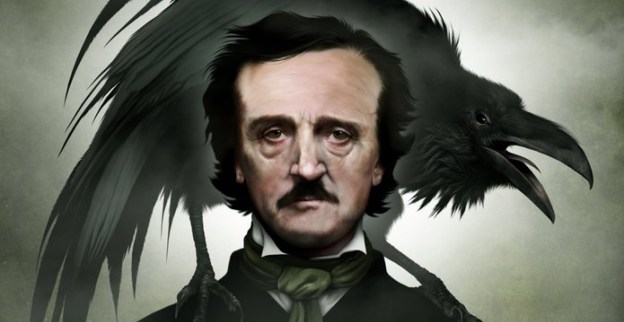
On Edgar Allan Poe

Emma Kenney

Edgar Allan Poe is one of the most well-known writers of the American Romanticism genre of all time. His poems and short stories incorporate many common Romanticism themes and concepts, such as the elevation of emotion over reasoning and nature over civilization. He used descriptive language and fantastical undertones to draw his readers in and earn him the title of one of America’s most famous poets.

Poe was born in Boston, Massachusetts to two professional actors on January 19, 1809. By the time he turned three, his birth parents had passed away and he was taken in by the Allans in Richmond, Virginia. He began writing at a young age but was shamed for it by his foster father, who wanted him to take over the family business. This helped create the rocky relationship between Poe and his foster father, one that would only worsen over the years. Poe received education at one of the best boarding schools in the country and later was accepted into the University of Virginia. Here he met a girl named Sarah Royster, and soon the two were engaged. However, the young man had to drop out of the college a year into his education after his gambling got him into financial trouble. This was the final straw, and Poe and his foster parents had a large falling out that ended with the Allans refusing to help Poe pay off his debt or let him come back home to stay with them until he could pay it off himself. Soon after, Poe discovered Sarah had been cheating on him, and he called off his engagement with her, depressed and broken-hearted.

The man joined the army after this, and it was this year (1827) that his first volume of poetry was published. He published a few more volumes of poetry within the next two years, though they weren’t exactly successful. After his failed first attempt at poetry, Edgar Allan Poe began attending the United States Military Academy at West Point. Though he was an excellent student, Poe once again had to drop out of school because he was financially unable to support himself, and he couldn’t seem to handle the strict military duties that came with the Academy. He once again fought with his foster father, who had remarried after his foster mother passed away. Once again, Poe was told he was not allowed to come home and he would not be receiving any help financially. After this he moved in with his aunt and younger cousin in Maryland, having nowhere else to go.

Then Poe began writing and publishing short stories. He also began writings and editing for various magazines including the Broadway Journal in New York City. He spent the next ten years of his life doing this, during which he married his cousin, who was about 14 at the time. During these ten years Poe published some of his most famous works, including “The Fall of the House of Usher” and “The Raven.” He struggled to get by for a while, but after one of his short stories won a writing competition, Poe became a sensation almost over night. Poe’s foster father passed away during this time, creating even more resentment on the part of Poe when he left him out of the will entirely but included an illegitimate child in it instead.

Poe was a vicious critic; his reviews of books and other writings would eventually create so much drama he would be asked to leave the magazine or change his review style. Poe chose to leave. Some sources say his struggle with alcoholism played into the magazine’s decision to ask him to leave, but so far it hasn’t been proven for sure either way.

A few years after this his wife grew ill and passed away. Poe struggled greatly dealing with this; he became extremely depressed, and his alcoholism reached a new peak. He once again began to struggle financially, as he focused mainly on fueling his desire for alcohol. Eventually his extreme alcohol intake caused him to experience extremely poor health, and it eventually caused him to die of “congestion of the brain” on October 7, 1849.

After his death, one of his literary rivals was granted the task of writing his obituary. This rival purposefully strove to make Poe seem as horrible as possible, calling him not only an alcoholic but also an abuser of women and a deranged psychopath as well. This succeeded in damaging Edgar Allan Poe’s reputation for quite some time after his death. This same man wrote the first ever biography of Edgar Allan Poe, ruining his reputation after death even more. Eventually, however, the general public began reading the works of Poe again, and he finally achieved the renown commonly associated with him today.

Poe is a spectacular example of American Romanticism, which, as previously stated, is defined by characteristics such as the elevation of emotion of reason and the elevation of nature over civilization. It also commonly uses writing techniques such as using what could be considered almost excessive descriptive language.

One of the prime examples of this is his “The Tell-Tale Heart.” This story is about a man who gets a new neighbor. After a short period of time, the man begins to become paranoid, hating one of his neighbor’s eyeballs. He even goes so far as to name it “The Evil Eyeball.” This eye begins to drive the narrator madder and madder. Finally he comes to the conclusion he needs to kill his neighbor after both the eye and the beating of his neighbor’s heart continue to haunt his every hour. The narrator smothers him to death and takes out his heart. He then decides to chop the neighbor up and hide him under the floorboards. However, he still heard the beating of the heart. It drives him madder and madder yet again, until finally he can no longer take it and confesses the crime he committed.

This is a prime example of American Romanticism because right off the bat it elevates emotion over reason. The narrator’s obsession with the eye and heart are by no means reasonable. The beating of the heart after death is certainly emotionally based, as it is illogical to believe it could truly happen in real life. The entire story is about emotion itself; it shows how the emotion of guilt can eat away at a person even if he gets away with something, until finally the guilty person can no longer take it. It shows emotion is a driving force behind human actions. The narrator murders a man simply because he finds his eye annoying, symbolizing that humans will do terrible things and justify them as being okay because it got rid of a situation that was bringing them discomfort.

Overall, Poe is a wonderful example of American Romanticism, and he will most likely be a beloved American poet and short story author for many years to come.

The Problem with the American Foster Care System

Emma Kenney

“Foster Care” is defined by the Merriam-Webster dictionary as “a situation in which for a period of time a child lives with and is cared for by people who are not the child’s parents.” Each year thousands of children make their way through the American foster care system. The point of foster care is to remove children from situations that could be potentially disastrous and place them within a safe and secure environment; however, each year hundreds of these children are placed in environments that are equally as bad, if not worse, than the ones they were previously removed from.

Statistics show a proven 28% of children within the foster care system face abuse each year. However, it is estimated far more are abused each year and are simply conditioned not to speak up about it. According to an article written by psychologist Susanne Babble:

Amy (name altered), an adult client who spent over seven years in the foster care system, told me that roughly nine out of ten fellow foster children she crossed paths with claimed that they had been abused by their foster parents.

She also expressed that foster children are often taught by their circumstances not to speak up and are conditioned to think abuse is “normal.” Additionally, Amy felt that it was not in their best interests to report abuse and risk being relocated, where they might be subject to yet more “unknown” abuse … and also have to endure another drastic change. She explained, “A foster child is already taught that you don’t speak up. It’s dangerous.”

It’s no easy task to find homes for thousands of children, and often the amount of children in the system far outnumbers the amount of foster homes able to care them. This leads to social workers potentially ignoring regulations and requirements for who is legally able to foster a child and allowing men and women with criminal charges of various sorts, including but not limited to drug use and domestic abuse, to become foster parents. While this creates more opportunity for a child to have a home it ultimately defeats the whole point of the system — to ensure the safety of children who have nowhere else to go! This is one of the biggest causes of child abuse within the system.

In 2010 a former foster child, who wishes to be known as John Doe to protect his identity, sued his former foster father John H. Jackson. Jackson had criminal charges for drunken driving, drug abuse, child molestation, and domestic violence when he was approved to foster children. Doe faced hundreds of episodes of sexual and physical abuse while in the care of Jackson. He lived with the man for 4 years until his birth father was able to reclaim him. Other children weren’t as lucky and were forced to remain with Jackson until they aged out of the system or ran away. Jackson now faced life in prison, but the emotional trauma Doe was left with still remains.

Yet another example of this is the story of 17-year-old Jada. Jada and her younger sister Faith, as well as an older girl named Monica, were placed in the care of  Audrey Chatmon when they were 2, less than a year, and 15 respectively. When Chatmon received the three children there had already been multiple cases of child abuse filed against her, all of which had been overlooked and ignored by the social workers who placed the children within her care. In fact, the Department of Children and Family Services even advised Chatmon to formally adopt the three girls. According to Garrett Therolf, a writer for the Los Angeles Times, “The children noticed that Chatmon was often drunk and spent her days buried under her covers. She was surrounded by bottles of drugs to treat her bipolar disorder and was under the care of a county psychologist, according to court records.” It should have been obvious to social workers that Chatmon was unfit to care for foster children, yet they were placed within her care anyway. Unfortunately, neglect wasn’t the worst thing Jada would face while in the care of Chatmon. When Jada was four she was found crouching in the road by local police officers. Over half of the girl’s body was found covered in burns so severe she had to be sedated in order for them to be treated by doctors. However, like Doe, this is not where the damaging effects of her time in foster care ends. The girl, now a teenager, still faces daily emotional trauma as a result of the time she was left in the care of Chatmon. Her adoptive mother, who wishes to remain anonymous to protect Jada’s identity, explained it is obvious the 17-year-old still struggles to live as a normal child, even within a safe environment.

However, more factors exist in Jada’s case than might first meet the eye. When Jada and her two foster sisters were asked if their social workers had ever checked in on them like they were legally required to, all three girls denied ever seeing their social workers after they first left them with Chatmon. There are thousands of children in the American foster care system and not enough social workers to properly keep track of them. This means oftentimes after children are placed into a home, whether fit or unfit, their social workers never come back to make sure they properly adjust and their foster parents are treating them in the right way. Children are being left alone to face scary and potentially dangerous situations. The lack of social workers is one of the contributing factors as to why unfit homes even exist. Periodically, homes and families approved to foster children are supposed to be re-examined to ensure they are still fit and safe for the children being placed in them. However, without a proper number of social workers to manage the workload needed to make the American foster care system succeed, the homes within the system can be left unchecked for much longer periods of time than proper or even indefinitely.

Babbel, who was also a social worker herself, explains:

During my own time working with foster care agencies and group homes, I often witnessed the agency staff become overwhelmed with the number of children they were required to monitor — not to mention the pressure of completing mountains of paperwork. The paperwork would often trump the actual visits in priority because it was required in order to keep the agency funded and our jobs intact. There seemed to be incentives in place to keep children with foster families they were assigned to, which sometimes led to lenience when evaluating conditions. (Foster agencies receive money for each placement. If a child is removed from a placement, the agency can lose the commission. Although foster agencies and social workers usually have the child’s best interests at heart, these factors may contribute to a less than efficient system of properly monitoring foster homes.) Many of the caseworkers (like myself) were fairly young, inexperienced recent graduates of psychology school putting in their time to accumulate enough hours to get their state licensing. Having little experience, we did not always know how to detect abuse or handle the enormous emotional volatility that is inherent in such a job. Other caseworkers were older adults with years of exposure to the failures of “the system” and defeatist attitudes that did not help them in their jobs. Ex-foster children I’ve spoken with reported jaded caseworkers who always seemed to “turn a blind eye,” never asking probing questions or visiting the sleeping areas of their charges. Making things even trickier, there are statutes of limitations and other restrictions in place to prevent prosecution of perpetrators or state agencies too long after-the-fact. In Pennsylvania, for instance: “…the statute of limitations in most civil assault cases is two years from the date of the injury. If the injured victim is under the age of eighteen (18), the victim must file suit before they reach the age of twenty (20).” (This information is according to the law firm Andreozzi & Associates, who specialize in foster care abuse claims.) However, there are sometimes ways around these restrictions. They say that “One exception to the statute of limitations for sexual abuse and molestation in Pennsylvania surrounds what is known as the common law ‘discovery rule.’ The application of this rule allows victims to file suit within two years of the time: (1) they discover the injury; and (2) they discover the source of the injury.’”

This leads to yet another problem with the American foster care system: group homes. Children are placed in group homes with any number of other children in an attempt to compensate for the lack of available foster care families to take care of them and as an alternative to placing them in an unfit home. Unfortunately, these group homes are often just as bad as the unfit homes social workers are trying to avoid. In these homes children often face abuse when they get into fights with other children or don’t follow the rule. Even if children don’t face abuse, these group homes often leave them dealing with emotional detachment disorder. Babbel explains it as follows:

Within the group home system, children are moved around to facilities with varying levels of security and structure depending on their behavior and psychological/emotional growth. A change in level often means a child is immersed in yet another strange new environment. Each time a child is moved to another level, he or she gets new teachers, new therapists, new classmates, new roommates, and a new life. Foster children who have moved multiple times often develop detachment disorder: they become unable to attach to others as a defense mechanism. Sadly, this often results in a child who is not able to form normal long-lasting relationships that are crucial to success later in life.

Foster or group home children generally lack the childhood experiences that teach other children to trust authority figures. What can seem like a lack of emotion or attachment ability in these kids may often be a veiled protection mechanism: they may remain reserved within relationships in order to protect themselves from further hurt. They might innately be aware of the sad truth that they are viewed by caseworkers and foster parents as potentially “troublesome,” and that — unlike most children — they must prove themselves to be trustworthy before they will be fully loved. This can seem like an overwhelming task for an already overly stressed child with compromised coping mechanisms. One former foster care client expressed: “What one has to consider is that foster kids are taught to not trust … so while it seems that we are detached, the truth is, often we know full well what is going on. But yes, we do have to protect ourselves, and hence, what seems like detachment to the clinical eye is simply what a ‘normal’ individual would call ‘reserved.’”

It should be blatantly obvious the American foster care system is broken and in desperate need of reform. A system intended to protect children, to give them their best chance in life, is currently the cause of those children being placed in danger. Hundreds of children are being neglected, beaten, and sexually abused by their foster families as well as ignored by their social workers within a system that promised to make things better for them. Until these children are protected by the American foster care system, it will always be flawed, corrupt, and detrimental to the wellbeing of a future generation.

Works Cited

Babbel, Susanne, Ph.D, M.F.T. “The Foster Care System and Its Victims: Part 2.” Psychology Today. N.p., 03 Jan. 2012. Web. 24 Oct. 2016.

“Estey & Bomberger Announces Jury Awards $30 Million in San Jose Molestation Case.” Business Wire. N.p., 05 Aug. 2010. Web. 25 Oct. 2016.

Gomez, Mark, and Linda Goldston. “South Bay Sex-abuse Lawsuit: Ex-foster Child Awarded $30 Million.” The Mercury News. N.p., 05 Aug. 2010. Web. 25 Oct. 2016.

Therolf, Garrett. “Jada’s Case Highlights Problems in Foster Care System.” Los Angeles Times. Los Angeles Times, 18 Dec. 2013. Web. 27 Oct. 2016.

The Truth about Youth

Emma Kenney

How many times have you as a teenager been told you are incapable of doing anything worthwhile simply because you are young? How often have you been looked down upon and told you will never be able to change the world for the better? Far too often in today’s society young people are discredited, and far too often today’s young people lower themselves to fit that image of them, choosing to give up or slack off because that’s what adults expect them to do. However, the youth of today, especially those that call themselves Christians, should set higher standards for themselves than those expected.

The Bible makes it clear you are never too young to be used by God in one way or another. 1 Timothy 4:12 states, “Don’t let anyone look down on you because you are young, but set an example for the believers in speech, in conduct, in love, in faith, and in purity.” This verse makes it clear young people are called to hold themselves to the standards God has set, to the point people older than them can look at them and see God through them. This means being more than what has become expected of youth today. It means being young people capable of changing the world.

Youth changing the world and impacting it for the better isn’t a new thing. There are plenty of youth who have fought to change the world and just as many who have changed it unintentional just by staying true to their good morals, both today and in years past.

A perfect example of this is Anne Frank. Anne Frank was a Jew born on June 12, 1929 in Frankfurt, Germany. She died in the March of 1945 during World War II at the age of 15 after her family was caught by Nazis. Most people have heard the story of this girl, told in her own words through the diary she kept while her family was in hiding. Anne Frank didn’t do anything that could be considered especially spectacular, other than hold a positive attitude even when her world was falling apart all around her. Her family went into hiding when she was 13 to avoid the persecution they were facing in Germany for being Jewish. Anne had to leave behind everything she knew — her friends, her home, and even most of her possessions — to move into an empty hidden room within the building of her father’s company. During the following two years, her family stayed confined to that room, growing accustomed to staying in the dark and having to be quiet out of fear of being discovered by the Nazis and sent to concentration camps. Anne was a typical teenage girl; she had periods of hopelessness, but more times than not she kept her positive attitude through everything the world threw at her. Ultimately her family was caught, and everyone except for her father perished within concentration camps. Her father eventually found and published her journal, which is still highly loved today. Anne’s personality can best be shown through her own words:

It’s really a wonder that I haven’t dropped all my ideals, because they seem so absurd and impossible to carry out. Yet I keep them, because in spite of everything, I still believe that people are really good at heart…. I don’t want to have lived in vain like most people. I want to be useful or bring enjoyment to all people, even those I’ve never met. I want to go on living even after my death!

The girl wrote she wished to “keep on living even after her death,” and she successfully managed to do that through her diary, which will most likely be read by youth and adults for generations to come because of her inspiring and uplifting hope and unending joy.

Anne isn’t the only example of a young person who has impacted the world. In more recent times the world has been impacted by a boy by the name of Jack Andraka. He won a $75,000 prize in the Intel International Science and Engineering Fair for his pancreatic cancer detecting tool in 2012 as a freshman in high school.  Andraka partnered with John Hopkins University to complete his life saving invention. Abigail Tucker, a writer for the Smithsonian Magazine, states the following:

Pancreatic cancer is one of the most lethal cancers, with a five-year survival rate of 6 percent. Some 40,000 people die of it each year. The diagnosis can be devastating because it is often delivered late, after the cancer has spread. Unlike the breast or colon, the pancreas is nestled deep in the body cavity and difficult to image, and there is no telltale early symptom or lump. “By the time you bring this to a physician, it’s too late,” says Anirban Maitra, a Johns Hopkins pathologist and pancreatic cancer researcher who is Andraka’s mentor. “The drugs we have aren’t good for this disease.” But as the cancer takes hold, the body does issue an unmistakable distress signal: an overabundance of a protein called mesothelin. The problem is that scientists haven’t yet developed a surefire way to look for this red flag in the course of a standard physical. “The first point of entry would have to be a cheap blood test done with a simple prick,” Maitra says. That’s exactly what Andraka may have invented: A small dipstick probe that uses just a sixth of a drop of blood appears to be much more accurate than existing approaches and takes five minutes to complete. It’s still preliminary, but drug companies are interested, and word is spreading. “I’ve gotten these Facebook messages asking, ‘Can I have the test?’” Andraka says. ‘I am heartbroken to say no.’”

Andraka began working on his invention after a close family member of his died to pancreatic cancer. The teenager began researching the disease and its treatments, and he was devastated to discover the lack of successful ones. The boy decided he would take it upon himself to find a way of detecting the disease before it was too late for other people and their families, like it had been for his. He spent months on his design, partnering with John Hopkins University, and he ultimately went on to be one of the only freshmen to ever win the Intel International Science and Engineering Fair. Andraka saw a problem in the world and took the time to create a way to fix it.

Another modern example of a young person who has changed the world for the better is Malala Yousafzai. Most people today have heard of this girl and her fight for female education in Pakistan. The girl was born in Pakistan on July 12, 1997 and is currently 19. She began fighting for the right of women to gain an education, was threatened by the Taliban, and eventually shot as she was coming home from school one day. Though the girl was shot in the head, she managed to survive and went on to become the youngest person to receive a Nobel Peace Prize in 2014 at the age of 17. Her fight began in 2008 after the Taliban began attacking girls’ schools. She began giving speeches and writing a blog speaking out against the violent and impressive acts being committed by the Taliban. In 2012 the Taliban issued a death threat against her, and later she was shot on a bus by a man who boarded and demanded to know which girl was Malala. Her injury left her in critical condition, and she was flown to England to receive better treatment. Though she had to have part of her skull removed to reduce swelling and surgery on her facial nerves to fix facial paralysis, Malala was fortunate enough to experience no major brain damage whatsoever. After she recovered, the girl began attending school in England and wrote a book that was published. She was nominated twice for the Nobel Peace Prize and won it the second time she was nominated in 2014. The young woman still actively speaks out about the need for girls around the world to have safe and legal access to education and the positive effects it would have on society.  According to biography.com:

For her 18th birthday on July 12, 2015, also called Malala Day, the young activist continued to take action on global education by opening a school for Syrian refugee girls in Lebanon. Its expenses covered by the Malala Fund, the school was designed to admit nearly 200 girls from the ages of 14 to 18. “Today on my first day as an adult, on behalf of the world’s children, I demand of leaders we must invest in books instead of bullets,” Yousafzai proclaimed in one of the school’s classrooms. That day, she also asked her supporters on The Malala Fund website: “Post a photo of yourself holding up your favorite book and share why YOU choose #BooksNotBullets — and tell world leaders to fund the real weapon for change, education!” The teenage activist wrote: “The shocking truth is that world leaders have the money to fully fund primary AND secondary education around the world — but they are choosing to spend it on other things, like their military budgets. In fact, if the whole world stopped spending money on the military for just 8 days, we could have the $39 billion still needed to provide 12 years of free, quality education to every child on the planet.”

In October 2015, exactly 3 years after she was shot, a documentary was released about the woman and all she had accomplished. It, as well as her book, are still incredibly popular today.

Malala was willing to give up everything, including her life, to stand up for what she believed in. She was willing to fight not only for herself, but for every other girl across the world who was experiencing the horrific discrimination she faced when the Taliban tried to prevent her access to an education. The young lady showed you don’t have to be old to fight for what is right; you only need to be brave enough to stand up against all odds, even when it seems as though there is no hope of success.

As seen through these examples, young people, whether today or from years past, are perfectly capable of changing the world and impacting it for the better. Teenagers can achieve things just as meaningful as adults, if they only choose to rise above the standards expected of them and abide by the principles God laid out for them. When youth fight for what is good and what is true and what is just, there is very little they will find themselves unable to accomplish. In the words of Anne Frank, “How wonderful is it that nobody need wait a single moment before starting to improve the world.”

Works Cited

“Anne Frank Biography.” Bio.com. A&E Networks Television, 08 Jan. 2016. Web. 05 Nov. 2016.

“Anne Frank Quotes.” Goodreads. N.p., n.d. Web. 06 Nov. 2016.

Kaiman, Jonathan, Amanda Holpuch, David Smith, Jonathan Watts, and Alexandra Topping. “Beyond Malala: Six Teenagers Changing the World.” The Guardian. Guardian News and Media, 18 Oct. 2013. Web. 07 Nov. 2016.

Kettler, Sarah. “Malala Yousafzai Biography.” Bio.com. A&E Networks Television, n.d. Web. 07 Nov. 2016.

Tucker, Abigail. “Jack Andraka, the Teen Prodigy of Pancreatic Cancer.” Smithsonian Magazine. Smithsonian, Dec. 2012. Web. 06 Nov. 2016.

The History of Santa Claus

Emma Kenney

One of the most beloved children’s characters of all time is Santa Claus. There have been dozens of movies and books based on him, and nearly every continent has its own version or versions of him, but how did this so well-known character get his origins?

There are a few different ideas about how Santa Claus came to be, but the most accepted version is the one involving St. Nicholas. St. Nicholas was a monk born in roughly 280 A.D. near turkey. He quickly became known for both his fierce defense of Christianity and his kindness. One of the best examples of his caring spirit is one that was quite well known when he was still alive. Three girls were about to be taken into forced prostitution for life because their father was in deep debt. St. Nicholas secretly gave him three bags of gold to pay off the debt and gain his daughters back. Because of this and similar instances, St. Nicholas became known as the patron saint of children. According to Brian Handwerk, a writer for National Geographic:

The original saint was a Greek born 280 years after Christ who became bishop of Myra, a small Roman town in modern Turkey. Nicholas was neither fat nor jolly but developed a reputation as a fiery, wiry, and defiant defender of church doctrine during the “Great Persecution,” when Bibles were put to the torch and priests made to renounce Christianity or face execution. Nicholas defied these edicts and spent years in prison before Constantine brought Christianity to prominence in his empire. Nicholas’s fame lived long after his death (on December 6 of some unknown year in the mid-fourth century) because he was associated with many miracles, and reverence for him continues to this day independent of his Santa Claus connection.

Nicholas rose to prominence among the saints because he was the patron of so many groups, ranging from sailors to entire nations. “By about 1200,” explained University of Manitoba historian Gerry Bowler, author of Santa Claus: A Biography, “he became known as a patron of children and magical gift bringer because of two great stories from his life.”

In the better-known tale, three young girls are saved from a life of prostitution when young Bishop Nicholas secretly delivers three bags of gold to their indebted father, which can be used for their dowries. “The other story is not so well known now but was enormously well known in the Middle Ages,” Bowler said. Nicholas entered an inn whose keeper had just murdered three boys and pickled their dismembered bodies in basement barrels. The bishop not only sensed the crime, but resurrected the victims as well. “That’s one of the things that made him the patron saint of children.” For several hundred years, circa 1200 to 1500, St. Nicholas was the unchallenged bringer of gifts and the toast of celebrations centered around his day, December 6. The strict saint took on some aspects of earlier European deities, like the Roman Saturn or the Norse Odin, who appeared as white-bearded men and had magical powers like flight. He also ensured that kids toed the line by saying their prayers and practicing good behavior.

After his death, the story of St. Nicholas delivering gifts to children on his saint day (December 6th) was invented. However, after the Reformation saints began to fall out of favor with many people. This caused a problem to arise: people still wanted a day of giving gifts to their children but no longer wanted to claim St. Nicholas was the one behind it. This led to the story of Jesus as a baby delivering gifts to children on Christmas; however, baby Jesus wasn’t very scary and parents didn’t like the idea of having Jesus threaten the children. Once again, the story was adapted to depict Santa Clause as an almost demonic being who would whip or kidnap naughty and disobedient children.

The Dutch, however, didn’t like this version and reverted back to St. Nick. The Dutch brought this with them when they sailed to America. In the earlier 1770s they gathered to honor the saint. A newspaper from New York wrote about the Dutch and their St. Nicholas, then known as Sinter Klaas. After this it was temporarily thrown aside as Christmas became mainly a pagan drinking holiday.

However, this changed in the 1800s when writers made an effort to portray Christmas as a family holiday. This was first done in a book by Washington Irving, stating St. Nicholas gave presents to good children and switches to bad ones. Later, this was adapted again in an anonymous poem that completely tied St. Nick to Christmas, ridding him of any religious ties and giving him the name “Santa Claus.” The next year, 1822, Clement Clarke Moore wrote “The Night Before Christmas” for his children, which is still extremely poplar today. The book was first published anonymously the following year. It was thanks to this story that Santa Claus is known for having reindeer that fly his sleigh.

When Moore’s story was published a political cartoonist by the name of Thomas Nast sketched and published the imagery of Santa Claus that is still popular today. Both Moore’s story and Nast’s drawing depicted Santa Claus as a large and jolly old man with a rosy face and a big white beard. It was because of Nast Santa Claus in his red coat hat with white fur and black boots became popular with the majority of people. It is also thanks to him Santa Claus is associated with the North Pole, Mrs. Claus, and elves.

Also around this time, John Pintard (the man who founded the New York Historical Society) began promoting St. Nicholas as a patron saint of American society. This caused people to revisit the tradition of St. Nicholas delivering gifts to good children around Christmas and have open minds about the new version of Santa and traditions surrounding him that were being presented to the public. According to the St. Nicholas Center:

After the American Revolution, New Yorkers remembered with pride their colony’s nearly-forgotten Dutch roots. John Pintard, the influential patriot and antiquarian who founded the New York Historical Society in 1804, promoted St. Nicholas as patron saint of both society and city. In January 1809, Washington Irving joined the society and on St. Nicholas Day that same year, he published the satirical fiction, Knickerbocker’s History of New York, with numerous references to a jolly St. Nicholas character. This was not the saintly bishop, rather an elfin Dutch burgher with a clay pipe. These delightful flights of imagination are the source of the New Amsterdam St. Nicholas legends: that the first Dutch emigrant ship had a figurehead of St. Nicholas; that St. Nicholas Day was observed in the colony; that the first church was dedicated to him; and that St. Nicholas comes down chimneys to bring gifts. Irving’s work was regarded as the “first notable work of imagination in the New World.”

The New York Historical Society held its first St. Nicholas anniversary dinner on December 6, 1810. John Pintard commissioned artist Alexander Anderson to create the first American image of Nicholas for the occasion. Nicholas was shown in a gift-giving role with children’s treats in stockings hanging at a fireplace. The accompanying poem ends, „Saint Nicholas, my dear good friend! To serve you ever was my end, If you will, now, me something give, I’ll serve you ever while I live.”

Rudolph the Red Nosed Reindeer was added to the Santa Claus story in 1939 when Robert L. May wrote a poem to help bring customers to his store. The poem tells the story of a reindeer born with a glowing red nose. This, at first, leads him to be ridiculed and excluded by all the other reindeers and even Santa. However, one year on Christmas Eve heavy fog appeared and hindered Santa’s ability to see clearly. He then realized Rudolph was the solution and made him the 9th member of his elite team of reindeer.  The year it was published, nearly 2.5 million copies were sold. 7 years later, when it was reissued, over 3.5 million copies were sold. In 1964 it was made into a popular film narrated by Burl Ives.

After Santa Claus became popular in America the legend finally made its way back to Europe to replace their demonic child-abusing versions of St. Nicholas, though not everyone was on board with the new tamer version. Santa was actually not popular in Russia until the 1900s when Stalin came to power.

It was ultimately World War II that caused the love of Santa Claus known today. America sort of brought their legend of Santa Claus with them everywhere they went, and it was much more well received than the Russian Father Frost.

American stores, specifically those of New York, are mostly responsible for the Santa Clauses at shopping centers. In the 1820s stores began using Santas to help advertise for Christmas shopping. Roughly 20 years later, in 1841, one store in Philadelphia set up a life-sized model of Santa Claus. Hundreds upon hundreds of children came to see him that year. Other stores adopted this as well, but they soon found out it was easier, let alone more appealing to the children, to have a live Santa Claus sit in the store. At the end of the century the Salvation Army began having its workers dress up as Santa Claus to help gain donations to pay for Christmas dinners for homeless or impoverished families. This tradition has been in place ever since.

This is, however, not the only version of Santa Claus still in existence today. Countries all over the world have slightly modified interpretations of the jolly old holiday gift-bringer. In France, children sing songs to Pere Noel and leave out shoes for him to fill with sweets and possibly small gifts while they are sleeping. In Mexico Santo Clos brings children larger gifts around Christmas. However, they receive smaller gifts after the New Year from Reyes Magos. In Russia children receive gifts from a woman named Babushka instead of from Santa Claus or Father Christmas. In Japan children receive Christmas gifts from a monk named Hotel-osho. Children are told he has eyes in the back of his head and can see everything  so they will have extra good behavior around the holidays. Some Japanese families choose to ignore the legend of Hotel-osho and use the American version of Santa and his reindeer instead. In China children hang stockings to be filled with small gifts and all kinds of sweets by Dun Che Lao Ren (Christmas Old Man) during one of their festivals. Children will receive more small gifts and treats during the Chinese New Year. Some children in Norway receive their gifts from a goat-like gnome called Julebukk. Other children receive their gifts from Julenissen (Santa Claus) on Christmas Eve. Children in Ukraine might receive a few small gifts from Father Frost.

The history of Santa Claus is long and sometimes confusing. Cultures all over the world have different ideas of how this person came to be and what form he (or sometimes she) takes. However, two things stand true throughout every culture that tells of some Christmas season gift-bearer: parents want to pass on the generosity and joy that comes with Christmas gift giving to their children, and to some extent culture has shaped the way Santa Claus is portrayed and probably will continue to do so for many years to come. The evolution and history of Santa Claus is far from over


Bibliography

Handwerk, Brian. “St. Nicholas to Santa: The Surprising Origins of Mr. Claus.” National Geographic. National Geographic Society, 20 Dec. 2013. Web. 10 Oct. 2016.

“Origin of Santa.” St. Nicholas Center. N.p., n.d. Web. 12 Oct. 2016.

“Santa Claus.” History.com. A&E Television Networks, 2010. Web. 11 Oct. 2016.

“Santa’s Net.” Christmas Traditions Around the World. N.p., n.d. Web. 11 Oct. 2016.

Blind and Deaf and Remembered: Ludwig von Beethoven

Emma Kenney

Ludwig van Beethoven is one of the most renowned composers and pianists to walk the earth, even nearly 200 years after his death. Credited with writing 9 symphonies, 32 piano sonatas, 5 piano concertos, 16 string quartets, and countless other works, the man left quite an impact on the world. However, the life of this musician was not as splendid as one might be inclined to assume.

It is unknown for certain when Beethoven was born, but due to when the musician was baptized — December 17, 1770 — it is readily accepted he was born on or very near December 16, 1770. He was the oldest of three children born to Maria Magdalena and Johann van Beethoven in Bonn, Germany. Beethoven was introduced to music by his father at a young age, first in the form of the clavier, and then in the form of the violin. However, this was not a pleasant experience for the boy as his alcoholic father was often physically abusive toward him. There are multiple accounts of the little boy being beaten, deprived of sleep, or thrown into the family cellar by his father for any mistakes or hesitation while practicing music. Still, the boy developed not only talent but a love for music as well and performed his first concert at the age of seven on March 26, 1778. His father announced he was only six, because Mozart had been six at the time of his first performance. This ultimately led to Beethoven believing he was younger than he really was, even after being presented with his baptism certificate. It is unknown whether his brothers, Caspar and Johann, were also trained as musicians when they were born.

Meanwhile, the boy was attending Tirociniun, a local Latin school. He struggled to maintain proper grades, as school did not come easy to him. It has been theorized the composer might have been dyslexic. In his own words, “Music comes to me more readily than words.” Beethoven, however, did not have to struggle with school for long. He was withdrawn from school to study music full time with Christian Gottlob Neefe, the Court Organist, at the age of 10. Under Neefe’s wing, Beethoven published his first composition by the age of 12 and became the official Assistant Court Organist in 1784 at the age of 13. Finally, in 1787, the court sent him to Vienna to study music and composition. Legend states here Beethoven studied under Mozart, but there is barely enough evidence to support Beethoven having met Mozart, let alone studied music theory and composition under him during this short time. Only a few weeks later the boy returned to Bonn after receiving word his mother’s health was failing. By this point, he was the one supporting his family as his father’s drunkenness worsened and prevented him from being a productive member of society.

Beethoven returned to Vienna in 1792, hoping to study music under Joseph Haydn, who was accepted as the greatest living musician of that time. He did indeed study piano with the man, as well as counterpoint with Johann Albretchsberger and vocal composition with Antonio Salieri, both of whom were also considered top musicians of that age. Word spread of this rising musician with a gift for improvisation, and Beethoven made his debut in Vienna on March 29, 1795, supposedly performing his piano concerto in C Major. Soon after his debut Beethoven published his “Opus 1,”  which turned out to be incredibly successful both in terms of monetary gain and critical review.

Still Beethoven’s success continued to grow, leading to his performance of his Symphony No. 1 in C Major at the Royal Imperial Theatre of Vienna. His performance was incredibly successful, leading to become even more famous and anticipated. This piece successfully established him as one of the top composers of the age, though the musician would later grow to detest that composition.

After this performance Beethoven continued to compose. His work of that era included a popular ballet titled The Creatures of Prometheus performed at the Royal Imperial Theatre of Vienna over 25 times and “Symphony No. 3” (also known as the “Eroica Symphony”), published in honor of Napoleon in 1804 directly after he declared himself emperor. The “Eroica Symphony” yet again established Beethoven as something spectacular. This piece was incredibly different from anything that had been composed up until that time. In fact, it was so different in style during rehearsals the musicians struggled to understand how it was to be played.

After this, Beethoven decided he was ready to leave Vienna. Before he could do so, his friend Countess Anne Marie Erdody struck a deal with him. As long as he stayed in Vienna he would be paid a large annual sum, allowing him to live without worry of supporting himself or his family. By accepting this deal, Beethoven became one of the world’s first independent composers, not working for a church or any other group. This granted him complete freedom over what he was allowed to write and when he would write. Between his musical freedom and the large sum he was receiving, Beethoven experienced some of the best conditions musicians had been granted up until then.

Unfortunately, things would not continue to be easy for the composer. Around this time, Beethoven realized he was going deaf, though he would do everything within his power to conceal this fact from the public knowledge for as long as he possibly could. The weight of this deafness caused the man to fall into a numbing depression and struggle with suicidal thoughts, as well as an anger and hatred toward mankind. The man had already been an introvert up until this point, but after this he became downright antisocial and hostile. He fought with everyone around him, and he even went as far as to attempt to break a chair over the head of on of his closest and only  friends of that time, Prince Lichnowsky. He wrote:

I must confess that I lead a miserable life. For almost two years I have ceased to attend any social functions, just because I find it impossible to say to people: I am deaf. If I had any other profession, I might be able to cope with my infirmity; but in my profession it is a terrible handicap….O you men who think or say that I am malevolent, stubborn or misanthropic, how greatly do you wrong me. You do not know the secret cause which makes me seem that way to you and I would have ended my life — it was only my art that held me back. Ah, it seemed impossible to leave the world until I had brought forth all that I felt was within me.

Despite his increasing deafness and hostility toward the world and everyone who was occupying it, Beethoven continued to compose, at times claiming music was the only thing convincing him to keep going in life and not take his own life. He composed over 100 pieces during this era, ranging from overtures and trios to symphonies and concerti. His work during this time included the incredibly famous and beloved “Moonlight Sonata” and Fidelio, which was the man’s only opera.

One theory for Beethoven’s deafness is arterial disease, as it explains not only his deafness but also his quick temper and moodiness. It is more readily accepted, however, the cause of his hearing impairment and ultimately deafness was the nasty typhus he battled over the summer of 1796.

Beethoven’s challenges continued in 1815 after the death of one of his brothers. He engaged in an enormous custody battle with his sister-in-law over her son and his nephew, lasting for seven years. Ultimately, Beethoven won the legal feud but lost the respect of many of his family members, including his nephew. Soon after this, Beethoven lost the majority of his beneficiaries and began to struggle financially to support himself and the family he felt such loyalty to and responsibility for.

However, Beethoven’s challenges were not over even here. The musician, who was entirely deaf by this point, lost his eyesight as well. What would have ended the musical careers of most composers only seemed to spur Beethoven on. During this period of his life Beethoven composed some of his most beloved pieces, such as his Missa Solemnis. During this period he also composed what can possibly be considered his most famous piece of all time, his “Symphony No. 9,” simply referred to by many as “Beethoven’s Ninth.”

Before going blind, the composer fell in love with a woman by the name of  Antonie Brentano. He wrote her a letter over the course of two days in 1812, but he never sent it. The letter stated: “My heart is full of so many things to say to you — ah — there are moments when I feel that speech amounts to nothing at all — Cheer up — remain my true, my only love, my all as I am yours.”

However, nothing would ever happen between the two. Unfortunately Brentano was already happily married when the composer developed feelings for her. It is believed she was the only woman Beethoven could ever bring himself to love.

The musician passed away on March 26, 1827 at the age of 56 in Vienna, Austria due to a post-hepatitic cirrhosis of his liver. Recently scientists examined fragments of his skull. They found high levels of lead, which causes some to believe the man died of lead poisoning instead. However, this theory is controversial and highly unpopular with most, as immediate evidence was found at the time of Beethoven’s to point to post-hepatitic cirrhosis of the liver. Yet another theory for Beethoven’s death is he died of a common cold, but once again this theory is not readily accepted, especially within the medical community.

He died without a family to bear his legacy or a son to carry on his lineage, as he never married or had children of his own, between his distaste for humanity and his supposed relentless heartbreak over Antonie Brentano. The closest thing he had was his nephew, Karl van Beethoven, who still hated him at this point in time. Though he didn’t have a family of his own, he had a large number of supporters. An estimated 20,000 people attended his funeral. The man’s last words were, “Plaudite, amici, comoedia finita est,” which translates from Latin to “Applaud, friends, the comedy is over.”

Beethoven faced many challenges over the course of his life; the odds were almost always stacked against him. Even so, Beethoven worked to overcome all he faced in order to produce the music he so loved. Through every situation, even overwhelming depression, he clung to music in order to find purpose. He faced financial peril, blindness, and deafness, and still the man is known as one of the greatest composers to have ever walked the face of the earth. Ultimately, Beethoven is a perfect example of why one should never allow challenges to stop one from achieving one’s dreams, even when those challenges seem like they should reasonably end all possibility of success, such as deafness to a musician.

Bibliography

“Beethoven Piece Is Discovered After 192 Years.” CORDIS. University of Manchester, 25 Oct.  2012. Web. 20 Sept. 2016.

“Biography: Beethoven’s Life — Ludwig Van Beethoven’s Website.” Ivbeethoven. Ivbeethoven, n.d. Web. 24 Sept. 2016.

“Ludwig Van Beethoven Biography.” Biography.com. A&E Networks Television, n.d. Web. 19 Sept. 2016.

The 1970s: A Brief Overview

Emma Kenney

The 1970s were a completely unique and overwhelming decade, full of eccentric people, exciting inventions, and standard-changing events. Familiar names such as Richard Nixon and Michael Jackson came into light, as well as many other iconic people and things. The 1970s were an interesting and important decade.

Possibly the biggest achievement and event of the early 1970s was the Title IX. According to TitleIX.info, which is the officially Web site for this Act, “Title IX is a law passed in 1972 that requires gender equality for boys and girls in every educational program that receives federal funding.” A vast number of people have no idea Title IX even exists or that it applies to things other than sports. In reality, Title IX addresses 10 different subjects: Access to Higher Education, Career Education, Education for Pregnant and Parenting Students, Student Employment, Learning Environment, Math and Science, Sexual Harassment, Athletics, and Standardized Testing and Technology. Before Title IX, girls were unable to participate in the majority of team sports, having only cheerleading and dance as options. Title IX requires if there is no team for girls, girls must be given a fair chance to try out for the boys team while receiving no prejudice based upon their gender. Title IX also opened up doors for any woman who wished to become involved in the fields of math, science, or law. Before Title IX, girls could be denied admission to a college simply because they were girls. Oftentimes, even when a female application had better grades and credentials she was denied admission so the opening she deserved could be given to a male student instead. Title IX changed this drastically. Before Title IX was passed, there was great discrimination against girls, but even more so against girls who were pregnant. Schools were able to expell students who became pregnant, especially if they refused to abort the baby, even if it was due to rape. Title IX ensures if schools have special programs for pregnant students, they are not mandatory and their content is just as good as that which non-pregnant students receive. As seen in these points as discussed by TitleIX.info, Title IX completely changed things for girls everywhere, giving them their first fair chance at many things that had been seen as only for boys for many years.

Richard Nixon, who was elected as the 37th President of the United States (1969-1974), was born in Yorba Linda, California on January 9, 1913 to a grocer and his wife, named Francis and Hannah Nixon. Seeing how discontent his parents were with their circumstances, Nixon became increasingly ambitious and inspired. Nixon graduated from Whittier College in 1934 after having been elected as president of the student body and discovering he had apt skills in the field of debate. He married Thelma Catherine “Pat” Ryan, whom he knew from his local theatre group, in 1940, and together they had two daughters named Patricia and Julie. Richard served in the United States Navy during World War II from 1939-1945. After this, Nixon began pursuing his political career. The man represented his district of California in the House of Representatives. In 1950, Richard gained a position in the U.S. Senate. Nixon served as vice president to General Dwight Eisenhower for two consecutive terms, starting in 1952. Nixon ran for president in 1960, but was beaten by John F. Kennedy in what was one of the closest presidential elections in American history. Many assumed his political career was over when he then lost an election for Governor in California merely two years after he lost to Kennedy. However, Richard Nixon ran again for president in 1968. He won the election and began his term. The Vietnam War had caused much controversy among American citizens, so Nixon developed a strategy to achieve what he referred to as “peace with honor,” commonly known as Vietnamization. This trained the army of South Vietnam how to fight for themselves while slowly withdrawing American troops from Vietnam. A peace agreement with the communist area of North Vietnam was reached in January of 1973 by Nixon and his administration officials.

In 1972, when Nixon was running for reelection, the Democratic National Committee at the Watergate Hotel in Washington D.C. was broken into and burgled by operatives associated with his campaign. Nixon firmly denied any knowledge or involvement in this theft, but many members of his administration had knowledge of it, and later secret White House videos confirmed he was indeed involved and had only attempted to cover that fact up. Nixon, rather than being impeached by Congress, resigned from office on August 9, 1974, making him the only United States President to resign from office. On April 22, 1994, Nixon had a stroke and died in New York City.

The 1970s can claim many interesting inventions as well. The Post-It Note was invented in the 1970s by Art Fry and Dr. Spencer Silver. Art Fry, a member of his church’s choir, grew increasingly frustrated as week after week his bookmarks fell out of his hymnal. The man began searching for a bookmark that wouldn’t fall out but also wouldn’t damage his book. That was when he observed his colleague, Dr. Spencer Silver, had developed a strong adhesive that left no residue and could be continuously repositioned. Art applied this to the edge of a piece of paper, creating the first Post-It Note. Arthur and Spencer watched as their colleagues quickly gained interest in their invention. Here was a new and unique way of both communicating and organizing. When shown to test-markets in 1977, no interest in the product was shown, and for the time being, Post-It Notes had failed. However, the product production exploded in 1979 when a massive consumer sampling strategy took place. Post-It Notes continued to gain popularity as time progresses.

Another interesting invention of the 1970s is the floppy disk. The floppy disk was created by Yoshiro Nakamatsu, a Japanese inventor. He claims to have created it as early as 1950 but was not commercially introduced until 1971. The floppy disk is, according to Webster’s Dictionary, “a flexible removable magnetic disk, typically encased in hard plastic, used for storing data.” It forever changed computing as for the first time, large amounts of data could be easily stored for continuous use. Not only that, but floppy disks were removable and could be transported to a different location, unlike any sort of data device seen before this was invented.

Popular musicians of the 1970s included Elvis Presley and the Jackson 5. Elvis Presley was born on January 8, 1935 in Tupelo, Mississippi. The boy began his musical career in 1954 when he began a recording contract with Sun Records, and he was an international sensation by 1956. In 1970 he was named one of the Ten Outstanding Young Men of the Nation by the United States Jaycees. During this he served in the United States Army. Elvis wrote many popular songs before his death in 1977, including “Falling in Love With You” and “Blue Suede Shoes,” which were both popular in the 1970s. The Jackson 5 is another example of a popular music group from the 1970s. They produced a number of hits, including “I Want You Back” and “ABC.”

The 1970s can take credit for many great movies, some which are still popular today. A few examples of timeless 1970s films are Star Wars, which came out in 1977, and Jaws, which came out in 1975. Popular children’s movies from the 1970s include films such as Robin Hood, which came out in 1973, and the Aristocats, which came out in 1970. Popular television shows included M*A*S*H, Charlie’s Angels, and The Brady Bunch. Children could watch shows such as Sesame Street, Mister Rogers’ Neighborhood, and Scooby-Doo Where Are You?. The 1970s saw actors and actresses such as Goldie Hawn and Peter Strauss.

The 1970s saw a menu similar to that of today. Fondue and Jell-o were incredibly popular during this decade. Watergate salad and Watergate cake were popular in the later 1970s after two cookbooks poking fun at the Watergate incident of the early 1970s were published. One of these, The Watergate Cookbook, the Committee to Write the Cookbook, contained recipes such as Nixon’s Perfectly Clear Consommé and Cox’s In-Peach Chicken. Many popular foods were invented in the 1970s as well. In 1970, Hamburger Helper was created, followed by Starbucks in 1975, Pop Rocks in 1976, and Ben and Jerry’s Homemade Ice Cream in 1978.

Clothing in the 1970s was very similar to that of the 1960s; no initial fashion revolution occurred during this decade. Many of what people consider to be the best elements of the ’60s drifted into the ’70s, but blended together the styles of mods and hippies. The majority of the 1970s sported the famous wide-legged bell-bottoms, but by the end of the decade, they had almost entirely been replaced by much thinner legged pants. Dresses and tunics were popular for the ladies, but at the same time this was first decade in which women could wear pants for basically every aspect of their lives and have it be seen as proper and acceptable. Sandals or platform shoes were the shoes of choice. While the beginning of the 1970s saw many vibrant colors and intriguing patterns, by the end of the decade they had almost completely disappeared and been replaced by earth tones, grey, and black, as if the people grew tired of the exciting colors they had spent decades enjoying.

During the beginning of the 1970s, abortion was still illegal, and many woman were getting them in secret, usually unsafely as well as for a decent amount of money. Many people, mainly those within the Christian church, still sided with the belief abortion was completely wrong and undeniably sinful. The only exception to the laws against abortion was if a woman had been a victim of a rape that was proven to have happened in court. This exception was almost completely new to the ’70s. So many woman were found to be having dangerous illegal abortions that finally, in 1973, the  Roe v. Wade case caused the  legalization of  abortion in the United States. While people within the church weren’t thrilled by this at all, many active rights groups and more radical groups of people were thrilled. For the first time abortions were being safely conducted in large quantities, and no mothers died. The firm conservation Christian beliefs of past decades were being transformed into new ideas. Homosexuals started to be more open about their sexuality, though gay marriage was still entirely illegal. Lastly, many people began desiring a larger government with more control than had been seen in the past.

In conclusion, the 1970s were lively and progressive years. Much progress was made in ensuring equal opportunities and rights for both females and males. Useful inventions such as the Post-It Note were introduced and media were full of timeless artists and movies such as Elvis Presley and Star Wars. Well-known foods, such as Starbucks and Ben and Jerry’s, were created. Clothing slowly transformed from being vibrant and wild to being more reserved in both color and style.  The meaningful years of 1970-1979 will not be forgotten anytime soon.

Resources

Title IX: TitleIX.info

President Nixon: History Channel. Richard M. Nixon. May 20, 2015. Web. The Sun. “Nixon Resigns.” August 9, 1974. Print. The New York Times. “Nixon Resigns.” August 9, 1974. Print.

Post-It Notes: Post-It.com. “History Timeline.” May 20, 2015. Web.

Floppy Disks: History-Computer.com. “Floppy Disk.” May 20, 2015. Web.

Musicians: 1970s Music Billboards

Movies: Most Popular Feature Films Released from 1970 to 1979. May 20, 2015. Web.

Foods: Foodtimeline.org. “1970s Food.” May 20, 2015. Web.

Clothing: Retrowaste.com. “Clothes in the 1970s.” May 20, 2015. Web.

Social Issues: Karen Thomas. Phone Interview. May 20, 2015.