Tag Archives: connor shanley

The Weak Can Lead the Strong

Connor Shanley

Last Friday [May 4, 2012] David Lane presented a chapel message about foundations.  In this article I hope to expand on some of his points, but there is a different main point.  My story and testimony has parallels to David’s, but it is different.  The point of this article is not to justify any of my actions.  The point of this article is to point out one of the most overlooked qualities in leadership and Christianity, which is honesty.  I don’t mean the honesty in terms of just keeping a clean public image; I’m talking about the honesty that involves admitting your struggles.  All Christians and especially Christian leaders need to be open about their struggles in order to help other Christians dealing with the same issues; it is part of being humble.  Please do know I didn’t come to learn about the importance of accountability from good experience but rather from my own mistakes.

I started smoking marijuana at the very end of 10th grade.  Realistically, my life was good.  I had a loving family, I was getting good grades, and I was starting on two sports teams.  Despite all of this I still felt a deep-seated depression.  I can’t say why, but it came out of issues with self-confidence; there was always a feeling of never being good enough.  I felt a feeling of guilt.  This guilt was so overwhelming I didn’t feel like I could trust anyone; I believed if I had told anyone my thoughts, I would be judged.  I didn’t trust anyone.  This feeling made me feel like I was putting on a “good boy” image I was growing sick of.  I wanted to get rid of it; I wanted to be “myself.”

Prior to starting to be “myself” I was a worship leader both in school and in “NOW Night,” and I had just signed up to be a ministry team leader.  This feeling of being a leader also contributed to not trusting anyone.  A sin that often comes with leadership is pride.  The pride I felt made me want to be strong for everyone around me and not show any weakness at all.  So the main reasons I started smoking was a feeling of not being a real person.  I’m not saying this to justify my actions, just to explain my flawed logic behind my actions.

I continued on and off for two years.  I still didn’t really trust anyone.  I would tell people part of how I felt; I would share different parts with different people in order to scatter the truth, because I still didn’t trust anyone with the full truth of my thoughts.  It was this broken version of accountability that left me feeling like multiple people.  On one day I was a good ministry team leader, altar boy, church goer, then the next I would be partying and smoking.  I was split right down the center; and I thought I was making myself happy when really I was just adding to my misery.  This feeling of having a split personality was driving me crazy.

Finally in January of this year everything came to a standstill.  David texted me the most dreaded words at the time, “I’ve been caught.”  My heart literally skipped a beat.  I hoped that it wouldn’t come back to get me, but I knew that was a fantasy.  A week later Mr. Lane called my dad.  My dad came in and asked me if I had done it, and at first I kept denying what I had done.  Finally a clear thought came in my head: earlier that week I had prayed to God to guide me to change my life for His glory.  At the moment what I needed to do was so clear I couldn’t ignore it anymore.  I confessed.

I was mad and depressed, and then I was kicked off the basketball team.  I felt nothing but pure rage for a week.  I was mad at everyone and everything.  After that week though there was an odd feeling of relief.  I could finally be honest with everyone.  Still there was a feeling of guilt, and this feeling had more to deal with being a leader.

I wanted to quit being a ministry team leader.  I felt as though I had let all my guys down.  I started to write my letter to resign from being a ministry team leader, but about halfway through I got a sudden desire to do my devotions.  My devotions lead me to 2 Samuel chapter 11.  2 Samuel chapter 11 tells the story of King David and Bathsheba.  I decided to keep reading and finished the story of King David.  I read fully into the redemption King David received.  The lesson I learned was that God doesn’t always pick perfect people to lead.

One can look at the story of David and Bathsheba; one can also look at the story of Peter and Paul.  Peter denied Jesus three times and had struggles with some serious anger issues.  Paul persecuted Christians but was then called to lead the church.  We seem to have this idea today that leaders need to be clean cut and perfect.  What we need to accept is the idea of a perfect human leader is a false one.

I don’t write this to make myself look good in any way; I write this to help others who attend Summit in order to become strong Christian leaders who have struggles to be more open about their struggles.  Oftentimes a Christian leader can use the struggles he or she has to deal with to help people.  Christian leaders can’t just put everything they’ve done wrong under a bush and only keep the good things in the light.  The important thing we all as Christians, but especially Christian leaders, should always have with someone is accountability.

If leaders share their struggles with the people they are leading, those people view the leader as “more approachable.”  Being open is important, absolutely fundamental to the Christian faith.  Peter and Paul were both open about their sin.  Paul even said in 1Timothy 1:15, “Christ Jesus came into the World to save sinners, of whom I am worst.”

In order to be a good Christian leader you must be humble, but something people often overlook about being humble is that it means you must be able to put yourself forward and admit your mistakes in order to help others: not just admit you’ve done some wrong things in the past, but truly use specifics to help others.  It is something I continue to struggle with.  I hope this article showed people the dangers of not having someone there to hold you accountable.  It not only hurts your ability to lead but also just to be a good Christian.  If someone is not there to hold you accountable you will fall deeper into sin, exactly like I did.  I didn’t trust anyone, I didn’t humble myself to go to another person, and it ended in me building a huge pile of sin from which I could not break out.  I am not a good example of how to use an accountability partner; I only try to show you what not having one at all will lead to.  So please, for your own sake, find someone to hold you accountable, and if you’re a leader, don’t be afraid to be open with those who follow you.  God uses the mistakes of leaders to teach lessons, and just because leaders slip up doesn’t mean they’re not leaders, and the mistakes don’t define them, it is their response that defines them.

James 4:16 —“Therefore confess your sins to each other and pray for each other so that you may be healed.  The prayer of a righteous person is powerful and effective.”
Mut (Courage)

Connor Shanley

In the book Hitler’s Willing Executioner’s, Daniel Jonah Goldhagen talks about how the German people under the Nazi regime were all willing to help Hitler commit his crimes against humanity.  It is important, however, to acknowledge the fact there were Germans who disagreed with Hitler and who protested his policies.  These people cannot be forgotten; they stood in the face of evil and defied it.  These groups carried some of the most brilliant minds of the twentieth century from Sophie Scholl to one of the most famous theologians, Dietrich Bonhoeffer.  Some of these groups were non-violent, such as the White Rose society, who simply protested Hitler’s policies through writing.  Other groups such as the Valkyrie plot and the Abwehr plot tried to eliminate Hitler and replace his government.  Both violent and non-violent German resistance to Hitler under the Nazi regime was effective in discrediting and weakening the Nazi government.

The German resistance to Hitler was not made up of one organization.  The resistance was made by many different efforts, and it manifested itself in many different ways.  The first real resistance to Hitler came before he even got power.  The first people to protest Hitler were the communists and socialists; during Hitler’s campaign for election, they protested against Hitler.  After he took power, these communists and socialists helped Jews and political prisoners escape to friendly countries.  When war broke out with Russia, they helped the invading Russian army with food, money, supplies, and information.

The communists and socialists never united into one single movement; they were rather scattered efforts throughout Germany.  Three other major united movements or groups within Germany, who stood against Hitler, though.  The first was a non-violent group known as the White Rose Society.  The White Rose Society was established in 1942 at the University of Munich.  It was founded by three students: Christoph Probst, Hans Scholl, and Sophie Scholl.  These students did not lead any coup attempts or try to start a civil war.  These students simply spoke about living in an inhumane society.

Hans and Sophie Scholl both originally supported the Nazi government.  They were both proud members of the Hitler youth.  Their parents were never supportive of the Nazi’s, however.  Hans’s and Sophie’s view began to radically change when the Nazis started to invade other countries.  Though their views changed in the 1930s, they didn’t start writing until 1942.  This is when they began to write about the “Enslavement” of the German people under the Nazis.

In the summer of 1942, the White Rose Society started writing their first leaflets.  The leaflets were entitled “Leaflets of the White Rose.”  The first leaflet was dropped in the fall of 1942.  It started some real disorder in Germany.  People began printing copies and distributing them to other cities.  The writings impacted some students in Hamburg so much they started their own “White Rose Society.”  In Munich, anti-Nazi graffiti began to spread rapidly.  The leaflets were even given to U.S. soldiers before they invaded North Africa.  In the winter of 1943, the publications had to stop because Hans and Christoph were both sent to fight on the Eastern Front against the Russians.  Once they returned in February, they started work on a second pack of leaflets entitled the “The Leaflets of Resistance.”  Only two of these were published, however, before they were all arrested on February, 18, 1943.  On February 22, their trial began.  The three founding members stood bravely, but on February 23, all three were beheaded.

Hans Scholl, Christoph Probst, and Sophie Scholl served as martyrs for the academic community who stood against Hitler.  Unfortunately, the Hamburg branch of the White Rose Society was also caught and many were sentenced to death.  These examples served to inspire others to speak out against Hitler.  This is the most well-known non-violent resistance to Hitler.  There were many coup attempts on Hitler.  Some of these attempts were non-violent; they simply wanted to overthrow Hitler, with no blood shed.  Others were full-on assassination plots.  These coup attempts came from many different places within German society.  The most famous ones and the ones that almost worked, though, came from inside Hitler’s own military.

General Ludwig Beck was the Chief of General Staff of the German army.  When Hitler announced Germany was going to invade the ethnically German parts of Austria, Beck was outraged.  Beck said he would refuse to carry through any order pertaining to the invasion of Austria.  Beck did not have to carry through any orders to invade Austria.  Austria was annexed as part of Germany and did not put up any fight.  In 1938, Hitler announced plans to invade the ethnically German part of Czechoslovakia.  General Beck had a major problem with killing any Germans, even it was just through ethnicity.  Beck again protested, suggesting all generals of the German army should resign because it would be a crime to kill other Germans.

He sent the following letter to his fellow generals: “The very existence of the nation is at stake.  History will attribute a blood-guilt to leaders that do not act in accordance with their professional expertise and political conscience.  Your military duty to obey [orders] ends where your knowledge, your conscience and your responsibility forbids the execution of an order.  If in such a situation, your advice and warnings are ignored, then it is your right and your duty before the Nation and History to resign from your positions” (Schrader, “The First Coup”).

This failed not because other generals didn’t agree with him, but because they were afraid of what might happen to them.  Beck resigned his post, but Franz Halder agreed with Beck.  Franz Halder and General Hans Oster, head of counter intelligence, made a plan to arrest Hitler.  They made a plan down to the tee to execute if Hitler ordered the invasion of Czechoslovakia.  Unfortunately, the English and the French signed away Czechoslovakia, and there was no fight over it.  So the generals could never carry out their plans, because there was no invasion.

After the first unsuccessful coup attempt, Hitler began to conquer all of Europe.  By 1941, Hitler had conquered from the Arctic Circle to the Mediterranean Sea.  Among the German public he was very popular.  Hitler began to lose popularity in December of 1941, when he tried to invade Russia.  Now Generals Beck, Olbricht, and Bussche began to make a plan to overthrow the Nazi regime.  They were just waiting for Hitler to get more unpopular.  General Olbricht wrote a plan in case of an uprising known as plan “Valkyrie.”  Valkyrie detailed the set-up of a new government in the case of Hitler’s death or a rebellion.  The plan was constructed so when Hitler was killed the Nazi regime would be taken out.  In 1943, Oster and Tresckow joined the plot.  In the summer of that year, Tresckow obtained plastic explosives from the English and placed it on Hitler’s plane.  This attempt did not succeed.  The bomb didn’t go off.

There were many other assassination attempts.  One included all the conspirators shooting Hitler at lunch, but many objected saying it wasn’t honorable.  They agreed on one plan in July of 1944.  The plan was to have Colonel Claus Von Stauffenberg plant a bomb in one of Hitler’s meetings.  This was the best option so that way the bomb wouldn’t just kill Hitler, it would kill his advisers as well.  The plan was originally set for July 12, but it was delayed because Hitler’s right-hand man wasn’t present.

On July 15, however, Von Stauffenberg asked for permission to carry out the plan and plant the bomb.  Olbricht could no longer wait and gave the order to go ahead and plant the bomb.  The bomb went off but did not kill Hitler; the bomb was behind a leg of the oak table.  Hitler’s life would have ended if the bomb was just half a foot to the right or left.  They still tried to carry out plan Valkyrie.  It didn’t work.  The Nazis quickly stopped the plan.  All the conspirators were caught; most were shot on sight.

The next attempt on Hitler’s life was led by one of the most famous theologians of the 20th century, Dietrich Bonhoeffer.  Dietrich Bonhoeffer mixed the two types of resistance: at the beginning of the Nazi rule over Germany, he was passive.  He simply was protecting the church; once the war started happening, Bonhoeffer realized violent action was necessary.  He decided Hitler must be killed.

Dietrich Bonheoffer was born February 4, 1906.  He was homeschooled in his early years.  Bonheoffer graduated from Union Seminary in New York in 1930.  In 1931, he began teaching at the theological faculty in Berlin.  In 1933, Hitler’s rise to power sparked much debate within the German protestant church.  There was a debate if they should let “non-Aryans” serve as pastors.  Bonhoeffer was opposed to this idea of the Church putting a race restriction on pastors.  Bonhoeffer was getting worried the Nazi regime was starting to take too much power in the church.  Bonhoeffer formed his own church, called the confessing church.  The Nazis were infuriated by Bonhoeffer’s teaching, and they outlawed his church.  The fact the Nazis outlawed it did not make a huge impact, however; Bonheoffer still had an underground seminary for his church.

In 1939, Dietrich Bonhoeffer decided to join the “Abwehr” plot to kill Hitler.  He continued on with the church until he was arrested in April 1943, after it was discovered he had given money to help Jews escape to Switzerland.  The Abwehr plot still carried on, though, and on July 20, 1944, five days after the Valkyrie plot, the Abwehr plot tried to kill Hitler but failed.  It was discovered Bonhoeffer was part of this plot.  He was then sentenced to death and was executed in April 1945.

All of these groups showed great courage in the face of evil.  They all stood up for what they believed was right and paid for it.  It is important to recognize not all Germans supported the Nazis; some fought and gave their lives trying to defeat the Nazis.  Others simply spoke the truth.  In the end, all these groups succeeded in making the Nazi regime less powerful.  They made other Germans realize what a twisted organization the Nazis were.

Bibliography

Barnett, Victoria. “Dietrich Bonhoeffer.” Ushmm.org. 1st ed. National Holocaust Memorial Museum, 2009. Web. 10 October 2010.

Braun, Elihai. “Dietrich Bonheoffer.” Jewishvirtuallibrary.org. 1st ed. Jewish Virtual Library, 2009. Web. 12 October 2010.

Hornberger, Jacob. “A Lesson in Dissent.” Jewishvirtuallibrary.org. 1st ed. Jewish Virtual Library, 2010. Web. 10 October 2010.

Scholl, Igne. The White Rose: Munich 1942 – 1943. Farmington, PA: Weslyan University Press, 1983.

Schrader, Helena P.  “1938: The First Coup Attempt.” Valkyrie-plot.com. 2nd ed. 23 April 2008. Web. 10 October 2010.

—. “1942: Plan Valkyrie.” Valkyrie-plot.com. 2nd ed. 23 April 2008. Web. 12 October 2010.

The Liberal Imagination Analysis

Connor Shanley

The following article is an analysis of selections from The Liberal Imagination by Lionel Trilling, a collection of critical essays ranging from literature to psychology.  The numbers indicate a separation between the different essays being analyzed.

1. “The Function of the Little Magazine” is an essay explaining how little magazines are the things in modern day culture which preserve our literature.  This is because these magazines write for a small audience.  This allows these magazines not to have to worry about offending people as much because their audience is more targeted.  “…There exists a great gulf between our educated class and the best of our literature.”  The reason Trilling makes this statement is because he believes the literature of his time has no energy or imagination.  This leads to bad political ideals, and these ideals should be blamed on the education system.

The literature of today has picked up a bit more energy and imagination than before.  One of the main reasons Trilling says literature is declining is because it has no political drive; it no longer inspires people.  There have been people since Trilling’s time who have inspired people with literature.  Glen Beck managed to basically start a whole new political party (The Tea Party) based off his writings.  It is true there aren’t as many great authors to move people as there used to be, but society today does have more access to great literature than people of Trilling’s time.  Society today has more conflict within modern day literature, which is a good thing: it inspires people to think more.

2. In the “Huckleberry Finn” essay, Trilling discusses how a boy views truth.  “No one, as he (Mark Twain) well knew, sets a higher value on truth than a boy.”  Trilling then goes on to explain truth to a young boy is the most important thing.  This is because truth is always affiliated with fairness.  A young boy will therefore not trust adults; a young boy believes adults lie all the time.  Because they believe this, it makes it okay to lie to adults because they are liars.

This is a true statement; this is why Mark Twain chose to write Huckleberry Finn through the perspective of a young boy.  It is how Mark Twain is able to make political statements.  A boy will not hold back the truth because he wishes to express all of it.  The truth is so important all of the truth must be expressed in the novel from the view of a boy.  This means nothing should be held back, because truth must be fully understood.

3. In “The Sense of the Past,” Trilling states Shakespeare “is contemporaneous only if we know how much a man of his own age he was….”  This statement is saying Shakespeare must be taken in context.  No literary work can be understood out of context.  One must understand times in which a literary work was written in order to understand its importance.

Context truly does shape a literary work.  What might be considered daring or cutting edge today might be mediocre and mundane tomorrow.  In order to understand how great something is one must understand the circumstances and times in which it was written.  Any literary work, even the Bible for example, taken out of context can be misused and misinterpreted.  For full understanding of a work, context is extremely important.

4. In “F. Scott Fitzgerald,” Trilling states Fitzgerald uses the ideal voice of the novelist in The Great Gatsby.  Trilling believes the reason Fitzgerald’s use of language is so perfect is because of the emotion you feel with the characters.  The language he uses adds a deepness and tone to each character.  Fitzgerald has just the right amount of fact telling with emotional connection.

This truly is the ideal novelist voice.  It is what grabs one in and makes one connected with the characters.  If one does not connect with the characters, then the novel has no point, but if there is only the emotion of the characters then plot becomes rather dull.  There must be a perfect mix; Fitzgerald masters this mix.  It is often the subtlety of the language he uses that creates that mix.  He uses soft words enough to make one connected but not overbearing with long dramatic description.

5. In “The Immortality Ode,” Trilling states “Criticism … must be concerned with the poem itself.”  What he is saying is a poem should not be judged on details it may have left out.  A poem should be judged only for the content in the poem, not the factuality behind it.  With the first statement he rejects the view of criticizing poems based on the belief they in some way must be rooted in fact.

When Trilling then analyzes the poem, he contradicts himself and uses that same view.  He brings in the idea a poem creates its own reality, therefore a poem cannot just be judged upon words but it must also be judged upon the world it creates.  A poem may be based in reality, but it doesn’t need to be.  A poem creates its own world with its own meaning.  This world a poem creates can be criticized though, and should be for it is a part of the poem.

6. “Manners, Morals, and the Novel” is another Trilling essay that deals with context.  Just as with “The Sense of the Past,” when one analyzes a literary work one must know the culture from which it came.  Culture is extremely important in how one must interpret the work.  A novel follows characters from a culture; in order to understand how characters interact with each, one must understand the culture.  “The novel is a perpetual quest for reality, the field of its research being always the social world, the material of its analysis being always manners as the indication of a man’s soul.”  Every literary work creates its own reality.

In the novel that reality is drawn from real culture.  This is why a novel is a “perpetual quest for reality,” because a novel seeks to show some reality through the culture it represents.  Novelists, even when writing science-fiction, will always bring aspects of their reality or their idea of reality in their novels.  Novels must always convey the culture the novel takes place in, which is why it is a quest.  The novelist must find the reality in which he wishes to set his novel and the reality he wishes to convey.

The Arab Spring and America

Connor Shanley

The times in which we live are becoming more and more unpredictable and uncertain.  The world in which we live is changing rapidly, every day events are taking place around the world we don’t even know about.  These events are changing the world in which we live.  Recently there’s been a very strange thing happening in the Middle East; it has been popularly called the “Arab Spring.”  The Arab Spring refers to the recent increase in protest and civil disputes throughout the Middle East.  The Arabs are now trying to overthrow the oppressive regimes.  In many countries this would seem to be a good thing for the church and for Christians.  In some counties where these protests are occurring, the regimes have been oppressive to the Christian community.  In many cases, though, once the government is overthrown the chaos the protest and riots had will often be continued on to the Church.  This is why the Arab Spring is something the United States should be watching very closely.

The first country to start this Arab spring was started in Tunisia, on December 18, 2010; protest began in Tunisia to show public disapproval of government corruption.  The protests at first were going peacefully, but then various uprisings throughout the country resulted in over 1,000 deaths.  The protests only grew after that, though, and president and prime minister of Tunisia both stepped down from office.  The protests are still on going; the protesters still want to see major government reform.  Tunisia was the start of the Arab Spring, but it is definitely not the most well-known country with current civil unrest.  The country most noted for really being the start of the Arab Spring is Egypt.

On January 25, 2011, Egypt took after Tunisia’s example and started its protests and demonstrations.  Egyptians were sick of their government and their president Hosni Mubarak.  The protests in Egypt often grew violent; in one protest in Cairo, 846 people were killed and 6,000 were injured.  One seemingly good thing coming out of the protests though was Christians and Muslims were uniting to have their voices heard.  A sight seen very often during the protests was Christians forming protective barriers around Muslims during their 5 o’clock prayers.  Likewise, Muslim violence against Christians subsided for a time.  On February 11, Mubarak stepped down from office.  It was taken as a great moral victory for the protesters.  The success of the protest was not just felt in Egypt but in other Arab nations as they decided to follow Egypt and Tunisia.  Protest started to break out all over the Middle East; four days after Mubarak stepped down, Libyan rebel forces began a Civil War.

The aftermath in Egypt, though, was not all freedom and equality.  The government was now gone, and political chaos was taking over.  Violent protests were still going on, and at night people described Cairo as a war zone.  Much of the violence, however, was directed toward Christians.  Prior to the protests, the Christians in Egypt were already being persecuted, partially helped by the government, but the government did keep some peace.  Now that police can no longer enforce curfew, mobs of Muslim extremists are burning down churches and killing civilians.

Now many accounts of massacres of Christians throughout the Middle East exist.  Countries like Syria, Lebanon, and Algeria are having massive protests against the government, but because the police are so distracted by these protests they can’t protect the Christians.  The Christians are being overwhelmed; at first many thought this Arab spring would be a good thing for the unification of Muslim and Christian communities.  The Arab Spring has just sparked more anti-Christian violence.  Many believe the rise in violence is only reserved to some parts of the protest.  They believe as a whole, though, the Arab Spring will still be good for the unification of Christian and Muslim communities; they believe over all the Arab Spring is very good thing.

Many members of the media portray the Arab Spring as a good change.  The Arab Spring shows the Middle East is becoming more democratic.  The media on the left see it as the Middle East somewhat conforming to our way through wanting the common people to have a say in political matters.  There is a very dark side behind the Arab Spring, however: the rise in persecution.  Christians know behind these protests are people wanting to overthrow a regime not because it is not democratic but because the regime isn’t Muslim enough.

The problem now brewing in the Middle East is two types of protesters being seen; one type is the kind the leftist media love.  These protesters are the genuine young who want the right to vote and who want to put an end to their tyrannical government.  Then there is the other type, usually the older ones, who look to overthrow their government because their government has been too friendly to the West.  These protesters are angry their government is trying to impress America.  It is now a proven fact these protest leaders are members of terrorist organizations.  It taints the whole idea these protests are just all about freedom, and all this political unrest has become the perfect time for terrorists to try to get as much power as possible.

The Arab Spring, which at first looked to be a positive step forward, is now a dangerous threat to America.  The terrorists we are fighting every day are looking to take advantage of the political unrest.  The uncertainty of the outcome of the Arab Spring is endless; America could manage to gain many allies out of this.  For example, Libya (at least for a short time) should be on our side given we supported the rebels’ side.  Still, even Libya could turn on us, and now because of all the recent uprisings more weapons are in the Middle East than any agency can keep track of.  Most of these guns are just floating around the region with no one to keep track or regulate distribution of them.  Many of these weapons have already ended up in the hands of mobs that persecute Christians; those same people are the ones who will support the terrorists.

In conclusion, America must keep a very watchful eye on all this civil unrest.  If America uses the Arab Spring to its advantage, it could help stabilize the Middle East for years to come, but if America is not watchful, the wrong people may take control, and America could have a growing list of enemies.

The Importance of Pilgrimage

Connor Shanley

A pilgrimage: it sounds old and like something only people in the Middle Ages did.  Many people these days still go on pilgrimage, but why would they decide to do such a thing?  Are all these people Catholic or Muslims?  Where can one go on a pilgrimage?  All important questions to consider, but first pilgrimage must be defined.  A “pilgrimage” as defined by the Catholic Catechism is “any journey in which one desires to grow closer to God.”  So is a pilgrim just someone who takes one of these journeys?  The word “pilgrim” comes from the Latin peregeniusi which means “foreigner.”  The Orthodox Church teaches all Christians at heart are pilgrims, because all our life is a spiritual journey, and also because this is not our true world.  As C.S. Lewis puts it, “We must always remember that we are like spies in enemy territory; we’re here but this is not our home.”  Is pilgrimage something for just Catholics and the Orthodox?  No.  There are many reasons why a pilgrimage is good for everyone’s spiritual walk.

Now when most people hear the word “pilgrim” they think about Thanksgiving.  The first thing that comes to mind is the Puritan pilgrims who landed on Plymouth Rock and who spread peace and love to the Natives (at first), but why are they called pilgrims?  Because they were foreign to England, they needed to escape in order to get closer to Jesus.  This was the Puritans’ quest: they were after religious freedom; in their old world they were persecuted and put down.  They decided to leave; it seemed to be the most sensible option, so they separated from their world to grow closer to God.  Now whether or not that was all of their purpose is a question for another time.  For now, we should ask what does one need to do to earn this title?  A pilgrim is anyone who looks to get closer contact with God, and that is just one demonstration of a protestant pilgrimage, but where and how did pilgrimages start, and why did people start doing them?

The first pilgrimages can be dated back to the Old Testament in Deuteronomy 16:16-17: “Three times in a year shall all thy males appear before the Lord thy God in the place which he shall choose: in the feast of unleavened bread, in the feast of weeks, and in the feast of tabernacles.  No one shall appear with his hands empty before the Lord: but every one shall offer according to what he hath, according to the blessing of the Lord his God, which He shall give him.”  This is the first pilgrimage shown in the Bible; God commands all men to go to a point that He appointed in order that they may receive blessing.  When Jews would go on this pilgrimage, they would sing the “pilgrims song,” Psalms 119-133.  This pilgrimage lasted until Jesus’ day: when He got separated from Mary and Joseph in the temple, He was on this same pilgrimage.  This pilgrimage would continue until the temple was destroyed in the 1st century ad.

The New Testament also gives us an example of pilgrimage; Jesus Himself gives us the example.  In Mathew, Mark, and Luke, Jesus ventures into the desert and is confronted by the Devil.  This is a great example of what a modern day pilgrimage should be; the destination doesn’t matter as much as the journey.  It should be something done to help deal with temptations and spiritually cleanse one’s self.  Jesus also gives us a command in Mathew 16:24: “If any man come after Me, let him deny himself, and take up his cross and follow Me.”

There are a few places in history to which major pilgrimages happened and are still happening.  In the early church most pilgrimages were made to Jerusalem; the spiritual meaning of this city can never be understated.  Another popular route was to Rome.  For those who lived in the western part of Europe, (later to become the Roman Catholic part) Rome was far more accessible than Jerusalem, and in the early days of the church considered almost as important.  It was known as “The City of Martyrs” because there the two great fathers of the early church, Peter and Paul, were martyred and buried.

Another route that became very popular and is still popular today is the pilgrimage of “Santiago de Compostela.”  This pilgrimage started in the fourth century and begins in Saint Jean, France and ends in Santiago de Compostela, Spain.  What’s so great about Santiago de Compostela?  It is where St. James the Apostle is buried.  Unlike some other former sites of Catholic pilgrimages where apostles were said to be buried and weren’t, it is proved with historical documentation Santiago de Compostela is where his remains are.  This route is still one of the most traveled routes in the world.

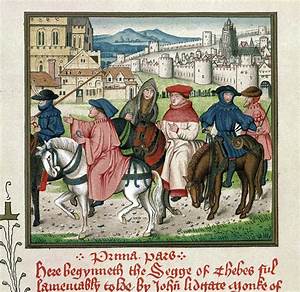
Geoffrey Chaucer immortalized the fourth-most used pilgrimage route, which is, of course, to Canterbury.  Pilgrims really started to flock to Canterbury after the death of Thomas Becket in 1170.  Becket was considered a martyr for the faith because of how he stood up for the rights of the Church over the rights of his king.  This is still one of the most popular pilgrimages in the world, especially to the English.

To the Orthodox one of the most traveled pilgrimages is to Mount Athos in Greece; this mountain is the sight of many miracles.  There are 13 monasteries on the mountain.  Access to the mountain is very limited: they only allow 100 visitors on it per day.  To the Orthodox, especially the Greek Orthodox, it is a very important place.

A pilgrimage, however, is not really about the destination; it is about the journey.  Jesus’ “pilgrimage” was into the desert: there was no temple to visit, no remains of saints to see.  Jesus shows that the pilgrimage is all about humbling oneself.  One is to go on a pilgrimage like Jesus did with no earthly goods or riches to slow oneself down.  The focus should always be on God.  In the old days, pilgrims were supposed to rely on God and the kindness of others to make it through their journeys.  This is so all the thanks for making it through the journey goes to God.  Jesus gives the command to all pilgrims in Mathew 16:24, “…let him deny himself, and take up his cross and follow Me.”

The main point of a pilgrimage is to deny ourselves.  A pilgrimage forces one to rely on God.  We walk away from society in order that we may grow closer to God; it is like a retreat, but the main thing is the journey not the destination.  A pilgrimage gives us the chance to put away the world for a bit and just be in God’s presence.  On a pilgrimage, God will provide; it is our chance to be reminded of that.  A pilgrimage also reminds us this earth is not our home; we are foreigners wandering with a God who is looking out for us.  A pilgrimage should not be a chore but a deep and meaningful vacation away from all the worries of the world and into God’s peace.

A Fight for a Church

Connor Shanley

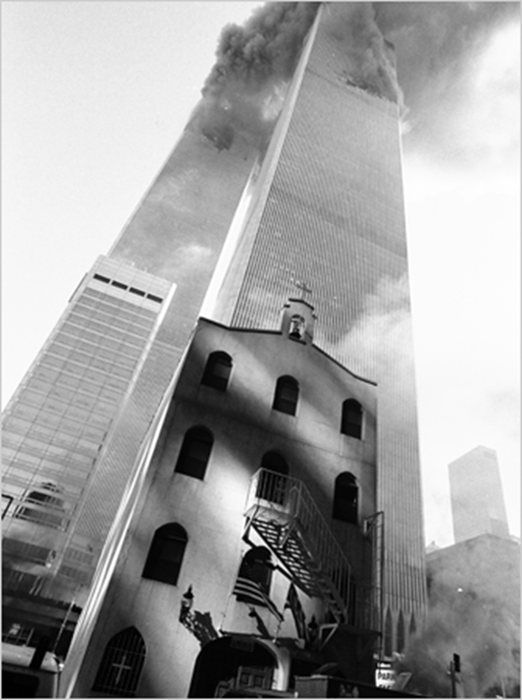
New York, September 11th, 2001: as the Twin Towers collapsed, the world watched in horror.  Everyone was in shock at the destruction of one of America’s greatest landmarks, but the towers weren’t the only buildings destroyed on 9/11.  On that fateful morning another building was opened before the towers; Matins at St. Nicolas Greek Orthodox Church began at six am.  Matins, thankfully, were over when the first plane struck, and the church was empty when the towers collapsed right on top of it.  St. Nicolas was the only place of worship destroyed on 9/11.  It had been in New York since 1916, but it has taken ten years to finally reach an agreement on it being rebuilt.

In recent years there has been quite a controversy over the building of a mosque at Ground Zero.  Mayor Bloomberg has been in full support of this mosque and has let the proper paper work come through; St. Nicolas is a different story.  It is a story with a lot of mystery and a lot of finger pointing.  The parish of St. Nicolas has been fighting for many years now; St. Nicolas isn’t just a place of worship to the parishioners, however: it has a deep history; it has the history of their ancestors.

St. Nicolas was founded in 1832 by Greek immigrants.  These immigrants were very poor and not very well accepted in the local community.  They had a hard time finding funds to pay the priest, let alone build a building.  The church was started in a house on Liberty Street in New York.  For the Greeks it was their place of worship that still reminded them of home.  To those immigrants, it allowed them to hold gatherings and talk about their old country.  In the eastern United States, this is how Orthodoxy spread; it was carried to America by immigrants.

The church continued switching from house to house.  The church’s community was growing quickly, though, and house churches were no longer working, so in 1899 the church moved outside.  The church had no permanent building because the Greek Archdiocese couldn’t raise money for it.  The Greek immigrants were very poor at this point in time; they were struggling to make ends meet.  Then, in 1916, a bishop of the Russian Archdiocese, (Saint) Raphael made an appeal back to Russia to send funds to help the struggling Orthodox community of New York.  The letter sent back to Russia did not make it into the hands of the church authorities but rather into the Tsar’s.  He gave a very generous donation; the amount is still unknown, but it was enough for the construction of a new church building.

The building itself was one of the last gifts ever given by a Tsar to a foreign country.  After the building went up, it didn’t just serve as a house of worship but also as a gathering place for all Orthodox Christians.  It was an important staple in the community until the day it was destroyed.  St. Nicolas was the only religious non-World Trade Center building destroyed on 9/11.  The Orthodox community lost one of the oldest standing Orthodox churches on the east coast.  Perhaps more shocking than the church’s destruction, however, is how long it has taken just to get a deal to rebuild it.  It has taken ten years just to make a deal on beginning construction.  Both sides don’t trust each other, and the outcome of the current deal still looks bleak according to the Greek Archdiocese.

The confusion started in 2003, when the Greek Archbishop went to go meet with the head of the New York Port Authority to discuss reconstruction efforts.  The appointment never happened.  The Port Authority said no appointment was scheduled and that he’d have to come back.  The Archbishop did come back at a later time, but the Port Authority did not offer much help.  Negotiations on the rebuilding of the church would take place over ten years.  Every time the two sides would reach an agreement, a little while later the other side would ask for more.  The church was asking for some funds in the form of a loan to help the rebuilding process; when that happened in 2008, the Port Authority stopped all discussion.

The church was outraged, but it could do nothing.  The church and the Port Authority were locked in a stalemate.  Both sides, of course, blamed each other for the fact no agreement could be reached.  Mayor Bloomberg also got his say in the matter; he wanted to raise the price of the building permit of the new church by 5 million dollars.  This was just kicking a man while he was down — the church at this point had decided to yield somewhat to the Port Authority, but when Mayor Bloomberg asked for the raise in permit cost, the church took it as an insult.

What Mayor Bloomberg didn’t realize was he got himself involved in a case that would show his own hypocrisy more than anything else he’d done while in office.  When Mayor Bloomberg raised the price and talks started to stall, it was in 2010, right at the height of the “Ground Zero Mosque” debate.  Mayor Bloomberg defended the mosque by talking about freedom of religion and equality for all.

The Mayor wanted to build a mosque at Ground Zero, but he refused to even try to help St. Nicolas, the only place of worship destroyed in the 9/11 attacks.  The debate of there being a mosque at Ground Zero is a debate for another time.  The point is Mayor Bloomberg defending the rights of the mosque by saying it will show “American principals of equality” is just a lie, really.  He treated the Muslims better than the Christians.  He was going to charge the Church more to rebuild than he was going to charge the mosque to start building.  That was his plan, but some news organizations got ahold of the story.

Fox News was the first tv station to run a nationwide story on the church.  It was now becoming a point of public outrage in New York City.  Eventually, the mayor yielded; he dropped the permit price back to normal.  After that, talks started back up, and after much passionate debate and arguing, the Port Authority and the Greek Orthodox Archdiocese reached an agreement in October of 2011.  The agreement states the Port Authority will give the church land three blocks from its old location, and the Port Authority will also give 20 million dollars to help make the building’s parking garage bomb-proof.

This story will not be the last of its kind.  In modern day America is an obsession of being politically correct.  This means we should all be more accepting of other cultures and religions; what this is starting to lead to, however, is a disdain for Christianity.  Christianity does teach to respect people of other backgrounds, but it also says that those religious backgrounds are wrong.  In this new politically correct world some of the media and people in charge are trying to make, there will be no such thing as “right” or “wrong” — only what one’s culture teaches.  This goes against Biblical Christianity, and as a result the backlash against Christianity will be harsh; it is already seen in the media.  Christians are often pictured as narrow minded and judgmental.  We must show love to all humans, even the lost ones, instead.  The warning signs are there: Christianity is no longer “politically correct,” and it will be treated that way in the media and by government officials, such as Mayor Bloomberg.

Bibliography

Abdal, Fr. N. “St. Nicolas and the Mosque.” The Word. 13 June 2011: 23-30. Print.

Berger, Judson. “What About The Ground Zero Church? Archdiocese Says Officials Abandoned Project | Fox News.” Fox News — Breaking News Updates | Latest News Headlines | Photos & News Videos. Fox News, 26 Aug. 2010. Web. <http://www.foxnews.com/politics/2010/08/17/ground-zero-church-archdiocese-says-officials-forgot/&gt;.

“NYC: St. Nicholas Greek Orthodox Church Seeks to Rebuild After 9/11.” Responsible for Equality And Liberty (R.E.A.L.). Web. 26 Oct. 2011. <http://www.realcourage.org/2010/08/st-nicholas/&gt;.

How the Beatles Changed Music

Connor Shanley

There are certain bands throughout music that impacted music in such a way they cannot be ignored.  Nirvana created “grunge” and was the voice of a whole generation of angry teenagers; Elvis Presley combined blues and country to make what we now know as rock and roll.  Everyone knows who the Beatles are; everyone has at some point in their life heard a Beatles song.  Many people don’t see the Beatles’ true impact on music, however; many people think the Beatles are overrated and over played.  The Beatles are the most influential band in the past century; their influence is so felt in music most people wouldn’t even noticed it, and their influence is so ingrained in modern day music and fashion people just overlook them.  Something people can’t deny though is that for better or worse the Beatles changed music.  Think: a band that was only together from 1962-1970, only six years, and they’re the bestselling band in the history of rock and roll.

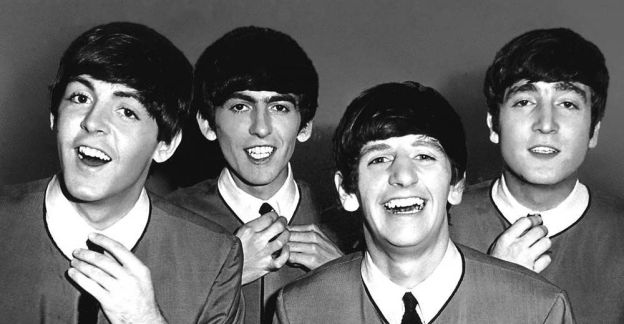
The Beatles started in 1955 when Paul McCartney joined John Lennon’s band “The Quarrymen.”  A year later a thirteen-year-old guitar player named George Harrison also joined the band.  In 1960, Peter Best became their drummer, and they renamed the band “The Silver Beatles.”  In 1961, “The Silver Beatles,” now just shortened to “The Beatles,” were making their mark playing in clubs in Hamburg, Germany.  They would return to Liverpool in late 1961; here they began to attract a big following.

When the Beatles returned home and started playing at the Cavern Club, they made a very big impression on Brian Epstein.  Epstein was a young manager who wanted to record a few demos with the Beatles.  Epstein got them into the recording studio but not without one big change, their drummer.  The Beatles were no longer impressed with Peter Best as a drummer; Epstein simply voiced the Beatles’ feelings, and in 1962 Peter Best was kicked out of the Beatles.  The drummer they got to replace Best was the only professional musician prior to being with the Beatles.  His name was Richard Starkey, but in his year of on-stage performance, he earned the nick-name “Ringo Starr.”  “Ringo” was because he liked to wear a lot of rings on both hands, and “Starr” was short for “Starkey.”

In September 1962, the Beatles released their first single, “Love Me Do/P.S. I Love You.”  Their first single was not a great success; it barely broke onto the Britain top 20.  In early 1963, the Beatles released their second single titled after their debut LP, “Please Please Me.”  The LP would be at the top of British music charts for an amazing 30 weeks.  In December of 1963, the Beatles released their first U.S. single, “I Want to Hold Your Hand.”  The single was instantly at the top of the charts in the U.S.  Then they were asked to perform on the Ed Sullivan Show in February of 1964.  After their U.S. tv debut, the Beatles would be a hit like no other band in history.  After the Ed Sullivan Show, the Beatles had the top five singles in the U.S. and the top two albums.

The Beatles were now making movies; their infamous “mop top” haircuts were seen on most young men in the U.S.  In 1964, Beatles merchandise outsold Disney.  The impact the Beatles had on pop culture was clear.  The Beatles brought a very upbeat and happy sound to rock and roll.  In 1965, their image would change.  With the release of their album Rubber Soul, the Beatles did away with their “good boy” image, and their sound also started to change.  Instead of just making upbeat pop, the Beatles started to make more deep meaningful tracks such as “In My Life” and “Norwegian Wood.”  “Norwegian Wood” was the first top ten hit to feature a sitar.

Rubber Soul was its own unique musical experience, and each song showed how the Beatles were changing.  The Beatles began to stray away from their upbeat pop sound.  The Beatles began to explore more influences from the east, and they began to get into eastern mysticism.  The next album after Rubber Soul was Revolver, the album featured the songs “Eleanor Rigby” and “Yellow Submarine.”  The album revolutionized the use of background instrumentation apart from just guitar, bass, and drums in popular music.  The Beatles’ changing style was greatly helped by their producer George Martin, who encouraged the Beatles to experiment.

After Revolver was Sgt. Pepper’s Lonely Hearts Club Band; the album started with a concept by George Martin of two separate tracks working together.  This can be seen in two songs on the album, “Sgt. Pepper’s Lonely Hearts Club Band/With a Little Help from My Friends” and “A Day in the Life.”  The album also showed the contrasting styles of John Lennon and Paul McCartney.  In “A Day in the Life” was a competition between Paul and John to see who could write a better song.  This sort of competition began to drive Paul and John apart; that, combined with the fact their girlfriends were constantly fighting, began to end the Beatles.

The Beatles’ next album was Magical Mystery Tour, which, when it was released, was a huge flop.  The music critics at the time complained the album had too much psychedelic influence; this can be seen in the only top ten hit of the album “I am the Walrus.”  The Beatles even admitted they didn’t put their best effort into the album, which was a soundtrack to a tv movie; the movie was the least successful of the four movies the Beatles starred in.

The next album was a mix of the Beatles’ psychedelic influences and their old pop sound; the album released in 1968 was simply titled The Beatles LP, but it came to be more commonly known as the White Album.  The White Album was the Beatles’ only double album, and it was recorded during a time of great turmoil after a controversial visit with the Maharishi in India.  The album featured the single “Helter Skelter,” which in Ozzy Osborn’s words, “was the first metal song ever made and my greatest inspiration.”  The Beatles were starting to get a bit more into hard rock; this was mainly spurred on by Paul.

There were two albums after the White Album; Let it Be and Abbey RoadLet it Be was recorded first, but the producer George Martin decided to extend the release date because he felt it needed more work.  The Beatles then started to work on their last studio album, Abbey Road.  The album continued a lot of the same ideas Sgt. Pepper’s Lonely Hearts Club Band had.  Both albums are considered to be concept albums, which means songs could be mixed together and could be played one after the other without any pause in between.  The best example of this is the last five songs on Abbey Road, known as “The Abbey Road Medley.”  The last five songs are all really one song.  The last song ever recorded by the Beatles in studio was “I Want You/She’s so Heavy.”  Four days after the recording was finished, John announced to the band he was leaving; he agreed he wouldn’t make a public announcement until certain legal issues with the record company were resolved.  Abbey Road came out in September, 1969.  John Lennon announced publically he was leaving the band in December of 1969.  Let it Be then came out in May of 1970, and Paul released a statement explaining reasons for the break with the album’s release.

It was the end of the Beatles, but what they accomplished in only seven years of making albums is remarkable.  They brought the idea of the concept album to the forefront of music.  They changed pop forever; pop no longer had to be upbeat guitar riffs and songs about girls.  Pop was deeper now; it can be seen in their last single, “Let it Be.”  The Beatles forever changed how music was made and how the public perceived music.  They influenced generations of musician after them from Ozzy Osborn to Michael Jackson.  Without the Beatles it is a fact music as we know it today would not exist.  They changed music forever, and no band after has had as great an impact on music and pop culture as the Beatles.

Bibliography

“Beatles Bio.” Keno.org. Keno, 1999. Web. 27 Sept. 2011.

Costello, Elvis. “Rolling Stone: The Beatles’ 100 Greatest Songs.” New York, NY: Rolling Stone, 2010. Print.

Osborn, Ozzy. “VH1 Special to Take a Look at ‘100 Greatest Artists of All Time.’” Entertainment Close-up. 1 Sept. 2010. Print.

The Rise of Electronic Music

Connor Shanley

Music: it is known as the universal language.  All cultures have some form of music, and just as cultures change, so does music.  Music is a building that will never be completed; each trend and fad contributes to the next.  Think that if some primitive man didn’t think to tighten an animal skin over a circular piece of wood, we would never have the snare, tom, and bass drums we have today.  Every musician throughout all of history has been influenced by someone else; Mozart to Lil’ Wayne have/had an influence.  This is even true today with the rise of electronic music such as dubstep, techno, dance hall, etc.  It is true the instruments for these genres to even exist are somewhat recent inventions, but nonetheless their roots can be clearly traced.  To truly understand a genre of music or an artist, one must trace their influence.

We now stand on the verge of a new musical era; the days of rock and hip-hop dominating the radio are coming to an end.  Now there are all sorts of new kinds of music; techno has been sweeping Europe for the past decade, and now dubstep looks to take over America.  Where did these kinds of music come from, though?  The recent rage over electronic music can be easily traced.  The first major event to get the ball rolling was the invention of the electric guitar.

In 1931, Adolph Rickenbacker introduced the first patent to make a guitar that could be played through an electric amplifier.  This invention was later improved with a solid body by Gibson Les Paul and Leo Fender (who actually came up with the idea first is widely debated) in 1941.  The invention of the electric guitar was the first step in bring electronics into music.  The next invention was similar to the guitar: the electric bass guitar.  The electric bass was invented in 1947 by Leo Fender (that’s not debated).  The invention of both these instruments may not seem important to modern day electronic music, but many inventions for the recording of these instrument are crucial to the start of electronic music.  These inventions also got many music engineers and producers to start exploring other ways to make more instruments electronic.

The next invention to start the electronic era is obvious.  In the 1940s, many people made claims to its invention including the Russian government; no one can say for certain when it was introduced or who made it, but in the 1940s the synthesizer was made.  When the synthesizer first came out, most people didn’t even think to put it in music.  The original synthesizer was made more for scientific experiments in order to understand sound waves rather than used for music.  Then in 1958, Dr. Robert Moog, an American scientist, made some of his own modifications to the original synthesizer; he made it more “musically usable.”  Dr. Moog added smoother tones and more keys to make it easy to play.

Dr. Moog’s invention was not well received by most musicians.  It would take years for his instrument to become more popular.  In July 1965, a major event happened in the history of electronic music.  A young graduate of the UCLA film school named Ray Manzarek was walking on Venice Beach in Los Angeles, when he came upon another UCLA film school graduate writing poetry.  The man’s name was Jim Morrison, and that chance meeting was the creation of The Doors.  The Doors put a demo together and managed to release it just two months after getting together.  The demo was well received by the local Los Angeles crowd but got no national attention.

The Doors were revolutionary in their use of the Moog synthesizer, but before they could make it big another band had to pave the way.  The Beach Boys were the first band to use a Moog synthesizer to break onto the charts.  In October 1966, the Beach Boys released the single “Good Vibrations”; the song took 90 hours to complete and was at the time the most expensive song ever recorded, costing $40,000.  It was the first song ever to be a number one hit using a Moog synthesizer.  This opened the door for The Doors.

In November 1966, The Doors released their self-titled album; they also released their first single “Break on Through,” which did not have much radio success.  The band decided to edit their seven-minute ballad “Light My Fire” down to three minutes, releasing it as their second radio single.  “Light My Fire” achieved great radio success and brought The Doors popularity with the masses.  Critics did not all find this new use of the synthesizer pleasing to the ear.  Many critics complained that the synthesizer wasn’t a real instrument, that it took no skill to play, and that it sounded too spacey.  The synthesizer had been used in songs before 1966, but no song with a synthesizer reached the popularity that “Good Vibrations” and “Light My Fire” did.

The Doors brought major attention to the use of the synthesizer as a lead instrument; they revolutionized the use of electronic music.  The Beach Boys may have had the first hit using a synthesizer, but it was The Doors who really made it popular.  Shortly after the release of The Doors’ album, other bands began to experiment with the synthesizer.  The following year The Beatles released the album Sgt. Pepper’s Lonely Hearts Club Band; the album has a few songs using the new electronic instrument, mainly on “A Day in the Life.”

Jim Morrison in a later interview before his death said, “I see a new era in music, a mix between the rock we have now and electronics.  I see a single man using tapes and a keyboard being able to replace whole bands.”  Morrison would never live to see his vision come true, but if one looks at modern day music, it has come.  The modern day DJ only needs himself and a keyboard.  Listen to dubstep or techno and see the advances in musical technology since the ’60s.  Jim Morrison never got see what he started, but, nonetheless, it was the band he started that got the public interested in electronic music; The Beach Boys helped, but The Doors were the real original electronic band.