One may accuse me of being an anglophile if one wishes, but it is fair to say a good deal of the time television series from our cousins across the pond are superior in numerous ways to their American “counterparts.” This is perhaps not always true, assuredly, since I did just say “a good deal of the time,” which is not a lengthy way of saying “always” (which, as an amalgam of “all” and “ways” seems like a strange expression to use for time and not methods). Still, the BBC has given us a wealthspring of enjoyable series. It is no secret I am a lifelong fan of Red Dwarf and Doctor Who (the original run, since I haven’t much experience with the relaunch). Elsewhen I have mentioned the superiority of crime-drama shows such as Cracker and Prime Suspect. Jeremy Brett’s Sherlock Holmes cannot be topped, and that’s just a fact. Rumpole of the Bailey, Poirot, A Bit of Fry and Laurie, Jeeves & Wooster, Whose Line is it Anyway? — most of you likely agree with the general high quality of the BBC’s offerings, and we haven’t even mentioned the contemporaneous shows and their international popularity (mainly because I haven’t seen them yet, though you could check out some of the recommendations given earlier this issue). To this list of delightful shows I add a show certainly not overlooked in its native England but far too long overlooked by Americans, the delightful As Time Goes By.
The premise for the series strikes one immediately as being wholly British — not in the sense of tea, crumpets, or Scotland Yard, but as a premise only the British would consider for a television series: a young couple in love, separated by war and communication breakdown, meet again 40 years later and slowly rekindle their relationship (and romance — sorry for the spoilers). A show about two experienced people, getting along in years, both fairly set in their ways, does not seem at first glance to be a show with a lot of appeal … but somehow, the simplicity, the general aura of ease and calm create such an atypical show that draws you in and feels most of the time as a refreshing, relaxing relief from the antagonism-filled workday you have temporarily escaped. Sure, the show has its inane moments: characters do bizarre and occasionally frustrating things here and there, but the vast majority of the time we know we are going to be in for an enjoyable time with these characters.
The two central characters are Jean Pargetter and Lionel Hardcastle, played by Judi Dench and Geoffrey Palmer (the powerhouse casting certainly helps the enjoyment of the series). Jean is a semi-recently widowed mother of her twice-divorced daughter Judi. Jean owns and manages a typing/secretary agency (perhaps dating the early seasons a bit … the subplot of a late episode revolves around getting a modem), and Judi works for her. Judi’s own secretary, Sandy, becomes a major supporting character before too long in the series. Lionel, after his time in Korea (at which he is kicked by a mule, prompting Jean to dub him Lionel Hardcastle, kbm, mimicking the British knighthood system), becomes a coffee plantation manager in Kenya, marries, divorces, and returns to England and writes a book about his experiences. His publisher, Alistair Deacon (a truly great character who must be seen to be believed — and even after seeing him you won’t believe him), urges Lionel to get a typing secretary to help him finish his book. This throws our main characters together, starting the rekindling process slowly but surely. It takes some time for their friendship to resume and grow over a few seasons, but the pacing (thanks to the shorter British season-lengths) is not a problem, especially if you have the whole show on dvd or Amazon Prime™. Soon enough, we meet family members and others who become recurring characters each season, and the focus of the show shifts from rekindling friendship and life at the agency to home life, new business opportunities, and other character-driven stories, all the while giving us good laughs, intelligent dialogue, and simple stories that give you more value and enjoyment than you think you’ll get most of the time.
My favorite character is Lionel, mostly because we’re pretty similar (overlooking the fact I’ve never been a coffee plantation owner in Korea, a soldier, divorced, or British). Lionel gets grumpy rather easily, though I don’t think I do, not as badly as he does, but there’s enough Eeyore and Marvin the Android in there to remind you sooner rather than later his soft, nurturing side is going to override whatever momentary goofiness is interfering with his relaxation. One gets the sense he’s the kind of parent/husband you want Mr. Bennet to be but never will. Lionel, for all his gruff, is an intelligent, caring man — the show does revolve around his ability to re-woo the long, lost love of his life, after all. Like Lionel, I have difficulty understanding the younger generation (as also indicated earlier this issue), I enjoy being at home more than most other places, I would totally enjoy being on the lecture/book-writing circuit, and I am skeptical of technology (we’ve already had that conversation). Unlike Lionel, I don’t follow rugby or cricket, I don’t pop down to the pub for a quick half, I don’t walk to the neighborhood grocer for groceries, and I don’t like custard tarts. Three of those could easily be addressed if I lived in England like Lionel is fortunate enough to do, however.
He’s certainly not a perfect man; his flaws come out with fair regularity (it is a situation comedy, after all), and he does let us down at times when his bluster and self-centered drive for things to be more comfortable and easy than they usually are override good sense and common courtesy. But, then again, that would be another area in which we are similar, and that well-rounded humanness of Lionel’s character makes those many bright spots when he comes through and saves the day and says just the right thing all the more enjoyable. He’s probably the most lovable wet blanket you’ll ever meet on the screen. The plus side is seeing those flaws encourages one (me) to improve those flaws within oneself (myself).
I don’t want to ramble on about too much else, since the point of this was to introduce you to an overlooked series, not tell you everything you should know so you don’t have to watch it (like I did with Centennial way back when). Jean, Judi, Sandy, and Alistair (especially Alistair) all are good characters with their ups and downs, and the second tier of supporting characters that flesh out the series starting in season two make the show even better. It is the television equivalent of putting on your favorite jim-jams, eating your favorite goodnight snack, and spending time with people you really care about, all the while being believable, realistic, and worthwhile. It is sentimentality at its finest. Do yourself a tremendous boon and get and delight in As Time Goes By.
Here we are again, friends. Another Christmas issue, despite all the hardships, all the setbacks, all the doubts, all the world-shattering, mind-numbing insanities of the age we are together again. See what good hope can do? We may end up rechristening our subtitle to “A Journal of Hope.” Not because many of you out there mention we tend to slant more toward “opinion” than “scholarship,” (which is not a completely fair assessment, considering most “scholarship” is basically “this professor’s/scienty-person’s opinion supported by other professors’/scienty-people’s opinions”), but because we see the world needs more hope now than it has for the past couple of millennia. We don’t want our 31st-century offspring to look back upon our day as The Second Dark Age. We’ll see. Just a thought.
Without a core group of students contributing to this volume (despite some welcome return authors), I was somewhat trepidatious if this year’s “Christmas issue” would end up being all that Christmassy, or if this would be our “Die Hard is a Christmas movie” issue. Yet somehow, no doubt through mysterious and wondrous Providence, a fair number of Christmas tidbits did appear, however tenuous the connection (which is about typical for our “Christmas” issues, come to think of it). Julian Rhodes reminds us it is cough and cold season (despite his remarks about art criticism standards being subjective). Katie Arthur mentions Christmas briefly in her essay; Professor Zylstra’s timely essay likewise has a patina of Christmastime in it, especially in his conclusion. Michaela Seaton Romero discusses Charles Dickens’s A Christmas Carol at some length as well. Quite exciting how these things are working on this year. I hope you are enjoying the ride as well. (The trickiest thing is getting the back-cover previews to come true without having to write them all myself … not that I mind doing that, of course.)
Looking back on the early years (without trying to sound silly, considering the “early years” were four and three years ago, but a gnat’s wing on the spectrum of Time), especially in some of my personal Christmas reflections, it is odd to see how things have changed within even such a short span. I suppose raising children will do that. Though certainly most of that is being accomplished by my gracious and overly-self-sacrificial wife. Certainly some things remain the same: I’m committed to remaining in my jimjams Christmas morning, even if I am the only one. My parents are visiting again this year, which as always will be nice (and not just because of the excuses to get milkshakes at Chick-fil-A or going out to new restaurants), but even if they feel compelled to get fully dressed before presents time, I will keep that tradition alive as long as possible. But some things even now don’t seem as important as they did even a few years ago — not the material things, which are increasingly less important each birthday or holiday season (no doubt a sign of my impressively-deepening maturity) — things that seemed to be necessary for each holiday season to be meaningful.
I’m fine if I don’t listen to every Mannheim Steamroller album this year; I’m fine if we don’t watch The Bishop’s Wife this year; I’m fine if we don’t watch It’s a Wonderful Life this century. It’s possible the annual compunction to do those things was a kind of anti-death-drive response, as if each Christmas had to be meaningful, had to be special, all the right foods had to be eaten, we can’t possibly forget to sing “O Little Town of Bethlehem” this time … “just in case.” But that’s really no way to live, especially around the holydays. I’ve had (probably less than) my share of “last Christmas” experiences, whether knowingly or not, and trying to make each one special “just in case” does a disservice both to our loved ones (as if cherished memories are not important enough as now) and more importantly Christmas itself. Christmas should be valued for its own worth, the truly wondrous riches of the Incarnation of our Savior and the beginning of the final phase of God’s redemptive processes throughout Time before even that existed. Christmas is not important dependent on our experience of it. And while I don’t want that increasing awareness within me to sound like a resignation of sorts (especially in light of our Death to Cynicism 2015 campaign), it is altogether likely it may be past time to resign ourselves from some things that seemed so important and necessary in our youth that truly are hindrances to delighting in not only this season but our entire experiences abiding in Christ richly as a whole.
This is starting to be a lot more serious than I intended it to be, but tough times demand tough talk, after all. But as Hamlet says, “Something too much of this.” You and I most likely originally thought of the Peanuts song when reading the title of this, but it turns out more accurately to refer to the Beach Boys’ lesser-known Christmas ditty “Christmas Time is Here Again,” a far more upbeat and energetic number than “the other one.” And that should renew our hopes and enthusiasm for the season. We all have painful memories of what did and/or never would happen at and around Christmases not-so-long-long ago, but for now let’s delight in what the season is and can be, an enjoyable time of traditions new and old, quality time with friends and family and, natch, “the reason for the season.”
Perhaps it’s the old age talking, but some of my seasonal music tastes are changing as well. Indicated above, I don’t necessarily need to listen to every Mannheim Steamroller album each year, but certainly the first two albums are a “must.” Their first Christmas album is about as pristine as an album can get, Christmas or no. It’s not that the more recent albums from there are “disappointing,” but part of what makes the first two so impressive is the counterpoint arrangements (and the fact they are carols, not just “songs of the season”). While this may seem contradictory in my character, as I have railed quite pronouncedly in the past (and authoritatively, don’t forget that part) against Christiany singers doing their own “modernized arrangements” of classical hymns, it is not the same thing. Slowing down or speeding up a beloved carol and/or adding a musically-enriching counterpoint or harmony is not in any way the same as adding irrelevant choruses with drastically dissonant chord progressions within the same song. When Mannheim Steamroller arranges a carol, it gives a new unity to the song, an entirely fresh and invigorating and moving approach to the work as a whole, without deceiving the audience into thinking “oh, good, this is one of my favori— hey, hey! What is happening here?” Mannheim Steamroller’s first two Christmas albums, especially, give us a better appreciation for the songs in their care.
Admittedly, that has nothing to do with changing tastes, but I do think my appreciation for these albums to which I’ve been listening for thirty years is deepening. What is really changing lately is my fondness for other modern-classical Christmas sounds, such as Harry Belafonte’s “Mary’s Boy Child,” the New Christy Minstrels’ first Christmas album (thanks to a chastisement from my father after an earlier Christmas article), and especially the deep, rich tones of Roger Whittaker. Something about the timbre of his voice, I suppose, evokes memories of gentler, simpler times (real or imagined). This phenomenon is akin to the Andy Williams Effect, I’m sure. “Those halcyon days” may not have been all that great at the time, but the nostalgia for them is powerful. Yes, must be the old age kicking in.
As we look back on 2014, we’ll likely rank it as one of the better years for our family. I know that sounds horribly selfish, as genocides, race warfare, international conflicts, biological epidemics, and the usual destructions have run rampant throughout the world of late (as is their wont — said without facetiousness). These truly are heartbreaking, and without trying to sound like I’m bragging, having prayed through Operation World this past year, my heart is becoming even more sensitive to the sorrows and needs of others around the world. But allow me to say for my family at least we will look back on this year fondly. It had its hardships, indeed, but nowhere near as challenging or enervating as others in recent memory.
Summer vacation this year saw an actual out-of-town vacation that did not involve driving to Iowa for the first time in over five years. I spent several weeks not on the computer. Days and days were spent reading actual books. Games were played, including approximately four hundred rounds of Go Fish. I got to play Panzergruppe Guderian and Here I Stand for the first time. Julia got her first library card, which began a continual life of going to the library as a family. True, that did have the unfortunate side-effect of me reading so many New 52 TPBs (as lamented earlier in this issue), but on the positive side it has enabled me to get and see dozens of good movies I hadn’t gotten around to yet (especially a number of William Holden, Burt Lancaster, Clint Eastwood, and John Wayne movies — so victory all around, there). No point for me in going to the library for books, really. I have my own.
What others planned for evil (notably something ironically named “affordable”), God used for good, enabling us to give up dependency on wholly flawed systems and live by faith far more, which has been both helpful financially as well as psychologically and spiritually vivifying. This will definitely be a key signifier of the fondness of this year.
Many of these positive elements (vacation, assuaging a potential financial disaster) are owed to, well, God, obviously, as we said, but also to the kindness and generosity of others, who deserve far more than brief mentioning here: thanks especially to Dr. and Mrs. Moore for the use of their Outer Banks vacation home for a very enjoyable week; and Mrs. Kucera’s tireless efforts while we were enjoying our summer vacation, working diligently to find better solutions to the seemingly-inexorable financial/insurance debacle (oh, for the good ol’ days, when “mandated insurance” used to be called “a protection racket” — where is the A-Team when you need them?). Another important hero for 2014 is our own Mr. Emry, whose tireless efforts in restoring one of my self-crashed computers has enabled me no longer to pack one up and take it to school every day, an enormous boon indeed.
One remarkable aspect of 2014 is we did not grill out one single time. Usually those are important moments in an enjoyable summer, but we managed to get through a summer without any grilling and still managed to stay comparatively trim and healthy. We’ll have to work on that for next summer, if the Lord tarries.
Another remarkable aspect of 2014 is not only did I buy a pair of drumsticks for the first time in over a decade (finally found a pair of Neil Peart signature ProMark wood tips! — which means we are basically best friends), but also for the first time in about a decade or so my drum set has seen the light of day (at least, it has been set up and played inside). I admit freely I am still as rusty as the old set of grilling tongs hanging in the shed, but that is working itself out bit by bit. I noticed the other day when playing I was channeling my inner Greg Nichols (or at least the Greg Nichols within all of us), mainly in that my ride cymbal stick hand was perpendicular to my arm in the same way he always played in jazz band. Ah, good times. Speaking of Greg, out of nowhere recently (California, to be more precise), Greg contacted me on a social networking Web site asking how I was and all that and asking for a replacement copy of the book I wrote back in the halcyon days of 1997-98. Of course, I was more than delighted not only to hear from Greg but also to fulfill his request. That series of communications, combined with writing up that exploration of Hold Your Fire has made this a rather reflective conclusion to 2014.
Well, friends, it’s about that time once again. Jack Benny and Co. are rehearsing their annual allegorical fantasy “Goodbye ’14, Hello ’15” (it’s been too long; we’ll need to add “listening to Jack Benny again” to the schedule for 2015). Have you any big plans for the New Year? Having rediscovered in 2014 what snacks taste like, it may be time again to break out the Wii Fit and see if I can’t regain that boyish figure, by which I mean as a boy I always figured I’d play video games my whole life, so I should get back to that. I have been hearing the call of Final Fantasy VI lately, and it’s awfully difficult to resist that call … though it may be easier depending on what games arrive (if any) for me under the Christmas tree.
I mentioned as well I want to read good books next year. I plan to finally read Euripides, Aristophanes, Herodotus, and Thucydides, at least (in translation, of course), some more Nero Wolfe adventures, and maybe some Marvel comics again (new to me and some old friends like Operation: Galactic Storm and Age of Apocalypse). I need to finish some longstanding works as indicated in previous summer reading lists, but we’ll see where the mood takes us. Keep it fresh, as the kids say.
As you’ve noticed by now, another concerted effort for 2015 is our Death to Cynicism campaign. Join us, won’t you? as we extirpate cynicism from our lives by walking in faith and caring about the world and living with openhanded and openhearted generosity. If nothing else in these troubled times, the decrease in gasoline prices alone should remind us (perhaps in Al Michaels’s voice) we should still believe in miracles. Chesterton reminds us pessimism occurs not when one gets tired of badness but when one gets tired of goodness. While pessimism and cynicism are not tantamount, the sentiment is still valid. Let us all eagerly await what wondrous gifts God is gearing up to lavish upon us in 2015!
Yes, the Christmas time feeling is in the air again!
Hello, friends. As you know by now, I tend to lean in favor of Marvel over DC, though I have certainly spent a fair amount of time in the DC Universe (not that there is such a thing as “the” DC Universe, of course) and began in the DC Universe (for a short time, at best) and don’t feel any need to declare one comic universe is somehow superior to another. Though I’m not a “die-hard” DC fan, having never subscribed to a series for example, I would consider myself a decent DC fan of some long standing. I own a number of DC issues and TPBs, I grew up watching (and recently owning) Super Friends, and Batman Returns was the first movie I saw twice in the theater. I regularly read the Death of Superman 3-TPB storyline and have for a couple of decades. I am thrilled beyond repair the Adam West and Burt Ward Batman series is finally available on DVD, and I hope with intense passion I will be receiving it for Christmas (though I’ll be fine if that doesn’t happen). So I believe I may say with some DCU authority “The New 52” is a total humongous pile of nonsense.
Supporting that declaration I have actually read a fair amount of it — certainly not all 52 series, and not every single issue of even the major “flagship” series, but thanks to my semi-local library I have read a respectable amount of this palaver in the past year or so, and almost all of it has been a tremendous disappointment. Yes, the Batman “Court of Owls” story had some fine points, and while I am willing to allow many of the series I haven’t experienced could be quite spectacular, what I have read of it so far has demonstrated The New 52 is a disorganized, purposeless shambles.
The “purpose” behind it, purportedly, is to give a new generation of readers the chance to jump aboard with a brand-wide re-launch (apparently the term “reboot” is verboten) without feeling burdened by ignorance of the last 70-some years of character development, plotlines, conflicts, and other interfering story elements. One suspects the memo to the faithful readers of the last several decades went something along the lines of “Get Bent.” If I had been a loyal fan over the decades, having weathered Crisis after Crisis after Crisis, origin rewrite after origin rewrite after retcon, I would probably feel a little betrayed. Then again, it’s possible I might have thought, “Yeah, figures.”
Below I have included the reviews I wrote for my Goodreads.com account for each of the New 52 TPBs I read in the past year, in the order in which I read them. In order to avoid plot spoilage, you won’t get too much of the stories, but I think they will be helpful enough to see the imbricating failures and even the infrequent successes. The main theme that develops by the end of my to-date experience with The New 52 is, as you shall see, the apparent absence of a unified goal or creative guideline beyond “make it young and sassy.” Despite the advertised “you don’t have to worry about the last 70 years of issues, supporting characters, and anything at all,” most of these series expect the reader to know a great deal about the DC Universe, its history, its supporting characters, and an almost ludicrous amount of arcane knowledge in direct violation of the stated goals of the re-launch. Either that, or it’s all a lavish tribute to the Easter Egg, making the audience more irritated with a nagging feeling of “I’m missing something, aren’t I” more than “yeah, this is new and fresh! Whoopee!” (or whatever the kids are saying these days). I hope these don’t come off as cynical — especially as I am trying to extirpate that in my life quite intently — though I admit now many of them are filled with disappointment. Anyhow, here’s my experience with The New 52.
Batman, Vol. 1: The Court of Owls, Scott Snyder and Greg Capullo ⭐⭐⭐⭐ (read in late 2013, several months before I got to any other New 52 TPB, so enjoy the optimism while it lasts)
I thought I wouldn’t get a chance to read this until I found it on the shelf at a local library. Unfortunately, this library doesn’t like to get volumes after 1, so this may be my only experience with the New(est) 52 Batman. Snyder impressed me fairly well with The Black Mirror, so I suspected going in this would be fairly good, but I’m glad I read this second, since I would have gone into TBM without as much enthusiasm. Not that this was bad, it just leaves you wanting more, since it’s not the complete story and little is resolved even in 7 issues. Positively, Snyder treats us to a reminder he knows of the Batman history and isn’t completely rewriting it with this relaunch (at least at first), and he even gives us some nice humorous moments (a refreshing change for me, since Black Mirror had about 0 lighthearted moments). Soon, though, Snyder starts making Batman his own, thanks to the freedoms of relaunching the character and his corner of the DCU. He doesn’t do it heavy-handedly (in these issues, at least), but he does it earnestly — so fans will have to experience that and react to it for themselves. He does create a sensible and fitting new nemesis for Batman, which is rather an impressive feat, considering the myriad nemeses Batman has accrued over the decades. The danger, though, as is so often the case, is the villain seems almost too powerful: how can Batman (and Snyder) overcome a cabal older than his great-grandfather, who own the city far more authoritatively than he does? I sense a Locutus “sleep” sort of resolution, but I may never know (I’m sure you all do by now, though). It probably has something to do with newly-coined too-good-to-be-true? Gotham shining knight Lincoln March. The artwork is impressive and increasingly gritty, especially as the story progresses from the safe, shiny, futuristic world Bruce Wayne wants Gotham to be to the dirt, ancient, downtrodden world Gotham really is. I was a little confused at the beginning since Bruce, Dick, Tim, Damian, and Lincoln all look exactly alike (minus height differences), but I got over it and allowed Snyder to tell his story (the first half of it, anyway). I’d like to know how it ends, but I don’t need anyone to tell me here. For those who like shiny, computer-generated comics and don’t mind the casual violence of contemporary comics, this is not too shabby a place to start. It’s not the Batman you may remember from the days of old, but that’s not necessarily a bad thing. If you like those days, as I do, you can probably go back to them without too much hassle. If you want something newish, check this out.
Batman, Vol. 2: The City of Owls, Scott Snyder and Greg Capullo ⭐⭐⭐ (read about 10 months after volume 1, admittedly, but the rest were read in short order after this)
Well, that was easy. Taking a lesson from “Best of Both Worlds, pt. 2,” Scott Snyder decides the best way to conquer a centuries’-old unstoppable secret force is to have it self-destruct, giving our hero nothing to do but wonder (and doubt), really. I suppose there wasn’t any other way to stop this threat, given the head-scratching notion of Batman being able to discover, rout, and extirpate a 200-year-old secret cabal in 36 hours, but be prepared to be a bit disappointed. That’s the trouble with stopping unstoppable foes. Supplementing the explosion-filled semi-conclusion to the Owls saga, we have some reprinted stories from Night of the Owls, the best being the Mr. Freeze story, wholly unrelated to the rest of the collection. We also have a “slice of Gotham life from the commoner’s view” story, which isn’t quite as bad as it could be, but we are also left wondering why our hero isn’t as nice as he could be to some of the downtrodden he supposedly loves. After all, one of the major themes of the Owls story and its epilogue (driven home by the end of the of Death of the Family storyline coming up in volume 3) is Bruce Wayne loves Gotham City — not just the idea of it or the sentimentality of saving something because it makes him feel powerful and accomplished, but he truly cares for the city, its people, and he wants to make it a better place. So why does he treat the people he is apparently doing all this for with such semi-disdain? We may never know. Or, we’ll find out two issues before DC launches the Newer 52 in a couple of years. Stay tuned.
Batman: The Night of the Owls, Scott Snyder, et. al. ⭐⭐⭐
As the whole “Owls ruling Gotham” thing starts to wear thin, we are presented with one slam-bang night of bloody action as the almighty Owls let loose their centuries’-old Talons against all the powerful people of Gotham … only to fall to the inevitable, more or less. Apparently, the Owls want to secretly rule a city populated mostly by the world’s craziest psychopaths, corrupt politicians, and police officers, and eliminating all the decent, hardworking policy and decision makers who bring order and stability to the city will somehow make that a more enjoyable experience. On the surface, this is a touch confusing. Adding to the confusion, some of the early entries in this collection give us “flashbacks” into the history of Gotham and the Owls, though most of them go nowhere and don’t relate in any significant way to the present story. Additionally, as with many crossover collections, unless you are familiar with the characters/supporting stories going on in the other series, some of the issues will be confusing. This is exacerbated at times by this collection’s refusal to let you know what issue you are currently reading: some of the early stories tell us we are reading Nightwing or Birds of Prey, but most of them just start, giving us no cover artwork or series title/number (as if knowing what we are reading would somehow detract from the momentum or enjoyment of the story). Another detraction here is some of the failed emotional moments: if the girl is going to leave Hiroshima in a few months, why are we supposed to be emotionally moved by the bombing several years after she leaves? especially since the A-bomb bombed a city that made devastating bombs that bombed the USA. Instead of a pointed and poignant attack on America’s political decisions, we are given even more reasons to cheer on President Truman’s decision. Anywho.
Apparently the most effective way to defeat the almighty Talons is to get them to talk about their past, and as fast as you can say “Bob’s your uncle,” they will give up their quest to destroy you. The first issue with Jonah Hex is confusing and almost wholly unrelated to what is going on, but apparently the mention of the word “Owl” is enough to include it here. Some issues are out of order, which one supposes could have been better planned out by the development team, but sometimes “making sense” is a luxury comic makers just can’t afford. Still, this series does have some interesting moments, especially the Mr. Freeze story and the story about Alfred’s father. The “Gray-son” idea is also an intriguing notion, but we get no payoff with it here, since that thread is perhaps taken up in a different series. It’s worth reading if you are really into the New 52 or the Court of Owls thing, but be prepared for some confusing rabbit trails and a lot of tension that gets resolved rather quickly.
Detective Comics, Vol. 1: Faces of Death, Tony S. Daniel ⭐⭐
Somewhere along the way, “Batman” became an excuse for “excessive violence” and über-violence, perhaps because DC was jealous of Punisher MAX or something. I do not deny Batman (as an idea/world) has a dark side — as much as I enjoy the Adam West Batman, the “Dark Knight” aspect to the character is just as true. But that does not mean we need this much blood: removed faces, blown-out brains (Night of the Owls), etc. As Daniel even proves himself by the end of this collection, he can tell decent Batman stories without grotesque indulgences appealing only to the base visceral impulses of man. I’m sure many of you will disagree with me and my weak tummy — that’s fine. Part of my frustration with the violence in the Dollmaker story was the sheer absence of any meaningful payoff: it goes nowhere, delivers predictable moments of “detection” and suspense, and stops. The second group of stories is a little better, but it also either expects too much of us, or just assumes we know what is going on, or uses too much flashback with Batman knowing too much to be very believable — or possibly a combination of all of them. I know Daniel didn’t stay long on the series, but he did show a little bit of promise — it just doesn’t go anywhere meaningful here.
Batman, Vol. 3: Death of the Family, Scott Snyder and Greg Capullo ⭐⭐⭐⭐
I am willing to give this 4 stars for a graphic novel, though I don’t agree with Goodreads’s “4 stars means ‘really liked it.’” I would probably give Joyce’s Ulysses 4 stars, but I don’t really like that. I would probably give Joan Miro 4 stars without liking what he does, either. It’s a goofy thing, art. Perhaps it’s being overly generous to call this “art,” especially with its preponderance toward unnecessary graphic violence at the beginning of the work (too much red-shirting at the beginning), but the challenge of creating a meaningful, fresh interaction between Joker and Batman certainly demands a high degree of difficulty after 70-some years of their “relationship,” but Mr. Snyder does a fine job, especially toward the end of the collection here, telling an edgy Joker/Batman story with genuine menace and an allegiance to Batman’s high ideals (his version of them, at least). The pacing is a bit off, mainly because of the misplacement of some of the supporting stories (the commitment to reprinting the issues in their published order is sweet, but for a collection such as this I’d be happier getting the bits and pieces in the proper overall story order, something the Night of Owls collection failed at quite impressively), but the ending of the story is quite well achieved. The Joker’s appraisal of many of his “colleagues,” especially the scene between him and Two-Face, is a welcome group of “character moments” (I don’t mean that in the patronizing way it always sounds when people say “good character moments”).
The final confrontation is not unexpected (I was expecting Joker to shout “MacGyveeerrr!” as he fell), but the actions of the supporting Family during that scene is a nice testament to their moral centers (despite DC’s frequent attempts — and Marvel’s — to make all “heroes” gray, morally ambiguous anti-heroes). I was a tad disappointed by the epilogue, everyone’s desire to be alone, though I suppose if they all re-gathered to talk it out it would have come across more like a Star Trek: The Next Generation wrap-up (or early ’90s Avengers or X-Men finale). That’s fine, provided they don’t believe the Joker. They don’t, do they? Bruce doesn’t, does he? Let’s hope not. If he does, what would he really be fighting for all this time? As Snyder tried to teach us with the Owls thing, Bruce Wayne truly does care for Gotham City. He wants it to be a good place to live. Similarly, Bruce Wayne must truly care about his family, dysfunctional and manufactured though they may be. They better believe that, too. If you don’t, I hazard to suspect you may be reading/enjoying Batman for the wrong reasons. Thank you, Mr. Snyder, for encouraging us to care about Batman for the right reasons.
Superman, Vol. 1: What Price Tomorrow?, George Pérez and Jesús Merino ⭐⭐
Fun — excitement — interesting — fresh — engaging — and other words that don’t apply to this volume. No offense intended to the great George Pérez and his lifetime of fine work, but this was just dull. We’ve seen this in most every science fiction show already, and if it was dull on Babylon 5, it was dull in the “New” 52. I guess the point of this relaunch was to shake it all up, make it all different, and by that they meant break up all the good relationships that took 60-some years to develop and frustrate all the loyal readers (because OLD = BAD and NEW = GOOD, and loyal readers = useless detritus and new readers = the best thing ever). The Daily Planet is gone, Perry and Lois and Clark are all separated, the Kents are dead, and no one likes Clark, really. In order to make the Superman world “fresh and relevant,” the Daily Planet has been sold to arch-villain Morgan Edge. Doing things the old-fashioned way (with honesty and integrity) are as buried as Jonathan and Martha, but only Perry seems to care (maybe Clark, too, but he spends so much time dazed and confused we don’t get to know this version of him much, other than he cares about the poor and displaced and his old apartment building doesn’t exist anymore). Also, for no explicable reason, Pérez has Superman narrate all his thoughts, but his thoughts are more like stage direction and ultra-obvious commentary, nothing truly insightful or worthwhile. Pérez seems stuck in the old days of having characters narrating all their motions. Oh well.
Like Alex Ross’s Justice, this volume has the potential gem of “what if Metropolis lost its faith in Superman?,” but like Justice it gets sidetracked with all its other things (though the other things here are far more confusing and old hat than Justice) and sort of abandons that idea by the end in very rapid and unbelievable “oh, sorry, Supes, we love you and always did” epilogue panels. This story just doesn’t know where it wants to go and takes a long, dull journey to prove it to everyone.
Superman, Vol. 2: Secrets and Lies, Dan Jurgens and Keith Giffen ⭐⭐
I like the Death of Superman story (not that Superman died, just the whole story, all three parts). I read it fairly regularly. I even like the Hunter/Prey followup. Zero Hour … meh. See, this is what I’m not quite getting about this New 52 thing. Why are we bringing back guys from 20-some years ago to contribute to something supposedly new and fresh for this present generation that thinks conversation is done with thumbs? I’m not saying Pérez and Jurgens don’t have it anymore, but if they do, they didn’t share it with Superman New 52. Part of the failure with this series is Jurgens continues Pérez’s “what if Metropolis thought of Superman the way Gotham thinks of Batman, like he is the problem?” But Superman is not Batman. Don’t try to transplant that sentiment over here — it doesn’t work. Maybe this is why Mr. Morrison’s All-Star Superman gets so much love, because it doesn’t try too hard to be a fresh Superman story. Secrets and Lies, here, is just dull.
Jurgens also feels the need to have Superman narrate his actions and obvious commentary. I don’t need that. Granted, I must admit, I rarely pay much attention to the artwork. No offense to the great pencillers and artists and colorists and the whole gang, I just usually read for the story and character development/moments/lah-de-dah. But even I notice what the characters are doing — I don’t need stage direction telling me “I must break free from these chains and now I will punch this villain!” I can see it. The whole Daemonite thing is also a letdown: stop giving us acerbic, witty villains who take nothing seriously. I can’t take Superman’s turmoil seriously if he is trying to escape from Stalag 13.
The “revelation of Superman’s secret identity” thing could have made for an interesting, drawn-out storyline, but it occurs as a backdrop to a nowhere-going combat between Superman and some girl who wants a locket and can’t be touched (but she can hold a locket) and gets wrapped up quickly and obviously. Then there’s another unstoppable alien who is wiping out people left and right and suddenly we’re on a lesser-quality episode of Step By Step and we find out his problems and feel sorry for him and say goodbye. Blah.
At the end of this volume I suppose we have switched to the annual (since the editorial team can’t be bothered to let us know what issue we are actually reading at the time), which is a total embarrassment, not only for the way Superman looks but also for the way women are drawn (literally — why are we still doing this, people?), and the whole Daemonite nonsense twaddle bushwa. It can’t really be this difficult to write Superman stories. It can’t. It’s been happening for 80 years. Why is The New 52 Superman so dreadful? Someone please help me understand this.
Justice League, Vol. 1: Origins, Geoff Johns and Jim Lee ⭐⭐
If the creative team got paid by amount of work done, Jim Lee earned about 18x more than Geoff Johns did. Apparently DC’s motto for New 52 was something to the effect of “Since Old People are Worthless!” Making all the superheroes young and brash may have sounded good on scratch paper, but it doesn’t read well on glossy paper. Fortunately, Johns gives us almost no dialogue to read, though most of what he gives is petulant ranting, petulant whining, and self-evident observations of actions and whatnot. Virtually none of these beings are heroes: they are almost all self-indulgent jerks, with the exception of the Flash and Batman. I suppose Cyborg isn’t much of a jerk, but I have no idea why he is popular enough to warrant being a first stringer instead of Green Arrow. The basic premise of this volume called “origin” is … hold on, I’ve got it … wait … no, I just had it. What was it? Oh, that’s right: look at giant, mostly meaningless and overly-complicated splash pages by Jim Lee. Perhaps it’s the “origin” of Jim Lee’s diminutive pencil collection. Saving the day, as I said, are Flash’s decency and Batman’s maturity. Almost wholly out of character with the rest of this mess is Batman sounding like the more mature Batman, not the “this is supposedly five years ago Batman.” But, we’ll take it.
Since all the old people (and authority figures in general) are presented as worthless idiots (in contrast to all the valuable idiots we all know and love), it’s odd the young “heroes” are doing their best to prove they aren’t worth knowing — most of the time they (including Superman) are trying to prove the people’s fear and mistrust of them are warranted. Except Batman. Ironic, especially since he does want their fear. It’s just mostly a mess. It moves fast, says very little, and gets the job done more or less, but it takes six issues. X-Men #1 does it in one. As usual, though, we are left wondering “what is the point of the New 52?” All this does is make the heroes young and jerky, all the while tossing things from the supposedly rejected canon at us like grapeshot (too much?). Is this “new” or just an admission “we aren’t nearly as creative as the old teams, so we are just going to do their stuff our way”? and for a new generation that values worthless “heroes”?
This could have been so much better.
Justice League, Vol. 2: The Villain’s Journey, Geoff Johns and Jim Lee, et. al. ⭐⭐
2.5 stars, how’s that? We finally have the beginnings of a story, and Mr. Johns finally beginning to attempt to earn his paycheck. Yet, the main premise for this villain and his motivation is rather disgraceful: having given us a reason to care about these heroes from the regular guy perspective, instead of developing that line or character it is immediately shattered with a puff (or sniff, rather) of magic smoke. Johns attempts to prove he knows as much mythology as Joseph Campbell, but he certainly falls short, even shorter than JMS (who certainly knows his fair share of myths), and the failure makes the story that much thinner. Once again the series seems to be mainly a vehicle for Jim Lee splash pages. The dialogue is less insipid, which is surprising considering there’s more of it, but a few mildly enjoyable comments and asides do not make up for belabored plot resolution and pedantry. We are timeshifted back to the “present,” five years after the so-called origin series, and we haven’t missed anything except Steve and Diana breaking up (and our “villain,” who is treated more like a poor, misguided, product of his environment, not a responsible being who acted out of malicious volition, starting on his eponymous “journey”).
Finally Green Arrow shows up, but he is treated horribly by most of the JL — no doubt because they are jealous of him getting younger and slimmer (like the rest of them, since old, stocky people can’t be heroes in the New 52) — though Aquaman hints at something we are supposed to know about, as if they had an altercation in the past. But I thought the point of the New 52 was we aren’t supposed to care about the past or even be bothered by it: not only is the New 52 disregarding the Old 52’s past, it can’t even be bothered to cement a believable New 52’s past. Oh well.
In an continuing effort to make humanity seem wholly incompetent, the politicians in the New 52 universe are wholly embarrassing specimens (well, perhaps that part is realistic) and, even worse, military families are presented as over-reactionary crybabies. I seriously doubt Steve’s sister would blame WW for him disappearing, especially since he has been a top-line military soldier for years, even before the JL appeared. The military families I know would certainly not react that way. Fairly offensive characterization, really. There’s no way a 38-second clip of the JL fighting amongst themselves (plus a nonsensical talk-show interview) would suddenly turn worldwide opinion of the JL 180°. Everything is done too chaotically and suddenly (like Cyborg’s instantaneous acceptance of everything from last volume). Oh well.
Plot Convenience Playhouse will return in Volume 3 — a new Justice League, new villains, and certainly no resolution to the “why are we supposed to care about these mysterious beings and their inscrutable soliloquies into thin air?” epilogues. Green Lantern is gone (in a wholly unbelievable change of heart), Green Arrow is still who knows where, Martian Manhunter is a badguy (nonsense), and, well, I just really feel sorry for the people who not only had to wait 6 whole months to read these issues but also had to pay, what, $24-some dollars for the privilege of being let down? What a world.
Justice League, Vol. 3: Throne of Atlantis, Geoff Johns and Ivan Reis ⭐⭐
Just when you think a cohesive story is about to occur, we are given a crossover without all the pieces, a villain that’s 12 years younger than he looks with his villain mask on, a surprise twist that gets ruined by the rest of the story, and further mistreatment of poor Steve Trevor. Once again we are expected to have read every other single New 52 issue along with this so we can understand the missing pieces and the rest of the new characters and who the mysterious villain behind other things is. It’s hard to sustain interest in this series, especially with the puerile writing of Mr. Johns. He continues to have characters narrate what we can see, as well as spell out things we have already figured out. There is one great moment toward the end, but Aquaman’s treatment of Vulko feels out of character. His entire resolution of the conflict is likewise nonsensical. Most of how the Justice League behaves during this is confusing: if Wonder Woman’s family were really attacking she’d side with Earth instead of finding a solution to save everyone? Doubtful. It’s another example of the confusion everyone is under with the New 52: do we ignore everything before this? do we assume everyone knows all the supporting characters and events? do we ignore the need for characterization because of the mysterious 5-year jump? Apparently the answer to all of them is “yes,” even though these questions contradict each other.
The two-part Cheetah story is a nice respite between forever-earth-changing four-to-six-parters, but it doesn’t quite work as a Justice League story, since it’s mostly a Wonder Woman story. The Cheetah’s ability to stop the Justice League singlehandedly is no testament to the strength and power of this disunited League. And it all ends with further mistreatment of poor Steve, who has done nothing except give and give and give. Perhaps Steve represents the audience: DC has taken everything away from you, acted like the first 75 years of character growth and storylines never happened, and is now charging you high prices for the pleasure of giving you poor work. DC Fans: you should expect better. That the best sources of praise the makers of the TPB can find are made-up Web Log sites that didn’t exist two years ago and won’t exist in two years should give you enough warning — this is not good enough.
Justice League, Vol. 4: The Grid, Geoff Johns and Ivan Reis ⭐⭐
Now we know what “DC” stands for.
Should we give the audience a complete story? DC.
Should we include all the issues so they get their money’s worth? DC.
Should we tell people what they are missing from the skipped-over issues? DC.
Should we introduce the “bonus” material so the audience knows why it’s there? DC.
Should we explain the differences between the old and New 52 versions of the characters, especially the ones who are different genders? DC.
Should we charge less for this trade since it has fewer issues? DC.
Should we be consistent in what we sell in the TPBs within the same series? DC.
Should it matter to us if we tell stories that make sense and/or are any good? DC.
Should we be respectful to or honor readers who have been with us for decades? DC.
Should we try to give meaningful payoffs to the nonsensical super-secret characters we have been polluting all our issues with? DC.
Should we come up with a name that is impressive or should we go with “Crime Syndicate”? DC.
I guess Johnny from Time of the Apes grew up to take over the creative direction of DC. “Crime Syndicate” is really the best name we could come up with for the all-powerful, super-menacing döppelgangers the entire New 52 has been heading toward, huh? Why haven’t I heard about The Great DC New 52 Reader Revolt? Are you people just passively accepting this? Storylines rehashed, even from recent memory? Characterizations that make no sense? Plotlines that have more holes than a whiffle ball? Conflicts that exist for no reason other than to make large splash pages? Stop settling for sub-mediocre work, DC fans. Maybe they “don’t care,” but you should care.
Batman: The Dark Knight, Vol. 1: Knight Terrors, David Finch and Paul Jenkins ⭐⭐⭐
This really should be 2.5 stars, but I’ve rounded up just because it was better (sort of) than most of those not-that-great Justice League collections. The artwork is both impressive and nauseous together: the impressive parts remind us of Neal Adams’s way of revitalizing series with real movement, fine detail, and believable action. The nauseous parts are the over-abundance of blood and gore. That truly is not impressive. The depiction of the female characters is also insulting to every human being, but I guess you can’t take the Image out of the artist.
The writing is likewise a confusing combination of rambling internal monologue and decent storytelling. Nothing is a surprise, but at least some of the character moments are good. But then again, just when one thinks things are going to run intelligently, along comes another “I’m going to take down Batman and Gordon!” I.A. guy … I mean, honestly. Don’t these two have enough to worry about? Is writing for Batman truly that difficult we have to rehash this nonsense? Finch teases us with potentially enjoyable moments only to snatch them cruelly away, such as the potential enjoyment of seeing Batman and Flash together only to sidetrack the Flash immediately and send him away. This could have been better without the blood and violence — I know this is the “Dark” Knight, but subtlety and implied violence would work far better than showing it, especially so frequently. If offstage violence worked for Aeschylus and Sophocles, surely it could work for crafters of Batman tales. I acknowledge this review does not apparently mesh with 3 stars, but as it was on the whole better than most JL tales of the New 52, and the potential of storylines such as Gordon at the psychiatrist office and The White Rabbit (despite her embarrassing visual appearance), I’ll say “decent effort.” Faint praise all around, on me!
Batman: The Dark Knight, Vol. 2: Cycle of Violence, Gregg Hurwitz and David Finch ⭐⭐
Most of these 2 stars (which I feel even now is too many) are for moments of what is I suppose issue #0. In DC’s TPB commitment to hiding from you what issue you are actually reading at the time, I can only guess the final origin-like story at the close of this volume is issue #0. While that issue doesn’t tell us much we don’t know, as the continuing uncertainty over reason for The New 52’s existence provides an “origin” for Bruce Wayne — not Batman — we already knew. It’s nice to see the origin of Bruce Wayne on paper, I suppose, as well as the confrontation with Joe Chill (strangely reminiscent of Minority Report).
The majority of this collection is the overly-long Scarecrow story. Having just seen Scarecrow in the last TPB, his return is bizarre. I understand a new writer has taken over, though David Finch is still around to draw unnecessarily bloody fight scenes and other grotesqueries — but still, this is a wholly different Scarecrow from whom we just saw. Even in the dark world of the “Dark Knight,” this story is probably too dark. For some inexplicable reason, the library has labelled this “YA” — I’ll probably show them this is not in any way the case. The world is already dark enough, why must we keep adding to it with stories like this? Batman can be effective without this. I’m not saying we have to return to Adam West’s Batman, but even Neil Gaiman was regretful for the “24 Hours” issue of Sandman. While there are interesting moments in this story, such as Scarecrow’s reactions to the brave girl who stands up to him, the Light vs. Dark scene, and Bruce’s gratitude for Damian’s rescue, it’s overall just a barbaric appeal to the base and the visceral. We are given too few redeeming moments in this to make it worth owning or reading again (or for many even reading the first time).
It’s like the first TPB didn’t even happen — none of the storylines there are picked up here, none of those new characters return, and new ones are introduced here as if we should already be familiar with them! I can see the idea Hurwitz + Finch wanted to present, but it fails — as evidenced by the anticlimactic wrap-up to the story. It may not be my place to say, but I don’t consider this a respectful treatment of Batman and his world (as dark as it is and may “need” to be).
Batman: The Dark Knight, Vol. 3: Mad, Gregg Hurwitz and Ethan Van Sciver ⭐⭐
As with the previous TPB, most of these 2 stars are for the atypical issue, the annual. At least, I assume it is the annual at the close of the volume, since we are still not allowed to know what issue is which throughout the TPB, given instead an exciting repetition of cover issues two pages in a row (sadly, it’s not nearly as thrilling as I’ve just made it out to be). Hurwitz’s relaunching of the relaunch continues, with the second new version of the Mad Hatter in this storyline. Again Hurwitz tries to make Batman seem more of a “bad guy” than the supervillains are, since the new backstory of the Mad Hatter places all of his evil on experimental medication and societal rejection — he was a sweet, wonderful guy, really, so none of his badness is his fault. Bruce Wayne, however, chose to go to the darkness when his parents were killed. Pretty shoddy writing, overall.
Making it even more infuriating, Hurwitz takes the low road for pathos. Now we know why Hurwitz ignored the new characters from the previous writer — well, actually, no, we still have no idea why Hurwitz wants us to pretend none of those things happened (other than perhaps he realizes how fatuous most of them were) — but at least we know why he invented a new girlfriend for Bruce. Cheap. (Hurwitz’s writing, not the girl.)
The Mad Hatter story has plenty of holes (Gordon and Batman had identified the criminal organization before they instigated their plan — surely they would have announced that before the terror began). Hurwitz even rips off himself: the story opens with more kidnappings, just like the Scarecrow story did. And even though we have new artists, the violence and gore are far more graphic and “onstage” than they should be: less is more, people — implied violence is stronger than going through four red markers each issue (or whatever they are using to paint the blood on every panel these days). Three easily forgettable TPBs so far.
The only interesting story, as mentioned above, is the annual story: seeing three villains outsmart themselves with a clever and humorous payoff. This is much closer to a good Batman story. It really shouldn’t be this difficult to write well for Batman.
Batman and Robin, Vol. 1: Born to Kill, Peter J. Tomasi, Patrick Gleason ⭐⭐⭐
As with most of the New 52, this volume has a lot wrong with it, but it is better than most of the other Batman titles I’ve been reading lately, so by sheer novelty (or its rehashed version of novelty, at least) it deserves a slightly higher rating. Unlike the dialogue-sparse Geoff Johns volumes, the absence of dialogue in parts of this collection is aided by quality artwork and better dialogue when it occurs. True, some of it is stilted and obvious, but by the end it gets better.
Even with the violence, it is not as over-the-top as The Dark Knight, even with a killer in the title, and the tensions between Bruce and his son drive the issue more than violence. Nothing in the story is groundbreaking. We get a “secret” look at some of Bruce Wayne’s missing years, which to no one’s surprise comes back to break him. But this is another volume in which the success of the ending makes up for a fair amount of lackluster and obvious moments, and the better painting-like artwork and better writing make this a better Batman series than many of the others.
Batman and Robin, Vol. 2: Pearl, Peter J. Tomasi, Patrick Gleason, ⭐⭐
A bit of a letdown after the decent first volume — seems almost like the basic idea was fully played out in the first series and now they were getting a bit desperate. Zombies? That’s the best we could come up, zombies? Did I miss the “teenage vampires in love” crossover? As potentially great as the final moment of this collection could be, it comes out of nowhere and seems forced and majickally convenient. Also, the story just stops. Batman and Robin go home and we are left wondering, “wait, what about all that stuff you said you had to go do? Is this halftime?”
The first story in the collection has some very fine moments, especially with all the Robins together, but the basic premise for it is irritatingly tiresome: another “Batman is the real menace and we are all victims of him!” story, with a main nemesis whose origin is unclear, motivation is murky, and grief with Batman is unexplained. Feel free to tell me how he was back in issue #3XX of Detective Comics waaay back when — I picked up “The New 52” because I was promised I wouldn’t need to know all that stuff.
Stop trying to get us to feel sorry for the villains, Bat-writers. Stop giving us “will Batman lose his cool and finally kill?” stories. Do better at your overly-paid positions. And stop giving us cover art that has nothing to do with the content of the stories. This series promised more than it delivered here.
Justice League of America, Vol. 1: World’s Most Dangerous, Geoff Johns ⭐⭐
Someday, the intelligent among you must explain Geoff Johns’s popularity. In the New 52’s concerted effort to play foully with our affections and intellect, this ball of confusion exists. True, it would be nice if we knew what issues we were reading, where they occur in connection to other series, who these characters are, and other mundane trivia, but that would make too much sense. Why be helpful when you can be inscrutable? This started out with such promise, but it doesn’t take too long to devolve to the usual depths of sub-interesting New 52 shenanigans. On the off-chance the unstoppable superheroes go rogue (despite being okay for everyone for 5 mysterious years), the B-squad is gathered led by poor Steve Trevor and some stereotypical tough-as-nails-no-nonsense-I’ve-earned-it-of-no-substance-female-character. Somehow these unskilled, untrained ragtags will be able to take out the A-squad. If necessary.
Shockingly, “necessary” shows up almost immediately. But first, some “getting to know you” story with as many surprise twists as a candy cane. It could have been good, but as it’s all part of the Master Plan for The Trinity War, well, it doesn’t make much sense, especially to new readers who don’t know who these characters are (which seems counter to the basic premise of the “New” 52). Then we get a few pieces of the Trinity War, which won’t make a lot of sense if you are reading these series in the TPBs the way they are published. Finishing up seems to be a separate issue about Martian Manhunter, but apparently it was a B-story series in the first few issues (which you can’t learn simply by reading the collection as it is printed). This could have been better. But it’s not.
Justice League, Vol. 5: Forever Heroes, Geoff Johns ⭐⭐
I give this 2 stars because of the Metal Men. Without them toward the end of this collection, I’d probably give this 0 or negative 1 stars. This is quite possibly the worst Geoff Johns writing I’ve read yet, which is rather an impressive, if stomach churning, achievement for him. This is really abysmal. We totally get from panel 1 that these alternate-universe versions (or parallel-dimension versions, if you prefer) of the Justice League are villains — cold-hearted, ruthless villains. We completely understand that. However, to drive the point home, Johns gives us four mind-numbing and utterly extraneous issues to underscore this point. Nothing new is revealed in these “when they were young” issues we couldn’t have already filled in with our own imaginations. Oh my, the bad Superman (Ultraman) killed his parents! … So what? Oh my, the bad Batman (Owlman) killed his family including Bruce Wayne! … Why should we care? Even the “Creative Teams” got tired of giving backstories to these new villains, since Wonder Woman (or is it the other Lois Lane? they say both, which is probably just shoddy editing) and Firestorm don’t even get stories. I’m thankful for that, of course, but it’s just another exemplar of the sheer lack of meaningful direction in this New 52 universe. Oh, I’m sure they have their multi-year storylines all figured out and storyboarded and what not, but that doesn’t mean they are being executed with any amount of finesse or skill.
So you want to “shake up” the New 52 Universe, eh DC Masterminds, after an eternity of 24 issues? Howabout you hire writers who can write quality stories! with engaging dialogue! that are not insulting piles of rubbish such as this mess! Yes, the Metal Men are in it toward the end in what appears to be their own spin-off issue, and that was enjoyable because it was the Metal Men, but after that the insensible palaver returns.
Finally, Cyborg confronts Grid, his rogue, sentient computer self! And Cyborg has an EMP but does not use it! Surely the only reason rebuilt Cyborg even has a built-in EMP is to stop rogue, sentient computers! How ridiculous. Instead, Cyborg just tricks the Grid into feeling sorry for himself … and we know the feeling.
Consider, in final reflection, the masterful work given to us 20 years ago: The Age of Apocalypse. In that brilliant, effectively 4-month-contained storyline event, we have a compact, well-structured “alternate universe” look at the X-Universe totally believable and understandable even when given to us in its final moments. Yes, it had a couple issues of prequel stories, but they were additional things not main title issues. This masterpiece is 20 years old, and the supposedly “even better generation of creative writers” in the “young, hip New 52 Universe” can only give us this attempt at an interesting alternate universe cross-over. Forever Heroes? Forever Boring.
Detective Comics, Vol. 2: Scare Tactics, Tony S. Daniel and Ed Benes ⭐⭐
Not much to this rambling collection of sub-quality issues, really. The extra star is again for what I assume to be issue #0, since as with all New 52 TPBs, we are not allowed to know what issue we are reading at the time (too much information might clue us in to an awareness nothing important is happening). I’m not sure why this is called “Scare Tactics” — yes, the first issue is called that, but the collection contains longer storylines, though as I said none of them are really impressive. The longest story concerns a nonsensical excuse for drawing yucky melted bodies under the guise of time-travel and villainy, but while there is all the appearance of scientific credibility sprinkled throughout, most of the scientific application is “Batman pushes a button and majickal things happen.” It’s just a boring mess that ends abruptly without any closure.
Following this is a potentially interesting conflict between Black Mask and Mad Hatter, which likewise ends with the “majick plot-stopping button” being pressed and the story just ending. I suppose we should be grateful for that. The #0 issue flashback is the most interesting in the collection, despite its rather obvious ending. The epilogue between Bruce and Alfred is certainly the highlight, even if it is yet another version of the Batman mythos (the point of the New 52, I know).
The ending of this collection is a worthless series of Two-Face vignettes that are so poorly lit you’d think they were sponsored by the color “invisible.” It tries to make us interested by dangling a few lines of “the secrets of Two-Face’s moral struggles” out there, but nothing comes of it and instead we are given grotesque violence, banal dialogue, and no reason to care about any of it after all. Another disappointing collection of half-baked Batman and Co. ideas.
Justice League Dark, Vol. 1: In the Dark, Peter Milligan, Mikel Janin, ⭐
I solemnly promise I am not reading these hoping they will be bad. I’m not looking for a frustrating time. Nor can you really say I’m not giving these a fair shake: reading over a dozen New 52 volumes is quite generous, considering how unimpressive they are. Take this pail of hogwash, for example. Admittedly, beginning with a nominalization is poor writing, but there is no story here. Truly no story. Instead, we have a jumbled mess of pseudo-introduction stories masquerading as a typical “gathering of heroes for a new team” story — but get this! It’s “dark”! Apparently that makes it new and fresh, or at least it did in the minds of the people who gave this project the proverbial green light (no doubt a dark green light). Perhaps “dark” is New 52 talk for “draw lots of grotesque things and the people won’t know nothing meaningful is happening.” Even X-Files had generally good narrative reasons for its grotesqueries. This palaver has nothing substantial to tie its nonsense together. Panels happen in whirly-gig order, as if we are supposed to have some intuitive guide to discerning how this is supposed to be read. Oh, and apparently we are already supposed to know who these characters are, since we are never told who they are, even the ones who are possibly new, except Deadman. We are told his origin every issue.
This jumbled mess has some potentially interesting ideas, but none of them come to fruition and we are not given any reason to hope they will mature in future issues. Characters all basically look alike (which is not impressive), and most of the poses and outfits of the ladies are apparently designed to evoke ungentlemanly responses within the male readership. Characters show up, leave, wide gaping holes of what poses as a story rip through and no one bothers to explain why (not that we need moment-by-moment spoonfeeding, but an absence of meaningful continuity is not tantamount to “quality storytelling”).
Horrible things happen throughout these pages (children murdering one another, towns caving into madness), but none of these “heroes” care. Then we are to believe it was all a test to get this ragtag group of jerkweeds together. It’s impossible to empathize with any of these characters until John Constantine says he wants no part of this.
If this is the best this series has to offer, it’s hard to disagree.
If it makes you feel better, I have read very high-quality DC trades recently (especially the Knightfall trilogy). One of my key goals for 2015 is to read fewer books but books I just know are going to be good. I’ve read too much tripe lately, and I know it has all been volitional, but still I need to improve my literary diet. In my vast munificence, I will likely give The New 52 more chances to disappoint me, but that does not necessarily mean you won’t enjoy them. It’s likely it’s not as bad as I have made it sound. Somebody out there must think these are worth making again and again, and since several of them are available for free from the library (perhaps the best part of that is you don’t have to feel obligated to keep them — you can’t actually give them back!), this is as good a time as any to try The New 52 (I don’t want that to sound like a threat, of course). If not, fair enough. In either event, I wish you and yours good reading.
Not quite seventy years ago (sixty-six to the day of this printing, to be precise), Henry Zylstra, the late great Professor of English at Calvin College, published in The Banner another pithy, enjoyable essay entitled “What Is Fiction For?” collected in the posthumous tribute anthology Testament of Vision. I intentionally did not read it until after finishing my address entitled “Art: The Imprint of God, The Signature of Man,” published last issue. Most of that address was “informed” (as my colleagues say) by Frank E. Gaebelein’s work collected in The Christian, The Arts, and Truth: Regaining a Vision of Greatness. (I’m not sure why my experience with these great Christian educators began with their posthumous collections — just one of those things, I suppose.) I knew (perhaps more of a top-notch gut instinct) before reading any of Professor Zylstra’s work I would feel a strong compulsion to work most of it into my address, and since I knew I was running long on content already, I waited. My suspicions it would be a challenging, worthwhile read saw fruition, and that compunction to share Professor Zylstra’s work has hoven into view again. As this is a non-profit enterprise charging nothing, existing in part for educational purposes, I operate here on the belief it is not a violation of copyright laws to include the brief work in its entirety, since I’m basically making copies for students in my classes (more or less). My goal here is to increase awareness of the quality and necessity of delighting in the work by Professor Henry Zylstra. Surely that is acceptable to Eerdmans and the Zylstra Estate. Here is “What Is Fiction For?”
On a day you come upon your boy reading a novel, and you say, “What — reading stories again? You always have your head in those novels. Why don’t you read something useful, something improving, something edifying?”
I understand you, I think. I understand your concern when you say that you want him to read something useful. You are yourself a working man. You have a job to do and are called to do it. You find that life is a practical affair. Subduing the earth and having dominion over it did not come easily for Adam, does not come easily for you. You honor the virtues of industry and thrift. Now you come home, tired by the labor of your calloused hand, and you find your boy sunk in an easy chair with his head in a book. It is all a little disturbing. And such a book! Fiction, of course. Another novel. Just a story. I understand you. If he must read, why can’t he read something useful?
Or something improving? There too you are rightly concerned. Your interest in the boy’s character is a real, almost an anxious, interest. You have been busy with the nurture and discipline of it these many years. You hoped he would be intelligent, but you could do without that. You hoped he would be efficient, able to get things done. But you could do without that also, that is, if he were not lazy. Laziness would be something else. It would be a fault in character. And for his character you have an anxious concern. For his Christian morality you have a deep-seated, heart-felt concern. For this you have prayed, though you had not prayed for those other things. So I understand you when you wish that your boy would read something improving, something that will count in his character.
Again, I understand you, I think, when you use that other word — edifying. It is a good word, the word you use there: edifying has the idea of edifice in it, and it seems to me that the edifice behind your use of the word is a church. Good. You want the boy to read something constructive, something uplifting, especially in a spiritual, a religious sense. The spiritual and religious come first with you. You have a concern, consequently, for his devotional reading, for books that will assist him in worship, draw him nearer to God. You have not missed that emphasis of the Bible: “Seek ye first the Kingdom … sell all that thou hast … if thine eye offend thee, pluck it out.” You want him to have a care for this above all. The spiritual, the religious, is first. It stands higher with you than even the practical and the moral. And it ought to.
So I understand why it is that you should be zealous for and even jealous of the religious and spiritual development, and thence for practical and moral concerns. What I wonder at is that this should make for indifference to the artistic concern. Something in your remark at least suggests that if only you could make fiction serve practical, or moral, or religious purposes you could honor it, but that since you cannot you wish your boy would read something useful, improving, or edifying. You suspect that novels, when they are innocent, are trivial. At best, you feel, they constitute mere entertainment.
I wonder at this because I know that you are not Catholic in your insistence on the primacy of the spiritual. You do not cultivate the esoterically religious in isolation from life. The saint in you is not developed at the expense of the man; it is indeed the man renewed who is the saint. And it is that man, the religious man, if you will, who finds himself called upon to be moral, social, scientific, philosophical — yes, and artistic also.
When you come to think of it, you will perhaps acknowledge that the aesthetic, the artistic, although interdependent with them, has a claim upon you distinct in kind from the practical, the moral, or, in the narrower sense only now, the religious claim. Then you will perhaps acknowledge also that the artistic need in you can be satisfied only by art and not by some other thing. The practical, the moral, the scientific, and those other worlds, do not exhaust God’s reality as it is revealed in himself, in life, and in you. There is the artistic world also. You can look at a tree and reckon how useful it would be to build a house with. You are then being practical about the tree. You can look at a flower and discover that it consists of stem, stamen, petals, and the rest. You are then being scientific about the flower. But you can also look at a tree or a flower without a deliberate practical or scientific thought, see it as it is, and simply enjoy it. You may call this mere entertainment if you want to. But it is not trivial. It is important.
Now, it is the artistic in him, the aesthetic, that your boy responds to when he finds that the novel he is reading is delightful. It satisfies a need in himself, corresponds to a world and life, that is, a God’s reality, outside of himself, and pleases him. Fiction makes this possible for him. In a way, the novelist is doing what Adam did in Paradise. I do not mean the pruning and the trimming. I mean the naming of created things. Words are poems really. This name-giving is artistic work. Adam was called to it. The artist in you, in all of us, is called to at least the appreciation of it. To see God’s reality in the real world and beyond it, to see the ideal in and behind the actual, and so to reproduce it that all may look and enjoy, that is what happens in fiction. Art — the art of fiction also — is man’s acknowledgement and reflection of the divine beauty revealed in and beyond nature and life. That is what fiction is for. Its function is in its own aesthetic way, not in a deliberately practical, or moral, or esoterically religious way, to disclose God’s glory for God’s and man’s delight.
When you come to think of it, therefore, you will not so far want to deny your humanity, created and renewed in you, as not to give this world of art, of fiction it due. It has a claim on you distinct from any other. No practical bias, or moral anxiousness, or religious exclusiveness should lead you to neglect this world, or to belittle it. That would be unbecoming to the confident Christian in you.
I see that you let the boy go on with his novel. What I hope is that you read one too. A good one, of course—there are so many bad ones. And a real novel, I mean, not just a fable, or a parable, or an allegory, indirectly again doing practical, or moral, or religious work. I hope that you get one for Christmas. I hope you will read it, and not for mere entertainment, although a good novel is, of course, very entertaining. I hope that you will read it also to discover God and life in it. So that you may enjoy Him forever.
There you have it. It’s an interesting sensation, let me tell you, discovering just about everything you think you have to say has already been said decades before you were born and said better than you can say it. True, that can be said about most of us in the 21st century, but that does not mean we should give in to cynicism. Instead, delight in rediscovering what the past has to offer, the beautiful and other important things not yet wholly forgotten.
Art, especially good fiction, as we have seen before and will again, is important — far more important than just the practical and useful things with which we can fill up our days and nights. May this Christmas, as Professor Zylstra said, be filled with good art.
Work Cited
Zylstra, Henry. “What is Fiction For?” The Banner (17 Dec. 1948). Rpt. in Testament of Vision. Grand Rapids: Eerdmans, 1958. 45-47. Print.
Thirteen years before the boys from Ireland refocused their attention and output back on the transcendent, the boys from Canada did the same thing on one of my favorite Rush albums, the oft-overlooked Hold Your Fire. It might be a bit of a stretch to call this a Forgotten Gem, since it is one of the poorest-selling albums of Rush’s career, and thus it strikes me as more accurate to use this solid album to kick of a new, though related, series, Overlooked Gems. In retrospect, some of the albums we examined under “Forgotten Gems” may have been similar stretches, but we are nothing at Redeeming Pandora if not flexible. Anyway, though I speculated last issue if we might bring Forgotten Gems back, this present moment is calling for something else (though I am not unwilling to return to that series should it strike my fancy), and thus we turn to Overlooked Gems.
Hold Your Fire was created in 1987, and while it is often ignored as a whole, it has given us at least two memorable hits: “Force Ten” and “Time Stand Still.” Like most people (other than the die-hard Rush fans), “Time Stand Still” was the main reason I acquired the album. I was pleasantly surprised at the rest of the album. The album is at a transitional period for the band for several reasons: notably it is the last of the “Mercury Era” albums, the beginning of a (short-lived) lighter lyrical output from Neil Peart (here and there), and the beginning of more electronic percussion sounds from Peart (and a new drum set). It is also a much more pop-rock sounding album than most Rush albums (especially in light of later ’90s releases such as Counterparts and Test for Echo, which are predominantly very heavy rock albums).
In his “making of” snapshot entitled “Fireworks,” Neil Peart highlights many of the changes just mentioned, framing them and more in the general impetus within the band to experiment, grow, and improve their musical and lyrical range. Sometimes growth and change work in a band’s favor (Achtung Baby), sometimes not (Concerto for Group and Orchestra). Here, it works far better than most were likely expecting. The optimistic turn of most of the songs, the pop/Asiatic/keyboard emphases, the gentler, softer feel for much of the album likely threw off much of the public. So while it is somewhat understandable the initial reaction was bemused disappointment, no such response is warranted yet today. For some of us, the leaning toward religious ecumenism and naturalistic lyrical underpinnings may detract from our enjoyment, but one never goes to Neil Peart for doctrinal verities. We can appreciate the journey, the questions, the musical brilliance any way, and take their questions and leanings to the fullest higher place with our Biblical worldview (and aesthetic sensibilities) intact.
“Force Ten” was almost an “afterthought,” Peart says. Sometimes following those afterthoughts are choices of wisdom. This is a great song. It is also an ironic introduction to this album, as the lyrical impetus of the pre-chorus (whatever one calls the initial lines) does not presage an album of “tough talk.” It’s a fairly encouraging, open-hearted album, as intimated earlier. Additionally, though memory may mislead as sentimentality and nostalgia tag-team to override veracity at this moment, 1987 wasn’t all that tough a time, at least where I was living it. Perhaps it was more difficult in Canada, though it is doubtful things were all that difficult for a band with such success (and dosh) as they. Likely, then, it is not so ironic: as is their wont, Rush sings about timeless matters not kairotic hot topics. The fire we are to hold is an eternal flame (easy, Bangles fans). No matter our current circumstances, tough times do indeed demand tough talk, hearts, and songs.
The “tough talk” of the song is truly a litany of encouraging enjoinments. Whether we are owners of “too-tender hearts” or toughies with “skin as thick as thieves,” we can weather the storms of life. Life is not an unconquerable enemy, nor is it an unsolvable puzzle. We can “look the storm in the eye” and be hurricanes ourselves. The best way to do this is to be aware of life around us: “look in, look out, look around.” Don’t be so mindful of yourself and your problems: care about others and their life struggles as well.
Some may be turned off by the potential Whitman-like “anything is viable” bent of some lyrics. While Peart does say “be vain and smart, humble and dumb,” one forgets the helping verb from the beginning of the verse “can” — we can be these things, but that doesn’t mean we should be all those things. If we are looking out and around, we won’t be destructively vain or dumb. It is not a stretch to believe Peart prefers the “smart and humble” combination. Similarly, the “savage grace” line of verse two adds to the quality of the song without promoting relativism. Man is and likely will be noted for his “savage grace,” this side of eternity. Man is capable of many things, good and bad, which is exactly what this song portrays. But thoughts like wearing the “rose of romance” and embracing a joie de vivre likely lean toward living life fully and correctly, living a life of generosity and concern for others, even while the force-ten gales of life storm around us. Our lives are not just for ourselves.
“Children Growing Up — Old Friends Growing Older”
It’s fair to consider this, “Time Stands Still,” the best song of the album. Accurate, also. Like all great works of art, its truth does not change but our experience of its truth increases and improves. Another irony for this album, the desire to pause in a moment of time succeeds on one level, thanks to this artistic medium: we will be enjoying this song in some form (vinyl, tape, disc, digital, ?) for one hopes a long time (perhaps forever, if one’s desires for the way eternity shapes up come true). So the song succeeds on one level, though we know the passage of time has a pernicious way of swallowing up all our temporal victories.
Of course, this song means more to us as we live out its lyrics. When young, we are invincible, time seems to move so slowly, no one could possibly understand what we are going through … Heavens, but we are idiots. But Peart’s point here is not to reflect upon the past (better we don’t that often, anyway). Instead, knowing as we do now time is not nearly as lethargic as we want it to be, slow down and look around at now. Enjoy the moments as you are living them, stop valuing the moments yet to come (that may never happen, and certainly won’t happen the way we intend them to) more than the moments here now. Oddly, the call to stop and look around is likened to “some captain, / Whose ship runs aground.” One would think a ship running aground would be a bad thing worth avoiding, and so the comparison appears to stumble a bit — until we realize the actions are not being compared but simply the situations, the effects: the captain isn’t going anywhere, now, all he can do is think and wait. How much better for us it would be if we could get to the point of a life of contemplation without running the ship of our lives aground first. (For another fine example of this point, see the best episode of The Andy Griffith Show, “Man in a Hurry.”)
This is unquestionably the best song on the album and thus needs no further comment or explanation from me. Though, it certainly is a heck of a thing to think about my friends growing older. Glad that’s not happening to me.
“Time Will Do Its Healing / You’ve Got to Let It Go”
The theme of “time” continues in “Open Secrets,” another solid song many will easily dismiss. I say “easily,” only because many “fans” only like the songs the radio tells them to like (or whatever source of taste and popularity the independent thinking kids are hearkening to these days), not because it’s an album filler. Like with so many of the good, solid Rush songs, it’s the sound of their music. Peart’s lyrical talents are always a rollercoaster, but there is no doubting the musical supremacy of this power trio. The lyrics of this song are on one level inferior to the two tour-staple “greatest hits,” and the basic idea of paying attention to those with whom we are, their needs, their value is a regular occurrence in the post-Mercury years (especially coming up next on Presto) and thus nothing unusual in the band’s oeuvre … but then comes the bridge.
This album is partly about time, partly about searching for meaning. We have noted already the tendency toward ecumenism, but the bridge of this song is remarkable in its rejection of pure ratiocination: “I find no absolution / In my rational point of view.” Even if the thought is limited by its context of “mere” social interaction and willingness to open our hearts to others, casting aside our pain of past hurts and fears of further scorn, and even if the only response is not “seek divine revelation” but “maybe some things are instinctive,” we should take what we can get. That he is willing to acknowledge man’s reason alone will not solve all our problems is a good start. That is one way to start building quality relationships, the kind that risk pain and share secrets. It takes time. We all have things of which we have to let go. If we can, if we are willing, that is one way “You could try to understand me — I could try to understand you.”
“We Fight the Fire — While We’re Feeding the Flames”
You might be tempted to think this is the source of the album title, but it isn’t, not immediately. Certainly the fire imagery (or motif, perhaps) contributes to it, making this a much more unified album than the casual fans who only want digestible radio hits will see. “Second Nature” continues the potential for instinct begun in “Open Secrets,” but it is admittedly hampered by the threatening cynicism throughout the number. Certainly the narrator has much to be righteously antagonistic concerning, and while he does a mostly impressive job of avoiding bitterness and sarcastic anger, a tinge of vitriol may discolor the song as a whole for some. It depends what sort of mood I’m in, personally. That’s usually why I like to listen to this album when I’m already in a positive, optimistic mood. (See our “Death to Cynicism 2015” ad in this issue.) The music attempts to buoy the song up to more than just irritated political antagonism.
One wonders, though, what the actual source of antagonism is actually under scrutiny. Is it the absence of “voices” among the people? Surely that has been remedied to some extent with the advent of the Information Superhighway. Is it the “Too many captains / Keep on steering us wrong”? by which one suspects the leaders of the Free World making decisions one doesn’t like? Which direction is “wrong”? We aren’t precisely told. Perhaps that’s part of the point: pick your own source of antipathy and fill in the blanks with it. One tirade fits all. Though, musically, it is a delightful tirade.
The cynicism rears its head quite boldly in what may likely be considered the tail end of verse two (unless it is pre-chorus two): the rejection of perfection (though, if it were perfection achieved solely by Franklin-like Enlightenment rationality, we could applaud it), the willingness to compromise for the sake of general amity (making the decade-later “Resist” that much more impressive).
The two choruses, though, may likely prevent the song from being outright cynical in the end. We are “feeding the flames”; we are not “blameless.” We are culpable, even if we didn’t start the fire (you don’t mind, do you, Mr. Joel?). We may have inherited a messy world, but cynically complaining and laying blame while we walk around “without shame” belies our mistaken self-image. The guilt we see in the mirror does not mean we are looking in someone else’s mirror: we have some ’splainin’ to do as well. Being bitter makes the problem worse. Pessimism, says Chesterton, comes from being tired of truth, not falsehood. Slinging mud at mudslinging politicians doesn’t majickally make the world pristine. Perhaps it’s an “open letter” not so the “powers-that-be” will see it but so we, the real powers-that-could-be will wake up, slough off our comfortable blankies of blamelaying and start fighting the fire without feeding it. Fight it with compassion, understanding, humility. (Is it too much of a stretch to translate the “second nature” of the song as a Biblical “new nature”? That’s fine. I’m limber.)
“The Point of Departure is Not to Return”
This jaunty little number gives us an optimistic perspective on life flying in the face of pure materialism, a growing undercurrent of the album, and while it has its flaws (which shouldn’t surprise us), it provides a great song, first and foremost (as “great” as a song of its ilk can be, sure), and a great collection of lyrics about which to have meaningful conversations. Songs such as this boggle my mind — not of itself, of course, but that an album such as this could go mostly neglected and a band such as this could be denied entrance into a musical hall of fame for so long.
The opening of the song is as follows: “Basic elemental / instinct to survive / stirs the higher passions / thrill to be alive.” A seeming jumble of contrary ideas, the verse continues: “Alternating currents / in a tidewater surge / rational resistance / to an unwise urge.” We have seen already on this album both a call to rationality and a caution against uxorious devotion to reason. Here we now have a call to balance. The song is called “Prime Mover,” and while the opening lines intimate the eponymous mover is the Darwinian (and potentially Freudian) war against death, with forestalling death being the ultimate value and thus the “prime mover” of all humans do, the “thrill to be alive” sponsored by “the higher passions” surely cannot be a product of simply “trying not to die.” The “higher passions” bespeak a life far richer and meaningful than the base materialism of Darwinian (or Spencerian) existence. Admittedly, the “unwise urge” against which “rational resistance” fights could be a spiritual life — but if those “higher passions” are a good, and just being alive is not enough (and surely it isn’t, given not only the tenor of the entire album but Rush’s entire output), a “rational resistance” could not possibly be in favor of embracing solely materialism. What good would “higher passions” be then? Since, as the verses say, “anything can happen,” it would truly be “an unwise urge” to dismiss categorically the possibility of the miraculous, the supernatural, the divine.
Some may upbraid such an interpretation, especially in light of the chorus, which says, in part, “the point of the journey is not to arrive.” Surely this is saying the end goal of life is simply to have a good life, right? and that isn’t in any way a Christian message. Easy, now. I’m not trying to foist a Christian message upon this song (as far as I can tell, consciously). Even so, if the point of the Christian life were (using the subjunctive instead of the past tense; we are living in … never mind) — I say if the point of the Christian life were simply to “go to Heaven,” surely we would all be translated at the moment of justification anyway. The point of the Christian journey is not (just) to arrive, either. I don’t see a negative doctrinal frisson here.
Some may then chafe against the more overt deistic sentiments of the last verse. Well, you may have me there. Indeed, the song is called “Prime Mover,” not “The God Who is There.” This isn’t a Dr. Schaeffer work. Still, as with most of the album, it’s better than an outright rejection of spiritual things. We can work with this.
Anything can happen.
“It’s Not a Matter of Mercy — It’s Not a Matter of Laws”
Undoubtedly the darkest song on the album (and definitely a top ten all-time dark Rush songs), “Lock and Key” honestly examines the evil within all of us. The music, though, betrays the sinister elements of this song, being yet again another up-tempo, musically-pleasing number. Really the song discusses the fact people almost never want to discuss: the destructive, anti-social, downright evil side we all have. We would call it our “sin nature,” but Peart is not at that point here. Still, that he is talking about it as if it’s a fact and (perhaps mildly) upbraiding all of us for keeping our badness under “lock and key” instead of discussing it, acknowledging it, and seeking a remedy is noteworthy. Sure, we know the remedy, but it is difficult trying to share the remedy with people if they aren’t even willing to discuss or even acknowledge the existence of the disease.
I don’t think the line “Plenty of people will kill you / For some fanatical cause” needs to be taken as an assault against Christianity, especially since it is a true statement about so many “tolerant,” peaceful” groups of world denizens outside of Christianity. Besides, since Christianity is true, it’s not a “fanatical cause,” anyway.
“A Spirit with a Vision is a Dream with a Mission”
Finally we get to the most direct source of the album title with the opening lines of “Mission.” Underscoring Peart’s lyrical skill (which, yes, does at times fly afield), all this time we’ve likely been thinking “Hold Your Fire” is the typical “stop shooting bullets at those people” idea. And while that sentiment has certainly undergirded a good deal of the album, in its general “promote peace and unity” sort of way, it is far more clever than that: we each have a flame, a unique fire of spirit, identity, gifts, talents, what have you — don’t hide them under a bushel basket. No longer the consumptive devastating force, fire transforms into a transcendent symbol of optimistic hope. “Keep it burning bright / hold the flame / ’til the dream ignites. / A spirit with a vision / is a dream with a mission.” Truly an uplifting song, literally.
We are again cautioned against inactive, dreamless existing — another enjoyable current of the album advocating the “higher passions” instead of acquisitive materialism. Additionally, Peart gives us an intriguing possibility the life of a dreamer, the passionate hopeful life of meaning and delight in the Realms of Gold, is only given to those who will make the most of it, who will truly enjoy it. If such a vivid, vibrant imaginative life were given to the dullards, they would not be able to appreciate it or use it wisely — instead they would try to exchange it for the humdrum life of simply existing. An intriguing and almost disquieting notion. Don’t let this happen to you!
This may be the most musically diverse song on the album, which again highlights the importance of diversity and creativity — two ideas essential to a quality life for all of us and neither of which are antagonistic to unity or meaning. Pursuing the “higher passions,” the gospel, the “finer things” as Brother Steve puts it, does come with a cost: “We each pay a fabulous price / for our visions of Paradise” warns Peart, “but a spirit with a vision / is a dream with a mission.” No one ever said the quality life worth living would be safe and comfortable. But unity, meaning, and quality are worth pursuing and fighting for all the same.
“How Can Anybody be Enlightened? Truth Is After All So Poorly Lit”
Perhaps the album is so poorly received because the songs are quite similar. We have here again another straightforward song enjoining us not to disengage from the social life of caring about other people. Don’t hide behind excuses of “I have my own problems.” Don’t dismiss the detrimental behavior of those we love with “it’s just a stage.” Don’t excuse the popular voices of falsehood with “it’s just the age.” We have a role to play, a responsibility to care for others with genuine empathy. Don’t “turn the page” (the song’s title) and move on as if history and its forces are inexorable and individuals don’t matter. Certainly we do, but we live better in community. If life is indeed a powerful wind tunnel, we would certainly do better at surviving it together instead of alone. Sure, you could shake your head at the line about truth being “so poorly lit,” as if Peart is refuting the light of the gospel and all that … but we are seeing in a mirror darkly, after all, aren’t we? At least, again, he is not siding with the “light” of the Enlightenment and its outright rejection of divine revelation. I told you this was a good album — good, at least, as a conversation starter on important things that matter.
“Somewhere in My Instincts the Primitive Took Hold”
I don’t understand why Geddy Lee regrets putting this song, “Tai Shan,” on the album. It’s musically a lovely, calming song. Sure, it’s a tribute to China — what’s so bad about that? It does rebuff earlier songs on the album a smidge, advocating instinct … but, then again, most of the album has been about abjuring pure rationalism, so if there is a rebuff it’s against the willingness to give in to primal instincts, the instincts not of “Lock and Key” but of spirituality, the instincts of the imago dei, perhaps somewhat confused as it might be in this song in the thin air at the top of Mount Tai. The only thing really “wrong” with this song is it’s too short; we want to hear the unique musical strains more. Take this song for what it is, a good song about a positive spiritual experience. Turn it into something later, after you’ve enjoyed and appreciated it for what it actually is.
“In a Driving Rain of Redemption the Water Takes Me Home”
“High Water,” the final song of the album, does have a pervasive “we evolved out of the water” sort of notion (or does it?). Well, at least he’s not saying “we just came from apes.” Again, our purpose here is not to try to transmogrify Peart’s lyrics into proto-Christian talk (though much of the album does tend to allow us to lean in that direction, as we have seen), so instead of trying to remake the song into what we want it to be, we’ll just take it as it is (or appears to be).
Looking at this last jaunty tune on the album, it draws many of the ideas of the album together: time, transformation, memory, social community and responsibility, the value of the individual — all come together in an optimistic conclusion. The optimism again betrays its attempts to reconcile man’s supposed biological evolutionary history with the primal experience of “higher passions”: “We still feel that elation / when the water takes us home.” If we are truly biologically evolved, why would returning to our primordial watery roots give us a positive feeling? Surely Peart is not arguing for a sentimental homecoming feeling like returning to the home of our youth at Thanksgiving or Christmastime. Darwinian evolution (biological, psychological, and sociological) demands we look at our past with contempt: we should be grateful we have escaped the water or the trees or the whatever. Looking back at our earlier, lesser existence should not inspire elation. So the song can’t be simply a call to align with and magnify biological or social evolution.
The song praises the paradoxical notions of a) the courageous explorative breaking away from the ancestral watery home and b) the redemptive benefits of returning to said ancestral watery home. Water’s concomitancy with civilization is not a new concept, nor was it new when Langston Hughes wrote about it for his community almost a century ago. Peart relates the communal connection of memory and water quite well in only a few lines, yet the tension of that paradox still remains. All the lyrics about water itself breaking away from its locations, “springing from the weight of the mountains,” bursting from “the heart of the earth,” “flowing out from marble fountains,” on seashores or rainforest — every instance of water moving and escaping is positive, yet no mention of water returning to its source is mentioned, let alone praised. Thus, statistically, the song praises leaving one’s home/source far more than returning. So why is the refrain always about the greatness and elation of the water taking us home?
If the water is taking us home, the water is not, as initially seemed, itself our home. Fair enough. Throughout the song the water is lifting us up, the water rises (yes, it crashes and flows, too, but mostly it is moving up) and so does whatever is leaving the water. Up is the dominant direction — but never in a biological, psychological, or sociological sense: it’s never about growing complexity or evolution. If returning is up, then, away from the muck and mire of the earth, and it’s not the mountains, where else could “home” really be? If “driving rain” is “redemption,” redemption must come from above, and since even the driving rain takes us home, home must be where redemption comes from — and surely it is not just the clouds! Home is where redemption comes from. above and beyond Earth.
Well, what do you know. I told you this was a good album.
Welcome Home
Thus our first exploration of an Overlooked Gem draws to a very satisfactory conclusion, even if we have stretched it more than Lee, Lifeson, and especially Peart intended. Ever the optimistic band, Rush has given us a much more solid and enjoyable album than just “the one with ‘Force Ten’ and ‘Time Stand Still’ on it.” Considering all the changes going on in their professional lives at the time, that they gave us a calming, musically-uplifting, thought-provoking optimistic album that encourages us to seek spiritual truth and abjure pure materialistic rationalism as the solution to life’s challenges is truly remarkable and worthy of far more appreciation on our part than the album and the band has received. So go get your own copy and enjoy it, paradoxes and all.
After a painfully long five-year wait, U2’s latest album, Songs of Innocence, burst on the scene like no album before (and possibly likely since). For no rational reason, this upset a great number of people for a variety of self-serving reasons. While we advertised an objective review of the album, we first need to examine the tempestuous piffle that arose about the album’s very existence and entrance into our lives. Next issue in part two, we will examine the content of the album itself, certainly a much happier exploration.
Not being a mindless consumer erotically devoted to whatever soul-syphoning piece of technological pap advertisements and other minions of Beëlzebub tell me to worship with God’s money, I do not have a cellular phone or a tablet (yes, I have a computer, but it’s used mostly for the performance of my job and manufacturing beautiful things such as this issue, so I’m not wholly opposed to technology qua technology). Yes, people I love have cellular phones and tablets, and that’s fine for them. I know from personal experience and interaction they aren’t the mindless cyphers about whom Wordsworth, Johnson, Auden and so many others have written for centuries in the post-Industrial Revolutionary ages. And certainly you aren’t like that, either. You, surely, are not addicted to social media or screen fondling of any kind. It’s them, really. Those poor saps out there who need our pity and our love. These are the, well, for lack of a less accurate word, imbeciles who ranted and groused and bloviated about Songs of Innocence appearing unbidden and at no cost whatever to them in their iTunes accounts and on their iPhones and on their iPods and on their iPads. “How dare U2 put their new album on my device for free!” or words to that effect. What a world.
I admit freely I have an iTunes account, and I even have an “old” iPod, so I am not trying to hypocritically decry the existence of these things in our lives. If anyone needs a detailed explanation of the veracity of the topic sentence of the prior paragraph, perhaps we can address that in a future objective, calm exposition (similar to the calm, objective exposition we are experiencing together presently). I have used my iTunes account infrequently of late, though I admit I have used it in the past for many things such as Intro. to Humanities and personal use in days gone by. The only time my iPod sees any action is two-fold: a) as an alarm clock (so about 12 seconds a day) and b) when I need to go out and do yard work (so not very much). I’m not bragging; these are simply the facts. Like everyone else in the entire universe, when I am instructed to click on the “accept these terms” dialogue box with the option of reading the terms themselves, I click on the box without reading the actual terms. Before you accuse me of being a “mindless consumer,” please know I don’t have a credit card saved on my iTunes or PlayStation account, so I’m not worried when the countless litanies of account hackings occur, nor am I all that concerned about whatever terms can do to me and my information. I don’t post any pictures, I don’t have a “smart” phone (preferring, instead to try to be a smart person), and a comment from me on my Facebook page is a wonderfully rare as an album from Boston. Or, until recently, an album from U2. If any hooligans want my information, they are probably going to get it without me making it easier on them. If you want to store bank accounts on your iTunes account, go for it. The point at present, though, is those “terms of agreement” no one ever reads. Apparently, one of those terms we all agreed to was letting Apple put an album in our accounts whether we wanted it or not. You and I agreed to it. Getting mad at something you agreed to allow happen does not say much for you (not “you,” of course, but those people).
A few issues ago, Rolling Stone (not the most reputable bastion of meaningful discourse or aesthetic opinion, of course) ran a mildly-intriguing cover story about U2 and this hullaballoo. Adam Clayton, as is his wont, gave us the most helpful insight into the situation. It was never U2’s intention to foist the album upon every single iTunes and iThis and iThat account. The band simply wanted to make the album free for download to whoever wanted it. It was all Apple’s idea to force the album unbidden into your account. So getting mad at U2 for a) something that isn’t their fault and b) something you agreed to allow Apple to do in their terms of agreement to which you agreed without reading is puerility at its zenith (in this context, at least). Here was U2, one of the greatest bands of all time, willing to give their latest, long-awaited album to the digital world for free, and much of the digital world responded with vitriol. What a world.
Some people complained about the apparent “arrogance” of the band and its infatuation with media spotlight. We have not heard from the band in 5 years! The 360° Tour ended over three years ago. If you people know of other appearances by U2 in any significant fashion since then, please let me know — I’d be glad to experience that. Strange how the same people who own iTunes accounts, iPods, iPads, and other things complain about U2 “selling out” to Apple. Take a moment and ponder the irony of such a situation. Sure, the U2-loaded iPod a few years ago may have been a bit extreme, but would the response of an iPod loaded with Disney tunes have received the same backlash? Doubtful. A band that does not release music or appear in public until its members are satisfied with their album after over three years of dedication and tinkering and experimenting and soul-searching cannot accurately be labelled “arrogant” or “attention seeking.” I’m sure they popped on some talkshow or event here and there, but certainly not anything credibly worthy of “arrogant” or “attention seeking.”
Some lesser musician-like people (Nick Mason does not fit here) groused U2’s giving their music away for free was an insult and detrimental betrayal to the hundreds of thousands of struggling musicians who have to sell their music because they aren’t rich and famous like U2, and by setting a precedent of giving their music away for free U2 has permanently damaged the marketplace and all consumers will demand free music forevermore. First of all, “struggling musician-type person,” by opening your mouth in derision against U2 you have already done far more damage to your reputation than any action U2 could do. Try to realize you will never be anywhere near as good as they are: your lyrics will be inferior, your musical strains will be inferior, you as an “artist” will forever be inferior to them. Their actions do not devalue your music: your shoddy, sub-mediocre musicianship devalues your music. I suppose the complainers in this category made sure they didn’t have any music files they “shared” from anyone and certainly never downloaded any files according to royalty-eschewing methods. Complaining against a band’s generosity betrays one’s own absence of generosity, proving such complainers are quite likely in the “music business” for all the wrong reasons (perhaps that is too harsh: several of the wrong reasons, then). I guess they never read Lewis Hyde’s The Gift: Imagination and the Erotic Life of Property. If you haven’t read that one yet, faithful reader, I urge you to.
Some complained because Songs of Innocence is not revolutionary like Achtung Baby or All That You Can’t Leave Behind; some complained about U2 because they think U2 is old hat. Well, you can’t please everyone. A band tries to break away and experiment with new sounds, new feelings, new content, and the “ol’ faithful” are up in arms. A band maintains its sound, its “tried and true” formulae, and the “ol’ faithful” are up in arms because the band is slacking off and regurgitating and repackaging old material (unless it’s AC/DC). Is U2 “old hat”? I tell you what. U2’s tripartite métier seems to me a) making the world a better place through quality music and thoughtful lyrics, b) advocating universal justice and equal rights, and c) providing for people an enjoyable musical-and-life experience. If these are “old hat,” the world does not deserve U2, even U2 for free. If truth and introspection and openhanded generosity of spirit are old fashioned, then we are all in far more trouble than we think we are.
I have been eagerly anticipating Songs of Ascent for over 1,000 days, longer than Anne Boleyn was queen of England. Out of nowhere, Songs of Innocence appeared. For free! 11 new songs from one of the best bands of all time. For free. 11 ultra-personal songs of soul-bearing, openhanded generosity. I don’t need another Achtung Baby or something “revolutionary.” A new album from U2 is revolutionary enough. And I didn’t have to pay for it.
Dear world: U2 has given us a wonderful gift. As we shall see in part two, it’s also a very good album. Don’t prove your utter undeserving worthlessness by complaining about it. Maybe that was too harsh. I take that back. Don’t be lump. No more cynicism. Be grateful. Be thankful. Be gracious.
Thank you, U2. I, for one, appreciate what you have given us.
Father James V. Schall, one of the last great philosopher-theologians of our day, reminds us in his classic work On the Unseriousness of Human Affairs the universe is a work of art. God did not create the universe out of need. God never acts out of need. He only acts out of desire. As Love itself, God’s acts are always acts of love. The universe, man, and all else God has made were made by love. “The act of creation,” says Michelangelo in The Agony and the Ecstasy, “is an act of love.” As an act of love, a creation of desire — the universe filled no need whatever; it exists solely to be itself, to be beautiful, to reflect its maker. The universe and everything in it are works of art. “God is the only serious thing,” says Father Schall. We can relax about the rest. Now that we are calm, we can begin.
Dorothy Sayers, in The Mind of the Maker, emphasizes the Bible displays God more frequently as a craftsman than a philosopher or thinker. At the start, God is making things: speaking the universe into existence, fashioning man from dirt, reshaping the rib of man into a woman. Ideas are substantiated by the linguistic power of Jehovah Elohim. The things God makes reflect His glory, as Psalms 8 and 19 make clear. John’s gospel highlights the incarnation of the Messiah as the incarnation of thought, of reason, of language: the Word made flesh. When Paul in Ephesians calls man God’s “workmanship,” he uses the Greek word poiema: humanity is the poem of God, created to make more good poems. If everything God has made are works of art, and those works of art glorify and reflect Him, the arts are indeed the imprint of God.
We, then, are God’s poem (some of us are epic poems, some of us are limericks, but still, all poems), and poems created in the image of the Great Poet. Art is not of secondary importance. Our purpose here is not to belittle our colleagues, but let us take a moment of contemporary appraisal: how many stories do we hear of orchestras, bands, choirs, art departments shutting down or sacrificed because of tight budgets? budgets that somehow are able to fund athletic teams or purchase the latest technological “necessity” for the classroom or pursue the latest international/competitive fad STEM? True, we sometimes do hear of schools that can’t fund their sports teams, but those stories are far outnumbered by tales of the Humanities being sacrificed as ancillary or, worse, extraneous to a “real” education. Now before the engineering majors among you walk out in disgust, I am not opposed to science, technology, engineering, and mathematics or even sports. I am, though, wholly opposed to the diabolical belief they are superior to or more worthwhile or even more necessary than the Arts.
As poems created in the image of the Great Poet, we not only have a calling to support, delight, enjoy, and further the arts, we have an ontological imperative to do so. We should all be scientifically astute; we should all be mathematically savvy. We can all glorify God through the sciences, but science at its best can only tell us how. The Humanities, the Arts, tell us why: poetry, prose, drama, painting, sculpture, music, dance, acting, architecture — these are the ways humanity understands why we are the way we are, what we can do about it, what works, what fails, how we should live, not just how mechanical effects happen from mechanical causes.
But art, you say, is messy. Art is subjective. Science is objective. We are not here, remember, to posit the sciences against the arts. This is not a competition. The objection, though, of art’s messiness is still valid. Mark Twain threatens us with bodily harm if we attempt to find a meaning or moral in Huck Finn. Terry Gilliam’s film 12 Monkeys tells us even if we invented time travel, man’s pessimistic fate is inescapable. Schoenberg’s twelve-tone row is a musical pattern of constant variation without resolution, atonality rejecting outmoded notions such as melody. If this is art, how can I call this a human necessity?
Art is necessary for man as we are created in the image of the Creator — art was not necessary for God since He was complete in Himself, but man by his very created nature must imitate his creator: the poem must beget more stanzas. So art for man is necessary — it is not ancillary to politics or economics or even world peace; it is more necessary than those endeavors, as important as they may be. To be human is to be a work of art — art is a necessary component of the truly full human life. Perhaps it is time, then, to define “art.”
Art is usually considered a subjective thing. If we take the position art is subjective, no attempt at definition will get us anywhere. Even if you don’t approve of my forthcoming definition, we must establish from the beginning one essential idea: not everything can be Art. If “art” is a limitless category, no definitions will satisfy and “art” as a concept will be meaningless. Art has boundaries, boundaries I admit that imbricate, and I hereby enumerate those boundaries with the following analytical definition: art is the confluence in sensory form of aesthetics, beauty, and truth. When this ovation has died down, I shall continue.
By “sensory form” we quickly encompass the plastic arts, the visual arts, the fine arts (classic and contemporary), performance arts — all of ’em. That is the easy part. The more difficult part is now, as we say while “art” covers all these things, not every single painting, poem, movie, movement, song, or building is truly a work of art. As Dr. Schaeffer explain in his classic work we read in 12th grade Bible How Should We Then Live?, some are more akin to “anti-art.” Some poems, movies, songs (or, rather, collections of sounds or noises) are as he says “bare philosophical statements.” Not everything can be Art. A stick banging on a garbage can may be rhythmically intriguing, but it is not a song. It is not music. Art, as with everything else God is and does, has absolute, eternal unchanging standards that must be embraced and pursued. That does not mean all songs must be happy or all movies overt thematically. Ecclesiastes and Lamentations, Psalm 137 and many others belie the notion art must always be positive or sentimentally sweet. The output of Robert Mapplethorpe is not art, though. The songs of John Cage are not art. Art, real art, pursues beauty and truth through genuine aesthetic standards.
Aesthetics have fallen out of favor in Christian circles. How many great Christian American poets can you name since T.S. Eliot? How many truly good Christian movies can you name from the last 50 years? Before you say Facing the Giants or Fireproof at me, may I suggest you get a copy of The Agony and the Ecstasy starring Charlton Heston and Rex Harrison and a copy of Beckett starring Peter O’Toole and Richard Burton and see which are better movies as movies. Aesthetics deal with how successfully form and function unite and how well a thing succeeds at being what it attempts to be (such as how well a poem functions as a poem, not a bad group of sentences sloppily chopped up into little lines pretending to be a poem, for example). Aesthetics remind us a patronizingly obvious Biblical moral stuffed into a shoddily-acted, shoddily-written motion picture does not a good movie make – and it’s certainly not good art. Christians have abandoned, largely, aesthetic standards in favor of comfortable, sickly-sweet sentimental moralizing in art, music, film and just about everything else, including its sermonizing. (I am indebted to Frank Gaebelein’s The Christian, the Arts, and Truth for much of this.)
A picture of a fair-skinned Jesus smiling at a lamb is not automatically a good painting simply because of its theme. A song does not automatically become good music simply because it crams as many attributes of God as it can into three minutes of repetitive chorus. We need to be far more critical of our aesthetical responsibilities. A Christian publishing label is not enough. I don’t begrudge you your positive, encouraging music. I do reject, however, the assumption a certain label or a certain band or a litany of Bible words somehow automatically means “good music” or “good art.” They don’t. Similarly, I don’t begrudge you enjoying a Janette Oke or Francine Rivers book, but you need to know far better authors are out there. Don’t ever try to excuse your children reading bad books just because it seems Christiany — “at least they are reading” is one of the clearest signs of bad parenting. You would never excuse your children eating cotton candy for every meal with “at least they are eating,” would you? You and your children need a healthy intellectual diet as well as bodily diet. Stop settling for overly-comfortable, enervating moralistic sentimentalizing. I certainly don’t dislike sentimentality — I believe it is a much underrated component of the human experience, but good music — true artistic music — does not just evoke a chirpy smile and a momentary sense of relief.
Good music, like all good art, evokes thought, interaction, reflection; it challenges as well as enlivens; it demands we test it, it invites scrutiny. It lives up to aesthetic standards of quality. Enjoy good movies not only because they have a nice moral but also because they are good movies: engaging dialogue, believable and sincere characters, truthful events, the creation of “the illusion of an experience vivid enough to seem real.” Enjoy good songs not only because they say true facts about Jesus but also because they are good songs: trenchant lyrics, beautiful melodies and harmonies, complementary rhythmic cadences. Enjoy good books because they speak timeless truth about the human condition with vivid descriptions and well-drawn characters, regardless of culture of origin or year of publication. Christians must regain an appreciation for and adherence to aesthetics in art, or the mediocre will overtake our hearts and debilitate our minds, and those are unacceptable for image bearers of Jehovah Elohim.
From aesthetics we move slightly to beauty. In one of the best poems of all time, “Ode on a Grecian Urn,” John Keats, one of the best poets of all time, equates beauty and truth. But as Frank Gaebelein points out, they aren’t exactly the same — related but not identical.
Beauty’s connection to the arts should be obvious, but the last century has seen a drastic rejection of something so basic, beginning in the painting world then continuing in the poetic world, even in the nascent field of motion pictures. The Modernist period, with a capital “m,” from roughly 1905-1935 depending on who you talk to saw a concerted effort in the artistic world to reject the traditional standards of art and expression, substituting such outmoded bourgeois concepts as unity, objectivity, beauty, meaning, theism, and rationality for fragmentation, subjectivity, relativism, uncertainty, and non-reason. The cubist paintings of Braque and Picasso, while aesthetically skillful to be sure, fail in their presentation of beauty. They similarly fail in their presentation of truth, which will be addressed shortly. As they, and so many of their contemporaries with them, fail to create or reflect beauty, their art is secondary at best, non-art at worst.
Roger Kimball, in his thought-provoking and stomach-churning essay “The Trivialization of Outrage,” describes the present day state of affairs in art, or what passes for art in such cultured places as the Metropolitan Museum of Art in New York and the Museum of Modern Art in Paris. The nicest thing most of us would say about the pieces Kimball describes in his essay is “grotesque,” but the world around us clamors to call it “art,” and anyone who cannot see it as art is an uncultured backwater imbecile. In defiance of the inheritors of those who reject traditional aesthetic standards, Kimball concludes art must have “an allegiance to beauty.” If it doesn’t, the most horrific, nauseous object could have a claim to art. Reject such a thought.
If art is not subjective, are we saying beauty is likewise not subjective? We are. Beauty is not in the eye of the beholder. Beauty is an objective quality defined as all objective standards are in the person of the Great Poet, God Himself. All great strands of human experience — truth, justice, love, marriage, art, beauty, purpose, meaning — all of these and more are objectively, absolutely, eternally defined by God’s very being. Surely this is not a point of dispute for us. But, you say, what does that really mean? What is beauty? Putting it simply, beauty is the sensory and/or spiritually pleasing unity among form, function, and truth. While that may sound very similar to our understanding of aesthetics, we did mention earlier these categories imbricate. Aesthetics deals with the unity of form and function and nature: beauty adds the pleasing responses to the audience’s senses and spirit. Keats was mostly correct: beauty and truth are connected, though they are not precisely the same. Beauty appeals to the senses as well as the spirit — and if perverted, it appeals to the appetite. Truth appeals to reason and the correspondence to reality itself. Aesthetics appeal to the will and sense of order. Together, they appeal to the imago dei in humanity. When man participates in the arts — whether by creating art or appreciating art — the imprint of God is translated into the signature of man.
We proceed to the third component of art: truth. Truth’s connection to art is likewise multifaceted. Accepting, as I’m sure we do, all truth is God’s truth, regardless of the personal faith of presenter of that truth, thanks to God’s grace upon whomever He wills to dispense it, Frank Gaebelein highlights truth’s connection to art in four ways: durability, unity, integrity, and inevitability. First, truth is durable: it is unchangeable adamant, as Theodore Roethke calls it in his moving poem “The Adamant” — “Truth is never undone,” he says. We easily associate this part of truth in art with the classics: Homer, Shakespeare, Dante and the gang, Rembrandt, Michelangelo, Bach, and Bono have stood the test of time. They aren’t classics because they are old; they are classics because their durability, their timelessness, is proven by their enduring truths. (Perhaps that seems circular, but we’ll let it slide for now.) The Iliad and Beethoven’s Ninth Symphony may not be as overtly Christian as Handel’s Messiah and the Sistine Chapel ceiling, but their truths are undeniable and durable. Don’t be so enamored with the new you forget the great heritage of the arts. Likewise, don’t be so devoted to the classics you have no awareness of what is artistically good and true today. After all, Homer and Shakespeare were pop culture once upon a time.
Second, says Gaebelein, truth in art has unity. Unity, similar to aesthetics, is the congruence of form and structure — and why shouldn’t these hallmarks overlap? Unity requires order, a task given to man even before his fall. Gaebelein says, “In the arts, the concept or idea is given definite form; it is embodied in sound, color, or words; in wood or stone, in action or movement, as in drama or ballet. But embodiment requires unity and order, a body cannot function effectively in a state of disorganization” (89). Does this not remind us of Christ? The Word made flesh? Writers embody ideas in words; musicians embody truth in sounds; visual artists embody truth in color or motion or whatever — you bet your boots truth has unity, and products without this clearly are not worthy of being called “art.”
Third, truth in art has integrity; more than unity, truthful art has a wholeness. The work must be internally consistent: “integrity demands,” says Gaebelein, “that everything contrived merely for the sake of effect and not organically related to the purpose of the work must be ruled out” (91). True art does not have to tell the whole story from Genesis to Revelation, but it must be united and tell its story fully. Ambiguity and uncertainty are fine, but they can’t be the whole point. Reality has mystery, but it’s not an inscrutable puzzle. The conclusion need not be happy, the song does not need to end in a major key (let us not forget the artistic value of temporary dissonance), the hero does not have to survive, but true art either provides a meaningful resolution to the problems it poses or enables the attentive audience to provide it properly. If it exists solely to shock, such as the work of Robert Mapplethorpe, or solely to declare “the universe makes no sense!” like some works by Marcel Duchamp, it fails in its connection to this truth. Art can be shocking, if the audience needs to be awakened from its complacency, but genuine art does more than shock, just as genuine satire does more than ridicule: it goes the next step and explains “here’s what to do about this surprising thing that, if you had been paying attention all along like you should have been, would not have been so shocking after all.”
Last is the aspect of inevitability. True art, says Keats, feels “almost a remembrance,” as if viewing a picture or reading a poem even for the first time gives one a sense “this is how it ought to be” (92). But Gaebelein cautions us this sense may not come immediately, especially with the best art, especially if we are used to an intellectual diet of mediocrity. The best art demands long, patient attention, revisiting, and reflection. The best art, as we’ve said, can stand such scrutiny. and after we have done so, we will join the artist and say “yes, this is how it should be.” Real art has what J.B. Phillips calls “the Ring of Truth” (93). Truth is the correspondence of reality. God is Ultimate Reality, and thus the closer a work of art gets to that reality, the truer it is — the better it is as art.
Does this mean science fiction with its non-existent spaceships and time travel, fantasy with its elves and dragons, a painting of a blue tree — these can’t be art because they aren’t “real”? Of course these can be art. The “reality” we are speaking of is what the philosophers call “verisimilitude,” the appearance of being true. Much of the best science fiction addresses truths about humanity in far better ways than much generic fiction, so it’s not just a question of mimicking reality, any more than we would call Elizabethan literature false because people don’t speak that way now. A world of difference exists between a painting of a blue tree, a genuine representation of the artist’s creative expression, and a deliberate misrepresentation of reality by Jackson Pollock in an attempt to willfully reject the obvious order to reality.
While art is free to have its lesser classics (not everyone can be Shakespeare or Michelangelo), the crafters who overtly reject at least one of these principles should be understood for what they are: bad artists. At best. At worst, non-artists. Intention is a major factor in that distinction. To be truly in the discussion of art, the work and its crafter must pursue or embrace all three components. Art is a necessary human endeavor uniting aesthetic standards to the absolute values of beauty and truth.
Aesthetics without beauty, says Kimball, “degenerates into a kind of fetish or idol,” a mere mental exercise devoid of any real meaning. Beauty without aesthetic standards or truth is formless and void, likewise nothing resembling art. Truth without aesthetics or beauty sounds a lot like the clanging gongs and clattering cymbals of 1 Corinthians 13 — which, strangely enough, can be heard on most radio and television stations with great regularity today.
But what if these disagree, you ask? God created the universe and said it was good, yes? So if the universe is a work of art, why are cockroaches so ugly? Surely we aren’t saying we have to consider cockroaches beautiful? The ocean is home to many ugly, ugly fish. One person is moved to tears by a sunset, another by a Chopin concerto, another is only moved by Larry, Moe, and Curly. Don’t personal preferences play a role in what we consider beautiful? Some English majors love The Catcher in the Rye; some, rightly, think it is overrated piffle.
As time is running out, let us cut to the chase. These arguments, while worth exploring another time, are fundamentally missing the point. Beauty is not skin deep. “Good” is not up for grabs. We have no more authority to define beauty based on our personal preferences or tastes any more than we have the authority to define truth based on our personal preferences or tastes. Perhaps we don’t have to call cockroaches beautiful in the same way we don’t have to call every square inch of the Sistine Chapel beautiful. Perhaps we need to step back and take in the whole.
Dorothea Lange’s photographs of Depression Era poverty, surely those are art. Elie Wiesel’s Night, capturing the horror of his Holocaust experience, surely is art. I tell you what. Yes, they are. Without leaning into the relativism we have been avoiding all night, beauty is more than just prettiness. Truth is more than just fact. Aesthetics are more than “things I like.” Homer never mentions Jesus, and yet his work conveys truth about the futility of seeking one’s own glory at the expense of others and the beauty of sacrificing oneself for loved ones far better than most sermons you or I will ever hear. Art is necessary for the full, rich human life.
For centuries, critics have been waging a war whether art is a mirror or a lamp: a reflection of the times or a guide to where humanity should go (or is already going). For Christians, the choice is clear: without trying to sound like a fence rider, good art is indeed both. Art reflects mankind truthfully, as he is and as he was and as he should and will be. Art points man back to where he came from and where he belongs. Art points man back to the Creator. Art is the imprint of God. Art done properly is the signature of man, displaying the image of God within. Through the arts man leaves his best testimony to the future of humanity what he has learned from his past and his present. Through the arts man best worships and imitates God Himself. As Gaebelein sums up, “we cannot downgrade the arts as side issues to the serious business of life and service as some Christians do” — a seriousness we take too seriously, as Father Schall so wonderfully reminds us. Returning to Gaebelein: “When we make and enjoy the arts, in faithful stewardship and integrity, they can reflect something of God’s own beauty and glory. Through them we can celebrate and glorify the God ‘in whom we live, and move, and have our being’” (97).
Works Cited
Gaebelein, Frank E. The Christian The Arts, And Truth: Regaining The Vision Of Greatness. Portland: Multnomah Press. 1985. Print. All works cited except those listed here were mentioned by Gaebelein in his work and thus taken from him.
Kimball, Roger. “The Trivialization of Outrage.” Experiments Against Reality: The Fate of Culture in the Postmodern Age. Chicago: Ivan R. Dee. 2000. Print.
Schall, Father James V. On the Unseriousness of Human Affairs: Teaching, Writing, Playing, Believing, Lecturing, Philosophizing, Singing, Dancing. Wilmington: ISI Books. 2001. Print.
Welcome back! Your dreams, indeed, were your ticket out, but here we are together again, wouldn’t miss it. How are we doing? Same as always. We are back in the saddle once again. We have shaken off the dust, polished the fine silverware, and wound our pocketwatches for a new season. How are you doing?
I know what you’re thinking: “Why? You ended on top, masters of your field! It ended so beautifully, so heartwarmingly optimistically — there’s no chance to be as great as it once was!” Easy, now. In a world in which Monty Python can reunite to sold-out shows, Rush can be inducted into the Rock and Roll Hall of Fame, Batman is finally released in Blu-ray in its entirety (the Adam West version, of course), and Bob Seeger, AC/DC, U2, and Pink Floyd(!) can release new albums, surely we, too, are allowed to do something unexpected and unhoped for.
At the beginning of series two, I made a list (in approximately 28 seconds) of the various topics I wanted to write about, including every entry in the much-beloved “Forgotten Gems” series. During series two and three, I wrote them all. The journal and I accomplished everything we set out to do. It was a rewarding yet tiring experience. New opportunities came along, people grow old, things change, many factors that need not be enumerated here (or ever) … it was time for a break.
And yet here we are again. Yes, despite the positive surprise occurrences mentioned above, the world is much different, darker, angrier, more confused place than it was when we left (a world in which the Forces of Darkness are met not by Armies of Light but by apologetic open letters), but what better reason to return and bring more hope back to a world that needs it so much? We don’t have to be what we once were — we won’t even try. We’ll just be who we are now, not trying to emulate ourselves or “the good ol’ days,” and see the world perhaps not as it is but as it should be, making Cervantes (O’Toole’s Cervantes, at least) proud as we go.
Reedeming Pandora is no longer an elective, and thus we will be different by necessity. Instead of having the same core group of seniors contributing work each issue, we will expand our horizons and broaden our vision. Most of the diverse selections will be the sundry projects from Honors English students, grades 10-12. This relates to the general change of the Honors program in English: instead of having all Honors students do the same task each quarter, students are pursuing individually-tailored courses of study, what we’ve informally nicknamed “More Better Different.” Along with this freedom comes a variety of ways students are proving their learning. Some will be papers, some will be modified slideshows, some will be … I have no idea what some will be. This is awfully exciting. We are trying to bring that freshness into Redeeming Pandora.
True, this spontaneity may make it difficult to advertise what will occur from issue to issue, as even I don’t have much of a plan for what to write about, but as we like to say around the office, our motto at Summit is “Keepin’ it Fresh.”
As always, we will welcome the contributions of old friends (alumni), and perhaps we will see contributions by new friends (who may or not be alumni or even people who have never been to Summit). Perhaps we will revisit some old series like Forgotten Gems, perhaps we will pay more attention to the world around us now. We’ll find out together. There are truly no lines on the horizons (other than the limitations of the printed page, of course).
One thing I do know, we will continue to bring laughter and warmth and hope to your lives and ours. It’s not the time to give up and allow the darkness free reign over the world and our souls.
So buckle up, boys and girls! The band is back together. It’s Magic Time.
Cue the Collective Soul (believe me, it sounds better than it reads):
I have known for some time I wanted to end this journey with a reflection on where I have been and how I have gotten here. That others have done this same thing for this final issue is the last in a satisfying series of co-incidents this journal has enjoyed throughout the years. For instance, I knew going into the second year I wanted the fifth cover to be an homage to The Beatles’ White Album, and then Connor Shanley wrote an article about The Beatles. Last issue, without consulting each other, Thorny and The Nighthawk both wrote about troubled youths. It’s been an interesting journey these last three years, that’s for certain. One can tell what I have been most pressingly interested in at the time — it’s almost been a kind of journal of my pastimes … in all that free time I have. It’s time now, though, to go back even further, to see what influences have been strongest over the years. These lists will not include family and friends, as that would be both unnecessary (as their influence has been far greater and more significant) and dangerous (for fear of leaving out someone important due to the vagaries of the memory). Instead, to mine own self shall I be true and look at what else really matters: the games, music, movies, and shows that have helped shape the man I have become. (By the way, if you are still waiting for that in-depth analysis of The Lamb Lies Down on Broadway, check out the frighteningly-impressive work of Jason Finegan, Scott McMahan, and other members of Paperlate on “The Annotated Lamb Lies Down on Broadway” at http://www.bloovis.com/music/lamb.html.)
The Games
The point of this, if one exists, is to mention and possibly briefly discuss the early, formative events, so the more recent games (Uncharted, Assassin’s Creed) will be left on the backburner. Other games have already been lauded and mentioned in other articles, so consider new entries here as additions to earlier lists, not a supersession (I am in no way a supersessionist, as you should know by now).
Our first video game experiences predated the Nintendo Entertainment System. We spent great hours learning and playing on the old Texas Instruments TI-99/4A system with cartridges that slid into the main front slot. I got fairly good at TI Invaders, as well as a few other games not too many people still alive have heard of. We didn’t have too many of the “classic” games, such as Frogger or Donkey Kong or BurgerTime, but we had great games that challenged our mathematic skills as well as hand-eye coordination, and we learned and played and had a good time doing it. I wish we still had that machine and those games — they are more enjoyable and worthwhile than many of the games the kids play today. Those days ended around Christmas of 1988, with the arrival of our Nintendo Entertainment System.
Super Mario Bros. 1-3, Super Mario World, Super Mario 64)
Our first game was Super Mario Bros./Duck Hunt, which was a great change, obviously. Again, I wish we still had a working system (though I think my brother has a new console and still is playing the old games). The first three Super Mario Bros. games were all different, which still impresses me, even though I know more about how they were made, how they were copies of this and that, and other ins and outs of the business. That the creative team would do such drastic things with each new iteration of the series is far more creative and, if I may, courageous than most of the designers out there today, who simply cash in one golden goose without trying to invent or create beyond “improving CGI,” which is an oxymoron for another time. I’ll never forget the first time I got to the last level of Super Mario Bros. It was a Sunday afternoon, and Andy was hanging out, and I was so excited I ran upstairs to tell my mom I made it to the last level. I ran back down, tripped over the controller cord, pulling the NES power cord out from the wall, shutting off the game. That was rough. I eventually got back and won some later time. For many of us, though, the words “but our princess is in another castle” still brings an edge of frustration. SMB2 was so different it was like a new kind of thing — not just a new game, but a new kind of gaming experience. I remember Adam calling me when he got to the last level; I ran up the street to go to his house and watch him beat the game. I have since beaten it as well, but the “it was all a dream” thing never sat too well. The potions, the coins, the power-ups, riding the eggs … great stuff. I usually play as Peach, which just makes sense, since you often want her flying/hovering ability far more than Luigi’s reckless jumping or Toad’s rapid uprooting skills or Mario’s averageness. My first experience with SMB3, as for most, was the classic movie The Wizard, ridiculously underrated. It looked so different: new power-ups, overworld maps, whistles … what was all this? I first played the arcade version at Skate Country. Goombas on wheels? Flying capes? This was intense. The best part was not that it was easier (going from a cape, to big Mario, to small Mario, to dying) but that you could do more: the easier play allowed for more actual playing of the game, more things to do, more challenges and fun to be experienced. When the SNES came a few Christmases later, naturally we played World quite a bit. The added complexities, saved games, Yoshi, each addition made it worth playing and enjoyable. The same can be said of 64 when that arrived a few more Christmases later.
A Link to the Past, Ocarina of Time
I certainly played Legend of Zelda, and even beat it a few times, but I never got too far into Zelda 2 — this is especially interesting considering my already-discussed penchant for RPGs. I never really got into it, in part because I never owned 1 or 2, they were always borrowed or rented, and RPGs are tough to get into when not personally owned. When A Link to the Past came along a few years later, I was deeply affected. That may sound silly, but considering the game’s vast scope, its great story and characters, the driving themes of heroism and self-sacrifice and growing up, the overt contrast of light/good and dark/evil, it came at just the right time. Let’s not forget the music. I would definitely play Link to the Past right now if I could. I’m sure I will set up the SNES and play it within the next two years, once we can get Ethan to stop pulling every cord he sees. Likewise, Ocarina of Time is just about everyone’s all-time favorite if not all-time top 3, and deservedly so. It’s such a rich game; it completely stands up to multiple playings — it is everything you could want in a video game. It was the reason I wanted a Nintendo 64. It came out when we were in college, but it was still in that early time when the ol’ high school gang still hung out together, and being at home to play N64 wasn’t too childish a thing to do, especially when you were playing Ocarina of Time. I will certainly get this out and play it again and pass it on to my kids, if the Lord tarries.
Dragon Warrior 1, 4
Final Fantasy 1-3
ChronoTrigger
I don’t know if more needs be said about these classic RPGs. I have discussed their influence and greatness other places, and to do them justice would require far more time than we have here. I never owned Dragon Warrior 2 or 3, so I didn’t get too far in them when I rented them, but Dragon Warrior and 4 were enjoyed immensely. We have discussed the Final Fantasy games already. ChronoTrigger is another near-perfect game. With multiple optional storylines, multiple ways to play and finish the game, the marvelous New Game+ option, not to mention the layers and layers of gaming and characters involved, ChronoTrigger is another all-time favorite. If I could only play ChronoTrigger, FF3, Dragon Warrior 4, Ocarina of Time (or Link to the Past), and Super Mario Bros. 64 (or World), for the rest of my life, I could be thoroughly satisfied with them. Of course, I enjoy the other games on this list, and everything else (and more), but those would quite possibly satisfy me.
Super Metroid
GoldenEye
Bases Loaded II
Déjà Vu
StarTropics
Stanley Cup
Super Mario Kart
Super Off Road
Breath of Fire II
Earthbound
Secret of Mana
Illusion of Gaia
These are both twelve representative games of that time long ago, as well as the dozen other games that probably took up the most of my time. With TMNT 1 and 2, and, and, and…. Obviously GoldenEye came later than the rest, and that was a whirlwind of a success. It was required for all college campuses, apparently, even those that didn’t allow tvs, and perhaps it still is. Super Off Road was another Skate Country favorite, unless the bullies were around to make it not fun in any way. I spent a great deal of time playing many seasons of Bases Loaded II and Stanley Cup. I never got as far as I felt I should in Earthbound, especially considering its comical and slanted take on typical RPG aspects (hiding its thoroughly uncomical aspects). Considering I prefer ketchup only on my cheeseburgers or cheese only on my pizza, I never got very good at using the condiments with my food. I should break that out again (though RPG time is a rarer than a Future Enterprise). Illusion of Gaia, despite being fundamentally unbiblical (in its “origin of life on Earth” message), was an annual favorite — so much so, for several years I required myself to complete it before going to bed every Christmas Eve.
Secret of Mana and Breath of Fire II were other non-FF or DW RPGs that had their quirks and distinctions that seemed worth my time, but I never had the dedication to follow them all the way to the end, but they are still worth mentioning as influential games here. Super Mario Kart was one of those games I enjoyed without enjoying it, if that makes sense. I played it, despite not being a fan of racing games. I don’t like the tension or the timing … plus I’m not a fan of driving, so that is part of it. But I still enjoyed it, in a way. Maybe I just like winning.
I would certainly be eager to pick up and play Déjà Vu or StarTropics right this moment, if the opportunity presented itself. I believe StarTropics is available for Wii download, but I refuse to play it on the Wii controller (and I’m not too keen on spending so much money for a “classic” controller). Déjà Vu was different — I liked the challenge, I liked the detective aspect, I even liked the computer-like point-and-click mechanisms driving the game. Maybe I wouldn’t like that as much now, though … perhaps I would play it again on the computer, or it does seem like it would be great Wii controller material. I’ve been ridiculed for playing StarTropics, but I never minded that. It was one of the first games I actually bought, and I was so excited about it — and it did not let me down. I have been let down by games before (Kabuki Quantum Fighter, I’m talking to you), but this did not let me down, even with the totally far-out ending I did not see coming at all. I never played the sequel, but I didn’t have to. This was sufficient for a great experience. And Super Metroid is … Super Metroid. What else needs be said?
Ultima: Underworld
Wing Commander II: Vengeance of the Kilrathi
Indiana Jones and the Fate of Atlantis
Return to Zork
King’s Quest V: Absence Makes the Heart Go Yonder!
TIE Fighter
Robin Hood: Conquests of the Longbow
SimTower
Maniac Mansion II: Day of the Tentacle
Between the NES and SNES days were the computer days (which did actually continue beyond the SNES days). These 9 games represent that period of time, though not too many else could be added here (beyond what was mentioned in earlier articles). I would be willing to play any of these games right now, especially Ultima: Underworld or Fate of Atlantis. Those are excellent games. The rest, too, are great, but if I had to pick only two (for whatever reason), I’d pick those. I’d have a difficult time picking between them, so please don’t make me do that. I wasn’t very good with a mouse or joystick, though … bad peripheral vision, I suppose.
Obviously these are not the only games I played growing up. Let’s not forget the many family game nights of Trivial Pursuit, Careers, Pit, Hail to the Chief, cards (and many more). I could not list all the games I/we played, since many of them have been forgotten. I played my share of Double Dragon, Battletoads, Marble Madness (I marvel sometimes how deep the anticipation for that game was), DuckTales, Jordan vs. Bird, Captain America and the Avengers, Double Dribble, NES Golf, a whole lot of Mega Man, Goof Troop, Chip ’n Dale Rescue Rangers, Adventure Island, Ogre Battle, Perfect Dark, et cetera, et cetera, et cetera. I have written previously about many of the computer games of my youth, which need not be mentioned again here. These are the most influential, really, as far as games that captured and expanded my imagination (though I’m possibly being a bit generous for Secret of Mana and Breath of Fire II). I’m not sure Bases Loaded II really captured or expanded my imagination, but it was fun to play — though filling up pages and pages of password codes to remember my season progress wasn’t too much fun. And yet somehow I still had time to study the Bible, spend time with family and friends, play sports, be outside, watch tv, read books … maybe there were more hours in the day back then.
The Music
I got “into” music rather late, in the sense in which you probably think of being into music — though I was surrounded by music almost continuously. I spent more time listening to classic comedy than music (Jack Benny, Fibber McGee and Molly, Great Gildersleeve, Abbott and Costello, Martin and Lewis, Red Skelton, among others). Thus, some of these influences have been more recent in their fuller maturity, but they are included here for the benefit of posterity. As always, this is not an exhaustive list of my collection or influences, but these are the immediate “name the bands who’ve influenced you/you take great delight in” selections.
U2
Collective Soul
The Beach Boys
The Beatles
AC/DC
The Police
Sting
Rush
Genesis
Pink Floyd
Peter Gabriel
Phil Collins
Led Zeppelin
Moody Blues
Queen
Līve
Steve Winwood
Doobie Brothers
Dave Matthews Band
Journey
Def Leppard
Jethro Tull
Deep Purple
These fellows don’t need explaining, do they? I’m not doubting we live in an age of contemporary musicians who have merit or skill or beauty in their souls. I just don’t know who they are or listen to them, and I’m not going to start (unless you buy me one of their albums). And no offense to the Rolling Stones or Aerosmith or Bryan Adams or Credence Clearwater Revival or The Kinks or the rest of the gang … you know I have many of your albums. Yet these are the most immediate 22 groups/artists that I could easily rattle off if you asked me to. Of course, if you asked me to, I just might change my mind and … never mind. Deep Purple is still not in the HOF as of this writing. Rush has only been in for a couple of months. I don’t understand some people. If you have created one of the top 3 most recognizable guitar riffs in the history of Rock and Roll, that alone warrants entry into the Rock and Roll Hall of Fame (and Museum). Someday I might get into Fleetwood Mac, or The Grateful Dead, or The Eagles, but that may have to wait for less hectic season of life. Let me know what that approaches, please.
The Movies
The Court Jester
Animal Crackers
Abbott and Costello Meet Frankenstein
That’s the list. You ask me what my favorite movies are I will tell you those three. I could watch The Court Jester probably every day. I don’t because I don’t want to wear it out (among other reasons), though I’m starting to suspect I couldn’t do that. It’s not perfect, but it is about as perfect as movie as one can get. Just when you think it has finished with great scenes and great moments … then the final swordfight scene occurs. It is quite likely the best movie of all time — it is what moviesare for. I need to bring back, at least, the annual tradition of watching this on my birthday with my family and McDonald’s. I will forever treasure that day with, well, the Class of 2010, let’s say. That was a good day. Animal Crackers, likewise, has its flaws, and I can easily go without the first few minutes and the last few minutes, but the parts in the middle, the parts with the Marx Brothers, are movie magic. It’s intellectuality that surpasses almost all of the “academic excellence” of the past half century or so (I’m looking at you, Ivy League). It is also very funny, just as The Court Jester is very funny. They don’t make actual funny movies like these any more. Meet Frankenstein is also superb, with some of the best Abbott and Costello moments in their career. You can’t go wrong with these three movies.
Then there’s an ever-increasing tie for fourth place (not including movies we watch at school), some of which regularly receive a good deal of love from me:
The Good, the Bad, and the Ugly
It’s a Mad, Mad, Mad, Mad World
Star Wars IV-VI
Casablanca
The Adventures of Buckaroo Banzai
Indiana Jones 1-4
The Muppet Movie
The Great Muppet Caper
The Chipmunk Adventure
Fierce Creatures
How to Steal a Million
McClintock!
Dr. Strangelove
The Lion in Winter
This, too, could go on indefinitely, but this is the immediate group that springs to mind (somewhat) immediately. Clearly just about any movie starring the Golden Age (or so) of film stars is worth knowing: William Powell, Cary Grant, Carole Lombard, Richard Burton, Peter O’Toole, Gregory Peck, Humphrey Bogart, Katharine Hepburn, Audrey Hepburn, Myrna Loy, Clark Gable, David Niven, Steve McQueen, John Wayne, Maureen O’Hara, The Marx Bros., Abbott and Costello, Martin and Lewis, Bob Hope, Bing Crosby, Peter Sellers, Rex Harrison, Jimmy Stewart, Doris Day, Julie Andrews, James Garner (and so on).
The Shows
Babylon 5
M*A*S*H
MST3K
Red Dwarf
That is most likely my top four all-time. It will take something mighty impressive to break into those. I have extolled their merits enough over the years, if not in writing then certainly in person, so nothing more needs be said here. Don’t get me wrong — I’m one of the biggest Star Trek fans you’ll ever meet, so those are definitely lifetime favorites as well. These are, as before, the best of the best, the shows that have given me the most happiness in a lifetime that has been mostly happy (which is said to inform not to brag). The rest of this list is pretty impressive, too, I think. You couldn’t go too wrong dedicating yourself to this list (give or take a few additions here and there). This group has more recent works, but that happens sometimes. You’ll notice the bias is far more heavily in favor of long-gone shows — which makes sense, remember, considering the whole purpose of this article is to revisit the things of the past that have helped shape my present and will continue to direct my future.
Science Fiction
Star Trek (all, but DS9 is my favorite)
Battlestar Galactica (recent)
Stargate SG-1
Lost
Farscape
Highlander: The Series
I grew up on Star Trek, pretty much. That’s not a bad way to live one’s youth. It took a while before we owned any: the beginning experiences were renting VHS tapes from the library. Somewhere around the 25th anniversary, channels started broadcasting them, so we started recording them. One particularly enjoyable summer I was allowed to stay up at night and pause through the commercials, enabling us to get 8 episodes on a tape instead of the 6 from programming it to record. I have programmed quite a number of VCR recordings over the years, let me tell you. Shortly thereafter, we started watching TNG, which was a good experience as well, again with me usually staying up to pause through the commercials then everyone watching it together the next night during/after dinner. The only TNG episode I saw as a first-run show was “All Good Things….” Better late than never, I always say. We got in on DS9 from the beginning, which was a good idea, though we missed a few season 1 episodes here and there. It seemed to be a Sunday night staple, so I stayed up and recorded it, and then we watched it usually the next day together. I liked it from the beginning, though it took me some time to get as into it as I still am today, just as it took the show a season or so to find its own identity. By the last season, I was in college, but I still was able to come home and tape it Sunday nights, since that was free laundry night, so I’d record it then drive quickly back to Emmaus before curfew. I couldn’t make it all the way to the end of the season, though, so it was a few years before I finally saw the end, when my wife organized the whole family to get the set for me for Christmas. That was a memorably Christmas break. The Star Trek universe always seems to go well with school breaks.
Highlander is a good show that became a regular part of my early high school after school life, just as Adam West’s Batman had was a few years earlier. I don’t think I had seen the movies yet, but I was into the show for some reason. I even spent a fair amount of time programming my TI-82 to broadcast the theme song. I probably should have paid more attention in Algebra II class; I admit that now.
Obviously Battlestar Galactica and Lost (another hard-to-quantify show) are more recent episodic experiences. I didn’t get in on them from the beginning: I’m a bit of a late starter now, having been burned a few times on shows that should have gone on longer (see Brisco County, Jr. below, or Earth 2, or Space Rangers or Covington Cross or The Good Guys or Push, Nevada), but I’m glad they had the loyal fan base from the beginning to allow them to tell their entire stories from beginning to end. Of course, if I had known Ron Moore was in charge of BSG, I may have noticed it earlier, but I’m here now, so it’s a success as far as I’m concerned. Lost is better than many people give it credit for, and the last episode is not a disappointment (except for maybe the window and a few lines here and there): the last episode simply iterates more clearly what the entire series had been saying from the beginning, more or less. Anyone who disagrees has wholly missed the point of the show, pure and simple. B5 is better, but BSG and Lost are experiences worth having.
SG-1 is another show that became a fairly regular family experience but not until I was in college, so I didn’t get to see it too often. I have them all on dvd, but for some reason every time I try to watch it through, I get stopped somewhere in season 4. I promise I will do my best to get through the whole story. And someday I’ll watch Firefly. Farscape is certainly the most grown-up science fiction show I’ve ever seen to date, and it’s probably not for everyone, and it certainly did build upon the foundations of earlier sci-fi shows and would never have existed in a society less … well, the word “profligate” comes to mind, but it’s not that saucy (well, not every episode — it’s not for kids, really — but it’s a good show). It definitely deserved its final season … it’s hard to forgive the Sci-Fi channel for prolonging SG-1 and cancelling Farscape, especially when it only needed one more season. That may be a subconscious part of the reason I can’t push through SG-1.
Mystery/Action
MacGyver
I Spy
Adventures of Brisco County, Jr. (tough to categorize)
Nero Wolfe
Monk
Psych
A-Team
24
Alias
Clearly this is a broad category. 24 and Alias are more recent shows, obviously (I was in on 24 from the beginning, though I haven’t seen every season; and I didn’t start watching Alias until after it was over), but they are still “good,” in their way. It’s hard to wholeheartedly advocate for them, certainly not as easily as more family-friendly (most of the time) ’80s shows such as Remington Steele; Scarecrow and Mrs. King; Magnum, PI; Murder, She Wrote and the like, but they are enjoyable in their way. I can wholeheartedly advocate I Spy and MacGyver, though — that’s easy. I don’t know if you can find much of anything wrong with either of these shows, though I wouldn’t necessary let small children watch them (as can be said for everything on this list). Top-notch shows, both. The A-Team is another good ol’ show that makes you realize when you watch it again “oh, that’s a fair amount of stern language, and though no one really ever dies or gets shot, that’s a fair amount of violence.” It’s not for legalists. It’s hard to find much fault with the Maury Chaykin/Timothy Hutton Nero Wolfe mysteries, other than the fault of the show being cancelled three or four seasons too soon. It will make you want to read the books and imagine them as the characters. Surely you don’t need me to extol the merits of Monk or Psych (though clearly the earlier seasons of Psych were better on the whole than these last couple — it may have peaked in season 2). Brisco County, Jr. was way ahead of its time. If I told you the creative team who brought you most of Lost was responsible for BCJr., would that encourage you to watch it? It is a part sci-fi, part western, part romance, all fun sort of show. How often do time travel and westerns mix? That’s right. But Brisco County did it superbly. The show tells a fairly complete story in its one season, but it certainly could have given us a couple more seasons worth watching, if only to resolve Dixie and Brisco’s romance.
Comedy
Barney Miller (somewhat difficult to categorize as well)
Cosby Show
Newsradio
Perfect Strangers
If you haven’t seen Barney Miller, go get the whole set. It’s worth it. The outfits will clue you in to ’70s fashion, and so will the theme song, but the show and its characters stand the test of time. In an era that celebrates cops being above the law or just as dirty as the criminals they arrest (too many shows to mention), this is one show that values integrity, compassion, and justice. You don’t need me to tell you about The Cosby Show, do you? Like M*A*S*H, Psych, and Newsradio, season 2 of Cosby is a season I could watch pretty much every day and never get tired of it. Newsradio is a modern classic ’90s sitcom with a who’s who of future stars and Kids in the Hall veteran Dave Foley and SNL veteran Phil Hartman (who sadly was killed between seasons four and five). It’s one of those rare shows that is mostly clean and almost always family-friendly (provided your kids are not under 12), except for a couple of episodes here and there. And it’s usually really funny. Perfect Strangers needs to come out on dvd (beyond seasons 1 and 2). This is an embarrassment to the entire industry. It may have lasted a little too long, as some shows are wont to do, but it was a solid, enjoyable show from beginning to end, pretty much, with great moments, great lines, and, of course, the shower remodeling episode. Get this out on dvd, people!
“Kids Shows” (Superior to most Grown-Ups Shows today, I warrant you)
Fraggle Rock
Muppet Babies
The Muppet Show
Thundercats
M.A.S.K.
Mysterious Cities of Gold
Pirates of Dark Water
SuperFriends
G.I. Joe
Transformers
X-Men
Batman (Adam West and The Animated Series)
Scooby-Doo (you could add most of the Hanna-Barbera family as well: Space Ghost, Birdman and the Galaxy Trio, Herculoids, Wacky Races, Laugh-a-Lympics, Thundarr the Barbarian, Josie and the Pussycats, Hair Bear Bunch, Hong Kong Phooey, Jabberjaw, Smurfs, Shirt Tales, Galtar, Pound Puppies, and a few more. I could really go for some Shirt Tales right about now.)
Chipmunks, Heathcliff, Garfield, you know, the gang.
Have anything to say against these? I didn’t think so.
British Invasion
As Time Goes By
Blackadder
Sherlock Holmes (Jeremy Brett, natch)
Doctor Who (original)
Cracker (Robbie Coltrane)
Prime Suspect (Helen Mirren)
A Bit of Fry and Laurie
Jeeves and Wooster
Whose Line is it Anyway? (UK edition, especially)
If you think American crime shows are intense, give the original Prime Suspect and Cracker a try. If you want a decent, laid back, calm and quiet and thoroughly enjoyable show, watch As Time Goes By. If you want intelligent, occasionally saucy humor (of a British flavor), watch Blackadder, WLIiA?, and A Bit of Fry and Laurie (I assume you don’t need me to tell you about Monty Python, though you should check out Beyond the Fringe or The Goon Show). If you have never read P.G. Wodehouse, or at least can’t get enough Steven Fry or Hugh Laurie (and who can?), watch Jeeves and Wooster. And Doctor Who is Doctor Who. I haven’t seen too much of the reboot, and I’m sure it’s great, but until I see it, I can only speak about the original. Jeremy Brett’s Sherlock Holmes is unmatched, no question there. I’m not saying everything British is better than everything American, but they certainly are good at making and exporting culture.
Misc.
Pardon the Interruption
Centennial
Enough said.
You could easily add a few shows that I really was into for a time that we come back to once in a while: Cheers, Wings, Remington Steele, Scarecrow and Mrs. King, Dick Van Dyke Show, Mary Tyler Moore Show, Bob Newhart Show. Recently we’ve been getting (back) into some older classics: Murder, She Wrote; Magnum, P.I.; Father Dowling; Andy Griffith Show; Little House on the Prairie; and others of that ilk. I’m sure Bones and NCIS will remain family staples for a while, at least. It sure would be nice to see ProStars and Hammerman again someday, too.
The Books, The Poems, The Plays
Come on, son. Haven’t I given you enough book lists already? Oh, you want the works that shaped me? Child, please. “If you don’t know me by now, you will never never never know me. Oooooo….” Break out a summer reading list.
That which we are, we are
Well, that was fun, huh? There you have it: the pop culture side of me, give or take. “More we could say.” It has been a good ride, Faithful Readers. I appreciate you spending some time with us over the years. As the song goes, “Somehow I know we’ll meet again / Not sure quite where, and I don’t know just when / You’re in my heart, so until then … / It’s time for saying goodbye.” Probably my least favorite song of all-time. I’ve never been one for long goodbyes, so we should wrap this up before it gets too maudlin.
This journey is ending, but another one is beginning. Such is the way of things. “Come, my friends, / ’Tis not too late to seek another world.” Hopefully this journey has helped temper our heroic hearts. With God’s grace, we are being made strong by time and fate, not weak, “strong in will / To strive, to seek, to find, and not to yield” … strong to pursue faith, hope, and love.
Though we have said this journal was mainly about hope, it was also about faith and, most importantly, love. I trust we have made that clear.
Now get out of here, and go pursue Truth, Beauty, Faith, Hope, and Love.
As always, we’ll be here for you when you get back.
As we continue to wend our way down the long and winding road to completion of this journey, it’s about time we paid tribute to some of my favorite loveable TV villains: TV’s Frank from Mystery Science Theater 3000 and Frank Burns from M*A*S*H. Admittedly, these two rapscallions aren’t always “nice,” in that one is trying to help his boss take over the world by unleashing the worst movie ever made upon an unsuspecting populace and the other is a somewhat hypocritical hypochondriac whose parsimony is surpassed only by his pedantry. Despite this, these two have given us some unforgettable and highly enjoyable moments from two of TV’s best shows of all time, and it’s time we be nice to them for all they’ve given us.
Push the Button, Frank
TV’s Frank is that remarkable mixture of loveable sidekick and cuddly antagonist few shows ever get right (though many try). It’s hard at times to remember Dr. Clayton Forrester and TV’s Frank are the villains of the show, considering the more time we spend with them the more we enjoy having them around. I’ve always thought the better episodes are the ones that have a lot of Dr. Forrester and Frank in them, even if they are being unusually cruel (“Deep hurting!” from experiment #410 Hercules Against the Moon Men) or plotting to get rid of Mike (#512 Mitchell). Though he’s definitely a sidekick or lackey (dressed as he usually is in a chauffeur outfit) and not a mad scientist (what can one expect from a former Arby’s employee with the nickname “Zeppo”?), Frank holds his own with Dr. F, despite being killed several times (always to be resurrected no later than the next episode) and comes to befriend Joel, Mike, and the ’bots before being assumed to Second-Banana Heaven (though he soon leaves for new adventures).
As a primarily supportive character, even as an antagonist, Frank doesn’t always get a lot of lines, but nearly every episode has Frank give us something memorable (at least something worth the while of watching it) during his tenure in seasons 2 through 6. Whether he is apathetic toward Dr. F (such as during Clay’s supervillain conference at the end of #504 Secret Agent Super Dragon) or a willing supporter of his schemes (such as cheering on “Proposition: Deep 13” in #621, The Beast of Yucca Flats), Frank provides the gooey, nougatey center the show didn’t have before he arrived.
Is Frank my favorite MST3K character? It’s hard to say. Just as I can’t really choose which Collective Soul song is my favorite (which is rather akin to trying to choose which was my favorite slice of pizza I’ve had in my lifetime or which was my favorite DQP with cheese), I can’t really choose which MST3K character is my favorite. It possibly depends on which episode I am watching at the time. Some people can choose definitively between Crow and Tom — I’m not one of those people. I certainly lean more toward Joel than Mike, but that’s more about the movies themselves, not Mike as a character/person. I prefer Frank to Larry and the Sci-Fi channel episodes, but that isn’t saying all that much. Every character is necessary, at least in seasons 2-7. Even Magic Voice. Similarly, you can’t separate Clayton and Frank — they are a unit. Frank’s indispensableness is clear even to Dr. Forrester, as evidenced by his song of farewell to Frank after Frank is taken away at the end of season 6. Things aren’t the same anymore for anyone, and the show itself is transformed in drastic ways for season 7 and even more so for the Sci-Fi channel seasons 8-10.
Though a litany of some of my favorite Frank moments wouldn’t mean much to you if you haven’t seen the show, chances are you probably aren’t reading this even you aren’t either familiar with it or interested in reading whatever I say anyway, so here are some of my favorite Frank moments. As noted above, since Frank is a supporting character early on, it takes a while for him to be featured more regularly. The later seasons, when the show spends more time with the Mads, are sometimes more enjoyable to watch because of the developed nature of the characters by that point. For Frank, his greatness often comes in his delivery: the way he says his lines are often central to his magic. His line “he’s got to want to change!” is perhaps the best example of this. His emphasis on “want” is pure gold. I have already mentioned another of my favorite Frank moments: at the end of Secret Agent Super Dragon, Clay hosts a “how to be a supervillain” conference, presumably for Joel and the ’bots, which doesn’t make much sense considering he is trying to control them, not give them insider tips on how he does what he does. The gem, though, is Frank’s total lack of interest in the conferences, sleeping through it, then reading his already-prepared questions in as apathetic a voice as possible, including the stage direction. He is supposed to read his question eagerly, but he says the word “eagerly” along with everything else without any zeal or eagerness at all. Though this description does not do the moment justice, it is a beautiful moment after one of the more enjoyable episodes in the series.
The times Clay and Frank have to do what Joel and ’bots do are also great moments. When Clay and Frank try to show them it’s not hard to make jokes through bad movies by sampling a few moments of #323, The Castle of Fu Manchu, Frank comes to the realization it would be a lot easier to do it if the movies weren’t so bad, which totally dispels Clay’s victory over Joel and the ’bots, giving them new energy to continue their lives out in space. The other similar occurrence, when the magnetic storm sends them into a “Mirror, Mirror”-like parallel world in #611, The Last of the Wild Horses, allows us to see Dr. Forrester and TV’s Frank in the movie theater riffing on the movie for an entire segment, as well as doing some call-backs to memorable earlier episodes’ moments. I wish the entire episode was like that, but it’s only the first twenty minutes or so.
Frank gets to sing some of the better songs during the series, but certainly his best is “Nummy Muffin Coocol Butter” from #605, Colossus and the Headhunters. Nummy Muffin Coocol Butter is an engineered puppy created by the Mads to overpower the world through cuteness, but Frank refuses to give him up and laments his loss exceedingly throughout the episode, culminating in this great song. At the end of the episode, the Mads are thwarted by their plans once again, since Mike returns Nummy to them and they can do nothing but be enamored of the cutest pet in the world. It’s hard not to love TV’s Frank.
Thank you, TV’s Frank, for teaching us how to laugh about love. Again.
You Tell ’em, Ferret Face
Whereas TV’s Frank had the opportunity to grow and do diverse things (such as both support Dr. Forrester and be antagonist in different episodes), Frank Burns on M*A*S*H was for the most part a monolithic antagonist to the “good guys” on the show, Hawkeye, Trapper, and B.J, and yet he, too, solidified the show for most of his tenure. Though often the receiving end of jabs, jokes, and not-always-good-natured ribbing, Frank Burns regularly gives us priceless lines delivered in as brilliant a way as possible. Larry Linville took that character to the mountain; it’s no wonder he was highly regarded by his castmates.
As with many of the characters in the first couple of seasons, it took some time for Frank (and the writers) to find his best niche. The many episodes of Frank in command reveal a mixed bag of personality traits, best summed up himself by his desire not “to be derelict in [his] officiousness” (“Henry in Love”). Season one is its own entity throughout, considering the revisions made later (Hawkeye from Maine instead of Vermont, the number and ages of Henry’s children, Radar’s personality), and so Frank’s perniciousness in “Henry, Please Come Home” feels out of character even for Frank in retrospect (especially the use of an armed sergeant to confiscate the ’still). This also accounts for the contradiction of Frank “never knocking a team [he’s] on” and betting against the 4077th in “Requiem for a Lightweight.” Frank does truly have a mean streak in him: he is unnecessarily cruel to Ginger in “Major Fred C. Dobbs,” and he gets downright scary in “The Bus.” A complex and contradictory man, Frank Burns is at his best both when he knows he is right and when he is at his most vulnerable.
His contradictory nature is apparent from the beginning, since he claims to be standing for morality and American decency, yet at the same time engages in an extra-marital affair with Margaret. His bedside manner, likewise, leaves a great deal to be desired for a follower of the Hippocratic Oath (“Deal Me Out,” “It Happened One Night”). One of his more intriguing complications is his ambivalent relationship with Klinger: Frank usually seems to want Klinger out of the army, but he is never willing to sign the section 8 release form. He gets close on one of his birthdays, but he never follows through with evicting Klinger from the army, even going as far as threatening to promote him if he continued dressing as a woman (“Welcome to Korea”).
Another enjoyable aspect of his contradictory nature is his infatuation with all the branches of the military. His several naval and Air Force comments are so ubiquitous even Radar notices (“Are you sure you’re in the right branch of the service?” he asks in “Henry, Please Come Home”). They are too numerous to list here, but one of my favorites is his plan to put the camp on pontoons and head for the high seas (“A Smattering of Intelligence” — his arm motion makes it perfect, even though Hawkeye and Trapper mock it).
Perhaps his most bizarre contradiction is the often-forgotten fact Frank is primarily responsible for the 4077th getting their Officers Club. He arranged it with General Mitchell. Frank, the alcohol-banning, “strength through obedience,” “‘m’ stands for ‘mobile,’” “this was a great war ’til you guys showed up” hypochondriac arranged for an Officers Club. He is an enigma, that one.
When Frank knows he is right, he gives us some of his best lines: “There’s a war on, and we’ve no time for violence!” (“Deal Me Out”); “My morale’s fine; I love it here” (“Dear Peggy”); “Unless we all conform, unless we obey orders, unless we follow our leaders blindly, there is no possible way we can remain free” (“The Novocaine Mutiny”; this episode gives us many of my favorite Frank lines: “It was one of those days that, more than most, reminds us that war, no matter how much we may enjoy it, is no strawberry festival”); and, of course, “Individuality’s fine, as long as we all do it together” (“George”). I could go on and on. “It’s nice to be nice to the nice” is a classic. Another gem is “I want fox holes: there, there, there, and there — each smartly dug” (“There is Nothing Like a Nurse”). The words by themselves aren’t anything, but Larry Linville’s intonation turns it into pure gold.
One of the best self-assured Frank moments is at the beginning of “The Incubator,” when he refuses to scold Hawk and Trap: “Whatever happened to those two bright-eyed and bushy-tailed young surgeons I used to know?” Some of his better lines come when he’s angry (or bizarrely responding to Hawk or Trap or BJ’s cordial greetings: “that’s for me to know and you to find out,” “go peddle your fish,” “oh go practice your putts,” “that strikes me funny, not” — and, let’s not forget “nertz to you” and “phooey to youey”), but when Frank knows he is right, we all win (except for Klinger when he makes him cry).
Vulnerable Frank is another impressive aspect to his character. We see it with some regularity, and when we do, Frank is nearly admirable. Frank’s attempt at sangfroid in “The Army-Navy Game,” just before he faints, is an early such moment, showing us Frank is not quite the leadership material he wants us to think he is. Though he cowers throughout “The Sniper,” Frank shows us some willingness to be “a real man” and face the danger with his gun, though he doesn’t get very far — it’s still a good scene for him. Frank dealing with his hernia in “As You Were” and resigning not to write the report against George in “George” are other great facets to Frank’s personality. “The Novocaine Mutiny” is a great Frank episode filled with great lines and emotional scenes, both for and against him, but the ending always leaves me feeling sorry for Frank. Despite trying to get Hawkeye court martialed, Frank’s utter look of isolation and being totally unwelcome at their poker game as he shrinks back out of the room gets me every time.
When he gets sick, naturally we see a very confused and vulnerable Frank: “Carry On, Hawkeye,” “As You Were,” and the greatness of “Soldier of the Month”: not only do I flinch every time Frank’s head hits the furniture when he faints, but also I have to recite with him “my friend, my comrade, my li-i-i-ittle soldier.”
Vulnerable Frank is prolonged throughout season 5, which warrants its own essay, no doubt. The combination of Colonel Potter being openly hostile to Frank by the end of season 4 and the loss of Margaret’s intimacy starting in “Margaret’s Engagement” at the beginning of season 5 propels Frank down a spiral culminating with his final breakdown, promotion, and transfer (off screen in “Fade Out, Fade In,” the opener of season 6). Frank experiences his initial breakdown in “Margaret’s Engagement,” culminating in detaining the Korean family and holding Potter, Hawkeye, and BJ at gunpoint. When Radar rescues them with the phone call to Frank’s mom, we get to see what I think is the real Frank Burns: the genuinely vulnerable guy who grew up basically alone and has no friends. His brother gave him the nickname “Ferret Face.” Even his dad pretended to like him. We get glimpses of this side of Frank earlier, true, especially in his great conversation with Trapper in season 3’s “O.R.,” but the loss of Margaret (and command back in season 4) sent him over the edge. He recovers somewhat, as evidenced by his great jab at Margaret at the end of the episode, but as Margaret says later in the season in “38 Across,” his marbles are already shaken loose, beyond repair.
As evidenced by his final scenes in “Margaret’s Marriage,” I truly think Frank really cared for Margaret — not as “Hot Lips” or a mere physical plaything during a time of war, but as a genuine companion. She truly was his “snug harbor.” His litany of things they do together in “Bombed” is Frank’s genuine plea for their camaraderie, coupled by their calm spring day together in “Springtime.” Certainly this is a point of tension for Margaret, as evidenced by her remarks in “Hot Lips and Empty Arms” and her understandably irate reaction to his phone call to his wife in “Mail Call … Again.” But as she realizes somewhat too late (“Fade Out, Fade In”), Frank wasn’t all that bad.
Despite this impressive humanity in Frank, he is mostly the villain in a show never running out of antagonists: the army with a big “A,” the enemy, disease, bombs, bullets, the weather, boredom, and more. Frank embodies, unfortunately, unthinking conservative right-wing politics (with a dollop of hypocritical Christianity). It is clear from the beginning of the series his monolithic flag-waving is in stark contrast to the protagonist views of Hawkeye and Trapper: life and health are more important than national boundaries and patriotism. I don’t wholly disagree with them, but the older I get the more I agree with Frank on multiple things (not everything, of course).
Sometimes Frank is right, even when everything in the episode disagrees with him. That deep into the Korean War, it is too late for pacifism. Why not fight to win? Certainly peace is preferable to war in philosophical, general human culture terms: clearly I’m not joining the army anytime soon — but Frank is right about either committing to war or exiting altogether. Why should they really laugh at an enemy bomber attacking them every day? This is war — blast Charlie out of the sky; don’t gamble on him. (Strangely enough, this makes Frank quite similar to the Ancient Mariner of Coleridge’s poem, the 4077 gang represents the other sailors, and Charlie is the albatross.) Halfhearted commitment to war certainly didn’t help the wounded any. “Better dead than Red?” Well … quite possibly, yes.
This is part of the great irony of his character: he is clearly supposed to portray improper thinking, but a good deal of the time he is philosophically accurate; he is just often wrong in his implementation of his ideas (not that I’m condoning his anti-foreigners mentality or infidelity). “Strength through obedience” is philosophically correct. Certainly as Christians, we know our identity, purpose, and meaning are found in proper relationship to Christ the King, by whom we were created and to whom we submit. Additionally, whereas Hawkeye is frequently referring to Sigmund Freud as some sort of doyen of human behavior, Frank doesn’t “put any stock in the Freud stuff” — and he shouldn’t, and neither should we, really.
Unlike Henry (as much as I love him), Frank realizes more the importance and pressures of command — he just falters (almost completely) in application and usage of power. But Frank did try to keep the camp in shape, with calisthenics and regular mobility exercises: when Col. Potter laments the softness of the camp in “The M*A*S*H Olympics,” it certainly wasn’t Frank’s fault. Perhaps his address to the troops at the beginning of “Henry in Love” best captures the schism between Frank’s intentions and applications:
As you all know, tonight Colonel Blake will resume his command after a week in Tokyo. Unless I made a few remarks about my recent stint as your temporary supreme commander, I would be derelict in my officiousness. I think you’ll all agree that by trying to introduce more discipline, more order, I have hopefully made this a more enjoyable war for all of us. Leadership is a lonely business. Your Napoleons, your Kaisers, your Attilas the Hun, we’re all alone there in the front office as I have been this week. I have thought of you. I know you have thought of me. But some of the notes in the suggestion box were really below the belt. I mean, why drag my mother into this?
Hawkeye and Trapper naturally represent less discipline and less order (outside of the O.R.), so naturally they can’t get along with Frank most of the time, especially when he is in one of his power swings. But leadership is a lonely business, indeed, and Frank is willing to make the hard decisions — but like Barney Fife before him and Saul Tigh after him, he may not be cut out for command material. Perhaps if Frank were a better surgeon, Hawkeye and Trapper and BJ would get along with him more. As evidenced in “Dr. Pierce and Mr. Hyde,” Frank values democracy, freedom, and justice. He just gets sidetracked by appearances and political squabbles. If Frank could truly balance a leadership mixture of Napoleon, Kaiser, and Attila with a genuine Bible-believing morality (in contrast to his “thou shalt not admit adultery” version … perhaps Frank himself “rewrote the commandments”?), he may have made a great leader. Unfortunately, he is too concerned with “looking right.”
But sometimes he is right. And these are generally my favorite episodes of his. Sadly for Frank, they usually occur when Margaret is not in the episode. For the sake of time, we’ll focus on what I think is Frank’s best episode, season two’s “The Chosen People.” Frank is the only one to get anything done in this episode. He solves both plot points, essentially single-handedly (as far as the 4077 gang is concerned). Despite the fact the episode begins with Hawkeye railing against Frank’s unwillingness to learn Korean and his insistence he is an American who doesn’t need to, Frank solves everyone’s problems in this episode. True, he does get off to a rough start with the Korean family, and Sam Pak has to step in with his knowledge of the Korean language (being Korean himself), but Sam doesn’t provide any solutions to either the 4077th’s problems or the Korean family’s problems. He just communicates in words what everyone already knew: they were there to set up house.
Later, while everyone is standing around wringing their hands over Radar’s supposed fatherhood, Frank comes in and suggests a solution: take a blood test of those involved. The other doctors sarcastically applaud, but Frank’s right — and that’s exactly what they do. They were just sitting around doing nothing, but Frank, the man of action, got the solution in motion. Returning to the Korean family, Henry makes an ineffective phone call to Civilian Affairs, again offering no solution to anyone’s problems. It is not until Frank calls and gets CA to send someone to help move them somewhere else does anything productive get done (despite the misunderstanding Frank gets himself in over the phone). Trapper and Hawkeye don’t like the idea of moving the family, but would it really be good for the family to stay on a hospital site? Certainly not. And their adoption of the young mother and the baby (who isn’t Radar’s) brings something positive to both parties. Frank gets them all transferred to a better place, and the family is even relieved and glad to go. Frank solves all the problems. Hawkeye ends by comforting Radar with the apparently solacing news he will someday lose his virginity. How is that good advice? How does that genuinely help Radar? Frank’s somewhat bellicose upbraiding for Radar’s inappropriate dalliance is far better advice: don’t do that. Frank has kids, yes, but he’s married, so it’s okay he has children (not okay that he is unfaithful, certainly). Despite the hostile attitudes and words toward him throughout the episode, Frank saves the day all around.
Additionally, there’s Indecisive Frank in “Bombed,” Pecuniary Frank in “Bulletin Board,” Envious Frank in “The Gun,” and Disappointed Frank in “Change of Command.” Economical Frank in “Some 38th Parallels” does exactly what Colonel Potter’s beloved Army wants him to do: sell trashy substances. Lastly, we should mention Regular Guy Frank. Despite usually being the antagonist (even when representing better ideas if not better actions), once in a great while Frank stops being snotty and pals around. Unfortunately, more often that is a result of some manipulation by Hawkeye and Trapper, as seen in “Germ Warfare” and “5 o’clock Charlie.” Frank genuinely enjoys working with Hawkeye and Trapper, only to find out the only reason they are talking to him is so he can’t get to his gun and shoot Charlie down. Fortunately, though, thanks to the restoration of the entire episode on the dvd releases, we finally get to see the actual ending of the episode with Frank admitting he can’t stay mad at them, despite all their needling.
At the end of season two, in “Mail Call,” Hawkeye brings some of these feelings back and considers Frank is potentially worth humanizing, despite doing it in a slightly mean-spirited way through the Pioneer Aviation trick. At least Hawkeye recognizes some humanity in Frank, and some nice lines throughout the next few seasons (rare though they may be) reflect that. Perhaps this culminates in “Der Tag,” when Frank finally gets to play poker with the gang and unwind and have some fun. Hawkeye and BJ ruin it somewhat at the end, though, which perhaps is another factor in sending Frank over the edge soon (coupled with “The Novocaine Mutiny” later), but it is nice to see Frank happy even for only a few minutes.
Henry, you are a bit mistaken: Frank, you aren’t always wrong, but even by being wrong sometimes, that is what’s so right about you. He does willingly give Ho-John his mother’s precious silver frame. That should count for something. He’s not all bad, after all. He’s not a great doctor, he’s not a doctor for the right reasons, he’s unfaithful to his wife (but it’s not like Trapper or Henry hold the high ground there), but he can give as good as he gets (“Showtime”), and he cares about America and freedom. He loves his mother, tapioca, and chocolate pudding.
So long, Ferret Face. I hope you find your tortoise-shelled scrub brush.
You Were Enjoyed
Such ends our tribute to two of the greatest Franks in TV history. If you are not familiar with them, I exhort you to go out and start watching Mystery Science Theater 3000 and M*A*S*H. There’s always time for what matters.
I’d like to close this article with the lyrics to “The Greatest Frank of All,” and though it was originally sung to TV’s Frank, I think it applies just as equally to Frank Burns, MD (manic depressive).

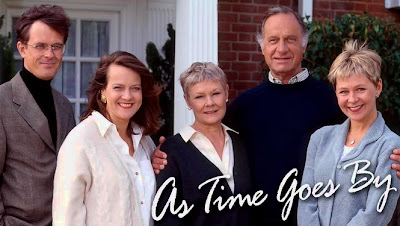
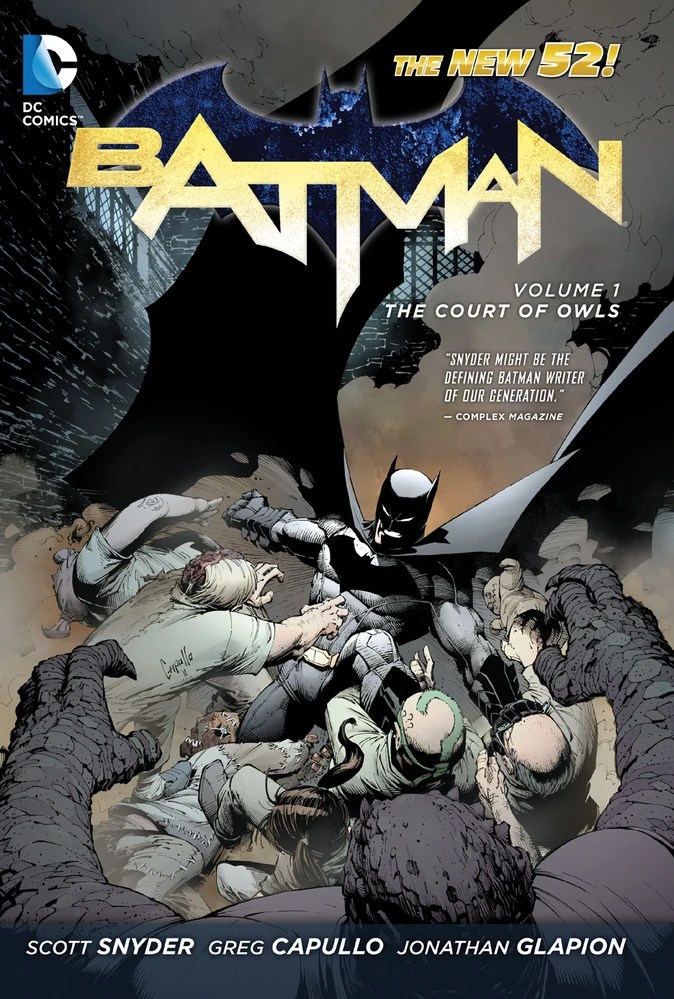
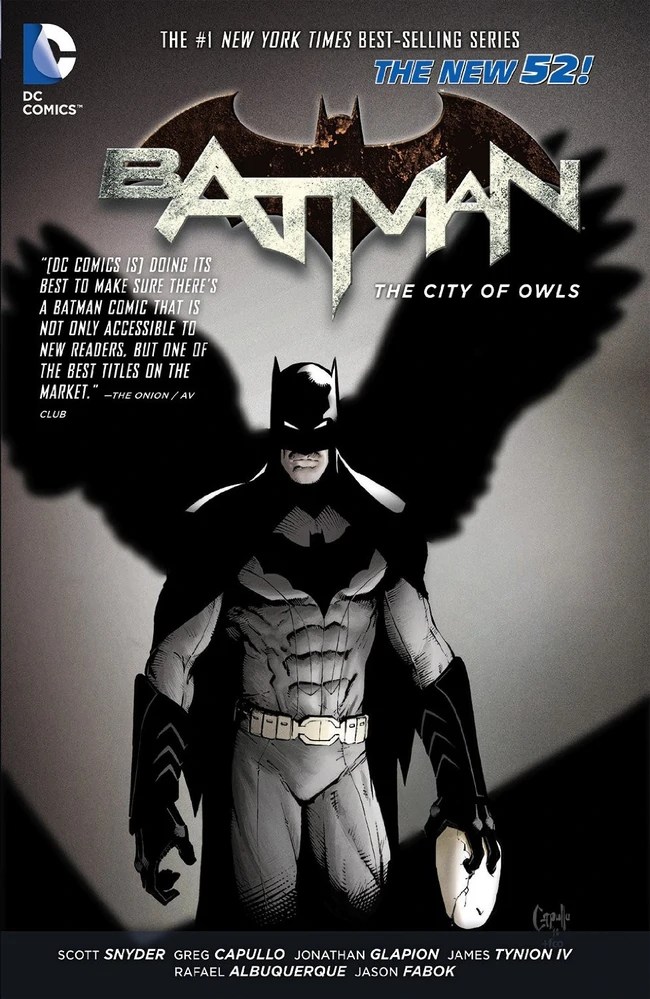
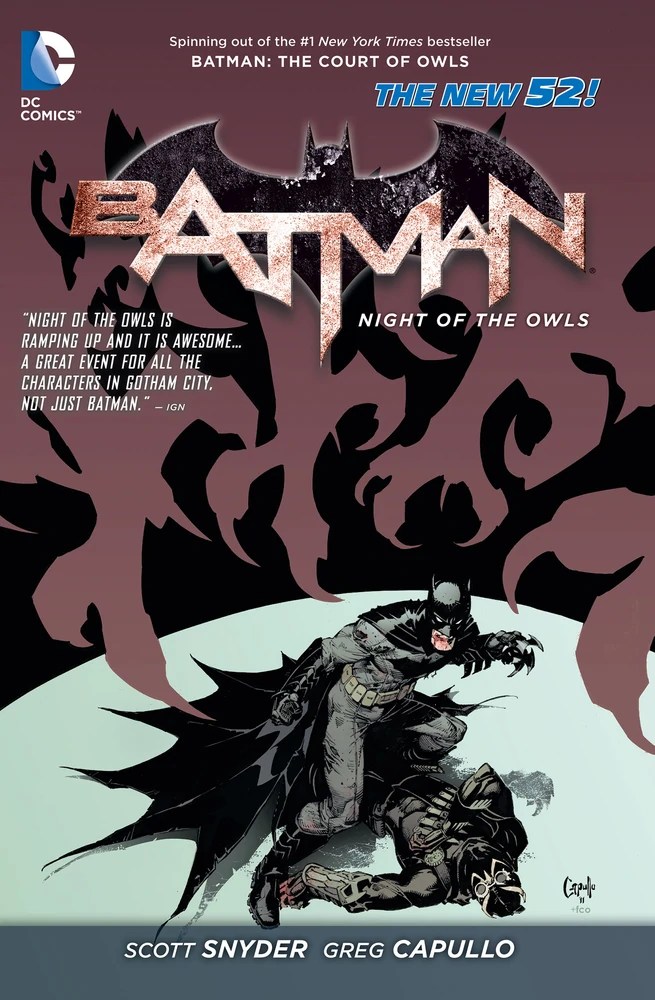
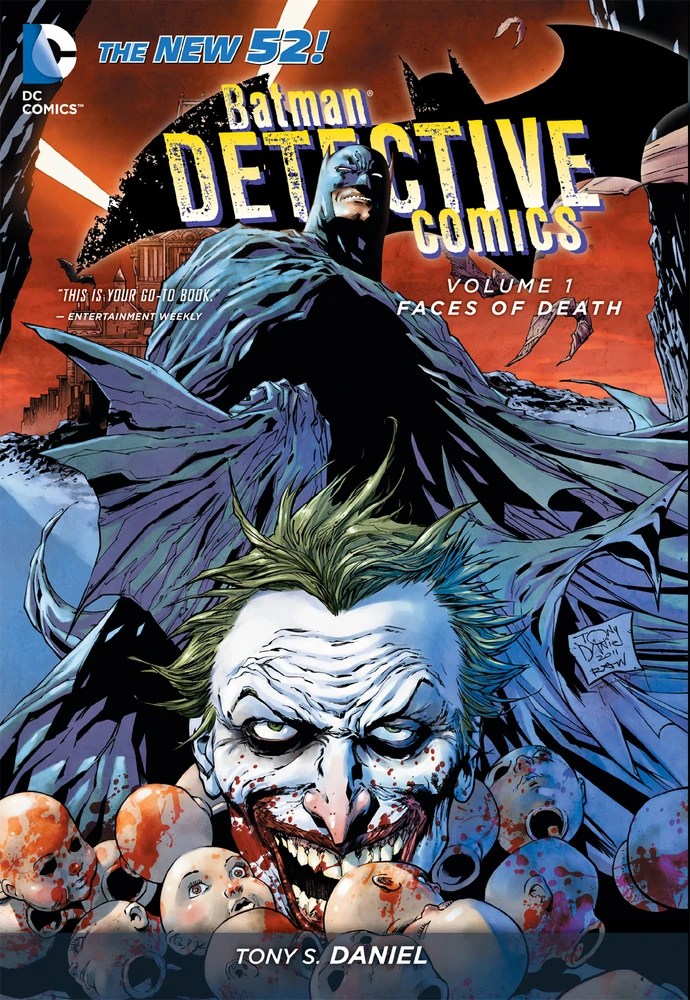
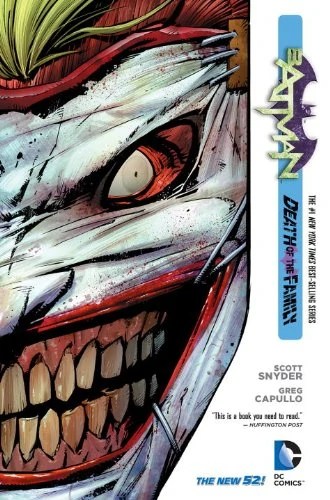
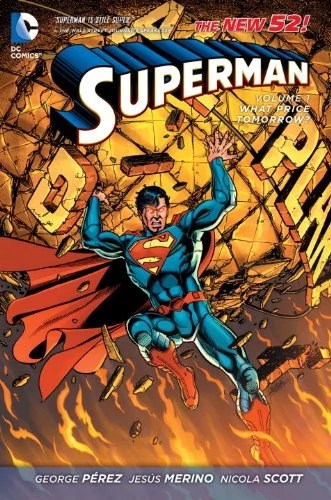
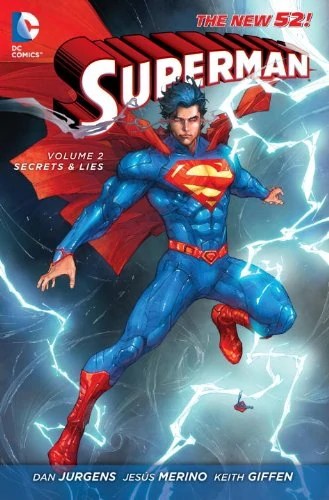
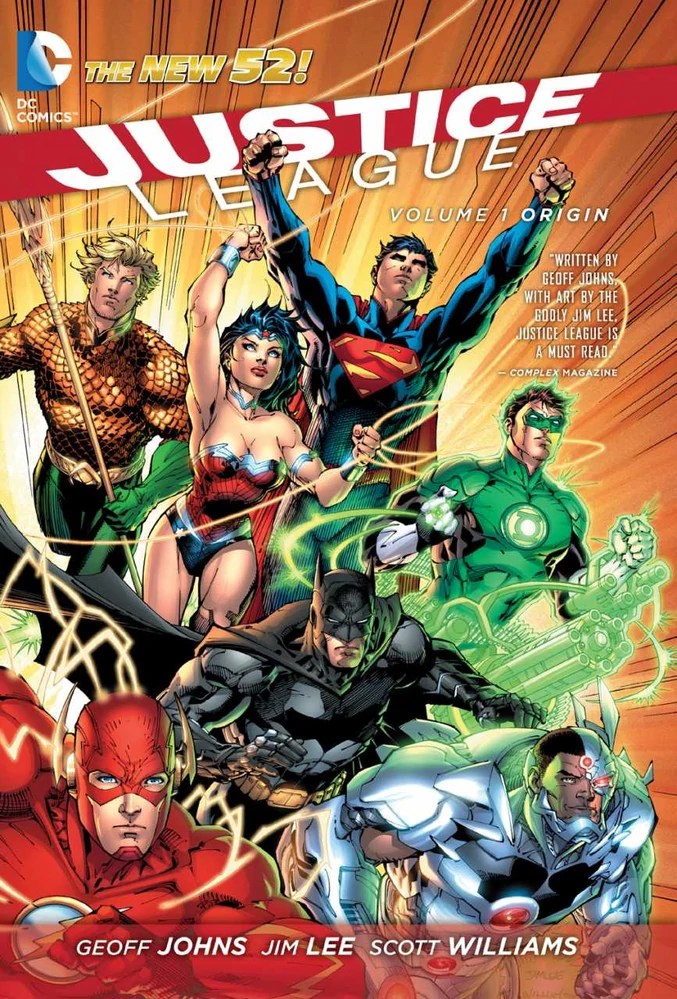
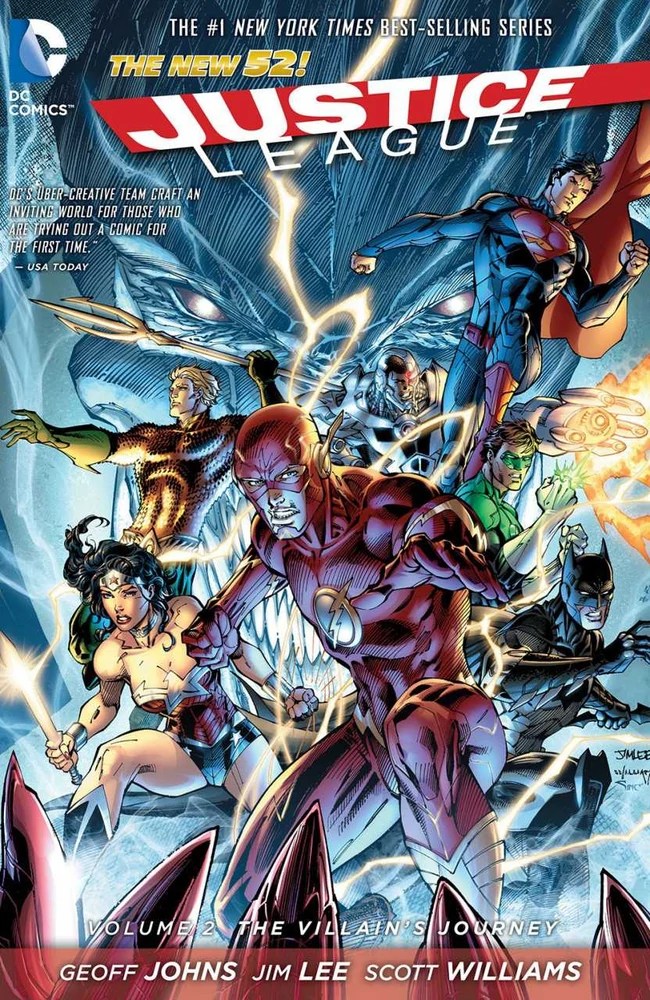
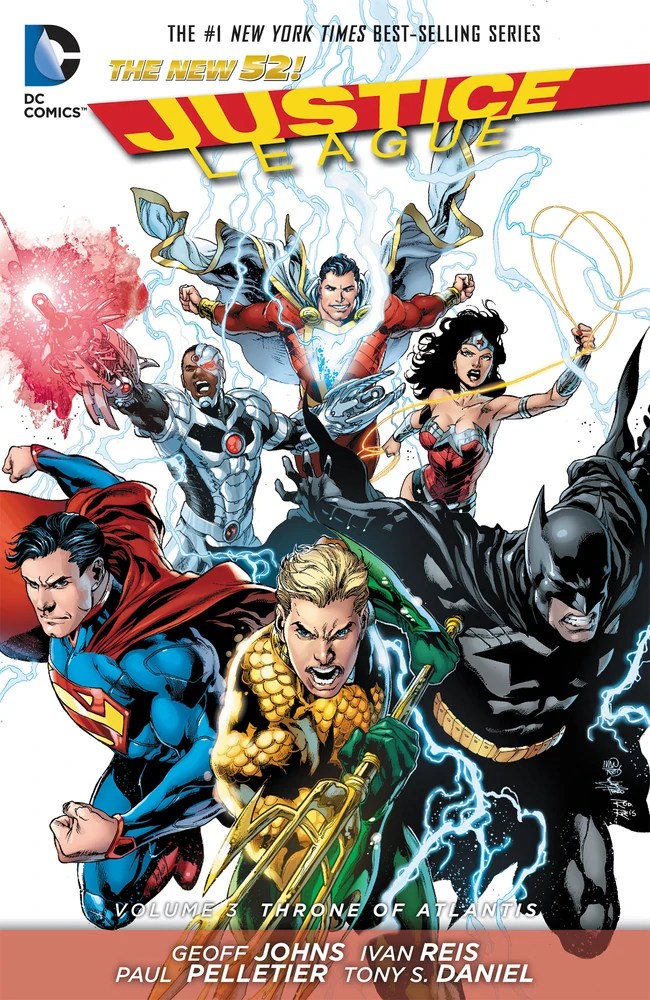
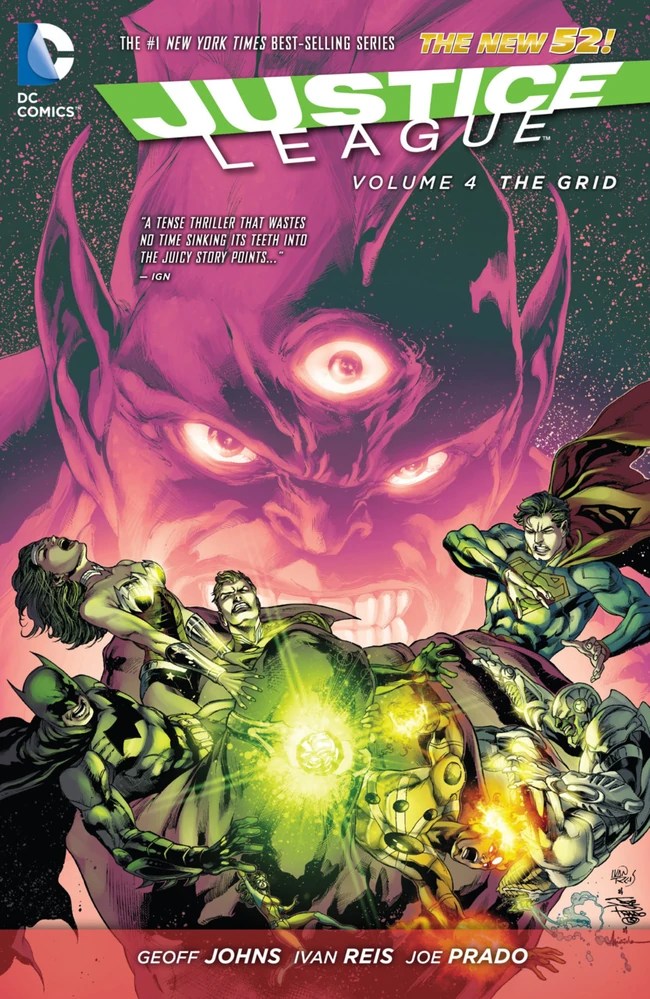
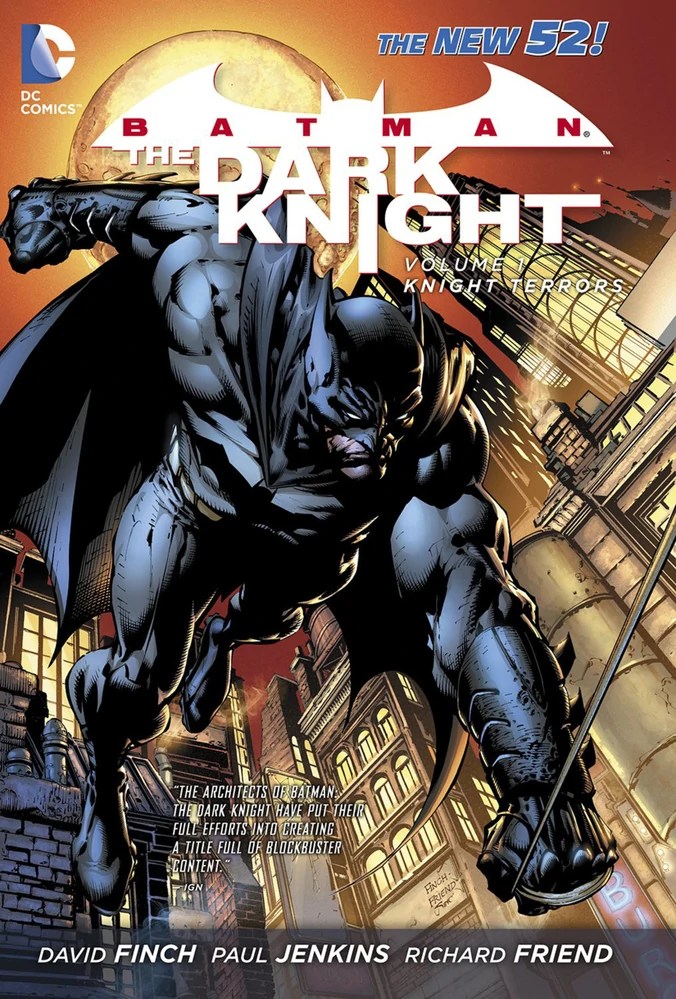
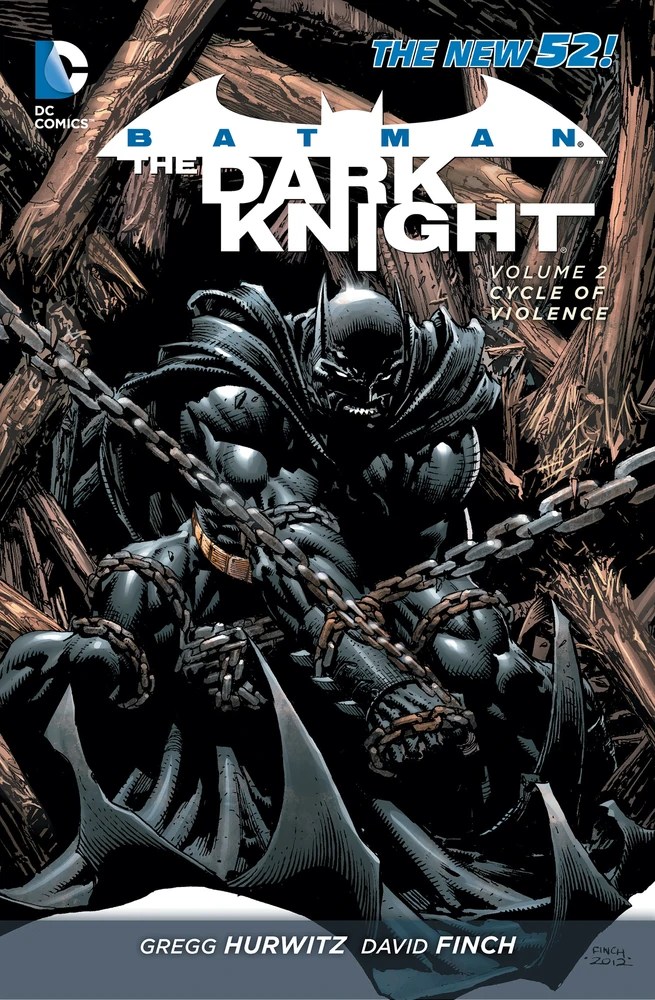

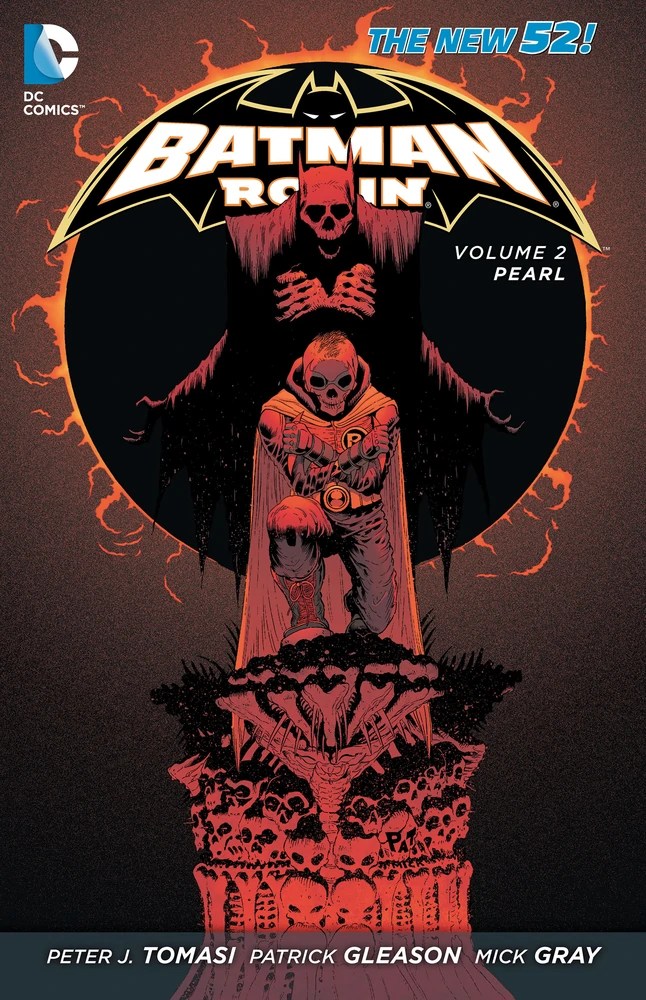
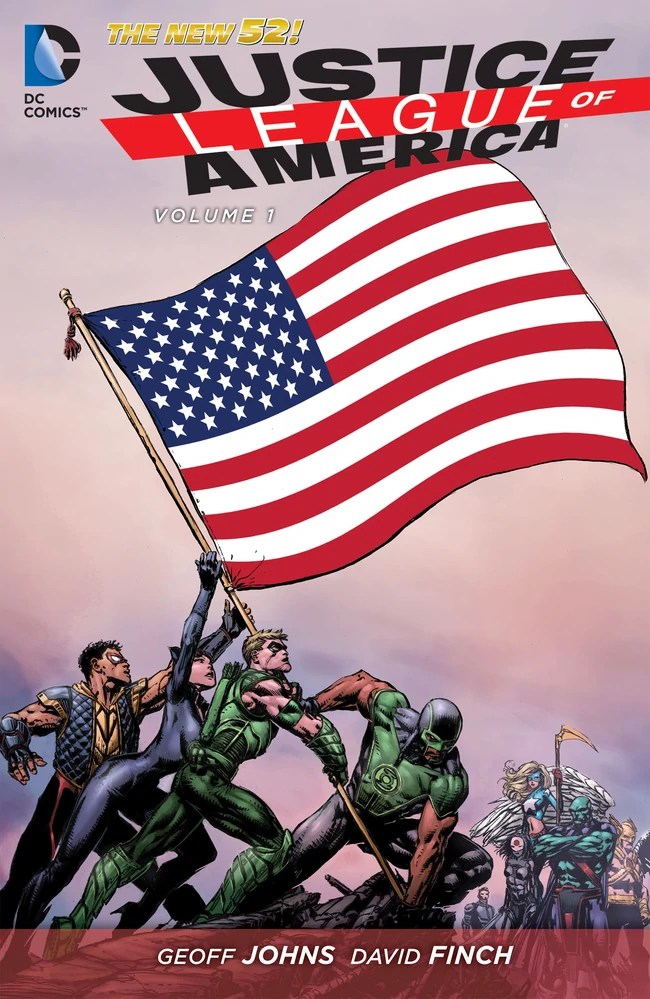
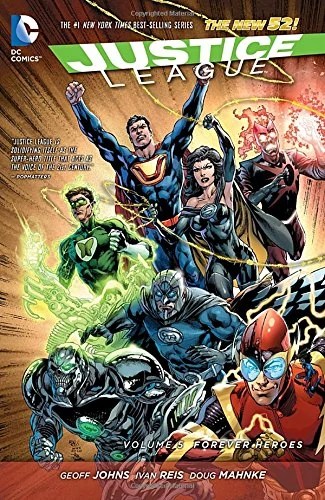

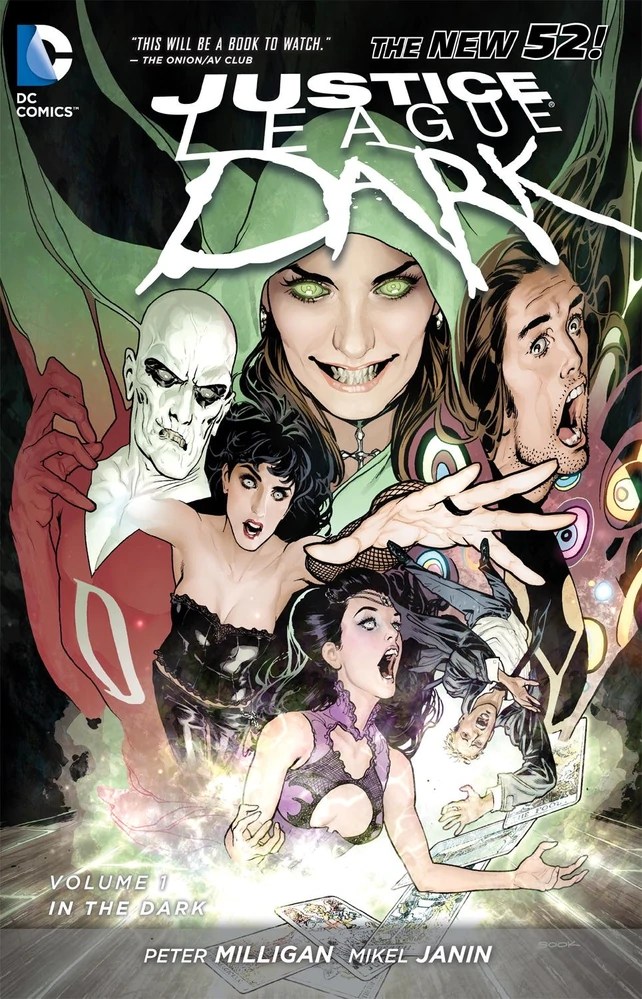




 Redeeming Pandora