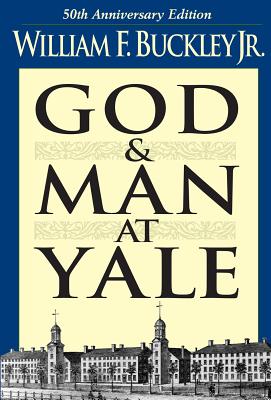
Even more frightening (and pertinent) that it is now more close to the 65th anniversary of this work, unsurprisingly Buckley’s book is necessary, enlightening, and apropos. Buckley’s introduction to the 25th anniversary reveals his growth as a critic, thinker, and writer (the writing is much better than the book itself, which should not be surprising, considering he doubled his life experience and honed his writing output in the meantime). It is more enjoyable to read than the book, but the book itself should be read, if for nothing more than the reminder, especially to collegians today, the only thing colleges want from their alumni is their money. What will perhaps come as an “I should have seen that coming” notice to us all is the litany of colleges, especially akin to the league of ivy-covered universities, during the ’50s that eschewed private enterprise and the free market in favor of government intervention and control (often called “socialism”) in economics courses. Thus, all the decision makers in government who went to college since the 1950s have been weaned on Keynesian economics — no wonder we are in the state we are in today: all of them think they are doing the right thing.
Buckley’s discussion on the inefficacy of religion on Yale’s campus is thoroughly disheartening, especially considering the Decision Makers’ decision to prevent Buckley from giving his cautionary speech to the alumni under the abused, hypocritical claim of “academic freedom.” Buckley’s trenchant discussion of both the passive (and sometimes overt) destruction of religion on campus, and the mythical trope “academic freedom” are likewise necessary reading, especially since the atmosphere at more colleges are even worse than they were when he first wrote this book. We certainly are in a bizarre academic world when ideas like Intelligent Design are blackballed from the very public schools that claim to espouse “academic freedom.”
I especially enjoyed Buckley’s refutation of the notion Yale (and thus all, especially private, educational enterprises) must present all ideas in an unbiased way to the students and thus allow the students to weigh and decide for themselves what is true (or worthwhile or pragmatic or whatever) — as if the classroom is suppose to be an intellectual buffet. Indeed, this is not the case: classrooms and teachers/professors, especially at private institutions, wholly have the obligation to stand for something — to proclaim what is true and encourage the students to believe what is true. Certainly this does not mean they should avoid the thinkers and ideas contrary to what they believe, nor must they only discuss them superficially or derogatorily, but such inferior ideas should be refuted in the classroom. Anything less is not an education. That Buckley and his friends are not popular today should be enough reason for you to read this book.
This is a good book. Full disclosure: it was written by my father-in-law. Still, it is a fine book worth reading, especially if you are a fan of a) autobiographies, b) spiritual journeys, c) books about Vietnam experiences, d) fine real-life stories, or e) books edited by me. Mostly my editing work consisted of adding the letter “s” to the word “corps” and adding commas between independent clauses joined by coordinating conjunctions. This is not a shattering tell-all about ’70s government or military intrigue, though you will get an honest, authentic first-person account of a young man struggling to understand life, religion, war, politics, and how he fit into all of it as a man of love and peace in what seemed to be the least appropriate place for him: the battlefields of Vietnam. You will enjoy the honesty, the style, and the action, and you will feel the frustration, the sorrow, and the loss right along with him. Get this book and read it. Then get 10 more for each of your friends. You’ll be glad you did.
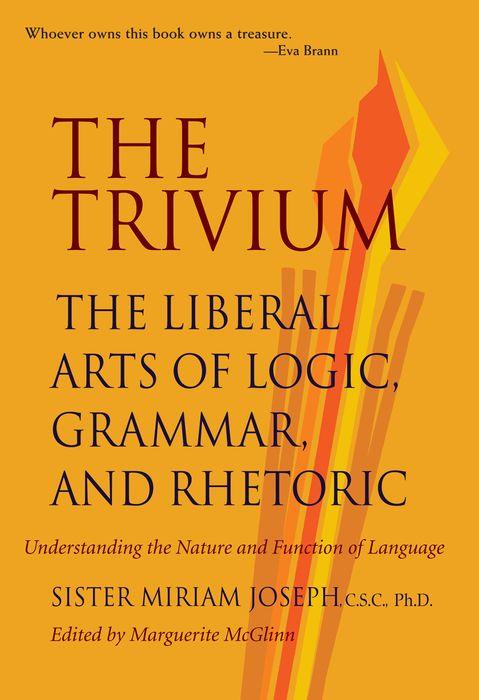
Readers may at first suspect of the three titles this book contains, it has almost nothing to do with the first (The Trivium), a scant bit to do with the second (The Liberal Arts of Logic, Grammar, and Rhetoric), and spends almost all of its time on the third (Understanding the Nature and Function of Language). If such is the case, we are directed toward two possible conclusions: 1) Sister Joseph didn’t really know much about the Trivium after all; or 2) we didn’t really know much about the Trivium after all. I shall lean toward option #2. The Trivium really is about language — its nature, function, and connection to thought, worship, and reality. Strangely enough, I’ve never read that in any other book purporting to be about the Trivium — have any of the modern reshapers of “classical education” read this book? Many will no doubt find this book tedious because of its lengthy treatment of language. Many will wonder “what about the subjects of the Trivium? where is her talk on what science classes we should have, what Bible curriculum, what novels to read, whether we should incorporate tablets into our education?” and thus prove they have wholly missed the point of the Trivium. It is related to the Humanities, indeed, but it is not the Humanities. The “Liberal Arts” of the Trivium are related to the other Liberal Arts, indeed, but they are not identical.
Who should read this book? Anyone claiming to be involved in “classical education” or anyone who wants an education. If you find it boring, guess what that tells us about you (your vocabulary, and your comprehension of reality). Remember: “slow, difficult, yet important” books are not tantamount to “boring.”
I give this four out of five stars not for Sister Joseph’s work (though her diction is at times cumbersome, even for the time when she wrote it, and her insistence the first premise of a syllogism is the “minor premise” is perplexing) but for the editorial work and oftentimes tendentious footnotes by the editorial team involved in revamping this work. If ever a work needed a glossary, this is it — but, sadly, no glossary is contained within. It has an index, though that isn’t quite as helpful as it was likely intended to be. Thus the presentation of the material sometimes detracts, yet the reader should persevere and read this wholly necessary work again and again — especially if one is paid to be involved with “classical education.” (If such a one reads this work attentively, such a one will find out the “tools of learning” are, in fact, reading, writing, thinking, and speaking … who knew? … certainly not anyone whose sole knowledge of “classical education” comes from reading books by, well, no need to mention names at this point — but you know who they are.)
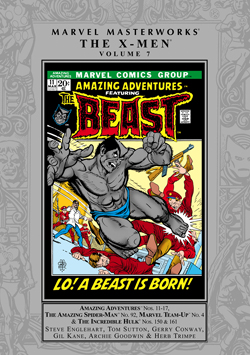
I understand this comes at a very strange time in Marvel history, when the X-Men are moribund and not the powerhouse of today, and while the focus on Hank McCoy in his own title is wholly deserved, the creative team does no justice to his character or his story. I grew up with Hank McCoy already in his furry form, so I was originally surprised when I learned he wasn’t always like that. Now that I have finally read through the issues up to this point, I was disappointed in the actual transformation. I know the Marvel Universe has a number of similarly-transformed characters (The Thing, especially), who no longer look the way they used to, and though the premise of McCoy transforming himself into a furry beast because of his research and whatnot is plausible, it just felt off. Conway does a fine job with the transformation issue, and the pain of McCoy’s new life is depicted quite well throughout the issue with the off-putting atmosphere from the beginning until the end, so perhaps it is mostly the sadness for Hank that irritates. Plus, if he is as smart as he supposedly is, surely he would have developed a counteragent before trying some magically-timed Cinderella-like potion on himself.
Steve Englehart truly does the greatest disservice to Hank through this series. It’s bad enough the storyline is cancelled without any meaningful resolution (likely not Englehart’s fault, admittedly), but the characterization is rather wretched. At first, we are willing to follow Englehart’s revision of Hank’s character, as his vocabulary and demeanor embrace the bestial identity of the new Hank McCoy … but a few issues later Hank has resumed his humanity and diction. This is certainly a positive mark, in one sense, but the immediate abandonment of the character direction replaced with the early ’60s flippancy and dialogue in the dark days of the X-Men are grating, at best. One gets the suspicion Englehart was itching to revisit the pirate ship episode if the series lasted any longer. At least he doesn’t end every sentence with an exclamation mark, though he does feel the need to bring back old characters/villains just long enough to have them commit suicide by the end of each issue. The other issues featuring Iceman, Polaris, and Havok are equally steps in the wrong direction, though on the whole we are willing to forgive the egregious disrespect the creative staffs display for their subjects, since we are just glad to spend some time with these characters again.
This collection definitely gets worse at it goes along, which is probably why the series was cancelled so soon, but it does have many fine moments and is rife with great possibilities … which never seemed to materialize, sadly. What happens next to Hank and Linda and the Brand Corporation? I wish I knew. This collection does not tell us. It’s worth reading, certainly, especially to fill in the missing gaps between the first demise of the X-Men and Giant-size X-Men #1, but it will not answer all your questions.
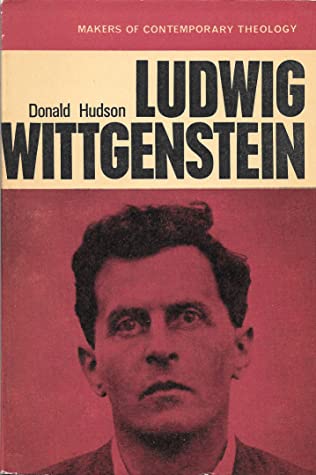
As intriguing and potentially helpful as this booklet it, I’m not sure it really fulfills the promise of the subtitle. Wittgenstein has no intention of connecting his philosophical output to religious thinking, though he seems fairly accepting of people who have it (which is awfully decent of him). Wittgenstein is certainly a tricky fellow to grasp, especially since he spent the latter half of his output refuting the first half of his output. Hudson provides a fairly helpful overview of major ideas, but a good deal of the end is spent somewhat hastily attempting to establish Wittgenstein as a “maker of modern theology,” since that is the series in which this booklet appears. Hudson does present some ideas worth pondering, but their connection to Wittgenstein’s philosophy appear tenuous to me — though I am rather a tyro in the realm of Wittgenstein. Hudson’s book could potentially serve the same function as a prose summary before a canto in the Inferno or book of Paradise Lost: read it first, get a grasp of the basic idea, read the chapter, then go back and read the summary to cement within yourself what it is you just read. Similarly, Hudson could be read before one ventures into Wittgenstein’s work, then read the Tractatus and Philosophical Investigations, then read Hudson again. Perhaps other introductions to Wittgenstein may be more helpful, but Hudson’s commitment to framing Wittgenstein within a religious/theological realm (even if it is against W’s wishes) is intriguing enough to engage in as a reader. Track this installment (and the rest of the series) down and give it a try.
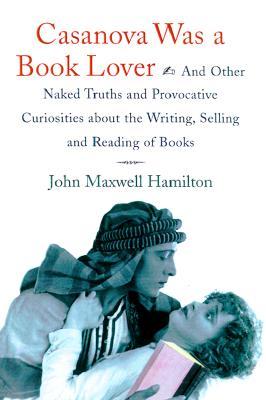
“N-a-k-e-d” is a strange way of spelling “boring.” This book is really not interesting or provocative. Hamilton spends a bizarre amount of time praising the Marquis de Sade as some sort of exemplar of humanity-literary behavior, followed by a preponderance of vitriol against religion and American presidents. The attentive reader will also need a new hypocrisy meter after reading this, since it will overload and break somewhere around chapter 3. Hamilton lambastes authors who use assisting teams, ghostwriters, and amanueses … all the while telling us how his graduate assistants (the goofy way college professors have of spelling “indentured servants”) gathered much (if not most) of the information retold within these pages while he was busy doing not his own research. Hamilton lambastes boring and meaningless dedications in books … apparently forgetting the fact he has one in his own book. In chapter seven, Hamilton feigns he is going to finally reveal the “most stolen books,” then backpedals with an excuse to the effect of “librarians don’t like to talk about it,” and finally pretends to give us a list of the most stolen books — but really are just representatives of types of books that probably get stolen a lot. This book promises so much, yet despite an intriguing story-filled opening chapter, delivers mostly sub-interesting minutiae, vitriolic caterwauling, and a fecundity of dullness that even Thomas Shadwell might find lame. Hamilton spends a chapter decrying the absence of negative reviews of books: here you go, sir.
This is a great book, though its beneficial audience is limited to educators, students, people who haven’t been educated, people who are being educated, people who should be educated, and people who need to be educated. Thus, the audience is, well, everyone. It’s one of those indispensable books, whose declarations about the sorry state of education and the ideal ways to ameliorate most problems are made even more frightening and sorrow-filling when the reader notices the book was written in 1943. Education at the Crossroads is even more necessary than it was 70 years ago — something that can’t be said about too many education books. It is dated only in fleeting moments, which adds to the tragedy of the intervening years: why didn’t anyone listen to him?
I wish I read this book 10 years ago, but there’s also the possibility I might not have been “ready” for it then, so better late than never, I suppose. Maritain is correct about many things: the purpose of education, what schooling/education are not, the importance of understanding God and humanity for any education to work, and a slew of other things too numerous and adroitly explained by him that any brief treatment here will only perform injustice on the work and the author. Not everyone will approve of his suggested curriculum and proposed age/school year alignment — in fact, most contemporary educationalists (the ones who get paid to make decisions and, like the characters in Peter Jackson’s version of The Two Towers, make only wrong decisions) will decry and rail and lament and ridicule (if they are willing to read a book that isn’t in e-format and doesn’t appear on any Common Core tests). That’s one sure-fire way of knowing this is a book to read and incorporate into one’s soul. It is not perfect, but it will help you understand reality better.
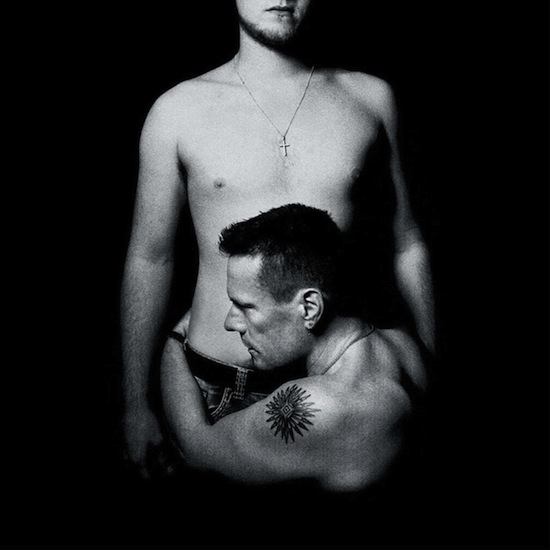
Having listened to this album a number of times in the last few months, I can assure you it is a much better album than you probably think it is. In its way, it is superior to even The Joshua Tree and possibly Achtung Baby, keeping in mind “its way” is its ultra-personal nature. It is a wholly introspective, open window into the making of these men and their musical influences, possibly the most revealing album a band has ever put out, which makes the “self-gratifying and grandiose” palaver spewed out at the album’s unusual release all the more embarrassing to those who served the vitriol. I am not, however, qualified to comment on the historical influences that generated not only this album but the band we have loved for decades, so I do not pretend to comment on them too much. You, the faithful reader, can track them down in various places (I hope, too, my old buddy Steve Stockman will write another book about these recent albums as well). Instead, I will comment on what I think of when I hear these songs (especially in context of other U2 songs and albums) and what (if not the same thing) makes them so good. Without further ado, let us semi-briefly explore these songs.
“The Miracle (Of Joey Ramone)”
Unlike the slow-building openers “Where the Streets Have No Name” or “Zooropa,” “The Miracle” just starts — even more abruptly, really, than “Vertigo” or “Zoo Station” (or any of the others). We feel like we have walked in two seconds after it started, and while that is initially jarring, it fits well with the point of the album. This isn’t The Wall — it doesn’t have to begin with birth and build slowly up to a life story. Boom. Here is the start. Here is the point where the rising action is about to begin. This isn’t season one, episode one; this is season one, episode eighteen, and things are about to change for the better (in some cases).
Much of this album gives us the impression we are re-covering old ground, doing what Frost said is practically impossible, but we are doing it with fresh eyes and fresher ears. The almost pep-rally nature of “The Miracle” is unusual for U2 and brings a lot more energy than we are probably expecting, considering the band isn’t getting any younger and a retracing of one’s roots often has the laconic feeling of Wordsworth not the immediacy of Keats (I should probably say Byron or Shelley, but as we all know Keats is far superior). Even so, this is an energetic song. Retracing their roots has brought that energy the band needed — not merely to remain “relevant” — and this is an energetic album.
The lyrical freshness of the album matches the reinvigorated musical energy. “I was chasing down the days of fear” and “I wanted to be the melody / Above the noise, above the hurt” is as lyrically excellent as “So Cruel,” and you know how much that says. I love that last line of the bridge “And we were pilgrims on our way.” We should have been listening to the albums of U2 as a pilgrimage, shouldn’t we?
I’m not Ramones-knowledgeable enough to know what makes them so beautiful, but I’ve had similar experiences in my intellectual, spiritual, aesthetic pilgrimage to know what is being described so enthusiastically, and I hope you have, too. I also know what it is like to take myself too seriously, and it is especially refreshing this album finds a very good balance in presenting their (sometimes painful) youth and influences seriously while simultaneously commenting on their naïveté with the knowing raised eyebrow of old age (I suspect more of this will come in the companion album Songs of Experience). The self-effacing humor of the pre-bridge is one such knowing raise.
One great element of this album is that self-awareness, manifesting in this instance by the different choruses. After the verses communicate the feeling, the memory, the experience the song is capturing, the choruses often metamorphose from “here’s what we were like” to “here’s what we appreciate better and what you can learn now” ideas. The final chorus of this song is truly great: I, too, “get so many things I don’t deserve.” The thought “All the stolen voices will someday be returned” is as uplifting and enthusiastic eternity-anticipating line as you will ever hear. It usually brings me to tears. It does anticipate “The most beautiful sound I’d ever heard.” It will indeed be beautiful to hear again the voices of those who have been stolen (by death, surely, not by God). That will be a miracle, indeed.
“Every Breaking Wave”
Here is one of the all-time greats. Musically, this is great. Lyrically, great. It’s great. You probably think that’s circular reasoning, and perhaps it is (okay, it is), but this song added to “The Miracle” make for as impressive a 1-2 start to an album as The Joshua Tree. Here is a song concerned with our infatuation with fear, our unwillingness to slough off our uncertainties as if they are comfy blankets, our trepidancy to risk. We are so reticent to acknowledge what we can see, what we know: the waves will keep coming, we don’t have to chase them. Chasing them, trying to control the world and the waves is not the way to succeed at life. It’s that hubris that siphons from us our courage. It’s time to stop futilely chasing after the waves and let them take us. That’s the only way to get where we want to go. The spiritual implications are glaringly obvious.
Lyrically, the inverted word orders at time may be for the rhythm of the phrases, but they add to the weight of maturity undergirding an album that could easily have devolved to self-pastiche. (I hope that doesn’t sound as pretentious as it sounds.) My favorite part is the “I thought I heard the captain’s voice / It’s hard to listen while you preach” section. True, having just read The Tempest twice with two different groups of sophomores, this section about shipwrecks and waves and shores resonates a little more loudly than it might during the summer, but the reminder we can’t hear The Captain when we are trying to give the orders is always a timely reminder. It’s impossible not to love this song.
“California (There Is No End to Love)”
The trademark Bono “oh” gets new life in this album, as remarkable as anything else here. Despite the backlash against their exploration of American music during the Rattle & Hum era, U2 goes where it needs to go, learns what and where it needs to learn, and unashamedly (and less unabashedly than in their less-temperate youth, shall we say) lets us know about it. They aren’t the Beach Boys, but then again the Beach Boys weren’t always the Beach Boys, and California is big enough to influence just about anyone. Just because my brief personal experience of California wasn’t all that great doesn’t mean U2 isn’t allowed to enjoy Zuma or Santa Barbara (or not enjoy it, as may possibly be the case here).
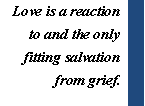
Instead of knowing beauty and truth are (almost) the same thing, it’s likely more significant and efficacious for us to know there is no end to love. Most of the song may give the impression of a light, frothy sort of “love is forever” sort of palliative, despite the revelations of the rather painful experiences couched in the first two verses … until we get to the end of the second verse. It’s one thing to write about and sing about painful experiences — we’ve heard that before (though not as often in U2, not their own painful experiences but certainly Ireland’s pain) — but suddenly the typical “cry in the mirror a lot” notion morphs into a more honest admission “I’ve seen for myself / There’s no end to grief” — and that acknowledgment of man’s prison of grief, eternal if left to himself and his fallen nature, reveals itself as the true basis for why “there is no end to love.” It’s not the simple “I’ve had fun times on the beach, so life is good.” It’s not “we’ve found each other, so love is forever.” Love is a reaction to and the only fitting salvation from grief. Since grief does not end (in this lifetime) love will not end (ever). I don’t know of a more comforting thought, really.
I haven’t quite sussed out the last two lines about stolen days, though I suspect the use of “stolen” is different from the “stolen” in “The Miracle,” since it seems to me we are the ones doing the stealing in “California,” stealing days of happiness and moments of love and joy away from the grief. We certainly don’t want to give those back, and perhaps they are enough, in the end. That makes sense, I suppose.
“Song for Someone”
This is one of those songs if you just listen to it casually once or twice without paying attention to the words you get a very faulty misapprehension of how good it is. That could be said about the entire album, of course. From the first line, whatever “write good lyrics” pills Paul Hewson has been taking in the last five years pays off again. I mentioned “So Cruel” earlier; perhaps this is a companion or sequel, as it is about healing and restoration. We have a great lyrical irony, in that this song purports to be universal (if my assumption about the “someone” being fit for anyone doesn’t take us all to Pleasure Island), though it frequently references private conversations and personal experiences. Again we have the modified chorus trope: the third line in the three choruses is different each time. (I can imagine the uproar if the second version was “with or without” instead of “within or without.”)
The best and worst parts of this song come at the end. The final chorus begins with a wonderful pair of lines: “And I’m a long, long way from your Hill of Cavalry / And I’m a long way from where I was and where I need to be.” I’m not under the impression the “Someone” this whole time has been Jesus … though, come to think of it, that would be totally awesome (and change the meaning of this song drastically). Hold that thought. The second of that pair is a wonderfully honest line about how far Bono has come in his spiritual journey and how far he still has to go — not since October have we heard anything this direct (except “Yahweh,” perhaps).
Now, if the “Someone” is actually Jesus throughout the song, and thus most of the “you”s are also Jesus, that would indeed elevate this song exponentially in both my appreciation for it and, more importantly, its quality. The first two lines of the song don’t seem to fit with that interpretation, though, especially as it would be unthinkable to say to Jesus “my scars are worse than yours, you know.” But then, Jesus does have eyes that can see right through us. He does “let [us] in to a conversation / A conversation only we could make.” He does “break and enter [our] imagination / Whatever’s in there it’s [His] to take” — that fits, too. The last line of verse two, “You were slow to heal but this could be the night,” also doesn’t seem to fit either, however. Also, I don’t know why Jesus would let the light go out, but perhaps the choruses are directed toward us, the audience: the listener is the “you” of the chorus. We can’t always see the light though we should have faith it is always there; we can’t always be the world we want to be; we have the responsibility not to let the light go out. If most of the “you”s are Jesus, the line “If there is a kiss I stole from your mouth” would take us immediately back to “Until the End of the World” and “When Love Comes to Town.” I’m not sure about the whole song, but there’s no denying whose “your Hill of Cavalry” it is. Maybe Jesus is the “someone” the song is for, and we are the “someone” the song is to? Regardless, this is another superb song.
The worst part of the song I alluded to above is only that after this great last version of the chorus (or bridge, maybe), we very much desire one final round of “And this is a song, song for someone,” but we don’t get it. Maybe the live shows.
“Iris (Hold Me Close)”
This song feels like it escaped from The Unforgettable Fire, and since that is one of my favorite U2 albums, that’s clearly not a slight. It’s a lyrically diverse song, even if one is tempted to dismiss it because of the musical sound. Initially I was a bit disappointed by this one, musically, but it does grow on me, especially as I understand the words better. “Iris” plays a few roles in this song, emphasizing the “seeing” theme of the song and possibly being an actual woman named Iris. Of course, once we find out Iris Hewson was Paul’s mom and this is another overtly personal song about Paul’s young life, that part comes into sharper focus. The Freud fans will likely latch on to this notion and interpret the ending refrain as “one needs to free oneself from one’s parents in order to fully become the person one is to be,” but I think it’s more Robert Burns than Freud. As Burns says, if we could see ourselves the way others see us, we would be much more free to be who we should be. And truly, as Christians, we know there is no better (or no other way at all) to be truly free to be ourselves than to be ourselves in Christ. All in all, it’s a very moving song by a man who lost his mom when he was very young, a man letting his mother know she is always with him and possibly wants her to be proud of him. I don’t think there is doubt about that.
“Volcano”
“Volcano” makes you wonder if this album has been locked in some Island vault since the mid-’90s and has suddenly escaped. It’s hard not to find this song somewhat goofy, though its message is important like the rest of the album. This album impresses you the more you learn about it and the influences that have shaped it (again, resources elsewhere can help far better than I can) and the keener one hearkens to the thematic/lyrical motifs strewn throughout multiple numbers. Waves and seas, eyesight and insight, identity, faith and doubt … sure some of those are fairly typical U2 fare, but the intentional lyrical development of certain phrases and ideas in multiple numbers creates an impressive unity to this album easily unnoticed by the casual listener/hearer.
Even with the dangerously goofy dance-techno-like beat of the chorus, which comes dangerously close to undermining the seriousness of the lyrics, the variety within the song works to a good effect, taken as a whole. The “You were alone / … You are rock n roll / You and I are rock n roll” breakdown toward the end gives the song a helpful push to the conclusion the chorus alone wouldn’t have given it, since its (the chorus’s) sound may have been too repetitive to make for a strong enough finish. The basic message seems to be a warning for easily-hotheaded people about the dangers of that, which, while not anywhere close to unique for a message, does not appear all that frequently as a peppy remix-like number. I need to appreciate this song more than I currently do.
“Raised By Wolves”
U2 has been singing songs about Ireland’s war on terror for about 40 years now, but it has never been so personal as this song. It’s a straightforward song for the most part, though it does have some lyrically impressive lines (“My body’s not a canvas” … “Boy sees a father crushed under the weight / Of a cross in a passion where the passion is hate”). The bridge, “I don’t believe anymore / I don’t believe anymore,” is for me the most inscrutable section of this song. If it is about young Paul Hewson rejecting the faith that has brought about (supposedly) these sorts of things, that’s understandable, though that doesn’t seem to mesh with the history of U2’s music (especially with “I Will Follow” and October coming closer to this life experience than War, and War, we must remember, ends with “40”). If it is older Paul Hewson not believing in something, that is even less credible. I just don’t get it yet, but that’s not a bad thing.
The chorus is likewise thought provoking, partly because I don’t have a good grasp of it, either. Musically, it’s an edgy song, certainly the edgiest political song since “Love and Peace or Else,” and that edginess makes the song. The way Bono sings the chorus is also a highlight of the song. I suspect the line “Raised by wolves” is a negative thing, if it is a comment on how his generation was led/affected/burdened by the terrorism and conflict (certainly he is not referring to his own parents or any of the band’s parents, since they have always been open about the tremendous support their families always showed them). But the next line “Stronger than fear” presents itself as a positive thing, as far as I can tell. Then the final two lines, “If I open my eyes, / You disappear” return to a negative idea. It’s another song that would improve with understanding its origins, but it is also translucent enough to assure us of its quality, even if its full meaning is immediately opaque.
“Cedarwood Road”
Another overt homage to friends and experiences of their youth, though this time the overall impression almost dares us to consider it positive, despite being replete with echoes of bombings and loss and pain from the previous song (again, the continuity and overlapping and motif spreading throughout the album snowballs our appreciation for this album the more we grasp it). Guggi is one of Bono’s lifelong friends, a fellow survivor of those dark times, though he didn’t survive quite so successfully.
The music of this song is perhaps its most noteworthy component, so to speak. Say what you will about The Edge, and I’m sure you will, he can still come up with some catchy, integral licks (“The Miracle” has some catchy riffs, too). They only seem familiar because he makes them fit so well.
This is an album of great song endings (even if I think “Song for Someone” ends one section too soon). “A heart that is broken / Is a heart that is open” is a fantastic line, though our enthusiasm for it is likely tempered when we remember (to what limited degree we can appreciate it) the great volume of pain that generated its profundity.
“Sleep Like a Baby Tonight”
I don’t have much to say about this song. It has my least favorite line on the album, “Tomorrow dawns like someone else’s suicide.” It has that “Babyface” feel to it, and we jump, not cynically I trust, to a conclusion there is more here than our initial impressions give us, since U2 and lullabies don’t mix. As I’ve said, I haven’t done a whole lot of research, since I wanted this exploration to be mostly my own experiences and reaction, but what little I saw (mostly accidentally) about this song indicated this is about a priest (the kind of priest Alan Moore writes about in V for Vendetta … yeah, that kind of priest).
Does that make this a bad song? Certainly not. Unpleasant? Perhaps. Is it a social problem we should know about, do something about, bring to an end? Certainly. Musically, it’s another impressive stretch for a band most people likely thought had run out of ideas, even if it reminds us of an earlier song. Bono’s falsetto gets a healthy workout once again, another facet of U2 most people likely thought had faded into the mist.
“This Is Where You Can Reach Me Now”
I’m sure you already knew Joe Strummer, to whom this song is dedicated, was The Clash’s front man, telling us this song reflects the influences The Clash had on young U2 back in the day. I’m not as familiar with The Clash (or any in the punk scene, apparently) as I probably should be, but what little I do know makes the sound of this song (and its military theme) wholly believable. It’s a very straightforward song, as far as I can tell, though it’s also highly probably I’m missing out on a great deal of meaningful subtext. It’s also quite likely I’m misinterpreting much of this album, but that has never stopped me before.
“The Troubles”
Another very personal song (yes, we’ve said that eleven times now, I understand), this one is about the pain of abusive relationships and the freedom that comes from escaping it and reaffirming one’s self worth and value. Musically, it’s another impressive stretch for the band. Lyrically, it’s another remarkably courageous display. If the last half of the album is not as “enjoyable” as the first half, it’s only because the honesty and openness make us uncomfortable, not because it’s an inferior half. I’m not a big fan of rehashing my painful memories (though someone should tell that to my subconscious, since it’s a big fan of running that tape about 12x a week) — I doubt I’d have the courage to write almost a dozen songs about some of my positive life-shaping experiences, let alone the negative experiences. Thank you, men. The people who find you “no longer relevant” must have thought the same thing about Don Quixote … and look how well that ended for them.
So there you have it. I like this album a great deal, and I think you should, too. It will definitely go down in U2 history as one of their best. I don’t know how many more albums these four have in them — hopefully we will not have to wait so long for Songs of Experience (considering their recently-announced tour, “The iNNOCENCE & eXPERIENCE Tour,” is purportedly going to focus on Innocence songs one night and Experience songs the following night in pairs, that gives great gusto to our hope). If they release Experience in a year or two, then, a few years later, top it all off with Man, I’d be quite satisfied (though if they can release several albums in the coming decades, that’s fine with me, too).
It holds up to the scrutiny. It is an incredible gift, not just because it was free. I did get the 2-disc deluxe edition for Christmas from my wife, which was a very pleasant surprise. The bonus disc songs, including alternate takes of “The Troubles” and “Sleep Like a Baby Tonight,” while perhaps less “canonical” improve our appreciation of these songs even more (though I haven’t listened to them enough yet to say more). The 30-minute acoustic set is definitely worthwhile, and the otherwise unreleased songs are obviously a must-have for U2 fans (those who don’t get the special Japanese releases, of course).
You probably have this album, whether you wanted it or not. Let’s not rehash that again. Instead, now that you know about it more, give yourself a tremendous boon and listen to it carefully. Soak it in. Embrace the honesty, the openness. Even if you don’t fully interpret everything correctly, as I most assuredly have not done myself, appreciate it for what it is: a superlative album from one of the great bands of all time.
It’s an album about many things, but it is fundamentally an album about love. Don’t chase love like every breaking wave. Let it take you. Love, as we know, conquers all. Let us, too, surrender to love. You’ll be glad you did.
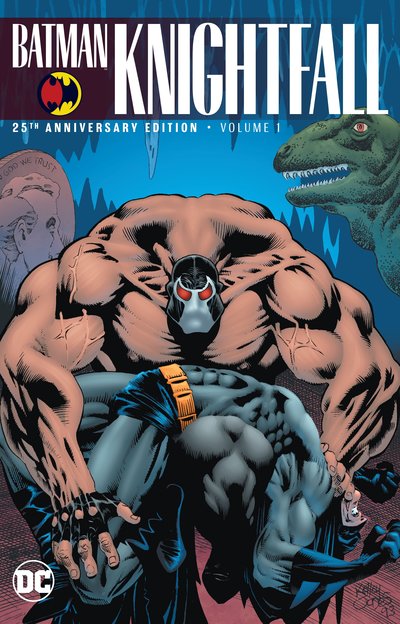
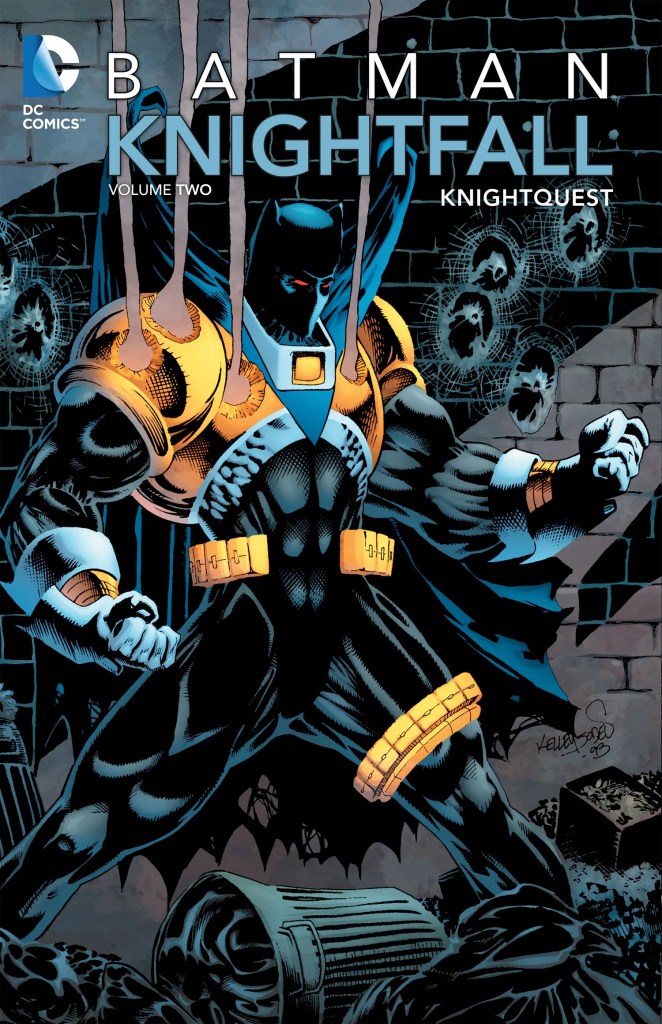
Two of the greatest literary detectives are assuredly Rex Stout’s Nero Wolfe and Bob Kane’s Batman (or, Bruce Wayne, when hosting in his stately manor). Both have very little in common beyond their basic commitment to right wrongs and bring perpetrators to justice, considering Wolfe will usually only bring justice when he is paid for it and rarely leaves his home and Batman prefers anonymity and patrolling the streets practically constantly. Both do have a certain moral malleability, even with Batman’s commitment never to kill (something we are occasionally led to believe Wolfe has done in his youth, if for a certain kind of justice), but we are never far from the firm conviction these great detectives are valuable assets to the fight against crime — certainly never for very long, at least. One significant thing they do have in common, as with most great literary detectives and epic heroes of other ilks, is their catabasis and anabasis, requisitely occurring because of their nemeses. Of course, Batman has more arch-nemeses than the shore has sand, but no one has taken him to his nadir as one behemoth of a villain: Bane. Nero Wolfe, having managed to offend and upset everyone from Serbian diplomats to the head of the Central Intelligence Agency, likewise, has no dearth of enemies—but no one has so altered and affected his life like the scourge of the underworld: Arnold Zeck. Within recent memory, I have read the three collections of Batman’s epic encounter with Bane and its aftermath and the three novels detailing Wolfe’s brief but cataclysmic history with Zeck. In an effort not to spoil too much of the mystery, action, adventure, plot, and (most important of all) great character moments, I include hear my brief reviews after I read them. I refrained from spoiling too much in hopes you will pick them up and read them for yourself, if for nothing else than to have some great reading experiences. We begin with the three Nero Wolfe adventures written by Rex Stout and conclude with the three recent-ish TPB collections of Batman’s fall and rise in the mighty Knightfall Saga, mostly written by Chuck Dixon.
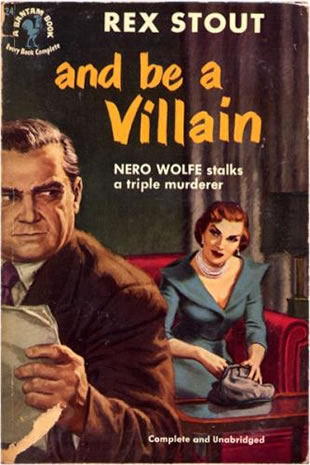
And Be a Villain ⭐⭐⭐
If I call this “another satisfactory addition” to the Nero Wolfe canon, you should realize that is no slight against this book. It would be impractical to require each Wolfe novel to be an innovative, life-altering humdinger. This is another enjoyable Wolfe story, which dallies with tedium at times but refrains from indulging too much (even more successfully than Too Many Women) and provides nice moments both of tension and humor. We are treated to a surprising rare scene in this story: Wolfe gives Cramer all he knows before the murder is solved and asks him to effectively take over. While this is a genuine offer, Wolfe returns to form by the end, effectively blackmailing the police to get what he wants (though, nicely, not at Cramer’s personal expense). The mystery itself is a nicely complex puzzle: not only is it a “whodunnit,” but also it develops into a “was that the right victim?” investigation. Most Wolfe fans probably remember it for the first Arnold Zeck story, who will apparently become Wolfe’s arch-nemesis, but I don’t know much about that at this point. It does add a sense of tension to the story that feels a little off, like Psych’s Yin-Yang series (despite being a series about murder/mayhem, it’s usually much lighter than having an “arch-nemesis”) — but still, it adds some spice and freshness, even if it’s not something fans really clamored for. And Be a Villain isn’t a knockout, but it has some engaging twists and turns and those moments we enjoy.
The Second Confession ⭐⭐⭐⭐
Though all Wolfe stories are different to some degree, this was clearly the most distinct in the canon thus far: Wolfe not only leaves his house (which he has done in other stories, to be sure), but his house is attacked by the mysterious person quickly becoming an arch-nemesis to Wolfe. The pacing is much more rapid than most Wolfe books: we have a sense of urgency from the beginning that drives through the first half of the novel. Even when the pace slows down around the ¾ mark, we still feel along with Wolfe and Archie things are not as “back to normal” as they may superficially appear. Thus, for once, the slowing down section just before the rapid tortuous conclusion is a welcome relief. Another unusual stylistic flavor in this entry is the almost episodic feel to the early chapters. It is almost as if the chapters were serial entries in a magazine, or the classic serialized shorts from Columbia Pictures, each ending with a shocking, unexpected twist. It almost “feels” like it is not Stout writing these chapters, but we are confident and assured this plot is in the hands of the master. There is not as much humor in this one as many of the others lately have had, but there is a far more convincing romance between Archie and the female “lead” than in, say, “Before I Die.” The lack of humor is not a problem, though, since the fast pace, the political undercurrent (which does not stay “under” for long), and the palpable tension distract us enough to make this atypical Wolfe adventure one of the best yet.
In the Best Families ⭐⭐⭐
I strongly suspect this is a unique book in the Wolfe series for many reasons, many of which will not be mentioned to avoid too much plot spoiling. As one of those “wholly different” episodes, like the brownies episode of Barney Miller or “Dreams” in M*A*S*H, the feel is totally different and thus “off” for most of the book. It starts off fairly typically, but it’s not long before the drastic changes happen quickly and in full force: Wolfe disappears, the orchids go to Hewitt, Fritz goes to Rusterman’s, and Archie gets his own office. I certainly do not begrudge Rex Stout for doing something different — it is good to break out of a routine once in a while, no matter how salubrious the routine. I’m glad he did it; I’m glad Wolfe had an arch-enemy after a fashion (most of their “relationship” being phone conversations); I’m glad it ended after three stories — too many more stories would have felt dragged on. Still, the differences make this work, even in its necessity, less enjoyable than the “usual” stories. Many no doubt love this even more because of its distinctions, and they are welcome to that affection.
For me, the irritation of this book is Archie’s true feelings about his housemates: once it seems like that 10-year-some phase of his life is over, Archie has mostly negative things to say about Fritz, Theodore, and Wolfe. Being a romantic, sweet person, I naturally assume Archie and Fritz are friends: apparently they aren’t, even though Fritz cares for him. It’s almost reminiscent of Huck and Jim’s relationship, with Fritz as the caretaker role more than friend. Archie comes off as a pretty big jerk in this one, and one almost wants Cramer to actually beat him up when the situation arises. Stout does a good job of getting us to feel the long passage of time without slowing the story down too much (far better than in Too Many Women), and though the story does drag a bit, it picks up with good alacrity toward the smashing conclusion. It ends nicely, fittingly, and the suspense is well done. It likely won’t make you think less of Archie, but be prepared for some harsh honesty from the characters in this one, understandably brought about by the harsh edginess of the situation.
Knightfall, vol. 1 ⭐⭐⭐⭐
Finally, after all this time, it’s come out in a nice TPB, and I have read it. Without all the preliminary prologue stuff, non-Batman readers might be a bit lost for a time, such as who Jean-Paul is, why Bruce is already beleaguered, when Bane fought Killer Croc, for examples, but it shouldn’t bother people too much. Bane’s origin is dark, but he doesn’t do much except wait throughout the TPB, other than the entire Arkham thing and breaking Bruce Wayne’s back. It’s not nearly as boring as that sounds, since he is a fairly intelligent villain, though the addiction to Venom diminishes him somewhat, since it’s not just about his personal strength and intellect. Anyway, the inevitable backbreaking isn’t the climax of the story, which is more impressive than I thought it might be — the real story is the destruction of Batman, the idea, the symbol. As Bane says toward the end, J-P as the new Dark Knight (emphasis on the Dark, not the Knight) does more to destroy Batman than he did, since he just broke Bruce Wayne: turning Batman into no better than the evil he conquers, Jean-Paul becomes perhaps a worse nemesis for Bruce Wayne than even Bane is, but we’ll see what happens in part two. The pacing is an odd thing for a 19+ part series, depending on whether you add the non-numbered parts of the story: sometimes issues take place immediately after each other, sometimes days pass, but all of it is fairly rapid in the beginning, following Batman and Robin’s attempts to recapture the inmates from Arkham, though Batman doesn’t treat Robin all that well whether he is Bruce or Jean-Paul. Even so, one doesn’t need to pay too much attention to the time factors, since the breakdown of Bruce Wayne is the central idea of volume one, and the creative teams do a fairly fine job with it. The clash of ideas (the nature of good, for example) are highlighted at times, though they take a backseat to the action more often than not, but it’s still a good read that holds up after all these years.
Knightfall, vol. 2: KnightQuest ⭐⭐⭐
This middle volume is a little bit of a letdown, though that isn’t too surprising, considering where it falls in the spectrum of the whole major arc. The good news of this volume is it collects for the first time a lot of the issues involved in this period. Fans of The Search may be disappointed, since it does not have any of those issues (and probably should), but by this point no one should be surprised this collection is missing them, and those who are interested in this storyline will find enough to be interested anyway. Fans of the real Batman may not need this collection, though Azrael/Jean-Paul Valley fans will certainly be glad this collection exists, even if the stories aren’t all that meaningful for most of the collection. It does have some highlights here and there, but it does take a fairly long time to build up any steam or interest, especially to the casual Batfan. The only really interesting thing going on for most of the collection is J-P’s internal conflict: is he an Angel of Death, a heartless assassin like his father wanted him to be; or is he an Shadow Instrument of Good, a noble defender of the poor who has to take the grime of corruption upon himself? This culminates in one of the darker issues of the collection — some may say “especially for 1993!” but dark is dark, regardless of what year it is published. The other “highlight” of the collection is Gordon’s increasing despair with the new Batman. It’s not enjoyable to see him realize he is now all alone, but his character moments are great in its way. The culminating panel of Gordon destroying the Bat signal should have received a bigger space for such a drastic event. Completists will most likely want to pursue the diasporic issues (lists of which are available elsewhere), if they don’t already have them, but those who are only interested in the major Knightfall Saga will be more than satisfied by this 20-year reunion collection. It’s not as good as the first, but it was good to finally read what the KnightQuest was all about.
Knightfall Vol. 3: KnightsEnd ⭐⭐⭐⭐
Finally, I have completed this journey started almost 20 years ago. I know the trades don’t include every single tie-in, and perhaps some day I’ll try to track those down, but I am quite satisfied (for the most part) with the way this story concludes. The first half of the collection, KnightsEnd (or Knight’s End, perhaps) resolves the issue of Bruce Wayne vs. Jean-Paul Valley in an unexpected yet predictable way, as the basic story does what Keats says true art does: being both surprising and familiar at once, giving us the impression “but of course, it couldn’t have happened any other way,” which is about as close to calling this “literature” as anyone will likely get. Some may be disappointed the climactic confrontation between Jean-Paul and Bruce does not end in the knock-down, drag-out fight we are expecting, but as Batman has always been about more than just fighting, a detective who thinks things through, performing the impossible with relative ease, the highly-symbolic conclusion is truly moving and fitting. The only real problem with the end (as with the epilogue Prodigal storyline’s conclusion) is its abruptness. We could have used another page or two (no need for more), at least of J-P walking away into the fading darkness as Bruce returns back to the dawn.
Similarly with Prodigal, the main point of contention between grown-up Dick Grayson and Bruce Wayne is they never talked it over, never discussed their rift and differences, never discussed Dick’s hurt over being apparently rejected in favor of Jean-Paul as the replacement Batman: here the authors recognize a key aspect of these characters, and instead of giving us a wonderful un-sappy heart-to-heart between these two veterans, we get a few panels of sort-of-obvious semi-platitudes, a different scene, and then a final resolution of implied “well, it’s all okay now.” Had they given us a genuine dialogue of authentic resolution, this would definitely have been a 5-star review, missing tie-ins and all. Do these stories have some goofy moments? some confusing references to pieces not missing? Sure it does. Most TPBs do. Is the final page of the TPB an odd way to end a 1,900-some-page odyssey of identity, especially with Batman in shadow? Indeed. Could we benefit from learning what Bruce did while he was away, allowing Dick to don the cape and cowl for a time? Sure. But that’s not really what this is about. In one sense, it’s about trust and the “idea” of “Batman.”
The pacing of KnightsEnd is quite impressive, even if the sensations it evokes are compressed as each issue is rapidly accessible in the TPB form instead of waiting a couple of weeks for the next installment. Bruce Wayne, on his quest to recapture his mantle, goes to the world’s deadliest killer to re-hone his martial skills, getting metaphorically to the edge of killing while he literally gets to the edge of Gotham’s highest point, still unwilling to let go of his failures and fly free again. The inevitable climax of Robin and Nightwing seeing Bruce “kill” someone (and the proper reveal of the truth) brings Bruce’s personal rehabilitation to a fitting conclusion, enabling his appropriate symbolic conclusion with Jean-Paul later.
Prodigal is a similar kind of story, with a surprising number of “light” moments between Dick and Tim running a mansion without Alfred. That they are both youngish and enjoy (to an extent) going out and fighting crime brings for a few brief issues a vitality the usually-dark Batman-as-man-on-a-mission feel doesn’t give. This doesn’t last, of course, as Dick starts to evaluate his life of (from his perspective) mostly failures, culminating in Bruce’s giving the mantle to Jean-Paul instead of him. As stated above, the absence of a lengthy conversation between the two of them at the end was a real failure on the creative staff, but such is life. Perhaps the saddest thing of the storyline is just as Dick starts to get the hang of things, just as he starts to find his place, poetically having defeated Two-Face alone, Bruce returns yet again to resume the cowl. In the missing conversation, we are to assume Dick is mollified by Bruce considering him a son enough to resume his role as Nightwing and truly be content being his own man with his own superhero identity. Fair enough.
Lastly, a word should be said for poor Commissioner Gordon. What is he, the whipping boy of the DC Universe? Can nothing go well for this defender of justice? Here was another missed opportunity for a great conversation between secret-keeping heroes. Dick knows Gordon knows he’s a different Batman; he could quite easily have said “I used to be Robin. You can trust me.” It’s all about trust, after all — why not bolster Gordon’s trust in him? Ah, well.
All in all, it’s a satisfying conclusion to a full, good story. If one is tempted to consider this corny and lacking in enjoyable violence, one should be tempted to step back and reflect about life, morality, and what is important. The benefits of this experience outweigh the detriments, especially for the cost and convenience of these TPBs.
There you have it. You can destroy their possessions, you can break them physically, but you cannot keep good detectives down. It’s comforting to know some heroes will always be there to right wrongs and promote justice (even if doing it for money or while dressed as a bat). If I haven’t made these stories sound all that appealing, please remember these reviews are intentionally light on the good stuff so as not to spoil your enjoyment of them when you get the chance to read these treasures. Go out and get a copy of the fall and rise of these great detectives — you’ll be glad you did, especially if it entices you to read even more Nero Wolfe or Batman adventures.
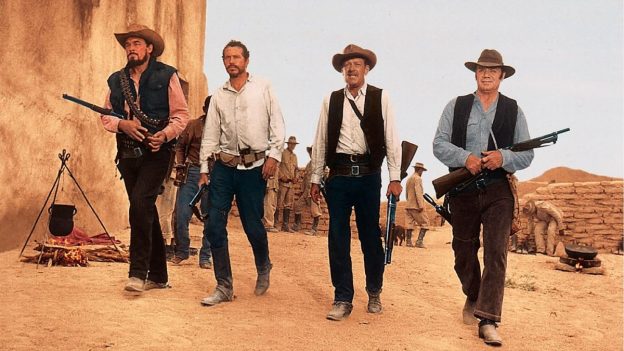
This is a violent movie. It also has some moments of explicit adult content, in both language and visual imagery. Most of the characters are coarse, greedy men struggling to live up to a moral code of their own devising. But still. This is a good if not great movie. Now, please don’t get the impression we are tired of recommending family-friendly classics here at Redeeming Pandora. We aren’t going to extol the merits of Pulp Fiction or A Clockwork Orange in my lifetime (only one of which I’ve seen). I was planning on writing a little something about Wild Bunch even before Daniel Blanton submitted his treatment of Fight Club last time, and since I advertised it I wanted to follow through. I wouldn’t want to be disloyal.
Speaking of which …
Loyalty is a dominant theme of this movie, and it’s certainly the ideas discussed and explored by this film that makes it so impressive. Loyalty is connected to humanity: the less loyal you are, to your friends, your mission, your values, the less human you are, the closer you are to animals. The whole climactic finale of the movie is driven by the bunch’s inability to obviate their failure to uphold this value. Many who dislike the movie I would imagine liken the characters to animals anyway, since they are fairly rough and course for much of it. They do steal, kill, and cavort their way through what passes for life. And yet. William Holden’s character, especially, tormented by the moments of disloyalty in his life (those he’s suffered and those he’s dispensed) drive him to cling to one vestige of his long-moribund humanity, loyalty to those with whom he travels.
The movie’s other theme, the death of the “ol’ West,” a popular subject for director and co-writer Sam Peckinpah, is a fitting companion to a story of men trying to cling to something — yet it is impressively ironic as well, since the Wild Bunch aren’t trying to cling to the way things used to be. They are tired of living this sort of life, and with a new world of automobiles, international finance, and the disappearance of open ranges, they are attempting to adapt to the new ways of life. They only embark on the major plot thread of the movie because their supposed “last big score” turns against them at the beginning of the film. After all, one needs money if one is to retire and embrace a new way of life in the “modern world.” Of course, with all the odds against them, the chances of this old group of ragtag gunmen, whose moral code is as elusive as their financial solvency, achieving a successful adaptation into a new world is unlikely. The only thing they know is how to be themselves. And that tension makes for a great movie. (I guess I do think it’s great after all.)
The stellar cast (William Holden, Ernest Borgnine, Robert Ryan, and more) definitely helps the film excel as well, especially with some actors in roles that don’t surprise us and some that do. Is this movie for you? As I said, it’s got a good deal of asperity: coarse language, brief nudity, and violence that may make Quentin Tarantino blush. For the kids out there, put it on the back burner until you’re a little older and wiser. For the adults out there, I’d say give it a try. You can be bothered by the rough stuff (I certainly am — I don’t excuse it at all), but what’s underneath all that is as intriguing a complex of ideas and characters and values worth fighting (and dying) for that make for a great movie. As they say in the film, in one of the best “realization moments” of any film I’ve seen, “why not.”





 Redeeming Pandora