While you are having a fun summer vacation watching top-notch anime series and movies, I am hoping I will be organizing my Star Trek CCG collection. Not that it is in total shambles, mind you. Just because I haven’t played the game since Hanson was on the charts doesn’t mean my Star Trek CCG collection is in disrepair. What I mean is ever since the summer of 2015 I’ve felt like taking inventory of what I have, what I don’t have, investigating what it may take to fill in some of those gaps, and, ideally, actually play the game again. Despite popular opinion, I don’t really enjoy acquiring things just to have them: I do want to read the books I own, I do want to play the games I own, I do want to watch the digital video discs I own, et cetera. I’m not big on just having objects in my home just for the purported joy of ownership. It’s all God’s anyway, right?
I have no false hopes the electronic-bay will suddenly get giddy for my extras: “oh, you have 121 ‘Anaphasic Organism’s? Here’s a bajillion dollars!” I doubt I could get a ha’penny for all my “Anaphasic Organism”s, “Archer”s, “Phaser”s, et cetera put together. I’m sure the world has no need for my commons. Nor do I have any designs on selling my rares (no one ever believed the “I.K.C. Pagh” was “rare”). I’m not trying to get back the, shall we say, hefty amount of money that was paid for this decent-sized collection (I admit wholeheartedly my parents paid for most of it). I just want to know what I have.
Then I want to give most of it away. Are you interested?
I can tell you now it’s all 1st-edition stuff, basically up to Deep Space Nine and a bit beyond. It’s been awhile since I’ve really looked into the game, not counting a few dormancy-ending days last summer, so I’m not sure what I’m missing as far as what sets I have none of in the 1st edition. I’m hoping my brother will be able to get a few boxes of packs or whatnot at GenCon this year, maybe even dabbling in 2nd edition, but we’ll see. This past Christmas, my dad got us a box of Marvel Dice Masters booster packs, and Julia and Ethan and I had a good deal of fun opening them, seeing what cards and dice came in the packs, and then I had a swell time organizing it all, seeing what was missing, what we got … and all the fun of opening CCG packs back in the ’90s came back to me.
Coming from a long line of librarians, or a short line depending on your angle, organizing must be in my blood. Like, possibly, most who grew up in the CCG age, I spent a lot more time organizing, bindering, listing, organizing, and deckmaking than I spent actually playing the game. I’ve already told you the story of how I got the ultra-rare “Future Enterprise” card from a 97-cent discount pack from WaldenBooks my mom got me one summer afternoon, and how she got me the limited edition Kivas Fajo Collection as a pick-me-up after I broke my arm (it was only until later, when I grew up a bit, that I found out it is somewhat incongruous to spend a good deal of money for a gift to cheer up someone who just cost you a great deal of money on hospital bills as a consequence for doing what you shouldn’t have been doing in the first place — it must have been love). But that’s part of the fun with CCGs, really: much like Wordsworth’s dual-view of poetry, CCGs are both the overflow of powerful emotions (buying the boosters and seeing what new cards are inside … or more likely what duplicates you got again) and those powerful emotions recollected in tranquility (the calm joys of sorting, organizing, and checking off your growing collection). The only downside is the cost.
And storage. I’m out of storage space. Do you want to help?
Hey, if you come take my duplicates, we could maybe then starting playing the game together. Everyone wins. Give it a thought. Let me know. It’ll be fun.
P.S. — Are you interested in Decipher’s Middle Earth: The Wizards CCG?
P.P.S. — Even if you don’t want any anime or feel like starting your own hand-me-down Star Trek CCG collection, I hope you can come over for the summer gaming days. That may be even more fun.
P.P.P.S. — In any event, we at Redeeming Pandora are very grateful for your loyal readership over the years through all 20 exciting issues. I recently looked at issue 1 … man, we hit the ground running and we have been having a blast ever since. I say “we,” even though most of the team has fluctuated over the years, but the willingness of the ol’ staff to continue contributing, as evidenced in this very issue, has been a genuine delight for me, especially seeing how they have grown and improved after their time with us. Here’s to 20 more issues, faithful reader!
Enjoy your summer!
Remember: “wherever you go, whatever you do, whatever you say … say, say, say … say it with love!”
In addition to the fine recommendation my brother has just given you, I thought I would offer some of my own recommendations for some enjoyable, exciting, moving, and more or less important anime series of note from recent years. In stark contrast to most of the things we recommend here at Redeeming Pandora, these present recommendations are more critically popular than you might expect from us — instead of the overlooked, the obscure, the forgotten, and the ignored, these are some of the most beloved and acclaimed series around. Why, then, the need for such a list, you may wonder? Fair enough query. The thought occurs, while the anime circles out there in life are presently aware of these gems, you perhaps are not. Maybe you’ve been under the impression “anime is just Japanese inappropriateness” or something along those lines. As with all sorts of human endeavors, however, a few extreme examples should not besmirch an entire genre. Just as Grand Theft Auto (for example) should not motivate us to generalize the entire videogame enterprise as horrible, a few of the more saucy anime series out there should not prevent us from enjoying and experiencing the better works the field has to offer. (Either that, or you’ve realized by now all of my articles are worth reading, regardless of subject matter and thus “need” is replaced by “just for giggles” and that’s why you are reading this; for that I thank you.) Here, then, in no particular order, are four series worth watching as you while away the summer waiting for the weather to get deliciously cooler and the skies to get beautifully grayer.
Attack on Titan
I admit at the first this is a violent show. Its “Mature” rating is well-deserved. It’s not as bloodily violent as, say, The Wild Bunch or Fight Club, which we’ve somehow gotten away with recommending at Redeeming Pandora, but its violence is intense and pervasive (if not, shall we say, “conventionally graphic”). The series also is occasionally salty, but not nearly as salty as, say, Tim O’Brien’s important and heartily-recommended work The Things They Carried. It would be fair to say, then, this series is recommended despite its violence and mild saltiness.
What, then, you wonder, makes it commendable? I’m not usually a big “post-apocalyptic world” fan, and Attack on Titan is certainly a post-apocalyptic series. Like many anime series, the main protagonists are youngish characters thrust into a chaotic world in which their worth and contributions must be proved and maintained. Somewhat typically with such tales, the main protagonists lose their parents early on and must struggle to get by before they can grow and fend for themselves. Here come the commendations. What is less typical of such stories is Attack on Titan begins in a post-apocalyptic world that has more or less forgotten it is a post-apocalyptic world. 100 years ago, giant “titans” (10-50-feet tall neutered human-like beings) appeared seemingly out of nowhere and began devouring the human race. Somehow, some of humanity survived long enough to build three huge concentric circular walls around the last vestiges of the race. Humanity adjusts to its present condition, more or less, almost getting used to it, despite the elite cadre of military that periodically forays outside the walls, until one day a 200-foot titan appears and batters a hole in the outermost wall, allowing dozens of seemingly-mindless titans to resume the destruction of mankind. Our heroes are caught in the middle, their lives are turned upside down, and suddenly they must live once again with the threat of the titans.
The majority of the 1-season (as of this writing) show follows our three heroes (Eren Yeager, his foster sister Mikasa Ackerman, and their buddy Armin Arlert) as they make their way to the Military to start taking an active role in the defense of mankind and eventually, hopefully, the reclamation of the planet from the mysterious titans. Eren is a conflicted protagonist, and before too long, as is often the case, he has a special destiny integral to the survival of mankind. Mikasa proves herself as an impressive killing machine, as the military uses impressive technology to fight the giant titans. Armin, though initially suffering from self-confidence issues, soon enough proves himself as a brilliant strategist and scientific mind. Along the way, we meet a number of supporting characters who get very interesting the more we get to know them. The only problem with this, is, since most of them are front-line military against a nearly-invincible and relentless foe, the mortality rate among the supporting cast is high — you can’t get too attached to them, really.
I don’t recommend it for the violence, of course. I recommend it because it is a tense show with a large number of exciting mysteries (where did these titans come from? why is Eren so special?) and twists and turns, combined with the sort of Battlestar Galactica-like “humanity banding together to fight off destruction, all the while exploring what it means to be human and moral and all that good stuff” that makes a show like this much more philosophically satisfying than others of its kind. Sprinkled throughout are engaging battle scenes, heroic sacrifices, intriguing layers of politics and betrayal, poignant quiet moments, revealing flashbacks … and then, suddenly, your jaw will drop, your eyes will bulge, and everything you thought you knew about the series and its characters twists inside out. And then it happens again. And you’ll be hooked.
It is only one season, so far, but feel free to use it to motivate you to read the manga, since that is much further along in the overall storyline than the anime series is thus far (and, naturally, it’s richer in character moments, subplots, and other literary goodies not always translatable to a short television show).
Cowboy Bebop
Considered one of the all-time greats for good reasons, Cowboy Bebop is certainly a worthwhile viewing experience. It, too, is occasionally mature, especially in the dialogue, but its overall presentation, fascinating characters, wholly believable world, philosophical explorations, and diverse musical score all overshadow the sporadic saltiness. It is also a limited series, with only 26 episodes (plus one later mid-story movie), so it doesn’t take a lengthy commitment, but the complete series leaves you with such a positive impression, you are glad you watched it.
In a way, Cowboy Bebop is also a kind of post-apocalyptic series: after a nuclear accident, parts of Earth are uninhabitable, but fortunately we have discovered interstellar gate travel and have colonized and encountered other planets and so we are okay. Sort of. Corruption and basic human nature have followed us into outer space, and since space is a vast place, the major corporations and generally decent folk need bounty hunters (called “cowboys”) to help make the spaceways a better place for all. Two such noble bounty hunters/cowboys aboard their ship Bebop are our heroes for the series: Spike Spiegel and Jet Black. Along the way, they meet new friends, we learn about their old enemies, secrets are uncovered, choices are made, and things will never be the same. And the series is only half over.
It is an impressively dynamic series: some episodes are very dramatic, some are poignant, some are adventurous and funny, some are nerve-wracking — all are high quality. Even the episodes you like least are better than other shows you really like. It’s a very layered show: you have to pay attention to the details, as moments and cameos in one episode will come back a couple episodes later. This adds to the overall heft of the series as well as encourages you to watch it again and again. Additionally, it’s a very rich world: the corporations, the supporting characters, the layers of past and present all imbricate in top-notch ways. I know I’m starting to recapitulate generally high praise, but this series deserves all the accolades it has garnered and more. I’m not saying it’s my most favorite series of all time (you know what that is already), but this is definitely a contender for anyone’s short list, anime or not. You will enjoy this in deeper, more meaningful ways than just “yeah, I liked it.” It gets you thinking about a whole lot of important ideas without coming off as didactic or belabored. I realize this is awfully general, but I really don’t want to spoil too much of anything else, as it’s best enjoyed out of wonder without too many preconceptions or spoilers. It will not disappoint you.
Fate/Zero
This yet-another 26-episode complete series is a prequel to another fairly enjoyable anime series Fate/Stay Night. Fate/Stay Night is a computer/videogame with multiple storylines and directions (as in, the story and characters can change depending on which “track” you choose to follow based on your actions and such). The basic premise in both Fate series is every 60-some years, a Holy Grail (not necessarily the Holy Grail) appears on Earth to give one worthy mage and his/her Heroic Spirit companion a wish. Before this can happen, several want-to-be-worthy mages each summon a Heroic Spirit (famous person from history) to beat the other competitors in a Street Fighter/Moral Kombat-like battle to the death. Thus, this series, too, is a bit mature at times. (The main and obvious villain of the series is horrifically villainous — you will immediately be rooting against him and his sheer evil.)
The first half of the series introduces the main combatants, their historical Heroic Spirit counterparts, their goals, their wishes, their conflicts, and a whole lot of other interesting notions (such as the families and mystical secret organizations involved in the centuries of these Grail Wars … secret cabals that make the Illuminati seem like the Boy Scouts of America). The protagonist of the series, Emiya Kiritsugu, is very layered, as are almost all the characters. My favorite duo is mage Waver Velvet and his companion Alexander the Great. Their scenes are among the best of the series, which is saying a lot, considering how good the series is.
Since the mages have called upon Heroic Spirits (except the villain of the series has conjured up a truly heinous person of history), one of the intriguing themes of the series is honor in its many forms: how to achieve it, how it can be lost, can it be regained? and all that. Our main protagonist, who has a checkered past at best, is aligned with King Arthur, as truly a noble historical figure as possible (though there’s a pretty big twist I don’t want to spoil for you here). Their interactions are likewise engaging. These heroes, being noble, often struggle with the need to eliminate each other during the grail contest, even though they know they are in effect servants of the grail until they win it and gain their deepest wish.
Since it’s a prequel to a story/series that was made years before, the ending is likely well-known and necessary. I’m usually in favor of reading/seeing things in the order in which they were made and not their in-world chronological order (my thoughts on the proper order of The Chronicles of Narnia are well known), but I don’t know if watching Fate/Stay Night is better, especially since I experienced Fate/Zero first. I certainly think it’s worth watching Fate/Stay Night as well, but it is very much a more typical “young teens are the heroes to save the world” sort of story, whereas Fate/Zero is definitely a grown-up series (the kids of the characters in Fate/Zero are most of the main characters in Fate/Stay Night, 20-years later instead of the usual 60).
Don’t let the “mages conjuring heroes of the past” put you off. The only off-putting thing is the main villain, but he is so obviously heinous all the other characters rally around the rightness of getting rid of him. Fate/Zero is a great story of nobility, sacrifice, redemption, heroism, and much more.
Fullmetal Alchemist/FMA: Brotherhood
Some may say I’ve saved the best for last, but that may be tainted by the fact Fullmetal Alchemist is much longer than the other series listed here, with 50-some episodes in the first series and 60-some in the “reboot-like” series Brotherhood. The length of the series naturally lends itself to deep, thorough plots, well-rounded and beloved supporting characters, meaningful conflicts and resolutions, and all the things that make an adventure television series great.
Edward and Alphonse Elric lose their mom when they are still fairly young (you can see a trend among this series), but instead of accepting her mortality they use their alchemy skills to try to bring her back to life. It does not go well. Alphonse loses his body; Edward loses his arm and leg while attempting to save Alphonse’s soul, attaching it to a giant suit of armor. Their childhood friend, Winry Rockbell, creates a new arm and leg for him. (This is all the first minute of the first episode, so I’m not spoiling anything.) Having survived such an experience, the brothers realize they need to improve their alchemy skills and find some way to get Alphonse’s body back. Thus begins their journey.
As with all of these, a great deal of the enjoyment of the series comes in the diverse supporting cast, the ups and downs of their journey, and the growing menace of the behind-the-scenes puppet masters, as well as the philosophical quandaries the Elric brothers encounter along their journey. Having violated one of the key laws of alchemy (don’t attempt human transformation), the Elric brothers begin on the outs, even as they subordinate themselves to the Military (yeah, I know, it seems to have a lot of similarities to Attack on Titan, but they are radically different stories) in an effort to gain access to more knowledge about alchemy, perhaps even tracking down the elusive Philosopher’s Stone. Edward meets several other dubious alchemy users (sort of how Huck Finn meets other likeminded characters warning him against living this sort of life), and he is often tested in how he will live and use his powers: has he learned his lesson? is he committed to others? or is “accomplishing their goals” the only value worth embracing, regardless of who is affected? It’s a very rich show.
Without giving too much away, I’ll comment on two engaging aspects of these series. First, one of the main group of antagonists are named after the Seven Deadly Sins. Though some characters in the two series represent different Sins (e.g., “Dave” is Pride in FMA but Envy in Brotherhood), they make for a very menacing and thought-provoking group of antagonists. Second, unlike almost every American show, the heroic adults of both versions of the show recognize their need to help the Elric brothers since they are young boys and vocalize their responsibility as adults to help and lead the boys as trustworthy adults. Instead of American shows that tell us children are smarter than their parents and other authority figures, Fullmetal Alchemist enjoins us as adults to live exemplary lives to lead the youth for the good of all considered, and children should allow the trustworthy adults in their lives to protect and care for them when it’s the right thing for them to do.
I definitely recommend watching the entirety of the original series first, even though soon enough the two series become drastically different. The first Fullmetal Alchemist began before the manga wrapped up, and thus it started telling its own story about halfway through. Fullmetal Alchemist: Brotherhood (as it’s known here in the U.S.) follows the manga more closely (so I’m told — I haven’t read it yet). I agree with those who find the ending of Brotherhood more satisfactory than the ending of the original (even with the original’s post-series wrap-up movie The Conquerer of Shambhala), but the original’s story and the fate of many supporting characters is satisfying as well. I’ll probably write a more detailed article about this idea next year, once you’ve had time this summer to watch both series.
There you have it. Four high-quality anime series to lead you into what may be a fresh genre of television enjoyment and life improvement. Have a good summer of watching great series! (It’s a great way to avoid sunburns, at least.)
Over the years we have suggested a number of high-quality things you can do and enjoy during summertime and Christmastime. but we have hitherto neglected to address the important Spring Break. Part of the reason, I’m sure, is Spring Break tends to be shorter than those other breaks, and with its brevity comes a sense of panic, desperation, and obduracy — counterproductive to a mini-vacation, that’s for sure. Perhaps these brief suggestions on high-quality fancy experiences tp enjoy during the brief-yet-important Spring Break can help propel you through the doldrums of fourth quarter and whet your appetite for Summer Break 2016!
Watch Babylon 5 from the beginning (the only way to do it).
Go to the park for a nice, relaxing picnic lunch.
Play a fun board game or two, like those suggested in the last issue.
Walk to the nearest ice cream store, eat a large multi-topping ice cream treat, then walk back home.
Research and plan out your 2016 Yard Sale schedule.
Call up the Encyclopedia Britannica people and negotiate for one of the remaining Great Books of the Western World sets they still have in one of their secret warehouses.
Watch NewsRadio from the beginning and find out why Jimmie has fancy plans … and pants to match (it’s actually “Jimmy,” but you’ll soon find out why the switch).
Start reading The Wheel of Time. It’s never too late.
Read the brand-new instant classic by the great Dr. MacLeod, The Suffering Servant of the Lord, on sale now from ECS Ministries (www.ecsministries.org).
Watch Babylon 5 again. You’ll be glad you did.
See, plenty of great things you can do in just one relaxing week of Spring Break. Until next time, friends! See you for our big 20th issue!
Continuing our haphazardly ramshackle survey of ’70s-era Beach Boys albums, we come to the only official live album of the decade from America’s band. The album also brings to a close the short-lived Blondie Chaplin/Ricky Fataar era (though they have since reappeared sporadically with the Boys), a dynamic and energetic maturing phase in the life of the Beach Boys, as we have said earlier. Unlike frequent contemporary versions of concert compact discs that pretend to be authentic recreations of actual live concerts in their entirety (which is usually a hollow deception, either as a smash-up of multiple-evening recordings and/or excluding various tracks for either copyright purposes or future box-set money-grabbing “bonus track” release purposes … or worse), this album does not pretend to be a faithful recreation of a particular evening of the tour. Instead, it unashamedly presents a fabricated selection of songs and performances garnered from a few evenings in a producer-decided album order. Despite its artificiality, which is said scientifically and not critically, the album creates a very enjoyable tour through some of the then-contemporary sounds of the Boys and their early work done both authentically (as authentically as possible without Brian and the studio) and freshly reworked for a new time, style, and lineup. Though the title and cover are terribly unappealing, the concert itself is a very enjoyable album.
The first three songs are a very interesting combination: two positive (at times languid) sailing songs (“Sail On, Sailor” and “The Trader”) from Holland surround the less-enthusiastic-about-sailing song “Sloop John B” from Pet Sounds. This bizarre collocation of eras and attitudes somehow works very well, in part because of the enthusiasm evident throughout the live performances. Another Pet Sounds tune, “You Still Believe in Me,” follows, perhaps an unknown track to those of us only familiar with the “greatest hits” of the Beach Boys. Perhaps someday I will attempt to analyze Pet Sounds, but I know I am not capable of doing it justice, so don’t hold your breath for that one. “You Still Believe in Me” should convince you to listen to it on your own anyway. Following this is perhaps one of the Boys’ most known songs, “California Girls.” This version is a fine example of the freedom the Boys must have felt at this stage (whether away from some of the managerial constraints of the ’60s or what, I certainly have no authority to say): it is not a “faithful” rendition, as live versions rarely are, but it is close and lively and feels like a classic, even though at the time it was but six or seven years old (a long time in the life of the Beach Boys … perhaps even more bizarre when one considers The Beatles only released albums together for about seven years).
“Darlin’” from Wild Honey is next, a very up-tempo song for a band that doesn’t, when one looks attentively at their oeuvre, have a whole lot of what one could call “fast” songs. The only So Tough song on the tour album is next, “Marcella,” but that’s not terribly surprising since it’s one of the few songs from that album that likely could be done well live on stage. Though, some rumored version of the concert album yet unreleased (as far as I know, and remember I’m no Beach Boys expert) contains a few more So Tough songs … I would be very keen on getting a copy of that to hear more So Tough songs done live.
Another Pet Sounds favorite, “Caroline, No,” follows, as the manufactured album slows down a bit. In tempo, yes, but not in beauty. “Caroline, No” deserves its accolades. It’s not just famous “because it’s on Pet Sounds.” It helped make Pet SoundsPet Sounds (if you can emphasize/pronounce that correctly in your head). A couple of fine Holland tunes, the beautiful “Leaving This Town” and groovy “Funky Pretty,” sandwich the opening track of Smiley Smile, “Heroes and Villains.” This version of “Heroes and Villains” (perhaps one of the most reworked, revised, reconstructed songs in the Beach Boys canon) is a prime example of the vibrancy of the time: you can tell the Boys had a lot of fun with this song on stage. Their version of “Funky Pretty” does not quite match the enthusiasm of “Heroes and Villains,” but it become a good transition into “Let the Wind Blow,” another from Wild Honey. Now, I’m a big fan of Wild Honey, but if I could only choose two songs from it of which I’d like to hear live renditions, I would not have picked “Let the Wind Blow.” I would possibly have chosen “Darlin’,” but I’d probably prefer one of the more up-tempo songs such as “I Was Made to Love Her,” “Here Comes the Night,” or “How She Boogalooed It,” but that’s just me. It’s a lovely song anyway.
Three classic Beach Boys numbers follow in very recognizable forms: “Help Me, Rhonda,” “Surfer Girl,” and “Wouldn’t It Be Nice.” According to Mike Love in the liner notes in the album, one of the goals of the selection process for this album was to survey the dynamic history of the Beach Boys, and this panoply of even by then recognized standards surely succeeds. Perhaps the real gem of the album follows this trilogy: the only authentic release of the Holland outtake, “We Got Love.” Maybe it’s the enthusiasm of the live performance, but the vigor and vitality of this song (both in its quintessential Beach Boy Romanticist lyrics and Fataar-Chaplin-era musical groove) make us scratch our heads in wonder: why was this song deemed unworthy of inclusion on Holland? Yes, Holland is one of the longest Beach Boys albums, but surely they could have squeezed five more minutes onto it? (proving to you how little I know about vinyl album manufacturing in the 1970s).
The final four songs on the album are certainly among the gold standard for Beach Boys tunes and a great way to end a concert: “Don’t Worry Baby,” about as beautiful as the Beach Boys get (which is saying quite a lot), though this live version has perhaps a bit of a harder edge than we are used to from the quietude of the studio version; “Surfin’ U.S.A.,” undoubtedly an unmistakable Beach Boys standard; “Good Vibrations,” a “mature Beach Boys” classic number (considered by many to be their most important number, and I’m not one to disagree), here it is done quite differently for the live performance than the technically-refined studio version (out of sheer necessity, I’m sure, even if Brian were with them) — this live version again exudes the atmosphere of performing joy the Boys were having. The album ends with “Fun, Fun, Fun,” a classic, rollicking, enthusiastic way to round out the show.
Taken all in all, this album is a great compilation of their heritage with which they were coming to terms (in a world that had rapidly abandoned “the ’60s”) and maturing artistic freedom they were clearly enjoying in the early 1970s. The only real downside to this live collection (aside from the cover and nondescript title) is it is not longer than it is. I suspect the concerts of the era lasted even longer than the 78-some minutes presented here, and the only thing that could be better than this 20-track delight would be a 26+-track version. But that’s just me being selfish, as usual. If you are a casual Beach Boys fan, this is a great album to add to your collection and perhaps spur you on to enjoy the artistic direction the Boys had taken in the early years of the ’70s. It is a fun, fine memorial to the end of the 2nd Age of the Beach Boys.
As you probably know by now, the great Michael Wood and I are practically best friends, though admittedly in a rather tenuous way. We have never met, but we have exchanged correspondence, and in the 21st century that’s saying rather a lot. I am eternally indebted to Class of 2012’s own Mackenzie Carlson for secretly instigating such correspondence, covertly writing to Mr. Wood, ostensibly about my affinity for the man and his work, prompting Mr. Wood to write her back and writing me a hand-written mini-letter with an autographed picture. Shortly after that, upon conclusion of the “Intro. to Archaeology” elective in 2012-2013 (effectively a Michael Wood elective), I wrote back to Mr. Wood and told him of our successful elective watching many of his series: Legacy, Conquistadors, In the Footsteps of Alexander the Great, In Search of Myths and Heroes, and The Story of England. My, what good times.
My knowledge of Michael Wood began several years ago when I was given a copy of his book In the Footsteps of Alexander the Great. A couple of years later, dissatisfied with showing Hallmark’s lengthy version of The Odyssey to 10th grade, I went searching (if you’ll pardon me) for a more educational, intellectual replacement: by the Providence of God, undoubtedly, I discovered the recently-released on digital video disc series In Search of the Trojan War, Michael Wood’s second-but-career-making series exploring Homer’s poem, world, and, almost as interestingly, the then-skeptical “expert” world of Homeric scholarship in the early 1980s. As many of you recall, Michael Wood’s top-notch historian/archaeological training (combined with his generous Romanticist tendencies) rejected the naysayers and doubters of the day, willing instead to actually believe what Homer said was true. Archaeology since his series has indeed proved Michael Wood true, and the doubting “experts” before him false. As soon as I watched that series for the first time, I knew here was a man whose ideas and works must be heeded and enjoyed, since he clearly wants us to enjoy learning about history and what it means for us today.
I don’t agree with everything Michael Wood ever says, mind you. The very first sentence of his Legacy: A Search for the Origins of Civilization, for example, is not true. I doubt he is a born-again Christian, given some of his other conclusions and statements in various books and television series he has done over the years, but that’s no reason to ignore him or revile him. Some of my other best friends (whom I’ve actually met in real life) aren’t Christians either (though I’m working on it).
The last few years have been very exciting for Michael Wood fans, as a number of his older series have been released on digital video disc and available for the first time in decades. Art of the Western World, for example, just showed up in time for Intro. to Humanities in 2012. Just recently, I learned his very first television series, In Search of the Dark Ages, was released on digital video disc in 2015 … but only in Region 2 as of this writing. Disappointing, indeed. It is practically enough of a reason to buy a Region 2 digital video disc player, adapter plugs and all. We can hope his production company Maya Vision International will continue to make his yet-unreleased classic material available to his friends and fans across the pond, as the kids say. If his Beowulf series, especially, is released, you can be sure that will become a staple of 12th Grade British Literature. A great number of his television series and specials have not been released yet, and the man is still working, writing, searching, and making the world a better place for us all.
In the meantime, check out the series already available (though, don’t watch In Search for Shakespeare until we watch it in 12th grade, please). Additionally, read his several books, many of which are available in mass market paperback editions:
In Search of the Dark Ages (1981)
In Search of the Trojan War (1985)
Domesday: A Search for the Roots of England (1988)
Legacy: A Search for the Origins of Civilization (1992)
The Smile of Murugan: A South Indian Journey (1995)
In the Footsteps of Alexander the Great (1997)
In Search of England: Journeys Into the English Past (1999)
Conquistadors (2000)
Shakespeare (2003)
In Search of Myths and Heroes (2005)
India: An Epic Journey Across the Subcontinent (2007)
The Story of England (2010)
(If it seems Michael Wood takes any chance he can to visit India, you are correct in your observations. He has said in multiple places India to him is a second home. His two daughters are Indian, or, at least, have Indian-like names.)
I have most of his books myself. I acquired a number of them several years ago in Powell’s City of Books (an experience all book lovers should have at least once) in Portland, Oregon for very reasonable prices. I even got one in Mermaid Books in Williamsburg — Michael Wood from coast-to-coast. Finding a Michael Wood book in a used bookstore, like finding a Barbara Tuchman book or Father James V. Schall book, instigates competing reactions within me: robust exultation tempered by irritated incredulity — how could someone get rid of a book by the great Michael Wood? I then proceed to encourage my soul by convincing myself some other open-hearted generous person, having read it several times, has given it to the bookstore trusting the right person will come along to get it next, namely me. I haven’t read all of his books yet, but if all goes according to plan, 2016 will be a year in which I get a number of them read. Look for some reviews next volume.
If I haven’t sold you yet on the quality, depth, and diversity of the intellect and quality of Michael Wood and his work, let him convince you himself. Get one of his books and read it; watch one (or four) of his series and find yourself learning about important things and enjoying the experience at the same time. Such is the greatness and wonder and magic of world-renowned author, presenter, historian, medievalist scholar (and my buddy, ish) Michael Wood.
Merry Christmas, friends! Instead of our usual panoply, we are going to focus on something a little different this year. One of the most important aspects of Christmastime is the quality togetherness with loved ones. And near the top of enjoyable, high-quality family-and-friends experiences is enjoying fun boardgames together. Recently, we went through an informal Hot 12 games countdown, inspired in part because many of you seem to still be living in the First Golden Ag of Boardgaming. While that is fine in its way, and if games such as Monopoly, Chess, Scrabble, Uno, Sorry!, and Risk still bring you a modicum of happiness, that’s swell, really — but you are likely unaware an entirely new, fresh universe of boardgames has exploded within the last couple of decades. We are currently in what has been aptly called The Second Golden Age of Boardgaming. One of the positive aspects of the global interconnectedness of recent decades (spurred on, no doubt, in part by the Information Superhighway) is the migration of European-style games (often called “Eurogames”) to the United States. Starting, by many accounts, with The Settlers of Catan, a new wave of game designs, game designers, and outright fun (the primary purpose of playing games, right?) has grown exponentially in our lifetime. Hundreds of new boardgames are being made and published each year, some huge (Twilight Imperium III, for example), some tiny (such as Sushi Go!), some for two players (Fields of Arle), some for dozens of players simultaneously (Ultimate Werewolf). Because it is a time for giving, we here at Redeeming Pandora humbly give you a small selection of the recent kinds of games that quite possibly surpass the original classic games. (Feel free to buy these for your family as presents.)
Don’t get me wrong: I grew up on the old games as well. We had many an enjoyable evening of Careers, Clue, Dutch Blitz variants, Trivial Pursuit, and many more. With all due respect to those games, this new generation of games is mind-bogglingly superior in almost every way. And, while we at Redeeming Pandora are often in favor of the classic instead of the recent (in virtually every other category of human experience, in fact), we are also in favor of being aware of the times, aware of what good things are happening in our own day, and boardgaming is certainly where it’s at today.
This list is partly inspired by the fellows over at The Dice Tower, an online forum for contemporary board game discussion. Tom Vasel, a fellow Christian and former mathematics teacher, started his online game reviews over a decade ago, and it has since blossomed into a significant news/reviews/and more avenue for, especially, new and forthcoming board games. While I don’t always agree with what they say over there (especially when they start talking nonsense about wargames), many times they provide helpful and enjoyable insights onto games, designers, and exciting new games on the horizon. The Dice Tower fellows did a Top 10 list about a year and a half ago about “better” games than the classics. Some of our suggestions are similar to theirs, some are rather different. Richard Ham, former videogame designer, of Rahdo Runs Through, another online game reviewer, is very enjoyable and intelligent in his reviews and is highly recommended, also.
Remember: this is not meant to shame you for enjoying other things. As I said, I’ve played and had some fun with these myself in the past. Consider this more of an opportunity to learn about things you will likely enjoy even more than what you are doing now (or remember doing in your own childhood). It’s time to move beyond Candy Land and Mouse Trap and enter the Realms of Gold of modern boardgaming.
Caveat: many of the games mentioned here will naturally overlap many of these categories. For example, Marvel Dicemasters is clearly a dice game, a heavily thematic game, and can be played in teams cooperatively. I have chosen (arbitrarily, as always) to list games, then, under the category that is more immediately identifiable for the game (according to my personal whim and fancy).
Cooperative Games
You probably didn’t know this kind of game existed, did you? If you are one of those people who would like to play games but don’t like the competitive nature of them (perhaps because you have had bad experiences with poor winners, “rules lawyers,” and other unfortunate gaming situations), there is good news! A lot of very enjoyable games in the last decade or so have been created called “cooperative games,” in which you and your fellow players are trying to work together to beat the game itself. These may be the games for you.
For many, the most enjoyable cooperative game out there today is Pandemic. You and your fellow players are a team trying to cure four diseases trying to take over the world. You have to work together to get the job done because if you don’t, the diseases will get out of control. This game has a good amount of variability, which enables a good deal of replay value, which is definitely a plus for games as investments. With different character roles and different setups each game, each time you play it is a new experience. Even so, Pandemic has a number of expansions available to change the game in different ways.
If you like grand stories, as I’m sure you do, once you have played a good deal of Pandemic, give Pandemic Legacy a try. I’m told it tells an epic story over a number of games, in which the playing surface and the game itself change from gaming session to gaming session.
A very enjoyable cooperative game that also is a very good “gateway”
game (a good game to introduce people to boardgaming, especially if they aren’t familiar with modern boardgames) is Forbidden Desert. You and your fellow players are a team of explorers (also with different roles/abilities like Pandemic, adding to the variability and replayability) trying to find pieces of Leonardo’s flying machine (sort of) before the desert swallows you up or you run out of water. The difficulty can be adjusted for new, intermediate, or advanced players. It’s also a short game, and while there is some tension in trying to “beat the clock” together, it’s a fun game providing a good deal of player interaction in a positive way, since you are all working together. Because of this, it’s also a great game to play with kids (my six-year-old Julia can play pretty well as her own character).
Another good cooperative game even more suited to a family gaming experience is Mice and Mystics. This is a storytelling fantasy game in which the players are loyal heroes-turned-mice adventuring their way through the castle in an attempt to overcome the villains and bring peace back to the troubled realm. It is a role-playing game fit for the whole family, with several expansions available to keep the fun and family togetherness going for a long time.
In stark contrast to Mice and Mystics is a definitely older-audience themed game, still with a great deal of story-telling fun: Eldritch Horror. Based on the macabre works and worlds of H.P. Lovecraft, Eldritch Horror is a story-telling, mystery-solving, globe-trotting adventure. It works well as a solo game; it works well with up to 8 players. As has been discussed here and elsewhere, I am no fan of horror. I am quite sure I will never read any stories by H.P. Lovecraft. However, I do enjoy this game. The horror element is there in part, but it’s a minor part and can be easily glossed over. It’s a dark mystery storytelling adventure. This, too, has a number of expansions, so it has a tremendous amount of replayability. You can be different characters each time, encounter different monsters each time, and investigate different supernatural mysteries and clues each game. As many of you know, it’s a bit of a streamlining of an older, similar game Arkham Horror, which is another fine cooperative dark mystery in the Cthulhu universe. I enjoy it, too, but it is longer and a bit scarier (it’s much closer in one town instead of traveling the world, so the menace is more palpable).
One of the most recent games on this list is also a cooperative storytelling adventure T.I.M.E. Stories. I haven’t played it, but I’ve seen videos about it, and it’s like a grown-up cooperative “choose your own adventure” system. The game system comes with one module called “The Asylum.” Once you’ve played it, you know it all and probably won’t want to play it again. But, more modules are out and more are on the way, so consider T.I.M.E. Stories more like a gaming system (like a Super Nintendo) and the modules are new game cartridges. The modules out now are fairly dark like Eldritch Horror, but the ones scheduled to be released soon seem lighter. It’s an intriguing system about managing time, solving mysteries, gathering clues, going back in time … it looks like Quantum Leap meets Groundhog Day meets Goosebumps.
Semi-cooperative Games
Now that you know about the exciting world of cooperative games (and, like this entire article, we’re only scratching the surface), for those who like an extra challenge, try a semi-cooperative game. Often, games of this ilk have one or two of the players secretly working against the rest of the group — possibly for personal victory objectives or possibly because that person is working for the villains the rest of you are trying to avoid/conquer. For me, the best among this group (not that I’ve played them all) is Battlestar Galactica. As a fan of the show, the theme of this game is mostly what makes it such a fun game. Even if you aren’t a fan of the show, the tenseness and rollercoaster nature of the game will give you a tremendously enjoyable gaming experience. Part of the wildness of the game comes from the possibility one or two of the players may switch sides halfway in the game, whether they want to or not — and while that may sound frustrating, since you know that’s a possibility before you start, it’s simply another element of strategy you have to add to the game. It’s good, tense fun. It also has expansions to make replayability and playing through the whole series a possibility.
On the fantasy side, Shadows over Camelot is another semi-coop game in which most of you are loyal knights trying to salvage Camelot from the inexorable forces of darkness (Mordred, traitorous Lancelot, invading Picts, and more) … yet it’s possible one of those “loyal” knights is a dirty traitor, but if he or she is playing wisely, you may not know it until it’s too late. It’s possible, certainly, to play without the traitor element: it’s a challenging enough game without that, so if you want to play a fun coop game set in Camelot with or without traitor tension, this is a very enjoyable, fast-paced game.
One game I’ll likely never play (in part because I don’t really like the theme) is the beloved and acclaimed Dead of Winter. I’m told if you like The Walking Dead or other zombie-themed things (I don’t know why you would), you will enjoy this game. It’s noted for its “crossroads” system, in which decisions are made and situations occur completely unique to every gaming experience that make each play different. With different character roles, variable missions, and random personal goals each time, it’s got a lot of replay value.
Deckbuilding
One of the more interesting innovations in games lately is the “deckbuilding” game mechanism. Hearkening back, in a way, to those CCGs of the ’90s, instead of building a whole deck and hoping you get the right cards eventually, deckbuilding games have you start out with a few basic cards and you get to decide what cards to add to the deck and build it yourself during the game. For many of you, Dominion is the popular choice for this genre of games, and that’s fine. It was among the first to make this newish mechanism popular and has been a beloved game for several years now, with many expansions and whatnot, but here are some that you may like as well (or more).
Paperback is especially interesting for those who like Scrabble. It is a word-building game, but you are also using letters (as cards in your hand and in your deck) to make words that will allow you to get more letters in your deck to make longer, more interesting words and perhaps special words that will give you bonuses and such. There is a competitive aspect to the game, like Scrabble, but unlike Scrabble you’ll never be stuck with a ZXCEEQF and nowhere to put it on the board. If you don’t like the competitive aspect, Paperback comes with a cooperative element, in which you and your fellow players are trying to make words to beat the built-in time mechanism (in a sort of reverse Klondike fashion). This is a great game.
For fans of the Marvel universe, a very enjoyable deckbuilding (and also cooperative) game is Marvel Legendary. You are SHIELD agents coordinating with powerful Marvel heroes to tackle the main villain and his henchmen. It takes strategy, cooperation, and a smidgeon of luck, but it is a fun game. The series has a large number of supplemental releases, so there’s a good chance many of your favorite Marvel heroes/villains are available or soon will be (though, they are slanted toward newer storylines and characters, so I’m a bit concerned some of my favorites from back in the day won’t get released, but that’s okay). If you would prefer to play as the villains against the heroes, check out Marvel Legendary: Villains.
On the flipside, a much more difficult game that may even be more enjoyable as a single-player game (since it gets more difficult the more people who play), is Shadowrun: Crossfire. This game is hard to win, but when you do, it’s a great feeling. Better than that, though, is the game grows the more you play. Unlike Dominion or Legendary, as fun as they are to play, once they’re over, they’re over. You start from the beginning every time. Shadowrun: Crossfire is like an RPG (which makes sense, since it’s based on an RPG universe), by this I mean if you win (or get a partial victory), your characters get experience points, and the more experience points you get you can add new abilities to your characters to change the game, often to make it easier. This allows you to play more difficult missions and makes the game more enjoyable and more challenging. I’m not usually a huge fan of challenging games, but I really enjoy this one. It, too, is also a cooperative game. Expansions are on the way for this one, too.
Dice Games
So you like rolling dice, huh? Miss those ol’ days of Yahtzee and 10,000 and other dice rolling games? If you like chucking dice, you may really enjoy King of Tokyo. It is a fast game that plays up to 6 people, so it’s a great game for many reasons. Each player takes the role of a classic/generic movie monster, each trying to become the King of Tokyo, either by being the most famous or, perhaps more enjoyably, the last monster standing. Like Yahtzee, it’s a dice rolling game about matching dice combinations, but it also adds cards for variety that makes its replayability level rather high. The Power Up expansion gives the different characters unique abilities, making it an even more enjoyable game again and again. (There’s a King of New York and other expansions as well.)
Another fun, fast dice game with a decent amount of theme tossed in is Bang!: The Dice Game. Like King of Tokyo, you roll the dice a few times to decide which actions you are going to take that turn, balancing helping yourself with attacking the other players, all in the Ol’ West. It’s an inexpensive, fast game that also has a good deal of replayability. I’m told it works great with 5 players, so get the whole family together.
Roll for the Galaxy is a different kind of dice-rolling game. Similar to some of the Civilization-building games discussed later, this game uses your dice to colonize worlds, ship goods, and develop technologies to advance your space-faring civilization. Like Bang!: TDG, this is a reimplementation of a card game you may also enjoy if you prefer card games to dice games (called Race for the Galaxy).
As with all the other games in this section, Marvel Dicemasters uses customized dice to simulate your favorite Marvel heroes battling against your favorite Marvel villains (and also other Marvel heroes, as is their wont). This game is customizable, has a number of sets (all of which are fully compatible with the others), and also gives you the exciting fun of collecting. The fun of CCGs back in the day, opening packs and hoping to get the cards you need, is here at a much cheaper level. The starter sets are inexpensive and complete games by themselves, but the additional fun of getting new cards, new dice, and new characters is also available fairly inexpensively. It’s a quick game, easy to learn, and great for Marvel fans who like rolling dice. Also, the designing team have a DC line if you prefer DC characters, a Dungeons & Dragons line, and a Yu-Gi-Oh! line. Something for (almost) everyone.
Party Games
Don’t get me wrong: Apples to Apples is nice and still is holding on, and we even use it ourselves once in a while. But it’s time on the whole to move on. When you have a group over and want to play a game, give the new Codenames a try. From the Web site CoolStuffInc.com (a good site from which to order these games, sometimes cheaper than Amazon): “The two rival spymasters know the secret identities of 25 agents. Their teammates know the agents only by their Codenames. The teams compete to see who can make contact with all of their agents first. Spymasters give one-word clues that can point to multiple words on the board. Their teammates try to guess words of the right color while avoiding those that belong to the opposing team. And everyone wants to avoid the assassin.”
Another kind of team vs. team party game is The Resistance. Whereas in Codenames you know who is on which side, you aren’t sure who is on your side in The Resistance. Through deduction and guessing and luck, you attempt to find out on which team the other players are and who is not being as forthright as you. A fun bluffing game with expansions available to make the game even more diverse and replayable.
If you miss the fun of Pictionary and the like, perhaps you should give Telestrations a try. It’s a bit like Pictionary mixed with Telephone, and a whole lot of fun and laughter throughout. If you were frustrated by Pictionary and others of its ilk, give this a try, especially if you enjoy having fun with fun people.
If you like trivia games such as Trivial Pursuit, or at least want to like them but always seem to end up getting the ridiculously hard questions and the people you know you are far smarter than end up getting questions like “Are you on the Earth or the moon?” you will probably enjoy playing Wits & Wagers, especially the Family Edition. You aren’t really supposed to know the answer, but if you think someone playing does have it (or is closer, since it’s basically guessing numbers and closest wins without going over, like The Price is Right), you can wager on that person’s guess and possibly get points for yourself. It’s good fun for the family and/or group, doesn’t frustrate you nearly as much as other trivia games, and is not nearly as long as those as well.
Another party game that works well as a family game is Rise of Augustus. It’s basically Bingo, but it has just enough strategy sprinkled on top of it to make it fun for adults as well. With teams, you can play this with a decent number of people, but for smaller groups it works even better. It’s another fast game you’ll probably want to play more than once in a night.
Filler Games
If you want to play a fun game and only have a few minutes, here are a few simple card games that will give you some fast fun. Star Realms is a very popular deckbuilding game that, unlike the cooperative deckbuilders above, is just about blowing up the other player’s spacefleet. It is very simple to learn, simple to play, but its simplicity is part of its streamlined fun. It’s a whole lot of fun for under $15.
No Thanks! is a clever sort of hand-eliminating game (think Uno but with strategy and fun). You don’t want cards because you get points for having cards and the lowest score wins. Instead of taking cards you can spend a chip to pass … but soon you’ll run out of chips and you’ll possibly have to take cards worse than the ones you didn’t want earlier. All of this clever strategy and hand management and such takes places in about twenty minutes.
Biblios is an interesting themed game about competing medieval librarians trying to construct the most influential library of rare and sundry tomes. You have to manage your gold and workforce well to dominate different categories that give different points — whoever has the most points wins, but you will all win because you’ve played a fun game in a short amount of time. And then you’ll want to read The Name of the Rose, and then your life will be even more rich and full.
Civilization Games
The other end of the spectrum from filler games are epic civilization games, one of my favorite kind of game (being a fan, as you know, of epic poems and epic TV series). Here are two faster-paced, simpler Civilization building games very accessible to new gamers – and two incredibly lengthy games that tells a grandiose story over one full day of gaming (one of which happens to be my favorite board game).
7 Wonders is a fast card drafting game (you decide which card you want to take, but you also have to ponder whether you want your opponents to get the cards you may pass on, too) in which you develop a civilization, build ancient Wonders of the world, and dominate. It’s a great “gateway” game, plus it has a number of expansions that add replayability and freshness. Even if you think the game is too simple, the Babel expansion will give it new life for you.
Nations the Dice Game is all about rolling dice to make your nation the dominant culture in the world from the ancient past to the modern day. Similar to deckbuilders, you are using your simple initial dice to acquire better dice, which enable you to increase the strength of your military, increase your food production, increase your cultural-literary output, and build helpful wonders and recruit helpful leaders. It’s actually much less complicated than I have made it sound, and it is a very fast game to understand and play. You’ll likely have difficulty playing it only once.
For the space-civilization conquering itch, perhaps Twilight Imperium IV will suit you. It’s a beloved game of interstellar conquest, exploration, diplomacy, and civilization building that certainly takes a decent amount of time to play, but the grand sweep of the gaming experience certainly pays off the time investment, especially if you like grand “space opera” tales (more on Star Wars later).
My favorite boardgame currently, possibly of all time (we’ll see) is undoubtedly Through the Ages. It’s a beast of a game, not difficult to play but as I said you have to carve out a day of your life to play it (unless you want to play the Basic game, which would only take a couple hours, but why would you want to deprive yourself of such a wonderful experience?). This game takes you on such an exciting, wonderful journey from Ancient times up to the Modern Age. It’s a card game at heart, but it’s easy to forget that since the immersion in Civilization building is so rich. You have to keep your people happy (an easy way to do that is through religion, which is a nice change from most Civ. games that treat religion as “mystical nonsense” only for underdeveloped simpletons), you have to feed your people, you have to develop science and art and culture … and it’s a total blast. Like with all of these games, you have leaders that help you, Wonders to build, possibly a military to expand (but becoming an overly dominant military power brings you more problems than benefits), colonies to explore, treaties to make, calamities to avoid, all the while creating a deep, satisfying story of your empire, a story you will remember for a long time. A 2nd edition is undergoing refinement while we speak, which is intriguing and also means the original is becoming more affordable by the minute.
“I Win!” Games (Racing and Area Control)
If you like the old race-around-the-board type games like Sorry! or Parcheesi and almost any other roll-and-move game from days gone by, perhaps a more enjoyable modern version you’d like even more is Jamaica. A pirate-themed racing game, Jamaica gives you more choices than simple roll-and-move games, but your choices are limited somewhat so you have to think both short-term needs and long-term strategy (though “long term” is likely only about thirty minutes). Once everyone knows what they are doing, it’s a fairly rapid game, which is thematically more enjoyable for a racing game. It has a few layers of strategy even with your limited choices, but it is still accessible for kids, once they get the hang of it.
Camel Up is a recent award-winning game about racing camels. Stay with me, now. You are trying to guess which camel will win the race and place your wagers accordingly (normally we at Redeeming Pandora would not enjoin our audience to gamble, but this is only a game, so have some vicarious fun). As with all races, sometimes the camels will run the way you want them to, then suddenly a camel will sneak under it and jump into the lead and it’s suddenly anyone’s race.
If you grew up on Risk and the first question that springs to your mind when someone mentions a board game is “So it’s like Risk?” (or “So it’s like Monopoly?”), the next three games may bring you back to those halcyon days of conquering the world, but now you might be able to have that sort of fun a tad bit faster. And actually have fun this time. Small World is a much-beloved goofy fantasy game basically all about area control (taking over spots on the board, which is effectively what Risk and Diplomacy were all about, when they weren’t busy destroying friendships and ruining families). Your fantasy race starts somewhere on the board, tries to dominate as much territory as possible, then gets replaced by your next race of world conquerors — but watch your back, since that’s what everyone else is trying to do.
If you like ancient world games, Cyclades may be right up your alley. You have to appease different Greek gods to do different actions (Ares for war, Poseidon for movement, Athena for wisdom/schooling, Apollo for wealth, etc. — most of it makes a fair amount of thematic sense), but you are competing with the other players for the god’s favor. Add the Titans expansion if you really want an Ancient-world Risk-like feel.
If Egypt is more to your liking than Greece, Kemet is probably the smash-em-up world-domination game for you. This is initially a more straightforward Risk-in-Egypt game (but fast and fun), but it has enough other strategic layers to make it more than just a mindless crush-your-enemies game. If you want to mix-and-match your Egyptian and Greek monsters for a mga-brawl, check out the C3K expansion that allows you to do just that.
Strategy Games
In one sense, most of these games are “strategic” (and hopefully by now you can see why games with strategy are more fun and more rewarding than purely deterministic games that dictate what you can do each turn and give you no real decisions or options), but I needed a generic category just to talk about some really fun games that don’t have much else in common other than being thought-provoking games of fun.
Ticket to Ride in its many incarnations are great “gateway” strategy games for you. If you haven’t played any boardgames since Risk or Monopoly and you are a bit hesitant to try one of the deeper games, Ticket to Ride or Forbidden Desert or 7 Wonders or King of Tokyo would be excellent places to start. Ticket to Ride is a simple set collection game in which you are collecting similar-colored train cards in order to turn them into railroad routes from one city to another. Completed rail routes get you points. It’s even simpler and more enjoyable than I’ve made it sound. The basic Ticket to Ride features the USA, and the other incarnations feature the country in their title, so plenty of options, plenty of variety, plenty of replay value, and plenty of good times.
A sort of medium-weight strategy game, Mission: Red Planet combines a lot of different kinds of game mechanisms such as area control and hand management, so it’s a good introduction to other ways to play games beyond rolling a die and moving around a board. You are racing the other players to Mars, but you need to do more than get there: sometimes you need to focus on stopping your opponents from sending their explorers. It gives you lots of easily comprehensible options and is a fast, rich game.
Have you ever wanted to play Star Wars? Here it is: Star Wars in a box … Imperial Assault. One of you gets to play as the Alliance, one of you gets to play as the Empire. True, one potential drawback to this is its modular nature, in that it doesn’t come with all your favorite characters and weapons and settings in the initial box. You have to buy the Han Solo pack, the Chewbacca pack, the Boba Fett pack, et cetera, but you could always ask for them for Christmas as great stocking stuffers along with more packs of Dice Masters, so that takes care of that problem. This is the highly accessible strategy game for Star Wars fans.
Deeper strategy is required for a very enjoyable game, Trajan. You and your fellow players are competing consuls, vying for Emperor Trajan’s approval by improving various aspects of Rome: rebuilding the infrastructure, hobnobbing with senators, shipping goods to allies, leading armies in conquest of new territories, and more. Using the centuries-old Mancala mechanism determines the actions you can take, but you also have the opportunity to create a string of bonus actions to get victory points all over the place. It’s not really as complicated as I’ve made it out to be, but it is a deep, rich strategic game with many paths to victory and fun you’ll want to play it again and again.
Le Havre is another deep strategic game about creating the most prosperous harbor by building ships, gathering goods, constructing special buildings, and, as always with designer Uwe Rosenberg’s games, feeding your people. A good deal of its depth consists in the fact you can only do one thing per turn. You have one choice: acquire resources or use a special building. And that’s what you do. Sometimes you’ll have enough money to buy a building, too, but not often. It’s an incredible brain-burning game that really helps you develop those strategic thinking skills you’ve wanted to develop.
Another unusual strategy game with an interesting theme is Rococo, in which players are competing dressmakers trying to get your gowns and suits on the most Parisian nobles attending Louis XV’s grand ball at the end of the game. You have to manage your action cards very well to get the resources you need, make the dresses, put the dresses on the right people in the right places, and string together bonus points and bonus actions as much as you can. It’s another enjoyable brain-burner (in a good way).
When you and your family is ready for something big, and you feel like getting into real historical simulations (I promised myself I wouldn’t put any wargames on this list), go all out with Here I Stand. One player is Luther trying to get the Reformation going; another is Pope Leo trying to squelch the Reformation. Another player is Henry VIII taking care of England (and trying to get a male heir); another is France, a fifth is Suleiman and the Ottomans, and a sixth player controls Charles V and the Habsburgs. It’s a card-driven game, in that you have a hand of cards that could either be events for the board or points for actions, depending on which nationality you are. It’s a big game, but it provides a great deal of historical immersion and tremendously fun gameplay. Once you’ve mastered this (!), check out the sequel, The Virgin Queen, about, you guessed her, Elizabeth I.
Worker Placement Games
Another innovative game design of late is “worker placement” games. Instead of moving lineally around a board, worker placement games have players place a certain number of workers (or rolled dice or what have you) on select portions of the game board that activate different game effects, such as gathering resources, advancing along information tracks, transporting goods from one place to another, or other game elements depending on what kind of game it is. One very enjoyable “gateway” worker placement game is Lords of Waterdeep. Don’t be fooled by the Dungeons & Dragons veneer, especially if you don’t like D&D: you are not really fighting monsters or casting spells. Instead, you are competing councilmembers or lords of the town hiring different heroes to go on quests that make your city a better place. You place your workers to hire different kinds of heroes, get money to hire them, get different quests that give you points (which translate into how well you have improved the town for the people), raise influence in the town, build new buildings that give you more options and faster/better resources, and much more. Even people who don’t like D&D/fantasy will have a very good time playing this. Once you’ve mastered it, get the expansion Scoundrels of Skullport to add more quests, more resources, more options, and more fun.
Another brain-burning strategic worker placement game from Uwe Rosenberg is Caverna, a fun, challenging game about Dwarf cave farmers conquering the wilderness and making their home a better place for their burgeoning family. You have to feed your family as always, but you have many options of how to pursue victory: you can cut down the forest and make spaces for sheep pens, pig pens, and horse pastures, or, perhaps, farmland to feed your family. Additionally, you can mine your cave for rubies or transform your cave into beautiful, useful rooms — many different kinds of rooms give different bonuses, different abilities, different reasons to play again and again. It’s a big, heavy box, but it comes with a whole lot of game that plays well for 2-7 players.
Finally, another diverse kind of worker placement game is the unique Keyflower. This clever game simulates a small city building game and a worker placement idea with a twist: if you send your workers to another person’s spot, you’ll get those resources but effectively your worker is moving to their town and you just lost a worker. You’ll get others later, but it’s an interesting variation. On top of that, you also have to use your potential workforce as auction currency, deciding if you want new tiles to add to your city (which you’ll need to do to gain points to win) or immediate resource benefits or long-term worker options. It’s a very clever game that doesn’t take a whole lot of time and does things differently but intuitively to combine for a unique, enjoyable thought-provoking package.
Whew. Was that too much? Go big and go home, that’s my motto. I’m not telling you you have to go out and buy all these games (I don’t own nearly all of them myself) — remember, the point of this was to tell you there is another kind of revolution going on in our lifetime: a boardgaming revolution. We are in what may be but the nascence of the 2nd Golden Age of Boardgaming. And, believe me, this was not the tip of the iceberg. This was the tipof the tip of the iceberg. This barely scratches the surface of the hundreds and hundreds and hundreds of great games made in the last couple of decades. If you like rolling dice, we’ve got fun dice games for you. If you like card games, card games have been taken to a whole new level of fun. Family games are no longer just silly, thoughtless roll-and-move games with no brains or strategy. Games based on beloved books, television shows, or movies are no longer just the cheap, bland, superficial tenuous tie-in games of yesteryear. This is an exciting time to be alive, especially if you enjoy having fun.
If you are reading this before Christmas, clearly any of these games would be an ideal present for one or more members of your family or friend-family. If you are reading this after Christmas, here are some ideas for those gift cards you got in your stocking, or ideas to start the New Year off right: quality experiences with people you love.
Do you want to salvage Family Time? Do you want something intelligent, social, interactive, inexpensive, sustaining, and worthwhile you can do together as a family or as friends (other than high-quality Bible studies)? Of course you do. Now that you and I have extirpated cynicism from our lives, it’s time to fill that hole with open-hearted generosity and heart-warming memories (and love, joy, peace, patience, kindness, goodness, faithfulness, gentleness, and self-control, of course).
Get one of these boardgames and salvage Christmastime and Family Time.
Unplug.
Declutter.
Relax.
Play.
Enjoy.
Laugh.
Love.
Live.
Merry Christmas! See you in 2016!
2022 Editor’s Note
A few of these games are out of print and very hard to get, sadly. Many of them are on new editions – for those of you playing along at home, I updated many of the pictures from the original article in 2015 with the new versions, new covers, and new editions (especially Twilight Imperium IV, which was only 3rd edition back in the day). I also have played more of these games since then, such as TIME Stories, in case you are wondering. Sure, a lot of good games have come out since then, and many games that are even better than some of these, but these are still enjoyable (if you can track them down).
As part of my quest in 2015 to read more enjoyable books, I finally returned to my favorite books of my youth, the Chronicles of Prydain by Lloyd Alexander. These were the books that got me into fantasy, sooner than Tolkien, and so they have a special place in my heart. These are probably still my favorite books of all time, and they are so good it would be insulting to say “they still hold up” – great art has nothing to do with temporal standards. These reviews, as usual, were initial reactions off the top of my head when I first re-read them, so they aren’t a cohesive analysis of the books, though it’s possible that may be forthcoming sooner or later in one of these issues. They are mostly spoiler free, though it’s hard not to mention a few important things here and there. Please don’t take my word for how good they are, though: go read them for yourself.
The Book of Three ⭐⭐⭐⭐
For an introduction to a series, this book serves all the appropriate functions. Some find the similarities between this and The Lord of the Rings as a strong mark against The Book of Three and all of the Chronicles of Prydain, but that is as nonsensical as anything could possibly be. Alexander, like Tolkien, is intentionally dealing with mythic elements, things so old and common to the history of literature, naturally Alexander’s use of archetypes will be familiar to people who have read things that utilize similar mythic archetypes. Alexander, though, is not merely paraphrasing Tolkien or Welsh mythology or anything. He combines meaningful elements with wit, humor, and a breadth not necessarily better than Tolkien but distinct enough to warrant this series standing on its own. Taran is no Frodo; Gwydion is certainly no Aragorn. We have no idea truly what The Book of Three is, and that mystery is a wonderful component of this story.
Alexander does a great job of introducing us to our young, impetuous, headstrong hero and thrusting him rapidly into a believable adventure that grows sensibly chapter by chapter. Coincidences abound, sure, but that happens in high quality fantasy, award-winning fiction, and real life. Taran is brash and makes mistakes, for which he is upbraided by the wise Gwydion and impetuous Eilonwy, creating a valid young hero-in-training for this series of adventures. Eilonwy is an interesting Princess, and Fflewdur is a clever addition to this rag-tag group of adventuring companions. Gurgi is a great character, and it is impressive Alexander has his relationship with Taran grow as it does. Doli is certainly an un-Tolkien character as well as the entire depiction of Fair Folk or Dwarves.
The amount of menacing villains may seem heavy, especially in an introductory book, but Alexander does a fine job balancing the significance of all of them, giving Achren a very menacing premiere, Arawn a mysterious-yet-palpable presence, and the Horned King a fine spotlight as the major enemy, occasional as his appearances may be. The resolution of this adventure may feel somewhat forced, but a closer examination of it shows how distinct it is. Instead of the young hero getting to use the mighty magic weapon and saving the day in all unlikelihood, the actual well-trained, knowledgeable hero saves the day, while the impetuous youth suffers appropriately for doing what he had no business doing.
Alexander makes this a believable fantasy world, with real consequences for good and evil actions. He shows the importance of pursuing good even if it costly, and even heroes-in-training need to be polite to princesses. Sometimes the desire for adventure proves a poor desire. Reading this, though, is always the right choice.
The Black Cauldron ⭐⭐⭐⭐⭐
Perhaps the most remarkable aspect of this book is Alexander’s way of taking characters we know and love from a book that had some serious moments plus a fair amount of goofy, lighthearted moments with an overall upbeat feeling and placing those characters in the same world yet wholly opposite circumstances. The Book of Three does indeed have many sorrowful and disheartening moments, especially while Taran believes Gwydion is dead, but it is mostly an optimistic book with Eilonwy and Fflewdur keeping it rather lighthearted and the ending’s relief-filled optimism assures us the world is safe. Almost immediately in The Black Cauldron, though, a heavy pall seems to spread over our characters and their world. Despite a fairly rambunctious gathering of old friends and new (especially Smoit’s enthusiasm), Gwydion makes it clear this is not a time of celebrations: it is a time, rather, of desperation and self-sacrificial heroism.
Throughout the book, things get worse and worse for these people we love, despite their best efforts and their most selfless sacrifices. Alexander introduces an impressive collection of new characters, only to take them to heart-wrenching places and destinies: it is a non-stop pathos-filled adventure. Also impressive is the fact so much of this melancholy tale is a series of quiet moments of painful decisions: there is very little action present; we only hear about the action second-hand. Even the dramatic conclusion in which new characters, especially, are driven to extremes of character (in wholly believable ways) is predominantly quiet, punctuated as it is by rapid flashes of action. It is a remarkably somber book, yet its pacing and atmosphere are as riveting as any tale of swashbuckling high adventure. We can totally see everything that is coming from far away, yet every aspect of it is fresh and surprising when it arrives. Alexander does so much new with what we assume will be familiar we are astounded again and again.
The impressive pacing is seen especially in Taran’s character: at the end of The Book of Three, we basically think we know where Taran’s character is going to go and how he is going to get there, yet each new novel in The Chronicles of Prydain smashes our assumptions into embarrassing smithereens, especially in The Black Cauldron. For the first time, Taran faces very personal foes, up close. His decisions throughout are terribly painful and deep, yet everything he does and says is wholly believable considering where we left him in TBoT and where he is now and what they are doing. It is all so gradual and realistic it is, frankly, stupendous and devoid of the typical “fantasy hero superlatives” that would have sprung up in lesser writers. Even the lessons Gwydion emphasizes for Taran at the end are necessary for Taran to learn, as he needs this wisdom spelled out for him (as we all do when young) — Taran doesn’t just magically acquire wisdom and generosity of spirit without learning them through painful, poignant lessons — and, by golly, the lessons of The Black Cauldron are truly painful and poignant. And also beautiful. 5 stars, no question about it.
The Castle of Llyr ⭐⭐⭐⭐
As Alexander’s masterful pacing continues, the middle of the epic gives us some much-needed comic relief after the somber intensity of The Black Cauldron. Some more time has passed, and the gossamer-strong relationship between Taran and Eilonwy takes center stage, but in such a clever way only Lloyd Alexander can deliver. It is time for Eilonwy to learn how to be a lady and a princess, something not even Dallben can teach her. This is not a welcome thought for Taran, as it means Eilonwy no longer being around and is a palpable reminder she is noble and thus likely not going to marry a foundling assistant pig keeper. While this book could have been an engaging story centered around Eilonwy’s time learning how to be a princess and a lady (and possibly Taran’s comic misadventures either spying on her or bidding his time elsewhere), Alexander postpones that sort of thing by placing Eilonwy in danger (with the return of an old enemy) and Taran desperately seeking to come to her rescue. Old friends and new characters come along for the ride, which is full of humorous scenes as well as heartbreaking moments and deeply moving experiences as well.
Part of the brilliance of this book comes from how well the development of Taran’s character is demonstrated. We’ve said before how well Alexander paces Taran’s development, and here just how far he has come (and how far he still has to go) is displayed against the new character Prince Rhun, a kind of comedic-antagonist foil for Taran. Rhun is suddenly a rival for Eilonwy’s hand (and heart), but Taran can’t simply dislike him as he somehow is given charge over Rhun’s wellbeing. Making it more frustrating for Taran is how congenial and gracious Rhun is (and oblivious) throughout their time together (in stark contrast to Ellidyr in The Black Cauldron). Rhun seems very much like Taran from The Book of Three, giving us insight, as I said, to how Taran is no longer what he once was. He also learns through more painful experiences (despite this being “the comedic episode” of the series) how far he has to go to become a full, generous man, learning even from inexperienced, bumpkin Rhun key lessons of maturity (and from other surprising sources as well). It’s another great book.
Taran Wanderer ⭐⭐⭐⭐⭐
This is a magisterial book. If it has any flaws, I certainly can’t find them, except that it ends. I would not mind if this book went on for another two or three hundred pages or so (but I like the Wheel of Time, so maybe it’s just me). I don’t want to spoil it too much here, but we should discuss a few of the unique aspects of this story. The choice of no Eilonwy in the book is an impressive one, even if we miss her a great deal. Her presence is always there, of course, since Taran is doing virtually everything he is doing in this book partly to become the kind of man of whom Eilonwy will approve. Meanwhile, Eilonwy is back in Mona learning how to be a proper lady and princess (and, presumably, a queen of some country some day) — so both of them need to do what they need to do. This reminds me a good deal of season 4 of Babylon 5, naturally, since it’s virtually identical to what happens there (except Delenn is far more in favor of these choices than Eilonwy). Clearly this is necessary for both characters, and the steady progression of Taran’s maturity is especially impressive (as it has been the entire series), more so because for the first time he is wholly on his own (no offense to loyal Gurgi, who is always by Taran’s side). Gwydion is also absent from this novel: Taran must make all his decisions alone; Gwydion is not here to rescue him this time.
Finally, though, Taran is ready for such a journey and such responsibilities. He is no longer motivated by seeking out adventure for its own sake: he must become a nobleman eligible for a princess’s hand in marriage. Unlike most quests of this ilk, in which the hero is not aware he is looking for himself, Alexander cuts out the frothy stuff and allows us to focus on the real intent of Taran’s quest: his heritage and his identity. Every episode of Taran’s quest is memorable in different ways. Even the ones that seem in hindsight obvious and stereotypical are worthwhile moments that shape Taran in important ways. More importantly, Alexander always directs us to relish in Taran’s intellectual and emotional growth through these experiences: some of them are positive, many of them are painful, and all of them are necessary. I’d love to tackle them all individually, but that will require too much time to do justice to them than allowed for here (and I don’t want to spoil any more than necessary).
Some old friends do return, though: Fflewddur and Llyan are back for a time, Kaw is back here and there, and even good ol’ Doli stops by for a brief adventure. We get to see King Smoit in a slightly happier venue for a time, which is nice, especially as he is one of the few noblemen Taran can learn from (in his quest to become/discover his nobility), even though Taran encounters difficulties wherever he goes. Even the witches of Morva are around for some telling scenes (though “telling” is the wrong word for them, certainly).
While these friends (and ever-present, ever-faithful Gurgi) are helpful for a time, the real heart of the story is Taran and his growth, and the new characters he meets. Again, to discuss them all here would be counter-productive and spoilery, but suffice it to say they are all great episodes (even the “obvious” ones). The closer Taran gets to his goal, the less he cares about it and starts to focus on the people of Prydain: there is more to this world than the adventures of a small band seemingly-single-grouped against Arawn Death-Lord — people are farming, weaving, smithing, and simply living. Another intriguing element is the pervasive element of roguishness: not everyone in Prydain is a “good” person. Just like we saw in book two, and Magg in book 3, some people in this world are just mean and selfish and don’t seem to care Arawn Death-Lord is out there trying to destroy everything and everyone — no, that’s just not enough; they need to steal, kill, and destroy (and spoil) as well. Oh well.
This is a great book, possibly the best of the series, but let’s not quibble over that — it’s best to think of the series as a whole, with each novel a necessary component of the entire saga. This one, though, with its many quiet, heartbreakingly wonderful moments, is a definite standout. We are all Taran in this one. He is showing us our lives, our joys, our heartaches. Don’t miss this series, especially this entry.
The High King ⭐⭐⭐⭐⭐
A masterful conclusion to a masterful series, all the naysayers who say this series is only for children and doesn’t stand up to grown-up readings and this and that should, in fact, be truly naysayers: say nothing, stop speaking, stop pretending they know about books and such. This holds up so well saying “it holds up” is an insult. It’s a good book. It begins rather close on the heels of Taran Wanderer, giving us the impression not much time has happened since Taran found the Mirror of Lunet, which is probably for the best. Time passes quickly in books four and five, so one has to pay attention while reading it (but that’s not a difficult chore). As with all the books in the series, the impetus for the plotline occurs almost immediately. Those of us who love our time in Prydain may wish for a slower beginning (but that’s what The Wheel of Time is for), time for Taran to acclimate to his new life of self-awareness, but that’s not how the series operates. It’s a possibility, and that’s what the characters have planned: a leisurely time of rejoicing while Eilonwy is visiting from Mona, with all the ol’ friends together again for a time. But, instead, we are immediately thrown into a dangerous turn of events: Arawn has wounded Gwydion and stolen Dyrnwyn, and if those weren’t bad enough, it’s only his opening gambit — Arawn is amassing all his vile armies for total destruction on the free peoples. It is time for the final battle. We knew it was going to happen (it often does in fantasy series like this), and the end is suddenly upon us.
Similar to other series, which is not a detraction, not all of our friends make it to the end: adding to the painful realism of this series, we have to say goodbye to characters we have come to know and love before the final pages, and while they are all sad and unexpected, and the last is the saddest of all, they are all far more meaningful and realistic than the losses in Deathly Hallows and The Hobbit and a lot of other books that just kill off characters to no purpose.
The pace is quick in this one, in stark contrast to the previous book, but all of that is intentional and well-plotted. The scope of this is likewise distinct from the last couple of books, ranging all over the world of Prydain even more than Taran Wanderer, especially in the rapidity with which we travel the world. It’s likely the pace of the story that makes it feel like a bigger scope than the others, in that while we don’t go to many new places (like we did for most of the middle three novels), we go to places we haven’t seen for several books, go to almost all the old familiar places quickly, gathering almost all our old friends together for a massive army to combat Arawn, and then it all explodes in our faces multiple times, brilliantly, painfully, and wonderfully. We do (finally) get to two new places: Caer Dathyl and Mount Doom. What our imaginations have filled in, especially from the first book (we assume Taran and Co. spent some time with Gwydion and High King Math after that book), has proven true: Taran and Co. have been to Caer Dathyl before, but now we finally get to see it ourselves in all its splendor. We also get to see Annuvin and meet Arawn himself in the slam-bang finish of the book.
Lloyd Alexander ties up effectively every thread, character, and idea from the entire series very well with this, the longest of the series (and I would have been just fine if it were even longer): even people and ideas from the first book we may have forgotten come back in a rich, satisfying conclusion. Even the idea of the long-lost arts of farming, smithing, and the magic treasures long-since plundered by Arawn is brought to a satisfying conclusion, far better than what we assumed or hoped would happen. I don’t want to spoil it any more here, except to reiterate how thoroughly and beautifully Mr. Alexander draws it all together. Not every single thing we’ve been wanting to know is answered, but even the manner of the “non-answer” is exactly the point (and this is true for multiple facets of the series and characters, and those who don’t get it are probably the same people who think this series doesn’t age well).
As heartbreakingly wonderful as the conclusion of the novel is, for multiple reasons, it’s quite possible Gwydion is wrong in his final words to Taran. Whether they get on one more ship like Sam years later or whatever it may be, I do not believe that was the last time the companions are together. We will all be together with them in the Summer Country for a long, long time.
As you may recall, 2015 was partly about returning to books I have loved and enjoyed for many years, as well as a continuation through the ever-expanding (and recently dismissed) Expanded Star Wars Universe. Last time, I mentioned I would include this time the book reviews for my latest read-through of two favored series of my youth, the oft-rejected Jedi Prince series by Paul and Hollace Davids, one of the earliest YA Star Wars series before the hoopla of recent years (especially this one), and my favorite series of all time, The Chronicles of Prydain, included later in this issue. As always, these are not thorough treatments of the works but merely initial reactions and reviews — perhaps they will be profitable anyway. Enjoy.
#1 — The Glove of Darth Vader ⭐⭐⭐
Sure, it’s a “kids” book, and the environmentalist push toward the end is in retrospect rather heavy-handed, but this isn’t all that bad. The dialogue is a bit goofy at times, but trying to capture famous characters is certainly a challenge, especially with so little material to base characterizations upon (3 movies is rather different from, say, 7 seasons of a TV series) — especially when intentionally watering their dialogue down for a younger audience. (Though the choice to transcribe Chewie’s and R2’s dialogue does get a bit annoying.) The book (and whole series) suffers from that “let’s only mention planets we’ve seen/heard of before” limitation, whether foisted upon the creative teams by the owning company or not, but if you can easily overlook that sort of thing, with the right attitude it adds to the familiarity of it all more than distracts. The time on Calamar is interesting enough while being fairly believable and credible for the Star Wars Universe (laying aside the notion a race intelligent enough to build large, powerful space craft should be able to overcome whaling).
The premise of the villain being a three-eyed mutant proclaiming to be the new Emperor feels initially goofy and “kid-book like,” especially when adding in the notion of “Darth Vader’s glove is indestructible and a symbol of power,” but those ideas are developed in rather impressive ways. The idea of Trioculus being the Emperor’s son may seem goofy, but it, too, is handled rather well when we find out it’s all a ruse concocted by the Grand Moffs who want to re-solidify their power and authority now that a large vacuum exists in the upper echelons of the Empire. This “kids’ book” has some rather intelligent components to it, such as the political machinations of the Grand Moffs as just mentioned, the glove of Darth Vader being useless for Trioculus since he isn’t a real Force user (and relies on technology that is killing him as part of the ruse), the Emperor’s real son is being kept locked away because he is supposedly insane — they may not sound like much here, but they do come together rather well, even with all the “kid book” goofiness (like the acronyms for everything and such). Still, this book has a fair amount of violence, death, threats, deception, and more, so its “kid book” status is somewhat dependent on your own maturity-level awareness. Not too shabby, after all — it has held up rather well.
#2 — The Lost City of the Jedi ⭐⭐⭐
This installment threatens to diminish the re-enjoyability of the series by introducing a young teen character, and while that would certainly appeal to the basic intended audience, somehow the book manages to elude that deadly pitfall for the most part. Ken, the mysterious “Jedi Prince,” is not in the book all that much, fortunately, especially since his scenes are the worst of the book: a droid just for correcting homework? a fairly well-adjusted human who grow up solely among droids? a worrying companion droid named Chip? Rather painful, though I suspect it didn’t bother me too much the first time I read this twenty-some years ago. As I said, fortunately Ken and his droids are in it infrequently and more time is spent on Trioculus and his plans to take full command of the Empire
This installment’s “New Mother Nature” moment is the anti-slash-and-burn deforestation of tropical rainforests conflict toward the end, but that’s a good idea anyway (just like not killing whales is a good idea), so it isn’t intrusive. It is even worked into the main story better with the herbs and seeds Trioculus needs to heal his wounds are imperiled by his own destructive orders, causing him even more pain. The only really irritating part of the book is the rhyming botanist alien guy, but he’s not in it too much, either.
One of the more enjoyable aspects of the book is how well it picks up where the last one left off, continuing the basic storylines and character directions intelligently. Han’s desire to take a break from the Rebellion and restore a life and place for himself is rather believable, even when it conflicts with his love for Leia. It’s rather believable, considering his plans at the beginning of Episode V (it’s easy to overlook things like that). Trioculus continues his Glove of Darth Vader scheme of convincing the Dark Force Prophets to make him Emperor well, and the intelligent writing comes through again with the Prophets not being all that Force adept after all, relying more on trickery, spies, and technology more than actual Force skill. Episode IV did try to tell us Darth Vader was the last of the Force users (since the Emperor was keeping his secrets and all).
True, the “Lost City of the Jedi” doesn’t seem all that sensible, especially with the whole holocron thing taking over later, but it kinda works, I suppose. Why Luke wasn’t raised there instead of Tatooine, well, who knows. It’s just something you sort of have to go with. On the whole, it was much better than I remember it being, which may say more about my memory of books I read 20 years ago than the book itself, but there it is.
#3 — Zorba the Hutt’s Revenge ⭐⭐⭐
I am tempted to go for 4 stars with this one, even with its goofiness. It’s an impressively compact work with interesting conflicts primarily between the competing villains and interesting character developments (if somewhat far-fetched, even for Star Wars). Sure, the notion of Jabba’s dad getting revenge may seem juvenile, but not when you consider what Liam Neeson has been up to lately, movie-wise. The “Jabba’s will” plot device is also a bit goofy, but hey, it works fine for complicating the action quickly and efficiently.
Sending Lando packing seems far-fetched, but it’s not really inconsistent with Lando, at least if you take Neil Smith’s books as “true enough” for our purposes. Zorba’s and Trioculus’s fight over Leia is rather enjoyable, especially since it gives us a look at other stuff in the universe without having to focus on the good guys all the time. Han’s squashed hopes for being a homeowner are part of the goofiness, but it somehow fits rather well also, and I doubt he would have wanted to stay in Cloud City with Jabba’s dad as governor, anyway. The Mother Earth Crime of the Novel is the dangers of air pollution (braze = brown haze), and though it is much more prominent than in the earlier two novels, it fits far better throughout the novel with what happens and is not just a climax-plot-contrivance device as it sort of was before. Even the brief Ken episodes don’t get as silly and irritating as they could have. This was a surprisingly refreshing quick read. It almost makes one wish the “grown-up” Star Wars books didn’t have all that literary shilly-shallying.
#4 — Mission from Mount Yoda ⭐⭐⭐
Kicking off the second mini-trilogy, Mission from Mount Yoda brings a new tenor to the series (as much as possible for a “kids book” series). The base of rebel operations moves from Yavin 4 to Dagobah, and the Empire is also making big changes. The Prophets of the Dark Side, seeing their opportunity to take control now that Trioculus is in carbonite, make a very drastic move and basically steal Trioculus’s body and destroy it, and Kadann declares himself the new ruler of the Empire. Time passes in a strange way in this series, but we get the basic sense enough time passes for information to get spread around where it needs to be spread. An interesting component of this entry is the antagonism between the Dark Prophets and Grand Moff Hissa, and while the whole Dark Prophets thing seems to contradict Tarkin in Episode IV (when he says Darth Vader is the last of the adherents to the Force, since he must not know the Emperor was Sith, too), it adds an interesting layer to the Empire, with the political moffs antagonistic to the Dark Force users. Hissa pays a heavy price for his loyalty shifts, but we almost feel sympathy for him, considering the terrible pressures upon him by all sides (almost).
Another engaging aspect of this story, so to speak, is the relationship of Han and Leia: the authors add some friction to their relationship, slowing down Han’s romantic fervor, even making him question his desire to marry her. While that sort of thing is usually irritating in a romantic comedy, its brevity and believeability come across very well, even for a “kids’ book.” It adds just enough of a twist to prolong things without being nonsensical, and the rest of the story adds enjoyable components and moments that make their relationship a bit richer.
Similarly, the “Ken is a teenager” subplot again threatens to diminish the enjoyable nature of this for older readers, what with the sort of inane “he has to start school” idea (inane considering he has been raised in the secret Library of the Jedi — the boy knows almost more than our heroes; he’s certainly had more formal education than Luke!), but it is again brief, ends quickly, and we get back to better action soon enough. At least the authors came up with some slightly plausible reasons for why he has to go to school, indicating his Jedi Library education didn’t cover everything (though, he is lacking in mostly practical things, which is a cautionary tale against the purpose of education).
The Environmental Problem of the Week is toxic waste dumping, and surprisingly our heroes cannot solve the problem this time. Instead, they aid the sufferers and rescue a civilization’s historic art treasures and basically abandon the problem. That gives the story a strange authenticity: they can’t just magically counteract decades of toxic waste dumping. Let this be a lesson to you, First World countries. Finally, we meet Triclops, and his connection to Ken and knowledge of Ken’s secret past are hinted at well without dragging the story down. The authors do a fine job of wrapping up this story while setting up eager anticipation for what comes next. This series is rather impressive, I must say.
#5 — Queen of the Empire ⭐⭐⭐
I’d go with 2.5 stars, but I’m rounding up simply for sentimentality’s sake. This is certainly the weakest of the series, though some of it is understandable in that it is trying to be a bit lighthearted before the big slam-bang finish up next. In a way, though, structurally, this book is impressive since the beginning events and ending events mirror each other well — and though we just said it was the most lighthearted and goofiest of the entries, it begins and ends with rather serious occurrences. Another weakness is the dialogue, which has always been a bit of an issue for this series (and all Star Wars books, pretty much), but this time some of the characters say and do things that don’t always feel all that consistent. The coincidences of characters all showing up at the same place is another regular trope in this series, but here it feels even more forced and convenient than usual, especially with Ken and Luke just showing up in the nick of time at the end with the HRD and whatnot.
Finding Lando as an administrator of a new planet is a good part of the book, in that is shows us a little “passage of time” idea and how resourceful Lando is: he doesn’t depend on the Alliance for everything all the time. That was probably the best part of the book, even though it is tied in to some rather silly sorts of things (like Han and Leia eloping at a Hologram Amusement Park thing). The Triclops subplot gets a little momentum, and the Trioculus plot is taken in very unexpected directions, so those are good.
The Ecological Problem of the Week is barely mentioned, and rather weird, dealing sort of with the weather effects of having too many milk-producing bats or something like that. I’m not quite sure what it was, but it only affects the Falcon for a bit (cleverly tying in to moments of the last story, briefly) and our heroes don’t even bother trying to address it or consider it, and it’s over before the third chapter.
Overall, some good moments, and some rather shocking and surprising twists at the end, but despite some clever structure and Lando moments, it’s on the whole the weakest of the bunch (but, hey, one of them had to be).
#6 — Prophets of the Dark Side ⭐⭐⭐⭐
I’m a bit confused by the antagonism for this book, especially considering what it is and when it was. I also don’t understand all the hagiographic idolatry of Peter Pan, but that just seems to encourage me I’m understanding things like reality better than a lot of other people. Let’s note four impressive things about this book: (a bit spoiler-filled here, sorry — skip this section if you want to read it yourself):
– The main villain of the series, Trioculus, is killed in the first few pages of this book. True, we did think he was killed earlier in the series, and he hasn’t caused all that much difficulty to anyone beyond air pollution and rain deforestation (not to ignore the ignominy he caused Princess Leia), but with all the times villains and heroes have been rescued and restored from death and seeming-death, the fact the main antagonist is finally killed in the opening of the final book of the series is impressive.
– The main supporting villain, Grand Moff Hissa, is also killed off in a manner cleverly foreshadowed earlier in the book, despite the fact he too has survived other near-death experiences in the series. He even is allowed a bit of nobility toward the end, and we come quite close to feeling sorry for him by the time of his demise.
– The long-running plot thread of Prince Ken and his mysterious origins is brought to a fairly satisfying conclusion, still with a bit of mystery open for exploring in further books or series (though totally ignored in other Star Wars adventures). What’s perhaps most impressive is the absence of any “reunion” scene: we could have expected the typical low-brow pre-teen father/son reunion with years of heartache and mystery erased in one hug and a paragraph, but we don’t get any of that resolution, giving us a perhaps more realistic (and grown up?) ending/non-ending. Ken now has to live with his origins and be his own man. Yes, it is similar to Luke’s story in Episodes IV-VI, but it is different enough to be worthwhile.
– Similarly, in the blink of an eye, Ken’s old life is effectively shut off from him perhaps forever — his youth and old home and droid friends/instructors are shut down and he basically can’t go back. Very few of us have had the access to our youth so wholly eliminated as Ken has at the end of the story. Yes, there is the unstated possibility of reactivating the Lost City, but all the characters sound like they have no intention of doing that, even if the trapped villains escape and leave us with no reason to keep the Lost City unplugged. That’s pretty tough.
It’s not Tolstoy, no, but considering what it is, from when it was, how well it wraps up so many of the threads from the first five books, leaves us with fairly shocking conclusions and open-ended non-resolutions (intentionally, not just forgotten components), this is an enjoyable and impressive finish to a far-more decent series than a lot of people seem to credit it.
With the creative freedom seemingly to do whatever they want, the Beach Boys in 1972 do something pretty unusual: pack up an entire recording studio and ship it to the Netherlands to make a new album in a new and familiar setting, giving us what feels almost like an ode to 19th-century Western America: Holland. The album has nothing to do with its eponymous country, as far as I can tell, other than the time on the other side of the Atlantic moved many of the Boys to write about the land they left behind and other feelings of uncertainty and loss in this unusual time. On one hand their creativity was unleashed; on the other hand, many old familiar faces were not around, especially Bruce Johnston and Brian Wilson. Still, Holland is a remarkable album capturing the dynamism of the Beach Boys during an unusual era.
Holland Side One
Much has been said in several places about “Sail On, Sailor”: how it was originally not submitted to be on the album, how the production company rejected the album without a potential “hit” song (10 years into the Beach Boys’ career the studio still has control over their albums!), the resurrection and lyrical reworking of the song, et cetera. It’s easy to imagine what the album would be like without this song — just start the album from track two. Still, the song fits very well with the entire vibe of the album, and its connectivity to the album is so strong it feels strange thinking the album was intended to exist without it. It sets the dominant mood of the album very well, making a nice up-tempo(ish) bookend with “Funky Pretty.” “This is a mellow album with a lot of heart,” says this album. “We’re on an adventure of mildly languorous enthusiasm. An adventure of reflection.” They are sailing, but this isn’t the Sloop John B. They are all Huckleberry Finns rafting down the river.
“Steamboat” continues that aura perfectly well. Instead of a raft, though, the medium of the languorous journey of reflection is now a steamboat chugging along at a moderate pace. Instead of considering it too slow, as some apparently do, it’s better to embrace it as a call to patience, a call to slow your life down and enjoy what is happening in your life — and if you can’t enjoy what is happening in your life now, do what you can to fix that and get to a more enjoyable place of peace and tranquility. This is a bit ironic, then, considering for Mark Twain the steamboat was an exciting symbol of maturity, progress, and change. It was the opposite of Huck’s raft, yet here the Beach Boys equate them.
“California Saga” is an impressive, wistful look back at the land the Beach Boys have physically departed during this time. “Big Sur” feels like the raft and/or steamboat has docked, and we are relaxing on the beach for a while, which makes sense, since Big Sur is a magnificent coastal site in California. “The Beaks of Eagles” is a very evocative product of its time: this song definitely matches the way the Beach Boys look in the studio, especially Mike Love, whose spoken word voice is rather powerful in its sincerity and quietude. It reminds me very much of the beginning of Centennial. “California” is a sharp turn toward what could easily be mistaken for a goofy romp, with the almost honky-tonk sounds and unusual lyric. Yet, it is a very intelligent tribute to California the way only someone who knows it and loves it could be — it’s like an inside joke but one that invites strangers to take part and learn about what is so wonderful about the subject matter.
Holland Side Two
Continuing this remarkable atmosphere of smooth sailing down the river, Carl Wilson’s fantastic “The Trader” is both a politically-driven artifact of its time and a transcendent piece of beautiful music enjoining us to get to a peaceful place and relax and listen to it and the world around us. The first half of the song is very much a diatribe against Imperialism, possibly a diatribe against Columbus Day, but it, too, is very evocating of Centennial — that must be part of the reason I enjoyed listening to this album so much (to be taken both ways) this summer. I should really watch Centennial again. The second half is definitely one of my favorite parts of the album. The quality of Carl Wilson’s voice around the “Eyes that see beyond tomorrow / Through to the time without hours / Passing the Eden of flowers / Reason to live” section is fantastic, both vocally and lyrically. We are far away from the Beach Boys of the ’60s. Getting to a quiet place where you can listen to this son is definitely a “reason to live.”
“Leaving This Town” shifts the mood again to a somber, sorrowful song about leaving more than just a town: “Sometimes it’s hard to make it through the day / Sometimes it’s hard to find my way / Sometimes it’s hard to notice the changing days / When your friends have all gone / Leaving this town for another one.” It reminds me of both the end of summer before all of us going off to college for the first time, some leaving early, some of us not leaving at all. Then, too, it reminds me of that bizarre last day of a college year: nothing feels quite so strange as walking around campus a few hours after graduation, when all your friends have packed up and driven off and all the halls and rooms of laughter and memories and shared moments are still and silent and empty. This is a very powerful song, but despite its potential for melancholia the music, especially the near-funky bridge, refrains from succumbing to despair. There is still optimism undergirding this song. Perhaps we will all return to this town again someday, together — or, better yet, we will all be together again somewhere else better, sooner. Additionally, this song is a great demonstration of the new life and musical talent Blondie Chaplin and Ricky Fataar brought to the band for a little while.
Dennis Wilson’s second contribution to the album, along with “Steamboat,” is another beautifully quiet song “Only with You.” It easily recalls “Make it Good” and “Cuddle Up” from Carl and the Passions — “So Tough,” but it’s possibly even better than those. Dennis’s songs weren’t necessarily the most lyrically complicated, but genuine love and passion don’t need floridity and profundity. The simplicity of these lyrics, the powerful yet restrained way Carl sings these words, and the sweet musical accompaniment make this a very enjoyable contribution to this album. It is yet another variegated emotion on an excellent album that has been too often dismissed and neglected.
The album wraps up with Brian’s only new contribution, a laid back groove called “Funky Pretty” that mingles a bit of their Transcendental Meditation experiences with the album’s motif of lost love. Neither an up-tempo rocking conclusion (which would, after all, feel out of place on this album), nor a slow ballad typically ending most generic pop-rock albums, “Funky Pretty” is its own groove, an unhurried ditty with unabashed humor, astrological linguistic rigmarole, and a sprinkling of wistful missing love. Sometimes, if you don’t have enough words to make it to the end of the musical line, you just got to let the music carry you through. The ending of the number is a treat, as many layers of vocals and voices imbricate in a positive, carousing manner. It’s easy to imagine the Boys standing around the studio singing their different lyrics into their microphones, smiling and laughing while memories of “Barbara Ann” shenanigans flit about a much older, wiser, sadder, hairier group of top-notch musicians.
Mount Vernon and Fairway (A Fairy Tale)
This is an experience, that’s for sure. It’s best to do what Brian says and listen to it in the dark. Thanks to modern technology, we can listen to it in its entirety without having to flip over the record and break the mood halfway through. It’s a remarkable version of how the Beach Boys came to be, as if told from a children’s fairy tale, and that’s the only thing I can say about it directly without spoiling any of it for you. I can appreciate why the other Boys didn’t want to include this on Holland originally, especially as they were supposedly about moving forward and doing new things, finding new sounds (even if their subject matter was about the past and land they left, too), and Mount Vernon is wholly unlike where the rest of the band was going and what it was doing, but Carl made a good decision in including it as an EP, even if it furthered the rift between the Boys and Brian for a few more years. Brian Wilson had a gift, and though it was damaged and delayed and possibly thwarted at times, he still managed to share a great deal of beauty with us in a comparatively short amount of time. This is a gift from a genius to us all.
Outro: Maturing Beach Boys in the Tumultuous ’70s
This was a strange, exciting time for the Beach Boys collectively (not to ignore or belittle Brian’s issues at the time). Carl is starting to come into his own, Dennis is blossoming as a real musician (if you don’t necessarily like his voice or the simplicity of his lyrics), Al is contributing even more intelligent numbers and growing as a lyricist, and the contributions of Blondie Chaplin and Ricky Fataar prove the Beach Boys were not just a flash-in-the-pan ’60s-only one-trick-pony group. Oh, yes: and Mike Love is still being Mike Love. They could adapt to the times, grow as musicians, and be relevant and creative and worthwhile as ever. In a time of change and uncertainty, the early ’70s-era Beach Boys responded with fresh, enjoyable music. Go get a copy of Holland & Mount Vernon and Fairway (A Fairy Tale) today and enjoy them.
Hello, friends. Welcome to Volume 5! Pretty exciting stuff. As indicated the last time we were together, a good deal of the past summer was spent board-gaming and not much of it was spent reading. Caverna, Le Havre, Lords of Waterdeep, Bohnanza, Mage Wars, Keyflower, Nations: The Dice Game, Agricola: All Creatures Big and Small, Chinatown, and probably a few others were played for the first time and several more times after that. In this sense, it was a good summer. I even got to take a day to play a four-person game of Through the Ages, currently my favorite board game. Part of the fun of that day was listening to some ’70s-era Beach Boys albums all the while, which was part of the inspiration for a forthcoming article this season.
Even so, I did manage to squeeze in some time for a few books here and there — almost none of them on my proposed reading list or the books I started years ago and really need to get back to someday. Since a lot of you are, understandably and correctly, eager to know my reactions to every book I read, I added a few books I read before the summer began, just for giggles.
There you have it — a good deal of my summer reading (with a bit of springtime reading sprinkled in for fun). I read a few Star Wars books I will include next issue, and I finally got the gumption up to read the Chronicles of Prydain again for the first time in donkey’s years, and they have held up unsurprisingly well. I will also include my reviews for them next issue. They certainly deserve more than just terse book reviews, possibly a series of papers, but we’ll see how the time goes in the months ahead. You never know what the kids are going to write about, or what analytical mood will strike me in the close of 2015.
Certainly some more intentional discussion should be given to many of the fine games we have been playing this year, especially the games mentioned at the outset of this collection of reviews. I did play some wargames with Dad over the summer, don’t get me wrong: we worked through the Battles of the Ardennes quadrigame, and we had a nice time dabbling with the Crimean War during their visit in late July. Recently we have reenacted the battle of Raphia as well. Naturally, I lost most of those games, but a decent amount of good times were had all in all. I don’t mean to give you the impression I’m losing the fire for historical conflict simulations — that’s not the case, indeed, but boardgames have come along way since Milton Bradley’s heyday (where, apparently, most of the population of Summit Christian Academy still resides), so it’s time you were made aware of the delights out there.
Anyway, that’s all another story. Enjoy those pumpkin-spice flavored everythings for a few more weeks, friends. Christmas bells are on the horizon! Until then!

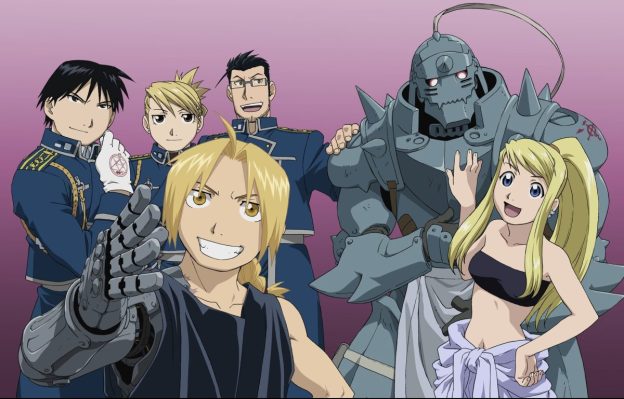



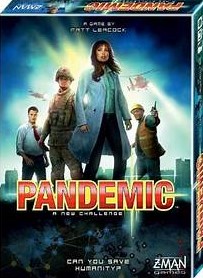
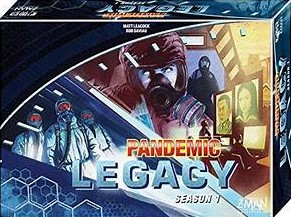
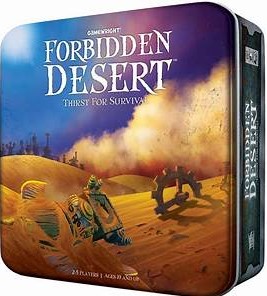
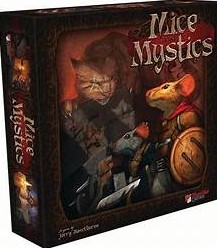
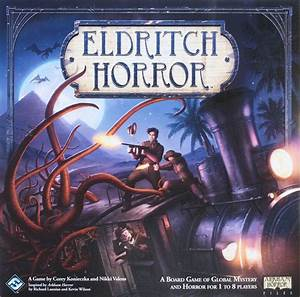
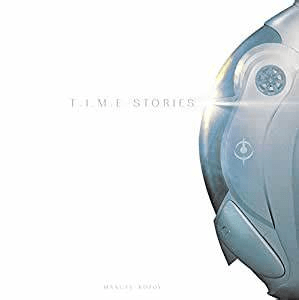
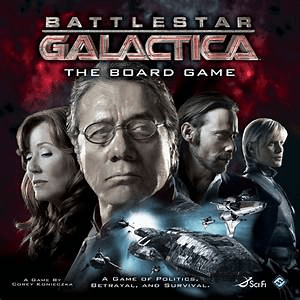

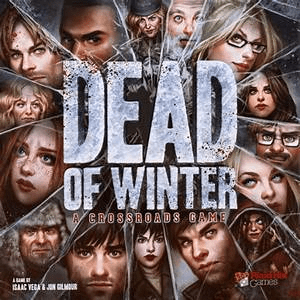
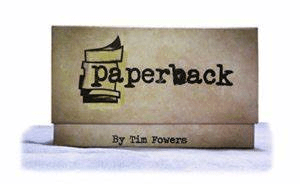
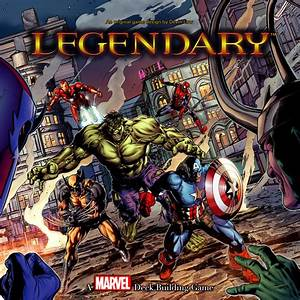
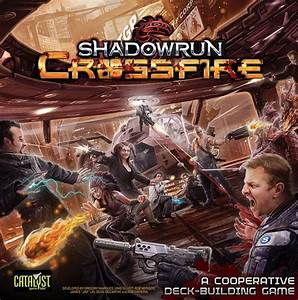
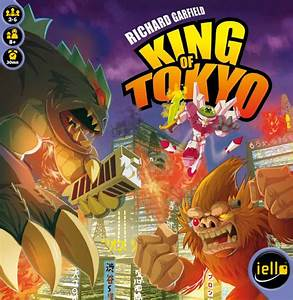
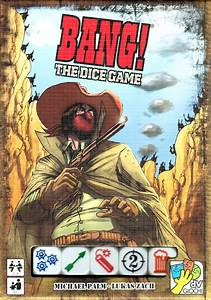
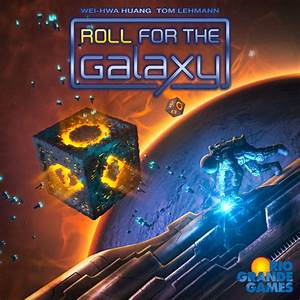
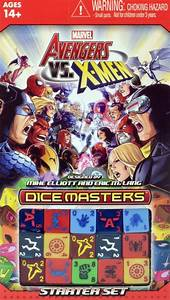
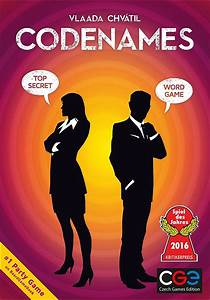
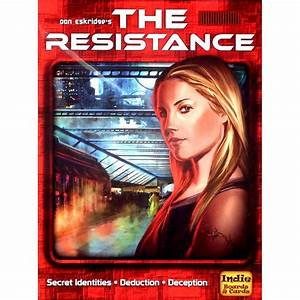
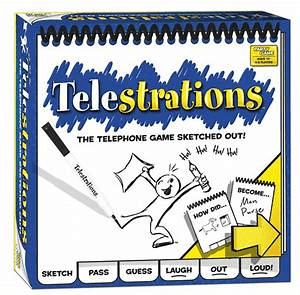
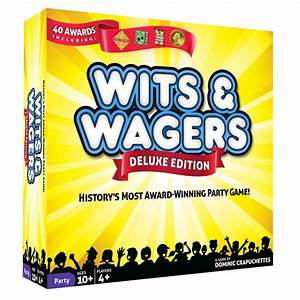
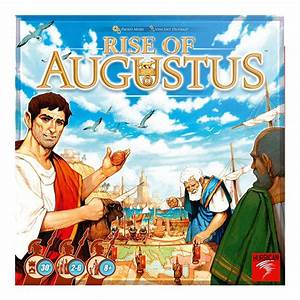
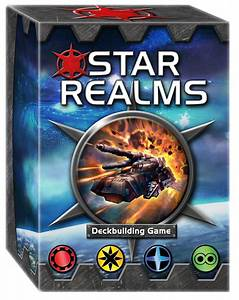
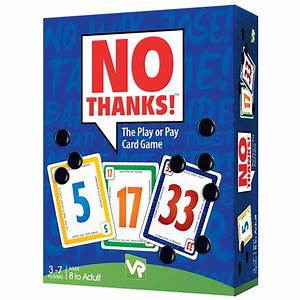
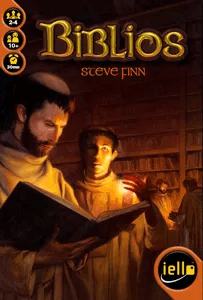
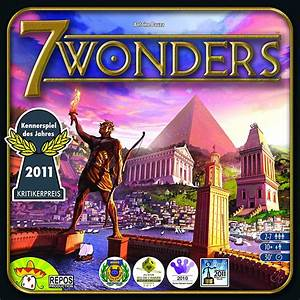
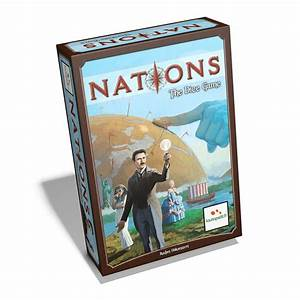

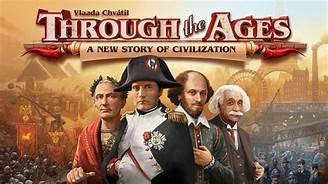
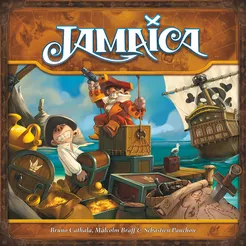
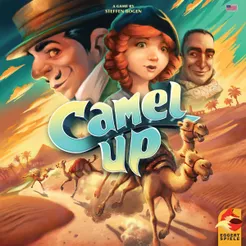
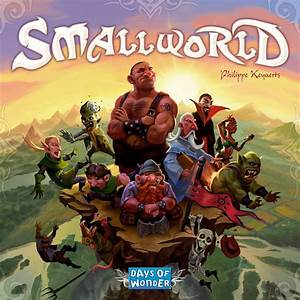
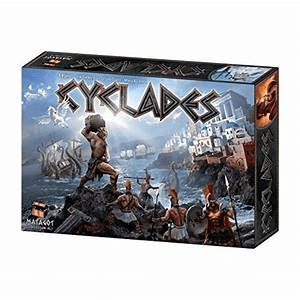
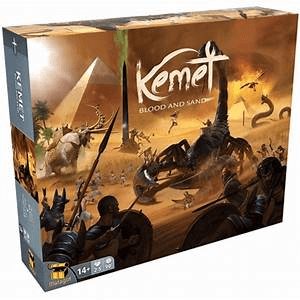
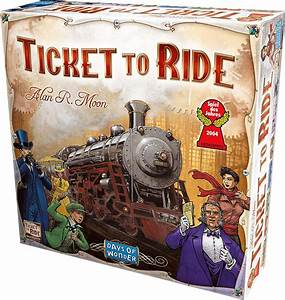
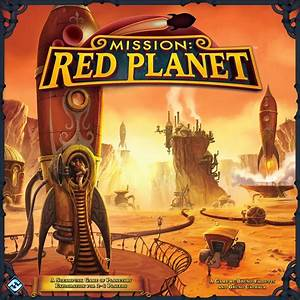

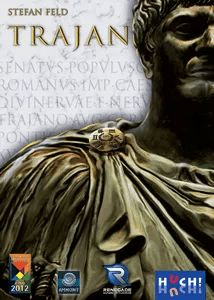
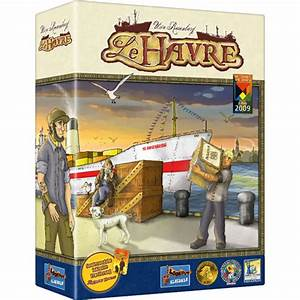

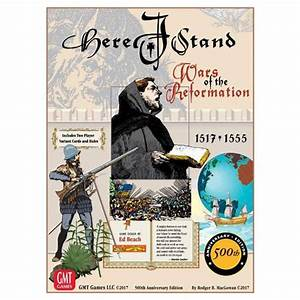
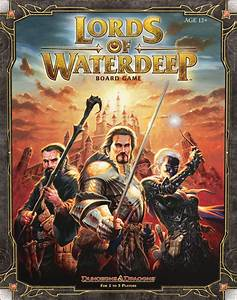

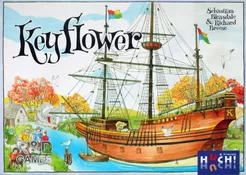
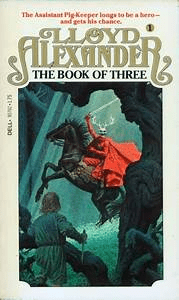
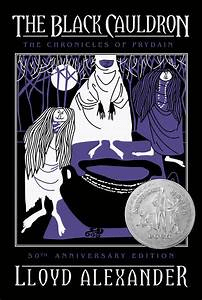
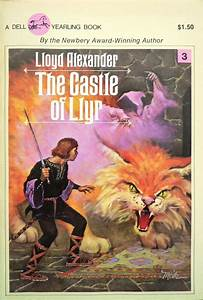
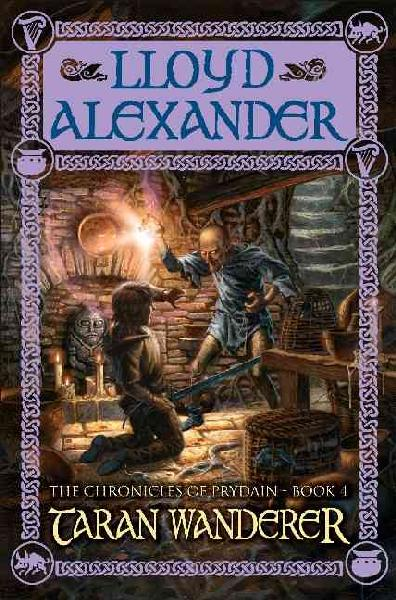

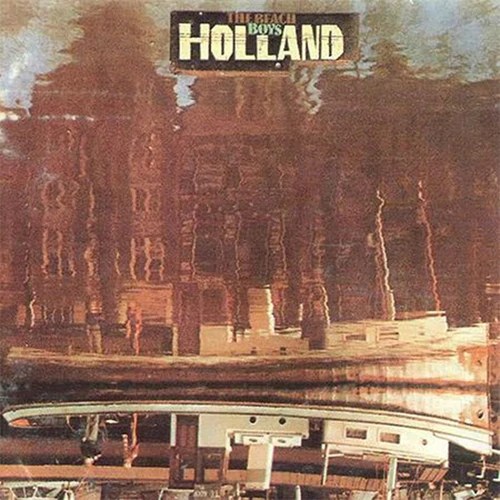
 Redeeming Pandora