
Tag Archives: christopher rush

Intellectual Culture: Allegiance to Truth

Christopher Rush

Two quotations form the foundation of this lecture:

Cicero:  “Just as a field, even if it is fertile, cannot bear fruit without cultivation, so also a spirit without culture.”

Psalm 46:10: “Be still, and know that I am God; I will be exalted among the nations, I will be exalted in the earth.”

Before you go running off and influencing culture, (in that totally enthusiastic way you have of doing things people tell you to do) perhaps it would be helpful to understand culture a little better.  The words “cultivation” and “culture” come from the same German and Latin roots of agriculture: what translator Gerald Malsbary calls the “repetitive, persistent, and loving care of the farmer” (Pieper 51, n. 1).  From this origin, “culture” gains a sociological sense, being applied to refining a person’s character, primarily through education.  In the nineteenth century, the term takes a larger scope, forming the basis for understanding a social group as an entity, especially in terms of its potential or ideals.  “Culture” becomes a different idea in the twentieth century with the rise of various anthropological studies, losing its original meaning in favor of a defining attribute of people groups and their ability to understand and communicate symbolically.  Now, “culture” in lay terms is a loose amalgamation of many of these definitions, often used interchangeably for “society” or “value system,” depending on the context.  For our purposes here, I shall use “culture” predominantly (and admittedly loosely) to mean “a group’s unique identity,” especially in the sense of a people grouped together by distinguishing commonalities.  I’ll probably also make some self-serving remarks about the superiority of one kind of culture over another, for the purpose of convincing you that what I am saying is true and worth believing by you.

Cicero’s quotation and Malsbary’s explication remind us that work is fundamental to both the cultivation of agriculture and the proper enculturation of the human spirit.  Tilling a garden and becoming a fuller, better person require effort, time, and practice.  Yet, we must remember that work is not the defining element of these tasks.  It is necessary and important and valuable, but work is not the goal.  The basis for culture is not work, as Josef Pieper reminds us, but leisure.

Pieper’s leisure, as some of you know, is not “leisure time” to sit around watching Thundarr the Barbarian while stuffing yourself full of circus peanuts.  Leisure is not just “down time” so you have more energy to get back to work so you can work long and hard to earn money so you can afford the next season of The Transformers and more circus peanuts.  We, as individuals and members of a culture, do not rest so we can be more productive later.  Work and leisure are integrally connected, but in the opposite way most people think.  Please do not misunderstand me.  We are not just “working for the weekend.”  Work is not something we just “have to do” so we can afford goofing off time.  We work so we can be at leisure.  Genuine leisure, the foundation of every culture, is the freedom to know and understand reality accurately, primarily for the purpose of accurately understanding and worshipping God.

Obviously the world’s culture has no desire to experience leisure accurately.  As Pieper says, “Leisure cannot be realized so long as one understands it to be a means, even as a means to the end of ‘rescuing the culture of [our world].’  The celebration of God’s praises cannot be realized unless it takes place for its own sake.  But this — the most noble form of harmony with the world as a whole — is the deepest source of leisure” (58).  As you can probably tell, my approach today for you in confronting culture is not exactly to go out and do something.  We have heard several messages this year about the various ways that you can make a difference in the world — and those have been great, especially the ones that can be done from the comfort of your own home without requiring too much time and effort out of you.  I’m sure you found those the best and most exciting ways to influence the culture (especially without having to go out and get infected by it.  After all, why be “in and not of” when you can be neither?).

I digress.  My message today for you is that, while doing things are important and indeed, as James says “faith without works is dead” — I certainly agree, we cannot neglect the importance of first knowing and understanding the culture.  It is good to rebuild homes, supply food, and inoculate against diseases.  But, frankly, we must remember that those must be secondary, ultimately.  What better good can we do for people than to help them think accurately about reality?  What is more important than knowing truth?  And that is the main point for today.  Everything we do, both in knowing our culture and in knowing the culture we are going to change, must be aligned with serving truth.

It was good for us to hear the diverse ways it is possible for you to benefit and improve culture, don’t get me wrong, but the cultures that those improvements make are only a part of the totality of the culture at large.  There is a larger, more fundamental component to reality that we have heretofore mostly ignored: intellectual culture.  Do you know the nature of the postmodern intellectual world?  This is the world into which you will be going and living your day-to-day lives.  Many of you are under the erroneous impression that because you are going to be working with your hands all the days of your lives, or because you are going to be singers, engineers, or generous fillers of frypods, that you don’t have to pay any substantial attention to the intellectual culture.  The world of poetry, the world of ideas, that’s fine for some — but that’s not real.  Those of you who believe that are, no offense, “brimming over with wrongability,” as Arnold Rimmer would say.  I say again, most of you will soon be moving body, mind, and soul into a postmodern Western world, a world shaped more by intellectuals than by common day laborers.  The subcultures of advertising and entertainment, in both of which you will be very involved, the subcultures of politics and social institutions (at least, what will be left of them by the time you graduate) are all very much influenced by the postmodern intellectual world.  It doesn’t matter if you are going to a Christian college, a utilitarian college, the workforce, the armed forces, or staying at home: the culture out there has been and is being shaped by the postmodern intellectual culture, a culture you must understand in order to effectively influence it.

English philosopher and intellectual conservative (a redundancy, I know) Roger Scruton reminds us of a handful of the many creators of the intellectual Postmodern culture:

there is the neo-Marxist approach of Fredric Jameson; the structuralism of Roland Barthes; the post-structuralist theory associated with Michel Foucault; there is feminist criticism, either in its staid American version typified by Judith Butler or in the flamboyant and anarchic vision of Luce Iragaray and Julia Kristeva (who also adds a Marxist and a structuralist flavour).  There is the “Deconstruction” of Jacques Derrida, the postmodernism of Jean-François Lyotard, the New Historicism of Stephen Greenblatt, the post-colonialism of Edward Said, the New Pragmatism of Richard Rorty (5).

If you do not know the work of these people, you do not know the nature of the intellectual culture into which you are headed.  We do discuss a fair amount of these thinkers in 12th grade Bible class, to be sure, but not everybody.  (You wouldn’t listen if we did, anyway.)  The point is that culture is shaped by ideas, and the ideas that are shaping the culture out there are as diverse and irrespective of truth more virulently and unabashedly than ever before in the history of the world.  You are not going to effect much change in the culture if you do not know the nature of it.  “A spirit without culture,” said Cicero, “will not bear much fruit,” and that culture is the hard work and effort required to be a Christian intellectual aligned with truth, for only an alliance with the absolute standards of truth, right, and wrong, explained in part through the Word of God and fully indwelt in the character of Our Savior, will the effort of education and intellectual pursuits bear such fruit for which the intellectual Postmodern culture is dying and begging and desperately demanding.

This leads to a somewhat challenging but insightful quotation from English scholar Christopher Dawson, author of several books on cultural history, including this from Religion and Culture:

What then are the conditions which made a fruitful cooperation between religion and culture possible?  On the one hand, the assertion of the absolute transcendent spiritual claims of religion must not be interpreted as a denial of the limited, historically conditioned and temporal values of culture, and on the other the forms of a particular culture, even when they are inspired or consecrated by a religious ideal, must not be regarded as possessing universal religious validity (qtd. in Schall 1).

Father James Schall, professor of government at Georgetown University, provides an excellent explication of Dawson’s idea concerning culture’s dependency on religion:

In the Dawson citation, the great English historian of culture and religion is concerned to show the existence of absolute transcendent religious claims, valid for all cultures.  The denial of such claims risks the very meaning of our common humanity with its destiny.  Yet, the expression of such positions will be made differently from time to time, from place to place.  In acknowledging such different expressions of the same truth, Dawson seeks to preserve the relative “autonomy” or legitimacy of different cultures and languages.  A valid freedom exists but not on the basis of approving everything no matter what is proposes.  Dawson did not deny that universal standards remained.  In these truths, all men share even if, because of a freedom that includes the possibility of rejecting the truth, anyone is capable of rejecting them.  The fact that some or many deny universal propositions does not necessarily argue against their truth, any more than the fact of murder implies its licitness (10).

Essentially, just because the postmodern intellectual culture denies the validity and very existence of truth, let alone absolute truth, does not actually negate the necessity of truth as the only fundamental source of revivification for a failing society.  E. I. Watkin knew this over seventy years ago, when he wrote in his 1932 work Catholic Art and Culture, “Without a living religion a culture perishes and disintegrates like the human body when the soul has departed” (qtd. in Schall 8).  The postmodern intellectual culture needs the religious, i.e., Christian, adherence to truth brought by you — yes, it needs your help in restoring the material infrastructure of buildings, health, and food, but more importantly it needs intellectual and spiritual restoration with reality.

The reason Postmodernism has taken such a hold, unfortunately, is because Christianity has ceded the intellectual, political, and cultural ground.  As Mark Noll states in his work The Scandal of the Evangelical Mind, “the scandal of the evangelical mind is that there is not much of an evangelical mind” (3).  This is, in part, why Summit Christian Academy exists, to counter the recent trend of main-stream American Christianity that has seen the persistent withdrawal from culture.  Pastor Kenney spoke of this at our inaugural chapel.  In his day, organized Christianity ignored kairotic cultural events and intellectual movements, and that dis-association has led us to where we are today.  With the gaping abysm of what intellectual Christianity used to fill in the cultural mentality, denial of absolute truth, relative morality, sexual licentiousness, and self-actualized utilitarian social interaction have taken hold.

Scruton clarifies why the decline of authentic Christian intellect in America has allowed the postmodern usurpation to infect the intellect of society, even to the point of destroying culture:

A common culture is a form of membership, and the high culture that has grown from it perpetuates the memory of that membership and exalts it into something natural, unchangeable and serene.  When religious faith declines it becomes difficult for intellectuals to believe that they really belong to the same community as ordinary people.  Their claims to priesthood have been exploded, and their isolation in academies sets them at an impassable distance from the ordinary church-going people whose idea of adventure is to go out and mow the lawn (16).

Christianity no longer fits in the intellectual culture of Postmodern America because it has given intellectual culture into the hands of the relativistic philosophers; isolationism has bred isolation.  Again, we no longer know the nature of the conflict.  We do well to remember the simple truth: “Knowing is half the battle.”

Schall encourages us in the importance of regaining intellectual domination in the conflict of cultures, the importance of knowing the nature of culture before trying to make it something else.  Work, you recall, is the means to restore culture — work is not the goal or meaning of culture.  Work and leisure must both be sufficient and intrinsically valuable.  Genuine culture is an intellectual enterprise worthy of itself:

There is nothing so abstract about human intelligence that it does not seek some incarnation.  Yet, the tradition of “leisure” as the basis of culture, the Greek idea of things worthy for their own sakes, things of play and of solemnity, are expressions of the abundance, indeed the superabundance of things.  [Yves] Simon puts it well: “What is needed to have the fullness of culture is something more, something that in some way is above necessity, is independent of need, and is fulfilling no laws except perhaps its own.”  Cultures do need to stand the test of philosophy and revelation.

We need, therefore, to know the “form” of what cultures are.  This “knowing” is very demanding intellectual exercise, the “work,” as it were, of intelligence, the effort to know what even “things that can be otherwise” are.  But though we must live, eat, and prepare the land, itself an effort of increasingly practical intelligence and not sheer drudgery, we are open to infinity, even in this world and in this life (21-22).

Schall’s words return us to where we started: that the intellectual problem can best be solved by a renewed Christian culture, a renaissance of intellectualism aligned to truth.

T.S. Eliot defined culture as “what makes life worth living,” says Mark Henrie (12).  The intellectual culture of leisure, the worshipful lifestyle, is why we work, and, in part, makes life worth living as an intrinsically valuable mode of existence.  The aesthetic, artistic, intellectual heritage we have as inheritors of Western Civilization is as rich a cultural investment any being could hope for.  Scruton elaborates on the connection between the Western artistic culture and the Christian intellectual heritage so prevalent until the comparatively recent abnegation of the evangelical mind:

Western art and literature shares the enquiring spirit of the common culture upon which it broods.  It is not a vehicle for religious or political propaganda, and even when presenting a Christian cosmology, like Dante in The Divine Comedy, or a vision of Christian redemption, like Bach in the St. Matthew Passion, it uses a lingua franca that assumes no specific religious belief.  As Santayana once pointed out, the greatest poet in the English language, [Shakespeare] whose plays used to form the core curriculum in English studies, nowhere reveals the colour of his religious beliefs or even whether he has any.  His works are reflections on the human condition which can be understood and enjoyed by anyone.

A curriculum centred on the high culture of Western civilisation will inculcate just the kind of self-critical distance that we associate with the Enlightenment.  This does not mean that it cherishes the open mind or is hostile to religious commitment.  It is a culture that aspires to universality, and to the widest possible understanding of and sympathy with the human condition (13).

We are now starting to find a solution to the problem of the postmodern intellectual culture: the shared intellectual heritage of Western civilization.  This might seem somewhat contradictory, in that most postmodern philosophers (admittedly an oxymoron) deny the validity of “Western Civ.” in favor of multiculturalism.  However, the intrinsically valuable works of art and literature, many of which we study at Summit, do provide a valid entrée into the intellectual discussion, perhaps even more than quoting Bible verses out of context and without sufficient exegesis — if a postmodernist will not converse about Paul and John, perhaps they will at least engage in discourse over Homer and Shakespeare — and if not Homer and Shakespeare, break out your knowledge of Joyce, Eliot, Woolf, Marquez, Mann, Kafka, Borges, and Solzhenitsyn.

You can probably tell where I am going with this.  If you have no idea who Joyce, Eliot, Woolf, Marquez, Mann, Kafka, Borges, and Solzhenitsyn are, you should learn.  Obviously this is after you have become thorough adept at the classics: Homer, Virgil, Horace, Ovid, Cicero, Aurelius, Augustine, Plato, Aristotle, Aquinas, Pascal, Chaucer, Dante, Montaigne, Bacon (Roger, Francis, and Clerval) Shakespeare, etc., etc.  Then become adept at the modern authors: Keats, Pirandello, Yeats, Arnold, Belloc, Dryden, Burgess, Auden, Austen, Lewis, Pieper, Weaver, Kirk, Chesterton, Sayers, Barfield, Postman, Williams, Wise, Newman, etc.  Then read everyone on the summer extra credit reading lists, see my list of 10 books you should read before college, and sign up for the critical reading elective next year.  Also, start reading some recent authors who combat postmodernism: Raymond Tallis, George Grant, Roger Kimball, Michael Polanyi, Christopher Dawson, James Schall, and then read the people they cite throughout their works.  Then, when you need a break from reading, watch the few intellectual shows that will help you think: Lost, Battlestar Galactica, Farscape, Stargate SG-1, Deep Space 9, Mystery Science Theater 3000, Red Dwarf, and, of course, most importantly, Babylon 5, primarily to become familiar with the key thoughts and ideas that make us what we are.

The main way you can prepare to combat the dilapidated intellectual culture is to become, yourself, intellectually cultured.  Schall tells us “Both man and nature, it seems, were designed to be completed by human knowledge and active work” (9).  If you want to be a valuable, worthwhile human being, let alone an effective culture changer, you do have to work hard.  One of Schall’s influences, great Catholic thinker A.G. Sertillanges, makes the systematic approach to becoming a better intellectual almost embarrassingly clear in his outstanding work The Intellectual Life: Its Spirit, Conditions, Methods.

It would take a while to summarize Sertillanges’s book — besides, you should all read it for yourself — but allow me to highlight some of his essential points in how to become an intellectual person.  First, organization: Sertillanges advocates simplification of life and work space, solitude, and silence.  It is difficult to get good at anything surrounded by distractions.  As a brief aside, Sertillanges does not address the postmodern notion of multitaskers, most likely because he could not foresee anyone being so irrational as to think that it would be possible to do more than one thing well at once.  Please don’t take this as a personal attack, but if you are a person who thinks that you are good at multitasking, what that means in reality, is that you are good at doing more than one thing poorly simultaneously.  Don’t be proud of being such a person.  Perhaps, be a little more like Charles Emerson Winchester III: do one thing at a time, do it very well, and then move on.  If your activity is not worth your full time and attention, is it really worth doing at all?  Returning to Sertillanges, he then encourages the proper spirit of intellectual work: including ardor in research, concentration, proper breadth of outlook, and the right sense of mystery, acknowledging that no matter how intellectual one gets, there is always more to be learned.  The longest section of his treatise, preparation for work, is certainly the most practical.  His commentary on reading is instructive and worth examining time and again, but he does make the point of being selective in the reading you do.  Becoming knowledgeable about the diversity of the world of literature and writing is important, he admits, but life is short — to commit to something important enough as becoming an intellectual is requires sacrifice.  You won’t have time to read everything — no one in this room feels the pain of that idea more than I do.  Selectivity is important in order to make what we read and who we become meaningful.  Once you have decided the primary focus of your reading life, make what you read a significant part of who you become.

In addition to wise reading, Sertillanges provides helpful ideas on memorization and the management of memory.  With the recent inventions of the Interweb and personal computadores, more and more people seem to think that, since it is so easy to access information these days, there really isn’t any point in memorizing too much.  I know you recognize immediately the total asininity of such a notion, believing that memorizing things is not necessary because you can just “google it” (what a great adulteration the Internet is doing for our once majestic language) or “look it up” when you need it.  Remember how totally stupid you felt when you realized you didn’t have any of your friends’ or families’ phone numbers memorized the last time you switched cell phones?  This just in: speed of information access is not making people any smarter.  Owning a cell phone and having access to the Internet is not making you a better person.

Sertillanges next talks about the importance of note taking, classifying notes, using notes (you should really check that part out), putting all that preparation into creative output, and, finally, the importance of living.  Just as Telemachus learns that epic heroes are not made in the classroom and must put his newfound heroism into practice, Sertillanges reminds us (and me) that the intellectual must keep in contact with life, its trials and joys, and know how to relax and enjoy the fruits of his labor.

Relaxing and enjoying the fruits of labor returns us to our second foundational quotation for this lecture, Psalm 46: 10 — “Be still, and know that I am God; I will be exalted among the nations, I will be exalted in the earth.”  Becoming an intellectual is hard work, but it is worth the effort.  But effort, remember, is not the end goal — culture is founded on leisure, leisure done rightly.  The authors and ideas I rattled off moments ago are intrinsically valuable, to be sure, but what most of them have in common (and what the postmodernists are desperately lacking) is their allegiance to truth.  Genuine art is aligned with beauty; genuine philosophy is the love of wisdom, which is also the active search for truth, for what is; Paul instructs us that knowledge without love and truth puffs up, as Proverbs reminds us genuine wisdom begins with the fear of the Lord.

The command “Be still and know that I am God” is not just a palliative for stressful circumstances and busyness, as in “okay, I just need to relax and let God take care of my problems.”  That’s not what this verse is saying.  I could be mistaken, but I am pretty certain that Psalm 46:10a has two injunctive verb parts: 1) be still, 2) know.  “Knowing that God is God” is not permission to “call it a day.”  This is an active knowing, providing Biblical support for the cultivating efforts of intellect leading to the cultivation of the soul.  Leisure, the basis of culture, the command “be still,” is the setting for worship: leisure is not “recharging your batteries” time for more work later, though Sertillanges wisely notes that rest time used effectively is necessary for the intellectual life.  A good night’s rest can be an act of worship, if done rightly and for the right reasons.  Leisure is for worship.  Why else should we “be still”?  What can be more important in this life than an accurate knowledge of who God is leading to a proper worshipful response, followed by an accurate understanding of who we are, the nature of reality, and how we are to live?  As noted above, without restoring the proper intellectual culture of an accurate Biblical mind, all you are doing is cosmetic work — and plastic surgery never does any good for the health of the organism.  Why become an intellectual?  What is the purpose of reading all those authors and more?  To align yourself with truth.  Jesus, the Way, the Truth, and the Life, is the Word made flesh, the logos who pitched his tent and dwelt among us.  Truth has become incarnate.  Truth is intellectual.  Jesus is not the pathos made flesh, though he had feelings and expressed them accurately and appropriately at all times.  The answer to Lorien’s question, which came first the word or the thought behind the word is simple for the Christian — in the beginning, the word and the thought was.  The Incarnate Christ is language, thought, communication, and, essentially, truth.  Why must the intellectual be aligned with truth?  The pessimistic, meaningless postmodern intellectual culture inherited from its Enlightenment forebears demonstrates the alternative, and, frankly, it’s not working.

Truth, Sertillanges reminds us, “steadies and strengthens us; it gives us delight; in its company we are consoled for our own shortcomings and those of others; its discovery is a reward, its manifestation a noble vengeance on days of contradiction.…  Every truth is life, direction, a way leading to the end of man” (250, 13).  Truth is truth, regardless of its packaging: the shepherds knew to look beyond the accoutrement of the stable.  You must read those authors so you know what mankind has to say, then you will have something to say.  You study — study — the Bible so you know what God has to say, then you will have something to say.  All the while, you, as an intellectual, must be aligned with truth.  The reason the postmodernists don’t have much of anything to say is because they are not aligned with truth — they deny its existence then hypocritically expect you to believe them and what they are saying is true.  You, as a Christian intellectual, must be aware of what little they have to say so you can, like Jesus, reach people where they are, and, not being content with that, engage them intellectually, bringing them into the light of Incarnate Truth, to be changed into conformity with Jesus.

“By practicing the truth that we know,” says Sertillanges, “we merit the truth that we do not yet know” (19).  Doesn’t Jesus’ parable of the faithful servants support that?  The first two who lived rightly with what they had were rewarded with more.  The Christian intellectual must submit “to the discipline of truth.  This submission to truth is the binding condition for communion with it,” Sertillanges instructs us (130).  Truth demands uncompromising dedication from you.

Prompt obedience is what invites it to visit us.  To this sacred meeting we must bring a respectful soul.  Truth will not give itself to us unless we are first rid of self and resolved that it shall suffice us.  The intelligence which does not submit is in a state of skepticism, and the skeptic is ill-prepared for truth.  Discovery is the result of sympathy; and sympathy is the gift of self.…

Yielding ourselves up to truth, and formulating it for ourselves as best we can but without any criminal infidelity, we perform an act of worship to which … God will respond by … communing with our soul.  In that, as with everything, self-will is the enemy of God.  This submission implies humility (130, 131)

reminds Sertillanges.  “Intellectually, pride is the father of aberrations and of artificial and pretentious productions” — what better description of the postmodern intellect that says truth (which doesn’t exist) is created by every reader and thinker?  In contrast, says Sertillanges, “humility is the eye which reads in the book of life and in the book of the universe” (131).

“Profound work consists in this,” he continues, “to let the truth sink into one, to be quietly submerged by it, to lose oneself in it, not to think that one is thinking, nor that one exists, nor that anything in the world exists but truth itself” (133) and then one is ready to be still and know that God is God.  “To love truth ardently enough to concentrate on it and so be transported into the universal, into what is, into the heart of abiding truths, is the attitude of contemplation and of fruitful production.…

“Do not then discourage this spirit if it visits you, driving it away in favor of some artificial and external form of work,” he cautions (133).  Don’t you dare say “I don’t have time to think, I must get out there and do something!”  Return instead to the intellectual, contemplative spirit that allows for the proper intellectual worship in leisure.

Sertillanges mirrors the wisdom of Clerval Bacon when he notes that “The more precious an idea is, the less it matters where it comes from.  Train yourself to indifference about sources.  Truth alone has a claim, and it has that claim wherever it appears.  As we must not swear allegiance to anyone, so still less must we disdain anyone; and if it is not expedient to believe everybody neither must we refuse to believe anyone who can show his credentials” (135).  That is why we read Aristotle, Shakespeare, Lewis, and Huxley.  Truth is truth whether it is Miranda’s brave new world or Bernard’s.

That is our great liberty.  This readiness to accept truth brings so rich a reward that it would tempt even avarice itself, if the avaricious thinker did not imagine it wiser to sit guarding his own coffers.  We like to believe that we possess everything, that we are capable of everything, and we give but an inattentive hearing to the voice of others.  We make a few favored exceptions, men or books; they have our ear and afford us inspiration.  Now in reality there is inspiration everywhere; the breath of the Spirit fills the valleys just as it blows upon the mountaintops.  In the meanest intelligence is a reflection of infinite Wisdom, and deep humility is able to recognize it….  Wherever the God of truth has left something of Himself, we must eagerly welcome it, venerate it religiously and utilize it diligently.  Where the eternal Sower has passed, shall we not gather in the harvest (135-36)?

“It is intolerable pride to try to force truth into our personal mold, and it ends in stupidity” (211).  “Seek the approval of God; be intent only on truth, for yourself and others,” (213) and you will be ready to be still and know that God is God.

The measurement of success in the intellectual life is how closely we are aligned to Truth incarnate, Jesus Our Savior, for only in the proper understanding of reality, the reality created by and for Him, can we effectively help the redemption of that creation.  What the postmodern intellectual culture needs, even more than it needs a refurbished infrastructure, is the restoration of intellect from Christians who know God is God because they can be still and can discern truth from folly.  It is time to move beyond “daily devotions.”  I do not want to sound presumptuous or abuse my position from the lectern, but I have serious doubts that God is terribly pleased by casual Christians who read the Bible a few verses at a time, feel good about it, and then move on with their day as if nothing really happened.  Perhaps the reason so many chapel speakers this year have made the point that it is time for Christians to stop having Bible studies and start getting out into the world and doing things is because too many Christians have no idea what real Bible study is.  It is time to take Psalm 46:10 seriously: be still and know that God is God.  Study the Bible, and then read Ryrie, Schaeffer, Lewis, Spurgeon, Chafer, Walvoord, Zuck, Fleming, McCloud, Smith, Catron, Moody, Darby, Thiessen, Ironside, Rushdoony, Stott, etc., etc.  I can give you more specific lists if you really are serious about becoming and being an intellectual Christian who can effectively change culture and, more importantly, worship God.  For that is what this life is truly about.  If you really want to worship God, you have to know who he is.  He is logos — the word, the truth.  Postmodern intellectual culture — more accurately, anti-intellectual culture — can only be combated through the truth of the Christian logos, leading to redemption.

Schall reminds us that this now-alien Christian culture “needs to be expressed and made living on no other basis than it is true.  Leisure is the basis of culture.  So is truth.  So is freedom.  So is work.  So is worship.  We seek to know the things that cannot be ‘otherwise.’  But, on finding them, we strive to express them in ways that are closer to why the birds sing unnecessarily wondrous songs than to our self-creation of a world based on an arbitrary will that sees nothing but itself and sees all things simply as diverse and relative” (22).  We work to be at leisure, we are at leisure so we can worship.  We worship best and most accurately — most meaningfully — when we know who God is.  That knowing takes time and effort, the most rewarding, most important effort you can give in your life.  Then you can be an effective culture changer; then can you be still.

“Just as a field, even if it is fertile, cannot bear fruit without cultivation, so also a soul without culture.”

“Be still and know that he is God.”

Works Cited

Henrie, Mark C. “Culture: High, Low, Middlebrow, and Popular.” Ingersoll Symposium on “The Importance of Culture.” Belmont Abbey College, Belmont, NC. 15 Oct. 2004.  ISI Lectures. 8 Feb. 2009 <http://www.isi.org/lectures/text/pdf/henrie10-15-04.pdf&gt;.

Pieper, Josef.  Leisure: The Basis of Culture. Trans. Gerald Malsbary. South Bend: St. Augustine’s Press, 1998, 1948.

Schall, James V. “Culture is Never Neutral.” Ingersoll Symposium on “The Importance of Culture.” Belmont Abbey College, Belmont, NC. 15 Oct. 2004. ISI Lectures. 8 Feb. 2009 <http://www.isi.org/lectures/text/pdf/schall10-15-04.pdf&gt;.

Scruton, Roger. “Culture Matters.” Ingersoll Symposium on “The Importance of Culture.” Belmont Abbey College, Belmont, NC. 15 Oct. 2004. ISI Lectures. 8 Feb. 2009 <http://www.isi.org/lectures/text/pdf/scruton10-15-04.pdf&gt;.

Sertillanges, A.G. The Intellectual Life: Its Spirit, Conditions, Methods. Trans. Mary Ryan. Washington, D.C.: Catholic University of America Press, 1998, 1946.

This essay is adapted from a chapel address given May 15, 2009.
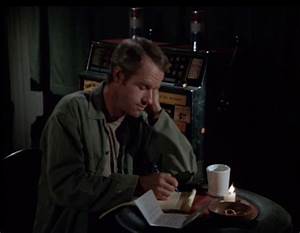
Whatever Happened to the Mini-series?

Christopher Rush

Prologue of Distinction

Where did that great genre of television the mini-series go?  In its heyday, the mini-series brought us some of the best moments, characters, and stories ever to hit the small screen.  From the mid-1970s to the mid-1980s, British and American studios created some of the most memorable programs television has ever produced, many of which are still far superior to the programming of regular episodic television popular today.

It would be helpful to narrow the subject of the argument at hand.  I am decrying the loss of the extended, multiple-part mini-series.  In doing so, I am discounting the presence of otherwise fine but comparatively short two-part broadcasts of what are essentially long made-for-TV movies – thus, respectable but limited productions such as 1996’s Gulliver’s Travels and 1998’s campy but decent Merlin are excluded from the conversation here.  Plenty of networks (too many) have created these 180-minute mega-movies in recent memory (10.5, for example), and they are not worth considering here.  Similarly, we can forget lengthy Bio-pics and serialized adaptations of Stephen King novels.  Stephen King fans may object, but they are not the grand, sweeping mini-series which we are currently exploring.  The kinds of series that fall in-between these broad categories (two-part super-sized movies and multiple-part sweeping epics) such as 5ive to Midnight and the recent remakes of Dune and The Prisoner as well as mini-series that became episodic TV series (V, Battlestar Galactica, The Starter Wife), while more expansive and developed than the two-part productions, still fail to capture the grandeur, impressive narrative, and sustainability of the mini-series of old.  Has the interest level in creating lengthy, quality productions truly soured on the American and British television audience and major networks?

True, Turner Network Television is trying to do its share, with Caesar, Nightmares and Dreamscapes, and Into the West, though they are not very long even for mini-series.  The BBC is doing its best as well, but most of its output lately has been simply remakes (how many Jane Austen and Charles Dickens adaptations does one need? seriously, another Brideshead Revisited?).  Another aspect that makes British mini-series somewhat difficult to assess is that so many of their regular series are only 6 or 8 episodes per season (or fewer), thus differentiating between a regular series and mini-series is challenging.  Even so, they are not the same.

We would be remiss to ignore the handful of lengthy mini-series produced of rather fine quality in the last decade or so: From the Earth to the Moon (1998), The 10th Kingdom (2000), Band of Brothers (2001), Taken (2002), Angels in America (2003), John Adams (2008), and, perhaps, not that any of us have seen them, The Pacific and Pillars of the Earth (2010).  Thus we have eight substantial mini-series in the last twenty years, since the “last of the mini-series” War and Remembrance in 1988-89, and five of them have come from HBO.  In Britain, aside from the Beatles Anthology documentary series, the definitive Pride and Prejudice adaptation in 1995, and the House of Cards trilogy in the early ’90s (though they, too, are still short), as mentioned above, nothing much has come out lately other than previously adapted novel remakes.  Where did the grand mini-series go?  Did War and Remembrance, truly, finish it off?

The Golden Age of British Mini-Series

Ignoring, as we’ve said, the recent trends of brief four-to-six-part BBC novelizations (though the Alec Guinness versions of the John Le Carré novels Tinker, Tailor, Soldier, Spy and Smiley’s People are certainly worth seeing when you’re older), let’s look at some of the better British mini-series from the glory days.  This is not intended to be all-inclusive, nor a complete treatise on the history of British mini-series, merely a brief exploration of some of the high points of the genre long ago.

The Golden Age of British mini-series began with The Six Wives of Henry VIII (1970), the multi-BAFTA winning series that focused on, as its name intimates, Henry VIII’s six wives (3 Catherines, 2 Annes, and 1 Jane Seymour – not of Dr. Quinn, Medicine Woman fame, of course), one per episode.  Relative unknown Australian actor Keith Mitchell got the role of Henry VIII, in part thanks to the patronage of his discoverer Laurence Olivier.  Part of the success of the series came from Mitchell’s ability to span forty years of Henry’s reign, from virile 18-year-old monarch to 56-year-old tyrant, bloated and diseased.  Though some critics panned its thematic portrayal of Henry as the lonely, misunderstood but reasonable man, the series established the BBC’s ability to create “ambitious and historically authentic costume drama,” according to David Pickering.  Real Dr. Who fans (and by that I mean fans of the original series incarnation) will recognize Patrick Troughton, the Second Doctor – possibly the best incarnation – in a supporting role.  The following year saw the successful sequel, Elizabeth R, winning 5 Emmys (not that that is our standard for quality here).  Its remarkable historical accuracy and high quality production values are evinced by eponymous actress Glenda Jackson, who shaved her head for authenticity’s sake instead of wearing a bald cap and wore 200 different dresses in six episodes.  With due respect to Helen Mirren and Jeremy Irons, the 1971 mini-series is far superior to the two-part 2005 version.

The next group of mini-series begins with the joint British-Italian Moses the Lawgiver (1974) starring Burt Lancaster and Irene Papas.  Despite the cast, the series has more or less faded into the forgotten past, unlike its unofficial sequel, 1977’s controversial Jesus of Nazareth.  Featuring the “who’s who” of the ’70s (at least the A- list, plus some “fading stars” of an earlier era), Franco Zeffirelli and Anthony Burgess’s version of the Gospels leave out quite a bit, add in a few things, and, of course, provoked the ire of Bob Jones III in Greenville, South Carolina (who, to be fair, probably should have seen it before he got upset).  It is certainly never acceptable to purposefully modify Biblical truth (it isn’t good to accidentally modify Biblical truth either, of course), but one thing Christianity has been very good at in the 20th and 21st centuries is over-reacting to situations without actually understanding the thing to which it is reacting – not a very impressive way to demonstrate a personal relation with the Logos Who is Agape to a moribund world.  In 1987, before most of you were alive, TV Guide called Jesus of Nazareth “the best miniseries of all time.”  I’m not so sure.  Some might be put-off by the fact the Monty Python troupe used the sets for Life of Brian the following year, but few people probably know that.  The final part of the trilogy, A.D., came out in 1985, featuring another collection of famous actors and actresses – one of the best aspects of these classic mini-series, back when the world actually had real, trained, quality actors and actresses (something sorely lacking today) – perhaps the rest of the A- list (admittedly subjective, and I’m open to correction).  Thematically, A.D. follows Jesus of Nazareth in that it primarily covers Acts and the lives of Peter and Paul.  It, too, was adapted by Anthony Burgess from one of his books.  Alternatively, A.D. is a companion piece to I, Claudius from a decade before, in that they both cover, in part, the reigns of Emperors Tiberius (by James Mason in his final role), Caligula, Claudius, and Nero, though, obviously, from different narrative perspectives.  Featuring music from Lalo Schifrin (of Mission: Impossible fame – the series, not the reboot movies), A.D., like its predecessors, leaves some Biblical elements out and adds subplots and characters in.  Ironically, A.D. won an Emmy for Best Film Editing, ironic because its original 12-hour version (about 9 without commercials) is still not available, only a 6-hour super-edited version is, though not on DVD I believe, and only from local Christian bookstores – if at all.

If pressed to make the ultimate list of all-time mini-series, a sort of “Mount Rushmore” of mini-series, without question I, Claudius would be on it.  Perhaps more impressive than compiling a cast-full of stars, much of I, Claudius’s cast became internationally known stars (though, admittedly, Britain knew most of them from previous work already).  Winning 3 BAFTAs (though not for Best Series) and 1 Emmy for Art Direction, I, Claudius covers, through the frame technique, the beginning of Augustus’s downfall with the death of Marcellus through the death of narrator Emperor Clau-clau-claudius.  For 1976, I, Claudius pulls few punches, and should probably be watched by more mature audiences (and not the video game industry’s definition of “mature”).   This excellent series features one of the greatest, most underappreciated actors of our day: Brian Blessed as Caesar Augustus.  No one does bombast like Brian Blessed, but his final scene is one of the finest, most sublime performances of its kind (don’t take my word for it – watch it yourself, when you are old enough).  Brian Blessed has recently-ish enjoyed a resurgence, thanks to Kenneth Branagh’s Shakespeare Troupe (not that he has ever been out of work).  Another treat is seeing John Rhys-Davies and Patrick Stewart, most beloved for their heroic roles, acting as very un-heroic characters here.  Siân Phillips and John Hurt are frighteningly believable in their roles as Livia and Caligula.  The sensationalism of the subject matter makes for sensationalistic television, which is why I suggest this one be watched later in one’s emotional/spiritual development, but it would still be difficult to under-praise this remarkable mini-series.  Oh, and Derek Jacobi as the eponymous character – need I say more?  Perhaps one final note: neither of the DVD releases is fully uncut and complete (which is odd, considering that is, in part, what DVDs are for), but the most recent release (with photographs of some actors on the cover) is even more edited time-wise than the older DVD set with the mosaic design.  Try to rent the older edition, and be patient for a Blu-ray completely unedited and restored version.

According to the BFI (British Film Institute) TV 100, I, Claudius is the 12th-most popular British program of all time (as of 2006), which is mighty impressive, considering the series aired thirty years before the poll occurred (though the British have longer memories than Americans do, especially when it comes to “all-time” lists – that Fawlty Towers is #1 and Doctor Who #3 only proves their national discernment ability).  What is even more impressive is that one mini-series ranks even higher at #10 – the definitive 1981 Brideshead Revisited.  Winning 7 of its 13 BAFTA nominations, 1 of its 11 Emmy nominations, 2 of its 3 Golden Globe nominations, and the Broadcasting Press Guild award for Best Drama Serial, most people would seem to agree with the very high quality of this mini-series.  Starring Jeremy Irons (nominated for a BAFTA, Emmy, and Golden Globe but won none) and Anthony Andrewes (who won a BAFTA, Golden Globe, and was nominated for an Emmy), who later starred in A.D. and Ivanhoe (as Ivanhoe), with a remarkable supporting cast of Simon Jones, Claire Bloom, Laurence Olivier (the Emmy winner), and John Gielgud (again, need I say more?), Brideshead Revisited is that rare amalgam of talent and patience – talent behind and in front of the screen, and patience from all parties concerned.  Not only did ITV allow itself to be convinced to expand the project from a six-hour serial to a forty-week shooting script that became the 11-part, 11-hour masterpiece, but more patience was needed as Jeremy Irons got the part in French Lieutenant’s Woman, necessitating a long shooting hiatus until Irons eventually had to work on both projects simultaneously.  Like the adaptation of Robert Graves’s I, Claudius and Claudius the God, this mini-series version of Evelyn Waugh’s novel demonstrates exactly what greatness can be accomplished transforming a worthy story from one narrative medium to another.

The end of Britain’s halcyon mini-series days came with 1984’s Jewel in the Crown (though some might argue for The Singing Detective in 1986, which I would be willing to concede if pressed).  Jewel in the Crown took a different tactic from most of the other mentioned mini-series: instead of relying on renowned actors and actresses, Jewel simply cast the right people for the right roles and let the magic happen (though, again, like with I, Claudius, British audiences would recognize more of the performers than we would though not as many from the Roman epic – most likely the only person you’d recognize is Art Malik, the villain from True Lies and James Bond supporter in The Living Daylights).  British audiences placed this series as their 22nd-favorite TV program of all time, which is especially noteworthy considering its cast of mostly unknowns.  Even so, it scored rather well in major awards season: 5 BAFTAs (of 15 nominations), an Emmy for Outstanding Limited Series (5 other nominations), the Golden Globe for Best Mini-Series (another nomination), an International Emmy, and two Television Critics Association awards (Outstanding Achievement in Drama and Program of the Year).  The series was its own “jewel in the crown” in the sense it culminated the early ’80s British renewed interest in its Raj past (highlighted by the films Gandhi in ’82 and A Passage to India in ’84).  The 14-episode series covers the four books of Paul Scott’s Raj Quartet and recently was re-issued for a 25th-anniversary DVD release.  For these mini-series classics, it is important to remember that no matter how advanced Blu-ray players and TV technology gets, only so much can be done with old film prints.  Jewel in the Crown, fortunately, does not need much advanced upscaling or improvements: they knew in 1984 what George Lucas forgot when he decided to make Star Wars Episode 1: The Phantom Menace – quality production comes from quality acting, writing, and set/costume decoration, not special effects and technological wizardry.  As World War II ceases and the Raj ends in India, symbolically enough Britain’s mini-series golden age comes to an end, to be replaced, as mentioned so often, mainly by short novelization serials.

Interlude of “Royalty”

One notable aspect of these great British mini-series is that most of the great series starred different main and supporting casts.  This is mostly true in America, though America’s golden age of mini-series were heralded with two “kings” of the mini-series.  By way of transition, a brief word should be said of Britain’s “prince” of the mini-series: Ian McShane.  McShane is perhaps best known to British audiences as Lovejoy, the roguish con artist and antique dealer in the early ’90s TV series Lovejoy (though it began in 1986 before a four-year hiatus, not uncommon in Britain).  McShane is probably best known to parts of America for his Golden Globe-winning turn as Al Swearengen in HBO’s Deadwood a few years ago.  Before his recent serialized popularity, McShane was a “prince” of mini-series, playing supporting roles in several of the best series back in the day: Roots, Jesus of Nazareth, Life of Shakespeare, Disraeli, Marco Polo, A.D., War and Remembrance, and this year’s The Pillars of the Earth, though finally as a star, but not nearly as big of a star as two giants of the genre during its former prime.

I wonder, too, if part of the problem of the defunct genre is that the “kings of the mini-series,” Peter Strauss and Richard Chamberlain, are now old.  Peter Strauss is sixty-three and Richard Chamberlain is, believe it or not ladies, seventy-six as of this writing.  Many of you may not think sixty-three is old, but, frankly, it is – at least for heartthrobs and leading roles in mini-series.  Neither of them have had much work lately, certainly not like they had back in their day.  Strauss starred in the highly-acclaimed mini-series Rich Man, Poor Man (1976), earning an Emmy nomination and a Golden Globe (and winning Spain’s version of an Emmy for Best Foreign Actor); he starred in the longer sequel Rich Man, Poor Man II the following season, an adaptation of Fitzgerald’s Tender is the Night in 1985, and Kane and Abel the same year, getting another Golden Globe nomination.  And, of course, Peter Strauss starred opposite the one and only Peter O’Toole in the superb Masada in 1981, getting another Emmy nomination (he had won before for the TV movie The Jericho Mile).  Rich Man, Poor Man was the first American broadcast of a regular serialized adaptation of a novel, and its success inaugurated the American golden age of mini-series, winning 4 of its 23 Emmy nominations and 4 of its 6 Golden Globe nominations.  Like I, Claudius, Masada is both a recreation of a real historical event and an adaptation of a novel (Ernest K. Gann’s The Antagonists).  Filmed on location at the actual ruins of the fortress in the Judean Desert, Masada got David Warner (another of the great underappreciated actors of our day) and composer Jerry Goldsmith Emmys.  With Barbara Carrera (who earlier stared in America’s nonpareil mini-series Centennial), Peter Strauss, and the majestic Peter O’Toole, ABC capitalized on the success of previous mini-series on other stations.

Richard Chamberlain (and if I have to explain who Richard Chamberlain is to you, you haven’t lived) was certainly the king of the late ’70s-early ’80s TV movies and mini-series.  Chamberlain played a starring role in 3 of America’s “Mt. Rushmore” of great mini-series: Centennial (1978-79), Shōgun (1980), and The Thorn Birds (1983, 1996).  Saving a discussion of Centennial for a later time (it needs its own article), let’s examine Shōgun and The Thorn Birds here.  Shōgun, based on James Clavell’s novel of the same name, is the only American mini-series to be filmed entirely in Japan.  The novel is rather frank, especially regarding various natural human processes from a Japanese perspective of decorum, and the mini-series presents a fair amount of that frankness, “breaking new ground” in American television (which isn’t necessarily a good thing, so again, a high amount of personal maturity is a good prerequisite for watching it and reading the book, but it is worth it, especially to see Chamberlain and the rest of the cast – Toshirō Mafune, John Rhys-Davies, with Michael Hordern and George Innes together again?  Unstoppable.).  Not only did Shōgun win 3 of its 3 Golden Globe nominations (including Best TV-series), 3 of its 14 Emmys (including Outstanding Limited Series), but also it won a Peabody Award – and that was back when winning a Peabody Award was difficult and meaningful.  Shōgun was so popular during its initial broadcast a notable decrease in restaurants and movie theaters was documented – so was a rise in interest in sushi and Japanese restaurants after the mini-series.  Aside from the technical achievements, Shōgun’s story is rich and complex, exactly what a great mini-series alone can provide: the struggle of one man alone in a foreign land, unrequited love, several varieties of religious conflict, the beauties of language and culture, epic warfare, political intrigue, and, oh yes, ninjas.  James Clavell’s six-volume Asian Saga (of which Shōgun is the third written but first chronologically) is a great example of the fine quality of writing written in the late 20th century, along with the work of James Michener and Leon Uris.  That these three authors are forgotten today, so close to their popular height, is a genuine shame on American culture.  The fourth-written novel in the series, Noble House, was made into a short mini-series in 1988 starring Pierce Brosnan, fresh off his career-making turn as Remington Steele, and John Rhys-Davies (as a different character than in Shōgun).  With great casts and writer, it is hard to go wrong, and Noble House and Shōgun do not.

In 1983, Richard Chamberlain starred in Colleen McCullough’s The Thorn Birds, Australia’s epic of unrequited love, a sort of Romeo and Juliet meets Great Expectations with a smidge of Gone With the Wind and lots of sheep tossed in the mix.  With another remarkable supporting cast (Christopher Plummer, John de Lancie, Barbara Stanwyck, Jean Simmons and more), The Thorn Birds tells the story of young Roman Catholic priest Ralph de Bricassart and even younger Meggie Cleary (played by the one and only Rachel Ward).  Few of these mini-series are comedies, certainly, but this one is more serious than most, at least it feels more serious, even though its scale is much smaller than others – the time frame it covers is actually longer than most others, strangely enough, but the small-scale focus on these characters makes the drama, the romance, and the heartache much more palpable and intimate.  Sometimes one wonders if these stellar actors are, frankly, decent people – sometimes these “behind the scenes” featurettes tell us things about the actors and their attitudes to their work that we’d rather not know.  Whether Richard Chamberlain is one of those actors is something I do not know, but I do know when the idea of making The Missing Years midquel came along in 1995, Richard Chamberlain was the only actor to reprise his role from the original mini-series.  One’s reaction to The Missing Years will entirely depend on one’s sense of sentimentality, in a good way.  The different cast, slight modification of the original telling, and the ending that has to fit back with the original story might put off some audiences; those that care truly about the characters and their struggles will appreciate more time with them (similar to how fans might react to the third Anne of Green Gables series).  In one positive sense, though, The Missing Years may have helped the “rebirth” of the mighty mini-series, at least in a diminished fashion, coming within that long decade gap of full, epic mini-series between War and Remembrance and From Here to the Moon.

The Golden Age of American Mini-Series

Saving, as we said, the best, Centennial, not for last but for another article entirely, we shall conclude with a brief look at the other great mini-series from America’s golden age so long ago.  Holocaust (1978) is an oddity: it won 4 Emmys including Outstanding Limited Series, starred Meryl Streep, Michael Moriarity, James Woods, David Warner, Ian Holm, and Vernon Dobtcheff (another of those character actors in just about everything, including Masada), but it is, obviously, about the Holocaust, and some consider its presentation wrong.  It tried to present the brutality of the events but in a limited fashion for a television audience.  NBC making money from advertising before and during the mini-series also adds to the distaste some have for it.  Elie Wiesel, not that he is the only authority on the subject, called it “untrue and offensive” in the New York Times.

It is time (if not past time) to discuss the event that started it all: Alex Haley’s Roots.  In January of 1977, by the eighth and final episode, approximately 80% of American homes had seen all or part of the mini-series, an unparalleled feat.  The final episode is the third-most watched episode of television of all time (not including sports events, which shouldn’t count anyway) behind the “Who Shot J.R.?” Dallas episode and, as you hopefully know, the series finale of M*A*S*H, “Goodbye, Farewell, and Amen.”  Roots won a Directors Guild Award, 9 Emmys including Outstanding Limited Series (and 28 more nominations!), a Golden Globe for Best TV-Series Drama, a Humanitas Prize, and a Peabody.  Pretty much everybody is in it, especially the “who’s who” of African-American actors and actresses, so listing the supporting cast would take too long.  LeVar Burton, perhaps the star of the series, is only in half of it, though no one seems to remember that.  It’s hard to add anything to the discussion about this monumental success.  Oddly enough, ABC was filled with trepidation over the series, airing it in eight consecutive days to prevent its interference with the forthcoming “sweeps week,” as well as disproportionately advertising the white cast and creating sympathetic white characters to ameliorate the mainstream ’70s audience.  Haley covered the rest of his book in the 1979 sequel Roots: The Next Generation, though “generation” is a generous term since the series covers approximately 80 years (Roots itself covers about 120).  By the end of the sequel, we actually see Alex Haley (portrayed by James Earl Jones) getting to the point of learning about his roots and his distant ancestor Kunta Kinte, bringing the two series full circle.  It wasn’t too difficult to get stars to appear in this mini-series, thanks to the overwhelming success of the original: Henry Fonda, Olivia de Havilland, Ossie Davis, Andy Griffith, Harry Morgan, and even Marlon Brando wanted to appear in this sequel.  It wasn’t nearly as “successful” as the original (only The Godfather Part II and The Empire Strikes Back were), though it did win another Outstanding Limited Series Emmy and a Supporting Actor Emmy for Brando.  About a decade later, a Christmas-like TV movie Roots: The Gift came out as another midquel between the second and third parts of the original miniseries, with LeVar Burton and Louis Gossett, Jr. reprising their roles.  It also became a kind of Star Trek gathering, with Avery Brooks, Kate Mulgrew, and Tim Russ playing supporting roles.  Though Alex Haley died in 1992, his last book (completed by David Stevens) Queen: The Story of an American Family came out in 1993, with another mini-series adaptation that same year starring a young Halle Berry.  With another star-studded cast (Danny Glover, Tim Daly, Martin Sheen, Ann-Margret), Queen concludes the Roots Saga with a different perspective, this time on the struggles of being a mixed-race woman before, during, and after the American Civil War.  Unquestionably, Roots is the best mini-series of the cycle (though The Next Generation is almost twice as long), but putting all four works together creates a remarkable and unparalleled epic of American life from an authentic African-American perspective.

Riding the crest of the historical drama begun by Roots and continued by Centennial, Masada, and Shōgun, 1985 saw the adaptation of John Jakes’s North and South (book one).  Starring Patrick Swayze in his prime with James Read (another greatly underappreciated actor of our day, though you might recognize him as the dad on Charmed), North and South continued the fine tradition of packing a lot of stars into nine hours or so of antebellum American life.  Part of the series’ success lies in the fact all but two of the twenty-some main cast came back for North and South: Book II the next year, continuing Jakes’s trilogy with the middle book taking place during the Civil War itself.  Nominated for many Emmys, Book One only won for Costuming.  The driving conflict through the story, somewhat typically, is the story of two friends, one from the North, one from the South, who are torn apart by the Civil War.  As trite as that may sound, books one and two are worth checking out for any Civil War buff or anyone who wants to see some of the last good American mini-series in its fading glory.  As with The Thorn Birds: The Missing Years, part of the failure of Heaven and Hell: North and South Book III came from its comparative lateness in production, not until 1993.  Patrick Swayze is not in it, for reasons made clear by reading the third book, though a few of the other main cast reprise their roles (which is good, since the third book takes place right after the second).  For some inexplicable reason, the addition of Billy Dee Williams and the great Peter O’Toole did not help the critical reception of this mini-series.  Perhaps the smaller budget and time frame (three parts instead of the six the first two parts each enjoyed) prevented the development and production that a quality mini-series needs.  Even so, as with all sequels and trilogies, one’s definition of “success” could be in the eye of the beholder.

In 1989, the mini-series effectively came to a close with two final but great events: Lonesome Dove and War and RemembranceLonesome Dove became immensely popular, despite being a Western, and morphed into a franchise in itself with sequel novels spawned by the success of the original mini-series, sequel mini-series, TV movies, and two brief TV series.  The original Lonesome Dove mini-series won a slew of awards (Larry McMurtry’s novel won the Pulitzer Prize in 1985), including a Writers Guild Award, a Western Heritage Award, 2 Golden Globes, a Television Critics Association Award, 7 of 19 Emmys, and more, though War and Remembrance won the Outstanding Limited Series Emmy that year.  Lonesome Dove is one of those rare genre works that appeals to both critic and lay audience.  I’m sure Robert Duvall and Tommy Lee Jones as the main actors didn’t hurt, made all the more impressive since they did all but one of their own stunts.  The sequels and additions add to the mythos of Lonesome Dove much like Roots’s additional chapters, but Lonesome Dove the original mini-series stands alone and appeals to just about anyone, even those who don’t necessarily like the Western genre.

In 1983, Herman Wouk’s nearly 1,000-page Winds of War became a 7-part mini-series.  Wouk, like Clavell and Michener, scrupulously researched his work (he recently presented the Library of Congress with digital copies of his 90-volume diary he’s kept since the 1930s) and so was rather verbose in his writing.  Dealing with the major events of 1939-1941, Winds of War features another all-star mini-series cast and on-location filming around the world.  In November, 1988, the last of the maxi-series began: War and Remembrance (Centennial and Jewel in the Crown are the other two major maxi-series of the great golden age of the mini-series, in descending time length), the conclusion of the WW2 story begun by Winds of War.

War and Remembrance is about 30-hours long; filming took almost all of 1986 and 1987.  The series has 2,070 scenes, 757 sets, 358 speaking parts, and over 41,000 extras in Europe and America combined.  Covering the rest of WW2, War and Remembrance, unlike Holocaust a decade earlier, filmed its Auschwitz scenes in the concentration camp itself, featuring actual Auschwitz-Birkenau survivors in those scenes.  As Schindler’s List was to do later, War and Remembrance broadcast many of its Holocaust scenes uninterrupted by commercial breaks, and its depiction of the Holocaust received great critical praise.  Some negatives were involved in the making of the program, however.  Though some of the actors remained the same, including Robert Mitchum in the lead role (despite being 71 years old by that time and too old for his character), many of the main characters were portrayed by different actors, adding some discontinuity to the series.  Mini-series veterans John Rhys-Davies and Ian McShane played supporting roles this time, and the cast (despite Mitchum’s age and the changes) was the last of the great ensemble casts of stars and renowned supporting actors, so the positives may outweigh the negatives for some audiences.

ABC gave two weeks of its broadcast schedule to the mini-series, surpassing the commitments needed for Roots and all other mini-series to date.  That was feasible at the time, considering in 1989 only ABC, CBS, and NBC were major networks.  After this mini-series, however, the cable revolution occurred, effectively ending any network’s ability (other than HBO later) to create and broadcast such mammoth programs.  Through no fault of its own (except perhaps its extremely monumental size, some considering it the “war that never ends”), War and Remembrance was the last of the mini-series.

Epilogue of Irony

Thus, the appetite for the mini-series genre may have indeed been glutted and surfeited by War and Remembrance’s extreme utilization of the format; additionally, as just noted, the nature of the television industry and networks (as well as sponsorship involvements) changed dramatically shortly after its broadcast.  It was to take almost an entire decade of television programming (with only short, comparatively minor productions in the meantime) before the mini-series as a successful genre was to return, thanks to HBO’s From the Earth to the Moon in 1998.  As noted earlier, however, only a few mini-series of any substance have been created in the same span of time that saw dozens of quality productions in the golden age in the late ’70s and early ’80s.  Has the American and British attention span been so utterly corrupted that it can’t even commit to lengthy, commitment-driven television programming, unless it is accompanied with HBO’s unspoken promise of graphic content possibilities?  The success of John Adams recently should belie that notion.  Even in the digital world, the epic genre is alive and well in various media: Michael Wood is still searching for myths and heroes, the Trojan War is still the subject of movies and novels, the small-screen has produced episodic series requiring the concentration of mini-series such as Lost and Babylon 5.

Perhaps the problem today is that the novels being written do not lend themselves to the majestic possibilities of the small-screen mini-series.  So many of the great series as we’ve seen are adaptations of great works from great authors, all of whom are gone: Evelyn Waugh, James Clavell, Leon Uris, James Michener, Robert Graves, Alex Haley (Herman Wouk is still alive as of this writing but 95).  Authors today seem to be writing for the potential of the big screen, not the small screen.  Perhaps it is the movie adaptation that has killed the mini-series, which is a sad irony, considering only the mini-series and not the movie can do justice to the work.  Perhaps if authors today wrote for the sake of telling a good story with meaningful characters and palpable conflicts and not for the potential movie rights and merchandising bonuses, the mini-series could return to its former greatness.

Narrative Structure in “Dear Peggy”

Christopher Rush

The narrative structure of “Dear Peggy,” the tenth episode of M*A*S*H’s remarkable and crucial transitioning fourth season, is a complicated series of flashbacks and imbricated scenes held together by one of the series’ most enjoyable and popular narrative devices: the epistolary frame story.  After the pilot episode’s extended opening minute and main titles, the series itself begins with Dr. Benjamin Franklin “Hawkeye” Pierce narrating over the action as if he is writing a letter to his father.  Many other episodes in the early seasons are initially narrated as if they are letters, but it is not until the first season episode “Dear Dad” (the first of the series’ Christmas-themed episodes) that the epistolary frame story technique is used as the guiding and thorough narrative structure for the entire episode.  The great advantage of such structured episodes is that the device allows for character-driven episodes without the need for a consistent, unified plot.  The letter-writing episodes are usually “day in the life” episodes, in which the audience is shown diverse, brief character sketches of the 4077 gang involved in their own daily lives and experiences – and that is fundamentally what M*A*S*H (as with most successful television shows) is about: characters we come to know and love.  We don’t care so much about what they do; we just want to spend some time with them, hanging out and enjoying ourselves, and that is what the epistolary frame stories and similarly-structured “mail call” episodes (in which we see various characters responding to mail they receive) of the series provide.

Most of these letter-writing episodes follow a non-linear re-telling of recent events or character moments, primarily through flashbacks.  The discrete nature of the character moments affords a timeless quality (very useful in an eleven-season show about a three-year police action): because there is no cause-and-effect aspect to what each character is up to, when these character moments takes place is irrelevant.  They are all, more or less, simultaneous occurrences (later honed by the “mail call” themed episodes).  However, in season four’s “Dear Peggy,” the events that recent arrival Dr. B.J. Hunnicut describes are more interconnected and overlapping than most of the other letter-writing episodes, and thus the chronological order of events B.J. describes (and when he is actually writing about them, especially) becomes a necessary component to the storytelling itself.

Season four was, as mentioned above, a crucial season for the series.  At the end of season three, Dr. Henry Blake was reportedly killed while flying back home after being discharged in one of television’s most shocking moments ever (the sound of the dropped surgical instrument, an accident, is one of television’s most memorable sound effects).  When the fourth season begins, the audience, along with the series’ main character Hawkeye, soon learns that another mainstay of the show, Dr. “Trapper” John F.X. McIntyre has also been discharged and has gone home.  Within fifteen minutes of programming, the series lost over 30% of its original cast.  This new season, with two new characters replacing seemingly un-replaceable characters, would have to be an impressive mixture of new and old elements to keep the growing M*A*S*H phenomena alive.  Fortunately, the creative behind-the-scenes team intentionally replaced the characters with opposing personalities, forever changing the make-up of the 4077 as we knew it – and it worked completely.  Henry was replaced by Col. Sherman T. Potter, regular army and experienced leader.  Trapper John was replaced by fun-loving yet family-oriented Dr. B.J. Hunnicut, fresh out of residency and ready to out-joke anyone in the camp.  The new character types, as well as more serious plotlines and unique narrative techniques (such as Hawkeye’s solo episode “Hawkeye,” the classic newsreel footage interspersed “Deluge,” and the interview-driven season finale “The Interview”) propelled the series through many seasons and more cast changes.

It is easy for us today, over thirty years later, with the benefit of DVDs to take the direction of the series and, particularly for our purposes here, season four for granted.  For the original audience, creative crew, and cast, however, they did not have such hindsight-laden advantages.  “Dear Peggy” is the middle of three epistolary-framed episodes of the season (“Dear Mildred,” “Dear Peggy,” and “Dear Ma”), and, as noted above, is the most ambiguously ordered episode as far as the discrete plot elements are concerned.  Coming half-way through the unusual season, the audience and all involved needed an episode to get to know B.J. Hunnicut better.  Let us attempt to unravel the order of events both within the frame stories and B.J.’s letter-writing frame itself.

Scene 1 (S1) opens with the sounds of Father Mulcahy playing the piano, a rather jaunty tune; when we see him, he is clearly enjoying what he is doing.  This may not seem like much at the time, but it could actually be crucial in determining the narrative order.  Similarly, Klinger seems relaxed but tired, as evidenced by his attitude and sound of his voice when responding to Hawkeye’s initial jibe.  Hawkeye is also tired and quite bored, not lugubriously so, but more so than usual.  When B.J. first writes on screen, he quickly rubs his eyes, blinks, and stops writing, indicating how tired he is as well.  After his tour around the room, Hawkeye approaches B.J. with an accusative “Writing home again?  That’s your third letter this week.”  B.J. does not correct him, indicating that during S1 B.J. is writing his third letter of the week – though “this week” seems more generalized, not directly per the calendar, since S1 is most likely a late Monday night.  Hawk seems opposed both to B.J.’s letters and his stated reason for writing them (they are “the only way [he] can keep his sanity,” says B.J.), offering his own sanity as a substitute since he isn’t using it (“God knows” this, says Hawk, though Mulcahy calls him a “crazy agnostic” later in the episode).

S1 then focuses on B.J. again once Hawkeye makes his mildly theatrical departure, a somewhat symbolic representation of the entire season in microcosm.  Believing Hawkeye’s accusation and B.J.’s lack of a correction, he is, indeed, writing his third letter of the week.  However, the only written contribution to letter three (L3) he makes is his first line: “You can really go out of your mind here, Peg.  There’s just nothing to do when you’re not working.”  After he pens these sentences, he momentarily gives in to his tiredness.  He stops writing, rubs his eyes and face, blinks, and stares off more or less at Radar and Nurse Kellye dancing.  The rest of his thoughts are actually him remembering what he wrote in a previous letter, most likely the first of the week (L1).  He is so tired he has to recall what he has already written so he does not repeat himself to his wife.  In doing so, the audience learns snippets of his previous two letters.  He recalls his reading of Justice Holmes, which leads him to think of Frank Burns, which then leads him to recall the first operation on Private Davis.  His wording is crucial (as it is during the entire episode): “this morning,” says B.J., was the operation.  It could not have been the morning of S1, clearly, and B.J. would not write that no matter how tired he is, so he can’t be internally writing L3 with these lines – he must be remembering a prior letter.  The morning of the first Davis operation has to be at least 2 days before S1, as we shall see.

Scene 2 (S2) is the referenced morning of the first Davis operation.  Hawkeye is operating one table over and seems tired already, but in a different way than in S1.  B.J. is not noticeably tired, though undoubtedly his adrenaline kicks in as soon as he starts working on Davis as aggressively as he does.  Frank gives up on Davis at the first loss of his pulse, though B.J. is unwilling to and saves him, using closed-chest massage he saw recently back in the States.  Though B.J.’s voiceover disappears early in the scene, we must believe we are seeing what he writes about in L1, though he recalls it chronologically during the writing of L3.

Scene 3 (S3) begins with B.J.’s letter-writing voiceover telling Peg (and us) it is now “five in the morning.”  He is sitting by Davis’s bedside, not on duty though in his coat, not able to sleep over the condition of Davis.  Thus, S3 is a different day from S2 and S1, occurring between S2 and S1.  During the rest of the day of which S2 was the morning, Klinger and Mulcahy learned about Davis, how tricky and unusual the operation was, and how little Davis has responded to both Frank’s half-hearted surgery and B.J.’s vociferous resuscitation.  No doubt part of B.J.’s inability to sleep mixed with his tiredness is the loss of adrenaline working its way out of his system between S2 and S3.  Because it is five in the morning, we may be able to assume the letter he is holding and writing is L1, since not enough time has passed between the remembered lines about Frank Burns and the Davis operation for B.J. to have finished a letter and begun a new letter with enough content for the “now” he writes (“It’s five in the morning now, Peg,” says B.J.) to make sense.  The “now” clearly indicates a connection to the lines about the operation, making this still L1, though the first time we have actually seen it.  B.J.’s ability to sit by Davis’s bedside helps prove his forthcoming statement “there’s just nothing to do when you’re not working,” though it is has already been spoken in the episode.  Hawkeye wrote a similar idea to his father in an earlier episode, declaring their “greatest enemy is boredom.”  When B.J. says he “was” worried about Davis in the past tense, he is only talking about his emotional state that motivated him to go to his bedside, not a temporal connection between the time he did it and time he wrote it to Peg.

Klinger’s dialogue helps place the position of S3.  If, as is sometimes thought, S3 occurs after S1, and the letter B.J. is writing in S3 is a continuation of the letter he is writing in S1, how could Klinger have had time to not only win an egg in a poker game “last night” (considering how late and tired everyone is in S1)?  Perhaps he could have had time for the dream of going home with Major Houlihan, but since Klinger also seems to be volunteering this early in the morning (considering he says he is about to go eat his egg for breakfast) and is rather cheerful and active, it is highly doubtful he is so filled with vigor and can remember a dream he had in so little time between S1 and S3.  Klinger may be on duty, though, and just telling Mulcahy and B.J. what he is planning on doing later, considering how much time passes between S3 and S4.

Mulcahy also helps place the position of S3.  In S1, he seems rather care-free.  Knowing what we do about Mulcahy taking his character from multiple seasons, he is a bit of a worrier – he’s no Piglet, and he’s a fine priest to be sure (his doctrinal purity needs exploring another time, though), but it seems quite unlikely that if Mulcahy knew he was about to be visited and observed the next day by Colonel Maurice Hollister, Divisional Chaplain, he would not be up late, smiling and playing a merry tune, enjoying some harmless banter with Hawkeye.  Also, since S1 seems to be a Monday or Tuesday, B.J.’s line in S3 about not needing Mulcahy “’til Sunday” would make more sense if it were closer to an upcoming Sunday, and we are positing S3 as early Saturday morning.  (Of course, this is rather tenuous, considering Sundays occur with great regularity, even in Korea.)  B.J. might have said “not until tomorrow,” if Sunday was the next day, but since it is only five in the morning and B.J. hasn’t gotten much sleep, his seeming stock response is acceptable (his rather knee-jerk offering to prescribe some drugs for Mulcahy’s nerves may be due to his tiredness, but it is somewhat worrisome, though fortunately never repeated).  Some might argue the reason Mulcahy is also awake at five in the morning is because he is already nervous about Hollister’s impending visit (“this afternoon” he says) – this is rather likely, but it is doubtful still that he would be playing the piano and smiling only a few hours earlier then suddenly get nervous when Saturday begins.  Thus, S3 takes place before S1, making the letter B.J. is holding in S3 different from the letter he barely works on in S1, thanks to Hawkeye’s reaction.

S4 clearly takes place later the morning of S3.  Hawkeye enters the Swamp (B.O.Q. 6, though two-thirds of the residents in that tent are married), mildly disgusted with the noise and crowd that had gathered to see Klinger eat his fresh egg.  The PA announcement then heralds a forthcoming cockroach time trials final at 1330 hours, thus S4 occurs between 0500 and 1330 hours – granted, eight hours is a fairly broad span of time in which to locate a brief scene, but other indicators might help specify its position.  In response to Hawkeye’s announcement of Klinger’s crowd-observed egg eating, B.J. says he “just wrote that to Peg” in L1, assuming he is still working on L1, since it has only been a couple of hours from his earlier contributions to that letter.  Since he is already in the Swamp, having opened Peg’s package, he seems fairly entrenched in his work, so B.J. probably wrote the content of S3, that Klinger told him he won the egg, not that he ate it.  Hawk’s general tiredness continues as he takes a nap shortly after being introduced to the contents of Peg’s first overseas package.  B.J. then relates to Peg that Hawkeye had read in Life magazine “that morning” about the world record for people stuffed in an automobile.  Thus, Hawk’s reading took place between S3 and S4, and when B.J. says Hawkeye “thought” (past tense) they could beat the record, he is only referring to Hawk’s initial reaction of reading the article, not referring to their actual fulfillment of that, since the jeep-stuffing scene could not have yet happened when B.J. writes to Peg here in S4.  Since Hawkeye had the idea “that morning,” S4 clearly is a different day from S1 and S2.  It is logical to assume Hawkeye came directly from the crowd that gathered to see Klinger eat his fresh egg, but since B.J. needed time to go through Peg’s package, Hawkeye needed time to have read his magazine, leave the Swamp, get annoyed by the crowd, then come back to the Swamp “starved,” already aware that Peg had sent B.J. a cake in that package, it seems Klinger did not get the chance to eat his egg until lunch – perhaps that adds to his motivation to try to escape the Army so many times in the next couple of days.  This places S4 after lunch but before 1330 hours.  Why Hawkeye is starved after lunch is uncertain, though his frustration with the lack of sleep, lack of things to do, and the noisy crowd may have made him lose his appetite – though it becomes a trope in later seasons of M*A*S*H that they never got much good food at all (which is why Klinger makes such a big deal over a fresh egg).

Hawkeye’s nap must have helped his tiredness and frustration, since he is very enthusiastic for the jeep-stuffing in S5a.  Scene 5a has to be the same day shortly after S4, since Hollister arrives at the conclusion of the photograph, and S4 is the same day as S3, when Mulcahy says Hollister is coming later that afternoon.  It is likely after 1330 hours: even though Hawkeye had no interest in the cockroach time trials, he wouldn’t compete with that, especially to get so many people to squeeze into the jeep, and he needed time to get a camera and a crowd after his nap.  Also, based on later information from season five’s opener “Bug Out,” B.J. has a vested interest in the 4077’s cockroach race system – potentially, his involvement with Blue Velvet, his racing cockroach, begins this episode, but it’s understandable he wouldn’t write that to his wife.  Some might argue that because B.J. is not around when the jeep-stuffing camera shot occurs, it is happening the same time as the cockroach trials, but that is still unlikely for the reasons given above.  When does the recounting of this story occur?  Most likely in L2, with the majority of the Col. Hollister information, which B.J. has begun by the time of scene 7a.  L1 seems to have been written during the Friday and Saturday of S2-5c; L2 the Sunday-Monday of S6-10.

S5b, the first of two mini-scenes of Colonel Potter confronting Klinger, clearly takes place concomitantly with the jeep scenes 5a and 5c.  Season 4 of M*A*S*H uses a few tropes to help the audience acclimate to the major changes, as highlighted above.  Various incidents of Col. Potter confronting Klinger over his attempts to escape from the army are one such trope, though it continues a tradition begun with Klinger and Henry Blake.  That Col. Potter is ordering medical films with Col. Hollister’s arrival imminent leads one to suspect that only Mulcahy and B.J. know he is on his way.  Additionally, Frank and Margaret do not object to Hawkeye’s jeep-stuffing on the grounds a VIP is coming – they, too, seem unaware of that.  Knowing as the audience does how infatuated they are with big brass and VIPs, Margaret and Frank would have used that as a major argument (if you will pardon the Hawkeye-like expression).  When Hollister arrives in S5c, Margaret recognizes him though she seems surprised he is there.

Based on the observation that the 4077 all go to a church service to support Father Mulcahy when he is being observed, it is possible to deduce that they would not hold cockroach time trial races (even the finals) when Hollister was there.  Assuming, then, that the time trials occurred at its scheduled time of 1330 hours, it would not be possible for Mulcahy to go through a whole sermon and then spend time with Hollister before the 1400 hours mark in S7d; thus, the service Mulcahy conducts for everyone, most likely during a mid- to late morning (considering Radar still has fresh shaving nicks), in S6 takes place the day after S5a-c, most likely making it, appropriately, Sunday.  Ironically, then, it wasn’t really B.J. who needed Mulcahy on Sunday, but Mulcahy who needed B.J. (and everyone else) to support him in front of Hollister, which they do (in a very over-the-top fashion).  Considering this entire episode is a series of events B.J. relates to his wife Peggy (from various letters), one must ask how B.J. then knows about this post-service conversation between Hollister and Mulcahy.  The best answer is that Mulcahy tells him after S1 ends, when B.J., Klinger, Radar, and Mulcahy are alone (with Kellye) in the Officer’s Club.  Considering those three are in all the scenes in which B.J. is not (except for the first scene of Frank and Hawkeye teaching the Koreans English), clearly they tell B.J. about those episodes, either after Hawkeye makes his departure in S1 or some other time, though post-S1 is most likely.

Scenes 7a-7d must be later that morning or early afternoon, still most likely Sunday.  Aside from the unfortunate fact that most visiting generals or VIPs to the 4077th either die or lose their rank and so Hollister is making a wise decision is leaving fairly soon, he has already spent most likely a day observing Mulcahy, so the time he spends “running [him] ragged” as B.J. calls it, is, ironically, on the Sabbath day, on which Frank and Margaret had to apologize to Hollister for working.  The letter B.J. is now writing in the warm Sunday sun, observing Hollister and Mulcahy, is most likely L2.  His attitude is different, the tone by which he writes is more upbeat, and the content is slightly different.  He is reminded that Colonel Potter wanted to train Koreans to “work in the wards” so the “first step was to teach them English,” he tells Peg.  The past tense “was” indicates that at the time B.J. writes this in S7a, not only the idea of teaching them English had occurred but also S7b, an evening time scene of Frank then Hawkeye trying to teach English to a handful of young Korean men.  Frank, after a futile hour, finds some success teaching them Republican-sounding political cries; Hawkeye comes in and relieves Frank, though he quickly gives up the ward-related language in favor of verbal insults of Frank (most likely the “Frank Burns eats worms” expression is taught shortly after S7b ends).  Because we only see the end of Frank’s time with the Koreans, most likely B.J. knows about it through Hawkeye, who tells him what he overheard Frank say and then what he “teaches” the Koreans.  Remembering that the entire episode is predicated on what B.J. is writing Peggy, B.J. must have learned about the event himself, most likely from Hawkeye.  When does S7b occur?  Because the Koreans are in the night scene of S9c, the late night after the afternoon of S7a when B.J. is writing about it to Peg, S7b most likely happened quite recently, probably the night before, thus the Saturday night after S5c.  If it was the night before, that could add to the supposition that B.J. is writing a new letter here in S7a.  Since B.J. is wondering if he told Peg about the Koreans and doesn’t (or can’t) check back in the letter (which is something he immediately does in S7c), he is most likely telling her an event that occurred between the completion of L1 and the beginning of L2, its nearness in time suddenly coming back to his memory, unless he was prompted seeing Mulcahy and Hollister running around the compound, which would be an odd association.

S7c, back to B.J. in the warm Sunday afternoon sun, begins with B.J. reflecting that it has been two pages of L2 since he told Peggy how much he loved her.  Why would two pages of telling his wife about Frank and Hawkeye teaching Koreans to speak English cause him to love Peg even more?  Most likely it is because the teaching people to speak English reminds him of his daughter Erin, how he is looking forward to being with them again, teaching his daughter to speak and read, remembering how she is doing all of the rearing of their daughter alone, and thus leading him to love her even more.  B.J. is, after all, predominantly the ideal family man character, in contrast to Trapper John.

S7d is predominately from Mulcahy’s perspective, again a scene he most likely related to B.J. after S1, when B.J. is eager to write something new to Peggy (thus he may have asked the other men in the Officers Club for details or perspectives on the recent days).  In an episode built on letter writing, Mulcahy’s reticence to write a letter to Private Davis’s parents too soon is interesting.  Adding to the multiple parallels, Hollister’s comments about “a strong, affirmative letter” being just what the Davis family needs is essentially what B.J. is doing with his letters to Peggy in order to keep his sanity, and Hawkeye and Mulcahy both play the part of the cynics who need to learn the lesson of positive thinking (adding to the great irony of the episode, considering they are usually the two characters who try to keep everyone else positive).

S8 is an anomaly, having no tangible connection to any other scene or event in the episode, other than its obvious parallel to S5b and S10.  In S8, Klinger is captured once again by the MPs and brought into Potter’s office, this time with his bizarre inflatable raft plan.  Klinger’s indifferent response to the havoc caused by his inflation of the raft, even knocking over his own commanding officer, may indicate his bitterness with the way Potter treated him the previous day in S5b (Klinger did storm out in S5b).  His growing dissatisfaction and general tiredness demonstrated in S1 probably grew out of these two scenes and S10.

S9a takes place at 1800 hours, four hours after S7a-d, thus the same day since S6.  Hollister’s final message is, in keeping with his character, “It’s your straggler who misses the Lord’s streetcar.  ¡Vaya con Dios!”  Mulcahy, keeping with his character, is not reassured by this, primarily because he is still nervous about Private Davis and his lack of desire to give false hope.  Radar’s frantic message about Davis’s condition only appears to give credence to Mulcahy’s reticence.  Klinger’s effort in S9b in getting Davis’s new x-ray belies his growing lackadaisical attitude to his role in the army.  All sub-threads of the episode come together in S9b, as Mulcahy, Klinger, and the Korean ward people are all there to watch Hawkeye and B.J. fix what Frank refused to do in S2.  S9c, later that night or early Monday morning, Mulcahy learns that B.J. and Hawk saved Davis’s life.  This is another good scene about Mulcahy’s interesting behavior as a priest, though that will require a more specific examination at another time, considering it appears he doesn’t think of praying until hours into the operation.  Mulcahy’s inspiration from Hollister in their private conversation at the end of S6 is incredibly short-lived, primarily because his own cautious nature overrides his temporary enthusiasm.  Also, B.J.’s reaction to the Korean ward people saying “You tell ’em ferret face” indicates he knew about S7b prior to the occurrence of S9c.

The final scene, S10, opens with the sounds of Mulcahy playing the same song first heard in S1, though this scene takes place outside the Swamp, with B.J. and Hawk playing chess.  It is another late morning or afternoon scene, most likely either the day that ends with S1 or a day or two before S1.  B.J. is working on the end of L2.  This is based on the fact Hawkeye is not mad that B.J. is writing this letter (though he is somewhat miffed at the third letter in S1).  Again, B.J.’s language and tenses indicate the passage of time: “Things are pretty quiet right now,” he says to Peg, in preparation for S1.  Private Davis pulled through (past tense), was shipped stateside (past tense), and Potter doubled the guard on Klinger who isn’t (present tense) giving him any trouble.  Yet right after he writes that to Peg, Klinger is brought along by two MPs, disguised as a bush.  This discredits B.J.’s statement and adds to everyone’s general downtrodden attitude in S1.  Klinger’s reaction is the most angered of the three scenes of his escape attempts; by the end of the day, Klinger’s anger has dissipated to the quiet, mildly forlorn attitude of S1.  Assuming that Mulcahy’s song can be heard because he is happy Davis pulled through (and is actually being played during this scene), S10 is the morning of S1, whether it is the day after S6-9 or multiple days later.  The final capture of Klinger and the absence of anything going on (other than their chess game) wear on Hawkeye and B.J. until they are as despondent and tired as they are in S1.  It is most likely afternoon, since Davis would have needed some time to pull through and get shipped out.  That might require more time than just a morning, but they have shipped out patients with shorter turnaround time.  Underscoring the general chronological disjuncture of the episode are the two chess moves B.J. and Hawkeye use in their game: B.J. opens with the 1910 Zuckertorts attack; Hawkeye follows it up with the 1906 Lapinsky move, an earlier move to counter a later move.  As the episode closes, we have learned what brought the main characters to their states in S1, and that B.J.’s line “there’s just nothing to do when you’re not working” is, in fact, the last thing that happens in the episode chronologically.  Here, then, is the episode in proposed chronological scene order:

S2: Friday morning, first operation on Private Davis

S3: Saturday morning, 0500 hours (L1)

S4: Saturday morning, c. 1200-1300 hours (L1)

S5a-c: Saturday afternoon, after 1330 hours, jeep scenes and Klinger’s 1st escape attempt

S7b: Saturday evening, training Koreans to speak English

S6: Sunday morning, Mulcahy’s service

S7a, c, d: Sunday afternoon, 1400 hours (L2)

S8: Sunday afternoon, c. 1400-1800 hours

S9a-b: Sunday afternoon: 1800 hours

S9c: Late Sunday night/early Monday morning

S10: Monday or Tuesday afternoon, chess game, depending on how long Davis took to recover (L2)

S1: Late Monday or Tuesday night (L3), with memories of (L1)

The theme of “Dear Peggy” is communication: B.J. writes three letters (of which we learn only parts); Col. Potter desires to train Koreans to speak English; Col. Hollister tells Mulcahy he is God’s “messenger” to these people at the 4077; Hollister convinces Father Mulcahy to write an affirmative letter (perhaps prematurely) to Private Davis’s parents; Klinger asks B.J. to interpret his dream for him; Radar brings news of Davis’s condition to Mulcahy and Hawkeye; Hawkeye tries to tell the world that the 4077th can break the world’s record for the number of people in an automobile at one time.  Mulcahy learns that his lack of faith and reticence to communicate not only through prayer but also letter writing gave him nothing but unnecessary worry, so he is finally free to relax with happy music on the piano.  Had he been God’s messenger like he should have, he would not have kept Hollister’s arrival a secret or hesitate to write Davis’s parents.  Klinger learns (albeit temporarily) that his escape attempts are always futile, so he resigns himself to wearing a dress and hanging out in the Officers Club.  Hawkeye doesn’t learn anything much, though he is reminded that momentary excitements such as stuffing more than thirty people into a jeep brings transitory happiness at best (in a way punished for trying to prevent B.J. from communicating – enjoining B.J. not to tell Peg about Klinger’s egg lest it get lost “in translation” and berating him for trying to keep his sanity by writing so many letters).  B.J. learns the key lesson of the Korean War: there’s fundamentally nothing for a M*A*S*H doctor to do when he’s not working.  The great irony of the episode (noted, as we’ve seen, laden with several ironies and parallelisms) is that it presents this theme of communication in the most structurally convoluted way any M*A*S*H episode presents its narrative: flashbacks within flashbacks, narrative imbrications, multiple letter writings, central character focus shifts, a non-linear narrative, a disjointed frame structure, and opening the episode with the chronologically last scene of the episode in a kind of inverse chiastic composition.

Even with all that confusion, “Dear Peggy” is a very enjoyable episode from one of the finest television series of all time.  Season four does a remarkable job of adapting to the changes brought by actor departures and transforms the show from a generally light-hearted, hilarious, mildly risqué yet conventional program to a topical, narratively-diverse series.  The complex narrative structure of “Dear Peggy,” once understood, only adds to the enjoyment and appreciation of this fine program.  Finest kind, as Hawkeye says.