Life is a Beach Oh yeah, we are going to the beach today Let’s get your swimsuits on and go out and play We will go and build sandcastles in the sun all day We dig holes and bury each other We will run and jump into the waves We lay in the sun and try to turn ourselves orange We drink and party ’til we can’t remember We make fun with each other and talk about tomorrow We listen to music and visit with each other We fall in love and make memories We read a book and watch others play Time to go home, but, wow, what a day
Columns Columns are marvelous They hold up the entire ceiling They keep the roof over our heads We stand and look up and stare at them They provide unyielding support They don’t whine Or complain They just stay and hold the building up They are strong and supportive
Dark Poem I was in a dark room With a dark bird With a dark note With dark words With dark letters Did I mention it was dark? Very dark Too dark Quite scary I hear dark noises Coming out of a dark-looking corner Super dark Wow, how dark is that! Pretty dark, huh Actually, wait, that’s too dark Turn the lights back on Oh … that’s better
Oftentimes, readers of Jane Austen’s Pride and Prejudice like to make fun of Mrs. Bennet. She’s obnoxious, loud, and constantly nagging all five of her daughters to find a husband. We feel second-hand embarrassment for the way she intrudes upon her daughters’ lives, and the extremes she goes to in pursuit of finding them suitable matches. There are still mothers like this nowadays, but back in the early 19th century, it was necessary for mothers to have this kind of attitude because women were expected to marry early and raise a family.
In the early 19th century, a woman’s social status was almost completely dependent on that of her husband. Although feminism was making small accomplishments, women were still expected to marry at a young age, have many children, and keep the house in order. Many times, they married for social and financial security, rather than love. In Pride and Prejudice, Charlotte Lucas is an example of this predicament; unmarried at 27 and not particularly good looking, she knows she needs to find a man, and she needs to find one fast, lest she die an old maid. When Mr. Collins enters her life, she sees her opportunity and takes it. She doesn’t love him, nor is she attracted to him; she thinks of him as “neither sensible nor agreeable” (Austen 91), but Charlotte knows no one better will come along. Elizabeth is shocked at how Charlotte would be so willing to marry Mr. Collins, especially since he had proposed to her just a few days prior.
“I see what you are feeling,” replied Charlotte. “You must be surprised, very much surprised — so lately as Mr. Collins was wishing to marry you. But when you have had time to think it over, I hope you will be satisfied with what I have done. I am not romantic, you know; I never was. I ask only a comfortable home; and considering Mr. Collins’ character, connection, and situation in life, I am convinced that my chance of happiness with him is as fair as most people can boast on entering the marriage state.”
When Elizabeth asks Charlotte how she could ever be happy with a man like Collins, she responds, “happiness in marriage is entirely a matter of chance…It is better to know as little as possible of the defects of the person with whom you are to pass your life” (17). Charlotte is content to be with someone who will provide her with a roof over her head and a decent social standing. If she doesn’t like him as a person, that is something she’s willing to live with. Marrying someone for financial security rather than love would most likely be viewed as selfish by today’s standards, but for Charlotte, it is a necessary move to make. During this time, marriage was a woman’s lifeline. Austen tells us, “Without having ever been handsome, she (Charlotte) felt all the good luck of it.” Charlotte is at peace with her decision; the very opposite of what Elizabeth would have been if she married Mr. Collins.
Mrs. Bennet wants the best for her girls (by “best,” I mean financially supported), and she goes to extreme and oftentimes foolish lengths to “help” them find suitors. When she finds out the young and eligible Mr. Bingley is coming to town, she immediately wants to set him up with her daughter Jane. Before she knows anything about his character or morals, she tells her husband, “Oh! Single, my dear, to be sure! A single man of large fortune; four or five thousand a year. What a fine thing for our girls!” (1). After hitting it off with Mr. Bingley at a ball, Jane receives an invitation to dine with him and his sisters at their home in Netherfield Park. Normally, Jane would take the carriage, since Netherfield Park is too far a distance for any civilized woman to walk alone. With the full knowledge that this will embarrass her poor daughter, Mrs. Bennet makes Jane ride to Netherfield Park on horseback; she knows it is going to rain, which, in turn, will force Jane to stay at the Bingleys’ house until the weather clears up. Her plan works perfectly; too perfectly, actually. By the time Jane reaches the house, she is soaked and falls ill with a fever. She is forced to recover at Mr. Bingley’s house, and Mrs. Bennet isn’t apologetic. In fact, when she goes to visit Jane and see how she is feeling, she encourages Mr. Bingley to let Jane stay longer, which is just unnecessary. Staying in Mr. Bingley’s presence for a longer amount of time presents more opportunity for him to fall in love with Jane, or so Mrs. Bennet hopes.
Jane is not the only daughter Mrs. Bennet hounds over. Before Mr. Collins marries Charlotte, his intention is to marry Elizabeth Bennet. He is the heir to the Bennet household, and even though he is the most pompous, idiotic man you could ever meet, Mrs. Bennet gives him her blessing to ask for Elizabeth’s hand in marriage. When Elizabeth gently declines his proposal, Mrs. Bennet is infuriated Lizzy would turn down such an offer. She tries to console Mr. Collins’s wounded pride by telling him, “Lizzy shall be brought to reason. I will speak to her directly. She is a very headstrong, foolish girl, and does not know of her own interest; but I will make her know it” (82). Of course, Lizzy’s position is not swayed. She will not marry Mr. Collins. Mrs. Bennet resolves to never speak to Lizzy again, which of course doesn’t happen, but it goes to show how serious she was about her marrying Mr. Collins.
It also seems Mrs. Bennet is a little too hurried in getting her daughters out on the social scene. We know Lydia, the youngest Bennet, is brought out at a very young age. The typical age of “coming out” was around seventeen. At seventeen, a young woman was supposed to start looking for suitors. For whatever reason, Lydia came out early, and she is boy crazy. Her mother does nothing to stop this childish attitude; she encourages it in fact. When the regiment comes to town for the season, both mother and daughter are ecstatic. Surely one of the hundreds of young men will be an able husband. Although she is criticized by others, Mrs. Bennet still encourages Lydia to go to balls and does nothing to tame her wild behavior. Eventually, Lydia runs away with Mr. Wickham, and the two elope. Of course Mrs. Bennet is distraught one of her daughters runs away from home, but the thing on her mind isn’t if Lydia is okay, it is whether Wickham is going to marry her. All the sisters know Wickham never intended to marry Lydia, but after Mr. Darcy pays him off, all Mrs. Bennet cares about is her daughter is married, and the family is saved from social ruin.
There are many reasons to view Mrs. Bennet as a bad mother. She is nosy, embarrassing, and often out of line. She is so obsessed with finding husbands for her daughters she forgets to take the time to enjoy life and enjoy time with her children. It seems if she had just calmed down and let her daughters live their own lives, everyone would’ve been happier. If she really loved her girls, she wouldn’t have been so annoying, right? No. I believe she acts this way because she loves them. Yes, she is out of bounds on many occasions, but because of their particular situation, she was doing her best to make sure all her girls were taken care of. After Mr. Bennet’s death, the estate would not go to any of the girls. It was pledged to another; so for her, it was love second, a roof over their heads first. While it is perfectly acceptable to laugh at Mrs. Bennet’s antics and mock her embarrassing behavior, I hope readers can gain more understanding as to why she acts the way she does.
Bibliography
Austen, Jane. Pride and Prejudice. New York, Modern House, 1995. Print.
We’re back once again with another one of these epic honors papers. I spent the first half of the adventure we call “senior year” comparing classical British literature to its modern interpretations; however, this quarter I thought I would try something a bit different. Now, something important to note about me is Jane Austen is one of my top ten favorite authors, at least of the moment. I own a copy of each of her novels and multiple of some of them, and for Christmas I was gifted a beautiful addition to my collection: The Wit and Wisdom of Jane Austen edited by Joelle Herr. This lovely little book is a collection of some of the best and most popular Jane Austen quotations from both her published novels and personal letters. This book has been one of my many joys going into this new year of 2018. I’ve spent many evenings reading and pondering over the various things Austen wrote. This brings me to my big idea: this quarter we’re going to look at some of those lovely little quotations and talk about them in reference to current society as well as Christianity and the Bible.
First, let’s talk about a little gem from Emma (a novel to which I am particularly biased). “I suppose there may be a hundred different ways of being in love,” says the novel’s namesake. One thing I’ve noticed during my short time on this earth so far is society likes to tell you love looks like one thing and one thing only, if love even matters at all. Magazines, television, and music all like to tell you if you aren’t engaging in the way they tell you to love, you are somehow less worthy. However, we see time and time again in the Bible love is so much more than that. Certainly, the world knows a form, although they are often wrong about the timing, but the world misses so much about what love truly is. Society too often forgets love is putting other people before yourself and it is having not just a kind attitude but a kind heart toward those that wrong you. It’s showing patience on your most frustrating days, and, more than all, when it is true it never fails. In this way Emma got it right. Love looks like hundreds of different things. It’s giving half your lunch to a classmate because they forgot theirs at home. It’s helping your siblings with their chores even when you’re a bit cranky. Love is putting others first even and especially when you gain absolutely nothing from it.
Now let’s discuss a quotation from Mansfield Park. “Every moment had its pleasures and its hopes.” In today’s day and age, it is so easy to get caught up in the chaos of the world and to lose sight of hope. Just look around you. There’s war and hunger, death and destruction. It can feel like there is no hope at all. It certainly is no help that the media would much rather show you those type of things than anything even somewhat resembling hope. However, when we look a bit closer we can see there is hope indeed. There are good things even in the hardest times: gorgeous sunsets on bad days, time to read during unexpectedly long time waiting at the doctor’s office, opportunities to connect with people through tragedy. This isn’t to say bad times don’t happen; they most certainly do. However, there are still good things, and more than that, there is always hope for the future, especially as Christians. We can know that because we are Christians, no matter how awful the things we must go through are, we can have hope and look forward to eternity with our Creator in Heaven. Thanks to this, every moment for those who build their foundation upon Christ can be filled with joy and hope for the future.
“She loved everybody, was interested in everybody’s happiness, quick-sighted to everybody’s merits; thought herself a most fortunate creature, and surrounded with blessings in such an excellent mother, and so many good neighbors and friends, and a home that wanted for nothing.” This is another quotation from the novel Emma. The first section in particular stands out to me. It is quite apparent this is not how many people live their lives. We are selfish and spiteful before we are caring and loving. We too often chose to point out flaws in others than to praise their accomplishments, and we further our own happiness before thinking of the happiness of others. All we must do is take a look at the world around us to see the results of that. This is quite unfortunate indeed, because that first section of the quotation reminds me greatly of how Christ acted and how we are called to live. Christ loved without fail, and he was quick to put other people before Himself, to the point He gave up His very life for a people who did not and do not deserve it. I can’t help but wonder what the world would look like if we chose to love others, truly care about them, and see the good in them instead of just their shortcomings and failures. I do believe the world would be a very different place to live.
Now we shall discuss what should be a favorite quotation of book lovers everywhere. “I declare after all there is no enjoyment like reading! How much sooner one tires of anything than of a book!” This is from Jane Austen’s Pride and Prejudice. I must admit this quotation is a personal favorite of mine. It is quite sad to think of how quickly society is moving away from a love of books to focus on a love of television and movies. Now, this isn’t to say there is anything wrong with enjoying those; I enjoy a good movie myself. However, the fact it comes at the expense of good literature is quite disappointing. There are so many good books out there today, and they are so accessible for us. We have book stores and libraries, paper books, e-books, and even audio books. The possibilities and opportunities are endless.
“Give a girl an education, and introduce her properly into the world, and ten to one but she has the means of settling well without further expense to anybody.” This quotation comes from Mansfield Park. It shocks me how relevant this still is. Though many people don’t realize it there are still debates over female education. It is not merely an issue of past centuries; it is an issue of today as well. Feminism is quite the movement in today’s day and age, and while modern feminism is often warped far beyond what it should be, there are aspects that are quite important to it, such as a support of women’s education. It should be appalling, I believe, that to many people and societies a woman’s education does not matter. They are often shoved to the side and buried beneath without even a chance. Though as Jane Austen points out, educating women isn’t exactly a further expense. It is even safe to reason, in fact, that it could highly benefit a nation or society’s economy. When women are educated they can work, and when they can work, it essentially doubles the potential income for a family and for a nation.
Next, we discuss a quotation from Northanger Abbey: “There is nothing I would not do for those who are really my friends. I have no notion of loving people by halves; it is not my nature. My attachments are always excessively strong.” This quotation touches on the importance of true friends. In a world where so many people are motivated only by their own success it is important to find the friends that will support and stand by you. It is important also for us to be this type of friend. We’ve already talked about what the Bible says love looks like, and this falls under that. We are to put others, including our friends, before ourselves. One verse brings up the idea friends are good because they can support and help each other, which quite ties into the idea of being willing to do anything for a friend. Often times we are too afraid of getting hurt to truly invest. I know I am certainly guilty of this. However, it is important for us to form “excessively strong attachments” so we can help and support our friends like we are called to do.
I must, shockingly, bring up another quotation from Emma. This quotation also discusses the idea of friendship. “Business, you know, may bring money, but friendship hardly ever does.” So many people are caught up in the idea of money they don’t have time to form relationships or ever to care about people at all. The love of and desire for money creeps into people’s hearts and they are willing to give up everything, including friendship, to gain money for their personal benefit. While friendship doesn’t help one make money, it is far more valuable. Through friendship some of the best memories are formed. Friendships give you people in your life who care about you and are willing to support you. One chooses friendship not because it furthers their career or increases the number of dollars in their bank account. Friendship is so much more than that, even if society today is quick to disagree with that.
Now, you might be wondering why I bothered talking about the quotations of some lady who’s been dead for years. What was the point? I hope you will see there is so much to gain from this. We can gain wisdom and reason how to apply it. We can explore themes we might not have otherwise thought of or brought up. These quotations have helped me at least to realize some important points, both about society today and myself. They’ve helped me realize areas in my life that need improvement and ways society is missing the mark in regard to some quite important topics. Jane Austen created strong characters and strong quotations, and her wit and wisdom leave so much for us to learn and explore, and through exploring her writing we can hopefully do just that.
As you may recall from our first issue this volume-year, a scant five months ago, I mentioned a few entries from Ballantine’s Illustrated History of World War II, an engaging series that soon outgrew WW2 and expanded out to the rest of the violent century (up until the early 1970s when that shift in publishing focus occurred). You’ve read enough from us over the issues why we study history and simulate history through analog simulations and such, so I need not apologialize for that here. Thus, let’s just present a few more reviews of the books I managed to squeeze in as the months of 2017 turned in to the months of 2018 (and, like you, even though this year is rapidly approaching 25% over, I needed to look at the computer’s calendar to be reminded which year we currently are in).
The Raiders: Desert Strike Force (Campaign #2), Arthur Swinson
⭐⭐⭐⭐
Rating: 4 out of 5.
Another very good entry from the old Ballantine’s Illustrated series, The Raiders focuses on the American version of the North African Campaign. I’m a bit surprised this was the second in the Campaign Series, considering the first was Afrika Korps from the German perspective, why they would do the same subject matter back-to-back, but since this theater is so interesting, with such a magnetic personality on the German side, and such rare (since the American Revolution, really) tactics on the Allied side (with, as we learn from this book, if we didn’t know from the movie or television show, similarly magnetic personalities), it certainly provides enough for two entries. (‘’m guessing; I haven’t read the first one yet.) This gives an engaging history of the Long Range Desert Group, though it changes direction after the first chapter (we are introduced to a small group who seem to be the stars of the show, but then chapter two gives us a new cast of characters for the rest of the book). It almost reads like fiction at times: surely these heroic escapades, harrowingly near-misses, dramatic adventures, and et cetera could not have happened in real life? But according to Arthur Swinson, they did, and who are we to doubt the Ballantine’s Illustrated History of World War 2?
Patton (War Leader #1), Charles Whiting
⭐⭐⭐
Rating: 3 out of 5.
As great as the Ballantine’s Illustrated series of series is, this entry may have been a bit better had it come out later, when the series transmographied into History of the Violent Century. Then, we could have read more about Pre-WW2 Patton, which, while possibly not as interesting to most, is the less-trodden ground about this controversial figure. Most of this book is likely rather familiar to Patton fans, of which I am not one (not to be read in a critical way), but I suspect it was written to communicate to the non-fans, anyway. We get a brief pre-WW2 sketch in the introductory chapter, but it doesn’t give us much. The majority of the book gives us Patton in WW2, the highlights, the lowlights, the mistakes, and the triumphs. Through it all, Mr. Whiting reminds us of Patton’s irascible personality, which at once enabled him to accomplish what his allies could/would not as well as brought about his own demise. I had forgotten what a tragic, senseless death Patton suffered, getting paralyzed in a jeep crash a few months after WW2 and dying a few days later. Mr. Whiting gives us some interesting summations at the end, as well as some thoughtful commentary throughout, but his penchant for reminding us of Patton’s personality combined with the lack of WW2 information (again, I understand the premise of the series) prevent me from giving it four stars. I realize after typing that sentence how ironical that is, but it was not intended. (Or was it…)
Stalingrad: The Turning Point (Battle #3), Geoffrey Jukes
⭐⭐⭐
Rating: 3 out of 5.
Mr. Jukes does a fair job presenting the exciting nature of this battle, though his tone throughout does not help the work. It’s not that he makes jokes and whatnot, but his attitude toward some of the leaders and their decisions involved, especially on the German side, is at times a bit too antagonistic on the ad hominem level. I’m not saying they were wonderful people, since I have no knowledge of their characters, but Mr. Jukes is at times too dismissive and at other times derogatory, if even in a subtle way. I’ve made too much of a deal about it, but it was there. Similarly, despite the subtitle’s intimation how important this battle was, Mr. Jukes’s conclusionary paragraphs sound like nothing that happened in the battle mattered after all, effectively dismissing not only the military significance of the events but also the human cost of the defense of Stalingrad itself — not the best way to end this book, I thought, which is sad, considering how great the rest of the series for the most part has been.
On the positive side, as I mentioned, he does a fine job of bringing the ebb and flow of the battle (series of battles, really) to life in a dramatic fashion, from the Russian personalities involved to the heroic and sacrificial stands of the Russian soldiers, and from the perspectives of the beleaguered German military leaders who didn’t want to do what Hitler made them do to the cocksure German soldiers who somehow, perhaps one could say Providentially, became the hunted and not the hunters. This would make a great movie, especially if it were four or more hours long and really presented this battle well. I think I’ll check out some other accounts of this key battle and possibly try to get my copy of The Stalingrad Campaign to the gaming table.
Hitler (War Leader #3), Alan Wykes
⭐⭐⭐
Rating: 3 out of 5.
It’s got to be a difficult task writing an engaging biography about one of humanity’s worst, and Mr. Wykes proves how difficult it is to quantify “evil” in a world that rejects absolute moral standards. Mr. Wykes takes the foundational position Adolf Hitler had syphilis, and that is supposed to explain effectively everything, in combination with his patriotic ire at the German surrender in World War 1 admixed with his learned hatred for all-things Jewish. His long-standing untreated syphilis was responsible for Hitler’s ravings, his megalomania, his obduracy, and his maniacal military decisions especially from Stalingrad to the end. Mr. Wykes never comes out and says it directly, but the reader gets the vague impression we (as humanity in general) are supposed to be thankful for Adolf’s disease and the pseudo-medical people around him who mis-treated him.
What are we expecting when we read a biography of such a person? That may be as of much importance as learning about the person him- or herself. It’s doubtful we are looking for validation of our collective animosity — there haven’t been too many people who have been fundamentally mistreated by history without the opportunity for proper scholarship restoration these days, and certainly history has not been too unkind to Hitler. I was looking for insight on what, if anything, made him good at his job — how did this guy rally a nation around him, or at least a powerful coterie of people around him who then in turned snatched a country away from someone else and took it in such a horrible direction? I didn’t get a lot of that from Mr. Wykes, since his overall focus was Hitler as a military leader during World War 2. We get a little bit about the pre-war events, though we are usually directed to the more thorough biographies for that, and I don’t have the stomach for that just now. For instance, I’m still wondering why, if so many of his high-ranking generals and whatnot hated him and hated what he was doing to Germany, why they didn’t just take out a gun and shoot him and sacrifice themselves to the retribution of the SS or whomever? Mr. Wykes does not explore that, but that could be because it is all speculation and not their biography.
What interesting tidbits I did get about Hitler’s generalship early in the war were intriguing, and from this section perhaps comes the strongest intimations of how grateful we should be for his disease, assuming Mr. Wykes’s wholly-physical explanation for Hitler’s “evil” or “mania” is correct, with which I’m not in full agreement. We are told Hitler brought about such a successful blitzkrieg because he, unlike the generalship he “inherited,” shall we say, and the generalship in complacent England and France and everywhere else in western Europe, did not think in terms of WW1 combat. This perplexity is compounded by the radical change in warfare during World War 1 itself, not only the different way it was fought with trenches and mustard gas as the usual motifs, but also the introduction toward the end of armored tanks and their revolution in warfare again should have led the allies to realize no one would think of warfare in Napoleonic terms again. Mr. Wykes does treat briefly on the Treaty of Versailles and how foolhardy it was, which may be the explanation: the “good guys” assumed they had so permanently beaten Germany down surely no “civilized” world would have started a war again. And that is generally, what our textbooks tell us, the western world mentality during the ’20s after all.
Hitler, strangely enough, learned from WW1, saw what worked, assumed his enemies had grown flabby and content with their “heroic” emasculation of Germany, and used their tactics against them and basically bullied them into retreat and panic for years. Had Hitler not reneged on his treaty with Russia and squandered so many troops on the Eastern Front, WW2 would likely have gone quite differently. [Editor’s note: since originally writing this, I’ve read of quite a number of instances in which “that one fatal decision” sealed the fate of Germany and WW2 and the world — it’s a popular theme for WW2 historians.]
And it is here that Mr. Wykes’s explanation of Hitler’s flaws seem like wishful thinking: the syphilis exacerbated Hitler’s jealousy of his military advisers and field commanders (a jealousy begun by his own mediocre performance in WW1 and the love of his life wooed away by higher-ranking officers or something like that) caused him to ignore their sound advice at times; similarly, the disease made him require total control over the armies, even preventing army commanders from ordering reinforcements and other immediate-concern military decisions one would suppose an army commander actually on the front lines should be able to make without having to request permission from the head of the country hundreds of miles away.
For many reasons such as these, all of them effectively centering on Hitler’s ego and his sickness, we are left with the impression Hitler had an uncanny ability to understand warfare and his enemies better than almost anyone else alive at the time, but his own personality and his disease brought about his own destruction and Germany’s as well … and in the end we are supposed to feel like we caught a lucky break. I’m not fully convinced by all this, but the only way to understand the issue more is to do more research, and as I intimated above, it’s such a distasteful topic I don’t know if I can do that anytime soon.
D-Day: Spearhead of Invasion (Battle #1), R.W. Thompson
⭐⭐⭐
Rating: 3 out of 5.
Despite the potential downfalls inherent in being a first in a series, D-Day by Thompson presents itself as a rather developed introduction to the series and a concise overview of perhaps the world’s busiest day ever. One may prepare to be a bit overwhelmed by the data involved (regiment information and the like, mainly), considering the sheer volume of manpower involved in this event, but even in the paragraphs that start to amass loads of numbers, Thompson contextualizes them fairly well and hurries the reader along quickly to more human elements (not to say the numbers of soldiers and their groupings were not “human”).
One enjoyable aspect for me was Thompson’s emphasis early on concerning the attitudes of the Allies involved, especially the air forces. I can understand their perspective: if they, as heavy bombers, especially, were doing such damage to the Axis powers especially in their infrastructure, why bother with such a massive infantry assault? It’s easy for us today to generalize the “highlights” of WW2 and other major historical events, and just assume everyone was like-minded, but Thompson does a good job of bringing to life early on the diverse mindsets going into the battle from both sides (or, all sides, considering the less-than-chummy attitudes of Americans not named Eisenhower to Montgomery and other British generals). The section on Rommel was especially intriguing, as Thompson paints Rommel as a noble, intelligent military mind, and as later entries in the series do, we are lead to feel miraculous intervention alone brought the ending of WW2 how it occurred (despite the occasional comments from Thompson to the effect of a fatalistic approach to an Allied victory).
Thompson brings some aspects of the actual battle to life in a very engaging, first-person in-the-action sort of way. The chapter on the eastern British paratroopers assaults, especially, was very riveting. It was one chapter I wish had more detail but in a positive way, which is an ideal compliment for this series: its best entries make you want to seek out more expansive versions of the subject matter, and while D-Day is as massive a day as humanity has ever seen, this book encourages you to learn even more about it.
Their Finest Hour: The Story of the Battle of Britain, 1940, Edward Bishop
⭐⭐⭐
Rating: 3 out of 5.
I’ve said before I don’t have any internal compunction toward interest in naval or aviation battles. I don’t like to play naval or aviation wargames, though I have seen Crimson Tide and Memphis Belle and a few other movies about them (not anytime recently, I must say). Thus even though I really enjoyed the Ballantine book about the development of Japan’s naval armada (much to my own surprise), I did not go into this book with a lot of zeal. I was interested in the “Battle of Britain” as a historical occurrence, but not as an air battle (if that makes sense). Like a few of you out there, I sort of intuitively assumed the “battle” was not just one afternoon, since I sort of collated “the blitz” in with it (from my scant knowledge of C.S. Lewis and the evacuations and such), but I did not know the “battle” was about four-to-five months long, depending on your range. I still am not sure why it is not a “campaign,” but I would be fine if the only reason is because of the alliterative effect of its current nomenclature.
I thought Mr. Bishop did a fine job balancing the technical aspects of the battle with bringing the event to life in an engaging narrative. Perhaps part of my apathy toward naval battles is the tendency for some technical-minded authors to go overboard (so to speak) with the data: tonnage, identification insignia, and a whole lot of other numbers I will not guess at to stop embarrassing myself about military matters. Mr. Bishop does a fine job, as I said, of telling us the technical matters in small amounts, just enough to make us feel like we know what kinds of planes were involved but not so much we are stuck in a technical manual. Just when you start to forget what the abbreviations for the planes are, he’ll give you the full word/model again, and you’ll feel confident again.
As an early entry in the series, it’s possible the early kinks of a new venture could be present. In this case, Mr. Bishop switches into full Union Jack mode by the end, and while I enjoyed the length of the conclusion (something I have indicated I missed in later entries in the series), Mr. Bishop gets about as close to singing “God Save the Queen” as I have ever read in a book about England. Though, to be honest, most of the books about England I have read were by satirists (Douglas Adams, Spike Milligan, John Cleese, and the gang). Still, I don’t say this as a criticism. It was a fairly rousing, patriotic ending, and that’s actually refreshing. It’s hard not to get caught up in the enthusiasm of how “the few” saved England, and how the resolute British citizen bit their thumb in Germany’s direction and went back to work each morning after sleeping in the subway. It’s easy to look back at history with a dispassionate “of course that’s what happened,” but Mr. Bishop evokes the fear, the sorrow, the uncertainty, the relief, and the joy of the Battle of Britain.
When is it morally justifiable to inflict physical and/or psychological pain on another human being? Is there ever a morally justifiable circumstance to cause such suffering? According to the United States, the answer is “yes.” American intelligence and military personnel have subjected illegal combatants in the War on Terror to enhanced interrogation techniques for the past 17 years. While the term “enhanced interrogation techniques” has provided legal technicalities and loopholes that have permitted the United States to skirt the United Nations Charter statute banning torture, the road to moral justification is equally complex. Despite the different nature of legality and morality, the outcome is the same for enhanced interrogation techniques. Enhanced interrogation techniques are morally justified. The United States government’s use of enhanced interrogation techniques, within the confines of the War on Terror, has been ethically reasonable, neither violating humanitarian rights nor moral principles. The moral tenets that will be addressed are the Common Good, Sin and Evil, Extrinsic Goods, Rights and Responsibilities, Duty and Obligation, Happiness and Wellbeing, Human Dignity, and Virtue.
The Intelligence Community is tasked with the gargantuan responsibility of safeguarding the United States from acts of terror and foreign aggression. The ability to obtain reliable information in a timely manner is paramount to the success of their mission. The extreme nature of their mission often causes those responsible to take extreme measures and push the boundaries of what is accepted by society at large. This is the contextual framework within which the ethical judgment will be made.
Definitions
Before proceeding further into the moral arguments surrounding this issue, one first must provide a few working definitions of key terms. It is acknowledged that in the ongoing debate over enhanced interrogations, the opposing sides often do not agree on common definitions. For the purposes of this moral analysis, the definitions set forth below will be considered agreeable to both sides. Torture is defined by the United Nations as,
Any act by which severe pain or suffering, whether physical or mental, is intentionally inflicted on a person for such purposes as obtaining from him or a third person information or a confession, punishing him for an act he or a third person has committed or is suspected of having committed, or intimidating or coercing him or a third person, or for any reason based on discrimination of any kind, when such pain or suffering is inflicted by or at the instigation of or with the consent or acquiescence of a public official or other person acting in an official capacity (UN 1985).1
The Central Intelligence Agency has enumerated enhanced interrogation techniques as including “(1) the attention grasp; (2) walling; (3) the facial hold; (4) the facial insult or slap; (5) cramped confinement; (6) insects placed in confinement box; (7) wall standing; (8) stress positions; (9) prolonged sleep deprivation; (10) the water board.”2 Through the course of this paper, the terms enhanced interrogation, torture, and coercive interrogation will be treated synonymously due to their extensive use by various sources in describing the same acts. This is not to equate enhanced or coercive interrogation to torture in moral terms, but only to avoid confusion among the word choice of the references in this paper. It is important to also note the description of Central Intelligence’s Standard Interrogation Techniques, which include “sleep deprivation up to 72 hours, continual use of light or darkness in a cell, loud music, and white noise, approved for use by the CIA.”3
The last definition of importance to the entirety of this essay is irregular/illegal combatant. This is important because the individuals subjected to enhanced interrogation are classified as illegal combatants. The working definition of irregular/illegal combatant is “anyone engaging in political violence (i.e., intended to change a government’s behavior) who is not in conventional military uniform, and/or not obeying unified military command, and/or not in the employ or under the conscription of an internationally recognized nation-state.”4 Throughout this paper the terms illegal combatant, irregular combatant, terrorist, and detainee will be treated synonymously to maintain congruity among the various sources.
The Common Good
The Common Good is an important ethical term in establishing the morality of enhanced interrogation. Obviously, obtaining the right intelligence at the right time can help ensure the safety of the general public. But if enhanced interrogation techniques must be used, then does it still serve the common good, or do those acts outweigh the positive benefits to society? There are a multitude of ways of looking at the common good; however, the focus here will be through a utilitarian view.
Utilitarianism presents the ideology of the cost-benefit ratio. In simplistic terms, if the act benefits more than it harms, then the act is justified. From this perspective, the bodily suffering of one individual is less than the deaths of multiple innocents. Thus, even though enhanced interrogation “might incur a relatively low number of negative consequences … these consequences could be outweighed by the successful interruption of one massive plot.”5 When saving lives is the top priority, then the discomfort of enhanced interrogation on select individuals does not constitute a violation of morals. In fact, it would be unethical for the government not to do everything it could, including enhanced interrogation, in order to prevent the loss of innocent lives. For utilitarianism, placing the concerns of the individual above those of society at large is immoral.
A counterargument to the utilitarian position is that while it may save lives, the act of torture itself would degrade the nation’s moral standing, therefore detracting from the common good. This would occur through the eroding of trust by the “misuse of medical professionals, misapplication of scientific knowledge, loss of honor in the military, and compromised integrity of the legal system.”6 A view of the government as “corrupt and corruptible” would result in “irreparable damage to the society that condones or legalizes torture.”7 On the contrary, if the government were to “allow the loss of innocent lives when this could have been averted,” then the impact on the society’s view of the government could be more devastating than that of a government that permits torture.8 In light of this argument, enhanced interrogation has a positive impact on the common good, as its absence can be more detrimental than its use.
Sin and Evil
Sin and evil are important shaping factors for the ethicality of enhanced interrogation. They are closely related to the aspect of the common good. Two wrongs do not make a right, so it is important to determine that enhanced interrogation techniques do not constitute being sin or evil as a means to their end of the common good. This determination comes down to the intent behind the act. The principle of double-effect deals with the intentions behind the act. Killing in self-defense is justified by this principle. If an individual has the intention of preserving innocent life, and as a subsequent result of their actions the attacker is killed, then that individual is not morally at fault for the attacker’s death. As long as proportionality is followed, then the double-effect, or unintended effect, of death is acceptable.
The principle of double-effect can be similarly applied to enhanced interrogation. One must understand “the rationale for the EITs was that they would be effective in securing intelligence from detainees that were unresponsive to the SITs, thereby increasing the capacity of the United States to prevent future terrorist attacks.”9 The intent of enhanced interrogation is to acquire information in order to save innocent lives, not arbitrarily inflict pain on detainees. In fact, according to the manual, pain is not even one of the goals of enhanced interrogations, but rather “disorientation, anxiety, dread, and physical discomfort pursuant to the pliable and child-like state of ‘regression.’”10 The objective is to erode the individual’s will to withhold information. Enhanced interrogations are protected by the principle of double-effect as they do not intend to cause harm to the detainee, but rather seek to protect innocent life by acquiring information.
Extrinsic Goods
Extrinsic goods are an essential piece of the enhanced interrogation rationale. If the interrogations were not to produce information that could be used for furthering other goods, viz. saving lives, then enhanced interrogations would lack any compelling argument. While morally it is the intrinsic goods typically most essential, in the case of enhanced interrogations the extrinsic goods are equally important.
Numerous assertions and studies claim information obtained under torture is unreliable. However, a report by the Central Intelligence Agency’s Office of the Inspector General revealed “that over 3,000 reports were produced from the intelligence provided by the High Value Detainees subjected to EITs.”11 The report goes further to say,
The detention of terrorists has prevented them from engaging in further terrorist activity, and their interrogation has provided intelligence that has enabled the identification and apprehension of other terrorists, warned of terrorist plots planned for the US and around the world, and supported articles frequently used in the finished intelligence publications for senior policymakers and war fighters. In this regard there is no doubt that the Program has been effective.12
There is no clearer statement of affirmation for the effectiveness of enhanced interrogation than in this independent report. The responsibility of the CIA IG is to review the legality, ethics, and effectiveness of activities within the Agency. It is evident that after completing their review of the enhanced interrogation program, the IG found the program to meet the legal, ethical, and effectiveness standards. The information obtained by enhanced interrogations makes a difference in protecting innocent lives, making that information an extrinsic good of such interrogations.
Duty and Obligation
The duties and obligations of the interrogator to their country, fellow man, and to the detainee all come into play when debating the ethics of enhanced interrogations. By nature of the interrogator’s position and oath, it becomes their duty to protect innocent, civilian lives. This duty extends to striving to ensure the safety of all innocent lives around the globe, which is an obligation of all mankind. Yet, while protecting the lives of the innocent, the interrogator also has an obligation to the detainee. The interrogator must not violate morality in the process of questioning the detainee. The interrogator’s duties and responsibilities to the detainee primarily fall within the realm of rights, responsibilities, and human dignity. While there is a “moral duty to treat a terrorist humanely,” it is also true the interrogator must “treat innocent people with respect by taking necessary steps (e.g., torturing the terrorist) to save their lives.”13
The interrogator’s duty to the country plays the foremost role of all the obligations. While other duties exist, the “most important duty in this case is to the community as a whole.”14 Those involved in interrogations “have a valuable and ethical role to assist in protecting our nation, other nations, and innocent civilians from harm, which will at times entail gathering information that can be used in our nation’s and other nations’ defense.”15 Because the duty to protect the innocents is of higher importance than the obligations to the detainee, enhanced interrogation becomes not merely acceptable but required if necessary to obtain information. If one accepts the adage “doing nothing is doing something,” then “refusing to torture … could be construed as being an agent in the deaths of hundreds of innocent people.”16 Additionally, this framework supports the principle of double-effect as the interrogator’s “moral duties are to the innocents” and “saving innocent people is a moral act” so “the suffering of the terrorist can be viewed as double (or side) effect.”17
The biggest counterargument is the medical professionals present/utilized during enhanced interrogations have a duty to “‘do no harm’ to the detained individual who holds potentially valuable information.”18 But by their inaction they could be “causing great harm” by subjecting society to a terrorist attack.19 The medical professional’s duty “extends beyond the interrogation room to also include all of the innocent … potential victims.”20 It is therefore the interrogator’s primary moral duty to protect the innocent lives of society at large.
Rights and Responsibilities
The rights of the detainee are a central theme of the debate over enhanced interrogations that must be balanced with the responsibilities of the interrogators. As enumerated in the above section on duty and obligation, the interrogator’s chief focus must be on protecting innocent lives. Given the extensive treatment of the interrogator in the previous section, this section will focus on the detainee and society. Various ethical approaches exist to the detainee’s rights and responsibilities, but the primary framework utilized here will be consequentialism. This approach analyzes the morality of situations by accounting for the actions’ ensuing effects.
Detainees have a right “not to be harmed.”21 However, their rights are extremely limited in scope. They are not able to claim the rights granted by United States laws, as they are not American citizens. Neither are they able to claim the protections of international treaties on warfare, such as Geneva or POW rights, as they are illegal combatants. Legally speaking, detainees have no extended rights beyond those of being a person, which essentially comes down to moral rights. Society at large also has these moral rights, including the freedom from being harmed.
Enhanced interrogations inflict a degree of pain that is a “lesser and more remediable harm than death” where in comparison “the lives of a thousand innocent people should be valued more than the bodily integrity of one guilty person.”22 Through this perspective, “the sum total of pain avoided by preventing [a terrorist attack] is greater and therefore consequentially justified by the experience of pain of the one or more individuals that are tortured.”23 Enhanced interrogations present a scenario in which “net pain is minimized.”24
One may argue by the very nature of a detainee being detained, that individual no longer poses a threat to society. However, this assertion ignores the fact a detainee’s “silence passively facilitates his group’s actions by not giving others the information to potentially disrupt those actions.”25 The information withheld by the detainee holds the potential to prevent the loss of innocent lives. Furthermore, the information possessed by detainees are “essentially criminal ones to which they do not have a right.”26 Because life is inherently more valuable than bodily integrity, the detainee’s rights are trumped by society’s rights, allowing enhanced interrogation techniques to be utilized in obtaining the necessary information to preserve innocent lives.
Happiness and Well Being
While the happiness and well being of the individual being interrogated is a factor, most debates sidestep this concern. The detainee has already committed acts which, by law, have forfeited that individual’s right to happiness and well being. But from a moral perspective can one truly forfeit one’s right to happiness?
Enhanced interrogations are designed to mitigate the impact on the detainee’s happiness and well being. As stated previously, the intent is to break the detainee’s will to withhold information, not to cause pain or render the detainee incapable of providing information. Enhanced interrogation methods are medically tailored “so that long-term, permanent physical damage or death” is avoided.27 Because of this, the forfeiture of moral rights is a moot point. Enhanced interrogation is not “meted out as a punishment” but only seeks to obtain information.28 In the pursuit of information to save lives, the techniques abide by the principle of proportionality in minimizing the effects on the detainee’s happiness and well being.
In terms of ultimate happiness, it can be argued enhanced interrogations actually benefit the detainee. By refusing to provide information, the detainee is responsible for whatever lives are lost as a result of his group’s actions. By coercing the information from the detainee, the interrogators are “preventing the individual’s participation in the heinous murder of innocents.”29 This reflects not only a respect of the detainee’s rights, happiness, and well being, but also a love of one’s enemies. By saving innocent lives, the interrogator is also saving the detainee from the moral culpability for their deaths.
Human Dignity
Noting the UN Declaration of Human Rights’ prohibition on “inhuman or degrading treatment” due to “the inherent dignity of man,” this concept is of utmost importance to the morality of enhanced interrogations. To what degree must human dignity be upheld under the circumstances in which enhanced interrogations are utilized? The critical question here is have detainees “acted in a manner in which certain of their prima facie human rights can be overridden, that is, the right not to be tortured?”30 If so, then certainly heinous acts of terrorism would constitute the forfeiture of one’s human dignity.
Regardless of the despicable acts of the detainee, they still retain a degree of human dignity that must be respected. One tenet of upholding the detainee’s dignity is “to use the least harmful interrogation techniques.”31 This acknowledges the detainee is a human being and, while the information needs to be obtained, there still must be a consideration for the detainee. This leads to the implementation of proportionality in the techniques utilized to obtain the information.
The concept of limiting human dignity is not incompatible with morality. It has been recognized throughout history individuals “fairly convicted of a crime and sentenced to prison” have “abrogated their prima facie right to freedom.”32 This implies “there are situations in which fundamental human rights legitimately can be overridden.”33 It is therefore morally defensible to argue a detainee has “placed himself outside the moral community and has forfeited duties others have toward him,” thus making enhanced interrogation “not morally wrong.”34 While human dignity cannot be destroyed entirely, it is morally permissible to restrict it based upon the terrorist acts of the detainee.
In addition to the human dignity of the detainee, one must also consider the human dignity of society at large. While the detainee’s dignity must be upheld, the dignity of society must be preserved as well. Admittedly “it is morally impermissible to torture” under general circumstances; however, “in extreme cases where torture may be the only means by which to save lives” it becomes morally necessary to utilize such measures to uphold the human dignity of society.35 Although most arguments of human dignity center on the human rights of the detainee, it is important remember the innocent “have the right not to be horribly mangled, maimed, traumatized, torn limb from limb, or killed” as a result of a terrorist attack that could have been prevented.36 Violating the human dignity of the detainee, in abidance with proportionality, is morally acceptable in order to uphold the dignity of the potential victims.
Virtue
It may seem counterintuitive to address virtue as a moral term relating to enhanced interrogation. However, virtue plays a major part of enhanced interrogations on the personal level of the interrogator. Despite enhanced interrogation techniques being morally acceptable under the given circumstances of terrorism, carrying out the interrogations does entail causing the detainee to suffer. In order to conduct enhanced interrogations, “there is a price to pay” and that price is typically the interrogator.37 Utilizing enhanced interrogation techniques on a detainee can be morally taxing for those facilitating the interrogation.
For the interrogator, “overcoming these feelings of revulsion in the service of saving the lives of your fellow human beings is morally admirable … courageous.”38 In fact, an unwillingness to carry out enhanced interrogations is “admirably immoral…. It is admirable because this person is acting as a virtuous person but is acting immorally because torture is morally the duty involved in averting disastrous harm to others.”39 Enhanced interrogations are difficult to digest for the interrogator’s moral conscience. Ultimately, exhibiting the courage to carry out the interrogations reflects a virtuous nature in properly ordering one’s morals to protect the lives of the innocent before the temporal integrity of the detainee’s well being.
Conclusion
The United States has been morally justified in its use of enhanced interrogation techniques in the War on Terror. The proportionality with which the techniques are employed ensures they do not violate the human dignity of the detainee. It is this proportionality and extensive efforts to avoid severe pain that legally establish enhanced interrogation techniques as not amounting to the United Nation’s definition of torture. It is in fact the legal duty and moral obligation of the Untied States to subject detainees to such techniques when necessary in order to best provide for the security and wellbeing of innocent lives. The information obtained through enhanced interrogation is paramount to providing for the common good, fulfilling the government’s moral and Constitutional responsibilities.
The use of enhanced interrogations is unfortunate. In the ideal world such harsh methods would not be utilized. But there is evil present in the world and that evil must be repressed. In pursing the fight against evil, one must be chary of devolving into justifying the use of evil to fight evil and rubber-stamping whatever acts need be committed along the way. Enhanced interrogations are not morally justified by a rubber-stamp. They are justified by a complete analysis of their intent and effects. As the above moral tenets have described, enhanced interrogations serve to provide for the defense of innocent lives through a proportional degradation of the detainee’s defrauded rights. Similar to the use of deadly force, the principle of double effect serves as the clearest cut justification for enhanced interrogation. The intent is not to cause harm, but rather to prevent harm from occurring to innocent lives. The incidental, minute suffering of the detainee is a small price to pay for the protection of millions of lives around the world. Enhanced interrogations are morally justified, and morally mandated.
Endnotes
1-3 Blakeley, Ruth. 2011. “Dirty Hands, Clean Conscience? The CIA Inspector General’s Investigation of ‘Enhanced Interrogation Techniques’ in the War on Terror and the Torture Debate.”
4-5 Skerker, Michael. 2010. An Ethics of Interrogation.
6-8 O’Donohue, William, et al. 2014. “The Ethics of Enhanced Interrogations and Torture: A Reappraisal of the Argument.”
9 Blakeley, Ruth. 2011.
10 Skerker, Michael. 2010.
11 Blakeley, Ruth. 2011.
12 Ibid. Quoting the CIA Inspector General Report.
13-21 O’Donohue, William, et al. 2014.
22 Lauritzen, Paul. 2013. The Ethics of Interrogation: Professional Responsibility in an Age of Terror.
23-24 O’Donohue, William, et al. 2014.
25-26 Skerker, Michael. 2010.
27 Laurizen, Paul. 2013.
28 O’Donohue, William, et al. 2014.
29-35 Ibid.
36 Lauritzen, Paul. 2013.
37 Opotow, Susan. 2007. “Moral Exclusion and Torture: The Ticking Bomb Scenario and the Slippery Ethical Slope.”
38-39 O’Donohue, William, et al. 2014.
References
Blakeley, Ruth. 2011. “Dirty Hands, Clean Conscience? The CIA Inspector General’s Investigation of “Enhanced Interrogation Techniques” in the War on Terror and the Torture Debate.” Journal Of Human Rights 10, no. 4: 544-561. Academic Search Complete, EBSCOhost (accessed November 23, 2015).
Lauritzen, Paul. 2013. The Ethics of Interrogation: Professional Responsibility in an Age of Terror. Washington, D.C.: Georgetown University Press, 2013. eBook Academic Collection (EBSCOhost), EBSCOhost (accessed November 23, 2015).
O’Donohue, William, Alexandros Maragakis, Cassandra Snipes, and Cyndy Soto. 2015. “Psychologists and the Ethical Use of Enhanced Interrogation Techniques to Save Lives.” Ethics & Behavior 25, no. 5: 373-385. PsycINFO, EBSCOhost (accessed November 23, 2015).
—, —, —, —, and Sungjin Im. 2014. “The Ethics of Enhanced Interrogations and Torture: A Reappraisal of the Argument.” Ethics & Behavior 24, no. 2: 109-125. Academic Search Complete, EBSCOhost (accessed November 23, 2015).
Opotow, Susan. 2007. “Moral Exclusion and Torture: The Ticking Bomb Scenario and the Slippery Ethical Slope.” Peace And Conflict: Journal Of Peace Psychology 13, no. 4: 457-461. PsycARTICLES, EBSCOhost (accessed November 23, 2015).
Skerker, Michael. 2010. An Ethics of Interrogation. Chicago: University of Chicago Press, 2010. eBook Academic Collection (EBSCOhost), EBSCOhost (accessed November 23, 2015).
I remember the smell of my apartment. It smelled like milk, mixed with old fall leaves, mixed with your uncle’s shed, mixed with an Aéropostale department store, mixed with … well, it smelled like garbage, honestly. It smelled like garbage because everything in my apartment was, actually, garbage. Not garbage like what your roommates leave in the kitchen and forget to take out for six days, but real, actual garbage. It was different, the smell of actual garbage, garbage from a Real Dumpster. It’s almost alluring, in a way, the smell. It gets my nervous system going like a drug. I love the smell. There is a very distinct smell to garbage juice.
My apartment was busy. It was a world of its own. Every square inch was a thrift-store museum exhibit to the obscene excesses of capitalism, as displayed both in the amount of useful things people decide are “trash,” and the amount of useless things I was convinced were not trash at all. We were running an adoption agency, rehoming and loving lost things that people had forgotten, abandoned, or failed to appreciate. It was a victory each time, like winning a game or hunting a boar; we were the good guys, we were the rescuers, we were the scavengers, we were derelicts, we were free.
My life was populated with objects containing moments from other people’s lives. A USB drive with a Word Document of a Christian boy’s coming out story, stacks of discarded birthday cards, notes from classes that people had poured months of their lives into documenting. I liked these things the most, the things people loved and used. They contained imprints of a person, imprints of a world, imprints of an entire life. I found them, these treasures, these fragments of people, in heaps of old beer bottles, and I dug them out and cherished them like sacred artifacts catalogued by a collector of the world’s most bizarre museum. I was in love with these artifacts. I was in love with these moments of these people’s lives. I was in love with the people who threw them away. I was in love with the act of finding it. I was in love with the objects themselves. Every time I found a thing, it was like free money — a free life hack. I took pride in using everything I found. I found joy and childlike wonder in the way I began to see all objects as having value, all objects as having potential, all objects as being alive. It is us that gives meaning to objects. It is us that gives objects their value. It is us that can sanctify or strip the value of any material thing.
Capitalism is very much an ongoing negotiation of what objects are worth. We act like there is scarcity, we act like there is not enough. Our scarcity mindsets restrict us from recognizing the infinite resources existing everywhere in space and time, not at all dictated by money, but only accessible through creative mindsets more obsequious than they are expedient most of the time. We do not live in a world of scarcity — we live in a world of abundant, unfathomably nauseating excess. There is more than enough to go around — way more. Exorbitantly more. It thrilled me, it disgusted me, to find this out about our world, to find this out about who we are as people. There is so much panic, so much frenzy, so much buying, and so much “trash.”
I abandoned the entire concept of “trash.” Nothing is trash, things just have different value at different times. The absence of need does not equate to the absence of value. The presence of value definitely does not equate to the presence of need. I abandoned my “need,” my need for anything, and I found my freedom waist-deep in the bottom of a rust-green industrial spaceship marked DUMPSTER.
I had everything I could ever want or dream — I hadn’t spent a dollar on literally anything in months — and I was free. I was utterly, inhumanly free. I was free in the kind of way that is radically, embarrassingly socially deviant, the kind of way that is Highly Frowned Upon. People looked at me with face-plate masks of politeness when I made social errors bragging about my conquests, (“I like your necklace.” “Thanks! I found it at a dumpster!”) things that sound amusing to me but that are the mark of an insane person to others. I don’t even think it was what I said, it was the eagerness and pride with which I said it. I was okay with their disgusted looks, their What-Is-This-Person smirks. I didn’t mind their disapproval. In a way, I actually relished it. I was forever forgetting what I considered to be liberating was to them a mark of degeneracy, poverty, and low moral principle. I was forgetting, and I didn’t care. I didn’t care at all, because my life was cool. It was organic. It was real, and my relationship with Things was no longer a transactional one — Things came to me when they willed it, I could summon them with intention, I could discover them by simply looking, I could appreciate them for what they were and not for what they cost me or for what they were worth in others’ eyes.
This wasn’t one of those “I found a cute couch on the side of the road” kind of dumpster diving situations. This was an every-single-day-I-live-for-this situation, where every day I wake up, write some articles, see my friends, and then visit my Home Base, the operative spot of my primary recreational activity, the adventure of my favorite game — and every day, I would change into yoga pants, long sleeves, and rain boots, pull back my hair and double-wrap it in a bun, and then climb over fences, grab metal handles to anchor myself as I climb, and then plunge feet-first into the dumpster, and that was when they let the games begin.
At first, diving awoke some kind of primal hunter-gatherer instinct in me. It still does every time. But at first, everything I found that was moderately useful, new, or interesting was a source of wonder and amazement (see my favorite mantra: “Who would throw this away?!”). But after a while I became a seasoned scavenger, and the game got methodical. We had unspoken rules. We had procedures.
Basic Dumpster Protocol
RULE #1: This is the single most important rule for hygiene that you must never, ever break if you want to maintain any separation of social constructs of Clean and Dirty, and if you want to avoid literally living in filth. As soon as you get back to your apartment, deposit the items from your haul in one corner away from all your other stuff. Do not touch them. Immediately go into the kitchen and wash your hands, including under your fingernails and all the way up to your elbows. Before entering your bedroom, strip down head to toe and take off everything you are wearing. Immediately deposit your clothes into the washing machine. Do not touch those clothes again. After touching those clothes, avoid touching your face or any other surfaces. Immediately go into the bathroom and take a shower, washing your body thoroughly, and put on a new set of clean clothes. Wash your hands again before and after sorting through the items from your haul in the isolated part of your room. When your Dumpster Clothes have completed washing, wash them again.
While diving:
—Avoid skin contact with liquids when possible. Wear long sleeves to avoid cuts and abrasions. You will probably encounter both anyway, but do your best.
—Grab a mid-tier shopping bag from the dumpster and separate your items into bags by category of filth as you collect them. Remember that whatever you grab, you’re gonna need to carry back with you to your apartment. Shopping carts are super helpful.
—Bringing hand sanitizer is a pro-tip, because your hands will always be sticky.
—It’s always, always good — not just for efficiency and expediency, but for safety — to have a spotter, or at least a partner in your Dive.
Don’t attract the attention of authority.
—Be shameless in your act of the Dive — do not be embarrassed by what you are doing. You’re cute. You’re eccentric. Always say “hi” to passers-by, who will usually apologize, laugh, and look confused when they throw a trash bag in the dumpster and it accidentally hits a person. Be conversational, a normal person going about their business.
—Nighttime is preferable for retail store or corporate dumpsters. University dumpsters are generally better during the day, but you want to lay low regardless.
—Avoid cops if at all possible. If you do encounter university cops, be normal, be friendly, and be honest about exactly what you are doing. It helps to start with, “Hey! Sorry, people are just throwing the craziest stuff away. You would not believe what I just found.” It helps sometimes if you mention the economic value of your haul and mention that “you could totally sell this stuff,” because for some reason capitalism legitimizes everything and we all have given each other a collective free pass for doing ridiculous and otherwise utterly degrading or horrible things, so long as we are doing them for money.
—If you ever encounter hostile cops or city law enforcement, do exactly what they say, apologize, and leave. Abandon your haul if necessary. If they accuse you of trespassing, say you misunderstood. What you’re doing is technically legal, but let’s be real — it looks sketchy.
Safety first, adventure second, money last.
Unspoken Rules of Dumpster Diving
1. Do not make a mess. Always leave the site cleaner than you found it.
2. Finders, keepers.
—If you find and do not need, think of your friends and your community. Whatever you find belongs to everyone, because Trash is communal property. If you find something and someone else needs it more than you do, it belongs to them. It is theirs. It is meant for them. That is just the way it is.
—“Finders, Keepers” applies in the fact that once you find something, it is yours to either keep, distribute, or discard. It is the assumed moral responsibility that if someone else would appreciate the item found more than you that it should belong to them.
—Items found in a mutual Haul should never be re-sold or traded to other divers or friends. Whatever you find, you must share. The objects found you, and they are yours simply by luck of discovery. Once you find it, is yours, and you have the ultimate say. But that is not a power to be abused. We do not adhere to the social mores of a normal economic system, as is made obvious by the fact that we are foraging through dumpsters.
3. Safety first.
“Finders, Keepers” being said, when dumpster diving with your comrades, spot each other, assist in buildering (climbing on top of and through urban structures), and always consider that the Haul (everything you gather) is communal, and ownership can always be sorted out later. The most important thing in the field is working together and looking out for each other’s safety.
Pro Tips
Things you should always take, because you will always need:
Lamps, rugs, carpets, Ikea furniture, mirrors. Electronics. Household appliances. Fine jewelry or gift cards (any items of objective fixed retail value). Any duplicate factory-sealed retail items in extremely large quantities. Furniture.
The Three Levels of Trash Bags:
Gold:Full of valuable objects.
Mid-tier: Mostly paper, sometimes food, sometimes objects to be found.
Actual Trash: These are big black bags, which mean they are industrial trash. Actual Trash also applies to regular-looking bags that are just obviously full of food waste, wrappers, and other things that cannot be repurposed. Depending on the location of your Dive and depending on the time of year, it’s possible that you could have an even ratio of Bags vs. Bags of Actual Trash, or, in other circumstances, the dumpster could have a potentially tragic 80/20 ratio of bags to actual trash. Worse altogether is when people mix their disposables with their Actual Trash, but most people don’t do this. Most people organize their trash methodologically in a way. You learn to gauge a bag before you open it, and you learn to look for indicators of potential as soon as you open it to quickly determine whether or not it’s worth your time.
Fast-forward one month:
(Okay. I guess I’ll be honest. Fast forward two days.)
It is a burning-hot July. The smell permeates everything. The wonder is constant, the excess unfathomable. We, we being me and my life partner (my partner in love, my partner in crime, my partner and equal in all things, including especially dumpster diving, who was not only cool with my agenda, but extremely down, perhaps more or even as much as I was), are currently living in a four-bedroom apartment nearing the end of our lease. Our other three roommates have moved out for the summer, so we have three empty bedrooms and a massive living room, all of which are filled with Stuff.
Room One, Alicia’s Old Room, is the End of the Road, because her room has really bad vibes. Alicia’s Room is where we keep the shopping carts and bags full of all the stuff we don’t quite know what to do with, or that we want to keep but have no immediate use for.
Room Two is Grace’s Room: Grace’s Room is The Museum. Grace’s Room has a full bathroom and bed set-up — it is decorated like an ordinary room, except entirely with things we found in dumpsters. Her bathroom has bath mats, a shower curtain, towels, toiletries, toilet paper, hand soap, even make-up. Her bedroom has Egyptian cotton sheets and a plush Target bedspread, Tempur-Pedic pillows, sea-green curtains, atmospheric paintings, three dorm room lamps, and a pink shag carpet. Every drawer of her dresser and desk and every available surface is brimming over with Stuff. Books, Victoria’s Secret lotions, Vera Bradley wallets, Halloween costumes, prescription drugs, school supplies, TVs, printers, vacuums, herbal teas, coffee mugs, silk Express ties, boy band posters, and boxes of food. The Museum is the room of stuff we kind of want but don’t particularly need, stuff that we want to share. The Museum is where our friends can come over every day and go shopping for whatever they want, reaping the benefits of our adventures, creating our own sort of Sharing Economy.
Dominique’s Room is for The Essentials, or, as we put it, the things we’re trying to sell and/or things we really want to keep, things of value — either to us personally or to others financially. This room (though also outfitted with full bathroom decoration from dumpster goods), is a Secret Vault of cleaning supplies, bulk food products, expensive make-up, Haunted Dolls, speaker systems, X-Boxes, and tie-dye tapestries we could never, ever part with. It’s also full of the most bizarre items (Christmas trees, … stockpiles of glitter, Tupperware jars full of Googley eyes, the personal diaries of strangers, love letters between couples we never knew), that we love, but don’t necessarily want to look at all the time. I don’t know how to explain the themed flipbook Evan made Karen for their one-year anniversary, nor the pile of eleven unsubmitted Absentee Voter Ballots…. I would not know how to explain to someone why we have these things in our house. I would not know how to even explain it to myself.
All I knew was that we were living, and every day was a new conquest — every day a new adventure.
I rationalized dumpster diving as a practical thing, but if I’m honest, it was never a practical thing. Not really. Not once did I climb into a dumpster and think, “I will harvest items to sell for a living today.” No. That’s not the spirit of it. That’s not the way it is at all. It’s an excuse to unlock some kind of primal creative instinct. It’s a video game in real time. It’s dangerous, ridiculous, and the art of delusional degenerates. In a society of values with which I have almost nothing in common, what most see as delusional, I see as the most obviously sensible thing. What they see as deviant, I see as genuine. What they see as meaningless, I see as radical. What they see as a numb, mute procedure of operational behavior, I see as a blank canvas for a creative medium, the creative medium of living. What they see as degenerate, I see as noble. What they see as trash, I see as living objects. What they see as trash, I see as resource unutilized. What they see as trash, I see as promise — the promise of freedom, the promise of infinite potential, the promise that whatever you need can be found, whatever you want can be made, whatever you have can be given. What they see as trash, I see as proof of immortality, that nothing dies except the part of it that dies in you, that nothing is beyond redemption, everything is just hidden beneath piles and piles of rank-smelling garbage and empty beer bottles, and no one is willing to climb in the dumpster, but if you did, if you had that faith, just once (because, according to the laws of dumpster diving, if you want to find Something, you will), and if you stop believing in meaning as prescribed by society and start creating meaning in accordance with your desires, if you stop believing there is ever such a thing as Trash, and start realizing that every living moment is the Object You Desire, and if you don’t feel content with your things, it is you that are Trash, not your Things … and that we don’t need a concept of Trash, we cannot sustain a concept of Trash, if we are to look around us and remember what it means to use and touch a thing for what it is and that alone.
Dumpsters aren’t gross, not really. Human bodies are gross. Nature is gross. We are part of nature, and our trash is just the cosmic compost of our modern industrial world. Plastic polymer stretch-proof bags of cellophane egg shells and orange peels and crumpled theses drenched in coffee stains are just the crumpled compost of human beings. They contain imprints of us. They are not profane. They are profound. These are not pits of our excess, these are archives of our culture. These are sacred tombs that testify to the fact we live and are alive, to the fact we are doing something, we used something, we loved something, we are something, whatever that is.
We exist in these object-imprints more than we exist in any real-world form. We exist in these collective capsules, these communal projects of mutual disposal, mutual value, bought, exchanged, and then abandoned, the things we relegate to trash bags. We are the things we put in trash bags. We etch meaning everywhere we go, with everything we touch. When we throw it in a trash bag, tie it up, and set it free, we are relinquishing claim to that piece of Identity-Ownership self and giving it back to the world, back to the collective system of bureaucracies we implicitly trust to pick it up every Monday morning and make it go away, to make those parts of ourselves we once owned be owned no more, all the pieces freed from restrictive ownership to coagulate back together in their new respective forms: in this one thing, we are ownerless, in this one thing, we are absolved, in this one thing, we are made free, from the tyranny of Self and Things.
Trash is art. Trash is real. Trash is without apology. Trash does not contrive itself to look and sell shiny or pretty, it is just trash, it sits shamelessly in the white bags marked NOTHING, the red-strings tying up the white bags which scream “NOTHING OF VALUE GOES HERE” and they sit there, these bags, content in their Trashfulness, content to be Nothing Of Value, content to Never Be Owned Again.
I want to be like trash. I am, in a word, human garbage. I am a garbage human being. I am content to writhe in dumpsters, more content than men in meadows under awnings of singing trees, I am content among the garbage. I am content, I am alive, within the collective kaleidoscope artifacts of humanity. I feel wonder, I feel childlike awe crawling up my spine, pressing its thumbprint on my forehead and my sternum like a pulse, like the defibrillator of God, innervating my innate curiosity long flat-lined by the asphyxiating monotony of Input and Output, System and Unsystem, Good and Evil, Two Weeks ’Til Paycheck, Please Dial Nine, Please Drink Responsibly, Sign Below The Dotted Line, the hereditary mortgage of adulthood, of impermanence, of culture as an industry, of ubiquitous art to the point of no meaning, to the stifling humidity of cerebral Law and Order which presupposes the necessity of sanity and simultaneously extinguishes any flicker of wonder or free will.
I want to be like those white bags marked Never To Be Owned Again. I want to be the things I find in dumpsters. I want to be Technically Nothing. I want to be Everyone’s. I want to be No One’s. I want to be free.
We cherish the blood, sweat, and tears, but we forget about the trash of humanity. And humanity is trash, this much I know. Nature is trash. Nature is filth. Nature is an art museum of shock, awe, sheer disgust, and wonder. Nature is something you throw in the garbage.
And for all of our ideas, for every crown jewel of our civilization and culture, humanity is still no more than just one collective dumpster. And you can act like it’s dirty forever and a day, but you know you want to dive in.
Love as a dying anachronism. The human replaced in all musterable vigour through that descension into the post-human. The post-human concerns itself not with the likes of love, but instead with its daily, if not hourly, orgies; love as cannibalism of the other, the mutilation of the self, and the destruction of the person as phenomena. “Eros demoted from god to buffoon” (Gallagher 207). Yet, indeed, Eros upheld as the maxim of love, so that none other love may remain at all.
The production of the post-human by the removal of the heart; the making of the individual. The person as defined by the relation to the other. The individual as that which is demarcated from the other is set distant from the person. Individualization, an act of despair by which the self is systematically destroyed in pursuit of living suicide, if not suicide proper. The radical individual as the willful un-person. The leveling of person to the individual by equal measures as the removal of the second story from a house; a reduction away from higher orders (Stern). A leveling proceeding from the basis that a person is systematically taught to recognize significance from demarcation and by their own humanity see the similarity of human nature in others — thus to see insignificance in the self. In insignificance — despair! The person demarcates away humanity for significance; the removal of the heart to be without a chest (Lewis). From human to post-human, ever greater individualization sought by the increasing of category and selection to the infinite. No longer content to man or woman, the boundaries artificially blurred and the content within rendered meaningless. The phenomena of personal death, that is spiritual death, as result of the love of self, wherein that love is hatred.
In making the self a void of the person, the newfound individual inflicts mutilation by means of the laceration on some, if not all, aspects of their being. The infliction on the heart immediate by degree of laceration by even mere thought. The infliction on the mind immediate by degree of laceration. The psyche escapes from nothing. The infliction of the body by laceration of the flesh taken at any subsequent time. The so-called “sex change” as the culmination of three kinds of lacerations; the unmaking and destruction of the body to make in accord with the unmaking and destruction of the mind for reason of furthering the unmaking and destruction of the heart. To make what isn’t of what is. To make what shouldn’t of what should. Love of the self, wherein that love is hatred, defined by cruelty brutality against the self.
The sexual revolution having already taken root by the onset of the digital age finds amplification and completion of the pornographization of all culture. That what the hippies of the 1960s called “Free Love,” that polymorphic perversity, the idea therein that authoritarianism is the result of sexual repression thus that the subjugation of all to the sexual act even at the most base as a means to an end and the end contained in itself. The sexual revolution aims for dissonance and the disassociation of sex from all reality; the breakdown of the human spirit by means of the divorce of the body and the brain, reducing all to mere calculators and copulaters. Feminism as the end of the female; setting forth the corrupted male as the ideal for both sexes. Homosexualism as the end of the relation; setting forth the dehumanized object as the ideal for both sexes. Once an act of creation, intercourse is reduced to an onanism, stagnant and infertile. As the most basic act of creation, reproduction is eroded, by necessity all acts of creation replaced by the fruitless. No longer will order be brought forth out of chaos. All the arts become impotent pornographies; bombastic in their obscenities. “They castrate and bid the geldings be fruitful” (Lewis 26). The fundamental goal of art changed from beauty to revolution; the malicious revolution against all existence. The distinction between the post-human and the mass murderer only differentiated by passivity. The inversion of the object with the subject as means of moral inversion necessitated by the creation of the individual from the death of the person. The dead abhor the living and so act as cannibals. In this way, the observance of feminism is absolutely equivalent to self-depersonalization; the integration of the former into society as equivalent to the leveling of all in society to inhuman states. In this way, the support of homosexualism is absolutely equivalent to the support of pedophilia; the acceptance of the former the acceptance of the latter. This as the love of the other, wherein that love is hatred, defined by cruelty and brutality.
The post-human seeks the destruction of the human in others and the self. This destruction claimed as an act of love all the while blurring the heart between the body and mind until it dissipates. The mind for the disconnect of the presence by distraction, by amusement, by fun as an end to itself. The body by means of the gratification of the passions at the instant. All made digital for the heart is analog. Here, beyond good and evil, civilization is known to be dead. All events are proceeded by prophecy, herein the physical death shall follow this spiritual death. “You may suddenly understand it all someday — but only when you yourselves hear “hand behind your back there!” and step ashore on our Archipelago” (Solzhenitsyn 518).
Bibliography
Gallagher, M. (1989). Enemies of Eros: How the Sexual Revolution is Killing Family, Marriage, and Sex and What We Can Do about It. Chicago, IL: Bonus Books.
Lewis, C. S. (2013). The Abolition of Man. Exciting Classics.
Solzhenitsyn, A. I. (1978). The Gulag Archipelago Three: Katorga; Exile; Stalin is No More V-VII. New York: Harper & Row.
Stern, K. (1985). The Flight from Woman. New York: Paragon House.
Hello, friends. Here we are again: another Christmas, another New Year. For some of you, 2017 was rough, and for that I am sorry. For some of you, 2017 was a smashing good time, and for that I am happy for you. Ours was pretty good — can’t really complain about it, certainly not with all the natural disasters and social unrest and political turmoil that made life difficult for so many people this year. My wife got her Master’s degree, we have made significant improvements to our house, our kids stayed fairly healthy, we tried throughout the year to intentionally make good memories as a family, and that will continue to be an intentional plan going into 2018. I hope you can spend a significant amount of time in 2018 similarly doing enjoyable things with people you love (for God’s glory, of course).
I think I’ve mentioned in the past as I get older I tend to go through the years in patterns: springtime seems to be my main wargaming season; videogames tend to come in the summer and Christmas break, when I actually have time to stay up and play them without work responsibilities; summer is also the time I tend to read the things I want to read for the same reason; autumn seems to be the time I return to Genesis and Rush albums for no reason I can intuit; and Christmastime is also the time of year I remember how much I enjoy Jethro Tull. I suspect that has become a yearly thing because for several years there my sister-in-law and her husband got me a new-to-me Jethro Tull album for Christmas, so the band began to have a Christmastime connection with me.
When you get to the back page of this issue, you’ll notice we are going to begin a new series of album analyses on Tull’s folk rock trilogy, beginning with Songs from the Wood, if the Lord tarries. I don’t want to get ahead of ourselves here, but in case you are wondering what that has to do with Christmas, if it’s been some time since you’ve heard the album, the first side ends with the song of the title in this very article, “Ring Out, Solstice Bells,” a great song about the beginning of winter and the festivals and good spirits and celebrations of life that occur at this time. And since I’m sort of running out of ideas for Christmas-themed articles here, well, that seemed about as good as any for a title and a transition into a new series and a new year. I thought about using the George Harrison line “ring out the old, ring in the new” already discussed in this issue, but I didn’t want to seem that desperate.
For the last few Christmas issues, as you may recall, we have included some shopping tips for games, and while I hope you enjoyed our recent recipe recalls from several issues ago (our first ever reprints), I don’t really want to recap the same game recommendations here. Aside from the fact a fair number of the games we have recommended in the last couple of years have gone out of print and thus are rather difficult and/or expensive to track down, I’m not really a fan of straight repetition for its own sake. Instead, here is a smattering of games I have acquired recently, games I have either played a bit lately or am looking forward to getting to the table as soon as I can. Feel free to also use this list as an updated buying guide.
I have wanted to get my hands on Eminent Domain for a couple of years now (not to sound greedy or anything). It has a lot of things going for it that I enjoy: it’s a deckbuilding game, it’s got a space theme (and you know I’m a fan of that), it’s small, and thanks to the expansion, which I also picked up at the same time, it has a lot of setup variability and replay value because it has more content in the game than you will see on any given play, so each playing experience is different (so they say). I’m not a huge fan of the publishing company, Tasty Minstrel Games, but more so for niggling frustrations I’ve had with them than deep-seated and painful heartaches or anything like that, so for me to be eager and willing enough to get their game myself (instead of putting it on a Christmas list, say), tells you how much I’m looking forward to playing this one.
When 2017 began, I had two basic gaming goals: get a copy of Great Western Trail and get a Vital Lacerda game, a Portuguese designer of very thinking-heavy games. Halfway through the year, I finally got ahold of GWT for my birthday, which made it even more special. My wife and I played it a couple of times, and I got to play it a few more times with different alumni during summer gaming days, so for many reasons this game has become a personal favorite. Like Eminent Domain, Great Western Trail has a few different gaming mechanisms involved, but it makes it all work together very well. Much of the game is deckbuilding, in which your deck of cards is the herd you are driving from your ranch to Kansas City. Additionally, you can control regions of the trail by adding buildings and thus making the trail longer, potentially. You can also hire workers to make your trail-driving team more effective in different ways, either in acquiring better cattle, transporting them further and more lucratively, or improving your ability to make the trail itself more ideal to you and more difficult for the other players. Like many top-notch games of today, it has variety in set-up and a multitude of gaming paths toward victory, making each game a new, rewarding experience.
As you many recall, I’m not a fan of horror in any way. Edgar Allan Poe is pretty much my literary limit, and only in small, rare doses. True, Abbott and Costello Meet Frankenstein is my third-favorite movie of all time, but that’s not “real” horror, anyway. Arkham Horror is based on the H.P. Lovecraft world of scariness, which I will likely never read, but now that it is public domain, every second game that comes out has some sort of Cthulhu topping. The games from Fantasy Flight Game, though, stand out positively. I’ve played the board game version of Arkham Horror, and that was good, though, like most people, for time and space reasons (so to speak), it has been replaced by the wider Eldritch Horror. I am interested in getting the dice game version of this world, Elder Sign (I had the chance to get it this past summer but let it slip by in favor of a more family-friendly game because I’m swell like that), even though it may be rather similar to the others in the series. Arkham Horror The Card Game is a bit different from them in that it is a card game, in the sense you are a character doing the investigation of the dark forces trying to break into our world. Eldritch Horror certainly has a lot of decks of cards, but it does not have the same feel, since none of those cards are “yours,” and that personal element in the card game generates a different feel in the game, which I enjoy. It is also one of the newfangled “living card games,” which is secret code for “endless money hole.” The base game pictured above gets you four investigators, a slew of cards (equipment, abilities, weaknesses), and three missions connected by a story. After that, you can buy new stories, new expansions, all with new cards, ways to upgrade your character, different kinds of adventures, making the world/experience grow and continue … but, yes, you have to buy them. But, you’ve got them, and then you can play them again and again, perhaps as different characters, even after the “secrets” of the stories are over. It’s fine.
Remember a few moments ago when I said I wanted to get a Vital Lacerda game in 2017? Quest: completed. Thanks to the semi-annual sale at Noble Knight Games, and some gut-wrenching trade-ins I made days before it, I was able to get a brand new copy of The Gallerist, an intriguing game about making the best art gallery in town. I haven’t been able to get it to the table yet, but I’m hoping my wife and I will find some time during the upcoming break to get it to the table and play. I suspect she will win. Though, getting it to the table may be a bit difficult, considering what is quickly becoming one of my favorite games of all-time…
Gloomhaven is a huge game: hundreds of components, dozens of characters, dozens of missions: you may think it’s your typical fantasy dungeon crawl, but it is much more than that. It allows different paths of adventure, your characters have different life quests, different abilities, different battle goals, all of which add up to a sprawling, unique gaming adventure. It takes a lot of table space, takes a decent amount of time to set up and take down, but once you get into this fun world, you will not want to take it down anyway. It is a permanent campaign game with stickers and choices, but that all adds to the enjoyment of the experience. It may be difficult to get for a while, since it was a Kickstarter game, but it should be out sometime in 2018, and it is worth it. I’m really enjoying it; it will stay on my table for a long time to come.
Whew. Another year has flown by. On behalf of all of us here at Redeeming Pandora, especially Theodore Aloysius, the Polar Bear of Christmas, and Stringfellow Bartholomew, the Penguin of Presents, our special guest editors for this issue, we thank you for joining us on another wild ride. Here’s hoping 2018 is a year of joy, peace, patience, kindness, goodness, gentleness, self-control, faith, hope, and love for you and yours! See you next time, friends!
I understand how usually we want our Christmas-themed issues to be light and fluffy like meringue cookies, but in addition to celebrating good times and Jesus’ birthday, at the end of a year we customarily look back on the lows as well as the highs of the year, taking inventory of what we gained and what we lost. Before we proceed further, I should pause and admit this article has nothing to do with actual people and nothing to do with the year 2017 and thus nothing to do with genuine loss or sorrow, so you can relax. This article is about characters that left television shows sooner than I wanted them to, either for real-life reasons such as contract disputes or new producers’ fancies, fake-life reasons such as ratings or storylines, or who knows what — and for the most part I don’t know the reasons involved here, so I won’t speculate or spend time arguing (much). I understand kairotically this issue is a bit touchy, so to speak, but if it helps, without contradicting the previous sentence, I’m pretty sure none of the characters left these shows because the actors/actresses were fired for treating other real human being inappropriately, so you can relax about that as well. Now that we are all relaxed, let’s begin.
Mark Brendanawicz, Parks and Recreation
You know those people who tell you, “Parks and Recreation is really good, you just have to get through the first season — it gets much better in season two”? Turns out, they are correct. Parks and Recreation has about as abysmal a first season as a show can have, but almost immediately it gets much better in season two. I’m not saying it’s one of the best of all-time: it’s not terribly “safe” all the time, it does like to flaunt quite a bit of censored moments in a few episodes, and a fair number of its characters behave in ways shall we say contrary to Judeo-Christian values. Despite that, and perhaps much of that was “necessary” to get the show made in the early 21st century, it has a fair amount of what we can blandly and vaguely call “heart,” and usually by the end of each episode we are smiling and happy these group of characters are smiling and happy themselves, often because fairly decent morals have won out after all (despite what was intimated moments ago).
Many of you will then likely disagree with this entry, since this character exists only during the easily forgettable era of the show. However, the character had good potential especially as the show started to stretch and realize its own potential away from filling in the hole. Just like in Futurama, as the expanded universe started to grow and the occasional repeating guest characters brought the town of Pawnee to life, Mark Brendanawicz could have grown and performed different functions as well, given the chance. I understand how his character was basically written into a corner having effectively burned all his bridges with Leslie and Ann, the two main female characters, but it could have been interesting to see how they all rebounded from rebounding off each other. His last few scenes at the end of the second season are just painful, and his character deserved better. He began as the solid, intelligent character upon which our main character, Leslie Knope, could safely reach her enthusiastic dreams for a better life for her town. He should not have ended up as he did, never mentioned again during the final five seasons of the show, even if the actor, Paul Schneider, was happy to move on to better things in his own life.
Chano Amanguale, Barney Miller
Almost identically to Mark Brendanawicz, Chano Amanguale, played by Gregory Sierra, disappeared from the ol’ 1-2 (New York City Police Department Squad Room #12) at the end of the second season of Barney Miller with no warning or explanation. At least he is mentioned a couple of times in the next few seasons and gets paid a brief tribute in the show’s finale (along with other former cast members). Chano was a very interesting character in a show wholly driven by interesting characters. While some may find the show’s intentional panoply of ethnic diversity (and the concomitant ethnic humor of the 1970s) somewhat dated, I find it hard to believe people even today would be offended by what the show does and how it does it. And Chano Amanguale, as an intelligent Puerto Rican officer with skill, humor, and verve, brought some of the best moments to the show in its first two seasons. Like the other roles in the show, Chano had more going for him than “he’s the Puerto Rican character.” His bilinguality, for example, brought scenes and an authenticity to the interactions with New York City life in the early 1970s that was lacking after his character left (as great as the show was).
Chano also gave us some weight to the show that was, admittedly, picked up in smaller amounts by other characters and episodes here and there, especially by Ron Glass’s character Ron Harris, but he did it first, especially showing us the human emotional cost of being a police officer. If you are familiar with the series, you are likely aware of the specific show to which I am referring, the final episode of season 1, “The Hero,” in which Chano has to shoot a bank robber and, though he saves lives, feels guilt and sorrow for taking another life. Aside from this depth, he also provided an enthusiastic personality not really replaced after his departure. Don’t get me wrong, the show was great without him but not because of the loss of his character. It may have been another case of the actor wanting to branch out and avoid becoming stuck in an admittedly intentional ethnic rut, but the show was not the same without him, and considering how impressively fresh the entire show is despite having virtually one set location for its entire run, Chano’s character could have brought something engaging for at least a few more seasons.
Dr. Zack Addy, Bones
For a show that impressively managed to mismanage virtually everything about itself, one of its most impressive mismanagements was the character Zack Addy, portrayed by Eric Millegan. Depending on much you like that show, you could have chosen from several characters that just disappeared or were fired or got killed. For no particular reason other than my whims and fancies at the time of this list compilation, I tried to avoid characters that got killed off by a show, which thus excluded pretty much everyone from Lost or NCIS or Battlestar Galactica. I will admit here I have not finished off Bones — we stopped subscribing to cable somewhere around season eight or nine, so I haven’t seen the last few seasons. I use the “stopped getting cable” excuse instead of the more accurate “they had run out of ideas for their characters and were just doing stupid things” (such as the totally original “Bones is on the run from a murder charge she didn’t commit” plotline) to try to be nice if you really like the show. As I said, the show could go down for me as one of the great disappointments because it started off with so much and did so little with it. Perhaps the last few seasons got back on track, and some day I’d like to find out for myself, but for the sake of this segment, I thought I’d be honest.
Zack was a young, brilliant doctor person with very limited social skills. In a show populated mostly by nonstop talkers, his taciturnity was often quite welcome. Many of the characters early on represented different abstract values: Booth was Justice (with a disappointingly insincere patina of Catholicism), Bones was Scientific Fact/Rationality, Angela was Heart/Compassion (right?), Hodgins was … I dunno, Proletariat Morality or something, except for the fact he was secretly wealthy, and Zack was Logic — cold, calculating, unemotional logic, sort of like how young Spock must have been when his mother wasn’t around. And this logic led him to very bizarre places, especially at the end of his character tenure.
Zack leaves when he has reached a new plateau of both self-understanding and adherence to ratiocination, which is a horrible place for his character to stop. Finally he starts to feel and engage with human beings as human beings and not just bits of datum, and even worse he departs when most of the rest of the characters think he is guilty of some heinous act when he is, plot twist, innocent. And while we can be somewhat grateful this is finally resolved in the series finale almost a decade later (so I hear), taking a character to a whole new place and just dumping him, especially while leaving the other characters erroneously hurt by/angry with him, is a rotten thing to do for the character and the audience that has journeyed with him.
Walt, Lost
(I did say “pretty much everyone” from Lost.) We kid Lost for doing about a dozen or so times exactly what Bones did with Zack, though usually much more fatally: whenever a character comes to some important life-changing decision or realization, about four seconds later that character is killed off. Fine. If you’ll allow the expression, we can live with that. I’ve gone on record before (and I’m not trying to be one of those “go read everything else I’ve written” authors here) as saying Lost is a good show and its ending is fully in-line with what the show was about from its beginning, even with the multitude of plot holes, character-arc abandonments, nonsensical explanations or lack thereof, and the total package that was the entertaining rollercoaster ride called Lost, driven much more by the creativity and skills of Cuse and Lindelof than Abrams. I felt the show did a fine job drawing its main storylines to satisfactory conclusions, for the most part, and while we could all come up with a separate list of a dozen characters who left the show too soon because they were killed off (which would be most of the cast), I arbitrarily tried to stay away from such cases.
Walt, however, is another situation entirely. I have no sympathy for show creators who put children into their programs, first of all. Let’s face it: Opie was sweet and swell and Ron Howard is great, but the Opie-centric episodes of The Andy GriffithShow are among the worst of the series. The early “Nog + Jake getting in trouble” episodes of DS9, likewise. The shows that are mainly family shows because of the kids (Leave it to Beaver, The Brady Bunch, etc.) don’t really count here, since that is their whole schtick: the kids try and fail and try and succeed and we all laugh and cry and laugh again as they grow and learn to laugh at love … again, or whatever. The Cosby Show avoided this for the most part, though there are a couple episodes here and there that suffer from this (like Rudy and Vanessa locked in the basement). But by this point in the history of television, Lost and its creators should have known Malcolm David Kelley was going to reach puberty and grow quickly as a human being before his character had time to grow and develop. They should have known that. And if you are going to create a show that covers only a few months of “show time” though it takes years of “real time” to make, you should be prepared for that eventuality from the get-go.
Walt was special, they told us. Mysterious and wondrous things happened around him, possibly because of him. He had some keen preternatural connection to the island. For all we know, he may have been the reason they crashed on the island in the first place. But we will never really know, will we? In a show that literally was about time travel, they couldn’t have found some excuse to say something to the effect of “Walt stepped into the quantum accelerator and suddenly older, taller Walt stepped out”? We should have been told why Walt was special. I don’t need an explicit explication of why the island breeds infertility (which, I suppose is a redundant and contradictory sentence). I don’t need to know what was the deal with Libby and her boat and this and that. Sure, it would be nice, but Walt was special! He altered reality. His story and character deserved much better treatment.
Murphy Michaels and Bernice Foxe, Remington Steele
I’m not implying I don’t like Doris Roberts or her character Mildred Krebs — she is great, of course — but Remington Steele lured us in with an intriguing conflict that had no meaningful resolution. Remington Stele began with a fantastic ’80s-only premise: a plucky detective agency is making its mark in the misogynistic world thanks to the masculine manly man Remington Steele being in charge … except he doesn’t exist and the real brains behind the enterprise is Laura Holt, a feminine lady woman person, who actually has brains as well as beauty, a concept not everyone in the 1980s (or 2010s) understood. Laura Holt has some assistants: Murphy Michaels played by James Read and Bernice Foxe played by Janet DeMay. Murphy is another licensed private investigator and is a fairly smart cookie in his own right, not just the muscle for Laura. Bernice is a disappointingly typical ’80s secretary, and, frankly, I’m sort of tossing her in for appearances, thus undercutting the enlightened-sounding nature of recent sentences. Mainly, this entry is about Murphy Michaels.
The aforementioned “intriguing conflict” at the onset of the series comes from the appearance of the breathtaking Pierce Brosnan, who immediately announces to the world he is the real Remington Steele, surprising everyone who works at the Remington Steele Detective Agency, especially Laura and Murphy, who both know Laura made him up (Bernice does not know this, which adds some humorous moments during the first season, but the loss of her character is not much of a loss overall, sad to say).
Pierce’s character is mysterious and possibly felonious. Murphy, of course, mistrusts him from the beginning. So does Laura, but she also finds him difficult to resist (as we all do, frankly, and still to this day), a conflict that is allowed to expand and contract and expand again over the next few seasons. Sadly, we only get the intriguing conflict of Murphy vs. “Remington” for the first season, after which Murphy and Bernice are replaced by Mildred Krebs. True, this simplifies the show and allows it to grow in new directions, but I still would have liked to have seen an actual resolution to the Murphy vs. Remington arc, as well as more interesting things for James Read during his time as Murphy Michaels, especially since he is supposed to be good at his job — he should not always be topped by the amateur. I’m not suggesting a prequel, although that notion now that I think of it is mildly intriguing. Nor am I suggesting in this instance the show could have been better had Murphy stayed around longer. One season, had it been handled better and more intentionally, could have sufficed for an engaging and complete story for Murphy Michaels both in relation to Remington Steele and in his own right.
Lt. Col. Henry Blake and Dr. Trapper John McIntyre, M*A*S*H
Moments ago I mentioned I tried not to pick characters that got killed off, which is why I didn’t pick Tasha Yar from Star Trek: The Next Generation (which was as nonsensical a decision as an actor could make, leaving a show midway in its first season — at least Christopher Eccleston sticks out the whole season) or Jadzia Dax from Deep Space Nine (though, why she couldn’t have stayed for one more season is beyond me), or anyone from Farscape or NCIS or 24 or other shows that solve their problems by killing off characters (not that Farscape did that). Similarly, it would have been wistfully childish or childishly wistful to include characters that leave a show because the actor who portrays that role dies in real life, such as Bill McNeal from Newsradio or Coach from Cheers or Nick Yemana from Barney Miller or even Mr. Hooper from Sesame Street. Sure, it would have been nice if they had lived, but more so that their families could have them around than more episodes of fake television. (I still feel bad my first reaction in late 2016 when hearing of the passing of Carrie Fisher was, “oh no, what about Episode 9?”)
Even so, you may think I am now cheating my own arbitrary selection standards by picking Henry Blake from M*A*S*H. However, if you take the whole M*A*S*H experience together (by which I mean the book series, including those not by Richard Hooker or whatever his real name was), sprinkle in a possibly-canonical moment from The Carol Burnett Show, and you come to know Henry Blake was not killed after all. This still does not lessen the impact of his final episode in the series for me, and I still will only watch it when we do whole-series run-throughs every few years. Most of you will disagree with me, and that’s fine.
The point remains: Henry should have stuck around longer. Again, that does not mean I don’t like Col. Potter or think Henry is “better” than Col. Potter. Similarly, I’m not saying Trapper is “better” than B.J. M*A*S*H did a fantastic job replacing characters with almost exact opposite personalities, which was brilliant for the life of the show and the wellbeing of the fans and their affections. Admittedly, part of the reason I like Henry and Trapper is because I like the comedic nature of their era so much. Most of my favorite M*A*S*H episodes come from their era because they are so funny, and still so after countless watchings. That’s not a knock against the Potter/Hunnicutt/Winchester era — I am still impressed by what they did during the more dramatic tenor in the latter seasons, especially as the creative team intentionally did episodes similar in plotlines to early series episodes but instead of dealing with the ideas comically, they dealt with them seriously, focusing on more realistic implications and consequences. That is great, and though I don’t dwell as much in seasons seven through eleven as I do one through six, I still enjoy those episodes. Still and all, though, the early comedic era is what I prefer.
This is not to say my fondness for Henry and Trapper is solely dependent upon the tenor of their tenure: quite the contrary, in fact. I think the best moments Henry has, for example, are those rare opportunities when McLean Stevenson gets to play him seriously and intelligently, such as when Henry tells Hawkeye the two rules he knows in “Sometimes You Hear the Bullet” or the strong leadership he exhibits briefly in scattered moments such as “Divided We Stand” and “O.R.” and “Aid Station.” “Life with Father” is an almost-perfect Henry episode except for his brief outburst after his phone call to his wife. Many of his best moments are in season three, indeed, and sadly, just as his character was finally getting some growth and development, he’s gone.
Similar is Trapper John McIntyre. His best moments are in season three, and just when we are starting to see him get some much-deserved life and screen time, he’s gone. Trapper shines in episodes such as “Kim,” “Check-up,” “Bulletin Board,” and “Radar’s Report.” (Couple of season two episodes, come to think of it — why didn’t they build on that?) I can understand why Wayne Rogers and McLean Stevenson would want to leave, especially Wayne Rogers: if you are promised you are going to co-star in a show about two main doctors and suddenly you are not just second fiddle but oftentimes more the page turner, and if you can make a lot more money as a financial investment expert without having to act in the difficult conditions on set during the making of the series, yeah, I would probably do what he did as well. And I can empathize with McLean Stevenson also: if my character was not getting the chance to grow and behave intelligently enough, and I had the opportunity to move from third fiddle to star of my own show, I’d probably consider taking off for potentially greener pastures just as he did.
However, as a fan of the show, and a fan of those characters, I wish they had either stuck around longer to give us more episodes building upon their growth and development as rounded personalities, or at least gotten some better scenes. At least Trapper could have had some more of the funny lines instead of Hawkeye all the time. Though, if you ask me which episodes I’d change, I couldn’t really name them offhand. I’d have to assess that on an episode-by-episode basis, which I will do for my forthcoming M*A*S*H book.
Speaking of which, as a bit of a related aside, I have often thought how different the show would have been had the main group of nurses featured throughout the first season stayed at the camp. I understand there’s an element of realism in their departure, since M*A*S*H units tended to have much faster personnel turnover rates than the fictional 4077th did, and from a similar “hungry for fame” reason I can understand why Marcia Strassman would want to branch out. And as above, I do not mean to imply I don’t like Bigelow or Kellye or Gage or Sheila or Baker or Jo Ann or Wilson — certainly not. I have already intimated I really enjoy series that keep their extended universe of characters around and let them grow and thrive along with the main cast. And while Hawkeye and the producers basically cut all ties with the first season nursing staff in “Ceasefire,” imagine how different the show would have been had Ginger, Nancy, Margie Cutler, Barbara, Dish, and Leslie stuck around for a while, preferably adding in the other nurses as well, possibly alternating episodes as different shifts much like the doctors did. Again, I understand how that would have fundamentally changed the show, and I can’t really point to a lot of episodes specifically and declare “this would have been better with this group of nurses instead” … except for one. As great as “The Nurses” is, had it been nurses we already knew, perhaps building that tension up over the season, man, that could have been even better — and you wouldn’t have needed to change one of Margaret’s great lines. But I digress. I’ll put it in my book. This was supposed to be about Henry and Trapper.
The real heartbreak for me about Trapper and Henry, beyond the eternal wistful desire for more/better episodes for them, is the fact the show actually did this kind of character development from the beginning for Col. Potter and B.J. With the notable exception of the episode “Hawkeye” (and discrete others, to be sure), season four to the end significantly backed away from Hawkeye’s character as the main character and allowed others to dominate episodes. Sure, a good deal of this was Alan Alda doing more behind-the-scenes work, but if he was going to do that anyway, why couldn’t it have happened while enabling Henry and Trapper to grow? Ah, well. Again, I’m glad it happened so Col. Potter and B.J. could grow and thrive, truly I am. I just think Henry and Trapper left the show too soon.
C’est la tee-vee.
I’m sure you have a drastically different list of characters and shows from which their departures were too soon. I would have also appreciated Farrah Forke sticking around Wings longer, for example, or Thomas Hayden Church for that matter. Or Monk’s first-season theme song. I’d be glad to hear from you about other characters in other shows that may have benefitted from more episodes or at least better utilization of them while they were around. That was basically Khandi Alexander’s reason for leaving Newsradio (as well as her character’s reason for leaving), and it’s difficult to disagree with her. I did not include her here because I thought we had a good run with her character anyway, though I would not have minded more Catherine Duke around station WNYX. Tell me some others, preferably from shows I’ve never seen — as difficult as it is to believe, I haven’t seen them all.
At this point, my idea for the next entry in this series is a bit of a twist, something like “not a moment too soon: characters that should have left earlier,” if I can find some way of doing it without sounding mean-spirited. While that sounds like a total break from what the series is about, it’s my series and I can do what I want with it. Not to sound mean-spirited. Just let me grow and develop, unlike the characters discussed above.
Below is as complete a version as I could find of the fragmentary address by Camus to the Dominicans mentioned in the previous article as a “must-read” for Christians in the middle of the last century. If it was so then, surely it must be even more so now.
Inasmuch as you have been so kind as to invite a man who does not share your convictions to come and answer the very general question that you are raising in these conversations, before telling you what I think unbelievers expect of Christians, I should like first to acknowledge your intellectual generosity by stating a few principles.
First, there is a lay pharisaism in which I shall strive not to indulge. To me a lay Pharisee is the person who pretends to believe that Christianity is an easy thing and asks of the Christian, on the basis of an external view of Christianity, more than he asks of himself. I believe indeed that the Christian has many obligations but that it is not up to the man who rejects them himself to recall their existence to anyone who has already accepted them. If there is anyone who can ask anything of the Christian, it is the Christian himself. The conclusion is that if I allowed myself at the end of this statement to demand of you certain duties, these could only be duties that it is essential to ask of any man today, whether he is or is not a Christian.
Secondly, I wish to declare also that, not feeling that I possess any absolute truth or message, I shall never start from the supposition that Christian truth is illusory, but merely from the fact that I could not accept it. As an illustration of this position, I am willing to confess this: Three years ago a controversy made me argue against one among you, and not the least formidable. The fever of those years, the painful memory of two or three friends assassinated had given me the courage to do so. Yet I can assure you that, despite some excessive expressions on the part of François Mauriac, I have not ceased meditating on what he said. At the end of this reflection — and in this way I give you my opinion as to the usefulness of the dialogue between believer and unbeliever — I have come to admit to myself, and now to admit publicly here, that for the fundamentals and on the precise point of our controversy François Mauriac got the better of me.
Having said that, it will be easier for me to state my third and last principle. It is simple and obvious. I shall not try to change anything that I think or anything that you think (insofar as I can judge of it) in order to reach a reconciliation that would be agreeable to all. On the contrary, what I feel like telling you today is that the world needs real dialogue, that falsehood is just as much the opposite of dialogue as silence, and that the only possible dialogue is the kind between people who remain what they are and speak their minds. This is tantamount to saying that the world of today needs Christians who remain Christians. The other day at the Sorbonne, speaking to a Marxist lecturer, a Catholic priest said in public that he too was anticlerical. Well, I don’t like priests that are anticlerical any more than philosophies that are ashamed of themselves. Hence I shall not, as far as I am concerned, try to pass myself off as a Christian in your presence. I share with you the same revulsion from evil. But I do not share your hope, and I continue to struggle against this universe in which children suffer and die.
…
And why shouldn’t I say here what I have written elsewhere? For a long time during those frightful years I waited for a great voice to speak up in Rome. I, an unbeliever? Precisely. For I knew that the spirit would be lost if it did not utter a cry of condemnation when faced with force. It seems that that voice did speak up. But I assure you that millions of men like me did not hear it and that at that time believers and unbelievers alike shared a solitude that continued to spread as the days went by and the executioners multiplied.
It has been explained to me since that the condemnation was indeed voiced. But that it was in the style of the encyclicals, which is not at all clear. The condemnation was voiced and it was not understood! Who could fail to feel where the true condemnation lies in this case and to see that this example by itself gives part of the reply, perhaps the whole reply, that you ask of me. What the world expects of Christians is that Christians should speak out, loud and clear, and that they should voice their condemnation in such a way that never a doubt, never the slightest doubt, could rise in the heart of the simplest man. That they should get away from abstraction and confront the blood-stained face history has taken on today. The grouping we need is a grouping of men resolved to speak out clearly and to pay up personally. When a Spanish bishop blesses political executions, he ceases to be a bishop or a Christian or even a man; he is a dog just like one who, backed by an ideology, orders that execution without doing the dirty work himself. We are still waiting, and I am waiting, for a grouping of all those who refuse to be dogs and are resolved to pay the price that must be paid so that man can be something more than a dog.
…
And now, what can Christians do for us?
To begin with, give up the empty quarrels, the first of which is the quarrel about pessimism. I believe, for instance, that M. Gabriel Marcel would be well advised to leave alone certain forms of thought that fascinate him and lead him astray. M. Marcel cannot call himself a democrat and at the same time ask for a prohibition of Sartre’s play. This is a position that is tiresome for everyone. What M. Marcel wants is to defend absolute values, such as modesty and man’s divine truth, when the things that should be defended are the few provisional values that will allow M. Marcel to continue fighting someday, and comfortably, for those absolute values.…
By what right could a Christian or Marxist accuse me, for example, of pessimism? I was not the one to invent the misery of the human being or the terrifying formulas of divine malediction. I was not the one to shout Nemo bonus or the damnation of unbaptized children. I was not the one who said that man was incapable of saving himself by his own means and that in the depths of his degradation his only hope was in the grace of God. And as for the famous Marxist optimism! No one has carried distrust of man further, and ultimately the economic fatalities of this universe seem more terrible than divine whims.
Christians and Communists will tell me that their optimism is based on a longer range, that it is superior to all the rest, and that God or history, according to the individual, is the satisfying end-product of their dialectic. I can indulge in the same reasoning. If Christianity is pessimistic as to man, it is optimistic as to human destiny. Well, I can say that, pessimistic as to human destiny, I am optimistic as to man. And not in the name of a humanism that always seemed to me to fall short, but in the name of an ignorance that tries to negate nothing.
This means that the words “pessimism” and “optimism” need to be clearly defined and that, until we can do so, we must pay attention to what unites us rather that to what separates us.
…
That, I believe, is all I had to say. We are faced with evil. And, as for me, I feel rather as Augustine did before becoming a Christian when he said: “I tried to find the source of evil and I got nowhere.” But it is also true that I, and a few others, know what must be done, if not to reduce evil, at least not to add to it. Perhaps we cannot prevent this world from being a world in which children are tortured. But we can reduce the number of tortured children. And if you don’t help us, who else in the world can help us do this?
Between the forces of terror and the forces of dialogue, a great unequal battle has begun. I have nothing but reasonable illusions as to the outcome of that battle. But I believe it must be fought, and I know that certain men at least have resolved to do so. I merely fear that they will occasionally feel somewhat alone, that they are in fact alone, and that after an interval of two thousand years we may see a sacrifice of Socrates repeated several times. The program for the future is either a permanent dialogue or the solemn and significant putting to death of any who have experienced dialogue. After having contributed my reply, the question that I ask Christians is this: “Will Socrates still be alone and is there nothing in him and in your doctrine that urges you to join us?”
It may be, I am well aware, that Christianity will answer negatively. Oh, not by your mouths, I am convinced. But it may be, and this is even more probable, that Christianity will insist on maintaining a compromise or else on giving its condemnations the obscure form of the encyclical. Possibly it will insist on losing once and for all the virtue of revolt and indignation that belonged to it long ago. In that case Christians will live and Christianity will die. In that case the others will in fact pay for the sacrifice. In any case such a future is not within my province to decide, despite all the hope and anguish it awakens in me. And what I know — which sometimes creates a deep longing in me — is that if Christians made up their minds to it, millions of voices — millions, I say — throughout the world would be added to the appeal of a handful of isolated individuals who, without any sort of affiliation, today intercede almost everywhere and ceaselessly for children and for men.



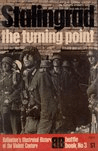

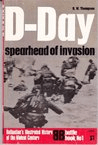









 Redeeming Pandora