A Double Dose of Schall, pt. 1

Fr. James V. Schall

For quite some time, Fr. James V. Schall has been my favorite living author.  His On the Unseriousness of Human Affairs and The Life of the Mind are essential reading for everyone who wants to understand what life is truly about.  For this last journal, I knew I wanted to get some of his work in here (whether he knew it or not), but I had difficulty choosing which of his essays to include, so I grabbed two mainly at random.  I figure he wouldn’t mind.

“What Must I Read To Be Saved? On Reading and Salvation”

Originally published May 4, 2007 on http://www.IgnatiusInsight.com

“It is this same disciple who attests what has here been written. It is in fact he who wrote it, and we know that his testimony is true. There is much else that Jesus did. If it were all to be recorded in detail, I suppose the whole world could not hold the books that would be written.” — John 21:24-25.

“For this reason anyone who is seriously studying high matters will be the last to write about them and thus expose his thought to the envy and criticism of men. What I have said comes, in short, to this: whenever we see a book, whether the laws of a legislator or a composition on any other subject, we can be sure that if the author is really serious, this book does not contain his best thoughts; they are stored away with the fairest of his possessions. And if he has committed these serious thoughts to writing, it is because men, not the gods, have taken his wits away.” — Plato, The Seventh Letter, 344c.

“Books of travels will be good in proportion to what a man has previously in his mind; his knowing what to observe; his power of contrasting one mode of life with another. As the Spanish proverb says, ‘He, who would bring home the wealth of the Indies, must carry this wealth of the Indies with him.’ So it is in travelling; a man must carry knowledge with him, if he would bring home knowledge.” — Samuel Johnson, Good Friday, April 17, 1778.1

I. We are familiar with the incident in the Gospel of the rich young man who asked Christ what good he must do to be saved. Christ responded to him he must keep the commandments. This the young man had done from his youth, a fact Christ recognized in him. Christ added, in words that still force us to distinguish between “obligation” or “duty” and something more and different from it, if he wanted to be perfect, what he should do was to sell what he had, give it to the poor, and come follow Him. The Gospel records the young man did not follow this proposal, rather he “went away sad,” for, as it says in striking explanation, the young man “had many riches” (Matthew 19:16-23). We might suggest this rich young man was, as far as we can tell, one of Christ’s conspicuous failures along with, say, Judas, one of the thieves, the scribes, Pontius Pilate, Herod, and several of His hometown relatives.

Notice that Christ did not tell the young man to become an entrepreneur so he could create wealth to help the poor, though there is nothing wrong with this avenue. Nor did Christ “impose” a more perfect way on him. It was up to what the young man himself “wanted” to do with his life. Yet, even on reading this famous passage, a passage John Paul II referred to again and again when talking to youth from all countries, we have the distinct impression the rich young man, and perhaps the world itself, missed out on something because of his refusal.

If “ideas have consequences,” so, possibly more so, do choices — even refusals, which are likewise choices. Choices always have objects. There is no such thing as choice for choice’s own sake. It’s sophistry to maintain it is. We can suspect the young man’s talents, without his riches, or perhaps even with them, were needed elsewhere, perhaps later with Paul or Silas. Indeed, Paul was subjected to pretty much the same process, but he decided the other way, for which we can still be thankful as we read his Epistles to the Romans, Corinthians, Ephesians, Colossians, Thessalonians, to Titus and Timothy. After all, when knocked to the ground on the way to Damascus, he could, after his eyes cleared up, gotten back up and walked away.

This memorable account of the rich young man reminds us not only is the world less when we do evil, but even when we do less than we are invited to do. It makes us wonder whether the world is founded in justice at all, in only what we are to render, in what we ought to do. Such a world would be rather dull, I think. It would lack the adventure we now find in it. While not denying their acknowledged worth, the highest things may be grounded in something quite beyond justice. An utterly “just world” may in fact be a world in which no one would really want to live. Justice is, as I call it, a terrible virtue. The fact God is not defeated by evil or even by a lesser good helps us to realize, with some comfort, I confess, we do not find only justice at the heart of what is. The great book that teaches this principle, above all, is C. S. Lewis’s Till We Have Faces, a book not to be missed.

My remarks obviously play on these words, “What must I do to be saved?” To be provocative, I ask, “What must I read to be saved?” I do not suggest Christ had His priorities wrong. When I mentioned this question…to a witty friend of mine, she immediately wanted to know whether any of my own books were included in this category of books “necessary-to-get-to-heaven?” I laughed and assured her indeed the opera omnia of Schall were essential to salvation!

The irony is not to be missed. We cannot point to any single book, including the Bible, and say absolutely everyone must actually read it, line by line, before he can be “saved.” If this were to be the case, few would be called and even fewer chosen. Heaven would, alas, be very sparsely populated. But I do think between acting and reading, even in the highest things, there is, in the ordinary course of things, some profound relationship. Acting is not apart from knowing, and knowing usually depends on reading.

II. Concerning books and getting to Heaven, however, let me note in the beginning, statistically, a good number of the people in the history of mankind who have ever been in fact saved were mostly what we today call “illiterate,” or at least not well educated. They were good people who did not know how to read, let alone write books. While Christianity does not at all disdain intelligence — quite the opposite, it thrives on it — still it does not simply identify what it means by “salvation” or “the gaining of eternal life” with education or literacy, in whatever language or discipline. In the long dispute over Socrates’ aphorism virtue is knowledge, Christians have generally sided with Aristotle, that fault and sin are not simply ignorance. Multiple doctorates, honorary or earned, will not necessarily get us to Heaven, nor, with any luck, will they prevent us from attaining this same happy goal.

Just as there are saints and sinners among the intelligentsia, so there are saints and sinners among those who cannot read and write. Christoph Cardinal Schönborn remarked Thomas Aquinas was the first saint ever canonized for doing nothing else but thinking. Yet, within the Christian tradition more than a suspicion exists the more intelligent we are and the more we consider ourselves to be “intellectuals,” the more difficult it is to save our souls. The sin of pride, of willfully making ourselves the center of the universe and the definers of right and wrong, is, in all likelihood, less tempting to those who do not read or who do not have doctorates in philosophy or science than it is to those who read learnedly, if not wisely. The fallen Lucifer was one of the most intelligent of the angels. His first sin was made possible by the order of his thought. No academic, I think, should forget Lucifer’s existence and his sobering story. It is not unrelated to a modern academic scholar. The figure of Lucifer should, in some form, appear on every campus as a reminder.

III. When we examine the infinitive, “to read,” moreover, it becomes clear a difference is found between being able to read and actually reading things of a certain seriousness, of a certain depth. Not that there is anything wrong with “light” reading. Indeed, the subtitle of one of my books, Idylls and Rambles — though again, need I remind you, it is not a book necessary for salvation! — is precisely “Lighter Christian Essays.” The truth of Christianity is not inimical to joy and laughter, but, as I think, it is ultimately a defender and promoter of them, including their literary expressions. I have always considered Peanuts and P. G. Wodehouse to be major theologians. In truth, it is the essential mission of Christian revelation to define what joy means and how it is possible for us to obtain it, that it is indeed not an illusion. The first thing to realize is joy is not “due” or “owed” to us.

J. R. R. Tolkien, in his famous essay “On Fairy-Stories,” even invented a special word to describe this essence of Christianity. We are not, as it sometimes may seem, necessarily involved in a tragedy or a “catastrophe” but precisely in a Eucatastrophe. The Greek prefix “eu” — as in Eucharist — means happy or good. In the end, contrary to every expectation, things do turn out all right, as God intended from the beginning.2 This is why in part the proper worship of God is our first, not our last task, perhaps even in education. In Josef Pieper: An Anthology, a book not to be missed, Pieper remarks further that joy is a by-product; it is the result of doing what we ought, not an object of our primary intention; ultimately, it is a gift.

“Faith,” St. Paul told us, “comes from hearing,” not evidently from “reading,” though this same Paul himself did a fair amount of writing. We presume he intended for us to read it all. It seems odd to imagine he wrote those letters to Corinthians, Romans, Philippians, and Ephesians with no expectation of results. When Paul remarked faith came by “hearing,” he probably did not mean to say it could not come “by reading.” We do hear of people who, as they say, “read themselves into the Church.” Chesterton, I think, was one of these. In classic theology, it is to be remembered, however, that unless we receive grace — itself not of our own fabrication — we will not have faith either by hearing or by reading or, in modern times, by watching television or Internet, themselves perhaps the most difficult ways of all!

Many, no doubt, have heard but have not believed. Paul tells of those, including himself, who, at the stoning of Stephen, put their hands over their ears so they could not hear what he was saying. Alcibiades tells of doing the same thing so he would not hear the persuasive words of Socrates. Christ said to St. Thomas the Twin, “Blessed are those who have not seen but who have believed.” Every time we read this passage, we are conscious we are among those blessed multitudes who have believed but who have not seen. And even our hearing, say in preaching and in Sunday sermons, usually comes from someone who has previously read, and hopefully read well.

The Apostle John affirms at the end of his Gospel, a document itself full of the word, “Word,” — in the beginning was the “Word,” “Word” made flesh — he in fact wrote the words we read and his testimony is true. As Benedict XVI says, “Deus Logos Est.” John also intimates, reminiscent of Plato, that many things are not recorded in books, even in all the books in the world. Yet, as the Church teaches us, the things the Lord taught and did that have in fact been handed down to us are sufficient for us. Sometimes, it is sobering to reflect the entire corpus of the New Testament covers a mere 243 pages in the English Revised Standard Edition. Those of us who are fortunate enough to be literate do not have to be “speed readers” to finish the New Testament many times over during our lives, even in the course of a few days, if we wish.

Whether all the books ever written in this world are contained in today’s libraries, or on the on-line facilities, I doubt. But a tremendous number of them are. One of the main problems with these comments on reading has to do with the sheer amount of books available to read, and yes, to re-read. I am fond of citing C. S. Lewis’s famous quip if you have only read a great book once, you have not read it at all. This pithy remark, of course, brings up the problem of what is a great book and why great books are really “great.” Even more, it asks whether “great” books exist that are not officially called great? Ought we to spend all our time, after all, on so-called “great” books? Leo Strauss once remarked that, in the end, the famed great books contradict each other. This fact led many a philosopher and many a student into relativism under the aegis of philosophic greatness. There are, as I think, “great books” that are not considered “great.”

The Web site of the Library of Congress informs us in 1992, the Library accessioned its 100 millionth item. The Library contains books in about 450 languages. I have friends who can handle fifteen or twenty languages. But I do not know anyone who can handle 450 different languages. No doubt considerable numbers of books have been added since 1992, and I do not mention the books in the British Museum or the Vatican Library, or the great French, German, Spanish, American, and Italian libraries, as well as others throughout the world.

When I was about eighteen in the army at Fort Belvoir in Virginia, I went into the post library, with time on my hands. I looked at all the stacks of books, but I realized I did not know what to read or where to begin to find out. It was a kind of revelation to me of that famous Socratic dictum of “knowing what I did not know.” Yet I knew, that, however logical, one did not go to the first book under the letter “A” to begin to read systematically all the books until one reached “Z.” First of all, it could not be done in one lifetime, even in a fairly small library, and secondly it would have promoted a mental hodge-podge.

At the beginning of the Summa, St. Thomas tells the young student an order of learning and knowledge exists that makes it possible to distinguish the important and the unimportant things. No library, I might add, is constructed on the order of St. Thomas’s Summa, which, I suspect, might tell us something about the limits of libraries, however good they might be. Again, we are not well advised to take some encyclopedia and begin with articles under “A” and read to those under “Z.” The order of knowing is crucial to us.

A famous quip claims “any man who says that he has read all the writings of St. Augustine is a liar.” Likewise, if we take St. Thomas, remembering he had no computer and he had at most twenty-six or twenty-seven years of life during which he could write anything before he died in 1274, we still find it almost impossible to believe he actually wrote all he did write. What he wrote was clearly dependent on what he also had read.

I recommend students to go over to the library and look up on the shelves the folio opera omnia of St. Augustine and St. Thomas. Students need to consider what sort of life one would have to lead in order to write, let alone understand, such a vast amount of work. Too, the students should reflect on what different kinds of life from each other these two great intellectual saints lived. Moreover, we shudder to think where we should be as a culture had, like the rich young man, Augustine or Aquinas chosen some other form of life, which they no doubt could have.

The story of how the works of Aristotle or Augustine were saved for posterity is itself another of the scary accounts of how, even though they wrote what they did, we almost lost what they wrote after it was written. Indeed, we did lose much of what Aristotle wrote, not to mention Cicero and other important thinkers. The very dialogue of Cicero that changed the life of the young Augustine, as he tells us in The Confessions, is now lost. We do not have it in the Library of Congress.

I was once on a division of the National Endowment for the Humanities that considered grants to libraries for the physical preservation of books and newspapers. It is astonishing over time how fragile our output of books and papers is, even with great preservation efforts. Of course, all our current “on-line” facilities, in which most of today’s writing and publishing first appears and, indeed, in which it is preserved, depend on a continuous supply of electricity, not to mention computers. It also depends on whether the barbarians get through the gate to destroy it. These latter technologies seem to defy both time and space in enabling us to send our latest thoughts around the world or across the street in an instant. But the question always remains whether we have anything to say and whether what we say is true or not.

IV. Each of my students is required to read what is said to be the most “immoral” expository book in the history of political philosophy. It is also a most famous and enticing book. Students are much attracted to it and by it. Many students, indeed, I have noticed, are charmed by it. I am charmed by it myself. We are naive if we think the difference between good and evil is always easily recognizable, let alone easy to choose between, even when we do recognize it.

This book, of course, is Machiavelli’s Prince. The book originally was given as a gift to the ruler of Florence, almost as if he did not himself know how to rule. It sketched how a prince would sometimes, perhaps often, have to do bad things in order to keep in power. So long as we think it is a good thing to stay in power no matter what, then Machiavelli’s advice becomes a lesson in how to do it, especially on the “no-matter-what” part of his advice. Evidently, in such a view, what makes good men to be bad princes is the restriction on their actions imposed on them by the classical distinctions of good and evil. The prince, liberated from restriction, would presumably be a more “successful” ruler, if not a better man.

In the course of his book, Machiavelli tells us, with some paradox, that all armed prophets succeed and all unarmed prophets fail. At first sight, this teaching will seem quite logical until we remember Machiavelli himself was neither a prophet nor a prince. If this is the case, that he was a minor diplomat and not a prince, it seems paradoxical he thought his own unarmed life was worthwhile. Machiavelli hints his real foes are men who did not write books, namely, Socrates and Christ. Both Socrates and Christ were, moreover, unarmed prophets, as was Machiavelli himself. But Machiavelli did write a book. Neither Socrates nor Christ wrote one.

What, then, can Machiavelli mean when he says Christ and Socrates were “unsuccessful?” Socrates needed Plato to write about him. Christ needed the Evangelists and Paul. Evidently, Machiavelli thought he had to undermine, not the armed prophets, but the unarmed prophets. Who was Machiavelli’s audience, then? Was it Lorenzo, the prince? It hardly seems likely. By writing a charming book, Machiavelli sought to entice generations of students and students-become-rulers to his principles. These readers encounter something that, if they follow its suggestions, will not save them. Machiavelli wrote to turn the souls of potential philosophers away from Socrates and Christ. Unless he could manage this “conversion,” the world could not be built on his “modern” political principles. To follow Machiavelli’s tract, we must cease to be interested, as was Socrates, in immortality, or like Christ in first seeking the Kingdom of God.

Do I think The Prince to be one of the books we must “read” to be saved? I do indeed. The knowledge of what one ought not to do is not a bad thing. It can be, but as such, it is not. It is good to know the dimensions of what is persuasively wrong. We ought to encounter disorder in thought before we encounter it, and especially before we duplicate it, in reality. It was Aristotle, I believe, who remarked virtue can know vice, but vice does not know virtue.

V. What must I read to be saved? When classes were over one spring, I received an e-mail from one of my students who had arrived back at his family home. He wrote:

I have found something interesting while talking to my friends here at home…. Many of my peers have fallen into the trap of moral relativism. They have accepted education as a means to an end. It is very disheartening. I was wondering if you had … any … suggested readings for this subject of the relativism of my generation? Many of my friends feel that religion or spirituality is a private thing, and one ought not question another’s belief system. Everything is personal and therefore out of the realm of criticism. I think someone wrote something about how an affirmation of morality, religion, and ethics as a “private” enterprise, is in itself a moral statement.

No doubt, readers will recognize the sentiment expressed here. It reminds me of the famous passage in Allan Bloom’s 1986 book The Closing of the American Mind: “There is one thing a professor can be absolutely certain of: almost every student entering the university believes, or says he believes, that truth is relative.”3 We wonder: “Does this relativism have a history?”

In a two-frame Peanuts comic strip, Sally is shown sitting upright in a formal chair staring at the television in front of her. From the television she hears the following announcement: “And now it’s time for…” In the second scene Sally, with determination, points the remote control, which looks like a gun, at the machine and firmly announces: “No it isn’t!” The last thing we see is a printed click.4 Sally shoots point blank to kill the monster before her. I cite this colorful little snippet in the context of “what must I read to be saved” because it makes the graphic point we each must simply shut things off in order to come into some possibility of knowing what all that is is about.

So I am going to propose, with some rashness perhaps, a brief list of ten books that, when read, will perhaps save us or at least bring us more directly to what it is that does save us, faith and grace and good sense. The writers of the books I select will all, I think, accept the proposition saving our souls and saving our minds are interrelated. We do not live in a chaos, though we can choose one of our own making.

Basically, I think if there is something wrong with the way one lives, it is because of the way one thinks. However, I am most sensitive to Aristotle’s observation often how we live and want to live prevent us from clearly looking at what is true. Our minds see the direction truth leads and often we do not want to go there. In short, there is no way around anyone’s will, but the shortest way is go follow Sally’s example, click off the screens that keep us in mere spectatorship and take up the much more active occupation of reading for understanding what it is all about. 

These, then, are the ten books:

1) G.K. Chesterton, Orthodoxy

2) C. S. Lewis, Mere Christianity

3) E. F. Schumacher, A Guide for the Perplexed

4) Fyodor Dostoyevsky, The Brothers Karamazov

5) Peter Kreeft, The Philosophy of Tolkien

6) Ralph McInerny, I Alone Have Escaped to Tell You

7) Dorothy Sayers, The Whimsical Christian

8) J. M. Bochenski, Philosophy: An Introduction

9) Etienne Gilson, The Unity of Philosophical Experience

10) Josef Pieper: An Anthology

One might object, “Only Dostoyevsky is a classic and it is long. What about John Paul II’s Crossing the Threshold of Hope? Or Benedict’s Encyclical on Love?” Read them! What about the Bible, Plato, and Aristotle? Read them! And Augustine’s Confessions? Never to be missed. What about Schall’s opera omnia? For Heaven’s sake, read them!

I do not want to “defend” my list against other lists. I can make up a dozen other lists myself. The only really long book in my list is Dostoyevsky, which takes some time to read. Gilson’s book requires attention but it is manageable by most people. Most are short, easy to read. All should be read many times. The point about this list, however, as I see it, is if someone reads each of the books, probably in whatever order, but still all of them, he will acquire a sense that, in spite of it all, there is an intelligibility in things that does undergird not only our lives in this world but our destiny or salvation.

Again, a relation exists between what we think and what we do. We can think rightly and still lose our souls, to be sure. But it is more difficult. The main point is the intelligibility of revelation is also addressed to our own intelligence. We need to be assured what we believe makes sense on any rational criteria. Lest I err, a reading of each of these books will point us in the right direction — one that indicates at the same time how much we have yet to know, including the completion of God’s plan for us itself, but also how much we can know midst what often appears as a chaos of conflicting opinion. But to obtain the impact of these readings I intend, one does have to click off the screens and the noises that prevent us from encountering writers, often delightful writers, who so clearly wrestle with the reality of the things that are, including the ultimate things.

Endnotes

1 Boswell’s Life of Johnson (London: Oxford, 1931), II, 227.

2 J. R. R. Tolkien, “On Fairy-Stories,” The Tolkien Reader (New York: Ballantine Books, 1968), 68.

3 Allan Bloom, The Closing of the American Mind (New York: Simon & Schuster, 1987), 25.

4 Charles M. Schulz, Could You Be More Pacific? (Peanuts Collector Series #8; New York: Topper Books, 1991.
The Wise Quotations of Mr. Christopher Rush

Compiled by the Class of 2010

Apparently, a long time ago, I said a few things some students have found, shall we say, clever.  Most of the clever things I’ve said in my lifetime are from other sources, which I have admitted and cited (most of the time).  For mostly sentimental reasons, I have shared a few of the sayings written down by students over the years, though mostly in the first half of my Summit career.  This was taken from an old document from students long graduated out of college, let alone high school.  Even so, it is a small testament to some of the students I’m grateful to have taught over the years.  Thanks to Mrs. Spaulding for rediscovering this old file and passing it along.

“There comes a time where we have to put on our man pants and for the ladies to put on their woman’s slacks; or, if you are Ricky Thompson, either.” — Passing the Torch Address at the Class of ’09 Graduation

“Life is not all beer and skittles.”

“…or is it…”

“Buttons aren’t toys.” [The Hitchhiker’s Guide to the Galaxy movie]

“Your lives would be much better if you people ate more McDonald’s.”

“An essay is like a river…you can’t lead people safely into it unless you know what it’s about.”

“Out of love, God created us.”

“Don’t think of eternity while you are driving.”

“Where there is smoke, there are matches.”

“There is no Saudi Arabian Version of the Qur’an.”

“Human beings are simple.”

“Tomorrow we will be playing everyone’s favorite game, What Does Chaucer Think?

“Boys with no belts should have no lunch.”

“You like cheeseburgers because someone gave you a cheeseburger.”

“Sometimes you are tired of the people you know.”

“The five paragraph essay got us through the days of short pants and dodgeball.”

“There are no timeouts in war.”

“Your lives have been shallow and useless.”

“Remember in the future, your ignorance didn’t come from Summit Christian Academy…we gave you the keys, it’s you that didn’t take them.”

“‘I wonder if we do something with a match’ is not a hypothesis.”

“A hyperthesis is a ‘Is it…’”

“Everybody’s second favorite game, Up or Down (Bradley’s favorite)!”

“I’m not on the thesis judging board because I have heard your arguments so many times and I am sick of them.”

“October through December go by slowly, then February, March a little longer. Then in April … ‘Oh my gosh, the Eiffel Tower;’ then thesis, then in May, you will be like … ‘I’m out of school.’”

“Language has meaning if we give it meaning.”

“We’re all scrunched together on these sardine couches.” (The reason why we couldn’t take many tests 2009-2010)

“I can’t tell you to go out and read good books; ‘Does good mean popular? then I’ll go read books about teenage vampires.’”

“When playing basketball, one side doesn’t go first, then the other; there will be no way to determine the winner. Same thing in war; you don’t want one side to go then the next…except in Strategic Gaming.” (Talking about Stasis Theory)

“Research isn’t done while on Geopages and watching cartoons.”

“We don’t live with Socrates where he can ‘search’…therefore, you have to research yourself.”

“What if the earth decided to spin twice as fast tomorrow, just for fun?”

“In a beheading contest, you really want to go first.”

“No one wants the ‘Best Of’ something. Who wants three of their favorite episodes in  a 60-minute “Best Of’ video?”

“Well, if we were at the grammar school, we could call it repetition, but since we’re not, we call it refrain.”

“Is there a period in there?”

“Stupid is never a valid category; never was, never will be.”

“We’re not guessing and we’re not liking.”

“What I do everyday, is come to school, try to make your lives better…trying to cause as few emotional problems as possible.”

“How many ounces of smokeless tobacco were spat out in the 1977 World Series dugouts? … no one needs to know.”

“Weapon of Minor Distraction…(WMD).”

“You are seniors: if you want a diploma from me, then you are gonna have to earn it.”

“We start out with our thesis, ‘The world is flat,’ then your antithesis, ‘No-o it’s not, the world is round,’ (*pow*pow*pow*) then you have a synthesis, ‘Look, we are in India.’ Then start with that as your thesis, then your antithesis, ‘No it’s not, it’s America,’ and then your synthesis, ‘We are in Cabotia.’”

“It’s not torture when it’s scientific investigation.”

(Question: How does Marxism exist?) “Communism has a lot of big guns.”

“Don’t worry, I’ll find a way to lower your grade.”

“Your dam is broke, it’s your problem not mine…that’s what you get when you live in a lake…you didn’t help me with my problems so why should I give you money to help your problems?”

“You are young adults…not kids.”

“Someone thought it was a good idea to put teachers and parents together to discuss your problems.”

“I’d hate to be a postmodernist running through traffic.”

“Due to the evil schemes of the Devil, tonight we will have two times as much homework to counteract the Devil.”

“Believe it or not, but younger children have a lesser attention span than you.”

“Be fun and exciting when you speak…like me.”

“I have a license to do this stuff.”

“Time flies when it is wasted.”

“We need to stop polluting the air waves about recycling.”

“I see Carlsons all FRAKING day.”

“Living things, nonliving things, other…is too broad of a topic.”

“If you have a bloody shirt, then you are the murderer…or you just have lots of nosebleeds.”

“If God doesn’t care for us, then the animals might eat us, and the rocks would be too busy doing their own thing instead of helping.”

“C…for safety.”

“Defy the Devil’s schemes…”

“Ahh…the fossil record; that dreary old thing.”

“You can’t think without knowing that you are thinking, except when you are taking test.”

“The universe is getting lazier, says Newton.”

“Maybe you will break out of your baby bubble.”

“If tomorrow the gravity is going to be different than today, then don’t get on a plane tomorrow.”

“If you start eating people, then your ethos is gonna go down, because others don’t eat people.”

“I’m  going to the bathroom for the whole chapel.”

“The single exclamation mark (!) does not travel in packs (!!!). If you find the need to increase the number of exclamation marks, then increase your vocabulary so it would have more power.”

“If you are a visual learner, you can take the time and sketch each picture…but for  now you have to keep up the pace.”

“What you do in secret, God knows.”

“Pack up your stuff and go away.”

“We actually live in the United States of Cabotia.”

“Martin Luther nailed each thesis on the church door one at a time, using 190 nails.  It took over six and a half hours.”

“You wouldn’t have the Globe Theater if the world was flat.  It would be rectangular if it weren’t for the Age of Exploration.”

“Remember when you all came into the 10th grade, young and pimply, and thought the Iliad was stupid, but after reading it, you liked it?  This will be the same for Shakespeare.”

“Things can go wrong when you get a group of people angry, bearing knives.”

“I am not bothered by your ignorant ways.”

“Genetically mutated chickens gone awry.”

“I am masterful of my emotional responses.”

“Pretty soon, there will be X-men amongst us.”

“A tree without its trunk is inefficient.”

“Let’s get through this quickly; I’ve got to harvest my squash.”

“We are gonna keep this on the DL.”

“If you are a genius, school had no purpose for you.”

“We don’t win competitions but we are pure at heart.”

“I like seeing how smart everyone is becoming.”

“Descending order of easiness.”

“I’m not worried, I am sad…a lot.”

“Explain life and everything it means….  Explain unreality.”

“There is a big pile of Twinkies that I am going to jump into.”

“This week is the most awesomest week you will ever have.”

“Whenever you get down, just remember about getting through your Senior Thesis.”

“Wow, these pretzels are making me thirsty.”

“The basic question of life is not, ‘Mom, what’s for dinner?’”

“The outside is so over-rated.”

“Thank you for your diligence…it’s not like you were going to go out and play anyways.”

“God is.  God needs nothing…if God needs anything, then He lacks something; He doesn’t need followers, He doesn’t need worship.”

“A yoke contains two oxen, an older one who knows the way and the path it takes, and a younger, inexperienced ox, that will learn the way of the older ox, so it will become the older experienced ox when the older one is lifted into the sky.”

“They didn’t have the wheel back then…the wheel was still young.”

“What was the Renaissance, and why shouldn’t I go to Burger King for lunch? Or McDonald’s?” (Essential Question on the board)

“It’s written right here (pointing at the whiteboard) in small white ink.”

“The Internet is like a three-dollar courtesan…you may get what you want, but the quality is always suspect.”

“These days, lions don’t lie down with lambs unless they are dead.”

“I have to forgive you?!…whoa, whoa, let’s rethink that.”

“I’d rather grade 95 pages of confirmation next weekend than 34 … just don’t worry about me.”

“That’s where you want to aim, in the eye of that poor bull.”

“Discharging weapons is not a good way to get people’s attention.”

“Speak what you feel, not what you ought to say.” [King Lear]

“Even though I use 3 red pens a week, you are actually getting better.”

“Follow me and I’ll take you to the Pearly Gates…until I give you that eight-and-a-half-inch sheet of paper that tells you to go away and never come back…unless you have a #1 meal from Chick-fil-a, no pickles, sweet tea.  Or a Double Quarter Pounder meal from McDonald’s, Coke, no ice.”

“Nothing good ever comes from Texas.” (One of Mr. Rush’s life mottos, said after Gordon broke up with his girlfriend.)

“…and why should I do that?”

“This is my serious face…looks like my joking face.”

“No one better say on the test upside-down triangle for inductive reasoning.” (With especial apologies to the Class of 2018)

“Annie…short for Annie.”

“I can only fix so many problems.”

“It’s not like and not basically.”

“Language is only commutative.  I cry about it from time to time…on the inside.”

“If you use this (rhetoric), no one will touch you, literally (literature).”

“Hold on Pierre, calm yourself down…go eat your crumpets and croissants.”

“Commingling with the youth by sharing his essence with partakers of his ilk.” (On Oscar Wilde)

“Dude, you learned nothing.”

“Not exactly…”

“Consider it an endearment.”

“‘Ahh, you sunk my battleship. I’m not playing again.’”

“Not too shabby.”

“Today is (in)Hospitality Day, but I have two 10th grade classes.” (Eats a whole meal from McDonald’s throughout the whole class period to discuss a lesson from the Odyssey.)

“Don’t let those Honor Society people boss you around.”

“You know how I say things, and hear things…differently.”

“You need to get into the habit of writing high quality papers…if you all took 30 minutes to proofread your papers, then it will be better.”

“Exciting Quarter O’ Shakespeare.”

“‘Well, that’s not fair’.  I know, that’s why I like it.” (Quiz being 40% of our grade.)

“Tragedy is when I cut my finger; comedy is when you fall through an open manhole cover and die.” [Mel Brooks]

“Throwing a pie at me isn’t farce, but it will be when you have one thrown in your face.”

“An essay is like…a river. An introduction will lead you into the river and the conclusion will lead you out. Make your paper persuasive for them to get into the river and they will jump right in.”

Zach: “I am not indecisive, I am just…”

Mr. Rush: “Weak.”

“Rhetoric is a power of the mind, not the Pythagorean Theorem of the mind.”

“No one cares what you have to say, you are youths; your parents make you think that people care.”

“Jimmy was eating Jujubes; one of the Jujubes went down the wrong tube. Jimmy now has iron lungs.  Where will Jimmy be without his respiratory implants?” (Teaching us an attention-getting introduction.)

“Anyone who doesn’t enjoy Shakespeare, doesn’t enjoy life.”

“Oooooooo…” (’09 Passing the Torch Address)

“If you have low self-esteem issues, go eat at Golden Corral.”

“Don’t feel bad you didn’t create the world.”

“Who we are is what we think is true.”

“‘Oh, it’s the Coliseum’; or, if you want to be accurate, ‘Oh, it’s the Flavian Amphitheatre.’”

“To be or not to be, that is the question…the answer is to be.”

~ Mr. Christopher Rush

The Importance of Music

Noah Eskew

Humans are blessed with five senses that elicit responses and connect the external world with the soul. Sight, taste, touch, smell, and sound are the ways by which we can interact with the world around us. When a person taps in to any of these senses, various reactions will occur with endorphins inside the brain. Sound, however, regularly causes a visible physical stream of responses. Rare is it to see a painting that inspires a flash mob, or a candle that brings you to tears, but that’s part of the magical spiritual force music does. That’s why I’d like to talk about the importance of music. Music has the immense power to incite a fire within an individual, a group, a nation, or the world. Music is utilized alongside other senses to generate greater responses. It can completely change a person. All these things together make music one of the most powerful and important aspects of the universe.

This thesis and subject matter is interesting due to its distinct nature. This assertion has the potential to last long after my time. Arguments surrounding music have distinguished themselves beyond those of science and numbers because of their inherent subjectivity. Because of this, this thesis will be addressing a bit of a “Cold War.” Not too many people are adamantly vocal against the importance of music. However, not enough people are vocalizing positivity for music. Instead, each side expresses their stance through their actions and attitude. The historical background involved with this subject played a major role in my choosing to address this topic. For years, the arts have been looked upon as just another piece of culture often left for the weaker members of society to experiment with (take the times of Shakespeare for instance). Now, all over the country, many adults have forgotten the major role music can play in a child’s life. This forgetfulness appears in various forms: a neighbor complaining a drummer in the neighborhood is too much of a nuisance or overly strict noise ordinances put upon neighborhoods. In a letter to a city council about absurd noise regulations, Dave Grohl, award-winning musician, had this to say:

Music is not only a healthy pastime, it is a wonderful, creative outlet for kids, and fosters a sense of community necessary to the emotional and social development of any child…. It is crucial that children have a place to explore their creativity and establish a sense of self through song. The preservation of such is paramount to the future of art and music. Without them, where would we be?

My goal with dissecting this subject is to further display the power of music and to discover what good things can come from properly harnessing said power. Through this I plan to replace the negative attitude toward the power of music some still harbor, with a highly appreciative attitude toward the art form and the heavy experimentation, patience, and practice it entails. I plan to make clear valuing musical things should not be dismissed as frivolous or “just a hobby,” but, instead, are meaningful things with unmatched purposefulness and possibilities. Lastly, one of the primary reasons why I chose such a topic was to cease the view music’s influence is inherently bad; secular music doesn’t have to dishonor God.

I would like to define three terms. First, “music” is the organization of melody, harmony, and rhythm in the name of human expression. Second, “influence” is music’s ability to create changes, and its absence is obvious. Third, “participation” in music and the arts means to enjoy, practice, or to have a thorough respect for the importance of such.

This thesis should be important to you because you may be missing out on one of the most beautiful parts of creation. Your lives, your children’s lives, and your communities’ lives will be enhanced if these beliefs are put into practice.

In order to prove music is one of the most powerful and important aspects of life, I will confirm six arguments: 1) Music has displayed power through shaping history. 2) Music is powerful because of its widespread dominion. 3) Music is a powerful social force, which encourages communication beyond words. 4) Music clearly shapes people’s attitudes, appearances, philosophies, and being. 5) Music is important because of its therapeutic benefits. 6) Music is vital to a child’s development. In order to further prove my thesis, I will refute four counterarguments: 1) Music only affects those who actively participate in it. 2) Due to improvements in technology, music is being taken for granted. 3) music’s influence on society is mostly negative. 4) Music is only important because of its benevolent side effects.

My first argument is music has demonstrated its power through shaping and developing the stories of history. Music has been around since God made it. And once bestowed to the human race, music has been stirring the cultural pot, promoting ideas, telling stories, providing encouragement, etc. For the sake of time, I will begin by addressing some ways music shaped things within the 1800s. A good chunk of this century, and seemingly most of history, is spent during times of war. And in war, there isn’t a lot of time or room for arts and the appreciation of them, yet music found a way to fit in and shake things up. This quotation from civilwar.org nicely sums up the ways music was used in wartime:

Music was played on the march, in camp, even in battle; armies marched to the heroic rhythms of drums and often of brass bands. The fear and tedium of sieges was eased by nightly band concerts, which often featured requests shouted from both sides of the lines. Around camp there was usually a fiddler or guitarist or banjo player at work, and voices to sing the favorite songs of the era. In fact, Confederate General Robert E. Lee once remarked, “I don’t believe we can have an army without music.”

It’s interesting to note how the ways a soldier might have used music, such as to psych himself up for battle, are similar to a modern-day athlete listening to a pre-game playlist. But, in the context of the Civil War, both the Union and the Confederacy had songs that demonstrated their loyalty and pride such as “May God Save The Union” and “Dixie.”

During that time, and still today, songs have been used to promote political campaigns. For instance, the song “One Hundred Years Hence,” written by Civil War-era actor Tony Pastor, expresses a feeling of readiness toward Lincoln’s departure from the presidency. The song expresses a belief Lincoln was forgettable and how his political opponent, George McClellan, would outlast Abe in terms of historical relevancy. In a more modern example, Joan Baez, a 1960s folk singer, advocated for civil rights, most notably in the song “We Shall Overcome.” Rage Against the Machine is another example of musicians with a clear goal of spreading their ideologies through melody. Tom Morello, the band’s guitarist, said in an interview with MTV, “I think that one of the important things about Rage [Against the Machine] is that we are able to seduce some people in with the music, who then are introduced to a different political message. That’s kind of why we play music.” The band knew they could begin to influence people’s thoughts if they could first draw attention with their sound.

My second argument is music is so powerful because of its widespread dominion. People can use music in their lives to manipulate their moods, alleviate the boredom of tedious tasks, and create environments appropriate for particular social events. Due to advances in technology, just about every kind of music out there is available to a great portion of the world at any time. This gives society even more exposure to music, and when humans have this kind of exposure to anything, it is bound to affect their way of life. Human exposure to music is at an all-time high, and the numbers show no signs of letting up. Forbes magazine did a study on human interaction with music and concluded,

On average, Americans now spend just slightly more than 32 hours a week listening to music. That’s an incredible figure, and it shows significant growth from even just the past two years. In 2016, Americans listened to an average of 26.6 hours of music per week, while the year prior, it was just 23.5 hours.

The trend shows massive gains from year to year, with the average expanding by several hours every 12 months. While some interactions with forms of media are measured in minutes, Americans now listen to almost a day and a half of music every week, which shows that they have songs, albums and playlists streaming throughout the day, and that they now incorporate music in many different parts of their life. 

Americans, on average, are listening to 32 hours of music per week. Now, the average American sleeps for about seven hours a night. This means we sleep through about 48 of 168 total hours in a week, and are left with 120 active hours. The 32 hours of music we partake in now account for 27% of our life. That means almost a third of the week involves some sort of music! Think of all the things people count on music to get them through: yardwork, schoolwork, driving, hosting a party, religious services, and more. One thing particularly interesting that sets music apart from other art forms is the number of things within society that rely on music to keep them relevant. And that quotation from General Lee, used in my first argument, makes me think of what sporting events would be without music. Just imagine: you’re at the ballpark, no organ, no walk-up music, no fun. The crowd would be less involved in between plays. The teams would storm on the field to silence. The quality of the sporting event experience as a whole would just seem incomplete. Many times, movies count on a riveting score or soundtrack to draw lasting interest. What’s Gilligan’s Island without the opening verse, “Just sit right back and you’ll hear a tale,” or Seinfeld without the famous “sitcom bass”? What is Dirty Dancing without the song “The Time of My Life,” or even movies like the Star Wars prequels, which are shunned by some of the series’ true fans, still included an amazing score of music. Restaurants will even play music to soothe the impatience of waiting for a table or food, and hopefully put consumers in a nice mood suitable for spending. Because of its widespread dominion, music can change things ranging from major events or Joe Random’s Thursday morning.

In the past, music has appeared so powerful it has been mistaken for a plot of world domination. Hitler suspected the growing popularity of jazz in the 1940s was being fueled by a conjoined effort of blacks and Jews to infiltrate society with their promiscuous ideas. He realized the music began to soften the tension between different races, and immediately banned “negro” music from the airwaves. Says Chris Trueman, “Jazz music was banned as it was considered to be ‘black music’ with origins from the southern states of America. The Nazis associated jazz music with Black Americans and as a result it was labeled ‘degenerate.’” Hitler recognized the people like the black and Jewish music from America enough to where he could probably benefit for making Nazi-friendly counterparts. Joseph Goebbels assembled the group “Charlie and His Orchestra” in order to begin spreading anti-Allied propaganda.

There is even a conspiracy theory which holds all of the Beatles discography was too good to just be rock ‘n’ roll. Instead, it must be some kind of Marxist plot against America. The music was too compelling, it had to be using some sort of mind control in order to spread propaganda. Joseph Noebel wrote a book Communism, Hypnotism, and the Beatles to promote the idea. In many ways, this is the ultimate praise for a musical group. These aren’t necessarily the prettiest conclusions to draw from history, but its history. Music has been through a lot of pressure, but its impact lives on. This just goes to show, when humans interact with the force of music, the influence is undeniable.

My third argument is music is a powerful social force, which encourages and inspires communication beyond words and causes emotional reactions and supports the development of group identity. Music can communicate with words but also avoid words entirely and still evoke an emotional response. First, you must understand two listeners can experience two separate emotions from the same piece. As Dave Grohl explains, “That’s one of the great things about music. You can sing a song to 85,000 people and they’ll sing it back for 85,000 different reasons.” So, in a sense, the audience is never wrong in drawing a particular emotion from a song. But, in many cases an artist will communicate specific feelings to the audience. For example, the opening to “Ride of the Valkyries” conveys the feeling of an army entering an epic battle, or at least something very similar to that sentiment. Or in a song such as “Landslide” by Fleetwood Mac, where there is a clear theme of remorseful melancholic feelings within the chords alone. In other words, you don’t have to speak French to understand the feelings represented in a Debussy piece.

My fourth argument is music displays its power through the impact it has on an individual’s physiological, movement, mood, emotional, cognitive and behavioral responses. Playwright William Congreve wrote, “Music has the charm to soothe the savage breast, to soften rocks, or to bend a knotted oak.” Music makes people physically move. Neuroscientist Daniel Levitin suspects this about the interactions between music and the brain:

Music stimulates the cerebellum, a region of the brain crucial to motor control. Connections between the cerebellum and the limbic system (which is associated with emotion), may explain why movement, emotion, and music are tied together. Music is more than entertainment: It is a regulating force for our moods. Because of its strong ties to our emotions, we rely on music to wake us up, calm us down, entertain us, and motivate us — something a balanced checkbook can’t quite match.

Music has different effects on different individuals. It can make some people’s cognitive processes improve, but it may cause others to stop everything and listen. In fact, while compiling this paper, some days were spent writing while listening. But other days the music would have me too enthralled to buckle down and work. The brain’s multiple processing of music makes it difficult to predict the particular effect of any piece of music on any individual.

My fifth argument is listening and playing music have powerful therapeutic effects. Music can promote relaxation, alleviate anxiety and pain, and enhance the quality of life of those beyond medical help. One fascinating example of such uses for music is through the journey of pregnancy. Therapist Dr. Ginger Garner analyzed the findings of researchers on this theory and noted,

Music can be an effective means for managing both pain and stress during labor. A study showed that using music during childbirth has a significant effect on mother’s perception of pain. Another second study in 2000 revealed perinatal physicians, nurses, and caregivers became more relaxed, slowed their activities, and demonstrated increased respect for laboring mothers when music was used. Music was also found in a study, when combined with progressive relaxation, to be more effective in inducing relaxation in laboring mothers.

This is yet another way music is at your service. It’s amazing that such a powerful thing in its own right has these other positive “side effects.”

My sixth argument is music can play an important part in enhancing human development in the early years. Active involvement in music making in children may increase self-esteem and promote the development of a range of social and transferable skills. I have experienced this benefit of music full well. When I was about six years old, my cousin Sarah came to live with us as a foster child. She began attending Summit. She was a handful. Sarah was too much of a disturbance to our house and to our school. Along with her aunt, we decided to enroll her into piano lessons, which yielded great results. Rather quickly, she became quite good at the instrument, and the skills of patience and grace she had learned from piano became paralleled in other aspects of her life.

The first counterargument against my thesis is music only affects the lives of those who actively participate in it. The biggest problem with this argument lies within overlooking the effects of music on culture. In history, events happen on a cause and effect basis. Take, for example, the Boston Tea Party: George III raised the taxes until the colonists got fed up. But, in terms more related to our argument, the cultural changes that occurred in the 1960s weren’t just coincidences. For instance, as mentioned earlier, the groups of the British Invasion came over and immediately influenced fashion and especially hair. However, The Beatles managed to change far more than style. After the Beatles played on the Ed Sullivan Show, an initiative of starting a band swept across the youth of the nation. The Beatles soon became the first real celebrities to be asked about political and social issues. Their presence in popular culture was a boon to the Civil Rights movement in the ’60s. In the thick of American society, they had their fair share of interactions with segregation. In their tours, if a venue was segregated between colored and white, the Beatles would only agree to play if the rule was done away with. This excerpt from the BBC’s Web site outlines the band’s feelings on segregation: “The Beatles showed their support for the U.S. civil rights movement by refusing to play in front of segregated audiences, a contact shows. Signed by manager Brian Epstein, it specifies that The Beatles ‘not be required to perform in front of a segregated audience.’” These big statements by the Beatles got the music business behind racial equality. Without the support of pop culture to this degree, who knows how long of a delay the movement would have lasted. These moral decisions groups and artists like the Beatles made affected the world as a whole, not just the music industry.

The second counterargument against my thesis is due to improvements in technology, music is being taken for granted. This can lead to neglect in considering how the infrastructure supporting music and musicians is resourced, maintained, and developed. Some fear the process behind the making of popular music is becoming too factory produced, robotic, and digital. They think if all music becomes computerized it will all begin to sound alike and there will be no emotional attachment without the human element. It is true: we are currently in an era of music where “perfection” in the sense of sound and image are glorified. Anybody can make a hit record with the help of computer software. This is why parents and teachers must not suppress their child/pupil’s interest into learning an instrument. This world needs real musicians playing and dedicating themselves to real instruments through which they can distinguish their sound from everyone else’s.

The third counterargument against my thesis is music’s influence on society is mostly negative. First, like most things, we tend to focus on the negatives in society. If the positive things music accomplishes everyday were to go missing, we might begin to understand its true value to society. Is some music out there providing incorrect moral standards? Yes. This tells us if music has the ability to influence for bad, it also has the inverse ability. We’ve seen in the past with music for charities, churches, and other things have influenced culture for the better. Music’s influence on society can be good. For evidence of this, I will look to an unlikely example: Punk Rock. In the ’80s, punk rock band Minor Threat started a movement called “straight-edge.” Dictionay.com defines straight-edge as “advocating abstinence from alcohol, cigarettes, drugs, and sex.” Minor Threat became incredibly influential to the punk music scene, and many of their fans followed suit with the anti-drug, anti-alcohol lifestyle. In-fact, there are still people who cling to the straight-edge lifestyle.

Finally, the fourth argument against my thesis is music is only important because of its benevolent side effects. Peter Greene explains why music education is important due to music’s inherent importance,

Music is universal. It’s a gabillion dollar industry, and it is omnipresent. How many hours in a row do you ever go without listening to music? Everywhere you go, everything you watch — music. Always music. We are surrounded in it, bathe in it, soak in it. Why would we not want to know more about something constantly present in our lives? Would you want to live in a world without music? Then why would you want to have a school without music?

One of the biggest issues I wanted to conquer with this thesis was music being important because it helps with other things. Music is so heavily involved in our everyday lives that studying it, participating in its production, and listening to music are worthwhile causes of their own. Don’t get me wrong, all of the benefits mentioned in this paper are incredible bonuses included in the enjoyment of music. However, that is what they are: bonuses. There’s no need to wait around for a scientific study to prove music improves SAT scores before you listen to it.

After hearing more about the subject, there are a number of ways to utilize the new information. First, know the pursuit of musical excellence is not a dead end journey, but instead leads to a purposeful life. Encourage the next generation to value music, and to choose what they listen to carefully because it will have a big impact on who they become. Finally, do not rule different styles of music out of your life based on prejudices. Experiment with new sounds; chances are that something is out there, and you’re missing it. Don’t let this gift from God pass you by!

Bibliography

Bierle, Sarah K. “1860’s Politics: Songs For The Campaign Trail.” Emerging Civil War, 11 Nov. 2016, emergingcivilwar.com/2016/11/11/1860s-politics-songs-for-the-campaign-trail/.

Bowman, John S, and Stephen Currie. “Music of the 1860’s.” Civil War Trust, Civil War Trust, http://www.civilwar.org/learn/articles/music-1860s.

Collins, Michael. “The Benefits of Listening to Rock Music.” Google, Google, 16 May 2016, http://www.google.com/amp/www.theodysseyonline.com/benefits-listening-rock-music.amp.

Daugherty, Kevin. “Rock Music vs Classical Music.” Violinist.com, 4 Mar. 2004, http://www.violinist.com/discussion/archive/3641/.

Garner, Ginger. “Secrets for Easing Labor Pain.” Modern Mom, 4 Mar. 2016, http://www.modernmom.com/f3e7cc90-3b3d-11e3-be8a-bc764e04a41e.html.

 Greene, Peter. “Stop ‘Defending’ Music Education.” The Huffington Post, TheHuffingtonPost.com, 11 June 2015, http://www.huffingtonpost.com/peter-greene/stop-defending-music-education-_b_7564550.html.

Grohl, Virginia. From Cradle to Stage. Coronet Books, 2017.

Hallam, Susan. “The Powerful Ride of Music in Society.” Google.com, WordPress.com, 10 July 2008, http://www.google.com//amps/s/musicmagic.wordpress.com/2008/07/10music-in-society/amp/.

https://phys.org/news/2015-09-restaurants-music.html

https://takelessons.com/blog/health-benefits-of-playing-an-instrument-z15

McIntyre, Hugh. “Americans Are Spending More Time Listening To Music Than Ever Before.” Forbes, Forbes Magazine, 9 Nov. 2017, http://www.forbes.com/sites/hughmcintyre/2017/11/09/americans-are-spending-more-time-listening-to-music-than-ever-before/#129fe41a2f7f.

Oppenheimer, Mark. “Stop Forcing Your Kids to Learn a Musical Instrument.” New Republic, 16 Sept. 2013, newrepublic.com/article/114733/stop-forcing-your-kids-learning-musical-instrument.

Pearlman, Catherine. “You Can’t Always Shelter Your Children and You Shouldn’t Try.” The Huffington Post, TheHuffingtonPost.com, 16 Oct. 2015, http://www.huffingtonpost.com

Resler, Seth, et al. “5 Reasons Why It’s Important to Teach Popular Music History.” Jacobs Media Strategies, 28 July 2017, jacobsmedia.com/5-reasons-why-its-important-to-teach-popular-music-history/.

Trueman, C.N. “Music in Nazi Germany.” History Learning Site, Apr. 2012, http://www.historylearningsite.co.uk/nazi-germany/music-in-nazi-germany/.

“Why Study World Music and Culture?” World Musics & Cultures at Union College, http://www.muse.union.edu/wmc/archives/why-study-world-music-and-culture/.

Yusko, Alan, and Ed Prior. “RELIGIOUS ROCK…” RELIGIOUS ROCK… The Music of Devils in the CHURCH!!!, http://www.biblebelievers.com/rock1.html.

Tull Trilogy, pt. 3: Stormwatch

Theodore Aloysius

And From the Farm to the Sea

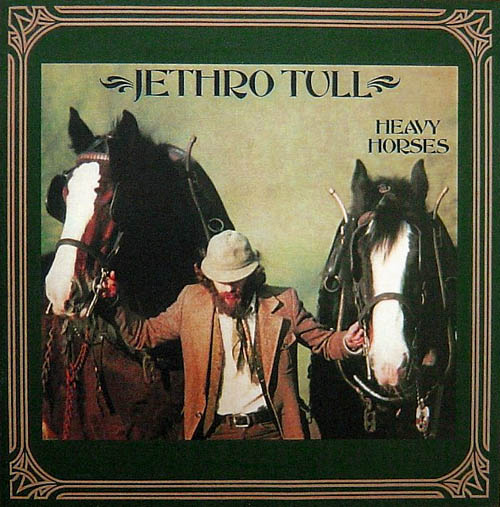
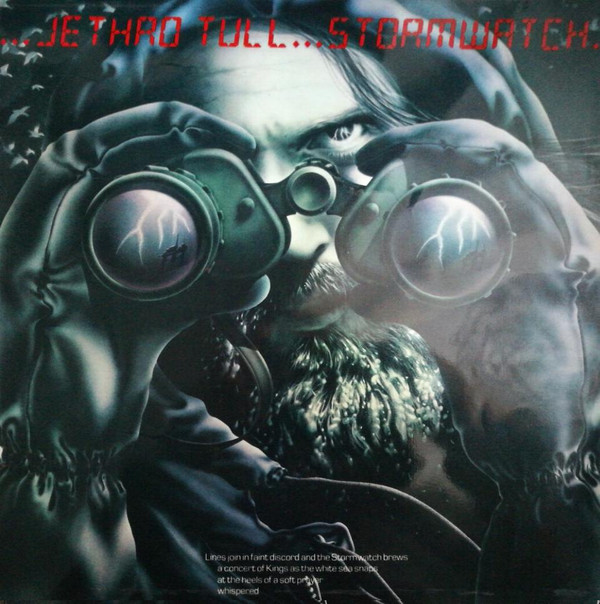
Hello, friends.  As my excitable young penguin friend said just a bit ago, I am here to talk about the finale of the Tull Trilogy, Stormwatch.  It makes a good deal of sense for me to talk about this album being a polar bear and all.  What’s that?  Oh.  There’s a polar bear on the back cover of this album, don’t you know.  And since I’m a polar bear, well, it just stands to reason.  In fact, that polar bear was a college friend of my father’s, so this album has been special to me and mine for a while now.  He’s much nicer in real life than he looks on the cover, besides — he’s just doing that for publicity.  You know polar bears of that generation.

Admittedly, Stormwatch is noticeably rougher, tone- and lyric-wise, though it’s not overtly pessimistic.  With the failing health and eventual death of bassist John Glascock, what many fans consider the “golden era” of Tull came to a painful and sad end.  The band shortly frayed apart, but I don’t want to misrepresent what happened.  You can look that up on your modern human research machines, if you must.  It’s not a pleasant story.  Yet while the album that marks an ending and a new beginning for Tull has a sorrowful background and an occasional bitter edge to it, it’s a testament to a great band providing great music, giving us a bit of hope we, too, can overcome difficult circumstances and make a fresh start when we need to.  Odd how that became the theme of this final issue without any of us knowing it a few months ago.  He moves in mysterious ways, indeed.

“I flew for Heaven’s sake and let the angels take me home”

Unlike its predecessors in the trilogy (and, please keep in mind, only we, the audience, call it a “trilogy” – Ian Anderson likely doesn’t call it that, since he’s expressed his displeasure at the epithet “folk” many a time, but he has linked Songs and Horses before … I haven’t read much about it, since I’m a polar bear), Stormwatch does not appear to have an overarching introductory song such as “Songs from the Wood” or “Acres Wild.”  Instead, the album opens with “North Sea Oil,” which, perhaps you could say transitions us from the cover to the music itself, since my dad’s friend Wallace (the polar bear on the cover) is pictured as stomping on a nuclear power plant.  It’s a touch cynical, sure, the forthcoming devastation you humans are bringing to this world as you syphon all the oil out of the ground and then destroy the soil with nuclear waste, but the song isn’t really angry about it.  And neither am I.  We animals know these things are under control, even if you humans are doing your best to destroy all life on the planet without asking us if that’s okay, so we can enjoy the somewhat dark humor of this song.  “North Sea Oil” sets the mood well, and upon further reflection, it does introduce the main theme for the entire album: storms are on the horizon.  Here, these storms are avoidable, especially, if we listen to friend of the journal Hannah Elliott and her thesis, as you can read earlier in this very issue.

One might also surmise Stormwatch is mainly about the ocean, with the arctic cover and an opening song literally about the open sea followed by a song about the stars — and who better to use the stars than sailors?  But “Orion” is not really about navigating by the stars physically, even though it has the line “come guard the open spaces from the black horizon to the pillow where I lie.”  It’s about navigating the loneliness of life in the darkness of night, but we can possibly find some hope under (by?) the light of the stars.  This is an oddity for Jethro Tull (which, I admit, does not mean much, considering how diverse their musical output was over the years), in that the lyrics are rather hopeful for the first half of the song, especially in the chorus, but the music is bizarrely oppressive.  Perhaps it’s the steady march-like beat of the chorus.  The lyrics become increasingly despondent as the song progresses (and a bit saucy), but that’s Ian Anderson for you.  He pulled no punches, as you humans say.  The storms of life do not have to overwhelm us if we can keep looking up.  That may sound trite, but the song is anything but trite; it is hopeful in a dark and stormy world.

“Home” should certainly dispel notions Stormwatch is a thoroughly dark and bitter album.  It is grimmer than the first two entries in this trilogy, as we’ve all said a couple dozen times by now, but it still resounds at times with love and warmth and hope, and “Home” is one of those bright moments. It does recall our mind to the nautical theme (I was about to say “undercurrent”), with the idea of taking “a jumbo ride over seas grey, deep and wide,” and it does overtly speak to the storms of life (“All elements agree in sweet and stormy blend — midwife to winds that send me home”).  If we can weather those storms, there’s no place like home, as you kids say.  Even if you’ve been away for fifteen years, the call of home is a powerful thing.  It’s a most lovely (and appropriate) song.

Which is not to say “Dark Ages” is not a lovely song … but “lovely” is not the word for it.  It’s Tull, so it’s great, and reminiscent of the mini-epics of Heavy Horses, but it is more akin to “Minstrel in the Gallery.”  This is likely where this album gets its reputation: the “dark ages” of the title are not what we often call the medieval period but rather the dreary, inhuman way you humans treat each other.  Sure, sometimes we polar bears have trouble with seals and the occasional walrus (we tend to stay away from them), but you people really have problems with each other,  As is typical of Tull’s atypical songs, the outright gloomy lyrics are carried along by a hopeful march, akin to “Orion” but distinct enough, mainly because of the odd pairing of the melodic & rhythmic line and the lyrics.  The words “dark ages” are a challenge to say, let alone sing, mainly because of the “ar” in “dark,” which takes a long time to get out of your mouth for only one syllable.  Protracting that over a steady rhythm is something only Ian Anderson would think of doing.  It’s a cynical, angry song that takes the occasional jab at religion, which is what Anderson does at times, but the musicianship of the band elevates it past the gloom.

And to what enjoyable heights the band takes us!  “Warm Sporran” sounds like we are about to go watch a great football match (I suppose you Americans would call it “soccer,” though).  It has that military tattoo atmosphere as well, once it gets past the wholly-surprising funk groove at the beginning.  You may need to re-examine the band name on the album cover (surely you aren’t just streaming these songs without a physical copy of the album, cover, and liner notes? though, come to think of it, that would help cut down on landfill fodder … but, wait, no one would ever dispose of a Jethro Tull album) — you may doubt this song is by Jethro Tull for a few moments.  It may not be as lovely as “Home,” but it is a delightful, paw-tapping instrumental, the inverse of the ending to come on side two.

“So come all you lovers of the good life”

Side two opens with a rocking song about … chess? the speed of life? the inevitability of change? inexorable winter weather? all of these and more?  With Ian Anderson, it’s best to lean toward “all and more.”  He may be the closest thing to T.S. Eliot the musical world has gotten, and that’s saying something.  I do look forward to the 40th anniversary liner notes next year (as of this writing) — perhaps then we can understand just what this song is about.  But, knowing Ian Anderson, he’ll probably feign ignorance or forgetfulness or ambiguous “it is what you make of it” sort of piffle.  The chorus leads me to suppose underneath all the poetic rigmarole (I don’t say that critically) is a song about the storms of winter coming to drive away our happiness and such, and the cavalier narrator wants to keep living a carefree life in a sunnier, warmer clime.  This is completely understandable.  Winter has such a nasty habit of stopping activity … believe me, I should know.  I live with winter twelve months out of the year.

I wonder if Ian Anderson was listening to a lot of marches during the creative process of this album.  “Old Ghosts” is yet another march-like rhythm on the album, yet true to form, Tull upends our expectations for a march with Anderson’s almost languorous singing.  “Languorous” is not the word I want, but I can’t think of a word that encapsulates “dreamy,” “nostalgic,” and “hopeful” all together.  Perhaps it’s just my remastered version, but Anderson’s voice seems a gnat’s wing behind the instruments throughout the song, yet it works perfectly to evoke such a mystical experiences.  Maybe “hypothermic”?  Is this what hypothermia sounds like?  I wouldn’t know myself, being built for the cold, but I don’t want you to try and find out yourself through experience.  It’s another “sad lyrics/happy melody” Tull song, but as always the “warm mesh of sunlight sifting now from a cloudless sky” works its way through the general despondency to shine hope into the world of painful memories and failures, a world where efforts and loves don’t always prove futile.  That is what this journal has been about, after all.

I haven’t spent much time in the ancient hills and forts and mounts and mounds of the United Kingdom or the Republic of Ireland, though Christopher has), but Dun Ringill is certainly one of them, on the Isle of Skye in Scotland (haven’t played the game, yet, either — Isle of Skye, I mean, I don’t think there’s a Dun Ringill game).  This is a neat little song, with a mysterious musical part to evoke the ancient, powerful energies surrounding Dun Ringill and the ley lines of the isles, another common theme throughout these three albums (“We’ll wait in stone circles ’til the force comes through / lines joint in faint discord”), but the forces are a bit off kilter, since “the stormwatch brews.”  It is brewing “a concert of kings,” but the kings are the old gods of an old world: Poseidon, Zeus, Finn MacCool, and the storm kelpies (sadly, a great song “Kelpie” did not make it onto the album, but it has recently resurfaced in bonus track form), and more.  This is the strongest song on the album for the theme of the power of the mythic past, more so than “Old Ghosts” and the final song with lyrics, “Flying Dutchman.”

“Flying Dutchman” is the last epic of the Golden Era of Tull (for many fans — but, hey, some of their ’80s and ’90s work is really great, too, so don’t discount it outright), and true to form it’s a mix of many things: diverse but evocative musical lines, contrasting lyrics both melancholic and uplifting rife with Andersonian ironies and paradoxes, a showpiece for the musicianship of the band, and a plea to fans for making good choices with their lives, especially considering its brevity.  This perplexing song takes an almost universally negative symbol, the Flying Dutchman, and somehow makes us think it’s not so bad after all.  In fact, Anderson makes the Dutchman sound like the White Ships sailing out of the Grey Havens.  I’ve seen plenty of ships in my day: sailing ships, leisure ships, whale spotting ships (don’t ask), military craft, trawlers, junks, catamarans, surfaced submarines, and more, but I’ve never seen the Dutchman, and even with how appealing Anderson makes it sound here, I don’t want to.  The happy sounding chorus, the one enjoining us to embark on the Dutchman, reminds us life is short (as if we needed that reminder).  It’s even shorter for us polar bears, mind you, but we don’t complain nearly as much as you humans.  Remember this: the “good life” is not just about having food to eat (“on your supermarket run”) or having fun times (“your children playing in the sun”) — it’s more than material and temporary things.  “Life is real, life is earnest, / And the grave is not its goal,” said Tennyson.  And so, too, does Ian Anderson.  And me.  And Pandora.

Elegy for All

This underrated album ends with the beautiful but sorrowful “Elegy,” written by David Palmer about his recently deceased father.  It was not too long before the song also represented the loss of bassist John Glascock, who died shortly after the album was released during the accompanying tour.  For the fans, it also represents the end of ’70s Tull, a remarkable musical enterprise.  As I said before, with the death of Glascock, combined with other reasons, vastly underrated (but not by Anderson or Tull fans) drummer Barrie Barlow left the group, soon followed by the two keyboardists (seriously, what other band has been intelligent enough to feature two masterful keyboardists?) John Evans and David Palmer.  In its way, however, this ending, like all endings, was also a beginning, a new beginning for those who left and a new beginning for those who stayed and were joined by new musicians who took Jethro Tull in a new direction.

As George Harrison said, all things must pass, but in the meantime, live.  It’s a strange but beautiful thing, life.  Don’t forget to make the most of it.  Farewell, friends.

Life and Death of Dennis Wilson

Emily McGovern and Golnar Beikzadeh

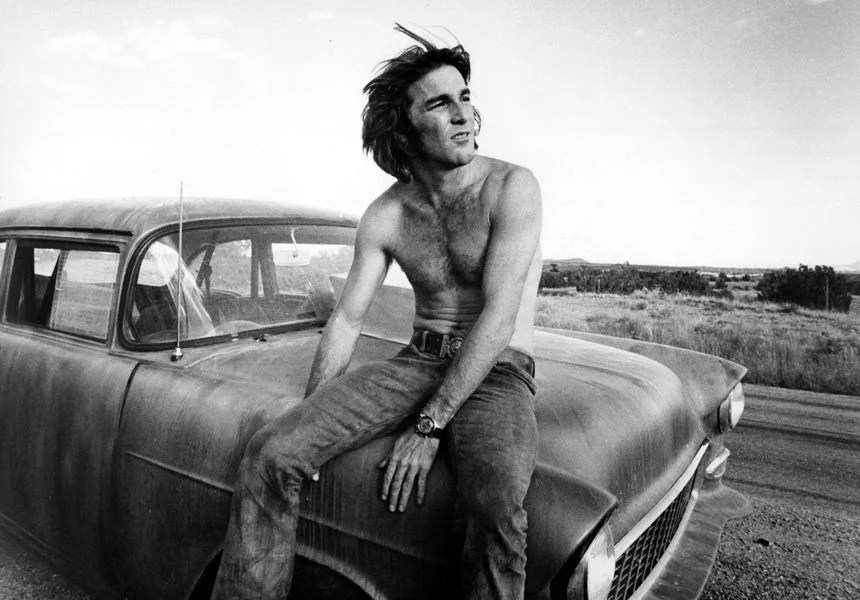
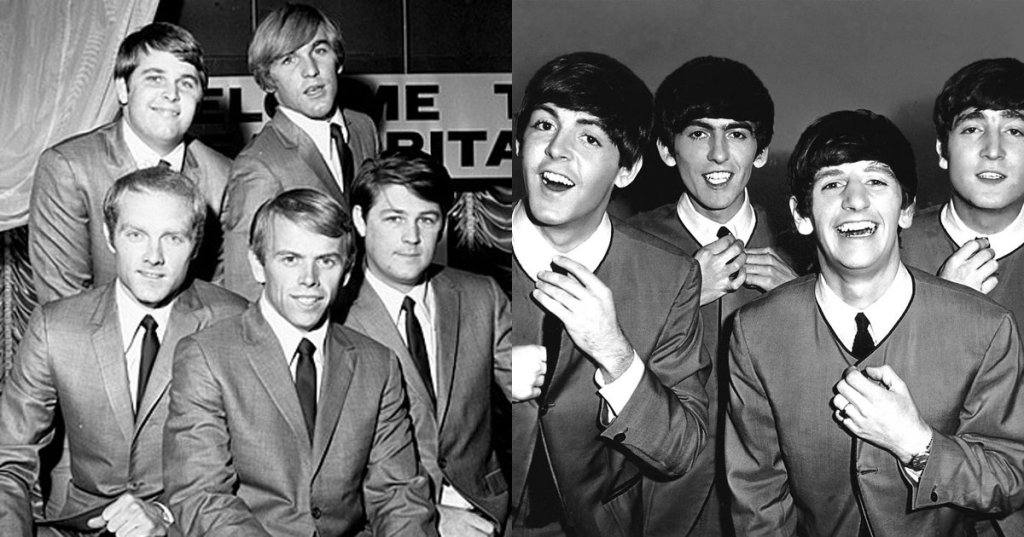
Dennis Wilson was a famous American musician, who co-founded the Beach Boys with his brothers Brian and Carl along with their cousin Mike Love and friend Al Jardine. Dennis, the second child, was born on December 4, 1944, in Inglewood, California to his parents Audree and Murry Wilson. Unfortunately, as children Dennis and his brothers experienced a great deal of abuse at the hands of their father. Dennis often described himself as the black sheep of the family and because of this he was subject to more abuse than his brothers. The Wilson family often had singalong sessions where they would gather and sing; although Dennis often refused to participate, these activities helped develop his love for music.

The Beach Boys were created in the 1960s. If it hadn’t been for Dennis’s mom forcing Brian to add Dennis to the band, he would have never joined. Dennis had a great deal of influence over the music. Most of their earlier songs were about surfing, even though he was the only surfer in the band at the time. The Beach Boys’ first single “Surfin’” released in 1961. Their first album is titled Surfin’ Safari.

In the late 1960s Brian struggled with drug abuse and psychological issues, which led him to withdraw from the group. Even when Dennis wasn’t in the band he was still writing music. Wilson also worked on non-Beach Boy projects. With Billy Preston, he co-wrote the popular song “You Are So Beautiful.” He released his own album in 1977 called Pacific Ocean Blue. It is a beautiful album with twelve songs. The run time is about 37 minutes long.

Dennis Wilson was married five times to three different women. He married his first wife, Carole Freedmen, in 1965. Together they had Jennifer, and Dennis also adopted Carole’s son, Scott. After just three short years of marriage, Dennis and Carole filed for divorce. Dennis started dating his next wife, Barbara Charren, a few months after divorcing Carole. After only one year together Dennis and Barbara decided to tie the knot on August 4th, 1970. Together Dennis and Barbara had two sons, whom they named Michael and Carl Wilson. It is thought some songs written by Dennis, such as “Sweet and Bitter” and “Out In the Country,” are about her. Just like his first, Dennis’s second marriage ended in divorce. On August 6, 1974, just over four years since their wedding, they separated.

For three years after his second marriage Dennis was a bachelor. The next woman legally bound to Dennis via holy matrimony was a lovely lady by the name of Karen Lamm. She and Dennis actually got married twice, the first wedding was on May 21st, 1976: this marriage lasted just over a year and ended on September 19th, 1977. Lamm and Wilson were separated for less than a year before getting remarried. Their second wedding date was July 28th, 1978 but unfortunately yet again, another one of Wilson’s marriages ended in divorce in June of 1980. Despite being married twice, Karen and Dennis did not have children together. The last person who ever married Wilson was Shawn Marie Love. Shawn Marie Love is the daughter of Mike Love, Dennis’s bandmate and cousin. When Dennis married Shawn he married his second cousin. If marrying a woman who was his bandmate’s daughter and his cousin wasn’t bad enough, she was also only seventeen at the time. There was a twenty-two year age difference between them. This marriage also caused tensions to rise greatly within the band. As you can imagine, Mike was not at all pleased with Dennis’s relationship with his daughter. Undeterred by the controversy sparked by their love, Dennis took Shawn as his wife on July 28th, 1983, the fifth anniversary of his second marriage with Lamm. Shawn and Dennis only got to spend exactly 5 months as husband and wife. On December 28th 1983, Dennis Wilson tragically drowned, leaving Shawn, his bride and cousin, as a widow.

One strange and little known controversy surrounding The Beach Boys is their connection with the cult leader and serial killer Charles Manson. The link between the two is Dennis Wilson. For a rather brief period of time in the summer of 1968, Charles Manson and Dennis Wilson were good friends. It all started on one summer afternoon as Dennis was driving down the streets of Hollywood. As he was cruising down the road he noticed two young ladies hitchhiking. He decided to pull over and give them a ride. Little did he know these two ladies were a part of the Manson “family” cult. On their car ride together, the females started up a conversation about their leader, which peaked Wilson’s interest. Dennis was so intrigued by what they were saying he decided to meet Manson. Dianne Lake, who was a member of Manson’s cult, writes about Dennis’s first encounter with Manson:

Dennis and Charlie hit it off right away, which is not surprising, given Charlie’s skills at ingratiating himself with strangers. Dennis, in no rush to leave, hung out for a while, smoked some pot with Charlie, and listened a bit to Charlie’s songs. It was obvious from the start that Dennis liked the girls and admired Charlie’s harem. We sat at Charlie’s feet and looked at him lovingly as he sang and played guitar. We made sure Dennis saw how much we idolized Charlie — we knew that was our job, without Charlie even having to tell us.

Dennis took such a liking to the “family” he even let them move into his house for a few weeks during that summer. At this point in his life, right after Dennis’s divorce, he needed a change, which was provided by the carefree lifestyle of the “family.” Dennis even brought Charlie, an aspiring musician, to the studio a few times. An early version of The Beach Boys song “Never Learn Not to Love” was written by Charles Manson. The original title was “Cease to Exist.” When the song was put on the Beach Boys album, the name was changed and credited only to Dennis; Manson was absolutely infuriated. He left a bullet on Dennis’s bed to scare him, and it worked. This put an end to the their friendship. Later in his life it is clear Dennis was not proud of having been friends with Manson. When Rolling Stone asked him about it in 1979, he said, “As long as I live, I’ll never talk about that.”

On that dreadful day of December 28, 1983, Dennis Wilson’s life came to a tragic end. Dennis for many decades had been abusing drugs and was an alcoholic. On the night of December 28, Wilson decided to go diving in the marina; after his jump into the water, nobody could find him. His friends tried to find his location but couldn’t succeed. They needed some professional help, so they raised the alarm. His body was found around 5:45am following that night. Tests discovered a very high level of alcohol in his dead body along with some dosage of cocaine. He was only 39 when he passed away. His body was cremated and scattered into the Pacific Ocean, one of the few non-naval officers to be awarded such a burial at sea.

Critical Countdowns

Peter Runey, Dylan Fields, Noah Eskew, and Melissa Yeh

Peter Runey’s Critical Listening Top 10

1. “Nobody Loves You (When You’re Down and Out)” by John Lennon

2. “Come Together” by The Beatles

3. “A Hard Day’s Night” by The Beatles

4. “Get Back” (Live on the Rooftop) by The Beatles

5. “Don’t Let Me Down” by The Beatles

6. “Golden Slumbers/Carry That Weight” by The Beatles

7. “Good Vibrations” by the Beach Boys

8. “Band on the Run” by Paul McCartney(/Wings)

9. “The Long And Winding Road” by The Beatles

10. “Lucy In The Sky With Diamonds” by The Beatles

This was extremely difficult to boil down to the top ten, however these are my thought-through, most profound songs of the Critical Listening class this year. While many of these carry real-life meaning to me since they’re attached to a fond memory of mine, some of these I admire purely based on their musical and lyrical quality.

“Nobody Loves You (When You’re Down and Out)” — John Lennon creates one of the most uniquely-sounding songs I’ve heard from him, whether it be from his solo career or from the Beatles. He incorporates a string orchestra as well as trumpets/horns, all the while still retaining the same classic Lennon vibe from the Beatles so many loved. Lyrically, Lennon takes a creative approach to exposing the fact people tend to only show love when they want it in return (“I’ll scratch your back and you scratch mine”), as well as the fact often great people are only admired and recognized for their accomplishments when they’re “six feet in the ground.” Ironically, Lennon gained even more of a following of his ideas upon his assassination.

“Come Together” — Despite the fact Lennon is known to be involved with the use of psychedelics, few can say the Beatles’ music became any less unique when they began using. Lennon crafts an incredibly artistic song beginning with a deep bass masking whispers of “shoot me, shoot me,” most likely referring to heroine. At this point, John Lennon was becoming a figure in many a cultural and even political scene (as an influencer not a participant) and used the song as somewhat of an anthem for the freedom to use psychedelics. Despite its intentions, I find this song to be one of the most creative and catchy songs the Beatles ever produced.

“A Hard Day’s Night” — I could tell an incredibly long story of a memory attached to this song for me. Instead, I’ll just say this song became very relevant to me on one special night in the Shenandoah mountains.

“Get Back” (live on the rooftop) — This song mostly holds its meaning to me since it was the final song to be performed live by the Beatles. I found it amusing that their desire was to be dragged off the venue by police since the concert was considered to be an unannounced public interruption, however the concert ended with a mere “pull of the plug,” so to speak, from the local authorities. It’s not just a special song but also a special performance since it was the last time the four ever played together in public.

“Don’t Let Me Down” — There are a few reasons why I love this song. The first of these is this was also played at the final rooftop concert. Another reason is Paul and John both harmonize beautifully in this song, which makes John’s raw, heartfelt message of love to Yoko Ono that much more special.

“Golden Slumbers/Carry That Weight” — While these are technically two separate songs, the track was ordered so “Golden Slumbers” could carry seamlessly into “Carry That Weight” as part of a 6-part climactic medley in Abbey Road. I love “Golden Slumbers” because it begins simply with Paul and a piano playing a sheet of music he found on his grandfather’s piano with his own words put to it.

“Good Vibrations” — While this is the only Beach Boys song that made the list, it’s definitely one of the most enjoyable listens of the years. I appreciate the upbeat rhythm and lighthearted melody. The Beach Boys have mastered the art of crafting songs perfect for driving in a car with the windows down on a summer day, and this is certainly one of those.

“Band On The Run” — Paul branched out with this song. He begins to step out of his shell of his creativity since he no longer experiences the same pressures of being in the Beatles now that he was in control of his own solo career. On this track, Paul, in a way, mixes three songs into one, making a roller coaster of a song, but not to the point where it’s distracting to the listener. Paul’s musical brilliance really shines when somehow he pulls off a silky-smooth transition from the magnificent blare of brass and electric guitar instruments into an acoustic guitar/drum combination for the rest of the track.

“The Long And Winding Road” This is easily one of the most emotional song from the Beatles, aside from maybe “Blackbird.” Paul takes the listener on a journey down a long and winding road with this song but leaves the listener with little conclusion or sense of achievement. It’s inferred that the end can’t be reached, and it’s unattainable. Obviously, this is how Paul must’ve felt at some point in his life, and he depicts this season of life very effectively and eloquently.

“Lucy In The Sky With Diamonds” — This song is believed to be a reference to a drug known as LSD, which was likely being used by at least one of the band at the time. One thing I do appreciate about the times when the Beatles were under the effects of drug usage is their creative thinking tended to be much more outside the box, which resulted in unique tracks like “Lucy In the Sky.” The song doesn’t make much sense, lyrically, but to me it doesn’t have to in order to appreciate its special sound.

Dylan Fields’s Critical Listening Top 10

1. “A Hard Day’s Night” — Beatles

2. “Come Together” — Beatles

3. “Little Deuce Coupe” — Beach Boys

4. “Don’t Let Me Down” — Beatles

5. “Maybe I’m Amazed” — Paul McCartney

6. “Wouldn’t It Be Nice” — Beach Boys

7. “All Things Must Pass” — George Harrison

8. “Help Me Rhonda” — Beach Boys

9. “Pease Please Me” — Beatles

10. “The Monster Mash” (Live) — Beach Boys

This list was a whole lot harder to make than I anticipated it being. Many of these songs may not be my favorite for their musical aspects but the stories behind them. I will be explaining why each song is special to me throughout the course of this paper.

“A Hard Day’s Night” — This is the epitome of Critical Listening music for me. It may not be my favorite critical song musically but the story behind it makes it what it is to me. In the beginning of the year when Critical Listening was just starting, we had just heard this song and Pete and I were jamming to it non-stop. We literally had this album on repeat every time we were in the car. That being said one day I had the bright idea to go on a road trip/camping trip to the Shenandoah mountains with Pete and Pedro. The trip started off great: we were having a ton of fun and everything was going great. We arrived in the mountains and that’s where things started going wrong. There was a police car involved and we had to stay in an overpriced dirty motel instead of camping out. We got to camp out the second night and it was decently fine from then on out. So fast forward to the ride home, Pete throws on this song and it just made sense. That trip was “A Hard Day’s Night.” So every time I hear this song I think about this trip, the bad parts but mostly the good.

“Come Together” — This song has been one of my favorite Beatles songs since the start of the class. I love the intro of this song. I think the crazy thing about the beginning and throughout the song is John is saying “shoot me” and ends up getting shot and killed; he obviously want talking about guns in the song but it is still ironic. I am going to say this for a lot of these songs and I could probably say this for all of them but this was a song me and Pete loved to jam to in the car.

“Little Deuce Coupe” — I really don’t like this song musically, but the story behind it is what makes it one of my favorite Critical Listening songs. One of the first times we were listening to this song in first semester I think it was Pete that started singing the chorus obnoxiously at a super high pitch, then I would sing low, then Noah would go high with Pete. This turned into a thing we did. We would just sing “Little Deuce Coupe” as obnoxiously as we could. We did it everywhere, in the classroom, in the halls, in the parking lot, everywhere.

“Don’t Let Me Down” — My first memory of this song was the video of them playing on the roof around the time they were breaking up and all the people come out of their houses to watch. After we watched that in class I had it stuck in my head and I was jamming to it non-stop and apparently Pete did too because I was texting him one night and I said I was jamming out to the Beatles and he said he was, too, and I texted him “Don’t Let Me Down” was a banger and as I hit the send button I got a text from him saying basically the same thing. We always kinda joked about that.

“Maybe I’m Amazed” — My words while listing to this song for the first time were “Dang, I like this song … Oh, dang, I really like this song!” This song was one of those rare cases of love at first hearing of a song; most songs take me a couple times to listen to them to really like them. This one was not the case; I had this song stuck in my head for about a whole month after I listened to it one time. I remember jamming to this with Pete while going from thrift shop to thrift shop looking for pianos to cure our addiction to music.

“Wouldn’t it Be Nice” — Every time I hear this song I see Joanna and Sarah on stage at the Battle Cry talent show. This song makes me think of my class and all the memories we shared together. It’s crazy how music will do that to you.

“All Things Must Pass” — This has been my theme song for the past couple of weeks with so much changing. I am going from one huge part of my life to the rest of my life. This is the end of the beginning for me and I can really relate to this song right now. I loved high school and made so many memories here but like everything in life all things must pass, good things or bad they all will pass.

“Help Me Rhonda” — I don’t really have a story behind why I like this song, but this could easily be my favorite Beach Boys song. It’s just so free spirited and groovy and I dig that. This is in my top ten in any genre for jam out sessions in the car.

“Please Please Me” — This was my first song in Critical Listening I really liked. I listened to this song and the entire album a whole lot at the beginning of the class. I still really like this song and it brings me back to Noah, Pete, and me dancing all around room 103 all first semester.

“The Monster Mash” (Live) — I don’t like this song for its musical sense unless it’s around Halloween, but this song was a classic in the first semester of Critical Listening. Noah and I would sing this obnoxiously all the time and it was so much fun. I remember sitting in our second period study all just doing our math homework and singing “He did the mash … He did the monster mash! … It was a graveyard smash.” That song was just a lot of fun to me.

In conclusion, I loved this class and I’ve said it before but I’ll go ahead and put in in writing, this was my favorite and most beneficial class I ever took at Summit. Not to take anything away from the other classes or teachers, but this class had such an impact not only in my taste for music but it really did impact my life. It brought Noah, Pete, and me closer, and they are some of my best friends I have. It also made me open my eyes to music: I discovered so much more music and even made me want to get in the realm of creating music, which I was not successful in at all. It also played a huge roll in choosing my thesis topic because music was constantly on my mind during that time. Mr. Rush, thank you for offering this class and putting up with us even when I was rolling around on the cart or playing with the music stand; I truly appreciated this class.

Noah Eskew’s Favorite Five, yea Six Beatles Albums

What are the top 5 Beatles records? I would put that question in a top 5 list of unanswerable questions. However, I have determined my 6 favorite Beatles records based on the ratio of songs that left a memorable and positive impression on me over the total number of tracks on the LP. The one fault to this method is it doesn’t account for how much I enjoy a specific track; it instead simplifies it to: Did I like it? For example, I thoroughly appreciate the songs “I’ve Got a Feeling,” “For You Blue,” “Across the Universe,” and “Get Back,” which are all featured on Let It Be, but the rest of the album leaves much to be desired. The outcome of this process slightly surprised me (in regards to the resulting order), even though my previous general idea was almost precise.

#5 A Hard Day’s Night

With this album I found seven of the thirteen songs appealed to me. The title track begins with a special strum of a chord. To this day, few can identify what note is exactly being played. The lyrics are highly relatable to anybody who’s been hard at work. Plus, the guitar solo is swung in a manner that’ll make the guitar player and the average listener happy. In this song, the Beatles prove within the context of pop sensibility they can remain true to their musicianship. “I Should Have Known Better,” “If I Fell,” and “I’m Happy Just to Dance with You” also add to what is truly a solid start to this album. “Can’t Buy Me Love” is practically a Beatles staple. With a catchy chorus, and rather true lyrics in the verse, this hit did not disappoint. Lastly, my favorite song of the entire work is without question “You Can’t Do That.” With a jangly guitar intro, John’s impeccable attitude-filled vocals, and Ringo’s driving drum and cowbell groove, this song has placed itself among my favorites.

#4 Magical Mystery Tour

There are seven songs of the twelve on this compilation of which I am fond. The title track kicks off the record with a catchy repeatable chorus, and in between choruses we get a glimpse of the mysteriousness to be experienced in the following minutes of the LP. “Your Mother Should Know” is yet another classic involving Paul and the piano. The piano riff bounces along lightheartedly, while the lyrics are a fun alternative to some of the other strange styles during this period. The hits that have emerged from this compilation included such smashes as “Hello, Goodbye,” “I Am the Walrus,” “Strawberry Fields Forever,” and “All You Need is Love.” Part of the genius behind the Beatles’ discography is their ability to churn out the hits with fun and catchy choruses, but simultaneously the ability to entertain with more eerie sounding progressions as well.

#3 The Beatles (The White Album)

Out of the 30 tracks produced on this double album, I like listening to 18 of them. If I always had the time required, I would not skip any of the first 12 tracks (except maybe “Wild Honey Pie”). The first dozen on disc 1 could be an album by themselves. This, above all the other albums, shows the individual musical personality of each of the four Beatles. This is probably due to the fact the group did not spend much time together in the studio compared to previous sessions. Paul thrives on “Back in the USSR” (the driving rock ‘n’ roll tune), “Ob-La-Di, Ob-La-Da” (the happy and hopeful pop song), “Martha My Dear,” “Birthday,” and “Helter Skelter.” George offers some of my favorite Beatles numbers of all time such as “Savoy Truffle,” “While My Guitar Gently Weeps,” and “Piggies.” John ventures into interesting lyrical processes by incorporating the stories of other Beatle songs into the phrases of “Glass Onion.”

#2 Sgt. Pepper’s Lonely Hearts Club Band

Many magazines and other award-givers rank this work as the greatest album of all time. Combining the sounds of the psychedelic rock movement with those magical Beatle melodies, the Fab Four did indeed produce one of the most revolutionary records ever. Eight of the songs stick with me years after hearing them. Tracks one through five have the flow of a live performance. “Fixing a Hole,” “Getting Better,” and the reprise of the title tracks remain my favorites for their interesting lyrics, simple but solid guitar parts, and energy that really speaks to me.

#1 Tie Between: Revolver & Rubber Soul

Within these two records begins the change of the Beatles’ career. They move from the lovable mop-tops into the genius musicians that have pulled themselves out of live performances in order to further their art. They begin to incorporate eastern influences into their songs, but yet again don’t shy away from their rock ‘n’ roll identity. Each of these albums included 14 tracks, and each of the albums included 9 tracks that I love. “Nowhere Man,” “Think For Yourself,” “What Goes On,” and “I’m Looking Through You” are my favorites from Rubber Soul. “Taxman,” “I’m Only Sleeping,” “She Said She Said,” “Good Day Sunshine,” and “Got to Get You Into My Life” are my favorites from Revolver.

Melissa Yeh on “Band on the Run”

With the Wings album, Paul McCartney released “Band on the Run” in 1973.  The song has different interpretations based on history and listeners agree it is well composed and one of his most memorable.  The most popular and speculated-on theory from this song concerns the reflections and aftermath of the breakup the Beatles underwent from Paul McCartney’s perspective.  He confirms in an interview the song was influenced by one of the many long meetings where George Harrison remarks on the regrets of the events going on at the time.  “If I ever get out of here, thought of giving it all away, to a registered charity.”  For this phrase especially, he wishes they could have spent more time on the music, focusing on the good, and the wealth was not worth that happiness; instead it should have been devoted to charities.  The song then develops his freedom from the tension of the break-up and his ability to pursue what he wants to without being burdened by the obligations the band held over him.  When asked about if the song was in association to the break-up, Paul McCartney responds, “Sort of, yeah.  I think most bands are on the run.”  In another comment, one listener feels the song is not as much about the break-up as people think the song is.  In fact, it’s completely absurd and almost obsessive to relate everything back to the Beatles.  In another part of the song, articles and listeners have alluded to the line “and the jailer man and sailor Sam were searching everyone,” being connected to the incident in Sweden in 1972.  Paul McCartney and all of group Wings were arrested on drug charges.  Thus, the police were searching them at the time.  Later comments express McCartney’s plead for focus away from these types of charges and on what matters most, the music.  Overall, the song is about a prison escape and the shift from captivity to freedom.  “Stuck inside these four walls, sent inside forever,” describe the jailed prisoner, cut off from the outside world.  Again the prison is referred to in “if I ever get out of here.”  The explosion symbolizes the escape and again the band is running from police, “in the town they’re searching for us everywhere, but we never will be found.”

When talking about the instrumental in working with the theme of that escaped prisoner, the composition itself embodies the mood of the song.  Paul McCartney has been noted for his ability to combine multiple songs into one; here there are three distinct melodies. The first transitions into the second from verse one to two, beginning at, “if I ever get out of here.”  The tempo speeds up slightly and moves into a minor key through an instrumental break.  This represents a sense of sadness and regret in the tone of the song.  The third begins after the dramatic instrumental charge into the verse, “Well, the rain exploded with a mighty crash as we fell into the sun.”  The song modulates from A minor into C major, now with a new and happier tone from what it was before.  The movement of the song captures that feeling of relief and freedom.

What moved me to choose this song followed from the moment where as I was sitting in class, I heard the first chord and immediately decided I like this song.  Don’t get me wrong, I enjoyed the music in class, but none of the songs had caught my attention as quickly as this one.  While in the bus in Germany passing through the countryside, I remember going through a tunnel or under a bridge and right as the song changed from the second part into the third, the bus flew into the open again into the light with long fields surrounding us.  That moment McCartney creates of an explosion into freedom was more than what I can describe in words.  With that, this song will always tie me back to the memory with our class, driving past landscapes in Europe.

Bonus Track: Mr. Rush’s 5 Mandatory Beach Boys Non-canonical Albums for Real Fans

1967: Sunshine Tomorrow Wild Honey is one of my favorite BB albums, and this 2017 release of many WH outtakes, alternate versions, and unreleased live cuts, including the entire Lei’d in Hawaii album, make this essential.  As if that wasn’t enough, it has Smiley Smile outtakes and a beautiful a cappella version of my favorite BB song, “Surfer Girl.”  Don’t miss this.

Endless Harmony Soundtrack — This collection of rare cuts accompanying the biopic is a monumental gift.  You’ll get a fresh look at a band you think you know, a fresh look that will only reinforce your love for them.

Hawthorne, CA — Thanks to the success of Endless Harmony, Capitol Records continued to open the vaults of rare cuts, radio spots, demos, and more.  Just when you thought you heard it all, you learn you haven’t heard anything yet.  It’s disjointed at times, but it is more BB tracks, which is what we want.

Made in California 1962-2012 — This 6-cd panoply of the band’s career is pricey but worth it.  It has a lot of rare live tracks, alternate versions, and much forgotten work from Carl and Dennis.  If you’re a real fan, you need this mega-set.

Ultimate Christmas — Not only does this have the entire original Christmas Album, it collects all the tracks for the unreleased second Christmas album plus all the rare promos, singles, and other Christmas goodies.  It’s a must-have.

*2023 Editor Note: Be sure to get the original version of Ultimate Christmas! The recent streaming versions delete the best song on the collection, “Christmastime is Here Again.”

A Tull Trilogy, pt. 2: Heavy Horses

Stringfellow Bartholomew

From the Wood to the Farm

Hello!  I finally get to write my own article for the journal after all this time, and I’m really excited to talk to you about a fantastic album from Jethro Tull, Heavy Horses.  This is the second in the “folk rock trilogy” from Tull, as some have called it, but unlike most sequels, it does not suffer any let-down or disappointment.  In fact, many like it more than Songs from the Wood, which is a remarkable thing to say.  I’m not sure I like it more, but it is definitely growing on me, thanks to listening to it so much lately.  In this outing, Ian Anderson shifts his gaze from the mystical forests of bygone England to the hardworking farmers and their steads, along with the animals who, frankly, do most of the work.  Even though I’m a penguin, I can appreciate the skill and sacrifice of my fellow animals as they have made the world a better place, especially when working in conjunction with you humans.

Where the dance of ages is playing still

This first song gives me some shivers, which is difficult to do for a penguin.  I don’t spend a lot of time around cats, not too many of them where I live most of the time, but cats can be scary.  “…And the Mouse Police Never Sleeps” is also a bit scary because of the odd ending, but that’s mostly just Ian Anderson having some fun, and he knows better than most when he’s having fun and that he’s having fun and laughs at himself when he’s having fun (which is why it ends with his self-aware coughing).  It’s sort of an odd opener to this album, especially in contrast to Songs from the Wood, which gave a nice opener to the theme of that album.  I suppose “Mouse Police” sets the musical tone for the album, and it does get us out of the woods and into the farmhouse, but the metaphor distracts us initially until we have time to reflect on where this album is going.

While it may not be fair to continue the Songs from the Wood comparison going, it’s rather unavoidable, and thus “Acres Wild” seems to me like it would make a better opener for Heavy Horses, since it declaims the setting of this rural/hamlet/agricultural album much better than “Mouse Police” (you didn’t think penguins knew words like “declaims,” did you?).  It’s a very optimistic song, which is important, since this Tull Trilogy gets progressively pessimistic.  Songs is almost wholly optimistic, as we saw last issue.  Heavy Horses is rougher, grittier (certainly not musically, as it may be even more impressive musically, in many cases), and at times harder. Perhaps more melancholic than pessimistic, since many of these songs are rather ebullient, but there is a general tenor of regret for days gone by and the lost lifestyle of the hardworking agricola (though the animals do most of the work).  “Acres Wild” is a jaunty number full of zeal for living a full life, enjoining us to come “where the dance of ages is playing still / through far marches of acres wild,” but it also reminds us the world around us, before those far marches, is decaying and crumbling and a dim memory of what it once was.

Leave it to Ian Anderson to write a song about not singing a lullaby to his newborn son, but leave it to Ian Anderson to justify it because he has no desire to rear his son on false hopes and delusions about how life really is.  He wants to protect his son as much as possible (“There’s a lock on the window; there’s a chain on the door; / A big dog in the hall”), but he’s also open about the dangers of the world.  This is part of that growing edge in this Tull Trilogy of which we’ve been speaking, The dangers of the world require skills and preparation, but if know that, and treat each other with love, it’s possible to put your kids down for bed at night “safe and sound.”  Musically, this is the first of two mini-suites on the album, with multiple musical motifs.  Penguins like alliteration, what can I say.

“Moths” is another almost typical Tull juxtaposition of beautiful music and a warning of the brevity of life.  It ends optimistically, in its way, but it also presents the joy of life akin to a burning candle, and a too long life can be a bad thing.  That’s a strange thought, isn’t it?  Hard to trust lemmings and moths, I suppose.  Still, a beautiful song.  “Journeyman,” too, is a precise, hard-rocking song, bemoaning the difficult life of the hardworking city man.  Probably should be out living in nature, as the rest of the album enjoins us to do.  Be warned by this number, human people: city life is bad for your health; live in nature (but don’t mess it up for us while you do so).  Otherwise, you’ll be lonely and cold and sick and tired and hungry.  But I understand if the crisp, funky groove of the number overshadows the dire warning.  It’s hard not to smile and tap your toes to it and ignore the message.  Well, being a penguin myself, I don’t typically tap my toes, since I just waddle and rock back and forth.  I’m a bit like Ian Anderson that way.

And every day we’ll turn another page

The “B”-side of this album is possibly the third greatest B-side of all time, behind Foxtrot and Magical Mystery Tour.  These four better-than-solid songs are great listening.  “Rover” kicks it off with another solid musical gem.  Tull really was firing on all instrumental cylinders during this lineup, as delineated in the previous issue.  The diverse rhythms and crispness of the different instruments makes “Rover” a fun song, but the melody during “So slip the chain and I’m off again” elevates it to pretty great.  On one level it’s about a dog, right?  And I admit I don’t know much about dogs, since, again, I’m a penguin, but the later verses don’t sound completely like they’re about dogs to me (the last one may be about Gonzo), but it’s still rather jaunty and optimistic.  Maybe I was wrong about this album being more edgy than Songs from the Wood.

“Own Brown Mouse” could be the best song on this album, though sometimes the eponymous track wins out on that one.  But let’s not quibble: it’s not a competition – let’s just enjoy the fact we have multiple great songs on this album.  Here we have another Tullian juxtaposition of musical brilliance and a wistful song.  This wistfulness, though, is not dark or edgy.  It has a bit of sorrow to it, as the narrator and the brown mouse may be in a contest over who is the one in the real cage, but as always the uplifting music and Ian Anderson’s delivery comfort us more than concern us.  The only flaw of this song is it’s not longer.

The grand masterpiece of this album is truly sublime.  Reminiscent of the madrigal, which is perfect for the apex of a trilogy memorializing Merry Ol’ England, “Heavy Horses” is a multi-layered, multi-sectioned opera about the farm and the horses and the way things used to be.  A lot of animals featured in this album.  That’s only part of why it’s so good.  This tribute to the horses that have literally moved the earth of England makes us all yearn for a simple life of honest toil, living off the land, at one with nature.  I’m part of nature myself, and I tend to live off the ocean, but this song makes the rural life appealing even to me.  Part of that is surely the exquisite choral sections and musical brilliance, and the diverse sections keep our interest sustained throughout almost eight minutes of a song about horses and furrows.  Ian warns us the technological-driven world will soon disappoint us, and those of us with refulgent souls will soon yearn for the kind of life we have collectively abandoned.  (I’m not sure if I have a soul, being a penguin, but let’s stay focused here.)  So get back to the land, plant and harvest real food, become one with nature again.

In contradistinction to Songs from the Wood, this album ends not with the nighttime at the end of a hard day’s forestry but with the dawn of a new day.  “Weathercock” signals the kind of weather we’ll have as we start a new day working the land, or at least from what direction the wind is coming today, signaling as well the changing of the seasons.  The passage of time is a steady undercurrent of this album, as Ian Anderson bemoans the loss of anthropological-agricultural unity, but concurrently he reminds us each new day is a new opportunity for good: “Point the way to better days we can share with you,” ends the album.

So Heavy Horses is not so melancholy or cynical after all, as is often declaimed.  It is very aware of the brevity and ephemerality of life, much more so than Songs from the Wood, but that does not make it darker or edgier.  Perhaps it makes the album more Realistic, whereas Songs is more Romantic.  Nothing wrong with either.  They each have their season.  The winds of change that redirect the weathercock were certainly signaling changes for Jethro Tull as well, but that is a subject fit more for the finale of this trilogy, so I will leave that to my good buddy Theodore Aloysius to discuss in his exploration of Stormwatch.  Thanks for reading my analysis of Heavy Horses, everyone.  If you haven’t heard it lately (or at all), do yourself a tremendous boon and get it into your soul.  If the five-disc fortieth anniversary box set is a bit daunting, start with the regular album and work your way up to the goodie-filled, bonus-packed deluxe version.  You’ll be glad you did.  So long!

The Musical Experience

Dylan Fields

Beethoven. Bach. What if these legendary musicians were put into today’s era? Would they be better? Would they be worse? I would argue they would be better at what they do today than they were in their day. They might not be as popular today simply because orchestral music is not popular today, but they would have more tools and more feedback than they had in their day. With the amount of technology they would be able to access today, the quality of sound these musical geniuses would be able to create would be absolutely incredible. Being able to write your music down and hear it as soon as you write it is a tool we have today. If these composers had this tool at their fingertips, they could produce more music and better music as they could fix any and every flaw. With this we would now have more music to enjoy from these great composers today.

Music has been changing for centuries: for better or worse is the issue. Before I explain my thesis I need to define a key term. The phrase “musical experience” means anything directly pertaining to music, such as buying and selling, listening, and the making of it. Music started all the way back in Bible times as we can see from King David being a skilled harp player. Now with more recent advances of music such as the birth of iTunes in April of 2003, we play music out of a speaker.  Music has developed into a predominately but not exclusively electronic base as opposed to the acoustic installments that have been used for centuries before us. This change is important because it is going to change the way music will be made and how we will listen to music for years to come.

My thesis states the experience of music is at its all-time high. I will confirm three reasons why this is true: listening to music has never been easier, music is more diverse than ever; and the recording process is better than ever. I will also refute two counterarguments: first, digital music has decreased revenue for musicians, and, second, music is too perfect.

My first argument to prove the musical experience is at an all-time high is listening to music has never been easier. In the 1950s if you wanted to listen to a certain song you would have to buy the entire album on vinyl, unless of course it was a single. In order to listen to the song you want to hear, you would have to look for and change the record to what you wanted to hear next. Now let’s say after you listened to the song you wanted to hear, you want to listen to a song from a completely different album. You would need to take that record off, put it into its case or sleeve, and then put the other record onto the record player. You would start it and find the right song. The whole music listening experience was just a hassle compared to nowadays, when I can have ten songs from ten different albums on one playlist and not have a single second of downtime in-between each song. Now, all we have to do is click what song we want to listen to and our phones, laptops, iPods or mp3s will play the song for us. We can create playlists with songs from any album from any band or artist we choose and can listen to the songs as many times as we want without having to touch the vinyl player at all. For example, if I was doing my homework, and I wanted a compilation of my favorite Rolling Stones and Beatles hits, then I would have to frequently stop my homework and change the song. This is not as convenient as if I could make a playlist or even just click a button and change it in a matter of a couple of seconds.

Another reason listening to music has improved is the means by which we actually listen to it. The first pair of headphones were released in 1881, long before Sony Walkmans or iPods. Although they were revolutionary for their time, they weighed over ten pounds. That is ten times the weight of Dr. Dre’s Beats headphones today,as some editions of beats weigh less than a pound. Another invention that changed how we listen to music today is the wireless power of Bluetooth. Bluetooth gives us the ability to listen to music not only without cords hanging out of headphones but away from the source of the music. I had used headphones with cords my whole life until recently. My first iPod cracked because I forgot it was hooked into my headphones, and I walked away from it, pulling the iPod and sending it crashing to the ground. Bluetooth eliminates that threat altogether, because we all make careless mistakes like that. Also, I can stand all the way across a room and be playing my music on a speaker or headphones on the other side of the room. For example, when I am working out, I use my Beats headphones that are Bluetooth. I set my phone down on the table across the room and have my headphones on. Working out with a cord hanging out of your pocket is extremely difficult because many times you will get caught on the cord and your phone will rip out of your pocket or your headphones will fall off your head. Another example is when I am training for baseball. I can hit in a batting cage with my phone twenty feet away from me while I have my headphones on. Hitting a baseball with headphones with a cord connecting to a phone would be nearly impossible. This is why Bluetooth is so great. This Bluetooth feature also comes in handy when your device needs to be charged. You can charge your device on one side of the room while wearing your headphones on the other side of the room, or even in a completely different room.

Listening to CDs and radios in cars were both huge steps in the past, but now the next big step is listening to our phone, iPod, or mp3 on Bluetooth or an auxiliary cord. This is better for multiple reasons. Now we can go from what we were listening to before we got into our cars, plug our phone or mp3 in, and continue listening. In addition, we do not have to keep a thousand different CDs in our cars. This feature also gives us the ability to listen to whatever we want while in the car, even beyond music with things like podcasts or sermons. For example, in my morning routine I listen to music all morning. When I’m ready to leave my house, I get into my car and, with the Bluetooth system I have installed, my music automatically goes from playing on my phone to playing on the speaker system in my car.

My second argument is music is more diverse than it has ever been before. There are more types of music, more genres, and more branches of each genres. For example, country in American music was created in the late 1920s. It was more of an Appalachian folk-type music or blues, which featured instruments much more string-based such as the banjo, American fiddle, fretted dulcimer, and guitar. Today’s country music still includes the original Appalachian folk music, but now bands such as Florida Georgia Line or Sam Hunt are the top-selling country artists today. They incorporate a type of hip hop or pop element into their country music. We see this hip hop element in songs including artists in the hip hop genre such a Nelly or The Chainsmokers. This is noteworthy because this new movement of combining genres has been so successful it has become a new genre altogether. Nelly even went on tour with Florida Georgia Line as their opener on their Smooth World Tour. So now there is traditional country music and modernized country music. This sort of change of genres is nothing new, though. We have seen this in the past and it was successful as it created the types of music we listen to now. Rap has changed from Tupac Shakur’s era to big rappers like Lil Pump who recently signed a record deal with Warner Bros. for eight million dollars. The classic elements to rap are the theme of the lyrics, the rhythm, and the rhyming, as well as the bass in most rap songs. We have seen rap change. It really started with artists like Lil Wayne who changed the flow of rap introducing a that no-one had seen before, sometimes slowing it down and mixing up the beat in a unique way. Rap has split its genre so much that now they have gospel rap. Artists such as Lecrae, KB, Andy Mineo, and NF have made their marks in the rap genre from this unique branch of music.

Another aspect of music that has broken music into different genres is the lyrical sense of the songs. Staying with country music, let’s take two artists: Jimmy Buffet and Brantley Gilbert. Jimmy Buffet is known for many of his songs, such as his song with Alan Jackson called “It’s Five O’clock Somewhere,” which spent eight weeks on the top of Billboard’s Hot Country Song list. This song’s lyrics are about not wanting to work anymore, leaving work early, and getting drunk at the bar. Brantley Gilbert’s music is more of a country rock, as one of his top selling songs, “Take It Outside,” talks about “the good ole days,” where if someone had a problem with someone else they could just go outside and fight to settle things. Both artists are technically in the county genre but have completely different styles of music. Brantley Gilbert’s style is more of the “get your hands dirty” type of country music. Jimmy Buffet’s lyrics are quite the opposite, as his are more about resting and partying. These two completely different country artists represent different branches of country music.

In addition to the branches of each genre, there have been new genres created recently that have changed music, such as indie pop, alternative rock, air pop, and EDM. These genres have had huge successes and have been controlling the Billboard charts. Most of these types of music have sounds such as synthetic and computer-based sounds that have never been used as much in music as ever before due to the advanced recording and creation of music that will be discussed later.

My third argument is recording music is easier and has better sound quality than ever before. There are four eras of recording to look at: the acoustic era, the electrical era, the magnetic era, and the digital era. The acoustic era lasted from 1877-1925. During the acoustic era, people recording typically used a large conical horn to collect and focus the physical air pressure of the sound waves produced by the human voice or musical instruments. A membrane or diaphragm, located at the top of the cone, was connected to a scriber or stylus, and as the changing air pressure moved the diaphragm back and forth, the stylus scratched or incised analogue of the sound waves onto a moving recording medium, such as a roll of coated paper, or a cylinder or disc coated with a soft material such as wax or a soft metal. The next era of recording was the electrical era when they used a system of electrical microphones, electronic signal amplifiers, and electromechanical recorders, which was adopted by many music publishers in 1925. Sound could now be captured, amplified, filtered and balanced electronically. This means when you record a sound, you are able to alter the volume, pitch, or frequency of the music. This was a monumental move in the line of music at the time, but something simple enough today. We can do it better now on an iPhone, as the microphone on an iPhone is better quality than anything that had been made in the ’40s. The third era of recording music was the magnetic era, introducing features such as multi-track tape recording (MTR), when different sounds are recorded on different sessions and put together to make a cohesive whole. This was also the introduction of the disc as the primary mastering medium for sound. Fast forward to the digital age, the era in which we are living today. This is the era when digital encoding surpasses all previous recording technologies. Unlike all previous eras of recording, which captured a continuous analogue of the sounds being recorded, the digital era captures very dense and rapid and discrete samples of the sounds, which makes the sounds more crisp, taking out static or background fuzz.

Making music has never been so easy; anyone on any level of musical education can make music. All you need to make music nowadays is a laptop and a music editing application such as Logic Pro X. A few of my friends and I have been making music as a hobby, and we have more capability to record and edit the music than big name music artists had in the ’40s or ’50s. This does not mean the music we make is better than those that have come before us, but if we worked hard enough and developed our talents and abilities, we could make some quality music.

The first counterargument I will refute says the current technology trends in the industry have led to music artists not making as much money as previous artists used to make. The music industry’s profits have dropped a shocking sixty percent in the last decade as we see in charts from RIAA U.S. sales database. This is due to the loss of buying and selling of music. Music used to be put on files of polyvinyl chloride, also known as vinyl. When music was made on vinyl, it was hard to pirate or steal.  As soon as it could be turned into a file, many previous listeners didn’t choose to pay for it anymore. Another factor is about a century ago it was more popular than it is now to buy and listen to entire albums. Today iTunes, the largest music store in the country, sells individual tracks listeners can mix and match in personal audio-collages.

Music has suffered a loss in revenue over the past decade and ever since the beginning of the digital era in general, but lately it has been on the climb. The RIAA (the U.S. sales database) announced sales of recorded music in the U.S. generated $7.7 billion in revenue in 2016, its highest sales figure since 2009. The growth also represents an 11.4 percent increase from the previous year, the best percentage gain since 1998. These gains, the RIAA said, are largely due to an increase in on-demand streams from services like Apple Music, TIDAL, and Spotify’s paid tier, which accounted for $2.5 billion in revenue, more than double from the previous year. Together, on-demand and free streams accounted for $3.9 million in revenue. Although music sales are not what they were in the late ’90s, we may see it there again shortly if music sales follow the 2016 trends we see on the RIAA sales charts.

The second counterargument to refute claims music today is too perfect. There is no room for error in today’s world when it comes to the element of recording music. Editing music today has to be done with almost surgical precision. They remove the types of things that often made music of the past more interesting such as idiosyncrasies, nuances, and inexactitudes. For example, compare two songs, “Louie Louie” from the Kingsmen and “Fancy” from Iggy Azalea. “Louie Louie” was recorded in one take while Iggy Azalea’s song “Fancy” was most certainly not. Another interesting thing is in one part of the Kingsmen’s song, the drummer drops his stick and exclaims a profane word I will not repeat. But nowadays there is no way that would be put into the final cut. It would be edited out so the song would sound more perfect.

Music being too perfect is not a problem to most listeners as we can see by their digitally-edited music sales. This type of digital edited music is pop music as we know it today. Music cannot be too perfect. As humans we should strive for perfection in everything we do; this includes music. If there is a flaw in the music, edit it out or try it again. Any artist in the digital era that doesn’t  perfect every note or cord won’t be as successful as an artist that does. This is due to the fact this generation has grown up in the digital era and have grown used to the “perfect” music, while the older generations have grown up listening to flawed music and appreciate that aspect of the music.

Music has only developed for the better. The progression of technology has led to the progression of music, which we see through the different eras of music and time. The music recording process and distribution is easier and better than ever before. The music industry is bringing in revenue and looking to come back to where they once were. The experience of music is at its peak, and this is something to be excited about.

Bibliography

Beardsley, Roger. “CHARM.” A Brief History of Recording to Ca. 1950, 8 May 2017, http://www.charm.rhul.ac.uk/history/p20_4_1.html.

Craig. “Headphones: Then and Now.” LiGo Blog, 10 Feb. 2015, http://www.ligo.co.uk/blog/headphones-then-and-now/.

Dandridge-Lemco, Ben. “The American Music Industry Had Its Biggest Year In Nearly A Decade Thanks To Streaming.” The FADER, The FADER, 10 Nov. 2017, http://www.thefader.com/2017/03/30/music-industry-revenue-growth-2016-drake-streaming.

“Most Popular.” Forbes, Forbes Magazine, http://www.forbes.com/most-popular/#4a262d707048.

“Music: Top 100 Songs | Billboard Hot 100 Chart.” Billboard, http://www.billboard.com/charts/hot-100.

Quirky. “Great Inventions: History and Evolution of the Headphone.” Quirky, shop.quirky.com/blogs/news/great-inventions-history-of-headphone.

Rabade, Parag. “Bluetooth – A Path Towards an IT Revolution.” Bluetooth – A Path Towards an IT Revolution, tech.af/post/papers/bluetooth-a-path-towards-an-it-revolution/details.

Thompson, Derek. “Has Technology Changed the Experience of Music?” The Atlantic, Atlantic Media Company, 10 June 2010, http://www.theatlantic.com/technology/archive/2010/06/has-technology-changed-the-experience-of-music/57961/.

Voice. “History of the Record Industry, 1920- 1950s  – A Voice. – Medium.” Medium, Medium, 8 June 2014, medium.com/@Vinylmint/history-of-the-record-industry-1920-1950s-6d491d7cb606.

Far From the Madding Crowd

Tarah Leake

Far From the Madding Crowd was written in 1874 by Thomas Hardy and would prove to be his first and greatest literary success. Hardy was a devoted reader of philosophy, science, and Greek literature. Hardy struggled to find a balance between his religious upbringing and his scientific interests influenced by Darwin. In his later years, Hardy had almost completely abandoned the Scriptures and turned to science for knowledge and meaning to life. Fortunately, when Hardy wrote the Romantic novel Far From the Madding Crowd, he still had an appreciation for his religious background and incorporated Biblical values and themes. The major themes in this novel are the rejection of society, the scrutiny of vanity, and the praise of honor and humility. Biblical values are evident in the contrasting qualities of vanity and humility, displayed by Bathsheba, Sergeant Troy, and Gabriel. An evident supporting theme is love’s ability to completely change the mind and attitude of those involved as seen with all characters, especially William Boldwood and Bathsheba. In opposition to these dynamic characters, Gabriel Oak and Sergeant Troy remain true to themselves in both positive and negative ways. The first important theme of this literary work is the rejection of society represented by the title itself.

The title reveals Hardy’s values and view of society; it carries the ideology of reminiscing the “good old days.” Hardy was raised on the English countryside and had an appreciation for hard-working people and simple farm life. As he aged, Hardy witnessed a general depression of work ethic as society became more industrial and modernized. Far From the Madding Crowd illustrates Hardy’s desire to remain separate from the modern city people around him and remain true to the roots of his childhood, which he deemed much more noble. Hardy originally extracted his title for this novel from the poem “Elegy Written in a Country Courtyard” by Thomas Gray. The poem depicts a similar notion of appreciation for a hard day’s work, capturing the typical life of farmers. It is no wonder with this same appreciation for nature and farming, Hardy was inspired by the words of Gray. The line in the poem that inspired Hardy’s novel reads, “Far from the madding crowd’s ignoble strife, their sober wishes never learn’d to stray; / Along the cool sequester’d vale of life they kept the noiseless tenor of their way.”

Hardy’s admiration of a virtuous life is not only evident in the title but also in the personifications of his characters. The characters depict both extremes of vanity and humility. The two main characters (and love interests of the novel) are Gabriel Oak and Bathsheba Everdene. Gabriel Oak, the hero of the novel, is a shepherd and farmer who has the greatest moral disposition of anyone. He is humble, honest, loyal, takes responsibility, and is willing to sacrifice his own comfort for that of others. He begins as a successful farmer whose love is unrequited by the beautiful mistress, Bathsheba Everdene. Even after Bathsheba refuses to marry him, Gabriel promises to drop the matter but swears “I shall do one thing in this life — one thing certain — that is, love you, and long for you, and keep wanting you till I die.” When his sheep die in a tragic accident, Gabriel knows he has lost all of his insurance and means of financial security, yet, his first thought is one of selflessness. Gabriel thanks God Bathsheba refused his marriage, because he could have never supported them financially after the accident. Hardy writes, “It was as remarkable as it was characteristic that the one sentence he uttered was in thankfulness.” Gabriel travels around looking for a job and ends up saving Bathsheba’s farmers from a fire, not knowing it is her farm. He is rewarded with an offer to work on the farm and agrees to it. As he works on the farm, he is bothered by Bathsheba’s cold treatment to her next suitor, Mr. Boldwood. Although Gabriel risks losing his job, he reprimands Bathsheba for her actions not because it benefits him, but because he truly sympathizes with Boldwood. In chapter twenty, Hardy praises the fact Gabriel knows he has no chance with Bathsheba but still restrains himself from attempting to sabotage her future relationships: “Thoroughly convinced of the impossibility of his own suit, a high resolve constrained him not to injure that of another. This is a lover’s most stoical virtue, as the lack of it is a lover’s most venial sin.”

In stark contrast to the virtue and morality expressed by Gabriel, Bathsheba is vain, cold, and self-absorbed for the majority of the novel. The first time Gabriel sees her, she is staring at herself in the mirror and Gabriel tells the gate guard the woman has one fault, vanity. When Gabriel comes to ask Bathsheba’s aunt for her hand in marriage, her aunt warns that her niece has several suitors. Bathsheba cruelly chases after Gabriel to tell him this isn’t true, which Gabriel takes to mean she is interested in him. Then she denies his proposal, clarifying she only meant to tell him “nobody has got me yet as a sweetheart, instead of my having a dozen, as my aunt said; I hate to be thought men’s property in that way.” Bathsheba goes on to say, “A marriage would be very nice in one sense. People would talk about me, and think I had won my battle, and I should feel triumphant… I shouldn’t mind being a bride at a wedding, if I could be one without having a husband. But since a woman can’t show off in that way by herself, I shan’t marry.” Bathsheba reveals the extent of her egotism by this remark; the only part she likes about a wedding is how much attention she would receive but doesn’t want the love or commitment associated with it. As if this does not wound Gabriel enough, she refutes his vow to love her forever by harshly retaliating with the statement, “It wouldn’t do, Mr. Oak. I want somebody to tame me; I am too independent; and you would never be able to, I know.” At this time, she is poor and has not yet been given the farm, yet she still carries a haughty attitude and thinks herself too independent for any simple man.

Another major suitor for Bathsheba is the eligible bachelor, William Boldwood. The name suggests his reserved, wooden persona as he is a difficult man to please; every young woman who has tried to woo him has failed. However, Boldwood’s heart is quickly captured by Bathsheba’s beauty and wealth, and when she sends him a valentine for personal amusement, Boldwood falls completely in love. Boldwood expresses how Bathsheba, without realizing it, has changed his entire mindset: “I had never any views of myself as a husband in my earlier days, nor have I made any calculation on the subject since I have been older. But we all change, and my change, in the matter, came with seeing you. I have felt lately, more and more, that my present way of living is bad in every respect. Beyond all things, I want you as my wife.”

Not only does Bathsheba unwillingly enact a change in Boldwood, but this gentleman also awakens a change within her. Instead of reacting sharply, Bathsheba’s heart “swelled with sympathy for the deep-natured man who spoke simply … She had a strong feeling that, having been the one who began the game, she ought in honesty to accept the consequences.” She even admits to Boldwood she never intended for this to happen and she is “wicked to have made [him] suffer so.” Boldwood is quite disheartened and goes away somber and lost. Hardy writes the “realities then returned upon him like the pain of a wound received in an excitement which eclipses it, and he, too, then went on,” depicting the common trend of one’s heart betraying its owner in this novel. Gabriel had thought Bathsheba’s pursuit was an act of love and Boldwood had thought the valentine one as well. These were far too optimistic notions as Hardy cynically writes, “The rarest offerings of the purest loves are but a self-indulgence, and no generosity at all.” Bathsheba begins to crack under the realization of how she has hurt so many others. She even lowers herself enough to work on the farm alongside Gabriel and asks him for his opinion concerning her conduct with Boldwood. Gabriel scolds her for having tricked Boldwood with the valentine and rebukes her character, calling it “unworthy of any thoughtful, meek, and comely woman.” At this comment, Bathsheba turns red and follows Gabriel’s insults with a few of her own, instructing him to leave the farm by the end of the week. Gabriel remains calm and promises to be gone by the end of the day. Bathsheba puts up the front of being strong and offended by his disrespect for her as a boss, but on the inside, she is deeply saddened because she cares about Gabriel’s opinion of her, even if she doesn’t want to. Shortly after Gabriel leaves, Bathsheba must completely humble herself and beg for his return because the sheep are dying and he is the only one who can heal them. At first, Gabriel refuses to help and her farmhands tell Bathsheba she must use more delicate language with him. She struggles to lower herself to him, but she cannot bear to see the innocent animals suffer (another mark of progression in her character). When she sees Gabriel riding up on his horse, she runs to him and reprimands him saying, “Oh, Gabriel, how could you serve me so unkindly!” Author Thomas Hardy clarifies, “It was a moment when a woman’s eyes and tongue tell distinctly opposite tales. Bathsheba was full of gratitude.” After saving nearly all the sheep, Gabriel rejoins Bathsheba’s crew upon her request.

The final suitor Bathsheba encounters is the reckless and proud Sergeant Troy. They have a flirtatious relationship together and Bathsheba allows him to kiss her and take her on a date, which she would have refused entirely in the past. However, Sergeant Troy is a poor person for Bathsheba to relinquish her independence to and Hardy writes, “When a strong woman recklessly throws away her strength, she is worse than a weak woman who has never had strength to throw away.” Hardy is once again revealing how the haughty rich are undeserving of love, while the honest farmer is far more virtuous. Gabriel and Boldwood know of Troy’s reckless past with the now pregnant and abandoned Fanny Robin. They are concerned and decide to confront Bathsheba about her infatuation with this undesirable man. Bathsheba is crass with Gabriel and refuses to listen to him. She attempts to fire him again, but he refuses to leave for her own safety. When Bathsheba hears others gossiping about her relationship with Troy, she is furious and orders them not to discuss her personal life. She claims she loves Troy but then proceeds to burst into tears as she realizes she has completely lost herself.

Bathsheba finalizes her feelings for Boldwood in a letter clearly expressing her disinterest in marrying him; however, Boldwood cannot let her go. Bathsheba is frightened by Boldwood’s obsession and his threats to bring misery upon Sergeant Troy. Bathsheba defends Troy’s honor and begs Boldwood not to hurt him, but Boldwood is blinded by his jealousy. Bathsheba would have once found it amusing to have men fighting over her, but she is now wrecked with worry and guilt of a possible quarrel ensuing on her behalf. Boldwood offers Troy money to leave or at least honor Bathsheba by marrying her. Troy plays along for a while but then reveals he and Bathsheba are already married. Troy has cruelly humiliated Boldwood and proceeds to lock him out of the house all night. Troy boasts about the secret marriage and patronizes the farmhands. Gabriel sees problems arising in the marriage and sympathizes with the miserable Boldwood. Troy gets all of the male farmhands drunk, demonstrating Troy’s recurring pride and lack of responsibility. Gabriel slips out and realizes there is a terrible storm coming; he is again the hero and single-handedly saves all of the crops and animals from the rainstorm. The only one who comes to his aid in the downpour is Bathsheba. Once again, Bathsheba admits her personal struggle with relationships, seeking approval and guidance from Gabriel. She confesses she did not mean to marry Troy and did so in a state of “jealousy and distraction.” Gabriel cannot form an appropriate response and asks Bathsheba to go inside and rest.

As the marriage ensues, Bathsheba is miserable due to Troy’s irresponsibility with their money. Troy reacts with the cold and immature response, “You have lost all the pluck and sauciness you formerly had.” One day, Troy encounters a woman who turns out to be Fanny Robin, alive and breathing. Troy recognizes her and offers money and shelter, but he swears to Bathsheba he has no idea who this woman is. Shortly after this encounter, Fanny gives birth to Troy’s child, but both she and the baby die in the process. Rumors spread quickly and Bathsheba desires the advice and guidance of Gabriel alone. Despite the crass whispers surrounding her, Bathsheba takes it upon herself to oversee the burial of Fanny and her child, demonstrating a huge growth in maturity and virtue. Sergeant Troy demonstrates his first moment of weakness and remorse as he looks in the coffin of his lawful wife and child; Troy confesses everything to Bathsheba. He tells her he is a bad, black-hearted man, admitting Fanny is his wife in the eyes of God and “I am not morally yours.” Bathsheba spends the night outside; Troy is gone in the morning.

The following months involve Bathsheba believing Troy drowned himself and she relinquishes the farm to Gabriel as she is weakened by the previous events. This surrendering of her main source of income demonstrates her trust and confidence in Gabriel. Boldwood attempts to regain Bathsheba’s love and again asks for her hand in marriage, proving his insane persistence in winning her love. Bathsheba goes to Gabriel for advice worried that if she refuses Boldwood again, he may lose all hope for living; she says this “in a spirit the very reverse of vain” for she is grieved and troubled by it, displaying regret of her past attitudes toward people. Gabriel tells her honestly “the real sin, ma’am in my mind, lies in thinking of every wedding wi’ a man you don’t love honest and true.” In the past, Bathsheba would have been outraged by this comment, but she now simply replies, “That I am willing to pay the penalty of.”

The story comes to a close with Boldwood hosting a suspicious Christmas party, at which he murders Sergeant Troy. Troy had meant to remain hidden, however, when he hears of the possibility of Boldwood’s proposal, he decides to attend the party in disguise. Even in his last moments, Troy is self-obsessed and physically clutching Bathsheba, claiming her as his territory. After committing murder, Boldwood goes into temporary hiding and is sentenced to death by hanging. Gabriel, once again in his infinite compassion, requests the courts to reconsider the case, which results in Boldwood’s pardon. Gabriel and Bathsheba admit their love and decide to get married. Gabriel’s humility has clearly rubbed off on Bathsheba as seen when she requests “the most private, secret, plainest wedding that is possible to have,” an obvious antipode to her narcissistic personality at the beginning of the novel. She has learned the painful price of sitting in the constant spotlight with other lives revolving around her own. Many characters failed to adapt and recognize their faults, and in Troy and Boldwood’s case, they paid the ultimate price for their stubbornness. However, the pure light in Gabriel’s heart is enough to open Bathsheba’s eyes to her sinful ways. Bathsheba no longer desires to be the talk of the town; she is content to be far from the madding crowd with the man she loves.

Redeeming Europe

Emily Grant Privett

Being in the very first edition of Redeeming Pandora, I found it only appropriate to make one final contribution to the last edition. Back in 2015, I was hired to teach science at Summit Christian Academy. It’s funny how God works, opening doors you didn’t even realize existed. As a terrified college senior, I had absolutely no idea what my next move would be. I was fully reliant on God showing the path He had laid out for me. After being hired at Summit, I knew I one day would want to go on another senior trip. As some may know, my senior trip was filled with highs and lows. I had excellent opportunities to form permanent memories with my classmates, but class dynamics and drama between chaperones put a dampener on the experience. I hoped to one day get to encounter the beautiful cities of Paris, Berlin, and Rome again, but with a new positive perspective. The class of 2018 provided me with that opportunity, giving me the unique chance to travel on the Summit Europe trip twice, once as a student and once as a chaperone. 

In all, this trip was awesome. I had the opportunity to build and fortify relationships with the seniors and a few of their parents. I was able to experience 3 foreign countries with my cousin, who very soon is going away to college. I was immersed in German, Italian, and French culture. I was able to eat tons of incredible foods including, but not limited to gelato, cannolis, fresh pasta, pizza, coffee, schnitzel, and German sausages. I even got to talk to and get to know Mr. Rush more in 2 weeks than I had in the entire 10 years we’d known each other. While the trip was excellent and I made memories I’ll never forget, one thing that comes to mind immediately when I think of the senior trip is that God was with us the entire time. I don’t mean this in the Christian school “God is always with us” sense of the phrase. I mean this in a literal, “I witnessed God’s hand at work” kind of way. Having led the 9th grade trip for 3 years now, I’m well aware when things can go wrong, they will go wrong. We’ve dealt with extreme traffic, broken-down cars, lost phones, arguments, etc. There are few times in life when things have a greater chance of going wrong than when you’re traveling with a group of 29 somewhat inexperienced travelers through 3 foreign language speaking countries for 15 days straight. It was incredible to witness how, over 2 weeks, we experienced no major snags, and the things that did happen to go wrong, worked out in the best possible way.

The best way for me to sum up the Europe trip is to talk about the several providential moments God used to display His handiwork. First, the train from Rome. We were rushed after a tour from the Vatican to walk back to the convent from the train station, grab our bags, and make it back to the train station to buy lunch before our train departed, all in about 45 minutes. We had already set aside bags early that morning, so we just had to quickly collect them. Keep in mind, when traveling with 29 people, the word “quickly” doesn’t exist. Ultimately, we all made it aboard with lunch in hand. Then, we noticed one of the nuns from the convent running down the track trying to flag us down. One of our guides recognized her and met her on the platform. It turns out we had left a baseball and a cell phone at the convent. The nuns who operated the convent didn’t know exactly what time our train left, what platform we’d be leaving from, what car we’d be in, or that the items definitely belonged to us, yet somehow she managed to make it on the platform without a boarding pass and effortlessly find us to hand over our belongings before our train departed.

Our train delivered us to Florence, which brings me to God moment #2. After the mile or so walk through the heat to our hostel, we dropped off our bags and left for a tour of town, complete with a visit to Michelangelo’s David. To get into the museum one must go through security, requiring everyone to remove all personal items to go through the metal detector. Everyone passed through security and continued into the museum. After an hour or so had past, just before we were about to leave the museum, a student, who will remain unnamed, realized his/her money belt was missing. For those of you who haven’t traveled internationally in a large group, a money belt is a small, fanny pack-like pouch one can wear under their clothes that holds all valuables like passports, money, identification, etc. They’re worn to protect valuables from pickpockets, which are pretty common in Europe. Needless to say, a stolen money belt would be a major snag in the flow of the trip, especially since we were leaving the country in a matter of days. The student recognized the missing money belt at the perfect time. The student and Mr. Rush took off to find security, where the money belt was waiting for them, with all valuables inside.

We enjoyed the next few days in Tuscany. The next stop on our trip was Normandy, requiring us to fly into Paris and take a private bus to Bayeux. After a moving D-Day tour in France, we headed to Paris to visit iconic locations like the Eiffel Tower and the Louvre. After our stay in Paris we headed to Munich via train. We arrived at the train station early, but the track our train was leaving from wasn’t announced until just a few moments before it was to depart. Like I said, “quickly” doesn’t exist when traveling with a large group of people and their luggage. Needless to say, we had to rush to our train. This was made more difficult because one student had been having knee problems and was struggling to walk. We made it onto the train, found our seats, and had about 3 hours to relax before the 10 minutes we would have to collect our luggage, get off the train, find our new track, then make it onto our next train to continue onto our final destination. About an hour into our train ride, the train stopped. Our 10-minute connection became even shorter. Eventually the train moved again and an announcement was made we were now 20 minutes behind schedule, meaning we were most likely going to miss our connection. The train to Munich ran every hour or so, and we were instructed we could take the next train and there’d be cars designated for us. When our train finally arrived at the station, we no longer had less than 10 minutes to transfer trains, but instead about 45 minutes. This gave opportunities for bathroom breaks and a more leisurely walk to our new track, which happened to be the platform directly next to the one our train came in on. Suddenly, the stress of transferring trains decreased significantly, especially for the student who was limping the entire way. Then, we were given specific cars that would have open seats. We no longer had assigned seats like we would have on the previous train. We didn’t know what end of the platform our cars would be, and in the interest of making the train, we were instructed to get on the train, whether in the proper car or not, and we’d find our seats from there. When the train pulled in, the cars we needed happened to be directly in front of us, and these cars were first class cars with working WiFi. As we reached Munich, the train slowed. We all began to gather our bags as the screen on the train indicated we were approaching the Munich station. They had made an announcement, but it was in German. A fellow passenger approached our guide and said we were preparing to get off at the wrong stop. In the announcement, they stated there are in fact two Munich stations and the second was the one we’d want to take. Because of God working through that stranger we all remained on the train until the correct stop.

These sum up just a few key God moments we witnessed on the trip. On top of those specific moments, we were warned our trip was going to be “the coldest Europe trip yet.” The weather forecasted rain nearly every day and weather in the 40s and 50s. Though we did have a few days that were wet and chilly, overall, we had beautiful weather. We had two free days on the trip, one in Tuscany and one in Rothenburg. Those two free days, where we had opportunities to walk and explore the small Italian and German towns, had some of the sunniest days and warmest temperatures of the entire trip. Though some of these moments seem small, it really emphasized for me the power of God’s providence. He used the ordinary to demonstrate the extraordinary.

This trip is up there as one of the smoothest and highest-quality traveling experience of each of the 4 times I’ve traveled through Europe. Now, as the self-proclaimed resident Europe trip student/chaperone traveling expert, I’d like to give a few tips to ensure you have the best experience possible.

1. Sleep is for the weak. One thing about the Europe trip you’ll quickly realize is sleep is a rarity on the trip. You’ll probably land at 7am after a long red-eye, sleep deprived, but filled with adrenaline. The first day is the worst. Force yourself to stay awake to push through the jet lag. It does get better, I promise. That doesn’t mean you won’t take any and every chance to try to sleep over the course of the two weeks, so bring a neck pillow.

2. Nobody cares about your complaining. Everyone is cold, tired, and hungry. Your endless complaining about how you didn’t sleep well the night before is only fueling a fire of grumpiness in the group. Keep your negativity to yourself.

3. Respect the guides.  This includes the chaperones. You may not always WANT to go on the tour, or you may not WANT to wake up at 3am to catch a flight, but too bad. Every step of the trip is meticulously planned to provide the smoothest experience possible. Debbie from Journeys of Faith worked extremely hard to pick out the perfect guides, select the most conveniently-located hotels, and arrange private busses to transport you from place to place, making the trip as close to perfect as it can be. No detail has gone unnoticed. Also, your chaperones are there to ensure your trip be safe and smooth. The trip is for the students, but the chaperones are there as bumpers to keep everyone in line. The rules put in place aren’t there to ruin your fun. They’re there to ensure you stay safe. By breaking the rules, you’re putting yourself and your chaperones at risk, which leads me to my 4th tip.

4. You’re not there for you. You’re there for the group. Yes, you deserve to enjoy the trip, but ultimately you’re there with about 20 other people. Keep the needs of others in mind. The group is not going to drop everything to meet your individual desires. Find a small group that wants to do the same free time activities as you. You don’t need to spend the entire trip with the same 4 other people.

5. Go with the flow. Things are going to go wrong. It’s okay. But sometimes, even when things go wrong, they turn out better than they could have. Being flexible when traveling is key. Maybe you won’t have time to eat lunch one travel day. Perhaps you’ll miss a train. But, in the end, everything will be fine. Don’t panic and don’t complain. It’s the job of the guides to figure everything out and they’re doing the best they can.

6. Pack your walking shoes. Imagine a lot of walking, and then add 10,000 steps a day. That’s how much walking you’ll be doing on the Europe trip. Especially at the beginning of the trip, you’ll easily be walking from 8am until 10pm. Over the course of 15 days we traveled about 100 miles on foot alone, not including what we traversed on bike. The trip is non-stop. Even though it’s exhausting, you get to experience so much culture and history. So, bring insoles.

7. Don’t hate, appreciate.  You will see so much. It can be overwhelming at times. When I went on the trip as a senior, I realized I didn’t take time to sit back and reflect on anything. I didn’t gain a true appreciation for what I had experienced until months later. Bring a journal. Take a few minutes each night to write about your daily experiences. Having done this for a few trips now, it’s always fun to look back and be reminded of some of the more meaningful experiences. While on the trip, allow yourself to be impacted by what you see. As Mr. Rush put it, “How are you going to let the trip change you?”

8. The trip is what you make it. Attitude is everything. If you go into the trip with low expectations and negativity, then your trip will be underwhelming. Positivity is key. Be flexible when things go wrong. Don’t get frustrated by the little things. There will be moments when even some of your best friends are going to irritate you. Allow yourself to have some space. Be reasonable. Fifteen days of travel in close quarters can become exhausting. Relax as much as you can. Ultimately, if you go in with a positive attitude, your trip will be a positive experience.

I cannot encourage you enough to go on the Europe trip. Yes, it is pricey, but the accommodations and convenience factor of private busses and tours is well worth it and you’re going to learn more than you can imagine. Several of the seniors remarked they felt they learned more in the first few days of the trip than they did in all of their time at Summit. That isn’t to discredit the quality of education you get at Summit, but instead speaks to the value of literally walking the streets Paul walked and taking steps on the beach where soldiers flooded into France on D-Day. In addition to the valuable cultural experiences and lasting memories formed with your classmates, the Summit Europe trip provides a tactile experience with history, something you can’t get from a textbook.

In all, I’m so blessed to have had the opportunity to travel on the senior trip this year. On top of making lasting memories and learning more than I can fathom, I was most impacted by the enduring sovereignty of God through every moment.