Throughout the medieval time period were many versions of Arthur and his knights of the Round Table circulating. Whether Arthur truly existed is still heavily debated to this day, but if he did exist, he would have been alive between 400 AD and 600 AD. The main early source that shaped the Arthurian Legends is Historia Regum Britanniae (History of the Kings of Britain) by Geoffrey of Monmouth. In his book, he told Arthur’s whole story from his conception at Tintagel to his death and final appearance at Avalon. Characters such as Sir Lancelot, Guinevere, and Merlin have their first appearance as well in Monmouth’s epic tale. But perhaps the most famous tale of Arthur and his knights is Le Morte d’Arthur by Thomas Malory. Malory’s version tells of how Arthur was the son of Uther Pendragon but was raised by another family and became king when he pulled Excalibur out of the stone. Arthur is advised by the magician Merlin and marries Guinevere. Morgan le Fey also plays a part in trying to betray her brother Arthur and take her rightful place as Queen of Camelot. Many parts of the legend have been adapted in the modern age in tv shows and movies. One of these such adaptations is the tv show Merlin. This show relates the story of Arthur and Merlin in their early years. There are many differences in Merlin from Malory’s original work. Most significant are Arthur’s rise to becoming king, the role of Guinevere, and the role of Merlin.
As stated before, in Malory’s Le Morte d’Arthur, Arthur becomes king when he pulls Excalibur out of the stone. In Merlin, the story is quite different. Arthur is born and raised as the prince of Camelot in Merlin. The role of Excalibur does not even come in until much later. Merlin uses Excalibur to restore Arthur’s faith in himself. After Morgana (Morgan le Fey) temporarily takes over Camelot, Arthur begins to doubt whether he is the rightful king of Camelot. Merlin tricks Arthur into thinking only the true king could pull the sword out of the stone, when in reality, it was just Merlin using his magic to release it from the stone. In Merlin, Arthur becomes king after his father, Uther Pendragon, is murdered.
As Merlin is the tale of Arthur and Merlin in their early days, it doesn’t show many of the stories in Le Morte d’Arthur, but it does address Guinevere’s role. Guinevere, usually called Gwen in Merlin, is just a servant girl, not a noble or a princess. She is the maidservant of Morgana and close friends with Merlin. Even though Arthur and Gwen keep their relationship secret for a while, there is still tension with Lancelot, who is not a knight to begin with. As opposed to Malory’s tale, Lancelot does not engage in an affair with Gwen, as he respects Arthur too much to hurt him. After Lancelot dies in Merlin, Morgana, trying to destroy Arthur and his knights, creates a shade of Lancelot that uses magic to make Gwen fall in love with him again. This cause a rift between Arthur and Gwen and he banishes her. After seeing her again after Morgana takes over Camelot, Arthur allows her to come back and marries her, making her queen of Camelot (after Uther’s death). In one episode, Arthur lets Uther’s spirit loose into the world where he wrecks havoc on the knights and tries to kill Gwen, saying Arthur was destroying Camelot by marrying a servant girl. Needless to say, not everyone approves of Arthur and Gwen’s union.
The character of Merlin in Le Morte d’Arthur was quite different from the character in Merlin. In Malory’s work, he is a wise, older magician who leads Arthur down the right, and sometimes wrong, path as king. He can see the future but ultimately lets Arthur make his own decisions, like marrying Guinevere even though he knows it ends badly. He meets his end when he falls in love with a sorceress named Nenyve, who then imprisons him in stone after learning magic from him. However, in Merlin, Merlin is the same age as Arthur and becomes his manservant after saving his life. Quite different from Malory’s tale, Arthur is somewhat arrogant and conceited when it comes to dealing with Merlin in the show. As time progresses, you see the change as Arthur starts to trust Merlin and take his advice to heart. Although he is still wise and advises Arthur as king, he cannot reveal his magic to him because magic is banned, unlike in the legends. Uther banned magic before Arthur became king in what was called the Purge, as he rounded up many magicians and murdered them. Because of this, Arthur is raised to believe magic was evil. In one episode Merlin says (disguised as a woman), “There is no evil in sorcery, only in the hearts of men.” Merlin finally reveals his magic in the last episode where Arthur rejects him at first and then slowly accepts Merlin for who he was and all he did for Camelot before dying.
One of the biggest parts of the legend is Arthur will be reborn one day, “when Albion’s need is greatest,” hence the phrase “Once and Future King.” In Merlin, Merlin outlives Arthur and is shown in present day waiting for Arthur to return from Avalon.
The Arthurian Legends have so many different versions and stories of Arthur, Merlin, and Guinevere. The contrasts between Le Morte d’Arthur and Merlin are apparent, even though many of the elements are the same. The power of Excalibur is clear in both versions. In Malory’s tale, it is put in the stone by Merlin to show who the true king of Camelot was. In Merlin, Merlin also puts it in the stone but only to keep anyone else from using it besides Arthur and then to restore Arthur’s faith in himself as king of Camelot. Guinevere’s role in Malory’s work is to be a light to the knights and part of the love triangle with Arthur and Lancelot. In Merlin, Guinevere’s role is transformed to serve less of her affair with Lancelot and more with her love of Arthur and her love of Camelot. Merlin’s character is probably the most evident of change as he is older and falls prey to Nenyve in Le Morte d’Arthur and more of a friend to Arthur instead of just a guide in Merlin. Though modern adaptations have given their own twist to the story of King Arthur and his knights, the key elements and ideas stay the same.
The strange thrill of the unknown has always caused many to be lured in to the search of things out of the ordinary, such as the supernatural or the mysterious. This is no exception when it comes to the popular movie genre of horror, where the frightening portrayals and other contributing elements of the films give a satisfying adrenaline rush to thrill seekers. As the movie progresses, common factors typical of horror can create this adrenaline and the general feeling of being unsafe during the showing of this genre. From the soundtrack, to the imagery, and all the way even to the framework and focus of each of the scenes, each portion of the movie is carefully laid out to give the sense of the monsters shown to the audience breathing down one’s neck, or perhaps hiding in the shadows of the darkened room surrounding the unsuspecting persons.
It is no shock and most certainly a standard of horror movies the sounds given in the course of the run time are intended to give a scare to the audience. The subtleties of the sounds, or perhaps in some cases, their intensity, create a feeling of tension, insecurity, and the sensation of being watched or followed, making viewers jumpy and more prone to being scared. These sounds can range from the creak of a rusty door hinge, the heavy patter of approaching footsteps amidst a tense scene, a sudden shriek of pain or fear, a violin playing in a minor key whilst building in volume, and even the sounds of heavy or strained breathing. Each of these sounds, both individually and combined, create an atmosphere of tension around the characters in the scene, and begins to warn the viewer of the movie something is about to happen. This, in turn, conjures up the feeling of wariness within the watchers, getting the heart rate to increase and the adrenaline to flow within their blood in anticipation of what is to come. Another unheard contributor of the terror is something called infrasound. It is below the human hearing range, but even though unheard, can cause several factors of ideal horror sensations in someone who hears it for a long enough time. These feelings include chills down the spine or nervous feelings of revulsion or fear, according to a study done on infrasound in Manchester, England on September 8, 2003. When these feelings are generated, the horror movie has done its job in creating the creepy factor intended to scare its audiences.
Along with the sounds placed within the movie, the imagery in the scenes of a movie are also extremely well placed and orchestrated to generate further feelings of unease and terror. Without the images, and the placement of said images, there would be little that would truly scare the watcher, even if the aim is to be more psychologically directed than the average horror film. The imagery of a horror movie can include a wide range of products to achieve the sensations of fear highly sought after. Gore, which is not uncommonly used in several of the films of this genre, is always something that can get the audience’s blood pumping, especially if the appearance is sudden or unexpected. It triggers the natural sense of danger nearby and a need for staying away from said danger, whatever it may be portrayed as in the film. Another aspect of the visual uses is the suddenness of certain portions of each scene. A murderer very suddenly grabbing his chosen victim from behind while in the shadows would beget a shock from the audience, as well as the accompaniment of the aforementioned sounds already present in the scene. Yet another contributing factor to the visuals of the movies is the way the actors are shown for the movie. Desperation, fear, and or many other select emotions on the protagonist’s, or the victim’s, face will also portray the desired effect for the chosen scene.
A crucial part of the horror movies is the framework, which fits hand in hand with the visual aspects of the horror movies, yet is its own category in a way. With each scene within a film, there are things one sees, typically to the forefront of the focus, and things one will not see on the screen. It is the things one does not see that cause the most fear in the horror genre. The frames of the scene are set precisely at certain widths and on certain characters or objects that will produce the greatest feelings of fear within the audience. Oftentimes, there will be a danger that will not be present on the screen, and yet there is the knowledge something is there, and that stirs up the adrenaline and wariness the filmmakers seek to create in their audiences. The focus of a scene will also bring these sensations within the frame of each scene of the movie. For example, the focus of the scene could be on the character speaking, but something in the shadows could move behind him, out of the focus and in the unknown. Even though it was not within the focus of the scene, it has created more tension and given the question of whether or not the characters are truly secure in the scene to the audience. It is this factor of the unknown that builds more fright and makes the audience question their own safety.
As shown in the points of interest and structures above, the sounds, imagery, frames, and focus of each scene all pull together during each movie to stimulate the need of security and the fear of that which is not known in an audience. Even that which is not seen and that which is not heard can create the effects of being afraid in an individual. All of the components must work together to frighten and thrill the audience and give the desired effect of a horror movie.
Bibliography
The Exorcist. Dir. William Friedkin. Warner Bros. 1973. Film.
This is a violent movie. It also has some moments of explicit adult content, in both language and visual imagery. Most of the characters are coarse, greedy men struggling to live up to a moral code of their own devising. But still. This is a good if not great movie. Now, please don’t get the impression we are tired of recommending family-friendly classics here at Redeeming Pandora. We aren’t going to extol the merits of Pulp Fiction or A Clockwork Orange in my lifetime (only one of which I’ve seen). I was planning on writing a little something about Wild Bunch even before Daniel Blanton submitted his treatment of Fight Club last time, and since I advertised it I wanted to follow through. I wouldn’t want to be disloyal.
Speaking of which …
Loyalty is a dominant theme of this movie, and it’s certainly the ideas discussed and explored by this film that makes it so impressive. Loyalty is connected to humanity: the less loyal you are, to your friends, your mission, your values, the less human you are, the closer you are to animals. The whole climactic finale of the movie is driven by the bunch’s inability to obviate their failure to uphold this value. Many who dislike the movie I would imagine liken the characters to animals anyway, since they are fairly rough and course for much of it. They do steal, kill, and cavort their way through what passes for life. And yet. William Holden’s character, especially, tormented by the moments of disloyalty in his life (those he’s suffered and those he’s dispensed) drive him to cling to one vestige of his long-moribund humanity, loyalty to those with whom he travels.
The movie’s other theme, the death of the “ol’ West,” a popular subject for director and co-writer Sam Peckinpah, is a fitting companion to a story of men trying to cling to something — yet it is impressively ironic as well, since the Wild Bunch aren’t trying to cling to the way things used to be. They are tired of living this sort of life, and with a new world of automobiles, international finance, and the disappearance of open ranges, they are attempting to adapt to the new ways of life. They only embark on the major plot thread of the movie because their supposed “last big score” turns against them at the beginning of the film. After all, one needs money if one is to retire and embrace a new way of life in the “modern world.” Of course, with all the odds against them, the chances of this old group of ragtag gunmen, whose moral code is as elusive as their financial solvency, achieving a successful adaptation into a new world is unlikely. The only thing they know is how to be themselves. And that tension makes for a great movie. (I guess I do think it’s great after all.)
The stellar cast (William Holden, Ernest Borgnine, Robert Ryan, and more) definitely helps the film excel as well, especially with some actors in roles that don’t surprise us and some that do. Is this movie for you? As I said, it’s got a good deal of asperity: coarse language, brief nudity, and violence that may make Quentin Tarantino blush. For the kids out there, put it on the back burner until you’re a little older and wiser. For the adults out there, I’d say give it a try. You can be bothered by the rough stuff (I certainly am — I don’t excuse it at all), but what’s underneath all that is as intriguing a complex of ideas and characters and values worth fighting (and dying) for that make for a great movie. As they say in the film, in one of the best “realization moments” of any film I’ve seen, “why not.”
One may accuse me of being an anglophile if one wishes, but it is fair to say a good deal of the time television series from our cousins across the pond are superior in numerous ways to their American “counterparts.” This is perhaps not always true, assuredly, since I did just say “a good deal of the time,” which is not a lengthy way of saying “always” (which, as an amalgam of “all” and “ways” seems like a strange expression to use for time and not methods). Still, the BBC has given us a wealthspring of enjoyable series. It is no secret I am a lifelong fan of Red Dwarf and Doctor Who (the original run, since I haven’t much experience with the relaunch). Elsewhen I have mentioned the superiority of crime-drama shows such as Cracker and Prime Suspect. Jeremy Brett’s Sherlock Holmes cannot be topped, and that’s just a fact. Rumpole of the Bailey, Poirot, A Bit of Fry and Laurie, Jeeves & Wooster, Whose Line is it Anyway? — most of you likely agree with the general high quality of the BBC’s offerings, and we haven’t even mentioned the contemporaneous shows and their international popularity (mainly because I haven’t seen them yet, though you could check out some of the recommendations given earlier this issue). To this list of delightful shows I add a show certainly not overlooked in its native England but far too long overlooked by Americans, the delightful As Time Goes By.
The premise for the series strikes one immediately as being wholly British — not in the sense of tea, crumpets, or Scotland Yard, but as a premise only the British would consider for a television series: a young couple in love, separated by war and communication breakdown, meet again 40 years later and slowly rekindle their relationship (and romance — sorry for the spoilers). A show about two experienced people, getting along in years, both fairly set in their ways, does not seem at first glance to be a show with a lot of appeal … but somehow, the simplicity, the general aura of ease and calm create such an atypical show that draws you in and feels most of the time as a refreshing, relaxing relief from the antagonism-filled workday you have temporarily escaped. Sure, the show has its inane moments: characters do bizarre and occasionally frustrating things here and there, but the vast majority of the time we know we are going to be in for an enjoyable time with these characters.
The two central characters are Jean Pargetter and Lionel Hardcastle, played by Judi Dench and Geoffrey Palmer (the powerhouse casting certainly helps the enjoyment of the series). Jean is a semi-recently widowed mother of her twice-divorced daughter Judi. Jean owns and manages a typing/secretary agency (perhaps dating the early seasons a bit … the subplot of a late episode revolves around getting a modem), and Judi works for her. Judi’s own secretary, Sandy, becomes a major supporting character before too long in the series. Lionel, after his time in Korea (at which he is kicked by a mule, prompting Jean to dub him Lionel Hardcastle, kbm, mimicking the British knighthood system), becomes a coffee plantation manager in Kenya, marries, divorces, and returns to England and writes a book about his experiences. His publisher, Alistair Deacon (a truly great character who must be seen to be believed — and even after seeing him you won’t believe him), urges Lionel to get a typing secretary to help him finish his book. This throws our main characters together, starting the rekindling process slowly but surely. It takes some time for their friendship to resume and grow over a few seasons, but the pacing (thanks to the shorter British season-lengths) is not a problem, especially if you have the whole show on dvd or Amazon Prime™. Soon enough, we meet family members and others who become recurring characters each season, and the focus of the show shifts from rekindling friendship and life at the agency to home life, new business opportunities, and other character-driven stories, all the while giving us good laughs, intelligent dialogue, and simple stories that give you more value and enjoyment than you think you’ll get most of the time.
My favorite character is Lionel, mostly because we’re pretty similar (overlooking the fact I’ve never been a coffee plantation owner in Korea, a soldier, divorced, or British). Lionel gets grumpy rather easily, though I don’t think I do, not as badly as he does, but there’s enough Eeyore and Marvin the Android in there to remind you sooner rather than later his soft, nurturing side is going to override whatever momentary goofiness is interfering with his relaxation. One gets the sense he’s the kind of parent/husband you want Mr. Bennet to be but never will. Lionel, for all his gruff, is an intelligent, caring man — the show does revolve around his ability to re-woo the long, lost love of his life, after all. Like Lionel, I have difficulty understanding the younger generation (as also indicated earlier this issue), I enjoy being at home more than most other places, I would totally enjoy being on the lecture/book-writing circuit, and I am skeptical of technology (we’ve already had that conversation). Unlike Lionel, I don’t follow rugby or cricket, I don’t pop down to the pub for a quick half, I don’t walk to the neighborhood grocer for groceries, and I don’t like custard tarts. Three of those could easily be addressed if I lived in England like Lionel is fortunate enough to do, however.
He’s certainly not a perfect man; his flaws come out with fair regularity (it is a situation comedy, after all), and he does let us down at times when his bluster and self-centered drive for things to be more comfortable and easy than they usually are override good sense and common courtesy. But, then again, that would be another area in which we are similar, and that well-rounded humanness of Lionel’s character makes those many bright spots when he comes through and saves the day and says just the right thing all the more enjoyable. He’s probably the most lovable wet blanket you’ll ever meet on the screen. The plus side is seeing those flaws encourages one (me) to improve those flaws within oneself (myself).
I don’t want to ramble on about too much else, since the point of this was to introduce you to an overlooked series, not tell you everything you should know so you don’t have to watch it (like I did with Centennial way back when). Jean, Judi, Sandy, and Alistair (especially Alistair) all are good characters with their ups and downs, and the second tier of supporting characters that flesh out the series starting in season two make the show even better. It is the television equivalent of putting on your favorite jim-jams, eating your favorite goodnight snack, and spending time with people you really care about, all the while being believable, realistic, and worthwhile. It is sentimentality at its finest. Do yourself a tremendous boon and get and delight in As Time Goes By.
The media have a way of taking history and rewriting it to create a tale more easily sold to the public. Most recently, this has been done with the Bible, like in Noah, A.D., and many others. But even more often a historical figure is misrepresented entirely — like Pocahontas in Disney’s classic, who was supposed to be around 10 or 11 years old and had no romantic connection to John Smith whatsoever. However, this paper isn’t another bout with Disney. Instead, the decline of fiction is shown through the portrayal of another historical figure: Anne Boleyn, the second wife of King Henry VIII.
Anne was born in Norfolk and appears to have been the dutiful daughter expected of 16th-century England. In other terms, she, along with her father and brother, worked vigorously for the family’s interest in the court of King Henry VIII. They were known to be early acceptors of the “New Religion” — or Protestant interpretation of the New Testament from Germany — and Anne in particular shared these views with precise, deep, and learned zeal. She had been educated in France since she was six years old, and thus not only became fluent in French but also was gifted with exposure to Renaissance classicism and fashion. The fervor she held for the Reformation was most likely first introduced to her through Marguerite of Angoulême, who later became known as the Queen of Navarre; Gillaume de Briçonnet, her Reformist bishop; and Jacques Lefèvre d’Étaples, the humanist Bible translator and influential polymath. Indeed, “Lutheran” ideas came to France through these three individuals. Anne’s delight in the French language — it being the third principal language of the movement — became her primary source of the Reformation.
Her relationship with Henry Tudor began with the English king’s impatience for a male heir. Despite the fact the physical descriptions of Anne are not particularly flattering, her vivacity and personal confidence caught Henry’s eye. Around 1526, Henry began courting her. The story of Henry VIII’s break with the church over the annulment of his previous marriage is a well-known one, and it ultimately ended with his marriage to Anne in 1533. Three years later, Anne was executed on grounds of treason, having failed to produce a male heir because of multiple miscarriages. She remained steadfast in denying the charges against her and was equally resilient in holding to her faith.
Enter Natalie Dorman, starring as Anne Boleyn in Sony’s The Tudors television series. It would admittedly be unfair to pin the blame on the actress. For many actors, a job is a job, and they need it. The writers and the production company, however, have no way to escape criticism. The Tudors depicts Anne as a hot-tempered, French-taught seductress and schemer. It follows the basics of her life — her children, her marriage to King Henry, and her death — but in between the glimmers of truth are deep shadows of eroticism. Additionally, and perhaps most importantly, it downplays Anne’s faith and magnifies her sexuality. One of the most poignant examples of this is possibly in how Anne’s refusal of Henry’s sexual advances is portrayed. In the TV series, it is presented as one more way she seduces Henry. She encourages him and then refuses him, all the time making him all the more infatuated with her (which was her aim in the first place). However, it is recorded Anne really did refuse to be Henry’s mistress saying she would only be his wife. And if she was, as is believed, a Christian, wouldn’t this refusal be a no-brainer?
So once again, the media are seen portraying a female as a character “more befitting” to the screen. Why is it a singing self-actualizer or a fiery-tempered temptress are better than a noble heroine or a leading figure in the English Reformation? The world’s values have shifted drastically, and not for the better. These shifted values are most prominently shown through the decline of fiction.
“What is the greatest film ever made?” This is a question that continually challenges film enthusiasts throughout the world. For with this question comes a greater question — how are we to evaluate greatness and excellence in a film? The answers to both questions vary from person to person, as standards for art critique are vastly subjective. But beyond individual response, there is also a cultural response to these questions — for fifty or more years, Citizen Kane (1941) was hailed as the greatest film ever made, holding the top spot on polls taken by multiple film institutions. Only just recently was it ousted from the #1 position on Sight & Sound’s “50 Greatest Films of All Time” list. The film that replaced it was Hitchcock’s colorful and haunting masterpiece Vertigo (1958). Is Vertigo a better movie than Citizen Kane? Absolutely; though at the moment it’s best not to explain my reasons for believing so. But is Vertigo the greatest movie ever made? Most likely not. Vertigo is a perfect movie, in many senses — but in order for a movie to be given a ranking that places it above all others it must be more than perfect — it must be quintessential, “quintessential” meaning in this context a film that portrays key facets of the human experience, relating them to classic archetypes while staying within an original and consistent aesthetic, in short, the purest example of a film.
When I was stirring this question around in my head about a year ago, searching for the “quintessential” film, I was trying to find something that would have artistic excellence, unique ideas, popular appeal and cultural significance. Then I saw Fight Club. My immediate response was confused, but elated — I felt in a way I had found the greatest film I had ever seen because it was “quintessential,” but at the same time, was it “perfect”? No. The pacing seemed off in some parts, and the plot was so insane and twisted at times the film appeared to lose its own coherency; even the framing and the aesthetic could have been a bit more finely mastered. Could a film that is quintessential but flawed be better than a perfect one? Perhaps. But then I had to wonder, could the film ever be considered as one of the greatest films of all time by any respectable institution? Despite all the good questions of ethics and sociology a film like Fight Club raises, it was marketed as a violent blockbuster and will hence be viewed as such. And yet some films on many lists were once seen as nothing more than simply really good blockbusters. Does age change a film? In the future, will Fight Club be looked at with the same fondness with which we look at films like, say, The African Queen? No one can really say — but why are films like Fight Club brushed aside by many respectable critics? Why not put Fight Club in the top 10? I am not saying the film is the best film ever made, that it deserves to outrank films like Vertigo, Apocalypse Now, or Aguirre: The Wrath of God. However, I do aim to encourage you to challenge your own conceptions of what a perfect film looks like. The argument I hope to make here is as a film, Fight Club is the a keystone example of the union between thought-provoking artful cinema and popular mass-market action-suspense cinema and therefore is a culturally valuable piece of art that deserves more recognition within the world of film analysis. I will do this through examining first: the storytelling and narrative, second: the use of aesthetic, and third: the philosophical themes presented within the film.
Narrative. The film captures our suspense from the opening shot. It begins through a stunning visual effects sequence of painstaking CGI — the nerves of the brain, electronic impulses passing back and forth through a tense mind. Immediately this tells us what to expect — this is going to be a film of the psychological, perhaps of the psychotic. The camera pulls back further and further until it passes out through the skin pores and pans back to show us the narrator of the story, sitting in a chair in a dark room, with the barrel of a gun stuck inside his mouth. We are soon informed he is being held hostage by one Tyler Durden — we are also informed through another visual effects shot there are vast quantities of explosives surrounding the foundation pillars of several skyscrapers surrounding. Now that the stakes have been placed on the table, the narrator feels it’s safe enough to take us back to the beginning of the story and explain all the events that led to this moment. We are hooked, and then very abruptly reeled in, held in curiosity until the end of the film. Chronologically, the story really begins with the main character’s insomnia. Note that the narrator and protagonist is never named — he is the hopeless everyman on the quest for truth and enlightenment — a truth that constantly eludes him. Though, for the sake of convenience, we shall call him Jack, as he is called in Jim Uhls’s script.
Through clever uses of visual montages and special effects, we are shown the protagonist’s world — he is living in a state of apathy, trying to give his life meaning through his IKEA purchases — to quote the film directly, “Like everyone else, I had become a slave to the IKEA nesting instinct. If I saw something clever like a coffee table in the shape of a yin-yang, I had to have it … I flipped through catalogues and wondered: what type of dining set defines me as a person?” He consults a doctor about his insomnia, where he complains he is in pain because of his sleep loss. The doctor’s response: “You want to see real pain? Swing by First Methodist Tuesday nights. See the guys with testicular cancer. That’s pain.” Having nothing else to do, he takes his doctor’s suggestion and visits “Remaining Men Together.” This phrase resonates throughout the film: remaining men. The character Tyler Durden’s entire fight against society is built upon the idea society is slowly emasculating us — the struggle is to not sink into apathy, but rather to feel the vibrancy of life, the feeling of freedom and strength men are intended to feel. Our unnamed protagonist becomes addicted to these support groups, to people sympathizing with him because they believe he’s been through some tragic circumstance. This is his first experience of “hitting low” — another theme that resounds throughout the film.
What disrupts this empty bliss? Marla Singer — a cigarette-smoking, punk-goth, neo-noir femme fatale. We get a picturesque image of her face as she smokes indoors, while wearing sunglasses — her mouth is an empty abyss, we are staring into the endless darkness of something that looks, by all appearances, utterly hollow. Marla brings chaos into our hero’s life because she reflects the lie he is living — she exposes him to himself, his deception. He has an attraction toward her he is afraid to admit, and he feels inadequate because of her presence in his life, she is a reminder he doesn’t stand a chance with her.
Now he feels empty, powerless. Hence a new force steps into his life — Tyler Durden, a charismatic stranger he meets on a plane, who claims to make a living by selling soap. Tyler claims the oxygen masks on planes are to make passengers high so they don’t panic in an emergency situation, and equal parts gasoline and frozen orange juice concentrate can be made into an explosive. Strangely enough, that very night Jack’s apartment explodes. Having nowhere else to go, he calls Tyler up using the number on his business card. The two share a drink, after which Tyler invites Jack to his house. On their way out of the bar, Tyler asks him to hit him as hard as he can. “You never know yourself until you’ve been in a fight,” Tyler says. Neither of them have been in a fight before. They fight, with no reason between them for doing so — and they find it strangely therapeutic. Soon it becomes a group activity: other people join in, and before long, a fight club is started. People meet once a week, fight, and then go back to their normal jobs, pretending like none of it ever happened. This becomes a new therapy group for Jack, his second “Remaining Men Together”; at one point he compares the group of hollering men to a Pentecostal Church.
As Jack lives with Tyler in his dilapidated house, Tyler slowly begins influencing him with his principles — the life they embrace is so disconnected from the rest of civilization their behavior and ideals become closer and closer to a naturalistic animal-instinct state. They go out and start “sizing things up” with their life-or-death survival-of-the-fittest logic, looking at people and wondering how well they’d fare in a fight. The fight club is compared to “a Pentecostal church”… the experience of hitting the ultimate low is described as “enlightenment.” There is a very masochistic nature to Durden’s philosophy — it is only from giving up and realizing there is absolutely nothing left to live for that true knowledge of the human condition comes: to Tyler, this is “enlightenment.” “Self-improvement is [self-stimulation],” to quote/paraphrase Durden, “now self destruction.” Durden slowly evolves Fight Club into something beyond a therapy group, something resembling a fascist terrorist organization, through which he wreaks anarchist havoc on the city’s symbols by destroying corporate art, smashing car windows, blowing up computer displays, etc. As the chaos caused by Tyler’s organization “Project Mayhem” increases, Jack tries to distance himself from Tyler — only to discover he and Tyler are the same person: Tyler’s aggressive personality was his own mental projection. Tyler is the person Jack secretly wishes he could be. Now Tyler has evolved into a threat to himself and others, and he must find a way to seize back control before Tyler takes over his life entirely. Jack discovers Tyler plans to demolish all the buildings belonging to major credit card corporations, in an attempt to set everyone’s debt back to zero. Jack has a final climactic confrontation with Tyler, during which he diffuses only one of the bombs. He finally finds a way to rid himself of Tyler, by putting the gun in his mouth and shooting through the cheek — the bullet does not kill him, despite the physical damage it causes the trauma of the gunshot is enough to give him the mental shock he needs to restore his sense of objective reality and bury Tyler down in his subconscious forever. In the final moments of the film, he is reunited with Marla, brought back to him through unfortunate circumstances. They stand on the balcony of the building, looking out the window. “Everything is going to be fine,” he says. No sooner has he said this than the buildings in the background explode, and the song “Where is My Mind” by the Pixies begins to play as the skyline crumbles. The narrative choice to end the film on a note such as this indicates while his life is back to normal, Project Mayhem continues. Does this mean Tyler’s philosophy was correct? Society needs to be destroyed and rebuilt? Not necessarily. It meant Tyler was, in a way, successful — not that he was necessarily correct. The film presents the opposing views objectively and asks you to interpret the events and decide for yourself whose side you’re on.
Style/Aesthetic. The director David Fincher (known for Se7en, The Social Network, and most recently, Gone Girl) was highly particular on the aesthetic to his film — it’s a look that’s hard to describe. When the film prints were sent to the studios, there were complaints about dirt and smudging on the film. This was intentional. The film was tinted to become darker, browner, greener, or bluer in some sections — all to establish a neo-noir effect; that the frames are smudged, shaky, intercut establishes a sort of grunge. “Fight Club presents Tyler’s stylized, designer-grunge-aesthetic as the alternative to Jack’s erstwhile affluent IKEA-appointed environment and constructs an excessively squalid mise-en-scène as a lifestyle choice. Tyler delivers an agitational address to a large Fight Club residency that meets illegally in a dank basement during the midway plot-point discussed above” (Bedford 8). The settings and mise-en-scène, especially in the basement where the fights take place and the house on Paper Street, are consistently associated with low-key lighting and the feelings of wet and dry. As it rains, water drips through the floorboards of the house. Dust cakes in the windows on a hot day. In the fight club, puddles of blood form on the floor — yet later we see Jack looking at the dry floor and thinking of the feet that scuffled there the night before.
Fincher’s work on the project gives it a distinct out-of-the-box feel: there are bizarre and surreal moments like the meditation scene, where Jack imagines himself in a cave of ice, confronting his chakra animal, a penguin that looks at him and says nothing but “Slide!” in the voice of a child and then slips away. Strange moments like this would not happen were it not for Fincher’s unique touch; his creative insanity. The film is full of odd moments like this, little treats for the audience, that give it a multi-flavored and zany feel. The best of these are what Fincher calls the “subliminal Brads” — moments before Tyler Durden is introduced, he appears five times in the film, for one frame only. This subliminally introduces the character to the audience before they even meet him (Smith). This parallels the film editing Tyler does when he works as a film projectionist and splices single frames of pornography into children’s movies — it is as if Tyler himself is editing the movie we are watching.
This is not the only instance in which flash-frames are used within the film. The use of brief and passing frames are used to great effect in the “chemical burn” scene in which Tyler pours lye onto Jack’s hand and forces him to deal with his pain. The narrator attempts to retreat into meditation to imagine away the pain, but Tyler tries to awaken him back to reality. “The excruciating bodily pain caused by the chemical burn immediately catalyses a visceral thought-image montage that vies for prominence amongst the action images,” writes William Brown, “The narrator initially attempts to apply meditation to escape the intense pain, and viewers are presented with serene images of a green forest. After returning to a close-up of the hand, now bubbling as his flesh chemically dissolves, mental images of fire and intertitle-like images isolating words like ‘searing’ and ‘flesh’ intermix with sounds of intense burning and crackling. These compete with Zen-like images of trees, birdsong and the narrator’s healing cave as he attempts to escape these overwhelming feelings and sensations” (288). The pain and mental urgency of Jack’s situation is communicated effectively into the minds and hearts of the audience through stark imagery we are forced to process very quickly.
Philosophy. The film discusses a wide variety of philosophical topics, namely consumerism, authoritarianism/fascism, Übermensch/nihilism, masculinity/gender roles. All of these tie together into one unifying theme — as humans living in the 21st century, what do we find our identity in? What do we use to define ourselves? The essential problem presented in the film is we have a society that bases self-worth on achievement, that encourages us to communicate our identity to other people through what we buy, that having a job is the end, not a means to some higher goal. While this is not always true, it is largely accurate and therefore concerning. The fight clubs Tyler starts are attempts to solve this problem; when people connect to their primal selves, they come alive. To quote Tyler, “In the world I see, you’re stalking elk through the damp canyon forest around the ruins of Rockefeller Center. You’ll wear leather clothes that will last you the rest of your life. You’ll climb the vines that wrap the Sears Tower. And when you look down, you’ll see tiny figures pounding corn. Laying down strips of venison down on the carpool lanes of some abandoned superhighway.” In the film, Tyler performs what he calls a “human sacrifice,” in which he points a gun to a small-time store clerk’s head, asks him what he studied for in college, what he wanted to be in life. He responds saying he wanted to be a veterinarian. Tyler takes his license and says, “I know where you live. I’m going to check back on you in six weeks. If you’re not on your way to becoming a veterinarian, you’re going to die.” The scared man runs off, promising to pursue a degree in biology again. The narrator stands befuddled, looking at Tyler and asking why he did that. Tyler responds, “Tomorrow will be the best day of that man’s life. Tomorrow, he will eat breakfast and it will taste better than any meal that you and I have ever tasted.” Tyler’s goal is a destruction of society, but what will he profit from it? What are his ideals? From these two scenes, it seems what is important to Tyler is people look at themselves and feel they are doing something important. As Christians, we derive our sense of worth from our connection to God, our purpose in living comes from His mission to us. Christ is our identity. What Fight Club demonstrates, albeit unintentionally, is deriving a personal sense of worth from anything else will lead to disastrous results.
Tyler is a poster-child of nihilism — Nietzche’s Übermensch. “Our fathers were models for God, and they bailed on us. Now what does that tell you about God? We are the middle children of history — God’s unwanted children.” Thus is Tyler’s perspective on reality. The schism with the father figure and the mother figure is what defines the entire subversion quality within the film (Gunn 287). Jennifer Barker makes the connection between Tyler’s “Project Mayhem” and fascism in her article “A Hero Will Rise”:
[Jack] becomes addicted to submission, first finding the freedom of “losing all hope” with self-help groups and then replacing this with the freedom of losing all control with Tyler. He destroys his past and his identity upon Tyler’s arrival and submits completely to the meaning Tyler creates. This experience, not only of submission, but the feeling of freedom through submission is a process required of fascism’s political agenda. Hitler, in Mein Kampf comments that the masses, by giving in to the strong man, engage in a complex game of denial: “They are equally unaware of their shameless terrorization and the hideous abuse of their human freedom, for they absolutely fail to suspect the inner insanity of the whole doctrine. All they see is the ruthless force and brutality of its calculated manifestations, to which they always submit in the end.” Or, as the narrator points out: “Sooner or later, we all became what Tyler wanted us to be.” This process is fundamental to fascist subjectivity, requiring a misconstruction of the self in terms of an ideal other, and for the narrator, manifests itself in a literal misrecognition of Tyler Durden.
It is only through the loss of identity the authoritarian submission-based state Tyler starts is possible.
Critical reception of Fight Club can go to one of two extremes — critics have either lauded it or hated it. It would not be a lie to say it is one of the most controversial films of the past twenty years — the mistake to make while analyzing the film is to believe it advocates the violence and rebellion it portrays. “In one of the more apoplectic slams, Rex Reed, writing in The New York Observer, called it ‘a film without a single redeeming quality, which may have to find its audience in hell.’ More than one critic condemned the movie as an incitement to violence; several likened it to fascist propaganda. (‘It resurrects the Fuhrer principle,’’ one British critic declared.) On her talk show an appalled Rosie O’Donnell implored viewers not to see the movie and, for good measure, gave away its big twist” (Lim). The film does not advocate violence — in fact, the entire point of the ending of the film is to laugh in the face of Tyler’s agenda and beliefs — it is those beliefs that are destroying us, that must be opposed. The film complains about the consumerist apathetic society, yes, but it is just as much about the counter-reaction to that society, and it shows how both are wrong. Who we are is something for ourselves to decide. When we simply allow ourselves to be defined by the material and the physical, we degrade from humans and become more like machines or animals.
To conclude, if Fight Club is not one of the greatest films of our time, it is one of the greatest films of our era — I have not seen another film made since 1999 that has equaled it in sheer impressiveness. Why is it great? Because it is important, because it provokes heated discussion amidst the film world. The movie is analyzed extensively, so surely it is finely crafted. And it is also debated extensively, so it must have left an impact. Dare I even mention its massive cult following? It has become an icon of popular culture. Unlike many critics, I do not believe it is pseudo-intellectual. Though it is clever, it is not as pretentious as some would argue. It does not market some new panacea-philosophy, but rather encourages us to look around us and rethink things. Are we allowing ourselves to be deceived by the popularly conceived notion of masculine ideal? What do we find purpose in, in a world caught between a deluge of marketing and a violent counter-culture? Where is the world going from here, as a new millennia begins and the world becomes more and more populous and more and more technology-inundated and culture-inundated?
Having nothing more to say, my final urge is this: if you have seen this film, I encourage you to pay attention to these things if you choose to see it again. And if you haven’t, I hope I’ve helped you to rethink your ideas about what you’ve heard about it. And as a last safe reminder: keep hydrated. It’s cough & cold season.
Bibliography
Barker, Jennifer. “A Hero Will Rise: the myth of the fascist man in Fight Club and Gladiator.” Literature-Film Quarterly. July, 2008, Vol. 36, Issue 3, 171.
Bedford, Mark. “Smells Like 1990’s Spirit: The Dazzling Deception of Fight Club’s Grunge Aesthetic.” New Cinemas: Journal of Contemporary Film. 2011, Vol. 9:1, 49-63.
Brown, William. “Deterritorialisation and Schizoanalysis in David Fincher’s Fight Club.” Deleuze Studies. 2011, Vol. 5:2, 275-299.
Gunn, Joshua and Thomas Frentz. “Fighting for Father: Fight Club as Cinematic Psychosis.” Western Journal of Communication. May/Jun 2010, Vol. 74:3, 269-291.
Lim, Dennis. “Fight Club Fight Goes On.” New York Times. Nov 8, 2009, Vol. 159:54853, 18.
Before any court case is filed, there is a valid reason as to why the recent Disney blockbuster Frozen is in fact a film that could be classified as “bad.” Although many fans are unaware of this, the beloved film is based off of a lesser-known folktale, following the style of most preceding Disney classics. The title of this folktale is “The Snow Queen,” and it was written by Hans Christian Andersen. At first one might think there’s no problem, but unfortunately, when the individual story and movie, respectively, are examined and compared, the inconsistencies are startling. Three basic categories can be used to contrast the two. These three categories are plot, characters, and morals or themes.
The original Frozen, Hans Christian Andersen’s folktale “The Snow Queen,” was actually written as a seven-part story. These seven parts relate the adventures of a girl named Gerda, who goes on a journey to save her friend Kai, a boy. The story begins with a brief backstory concerning a wicked hobgoblin — sometimes referred to as the Devil himself — who creates a mirror that shrinks everything beautiful in a thing and magnifies everything ugly. The hobgoblin and his minions plot to take the mirror up to Heaven to make fools of God and the angels, but on the way up it slips from their grasps and shatters into billions of pieces. These pieces, some no larger than a grain of sand, are blown all around the world; they make people’s hearts as frozen as blocks of ice and settle in their eyes, distorting their vision as the full mirror would.
Years after this event took place, the two main characters enter; Gerda and Kai. The two are neighbors who share window boxes filled with roses and are as dear to one another as brother and sister. Kai’s grandmother tells the two children stories of the Snow Queen and her “snow bees” (the snow flakes).
One winter, Kai sees the Snow Queen from his window, beckoning for him to come to her. He backs away in fear. Kai’s grandmother teaches the two children a hymn, two lines of which are repeated throughout the story. The summer after Kai glimpses the Snow Queen, shards of the terrible mirror get into his eyes and heart. As he and Gerda are at their window boxes, he becomes cruel and loves Gerda no more. He destroys their window-box garden and instead gains an aptitude for math and physics and becomes fascinated by the only things that seem beautiful and perfect to him anymore: snowflakes.
One day after that, the Snow Queen comes to him in a disguise while he is playing in the town square. She kisses him twice — first to numb the cold, second to make him forget all about his family and Gerda — but no more, because three kisses would kill him. She takes Kai to her palace, near the North Pole. While Kai is gone, the townspeople get the idea he drowned in a nearby river. Gerda is heartbroken and refuses to believe it, so she goes to look for him. The river tells her it did not drown her friend by refusing to take her new red shoes, and a rosebush tells her Kai is not among the dead, as it could see under the earth. A sorceress who lives near the rosebush tries to keep Gerda with her, but Gerda flees. A crow tells her Kai is at the princess’s palace, but the prince only looks like Kai. The princess and the prince provide her with warm clothes and a beautiful coach to aid her on her journey.
On her way, however, Gerda is beset by robbers and taken prisoner. She quickly befriends a little robber girl, whose pet doves tell her they saw the Snow Queen take Kai toward Lapland. A reindeer captured from Lapland named Bae is freed by the little robber girl along with Gerda and the two ride to Lapland, making two stops. One stop is at a Lapp woman’s house, the other at a Finn woman’s house, the latter tells Gerda she can save Kai because she is remarkably pure.
Once she reaches the Snow Queen’s castle, snowflakes try to stop her, but they are stopped by the angel shape her breath takes as she says the Lord’s Prayer. Kai is alone inside the palace, trying to solve the Snow Queen’s puzzle to earn his freedom and a pair of skates. He must spell the word “eternity” using ice shards she gave him. Gerda runs to him and saves him with a kiss and her tears, which melt the shard or mirror in his heart and cause him to remember her, which causes Kai himself to burst into tears, removing the shards in his eyes. The two are so overjoyed they dance together, and in their dance the ice shards are jostled to form the word “eternity,” gaining Kai his freedom. The two then leave the Snow Queen’s kingdom with the help of Gerda’s friends, and they return home to find they have grown up, and it is summertime.
Although there are several characters in this story, the hero is clearly Gerda, and the villain is clearly the Snow Queen. Kai could also be considered a main character, although he isn’t actually in the story that much. Prominent themes are female strength — displayed in both the Snow Queen and Gerda — as well as a true, realistic ending. It is suggested true happiness is found through purity of heart and strength, which appear through childhood.
Turning to the movie Frozen, one has an entirely different storyline. Elsa and Anna, two sisters, are princesses of a fictional realm called Arendelle. Elsa has the ability to produce snow and ice and general winter at will but is not able to control it. On the night of her coronation, the young queen loses control in front of her kingdom after being a shut-in for many years and flees to a distant mountain, after accidentally setting off an eternal winter across her kingdom. Her younger sister Anna blames herself — she got mad because her sister did not sanction her marrying a Prince Hans of the Southern Isles — and goes after her, recruiting troubled Kristoff and his reindeer Sven along the way to help her.
On their way, they meet a living snowman named Olaf (who loves warm hugs), who leads them to the secret passageway to Elsa’s ice castle. Elsa, while her kingdom is freezing and her sister is almost getting eaten by wolves, has transformed herself into an ice-wearing self-actualizer, when in fact she is still very much afraid of herself and of others. Anna tries to tell her she will help Elsa work through anything, but Elsa loses control again after hearing she froze Arendelle, and her powers strike Anna in the heart; an act which is known to be nearly fatal.
With only the hope of an act of true love from Hans to save her, Kristoff, Sven, and Olaf rush Anna back to the castle. However, Hans has been planning to take over Arendelle all along and leaves Anna to die while going to capture Elsa, claiming Anna had died already. However, while Hans is off capturing Elsa, Olaf rescues Anna from freezing to death. Anna realizes Kristoff is the one who truly loves her, and she loves him back, so she runs across the frozen river toward him, but as she is turning to ice she sees her escaped sister, kneeling broken-hearted on the ice after hearing Hans’s lie about Anna’s death. Anna turns from her path to Kristoff and leaps in front of Hans’s sword just as he tries to kill Elsa, and she turns to ice. Elsa is shocked and even more devastated and throws herself onto the ice statue that was once her sister and sobs as Kristoff draws near.
But then, a breath is seen, and the girls’ sisterly love is strong enough to bring Anna back. Then Elsa realizes the key to controlling her powers and bringing back summer is love. The movie ends with a hint Kristoff and Anna end up together, while Elsa hosts kingdom-wide ice skating parties in the palace courtyard whenever she feels like it.
As one can see, the main characters are quite different. The “Snow Queen” is not the villain after all, instead she is a misunderstood sociopath. Her sister Anna is the hero and is supported by Kristoff, Sven, and Olaf along the way. Themes in the movie include sisterly love, female strength, and the importance of staying true to oneself.
It is pretty obvious the words “based on” meant something a lot looser than one might at first think. The plots of the tales are completely different. One story makes the Snow Queen a villain, the other doesn’t. It would be a completely different ballgame if Disney had done something like the Broadway musical Wicked, where the story is told from the Wicked Witch of the West’s perspective, and thus one is given a different outlook on L. Frank Baum’s The Wizard of Oz. But instead, Disney decided to take an idea — the idea of a queen who could control snow — and make it into something nothing like the original story. And not only that, but they didn’t even try to present any fresh values in the movie. All of them have been done before; sisterly love in Lilo and Stitch; feminine strength or “girls can fight, too” or “girls don’t need a man to save her” in Mulan and Brave; the importance of staying true to oneself in every single Disney classic except for The Little Mermaid.
What is most ironic, however, is the fact in the original folktale there was an even better storyline to suggest a girl doesn’t need a man to save her: Gerda saves Kai. And over all, it would have be more beneficial in today’s culture for girls to hear strength and purity of character are what really count, not self-actualization and “letting it go.” Girls are surrounded by the pressure to be yourself (while ending up being like everyone else) enough every day. They didn’t need a Disney movie to confirm it.
In the end, Frozen still made millions in the box office, because it fed girls across the world what they wanted to hear, disguised in a catchy tune. But that doesn’t make it a good movie. In fact, it makes it a bad movie. It doesn’t make people think; it entertains them for two and a half hours and then encourages them to be singing “Let it Go” for the rest of the day, because that’s the message Frozen represents. No one should have to change (despite the fact change is a part of life), and people should just deal with others’ emotional and mental problems without trying to help them with it. Love — whatever that means — is the answer to all of life’s problems. Frozen versus “The Snow Queen” is just one example of the decline of book-to-movie adaptions.
Works Referenced
Andersen, Hans C. The Snow Queen. 2nd ed. Vol. 1. Denmark: n.p., 1844. N. pag. New Fairy Tales. Print.
Buck, Chris and Jennifer Lee, dir. Frozen. Writ. Chris Buck, Jennifer Lee, and Shane Morris. Walt Disney Studio Motion Pictures, 2013. DVD-ROM.
Everyone’s seen the classics: Cinderella, Beauty and the Beast, The Lion King, Peter Pan, The Little Mermaid, and so on and so forth. I myself have grown up watching these beloved tales — and still do, for that matter. But the question that needs to be asked is: what subconscious messages are we actually sending our children? In today’s society, we are so concerned with what our children hear at school, what they read on the Internet, and what they put into their mouths; shouldn’t we be just as concerned with what they are watching, too, even if it just seems to be harmless cartoons?
Let’s address some of the most loved classics — the princesses: Cinderella, Beauty, The Little Mermaid, Snow White, and Jasmine. Are these princesses really the heroines they appear to be? Most would say yes — however, as we delve into these plotlines, you will soon see they are not as “princessy” as they appear to be.
Cinderella — the most acclaimed Disney princess, the one everyone wants to be — has some interesting messages she sends along in her story; more than happiness does come to those who wait for it. She, most particularly of all the princesses, embodies the notion of “love at first sight.” She meets Prince Charming at a ball, and suddenly, they both are madly in love with each other after dancing one minute dance together and her running off into the moonlight before he sees her for what she truly is — a servant. This teaches young girls a variety of things: one, never show your man what you’re truly like until you’ve got him hooked; and two, you’re only pretty when you’re all dressed up. She teaches them finding love is easy — which we all know is very far from the truth. A key theme noticed in this movie is deception. Yep, that’s right. I’m sure you’re reading this with a bit of apprehension — and it’s understandable. Who wants to think their childhood hero emulated lying to one’s parents and getting away with it as a good thing? Well, I’m sorry to crush your dreams, but that’s exactly what she does. Cinderella lies to her stepmother, sneaks out of the house, and then lies to the Prince about who she is; and yet, she still gets her happy ending. Aren’t we proud of what our daughters are learning?
Beauty and the Beast — ah, a tale as old as time, right? WRONG. Sorry, but no. On the surface we see Belle looking past the Beast’s hairy, monster-like exterior, at his heart and who he is as a person, or, er, Beast. And while not judging a book by its cover is a fantastic lesson for children, let’s examine the underlying messages. Belle is strong-willed and defiant when it comes to the expectations of French society, and that is fantastic — don’t conform! But, on the other hand, what actually happens in the film? She gets the Beast to change his ways. Now, in reality, the Beast had bipolar disorder, was a manic depressive, with anger management issues. He abused Belle, verbally, emotionally, and even physically at times. He keeps her locked up and refuses to feed her at times, and yet, her sweet, compliant demeanor changes him and turns him into a gentle, handsome, loving man. SIKE. Let’s be real — no woman can change a man from abusive to gentle. That is not something we need to be teaching young girls; and don’t even get me started on the bestiality aspect.
Snow White and the Seven Dwarfs was the first animated movie released by Disney. As the first heroine on the scene, Snow White sends the strongest message about gender roles. After being thrown out of her kingdom, she stumbles upon a dirty cottage with seven little men living in it. Without being asked, the young woman cleans the whole house from top to bottom and begins to take on the motherly role the dwarfs expect of her by cooking meals and continuing to clean up after the men. In 1937, when the movie was released, this domestic image of women was commonplace and accepted. But now, more than 80 years later, little girls continue to watch Snow White and assume her submissive role with a smile.
She’s one of the few princesses who is actually born an actual princess, but unlike the other princesses on this list, Princess Jasmine is a supporting character, not the lead. The movie, as you may be able to guess by the title, is about Aladdin, not her. Although her existence as a woman who wants to live her life her way rather than according to the laws of men or her palace is an important turning point in the history of the Disney Princess, she is still very much a pawn in the film. But this really isn’t the worst of it….
Her whole story arc in the film is about whether or not she’ll be married by her next birthday, so the next ruler of Agrabah may be chosen. She doesn’t get to be the ruler of the kingdom when she becomes queen, even though she is the sole heir. The Sultan, her father, spends the bulk of the film trying to find a suitable suitor for her. Additionally, this plot point is integral to the villain Jafar’s master plan as he desires her hand in marriage, not because he loves or cares about her, but for the title and power that would give him if they got married. But it is important to note she is the only female character in the entire movie. While Disney improved the message they sent to their viewers, Jasmine was still portrayed as a lonely girl whose only option was to marry in order to not be alone anymore. She had no friends to help her, besides her pet tiger.
Now that we’ve addressed a few of the prominent Disney Princesses, let’s talk about the messages of some the movies directed to a gender-neutral audience. For example, when The Lion King, a fan favorite and Disney’s hugely successful animated movie first roared onto the big screen, some astute scribblers on the arts, entertainment, politics and social psychology weighed in with thought-provoking reflections on the underlying messages of the ostensibly simple story. Some found strong elements of sexism in it. Some discerned homophobia. Others found racial stereotypes. Then there were those who found anarchistic monarchism and the psychology of victimization. Most of the children for whom the movie was made, however, simply enjoyed its visual beauty, its delightful music, its whimsy and its good, old-fashioned, bloodless combat, where the good guys win in the end. Of course, there really is more to The Lion King than the surface story. It’s just that the previous dissectors couldn’t see it anymore than the people who put it together. Now that the movie has leaped onto the small screen, it’s a good time to set the record straight and explain the real hidden meaning of The Lion King: it’s a political fable of contemporary America. The first crucial scene in the movie is Scar’s murder of King Mufasa by tossing him off a hill into the path of thousands of stampeding wildebeests. What is not explained at that point is what started the wildebeests on their stomp: something had panicked them.
Obviously the hyenas did it by yapping such scary warnings as “Health-care reform gonna take away your mama’s choice! Welfare mothers gonna eat your baby’s peanut butter! Affirmative action gonna lay off your daddy! Sex education gonna rape your daughter’s mind!” Well, once the wildebeests started running, nothing was going to stand in their way. They trampled Mufasa just like the alarmed voters of this country ran amok and wiped out the dominance of the Democratic Party in Congress last November.
Rather than monarchy, Mufasa obviously represents the New Deal ideal of the free, tolerant, egalitarian, compassionate society that had been evolving in this country since the midpoint of the century. Scar is a throwback to the days when social conscience was not very much in fashion, and the interests of the rich and the greedy were all that mattered.
The usurper’s natural allies are the hyenas. It wouldn’t take much stretching of the imagination to identify Scar and his pals with some of the politicians whose stars have ascended of late. Suffice it to say there are some rapacious lions and scavenging hyenas on the loose in Washington. And they are easy to spot.
Scar conning Simba into believing he is responsible for his father’s death is analogous to current efforts to convince people who are victims of systemic discrimination, cultural and educational deprivation, and opportunity curtailment that their plight is their own fault.
Simba is fatherless and homeless, but he blames himself, accepts his fate, and consigns himself to a life of purposeless hedonism in the company of a Falstaffian warthog and a foppish meerkat. Meanwhile Scar and the hyenas turn the Pride Lands into a fascist dictatorship run strictly for the benefit of the strong and the greedy. Before long the Pride Lands become a wasteland, and the government is a prisoner of the scavengers it used to gain power. Faith, however, does not die. It is personified by the mystical old baboon, Rafiki. It is he who sniffs the wind, realizes that Simba (the hope of the future) is still alive, seeks out the rightful ruler and persuades him to return and restore the kind of rule where the “Circle of Life” is maintained for the benefit of all.
There is, of course, a love story, but it needs no exegesis. Real love never does. On a very superficial level, one could sum up the whole movie as Simba’s and Nala’s love story with some political intrigue, humor, and action padded into it. That’s probably what the people who wrote and produced the political fable intended. But what do they know?
As a child, I loved the Disney film The Little Mermaid. For me, the attraction to the film was based on my love of the competitive sport of swimming and Ariel’s abilities as a mermaid. When I used to obsessively watch The Little Mermaid, I was not aware of the subliminal gender messages the film directs toward young girls and boys. Personally, I believe most (if not all) girls watch the film to feel the traditional Disney love that accompanies their fairy tales and the Disney Princess films.
After watching the movie again, I was hyperaware of the cultural messages it reinforces in relation to the hegemonic description of what it means to be female. To some extent, Ariel illustrates individualism and a challenge to patriarchal values by rejecting her role as a princess on her birthday and exploring the unknowns of a shipwreck. Eventually, Ariel is still dominated by patriarchy and is subservient to her powerful father. It is not until she witnesses the leadership and kindness of Eric that she decides to sacrifice her aspirations to be with him.
I found issue in the film with the portrayal of Ursula as an angry sinister spinster. It seems that in Disney films when women are unmarried, have no children, and have powerful tendencies they are portrayed as evil and angry spinsters. Instead of having a powerful moral female role model, powerful female characters are cast as immoral and wicked and looking to destroy the lives of young girls like Ariel. It is as if she is competing with Ariel and must use her power to prevent success in the life of a young girl instead of helping her to be successful. This theme is relevant in many of the Disney Princess films and could be a reflection of patriarchal values: marriage is the ultimate goal of a woman and if you do not follow this you become an unhappy evil woman who has no reason to lead a kind lifestyle.
The character Ariel also presents an interesting reflection of patriarchy. She is first portrayed as a young active girl who shows interest in knowledge and adventure (generally male characteristics) but the sight of a man causes her to forget about all previous interests to find a way to be with him. I found it interesting she has no mother or mention of a female role model (even though she has six older sisters).
Because she has no guidance, she gives into the guise of Ursula and makes a major sacrifice. She loses her voice (literally and figuratively) and submits to dominant society by becoming an object. She relies solely on her body to prove to Eric that she is worthy of his love. The issue with this idea is pretty blatant when you think about it from a gendered perspective.
Ariel loses all control and power. The loss of her voice signals the loss of power and her subordination to men. She must rely solely on the sexualization of her body, at the age of 16, to seduce Eric into kissing her within the three days they have known each other. Until then, she is powerless and if her seduction fails then she becomes a pawn to the powerful sinister Ursula.
By supporting the patriarchal perspective on what it is to be an ideal woman, Disney’s The Little Mermaid teaches young girls that a man does not want a vocal, powerful, intelligent woman. In order to get married and be happy (because that is all that matters in life), a woman must sacrifice her voice, all of her dreams, and she has to rely solely on her oversexualized youthful body.
Although this is what the film portrays, I do not think young girls are aware of The Little Mermaid’s meaning. Disney films are so successful because of their cutesy characters and fairy tale endings. When children are young, they are not looking for real life endings to love stories — they want happily ever after. My issues with these films have to do with Disney’s cross marketing strategies and how these young children are parented.
This article incorporates ideas and sentences from Molly Mahan’s article “7 Disney Princesses That Make the Worst Role Models” from http://www.ranker.com.
As we continue to wend our way down the long and winding road to completion of this journey, it’s about time we paid tribute to some of my favorite loveable TV villains: TV’s Frank from Mystery Science Theater 3000 and Frank Burns from M*A*S*H. Admittedly, these two rapscallions aren’t always “nice,” in that one is trying to help his boss take over the world by unleashing the worst movie ever made upon an unsuspecting populace and the other is a somewhat hypocritical hypochondriac whose parsimony is surpassed only by his pedantry. Despite this, these two have given us some unforgettable and highly enjoyable moments from two of TV’s best shows of all time, and it’s time we be nice to them for all they’ve given us.
Push the Button, Frank
TV’s Frank is that remarkable mixture of loveable sidekick and cuddly antagonist few shows ever get right (though many try). It’s hard at times to remember Dr. Clayton Forrester and TV’s Frank are the villains of the show, considering the more time we spend with them the more we enjoy having them around. I’ve always thought the better episodes are the ones that have a lot of Dr. Forrester and Frank in them, even if they are being unusually cruel (“Deep hurting!” from experiment #410 Hercules Against the Moon Men) or plotting to get rid of Mike (#512 Mitchell). Though he’s definitely a sidekick or lackey (dressed as he usually is in a chauffeur outfit) and not a mad scientist (what can one expect from a former Arby’s employee with the nickname “Zeppo”?), Frank holds his own with Dr. F, despite being killed several times (always to be resurrected no later than the next episode) and comes to befriend Joel, Mike, and the ’bots before being assumed to Second-Banana Heaven (though he soon leaves for new adventures).
As a primarily supportive character, even as an antagonist, Frank doesn’t always get a lot of lines, but nearly every episode has Frank give us something memorable (at least something worth the while of watching it) during his tenure in seasons 2 through 6. Whether he is apathetic toward Dr. F (such as during Clay’s supervillain conference at the end of #504 Secret Agent Super Dragon) or a willing supporter of his schemes (such as cheering on “Proposition: Deep 13” in #621, The Beast of Yucca Flats), Frank provides the gooey, nougatey center the show didn’t have before he arrived.
Is Frank my favorite MST3K character? It’s hard to say. Just as I can’t really choose which Collective Soul song is my favorite (which is rather akin to trying to choose which was my favorite slice of pizza I’ve had in my lifetime or which was my favorite DQP with cheese), I can’t really choose which MST3K character is my favorite. It possibly depends on which episode I am watching at the time. Some people can choose definitively between Crow and Tom — I’m not one of those people. I certainly lean more toward Joel than Mike, but that’s more about the movies themselves, not Mike as a character/person. I prefer Frank to Larry and the Sci-Fi channel episodes, but that isn’t saying all that much. Every character is necessary, at least in seasons 2-7. Even Magic Voice. Similarly, you can’t separate Clayton and Frank — they are a unit. Frank’s indispensableness is clear even to Dr. Forrester, as evidenced by his song of farewell to Frank after Frank is taken away at the end of season 6. Things aren’t the same anymore for anyone, and the show itself is transformed in drastic ways for season 7 and even more so for the Sci-Fi channel seasons 8-10.
Though a litany of some of my favorite Frank moments wouldn’t mean much to you if you haven’t seen the show, chances are you probably aren’t reading this even you aren’t either familiar with it or interested in reading whatever I say anyway, so here are some of my favorite Frank moments. As noted above, since Frank is a supporting character early on, it takes a while for him to be featured more regularly. The later seasons, when the show spends more time with the Mads, are sometimes more enjoyable to watch because of the developed nature of the characters by that point. For Frank, his greatness often comes in his delivery: the way he says his lines are often central to his magic. His line “he’s got to want to change!” is perhaps the best example of this. His emphasis on “want” is pure gold. I have already mentioned another of my favorite Frank moments: at the end of Secret Agent Super Dragon, Clay hosts a “how to be a supervillain” conference, presumably for Joel and the ’bots, which doesn’t make much sense considering he is trying to control them, not give them insider tips on how he does what he does. The gem, though, is Frank’s total lack of interest in the conferences, sleeping through it, then reading his already-prepared questions in as apathetic a voice as possible, including the stage direction. He is supposed to read his question eagerly, but he says the word “eagerly” along with everything else without any zeal or eagerness at all. Though this description does not do the moment justice, it is a beautiful moment after one of the more enjoyable episodes in the series.
The times Clay and Frank have to do what Joel and ’bots do are also great moments. When Clay and Frank try to show them it’s not hard to make jokes through bad movies by sampling a few moments of #323, The Castle of Fu Manchu, Frank comes to the realization it would be a lot easier to do it if the movies weren’t so bad, which totally dispels Clay’s victory over Joel and the ’bots, giving them new energy to continue their lives out in space. The other similar occurrence, when the magnetic storm sends them into a “Mirror, Mirror”-like parallel world in #611, The Last of the Wild Horses, allows us to see Dr. Forrester and TV’s Frank in the movie theater riffing on the movie for an entire segment, as well as doing some call-backs to memorable earlier episodes’ moments. I wish the entire episode was like that, but it’s only the first twenty minutes or so.
Frank gets to sing some of the better songs during the series, but certainly his best is “Nummy Muffin Coocol Butter” from #605, Colossus and the Headhunters. Nummy Muffin Coocol Butter is an engineered puppy created by the Mads to overpower the world through cuteness, but Frank refuses to give him up and laments his loss exceedingly throughout the episode, culminating in this great song. At the end of the episode, the Mads are thwarted by their plans once again, since Mike returns Nummy to them and they can do nothing but be enamored of the cutest pet in the world. It’s hard not to love TV’s Frank.
Thank you, TV’s Frank, for teaching us how to laugh about love. Again.
You Tell ’em, Ferret Face
Whereas TV’s Frank had the opportunity to grow and do diverse things (such as both support Dr. Forrester and be antagonist in different episodes), Frank Burns on M*A*S*H was for the most part a monolithic antagonist to the “good guys” on the show, Hawkeye, Trapper, and B.J, and yet he, too, solidified the show for most of his tenure. Though often the receiving end of jabs, jokes, and not-always-good-natured ribbing, Frank Burns regularly gives us priceless lines delivered in as brilliant a way as possible. Larry Linville took that character to the mountain; it’s no wonder he was highly regarded by his castmates.
As with many of the characters in the first couple of seasons, it took some time for Frank (and the writers) to find his best niche. The many episodes of Frank in command reveal a mixed bag of personality traits, best summed up himself by his desire not “to be derelict in [his] officiousness” (“Henry in Love”). Season one is its own entity throughout, considering the revisions made later (Hawkeye from Maine instead of Vermont, the number and ages of Henry’s children, Radar’s personality), and so Frank’s perniciousness in “Henry, Please Come Home” feels out of character even for Frank in retrospect (especially the use of an armed sergeant to confiscate the ’still). This also accounts for the contradiction of Frank “never knocking a team [he’s] on” and betting against the 4077th in “Requiem for a Lightweight.” Frank does truly have a mean streak in him: he is unnecessarily cruel to Ginger in “Major Fred C. Dobbs,” and he gets downright scary in “The Bus.” A complex and contradictory man, Frank Burns is at his best both when he knows he is right and when he is at his most vulnerable.
His contradictory nature is apparent from the beginning, since he claims to be standing for morality and American decency, yet at the same time engages in an extra-marital affair with Margaret. His bedside manner, likewise, leaves a great deal to be desired for a follower of the Hippocratic Oath (“Deal Me Out,” “It Happened One Night”). One of his more intriguing complications is his ambivalent relationship with Klinger: Frank usually seems to want Klinger out of the army, but he is never willing to sign the section 8 release form. He gets close on one of his birthdays, but he never follows through with evicting Klinger from the army, even going as far as threatening to promote him if he continued dressing as a woman (“Welcome to Korea”).
Another enjoyable aspect of his contradictory nature is his infatuation with all the branches of the military. His several naval and Air Force comments are so ubiquitous even Radar notices (“Are you sure you’re in the right branch of the service?” he asks in “Henry, Please Come Home”). They are too numerous to list here, but one of my favorites is his plan to put the camp on pontoons and head for the high seas (“A Smattering of Intelligence” — his arm motion makes it perfect, even though Hawkeye and Trapper mock it).
Perhaps his most bizarre contradiction is the often-forgotten fact Frank is primarily responsible for the 4077th getting their Officers Club. He arranged it with General Mitchell. Frank, the alcohol-banning, “strength through obedience,” “‘m’ stands for ‘mobile,’” “this was a great war ’til you guys showed up” hypochondriac arranged for an Officers Club. He is an enigma, that one.
When Frank knows he is right, he gives us some of his best lines: “There’s a war on, and we’ve no time for violence!” (“Deal Me Out”); “My morale’s fine; I love it here” (“Dear Peggy”); “Unless we all conform, unless we obey orders, unless we follow our leaders blindly, there is no possible way we can remain free” (“The Novocaine Mutiny”; this episode gives us many of my favorite Frank lines: “It was one of those days that, more than most, reminds us that war, no matter how much we may enjoy it, is no strawberry festival”); and, of course, “Individuality’s fine, as long as we all do it together” (“George”). I could go on and on. “It’s nice to be nice to the nice” is a classic. Another gem is “I want fox holes: there, there, there, and there — each smartly dug” (“There is Nothing Like a Nurse”). The words by themselves aren’t anything, but Larry Linville’s intonation turns it into pure gold.
One of the best self-assured Frank moments is at the beginning of “The Incubator,” when he refuses to scold Hawk and Trap: “Whatever happened to those two bright-eyed and bushy-tailed young surgeons I used to know?” Some of his better lines come when he’s angry (or bizarrely responding to Hawk or Trap or BJ’s cordial greetings: “that’s for me to know and you to find out,” “go peddle your fish,” “oh go practice your putts,” “that strikes me funny, not” — and, let’s not forget “nertz to you” and “phooey to youey”), but when Frank knows he is right, we all win (except for Klinger when he makes him cry).
Vulnerable Frank is another impressive aspect to his character. We see it with some regularity, and when we do, Frank is nearly admirable. Frank’s attempt at sangfroid in “The Army-Navy Game,” just before he faints, is an early such moment, showing us Frank is not quite the leadership material he wants us to think he is. Though he cowers throughout “The Sniper,” Frank shows us some willingness to be “a real man” and face the danger with his gun, though he doesn’t get very far — it’s still a good scene for him. Frank dealing with his hernia in “As You Were” and resigning not to write the report against George in “George” are other great facets to Frank’s personality. “The Novocaine Mutiny” is a great Frank episode filled with great lines and emotional scenes, both for and against him, but the ending always leaves me feeling sorry for Frank. Despite trying to get Hawkeye court martialed, Frank’s utter look of isolation and being totally unwelcome at their poker game as he shrinks back out of the room gets me every time.
When he gets sick, naturally we see a very confused and vulnerable Frank: “Carry On, Hawkeye,” “As You Were,” and the greatness of “Soldier of the Month”: not only do I flinch every time Frank’s head hits the furniture when he faints, but also I have to recite with him “my friend, my comrade, my li-i-i-ittle soldier.”
Vulnerable Frank is prolonged throughout season 5, which warrants its own essay, no doubt. The combination of Colonel Potter being openly hostile to Frank by the end of season 4 and the loss of Margaret’s intimacy starting in “Margaret’s Engagement” at the beginning of season 5 propels Frank down a spiral culminating with his final breakdown, promotion, and transfer (off screen in “Fade Out, Fade In,” the opener of season 6). Frank experiences his initial breakdown in “Margaret’s Engagement,” culminating in detaining the Korean family and holding Potter, Hawkeye, and BJ at gunpoint. When Radar rescues them with the phone call to Frank’s mom, we get to see what I think is the real Frank Burns: the genuinely vulnerable guy who grew up basically alone and has no friends. His brother gave him the nickname “Ferret Face.” Even his dad pretended to like him. We get glimpses of this side of Frank earlier, true, especially in his great conversation with Trapper in season 3’s “O.R.,” but the loss of Margaret (and command back in season 4) sent him over the edge. He recovers somewhat, as evidenced by his great jab at Margaret at the end of the episode, but as Margaret says later in the season in “38 Across,” his marbles are already shaken loose, beyond repair.
As evidenced by his final scenes in “Margaret’s Marriage,” I truly think Frank really cared for Margaret — not as “Hot Lips” or a mere physical plaything during a time of war, but as a genuine companion. She truly was his “snug harbor.” His litany of things they do together in “Bombed” is Frank’s genuine plea for their camaraderie, coupled by their calm spring day together in “Springtime.” Certainly this is a point of tension for Margaret, as evidenced by her remarks in “Hot Lips and Empty Arms” and her understandably irate reaction to his phone call to his wife in “Mail Call … Again.” But as she realizes somewhat too late (“Fade Out, Fade In”), Frank wasn’t all that bad.
Despite this impressive humanity in Frank, he is mostly the villain in a show never running out of antagonists: the army with a big “A,” the enemy, disease, bombs, bullets, the weather, boredom, and more. Frank embodies, unfortunately, unthinking conservative right-wing politics (with a dollop of hypocritical Christianity). It is clear from the beginning of the series his monolithic flag-waving is in stark contrast to the protagonist views of Hawkeye and Trapper: life and health are more important than national boundaries and patriotism. I don’t wholly disagree with them, but the older I get the more I agree with Frank on multiple things (not everything, of course).
Sometimes Frank is right, even when everything in the episode disagrees with him. That deep into the Korean War, it is too late for pacifism. Why not fight to win? Certainly peace is preferable to war in philosophical, general human culture terms: clearly I’m not joining the army anytime soon — but Frank is right about either committing to war or exiting altogether. Why should they really laugh at an enemy bomber attacking them every day? This is war — blast Charlie out of the sky; don’t gamble on him. (Strangely enough, this makes Frank quite similar to the Ancient Mariner of Coleridge’s poem, the 4077 gang represents the other sailors, and Charlie is the albatross.) Halfhearted commitment to war certainly didn’t help the wounded any. “Better dead than Red?” Well … quite possibly, yes.
This is part of the great irony of his character: he is clearly supposed to portray improper thinking, but a good deal of the time he is philosophically accurate; he is just often wrong in his implementation of his ideas (not that I’m condoning his anti-foreigners mentality or infidelity). “Strength through obedience” is philosophically correct. Certainly as Christians, we know our identity, purpose, and meaning are found in proper relationship to Christ the King, by whom we were created and to whom we submit. Additionally, whereas Hawkeye is frequently referring to Sigmund Freud as some sort of doyen of human behavior, Frank doesn’t “put any stock in the Freud stuff” — and he shouldn’t, and neither should we, really.
Unlike Henry (as much as I love him), Frank realizes more the importance and pressures of command — he just falters (almost completely) in application and usage of power. But Frank did try to keep the camp in shape, with calisthenics and regular mobility exercises: when Col. Potter laments the softness of the camp in “The M*A*S*H Olympics,” it certainly wasn’t Frank’s fault. Perhaps his address to the troops at the beginning of “Henry in Love” best captures the schism between Frank’s intentions and applications:
As you all know, tonight Colonel Blake will resume his command after a week in Tokyo. Unless I made a few remarks about my recent stint as your temporary supreme commander, I would be derelict in my officiousness. I think you’ll all agree that by trying to introduce more discipline, more order, I have hopefully made this a more enjoyable war for all of us. Leadership is a lonely business. Your Napoleons, your Kaisers, your Attilas the Hun, we’re all alone there in the front office as I have been this week. I have thought of you. I know you have thought of me. But some of the notes in the suggestion box were really below the belt. I mean, why drag my mother into this?
Hawkeye and Trapper naturally represent less discipline and less order (outside of the O.R.), so naturally they can’t get along with Frank most of the time, especially when he is in one of his power swings. But leadership is a lonely business, indeed, and Frank is willing to make the hard decisions — but like Barney Fife before him and Saul Tigh after him, he may not be cut out for command material. Perhaps if Frank were a better surgeon, Hawkeye and Trapper and BJ would get along with him more. As evidenced in “Dr. Pierce and Mr. Hyde,” Frank values democracy, freedom, and justice. He just gets sidetracked by appearances and political squabbles. If Frank could truly balance a leadership mixture of Napoleon, Kaiser, and Attila with a genuine Bible-believing morality (in contrast to his “thou shalt not admit adultery” version … perhaps Frank himself “rewrote the commandments”?), he may have made a great leader. Unfortunately, he is too concerned with “looking right.”
But sometimes he is right. And these are generally my favorite episodes of his. Sadly for Frank, they usually occur when Margaret is not in the episode. For the sake of time, we’ll focus on what I think is Frank’s best episode, season two’s “The Chosen People.” Frank is the only one to get anything done in this episode. He solves both plot points, essentially single-handedly (as far as the 4077 gang is concerned). Despite the fact the episode begins with Hawkeye railing against Frank’s unwillingness to learn Korean and his insistence he is an American who doesn’t need to, Frank solves everyone’s problems in this episode. True, he does get off to a rough start with the Korean family, and Sam Pak has to step in with his knowledge of the Korean language (being Korean himself), but Sam doesn’t provide any solutions to either the 4077th’s problems or the Korean family’s problems. He just communicates in words what everyone already knew: they were there to set up house.
Later, while everyone is standing around wringing their hands over Radar’s supposed fatherhood, Frank comes in and suggests a solution: take a blood test of those involved. The other doctors sarcastically applaud, but Frank’s right — and that’s exactly what they do. They were just sitting around doing nothing, but Frank, the man of action, got the solution in motion. Returning to the Korean family, Henry makes an ineffective phone call to Civilian Affairs, again offering no solution to anyone’s problems. It is not until Frank calls and gets CA to send someone to help move them somewhere else does anything productive get done (despite the misunderstanding Frank gets himself in over the phone). Trapper and Hawkeye don’t like the idea of moving the family, but would it really be good for the family to stay on a hospital site? Certainly not. And their adoption of the young mother and the baby (who isn’t Radar’s) brings something positive to both parties. Frank gets them all transferred to a better place, and the family is even relieved and glad to go. Frank solves all the problems. Hawkeye ends by comforting Radar with the apparently solacing news he will someday lose his virginity. How is that good advice? How does that genuinely help Radar? Frank’s somewhat bellicose upbraiding for Radar’s inappropriate dalliance is far better advice: don’t do that. Frank has kids, yes, but he’s married, so it’s okay he has children (not okay that he is unfaithful, certainly). Despite the hostile attitudes and words toward him throughout the episode, Frank saves the day all around.
Additionally, there’s Indecisive Frank in “Bombed,” Pecuniary Frank in “Bulletin Board,” Envious Frank in “The Gun,” and Disappointed Frank in “Change of Command.” Economical Frank in “Some 38th Parallels” does exactly what Colonel Potter’s beloved Army wants him to do: sell trashy substances. Lastly, we should mention Regular Guy Frank. Despite usually being the antagonist (even when representing better ideas if not better actions), once in a great while Frank stops being snotty and pals around. Unfortunately, more often that is a result of some manipulation by Hawkeye and Trapper, as seen in “Germ Warfare” and “5 o’clock Charlie.” Frank genuinely enjoys working with Hawkeye and Trapper, only to find out the only reason they are talking to him is so he can’t get to his gun and shoot Charlie down. Fortunately, though, thanks to the restoration of the entire episode on the dvd releases, we finally get to see the actual ending of the episode with Frank admitting he can’t stay mad at them, despite all their needling.
At the end of season two, in “Mail Call,” Hawkeye brings some of these feelings back and considers Frank is potentially worth humanizing, despite doing it in a slightly mean-spirited way through the Pioneer Aviation trick. At least Hawkeye recognizes some humanity in Frank, and some nice lines throughout the next few seasons (rare though they may be) reflect that. Perhaps this culminates in “Der Tag,” when Frank finally gets to play poker with the gang and unwind and have some fun. Hawkeye and BJ ruin it somewhat at the end, though, which perhaps is another factor in sending Frank over the edge soon (coupled with “The Novocaine Mutiny” later), but it is nice to see Frank happy even for only a few minutes.
Henry, you are a bit mistaken: Frank, you aren’t always wrong, but even by being wrong sometimes, that is what’s so right about you. He does willingly give Ho-John his mother’s precious silver frame. That should count for something. He’s not all bad, after all. He’s not a great doctor, he’s not a doctor for the right reasons, he’s unfaithful to his wife (but it’s not like Trapper or Henry hold the high ground there), but he can give as good as he gets (“Showtime”), and he cares about America and freedom. He loves his mother, tapioca, and chocolate pudding.
So long, Ferret Face. I hope you find your tortoise-shelled scrub brush.
You Were Enjoyed
Such ends our tribute to two of the greatest Franks in TV history. If you are not familiar with them, I exhort you to go out and start watching Mystery Science Theater 3000 and M*A*S*H. There’s always time for what matters.
I’d like to close this article with the lyrics to “The Greatest Frank of All,” and though it was originally sung to TV’s Frank, I think it applies just as equally to Frank Burns, MD (manic depressive).
Over the past few months my mom and I have indulged in watching a set of superhero movies. As I watched, I could not help but notice a key thematic element. The theme of man’s overwhelming need for a savior seemed to be a reoccurring aspect of the movies we watched. This theme presents itself primarily in princess and superhero movies, where someone or something tends to need saving. With the exception of very few, each movie in these archetypes clearly presents man’s helplessness and despair without a savior. The archetype also appears in other movies to be discussed in this article.
Every girl loves a good princess movie, right? Wrong. Many girls do not like the fact in nearly every princess movie, the girl requires the aid of a prince to either break a spell or save them from whatever predicament they are in. Many girls do not like this theme and archetype, because it subordinates the girl to require a man’s assistance. Either way, the realization of man’s need for a savior has sprinkled itself into these princess movies. I am basing this article off of the Disney princess movies, not on the original fairy tales.
In Cinderella, Cinderella is trapped living under the dictatorship of her stepmother and two step-sisters. If the Fairy Godmother had not arranged a feasible way for her to attend the royal ball, Cinderella’s life would have remained static. Had Cinderella not gone to the ball, left her shoe, and proved to the prince they danced at the ball, she would not have gotten married. Cinderella needed saving from her condition. The Fairy Godmother, and later the prince, stepped in and saved her. The Fairy Godmother saved her night (through creating the means for Cinderella to attend the ball), and the prince fell in love with her, ultimately saving her and removing her from her predicament into a life of royalty and comfort. While the Bible does not guarantee us a life of comfort, God brings us where He wants us and sends us certain places to do His work. This is similar to the Fairy Godmother sending Cinderella to the ball where she met the prince.
In Sleeping Beauty, Aurora can only be awakened by the prince’s kiss. If the prince had not defeated the evil queen in dragon form and eliminated the monstrous cage of brambles engulfing the castle, Aurora would have remained asleep. The only way she could be awakened and the spell broken was if Prince Charming kissed her. Aurora needed outside assistance to bring her out of her predicament and change her life. She needed a savior: Prince Charming. Christ brings us out of our previous predicament of being slaves to sin and apart from God by giving us new life, making us slaves to righteousness and justifying us with God, as Paul says in Romans. In doing so, Christ brings us out of our previous predicament and changes our lives forever.
Beauty and the Beast presents a different type of princess movie: Belle provides outside assistance to her father and the Beast as opposed to needing outside assistance for herself. Belle travels to the castle to save her father but becomes imprisoned by the Beast. The only way the Beast will release her father is if she breaks the curse and falls in love with him. In doing this, Belle not only saves her father, but she also breaks the curse the Beast was under and saves him. Belle also restores beauty and order to the palace. Belle’s father and the Beast both require outside assistance from Belle to be removed from their predicaments. God restores beauty in our chaotic and sinful world as Belle helped restore beauty in the castle. Christ breaks our curse of being slaves to sin and releases us from the prison of sin we were once in before He saved us, similar to how Belle saves the Beast and her father in Beauty and the Beast.
Mulan is another classic Disney princess movie. Mulan sacrifices herself, paying no heed to the rule against women joining the army. She sacrifices herself for her feeble father, the only male in the family, because she did not want him killed in battle. The army discovered Mulan was a woman and banished her (instead of killing her, the traditional Chinese custom). If this had not occurred, she would not have gained the intelligence necessary to save China. Through Mulan’s actions, the Chinese army defeated the Huns and her father was saved from going to war. Similar to Christ saving humanity, Mulan saves China as well as her father.
Superhero movies completely embody the idea and theme of man’s need for a savior. First, let’s take a look at the word “superhero.” Merriam-Webster’s New World Dictionary defines “super” as “to a degree greater than normal; higher in rank or position than, superior to; and, greater in quality, amount, or degree than, surpassing.” The same dictionary defines “hero” as “any man admired for his courage, nobility, or exploits, especially in war; and, as any man admired for his qualities or achievements and regarded as an ideal model.” Combining these definitions, “superhero” can be defined as “a man greater in quality, amount, or degree than and surpassing other men, who is admired for his courage and nobility.”
In Marvel’s Avengers, only the band of heroes, specifically The Incredible Hulk, Iron Man, Black Widow, Hawkeye (after he is released from Loki’s spell), Captain America, and Thor, with their combined abilities, can defeat Loki’s army and recover the powerful Tesseract. Without this band of heroes, Loki would have taken over the world and used the Tesseract for sinister purposes, ultimately conquering earth. Although this parallel seems extreme, please bear with me. Just as only this particular band of heroes can save earth from the villain, only Christ has the power to defeat Satan and win us over, providing us a way back to God.
The Incredible Hulk is a slightly different example of man’s need for a savior as reflected in movies. After the experiment on Bruce Banner goes wrong, the people in charge attempt to capture and kill him. The authorities fear his condition and want to avoid the slaughtering of innocent civilians. However, in their efforts, the fatal error of genetically altering one of their men is made, and he, in the end, becomes a greater threat than the Hulk (Bruce Banner). Only the Hulk has the strength and ability to defeat the monster due to the genetic altering (as a result of Gamma radiation) that took place in both of them. The men in charge require outside assistance to save humanity from the new monster they created, and Bruce was the only one capable of finishing the job. Christ is the only one who can bring us back to God through his death on the cross. He is the only one who can finish the job to restore us. Without Christ, we would be lost, just as the people would have been lost without Bruce.
In Captain America: The First Avenger, Steve Rogers, a weakling, is not cleared for service in World War II. By choice, driven by his desire to fight, he is genetically altered into a “supersoldier.” The serum is lost after Rogers is transformed, foiling the plan to create an army of genetically-altered supersoldiers designed to win the war. Captain America becomes the only one strong enough to defeat the Red Skull, the all-powerful leader of HYDRA (the bad guys). Without Rogers’s alteration, multiple soldiers would have been lost. Rogers led a rescue mission to save a group of soldiers, including Bucky, his best friend. Without him, the rescue mission would not have been successful, nor would the Red Skull have been defeated, as he was the only one capable of doing the job. Once again, Christ is the only one capable of restoring us. Only the son of God can bring us back to God; Christ sacrificed everything for us.
In Thor, Thor is sent to earth to learn humility. However, Loki remains and betrays their father. It is only after Thor learns humility that he can return to save his people. Without Thor sacrificing the Rainbow Bridge, his only way to return to Earth and see the girl he loves again, his people would be lost. Thor, after being sent to learn humility, sacrifices his desires for the good of his people. The Biblical parallel is not quite the same in this example. Christ did not have to learn humility, as He is perfect. However, He did humble himself to live as a human and die on the cross for our sins. Christ sacrificed all after humbling himself. Christ sacrificed His life, while Thor simply sacrificed not seeing the girl he loved again, making the parallel more difficult to draw. Both sacrificed out of love: Christ’s love for us; Thor’s love for his father and people. Thor’s people required his assistance to break the Rainbow Bridge and restore order; humanity required (and requires) Christ’s assistance to redeem us.
A couple of other movies that employ man’s need for a savior include The Chronicles of Narnia: The Lion, the Witch, and the Wardrobe as well as The Lord of the Rings trilogy. Once again, these examples are based on the movie adaptations of the original books.
The Chronicles of Narnia: The Lion, the Witch, and the Wardrobe parallels easily with man’s need for a savior, as C.S. Lewis was a Christian when he wrote the book (the basis for the movie). It is a parallel of the Bible. The White Witch represents Satan and Aslan represents God. Edmund betrays Aslan, just as we betray God through our sin (the origin of our sin nature being the fall of mankind in Genesis chapter three). Aslan dies on the stone table to buy Edmund back from the White Witch. Edmund is saved, and Aslan is resurrected. This clearly parallels our betrayal of God and Christ redeeming us (or buying us back) from our sin nature through His crucifixion. Aslan’s death on the Stone Table and his resurrection represent Christ’s death on the cross and His resurrection. Thus, man’s need for a savior is purposefully embodied in this example.
In TheLord of the Rings trilogy, only Frodo can take the ring and get rid of it once and for all. The lust for the ring’s power is so strong only Frodo can resist it (while he does succumb to the lust for power, he is not wholly defeated). The journey to save everyone and burn the ring can only be accomplished by, well, himself. In the same way, Christ is the only one who can save us. Without His death and resurrection, we would still be separated from God due to our sin.
In each of the above examples, the characters cannot fix their problem by themselves. They need an external aid to redeem them of their problem and fix the situation. Similar to the above examples, we cannot fix our sin. We cannot redeem ourselves; there is no possible way for us to do enough good deeds to make ourselves right with God. Only Christ can redeem us and fix our problem. These movies reflect man’s helplessness as well as the fact man is void without God. These characters reflect man’s need for someone (an external source) to reach out and save them. This theme is something I stumbled upon through my enjoyment of these films, and drawing parallels between these movies and my faith was enjoyable. I hope you, the reader, thought it enjoyable as well. Man knows he is incomplete, but many choose to turn away from the fact we are helpless without Christ, an external source, aiding us and saving us. Movies reflect the idea man needs an external aid, and I hope this look aided the way you view movies in the future.


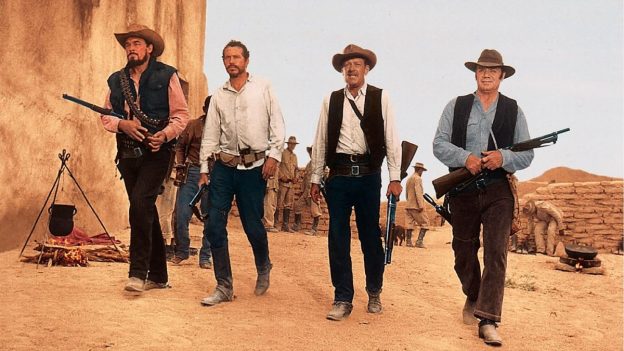
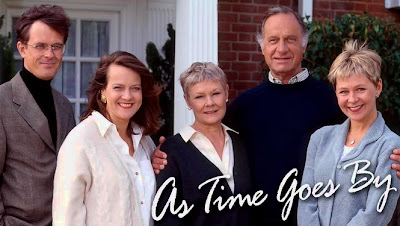
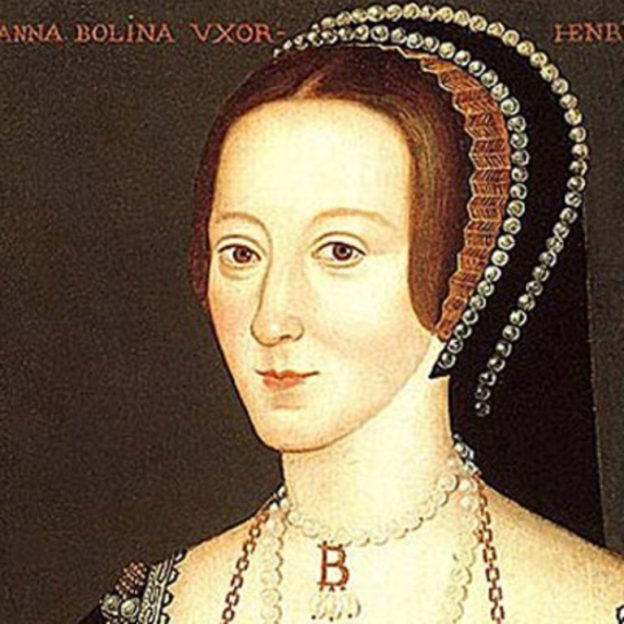
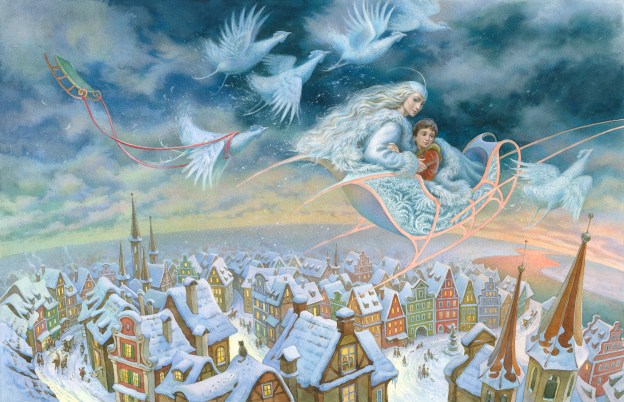

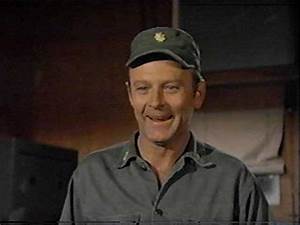

 Redeeming Pandora