Category Archives: Reviews

War: Beneficial But Unwanted

Justin Benner

There is nothing better than reading a poem that contradicts the title in almost every way. That’s the way Stephen Crane’s “War is Kind” poem is. It’s not Stephen Cane if it isn’t a graphic or extremely blunt description of war. However, in this poem he takes a slightly different approach. While he still talks about death and blunt descriptions, he is showing war is not kind but rather war is awful and brutal and almost downright inhuman. This is coming from the same author as who wrote The Red Badge of Courage, his most famous — and most brutal — story. This poem is almost a critique on human attitude toward war. Americans in the 21st century are sick of war; when this was written, it was quite a few years post-Civil War. Americans post-Civil War were also very tired of war. Having just fought an extremely bloody Civil War killing hundreds of thousands of men, it is easy to see how American writers might be antagonistic toward war.

“War is Kind” isn’t really a long poem. It stands at a nice 5 stanzas long, each stanza being on average anywhere from 3-5 lines long. It starts off by talking about a woman whose husband has been shot and killed. We can tell by context her husband was most likely in a cavalry unit in the Civil War. The good old cavalry are always the first to die not only in Historical Gaming class but also in literature. But the stanza ends with “Do not weep. War is Kind.” This seems like a rather harsh and unwarranted statement after just having her husband die

In the second stanza Crane makes the statement: “These men were born to drill and die. The unexplained glory flies above them.” This statement makes perfect sense coming from a realist. Realism accepts no deeper meaning in any form of reality so Stephen Crane observes men enlist in the thousands, drill, and subsequently die for “the unexplained glory.” This unexplained glory, I believe, is patriotism. Upon face value, patriotism is simply a reason for men to charge headfirst into almost certain death for glory. So once again Crane’s realism shines through. But he doesn’t stop there with his graphic descriptions. He then goes on in the third stanza about a man who has been shot in the chest and dies grasping his chest and falling into a trench.

The fourth stanza is more symbolic than anything. It starts off describing the flag, but then talks about how war teaches men the “excellence of killing.” War has been a kill-or-be-killed situation ever since the Middle Ages. The “excellence of killing” is in reference to the training a soldier might receive about how when told to fire at the enemy he must obey and shoot, lest he be shot first.

The last stanza talks about a mother, a mother whose “heart hung humble as a button. On the bright splendid shroud of your son.” This mother has lost her son to war. In fact in three out of the five stanzas, the writer switches the affected party. In the first stanza it’s a maiden, in the third it’s a babe (which could be replaced with child or young adult), and the fifth culminates with the mother. Each party is affected by a different death, yet all connected. Each of them has lost a spouse/parent to war, hence the irony in the title.

This poem is a harsh reminder there is nothing pretty about war. War has always existed in mankind ever since man’s downfall. War is an ugly, harsh place where death and fear reign strong. Soldiers during World War I described it as hell. But God can still use war in His grand plan. He told the Israelites to go to war many times in the Old Testament. Even the worst of things in life can turn out for good.

“…a time to love and a time to hate, a time for war and a time for peace…” Ecclesiastes 3:8.

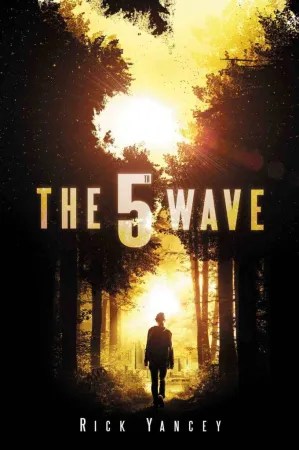
A Review of The Fifth Wave

Alex Touchet

An ominous alien craft appears over earth.  It assaults Earth with a series of four waves of destruction.  The first is in the form of an electromagnetic pulse that shuts down every electronic device on the planet.  This initial attack results in the deaths of around half a million people.  As technology becomes obsolete, the aliens drop a large metal rod onto a geographic fault line, creating a gargantuan tsunami that wipes out coastal cities on every continent.  This wave’s death count is over three billion.  The third assault is a plague called the “blood plague” or the “fourth horseman.”  Its mortality rate is nearly one hundred percent, and it decimates around ninety-seven percent of the remaining human population.  The fourth wave is the activation of an alien consciousness inside select human beings that were “infected” in the mental invasion of 1995.  These humans, called “silencers,” proceed to hunt down remaining survivors with cold precision.

The story follows two survivors: Cassie is a girl searching for her lost brother, and Ben is a survivor training in what is said to be a resistance-oriented military.  Their story is closely entwined with Evan, a silencer who narrowly spares Cassie’s life for sentimental reasons he himself does not entirely grasp.  This disparity between characters is one sign of Rick Yancey’s literary mastery.  He doesn’t fall victim to the trope of the “strong young female surviving a post-apocalyptic world,” such as Suzanne Collins (The Hunger Games) or Veronica Roth (Divergent).  Yancey gives multiple differing perspectives that have an individual voice and personality.  Ben often uses militaristic language while narrating, while Cassie exhibits a more feminine personality unique to her character.  This dual-perspective approach is a tactic many authors avoid.  One of the only other stories where I have seen it flawlessly executed is Worm (a completed Web serial) written by Wildbow.

Rick Yancey succeeds so well with this novel because he openly approaches a genre often marred with a painful multitude of stereotypes and clichés and circumvents them.  He foresees how the story might become predictable and tosses in a plot twist.  He writes his characters not as mirror images of the over-used stereotypes of dystopian fiction, but as real (and blatantly flawed) people.  Cassie had romantic feelings for Ben before the Waves decimated the planet, and so when her brother pops up in Ben’s squad of trainees, the reader expects a clichéd romance to occur.  While this setup inherently seems a little too unrealistic to make sense, Yancey does not take the expected route of playing matchmaker with two broken survivors connected by preexisting relationships.  He sets up a controversial connection between Cassie and Evan the alien-boy before Cassie ever even reunites with Ben and her brother.  This sort of “always one step ahead” approach destroys the sense of familiarity readers often feel toward predictable stories and demands their attention.

One of the most complicated characters in the story is Evan.  He is a walking contradiction.  Silencers are the epitome of efficient destruction, so it makes little initial sense when Evan falls for a member of the race he was programmed to kill.  Even though he has the brain of a hostile alien, there is something about Cassie (and humans in general) that forces him to rethink his priorities.  He has fallen in love, which may not be too unique as a plot point by itself, but is not an event created merely to inspire emotional connections around a love-interest.  Instead, it is a doorway that opens up new possibilities and questions concerning the silencers and their role in humanity’s extinction.  It also demands the question: “Why does Cassie fall for him as well?”  Normally, in stories where a character’s world and family has been destroyed by a hostile invader, the protagonist feels imperatively obligated to seek some form of vengeance.  Forgiveness is often rejected for the sake of “justice,” or more appropriately, revenge.  Jean Valjean is possibly one of the only protagonists I have ever observed to willingly forgive an antagonist, regardless of their wrongs and choices.

Yancey, once again, crosses out another typical cliché and instead gives Cassie the ability to look past Evan’s nature.  When she first discovers the real Evan, she is torn between her love for him and mistrust for his kind.  However, she finally decides he is worth the risk. She is not blinded by his mere connection to the aliens; she sees him for who he really is and how he treats her.  She understands the weight his betrayal of his own race holds and reciprocates when she falls in love with him.  This mutual romance demonstrates what is at the core of Yancey’s novel.  In a broken world where the enemy’s final attempt at annihilating humanity is to tear apart their ability to trust each other, two individuals reach across the divide and hold onto one another.  This is the most powerful element of the novel, because it exemplifies one of the characteristic traits of humanity: its search for community and its thirst for connection.

Yancey plays a long and deliberate game with his characters while making sure they don’t conform to typical cliché guidelines.  Every little detail of the plot has been designed to fit into a larger, much more complicated plan.  Ben and Cassie’s little brother have been trained along with the rest of their barracks by soldiers to “kill aliens.”  They have become cold-blooded and efficient.  Mr. Yancey allows readers to begin to discover early on the military camp is not as it seems.  It becomes increasingly obvious the soldiers may not be true human soldiers, but the characters themselves are unaware and continue to make decisions that force them into worse situations.  This forces the reader to arrive at conclusions before the characters themselves, adding a new element of conscious discovery not present in most novels.  When the soldiers are revealed to be alien agents training children to hunt down and kill their own species, readers are practically screaming at the until-then oblivious protagonists.

While The 5th Wave is definitely not a reinvention of the genre, Yancey succeeds in multiple aspects of the story usually overlooked by most other authors.  He changes the protagonists often enough to provide more variety than a book such as The Hunger Games could ever accomplish.  He takes obvious (and expected) clichés, and then turns them on their head.  His mastery of his individual characters is evident with how well he handles their separate, broken identities.  He even approaches the primary question that plagues almost every alien invasion story ever: “Why do they want us dead if they don’t need anything we have?”  This is probably the main reason I liked the book so much.  It approaches elements of science fiction other authors seem to take for granted.  This novel is not the best teen science-fiction ever written, but it is definitely a favorite worth picking up.

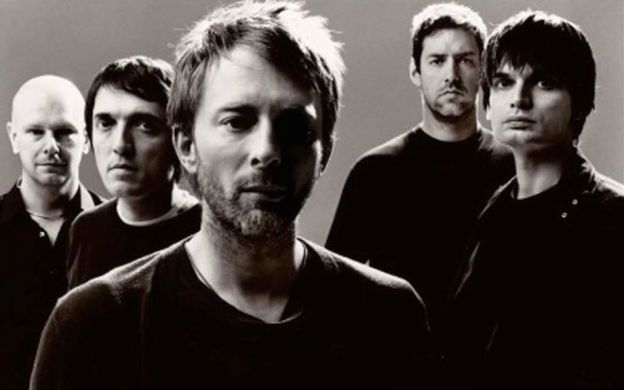
The Music of Radiohead: A Contemporary Response to Postmodernism

Julian Rhodes

Any fan of British alternative/progressive rock, or at least rock in general, should have some measure of familiarity with Radiohead, which, along with bands like Oasis, Nirvana, The Smashing Pumpkins, and The Verve, has over time become one of the most successful and influential British rock bands of the late ’90s and beyond. Radiohead’s style has changed over the years, as they began with a rougher grunge feel with their debut album Pablo Honey and afterwards began a transition to a melodic unamplified feel with the seven albums that followed. Upon the release of their iconic and well-received album OK Computer, they began to incorporate electronic elements, thus creating a fusion of acoustic rock and mellow electronics that evolved into their trademark sound. Radiohead has sold more than 30 million albums worldwide, with the band’s work appreciated among critics and audiences alike, placing them as one of the greatest rock bands of all time.1

In this analysis I plan to focus on the stylistic traits of their music, with a large emphasis on the philosophy of the band through examination of their lyrics, particularly dwelling on the three albums they released between 1997 and 2001: OK Computer, Kid A, and Amnesiac. Radiohead’s music tends to capture a particular emotional mindset of teen angst and paranoia toward the advancements of the modern age, whilst borrowing ideas from philosophies such as spiritual existentialism, nihilism, and postmodernism. It is easy to mistake the band’s image as catering to the teen angst mindset, but upon further listening experiences and examination of their material, I have realized the popularity of their content has stretched far beyond that assumed target age group. If angst is their primary emotional channel, it is not a juvenile hormonal angst, but rather an existential angst that stretches beyond circumstantial situations and addresses the basic human fears and emotional trials that confront us on a daily basis. There is a great deal of maturity in both the ideas and craftsmanship: the music itself is beautiful, but most importantly, the poetry is well-written.

And it should indeed be called poetry — the important thing to remember with all art is it inevitably is laden with connection to all art that came before it, and the poetic medium undergoes rebirth through every century and every decade. I do not doubt the greatest poets of our day are hiding behind the masks of musicians. This is why it is important to examine their work because it has achieved that perfect balance of cultural recognition and artistic value. It is poetry popularized, and therefore gaining an understanding of the artistic statements the band presents will further an understanding of it has contributed to the shape of the music world today, and by extension, postmodernist culture, if indeed their music can be considered postmodernist.

The song that originally catapulted the band into fame, “Creep,” is still their most well-known song, despite the fact they have produced eight albums since the song’s 1992 release. The most down-tempo song on their debut album, Pablo Honey, gained popularity perhaps because of its simple but powerful description of the universal unrequited love theme. The song depicts a basic unrequited love scenario: the insecure and self-loathing dreamer is tongue-tied in the face of unapproachable beauty. In the song’s second verse (I don’t care if it hurts / I want to have control / I want a perfect body / I want a perfect soul) there is such a perfect rhythm of ubiquitous human desire, the nagging and ever-present feeling we are imperfect, followed by (I want you to notice / when I’m not around / I wish I was special / you’re so very special) — the same mistake we always make, in thinking we will find personal happiness and fulfillment in someone else’s validation of us. The scene crumbles beautifully as the second chorus fades into the bridge: (…she’s running out the door / she’s running out the… run, run, run, run…). The story ends here, in the same way it has ended for many of us lovers, at one point or another in our lives. Ironically, the album Pablo Honey has scarcely met with the same success as its hit single; it is often derided by true fans as Radiohead’s worst album, featuring generic and undeveloped tracks more referential to earlier styles of rock than anything else. Nonetheless, it has been named as one of the most influential albums of the decade by Classic Rock2 and one of the best rock debut albums of all time by the BBC.3

Their second album, The Bends, has met with even greater success, charting at #4 at the UK upon its initial release, reaching triple platinum status.4 The album is full of high points, beginning with the wobbly pianos of “Planet Telex” and ending with “Street Spirit (Fade Out)” and its beautiful closing line (Immerse your soul in love / immerse your soul in love), chilling when sung in context with the rest of the song. But the song that stands out to me more than any other on this album is Radiohead’s second celebrated hit single, “Fake Plastic Trees.” As can be inferred from the song’s title, the lyrics focus on the ways in which modern life has become superficial, hollow, and plastic. In the song, a woman owns a watering can rendered useless to her because all the trees in her house are fake, while her husband sits and muses on his former job as a plastic surgeon. Their relationship, like the plants they have surrounded themselves with, has grown plastic and devoid of emotion. They put up façades as they try to fulfill the wishes of those around them (…if I could be who you wanted / If I could be who you wanted / all the time…), yet the strain of constantly trying to maintain the artificial images they construct exhausts them (…and it wears her out / it wears her out…). The song, at its beginning, sounds just as tired as the feeling it is trying to convey- only an acoustic guitar and a soft organ, so our attention is drawn to the strained voice of the storyteller. Yet the song has an amazing buildup. As the couple’s emotions build, drawing nearer and nearer to a genuine and passionate love, the guitar changes from acoustic to electric, bringing to the song to its apex. To describe it further would be pointless; I will leave off here and say it is a song no one should go without hearing at least once.

Now to draw attention to the band’s most famous album: OK Computer, one of the greatest rock albums of the 1990s, and possibly the best example of postmodernism in pop music. I use the term postmodernism here in reference to not only the nihilist atmosphere produced by the album but also the chaotic electronic musique concrete elements that find their origins all the way back in the folds of the late Dada movement. The album even shares part of the purpose of the musique concrete genre itself — to use electronic sounds to create a kind of music that illustrates the presence of technology in modern life. The link is evident, and the theme was even more relevant at the time of OK Computers release. The end result, however, is far from chaos. It speaks madness, but there is method in it. The chaos is tied together with a strong beat, mellow guitars, and piercing lyrics. It is described as containing themes of “rampant consumerism, social alienation, emotional isolation, and political malaise.”5 Even lead vocalist Thom Yorke comments on the album’s fragmentation. “I’m just taking Polaroids of things around me moving, too.”6 He continues, “It’s like there was a secret camera in a room and it’s watching the character who walks in — a different character for each song.”7

I’ll begin by addressing a song often referred to as the “Bohemian Rhapsody” of the nineties: “Paranoid Android,” the second track on the album, is its masterpiece. It is also the most musically complex; a true classic of post-Britpop approximately six-and-a-half minutes in length dynamic in melody and tempo throughout while remaining coherent on the whole as a piece of music. The song begins with a gentle guitar riff and a feeling of discomfort — lyrics speaking unfulfilled desire for solitude amidst the buzz and confusion of noisy company (Could you please stop the noise? / I’m trying to get some rest / From all these unborn / chicken voices in my head…). The final social withdrawal is triggered when a random stranger begins to launch into an unsolicited tirade against him (Off with his head, man / off with his head, man / why don’t you remember my name?). It is helpful to know: this segment of the song was inspired by an unpleasant experience Thom Yorke had at a bar in L.A., as he watched a woman explode into a violent tantrum when someone accidentally spilled a drink on her. The tension in the song mounts with the buildup of the feedback, tearing down the mellow feel the song had constructed in the first verse, signaling the increasing hostility of the forces closing in on the song’s narrator. Then comes one of the most beautiful moments in any rock song, ever: the electric guitars cut out, the beat slows the pace of a heartbeat, and the acoustic guitar strums softly like rain on a roof, and voices in the background sing a capella as if in a choir. As this steady tempo is kept, the lead vocal sings repeatedly and desperately: (Rain down, rain down / Come on, rain down on me / From a great height / from a great height). The hero of this song is broken and opening himself. He is reaching out for communion with the Divine, longing for a religious experience, for God to rain down love and mercy upon him. Yet the divine moment is interrupted — as the connection is nearly made, the faint bond is severed as all the worries and cares of the world seep in like water seeping over the top of a dam, whispering in his ear: (That’s it sir, you’re leaving / the crackle of pigskin / the dust and the screaming / the yuppies networking / the panic, the vomit / the panic, the vomit / God loves his children / God loves his children). The last remark is made sarcastically, as the narrator believes God has abandoned him. The song then descends into a violent chaos of sound, treading backwards through all of the melodies from the beginning of the song, bringing things to a dramatic and explosive conclusion as the narrator loses himself in nihilism.

“Subterranean Homesick Alien” is simpler; it tells a story of a man who fantasizes excessively over UFO encounters. The imagery of the song is conjured up for us by a beautiful guitar intro accompanied by celestial synthetic vibes reminiscent of an old ’70s sci-fi film. The following song, though, “Exit Music (for a Film)” is not only one of my favorite Radiohead songs but is also in my top three songs of all time. It was written for the Baz Luhrmann film Romeo + Juliet and plays after the end credits, and the song was reportedly inspired by the chilling moment when Juliet kills herself at the end of Franco Zeffirelli’s 1968 Romeo and Juliet. No matter what version of Shakespeare’s play the song aligns itself with, the words and the melody remain the same, ready to attach themselves to any tragic tale of young star-crossed lovers choosing to die together rather than live in a society that forbids them to be together. Not that I’m a huge fan of this, absolutely not. It’s simply how the song tells the story. Recorded in an echoing hall with a stone staircase, the song begins with a sad guitar strumming borrowing a tune from Chopin’s Prelude No. 4, along with Yorke’s resonant vocals whispering the poetry into the mic. As the first chorus begins, a synth choir enters in the background, signaling the curtain of night falling over the elopement — but it is not until the chorus ends and the second verse begins when we first feel inescapability of fate. For in the second verse, played behind the vocals are noises that sound like the universe is literally caving in on the two of them — to create these sounds, Yorke went to a playground and taped small children playing on the equipment, and then reversed it in the studios. The stanza for this verse appropriately reads (sing us a song / a song to keep us warm / there’s such a chill / such a chill) for what happens next is truly chilling. The moment that next trembling note hits, there’s not a single time I’ve listened to it I haven’t gotten goosebumps. It’s rare a song is as immersive as this one is; few make you feel as Romeo and Juliet are passing through death’s doors you are passing through with them. As the vocals shout out the words (now we are one in everlasting peace) there’s a serene triumph and beauty to the story never there before, and in spite the two lovers mutter out to their families they hope they choke each other in the senseless feud. We forget so easily Romeo and Juliet never discovered the feud was resolved after their death — they died believing the fight would go on until the bitter end. In any event, the song is in a word: haunting. It deserves multiple listens.

To follow, “Karma Police,” one of the more successful singles on the album, is powered by a piano, acoustic, and drum lead for the verses and chorus, in which the song’s narrator, feeling irritated with other people, starts wishing they would get what they deserve, that the “karma police” would catch up to them eventually. What’s really beautiful about this song, though, is its spiteful tone makes a complete turnaround and the song redeems itself after the second chorus. After the vengeful (this is what you get / when you mess with us) the narrator immediately shifts into a joyful and melodic moment of (phew! For a minute there / I lost myself, I lost myself) a refrain that repeats until the end of the song. There’s a feeling of relief that is always welcome, that feeling when you’ve been doubting your own integrity and good nature because of negative feelings you’ve had toward yourself, toward other people, because of insecurity. That line (for a minute there / I lost myself) has always been extremely powerful for me because it’s in small epiphanies like this people find their identities; they say “No — wait. That’s not me. I’m a better person than this,” and then they pick themselves up and start making themselves something more like who they really see themselves as being, or who they really want to be.

Following the electronic decay of “Karma Police” are the abrupt computer generated words (Fitter / happier / more productive…) which begin the song “Fitter Happier,” if it can even be called a song. It’s really a monologue narrated by a computer that sounds like Stephen Hawking’s voice panel. It is perhaps the most depressing track on the album, but it is the most powerful because it says so much more than could be said with mere songs. The track consists of a series of disconnected sentences and slogans strung together in short succession. Halfway through, a soft yet ominous piano comes in and begins to grow louder in sound, building up along with other ambient noises only to fall out at the very end of the track to allow the listener to close in on the harrowing final statement. The lyrics are too good to not post here in their entirety: Fitter. Happier. More productive. Comfortable. Not drinking too much. Regular exercise at the gym, three days a week. Getting on better with your associate employee contemporaries. At ease. Eating well. No more microwave dinners and saturated fats. A patient better driver. A safer car. Baby smiling in back seat. Sleeping well. No bad dreams. No paranoia. Careful to all animals, never washing spiders down the plughole. Keep in contact with old friends. Enjoy a good drink now and then. Will frequently check credit at bank. Favors for favors. Fond, but not in love. Charity standing orders. On Sundays Ring Road Supermarket. No killing moths or putting boiling water on the ants. Car wash, also on Sundays. No longer afraid of the dark or midday shadows; nothing so ridiculously teenage and desperate. Nothing so childish. At a better pace; slower and more calculated. No chance of escape. Now self-employed. Concerned, but powerless. An empowered and informed member of society. Pragmatism, not idealism. Will not cry in public. Less chance of illness. Tires that grip in the wet. Shot of baby strapped in backseat. A good memory. Still cries at a good film. Still kisses with saliva, no longer empty and frantic like a cat tied to a stick driven into frozen winter s***. The ability to laugh at weakness. Calm. Fitter, healthier, and more productive. A pig in a cage on antibiotics.

Of course the album has its other small rarities — for example, “Electioneering,” a song about political compromise, (When I go forwards, you go backwards / And somewhere we will meet), or “Climbing up the Walls,” which was written based on the murmurings of mental patients Thom Yorke encountered while working in the asylum as an orderly. But the last jewel worth mentioning is the bittersweet lullaby “No Surprises,” the album’s ninth track. The lyrics tell of a depressed and lethargic life in its dying throes, yet it’s played with relaxing and nostalgic chimes and a sorrowful yet optimistic melody (A heart that’s full up like a landfill / a job that slowly kills you / bruises that won’t heal / You look so tired, unhappy / bring down the government / they don’t, they don’t speak for us / I’ll take a quiet life / a handshake of carbon monoxide / no alarms and no surprises, please). We feel there is both sadness and disappointment with the present world and happiness in the glimpse of a beautiful afterlife on the other side (Such a pretty house, such a pretty garden). Its melancholy poetry paired with the sleepy instrumentals bring for a very exquisite kind of sadness I have never seen achieved elsewhere, making “No Surprises” my favorite “sad song” and one of my ten favorite songs, ever.

The album opens and closes the same way, with a song about a car crash. The glitchy opening song “Airbag” uses the lyrics (…an airbag saved my life / in an interstellar burst / I am back to save the universe) to describe the feeling of wonder and empowerment one gets from realizing one has survived a near fatal car accident. To bring it back, the album’s closing song appears to narrate the thoughts of perhaps the same driver moments before the crash that happened prior to the beginning album, thus creating a cycle. The song’s soothing acoustics seem to narrate events in extreme slow motion, while the lyrics in contrast speak of going too fast (Hey man, slow down, slow down / Idiot, slow down, slow down). At a first glance, these may be the words that the man is shouting at the other driver — but perhaps it’s more likely the man is shouting at himself. Realizing he is on the brink of death, he sees he has not only been driving too fast, but he has also been going through his own life too fast. He’s been hurrying this way and that without stopping to take in the scenery, and now his short time on this earth may be over.

Kid A is an album I consider to be, in many ways, OK Computer’s close brother. The music and themes are similar, but Kid A has a darker, colder, and more bizarre feel to it — there’s not a song on the album with the kind of loud guitar choruses you hear in songs like “Electioneering.” The album creates a similar atmosphere of paranoia and reclusion, yet it bears a feeling different from the frantic buzz of the present; rather, it seems to reflect the emptiness of the digital cities and empty wastelands of a distant future. Yorke describes it as a speculation as to the possibilities of life after the modern age passes away, of a generation after the apocalypse. The title “Kid A” is a reference to the first cloned human. The sounds are experimental: primarily electronic, with a few soft guitars and often computerized vocals. If I mentioned OK Computer conveyed postmodernist ideas, Kid A illustrates this even further. The artwork for the album is bleak and abstract, the band’s style is in many places minimalist, and the lyrics for some songs like “Idioteque” were produced through what Tristan Tzara calls “dada poetry” — writing down phrases and pulling them out of a hat. What I find most interesting about the album, however, is its peculiar success. Kid A went platinum in its first week of release in the UK and became the first Radiohead release to top the charts in the United States. OK Computer was an album that demanded a worthy successor, and for one of the few times in rock history, a band has produced a follow-up just as good as, if not better than, the first. Rolling Stone, Pitchfork, and The Times all praised Kid A as the best album of the 2000s, and both Rolling Stone and TIME magazine name it as one of the 100 greatest albums of all time. Kid A introduced rock listeners to new styles of music previously unrecognized and changed the course of the band as it moved to the electronic ambient sounds it would use for the next decade and a half.

The album has a superlative opening: a beautiful C-minor chord on an electric keyboard, followed by a short succession of glitching vocals, then switching over to a major chord to begin the lyrics. The song “Everything in its Right Place,” and the main refrain, is nothing more than the words in the title itself: the song is a frenzy, detailing mankind’s incessant need to bring order to everything and simultaneously his incapability to do so. The music itself presents this wonderfully, as he sings for the need for everything to be in its right place, divided into black and white categories (There are two colors in my head / there are two colors in my head), the music slowly begins to spin out of control amidst the buzz of electric equipment — yet as the vocals dissolve and the cacophony takes over, there’s suddenly a uniting melody that wasn’t evident before, a final major chord rising up amidst the madness to show disorganization can be beautiful. The next song, “Kid A,” begins with the space age sound-effect of an electric whirr, something sounding remotely like a spaceship passing over head. It then changes to a pattern of notes played out on chimes, soon accompanied by deep low notes. All of the vocals on the song are computer distorted, and for a reason: Thom described the subject matter as “brutal and horrible,” within the softly spoken and easy to miss lyrics we find the words (We’ve got heads on sticks / you’ve got ventriloquists). The words no sooner arrive than they leave, and we are greeted with a sudden rush of instrumentals, as the gentle Congo drumbeat rises and the strings pour down like a waterfall. As the chimes from the beginning make a reappearance, we have one final phrase before the beat picks up and the piece falls apart: (rats and children follow me out of town / rats and children follow me out of town).

Several following songs bear interest: “Treefingers” and “Motion Picture Soundtrack” are both largely instrumentals-focused, and both “Optimistic” and “In Limbo” feature vocal echoes and rich acoustic guitar rhythms. “How to Disappear Completely” is the most sorrowful track on the album, something like “No Surprises,” but more straightforward, and more chilling (I’m not here / this isn’t happening), perfectly capturing the desire to simply leave your environment by dissolving into thin air. The frantic jazz riffs of “The National Anthem” along with the tense and eerie lyrics of “Morning Bell” (Where’d you park the car / where’d you park the car / Clothes are all alone with the furniture / Now I might as well / I Might as well / sleepy jack the fire drill / running around around around… / cut the kids in half / cut the kids in half) all serve to create a sense of building tension in the songs. Yet the most interesting and noteworthy track on Kid A would have to be “Idioteque,” which begins with a simple disco-reminiscent beat followed by a four-chord synth progression borrowed from electronic composer Paul Lansky’s experimental computer piece Mild und Leise. The postmodern style of songwriting affords the opportunity for a variety of interpretations, as the song as a whole is literally a collage of ideas. The song’s tone is slightly more ominous than some of the other tracks on the disc, the lyrics beginning as follows: (Who’s in the bunker / who’s in the bunker / women and children first / and children first / and children / I laugh until my head comes off / I swallow till I burst / until I burst / Until I…). As the chorus changes to a major key, we hear the words (Here I’m allowed / everything all of the time). Modern society aims to have no limits; the happier a society is, the easier it is to control. We forsake absolute values to allow minorities the rights they feel they deserve, as long as they’re consuming goods to grease the economic wheel. Meanwhile, factions scream for attention as they proclaim the existence of impending environmental disaster (Ice age coming / ice age coming / throw it in the fire / throw it in the fire / throw it in the / We’re not scaremongering / this is really happening / happening…). And yet we’re perfectly ready to ignore serious issues because we don’t want to be removed from our comfortable bubble of consumerism and gluttony. The album ends with the sad but beautiful lyrics of “Motion Picture Soundtrack,” which begins with a quiet organ but in its dying throes bursts forth into warm harp scales. This may be the song heard at the last remaining campfire in an ever-growing snowstorm. The album ends with the words (I will see you in the next life), closing off with a character declaring their belief in reincarnation, a concept that will be explored in the following album Amnesiac, possibly a “reincarnation” of Kid A.

Having gone on for so long, I don’t know how much I can say about Amnesiac. While Kid A is about the distant future, Amnesiac seems to point to the distant past, and as can be implied from its title, a past forgotten by the souls reincarnated. The album draws heavily on ancient mythology and historical themes: “Dollars and Cents” mentions “wandering the promised land,” “Like Spinning Plates” says (you feed me to the lions), “You and Whose Army” references the Holy Roman Empire, and “Pyramid Song” was inspired by an exhibition of Egyptian artwork Thom Yorke visited. In his comments on the album, Yorke compares London to the labyrinth of Minos, and on the cover of the album is the weeping minotaur. We are not Theseus. “Dollars and Cents,” a song with wavering guitars and tingling percussion reminiscent of the clinking sounds of the currency in its title, describes how as members of society, we are always trying to be constructive toward each other in conversation, in our careers; yet, at the same time, human beings seem to destroy everything they touch. No, we are not the hero wandering the corridors of the labyrinth — we are the beasts placed in the labyrinth to devour him. Amnesiac is more than just an analysis of the past, though. It ties together the themes of the past with modern imagery, it plays with our memory as it gives a reprise rendition of “Morning Bell” put on the album to sound like a “recurring dream”; we’re remembering something from an earlier album, but it’s distorted, stretched out like a reflection in a funhouse mirror, as if our memory of it is conflicting with what we’re currently experiencing. That’s why the alternate title of the track is “Amnesiac.” What the album does is it brings the past, the present, and the future together. It includes within it echoes and reflections of OK Computer’s present and Kid A’s future. Humanity is not always dealing with the same problems, but it is always dealing with problems. We still feel, we still laugh, we still love, and we still weep. Time is irrelevant. We are the same.

Amnesiac begins with a song entitled “Packt Like Sardines in a Crushd Tin Box,” a title so cramped there’s not even enough space for all the letters in some of the words. The song begins with a metallic beat, followed up with low synthetic tones, and the lyrics (After years of waiting / nothing came / after years of waiting / nothing came / I’m a reasonable man get off my case / get off my case / get off my case). The song is supposedly about rush hour in the London underground, and though I really should examine it further, I would like to turn most of my attention to the second track, “Pyramid Song,” which Yorke hails as the best song the band has ever recorded. With songs like “Exit Music,” “Paranoid Android,” “No Surprises,” and “Idioteque,” it’s very hard for me to agree with him, but “Pyramid Song” is a worthy contestant in the running. The song romantically and poetically handles the Egyptian view of the afterlife and infuses it with modern emotion, beginning with a stony piano chord progression, haunting vocals, and strings and percussion that fall like water during the instrumental chorus. The lyrics read (Jumped in the river, what did I see / black-eyed angels swam with me) the river is the River Nile, the River Styx, or both — it is the river crossed in the voyage of death. The narrator of the song is already dead; the black-eyed angels are the black-eyed crocodiles that swim in the river. (And all my lovers were there with me / all the past and future / and we all went to heaven in a little rowboat / and there was nothing to fear, nothing to doubt.) This originates from the Egyptian belief a man’s possessions, servants, and wives will travel into the next life with him. For an Egyptian, life was spent in preparation for the afterlife — the Egyptian culture was death-centered. In that perspective, this is not a sad song; this is a happy one. It describes the fulfillment of an event one has spent one’s whole life preparing for. As a Radiohead song, it is the only one I can bring to mind that treats death optimistically. There is a great element of peace in it and possibly an element of hope as well. But better than that, the song is beautifully orchestrated — it has an exemplary progression and a pining atmosphere with it that most alternative music today cannot compare to.

The following song, “Pulk/Pull Revolving Doors,” is a mixture of electronic sounds that don’t seem to follow any specific beat, paired with words spoken through auto-tune that describe the various types of doors, symbolic of the different people, opportunities, and decisions we encounter in life. The song ends on the echoing warning (But there are trap doors / that you can’t come back from). The song after that, “You and Whose Army?” is one of my favorites on the album, as it begins with a muffled and timid voice calling out threats and challenges (Do you think you can take us on?) but then, as the confrontation escalates to a fight, the soft strumming guitar is quickly joined by a drumbeat and piano, and the voice raises to a full shout — when the song is through, both sides have been bluffing, and both sides have broken promises. Another notable track, “Like Spinning Plates,” starts with the most dizzying musical intro I have ever heard: a series of whirling electronic notes, growing suddenly loud, suddenly soft in quick succession as the background instrumentals slowly come in, present Radiohead’s trademark paranoid feel, but this time in a different way than ever before. The album closes with the song “Living in a Glass House,” where the band achieves the jazz sound they always wanted to, but never could, produce. The jazz is not the smooth jazz of lounge radio but the harsh jazz used in Duke Ellington’s music, the kind of jazz Radiohead paid homage to in tracks like “The National Anthem.” The style is intended to replicate that of a New Orleans funeral, and the lyrics concern the impossibility of privacy in the modern age, as a woman tries to paper her windows, but this is futile because she lives in a glass house, where every passerby can see her daily activities. The last two lines sum up the growing transparency of modern lifestyle despite our efforts to prevent it (Well of course I’d like to sit around and chat / but someone’s listening in).

While I’d hesitate to call Radiohead one of my favorite bands due to subject matter and perspective, I do not hesitate in the least to recognize the quality of the work they have produced. They are one of the best bands to have emerged within the past twenty years, continuing the tradition of alternative/progressive rock, forging ahead by experimenting with styles, and illustrating that music can still be meaningful and thought-provoking.

References

1 Jonathan, Emma. “BBC Worldwide takes exclusive Radiohead performance to the world.” BBC. 3 May 2011.

2 Classic Rock/Metal Hammer. “The 200 greatest albums of the 70s, 80s & 90s.” March 2006. Archived at muzieklijstjes.nl.

3 Spicer, Al. Radiohead Pablo Honey Review. BBC, 2008. <http://www.bbc.co.uk/music/reviews/j5xm&gt;.

 4 “1996-02-10 Top 40 UK Albums Archive”. Official Charts Company. <http://www.officialcharts.com/charts/albums-chart/19960204/7502&gt;.

5 Wikipedia. OK Computer. (13 Mar 2015). <http://en.wikipedia.org/wiki/OK_Computer&gt;.

6 Sutherland, Mark (24 May 1997), “Rounding the Bends”, Melody Maker.

7 Sutcliffe, Phil (1 October 1997), “Death is all around”, Q.

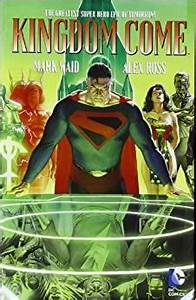
Review: Kingdom Come, Mark Waid (author) and Alex Ross (artist) ⭐⭐⭐+⭐

Christopher Rush

I give the whole thing a tepid 3 stars but 1 bonus star for the Aftermath alone.  In stark contrast to the overly effusive introduction by Elliot S! Maggin (apparently it is really an exclamation mark, not a period, in his name), this is not the Iliad.  It does not teach us any new life lessons or expose groundbreaking, introspective arcana about the human experience.  Nor should we be in awe of its 20-year-oldness: let’s not be surprised in 2014 that comics before the turn of the century had some substance.  And this does have some substance — I’m not saying it’s a bad story.  It’s just not the Iliad.

It has some definite weaknesses: the mediocre treatment of Revelation, the whole Pastor-off-his-faith device (not really original — in fact, McCay really comes off underdeveloped and more of an ironic deus ex machina at the end, which is probably the point, but it wasn’t all that spectacularly delivered), the MLF (Mankind Liberation Front, or something like that, a great idea) goes nowhere, the UN Secretary-General’s name is Wyrmwood (honestly…), too many characters (new and old) don’t allow for much time with any of them beyond the Big Three, Batman is offended by The Gulag (apparently he forgot about Arkham?), and the entire antagonism between humans and metahumans is confusing: Superman can’t be a jerk for both going away and coming back.  Regular humans are never called to the carpet for choosing Magog’s version of heroism: it’s always the fault of the metahumans for being antiheroes.  Yes, there is all the “we have to get our destiny back” sort of talk here and there, but humanity doesn’t have to face responsibility for considering morality, truth, and justice “old hat,” nor is the decision to send a nuclear strike on the metahumans dealt with beyond our requisite sympathy for the burden on Wyrmwood’s shoulders for making such a decision.

Still.  It’s a good series.  Ross’s paintings are fantastic.  Waid does a fine job with concocting a potential future for the heroes, even if we don’t like what happens to Batman or Wonder Woman (or anyone else).  Waid shows a proper respect for the DC universe and its characters, even if the final battle (which does seem to drag on) ends unexpectedly for some characters (and channels its own revised “Did You See the Sunrise?” moments).  Waid gives us some great moments, especially Bruce Wayne’s “so that’s how that feels” scene, and a nod to Victor Buono’s King Tut.

The aftermath, as a I said, is the real highlight of the story — I’m sorry for the fans that didn’t get it in the original issues.  Some may think the final moments of it are corny and out of temper with the rest of the series, and it’s true — but that’s why it works so well: time has past; mourning has made way for rebuilding; humanity is back on its feet and back in the pews at church.  We’re going to make it after all.

This isn’t The Dark Knight Returns or Watchmen (or V for Vendetta) — but it’s not really trying to be.  What makes it so good is not that it tries to redefine truth or justice for the 21st century (as the first two series just mentioned sort of do) — it reminds us the ol’ fashioned definitions are worth re-embracing (even though it could have emphasized that a bit stronger).  We need Superman, Batman, and Wonder Woman together in balance — in balance with regular humans putting on their manpants and doing their part, too.  It could be better, it could treat religion with more respect, but it’s a good story.  It’s no Iliad, but it’s a good story with an even better epilogue.

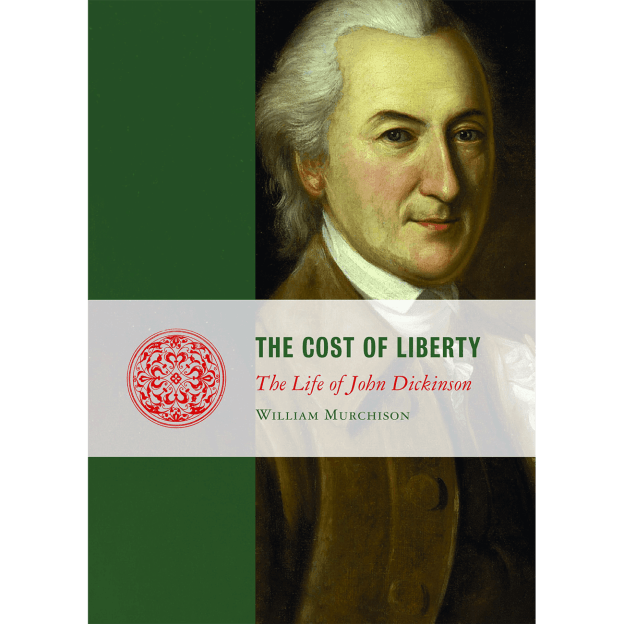
Review: The Cost of Liberty: The Life of John Dickinson, William Murchison ⭐⭐⭐

Christopher Rush

As much of a fan as I am of 1776, I was glad to learn somewhat recently that John Dickinson was a much better person in real life than he is portrayed in the movie, so when I also recently learned a new biography about him had come out, I finagled a copy (as well as the rest in this set from our friends at ISI Books).  I would have been glad to give this another star or two, but ofttimes Murchison gets in the way of one’s enjoyment of the work.  It’s not that his vocabulary is too erudite for us monolingual public school graduates, it’s more often his tone of amused-at-the-entire-goings-on.  Clearly Murchison is lauding Dickinson, as well he should, but far too frequently Murchison detracts from the important work of explicating an unjustly forgotten Founding Father with a demeanor of blasé chuckling (as contradictory as that sounds, it’s the best I’ve been able to conjure for this strange component of an otherwise fine work).  For me another slight deterrent is Murchison’s attitude to 1776 — true, the movie is inaccurate with some things, but Murchison is also somewhat unfair.  By his accounts, the attitude of Dickinson and the Southern Colonies are more akin to their 1775 attitudes, so not the wholly inaccurate perspective Murchison accuses the movie of portraying.  There is more truth to the movie as a representation of the attitudes and conflicts of the Continental Congress of its duration simply compacted into the span of the film than Murchison is willing to credit it, which is disappointing.

I have nothing with which to compare Murchison’s presentation of the other parts of Dickinson’s life beyond a public school education (and, thus, a total absence of knowledge of Dickinson outside of a lifetime of watching 1776), so I did appreciate reading and learning about his pre- and post-Declaration abstinence life, especially his oft ignored Articles of Confederation life (a period of time glossed over if not wholly ignored in most “U.S. History” courses).  That Adams and Jefferson and others came to a calm “reconciliation” with Dickinson was good to learn.  That he was welcome by most and befriended by others (Meade, Rodney, Rush) and useful to Delaware and Pennsylvania for the rest of his days was likewise a reassuring experience to read.

I recommend this book with only the slight misgivings of Murchison’s sometimes failed attempt at what he supposes to be humor — it is, on the whole, a worthwhile read, especially to repair our misunderstanding if not absent-understanding of a truly important historical figure and, more importantly, especially if the final chapter is to be believed, a humble God-fearing man who lived his life in the pursuit of liberty, justice, and truth for all.  Read this book, flaws and all: you will gain for yourself a new hero.

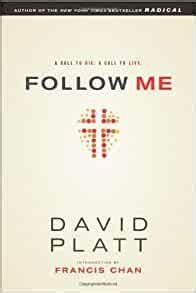
Review: Follow Me: A Call to Die. A Call to Live, David Platt ⭐

Christopher Rush

Ugh.  I promise you I was hoping this was good.  The first chapter wasn’t too shabby … but it continued.  And continued.  And continued.  The longer it goes on, the worse it gets.  Somewhere in there Mr. Platt recites a letter he wrote to his now-wife from “back in the day,” and he complains about his diction, tone, and content.  Guess what, Mr. Platt: it’s just as bad today.  Once again Mr. Platt gives us his version of Christianity, an insular, eisegetical Christianity.  Apparently the only way to be a true, authentic Christian is a) adopt a child from overseas and b) go overseas as a missionary (maybe for a short time, maybe for a long time).  Anyone, especially an American, who tries to be a Christian without going overseas as a missionary is a failure (at best).

But before Mr. Platt gets there, he spends an inordinate amount of time deconstructing the lingo of contemporary American Christianity for no other reason than to pad out this pseudo-book.  According to Mr. Platt, a “church” is a group of Christians, not a building.  I was shattered when I read that.  Also, “accepting Jesus into your heart” is not actually what happens when you “get saved.”  Heavens.  The revelations keep coming.  I don’t know any Christians who don’t know that, but then again I don’t pastor a mega-church.  One suspects if Platt is aware of a lot of misunderstanding concerning these pressing issues, perhaps mega-church pastors should do a better job teaching truth.  Just a suggestion.  Though one wonders when Mr. Platt has any time to actually do any pastoring.

This book is replete with travelogue escapades.  One moment Platt is in Karachi, another he is in Jakarta.  Now he is in Beijing, now Tunisia.  Okay, those may not be the actual places he mentions, but he does have too many stories of his missions trips to several places in Asia, Africa, and probably other continents as well — though certainly no stories of missionary work in America.  That is not genuine Christianity.  When is he actually being a pastor?  Maybe these stories are rare experiences over several years.  Fine.  That does not eliminate the fact he gives us no real substance on how to “Follow Jesus.”  It can’t just be going on overseas missions trips.  Platt derides religion, as if Christianity is not a religion.  Newsflash: Christianity is a religion — unashamedly so!  It’s not “just a relationship.”  If it were, what would be wrong about making Jesus “your personal Lord and Savior” (another pet peeve of Platt’s he spends too much time vainly attempting to refute)?

Toward the end of the book, Platt realizes he needs to start telling his audience what Christianity is after spending a hundred-some pages about what he doesn’t want it to be.  Church life does not seem all that important to Platt, which probably wouldn’t resonate too well with his mega-congregation (though since they are his congregation, they’ll likely lap up whatever he says anyway).  Apparently the church is a docking station for refreshment, a time for palling around for a bit on the way back out to the mission field.  Realizing it might sound like the church isn’t important, Platt tosses out more meaningless ideas such as “do life together as you grow.”  As usual, Platt offers no meaningful explanations for anything he says.  He wants us simultaneously to abhor Christian jargon and passively accept it as if it is beyond explanation.  Platt gives us example after example of “true” Christians who go overseas (the only mark of authenticity) and transform their businesses and lives … but then he says “not every Christian is supposed to be like this.”  Except all his examples are like this!

This book is a mess.  Platt even goes so far as to say the Disciples were not the ones who spread the gospel to other lands: generic no-name Christians were!  The support he gives for this is … well, none.  Likely because there is none.  He doesn’t even stop to consider the implications of his declaration: if we are to “follow Jesus” like the Disciples did, we would be failures since the Disciples, according to Platt, didn’t do what they were supposed to do!  Plus, he totally gets the “witnesses” thing wrong.  Christians today are not “witnesses” the way the Disciples were — we didn’t see Jesus do what He did.  Platt doesn’t understand this.  He assumes there is no difference between what the Disciples did and what we should do (other than their apparent failure at spreading the gospel).

Platt is in love with extraneous endnotes — next time, just put the Bible verse in parentheses in-text, please.  Though, most of the time Platt feels like his paraphrases are more worth reading than the actual Bible verses.  Perhaps that’s why so few Christians know how to do Christianity “the right way.”  He even cites verses that refute what he is trying to prove, but he wheedles out of it with more blather.  Surprising no one (but the author), Platt also complains about how he has received questions from readers of Schmadical (a better title of his last output) asking him about how to “do” Christianity correctly!  Platt seems to have forgotten he prescribed a 5-part checklist on how to “do” Christianity correctly.  Now we are to add “go overseas as a missionary” to the list.

Correct me if I’m wrong, but I don’t think Platt ever says anything about personal Bible study, committed prayer life, financial generosity, and other things.  I could be wrong, though.  Are we to plant churches, train leaders, disciple, translate languages?  (Platt never says one word about spending time learning foreign languages or cultures — apparently we are only to go overseas where we can be understood from moment one.)  Apparently not.  Just go.  Rub shoulders.  Tell people about Jesus being Lord and Savior (certainly not their “personal” Lord and Savior) and make sure they don’t pray a prayer — that would be wholly unscriptural if they pray a prayer.  Just entrust them to God and go back home.  Then go out to another missions trip.  Tell people about what you witnessed … of Jesus saving you, apparently.

I’m sorry, America.  David Platt will not accept anyone being a missionary to you.  You don’t count, apparently.  If only David Platt had written a book about what it means to follow Jesus.  That might be worth reading.

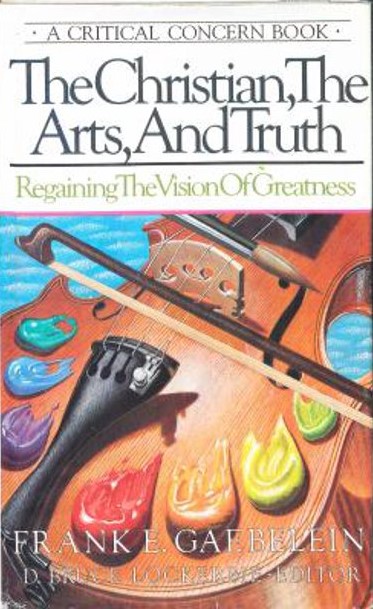
Review: The Christian, the Arts, and Truth: Regaining the Vision of Greatness, Frank E. Gabelein ⭐⭐⭐⭐

Christopher Rush

I wanted to give this 5 stars, since I agree with so much of it, but some structural deficiencies and thinness in some of the later essays warrants this at least a strong 4 stars.  Bruce Lockerbie is partly to blame: after a fine biographical sketch of Frank Gaebelein, he lets us know his disappointment this is not the book Gaebelein wanted to write.  Gaebelein wanted to write a cohesive, extensive book about Christianity and the Arts (apparently), but the twilight of his life prevented it.  Instead, we have a collection of essays apparently gathered from throughout Gaebelein’s life.  That wouldn’t have been so bad if 1) Lockerbie hadn’t made such a big deal about how this book wasn’t what Gaebelein wanted (setting us up for concomitant disappointment) and 2) Lockerbie had bothered to indicate where, when, and why these essays originally sprang into existence.  He mentions the origin of two or three of them but not all, which seems a bit of a failure on his editorial part.  These are small irritants; the content of what Gaebelein has written is mostly impressive and refreshing work.

It has been sitting on my shelf for some time (as many thousands of works have been doing), but the time arrived when I needed to read it, mainly because I am soon speaking about this very topic (Christians and the Arts) [see the address included earlier in this issue] and because I needed to read something I knew would be good, as my literary diet has been mostly disappointing New 52 releases [see next issue] and even-more-so disappointing “Christian” works [some of which are in this very collection of reviews].  Gaebelein delivers trenchant, timeless (mostly — one gets the feeling he is writing some of his disparaging remarks about the plight of “contemporary” Christian music in Keith Green’s direction) thoughts about Arts, Beauty, Truth — the usual worthwhile material.  He does a pretty good job of defining these “controversial” themes and defending his positions, all the while reminding us how thoroughly facile living a Bible-centric life is (including, as it does, a life of hard work).

Some may scoff at his upbringing and “breaks” he had in life as if they preclude one from attempting to raise one’s family to believe what is true the way he did: delighting and immersing oneself and one’s loved ones in the “things that matter” and not time-wasting nonsense.  Gaebelein gives us no room for excuses for not living an Art-focused, Beauty-driven, Truth-immersed, Bible-centered life.  Don’t waste time lamenting “Oh, what might have been had Gaebelein been able to write something better than this!”  This collection is quite stupendous.  In the collection it remains (for me to read again, perhaps, but definitely for my children to read someday soonish).

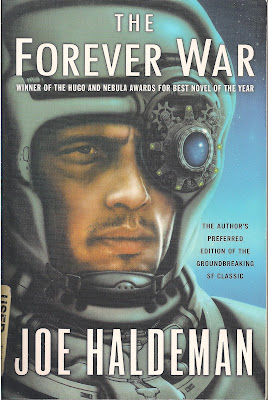
Review: The Forever War, Joe Haldeman ⭐⭐⭐

Christopher Rush

I was going to give this only a couple of stars, but the ending alone (primarily the epilogue and what is implied) deserves another star itself.  I know this is a beloved classic, and far be it from me to disparage a classic, but I didn’t really like this all that much, at least most of it.  After a smidgeon of pseudo-research, I learn I have read the abridged early version, not as definitive or swell as the finalized authoritative version, so I have no qualms giving this copy away.  Perhaps some day I will return to this universe and read the proper version and its sequels.

Being me, the language for the first half of the work was off-putting, enough to make this a 3-star book instead of a 4-star book.  I get what it’s about, especially after my smidgeon of pseudo-research, but still.  So it’s a Vietnam story not a space story after all.  I suppose that could somewhat assuage the Del Ray-like limited science fiction vision of the future, but the absence of futuristic vision was disappointing, especially after Haldeman did such an intense job cramming real science down our throats for much of the work.  That was another source of my reaction.  I’m all for science (sort of), but what I thought was supposed to be a novel seems more like Haldeman trying to show off his science chops — I like Moby-Dick more than most people, but I didn’t want to read Moby-Dick in Space when I picked up The Forever War.  Knowing as much science and its progress as Haldeman did, especially knowing Star Trek like he did, he should have at least created computers and data processing in the 22nd century to be less clunky than what is here.

Small points, perhaps, but then one never knows about these things.  The sections I did enjoy were the brief moments of happiness between Mandella and Marygay and, as noted above, the epilogue.  I suspect those are the bits many fans enjoy as well, but what do I know.  The second half is generally much better than the first half, even with the heartbreaking separation in the middle — perhaps it’s Mandella’s resignation and almost accidental maturity (or just resignation) that makes it more enjoyable (like Jack Shepherd’s attitude, finally, in season 6 of Lost).  The war itself and its explanation was a bit obvious, especially Haldeman’s message, and that combined with his treatment of what Earth becomes in the meanwhile seemed forced, but knowing as I now do that he has more to say in the unabridged version is a small comfort.  It’s a good book.  It didn’t blow me away, and it did frustrate me at times, but that tells you more about me than the book.  You’ll probably really like it.

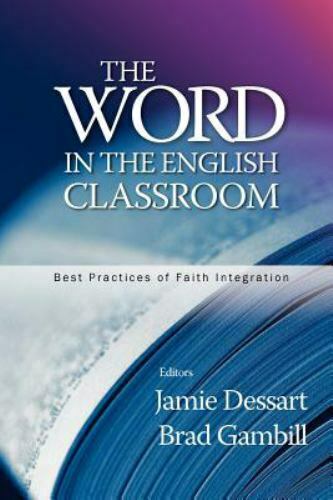
Review: The Word in the English Classroom: Best Practices of Faith Integration, eds. Jamie Dessart and Brad Gambill ⭐

Christopher Rush

Caveat: I have nothing positive to say about this book.  Who is the audience for this work?  I truly suspect the intended audience was the CVs of the contributors, especially the supposed editors.  This is certainly one of the worst books I have ever read.  I thought about giving it 0 stars, but I didn’t want to give John Piper and David Platt comfort one book exists that is worse than theirs.  The only good anyone can get from this (other than “look, prospective employee, I published an essay in a book!  It’s on my CV!”) is to write down the names of the contributors and warn any loved ones not to take their classes ever.  That may sound harsh, but consider it just saving the registrars the trouble of having to drop them after they want to drop their classes anyway.  I truly don’t mean to sound libelous, but I read every single word of these essays and they did not provide what they promised.  If these are the “best practices of faith integration,” we are all in serious, grave, deep trouble.

The first few essays treat “faith integration” more like “be sure to make room in your lukewarm Christianity for secular writings, because they are good stuff and you have no right not to appreciate them.”  One of the early essays goes so far as to decry being dogmatic about one’s faith, especially in the classroom!  Several essays throughout the collection warn the prospective teacher against being authoritative, as if all contributions are points of view are valid.  In other words, all faiths are equal, effectively, and if your version of Christianity is not flexible enough to applaud Dickinson, Faulkner, Darwin, Marx (multiple authors casually mention their use of feminist and Marxist criticism as if they are truly the ways to read works!), then your “Christianity” needs to be integrated with more faith — faith in the “don’t judge ever” interpretation of Matthew 7, apparently.

This is indeed one of the most disappointing books I have ever read.  One contributor at the end even goes so far as to admit she never really integrated her faith overtly into her classroom experience!  How does that help us?  Several contributors say effectively “since we are Christian college professors at Christian schools, we integrate our faith in the English classroom by reading Lewis and O’Connor.”  Wow.  “Brilliant strategy — thanks, Napoleon!”

The essay about using R-rated movies in courses likewise embarrasses throughout: since we are all basically inured to “adult content,” it’s okay to get the audience thinking, just never correct any of their statements — conversation is more important than truth.  Now, the essay doesn’t say that (none of them outrightly say that), but that is the impression the attentive reader draws from these exercises in puerility.  I thought of many more scathing remarks to make about these while I was reading them, but, fortunately, my mind has forgotten them.  If you are looking for a book on how to integrate Christian faith into the English classroom, a more useful book than this might be the Advanced Dungeons and Dragons 2nd Edition Player’s Handbook.  The alternatives for “integrating one’s faith” presented in this present book are 1) “read Lewis and O’Connor” or 2) “water down your faith so you can delight in Whitman, Faulkner, and everyone who disagrees with Christianity — don’t be dogmatic or stodgy! Get with the times!”  No thanks.

I was truly embarrassed by this book.  It made me sad to read this is what is passing for “best integration practices” at many colleges today.

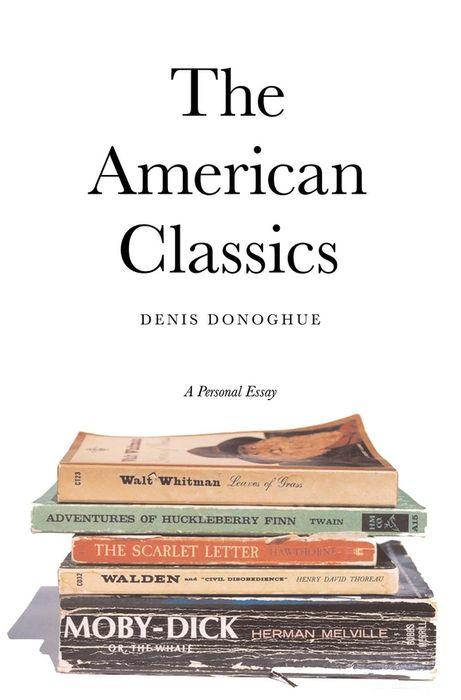
Review: The American Classics: A Personal Essay, Denis Donoghue ⭐

Christopher Rush

I’d be willing to give this 1.5 stars, out of the wealthspring of mine own munificence, but my level of irritation is forcing me to round it down.  With possibly not all due respect to Mr. Donoghue, I can’t perceive this book as one worth writing.  True, most of them aren’t, but this one proves it from the beginning.  What purports to be a personal essay about Mr. Donoghue’s personal experience with the five American classics pictured on the cover (Huck Finn, Moby-Dick, Walden, Scarlet Letter, Leaves of Grass) is, in actuality, a mildly deconstructionist survey of the critics and thinkers that have “informed” (oh, that word) Mr. Donoghue throughout his many decades as an expatriate Irish smartypants (perhaps he’s not an expatriate, and perhaps “smartypants” is inaccurate).  And while I am on record as preferring by far authorial voices with authority (“this is how it is!” instead of “I’m only trying to start a conversation”), Mr. Donoghue’s smugness overrides his authority — which is likely a wholly misrepresentative thing to say, as Mr. Donoghue’s smugness only appears rarely.  Yet when it appears, it appears in full throttle, often in the form of wholly irrelevant attacks against President Bush (43).

Another reason my irritation prevents me from giving Mr. Donoghue the whole 1.5 stars is his not-so-covert hypocrisy in the chapter purportedly about Moby-Dick.  After excoriating the 1940s critics who apparently read Moby-Dick incorrectly, blinded as they were by their culture and world circumstances, Mr. Donoghue follows up with asking us “how are we to read Moby-Dick today in light of the post-9/11 world?” (or words to that effect, which also include a vitriolic epithet toward President Bush not-so-subtly associating him with despots).  If the “right” way to read Moby-Dick is not to be limited by one’s time, why would being in a “post-9/11 world” matter?

Donoghue, like Socrates, rarely gives us the “right” way to read things (too high praise for him, even in derogation).  He is willing to drop names that should have delighted me (Trilling, Eliot), yet he does so in a way of dismissal that borders on “I just read about them on the Internets, so I know all about them.”  Mr. Donoghue does casually mention toward the end of the book he met T.S. Eliot, but he gives no indication it was a positive memory.  Further, Donoghue demonstrates an inability to stick to the point.  The thread of Emerson runs throughout the work, and while that is not necessarily a problem, he states the chapters are about different works.  The Moby-Dick chapter is sometimes about Moby-Dick, sometimes about other things by Melville, sometimes about Emerson.  The Scarlet Letter chapter is mostly about other things Hawthorne wrote, rarely about Scarlet Letter, and never in a way that makes us feel like Donoghue “gets it.”  Even the Moby-Dick chapter makes us feel like Donoghue, and potentially the coterie of critics Donoghue often cites (usually with favor but occasionally to correct them), didn’t even understand what Moby-Dick was about.  The Walden chapter is more often about other Thoreau works, and while it is more pertinent to speak of Emerson here, Emerson tends to occlude the purpose of the chapter.  And so on.

What was, then, the purpose?  To explicate these classics?  Nope.  To deconstruct them as not worthy of being classics?  Perhaps.  If so, Donoghue’s discursiveness prevents us from knowing.  To highlight the “crimes” of President Bush?  At times.  (One wonders what Mr. Donoghue has to say about the present incumbent.)  To point to the critics whose opinions we should share?  I can’t honestly tell.  Then, having waded through it all, we learn the sinister secret we suspected all along: many of these chapters previously appeared in discrete magazines over the years.  Yes, Mr. Donoghue is recycling old work to make money.  And while that is certainly his right and perhaps something I might try to do myself some day, it only gives us one more reason to ignore pretty much everything he has said.  What’s the 1 star for, then?  Because he does give some insights worth pondering (mainly from the quotations of other critics), and reading such a deconstructionist load of piffle encourages me to read these classics again (or for the first time, in the cases of Walden and Leaves of Grass; I haven’t read them in their entirety yet).  Oh, well.  It would have been great if this were a good book.