Category Archives: Reviews

Christmas V: Christmastime is Family Time

Christopher Rush

Merry Christmas, friends!  Instead of our usual panoply, we are going to focus on something a little different this year.  One of the most important aspects of Christmastime is the quality togetherness with loved ones.  And near the top of enjoyable, high-quality family-and-friends experiences is enjoying fun boardgames together.  Recently, we went through an informal Hot 12 games countdown, inspired in part because many of you seem to still be living in the First Golden Ag of Boardgaming.  While that is fine in its way, and if games such as Monopoly, Chess, Scrabble, Uno, Sorry!, and Risk still bring you a modicum of happiness, that’s swell, really — but you are likely unaware an entirely new, fresh universe of boardgames has exploded within the last couple of decades.  We are currently in what has been aptly called The Second Golden Age of Boardgaming.  One of the positive aspects of the global interconnectedness of recent decades (spurred on, no doubt, in part by the Information Superhighway) is the migration of European-style games (often called “Eurogames”) to the United States.  Starting, by many accounts, with The Settlers of Catan, a new wave of game designs, game designers, and outright fun (the primary purpose of playing games, right?) has grown exponentially in our lifetime.  Hundreds of new boardgames are being made and published each year, some huge (Twilight Imperium III, for example), some tiny (such as Sushi Go!), some for two players (Fields of Arle), some for dozens of players simultaneously (Ultimate Werewolf).  Because it is a time for giving, we here at Redeeming Pandora humbly give you a small selection of the recent kinds of games that quite possibly surpass the original classic games.  (Feel free to buy these for your family as presents.)

Don’t get me wrong: I grew up on the old games as well.  We had many an enjoyable evening of Careers, Clue, Dutch Blitz variants, Trivial Pursuit, and many more.  With all due respect to those games, this new generation of games is mind-bogglingly superior in almost every way.  And, while we at Redeeming Pandora are often in favor of the classic instead of the recent (in virtually every other category of human experience, in fact), we are also in favor of being aware of the times, aware of what good things are happening in our own day, and boardgaming is certainly where it’s at today.

This list is partly inspired by the fellows over at The Dice Tower, an online forum for contemporary board game discussion.  Tom Vasel, a fellow Christian and former mathematics teacher, started his online game reviews over a decade ago, and it has since blossomed into a significant news/reviews/and more avenue for, especially, new and forthcoming board games.  While I don’t always agree with what they say over there (especially when they start talking nonsense about wargames), many times they provide helpful and enjoyable insights onto games, designers, and exciting new games on the horizon.  The Dice Tower fellows did a Top 10 list about a year and a half ago about “better” games than the classics.  Some of our suggestions are similar to theirs, some are rather different.  Richard Ham, former videogame designer, of Rahdo Runs Through, another online game reviewer, is very enjoyable and intelligent in his reviews and is highly recommended, also.

Remember: this is not meant to shame you for enjoying other things.  As I said, I’ve played and had some fun with these myself in the past.  Consider this more of an opportunity to learn about things you will likely enjoy even more than what you are doing now (or remember doing in your own childhood).  It’s time to move beyond Candy Land and Mouse Trap and enter the Realms of Gold of modern boardgaming.

Caveat: many of the games mentioned here will naturally overlap many of these categories.  For example, Marvel Dicemasters is clearly a dice game, a heavily thematic game, and can be played in teams cooperatively.  I have chosen (arbitrarily, as always) to list games, then, under the category that is more immediately identifiable for the game (according to my personal whim and fancy).

Cooperative Games

You probably didn’t know this kind of game existed, did you?  If you are one of those people who would like to play games but don’t like the competitive nature of them (perhaps because you have had bad experiences with poor winners, “rules lawyers,” and other unfortunate gaming situations), there is good news!  A lot of very enjoyable games in the last decade or so have been created called “cooperative games,” in which you and your fellow players are trying to work together to beat the game itself.  These may be the games for you.
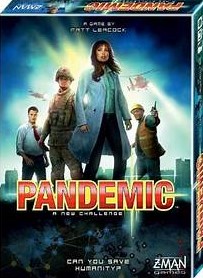
For many, the most enjoyable cooperative game out there today is Pandemic.  You and your fellow players are a team trying to cure four diseases trying to take over the world.  You have to work together to get the job done because if you don’t, the diseases will get out of control.  This game has a good amount of variability, which enables a good deal of replay value, which is definitely a plus for games as investments.  With different character roles and different setups each game, each time you play it is a new experience.  Even so, Pandemic has a number of expansions available to change the game in different ways.
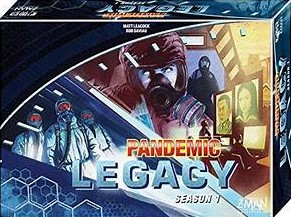
If you like grand stories, as I’m sure you do, once you have played a good deal of Pandemic, give Pandemic Legacy a try.  I’m told it tells an epic story over a number of games, in which the playing surface and the game itself change from gaming session to gaming session.

A very enjoyable cooperative game that also is a very good “gateway”
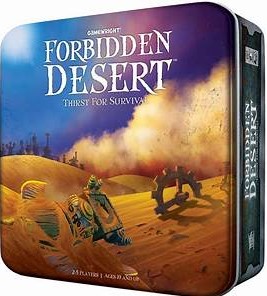
game (a good game to introduce people to boardgaming, especially if they aren’t familiar with modern boardgames) is Forbidden Desert.  You and your fellow players are a team of explorers (also with different roles/abilities like Pandemic, adding to the variability and replayability) trying to find pieces of Leonardo’s flying machine (sort of) before the desert swallows you up or you run out of water.  The difficulty can be adjusted for new, intermediate, or advanced players.  It’s also a short game, and while there is some tension in trying to “beat the clock” together, it’s a fun game providing a good deal of player interaction in a positive way, since you are all working together.  Because of this, it’s also a great game to play with kids (my six-year-old Julia can play pretty well as her own character).
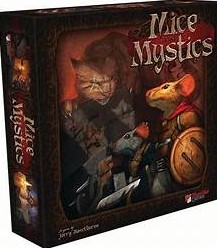
Another good cooperative game even more suited to a family gaming experience is Mice and Mystics.  This is a storytelling fantasy game in which the players are loyal heroes-turned-mice adventuring their way through the castle in an attempt to overcome the villains and bring peace back to the troubled realm.  It is a role-playing game fit for the whole family, with several expansions available to keep the fun and family togetherness going for a long time.
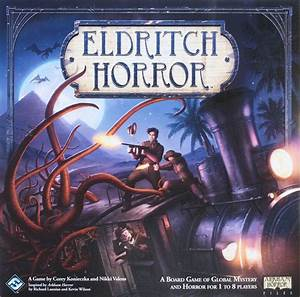
In stark contrast to Mice and Mystics is a definitely older-audience themed game, still with a great deal of  story-telling fun: Eldritch Horror.  Based on the macabre works and worlds of H.P. Lovecraft, Eldritch Horror is a story-telling, mystery-solving, globe-trotting adventure.  It works well as a solo game; it works well with up to 8 players.  As has been discussed here and elsewhere, I am no fan of horror.  I am quite sure I will never read any stories by H.P. Lovecraft.  However, I do enjoy this game.  The horror element is there in part, but it’s a minor part and can be easily glossed over.  It’s a dark mystery storytelling adventure.  This, too, has a number of expansions, so it has a tremendous amount of replayability.  You can be different characters each time, encounter different monsters each time, and investigate different supernatural mysteries and clues each game.  As many of you know, it’s a bit of a streamlining of an older, similar game Arkham Horror, which is another fine cooperative dark mystery in the Cthulhu universe.  I enjoy it, too, but it is longer and a bit scarier (it’s much closer in one town instead of traveling the world, so the menace is more palpable).
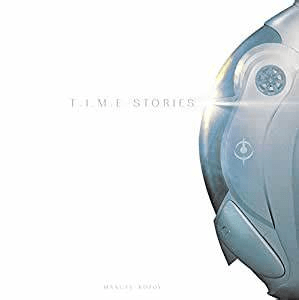
One of the most recent games on this list is also a cooperative storytelling adventure T.I.M.E. Stories.  I haven’t played it, but I’ve seen videos about it, and it’s like a grown-up cooperative “choose your own adventure” system.  The game system comes with one module called “The Asylum.”  Once you’ve played it, you know it all and probably won’t want to play it again.  But, more modules are out and more are on the way, so consider T.I.M.E. Stories more like a gaming system (like a Super Nintendo) and the modules are new game cartridges.  The modules out now are fairly dark like Eldritch Horror, but the ones scheduled to be released soon seem lighter.  It’s an intriguing system about managing time, solving mysteries, gathering clues, going back in time … it looks like Quantum Leap meets Groundhog Day meets Goosebumps.

Semi-cooperative Games
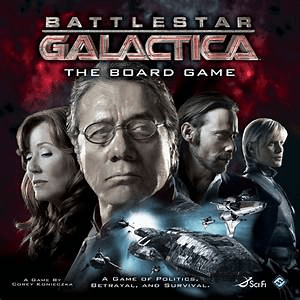
Now that you know about the exciting world of cooperative games (and, like this entire article, we’re only scratching the surface), for those who like an extra challenge, try a semi-cooperative game.  Often, games of this ilk have one or two of the players secretly working against the rest of the group — possibly for personal victory objectives or possibly because that person is working for the villains the rest of you are trying to avoid/conquer.  For me, the best among this group (not that I’ve played them all) is Battlestar Galactica.  As a fan of the show, the theme of this game is mostly what makes it such a fun game.  Even if you aren’t a fan of the show, the tenseness and rollercoaster nature of the game will give you a tremendously enjoyable gaming experience.  Part of the wildness of the game comes from the possibility one or two of the players may switch sides halfway in the game, whether they want to or not — and while that may sound frustrating, since you know that’s a possibility before you start, it’s simply another element of strategy you have to add to the game.  It’s good, tense fun.  It also has expansions to make replayability and playing through the whole series a possibility.

On the fantasy side, Shadows over Camelot is another semi-coop game in which most of you are loyal knights trying to salvage Camelot from the inexorable forces of darkness (Mordred, traitorous Lancelot, invading Picts, and more) … yet it’s possible one of those “loyal” knights is a dirty traitor, but if he or she is playing wisely, you may not know it until it’s too late.  It’s possible, certainly, to play without the traitor element: it’s a challenging enough game without that, so if you want to play a fun coop game set in Camelot with or without traitor tension, this is a very enjoyable, fast-paced game.
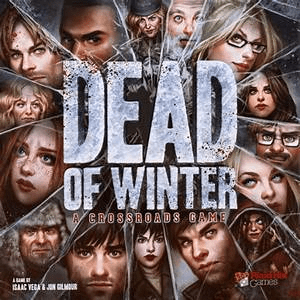
One game I’ll likely never play (in part because I don’t really like the theme) is the beloved and acclaimed Dead of Winter.  I’m told if you like The Walking Dead or other zombie-themed things (I don’t know why you would), you will enjoy this game.  It’s noted for its “crossroads” system, in which decisions are made and situations occur completely unique to every gaming experience that make each play different.  With different character roles, variable missions, and random personal goals each time, it’s got a lot of replay value.

Deckbuilding

One of the more interesting innovations in games lately is the “deckbuilding” game mechanism.  Hearkening back, in a way, to those CCGs of the ’90s, instead of building a whole deck and hoping you get the right cards eventually, deckbuilding games have you start out with a few basic cards and you get to decide what cards to add to the deck and build it yourself during the game.  For many of you, Dominion is the popular choice for this genre of games, and that’s fine.  It was among the first to make this newish mechanism popular and has been a beloved game for several years now, with many expansions and whatnot, but here are some that you may like as well (or more).
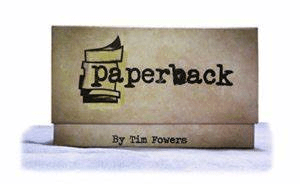
Paperback is especially interesting for those who like Scrabble.  It is a word-building game, but you are also using letters (as cards in your hand and in your deck) to make words that will allow you to get more letters in your deck to make longer, more interesting words and perhaps special words that will give you bonuses and such.  There is a competitive aspect to the game, like Scrabble, but unlike Scrabble you’ll never be stuck with a ZXCEEQF and nowhere to put it on the board.  If you don’t like the competitive aspect, Paperback comes with a cooperative element, in which you and your fellow players are trying to make words to beat the built-in time mechanism (in a sort of reverse Klondike fashion).  This is a great game.
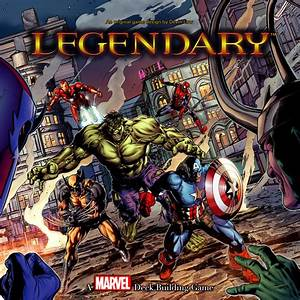
For fans of the Marvel universe, a very enjoyable deckbuilding (and also cooperative) game is Marvel Legendary.  You are SHIELD agents coordinating with powerful Marvel heroes to tackle the main villain and his henchmen.  It takes strategy, cooperation, and a smidgeon of luck, but it is a fun game.  The series has a large number of supplemental releases, so there’s a good chance many of your favorite Marvel heroes/villains are available or soon will be (though, they are slanted toward newer storylines and characters, so I’m a bit concerned some of my favorites from back in the day won’t get released, but that’s okay).  If you would prefer to play as the villains against the heroes, check out Marvel Legendary: Villains.
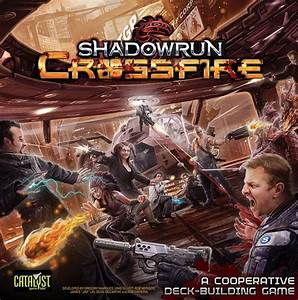
On the flipside, a much more difficult game that may even be more enjoyable as a single-player game (since it gets more difficult the more people who play), is Shadowrun: Crossfire.  This game is hard to win, but when you do, it’s a great feeling.  Better than that, though, is the game grows the more you play.  Unlike Dominion or Legendary, as fun as they are to play, once they’re over, they’re over.  You start from the beginning every time.  Shadowrun: Crossfire is like an RPG (which makes sense, since it’s based on an RPG universe), by this I mean if you win (or get a partial victory), your characters get experience points, and the more experience points you get you can add new abilities to your characters to change the game, often to make it easier.  This allows you to play more difficult missions and makes the game more enjoyable and more challenging.  I’m not usually a huge fan of challenging games, but I really enjoy this one.  It, too, is also a cooperative game.  Expansions are on the way for this one, too.

Dice Games
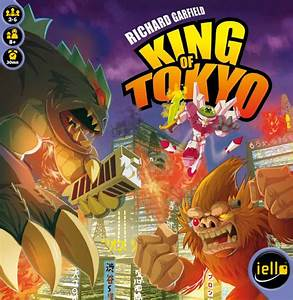
So you like rolling dice, huh?  Miss those ol’ days of Yahtzee and 10,000 and other dice rolling games?  If you like chucking dice, you may really enjoy King of Tokyo.  It is a fast game that plays up to 6 people, so it’s a great game for many reasons.  Each player takes the role of a classic/generic movie monster, each trying to become the King of Tokyo, either by being the most famous or, perhaps more enjoyably, the last monster standing.  Like Yahtzee, it’s a dice rolling game about matching dice combinations, but it also adds cards for variety that makes its replayability level rather high.  The Power Up expansion gives the different characters unique abilities, making it an even more enjoyable game again and again.  (There’s a King of New York and other expansions as well.)
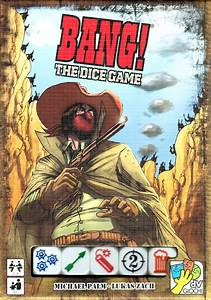
Another fun, fast dice game with a decent amount of theme tossed in is Bang!: The Dice Game.  Like King of Tokyo, you roll the dice a few times to decide which actions you are going to take that turn, balancing helping yourself with attacking the other players, all in the Ol’ West.  It’s an inexpensive, fast game that also has a good deal of replayability.  I’m told it works great with 5 players, so get the whole family together.
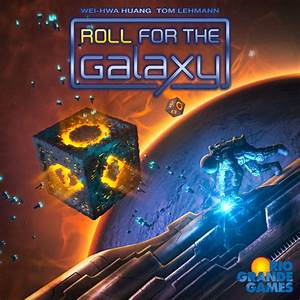
Roll for the Galaxy is a different kind of dice-rolling game.  Similar to some of the Civilization-building games discussed later, this game uses your dice to colonize worlds, ship goods, and develop technologies to advance your space-faring civilization.  Like Bang!: TDG, this is a reimplementation of a card game you may also enjoy if you prefer card games to dice games (called Race for the Galaxy).
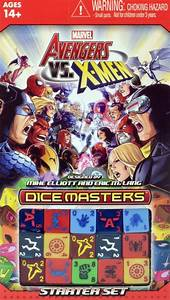
As with all the other games in this section, Marvel Dicemasters uses customized dice to simulate your favorite Marvel heroes battling against your favorite Marvel villains (and also other Marvel heroes, as is their wont).  This game is customizable, has a number of sets (all of which are fully compatible with the others), and also gives you the exciting fun of collecting.  The fun of CCGs back in the day, opening packs and hoping to get the cards you need, is here at a much cheaper level.  The starter sets are inexpensive and complete games by themselves, but the additional fun of getting new cards, new dice, and new characters is also available fairly inexpensively.  It’s a quick game, easy to learn, and great for Marvel fans who like rolling dice.  Also, the designing team have a DC line if you prefer DC characters, a Dungeons & Dragons line, and a Yu-Gi-Oh! line.  Something for (almost) everyone.

Party Games
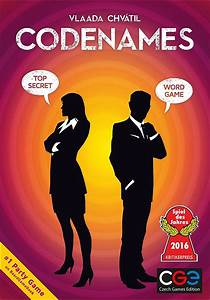
Don’t get me wrong: Apples to Apples is nice and still is holding on, and we even use it ourselves once in a while.  But it’s time on the whole to move on.  When you have a group over and want to play a game, give the new Codenames a try.  From the Web site CoolStuffInc.com (a good site from which to order these games, sometimes cheaper than Amazon): “The two rival spymasters know the secret identities of 25 agents.  Their teammates know the agents only by their Codenames.  The teams compete to see who can make contact with all of their agents first.  Spymasters give one-word clues that can point to multiple words on the board.  Their teammates try to guess words of the right color while avoiding those that belong to the opposing team.  And everyone wants to avoid the assassin.”
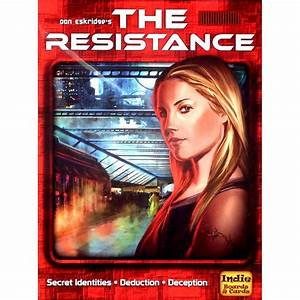
Another kind of team vs. team party game is The Resistance.  Whereas in Codenames you know who is on which side, you aren’t sure who is on your side in The Resistance.  Through deduction and guessing and luck, you attempt to find out on which team the other players are and who is not being as forthright as you.  A fun bluffing game with expansions available to make the game even more diverse and replayable.
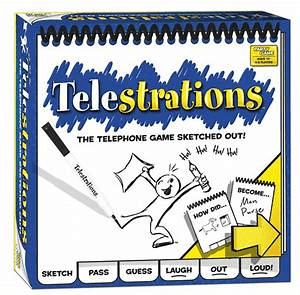
If you miss the fun of Pictionary and the like, perhaps you should give Telestrations a try.  It’s a bit like Pictionary mixed with Telephone, and a whole lot of fun and laughter throughout.  If you were frustrated by Pictionary and others of its ilk, give this a try, especially if you enjoy having fun with fun people.
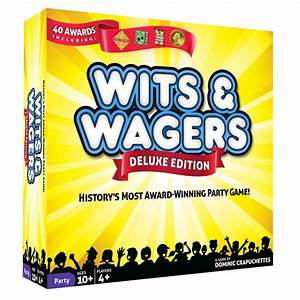
If you like trivia games such as Trivial Pursuit, or at least want to like them but always seem to end up getting the ridiculously hard questions and the people you know you are far smarter than end up getting questions like “Are you on the Earth or the moon?” you will probably enjoy playing Wits & Wagers, especially the Family Edition.  You aren’t really supposed to know the answer, but if you think someone playing does have it (or is closer, since it’s basically guessing numbers and closest wins without going over, like The Price is Right), you can wager on that person’s guess and possibly get points for yourself.  It’s good fun for the family and/or group, doesn’t frustrate you nearly as much as other trivia games, and is not nearly as long as those as well.
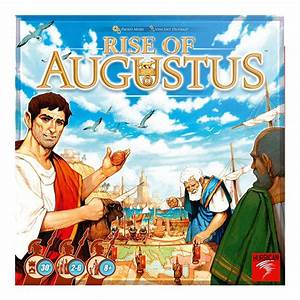
Another party game that works well as a family game is Rise of Augustus.  It’s basically Bingo, but it has just enough strategy sprinkled on top of it to make it fun for adults as well.  With teams, you can play this with a decent number of people, but for smaller groups it works even better.  It’s another fast game you’ll probably want to play more than once in a night.

Filler Games
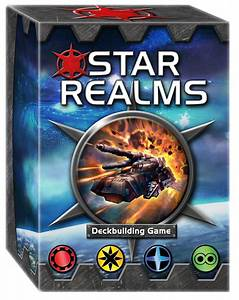
If you want to play a fun game and only have a few minutes, here are a few simple card games that will give you some fast fun.  Star Realms is a very popular deckbuilding game that, unlike the cooperative deckbuilders above, is just about blowing up the other player’s spacefleet.  It is very simple to learn, simple to play, but its simplicity is part of its streamlined fun.  It’s a whole lot of fun for under $15.
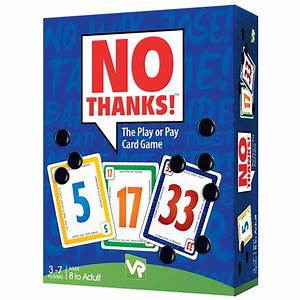
No Thanks! is a clever sort of hand-eliminating game (think Uno but with strategy and fun).  You don’t want cards because you get points for having cards and the lowest score wins.  Instead of taking cards you can spend a chip to pass … but soon you’ll run out of chips and you’ll possibly have to take cards worse than the ones you didn’t want earlier.  All of this clever strategy and hand management and such takes places in about twenty minutes.
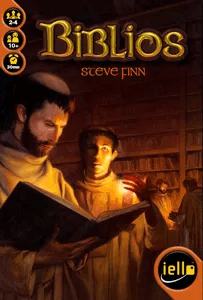
Biblios is an interesting themed game about competing medieval librarians trying to construct the most influential library of rare and sundry tomes.  You have to manage your gold and workforce well to dominate different categories that give different points — whoever has the most points wins, but you will all win because you’ve played a fun game in a short amount of time.  And then you’ll want to read The Name of the Rose, and then your life will be even more rich and full.

Civilization Games

The other end of the spectrum from filler games are epic civilization games, one of my favorite kind of game (being a fan, as you know, of epic poems and epic TV series).  Here are two faster-paced, simpler Civilization building games very accessible to new gamers – and two  incredibly lengthy games that tells a grandiose story over one full day of gaming (one of which happens to be my favorite board game).
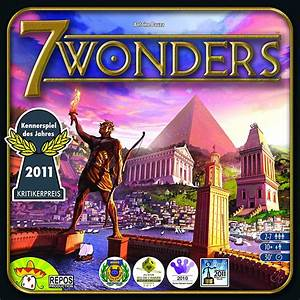
7 Wonders is a fast card drafting game (you decide which card you want to take, but you also have to ponder whether you want your opponents to get the cards you may pass on, too) in which you develop a civilization, build ancient Wonders of the world, and dominate.  It’s a great “gateway” game, plus it has a number of expansions that add replayability and freshness.  Even if you think the game is too simple, the Babel expansion will give it new life for you.
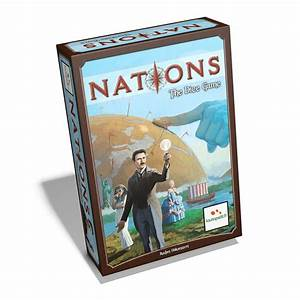
Nations the Dice Game is all about rolling dice to make your nation the dominant culture in the world from the ancient past to the modern day.  Similar to deckbuilders, you are using your simple initial dice to acquire better dice, which enable you to increase the strength of your military, increase your food production, increase your cultural-literary output, and build helpful wonders and recruit helpful leaders.  It’s actually much less complicated than I have made it sound, and it is a very fast game to understand and play.  You’ll likely have difficulty playing it only once.

For the space-civilization conquering itch, perhaps Twilight Imperium IV will suit you.  It’s a beloved game of interstellar conquest, exploration, diplomacy, and civilization building that certainly takes a decent amount of time to play, but the grand sweep of the gaming experience certainly pays off the time investment, especially if you like grand “space opera” tales (more on Star Wars later).
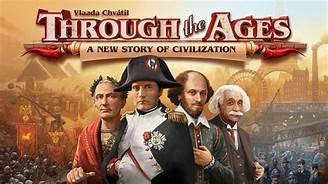
My favorite boardgame currently, possibly of all time (we’ll see) is undoubtedly Through the Ages.  It’s a beast of a game, not difficult to play but as I said you have to carve out a day of your life to play it (unless you want to play the Basic game, which would only take a couple hours, but why would you want to deprive yourself of such a wonderful experience?).  This game takes you on such an exciting, wonderful journey from Ancient times up to the Modern Age.  It’s a card game at heart, but it’s easy to forget that since the immersion in Civilization building is so rich.  You have to keep your people happy (an easy way to do that is through religion, which is a nice change from most Civ. games that treat religion as “mystical nonsense” only for underdeveloped simpletons), you have to feed your people, you have to develop science and art and culture … and it’s a total blast.  Like with all of these games, you have leaders that help you, Wonders to build, possibly a military to expand (but becoming an overly dominant military power brings you more problems than benefits), colonies to explore, treaties to make, calamities to avoid, all the while creating a deep, satisfying story of your empire, a story you will remember for a long time.  A 2nd edition is undergoing refinement while we speak, which is intriguing and also means the original is becoming more affordable by the minute.

“I Win!” Games (Racing and Area Control)
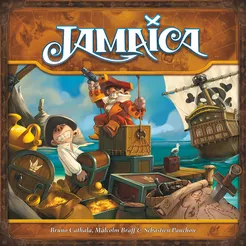
If you like the old race-around-the-board type games like Sorry! or Parcheesi and almost any other roll-and-move game from days gone by, perhaps a more enjoyable modern version you’d like even more is Jamaica.  A pirate-themed racing game, Jamaica gives you more choices than simple roll-and-move games, but your choices are limited somewhat so you have to think both short-term needs and long-term strategy (though “long term” is likely only about thirty minutes).  Once everyone knows what they are doing, it’s a fairly rapid game, which is thematically more enjoyable for a racing game.  It has a few layers of strategy even with your limited choices, but it is still accessible for kids, once they get the hang of it.

Camel Up is a recent award-winning game about racing camels. Stay with me, now.  You are trying to guess which camel will win the race and place your wagers accordingly (normally we at Redeeming Pandora would not enjoin our audience to gamble, but this is only a game, so have some vicarious fun).  As with all races, sometimes the camels will run the way you want them to, then suddenly a camel will sneak under it and jump into the lead and it’s suddenly anyone’s race.
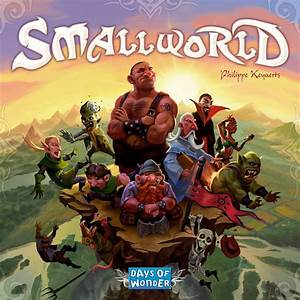
If you grew up on Risk and the first question that springs to your mind when someone mentions a board game is “So it’s like Risk?” (or “So it’s like Monopoly?”), the next three games may bring you back to those halcyon days of conquering the world, but now you might be able to have that sort of fun a tad bit faster.  And actually have fun this time.  Small World is a much-beloved goofy fantasy game basically all about area control (taking over spots on the board, which is effectively what Risk and Diplomacy were all about, when they weren’t busy destroying friendships and ruining families).  Your fantasy race starts somewhere on the board, tries to dominate as much territory as possible, then gets replaced by your next race of world conquerors — but watch your back, since that’s what everyone else is trying to do.
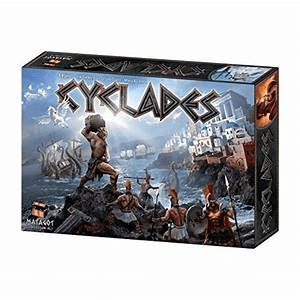
If you like ancient world games, Cyclades may be right up your alley. You have to appease different Greek gods to do different actions (Ares for war, Poseidon for movement, Athena for wisdom/schooling, Apollo for wealth, etc. — most of it makes a fair amount of thematic sense), but you are competing with the other players for the god’s favor.  Add the Titans expansion if you really want an Ancient-world Risk-like feel.
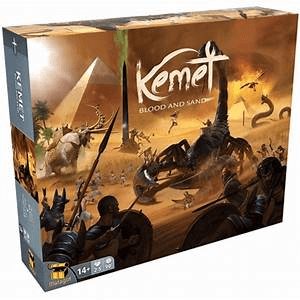
If Egypt is more to your liking than Greece, Kemet is probably the smash-em-up world-domination game for you.  This is initially a more straightforward Risk-in-Egypt game (but fast and fun), but it has enough other strategic layers to make it more than just a mindless crush-your-enemies game.  If you want to mix-and-match your Egyptian and Greek monsters for a mga-brawl, check out the C3K expansion that allows you to do just that.

Strategy Games

In one sense, most of these games are “strategic” (and hopefully by now you can see why games with strategy are more fun and more rewarding than purely deterministic games that dictate what you can do each turn and give you no real decisions or options), but I needed a generic category just to talk about some really fun games that don’t have much else in common other than being thought-provoking games of fun.
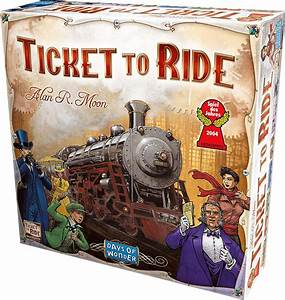
Ticket to Ride in its many incarnations are great “gateway” strategy games for you.  If you haven’t played any boardgames since Risk or Monopoly and you are a bit hesitant to try one of the deeper games, Ticket to Ride or Forbidden Desert or 7 Wonders or King of Tokyo would be excellent places to start.  Ticket to Ride is a simple set collection game in which you are collecting similar-colored train cards in order to turn them into railroad routes from one city to another.  Completed rail routes get you points.  It’s even simpler and more enjoyable than I’ve made it sound.  The basic Ticket to Ride features the USA, and the other incarnations feature the country in their title, so plenty of options, plenty of variety, plenty of replay value, and plenty of good times.
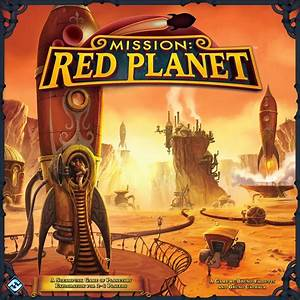
A sort of medium-weight strategy game, Mission: Red Planet combines a lot of different kinds of game mechanisms such as area control and hand management, so it’s a good introduction to other ways to play games beyond rolling a die and moving around a board.  You are racing the other players to Mars, but you need to do more than get there: sometimes you need to focus on stopping your opponents from sending their explorers.  It gives you lots of easily comprehensible options and is a fast, rich game.

Have you ever wanted to play Star Wars?  Here it is: Star Wars in a box … Imperial Assault.  One of you gets to play as the Alliance, one of you gets to play as the Empire.  True, one potential drawback to this is its modular nature, in that it doesn’t come with all your favorite characters and weapons and settings in the initial box.  You have to buy the Han Solo pack, the Chewbacca pack, the Boba Fett pack, et cetera, but you could always ask for them for Christmas as great stocking stuffers along with more packs of Dice Masters, so that takes care of that problem.  This is the highly accessible strategy game for Star Wars fans.
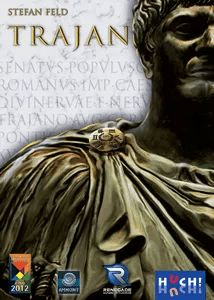
Deeper strategy is required for a very enjoyable game, Trajan.  You and your fellow players are competing consuls, vying for Emperor Trajan’s approval by improving various aspects of Rome: rebuilding the infrastructure, hobnobbing with senators, shipping goods to allies, leading armies in conquest of new territories, and more.  Using the centuries-old Mancala mechanism determines the actions you can take, but you also have the opportunity to create a string of bonus actions to get victory points all over the place.  It’s not really as complicated as I’ve made it out to be, but it is a deep, rich strategic game with many paths to victory and fun you’ll want to play it again and again.
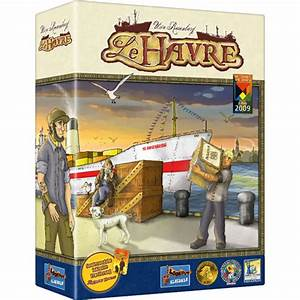
Le Havre is another deep strategic game about creating the most prosperous harbor by building ships, gathering goods, constructing special buildings, and, as always with designer Uwe Rosenberg’s games, feeding your people. A good deal of its depth consists in the fact you can only do one thing per turn.  You have one choice: acquire resources or use a special building.  And that’s what you do.  Sometimes you’ll have enough money to buy a building, too, but not often.  It’s an incredible brain-burning game that really helps you develop those strategic thinking skills you’ve wanted to develop.

Another unusual strategy game with an interesting theme is Rococo, in which players are competing dressmakers trying to get your gowns and suits on the most Parisian nobles attending Louis XV’s grand ball at the end of the game.  You have to manage your action cards very well to get the resources you need, make the dresses, put the dresses on the right people in the right places, and string together bonus points and bonus actions as much as you can.  It’s another enjoyable brain-burner (in a good way).
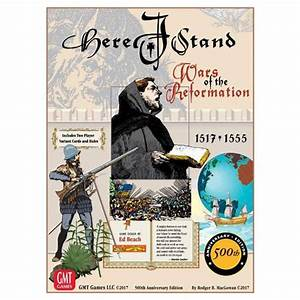
When you and your family is ready for something big, and you feel like getting into real historical simulations (I promised myself I wouldn’t put any wargames on this list), go all out with Here I Stand.  One player is Luther trying to get the Reformation going; another is Pope Leo trying to squelch the Reformation.  Another player is Henry VIII taking care of England (and trying to get a male heir); another is France, a fifth is Suleiman and the Ottomans, and a sixth player controls Charles V and the Habsburgs.  It’s a card-driven game, in that you have a hand of cards that could either be events for the board or points for actions, depending on which nationality you are.  It’s a big game, but it provides a great deal of historical immersion and tremendously fun gameplay.  Once you’ve mastered this (!), check out the sequel, The Virgin Queen, about, you guessed her, Elizabeth I.

Worker Placement Games
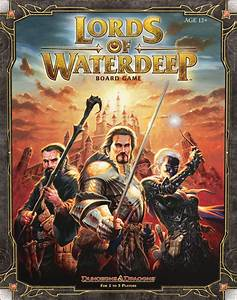
Another innovative game design of late is “worker placement” games.  Instead of moving lineally around a board, worker placement games have players place a certain number of workers (or rolled dice or what have you) on select portions of the game board that activate different game effects, such as gathering resources, advancing along information tracks, transporting goods from one place to another, or other game elements depending on what kind of game it is.  One very enjoyable “gateway” worker placement game is Lords of Waterdeep.  Don’t be fooled by the Dungeons & Dragons veneer, especially if you don’t like D&D: you are not really fighting monsters or casting spells.  Instead, you are competing councilmembers or lords of the town hiring different heroes to go on quests that make your city a better place.  You place your workers to hire different kinds of heroes, get money to hire them, get different quests that give you points (which translate into how well you have improved the town for the people), raise influence in the town, build new buildings that give you more options and faster/better resources, and much more.  Even people who don’t like D&D/fantasy will have a very good time playing this.  Once you’ve mastered it, get the expansion Scoundrels of Skullport to add more quests, more resources, more options, and more fun.

Another brain-burning strategic worker placement game from Uwe Rosenberg is Caverna, a fun, challenging game about Dwarf cave farmers conquering the wilderness and making their home a better place for their burgeoning family.  You have to feed your family as always, but you have many options of how to pursue victory: you can cut down the forest and make spaces for sheep pens, pig pens, and horse pastures, or, perhaps, farmland to feed your family.  Additionally, you can mine your cave for rubies or transform your cave into beautiful, useful rooms — many different kinds of rooms give different bonuses, different abilities, different reasons to play again and again. It’s a big, heavy box, but it comes with a whole lot of game that plays well for 2-7 players.
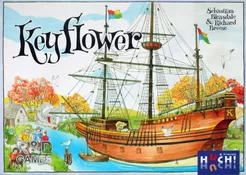
Finally, another diverse kind of worker placement game is the unique Keyflower.  This clever game simulates a small city building game and a worker placement idea with a twist: if you send your workers to another person’s spot, you’ll get those resources but effectively your worker is moving to their town and you just lost a worker.  You’ll get others later, but it’s an interesting variation.  On top of that, you also have to use your potential workforce as auction currency, deciding if you want new tiles to add to your city (which you’ll need to do to gain points to win) or immediate resource benefits or long-term worker options.  It’s a very clever game that doesn’t take a whole lot of time and does things differently but intuitively to combine for a unique, enjoyable thought-provoking package.

Whew.  Was that too much?  Go big and go home, that’s my motto.  I’m not telling you you have to go out and buy all these games (I don’t own nearly all of them myself) — remember, the point of this was to tell you there is another kind of revolution going on in our lifetime: a boardgaming revolution.  We are in what may be but the nascence of the 2nd Golden Age of Boardgaming.  And, believe me, this was not the tip of the iceberg.  This was the tip of the tip of the iceberg.  This barely scratches the surface of the hundreds and hundreds and hundreds of great games made in the last couple of decades.  If you like rolling dice, we’ve got fun dice games for you.  If you like card games, card games have been taken to a whole new level of fun.  Family games are no longer just silly, thoughtless roll-and-move games with no brains or strategy.  Games based on beloved books, television shows, or movies are no longer just the cheap, bland, superficial tenuous tie-in games of yesteryear.  This is an exciting time to be alive, especially if you enjoy having fun.

If you are reading this before Christmas, clearly any of these games would be an ideal present for one or more members of your family or friend-family.  If you are reading this after Christmas, here are some ideas for those gift cards you got in your stocking, or ideas to start the New Year off right: quality experiences with people you love.

Do you want to salvage Family Time?  Do you want something intelligent, social, interactive, inexpensive, sustaining, and worthwhile you can do together as a family or as friends (other than high-quality Bible studies)?  Of course you do.  Now that you and I have extirpated cynicism from our lives, it’s time to fill that hole with open-hearted generosity and heart-warming memories (and love, joy, peace, patience, kindness, goodness, faithfulness, gentleness, and self-control, of course).

Get one of these boardgames and salvage Christmastime and Family Time.

Unplug.

Declutter.

Relax.

Play.

Enjoy.

Laugh.

Love.

Live.

Merry Christmas!  See you in 2016!

2022 Editor’s Note

A few of these games are out of print and very hard to get, sadly. Many of them are on new editions – for those of you playing along at home, I updated many of the pictures from the original article in 2015 with the new versions, new covers, and new editions (especially Twilight Imperium IV, which was only 3rd edition back in the day). I also have played more of these games since then, such as TIME Stories, in case you are wondering. Sure, a lot of good games have come out since then, and many games that are even better than some of these, but these are still enjoyable (if you can track them down).
A Return to Prydain

Christopher Rush

As part of my quest in 2015 to read more enjoyable books, I finally returned to my favorite books of my youth, the Chronicles of Prydain by Lloyd Alexander.  These were the books that got me into fantasy, sooner than Tolkien, and so they have a special place in my heart.  These are probably still my favorite books of all time, and they are so good it would be insulting to say “they still hold up” – great art has nothing to do with temporal standards.  These reviews, as usual, were initial reactions off the top of my head when I first re-read them, so they aren’t a cohesive analysis of the books, though it’s possible that may be forthcoming sooner or later in one of these issues.  They are mostly spoiler free, though it’s hard not to mention a few important things here and there.  Please don’t take my word for how good they are, though: go read them for yourself.

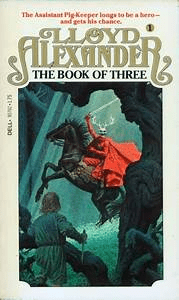
The Book of Three ⭐⭐⭐⭐

For an introduction to a series, this book serves all the appropriate functions. Some find the similarities between this and The Lord of the Rings as a strong mark against The Book of Three and all of the Chronicles of Prydain, but that is as nonsensical as anything could possibly be. Alexander, like Tolkien, is intentionally dealing with mythic elements, things so old and common to the history of literature, naturally Alexander’s use of archetypes will be familiar to people who have read things that utilize similar mythic archetypes. Alexander, though, is not merely paraphrasing Tolkien or Welsh mythology or anything. He combines meaningful elements with wit, humor, and a breadth not necessarily better than Tolkien but distinct enough to warrant this series standing on its own. Taran is no Frodo; Gwydion is certainly no Aragorn. We have no idea truly what The Book of Three is, and that mystery is a wonderful component of this story.

Alexander does a great job of introducing us to our young, impetuous, headstrong hero and thrusting him rapidly into a believable adventure that grows sensibly chapter by chapter. Coincidences abound, sure, but that happens in high quality fantasy, award-winning fiction, and real life. Taran is brash and makes mistakes, for which he is upbraided by the wise Gwydion and impetuous Eilonwy, creating a valid young hero-in-training for this series of adventures. Eilonwy is an interesting Princess, and Fflewdur is a clever addition to this rag-tag group of adventuring companions. Gurgi is a great character, and it is impressive Alexander has his relationship with Taran grow as it does. Doli is certainly an un-Tolkien character as well as the entire depiction of Fair Folk or Dwarves.

The amount of menacing villains may seem heavy, especially in an introductory book, but Alexander does a fine job balancing the significance of all of them, giving Achren a very menacing premiere, Arawn a mysterious-yet-palpable presence, and the Horned King a fine spotlight as the major enemy, occasional as his appearances may be. The resolution of this adventure may feel somewhat forced, but a closer examination of it shows how distinct it is. Instead of the young hero getting to use the mighty magic weapon and saving the day in all unlikelihood, the actual well-trained, knowledgeable hero saves the day, while the impetuous youth suffers appropriately for doing what he had no business doing.

Alexander makes this a believable fantasy world, with real consequences for good and evil actions. He shows the importance of pursuing good even if it costly, and even heroes-in-training need to be polite to princesses. Sometimes the desire for adventure proves a poor desire. Reading this, though, is always the right choice.

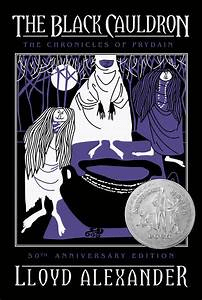
The Black Cauldron ⭐⭐⭐⭐⭐

Perhaps the most remarkable aspect of this book is Alexander’s way of taking characters we know and love from a book that had some serious moments plus a fair amount of goofy, lighthearted moments with an overall upbeat feeling and placing those characters in the same world yet wholly opposite circumstances. The Book of Three does indeed have many sorrowful and disheartening moments, especially while Taran believes Gwydion is dead, but it is mostly an optimistic book with Eilonwy and Fflewdur keeping it rather lighthearted and the ending’s relief-filled optimism assures us the world is safe. Almost immediately in The Black Cauldron, though, a heavy pall seems to spread over our characters and their world. Despite a fairly rambunctious gathering of old friends and new (especially Smoit’s enthusiasm), Gwydion makes it clear this is not a time of celebrations: it is a time, rather, of desperation and self-sacrificial heroism.

Throughout the book, things get worse and worse for these people we love, despite their best efforts and their most selfless sacrifices. Alexander introduces an impressive collection of new characters, only to take them to heart-wrenching places and destinies: it is a non-stop pathos-filled adventure. Also impressive is the fact so much of this melancholy tale is a series of quiet moments of painful decisions: there is very little action present; we only hear about the action second-hand. Even the dramatic conclusion in which new characters, especially, are driven to extremes of character (in wholly believable ways) is predominantly quiet, punctuated as it is by rapid flashes of action.
It is a remarkably somber book, yet its pacing and atmosphere are as riveting as any tale of swashbuckling high adventure. We can totally see everything that is coming from far away, yet every aspect of it is fresh and surprising when it arrives. Alexander does so much new with what we assume will be familiar we are astounded again and again.

The impressive pacing is seen especially in Taran’s character: at the end of The Book of Three, we basically think we know where Taran’s character is going to go and how he is going to get there, yet each new novel in The Chronicles of Prydain smashes our assumptions into embarrassing smithereens, especially in The Black Cauldron. For the first time, Taran faces very personal foes, up close. His decisions throughout are terribly painful and deep, yet everything he does and says is wholly believable considering where we left him in TBoT and where he is now and what they are doing. It is all so gradual and realistic it is, frankly, stupendous and devoid of the typical “fantasy hero superlatives” that would have sprung up in lesser writers. Even the lessons Gwydion emphasizes for Taran at the end are necessary for Taran to learn, as he needs this wisdom spelled out for him (as we all do when young) — Taran doesn’t just magically acquire wisdom and generosity of spirit without learning them through painful, poignant lessons — and, by golly, the lessons of The Black Cauldron are truly painful and poignant. And also beautiful. 5 stars, no question about it.

The Castle of Llyr ⭐⭐⭐⭐

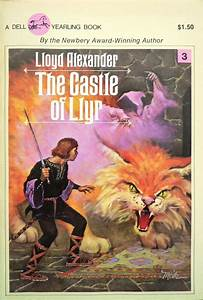
As Alexander’s masterful pacing continues, the middle of the epic gives us some much-needed comic relief after the somber intensity of The Black Cauldron. Some more time has passed, and the gossamer-strong relationship between Taran and Eilonwy takes center stage, but in such a clever way only Lloyd Alexander can deliver. It is time for Eilonwy to learn how to be a lady and a princess, something not even Dallben can teach her. This is not a welcome thought for Taran, as it means Eilonwy no longer being around and is a palpable reminder she is noble and thus likely not going to marry a foundling assistant pig keeper. While this book could have been an engaging story centered around Eilonwy’s time learning how to be a princess and a lady (and possibly Taran’s comic misadventures either spying on her or bidding his time elsewhere), Alexander postpones that sort of thing by placing Eilonwy in danger (with the return of an old enemy) and Taran desperately seeking to come to her rescue. Old friends and new characters come along for the ride, which is full of humorous scenes as well as heartbreaking moments and deeply moving experiences as well.

Part of the brilliance of this book comes from how well the development of Taran’s character is demonstrated. We’ve said before how well Alexander paces Taran’s development, and here just how far he has come (and how far he still has to go) is displayed against the new character Prince Rhun, a kind of comedic-antagonist foil for Taran. Rhun is suddenly a rival for Eilonwy’s hand (and heart), but Taran can’t simply dislike him as he somehow is given charge over Rhun’s wellbeing. Making it more frustrating for Taran is how congenial and gracious Rhun is (and oblivious) throughout their time together (in stark contrast to Ellidyr in The Black Cauldron). Rhun seems very much like Taran from The Book of Three, giving us insight, as I said, to how Taran is no longer what he once was. He also learns through more painful experiences (despite this being “the comedic episode” of the series) how far he has to go to become a full, generous man, learning even from inexperienced, bumpkin Rhun key lessons of maturity (and from other surprising sources as well). It’s another great book.

Taran Wanderer ⭐⭐⭐⭐⭐

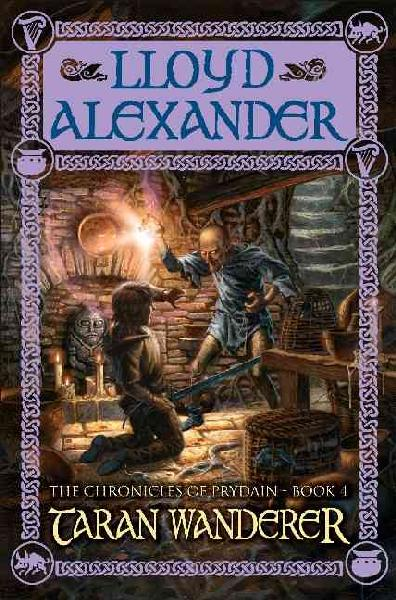
This is a magisterial book. If it has any flaws, I certainly can’t find them, except that it ends. I would not mind if this book went on for another two or three hundred pages or so (but I like the Wheel of Time, so maybe it’s just me). I don’t want to spoil it too much here, but we should discuss a few of the unique aspects of this story. The choice of no Eilonwy in the book is an impressive one, even if we miss her a great deal. Her presence is always there, of course, since Taran is doing virtually everything he is doing in this book partly to become the kind of man of whom Eilonwy will approve. Meanwhile, Eilonwy is back in Mona learning how to be a proper lady and princess (and, presumably, a queen of some country some day) — so both of them need to do what they need to do. This reminds me a good deal of season 4 of Babylon 5, naturally, since it’s virtually identical to what happens there (except Delenn is far more in favor of these choices than Eilonwy). Clearly this is necessary for both characters, and the steady progression of Taran’s maturity is especially impressive (as it has been the entire series), more so because for the first time he is wholly on his own (no offense to loyal Gurgi, who is always by Taran’s side). Gwydion is also absent from this novel: Taran must make all his decisions alone; Gwydion is not here to rescue him this time.

Finally, though, Taran is ready for such a journey and such responsibilities. He is no longer motivated by seeking out adventure for its own sake: he must become a nobleman eligible for a princess’s hand in marriage. Unlike most quests of this ilk, in which the hero is not aware he is looking for himself, Alexander cuts out the frothy stuff and allows us to focus on the real intent of Taran’s quest: his heritage and his identity. Every episode of Taran’s quest is memorable in different ways. Even the ones that seem in hindsight obvious and stereotypical are worthwhile moments that shape Taran in important ways. More importantly, Alexander always directs us to relish in Taran’s intellectual and emotional growth through these experiences: some of them are positive, many of them are painful, and all of them are necessary. I’d love to tackle them all individually, but that will require too much time to do justice to them than allowed for here (and I don’t want to spoil any more than necessary).

Some old friends do return, though: Fflewddur and Llyan are back for a time, Kaw is back here and there, and even good ol’ Doli stops by for a brief adventure. We get to see King Smoit in a slightly happier venue for a time, which is nice, especially as he is one of the few noblemen Taran can learn from (in his quest to become/discover his nobility), even though Taran encounters difficulties wherever he goes. Even the witches of Morva are around for some telling scenes (though “telling” is the wrong word for them, certainly).

While these friends (and ever-present, ever-faithful Gurgi) are helpful for a time, the real heart of the story is Taran and his growth, and the new characters he meets. Again, to discuss them all here would be counter-productive and spoilery, but suffice it to say they are all great episodes (even the “obvious” ones). The closer Taran gets to his goal, the less he cares about it and starts to focus on the people of Prydain: there is more to this world than the adventures of a small band seemingly-single-grouped against Arawn Death-Lord — people are farming, weaving, smithing, and simply living. Another intriguing element is the pervasive element of roguishness: not everyone in Prydain is a “good” person. Just like we saw in book two, and Magg in book 3, some people in this world are just mean and selfish and don’t seem to care Arawn Death-Lord is out there trying to destroy everything and everyone — no, that’s just not enough; they need to steal, kill, and destroy (and spoil) as well. Oh well.

This is a great book, possibly the best of the series, but let’s not quibble over that — it’s best to think of the series as a whole, with each novel a necessary component of the entire saga. This one, though, with its many quiet, heartbreakingly wonderful moments, is a definite standout. We are all Taran in this one. He is showing us our lives, our joys, our heartaches. Don’t miss this series, especially this entry.

The High King ⭐⭐⭐⭐⭐

A masterful conclusion to a masterful series, all the naysayers who say this series is only for children and doesn’t stand up to grown-up readings and this and that should, in fact, be truly naysayers: say nothing, stop speaking, stop pretending they know about books and such. This holds up so well saying “it holds up” is an insult. It’s a good book. It begins rather close on the heels of Taran Wanderer, giving us the impression not much time has happened since Taran found the Mirror of Lunet, which is probably for the best. Time passes quickly in books four and five, so one has to pay attention while reading it (but that’s not a difficult chore). As with all the books in the series, the impetus for the plotline occurs almost immediately. Those of us who love our time in Prydain may wish for a slower beginning (but that’s what The Wheel of Time is for), time for Taran to acclimate to his new life of self-awareness, but that’s not how the series operates. It’s a possibility, and that’s what the characters have planned: a leisurely time of rejoicing while Eilonwy is visiting from Mona, with all the ol’ friends together again for a time. But, instead, we are immediately thrown into a dangerous turn of events: Arawn has wounded Gwydion and stolen Dyrnwyn, and if those weren’t bad enough, it’s only his opening gambit — Arawn is amassing all his vile armies for total destruction on the free peoples. It is time for the final battle. We knew it was going to happen (it often does in fantasy series like this), and the end is suddenly upon us.

Similar to other series, which is not a detraction, not all of our friends make it to the end: adding to the painful realism of this series, we have to say goodbye to characters we have come to know and love before the final pages, and while they are all sad and unexpected, and the last is the saddest of all, they are all far more meaningful and realistic than the losses in Deathly Hallows and The Hobbit and a lot of other books that just kill off characters to no purpose.

The pace is quick in this one, in stark contrast to the previous book, but all of that is intentional and well-plotted. The scope of this is likewise distinct from the last couple of books, ranging all over the world of Prydain even more than Taran Wanderer, especially in the rapidity with which we travel the world. It’s likely the pace of the story that makes it feel like a bigger scope than the others, in that while we don’t go to many new places (like we did for most of the middle three novels), we go to places we haven’t seen for several books, go to almost all the old familiar places quickly, gathering almost all our old friends together for a massive army to combat Arawn, and then it all explodes in our faces multiple times, brilliantly, painfully, and wonderfully. We do (finally) get to two new places: Caer Dathyl and Mount Doom. What our imaginations have filled in, especially from the first book (we assume Taran and Co. spent some time with Gwydion and High King Math after that book), has proven true: Taran and Co. have been to Caer Dathyl before, but now we finally get to see it ourselves in all its splendor. We also get to see Annuvin and meet Arawn himself in the slam-bang finish of the book.

Lloyd Alexander ties up effectively every thread, character, and idea from the entire series very well with this, the longest of the series (and I would have been just fine if it were even longer): even people and ideas from the first book we may have forgotten come back in a rich, satisfying conclusion. Even the idea of the long-lost arts of farming, smithing, and the magic treasures long-since plundered by Arawn is brought to a satisfying conclusion, far better than what we assumed or hoped would happen. I don’t want to spoil it any more here, except to reiterate how thoroughly and beautifully Mr. Alexander draws it all together. Not every single thing we’ve been wanting to know is answered, but even the manner of the “non-answer” is exactly the point (and this is true for multiple facets of the series and characters, and those who don’t get it are probably the same people who think this series doesn’t age well).

As heartbreakingly wonderful as the conclusion of the novel is, for multiple reasons, it’s quite possible Gwydion is wrong in his final words to Taran. Whether they get on one more ship like Sam years later or whatever it may be, I do not believe that was the last time the companions are together. We will all be together with them in the Summer Country for a long, long time.

Forever, in fact.

Not Separate, Not Sufficient

Katie Arthur

The word “holy” has been used throughout time to mean many different things, but I will be using it in a very specific sense that has very little to do with the halos around the apostles’ heads in those flat early paintings.  When we see the gold words pressed into the kind crinkly black leather, “The Holy Bible,” the word “holy” takes on two important implications.  Because it is holy, it is first separate.  It is on its own level high above all other teaching, in authority, trustworthiness, and power because it is not from human minds, but from the mind of God.  Second, it is sufficient.  Because it is the highest, most ideal form of teaching, it is necessarily the most comprehensive.  None other is needed.  God, being by nature perfect, would not create something incomplete if it needed to be complete.

In 17th-century Europe, the Renaissance was reintroducing a general appreciation for academia in the ancient manner, for classical ideals and thoughts.  Living among the upheaval of traditional thought patterns was John Milton, a Puritan, not a Catholic, and beyond that, not an Anglican.  He was a very independent man in his views on everything in life.  The Renaissance gave him leave to use his mind as he wished, and his Puritanism gave him leave to use his beliefs as he wished.

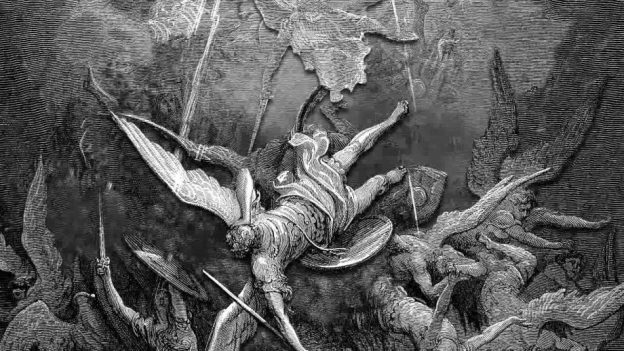
In this setting of classicism, of noble and high estimations of the intellectual mind of man, paired with his fierce independence, Milton goes into creating the greatest poetic work in the English language.  With the general intellectual interest shifting back to the classical period, naturally the literary structures of the Renaissance were also informed by the classical modes, and most specifically by the ancients’ mythology.  Guibbory points out because the themes and patterns of the ancients’ writings had been instilled in him since the beginning of his education, Milton must necessarily be influenced in the way he thinks and writes, even about Christianity, by this classical mythology.  I would argue, based on the personal freedom he exercised, and that freedom seen especially in his doctrine of Written Scripture, it is clear Milton did not consider the written Word of God to be “holy,” and this is the reason for his rampant use of the styles and themes from classical mythology in Paradise Lost.  For Milton, the Bible was not separate, for he used mythology and scripture together.  For Milton, neither was it sufficient, for he found he could not write about Ultimate Truths completely without the use of his classical mythology.

Milton wrote a giant treatise outlining all his beliefs on all things Christianity, and within it, we find he believed some things about the Scriptures that are key to understanding the way he wrote Paradise Lost.  He says in his De Doctrina Christiana the Scriptures are “divinely inspired” and “an ideal instrument for educating even unlearned readers in those matters which have most to do with salvation(Kerrigan 1296).  Milton says the written word is sufficient for salvation, but he goes on to say “we have, particularly under the gospel, a double scripture.  There is the external scripture of the written word and the internal scripture of the Holy Spirit which he, according to God’s promise, has engraved upon the hearts of the believers, and which is certainly not to be neglected.…  The pre-eminent and supreme authority, however, is the authority of the Spirit, which is internal, and the individual possession of each man.…  The external scripture, particularly the New Testament, has often been liable to corruption and is, in fact, corrupt.…  But no one can corrupt the Spirit which guides man to truth” (1300).

This brings up a valid concern in the mind of a careful reader who would like to believe Milton was trustworthy in his handling of the written Word.  If we take this idea to its fullest, albeit, most cynical, conclusions, this looks like an excuse for the Christian to interpret the written Word, and even further, to live his life, taking whatever licenses he desires, all with the assumption of the Holy Spirit working in him the internal scripture.  The only thing keeping him in line is the power of the Holy Spirit, about which Milton is strangely silent in De Doctrina Christiana.  He does not mention anything at all about the Spirit’s day-to-day work in the believer.  He only presents his thoughts on the Spirit’s nature.  It seems Milton believes in the Spirit’s presence and working in the Christian’s life, but decides not to deal with how or to what extent He works.  By ignoring it, Milton leaves himself free to simply live his life, again, however he chooses, assuming the Spirit is working somehow in it.

Peggy Samuels talks in her article “Dueling Erasers” about Milton’s view of the Holy Spirit and the reader of the Scriptures.  She says there is a triadic relationship among the reader, the text, and the Holy Spirit, and the text and the reader deal with each other in the reading process while the Holy Spirit works as mediator.  The reader, of course, comes to the text with his own set of preconceived ideas, simply because he has lived a life before setting these words before his eyes.  Those preconceived ideas that make up the mind of the reader will of course shape the meaning of the text as it enters his mind, but the text, too, shapes the reader, Samuels says, by discovering things in the reader’s mind he may have not known were there.  In this way, Samuels says Milton understood the Christian and the Scriptures to work together.  It sounds to me, even from Samuels’s kindly clarifying explanation, it is much more feasible for the mind of the reader to discover from the text what he himself chooses than for the text to force its way into the places of the reader’s mind he does not want it to go.  The text is static.  It is laid bare in all its vulnerable, unchanging meaning.  But the mind of the reader is actively defensive of meanings and beliefs it does not want exposed.  When this fear of exposure by the fixed moral standard of a written Scripture is paired with the security of an authorized individualism such as the Holy Spirit, it is understandably concerning Milton might be condoning a radical subjectivity in the life of the Christian.  Milton has once again given a blanket permission to the believer to read the Scripture however he chooses by affirming the text will do its powerful work to shape the believer, even though the reality of experience shows the text is simply not more powerful than its reader.

The question now becomes, can Milton take on his Paradise Lost project the way he does?  He is dealing with huge, important truths here, and based on his double scripture doctrine, it is concerning he may present Biblical truths untruly, and even more concerning as he comes at them with his classical mythological background.  In theory, it is feasible for him to combine mythology and scripture into one piece of writing and do it correctly.  In fact, many authors have done it with skill and success.  C.S. Lewis and J.R.R. Tolkien are prime examples.  They set the truths found in the Bible down as their template, and set out to make much of Biblical truth.  They understood with cheerful and freeing clarity that as the Ultimate Truth, the truth found in the Bible is at the top of the hierarchy, and the pagan myths flow from and are subservient to it.  As they get further and further away from the source, the myths contain lessening degrees of truth, but they still contain it, with the purpose of pointing back to the Ultimate Truth.  Thus, for example, Lewis came to love the dying and resurrecting god archetype from pagan mythology long before he knew Jesus as even a historical figure.  His discovery of Jesus as the origin of the archetype was that much sweeter, knowing the idea he loved for so long was a true and relatable human being in the same realm as himself.  The myth did not lose any of its excitement for turning out to be true, and the truth did not lose any of its weight for turning out to be a good story.  The myth simply served to make the heart love subjectively what the mind knew to be objectively true.  Michael Nelson says this when he says Christianity is simply the pagan myths fulfilled.  He quotes Lewis, saying, “Christianity [answers] two vital questions: ‘Where has religion reached it true maturity?  Where, if anywhere, have the hints of all Paganism been fulfilled?’” (628).

Mythology is useful and good when we use it as a pointer to the Ultimate Truth found in the Bible, and Guibbory makes the claim Milton does indeed use it this way.  He says Milton uses mythology traditions appropriately within the hierarchy of Christianity, knowing these pagan explanation stories in reality present a theology rivaling his own and being careful in how he uses them.  The allusions he makes to classical nature descriptions, for example, are very carefully chosen to never present anything opposing the Christian God’s supremacy, but only those which still allow him to be the Ultimate within the hierarchy, and which magnify Him as such, according to Guiborry (196-198).

This may be the way Milton appears to use mythology in Paradise Lost, but I would bring you once more to his De Doctrina Christiana description of the Scriptures.  Lewis and Tolkien begin with the assumption the written Word of God is at the top of the hierarchy, and, to a degree, simply allow mythology to come into subordination to it.  Milton does not start with the Word of God the way they do.  He begins with the Holy Spirit theoretically in each believer at the top of the hierarchy of truth and allows everything else to come into subordination to it, even the written Scripture.  Let’s return for a moment to the definition of “holy” we were looking at in the beginning.  The Scriptures Lewis and Tolkien held as their Ultimate were separate and sufficient — on a different level than every other writing because of a weightiness that comes from truth, and absolutely complete in the fullness of their truth.  Milton, though,  believed, although they were divinely inspired (which could mean “separate”), they have not been kept so because of the imperfect human hands that have preserved it (so it does not mean “separate”).  He believed, although they are an ideal instrument to illuminate salvation to humanity (which could mean “sufficient”), their authority lies only over salvation and does not extend into the rest of life (so it does not mean “sufficient”).  Therefore, he feels he needs to “justify the ways of God to men” (PL, line 26).  From the very beginning of Paradise Lost, his entire purpose for taking up this giant undertaking is bound up in his belief the written Scripture has not done enough to satisfactorily explain to mankind God’s actions.  This is where mythology comes in.  Since written Scripture, according to Milton, is simply a tool used to support the individual believer’s faith, guided by the Holy Spirit, and since mythology, like we’ve said, is a tool for pointing the believer to Truth, written Scripture and mythology play the same role in Milton’s writing.  They are both simply support for the Ultimate Truth found in the individual believer’s revelation from the Holy Spirit.  John Milton has just essentially said the Word of God and the word of Homer are on the same playing field.

This affects, then, the way we read Paradise Lost.  It calls into the question the degree to which we have made it such a significant cornerstone of English literature.  It mistakenly combines two separate literary traditions.  It should make us wonder whether we have been wrong to make it a cornerstone of Christian literature.  It is misleading to the Christian.  As we read the poem, each allusion he makes must be careful and prayerfully considered and lined up against the measure of the Scripture because we cannot be entirely sure Milton himself lined it up and measured.  It might be possible to read Paradise Lost and see it as simply another clever combination like Lewis’s or Tolkien’s.  Although the written Scriptures seem to be supported in Paradise Lost by the mythological literary tools, understanding from his De Doctrina Christiana he did not believe the written Scriptures to be holy forces us to come to the conclusion the mythology within the poem is not placed below the Scripture but beside.  Perhaps he took his notion of free will a little too far, and as a consequence, produced a massively beautiful, massively successful, massively mistaken contribution to literary tradition.

Works Cited

Guibbory, Achsah. Attitudes Towards Classical Mythology in Seventeenth-Century English Literature. Diss. University of California, 1970. Ann Arbor: UMI, 1975. Print.

Kerrigan, William, John Rumrich, and Stephen M. Fallon, eds. The Complete Poetry and Essential Prose of John Milton. New York: Random House. 2007. Print.

Nelson, Michael. “‘One Mythology among Many’: The Spiritual Odyssey of C. S. Lewis.” Virginia Quarterly Review: A National Journal of Literature and Discussion 72.4 (1996): 619-33. ProQuest. Web. 6 Oct. 2015.

Samuels, Peggy. “Dueling Erasers: Milton and Scripture.” Studies in Philology 96.2 (1999): 180-203. ProQuest. Web. 4 Oct. 2015.

Crime on the Mississippi

Jocelyn Gunter

During the nineteenth century, crime was a significant part of life on the Mississippi River. It was a frontier without much law enforcement, so the crime rate was very high. Crime was seen in daily life, and this theme is used by Mark Twain in The Adventures of Tom Sawyer. It is a significant part in the story of Tom’s childhood and his journey to adulthood. The crimes start off small and grow into worse and worse crimes as the story continues. Twain investigates many different types of crimes, from petty to crimes that would earn one a life sentence today.

 In the nineteenth century, America expanded through purchases like the Louisiana Purchase made by Thomas Jefferson. This new land was a new frontier, yet to have been thoroughly explored and very unpopulated. Because the new frontier was so vast and was slowly being populated, a prominent law enforcement system was not seen in the significantly spread out cities. Because of this lack of a justice system, criminals were very active in the frontier and the crime rate was very high because one could get away with the crime. A significant type of crime that occurred frequently on the Mississippi was piracy. Pirates were numerous along the waterway and committed crimes from stealing to murder. Pirates vandalized, robbed, captured, murdered, sunk ships, and sold goods. The owners were deceived or ambushed, and the pirates accomplished this by using the river to their advantage. They would use caves, rocks, cliffs, bushes, islands, river narrows, rapids, swamps, and marshes. Pirates played on the black market and vandalized foreign ships and sold the imported goods on the black market. Although this vandalizing of foreign ships helped the American economy in the frontier, it was still a common criminal activity on the waters of the Mississippi River.

In The Adventures of Tom Sawyer, piracy and treasure come into play toward the end of the book. First, Tom and his friends commit petty crimes leading up to the crimes that lead to the piracy. Some of the first crimes Tom commits are playing hooky from school and deceiving his aunt. This very first “crime” Tom commits appears in the first chapter. His aunt suspects he skipped school to go swimming, and Tom lies to his aunt about why his hair is wet. He almost gets away with the deception, but his cousin gives him away. His next crime is deceiving once again. Tom tricks his friends into doing his chore for him while also gathering trinkets from his friends. He deceives and steals from his friends. This shows part of Tom’s character. He is smart and uses his intelligence to outsmart people.

Tom and his friends desire to be criminals, another way crime is seen in the story. Tom wants to be a pirate and find treasure. Later on, Tom and his friends play Robin Hood, and the boys wish they could be outlaws for a year. Crime is also seen by Tom. Tom witnesses Dr. Robinson, Injun Joe, and Potter dig up a corpse in the graveyard. While the three adults are committing this crime, the men begin to argue because Potter demands for extra pay from Dr. Robinson. Dr. Robinson knocks out the drunken Potter and Injun Joe attacks Dr. Robinson with Potter’s knife, stabbing and killing Dr. Robinson. When Potter comes to, Injun Joe tells Potter he killed the doctor because Potter’s knife is still in the doctor. Potter believes Joe because he is still dazed and Injun Joe covers up his tracks. Tom witnesses three crimes: grave robbing, murder and lying.

Tom, Huck, and Joe Harper fulfill their dream of being pirates one night when they sneak off to Jackson’s Island. For this journey, the boys commit another petty crime. The boys steal some bacon to bring with them on the journey, and, after they eat the bacon, they reflect on their actions and feel remorse. One can see as the book progresses the crimes become worse, from lying to actually stealing something. Although the crimes are small, Twain shows the influence of choice in crime and the effect of a new unconquered, unsettled frontier and its main source of life, the river, have on one’s childhood. This effect can be seen on Twain’s childhood, and then the influence of his childhood in The Adventures of Tom Sawyer.

The Adventures of Tom Sawyer plays on many realistic crimes as the book progresses from Tom’s childhood to his adulthood. His dreams of being a pirate, an outlaw, being Robin Hood and looking for buried treasure turn to Tom and his friends encountering real outlaws, real criminals, actual crimes, and stolen treasure. Instead of playacting out these “heroic” roles, as the boys grow up, they begin to see the world as it really is. They begin to realize being pirates is not that great of a life. They realize outlaws are serious, real criminals who could harm them at any moment. The boys are faced with reality toward the end of the book and have to decide between good and evil. Tom has to choose whether or not to keep his mouth shut about the fact Injun Joe killed the doctor, not Potter. Huck has to decide to save Widow Douglas from being murdered by Injun Joe.

The realistic crimes seen in The Adventures of Tom Sawyer can be seen in the history of the Mississippi River. Twain, as he was growing up, encountered an uncivil frontier with that many outlaws. Twain witnessed two murders when he was a boy: the first one he watched a local man murder a cattle rancher, similar to Tom witnessing the murder of Dr. Robinson. These childhood experiences can be seen in The Adventures of Tom Sawyer through Tom’s adventure into adulthood and Huck’s adventure into adulthood as well. The effects of the history of the Mississippi River are prominent in the themes of this story. Twain brilliantly uses his personal experiences, like growing up in a town without strict law enforcement, to create depth to his story on the adventures of boyhood and the transition into adulthood.

Bibliography

“Mark Twain.” http://www.biography.com/people/mark-twain-9512564. A&E Networks Television. Web. 06 Dec. 2015.

Pitts, Kathy Root. “The New Southern View Ezine/Scenic and Historic Mississippi Pirates of the Mississippi.” http://www.newsouthernview.com/pages/nsv_shm_ms_pirates.html. The New Southern View. 21 Feb. 2012. Web. 06 Dec. 2015.

Twain, Mark. The Adventures of Tom Sawyer. Minneapolis: The American Publishing Company, 1876. Print.

The Star Wars: Jedi Prince Hexalogy

Christopher Rush

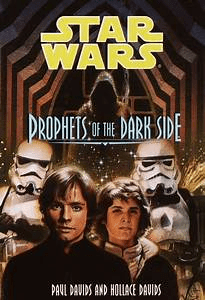
As you may recall, 2015 was partly about returning to books I have loved and enjoyed for many years, as well as a continuation through the ever-expanding (and recently dismissed) Expanded Star Wars Universe.  Last time, I mentioned I would include this time the book reviews for my latest read-through of two favored series of my youth, the oft-rejected Jedi Prince series by Paul and Hollace Davids, one of the earliest YA Star Wars series before the hoopla of recent years (especially this one), and my favorite series of all time, The Chronicles of Prydain, included later in this issue.  As always, these are not thorough treatments of the works but merely initial reactions and reviews — perhaps they will be profitable anyway.  Enjoy.

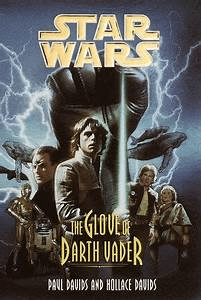
#1 — The Glove of Darth Vader ⭐⭐⭐

Sure, it’s a “kids” book, and the environmentalist push toward the end is in retrospect rather heavy-handed, but this isn’t all that bad. The dialogue is a bit goofy at times, but trying to capture famous characters is certainly a challenge, especially with so little material to base characterizations upon (3 movies is rather different from, say, 7 seasons of a TV series) — especially when intentionally watering their dialogue down for a younger audience. (Though the choice to transcribe Chewie’s and R2’s dialogue does get a bit annoying.) The book (and whole series) suffers from that “let’s only mention planets we’ve seen/heard of before” limitation, whether foisted upon the creative teams by the owning company or not, but if you can easily overlook that sort of thing, with the right attitude it adds to the familiarity of it all more than distracts. The time on Calamar is interesting enough while being fairly believable and credible for the Star Wars Universe (laying aside the notion a race intelligent enough to build large, powerful space craft should be able to overcome whaling).

The premise of the villain being a three-eyed mutant proclaiming to be the new Emperor feels initially goofy and “kid-book like,” especially when adding in the notion of “Darth Vader’s glove is indestructible and a symbol of power,” but those ideas are developed in rather impressive ways. The idea of Trioculus being the Emperor’s son may seem goofy, but it, too, is handled rather well when we find out it’s all a ruse concocted by the Grand Moffs who want to re-solidify their power and authority now that a large vacuum exists in the upper echelons of the Empire. This “kids’ book” has some rather intelligent components to it, such as the political machinations of the Grand Moffs as just mentioned, the glove of Darth Vader being useless for Trioculus since he isn’t a real Force user (and relies on technology that is killing him as part of the ruse), the Emperor’s real son is being kept locked away because he is supposedly insane — they may not sound like much here, but they do come together rather well, even with all the “kid book” goofiness (like the acronyms for everything and such). Still, this book has a fair amount of violence, death, threats, deception, and more, so its “kid book” status is somewhat dependent on your own maturity-level awareness. Not too shabby, after all — it has held up rather well.

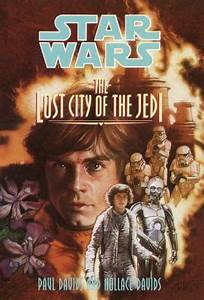
#2 — The Lost City of the Jedi ⭐⭐⭐

This installment threatens to diminish the re-enjoyability of the series by introducing a young teen character, and while that would certainly appeal to the basic intended audience, somehow the book manages to elude that deadly pitfall for the most part. Ken, the mysterious “Jedi Prince,” is not in the book all that much, fortunately, especially since his scenes are the worst of the book: a droid just for correcting homework? a fairly well-adjusted human who grow up solely among droids? a worrying companion droid named Chip? Rather painful, though I suspect it didn’t bother me too much the first time I read this twenty-some years ago. As I said, fortunately Ken and his droids are in it infrequently and more time is spent on Trioculus and his plans to take full command of the Empire

This installment’s “New Mother Nature” moment is the anti-slash-and-burn deforestation of tropical rainforests conflict toward the end, but that’s a good idea anyway (just like not killing whales is a good idea), so it isn’t intrusive. It is even worked into the main story better with the herbs and seeds Trioculus needs to heal his wounds are imperiled by his own destructive orders, causing him even more pain. The only really irritating part of the book is the rhyming botanist alien guy, but he’s not in it too much, either.

One of the more enjoyable aspects of the book is how well it picks up where the last one left off, continuing the basic storylines and character directions intelligently. Han’s desire to take a break from the Rebellion and restore a life and place for himself is rather believable, even when it conflicts with his love for Leia. It’s rather believable, considering his plans at the beginning of Episode V (it’s easy to overlook things like that). Trioculus continues his Glove of Darth Vader scheme of convincing the Dark Force Prophets to make him Emperor well, and the intelligent writing comes through again with the Prophets not being all that Force adept after all, relying more on trickery, spies, and technology more than actual Force skill. Episode IV did try to tell us Darth Vader was the last of the Force users (since the Emperor was keeping his secrets and all).

True, the “Lost City of the Jedi” doesn’t seem all that sensible, especially with the whole holocron thing taking over later, but it kinda works, I suppose. Why Luke wasn’t raised there instead of Tatooine, well, who knows. It’s just something you sort of have to go with. On the whole, it was much better than I remember it being, which may say more about my memory of books I read 20 years ago than the book itself, but there it is.

#3 — Zorba the Hutt’s Revenge ⭐⭐⭐

I am tempted to go for 4 stars with this one, even with its goofiness. It’s an impressively compact work with interesting conflicts primarily between the competing villains and interesting character developments (if somewhat far-fetched, even for Star Wars). Sure, the notion of Jabba’s dad getting revenge may seem juvenile, but not when you consider what Liam Neeson has been up to lately, movie-wise. The “Jabba’s will” plot device is also a bit goofy, but hey, it works fine for complicating the action quickly and efficiently.

Sending Lando packing seems far-fetched, but it’s not really inconsistent with Lando, at least if you take Neil Smith’s books as “true enough” for our purposes. Zorba’s and Trioculus’s fight over Leia is rather enjoyable, especially since it gives us a look at other stuff in the universe without having to focus on the good guys all the time. Han’s squashed hopes for being a homeowner are part of the goofiness, but it somehow fits rather well also, and I doubt he would have wanted to stay in Cloud City with Jabba’s dad as governor, anyway. The Mother Earth Crime of the Novel is the dangers of air pollution (braze = brown haze), and though it is much more prominent than in the earlier two novels, it fits far better throughout the novel with what happens and is not just a climax-plot-contrivance device as it sort of was before. Even the brief Ken episodes don’t get as silly and irritating as they could have. This was a surprisingly refreshing quick read. It almost makes one wish the “grown-up” Star Wars books didn’t have all that literary shilly-shallying.

#4 — Mission from Mount Yoda ⭐⭐⭐

Kicking off the second mini-trilogy, Mission from Mount Yoda brings a new tenor to the series (as much as possible for a “kids book” series). The base of rebel operations moves from Yavin 4 to Dagobah, and the Empire is also making big changes. The Prophets of the Dark Side, seeing their opportunity to take control now that Trioculus is in carbonite, make a very drastic move and basically steal Trioculus’s body and destroy it, and Kadann declares himself the new ruler of the Empire. Time passes in a strange way in this series, but we get the basic sense enough time passes for information to get spread around where it needs to be spread. An interesting component of this entry is the antagonism between the Dark Prophets and Grand Moff Hissa, and while the whole Dark Prophets thing seems to contradict Tarkin in Episode IV (when he says Darth Vader is the last of the adherents to the Force, since he must not know the Emperor was Sith, too), it adds an interesting layer to the Empire, with the political moffs antagonistic to the Dark Force users. Hissa pays a heavy price for his loyalty shifts, but we almost feel sympathy for him, considering the terrible pressures upon him by all sides (almost).

Another engaging aspect of this story, so to speak, is the relationship of Han and Leia: the authors add some friction to their relationship, slowing down Han’s romantic fervor, even making him question his desire to marry her. While that sort of thing is usually irritating in a romantic comedy, its brevity and believeability come across very well, even for a “kids’ book.” It adds just enough of a twist to prolong things without being nonsensical, and the rest of the story adds enjoyable components and moments that make their relationship a bit richer.

Similarly, the “Ken is a teenager” subplot again threatens to diminish the enjoyable nature of this for older readers, what with the sort of inane “he has to start school” idea (inane considering he has been raised in the secret Library of the Jedi — the boy knows almost more than our heroes; he’s certainly had more formal education than Luke!), but it is again brief, ends quickly, and we get back to better action soon enough. At least the authors came up with some slightly plausible reasons for why he has to go to school, indicating his Jedi Library education didn’t cover everything (though, he is lacking in mostly practical things, which is a cautionary tale against the purpose of education).

The Environmental Problem of the Week is toxic waste dumping, and surprisingly our heroes cannot solve the problem this time. Instead, they aid the sufferers and rescue a civilization’s historic art treasures and basically abandon the problem. That gives the story a strange authenticity: they can’t just magically counteract decades of toxic waste dumping. Let this be a lesson to you, First World countries.
Finally, we meet Triclops, and his connection to Ken and knowledge of Ken’s secret past are hinted at well without dragging the story down. The authors do a fine job of wrapping up this story while setting up eager anticipation for what comes next. This series is rather impressive, I must say.

#5 — Queen of the Empire ⭐⭐⭐

I’d go with 2.5 stars, but I’m rounding up simply for sentimentality’s sake. This is certainly the weakest of the series, though some of it is understandable in that it is trying to be a bit lighthearted before the big slam-bang finish up next. In a way, though, structurally, this book is impressive since the beginning events and ending events mirror each other well — and though we just said it was the most lighthearted and goofiest of the entries, it begins and ends with rather serious occurrences. Another weakness is the dialogue, which has always been a bit of an issue for this series (and all Star Wars books, pretty much), but this time some of the characters say and do things that don’t always feel all that consistent. The coincidences of characters all showing up at the same place is another regular trope in this series, but here it feels even more forced and convenient than usual, especially with Ken and Luke just showing up in the nick of time at the end with the HRD and whatnot.

Finding Lando as an administrator of a new planet is a good part of the book, in that is shows us a little “passage of time” idea and how resourceful Lando is: he doesn’t depend on the Alliance for everything all the time. That was probably the best part of the book, even though it is tied in to some rather silly sorts of things (like Han and Leia eloping at a Hologram Amusement Park thing). The Triclops subplot gets a little momentum, and the Trioculus plot is taken in very unexpected directions, so those are good.

The Ecological Problem of the Week is barely mentioned, and rather weird, dealing sort of with the weather effects of having too many milk-producing bats or something like that. I’m not quite sure what it was, but it only affects the Falcon for a bit (cleverly tying in to moments of the last story, briefly) and our heroes don’t even bother trying to address it or consider it, and it’s over before the third chapter.

Overall, some good moments, and some rather shocking and surprising twists at the end, but despite some clever structure and Lando moments, it’s on the whole the weakest of the bunch (but, hey, one of them had to be).

#6 — Prophets of the Dark Side ⭐⭐⭐⭐

I’m a bit confused by the antagonism for this book, especially considering what it is and when it was. I also don’t understand all the hagiographic idolatry of Peter Pan, but that just seems to encourage me I’m understanding things like reality better than a lot of other people. Let’s note four impressive things about this book: (a bit spoiler-filled here, sorry — skip this section if you want to read it yourself):

– The main villain of the series, Trioculus, is killed in the first few pages of this book. True, we did think he was killed earlier in the series, and he hasn’t caused all that much difficulty to anyone beyond air pollution and rain deforestation (not to ignore the ignominy he caused Princess Leia), but with all the times villains and heroes have been rescued and restored from death and seeming-death, the fact the main antagonist is finally killed in the opening of the final book of the series is impressive.

– The main supporting villain, Grand Moff Hissa, is also killed off in a manner cleverly foreshadowed earlier in the book, despite the fact he too has survived other near-death experiences in the series. He even is allowed a bit of nobility toward the end, and we come quite close to feeling sorry for him by the time of his demise.

– The long-running plot thread of Prince Ken and his mysterious origins is brought to a fairly satisfying conclusion, still with a bit of mystery open for exploring in further books or series (though totally ignored in other Star Wars adventures). What’s perhaps most impressive is the absence of any “reunion” scene: we could have expected the typical low-brow pre-teen father/son reunion with years of heartache and mystery erased in one hug and a paragraph, but we don’t get any of that resolution, giving us a perhaps more realistic (and grown up?) ending/non-ending. Ken now has to live with his origins and be his own man. Yes, it is similar to Luke’s story in Episodes IV-VI, but it is different enough to be worthwhile.

– Similarly, in the blink of an eye, Ken’s old life is effectively shut off from him perhaps forever — his youth and old home and droid friends/instructors are shut down and he basically can’t go back. Very few of us have had the access to our youth so wholly eliminated as Ken has at the end of the story. Yes, there is the unstated possibility of reactivating the Lost City, but all the characters sound like they have no intention of doing that, even if the trapped villains escape and leave us with no reason to keep the Lost City unplugged. That’s pretty tough.

It’s not Tolstoy, no, but considering what it is, from when it was, how well it wraps up so many of the threads from the first five books, leaves us with fairly shocking conclusions and open-ended non-resolutions (intentionally, not just forgotten components), this is an enjoyable and impressive finish to a far-more decent series than a lot of people seem to credit it.

Humanity: 1, Death: 0

Justin Benner

Dylan Thomas was born on October 27, 1914. He left school at age 16 to become a reporter and writer. His most famous poem, “Do Not Go Gentle into That Good Night,” was published in 1952. In 1931, at the age of 16, Thomas dropped out to become a junior reporter at the South Wales Daily Post. His position didn’t last long, since he quit in 1932 and turned his attention away from journalism back to poetry. Thomas soon found success in “And Death Shall Have No Dominion,” published in 1933 in the New English Weekly, marking his first international publication. This poem sent Thomas to England in 1933 to meet with editors of English literary magazines. His published efforts brought Thomas praise and honors, including the 1934 Poet’s Corner Prize. This period was also when his lifelong struggle with alcohol abuse began. To support his family, Thomas worked for BBC as a scriptwriter during World War II. He was exempted from fighting due to a lung condition. Even with this he still struggled financially. He was unable to keep up with taxes he owed. Even with Thomas in high demand for his animated readings, debt and heavy drinking took their toll. He died in New York City while on tour in 1953, at age 39.

“And Death Shall Have No Dominion” was Dylan Thomas’s international breakthrough. This poem has 3 stanzas with no definitive rhyming structure. This poem is definitely a perplexing one upon first read. My first guess as to what this poem was referring to was World War II. I couldn’t however put the pieces together on how it related. This link to World War II is shot down in the first stanza.

And death shall have no dominion.

Dead man naked they shall be one

With the man in the wind and the west moon; 

When their bones are picked clean and the clean bones gone,

They shall have stars at elbow and foot; 

Though they go mad they shall be sane,

Though they sink through the sea they shall rise again; 

Though lovers be lost love shall not; 

And death shall have no dominion.

There is no mention or link to World War II or any other war. It deals more with death than anything else. After doing some research as to the meaning, one possible explanation is such: “The title of the poem is derived from the biblical passage in Paul’s epistle to Romans, chapter 6 and verse 9. The poet showcases the reality of death and also gives it a good meaning. He lets us see the beauty behind death.… The dead persons who have gone ahead of us have timeless values. The memory of our dead loved ones lives with us” (poetandpoems.com). The author, following the logic of this explanation, is trying to tell us death has no victory over man; the loved ones we have lost will always be with us. It does not matter whether they are physically with us, what matters is they are in our hearts. This is a very biblical concept found in 1 Corinthians 15:55, which states “O death, where is your victory? O death, where is your sting?” (ESV). We even see in the 7th line the idea the dead shall rise again. “Though they sink through the sea they shall rise again.” These are very powerful words. This type of poetry would sooth very real hurt in WW2 Britain.

The second stanza is just as deep as the first stanza, yet it deals with seemingly the same issues but in a different aspect of war.

And death shall have no dominion.

Under the windings of the sea

They lying long shall not die windily; 

Twisting on racks when sinews give way,

Strapped to a wheel, yet they shall not break; 

Faith in their hands shall snap in two,

And the unicorn evils run them through; 

Split all ends up they shan’t crack; 

And death shall have no dominion

This stanza is dealing with the sea and presumably the navy. He is talking about all the souls lost at sea during, again presumably, WW2. But even here we see the theme of the dead returning to the living. Death has no dominion in the sea, and the sailors shall be freed from their sunken vessels and released from the temporary prison of death. They are “strapped to a wheel, yet they shall not break.” This stanza, while seemingly gloomy and dark at first, is actually quite the opposite. He is giving the families of the soldiers, and now the sailors, hope of their one day return.

The third and final stanza is more upfront with the reader. It talks about what happens after life.

And death shall have no dominion.

No more may gulls cry at their ears

Or waves break loud on the seashores; 

Where blew a flower may a flower no more

Lift its head to the blows of the rain; 

Though they be mad and dead as nails,

Heads of the characters hammer through daisies; 

Break in the sun till the sun breaks down,

And death shall have no dominion. 

Even in death the author proposes death has no dominion. Once we die, once “a flower may a flower no more / Lift its head to the blows of the rain,” we are free from death and its domain. The author’s point is death is only momentary; even in death we don’t lose our loved ones. We, the survivors of human conflict, will always hold the ones we loved close to our hearts, where death has no dominion. This is true regardless pf the circumstance of loss. This is true about grief. We as humans often refuse to give up on those we love; it is not in our nature to leave behind someone we love. We will defend them and their memory until we one day pass away, too. This is the point the author is making, that death has no dominion over the living, but also it has no dominion over the dead.

Overlooked Gems: Holland & Mount Vernon and Fairway (A Fairy Tale)

Christopher Rush

Intro: Packing Up and Moving On

With the creative freedom seemingly to do whatever they want, the Beach Boys in 1972 do something pretty unusual: pack up an entire recording studio and ship it to the Netherlands to make a new album in a new and familiar setting, giving us what feels almost like an ode to 19th-century Western America: Holland.  The album has nothing to do with its eponymous country, as far as I can tell, other than the time on the other side of the Atlantic moved many of the Boys to write about the land they left behind and other feelings of uncertainty and loss in this unusual time.  On one hand their creativity was unleashed; on the other hand, many old familiar faces were not around, especially Bruce Johnston and Brian Wilson.  Still, Holland is a remarkable album capturing the dynamism of the Beach Boys during an unusual era.

Holland Side One

Much has been said in several places about “Sail On, Sailor”: how it was originally not submitted to be on the album, how the production company rejected the album without a potential “hit” song (10 years into the Beach Boys’ career the studio still has control over their albums!), the resurrection and lyrical reworking of the song, et cetera.  It’s easy to imagine what the album would be like without this song — just start the album from track two.  Still, the song fits very well with the entire vibe of the album, and its connectivity to the album is so strong it feels strange thinking the album was intended to exist without it.  It sets the dominant mood of the album very well, making a nice up-tempo(ish) bookend with “Funky Pretty.”  “This is a mellow album with a lot of heart,” says this album.  “We’re on an adventure of mildly languorous enthusiasm.  An adventure of reflection.”  They are sailing, but this isn’t the Sloop John B.  They are all Huckleberry Finns rafting down the river.

“Steamboat” continues that aura perfectly well.  Instead of a raft, though, the medium of the languorous journey of reflection is now a steamboat chugging along at a moderate pace.  Instead of considering it too slow, as some apparently do, it’s better to embrace it as a call to patience, a call to slow your life down and enjoy what is happening in your life — and if you can’t enjoy what is happening in your life now, do what you can to fix that and get to a more enjoyable place of peace and tranquility.  This is a bit ironic, then, considering for Mark Twain the steamboat was an exciting symbol of maturity, progress, and change.  It was the opposite of Huck’s raft, yet here the Beach Boys equate them.

“California Saga” is an impressive, wistful look back at the land the Beach Boys have physically departed during this time.  “Big Sur” feels like the raft and/or steamboat has docked, and we are relaxing on the beach for a while, which makes sense, since Big Sur is a magnificent coastal site in California.  “The Beaks of Eagles” is a very evocative product of its time: this song definitely matches the way the Beach Boys look in the studio, especially Mike Love, whose spoken word voice is rather powerful in its sincerity and quietude.  It reminds me very much of the beginning of Centennial.  “California” is a sharp turn toward what could easily be mistaken for a goofy romp, with the almost honky-tonk sounds and unusual lyric.  Yet, it is a very intelligent tribute to California the way only someone who knows it and loves it could be — it’s like an inside joke but one that invites strangers to take part and learn about what is so wonderful about the subject matter.

Holland Side Two

Continuing this remarkable atmosphere of smooth sailing down the river, Carl Wilson’s fantastic “The Trader” is both a politically-driven artifact of its time and a transcendent piece of beautiful music enjoining us to get to a peaceful place and relax and listen to it and the world around us.  The first half of the song is very much a diatribe against Imperialism, possibly a diatribe against Columbus Day, but it, too, is very evocating of Centennial — that must be part of the reason I enjoyed listening to this album so much (to be taken both ways) this summer.  I should really watch Centennial again.  The second half is definitely one of my favorite parts of the album.  The quality of Carl Wilson’s voice around the “Eyes that see beyond tomorrow / Through to the time without hours / Passing the Eden of flowers / Reason to live” section is fantastic, both vocally and lyrically.  We are far away from the Beach Boys of the ’60s.  Getting to a quiet place where you can listen to this son is definitely a “reason to live.”

“Leaving This Town” shifts the mood again to a somber, sorrowful song about leaving more than just a town: “Sometimes it’s hard to make it through the day / Sometimes it’s hard to find my way / Sometimes it’s hard to notice the changing days / When your friends have all gone / Leaving this town for another one.”  It reminds me of both the end of summer before all of us going off to college for the first time, some leaving early, some of us not leaving at all.  Then, too, it reminds me of that bizarre last day of a college year: nothing feels quite so strange as walking around campus a few hours after graduation, when all your friends have packed up and driven off and all the halls and rooms of laughter and memories and shared moments are still and silent and empty.  This is a very powerful song, but despite its potential for melancholia the music, especially the near-funky bridge, refrains from succumbing to despair.  There is still optimism undergirding this song.  Perhaps we will all return to this town again someday, together — or, better yet, we will all be together again somewhere else better, sooner.  Additionally, this song is a great demonstration of the new life and musical talent Blondie Chaplin and Ricky Fataar brought to the band for a little while.

Dennis Wilson’s second contribution to the album, along with “Steamboat,” is another beautifully quiet song “Only with You.”  It easily recalls “Make it Good” and “Cuddle Up” from Carl and the Passions — “So Tough,” but it’s possibly even better than those.  Dennis’s songs weren’t necessarily the most lyrically complicated, but genuine love and passion don’t need floridity and profundity.  The simplicity of these lyrics, the powerful yet restrained way Carl sings these words, and the sweet musical accompaniment make this a very enjoyable contribution to this album.  It is yet another variegated emotion on an excellent album that has been too often dismissed and neglected.

The album wraps up with Brian’s only new contribution, a laid back groove called “Funky Pretty” that mingles a bit of their Transcendental Meditation experiences with the album’s motif of lost love.  Neither an up-tempo rocking conclusion (which would, after all, feel out of place on this album), nor a slow ballad typically ending most generic pop-rock albums, “Funky Pretty” is its own groove, an unhurried ditty with unabashed humor, astrological linguistic rigmarole, and a sprinkling of wistful missing love.  Sometimes, if you don’t have enough words to make it to the end of the musical line, you just got to let the music carry you through.  The ending of the number is a treat, as many layers of vocals and voices imbricate in a positive, carousing manner.  It’s easy to imagine the Boys standing around the studio singing their different lyrics into their microphones, smiling and laughing while memories of “Barbara Ann” shenanigans flit about a much older, wiser, sadder, hairier group of top-notch musicians.

Mount Vernon and Fairway (A Fairy Tale)

This is an experience, that’s for sure.  It’s best to do what Brian says and listen to it in the dark.  Thanks to modern technology, we can listen to it in its entirety without having to flip over the record and break the mood halfway through.  It’s a remarkable version of how the Beach Boys came to be, as if told from a children’s fairy tale, and that’s the only thing I can say about it directly without spoiling any of it for you.  I can appreciate why the other Boys didn’t want to include this on Holland originally, especially as they were supposedly about moving forward and doing new things, finding new sounds (even if their subject matter was about the past and land they left, too), and Mount Vernon is wholly unlike where the rest of the band was going and what it was doing, but Carl made a good decision in including it as an EP, even if it furthered the rift between the Boys and Brian for a few more years.  Brian Wilson had a gift, and though it was damaged and delayed and possibly thwarted at times, he still managed to share a great deal of beauty with us in a comparatively short amount of time.  This is a gift from a genius to us all.

Outro: Maturing Beach Boys in the Tumultuous ’70s

This was a strange, exciting time for the Beach Boys collectively (not to ignore or belittle Brian’s issues at the time).  Carl is starting to come into his own, Dennis is blossoming as a real musician (if you don’t necessarily like his voice or the simplicity of his lyrics), Al is contributing even more intelligent numbers and growing as a lyricist, and the contributions of Blondie Chaplin and Ricky Fataar prove the Beach Boys were not just a flash-in-the-pan ’60s-only one-trick-pony group.  Oh, yes: and Mike Love is still being Mike Love.  They could adapt to the times, grow as musicians, and be relevant and creative and worthwhile as ever.  In a time of change and uncertainty, the early ’70s-era Beach Boys responded with fresh, enjoyable music.  Go get a copy of Holland & Mount Vernon and Fairway (A Fairy Tale) today and enjoy them.

1984‘s Dark Future

Alex Touchet

Published in 1949, George Orwell’s 1984 describes the futuristic and dystopian society of Oceania where the government maintains a totalitarian grip over the populous by way of omnipresent propaganda, ubiquitous surveillance, and a restrictive chokehold on any form of individualism.  The novel was published four years after the end of World War II, and was undeniably beyond its time.  Orwell comes across as practically prescient through his chilling depiction of totalitarian states that overwhelm the citizens who live within them.  It is logical to assume Orwell was, in the least, inspired by political and economic events taking place in and around Britain during the ’40s.

Thankfully, readers of Orwell do not have to rely upon conjecture to inform them of his novel’s original purpose; in fact, a letter Orwell sent in 1944 to a certain Noel Willmett detailed his personal stance on world politics at the time.  He focused specifically on his fear totalitarianism and “Fuhrer-worship” were consistently becoming more frequent throughout the world.  He also explained how he worried this rise of “emotional nationalism” and leader-worship could inevitably lead to major historical revisions.  He elaborated that “Hitler can say that the Jews started the war, and if he survives that will become official history.”  This theme is exemplified through 1984’s “Ministry of Truth,” the institution that essentially rewrites history so it accommodates whatever the government wishes to tell its naïve civilian population.  Orwell drove his point further with a numeric example he later utilized in his novel: “[Hitler] can’t say that two and two are five, because for the purposes of, say, ballistics they have to make four. But if the sort of world that I am afraid of arrives, a world of two or three great superstates which are unable to conquer one another, two and two could become five if the Fuhrer wished it.”  This serves as a more personalized precursor to 1984’s analysis of individuality oppression.

Orwell also explained how he believed society was already on a downward slope toward a more totalitarian outlook.  He detailed two major reasons for this decline in the general interest in democratic principles in British society.  The first reason he gave was based upon the growing tendency toward indifference for political individualism in the younger generation of his time.  “Do you realise, for instance, that no one in England under 26 now has a vote and that so far as one can see the great mass of people of that age don’t give a d*mn for this?”  He followed by saying a further problem with Britain’s social situation was how most of the intellectual community tended toward totalitarianism over individualistic values.  They would take Stalin, for example, over Hitler, disregarding the potential issues that would arise from such a decision.  “Most of them are perfectly ready for dictatorial methods, secret police, systematic falsification of history etc. so long as they feel that it is on ‘our’ side.”  Orwell connected this general disregard for the necessity for political protection of individuality with the argument Britain and the United States have not experienced totalitarianism yet, and therefore do not understand its ramifications.  It would be much easier to ignore the potential evils of policies such as public surveillance, Gestapo-like police, and the rewriting of history when they are all proposed in the name of homeland-defense or emotional nationalism.

An article by John Bennet describes how Orwell’s involvement in both the BBC and the Spanish Civil War shaped how he viewed the media.  The fact news reports of the war tended to bear little to no resemblance of the actual events to which they referred made Orwell very skeptical of the media’s overall validity.  Bennet also says Orwell partially based his “Ministry of Truth” off of BBC’s efforts during World War II.  “Orwell noted that the BBC put out false hate propaganda during World War II, and controlled history by censoring news about the genocidal Allied policy of leveling German cities by saturation bombing.”  This experience proved to be pivotal in how Orwell believed the control of the past to be integral to the control of the present and future.

Orwell’s many predictions were not restricted only to the 20th century; many of them are gradually becoming more obvious in modern society.  Even in the West, a fountainhead for individual political liberty, the things Orwell was so vigilant in warning the world about are becoming progressively more prevalent.  Bennet describes how even the seemingly far-reaching concept of what Orwell coined “newspeak” has already invaded western media.  “The corruption of language described in 1984 is widespread in the media today, with ‘newspeak’ terms such as democratic, socialist, fascist, war criminal, freedom fighter, racist and many other expressions being used in a deliberately deceptive, propagandistic way….”  Orwell understood the intrinsic reality of government and society so well his warnings apply in the modern day just as well as they did while Stalin was still alive.

George Orwell’s 1984 serves as a warning to all people concerned with the longevity of their individual rights and political freedom.  After over fifty years, his words still continue to impact how people view government and its potential evils.  His writings were undeniably affected by his own experiences in the fields of media and political conflict, and hold serious weight for people living in the modern world.  Certainly, George Orwell hoped people would heed his warnings and remain constantly aware of their social situation.  As Bennet said, “The price of liberty is eternal vigilance.”

Bibliography

Bennett, John. “Orwell’s 1984: Was Orwell Right?” The Journal for Historical Review 6.1 (1986). Web. 9 Dec. 2015. <www.ihr.org>.

Marshall, Colin. “George Orwell Explains in a Revealing 1944 Letter Why He’d Write 1984.” Open Culture. Ed. Dan Colman. 9 Jan. 2014. Web. 7 Dec. 2015.

The Controversy of Gender Politics in The Taming of the Shrew vs. 10 Things I Hate About You

Hannah Moonis

From A Comedy of Errors to Much Ado About Nothing, William Shakespeare composed many comedies throughout the years. Perhaps one of the greatest comedies of his time was The Taming of the Shrew, one of his first plays. This comedy follows the tale of sisters Katharina and Bianca and their various suitors. The elder sister, Katharina, (the “shrew”) is pursued by Petruchio, a man from Verona on a mission to wed and make money. Bianca is courted by many men, but most noticeably, Lucentio (disguised as a tutor) and Hortensio (a friend of Petruchio). Through a series of events, Katharina weds Petruchio and is successfully “tamed” by her new husband. Bianca married Lucentio after Tranio, Lucentio’s servant who disguised himself as Lucentio to convince Bianca’s father to let her marry Lucentio, disguised as her tutor. All ends well for everyone and as a final test, Petruchio shows the other men how obedient his once-wild wife now was. In its modern day film adaptation, 10 Things I Hate About You, the plot similarly follows the story of sisters Kat and Bianca. In a modern day high school a new student, Cameron, arrives and immediately falls in love with Bianca. The girls’ father has a rule Bianca can’t date until Kat starts dating, which Kat claims will never happen. In order to date Bianca, Cameron must pay “bad-boy” Patrick to date her older, quick-tempered sister Kat. Though the two are quite similar in the storyline, the two tales diverge at particular parts. There are two main differences in the plots of these two stories: how Katharina or Kat is “tamed” and the role of gender politics.

The Taming of the Shrew has brought up many controversial topics throughout its long history. One of the most debated topics is whether or not Katharina’s taming was emotional abuse or merely a less violent way to control Petruchio’s wild wife. During Shakespeare’s time, beating one’s wife was becoming more and more frowned upon by society, leading many to argue Petruchio’s psychological methods of taming were more humane and gentle. Katharina is eventually “tamed” and submits to her husband. There are many theories as to what her final speech in Act 5 means; most commonly believed is Katharina is sincere and has been successfully “tamed” by Petruchio. It is unknown if they truly love each other. Quite contrary to the original story, in 10 Things I Hate About You, Patrick “tames” Kat, quite on accident, through the power of love. Only after falling in love with Patrick does she become a more calm and loving person. Though both Petruchio and Patrick pursue Katharina (Kat) for money, Patrick’s actions become much more sincere as the movie progresses. It is up to the reader to determine if Petruchio and Katharina truly loved each other in the end, or if it was simply a woman’s submission to her husband through nonviolent means.

Gender politics plays a huge role in the story of Katharina and Petruchio or Kat and Patrick. Many critics debate whether or not Petruchio’s treatment of Katharina was emotional abuse. Emily Detmer, author of “Civilizing Subordination: Domestic Violence and Taming of the Shrew,” suggests in her book the final speech made by Katharina was a result of Stockholm Syndrome, saying, “Her surrender and obedience signify her emotional bondage as a survival strategy; she aims to please because her life depends upon it.” Other critics such as David Beauregard, author of Catholic Theologies in Shakespeare’s Plays, argues Katharina and Petruchio’s relationship takes on the characteristics of an Aristotelian story and is in no way abusive, but in fact, beneficial to both parties. Beauregard believes Petruchio was acting as a light to Katharina, bringing her into harmony with her own nature, thus teaching her obedience. In the reverse, Katharina also helps Petruchio understand happiness and fortune through her taming according to Beauregard. The gender politics in 10 Things I Hate About You  is decreased in importance from the original story. Kat is portrayed as an angry feminist who finds social constructs to be restricting, hence her reluctance to date. Patrick doesn’t use relatively abusive psychological methods on Kat to make her date him. He may be motivated by money in the beginning, but over time, Patrick shows he actually cares about her, contrary to her previous notions about men. In the end, both Patrick and Kat are happier and much nicer people. Their relationship becomes a symbiotic one, much like Beauregard’s description of Katharina and Petruchio’s relationship, which is definitely not emotionally abusive.

The Taming of the Shrew is responsible for many gender role-based debates. Some say Shakespeare is warming against the cruelty of submissive techniques, even non-physical ones. Others argue Shakespeare is portraying the change in social civility as Petruchio doesn’t physically abuse Katharina. But almost everyone can agree The Taming of the Shrew is controversial. Is it misogynistic? Is it sexist? The debate continues. 10 Things I Hate About You stays largely away from the gender politics portrayed in its source material, possibly because The Taming of the Shrew offends so many people, not just women, in this day and age. George Bernard Shaw in a letter to the Pall Mall Gazette describes the play as “one vile insult to womanhood and manhood from the first word to the last.”

The contrasts between these two stories, The Taming of the Shrew and 10 Things I Hate About You, are a little drastic, the latter taking out what many critics say to be the most important part of the story: the role of gender in society and marriage and the controversial cruelty of men against their wives and women in general. The two tales seems to both send different messages to their audiences. The Taming of the Shrew portrays a woman’s role in life is to submit to her husband with blind obedience. 10 Things I Hate About You shows how love and acceptance reveal one’s true self and essentially makes you a better person.           

Bibliography

Detmer, Emily. “Civilizing Subordination: Domestic Violence and the Taming of the Shrew.” Shakespeare Quarterly 48.3 (1997): 273–294. Web.

Junger, Gil, dir. 10 Things I Hate About You. Perf. Heath Ledger and Julia Stiles. Touchstone Pictures, 1999. Web. 10 Dec. 2015.

Shakespeare, William. The Complete Works of William Shakespeare: The Taming of the Shrew. Mumbai, India: Wilco Publishing House, 2005. 224-47. Print.

Cinderella

Tarah Leake

Written by (among others) the Brothers Grimm, the story of Cinderella has survived for decades. About one hundred twenty-five years later, Disney produced a film based on the Grimms’ tale. Today, Cinderella presents a beautiful princess who marries a charming man and lives happily ever after. However, this story is not to be taken casually; rather, the telling of Cinderella’s family, trials, and outcome holds intrinsic educational value for the real world. In both versions, characters demonstrate inverse and similar characteristics, themes of humility and judgment transpire, and symbolism is apparent.

After her mother dies of ailment, young Ella is lost in a world with her dreadful stepsisters and stepmother. She is treated awfully and forced to sleep by the fireplace, covering her in cinders and deriving the nickname, “Cinderella.” Even after this, Cinderella remains humble and grateful for what she does possess. The stepsisters and stepmother, on the other hand, are selfish and arrogant. In the Grimms’ tale, when Cinderella’s father goes to a fair, he promises to bring back gifts for the girls. The stepsisters request dresses, pearls, and jewels. Cinderella, however, simply asks for the first branch that knocks off her father’s hat. This demonstrates Cinderella accepts her life and is not concerned with obtaining carnal, materialistic desires. When the stepsisters are preparing for the ball, Cinderella helps them with their hair and dresses instead of focusing on herself. This shows maturity, because the stepsisters would never help Cinderella prepare for the ball; they treat her like a slave, and yet she still offers up her assistance.

The stepmother is conceited and demanding. She places her personal satisfaction above others’ needs. She marries Cinderella’s father, not because she loves him, but rather she loves his money. She does everything in her power to eliminate competition for the prince’s hand in marriage; in her mind, forcing Cinderella to stay home and do chores confirms the choosing of one of her daughters. This shows the stepmother recognizes Cinderella’s elegance and feels threatened by it. Disney makes a point of highlighting the stepmother’s extreme jealousy of Cinderella’s beauty and her hatred of the young girl. The Grimm Brothers demonstrate this hatred by the stepmother’s constant attempt at the humiliation of Ella. When Cinderella asked if she could go to the ball, the stepmother reprimanded her for even considering going to the ball looking as vile as she does. The stepsisters assumed their mother was trying to help them; however, once again the stepmother was conceited and wanted her daughters to marry the prince so she could be recognized and respected. The stepmother was also quite demanding and cruel in both stories. According to the Grimm Brothers, the stepmother poured lentils into the hearth and told Cinderella she must pick all of the lentils out if she desired to go to the ball. In Disney’s story, she forced Cinderella to cook all of their meals, do their laundry, and clean the house. Even with how dreadful she treated Cinderella, Cinderella never disrespected her. Not only was the stepmother demanding of Cinderella, but even to her own daughters. In the Grimms’ tale, when the messenger arrived with the golden shoe looking for the owner, the stepsisters’ feet were too large. The mother was so determined to have her daughters marry the prince, she forced them to cut off parts of their feet so the shoe would fit, finishing with the cruel demand to swallow the pain. This is far removed from anything Cinderella would do especially to her own children. This shows, yet again, the inverses of characters’ morals in this classic.

Along with these varying morals and aspirations, two major themes are scattered throughout the story: sacrifice and judgment. Self-sacrifice was seen with the stepsisters when they brutally removed portions of their body in order to be accepted by the prince, which proved useless in the end. Cinderella made self-sacrifices by choosing to be humble and respectful to her stepmother and by choosing to help the stepsisters with their dresses rather than make her own. This theme pairs perfectly with Christ’s words in Mark 10:45, “For even the Son of Man came not to be served but to serve, and to give his life as a ransom for many.” The second major theme is judgment. The stepsisters’ hearts were full of arrogance and conceit, and they were judged accordingly. The Grimm Brothers describe the haunting event where the stepsisters’ eyes were plucked out by the bird on Cinderella’s shoulder during the wedding. Judgment is not always bad, simply a conclusion based on one’s choices. Cinderella was humble, kind, and a servant to others and was ultimately rewarded for her actions. The Bible often announces the rewards of humility and kindness; James 4:10 says, “Humble yourselves before the Lord, and he will lift you up.” Proverbs 22:4 explains the wages of humility are riches, honor, and life. This is applicable to eternal life as well: Matthew 20:16 says, “So the last will be first, and the first will be last.” In the end, the sacrifices and responses of Cinderella were judged accordingly, and she was granted a beautiful life and husband. The stepsisters and stepmother, however, who desired only to please themselves, paid the ultimate price in the end.

The use of symbolism is frequent in both versions of Cinderella. In many ways, Cinderella represents a Christ-like attitude. She was rejected and terribly punished in her own home, yet continued to serve others with love, willingness, and humility. Christ also came to the world to serve others and demonstrate love and humility even when persecuted. When the stepsisters arrived at Cinderella’s wedding in the original, they desired to befriend Cinderella so they could share in her wealth and recognition. They attempted to beg Cinderella for forgiveness, however, Cinderella ignored the sisters, and the once beautiful girls lived in pain and blindness the remainder of their lives. This is symbolic of people in the world who choose to neglect God’s word and live out their carnal desires. When the bird removed the sisters’ eyes, Proverbs 30:17 comes to mind. It reads, “The eye that mocks a father, that scorns an aged mother, will be pecked out by the ravens of the valley, will be eaten by the vultures.” Just as Cinderella ignored the sisters, so will Christ ignore the evil on the Day of Judgment. 2 Thessalonians 1:9 reads, “They will be punished with everlasting destruction and shut out from the presence of the Lord and from the glory of his might.” Matthew 7:23 reads, “Then I will tell them plainly, ‘I never knew you. Away from me, you evildoers!’” Another example of symbolism is the likeness of Cinderella’s relationship with her stepsisters to the Biblical story of Lazarus and the Rich Man. Luke 16:19-31 describes the story of how a rich man mistreats poor Lazarus. When both men die, the rich man calls up to Lazarus from Hell and requests just a drop of water to quench his thirst. Likewise, in the story of Cinderella, the stepsisters were tormented by their judgment and sought refuge in the very individual they disgraced. The final demonstration of symbolism is the false promises of the stepmother. Three times the stepmother promised Cinderella permission to attend the ball as long as she completed her tasks.  Each time, however, Cinderella was met with rejection and disappointment. This represents how Satan can promise individuals their innermost desires in exchange for something else; however, he never fulfills his agreements and many are left disappointed like Cinderella.

Although written during different centuries and varying in minor details, both the Grimm and Walt Disney versions share similar values and lessons. Cinderella is often regarded as a light-hearted fairytale with the classic happy ending; however, when truly analyzed, it outlines many real-life applications of consequences and judgment, humility and reward, and biblical symbolisms. Cinderella showed humility and respect in the presence of cruelty and arrogance. The stepsisters chose selfish desires over good morals and were judged accordingly, spending the rest of their lives as cripples. The stepmother was the epitome of jealous hatred and conceit, the opposite of Cinderella’s gentle nature. Elements of the story symbolize the rewards God honors the humble with, judgment upon the wicked, and deceitful promises of the Devil. Cinderella is not simply a fairy-tale for children; rather it is comprised of moral lessons that individuals of any age can benefit from.

Bibliography

BibleGateway.com: A Searchable Online Bible in over 100 Versions and 50 Languages. Web. 1 Dec. 2015.

“Cinderella.” Grimms’ Fairy Tales. Web. 12 Nov. 2015. <https://www.cs.cmu.edu/~spok/grimmtmp/016.txt&gt;.

“Cinderella’s Story — Disney Princess.” Disney Princess. Disney Entertainment. Web. 22 Nov. 2015. <http://princess.disney.com/cinderellas-story&gt;.