Category Archives: Reviews

Anime Summertime Watching Guide, pt. 2

Christopher Rush

In addition to the fine recommendation my brother has just given you, I thought I would offer some of my own recommendations for some enjoyable, exciting, moving, and more or less important anime series of note from recent years.  In stark contrast to most of the things we recommend here at Redeeming Pandora, these present recommendations are more critically popular than you might expect from us — instead of the overlooked, the obscure, the forgotten, and the ignored, these are some of the most beloved and acclaimed series around.  Why, then, the need for such a list, you may wonder?  Fair enough query.  The thought occurs, while the anime circles out there in life are presently aware of these gems, you perhaps are not.  Maybe you’ve been under the impression “anime is just Japanese inappropriateness” or something along those lines.  As with all sorts of human endeavors, however, a few extreme examples should not besmirch an entire genre.  Just as Grand Theft Auto (for example) should not motivate us to generalize the entire videogame enterprise as horrible, a few of the more saucy anime series out there should not prevent us from enjoying and experiencing the better works the field has to offer.  (Either that, or you’ve realized by now all of my articles are worth reading, regardless of subject matter and thus “need” is replaced by “just for giggles” and that’s why you are reading this; for that I thank you.)  Here, then, in no particular order, are four series worth watching as you while away the summer waiting for the weather to get deliciously cooler and the skies to get beautifully grayer.

Attack on Titan

I admit at the first this is a violent show.  Its “Mature” rating is well-deserved.  It’s not as bloodily violent as, say, The Wild Bunch or Fight Club, which we’ve somehow gotten away with recommending at Redeeming Pandora, but its violence is intense and pervasive (if not, shall we say, “conventionally graphic”).  The series also is occasionally salty, but not nearly as salty as, say, Tim O’Brien’s important and heartily-recommended work The Things They Carried.  It would be fair to say, then, this series is recommended despite its violence and mild saltiness.

What, then, you wonder, makes it commendable?  I’m not usually a big “post-apocalyptic world” fan, and Attack on Titan is certainly a post-apocalyptic series.  Like many anime series, the main protagonists are youngish characters thrust into a chaotic world in which their worth and contributions must be proved and maintained.  Somewhat typically with such tales, the main protagonists lose their parents early on and must struggle to get by before they can grow and fend for themselves.  Here come the commendations.  What is less typical of such stories is Attack on Titan begins in a post-apocalyptic world that has more or less forgotten it is a post-apocalyptic world.  100 years ago, giant “titans” (10-50-feet tall neutered human-like beings) appeared seemingly out of nowhere and began devouring the human race.  Somehow, some of humanity survived long enough to build three huge concentric circular walls around the last vestiges of the race.  Humanity adjusts to its present condition, more or less, almost getting used to it, despite the elite cadre of military that periodically forays outside the walls, until one day a 200-foot titan appears and batters a hole in the outermost wall, allowing dozens of seemingly-mindless titans to resume the destruction of mankind.  Our heroes are caught in the middle, their lives are turned upside down, and suddenly they must live once again with the threat of the titans.

The majority of the 1-season (as of this writing) show follows our three heroes (Eren Yeager, his foster sister Mikasa Ackerman, and their buddy Armin Arlert) as they make their way to the Military to start taking an active role in the defense of mankind and eventually, hopefully, the reclamation of the planet from the mysterious titans.  Eren is a conflicted protagonist, and before too long, as is often the case, he has a special destiny integral to the survival of mankind.  Mikasa proves herself as an impressive killing machine, as the military uses impressive technology to fight the giant titans.  Armin, though initially suffering from self-confidence issues, soon enough proves himself as a brilliant strategist and scientific mind.  Along the way, we meet a number of supporting characters who get very interesting the more we get to know them.  The only problem with this, is, since most of them are front-line military against a nearly-invincible and relentless foe, the mortality rate among the supporting cast is high — you can’t get too attached to them, really.

I don’t recommend it for the violence, of course.  I recommend it because it is a tense show with a large number of exciting mysteries (where did these titans come from? why is Eren so special?) and twists and turns, combined with the sort of Battlestar Galactica-like “humanity banding together to fight off destruction, all the while exploring what it means to be human and moral and all that good stuff” that makes a show like this much more philosophically satisfying than others of its kind.   Sprinkled throughout are engaging battle scenes, heroic sacrifices, intriguing layers of politics and betrayal, poignant quiet moments, revealing flashbacks … and then, suddenly, your jaw will drop, your eyes will bulge, and everything you thought you knew about the series and its characters twists inside out.  And then it happens again.  And you’ll be hooked.

It is only one season, so far, but feel free to use it to motivate you to read the manga, since that is much further along in the overall storyline than the anime series is thus far (and, naturally, it’s richer in character moments, subplots, and other literary goodies not always translatable to a short television show).

Cowboy Bebop

Considered one of the all-time greats for good reasons, Cowboy Bebop is certainly a worthwhile viewing experience.  It, too, is occasionally mature, especially in the dialogue, but its overall presentation, fascinating characters, wholly believable world, philosophical explorations, and diverse musical score all overshadow the sporadic saltiness.  It is also a limited series, with only 26 episodes (plus one later mid-story movie), so it doesn’t take a lengthy commitment, but the complete series leaves you with such a positive impression, you are glad you watched it.

In a way, Cowboy Bebop is also a kind of post-apocalyptic series: after a nuclear accident, parts of Earth are uninhabitable, but fortunately we have discovered interstellar gate travel and have colonized and encountered other planets and so we are okay.  Sort of.  Corruption and basic human nature have followed us into outer space, and since space is a vast place, the major corporations and generally decent folk need bounty hunters (called “cowboys”) to help make the spaceways a better place for all.  Two such noble bounty hunters/cowboys aboard their ship Bebop are our heroes for the series: Spike Spiegel and Jet Black.  Along the way, they meet new friends, we learn about their old enemies, secrets are uncovered, choices are made, and things will never be the same.  And the series is only half over.

It is an impressively dynamic series: some episodes are very dramatic, some are poignant, some are adventurous and funny, some are nerve-wracking — all are high quality.  Even the episodes you like least are better than other shows you really like.  It’s a very layered show: you have to pay attention to the details, as moments and cameos in one episode will come back a couple episodes later.  This adds to the overall heft of the series as well as encourages you to watch it again and again.  Additionally, it’s a very rich world: the corporations, the supporting characters, the layers of past and present all imbricate in top-notch ways.  I know I’m starting to recapitulate generally high praise, but this series deserves all the accolades it has garnered and more.  I’m not saying it’s my most favorite series of all time (you know what that is already), but this is definitely a contender for anyone’s short list, anime or not.  You will enjoy this in deeper, more meaningful ways than just “yeah, I liked it.”  It gets you thinking about a whole lot of important ideas without coming off as didactic or belabored.  I realize this is awfully general, but I really don’t want to spoil too much of anything else, as it’s best enjoyed out of wonder without too many preconceptions or spoilers.  It will not disappoint you.

Fate/Zero

This yet-another 26-episode complete series is a prequel to another fairly enjoyable anime series Fate/Stay NightFate/Stay Night is a computer/videogame with multiple storylines and directions (as in, the story and characters can change depending on which “track” you choose to follow based on your actions and such).  The basic premise in both Fate series is every 60-some years, a Holy Grail (not necessarily the Holy Grail) appears on Earth to give one worthy mage and his/her Heroic Spirit companion a wish.  Before this can happen, several want-to-be-worthy mages each summon a Heroic Spirit (famous person from history) to beat the other competitors in a Street Fighter/Moral Kombat-like battle to the death.  Thus, this series, too, is a bit mature at times.  (The main and obvious villain of the series is horrifically villainous — you will immediately be rooting against him and his sheer evil.)

The first half of the series introduces the main combatants, their historical Heroic Spirit counterparts, their goals, their wishes, their conflicts, and a whole lot of other interesting notions (such as the families and mystical secret organizations involved in the centuries of these Grail Wars … secret cabals that make the Illuminati seem like the Boy Scouts of America).  The protagonist of the series, Emiya Kiritsugu, is very layered, as are almost all the characters.  My favorite duo is mage Waver Velvet and his companion Alexander the Great.  Their scenes are among the best of the series, which is saying a lot, considering how good the series is.

Since the mages have called upon Heroic Spirits (except the villain of the series has conjured up a truly heinous person of history), one of the intriguing themes of the series is honor in its many forms: how to achieve it, how it can be lost, can it be regained? and all that.  Our main protagonist, who has a checkered past at best, is aligned with King Arthur, as truly a noble historical figure as possible (though there’s a pretty big twist I don’t want to spoil for you here).  Their interactions are likewise engaging.  These heroes, being noble, often struggle with the need to eliminate each other during the grail contest, even though they know they are in effect servants of the grail until they win it and gain their deepest wish.

Since it’s a prequel to a story/series that was made years before, the ending is likely well-known and necessary.  I’m usually in favor of reading/seeing things in the order in which they were made and not their in-world chronological order (my thoughts on the proper order of The Chronicles of Narnia are well known), but I don’t know if watching Fate/Stay Night is better, especially since I experienced Fate/Zero first.  I certainly think it’s worth watching Fate/Stay Night as well, but it is very much a more typical “young teens are the heroes to save the world” sort of story, whereas Fate/Zero is definitely a grown-up series (the kids of the characters in Fate/Zero are most of the main characters in Fate/Stay Night, 20-years later instead of the usual 60).

Don’t let the “mages conjuring heroes of the past” put you off.  The only off-putting thing is the main villain, but he is so obviously heinous all the other characters rally around the rightness of getting rid of him.  Fate/Zero is a great story of nobility, sacrifice, redemption, heroism, and much more.

Fullmetal Alchemist/FMA: Brotherhood

Some may say I’ve saved the best for last, but that may be tainted by the fact Fullmetal Alchemist is much longer than the other series listed here, with 50-some episodes in the first series and 60-some in the “reboot-like” series Brotherhood.  The length of the series naturally lends itself to deep, thorough plots, well-rounded and beloved supporting characters, meaningful conflicts and resolutions, and all the things that make an adventure television series great.

Edward and Alphonse Elric lose their mom when they are still fairly young (you can see a trend among this series), but instead of accepting her mortality they use their alchemy skills to try to bring her back to life.  It does not go well.  Alphonse loses his body; Edward loses his arm and leg while attempting to save Alphonse’s soul, attaching it to a giant suit of armor.  Their childhood friend, Winry Rockbell, creates a new arm and leg for him.  (This is all the first minute of the first episode, so I’m not spoiling anything.)  Having survived such an experience, the brothers realize they need to improve their alchemy skills and find some way to get Alphonse’s body back.  Thus begins their journey.

As with all of these, a great deal of the enjoyment of the series comes in the diverse supporting cast, the ups and downs of their journey, and the growing menace of the behind-the-scenes puppet masters, as well as the philosophical quandaries the Elric brothers encounter along their journey.  Having violated one of the key laws of alchemy (don’t attempt human transformation), the Elric brothers begin on the outs, even as they subordinate themselves to the Military (yeah, I know, it seems to have a lot of similarities to Attack on Titan, but they are radically different stories) in an effort to gain access to more knowledge about alchemy, perhaps even tracking down the elusive Philosopher’s Stone.  Edward meets several other dubious alchemy users (sort of how Huck Finn meets other likeminded characters warning him against living this sort of life), and he is often tested in how he will live and use his powers: has he learned his lesson? is he committed to others? or is “accomplishing their goals” the only value worth embracing, regardless of who is affected?  It’s a very rich show.

Without giving too much away, I’ll comment on two engaging aspects of these series.  First, one of the main group of antagonists are named after the Seven Deadly Sins.  Though some characters in the two series represent different Sins (e.g., “Dave” is Pride in FMA but Envy in Brotherhood), they make for a very menacing and thought-provoking group of antagonists.  Second, unlike almost every American show, the heroic adults of both versions of the show recognize their need to help the Elric brothers since they are young boys and vocalize their responsibility as adults to help and lead the boys as trustworthy adults.  Instead of American shows that tell us children are smarter than their parents and other authority figures, Fullmetal Alchemist enjoins us as adults to live exemplary lives to lead the youth for the good of all considered, and children should allow the trustworthy adults in their lives to protect and care for them when it’s the right thing for them to do.

I definitely recommend watching the entirety of the original series first, even though soon enough the two series become drastically different.  The first Fullmetal Alchemist began before the manga wrapped up, and thus it started telling its own story about halfway through.  Fullmetal Alchemist: Brotherhood (as it’s known here in the U.S.) follows the manga more closely (so I’m told — I haven’t read it yet).  I agree with those who find the ending of Brotherhood more satisfactory than the ending of the original (even with the original’s post-series wrap-up movie The Conquerer of Shambhala), but the original’s story and the fate of many supporting characters is satisfying as well.  I’ll probably write a more detailed article about this idea next year, once you’ve had time this summer to watch both series.

There you have it.  Four high-quality anime series to lead you into what may be a fresh genre of television enjoyment and life improvement.  Have a good summer of watching great series!  (It’s a great way to avoid sunburns, at least.)
Excitement, Adventure, and Really Wild Things: A Legend’s First Film

Timothy J. Rush

The Hayao Miyazaki oeuvre covers so many beloved classics of anime such as My Neighbor Totoro, Spirited Away, Kiki’s Delivery Service, and Princess Mononoke. Often overlooked is his very first film directorial effort, The Castle of Cagliostro. It’s not hard to see why: it doesn’t quite fit with the themes and elements that characterize much of the rest of his work. There isn’t a young girl protagonist, no moving to a new country home, no emphasis on the importance of preserving nature. Instead, we have a film that is part of a different large body of work, specifically the Lupin the Third series by Monkey Punch, an anime series Miyazaki himself worked on. But let me tell you right now, The Castle of Cagliostro is not merely my favorite animated film of all time, but also in my top three movies (live action or animated) ever.

You see, Castle of Cagliostro has what I like in movies on a base, visceral level: excitement, adventure, and really wild things. Castle of Cagliostro starts with a Monaco casino heist at the height of conflict, our “heroes” Lupin and Jigen running away from the police with arms stuffed so overly full of cash bills stream behind them as they impossibly hurdle over obstacles on their way to their getaway vehicle. The police bumble their way into their own vehicles, which proceed to fall apart in spectacular and equally impossible ways: splitting down the middle, wheels flying off, crunching to a halt after moving mere inches — all of these the product of sabotage by Lupin, as revealed by his taunting note left on the engine compartment of one of the now-useless cars.

This illustrates what is the true hallmark of this movie: portraying a thrilling adventure where the rules of physics shall bend beyond that of reality, but only in ways that enhance the thrills and humor without destroying important dramatic tension. The most obvious example of this is my favorite sequence of the film, a car chase around a winding cliff path with Lupin and Jigen trying to intercede on behalf of a woman being chased by some thugs. At one point in this tense chase, Lupin drives his Fiat 500 (a ridiculous car to even be in such a chase) sideways up the side of the cliff. It’s completely mad, but just wonderful to watch. Yet while physics have been defied, dramatic tension remains — we are still worried for the well being of the woman in the pursued car, as it creeps toward falling off a cliff. Even in later action sequences we still hold our breath, hoping our hero can make it through.

This says nothing of the lavish setting of the movie, where even on his limited budget Miyazaki fills the fictional Grand Duchy of Cagliostro with detail and intricacies. Miyazaki’s love of visual landscapes packed with wonders to explore can be seen even here in his earliest directorial work. There are more than a few long, lingering shots that may not move the plot forward but help immerse you in this little independent city-state where most of the movie takes place.

But of course, we need to address the 500-pound gorilla in the room: can you enjoy The Castle of Cagliostro without knowing a lick about Lupin the Third? Honestly, it’s actually ideal not to have preconceived notions of the Lupin characters. On its initial release in the late seventies, The Castle of Cagliostro was actually criticized for its portrayal of the beloved Lupin the Third characters. For instance, Miyazaki’s Lupin is far more heroic and less arrogant, and his treatment of female lead Fujiko Mine gives her depth and skill as opposed to being a sex object. Miyazaki makes these characters his own, and the movie is better for it. You get all the needed history in the film itself, from Lupin and Fujiko’s mutual admiration to the complex relationship of Lupin and his law enforcement foil Koichi Zenigata.

The Castle of Cagliostro has also stood the test of time for me, personally. As one of the three movies I will pop on the TV whenever I truly need a pick-me-up, it has never failed to put a smile on my face. I have watched it dozens of times, only rivalled in number by the other members of my movie holy trilogy (Jaws and Shaun of the Dead), and it is always the right choice to watch. It is my favorite anime of any sort, movie or series, and you absolutely should give it a try.

The Time Machine

Alex Touchet

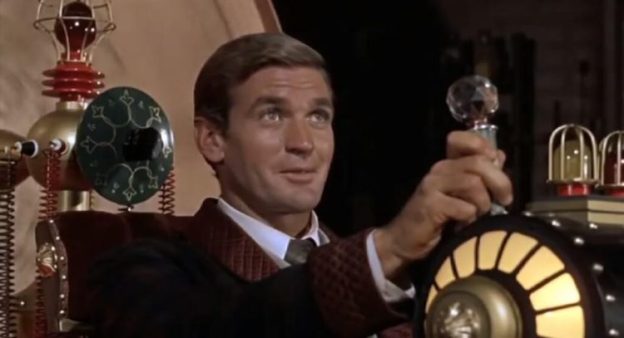
H. G. Wells was one of the singular most formative authors in the genre of science fiction. Wells was among the first of authors to introduce the concept of a “time machine” to popular literature; he even coined the term. The Time Machine, written in 1895, stands apart from other novels of its time as one of the most innovative pieces of literature of its time. The novel’s importance does not come only from its scientific imagining, but the themes presented along with it. H. G. Wells offered his era much more than mere scientific dime novels.

The Time Machine introduced multiple dystopian ideas in a time where literature was often saturated with utopian themes. For example, people such as Edward Bellamy were writing novels such as Looking Backward: 2000–1887 and Equality in the 19th century: these books were very Marxist in nature and often focused on the proposed dangers of capitalism in society versus the success of socialist strategy. H. G. Wells did not take this route when writing his first novel. When his protagonist the Time Traveler travels forward into the future and encounters a strange society filled with shallow and complacent beings, it seems Wells is taking the utopian route. When night falls, however, the Time Traveler discovers the truth of the society he has landed in, and it is far from utopian.

Wells seemed to have some disregard for the utopian presentations of reality prevalent in other literature at the time. He did not write this story to have a happy ending. In fact, it seems rather tragic. The Time Traveler’s adventure does not bring him to a glistening society in which people live together in perfect community, bolstered by technology. Instead, he discovers a primeval food chain where a caricatured “upper class” is juxtaposed against nocturnal ape-like creatures that feast on their flesh. He travels to the literal end of the world, and instead of returning to his time to warn humanity of its impending fate, he disappears from his time. H.G. Wells was not writing to convey wishful fairytales, but to demonstrate what he believed to be the reality of human society. Many of his early works may be described as almost pessimistic (The Invisible Man, The War of the Worlds) in the same manner The Time Machine seems to be.

H.G. Wells was one of the greatest science fiction authors not only because of the revolutionary ideas he presented, but also because of the themes he channeled through his novels. His books were formative to the earliest era of science fiction, and his creation of the term “time machine” spawned countless stories revolving around the theme of time travel. Few authors would be able to say they were the creator of a common literary trope, but H.G. Wells is among the privileged who can.

The Battle of Baklava

Justin Benner

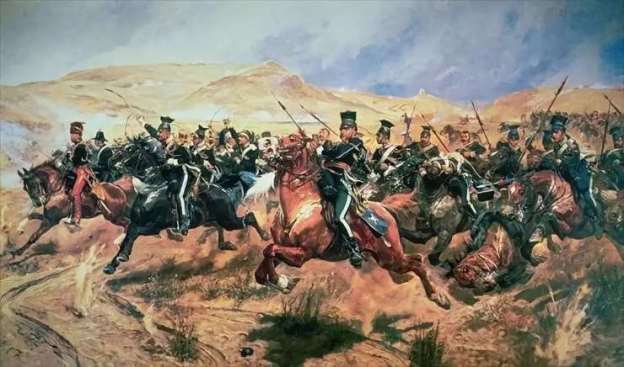
On October 25, 1854 during the Crimean War the Battle of Balaclava was part of the Siege of Sevastopol (1854–1855). This indecisive military engagement of the Crimean War is best known as the inspiration of the English poet Alfred, Lord Tennyson’s “Charge of the Light Brigade.” In this battle, the Russians failed to capture Balaklava, the Black Sea supply port of the British, French, and Turkish forces in the southern Crimea; but the British lost control of their best supply road connecting Balaklava with the heights above Sevastopol, the major Russian naval center under siege.

Early in the battle the Russians occupied the Fedyukhin and the Vorontsov heights, bounding a valley near Balaklava, but they were prevented from taking the town by General Sir James Scarlett’s Heavy Brigade and by Sir Colin Campbell’s 93rd Highlanders, who beat off two Russian cavalry advances. Lord Raglan and his British staff, based on the heights above Sevastopol, however, observed the Russians removing guns from the captured artillery posts on the Vorontsov heights and sent orders to the Light Brigade to disrupt them. The final order became confused, however, and the brigade, led by Lord Cardigan, swept down the valley between the heights rather than toward the isolated Russians on the heights. The battle ended with the loss of 40 percent of the Light Brigade.

This poem is an extremely popular poem. It has been featured in The Blind Side, and was even published in the newspaper after being written. Written shortly after the battle, it outlines one of the biggest military failures for the British.

Half a league half a league,

Half a league onward,

All in the valley of Death

Rode the six hundred:

“Forward, the Light Brigade!

Charge for the guns” he said:

Into the valley of Death

Rode the six hundred.

Tennyson starts at the beginning with the order to charge. “Half a league” in modern terms equates to about 1.25 miles. So the poem starts out by ordering the 600-man Light Brigade to charge the guns a little over a mile away. Tennyson uses Biblical allusions to bring home the sacrifice made by the soldiers by stating “the valley of death.” This is from the Psalm 23, which says: “Yea, though I walk through the valley of the shadow of death, I will fear no evil: for thou art with me; thy rod and thy staff they comfort me.” Clearly there is no belief these men will return from this charge alive.

“Forward, the Light Brigade!”

Was there a man dismay’d?

Not tho’ the soldier knew

Some one had blunder’d:

Theirs not to make reply,

Theirs not to reason why,

Theirs but to do & die,

Into the valley of Death

Rode the six hundred.

This is perhaps the most famous section of the poem. Tennyson starts with a question asking if anyone was dismayed. Not just that, but if anyone thought someone had blundered: clearly there must be some mistake, sending a light brigade to go fight a heavy artillery position over a mile away through a dead man zone makes no sense. One part of this stanza often misquoted is “Theirs but to do and die.” Often people say “to do OR die,” but this gives a totally different and wrong meaning. Tennyson used “to do and die” to show the troops, even in the face of certain death and blunder, will charge for King and country. By saying “to do or die,” you essentially take away the belief they will actually charge. Not only did the light brigade charge, they didn’t question it, or even try to reason themselves out of it; they simply heard the order and went. This takes an extremely large amount of courage and valor.

Cannon to right of them,

Cannon to left of them,

Cannon in front of them

Volley’d & thunder’d;

Storm’d at with shot and shell,

Boldly they rode and well,

Into the jaws of Death,

Into the mouth of Hell

Rode the six hundred.

Flash’d all their sabres bare,

Flash’d as they turn’d in air

Sabring the gunners there,

Charging an army while

All the world wonder’d:

Plunged in the battery-smoke

Right thro’ the line they broke;

Cossack & Russian

Reel’d from the sabre-stroke,

Shatter’d & sunder’d.

Then they rode back, but not

Not the six hundred.

The next two stanzas give a lot of detail on the actual charge itself. We see in the third stanza they are literally surrounded on all sides by cannons. They are being shot at and losing men rapidly, but even with all the odds stacked against them they rode on through the valley of death. It is interesting he uses the terms “jaws of death” and then “into the mouth of hell.” This is another Bible reference this time to Isaiah 5:14: “Therefore death expands its jaws, opening wide its mouth; into it will descend their nobles and masses with all their brawlers and revelers.” He is saying death will literally eat them alive. In stanza 4 we begin to see them draw their swords and begin to reach the line of cannons. Tennyson states they charged while all the world wondered, basically showing no one knew why they charged into a death trap. After they broke through the lines, there was a fight between the Russian Cossacks and the British light brigade. From the last line we can see the Cossacks retreat but not the light brigade.

Cannon to right of them,

Cannon to left of them,

Cannon behind them

Volley’d and thunder’d;

Storm’d at with shot and shell,

While horse & hero fell,

They that had fought so well

Came thro’ the jaws of Death,

Back from the mouth of Hell,

All that was left of them,

Left of six hundred.

“When can their glory fade?

O the wild charge they made!”

All the world wonder’d.

Honour the charge they made!

Honour the Light Brigade,

Noble six hundred!

In stanza 4 we see the immediate aftermath of the skirmish between the Cossacks and the British cavalry. They fought through the far line of the Russian cannons and fought their way out of the jaws of death. The charge amazingly did not wipe out the light brigade but did inflict massive casualties. Most of the force was either dead or wounded. Tennyson wants us to honor the bravery of the 600. They willingly sacrificed themselves on a mistaken order without question.

Stop Applauding Charles Dickens: A Bigoted, Aimless, and Opinionated Rant

Daniel Blanton

About five minutes ago, I just finished the very last paragraph on the very last page of one of Dickens’s most beloved novels, Great Expectations: I confess sadly it was too much of a struggle for me to finish it when it was first assigned to me in high school, and even now as I lay the book down I must admit the British Literature course I am currently taking required me to have the book finished a good two weeks ago. So even though I had already taken the test and written a paper or two on the novel, I thought since I was so close to the end it might be a good idea just to finish the darned thing, if only to avoid having to read it again in the future. Upon finishing the novel once and for all, and evaluating it in context with every other Dickens novel I’ve ever read, a startling conclusion presented itself before me: a teacher who makes his students read Charles Dickens and then wonders why their writing is bad is like a mother who decides to live next to a nuclear power plant and then wonders why her children have cancer. So if you come across any particularly bad writing as you read this, please excuse me, as I have been studying Dickens intently for the purpose of writing this and may have been infected.

Now, I do not mean to say Dickens was a bad writer. Instead, I simply mean to say Dickens was a good writer who did a lot of bad writing. Many literary scholars wonder at what kind of great works Samuel Taylor Coleridge may have produced if he had never gotten himself addicted to opium: they see Coleridge’s genius shining through the few poems he did write, and lament he was kept from writing much more. Fans of Dickens will read his work and see the mind of a genius, and when I read something like Great Expectations, I also see the mind of a true master of language. The difference, however, lies in the fact these fans will often perceive Dickens as a visionary in complete control over his creative faculties, whereas I, on the other hand, see him in the same way I see Coleridge: as a writer whose great potential and talent was largely spoiled by unfortunate limitations.

First off, it’s important to remark the following — although an informed opinion — is merely an opinion. With this in mind, you’re now probably at the verge of throwing this rant down to the ground. Who am I to criticize Charles Dickens, after all? Surely I can have nothing of real value to say — but hold on a moment. A few years ago, I would have been incredulous at the thought Charles Dickens produced anything less than high-quality work. One cannot think of classic British literature without his name leaping to mind; as far as 19th-century British literature is concerned, his popularity is matched by no other. The difference between the way I looked at classic novels then and the way I look at classic novels now is now, having read considerably more novels from the time period, I have a standard by which to evaluate new works I encounter. I reference specifically the Russian authors — in fact, I am of a very strong conviction everything written in Russia during the 19th century put together holds more inherent quality than everything written everywhere else in the world during that same time frame. It is rumored in literary circles Hemingway remarked his chief goal as an author was for the very best of his works to surpass in quality the very worst of Dostoevsky’s works; toward the end of his life, he declared he had failed. Finally, of all the novels I have read, I have only encountered five I consider to be perfect: two of them are from 19th-century Russia. I bring this up only to eliminate the argument I am holding Dickens to too high a standard and I must change my usual criteria when evaluating 19th-century works. For if Dostoevsky and Turgenev were able to write what they wrote in their circumstances, then I must hold their contemporary Dickens to the same plumb line and question why he did not produce works of equal measure.

But now an entirely different problem arises: how does one measure literary quality, or any kind of artistic quality in general? To do this, we must examine certain examples individually and parse out positive and negative elements. While we have so many differing opinions on what good music is, somehow bad music is far easier to recognize: so I’ll begin with passages from Dickens that strike me as “bad music.” Let’s begin with Great Expectations.

My father’s family name being Pirrip, and my Christian name Philip, my infant tongue could make of both names nothing longer or more explicit than Pip. So I called myself pip, and came to be called Pip.

Okay, not a bad start. This concise opening clearly informs us about our character’s real name and the origin of his nickname. But then we move down only half a page and we get this gem:

To five little stone lozenges, each about a foot and a half long, which were arranged in a neat row beside their grave and were sacred to the memory of five little brothers of mine — who gave up trying to get a living exceedingly early in that universal struggle — I am indebted for a belief I religiously entertained that they had all been born on their backs with their hands in their trousers pockets, and had never taken them out in this state of existence.

Just when I think I’m beginning to like the book, a sentence like this comes along and makes me want to punch myself in the face. This process repeats itself about every two or three paragraphs on average. First, let’s address what is grammatically wrong with this sentence. Halfway through reading this sentence, I found myself struggling to remember exactly what the sentence was trying to say. This happens because Dickens places the subject of the sentence after the sentence’s midpoint, instead beginning the sentence with a prepositional object. And as if this didn’t disrupt the flow of the sentence enough, Dickens separates the subject from the prepositional object to which it refers with not one, not two, but three dependent clauses and a compound usage of the same “being” verb were. By making you rush through the sentence to discover the significance of the prepositional phrase at the beginning, Dickens makes all of the elaborately melodramatic prose he sets up (“gave up trying to get a living exceedingly early in that universal struggle” … oh, how pithy) entirely superfluous. Rereading the sentence becomes something one does not of admiration for the sentence, but out of a struggle to comprehend it. This is the definition of bad writing. And what is more, the sentence is entirely irrelevant in the grander scheme of what’s going on in this opening chapter. When we begin a book, we care about learning a little bit about a main character, and information relating to the main character’s family is certainly helpful. It’s certainly beneficial here to know Pip has deceased relatives, and in Pip’s five deceased siblings we can see Dickens smuggling in some sly social commentary on Britain’s high infant mortality rate. However, at this point in the novel, do we really care enough about Pip’s inner imaginings to read a ninety-word sentence about fantasies of dead children with their hands in their trouser pockets? Absolutely not! In theory, a child’s whimsical daydreams might certainly enhance the intimacy the story has with our character’s thoughts. Such passages might even provide special insight into the child’s perspective of the world. Yet just as Dickens allows endless phrases and clauses to disrupt the flow of his sentences, he allows his sentences to disrupt the train of thought of the whole paragraph, and by extension the whole narrative he sets up.

I could dig up an example sentence like this from nearly every page in Great Expectations, and I could do the same for nearly every other novel I have read by him. Even the grand opening to A Tale of Two Cities, which I remember liking, fails on the same level. Though grammatically incorrect (it mashes together no less than 14 independent clauses in a row without any kind of conjunction — take note semicolons had been around for at least 300 years at this time, and Dickens still refuses to use them here), the opening to this sentence works because of its contrast:

It was the best of times, it was the worst of times, it was the age of wisdom, it was the age of foolishness, it was the epoch of belief, it was the epoch of incredulity, it was the season of Light, it was the season of Darkness, it was the spring of hope, it was the winter of despair, we had everything before us, we had nothing before us, we were all going direct to Heaven, we were all going direct the other way….

I can’t help but admit this is poetry. It speaks a kind of mournful nostalgia for a time Dickens clearly yearns to have known but was born too late to take part in. But just as the sentence sets itself up for greatness, it has to spiral into this:

— in short, the period was so far like the present period, that some of its noisiest authorities insisted on its being received, for good or for evil, in the superlative degree of comparison only.

Wait … what?! This is the kind of sentence where you can know the meaning of each individual word, but when those words are put together, the obtuseness of the language becomes an indecipherable mess. Like, “being received in the superlative degree of comparison only”? What does that even mean? I would have to diagram this sentence to pick it apart, and I would even have considerable difficulty doing that. And before someone goes off saying, “you ignorant dolt, how can you assume just because you have difficulty understanding a phrase, everyone else does as well?”, I’d like to point out I searched that exact phrase on GoogleTM and immediately I found page after page on all sorts of different sites where people were trying to piece apart that specific phrase. So I’m sorry for insulting this beloved sentence, but the phrasing is just downright awkward.

So why is Dickens’s prose so bizarre? Well, earlier on I mentioned how I viewed Dickens as a genius constrained by limitations — it’s about time to explain what I mean by that. Dickens’s sentences are long because he was paid by the word, thus incentivizing him to write longer sentences. Wait. What’s this? Ladies and gentlemen, someone has just called and informed me Dickens was in fact not paid by the word. But, surely that can’t be true! I’ve had three different English professors confirm it to me! After all, there’s no other explanation for how someone who commands language so beautifully could write so poorly! … Well, turns out those three English professors were wrong. The “paid by the word” story is actually a popular myth generated by frustrated readers trying to explain Dickens’s awful prose. In reality, Dickens was paid per installment, a policy that encouraged him to write very long and bloated novels. And yet, this doesn’t explain his strange sentence structure. The only reason I could provide for that was Dickens, as a writer, was, as many readers believed in the first place, in full control of his faculties …  and he made the decision to write that way consciously. Looking back at these passages I’ve analyzed, a picture begins to emerge — a picture of a writer who goes back and revises his sentences with 100% craft but 0% restraint. It’s like if he comes up with a phrase he perceives as clever, he can’t let go of it. When you’re writing like Charles Dickens, anything that possibly could be said about the subject of your sentence must be said.

Among other public buildings in a certain town, which for many reasons it will be prudent to refrain from mentioning, and to which I will assign no fictitious name, there is one anciently common to most towns, great or small: to wit, a workhouse; and in this workhouse was born; on a day and date which I need not trouble myself to repeat, inasmuch as it can be of no possible consequence to the reader, in this stage of the business at all events; the item of mortality whose name is prefixed to the head of this chapter.

That was the opening sentence to one of his most beloved stories, Oliver Twist. It’s not enough to say there is a building in a town. He feels he has to say he can’t tell you the name of the town; he has to avoid addressing the fact directly the building is a workhouse by prefacing it with “anciently common” and so on; he has to tell us he deliberately avoids telling us the birthday of the main character; he even has to tell us the reason he omits the birthday of Oliver Twist is because at this point we don’t care about what his birthday was! If you know we don’t care, then why are you including this information?! So let’s say you’re writing a novel, and you’re deciding whether or not to provide some piece of interesting exposition on your main character. These are your options.

A) Include that information.

B) Exclude that information.

C) Exclude that information, except tell your readers explicitly you’re not sharing that information with them.

The logical, simple choice for a writer would be A or B, and this would be correct. But if you happen to be a young and impressionable hardcore Dickens fan, I’d put my money on your choosing option C, which would give you this sentence:

On this fine day — and it was as fine a day as any other, as far as fine days are concerned — our hero was born, and as no good child is born without being christened, he was christened with a first, last, and middle name, the latter of which surely would be no matter of interest to you, and for this reason I provide the first and last name of this character only, which you already know because I named this book after him.

Does anyone see for any reason at all why a sentence like that could be somewhat problematic? So as much as it pains me to say it … *breathes in* … it certainly seems as this point Dickens was a … let’s just say “less-than-excellent” writer. You know, at least on some level.

So now a new mystery arises. If Dickens is indeed a … “less-than-excellent” writer … then why is his work so popular? In the end, it all really boils down to his characters. Now why did I say “characters” and not “great stories”? Truth is, despite the fact the “paid by the word” thing was a myth, Dickens was still paid by installments, so even though he told great stories, it takes a heck of a long time for him to tell them. He deliberately stalls for time focusing on minute events and then tries to attach significance to those minute events 200 pages later when he brings characters back around in the most contrived way possible. Oh, remember Jaggers’s maid? I bet you were wondering why he included her in the story and spent such a long time describing her and her relationship with Mr. Jaggers, considering she had no significance to the story at the time. Well, turns out she’s actually Estella’s mother! And Magwitch was the father! Bet you didn’t see that coming, considering it’s the most unbelievable coincidence ever.1 And I understand the same could be said of modern TV shows, how everything is all about building suspense over time and developing and exploring characters — and you know what, writing a 1,000-page novel where characters come back around and interact with each other in extremely coincidental ways over a long period of time is perfectly fine! I mean, Victor Hugo does it in Hunchback of Notre Dame and he does it even more successfully in Les Misérables and neither time does it feel contrived, because the novel is well-paced and way more entertaining (you know, aside from those Grand Canyon-sized detours where Hugo feels there is no possible way he could tell you this story without giving the most in-detail description of the Notre Dame cathedral and the philosophy of architecture in general … but maybe that’s a subject for another rant). I can’t say I don’t have a soft spot for Oliver Twist, but that was mainly because I watched the movie religiously when I was a kid — I shiver in fear knowing some day I’ll have to force myself to read the book. But I have read David Copperfield, which is basically the same semi-autobiographical rags-to-riches story told in both Oliver Twist and Great Expectations, except this time barely anything happens at all. And I also read Great Expectations, of course, which you know my thoughts on. And on top of that, I have read A Tale of Two Cities, which had a pretty touching ending, despite the fact I can’t really remember at all anything that happened during the rest of the book. And then, of course, there’s A Christmas Carol, which is probably the most popular of Dickens’s works, and which I can say is legitimately good; that one gets a free pass. The bottom line here is I believe the specific details of Dickens’s stories are generally not culturally remembered all that well — their characters, rather, are what receive more discussion. We may not remember exactly what happens in a story like Oliver Twist or Great Expectations, but we remember Oliver, Pip, Miss Havisham, Magwitch, Fagin, Bill Sykes, and Dodger. Dickens’s characters are memorable because they are caricatures — and such striking ones at that. Oliver and Pip are exceedingly pitiful and meek; Miss Havisham is exceedingly decrepit and crazy; Dodger is exceedingly friendly, Fagin is exceedingly stingy, Bill Sykes is exceedingly violent, and so on, and so on. Dickens heightens this notion of caricature not only through the behavior of his characters but also through his physical descriptions of them. This certainly creates entertaining and memorable characters, which is why they’re well remembered. But something tells me it limits these characters’ dimensionality. And of course two-dimensional characters would be fine if Dickens were writing merely comedy, but Dickens’s satire is more than light-hearted politics; it is a biting discussion of poverty and terrible working-class conditions, a discussion which oftentimes gets undercut by the light tone and happy endings Dickens prefers to use.

Which brings us to my final point: the seriously underrated Hard Times. Oh, so you think you were reading a long boring rant vilifying a time-honored and popular author? Well, in fact this was all an elaborate ruse: a trap to lure you into a carefully concealed book recommendation. Hard Times is one of the least talked about Dickens works, possibly because it is as every bit as depressing as the title seems to indicate — as if getting people to read a book entitled Bleak House wasn’t hard enough. But the difference between Hard Times and something like Great Expectations is while both make equally apt points about contemporary British society, Hard Times hits these points much harder through its pessimistic attitude. Most of its characters end the novel in an unhappy position, as opposed to Dickens’s lighter novels in which characters will come across good fortune by chance. Within Hard Times we see the full horrific consequences of a defunct social mindset, hence out of all the Dickens books I have read, Hard Times emerges as my personal favorite due to its absolutely jarring impact.

Consider the way the book is divided up: the first segment is entitled “Sowing,” the second “Reaping,” and the third “Garnering.” This is a story in which the behaviors of particular characters are set up, and time is given for their behaviors to result in consequences that extend far beyond their own sphere. “Reaping” and “garnering” often mean the same thing, but here a distinction is made: the “reaping” is the simple cutting of the grain, the emergence of the consequences. By contrast, the “garnering” is where the tragic hero of the story must walk out into the field and gather up the wheat that has been cut: in other words, he must fully face and acknowledge the events taken place are the consequences of his own actions in the past. This book has been praised for its social commentary, but it is far more than mere cultural satire because it dares to fully explore and develop the painful struggle of each of its characters. More specifically, it is a story about characters slowly discovering their own humanity; a cautionary tale about allowing strict reason to rule so supremely emotions are seen as weakness, illustrating how a society founded on such austere principles will ultimately come to ruin. This is demonstrated through the character of Thomas Gradgrind, a schoolteacher who instills this philosophy into the children in his classroom and the children under his own roof. The result: his daughter Louisa suppresses emotion to the extent she resigns herself to a loveless marriage with a man thirty years her senior, and his son Tom entirely loses his emotions altogether, becoming a criminal and encouraging his sister to enter into the aforementioned union for his own financial benefit. Louisa and Tom see absolutely nothing wrong with their actions because they were instructed to see the world that way. And then, all at once, Mr. Gradgrind and children watch their world collapse around them. The book is highly cathartic, as it concludes in such a way we see every character receiving a fitting end, but even more important, it’s delightfully short. Though nowhere near as good as A Christmas Carol, it’s important to point out why this book stands out amongst Dickens’s oeuvre.

My goal here in writing this has not been to defame a great author. Rather, I write this as a means of calling attention to literary flaws we may not notice when we’re not reading an old text as carefully as we could. I don’t wish to see Dickens removed from any school curricula, but I caution any young students interested in writing well to take extra special care as to how they are reading Dickens. And amidst all of these negative points, I want to call attention to my one positive: I have been able to find a great book I like by an author I greatly dislike, and if you feel the same way I do about Dickens, maybe you should give Hard Times a chance. After all, take into consideration while critics who enjoyed the novel have called it one of Dickens’s best, Dickens himself is reported to have disliked it. Perhaps, then, one might conclude Dickens is at his best when what he writes is the least Dickensian.

1I did not make this up. This is actually what happens at the end of Great Expectations.

On the Same Playing Field: Milton’s Usage of Mythology and Similes in Paradise Lost

Katie Arthur

John Milton’s time was one during which the religious attitudes and atmospheres were in a constant shifting flux.  The Roman Catholic Church had been challenged, the newly-founded Anglicans were being put on trial for their inauthenticity, and each man had to decide for himself where he stood.  John Milton, true to his nature, decided to stand half-heartedly with the Puritans while faithfully maintaining every single one of his own personal beliefs and conforming to none of theirs with which he did not entirely agree.  He was stubborn in his own views, to the point he did not believe in the complete sacredness of the written Scriptures.  In his long treatise outlining all of his fundamental Christian beliefs, he describes what he understands to be a “double scripture.”  The written Scriptures are a valuable thing, but only insofar as they give instructions on salvation.  The rest of the content of the Bible, because it has been handed down from generation to generation of flawed mankind, is subject to flaw itself.  There is another, more authoritative scripture, though, he says manifested in the heart of the individual believer as the promised Holy Spirit.  He is the ultimate guide, again, for each individual believer, to real Truth, found in either the Bible, or merely divinely inspired.  Along with this rather demeaning position he gives to the written Scriptures, Milton also holds in rather abnormally high regard the ancient literature of his classical education.  He in a sense treats both the sacred literature of his deeply-rooted religious beliefs and the mythical tradition literature with the same veneration, using both simply as pointers to the Truth revealed to him by the Holy Spirit.  (See Austin Woolrych’s article).  Rebekah Waltzmann says in her dissertation very prettily,

for him, the Bible was the book of paramount importance but by no means the only one.  His love of literature took him far beyond the confines of religion, and the Bible is supplemented and enriched by the classics.  While the Bible contained spiritual truths, stories, poetry, and numerous examples that could be used within his work, Milton found within the myths an artistic and moral resonance that could provide him with elements the Bible could not (71).

As he is writing Paradise Lost, which is such a richly religious story, Milton supplements the truth found in the dull words of the Scripture with the beautiful language patterns of the mythical writers.  In particular, he uses the epic simile.  He speaks of biblical truths, for example, the Garden of Eden, in reference to mythological stories, for example, the field in which Proserpine is abducted by Pluto.  Similes used in the way Milton uses them in Paradise Lost are very particular to classical epic poetry, and he makes this allusion quite consciously and unapologetically.  The combination of his rather demeaning position on Scripture, and his blatant passion for pagan mythology gives us leave to wonder about his true opinion of the Scriptures.  He claims they are important, but in his day-to-day living and writing, the way he treats them will show us to what degree he truly values God’s Word (and beyond that, perhaps, God’s authority in his life).  I have chosen to focus on Milton’s epic similes, and, in particular, the comparison he draws between the Garden of Eden and Proserpine’s field of flowers.

First, it will be important to understand a little bit about the way a simile can function formally in a text, and the way Milton uses these formal functions in his poem.  Shane Gasbarra, in his doctorate dissertation for Yale University, says there are four things a simile can do.  First, it can add to what the reader sees, either explaining the narrative subject more fully, in words and images familiar to the reader, or by simply saying it again, giving a mental picture of the narrative subject to the reader, almost acting as a relieving break for the mind that has been at high attention as the author unfolds the narrative.  Second, the simile can be of a form called “multiple-correspondence.”  This is really a sub-purpose of the first, explanatory purpose, but a bit more significant, because in the multiple-correspondence simile, “each detail in the simile must answer some detail in the main narrative” (8).  Obscure nuances of the narrative can be brought out with ease and literary gracefulness by significant things within the simile.  On the other hand, there is the danger searching for one-for-one correspondence within a simple simile can be misleading, or trying to create a one-for-one correspondence can cause the simile to become strained and disgracefully pieced together.  C. A. Martindale, though, says we as readers of Milton are safe to treat all his similes as multiple-correspondence, and should assume any detail we draw out of his similes was intended to be drawn out of the narrative.  Third, a simile can also act as an antagonistic parallel, a contrasting comparison.  The simile can present opposing images to throw into greater relief the virtues of the narrative image.  Fourth, the simile can act as anticipation for events to come later on in the main narrative.  While one detail of the simile image parallels specifically with an image in the main narrative at the very moment of the simile’s presentation, another aspect of the simile may parallel something not yet presented in the main narrative.  The author can use the simile to slip in an almost subconscious suggestion to the reader of what is to come.  So Milton, when he writes his similes, draws on all his classical influences, but because he is John Milton, surpasses them in usage even as he depends on them for his content.  Martindale says some aspects of his similes are like Homer’s and in some aspects they are like Virgil’s, but in every case, he outdoes them.  The important question for us now, is, “why?”  Why does he go to such lengths, displaying his breadth of knowledge and writing capability?  Is it simply to show off, proving he could out-write even the best?  Milton was known to be uncommonly confident in his own superiority.  Or, is it to elevate by antagonism the subject and the characters he is treating in this deeply religious epic poem?

In order to answer that, we must first understand what Milton is drawing from, so we can compare his treatment in his simile to the original treatment.  Milton would have grown up studying all the classical authors: Ovid, Homer, Virgil, Hesiod, Claudian, etc.  The Proserpine simile from Paradise Lost alludes to a myth many of these authors recorded.  In Book IV, Milton is setting the scene for Adam and Eve to be introduced to the reader, painting an extensive picture of the lavish beauty of the Garden in which these two first perfect beings are to dwell, and he says the beauty of this Garden is greater than even that of Proserpine’s field of flowers.  Who was Proserpine?  Good question.  Claudian, in the 5th-century AD, wrote the most complete version of the story Milton would have been familiar with, in his De Raptu Proserpinae (The Rape of Proserpine).

The basic storyline starts with Pluto, the god of the lower regions, and he brings a complaint against Jove, his brother and authority, saying he deserves a wife.  Jove decides that is probably a fine idea, and chooses Ceres’s beautiful maiden daughter, Proserpine, for his brother.  Meanwhile, unaware of the plans made for her daughter, Ceres is fending off hoards of unfit suitors who are looking to win Proserpine’s hand in marriage, and, fed up with the whole process, Ceres hides Proserpine away in Sicily, in a beautiful castle where she will be away from her relentless pursuers.  But Venus, sent by Jove, comes to Proserpine’s castle, saying with sweet words of friendship, she should venture outside the castle every once in a while, her mother is being unfair to her keeping her shut up in the castle, and there is a lovely field of flowers just waiting for her to come and enjoy.  Proserpine is convinced.  She goes, and much to her dismay, finds the beautiful narcissus flower she has just picked was placed by Jove to lure her to the place where Pluto waits to snatch her away in a foggy cloud of violent fury.  Ceres finds an empty castle when she returns to greet her daughter, and in the attempt to find her, flies over the whole earth in despair, asking everywhere for her precious child, spreading her knowledge of agriculture to mankind as she goes.  She happily discovers after much searching Pluto has taken her to be his wife, but because Proserpine has unfortunately eaten the pomegranate he gave her, she is bound to him.  Ceres can take her up to the heavenly regions for part of the year, but she must remain with Pluto for the rest.  Traditionally, this is the explanation given for the changing of the seasons: Spring and Summer are when Proserpine is with her mother, and Ceres is happy and blessing the earth, and Winter and Fall are when she must return to Hades.

The first interesting thing we must note is the context in which Milton brings up this story.  Milton is talking in Book IV of Paradise Lost about the beauty of the Garden, and he brings in this allusion.  The Proserpine myth is not about the field where she picks flowers at all.  Claudian’s account does not mention anything about the field except it has flowers in it.  Of course, we can assume because Ceres found it a fit place to put her beloved daughter, it was beautiful, but Claudian does not dwell on that point the way Milton dwells on the beauty of his Garden.

… Not that fair field,

Of Enna, Where Proserpine gathering flowers,

Herself a fairer flower by gloomy Dis

Was gathered, which cost Ceres all that pain

To seek her through the world

… might with this Paradise

Of Eden strive (IV.268-275).

Milton uses this simile as explicit antagonism here.  He says Proserpine’s field was beautiful, of course, but it comes nowhere near to being as beautiful as the Garden of Eden.  It seems interesting he should pull out so obscure a detail from the myth to compare to his narrative, but as we look closer, we must give in to the brilliant piece of literary construction Milton creates here.  There are certainly more popular beautiful places in mythological tradition Milton could have chosen to compare to the Garden of Eden, but there is none that plays host to a story as similar to the rest of Milton’s Fall narrative as the story of Proserpine which plays itself out in “that fair field of Enna.”  While seemingly talking only about the beauty of the Garden, Milton lets his simile also do some anticipation here, subtly foreshadowing the entire narrative he is about to unfold.

Milton chooses Proserpine’s story because she herself is a representation of Eve, or more broadly, of mankind in general, whose innocence is taken by evil.  Proserpine allows us to understand more of Milton’s Eve because of both who she is and the situation in which she finds herself.  Proserpine is a child, innocent, but learning how to make decisions on her own.  Eve, we remember, is just newly created, and must learn how to make decisions on her own in keeping with the pleasure of her loving Creator.  Proserpine is the daughter of Ceres.  Eve is the daughter of God.  They are both supremely beautiful, which, in many minds, flawed logic aside, invites ideas of supreme virtue.  It must be pointed out, though, each one-to-one correspondence Milton creates here between the two women is a sort of diagonal parallel.  Each of Proserpine’s characteristics must be positioned in our minds slightly lower than Eve’s corresponding characteristics because Milton says explicitly the Garden of Eden, and naturally, the whole situation he is discussing in the narrative, is more impressive than that of Proserpine’s field.  Proserpine is the daughter of Ceres, but Eve is the daughter of the Lord God Almighty.  Proserpine was an innocent young lady, but Eve was created without flaw, the pinnacle of a perfect creation from the mind of a perfect Creator.

The situation each woman finds herself in is a sort of diagonal parallel as well.  The Garden and the Field are places of both beauty and of potential.  What does it matter, though, that the Garden and the Field are beautiful?  And beyond that, what does it matter that the Garden of Eden is more beautiful than Proserpine’s field?  The magnitude of the beauty snatched from Proserpine and Eve represents the magnitude of the beauty of peace and virtue they lose as well.  But interestingly, Claudian never says Proserpine’s field is a place of innocence.  He presents Proserpine’s field as a sort of neutral ground, full of potential, not necessarily off limits to her, but potentially exposed to danger.  As long as Persephone is without the influence or the presence of anything really corrupting, she is innocent in this place, free from guilt, and she can take full advantage of all the beauty around her with confidence and joy.  But as soon as there is something evil with her, the beauty is snatched from her.  Milton makes the same statement, showing the massive beauty Adam and Eve have access to, but always allowing them their free will, allowing their potential to be corrupted, even in this place of beauty.  But we will notice, like Proserpine, they maintain their innocence until something comes into the beautiful place from outside to corrupt them.

This diagonal parallel Milton sets up between his narrative and his simile is an encouraging indicator of his attitudes toward Scripture.  It cannot be denied that often, the written Scriptures are dull and dry in their verbiage.  Even C.S. Lewis, who of course, loved the Lord and venerated the Scriptures very highly said “it will not continue to give literary delight very long, except to those who go to it for something quite different.”  The Bible was not intended to be read as beautiful literature, but as Truth.  That Milton does not simply compare the Garden of Eden with Proserpine’s Field is significant.  If he had said “The Garden where the blesséd pair was found, was as beautiful as That fair field of Enna, Where Proserpine gathering flowers, etc.,” his language would assume the preexistence of the Field, setting the Field as the first and ultimate standard of beauty.  But he does not say that.  He says the Garden, the reality we find within the written Scriptures is more beautiful.  The myth here is simply a familiar supporting comparison for our minds’ understanding.  Milton does value the Scripture over the pagan texts.  He has looked to them for his source of Truth, and has let the rest of his learning fall into place underneath them.

Bibliography

Claudianus, Claudius. The rape of Proserpine, from Claudian. In three books. With the story of Sextus and Erichtho, from Lucan’s Pharsalia, Book 6. Trans. Jabez Hughes. London,  [1714]. Eighteenth Century Collections Online. Gale. James Madison University. 5 Dec. 2015.

Gasbarra, Shane Stuart. “Conceptions of Likeness in the Epic Similes of Homer, Virgil, Dante, and Milton.” DA9117619 Yale U, 1991. ProQuest. Web. 15 Nov. 2015.

Lewis, C. S. “Literary Impact Of The Authorized Version.” London Quarterly And Holborn Review 186. (1961): 100-108. ATLA Religion Database with ATLASerials. Web. 12 Dec. 2015.

Martindale, C. A. “Milton and the Homeric Simile.” Comparative Literature 33.3 (1981): 224-38. ProQuest. Web. 15 Nov. 2015.

Waltmann, Rebekah. “Don’t Take Orpheus without the Lyre: The Intricacies of using Pagan Myths for Christian Purposes in ‘the Divine Comedy’ and ‘Paradise Lost’.” 1510326 Liberty University, 2012. Ann Arbor: ProQuest. Web. 1 Dec. 2015.

Woolrych, Austin. “Milton’s Political Commitment: The Interplay of Puritan and Classical Ideals.” Wascana Review 9 (1974): 166-88. ProQuest. Web. 4 Oct. 2015.

To Be Heard One Must Speak

Kasamira Wojcik

Everyone wishes to be heard and recognized as their own distinct person. They also wish to have the freedom to be themselves without hindrance from anyone else. Zora Neale Hurston shows this desire in her book Their Eyes Were Watching God through her character Janie. Janie is a black woman with a very independent spirit who goes through her days looking for the right person to love and who will help bring out the real her. She has her ups and downs, at first finding one man she hopes will be that special person, but ends up not being the one. Later, she successfully finds the special person, but then after some time, has to see this person pass away. All of these trials, though, help to develop and cultivate her independent spirit and help her learn she has a voice of her own.

The first man Janie is with is Jody. He at first seems good and kind, but after a while, it becomes clear he wants to control Janie’s actions because it makes him feel more powerful and in control. As a result, Janie is never allowed to speak out, which is hard for her because she has so much to say. The following quotation helps give an idea of what Janie’s thoughts are like. “There is a basin in the mind where words float around on thought and thought on sound and sight. Then there is a depth of thought untouched by words, and deeper still a gulf of formless feelings untouched by thought.” This shows how deeply Janie thought, but all of it was suppressed by Jody, which hindered her from being who she truly was.

Another quotation that shows how Janie is forced to suppress herself is as follows: “she starched and ironed her face, forming it into just what people wanted to see.” She has to conceal who she is for the sake of others. She is, in reality, a vibrant person who feeks strongly about different things, but she is unable to show this. The main reason she suppresses these thoughts and feelings is because she wants to please Jody, even though he is only making her be silent for his own selfish reasons.

Over time, though, Jody’s suppression becomes too much and she slowly begins to break away from his oppressive hold. The beginnings of this process can be seen in the following quotation:

“Then one day she sat and watched the shadow of herself going about tending the store and prostrating itself before Jody, while all the time she herself sat under a shady tree with the wind blowing through her hair and her clothes. Somebody near about making summertime out of lonesomeness.”

Janie feels as though the shadow of herself is in the world with Jody, while in her mind she is somewhere else. In her mind, she is free in nature with the wind blowing in her hair; she is free to feel the way she wants to feel.

“She had an inside and an outside now and suddenly she knew how not to mix them.” This shows how Janie begins to recognize there are two separate Janies, the one she puts up for others and the real one she keeps hidden away. She is careful not to mix them or show the real her to others, especially not to Jody. This is still because she wishes to please him, not yet realizing why he is so insistent upon her keeping quiet and staying out of the way. She still thinks what he is having her do is for her own good and he does it  because he loves her.

But, in Jody’s case, all good things must come to an end. Janie eventually cannot take having herself cooped up and being unable to express herself. “She tore off the kerchief from her head and let down her plentiful hair. The weight, the length, the glory was there.” Janie’s hair is one of the main symbols in Hurston’s book. It represents the youth, beauty, and untamableness of Janie’s spirit. Janie’s hair is always long and beautiful no matter how old Janie grows. As a result, it makes her more attractive and Jody, therefore, has her put it up and keep it out of sight. He does this not only to keep other men’s eyes off of it because of his own jealousy, but also because it reminds him of his own aging and how Janie still seems young and beautiful. It makes him feel less powerful and in control. This quotation shows one of the first main breakaways Janie has from Jody’s control. It represents her letting herself out and being who she really is instead of keeping herself contained like Jody wants.

This final quotation shows where Janie stands by the end of the book. “Two things everybody’s got tuh do fuh theyselves. They got tuh go tuh God, and they got tuh find out about livin’ fuh theyselves.” It is mainly from the second man Janie is with she learns this lesson. His name is Tea Cake. Tea Cake does not try to suppress Janie at all. Instead, he encourages her to try new things, speak her mind, and do things the way she wants to do them. Tea Cake helps Janie learn how to live for herself and not let anyone control her like Jody had done.

No one should ever try to suppress who they really are, and oftentimes it is not even their own fault if they are doing it. Sometime it is their peers or others closer to them who convince them not to speak their minds. People always want a voice and what they fail to realize is if they want to be heard, then they need to speak out no matter what others are telling them. Janie did not realize this at first. She was still trying to figure out how life worked and where she fit into it. It was not until she found the right person who helped bring out her independent spirit that she really started to be herself. Sometimes, that is what it takes, just finding the right person to bring out someone’s voice so they can be heard for who they really are.

Works Cited

The Bluest Eye, Analysis of Major Characters. Sparknotes, n.d. Web. 29 Nov. 2015.

The Bluest Eye, Context. Sparknotes, n.d. Web. 29 Nov. 2015.

The Bluest Eye, Plot Overview. Sparknotes, n.d. Web. 29 Nov. 2015.

The Bluest Eye Quotes. Goodreads, n.d. Web. 6 Dec. 2015.

The Bluest Eye Race Quotes. Shmoop, n.d. Web. 29 Nov. 2015.

The Bluest Eye, Themes, Motifs, and Symbols. Sparknotes, n.d. Web. 29 Nov. 2015.

Morrison, Toni. The Bluest Eye. New York: First Vintage International, 1970. Print.

8 ½: Art as an Act of Love within Cinema’s Quintessential Künstlerroman

Julian Rhodes

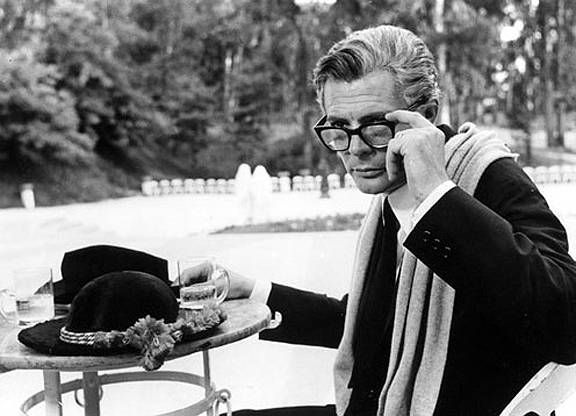
It’s hard to think of an Italian director on the same level of fame and influence as Federico Fellini, and though a good number of modern filmgoers may not be familiar with him by name, it’s quite likely they’ve experienced him secondhand through the countless modern filmmakers he’s inspired. Elements of his style can be seen in the witty social commentary of Terry Gilliam, the surreal imagery of David Lynch, and the emotionally conflicted dialogue of Charlie Kaufman, while other films are just shameless exercises in homage, such as Kaufman’s own Synecdoche, New York, Woody Allen’s Stardust Memories, Paolo Sorrentino’s The Great Beauty — even that ending scene from Big Fish. And for good measure, I guess I should throw in that one short film Wes Anderson directed for Prada. Fact is, without this guy, we wouldn’t even have the word paparazzi, which comes from the character Paparazzo, a photographer from his 1960 classic La Dolce Vita, arguably the most well-remembered of his works. And while La Dolce Vita’s cinematic beauty and iconic status may have won it the rank of #39 on the BFI list for the top 50 greatest films of all time, 8 ½ surpasses it by miles, ranking within the top #10 on the same list.1 So, the question is … why? Why is 8 ½  considered to be such a great film — and, more specifically — why is it an important film for the film lovers of today’s audiences? The answer is simple. It is because 8 ½ remains to this day not only the definitive film about filmmaking but also quite possibly the definitive film about the life of the artist in general. Unfortunately, this is the kind of answer that only raises more questions, so let me explain exactly why I believe that to be true.

But before I move on to some of the film’s deeper themes, I have to take a moment to talk about exactly what kind of a film this is. In his 1947 film Bicycle Thieves, Fellini-contemporary Vittorio di Sica shows us the human condition through the struggle of a simple, innocent lower-class man driven to desperation. Fellini shows us the same kind of desperation, but in an entirely different environment, as he chooses instead to focus on the depravity of Italy’s lavish upper class. Here are the people who have everything the starving families of Bicycle Thieves lack, even to excess, and yet they’re entirely corrupted, left empty, searching for a sense of purpose and meaning that ultimately evades them. La Dolce Vita and 8 ½  both carry across these themes and ideas, but they do so in entirely different ways. La Dolce Vita is a stinging social commentary on celebrity lifestyle, a journey through seven days and seven nights of sin and debauchery. Not surprisingly, it happens to be the second saddest film I’ve ever seen — the saddest film I’ve ever seen being the aforementioned Synecdoche, New York, a story about a neurotic self-absorbed genius who begins an artistic project so grand and expensive it consumes his life entirely and physically and emotionally estranges him from everyone and everything he really cares about. Not coincidentally, this is also the exact same plot of 8 ½ . But going back to Fellini, I’d like to point out though 8 ½  and La Dolce Vita both produce entirely different feelings in the audience when each film ends, both films keep the same emotional tone for a majority of their respective narratives. Their endings really are the only thing that separate them into the genres of comedy and tragedy — whereas, on the whole, Fellini’s writing style floats in a balance between the two, so each film can reasonably be seen as a tragicomedy. Now 8 ½  is surprisingly funny, but note that with the amount of distressing dramatic content within the story, Fellini found it necessary to consistently remind people it was supposed to be funny, to the point where he had “ricordati che e un film comico” taped under the viewfinder of every camera: “remember that this is a comic film.”2 To pull something like this off — this interplay of painful realism with absurd humor — requires a series of emotional maneuvers of which only the most skilled writers are capable. Fellini is able do this by masking painful information beneath clever wordplay and snappy and detached delivery — which again, brings us back to Kaufman, who does this so often it you may as well consider it his trademark. The effect of this balance is though the entire film could be seen as one man’s psychological breakdown, the movie’s light tone and airy music keep you from being too worried about what you’re seeing on screen — except, of course, for those few moments when Fellini really wants you to be worried.

One of the first things you’ll notice with this movie is its use of bizarre imagery — even from the very first shot, it seems to be speaking its own kind of symbolic language. Fellini’s biographer Tullio Kezich writes at toward the middle of his life Fellini became fascinated by the writings of psychoanalyst Carl Jung and his respective theories on the subconscious — the director began to keep a dream journal and subsequently his films began to illustrate qualities of the oneiric.3 Oneiric film theory aims to interpret film in a way that emphasizes the parallels between the film and the dream, so the film can literally be seen as a dream shared by the artist and the audience — as French critic Roland Barthes beautifully points out, do we not walk out of the movie theater feeling almost as if we had just awoken from a long sleep?4 While it’s true not every film lends itself to this kind of psychoanalysis, many directors who view the medium in this way will deliberately work surreal elements in their movies as a means of guiding the audience to reconsider the film from this perspective, and many films are better enjoyed and understood when you watch the film as if it were a dream, the product of our collective subconscious. Films that operate on this idea can be found everywhere you look. such as Martin Scorsese’s After Hours, Stanley Kubrick’s The Shining, and pretty much everything by David Lynch — and yet when it comes down to it, all of these directors’ uses of surrealism can be traced straight back to Fellini.

The symbols we see in Fellini’s dream sequences are by no means arbitrarily chosen. In fact, the fears and desires symbolically present in the opening scene are carried throughout the rest of the film, and just as much can be said for the reappearing visual motifs. In the first sequence we see Guido trapped between the glass windows of a car, just as his dead father is shown to be trapped within the glass mausoleum within the second dream sequence; the steamy bath house also refers back to the steamy car from the same opening scene. When I first saw the film, I was amazed when I first saw the sheer magnitude of Guido’s film set — unaware I had actually seen it within the first three minutes of the movie! And it’s hard for anyone to miss the unsettling similarities between Guido’s harem fantasy and his childhood memory of the wine bath. Within the dream, the environment is understood as a manifestation of the character — how that character interprets his own reality, and what he or she sees as important. Yet with Fellini ensuring the lines between dream, reality, fantasy, and memory stay blurred, the audience is forced into a deeper level of involvement with what they’re presented with — you have to figure out what’s going on in any given scene.

At the center of 8 ½ , is of course, Guido — dreamer and director. Guido is interesting because he is at once likable and repulsive. The movie introduces him as someone beset with stress, surrounded on all sides by producers and actors who never cease to barrage him with questions, and we can immediately relate to his frustration. But just when we feel we like this guy, the movie suddenly begins to explore in depth every single one of his flaws — contemporary critic Alberto Moravia describes Guido as “obsessed by eroticism, a sadist, a masochist, a self-mythologizer, an adulterer, a clown, a liar and a cheat.”5 He is a charlatan, attempting to mount his magnum opus at a time when he is, as Roger Ebert writes, “artistically bankrupt,”6 perhaps not unlike Fellini before the film entered development. When Guido begins working on his film, it is a story about a nuclear apocalypse, about a rocket-ship and mankind’s evacuation of a dying world — and yet when we see the screen tests, all of the characters are simply mirror images of the key players in his own life. In choosing to make the film, he desires to do something important, something beautiful, something to be remembered, but as he retreats into himself further and further, his massive science-fiction epic eventually devolves into self-gratifying autobiography. Here is a man who hides behind his sunglasses because he is afraid of the world around him, afraid of women, afraid of vulnerability, afraid of being disappointed and afraid of being a disappointment. Thus Guido creates art as a means of controlling a reality beyond his control, processing reality through his artwork in the same way dreams process our reality in a way we can understand. But in doing this, he distorts reality and ultimately loses touch with it. Guido’s very character is constantly defined by lies and deception, but more damaging than any of the lies he feeds the other characters are the lies he feeds himself, to the point where even he, and therefore the audience, can no longer distinguish between reality and fabrication.

In the midst of his trials, Guido seeks for answers in his wife’s medium friend, Rosella. He is free, she tells him. Free to do what, though? Free to choose, perhaps? For certainly, the entire ending of the film seems to hinge on one climactic choice — where he crawls under the table at a press conference, pulls out a gun, and points it towards his head. A gunshot is heard, but we see nothing. And though there is some level of ambiguity, most are convinced this doesn’t imply he kills himself — no, the upbeat optimism of the film’s final images conflicts with that idea too strongly. According to Fellini analyst Frank Burke, what Guido shoots is not himself, but his ego.7 When we encounter Guido at the film’s beginning, he is making art for himself — not exposing his weaknesses, but to hide them — even though what Guido primarily desires is a relationship built on vulnerability without judgment. He craves true self-expression, but also true acceptance. What he discovers at the end is the love he was searching for, almost unconsciously, and when he puts his own pride and selfishness to death, he discovers a glorious afterlife where he is able to live in harmony with everyone he has wronged. The film’s ending then redefines art as a gift to others, a bridge to unite artist and audience — so that the artist is noblest when he is most honest. Art is no longer, then, a burden or a duty. Art is an act of love.

Endnotes

1 “The 50 Greatest Films of All Time.” Sight & Sound. British Film Institute, September 2012. Web. Retrieved on 24 September 2015.

2 Walter, Eugene. “Dinner with Fellini.” The Transatlantic Review, Autumn 1964. Print.

3 Kesich, Tullio. Federico Fellini: His Life and His Work. London: Faber & Faber, 2007. Print.

4 Barthes, Roland. “En sortant du cinéma.” Communications, 23. 1975. pp.104-107. Print.

5 Moravia, Alberto. L’Espresso. 14 February 1963. Print.

6 Ebert, Roger. “Fellini’s ,” Chicago Sun-Times, 7 May 1993.

7 Burke, Frank. “Modes of Narration and Spiritual Development in Fellini’s .” Literature Film Quarterly. 1986. 14:3. p. 164-170. Print.

Twilight Struggle

Matthew Nalls

A work of true skill and inspiration, Twilight Struggle is a two-player board game that simulates the silent war between the two great superpowers of the United States of America and the Union of Soviet Socialist Republics. The illustrated board game incorporates events from the early stages of the Cold War to the later stages of the war during the course of the game in due chronological order.

The game incorporates these events through action cards that are used to dictate the flow of the game. These cards can help or hinder each player, as some cards work toward the sole benefit of the USSR player, the US player, or both. Examples of such cards are “Allende,” “CIA Created,” and “‘One Small Step…”’ respectively. Allende, a Socialist physician, was popularly elected in the country of Chile to lead its first socialist government. When played, this card grants two “influence” to the USSR in the country of Chile on the map. Influence points determine control over the war and the regions on the board. Hence, the card is a USSR benefit card, as the card essentially gives USSR influence in the region. Likewise, “CIA Created” is a US-benefit card, as the card recounts the creation of the Central Intelligence Agency. This card allows the US to put one “influence” on the board, and see the opponent’s hand. This card works exclusively for the US, as the CIA was not a Russian organization. The converse would be considered for “Allende.”

Unlike these two kinds of cards, other cards benefit either player. On July 20th, 1969, Neil Armstrong became the first man to step foot on the moon. During this, he uttered the unforgettable phrase, “That’s one small step for man; one giant leap for mankind.” The “‘One Small Step…’” card signifies the work put in by NASA to catch up to Soviet technologies regarding the Space Race in order to land a man on the moon. This card allows the player to catch up two spaces in the Space Race part of the game. Therefore, it can benefit either player.

The Space Race is its own course made up of several achievements. These achievements include “Animals in Space,” “Man in Space,” “Lunar Orbit,” and ultimately “Space Station,” among several others. To move along this path, one must either discard a card or obtain a Space Race-specific card. These achievements benefit the player, as the majority give Victory Points to the first player to land upon them. These Victory Points ultimately decide the outcome of the game, as the first player to reach twenty Victory Points “wins” the Cold War. This is not as easy as it sounds. If the US player is at five Victory Points, and the USSR player earns five Victory Points, both players are not at five Victory Points. Rather, the USSR player has just reeled the US player back to zero Victory Points. This would be the same case even if the roles were switched.

Along with detailed and historically-accurate cards, Twilight Struggle also incorporates “initial influence.” For the US and the USSR, at the beginning of the game, both sides already boast influence in certain countries. This “initial influence” is a reflection of the power each side wielded in certain regions during the early stages of the actual Cold War. Furthermore, to preserve the chronological accuracy of the war, certain cards cannot be played until certain stages of the game. As Allende took power over Chile in 1973, his card is not available until the game progresses to the “Mid-War” stage of the game. Until such stage of the game, “Allende” and other “Mid-War” cards are not available for play. Similarly, “Late-War” cards are not available until the respective stage is met as well.

Regarding detail, historical and chronological accuracy, and incorporation of key events, Twilight Struggle sets high standards for other board games. Although not every part of the Cold War could be fit into the game, such is understandable and not unexpected. Twilight Struggle still provides a thorough retelling of the Cold War through the game-changing cards it does include.

As for the excitement and player enjoyment factors, I had the special privilege of playing renowned board game passionatus Mr. Rush in two exciting practice rounds. In both rounds, I opted to play the role of the USSR in their struggle against the “free” filthy capitalist pigs. The first practice round took time; however, this was understandable as it was necessary to become accustomed to the processes of the game. When grown accustomed, the game soon took off in a tense, back-and-forth exchange. Repeatedly, it became necessary for me to reel the US back to zero Victory Points during the round. The outcome of this round is not of importance.

The second practice round was one of emotions ranging from determination, excitement, disappointment, and disdain. At the tail end of the “Early-War” stage of the game, the US was boasting a significant lead in Victory Points. Fortunately for the USSR, I possessed a “scoring card” which would attribute numerous Victory Points to the USSR for domination in a region. During the beginning of the round, I strategically allocated certain amounts of growing influence in the South American region. With this scoring card in hand, I was prepared to return the war back to even terms. Unfortunately, a small-font, hidden, between-the-lines, tucked away rule prevented the USSR from a major comeback. This ultimately led to a miserably disappointing defeat, or so I thought. In blinding reality, my opponent ruthlessly cheated during our game, which was a key factor of this defeat. The “UN Intervention” card is a specialized card that can help either player. The card allows one to discard another card in his hand, and use the operation points from the card without triggering the event. My opponent misled me, and wrongly interpreted this respective card. Rather than nullifying a card in his own hand, he used “UN Intervention” to nullify a card I played that round, and mercilessly utilized its operation points. As a result of this, game-changing cards were nullified on several occasions, ultimately leading to the untimely demise of the USSR.

Nonetheless, upon the completion of our two enjoyable games, I had come to an appreciation for the game. Twilight Struggle boasts strategy, history, drama, and excitement all in one bundle. The game does not take hours to churn out an end result, nor does the game “zip by” before one realizes the game is actually completed. The game’s creators had the goal of enjoyment in mind, and they achieved this goal with marked skill and detail. My personal experience was so enjoyable I have taken up playing the game online with others across the globe on the website “Chantry.” I highly recommend this game for both casual and committed board game players, and especially for those looking for a fun and exciting, yet simple game.

Atheism versus Christianity

Mark Erichsen

The following papers were written for the “Dangerous Books” elective, similar to the selections presented in issue seventeen.  The two main books read this quarter were On the Genealogy of Morals by Friedrich Nietzsche and selections from Charles Darwin’s On the Origin of Species, which we will continue into fourth quarter.

When one talks about religion and the creation of the world, two of the most common views brought up are Christianity and Atheism involved with Darwinism. Christianity is rooted in history (back to the B.C. era) with one of the most reliable sources in history, The Bible, while Atheism also arose in the B.C. era and became even more popular than it already was with the publishing of Charles Darwin’s On the Origin of Species. Christianity revolves around the belief of intelligent design and the governance of a one true deity; and Atheism is the belief in no such deity at all, with evolution being the basis for creation.

The question here is would the world be better off if Atheism dominated cultural and intellectual life? For further clarification of the question Atheism will be compared to a world dominated by Christianity and most comparisons made will refer to the population of the United States of America. As stated before Atheism is the belief in the absence of any ruling deity(-ies). One of Atheism’s biggest tenets is the belief in Darwinism, a view in which all life as we know it today evolved from a single, single-celled organism up to fully sentient humans. The problem with those who accept Atheism is they lack the belief in the Christian God, and along with the belief in the Christian God comes the understanding of intelligent design, morals, and a deeper understanding of Creation.

The biggest problem is the lack of morals. Those who do not identify as being affiliated with religion tend to make their own sets of morals or usually just fit in with whatever is popular. Of course there are Atheists who hold themselves to their own moral standard based off of personal experience and strive to live a good life by doing good works and treating others as themselves; but what it comes down to is an overall lack of morals in today’s culture. This is attributed to the lack of and adherence to religion in the United States. In 2014, a survey was conducted and about seventy percent of America’s population identified themselves as Christian. However this does not take into account the “annual Church attendees.” The sad thing is the percent of real, dedicated Christians that regularly attend Church and live a Godly lifestyle is far lower than seventy percent.

Many families and individuals identify as Christian but only go to Church twice a year: Christmas and Easter. Their actual adherence to Christian beliefs and values are subpar also. This percentage of fake Christians and the twenty percent “unaffiliated” group probably make up at least over half of America’s population. Along with this comes the destructive fundamentals of today’s culture. The basics of today’s culture include sleeping around as much as one wants (with little to no commitment), living life believing you have no consequences for your actions, and making you the center of your own universe. In the past five to six years these views have become more and more popular up to the point where our country’s government has been corrupted and is beginning to make all the wrong decisions.

This can only get worse and with the population shifting more and more to an Atheistic point of view, one can only imagine what might happen if the world was dominated by America’s culture (and where America’s future is headed). The world would not be better off if an Atheistic point of view dominated intellectual and cultural life. Once again, this can be attributed to the ever-present Atheistic belief in America. Now, if Christianity were the dominating religion in the world, let alone America, things would be much different. Despite seventy percent of Americans identifying themselves as Christian, Christianity is clearly not the dominated religion/belief.

Despite culture’s morals and values being completely different, more valuable works would be produced. Now there are plenty of books and movies made in this day and age that will surely stand the test of time, but if Christianity dominated, Christian thought would also dominate. For example, there would most likely be more apologists, and critical thinkers would be pumping out books left and right analyzing different religions and viewpoints. Overall, the arts would flourish.

Alongside this, America’s original and intended values would not be skewered and misinterpreted; they would be protected. After all, America was founded as a one true nation under God. The fundamentals of popular culture would look more along the lines of making it one’s goal to live and imitate a life Christ led. Paul, a mouthpiece of Christ and the greatest missionary who ever lived, says in Ephesians 4:1-3, “I therefore, a prisoner for the Lord, urge you to walk in a manner worthy of the calling to which you have been called, with all humility and gentleness, with patience, bearing with one another in love, eager to maintain the unity of the Spirit in the bond of peace.”

Christ instructs us to live a Godly life, and be the best examples of Him we can be. Peter, another mouthpiece of God, says in 2 Peter 3:17-18, “You therefore, beloved, knowing this beforehand, take care that you are not carried away with the error of lawless people and lost your own stability. But grow in the grace and knowledge of our Lord and Savior Jesus Christ. To him Be the glory both now and to the day of eternity. Amen.”