Category Archives: Reviews

Critical Countdowns

Peter Runey, Dylan Fields, Noah Eskew, and Melissa Yeh
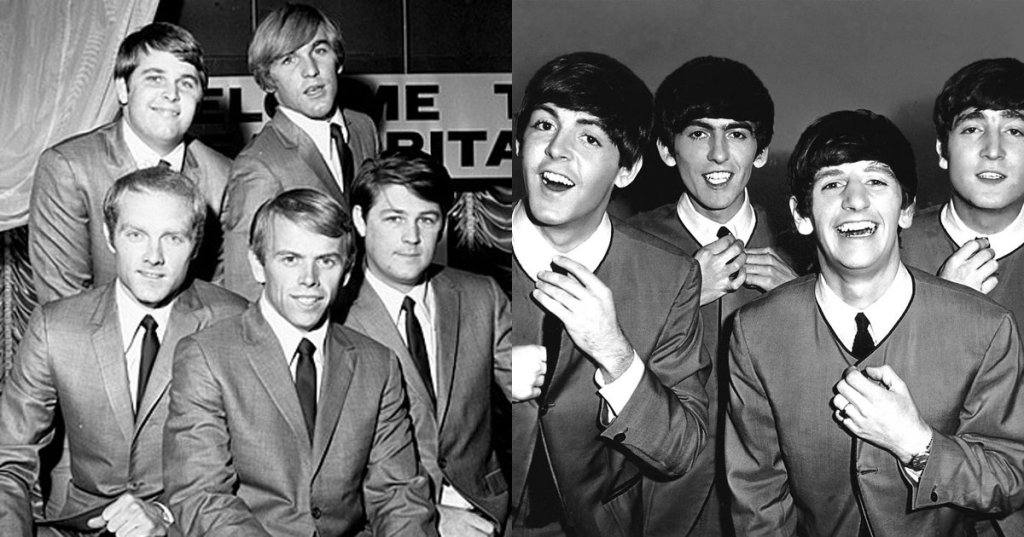
Peter Runey’s Critical Listening Top 10

1. “Nobody Loves You (When You’re Down and Out)” by John Lennon

2. “Come Together” by The Beatles

3. “A Hard Day’s Night” by The Beatles

4. “Get Back” (Live on the Rooftop) by The Beatles

5. “Don’t Let Me Down” by The Beatles

6. “Golden Slumbers/Carry That Weight” by The Beatles

7. “Good Vibrations” by the Beach Boys

8. “Band on the Run” by Paul McCartney(/Wings)

9. “The Long And Winding Road” by The Beatles

10. “Lucy In The Sky With Diamonds” by The Beatles

This was extremely difficult to boil down to the top ten, however these are my thought-through, most profound songs of the Critical Listening class this year. While many of these carry real-life meaning to me since they’re attached to a fond memory of mine, some of these I admire purely based on their musical and lyrical quality.

“Nobody Loves You (When You’re Down and Out)” — John Lennon creates one of the most uniquely-sounding songs I’ve heard from him, whether it be from his solo career or from the Beatles. He incorporates a string orchestra as well as trumpets/horns, all the while still retaining the same classic Lennon vibe from the Beatles so many loved. Lyrically, Lennon takes a creative approach to exposing the fact people tend to only show love when they want it in return (“I’ll scratch your back and you scratch mine”), as well as the fact often great people are only admired and recognized for their accomplishments when they’re “six feet in the ground.” Ironically, Lennon gained even more of a following of his ideas upon his assassination.

“Come Together” — Despite the fact Lennon is known to be involved with the use of psychedelics, few can say the Beatles’ music became any less unique when they began using. Lennon crafts an incredibly artistic song beginning with a deep bass masking whispers of “shoot me, shoot me,” most likely referring to heroine. At this point, John Lennon was becoming a figure in many a cultural and even political scene (as an influencer not a participant) and used the song as somewhat of an anthem for the freedom to use psychedelics. Despite its intentions, I find this song to be one of the most creative and catchy songs the Beatles ever produced.

“A Hard Day’s Night” — I could tell an incredibly long story of a memory attached to this song for me. Instead, I’ll just say this song became very relevant to me on one special night in the Shenandoah mountains.

“Get Back” (live on the rooftop) — This song mostly holds its meaning to me since it was the final song to be performed live by the Beatles. I found it amusing that their desire was to be dragged off the venue by police since the concert was considered to be an unannounced public interruption, however the concert ended with a mere “pull of the plug,” so to speak, from the local authorities. It’s not just a special song but also a special performance since it was the last time the four ever played together in public.

“Don’t Let Me Down” — There are a few reasons why I love this song. The first of these is this was also played at the final rooftop concert. Another reason is Paul and John both harmonize beautifully in this song, which makes John’s raw, heartfelt message of love to Yoko Ono that much more special.

“Golden Slumbers/Carry That Weight” — While these are technically two separate songs, the track was ordered so “Golden Slumbers” could carry seamlessly into “Carry That Weight” as part of a 6-part climactic medley in Abbey Road. I love “Golden Slumbers” because it begins simply with Paul and a piano playing a sheet of music he found on his grandfather’s piano with his own words put to it.

“Good Vibrations” — While this is the only Beach Boys song that made the list, it’s definitely one of the most enjoyable listens of the years. I appreciate the upbeat rhythm and lighthearted melody. The Beach Boys have mastered the art of crafting songs perfect for driving in a car with the windows down on a summer day, and this is certainly one of those.

“Band On The Run” — Paul branched out with this song. He begins to step out of his shell of his creativity since he no longer experiences the same pressures of being in the Beatles now that he was in control of his own solo career. On this track, Paul, in a way, mixes three songs into one, making a roller coaster of a song, but not to the point where it’s distracting to the listener. Paul’s musical brilliance really shines when somehow he pulls off a silky-smooth transition from the magnificent blare of brass and electric guitar instruments into an acoustic guitar/drum combination for the rest of the track.

“The Long And Winding Road” This is easily one of the most emotional song from the Beatles, aside from maybe “Blackbird.” Paul takes the listener on a journey down a long and winding road with this song but leaves the listener with little conclusion or sense of achievement. It’s inferred that the end can’t be reached, and it’s unattainable. Obviously, this is how Paul must’ve felt at some point in his life, and he depicts this season of life very effectively and eloquently.

“Lucy In The Sky With Diamonds” — This song is believed to be a reference to a drug known as LSD, which was likely being used by at least one of the band at the time. One thing I do appreciate about the times when the Beatles were under the effects of drug usage is their creative thinking tended to be much more outside the box, which resulted in unique tracks like “Lucy In the Sky.” The song doesn’t make much sense, lyrically, but to me it doesn’t have to in order to appreciate its special sound.

Dylan Fields’s Critical Listening Top 10

1. “A Hard Day’s Night” — Beatles

2. “Come Together” — Beatles

3. “Little Deuce Coupe” — Beach Boys

4. “Don’t Let Me Down” — Beatles

5. “Maybe I’m Amazed” — Paul McCartney

6. “Wouldn’t It Be Nice” — Beach Boys

7. “All Things Must Pass” — George Harrison

8. “Help Me Rhonda” — Beach Boys

9. “Pease Please Me” — Beatles

10. “The Monster Mash” (Live) — Beach Boys

This list was a whole lot harder to make than I anticipated it being. Many of these songs may not be my favorite for their musical aspects but the stories behind them. I will be explaining why each song is special to me throughout the course of this paper.

“A Hard Day’s Night” — This is the epitome of Critical Listening music for me. It may not be my favorite critical song musically but the story behind it makes it what it is to me. In the beginning of the year when Critical Listening was just starting, we had just heard this song and Pete and I were jamming to it non-stop. We literally had this album on repeat every time we were in the car. That being said one day I had the bright idea to go on a road trip/camping trip to the Shenandoah mountains with Pete and Pedro. The trip started off great: we were having a ton of fun and everything was going great. We arrived in the mountains and that’s where things started going wrong. There was a police car involved and we had to stay in an overpriced dirty motel instead of camping out. We got to camp out the second night and it was decently fine from then on out. So fast forward to the ride home, Pete throws on this song and it just made sense. That trip was “A Hard Day’s Night.” So every time I hear this song I think about this trip, the bad parts but mostly the good.

“Come Together” — This song has been one of my favorite Beatles songs since the start of the class. I love the intro of this song. I think the crazy thing about the beginning and throughout the song is John is saying “shoot me” and ends up getting shot and killed; he obviously want talking about guns in the song but it is still ironic. I am going to say this for a lot of these songs and I could probably say this for all of them but this was a song me and Pete loved to jam to in the car.

“Little Deuce Coupe” — I really don’t like this song musically, but the story behind it is what makes it one of my favorite Critical Listening songs. One of the first times we were listening to this song in first semester I think it was Pete that started singing the chorus obnoxiously at a super high pitch, then I would sing low, then Noah would go high with Pete. This turned into a thing we did. We would just sing “Little Deuce Coupe” as obnoxiously as we could. We did it everywhere, in the classroom, in the halls, in the parking lot, everywhere.

“Don’t Let Me Down” — My first memory of this song was the video of them playing on the roof around the time they were breaking up and all the people come out of their houses to watch. After we watched that in class I had it stuck in my head and I was jamming to it non-stop and apparently Pete did too because I was texting him one night and I said I was jamming out to the Beatles and he said he was, too, and I texted him “Don’t Let Me Down” was a banger and as I hit the send button I got a text from him saying basically the same thing. We always kinda joked about that.

“Maybe I’m Amazed” — My words while listing to this song for the first time were “Dang, I like this song … Oh, dang, I really like this song!” This song was one of those rare cases of love at first hearing of a song; most songs take me a couple times to listen to them to really like them. This one was not the case; I had this song stuck in my head for about a whole month after I listened to it one time. I remember jamming to this with Pete while going from thrift shop to thrift shop looking for pianos to cure our addiction to music.

“Wouldn’t it Be Nice” — Every time I hear this song I see Joanna and Sarah on stage at the Battle Cry talent show. This song makes me think of my class and all the memories we shared together. It’s crazy how music will do that to you.

“All Things Must Pass” — This has been my theme song for the past couple of weeks with so much changing. I am going from one huge part of my life to the rest of my life. This is the end of the beginning for me and I can really relate to this song right now. I loved high school and made so many memories here but like everything in life all things must pass, good things or bad they all will pass.

“Help Me Rhonda” — I don’t really have a story behind why I like this song, but this could easily be my favorite Beach Boys song. It’s just so free spirited and groovy and I dig that. This is in my top ten in any genre for jam out sessions in the car.

“Please Please Me” — This was my first song in Critical Listening I really liked. I listened to this song and the entire album a whole lot at the beginning of the class. I still really like this song and it brings me back to Noah, Pete, and me dancing all around room 103 all first semester.

“The Monster Mash” (Live) — I don’t like this song for its musical sense unless it’s around Halloween, but this song was a classic in the first semester of Critical Listening. Noah and I would sing this obnoxiously all the time and it was so much fun. I remember sitting in our second period study all just doing our math homework and singing “He did the mash … He did the monster mash! … It was a graveyard smash.” That song was just a lot of fun to me.

In conclusion, I loved this class and I’ve said it before but I’ll go ahead and put in in writing, this was my favorite and most beneficial class I ever took at Summit. Not to take anything away from the other classes or teachers, but this class had such an impact not only in my taste for music but it really did impact my life. It brought Noah, Pete, and me closer, and they are some of my best friends I have. It also made me open my eyes to music: I discovered so much more music and even made me want to get in the realm of creating music, which I was not successful in at all. It also played a huge roll in choosing my thesis topic because music was constantly on my mind during that time. Mr. Rush, thank you for offering this class and putting up with us even when I was rolling around on the cart or playing with the music stand; I truly appreciated this class.

Noah Eskew’s Favorite Five, yea Six Beatles Albums

What are the top 5 Beatles records? I would put that question in a top 5 list of unanswerable questions. However, I have determined my 6 favorite Beatles records based on the ratio of songs that left a memorable and positive impression on me over the total number of tracks on the LP. The one fault to this method is it doesn’t account for how much I enjoy a specific track; it instead simplifies it to: Did I like it? For example, I thoroughly appreciate the songs “I’ve Got a Feeling,” “For You Blue,” “Across the Universe,” and “Get Back,” which are all featured on Let It Be, but the rest of the album leaves much to be desired. The outcome of this process slightly surprised me (in regards to the resulting order), even though my previous general idea was almost precise.

#5 A Hard Day’s Night

With this album I found seven of the thirteen songs appealed to me. The title track begins with a special strum of a chord. To this day, few can identify what note is exactly being played. The lyrics are highly relatable to anybody who’s been hard at work. Plus, the guitar solo is swung in a manner that’ll make the guitar player and the average listener happy. In this song, the Beatles prove within the context of pop sensibility they can remain true to their musicianship. “I Should Have Known Better,” “If I Fell,” and “I’m Happy Just to Dance with You” also add to what is truly a solid start to this album. “Can’t Buy Me Love” is practically a Beatles staple. With a catchy chorus, and rather true lyrics in the verse, this hit did not disappoint. Lastly, my favorite song of the entire work is without question “You Can’t Do That.” With a jangly guitar intro, John’s impeccable attitude-filled vocals, and Ringo’s driving drum and cowbell groove, this song has placed itself among my favorites.

#4 Magical Mystery Tour

There are seven songs of the twelve on this compilation of which I am fond. The title track kicks off the record with a catchy repeatable chorus, and in between choruses we get a glimpse of the mysteriousness to be experienced in the following minutes of the LP. “Your Mother Should Know” is yet another classic involving Paul and the piano. The piano riff bounces along lightheartedly, while the lyrics are a fun alternative to some of the other strange styles during this period. The hits that have emerged from this compilation included such smashes as “Hello, Goodbye,” “I Am the Walrus,” “Strawberry Fields Forever,” and “All You Need is Love.” Part of the genius behind the Beatles’ discography is their ability to churn out the hits with fun and catchy choruses, but simultaneously the ability to entertain with more eerie sounding progressions as well.

#3 The Beatles (The White Album)

Out of the 30 tracks produced on this double album, I like listening to 18 of them. If I always had the time required, I would not skip any of the first 12 tracks (except maybe “Wild Honey Pie”). The first dozen on disc 1 could be an album by themselves. This, above all the other albums, shows the individual musical personality of each of the four Beatles. This is probably due to the fact the group did not spend much time together in the studio compared to previous sessions. Paul thrives on “Back in the USSR” (the driving rock ‘n’ roll tune), “Ob-La-Di, Ob-La-Da” (the happy and hopeful pop song), “Martha My Dear,” “Birthday,” and “Helter Skelter.” George offers some of my favorite Beatles numbers of all time such as “Savoy Truffle,” “While My Guitar Gently Weeps,” and “Piggies.” John ventures into interesting lyrical processes by incorporating the stories of other Beatle songs into the phrases of “Glass Onion.”

#2 Sgt. Pepper’s Lonely Hearts Club Band

Many magazines and other award-givers rank this work as the greatest album of all time. Combining the sounds of the psychedelic rock movement with those magical Beatle melodies, the Fab Four did indeed produce one of the most revolutionary records ever. Eight of the songs stick with me years after hearing them. Tracks one through five have the flow of a live performance. “Fixing a Hole,” “Getting Better,” and the reprise of the title tracks remain my favorites for their interesting lyrics, simple but solid guitar parts, and energy that really speaks to me.

#1 Tie Between: Revolver & Rubber Soul

Within these two records begins the change of the Beatles’ career. They move from the lovable mop-tops into the genius musicians that have pulled themselves out of live performances in order to further their art. They begin to incorporate eastern influences into their songs, but yet again don’t shy away from their rock ‘n’ roll identity. Each of these albums included 14 tracks, and each of the albums included 9 tracks that I love. “Nowhere Man,” “Think For Yourself,” “What Goes On,” and “I’m Looking Through You” are my favorites from Rubber Soul. “Taxman,” “I’m Only Sleeping,” “She Said She Said,” “Good Day Sunshine,” and “Got to Get You Into My Life” are my favorites from Revolver.

Melissa Yeh on “Band on the Run”

With the Wings album, Paul McCartney released “Band on the Run” in 1973.  The song has different interpretations based on history and listeners agree it is well composed and one of his most memorable.  The most popular and speculated-on theory from this song concerns the reflections and aftermath of the breakup the Beatles underwent from Paul McCartney’s perspective.  He confirms in an interview the song was influenced by one of the many long meetings where George Harrison remarks on the regrets of the events going on at the time.  “If I ever get out of here, thought of giving it all away, to a registered charity.”  For this phrase especially, he wishes they could have spent more time on the music, focusing on the good, and the wealth was not worth that happiness; instead it should have been devoted to charities.  The song then develops his freedom from the tension of the break-up and his ability to pursue what he wants to without being burdened by the obligations the band held over him.  When asked about if the song was in association to the break-up, Paul McCartney responds, “Sort of, yeah.  I think most bands are on the run.”  In another comment, one listener feels the song is not as much about the break-up as people think the song is.  In fact, it’s completely absurd and almost obsessive to relate everything back to the Beatles.  In another part of the song, articles and listeners have alluded to the line “and the jailer man and sailor Sam were searching everyone,” being connected to the incident in Sweden in 1972.  Paul McCartney and all of group Wings were arrested on drug charges.  Thus, the police were searching them at the time.  Later comments express McCartney’s plead for focus away from these types of charges and on what matters most, the music.  Overall, the song is about a prison escape and the shift from captivity to freedom.  “Stuck inside these four walls, sent inside forever,” describe the jailed prisoner, cut off from the outside world.  Again the prison is referred to in “if I ever get out of here.”  The explosion symbolizes the escape and again the band is running from police, “in the town they’re searching for us everywhere, but we never will be found.”

When talking about the instrumental in working with the theme of that escaped prisoner, the composition itself embodies the mood of the song.  Paul McCartney has been noted for his ability to combine multiple songs into one; here there are three distinct melodies. The first transitions into the second from verse one to two, beginning at, “if I ever get out of here.”  The tempo speeds up slightly and moves into a minor key through an instrumental break.  This represents a sense of sadness and regret in the tone of the song.  The third begins after the dramatic instrumental charge into the verse, “Well, the rain exploded with a mighty crash as we fell into the sun.”  The song modulates from A minor into C major, now with a new and happier tone from what it was before.  The movement of the song captures that feeling of relief and freedom.

What moved me to choose this song followed from the moment where as I was sitting in class, I heard the first chord and immediately decided I like this song.  Don’t get me wrong, I enjoyed the music in class, but none of the songs had caught my attention as quickly as this one.  While in the bus in Germany passing through the countryside, I remember going through a tunnel or under a bridge and right as the song changed from the second part into the third, the bus flew into the open again into the light with long fields surrounding us.  That moment McCartney creates of an explosion into freedom was more than what I can describe in words.  With that, this song will always tie me back to the memory with our class, driving past landscapes in Europe.

Bonus Track: Mr. Rush’s 5 Mandatory Beach Boys Non-canonical Albums for Real Fans

1967: Sunshine Tomorrow Wild Honey is one of my favorite BB albums, and this 2017 release of many WH outtakes, alternate versions, and unreleased live cuts, including the entire Lei’d in Hawaii album, make this essential.  As if that wasn’t enough, it has Smiley Smile outtakes and a beautiful a cappella version of my favorite BB song, “Surfer Girl.”  Don’t miss this.

Endless Harmony Soundtrack — This collection of rare cuts accompanying the biopic is a monumental gift.  You’ll get a fresh look at a band you think you know, a fresh look that will only reinforce your love for them.

Hawthorne, CA — Thanks to the success of Endless Harmony, Capitol Records continued to open the vaults of rare cuts, radio spots, demos, and more.  Just when you thought you heard it all, you learn you haven’t heard anything yet.  It’s disjointed at times, but it is more BB tracks, which is what we want.

Made in California 1962-2012 — This 6-cd panoply of the band’s career is pricey but worth it.  It has a lot of rare live tracks, alternate versions, and much forgotten work from Carl and Dennis.  If you’re a real fan, you need this mega-set.

Ultimate Christmas — Not only does this have the entire original Christmas Album, it collects all the tracks for the unreleased second Christmas album plus all the rare promos, singles, and other Christmas goodies.  It’s a must-have.

*2023 Editor Note: Be sure to get the original version of Ultimate Christmas! The recent streaming versions delete the best song on the collection, “Christmastime is Here Again.”
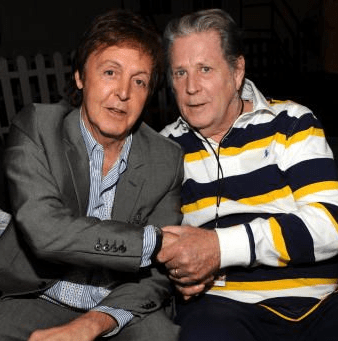
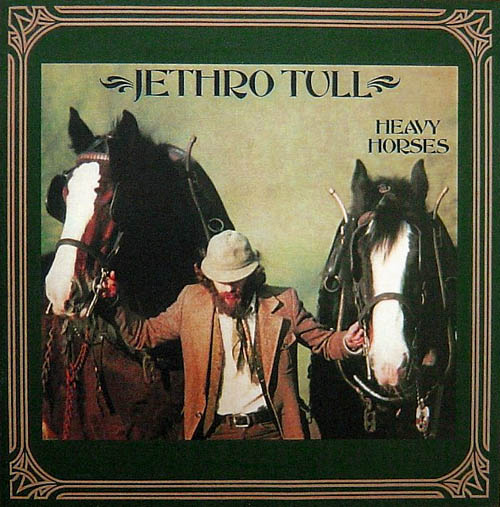
A Tull Trilogy, pt. 2: Heavy Horses

Stringfellow Bartholomew

From the Wood to the Farm

Hello!  I finally get to write my own article for the journal after all this time, and I’m really excited to talk to you about a fantastic album from Jethro Tull, Heavy Horses.  This is the second in the “folk rock trilogy” from Tull, as some have called it, but unlike most sequels, it does not suffer any let-down or disappointment.  In fact, many like it more than Songs from the Wood, which is a remarkable thing to say.  I’m not sure I like it more, but it is definitely growing on me, thanks to listening to it so much lately.  In this outing, Ian Anderson shifts his gaze from the mystical forests of bygone England to the hardworking farmers and their steads, along with the animals who, frankly, do most of the work.  Even though I’m a penguin, I can appreciate the skill and sacrifice of my fellow animals as they have made the world a better place, especially when working in conjunction with you humans.

Where the dance of ages is playing still

This first song gives me some shivers, which is difficult to do for a penguin.  I don’t spend a lot of time around cats, not too many of them where I live most of the time, but cats can be scary.  “…And the Mouse Police Never Sleeps” is also a bit scary because of the odd ending, but that’s mostly just Ian Anderson having some fun, and he knows better than most when he’s having fun and that he’s having fun and laughs at himself when he’s having fun (which is why it ends with his self-aware coughing).  It’s sort of an odd opener to this album, especially in contrast to Songs from the Wood, which gave a nice opener to the theme of that album.  I suppose “Mouse Police” sets the musical tone for the album, and it does get us out of the woods and into the farmhouse, but the metaphor distracts us initially until we have time to reflect on where this album is going.

While it may not be fair to continue the Songs from the Wood comparison going, it’s rather unavoidable, and thus “Acres Wild” seems to me like it would make a better opener for Heavy Horses, since it declaims the setting of this rural/hamlet/agricultural album much better than “Mouse Police” (you didn’t think penguins knew words like “declaims,” did you?).  It’s a very optimistic song, which is important, since this Tull Trilogy gets progressively pessimistic.  Songs is almost wholly optimistic, as we saw last issue.  Heavy Horses is rougher, grittier (certainly not musically, as it may be even more impressive musically, in many cases), and at times harder. Perhaps more melancholic than pessimistic, since many of these songs are rather ebullient, but there is a general tenor of regret for days gone by and the lost lifestyle of the hardworking agricola (though the animals do most of the work).  “Acres Wild” is a jaunty number full of zeal for living a full life, enjoining us to come “where the dance of ages is playing still / through far marches of acres wild,” but it also reminds us the world around us, before those far marches, is decaying and crumbling and a dim memory of what it once was.

Leave it to Ian Anderson to write a song about not singing a lullaby to his newborn son, but leave it to Ian Anderson to justify it because he has no desire to rear his son on false hopes and delusions about how life really is.  He wants to protect his son as much as possible (“There’s a lock on the window; there’s a chain on the door; / A big dog in the hall”), but he’s also open about the dangers of the world.  This is part of that growing edge in this Tull Trilogy of which we’ve been speaking, The dangers of the world require skills and preparation, but if know that, and treat each other with love, it’s possible to put your kids down for bed at night “safe and sound.”  Musically, this is the first of two mini-suites on the album, with multiple musical motifs.  Penguins like alliteration, what can I say.

“Moths” is another almost typical Tull juxtaposition of beautiful music and a warning of the brevity of life.  It ends optimistically, in its way, but it also presents the joy of life akin to a burning candle, and a too long life can be a bad thing.  That’s a strange thought, isn’t it?  Hard to trust lemmings and moths, I suppose.  Still, a beautiful song.  “Journeyman,” too, is a precise, hard-rocking song, bemoaning the difficult life of the hardworking city man.  Probably should be out living in nature, as the rest of the album enjoins us to do.  Be warned by this number, human people: city life is bad for your health; live in nature (but don’t mess it up for us while you do so).  Otherwise, you’ll be lonely and cold and sick and tired and hungry.  But I understand if the crisp, funky groove of the number overshadows the dire warning.  It’s hard not to smile and tap your toes to it and ignore the message.  Well, being a penguin myself, I don’t typically tap my toes, since I just waddle and rock back and forth.  I’m a bit like Ian Anderson that way.

And every day we’ll turn another page

The “B”-side of this album is possibly the third greatest B-side of all time, behind Foxtrot and Magical Mystery Tour.  These four better-than-solid songs are great listening.  “Rover” kicks it off with another solid musical gem.  Tull really was firing on all instrumental cylinders during this lineup, as delineated in the previous issue.  The diverse rhythms and crispness of the different instruments makes “Rover” a fun song, but the melody during “So slip the chain and I’m off again” elevates it to pretty great.  On one level it’s about a dog, right?  And I admit I don’t know much about dogs, since, again, I’m a penguin, but the later verses don’t sound completely like they’re about dogs to me (the last one may be about Gonzo), but it’s still rather jaunty and optimistic.  Maybe I was wrong about this album being more edgy than Songs from the Wood.

“Own Brown Mouse” could be the best song on this album, though sometimes the eponymous track wins out on that one.  But let’s not quibble: it’s not a competition – let’s just enjoy the fact we have multiple great songs on this album.  Here we have another Tullian juxtaposition of musical brilliance and a wistful song.  This wistfulness, though, is not dark or edgy.  It has a bit of sorrow to it, as the narrator and the brown mouse may be in a contest over who is the one in the real cage, but as always the uplifting music and Ian Anderson’s delivery comfort us more than concern us.  The only flaw of this song is it’s not longer.

The grand masterpiece of this album is truly sublime.  Reminiscent of the madrigal, which is perfect for the apex of a trilogy memorializing Merry Ol’ England, “Heavy Horses” is a multi-layered, multi-sectioned opera about the farm and the horses and the way things used to be.  A lot of animals featured in this album.  That’s only part of why it’s so good.  This tribute to the horses that have literally moved the earth of England makes us all yearn for a simple life of honest toil, living off the land, at one with nature.  I’m part of nature myself, and I tend to live off the ocean, but this song makes the rural life appealing even to me.  Part of that is surely the exquisite choral sections and musical brilliance, and the diverse sections keep our interest sustained throughout almost eight minutes of a song about horses and furrows.  Ian warns us the technological-driven world will soon disappoint us, and those of us with refulgent souls will soon yearn for the kind of life we have collectively abandoned.  (I’m not sure if I have a soul, being a penguin, but let’s stay focused here.)  So get back to the land, plant and harvest real food, become one with nature again.

In contradistinction to Songs from the Wood, this album ends not with the nighttime at the end of a hard day’s forestry but with the dawn of a new day.  “Weathercock” signals the kind of weather we’ll have as we start a new day working the land, or at least from what direction the wind is coming today, signaling as well the changing of the seasons.  The passage of time is a steady undercurrent of this album, as Ian Anderson bemoans the loss of anthropological-agricultural unity, but concurrently he reminds us each new day is a new opportunity for good: “Point the way to better days we can share with you,” ends the album.

So Heavy Horses is not so melancholy or cynical after all, as is often declaimed.  It is very aware of the brevity and ephemerality of life, much more so than Songs from the Wood, but that does not make it darker or edgier.  Perhaps it makes the album more Realistic, whereas Songs is more Romantic.  Nothing wrong with either.  They each have their season.  The winds of change that redirect the weathercock were certainly signaling changes for Jethro Tull as well, but that is a subject fit more for the finale of this trilogy, so I will leave that to my good buddy Theodore Aloysius to discuss in his exploration of Stormwatch.  Thanks for reading my analysis of Heavy Horses, everyone.  If you haven’t heard it lately (or at all), do yourself a tremendous boon and get it into your soul.  If the five-disc fortieth anniversary box set is a bit daunting, start with the regular album and work your way up to the goodie-filled, bonus-packed deluxe version.  You’ll be glad you did.  So long!

Far From the Madding Crowd

Tarah Leake

Far From the Madding Crowd was written in 1874 by Thomas Hardy and would prove to be his first and greatest literary success. Hardy was a devoted reader of philosophy, science, and Greek literature. Hardy struggled to find a balance between his religious upbringing and his scientific interests influenced by Darwin. In his later years, Hardy had almost completely abandoned the Scriptures and turned to science for knowledge and meaning to life. Fortunately, when Hardy wrote the Romantic novel Far From the Madding Crowd, he still had an appreciation for his religious background and incorporated Biblical values and themes. The major themes in this novel are the rejection of society, the scrutiny of vanity, and the praise of honor and humility. Biblical values are evident in the contrasting qualities of vanity and humility, displayed by Bathsheba, Sergeant Troy, and Gabriel. An evident supporting theme is love’s ability to completely change the mind and attitude of those involved as seen with all characters, especially William Boldwood and Bathsheba. In opposition to these dynamic characters, Gabriel Oak and Sergeant Troy remain true to themselves in both positive and negative ways. The first important theme of this literary work is the rejection of society represented by the title itself.

The title reveals Hardy’s values and view of society; it carries the ideology of reminiscing the “good old days.” Hardy was raised on the English countryside and had an appreciation for hard-working people and simple farm life. As he aged, Hardy witnessed a general depression of work ethic as society became more industrial and modernized. Far From the Madding Crowd illustrates Hardy’s desire to remain separate from the modern city people around him and remain true to the roots of his childhood, which he deemed much more noble. Hardy originally extracted his title for this novel from the poem “Elegy Written in a Country Courtyard” by Thomas Gray. The poem depicts a similar notion of appreciation for a hard day’s work, capturing the typical life of farmers. It is no wonder with this same appreciation for nature and farming, Hardy was inspired by the words of Gray. The line in the poem that inspired Hardy’s novel reads, “Far from the madding crowd’s ignoble strife, their sober wishes never learn’d to stray; / Along the cool sequester’d vale of life they kept the noiseless tenor of their way.”

Hardy’s admiration of a virtuous life is not only evident in the title but also in the personifications of his characters. The characters depict both extremes of vanity and humility. The two main characters (and love interests of the novel) are Gabriel Oak and Bathsheba Everdene. Gabriel Oak, the hero of the novel, is a shepherd and farmer who has the greatest moral disposition of anyone. He is humble, honest, loyal, takes responsibility, and is willing to sacrifice his own comfort for that of others. He begins as a successful farmer whose love is unrequited by the beautiful mistress, Bathsheba Everdene. Even after Bathsheba refuses to marry him, Gabriel promises to drop the matter but swears “I shall do one thing in this life — one thing certain — that is, love you, and long for you, and keep wanting you till I die.” When his sheep die in a tragic accident, Gabriel knows he has lost all of his insurance and means of financial security, yet, his first thought is one of selflessness. Gabriel thanks God Bathsheba refused his marriage, because he could have never supported them financially after the accident. Hardy writes, “It was as remarkable as it was characteristic that the one sentence he uttered was in thankfulness.” Gabriel travels around looking for a job and ends up saving Bathsheba’s farmers from a fire, not knowing it is her farm. He is rewarded with an offer to work on the farm and agrees to it. As he works on the farm, he is bothered by Bathsheba’s cold treatment to her next suitor, Mr. Boldwood. Although Gabriel risks losing his job, he reprimands Bathsheba for her actions not because it benefits him, but because he truly sympathizes with Boldwood. In chapter twenty, Hardy praises the fact Gabriel knows he has no chance with Bathsheba but still restrains himself from attempting to sabotage her future relationships: “Thoroughly convinced of the impossibility of his own suit, a high resolve constrained him not to injure that of another. This is a lover’s most stoical virtue, as the lack of it is a lover’s most venial sin.”

In stark contrast to the virtue and morality expressed by Gabriel, Bathsheba is vain, cold, and self-absorbed for the majority of the novel. The first time Gabriel sees her, she is staring at herself in the mirror and Gabriel tells the gate guard the woman has one fault, vanity. When Gabriel comes to ask Bathsheba’s aunt for her hand in marriage, her aunt warns that her niece has several suitors. Bathsheba cruelly chases after Gabriel to tell him this isn’t true, which Gabriel takes to mean she is interested in him. Then she denies his proposal, clarifying she only meant to tell him “nobody has got me yet as a sweetheart, instead of my having a dozen, as my aunt said; I hate to be thought men’s property in that way.” Bathsheba goes on to say, “A marriage would be very nice in one sense. People would talk about me, and think I had won my battle, and I should feel triumphant… I shouldn’t mind being a bride at a wedding, if I could be one without having a husband. But since a woman can’t show off in that way by herself, I shan’t marry.” Bathsheba reveals the extent of her egotism by this remark; the only part she likes about a wedding is how much attention she would receive but doesn’t want the love or commitment associated with it. As if this does not wound Gabriel enough, she refutes his vow to love her forever by harshly retaliating with the statement, “It wouldn’t do, Mr. Oak. I want somebody to tame me; I am too independent; and you would never be able to, I know.” At this time, she is poor and has not yet been given the farm, yet she still carries a haughty attitude and thinks herself too independent for any simple man.

Another major suitor for Bathsheba is the eligible bachelor, William Boldwood. The name suggests his reserved, wooden persona as he is a difficult man to please; every young woman who has tried to woo him has failed. However, Boldwood’s heart is quickly captured by Bathsheba’s beauty and wealth, and when she sends him a valentine for personal amusement, Boldwood falls completely in love. Boldwood expresses how Bathsheba, without realizing it, has changed his entire mindset: “I had never any views of myself as a husband in my earlier days, nor have I made any calculation on the subject since I have been older. But we all change, and my change, in the matter, came with seeing you. I have felt lately, more and more, that my present way of living is bad in every respect. Beyond all things, I want you as my wife.”

Not only does Bathsheba unwillingly enact a change in Boldwood, but this gentleman also awakens a change within her. Instead of reacting sharply, Bathsheba’s heart “swelled with sympathy for the deep-natured man who spoke simply … She had a strong feeling that, having been the one who began the game, she ought in honesty to accept the consequences.” She even admits to Boldwood she never intended for this to happen and she is “wicked to have made [him] suffer so.” Boldwood is quite disheartened and goes away somber and lost. Hardy writes the “realities then returned upon him like the pain of a wound received in an excitement which eclipses it, and he, too, then went on,” depicting the common trend of one’s heart betraying its owner in this novel. Gabriel had thought Bathsheba’s pursuit was an act of love and Boldwood had thought the valentine one as well. These were far too optimistic notions as Hardy cynically writes, “The rarest offerings of the purest loves are but a self-indulgence, and no generosity at all.” Bathsheba begins to crack under the realization of how she has hurt so many others. She even lowers herself enough to work on the farm alongside Gabriel and asks him for his opinion concerning her conduct with Boldwood. Gabriel scolds her for having tricked Boldwood with the valentine and rebukes her character, calling it “unworthy of any thoughtful, meek, and comely woman.” At this comment, Bathsheba turns red and follows Gabriel’s insults with a few of her own, instructing him to leave the farm by the end of the week. Gabriel remains calm and promises to be gone by the end of the day. Bathsheba puts up the front of being strong and offended by his disrespect for her as a boss, but on the inside, she is deeply saddened because she cares about Gabriel’s opinion of her, even if she doesn’t want to. Shortly after Gabriel leaves, Bathsheba must completely humble herself and beg for his return because the sheep are dying and he is the only one who can heal them. At first, Gabriel refuses to help and her farmhands tell Bathsheba she must use more delicate language with him. She struggles to lower herself to him, but she cannot bear to see the innocent animals suffer (another mark of progression in her character). When she sees Gabriel riding up on his horse, she runs to him and reprimands him saying, “Oh, Gabriel, how could you serve me so unkindly!” Author Thomas Hardy clarifies, “It was a moment when a woman’s eyes and tongue tell distinctly opposite tales. Bathsheba was full of gratitude.” After saving nearly all the sheep, Gabriel rejoins Bathsheba’s crew upon her request.

The final suitor Bathsheba encounters is the reckless and proud Sergeant Troy. They have a flirtatious relationship together and Bathsheba allows him to kiss her and take her on a date, which she would have refused entirely in the past. However, Sergeant Troy is a poor person for Bathsheba to relinquish her independence to and Hardy writes, “When a strong woman recklessly throws away her strength, she is worse than a weak woman who has never had strength to throw away.” Hardy is once again revealing how the haughty rich are undeserving of love, while the honest farmer is far more virtuous. Gabriel and Boldwood know of Troy’s reckless past with the now pregnant and abandoned Fanny Robin. They are concerned and decide to confront Bathsheba about her infatuation with this undesirable man. Bathsheba is crass with Gabriel and refuses to listen to him. She attempts to fire him again, but he refuses to leave for her own safety. When Bathsheba hears others gossiping about her relationship with Troy, she is furious and orders them not to discuss her personal life. She claims she loves Troy but then proceeds to burst into tears as she realizes she has completely lost herself.

Bathsheba finalizes her feelings for Boldwood in a letter clearly expressing her disinterest in marrying him; however, Boldwood cannot let her go. Bathsheba is frightened by Boldwood’s obsession and his threats to bring misery upon Sergeant Troy. Bathsheba defends Troy’s honor and begs Boldwood not to hurt him, but Boldwood is blinded by his jealousy. Bathsheba would have once found it amusing to have men fighting over her, but she is now wrecked with worry and guilt of a possible quarrel ensuing on her behalf. Boldwood offers Troy money to leave or at least honor Bathsheba by marrying her. Troy plays along for a while but then reveals he and Bathsheba are already married. Troy has cruelly humiliated Boldwood and proceeds to lock him out of the house all night. Troy boasts about the secret marriage and patronizes the farmhands. Gabriel sees problems arising in the marriage and sympathizes with the miserable Boldwood. Troy gets all of the male farmhands drunk, demonstrating Troy’s recurring pride and lack of responsibility. Gabriel slips out and realizes there is a terrible storm coming; he is again the hero and single-handedly saves all of the crops and animals from the rainstorm. The only one who comes to his aid in the downpour is Bathsheba. Once again, Bathsheba admits her personal struggle with relationships, seeking approval and guidance from Gabriel. She confesses she did not mean to marry Troy and did so in a state of “jealousy and distraction.” Gabriel cannot form an appropriate response and asks Bathsheba to go inside and rest.

As the marriage ensues, Bathsheba is miserable due to Troy’s irresponsibility with their money. Troy reacts with the cold and immature response, “You have lost all the pluck and sauciness you formerly had.” One day, Troy encounters a woman who turns out to be Fanny Robin, alive and breathing. Troy recognizes her and offers money and shelter, but he swears to Bathsheba he has no idea who this woman is. Shortly after this encounter, Fanny gives birth to Troy’s child, but both she and the baby die in the process. Rumors spread quickly and Bathsheba desires the advice and guidance of Gabriel alone. Despite the crass whispers surrounding her, Bathsheba takes it upon herself to oversee the burial of Fanny and her child, demonstrating a huge growth in maturity and virtue. Sergeant Troy demonstrates his first moment of weakness and remorse as he looks in the coffin of his lawful wife and child; Troy confesses everything to Bathsheba. He tells her he is a bad, black-hearted man, admitting Fanny is his wife in the eyes of God and “I am not morally yours.” Bathsheba spends the night outside; Troy is gone in the morning.

The following months involve Bathsheba believing Troy drowned himself and she relinquishes the farm to Gabriel as she is weakened by the previous events. This surrendering of her main source of income demonstrates her trust and confidence in Gabriel. Boldwood attempts to regain Bathsheba’s love and again asks for her hand in marriage, proving his insane persistence in winning her love. Bathsheba goes to Gabriel for advice worried that if she refuses Boldwood again, he may lose all hope for living; she says this “in a spirit the very reverse of vain” for she is grieved and troubled by it, displaying regret of her past attitudes toward people. Gabriel tells her honestly “the real sin, ma’am in my mind, lies in thinking of every wedding wi’ a man you don’t love honest and true.” In the past, Bathsheba would have been outraged by this comment, but she now simply replies, “That I am willing to pay the penalty of.”

The story comes to a close with Boldwood hosting a suspicious Christmas party, at which he murders Sergeant Troy. Troy had meant to remain hidden, however, when he hears of the possibility of Boldwood’s proposal, he decides to attend the party in disguise. Even in his last moments, Troy is self-obsessed and physically clutching Bathsheba, claiming her as his territory. After committing murder, Boldwood goes into temporary hiding and is sentenced to death by hanging. Gabriel, once again in his infinite compassion, requests the courts to reconsider the case, which results in Boldwood’s pardon. Gabriel and Bathsheba admit their love and decide to get married. Gabriel’s humility has clearly rubbed off on Bathsheba as seen when she requests “the most private, secret, plainest wedding that is possible to have,” an obvious antipode to her narcissistic personality at the beginning of the novel. She has learned the painful price of sitting in the constant spotlight with other lives revolving around her own. Many characters failed to adapt and recognize their faults, and in Troy and Boldwood’s case, they paid the ultimate price for their stubbornness. However, the pure light in Gabriel’s heart is enough to open Bathsheba’s eyes to her sinful ways. Bathsheba no longer desires to be the talk of the town; she is content to be far from the madding crowd with the man she loves.

A Tull Trilogy, pt. 1: Songs from the Wood

Christopher Rush

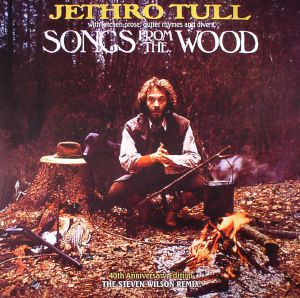
I have been waiting for this literally all year.  On January 1st, 2018, thanks to the generosity of a few dear friends of mine, I was finally able to order the 40th anniversary edition of Songs from the Wood, one of my favorite Jethro Tull albums (not that I’ve heard them all yet, so let’s say “thus far”).  It’s distinct among Tull albums, especially in what we could call the 2nd phase of the band, what some would likely call the “classic” Tull era (from Aqualung in 1971 to Stormwatch in 1979), in that it is mostly optimistic and upbeat.  Ian Anderson has never struggled with finding satirical and almost cynical approaches to the various realms of life upon which his gaze and talents alight, but Songs from the Wood is both a musical shift and a lyrical shift toward invitation, reflection, and downright delight.  Since it is Ian Anderson, a few songs have a, shall we say, piquant bite to them, but it wouldn’t be Jethro Tull without a little spice.

As I said, I have been literally waiting all year for this edition to arrive.  And waiting.  Twice, our friends at the Mega-On-Line Shopping Site (you know which one I mean), sent me e-mails telling me in effect “we can’t find it, we’ll send it soon,” turning my 2-day shipping experience into a 10-week experience.  Now, before I sound (more) like a horribly self-centered 1st-world donkey, I’ll press on to say the delay was most likely Providential, forcing me to focus on the great deal of work I had to do for my recent Master’s License renewal course as well as all the annual excitement and commitment that goes into Thesis Season.  Sure enough, as I should have expected, the very afternoon I finished my final project for my on-line course, this magisterial 3-cd/2-dvd package arrived, unannounced and unexpected.  So now I have time to enjoy it, but not enough time for me to review the album as well I had wanted.  Ah well.  Let’s just get to it.

Side One

It’s not “folk rock,” let’s get that straight from the beginning.  That’s Bob Dylan with an electric harmonica.  This is Jethro Tull looking back at the diverse and mythical history of England and delighting in what it found in the nooks and crannies of rural ol’ England.  “Songs from the Wood” is such a cheerful, welcoming, medieval jester-like song, as is pretty clear from the harmonies, the intelligent and graceful lyrics (in the literal sense), and the diverse musical sounds.  Even when it picks up and starts rocking, reminding us this is a superlative group of talented musicians, we are well on our way to feeling much better, thanks to this album.

“Jack-in-the-Green” is basically Tom Bombadil.  There’s no way around it.  It is a complete Ian Anderson number, as he wrote the words (as usual) and he plays all the instruments on this song (it is known).  It starts out very fairy-in-the-woods-like, as most of them do on this album, but pretty soon the critical mind of Anderson turns from magical romp to contemporary critique: “will these changing times, motorways, powerlines” prevent humans from enjoying Nature how you want us to? he asks.  But before the potential despair can take root, so to speak, Anderson rejects it outright: “Well, I don’t think so.  I saw some grass grow through the pavements today.”  There is still hope for the restorative power of nature.

“Cup of Wonder” would likely be my favorite song on the album were it not for the final track of this side, to be addressed soon.  I don’t want to keep saying “it’s a tribute to the mystical heritage of rural English beliefs,” but it is, though tinged with a bit of Anderson’s slightly erroneous beliefs on Christian usurpation of pagan holidays.  For me, the music and, as is almost always the case with Tull, the vocal timbre of Anderson’s voice make a lyrically intelligent song a total aesthetic experience to be enjoyed again and again.  (Even if about ancient pagan holidays.)

We noted before this album, while mostly free of the harsh cynicism of early classic Tull like Aqualung and Passion Play, still has its piquant moments, and “Hunting Girl” is certainly spicy, being about an impromptu amorous romp between a noble lady and a regular common guy who knows he could get in a lot more trouble for their spontaneity than she ever could.  Still, the greatness of this song comes in the sheer greatness of the musicians in the band during this era: Martin Barre’s guitar brilliance, John Glascock’s bass, the dual keyboards of John Evans and David Palmer, and the vastly underrated drumming virtuosity of Barrie Barlow.  It was a golden lineup, and this album makes the most of it.

The first side of the album ends with my favorite of the album, “Ring Out, Solstice Bells” — it’s not a Christmas song, being about the winter solstice, and in fact, if Ian Anderson is to be believed, it’s sort of an anti-Christmas song, returning to that earlier notion of Anderson mistakenly thinking early Christianity foisted itself on a lot of pagan traditions and holidays, since “if you can’t beat them, join them,” as he says in the 40th edition liner notes.  Well, I disagree, and it’s such a musically wonderful song, I’ll just keep enjoying it, even if for the “wrong” reasons.

Side Two

Side two opens with another great Tull mini-opera, with sundry sections and atmospheres and evocations and beauty and fun and wonder.  It’s basically about the joys of an old-fashioned garden fête, such as the one a young Paul met a slightly less young John and the world was changed for the better.  Great things can happen when you stroll through a British park festival.  It does have a smidge of that “Hunting Green” sauciness, okay more than a smidge, but the musical motifs override the lyrical eyebrow-raising suggestions.  It’s a complex, impressive number.

“The Whistler” could also vie for my favorite of the album were it not for “Cup of Wonder” and “Solstice Bells.”  It starts out for mystical and menacing, but the chorus dives into as energetic and enthusiastic a rouser as one could ever ask for.  It will probably make you think of Gandalf if he were a bard, coming through town all mysterious and shady, then suddenly he spins around and smiles and a few fireworks shoot off and we’re all clapping and dancing and singing along.  Jolly good fun, this.

The only really sad song on this album, “Pibroch (Cap in Hand)” tells the tale of a man who has been far away from home, off doing his duty, only to find upon his return a strange man’s boots in the hallway.  He has returned, humble (cap in hand), ready to make amends to his wife, but she’s no longer his, apparently, and so he leaves without even seeing her.  But, as is often the case during this season of Tull, the musical length and diversity of the number, coupled with the aforementioned greatness of the musicians’ abilities, easily distract us from the sorrow of the lyrics.  Thanks to some mid-’70s mixing board magic, Martin Barre’s guitar somehow sounds like wailing bagpipes, and suddenly we are off on another mini-opera, whose hardness and strength perhaps give our poor fellow hope for a new day.

But that’s another story.  This collection of songs from the wood, having been brought to us by some dispenser of “kitchen prose and gutter rhymes” is ready to call it a day with “Fire at Midnight,” a quiet, encouraging tune that reminds us our love will be waiting for us when we return from a good day’s work.  We can sit by the fire, enjoy the comfort of a home filled with warmth and love, but we (as men, especially) must remember we still have an active role to play in creating an atmosphere of selfless and expressed love, expressed through words and actions in all rooms of the house, not just in the room where we find our slippers and pillow.

And so, Songs from the Wood draws to a gentle, cozy conclusion. It’s Jethro Tull, so it has its edgy moments, but here they are brief and winking.  It’s a positive, enjoyable album from a great band in its prime.  Get a copy, whether the expansive 40th anniversary edition or not, and enjoy it.  It will make you feel much better.

A Hard Day’s Write

Dylan Fields, Noah Eskew, and Peter Runey

The Beatles’ third album, A Hard Day’s Night, was a major stepping stone for the Beatles as they reached the American audience like they had never done before. Following the production of the movie the Beatles then produced the soundtrack album. The movie had an incredible effect on the film industry as well as the album, as it produced two number one singles, “A Hard Day’s Night” and “Can’t Buy Me Love.” Both singles reached number one in America and England. This album also showcased the writing ability of legendary songwriters John Lennon and Paul McCartney. Unlike their two previous albums, Please Please Me and With The Beatles, all thirteen songs on A Hard Day’s Night were written by John and Paul.

Ringo Starr, the drummer of the Beatles, accidentally made the name of the album, according to John Lennon in a magazine interview:

I was going home in the car and Dick Lester suggested the title A Hard Day’s Night from something Ringo had said. I had used it in In His Own Write, but it was an off-the-cuff remark by Ringo. You know, one of those malapropisms. A Ringoism where he had said it not to be funny, just said it. So Dick Lester said we are going to use that title, and the next morning I brought in the song. ’Cause there was a little competition between Paul and I as to who got the A-side, who got the hit singles.

This album musically strays away from the pop sounding cover songs the Beatles had previously produced. A Hard Day’s Night has more of a rock-n-roll feel to it. The album is predominately written by John, as he is the primary songwriter for nine of the thirteen tracks that on the album. Paul sings lead on the title, other than that John is the lead singer for the eight other songs he wrote. Paul McCartney wrote “And I Love Her,” “Can’t Buy Me Love,” and “Things We Said Today,” while Paul McCartney and John Lennon wrote “I’m Happy Just To Dace With You” together. Ringo Starr does not sing lead vocal on any songs on A Hard Day’s Night, which is one of three albums where he does not including Let It Be and Magical Mystery Tour.

The ideas behind the Sgt. Pepper’s Lonely Hearts Club Band album started with Paul McCartney in 1966.  Shortly after the Candlestick Park incident, some speculated the Beatles might not make music together again. This is probably due to George’s public display of disenchantment with being a “Beatle” and the circus life that came with it. But realistically speaking, all four of the guys had to be mentally and physically spent. They had just made their way through southern United States after John’s infamous comments on Jesus. And because of that and other sorts of chaos surrounding them, they at some points felt their lives were in danger. However, the band had too many contractual obligations to just quit making records. So Paul and John went on their respective sabbaticals. John filmed a movie and Paul went to France.

While Paul is in France, he begins to cook up new ideas for songs. The Beatles were always good listeners, and so Paul begins to draw more and more influence from American psychedelic music. The Warlocks (later the Grateful Dead) Jefferson Airplane, 13th Floor Elevators, and even The Peanut Butter Conspiracy were some of the bands that would influence the next Beatles sound. Paul liked the adventurous names these bands had, and thought maybe his band should do something fresh and maybe go by a different name. So within Paul’s mulling through band name ideas, he came up with the name Sgt. Pepper’s Lonely Hearts Club Band.

Hence, Paul’s idea for the concept of the album was to perform the album live as SPLHCB. But, this idea didn’t seem plausible to George and John, so things didn’t quite get that far. The concept of the album still feels like a live performance. The way the songs run together is very much like a concert.

Other elements of the album are affected by the band’s mentality to “go for broke” as George Martin puts it. They wanted to push the artistic envelope as much as possible. The Beatles wanted to take their time and create their greatest musical masterpiece, using all kinds of effects, instruments, and new sounds.

When talking about the aura surrounding SPLHCB, one must look at the album artwork. The idea was to have the scene of a funeral service for “The Beatles” and to erect a new persona, Sgt. Pepper’s Lonely Hearts Club Band. The figures on the album cover are representative of the guest list to such a funeral.

I would say the genius of this record lies in its duality. The songs fit together excellently as a concept, yet they still stand upright separately. Many of the songs on this album don’t require a concept to make sense, but they add a lot to the concept when in context. The lasting impact is also quite impressive, with many Web sites and magazines citing it as the greatest album of all time. It seems as if The Beatles accomplished their goal. Branching out farther than ever, they probably created their greatest (quality and impact) artistic accomplishment.

Abbey Road was first released on September 26, 1969, and was also the final Beatles album to be recorded but not their last to be released. Let It Be, though mainly recorded in January 1969, was finally released in May of ’70 alongside the film Let it Be. The recording process itself was completed on August 25, 1969, which was almost a month before John Lennon told the other Beatles he wanted to leave the band. His decision was made on September 12, just before the Plastic Ono Band performed at the Toronto Rock and Roll Revival festival, and he told the rest of the group at a meeting a week later.

Abbey Road was considered a rock album that incorporates other genres like blues, pop, and progressive rock. It also makes prominent use of the Moog synthesizer and the Leslie speaker. Side two contains a medley of song fragments edited together to form a single piece. An example of this would be “Golden Slumbers,” “Carry That Weight,” and “The End” (in that order), all of which continue straight into the next without interrupting or changing the sound as a whole very much. The album was recorded in a bit of a more enjoyable atmosphere than the Get Back/Let It Be sessions earlier in the year, but there were still plenty of disagreements within the band, mainly concerning Paul’s song “Maxwell’s Silver Hammer.” John had privately left the group by the time the album was released, and McCartney publicly quit the following year. A 16-minute medley of some short songs makes up the majority of side two, closing with the line “and in the end, the love you take is equal to the love you make.”

Following the somewhat live feeling of the Let It Be recordings, for Abbey Road, The Beatles returned to the North London studios to create carefully-crafted recordings with ambitious musical arrangements. Interestingly, 12 of the songs that appeared on the finished album were played during the filmed rehearsals and sessions for Let It Be back in January.

For the first time ever on a Beatles album, the front cover contained neither the group’s name nor the album title, just that iconic photograph taken on the street crossing near the entrance to the studios in London in ’69.

Abbey Road entered the British album chart at no.1 in October and stayed there for a total of seventeen of its 81 weeks on the chart. In the US, it spent eleven weeks at #1 during its initial chart stay of 83 weeks.

For the first time, both Billy Preston and George Martin recorded with the Beatles, both of whom played Hammond organs and harpsichord. They also joined the Beatles on a few “live” (in actuality they were private showings, some for films or television) performances.

It is commonly thought The Beatles knew Abbey Road would be their final album and wanted to present a fitting farewell to the world. However, the group members denied they intended to split after its completion, despite a realization their time together was drawing to a close. George Martin said the following concerning the topic of finishing the Beatles:

Nobody knew for sure that it was going to be the last album — but everybody felt it was. The Beatles had gone through so much and for such a long time. They’d been incarcerated with each other for nearly a decade, and I was surprised that they had lasted as long as they did. I wasn’t at all surprised that they’d split up because they all wanted to lead their own lives — and I did, too. It was a release for me as well.

20th Century Fox vs. Agatha Christie

Hannah Elliott

Recently, 20th Century Fox produced a movie based on Agatha Christie’s Murder on the Orient Express. It was interesting to see this classic book brought to life with some of today’s most successful actors and actresses, such as Johnny Depp and Penelope Cruz. However, like most motion pictures based on books, there were several differences between the movie and original book. Some were insignificant and some were significant enough to change big aspects of the book. Even though the plot of the movie followed the book, there were a multitude of differences related to the story line, characters, clues, and murder.

One difference related to the story line was the movie began with a case Poirot solved concerning a stolen relic and three suspected holy men. He exposes the true thief, the policeman, and explains how he put the clues together. This scene never takes place in the book. Poirot also has to take a ferry first before getting on the Orient Express. This is where he meets Mary and Arbuthnot. In the book, these characters board a train instead of a ferry. A love interest is also added to the story. Poirot carries a portrait of a woman to whom he refers as “my sweet Katherine.” This is not explained and is left as a loose end.

One of the most significant differences is the combination of Doctor Constantine and Colonel Arbuthnot. The only character in the movie is Doctor Arbuthnot. This changes the story a little bit because the doctor is not as involved as he is also a suspect. Greta Ohlsson, the Swedish missionary, is replaced by Pilar Estravados, a Spanish missionary and nurse. And lastly, Antonio Foscarelli, the Italian car salesman, is renamed Marquez and is a Latin car salesman. We see suspicion shift from the Italian, like in the book, to Colonel Arbuthnot and Marquez due to race.

The snow drift incident is also altered in the movie to provide more action and setting opportunity. The snow drift causes a very intense derailing of the train. In the book, the whole train is encompassed and no one is able to exit and go outside. In the movie, the characters are stranded but not trapped inside. This allows the suspects to leave the train and Poirot to interview his suspects outdoors. There is also a team of men that come to the rescue to fix the engine in the movie that do not exist in the book.

Poirot also states he has a more personal connection with the Armstrong case as he received a letter from Colonel Armstrong asking for help in solving the kidnapping of his daughter, Daisy. This is connection is not made in the book but is now why Poirot feels obligated to solve the case.

There are also some differences about the murder and clues in the movie. Ratchett asks Poirot to protect him over dessert and threatens him with his gun when he refuses to “watch his back.” The threatening letters written to Ratchett are made with cutout letters instead of being written by multiple people to avoid being traced to one person. He also proceeds to tell Poirot himself about the letters, unlike the book in which MacQueen tells him about the letters. Poirot actually sees the woman in the red kimono after Ratchett is dead, unlike the book where he has to rely on the suspects’ description of her. Poirot is actually the one to find Ratchett dead in his compartment and he tells the whole car about the murder at the same time. Hubbard states she locked her own door and is not sure how the man got in her room and she personally finds and gives the button from the Wagon Lit Conductor uniform to Poirot. Mary is also proven to be left-handed, whereas in the book the only possible lefty is Princess Dragomiroff. The red kimono is found to be inside Poirot’s suitcase not on top, which is odd because everyone at that time locked their suitcases. It is also explained the valet’s toothache was a thyroid condition in order to add more emotion to the movie. Mrs. Hubbard was stabbed with the murder weapon instead of her just finding it in her sponge bag. And lastly, all 12 suspects stabbed Ratchett at the same time.

There are also a few scenes added to the movie to provide more action. In one scene, MacQueen runs from Poirot and leads him down unstable stairs because he fears he has figured him out. He confesses to stealing money from Ratchett but Doctor Arbuthnot vouches for his alibi. An altered scene in the movie pertains to Mary and Poirot, in which he asks her instead of Bouc for help in answering 10 of his most difficult questions about the case. One last scene added is a fight between Poirot and Arbuthnot. Poirot accuses Mary of killing Ratchett and her knight in shining armor comes to defend her. Arbuthnot shoots Poirot in the arm and Bouc has to save him.

The ending of the book is the last, most significant difference between the movie and the book. Poirot still proposes the same two solutions as in the book, with just a few alterations in the second solution. He states Princess Dragomiroff was Daisy’s godmother, MacQueen’s father tried the maid involved in the Armstrong case who killed herself, and Pierre Michel was the brother of the maid. In the book, he allows M. Bouc to decide what he wants to tell the cops, stating he is sympathetic toward the killers. However, in the movie, it is much more dramatic. Poirot states he cannot live with the injustices that have taken place and proceeds to place a gun on the table in front of the conspirators. He tells them they will have to kill him to keep him silent. The action escalates as Mrs. Hubbard picks up the gun and pulls the trigger on herself. The gun turns out to be unloaded and Poirot decides to “live with the imbalance” and tell the police it was a lone assassin who escaped. The movie ends with Poirot being called away to another case in Egypt, probably referring to another famous mystery created by Agatha Christie.

Overall, the movie follows the basic story line and plot, with just some added details. The most significant change is the amount of violence added to the movie. Almost every man possesses a gun, whereas in the book, Ratchett is the only man to have a gun and it is only for self defense. Also multiple fights take place and the character of the timid and protective Count is warped into a violent and aggressive man. To have a successful movie nowadays there must be action, love, and violence, all three of which take place in Murder on the Orient Express.

In Defense of Mrs. Bennet

Joanna Larson

Oftentimes, readers of Jane Austen’s Pride and Prejudice like to make fun of Mrs. Bennet. She’s obnoxious, loud, and constantly nagging all five of her daughters to find a husband. We feel second-hand embarrassment for the way she intrudes upon her daughters’ lives, and the extremes she goes to in pursuit of finding them suitable matches. There are still mothers like this nowadays, but back in the early 19th century, it was necessary for mothers to have this kind of attitude because women were expected to marry early and raise a family.

In the early 19th century, a woman’s social status was almost completely dependent on that of her husband. Although feminism was making small accomplishments, women were still expected to marry at a young age, have many children, and keep the house in order. Many times, they married for social and financial security, rather than love. In Pride and Prejudice, Charlotte Lucas is an example of this predicament; unmarried at 27 and not particularly good looking, she knows she needs to find a man, and she needs to find one fast, lest she die an old maid. When Mr. Collins enters her life, she sees her opportunity and takes it. She doesn’t love him, nor is she attracted to him; she thinks of him as “neither sensible nor agreeable” (Austen 91), but Charlotte knows no one better will come along. Elizabeth is shocked at how Charlotte would be so willing to marry Mr. Collins, especially since he had proposed to her just a few days prior.

“I see what you are feeling,” replied Charlotte. “You must be surprised, very much surprised — so lately as Mr. Collins was wishing to marry you. But when you have had time to think it over, I hope you will be satisfied with what I have done. I am not romantic, you know; I never was. I ask only a comfortable home; and considering Mr. Collins’ character, connection, and situation in life, I am convinced that my chance of happiness with him is as fair as most people can boast on entering the marriage state.”

When Elizabeth asks Charlotte how she could ever be happy with a man like Collins, she responds, “happiness in marriage is entirely a matter of chance…It is better to know as little as possible of the defects of the person with whom you are to pass your life” (17). Charlotte is content to be with someone who will provide her with a roof over her head and a decent social standing. If she doesn’t like him as a person, that is something she’s willing to live with. Marrying someone for financial security rather than love would most likely be viewed as selfish by today’s standards, but for Charlotte, it is a necessary move to make. During this time, marriage was a woman’s lifeline. Austen tells us, “Without having ever been handsome, she (Charlotte) felt all the good luck of it.” Charlotte is at peace with her decision; the very opposite of what Elizabeth would have been if she married Mr. Collins.

Mrs. Bennet wants the best for her girls (by “best,” I mean financially supported), and she goes to extreme and oftentimes foolish lengths to “help” them find suitors. When she finds out the young and eligible Mr. Bingley is coming to town, she immediately wants to set him up with her daughter Jane. Before she knows anything about his character or morals, she tells her husband, “Oh! Single, my dear, to be sure! A single man of large fortune; four or five thousand a year. What a fine thing for our girls!” (1). After hitting it off with Mr. Bingley at a ball, Jane receives an invitation to dine with him and his sisters at their home in Netherfield Park. Normally, Jane would take the carriage, since Netherfield Park is too far a distance for any civilized woman to walk alone. With the full knowledge that this will embarrass her poor daughter, Mrs. Bennet makes Jane ride to Netherfield Park on horseback; she knows it is going to rain, which, in turn, will force Jane to stay at the Bingleys’ house until the weather clears up. Her plan works perfectly; too perfectly, actually. By the time Jane reaches the house, she is soaked and falls ill with a fever. She is forced to recover at Mr. Bingley’s house, and Mrs. Bennet isn’t apologetic. In fact, when she goes to visit Jane and see how she is feeling, she encourages Mr. Bingley to let Jane stay longer, which is just unnecessary. Staying in Mr. Bingley’s presence for a longer amount of time presents more opportunity for him to fall in love with Jane, or so Mrs. Bennet hopes.

Jane is not the only daughter Mrs. Bennet hounds over. Before Mr. Collins marries Charlotte, his intention is to marry Elizabeth Bennet. He is the heir to the Bennet household, and even though he is the most pompous, idiotic man you could ever meet, Mrs. Bennet gives him her blessing to ask for Elizabeth’s hand in marriage. When Elizabeth gently declines his proposal, Mrs. Bennet is infuriated Lizzy would turn down such an offer. She tries to console Mr. Collins’s wounded pride by telling him, “Lizzy shall be brought to reason. I will speak to her directly. She is a very headstrong, foolish girl, and does not know of her own interest; but I will make her know it” (82). Of course, Lizzy’s position is not swayed. She will not marry Mr. Collins. Mrs. Bennet resolves to never speak to Lizzy again, which of course doesn’t happen, but it goes to show how serious she was about her marrying Mr. Collins.

It also seems Mrs. Bennet is a little too hurried in getting her daughters out on the social scene. We know Lydia, the youngest Bennet, is brought out at a very young age. The typical age of “coming out” was around seventeen. At seventeen, a young woman was supposed to start looking for suitors. For whatever reason, Lydia came out early, and she is boy crazy. Her mother does nothing to stop this childish attitude; she encourages it in fact. When the regiment comes to town for the season, both mother and daughter are ecstatic. Surely one of the hundreds of young men will be an able husband. Although she is criticized by others, Mrs. Bennet still encourages Lydia to go to balls and does nothing to tame her wild behavior. Eventually, Lydia runs away with Mr. Wickham, and the two elope. Of course Mrs. Bennet is distraught one of her daughters runs away from home, but the thing on her mind isn’t if Lydia is okay, it is whether Wickham is going to marry her. All the sisters know Wickham never intended to marry Lydia, but after Mr. Darcy pays him off, all Mrs. Bennet cares about is  her daughter is married, and the family is saved from social ruin.

There are many reasons to view Mrs. Bennet as a bad mother. She is nosy, embarrassing, and often out of line. She is so obsessed with finding husbands for her daughters she forgets to take the time to enjoy life and enjoy time with her children.  It seems if she had just calmed down and let her daughters live their own lives, everyone would’ve been happier. If she really loved her girls, she wouldn’t have been so annoying, right? No. I believe she acts this way because she loves them. Yes, she is out of bounds on many occasions, but because of their particular situation, she was doing her best to make sure all her girls were taken care of. After Mr. Bennet’s death, the estate would not go to any of the girls. It was pledged to another; so for her, it was love second, a roof over their heads first. While it is perfectly acceptable to laugh at Mrs. Bennet’s antics and mock her embarrassing behavior, I hope readers can gain more understanding as to why she acts the way she does.

Bibliography

Austen, Jane. Pride and Prejudice. New York, Modern House, 1995. Print.

Rothman, Joshua. “On Charlotte Lucas’s Choice.” The New Yorker, The New Yorker. 18 June 2017. http://www.newyorker.com/books/page-turner/on-charlotte-lucass-choice.

The Wit and Wisdom of Jane Austen in the Modern Era

Emmy Kenney

We’re back once again with another one of these epic honors papers. I spent the first half of the adventure we call “senior year” comparing classical British literature to its modern interpretations; however, this quarter I thought I would try something a bit different. Now, something important to note about me is Jane Austen is one of my top ten favorite authors, at least of the moment. I own a copy of each of her novels and multiple of some of them, and for Christmas I was gifted a beautiful addition to my collection: The Wit and Wisdom of Jane Austen edited by Joelle Herr. This lovely little book is a collection of some of the best and most popular Jane Austen quotations from both her published novels and personal letters. This book has been one of my many joys going into this new year of 2018. I’ve spent many evenings reading and pondering over the various things Austen wrote.  This brings me to my big idea: this quarter we’re going to look at some of those lovely little quotations and talk about them in reference to current society as well as Christianity and the Bible.

First, let’s talk about a little gem from Emma (a novel to which I am particularly biased). “I suppose there may be a hundred different ways of being in love,” says the novel’s namesake. One thing I’ve noticed during my short time on this earth so far is society likes to tell you love looks like one thing and one thing only, if love even matters at all. Magazines, television, and music all like to tell you if you aren’t engaging in the way they tell you to love, you are somehow less worthy. However, we see time and time again in the Bible love is so much more than that. Certainly, the world knows a form, although they are often wrong about the timing, but the world misses so much about what love truly is. Society too often forgets love is putting other people before yourself and it is having not just a kind attitude but a kind heart toward those that wrong you. It’s showing patience on your most frustrating days, and, more than all, when it is true it never fails. In this way Emma got it right. Love looks like hundreds of different things. It’s giving half your lunch to a classmate because they forgot theirs at home. It’s helping your siblings with their chores even when you’re a bit cranky. Love is putting others first even and especially when you gain absolutely nothing from it.

Now let’s discuss a quotation from Mansfield Park. “Every moment had its pleasures and its hopes.” In today’s day and age, it is so easy to get caught up in the chaos of the world and to lose sight of hope. Just look around you. There’s war and hunger, death and destruction. It can feel like there is no hope at all. It certainly is no help that the media would much rather show you those type of things than anything even somewhat resembling hope. However, when we look a bit closer we can see there is hope indeed. There are good things even in the hardest times: gorgeous sunsets on bad days, time to read during unexpectedly long time waiting at the doctor’s office, opportunities to connect with people through tragedy. This isn’t to say bad times don’t happen; they most certainly do. However, there are still good things, and more than that, there is always hope for the future, especially as Christians. We can know that because we are Christians, no matter how awful the things we must go through are, we can have hope and look forward to eternity with our Creator in Heaven. Thanks to this, every moment for those who build their foundation upon Christ can be filled with joy and hope for the future.

“She loved everybody, was interested in everybody’s happiness, quick-sighted to everybody’s merits; thought herself a most fortunate creature, and surrounded with blessings in such an excellent mother, and so many good neighbors and friends, and a home that wanted for nothing.” This is another quotation from the novel Emma. The first section in particular stands out to me. It is quite apparent this is not how many people live their lives. We are selfish and spiteful before we are caring and loving. We too often chose to point out flaws in others than to praise their accomplishments, and we further our own happiness before thinking of the happiness of others. All we must do is take a look at the world around us to see the results of that. This is quite unfortunate indeed, because that first section of the quotation reminds me greatly of how Christ acted and how we are called to live. Christ loved without fail, and he was quick to put other people before Himself, to the point He gave up His very life for a people who did not and do not deserve it. I can’t help but wonder what the world would look like if we chose to love others, truly care about them, and see the good in them instead of just their shortcomings and failures. I do believe the world would be a very different place to live.

Now we shall discuss what should be a favorite quotation of book lovers everywhere. “I declare after all there is no enjoyment like reading! How much sooner one tires of anything than of a book!” This is from Jane Austen’s Pride and Prejudice. I must admit this quotation is a personal favorite of mine. It is quite sad to think of how quickly society is moving away from a love of books to focus on a love of television and movies. Now, this isn’t to say there is anything wrong with enjoying those; I enjoy a good movie myself. However, the fact it comes at the expense of good literature is quite disappointing. There are so many good books out there today, and they are so accessible for us. We have book stores and libraries, paper books, e-books, and even audio books. The possibilities and opportunities are endless.

“Give a girl an education, and introduce her properly into the world, and ten to one but she has the means of settling well without further expense to anybody.” This quotation comes from Mansfield Park. It shocks me how relevant this still is. Though many people don’t realize it there are still debates over female education. It is not merely an issue of past centuries; it is an issue of today as well. Feminism is quite the movement in today’s day and age, and while modern feminism is often warped far beyond what it should be, there are aspects that are quite important to it, such as a support of women’s education. It should be appalling, I believe, that to many people and societies a woman’s education does not matter. They are often shoved to the side and buried beneath without even a chance. Though as Jane Austen points out, educating women isn’t exactly a further expense. It is even safe to reason, in fact, that it could highly benefit a nation or society’s economy. When women are educated they can work, and when they can work, it essentially doubles the potential income for a family and for a nation.

Next, we discuss a quotation from Northanger Abbey: “There is nothing I would not do for those who are really my friends. I have no notion of loving people by halves; it is not my nature. My attachments are always excessively strong.” This quotation touches on the importance of true friends. In a world where so many people are motivated only by their own success it is important to find the friends that will support and stand by you. It is important also for us to be this type of friend. We’ve already talked about what the Bible says love looks like, and this falls under that. We are to put others, including our friends, before ourselves. One verse brings up the idea friends are good because they can support and help each other, which quite ties into the idea of being willing to do anything for a friend. Often times we are too afraid of getting hurt to truly invest. I know I am certainly guilty of this. However, it is important for us to form “excessively strong attachments” so we can help and support our friends like we are called to do.

I must, shockingly, bring up another quotation from Emma. This quotation also discusses the idea of friendship. “Business, you know, may bring money, but friendship hardly ever does.” So many people are caught up in the idea of money they don’t have time to form relationships or ever to care about people at all. The love of and desire for money creeps into people’s hearts and they are willing to give up everything, including friendship, to gain money for their personal benefit. While friendship doesn’t help one make money, it is far more valuable. Through friendship some of the best memories are formed. Friendships give you people in your life who care about you and are willing to support you. One chooses friendship not because it furthers their career or increases the number of dollars in their bank account. Friendship is so much more than that, even if society today is quick to disagree with that.

Now, you might be wondering why I bothered talking about the quotations of some lady who’s been dead for years. What was the point? I hope you will see there is so much to gain from this. We can gain wisdom and reason how to apply it. We can explore themes we might not have otherwise thought of or brought up. These quotations have helped me at least to realize some important points, both about society today and myself. They’ve helped me realize areas in my life that need improvement and ways society is missing the mark in regard to some quite important topics. Jane Austen created strong characters and strong quotations, and her wit and wisdom leave so much for us to learn and explore, and through exploring her writing we can hopefully do just that.

Back to Ballantine

Christopher Rush

As you may recall from our first issue this volume-year, a scant five months ago, I mentioned a few entries from Ballantine’s Illustrated History of World War II, an engaging series that soon outgrew WW2 and expanded out to the rest of the violent century (up until the early 1970s when that shift in publishing focus occurred).  You’ve read enough from us over the issues why we study history and simulate history through analog simulations and such, so I need not apologialize for that here.  Thus, let’s just present a few more reviews of the books I managed to squeeze in as the months of 2017 turned in to the months of 2018 (and, like you, even though this year is rapidly approaching 25% over, I needed to look at the computer’s calendar to be reminded which year we currently are in).


The Raiders: Desert Strike Force (Campaign #2), Arthur Swinson

Rating: 4 out of 5.

Another very good entry from the old Ballantine’s Illustrated series, The Raiders focuses on the American version of the North African Campaign. I’m a bit surprised this was the second in the Campaign Series, considering the first was Afrika Korps from the German perspective, why they would do the same subject matter back-to-back, but since this theater is so interesting, with such a magnetic personality on the German side, and such rare (since the American Revolution, really) tactics on the Allied side (with, as we learn from this book, if we didn’t know from the movie or television show, similarly magnetic personalities), it certainly provides enough for two entries. (‘’m guessing; I haven’t read the first one yet.) This gives an engaging history of the Long Range Desert Group, though it changes direction after the first chapter (we are introduced to a small group who seem to be the stars of the show, but then chapter two gives us a new cast of characters for the rest of the book). It almost reads like fiction at times: surely these heroic escapades, harrowingly near-misses, dramatic adventures, and et cetera could not have happened in real life? But according to Arthur Swinson, they did, and who are we to doubt the Ballantine’s Illustrated History of World War 2?


Patton (War Leader #1), Charles Whiting

Rating: 3 out of 5.

As great as the Ballantine’s Illustrated series of series is, this entry may have been a bit better had it come out later, when the series transmographied into History of the Violent Century. Then, we could have read more about Pre-WW2 Patton, which, while possibly not as interesting to most, is the less-trodden ground about this controversial figure. Most of this book is likely rather familiar to Patton fans, of which I am not one (not to be read in a critical way), but I suspect it was written to communicate to the non-fans, anyway. We get a brief pre-WW2 sketch in the introductory chapter, but it doesn’t give us much. The majority of the book gives us Patton in WW2, the highlights, the lowlights, the mistakes, and the triumphs. Through it all, Mr. Whiting reminds us of Patton’s irascible personality, which at once enabled him to accomplish what his allies could/would not as well as brought about his own demise. I had forgotten what a tragic, senseless death Patton suffered, getting paralyzed in a jeep crash a few months after WW2 and dying a few days later. Mr. Whiting gives us some interesting summations at the end, as well as some thoughtful commentary throughout, but his penchant for reminding us of Patton’s personality combined with the lack of WW2 information (again, I understand the premise of the series) prevent me from giving it four stars. I realize after typing that sentence how ironical that is, but it was not intended. (Or was it…)


Stalingrad: The Turning Point (Battle #3), Geoffrey Jukes

Rating: 3 out of 5.

Mr. Jukes does a fair job presenting the exciting nature of this battle, though his tone throughout does not help the work. It’s not that he makes jokes and whatnot, but his attitude toward some of the leaders and their decisions involved, especially on the German side, is at times a bit too antagonistic on the ad hominem level. I’m not saying they were wonderful people, since I have no knowledge of their characters, but Mr. Jukes is at times too dismissive and at other times derogatory, if even in a subtle way. I’ve made too much of a deal about it, but it was there. Similarly, despite the subtitle’s intimation how important this battle was, Mr. Jukes’s conclusionary paragraphs sound like nothing that happened in the battle mattered after all, effectively dismissing not only the military significance of the events but also the human cost of the defense of Stalingrad itself — not the best way to end this book, I thought, which is sad, considering how great the rest of the series for the most part has been.

On the positive side, as I mentioned, he does a fine job of bringing the ebb and flow of the battle (series of battles, really) to life in a dramatic fashion, from the Russian personalities involved to the heroic and sacrificial stands of the Russian soldiers, and from the perspectives of the beleaguered German military leaders who didn’t want to do what Hitler made them do to the cocksure German soldiers who somehow, perhaps one could say Providentially, became the hunted and not the hunters. This would make a great movie, especially if it were four or more hours long and really presented this battle well. I think I’ll check out some other accounts of this key battle and possibly try to get my copy of The Stalingrad Campaign to the gaming table.


Hitler (War Leader #3), Alan Wykes

Rating: 3 out of 5.

It’s got to be a difficult task writing an engaging biography about one of humanity’s worst, and Mr. Wykes proves how difficult it is to quantify “evil” in a world that rejects absolute moral standards. Mr. Wykes takes the foundational position Adolf Hitler had syphilis, and that is supposed to explain effectively everything, in combination with his patriotic ire at the German surrender in World War 1 admixed with his learned hatred for all-things Jewish. His long-standing untreated syphilis was responsible for Hitler’s ravings, his megalomania, his obduracy, and his maniacal military decisions especially from Stalingrad to the end. Mr. Wykes never comes out and says it directly, but the reader gets the vague impression we (as humanity in general) are supposed to be thankful for Adolf’s disease and the pseudo-medical people around him who mis-treated him.

What are we expecting when we read a biography of such a person? That may be as of much importance as learning about the person him- or herself. It’s doubtful we are looking for validation of our collective animosity — there haven’t been too many people who have been fundamentally mistreated by history without the opportunity for proper scholarship restoration these days, and certainly history has not been too unkind to Hitler. I was looking for insight on what, if anything, made him good at his job — how did this guy rally a nation around him, or at least a powerful coterie of people around him who then in turned snatched a country away from someone else and took it in such a horrible direction? I didn’t get a lot of that from Mr. Wykes, since his overall focus was Hitler as a military leader during World War 2. We get a little bit about the pre-war events, though we are usually directed to the more thorough biographies for that, and I don’t have the stomach for that just now. For instance, I’m still wondering why, if so many of his high-ranking generals and whatnot hated him and hated what he was doing to Germany, why they didn’t just take out a gun and shoot him and sacrifice themselves to the retribution of the SS or whomever? Mr. Wykes does not explore that, but that could be because it is all speculation and not their biography.

What interesting tidbits I did get about Hitler’s generalship early in the war were intriguing, and from this section perhaps comes the strongest intimations of how grateful we should be for his disease, assuming Mr. Wykes’s wholly-physical explanation for Hitler’s “evil” or “mania” is correct, with which I’m not in full agreement. We are told Hitler brought about such a successful blitzkrieg because he, unlike the generalship he “inherited,” shall we say, and the generalship in complacent England and France and everywhere else in western Europe, did not think in terms of WW1 combat. This perplexity is compounded by the radical change in warfare during World War 1 itself, not only the different way it was fought with trenches and mustard gas as the usual motifs, but also the introduction toward the end of armored tanks and their revolution in warfare again should have led the allies to realize no one would think of warfare in Napoleonic terms again. Mr. Wykes does treat briefly on the Treaty of Versailles and how foolhardy it was, which may be the explanation: the “good guys” assumed they had so permanently beaten Germany down surely no “civilized” world would have started a war again. And that is generally, what our textbooks tell us, the western world mentality during the ’20s after all.

Hitler, strangely enough, learned from WW1, saw what worked, assumed his enemies had grown flabby and content with their “heroic” emasculation of Germany, and used their tactics against them and basically bullied them into retreat and panic for years. Had Hitler not reneged on his treaty with Russia and squandered so many troops on the Eastern Front, WW2 would likely have gone quite differently. [Editor’s note: since originally writing this, I’ve read of quite a number of instances in which “that one fatal decision” sealed the fate of Germany and WW2 and the world — it’s a popular theme for WW2 historians.]

And it is here that Mr. Wykes’s explanation of Hitler’s flaws seem like wishful thinking: the syphilis exacerbated Hitler’s jealousy of his military advisers and field commanders (a jealousy begun by his own mediocre performance in WW1 and the love of his life wooed away by higher-ranking officers or something like that) caused him to ignore their sound advice at times; similarly, the disease made him require total control over the armies, even preventing army commanders from ordering reinforcements and other immediate-concern military decisions one would suppose an army commander actually on the front lines should be able to make without having to request permission from the head of the country hundreds of miles away.

For many reasons such as these, all of them effectively centering on Hitler’s ego and his sickness, we are left with the impression Hitler had an uncanny ability to understand warfare and his enemies better than almost anyone else alive at the time, but his own personality and his disease brought about his own destruction and Germany’s as well … and in the end we are supposed to feel like we caught a lucky break. I’m not fully convinced by all this, but the only way to understand the issue more is to do more research, and as I intimated above, it’s such a distasteful topic I don’t know if I can do that anytime soon.


D-Day: Spearhead of Invasion (Battle #1), R.W. Thompson

Rating: 3 out of 5.

Despite the potential downfalls inherent in being a first in a series, D-Day by Thompson presents itself as a rather developed introduction to the series and a concise overview of perhaps the world’s busiest day ever. One may prepare to be a bit overwhelmed by the data involved (regiment information and the like, mainly), considering the sheer volume of manpower involved in this event, but even in the paragraphs that start to amass loads of numbers, Thompson contextualizes them fairly well and hurries the reader along quickly to more human elements (not to say the numbers of soldiers and their groupings were not “human”).

One enjoyable aspect for me was Thompson’s emphasis early on concerning the attitudes of the Allies involved, especially the air forces. I can understand their perspective: if they, as heavy bombers, especially, were doing such damage to the Axis powers especially in their infrastructure, why bother with such a massive infantry assault? It’s easy for us today to generalize the “highlights” of WW2 and other major historical events, and just assume everyone was like-minded, but Thompson does a good job of bringing to life early on the diverse mindsets going into the battle from both sides (or, all sides, considering the less-than-chummy attitudes of Americans not named Eisenhower to Montgomery and other British generals). The section on Rommel was especially intriguing, as Thompson paints Rommel as a noble, intelligent military mind, and as later entries in the series do, we are lead to feel miraculous intervention alone brought the ending of WW2 how it occurred (despite the occasional comments from Thompson to the effect of a fatalistic approach to an Allied victory).

Thompson brings some aspects of the actual battle to life in a very engaging, first-person in-the-action sort of way. The chapter on the eastern British paratroopers assaults, especially, was very riveting. It was one chapter I wish had more detail but in a positive way, which is an ideal compliment for this series: its best entries make you want to seek out more expansive versions of the subject matter, and while D-Day is as massive a day as humanity has ever seen, this book encourages you to learn even more about it.


Their Finest Hour: The Story of the Battle of Britain, 1940, Edward Bishop

Rating: 3 out of 5.

I’ve said before I don’t have any internal compunction toward interest in naval or aviation battles. I don’t like to play naval or aviation wargames, though I have seen Crimson Tide and Memphis Belle and a few other movies about them (not anytime recently, I must say). Thus even though I really enjoyed the Ballantine book about the development of Japan’s naval armada (much to my own surprise), I did not go into this book with a lot of zeal. I was interested in the “Battle of Britain” as a historical occurrence, but not as an air battle (if that makes sense). Like a few of you out there, I sort of intuitively assumed the “battle” was not just one afternoon, since I sort of collated “the blitz” in with it (from my scant knowledge of C.S. Lewis and the evacuations and such), but I did not know the “battle” was about four-to-five months long, depending on your range. I still am not sure why it is not a “campaign,” but I would be fine if the only reason is because of the alliterative effect of its current nomenclature.

I thought Mr. Bishop did a fine job balancing the technical aspects of the battle with bringing the event to life in an engaging narrative. Perhaps part of my apathy toward naval battles is the tendency for some technical-minded authors to go overboard (so to speak) with the data: tonnage, identification insignia, and a whole lot of other numbers I will not guess at to stop embarrassing myself about military matters. Mr. Bishop does a fine job, as I said, of telling us the technical matters in small amounts, just enough to make us feel like we know what kinds of planes were involved but not so much we are stuck in a technical manual. Just when you start to forget what the abbreviations for the planes are, he’ll give you the full word/model again, and you’ll feel confident again.

As an early entry in the series, it’s possible the early kinks of a new venture could be present. In this case, Mr. Bishop switches into full Union Jack mode by the end, and while I enjoyed the length of the conclusion (something I have indicated I missed in later entries in the series), Mr. Bishop gets about as close to singing “God Save the Queen” as I have ever read in a book about England. Though, to be honest, most of the books about England I have read were by satirists (Douglas Adams, Spike Milligan, John Cleese, and the gang). Still, I don’t say this as a criticism. It was a fairly rousing, patriotic ending, and that’s actually refreshing. It’s hard not to get caught up in the enthusiasm of how “the few” saved England, and how the resolute British citizen bit their thumb in Germany’s direction and went back to work each morning after sleeping in the subway. It’s easy to look back at history with a dispassionate “of course that’s what happened,” but Mr. Bishop evokes the fear, the sorrow, the uncertainty, the relief, and the joy of the Battle of Britain.

Too Soon: We Hardly Knew Ye

Christopher Rush

I understand how usually we want our Christmas-themed issues to be light and fluffy like meringue cookies, but in addition to celebrating good times and Jesus’ birthday, at the end of a year we customarily look back on the lows as well as the highs of the year, taking inventory of what we gained and what we lost.  Before we proceed further, I should pause and admit this article has nothing to do with actual people and nothing to do with the year 2017 and thus nothing to do with genuine loss or sorrow, so you can relax.  This article is about characters that left television shows sooner than I wanted them to, either for real-life reasons such as contract disputes or new producers’ fancies, fake-life reasons such as ratings or storylines, or who knows what — and for the most part I don’t know the reasons involved here, so I won’t speculate or spend time arguing (much).  I understand kairotically this issue is a bit touchy, so to speak, but if it helps, without contradicting the previous sentence, I’m pretty sure none of the characters left these shows because the actors/actresses were fired for treating other real human being inappropriately, so you can relax about that as well.  Now that we are all relaxed, let’s begin.

Mark Brendanawicz, Parks and Recreation

You know those people who tell you, “Parks and Recreation is really good, you just have to get through the first season — it gets much better in season two”?  Turns out, they are correct.  Parks and Recreation has about as abysmal a first season as a show can have, but almost immediately it gets much better in season two.  I’m not saying it’s one of the best of all-time: it’s not terribly “safe” all the time, it does like to flaunt quite a bit of censored moments in a few episodes, and a fair number of its characters behave in ways shall we say contrary to Judeo-Christian values.  Despite that, and perhaps much of that was “necessary” to get the show made in the early 21st century, it has a fair amount of what we can blandly and vaguely call “heart,” and usually by the end of each episode we are smiling and happy these group of characters are smiling and happy themselves, often because fairly decent morals have won out after all (despite what was intimated moments ago).

Many of you will then likely disagree with this entry, since this character exists only during the easily forgettable era of the show.  However, the character had good potential especially as the show started to stretch and realize its own potential away from filling in the hole.  Just like in Futurama, as the expanded universe started to grow and the occasional repeating guest characters brought the town of Pawnee to life, Mark Brendanawicz could have grown and performed different functions as well, given the chance.  I understand how his character was basically written into a corner having effectively burned all his bridges with Leslie and Ann, the two main female characters, but it could have been interesting to see how they all rebounded from rebounding off each other.  His last few scenes at the end of the second season are just painful, and his character deserved better.  He began as the solid, intelligent character upon which our main character, Leslie Knope, could safely reach her enthusiastic dreams for a better life for her town.  He should not have ended up as he did, never mentioned again during the final five seasons of the show, even if the actor, Paul Schneider, was happy to move on to better things in his own life.

Chano Amanguale, Barney Miller

Almost identically to Mark Brendanawicz, Chano Amanguale, played by Gregory Sierra, disappeared from the ol’ 1-2 (New York City Police Department Squad Room #12) at the end of the second season of Barney Miller with no warning or explanation.  At least he is mentioned a couple of times in the next few seasons and gets paid a brief tribute in the show’s finale (along with other former cast members).  Chano was a very interesting character in a show wholly driven by interesting characters.  While some may find the show’s intentional panoply of ethnic diversity (and the concomitant ethnic humor of the 1970s) somewhat dated, I find it hard to believe people even today would be offended by what the show does and how it does it.  And Chano Amanguale, as an intelligent Puerto Rican officer with skill, humor, and verve, brought some of the best moments to the show in its first two seasons.  Like the other roles in the show, Chano had more going for him than “he’s the Puerto Rican character.”  His bilinguality, for example, brought scenes and an authenticity to the interactions with New York City life in the early 1970s that was lacking after his character left (as great as the show was).

Chano also gave us some weight to the show that was, admittedly, picked up in smaller amounts by other characters and episodes here and there, especially by Ron Glass’s character Ron Harris, but he did it first, especially showing us the human emotional cost of being a police officer.  If you are familiar with the series, you are likely aware of the specific show to which I am referring, the final episode of season 1, “The Hero,” in which Chano has to shoot a bank robber and, though he saves lives, feels guilt and sorrow for taking another life.  Aside from this depth, he also provided an enthusiastic personality not really replaced after his departure.  Don’t get me wrong, the show was great without him but not because of the loss of his character.  It may have been another case of the actor wanting to branch out and avoid becoming stuck in an admittedly intentional ethnic rut, but the show was not the same without him, and considering how impressively fresh the entire show is despite having virtually one set location for its entire run, Chano’s character could have brought something engaging for at least a few more seasons.

Dr. Zack Addy, Bones

For a show that impressively managed to mismanage virtually everything about itself, one of its most impressive mismanagements was the character Zack Addy, portrayed by Eric Millegan.  Depending on much you like that show, you could have chosen from several characters that just disappeared or were fired or got killed.  For no particular reason other than my whims and fancies at the time of this list compilation, I tried to avoid characters that got killed off by a show, which thus excluded pretty much everyone from Lost or NCIS or Battlestar Galactica.  I will admit here I have not finished off Bones — we stopped subscribing to cable somewhere around season eight or nine, so I haven’t seen the last few seasons.  I use the “stopped getting cable” excuse instead of the more accurate “they had run out of ideas for their characters and were just doing stupid things” (such as the totally original “Bones is on the run from a murder charge she didn’t commit” plotline) to try to be nice if you really like the show.  As I said, the show could go down for me as one of the great disappointments because it started off with so much and did so little with it.  Perhaps the last few seasons got back on track, and some day I’d like to find out for myself, but for the sake of this segment, I thought I’d be honest.

Zack was a young, brilliant doctor person with very limited social skills.  In a show populated mostly by nonstop talkers, his taciturnity was often quite welcome.  Many of the characters early on represented different abstract values: Booth was Justice (with a disappointingly insincere patina of Catholicism), Bones was Scientific Fact/Rationality, Angela was Heart/Compassion (right?), Hodgins was … I dunno, Proletariat Morality or something, except for the fact he was secretly wealthy, and Zack was Logic — cold, calculating, unemotional logic, sort of like how young Spock must have been when his mother wasn’t around.  And this logic led him to very bizarre places, especially at the end of his character tenure.

Zack leaves when he has reached a new plateau of both self-understanding and adherence to ratiocination, which is a horrible place for his character to stop.  Finally he starts to feel and engage with human beings as human beings and not just bits of datum, and even worse he departs when most of the rest of the characters think he is guilty of some heinous act when he is, plot twist, innocent.  And while we can be somewhat grateful this is finally resolved in the series finale almost a decade later (so I hear), taking a character to a whole new place and just dumping him, especially while leaving the other characters erroneously hurt by/angry with him, is a rotten thing to do for the character and the audience that has journeyed with him.

Walt, Lost

(I did say “pretty much everyone” from Lost.)  We kid Lost for doing about a dozen or so times exactly what Bones did with Zack, though usually much more fatally: whenever a character comes to some important life-changing decision or realization, about four seconds later that character is killed off.  Fine.  If you’ll allow the expression, we can live with that.  I’ve gone on record before (and I’m not trying to be one of those “go read everything else I’ve written” authors here) as saying Lost is a good show and its ending is fully in-line with what the show was about from its beginning, even with the multitude of plot holes, character-arc abandonments, nonsensical explanations or lack thereof, and the total package that was the entertaining rollercoaster ride called Lost, driven much more by the creativity and skills of Cuse and Lindelof than Abrams.  I felt the show did a fine job drawing its main storylines to satisfactory conclusions, for the most part, and while we could all come up with a separate list of a dozen characters who left the show too soon because they were killed off (which would be most of the cast), I arbitrarily tried to stay away from such cases.

Walt, however, is another situation entirely.  I have no sympathy for show creators who put children into their programs, first of all.  Let’s face it: Opie was sweet and swell and Ron Howard is great, but the Opie-centric episodes of The Andy Griffith Show are among the worst of the series.  The early “Nog + Jake getting in trouble” episodes of DS9, likewise.  The shows that are mainly family shows because of the kids (Leave it to Beaver, The Brady Bunch, etc.) don’t really count here, since that is their whole schtick: the kids try and fail and try and succeed and we all laugh and cry and laugh again as they grow and learn to laugh at love … again, or whatever.  The Cosby Show avoided this for the most part, though there are a couple episodes here and there that suffer from this (like Rudy and Vanessa locked in the basement).  But by this point in the history of television, Lost and its creators should have known Malcolm David Kelley was going to reach puberty and grow quickly as a human being before his character had time to grow and develop.  They should have known that.  And if you are going to create a show that covers only a few months of “show time” though it takes years of “real time” to make, you should be prepared for that eventuality from the get-go.

Walt was special, they told us.  Mysterious and wondrous things happened around him, possibly because of him.  He had some keen preternatural connection to the island.  For all we know, he may have been the reason they crashed on the island in the first place.  But we will never really know, will we?  In a show that literally was about time travel, they couldn’t have found some excuse to say something to the effect of “Walt stepped into the quantum accelerator and suddenly older, taller Walt stepped out”?  We should have been told why Walt was special.  I don’t need an explicit explication of why the island breeds infertility (which, I suppose is a redundant and contradictory sentence).  I don’t need to know what was the deal with Libby and her boat and this and that.  Sure, it would be nice, but Walt was special!  He altered reality.  His story and character deserved much better treatment.

Murphy Michaels and Bernice Foxe, Remington Steele

I’m not implying I don’t like Doris Roberts or her character Mildred Krebs — she is great, of course — but Remington Steele lured us in with an intriguing conflict that had no meaningful resolution.  Remington Stele began with a fantastic ’80s-only premise: a plucky detective agency is making its mark in the misogynistic world thanks to the masculine manly man Remington Steele being in charge … except he doesn’t exist and the real brains behind the enterprise is Laura Holt, a feminine lady woman person, who actually has brains as well as beauty, a concept not everyone in the 1980s (or 2010s) understood.  Laura Holt has some assistants: Murphy Michaels played by James Read and Bernice Foxe played by Janet DeMay.  Murphy is another licensed private investigator and is a fairly smart cookie in his own right, not just the muscle for Laura.  Bernice is a disappointingly typical ’80s secretary, and, frankly, I’m sort of tossing her in for appearances, thus undercutting the enlightened-sounding nature of recent sentences.  Mainly, this entry is about Murphy Michaels.

The aforementioned “intriguing conflict” at the onset of the series comes from the appearance of the breathtaking Pierce Brosnan, who immediately announces to the world he is the real Remington Steele, surprising everyone who works at the Remington Steele Detective Agency, especially Laura and Murphy, who both know Laura made him up (Bernice does not know this, which adds some humorous moments during the first season, but the loss of her character is not much of a loss overall, sad to say).

Pierce’s character is mysterious and possibly felonious.  Murphy, of course, mistrusts him from the beginning.  So does Laura, but she also finds him difficult to resist (as we all do, frankly, and still to this day), a conflict that is allowed to expand and contract and expand again over the next few seasons.  Sadly, we only get the intriguing conflict of Murphy vs. “Remington” for the first season, after which Murphy and Bernice are replaced by Mildred Krebs.  True, this simplifies the show and allows it to grow in new directions, but I still would have liked to have seen an actual resolution to the Murphy vs. Remington arc, as well as more interesting things for James Read during his time as Murphy Michaels, especially since he is supposed to be good at his job — he should not always be topped by the amateur.  I’m not suggesting a prequel, although that notion now that I think of it is mildly intriguing.  Nor am I suggesting in this instance the show could have been better had Murphy stayed around longer.  One season, had it been handled better and more intentionally, could have sufficed for an engaging and complete story for Murphy Michaels both in relation to Remington Steele and in his own right.

Lt. Col. Henry Blake and Dr. Trapper John McIntyre, M*A*S*H

Moments ago I mentioned I tried not to pick characters that got killed off, which is why I didn’t pick Tasha Yar from Star Trek: The Next Generation (which was as nonsensical a decision as an actor could make, leaving a show midway in its first season — at least Christopher Eccleston sticks out the whole season) or Jadzia Dax from Deep Space Nine (though, why she couldn’t have stayed for one more season is beyond me), or anyone from Farscape or NCIS or 24 or other shows that solve their problems by killing off characters (not that Farscape did that).  Similarly, it would have been wistfully childish or childishly wistful to include characters that leave a show because the actor who portrays that role dies in real life, such as Bill McNeal from Newsradio or Coach from Cheers or Nick Yemana from Barney Miller or even Mr. Hooper from Sesame Street.  Sure, it would have been nice if they had lived, but more so that their families could have them around than more episodes of fake television.  (I still feel bad my first reaction in late 2016 when hearing of the passing of Carrie Fisher was, “oh no, what about Episode 9?”)

Even so, you may think I am now cheating my own arbitrary selection standards by picking Henry Blake from M*A*S*H.  However, if you take the whole M*A*S*H experience together (by which I mean the book series, including those not by Richard Hooker or whatever his real name was), sprinkle in a possibly-canonical moment from The Carol Burnett Show, and you come to know Henry Blake was not killed after all.  This still does not lessen the impact of his final episode in the series for me, and I still will only watch it when we do whole-series run-throughs every few years.  Most of you will disagree with me, and that’s fine.

The point remains: Henry should have stuck around longer.  Again, that does not mean I don’t like Col. Potter or think Henry is “better” than Col. Potter.  Similarly, I’m not saying Trapper is “better” than B.J.  M*A*S*H did a fantastic job replacing characters with almost exact opposite personalities, which was brilliant for the life of the show and the wellbeing of the fans and their affections.  Admittedly, part of the reason I like Henry and Trapper is because I like the comedic nature of their era so much.  Most of my favorite M*A*S*H episodes come from their era because they are so funny, and still so after countless watchings.  That’s not a knock against the Potter/Hunnicutt/Winchester era — I am still impressed by what they did during the more dramatic tenor in the latter seasons, especially as the creative team intentionally did episodes similar in plotlines to early series episodes but instead of dealing with the ideas comically, they dealt with them seriously, focusing on more realistic implications and consequences.  That is great, and though I don’t dwell as much in seasons seven through eleven as I do one through six, I still enjoy those episodes.  Still and all, though, the early comedic era is what I prefer.

This is not to say my fondness for Henry and Trapper is solely dependent upon the tenor of their tenure: quite the contrary, in fact.  I think the best moments Henry has, for example, are those rare opportunities when McLean Stevenson gets to play him seriously and intelligently, such as when Henry tells Hawkeye the two rules he knows in “Sometimes You Hear the Bullet” or the strong leadership he exhibits briefly in scattered moments such as “Divided We Stand” and “O.R.” and “Aid Station.”  “Life with Father” is an almost-perfect Henry episode except for his brief outburst after his phone call to his wife.  Many of his best moments are in season three, indeed, and sadly, just as his character was finally getting some growth and development, he’s gone.

Similar is Trapper John McIntyre.  His best moments are in season three, and just when we are starting to see him get some much-deserved life and screen time, he’s gone.  Trapper shines in episodes such as “Kim,” “Check-up,” “Bulletin Board,” and “Radar’s Report.”  (Couple of season two episodes, come to think of it — why didn’t they build on that?)  I can understand why Wayne Rogers and McLean Stevenson would want to leave, especially Wayne Rogers: if you are promised you are going to co-star in a show about two main doctors and suddenly you are not just second fiddle but oftentimes more the page turner, and if you can make a lot more money as a financial investment expert without having to act in the difficult conditions on set during the making of the series, yeah, I would probably do what he did as well.  And I can empathize with McLean Stevenson also: if my character was not getting the chance to grow and behave intelligently enough, and I had the opportunity to move from third fiddle to star of my own show, I’d probably consider taking off for potentially greener pastures just as he did.

However, as a fan of the show, and a fan of those characters, I wish they had either stuck around longer to give us more episodes building upon their growth and development as rounded personalities, or at least gotten some better scenes.  At least Trapper could have had some more of the funny lines instead of Hawkeye all the time.   Though, if you ask me which episodes I’d change, I couldn’t really name them offhand.  I’d have to assess that on an episode-by-episode basis, which I will do for my forthcoming M*A*S*H book.

Speaking of which, as a bit of a related aside, I have often thought how different the show would have been had the main group of nurses featured throughout the first season stayed at the camp.  I understand there’s an element of realism in their departure, since M*A*S*H units tended to have much faster personnel turnover rates than the fictional 4077th did, and from a similar “hungry for fame” reason I can understand why Marcia Strassman would want to branch out.  And as above, I do not mean to imply I don’t like Bigelow or Kellye or Gage or Sheila or Baker or Jo Ann or Wilson — certainly not.  I have already intimated I really enjoy series that keep their extended universe of characters around and let them grow and thrive along with the main cast.  And while Hawkeye and the producers basically cut all ties with the first season nursing staff in “Ceasefire,” imagine how different the show would have been had Ginger, Nancy, Margie Cutler, Barbara, Dish, and Leslie stuck around for a while, preferably adding in the other nurses as well, possibly alternating episodes as different shifts much like the doctors did.  Again, I understand how that would have fundamentally changed the show, and I can’t really point to a lot of episodes specifically and declare “this would have been better with this group of nurses instead” … except for one.  As great as “The Nurses” is, had it been nurses we already knew, perhaps building that tension up over the season, man, that could have been even better — and you wouldn’t have needed to change one of Margaret’s great lines.  But I digress.  I’ll put it in my book.  This was supposed to be about Henry and Trapper.

The real heartbreak for me about Trapper and Henry, beyond the eternal wistful desire for more/better episodes for them, is the fact the show actually did this kind of character development from the beginning for Col. Potter and B.J.  With the notable exception of the episode “Hawkeye” (and discrete others, to be sure), season four to the end significantly backed away from Hawkeye’s character as the main character and allowed others to dominate episodes.  Sure, a good deal of this was Alan Alda doing more behind-the-scenes work, but if he was going to do that anyway, why couldn’t it have happened while enabling Henry and Trapper to grow?  Ah, well.  Again, I’m glad it happened so Col. Potter and B.J. could grow and thrive, truly I am.  I just think Henry and Trapper left the show too soon.

C’est la tee-vee.

I’m sure you have a drastically different list of characters and shows from which their departures were too soon.  I would have also appreciated Farrah Forke sticking around Wings longer, for example, or Thomas Hayden Church for that matter.  Or Monk’s first-season theme song.  I’d be glad to hear from you about other characters in other shows that may have benefitted from more episodes or at least better utilization of them while they were around.  That was basically Khandi Alexander’s reason for leaving Newsradio (as well as her character’s reason for leaving), and it’s difficult to disagree with her.  I did not include her here because I thought we had a good run with her character anyway, though I would not have minded more Catherine Duke around station WNYX.  Tell me some others, preferably from shows I’ve never seen — as difficult as it is to believe, I haven’t seen them all.

At this point, my idea for the next entry in this series is a bit of a twist, something like “not a moment too soon: characters that should have left earlier,” if I can find some way of doing it without sounding mean-spirited.  While that sounds like a total break from what the series is about, it’s my series and I can do what I want with it.  Not to sound mean-spirited.  Just let me grow and develop, unlike the characters discussed above.