
Category Archives: Reviews

The Best First-Person Shooter Game

Tanner Rotering

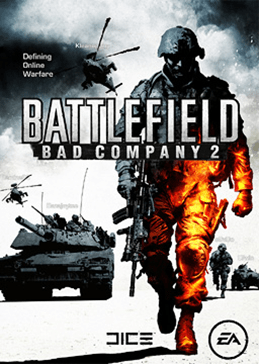
All right folks, the question of the day is, “What is the best First-Person Shooter Game?”  What do you all have to say?  Is it Call of Duty Modern Warfare 2?  No, of course not!  How about the newest Medal of Honor game?  Not a chance.  Call of Duty Black Ops?  Nope, wrong again.  Perhaps much to your surprise, none of these are correct.  The best first-person shooter game out there is … Battlefield Bad Company 2!  All right, all right, now I understand that many of you gamers in the “audience” are audibly guffawing right now, avidly defending your favorite game with passionate, if not reasonable protests, but this really is a great game.  Admittedly there is no completely objective standard for determining the “best first-person shooter game,” but I would strongly advise you to consider the following arguments for why Bad Company 2 is one of the best, if not the best, first-person shooter games that you could possibly own.

So what makes Battlefield Bad Company 2 such a great first-person shooter game?  Essentially it all boils down to these 7 components of game-play: graphics, realism, weapons and vehicles, customizability, maps, role diversity, and variety in game mode.  These 7 components of Battlefield Bad Company 2 are so skillfully executed that they create a truly one-of-a-kind gaming experience.  Obviously there are other games which may surpass Battlefield Bad Company 2 in one or more of these areas, but I believe that none of these games blends all of these components together as successfully as Bad Company 2.

Let us begin with graphics.  Again, there is really no objective standard for judging these sorts of things, so you will just have to see for yourself … but here are a few key traits of Battlefield Bad Company 2’s graphics.  First of all, the graphics are realistic without being too gory.  You don’t see people’s heads or legs getting blown off like you do in other more “graphic” games.  Instead you simply see a small amount of red when someone is shot (though you will see the occasional soldier flying through the air after a huge explosion).  Another bonus is that the game doesn’t try to be so realistic that it just looks bizarre.  I’m sure that we’ve all seen a game like that before.  You know, the games which don’t have quite enough money to purchase quality software, the ones that make people look just realistic enough that you recognize how much of a failure the graphics really are, the ones that make everyone look like Frankenstein’s monster.

So now that we’ve established what the graphics are not (gory and mediocre) we can delve into what they are.  One exceptionally realistic aspect to the game’s graphics is the landscape.  Foliage is extremely realistic, and the shading is phenomenal.  In fact, you can hide in the shade in sunny maps in the same way that you would be able to in real life.  This is exceptionally helpful for the dedicated sniper who relies heavily upon stealth.  The water is exceptional also.  Buildings, vehicles, and weapons are also extremely realistic when it comes to graphics.

Next is realism.  This is perhaps one of the most impressive aspects to Battlefield Bad Company 2’s game play.  For starters (and this alone sets Bad Company 2 apart from the other contenders) is the fact that the game utilizes a completely destructible environment.  Not only can you knock down trees with your tanks, but you can shoot out holes in cement walls to give yourself a nice protected firing position.  What’s really impressive is that you will even be able to see the gridirons within the cement wall once you blow some of it away, but even this isn’t the best part.  Not only are the foliage and obstacles completely destructible, but so are the buildings themselves.  A player can do anything from knocking down the door, to blowing out a wall, to collapsing the entire building on all of the opponents inside.  Though you can destroy the environment, you can also just shoot through most walls too.  All of these features drastically enhance the strategy and the grandeur of the game.

There are a few more features to the game that enhance the realism of the battlefield experience.  The audio quality is one of these features.  Being able to hear what is going on around you in the combat-zone can be just as important as being able to see what is going on around you.  Whether it is the groan of a collapsing building, the rumble of an approaching tank, the clink of a grenade on the floor next to you, the approach of an enemy soldier, or the sound of your enemy’s knife impacting the wall just inches from your head, if you listen to the surroundings, you can be more adequately prepared for the approaching situation.  The key to the greatness of Battlefield Bad Company 2’s audio is two-fold.  First, the volume of a particular noise is dependent upon how close the source of that noise is to the player, and second, even the smallest actions from reloading your gun to walking through a bush emits an audible noise.

Another component to Battlefield Bad Company 2’s superb realism is the physics behind the trajectory of fired rounds.  In many games, a bullet will continue to fly at the same velocity and altitude across the entire map or until the bullet is stopped.  In Battlefield Bad Company 2, just like in real life, the rounds of tanks, hand-held weapons, etc. actually drop with time.  Thus if you are a sniper, you will have to aim slightly above your target in order to get a head-shot (depending, of course, on how far away the target is).  Also, when you fire a shotgun in real life, you don’t expect the rounds to suddenly stop and fall to the ground after 20 feet, but that’s what happens in many games like Call of Duty Black Ops.  In Battlefield Bad Company 2, however, the shotgun rounds will continue beyond a mere 20 feet even if the rounds aren’t as powerful as they were during the first 20 feet.  As my brother Thomas puts it, “Battlefield did shotguns right.”

The third aspect of Battlefield Bad Company 2 that makes it great are the vehicles and weapons.  Many first-person shooter games do not have any vehicles at all, but Bad Company 2 not only has small vehicles like Quad Bikes (a type of ATV) but also larger vehicles like HUMVs, M3A3-Bradley APCs, M1A2 Abrahm Tanks, T-90 Tanks, two types of boats, and even BMD3-AA Mobile Anti-Aircraft vehicles (a special type of tank that, according to anandtech.com, is equipped with “dual 23mm AA cannons” and a “30mm Grenade Machinegun”1 in addition to two machine guns).  What really sets Battlefield Bad Company 2 apart from many other first-person shooter games, however, is the use of aerial vehicles.  One can fly everything from UAV1 RC Scout choppers (equipped with a machine gun and a target designator capable of summoning an aerial strike), to AH64-Apache Attack Helicopters.  Many of these vehicles have the ability to transport several soldiers who can utilize additional mounted weapons or their own individual arsenals to support the driver/pilot.  These vehicles add an extremely critical component to game play.  Not only do they provide the opportunity to wreak havoc on the enemy through the use of superior firepower, but they also contribute to the formation of a unique class of soldier, the engineer.  The ability to attack from land, sea, or air drastically increases the number of ways to play the game.

The weapons are also extremely well designed.  Each weapon’s unique balance of damage, accuracy, and rate of fire gives it a unique edge in the battlefield.  Other more subtle characteristics of each individual weapon (such as clip size, recoil, and type of iron sights) also make each weapon unique.  In fact, the performance of each gun in general (as well as the way that each gun is maneuvered in the 1st-person view)  is arguably better than that of any other 1st-person video game.

The huge number and type of weapons themselves also improve Battlefield Bad Company 2.  The fire-arms include the AEK 97, the AN94, the 9A91, the UZI, the PKM, the XM8LMG, the M24, the GOL, the M9, the 870 MCS, the USAS12, the NS 2000, the S2OK, the M93R, the M1911, the VSS, the QBY88, the MG36, the M249, the PP 2000, the SCAR, the M416, the XM8, the F2000, the M 16, the XM8C, the UMP 45, the QJY88, the MG3, the SV98, the M95, the MP443, the M1A1, the SPAS12, the SPAS 15, the T194, the MP412, the SVU, the M60, the AKS74u, and the AUG.  If you could actually recognize every one of these guns, I am truly impressed, but even if you know anything at all about guns, you probably recognized names like the M 16, the SCAR, the M1911, the AUG, the UZI, the UMP 45, and some of the AK-47 variants.  The list includes various sniper rifles, automatic assault rifles, shotguns, machine-guns, hand-guns, automatic pistols, and a few other types of weapons.

While the guns are great, one can also use more specialized weapons like RPG7s, various types of rocket launchers including the M136 (which features an optical guidance feature), grenades, Anti-Tank Mines, a power tool (used for repairing friendly vehicles or dismantling enemy vehicles), ammo kits, motion sensors, defibrillators, health packs, mortar strikes, explosives (with a remote detonator), a knife, 40mm grenade launcher attachments … you get the idea.  Many of these special pieces of equipment, like the defibrillator (which enables you to revive fallen comrades), add entirely new potential strategies and entirely new opportunities for destroying the enemy forces.2

This brings us to the fourth key factor which makes Battlefield Bad Company 2 so awesome: customizability.  As was mentioned above, each soldier has a large variety of weapons to choose from.  Most of these weapons can be customized with various attachments and upgrades, while you can also customize your abilities and vehicles with upgrades as well.  Such attachments/upgrades include sights, silencers, precision barrels, lighter equipment, precision ammo, and the like.  Not only do these options provide variety and give one the opportunity to adapt one’s weapon to the situation at hand, but they also serve as rewards for skill and experience.  As one gain’s points from various online accomplishments, one unlocks different weapons, upgrades, and attachments.  The opportunity to “unlock” these options provides for a rewarding gaming experience as well as a competitive hierarchy that distinguishes the rank 50 veteran who has played every day of every week for the past year from the “n00b” who just got the game.  While it is true that other games like Call of Duty Modern Warfare 2 have arguably superior unlock systems with more options, at least in Battlefield you don’t have to exit the match to make your “custom class.”  The vast number of ways to get points also makes the unlock system  more exciting.  One can gain points for getting kills and kill-assists; for saving a team-mate; for avenging your teammate; for destroying vehicles; for getting double or triple kills; for healing, reviving, or resupplying your teammates; for receiving various pins such as M-COM defender pins, submachine gun efficiency pins, savior pins, nemesis pins, combat efficiency pins, and squad retaliation pins; for setting a charge on an M-COM station; for disarming a charge on an M-COM station; for destroying an M-COM station; and the list goes on and on.  You can also collect the dog tags of the players that you knife.  While it may not have the best customizability feature of all the first-person shooter games out there, it does have one of the best and this instantly sets it apart from  many of the lesser quality first-person shooters.

Fifth is “maps.”  The maps in the Battlefield Bad Company series are some of the best videogame maps out there.  Perhaps the key to their greatness is their size.  Each map is extremely large compared to those of games like Call of Duty Modern Warfare 2.  This size allows for many more potential strategies for achieving the desired objective (which varies depending on the game mode) and produces a much larger range of potential engagement situations per map.  For example, in an extremely small map that consists of one building, there is a very limited number of possible ways that you might engage your enemy, i.e. they might come through that door, shoot through that window, come around that corner, or jump off the roof.  In a map like this, game play becomes far too predictable and it becomes too much of a simple test of reaction time.  In larger maps, the number of possible “engagement situations” increases exponentially.  Now you must be prepared to engage the enemy in thousands of different battlefield situations depending on your position, the enemy’s position, your teammates’ positions, etc.  Thus the size of the maps is a key bonus for Battlefield Bad Company 2, but size isn’t the only thing that makes Battlefield Bad Company 2’s maps great.

The balance between urban and rural combat is also superb.  This balance provides opportunities for various different types of combat.  Urban environments produce more fast-paced, close-quarters combat while rural environments are often more prone to involve engagements at longer range.  The tactics involved in these different environments are also different, especially when buildings can be completely demolished.

The diversity of map types also helps to make Battlefield Bad Company 2 much more enjoyable.  The battlefield environments range from deserts to jungles, from islands to mountains, and from submarine bases to refineries.  Lighting also varies from map to map.  It is sunny in some maps and cloudy in others.  It is even night-time at one map, producing a whole new set of challenges.  There are also unique advantages for each team depending on the map (and the game mode).

Role diversity is also an integral aspect to warfare in Battlefield Bad Company 2.  Players can choose from a variety of “classes” between lives, each of which has a different set of weapons.  The four classes are assault, medic, engineer, and recon.  Each class performs a specialized task for the team, and when these classes work together, they can greatly enhance the teamwork capabilities within the match, simulating real warfare.  Each player has the ability to choose to “spawn” at the location of one of his squad-members.  Depending on which class each member of the squad chooses, the cooperative dynamic of that squad can shift dramatically.  If the squad includes a medic, that player can heal his fellow squad members (or anyone on his team for that matter) while another player, who is playing as an assault class soldier, can resupply the engineer in the squad with ammo so that the engineer can protect the squad from enemy vehicles.  All the while, the recon (or sniper) player can provide cover fire as well as the occasional mortar strike.  This is only one possible way to utilize the classes available in Battlefield Bad Company 2, and the possibilities are endless.  Because each player’s class is denoted by a unique symbol, teammates can easily spot imbalances in various areas of the battlefield and act accordingly.

And, last but not least, is the variety in game mode options.  While many first-person shooter games have a plethora of game mode options, Battlefield Bad Company 2 has some of the best.  One of the most unique game modes is “Rush.”  This game mode designates one team as attackers and the other team as defenders.  The defenders are tasked with defending the M-COM stations, while the attackers must destroy the M-COM stations.  The attackers are given a certain number of reinforcements to destroy each pair of M-COM stations and as soon as one pair is destroyed, a new segment of the map is made available until either the attacking team has destroyed all of the M-COM stations or the defending team has depleted all of the attacking team’s reinforcements.  Each side has its own set of challenges and advantages, and this type of game play keeps each game fresh with different opportunities for winning based on the unique strategies of each player.  “Rush,” along with the other game modes, provides the player with many variations of the online multiplayer experience such that it is virtually impossible to have the same battle twice.  Perhaps this strategic element is what makes Battlefield Bad Company 2 great.  The vast number of ways to approach the game, concerning each individual’s use of class, customization, vehicles, teamwork, strategy, etc. all provide countless ways to play the game.

There are so many good things that I could say about Battlefield Bad Company 2, but I simply do not have the time or the patience to tell you all of them.  In fact, just writing this paper is driving me mad, because every second that I spend telling you about how great a game it is, is another second that I wish that I could be playing it myself, right now.  So, instead of listening to me ramble on about my favorite video game, you should get out there and try it for yourself.

End Notes

1The AT Battlefield Bad Company 2 F.A.Q.  http://forums.anandtech.com/showthread.php?t=2020118.  Accessed November 17, 2010.

2YouTube: Battlefield Bad Company 2 Weapons, Gadgets, and Specializations Overlookhttp://www.youtube.com/watch?v=LR3yNYLIN-0.  Accessed November 17, 2010.
Book Review: Virgil: A Collection of Critical Essays, ed. Steel Commager. Twentieth Century Views.  Englewood: Prentice Hall, Inc., 1966.

Christopher Rush

Preface

Of the essays in the collection, I found eight to be useful to varying degrees in addition to Mr. Commager’s introduction.  I will briefly highlight the content of each of these eight essays as well as each author’s perspective together (as they are too short to treat well separately), and conclude with a critical evaluation of the essays.  Many of the essays are either abridgements from their original lengths or reductions of chapters from entire books by the authors.  Since I read only what was made available in the collections, I must refer to the essays by the titles given to them by the editor.

Content Summary and Author’s Perspective

Steele Commager’s brief introduction to the collection of essays, unlike Harold Bloom’s introductions to the Modern Critical Interpretations series, is not a précis of what the following essays concern (ironically, what I am doing now), but mostly a brief treatment of Aeneas as an epic hero, and how he through Virgil distinguished himself from Homer’s heroes.

C.M. Bowra’s essay “Some Characteristics of Literary Epic” does exactly what its title implies: he briefly discusses the nature of oral epic, its purposes and forms, and its heroes and representation of a heroic world.  He distinguishes briefly between Homer’s heroic world and Virgil’s heroic world, one key difference being Homer’s heroes live and die for their own glory, while Virgil’s heroes have a higher calling for a social ideal (61).  Bowra’s guiding perspective on the epic is the different purposes for the heroes: whether it be self-centered or others-centered.

C.S. Lewis’s essay “Virgil and the Subject of Secondary Epic” is extracted from his Preface to Paradise Lost.  While the extract does not make much sense by itself — atypical of the Twentieth Century Views series, since most chapters re-forged into short essays make sense as presented — Lewis’s chapter/essay offered some helpful ideas on Virgil’s presentation of the epic, as distinguished from earlier author-less epics.  His fuller discussion on the difference between “primary” and “secondary” epics, while quite trenchant, was not included in this selection, which is odd since it was Lewis’s main purpose in addressing Virgil in a work more devoted to Milton.  Fortunately, that difference is not relevant to our purposes here.

“Odysseus and Aeneas” by Theodore Haecker was a short (roughly the first eight essays in the collection were generally fewer than twelve pages long; the final four were much longer) contrast of the two heroes, though his insights treat Aeneas more than Odysseus.  He, like most of the authors of these early shorter essays, did not have any overt “perspective” in the sense of approaching the poem from psychology, archetypes, feminism, or the like, but instead was more formalist, addressing primarily what was in the poem, not external to it.  At least, that is the impression I got from the essay originally.

Wendell Clausen’s “An Interpretation of the Aeneid” acknowledges the prerequisite of knowing Homer before understanding Virgil: “any response to the Aeneid will depend in good part on an intimate knowledge of the Iliad and the Odyssey” (75).  Most critics of Virgil (that I’ve read recently) reference the connection of the two authors in what ways such knowledge suits their particular foci, but Clausen’s general admission seemed unique, not saying Virgil is a copy or modifier of Homer, but just the idea that the reader’s success with Virgil is in some way determined by the reader’s prior success with Homer.  After that, Clausen focuses mostly on the character of Aeneas, highlighting his burdens and the tragic circumstances he surmounts in his poem.  Clausen’s emphasis on the emotional states of Aeneas borders on psychological interpretation but does not give the reader any overt references to it.

Brooks Otis’s “The Odyssean Aeneid and the Iliadic Aeneid” begins the final third of essays much longer than the previous grouping.  Otis begins with a structural approach to the Aeneid, offering a kind of map with a two-fold purpose: first it lists the general content of each book of the poem in a brief three- or four-word phrase, labeling books one through six as “Odyssean” and books seven through twelve as “Iliadic”; second it draws (literally) connections from one book to another, indicating its mostly chiastic pattern — similar to Cedric H. Whitman’s structural diagram of the Iliad referenced by Peter Leithart in Heroes of the City of Man.  The rest of his essay elaborates on the pattern, how the first half (Aeneas’ Odyssey) is preparation for the “Iliadic Fulfillment” of his quest in the second half of the poem.

The title of Adam Parry’s essay “The Two Voices of Virgil’s Aeneid” is at times akin to J.R.R. Tolkien’s The Two Towers, in that the reader is not always sure to which voices/towers the author is specifically referring.  For Parry, sometimes the two voices are those of Aeneas and his rival Turnus; at times it is what Otis called the two halves of the poem, the Odyssean and Iliadic halves; at other points in the essay Parry seems to be referring to two different moods of the poem itself: the tragedy of Aeneas’ personal losses contrasted with the empowering hope for the future surety of the Roman Empire.  Regardless of the oft-times ambiguous title, the content of the essay provides a distinctive approach to Aeneas’ character in light of Virgil’s authorship and audience: sometimes Aeneas is a Roman version of Homer’s Greek Achilles and Odysseus, sometimes he is a model of his supposed successor Octavius-Augustus; Parry also suggests the possibility that Virgil temporarily casted Aeneas as Octavius’ enemy Mark Antony, when Aeneas entangles himself with Dido, Queen of Carthage (who becomes a type of Cleopatra, in that Egypt and Carthage are both enemies of Rome).  Parry spends much time analyzing Aeneas as a servant of History/Fate/Destiny; because he serves an “impersonal power,” he cannot be a hero (123) — an interesting conclusion.  For Parry, though, Aeneas is saved “as a man” because he is so unrelentingly self-sacrificial and suffers through so much for others.

Bernard M.W. Knox (who, along with Mortimer Adler, would undoubtedly be on the Mt. Rushmore of Influential 20th-century Classicists — using “classicist” as an encomium) contributed “The Serpent and the Flame: The Imagery of the Second Book of the Aeneid” to this collection.  While interesting and excellent, as Knox usually is, it was limited in focus, as its title makes clear.  Unlike other classicists, such as Gilbert Murray, Knox does not assume the reading audience is familiar with Greek and limits his use of it while thoroughly analyzing an intentionally narrow component of Virgil’s epic.

Finally, Viktor Pösch’s “Basic Themes” concludes the collection.  One of the major themes for Pösch is the sea, which for him is “an overture” to the other motifs in the poem (165).  Other themes (at times Pösch seems to use “theme,” “symbol,” and “metaphor” interchangeably, as I am, unfortunately, wont to do in my classroom) include love as the “motivating force in all that Aeneas does” (166), the Aeneid as a “poem of humanity” (173), and Aeneas’ journey to the underworld as a symbol of “a trial of the hero” (176), this last quite aligned with Joseph Campbell’s journey of the hero.

Critical Response and Evaluation

Though my elongated summary connotes some of my responses to the essays, some final evaluations are appropriate here.  On the whole, I have found the older Twentieth Century Views series of essays far superior to Harold Bloom’s Modern Critical Interpretations series.  That is not an attack on Professor Bloom, nor an overt diatribe against recent scholarship contrasted to earlier scholarship (I am a much younger, poorer, and unpublished scholar than those published in either series); it is merely a generalized reaction.  I prefer (and trust) the Twentieth Century Views series so much that I will purchase one whenever I can find one in a used book store, even if I have never read the author in question (such as Proust, though he is on my “someday soon” list).  The series also does not, in my acknowledged limited experience with it, include derisive or vituperative essays on the author or subject, unlike what Bloom’s Modern Critical Interpretations essays occasionally do.  Bloom’s series does offer great essays, certainly, especially the occasional erudite contributions by latter-twentieth-century scholars, so they are not entirely shoddy — I simply prefer the Twentieth Century Views series.

Commager’s introduction, as I mentioned before, aids in the superiority of the series, in that his introduction is a thoughtful contribution to the subject, unlike Bloom’s “introductions” which are synopses of the essays in the collection (I often find Harold Bloom a helpful albeit limited scholar, though in his own books).  Commager sets the tone of analytical appreciation for Virgil and his poems, giving insights I found helpful, such as his remark “… in the Aeneid, duty and inclination are constantly opposed” (11).

C.M. Bowra’s essay provided good generalized descriptions of epic poetry.  His precise comments help introduce the nature of epic poetry before focusing on epic heroes, more so than the typical high school definition of an epic poem as “a long, narrative poem usually focusing on one hero.”  Bowra’s essay emphasizes the differences in values of Homer’s epic and Virgil’s epic, an invaluable insight in the distinction of the heroes.

I knew about C.S. Lewis’s essay (unlike the other “essays” transplanted from their original sources) because I have read Preface to Paradise Lost.  As mentioned above, the extraction of this one chapter does not make too much sense, though I did find some useful comments from Lewis (not a third face with Adler and Knox, since Lewis was more of a medievalist than a classicist).  With the profundity of useful ideas from the other essays in this collection (and other sources), one needs not revisit Lewis’ book, even for his distinction between “primary” and “secondary” epics — unless one wants to read a good work about an even more important work, and thus gain a better understanding of Western Civilization.

A title like “Odysseus and Aeneas” offered great promise, in that comparatively so few of the critical works I’ve read had anything to say about the participants in the content of the Iliad, Odyssey, and Aeneid.  So many other critics want to talk about the poems’ origins or historicity or animal and nature symbology — which is wonderful, but not all there is.  Unfortunately, Haecker’s essay (at least the version presented in this collection) did not provide as much analysis as I had hoped.  I gleaned three tidbits from him — helpful tidbits, but brief tidbits: “How full of paradox, how dialectical is the inner life of Aeneas!  Does he in this resemble any of Homer’s heroes?” (70)  “Like all reticent men, he (Aeneas) can speak only the truth that is in him, and that only occasionally and darkly.  And again, like all reticent men, be they so from necessity or of their own free will, he makes no such brave figure as Achilles or Odysseus” (Ibid.).  And “the true leader is not he who makes himself leader, but he who is called and dedicated to that end by Fate” (74).  I appreciate Haecker’s perspective that Aeneas might be inferior in some ways to Odysseus and Achilles (unlike most other critics who usually see Aeneas as a better-rounded consummation of “the hero” Homer was trying to create), especially his stress on Aeneas as a “reticent hero” out of necessity — I just wished Haecker had more useful things to say (a thoroughly selfish comment, though it is a well-meant selfishness, unlike Achilles’).

Wendell Clausen’s “An Interpretation of the Aeneid” is similar to other essays in the collection in that he highlights the tragedy and suffering Aeneas endures — genuine loss, unlike Odysseus’ temporary abstinence from happiness and contentment or Achilles’ egotistic honor besmirchment (his loss of Patroclus is genuine, though Gilbert Murray cautions us against believing Achilles is completely selfless even in missing/feeling loss at the death of Patroclus).  Of the many helpful ideas from Clausen, two stand out: “Aeneas enters the poem wishing he were dead, the only epic hero to do so” (77); “Aeneas is more burdened by memory than any other ancient hero” (Ibid.).

Certainly Brooks Otis’s structural diagram of the Aeneid’s thematic and chiastic pattern is invaluable.  His explication of that pattern is similarly useful.  Even his summary of the poem is remarkable: “the Aeneid is … the story of death and rebirth by which unworthy love and destructive furor are overcome by the moral activity of a divinized and resurrected hero” (92) — a bit of archetypal criticism added to his structural criticism.  Like other critics, Otis notes Aeneas’ psychological component of his heroic character, though Otis always relates his ideas to the structure of the poem, in that it (Aeneas’ psychology) changes in connection with the structural plot changes: plot and character are intertwined.

I commented above on the elasticity, if not ambiguity, of Adam Parry’s title, “The Two Voices of Virgil’s Aeneid,” though the title was not as important to me as his other insights.  I especially enjoyed his connections to Virgil and Augustus — certainly that is a necessary component to accurately understanding and interpreting this epic poem.  His comparisons of Aeneas to Octavian/Augustus and Mark Antony are enlightening and unique, while completely plausible.  Similarly, his conclusion that Aeneas can’t truly be a “hero” because he is guided/forced/in the service of an impersonal power, but that he is a more complete “man” than the Homeric heroes, offers an interesting perspective.  Yet, Parry’s conclusions are odd, in that he maintains that Aeneas is a fuller man than either Achilles or Odysseus even though he does not have the free will that they have — Aeneas is the plaything of History, which he cannot escape: how does this make him more of a man?  For Parry, the answer is that Aeneas “is man himself; not man as the brilliant free agent of Homer’s world, but man of a later stage in civilization, man in a metropolitan and imperial world, man in a world where the state is supreme.  He cannot resist the forces of history, or even deny them; but he can be capable of human suffering, and this is where the personal voice asserts itself” (121-122).  Possibly: I need to keep pondering these conclusions until I can more readily agree with him.

Obviously I have great respect and admiration for Bernard Knox if I am willing to place him on the Mt. Rushmore of Classicists (along with Mortimer Adler after a fashion, certainly A.E. Housman, and possibly Gilbert Murray — Maynard Mack might be up there, especially if we changed the title to Influential Popularizers of Classics in the 20th century).  Even so, his narrow essay, while stunning in its thoroughness and wealth of knowledge, was mostly extraneous to my personal focus on the heroes of the poems.  He did make some indirectly useful comments on Menelaus and Agamemnon (calling them twins, which no other commentator highlighted — except Gilbert Murray, though also indirectly) as together a force of “merciless destruction” (127), and another interesting comparison of Pyrrhus (Achilles’ son?) to the serpents killing Laocoön as he kills Priam (136).

Victor Pösch’s “Basic Themes” was, like Knox’s essay, interesting, but mostly unsuited for my needs when researching for my Master’s thesis.  His themes quoted above were the themes I found most useful of the many he addressed.  In order to incorporate his dominant sea theme, though, I’d would have had to insert much of his argument, which on the whole is irrelevant to my thesis, so I couldn’t really do that.  However, if one simply wanted to improve one’s ability to understand (and potentially teach) such classical literature, then one of his almost superfluous comments is extraordinarily helpful: “The essence of a symbolic relationship is that the correspondence between the symbol and the thing symbolized is not precise, but flexible, opening up an infinite perspective” (166).  Certainly Pösch’s concise definition is extraordinarily helpful beyond the confines of this article.

As only one example of the many in the history of classical scholarship and inquiry into Virgil’s Aeneid, Commager’s Twentieth Century Views collection is a challenging introduction to one of the most important works in Western Civilization.  The Twentieth Century Views series as a whole is undoubtedly a worthwhile series to investigate, own, and enjoy forever, especially in light of the general and decided decline of scholarship (especially classical scholarship) today — despite the fact my postmodern Master’s professors encouraged me to ignore the older works in favor of the more recent writings on the subject.

Book Review: The Rise of the Greek Epic, 4th Ed., Gilbert Murray. New York: OUP, 1960.

Christopher Rush

Content Summary

In what was once a landmark exploration of Homer and the Iliad (I say that not derogatorily), Gilbert Murray analyzes a vast amount of material related to ancient Greece, the nature of ancient stories and books, the construction and minutiae of the Iliad, and its reception and place in history.  In the four prefaces, one for each edition, Murray has different things to say, mainly about the changing nature of Homeric interpretation during the first half of the twentieth century, when his book was being re-edited and re-released.  Despite the changing nature of the then-current geo-political world, however, Murray’s book did not seem to undergo many revisions.  At best, he seems to have added only some footnotes regarding newer critical works and some appendices.

Murray’s introduction attempts to situate the reader into the nature of the Greece of the Iliad as well as its poetry, commenting on differences in the known Greece with its portrayal in the Iliad, as well as cultural differences between the poem and the world of Murray’s present reader.  His next major section is on “The People,” first the people who became the Greeks (the Achaeans of Homer’s poem and the Greeks of Homer and his followers), secondly some of the major beliefs of the people in the poem and the disintegration caused by wars and migrations.  His second, and longer, major section is “The Literature,” first providing for the reader an understanding of what a book was in Homer’s day and how it is completely unlike what present readers think of as a book.  Next he begins to address the Iliad more specifically (almost one-third of his way into his exploration), highlighting how it fits his earlier definition of a “traditional book,” evidencing it with expurgations, peculiarities, and almost minutiae to support his points.  He then addresses the historical content of the Iliad before assessing whether or not it is a “great poem.”  To close his work, Murray returns to more peripheral arguments such as Homer’s connection to Ionia and Attica, and final comments on what is known and unknown about Homer, the poem, its place, and reception in antiquity.  His appendices are like extended footnotes regarding various issues he addresses throughout the body of his exploration, and he refers the reader to them as needed.

Author’s Perspective and Purpose

Though I referred to “Homer” when summarizing the content of The Rise of the Greek Epic, one of Gilbert Murray’s major points which he makes several times (at least in the first half of the work), is that he believes “Homer” to be almost as fictional as Zeus or Apollo.  Murray believes the Iliad and the Odyssey (though his evidence is mostly concerning the Iliad) to be the work of composite poets and emendators over many years, if not centuries.  That is the essence of his argument in the “nature of the traditional book” section — a traditional book or story was not created to be read, but was kept hidden until the poet could recite it; also, Murray cites several examples of line inconsistencies throughout the Iliad, such as different kinds of armor, to point to multi-generational editorship on the base poem.  The Iliad is too long to be recited as well and must be a composite of different poets/editors over time to produce what we now know as the Iliad.  Much of his support is given in Greek, so those who are not familiar with the language must take his word for it.

Murray’s title is almost the opposite of what his intention seems to be: for most of the work, Murray details what the Iliad is not, almost to the point at which his title should be the fall of the Greek epic — at times it seems he comes to bury Homer, not to praise him.  Murray focuses on many details and incidents whose connection to the poem does not seem readily apparent until much further on, and even then, his purpose is not always clear.  It is evident overall that he wants to accurately ground his audience in what he perceives to be an accurate historical understanding of the nature of the events and culture of the peoples depicted in the Iliad, and the nature and times of the people writing, emending, and receiving the poem — since there are many according to Murray.  Unfortunately for Murray, as he himself must admit toward the end of his exploration, “the argument has rested chiefly on analogies and general considerations, not on documents: it has had to be very cautious, aiming at probability, not certainty, constantly suggesting, not professing to demonstrate” (282): hardly the most persuasive kind of argument, but necessary when dealing with an ill-documented antiquity.

Critical Response and Evaluation

I very much wanted to enjoy Murray’s book more than I did.  His analytic introduction appeared to offer a profundity of Homeric scholarship untouched by the fads and fancies of twentieth-century theory.  Frustratingly, The Rise of the Greek Epic was, for the most part, unsuited to my main purpose for reading them while composing my Master’s thesis in examining the Iliad, Odyssey, and Aeneid: the nature of epic heroes.  Among the issues Murray addresses, the actual characters in the poem are given very little attention.  As mentioned above, Murray spends much more time dissecting apparent historical inconsistencies such as bronze armor, the nature of shields, and what is not in the poem.  Much of Murray’s comments on Homeric expurgations are, as the above quotation admits, mere arguments from absence: because something is not in the copies that exist today, they must have been elided by some editor after the first poets had it in their versions of the poems.  This sort of argumentation was, as I said, frustrating at times, though it was nice to read Murray’s almost-apologetic admission that he was dealing with mostly speculation.

Another disappointing component to Murray’s analysis, similar to my disappointment with Joseph Campbell, is his almost preposterous treatment of various Biblical passages for no useful or accurate reason.  I am not arguing against the possibility that the Bible has had various scribes and translators and editors over the centuries, but Murray’s “analysis” of the Old Testament on pages 107-119, supposedly in an effort to prove what was the nature of “traditional books” — i.e., editors come along and change things to suit the fancies of the day, whether or not they create conflicts with other passages of the text — seemed to be substandard scholarship.  Not only was he not proving his point about traditional books and their connection to the Iliad, but he more readily demonstrated his ignorance about them.  Obviously this is a reaction from my particular worldview, but I am baffled by so many scholars who can argue well when it comes to what they know but then resort to Biblical derision when they want to mask their own ignorance about whatever topic they know they must address but cannot do so well.

With such pervasive reactions against Gilbert Murray’s book, it might seem odd that I am including it in this journal.  I am including it because, more than any other scholarly work on the Iliad I have read recently, it has made me want to be a better Homeric scholar.  As I mentioned above, Murray writes with the supposition that his reading audience is fluent in Greek.  That may have been true a century ago, but I did not have that opportunity growing up in American public schooling in the later-half of the twentieth century.  For years, as I have tried to understand these classical works better, I have had the nagging feeling that the only way I can truly improve in classical scholarship is to understand (read at least, if not write or speak) the classical languages.  The same is true for my Biblical interpretation skills: I can only get so far reading John Nelson Darby or a New American Standard version of what was originally in Hebrew, Aramaic, and Greek.  Perhaps Murray was not writing for the average reader for The Rise of the Greek Epic, but his linguistic challenge was effective for me.

That is not the only reason I include it, however.  Murray has several good insights into the poems throughout his work, though “throughout” is a generous concision of “scattered throughout.”  It was not exactly “hit and miss” with Murray, but his good offerings were somewhat sporadic — though, once I found them, they were very helpful.  I do not personally agree with his assessment of a multiplicity of Homers, but that might be my classical scholarship nascence (i.e. utter ignorance) talking.  My own argument in my thesis focuses on what the poems say about heroes, not whether or not the poems are a hodge-podge of multiple insertions, deletions, and revisions.  Even so, Murray’s work provides helpful ideas and a challenge that more recent Homeric criticism does not.

Book Review: Heroes of the City of Man: A Christian Guide to Select Ancient Literature, Peter J. Leithart. Moscow, ID: Canon Press, 1999.

Christopher Rush

Content Summary

Heroes of the City of Man addresses eight works of classical Greece, four epics and four dramas: Hesiod’s Theogony, Homer’s Iliad and Odyssey, and Virgil’s Aeneid; Aeschylus’ Eumenides, Sophocles’ Oedipus Tyrannus, Euripides’ Bacchae, and Aristophanes’ Clouds.  Peter Leithart gives about equal time to all works, since his overarching premise is not to praise one literary form above the other.  Leithart gives each a working subtitle, each designed to highlight what Leithart supposes is that work’s major theme: the Theogony is the “Pagan Genesis,” Iliad is “Fighters Killing, Fighters Killed, Odysseus is the “Son of Pain,” and the Aeneid is “Patria and Pietas.”  Of the dramas, the Eumenides is a tale of “Blessings of Terror,” Sophocles’ first play in the Oedipus trilogy is “Riddles of One and Many,” the Bacchae is “The Contest of Fetters and Thyrsus,” and Aristophanes’ Clouds is about the “Sophist in the City.”

As a college professor, Peter Leithart always has higher and continued education in mind, in not only this but his other works I’ve read and own.  He divides each work into sections, usually along thematic lines that fit with his overarching subtitle for the work, and after each section gives “review questions” and “thought questions,” to help the reader remember and analyze what he or she has just read.  At the end of the book, Leithart has an “Additional Reading” section, a bibliography (not annotated) of recommended works to continue the reader’s analysis of the classical Greek epics and plays.

Author’s Perspective and Purpose

The subtitle is a clear indicator of Leithart’s religious and philosophical perspective in approaching the works he analyzes in his book.  For the better read reader, however, his very title is an initial indicator of his approach: the “city of man” epithet is obviously taken from Augustine’s City of God, a classic work of Christian thought that categorizes much of life as either part of the city of God or the city of Man — Leithart clearly associates the works of ancient Greece as distinct from the “city of God.”  This is not surprising since Homer, Hesiod, and the rest do not claim to know or associate their stories with the monotheistic God of Augustine.  Unlike other critics, however, (and by “other” my experience so far means “almost all”) Leithart does not treat the members outside his particular religious and philosophical framework as deficient, unworthy, or haphazard.  Instead, Leithart has great respect for the originality, skill, tragedy, humanity, and beauty found within the works of the classical pagan Greeks.  Most (for lack of a better word) secular critics I’ve read in my years of study who approach the works of Homer or Virgil seem to find ways to bring up the Bible (usually for no justifiable reason) as a “straw man” to knock down and disparage in an attempt to distract readers from flaws or perceived shortcomings in the hoped-to-be superior non-Biblical works.

Leithart, however, has no problems in approaching and analyzing the ancient works for what they are, not what he hopes them to be.  Certainly his perspective is “biased,” in that he is approaching them from a Christian worldview — not one in which they were constructed; but this does not mean that critics who approach Homer or Hesiod or Aristophanes from a “secular” worldview are not biased — on the contrary, they have their own secular biases, not the least of which is not being a contemporary of the authors, bringing nineteenth, twentieth, or twenty-first century hermeneutical penchants to the ancient texts.  With the freedom to make no apologies for either what the texts say (or appear to say) or his personal interpretational framework, Leithart does not hesitate to discuss what other critics might timorously deem controversial or ambiguous, such as the moral issues involved with Odysseus’s affairs while claiming to be faithful to his wife.

Critical Response and Evaluation

Leithart’s work has been very influential to me, since, as you know, our classes together often (“always” would be overly generous) focus our analyses of ancient literature from a Christian perspective (which has myriad definitions and sub-interpretations, but a precise designation of what that entails at least at our school is peripheral to the main argument here).  Part of what makes Leithart’s work so useful is that he treats his subjects with overt respect, both analytically and aesthetically.  He is a Christian scholar (not an oxymoron) who noticeably enjoys the works from the “city of man” almost as much as he does from the “city of God.”

It is no accident, either, that Leithart and I appreciate the works from the “city of man,” while approaching them from a Christian perspective.  We both teach at classical schools, which is more than just different curriculum compared to government-mandated knowledge.  He finds great value in the works and ideas of those who believe differently than he does, completely unlike the secular critics I have read who trot in the Bible (or, more accurately, their masqueraded versions of what is supposedly the Bible) to deride and ridicule.  Leithart does none of this, even with passages he does not personally enjoy.  He does not scorn Homer for creating a poem centering on a selfish hero, though he does not hesitate to call Achilles a selfish hero: these are not contradictory statements.

In his introduction, Leithart formulates his reasoning behind his analysis of these classic works in the guise of a response to Tertullian’s question, “What has Athens to do with Jerusalem?”  As the renaissance of Classical Christian schooling can attest, quite a lot.  Fortunately, though, unlike many lesser-skilled critics regarding recent pop culture fads (such as Harry Potter or the Lord of the Rings movie adaptations), Leithart does not blindly embrace everything about these classics as “close enough to Christian” — Odysseus is not a type of Christ (nor are Harry Potter and Gandalf, despite the claims of recent pseudo-intellectuals) to Leithart.  Even with his admiration and appreciation for the classics, Leithart maintains an appropriate distance from them, as he makes clear in the following paragraph:

Heroes of the City of Man is a book about Athens by an author who resides contentedly in Jerusalem.  One of the foundational assumptions of this study is that there is a profound antithesis, a conflict, a chasm, between Christian faith and all other forms of thought and life.  Though I appreciate the sheer aesthetic attraction of classical poetry and drama, I have no interest in helping construct Athrusalem or Jerens; these hybrids are monstrosities whose walls the church should breach rather than build.  Instead, I have attempted to view Athens from a point securely within the walls of Jerusalem (14).

Part of the utility of Leithart’s work is his synthesis of and expounding upon other key critics.  His analysis of Cedric Whitman’s understanding of the Iliad’s chiastic structure has been helpful to me for years, even before I first read Whitman for myself.  Likewise, Leithart’s analysis of Odysseus’s process of revelation at the close of the Odyssey has been a helpful way to maintain the interest of students as we wrap up the great story.

Some critics might conceive of Leithart’s analysis and categorizing of these classical works as too much Christian revisionism, but they would be mistaken.  I have read other authors who try to imprint Christianity too much onto other works (like Tolkien and Harry Potter as mentioned above), but Leithart does not do that.  He unabashedly analyses these classical works from a Christian perspective, but he does not make of them what they are not.  Instead, he provides an excellent companion to these ancient works for anyone, whether he or she resides in either the city of Man or the city of God.

Book Review: The Hero with a Thousand Faces, 2nd Ed., Joseph Campbell. Bollingen Series XVII.  Princeton: Princeton UP, 1968, 1949.

Christopher Rush

Content Summary

Joseph Campbell’s classic work on mythology of various cultures, The Hero with a Thousand Faces, is an important work in the field, if not as extensive as his later four-volume The Masks of God.  The fundamental premise or thesis throughout The Hero with a Thousand Faces is that all cultures and religions create a basic story by which their heroes and origin myths operate, and that the similarity of all world-wide stories is not accidental: he calls it the “monomyth.”

Campbell divides his examination of the monomyth in two parts: first, the adventure of the hero; second, the cosmogonic cycle.  The adventure of the hero section is, perhaps, the more memorable (and useful) of the two.  By comparing diverse religious myths and hero stories from a variety of peoples, Campbell presents a fairly believable picture of the nature of the hero’s quest.  Obviously there are variations from culture to culture and quest to quest, but Campbell accounts for many of them.  The second section, the cosmogonic cycle, is related to the hero, but first begins with ideas about cosmos origins (at its name implies).  Campbell says that all life, like all cultures, is cyclical to a degree; all life has phases, like all heroes’ quests have phases.  Heroes come and go because eventually the people forget what kind of restoration the hero brought.  This section employs longer examples from cultures’ stories, while Campbell’s own critical commentary dwindles.

As hinted at above, Campbell draws on a variety of cultures’ myths and hero tales to generate and support his thesis.  Campbell does not cite any personal contact with these cultures other than their stories, so he has probably used historical research, i.e., reading myths and stories from around the world.

Author’s Perspective and Purpose

Joseph Campbell does not only place the stories of diverse heroes and myths in propinquity to demonstrate their similarities, though demonstrating their similarities is an important purpose for The Hero with a Thousand Faces.  To interpret the stories, Campbell overtly uses psychological analysis, referring to it explicitly in several passages.  Campbell draws connections between dreams and myths & heroes, though he does say that myths and dreams, while similar, are not the same.  The unconscious is important to both, but myths are more conscious expressions of universal ideas — the universality is found when these stories are examined next to each other.  Toward the beginning of the book, Campbell references several dreams cited in various Freudian and Jungian texts on dream analysis.  He extrapolates from those initial ideas on heroes, myths, and quests.  From there here creates his monomyth structure.

In addition to his psychological impetus behind his analyses of dreams and myths, Campbell also seems to favor Buddhist (and possible Hindu) religions and stories.  This is not necessarily a bad thing, but it does at times, seem to taint his interpretations of other cultures and religious stories, especially Christian/Biblical stories.  Campbell often makes remarks about “Christian” believers and historical events that are, undoubtedly, terrible (like the Crusades), yet those are, to be fair, relative aberrations in a two-millennium belief system.  Campbell does not make any disparaging remarks about Buddhist stories, believers, or heroes/characters in myths; the most he says is that the story of the death of Buddha gets a bit comical.

Campbell’s purpose is obvious: he wants to demonstrate that the seemingly-disparate myths, heroes, and quests of stories from around the world are, in fact, similar.  All heroes have the same basic pattern, despite miniscule differences, and all quests can be mapped and diagramed, which Campbell does.  He does this well, providing almost a surfeit of examples to support his analyses.  His second section, the cosmogonic cycle, is weaker than the hero section, though it, too, is well-supported.

Critical Response and Evaluation

I must say that I do not find it intrinsically unfortunate that Campbell favors Eastern beliefs over Western (all authors believe and favor some worldview over every other system); but it does, as mentioned above, disappoint and taint his other interpretations.  It disappoints in that by obviously favoring one belief system over another, Campbell makes his comments on both systems somewhat suspect.  He takes Bible stories and verses out of context to make some of his points, which is academically unsound.  In other places, he enjoins the readers to compare various Bible stories to Hindu or other religions’ stories — which, is not necessary bad (as that is, in part, the entire purpose of the work) — but the stories are often too different, in either content or meaning.  At times it appears as if Campbell wants to level certain belief systems or stories to prove his points, instead of simply analyzing the stories as they are and making his conclusions from them.

Psychological analysis, too, despite a century of criticism and evaluation, is still, to me at least, a tenuous method to interpret not only dreams but also literature.  I do not want to press this point too firmly either, since I understand that literary analysis itself (as separate from particularly psychological analysis) can be a tenuous, subjective activity.  But declaring that an occurrence or character in a dream means something specific simply because the psychologist or interpreter says so doesn’t seem to be a very believable system by which to interpret and understand things.  Perhaps this is my ignorance of the field speaking, and I acknowledge readily my limitations in the psychological realm, but I did not find Campbell’s work and references to psychological interpretations very helpful or credible.

With that said, I found Campbell’s work overall quite helpful.  His analysis and structure of the hero’s quest and journey was the best portion of the work, and it was the most helpful analysis of the hero’s function I’ve read so far.  I had the suspicion when beginning Campbell’s work that that portion would be the most useful, and I was not disappointed in that regard.  At the beginning of part one, the adventure of the hero, I found Campbell’s diversity of examples from several countries interesting — at first.  Toward the end of the work, though, the examples became more tedious as the ratio of Campbell’s analysis to myths reversed.  At the close of the work, in the cosmogonic cycle discussion, Campbell’s own ideas and synthesis diminished to a few scant sentences in each subsection, while his examples increased to multi-page examples.  It seemed like Campbell had two different works in mind, but didn’t have enough ideas for “The Cosmogonic Cycle” so he tacked it on to the end of “The Adventure of the Hero” and padded it with too many examples and stories.  I found Campbell’s map of the hero’s journey through “departure,” “initiation,” and “return” very insightful and helpful.  If you are interested in myths, heroes, comparative literature, psychological analysis, or Star Wars (since George Lucas readily admits Campbell’s work was highly influential in helping him create his space opera), The Hero with a Thousand Faces is a worthwhile read.

Whatever Happened to the Mini-series?

Christopher Rush

Prologue of Distinction

Where did that great genre of television the mini-series go?  In its heyday, the mini-series brought us some of the best moments, characters, and stories ever to hit the small screen.  From the mid-1970s to the mid-1980s, British and American studios created some of the most memorable programs television has ever produced, many of which are still far superior to the programming of regular episodic television popular today.

It would be helpful to narrow the subject of the argument at hand.  I am decrying the loss of the extended, multiple-part mini-series.  In doing so, I am discounting the presence of otherwise fine but comparatively short two-part broadcasts of what are essentially long made-for-TV movies – thus, respectable but limited productions such as 1996’s Gulliver’s Travels and 1998’s campy but decent Merlin are excluded from the conversation here.  Plenty of networks (too many) have created these 180-minute mega-movies in recent memory (10.5, for example), and they are not worth considering here.  Similarly, we can forget lengthy Bio-pics and serialized adaptations of Stephen King novels.  Stephen King fans may object, but they are not the grand, sweeping mini-series which we are currently exploring.  The kinds of series that fall in-between these broad categories (two-part super-sized movies and multiple-part sweeping epics) such as 5ive to Midnight and the recent remakes of Dune and The Prisoner as well as mini-series that became episodic TV series (V, Battlestar Galactica, The Starter Wife), while more expansive and developed than the two-part productions, still fail to capture the grandeur, impressive narrative, and sustainability of the mini-series of old.  Has the interest level in creating lengthy, quality productions truly soured on the American and British television audience and major networks?

True, Turner Network Television is trying to do its share, with Caesar, Nightmares and Dreamscapes, and Into the West, though they are not very long even for mini-series.  The BBC is doing its best as well, but most of its output lately has been simply remakes (how many Jane Austen and Charles Dickens adaptations does one need? seriously, another Brideshead Revisited?).  Another aspect that makes British mini-series somewhat difficult to assess is that so many of their regular series are only 6 or 8 episodes per season (or fewer), thus differentiating between a regular series and mini-series is challenging.  Even so, they are not the same.

We would be remiss to ignore the handful of lengthy mini-series produced of rather fine quality in the last decade or so: From the Earth to the Moon (1998), The 10th Kingdom (2000), Band of Brothers (2001), Taken (2002), Angels in America (2003), John Adams (2008), and, perhaps, not that any of us have seen them, The Pacific and Pillars of the Earth (2010).  Thus we have eight substantial mini-series in the last twenty years, since the “last of the mini-series” War and Remembrance in 1988-89, and five of them have come from HBO.  In Britain, aside from the Beatles Anthology documentary series, the definitive Pride and Prejudice adaptation in 1995, and the House of Cards trilogy in the early ’90s (though they, too, are still short), as mentioned above, nothing much has come out lately other than previously adapted novel remakes.  Where did the grand mini-series go?  Did War and Remembrance, truly, finish it off?

The Golden Age of British Mini-Series

Ignoring, as we’ve said, the recent trends of brief four-to-six-part BBC novelizations (though the Alec Guinness versions of the John Le Carré novels Tinker, Tailor, Soldier, Spy and Smiley’s People are certainly worth seeing when you’re older), let’s look at some of the better British mini-series from the glory days.  This is not intended to be all-inclusive, nor a complete treatise on the history of British mini-series, merely a brief exploration of some of the high points of the genre long ago.

The Golden Age of British mini-series began with The Six Wives of Henry VIII (1970), the multi-BAFTA winning series that focused on, as its name intimates, Henry VIII’s six wives (3 Catherines, 2 Annes, and 1 Jane Seymour – not of Dr. Quinn, Medicine Woman fame, of course), one per episode.  Relative unknown Australian actor Keith Mitchell got the role of Henry VIII, in part thanks to the patronage of his discoverer Laurence Olivier.  Part of the success of the series came from Mitchell’s ability to span forty years of Henry’s reign, from virile 18-year-old monarch to 56-year-old tyrant, bloated and diseased.  Though some critics panned its thematic portrayal of Henry as the lonely, misunderstood but reasonable man, the series established the BBC’s ability to create “ambitious and historically authentic costume drama,” according to David Pickering.  Real Dr. Who fans (and by that I mean fans of the original series incarnation) will recognize Patrick Troughton, the Second Doctor – possibly the best incarnation – in a supporting role.  The following year saw the successful sequel, Elizabeth R, winning 5 Emmys (not that that is our standard for quality here).  Its remarkable historical accuracy and high quality production values are evinced by eponymous actress Glenda Jackson, who shaved her head for authenticity’s sake instead of wearing a bald cap and wore 200 different dresses in six episodes.  With due respect to Helen Mirren and Jeremy Irons, the 1971 mini-series is far superior to the two-part 2005 version.

The next group of mini-series begins with the joint British-Italian Moses the Lawgiver (1974) starring Burt Lancaster and Irene Papas.  Despite the cast, the series has more or less faded into the forgotten past, unlike its unofficial sequel, 1977’s controversial Jesus of Nazareth.  Featuring the “who’s who” of the ’70s (at least the A- list, plus some “fading stars” of an earlier era), Franco Zeffirelli and Anthony Burgess’s version of the Gospels leave out quite a bit, add in a few things, and, of course, provoked the ire of Bob Jones III in Greenville, South Carolina (who, to be fair, probably should have seen it before he got upset).  It is certainly never acceptable to purposefully modify Biblical truth (it isn’t good to accidentally modify Biblical truth either, of course), but one thing Christianity has been very good at in the 20th and 21st centuries is over-reacting to situations without actually understanding the thing to which it is reacting – not a very impressive way to demonstrate a personal relation with the Logos Who is Agape to a moribund world.  In 1987, before most of you were alive, TV Guide called Jesus of Nazareth “the best miniseries of all time.”  I’m not so sure.  Some might be put-off by the fact the Monty Python troupe used the sets for Life of Brian the following year, but few people probably know that.  The final part of the trilogy, A.D., came out in 1985, featuring another collection of famous actors and actresses – one of the best aspects of these classic mini-series, back when the world actually had real, trained, quality actors and actresses (something sorely lacking today) – perhaps the rest of the A- list (admittedly subjective, and I’m open to correction).  Thematically, A.D. follows Jesus of Nazareth in that it primarily covers Acts and the lives of Peter and Paul.  It, too, was adapted by Anthony Burgess from one of his books.  Alternatively, A.D. is a companion piece to I, Claudius from a decade before, in that they both cover, in part, the reigns of Emperors Tiberius (by James Mason in his final role), Caligula, Claudius, and Nero, though, obviously, from different narrative perspectives.  Featuring music from Lalo Schifrin (of Mission: Impossible fame – the series, not the reboot movies), A.D., like its predecessors, leaves some Biblical elements out and adds subplots and characters in.  Ironically, A.D. won an Emmy for Best Film Editing, ironic because its original 12-hour version (about 9 without commercials) is still not available, only a 6-hour super-edited version is, though not on DVD I believe, and only from local Christian bookstores – if at all.

If pressed to make the ultimate list of all-time mini-series, a sort of “Mount Rushmore” of mini-series, without question I, Claudius would be on it.  Perhaps more impressive than compiling a cast-full of stars, much of I, Claudius’s cast became internationally known stars (though, admittedly, Britain knew most of them from previous work already).  Winning 3 BAFTAs (though not for Best Series) and 1 Emmy for Art Direction, I, Claudius covers, through the frame technique, the beginning of Augustus’s downfall with the death of Marcellus through the death of narrator Emperor Clau-clau-claudius.  For 1976, I, Claudius pulls few punches, and should probably be watched by more mature audiences (and not the video game industry’s definition of “mature”).   This excellent series features one of the greatest, most underappreciated actors of our day: Brian Blessed as Caesar Augustus.  No one does bombast like Brian Blessed, but his final scene is one of the finest, most sublime performances of its kind (don’t take my word for it – watch it yourself, when you are old enough).  Brian Blessed has recently-ish enjoyed a resurgence, thanks to Kenneth Branagh’s Shakespeare Troupe (not that he has ever been out of work).  Another treat is seeing John Rhys-Davies and Patrick Stewart, most beloved for their heroic roles, acting as very un-heroic characters here.  Siân Phillips and John Hurt are frighteningly believable in their roles as Livia and Caligula.  The sensationalism of the subject matter makes for sensationalistic television, which is why I suggest this one be watched later in one’s emotional/spiritual development, but it would still be difficult to under-praise this remarkable mini-series.  Oh, and Derek Jacobi as the eponymous character – need I say more?  Perhaps one final note: neither of the DVD releases is fully uncut and complete (which is odd, considering that is, in part, what DVDs are for), but the most recent release (with photographs of some actors on the cover) is even more edited time-wise than the older DVD set with the mosaic design.  Try to rent the older edition, and be patient for a Blu-ray completely unedited and restored version.

According to the BFI (British Film Institute) TV 100, I, Claudius is the 12th-most popular British program of all time (as of 2006), which is mighty impressive, considering the series aired thirty years before the poll occurred (though the British have longer memories than Americans do, especially when it comes to “all-time” lists – that Fawlty Towers is #1 and Doctor Who #3 only proves their national discernment ability).  What is even more impressive is that one mini-series ranks even higher at #10 – the definitive 1981 Brideshead Revisited.  Winning 7 of its 13 BAFTA nominations, 1 of its 11 Emmy nominations, 2 of its 3 Golden Globe nominations, and the Broadcasting Press Guild award for Best Drama Serial, most people would seem to agree with the very high quality of this mini-series.  Starring Jeremy Irons (nominated for a BAFTA, Emmy, and Golden Globe but won none) and Anthony Andrewes (who won a BAFTA, Golden Globe, and was nominated for an Emmy), who later starred in A.D. and Ivanhoe (as Ivanhoe), with a remarkable supporting cast of Simon Jones, Claire Bloom, Laurence Olivier (the Emmy winner), and John Gielgud (again, need I say more?), Brideshead Revisited is that rare amalgam of talent and patience – talent behind and in front of the screen, and patience from all parties concerned.  Not only did ITV allow itself to be convinced to expand the project from a six-hour serial to a forty-week shooting script that became the 11-part, 11-hour masterpiece, but more patience was needed as Jeremy Irons got the part in French Lieutenant’s Woman, necessitating a long shooting hiatus until Irons eventually had to work on both projects simultaneously.  Like the adaptation of Robert Graves’s I, Claudius and Claudius the God, this mini-series version of Evelyn Waugh’s novel demonstrates exactly what greatness can be accomplished transforming a worthy story from one narrative medium to another.

The end of Britain’s halcyon mini-series days came with 1984’s Jewel in the Crown (though some might argue for The Singing Detective in 1986, which I would be willing to concede if pressed).  Jewel in the Crown took a different tactic from most of the other mentioned mini-series: instead of relying on renowned actors and actresses, Jewel simply cast the right people for the right roles and let the magic happen (though, again, like with I, Claudius, British audiences would recognize more of the performers than we would though not as many from the Roman epic – most likely the only person you’d recognize is Art Malik, the villain from True Lies and James Bond supporter in The Living Daylights).  British audiences placed this series as their 22nd-favorite TV program of all time, which is especially noteworthy considering its cast of mostly unknowns.  Even so, it scored rather well in major awards season: 5 BAFTAs (of 15 nominations), an Emmy for Outstanding Limited Series (5 other nominations), the Golden Globe for Best Mini-Series (another nomination), an International Emmy, and two Television Critics Association awards (Outstanding Achievement in Drama and Program of the Year).  The series was its own “jewel in the crown” in the sense it culminated the early ’80s British renewed interest in its Raj past (highlighted by the films Gandhi in ’82 and A Passage to India in ’84).  The 14-episode series covers the four books of Paul Scott’s Raj Quartet and recently was re-issued for a 25th-anniversary DVD release.  For these mini-series classics, it is important to remember that no matter how advanced Blu-ray players and TV technology gets, only so much can be done with old film prints.  Jewel in the Crown, fortunately, does not need much advanced upscaling or improvements: they knew in 1984 what George Lucas forgot when he decided to make Star Wars Episode 1: The Phantom Menace – quality production comes from quality acting, writing, and set/costume decoration, not special effects and technological wizardry.  As World War II ceases and the Raj ends in India, symbolically enough Britain’s mini-series golden age comes to an end, to be replaced, as mentioned so often, mainly by short novelization serials.

Interlude of “Royalty”

One notable aspect of these great British mini-series is that most of the great series starred different main and supporting casts.  This is mostly true in America, though America’s golden age of mini-series were heralded with two “kings” of the mini-series.  By way of transition, a brief word should be said of Britain’s “prince” of the mini-series: Ian McShane.  McShane is perhaps best known to British audiences as Lovejoy, the roguish con artist and antique dealer in the early ’90s TV series Lovejoy (though it began in 1986 before a four-year hiatus, not uncommon in Britain).  McShane is probably best known to parts of America for his Golden Globe-winning turn as Al Swearengen in HBO’s Deadwood a few years ago.  Before his recent serialized popularity, McShane was a “prince” of mini-series, playing supporting roles in several of the best series back in the day: Roots, Jesus of Nazareth, Life of Shakespeare, Disraeli, Marco Polo, A.D., War and Remembrance, and this year’s The Pillars of the Earth, though finally as a star, but not nearly as big of a star as two giants of the genre during its former prime.

I wonder, too, if part of the problem of the defunct genre is that the “kings of the mini-series,” Peter Strauss and Richard Chamberlain, are now old.  Peter Strauss is sixty-three and Richard Chamberlain is, believe it or not ladies, seventy-six as of this writing.  Many of you may not think sixty-three is old, but, frankly, it is – at least for heartthrobs and leading roles in mini-series.  Neither of them have had much work lately, certainly not like they had back in their day.  Strauss starred in the highly-acclaimed mini-series Rich Man, Poor Man (1976), earning an Emmy nomination and a Golden Globe (and winning Spain’s version of an Emmy for Best Foreign Actor); he starred in the longer sequel Rich Man, Poor Man II the following season, an adaptation of Fitzgerald’s Tender is the Night in 1985, and Kane and Abel the same year, getting another Golden Globe nomination.  And, of course, Peter Strauss starred opposite the one and only Peter O’Toole in the superb Masada in 1981, getting another Emmy nomination (he had won before for the TV movie The Jericho Mile).  Rich Man, Poor Man was the first American broadcast of a regular serialized adaptation of a novel, and its success inaugurated the American golden age of mini-series, winning 4 of its 23 Emmy nominations and 4 of its 6 Golden Globe nominations.  Like I, Claudius, Masada is both a recreation of a real historical event and an adaptation of a novel (Ernest K. Gann’s The Antagonists).  Filmed on location at the actual ruins of the fortress in the Judean Desert, Masada got David Warner (another of the great underappreciated actors of our day) and composer Jerry Goldsmith Emmys.  With Barbara Carrera (who earlier stared in America’s nonpareil mini-series Centennial), Peter Strauss, and the majestic Peter O’Toole, ABC capitalized on the success of previous mini-series on other stations.

Richard Chamberlain (and if I have to explain who Richard Chamberlain is to you, you haven’t lived) was certainly the king of the late ’70s-early ’80s TV movies and mini-series.  Chamberlain played a starring role in 3 of America’s “Mt. Rushmore” of great mini-series: Centennial (1978-79), Shōgun (1980), and The Thorn Birds (1983, 1996).  Saving a discussion of Centennial for a later time (it needs its own article), let’s examine Shōgun and The Thorn Birds here.  Shōgun, based on James Clavell’s novel of the same name, is the only American mini-series to be filmed entirely in Japan.  The novel is rather frank, especially regarding various natural human processes from a Japanese perspective of decorum, and the mini-series presents a fair amount of that frankness, “breaking new ground” in American television (which isn’t necessarily a good thing, so again, a high amount of personal maturity is a good prerequisite for watching it and reading the book, but it is worth it, especially to see Chamberlain and the rest of the cast – Toshirō Mafune, John Rhys-Davies, with Michael Hordern and George Innes together again?  Unstoppable.).  Not only did Shōgun win 3 of its 3 Golden Globe nominations (including Best TV-series), 3 of its 14 Emmys (including Outstanding Limited Series), but also it won a Peabody Award – and that was back when winning a Peabody Award was difficult and meaningful.  Shōgun was so popular during its initial broadcast a notable decrease in restaurants and movie theaters was documented – so was a rise in interest in sushi and Japanese restaurants after the mini-series.  Aside from the technical achievements, Shōgun’s story is rich and complex, exactly what a great mini-series alone can provide: the struggle of one man alone in a foreign land, unrequited love, several varieties of religious conflict, the beauties of language and culture, epic warfare, political intrigue, and, oh yes, ninjas.  James Clavell’s six-volume Asian Saga (of which Shōgun is the third written but first chronologically) is a great example of the fine quality of writing written in the late 20th century, along with the work of James Michener and Leon Uris.  That these three authors are forgotten today, so close to their popular height, is a genuine shame on American culture.  The fourth-written novel in the series, Noble House, was made into a short mini-series in 1988 starring Pierce Brosnan, fresh off his career-making turn as Remington Steele, and John Rhys-Davies (as a different character than in Shōgun).  With great casts and writer, it is hard to go wrong, and Noble House and Shōgun do not.

In 1983, Richard Chamberlain starred in Colleen McCullough’s The Thorn Birds, Australia’s epic of unrequited love, a sort of Romeo and Juliet meets Great Expectations with a smidge of Gone With the Wind and lots of sheep tossed in the mix.  With another remarkable supporting cast (Christopher Plummer, John de Lancie, Barbara Stanwyck, Jean Simmons and more), The Thorn Birds tells the story of young Roman Catholic priest Ralph de Bricassart and even younger Meggie Cleary (played by the one and only Rachel Ward).  Few of these mini-series are comedies, certainly, but this one is more serious than most, at least it feels more serious, even though its scale is much smaller than others – the time frame it covers is actually longer than most others, strangely enough, but the small-scale focus on these characters makes the drama, the romance, and the heartache much more palpable and intimate.  Sometimes one wonders if these stellar actors are, frankly, decent people – sometimes these “behind the scenes” featurettes tell us things about the actors and their attitudes to their work that we’d rather not know.  Whether Richard Chamberlain is one of those actors is something I do not know, but I do know when the idea of making The Missing Years midquel came along in 1995, Richard Chamberlain was the only actor to reprise his role from the original mini-series.  One’s reaction to The Missing Years will entirely depend on one’s sense of sentimentality, in a good way.  The different cast, slight modification of the original telling, and the ending that has to fit back with the original story might put off some audiences; those that care truly about the characters and their struggles will appreciate more time with them (similar to how fans might react to the third Anne of Green Gables series).  In one positive sense, though, The Missing Years may have helped the “rebirth” of the mighty mini-series, at least in a diminished fashion, coming within that long decade gap of full, epic mini-series between War and Remembrance and From Here to the Moon.

The Golden Age of American Mini-Series

Saving, as we said, the best, Centennial, not for last but for another article entirely, we shall conclude with a brief look at the other great mini-series from America’s golden age so long ago.  Holocaust (1978) is an oddity: it won 4 Emmys including Outstanding Limited Series, starred Meryl Streep, Michael Moriarity, James Woods, David Warner, Ian Holm, and Vernon Dobtcheff (another of those character actors in just about everything, including Masada), but it is, obviously, about the Holocaust, and some consider its presentation wrong.  It tried to present the brutality of the events but in a limited fashion for a television audience.  NBC making money from advertising before and during the mini-series also adds to the distaste some have for it.  Elie Wiesel, not that he is the only authority on the subject, called it “untrue and offensive” in the New York Times.

It is time (if not past time) to discuss the event that started it all: Alex Haley’s Roots.  In January of 1977, by the eighth and final episode, approximately 80% of American homes had seen all or part of the mini-series, an unparalleled feat.  The final episode is the third-most watched episode of television of all time (not including sports events, which shouldn’t count anyway) behind the “Who Shot J.R.?” Dallas episode and, as you hopefully know, the series finale of M*A*S*H, “Goodbye, Farewell, and Amen.”  Roots won a Directors Guild Award, 9 Emmys including Outstanding Limited Series (and 28 more nominations!), a Golden Globe for Best TV-Series Drama, a Humanitas Prize, and a Peabody.  Pretty much everybody is in it, especially the “who’s who” of African-American actors and actresses, so listing the supporting cast would take too long.  LeVar Burton, perhaps the star of the series, is only in half of it, though no one seems to remember that.  It’s hard to add anything to the discussion about this monumental success.  Oddly enough, ABC was filled with trepidation over the series, airing it in eight consecutive days to prevent its interference with the forthcoming “sweeps week,” as well as disproportionately advertising the white cast and creating sympathetic white characters to ameliorate the mainstream ’70s audience.  Haley covered the rest of his book in the 1979 sequel Roots: The Next Generation, though “generation” is a generous term since the series covers approximately 80 years (Roots itself covers about 120).  By the end of the sequel, we actually see Alex Haley (portrayed by James Earl Jones) getting to the point of learning about his roots and his distant ancestor Kunta Kinte, bringing the two series full circle.  It wasn’t too difficult to get stars to appear in this mini-series, thanks to the overwhelming success of the original: Henry Fonda, Olivia de Havilland, Ossie Davis, Andy Griffith, Harry Morgan, and even Marlon Brando wanted to appear in this sequel.  It wasn’t nearly as “successful” as the original (only The Godfather Part II and The Empire Strikes Back were), though it did win another Outstanding Limited Series Emmy and a Supporting Actor Emmy for Brando.  About a decade later, a Christmas-like TV movie Roots: The Gift came out as another midquel between the second and third parts of the original miniseries, with LeVar Burton and Louis Gossett, Jr. reprising their roles.  It also became a kind of Star Trek gathering, with Avery Brooks, Kate Mulgrew, and Tim Russ playing supporting roles.  Though Alex Haley died in 1992, his last book (completed by David Stevens) Queen: The Story of an American Family came out in 1993, with another mini-series adaptation that same year starring a young Halle Berry.  With another star-studded cast (Danny Glover, Tim Daly, Martin Sheen, Ann-Margret), Queen concludes the Roots Saga with a different perspective, this time on the struggles of being a mixed-race woman before, during, and after the American Civil War.  Unquestionably, Roots is the best mini-series of the cycle (though The Next Generation is almost twice as long), but putting all four works together creates a remarkable and unparalleled epic of American life from an authentic African-American perspective.

Riding the crest of the historical drama begun by Roots and continued by Centennial, Masada, and Shōgun, 1985 saw the adaptation of John Jakes’s North and South (book one).  Starring Patrick Swayze in his prime with James Read (another greatly underappreciated actor of our day, though you might recognize him as the dad on Charmed), North and South continued the fine tradition of packing a lot of stars into nine hours or so of antebellum American life.  Part of the series’ success lies in the fact all but two of the twenty-some main cast came back for North and South: Book II the next year, continuing Jakes’s trilogy with the middle book taking place during the Civil War itself.  Nominated for many Emmys, Book One only won for Costuming.  The driving conflict through the story, somewhat typically, is the story of two friends, one from the North, one from the South, who are torn apart by the Civil War.  As trite as that may sound, books one and two are worth checking out for any Civil War buff or anyone who wants to see some of the last good American mini-series in its fading glory.  As with The Thorn Birds: The Missing Years, part of the failure of Heaven and Hell: North and South Book III came from its comparative lateness in production, not until 1993.  Patrick Swayze is not in it, for reasons made clear by reading the third book, though a few of the other main cast reprise their roles (which is good, since the third book takes place right after the second).  For some inexplicable reason, the addition of Billy Dee Williams and the great Peter O’Toole did not help the critical reception of this mini-series.  Perhaps the smaller budget and time frame (three parts instead of the six the first two parts each enjoyed) prevented the development and production that a quality mini-series needs.  Even so, as with all sequels and trilogies, one’s definition of “success” could be in the eye of the beholder.

In 1989, the mini-series effectively came to a close with two final but great events: Lonesome Dove and War and RemembranceLonesome Dove became immensely popular, despite being a Western, and morphed into a franchise in itself with sequel novels spawned by the success of the original mini-series, sequel mini-series, TV movies, and two brief TV series.  The original Lonesome Dove mini-series won a slew of awards (Larry McMurtry’s novel won the Pulitzer Prize in 1985), including a Writers Guild Award, a Western Heritage Award, 2 Golden Globes, a Television Critics Association Award, 7 of 19 Emmys, and more, though War and Remembrance won the Outstanding Limited Series Emmy that year.  Lonesome Dove is one of those rare genre works that appeals to both critic and lay audience.  I’m sure Robert Duvall and Tommy Lee Jones as the main actors didn’t hurt, made all the more impressive since they did all but one of their own stunts.  The sequels and additions add to the mythos of Lonesome Dove much like Roots’s additional chapters, but Lonesome Dove the original mini-series stands alone and appeals to just about anyone, even those who don’t necessarily like the Western genre.

In 1983, Herman Wouk’s nearly 1,000-page Winds of War became a 7-part mini-series.  Wouk, like Clavell and Michener, scrupulously researched his work (he recently presented the Library of Congress with digital copies of his 90-volume diary he’s kept since the 1930s) and so was rather verbose in his writing.  Dealing with the major events of 1939-1941, Winds of War features another all-star mini-series cast and on-location filming around the world.  In November, 1988, the last of the maxi-series began: War and Remembrance (Centennial and Jewel in the Crown are the other two major maxi-series of the great golden age of the mini-series, in descending time length), the conclusion of the WW2 story begun by Winds of War.

War and Remembrance is about 30-hours long; filming took almost all of 1986 and 1987.  The series has 2,070 scenes, 757 sets, 358 speaking parts, and over 41,000 extras in Europe and America combined.  Covering the rest of WW2, War and Remembrance, unlike Holocaust a decade earlier, filmed its Auschwitz scenes in the concentration camp itself, featuring actual Auschwitz-Birkenau survivors in those scenes.  As Schindler’s List was to do later, War and Remembrance broadcast many of its Holocaust scenes uninterrupted by commercial breaks, and its depiction of the Holocaust received great critical praise.  Some negatives were involved in the making of the program, however.  Though some of the actors remained the same, including Robert Mitchum in the lead role (despite being 71 years old by that time and too old for his character), many of the main characters were portrayed by different actors, adding some discontinuity to the series.  Mini-series veterans John Rhys-Davies and Ian McShane played supporting roles this time, and the cast (despite Mitchum’s age and the changes) was the last of the great ensemble casts of stars and renowned supporting actors, so the positives may outweigh the negatives for some audiences.

ABC gave two weeks of its broadcast schedule to the mini-series, surpassing the commitments needed for Roots and all other mini-series to date.  That was feasible at the time, considering in 1989 only ABC, CBS, and NBC were major networks.  After this mini-series, however, the cable revolution occurred, effectively ending any network’s ability (other than HBO later) to create and broadcast such mammoth programs.  Through no fault of its own (except perhaps its extremely monumental size, some considering it the “war that never ends”), War and Remembrance was the last of the mini-series.

Epilogue of Irony

Thus, the appetite for the mini-series genre may have indeed been glutted and surfeited by War and Remembrance’s extreme utilization of the format; additionally, as just noted, the nature of the television industry and networks (as well as sponsorship involvements) changed dramatically shortly after its broadcast.  It was to take almost an entire decade of television programming (with only short, comparatively minor productions in the meantime) before the mini-series as a successful genre was to return, thanks to HBO’s From the Earth to the Moon in 1998.  As noted earlier, however, only a few mini-series of any substance have been created in the same span of time that saw dozens of quality productions in the golden age in the late ’70s and early ’80s.  Has the American and British attention span been so utterly corrupted that it can’t even commit to lengthy, commitment-driven television programming, unless it is accompanied with HBO’s unspoken promise of graphic content possibilities?  The success of John Adams recently should belie that notion.  Even in the digital world, the epic genre is alive and well in various media: Michael Wood is still searching for myths and heroes, the Trojan War is still the subject of movies and novels, the small-screen has produced episodic series requiring the concentration of mini-series such as Lost and Babylon 5.

Perhaps the problem today is that the novels being written do not lend themselves to the majestic possibilities of the small-screen mini-series.  So many of the great series as we’ve seen are adaptations of great works from great authors, all of whom are gone: Evelyn Waugh, James Clavell, Leon Uris, James Michener, Robert Graves, Alex Haley (Herman Wouk is still alive as of this writing but 95).  Authors today seem to be writing for the potential of the big screen, not the small screen.  Perhaps it is the movie adaptation that has killed the mini-series, which is a sad irony, considering only the mini-series and not the movie can do justice to the work.  Perhaps if authors today wrote for the sake of telling a good story with meaningful characters and palpable conflicts and not for the potential movie rights and merchandising bonuses, the mini-series could return to its former greatness.