Caveat Emptor: Several plot spoilers occur in the ensuing abbreviated synopsis. It also contains rather mature content. Read at your own risk. Don’t let this spoil you for reading the real thing. It’s even better.
V for Vendetta is a brilliant book written by Alan Moore. The setting for the book is a post-nuclear war in the early nineties. The book presents the reader with an ever-changing plot that ends in the perfect way for this type of book. V for Vendetta is one of the greatest works of post-apocalyptic comics that has ever come from Britain.
The book starts with a woman who is not yet name getting dressed in rather provocative clothing. She is listening to propaganda by the ruling government. The government at this time is called Norsefire. They have weeded out any potential resistance and have full control of the country. Norsefire controls people through five branches. The Eyes see everything that goes on in the city of London. The Ears listen to all communication throughout the city. The Nose and the Mouth regulate the air waves. The Fingers are the enforcers of the other branches. They truly do the work of the rest of the branches. They all follow the leader who relies on “Fate,” a computer that tells him how to rule the country. Another person is preparing to go out as well as the woman. The woman walks out onto a street known for prostitutes. She finds a man sitting there waiting and she proceeds to ask him if he wants to have sex. Now the law at this time forbids prostitution and the punishment was death (and whatever the Fingers did to you before they killed you). The woman unknowingly had asked one of the Fingers to comply with prostitution. He proceeds to let her know her mistake and calls over his friends for some pre-judgment fun with the woman. To the woman’s delight a man with a mask jumps and kills three of the Fingers and saves the woman. She passes out during the excitement and awakes to the man standing near her, making sure she is all right. He is still wearing the mask and welcomes her into his home.
The man calls himself V and is in the process of overthrowing the government. He has started with the abduction of the main voice of the Mouth. We learn this man once worked at a resettlement camp, which is equal to the Nazi German concentration camps. We also find V was at one of these camps and was a victim of this man’s ill treatment of the residents at the camp. We also discover a clue to V’s name: he was in a test room labeled number five in Roman numerals. V begins to mentally torture the man by making him recall the past, and to culminate the torture he burns the man’s precious collection of dolls in front of his face. Later we find the man is mentally unstable and is practically useless to the government. The woman, who by now we know is named Evey, begs V to allow her to help in his work. V unwillingly allows her to help him. She is to become a play toy to the bishop of the church in England. She does this and is nearly raped, when she makes a move on the bishop and runs away. Then comes V to the rescue and takes the bishop to another room to have a talk. Just before this incident occurs the greatest quotation in the book is said concerning the bishop and his “midnight snacks.” The butler to the bishop states “The unrighteousness may not have peace but the righteous can get a piece whenever they want too.” Of course, this not true but this almost makes sense of what the bishop is doing. He claims to be a teacher of God, yet does the things he wants. Now the bishop’s punishment administered to him by V is death by a communion wafer poisoned with cyanide. Evey is distraught to find she was an aide to a murder. V states she wanted to help despite his warnings. Evey has an argument with V that ends with V dumping her off on some random street. She is picked up by a kind man who takes care of her for a while. They have a relationship, but he was in some shady business and is killed. Evey, angry at this outcome, attempts to murder the man who killed him. She is stopped.
During V’s little vacation of sorts we find V has killed a woman who was ultimately the cause for his insanity. As a result, her lover who works with the government, decides to hunt him down for this. We also find V has killed every single person who worked at the resettlement camp that were previously thought to be accidents. We then find Evey about to commit a murder but is stopped by a masked man. Evey awakes in a jail cell charged with attempted murder, which is true except she is charged as an accomplice of V, which is false. She is tortured and tortured until finally she would rather have death than to have life through a lie. Then she is set free. She finds out V had constructed this to free her from the confinement of happiness. V, now having finished his theatrical performance of the destruction of the government, has set in place everything and begins to tell Evey things that seem random at the time but come together at the end. We see the lover of the doctor previously killed has caught up to V and is high on LSD. To his amazement he succeeds in mortally wounding V. Now V passes the rights to Evey and asks of her to give him a Viking burial. This consists of a train packed full of explosives. The government, which is now in ruins tries to recover now knowing that V is dead, or so they thought, when they see another V continuing the legacy. The new V in the process of the confusion saves another person and so the story begins again with a new V and a new student.
Like most genres of literature, science fiction can be divided into sub-genres. Of these sub-genres there is hard sci-fi and its opposite hard sci-fi. Of these two genres there are many famous writers and works in each. The line between the two is very grey with varying levels of hardness and softness as opposed to having just hard and just soft.
Science fiction is a fictitious genre that focuses on real and hypothetical science. Usually science fiction takes place in the future, however there is a good number occurring in a modern setting and some even taking place in the past. People often lump science fiction under the fantasy genre of which many sci-fi books could fall.
Hard science fiction had a focus on scientific fact or accuracy. This definition however says nothing about the actual literary content of the book, which is why to many people it is not as alluring as soft science fiction. Because of this hard sci-fi is sometimes scrutinized for putting scientific accuracy above all else. People who aren’t fans of this sometimes see them as textbooks filled with knowledge rather than an entertaining story.
A great example of this hard science fiction is “Day Million” by Frederik Pohl. This book tells the story of Don and Dora from the future, day one million to be precise. While like all books it has a plot and main characters, they serve only to keep readers interested. The book primarily talks about how different life is in the future. Don is cybernetic and has a metal body, while Dora is some sort of modified human with gills and a tail. At the end they both get married then never see each other again, this is because they both download the other’s personality into their minds so that they can see, hear, and feel, the other at any given moment. That is the entirety of the plot; much more attention and detail goes into describing how this futuristic world functions.
Soft science fiction in contrast is any work of literature set in a fictitious scientific setting despite how inaccurate or realistic it is. Many people prefer this, and for a good reason, too: without being held to the realism set by hard science fiction, the writers have easier times creating and interesting and captivating story for their audiences. These books also tend to be better known as people who aren’t fans of the scientific side of them can still find the story fascinating.
A famous work of soft science fiction is H.G. Wells’s The Invisible Man. It tells how a man named Griffin turns himself invisible; while conducting research, Griffin gets himself in trouble with the town. He is then chased down and killed by everyone in the town. This is soft science fiction because, while it does have scientific principles, it is used as a backdrop to the rest of the story. The book doesn’t even mention how Griffin had become invisible except for it had been an accident during an experiment.
Bibliography
Blish, James B. “Surface tension.” N.p.: Gnome Press, 1957. Print.
Clarke, Arthur C. “Childhood’s End.” N.p.: Ballantine Books, 1953. Print.
Independent video games, or indie games, have started to receive more attention since about 2005. Indie Gaming and Development has become a popular hobby for many people. Some popular indie games include Uplink, Minecraft, and Amnesia. Indie games are created by individuals or small teams and are therefore different from the typical game created by the larger companies. Instead of hundreds or thousands of people working on a single project, there could only be a handful of people working on a game. These individuals may work alone or gather a small team to build a game. This is a guide to developing such a game. There are three parts to a good game that must be observed: concept, aesthetic, and gameplay. Indie games are partially unique by the fact anyone can create one, which creates a demand for guides such as this. The concepts of this guide could very well guide the creation of any game and therefore the indies as well.
Indie games are often conceptually unique in the industry. Uplink, for example, mimics a new operating system on your computer as you play the part of a freelance hacker. PC Format called it, “A true original, paranoia has never been so much fun….” In the game you have to upgrade your computer, get new software, and try to become an elite hacker. The player roams the Internet (a fake in-game Internet) and hacks corporate and government systems in an effort to fulfill anonymous contracts for money. The player can choose which side to be on as the story begins; will he help ARC create the virus known as Revelation, or will he help Arunmor make the counter-virus, Faith. The player can even work for both corporations at the same time. The game is done in the style of hacking seen in Hollywood and is truly unique. Indie games must be conceptually unique. This does not mean the game needs to be experimental, like Slave of God; the game merely needs to be original. For example, Slave of God is an experimental game that relies on psychedelic textures and flashing lights to provide a unique gameplay and maybe a seizure. Experimental games are usually radical departures from orthodox gaming. Another example of an experimental game would be a game known as Roulette. Roulette is a video game that consists of video segments of actors acting out a game of Russian Roulette. The player takes part in the game of Russian Roulette against an actual video. This game relies on the dark suspense of Russian Roulette, but without anyone being harmed in the process. Vesper.5 is another experimental indie game that has become popular. It tries to portray the concept of ritual. The game is designed in such a way the player can only take one step a day through the game’s world. The game takes a minimum of 100 days to complete, so it requires the game to be treated ritualistically to be completed. What David Reimer once said is still true, “Reinventing the wheel is a trap.” Trying to make the next Polybius may be a high and mighty goal, but changing the basis of something is no easy task. Certainly experimental games can be successful and earn a cult following, however the wheel does not have to be reinvented for a good indie game to be created. Being innovative is good, but don’t strain yourself trying to make something entirely new. The concept is the broad view of the game: it contains the game’s world, mythologies, and the characters that inhabit it. Don’t let the effort of forever trying to come up with something new under the sun stop you from creating a concept at all. Work with what you know and then expand. The indie game must be conceptually unique or original. Start with the orthodox form of a typical game in the genre you want to work with. If you are making a first-person shooter, then you might want to play Doom, Wolfenstien3D, or Quake; those games are the basis of the modern first-person shooter. Use the form (but not necessarily using the same engine) used for those games. The form is really just the basic flow of the game’s plot and how its story is typically told. From this basis the story is woven. The concept contains additions to the form and its originality. The concept can range to just about anything. Once you have started working with more orthodox concepts, the unorthodox will probably be easier. The concept is just an idea that can be manifested into the game. The better a developer is, the better concept he can use to symbolically portray the concept in the video game.
The second part is the aesthetic component of the game. Some indie games like Amnesia have AAA-quality graphics, however this is not necessary. The graphics need to match the game. Amnesia’s AAA graphics were suited to the game, which is part of what made it so good. Amnesia used light effects and foggy aesthetic touches to maximize the game’s suspense and horror. The music it used fit the old castle with its creepy undertones and sound effects. Amnesia could not have been done in 8-bit or 16-bit; it had to be done with a certain level of graphical (and audio quality) sophistication or else it would have lost the elements that made it so good. Uplink’smenu-based system similarly relied mostly on just pictures that popped up when a button was clicked. These graphics were equally stunning and fitting to the game, and the music made you feel like a hacker. Uplink also relied on these aesthetic qualities for the game, but they were not the same graphics that Amnesia used. Uplink’s concept would simply have not worked in an Amnesia aesthetic. Similarly, all game concepts must be linked to an appropriate aesthetic. If you want to make a sci-fi, you need sci-fi-looking stuff and sci-fi-sounding stuff because belief cannot be totally dismissed from the game. The aesthetics must capture the belief of the player. Capturing belief does not rely on the realism of the graphics but on consistencies. An 8-bit sci-fi game would be unbelievable if the graphic for a sword was used instead of a ray gun; the same holds true for all types of graphics. A sword simply is not a ray gun. The belief can be captured by trading out the sword for a graphic of a gun. It needs to be understood the graphics are a symbolic representation of the world of the game. The game does not need to be as realistic as possible because the graphics are merely symbolic. The game is not in the graphics; it is in the concept. The aesthetics are the symbols used to portray the concept. The game must use the aesthetics that best portray the concept. The graphics should not be understood as simply one texture (or group of pixels) moving across another because a computer script simply moves it, but as a representation of a life with its own background and mythology. The story told is real. The aesthetic links the concept to the player. The indie game, Space Funeral, uses a 16-bit graphic and a similarly situated soundtrack to create a disturbing yet comic aesthetic. If SpaceFuneral had been in Amnesia’s or Uplink’s aesthetics, the game would be terrible. Even though the story would be told, the concept would be lost. The aesthetic qualities of the game must match the concept. The aesthetics must always be polished and excellently done, but the quality (referring to resolution and type, not to the excellence of the graphics themselves) must match the game. This area is also where the difference between indie games and typical games is most pronounced. The major game publishers only cater to newer graphics. 8-bit, 16-bit, and other outdated graphics are not to be found on the popular new consoles (except in packaged classic games). This methodology wrongly closes the door to different kinds of game play, however indie games provide a solution by providing new games with older graphics styles.
The third part is gameplay. Gameplay needs to be good, or the game will be too frustrating, too repetitive, or too easy for anyone to care about. If you want the concept of the game to be remembered by the players, then you need to make the gameplay suitable and memorable. There are three kinds of players: players with skill, players with money, and players with time. Each section of players can obviously overlap. A good gameplay needs to target at least one of those groups, and a better gameplay maximizes the target range. If the gameplay fails to reach any of those groups, then the game might still be able to get a cult following (which is pretty cool). The gameplay must stay true to the concept and is always subservient to the concept in a good game.
There are two ways gameplay must be good. First, the controls must be working at a very high standard. If a player cannot control the avatar (the player’s representation in the game’s world), then the player cannot interact with the world properly and therefore cannot be immersed into the world; a disconnect is created. A game is always a mental contest, either against another player or against a computer. If the game does not provide a method for the mind of the player to effectively control the avatar, then the game does not provide a fair ground for the mental contest. The player must compensate for the computer’s shortcomings in order to play against the computer. It is possible to successfully compensate, but it detracts from the gameplay. This kind of mistake in gameplay will rarely produce a cult following. Another mistake in this first way gameplay must be good is grammar and spelling. Spelling and grammar errors separate the player from the game because language is the gateway to reality (a topic for another time). A game with bad grammar and spelling is at the very least unprofessional and shows bad quality or lack of interest between the developer and his game. Luckily, this grammar rule is sometimes waved by the players for translations, especially hacked translations. Glitches and bugs can often lead to a bad gameplay. If the glitches or bugs are harmful to the players’ interactions in the world, these glitches and bugs negatively affect the gameplay. However, there is an occasional glitch or bug that can actually help the game by providing something interesting for the players to examine and play with. These glitches and bugs tend to be rare and cannot be purposefully programmed into the game. Along with the glitches and bugs are the Easter Eggs Easter Eggs are small details programmed into the game that reference something else iconic to pop-culture or to specific cult favorites; they are typically meant to be hard to find and are kind of like purposeful bugs in my opinion. A few well-placed Easter Eggs are always nice.
The second half of the gameplay equation is more abstract and far more relative. It is best described in examples because a set definition would be nearly impossible. The best gameplay always temporarily absorbs the player into the game and immerses him in the events of the virtual world. The way it is done is extremely hard to define. The gameplay must here balance the flow of the game. The pace of the game must be suited to the concept. The leveling, upgrading, available currency, costs, monster difficulties, skills, and everything else in the game must be balanced. This gives the game consistency, which allows the player to stay immersed by not providing anything too easy as to bore the player or too difficult for the player to complete. Challenge must be in the game, but the game cannot be extremely frustrating or impossible as to keep the players away. Goldilocks likes everything to be just right. The game must entice the player with the wonder of what might lie behind the next corner or the next hill and urge the player onward through the game. Without challenge, the secret behind the next corner is diminished of its potential wonder and sentimental worth. The harder the challenge and the greater the risks, the greater the payoff is to the player. The reward should always be suitable to the task. What the gameplay looks like is extremely varied, from Unmanned (a game meant to follow the average day of the average person in the U.S. Army, from waking to sleeping) to Diablo (where the player runs around hacking and slashing stuff with a weapon). Gameplay is also damaged by repetition. Final Fantasy would be stupid if the only enemies ever fought were slimes. New elements throughout the game help make a game continue to be interesting and immersive. The Elder Scrolls IV: Oblivion is a good example of great gameplay. Oblivion is not an indie game, but the gameplay rules still apply. The player controls the avatar through a vast world, making decisions and fighting monsters. The gameplay is good in Oblivion because the controls are suitable, easy to learn, and effective. The game is immersive and allows its aesthetics to be enjoyed through the gameplay. As the player progresses through the game and levels up, the monsters also level up. The strengthening of the monsters alongside the player makes sure battles don’t become boringly easy. The battles are maintained at a challenge and risk is continually present. On top of that, the game also adds more monsters as the player progresses allowing for new and more interesting battles.
The Legend of Zelda: Skyward Sword, another non-indie game, is a great example of a game with a skewed gameplay. In Skyward Sword, the controls of the Nintendo Wii stopped the avatar from being fully controllable, which is bad because the avatar is supposed to be the player incarnate in the virtual world. The avatar should be responsive just like someone’s real body. On top of that unfortunate mistake, the game also featured a character that acted as a guide. Unfortunately, the character appeared constantly and bluntly told the player what to do next. This forced break for help not only makes the pace of the game choppy, it destroys most of the challenge of having to figure the game out by itself. As Sid Meier says, “A game is a series of interesting choices.” If the player is told what to do, the challenge and joy of interacting with the world and learning its unique physics and laws become null. The sense of adventure, exploration, and discovery are instantly killed. The game kills the reason for playing the game. The game also fails on adding more interesting developments throughout the game. The tools are often tedious to use and can’t be easily used to influence the battles, which leaves the battles almost unchanging and dull. The player’s avatar does not go through any significant changes to stimulate new and exciting gameplay. Many of the items and their upgrades are cheap compared to the available currency, causing the game’s economy to be boring and allowing the character to upgrade fully early in the game, which leaves the player with less interest later in the game. Even the unlockables sidequest common in Zelda games lacked good gameplay: Ocarina of Time had the golden skulltullas to collect, Twilight Princess had the Poe’s spirits, and Link’s Awakening had the secret seashells. In those three games, the player had to struggle throughout the entirety of the game and look in unconventional places through the entire world for the unlockables sidequest. This style of the sidequest promoted good gameplay by encouraging the players to think out of the box and look for them in unconventional spots. The player would have to search for the entire length of the game, adding an extra layer of gameplay goodness for the entirety of the game. It is also extremely difficult to achieve finishing those three sidequests because of the vast number and diversity of the items. In addition, as the player found more of the items, a better reward would be unlocked. Each reward was extremely valuable and very helpful to the player, promoting the player to want to try to get more of the items and thus promoting good gameplay. Skyward Sword on the other hand fails in its unlockables quest. The items are not scattered throughout the world but localized in a small portion of the map. The only thing preventingthe player from getting them all at once is the game only lets them appear once parts of the story are completed. The collection of the items becomes more of a chore because the player must return to the area and look around for more. Another way the unlockables quest became a chore is the player is forced to do chores to receive the item. Yes, the hero must clean up a house, move pumpkins, and cheer some people up. Instead of exploring the world, the player is forced through painful and often boring little tasks irrelevant to the game as a whole. A few of the items are collected in the exploration way, but these few are insignificant in comparison. The unlockables are also just as unimpressive and worthless, especially the final one. Most of the rewards are simply more money, which is unnecessary because the world is already overflowing with it. The final unlockable was a greatly increased wallet size, but by that time in the game the player has already bought everything he needs and the wallet can do nothing more than hold all of that extra money that is unneeded. In Ocarina of Time, the few players who strive to get all the skulltullas are rewarded with an infinite source of money, something the player can at least put to use in the many minigames. The difference in the excellence of the gameplay is often determined by things people might consider to be small details. It is the details that determine the gameplay. The gameplay ensures the aesthetics can be properly observed, experienced, and known.
The gameplay allows for the aesthetic to be properly known and the aesthetic allows for the concept to be known. The video game is a link to the conscious. It is a medium of ideas, just like reading a book. It links the minds of the players to the developers, just like reading a book links the mind of the reader to the mind of the writer. Indie games are different from the typical game made by one of the larger companies, though. Indie games are made by one person or a handful of people. Non-indie, typical, games can be made by up to a few thousand people. Whereas the player of the typical game can only know the general worldview of the mass of developers, the indie gamer has a much more personal encounter. The indie gamer is more likely to be able to see the art of the game because there is a more direct link between the artist and the gamer. The video games aren’t worthless, as postulated by many parents who believe their child is wasting his life over video games. Because the games are symbols of ideas, the games are real. A game developer is just as much an artist as a painter or musician is. He often has to work with other artists including painters (game art) and musicians (soundtrack), just as a playwright has to work with his crew. The indie game developer will often have to both do the game art and soundtrack by himself or enlist help from others, but nevertheless he retains control over his game and shapes it in the form he desires. The indie game developer is an artist.
Everyone’s seen the classics: Cinderella, Beauty and the Beast, The Lion King, Peter Pan, The Little Mermaid, and so on and so forth. I myself have grown up watching these beloved tales — and still do, for that matter. But the question that needs to be asked is: what subconscious messages are we actually sending our children? In today’s society, we are so concerned with what our children hear at school, what they read on the Internet, and what they put into their mouths; shouldn’t we be just as concerned with what they are watching, too, even if it just seems to be harmless cartoons?
Let’s address some of the most loved classics — the princesses: Cinderella, Beauty, The Little Mermaid, Snow White, and Jasmine. Are these princesses really the heroines they appear to be? Most would say yes — however, as we delve into these plotlines, you will soon see they are not as “princessy” as they appear to be.
Cinderella — the most acclaimed Disney princess, the one everyone wants to be — has some interesting messages she sends along in her story; more than happiness does come to those who wait for it. She, most particularly of all the princesses, embodies the notion of “love at first sight.” She meets Prince Charming at a ball, and suddenly, they both are madly in love with each other after dancing one minute dance together and her running off into the moonlight before he sees her for what she truly is — a servant. This teaches young girls a variety of things: one, never show your man what you’re truly like until you’ve got him hooked; and two, you’re only pretty when you’re all dressed up. She teaches them finding love is easy — which we all know is very far from the truth. A key theme noticed in this movie is deception. Yep, that’s right. I’m sure you’re reading this with a bit of apprehension — and it’s understandable. Who wants to think their childhood hero emulated lying to one’s parents and getting away with it as a good thing? Well, I’m sorry to crush your dreams, but that’s exactly what she does. Cinderella lies to her stepmother, sneaks out of the house, and then lies to the Prince about who she is; and yet, she still gets her happy ending. Aren’t we proud of what our daughters are learning?
Beauty and the Beast — ah, a tale as old as time, right? WRONG. Sorry, but no. On the surface we see Belle looking past the Beast’s hairy, monster-like exterior, at his heart and who he is as a person, or, er, Beast. And while not judging a book by its cover is a fantastic lesson for children, let’s examine the underlying messages. Belle is strong-willed and defiant when it comes to the expectations of French society, and that is fantastic — don’t conform! But, on the other hand, what actually happens in the film? She gets the Beast to change his ways. Now, in reality, the Beast had bipolar disorder, was a manic depressive, with anger management issues. He abused Belle, verbally, emotionally, and even physically at times. He keeps her locked up and refuses to feed her at times, and yet, her sweet, compliant demeanor changes him and turns him into a gentle, handsome, loving man. SIKE. Let’s be real — no woman can change a man from abusive to gentle. That is not something we need to be teaching young girls; and don’t even get me started on the bestiality aspect.
Snow White and the Seven Dwarfs was the first animated movie released by Disney. As the first heroine on the scene, Snow White sends the strongest message about gender roles. After being thrown out of her kingdom, she stumbles upon a dirty cottage with seven little men living in it. Without being asked, the young woman cleans the whole house from top to bottom and begins to take on the motherly role the dwarfs expect of her by cooking meals and continuing to clean up after the men. In 1937, when the movie was released, this domestic image of women was commonplace and accepted. But now, more than 80 years later, little girls continue to watch Snow White and assume her submissive role with a smile.
She’s one of the few princesses who is actually born an actual princess, but unlike the other princesses on this list, Princess Jasmine is a supporting character, not the lead. The movie, as you may be able to guess by the title, is about Aladdin, not her. Although her existence as a woman who wants to live her life her way rather than according to the laws of men or her palace is an important turning point in the history of the Disney Princess, she is still very much a pawn in the film. But this really isn’t the worst of it….
Her whole story arc in the film is about whether or not she’ll be married by her next birthday, so the next ruler of Agrabah may be chosen. She doesn’t get to be the ruler of the kingdom when she becomes queen, even though she is the sole heir. The Sultan, her father, spends the bulk of the film trying to find a suitable suitor for her. Additionally, this plot point is integral to the villain Jafar’s master plan as he desires her hand in marriage, not because he loves or cares about her, but for the title and power that would give him if they got married. But it is important to note she is the only female character in the entire movie. While Disney improved the message they sent to their viewers, Jasmine was still portrayed as a lonely girl whose only option was to marry in order to not be alone anymore. She had no friends to help her, besides her pet tiger.
Now that we’ve addressed a few of the prominent Disney Princesses, let’s talk about the messages of some the movies directed to a gender-neutral audience. For example, when The Lion King, a fan favorite and Disney’s hugely successful animated movie first roared onto the big screen, some astute scribblers on the arts, entertainment, politics and social psychology weighed in with thought-provoking reflections on the underlying messages of the ostensibly simple story. Some found strong elements of sexism in it. Some discerned homophobia. Others found racial stereotypes. Then there were those who found anarchistic monarchism and the psychology of victimization. Most of the children for whom the movie was made, however, simply enjoyed its visual beauty, its delightful music, its whimsy and its good, old-fashioned, bloodless combat, where the good guys win in the end. Of course, there really is more to The Lion King than the surface story. It’s just that the previous dissectors couldn’t see it anymore than the people who put it together. Now that the movie has leaped onto the small screen, it’s a good time to set the record straight and explain the real hidden meaning of The Lion King: it’s a political fable of contemporary America. The first crucial scene in the movie is Scar’s murder of King Mufasa by tossing him off a hill into the path of thousands of stampeding wildebeests. What is not explained at that point is what started the wildebeests on their stomp: something had panicked them.
Obviously the hyenas did it by yapping such scary warnings as “Health-care reform gonna take away your mama’s choice! Welfare mothers gonna eat your baby’s peanut butter! Affirmative action gonna lay off your daddy! Sex education gonna rape your daughter’s mind!” Well, once the wildebeests started running, nothing was going to stand in their way. They trampled Mufasa just like the alarmed voters of this country ran amok and wiped out the dominance of the Democratic Party in Congress last November.
Rather than monarchy, Mufasa obviously represents the New Deal ideal of the free, tolerant, egalitarian, compassionate society that had been evolving in this country since the midpoint of the century. Scar is a throwback to the days when social conscience was not very much in fashion, and the interests of the rich and the greedy were all that mattered.
The usurper’s natural allies are the hyenas. It wouldn’t take much stretching of the imagination to identify Scar and his pals with some of the politicians whose stars have ascended of late. Suffice it to say there are some rapacious lions and scavenging hyenas on the loose in Washington. And they are easy to spot.
Scar conning Simba into believing he is responsible for his father’s death is analogous to current efforts to convince people who are victims of systemic discrimination, cultural and educational deprivation, and opportunity curtailment that their plight is their own fault.
Simba is fatherless and homeless, but he blames himself, accepts his fate, and consigns himself to a life of purposeless hedonism in the company of a Falstaffian warthog and a foppish meerkat. Meanwhile Scar and the hyenas turn the Pride Lands into a fascist dictatorship run strictly for the benefit of the strong and the greedy. Before long the Pride Lands become a wasteland, and the government is a prisoner of the scavengers it used to gain power. Faith, however, does not die. It is personified by the mystical old baboon, Rafiki. It is he who sniffs the wind, realizes that Simba (the hope of the future) is still alive, seeks out the rightful ruler and persuades him to return and restore the kind of rule where the “Circle of Life” is maintained for the benefit of all.
There is, of course, a love story, but it needs no exegesis. Real love never does. On a very superficial level, one could sum up the whole movie as Simba’s and Nala’s love story with some political intrigue, humor, and action padded into it. That’s probably what the people who wrote and produced the political fable intended. But what do they know?
As a child, I loved the Disney film The Little Mermaid. For me, the attraction to the film was based on my love of the competitive sport of swimming and Ariel’s abilities as a mermaid. When I used to obsessively watch The Little Mermaid, I was not aware of the subliminal gender messages the film directs toward young girls and boys. Personally, I believe most (if not all) girls watch the film to feel the traditional Disney love that accompanies their fairy tales and the Disney Princess films.
After watching the movie again, I was hyperaware of the cultural messages it reinforces in relation to the hegemonic description of what it means to be female. To some extent, Ariel illustrates individualism and a challenge to patriarchal values by rejecting her role as a princess on her birthday and exploring the unknowns of a shipwreck. Eventually, Ariel is still dominated by patriarchy and is subservient to her powerful father. It is not until she witnesses the leadership and kindness of Eric that she decides to sacrifice her aspirations to be with him.
I found issue in the film with the portrayal of Ursula as an angry sinister spinster. It seems that in Disney films when women are unmarried, have no children, and have powerful tendencies they are portrayed as evil and angry spinsters. Instead of having a powerful moral female role model, powerful female characters are cast as immoral and wicked and looking to destroy the lives of young girls like Ariel. It is as if she is competing with Ariel and must use her power to prevent success in the life of a young girl instead of helping her to be successful. This theme is relevant in many of the Disney Princess films and could be a reflection of patriarchal values: marriage is the ultimate goal of a woman and if you do not follow this you become an unhappy evil woman who has no reason to lead a kind lifestyle.
The character Ariel also presents an interesting reflection of patriarchy. She is first portrayed as a young active girl who shows interest in knowledge and adventure (generally male characteristics) but the sight of a man causes her to forget about all previous interests to find a way to be with him. I found it interesting she has no mother or mention of a female role model (even though she has six older sisters).
Because she has no guidance, she gives into the guise of Ursula and makes a major sacrifice. She loses her voice (literally and figuratively) and submits to dominant society by becoming an object. She relies solely on her body to prove to Eric that she is worthy of his love. The issue with this idea is pretty blatant when you think about it from a gendered perspective.
Ariel loses all control and power. The loss of her voice signals the loss of power and her subordination to men. She must rely solely on the sexualization of her body, at the age of 16, to seduce Eric into kissing her within the three days they have known each other. Until then, she is powerless and if her seduction fails then she becomes a pawn to the powerful sinister Ursula.
By supporting the patriarchal perspective on what it is to be an ideal woman, Disney’s The Little Mermaid teaches young girls that a man does not want a vocal, powerful, intelligent woman. In order to get married and be happy (because that is all that matters in life), a woman must sacrifice her voice, all of her dreams, and she has to rely solely on her oversexualized youthful body.
Although this is what the film portrays, I do not think young girls are aware of The Little Mermaid’s meaning. Disney films are so successful because of their cutesy characters and fairy tale endings. When children are young, they are not looking for real life endings to love stories — they want happily ever after. My issues with these films have to do with Disney’s cross marketing strategies and how these young children are parented.
This article incorporates ideas and sentences from Molly Mahan’s article “7 Disney Princesses That Make the Worst Role Models” from http://www.ranker.com.
Mary Shelley’s novel Frankenstein brings to attention several thought-provoking concepts such as the nature of mankind, humans as created beings, and humans’ desire for spouses. While Shelley provides one viewpoint of how these concepts can influence humans’ decisions, the Bible also provides a different application of these concepts according to God’s purpose for creation.
Frankenstein’s monster was created for the sole purpose of scientific advancement. Victor Frankenstein spent years studying the origins of life and ways in which it could be replicated using science. During his years at university in Geneva, he poured over books and research, soaking up the knowledge that his professors passed on to him about modern science. His ability to bring another being into existence was a result of study and toils over the course of several years. Since his goal of creating another living being had captivated him entirely, Frankenstein’s communication with his family back home suffered tremendously. He was unable to both devote time to caring for his already living family and his scientific achievement that was not yet alive.
Frankenstein did want to prove his childhood curiosities about the nature of life to be true through the fulfillment of his experiment to replicate life; however, he might have been also motivated by the desire to contribute to the betterment of mankind through his findings. If he was able to create life from the remains of living people, he could have applied his knowledge to extending life for those who had ailing health.
In contrast, the Creator of the Universe was already fully aware of his power as Creator. He did not need to develop His knowledge base in order to bring life as we know it into being because He himself created the ability to possess knowledge. God did not create the universe and mankind in order to prove anything to Himself. Instead, He created the world and mankind in order to be glorified by His creation and to demonstrate His love. He knew exactly what He was doing when He created the universe. His creation was by no means an experiment. “God saw all that He had made, and it was very good” (Genesis 1:31).
Victor Frankenstein as a creator was very driven by his scientific pursuits. It could be said that his ambitions to apply his knowledge completely overtook him and caused him to become a different person who was estranged from his family. As some people lust after power and wealth, Frankenstein chased after knowledge and the application of science. Even though his childhood was greatly influenced by the beauty of the Swiss outdoors, he traded in his experiences among the natural, existing world for experimentation indoors that left him feeling troubled and drained of energy.
Victor always had goals of some sort throughout the entire story. As a young student, he applied himself through scientific experimentation. After his monster began to murder those who he loved back home, his attentions turned towards pacifying the monster by creating a spouse for him. Once he abandoned those plans, however, he devoted himself to protecting his love Elizabeth and awaiting his own death. Once Elizabeth was killed by the monster, Frankenstein spent the rest of his life committed to avenging the deaths of William, Justine, Clerval, and ultimately, Elizabeth. Throughout the entire story, he was never a passive character, but instead was very driven by his goals.
Frankenstein’s monster had the same nature as that of an ordinary human being, as far as emotions and rationale are concerned. He learned very quickly from his surroundings, becoming very observant of language and human behavior in only several years. He did not resemble any human physically, and was therefore rejected and abhorred by society. When the monster first came into existence, he first experienced rejection by his own creator, who wanted nothing to do with him after his experiment proved successful. Faced with rejection and hate from everyone that the monster came in contact with, he turned against mankind as a whole. This caused his once innocent nature to be spoiled with the infectious idea of revenge, and his hate resulted in the deaths of Frankenstein’s loved ones. The monster was very much a product of his environment, basing his actions and thought process on what society subjected him to.
God as Creator is perfect in nature and therefore, never the source of blame for sin on earth. Because God is caring and the only source of unconditional love, He never leaves His children in time of trouble. He even sent Jesus to die for all of humanity because He wanted to be able to spend an eternity with those who choose to live for Him. He designs all of His creations with the utmost care, and not one of His creations is a mistake or unworthy of love in God’s sight. Psalm 139:13-16 says, “For you created my inmost being; you knit me together in my mother’s womb. I praise you because I am fearfully and wonderfully made; your works are wonderful, I know that full well. My frame was not hidden from you when I was made in the secret place. When I was woven together in the depths of the earth, your eyes saw my unformed body. All the days ordained for me were written in your book before one of them came to be.”
Humans, as creations of God, were designed to live in paradise and enjoy God’s presence. As a result of sin entering into the world, every human is born with a sin nature that seeks to please self rather than God. Because of the magnitude of man’s sin, humans are not righteous enough to enter the kingdom of God based on merit alone. This is why humans as creations of God still depend upon His grace and mercy in order to be able to have eternal life with Him in Heaven and live life on earth with the goal of serving the Creator.
When Victor Frankenstein finally succeeded in bringing the monster to life, he was terrified and haunted by the capabilities that the monster possessed and by his gruesome appearance. Therefore, he fled from his creation, leaving the monster to learn to adapt to life on his own and rejecting that which he had brought into the world. Even though the monster pursued Frankenstein and attempted to reason with him and have a connection with his maker, Frankenstein still continued to shun his creation out of fear and disgust. Ultimately, Frankenstein sought to kill the monster after he murdered Elizabeth and stole away his very last source of joy in the world. He vowed not to rest until he had taken vengeance upon the monster.
The monster began his life wanting to have a relationship with his master in some shape or form. When he was spurned by Frankenstein, however, he sought to experience a human relationship by observing a French family living in the mountains. Once they reacted violently against him, the monster began to hate his creator for creating him in such a way that he was forced to be rejected by society for the rest of his life. This is why he turned upon Frankenstein and began to murder those who were closest to him, including his family, friends, and wife. When the monster could not have a relationship with his creator or any other living being, he vowed to inflict the same kind of pain and loss upon his creator himself.
When God created mankind, His goal was to be able to live in close intimacy with His creation without the separation caused by sin and disobedience. He wanted His creation to be able to fully experience His love and for them to worship Him. After the fall of man, God still did not abandon His creation, although they fully deserved to be damned because of their disobedience and failing to follow God’s plan for their lives. Instead, He revealed Himself through other humans, presenting His commands and providing a way for humans to follow Him. Above all, Jesus took upon Himself the sins of the world, allowing those who choose to believe in God to experience salvation. Although mankind turned away from God, He never turned His back on His creation.
Humans broke trust between God and man in the Garden of Eden, which was the start of years of man-made barriers between the Creator and His creation. Humans as a whole do not always strive to please God and serve Him through their actions. Some humans shun God completely, despite all that He has done to provide love and salvation for them. Others decide to follow God and obey His commands. Yet even those who believe in God and seek a relationship with Him cannot have a perfect, righteous relationship with Him here on earth. Due to the sin nature of humans, perfection and complete understanding with God can only be achieved in Heaven. This means that humans must learn to obey God to the best of their abilities while on earth, but wait until eternal life in Heaven to have the perfect relationship with Him that they desire.
Both Frankenstein and his monster feel the need to have a spouse throughout the course of the story. Frankenstein’s need for a spouse is largely a result of his upbringing. He grew up with his “cousin” Elizabeth and was given the idea from his parents early on in life that he should marry her in order to unite the family and bring happiness to the parents. Many of Frankenstein’s fondest memories included times spent with Elizabeth. When things started to go awry with the monster, Frankenstein longed even more than before to be married to Elizabeth despite the current circumstances. Near the end, Frankenstein realized that since everything in his life has gone completely wrong, he wanted to be able to experience joy with Elizabeth and bring her comfort before the monster took his life.
The monster sought a spouse because he was rejected by all other forms of humanity. Like other humans, the monster craved relationships with other humans. When these relationships and human contact were denied to him, he demanded to be given a spouse who matched him in physical grotesqueness. He was not as concerned with his physical attraction to a spouse as he just wanted someone to fill a void in his life. Unlike Frankenstein, however, he was not as fortunate to find a spouse and be married. Instead, he was forced to live out the rest of his days in solitude.
When God created mankind, he recognized the need for man to have a helper or mate in his life. “The Lord God said, ‘It is not good for the man to be alone. I will make a helper suitable for him’” (Genesis 2:18). God did not create humans to live lonely lives but instead wired them to pursue relationships and have human contact. Not only this, but He also put the desire for finding a spouse within the hearts of both men and women. Earthly marriage is a representation of the unity between Christ and His church.
Shelley’s account of Frankenstein and his monster demonstrate the need for humans to fulfill their role as creations. God is the only true Creator who is capable of bringing new life into the world. Humans are called to obey and serve Him as Lord, abiding in His steadfast love for His creation, as He is the Author of Life.
As we continue to wend our way down the long and winding road to completion of this journey, it’s about time we paid tribute to some of my favorite loveable TV villains: TV’s Frank from Mystery Science Theater 3000 and Frank Burns from M*A*S*H. Admittedly, these two rapscallions aren’t always “nice,” in that one is trying to help his boss take over the world by unleashing the worst movie ever made upon an unsuspecting populace and the other is a somewhat hypocritical hypochondriac whose parsimony is surpassed only by his pedantry. Despite this, these two have given us some unforgettable and highly enjoyable moments from two of TV’s best shows of all time, and it’s time we be nice to them for all they’ve given us.
Push the Button, Frank
TV’s Frank is that remarkable mixture of loveable sidekick and cuddly antagonist few shows ever get right (though many try). It’s hard at times to remember Dr. Clayton Forrester and TV’s Frank are the villains of the show, considering the more time we spend with them the more we enjoy having them around. I’ve always thought the better episodes are the ones that have a lot of Dr. Forrester and Frank in them, even if they are being unusually cruel (“Deep hurting!” from experiment #410 Hercules Against the Moon Men) or plotting to get rid of Mike (#512 Mitchell). Though he’s definitely a sidekick or lackey (dressed as he usually is in a chauffeur outfit) and not a mad scientist (what can one expect from a former Arby’s employee with the nickname “Zeppo”?), Frank holds his own with Dr. F, despite being killed several times (always to be resurrected no later than the next episode) and comes to befriend Joel, Mike, and the ’bots before being assumed to Second-Banana Heaven (though he soon leaves for new adventures).
As a primarily supportive character, even as an antagonist, Frank doesn’t always get a lot of lines, but nearly every episode has Frank give us something memorable (at least something worth the while of watching it) during his tenure in seasons 2 through 6. Whether he is apathetic toward Dr. F (such as during Clay’s supervillain conference at the end of #504 Secret Agent Super Dragon) or a willing supporter of his schemes (such as cheering on “Proposition: Deep 13” in #621, The Beast of Yucca Flats), Frank provides the gooey, nougatey center the show didn’t have before he arrived.
Is Frank my favorite MST3K character? It’s hard to say. Just as I can’t really choose which Collective Soul song is my favorite (which is rather akin to trying to choose which was my favorite slice of pizza I’ve had in my lifetime or which was my favorite DQP with cheese), I can’t really choose which MST3K character is my favorite. It possibly depends on which episode I am watching at the time. Some people can choose definitively between Crow and Tom — I’m not one of those people. I certainly lean more toward Joel than Mike, but that’s more about the movies themselves, not Mike as a character/person. I prefer Frank to Larry and the Sci-Fi channel episodes, but that isn’t saying all that much. Every character is necessary, at least in seasons 2-7. Even Magic Voice. Similarly, you can’t separate Clayton and Frank — they are a unit. Frank’s indispensableness is clear even to Dr. Forrester, as evidenced by his song of farewell to Frank after Frank is taken away at the end of season 6. Things aren’t the same anymore for anyone, and the show itself is transformed in drastic ways for season 7 and even more so for the Sci-Fi channel seasons 8-10.
Though a litany of some of my favorite Frank moments wouldn’t mean much to you if you haven’t seen the show, chances are you probably aren’t reading this even you aren’t either familiar with it or interested in reading whatever I say anyway, so here are some of my favorite Frank moments. As noted above, since Frank is a supporting character early on, it takes a while for him to be featured more regularly. The later seasons, when the show spends more time with the Mads, are sometimes more enjoyable to watch because of the developed nature of the characters by that point. For Frank, his greatness often comes in his delivery: the way he says his lines are often central to his magic. His line “he’s got to want to change!” is perhaps the best example of this. His emphasis on “want” is pure gold. I have already mentioned another of my favorite Frank moments: at the end of Secret Agent Super Dragon, Clay hosts a “how to be a supervillain” conference, presumably for Joel and the ’bots, which doesn’t make much sense considering he is trying to control them, not give them insider tips on how he does what he does. The gem, though, is Frank’s total lack of interest in the conferences, sleeping through it, then reading his already-prepared questions in as apathetic a voice as possible, including the stage direction. He is supposed to read his question eagerly, but he says the word “eagerly” along with everything else without any zeal or eagerness at all. Though this description does not do the moment justice, it is a beautiful moment after one of the more enjoyable episodes in the series.
The times Clay and Frank have to do what Joel and ’bots do are also great moments. When Clay and Frank try to show them it’s not hard to make jokes through bad movies by sampling a few moments of #323, The Castle of Fu Manchu, Frank comes to the realization it would be a lot easier to do it if the movies weren’t so bad, which totally dispels Clay’s victory over Joel and the ’bots, giving them new energy to continue their lives out in space. The other similar occurrence, when the magnetic storm sends them into a “Mirror, Mirror”-like parallel world in #611, The Last of the Wild Horses, allows us to see Dr. Forrester and TV’s Frank in the movie theater riffing on the movie for an entire segment, as well as doing some call-backs to memorable earlier episodes’ moments. I wish the entire episode was like that, but it’s only the first twenty minutes or so.
Frank gets to sing some of the better songs during the series, but certainly his best is “Nummy Muffin Coocol Butter” from #605, Colossus and the Headhunters. Nummy Muffin Coocol Butter is an engineered puppy created by the Mads to overpower the world through cuteness, but Frank refuses to give him up and laments his loss exceedingly throughout the episode, culminating in this great song. At the end of the episode, the Mads are thwarted by their plans once again, since Mike returns Nummy to them and they can do nothing but be enamored of the cutest pet in the world. It’s hard not to love TV’s Frank.
Thank you, TV’s Frank, for teaching us how to laugh about love. Again.
You Tell ’em, Ferret Face
Whereas TV’s Frank had the opportunity to grow and do diverse things (such as both support Dr. Forrester and be antagonist in different episodes), Frank Burns on M*A*S*H was for the most part a monolithic antagonist to the “good guys” on the show, Hawkeye, Trapper, and B.J, and yet he, too, solidified the show for most of his tenure. Though often the receiving end of jabs, jokes, and not-always-good-natured ribbing, Frank Burns regularly gives us priceless lines delivered in as brilliant a way as possible. Larry Linville took that character to the mountain; it’s no wonder he was highly regarded by his castmates.
As with many of the characters in the first couple of seasons, it took some time for Frank (and the writers) to find his best niche. The many episodes of Frank in command reveal a mixed bag of personality traits, best summed up himself by his desire not “to be derelict in [his] officiousness” (“Henry in Love”). Season one is its own entity throughout, considering the revisions made later (Hawkeye from Maine instead of Vermont, the number and ages of Henry’s children, Radar’s personality), and so Frank’s perniciousness in “Henry, Please Come Home” feels out of character even for Frank in retrospect (especially the use of an armed sergeant to confiscate the ’still). This also accounts for the contradiction of Frank “never knocking a team [he’s] on” and betting against the 4077th in “Requiem for a Lightweight.” Frank does truly have a mean streak in him: he is unnecessarily cruel to Ginger in “Major Fred C. Dobbs,” and he gets downright scary in “The Bus.” A complex and contradictory man, Frank Burns is at his best both when he knows he is right and when he is at his most vulnerable.
His contradictory nature is apparent from the beginning, since he claims to be standing for morality and American decency, yet at the same time engages in an extra-marital affair with Margaret. His bedside manner, likewise, leaves a great deal to be desired for a follower of the Hippocratic Oath (“Deal Me Out,” “It Happened One Night”). One of his more intriguing complications is his ambivalent relationship with Klinger: Frank usually seems to want Klinger out of the army, but he is never willing to sign the section 8 release form. He gets close on one of his birthdays, but he never follows through with evicting Klinger from the army, even going as far as threatening to promote him if he continued dressing as a woman (“Welcome to Korea”).
Another enjoyable aspect of his contradictory nature is his infatuation with all the branches of the military. His several naval and Air Force comments are so ubiquitous even Radar notices (“Are you sure you’re in the right branch of the service?” he asks in “Henry, Please Come Home”). They are too numerous to list here, but one of my favorites is his plan to put the camp on pontoons and head for the high seas (“A Smattering of Intelligence” — his arm motion makes it perfect, even though Hawkeye and Trapper mock it).
Perhaps his most bizarre contradiction is the often-forgotten fact Frank is primarily responsible for the 4077th getting their Officers Club. He arranged it with General Mitchell. Frank, the alcohol-banning, “strength through obedience,” “‘m’ stands for ‘mobile,’” “this was a great war ’til you guys showed up” hypochondriac arranged for an Officers Club. He is an enigma, that one.
When Frank knows he is right, he gives us some of his best lines: “There’s a war on, and we’ve no time for violence!” (“Deal Me Out”); “My morale’s fine; I love it here” (“Dear Peggy”); “Unless we all conform, unless we obey orders, unless we follow our leaders blindly, there is no possible way we can remain free” (“The Novocaine Mutiny”; this episode gives us many of my favorite Frank lines: “It was one of those days that, more than most, reminds us that war, no matter how much we may enjoy it, is no strawberry festival”); and, of course, “Individuality’s fine, as long as we all do it together” (“George”). I could go on and on. “It’s nice to be nice to the nice” is a classic. Another gem is “I want fox holes: there, there, there, and there — each smartly dug” (“There is Nothing Like a Nurse”). The words by themselves aren’t anything, but Larry Linville’s intonation turns it into pure gold.
One of the best self-assured Frank moments is at the beginning of “The Incubator,” when he refuses to scold Hawk and Trap: “Whatever happened to those two bright-eyed and bushy-tailed young surgeons I used to know?” Some of his better lines come when he’s angry (or bizarrely responding to Hawk or Trap or BJ’s cordial greetings: “that’s for me to know and you to find out,” “go peddle your fish,” “oh go practice your putts,” “that strikes me funny, not” — and, let’s not forget “nertz to you” and “phooey to youey”), but when Frank knows he is right, we all win (except for Klinger when he makes him cry).
Vulnerable Frank is another impressive aspect to his character. We see it with some regularity, and when we do, Frank is nearly admirable. Frank’s attempt at sangfroid in “The Army-Navy Game,” just before he faints, is an early such moment, showing us Frank is not quite the leadership material he wants us to think he is. Though he cowers throughout “The Sniper,” Frank shows us some willingness to be “a real man” and face the danger with his gun, though he doesn’t get very far — it’s still a good scene for him. Frank dealing with his hernia in “As You Were” and resigning not to write the report against George in “George” are other great facets to Frank’s personality. “The Novocaine Mutiny” is a great Frank episode filled with great lines and emotional scenes, both for and against him, but the ending always leaves me feeling sorry for Frank. Despite trying to get Hawkeye court martialed, Frank’s utter look of isolation and being totally unwelcome at their poker game as he shrinks back out of the room gets me every time.
When he gets sick, naturally we see a very confused and vulnerable Frank: “Carry On, Hawkeye,” “As You Were,” and the greatness of “Soldier of the Month”: not only do I flinch every time Frank’s head hits the furniture when he faints, but also I have to recite with him “my friend, my comrade, my li-i-i-ittle soldier.”
Vulnerable Frank is prolonged throughout season 5, which warrants its own essay, no doubt. The combination of Colonel Potter being openly hostile to Frank by the end of season 4 and the loss of Margaret’s intimacy starting in “Margaret’s Engagement” at the beginning of season 5 propels Frank down a spiral culminating with his final breakdown, promotion, and transfer (off screen in “Fade Out, Fade In,” the opener of season 6). Frank experiences his initial breakdown in “Margaret’s Engagement,” culminating in detaining the Korean family and holding Potter, Hawkeye, and BJ at gunpoint. When Radar rescues them with the phone call to Frank’s mom, we get to see what I think is the real Frank Burns: the genuinely vulnerable guy who grew up basically alone and has no friends. His brother gave him the nickname “Ferret Face.” Even his dad pretended to like him. We get glimpses of this side of Frank earlier, true, especially in his great conversation with Trapper in season 3’s “O.R.,” but the loss of Margaret (and command back in season 4) sent him over the edge. He recovers somewhat, as evidenced by his great jab at Margaret at the end of the episode, but as Margaret says later in the season in “38 Across,” his marbles are already shaken loose, beyond repair.
As evidenced by his final scenes in “Margaret’s Marriage,” I truly think Frank really cared for Margaret — not as “Hot Lips” or a mere physical plaything during a time of war, but as a genuine companion. She truly was his “snug harbor.” His litany of things they do together in “Bombed” is Frank’s genuine plea for their camaraderie, coupled by their calm spring day together in “Springtime.” Certainly this is a point of tension for Margaret, as evidenced by her remarks in “Hot Lips and Empty Arms” and her understandably irate reaction to his phone call to his wife in “Mail Call … Again.” But as she realizes somewhat too late (“Fade Out, Fade In”), Frank wasn’t all that bad.
Despite this impressive humanity in Frank, he is mostly the villain in a show never running out of antagonists: the army with a big “A,” the enemy, disease, bombs, bullets, the weather, boredom, and more. Frank embodies, unfortunately, unthinking conservative right-wing politics (with a dollop of hypocritical Christianity). It is clear from the beginning of the series his monolithic flag-waving is in stark contrast to the protagonist views of Hawkeye and Trapper: life and health are more important than national boundaries and patriotism. I don’t wholly disagree with them, but the older I get the more I agree with Frank on multiple things (not everything, of course).
Sometimes Frank is right, even when everything in the episode disagrees with him. That deep into the Korean War, it is too late for pacifism. Why not fight to win? Certainly peace is preferable to war in philosophical, general human culture terms: clearly I’m not joining the army anytime soon — but Frank is right about either committing to war or exiting altogether. Why should they really laugh at an enemy bomber attacking them every day? This is war — blast Charlie out of the sky; don’t gamble on him. (Strangely enough, this makes Frank quite similar to the Ancient Mariner of Coleridge’s poem, the 4077 gang represents the other sailors, and Charlie is the albatross.) Halfhearted commitment to war certainly didn’t help the wounded any. “Better dead than Red?” Well … quite possibly, yes.
This is part of the great irony of his character: he is clearly supposed to portray improper thinking, but a good deal of the time he is philosophically accurate; he is just often wrong in his implementation of his ideas (not that I’m condoning his anti-foreigners mentality or infidelity). “Strength through obedience” is philosophically correct. Certainly as Christians, we know our identity, purpose, and meaning are found in proper relationship to Christ the King, by whom we were created and to whom we submit. Additionally, whereas Hawkeye is frequently referring to Sigmund Freud as some sort of doyen of human behavior, Frank doesn’t “put any stock in the Freud stuff” — and he shouldn’t, and neither should we, really.
Unlike Henry (as much as I love him), Frank realizes more the importance and pressures of command — he just falters (almost completely) in application and usage of power. But Frank did try to keep the camp in shape, with calisthenics and regular mobility exercises: when Col. Potter laments the softness of the camp in “The M*A*S*H Olympics,” it certainly wasn’t Frank’s fault. Perhaps his address to the troops at the beginning of “Henry in Love” best captures the schism between Frank’s intentions and applications:
As you all know, tonight Colonel Blake will resume his command after a week in Tokyo. Unless I made a few remarks about my recent stint as your temporary supreme commander, I would be derelict in my officiousness. I think you’ll all agree that by trying to introduce more discipline, more order, I have hopefully made this a more enjoyable war for all of us. Leadership is a lonely business. Your Napoleons, your Kaisers, your Attilas the Hun, we’re all alone there in the front office as I have been this week. I have thought of you. I know you have thought of me. But some of the notes in the suggestion box were really below the belt. I mean, why drag my mother into this?
Hawkeye and Trapper naturally represent less discipline and less order (outside of the O.R.), so naturally they can’t get along with Frank most of the time, especially when he is in one of his power swings. But leadership is a lonely business, indeed, and Frank is willing to make the hard decisions — but like Barney Fife before him and Saul Tigh after him, he may not be cut out for command material. Perhaps if Frank were a better surgeon, Hawkeye and Trapper and BJ would get along with him more. As evidenced in “Dr. Pierce and Mr. Hyde,” Frank values democracy, freedom, and justice. He just gets sidetracked by appearances and political squabbles. If Frank could truly balance a leadership mixture of Napoleon, Kaiser, and Attila with a genuine Bible-believing morality (in contrast to his “thou shalt not admit adultery” version … perhaps Frank himself “rewrote the commandments”?), he may have made a great leader. Unfortunately, he is too concerned with “looking right.”
But sometimes he is right. And these are generally my favorite episodes of his. Sadly for Frank, they usually occur when Margaret is not in the episode. For the sake of time, we’ll focus on what I think is Frank’s best episode, season two’s “The Chosen People.” Frank is the only one to get anything done in this episode. He solves both plot points, essentially single-handedly (as far as the 4077 gang is concerned). Despite the fact the episode begins with Hawkeye railing against Frank’s unwillingness to learn Korean and his insistence he is an American who doesn’t need to, Frank solves everyone’s problems in this episode. True, he does get off to a rough start with the Korean family, and Sam Pak has to step in with his knowledge of the Korean language (being Korean himself), but Sam doesn’t provide any solutions to either the 4077th’s problems or the Korean family’s problems. He just communicates in words what everyone already knew: they were there to set up house.
Later, while everyone is standing around wringing their hands over Radar’s supposed fatherhood, Frank comes in and suggests a solution: take a blood test of those involved. The other doctors sarcastically applaud, but Frank’s right — and that’s exactly what they do. They were just sitting around doing nothing, but Frank, the man of action, got the solution in motion. Returning to the Korean family, Henry makes an ineffective phone call to Civilian Affairs, again offering no solution to anyone’s problems. It is not until Frank calls and gets CA to send someone to help move them somewhere else does anything productive get done (despite the misunderstanding Frank gets himself in over the phone). Trapper and Hawkeye don’t like the idea of moving the family, but would it really be good for the family to stay on a hospital site? Certainly not. And their adoption of the young mother and the baby (who isn’t Radar’s) brings something positive to both parties. Frank gets them all transferred to a better place, and the family is even relieved and glad to go. Frank solves all the problems. Hawkeye ends by comforting Radar with the apparently solacing news he will someday lose his virginity. How is that good advice? How does that genuinely help Radar? Frank’s somewhat bellicose upbraiding for Radar’s inappropriate dalliance is far better advice: don’t do that. Frank has kids, yes, but he’s married, so it’s okay he has children (not okay that he is unfaithful, certainly). Despite the hostile attitudes and words toward him throughout the episode, Frank saves the day all around.
Additionally, there’s Indecisive Frank in “Bombed,” Pecuniary Frank in “Bulletin Board,” Envious Frank in “The Gun,” and Disappointed Frank in “Change of Command.” Economical Frank in “Some 38th Parallels” does exactly what Colonel Potter’s beloved Army wants him to do: sell trashy substances. Lastly, we should mention Regular Guy Frank. Despite usually being the antagonist (even when representing better ideas if not better actions), once in a great while Frank stops being snotty and pals around. Unfortunately, more often that is a result of some manipulation by Hawkeye and Trapper, as seen in “Germ Warfare” and “5 o’clock Charlie.” Frank genuinely enjoys working with Hawkeye and Trapper, only to find out the only reason they are talking to him is so he can’t get to his gun and shoot Charlie down. Fortunately, though, thanks to the restoration of the entire episode on the dvd releases, we finally get to see the actual ending of the episode with Frank admitting he can’t stay mad at them, despite all their needling.
At the end of season two, in “Mail Call,” Hawkeye brings some of these feelings back and considers Frank is potentially worth humanizing, despite doing it in a slightly mean-spirited way through the Pioneer Aviation trick. At least Hawkeye recognizes some humanity in Frank, and some nice lines throughout the next few seasons (rare though they may be) reflect that. Perhaps this culminates in “Der Tag,” when Frank finally gets to play poker with the gang and unwind and have some fun. Hawkeye and BJ ruin it somewhat at the end, though, which perhaps is another factor in sending Frank over the edge soon (coupled with “The Novocaine Mutiny” later), but it is nice to see Frank happy even for only a few minutes.
Henry, you are a bit mistaken: Frank, you aren’t always wrong, but even by being wrong sometimes, that is what’s so right about you. He does willingly give Ho-John his mother’s precious silver frame. That should count for something. He’s not all bad, after all. He’s not a great doctor, he’s not a doctor for the right reasons, he’s unfaithful to his wife (but it’s not like Trapper or Henry hold the high ground there), but he can give as good as he gets (“Showtime”), and he cares about America and freedom. He loves his mother, tapioca, and chocolate pudding.
So long, Ferret Face. I hope you find your tortoise-shelled scrub brush.
You Were Enjoyed
Such ends our tribute to two of the greatest Franks in TV history. If you are not familiar with them, I exhort you to go out and start watching Mystery Science Theater 3000 and M*A*S*H. There’s always time for what matters.
I’d like to close this article with the lyrics to “The Greatest Frank of All,” and though it was originally sung to TV’s Frank, I think it applies just as equally to Frank Burns, MD (manic depressive).
In Lord of the Flies, a group of young English boys (their ages range from about six to twelve years old) are marooned on an island after a plane crash. The book’s main character is Ralph who, after wandering around, finds another boy nicknamed “Piggy.” After conversing for a while, they start to look around the beach, wondering if any other boys had survived. Then Piggy sees a conch shell and tells Ralph they could use it to make some sort of sound off to figure out if any other boys had survived the crash. Ralph blows the conch, and boys begin to come through the trees and onto the beach. Along with the boys from the crash, there is a boys’ choir, dressed in long black robes, with a leader named Jack. Little did they know, there would soon be significant power struggles and conflicts between Ralph and Jack.
At first, most of the boys are delighted to be on an island where there are no grownups and therefore no rules. However, they soon find out life is not so easy without civilization and a structured environment. Ralph is chosen by the vast majority of the boys as leader. Jack, an alpha male by nature, is quite upset by this decision; but, he is soon consoled when he is appointed hunter. Quickly realizing they need to have order and structure to stay civilized, they take action toward that end. Unfortunately, it swiftly falls apart. For example, they had all decided it would be a good idea to have a fire going at the top of the mountain so that if a ship passed by, it would see the smoke and come to the boys’ rescue. Jack’s hunting group had been the first group in charge of keeping the fire going, but they abandoned the job to go hunting. Piggy got angry and pointed out to them one of the youngest boys, named Percival, had been at the top of the mountain with them but was now nowhere to be found. Piggy had pointed out the hunting group had been responsible for the possible death of a child.
The signal fire represented their first attempt at keeping order and civilization. If they kept the fire going, they were still making an actual effort to be rescued and return to civilization. If they let it burn out, they no longer cared about order — if they let it burn out, they were more preoccupied with power and killing than civilization. Jack was the first to begin the fall into decivilization. Maybe because he was marooned even before the plane crash, or maybe because he had a more savage nature. But he was the leader of the hunting group, and he was the one to suggest hunting for meat was more important than being rescued and returning to civilization.
Jack was not only the first to show signs of decivilization, he also led others into the same descent. He had been the runner up for leader, so he did have some sort of hold over the boys — just not as much as Ralph. Ralph, however, cared more about order than bloodlust and hunting. For example, when it appeared as though Jack and the rest of his group always seemed to be hunting while important work needed to be done, Ralph became irritated, wanting to keep their life on the island as orderly as possible. Because of this, they soon had their first verbal argument — even though a mutual dislike and power struggle had been festering since the beginning. Ralph was very popular among the boys and was a good leader, but Jack began gaining power bit by bit.
Compared to Jack, Ralph seemed extremely orderly and civilized — but if he were to be placed back in his original environment (he had lived in England), he would looked upon as very decivilized — possibly even almost savage, which also speaks volumes about how much Jack has increasingly descended into decivilization. For example, Jack and his hunting group failed to keep the signal fire going for a second time, during which a ship was actually passing, and they missed their chance of being rescued. Ralph became enraged at Jack and told him Jack had warped priorities, that he cared more for hunting and bloodlust than being rescued. He then said Jack didn’t want was best for everyone — which was returning to civilization. Ralph did.
In response, Jack paints his face like a savage and assaults Piggy. Piggy had always been picked on, especially when the older boys wanted to feel more in charge. But nobody had ever actually hurt him. Physical abuse was the extent of their community’s decivilization.
One night while the boys were all sleeping, military planes (from World War II) fought in the sky. Sam and Eric, who were supposed to be keeping the signal fire going, fell asleep. While the island is asleep, a dead parachutist falls down from the sky and onto the island. When Sam and Eric wake up, they see the parachute moving with the wind and the dead man’s mangled body in the shadows and assume it is the infamous “beastie” some of the younger children thought existed. They run down from the mountain and find Ralph, telling him they were assaulted by the beast. Ralph immediately calls an assembly, in which Sam and Eric give their account of seeing this beast. And even though all the older boys have assured everyone there is no beast, fear still grips them.
At the beginning, Ralph had a strong hold over the boys and could keep a moderate amount of order among them. However, as decivilization began to break them down, Jack became more of a leader than Ralph and had more of a hold over the boys. The difference was the boys had respected Ralph and his leadership, whereas they feared Jack and were afraid of what would happen if they didn’t obey him.
When Jack and Ralph lead a group of boys on a hunting expedition to find the beast, they have no idea it will end with savagery. They find pig droppings, and Jack suggests they hunt the pig while they try to find the beast. Ralph had never understood why some of the boys had liked hunting but began to understand the excitement while hunting the boar. They surround the animal but don’t succeed in killing it. Still excited from the hunt, they are not discouraged; they form a circle around it in an attempt to reenact it. Robert acts as the boar and thinks no harm will come to him. However, the boys are so overcome with bloodlust and excitement they almost beat Robert to death in the reenactment. Jack then suggests they kill one of the younger boys since they didn’t get to kill the boar. Everyone laughs at the idea, but their lightness of heart on the subject shows their fall into decivilization continues to progress.
After the hunt is completely over, and everyone is back at the end of the island they’re normally at, Jack calls an assembly. He demands Ralph be removed from his place of leadership, but nobody seconds his motion. Beside himself with anger, Jack walks away from everyone and declares he’s making his own tribe, and anyone who would like to join him is welcome to. None of the boys go with him at the assembly, but many of them sneak away during the night to join him.
Ralph is extremely disappointed and feels utterly defeated later that night when Jack’s tribe attacks them. Jack and his boys become very savage, and when they hunt and kill a sow, they take its head and put it on a stick in the woods as an offering to the beast they think exists. When Simon (one of the main characters who supports order and civilization) realizes there is no beast, he runs down to the shore to tell the rest of the boys. However, Jack’s tribe, along with Ralph and Piggy, are caught up in their hunting dance, and in the excitement of the moment, kill Simon, thinking he is the beast. And just as Simon is now gone, so is every trace of order and civilization in their community on the island.
After Simon’s death, all of Ralph’s power is gone and now belongs to Jack. The boys no longer answer to Ralph but to Jack. Jack uses the boys’ fear of the beast to control them; he convinces them Simon really was the beast, and his death was a good thing. Jack is essentially trying to convince the boys they have a clearer state of mind while in a state of savagery and bloodlust than in a right and civilized state.
Soon after this, Jack and Ralph’s tribes enter into one of the most central conflicts of the novel, and it ends in the death of Piggy and the destroying of the conch — both very important symbols. Piggy was the intellect and civilization of their community, and the conch was the order. Now that both of them are gone, so are order and civilization.
At the end of the novel, Jack’s hunters set the signal fire into a full-blown forest fire in an attempt to kill Ralph. Ralph runs out of the forest and onto the shore, hoping for the best — hoping to survive. Ironically, his wish comes true. Because of the great size of the fire, a nearby ship sees the smoke and comes to rescue them. A naval officer comes to Ralph and asks him how long they have been stranded and how many boys there are. Ralph says he doesn’t know. He also tells him there have been murders, and the officer is appalled, thinking a bunch of British boys would be able to keep order. Realizing the reality of actually being rescued, Ralph begins to weep — but not necessarily out of joy. He knows life will never be the same after coming to the island of the Lord of the Flies.
“Ralph wept for the end of innocence, the darkness of man’s heart, and the fall through the air of a true, wise friend called Piggy.”
They are all forever changed by their experiences on the island.
When I was young, every time I walked through the mud room on the way out the backdoor to do some outdoor activity (basketball, tennis, or some epic war involving all the “guys” — what are apparently today called “action figures”), I noticed stacks on stacks of thin, black boxes piled on top of the filing cabinets. I never knew what was in them growing up, but I did notice the one standing upright in the corner in front of the window had some strange German words on it: “Wacht am Rhein.” I had a vague notion they were games in there, somehow, but they didn’t look like any games we were used to playing, certainly not from the side. We did play a few of those games once in a while, particularly War of the Ring, and I did play some sports games, but most of them never got to the table.
Don’t get the misunderstanding we did not play board games when I was young. It wasn’t all video games, you know. We had regular game nights throughout my youth. We regularly played Careers, Trivial Pursuit, Hail to the Chief, Scrabble, Pit, Clue, Pick-It, card games, and a whole lot of other games. I even got them to play Dungeons & Dragons … once. There was a Risk session … once. That caused more frustration than happiness, perhaps because of our impatient youthfulness (and the imminence of MacGyver). Perhaps that was a main factor none of those thin black games from the mud room ever made it to the table.
As you probably haven’t guessed by now, those stacks upon stacks of thin, black plastic games were my dad’s extensive SPI wargames collection (though our friends over at Simulations Publications, Inc. would prefer we call them “conflict simulations”). This is probably the point of this reflection when I should say “if only I’d known then what I know now …” or words to that effect about regret, perhaps in a wistful voice. But I’m not going to do that. I have enough things I have done to regret without adding things I haven’t done to the list. Besides, I don’t know if I would have been all that ready for them. It wasn’t like I was totally ignorant of military history: I had seen 1776 and Gettysburg several times … but that was about it, so no real chance of recreating anything remotely historical existed. (I’m still rather skeptical I’m all that ready for them now, as far as having a good grasp of the historical situations upon which the games/simulations are based.) Additionally, looking back upon that time, sure there are some things here and there I would change if I were Sam Beckett, as most of us probably have, but it’s not like there is a big gaping hole of “missing family time” it would replace. As I said, we had regular family game nights my entire life, so in that sense it would have been more of a lateral movement.
I grew up listening to and watching Jack Benny, Fibber McGee & Molly, Abbott and Costello, the Marx Brothers, Danny Kaye, Martin and Lewis, M*A*S*H, Star Trek, MST3K, Red Dwarf, and countless others (see our forthcoming final issue), playing board games with my family, basketball, baseball, soccer, tennis, golf, flag football (usually only for one season, true, but it still happened), youth symphony, Awana, and a lot more things that would shame any of today’s “I’m too busy” youth. They have no idea what it’s truly like to be busy. And I still had time for comic books and video games, somehow. When CCGs came out, my brother and I got in on that, emphasizing the first “c” more than the “g,” but we did manage to play sometimes. So I don’t have a lot of things to regret from back then in this way; I’d have difficulty choosing what to replace with wargames. True, more time with Dad would have been nice, but he was never too busy when I wanted him to go out and play catch or take me to Comic World. As I said, I probably wasn’t ready for wargames too much, so I don’t know if that would have helped.
The good news, really, is we are in a second golden age of boardgaming, and wargames are benefitting from that as well. Many of the first generation of giants upon whose shoulders the rest of us stand are gone (H.G. Wells, obviously, Charles S. Roberts, Redmond A. Simonsen) or out of the biz (Jim Dunnigan), but many of that early generation are still churning out games (Mark Herman, Richard H. Berg, Don Greenwood, etc.) and not only are they still making quality manual war boardgames, they are continuing to expand and improve their game depth, designs, and mechanics (beyond the traditional hex-and-counter, we are seeing the surgence of card-driven games, point-to-point movement, impulse movement, “fog of war,” and more variations). Instead of only Avalon Hill and SPI vying for the market, we have GMT Games, MMP, Victory Point Games, Worthington Games, Columbia Games, Clash of Arms Games, and more. Also, just as we saw a few issues ago with comic books, modern shifts in marketplaces (such as eBay) are allowing a great deal of used products to get from unwanted homes to new homes, so the older games and companies (Victory Games, 3W, The Gamers, Game Research/Design, etc.) long out of print can reach new generations of fans. Yard sales, too, provide hope and possibilities for rescuing old treasures.
Interest in military history is as high as ever, if not even increasing, as recent trends in actual military combat have triggered (if you’ll allow the expression) interest in COIN (counterinsurgency) and guerilla tactics and conflicts. The Vietnam War (and its combatants) is finally becoming socially acceptable discussion material (thanks, in no small part, to Tim O’Brien). Moviemakers and television studios will never tire of recreating historical conflicts, and the demands for accuracy are perhaps higher than ever (which, admittedly, tends to lend itself to graphic content more often than not). This has also led to waves of revisionism as well, no doubt, but if Jared’s articles are even remotely true (and I suspect he is far more accurate than most want him to be), it would be better for all of us to appraise history more circumspectly, especially if we are driven by a desire to know the truth and not just postmodernly critique/lambaste former heroes for the sake of critique: truth can surely stand the scrutiny.
And few things are undergoing more scrutiny by intelligent people (actually intelligent people, not just self-serving degree holders) than military history. Strategy & Tactics is still going strong. Despite the doomsayers who prognosticate the end of the printed word, the wargaming tribe is recalcitrantly ignoring such trends, as several printed war history magazines (with or without accompanying games) are being published each year (World at War, Modern War, Against the Odds, etc.). Concurrently, the wargaming tribe is also embracing modern technology — it’s not wholly constituted by sexagenarians who refuse to role anything not cube-shaped. Check out BoardGameGeek.com. That, along with ConSimWorld.com, is a major gathering point for wargamers to discuss (we can call it that), share videos, critique, assist, and further the hobby. Most “grognards” (old-time “hardcore” wargamers, taken from the complaining Old Guard of Napoleon’s army) are generous enough to offer advice or strategy — or at least keep the hobby alive. Additionally, Mark Herman, one of the near-original gang at SPI back in the day, recently published a Battle of the Bulge game for the iPad. The company that put it out, Shenandoah Studios, was co-founded by another of the early SPI gang, Eric Lee Smith. We should not be surprised wargamers are also on or around the cutting edge of technology. Wells, Roberts, and Dunnigan were innovators, not followers. I recently heard it said of Jim Dunnigan he has always been so far ahead of the curve it’s flat where he is (or words to that effect). That was from, I believe, Ed Wimble, designer of several Napoleonic games. I heard it on a podcast, one of the more respected podcast series about wargames, Guns, Dice, & Butter (if it wasn’t Ed Wimble, I apologize, but it was someone on an early podcast of GDB). I’m not big into podcasts, but the wargaming tribe moves with the times — or, perhaps as more likely, the times move with the wargaming tribe.
They are a knowledgeable bunch. Most of them are into wargames because they know about history, intimately, and are interested in working it out for themselves, checking out possible scenarios, historical what-ifs, and the like. They are not into wargames because they want to pretend to be Adolf Hitler and wipe out non-Aryan Europe. That sort of piffle can be left where it originated. Just listen to a few early podcasts of Guns, Dice, & Butter. Listen to Mark Herman or Ed Wimble or Nick Karp talk about history. You’ll think you never heard anything about history before. I’ve started to understand why my history-major librarian father has been into wargames for so long: they combine knowing things with fun. That’s what the kids call a “no-lose situation.”
My dad no longer has his mighty collection. He gave me the War of the Ring game and sold most of the rest of the collection years ago to help pay for my brother’s college education. Again, let’s not lament anything — life’s too short. The good news is somehow we have both returned to wargaming. Not surprisingly, it was instigated by my dad a few years ago. I can’t quite remember the order of events, but somewhere along the line on some visit back home we played, fittingly enough, Tactics II, the revised version of Tactics, the first board wargame. It has a square grid, but all the basic components of wargaming are right there. Shortly after that he ordered me a few other classic Avalon Hill games: Waterloo, D-Day, Battle of the Bulge, Gettysburg, and Midway. We have even played Waterloo together. Then, he gave me his remaining copies of Blue & Gray I and II, two classic SPI-quadrigames, four smaller games in one package all from one war or general idea (like four modern battles, four battles of the middle ages, things like that). He recently got another copy of B&G I, and we have been playing them by e-mail for the last few months (part of the benefit of these earlier, simpler games is they are driven by what some disparagingly call “IGO-UGO” systems, but they lend themselves brilliantly to long-distance play). Since we trust each other, we can be honest with what combat results happened, and then we can retreat each other’s pieces when necessary to the other person’s best advantage, just as if it was happening in person. Now that he has gotten back into playing, and I have enjoyed getting into it as well, our collections are both increasing once again. They will never match what once was, but in a way they will be even better, since now these collections will have been played. So there is no need to lament what “might have been” – it’s happening now, probably better than it would have been. I’m also getting my daughter started on wargaming as well. True, we don’t play according to the written rules, but she is getting really good at punching out counters and shuffling cards. It’s never too late or too soon to start wargaming.
As with most things I do at Summit, I founded the Strategic Gaming Club a few years ago primarily so I could play my games and have a good time. Once in a while I do things for the benefit of the students, but usually it’s primarily for me. The good part about that is, as a generous giver, I share and let whoever is willing to join me on these journeys come along for the ride. Though we haven’t quite played as many of the classic wargames as I would have liked, I certainly have had a good time playing Diplomacy, Civilization (in the Michael Wood elective — I mean “Intro. to Archaeology”), and Settlers of Catan (I am not calling Settlers a wargame, so please don’t tell the BGG people I did) with the kids over the years. I’m hoping, though, that next year’s Intro. to Historical Gaming (aka “Intro. to Wargaming”) elective will allow me the opportunity to play a lot more of these games, especially some of the new ones I have gotten recently (thanks, mainly, to my dad, who helped increase my gaming collection tremendously in 2012: Here I Stand, For the People, Fall of Rome, Hannibal: Rome vs. Carthage, Through the Ages, among others. These are the games Julia and I have been “playing” together. She’s also good at making up rules.). EBay has also been helpful to me in the last few months, as I have been able to get many old and classic OOP games (not to forget my gracious wife’s willingness to let me get them as well). I’m definitely planning on playing them (even more than I’m definitely planning on reading all the books in my house). Having a class will make that plan come to fruition even sooner, I hope. Of course, I’ll also need to be familiar with them before class starts so I can teach them and provide enjoyable learning/gaming experiences to the students as well.
I suppose this means I’ll need to spend much of the summer playing wargames and studying military history. Shucks.
We would have dallied with Heartbeat City by The Cars and perhaps Savage Garden by Savage Garden and quite likely Machine Head by Deep Purple (which I listened to essentially non-stop this past summer) … and probably a few more forgotten gems of days gone by. But, as we know by now, this exciting phase of our journey together is drawing to a rapid and not necessarily premature close, so we only have time for a few more thoughts on this and that. One of the more important things to consider when entering the musical section of the Realms of Gold is whether to acquire or at least dally with the many diverse incarnations of “greatest hits” albums, or should one simply embark on a systematic, chronological listening of a band’s output in the order in which it first occurred. As with most issues worth discussing, it is not so simple a decision.
To Greatest Hits
Some bands, even the best, have so much output it may be in one’s best interest to hunker down with a greatest hits volume or two for a significant period of time, especially if one is a casual fan. Perhaps the best example of this is The Beach Boys. I certainly don’t mean this as a derogation to one of the greatest bands of all time. I’m in the process of acquiring all of their albums, but such is not a task for the layfan. Listening to their regular albums is an eye- and ear-opening experience, not necessarily always in a positive way (who knew Brian Wilson felt that way about vegetables?). Part of the issue, as we said, is the voluminous output of the band: not every album can be Pet Sounds, and not every song can be “Barbara Ann” or “Good Vibrations.” A very understandable nightmare is being stranded on a desert isle with only “Fall Breaks and Back to Winter (W. Woodpecker Symphony)” to listen to.
If one only gets a single- or double-disc greatest hits from the Beach Boys, one will most likely miss out on some rather enjoyable tunes, such as “Do It Again,” depending on which greatest hits collection one gets (the Beach Boys have several). Yet, if you do get a two- or three-disc mini-set of greatest hits, you will get most of the songs you want to hear from them on a regular basis. It will certainly save a good deal of money, especially since their entire oeuvre is extensive. Admittedly the recent re-issue series have made it more cost effective by doubling up their albums, though many of them are becoming out of print, so it still remains a bit of a challenge to get all the albums. Thus, for most people, getting some Beach Boys greatest hits will more than suffice.
Another potentially good example of bands for which a greatest hits collection would suffice is at the other end of the output spectrum, such as Guns N’ Roses. Their output is not that huge, compared to a number of popular bands, so acquiring all of their work would not be nearly as expensive. The question, though, is “do I really want to own all GNR’s material?” For most of us, the answer is most likely “no.” Sure, we would enjoy having ready access to a couple of their songs, but most of their regular albums are replete with songs we wouldn’t want to hear once, let alone multiple times. Thus, for a band such as GNR, their greatest hits compilation is a grand solution, especially as it also collects a number of non-album rarities one would like to have but would have great difficulty in cost- and time-effectiveness tracking down individually.
A third reason to get a greatest hits album is perhaps the most irritating, especially to fans who already have the entire output of their favorite band: sometimes a band (or their o’erpowering contract holders) will release a new song, a variant mix, or something not-yet-released only available now with a dozen or so songs you already have, likely in multiple formats. This is rarely enjoyable for the die-hard fan, but it could be an ideal place to start for the newcomer to the band. We are living in an age of re-releases, often with previously unreleased “bonus” material, and though this can get expensive, it is a good test for one’s level of fanaticism. As of this writing, I have all the recent U2 re-release anniversary collections … except for the Achtung Baby sets. I’m still waiting on that one, thinking it would be better for a Christmas gift than a self-purchase. Some fans, though, may intentionally reject getting a “greatest hits” album from their favorite band just to get one or two new songs, especially since they aren’t “greatest hits” in any real way. Certainly my least favorite greatest hits album I own is Collective Soul’s 7even Year Itch, which I acquired simply because it had two new songs not available anywhere else (at the time). Considering my great affinity for Collective Soul, one might find this surprising, but we shall discuss that in a moment below.
In sum, a number of good reasons exist why one should consider being satisfied with greatest hits collections: immediate access to the best music of a band’s output too numerous to collect in its entirety, immediate access to the best music of a band’s output too dissimilar to your general tastes to enjoy more than what is generally accessible, and the possibility of getting a good start on a band “new to you” with some additional bonus material you wouldn’t find in the basic album releases. As the introductory title of this examination intimates, our time in this present incarnation is intimidatingly limited — we have to make the most of it while we can. Committing to a number of bands’ entire outputs can strain one economically as well as relationally, since so many good books are out there to be read, so many good games out there to be played, and, oh yes, time with Jesus and your family. Contenting oneself to what can usually rightly be called “the best” of a band’s work can be the right solution.
Not To Greatest Hits
On the other hand, life’s brevity does not necessitate we settle for others’ opinions or conformity to the mainstream herd-like acquiescence. Radio popularity is not innately inimical to quality music, but neither is it in any real way a meaningful standard. A significant amount (if not most) of the best songs in the history of the world would not fall under the penumbra of “radio hit.” Some publically funded radio stations still play lengthy classical numbers, and some usually late-night radio hosts (who have achieved some sort of fame in other arenas) tend to delight their cultured audiences with “deep cuts” and extended tracks, but neither of those are the issue here.
Sometimes you may hear a new song on the radio that is actually good; sometimes you may hear a good classic (of liberal denotation), so the radio is not always a waste of time, but the increasing sway of the radio and its dictatorial hegemony has been a significant deterrent to the dissemination of quality music in recent decades. Perhaps we are in the waning throes of such a sway, as new media outlets are continually forcing once seemingly-implacable forces (cable television, radio stations, periodicals, the motion picture industry, and especially the increasingly outmoded “hard copy” home artifact such as an actual compact disc or even digital video disc) to rethink not only their strategies for success but also their very survival. In an information age characterized by streaming and clouds and digitization, he who controls the access to information (or music selection) will have increasing control over aesthetic direction. Perhaps the radio will no longer be king … but in any event, someone else will. Do you want to be content with accepting whatever “they” say is a band’s best music? Can you not judge for yourself whether the popular numbers are really a band’s best numbers?
If you are really interested enough in a band to actually pay for their music (admittedly, much of what I say here will make no sense to anyone under the age of 24), why not go straight for their output in the order in which they created it? See how they developed musically and lyrically; see what influences affected their styles and attitudes with each successive album. Not only will you get a better understanding of a band you claim to like, you’ll also have fewer duplicate tracks than had you started with a greatest hits album and worked backward. Additionally, you will discover potentially numerous songs you enjoy, regardless of whether they are heard over the airwaves or selected for greatest hits consideration by companies most likely equating economic prosperity with aesthetic greatness, which we all know is utter shash.
A moment ago, I mentioned my irritation with Collective Soul’s greatest hits collection. As I said, the fact I had to get 10 songs I already owned in order to acquire two new songs that aren’t even “greatest hits” was quite frustrating. Loyalty to the band won out, but the irritation still exists. Similarly, U2’s second greatest hits compilation, The Best of 1990-2000, had new songs written and released in 2002! I was glad to get them, but I would have rather gotten what the title indicated, their greatest hits during that period of time, and acquired the other songs in a forum with even more otherwise-unreleased material. Returning to Collective Soul, my main frustration with that collection is the jarring nature of the tracks in the order on the disc. To me, each Collective Soul album is a cohesive unit. I’m not saying they are all concept albums, mind you — I’m simply saying each album is a unified whole, with a beginning, a middle, and an end. To rip a few songs out of context and shuffle them with songs from other albums, jaggedly traveling back and forth in time and style, is not as enjoyable to listen to as the entire albums. This may be a personal issue, considering my great affinity for the band and their music, but it is an important issue worth considering when pondering whether or not to pursue a band’s greatest hits collection (especially as sometimes the versions of the songs you really want are non-traditional renditions without any warning whatsoever).
Thus, settling for a greatest hits album is not always the proper choice. For a band in whom you have genuine interest, delighting in their entire output in the order in which they created it and grew artistically is definitely a better choice than settling for a statistical assessment from an Entertainment Finance major whose main criterion for a good song is revenue (no offense to the business majors out there). If you are going to spend time with a band, why not be a dedicated fan and really delight in what the band has to offer, especially if it is a band whose lyrics you don’t have to blush over or skip when grandma comes into the room?
There is Always Time for What Matters
It’s not a simple “yes” or “no” question after all. Sometimes it’s a good choice to go with a greatest hits album; sometimes it’s better to invest in entire albums. When I eventually got into music listening/collecting, I did both for some bands. Naturally, I started my Queen collection with their double Greatest Hits I and II — nothing wrong with that. But now’s the time to move on to their entire history. On the other hand, I’m quite content with my Billy Joel greatest hits albums (and River of Dreams).
Certainly we are not arguing for relativity in musical quality or aesthetics. Beauty and Art are transcendental values wholly objective and not in any way subjectively constructed. Beauty is not in the eye of the beholder. Instead, we have an issue in which context is king. Because “good music” is not relative, some bands are better than others. Some deserve more of your time than others. Some “great bands” can be easily condensed to one, two, or three discs of greatest hits without much significant loss. Some “one-hit wonders” have albums that deserve more attention than most people are willing to give them (e.g., The Dream Academy created a great number of enjoyable songs far beyond “Life in a Northern Town”). This way, you can discover a great number of “forgotten gems” you will treasure all the rest of your days. Music is an integral part of a quality life. There is time to find the bands and music you enjoy. There is always time for what matters.
Over the past few months my mom and I have indulged in watching a set of superhero movies. As I watched, I could not help but notice a key thematic element. The theme of man’s overwhelming need for a savior seemed to be a reoccurring aspect of the movies we watched. This theme presents itself primarily in princess and superhero movies, where someone or something tends to need saving. With the exception of very few, each movie in these archetypes clearly presents man’s helplessness and despair without a savior. The archetype also appears in other movies to be discussed in this article.
Every girl loves a good princess movie, right? Wrong. Many girls do not like the fact in nearly every princess movie, the girl requires the aid of a prince to either break a spell or save them from whatever predicament they are in. Many girls do not like this theme and archetype, because it subordinates the girl to require a man’s assistance. Either way, the realization of man’s need for a savior has sprinkled itself into these princess movies. I am basing this article off of the Disney princess movies, not on the original fairy tales.
In Cinderella, Cinderella is trapped living under the dictatorship of her stepmother and two step-sisters. If the Fairy Godmother had not arranged a feasible way for her to attend the royal ball, Cinderella’s life would have remained static. Had Cinderella not gone to the ball, left her shoe, and proved to the prince they danced at the ball, she would not have gotten married. Cinderella needed saving from her condition. The Fairy Godmother, and later the prince, stepped in and saved her. The Fairy Godmother saved her night (through creating the means for Cinderella to attend the ball), and the prince fell in love with her, ultimately saving her and removing her from her predicament into a life of royalty and comfort. While the Bible does not guarantee us a life of comfort, God brings us where He wants us and sends us certain places to do His work. This is similar to the Fairy Godmother sending Cinderella to the ball where she met the prince.
In Sleeping Beauty, Aurora can only be awakened by the prince’s kiss. If the prince had not defeated the evil queen in dragon form and eliminated the monstrous cage of brambles engulfing the castle, Aurora would have remained asleep. The only way she could be awakened and the spell broken was if Prince Charming kissed her. Aurora needed outside assistance to bring her out of her predicament and change her life. She needed a savior: Prince Charming. Christ brings us out of our previous predicament of being slaves to sin and apart from God by giving us new life, making us slaves to righteousness and justifying us with God, as Paul says in Romans. In doing so, Christ brings us out of our previous predicament and changes our lives forever.
Beauty and the Beast presents a different type of princess movie: Belle provides outside assistance to her father and the Beast as opposed to needing outside assistance for herself. Belle travels to the castle to save her father but becomes imprisoned by the Beast. The only way the Beast will release her father is if she breaks the curse and falls in love with him. In doing this, Belle not only saves her father, but she also breaks the curse the Beast was under and saves him. Belle also restores beauty and order to the palace. Belle’s father and the Beast both require outside assistance from Belle to be removed from their predicaments. God restores beauty in our chaotic and sinful world as Belle helped restore beauty in the castle. Christ breaks our curse of being slaves to sin and releases us from the prison of sin we were once in before He saved us, similar to how Belle saves the Beast and her father in Beauty and the Beast.
Mulan is another classic Disney princess movie. Mulan sacrifices herself, paying no heed to the rule against women joining the army. She sacrifices herself for her feeble father, the only male in the family, because she did not want him killed in battle. The army discovered Mulan was a woman and banished her (instead of killing her, the traditional Chinese custom). If this had not occurred, she would not have gained the intelligence necessary to save China. Through Mulan’s actions, the Chinese army defeated the Huns and her father was saved from going to war. Similar to Christ saving humanity, Mulan saves China as well as her father.
Superhero movies completely embody the idea and theme of man’s need for a savior. First, let’s take a look at the word “superhero.” Merriam-Webster’s New World Dictionary defines “super” as “to a degree greater than normal; higher in rank or position than, superior to; and, greater in quality, amount, or degree than, surpassing.” The same dictionary defines “hero” as “any man admired for his courage, nobility, or exploits, especially in war; and, as any man admired for his qualities or achievements and regarded as an ideal model.” Combining these definitions, “superhero” can be defined as “a man greater in quality, amount, or degree than and surpassing other men, who is admired for his courage and nobility.”
In Marvel’s Avengers, only the band of heroes, specifically The Incredible Hulk, Iron Man, Black Widow, Hawkeye (after he is released from Loki’s spell), Captain America, and Thor, with their combined abilities, can defeat Loki’s army and recover the powerful Tesseract. Without this band of heroes, Loki would have taken over the world and used the Tesseract for sinister purposes, ultimately conquering earth. Although this parallel seems extreme, please bear with me. Just as only this particular band of heroes can save earth from the villain, only Christ has the power to defeat Satan and win us over, providing us a way back to God.
The Incredible Hulk is a slightly different example of man’s need for a savior as reflected in movies. After the experiment on Bruce Banner goes wrong, the people in charge attempt to capture and kill him. The authorities fear his condition and want to avoid the slaughtering of innocent civilians. However, in their efforts, the fatal error of genetically altering one of their men is made, and he, in the end, becomes a greater threat than the Hulk (Bruce Banner). Only the Hulk has the strength and ability to defeat the monster due to the genetic altering (as a result of Gamma radiation) that took place in both of them. The men in charge require outside assistance to save humanity from the new monster they created, and Bruce was the only one capable of finishing the job. Christ is the only one who can bring us back to God through his death on the cross. He is the only one who can finish the job to restore us. Without Christ, we would be lost, just as the people would have been lost without Bruce.
In Captain America: The First Avenger, Steve Rogers, a weakling, is not cleared for service in World War II. By choice, driven by his desire to fight, he is genetically altered into a “supersoldier.” The serum is lost after Rogers is transformed, foiling the plan to create an army of genetically-altered supersoldiers designed to win the war. Captain America becomes the only one strong enough to defeat the Red Skull, the all-powerful leader of HYDRA (the bad guys). Without Rogers’s alteration, multiple soldiers would have been lost. Rogers led a rescue mission to save a group of soldiers, including Bucky, his best friend. Without him, the rescue mission would not have been successful, nor would the Red Skull have been defeated, as he was the only one capable of doing the job. Once again, Christ is the only one capable of restoring us. Only the son of God can bring us back to God; Christ sacrificed everything for us.
In Thor, Thor is sent to earth to learn humility. However, Loki remains and betrays their father. It is only after Thor learns humility that he can return to save his people. Without Thor sacrificing the Rainbow Bridge, his only way to return to Earth and see the girl he loves again, his people would be lost. Thor, after being sent to learn humility, sacrifices his desires for the good of his people. The Biblical parallel is not quite the same in this example. Christ did not have to learn humility, as He is perfect. However, He did humble himself to live as a human and die on the cross for our sins. Christ sacrificed all after humbling himself. Christ sacrificed His life, while Thor simply sacrificed not seeing the girl he loved again, making the parallel more difficult to draw. Both sacrificed out of love: Christ’s love for us; Thor’s love for his father and people. Thor’s people required his assistance to break the Rainbow Bridge and restore order; humanity required (and requires) Christ’s assistance to redeem us.
A couple of other movies that employ man’s need for a savior include The Chronicles of Narnia: The Lion, the Witch, and the Wardrobe as well as The Lord of the Rings trilogy. Once again, these examples are based on the movie adaptations of the original books.
The Chronicles of Narnia: The Lion, the Witch, and the Wardrobe parallels easily with man’s need for a savior, as C.S. Lewis was a Christian when he wrote the book (the basis for the movie). It is a parallel of the Bible. The White Witch represents Satan and Aslan represents God. Edmund betrays Aslan, just as we betray God through our sin (the origin of our sin nature being the fall of mankind in Genesis chapter three). Aslan dies on the stone table to buy Edmund back from the White Witch. Edmund is saved, and Aslan is resurrected. This clearly parallels our betrayal of God and Christ redeeming us (or buying us back) from our sin nature through His crucifixion. Aslan’s death on the Stone Table and his resurrection represent Christ’s death on the cross and His resurrection. Thus, man’s need for a savior is purposefully embodied in this example.
In TheLord of the Rings trilogy, only Frodo can take the ring and get rid of it once and for all. The lust for the ring’s power is so strong only Frodo can resist it (while he does succumb to the lust for power, he is not wholly defeated). The journey to save everyone and burn the ring can only be accomplished by, well, himself. In the same way, Christ is the only one who can save us. Without His death and resurrection, we would still be separated from God due to our sin.
In each of the above examples, the characters cannot fix their problem by themselves. They need an external aid to redeem them of their problem and fix the situation. Similar to the above examples, we cannot fix our sin. We cannot redeem ourselves; there is no possible way for us to do enough good deeds to make ourselves right with God. Only Christ can redeem us and fix our problem. These movies reflect man’s helplessness as well as the fact man is void without God. These characters reflect man’s need for someone (an external source) to reach out and save them. This theme is something I stumbled upon through my enjoyment of these films, and drawing parallels between these movies and my faith was enjoyable. I hope you, the reader, thought it enjoyable as well. Man knows he is incomplete, but many choose to turn away from the fact we are helpless without Christ, an external source, aiding us and saving us. Movies reflect the idea man needs an external aid, and I hope this look aided the way you view movies in the future.

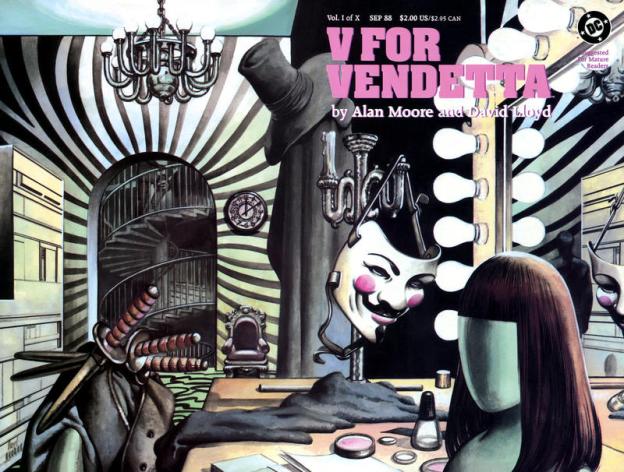

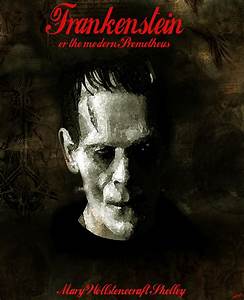
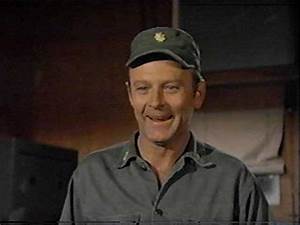


 Redeeming Pandora