Category Archives: Music Reviews

Forgotten Gems: Lean Into It

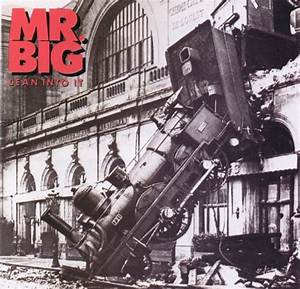
Lean Into It

In early 1991, one of the few long-lasting rock supergroups released its second album, Lean Into It.  That band’s name was (and still is today) Mr. Big.  What distinguishes Mr. Big from many bands of its ilk are quality lyrics and quality musicianship.  True, conflict and tensions saw one short-term personnel change in the late ’90s and one lengthy hiatus for most of the ’00s, but the original group is back together again (as of this writing) and still putting out more fine work.  Though they are much bigger in Japan than in the United States (a sad commentary on American standards), Mr. Big is still a good band worth knowing, even if one is not a fan of guitar shredding and power/hard rock: Mr. Big is hard to quantify, since its sounds and styles are often developing and shifting not just between albums but within albums as well.

As sturdy a powerhouse quartet as we may ever see, Mr. Big was first formed by its most famous member, bass player Billy Sheehan.  Well-renowned front man (especially on the Asian circuit) Eric Martin joined shortly thereafter; technical masters Paul Gilbert (guitar) and Pat Torpey (drums, after he finished touring with Robert Plant — you know you’re a great drummer if Neil Peart is impressed by your work) filled out the supergroup.

Their self-titled debut album did not fare too well in America, but their fame in Japan was almost instantaneous.  That changed somewhat, as indicated above, with their second album in 1991, Lean Into It, perhaps their tightest, most enjoyable album from beginning to end, and another forgotten gem of recent music history.

Electric Drills in Perfect Harmony

“Daddy, Brother, Lover, Little Boy” is one of those quintessential tongue-in-cheek hair band songs from the late ’80s-early ’90s.  True, it gets mildly saucy (just a smidge piquant) at the end of the second verse, but it is mediated well by metaphors and power chords.  Despite the lack of seriousness in the lyrical content, the song immediately demonstrates the band’s musical skills.  Though this opening number borders on thrashing guitar rock, it’s the fastest song on the album and not really representative of the album’s style — as mentioned above, the style changes frequently.  It is the fastest song on the album, but possibly not the loudest/heaviest.  Don’t let that dissuade you from the song or the album, though — Mr. Big is not a typical hair band (or post-hair hair band in their later oeuvre); though this song is intentionally lyrically shallow, this does not represent typical Lean Into It (or typical Mr. Big).  It is, as said just now, a humorous number designed more to show off their musicality (including Martin’s vocal oomph, if not his range).  The highlight is certainly the most unexpected moment of the song: even though the subtitle denotes this as “The Electric Drill Song,” it is not until the brief moment of the harmonious electric drills one understands why it has that title.  The feedback of the guitar at the beginning prestidigitates the audience only; the real thing comes as impressively and suddenly as the skill of the band as a whole.  All in all, it’s a great, energetic start to the album.

Unexpected Enjambment with Hard Rock Claps

“Alive and Kickin’” is the jauntiest number on the album, which is fitting, since the lyrics enjoin us to “keep [our] love alive and kickin’” throughout.  It’s a typical tale: a young guy and gal (experiencing mild regret — “tears in her eyes”) are running away from their families and starting a new life together.  Before we get too frustrated or judgmental, though, the girl writes in her goodbye letter to her mother she is running away with her love “Just like you did, momma.”  Since her mother did it, clearly it must be acceptable for her to do it; besides, they have “everything [they] own in the trunk and on the roof / And she’s got baby-sitting money in her pocket.”  They’ll be fine.  What could possibly go wrong when you are driven by love, doing it your way, “Pedal to the metal shooting down the highway”?

The title, and the way it’s sung throughout the song, leads the audience to think both verbs are equal: certainly the final line of the song supports such an interpretation.  The verbs, though, are not equal: primarily, we are to keep our love alive; secondarily, we are to keep our love first “kickin’ / Down the door” because “it’s what we’re livin’ for” and second “kickin’ / Down the walls” because “that’s when / Freedom calls.”  It’s impressive enjambment, especially since the subordination of the phrases following each “kickin’” is emphasized (in a roundabout fashion) by the diminished vocals: not every band can pull off changing the vocal dynamics partway through a major line of the chorus/song, but Eric Martin and Mr. Big do it well here.  Though the “kickin’ / Down the door (then, walls)” lines may seem akin to stereotypical “hair band” lyrics, the final reminder from Martin “kickin’ / Down the walls, that’s when / Freedom calls” is reminiscent of virtually every well-respected, highly-esteemed Romantic poem (and quite a few Symbolist poems, as well) in the last two hundred+ years — it’s much more meaningful than a cursory dismissal of their appearance/style allows.  The groovy hand claps accompanying the chorus toward the end of the song maintain the overall fun atmosphere of the album.  Though we would not advocate young children (even those “in love”) running away from home and going “Rockin’ side by side,” it’s still a good song to enjoy (especially for vicarious living).

Thirty Is the New Old

Eric Martin tells us “old movies” from the ’60s have a green tint to them in “Green-Tinted Sixties Mind” (considering it was around 1990 — or even earlier — when he wrote that, how would he feel twenty years later, now that he is old?).  Perhaps the televisions on the road, especially in Japan, gave him that impression.  Today, with the advent of high fidelity, the song may seem dated, but the older the song gets the less time really affects it, strangely enough: it attempts to capture a moment in or attitude of the ’60s, which it does fairly well, despite the at-times goofy lyrics.

The second verse contains some of the best lyrics on the album: “She keeps her memories locked away / But they are always escaping / Neglect won’t make them fade away” — good stuff (and it goes on from there).  The overall emphasis of the song comes in the second version of the chorus, belying the verses’ attempts to capture a moment of time: “Gotta face the day / There is no other way / To clear the fog inside your mind / Fill it up with dreams” (and et cetera).  Later we are told (it applies to the person first being directly addressed, but it can be extrapolated to all of us) you “Could’ve made it if you tried.”  If we want to improve our lives, we should be active about it.  This is certainly good advice as well; and, coupled with an appropriate Christian perspective on actively/expectantly waiting on/for the Lord, it is a fine song that transcends its own attempts to chronologically date/freeze itself.

Do Not Adjust Your CD Player

The first time I heard this song I thought my cd player had suddenly malfunctioned: this was possibly Mr. Big’s intention, but that seems more malicious than they otherwise appear to be.  We are told by various other sources the song’s title, “CDFF — Lucky This Time,” is so called because the CDFF does precisely what we just thought happened: the cd fast forwards through the song “Addicted to That Rush” from their debut album.  Why, I don’t know, but it does sound somewhat interesting (or “cool,” as the kids say).  The main song, written by friend of the band Jeff Paris, is superficially a typical hard rock love song, but it soon demonstrates its suitability in the Mr. Big oeuvre with its heart: the lyrics are not about “getting” lucky (as the kids also say) but about “being” lucky — this very may well be the relationship that works out for both of them, says the song.  Though she (and, presumably, he) has been hurt by other failed romances before and has thus built “a wall between [her] dreams and the madness,” and though he reaches out his hand to her and she responds by running and hiding away, if she heeds his advice (“Open your heart to mine”) she will not be sorry this time — she will be lucky this time.  (This is a dominant theme in Mr. Big’s optimistic output.)  The second verse is a shatteringly lucid portrayal of love in the modern world: “No guarantees when you risk your emotion / So you surrender and it all went astray / Bitter and hopeless in your cold isolation / But you my love won’t ever fade away.”  (I believe it avoids the triteness others suspect it falls into.)  The tone shifts to a very optimistic and encouraging rescue away from the despoiling consequences of isolation: continue to seek out love — preferably in the right location — for though the risk (and sometimes cost) is high, it is not nearly as costly as the alternative.

Not Your Zydeco Kind of Creole

“You get what you pay for / You get what you pray for” is the message of “Voodoo Kiss.”  This is a true story and well worth heeding.  This song is perhaps the saltiest on the album, not because the lyrics are bad, but because it implies a few situations in which most decent citizens probably would not want to find themselves (“A touch of the sweet and nasty” indeed).  This is the dark and seamy side of Creole Cajun territory, in contrast to the pleasant and socially acceptable side from Graceland.  Most people will want to eschew such territory (all people should, but some people — those in the kingdom of darkness — delight in those places/things).  Because it is genuinely talking about some dark and dangerous activities, some people might find the tone of the song too light to be acceptable, as if the spryness of the number trivializes the evil/inappropriateness being recounted here.  That is certainly a fair point.  The same could be made for the movie version of Live and Let Die, in which Roger Moore’s James Bond does not take the voodoo accoutrements too seriously (in contrast to Ian Fleming’s novel, in which Bond takes most of it quite seriously).  We should, indeed, never delight in representations of what is sinister or evil, especially ones that trivialize or denigrate their reality or seriousness (as has been addressed in earlier Redeeming Pandora articles).  However, we should not preclude the possibility Eric Martin is creating a persona for this song: instead of intimating he himself (or any otherwise fine upstanding citizen) has had and is currently craving such sordid and mystical experiences masquerading as sensually salubrious situations, he is, rather, telling a rhetorically distant story from the perspective of a persona, and thus indirectly didacticizing about the true dangers concomitant with such a deleterious lifestyle or habit.  As fun as the song makes it sound, we are, in fact, being warned against it, in much the same way C.S. Lewis styled The Screwtape Letters.  I tend to favor the later interpretation, though I do not seek this song out for repeated listenings separate from entire album digestments.

The Way it Ought to Be
As great as the final song is, “Never Say Never” has possibly become my favorite song on the album.  It is the best-paced song of the bunch — not as frenetic as “Daddy, Brother, Lover, Little Boy,” not as off-kilter as “Voodoo Kiss” or “Road to Ruin,” not as jaunty as “Alive and Kickin’” — all good songs, of course, but “Never Say Never” achieves the best driving tempo for the message involved.  The opening few measures re-hone the hard edge of the album without devolving into overly raucous noise and cacophony.  Some may object to the lyrics of this song not because they are inappropriate but because they may come across as trite and typical for “love songs from guys with big hair.”  Admittedly, the song utilizes many of the popular tropes of interpersonal communication popularized in ballads and whatnot from time immemorial — what’s wrong with that?  Nothing.  The song uses what is familiar in a pleasing, satisfying way; sometimes, that’s exactly what we want from a song, especially one so optimistic as this.  Additionally, it moves significantly beyond merely the ordinary with the harder edge from the rhythm section and Eric Martin’s vocalizations.  Then, the end: the powerful ending of univocal “oohs,” which does not sound nearly as impressive here as it comes through in the song, is a surprisingly energizing conclusion to the fast-paced (but not too fast-paced) rock song, making it from beginning to end one of the better constructed rock songs of the ’90s, if not of all time.

One Part Sour, Two Parts Sweet

As its title indicates, “Just Take My Heart” is the sad break-up song of the album, typical of that sub-genre of hard rock to which Mr. Big sometimes ascribes (but more often transcends, as this article has attempted to posit).  Like most other songs on Lean Into It, I would suggest the combination of soulful guitar work and sincere lyrical presentation surpasses the typical: “Where is our yesterday / You and I could use it right now” — golden.  Certainly we are not in favor of broken relationships, or ones in which either or both might find themselves unable to sleep late at night “Wondering why so many questions have no answers” or “searching for the reason why we went wrong” — but, sometimes, listening to and living vicariously through such pathos in a quality song like this helps us better frame our own experiences and self-awareness, assisting our own introspection and relationship assessments.  We all get in that mood, even if our lives are going fairly well on the whole, in which we want to listen to a sad song (just as we find ourselves at times watching a sad movie or perhaps reading a tragic classical or Shakespearean play).  “Just take my heart when you go / I don’t have a need for it anymore / I’ll always love you, but you’re too hard to hold / Just take my heart when you go” — with a chorus like that, you know it will get the job done.  Don’t overindulge in the sorrow, of course, but we could all certainly benefit (in that sort of cathartic way) from adding “Never Say Never” to the short list of such quality experiences (or simply enjoying the musicality of it in its own right, whichever).

Picture Perfect, Song Imperfect

“My Kinda Woman” is a decent number, sure.  It starts out quite well, nice and strong, but then it fades and sort of hangs on for a while.  Let’s be honest, every album has its weak link: “Baby Be Mine,” “Oh Daddy,” “Red Hill Mining Town” (and calling these songs “weak links” is admittedly a bit of a stretch, since they come from close to perfect albums).  “My Kinda Woman” is Lean Into It’s weak link.  Let’s not get upset: I’m not declaring Lean Into It is in the same league as Thriller, Rumours, and The Joshua Tree.  It’s a very good album, true, and a forgotten gem from the early ’90s, but I’m not saying that.  All I’m saying is “My Kinda Woman” is, according to my sound judgment, the weakest song on the album.  It’s not terrible — as mentioned above, the opening bars are good and strong.  The message is also not terrible: a guy laments a lost love who, unfortunately for him, was a silver screen actress from 1946.  The song is not explicit as to which one, but certainly many potential candidates exist: Rosalind Russell, Rita Hayworth, Myrna Loy, Lana Turner, Jane Wyman, Gene Tierney, Ingrid Bergman, Olivia de Havilland, Dorothy Lamour, Judy Garland, Anne Baxter, Donna Reed, Ava Gardner, Jean Simmons, Lillian Gish, Irene Dunne, Jennifer Jones, Gina Lollabrigida, Marjorie Reynolds, Loretta Young — no wonder the singer wants to go back to that time!  True, not all of them played femme fatales, but so what?  Now that I think about it, the singer actually has a really good idea considering the age of great movies (true, we’d have to endure the ’60s again, I suppose — maybe we should just get and enjoy the dvds).  Feel free to disagree with me (about the stars of 1946, my estimation of “My Kinda Woman” as the weakest track on the album, or the wink leaks of those aforementioned albums) once you listen to the album — we at Redeeming Pandora are always open to reproof, emendation, and/or positive reinforcement from our fan base.

A Little Too Saucy in Oklahoma City

Well … actually, this (“A Little Too Loose”) might be the sauciest song on the album, again, fortunately, mediated somewhat through metaphors and other figures of thought and speech.  Not that I’m excusing this song or its message — though at least the message is another warning against such life decisions.  If you ever become a famous rock ’n’ roller and tour long and hard on the road, don’t betray the girl or guy you have back home.  The song is salvaged, at least in a musical sense, by the variety of musical tempos and sections.  That the most enjoyable musical section of this song accompanies the sauciest lyrics of the song … well, that’s just one of those things.  It can’t be helped, really.

The Road More Travelled

The penultimate song on this forgotten gem of an album, “Road to Ruin,” is a more socially-acceptable version of the previous song.  The message is essentially the same, completing the trilogy of “don’t do this yourself” songs about the dangers and disastrous consequences of fraternizing with debauched women.  It’s the most rock-edged and rock-tempoed song of the trilogy, as evidenced by the musical accompaniment once it gets started.  The near-a cappella introduction is another fresh entry on the album, belying any notion all Mr. Big songs are alike.  Once the rhythm section is fully engaged in the song, it takes off at a good pace, complementing the straightforward (yet still highly figurative) lyrics appropriately.  It probably won’t be your favorite track on the album, but it most likely won’t be your least favorite (not the greatest praise for the song, true, but it’s one of those kind songs: better than average but not superlative).  Again, if you disagree, all to the good.

This is Where We Came In

“To Be With You,” the closing track on the album, is most likely where you first (and perhaps only) experienced the musical styling of Mr. Big.  Such was my experience: I heard “To Be With You” on the radio, thought it was a very good (perhaps even great) song, and acquired the album (by asking my dad to buy it for me, along with AC/DC’s Back in Black, the first two cds I ever owned, actually).  Though I believe I have come to enjoy “Never Say Never” even more (as indicated above), this is still a good and worthy candidate for everyone’s favorite Mr. Big song.  It’s not one of those “famous for being famous” things people sometimes rebel against (like La Gioconda and Hamlet sometimes are considered, erroneously by feckless wastrels) — it truly deserves to be enjoyed and appreciated.  Admittedly, the line “Waited on a line of greens and blues” is thoroughly inscrutable and most likely intentionally inane, but that’s fine.  The rest of it congeals (in a good way) into a worthy hit song.  Some criticism takes the tack the song is about an overly-dated girl being sought after by a desperately patient (and inexperienced) guy who doesn’t fully understand love (“A broken heart can’t be that bad”) — this is a cynical, malevolent interpretation worth no further attention.  As with many songs written for fun and lighthearted delight, the sentiment behind the lyrics is more important than the diction and denotations utilized.  The fact a group of hard-edged long-haired rock ’n’ rollers can also enjoy playing this laid back acoustic ditty should convince us all of its truth and beauty.  Enjoy.  Again and again.

Hard Rock Zero (Caffeine Still Included)

Mr. Big is a good band to enjoy for those interested in harder-edged music that does not indulge in grotesque display or cacophonous “musical” demonstration.  Some may find it still too rough, but underneath that rough exterior is a gooey, nougatey goodness of genuine heart and musicality.  They are worth knowing, and their second album, Lean Into It, is a great place to start — though it is their best, most replete album, it can also be a viable starting point for another new favored band.  Get the whole set and, again, enjoy.
Forgotten Gems: Graceland

Christopher Rush

Forgotten Gems

After delighting ourselves so long last year in our trek through the Gabriel years of Genesis, the time has come to survey a more diverse field by recalling to mind the merits of many worthwhile and enjoyable albums that have, for no good or explicable reason, fallen out of contemporary consciousness and appreciation.  Perhaps it is because of the current fascination with whatever is (pretending to be) new and now, though that argument is used with every generation as its tastes and fads begin to override the tastes and fads of the previous generation.  Whatever the cause, these albums are not as appreciated and enjoyed as much as they should be, so we shall attempt to rectify that here.  I make no promises the format you see depicted here will be followed throughout the entirety of the series: let’s just enjoy.

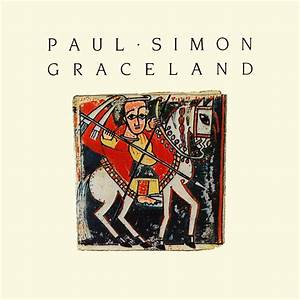
Graceland

Paul Simon’s 1986 release is his most successful album since his post-Garfunkel, post-’70s initial solo success.  Not to disparage the successes of Rhythm of the Saints and So Beautiful or So What, Graceland is the apex of Simon’s late career.  Utilizing several musical styles, Graceland is also noted for bringing to mainstream American popularity the musical stylings of Ladysmith Black Mambazo known as isicathamiya, despite the tensions of South African apartheid at the time.

An inexplicable backlash against the album has arisen recently, though none of the sources for it are credible or worth any investment of our time.  Admittedly, some call that a “blanket statement,” but it is accurate enough for our purposes.  Others may consider the album too atypical to qualify as “real” Paul Simon, but considering Paul Simon is such a talented, diverse artist who continually reinvents himself and his style(s), calling Graceland a commercial sell-out or other such nonsense demonstrates a misunderstanding both of Simon as an artist and what the album intrinsically is: a successful amalgam of diverse world music and attitudes.  In light of the 25th anniversary of the album (and a special tour upon which Simon soon plans to embark, recently announced during the writing of this article), let us reminisce (or experience for the first time) about that somewhat-forgotten gem.

“These Are the Days of Miracle and Wonder”

“The Boy in the Bubble” sets the tone for the world music kaleidoscope of Graceland.  The mixture of instruments and meter is unlike most mainstream albums of the time, quite unlike the popular synthesizer strains dominating the scene.  The despondent lyrics, though, betray the bouncy, up-tempo rhythms.  The comforting message of the chorus (“And don’t cry baby, don’t cry / Don’t cry”) is not substantiated by any true source of hope.  We are not certain where the miracles and wonders come from, especially in contrast to the pervasive militaristic and technological destructions abounding.  Even the celestial natural world, the signs of the stars, is just a series of constellations “dying in the corner of the sky.”  Perhaps the most frightening aspect of the song is the prognostication of the digital revolution: “Staccato signals of constant information,” ten years before the mainstream popularization of the Internet, fifteen-some years before “Information Technology” majors, and the downloading overload of today.  Even so, Simon insists we be comforted during these uncertain times.  Miracles and wonders exist — don’t cry.  It’s easy to listen to him, especially since it is good advice; of course, coupled with a Christian understanding of hope, faith, and reality, it becomes great advice.

“We all will be received / In Graceland”

The eponymous second track continues the up-tempo movement of the album paradoxically supporting lyrics of loss, heartache, and discontentment.  The most noted element of the song is Simon’s obvious dual-layering of the lyrics: Graceland is, of course, at once the final resting place of Elvis Presley and a kind of kenning for Heaven (the propinquity of the poor and pilgrims also on a journey to Graceland makes this dualism self-evident).  Various sources remind us Simon’s short-lived marriage to Carrie Fisher is the main primary inspiration for the lyrics of this song, the most heartrending lines being “losing love / Is like a window in your heart / Everybody sees you’re blown apart / Everybody sees (later, feels) the wind blow.”  Divorce, no matter how amicable, is an irreparable rending of hearts and lives, and it’s never just about the two people most directly involved.  And no matter how jaunty the musical accompaniment, it’s always “ghosts and empty sockets.”  Unlike the first track, though, Simon has a substantial locus for possible restoration (if not mild amelioration): not only will he and his son be received in Graceland, but all of us (Christians) will be received in Graceland (the one not in Tennessee).  His uncertainty whether he’ll have to “defend / Every love, every ending” or if he can leave the past where it is because “there’s no obligations now,” the most ambiguous lines in the song, come too late to be too central to the thought.  The point is restoration and resolution are attainable (but not in the Mississippi delta).

“Who am I / To blow against the wind”

After the first two serious numbers covertly couched under sprightly melodies, Simon changes the lyrical pace drastically in “I Know What I Know” to what could best be described as the “sherry party” mentality and dialogue Harry Blamires excoriates in The Christian Mind.  The main conflict of individuality struggling against inane conformity and social scene status is self-explanatory throughout the three verses and chorus.  The whooping-call (and other vocal sounds) outro is confusingly appropriate for the song.  The flowing lyrical content, especially the style and ease with which Simon sings this number, makes it, in an odd way, almost quintessential Paul Simon: there is nothing there, but he makes it something deep and casual and impressive (in his innate vocal way as only he can).

“Breakdowns come / And breakdowns go”

Simon continues the transition away from profundity in the human condition with a song more in the declamation mode (à la Rex Harrison) than actual singing throughout “Gumboots.”  This is appropriate, though, since the song is another series of brief dialogue interchanges supplemented by near-philosophical introspective self-assessments by the narrator of the song.  The musical accompaniment is supported by the actual gumboot style of dancing (isicathulo) from South Africa, similarly appropriate considering the song itself as well as the overall purposes of the album.  This, then, makes one pause: considering the gumboots dance itself is in part a subversive rebellion against colonial suppression in South Africa, Simon, then, may be meaning more than he lets on with the seemingly-simple lyrics.  “You don’t feel you could love me but I feel you could” must be some secret insight into the phenomenological substructure of metaphysical reality.  Though, considering how intelligent Simon is, he probably knows we would assume he meant something of that nature with this song, and thus would counter with actually unassuming and genuinely unpretentious lyrics.  But, knowing that we would know that he knows that we know that he knows….

“Ta na na na / Ta na na na na”

“Diamonds on the Soles of Her Shoes” is a bit tricky, at least for anyone not thoroughly familiar with the Zulu language and local customs of South African life, which describes me well.  Cursory research indicates possibly the opening Zulu preface is a lighthearted introduction (matching the musical beat correctly this time) about love (or something like it, perhaps) approaching along with the approaching girls.  We see how it happens, they say, too.  Simon continues the thought in English, focusing on one rich girl who “don’t try to hide it,” prominently displaying her diamonds on the soles of her shoes (one of the key tensions of the song, since if she were flaunting her wealth it makes little sense it would be on the part of her attire no one would really ever see unless briefly while she is in motion).

Her travelling companion is, in contrast, a poor boy “[e]mpty as a pocket,” a great line, “Empty as a pocket with nothing to lose.”  Despite her apparent and flaunted wealth, she is suffering from some sort of depression (“Walking blues”) and loneliness (her poor boyfriend has been “taken [her] for granted” because of her wealth).  Some interpreters believe she is actually the intellectually honest member of the pair, since she is not really flaunting her wealth in a braggadocious way, just as a simple expression of who she is and her financial status.  He, however, is the superficial one only with her because she has wealth and merely wants to be seen with a wealthy companion.  He is the one who feels compelled “To compensate for his ordinary shoes” with after-shave and a new shirt.  Their internal sentiments and soul-dispositions are fundamentally misaligned, as evidenced by the most ambiguous English lines of the song “She makes the sign of a teaspoon / He makes the sign of a wave.”  Many theories exist behind the meaning of these strange symbols; the most sensible is the “sign of a teaspoon” is a taxi direction indicating one wants to go downtown; the “sign of the wave” is the opposite direction toward the coast — thus, the couple are headed in two different directions in life.

Somehow, though, they get together and both end up with diamonds on the soles of their shoes (even though she wanted to go dancing but they ended up “sleeping / In a doorway / By the bodegas and the lights on / Upper Broadway”).  Most likely she came down to his level, like all Shakespearean heroines eventually must in the end.  Simon’s/the narrator’s response to this indicates the progression of love in a positive way, at least.  Before, no one really knew what he was talking about, but now everybody here knows what he is talking about: he’s talking about diamonds.  Now, he, too, has diamonds on the soles of his shoes.  Apparently, we should all embrace this sort of carefree life of love and acquiesce — be who you are, not who you ought to be (there is some Shakespearean truth in that, too, but it must also be tempered with a Christian perspective — and, if done accurately that way, it also becomes genuinely excellent advice).

“I want a shot at redemption”

Perhaps best known for the Chevy Chase-driven music video, “You Can Call Me Al” is the most big-band sounding song on the album.  The beat and palindromic slap bass solo especially always reminds me of Seinfeld (which is appropriate, since the show was, like the album, superficially about nothing yet always doing more than just being mindless entertainment).  The suspicious nature of Simon’s lyrical self-effacing pseudo-inanity reaches the album’s high-water mark here as well.  Combining a mid-life crisis of introspection with more “sherry party” misidentifications (though, considering it is Los Angeles, probably something a bit stronger than sherry), the song is mostly self-explanatory despite the repetitious attempts at confusing banality (though these are also for musical emphasis).

The most intriguing part is the final verse:

A man walks down the street,

It’s a street in a strange world.

Maybe it’s the Third World.

Maybe it’s his first time around.

He doesn’t speak the language,

He holds no currency.

He is a foreign man,

He is surrounded by the sound, sound …

Cattle in the marketplace.

Scatterlings and orphanages.

He looks around, around …

He sees angels in the architecture,

Spinning in infinity,

He says, “Amen!” and “Hallelujah!”

The verse is a microcosm of the album as a whole, as it mixes in seemingly uncertain yet successful (almost miraculous) ways the cultural mainstream and ethnically diverse.  In the Third World, we, who are acculturated to, well, Western Culture, are the foreigners who don’t speak the language and have no currency and easily get lost walking down the streets (most likely because they have no names).  This is to our detriment, though; we should be more familiar with isicathamiya and isicathulo; we should realize as this stranger in a strange land soon does God operates in other parts of the world as well — there are “angels in the architecture” outside of D.C. and the Vatican, and the sooner we realize that we, too, will be saying “Amen!” and “Hallelujah!”  I do not read any satire in this final verse.  Even if it is the same man in all verses, who is clearly going through a mid-life existential crisis and, like Odysseus during his wanderings, is engaging in morally suspect activities, the fact he comes to some genuinely true revelations at the end and, perhaps, a more sincere realization of the need for and source of the “shot at redemption” is not diminished by that (nor am I encouraging it as an acceptable road to travel, of course, but if the destination is correct, that should be hurrahed).

“This is the story of how we begin to remember”

“Under African Skies” was probably my least favorite track growing up, but now that I am older and, hopefully, somewhat more mature, I realize now this track is likely the most important song on the album.  Some may disagree, in part since it is somewhat buried halfway through the second side (or second half of the cd) of the album.  I used to think the Joseph of the song was the Joseph, i.e., Mary’s husband who went to Bethlehem for Augustus’ census, but that is probably inaccurate.  The essential truths of the song, that we are connected and all, in fact, sons of Abraham, are incontrovertible and need no further comment.  The mythic emphasis on rhythm and memory and love and community make this a much better song than I used to think it was, since it is one of the few songs to take itself seriously throughout its almost too-short duration.

“Somebody cry, ‘why, why, why?’”

Again, my ignorance of the linguistic intricacies of the Zulu language bows to various sources: the introduction denotes something to the effect of “On the cliffs — hey mister, we sleep on the cliffs.”  This explains why the first English section of the song repeats the eponymous notion of the singers being “homeless” — and even the moon is without a home, since it sleeps on the midnight lake.  The second Zulu section of the number reads, effectively, “My heart, my heart, my heart — the cold has already killed me.”  The second English passage, “Strong wind destroy our home / Many dead, tonight it could be you,” is, too, self-explanatory.  The next Zulu section (after the likewise self-explanatory “somebody say/sing/cry” interlude) shifts the tone and mood quite a bit (for those who understand Zulu) — no longer is the lyric a melancholy lament but now is a joyful triumph: “We are the champions/winners/victors.  We defeated the whole nation.  We were victorious in England.”  One gets the sense of “he who always wins” in this section, not just a past victory but now a present state of success, supremacy, and, perhaps, freedom (depending on how political the song is).  The final epilogue is a similar expression of newfound success that must be shared and celebrated: Kuluman / Kulumani, kulumani sizwei ≈ “Talk, talk (plural indicating more than two people) so we can hear.” Singenze njani ≈ “What can we do?”  Bayajabula abasithandayo / Ho ≈ “They are happy/rejoicing, those that love us.”  No doubt this barely captures the essence of what this song is about, and certainly a dry, faulty translation of the language comes nowhere close to capturing the exquisite experience of this song.  Musically, it is a great song, even if one does not know what the words mean.  This little paragraph does not do the number any version of justice, so go listen to this song yourself, especially if you haven’t yet heard any of this album.  You will be glad you did.

“I don’t want no part of this crazy love”

The album starts to return to its beginnings with “Crazy Love, Vol. II,” the bitterest song on the album (again mismatched with the positive music).  The characters exemplify the lack of gravitas in this one immediately.  The song may be working on multiple levels like so many of the other selections on this album, but the pervasive apathy and rejection of discourse, relationship, love, and affection throughout the song make any attempt at finding another level or subtext for the lyrics daunting and ultimately fruitless.  If the lyrics are about contemporary society (and I see no reason why they shouldn’t be), the overt contempt for listless culture and its unwillingness to commit to anything (marriage, love, personal health, even communication and opinion-holding at all) come through essentially from the downbeat, hover around for four cumbersome minutes, and finally fade away.  The music of the chorus attempts to vitalize the song/society, but all momentum is drained by the verses.  I realize this sounds like I think it’s a bad song — I don’t mean to imply that, so please don’t infer that.  Clearly Simon is making divorce, apathy, and the pervasive melancholy of the evening news out to be bad things, and the song as a whole as a clarion call for us to change our own existences is a true message and worth heeding — but it’s almost too lethargic a clarion call to fully reach its potential.  Simon’s musical diversity and ability shine through, though, despite this being the weakest link on the album (the overriding tone is perhaps its deepest flaw; this, and not the dominance of techno beats, is also why Pop is U2’s weakest album — a story for another time), and it really shouldn’t be skipped over during any listen-through of the album as a whole.

“If that’s my prayer book / Lord let us pray”

“That Was Your Mother” is the successful version of what “Crazy Love, Vol. II” failed to be: a peppy, satirical commentary on contemporary mores, seasoned with just enough homage to regional American music to avoid the (unfounded and erroneous) accusations of tendentious pretention Rattle and Hum suffered two years later.

Keeping the narrator straight in this one is likewise a bit tricky, since the opening verses intimate the speaker/singer (again Simon is declaiming more than singing here) is a father talking to his son in a slightly repulsively antagonistic way (“You are the burden of my generation / I sure do love you / But let’s get that straight” — is that really love?).  He tells the boy about the good times back before he was married and a father (“When life was great”) — not the nicest thing for a father to tell his son.  The father, a travelling salesman proving all the limericks and folktales about them true, prowls the street, eyeing the Louisiana “Cajun girls / Dancing to zydeco.”

Continuing the world music panoply of the album, the musical accompaniment of this song indeed utilizes a zydeco-like sound.  For those who don’t know, zydeco is a French Creole sound driven by accordion and washboard, often up-tempo (like this number), with a smattering of blues and rhythm & blues.  Simon even namedrops the “King of the Bayou,” Clifton Chenier, whose shadow dominated the scene (and still may, as far as I know, even though Chenier died about a year after Graceland was released).

The man gets what he wants: a beautiful young dancing girl comes up to him, they go out for some red wine and dancing, and eventually they get married and have the son.  The tricky part comes in the final stanza: I take it the new narrator is the boy, now grown up — and he is doing exactly what his father did years before: “standing on the corner of Lafayette / Across the street from The Public / Heading down to the Lone Star Café / Maybe get a little conversation / Drink a little red wine / Standing in the shadow of Clifton Chenier / Dancing the night away.”  Either the father’s antagonism has not meant much to him and he is off living his own life, or the antagonism has stuck with him and he has become a mirror image of his father — but again, the musical accompaniment is too celebratory for the song to truly indulge in excessive negativity and unbreakable filial patterns of despondency.  Simon is not that hypocritical.  The joyous zydeco beats bring the song and the album to an enjoyable and satisfactory finish.  Until …

“That’s why we must learn to live alone”

Graceland is one of those odd double-ending albums, like Līve’s Throwing Copper and The Black Crowes’ Shake Your Money Maker.  “All Around the World or The Myth of Fingerprints” is somewhat anti-climactic lyrically, since it returns to more of the pessimism that flawed “Crazy Love, Vol. II.,” but the music returns the sounds to the more “world music” focus dominating the whole album.  The pessimism is not as strong here, but the message is one of subtle indirection: the former talk-show host (emphasis on “former”) has made a critical error and declared fingerprints are some sort of myth (they are all the same).  This is an utterly bemusing way to end the album, since the album seems to be showcasing and highlighting various acts and genres from all around the world (from the Everly Brothers to Linda Ronstadt to Ladysmith Black Mambazo) with the intent of showing us that though we are all superficially different, we should embrace our differences and see the unity and importance of all of us as significant human beings with similar concerns, hopes, and dreams (though it never gets as sappy as this line makes it sound).  Why Simon ends with the (insincere) line “that’s why we must learn to live alone” from the perspective of the washed-up former talk-show host who mistakenly thought fingerprints are myths is typical mature Simon: inscrutability.  (From a Christian perspective, though, there is some truth in it — though we are made for community, genuine leisure, as we know, is about our individual, solitary, intellectual pursuit of God and truth, worshipping Him alone.  We must learn to worship God by ourselves before we can accurately worship Him corporately.)

The slightly more comprehensible middle verse, about the former army post long-since abandoned in the Indian Ocean, adds a covert cynicism to this closing number: wars are fought because people refuse to understand we are more alike than different, and if we realize and accept this, we can spend our energies celebrating mankind and its diversities instead of slaughtering each other over them.  Like Mark Antony saying “Brutus is an honorable man,” we know clearly when Simon sings “there’s no doubt about it,” we should believe the opposite of what comes next.  We should not learn to live alone: we should learn to live together (though, as just mentioned above, we must learn how to live both ways as Christians).  It’s an odd way to end the album, with more misdirection than is present in the rest of the songs, but it is musically and thematically a fitting conclusion to a great album, one of the forgotten gems of recent musical history.

Listen to it and enjoy it.  Trust me: you’ll like it.

How the Beatles Changed Music

Connor Shanley

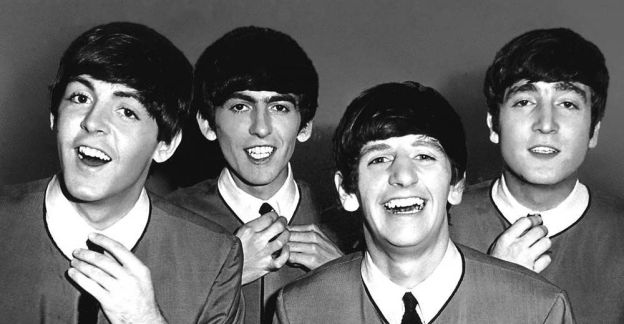
There are certain bands throughout music that impacted music in such a way they cannot be ignored.  Nirvana created “grunge” and was the voice of a whole generation of angry teenagers; Elvis Presley combined blues and country to make what we now know as rock and roll.  Everyone knows who the Beatles are; everyone has at some point in their life heard a Beatles song.  Many people don’t see the Beatles’ true impact on music, however; many people think the Beatles are overrated and over played.  The Beatles are the most influential band in the past century; their influence is so felt in music most people wouldn’t even noticed it, and their influence is so ingrained in modern day music and fashion people just overlook them.  Something people can’t deny though is that for better or worse the Beatles changed music.  Think: a band that was only together from 1962-1970, only six years, and they’re the bestselling band in the history of rock and roll.

The Beatles started in 1955 when Paul McCartney joined John Lennon’s band “The Quarrymen.”  A year later a thirteen-year-old guitar player named George Harrison also joined the band.  In 1960, Peter Best became their drummer, and they renamed the band “The Silver Beatles.”  In 1961, “The Silver Beatles,” now just shortened to “The Beatles,” were making their mark playing in clubs in Hamburg, Germany.  They would return to Liverpool in late 1961; here they began to attract a big following.

When the Beatles returned home and started playing at the Cavern Club, they made a very big impression on Brian Epstein.  Epstein was a young manager who wanted to record a few demos with the Beatles.  Epstein got them into the recording studio but not without one big change, their drummer.  The Beatles were no longer impressed with Peter Best as a drummer; Epstein simply voiced the Beatles’ feelings, and in 1962 Peter Best was kicked out of the Beatles.  The drummer they got to replace Best was the only professional musician prior to being with the Beatles.  His name was Richard Starkey, but in his year of on-stage performance, he earned the nick-name “Ringo Starr.”  “Ringo” was because he liked to wear a lot of rings on both hands, and “Starr” was short for “Starkey.”

In September 1962, the Beatles released their first single, “Love Me Do/P.S. I Love You.”  Their first single was not a great success; it barely broke onto the Britain top 20.  In early 1963, the Beatles released their second single titled after their debut LP, “Please Please Me.”  The LP would be at the top of British music charts for an amazing 30 weeks.  In December of 1963, the Beatles released their first U.S. single, “I Want to Hold Your Hand.”  The single was instantly at the top of the charts in the U.S.  Then they were asked to perform on the Ed Sullivan Show in February of 1964.  After their U.S. tv debut, the Beatles would be a hit like no other band in history.  After the Ed Sullivan Show, the Beatles had the top five singles in the U.S. and the top two albums.

The Beatles were now making movies; their infamous “mop top” haircuts were seen on most young men in the U.S.  In 1964, Beatles merchandise outsold Disney.  The impact the Beatles had on pop culture was clear.  The Beatles brought a very upbeat and happy sound to rock and roll.  In 1965, their image would change.  With the release of their album Rubber Soul, the Beatles did away with their “good boy” image, and their sound also started to change.  Instead of just making upbeat pop, the Beatles started to make more deep meaningful tracks such as “In My Life” and “Norwegian Wood.”  “Norwegian Wood” was the first top ten hit to feature a sitar.

Rubber Soul was its own unique musical experience, and each song showed how the Beatles were changing.  The Beatles began to stray away from their upbeat pop sound.  The Beatles began to explore more influences from the east, and they began to get into eastern mysticism.  The next album after Rubber Soul was Revolver, the album featured the songs “Eleanor Rigby” and “Yellow Submarine.”  The album revolutionized the use of background instrumentation apart from just guitar, bass, and drums in popular music.  The Beatles’ changing style was greatly helped by their producer George Martin, who encouraged the Beatles to experiment.

After Revolver was Sgt. Pepper’s Lonely Hearts Club Band; the album started with a concept by George Martin of two separate tracks working together.  This can be seen in two songs on the album, “Sgt. Pepper’s Lonely Hearts Club Band/With a Little Help from My Friends” and “A Day in the Life.”  The album also showed the contrasting styles of John Lennon and Paul McCartney.  In “A Day in the Life” was a competition between Paul and John to see who could write a better song.  This sort of competition began to drive Paul and John apart; that, combined with the fact their girlfriends were constantly fighting, began to end the Beatles.

The Beatles’ next album was Magical Mystery Tour, which, when it was released, was a huge flop.  The music critics at the time complained the album had too much psychedelic influence; this can be seen in the only top ten hit of the album “I am the Walrus.”  The Beatles even admitted they didn’t put their best effort into the album, which was a soundtrack to a tv movie; the movie was the least successful of the four movies the Beatles starred in.

The next album was a mix of the Beatles’ psychedelic influences and their old pop sound; the album released in 1968 was simply titled The Beatles LP, but it came to be more commonly known as the White Album.  The White Album was the Beatles’ only double album, and it was recorded during a time of great turmoil after a controversial visit with the Maharishi in India.  The album featured the single “Helter Skelter,” which in Ozzy Osborn’s words, “was the first metal song ever made and my greatest inspiration.”  The Beatles were starting to get a bit more into hard rock; this was mainly spurred on by Paul.

There were two albums after the White Album; Let it Be and Abbey RoadLet it Be was recorded first, but the producer George Martin decided to extend the release date because he felt it needed more work.  The Beatles then started to work on their last studio album, Abbey Road.  The album continued a lot of the same ideas Sgt. Pepper’s Lonely Hearts Club Band had.  Both albums are considered to be concept albums, which means songs could be mixed together and could be played one after the other without any pause in between.  The best example of this is the last five songs on Abbey Road, known as “The Abbey Road Medley.”  The last five songs are all really one song.  The last song ever recorded by the Beatles in studio was “I Want You/She’s so Heavy.”  Four days after the recording was finished, John announced to the band he was leaving; he agreed he wouldn’t make a public announcement until certain legal issues with the record company were resolved.  Abbey Road came out in September, 1969.  John Lennon announced publically he was leaving the band in December of 1969.  Let it Be then came out in May of 1970, and Paul released a statement explaining reasons for the break with the album’s release.

It was the end of the Beatles, but what they accomplished in only seven years of making albums is remarkable.  They brought the idea of the concept album to the forefront of music.  They changed pop forever; pop no longer had to be upbeat guitar riffs and songs about girls.  Pop was deeper now; it can be seen in their last single, “Let it Be.”  The Beatles forever changed how music was made and how the public perceived music.  They influenced generations of musician after them from Ozzy Osborn to Michael Jackson.  Without the Beatles it is a fact music as we know it today would not exist.  They changed music forever, and no band after has had as great an impact on music and pop culture as the Beatles.

Bibliography

“Beatles Bio.” Keno.org. Keno, 1999. Web. 27 Sept. 2011.

Costello, Elvis. “Rolling Stone: The Beatles’ 100 Greatest Songs.” New York, NY: Rolling Stone, 2010. Print.

Osborn, Ozzy. “VH1 Special to Take a Look at ‘100 Greatest Artists of All Time.’” Entertainment Close-up. 1 Sept. 2010. Print.

The Rise of Electronic Music

Connor Shanley

Music: it is known as the universal language.  All cultures have some form of music, and just as cultures change, so does music.  Music is a building that will never be completed; each trend and fad contributes to the next.  Think that if some primitive man didn’t think to tighten an animal skin over a circular piece of wood, we would never have the snare, tom, and bass drums we have today.  Every musician throughout all of history has been influenced by someone else; Mozart to Lil’ Wayne have/had an influence.  This is even true today with the rise of electronic music such as dubstep, techno, dance hall, etc.  It is true the instruments for these genres to even exist are somewhat recent inventions, but nonetheless their roots can be clearly traced.  To truly understand a genre of music or an artist, one must trace their influence.

We now stand on the verge of a new musical era; the days of rock and hip-hop dominating the radio are coming to an end.  Now there are all sorts of new kinds of music; techno has been sweeping Europe for the past decade, and now dubstep looks to take over America.  Where did these kinds of music come from, though?  The recent rage over electronic music can be easily traced.  The first major event to get the ball rolling was the invention of the electric guitar.

In 1931, Adolph Rickenbacker introduced the first patent to make a guitar that could be played through an electric amplifier.  This invention was later improved with a solid body by Gibson Les Paul and Leo Fender (who actually came up with the idea first is widely debated) in 1941.  The invention of the electric guitar was the first step in bring electronics into music.  The next invention was similar to the guitar: the electric bass guitar.  The electric bass was invented in 1947 by Leo Fender (that’s not debated).  The invention of both these instruments may not seem important to modern day electronic music, but many inventions for the recording of these instrument are crucial to the start of electronic music.  These inventions also got many music engineers and producers to start exploring other ways to make more instruments electronic.

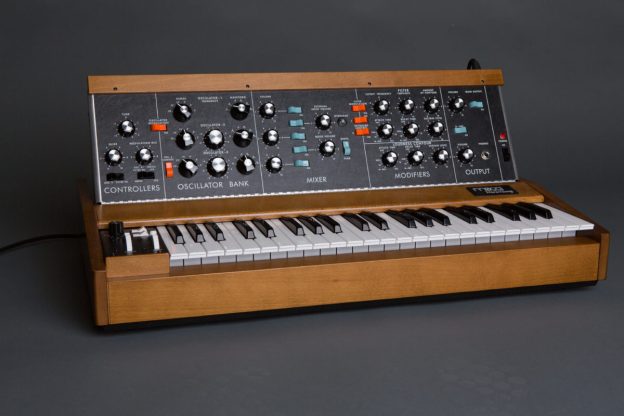
The next invention to start the electronic era is obvious.  In the 1940s, many people made claims to its invention including the Russian government; no one can say for certain when it was introduced or who made it, but in the 1940s the synthesizer was made.  When the synthesizer first came out, most people didn’t even think to put it in music.  The original synthesizer was made more for scientific experiments in order to understand sound waves rather than used for music.  Then in 1958, Dr. Robert Moog, an American scientist, made some of his own modifications to the original synthesizer; he made it more “musically usable.”  Dr. Moog added smoother tones and more keys to make it easy to play.

Dr. Moog’s invention was not well received by most musicians.  It would take years for his instrument to become more popular.  In July 1965, a major event happened in the history of electronic music.  A young graduate of the UCLA film school named Ray Manzarek was walking on Venice Beach in Los Angeles, when he came upon another UCLA film school graduate writing poetry.  The man’s name was Jim Morrison, and that chance meeting was the creation of The Doors.  The Doors put a demo together and managed to release it just two months after getting together.  The demo was well received by the local Los Angeles crowd but got no national attention.

The Doors were revolutionary in their use of the Moog synthesizer, but before they could make it big another band had to pave the way.  The Beach Boys were the first band to use a Moog synthesizer to break onto the charts.  In October 1966, the Beach Boys released the single “Good Vibrations”; the song took 90 hours to complete and was at the time the most expensive song ever recorded, costing $40,000.  It was the first song ever to be a number one hit using a Moog synthesizer.  This opened the door for The Doors.

In November 1966, The Doors released their self-titled album; they also released their first single “Break on Through,” which did not have much radio success.  The band decided to edit their seven-minute ballad “Light My Fire” down to three minutes, releasing it as their second radio single.  “Light My Fire” achieved great radio success and brought The Doors popularity with the masses.  Critics did not all find this new use of the synthesizer pleasing to the ear.  Many critics complained that the synthesizer wasn’t a real instrument, that it took no skill to play, and that it sounded too spacey.  The synthesizer had been used in songs before 1966, but no song with a synthesizer reached the popularity that “Good Vibrations” and “Light My Fire” did.

The Doors brought major attention to the use of the synthesizer as a lead instrument; they revolutionized the use of electronic music.  The Beach Boys may have had the first hit using a synthesizer, but it was The Doors who really made it popular.  Shortly after the release of The Doors’ album, other bands began to experiment with the synthesizer.  The following year The Beatles released the album Sgt. Pepper’s Lonely Hearts Club Band; the album has a few songs using the new electronic instrument, mainly on “A Day in the Life.”

Jim Morrison in a later interview before his death said, “I see a new era in music, a mix between the rock we have now and electronics.  I see a single man using tapes and a keyboard being able to replace whole bands.”  Morrison would never live to see his vision come true, but if one looks at modern day music, it has come.  The modern day DJ only needs himself and a keyboard.  Listen to dubstep or techno and see the advances in musical technology since the ’60s.  Jim Morrison never got see what he started, but, nonetheless, it was the band he started that got the public interested in electronic music; The Beach Boys helped, but The Doors were the real original electronic band.

It’s Only Knock and Knowall, But I Like It — The Lamb Lies Down on Broadway: Gabriel’s Genesis Retrospective, pt. 6

Christopher Rush

The Lamb Lies Down and Gabriel Bows Out

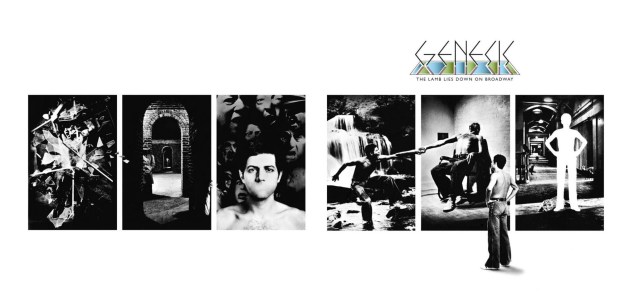
After the success of Selling England By the Pound, the follow-up album would be an important landmark in the direction of Genesis.  Unfortunately, a variety of factors contributed to the end of the Golden Age of Genesis.  For the first time, the creative process was changed: Peter Gabriel wrote most of the lyrics for Lamb apart from the band, as they wrote most of the music separately.  When the two sides came together, the joining of lyrics and music was not as seamless as it had been before.  Though some members of the band were somewhat relieved that the thematic content of Lamb was different from the mythical, mystical stuff that dominated so much of their previous albums (at least, for the most part), the collaboration process brought more frustration than camaraderie.  Additionally, Gabriel was absent for much of the creative sessions, helping his wife during her debilitating pregnancy.  Though this was admirable and certainly the right thing to do, it helped strain the relations of the band.  Before the tour even began, Gabriel’s time with the band was technically over, though he did stay around long enough to complete the tour.  This helped to further the rifts in the band, since Gabriel’s on-stage characters and costumes overshadowed, at least critically, the musicianship of the other band members.  The lengthy Lamb Tour, in effect, finished off the Golden Age of Genesis.  As he sings in “In the Cage,” the sweat (not sweet) has turned sour.  They have come, in an odd, unfortunate way, full circle since From Genesis to Revelation.

In order to give The Lamb Lies Down on Broadway an appropriate tribute and analysis, frankly, we would need an entire issue of Redeeming Pandora solely for that purpose.  If you thought “We Didn’t Start the Fire” takes a lot of footnotes to explicate, that is nothing compared to the voluminous amount of annotation necessary to delve into the mysteries and wonders of Gabriel’s fecund erudition.  Lamb almost makes Joyce and Eliot seem obtuse.  Without trying to sound proud, I don’t even understand it all myself, though I’m doing my best.  For the sake of time, and an attempt to give some semblance of respect to what is rightly considered one of the best concept albums of all time, we shall offer an admittedly superficial exploration of some of the main ideas explored throughout the album.  If time permits (and the journal continues), look for a more elaborate analysis of this monumental work in the future.  Certainly more consideration needs to be given to the fantastic musical aspects of the album in addition to the lyrical narrative outline with which we will concern ourselves for now.  In the meantime, listen to the album (many, many times) and read Gabriel’s story in the liner notes to tide you over until we meet again.

Part One

Lamb is a concept album, as mentioned before.  The concept is much larger and expansive than a simple declarative sentence can encapsulate, but the basic story is the journey of self-discovery of Rael, the Imperial Aerosol Kid, Puerto Rican graffiti artist in New York City, though he thinks he is trying to save his brother John.  Against that basic frame story, we meet mystical creatures like Keats’s Lamia, Lilywhite Lilith, and the Colony of Slippermen.  Sprinkled throughout this mystical, mythical tale, Gabriel alludes to Wordsworth (“I wandered lonely as a cloud”), Motown (“I got sunshine”), and classical comedy (“Groucho with his movies trailing”), and just about everything else under the sun and subway.

The liner notes tell us “a lamb lies down.  This lamb has nothing whatsoever to do with Rael, or any other lamb — it just lies down on Broadway.”  Eh.  Maybe.  It might not be Van Eyck’s lamb, but it probably means something (everything in this album does, right?).  Rael emerges from the steam and shadows, spray-painting R-A-E-L, as part of his attempt to make a name for himself.  Discontent with his seemingly purposeless life, and that no one notices him and his work Rael wonders if it might be better to be a fly waiting to smash into a windshield.  Soon, mists arise and Rael finds himself in a cage.  His brother John appears but turns away and won’t help him.  The cage disappears, and Rael spins down underground to see the Grand Parade of Lifeless Packaging (mankind, obsessed with materialism and consumerism).  He tries to save his brother John from turning into a lifeless advertisement, but suddenly he is back in New York City, at least he thinks he is.  During his confusion, we get some of Rael’s backstory: his reform school days, his pyrotechnic tendencies, his time running with a gang, his commitment to being tough (pictured by shaving his hairy heart and cuddling a porcupine), and his first “romantic” encounter, which, despite the fine instruction he got from a book on how to succeed in such endeavors, ended in total failure.  Romeo kissed by the book; Rael did everything else by it — neither ended well.  These reflections come to a close; John is nowhere to be found.

Suddenly Rael is in a corridor with lambswool under his naked feet (far too many lamb references for it to mean nothing).  One cannot hide from the present in one’s memory, Rael decides.  He spots some people crawling along the carpet in the direction he must go, heeding the call: “We’ve got to get in to get out.”  He follows the carpet crawlers (people, not bugs) up the stairs into a chamber of 32 doors.  Looking at all of these doors, Rael ponders what he needs in life, deciding he needs “someone to believe in, someone to trust.”  His whole life has been one of rebellion and individualism; it’s time for a change.  It’s not about wealth: he can’t really trust either rich men or poor men.  Countrymen seem more trustworthy than townmen, for diverse reasons.  Every door seems to lead him back here, to a waiting room of fearful, solitary indecision.  Priests, magicians, academics, and even his parents send him in different directions, “[b]ut nowhere feels quite right.”  Rael decides that he’ll trust someone “who doesn’t shout what he’s found. / There’s no need to sell if you’re homeward bound.”  Rael finally accepts he can’t live in fear anymore.  He’s ready to trust — but whom?

Part Two

“The chamber was in confusion — all the voices shouting loud.”  Rael sees Lilith, a pale, blind woman who needs Rael’s help as much as he needs hers.  He leads her through the crowd into more darkness, and she leaves him to face his fear.  “Two golden globes float into the room / And a blaze of white light fills the air.”  Rael is blinded, tosses a stone in front of him in defense against an approaching whirring sound, glass breaks, the cavern collapses, and Rael is trapped in the rubble.  This is where the album really gets weird.

Rael finds himself in the waiting room of the Supernatural Anaesthetist, who happens also to be a fine dancer.  The gas he emits leads Rael down a long passageway until he enters a new magnificent chamber.  “Inside, a long rose-water pool is shrouded by fine mist.”  From the waters rise three Lamia, beautiful women with snake tails below the waist.  Entranced by the anesthetic and their beauty, Rael “trusts in beauty blind” and enters the pool.  Initially it seems the Lamia die and give their carcasses to Rael for food.  Soon we discover it was all a trick.  Rael glides along like the Lady of Shallott until the water around him “turns icy blue” and he arrives at the Colony of Slippermen.

The Slippermen are slimy, bumpy creatures — all victims of the Lamia’s ploy, and Rael is becoming one of them.  The Slippermen point Rael in the direction of his brother John and the only cure for becoming a full Slipperman: castration by Doktor Dyper.  Rael and John are reunited and quickly agree to the rather drastic “cure.”  What’s left over after the operation is placed in “a yellow plastic shoobedoobe,” a storage tube, so what was removed can be used again in emergency situations.  Suddenly, the dark cloud that first captured Rael in New York City returns, this time morphing into a giant Raven that steals his shoobedoobe.  Rael goes after the Raven, but John abandons him again for the “safety” of the underworld.  Rael is about to catch up with the Raven when he drops the tube into a river in a ravine.  Rael watches it float away.

Rael decides to chase after it; just as he’s about to catch up with it, he sees the way out of this surreal underground prison: a window opens up back to New York City.  Rael heads for the exit only to hear his brother cry for help down below in the ravine.  Faced with the most important decision of his life, Rael plunges into action: abandoning the way back to freedom and home, he, like Huck Finn, risks staying “forever in this forsaken place” to rescue his brother.  After an exciting and dangerous chase, Rael finally pulls his brother to safety … only to find he has not rescued John but Rael himself.  The epilogue to the album, “it.,” intimates that “Rael” is a minor anagram of “Real.”  Broadly speaking, the concept for this concept album is about living one’s life wisely and selflessly — but choose wisely, because the time to decide is now.  Certainly some parallels exist to Pink Floyd’s The Wall, but enough differences exist for the two monumental albums to be considered separate entities, both of great value beyond diverse aesthetic experiences.  The Lamb Lies Down on Broadway reminds us of important truths about the brevity of life and the importance of making wise and selfless decisions in the time we are given.

“It’s Only Knock and Knowall, but I Like It”

Lest they be taken too seriously, though, Gabriel closes the album with the last of his Genesis-era multi-layered ironies: “Yes it’s only knock and knowall, but I like it.”  A subtle Rolling Stones allusion conveys Gabriel’s mission (if I may use such a weighty word) on not only The Lamb but also his entire Genesis career: satire (knock) and erudition (knowall) have been combined to present serious ideas in an enjoyable musical medium, combining great lyrics for slow, moving emotional songs and lengthy epic-like narratives (both apocalyptic and diverting) with masterful musicianship (far too often overlooked at the time and even today).  The album and Peter Gabriel’s tenure with the greatest progressive rock band of all time fade out, putting a knowing smile on our faces.  He wouldn’t have it any other way.

With Peter Gabriel’s departure from the group, the course of Genesis took a major turn to survive … but survive it did.  Like M*A*S*H had to adapt to the departures of Henry Blake and Trapper John, Genesis adapted (as it already had, with its early line-up changes before the classic lineup) for a new time and a new direction.  After a lengthy search and no suitable replacement found for Gabriel, Phil Collins became the official frontman of the band, and the rest, as they say, is history.  The next two albums, A Trick of the Tail (one of my favorites) and Wind and Wuthering (influenced by Wuthering Heights), continued the concept album approach for which classic Genesis is so noted.  It was not until Steve Hackett’s departure before …And Then There Were Three in 1978 that Genesis began to fully morph away from the king of progressive rock into the radio-friendly creator of pop rock smash hit singles in the 1980s many people think of when they hear the band’s name.

Hopefully this brief survey of the Peter Gabriel era of Genesis has inspired you to go back to the band’s progressive rock roots and hear for yourself (perhaps not for the first time) the creative beginnings of the band before it was defined by “Invisible Touch.”  Genesis is one of the most enjoyable and moving bands (lyrically and musically) of the modern musical era, with a history far richer than you may have known.  Start from the beginning, and work your way to the end.  And then do it again.  You will be glad you did.

You Play the Hobbyhorse, I’ll Play the Fool — Selling England By the Pound: Gabriel’s Genesis Retrospective, pt. 5

Christopher Rush

Those Eggs are Now Scrambled

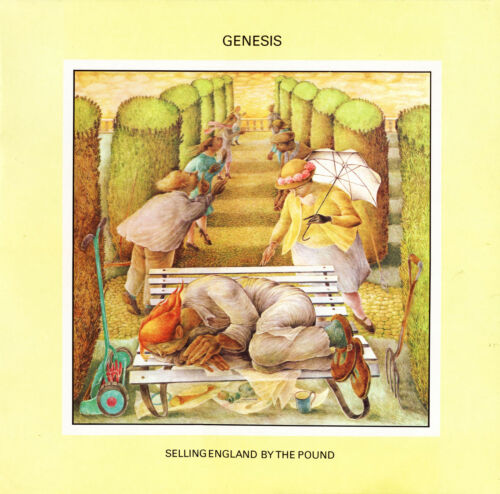
Fresh from the success of the greatness of “Supper’s Ready” and Foxtrot, Genesis was poised to create their most successful album (according to certain systems of measurement) with the nonpareil Selling England By the Pound: at once a culmination of the pastoral motifs and ideas as far back as Trespass and a full maturation of the band’s musical abilities.  I have admitted already Selling England By the Pound is my favorite Genesis album; hopefully that does not hamper your desire to listen to it or any other Genesis albums.  Some of the nostalgia factor may be in evidence here, not only in the compositions by the band, but also in the universal recognition of the quality of the album, since this is the last typical Gabriel-era Genesis album, considering the unusual nature of his last effort, The Lamb Lies Down on Broadway.  Though it seems they did not know at the time this was to be their last such classic album, enough heart and soul are poured into every song on this album to make their lack of prescience irrelevant.  Much more politically satirical than they’ve been before, Selling England By the Pound is truly Genesis at its best.

“Dancing with the Moonlit Knight”

Though this is the last “typical” Gabriel-Genesis album (by which I mean the last album driven by epic narrative songs of radio-unfriendly length), it begins differently than all the others: with the voice of Peter Gabriel, a capella, singing/calling “‘Can you tell me where my country lies?’ / said the unifaun to his true love’s eyes.”  From the first we are brought into a midsummer-night’s dream-like world of political satire, mythical beasts, and economic uncertainty.  “‘It lies with me!’ cried the Queen of Maybe /— for her merchandise, he traded in his prize.”  England is resting with the Queen of Maybe, uncertain where it is going, perhaps forgotten what it is and has been.  The Wordsworthian assault on trading one’s prize for the merchandise of Maybe echoes the poet’s searing line “We have given our hearts away — a sordid boon” too much to be ignored (except by those Gabriel is satirizing).  Despite the Elizabethan/idyllic music that begins to accompany Gabriel here, before the end of the first stanza of the album we are confronted with a pessimism even sadder (despite its much smaller scope) than the overpowering sorrow of “Watcher of the Skies” — perhaps because the music is so simple and soft the pathos is even more palpable.  Sic transit exordium.

Immediately the scene shifts to another Genesis prototypical British scene: “‘Paper late!’ cried a voice in the crowd. / ‘Old man dies!’  The note he left was signed / ‘Old Father Thames’ — it seems he’s drowned; / selling England by the pound.”  Newsies hawk their papes, youth and age continue their cycles, the water flows, and England fades into the twilight — if nothing is done to stop the acceptance of life just existing, sacrificing the important, the beautiful, on the altars of productivity, technology, and utility.  It’s not right to make money off stories of people in unfortunate circumstances — by doing so, we are selling our own dignity.  A culture with too much license start to consider themselves “Citizens of Hope and Glory,” and as “Time goes by” they think “it’s ‘the time of your life.’”  This sort of overly-simplistic thinking meets with appropriate caution: “Easy now, sit you down. / Chewing through your Wimpy dreams, / they eat without a sound; / digesting England by the pound.”  Life is not about having enough to get by, enough to enjoy for the day — enough food for today cannot be the standard for “the time of your life,” in part because it is too self-centered a perspective to be genuinely good.  The “Wimpy dreams” is an allusion both to the Wimpy fast-food chain in the United Kingdom as well as the George Wimpey housing company for dream homes.

The change of tune at this point makes for a good bridge between the early musical motifs and the clangorous (but in a good way) chorus to come.  In this bridge, Gabriel expresses the conflicting (and both erroneous) perspectives on what makes “the time of your life.”  “Young man says ‘you are what you eat’ — eat well. / Old man says ‘you are what you wear’ — wear well.”  Again the point is made that immaturity believes the only thing important in life is to enjoy the physical sensations of the moment; if bodily desires are satiated, nothing else is important for life is transitory and ephemeral — so says invincible youth.  Old age, conversely, believes the good life is about one’s status in society, evidenced a great deal by one’s appearance, particularly by the name-brand apparel one wears.  The mediating voice neither rejects nor approbates either point: instead, Gabriel simply enjoins the audience to do both: eat well and wear well — neither is “the right answer,” but neither are they bad advice as component parts of “the time of your life” as it truly is in relation to others and the well-being of society as a whole.  Beyond intake and appearance, a more crucial factor is knowing who you are or “what you are,” not placing as much importance on what others think or say, “bursting your belt that is your homemade sham.”

The chorus is a rousing return to the multi-layered aspect of this opening song, back to the metaphorical characters framing the counter-point of typical British life: “The Captain leads his dance right on through the night — join the dance… / Follow on!  Till the Grail sun sets in the mold. / Follow on!  Till the Grail is cold. / Dancing out with the Moonlit Knight, / Knights of the Green Shield stamp and shout.”  Britannia, the Moonlit Knight takes us on a cosmic turn to the past and present of merry old England.  The Green Shield stamp is a subtle allusion to the Green Shield Trading Stamp Company designed to encourage consumerism by enabling the purchase of gifts through the stamp system (a kind of precursor to the credit card rewards programs so popular today).

Speaking of credit cards, after the fast-paced musical interlude, Gabriel uses a different voice for the slightly menacing carnival-barker bridge: “There’s a fat old lady outside the saloon; / laying out the credit cards she plays Fortune. / The deck is uneven right from the start; / and all of their hands are playing a part.”  The juxtaposition of tarot cards and credit cards is even more applicable today than it was forty years ago, as we are ever-increasingly saturated with the farcical notions of credit.  The best credit score is actually 0, since it means you don’t owe anyone anything and thus are not a servant to the lender.  Perhaps the sub-zero prime mortgage crisis could have been averted had more people heeded Genesis’s warning that Fortune is not based on credit any more than a crystal ball can tell your future: the deck of credit cards is uneven, not in your favor.  Paying with money that does not exist is not a sign of wealth — it is a sign of folly.  The multiple meanings of “hands” after that is another example of Gabriel’s fully-mature lyrical skill.  In few words he has brought several layers of meaning through his symbols.

From that mystical scene we return to the chorus, blending, like a merry-go-round, clanging band music and medieval/pastoral animal imagery: “You play the hobbyhorse, / I’ll play the fool.  We’ll tease the bull / ringing round and loud, loud and round.”  The album is now a game, lightening the mood while subverting our attention away from the political and social satire that will undoubtedly continue.  “Follow on!  With a twist of the world we go. / Follow on!  Till the gold is cold. / Dancing out with the Moonlit Knight, / Knights of the Green Shield stamp and shout.”  Intentionally our views of the world will be twisted and the gold will cool (so much currency talk in this song) and no more coinage to go in the pay slots.  The music then mirrors this predicted winding down; after another rousing and different musical break, the momentum fades and decrescendos into another musical box-like cadence, like stars twinkling out in the ending night.

“I Know What I Like (In Your Wardrobe)”

The fading guitar sprinkles meld into Tony Banks’s Mellotron hum imitating a lawnmower.  “I Know What I Like” is Genesis’s first commercial single success, essentially the only one of Gabriel’s career as their front man.  Though Phil Collins’s turn in the years ahead would see the band’s shift to a more radio- and commercial-friendly incarnation with many single hits, “I Know What I Like” helped form the nascence of that forthcoming mutation, so those who “blame” Genesis’s transformation on Phil Collins ignore the earlier evidences of that progression.  This song remained popular in the band’s live concert repertoire, eventually becoming the framework to the enjoyable lengthy medley of tunes from the Gabriel and early Collins years later in the band’s career.

Like so many others in their early canon, this song is a frame story.  The lawn mower lies down for a lunchtime nap, recalling the conversations he overhears both during his lunch break and, most likely, throughout his workday as a whole.  The song is based on the cover painting The Dream by Betty Swanwick (the band had her add the lawn mower machine to it; it was not in the original version of the painting).

The chorus, preceded by the utilitarian motto of the lawn mower “Keep them mowing blades sharp…” is the most recognizable couplet to the passive Genesis fan from the Gabriel era: “I know what I like, and I like what I know; / getting better in your wardrobe, stepping one beyond your show.”  It’s a rather occluded couplet: why the lawn mower knows what it is in the wardrobe of the people whose lawns he mows is never explained.  If he’s spending so much time observing their outfits, can he really be that good of a lawn mower, ever distracted by his customers’ speech and apparel?  Being unfamiliar with colloquial British expressions, I am incapable of sussing out what “stepping one beyond your show” truly means; I suspect it has something to do with the ever-increasing appearance of affluence of the members in the neighborhood, but I am completely open to correction.

Further in the lawn mower’s lunchtime reflections, he recalls segments of a previous phone conversation with Mr. Farmer: “Listen, son, you’re wasting time; there’s a future for you / in the fire escape trade.  Come up to town!”  That the lawn mower overhears so many different snippets of conversation throughout his workday indicates he is a popular lawn mower (despite the contradictions indicated above).  This is further demonstrated by the phone call asking him to make a better life for himself in what is suggested to be a more lucrative, and thus better, position in what only the British would call “the fire escape trade.”  Despite the seeming advantages in such a movement, the anonymous lawn mower rejects such an offer, after recalling an even older memory of advice he had received in his youth: “Gambling only pays when you’re winning.”  Though he may consider himself “a failure,” and should logically jump at the chance for a better job, he considers the fire escape trade a gamble that will not pay off, so he resigns himself to his present position.  His life as a lawn mower will forever be recognized, failure or not, by the way he walks.  The unusual Eastern beat and melody fades out of this unusual, quirky song slightly reminiscent of “Harold the Barrel” but much more humorous and lighthearted.

“Firth of Fifth”

A play on the common name of the River Forth in Scotland (the “Firth of Forth”), “Firth of Fifth” is about as quintessential “Genesis sound” as any one of their numbers in the Gabriel era gets.  Here, the full maturity of the band’s musical skills is in evidence from the downbeat.  Tony Banks’s introduction surpasses even “Watcher of the Skies” in proficiency and downright impressiveness.  The mixture of 2/4, 13/16, and 15/16 time signatures reminds us piano dilettantes what the instrument is capable of in expert hands.  Additionally, Steve Hackett’s guitar work and Peter Gabriel’s flute work complement the complex and driving melodic lines throughout all nine minutes of this mighty piece.

Lyrically, the song has not aged as well as others in the Gabriel era, but it is better than most seem to recall.  It is a return to the over-ambiguous lyrics of the very early days, admittedly, but it still has enough coherent connotations to make its mythical subtext enjoyable and believable.  Deeper assessment of the words discovers that it can be read as a mixture of Psalm 23, Isaiah 53, and John 10 (with a sprinkling of Romans 1): the people of the world are sheep, who, despite the obvious signs and demarcations in place from the foundations of the universe, refuse to travel the path to freedom.  The sheep are overcome by many dangers in nature and myth (Sirens, Neptune), until the great Shepherd returns to save them fully.  The most coherent aspects of the lyrics are the beginning and end of the words, true.  The middle sections are rather opaque and should probably be taken as furtive aspects of the impressive (if not rationally comprehensible) creative accomplishments of the Shepherd Himself.  As a whole, this song can be one of the most enjoyable of Genesis’s entire output, despite the elusive lyrics at times — their progressive rock skills musically overpower any confusion about the words.  The words that do make sense are Biblically sound and encouraging, despite the seemingly pessimistic final couplet: “The sands of time were eroded by / The river of constant change.”  Consider it another grouping of words going more for the aural effect than the rational cohesion of their denotative meaning, especially with the rest of the song.  By themselves, they are akin to the apocalyptic language of “Watcher of the Sky,” but almost don’t seem to fit fully in this song, which may account in part why Banks doesn’t consider this lyric with much fondness.  They are still comparatively young lads at the apex of their initial popularity, after all, and the song, as mentioned above, as a whole is great.

“More Fool Me”

The second Genesis song led by Phil Collins (the first, as you recall, was “For Absent Friends” from Nursery Cryme), “More Fool Me” is the sparsest number on the album with only Collins’s vocals and Mike Rutherford’s acoustic guitar.  It is a highly enjoyable change of pace on the album (not that the other songs aren’t enjoyable), especially coming before the lengthy British satire “The Battle of Epping Forest.”  It is a relaxing, folk-like ballad about an optimistic young man who, with a self-effacing humor, believes that everything with his girlfriend who has just walked out on him will end up all right.  It’s probably the quietest of the quiet Gabriel-era songs, especially at the beginning.  It needs no further comment: listen and enjoy.

“The Battle of Epping Forest”

“Taken from a news story concerning two rival gangs fighting over East-End Protection rights,” according to the liner notes, “Epping Forest” is a mixture of “Giant Hogweed” and “Harold the Barrel,” with the medieval-modern British satirical tone pervasive throughout the present album.  The album as a whole oscillates between border-line cynicism and tongue-in-cheek optimism.  “Epping Forest” leans more toward the latter, until the climax of the song.  The song is overtly self-explanatory, even for social criticism.  It certainly doesn’t need the extensive footnoting that T.S. Eliot or even Jonathan Swift requires.  It’s a lengthy song and some may justifiably conjecture that it is too lengthy — a lot of words are sung by Gabriel in these almost twelve minutes.  The quirkiness of the song allows Gabriel to use a variety of personas during the different combat scenes, as well as the neighborhood episodes.  The comedic tensions of gangs fighting to “protect” the poor, with the multiple meanings of “protection” throughout the song, are among the highlights of the lengthy number.  The diverse musical motifs and tempos also provide good variety, without which the song would become tedious (some may say “even more tedious,” but that’s unnecessarily harsh).

The various scenes display the album’s blending of modern and antique England.  The “Robin Hood” scene is the cleverest lyrically; the Reverend looking for used furniture following the “Beautiful Chest” sign leads to near Benny Hill-like comedy, though Gabriel rescues it (to a degree) from sheer objectification.  The musical breaks during the different vocal sections are further signs of the band’s musical skill.  Were “Epping Forest” not on the same album as “Firth of Fifth” and “Cinema Show,” it would probably have achieved more notoriety.  The ending is a lyrical pyrrhic victory matched by the music: the story is unsure who wins the fight (since both sides essentially wipe each other out), and the ambiguous and uncertain melodic irresolution demonstrates that well.  This is one of the better unities of the lyrics and music during the song; it isn’t always so appropriately blended.  Altogether, it’s a clever song that occasionally (and only then briefly) suffers from the weight of its own vast and sundry intentions.

“After the Ordeal”

I do not understand why Tony Banks and Peter Gabriel were against including this song on the album; I can understand why Steve Hackett would eventually quit, since the other band mates seemed to consider his compositions (such as this one) so poor.  Did they forget about “Horizons”?  This is a great song, doubly so since it is a completely believable transition from the end of “Epping Forest” to “Cinema Show.”  Without this, the transition would be fine, but with it, the album has another lyric-free achievement celebrating their musical greatness.  Gabriel even gets some keen moments of flute solo work in.  Regardless of the band’s derisive assessment of it, “After the Ordeal” is an enjoyable, cathartic musical number.

“The Cinema Show”

With a harpsichord-like introduction recalling to mind strains of “The Musical Box,” Genesis begins the last (and arguably best) of its Gabriel-era epic numbers.  The sweet, dulcet tones supporting the gentle lyrics at the start of the song may even surpass the beginning of “Supper’s Ready” (nothing surpasses its ending, of course).  The satire here is devoid of cynicism, which is a bit of a relief after the lengthy “Epping Forest.”  The clever multi-layered diction is here in full, and the names of the characters evoke both Shakespeare and e.e. cummings: Juliet and Romeo are prototypical Britishers.  Gabriel’s impressive but all-too rare synesthesia ability returns as well: “Home from work our Juliet / Clears her morning meal. / She dabs her skin with pretty smells / Concealing to appeal.”  Gabriel couples both his sensory word play (skin is usually about touch, but here it’s about the source of her perfume) with his clever paradoxes as seen with the battle to preserve peace in “Epping Forest” (“concealing to appeal,” certainly one of the most intelligent lines in all of Gabriel’s tenure with the band).  “‘I will make my bed,’ / She said, but turned to go. / Can she be late for her Cinema show? / Cinema show?”  Juliet, despite being a lovely, typical girl (in no derogatory way), has enough procrastination in her to make her even more appealing.  Who wouldn’t want to hang with a girl more concerned with enjoying genuine leisure than incessant cleanliness, willing to put the bed making off until after a movie?

The Romeo of “Cinema Show” is like Shakespeare’s Romeo, once he has seen Juliet at the Capulet party at the end of act 1.  This song, in fact, could easily be a musical version of an understood scene between acts one and two, with modern accoutrement.  The contrast of Juliet waiting to make her bed (as in, put the sheets back in order) because she’ll just get back in it by herself after the movie, with Romeo’s desire to make his bed with Juliet (as in, have Juliet in it, too), is yet another great example of Gabriel’s subtle lyrical skill (though Banks and Rutherford wrote the song, admittedly).  Describing Romeo as a “weekend millionaire” is a trenchant commentary on the dating scene.  Yes, Juliet is a part of it with her “concealing to appeal” perfume, but we have no reason to believe she is looking to spend her post-motion-picture evening with anyone or anywhere but her yet-to-be-made bed.  Gabriel’s final observatory question, “Can he fail, armed with his chocolate surprise?” is a fitting end to the gentle send-up of this aspect of contemporary British life (a scene still relevant today, even in America, much more so than “Epping Forest”).  How could a typical lothario possibly not succeed by offering a woman chocolates, a completely original idea!

The music picks up speed and motion, and Gabriel changes the scope of the exploration of modern love (in Elizabethan garb — or the other way around, if you prefer).  From Shakespeare we travel further back to Ovid.  Much has been said of the influence of T.S. Eliot’s The Waste Land — no doubt Banks and Rutherford (and the others) read it in school growing up in 1950s-60s England, in addition to the classics they must have read in public school, perhaps good old Charterhouse School, where Genesis was formed.  Even so, the lyrics are not intended to be as obfuscatory as Modern Eliot was.  Ovid’s Tiresias is helpful enough to understand the gist of what Gabriel is saying.  (If you have not read either The Waste Land or Metamorphoses, you should do so after finishing this journal.)

Father Tiresias, we are told by all sources, spent time as both a man and a woman: “‘I have crossed between the poles, for me there’s no mystery.’”  For this experiential perspective on the differences between the genders he lost his eyesight, according to some.  What is not so clear in this song, we are told by some critical sources, is the meaning of Tiresias’ encoded language next.  “Once a man, like the sea I raged. / Once a woman, like the earth I gave. / And there is in fact more earth than sea.”  At first hearing it may seem Tiresias is commenting on the sheer population difference between men and women in the world: women outnumber men on the earth.  (Not even Tiresias would literally think the globe consisted of more land than sea, would he?)  However, the meaning, we are told, is something different: “there is in fact more earth than sea” means that women enjoy making love more than men do, on a physical level at least.  If that’s true (the right interpretation of Tiresias’ words, not necessarily the authenticity of the interpretation), the fact Juliet is not interested in any physical conclusion to the cinema date with Romeo who is very much looking forward to such an encounter, makes the tale full of humorous and unexpected twists and turns.

The other great aspect of this final epic number from Gabriel’s tenure as Genesis’s front man and flautist begins at the seven-minute mark.  The final four instrumental minutes of the number begin with one of Banks’s finest melodic/solo lines.  Without trying to sound too effusive, the line is soaring, evocative, and uplifting.  The rhythm section soon buttresses Banks’s work with a catchy, driving, syncopated support.  Eventually, the motif works its way through enough variations to everyone’s satisfaction, winding down as so many of Genesis’s lengthy numbers do, returning from its 7/8 beat to its original 4/4 time.  The melodic line returns to a variation of “Dancing with the Moonlit Knight,” bookending the album brilliantly and blending into the final epilogue number.  Since “Aisle of Plenty” was not played on tour, the live concert version of “Cinema Show” received a new, self-contained ending, just as good in its own way.

“Aisle of Plenty”

As a reprise of “Moonlit Knight,” “Aisle of Plenty” is clearly a coda for Selling England By the Pound, uniting the album as one of the best concept albums of the progressive rock genre.  In fewer than one hundred seconds, Gabriel demonstrates his uncanny lyrical ability to pun and satirize in rapid fashion.  It’s doubtful Tess is the Queen of Maybe, thus making the connection to the first song musical and thematic, not directly lyrical/character-driven.  The idea of being lost away from home is clearly a thematic premise throughout the album.

“‘I don’t belong here,’ said old Tessa out loud. / ‘Easy, love, there’s the Safe Way Home.’ / — thankful for her Fine Fair discount, Tess Co-operates / Still alone in o-hell-o / — see the deadly nightshade grow.”  Gabriel sings of three different grocery store chains (Safeway, Fine Fair, and Tesco) as well as the large Co-op (The Co-operative Group) that dominates British retail life.  Though Safeway and Fine Fare do not exist anymore, Tesco is the second-largest profitable grocery chain in the world (after Wal-Mart).  I can attest to the reasonable prices and fine quality of their goods (the last time I had some shepherd’s pie from Tesco, it was quite tasty and filling and cost only 69p, VAT).  The title of the song is another example of Gabriel’s multi-layered diction, though this time the pun is more overt.  The “sceptered isle” of England, having traded in its prize for the merchandise of the Queen of Maybe has become the grocery store “aisle” of cloying affluence.  The seeming pessimism is furthered by the final lines, “Still alone in o-hell-o / — see the deadly nightshade grow.”  The nightshade, kin to the essential foodstuffs of British living (potatoes, tomatoes, and eggplants), is the poisonous member of that family, which is slowly and maliciously taking over (somewhat reminiscent of “Giant Hogweed” two albums before).  Also, the nightshade could be another double-meaning reference, in that Tess, satisfied that she has her goods and safety, closes the nightshade on her window to the dangers and economic/social factors in turmoil outside.  If Tess represents mainstream England (and what is more “mainstream” than commercial grocery store chains), it has clearly not learned its lesson.  At the dawn of a new day, the hawkers return in full force:

ENGLISH RIBS OF BEEF CUT DOWN TO 47p LB

PEEK FREANS FAMILY ASSORTED FROM 17 ½p  to 12p

FAIRY LIQUID GIANT — SLASHED FROM 20p TO 17 ½p

TABLE JELLYS AT 4p EACH

ANCHOR BUTTER DOWN TO 11p FOR A ½LB

BIRD’S EYE DAIRY CREAM SPONGE ON OFFER THIS WEEK.

Peek Freans was a biscuit and related-confectionary brand, now subsumed under United Biscuits and Kraft Foods.  Fairy Liquid is a Procter & Gamble washing-up liquid now genericized (like Xerox and Kleenex) to mean any liquid washing-up product in the United Kingdom.  Anchor is a New Zealand dairy company popular in the United Kingdom (and other places).  Bird’s Eye is the international frozen foods magnate, of course (though I’m not sure what a “dairy cream sponge” is).

“It’s Scrambled Eggs”

“It’s Scrambled Eggs” are the final words from the liner notes.  We must go on living, but we can’t be solely concerned about the price of living in our own little communities, as if our own material needs are the only causes worth investigating and fighting for.  Selling England By the Pound does not offer many direct solutions to any of these problems, but it does give us strong reminders of the dangers of living only for ourselves.  The music of the album is among the best of Genesis’s career; the lyrics likewise display the great skill (for the most part) of the band’s mature output.  Collectively, the album is a phenomenal work.

With this album, Genesis clearly eradicates any doubts about their greatness not only as a progressive rock band but as musicians and writers at large.  The unity of the album is stupendous, maintaining and morphing its satirical needs brilliantly throughout a variety of subjects.  As the last of the typical Gabriel-era albums, Selling England By the Pound proves that by abandoning the limiting restraints of their initial management, Genesis could incorporate myth, satire, literature, and imagination into something astounding.  Though they may have burned up their reserve of epic music, scrambling all their lengthy creativity eggs, it was well worth it.  With a combination of pungent social satire, classical allusions, and pervasive self-effacement (“You play the Hobbyhorse, I’ll play the Fool”; “More fool me”), Selling England By the Pound is as close to a perfect album as any can get, and it is undoubtedly worth listening to and enjoying again and again.

The Supper of the Mighty One — Foxtrot: Gabriel’s Genesis Retrospective, pt. 4

Christopher Rush

No Line (or Apostrophe) on the Horizons

Genius is rarely recognized immediately.  Foxtrot reached only #12 on the charts in England and did not chart at all in America.  These nonsensical historical anecdotes aside, in 1972, Genesis gave us one of the greatest musical experiences of all time: Foxtrot.  The band is in full stride here, continuing its mature sounds and lyrical creativities from the success (if not commercial success) of Nursery Cryme.  If there was indeed a sense of subdued relief at the completion of the diverse and inaugural classic-lineup album, the energy has been refreshed and renewed, as evidenced by the initial archetypal sounds of Tony Banks’s mellotron.

“Watcher of the Skies”

For any fan of good music, all one has to do is hit the play button (or drop the tone arm into the grooves) and emit the unmistakable sounds of Tony Banks’s Mellotron Mark II, and after but one second of the sound everyone will know instantly that this is “Watcher of the Skies.”  It is that recognizable.  The introduction is very good, despite the progression through discordant chords — even Tony Banks detractors have great difficulty in rebutting this powerful and energetic introduction.  The gigantic sound sets the mood for the cosmic powers at play.

The lyric of the song is a strange supernatural tale about a galactic observer (doubtful it’s a supreme being, more likely a cousin or friend of Uatu) who discovers planet earth, apparently at the point of man’s last gasp, almost as if man is about to leave Earth behind — either because he is exterminating himself or because he is about to journey to the stars (but his self-destruction by his own devising is more likely).  The title is taken from John Keats’s delightful “On First Looking into Chapman’s Homer” (the poem that also gives us Keats’s great description of the world of art, literature, and beauty: the “realms of gold”): “Then I felt like some watcher of the skies / When a new planet swims into his ken.”

The story is ambiguous, as indicated in the uncertainty above: at times the words indicate life is going and possibly has been gone from Earth for a long time; other verses indicate that mankind is about to progress to another advanced phase: “Think not your journey done / For though your ship be sturdy, no / Mercy has the sea, / Will you survive on the ocean of being?”  The optimism of man’s potential shifts again in the final verse, along with the potential downfall and isolation to the point of extinction of the Watcher himself: “Sadly now your thoughts turn to the stars / Where we have gone you know you never can go. / Watcher of the skies watcher of all / This is your fate alone, this fate is your own.”

With the immense power of the music of this opening track, finishing up the weight and vastness of the Stephen Vincent Benét-like lyrics, Genesis has satisfied both the audience that believed Nursery Cryme was the cusp of greatness and the audience that knew Nursery Cryme was the beginning of the band’s peak output.  Gabriel’s lyrical skill has surpassed its tentative forays from the early years, building upon his initial attempts at ambiguity mixed with concrete emotional evocation, and achieving the longed-for narrative skill the band needed to complement its musical talents.

“Time Table”

In a way, “Time Table” continues the pattern Nursery Cryme set by alternating the fast-paced epic songs with the more melodic, almost quaint English life ballads.  However, the pattern is not complete, since “Time Table” has a stronger, more emphatic chorus than “For Absent Friends” and “Harlequin.”  Further, “Time Table” is more reminiscent of Trespass — the talk of kings and queens of old draws one back to that sophomore (not sophomoric in any way) effort.  The precision of the language is better than those days, though, especially in the chorus: “Why, why can we never be sure ’til we die / Or have killed for an answer, / Why, why do we suffer each race to believe / That no race has been grander? / It seems because through time and space / Though names may change each face retains the mark it wore.”  Not only is it refreshing that Gabriel is answering his own questions (finally), but also the melodic shifts of the “answer” lines are unlike any other motifs in the song, furthering the band’s connection between the music and the lyrics as integrated and integral aspects of their poetic/musical output.

The verses are reminiscent of Tu Fu’s “Jade Flower Palace” with a dash of Shelley’s “Ozymandias.”  Without trying to imply that Peter Gabriel is a better poet than either of those world masters, “Time Table” is a better lyric than those poems (though I admit I have only read “Jade Flower Palace” in translation — perhaps the original surpasses Gabriel).  The fullness of the title itself is more creative than the simple declaratives of the other two titles.  Initially is the extreme Britishness of the time table itself, harbinger of trains, schedules (with a “shed” sound, not “sked,” of course), and punctuality rivaled only by the Germans.  “Here is a song of the passage of time, how it has been chronicled and organized since the days of Bede and the Anglo-Saxon Chronicle,” says the title.

Four words into the song, though, the title takes on additional layers of significance: “A carved oak table, / Tells a tale….”  The time table is, in fact, an actual table, a carved oak table.  The layering is doubly rich: not only have we the table itself telling the tales by evoking memories “[o]f times when kings and queens sipped wine from goblets gold,” but the table is of carved oak, recalling to mind the aspect of knowing a tree’s age by cutting it down and counting its rings, telling a tale of its age and the weather incidents that affected its development and trunk life.  The title of this song is rich indeed.

The Britishness of the song continues, as the carved oak table tells the tale of English kings and queens and their glory halcyon days of old, when “the brave would lead their ladies out the room / To arbors cool. / A time of valor, and legends born / A time when honor meant much more to a man than life / And the days knew only strife to tell right from wrong / Through lance and sword.”  The subtlety of Gabriel’s lyric is impressive: what starts out as a nostalgic look backward to medieval jousting combats, feasts, and castles suddenly becomes a diatribe against uncivilized barbarity.  It seemed like a civilized time of honor and nobility, but their definition of glory (evinced by Ivanhoe himself) was, fundamentally, “might makes right.”  The chorus, quoted above, furthers the political overtones of the song.  Beyond the medieval imagery, the song is a universal denunciation of all xenophobic military mindsets, British or otherwise.  The winsome music accompanying the “answer” section of the chorus turns out to be an almost ironic response, as if the answer is so self-evident it can’t be answered with a straight face: human nature (barbaric, aggressive) never changes.

Verse two is even more reminiscent of “Jade Flower Palace”: “A dusty table / Musty smells / Tarnished silver lies discarded upon the floor / Only feeble light descends through a film of grey / That scars the panes.”  The narrator cannot even recall the scenes with zestful authenticity anymore; the oak table, once a sign of strength and security, is just a collector of dust.  The cool arbors are replaced by musty smells.  The refulgent gold goblets and chargers are scarring, miasmic, filmy grey memories.  “Gone the carving, and those who left their mark, / Gone the kings and queens now only the rats hold sway / And the weak must die according to nature’s law / As old as they.”  Gabriel works in another great subtle line, as the carved oak table (first carved as an example of craftsmanship, now carved as a memory bank of those who sat and dined, lived and loved there) is shown against the scarring light — the notches of conquests are now the scars of memories and the scars of faded glory.  The strong warriors and leaders fell away, succumbing to the passages of time and the unconquerable reign of nature.  The lament-filled chorus returns and the Trespass-like sounds soon play the memories into oblivion.  The fading dulcimer tones are quite appropriate for the final moods of the song.

“Get ’Em Out By Friday”

In the vein of “Harold the Barrel,” “Get ’Em Out By Friday” is a multiple-narrator story, but the song as a whole is more complex (which does not imply “better”) and more social awareness-oriented like Selling England By the Pound.  Without looking at the words the first time one listens to the song, one might suppose the song is about shipping clerks, but it’s not, unfortunately.  The song has three main characters: John Pebble of Styx Enterprises, Mark Hall of Styx Enterprises (“The Winkler”), and Mrs. Barrow (a tenant).  Not too much time passes before we realize Styx Enterprises is not about the band (especially since the band had not yet reached mainstream popularity) but the Underworld.  Pebble and The Winkler are clearly in league with Satan, but the song is not as darkly supernatural as that accusation implies.

John Pebble is a landowning entrepreneur in the most acquisitive and degrading senses on the word: “Get ’em out by Friday! / You don’t get paid ’til the last one’s well on his way. / Get ’em out by Friday! / It’s important that we keep to schedule, there must be no delay.”  Before the first verse is over, Pebble makes his priorities clear: profit is the supreme good.  The well-being of people, even employees, is irrelevant.  The legality of Pebble’s threat that his employees won’t get paid until they finish evicting all the tenants is suspect, but who knows what wage systems were in place in 1970s England.

Mark “Winkler” Hall follows orders.  “I represent a firm of gentlemen who recently purchased this / house and all the others in the road, / In the interest of humanity we’ve found a better place for you to go-go-go-go-go.”  The Winkler puts the most dangerous spin on economy: the interest of humanity.  The real interest, of course, is Styx Enterprise’s profit interest.  Mrs. Barrow, poor tenant, provides the typical human response (phrased in a typical British way): “Oh, no, this I can’t believe, / Oh, Mary, they’re asking us to leave.”  Since The Winkler is asking them to leave, it’s possible that Styx Enterprises has no legal recourse to evict the people after all, especially since his supreme value of profit does not allow basic human sentiment.  If they had the right to evict them, they would do so immediately, especially without bribing them to move.

Back at Styx Enterprises, Mr. Pebble is upset and flustered: “Get ’em out by Friday! / I’ve told you before, ’s good many gone if we let them stay. / And if it isn’t easy, / You can squeeze a little grease and our troubles will soon run away.”  Like a typical Barney Miller slum lord, Pebble is concerned about immediacy of his plans and is willing to resort to a slightly smaller profit margin (with distributed bribe money) if it forestalls widespread public awareness of their methodology.

Mrs. Barrow’s response to The Winkler is confusing.  She desires to stay in her home so badly she offers to pay twice her current rent, but she allows him to convince her to take 400£s and move to a flat with central heating based on a photograph.  She even admits they’re “going to find it hard” at that place.  Now that Pebble has his way, acquisitiveness rules again: “Now we’ve got them! / I’ve always said that cash cash cash can do anything well. / Work can be rewarding / When a flash of intuition is a gift that helps you excel-sell-sell.”  I’m not certain acquisitiveness is either a gift or a flash of intuition, but pecuniary-minded people think strangely about reality.  The Winkler informs Mrs. Barrow that her rent for her new place has been raised, to which she responds, “Oh, no, this I can’t believe, / Oh, Mary, and we agreed to leave.”

A musical interlude indicates the passage of time, during which Styx Enterprises disappears, and Mr. Pebble has been knighted and now works for United Blacksprings International.  I suspect Styx Enterprises has transformed into UBI, since “Blacksprings” is too like the river Styx to be anything but infernal.  Now that the year is 2012 (in the song), a modern, futuristic name is needed to hide its diabolical business.  In this futuristic world run by Satan’s Pebbles of the world, Genetic Control has declared that people will only be four feet tall, in order to fit more tenants in UBI’s tenements.  The new representative of the common man, Joe Ordinary, who frequents the Local Pub-o-rama (definitely a British expression of the future), recognizes their shady and unscrupulous practices.  As Gabriel sang in “Time Table,” the names have changed but the motivations and methods never do: “in the interest of humanity,” says Joe Ordinary, “they’ve been told they must go-go-go-go.”  The interest is not of humanity, of course, but of the Blacksprings.  Sir John de Pebble rouses The Winkler from some sort of dormancy (is he, after all, a spirit?): he has more work to do.

The end of the song is another layered ambiguity from the lyrically mature Peter Gabriel (whose name is incredibly ironic concerning this song).  According to the liner notes, the last two lines are a memo from Satin Peter of Rock Developments Limited.  Whether “Satin” is an accidental misspelling of “Saint” is unclear, though it could be an intentional Saint/Satan ambiguity (or Gabriel could be prefiguring Bryan Earwood’s typical spelling of “Satan”).  I doubt Gabriel is positing Peter and Satan are the same, and as mentioned before, the song is not as overtly diabolical as this brief treatment may make it seem.  Gabriel’s intelligence is shown by having Peter work for Rock Developments Limited, since, if it is really Saint Peter, Gabriel’s knowledge that he is the rock is impressive, even if he is somewhat derogatorily saying the developments of the rock (perhaps the church herself) are a “limited” enterprise, especially in contrast to the dominance of United Blacksprings International.  The memo itself is again Blakean: “With land in your hand you’ll be happy on earth / Then invest in the Church for your heaven.”  You can figure that one out for yourself.

“Can-Utility and the Coastliners”

Genesis’s range of source material has clearly transcended its scriptural From Genesis to Revelation beginnings.  Trespass gave us, among others, the beast fable of Fang the wolf.  Nursery Cryme showed their penchant for classical myth and Victorian fantasy.  Here, on Foxtrot, Genesis extends their mythical range to the Viking King Canut (Cnut the Great) of Denmark, Norway, England, and parts of Sweden who ruled shortly before the Norman Invasion destroyed most of pre-1066 history.  Cnut’s invasion of England was complete by 1016.  By 1027, Cnut ruled the rest of those northern Norse men territories.  Within a few years of his death in 1035, Edward the Confessor reigned, setting the stage for William the Conqueror thereafter.  The apocryphal story has variations, of course.  Supposedly King Cnut once placed his throne on the shore, tired of his sycophantic court, and commanded the waves to part and not wash upon his throne or his robes to demonstrate his true power (and mock his courtiers who believed the waves would heed him).  Of course the waves did not honor his request and lapped around him.  Some accounts, such as Henry of Huntingdon’s, declare Cnut then placed his crown on a crucifix and gave the glory to the God of the Bible as the deity whom the natural world obeys.  Gabriel’s version here does not have that sort of climax, but it does relate a similar story as a whole.

Gabriel personifies the natural setting, and the musical accompaniment at the beginning is as mellifluous as anything Genesis ever did, opening with one of the most evocative opening lines in their canon: “The scattered pages of a book by the sea, / Held by the sand washed by the waves.”  No more mention is given of what this book was, though it may be fair to assume it is a book about King Cnut.  “A shadow forms cast by a cloud, / Skimming by as eyes of the past, but the rising tide / Absorbs them effortlessly claiming.”  The clouds as “eyes of the past” is a wonderful image, one of Gabriel’s best metaphors.  As the verse continues, the shifting vocalizations and musicality increase as the tide and Cnut’s disappointment swell, leading into one of the most dynamic musical interludes not just of the album but in Gabriel’s entire tenure.  Referring to Cnut as “Can-Utility” is impressively ironic again, since the entire story is about what Cnut could not do, though he was desperate for useful followers and worshippers, not mindless flatterers.  The story follows the climax of Cnut’s experiment, as Hackett and Rutherford’s contributions mimic the waves and Cnut’s emotions.  From reaction to worshipful declarations, the diversity in this song is most impressive.  Instead of the Christian conclusion though (as can be supposed), Gabriel ends with a mysterious tag: “See a little man with his face turning red / Though his story’s often told you can tell he’s dead.”  Much like “Time Table,” “Can-Utility and the Coastliners” (the Coastliners are most likely the unheeded flatterers who resemble fox hunters/hounds on the cover) reminds us of the passage of time during which the power and reigns of even the mightiest and proudest rulers will eventually conquer mortal rulers, no matter how often their stories are told (or re-imagined, as Genesis does here).

“Horizons”

Little needs be said about possibly the most beautiful song of Genesis’s career.  Though the re-mastered cd release calls “Horizon’s,” the title has no apostrophe.  Steve Hackett’s masterful work is a marvelous prelude to the epic “Supper’s Ready,” making the B-side of Foxtrot probably the best B-side in the history of music recording.  It has been noted that Hackett begins with the central theme from Bach’s cello Suite No. 1 in G Major, but he soon progresses to his own baroque-influenced song.  Like all the great soft Genesis numbers, one is almost left with the impression that it is too short, that there should be more song, but that, of course, misses the point entirely.  It is a precisely-structured musical expression of the soul in a beautiful world — any more would be over-indulgence to the point of aural gluttony.  We must re-train ourselves to appreciate and enjoy what is there and ask for no more.

“Supper’s Ready”

Oh, boy.  Time for the great supernatural epic, one of the top-tier songs that defines Genesis’s career (by those aware of the Gabriel era, that is).  Various accounts credit very bizarre sources for the inspiration of this mighty work (many of which do not have the same tone and direction that the song itself has), and the reader can seek those out at his leisure.  Gabriel’s intro of the song in concert gives it a different context as well.  At the outset of this series I indicated we were going to focus solely (as much as possible) on the lyrics and music of the songs themselves — admittedly, though, we have used some liner note stories and other historical references to explain some of the allusions where appropriate, and we will need to do a bit more of that here.  As for The Lamb Lies Down on Broadway next issue…well, we’ll cross that bear when we get to it.  Though we won’t utilize all the interviews and dvd bonus material available for simplicity’s sake, we will use quotations from the 1972-73 concert tour handout that explains (in typical covert Gabriel fashion) the story.  The nearly twenty-three-minute musical epic is divided into seven sections, in a variation of the sonata form.

I. Lover’s Leap

The opening scene of the magnum opus is a calm, quiet evening in a British home of two typical British young lovers (since the episodes that influenced the writing of this song were from Gabriel’s wife, we shall call the main characters a married couple, one woman and one man).  The simple melody and restrained accompaniment hearken back to the folk days of Trespass.  The couple seems to be newly reunited (“I’ve been so far from here, / Far from your warm arms. / It’s good to feel you again, / It’s been a long, long time.  Hasn’t it?”), but it could also (or instead) be a metaphorical separation that is being bridged.  The song opens with the male narrator turning off the television and looking into his wife’s eyes, perhaps for the first time in quite a while, thus necessitating the repeated encouraging line, “Hey my baby, don’t you know our love is true.”  Outside this familial scene the supernatural is coming to life: “Out in the garden, the moon seems very bright, / Six saintly shrouded men move across the lawn slowly. / The seventh walks in front with a cross held high in hand.”  Additionally, the wife is also going through supernatural transitions: “I swear I saw your face change, it didn’t seem quite right.”  The mystical work outside completes the transformation of the couple inside.  The guide summarizes this quiet scene of transformation nicely: “In which two lovers are lost in each other’s eyes, and found again transformed in the bodies of another male and female.”

II. The Guaranteed Eternal Sanctuary Man

“The lovers come across a town dominated by two characters; one a benevolent farmer and the other the head of a highly disciplined scientific religion.  The latter likes to be known as ‘The Guaranteed Eternal Sanctuary Man’ and claims to contain a new secret ingredient capable of fighting fire.  This is a falsehood, an untruth, a whopper and a taradiddle, or to put it in clearer terms, a lie,” says the guide.  The melodic line of this section is recalled at the climax of the song in part seven, though the lyrics there are much more Biblical and life-affirming than the lyrics are here.  The pacing and melody of the sounds in this section, though, are great.  The challenge of this section is to discern whether Gabriel is satirizing (a gentle word for it) Jesus and Christianity (since he wore a crown of thorns during this portion of the song for some live performances); though Gabriel is not an overt Christian, I posit that he is not denigrating Christianity itself but the materialistic, “scientific” versions of it (such as televangelists and others of that ilk), primarily because of the biological science references.  I hope I am not being credulous.

I don’t know if anything should be made of another farmer reference, though it is interesting that Genesis often speaks of farmers (“Seven Stones” from Nursery Cryme, “The Chamber of 32 Doors” from The Lamb Lies Down on Broadway, among others).  The farmer doesn’t seem to have much to do in this section of the song, though; after the brief mention of his skill and concern for his task caring for the natural world (in a Chaucer-like description), the focus shifts entirely to the GESM.  I have no knowledge if Gabriel has read Fahrenheit 451, but it is clever that his fireman, the GESM, “looks after the fire” and doesn’t put out fires.  The guide, quoted above, intimates the secret ingredient to fight fire is some sort of salvation, if the fire is the eternal fires of damnation from the Lake of Fire.  This might contradict my earlier position that the GESM is not an attack on Jesus, but I don’t think it does.  We know that Jesus does not provide falsehoods, untruths, whoppers, and lies about the afterlife — even if the GESM is an attack on the Bible, Gabriel would be wrong, and there would be no need to be concerned, provided we then explained this misconception rationally and thoroughly.  If the GESM is just a type of false gospel promoter, Gabriel is thoroughly correct that the technological, scientific “secret” is “a lie.”

The quiet chorus after the final lyrical and musical climax of this section is difficult to understand: “We will rock you, rock you little snake, / We will keep you snug and warm.”  The quietude of the conclusion transforms into a flute recapitulation of the “Lover’s Leap” melody.  This in turn prepares the way for the third section of the work.

III. Ikhnaton and Itsacon (Its-a-con) and Their Band of Merry Men

“Who the lovers see clad in greys and purples, awaiting to be summoned out of the ground.  At the GESM’s command they put forth from the bowels of the earth, to attack all those without an up-to-date ‘Eternal Life License,’ which were obtainable at the head office of the GESM’s religion,” according to the guide.  Ikhnaton is none other than Akhenaten, the Egyptian pharaoh and husband of Nefertiti, whose “Great Hymn to the Aten” we read in 10th grade.  The GESM conjures him and Its-a-con (furthering the song’s antipathy toward false religion and pseudo-scientific-intellectualism) and a mighty battle rages, as evidenced by the faster pace, louder percussion, and interaction and interplay of Tony Banks’s organ and Steve Hackett’s guitar.  The arpeggiated musical break is one of the musical highlights of the entire album (and Genesis canon).

The verses of this section further the song’s satiric approach to such a diversity of subject matter, this time war.  “Wearing feelings on our faces while our faces took a rest, / We walked across the fields to see the children of the West, / We saw a host of dark skinned warriors standing still below the ground, / Waiting for battle.”  I’ll admit I don’t know who the “children of the West” are, nor do I fully comprehend what “wearing feelings on our faces while our faces took a rest” means, though I suspect it also connects to the attacks on hypocrisy throughout the number.  Reminiscent of most battle songs from Genesis (“The Knife,” especially), Gabriel points out the paradox of war: “Killing foe for peace… / Today’s a day to celebrate, the foe have met their fate.”  Like Homer, though more acerbic, Gabriel reminds us that “war, no matter how much we may enjoy it, is no strawberry festival.”  The admixture of war satire with religion satire (“And even though I’m feeling good, / Something tells me, I’d better activate my prayer capsule”) makes the mostly music-driven section lyrically full.  Once the battle is over, the momentum is rapidly lost, and the section virtually slams to a halt, despite the final line, “The order for rejoicing and dancing has come from our warlord.”  (I’m pretty sure the live performances change it to “from Avalon,” but I could be wrong.)  The rejoicing and dancing do not appear.

IV. How Dare I Be so Beautiful?

The battle is over and only chaos is left, chaos and Narcissus.  “We climb up the mountain of human flesh, / To a plateau of green grass, and green trees full of life.”  The transformed couple climbs a mountain of war-struck corpses to find Narcissus admiring his beauty in a pool in a forest sitting by the pool.  Suddenly “He’s been stamped ‘Human Bacon’ by some butchery tool. / (He is you) / Social Security took care of this lad.”  This brief interlude of a number hearkens back to the ambiguous lyrics of From Genesis to Revelation, which is ironic since the phrase “How dare I be so beautiful” was a favorite expression of the band’s manager at the time, Jonathan King.  The connection of the “Human Bacon” stamp on Narcissus is most likely a reference to the battle carnage over which the couple has just ascended, since the “he is you” line furthers the representational nature of the previous section.  It is rather nice that the government took care of its fallen soldiers through social security, though the sparse musical accompaniment of this section belies the sincerity of the words.  It is a remarkably quiet section, but it is appropriate as the aftermath of such a battle.  Similarly appropriate with the music is the couple’s quite reverent non-participation (only as observers) of the transformation of Narcissus into a flower, according to Ovid’s version of the myth.  Like Narcissus (especially in variations on the myth), the couple are pulled down into the pool and the inane world of Willow Farm, resulting in a drastic shift from the direction of the song thus far.

V. Willow Farm

“Willow Farm” was a separate song worked in to “Supper’s Ready,” helping to distinguish it from other lengthy, unified narratives such as “Stagnation,” according to Tony Banks.  This portion of the number gave us one of Gabriel’s most iconic moments during live performances: the flower mask.  Lyrically, the song is diverse and often called Python-esque for its verbal wordplay (though it may be more Sellers-esque, if not Goon Show/Beyond the Fringe-esque).  The couple has by now climbed out of the pool into a different existence, an unusual world that makes Wonderland seem like the Reform Club.

The opening section has the feel of being welcomed by Kaa the python into his lair — Gabriel’s voice has all the unctuous charm of impending doom for the listener.  It is from this section we get a rare reference to a fox (“Like the fox on the rocks”), though the fox is not trotting, nor is it wearing a red dress like the fox on the Paul Whitehead cover of the album (Gabriel would sometimes wear a fox head and red dress during some Foxtrot song performances in concert).  Perhaps the narrator is a Reynard the Fox character, since the fox reappears again in the next section of the song.  The verbal rigmarole includes political commentary (“There’s Winston Churchill dressed in drag, / He used to be a British flag, plastic bag, what a drag”) and fable references (“The frog was a prince, the prince was a brick, the brick was an egg, and the egg was a bird / Hadn’t you heard?”).  Gabriel even includes a sly self-reference to “the musical box.”  Suddenly, a whistle blows, diverse sound effects occur, and the garden/woodland scene transforms into a typical British daily life tableau reminiscent of “Harold the Barrel.”  The verbal flummery continues (“Mum to mud to mad to dad / Dad diddley office, Dad diddley office, / You’re all full of ball / Dad to dam to dum to mum / Mum diddley washing, Mum diddley washing / You’re all full of ball”), based more in the sounds of the words than in their denotative sense (perhaps precursoring A Bit of Fry and Laurie — the British love their intelligent, verbal humor, and their non-intelligible verbal humor, that’s for sure).  Gabriel’s original narrative voice (mixing Grima Wormtongue with Uriah Heep) returns for the final few lines, and the menace grows until, just like the sudden climax before, the whistle blows again and the scene transforms: “You’ve been here all the time, / Like it or not, like what you got, / You’re under the soil, / Yes deep in the soil. / So we’ll end with a whistle and end with a bang / And all of us back in our places.”

VI. Apocalypse in 9/8 (Co-starring the Delicious Talents of Gabble Ratchet)

Unlike the peaceful follow-up to the abrupt end of “Ikhnaton and Itsacon,” the musical interlude between sections five and six does not fit with any previously-heard musical motifs, and its ominous timbre is not encouraging.  Instead of “Gabble Ratchet,” the guide indicates the co-stars are wild geese, a version of the “hounds of Hell.”  The ominous interlude quickly transmogrifies into a full diabolical performance as the rhythm section beats out a disjointing 9/8 rhythm.  Gabriel dons a geometrical headdress for a Magog costume, and the apocalypse is upon us.

“At one whistle the lovers become seeds in the soil, where they recognize other seeds to be people from the world in which they had originated.  While they wait for Spring, they are returned to their old world to see Apocalypse of St. John in full progress.  The seven trumpeteers cause a sensation, the fox keeps throwing sixes, and Pythagoras (a Greek extra) is deliriously happy as he manages to put exactly the right amount of milk and honey on his corn flakes,” says the guide, which actually makes matters worse in its obfuscatory George S. Kauffman-era Marx Brothers style.  We have traveled from seven shrouded saintly men from the garden to seven trumpeteers “blowing sweet rock and roll.”  The apocalyptic language is a mixture of Revelation, folktale, myth, and William Blake, both here and in the final section.  The musical variations during this section are more grinding and fretful than enjoyable, which is appropriate after a fashion for an apocalyptic climax (Tony Banks has commented that his organ solo was a parody of Emerson, Lake, and Palmer).  Couched within the diabolical imagery is the essential warning of the song: “You can tell he’s (the Dragon, Satan) doing well, by the look in human eyes. / You better not compromise. / It won’t be easy.”  The relevancy of Gabriel’s warning is even more relevant in the soul-siphoning digital age than it was during the uncertainties of the 1970s.

As Pythagoras writes out the lyrics to a new tune in blood (it’s doubtful Gabriel is equating geometric equations with the apocalypse, but he could be), the diabolical rhythms draw to a close, and we (and the couple) are saved from a disastrous fate as the opening melody from “Lover’s Leap” returns.  As Dante’s successful navigation through the Underworld resulted in his restoration to Love and Truth, so, too, does our heroic couple’s journey restore their love.  In a declaration reminiscent of Donne’s classic “Valediction: Forbidding Mourning,” the journey has only strengthened their union: “And it’s hey babe, with your guardian eyes so blue, / Hey my baby, don’t you know our love is true, / I’ve been so far from here, / Far from your loving arms, / Now I’m back again, and babe it’s going to work out fine.”

VII. As Sure as Eggs is Eggs (Aching Men’s Feet)

The “Lover’s Leap” motif transforms directly into “The Guaranteed Eternal Sanctuary Man” motif, but the lyrics are much more uplifting than before.  Though there are some elements of William Blake in there, the feeling the song evokes is pure Biblical catharsis.  This is as great an ending to an epic as any out there in any medium.  “Above all else, an egg is an egg,” says the guide.  In pure British simplicity, the self-evidence of the conclusion both discards the symbolic language of the entire song and allows us to believe exactly what the words are saying, at face value.  In simple logic, the tautology of the section title reminds us “as sure as eggs is eggs,” good will conquer evil, God will conquer Magog and the Dragon, and light will conquer darkness.  (The “aching men’s feet” line is probably just another admission that the journey is done, the album is over, and the band is tired out again.)  This is a great song, with an ending that puts to shame most (if not all) contemporary “Christian” music that gives us a pale, shoddy version of the glories of the life to come.  As Phil Collins presses his climactic snare roll, Gabriel sheds his Magog costume for an angelic white costume declaring the victory of goodness over evil. “Jerusalem,” says the guide, “= place of peace.”  What else is needed?  Now we know what the title of the song means: the armies of the Dragon are defeated, and the angel (in Revelation 19:17) invites the birds to feast on the flesh of the wicked.  Supper’s ready not just because the lovers are reunited, and not just because He has prepared the victory feast of His enemies, but more importantly because the Messiah (the Mighty One) has returned to prepare His marriage feast with His Bride, the Church.

Gabriel’s voice is as epic as it gets here.  “Can’t you feel our souls ignite / Shedding ever changing colors, in the darkness of the fading night, / Like the river joins the ocean, as the germ in the seed grows / We have finally been freed to get back home. / There’s an angel standing in the sun, and he’s crying with a loud voice, / ‘This is the supper of the mighty one,’ / Lord of Lords, / King of Kings, / Has returned to lead His children home, / To take them to the new Jerusalem.”  Now that’s a song.

“Now I’m Back Again, and Babe It’s Going to Work Out Fine”

By this point, the greatness of Genesis, especially in the Peter Gabriel era, should be evident to all.  They were diverse and talented lyrically and musically.  They told stories of apocalyptic battles and ballads of couples enjoying life and love.  Their melodies and harmonies, vocally and instrumentally, can still surpass just about anything today.  Their reputation commercially and in concert after the release of Foxtrot was no longer a well-kept secret.  Foxtrot was their first album to break the top 20 in England, and most of these songs became staples of their concerts for years to come.  Foxtrot is a great album from the first mighty chords of Tony Banks’s mellotron of “Watcher of the Skies” to Peter Gabriel’s worshipful exultations at the cathartic conclusion of “Supper’s Ready.”  Listening to Foxtrot is a great experience that should be enjoyed again and again.  Even for those who doubt the greatness of Nursery Cryme, Foxtrot is an uncontestable work of genius, cementing the greatness of Genesis.

Play Me My Song — Nursery Cryme: Gabriel’s Genesis Retrospective, pt. 3

Christopher Rush

The Classic Lineup, The Classic Albums

By 1971, Genesis had secured its now-classic five-person lineup: Peter Gabriel, Tony Banks, Mike Rutherford, Phil Collins, and Steve Hackett.  Over the next five years, Genesis would release five albums (four studio albums and one live album) and establish itself as the dominant progressive rock band of all time.  The band mates had honed their musical talents both within the studio and in early live performances, and the arrival of more-skilled musicians (Collins and Hackett) as well as new instruments and technical recording proficiencies all allowed the band to finally create the diverse and unique sounds and songs it had desired to do since its inception.

The first of the five classic lineup albums, Nursery Cryme, is still considered by some the culmination of the band’s maturation process, with its next album, Foxtrot, the real first fruits of its developmental stage.  Such a view does not give Nursery Cryme its just appraisal as a quality album in its own right.  Admittedly, the album does build upon the musical ideas hinted at in their earlier work, and as we found out recently with the previously unreleased demo material finally available in the box sets, many of the songs on this album had definite origins in the band’s earlier musical stages with Anthony Phillips.  Even so, to consider Nursery Cryme only as another development on the way to Foxtrot as the ultimate goal misses the point of the album: it has different songs that are not trying to do what Foxtrot and later albums offer.  It is a worthy and enjoyable album by itself, and it begins with one of the best (and most bizarrely creative) Genesis songs in their entire canon.

“The Musical Box”

The story behind this Victorian fairy story/epic song is included in the liner notes and depicted on the Paul Whitehead cover:

While Henry Hamilton-Smythe minor (8) was playing croquet with Cynthia Jane De Blaise-William (9), sweet-smiling Cynthia raised her mallet high and gracefully removed Henry’s head.  Two weeks later, in Henry’s nursery, she discovered his treasured musical box.  Eagerly she opened it and as “Old King Cole” began to play a small spirit-figure appeared.  Henry had returned — but not for long, for as he stood in the room his body began aging rapidly, leaving a child’s mind inside.  A lifetime’s desires surged through him.  Unfortunately the attempt to persuade Cynthia Jane to fulfill his romantic desire, led his nurse to the nursery to investigate the noise.  Instinctively Nanny hurled the musical box at the bearded child, destroying both.

The song takes place, fortunately, at the climactic moment of the scene described above.  Henry is hovering, apparently, etherealized around or in the nursery, caught between this life and the next — similarly, he is caught between his lust for Cynthia and a bourgeoning apathy toward existence itself (“It hardly seems to matter now” repeated throughout the song).  The opening strums recall us to the idyllic timbres of Trespass, but the audience has not long to wait before the maturity of the band and its aesthetic development shifts our focus away from the simplicity of the earlier album’s tonality to the wider range of sound and emotion, especially by the musical break and pounding section after “And I want / And I feel / And I know / And I touch / The wall” at the end of the opening ethereal section.

Cynthia discovers the musical box, and incorporeal Henry urges her on to open it.  The story in the liner notes (and Peter Gabriel’s introduction of the song in certain live performances) indicates that Henry returns to life with his eight-year-old mind, though his body begins to age rapidly when “Old King Cole” is played.  The supernatural is, as is obvious by now, a key element of Genesis’s lyrics.  Briefly, Henry indicates that the good news of a future afterlife Paradise (“a kingdom beyond the skies” — very Cosette-like) is all a lie.  Instead, he is “lost within this half-world,” neither fully dead nor fully alive, but he is initially unburdened by that (“It hardly seems to matter now”).  The confusing aspect of the lyrics (aside from the entire supernatural events themselves) is that Henry seems to know before his resurrection that his time is short; perhaps that is why he is so insistent that he and Cynthia (despite her age) consummate their relationship — despite the fact as well that she willfully killed him with a croquet mallet two weeks before.  If he knows his time is short, how does he know that, especially since his mind is still that of an eight-year-old?  Despite (or perhaps because of) his prescience, Henry’s lust overpowers his ethereal apathy like the poetic contributions of Andrew Marvell and Robert Herrick: “Just a little bit / Just a little bit more time / Time left to live out my life.”  The remaining time Henry has he wants to spend (in a manner of speaking) with Cynthia.  She opens the box, “Old King Cole” rings out, and Henry is embodied (and embearded) and starts to age physically.

After the pounding musical interlude, the first example of the band’s musical maturity, rapidly-aged Henry confronts the apparently motionless Cynthia (her reactions and attitudes are never mentioned during the song, since it is all from Henry’s point of view).  This half of the song demonstrates undoubtedly Genesis’s maturity as a band that combined provocative lyrics (admittedly sometimes abstrusely) with impressively skillful and aesthetically engaging instrumentality.  Now an old man with an eight-year-old mind, Henry voices his lust for the first (and last) time.  The tension and paradox of his love/lust comes out clearly: “She’s a lady, she’s got time. / Brush back your hair, and let me get to know your face.”  At first respectfully and Victorianly distant, Henry quickly shifts into Marvell-mode: “She’s a lady, she is mine!”  If Cynthia were a lady, even at nine-years-old, she probably would not have assassinated Henry with a croquet mallet in the first place.  If she were a lady, in the second place, she would not “belong” to Henry, young or old.  His lust is winning out: “Brush back your hair, and let me get to know your flesh” — an uncomfortable thought from an eight-year-old, especially toward a nine-year-old, made even more awkward by Peter Gabriel’s mask and movements during the live renditions of the song.  Fortunately, Genesis is in no way condoning such an attitude or behavior, since Henry ultimately receives his just reward.  We should remember, too, that Cynthia did slaughter Henry as well, and he still loves her, which makes the song thoroughly bizarre but archetypically Genesis, in the Gabriel era.

Soon Henry’s unslaked lust (as is often the case) turns into anger, though still tinged by a hint of apathy: “I’ve been waiting here for so long / And all this time has passed me by / It doesn’t seem to matter now” — apathy, or at least willingness to forgive the heretofore unrequited aspect of his lust, if only Cynthia will requite him now…which she won’t.  “You stand there with your fixed expression / Casting doubt on all I have to say.”  Now Henry’s anger and lust are full-boil and inseparable: “Why don’t you touch me, touch me / Why don’t you touch me, touch me, touch me / Touch me now, now, now, now, now / Now, now, now, now, now, now, now, now, now / Now, now, now, now, now, now!”  They are all there — listen carefully.  The nurse comes in, flings the music box at the wrinkled Henry, and both are destroyed.  “The Musical Box” signals quite well the maturity of Genesis as a prog rock band with finely- (and finally-) honed lyrical and musical talent to support the epic narrative visions that launched the band five years earlier.

“For Absent Friends”

In stark contrast to the William Blake-like bizarre maturity of “The Musical Box” (though no one does William Blake-like bizarreness like early Rush), “For Absent Friends” highlights the band’s softer and sweeter side.  The only thing discordant about this song is the delayed resolution at the very end, as Phil Collins’s first vocal contribution ends before the return of the dominant tonal chords provided by Hackett and Rutherford.  The song has a very folksong feel to it, but the impressive part is that it does not remind one of Trespass — it is its own song while thoroughly Genesis material.  Though the song is about a Sunday evening, it has all the atmosphere of a Saturday afternoon, or perhaps a Saturday late-morning, after one sleeps in with nothing much to do that day, perhaps having Welsh rabbit for lunch while still in one’s jim-jams.  The song concerns an elderly couple who misses and prays for those loved ones who are no longer present in their lives, and while the song has the slow pacing to match their slow gait, it also reflects a time of youth and late-morning sunshine.  Sometimes Genesis songs produce that antithetical feeling.  The lyrics are straightforward, certainly among the most translucent lyrics in the band’s Gabriel-era canon, and thus need no detailed discussion here.  Listen to the song with the words in front of you and enjoy a quiet, too-brief moment.  Though, part of its charm is that it is so short, since if it went on longer it would spoil the mood.  Sit back and enjoy the just-right song evoking both ends of life’s spectrum.

“The Return of the Giant Hogweed”

Nursery Cryme is a loosely-unified concept album in that most of the songs are nursery rhyme-like songs (the overt use of “Old King Cole” is evidence of that) dealing with children, myths, and Romance- and Victorian-atmospheric tunes; some of the songs are even loosely connected to each other.  “The Musical Box” is a Victorian fairytale (of a sort), and “Giant Hogweed” is an apocalyptic vision begun by a Victorian explorer.  Rooted, if you will, in the actual Heracleum mantegazzianum, the phototoxic hogweed plant that originates fairly close to where the eponymous version comes from, “Giant Hogweed” is another epic song beginning in medias res with the Giant Hogweed plants already waging their militaristic campaign.

The obvious connection is to “The Knife” from Trespass (and “The Battle of Epping Forest” in Selling England By the Pound), though “The Knife” is a lot more politically-minded and serious in tone.  That may sound strange, especially since the end of “The Knife” is a tyrant’s conquering of a police force (admittedly an unfortunate thing) and the end of “Giant Hogweed” sees the end of humankind altogether, overcome by rampaging mutant personified human-killer plants.

Musically, “Giant Hogweed” demonstrates Genesis’s ability to tell a story with its musical diversity as well as its lyrical maturity.  The speedy rhythms of the present scenes of the hogweed battle complement the frenetic chaos of the story.  The past tense backstory verses change the musical pace well, mirroring the sounds with the words as the moods change frequently.  In this diversity, the progression from “The Knife” is clear: instead of just post-production vocal manipulation, “Giant Hogweed” changes musical aspects as well as Gabriel’s vocal offerings.  The band is more mature, using their instruments as contributions of the overall song and its message.  Though it uses gimmicks aplenty (especially in Gabriel’s on-stage personae), the band has more to offer than simply gimmicks.

The backstory of the Victorian explorer in the Russian hills finding and transplanting the Giant Hogweed comes in agitated music-box-like verses.  The melody is pleasant like a music box melody should be, but the lyrics and the pace (as if a child were cranking the music box gears too quickly) betray the simplicity of the tune with the danger of the invincible plants.  The hubris of the Victorian “fashionable country gentlemen” who valued exotic botany over safety results in the gentlemen getting their due.  The parallel to the destructive nature of Victorian Imperialism is there, but I wouldn’t press the connection too firmly.  The effects of nineteenth-century imperialism, one could say, resulted in the world-wide destructions of World War I, but I doubt WWI is what Genesis had in mind as a parallel to the genocidal victory of the Giant Hogweed.  The characterization of the Hogweed itself (or themselves) by Gabriel and the other vocal contributors is a further oddity in this lyrical story, especially in the final stanza.  The line “Human bodies soon will know our anger,” were one to just read it without hearing or knowing the tune, might direct the reader to suppose Gabriel’s voice is loud and full of such anger, yet the contrary is true.  The Hogweed sings this line with a music box-like mellifluousness, betraying the aggressive nature of the campaign.  Instead, it is the voice of the humans in the chorus-like sections of the song that Gabriel sings with a hardened edge to his timbre.  The humans exclaim, “Stamp them out / We must destroy them” and “Strike by night / They are defenseless.”  Though both sides are guilty and both sides angry, Gabriel vocalizes the human race as the oppressors and the Giant Hogweed as the self-protecting and righteous combatants (“Mighty Hogweed is avenged”).

In the end, the Hogweed is victorious, but we are never told why it is the “return” of the Giant Hogweed.  The Hogweed bide their time over the years, seeking to avenge their uprooting from their Russian home, but that’s not a “return”; in contrast, once the attack has begun, the humans decide they must “[w]aste no time.”  The impatient reactors to the long-meditated counter-insurgency lose to the royal beast who never forgot what was done to him long ago by the Victorian explorer, and humanity pays the price.  The final musical sounds utilize this call-back to earlier times, with a kind of classical- or baroque-style ending and repeated final chord — definite growth from the Trespass days only months before.

“Seven Stones”

Like “For Absent Friends,” “Seven Stones” presents a soft ballad-like break between musically harder and more driving numbers, almost to the extent the album goes back-and-forth demonstrating Genesis’s developed soft/ballad and hard/mythic narrative facets.  It is possible that “Seven Stones” is the best song on the album that shows their musical and lyrical cohesion, though the time periods the lyrics and musical sounds indicate I believe are different — I am open to correction, of course.  Listening to this song is very much like listening to a Victorian sea shanty about times gone by, connecting it in a roundabout way to the overall theme of the album.  In contrast to the Victorian (perhaps even Edwardian) atmosphere, the lyrics are similar to a Romantic poem.  The opening line, “I heard an old man tell his tale,” reminds us of the opening of Percy Shelley’s poem “Ozymandias” — in both instances, it is not the narrator’s tale that the reader proceeds to read, it is layered by the narrator recalling what he heard from another source (akin to Thomas More’s Utopia, as well).  From this Romantic allusion of multi-layered narration, “Seven Stones” progresses to a parallel of Coleridge’s “Rime of the Ancient Mariner” set within an Irish heather or Scottish highland “seventh son, seventh stone” magical fairy-tale background.

The first tale the old man tells is of a “Tinker, alone within a storm,” who is “losing hope” and “clears the leaves beneath a tree” under which he discovers the eponymous seven stones.  We are not told if the tinker takes these stones with him or if he leaves them, only that he later finds a friend in the seventh house he seeks out: apparently the stones (either magically or placebo-like) gave him hope to press on and his friend relieves him from the dangers of the storm — he was not as alone as he thought he was.  The shift from this story to the next is the most ambiguous line in the entire album: “And the changes of no consequence will pick up the reigns from nowhere” — superior to the ambiguous lines from the From Genesis to Revelation days, this line is a Coleridgean/Blakean bizarreness that seems to fit quite well.  The tinker’s change from hopeless isolation to befriended succor is certainly not of “no consequence,” so what the inconsequential changes are we are not told (perhaps because of their very inconsequential nature) — but then they take up the reigns from nowhere, as if what we thought were inconsequential then become the most consequential because they are now in control (holding the reigns — perhaps of destiny or Nature itself, perhaps by the power of the seven stones themselves).

The second story is the definite “Rime of the Ancient Mariner” parallel: sailors are imperiled on the sea about to strike a rock (though this did not happen in Coleridge’s poem) until a gull flies by and the Captain is moved by an unknown force to change course (similar to the supernatural effect the albatross and its slaying has in Coleridge’s poem, but it is admittedly distinct and thus a parallel, not an exact copy).  Whatever the inconsequential changes are in this story, they likewise take the reins from nowhere.

At this point, the old man takes a break (as evidenced both by the lyrics and the vocal change in Gabriel’s sound) and we learn some surprising things about this old narrator and his ambiguously supernatural tales from yet another narrator layer, this time an angelic-like omniscient chorus: “Despair that tires the world brings the old man laughter, / The laughter of the world only grieves him, believe him, / The old man’s guide is chance.”  It is difficult to accept why we should believe the stories of someone so contrary to the fabric of reality, who laughs at what brings most of us despair, who grieves at what brings most of us happiness and relief, and who is ultimately guided not by an absolute standard of morality or destiny but by that most fickle of masters: chance.  Perhaps, though, that is the point.  The things that we laugh at are truly trivial and inconsequential.  The things that we are afraid of should be what we laugh about (the seriousness of human affairs, for example?).  If chance is the reliable guide, does chance have a connection to the seven stones and the natural/supernatural influence of the gull?  If the old man believes in chance and human action and not divine structure, perhaps the stones had no intrinsic power after all, and superstition alone led the tinker to safety; similarly, the Captain who turned his boat to safety, instead of rationally asking why the gull was there, intuitively changed course because of chance.

The old man’s third tale (or second, if the tinker and sailors are two parts of the first tale) features the old man himself and gives further support for his Romantic philosophy couched in a Victorian/Edwardian song.  A farmer, who is apparently a very bad farmer, since he “knows not when to sow,” which is an essential skill for farming, approaches the old man for assistance rather desperately, since he is “clutching money in his hand.”  The old man shrugs, smiles, takes the money, and leaves “the farmer wild.”  Not much (if anything) should be read into the fact the old man with a Romantic/cavalier attitude steals money from a farmer, a man who works closely with the land and thus nature, which a Romantic should value — especially since the farmer is not very good at knowing the land.  With the old man’s thievery, the changes of no consequence pick up the reigns from nowhere, and soon the song comes to a close.  Nothing more is learned about the old man, the ethereal chorus, or the original narrator who is listening to the old man’s tales.

“Harold the Barrel”

Another Phil Collins cymbal roll heralds (I apologize) the shift from the “slow, melodic Genesis” to the “quirky, eclectic sounds and stories Genesis.”  “Harold the Barrel” is certainly one of their quirkier songs in the Gabriel era.  The song is a send-up of inane news reporting about topics of “local interest,” which, if relevant in 1971 England, is certainly relevant to today’s even crazier “news”-saturated, media-driven culture.  Like with most “news” stories, the veracity of the content is questionable at best.  Genesis does a trenchant job of clouding the issues, obscuring the perspectives, and rejecting any satisfactory conclusion to the episode.

Harold’s “mouse-brown overcoat” tells us that he is himself mousy, and thus weak and ineffective.  The next tidbit we learn is he is a father of three and has done something disgusting, apparently cutting off his own toes and serving “them all for tea,” though we are not told if they are served to his sons or if the entire thing is just community gossip, since Harold is a “well-known Bognor restaurant owner,” which means no one knows him at all.  The community soon revolts against him, and the train he took early this morning to escape will not take him far.  That Harold “hasn’t got a leg to stand on” is a remarkable line of Gabriel’s developed dark humor and lyrical skill: not only has Harold supposedly cut off his toes, he has no leg, either.

Before too long we infer that the information of Harold catching a train to escape early that morning is not true (either that he didn’t take a train at all, or just that he took a train not to escape but to get to the town hall where Harold is actually standing out on a ledge, perhaps ready to jump and end it all in a “Richard Cory”-like fashion except jumping from a ledge, not shooting himself with a gun, of course).  The reporter on the scene describes the gathering crowd at the town hall as “a restless crowd of angry people” — so restless that the city council has “to tighten up security.”  Why are they so angry?  Are the rumors about his teatime snack accurate?  It is never mentioned again, nor does the rest of the song give any tacit credence to such a tale.  Genesis could be ridiculing not only the nature of news reporting but also the mob mentality of onlookers — with no facts to ground their emotions upon, anger becomes the easiest communal response.

Even the Lord Mayor gives no leniency to Harold: “Man of suspicion,” he calls Harold, “you can’t last long, / when the British Public is on our side.”  What are the sides?  What is the issue?  Poor Harold is standing on a ledge, obviously discontent over something, and not only is the mindless citizenry against him for no apparent (or rational) reason, but also the elected officials are against him.  Mob mentality is king, here, since the Mayor himself appeals to general consensus: if the Public believes this ledge-hanger is guilty of something despicable, he must be, regardless of who he is, what he has done, or why he is even there.  Their communal antipathy increases in appetite, as they chant menacingly that “he can’t last long” (they clearly don’t want him to) and that supposedly this mindless mass earlier indicated that Harold couldn’t be trusted, “his brother was just the same.”  Why bring his brother into this?  Of course no one earlier voiced any concern about Harold; certainly we should place no credence in their filial associative gossip.

The sweetest moment of the song is the brief interlude from Harold’s perspective, as he looks out over the enraged citizenry and imagines where he would like to be instead: “If I was many miles from here, / I’d be sailing in an open boat on the sea / Instead I’m on this window ledge, / With the whole world below.”  The music accompanying this brief reverie is very enjoyable, especially as it is a break from the frantic cymbal-splashing highlights of the mob mentality and gossip-laced reporting.

Another shift occurs as the mob takes on a patina of Good Samaritan behavior: Mr. Plod (most likely the Lord Mayor, no doubt a pertinent name for his character and approach to his work and life in general) tells Harold “We can help you,” which the drones in the crowd repeat.  “We’re all your friends / if you come on down and talk to us son,” he continues.  Harold and we know this is a hollow lie.  “You must be joking,” is Harold’s appropriate and impassioned response.  “Take a running jump!”

The Samaritan shift in attitude seems to increase, as the crowd, once glad that Harold was out there ready to jump, is now concerned that he is getting weaker, so much so that they send for his mother, which does not help at all (it is difficult to ascertain if the crowd brings in his mother to further his decision to jump or not, since it is highly doubtful they knew anything accurate about the family anyway).  Were it not for the fact Harold’s mother is called Mrs. Barrel, the title calling Harold “the” Barrel might indicate that he is nothing more than a receptacle for other’s emotions, plans, and manipulations (this still may be the case, since, even if Harold’s last name is actually Barrel, the title calling him “the” Barrel may just highlight his prior nature up to the point he steps on to the ledge).  Mrs. Barrel gives Harold very poor reasons to come back inside: if his father were alive, he’d be upset with Harold’s actions; and his shirt is all dirty and thus he is embarrassing her, especially since a man from the BBC is there to capture his disgraceful appearance on film.  Meanwhile, the crowd resorts to content-less social acceptability: “just can’t jump” they say over and over.  Why not?  Because it’s not what people do, apparently.  No one is concerned for Harold, no one bothers to inquire why he is there at all.  Mr. Plod and his chorus repeat their earlier pleas to Harold that since they are friends, he should just come down and talk to them, which Harold rejects as before.  And suddenly, the song is over.  The music does not tell us if Harold jumped or returned inside.  Like all “news” stories of today, the result is irrelevant.  The connection to our lives and why it should matter to us is ignored completely.  The motivation behind Harold’s actions is never sought.  The song ends; the “news” cycle continues on to something else.

“Harlequin”

I have posited that Nursery Cryme is a loose concept album, primarily in the moods of the diverse songs generated, as well as the (admittedly thin at times) lyrical connection to nursery tales of myths, magic, and medieval wonderments.  “Harlequin” furthers the tonal mood aspect of the album, especially since Gabriel’s vocal work on this song is dominantly falsetto.  This song feels like a Harlequin is singing it; it also evokes a pinwheel being blown by the breeze — this song is a pinwheel, and all the simplicity of youth and pre-Econ class joy we once had.  (Not that Economics class is bad, just that it usually occurs at the end of our high school days when we are about to fully embark upon maturity and college, and the days of playing in the dirt with action figures and pinwheels are mostly lost to us.)  Little needs to be said here about this song; it is too lovely to dissect.  In closing, though, it is a very hopeful song, as clearly indicated by the final chorus.  The words and music paint a very enjoyable (and again almost unfortunately brief) aural painting.

“The Fountain of Salmacis”

A final Collins cymbal roll brings the final song of this Wonder Book-like collection of tales and fancies.  The story of Hermaphroditus and Salmacis is even older than Ovid, but his version in Metamorphoses is probably the best known.  The liner notes recap the story for those less literate consumers of prog rock:

Hermaphrodite: a flower containing both male and female organs; a person or animal of both sexes.  The child Hermaphroditus was the son of Hermes and Aphrodite, the result of a secret love affair.  For this reason he was entrusted to the nymphs of the isolated Mount Ida, who allowed him to grow up as a wild creature of the woods.  After his encounter with the water-nymph Salmacis, he laid a curse upon the water.  According to fable, all persons who bathed in the water became hermaphrodites.

Little needs to be said as well about the lyrical content, since it is mostly a straight re-telling of the story, without the complex narrative layering of “Seven Stones” or limited narrative focus of “The Musical Box.”  This song, though, fits well with them and completes this diverse but connected album.  The variations in musical texture at various narrative points in the song are reminiscent of and superior to similar attempts from Trespass, and as has been said so often about this album, the music helps tell the story very well.  The most interesting (and unique) aspect of this song could also be its most frustrating for some: at the end of most verses, either Salmacis or Hermaphroditus says something cogent about her or his feelings or reactions in first person, and usually the omniscient narrator of the song makes a similar comment in third person — at the same time.  This overlapping of words/perspectives is challenging to comprehend the first time or two through the song (especially if one listens without the words in front of him), but it is a unique element that adds to the fast-paced confusion and immediacy of the events in the confrontation of Salmacis and Hermaphroditus.  After setting the blissful scene at the beginning of the song, the rapid action of Salmacis waking up, falling for Hermaphroditus, and their conjunction (against Hermaphroditus’ will) needs a confused, perplexing cacophony to express the moment accurately — and this overlapping of narrative presentation succeeds in that unusual task (concerning such unusual characters).  As an aside, Hermaphroditus’ line, “Away from me cold-blooded woman / Your thirst is not mine” is a sharp indicator of Gabriel’s mature lyricism, combining the emotion of a moment with the irony of the situation, as Hermaphroditus was there to slake his physical thirst for water, but the waken Salmacis has a different kind of thirst when seeing Hermaphroditus.

With Hermaphroditus’ curse, the music winds down to its initial calmness, as the two (and a half) beings descend to their eternal condition: “Both had given everything they had. / A lover’s dream had been fulfilled at last, / Forever still beneath the lake.”  The musical conclusion is similar to the ends of other songs on this album, though the sounds are in line with the tenor of this particular song and the somber mood at the end of the lyrics.  In another sense, the final musical exchange fits with the album as a whole in that the diverse presentation of tones, stories, and emotional energies climaxes with the lovers’ (after a fashion) embrace and resolution — everyone is worn out and almost resigned by the end, including the musicians.  It is time for peace.  The album is a triumph, both for Genesis and for the progression of music itself, but the impressive creativity and emotional energy from everyone has been exhausted, and so it is not so much a victory that is being celebrated (not even for Salmacis) as it is a cathartic completion with the understanding that now even more will be expected and even more must be done (similar to John Adams’s “It’s done! … It’s done,” at the end of 1776).

“Some Creature Has Been Stirred”

I have said throughout that those who see Nursery Cryme as the last of the developmental albums before the heyday of Genesis’s Gabriel era are missing the point.  That is not to say that with this album Genesis peaks and remains static for the next four albums or so, nor is it an implication that the Collins era (or even the short-lived Ray Wilson era) is ultimately inferior — they are all different entities, with different emphases and different highlights (and lowlights).  I suspect that most who argue for Foxtrot’s superiority to Nursery Cryme base their argument solely on personal enjoyment: they like listening to Foxtrot more, probably because of “Watcher of the Skies” and “Supper’s Ready.”  I have already admitted that I enjoy Foxtrot more than I enjoy Nursery Cryme, but that is not because I think it is a better album — they are similar, yes, in several ways obvious to even a cursory appraisal, but they are different albums, and the band members display their lyrical and musical skill extremely well on both.  Let us not let the mighty penumbra of “Supper’s Ready” take away from our appreciation and enjoyment of “The Musical Box” and “The Fountain of Salmacis.”  Neither should we let the perfection of “Horizons” diminish our capacity to revel in “For Absent Friends” and “Harlequin.”  Nursery Cryme is the beginning of the great golden age of Genesis in the Peter Gabriel era, and it should be listened to and enjoyed because of its own merit.

Visions of Angels All Around — Trespass: Gabriel’s Genesis Retrospective, pt. 2

Christopher Rush

Moving into the ’70s (Sort Of)

Genesis had parted ways with Jonathan King.  John Silver had been replaced by John Mayhew on drums.  The band was now signed with Charisma Records, a major source of progressive rock in the early 1970s.  With Charisma came Paul Whitehead, the graphic artist who would create the covers of Trespass, Nursery Cryme, and Foxtrot (as well as several other covers for Charisma).  Free from the constraints of Jonathan King, and having some studio recording and live performance experience under most of their belts, Genesis was poised to become one of the premiere prog-rock band of the ’70s.  But first…

Trespassing Between Folk and Prog

Trespass has suffered slight disrepute and ignominy for years (though, perhaps even a bad reputation might be better than the near-total absence of a reputation that their clandestine debut album has), though the final song “The Knife” became the first real hit of the band, both critically and live on stage.  Despite this, the album as a whole is the second part of their maturation process (their “teenage years,” if you will) — on the precipice of full-grown development.  Some may argue that their third album, Nursery Cryme, is the culmination of their maturity, leading to the high-water greatness of Foxtrot, Selling England By the Pound, and The Lamb Lies Down on Broadway before their next great self-reinvention after Peter Gabriel’s departure.  To a degree that is true, and we will discuss Nursery Cryme more in our next issue, but it is an underappreciated album that bears more connection to the three great albums just mentioned than it does to the hybrid-like electric folk and mellotron-powered prog rock of Trespass.

Instrumentally, Anthony Phillips, Michael Rutherford, and Tony Banks have more diversity on this album: the acoustic twelve-string guitar is prevalent, as well as the dulcimer, nylon bass, and Banks’s mellotron (made most famous by the opening sound of Foxtrot).  Without the synthesized strings and brass that mostly plagued From Genesis to Revelation (mainly because the band didn’t want them), the sound of the album is more genuine as a Genesis album.  It has a folksy feel throughout, undeniably, but that isn’t necessarily a detrimental thing.  Peter Gabriel’s vocal abilities shine through far more than they did on the limitations of their pop debut, reaching great emotional peaks during the album, especially in “Visions of Angels,” “Stagnation,” and “The Knife.”  His flute work (and tambourine work) helps create the diverse woodsy, almost Tullian feel scattered throughout.  Many critics consider the sound of the album as invoking the part-Romantic, part-Victorian idyll — though the end of “The Knife” is more of a police riot as the idyllic loss of innocence and natural purity comes to a dramatic conclusion.

The Paul Whitefield cover may not capture the essence of the album as overtly and succinctly as his covers for Nursery Cryme and Foxtrot do, but once you have listened to the album a few times (with the lyrics in front of you some of those times, though not necessarily the first time through) the relevance to the songs will make sense — it’s not a direct representation but a satisfying pastiche of many of the album’s major ideas.  The dull blue/gray dominance of the cover art might account, in part, for the general dissatisfaction with the album as a whole, but the prevalence of the empty grayness has a great deal to do with the album’s general tenor: the vital, natural days of happiness are disappearing, only to be replaced by empty nothingness.  The panoramic natural view from the window capture the idyllic aspects of the album, while the royal couple gazing upon it provide the narratorship for most of the songs here.  The Cupid-like cherub could be one of the angels all around from “Visions of Angels,” and the floral curtains could be from any song.  The mysterious face in the upper-right corner sometimes looks like a demon, sometimes a faun — perhaps you should figure it out yourself.  The most obvious connection from the cover to the album content is the giant knife cutting a swath through the entire painting — though, of the several different bladed objects mentioned during the album, to which one it is referring (if not a combination of them) is the real question.  Perhaps the most interesting aspect of the cover is the knife itself, clearly a “real” knife cutting through the painting, adding an additional layer of reality to the complexity of Genesis’s transformation.  Just as “The Knife” is about the end of life as we know it (at least the way we are used to it), the knife cuts through the final, forlorn gaze of the noble couple on the life they used to love (perhaps being blanketed by an angel and demon); superimposed on all of that Genesis itself is both cutting ties with its pop roots while also about to sever ties with the overt folk rock of Trespass in favor of all-out prog rock for the remainder of the Peter Gabriel era.

“Looking For Someone”

Genesis’s re-creation begins with an appropriate lyrical comment and attitude: “Looking for someone, I guess I’m doing that.”  The band is definitely looking for a new beginning, certainly looking for an audience, and the lack of certainty in the narrator (“I guess”) fits the transitional nature of the album as a whole — better than From Genesis to Revelation but not yet the level of Nursery Cryme (definitely not Foxtrot or Selling England by the Pound).  The narrator continues with “Trying to find a mem’ry in a dark room / Dirty man, you’re looking like a Buddha / I know you well — yeah.”  The collage of unrelated images is confusing at best, but the “mem’ry” trying to be found for this album is an early glimpse of the antique scene depicted on the cover: the memory of days long ago, better days that have been destroyed by various factors — poor memory not the least of them.  Doubtful it is that we are to associate the “I know you well” with the “Buddha,” as if the narrator has spent time searching out the mystical paths to Enlightenment and inner tranquility; one would suspect the narrator to be more self-assured were that the case — unless, of course, the narrator has spent time with Buddhism and is still confused.  The uncertainty of the narrator continues as the need to “Keep on a straight line, I don’t believe I can” is followed by more difficult tasks ahead: “Trying to find a needle in a haystack / Chilly wind you’re piercing like a dagger / It hurts me so — yeah.”  As mentioned above, the dagger is a pervasive image throughout the album, introduced here.  The brief musical force of the previous line is dimmed subito for the great ironic line, “Nobody needs to discover me / I’m back again” — this is exactly what the audience must do!  Genesis does indeed require the audience to discover them now that they are back again, now with an album more akin to their forthcoming mature sound and style.  The melodic tendency to rapidly crescendo to dramatic hits is next demonstrated by the remainder of the chorus-like section: “You see the sunlight through the / Trees to keep you warm / In peaceful shades of green. / Yet in the darkness of my mind / Damascus wasn’t far behind.”  The king and queen surveying the remnants of their territory on the cover of the album do behold a forested landscape that may well remind them of warmer, brighter days, roaming through forests free from care.  If this album is an English idyll, perhaps the reference to Damascus places the time period of this opening song after the Crusades and Richard I’s defeat (of a sort) of Saladin at the close of the twelfth century, when the king and queen on the cover remember periods of both carefree days (“sunlight through the trees”) and days of war and loss — yet both of those periods are so long ago no one can remember them clearly today.

The time period jumps ahead.  “Lost in a subway, I guess I’m losing time,” he says.  “There’s a man looking at a magazine. / You’re such a fool, your mumbo-jumbo / Never tells me anything — yeah.”  Not even periodicals and modern technology can restore the innocence and intelligence lost so long ago.  The return of the chorus, now in its modern-day dress, brings more resolve on the narrator: no one needs to discover him because he is ready to be his own man.  Genesis did not need the tutelage that led to From Genesis to Revelation, since they wanted to be their own band with their own style — perhaps that cry for independency continues through the rest of this version of the chorus: “You feel the ashes from the / Fire that kept you warm. / Its comfort disappears / But still the only friend I know / Would never tell me where to go.”  All the direction given before has lead nowhere; it is time to be autonomous, to create one’s own style.  The musical interlude that follows, the first real forceful musical outburst of Genesis’ album career, is the beginning of that autonomy (with rare tones from Peter Gabriel’s flute sprinkled throughout).

In Genesis’s attempt to find direction (“Looking for someone”), it has now found itself: “And now I’ve found myself a name” — the name of the band is the same, but the sound and direction are different (though still with the motifs and foreshadowed bits mentioned in the previous article), and the name “Genesis” is starting to become what it will mean during the rest of Gabriel’s direction.  The rest of the lyrics of this song, “Come away, leave me / All that I have I will give. / Leave me, leave me / All that I am I will give” remind the audience of their initial invitation to join them in From Genesis to Revelation, but now that the band is breaking out on its own, it is willing to give of itself all it has, provided it is left alone to be itself.  They are starting to trust their own musical and lyric instincts (still maturing though), and we are to do so as well.

“White Mountain”

“White Mountain” is as close to an E. J. Erichsen Tench fairy tale as rock music will ever get.  The opening music of the piece is mildly reminiscent of medieval Christmas ballads, furthering the pervasive Victorian-idyll mood Trespass emits.  From the opening verse (an inaccurate way to describe the narrative progression of Genesis’s material) we get the first reference to the title of the album: Fang, the traitorous wolf, has trespassed where only the leader of the wolves may go and learned of the secret crown and scepter of, perhaps, the king depicted on the cover of the album, placing the events of this song somewhere between the time periods covered in “Looking for Someone” (from the perspective that the songs on this album are connected).  One-eye, the rightful ruler of the wolves, and his followers are out for retribution, and Fang is surrounded by a web and a sleeping fox: no matter how cunning he can be, it won’t be enough; he will soon be caught, trapped by his own importunate curiosity.

Fang soon encounters the steep path of the mountain, knowing that only descent will save him — but in this, too, he betrays his wolfish nature and clan rules: “A wolf never flees in the face of his foe,” and this is exactly what Fang does, cementing his guilt and forfeiting his life.  One-eye and Fang face off in their climactic duel, but Fate has already decreed against Fang the usurper.  One-eye is said to raise the scepter and use it against Fang, blurring the lines between animal and human — adding a lycanthropic aura to the characters and song.  The next morning, the white mountain stained with Fang’s traitorous blood, One-eye buries the unlawfully uprooted crown and scepter of the gods and peace is restored in the wolf kingdom, the laurels of victory proclaiming One-eye’s rightful authority.  The idyllic twelve-string strums and haunting whistling through the deserted blood-dimmed mountains send this unusual song into the ether.

“Visions of Angels”

The theme of lost innocence and lost youth returns here, straining against musically delightful tones.  The narrator tries to look at the trees “but there’s not even one.”  He runs to the smiling stream nearby “but the water’s dry.”  He looks to his girl’s face and tries to take her hand but “she’s never there.”  Why?  We’re never told.  “I just don’t understand / The trumpets sound my whole world crumbles down.”  That’s pretty serious.  After this realization of the complete absence of life-giving nature and love, the chorus proclaims “Visions of angels all around / Dance in the sky / Leaving me here / Forever goodbye.”  Based on the propinquity of the declaration of the nearby dancing and utterly uninterested angelic realm to the declaration of the narrator’s world crumbling down, the cosmology of this world is getting increasingly desolate.  The music accompanying the talk of angels is fitting for a heavenly realm, but the irony of the angels’ disinterest in the affairs of men is inescapable.

Desperation and despondency continues in verse two: “As the leaves will crumble so will fall my love / For the fragile beauty of our lives must fade / Though I once remember echoes of my youth / Now I sense no past, no love that ends in love.”  The sentiment is clear enough.  If the narrator is the king from the cover (which would make sense, but we are not here to force a thorough-going structure onto the album — even if the narrator of this song is unrelated to the cover or any other song on the album, the interpretation is similar enough), we are back in the decline of the Middle Ages.  Not only are the warm, happy days gone, but also hope itself is fading quickly.  The situation is becoming increasingly embittering to the narrator: “Take this dream the stars have filled with light / As the blossom glides like snowflakes from the trees / In vengeance to a god no-one can reach.”  The impotent angelic realm is joined by an equally uninvolved deity.  Happiness and hope are so far gone the king’s dreams are now just vitriolic attrition against the god that has allowed this destruction to occur.  Musically, the song is part military cadence, part ballroom dance number — the confusion of sounds and styles is fitting for a song about conflicting emotions and reactions.

After another chorus reveling in the angelic realm’s disinterest in the affairs of men, the final verse sees the melancholy nostalgia of the narrator morphed into anger: “Ice is moving and world’s begun to freeze / See the sunlight stopped and deadened by the breeze / Minds are empty bodies move insensitive / Some believe that when they die they really live / I believe there never is an end / God gave up this world, its people long ago / Why she’s never there I still don’t understand.”  Does the king think God is a woman?  Perhaps — or that his thoughts have returned to his wife and her distance from him as well.  His whole world has indeed crumbled down — and the angels keep dancing all around.

“Stagnation”

The preamble to this song returns us to the present age: “To Thomas S. Eiselberg, a very rich man, who was wise enough to spend all his fortunes in burying himself many miles beneath the ground.  As the only surviving member of the human race, he inherited the whole world.”  I’m pretty sure they made this guy up, but if not, he’s one of those eccentric rich British guys from a century or two ago; in other words, a rich British guy.  The song itself is one of the more diverse and impressive on the album: it is probably getting tiresome to read comments about Genesis foreshadowing their future greatness, but this song, even more than the more popular “The Knife” at the close of the album, is a sign of the burgeoning diversity and musicality of the band.

The album thus far has been about stagnation: final glimpses of what is being lost and fading memories of what once was; yet, “Stagnation” is not about giving up and letting go.  By the end of “Stagnation,” the king (again, assuming the narrator of this song is the king from the cover) is determined, like the narrator of Dylan Thomas’s most famous poem, not to go gentle into that good night.  The song as a whole is Gabriel’s best lyrical work to date, unquestionably: “Here today the red sky tells his tale / But the only listening eyes are mine / There is peace amongst the hills / And the night will cover all my pride.”  The synesthesia is delightful, coupled by the few moments of peace in the album; instead of another angry tirade against Fate, impotent supernatural beings, and Nature, we have the quiet acceptance of one’s downfall as so often brought about by hubris.  “Blest are they who smile from bodies free / Seems to me like any other crowd / Who are waiting to be saved” ends the first verse-like section of this song.  Is he referring to the stars smiling down, free? or the previous angels vindicated for their indifference? Perhaps — just as distant and uninvolved as people, waiting to be saved, too passive.  And then comes the great turn.  Musically the song has been fast, almost careering out of control.  The realization of his connection with the natural world, and the fate of others, yields a pause in thought.  The musical interlude is more Pink Floyd than Genesis, but only temporarily.  When the hit comes again, powered by impressive sounds from Tony Banks, the king has a better self-understanding.

“Wait, there still is time for washing in the pool / Wash away the past. / Moon, my long-lost friend is smiling from above / Smiling at my tears. / Come we’ll walk the path to take us to my home / Keep outside the night. / The ice-cold knife has come to decorate the dead / Somehow.”  The knife returns again, promising to destroy all that is known — but now the king will not idly give in.  The queen whose fidelity has been questioned throughout may be back, though the king referring to it as “my home” might belie that — it matters little; what matters is the return of the resolution of the king to live and enjoy the day and keep the night of death at bay for as long as possible.

“And each will find a home / And there will still be time / For loving my friend / You are there / And will I wait for ever beside the silent mirror / And fish for bitter minnows amongst the reeds and slimy water.”  This interlude, both emotionally and musically, is the real highlight of the album.  It is a fine example of Genesis’s ability to becalm a situation and then build up to a powerful climax.  “I, I … said I want to sit down. / I, I … said I want to sit down. / I want a drink — I want a drink / To take all the dust and dirt from my throat / I want a drink — I want a drink / To wash out the filth that is deep in my guts / I want a drink.”  The climax of “Stagnation” rivals later Gabriel-era Genesis songs: Peter Gabriel’s vocal performance here is surpassed only by the unsurpassable finale of “Supper’s Ready” on Foxtrot (though, the greatness is comparatively short, and many other later songs as wholes are better than the whole of “Stagnation”).  His flute work after the climax leads to a satisfying march-like resolution supplied by the ethereal chorus: “Then let us drink / Then let us smile / Then let us go.”  The song winds down — though it certainly doesn’t stagnate — and dusk falls.

“Dusk”

“Dusk” is a good example of the band’s need to grow, especially Gabriel’s need to tighten up his lyrical creations.  The song is simple enough, though hard to place in the dual chronologies of the previous songs.  The Victorian idyll sound dominates with no break or contrary theme, which is not bad, since the song is so short it needs little variety.  It is almost a call-and-response song, with Gabriel’s voice dominating the initial verses and the ethereal chorus replying with an impressively parallel pair of choruses (and a third chorus unlike the first two).

“See my hand is moving / Touching all that’s real / And once it stroked love’s body / Now it claws the past” is verselet one.  The tone of Gabriel’s voice does not sound like the voice in previous songs, making the narrator of this song most likely a different persona from the album thus far.  The thought of the lost past continues, as the hand that once touched the body of a loved one now can only claw at the past (a good verb, though the song as a whole reminds us clearly of Gabriel’s youth and relative inexperience at creating lyrics).  The ethereal chorus responds with “The scent of a flower / The colors of the morning / Friends to believe in / Tears soon forgotten / See how the rain drives away another day.”  The disjunction of the ideas is more reminiscent to us today of any typical contemporary “Christian” chorus of seemingly unrelated Bible words than the depth and brilliance of more mature Genesis lyrics.  The musical interludes, though, help distract us away from the near-inanity of the lyrics, reminding us again of the maturing skill of Banks, Rutherford, and Gabriel (Phillips and Mayhew are maturing as well, but since they depart the band after this album, it almost doesn’t matter — Phillips has a very successful career later, but Mayhew sort of disappears into the mist).

Verse two: “If a leaf has fallen / Does the tree lie broken? / And if we draw some water / Does the well run dry?”  The questions seem deep … but they aren’t, not really, especially since the connection to the ideas that begin the song is tenuous at best.  The most impressive part of the song comes from the second chorus/response and its parallel to the first one, at least initially: “The sigh of a mother / The screaming of lovers / Like two angry tigers / They tear at each other. / See how for him lifetime’s fears disappear.”  Are the sigh and scream the two angry tigers tearing at each other, or just the screaming of the lovers tearing at each other?  I really don’t know, but I suspect neither does Peter Gabriel, so it’s okay.  Another enjoyable yet brief musical interlude sets us up for the final vocals of this brief, ambivalent song.

“Once a Jesus suffered / Heaven could not see Him. / And now my ship is sinking / The captain stands alone.”  We don’t need to get up in arms about Gabriel’s notion about Heaven unable to see Jesus — the brief references to a worse-than-deist god earlier in the album are far worse than this speculation; besides, it may be partially true that Heaven could not see Christ on the cross while He was bearing the sins of the world.  The later couplet is more pertinent to the general direction of the album (since we know Jesus recovered far better than Gabriel could imagine — either of them, really).  Instead of the kingdom sinking and the king standing alone as it has been thus far, now the narrator is a captain of a sinking ship, alone on the bridge.  The chorus’s response is enigmatic but strangely fitting for this song: “A pawn on a chessboard / A false move by God will now destroy me / But wait, on the horizon / A new dawn seems to be rising / Never to recall this passerby born to die.”  Despite the brief optimism, it is nothing like the strong renewed resolution in “Stagnation.”  Here it is another aspect of Gabriel’s lyrical growing pains.  A final twelve-string/piano chord-dominated finish leads us to the final (and one of Genesis’s most frenetic) song of this part-idyll, part-maturing transitional album.

“The Knife”

The original album jacket provides this dedication on this song: “For those that Trespass against us.”  This is the only direct reference to the album’s title other than the lyrical reference to Fang’s trespass crime in “White Mountain,” but the “knife” reference has pervaded the album, leading to this modern metaphorical usage.  Not since the ending of “Looking for Someone” have we been clearly in the contemporary time period on this album, but that changes with a stark reappearance of gun-shooting chaos by the close of this song.  Moments ago, I mentioned that “The Knife” is one of Genesis’s most frenetic songs in its entire oeuvre, and that’s true — that’s not to say they never play fast-paced songs, they do; but the pounding nature of this song, mimicking a growing cacophonous riot between constabulary and a demagogue’s posse, is rare for this band.  Even the pounding opening of “Watcher of the Skies” on Foxtrot (and sections of “Supper’s Ready” on the same album) does not reach the malevolent frenzy of “The Knife.”  The previous “knife” references on the album have been about destroying and ending.  Now, it is personified as a seemingly well-intentioned revolutionary who, essentially, is only using force to establish his own tyranny at the expense of others, bringing life as we know it to a more malicious close than the simple outright destruction of other daggers and knives.  Additionally, it may be about law enforcement representatives who are likewise readily willing to use violence to solve problems and quell disturbances.  Knives allow for little stagnation after all.

The danger of young radicals and their philosophies is delineated in the otherwise fine-sounding lyrics that spring forth with the rapid organ pounding of Tony Banks: “Tell me my life is about to begin / Tell me that I am a hero / Promise me all of your violent dreams / Light up your body with anger. / Now, in this ugly world / It is time to destroy all this evil. / Now, when I give the word / Get ready to fight for your freedom / Now — / Stand up and fight, for you know we are right / We must strike at the lies / That have spread like disease through our minds. / Soon we’ll have power, ever soldier will rest / And we’ll spread out our kindness / To all who our love now deserve.”  Such is the rallying cry of most would-be tyrants and despots who, like Marius and Enjolras, think they are doing the right thing for the right reason.  The problem with this line of “thinking” comes in Gabriel’s pointed couplet at the end of this tirade: “Some of you are going to die — / Martyrs of course to the freedom that I shall provide.”  The motivation is clear: it is about power, not about justice or right — isn’t that often the way?

Any grip on morality is lost by the time verse two comes around: “I’ll give you the names of those you must kill / All must die with their children. / Carry their heads to the palace of old / Hang them high, let the blood flow. / Now, in this ugly world / Break all the chains around us / Now, the crusade has begun / Give us a land fit for heroes / Now —.”  The “stand up and fight” chorus returns after this.  It is clear the narrator does not truly want a land fit for heroes, since real heroes will in turn displace this power-motivated revolutionary, like Robespierre’s fate.  The lyrics of this section were changed slightly during live performances, but those emendations are irrelevant here: the point of the song is the same on the album and live on stage.

Both of those verses come out in a rapid pace, and though the audience probably thinks the song is almost over based on the number of words Gabriel has just sung/chanted at them, we are barely two minutes into a nine-minute song.  Suddenly the speed evaporates and the words disappear, and we are waiting for the mob of “freedom fighters” to attack the police barricade.  Soon a quiet and menacing chant of “We are only wanting freedom” begins, supported by other chants the attentive listener will hear, followed by modern police/riot squad responses: shots are fired over their heads and the battle commences, slowly at first, then forcefully and rapidly.  The pulsating tones during the “battle scene” help one realize why this song was so popular during early live concerts (though it sounds nothing like the “Battle of Epping Forest” forthcoming on Selling England By the Pound).  Soon the rioters win, and we can only guess how many “martyrs of freedom” have suffered for this would-be patriot soon-to-be-dictator.  Though we have come a long way from the idyll reverie of the medieval king from the cover, the pervasive knife of destruction was worked its way along the entire tapestry of the album.

“Tell Me My Life is About to Begin”

Though “The Knife” ends somewhat pessimistically, the album as a whole is a fine beginning to the real initialization of Genesis’s career.  It is an optimistic album, with a sound unlike most albums of its time and certainly unlike most albums created today.  Many more changes were about to occur in the life of the band: “The Knife” was soon released as a single, though the cover of it is anachronistic (an odd charge for the album just discussed, admittedly).  The cover bears the five-member line-up of the “classic years” of Genesis: Peter Gabriel, Phil Collins, Mike Rutherford, Tony Banks, and Steve Hackett — even though Collins and Hackett did not play on “The Knife” or Trespass and only came on after its release to replace John Mayhew and Anthony Phillips, respectively.  This line-up would create the seminal albums of Genesis’s Gabriel-era career: Nursery Cryme, Foxtrot, Selling England By the Pound, and The Lamb Lies Down on Broadway.  Having gone through their lyrical and musical pubescence, Genesis was about to become what it wanted to be: the culmination of progressive rock in the 1970s, and one of the best rock bands of all time.

Where the Sour Turns to Sweet — From Genesis to Revelation: Gabriel’s Genesis Retrospective, pt. 1

Christopher Rush

Series Introduction

You don’t listen to enough Genesis.  In part to celebrate the band’s induction into the Rock and Roll Hall of Fame (sixteen years late), we present an analytical tribute.  This series of analyses is predicated on the assumption that if you know anything about Genesis, it’s probably that you have heard “Invisible Touch” on the radio and thought it was just Phil Collins.  While that’s a fine start and most likely not really your fault, you are missing out on an amazing musical world of a unique band.  Ideally, this series of analyses will entice you to get your own copies of Genesis’s oeuvre and enjoy them forever.  As much as I might want to just dive in to my favorite albums (Foxtrot, Selling England by the Pound, A Trick of the Tail), it is important to take this systematically from the beginning … sort of.  The point of this series is not to give you a biographical context of the band, its members, or its critical reception (though a bit of that will be done).  Neither are we going to avail ourselves of the too-small library of literature available on the band and their music (biographies, dvd bonus interviews, and the like) — this is primarily a formalist critical approach, one listener to another.  Nor are we endeavoring to analyze Genesis’s place in propinquity with The Moody Blues, King Crimson, or Yes.  Instead, the focus is the music itself, and, so as not to get entirely unwieldy, the focus will primarily limit itself to the main studio album releases themselves.  I envision that time this year will only permit us, at best, to make it though the Peter Gabriel era and, hopefully, just preview the Phil Collins era with A Trick of the Tail.  Essentially, that means we will not get to any of the “radio hits” of the late ’70s and early ’80s incarnation this season — but that is okay.  Our main purpose, then, is to explore the creativity and unsurpassed brilliance of the Peter Gabriel era of Genesis.

In the Beginning

In 1967, four friends at Charterhouse School, Peter Gabriel, Tony Banks, Mike Rutherford, and Anthony Phillips, gathered together and formed the band Genesis, under the direction (after a fashion) of Jonathan King.  Chis Stewart joined the band on drums and soon came the single “The Silent Sun,” an intentional pastiche of the Bee Gees’ sound (from the ’60s, remember, before their now-trademark ’70s Disco style) and nothing like the soon unmistakable Genesis sound.  Another single, “A Winter’s Tale,” followed three months later and so did Chris Stewart’s replacement, John Silver.  As the title of their first album indicates, From Genesis to Revelation is loosely based on the Bible.  Unsurprisingly, many record shops placed the album in their “religious” sections, which might account, in part, for its poor, almost non-existent, reception.  Additionally, the bandmates were 16-18 years old in 1968 when the album was made, without any prior recording experience — From Genesis to Revelation is an inaugural album in every sense of the word, but like most bands’ inaugural albums, it has a certain (perhaps sentimental) aura.

Without the members’ knowledge, producer Jonathan King overdubbed strings and horns and sequenced the songs to cement the “concept”-like nature of the album.  Shortly after its release, Genesis and Jonathan King parted ways.  King wanted to continue the radio-friendly short song format, but Genesis wanted to expand into longer, radio-unfriendly territory.  Fortunately for us all, the young lads of Genesis stuck to their creative daemons (the positive ones).  John Silver was replaced by John Mayhew, the band started working on what would become Trespass, and they signed to Charisma Records.

Though it was released on Decca Records (home of The Moody Blues), From Genesis to Revelation has been licensed to several other recording labels, which thus explains its absence from the recent Genesis 1970-1975 box set.  Its best availability now is on either a one-cd version (that contains some of the non-album singles) or a two-cd version (with even more of the non-album singles and some interview material).

“And it’s all gone wrong”

Though we stated above our primary purpose is to discuss the major studio albums of the Peter Gabriel era, some words on the initial single releases are in order first — even though they aren’t much like the Gabriel Genesis sound as we know it today.  It began with “The Silent Sun,” with “That’s Me” on the B-side.  Released, as we’ve said, as a copy of a sort of the Bee Gees’ ’60s sound, this first single was made, in part, to regain King’s interest in the band, since he was a Bee Gees fan.  As with much of From Genesis to Revelation, music fans of the era might recognize more of The Moody Blues than the Bee Gees.  Listening through these early songs, unless one knew it was Genesis (or could recognize Gabriel’s young voice), one might suspect it was The Moody Blues or The Turtles or possibly even some generic British Invasion assembly line band.  Their early demo work is proof of this: “Image Blown Out,” only recently made available to the public, is pure ’60s British pop music: you think it’s possibly Chad and Jeremy, maybe Herman’s Hermits, and then suddenly The Association shows up to provide the chorus.  “She’s So Beautiful” is better and becomes a template for “The Serpent” on From Genesis to Revelation.  “Patricia” becomes “In Hiding” on the album with lyrics added.  “Try a Little Sadness” is quintessential demo material, though its message on the importance of sadness in a maturing relationship is mildly impressive.  The completists out there (of whom I am trying to be one) will need to get the Genesis Archive 1967-75 and the Genesis 1970-1975 box sets for the rest of the demo material.

The Days of Future Passed influence is palpable in the lyrics of “The Silent Sun” (you do know, right, that Days of Future Passed is the second Moody Blues album, one of the best albums of all time?  If not, get it, listen to it, and begin your lifetime of Moody Blues listening with your lifetime of Genesis listening ).  Lyrically, the song covers a range of natural images: the sun, a tiny stone, a mountain stream chilling the sea, a star-filled night sky, snowflakes healing an otherwise ugly ground.  The variety, as you can imagine, instead of creating a unified whole leads to several discrete thoughts and images about as rambling as every band’s first song usually is.  The chorus is also about as bland as any typical love song can get: “Baby you feel so close / I wish you could see my love, / Baby you’ve changed my life / I’m trying to show you.”  Musically, the song is nice but unremarkable.  The ambiguity of some of the lyrics is the highlight of the song, in that we can see early signs of Gabriel’s lyrical ingenuity, though still in its embryonic stage.

“That’s Me” could easily be mistaken for a musical theater number from the 1960s.  Strangely enough, there’s more connected “sun” language and imagery throughout “That’s Me” than “The Silent Sun.”  As a song, the lyrics are more unified and developed, though the development is slight at best.  We see again the developing lyricism of Peter Gabriel: the narrator, at odds with society and, to a degree, the natural world, is uncertain for most of the song who he is, who he has been, and what his place is in an untrustworthy world.  By the end of the song, the narrator has realized some unsettling things about himself and ends with a plaintive cry for assistance.

The follow-up single release of “A Winter’s Tale”/“One-eyed Hound” is likewise nondescript.  “A Winter’s Tale” is a much more gentle song, lyrically and musically.  The natural world is not as hostile this time.  The chorus is very much Moody Blues-influenced, but it is still nice on its own, though some might find it a bit grating, which would be a sound engineering mixing issue — nothing under the control of the band at that time in their career.  “One-eyed Hound” is an oddity.  It would be easy to see it as a not-so-subtle sexual metaphor: “Night is the time for chasing the one-eyed hound” is repeated throughout — but that is too easy and, in context, erroneous.  The “one-eyed hound” is a person: verse two says “Have you seen the one-eyed hound? / Tell me where he’s going.”  Verse one seems to indicate the one-eyed hound has himself been “[c]hasing dogs in the moonlight,” but for some reason that is “a sin” for which “he never can win.”  The ambiguity of this song is not as impressive, lyrically, as “The Silent Sun” or “That’s Me.”  The other repeated line, “And it’s all gone wrong,” may be a much better summation of Genesis’ career at this point: at odds with their management, unsure of their own musical and lyrical abilities, unknown by the public, and mis-categorized by record stores.

Turning the Sour into Sweet

Though the band doesn’t seem to care much about these early days, and this initial album is only tenuously connected to their main oeuvre, From Genesis to Revelation did provide what all bourgeoning bands need: practice.  With this album, Gabriel got experience writing lyrics, Banks and Rutherford got experience playing and recording in the studio, and the band got experience playing together.  Not everything else was a total loss, though: some of the musical ideas can be heard in more mature forms in later albums, and many of them are turned into fuller instrumental versions during live performances.

The album begins with another musical-theatre-like opening: it sounds at first like the Sharks and the Jets are back.  Instead, Peter Gabriel is inviting the audience to join them on a musical tour of the Bible (after a fashion).  The biblical veracity of Gabriel’s invitation is tenuous at best, but for a pop song, it’s unusually substantial.  By filling our minds with love and searching for the world of future glory full of sunshine gliding in, the darkness inside us will creep out.  At this world of future glory, “where the sour turns to sweet,” we can leave our “ugly selfish shell / To melt in the glowing flames.”  It is certainly a much more Biblical idea that we are naturally selfish than the Rousseauean/Romantic idea we are naturally good.  With this invitation to join the band on a journey to transform from sour into sweet, Genesis’s real musical career begins.

From Genesis to Revelation is a remarkably disjointed album, musically, furthering the kinship to Days of Future Passed.  After the di-melodic “Where the Sour Turns to Sweet,” the album changes melodic directions with “In the Beginning.”  The album we have (in its many variations) is, whether Genesis wanted it as such or not, a concept album, and “In the Beginning” clearly initiates that.  The initial musical aspect of the song is a fine representation of the creation of the material cosmos: it is a very believable “sound of a new born world.”  Lyrically, “In the Beginning” is more reminiscent of Ovid’s Metamorphoses than the Bible.  Instead of immediate design and order, the world fashions itself through flux and a dialectical clash.  Instead of the purpose of a Divine Person, “You’re in the hands of destiny.”  One might wonder at this point why this album is being recommended, if it distorts the actual book of Genesis: the final stanza of the song brings back the lyrical splay into a more Biblical conception, at least the second half of it.  The first half continues the diverse creation myths: “Is that a chariot with stallions gold? / Is that a prince of heaven on the ground? / Is that the roar of a thunderflash?”  The chariot with gold stallions is reminiscent of Helios, and “roar of a thunderflash” has all the appearance of Zeus’s mighty thunderbolts.  The “prince of heaven on the ground” could be Satan, though it seems more likely to be either an angel or even a theophany.  The remainder of this stanza is especially relevant: “This is my world and it’s waiting to be crowned / Father, son, looks down with happiness / Life is on its way.”  Assuming the Father and Son mentioned here are the two-thirds of the Biblical Trinity, God certainly did look down with happiness, especially considering the Biblical language of humanity acting as a crown to God’s creation: life was, indeed, on its way.  Listening to this album is more beneficial than eschewing it, naïvely.

“Fireside Song” is a good foreshadowing of the musical skill that Genesis was to develop in so many of their memorable and mature albums, especially Foxtrot, Selling England By the Pound, and A Trick of the Tail.  The song continues the creation of the material world, filled with personification and evocative imagery that is sometimes undercut by the rough studio mixing.  As has been mentioned above (and will no doubt be repeated ad nauseam during The Lamb Lies Down on Broadway), sometimes Genesis can be … tricky with their lyrics.  It is difficult to tell if “Fireside Song” skips to the fall of mankind or ahead to Revelation’s culmination of the world or what.  Time seems to be passing, as indicated by all the movement words: drifting, slips, creep, pass; as well as the juxtaposition of what the world was like: full of confusion, disappointment, fear, and disillusion, but “[n]ow there’s hope reborn with every morning / See the future clearly at its dawning” — a very optimistic line repeated over a soothing, Tony Banks-driven piano melody (sometimes subordinated under the mysteriously-added strings track).

Following another “concept album musical interlude/transition,” “The Serpent” is perhaps the most obvious Bible-themed song on the album.  It, too, is the forerunner of a common trope Genesis uses in most of their other Gabriel-era albums: different narrators in the same song, not always identified.  “The Serpent” is a bit easier to follow, though, in that the pronoun shift helps distinguish when Satan is talking (the “you”s and “you’re”s) and when man/Adam is talking (“I’m,” “my”).  The melodic line (adapted from the demo “She’s So Beautiful”) conveys the sneakiness of Satan and his serpent guile.  The imago dei incarnation theme is present throughout the song, highlighting in a very short song (and quite reminiscent of Milton) Satan’s estimation of this new world, the incarnation of man as a kind of imaging of God Himself (to a degree), Satan’s conception of the power and danger man will bring to him, Adam’s pristine created nature, and (and this is very Miltonian) mankind’s trepidation concerning the approach of the serpent.  The song ends with confusion for mankind and, unfortunately, confusion for the audience, as the connection to the Bible becomes extremely tenuous for a vast majority of the remainder of the album.

“Am I Very Wrong?” has an almost wedding-like beginning, though connecting that to the creation and marriage of Adam and Eve would be precarious at best.  The plaintive questions of the verses could be reminiscent, again, of Milton’s Satan or Adam, but the ambiguity is too powerful for this listener.  The chorus suddenly marks the return of The Association in a bizarre candy-coated threatening chorus that desires that they “hope your life will never end” — perhaps the “your” is the audience, perhaps it is the individual asking the questions about the mysterious “happiness machine” he/she wants to abjure along with these mindless, hive-like friends that are celebrating this birthday with about as much filial devotion as a horde of cannibalistic zombies.  I’m not even sure Peter Gabriel sings this song, not that that matters too much here.

The unmistakable sound of Peter Gabriel’s voice clearly returns with “In the Wilderness,” which may be referring, albeit highly loosely, to the Israelite years in the Wilderness.  “In the Wilderness” is another forerunner of another well-used Genesis trope: near-paradoxical disjunction between musical texture and lyrical content.  The chorus is an especially cheery rah-rah that has all the appearance of celebrating life and the vitality that music brings, until the thought descends quickly from rain falling lovely onto rooftops then sliding down the drains into the gutters of life as people run aimlessly and self-delusionally like rain through a gutter, splashing out meaninglessly, compartmentalized by time that actually controls their lives, not the other way around.  The days that pass by “[tear] pieces from our lives to feed the dawn,” which is not a pleasant thought, though it may be somewhat (metaphorically) accurate.  The connection to the Israelites potentially comes in a touch with the second verse: “Fighting enemies with weapons made to kill / Death is easy as a substitute for pride / Victors join together, happy in their bed / Leaving cold outside the children of the dead.”  The great ambiguity of the song comes in the otherwise lovely end: Tony Banks (much maligned keyboardist of Genesis for almost all its existence) plays through the chorus in a somber, slightly minor key transposition, bringing the song about death, destruction, and the futility of life to a peaceful, melodic close.

“The Conqueror” begins with a modulated version of the “In the Wilderness” chorus sound on a different instrument, no doubt an effect to continue the “concept album” feel as the classic ’60s, pre-Genesis sound is furthered by “The Conqueror.”  It’s hard to tell who this conqueror is: Satan? Genghis Khan? Robespierre? Napoleon? Antiochus Epiphanes? (I just threw that last one in for fun.)  The song doesn’t tell us.  The diverse cultural occurrences (a castle on a hill, rolling heads) could indicate the conqueror is a general description of evil in every time and generation, and the destruction that dictators, conquerors, despots and others of that ilk bring wherever they go, as long as they are unopposed, even by feckless heroes who squirm “on an empty floor.”  Justice does come eventually, though, as “words of love” seem to be the real solution to ending the conqueror in its/his many forms — words of love replace the position of the conqueror and, ironically, even the feckless hero who could not overcome the conqueror by might.  Though, the a cappella declaration that “the words of love” are lying on the floor could indicate a pyrrhic victory.

“In Hiding” is possibly the most awkwardly disconnected song on the album — even if the album weren’t a semi-concept album, the song is as unwieldy any you’ll hear.  The closest analogy I can think of is this would be the song Richard Cory would sing if he were visiting Willy Wonka’s Chocolate Factory (Gene Wilder’s Willy Wonka).  We have moved from happiness machines to factories of truth.  The song is very much a Romantic lament: away from society, away from the city, safely on a mountain or upon a river, the narrator is “lost in the beauty” of the natural world while “[i]n hiding.”  The chorus indicates the proud self-assurance of the narrator, in that no matter what society does to him, he “[has] a mind of [his] own,” and thus enjoys the solitude, which makes the choice of “hiding” appropriately incongruous with the song.

Following another lovely instrumental transition/introduction, the album moves on to “One Day,” but the song has no apparent connection to the general plan of moving from Genesis to Revelation.  Lyrically, the song is another precursor to later Genesis songs.  Though other songs on the album deal with interactions with the natural world, as we have seen, “One Day” features personal interactions with animals, foreshadowing, perhaps, Gabriel’s on-stage characters of the fox and Batwings from Foxtrot (which led to Gabriel’s other on-stage personas during his tenure with Genesis), as well as so many songs that will be discussed later.

“Window” continues the lack of connection to the Bible, but it does further presage the frequent classical allusions replete in later Gabriel-era albums.  This time, the lyrics are a combination of Pilgrim’s Progress (mountains of truth, slough of despond, pastures of dream day), classical myth (dancing nymphs, beckoning trees), to literature and folklore (an albatross reminiscent of Coleridge plus Jack Frost himself).  After a honky-tonk intro/segue that has nothing to do with either “One Day” or “Window,” this song features one of the album’s prettiest choruses musically.  The entire song is another prime example of Genesis’s pop beginnings, but “Window” is possibly the best of the era.  The Moody Blues parallel may be strongest with this song, but it is still a great example of the potential in young Genesis.

And then suddenly Chicago Transit Authority shows up and starts accompanying The Association on “In Limbo.”  Considering Limbo is not a Biblical concept, this song’s connection to the theme of the album is likewise tenuous at best.  The narrator pleas toward the end to God for clarification on where, exactly, his soul is now, after requesting that he be taken away from the “world of fear” and “the power of [his] ambition.”  Again we see the preference for the natural world: requesting supernatural transportation from the world of fear and ambition and to “the furthest star in the sky” and “the deepest cave of the night,” the narrator is initially pleased to believe that he has “conquered time” but soon realizes that he may no longer be in control of his own destiny and person and finds himself in Limbo.  This is pleasant enough at first, but the absence of motion, direction, purpose, and activity soon becomes too much for the narrator to handle, leading to another plaintive request for the end of his existence.  What this has to do with the Bible is beyond me.  Perhaps only the first side of the album (back in the day when cds were larger, had two playable sides, and were called “records”) was intended to be pertinent to the theme of the album, since side one ended with “In the Wilderness” and side two began with “The Conqueror.”

The general disjunction of the second side or half of the album with its own concept is abetted by the appearance of two minutes and thirteen seconds of “The Silent Sun.”  The disconnected natural imagery is still there, just as it was on the song’s single release months before, but now on the studio album that is supposed to be a concept album of songs based on the Bible, it is even more out of place.  The off-the-rack ’60s pop chorus is as bubble-gummy as a stick of Juicy Fruit™.

The album ends with “A Place to Call my Own,” a song as representative of this uncertain and disjointed album as it is of the musical and lyrical fecundity that Genesis was about to exhibit in its future albums.  In one minute and six lines, Genesis essentially bids adieu to its imposed Biblical structure and theme and embraces the panoply of mythical, textual, and even sub-textual opportunities that awaited it once it sloughed off the confines of being a pop rock band and became a (if not the) progressive rock band (and this coming from the best Jethro Tull, Moody Blues, Pink Floyd, and Rush fan you’ll ever meet — give me time on Yes, King Crimson, and ELP).  The final minute of the song is another musical display of the band’s early talent and potential, ending with a quiet chorus of “ah”s and “la”s.  Genesis’s journey had begun — and so has yours.