Category Archives: Music Reviews

Overlooked Gems: Hold Your Fire

Christopher Rush

The Goal is El(ev)ation

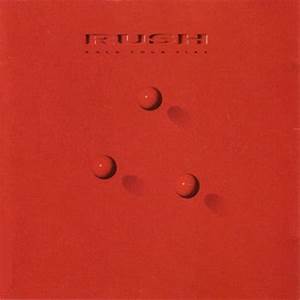
Thirteen years before the boys from Ireland refocused their attention and output back on the transcendent, the boys from Canada did the same thing on one of my favorite Rush albums, the oft-overlooked Hold Your Fire.  It might be a bit of a stretch to call this a Forgotten Gem, since it is one of the poorest-selling albums of Rush’s career, and thus it strikes me as more accurate to use this solid album to kick of a new, though related, series, Overlooked Gems.  In retrospect, some of the albums we examined under “Forgotten Gems” may have been similar stretches, but we are nothing at Redeeming Pandora if not flexible.  Anyway, though I speculated last issue if we might bring Forgotten Gems back, this present moment is calling for something else (though I am not unwilling to return to that series should it strike my fancy), and thus we turn to Overlooked Gems.

Hold Your Fire was created in 1987, and while it is often ignored as a whole, it has given us at least two memorable hits: “Force Ten” and “Time Stand Still.”  Like most people (other than the die-hard Rush fans), “Time Stand Still” was the main reason I acquired the album.  I was pleasantly surprised at the rest of the album.  The album is at a transitional period for the band for several reasons: notably it is the last of the “Mercury Era” albums, the beginning of a (short-lived) lighter lyrical output from Neil Peart (here and there), and the beginning of more electronic percussion sounds from Peart (and a new drum set).  It is also a much more pop-rock sounding album than most Rush albums (especially in light of later ’90s releases such as Counterparts and Test for Echo, which are predominantly very heavy rock albums).

In his “making of” snapshot entitled “Fireworks,” Neil Peart highlights many of the changes just mentioned, framing them and more in the general impetus within the band to experiment, grow, and improve their musical and lyrical range.  Sometimes growth and change work in a band’s favor (Achtung Baby), sometimes not (Concerto for Group and Orchestra).  Here, it works far better than most were likely expecting.  The optimistic turn of most of the songs, the pop/Asiatic/keyboard emphases, the gentler, softer feel for much of the album likely threw off much of the public.  So while it is somewhat understandable the initial reaction was bemused disappointment, no such response is warranted yet today.  For some of us, the leaning toward religious ecumenism and naturalistic lyrical underpinnings may detract from our enjoyment, but one never goes to Neil Peart for doctrinal verities.  We can appreciate the journey, the questions, the musical brilliance any way, and take their questions and leanings to the fullest higher place with our Biblical worldview (and aesthetic sensibilities) intact.

“Tough Times Demand Tough Talk Demand Tough Hearts Demand Tough Songs Demand”

“Force Ten” was almost an “afterthought,” Peart says.  Sometimes following those afterthoughts are choices of wisdom.  This is a great song.  It is also an ironic introduction to this album, as the lyrical impetus of the pre-chorus (whatever one calls the initial lines) does not presage an album of “tough talk.”  It’s a fairly encouraging, open-hearted album, as intimated earlier.  Additionally, though memory may mislead as sentimentality and nostalgia tag-team to override veracity at this moment, 1987 wasn’t all that tough a time, at least where I was living it.  Perhaps it was more difficult in Canada, though it is doubtful things were all that difficult for a band with such success (and dosh) as they.  Likely, then, it is not so ironic: as is their wont, Rush sings about timeless matters not kairotic hot topics.  The fire we are to hold is an eternal flame (easy, Bangles fans).  No matter our current circumstances, tough times do indeed demand tough talk, hearts, and songs.

The “tough talk” of the song is truly a litany of encouraging enjoinments.  Whether we are owners of “too-tender hearts” or toughies with “skin as thick as thieves,” we can weather the storms of life.  Life is not an unconquerable enemy, nor is it an unsolvable puzzle.  We can “look the storm in the eye” and be hurricanes ourselves.  The best way to do this is to be aware of life around us: “look in, look out, look around.”  Don’t be so mindful of yourself and your problems: care about others and their life struggles as well.

Some may be turned off by the potential Whitman-like “anything is viable” bent of some lyrics.  While Peart does say “be vain and smart, humble and dumb,” one forgets the helping verb from the beginning of the verse “can” — we can be these things, but that doesn’t mean we should be all those things.  If we are looking out and around, we won’t be destructively vain or dumb.  It is not a stretch to believe Peart prefers the “smart and humble” combination.  Similarly, the “savage grace” line of verse two adds to the quality of the song without promoting relativism.  Man is and likely will be noted for his “savage grace,” this side of eternity.  Man is capable of many things, good and bad, which is exactly what this song portrays.  But thoughts like wearing the “rose of romance” and embracing a joie de vivre likely lean toward living life fully and correctly, living a life of generosity and concern for others, even while the force-ten gales of life storm around us.  Our lives are not just for ourselves.

“Children Growing Up — Old Friends Growing Older”

It’s fair to consider this, “Time Stands Still,” the best song of the album.  Accurate, also.  Like all great works of art, its truth does not change but our experience of its truth increases and improves.  Another irony for this album, the desire to pause in a moment of time succeeds on one level, thanks to this artistic medium: we will be enjoying this song in some form (vinyl, tape, disc, digital, ?) for one hopes a long time (perhaps forever, if one’s desires for the way eternity shapes up come true).  So the song succeeds on one level, though we know the passage of time has a pernicious way of swallowing up all our temporal victories.

Of course, this song means more to us as we live out its lyrics.  When young, we are invincible, time seems to move so slowly, no one could possibly understand what we are going through … Heavens, but we are idiots.  But Peart’s point here is not to reflect upon the past (better we don’t that often, anyway).  Instead, knowing as we do now time is not nearly as lethargic as we want it to be, slow down and look around at now.  Enjoy the moments as you are living them, stop valuing the moments yet to come (that may never happen, and certainly won’t happen the way we intend them to) more than the moments here now.  Oddly, the call to stop and look around is likened to “some captain, / Whose ship runs aground.”  One would think a ship running aground would be a bad thing worth avoiding, and so the comparison appears to stumble a bit — until we realize the actions are not being compared but simply the situations, the effects: the captain isn’t going anywhere, now, all he can do is think and wait.  How much better for us it would be if we could get to the point of a life of contemplation without running the ship of our lives aground first.  (For another fine example of this point, see the best episode of The Andy Griffith Show, “Man in a Hurry.”)

This is unquestionably the best song on the album and thus needs no further comment or explanation from me.  Though, it certainly is a heck of a thing to think about my friends growing older.  Glad that’s not happening to me.

“Time Will Do Its Healing / You’ve Got to Let It Go”

The theme of “time” continues in “Open Secrets,” another solid song many will easily dismiss.  I say “easily,” only because many “fans” only like the songs the radio tells them to like (or whatever source of taste and popularity the independent thinking kids are hearkening to these days), not because it’s an album filler.  Like with so many of the good, solid Rush songs, it’s the sound of their music.  Peart’s lyrical talents are always a rollercoaster, but there is no doubting the musical supremacy of this power trio.  The lyrics of this song are on one level inferior to the two tour-staple “greatest hits,” and the basic idea of paying attention to those with whom we are, their needs, their value is a regular occurrence in the post-Mercury years (especially coming up next on Presto) and thus nothing unusual in the band’s oeuvre … but then comes the bridge.

This album is partly about time, partly about searching for meaning.  We have noted already the tendency toward ecumenism, but the bridge of this song is remarkable in its rejection of pure ratiocination: “I find no absolution / In my rational point of view.”  Even if the thought is limited by its context of “mere” social interaction and willingness to open our hearts to others, casting aside our pain of past hurts and fears of further scorn, and even if the only response is not “seek divine revelation” but “maybe some things are instinctive,” we should take what we can get.  That he is willing to acknowledge man’s reason alone will not solve all our problems is a good start.  That is one way to start building quality relationships, the kind that risk pain and share secrets.  It takes time.  We all have things of which we have to let go.  If we can, if we are willing, that is one way “You could try to understand me — I could try to understand you.”

“We Fight the Fire — While We’re Feeding the Flames”

You might be tempted to think this is the source of the album title, but it isn’t, not immediately.  Certainly the fire imagery (or motif, perhaps) contributes to it, making this a much more unified album than the casual fans who only want digestible radio hits will see.  “Second Nature” continues the potential for instinct begun in “Open Secrets,” but it is admittedly hampered by the threatening cynicism throughout the number.  Certainly the narrator has much to be righteously antagonistic concerning, and while he does a mostly impressive job of avoiding bitterness and sarcastic anger, a tinge of vitriol may discolor the song as a whole for some.  It depends what sort of mood I’m in, personally.  That’s usually why I like to listen to this album when I’m already in a positive, optimistic mood.  (See our “Death to Cynicism 2015” ad in this issue.)  The music attempts to buoy the song up to more than just irritated political antagonism.

One wonders, though, what the actual source of antagonism is actually under scrutiny.  Is it the absence of “voices” among the people?  Surely that has been remedied to some extent with the advent of the Information Superhighway.  Is it the “Too many captains / Keep on steering us wrong”? by which one suspects the leaders of the Free World making decisions one doesn’t like?  Which direction is “wrong”?  We aren’t precisely told.  Perhaps that’s part of the point: pick your own source of antipathy and fill in the blanks with it.  One tirade fits all.  Though, musically, it is a delightful tirade.

The cynicism rears its head quite boldly in what may likely be considered the tail end of verse two (unless it is pre-chorus two): the rejection of perfection (though, if it were perfection achieved solely by Franklin-like Enlightenment rationality, we could applaud it), the willingness to compromise for the sake of general amity (making the decade-later “Resist” that much more impressive).

The two choruses, though, may likely prevent the song from being outright cynical in the end.  We are “feeding the flames”; we are not “blameless.”  We are culpable, even if we didn’t start the fire (you don’t mind, do you, Mr. Joel?).  We may have inherited a messy world, but cynically complaining and laying blame while we walk around “without shame” belies our mistaken self-image.  The guilt we see in the mirror does not mean we are looking in someone else’s mirror: we have some ’splainin’ to do as well.  Being bitter makes the problem worse.  Pessimism, says Chesterton, comes from being tired of truth, not falsehood.  Slinging mud at mudslinging politicians doesn’t majickally make the world pristine.  Perhaps it’s an “open letter” not so the “powers-that-be” will see it but so we, the real powers-that-could-be will wake up, slough off our comfortable blankies of blamelaying and start fighting the fire without feeding it.  Fight it with compassion, understanding, humility.  (Is it too much of a stretch to translate the “second nature” of the song as a Biblical “new nature”?  That’s fine.  I’m limber.)

“The Point of Departure is Not to Return”

This jaunty little number gives us an optimistic perspective on life flying in the face of pure materialism, a growing undercurrent of the album, and while it has its flaws (which shouldn’t surprise us), it provides a great song, first and foremost (as “great” as a song of its ilk can be, sure), and a great collection of lyrics about which to have meaningful conversations.  Songs such as this boggle my mind — not of itself, of course, but that an album such as this could go mostly neglected and a band such as this could be denied entrance into a musical hall of fame for so long.

The opening of the song is as follows: “Basic elemental / instinct to survive / stirs the higher passions / thrill to be alive.”  A seeming jumble of contrary ideas, the verse continues: “Alternating currents / in a tidewater surge / rational resistance / to an unwise urge.”  We have seen already on this album both a call to rationality and a caution against uxorious devotion to reason.  Here we now have a call to balance.  The song is called “Prime Mover,” and while the opening lines intimate the eponymous mover is the Darwinian (and potentially Freudian) war against death, with forestalling death being the ultimate value and thus the “prime mover” of all humans do, the “thrill to be alive” sponsored by “the higher passions” surely cannot be a product of simply “trying not to die.”  The “higher passions” bespeak a life far richer and meaningful than the base materialism of Darwinian (or Spencerian) existence.  Admittedly, the “unwise urge” against which “rational resistance” fights could be a spiritual life — but if those “higher passions” are a good, and just being alive is not enough (and surely it isn’t, given not only the tenor of the entire album but Rush’s entire output), a “rational resistance” could not possibly be in favor of embracing solely materialism.  What good would “higher passions” be then?  Since, as the verses say, “anything can happen,” it would truly be “an unwise urge” to dismiss categorically the possibility of the miraculous, the supernatural, the divine.

Some may upbraid such an interpretation, especially in light of the chorus, which says, in part, “the point of the journey is not to arrive.”  Surely this is saying the end goal of life is simply to have a good life, right? and that isn’t in any way a Christian message.  Easy, now.  I’m not trying to foist a Christian message upon this song (as far as I can tell, consciously).  Even so, if the point of the Christian life were (using the subjunctive instead of the past tense; we are living in … never mind) — I say if the point of the Christian life were simply to “go to Heaven,” surely we would all be translated at the moment of justification anyway.  The point of the Christian journey is not (just) to arrive, either.  I don’t see a negative doctrinal frisson here.

Some may then chafe against the more overt deistic sentiments of the last verse.  Well, you may have me there.  Indeed, the song is called “Prime Mover,” not “The God Who is There.”  This isn’t a Dr. Schaeffer work.  Still, as with most of the album, it’s better than an outright rejection of spiritual things.  We can work with this.

Anything can happen.

“It’s Not a Matter of Mercy — It’s Not a Matter of Laws”

Undoubtedly the darkest song on the album (and definitely a top ten all-time dark Rush songs), “Lock and Key” honestly examines the evil within all of us.  The music, though, betrays the sinister elements of this song, being yet again another up-tempo, musically-pleasing number.  Really the song discusses the fact people almost never want to discuss: the destructive, anti-social, downright evil side we all have.  We would call it our “sin nature,” but Peart is not at that point here.  Still, that he is talking about it as if it’s a fact and (perhaps mildly) upbraiding all of us for keeping our badness under “lock and key” instead of discussing it, acknowledging it, and seeking a remedy is noteworthy.  Sure, we know the remedy, but it is difficult trying to share the remedy with people if they aren’t even willing to discuss or even acknowledge the existence of the disease.

I don’t think the line “Plenty of people will kill you / For some fanatical cause” needs to be taken as an assault against Christianity, especially since it is a true statement about so many “tolerant,” peaceful” groups of world denizens outside of Christianity.  Besides, since Christianity is true, it’s not a “fanatical cause,” anyway.

“A Spirit with a Vision is a Dream with a Mission”

Finally we get to the most direct source of the album title with the opening lines of “Mission.”  Underscoring Peart’s lyrical skill (which, yes, does at times fly afield), all this time we’ve likely been thinking “Hold Your Fire” is the typical “stop shooting bullets at those people” idea.  And while that sentiment has certainly undergirded a good deal of the album, in its general “promote peace and unity” sort of way, it is far more clever than that: we each have a flame, a unique fire of spirit, identity, gifts, talents, what have you — don’t hide them under a bushel basket.  No longer the consumptive devastating force, fire transforms into a transcendent symbol of optimistic hope.  “Keep it burning bright / hold the flame / ’til the dream ignites. / A spirit with a vision / is a dream with a mission.”  Truly an uplifting song, literally.

We are again cautioned against inactive, dreamless existing — another enjoyable current of the album advocating the “higher passions” instead of acquisitive materialism.  Additionally, Peart gives us an intriguing possibility the life of a dreamer, the passionate hopeful life of meaning and delight in the Realms of Gold, is only given to those who will make the most of it, who will truly enjoy it.  If such a vivid, vibrant imaginative life were given to the dullards, they would not be able to appreciate it or use it wisely — instead they would try to exchange it for the humdrum life of simply existing.  An intriguing and almost disquieting notion.  Don’t let this happen to you!

This may be the most musically diverse song on the album, which again highlights the importance of diversity and creativity — two ideas essential to a quality life for all of us and neither of which are antagonistic to unity or meaning.  Pursuing the “higher passions,” the gospel, the “finer things” as Brother Steve puts it, does come with a cost: “We each pay a fabulous price / for our visions of Paradise” warns Peart, “but a spirit with a vision / is a dream with a mission.”  No one ever said the quality life worth living would be safe and comfortable.  But unity, meaning, and quality are worth pursuing and fighting for all the same.

“How Can Anybody be Enlightened?  Truth Is After All So Poorly Lit”

Perhaps the album is so poorly received because the songs are quite similar.  We have here again another straightforward song enjoining us not to disengage from the social life of caring about other people.  Don’t hide behind excuses of “I have my own problems.”  Don’t dismiss the detrimental behavior of those we love with “it’s just a stage.”  Don’t excuse the popular voices of falsehood with “it’s just the age.”  We have a role to play, a responsibility to care for others with genuine empathy.  Don’t “turn the page” (the song’s title) and move on as if history and its forces are inexorable and individuals don’t matter.  Certainly we do, but we live better in community.  If life is indeed a powerful wind tunnel, we would certainly do better at surviving it together instead of alone.  Sure, you could shake your head at the line about truth being “so poorly lit,” as if Peart is refuting the light of the gospel and all that … but we are seeing in a mirror darkly, after all, aren’t we?  At least, again, he is not siding with the “light” of the Enlightenment and its outright rejection of divine revelation.  I told you this was a good album — good, at least, as a conversation starter on important things that matter.

“Somewhere in My Instincts the Primitive Took Hold”

I don’t understand why Geddy Lee regrets putting this song, “Tai Shan,” on the album.  It’s musically a lovely, calming song.  Sure, it’s a tribute to China — what’s so bad about that?  It does rebuff earlier songs on the album a smidge, advocating instinct … but, then again, most of the album has been about abjuring pure rationalism, so if there is a rebuff it’s against the willingness to give in to primal instincts, the instincts not of “Lock and Key” but of spirituality, the instincts of the imago dei, perhaps somewhat confused as it might be in this song in the thin air at the top of Mount Tai.  The only thing really “wrong” with this song is it’s too short; we want to hear the unique musical strains more.  Take this song for what it is, a good song about a positive spiritual experience.  Turn it into something later, after you’ve enjoyed and appreciated it for what it actually is.

“In a Driving Rain of Redemption the Water Takes Me Home”

“High Water,” the final song of the album, does have a pervasive “we evolved out of the water” sort of notion (or does it?).  Well, at least he’s not saying “we just came from apes.”  Again, our purpose here is not to try to transmogrify Peart’s lyrics into proto-Christian talk (though much of the album does tend to allow us to lean in that direction, as we have seen), so instead of trying to remake the song into what we want it to be, we’ll just take it as it is (or appears to be).

Looking at this last jaunty tune on the album, it draws many of the ideas of the album together: time, transformation, memory, social community and responsibility, the value of the individual — all come together in an optimistic conclusion.  The optimism again betrays its attempts to reconcile man’s supposed biological evolutionary history with the primal experience of “higher passions”: “We still feel that elation / when the water takes us home.”  If we are truly biologically evolved, why would returning to our primordial watery roots give us a positive feeling?  Surely Peart is not arguing for a sentimental homecoming feeling like returning to the home of our youth at Thanksgiving or Christmastime.  Darwinian evolution (biological, psychological, and sociological) demands we look at our past with contempt: we should be grateful we have escaped the water or the trees or the whatever.  Looking back at our earlier, lesser existence should not inspire elation.  So the song can’t be simply a call to align with and magnify biological or social evolution.

The song praises the paradoxical notions of a) the courageous explorative breaking away from the ancestral watery home and b) the redemptive benefits of returning to said ancestral watery home.  Water’s concomitancy with civilization is not a new concept, nor was it new when Langston Hughes wrote about it for his community almost a century ago.  Peart relates the communal connection of memory and water quite well in only a few lines, yet the tension of that paradox still remains.  All the lyrics about water itself breaking away from its locations, “springing from the weight of the mountains,” bursting from “the heart of the earth,” “flowing out from marble fountains,” on seashores or rainforest — every instance of water moving and escaping is positive, yet no mention of water returning to its source is mentioned, let alone praised.  Thus, statistically, the song praises leaving one’s home/source far more than returning.  So why is the refrain always about the greatness and elation of the water taking us home?

If the water is taking us home, the water is not, as initially seemed, itself our home.  Fair enough.  Throughout the song the water is lifting us up, the water rises (yes, it crashes and flows, too, but mostly it is moving up) and so does whatever is leaving the water.  Up is the dominant direction — but never in a biological, psychological, or sociological sense: it’s never about growing complexity or evolution.  If returning is up, then, away from the muck and mire of the earth, and it’s not the mountains, where else could “home” really be?  If “driving rain” is “redemption,” redemption must come from above, and since even the driving rain takes us home, home must be where redemption comes from — and surely it is not just the clouds!  Home is where redemption comes from. above and beyond Earth.

Well, what do you know.  I told you this was a good album.

Welcome Home

Thus our first exploration of an Overlooked Gem draws to a very satisfactory conclusion, even if we have stretched it more than Lee, Lifeson, and especially Peart intended.  Ever the optimistic band, Rush has given us a much more solid and enjoyable album than just “the one with ‘Force Ten’ and ‘Time Stand Still’ on it.”  Considering all the changes going on in their professional lives at the time, that they gave us a calming, musically-uplifting, thought-provoking optimistic album that encourages us to seek spiritual truth and abjure pure materialistic rationalism as the solution to life’s challenges is truly remarkable and worthy of far more appreciation on our part than the album and the band has received.  So go get your own copy and enjoy it, paradoxes and all.
Songs of Innocence, pt. 1: Ex Nihilo

Christopher Rush

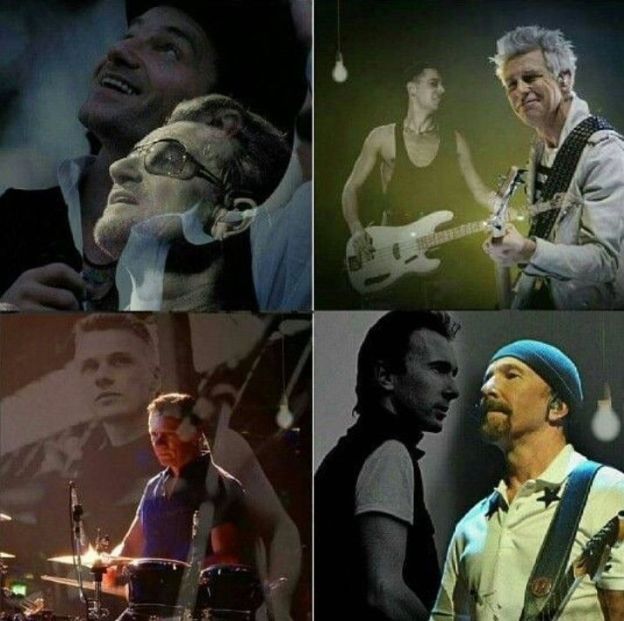
After a painfully long five-year wait, U2’s latest album, Songs of Innocence, burst on the scene like no album before (and possibly likely since).  For no rational reason, this upset a great number of people for a variety of self-serving reasons.  While we advertised an objective review of the album, we first need to examine the tempestuous piffle that arose about the album’s very existence and entrance into our lives.  Next issue in part two, we will examine the content of the album itself, certainly a much happier exploration.

Not being a mindless consumer erotically devoted to whatever soul-syphoning piece of technological pap advertisements and other minions of Beëlzebub tell me to worship with God’s money, I do not have a cellular phone or a tablet (yes, I have a computer, but it’s used mostly for the performance of my job and manufacturing beautiful things such as this issue, so I’m not wholly opposed to technology qua technology).  Yes, people I love have cellular phones and tablets, and that’s fine for them.  I know from personal experience and interaction they aren’t the mindless cyphers about whom Wordsworth, Johnson, Auden and so many others have written for centuries in the post-Industrial Revolutionary ages.  And certainly you aren’t like that, either.  You, surely, are not addicted to social media or screen fondling of any kind.  It’s them, really.  Those poor saps out there who need our pity and our love.  These are the, well, for lack of a less accurate word, imbeciles who ranted and groused and bloviated about Songs of Innocence appearing unbidden and at no cost whatever to them in their iTunes accounts and on their iPhones and on their iPods and on their iPads.  “How dare U2 put their new album on my device for free!” or words to that effect.  What a world.

I admit freely I have an iTunes account, and I even have an “old” iPod, so I am not trying to hypocritically decry the existence of these things in our lives.  If anyone needs a detailed explanation of the veracity of the topic sentence of the prior paragraph, perhaps we can address that in a future objective, calm exposition (similar to the calm, objective exposition we are experiencing together presently).  I have used my iTunes account infrequently of late, though I admit I have used it in the past for many things such as Intro. to Humanities and personal use in days gone by.  The only time my iPod sees any action is two-fold: a) as an alarm clock (so about 12 seconds a day) and b) when I need to go out and do yard work (so not very much).  I’m not bragging; these are simply the facts.  Like everyone else in the entire universe, when I am instructed to click on the “accept these terms” dialogue box with the option of reading the terms themselves, I click on the box without reading the actual terms.  Before you accuse me of being a “mindless consumer,” please know I don’t have a credit card saved on my iTunes or PlayStation account, so I’m not worried when the countless litanies of account hackings occur, nor am I all that concerned about whatever terms can do to me and my information.  I don’t post any pictures, I don’t have a “smart” phone (preferring, instead to try to be a smart person), and a comment from me on my Facebook page is a wonderfully rare as an album from Boston.  Or, until recently, an album from U2.  If any hooligans want my information, they are probably going to get it without me making it easier on them.  If you want to store bank accounts on your iTunes account, go for it.  The point at present, though, is those “terms of agreement” no one ever reads.  Apparently, one of those terms we all agreed to was letting Apple put an album in our accounts whether we wanted it or not.  You and I agreed to it.  Getting mad at something you agreed to allow happen does not say much for you (not “you,” of course, but those people).

A few issues ago, Rolling Stone (not the most reputable bastion of meaningful discourse or aesthetic opinion, of course) ran a mildly-intriguing cover story about U2 and this hullaballoo.  Adam Clayton, as is his wont, gave us the most helpful insight into the situation.  It was never U2’s intention to foist the album upon every single iTunes and iThis and iThat account.  The band simply wanted to make the album free for download to whoever wanted it.  It was all Apple’s idea to force the album unbidden into your account.  So getting mad at U2 for a) something that isn’t their fault and b) something you agreed to allow Apple to do in their terms of agreement to which you agreed without reading is puerility at its zenith (in this context, at least).  Here was U2, one of the greatest bands of all time, willing to give their latest, long-awaited album to the digital world for free, and much of the digital world responded with vitriol.  What a world.

Some people complained about the apparent “arrogance” of the band and its infatuation with media spotlight.  We have not heard from the band in 5 years!  The 360° Tour ended over three years ago.  If you people know of other appearances by U2 in any significant fashion since then, please let me know — I’d be glad to experience that.  Strange how the same people who own iTunes accounts, iPods, iPads, and other things complain about U2 “selling out” to Apple.  Take a moment and ponder the irony of such a situation.  Sure, the U2-loaded iPod a few years ago may have been a bit extreme, but would the response of an iPod loaded with Disney tunes have received the same backlash?  Doubtful.  A band that does not release music or appear in public until its members are satisfied with their album after over three years of dedication and tinkering and experimenting and soul-searching cannot accurately be labelled “arrogant” or “attention seeking.”  I’m sure they popped on some talkshow or event here and there, but certainly not anything credibly worthy of “arrogant” or “attention seeking.”

Some lesser musician-like people (Nick Mason does not fit here) groused U2’s giving their music away for free was an insult and detrimental betrayal to the hundreds of thousands of struggling musicians who have to sell their music because they aren’t rich and famous like U2, and by setting a precedent of giving their music away for free U2 has permanently damaged the marketplace and all consumers will demand free music forevermore.  First of all, “struggling musician-type person,” by opening your mouth in derision against U2 you have already done far more damage to your reputation than any action U2 could do.  Try to realize you will never be anywhere near as good as they are: your lyrics will be inferior, your musical strains will be inferior, you as an “artist” will forever be inferior to them.  Their actions do not devalue your music: your shoddy, sub-mediocre musicianship devalues your music.  I suppose the complainers in this category made sure they didn’t have any music files they “shared” from anyone and certainly never downloaded any files according to royalty-eschewing methods.  Complaining against a band’s generosity betrays one’s own absence of generosity, proving such complainers are quite likely in the “music business” for all the wrong reasons (perhaps that is too harsh: several of the wrong reasons, then).  I guess they never read Lewis Hyde’s The Gift: Imagination and the Erotic Life of Property.  If you haven’t read that one yet, faithful reader, I urge you to.

Some complained because Songs of Innocence is not revolutionary like Achtung Baby or All That You Can’t Leave Behind; some complained about U2 because they think U2 is old hat.  Well, you can’t please everyone.  A band tries to break away and experiment with new sounds, new feelings, new content, and the “ol’ faithful” are up in arms.  A band maintains its sound, its “tried and true” formulae, and the “ol’ faithful” are up in arms because the band is slacking off and regurgitating and repackaging old material (unless it’s AC/DC).  Is U2 “old hat”?  I tell you what.  U2’s tripartite métier seems to me a) making the world a better place through quality music and thoughtful lyrics, b) advocating universal justice and equal rights, and c) providing for people an enjoyable musical-and-life experience.  If these are “old hat,” the world does not deserve U2, even U2 for free.  If truth and introspection and openhanded generosity of spirit are old fashioned, then we are all in far more trouble than we think we are.

I have been eagerly anticipating Songs of Ascent for over 1,000 days, longer than Anne Boleyn was queen of England.  Out of nowhere, Songs of Innocence appeared.  For free!  11 new songs from one of the best bands of all time.  For free.  11 ultra-personal songs of soul-bearing, openhanded generosity.  I don’t need another Achtung Baby or something “revolutionary.”  A new album from U2 is revolutionary enough.  And I didn’t have to pay for it.

Dear world: U2 has given us a wonderful gift.  As we shall see in part two, it’s also a very good album.  Don’t prove your utter undeserving worthlessness by complaining about it.  Maybe that was too harsh.  I take that back.  Don’t be lump.  No more cynicism.  Be grateful.  Be thankful.  Be gracious.

Thank you, U2.  I, for one, appreciate what you have given us.

Forgotten Gems: Appendix 2 – To Greatest Hits or Not to Greatest Hits

Christopher Rush

Had We But World Enough, and Time…

We would have dallied with Heartbeat City by The Cars and perhaps Savage Garden by Savage Garden and quite likely Machine Head by Deep Purple (which I listened to essentially non-stop this past summer) … and probably a few more forgotten gems of days gone by.  But, as we know by now, this exciting phase of our journey together is drawing to a rapid and not necessarily premature close, so we only have time for a few more thoughts on this and that.  One of the more important things to consider when entering the musical section of the Realms of Gold is whether to acquire or at least dally with the many diverse incarnations of “greatest hits” albums, or should one simply embark on a systematic, chronological listening of a band’s output in the order in which it first occurred.  As with most issues worth discussing, it is not so simple a decision.

To Greatest Hits

Some bands, even the best, have so much output it may be in one’s best interest to hunker down with a greatest hits volume or two for a significant period of time, especially if one is a casual fan.  Perhaps the best example of this is The Beach Boys.  I certainly don’t mean this as a derogation to one of the greatest bands of all time.  I’m in the process of acquiring all of their albums, but such is not a task for the layfan.  Listening to their regular albums is an eye- and ear-opening experience, not necessarily always in a positive way (who knew Brian Wilson felt that way about vegetables?).  Part of the issue, as we said, is the voluminous output of the band: not every album can be Pet Sounds, and not every song can be “Barbara Ann” or “Good Vibrations.”  A very understandable nightmare is being stranded on a desert isle with only “Fall Breaks and Back to Winter (W. Woodpecker Symphony)” to listen to.

If one only gets a single- or double-disc greatest hits from the Beach Boys, one will most likely miss out on some rather enjoyable tunes, such as “Do It Again,” depending on which greatest hits collection one gets (the Beach Boys have several).  Yet, if you do get a two- or three-disc mini-set of greatest hits, you will get most of the songs you want to hear from them on a regular basis.  It will certainly save a good deal of money, especially since their entire oeuvre is extensive.  Admittedly the recent re-issue series have made it more cost effective by doubling up their albums, though many of them are becoming out of print, so it still remains a bit of a challenge to get all the albums.  Thus, for most people, getting some Beach Boys greatest hits will more than suffice.

Another potentially good example of bands for which a greatest hits collection would suffice is at the other end of the output spectrum, such as Guns N’ Roses.  Their output is not that huge, compared to a number of popular bands, so acquiring all of their work would not be nearly as expensive.  The question, though, is “do I really want to own all GNR’s material?”  For most of us, the answer is most likely “no.”  Sure, we would enjoy having ready access to a couple of their songs, but most of their regular albums are replete with songs we wouldn’t want to hear once, let alone multiple times.  Thus, for a band such as GNR, their greatest hits compilation is a grand solution, especially as it also collects a number of non-album rarities one would like to have but would have great difficulty in cost- and time-effectiveness tracking down individually.

A third reason to get a greatest hits album is perhaps the most irritating, especially to fans who already have the entire output of their favorite band: sometimes a band (or their o’erpowering contract holders) will release a new song, a variant mix, or something not-yet-released only available now with a dozen or so songs you already have, likely in multiple formats.  This is rarely enjoyable for the die-hard fan, but it could be an ideal place to start for the newcomer to the band.  We are living in an age of re-releases, often with previously unreleased “bonus” material, and though this can get expensive, it is a good test for one’s level of fanaticism.  As of this writing, I have all the recent U2 re-release anniversary collections … except for the Achtung Baby sets.  I’m still waiting on that one, thinking it would be better for a Christmas gift than a self-purchase.  Some fans, though, may intentionally reject getting a “greatest hits” album from their favorite band just to get one or two new songs, especially since they aren’t “greatest hits” in any real way.  Certainly my least favorite greatest hits album I own is Collective Soul’s 7even Year Itch, which I acquired simply because it had two new songs not available anywhere else (at the time).  Considering my great affinity for Collective Soul, one might find this surprising, but we shall discuss that in a moment below.

In sum, a number of good reasons exist why one should consider being satisfied with greatest hits collections: immediate access to the best music of a band’s output too numerous to collect in its entirety, immediate access to the best music of a band’s output too dissimilar to your general tastes to enjoy more than what is generally accessible, and the possibility of getting a good start on a band “new to you” with some additional bonus material you wouldn’t find in the basic album releases.  As the introductory title of this examination intimates, our time in this present incarnation is intimidatingly limited — we have to make the most of it while we can.  Committing to a number of bands’ entire outputs can strain one economically as well as relationally, since so many good books are out there to be read, so many good games out there to be played, and, oh yes, time with Jesus and your family.  Contenting oneself to what can usually rightly be called “the best” of a band’s work can be the right solution.

Not To Greatest Hits

On the other hand, life’s brevity does not necessitate we settle for others’ opinions or conformity to the mainstream herd-like acquiescence.  Radio popularity is not innately inimical to quality music, but neither is it in any real way a meaningful standard.  A significant amount (if not most) of the best songs in the history of the world would not fall under the penumbra of “radio hit.”  Some publically funded radio stations still play lengthy classical numbers, and some usually late-night radio hosts (who have achieved some sort of fame in other arenas) tend to delight their cultured audiences with “deep cuts” and extended tracks, but neither of those are the issue here.

Sometimes you may hear a new song on the radio that is actually good; sometimes you may hear a good classic (of liberal denotation), so the radio is not always a waste of time, but the increasing sway of the radio and its dictatorial hegemony has been a significant deterrent to the dissemination of quality music in recent decades.  Perhaps we are in the waning throes of such a sway, as new media outlets are continually forcing once seemingly-implacable forces (cable television, radio stations, periodicals, the motion picture industry, and especially the increasingly outmoded “hard copy” home artifact such as an actual compact disc or even digital video disc) to rethink not only their strategies for success but also their very survival.  In an information age characterized by streaming and clouds and digitization, he who controls the access to information (or music selection) will have increasing control over aesthetic direction.  Perhaps the radio will no longer be king … but in any event, someone else will.  Do you want to be content with accepting whatever “they” say is a band’s best music?  Can you not judge for yourself whether the popular numbers are really a band’s best numbers?

If you are really interested enough in a band to actually pay for their music (admittedly, much of what I say here will make no sense to anyone under the age of 24), why not go straight for their output in the order in which they created it?  See how they developed musically and lyrically; see what influences affected their styles and attitudes with each successive album.  Not only will you get a better understanding of a band you claim to like, you’ll also have fewer duplicate tracks than had you started with a greatest hits album and worked backward.  Additionally, you will discover potentially numerous songs you enjoy, regardless of whether they are heard over the airwaves or selected for greatest hits consideration by companies most likely equating economic prosperity with aesthetic greatness, which we all know is utter shash.

A moment ago, I mentioned my irritation with Collective Soul’s greatest hits collection.  As I said, the fact I had to get 10 songs I already owned in order to acquire two new songs that aren’t even “greatest hits” was quite frustrating.  Loyalty to the band won out, but the irritation still exists.  Similarly, U2’s second greatest hits compilation, The Best of 1990-2000, had new songs written and released in 2002!  I was glad to get them, but I would have rather gotten what the title indicated, their greatest hits during that period of time, and acquired the other songs in a forum with even more otherwise-unreleased material.  Returning to Collective Soul, my main frustration with that collection is the jarring nature of the tracks in the order on the disc.  To me, each Collective Soul album is a cohesive unit.  I’m not saying they are all concept albums, mind you — I’m simply saying each album is a unified whole, with a beginning, a middle, and an end.  To rip a few songs out of context and shuffle them with songs from other albums, jaggedly traveling back and forth in time and style, is not as enjoyable to listen to as the entire albums.  This may be a personal issue, considering my great affinity for the band and their music, but it is an important issue worth considering when pondering whether or not to pursue a band’s greatest hits collection (especially as sometimes the versions of the songs you really want are non-traditional renditions without any warning whatsoever).

Thus, settling for a greatest hits album is not always the proper choice.  For a band in whom you have genuine interest, delighting in their entire output in the order in which they created it and grew artistically is definitely a better choice than settling for a statistical assessment from an Entertainment Finance major whose main criterion for a good song is revenue (no offense to the business majors out there).  If you are going to spend time with a band, why not be a dedicated fan and really delight in what the band has to offer, especially if it is a band whose lyrics you don’t have to blush over or skip when grandma comes into the room?

There is Always Time for What Matters

It’s not a simple “yes” or “no” question after all.  Sometimes it’s a good choice to go with a greatest hits album; sometimes it’s better to invest in entire albums.  When I eventually got into music listening/collecting, I did both for some bands.  Naturally, I started my Queen collection with their double Greatest Hits I and II — nothing wrong with that.  But now’s the time to move on to their entire history.  On the other hand, I’m quite content with my Billy Joel greatest hits albums (and River of Dreams).

Certainly we are not arguing for relativity in musical quality or aesthetics.  Beauty and Art are transcendental values wholly objective and not in any way subjectively constructed.  Beauty is not in the eye of the beholder.  Instead, we have an issue in which context is king.  Because “good music” is not relative, some bands are better than others.  Some deserve more of your time than others.  Some “great bands” can be easily condensed to one, two, or three discs of greatest hits without much significant loss.  Some “one-hit wonders” have albums that deserve more attention than most people are willing to give them (e.g., The Dream Academy created a great number of enjoyable songs far beyond “Life in a Northern Town”).  This way, you can discover a great number of “forgotten gems” you will treasure all the rest of your days.  Music is an integral part of a quality life.  There is time to find the bands and music you enjoy.  There is always time for what matters.

Forgotten Gems: Appendix 1 – 1995

Christopher Rush

Half a Score and Seven Years Ago…

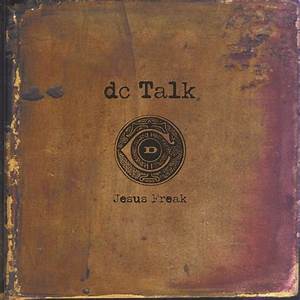
It’s not true that I don’t like Christian music.  If you read last year’s series on forgotten musical gems, you delighted in some of the most truly Christian music produced in recent memory, regardless of whether the albums were candidates for Dove Awards.  I enjoy Christian music.  Like all intelligent beings, however, I don’t like things because of their labels but because of their intrinsic merit (and/or potentially their symbolic merit, given the situation).  We have already bemoaned elsewhere the general vapidity of what passes for Christian music in popular circles today, so we certainly need not recapitulate that theme here.  What is worth noting (as we continue our year-long focus of revisiting old friends and tying up loose ends) is the high-water mark of Christian music: 1995.  In addition to the beloved Michael W. Smith album I’ll Lead You Home, 1995 was the year that gave us perhaps the two most important and best Christian albums in the modern musical era: dc Talk’s Jesus Freak and Jars of Clay’s eponymous full-length debut album.  Though they were both released late in the year and didn’t start amassing their widespread worthy acclaim until essentially 1996 (the summer we heard those albums nonstop), 1995 was the year the modern era of Christian music began.  Yes, Sandi, Amy, the Steves, Keith, and Michael (and Carman and Petra and Psalty) had been doing great stuff in the ’70s and ’80s, but their work had rarely travelled beyond the boundaries of in-house Christian listening circles.  Not to say that non-Christian listening audience acceptability is a requisite for good Christian music (often that is a sign of the opposite), but these two landmark albums in question here are an obvious demarcation point in the quality and direction of contemporary Christian music.  When I say “quality” I am not saying what came after these albums were necessarily better, I am saying they became the new standard to which all that has since come has been and should be judged.  If that is not the case, then they are definitely worthy of being considered forgotten gems.

Jars of Clay

Most of us can agree had Jars of Clay done a Harper Lee and not released another thing after this album, they would still have cemented their status of “mandatory listening.”  Upon first listening to this album, opening with “Liquid,” one is immediately struck with the unique Jars of Clay sound.  What Emily Dickinson did for poetry, Jars of Clay did for music — no one can copy it because it is truly unique.  Musically the album travels a diversity of tonalities and moods, yet somehow they are all recognizable as Jars of Clay.  It’s not that they do anything really “groundbreaking” technically.  I’m not saying they invented backtracking, overdubbing, or things like that.  I’m saying it’s a great album with a distinct, unmatchable sound.

Since this is something you probably have access to, and is only “forgotten” in the sense you haven’t thought about it for a while (which, come to think of it, is exactly what “forgotten” really means) — perhaps in contrast to many of last year’s “forgotten gems” which may have been entirely new to you — we need not dwell on the particulars of this or the next album too much.  You probably remember the experiences and feelings of where you were when you first encountered Jars of Clay.  As mentioned already, the opening sounds are arresting: part synth, part medieval chant, part deceptively pop — I dunno … it’s just Jars of Clay.  The lyrics of “Liquid” are likewise deceptively simple: repetitive, yes, but true.  “Sinking” continues the mood and appreciation: we are finally listening to something fresh, something true, and something better than just “contemporary Christian music.”  Obviously “Love Song for a Savior” is a top ten (or so) greatest Christian song of the 20th century.  Those poor saps in the secular world didn’t know what they were doing when they played it on radio stations and malls the country over (just like “Flood”).  That’s fine.  People in the kingdom of darkness usually don’t know what they are doing (but we shouldn’t make fun of them for it).  It made soundtracks all over and deservedly so.  Three songs into the album, three distinct sounds, three remarkable demonstrations of musical skill and devotional precision — this is what Christian music is supposed to be.

“Like a Child” is likewise an enjoyable and encouraging and challenging song.  No one is going to stop the album when this comes on.  Same for “Art in Me.”  It helps remind us of Ephesians 2:10 but not in a pedantic way, which is just what Christian aesthetics should do.  By the time we get to “He,” we think we have the “Jars of Clay sound” down, and though the song doesn’t do anything to change our growing impression of who they are, it expands our awareness of their range of topics.  They had an ability to sing about topical things as well as transcendental things in a way that made it all important and worth listening to, even if the subject is one we would normally dismiss in anyone but our favorite artists.  Some consider it the best song on the album (of course, there are those who say that about every song); some forget it exists — but it’s there.  Don’t skip it.  The extended outro is a gripping yet comforting reminder of who God is — not in the most profoundly intellectual way, perhaps, but this is a musical album, after all, not a systematic theology monograph.  “Boy on a String” is a great reminder of two important things: 1) Jars of Clay is a musically diverse band, and, more importantly, 2) they are here to worship God more than entertain us — that they worship God in a way that also entertains (and challenges and motivates) us is a nice bonus, really.

“Flood” may have been most people’s first experience of Jars of Clay, and that’s just fine.  Hearing it on what the kids call “secular radio stations” was a bizarre experience, but I don’t think (if memory serves, which it may not do in this instance) I heard it over the Dubuque airwaves before I heard it toward the end of the album in the kitchen of Lake Geneva Youth Camp.  The backlash against Jars of Clay for having a “crossover” hit is inscrutable to me — what part of “in the world but not of the world” is so difficult to grasp?  All of it, yes … I know.  But it shouldn’t bother us when others also enjoy hearing a song by a Christian musician — it’s not like the message or authenticity of the song or artist was compromised when they wrote it.  They weren’t pandering.  They were just making superior music, like all Christian artists should be doing.  “Worlds Apart” is possibly the finest aesthetic experience of the album, which is saying a great deal, all considered.  It asks questions we often ask (with a haunting musical accompaniment we usually imagine for ourselves anyway).  “Blind” is a good album closer, despite being musically unlike most of the album.  Again we are treated to the diversity and skill of Jars of Clay’s musicality.  It is a calming, mellowing conclusion (before the secret bonus conclusion).  “Four Seven” is a good bonus, a more up-tempo “by the way, this is who we are and why” secret ending to a top-notch album, all the more remarkable for being a debut album.

Now that you have been reminded of an album you used to listen to with great regularity, I suspect if you were to dig it out again and give it another listen you would be pleasantly reminded why you spent all those hours listening to this exquisite album in the first place.

Jesus Freak

You put this in and you think … wait, is this dc Talk?  You check the jewel case and realize yes, yes it is.  The new and improved dc Talk.  If you need to think of it in these terms, it was the band that made tobyMac happen (does that help?).  Hopefully you have a good working memory of this album and have only slightly forgotten it, so little needs be said about it here.  But when does that stop us here at Redeeming Pandora?

“So Help Me God” is arguably not the best song on the album, but it does give us a good dose of the new sounds and attitude of the band — despite all the times we listened to Free at Last, Jesus Freak was, frankly, a welcome relief and definitely a step toward full maturity for the band (perhaps realized on Supernatural).  “Colored People” was another good song, far more musical and intelligent than a lot of their previous album.  It wasn’t my favorite song on the album, but listening to it again now, the musicality of it is refreshing.  “Jesus Freak” was probably my least favorite song, perhaps because it seemed to be trying too hard musically to be hip.  It was too much like Free at Last for my taste — and I enjoyed Free at Last.  The guitar solo also was not pleasant to listen to — and this is coming from a guy who enjoys a great number of Angus Young guitar soli.  Part of my disfavor was the term “freak,” most likely.  It was part of that whole “the term ‘Christian’ is blasé, now — we need to be fresh and hip for a new generation” movement that did more harm than good for the church.  Without trying to sound hubristic, I knew it was shash from the beginning.  I get the basic sentiment of the song, what it is intending to say: “don’t be afraid to be a Christian — reputation is less important than piety.”  Yes, I get it (and got it even then).  But being devoted to Christ is not “freakish.”  The world was created by and intended for subservience to God — it’s those who reject that that are the freaks.  So for me this is the low point of the album (not counting “Mrs. Morgan” and the “reprise” later).  Others lapped it up like syrup on pancakes, and I was fine just letting that go.

Unquestionably, though, one of the real treats of the album is the fourth song, “What If I Stumble?”  That is a great song from beginning to end, even if the beginning makes you think your cd player has skipped to a Seals and Crofts album.  The sentiment is still powerful, even today (hopefully that’s not a sign of lack of spiritual maturity).  dc Talk next takes a once-popular song, “Day By Day,” from a lackluster musical, Godspell (no offense), and makes it interesting and enjoyable.  “Between You and Me” continues the atmosphere of greatness.  Critics look at this and pick on its lyrical simplicity (again missing the entire point of the worshipful atmosphere).  Certainly I’m in favor of intellectual profundity (you have been paying attention these three years, right?) in musical worship and doctrine, but sometimes lyrical concision performs that even with a “simple” hook.  Repentance begins with a simple act of realization and confession of one’s wrongdoings — often with a simple declaration as repeated here.  “Like It Love It Need It” is a better song than is usually accredited — give it another listen and hopefully you will agree.  Even though it says rock-and-roll won’t save you in a rock-and-roll song, it’s not really ironic, since none should be expecting rock-and-roll to save them.  Part of the success of the song is its critique of self-righteous Christianity … and we all know there’s enough of that around.  Present scholarly journals excepted, of course.

If I say to you “In the Light,” would that be enough to cause you to dig out your old Jesus Freak album and listen to it again?  I know it would for me.  Don’t feel bad for listening to this song an average of five times an hour for the rest of your life.  It is clearly the apex of the album and evokes genuine emotion every time you hear it.  I, too, am still a man in need of a Savior.

“What Have We Become?” is a not-so-subtle critique of contemporary Christianity and rightly so.  It is strong but not harsh, penetrating but not pejorative.  Musically, it is one of the better selections on the album, showing off again the great decision of the group to do real music this time around, singing well and not just rapidly speaking lyrics at us with electronical backbeats.  “Mind’s Eye” is another solid song, blending musical skill and intelligent lyrics.  “Alas, My Love” ends the diverse album with another new sound: a proem of sorts, finishing up with a solid musical outro both eerie and energizing.  Give it all another go.

That was a Year

I can’t prove any cause and effect, but after that came Bloom by Audio Adrenaline (probably made before the two albums discussed) and Newsboys’ Take Me to Your Leader in ’96 (though some would say their Going Public in ’94 was better — let’s not argue).  ’96 also saw the debut of Third Day.  MercyMe was just starting out and certainly owes a great deal of their success to the albums of ’95 (and ’94 and ’96, sure).  The more recent bands the kids seem to like also owe a great deal to these albums: your Casting Crowns, your Switchfoot, your … well, frankly, I would just embarrass myself to guess as to what the kids are listening to these days — let’s just say the whole positive, encouraging crowd owes a great deal of its ontology to Jars of Clay and Jesus Freak.  1995: now that was a year.  Go dig these albums out of your garage or wherever you keep your ’90s memory-bilia and remember and re-enjoy a couple of foundational forgotten gems.  You may even realize they are much better than the provender being offered to you today as gourmet fare.

Forgotten Gems: Seventh Sojourn

Christopher Rush

Ending is Better Than Mending

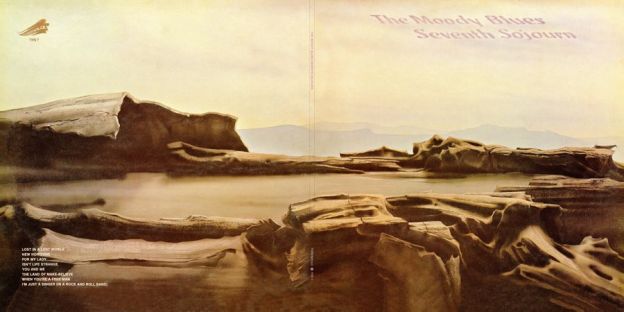
No, not really.  But this does seem like a good place to finish our nearly year-long journey through some elite-level forgotten gems of the musical realm with an appropriately titled and themed album from one of the most underrated bands of the twentieth century, The Moody Blues.  Adaptability is not a sign of weakness: it is a sign of strength, especially when it is not Vichy-like.  The Moody Blues survived the musical fads and fashions of more than four decades, which is something only a select few bands can say with anything remotely resembling self-respect.  Sure, they have had line-up changes over the years, since their main reconstruction in ’66-’67, but other than U2, who hasn’t?  Their creative hiatus after this album allowed the band to grow in better ways than numerically, and we are much richer for it as listeners, with their solo and duet works as well as the great output from ’78-’03 (not to mention all their live shows and albums and compilations in the last decade), including my two favorite Moody Blues songs, “Your Wildest Dreams” and “I Know You’re Out There Somewhere” (though, since the latter is a sequel to the former, perhaps we could call them two parts to one ultra-elite magnificent song).  The band clearly needed and benefitted from a break after this album, just like we all need a break after this school year and season of fantastic journaling.  Even so, this album is a great album from beginning to end, with no real weak links (despite what some people say about “When You’re a Free Man”).  Though tensions were high and emotions were frayed, The Moody Blues produced some of their best work here, and we should always have Seventh Sojourn handy in our music playing machines (whatever they look like in your home and/or automobile).

“Lost in a Lost World”

The album, demonstrating its over-taxed circumstances of construction, begins with a borderline pessimistic song, though it gains a great deal of optimism for most of it, and this song is more accurately disconsolate than sheer pessimistic, since this opening number at least recognizes the potential and only source of hope.  “I woke up today, I was crying / Lost in a lost world” — that’s about as disconsolate as any of the songs we’ve explored this year.  In a sense, though, it is how we should react a fair amount of the time as Christians: “So many people are dying / Lost in a lost world.”  It’s true.  The world is full of people “living an illusion,” whether it is tethered by racism, classism, or just generic atheism.  Revolution is not the answer; it’s just another threat, “another form of gun” used to do wrong unto others what was wrongly done unto them.  Mike Pinder, fortunately, points us to the way out of this mess: “Love will find us in the end … / We’ve got to bend / Down on our knees and say a prayer.”  Genuine communion with spirituality is the only way out of this physical mess, since the mess is not physical in origin: the ultimate problem is spiritual disharmony with God, and thus with Love and Reality.  The music throughout the song maintains the disconsolate tone, with its march-like syncopation.  The music feels like it is a band playing the wrong kind of venue, sort of like the concert band is forced to do the parade instead of the marching band.  Things are out of place, sounds are out of place (without being discordant or harmonically off).  Even the hopeful bridge can’t escape the overbearing music, since the people are not yet where they need to be, even though salvation is possible and near.  Sometimes songs don’t have to be happy to be worth hearing (and heeding).  “Lost in a Lost World” is one such song.  Mike Pinder’s lyrical and musical contributions should likewise not be forgotten in the great history of The Moody Blues.

“New Horizons”

“New Horizons” is a quintessential example of The Moody Blues’s ability to create complex songs.  We knew that from the very beginning, with Days of Future Passed, but they never lost that possibly-genius ability.  The lyrics are fledglingly optimistic, to neologize for a moment.  Justin Hayward presents us with that painful moment of transition during the ending of one phase of life and the beginning of something new and better, yet still experiencing the lingering memories and sensations of mistakes made and regrets unforgotten, coupled with the bolstering hope of the good memories and sensations available to provide future comfort when the other sensations have been accurately accounted for, quantified, qualified, and compartmentalized.  It’s the “someday” line/word that evokes the most emotion, I think.  He knows (not just thinks or guesses, he knows) he will “find my own peace of mind” — there will be comfort and love and joy and contentment to be experienced.  He’s “never going to lose your precious gift” (the “your” being the lady love he has to leave, most likely, or whatever situation in life on from which it is time to move).  It will always be with him; he is “beginning to see” what this new life will be; he will find that peace of mind … someday.  The music mirrors this borderland realm — it is always trying to move forward, it is very willing to do so, but it is not fully prepared to get there just yet.  It’s a bit difficult to explain — listen to it and find out what it’s much better than can be accurately described here.

“For My Lady”

Flautist Ray Thomas has created quite the impressive sea shanty with “For My Lady.”  I’m not certain he was going for a sea shanty with this thoroughly beautiful song, but he did it.  Though this and “New Horizons” were written lyrically by different people, they form a good pair on this album.  “For My Lady” embraces the outright gentleness and peaceful resolution to life’s changes and challenges not fully attainable in “New Horizons.”  It’s certainly one of the most optimistic and encouraging songs in my admitted limited musical experience: “Oh I’d give my life so lightly / For my gentle lady / Give it freely and completely / To my lady” says the sweet chorus.  Unlike the current trends of mixing lyrics with antagonistic musical accompaniment, “For My Lady” is both lyrically and musically sweet (not in a syrupy way, either — not that there would necessarily be anything wrong with that if it was).  Not surprisingly, the flute dominates the melodic line and musical interlude, which fits well for the ideas of the song: “Set sail before the sun / Feel the warmth that’s just begun / Share each and every dream / They belong to everyone,” says the final verse.  Admittedly the flute is associated with rather shady characters in myth and lore around the world, but the archetypal notion of the flute, the warm summer day, sailing the breeze-driven sea, dreaming the day away (for a time, not for ever), being in love — a selfless, self-sacrificial love, and thus Biblically accurate — all make for a superb song.  More songs should sound and speak like this.

“Isn’t Life Strange?”

Furthering the album’s increasingly overt theme of questing for identity, understanding, and finding one’s place in the world, John Lodge’s first of two songs on the album (strangely enough, the only two single releases from the album, this and the closing “I’m Just a Singer…”) continues to ask penetrating questions: how do we know who we are? who are we supposed to be? how does the passage of time connect to our understanding of who we are?  Though these are not the questions he asks verbatim, they are essentially what his lyrics imply: life is strange, love is strange, both are hard to understand yet both are essential.  There is a sense of the return to despondency with this song, as the narrator seems to be lamenting lost love reminiscent of “New Horizons” in contrast to the optimistic togetherness of “For My Lady.”  Even so, the chorus remains optimistic in its zeal, supported by the musical uniqueness of its accompaniment: “Wish I could be in your heart / To be one with your love / Wish I could be in your eyes / Looking back there you were / And here we are.”  The force of the music makes me think there is great hope underlying these potentially melancholy lyrics.  The verses add to the theme of redeeming the time: “Isn’t life strange? / A turn of the page / A book without light / Unless with love we write,” says the first half of verse three (by my count).  Life is meaningless without love — as this has been one of the main themes of the entire run of Redeeming Pandora, it’s nice to realize we agree with The Moody Blues.

“You And Me”

With a flip of the record, we realize what we thought initially was a tone of despondency was in fact simply the main theme of the album: The Moody Blues are simply asking the questions we are all asking about life, its purpose, its meaning, and they have been telling us all along they have just as few answers as the rest of us have.  They are no more despondent than we should be — optimistic, in fact, as we should be.  Just as we saw in “Isn’t Life Strange?,” questions abound … but so, too, does love.

The Moody Blues are certainly a product of their time, even though a vast majority of their great songs have lasted in an ageless quality (with or without the synthesizer) because of their timeless content.  “You and Me” is a fine example of how The Moody Blues can transcend their time while being very much dependent on the time: without any coaching, those of us who may have missed the Nixon Administration (and those flanking it) would not have been able to tell this is a protest song against the Vietnam War.  The opening line, “There’s a leafless tree in Asia,” sounds innocuous enough to me, leading me to think about the general ecological concerns people have, especially since the opening stanza is replete with geological thoughts: “Under the sun there’s a homeless man / There’s a forest fire in the valley / Where the story all began.”  Experts tell us, though, the opening line alludes to Vietnam.  Allowing the accuracy (not to be precious) of such an interpretations, as stated before, the song has outlived its contemporaneity and transformed in the intervening years to be a still-relevant cry against general ecological and sociological mismanagement (to put it in overly-kind and apolitical terms).

The chorus of this impressively up-tempo protest song disabuses the interpretive misalignment upon which most of us operate (at least through our initial listening-through of the album): “All we are trying to say is / We are all we’ve got / You and me just cannot fail / If we never, never stop.”  They aren’t trying to plunge us into despair by claiming we are all lost in a lost world; they aren’t telling us to forsake the past and seek new horizons.  They are just “Singing all [their] hopes and dreams.”  They are just as mystified about life as the rest of us.  Of course, as Christians, we have a stronger grasp on purpose and direction, and though it is somewhat painful to disagree with The Moody Blues, we know we are not all we’ve got, which is the quintessence of why we don’t have to be disconsolate in this lost world — because we once were lost but now we’re found.  The encouragement they offer (“never, never stop”) is potentially futile unless it is coupled with alignment with Ultimate Reality, with the God Who is Love.  Once we have done that, and the “you” becomes “You,” this song becomes as authentically Christian as anything out there (perhaps more so).

“The Land of Make-Believe”

I like this song.  Maybe I’m in the minority, but that’s quite all right with me as you know by now, if you’ve read other articles in this very issue.  Since we are not here to spiritualize things, which we all know is bad hermeneutics (you are missed, Dr. Dave), it wouldn’t do any good to say “they are really singing about Heaven and the life to come.”  It’s possible The Moody Blues are just imagining a utopia in which “heartaches can turn into joy,” since that doesn’t happen in this present incarnation as much as we would like.  Regardless of whether they are truly singing about Heaven or just a fairy-tale land reminiscent of the underworld in Final Fantasy IV, the fundamental message of the song is true: “Love’s the only reason why” we exist, “Only love will see us through / You know what love can do to you.”  This life is all about love, indeed.  Perhaps the “make-believe” of the title is not as serious as it at first seems, and they are ironically reminding us “it’s only make-believe because not enough of you live this way yet.”

“When You’re a Free Man”

Like the previous song, Mike Pinder’s “When You’re a Free Man” imagines a utopian society, but the musical accompaniment this time makes us think we are in a sort of Kafkaesque utopian society (if we can use such a word without being cliché … which isn’t an adjective, anyway, people).  The song is about the quick passage of time, but the music is slightly slower than if you paused the album (but I kid The Moody Blues — as I said earlier, I like this song, even if most think it is the weak link on the album).  We shouldn’t be too surprised this song is another tribute to Timothy Leary, though why The Moody Blues are so keen on referencing him is somewhat beyond me.  Fortunately they seemed to have outgrown him by the time they regrouped after their hiatus following the album under present examination.  Again, we don’t want to spiritualize the album, and we would be straining that notion if we tried to “rescue” this song too much from its original intention, but again, if something is true, it’s true, regardless of who originally said it or why.  When The Moody Blues enjoin us with “Let’s be God’s children and live in perfect peace,” it’s still a pretty excellent idea (if you’ll allow the expression), even if they meant it not as well as we would have liked.  I’m rather skeptical we will see Timothy Leary again when we are all free from the sin which so easily entangles us … but I wouldn’t be surprised if we are still singing The Moody Blues songs then.

“I’m Just a Singer (In a Rock and Roll Band)”

One last time (before a five-year hiatus), The Moody Blues remind us they are no experts on life — they are just a rock and roll band.  Don’t look to them for answers — go out and live your own life.  Fortunately for us, we know where the answers for life are located.  Fortunately as well, we can enjoy great music like Seventh Sojourn from The Moody Blues, especially when we have the answers to the questions they ask.  They ask the questions better than most bands do, and by this time in their diverse recording career, they were polished, poised, and, well, petered out.  This song musically mirrors the band precisely this way: full of energy, being themselves (not what people expect them to be), asking intelligent questions all the way … eventually they run out of steam and it all comes crashing to a halt.  Fortunately again, they picked it all up again soon enough (with some rather impressive solo and duet work in the meantime, especially Blue Jays, which we all know should have ended with “Saved by the Music,” but that’s a story for another time), and we can enjoy it all today.  This is probably one of their most recognizable songs, and certainly one of their better numbers, which is saying a good deal considering their vast, diverse output.  It’s a fitting end thematically to the album: what appeared to be pessimistic despondency was just sincere appraisal and confusion of a world out of tune — something is not right (totally depraved, in fact, in a lost world), and sometimes moving on means letting go, but hope still exists (as evidenced by this very journal’s raison d’être) and love will see us through.  In the meantime, don’t go searching for answers in the wrong places.  Just enjoy the music.

Music is the Traveler Crossing Our World

From Days of Future Passed (you aren’t counting The Magnificent Moodies, are you?) to December and everything else in-between, The Moody Blues have given us a thoroughly enjoyable output, with Seventh Sojourn one of their most enjoyable albums from beginning to end with no real weak links.  For those who know only the ’80s synthesizer oeuvre of The Moody Blues (which, don’t get me wrong, is one of my favorites, since I’ve already admitted my favorite MB songs come from then), it’s time to go back to the band’s early era.  Check out all their early albums, and though you’ll probably find some of their early stuff rather strange (after DFP, which is the most melodic and brilliant orchestral concept album ever made), you will find Seventh Sojourn is a gem that should not be forgotten.  Don’t just take my word for it — listen to them for yourself.  I’m just an editor for a scholarly journal.

Goodnight and Good Listening

We hope you have enjoyed our brief look at some of the forgotten gems of our recent musical past; I know I have.  If you have been encouraged to listen to any of these albums and discover an enjoyable musical addition to your appreciation for life in its multifarious beauties, or rediscovered an old musical gem of a friend you had forgotten, then our work is done for another season.  We at Redeeming Pandora wish you a continued delightful musical journey, whatever your tastes and fancies.  Continue to seek out new horizons and enjoy the best of what is being made today, but don’t forget the gems of days gone by.  You’ll be glad you kept them with you all of your days.  Goodnight and good listening, friends.

Forgotten Gems: A Trick of the Tail

Christopher Rush

I Knew We’d Get There Somehow

See, I told you.  It took an extra year, but we managed to find time to talk about Genesis’s first post-Gabriel-era album, A Trick of the Tail.  As we’ve said elsewhere, it would be fatuous to contrast different albums from the same artist as if they are in competition, and certainly comparing or contrasting different eras of Genesis’s long, multifaceted career, would be especially fruitless.  Some people prefer the Gabriel era, some the Collins era — neither is “wrong” in that preference.  Both are wrong to say one era is “better” than the other.  Different eras, we also said, were marked by different creative tendencies — so we are not here to say A Trick of the Tail is anything other than a great album marked by many continuing elements from the Gabriel era as well as the nascence of new artistic directions (though the radio-friendly “pop music” version of Genesis most know best did not really come about until the line-up was down to Phil Collins, Tony Banks, and Mike Rutherford — and even then not until their late ’80s releases).  We begin in 7/8 time…

“Dance on a Volcano”

In a complex junction of rhythm and accent, Genesis proves they have not any musical talent in the intervening period transitioning from the Gabriel era to the Collins era (and we would do well to remember Phil Collins didn’t want to be the new vocalist in the first place, so any charges against him of greedily turning a great progressive rock band into a mainstream pop machine are thoroughly ungrounded in reality).  They are truly superlative musicians.  The message of the song is clear enough, once we have waded through the conflicting musical and lyrical barriers intentionally constructed to mimic the ideas presented: life is full of complications and dangers, but it is important.  “You better start doing it right.”  From the very beginning of the album we are reminded why we should always listen to more Genesis: their music is superb and their lyrics are true.

“Entangled”

“Entangled” is another great example of Genesis’s ability to create a thoroughly musically enjoyable song while simultaneously singing about something frightening or miasmatic.  “Miasmatic” works especially well here, considering the song is about a virulent plague and a medical staff only too eager to experiment on patients to find, essentially, a nostrum.  On the other hand, we can’t question how beautiful the music is.  This album is full of songs aesthetically superior to many albums, including other Genesis albums.  The weight of this song increases throughout, making the experience of it exponential until the, as Tony Banks himself put it, “cathedral-like” conclusion.  It is reminiscent of “Comfortably Numb” in a loose way, but it never gets as rock-heavy as Pink Floyd’s song.  Instead the weight comes from the cohesion of various musical lines, driven by the keyboards and not a guitar solo.  It’s still excellent, though.

“Squonk”

“Squonk” is one of those songs you think, from afar, that can’t really work that well, can it? people aren’t going to like it that much, are they?  But somehow, Genesis made it work.  Dipping back briefly into their “songs inspired by myth” mode, Genesis crafts a multi-sectioned song using typical fairy tale accoutrement alluding to the squonk (a ferocious animal in the forests of Pennsylvania that dissolves into tears when captured, according to some), though in typical Genesis fashion, the squonk captured here is not ferocious after all, but a simple, quiet creature preferring to be left alone, afraid of everything, likened to an ugly duckling.  It’s not an anti-hunting song, it’s not a pro-forestry song … it’s another impressive Genesis “getting you to think about it” song, driven by musicianship.

“Mad Man Moon”

Continuing the construction premise of multiple musical sections, “Mad Man Moon” is a kind of ternary form.  I’m tempted to call this song more “conventionally pretty” than “Entangled,” but I don’t want that to be taken as a slight against “Mad Man Moon.”  It truly is a lovely song — Tony Banks’s lyrics are typical Genesis, in that they are evocative and sweet and painful and revivifying at once.  The opening section of longing tinged with regret slowly blends into the middle section of the Sandman, whose castanets and syncopation bring the dreamer/narrator back to the opening melodic section, forcing him and us out of our dreams.  We, too, are “forever caught in desert lands,” but we should heed their warning and not “disbelieve the sea.”  There is more to life than this, but we don’t need to dream to find it or escape ourselves now.

“Robbery, Assault and Battery”

The middle “Sandman” section of the previous song feels like it comes back again, mixed with a call-back to “The Battle of Epping Forest” from Selling England by the Pound.  It’s easy to consider this the weak link on the album, but it’s not as easy to support that claim with meaningful reasoning, other than because it feels so much like “Epping Forest” on a localized scale (individual crimes and felonious altercations, not a massive gang war) it’s not outstanding as the rest of the album.  This is not even a fair criticism, I admit — musically it is engaging and full of variety, as so much of the album is.  The atypical syncopation has not gotten tiresome, even after so much use; it’s just one of those songs that doesn’t quite seem to get where it wants to be, but even still the journey there isn’t all that bad.  I know this is faint praise; perhaps the best I can do now is to say the song deserves far more appreciation than I have given it.  Give it a go yourself.

“Ripples…”

Though most of our collections don’t have the ellipsis, it was there originally, and likewise this song does a tremendous job reminding us of the major musical ideas on the album, fitting much better in with the album as a whole.  Again we have a song characterized by the weight of its sounds.  It tries to overwhelm us with beauty, and it comes pretty close.  If you enjoy songs that are beautiful and worth delighting in, you have found another one, thanks to Genesis.  Delight in this song, friends.  The extended musical break toward the close of the song reminds us of “After the Ordeal” and “The Cinema Show” from Selling England, but that can’t possibly ever be a bad thing.  Don’t be bothered by the lyric reminding us the good times of the past leave and don’t come back.  It is never too late to seek a newer world.  The point of life is to move on the beauty to come — take those memories with you as you sail away to a better life to come.

“A Trick of the Tail”

The penultimate song on this potentially-ultimate album sounds like a mix of “Squonk” and “Robbery,” but that is also not intended as a criticism.  It works well, in part because of the shorter length of this song — it doesn’t allow itself to drag on too long in its imitative mood.  The fantastical lyrics loosely influenced by William Golding’s second novel The Inheritors (again, “loosely”) remind us more often than we like to remember the grass is not greener in other pastures.  If we are not content with what we have now, we will be utterly disappointed wherever we go to find more or other things.  Let’s not be too hasty to leave the cities of gold we are in now, as Candide himself showed us long ago as well.  Better to dream of unnamed streets of gold, anyway.  Leave the searching for cities of gold to Esteban and his friends.

“Los Endos”

Leave it to Genesis to conclude an album driven mostly by beautiful sounds with an instrumental displaying once again their musicianship.  Combining various motifs of most (if not all) of the other songs on the album, “Los Endos” is a perfect “exit music” piece recalling to our aural memories some of the highlights of the forgotten gem we have just heard.  Perhaps more impressive is that the song works by itself, even if you haven’t heard the original sources.  Banks, Collins, Hackett, and Rutherford blend the best bits of previous material into an enjoyably new musical experience in its own right.  We should expect nothing less from these masters of music.  If you are wary of Peter Gabriel’s concept album era, if you are tired of Phil Collin’s radio-friendly pop era, well, first of all, quite frankly, that’s rather silly.  Stop that (I say to you in love).  Then give this middle period album, A Trick of the Tail, a try.  It has a great deal of the best of both other eras with very little of the potential drawbacks.  You will really enjoy this forgotten gem.

Higher Love: The Annotated Remix

Christopher Rush

The following is a chapel address given April 20, 2012, with occasional musical accompaniment.

Entrance1

The title of this message is “Think About It: There Must Be Higher Love … Without It Life is Wasted Time … Bring Me a Higher Love … Where’s that Higher Love I’ve Been Thinking Of?”2  The subtitle this message is “Where is Chaka Khan when you need her?”3  I admit this is rather a lengthy title for a brief message, but it couldn’t really be helped.  I know what you’re thinking: why didn’t play that song as his entrance music instead of Sly and the Family Stone?  That’s certainly a good question, and the answer will undoubtedly be even better.  The answer is that it sets the mood quite well for what I want to talk about today: the nature of God’s higher love and the powerful ability of music to help us experience and delight in that love better than most anything else.  This will be done rather subtly, as a vast majority of the content of this message is taken from lyrics of songs.  See if you can identify all the songs used in this message.  As this opening song indicates, it is music that brings this worshipful experience about.  Music has always been closely tied to worship, communication, and thus loving God and one another: the Levitical tabernacle musicians; David’s role as court musician to soothe Saul; Elisha called for a musician in 2 Kings 3 to better hear the word of the Lord; Paul enjoins us in Ephesians 5 to speak to one another with psalms, hymns, and spiritual songs (which is what I am doing to you here today); around God’s throne forever are beings singing and worshiping God.  These functions (worship, communication, praise) are all driven by one major impetus: higher love2.

Think About It: There Must Be Higher Love

Let us approach these thoughts on love through the framework of our title, beginning with the first line “think about it: there must be higher love.”  Immediately Brother Steve recalls to our attention love is connected to the intellect — he doesn’t say “feel about it,” or “emote about it,” or “sense it.”  He tells us to think about it.  Our memories are immediately drawn to Luke 10:27 and its synoptic fellows: “You shall love the Lord your God with all your heart and with all your soul and with all your strength and with all your mind, and your neighbor as yourself.”  Loving the Lord with our minds is part of the primary commandment, the most important thing we are to do — this is the person we are supposed to be.  Love is not just an emotional component, though it partly is (and Brother Steve is also mindful of this when he shortly after this says to “look inside your heart and I’ll look inside mine,” in an effort to find this higher love).  It surely is partly emotional, since as human beings we cannot fully divide are emotive selves from our ratiocinative selves.  Sometimes we try, for various reasons and this can be temporarily fruitful, though to be fully human we must see everything wholly, from both sides; we always need to hear both sides of the story4.  This includes loving with our minds.  Since love is intellectual, love is rational, love is volitional, love is self-aware.  Since we have focused many times over the years on the intellectual nature of love, we can move from this notion of love being self-aware to the second aspect of our framing title: there must be higher love.

C.S. Lewis’s “argument from desire” may be applicable here5.  Lewis says we as human creatures primarily desire things because there exist satisfaction for those desires: we hunger because food exists to satisfy that hunger; we yearn for community because other people exist and there is God with whom to have community.  If a yearning exists innately for something apparently unfillable in this present existence, that should cause us to suspect another aspect to existence exists — perhaps not one in this present incarnation.  Though some argue against this, most of those counterarguments are built upon a materialistic presuppositional base combined with a neglect of Lewis’s emphasis on “innate” desire.  He’s not talking about the older child “oh, I wish I could fly” sort of nonsense — that’s not an innate thing.  Children are innately afraid of falling, not innately yearning to slip the surly bounds of earth and say “excuse me while I kiss the sky6.”  Perhaps the reason people yearn to live forever is because they, in fact, will.  Since we yearn for higher love, and surely we all do — we all yearn not just for love but a fully, wholly satisfying love that is divine7, transcendent, superior to the love we get even from our most intimately loved fellow humans — if Lewis’s argument is valid, and most rational people agree it is, as brother Steve says, “there must be higher love” — a satisfaction for this yearning exists.  It must exist — whether down in the heart (where? down in the heart8), hidden in the stars above, or overtly displayed in the stars above — but not just because we want it, since we have just been reminded to “think about it.”  It’s not there solely because we want it; it is already there, a priori, innate, uncreated, fully self-existent, and perhaps almost coincidently, just so happens to be the satisfaction to a deep-felt innate desire, one of the most primal, driving needs we as mortal beings have.  This love draws us to itself, lifting us higher and higher, and keeps on lifting us higher and higher, higher than we’ve ever been lifted before.  Once, we were downhearted, disappointment was our closest friend; but then when we met this higher love, disappointment disappeared and never showed its face again.  I said this love keeps on lifting us higher and higher9, intentionally and willingly.  Almost as if it is a personal being … but we shall get there soon enough.  Perhaps you are also wondering if this love can take you high enough — can it fly you over yesterday10?  Accepting all I’ve done and said11?  All of us get lost in the darkness; all of us do time in the gutter12.  You aren’t alone in wondering if Higher Love can build an emerald city with these grains of sand?  Will it take me places I’ve never known?  Will it make it all new that’s old?  It can do that; indeed, it can do that13.  Don’t turn your back on and slam the door on those12 who truly love you, banging their heads outside your wall14.  Turn around and stand and don’t be afraid to let your true colors show15.  The alternative, as we shall now see, is not good.

Without It, Life is Wasted Time

Brother Steve next tells us without this higher love, life is wasted time.  Not only must divine, transcendent love exist, but assuming it didn’t for a moment, life without it would not be worth living.  How miserable people without this Higher Love must be, to be created in the image of someone they have not met — not yet16.  Immediately our thoughts are taken to what many call the definitive love passage of the New Testament, 1 Corinthians 13.  No matter how erudite or persuasive our communication abilities are, says St. Paul, even to the point of being able to converse with the angelic realm, without higher love our insights and offerings become substanceless cacophony.  Even were we to comprehend the mystical unity of knowledge and ideas so fully even Cardinal Newman was jealous17, without higher love our lucidity becomes silent18 and our perspicacity becomes mutely obtuse.  Were we to have faith that could crumble the mountains into the sea19 without higher love, we would be less voluminous than crumbled mountains scattered to the sea (and the mountains would win again20).  If we give ourselves away, and give ourselves away, and we give, and we give, and we give ourselves away21 even to the point of voluntary self-immolation, without higher love we have given nothing and we have gained nothing.  We need this higher love in everything we do but more than that it needs to be who we are.  We need this higher love brought to us, as Brother Steve says: bring me a higher love.  Continuing in 1 Corinthians, Paul encourages us this higher love has already come to us.

Bring Me a Higher Love

How Paul does it is something remarkable: transitioning seamlessly from superlative examples of the absence of this higher love, he metaphorically delineates what this higher love is.  But as N.T. Wright is so astute to remind us, Paul essentially always has the entirety of the Word of God in mind when he writes22 — thus, when Paul quotes or alludes to a particular verse he has the entire chapter or more in mind — and possibly things that weren’t even written down yet, being an apostle who got his revelation directly from God.  Thus, when Paul describes attributes of love it would be fatuous to doubt he has also in mind what was later transcribed for us by St. John in 1 John 4: God is Love.  Paul knew that even if he died before John wrote it.  Since Jesus is God, Jesus is love.  He won’t let you down, and I know He’s mine forever23.  Thus the following attributes are not about an abstract concept, not what some people call just an emotion, these are attributes of God Himself: Higher Love is patient, kind, not envious, not boastful, not arrogant, not rude, does not insist on its own way (as Paul says in Philippians 2, as Jesus did not think His own innate equality with the Father something to be held on tightly, not that He was afraid of losing control, just that He knew emptying Himself for the salvation of us was perhaps a higher priority).  Higher Love does not laugh at what is not funny; it doesn’t wink at sin; it doesn’t rejoice at wrongdoing; it rejoices with the truth (again confirming the intellectual nature of love and its kinship to uniform reality).  Love broke the bonds and loosed the chains and carried the cross and took my shame and took my pain.  You know I believe it24.  Love believes all things (again, a sign of its intellectual community with what is, and love’s ability to see reality also for what it will be, not just for what it was).  Love never ends.  That’s a pretty remarkable litany of qualities of love as incarnated by Jesus — though perhaps it might even be more accurate to think about love as a kind of anthropomorphism of God Himself.

But then Paul starts to do something even more remarkable here: it’s not enough to just think of Jesus when we think of the attributes of Higher Love, though as we have said from the outset worship and abiding in love through living out this love is predominately what leisure and thus our purpose in life is.  Paul continues to tear down our immature comfort levels by reminding us of the evanescent nature of the sort of things we too-easily embrace or look to for identity and security: prophecies, languages, even knowledge itself (in the spiritual gift sense) —  our understandings of these, no matter how many terminal degrees we have attained in them, are actually pale, puny, shadowy versions of the real truth.  All the substance we think we are is in fact just flash.  We know reality, we know God, we know Higher Love — we love — partially, incompletely, ephemerally.  Later, in the life to come, in the next phase of eternity in which we already are, we will stop seeing each other, stop seeing ourselves, stop seeing God dimly, incompletely, in shadows; in the cold mirror of a glass, I see my reflection pass, see the dark shades of what I used to be.  I said Love rescue me25.  We will then see and live and love effulgently, completely, face-to-face.

We yearn for the sunshine of this Higher Love26 — can anybody find me somebody to love?27 we desperately cry.  Love is such an old-fashioned word, this dim world of superficial delight and lust says in response, attempting to dissuade us from Higher Love.  Higher Love dares you to care for the people on the edge of the night and Higher Love dares you to change our way of caring about ourselves28.  This is not easy to do.  The world would much rather have us apathetic toward Love than hate it — and sometimes we are there, too.  We don’t even care as restless as we are; we feel the pull in the land of a thousand guilts29.  We must remember, though, that while we can only love partially now, but we can do it — Jesus came to give us Life and that abundantly — we have a down payment of Eternal Life in us now in the Holy Spirit, which is Jesus’ Spirit.  Higher Love has been brought to us.  Love will overcome; this love will make us men; love will draw us in to wipe our tears away30.  But we have to wait for its completion in the life to come.  The rest of it will be brought to us — or, perhaps more likely, we will be brought to this Higher Love when we have finished shuffling off this mortal coil31 and our curtain has been drawn and our hearts can go where our hearts now belong32, forwarding our mail to the place where the streets have no name33, a place that has to be believed in to be seen, where all that you fashion, all that you make, all that you build, and all that you break, all that you measure, all that you feel — all this you can leave behind; you’ve got to leave it behind34.  You can.  You will.  Higher Love is waiting on the other side.  It’s calling us even now!35  Leave behind the childish (not child-like36) ways of speaking, thinking, reasoning, and become mature, holy, elite (not just excellent) by dwelling in this Higher Love — knowing God, each other, ourselves, as we have been known by Higher Love all this time.  It’s a sort of homecoming35, you see.

This abnegation of our vision in the mirror is not easy to do, as we just said, nor is it easy to grasp.  Worlds are turning and we’re just hanging on, facing our fear and standing out there alone2 (at times, we feel).  We are partially in the dark, in enemy-occupied territory, where fear, the mind-killer37, is rampant and fear’s a powerful thing, baby — it can turn your heart black, you can trust; it’ll take your God-filled soul and fill it with devils and dust38 … if you let it.  But we must turn from fear.  Still there’s a yearning and it’s real to you and me, there must be someone who’s feeling for me.  Things look so bad everywhere in this whole world what is fair?  We walk blind and we try to see, falling behind in what could be2.  This is the danger as we go skating away on the thin ice of a new day39.

To respond to this, Paul now does perhaps the most remarkable thing — almost audacious — with this final verse of the chapter.  Faith — a great thing; impossible to live without it — you gotta have faith, faith, faith, I gotta have faith40.  Hope — a great thing; impossible to live without it.  Love — a great thing; impossible to live without it.  We turn away from fear, but we don’t turn to hope.  We don’t turn to faith.  The greatest of these, Paul tells us, is actually love!  Love is greater than faith; love is greater than hope.  Wowzah.  We turn from fear and embrace love.  As best we can, for as long as we can.  I can’t do it perfectly yet, because I’ve been a prisoner all my life and I can say to you we need this Higher Love to take us home because we don’t remember41 how to do it perfectly yet.  So where is that Higher Love I’ve been thinking of?2  It is here.  It is now42.

Where’s that Higher Love I’ve been Thinking of?

The words that I remember from my childhood still are true that there’s none so blind as those who will not see.  And to those who lack the courage and say it’s dangerous to try, well they just don’t know that love eternal will not be denied.  Yes I know it’s going to happen, I can feel you getting near.  And soon we’ll be returning to the fountain of our youth.  And if you wake up wondering, in the darkness He’ll be there — His arms will close around you and protect you with the Truth.  I know You’re out there somewhere, somewhere, somewhere; I know I’ll find You somehow, somehow, somehow; I know I’ll find You somehow and somehow I’ll return again to You43.  But oh, how I wish You were here44.  Right here, right now45.  Now that we know Higher Love is Jesus, and we know what Higher Love has done for us, we already know the answer to Brother Steve’s final question, though as we saw at the beginning of this brief exploration, he knew it already as well — it is both in our hearts and written in the sky above, though not as covertly as he suspected.  The Heavens declare the glory of God, as David says in Psalm 19.  Love is all around no need to waste it46.  It’s not really a question of where love is — we know it is here in part, we know it will be fulfilled later, we just have to wait for it.  Things will be just fine; you and I’ll just use a little patience47.  Brother Steve recognizes this himself: I will wait for it; I’m not too late for it; until then I’ll sing my song to cheer the night along2.  While we are in the long dark night of seeing in a mirror darkly, we are to sing a new song (see how this all ties together) and worship and wait patiently for the Lord.  How long do we sing this song?48  Until Higher Love comes and rescues us: until we can say I’ve conquered my past, the future is here at last, and I stand at the entrance to a new world I can see, the ruins to the right of me will soon have lost sight of me, love has rescued me25 — the Lord of Lords and King of Kings has returned to lead His children home to take us to the New Jerusalem49.

The issue, then, is what do we do in the meantime before the supper of the Mighty One49 is ready?  Every woman and every man needs to take a righteous stand, find the love that God wills and the faith that He commands38.  In the meantime we live a life of grateful worship, of genuine leisure, a life of reflecting however dimly the Higher Love in which we abide, the Higher Love with whom we have a personal relationship since love is a person.  It may feel like a battlefield50 sometimes, but love is a person.  A person who will return to take us home but for now maybe home is where the heart is given up to the One51 who has shown us what love is.  You want to know what love is?  I know He can show you52.  He already has — we celebrated it a few weeks ago, as we have said already.  So what do we do?  Who are we, while we live this life of love, of leisure? while we wait and sing our song?2  Let’s pull all these cords (chords?) together by looking at our final biblical song (in the sense of actually being in the Bible, since just about all the others songs alluded to this afternoon are biblical in the sense of being parallel with the Bible — and we all want to be parallel with the Bible): Psalm 116.

King David reveals great pain in the first stanza; in the midst of such pain and loss, his opening thoughts which recur throughout force us out of our complacency and the comfort of wallowing in our own miseries: I love the Lord, because He has heard my voice and my pleas for mercy.  Because He has inclined His ear to me, therefore I will call on Him as long as I live.  David doesn’t require God to do anything — he doesn’t say “because God fixed all my problems, I will then worship Him and love Him” — so far all we know God has done was just listened to what David had to say.  That is enough for him; it is probably even enough for David that God exists.  Is that enough for us?  You are Who You are, God — that’s enough for me.  The snares of death encompassed me; the pangs of Sheol laid hold on me; I suffered distress and anguish.  Then I called on the name of the Lord: “Oh Lord,” I pray, “deliver my soul!”  As I have said elsewhen, pretty much all of you have lived lives far more difficult and painful than mine has been.  I don’t say this lightly, nor am I bragging: my life has been far easier than it probably should have been.  You don’t need me to tell you about the importance or even the difficulty of calling on the Lord and struggling to abide in Him when the going gets rough.  Most of the problems and pains in my life have been self-inflicted: a little bowling alley here, a little stop sign there, but nowhere near what most of you have already gone through in slightly less than half the time.  You can probably say even better than I, a posteriori, along with David the next stanza: Gracious is the Lord, and righteous; our God is merciful.  The Lord preserves the simple; when I was brought low, He saved me.  The simplicity of David’s thoughts is so beautiful they almost hurt: here, too, are beauties which pierce like swords or burn like cold iron53.  But what David says next is almost shocking — we expect him to say, in our “work work work” mentality, in our culture that says “producing tangible, material goods is the only way to prove worth,” we expect David to say “get out there and do some good.  Get off your couch and start building bridges and purifying insalubrious water sources — do something to show how grateful you are to God for rescuing your life — go out there and ensure that rescuing wasn’t wasted.”  He says, rather, return, O my soul, to your rest; for the Lord has dealt bountifully with you.  Be at peace, he says — get back to genuine leisure — be comforted once again that you are living a life you don’t deserve and enjoy it, delight in the things above, dwell in Love.  Return to your rest — that is why the Lord has saved us.  That’s why we can sleep while our beds are burning54 — we are commanded to return to rest, sing our song, wait and worship for Higher Love to fully return, because He is who He is and because He has dealt bountifully with us.

For you have delivered my soul from death, my eyes from tears, my feet from stumbling; I will walk before the Lord in the land of the living.  So sad, so fresh, the days that are no more55 — and yet God delivers us through them — you know that better than I.  So we walk and keep on walking with the Lord while we are still in the land of the living.  And we believe God is who He is, we believe God and what He has said even when we must acknowledge “I am greatly afflicted.”  All men are liars … no kidding.  Jesus made it Waterford® clear: in this life we will have trouble, we will be persecuted, we will be lied to, we will be defrauded, we will be cheated, we will be disappointed, we will be harassed, we will be intimidated — and that’s just from our friends.  We will agonize at sickness, at suffering, at loss, at death.  In this shadowy world of seeing and loving and living dimly, we will hurt, we will bend, we will break — but we are also to take heart, for Love has overcome it all.  Glancing ahead to verse 15, this is not something Jesus takes lightly: God does not shrug or yawn when those who stand up for Love51 are cut down in what to us is the prime of life.  He doesn’t because His Son stood up for Love and was cut down in what was seemingly the prime of His life.  I certainly don’t want to belittle or downgrade any of the loss, the scars, the wounds, the battles you have fought, but I do think it would be good for us to remember no matter how much pain we feel, how much hurt we experience, how much sorrow we endure, the worst thing that ever could possibly happen has already happened — and it didn’t happen to us.  The worst thing that could ever possibly happen would be if someone was perfect, sinless, blameless, who did nothing but heal and help and speak the truth in love and yet was somehow blamed, excoriated, tortured, and marred, who didn’t know sin let alone do it, to take sin upon Himself — not just one sin, not just the sins of one person, not just all the sins that had yet been committed up to that point, but every sin by every person, who ever did live, was living, had yet to live, all sins for all time, put upon Himself and become sin itself to take it all away.  That is Love.  The crucifixion of Jesus was the worst thing that could have ever happened.  We, in our utter, damnable self-centeredness think it was a great thing.  Oh happy day56, we say.  We call it Good Friday — how stupid a name is that?  Because God died and we don’t have to we say that is great — and it is, don’t get me wrong — I’m not ungrateful for life eternal; I just know we would do better remember the effects of this exemplar of Love are what are great — that Jesus rose from the dead, that He is alive, that sin is taken away, that Death has lost its sting — up from the grave He arose with a mighty triumph o’er His foe; He arose a victor from the dark domain, and He lives forever with His saints to reign.  He arose!  He arose!  Hallelujah!  Christ arose!57  That’s the happy day.  That is the “good” part.  The crucifixion itself is the worst thing that could have ever happened.  And that is why I am qualified to speak on Psalm 116: because I was there when they crucified my Lord.  I held the scabbard when the soldier drew his sword.  I threw the dice when they pierced His side. … But I have seen Love conquer the Great Divide58.  Amazing Love — how can it be — that Thou my God shouldst die for me!59

What could we possibly do to follow a love like that?  David wonders the same thing in verse 12, the great turning point of the psalm, and one of the great questions in the Bible.  What shall I render to the Lord for all His benefits to me?  What can I give back to God60, who has given me this life and the life to come?  This Higher Love that must exist, that does exist, that could not be conquered by death because no one actually killed Him, He laid his equality with the Father down, He laid his life down, and He took them back up again — what can I give back to Him?  The answer is so obvious it is almost embarrassing.  We give back to God that which He has given to us: life and love.  I will lift up the cup of salvation and call on the name of the Lord; I will pay my vows to the Lord in the presence of all of His people.  If it means living a life of reflecting Higher Love to the point of a painful death, so be it — it’s not anything more than Jesus has already done for me.  We must recognize who we are (we always have to know that first, before we can know what we want and why we are here61): O Lord, says David, king over a nation of millions of people, I am your servant.  I am your servant, the son of your maidservant.  You have broken my bonds.  You have loosed my chains.  You have carried the cross of my shame.  You took the pain24.  (It’s worth saying again.)  What do I do in reply?  I will offer to you the sacrifice of thanksgiving and call on the name of the Lord.  I will pay my vows to the Lord in the presence of all His people, in the courts of the house of the Lord, in your midst, O Jerusalem, wherever I go, whatever I do, whoever I’m with, I will praise the Lord!  As this Love takes us higher and higher9, Brother and Sister Christians, there is a price for flight62.  Thanksgiving is a sacrifice because it means subordinating the sinful desires we want to delight in for the better delights of serving and praising the Lord; it is a sacrifice because we are living sacrifices, our lives are continuous (not continual) lives of singing, worshipping, living, and loving back to God the life and love He has given us.  Brother Steve says it so well: I could light the night up with my soul on fire / I could make the sun shine from pure desire / Let me feel that love come over me / Let me feel how strong it could be / Bring me that Higher Love2.

So we live a life of love.  This is the hallmark of the Christian.  This is the life, the attitude, the direction back to which music so easily refocuses our life.  The two greatest commandments we have seen are to love the Lord with everything we have, will all that we are (which has come from God at the first), and to love each other as ourselves.  This is how all those lonely people63 who are image bearers of someone they haven’t met yet will know we are Christians and what it means to be a Christian — by our love for one another, said Jesus when He was exhorting us to take heart in this dark world that He has overcome.  Paul’s declaration love was greater than faith and hope in 1 Corinthians 13 is not so audacious after all.  The world does not know we are Christians because of our faith.  You can’t see faith (and the world is a superficial place, in case you haven’t noticed).  The world does not know we are Christians because of our hope.  Lots of people have hope.  Though optimists seem far outnumbered by pessimists, it isn’t hope in future restoration or glory or a better life to come that truly distinguishes the Christian from the non-Christian.  They will know who we are, they will know Who is in us, they will know what we are for (preferably not what we are against, at least initially) by our love64 — by our manifestation of Higher Love, our love for each other, for ourselves, for God, and for them.  Bring me that Higher Love.

And when this Higher Love has been brought to us, by us getting back65, being reunited with this Higher Love (and it feels so good66) — what we that be like?  When we all get to Heaven, what a day of rejoicing that will be!  When we all see Jesus, we’ll sing and shout the victory!67  When faith becomes sight (oh Lord haste that day!68), when we stop seeing and living and loving in a mirror darkly and see and live and love face-to-face (not just face-to-face with Jesus but finally face-to-face with each other: we look at each other, wondering what the other is thinking, but we never say a thing69 — this will be replaced by the full, selfless, agape love we should have been loving each other with all this time).  Though, certainly, it is in our best interest, as we’ve said, while we can now, to take off our masks70 and fill each other up with light, Jesus, faith, spirit, joy, love, now71!  You got to live while you are alive.  But how will it be when we are there, when we get back to where we once belonged65 … party? karamu? fiesta? forever?72  All of that and more, for the Higher Love as it (He) continues to conform us to Himself will transform our existence into73 … the high life!

You know, it used to seem to me that my life ran on too fast, and I had to take it slowly just to make the good parts last.  But when you’re born to run it’s so hard to just slow down, so don’t be surprised to see me back in that bright part of town73.  When the Higher Love rescues us and returns us Back in the High Life Again what will that look like you ask?  We’ll have ourselves a time and we’ll dance ’til the morning sun, and we’ll let the good times come in and we won’t stop ’til we’re done73.  And considering when we’ve been there ten thousand years bright shining as the sun, we’ll have no less days to sing God’s praise than when we’ve first begun74 … I don’t think the good times will stop coming in nor will we stop dancing and singing and living and loving for … well … ever.  We’ll be back in the high life again.  All the doors I closed one time (and I’ve closed more than my share) will open up again.  We’ll be back in the high life again.  All the eyes that watched us once (that great cloud of witnesses) will smile and take us in.  And we’ll drink and dance with one hand free and have the world so easily.  You know we’ll be a sight to see back in the high life again73.

In the meantime, while there is time, let’s go out and feel everything.  We must live while we can and drink our cup of laughter.  The finer things keep shining through, the way my soul gets lost in you.  The finer things I feel in me, the golden dance life could be.  Keep shining.  We go so fast, why don’t we make it last.  Life is glowing inside you and me.  Come out and dance with me75.  Come see that Higher Love is alive and well and lifting us higher and higher9 and while we sing our song, dance our dance, live our lives, and love this Higher Love to everyone and especially Him Who first gave it to us, we know soon and very soon76 this Higher Love will return for us and take us back to the high life again73.

Prayer

Lord, you have heard our voice and we love you.  We do not want to overrule your patience but come back for us soon, please.  You have delivered us from death — help us to return to our rest.  As we sing our songs and dance our dances, as we live the lives You have bountifully given us to live, help us Lord love one another, love ourselves, love You with a Higher Love.  And we patiently yet yearningly wait that day when you will rescue us fully, so we can think fully, see fully, talk fully, worship fully, love fully — each other and you, face-to-face forevermore  Oh, I want to be there in Your eyes11.  When the finer things will shine through forever, as our souls get lost in you75 forever, as we come to know and worship and love you increasingly more accurately forever, when we will be back in the high life again, we’ll have ourselves a time, and we’ll dance ’til the morning sun73 (which will never set, truly, on your empire77) and we’ll let the good times come in, and we won’t stop ’til we’re done, when we will drink and dance with one hand free, and have the world so easily, you know we will be a sight to see, back in the high life again thanks to your Higher Love73.  Lord, bring us this Higher Love2.  Amen and amen.

Works Referenced

N.B.: The artist listed is the version in mind when this message was written.

  1. “I Wanna Take You Higher,” Sly & the Family Stone
  2. “Higher Love,” Steve Winwood
  3. See (hear) 2
  4. “Both Sides of the Story,” Phil Collins
  5. See ch. “Hope” in Book 3, Christian Behaviour of Mere Christianity
  6. “Purple Haze,” Jimi Hendrix
  7. “Have I Told You Lately,” Rod Stewart
  8. “Down In My Heart,” Kids Praise!
  9. “(Your Love Keeps Lifting Me) Higher and Higher,” Jackie Wilson
  10. “High Enough,” Damn Yankees
  11. “In Your Eyes,” Peter Gabriel
  12. “The Pass,” Rush
  13. “I’d Do Anything for Love (But I Won’t Do That),” Meat Loaf
  14. “Outside the Wall,” Pink Floyd
  15. “True Colors,” Phil Collins
  16. “She Talks to Angels,” The Black Crowes
  17. Idea of a University, Cardinal John Henry Newman, esp. Discourse V, “Knowledge its Own End”
  18. “Silent Lucidity,” Queensrÿche
  19. “Stand By Me,” Ben E. King
  20. “The Mountains Win Again,” Blues Traveler
  21. “With or Without You,” U2
  22. E.g., Justification: God’s Plan and Paul’s Vision
  23. “Jesus is Love,” The Commodores
  24. “I Still Haven’t Found What I’m Looking For,” U2 (lyrics taken from concert performances, especially Vertigo 05: Live from Milan)
  25. “Love Rescue Me,” U2
  26. “Sunshine of Your Love,” Cream
  27. “Somebody to Love,” Queen
  28. “Under Pressure,” Queen
  29. “1979,” Smashing Pumpkins
  30. “Sparkle,” Līve (emphasis added)
  31. Hamlet, III.i.75, William Shakespeare
  32. “Reunion,” Collective Soul
  33. “Where the Streets Have No Name,” U2
  34. “Walk On,” U2
  35. “A Sort of Homecoming (Danny Lanois Remix),” U2
  36. “Divided We Stand,” M*A*S*H
  37. Dune, Frank Herbert
  38. “Devils & Dust,” Bruce Springsteen
  39. “Skating Away on the Thin Ice of a New Day,” Jethro Tull (cf. “The Thin Ice,” Pink Floyd)
  40. “Faith,” George Michael
  41. “Take Me Home,” Phil Collins
  42. It.,” Genesis
  43. “I Know You’re Out There Somewhere,” The Moody Blues
  44. “Wish You Were Here,” Pink Floyd
  45. “Right Here, Right Now,” Jesus Jones (cf. “Right Now,” Van Halen)
  46. “Love is All Around,” Paul Williams (theme song to The Mary Tyler Moore Show)
  47. “Patience,” Guns N’ Roses
  48. “40,” U2
  49. “Supper’s Ready,” Genesis
  50. “Love is a Battlefield,” Pat Benatar
  51. “They Stood Up for Love,” Līve
  52. “I Want to Know What Love Is,” Foreigner
  53. C.S. Lewis’s remarks about The Lord of the Rings
  54. “Beds Are Burning,” Midnight Oil
  55. “Tears, Idle Tears,” Alfred, Lord Tennyson
  56. “Happy Day,” Tim Hughes
  57. “Christ Arose,” Robert Lowry
  58. “When Love Comes to Town,” U2
  59. “And Can It Be That I Should Gain,” Charles Wesley
  60. Cf. transition between “Bad” and “Where the Streets Have No Name,” U2 from the Elevation 2001: Live from Boston DVD
  61. Cf. Babylon 5
  62. “Sister Christian,” Night Ranger
  63. “Eleanor Rigby,” The Beatles
  64. “They’ll Know We are Christians by Our Love,” Peter Scholtes (sometimes called “We Are One in the Spirit”)
  65. “Get Back,” The Beatles
  66. “Reunited,” Peaches & Herb
  67. “When We All Get to Heaven,” Eliza E. Hewitt
  68. “It Is Well with My Soul,” Horatio Spafford
  69. “Ants Marching,” Dave Matthews Band
  70. “Ghost Story,” Sting
  71. “Fill Her Up,” Sting
  72. “All Night Long (All Night),” Lionel Richie
  73. “Back in the High Life Again,” Steve Winwood
  74. “Amazing Grace,” John Newton (this verse attributed to Harriet Beecher Stowe)
  75. “The Finer Things,” Steve Winwood (cf., “Soul Singing,” The Black Crowes)
  76. “Soon and Very Soon,” Andrae Crouch
  77. Saying attributed to various world empires over the centuries, notably Xerxes’ Persian Empire, Charles V’s Holy Roman Empire, and Queen Victoria’s British Empire

Forgotten Gems: The Distance to Here

Christopher Rush

From There to Here

Līve’s fourth studio album, The Distance to Here, is a very full, high-quality album.  Many of course will think it inferior to their sophomore effort (while called Līve), Throwing Copper — and it is difficult to disagree, in one sense.  It is hard to compete with “Lightning Crashes,” “Pillar of Davidson,” “All Over You,” “Iris,” et al. Though, as we saw last time with Sting’s Mercury Falling, it’s just quite possible this effort from Līve, despite the lesser critical acclaim, may be a better, more solid album.  Certainly the “lows” of The Distance to Here are not as low as the “lows” of Throwing Copper.  Even if the “highs” of The Distance to Here are not as high as the “highs” of Throwing Copper, it would still be a more balanced, thoroughly solid album — but again, the point is not to place albums from the same artist in competition with each other.  The point here is to remind ourselves of forgotten gems, one of which is certainly Līve’s 1999 album The Distance to Here.

“The Dolphin’s Cry”

The initial a capella opening is gruff enough and soulful enough to remind us the reasons why Līve were so popular: the band itself was a mix of pounding rhythms and driving sounds, more often than not coupled with intelligent and imaginative lyrics — it is music, after all.  The figurative language lead singer/songwriter Ed Kowalczyk invokes in this song are particularly appealing, in a mysteriously intriguing way: “rose garden of trust,” “swoon of peace,” for examples.  As with so many high-quality songs, the main theme of this debut song is love: “Love will lead us, all right / Love will lead us, she will lead us.”  I see no problem personifying Love as a female for this song: Wisdom is personified as a woman throughout Proverbs.  Kowalczyk further reminds us of the importance of living wisely while we are alive, driven by love — quite reminiscent of St. Paul in 1 Corinthians 13: “Life is like a shooting star / It don’t matter who you are / If you only run for cover, it’s just a waste of time. / We are lost ’til we are found / This phoenix rises up from the ground / And all these wars are over.”  It’s hard to argue with the veracity of these ideas: it’s unlikely Kowalczyk didn’t have “Amazing Grace” partially in mind, but even if he didn’t, that we think of it when listening to this song supports its own worth.  In a way, we are all like phoenixes, needing to be reborn through love, as the war-like enmity between us and God is ended through this rebirth (as St. Paul emphasizes in Ephesians 2).  That the song is accompanied by a varied, driving music line is a nice bonus.

“The Distance”

I hesitate to say this song is anti-religion.  Religion has gotten a bit of a rough treatment of late, and we would do well to remember “the place where religion finally dies” is Hell, not Heaven.  Even so, there is undeniably an emphasis on personal experience — not necessarily “religious” in a watered-down, meaningless way we sometimes have when skeptically talking of “religious experiences,” but in a personalized, individualized, isolated event in which the Ruler of Heaven reaches down to the narrator in a palpable way.  “I’ve been to pretty buildings, all in search of You / I have lit all the candles, sat in all the pews / The desert had been done before, but I didn’t even care / I got sand in both my shoes and scorpions in my hair,” says the narrator in verse 1.  In a way he is right: it’s not always the right thing for us to do to mimic the experiences or lifestyles of other people who may have had some version of “success” in such a way (what does Jesus say to Peter, after all, but focusing on following Him the way Peter is supposed to, not just mimicking or worrying about how John is supposed to follow Him?).  The chorus explains the narrator’s realization in trying to do faith simply by copying the motions and superficially understood lifestyles (i.e., not understood at all) of “religious people”: “Oh, the distance is not do-able / In these bodies of clay my brother / Oh, the distance, it makes me uncomfortable / Guess it’s natural to feel this way / Oh, let’s hold out for something sweeter / Spread your wings and fly.”  I hesitate, likewise, to say the chorus is in favor of some ascetic rejection of the physical — more likely the song is reminding us genuine spirituality is not just a superficial “going through the motions,” “do what they do” sort of life.  From a purely physical/material perspective, the distance between us and God should be frightening — it truly is unsurpassable simply by our own finite, physical endeavors.  What the narrator (and we all) needs comes to him in verse 2: “My car became the church and I / The worshipper of silence there / In a moment peace came over me / And the One who was beatin’ my heart appeared.”  The parallel to Elijah’s post-mountaintop experience is inescapable.  Few better descriptions of God (“the One who was beatin’ my heart”) exists in rock music.  Kowalczyk reminds us it isn’t the expensiveness of the pilasters or the amount of sculptures adorning the walls that make a building a church: it’s the presence of God that makes a lost soul a dwelling place for the Spirit of God, the Spirit of Peace, the One who is beatin’ all our hearts.  The final outro thoughts, “This distance is dreamin’ / We’re already there,” are certainly true for a post-justification regenerate Christian.  In a real way, the distance between us and God is no longer genuine distance — we only experience it, dreamlike, in a mirror darkly, because we are not fully glorified yet.  We have dwelling in us a down payment of Eternal Life.  We are already in Heaven tonight in a significant way.  This is a truly great song.

“Sparkle”

“Love will overcome / This Love will make us men / Love will draw us in / To wipe our tears away.”  That is self-explanatory, isn’t it?  Any song about turning from hate to faith, driven by Love, declaring “the Giver became the Gift” (again, what exquisite ways Kowalczyk, for all his faults, describes God), encouraging us not to wait for more miracles or more Messiahs or wasting more chances — but see and embrace this Love now … how can it go wrong?  It can’t.  This one doesn’t.

“Run To the Water”

After three superb songs, it would be difficult for any band not from Dublin or Stockbridge to continue the streak.  Līve, somehow, does it superlatively with “Run to the Water.”  Superficially, the song sounds like a Cosmic Humanist/pantheist sort of ditty — but I refute such a claim.  The chorus is too much like Isaiah 55:1 to be anything but truth: “Run to the water and find me there / Burnt to the core but not broken / We’ll cut through the madness / Of these streets below the moon / With a nuclear fire of love in our hearts.”  I hope someday I have a nuclear fire of love in my heart for God and the things above (the things of Love).  The bridge makes the veracity of the song doubly clear: “Yeah, I can see it now Lord / Out beyond all the breakin’ of waves and the tribulation / It’s a place and the home of ascended souls / Who swam out there in love.”  The outro again, if a third witness be necessary, solidifies the intellectual, emotional complex of greatness that is this song: “Rest easy, baby, rest easy / And recognize it all as light and rainbows / Smashed to smithereens and be happy / Run to the water and find me there, oh / Run to the water.”  I’m starting to realize I don’t listen to this album enough myself.

“Sun”

We sometimes get the impression songs that are too fast can’t have much depth to them, in part because the tempo and most likely the duration of the song preclude much profundity of insight — or, if any impressive bits of terse erudition occur, the brevity of the song prevents much if any development of said terse inkling.  Such is the case with “Sun,” but its brief treatment of undeveloped thoughts works well somehow.  Musically, it is an appreciated variation being so quick and driving, especially since after this number the album mellows out tempo-wise for most of its remainder.  Lyrically, considering the Biblical parallelism so much of the album thus far has displayed, it would not be amiss to think the repetition of “sun” should not allow us to also think of “Son,” at least once in a while — nor would it be reading too much into the song to think Kowalczyk is also thinking of Jesus as the light of the world, especially in the chorus: “Sun sun merciful one / Sun sun / Sun sun won’t you lay down your light on us / Sun sun.”  Certainly it would be easy to ridicule such a spiritual treatment of the chorus, favoring a literal interpretation, solely (if you’ll allow the expression).  The verses, though, have too much (albeit brief) intellectual leaning toward a richer experience of the chorus: the verses are all about the need to recognize the material world (and this present incarnational experience of it) for what it is, allowing it its limitations and demanding we look beyond it to something more spiritual, more celestial, more meaningful, driven by “the force and the fire of love / That’s takin’ over my mind / Wakin’ me up / Obligin’ me to the sun / Obligin’ me to the sun” the narrator says at the end of verse two.  In verse three, we are enjoined to satisfy our earthly, human desires in an appropriate way while we are in this incarnation, “But don’t eat the fruit ‘too low’ / Keep climbin’ for the kisses on the other side” — the other side of existence, the spiritual side of life.  The end of the song says “All we need is to come into the sun / We’ve been in the dark for so long / All I need, all we need, all I need, all we need, yeah!”  That isn’t inaccurate.  So far it is at best difficult to find fault with this album.

“Voodoo Lady”

And then comes “Voodoo Lady.”  Admittedly, the low point of the album, though only because of the inexplicably salty lyrics.  At least it isn’t as bad as “Waitress” from Throwing Copper, which is admittedly a mild backhanded sort of compliment.  Musically, the song is skillfully done and musically distinct from the rest of the album; it captures a Bayou Voodoo sinister mysterious atmosphere well without descending into too much darkness (it is still melodic and digestible, musically) — it is darker than Graceland, but not too dark.  The lyrics, though, are off-putting.  “It’s got that word in it,” as Frank says.  Again, we aren’t here to super-spiritualize this album and “make it safe” by tacking on Bible verses.  The earlier songs, though, are too close to the verses mentioned to be over-spiritualizing it.  This song reminds me of King Saul’s encounter with the witch of Endor, but I’m not claiming Kowalczyk had that in mind.  It seems to have that same sort of feel: dark, inappropriate, sinful, yet something true and surprising happens in the midst of all this haze and no one was really prepared for it, even if it was supposedly what they said they wanted to happen.  Still and all, you wouldn’t hurt my feelings if you skipped this one.  I usually do, since I’ve heard it before.

“Where Fishes Go”

This song does an impressive job of both maintaining the mood of the previous, somewhat disappointing, song while also reviving the better lyrical mentality of the songs before it.  Though the tone of the song is one of irritation (in that the narrator has “found God / And He was absolutely nothin’ like me”), we shouldn’t be surprised when people find God does not match their inferior expectations — not everyone reacts with an upsurge of beautification.  Some are, justly to an extent, even more downcast and frustrated, confronted with the realization their perceptions of reality have been altogether incorrect for the entire duration of their lives heretofore.  Light dispels the darkness; it doesn’t make it feel better.  The sad part of the song is that we are to understand the unfortunate nature of the narrator’s somewhat cowardly reaction — fleeing from the Light of God to hide in the sea “’cause that’s where fishes go / When fishes get the sense to flee.”  We take the part of the chorus: “Whatcha doin’ in this darkness baby? / When you know that love will set you free. / Will you stay in the sea forever? / Drownin’ there for all eternity / Whatcha doin’ in this darkness baby? / Livin’ down where the sun don’t shine / Come on out into the light of love / Don’t spend another day / Livin’ in the sea.”  On another note, this album was actually among the first ideas I had for journal articles over a year ago when we began Redeeming Pandora, but as the lyrics of this song (and the pervasive beach/sea/ocean motifs throughout the album) indicate, I knew it would be too soon, considering Brian’s death.  Even almost two years later, it is still difficult to write about lyrics such as these, but we press on, knowing both the utter correctness and necessity of thinking about these ideas, comforted in part by the knowledge Brian is much better off than we are anyway.  Don’t let the people you know stay out in the sea of darkness any longer.  As Stevie Smith reminds us elsewhere: they aren’t waving … they’re drowning.

“Face and Ghost (The Children’s Song)”

The tempo slows down again quite a bit, as much of the latter half of the album does.  Lyrically, the song is another impressive collection of tensions, conflicting perceptions, ambiguities, and paradoxes.  The pervasive motifs of the sun, turning from darkness to light, the distractions of the ocean and the void, the mysterious place where the sky meets the land, all come again in this reflective yet yearning-filled song.  The chorus of questions is something we all long for, perhaps increasingly so the further away from the simplicity of youth (innocence) we get: “Can you hear the children’s song? / Can you take me to that place? / Do you hear the pilgrim’s song? / Can you take me there?”  We all want to go “high above the lamentation upon the desert plane,” where “the darkness turns to light.”  I told you this album was worth listening to.

“Feel the Quiet River Rage”

With a brief return to a fast pace and driving lyrical presentation, Līve grabs us out of our wistful pensiveness with a reminder sometimes pain and water are good things: let’s not be afraid to “suffer the wound” and “never turn from love” and “never turn to hate.”  We need to tear down the walls we construct to hide from the storm of living in a world that hates and fears us — that can do more harm to others than it can do good for us.  “Tear it down and suffer the wound.”  The River of Life, the River of Love has done the saving — let it flow; remember it is still flowing, even though the world is trying to be too loud for us to hear the quiet river rage.

“Meltdown”

Most likely the most abstruse song on the album, “Meltdown” also makes good sense if taken from the hermeneutical perspective we have taken thus far (that Līve is speaking truth more often than not).  God is a consuming fire, is He not? Moses and the burning bush? the Pillar of Fire by night for the Israelites in the wilderness?  Perhaps the song is about the revivifying effects of being in a committed relationship with a woman — but that doesn’t take away from the possibility that “We’re in a spiritual winter / And I long for the one who is / Fire!” makes a good deal of sense spiritually as well.  “How could it be you’ve graced my night? / Like a pardon from the Governor / Like a transplant from the donor / Like a gift from the one who is / Fire! / Amongst the dreamers / You are in my heart.”  Sounds pretty much like spiritual justification to me.  That would make the eponymous “meltdown” actually a good thing (perhaps the best thing) — the spiritual winter, the heart of stone, all has been melted down by the One who is Fire.

“They Stood Up for Love”

Regardless of what the music video implies (since we all know much if not most of the time music videos are out of the creative hands of the artists themselves), this song is a completely true and possibly the best song on the album, which is a bold claim considering the insufficient praise given the album thus far.  “We spend all of our lives goin’ out of our minds / Looking back to our birth, forward to our demise.”  Instead we should be the people who “stood up for love,” who “live in the light.”  I want to be the person who says “I give my heart and soul to the One.”  We are inheritors of a great obligation, from Jesus and Stephen through the Apostles and generations of the Cloud of Witnesses who have stood up for Love, to the kids at Columbine and Virginia Tech and all our brothers and sisters around the world living a much more difficult life for Love than we can even conceive.  Let us not let them down.  Home, indeed, is where the heart is given up to the One.

“We Walk in the Dream”

The more I am trying to convince you how great this album is the more I am proving it to myself.  For this penultimate song, I’ll just let the lyrics of Ed Kowalczyk do the talking (you can imagine how much better it is when accompanied with the rest of Līve’s music — but then stop imagining by actually listening to this song and the rest of this forgotten gem of an album):

“Dance With You”

It would be awfully disappointing for this album to end with a Cosmic Humanist sort of number, making us rethink all the interpretations and seemingly genuine lyrical offerings we have enjoyed throughout this outstanding album.  And it is easy to feel that here: we can too easily get distracted by Kowalczyk’s use of “goddess” and “karmic” and wag a finger and say “nope, not Christian.  Karma and goddesses are not Christian.”  There’s no arguing that, but I don’t think Kowalczyk is using “goddess” for “God” — I’m pretty sure it’s just a nice way of referring to the lady he’s with — if it is an anthropomorphic description of the setting sun … well, so what?  Tolkien, Homer, everybody calls the sun a woman once in a while.  Why not Ed Kowalczyk this one time?  And “karma” means “action.”  Do we dispute the notion our actions in this life affect the life to come?  After an album of oceans and rivers in conflict, the narrator is sitting on the beach, finally at peace, at one with God and nature (that can’t be a bad thing to desire, can it?), “aglow with the taste / Of the demons driven out / And happily replaced / With the presence of real love / The only one who saves.”  You can’t truly find fault with that, can you?  Read the chorus: “I wanna dance with you / I see a world where people live and die with grace / The karmic ocean dried up and leave no trace / I wanna dance with you / I see a sky full of the stars that change our minds / And lead us back to a world we could not face.”  I’m pretty sure I want that, too.  And if it takes the language of India to recognize this, what’s wrong with that?  Verse two is an excellent description of the futility of life without God: “The stillness in your eyes / Convinces me that I / I don’t know a thing / And I been all around the world and I’ve / Tasted all the wines / A half a billion times / Came sickened to your shores / You show me what this life is for.”  That last line is definitely one of my favorites of all time.  The bridge continues this notion: “In this altered state / Full of so much pain and rage / You know we got to find a way to let it go.”  We have to face this world now, while we are here — but that does not stop us from seeing the world, the life, the love to come.

And Back Again

I think I have just convinced myself The Distance to Here is a better album, with only one weak link (how many albums are truly elite from beginning to end, even “greatest hits” albums?), than Throwing Copper .  Perhaps that is a bold claim, and as we’ve said throughout, we aren’t trying to set up any artists’ oeuvre against itself in competition, but I think the album supports such a claim (their sixth album, Birds of Pray, is good as well — very Trekian, the way their even-numbered albums are considered better than the odd).  Nor do I think it is too much to claim listening to this forgotten gem of an album (with or without “Voodoo Lady”) is an act of worship.  If you haven’t yet listened to and enjoyed and worshiped God through Līve’s The Distance to Here, you should get on that now.  You will be better for it.

Forgotten Gems: October

Christopher Rush

“Is U2 still relevant?”  Child, please.

People are the worst.  People today actually ask if U2 is still relevant.  Based on their three most recent albums alone, it’s quite possible they are more relevant today than ever!  Nothing in their output has become outmoded — nothing is dated (other than their hairstyles from the ’80s — but whose hasn’t?).  Aung San Suu Kyi has been released from prison, but that doesn’t mean their campaign is yesterday’s news and tomorrow’s discount bin.  U2 is one of the few bands with both real staying power and their original lineup still intact after over 30 years of work.  Even though it’s possible they may actually be underrated as a whole, and all of their albums deserve continual presence before us, and even though we have just declared their most recent albums as key proof they are still relevant (more so than the question deserves), we should return to their second album, October, for a great example of how they have been relevant since the beginning, in part as well since it foreshadows many of the religious themes and concepts they have maintained throughout their career yet emphasized more overtly in their recent work.

“Gloria”

Few songs since the Enlightenment open an album with a more exultant, joyous mood than “Gloria” opens October.  Some perhaps decry October because of the brevity and apparent simplicity of its lyrics.  This is in part more understandable than most give the band credit, considering the adverse conditions under which the album was created (documentation of which is widely available and need not be rehashed here).  As we have mentioned throughout the musical analytical career of Redeeming Pandora, “brevity and simplicity” are never deterrents to quality.  More often, they are assets (if not integral components) to quality.  Often the lyrics that seem “simple” are stylistically unadorned because they communicate the powerful passion the lyricist is laying bare for all to experience.  (Admittedly, an overwhelming number of songs that look simple and sound simple are, in fact, simple, especially if accompanied by synthesized sounds, but this does not apply to “Gloria” or October … or ever in U2, really.)

“Gloria” is a straightforward mild lamentation of a man admitting before God and us despite his best efforts under his own mortal power he cannot succeed in life in any substantial way apart from God.  Nothing he says apart from God is worth uttering or hearing, nothing he owns is worth owning unless it is used for the glory of God.  Can anyone find anything wrong with these lyrics?  Neither can I.  I’m sure we know the Latin portion of the song, Gloria in te Domine / Gloria exultate” roughly translates into English as “Glory in you, Lord / Glory, exalt Him,” such that we are commanded to exalt God.  Can one disagree?  After the Adam Clayton slap bass solo, the rousing outro is among the best conclusions of any song anyone has ever done.  The joyous mood and musical zeal combined with the command to exalt God is certainly rare, especially in what some call Christian musical circles.  More often today one is given the impression the only time we are to be joyous is when thinking about what God has done or what we are allowed to enjoy or receive (either now or later), but hardly ever when singing about one’s responsibility or command to exalt God.  U2 certainly sets a far more encouraging, positive tone than popular music provides today.

“I Fall Down”

As this article no doubt already intimates, I am incredulous when people cast (erroneous) aspersions upon U2 (an inanely “in” thing to do these days).  Some of the unwarranted backlash against October, especially, appears to come in response to this second song, primarily because such people never take the appropriate time and energy to actually understand not only the actual content of the lyrics but actually also the actual meaning of said lyrics.  These are the people who assume “faster is better,” and if something cannot be grasped in fifteen-second intervals (or even more tersely), such a concept is not worth grasping at all.  History will of a certain categorize these people properly, but we should be observant, intelligent, and courageous enough presently to categorize them in our own day for who and what they are as well: people to whom no serious attention need ever be paid (the 21st-century equivalent of Alexander Pope’s “dunces”).

“I Fall Down” is a much more complex and relevant song than most people, as just indicated, credit it — and its relevance is unfortunately only increasing in potency, as the new Dunces continue to have their way in social, intellectual, political, academic, and aesthetic life.  It is not just a raucous lament of one’s inability to actually ambulate to any specific or otherwise location without inevitably and unintentionally plunging into a prostrate position.  Indeed, it is a plaintive appeal for solidity of identity and purpose.  The parallels to Paul Simon’s “Diamonds on the Soles of Her Shoes” are uncanny (even more so since again no conscious awareness of them was present at the time both albums were selected for this investigation).  Julie, the female protagonist of the song, expresses her dissatisfaction with life and her lack of enjoyable progress, pictured well by her acknowledged lack of connection with the natural world.  This acknowledgement is made evident in a sort of flashback from her love John, who has apparently found her in some sort of stupor (it is unclear whether Julie has committed suicide or is just unresponsive — even in the nascence of their career, it is highly doubtful U2 would write about a suicide, especially on such an optimistic and otherwise joyful album).  John comes to realize through the stark confrontation with Julie’s condition and self-assessment he, too, is not living a life worth living and is making no significant progress — not because life itself is intrinsically meaningless, but because he has heretofore attempted to live life solely in selfish terms, even while in a relationship with Julie.  John, too, realizes life must be lived in community and for the benefit of others: when we live life for ourselves, we “fall down” and break ourselves in the attempt to live selfishly.  We should be others minded: waking up when others wake up, falling down when others fall down, and living co-mutually.  When seen accurately, the lyrics and musical progression of the song cannot be seriously faulted.

“I Threw a Brick Through a Window”

Continuing the theme of the importance of human connectivity and interactivity, “I Threw a Brick Through a Window” is far from what many consider the typical late ’70s-early ’80s Irish music scene dominated by punk rock such as from Bob Geldof’s The Boomtown Rats.  It is not about rioting (though Larry Mullen Jr.’s drumming can evoke that somewhat), it is not about civil unrest or destruction of private property – it is about the need to escape isolation, escape individualism, and escape self-centeredness.  The narrator has come to a self-realization all he has been doing (most likely for his entire life to this point) is talking to himself, and thus has not heard a word anyone else has said.  This metaphorical representation of self-centeredness is just as appropriate today as it was when first offered at the onset of the Big ’80s.  Similarly, all his effort, all his walking, has been for naught — his movement he mistook for progress, as so many do; he was so absorbed by self he walked into a window, mistaking it for a mirror (as we sometimes do, preferring to use it to see what we want to see, ourselves, instead of what we should be seeing — God’s creation).  When he realizes the mirror is actually a window, he realizes, too, he has been “going nowhere.”

The sparse music of this song adds to its ethereal qualities — the whole thing is mildly reminiscent of Plato’s allegory of the cave in its evocation of sparseness.  This sparseness is most evident in the lyrical bridge paralleling Jesus’s words to His disciples so often: “No one is blinder than he who will not see.”  Now that he has eyes, he can see his predicament and his need for escape from his isolation and for community.  This is a lesson we all need to learn, and the sooner we realize we are responsibility for not being able to “see” the truth of ourselves and our station, the sooner we can begin to live and rejoice.

“Rejoice”

Tempering the possible interpretation individuality is insignificant and only likeminded community is the path to salvation, Bono reminds us sometimes we all serve by standing and waiting.  In a world that is tumbling down, and would-be heroes have delusions of grandeur (and some may have divine callings for worldwide significance and change, we should not doubt), the task for universal suffrage or world peace or cessation of hunger is too much for most of us to handle.  Likewise, in the abundance of community, the individual and his responsibility to worship God and be who God has called him or her to be can easily be subsumed in the “good intentions” of collectivism.  What is our response when the weight of the times confounds our activity and speech, when we don’t know what to do or say?  The proper response comes from three of the best lines in the album: “I can’t change the world / But I can change the world in me / If I rejoice.”  Sometimes it’s not about changing the external world but rather properly aligning our experience of it (not to indulge in too much subjectivity, mind you) — and the best way to do this is, of course, to rejoice.  We don’t rejoice in the state of the world, obviously, and certainly not in our inability to solve its problems as if embracing chaos and diabolical anarchy were an underappreciated value.  No, we rejoice in who God is, what He has done, what He will do, that He is in control, and who we are in Him.  Authentic leisure indeed.

“Fire”

Continuing the lyrical motif of “falling” (the blending of ideas and lyrics on this album is remarkably insistent — I wonder sometimes if October would have been a lesser album had Bono’s lyrics not been stolen … not to imply God orchestrated a theft or anything … sheer speculation on my part), Bono brings the ideas of accurate self-awareness, inward conversion, and worship to a climax with the seemingly ambiguous “Fire.”  The pervasive “fire” is an internal yearning, an irrepressible drive pursue this new life of worship and community while all around him the once-familiar universe tumbles into temporary disorder (while actually realigning properly for the first time in his experience of it).  It truly is an unforgettable fire, which U2 elaborates on later in the album of that name (though it is supplemented with the band’s mid-’80s infatuation with American music and experience).  I suspect if we took the time and energy to remember that fire we first experienced at our conversions Christianity and life would not seem so dull so frequently.  It is a stunning end to the first half of the album, supported again by a sparse musical accompaniment appropriate for the intellectual engagement with the words but jarring to our complacent standards of what pop music should be.  October as a whole is an unrelenting rejection of soulless musical and lyrical contrivances without descending into the inanities and banalities of the avant-garde (understood accurately in its derogatory sense).

“Tomorrow”

What was originally side two of the album begins with a much more somber mood.  Bono has recounted several times without being aware of it at the time he was composing a song about his mother’s funeral.  Melancholy and uncertainty dominate much of the song, both lyrically and musically.  The Irish Uilleann pipes add a pathos to the song’s opening, setting the mood brilliantly.  Eventually the uncertainty and unfamiliarity with the sorrow, the events of the funeral, the acclimation to loss are replaced by a growing dependency on God and a renewed strength and certainty.  Ironically, this comes through questions not answers.  “Who broke the window” (perhaps an indirect reference to “I Threw a Brick”?), “who broke down the door? / Who tore the curtain and who was He for?”  The sudden transfer from seemingly mundane earthly concerns to the allusive-laden tearing of the curtain grabs the singer’s attention as it does ours.  He knows who tore the curtain and how that act of destruction was the greatest act of restoration.  It was the same God-Man who “healed the wounds” and “heals the scars.”

The asking of these questions leads not to vocalized answers, as intimated above, but a renewed comprehension of pre-existing understanding, leading to a growing enthusiastic expression of faith in God (a rekindling of the fire of conversion) coupled with a need for personal volitional action: opening the door (since Jesus stands outside knocking) “To the Lamb of God / To the love of He who made / The light to see / He’s coming back, He’s coming back / I believe it / Jesus coming.”  If anyone doubted the intent of the album, or U2’s ontology as a “Christian band,” surely this song ends all doubt.  Bono knows his mother is not coming back, but he knows Jesus is coming back — and he will be there with his mother again in some imminent tomorrow.  Amen.

“October”

The eponymous track is, seemingly, the least representative of the album’s theme and temperament.  Even so, it is a fitting transition from “Tomorrow” to “With a Shout,” though it’s possible it would have worked even better before “Tomorrow,” keeping the slower, somber music sections together (but it still works well here, as I said, once the feel of the second half of the album becomes more apparent).  The song allows Dave Evans to take a break from his guitar and play the piano in what is certainly an atypical rock song.  The piano solo is evocative of the barrenness of October, especially one experienced in Ireland or Iowa or other adjacent lots in the celestial neighborhood.  As such, it is hard to describe in plainer terms: it is beautiful in a haunting way, but it does not try to be too beautiful, since it attempts (and attains) a sterility and timelessness reflecting the almost pessimistic lyrics.  Initial listenings most likely lead one to suppose the “you” in the final line of the song is addressed to October itself, but taking the album as a whole (supplemented by knowledge of live performances), most likely the “you” is not an autumnal apostrophe but a worshipful address to God.  True, October goes on while kingdoms rise and kingdoms fall, but so does God — it is not “Dover Beach,” and though the singer is apathetic toward the bareness of the trees, it is not out of pessimism and a lament about the absence of love in the world: Bono knows the trees will be reclothed in multifarious leaves again.  Thus the song is actually quite representative of the album, predominantly in its sparse yet entrancing musical accompaniment and its atmosphere of despair and disillusionment redeemed at the close to one of worship and stability and the promise of future restoration.

“With a Shout (Jerusalem)”

“With a Shout (Jerusalem)” is an energetic complement to the interrogatory methods of renewed worship in “Tomorrow.”  The second half of the album shows us to be a call-and-response mode, abetted by the disputatio-like lyrical elements of many of its songs.  Having already found sufficient answers to the previous questions, Bono turns to the future with “where do we go from here?” with the only reasonable response considering the direction of the album: “To the side of a hill” where “blood was spilt” for the salvation of mankind — Jerusalem.  The fire of worship has been rekindled to the point where not only is he now shouting about it, but also he wants to “go to the foot of the Messiah / To the foot of He who made me see / To the side of a hill where we were still / We were filled with our love.”  Do we yearn for that?

“Stranger in a Strange Land”

Having made it to Jerusalem, the complementary tone and mood diminishes to contemporary disappointment combined with an odd disquiet.  The title is likewise ambiguous: is the man to whom Bono is referring and singing the stranger? most likely not, since Bono is the one taking pictures, getting on a bus, sleeping on a floor, and writing a letter to a missed loved one — usually not the sort of activities one does in one’s own town or community, especially when joined with the plaintive “I wish you were here” chorus.  The presence of the soldier likewise gives us the impression we are in a territory used to hostilities — most likely the Holy Land.  It’s not the place now he thought it would be: it’s a strange land full of strangers and streets that are longer than they appear, alluding to the atmosphere of insecurity; even the natives appear to be strangers in a strange land.  Most likely the guy about whom Bono is singing is correct: Bono is the one who should run — he doesn’t quite belong here, even with his rekindled fire of worship.  It’s not the time, yet.  Perhaps it could be applied to us a wayfaring Christians, but I’m not sure that would do credit to the song, even if the sentiment is similar.  It’s a mysterious song, indeed.

“Scarlet”

One’s first impression of the song is it should be called “rejoice,” since that is the total of its lyrical output.  On further reflection, however, such over-simplicity is beneath U2 even at this early stage in their career.  Calling it “Scarlet” adds a momentous weight to the song: we rejoice because our scarlet sins are now turned white as snow.  The music helps make this possibly the best song on the album, up there with “Horizons” and “Pretty Donna” — surpassing them, in fact.  Delight in it forever.

“Is That All?”

The Edge wakes us from our reverie with a borrowing of the guitar riff from “Cry” (the original composer of the song is allowed to do that).  Setting the stage thematically for War, U2 starts the transformation from their languorous worship album to their discontented social awareness album.  Bono is not angry at God, but he’s not happy with Him either.  What else is there?  The questioning album finds time for one more question (repeated several times): “Is that all?”  The real intent of the song and the question comes in the single time Bono elaborates: “Is that all You want from me?”  Since he is angry, but not angry with God, Bono relates his growing discontent with the world: having seen the dilapidated condition of the Holy Land, he is still rejoicing in who God is, but the fire inside is now vivifying his social awareness — this can’t be all God wants from him.  He must be here to do more.

No, It’s Not All

So is U2.  10 albums later (and counting), U2 has continued to be relevant and pertinent and a Christian band for better than most who have claimed those descriptions.  Perhaps the lyrics and music of October are not as mature and rich as All That You Can’t Leave Behind, How to Dismantle an Atomic Bomb, or No Line on the Horizon (or even The Joshua Tree), but U2 made their second, most pressure-filled album a worship album, willing to alienate their new audience at the nascence of their career, overcoming difficulties few other artists have had to endure deserves far more attention and respect than it has received.  Even in their perhaps unpolished state, the songs of October are as truly worshipful as any others in the history of music and Christianity.  October is a forgotten gem and deserves our musical and spiritual attention.

Forgotten Gems: Hints Allegations and Things Left Unsaid

Christopher Rush

Hints Allegations and Things Left Unsaid

When this project was first conceived and the list of worthy albums first compiled, I did not consciously associate the albums by any criterion other than my personal desire for them to regain more public consciousness.  On further reflection, however, I realized the first three albums are connected in other ways as well: Graceland and Lean Into It both address various musical forms/situations in bayou country, and Collective Soul’s debut album took its name from “You Can Call Me Al” on Graceland.  Thus, it is fitting to bring them all to your attention in this issue.

Collective Soul is one of the few ’90s bands with any staying power.  This most likely is due to their skill and intellect.  Let’s be honest: Collective Soul’s music is beautiful and their lyrics are true — if any other requirement is needed for a band to be great and worth knowing/enjoying again and again, I don’t know of it.  Certainly all of Collective Soul’s oeuvre could be considered “forgotten gems,” and possibly their self-titled second album has fallen further in public esteem, but Hints Allegations and Things Left Unsaid should be the beginning place of anyone’s newfound appreciation for one of the few great bands today.

Ye— oop, wait for it … Yeah!

“Shine” is arguably Collective Soul’s biggest hit.  Supposedly it was to be their one hit, making them simply another one-hit wonder from the ’90s.  Six number one songs later, Collective Soul is still around.  “Shine” was my first experience of Collective Soul, hearing it on the radio (which is exactly what they wanted, I must admit).  It was one of those songs Neyens and I made our own for a while, going to/from band practice, singing along with the chorus (at least the “yeah”s) whenever it came on over the radio (he was always the one doing the driving, of course — perhaps that’s where my affinity for singing in the car along with the radio/cd arose, bolstered later by the gang’s penchant for Eve 6’s “Inside Out”).

The song itself is straightforward enough: like most contributions to the Collective Soul oeuvre, it’s about love.  God created the universe by and out of love, not logic or mathematics.  Collective Soul recognizes this far better than most bands publishing under “Christian” labels.  The repeated request “Heaven let your light shine down” is true and right and something we should all desire, just as we should all actively pursue the ameliorative effects of Heaven’s light as the final lines enjoin.  It’s a great song all around.

Lyrical Genius at Play

I don’t want to step on any toes (especially my father’s) by intimating Ed Roland is in the same conversation of musical geniuses as Brian Wilson, but his lyrical ability is quite adroit, especially as evidenced in this song.  “Goodnight, Good Guy” asks very sincere questions from the perspective of genuine faith.  It would take quoting the entire lyrics to begin to capture the depths of the song, but for a good sampling peruse the second verse:

I’ll break the bread of a new day and wonder

If faith would carry me along

But days are longer as my heart gets weaker and

I can only stay so strong

Well, I’ll just sit here like a wounded soul

Who’s finding difficult to just let go

Let it go

Pretty powerful stuff, especially when supported by the laid-back musical offerings of the band.  It’s a great optimistic song despite (because of?) the questions it asks and the adherence to the divine protection of the Lord.  It’s certainly a great song that deserves far more appreciation and recognition than it has heretofore gotten from most music lovers.

A Great Use of Time

“Laid-back” is probably the best description of the entire album, despite the more famous zest from songs such as “Shine” and “Breathe.”  Nowhere is that better captured in a rock-n-roll form than “Wasting Time,” almost a misnomer of a song, since it is one of the most catchy, enjoyable, repeat-worthy songs one will ever listen to in one’s lifetime.  The mellow introduction breaks out all the Latin Percussion instruments most dabblers in percussion own.  Added to that comes more pensive, soulful lyrics from Ed Roland that, despite their potential to weigh down in despondency, avoid such a miasma by the song’s (and album’s) ever-present embrace of optimism: “Well something’s going wrong inside of you / Burdens bearing down and seeping through / Well, I don’t wanna bleed anymore for you / Oh and I don’t wanna breathe any hatred too.”  The second verse ends with probably my favorite line in the entire Collective Soul oeuvre: “And I don’t want to cling to our ‘used to be’s.”  From that great line about, truly, putting off the old self and putting on the new (and now), the song ratchets up the tempo and vocal emphasis with a sincere and loving (in a “tough love” sort of way) enjoinder to all who are unwilling to cast their cares on the Lord and cling to them desperately for comfort to “take your heart, just take your soul / Just get yourself on out of here / Just take your hurt, just take your pain / Just get yourself on out of here,” because clinging to past hurts and failures is simply “wasting time.”  It’s time to pick up the pieces (all right) and move on.  All of this beauty in under three and one-half minutes.  It’s definitely an album worth listening to from beginning to end, again and again.

No Tears Needed

The same theme continues in “Sister Don’t Cry,” though it’s a much more comforting kind of song.  The music transforms into more of a funk groove, though only slightly, as the synthesized Hammond organ-like sounds propel the song through its sundry sections.  The simple chorus belies the simplicity of its messages: as with “Wasting Time,” genuine life must be lived now; with salvation reigning over us now; we must put aside all the pain we’ve been through (as much as possible) and don’t cry anymore.  Life is a communal journal of relationships and co-mutual restoration through shared sorrows and joys.  Be not afraid of it; cry when it’s time to cry, but (as we learned so well in Twelfth Night) when it’s time to stop crying, stop crying and live again.

Higher and Higher

Most of the selections on Hints Allegations and Things Left Unsaid are unified songs, making “Love Lifted Me” the most disparate song on the album with three distinct sections.  The first and third sections (the verses and the bridge) are among the most strident moments on the album (certainly “Scream” is the harshest).  This makes the up-tempo dolce middle section (the chorus) seem out of place, at least at first.  With enough repetition, the song leaves one with the impression it all works well together, like another crunchy nutty candy shell and a gooey, nougat-centered treat.  It is a variation on “Amazing Grace,” perhaps, but that theme is true enough to hold up under countless reinventions (lazy contemporary adaptations simply attaching a new “praise chorus” to the old lyrics notwithstanding, a despicable practice worthy of excoriation which Roland masterfully avoids): “Once, I was down and couldn’t see / Then love lifted me. / Yeah, love; it was love / Oh I believe, that love lifted me.”  True indeed.

Brevity is the Soul of Life

Continuing the pervasive “laid-back” style of the album, “In a Moment” is another impressive display of Ed Roland’s lyrical creativity.  Behold the second verse: “Well, it’s a shame our world / Responds to life / As a puzzle in disguise / I wish our course / Would lead us towards / The peace and loving kind.”  The first three lines are excellent (forgiving the overly-informal “well”).  The secular atheist world around us does indeed consider the world to be a puzzle needing decoding (or deconstructing), but too much of life is inexplicable by scientific means alone as if the real source/truth of life is disguised to us in our present inferior material evolutionary state.  Certainly as Christians we know the proper solutions to these confusions, and Roland sings of them quite lucidly: “We’ll never walk hand in hand / Until we let old wounds mend / And we’ll never sing songs as one/ Until we find love.”  The entire album is really an interconnected whole; each song leads into the next and builds upon what has come before.  Some of the unfounded negativity against the album is the seemingly simplistic lyric content: “In a moment, it could happen / We could wake up and be laughin’ / In a moment, it could happen / We could forgive and be happy.”  The truth, especially the truth of the gospel, is linguistically straightforward and simple — and the atheistic world around us is too infatuated with “hard work” to accept this.  It’s merely the practical application of the simple truth that is complicated and difficult.  Fortunately, though, Collective Soul has already given us the answer: love lifts us while Heaven’s light shines down on us.  The redemptive power of Eternal Love only takes a moment to change our lives to enjoy the abundant life we have not just in the life to come but now as well.

Speaking of The Abundant Life…

With the exception of U2 (which is akin to any fantasy discussion beginning with the requisite “with the exception of Tolkien”), no one composes songs about eternity better than Collective Soul does (though Steve Winwood and Three Dog Night come close).  “Heaven’s Already Here” is a great example of Collective Soul’s ability to capture what abiding in Christ is about — true, it’s not just about the life to come, but as Jesus makes clear in John 10:10, eternity is not a “yet forthcoming” thing anyway.  We are in eternity right now (the notion there are two eternities, one that ended when the universe and Time were created and another that will commence when the events of Revelation occur, is, I think we can all agree, preposterous).  The Holy Spirit is within us now — we are, in one very real sense, in Heaven now: at the least, Heaven is in us now.  For the first few years of listening to this album and this song, I completely misunderstood what Ed Roland was trying to get us to realize.  I thought it was some sort of Cosmic Humanist/Transcendentalist malarkey about the “divine essence of monistic spiritual divinity is within so all we must do is seek there to be in harmony with the metaphysical energy of existence,” which made me quite sad for a while — here was an artistically skillful band with many lyrically moving and cogent points, but smack dab in the middle of the album was this song potentially discrediting their other fantastic works.  Finally, though, after taking a pretty decent Sunday school course on “the abundant life,” I was not only reawakened to the truths of John 10:10, but I was also awakened to the Christian verity of this song.  Roland is not urging us to commune with the “occult relation between man and the vegetable” as Emerson enjoins us to do in “Nature.”  Rather, Roland is reminding us of another simple truth Jesus revealed to us so long ago: “Who could bring me Heaven / When Heaven’s already here?”  The brief lyric of the entire song is worth reading through (note the exquisiteness of the second verse — Roland often seems to peak lyrically in the second verse):

v1

Wake up to a new morning

Got my babe by my side

Now I won’t yield to new warnings

’Cause I got my piece of mind.

chorus

Who could bring me Heaven

When Heaven’s already here?

Who could bring me Heaven

When Heaven’s already here?

v2

No more living in darkness

Now that love lights my way

I don’t need any new changes

To make me love today

chorus x2

Combined with the music, this is as about as perfect a song as anyone has ever or could ever compose.  But just when you think the album couldn’t possibly get any better…

Beautiful, More Like

“Pretty Donna” is admittedly not a rock song, but one would be hard-pressed to find a song on a rock album more beautiful than this (Genesis’s “Horizons” comes close from Foxtrot, but I think “Pretty Donna” surpasses it — but only just).  If you are looking for something sublime for a wedding, look no further.  It’s one of those songs that must be experienced to be understood, so listen to it as soon as you can.  Again and again for the rest of your life.

The Trilogy

“Reach,” “Breathe,” and “Scream” have always seemed to me to be a thematic trilogy, increasing in volume, tempo, and temper.  “Reach” is another great example of early Collective Soul’s simple, laid-back style, providing more thoughtful lyrics from the creative mind of Ed Roland: “Should I thirst for meanin’? / Can I beg you for some water? / Should I fight your battles? / Or can I rest upon your shoulders?”  Verse two: “Should I beg for mercy? / Can I be the one you treasure? / Should I question knowledge / Or can I have all of your answers? / Hope I’m able to find love today / Or can I ask you just to light my way?”  Without trying to sound redundant, it’s a great song.  Those listeners who require more “oomph” in their songs might disapprove of the mellow nature of this delightful song, but Beauty needs not apologize to anyone, especially to those whose aesthetic tastes are in need of refinement (or vivification).

“Breathe” brings back a little bit of the groove from “Sister Don’t Cry,” but neither of these early songs is nearly as funky as selections on later albums in Collective Soul’s career.  The lyrics of this ditty are true but most likely the weakest on the album (something has to be).  Continuing the thematic importance of love, love is now a seed and a tune: cultivate it and it will grow, and others will join in on the tune.  Additionally, love is to be the air we breathe (though this may have the weakest lyrics of the album, this song is far better than Michael W. Smith’s semi-recently popular “Breathe” with barely-similar content).  If we breathe love, even in little increments, certainly that will be contagious (in a good way) and help make society what it should become.

“Scream” may be the weakest song on the album (in terms of being the least desirable to listen to again), but only because it is the hardest-pounding song on an album that is mostly, as we keep saying, laid-back and mellow.  It doesn’t seem to fit too much (akin to “Bullet the Blue Sky”’s jarring position on The Joshua Tree), but in other ways it is a natural culmination of the recent lyric progression.  Though later songs in the Collective Soul canon (especially from Blender) are louder and more driving, the song ties elements of trying to understand life’s questions and answers from “Reach” and needing more room to breathe from “Breathe” to an angry, irritated desire for resolution, bringing the trilogy to a full (and dynamic) conclusion.  Even though the beat may perturb, Ed Roland does manage to squeeze in some thoughtful lines: “I don’t want to be some puppet on a string / I don’t want to learn from things you can’t explain / And I don’t want to have your views on everything,” quite similar to W.H. Auden’s point in “The Unknown Citizen.”  In the third verse, Roland gets his most cosmically irritated: “Well God is great and God is good / But God you’ll never be.”  True, but Roland’s motivation for saying this is unclear, unless he is now confronting pseudo-Christian hypocrisy of the time or perhaps just general atheistic destructive and malfeasant attitudes and actions to what life should really be about: “I don’t want to be your hospitality / I don’t want to live with false reality / See I’m the one obsessed with truth and honesty / I just want to scream.”  Most likely we all feel that way (increasingly so) in this dark world and wide as it continues careering away (increasingly so) from Biblical truth toward the morass of diabolical relativism, pragmatism, and Brave New Worldism.

A Double Ending

With all of his ire and energy purgated in the cathartic “Scream,” Roland begins to draw this pristine album to a close with the first of the album’s double-ending songs (another connection to Graceland).  I consider it a double ending because either “Burning Bridges” here or the final song, “All,” could serve equally well as the album’s final musical and lyrical offering.  The music here is self-explanatorily beautiful and needs no further comment.  The sentiment behind the song some obdurate-centered people may find more maudlin than sweet, but the opinions of those people never need be considered.  Sentimentality is painfully underrated today.  The chorus is especially ideal: “So I’ll lift you up and hold you near / I’ll warm your heart and calm your fears / See I don’t want to lose this love I found / So I’ll burn my bridges, burn them down.”  The title might make one presuppose “burning bridges” is a negative thing, since it is so often thought of as a drastic, anti-social event.  Here, though, Roland upends our limited perceptions and connotations by presenting “burning bridges” positively: don’t “keep your options open,” people, he says.  Commit.  John Adams knew it, Ed Roland knows it, God knows it, we should all know it and embrace it.  Commitment.  Love is a commitment, not a fleeting feeling.  The singer hurts when he is not with the one he loves — so do we all.  He is willing to change himself to conform to what love requires of him — so should we all.  It is a great song — so say we all.

As with so much of this album, the thoughts of one song blend into the next, and that is true for its double conclusion.  The solidarity and commitment embraced in “Burning Bridges” continues throughout “All,” especially as evidenced in the chorus: “Yeah, all is all I can give you / All is all I can do / All is all I wish for when I’m with you.”  The pervasive laid-back tempo is present again here, as well.  The quality of musical accompaniment is a dominant factor in Collective Soul for most of its canon (the electronic-driven Blender is a main exception, but it, too, has some very gentle music at times).  Their unique admixture of energy, gentleness, melody, harmony, and intelligent lyrics has dominated the album, and perhaps it reaches an emotional zenith with the bridge of this final song: “Well, I’ll push the clouds away so you can have sunshine / And I’ll give you anything that your heart desires.”  With everything else from Collective Soul, it must be heard to truly be understood and appreciated.  Fortunately, the time taken to listen to their often under forty-minute albums is time wisely and well spent.  You won’t regret it, no matter how many times you do so.

A Double Ending Yields a Double Beginning

By his own admission, most of this debut album was the work of Ed Roland.  Though the band restructured the arrangements and performances somewhat for their early touring, and not all of the band members noted on the album may have actually contributed as much as the liner notes intimate, it is certainly fair to say Hints Allegations and Things Left Unsaid is the nascence of Collective Soul’s career.  Though the band may consider their self-titled 1995 release their genuine debut album (as a band), and though later sounds and instrumentation of their later work (especially in their electronic phase) are in noticeable ways distinct from this album’s sounds, enough similarities continue and (perhaps inchoately so) tendencies that later return in more mature forms are still extant and evident here: the predominance of one-word-entitled songs, most songs ranging between 3 and 4 minutes in length, Biblical Christian themes and ideas underpinning most lyrics, the impressive mixture of intelligent lyrics and beautiful melodic and harmonic lines, and the cohesion of the entire album as a unified whole more than the sum of its parts.  Similar to Genesis’s From Genesis to Revelation and Trespass (as we saw last year), Collective Soul truly does begin at Hints Allegations and Things Left Unsaid.  It is truly an enjoyable album from beginning to end, one worth experiencing again and again forever.