The following papers were written for the “Dangerous Books” elective, similar to the selections presented in issue seventeen. The two main books read this quarter were On the Genealogy of Morals by Friedrich Nietzsche and selections from Charles Darwin’s On the Origin of Species, which we will continue into fourth quarter.
When one talks about religion and the creation of the world, two of the most common views brought up are Christianity and Atheism involved with Darwinism. Christianity is rooted in history (back to the B.C. era) with one of the most reliable sources in history, The Bible, while Atheism also arose in the B.C. era and became even more popular than it already was with the publishing of Charles Darwin’s On the Origin of Species. Christianity revolves around the belief of intelligent design and the governance of a one true deity; and Atheism is the belief in no such deity at all, with evolution being the basis for creation.
The question here is would the world be better off if Atheism dominated cultural and intellectual life? For further clarification of the question Atheism will be compared to a world dominated by Christianity and most comparisons made will refer to the population of the United States of America. As stated before Atheism is the belief in the absence of any ruling deity(-ies). One of Atheism’s biggest tenets is the belief in Darwinism, a view in which all life as we know it today evolved from a single, single-celled organism up to fully sentient humans. The problem with those who accept Atheism is they lack the belief in the Christian God, and along with the belief in the Christian God comes the understanding of intelligent design, morals, and a deeper understanding of Creation.
The biggest problem is the lack of morals. Those who do not identify as being affiliated with religion tend to make their own sets of morals or usually just fit in with whatever is popular. Of course there are Atheists who hold themselves to their own moral standard based off of personal experience and strive to live a good life by doing good works and treating others as themselves; but what it comes down to is an overall lack of morals in today’s culture. This is attributed to the lack of and adherence to religion in the United States. In 2014, a survey was conducted and about seventy percent of America’s population identified themselves as Christian. However this does not take into account the “annual Church attendees.” The sad thing is the percent of real, dedicated Christians that regularly attend Church and live a Godly lifestyle is far lower than seventy percent.
Many families and individuals identify as Christian but only go to Church twice a year: Christmas and Easter. Their actual adherence to Christian beliefs and values are subpar also. This percentage of fake Christians and the twenty percent “unaffiliated” group probably make up at least over half of America’s population. Along with this comes the destructive fundamentals of today’s culture. The basics of today’s culture include sleeping around as much as one wants (with little to no commitment), living life believing you have no consequences for your actions, and making you the center of your own universe. In the past five to six years these views have become more and more popular up to the point where our country’s government has been corrupted and is beginning to make all the wrong decisions.
This can only get worse and with the population shifting more and more to an Atheistic point of view, one can only imagine what might happen if the world was dominated by America’s culture (and where America’s future is headed). The world would not be better off if an Atheistic point of view dominated intellectual and cultural life. Once again, this can be attributed to the ever-present Atheistic belief in America. Now, if Christianity were the dominating religion in the world, let alone America, things would be much different. Despite seventy percent of Americans identifying themselves as Christian, Christianity is clearly not the dominated religion/belief.
Despite culture’s morals and values being completely different, more valuable works would be produced. Now there are plenty of books and movies made in this day and age that will surely stand the test of time, but if Christianity dominated, Christian thought would also dominate. For example, there would most likely be more apologists, and critical thinkers would be pumping out books left and right analyzing different religions and viewpoints. Overall, the arts would flourish.
Alongside this, America’s original and intended values would not be skewered and misinterpreted; they would be protected. After all, America was founded as a one true nation under God. The fundamentals of popular culture would look more along the lines of making it one’s goal to live and imitate a life Christ led. Paul, a mouthpiece of Christ and the greatest missionary who ever lived, says in Ephesians 4:1-3, “I therefore, a prisoner for the Lord, urge you to walk in a manner worthy of the calling to which you have been called, with all humility and gentleness, with patience, bearing with one another in love, eager to maintain the unity of the Spirit in the bond of peace.”
Christ instructs us to live a Godly life, and be the best examples of Him we can be. Peter, another mouthpiece of God, says in 2 Peter 3:17-18, “You therefore, beloved, knowing this beforehand, take care that you are not carried away with the error of lawless people and lost your own stability. But grow in the grace and knowledge of our Lord and Savior Jesus Christ. To him Be the glory both now and to the day of eternity. Amen.”
As part of my quest in 2015 to read more enjoyable books, I finally returned to my favorite books of my youth, the Chronicles of Prydain by Lloyd Alexander. These were the books that got me into fantasy, sooner than Tolkien, and so they have a special place in my heart. These are probably still my favorite books of all time, and they are so good it would be insulting to say “they still hold up” – great art has nothing to do with temporal standards. These reviews, as usual, were initial reactions off the top of my head when I first re-read them, so they aren’t a cohesive analysis of the books, though it’s possible that may be forthcoming sooner or later in one of these issues. They are mostly spoiler free, though it’s hard not to mention a few important things here and there. Please don’t take my word for how good they are, though: go read them for yourself.
The Book of Three ⭐⭐⭐⭐
For an introduction to a series, this book serves all the appropriate functions. Some find the similarities between this and The Lord of the Rings as a strong mark against The Book of Three and all of the Chronicles of Prydain, but that is as nonsensical as anything could possibly be. Alexander, like Tolkien, is intentionally dealing with mythic elements, things so old and common to the history of literature, naturally Alexander’s use of archetypes will be familiar to people who have read things that utilize similar mythic archetypes. Alexander, though, is not merely paraphrasing Tolkien or Welsh mythology or anything. He combines meaningful elements with wit, humor, and a breadth not necessarily better than Tolkien but distinct enough to warrant this series standing on its own. Taran is no Frodo; Gwydion is certainly no Aragorn. We have no idea truly what The Book of Three is, and that mystery is a wonderful component of this story.
Alexander does a great job of introducing us to our young, impetuous, headstrong hero and thrusting him rapidly into a believable adventure that grows sensibly chapter by chapter. Coincidences abound, sure, but that happens in high quality fantasy, award-winning fiction, and real life. Taran is brash and makes mistakes, for which he is upbraided by the wise Gwydion and impetuous Eilonwy, creating a valid young hero-in-training for this series of adventures. Eilonwy is an interesting Princess, and Fflewdur is a clever addition to this rag-tag group of adventuring companions. Gurgi is a great character, and it is impressive Alexander has his relationship with Taran grow as it does. Doli is certainly an un-Tolkien character as well as the entire depiction of Fair Folk or Dwarves.
The amount of menacing villains may seem heavy, especially in an introductory book, but Alexander does a fine job balancing the significance of all of them, giving Achren a very menacing premiere, Arawn a mysterious-yet-palpable presence, and the Horned King a fine spotlight as the major enemy, occasional as his appearances may be. The resolution of this adventure may feel somewhat forced, but a closer examination of it shows how distinct it is. Instead of the young hero getting to use the mighty magic weapon and saving the day in all unlikelihood, the actual well-trained, knowledgeable hero saves the day, while the impetuous youth suffers appropriately for doing what he had no business doing.
Alexander makes this a believable fantasy world, with real consequences for good and evil actions. He shows the importance of pursuing good even if it costly, and even heroes-in-training need to be polite to princesses. Sometimes the desire for adventure proves a poor desire. Reading this, though, is always the right choice.
The Black Cauldron ⭐⭐⭐⭐⭐
Perhaps the most remarkable aspect of this book is Alexander’s way of taking characters we know and love from a book that had some serious moments plus a fair amount of goofy, lighthearted moments with an overall upbeat feeling and placing those characters in the same world yet wholly opposite circumstances. The Book of Three does indeed have many sorrowful and disheartening moments, especially while Taran believes Gwydion is dead, but it is mostly an optimistic book with Eilonwy and Fflewdur keeping it rather lighthearted and the ending’s relief-filled optimism assures us the world is safe. Almost immediately in The Black Cauldron, though, a heavy pall seems to spread over our characters and their world. Despite a fairly rambunctious gathering of old friends and new (especially Smoit’s enthusiasm), Gwydion makes it clear this is not a time of celebrations: it is a time, rather, of desperation and self-sacrificial heroism.
Throughout the book, things get worse and worse for these people we love, despite their best efforts and their most selfless sacrifices. Alexander introduces an impressive collection of new characters, only to take them to heart-wrenching places and destinies: it is a non-stop pathos-filled adventure. Also impressive is the fact so much of this melancholy tale is a series of quiet moments of painful decisions: there is very little action present; we only hear about the action second-hand. Even the dramatic conclusion in which new characters, especially, are driven to extremes of character (in wholly believable ways) is predominantly quiet, punctuated as it is by rapid flashes of action. It is a remarkably somber book, yet its pacing and atmosphere are as riveting as any tale of swashbuckling high adventure. We can totally see everything that is coming from far away, yet every aspect of it is fresh and surprising when it arrives. Alexander does so much new with what we assume will be familiar we are astounded again and again.
The impressive pacing is seen especially in Taran’s character: at the end of The Book of Three, we basically think we know where Taran’s character is going to go and how he is going to get there, yet each new novel in The Chronicles of Prydain smashes our assumptions into embarrassing smithereens, especially in The Black Cauldron. For the first time, Taran faces very personal foes, up close. His decisions throughout are terribly painful and deep, yet everything he does and says is wholly believable considering where we left him in TBoT and where he is now and what they are doing. It is all so gradual and realistic it is, frankly, stupendous and devoid of the typical “fantasy hero superlatives” that would have sprung up in lesser writers. Even the lessons Gwydion emphasizes for Taran at the end are necessary for Taran to learn, as he needs this wisdom spelled out for him (as we all do when young) — Taran doesn’t just magically acquire wisdom and generosity of spirit without learning them through painful, poignant lessons — and, by golly, the lessons of The Black Cauldron are truly painful and poignant. And also beautiful. 5 stars, no question about it.
The Castle of Llyr ⭐⭐⭐⭐
As Alexander’s masterful pacing continues, the middle of the epic gives us some much-needed comic relief after the somber intensity of The Black Cauldron. Some more time has passed, and the gossamer-strong relationship between Taran and Eilonwy takes center stage, but in such a clever way only Lloyd Alexander can deliver. It is time for Eilonwy to learn how to be a lady and a princess, something not even Dallben can teach her. This is not a welcome thought for Taran, as it means Eilonwy no longer being around and is a palpable reminder she is noble and thus likely not going to marry a foundling assistant pig keeper. While this book could have been an engaging story centered around Eilonwy’s time learning how to be a princess and a lady (and possibly Taran’s comic misadventures either spying on her or bidding his time elsewhere), Alexander postpones that sort of thing by placing Eilonwy in danger (with the return of an old enemy) and Taran desperately seeking to come to her rescue. Old friends and new characters come along for the ride, which is full of humorous scenes as well as heartbreaking moments and deeply moving experiences as well.
Part of the brilliance of this book comes from how well the development of Taran’s character is demonstrated. We’ve said before how well Alexander paces Taran’s development, and here just how far he has come (and how far he still has to go) is displayed against the new character Prince Rhun, a kind of comedic-antagonist foil for Taran. Rhun is suddenly a rival for Eilonwy’s hand (and heart), but Taran can’t simply dislike him as he somehow is given charge over Rhun’s wellbeing. Making it more frustrating for Taran is how congenial and gracious Rhun is (and oblivious) throughout their time together (in stark contrast to Ellidyr in The Black Cauldron). Rhun seems very much like Taran from The Book of Three, giving us insight, as I said, to how Taran is no longer what he once was. He also learns through more painful experiences (despite this being “the comedic episode” of the series) how far he has to go to become a full, generous man, learning even from inexperienced, bumpkin Rhun key lessons of maturity (and from other surprising sources as well). It’s another great book.
Taran Wanderer ⭐⭐⭐⭐⭐
This is a magisterial book. If it has any flaws, I certainly can’t find them, except that it ends. I would not mind if this book went on for another two or three hundred pages or so (but I like the Wheel of Time, so maybe it’s just me). I don’t want to spoil it too much here, but we should discuss a few of the unique aspects of this story. The choice of no Eilonwy in the book is an impressive one, even if we miss her a great deal. Her presence is always there, of course, since Taran is doing virtually everything he is doing in this book partly to become the kind of man of whom Eilonwy will approve. Meanwhile, Eilonwy is back in Mona learning how to be a proper lady and princess (and, presumably, a queen of some country some day) — so both of them need to do what they need to do. This reminds me a good deal of season 4 of Babylon 5, naturally, since it’s virtually identical to what happens there (except Delenn is far more in favor of these choices than Eilonwy). Clearly this is necessary for both characters, and the steady progression of Taran’s maturity is especially impressive (as it has been the entire series), more so because for the first time he is wholly on his own (no offense to loyal Gurgi, who is always by Taran’s side). Gwydion is also absent from this novel: Taran must make all his decisions alone; Gwydion is not here to rescue him this time.
Finally, though, Taran is ready for such a journey and such responsibilities. He is no longer motivated by seeking out adventure for its own sake: he must become a nobleman eligible for a princess’s hand in marriage. Unlike most quests of this ilk, in which the hero is not aware he is looking for himself, Alexander cuts out the frothy stuff and allows us to focus on the real intent of Taran’s quest: his heritage and his identity. Every episode of Taran’s quest is memorable in different ways. Even the ones that seem in hindsight obvious and stereotypical are worthwhile moments that shape Taran in important ways. More importantly, Alexander always directs us to relish in Taran’s intellectual and emotional growth through these experiences: some of them are positive, many of them are painful, and all of them are necessary. I’d love to tackle them all individually, but that will require too much time to do justice to them than allowed for here (and I don’t want to spoil any more than necessary).
Some old friends do return, though: Fflewddur and Llyan are back for a time, Kaw is back here and there, and even good ol’ Doli stops by for a brief adventure. We get to see King Smoit in a slightly happier venue for a time, which is nice, especially as he is one of the few noblemen Taran can learn from (in his quest to become/discover his nobility), even though Taran encounters difficulties wherever he goes. Even the witches of Morva are around for some telling scenes (though “telling” is the wrong word for them, certainly).
While these friends (and ever-present, ever-faithful Gurgi) are helpful for a time, the real heart of the story is Taran and his growth, and the new characters he meets. Again, to discuss them all here would be counter-productive and spoilery, but suffice it to say they are all great episodes (even the “obvious” ones). The closer Taran gets to his goal, the less he cares about it and starts to focus on the people of Prydain: there is more to this world than the adventures of a small band seemingly-single-grouped against Arawn Death-Lord — people are farming, weaving, smithing, and simply living. Another intriguing element is the pervasive element of roguishness: not everyone in Prydain is a “good” person. Just like we saw in book two, and Magg in book 3, some people in this world are just mean and selfish and don’t seem to care Arawn Death-Lord is out there trying to destroy everything and everyone — no, that’s just not enough; they need to steal, kill, and destroy (and spoil) as well. Oh well.
This is a great book, possibly the best of the series, but let’s not quibble over that — it’s best to think of the series as a whole, with each novel a necessary component of the entire saga. This one, though, with its many quiet, heartbreakingly wonderful moments, is a definite standout. We are all Taran in this one. He is showing us our lives, our joys, our heartaches. Don’t miss this series, especially this entry.
The High King ⭐⭐⭐⭐⭐
A masterful conclusion to a masterful series, all the naysayers who say this series is only for children and doesn’t stand up to grown-up readings and this and that should, in fact, be truly naysayers: say nothing, stop speaking, stop pretending they know about books and such. This holds up so well saying “it holds up” is an insult. It’s a good book. It begins rather close on the heels of Taran Wanderer, giving us the impression not much time has happened since Taran found the Mirror of Lunet, which is probably for the best. Time passes quickly in books four and five, so one has to pay attention while reading it (but that’s not a difficult chore). As with all the books in the series, the impetus for the plotline occurs almost immediately. Those of us who love our time in Prydain may wish for a slower beginning (but that’s what The Wheel of Time is for), time for Taran to acclimate to his new life of self-awareness, but that’s not how the series operates. It’s a possibility, and that’s what the characters have planned: a leisurely time of rejoicing while Eilonwy is visiting from Mona, with all the ol’ friends together again for a time. But, instead, we are immediately thrown into a dangerous turn of events: Arawn has wounded Gwydion and stolen Dyrnwyn, and if those weren’t bad enough, it’s only his opening gambit — Arawn is amassing all his vile armies for total destruction on the free peoples. It is time for the final battle. We knew it was going to happen (it often does in fantasy series like this), and the end is suddenly upon us.
Similar to other series, which is not a detraction, not all of our friends make it to the end: adding to the painful realism of this series, we have to say goodbye to characters we have come to know and love before the final pages, and while they are all sad and unexpected, and the last is the saddest of all, they are all far more meaningful and realistic than the losses in Deathly Hallows and The Hobbit and a lot of other books that just kill off characters to no purpose.
The pace is quick in this one, in stark contrast to the previous book, but all of that is intentional and well-plotted. The scope of this is likewise distinct from the last couple of books, ranging all over the world of Prydain even more than Taran Wanderer, especially in the rapidity with which we travel the world. It’s likely the pace of the story that makes it feel like a bigger scope than the others, in that while we don’t go to many new places (like we did for most of the middle three novels), we go to places we haven’t seen for several books, go to almost all the old familiar places quickly, gathering almost all our old friends together for a massive army to combat Arawn, and then it all explodes in our faces multiple times, brilliantly, painfully, and wonderfully. We do (finally) get to two new places: Caer Dathyl and Mount Doom. What our imaginations have filled in, especially from the first book (we assume Taran and Co. spent some time with Gwydion and High King Math after that book), has proven true: Taran and Co. have been to Caer Dathyl before, but now we finally get to see it ourselves in all its splendor. We also get to see Annuvin and meet Arawn himself in the slam-bang finish of the book.
Lloyd Alexander ties up effectively every thread, character, and idea from the entire series very well with this, the longest of the series (and I would have been just fine if it were even longer): even people and ideas from the first book we may have forgotten come back in a rich, satisfying conclusion. Even the idea of the long-lost arts of farming, smithing, and the magic treasures long-since plundered by Arawn is brought to a satisfying conclusion, far better than what we assumed or hoped would happen. I don’t want to spoil it any more here, except to reiterate how thoroughly and beautifully Mr. Alexander draws it all together. Not every single thing we’ve been wanting to know is answered, but even the manner of the “non-answer” is exactly the point (and this is true for multiple facets of the series and characters, and those who don’t get it are probably the same people who think this series doesn’t age well).
As heartbreakingly wonderful as the conclusion of the novel is, for multiple reasons, it’s quite possible Gwydion is wrong in his final words to Taran. Whether they get on one more ship like Sam years later or whatever it may be, I do not believe that was the last time the companions are together. We will all be together with them in the Summer Country for a long, long time.
The word “holy” has been used throughout time to mean many different things, but I will be using it in a very specific sense that has very little to do with the halos around the apostles’ heads in those flat early paintings. When we see the gold words pressed into the kind crinkly black leather, “The Holy Bible,” the word “holy” takes on two important implications. Because it is holy, it is first separate. It is on its own level high above all other teaching, in authority, trustworthiness, and power because it is not from human minds, but from the mind of God. Second, it is sufficient. Because it is the highest, most ideal form of teaching, it is necessarily the most comprehensive. None other is needed. God, being by nature perfect, would not create something incomplete if it needed to be complete.
In 17th-century Europe, the Renaissance was reintroducing a general appreciation for academia in the ancient manner, for classical ideals and thoughts. Living among the upheaval of traditional thought patterns was John Milton, a Puritan, not a Catholic, and beyond that, not an Anglican. He was a very independent man in his views on everything in life. The Renaissance gave him leave to use his mind as he wished, and his Puritanism gave him leave to use his beliefs as he wished.
In this setting of classicism, of noble and high estimations of the intellectual mind of man, paired with his fierce independence, Milton goes into creating the greatest poetic work in the English language. With the general intellectual interest shifting back to the classical period, naturally the literary structures of the Renaissance were also informed by the classical modes, and most specifically by the ancients’ mythology. Guibbory points out because the themes and patterns of the ancients’ writings had been instilled in him since the beginning of his education, Milton must necessarily be influenced in the way he thinks and writes, even about Christianity, by this classical mythology. I would argue, based on the personal freedom he exercised, and that freedom seen especially in his doctrine of Written Scripture, it is clear Milton did not consider the written Word of God to be “holy,” and this is the reason for his rampant use of the styles and themes from classical mythology in Paradise Lost. For Milton, the Bible was not separate, for he used mythology and scripture together. For Milton, neither was it sufficient, for he found he could not write about Ultimate Truths completely without the use of his classical mythology.
Milton wrote a giant treatise outlining all his beliefs on all things Christianity, and within it, we find he believed some things about the Scriptures that are key to understanding the way he wrote Paradise Lost. He says in his De Doctrina Christiana the Scriptures are “divinely inspired” and “an ideal instrument for educating even unlearned readers in those matters which have most to do with salvation” (Kerrigan 1296). Milton says the written word is sufficient for salvation, but he goes on to say “we have, particularly under the gospel, a double scripture. There is the external scripture of the written word and the internal scripture of the Holy Spirit which he, according to God’s promise, has engraved upon the hearts of the believers, and which is certainly not to be neglected.… The pre-eminent and supreme authority, however, is the authority of the Spirit, which is internal, and the individual possession of each man.… The external scripture, particularly the New Testament, has often been liable to corruption and is, in fact, corrupt.… But no one can corrupt the Spirit which guides man to truth” (1300).
This brings up a valid concern in the mind of a careful reader who would like to believe Milton was trustworthy in his handling of the written Word. If we take this idea to its fullest, albeit, most cynical, conclusions, this looks like an excuse for the Christian to interpret the written Word, and even further, to live his life, taking whatever licenses he desires, all with the assumption of the Holy Spirit working in him the internal scripture. The only thing keeping him in line is the power of the Holy Spirit, about which Milton is strangely silent in De Doctrina Christiana. He does not mention anything at all about the Spirit’s day-to-day work in the believer. He only presents his thoughts on the Spirit’s nature. It seems Milton believes in the Spirit’s presence and working in the Christian’s life, but decides not to deal with how or to what extent He works. By ignoring it, Milton leaves himself free to simply live his life, again, however he chooses, assuming the Spirit is working somehow in it.
Peggy Samuels talks in her article “Dueling Erasers” about Milton’s view of the Holy Spirit and the reader of the Scriptures. She says there is a triadic relationship among the reader, the text, and the Holy Spirit, and the text and the reader deal with each other in the reading process while the Holy Spirit works as mediator. The reader, of course, comes to the text with his own set of preconceived ideas, simply because he has lived a life before setting these words before his eyes. Those preconceived ideas that make up the mind of the reader will of course shape the meaning of the text as it enters his mind, but the text, too, shapes the reader, Samuels says, by discovering things in the reader’s mind he may have not known were there. In this way, Samuels says Milton understood the Christian and the Scriptures to work together. It sounds to me, even from Samuels’s kindly clarifying explanation, it is much more feasible for the mind of the reader to discover from the text what he himself chooses than for the text to force its way into the places of the reader’s mind he does not want it to go. The text is static. It is laid bare in all its vulnerable, unchanging meaning. But the mind of the reader is actively defensive of meanings and beliefs it does not want exposed. When this fear of exposure by the fixed moral standard of a written Scripture is paired with the security of an authorized individualism such as the Holy Spirit, it is understandably concerning Milton might be condoning a radical subjectivity in the life of the Christian. Milton has once again given a blanket permission to the believer to read the Scripture however he chooses by affirming the text will do its powerful work to shape the believer, even though the reality of experience shows the text is simply not more powerful than its reader.
The question now becomes, can Milton take on his Paradise Lost project the way he does? He is dealing with huge, important truths here, and based on his double scripture doctrine, it is concerning he may present Biblical truths untruly, and even more concerning as he comes at them with his classical mythological background. In theory, it is feasible for him to combine mythology and scripture into one piece of writing and do it correctly. In fact, many authors have done it with skill and success. C.S. Lewis and J.R.R. Tolkien are prime examples. They set the truths found in the Bible down as their template, and set out to make much of Biblical truth. They understood with cheerful and freeing clarity that as the Ultimate Truth, the truth found in the Bible is at the top of the hierarchy, and the pagan myths flow from and are subservient to it. As they get further and further away from the source, the myths contain lessening degrees of truth, but they still contain it, with the purpose of pointing back to the Ultimate Truth. Thus, for example, Lewis came to love the dying and resurrecting god archetype from pagan mythology long before he knew Jesus as even a historical figure. His discovery of Jesus as the origin of the archetype was that much sweeter, knowing the idea he loved for so long was a true and relatable human being in the same realm as himself. The myth did not lose any of its excitement for turning out to be true, and the truth did not lose any of its weight for turning out to be a good story. The myth simply served to make the heart love subjectively what the mind knew to be objectively true. Michael Nelson says this when he says Christianity is simply the pagan myths fulfilled. He quotes Lewis, saying, “Christianity [answers] two vital questions: ‘Where has religion reached it true maturity? Where, if anywhere, have the hints of all Paganism been fulfilled?’” (628).
Mythology is useful and good when we use it as a pointer to the Ultimate Truth found in the Bible, and Guibbory makes the claim Milton does indeed use it this way. He says Milton uses mythology traditions appropriately within the hierarchy of Christianity, knowing these pagan explanation stories in reality present a theology rivaling his own and being careful in how he uses them. The allusions he makes to classical nature descriptions, for example, are very carefully chosen to never present anything opposing the Christian God’s supremacy, but only those which still allow him to be the Ultimate within the hierarchy, and which magnify Him as such, according to Guiborry (196-198).
This may be the way Milton appears to use mythology in Paradise Lost, but I would bring you once more to his De Doctrina Christiana description of the Scriptures. Lewis and Tolkien begin with the assumption the written Word of God is at the top of the hierarchy, and, to a degree, simply allow mythology to come into subordination to it. Milton does not start with the Word of God the way they do. He begins with the Holy Spirit theoretically in each believer at the top of the hierarchy of truth and allows everything else to come into subordination to it, even the written Scripture. Let’s return for a moment to the definition of “holy” we were looking at in the beginning. The Scriptures Lewis and Tolkien held as their Ultimate were separate and sufficient — on a different level than every other writing because of a weightiness that comes from truth, and absolutely complete in the fullness of their truth. Milton, though, believed, although they were divinely inspired (which could mean “separate”), they have not been kept so because of the imperfect human hands that have preserved it (so it does not mean “separate”). He believed, although they are an ideal instrument to illuminate salvation to humanity (which could mean “sufficient”), their authority lies only over salvation and does not extend into the rest of life (so it does not mean “sufficient”). Therefore, he feels he needs to “justify the ways of God to men” (PL, line 26). From the very beginning of Paradise Lost, his entire purpose for taking up this giant undertaking is bound up in his belief the written Scripture has not done enough to satisfactorily explain to mankind God’s actions. This is where mythology comes in. Since written Scripture, according to Milton, is simply a tool used to support the individual believer’s faith, guided by the Holy Spirit, and since mythology, like we’ve said, is a tool for pointing the believer to Truth, written Scripture and mythology play the same role in Milton’s writing. They are both simply support for the Ultimate Truth found in the individual believer’s revelation from the Holy Spirit. John Milton has just essentially said the Word of God and the word of Homer are on the same playing field.
This affects, then, the way we read Paradise Lost. It calls into the question the degree to which we have made it such a significant cornerstone of English literature. It mistakenly combines two separate literary traditions. It should make us wonder whether we have been wrong to make it a cornerstone of Christian literature. It is misleading to the Christian. As we read the poem, each allusion he makes must be careful and prayerfully considered and lined up against the measure of the Scripture because we cannot be entirely sure Milton himself lined it up and measured. It might be possible to read Paradise Lost and see it as simply another clever combination like Lewis’s or Tolkien’s. Although the written Scriptures seem to be supported in Paradise Lost by the mythological literary tools, understanding from his De Doctrina Christiana he did not believe the written Scriptures to be holy forces us to come to the conclusion the mythology within the poem is not placed below the Scripture but beside. Perhaps he took his notion of free will a little too far, and as a consequence, produced a massively beautiful, massively successful, massively mistaken contribution to literary tradition.
Works Cited
Guibbory, Achsah. Attitudes Towards Classical Mythology in Seventeenth-Century English Literature. Diss. University of California, 1970. Ann Arbor: UMI, 1975. Print.
Kerrigan, William, John Rumrich, and Stephen M. Fallon, eds. The Complete Poetry and Essential Prose of John Milton. New York: Random House. 2007. Print.
Nelson, Michael. “‘One Mythology among Many’: The Spiritual Odyssey of C. S. Lewis.” Virginia Quarterly Review: A National Journal of Literature and Discussion 72.4 (1996): 619-33. ProQuest. Web. 6 Oct. 2015.
Samuels, Peggy. “Dueling Erasers: Milton and Scripture.” Studies in Philology 96.2 (1999): 180-203. ProQuest. Web. 4 Oct. 2015.
During the nineteenth century, crime was a significant part of life on the Mississippi River. It was a frontier without much law enforcement, so the crime rate was very high. Crime was seen in daily life, and this theme is used by Mark Twain in The Adventures of Tom Sawyer. It is a significant part in the story of Tom’s childhood and his journey to adulthood. The crimes start off small and grow into worse and worse crimes as the story continues. Twain investigates many different types of crimes, from petty to crimes that would earn one a life sentence today.
In the nineteenth century, America expanded through purchases like the Louisiana Purchase made by Thomas Jefferson. This new land was a new frontier, yet to have been thoroughly explored and very unpopulated. Because the new frontier was so vast and was slowly being populated, a prominent law enforcement system was not seen in the significantly spread out cities. Because of this lack of a justice system, criminals were very active in the frontier and the crime rate was very high because one could get away with the crime. A significant type of crime that occurred frequently on the Mississippi was piracy. Pirates were numerous along the waterway and committed crimes from stealing to murder. Pirates vandalized, robbed, captured, murdered, sunk ships, and sold goods. The owners were deceived or ambushed, and the pirates accomplished this by using the river to their advantage. They would use caves, rocks, cliffs, bushes, islands, river narrows, rapids, swamps, and marshes. Pirates played on the black market and vandalized foreign ships and sold the imported goods on the black market. Although this vandalizing of foreign ships helped the American economy in the frontier, it was still a common criminal activity on the waters of the Mississippi River.
In The Adventures of Tom Sawyer, piracy and treasure come into play toward the end of the book. First, Tom and his friends commit petty crimes leading up to the crimes that lead to the piracy. Some of the first crimes Tom commits are playing hooky from school and deceiving his aunt. This very first “crime” Tom commits appears in the first chapter. His aunt suspects he skipped school to go swimming, and Tom lies to his aunt about why his hair is wet. He almost gets away with the deception, but his cousin gives him away. His next crime is deceiving once again. Tom tricks his friends into doing his chore for him while also gathering trinkets from his friends. He deceives and steals from his friends. This shows part of Tom’s character. He is smart and uses his intelligence to outsmart people.
Tom and his friends desire to be criminals, another way crime is seen in the story. Tom wants to be a pirate and find treasure. Later on, Tom and his friends play Robin Hood, and the boys wish they could be outlaws for a year. Crime is also seen by Tom. Tom witnesses Dr. Robinson, Injun Joe, and Potter dig up a corpse in the graveyard. While the three adults are committing this crime, the men begin to argue because Potter demands for extra pay from Dr. Robinson. Dr. Robinson knocks out the drunken Potter and Injun Joe attacks Dr. Robinson with Potter’s knife, stabbing and killing Dr. Robinson. When Potter comes to, Injun Joe tells Potter he killed the doctor because Potter’s knife is still in the doctor. Potter believes Joe because he is still dazed and Injun Joe covers up his tracks. Tom witnesses three crimes: grave robbing, murder and lying.
Tom, Huck, and Joe Harper fulfill their dream of being pirates one night when they sneak off to Jackson’s Island. For this journey, the boys commit another petty crime. The boys steal some bacon to bring with them on the journey, and, after they eat the bacon, they reflect on their actions and feel remorse. One can see as the book progresses the crimes become worse, from lying to actually stealing something. Although the crimes are small, Twain shows the influence of choice in crime and the effect of a new unconquered, unsettled frontier and its main source of life, the river, have on one’s childhood. This effect can be seen on Twain’s childhood, and then the influence of his childhood in The Adventures of Tom Sawyer.
The Adventures of Tom Sawyer plays on many realistic crimes as the book progresses from Tom’s childhood to his adulthood. His dreams of being a pirate, an outlaw, being Robin Hood and looking for buried treasure turn to Tom and his friends encountering real outlaws, real criminals, actual crimes, and stolen treasure. Instead of playacting out these “heroic” roles, as the boys grow up, they begin to see the world as it really is. They begin to realize being pirates is not that great of a life. They realize outlaws are serious, real criminals who could harm them at any moment. The boys are faced with reality toward the end of the book and have to decide between good and evil. Tom has to choose whether or not to keep his mouth shut about the fact Injun Joe killed the doctor, not Potter. Huck has to decide to save Widow Douglas from being murdered by Injun Joe.
The realistic crimes seen in The Adventures of Tom Sawyer can be seen in the history of the Mississippi River. Twain, as he was growing up, encountered an uncivil frontier with that many outlaws. Twain witnessed two murders when he was a boy: the first one he watched a local man murder a cattle rancher, similar to Tom witnessing the murder of Dr. Robinson. These childhood experiences can be seen in The Adventures of Tom Sawyer through Tom’s adventure into adulthood and Huck’s adventure into adulthood as well. The effects of the history of the Mississippi River are prominent in the themes of this story. Twain brilliantly uses his personal experiences, like growing up in a town without strict law enforcement, to create depth to his story on the adventures of boyhood and the transition into adulthood.
As you may recall, 2015 was partly about returning to books I have loved and enjoyed for many years, as well as a continuation through the ever-expanding (and recently dismissed) Expanded Star Wars Universe. Last time, I mentioned I would include this time the book reviews for my latest read-through of two favored series of my youth, the oft-rejected Jedi Prince series by Paul and Hollace Davids, one of the earliest YA Star Wars series before the hoopla of recent years (especially this one), and my favorite series of all time, The Chronicles of Prydain, included later in this issue. As always, these are not thorough treatments of the works but merely initial reactions and reviews — perhaps they will be profitable anyway. Enjoy.
#1 — The Glove of Darth Vader ⭐⭐⭐
Sure, it’s a “kids” book, and the environmentalist push toward the end is in retrospect rather heavy-handed, but this isn’t all that bad. The dialogue is a bit goofy at times, but trying to capture famous characters is certainly a challenge, especially with so little material to base characterizations upon (3 movies is rather different from, say, 7 seasons of a TV series) — especially when intentionally watering their dialogue down for a younger audience. (Though the choice to transcribe Chewie’s and R2’s dialogue does get a bit annoying.) The book (and whole series) suffers from that “let’s only mention planets we’ve seen/heard of before” limitation, whether foisted upon the creative teams by the owning company or not, but if you can easily overlook that sort of thing, with the right attitude it adds to the familiarity of it all more than distracts. The time on Calamar is interesting enough while being fairly believable and credible for the Star Wars Universe (laying aside the notion a race intelligent enough to build large, powerful space craft should be able to overcome whaling).
The premise of the villain being a three-eyed mutant proclaiming to be the new Emperor feels initially goofy and “kid-book like,” especially when adding in the notion of “Darth Vader’s glove is indestructible and a symbol of power,” but those ideas are developed in rather impressive ways. The idea of Trioculus being the Emperor’s son may seem goofy, but it, too, is handled rather well when we find out it’s all a ruse concocted by the Grand Moffs who want to re-solidify their power and authority now that a large vacuum exists in the upper echelons of the Empire. This “kids’ book” has some rather intelligent components to it, such as the political machinations of the Grand Moffs as just mentioned, the glove of Darth Vader being useless for Trioculus since he isn’t a real Force user (and relies on technology that is killing him as part of the ruse), the Emperor’s real son is being kept locked away because he is supposedly insane — they may not sound like much here, but they do come together rather well, even with all the “kid book” goofiness (like the acronyms for everything and such). Still, this book has a fair amount of violence, death, threats, deception, and more, so its “kid book” status is somewhat dependent on your own maturity-level awareness. Not too shabby, after all — it has held up rather well.
#2 — The Lost City of the Jedi ⭐⭐⭐
This installment threatens to diminish the re-enjoyability of the series by introducing a young teen character, and while that would certainly appeal to the basic intended audience, somehow the book manages to elude that deadly pitfall for the most part. Ken, the mysterious “Jedi Prince,” is not in the book all that much, fortunately, especially since his scenes are the worst of the book: a droid just for correcting homework? a fairly well-adjusted human who grow up solely among droids? a worrying companion droid named Chip? Rather painful, though I suspect it didn’t bother me too much the first time I read this twenty-some years ago. As I said, fortunately Ken and his droids are in it infrequently and more time is spent on Trioculus and his plans to take full command of the Empire
This installment’s “New Mother Nature” moment is the anti-slash-and-burn deforestation of tropical rainforests conflict toward the end, but that’s a good idea anyway (just like not killing whales is a good idea), so it isn’t intrusive. It is even worked into the main story better with the herbs and seeds Trioculus needs to heal his wounds are imperiled by his own destructive orders, causing him even more pain. The only really irritating part of the book is the rhyming botanist alien guy, but he’s not in it too much, either.
One of the more enjoyable aspects of the book is how well it picks up where the last one left off, continuing the basic storylines and character directions intelligently. Han’s desire to take a break from the Rebellion and restore a life and place for himself is rather believable, even when it conflicts with his love for Leia. It’s rather believable, considering his plans at the beginning of Episode V (it’s easy to overlook things like that). Trioculus continues his Glove of Darth Vader scheme of convincing the Dark Force Prophets to make him Emperor well, and the intelligent writing comes through again with the Prophets not being all that Force adept after all, relying more on trickery, spies, and technology more than actual Force skill. Episode IV did try to tell us Darth Vader was the last of the Force users (since the Emperor was keeping his secrets and all).
True, the “Lost City of the Jedi” doesn’t seem all that sensible, especially with the whole holocron thing taking over later, but it kinda works, I suppose. Why Luke wasn’t raised there instead of Tatooine, well, who knows. It’s just something you sort of have to go with. On the whole, it was much better than I remember it being, which may say more about my memory of books I read 20 years ago than the book itself, but there it is.
#3 — Zorba the Hutt’s Revenge ⭐⭐⭐
I am tempted to go for 4 stars with this one, even with its goofiness. It’s an impressively compact work with interesting conflicts primarily between the competing villains and interesting character developments (if somewhat far-fetched, even for Star Wars). Sure, the notion of Jabba’s dad getting revenge may seem juvenile, but not when you consider what Liam Neeson has been up to lately, movie-wise. The “Jabba’s will” plot device is also a bit goofy, but hey, it works fine for complicating the action quickly and efficiently.
Sending Lando packing seems far-fetched, but it’s not really inconsistent with Lando, at least if you take Neil Smith’s books as “true enough” for our purposes. Zorba’s and Trioculus’s fight over Leia is rather enjoyable, especially since it gives us a look at other stuff in the universe without having to focus on the good guys all the time. Han’s squashed hopes for being a homeowner are part of the goofiness, but it somehow fits rather well also, and I doubt he would have wanted to stay in Cloud City with Jabba’s dad as governor, anyway. The Mother Earth Crime of the Novel is the dangers of air pollution (braze = brown haze), and though it is much more prominent than in the earlier two novels, it fits far better throughout the novel with what happens and is not just a climax-plot-contrivance device as it sort of was before. Even the brief Ken episodes don’t get as silly and irritating as they could have. This was a surprisingly refreshing quick read. It almost makes one wish the “grown-up” Star Wars books didn’t have all that literary shilly-shallying.
#4 — Mission from Mount Yoda ⭐⭐⭐
Kicking off the second mini-trilogy, Mission from Mount Yoda brings a new tenor to the series (as much as possible for a “kids book” series). The base of rebel operations moves from Yavin 4 to Dagobah, and the Empire is also making big changes. The Prophets of the Dark Side, seeing their opportunity to take control now that Trioculus is in carbonite, make a very drastic move and basically steal Trioculus’s body and destroy it, and Kadann declares himself the new ruler of the Empire. Time passes in a strange way in this series, but we get the basic sense enough time passes for information to get spread around where it needs to be spread. An interesting component of this entry is the antagonism between the Dark Prophets and Grand Moff Hissa, and while the whole Dark Prophets thing seems to contradict Tarkin in Episode IV (when he says Darth Vader is the last of the adherents to the Force, since he must not know the Emperor was Sith, too), it adds an interesting layer to the Empire, with the political moffs antagonistic to the Dark Force users. Hissa pays a heavy price for his loyalty shifts, but we almost feel sympathy for him, considering the terrible pressures upon him by all sides (almost).
Another engaging aspect of this story, so to speak, is the relationship of Han and Leia: the authors add some friction to their relationship, slowing down Han’s romantic fervor, even making him question his desire to marry her. While that sort of thing is usually irritating in a romantic comedy, its brevity and believeability come across very well, even for a “kids’ book.” It adds just enough of a twist to prolong things without being nonsensical, and the rest of the story adds enjoyable components and moments that make their relationship a bit richer.
Similarly, the “Ken is a teenager” subplot again threatens to diminish the enjoyable nature of this for older readers, what with the sort of inane “he has to start school” idea (inane considering he has been raised in the secret Library of the Jedi — the boy knows almost more than our heroes; he’s certainly had more formal education than Luke!), but it is again brief, ends quickly, and we get back to better action soon enough. At least the authors came up with some slightly plausible reasons for why he has to go to school, indicating his Jedi Library education didn’t cover everything (though, he is lacking in mostly practical things, which is a cautionary tale against the purpose of education).
The Environmental Problem of the Week is toxic waste dumping, and surprisingly our heroes cannot solve the problem this time. Instead, they aid the sufferers and rescue a civilization’s historic art treasures and basically abandon the problem. That gives the story a strange authenticity: they can’t just magically counteract decades of toxic waste dumping. Let this be a lesson to you, First World countries. Finally, we meet Triclops, and his connection to Ken and knowledge of Ken’s secret past are hinted at well without dragging the story down. The authors do a fine job of wrapping up this story while setting up eager anticipation for what comes next. This series is rather impressive, I must say.
#5 — Queen of the Empire ⭐⭐⭐
I’d go with 2.5 stars, but I’m rounding up simply for sentimentality’s sake. This is certainly the weakest of the series, though some of it is understandable in that it is trying to be a bit lighthearted before the big slam-bang finish up next. In a way, though, structurally, this book is impressive since the beginning events and ending events mirror each other well — and though we just said it was the most lighthearted and goofiest of the entries, it begins and ends with rather serious occurrences. Another weakness is the dialogue, which has always been a bit of an issue for this series (and all Star Wars books, pretty much), but this time some of the characters say and do things that don’t always feel all that consistent. The coincidences of characters all showing up at the same place is another regular trope in this series, but here it feels even more forced and convenient than usual, especially with Ken and Luke just showing up in the nick of time at the end with the HRD and whatnot.
Finding Lando as an administrator of a new planet is a good part of the book, in that is shows us a little “passage of time” idea and how resourceful Lando is: he doesn’t depend on the Alliance for everything all the time. That was probably the best part of the book, even though it is tied in to some rather silly sorts of things (like Han and Leia eloping at a Hologram Amusement Park thing). The Triclops subplot gets a little momentum, and the Trioculus plot is taken in very unexpected directions, so those are good.
The Ecological Problem of the Week is barely mentioned, and rather weird, dealing sort of with the weather effects of having too many milk-producing bats or something like that. I’m not quite sure what it was, but it only affects the Falcon for a bit (cleverly tying in to moments of the last story, briefly) and our heroes don’t even bother trying to address it or consider it, and it’s over before the third chapter.
Overall, some good moments, and some rather shocking and surprising twists at the end, but despite some clever structure and Lando moments, it’s on the whole the weakest of the bunch (but, hey, one of them had to be).
#6 — Prophets of the Dark Side ⭐⭐⭐⭐
I’m a bit confused by the antagonism for this book, especially considering what it is and when it was. I also don’t understand all the hagiographic idolatry of Peter Pan, but that just seems to encourage me I’m understanding things like reality better than a lot of other people. Let’s note four impressive things about this book: (a bit spoiler-filled here, sorry — skip this section if you want to read it yourself):
– The main villain of the series, Trioculus, is killed in the first few pages of this book. True, we did think he was killed earlier in the series, and he hasn’t caused all that much difficulty to anyone beyond air pollution and rain deforestation (not to ignore the ignominy he caused Princess Leia), but with all the times villains and heroes have been rescued and restored from death and seeming-death, the fact the main antagonist is finally killed in the opening of the final book of the series is impressive.
– The main supporting villain, Grand Moff Hissa, is also killed off in a manner cleverly foreshadowed earlier in the book, despite the fact he too has survived other near-death experiences in the series. He even is allowed a bit of nobility toward the end, and we come quite close to feeling sorry for him by the time of his demise.
– The long-running plot thread of Prince Ken and his mysterious origins is brought to a fairly satisfying conclusion, still with a bit of mystery open for exploring in further books or series (though totally ignored in other Star Wars adventures). What’s perhaps most impressive is the absence of any “reunion” scene: we could have expected the typical low-brow pre-teen father/son reunion with years of heartache and mystery erased in one hug and a paragraph, but we don’t get any of that resolution, giving us a perhaps more realistic (and grown up?) ending/non-ending. Ken now has to live with his origins and be his own man. Yes, it is similar to Luke’s story in Episodes IV-VI, but it is different enough to be worthwhile.
– Similarly, in the blink of an eye, Ken’s old life is effectively shut off from him perhaps forever — his youth and old home and droid friends/instructors are shut down and he basically can’t go back. Very few of us have had the access to our youth so wholly eliminated as Ken has at the end of the story. Yes, there is the unstated possibility of reactivating the Lost City, but all the characters sound like they have no intention of doing that, even if the trapped villains escape and leave us with no reason to keep the Lost City unplugged. That’s pretty tough.
It’s not Tolstoy, no, but considering what it is, from when it was, how well it wraps up so many of the threads from the first five books, leaves us with fairly shocking conclusions and open-ended non-resolutions (intentionally, not just forgotten components), this is an enjoyable and impressive finish to a far-more decent series than a lot of people seem to credit it.
Dylan Thomas was born on October 27, 1914. He left school at age 16 to become a reporter and writer. His most famous poem, “Do Not Go Gentle into That Good Night,” was published in 1952. In 1931, at the age of 16, Thomas dropped out to become a junior reporter at the South Wales Daily Post. His position didn’t last long, since he quit in 1932 and turned his attention away from journalism back to poetry. Thomas soon found success in “And Death Shall Have No Dominion,” published in 1933 in the New English Weekly, marking his first international publication. This poem sent Thomas to England in 1933 to meet with editors of English literary magazines. His published efforts brought Thomas praise and honors, including the 1934 Poet’s Corner Prize. This period was also when his lifelong struggle with alcohol abuse began. To support his family, Thomas worked for BBC as a scriptwriter during World War II. He was exempted from fighting due to a lung condition. Even with this he still struggled financially. He was unable to keep up with taxes he owed. Even with Thomas in high demand for his animated readings, debt and heavy drinking took their toll. He died in New York City while on tour in 1953, at age 39.
“And Death Shall Have No Dominion” was Dylan Thomas’s international breakthrough. This poem has 3 stanzas with no definitive rhyming structure. This poem is definitely a perplexing one upon first read. My first guess as to what this poem was referring to was World War II. I couldn’t however put the pieces together on how it related. This link to World War II is shot down in the first stanza.
And death shall have no dominion.
Dead man naked they shall be one
With the man in the wind and the west moon;
When their bones are picked clean and the clean bones gone,
They shall have stars at elbow and foot;
Though they go mad they shall be sane,
Though they sink through the sea they shall rise again;
Though lovers be lost love shall not;
And death shall have no dominion.
There is no mention or link to World War II or any other war. It deals more with death than anything else. After doing some research as to the meaning, one possible explanation is such: “The title of the poem is derived from the biblical passage in Paul’s epistle to Romans, chapter 6 and verse 9. The poet showcases the reality of death and also gives it a good meaning. He lets us see the beauty behind death.… The dead persons who have gone ahead of us have timeless values. The memory of our dead loved ones lives with us” (poetandpoems.com). The author, following the logic of this explanation, is trying to tell us death has no victory over man; the loved ones we have lost will always be with us. It does not matter whether they are physically with us, what matters is they are in our hearts. This is a very biblical concept found in 1 Corinthians 15:55, which states “O death, where is your victory? O death, where is your sting?” (ESV). We even see in the 7th line the idea the dead shall rise again. “Though they sink through the sea they shall rise again.” These are very powerful words. This type of poetry would sooth very real hurt in WW2 Britain.
The second stanza is just as deep as the first stanza, yet it deals with seemingly the same issues but in a different aspect of war.
And death shall have no dominion.
Under the windings of the sea
They lying long shall not die windily;
Twisting on racks when sinews give way,
Strapped to a wheel, yet they shall not break;
Faith in their hands shall snap in two,
And the unicorn evils run them through;
Split all ends up they shan’t crack;
And death shall have no dominion
This stanza is dealing with the sea and presumably the navy. He is talking about all the souls lost at sea during, again presumably, WW2. But even here we see the theme of the dead returning to the living. Death has no dominion in the sea, and the sailors shall be freed from their sunken vessels and released from the temporary prison of death. They are “strapped to a wheel, yet they shall not break.” This stanza, while seemingly gloomy and dark at first, is actually quite the opposite. He is giving the families of the soldiers, and now the sailors, hope of their one day return.
The third and final stanza is more upfront with the reader. It talks about what happens after life.
And death shall have no dominion.
No more may gulls cry at their ears
Or waves break loud on the seashores;
Where blew a flower may a flower no more
Lift its head to the blows of the rain;
Though they be mad and dead as nails,
Heads of the characters hammer through daisies;
Break in the sun till the sun breaks down,
And death shall have no dominion.
Even in death the author proposes death has no dominion. Once we die, once “a flower may a flower no more / Lift its head to the blows of the rain,”we are free from death and its domain. The author’s point is death is only momentary; even in death we don’t lose our loved ones. We, the survivors of human conflict, will always hold the ones we loved close to our hearts, where death has no dominion. This is true regardless pf the circumstance of loss. This is true about grief. We as humans often refuse to give up on those we love; it is not in our nature to leave behind someone we love. We will defend them and their memory until we one day pass away, too. This is the point the author is making, that death has no dominion over the living, but also it has no dominion over the dead.
Published in 1949, George Orwell’s 1984 describes the futuristic and dystopian society of Oceania where the government maintains a totalitarian grip over the populous by way of omnipresent propaganda, ubiquitous surveillance, and a restrictive chokehold on any form of individualism. The novel was published four years after the end of World War II, and was undeniably beyond its time. Orwell comes across as practically prescient through his chilling depiction of totalitarian states that overwhelm the citizens who live within them. It is logical to assume Orwell was, in the least, inspired by political and economic events taking place in and around Britain during the ’40s.
Thankfully, readers of Orwell do not have to rely upon conjecture to inform them of his novel’s original purpose; in fact, a letter Orwell sent in 1944 to a certain Noel Willmett detailed his personal stance on world politics at the time. He focused specifically on his fear totalitarianism and “Fuhrer-worship” were consistently becoming more frequent throughout the world. He also explained how he worried this rise of “emotional nationalism” and leader-worship could inevitably lead to major historical revisions. He elaborated that “Hitler can say that the Jews started the war, and if he survives that will become official history.” This theme is exemplified through 1984’s “Ministry of Truth,” the institution that essentially rewrites history so it accommodates whatever the government wishes to tell its naïve civilian population. Orwell drove his point further with a numeric example he later utilized in his novel: “[Hitler] can’t say that two and two are five, because for the purposes of, say, ballistics they have to make four. But if the sort of world that I am afraid of arrives, a world of two or three great superstates which are unable to conquer one another, two and two could become five if the Fuhrer wished it.” This serves as a more personalized precursor to 1984’s analysis of individuality oppression.
Orwell also explained how he believed society was already on a downward slope toward a more totalitarian outlook. He detailed two major reasons for this decline in the general interest in democratic principles in British society. The first reason he gave was based upon the growing tendency toward indifference for political individualism in the younger generation of his time. “Do you realise, for instance, that no one in England under 26 now has a vote and that so far as one can see the great mass of people of that age don’t give a d*mn for this?” He followed by saying a further problem with Britain’s social situation was how most of the intellectual community tended toward totalitarianism over individualistic values. They would take Stalin, for example, over Hitler, disregarding the potential issues that would arise from such a decision. “Most of them are perfectly ready for dictatorial methods, secret police, systematic falsification of history etc. so long as they feel that it is on ‘our’ side.” Orwell connected this general disregard for the necessity for political protection of individuality with the argument Britain and the United States have not experienced totalitarianism yet, and therefore do not understand its ramifications. It would be much easier to ignore the potential evils of policies such as public surveillance, Gestapo-like police, and the rewriting of history when they are all proposed in the name of homeland-defense or emotional nationalism.
An article by John Bennet describes how Orwell’s involvement in both the BBC and the Spanish Civil War shaped how he viewed the media. The fact news reports of the war tended to bear little to no resemblance of the actual events to which they referred made Orwell very skeptical of the media’s overall validity. Bennet also says Orwell partially based his “Ministry of Truth” off of BBC’s efforts during World War II. “Orwell noted that the BBC put out false hate propaganda during World War II, and controlled history by censoring news about the genocidal Allied policy of leveling German cities by saturation bombing.” This experience proved to be pivotal in how Orwell believed the control of the past to be integral to the control of the present and future.
Orwell’s many predictions were not restricted only to the 20th century; many of them are gradually becoming more obvious in modern society. Even in the West, a fountainhead for individual political liberty, the things Orwell was so vigilant in warning the world about are becoming progressively more prevalent. Bennet describes how even the seemingly far-reaching concept of what Orwell coined “newspeak” has already invaded western media. “The corruption of language described in 1984 is widespread in the media today, with ‘newspeak’ terms such as democratic, socialist, fascist, war criminal, freedom fighter, racist and many other expressions being used in a deliberately deceptive, propagandistic way….” Orwell understood the intrinsic reality of government and society so well his warnings apply in the modern day just as well as they did while Stalin was still alive.
George Orwell’s 1984 serves as a warning to all people concerned with the longevity of their individual rights and political freedom. After over fifty years, his words still continue to impact how people view government and its potential evils. His writings were undeniably affected by his own experiences in the fields of media and political conflict, and hold serious weight for people living in the modern world. Certainly, George Orwell hoped people would heed his warnings and remain constantly aware of their social situation. As Bennet said, “The price of liberty is eternal vigilance.”
Bibliography
Bennett, John. “Orwell’s 1984: Was Orwell Right?” The Journal for Historical Review 6.1 (1986). Web. 9 Dec. 2015. <www.ihr.org>.
Marshall, Colin. “George Orwell Explains in a Revealing 1944 Letter Why He’d Write 1984.” Open Culture. Ed. Dan Colman. 9 Jan. 2014. Web. 7 Dec. 2015.
From A Comedy of Errors to Much Ado About Nothing, William Shakespeare composed many comedies throughout the years. Perhaps one of the greatest comedies of his time was The Taming of the Shrew, one of his first plays. This comedy follows the tale of sisters Katharina and Bianca and their various suitors. The elder sister, Katharina, (the “shrew”) is pursued by Petruchio, a man from Verona on a mission to wed and make money. Bianca is courted by many men, but most noticeably, Lucentio (disguised as a tutor) and Hortensio (a friend of Petruchio). Through a series of events, Katharina weds Petruchio and is successfully “tamed” by her new husband. Bianca married Lucentio after Tranio, Lucentio’s servant who disguised himself as Lucentio to convince Bianca’s father to let her marry Lucentio, disguised as her tutor. All ends well for everyone and as a final test, Petruchio shows the other men how obedient his once-wild wife now was. In its modern day film adaptation, 10 Things I Hate About You, the plot similarly follows the story of sisters Kat and Bianca. In a modern day high school a new student, Cameron, arrives and immediately falls in love with Bianca. The girls’ father has a rule Bianca can’t date until Kat starts dating, which Kat claims will never happen. In order to date Bianca, Cameron must pay “bad-boy” Patrick to date her older, quick-tempered sister Kat. Though the two are quite similar in the storyline, the two tales diverge at particular parts. There are two main differences in the plots of these two stories: how Katharina or Kat is “tamed” and the role of gender politics.
The Taming of the Shrew has brought up many controversial topics throughout its long history. One of the most debated topics is whether or not Katharina’s taming was emotional abuse or merely a less violent way to control Petruchio’s wild wife. During Shakespeare’s time, beating one’s wife was becoming more and more frowned upon by society, leading many to argue Petruchio’s psychological methods of taming were more humane and gentle. Katharina is eventually “tamed” and submits to her husband. There are many theories as to what her final speech in Act 5 means; most commonly believed is Katharina is sincere and has been successfully “tamed” by Petruchio. It is unknown if they truly love each other. Quite contrary to the original story, in 10 Things I Hate About You, Patrick “tames” Kat, quite on accident, through the power of love. Only after falling in love with Patrick does she become a more calm and loving person. Though both Petruchio and Patrick pursue Katharina (Kat) for money, Patrick’s actions become much more sincere as the movie progresses. It is up to the reader to determine if Petruchio and Katharina truly loved each other in the end, or if it was simply a woman’s submission to her husband through nonviolent means.
Gender politics plays a huge role in the story of Katharina and Petruchio or Kat and Patrick. Many critics debate whether or not Petruchio’s treatment of Katharina was emotional abuse. Emily Detmer, author of “Civilizing Subordination: Domestic Violence and Taming of the Shrew,” suggests in her book the final speech made by Katharina was a result of Stockholm Syndrome, saying, “Her surrender and obedience signify her emotional bondage as a survival strategy; she aims to please because her life depends upon it.” Other critics such as David Beauregard, author of Catholic Theologies in Shakespeare’s Plays, argues Katharina and Petruchio’s relationship takes on the characteristics of an Aristotelian story and is in no way abusive, but in fact, beneficial to both parties. Beauregard believes Petruchio was acting as a light to Katharina, bringing her into harmony with her own nature, thus teaching her obedience. In the reverse, Katharina also helps Petruchio understand happiness and fortune through her taming according to Beauregard. The gender politics in 10 Things I Hate About You is decreased in importance from the original story. Kat is portrayed as an angry feminist who finds social constructs to be restricting, hence her reluctance to date. Patrick doesn’t use relatively abusive psychological methods on Kat to make her date him. He may be motivated by money in the beginning, but over time, Patrick shows he actually cares about her, contrary to her previous notions about men. In the end, both Patrick and Kat are happier and much nicer people. Their relationship becomes a symbiotic one, much like Beauregard’s description of Katharina and Petruchio’s relationship, which is definitely not emotionally abusive.
The Taming of the Shrew is responsible for many gender role-based debates. Some say Shakespeare is warming against the cruelty of submissive techniques, even non-physical ones. Others argue Shakespeare is portraying the change in social civility as Petruchio doesn’t physically abuse Katharina. But almost everyone can agree The Taming of the Shrew is controversial. Is it misogynistic? Is it sexist? The debate continues. 10 Things I Hate About You stays largely away from the gender politics portrayed in its source material, possibly because The Taming of the Shrew offends so many people, not just women, in this day and age. George Bernard Shaw in a letter to the Pall Mall Gazette describes the play as “one vile insult to womanhood and manhood from the first word to the last.”
The contrasts between these two stories, The Taming of the Shrew and 10 Things I Hate About You, are a little drastic, the latter taking out what many critics say to be the most important part of the story: the role of gender in society and marriage and the controversial cruelty of men against their wives and women in general. The two tales seems to both send different messages to their audiences. The Taming of the Shrew portrays a woman’s role in life is to submit to her husband with blind obedience. 10 Things I Hate About You shows how love and acceptance reveal one’s true self and essentially makes you a better person.
Bibliography
Detmer, Emily. “Civilizing Subordination: Domestic Violence and the Taming of the Shrew.” Shakespeare Quarterly 48.3 (1997): 273–294. Web.
Junger, Gil, dir. 10 Things I Hate About You. Perf. Heath Ledger and Julia Stiles. Touchstone Pictures, 1999. Web. 10 Dec. 2015.
Shakespeare, William. The Complete Works of William Shakespeare: The Taming of the Shrew. Mumbai, India: Wilco Publishing House, 2005. 224-47. Print.
Written by (among others) the Brothers Grimm, the story of Cinderella has survived for decades. About one hundred twenty-five years later, Disney produced a film based on the Grimms’ tale. Today, Cinderella presents a beautiful princess who marries a charming man and lives happily ever after. However, this story is not to be taken casually; rather, the telling of Cinderella’s family, trials, and outcome holds intrinsic educational value for the real world. In both versions, characters demonstrate inverse and similar characteristics, themes of humility and judgment transpire, and symbolism is apparent.
After her mother dies of ailment, young Ella is lost in a world with her dreadful stepsisters and stepmother. She is treated awfully and forced to sleep by the fireplace, covering her in cinders and deriving the nickname, “Cinderella.” Even after this, Cinderella remains humble and grateful for what she does possess. The stepsisters and stepmother, on the other hand, are selfish and arrogant. In the Grimms’ tale, when Cinderella’s father goes to a fair, he promises to bring back gifts for the girls. The stepsisters request dresses, pearls, and jewels. Cinderella, however, simply asks for the first branch that knocks off her father’s hat. This demonstrates Cinderella accepts her life and is not concerned with obtaining carnal, materialistic desires. When the stepsisters are preparing for the ball, Cinderella helps them with their hair and dresses instead of focusing on herself. This shows maturity, because the stepsisters would never help Cinderella prepare for the ball; they treat her like a slave, and yet she still offers up her assistance.
The stepmother is conceited and demanding. She places her personal satisfaction above others’ needs. She marries Cinderella’s father, not because she loves him, but rather she loves his money. She does everything in her power to eliminate competition for the prince’s hand in marriage; in her mind, forcing Cinderella to stay home and do chores confirms the choosing of one of her daughters. This shows the stepmother recognizes Cinderella’s elegance and feels threatened by it. Disney makes a point of highlighting the stepmother’s extreme jealousy of Cinderella’s beauty and her hatred of the young girl. The Grimm Brothers demonstrate this hatred by the stepmother’s constant attempt at the humiliation of Ella. When Cinderella asked if she could go to the ball, the stepmother reprimanded her for even considering going to the ball looking as vile as she does. The stepsisters assumed their mother was trying to help them; however, once again the stepmother was conceited and wanted her daughters to marry the prince so she could be recognized and respected. The stepmother was also quite demanding and cruel in both stories. According to the Grimm Brothers, the stepmother poured lentils into the hearth and told Cinderella she must pick all of the lentils out if she desired to go to the ball. In Disney’s story, she forced Cinderella to cook all of their meals, do their laundry, and clean the house. Even with how dreadful she treated Cinderella, Cinderella never disrespected her. Not only was the stepmother demanding of Cinderella, but even to her own daughters. In the Grimms’ tale, when the messenger arrived with the golden shoe looking for the owner, the stepsisters’ feet were too large. The mother was so determined to have her daughters marry the prince, she forced them to cut off parts of their feet so the shoe would fit, finishing with the cruel demand to swallow the pain. This is far removed from anything Cinderella would do especially to her own children. This shows, yet again, the inverses of characters’ morals in this classic.
Along with these varying morals and aspirations, two major themes are scattered throughout the story: sacrifice and judgment. Self-sacrifice was seen with the stepsisters when they brutally removed portions of their body in order to be accepted by the prince, which proved useless in the end. Cinderella made self-sacrifices by choosing to be humble and respectful to her stepmother and by choosing to help the stepsisters with their dresses rather than make her own. This theme pairs perfectly with Christ’s words in Mark 10:45, “For even the Son of Man came not to be served but to serve, and to give his life as a ransom for many.” The second major theme is judgment. The stepsisters’ hearts were full of arrogance and conceit, and they were judged accordingly. The Grimm Brothers describe the haunting event where the stepsisters’ eyes were plucked out by the bird on Cinderella’s shoulder during the wedding. Judgment is not always bad, simply a conclusion based on one’s choices. Cinderella was humble, kind, and a servant to others and was ultimately rewarded for her actions. The Bible often announces the rewards of humility and kindness; James 4:10 says, “Humble yourselves before the Lord, and he will lift you up.” Proverbs 22:4 explains the wages of humility are riches, honor, and life. This is applicable to eternal life as well: Matthew 20:16 says, “So the last will be first, and the first will be last.” In the end, the sacrifices and responses of Cinderella were judged accordingly, and she was granted a beautiful life and husband. The stepsisters and stepmother, however, who desired only to please themselves, paid the ultimate price in the end.
The use of symbolism is frequent in both versions of Cinderella. In many ways, Cinderella represents a Christ-like attitude. She was rejected and terribly punished in her own home, yet continued to serve others with love, willingness, and humility. Christ also came to the world to serve others and demonstrate love and humility even when persecuted. When the stepsisters arrived at Cinderella’s wedding in the original, they desired to befriend Cinderella so they could share in her wealth and recognition. They attempted to beg Cinderella for forgiveness, however, Cinderella ignored the sisters, and the once beautiful girls lived in pain and blindness the remainder of their lives. This is symbolic of people in the world who choose to neglect God’s word and live out their carnal desires. When the bird removed the sisters’ eyes, Proverbs 30:17 comes to mind. It reads, “The eye that mocks a father, that scorns an aged mother, will be pecked out by the ravens of the valley, will be eaten by the vultures.” Just as Cinderella ignored the sisters, so will Christ ignore the evil on the Day of Judgment. 2 Thessalonians 1:9 reads, “They will be punished with everlasting destruction and shut out from the presence of the Lord and from the glory of his might.” Matthew 7:23 reads, “Then I will tell them plainly, ‘I never knew you. Away from me, you evildoers!’” Another example of symbolism is the likeness of Cinderella’s relationship with her stepsisters to the Biblical story of Lazarus and the Rich Man. Luke 16:19-31 describes the story of how a rich man mistreats poor Lazarus. When both men die, the rich man calls up to Lazarus from Hell and requests just a drop of water to quench his thirst. Likewise, in the story of Cinderella, the stepsisters were tormented by their judgment and sought refuge in the very individual they disgraced. The final demonstration of symbolism is the false promises of the stepmother. Three times the stepmother promised Cinderella permission to attend the ball as long as she completed her tasks. Each time, however, Cinderella was met with rejection and disappointment. This represents how Satan can promise individuals their innermost desires in exchange for something else; however, he never fulfills his agreements and many are left disappointed like Cinderella.
Although written during different centuries and varying in minor details, both the Grimm and Walt Disney versions share similar values and lessons. Cinderella is often regarded as a light-hearted fairytale with the classic happy ending; however, when truly analyzed, it outlines many real-life applications of consequences and judgment, humility and reward, and biblical symbolisms. Cinderella showed humility and respect in the presence of cruelty and arrogance. The stepsisters chose selfish desires over good morals and were judged accordingly, spending the rest of their lives as cripples. The stepmother was the epitome of jealous hatred and conceit, the opposite of Cinderella’s gentle nature. Elements of the story symbolize the rewards God honors the humble with, judgment upon the wicked, and deceitful promises of the Devil. Cinderella is not simply a fairy-tale for children; rather it is comprised of moral lessons that individuals of any age can benefit from.
Bibliography
BibleGateway.com: A Searchable Online Bible in over 100 Versions and 50 Languages. Web. 1 Dec. 2015.
Hello, friends. Welcome to Volume 5! Pretty exciting stuff. As indicated the last time we were together, a good deal of the past summer was spent board-gaming and not much of it was spent reading. Caverna, Le Havre, Lords of Waterdeep, Bohnanza, Mage Wars, Keyflower, Nations: The Dice Game, Agricola: All Creatures Big and Small, Chinatown, and probably a few others were played for the first time and several more times after that. In this sense, it was a good summer. I even got to take a day to play a four-person game of Through the Ages, currently my favorite board game. Part of the fun of that day was listening to some ’70s-era Beach Boys albums all the while, which was part of the inspiration for a forthcoming article this season.
Even so, I did manage to squeeze in some time for a few books here and there — almost none of them on my proposed reading list or the books I started years ago and really need to get back to someday. Since a lot of you are, understandably and correctly, eager to know my reactions to every book I read, I added a few books I read before the summer began, just for giggles.
There you have it — a good deal of my summer reading (with a bit of springtime reading sprinkled in for fun). I read a few Star Wars books I will include next issue, and I finally got the gumption up to read the Chronicles of Prydain again for the first time in donkey’s years, and they have held up unsurprisingly well. I will also include my reviews for them next issue. They certainly deserve more than just terse book reviews, possibly a series of papers, but we’ll see how the time goes in the months ahead. You never know what the kids are going to write about, or what analytical mood will strike me in the close of 2015.
Certainly some more intentional discussion should be given to many of the fine games we have been playing this year, especially the games mentioned at the outset of this collection of reviews. I did play some wargames with Dad over the summer, don’t get me wrong: we worked through the Battles of the Ardennes quadrigame, and we had a nice time dabbling with the Crimean War during their visit in late July. Recently we have reenacted the battle of Raphia as well. Naturally, I lost most of those games, but a decent amount of good times were had all in all. I don’t mean to give you the impression I’m losing the fire for historical conflict simulations — that’s not the case, indeed, but boardgames have come along way since Milton Bradley’s heyday (where, apparently, most of the population of Summit Christian Academy still resides), so it’s time you were made aware of the delights out there.
Anyway, that’s all another story. Enjoy those pumpkin-spice flavored everythings for a few more weeks, friends. Christmas bells are on the horizon! Until then!

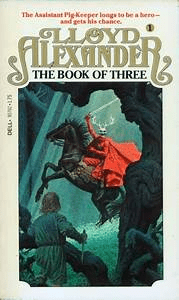
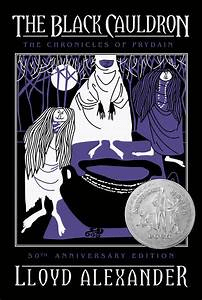
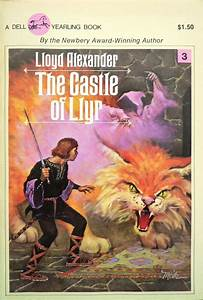
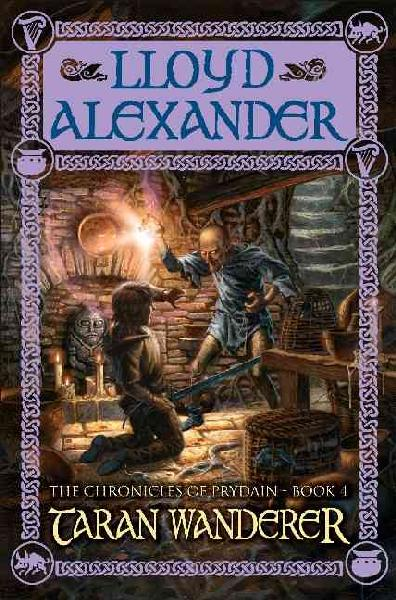

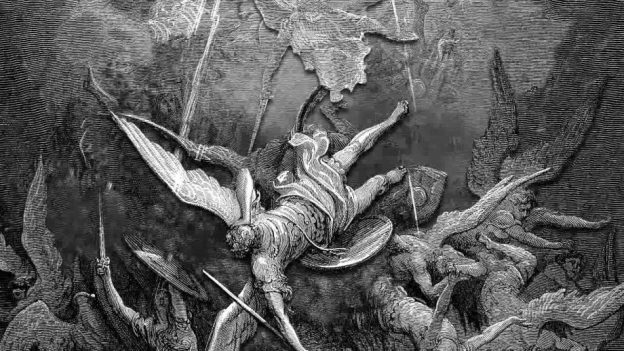

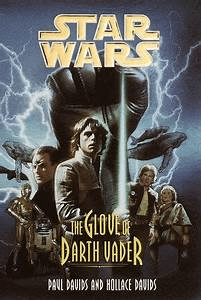
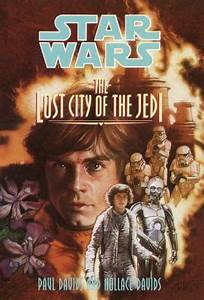
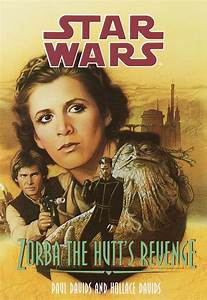
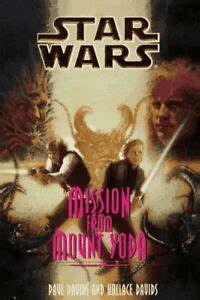
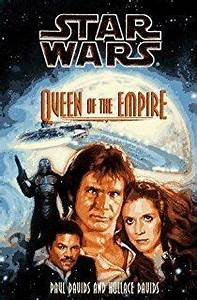
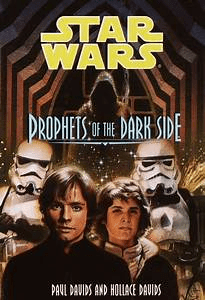
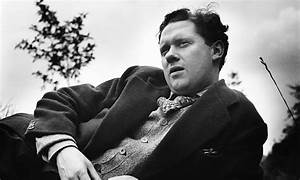

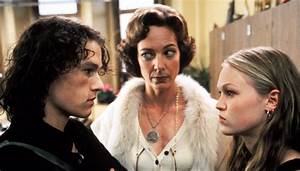
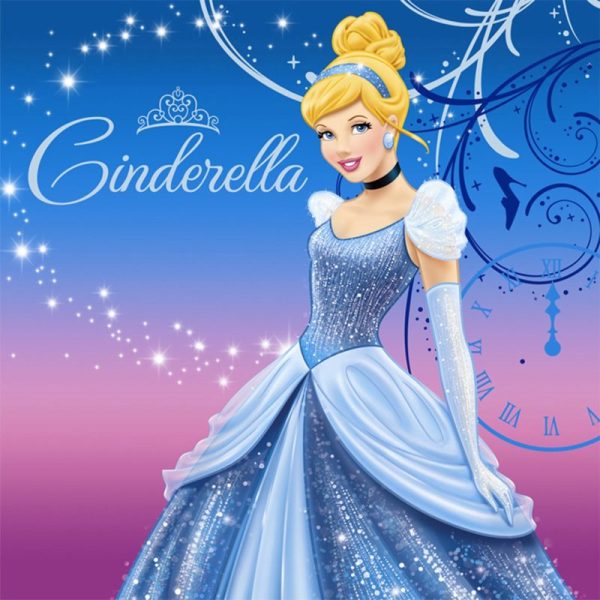
 Redeeming Pandora