Nancy Drew! The Hardy Boys! But mostly Nancy Drew! It really is mostly Nancy’s story, with the occasional visit from Frank and Joe, who are concerned with their own side-mystery for most of the story. Nancy is trying to enjoy a little vacation with her buddy on a cruise ship, but suddenly your typical American CIA-kid snob clique shows up and spoils the whole thing, what with their espionage, treason, murder, and the usual CIA-kid snob clique shenanigans. I haven’t read a lot of either Nancy Drew or Hardy Boys adventures (I was mainly a 3 Investigators guy growing up), but this does bring an immediate since of much-welcome nostalgia. Sure, there is mayhem and murder and other unpleasant things (with a bizarre undercurrent of romantic flirtation between Nancy and Frank, despite her immediate commitment to put the kibosh on that … until the next chapter), but this takes us back to the good ol’ ’80s spy adventures of Remington Steele, Scarecrow and Mrs. King, and the like. It was a good time, and this “super mystery” (not all that much of a mystery, really, since the author gives us enough obvious clues and red herrings throughout so we can figure it out fairly easily) sends us back there for a good romp. Though, we are left wondering why Nancy keeps allowing herself to get trapped, bamboozled, and tricked at the end of every chapter.
Agatha Raisin and the Quiche of Death (Agatha Raisin #1), M.C. Beaton ⭐⭐
The title of this book, combined with the early protagonist characterization of Agatha Raisin starting to read lots of Agatha Christie novels, lends one to think this is going to be a humorous spoof romp of a mystery, filled with Magnum-like winks to the audience, classic mystery callbacks, quirky sidekicks and townsfolk, and a whole lot of fun.
That’s not what this book is, however. Agatha Raisin is rather petulant, cranky, and self-centered, despite her purported attempts at self-improvement. Roy, the former employee-turned-periodic sidekick/plot catalyst, seems like he is going to become a fun and helpful foil, but he ends up being a self-serving potty-mouthed jerk. The idyllic townsfolk are somewhat helpful and kind — disappointingly, Ms. Beaton makes the village parson the meanest hypocritical jerk of the regular community, not including the “townies” element. Yet, one must be patient. The poor lady (our “hero”) has just ended a rather long span of her life and is trying to begin a new life, and it sort of looks like she accidentally killed a beloved neighbor guy her first week of her new life, so getting to know people and secure a fresh start is rather challenging. Plus, the first book of a new series is always a bit of a jumble. Fer-de-Lance is certainly not the most enjoyable Nero Wolfe adventure. Thus, if Ms. Beaton tones down the “see how I am suffusing this book with authentic directions and topography because I live there?” descriptions, tones down the unnecessary saltiness, and increases the light attitude the title and heroine’s name intimate, this series may become something interesting. (Since I know there are 20-some entries in the series by now, apparently some people think this character is worth treasuring.)
If Death Ever Slept, (Nero Wolfe #29) Rex Stout ⭐⭐⭐
Another “Archie has to move to a client’s home to do inside investigation story,” this has a bit more to it than some of the others in that Wolfe sub-genre, though at times it does suffer from that sub-genre’s middle-slowdown pacing. The “extra” this one has is mostly at the beginning, with the very humorous clash between Archie and Wolfe about Archie even taking the case or not, eventually leading into Wolfe getting dragged further and further into a case he never wanted in the first place. Another twist is the client is absolutely sure who the guilty party is and insists Archie finds the proof. Naturally, Archie is opposed to this sort of thing, and his personal quest becomes another strange layer of “proving the client wrong” — a client he, too, is not keen on but got mostly to get Wolfe’s goat. Archie investigates the only likely group of suspects in the case, stumbling accidentally onto the title, a line of poetry written years ago by one of the suspects (a mostly unrelated expression at the time of its arrival, considering the crime Archie is investigating is insider trading having nothing to do with death). The case takes menacing and deadly turns, eventually, and Wolfe is dragged fully into it, leaving us guessing the identity of the guilty party (or parties?) more so than usual. Not too shabby, despite the slowdown in the middle.
So mostly fantasy, mystery, some kid books, and a teensy-weensy bit of grown-up history — basically, the book version of the other list I did in this issue. Ah, well. C’est moi. In any event, it’s very nice to be back with you again, friends! See you at Christmas!
A Game of Thrones (A Song of Fire and Ice #1), George R.R. Martin ⭐⭐⭐
I’ll go with 2.5 stars rounded up, how’s that. I’m not really sure I “liked it,” since there is very little content in here (including characters) we are really supposed to “like” in any traditional sense. As the high-school toddlers who recommended (and leant) it to me warned me at the outset, “all the characters take turns playing the bad guys.” And by jingo, they were right. Sure, you may say this is more “realistic and gritty” for a medieval-fantasy-type story, when life is hard and smelly and morals are subsumed under survival. That’s fine. This is a “grown-up” fantasy.
My two main issues, apart from the gratuitous stuff (which is likely the main reason why it is popular on television), are 1) there’s no overt point — the characters are just doing their thing, living their lives, reacting to what has been decided around them. That may add to the “realism” of the world, but I can’t help but contrasting it with The Wheel of Time. That series is much different, and I like it better for those differences: there is a goal, the story is heading somewhere intentionally (even if at a languorously snail’s-crawl pace) — there is a clear “bad side.” The “good side” of TWoT is not so straightforward, so I’m not necessarily faulting GoT for not having “pristine, angelic-like John Wayneish heroes.” TWoT has flawed, “shades of grey” heroes all over the place, possibly just as “Biblically unmoral” as GoT (though much less explicit about it).
Perhaps you’ll say “oh, there’s definitely a point to GoT: Dany is going to reconquer the Seven Kingdoms, marry Jon Snow, destroy the Lannisters, raise Tyrion as Ruler of Everything Else” and all sorts of other stuff only you know about having seen/read beyond book 1. Well, maybe. But I don’t get any of that sense from the book itself. Things just happen. Which leads us to my 2nd issue.
2) most of the book is reaction, not action. Yes, a few key things happen “on screen” (still talking about narrative focus in the novel), but so much of the book is just “apparently some time has passed, and here’s what they are thinking about now.” The passage of time is horribly haphazard, it seems to me (perhaps Mr. Martin has everything calendared out, which would be swell). We get hundreds of pages setting up to Ned Stark’s climax … and it barely is mentioned indirectly when Arya is sort of not looking. Out of seemingly nowhere, armies have started terrorizing the countryside … why, because Catelyn snatched up Tyrion? Is that why? A bit unclear, really. (Maybe I’m just a bad reader.) I understand this can be a fine way to move the story along without going over every single detail (in stark, so to speak, contrast with TWoT), but so much of the “action” in this novel was “reaction,” reaction to things we haven’t really experienced. Maybe you real fans like that; I found it a bit niggling. That’s me. I’m probably wrong. I’ll keep reading the series, though, mainly to see how it ends, I guess (I hear some unspeakably grotesque things will happen soon, so we’ll talk about that when I get there).
A Clash of Kings (A Song of Ice and Fire #2), George R.R. Martin ⭐⭐⭐
Continuing shortly from A Game of Thrones, A Clash of Kings broadens both the character base and geographic areas of Westeros. New characters such as Stannis Baratheon, Davos Seaworth, and Brienne of Tarth give us more people to actually root for (well, maybe not Stannis) in an otherwise grim and unfriendly land. The Starks continue to encounter nothing but problems: Arya is trapped between King’s Landing and Winterfell, Sansa is trapped in King’s Landing, Robb is doing his thing (he spends almost no time in the forefront of the action in this book), Bran is still crippled though gaining special dream powers, Rickon is still a whiny baby, Jon is still unsure of himself in the wintry regions beyond the Wall, and Catelyn is still choosing to be with her father instead of returning to be with her own helpless children. Meanwhile, things aren’t going much better for Tyrion, even though he has a great deal of power and influence now. Since no one trusts him or credits him, everything he does to save the situation for his family and the city is largely ignored. Daenerys is still over in the sands, trying to find passage to Westeros. The only significant aspect of her storyline this book is the expansion of our understanding of the diverse cultures of Esteros. Other than that, her story is rather uninteresting this time around.
This second book still has the ubiquitous graphic content, no doubt for some sense of “authenticity” of this fantasy world in a sort of Late Middle Ages setting, but it’s not any more than the first book. It’s best to just skim/skip over that stuff and try to focus on what’s going on … which isn’t all that much. This is mostly a reorganizing of players and plots sort of book (until the slam-bang finish).
Like the first installment, a great deal happens between chapters, since we are given the limited perspective of a handful of characters who are usually away from the major events themselves. The “Clash of Kings” is a bit of a misnomer as well, unless by “clash” Mr. Martin means some sort of group, such as a “murder of crows” or “pride of lions.” There is certainly a brief “conference between kings” toward the middle, and a definite clash happens in the slam-bang finish, but it’s not really between kings. Even so, the general story does get a bit more interesting thanks mainly to the new characters. The aftereffects of the poor decisions in the first book continue to resound. Some mysteries are sort of explained, new possibilities for old characters are finally enabled, and desperate situations force our “heroes” into life-altering (again) situations, setting us up for a very exciting third installment.
A Storm of Swords (A Song of Ice and Fire #3), George R.R. Martin, ⭐⭐⭐⭐
Well, that was a bit of a roller coaster. I give it 4 stars not necessarily because I think it is a great book, but it is certainly superior to the first two in the series, acknowledging of course it does not have to do the same things the first two do and benefits from their scaffolding tremendously. Yet, Mr. Martin did not disappoint with that underpinning, which is why it deserves its merit on its own. Some people seem to revel in the “woah, I didn’t see that coming!” aspect of the series — though, taken literally, were that completely true, that would be a sign of poor writing on Mr. Martin’s part, so while most of the surprises are unexpected and we didn’t see them coming, the well-craftedness of them upon further reflection demonstrates them as wholly believable and consistent (even the last page, yes).
This book reminds us more than the first two Robb Stark is not a main character. At best, he is a supporting character. He never has any POV chapters, he spends almost no time “on stage” during Clash of Kings, he is always seen in relation to his mother (not a bad thing, but not a sign of his individuality or importance), and clearly he is young and makes mistakes — but when you are styling yourself as a king, making mistakes along the lines of betraying your most populous supporters is a really bad mistake to make.
Catelyn Stark, likewise, doesn’t seem terribly capable of making proper decisions either. She laments she is far from her two children who need her, acknowledges she doesn’t need to be with Robb, yet she doesn’t go back to protect Rickon and Bran and stays with Robb, effectively selfishly staying with her own father (for whom she does no good either) and away from her family who needs her. In other words, she’s not really any different from her sister. And she may be worse, since she makes almost all of it worse from what she did in book one to Tyrion.
Speaking of Tyrion, this guy really has a rough time in this book. We know he is the hero of the Battle of Blackwater and is effectively single-handedly responsible for saving King’s Landing, but no one else seems to. And things get worse for him throughout the book: everyone abandons him, people who know better allow their minds to be changed about him, and he is literally in the pits as the book closes, with him having lost just about everything.
Meanwhile, Dany has gained quit a bit … but her storyline is again wholly uninteresting and possibly less interesting than Bran’s storyline. She feels betrayed by practically everyone, becomes a misguided social justice warrior (not that I think freeing slaves is a bad idea, of course, just that she is easily distracted from her purpose without thinking through what the next step after freeing the people is — how will they live?), switches heroes, and effectively abandons her main goal by the end. The only good thing about her story is the reintroduction of a noble man we haven’t seen for a while.
Jon Snow does some things in this book as well. They are somewhat interesting and sad, as usual. Sansa is also in this book, mostly passive, as usual.
The new characters in this book are engaging (the new characters usually bring a vivacity to the new book), especially as we get a clearer pictures of the southern kingdoms around Highgarden and Dorne. Truly the highlight of this novel is the Adventures of Jaime and Brienne storyline. It is such an odd pairing but somehow Mr. Martin makes it work very well. The only bad part about it is it ends. Not only is it a very welcome addition to finally get inside the head of Jaime Lannister, but hearing from him what happened before the first novel began sheds some interesting light on these people and their recent history (which is still a bit confusing). Jaime, though, is also part of the saddest moment of the whole book, his final parting from Tyrion — this is such a disappointing moment for many reasons (which is probably why Mr. Martin wrote it the way he did). “Weren’t there other, sadder, more shocking moments in this book!?” you exclaim. Sure, sure, I suppose — but, frankly, none of them (by “them” we mean “deaths of seemingly major characters”) were all that surprising, and more frankly, some of them were rather welcome.
The other odd pairing is certainly Arya and Sandor Clegane, an odd couple that doesn’t have the same vivacity as the Jaime and Brienne Story, but it is much more interesting than, say, everything with Robb, Catelyn, and Sansa, that we are a bit sad when it ends, though glad Arya is finally going somewhere with the possibility of some meaning.
This book is replete with “so close”s — many of the characters who have been trying to reconnect with others are a gnat’s wing away in space and time from achieving some sort of positive reunion … but that’s not how Westeros operates. The spatial proximity is likely supposed to add to the bitterness within us when the planned salvation/reunion occurs, but by this time we have become so inured to it, most of them just end up being obvious foreshadowings of inevitable failures and (perhaps unintentionally) actually cushion the blows.
Let’s see, what else … oh, yes. Davos is in this one as well, being a great bulwark for morality and honor, having lost his “luck” in the Battle of Blackwater (and most of his children) but gaining perhaps a clearer vision of what is right and somehow presses that upon Stannis. Good for him.
We finally get a better look at Wildling life, which isn’t so bad, but discipline, it turns out, is indeed superior to sheer numbers after all (one of the few things Ned Stark seemed to get right). What we don’t get any good look at this time is the Iron Islands. In fact, Balon Greyjoy turns out to be truly the most disappointing facet of this book. Dany is likely the most dull, Jaime and Tyrion’s parting is the saddest, but the Balon Greyjoy facet is certainly the most disappointing.
On the positive side, this book clears up a few mysteries that have been hanging around from the beginning of book one, and we even get an eyebrow raising confession about the incident that started the whole thing even before book one, another of the “we didn’t see it coming … but we should have!” delicious twists. By the end of this book, we have the feeling it’s time for a whole new story. Major shifts have occurred for every major character/location, significant political events will drastically alter the direction of most nations and rulers, magic is increasing in potency, the Others are starting to make their move (though why that is we still have no idea), some wars are over but others are just beginning … the potential at the end of book two has certainly paid off rich dividends in book three, and now we are in for something very different indeed.
Oh, and then the epilogue happened … say what?!
The Fires of Heaven (The Wheel of Time #5), Robert Jordan ⭐⭐⭐
Continuing the sensation of “the end is nigh but we have enough time to sail on ships for a few weeks,” The Fires of Heaven has very little to do with its title, but it does give us the impression things are burning, slowly in some parts of the world and quickly in others. For the first time, one of the major characters, Perrin, is not present in a novel (though Rand was out for most of The Dragon Reborn) — perhaps because some of his events in Shadow Rising occurred during the events of this novel (hard to tell at times) — though he is referenced a couple of times by Mat and Rand. This gives Nynaeve and Elayne more “screen time,” though fans of the series who don’t like Nynaeve will likely find this tedious, especially as most of her storyline in this book feels like a bizarre side-mission (more so than usual with her). Strangely, Nynaeve somehow becomes subordinate to Egwene, who herself becomes a bit of a jerk toward the end, and there is a fair amount of “men are imbeciles” before this book is over (again, more so than usual from the Aiel women).
Pacing is certainly the burgeoning trademark of this series: many would say it doesn’t have any, but they’d be impatient and wrong. As indicated in other book reviews of the series, Robert Jordan patiently spends time with characters, giving us great details on their experiences, far more than most fantasy tales, focusing on that character until, usually, he or she departs the present town for another. This continues for most of this book as well, whether you like it or not: by now, you should be used to it. If you don’t like such focused attention, you probably haven’t gotten this far in the series. This book is about 500 pages of slow-burning set-up, followed by a fairly intense double-climactic pair of showdowns. Some may not like it, but again, that’s what this series is. Oddly, the first of the climactic showdowns happens mostly off-screen, and while that may seem anticlimactic to some, it actually relieves us from a lengthy and tedious battle description, none of which would help advance the characters or stories — perhaps we’ll see it in the movie/series adaptation.
Things get a little saucy in this book, beyond the recent descriptions of female anatomy in the last couple of books, but Jordan is likewise abstemious in his details (while at the same time continuing the fairly ribald attitudes among the Aiel). Some may not like that, but there it is.
While it’s easy to call this another Aiel-heavy book (which it is), we do get the occasional relief by spending time with Suian and her female posse, including Logain, as they have to deal with being stilled, how to survive, what to do next, how to retake the White Tower, and more. This sidestory is both enjoyable (as it brings Gareth Bryne back into our field of vision) and irritating (as the Sisters in Exile treat our heroes poorly, which is always irritating when characters you are rooting for are mistreated especially by “good” people who should know better) … but that irritation gives us a keener look into the world in which these characters live. It matters almost nothing that Suian used to be Amyrlin Seat: she is now stilled — she herself virtually does not matter. She has fallen as far as possible, but she will not let that stop her from protecting The Dragon Reborn … in her own way, of course.
Similarly, there is a bit of a cessation of Moraine’s seemingly-endless secret keeping from Rand, as she finally starts to tell him things, though most of those lessons occur offscreen. At least she is finally explaining things to the Dragon Reborn instead of always trying to run him like a puppet master. By the end of the book we find out why she has changed so drastically, which takes us in a significantly different direction at the end (quite literally for Lan, especially), but at least it is refreshing while it lasts.
The villains don’t get a lot of time here, and in fact the first Trolloc attack doesn’t happen until several hundred pages into the book. This is more of a “there are different kinds of villains” entry in the series, I suppose, as former friends seem to shift their allegiances (or reveal their true colors, shall we say). We get to spend a lot of time with the good guys (except Perrin), and even Mat gets to be heroic again (without ever wanting to). Pretty good book, even if it feels like “nothing happens until the end.” But, whew, when stuff does happen, it’s big stuff.
And we aren’t even halfway through the whole series, yet.
Lord of Chaos (The Wheel of Time #6), Robert Jordan ⭐⭐⭐
It’s possible the Lord of Chaos wrote this book himself. I’m not saying it’s bad — it was pretty good. A few things we’ve been wanting to happen for a number of books finally happen in this one, if in unexpected (possibly less than satisfactory) ways, such as Elayne, Egwene, and Nynaeve reuniting and becoming Aes Sedai and Rand and Perrin meeting again. We have been waiting for these things for a long time, but we still have to wait for Nynaeve to overcome her block (this is really taking too long), Rand is still having trouble communicating with Mat and Perrin (you’d think they’d be used to being ta’veren by now), plus a few other things here and there. Mostly we are irritated (as we always are in series such as this) by the non-heroes getting in the way of what our core group of heroes are trying to do, especially the Tower Aes Sedai, the Rebel Aes Sedai, the Children (obviously) … basically, we are almost cheering for some of the bad guys to start wiping out some of these second- and third-tier characters (is that wrong of me?).
I said the Lord of Chaos may have written this book because structurally a lot of what we have become used to in the previous installments are out the window here: most chapters have multiple points of view (sometimes switching back-and-forth between characters in a single chapter), the prologue also covers several character groups, the Forsaken get a whole lot of screen time (after being mostly mysterious and obscure characters up until basically the previous book) — including POV chapters!, we leave POV characters before characters leave their locations (though, admittedly, not a whole lot of movement happens in this book, not including Rand’s teleporting between cities frequently), and even the Dark One gets a few lines. He is the one who brings up the Lord of Chaos, so I don’t think he (the Dark One) is the eponymous character — who is it? I don’t know. The characters seem to, so that’s fine.
Some fans seem to dislike this one because not a whole lot happens (which isn’t all that true, but it does sort of feel like it more than the last couple) and it seems more like it stops suddenly rather than wraps up a complete tale-within-the-tale like the last few did so well. It’s almost like it’s a part one with Crown of Swords being part two. I liked it, but I, too, sort of felt like something was a bit missing with this story, but I did enjoy a good deal of the moments in it.
It has a lot more humor than the last couple, perhaps the most since The Dragon Reborn, and a lot of it comes from, as usual, Mat, who is increasingly becoming a great character, despite his flaws (and despite the fact most of the other heroes wholly misunderstand and undervalue him; very frustrating, that). Another of the great humorous scenes involves Loial (finally he returns!) and an unexpected arrival of his fellow Ogiers. Though, the humor of it is somewhat dampened by a seemingly dropped plot point: Rand delivers the Ogiers to where he thinks Loial is, finds out later that isn’t so, and instead of trying to rectify it they seem to be just forgotten … I trust Mr. Jordan enough to believe this is not the end of this storyline.
Even though, as I said, it doesn’t “feel” like a lot of movement or progress happens, enough does to feel like we have turned a serious corner (or are a gnat’s wing away from completing the turn) and a new phase of the Wheel of Time saga is about to happen: finally, Rand is getting the attention (and fear) of Aes Sedai (thanks to the appearance and involvement of Mazrim Taim!), progress is moving on Rand’s three wives situation, dissension may be popping in the Children, Elayne and Avienda have reunited (and revealed some needed facts), Egwene has told the truth to the Wise Ones, and a few other conversations we’ve been wanting to happen have occurred (not all of them, of course). Some good things have happened to our characters, though, as always, they have come at a price. And Rand is sort of coming to terms (not the best way of putting it) with the Dragon Reborn … since it may be more accurate to say the Dragon has been reborn inside him and not just as himself!
And, oh yes, the Forsaken are really starting to make some big power play moves. And the Lord of Chaos is out there doing something (maybe). And the Dark One is intentionally allowing Rand to live and fight. That is perhaps the scariest part of this series. Boy, I am enjoying this a good deal.
The Crystal Shard (Icewind Dale Trilogy #1), R.A. Salvatore ⭐⭐⭐
If you are looking for a generally good-natured romp through DnD fantasy, you could probably do a lot worse than the mildly-beloved The Crystal Shard. Sure, in the last almost thirty years, this has become noted for being “the first Drizzt story!” even though he is supposedly a supporting character here before his famed skyrocketed him to greatness. I don’t agree with the idea he is a supporting character here, though: he is in it just as much as everyone else, possibly even more than any other individual. He is single-handedly responsible for the most important “big plot” occurrences, which is not to diminish the important deeds his buddies (Bruenor, Wulfgar, and Regis) do throughout the adventure. He is very much a main character in a novel about these four ragtag outsider buddies.
This is the kind of DnD fantasy I would write, or at least the kinds of characters I usually create: outsiders, yes, but all are generally kindhearted and atypical members of their races/classes; only Regis is really flawed (I don’t use Halfling thieves anyway), and Drizzt, Bruenor, and Wulfgar all show their strong-yet-sensitive sides frequently in their adventures. Because of this absence of nonsensical character conflict (there is some, with some supporting characters, but that’s expected), the book is all the more enjoyable: the good guys are good, the bad guys are bad, people learn their lessons (except Regis), and it’s all very clean, very straightforward, very enjoyable (for what it is, a goofy DnD fantasy romp).
Streams of Silver (Icewind Dale Trilogy #2), R.A. Salvatore ⭐⭐⭐
The second of this trilogy is rather darker than the first: not only are our heroes in much more peril, the peril is far more personal than the hordes of the first book. Poor Cattie-Brie is terrorized for much of the book in very dark and intimate ways, making her sections of the book more disturbing than the general slaughter throughout. Our main quartet of heroes likewise go through personal losses throughout, resulting in a very different ending from the first installment.
Even with the darkness (perhaps because of it), this book feels more like Dungeons and Dragons, likely because the scale is much smaller than the grand battling armies and squabbling nations of the first book. This is a small group of adventurers fighting some battles (not too many), sneaking around gathering supplies and information, facing mysterious forces everywhere they go, and then suddenly a huge dragon shows up and things fall apart quickly.
Bruenor is a bit of a jerk for most of the book, learning too late his friends and comrades today are more important than trying to revive the past, but at least others can benefit from what the friends have learned and suffered throughout this installment. Our heroes are at a very low point at the conclusion of this book, but despite their warranted glumness, we have the sneaking suspicion things will get all straightened out by the end of the final part.
The Road to Oz (Oz #5), L. Frank Baum ⭐⭐
We seem to find ourselves on a bit of a formulaic track by this time. Once again Dorothy and some new people (who don’t really matter) find themselves on a magical trip to who-knows-where that eventually becomes the road to Oz (as the title makes a bit clearer this time). At least there is a bit of a better payoff this time: instead of just getting to Oz then leaving right away (as in the previous book), this time Dorothy and friends get to celebrate Ozma’s birthday (how they know it’s her birthday considering her/his life story is anyone’s guess — perhaps they just declared it is her birthday, which is fine). Toto is back this time, and so are some of the other ol’ friends we haven’t seen for a bit (most notably Jack Pumpinkhead), and most of the A-list friends are back, though just briefly at the end (though “the end” is a rather drawn-out affair). Along the way we meet new sorts of wild and wacky characters, most of them annoying, but all the trials and obstacles are overcome with a snap, a shake, and a sure-why-not and all is well. If you are interested in seeing the ol’ gang again, this is nice, but it’s again mostly a showoff of Baum’s diverse character creative abilities (including some stars of other novels of his, such as Queen Zixi). Not the worst, I suppose, but you are likely going to find the first half far more tedious than the second half.
Oh, hello again. So nice to see you. Here we are, back as a class for the first time in donkey’s ears. I dunno, it’s a saying, I heard. Anywho, it’s great to be back for another season of Redeeming Pandora. We’ve got some fresh voices, some familiar faces, and another season of tricks and treats just waiting to be explored. As is sometimes our wont, we close our season opener with a brief history of some of the books I’ve read over the summer (including some late spring entries, just for giggles). This smattering of reviews is a bit shorter than usual for two main reasons: I read mostly very long books, and I spent a preponderance of the summer playing Final Fantasy XII (while drinking too much Oberweis sweet tea and eating too many miniature pretzels),to be explored next time. For now, sit back and perhaps get motivated to read a few of the works reviewed for your enjoyment.
The Inimitable Jeeves (Jeeves & Wooster #2), P.G. Wodehouse ⭐⭐⭐⭐
In a strange way, picking up a novel-length Jeeves and Wooster story is a bit intimidating: the humor seems best in compact, focused installments such as short stories — why try to expand it to a whole novel? However, Mr. Wodehouse encourages us immediately: this novel, while loosely connected, is mostly a series of vignettes, as efficiently compact and contained as one can hope. What periodic imbrication occurs brings more humor, not prolonged suspense or boredom. Fans of the Fry and Laurie adaptation will recognize a good number of the episodes from this book, as many of the early episodes of the series are taken from the chapters within. It’s difficult to go wrong with a Wodehouse book about Jeeves and Wooster: read this one and find out why.
Airborne Carpet: Operation Market Garden, (Battle Book #9) Anthony Farrar-Hockley ⭐⭐⭐
Another engaging Ballantine Illustrated volume, this brief overview of Operation Market Garden provides a limited eagle-eye view of both sides of the conflict (though mostly the Allies). Having somewhat recently read It Never Snows, wholly from the German perspective of the battle, this Allied-heavy perspective is a helpful counterpart. Farrar-Hockley has certainly read a diverse number of primary sources, quoting frequently from first-hand accounts and diaries of those whose experiences don’t regularly get presented in the grand versions of this engagement. The Polish soldiers and many of the British troops with significant roles are mentioned here, even those who do not get mentioned in other accounts, so Farrar-Hockley’s coverage is widespread (if also somewhat terse, considering the limitations of the picture-dominant format). It’s a good survey of this battle, especially of the Allied leader conflicts in planning and executing the massive endeavor. Ballantine’s Illustrated History of the Violent Century was a great series of series that should not be out of print. Bring it back! (Or, buy every copy you find wherever you go and give them to me.)
On Conan Doyle, Michael Dirda ⭐⭐⭐
Though the title page tells us the subtitle is “The Whole Art of Storytelling,” the real subtitle of this should probably have been “But Mostly On Dirda’s Experience with Doyle’s Works,” instead of its purported subtitle, which is only addressed briefly toward the end. This is not a criticism, mind, simply information for you, the unsuspecting future reader: a good deal of this is a personal reflection of Dirda’s reading youth, his early experiences with Doyle and other mystery/sci-fi/fantasy/pulp adventures in those halcyon days of dime-store magazines and the freedom of youth to travel their hometowns without worry or danger, as well as his later-life experiences with the Baker Street Irregulars, and how he has lead the best life possible (as usually comes across in his collections of book reviews) without sounding too snobby about it.
As usual, Mr. Dirda suffuses his commentary with lists of authors and works you’ll want to track down, which is not always as facile as one might suspect in the Digital Age. You’ll likely want a pen and paper (or word processor) close by to enumerate the suggested readings throughout in addition to the recommended works at the end of his reflections.
The only other flaw (if you might consider Dirda’s personal histories an intrusive flaw) is Dirda’s awkward inability to balance his general enthusiasm for Sir Conan Doyle with his (ACD’s) flaws as Dirda sees them, especially Doyle’s Spiritualism. Toward the end, Dirda attempts to say he respects Doyle’s religious/spiritual beliefs and his willingness to write and act on them so much, but since he (Dirda) clearly disagrees with it, his respect is tepid and nominal at best. He is clearly embarrassed by Doyle’s belief in fairies and even goes so far as to encourage us not to read some of Doyle’s work in certain areas.
The rest, however, comes off as an energetic, enthusiastic appeal to us to delight in more of Conan Doyle’s oeuvre than just Sherlock Holmes (though he clearly wants us to read those works again and again as well). He does mention Jeremy Brett briefly, with mild approbation, perhaps not as much or effusively as some of us may prefer, especially as it is only in passing with Robert Downey, Jr. and that newer BBC modern version. He discusses Basil Rathbone’s movies, too, but his delight is hampered by Nigel Bruce’s Watson (or, at least, the writers’ treatment of the character). On the whole, Dirda is dissatisfied with the history of Sherlock Holmes on radio and screen, which is why he continues to enjoin us to use our imagination with the real stories themselves (along with a few other adaptations he recommends), and especially increase our awareness of the wide range of Conan Doyle works as well: the autobiographies (not the fairy ones), the Challenger stories, Gerard, the historical adventures, the White Company, the horror short stories, and more. But not the fairy works.
Rough patches and all, this is a fast-paced read that does its job well: it motivates us to go read a lot of diverse Sir Arthur Conan Doyle works.
The following from alumna and Redeeming Pandora founding contributor Alice Minium (Class of 2011) is an essay on Journey Into the Whirlwind by Eugenia Ginzburg.
The trait which marked Ginzburg for persecution and the trait which allowed her the resilience to endure it were ultimately the same quality. In a state of total terror, where no one is safe from scrutiny or unfounded punishment, everyone is in danger — but none more so than intellectuals. Terror is inherently a mechanism of absolute unilateral control, not just of government, but of even the individual’s worldview. Nothing has the ability to construct belief systems or alter perception more than literature and art. Ginzburg was a prominent figure in the intellectual and artistic community, and she carried that power. It was that which would ultimately make her dangerous in the eyes of Stalin, and that which would ultimately give her strength enough to survive.
Stalin understood economic control and political control were the same. He strove tirelessly to institute the powerful, unquestionable, complete implementation of socialism. This meant not only in government and economy, but even in the very words we speak to each other and the books we read. Only through conquering the mind and fully allowing socialism to permeate one’s worldview and underlying preconceptions could the true socialist society be born. The most critical battle was fought not with laws but with ideas. Anyone wielding the power to elucidate ideas was, in Stalin’s eyes, the most dangerous soldier of all.
Suspicion against the intelligentsia predates Stalin’s terror, though he most definitely extrapolated from these preconceptions and integrated them into his framework for how to best implement his objective of total control. In The Cultural Front, Sheila Fitzpatrick describes the Old Bolshevik distrust of the academic and artistic community. In those times, things were seen almost entirely through the archetypes of oppressor and oppressed, conspirator and ally, bourgeois and proletariat. Fitzpatrick describes this thinking as one of “binary opposition,” and she quotes Lenin’s famous question, “Kto kogo?” which translates as, “Who will beat who?” Such was the lens through which all social problems and political relationships were seen.
The Old Bolsheviks were suspicious of the intelligentsia because they considered them to be too elite and reminiscent of old bourgeois ways to be in favor of the people. Intellectuals, artists, writers, and thinkers were primary political players during this time, and they overthrew norms and set the framework for new ways of life. These people were, fundamentally, free-minded and unpredictable. Ultimately, as Fitzpatrick puts it, “The Bolshevik Party and the intelligentsia shared an idea of culture as something that (like revolution) an enlightened minority brought to the masses in order to uplift them.” Culture was where wars were won and lost. Culture was the axis upon which the fragile vane of power would shift.
Stalin understood this better than anyone, and the regulation of ideas and art was equally if not more important than his regulation of the economy. Not only must he reconstruct the system, he must recreate the man. He must recreate the very identity of self.
He set about to do so with the same rapid ferocity with which he laid down economic quotas and stringent laws so inflexible efficiency was the primary goal. It was always about the most effective way to totally and completely transform, produce, or control. He illustrated this ruthlessness with his implementation of collectivization, rapid industry-building, impossibly strict regulations, and zero tolerance for economic deviance. He fiercely worked toward realizing socialism by the reconstruction and rebuilding of the systems within Soviet Russia, striving to eliminate anything left of the “old ways,” or anything that might get in the way of absolutely realizing that goal.
Since all things economic are also political, and political weight is the locus for economic power, in order to truly regulate Russia into a socialist utopia once and for all, he had to regulate the political too. Thus, with that same iron fist of efficiency, he began to zealously eradicate the most dangerous of players in the political and social game — the thinkers.
Like tsarist rituals were ruthlessly exterminated, so were those who bore capacity to express and create original notions. The ability to produce new ideas was, to Stalin, also a relic of the oppressive past, and a danger to social order, for what new ideas need there be when we have already found the ultimate idea of socialism? We have no need for ideological critique anymore — that is a relic of times past.
The idea of culture as the tool of an enlightened minority was one Stalin shared with the Old Bolsheviks and intelligentsia, yet he interpreted this idea into policy in an entirely different way. Culture was where ideas were born, and since socialism was the one and only true idea, all of culture should be mandated and consolidated into the Stalinist sphere — all ideas must come through it, and they must not be born elsewhere. In order to embody the socialist goal of Stalinism, humans must operate as appendages of the state, or as elements belonging to and defined by the greater entity of the state, functioning and thinking and producing only for its benefit. There was no place for independent ideas here. Even if a citizen was driven by true party loyalty, and expressed ideas in alignment with the goals of the party, these people were inherently dangerous because of their ability to produce ideas at all. To erase the old ways, we must erase the very idea of the intellectual. Ginzburg, a poet and respected academic, had the misfortune of being exactly that.
The overzealousness of the Great Purges was not born out of cruelty, but out of an importance on efficiency. Everyone, especially high-ranking Party officials and members of the intelligentsia, were condemned without trial or even legitimate cause and thrust into horrifically inhumane conditions. Ginzburg herself was a prominently loyal Party member who was arrested for her former association with a man who wrote a book in accordance with socialist policy at the time, but then later, when policy changed, became treasonous taboo. She was accused of belonging to a terrorist organization that never even existed, and she was tortured, deprived of sleep and food, made to suffer inhumane sanitary conditions, and threatened with her very life if she did not sign her confession to the falsified charges. Ginzburg was outraged, insisting there must be some mistake. Her every human right was being violated, and what they were doing was illegal. This was a reaction shared by many — that such an absurd norm must be some dystopian dream, because it could not possibly make sense. What changed was the law was no longer an external entity of inflexible precepts for maintaining social order — the law was Stalin, and his law was carved out in fear. The cult-like worship of Stalin’s image and the concept of total and absolute control manifested through his Terror bore ironic similarity to the monarchies of old that based absolute authority in the divine right of kings. It had ironically become that which it had sought to replace.
In a 1990 essay in “The Soviet Mind,” Isaiah Berlin writes of the incredible survival of the Russian intelligentsia against all odds. Though his essay refers to the fall of the U.S.S.R., the beautiful truth of that survival remains the same whether it is 1991 or 1939. There is a resilience to the thinker, and an indestructible fluidity to the consciousness of the artist. To be a thinker, an artist, or a scientist, one is always observing, learning, perceiving each sensory experience to its absolute fullest. To an artist, your art is only refined by suffering, and your consciousness is only expanded. Ginzburg never stopped writing, speaking, or thinking in poetry, not ever. She made no universal assumptions about her purpose being defined by circumstance — since her hope is drawn from an internal fount, not an external one, she cannot be deprived of it, and she emerges not only with her identity intact, but also far stronger than she ever was before. Ginzburg survived because of the nature of who she was. As an intellectual, her animus was fueled by suffering. It was food for her art. Her intrinsic gift of perception and a creative mind, which she never ceased to use to their fullest, enabled her to continue living even in a world of the half-death. Even this suffering was food for her soul and enrichment of her experience, and they did not impair but empowered her gift of poetry. She never ceased doing what she did best, not for a minute, because she was an artist, and artists are by nature indestructible for the nature of their craft is lovingly shattering destruction and then intimately, meaningfully weaving each experience back together in a new way, to dissect an organism and carefully reconstruct it as mosaic so it is fundamentally the same yet utterly new, and we know it so much better in an entirely new way. It is not a skill. It is a way of experiencing life. Suffering creates artists. It does not kill them.
The thread of lifeblood to which Ginzburg clings consistently throughout the book is poetry. In times of peril it calms her, in times of despair it inspires her, and in times of bliss it exalts with her. Through everything she witnesses, poetry is her life’s ever-present companion. She reflects at one point her son had once asked her: “‘Mother, what’s the fiercest of all animals?’ Fool that I was!” she cries. “Why didn’t I tell him the ‘fiercest’ was man — of all animals the one to beware the most.”
Ginzburg becomes intimately acquainted with the cruelest, fiercest most profane side of animalistic man. Yet despite our bloodthirsty animal nature, Ginzburg herself exemplifies how very much we stand apart, and humans possess something brute beasts do not. We possess poetry. We possess spirit. Ginzburg, amidst moment of utter terror and suffering, reflects upon and shares with us a story by Saint-Exupery, quoting the words spoken by a pilot lost in a wild storm at sea: “I swear that no animal could have endured what I did.”
No animal did, and no animal ever could. It is easy to look at Stalinist Terror and see the brutish error of our ways and conclude we are animals in nature, but I feel like Journey proves the opposite. You can erase regimes. You can destroy literature. You can censor every word, laugh, movement, and thought. You can strip a human of food, of safety, of family, of dignity, of pleasure for pleasure’s sake, of even her very name itself. You can erase the idea of an intellectual. You can erase the creations of an artist. You can erase the entire memory of a people.
You cannot erase their soul.
Works Cited
Berlin, Isaiah. The Soviet Mind. Harrisonburg: Brookings, 1949. 115-131.
Fitzpatrick, Sheila. The Cultural Front: Power and Culture in Revolutionary Russia. New York: Cornell University, 1992. 1-4.
Ginzburg, Eugenia. Journey into the Whirlwind. Harcourt: Milan, 1967. 118, 358-9.
Shukman, Harold. Redefining Stalinism (Totalitarianism Movements and Political Religions). London: Routledge, 2003. 19-39.
H. G. Wells was one of the singular most formative authors in the genre of science fiction. Wells was among the first of authors to introduce the concept of a “time machine” to popular literature; he even coined the term. The Time Machine, written in 1895, standsapart from other novels of its time as one of the most innovative pieces of literature of its time. The novel’s importance does not come only from its scientific imagining, but the themes presented along with it. H. G. Wells offered his era much more than mere scientific dime novels.
The Time Machine introduced multiple dystopian ideas in a time where literature was often saturated with utopian themes. For example, people such as Edward Bellamy were writing novels such as Looking Backward: 2000–1887 and Equality in the 19th century: these books were very Marxist in nature and often focused on the proposed dangers of capitalism in society versus the success of socialist strategy. H. G. Wells did not take this route when writing his first novel. When his protagonist the Time Traveler travels forward into the future and encounters a strange society filled with shallow and complacent beings, it seems Wells is taking the utopian route. When night falls, however, the Time Traveler discovers the truth of the society he has landed in, and it is far from utopian.
Wells seemed to have some disregard for the utopian presentations of reality prevalent in other literature at the time. He did not write this story to have a happy ending. In fact, it seems rather tragic. The Time Traveler’s adventure does not bring him to a glistening society in which people live together in perfect community, bolstered by technology. Instead, he discovers a primeval food chain where a caricatured “upper class” is juxtaposed against nocturnal ape-like creatures that feast on their flesh. He travels to the literal end of the world, and instead of returning to his time to warn humanity of its impending fate, he disappears from his time. H.G. Wells was not writing to convey wishful fairytales, but to demonstrate what he believed to be the reality of human society. Many of his early works may be described as almost pessimistic (The Invisible Man, The War of the Worlds) in the same manner The Time Machine seems to be.
H.G. Wells was one of the greatest science fiction authors not only because of the revolutionary ideas he presented, but also because of the themes he channeled through his novels. His books were formative to the earliest era of science fiction, and his creation of the term “time machine” spawned countless stories revolving around the theme of time travel. Few authors would be able to say they were the creator of a common literary trope, but H.G. Wells is among the privileged who can.
On October 25, 1854 during the Crimean War the Battle of Balaclava was part of the Siege of Sevastopol (1854–1855). This indecisive military engagement of the Crimean War is best known as the inspiration of the English poet Alfred, Lord Tennyson’s “Charge of the Light Brigade.” In this battle, the Russians failed to capture Balaklava, the Black Sea supply port of the British, French, and Turkish forces in the southern Crimea; but the British lost control of their best supply road connecting Balaklava with the heights above Sevastopol, the major Russian naval center under siege.
Early in the battle the Russians occupied the Fedyukhin and the Vorontsov heights, bounding a valley near Balaklava, but they were prevented from taking the town by General Sir James Scarlett’s Heavy Brigade and by Sir Colin Campbell’s 93rd Highlanders, who beat off two Russian cavalry advances. Lord Raglan and his British staff, based on the heights above Sevastopol, however, observed the Russians removing guns from the captured artillery posts on the Vorontsov heights and sent orders to the Light Brigade to disrupt them. The final order became confused, however, and the brigade, led by Lord Cardigan, swept down the valley between the heights rather than toward the isolated Russians on the heights. The battle ended with the loss of 40 percent of the Light Brigade.
This poem is an extremely popular poem. It has been featured in The Blind Side, and was even published in the newspaper after being written. Written shortly after the battle, it outlines one of the biggest military failures for the British.
Half a league half a league,
Half a league onward,
All in the valley of Death
Rode the six hundred:
“Forward, the Light Brigade!
Charge for the guns” he said:
Into the valley of Death
Rode the six hundred.
Tennyson starts at the beginning with the order to charge. “Half a league” in modern terms equates to about 1.25 miles. So the poem starts out by ordering the 600-man Light Brigade to charge the guns a little over a mile away. Tennyson uses Biblical allusions to bring home the sacrifice made by the soldiers by stating “the valley of death.” This is from the Psalm 23, which says: “Yea, though I walk through the valley of the shadow of death, I will fear no evil: for thou art with me; thy rod and thy staff they comfort me.” Clearly there is no belief these men will return from this charge alive.
“Forward, the Light Brigade!”
Was there a man dismay’d?
Not tho’ the soldier knew
Some one had blunder’d:
Theirs not to make reply,
Theirs not to reason why,
Theirs but to do & die,
Into the valley of Death
Rode the six hundred.
This is perhaps the most famous section of the poem. Tennyson starts with a question asking if anyone was dismayed. Not just that, but if anyone thought someone had blundered: clearly there must be some mistake, sending a light brigade to go fight a heavy artillery position over a mile away through a dead man zone makes no sense. One part of this stanza often misquoted is “Theirs but to do and die.” Often people say “to do OR die,” but this gives a totally different and wrong meaning. Tennyson used “to do and die” to show the troops, even in the face of certain death and blunder, will charge for King and country. By saying “to do or die,” you essentially take away the belief they will actually charge. Not only did the light brigade charge, they didn’t question it, or even try to reason themselves out of it; they simply heard the order and went. This takes an extremely large amount of courage and valor.
Cannon to right of them,
Cannon to left of them,
Cannon in front of them
Volley’d & thunder’d;
Storm’d at with shot and shell,
Boldly they rode and well,
Into the jaws of Death,
Into the mouth of Hell
Rode the six hundred.
Flash’d all their sabres bare,
Flash’d as they turn’d in air
Sabring the gunners there,
Charging an army while
All the world wonder’d:
Plunged in the battery-smoke
Right thro’ the line they broke;
Cossack & Russian
Reel’d from the sabre-stroke,
Shatter’d & sunder’d.
Then they rode back, but not
Not the six hundred.
The next two stanzas give a lot of detail on the actual charge itself. We see in the third stanza they are literally surrounded on all sides by cannons. They are being shot at and losing men rapidly, but even with all the odds stacked against them they rode on through the valley of death. It is interesting he uses the terms “jaws of death” and then “into the mouth of hell.” This is another Bible reference this time to Isaiah 5:14: “Therefore death expands its jaws, opening wide its mouth; into it will descend their nobles and masses with all their brawlers and revelers.” He is saying death will literally eat them alive. In stanza 4 we begin to see them draw their swords and begin to reach the line of cannons. Tennyson states they charged while all the world wondered, basically showing no one knew why they charged into a death trap. After they broke through the lines, there was a fight between the Russian Cossacks and the British light brigade. From the last line we can see the Cossacks retreat but not the light brigade.
Cannon to right of them,
Cannon to left of them,
Cannon behind them
Volley’d and thunder’d;
Storm’d at with shot and shell,
While horse & hero fell,
They that had fought so well
Came thro’ the jaws of Death,
Back from the mouth of Hell,
All that was left of them,
Left of six hundred.
“When can their glory fade?
O the wild charge they made!”
All the world wonder’d.
Honour the charge they made!
Honour the Light Brigade,
Noble six hundred!
In stanza 4 we see the immediate aftermath of the skirmish between the Cossacks and the British cavalry. They fought through the far line of the Russian cannons and fought their way out of the jaws of death. The charge amazingly did not wipe out the light brigade but did inflict massive casualties. Most of the force was either dead or wounded. Tennyson wants us to honor the bravery of the 600. They willingly sacrificed themselves on a mistaken order without question.
About five minutes ago, I just finished the very last paragraph on the very last page of one of Dickens’s most beloved novels, Great Expectations: I confess sadly it was too much of a struggle for me to finish it when it was first assigned to me in high school, and even now as I lay the book down I must admit the British Literature course I am currently taking required me to have the book finished a good two weeks ago. So even though I had already taken the test and written a paper or two on the novel, I thought since I was so close to the end it might be a good idea just to finish the darned thing, if only to avoid having to read it again in the future. Upon finishing the novel once and for all, and evaluating it in context with every other Dickens novel I’ve ever read, a startling conclusion presented itself before me: a teacher who makes his students read Charles Dickens and then wonders why their writing is bad is like a mother who decides to live next to a nuclear power plant and then wonders why her children have cancer. So if you come across any particularly bad writing as you read this, please excuse me, as I have been studying Dickens intently for the purpose of writing this and may have been infected.
Now, I do not mean to say Dickens was a bad writer. Instead, I simply mean to say Dickens was a good writer who did a lot of bad writing. Many literary scholars wonder at what kind of great works Samuel Taylor Coleridge may have produced if he had never gotten himself addicted to opium: they see Coleridge’s genius shining through the few poems he did write, and lament he was kept from writing much more. Fans of Dickens will read his work and see the mind of a genius, and when I read something like Great Expectations, I also see the mind of a true master of language. The difference, however, lies in the fact these fans will often perceive Dickens as a visionary in complete control over his creative faculties, whereas I, on the other hand, see him in the same way I see Coleridge: as a writer whose great potential and talent was largely spoiled by unfortunate limitations.
First off, it’s important to remark the following — although an informed opinion — is merely an opinion. With this in mind, you’re now probably at the verge of throwing this rant down to the ground. Who am I to criticize Charles Dickens, after all? Surely I can have nothing of real value to say — but hold on a moment. A few years ago, I would have been incredulous at the thought Charles Dickens produced anything less than high-quality work. One cannot think of classic British literature without his name leaping to mind; as far as 19th-century British literature is concerned, his popularity is matched by no other. The difference between the way I looked at classic novels then and the way I look at classic novels now is now, having read considerably more novels from the time period, I have a standard by which to evaluate new works I encounter. I reference specifically the Russian authors — in fact, I am of a very strong conviction everything written in Russia during the 19th century put together holds more inherent quality than everything written everywhere else in the world during that same time frame. It is rumored in literary circles Hemingway remarked his chief goal as an author was for the very best of his works to surpass in quality the very worst of Dostoevsky’s works; toward the end of his life, he declared he had failed. Finally, of all the novels I have read, I have only encountered five I consider to be perfect: two of them are from 19th-century Russia. I bring this up only to eliminate the argument I am holding Dickens to too high a standard and I must change my usual criteria when evaluating 19th-century works. For if Dostoevsky and Turgenev were able to write what they wrote in their circumstances, then I must hold their contemporary Dickens to the same plumb line and question why he did not produce works of equal measure.
But now an entirely different problem arises: how does one measure literary quality, or any kind of artistic quality in general? To do this, we must examine certain examples individually and parse out positive and negative elements. While we have so many differing opinions on what good music is, somehow bad music is far easier to recognize: so I’ll begin with passages from Dickens that strike me as “bad music.” Let’s begin with Great Expectations.
My father’s family name being Pirrip, and my Christian name Philip, my infant tongue could make of both names nothing longer or more explicit than Pip. So I called myself pip, and came to be called Pip.
Okay, not a bad start. This concise opening clearly informs us about our character’s real name and the origin of his nickname. But then we move down only half a page and we get this gem:
To five little stone lozenges, each about a foot and a half long, which were arranged in a neat row beside their grave and were sacred to the memory of five little brothers of mine — who gave up trying to get a living exceedingly early in that universal struggle — I am indebted for a belief I religiously entertained that they had all been born on their backs with their hands in their trousers pockets, and had never taken them out in this state of existence.
Just when I think I’m beginning to like the book, a sentence like this comes along and makes me want to punch myself in the face. This process repeats itself about every two or three paragraphs on average. First, let’s address what is grammatically wrong with this sentence. Halfway through reading this sentence, I found myself struggling to remember exactly what the sentence was trying to say. This happens because Dickens places the subject of the sentence after the sentence’s midpoint, instead beginning the sentence with a prepositional object. And as if this didn’t disrupt the flow of the sentence enough, Dickens separates the subject from the prepositional object to which it refers with not one, not two, but three dependent clauses and a compound usage of the same “being” verb were. By making you rush through the sentence to discover the significance of the prepositional phrase at the beginning, Dickens makes all of the elaborately melodramatic prose he sets up (“gave up trying to get a living exceedingly early in that universal struggle” … oh, how pithy) entirely superfluous. Rereading the sentence becomes something one does not of admiration for the sentence, but out of a struggle to comprehend it. This is the definition of bad writing. And what is more, the sentence is entirely irrelevant in the grander scheme of what’s going on in this opening chapter. When we begin a book, we care about learning a little bit about a main character, and information relating to the main character’s family is certainly helpful. It’s certainly beneficial here to know Pip has deceased relatives, and in Pip’s five deceased siblings we can see Dickens smuggling in some sly social commentary on Britain’s high infant mortality rate. However, at this point in the novel, do we really care enough about Pip’s inner imaginings to read a ninety-word sentence about fantasies of dead children with their hands in their trouser pockets? Absolutely not! In theory, a child’s whimsical daydreams might certainly enhance the intimacy the story has with our character’s thoughts. Such passages might even provide special insight into the child’s perspective of the world. Yet just as Dickens allows endless phrases and clauses to disrupt the flow of his sentences, he allows his sentences to disrupt the train of thought of the whole paragraph, and by extension the whole narrative he sets up.
I could dig up an example sentence like this from nearly every page in Great Expectations, and I could do the same for nearly every other novel I have read by him. Even the grand opening to A Tale of Two Cities, which I remember liking, fails on the same level. Though grammatically incorrect (it mashes together no less than 14 independent clauses in a row without any kind of conjunction — take note semicolons had been around for at least 300 years at this time, and Dickens still refuses to use them here), the opening to this sentence works because of its contrast:
It was the best of times, it was the worst of times, it was the age of wisdom, it was the age of foolishness, it was the epoch of belief, it was the epoch of incredulity, it was the season of Light, it was the season of Darkness, it was the spring of hope, it was the winter of despair, we had everything before us, we had nothing before us, we were all going direct to Heaven, we were all going direct the other way….
I can’t help but admit this is poetry. It speaks a kind of mournful nostalgia for a time Dickens clearly yearns to have known but was born too late to take part in. But just as the sentence sets itself up for greatness, it has to spiral into this:
— in short, the period was so far like the present period, that some of its noisiest authorities insisted on its being received, for good or for evil, in the superlative degree of comparison only.
Wait … what?! This is the kind of sentence where you can know the meaning of each individual word, but when those words are put together, the obtuseness of the language becomes an indecipherable mess. Like, “being received in the superlative degree of comparison only”? What does that even mean? I would have to diagram this sentence to pick it apart, and I would even have considerable difficulty doing that. And before someone goes off saying, “you ignorant dolt, how can you assume just because you have difficulty understanding a phrase, everyone else does as well?”, I’d like to point out I searched that exact phrase on GoogleTM and immediately I found page after page on all sorts of different sites where people were trying to piece apart that specific phrase. So I’m sorry for insulting this beloved sentence, but the phrasing is just downright awkward.
So why is Dickens’s prose so bizarre? Well, earlier on I mentioned how I viewed Dickens as a genius constrained by limitations — it’s about time to explain what I mean by that. Dickens’s sentences are long because he was paid by the word, thus incentivizing him to write longer sentences. Wait. What’s this? Ladies and gentlemen, someone has just called and informed me Dickens was in fact not paid by the word. But, surely that can’t be true! I’ve had three different English professors confirm it to me! After all, there’s no other explanation for how someone who commands language so beautifully could write so poorly! … Well, turns out those three English professors were wrong. The “paid by the word” story is actually a popular myth generated by frustrated readers trying to explain Dickens’s awful prose. In reality, Dickens was paid per installment, a policy that encouraged him to write very long and bloated novels. And yet, this doesn’t explain his strange sentence structure. The only reason I could provide for that was Dickens, as a writer, was, as many readers believed in the first place, in full control of his faculties … and he made the decision to write that way consciously. Looking back at these passages I’ve analyzed, a picture begins to emerge — a picture of a writer who goes back and revises his sentences with 100% craft but 0% restraint. It’s like if he comes up with a phrase he perceives as clever, he can’t let go of it. When you’re writing like Charles Dickens, anything that possibly could be said about the subject of your sentence must be said.
Among other public buildings in a certain town, which for many reasons it will be prudent to refrain from mentioning, and to which I will assign no fictitious name, there is one anciently common to most towns, great or small: to wit, a workhouse; and in this workhouse was born; on a day and date which I need not trouble myself to repeat, inasmuch as it can be of no possible consequence to the reader, in this stage of the business at all events; the item of mortality whose name is prefixed to the head of this chapter.
That was the opening sentence to one of his most beloved stories, Oliver Twist. It’s not enough to say there is a building in a town. He feels he has to say he can’t tell you the name of the town; he has to avoid addressing the fact directly the building is a workhouse by prefacing it with “anciently common” and so on; he has to tell us he deliberately avoids telling us the birthday of the main character; he even has to tell us the reason he omits the birthday of Oliver Twist is because at this point we don’t care about what his birthday was! If you know we don’t care, then why are you including this information?! So let’s say you’re writing a novel, and you’re deciding whether or not to provide some piece of interesting exposition on your main character. These are your options.
A) Include that information.
B) Exclude that information.
C) Exclude that information, except tell your readers explicitly you’re not sharing that information with them.
The logical, simple choice for a writer would be A or B, and this would be correct. But if you happen to be a young and impressionable hardcore Dickens fan, I’d put my money on your choosing option C, which would give you this sentence:
On this fine day — and it was as fine a day as any other, as far as fine days are concerned — our hero was born, and as no good child is born without being christened, he was christened with a first, last, and middle name, the latter of which surely would be no matter of interest to you, and for this reason I provide the first and last name of this character only, which you already know because I named this book after him.
Does anyone see for any reason at all why a sentence like that could be somewhat problematic? So as much as it pains me to say it … *breathes in* … it certainly seems as this point Dickens was a … let’s just say “less-than-excellent” writer. You know, at least on some level.
So now a new mystery arises. If Dickens is indeed a … “less-than-excellent” writer … then why is his work so popular? In the end, it all really boils down to his characters. Now why did I say “characters” and not “great stories”? Truth is, despite the fact the “paid by the word” thing was a myth, Dickens was still paid by installments, so even though he told great stories, it takes a heck of a long time for him to tell them. He deliberately stalls for time focusing on minute events and then tries to attach significance to those minute events 200 pages later when he brings characters back around in the most contrived way possible. Oh, remember Jaggers’s maid? I bet you were wondering why he included her in the story and spent such a long time describing her and her relationship with Mr. Jaggers, considering she had no significance to the story at the time. Well, turns out she’s actually Estella’s mother! And Magwitch was the father! Bet you didn’t see that coming, considering it’s the most unbelievable coincidence ever.1 And I understand the same could be said of modern TV shows, how everything is all about building suspense over time and developing and exploring characters — and you know what, writing a 1,000-page novel where characters come back around and interact with each other in extremely coincidental ways over a long period of time is perfectly fine! I mean, Victor Hugo does it in Hunchback of Notre Dame and he does it even more successfully in Les Misérables and neither time does it feel contrived, because the novel is well-paced and way more entertaining (you know, aside from those Grand Canyon-sized detours where Hugo feels there is no possible way he could tell you this story without giving the most in-detail description of the Notre Dame cathedral and the philosophy of architecture in general … but maybe that’s a subject for another rant). I can’t say I don’t have a soft spot for Oliver Twist, but that was mainly because I watched the movie religiously when I was a kid — I shiver in fear knowing some day I’ll have to force myself to read the book. But I have read David Copperfield, which is basically the same semi-autobiographical rags-to-riches story told in both Oliver Twist and Great Expectations, except this time barely anything happens at all. And I also read Great Expectations, of course, which you know my thoughts on. And on top of that, I have read A Tale of Two Cities, which had a pretty touching ending, despite the fact I can’t really remember at all anything that happened during the rest of the book. And then, of course, there’s A Christmas Carol, which is probably the most popular of Dickens’s works, and which I can say is legitimately good; that one gets a free pass. The bottom line here is I believe the specific details of Dickens’s stories are generally not culturally remembered all that well — their characters, rather, are what receive more discussion. We may not remember exactly what happens in a story like Oliver Twist or Great Expectations, but we remember Oliver, Pip, Miss Havisham, Magwitch, Fagin, Bill Sykes, and Dodger. Dickens’s characters are memorable because they are caricatures — and such striking ones at that. Oliver and Pip are exceedingly pitiful and meek; Miss Havisham is exceedingly decrepit and crazy; Dodger is exceedingly friendly, Fagin is exceedingly stingy, Bill Sykes is exceedingly violent, and so on, and so on. Dickens heightens this notion of caricature not only through the behavior of his characters but also through his physical descriptions of them. This certainly creates entertaining and memorable characters, which is why they’re well remembered. But something tells me it limits these characters’ dimensionality. And of course two-dimensional characters would be fine if Dickens were writing merely comedy, but Dickens’s satire is more than light-hearted politics; it is a biting discussion of poverty and terrible working-class conditions, a discussion which oftentimes gets undercut by the light tone and happy endings Dickens prefers to use.
Which brings us to my final point: the seriously underrated Hard Times. Oh, so you think you were reading a long boring rant vilifying a time-honored and popular author? Well, in fact this was all an elaborate ruse: a trap to lure you into a carefully concealed book recommendation. Hard Times is one of the least talked about Dickens works, possibly because it is as every bit as depressing as the title seems to indicate — as if getting people to read a book entitled Bleak House wasn’t hard enough. But the difference between Hard Times and something like Great Expectations is while both make equally apt points about contemporary British society, Hard Times hits these points much harder through its pessimistic attitude. Most of its characters end the novel in an unhappy position, as opposed to Dickens’s lighter novels in which characters will come across good fortune by chance. Within Hard Times we see the full horrific consequences of a defunct social mindset, hence out of all the Dickens books I have read, Hard Times emerges as my personal favorite due to its absolutely jarring impact.
Consider the way the book is divided up: the first segment is entitled “Sowing,” the second “Reaping,” and the third “Garnering.” This is a story in which the behaviors of particular characters are set up, and time is given for their behaviors to result in consequences that extend far beyond their own sphere. “Reaping” and “garnering” often mean the same thing, but here a distinction is made: the “reaping” is the simple cutting of the grain, the emergence of the consequences. By contrast, the “garnering” is where the tragic hero of the story must walk out into the field and gather up the wheat that has been cut: in other words, he must fully face and acknowledge the events taken place are the consequences of his own actions in the past. This book has been praised for its social commentary, but it is far more than mere cultural satire because it dares to fully explore and develop the painful struggle of each of its characters. More specifically, it is a story about characters slowly discovering their own humanity; a cautionary tale about allowing strict reason to rule so supremely emotions are seen as weakness, illustrating how a society founded on such austere principles will ultimately come to ruin. This is demonstrated through the character of Thomas Gradgrind, a schoolteacher who instills this philosophy into the children in his classroom and the children under his own roof. The result: his daughter Louisa suppresses emotion to the extent she resigns herself to a loveless marriage with a man thirty years her senior, and his son Tom entirely loses his emotions altogether, becoming a criminal and encouraging his sister to enter into the aforementioned union for his own financial benefit. Louisa and Tom see absolutely nothing wrong with their actions because they were instructed to see the world that way. And then, all at once, Mr. Gradgrind and children watch their world collapse around them. The book is highly cathartic, as it concludes in such a way we see every character receiving a fitting end, but even more important, it’s delightfully short. Though nowhere near as good as A Christmas Carol, it’s important to point out why this book stands out amongst Dickens’s oeuvre.
My goal here in writing this has not been to defame a great author. Rather, I write this as a means of calling attention to literary flaws we may not notice when we’re not reading an old text as carefully as we could. I don’t wish to see Dickens removed from any school curricula, but I caution any young students interested in writing well to take extra special care as to how they are reading Dickens. And amidst all of these negative points, I want to call attention to my one positive: I have been able to find a great book I like by an author I greatly dislike, and if you feel the same way I do about Dickens, maybe you should give Hard Times a chance. After all, take into consideration while critics who enjoyed the novel have called it one of Dickens’s best, Dickens himself is reported to have disliked it. Perhaps, then, one might conclude Dickens is at his best when what he writes is the least Dickensian.
1I did not make this up. This is actually what happens at the end of Great Expectations.
John Milton’s time was one during which the religious attitudes and atmospheres were in a constant shifting flux. The Roman Catholic Church had been challenged, the newly-founded Anglicans were being put on trial for their inauthenticity, and each man had to decide for himself where he stood. John Milton, true to his nature, decided to stand half-heartedly with the Puritans while faithfully maintaining every single one of his own personal beliefs and conforming to none of theirs with which he did not entirely agree. He was stubborn in his own views, to the point he did not believe in the complete sacredness of the written Scriptures. In his long treatise outlining all of his fundamental Christian beliefs, he describes what he understands to be a “double scripture.” The written Scriptures are a valuable thing, but only insofar as they give instructions on salvation. The rest of the content of the Bible, because it has been handed down from generation to generation of flawed mankind, is subject to flaw itself. There is another, more authoritative scripture, though, he says manifested in the heart of the individual believer as the promised Holy Spirit. He is the ultimate guide, again, for each individual believer, to real Truth, found in either the Bible, or merely divinely inspired. Along with this rather demeaning position he gives to the written Scriptures, Milton also holds in rather abnormally high regard the ancient literature of his classical education. He in a sense treats both the sacred literature of his deeply-rooted religious beliefs and the mythical tradition literature with the same veneration, using both simply as pointers to the Truth revealed to him by the Holy Spirit. (See Austin Woolrych’s article). Rebekah Waltzmann says in her dissertation very prettily,
for him, the Bible was the book of paramount importance but by no means the only one. His love of literature took him far beyond the confines of religion, and the Bible is supplemented and enriched by the classics. While the Bible contained spiritual truths, stories, poetry, and numerous examples that could be used within his work, Milton found within the myths an artistic and moral resonance that could provide him with elements the Bible could not (71).
As he is writing Paradise Lost, which is such a richly religious story, Milton supplements the truth found in the dull words of the Scripture with the beautiful language patterns of the mythical writers. In particular, he uses the epic simile. He speaks of biblical truths, for example, the Garden of Eden, in reference to mythological stories, for example, the field in which Proserpine is abducted by Pluto. Similes used in the way Milton uses them in Paradise Lostare very particular to classical epic poetry, and he makes this allusion quite consciously and unapologetically. The combination of his rather demeaning position on Scripture, and his blatant passion for pagan mythology gives us leave to wonder about his true opinion of the Scriptures. He claims they are important, but in his day-to-day living and writing, the way he treats them will show us to what degree he truly values God’s Word (and beyond that, perhaps, God’s authority in his life). I have chosen to focus on Milton’s epic similes, and, in particular, the comparison he draws between the Garden of Eden and Proserpine’s field of flowers.
First, it will be important to understand a little bit about the way a simile can function formally in a text, and the way Milton uses these formal functions in his poem. Shane Gasbarra, in his doctorate dissertation for Yale University, says there are four things a simile can do. First, it can add to what the reader sees, either explaining the narrative subject more fully, in words and images familiar to the reader, or by simply saying it again, giving a mental picture of the narrative subject to the reader, almost acting as a relieving break for the mind that has been at high attention as the author unfolds the narrative. Second, the simile can be of a form called “multiple-correspondence.” This is really a sub-purpose of the first, explanatory purpose, but a bit more significant, because in the multiple-correspondence simile, “each detail in the simile must answer some detail in the main narrative” (8). Obscure nuances of the narrative can be brought out with ease and literary gracefulness by significant things within the simile. On the other hand, there is the danger searching for one-for-one correspondence within a simple simile can be misleading, or trying to create a one-for-one correspondence can cause the simile to become strained and disgracefully pieced together. C. A. Martindale, though, says we as readers of Milton are safe to treat all his similes as multiple-correspondence, and should assume any detail we draw out of his similes was intended to be drawn out of the narrative. Third, a simile can also act as an antagonistic parallel, a contrasting comparison. The simile can present opposing images to throw into greater relief the virtues of the narrative image. Fourth, the simile can act as anticipation for events to come later on in the main narrative. While one detail of the simile image parallels specifically with an image in the main narrative at the very moment of the simile’s presentation, another aspect of the simile may parallel something not yet presented in the main narrative. The author can use the simile to slip in an almost subconscious suggestion to the reader of what is to come. So Milton, when he writes his similes, draws on all his classical influences, but because he is John Milton, surpasses them in usage even as he depends on them for his content. Martindale says some aspects of his similes are like Homer’s and in some aspects they are like Virgil’s, but in every case, he outdoes them. The important question for us now, is, “why?” Why does he go to such lengths, displaying his breadth of knowledge and writing capability? Is it simply to show off, proving he could out-write even the best? Milton was known to be uncommonly confident in his own superiority. Or, is it to elevate by antagonism the subject and the characters he is treating in this deeply religious epic poem?
In order to answer that, we must first understand what Milton is drawing from, so we can compare his treatment in his simile to the original treatment. Milton would have grown up studying all the classical authors: Ovid, Homer, Virgil, Hesiod, Claudian, etc. The Proserpine simile from Paradise Lostalludes to a myth many of these authors recorded. In Book IV, Milton is setting the scene for Adam and Eve to be introduced to the reader, painting an extensive picture of the lavish beauty of the Garden in which these two first perfect beings are to dwell, and he says the beauty of this Garden is greater than even that of Proserpine’s field of flowers. Who was Proserpine? Good question. Claudian, in the 5th-century AD, wrote the most complete version of the story Milton would have been familiar with, in his De Raptu Proserpinae (The Rape of Proserpine).
The basic storyline starts with Pluto, the god of the lower regions, and he brings a complaint against Jove, his brother and authority, saying he deserves a wife. Jove decides that is probably a fine idea, and chooses Ceres’s beautiful maiden daughter, Proserpine, for his brother. Meanwhile, unaware of the plans made for her daughter, Ceres is fending off hoards of unfit suitors who are looking to win Proserpine’s hand in marriage, and, fed up with the whole process, Ceres hides Proserpine away in Sicily, in a beautiful castle where she will be away from her relentless pursuers. But Venus, sent by Jove, comes to Proserpine’s castle, saying with sweet words of friendship, she should venture outside the castle every once in a while, her mother is being unfair to her keeping her shut up in the castle, and there is a lovely field of flowers just waiting for her to come and enjoy. Proserpine is convinced. She goes, and much to her dismay, finds the beautiful narcissus flower she has just picked was placed by Jove to lure her to the place where Pluto waits to snatch her away in a foggy cloud of violent fury. Ceres finds an empty castle when she returns to greet her daughter, and in the attempt to find her, flies over the whole earth in despair, asking everywhere for her precious child, spreading her knowledge of agriculture to mankind as she goes. She happily discovers after much searching Pluto has taken her to be his wife, but because Proserpine has unfortunately eaten the pomegranate he gave her, she is bound to him. Ceres can take her up to the heavenly regions for part of the year, but she must remain with Pluto for the rest. Traditionally, this is the explanation given for the changing of the seasons: Spring and Summer are when Proserpine is with her mother, and Ceres is happy and blessing the earth, and Winter and Fall are when she must return to Hades.
The first interesting thing we must note is the context in which Milton brings up this story. Milton is talking in Book IV of Paradise Lostabout the beauty of the Garden, and he brings in this allusion. The Proserpine myth is not about the field where she picks flowers at all. Claudian’s account does not mention anything about the field except it has flowers in it. Of course, we can assume because Ceres found it a fit place to put her beloved daughter, it was beautiful, but Claudian does not dwell on that point the way Milton dwells on the beauty of his Garden.
… Not that fair field,
Of Enna, Where Proserpine gathering flowers,
Herself a fairer flower by gloomy Dis
Was gathered, which cost Ceres all that pain
To seek her through the world
… might with this Paradise
Of Eden strive (IV.268-275).
Milton uses this simile as explicit antagonism here. He says Proserpine’s field was beautiful, of course, but it comes nowhere near to being as beautiful as the Garden of Eden. It seems interesting he should pull out so obscure a detail from the myth to compare to his narrative, but as we look closer, we must give in to the brilliant piece of literary construction Milton creates here. There are certainly more popular beautiful places in mythological tradition Milton could have chosen to compare to the Garden of Eden, but there is none that plays host to a story as similar to the rest of Milton’s Fall narrative as the story of Proserpine which plays itself out in “that fair field of Enna.” While seemingly talking only about the beauty of the Garden, Milton lets his simile also do some anticipation here, subtly foreshadowing the entire narrative he is about to unfold.
Milton chooses Proserpine’s story because she herself is a representation of Eve, or more broadly, of mankind in general, whose innocence is taken by evil. Proserpine allows us to understand more of Milton’s Eve because of both who she is and the situation in which she finds herself. Proserpine is a child, innocent, but learning how to make decisions on her own. Eve, we remember, is just newly created, and must learn how to make decisions on her own in keeping with the pleasure of her loving Creator. Proserpine is the daughter of Ceres. Eve is the daughter of God. They are both supremely beautiful, which, in many minds, flawed logic aside, invites ideas of supreme virtue. It must be pointed out, though, each one-to-one correspondence Milton creates here between the two women is a sort of diagonal parallel. Each of Proserpine’s characteristics must be positioned in our minds slightly lower than Eve’s corresponding characteristics because Milton says explicitly the Garden of Eden, and naturally, the whole situation he is discussing in the narrative, is more impressive than that of Proserpine’s field. Proserpine is the daughter of Ceres, but Eve is the daughter of the Lord God Almighty. Proserpine was an innocent young lady, but Eve was created without flaw, the pinnacle of a perfect creation from the mind of a perfect Creator.
The situation each woman finds herself in is a sort of diagonal parallel as well. The Garden and the Field are places of both beauty and of potential. What does it matter, though, that the Garden and the Field are beautiful? And beyond that, what does it matter that the Garden of Eden is more beautiful than Proserpine’s field? The magnitude of the beauty snatched from Proserpine and Eve represents the magnitude of the beauty of peace and virtue they lose as well. But interestingly, Claudian never says Proserpine’s field is a place of innocence. He presents Proserpine’s field as a sort of neutral ground, full of potential, not necessarily off limits to her, but potentially exposed to danger. As long as Persephone is without the influence or the presence of anything really corrupting, she is innocent in this place, free from guilt, and she can take full advantage of all the beauty around her with confidence and joy. But as soon as there is something evil with her, the beauty is snatched from her. Milton makes the same statement, showing the massive beauty Adam and Eve have access to, but always allowing them their free will, allowing their potential to be corrupted, even in this place of beauty. But we will notice, like Proserpine, they maintain their innocence until something comes into the beautiful place from outside to corrupt them.
This diagonal parallel Milton sets up between his narrative and his simile is an encouraging indicator of his attitudes toward Scripture. It cannot be denied that often, the written Scriptures are dull and dry in their verbiage. Even C.S. Lewis, who of course, loved the Lord and venerated the Scriptures very highly said “it will not continue to give literary delight very long, except to those who go to it for something quite different.” The Bible was not intended to be read as beautiful literature, but as Truth. That Milton does not simply compare the Garden of Eden with Proserpine’s Field is significant. If he had said “The Garden where the blesséd pair was found, was asbeautiful as That fair field of Enna, Where Proserpine gathering flowers, etc.,” his language would assume the preexistence of the Field, setting the Field as the first and ultimate standard of beauty. But he does not say that. He says the Garden, the reality we find within the written Scriptures is more beautiful. The myth here is simply a familiar supporting comparison for our minds’ understanding. Milton does value the Scripture over the pagan texts. He has looked to them for his source of Truth, and has let the rest of his learning fall into place underneath them.
Bibliography
Claudianus, Claudius. The rape of Proserpine, from Claudian. In three books. With the story of Sextus and Erichtho, from Lucan’s Pharsalia, Book 6. Trans. Jabez Hughes. London, [1714]. Eighteenth Century Collections Online. Gale. James Madison University. 5 Dec. 2015.
Gasbarra, Shane Stuart. “Conceptions of Likeness in the Epic Similes of Homer, Virgil, Dante, and Milton.” DA9117619 Yale U, 1991. ProQuest. Web. 15 Nov. 2015.
Lewis, C. S. “Literary Impact Of The Authorized Version.” London Quarterly And Holborn Review 186. (1961): 100-108. ATLA Religion Database with ATLASerials. Web. 12 Dec. 2015.
Martindale, C. A. “Milton and the Homeric Simile.” Comparative Literature 33.3 (1981): 224-38. ProQuest. Web. 15 Nov. 2015.
Waltmann, Rebekah. “Don’t Take Orpheus without the Lyre: The Intricacies of using Pagan Myths for Christian Purposes in ‘the Divine Comedy’ and ‘Paradise Lost’.” 1510326 Liberty University, 2012. Ann Arbor: ProQuest. Web. 1 Dec. 2015.
Woolrych, Austin. “Milton’s Political Commitment: The Interplay of Puritan and Classical Ideals.” Wascana Review 9 (1974): 166-88. ProQuest. Web. 4 Oct. 2015.
Everyone wishes to be heard and recognized as their own distinct person. They also wish to have the freedom to be themselves without hindrance from anyone else. Zora Neale Hurston shows this desire in her book Their Eyes Were Watching God through her character Janie. Janie is a black woman with a very independent spirit who goes through her days looking for the right person to love and who will help bring out the real her. She has her ups and downs, at first finding one man she hopes will be that special person, but ends up not being the one. Later, she successfully finds the special person, but then after some time, has to see this person pass away. All of these trials, though, help to develop and cultivate her independent spirit and help her learn she has a voice of her own.
The first man Janie is with is Jody. He at first seems good and kind, but after a while, it becomes clear he wants to control Janie’s actions because it makes him feel more powerful and in control. As a result, Janie is never allowed to speak out, which is hard for her because she has so much to say. The following quotation helps give an idea of what Janie’s thoughts are like. “There is a basin in the mind where words float around on thought and thought on sound and sight. Then there is a depth of thought untouched by words, and deeper still a gulf of formless feelings untouched by thought.” This shows how deeply Janie thought, but all of it was suppressed by Jody, which hindered her from being who she truly was.
Another quotation that shows how Janie is forced to suppress herself is as follows: “she starched and ironed her face, forming it into just what people wanted to see.” She has to conceal who she is for the sake of others. She is, in reality, a vibrant person who feeks strongly about different things, but she is unable to show this. The main reason she suppresses these thoughts and feelings is because she wants to please Jody, even though he is only making her be silent for his own selfish reasons.
Over time, though, Jody’s suppression becomes too much and she slowly begins to break away from his oppressive hold. The beginnings of this process can be seen in the following quotation:
“Then one day she sat and watched the shadow of herself going about tending the store and prostrating itself before Jody, while all the time she herself sat under a shady tree with the wind blowing through her hair and her clothes. Somebody near about making summertime out of lonesomeness.”
Janie feels as though the shadow of herself is in the world with Jody, while in her mind she is somewhere else. In her mind, she is free in nature with the wind blowing in her hair; she is free to feel the way she wants to feel.
“She had an inside and an outside now and suddenly she knew how not to mix them.” This shows how Janie begins to recognize there are two separate Janies, the one she puts up for others and the real one she keeps hidden away. She is careful not to mix them or show the real her to others, especially not to Jody. This is still because she wishes to please him, not yet realizing why he is so insistent upon her keeping quiet and staying out of the way. She still thinks what he is having her do is for her own good and he does it because he loves her.
But, in Jody’s case, all good things must come to an end. Janie eventually cannot take having herself cooped up and being unable to express herself. “She tore off the kerchief from her head and let down her plentiful hair. The weight, the length, the glory was there.” Janie’s hair is one of the main symbols in Hurston’s book. It represents the youth, beauty, and untamableness of Janie’s spirit. Janie’s hair is always long and beautiful no matter how old Janie grows. As a result, it makes her more attractive and Jody, therefore, has her put it up and keep it out of sight. He does this not only to keep other men’s eyes off of it because of his own jealousy, but also because it reminds him of his own aging and how Janie still seems young and beautiful. It makes him feel less powerful and in control. This quotation shows one of the first main breakaways Janie has from Jody’s control. It represents her letting herself out and being who she really is instead of keeping herself contained like Jody wants.
This final quotation shows where Janie stands by the end of the book. “Two things everybody’s got tuh do fuh theyselves. They got tuh go tuh God, and they got tuh find out about livin’ fuh theyselves.” It is mainly from the second man Janie is with she learns this lesson. His name is Tea Cake. Tea Cake does not try to suppress Janie at all. Instead, he encourages her to try new things, speak her mind, and do things the way she wants to do them. Tea Cake helps Janie learn how to live for herself and not let anyone control her like Jody had done.
No one should ever try to suppress who they really are, and oftentimes it is not even their own fault if they are doing it. Sometime it is their peers or others closer to them who convince them not to speak their minds. People always want a voice and what they fail to realize is if they want to be heard, then they need to speak out no matter what others are telling them. Janie did not realize this at first. She was still trying to figure out how life worked and where she fit into it. It was not until she found the right person who helped bring out her independent spirit that she really started to be herself. Sometimes, that is what it takes, just finding the right person to bring out someone’s voice so they can be heard for who they really are.
Works Cited
The Bluest Eye, Analysis of Major Characters. Sparknotes, n.d. Web. 29 Nov. 2015.
The Bluest Eye, Context. Sparknotes, n.d. Web. 29 Nov. 2015.

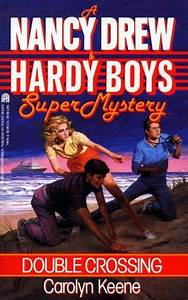
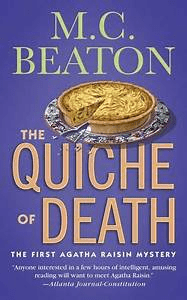
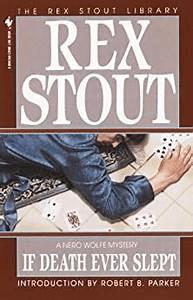
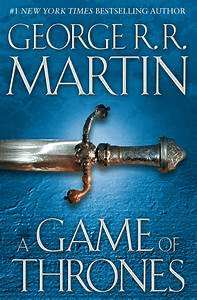

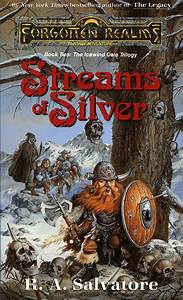
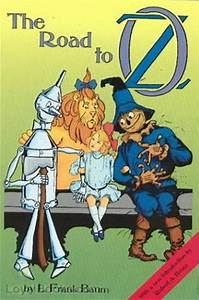
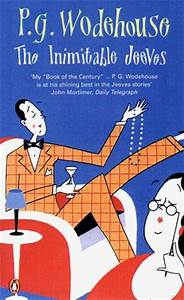

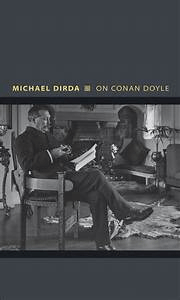
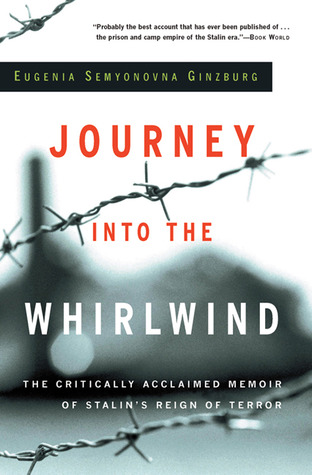
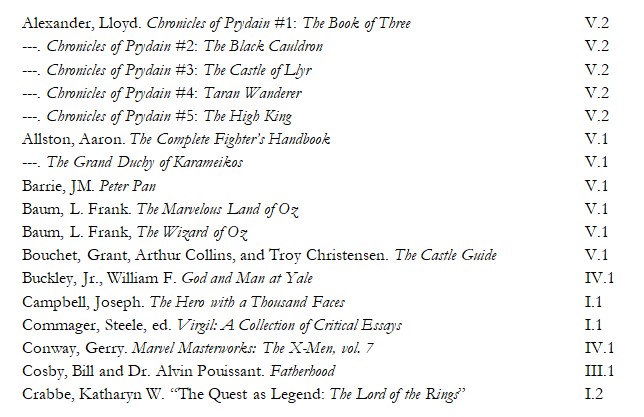
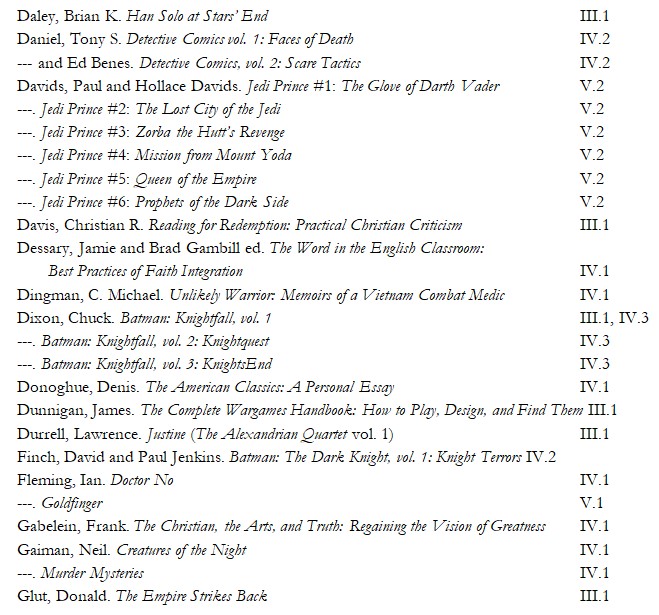
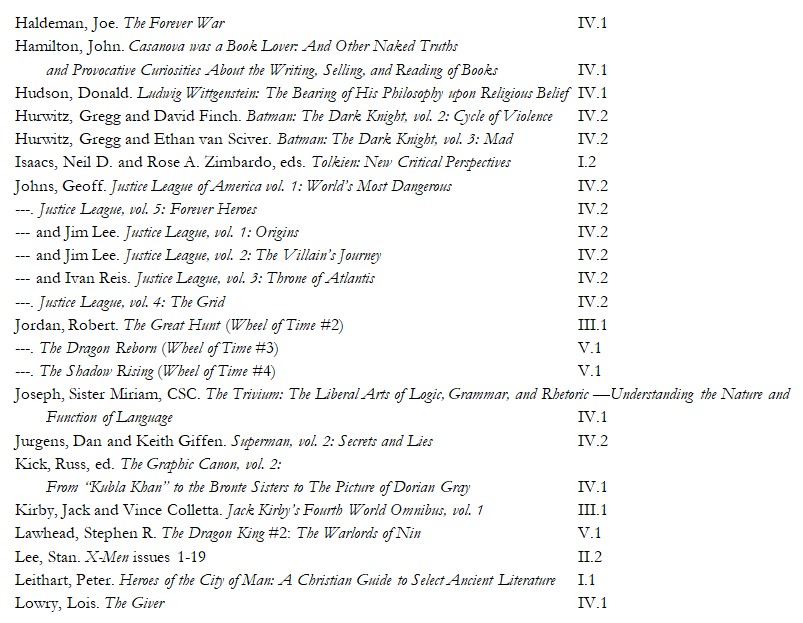
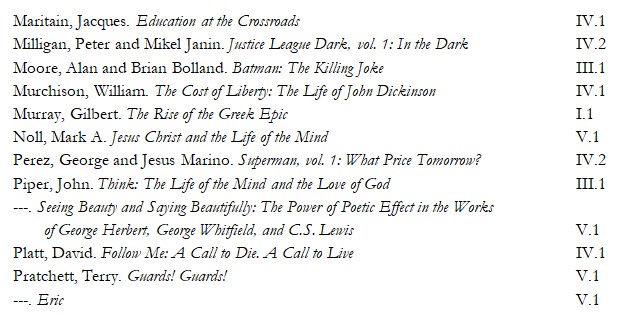
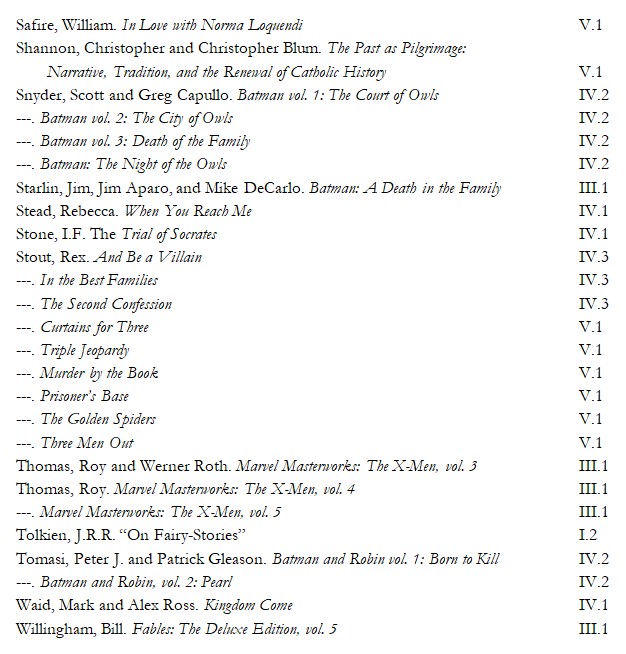
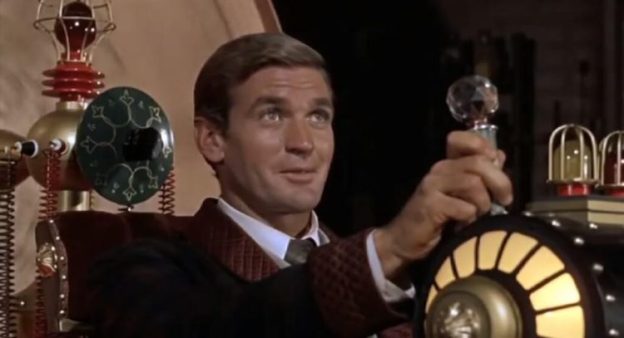
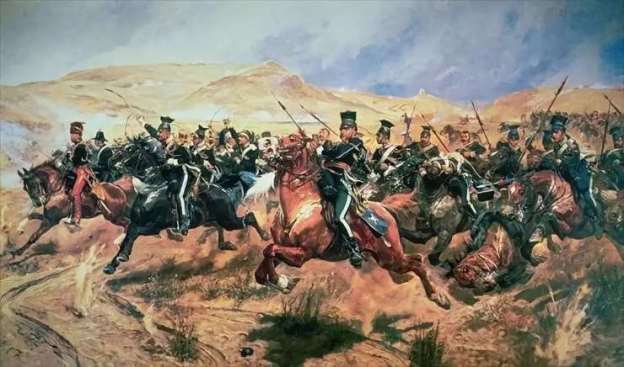
 Redeeming Pandora