Category Archives: Pop Culture

As The Kids Say

The Voice of the People

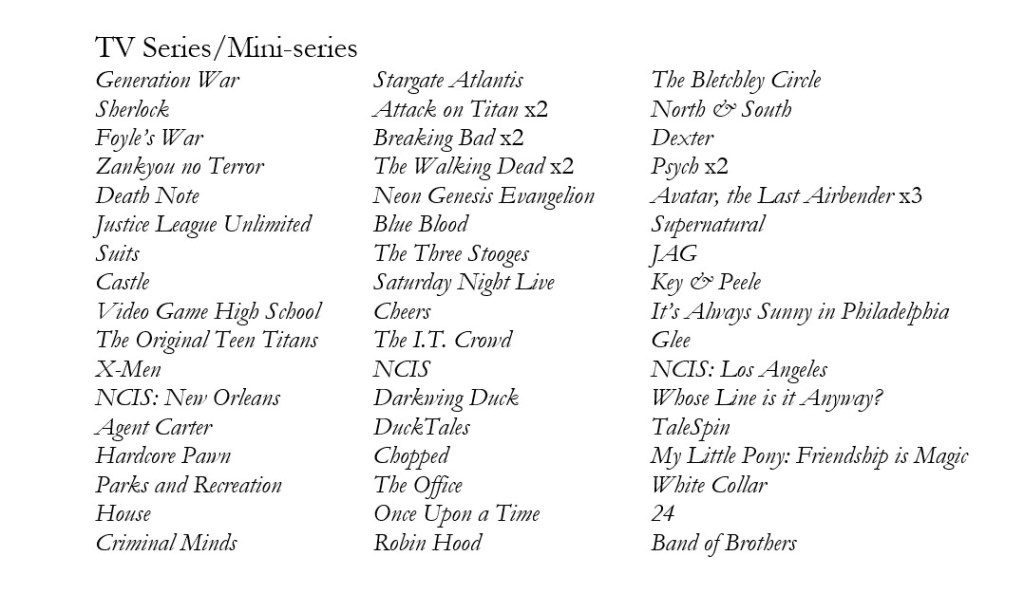
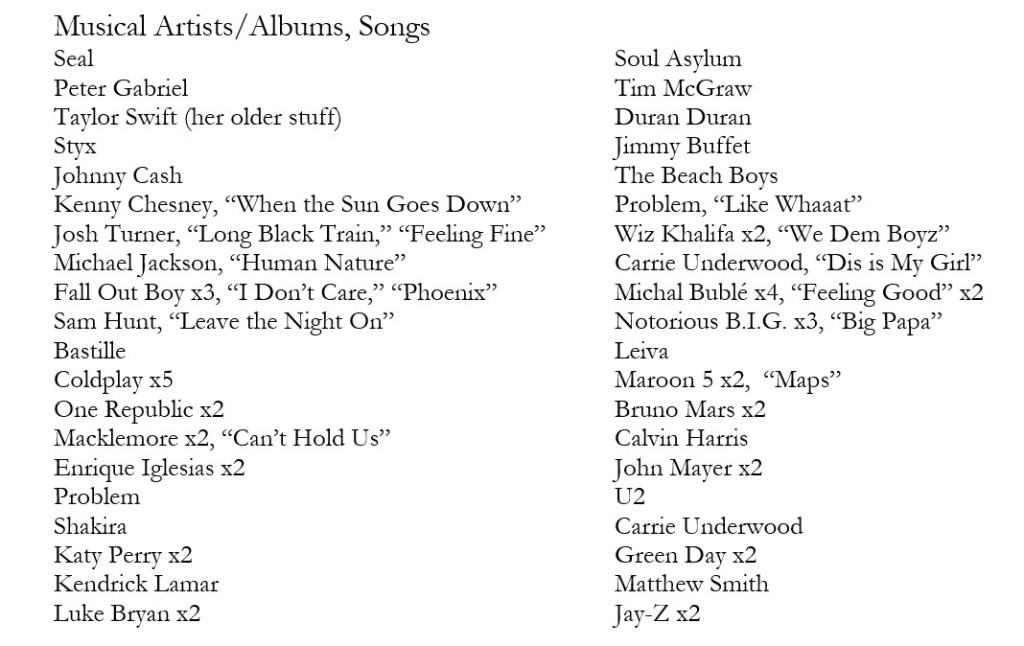
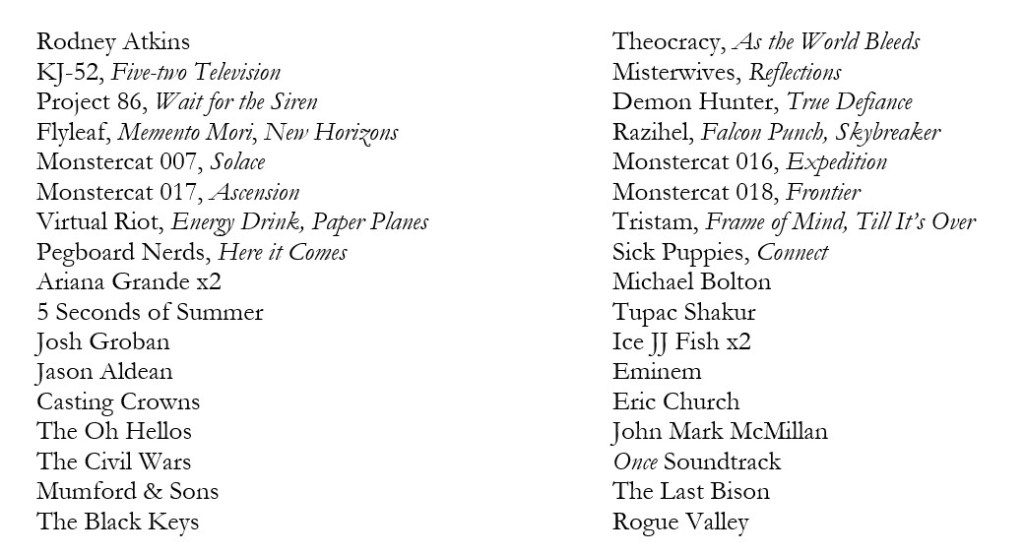
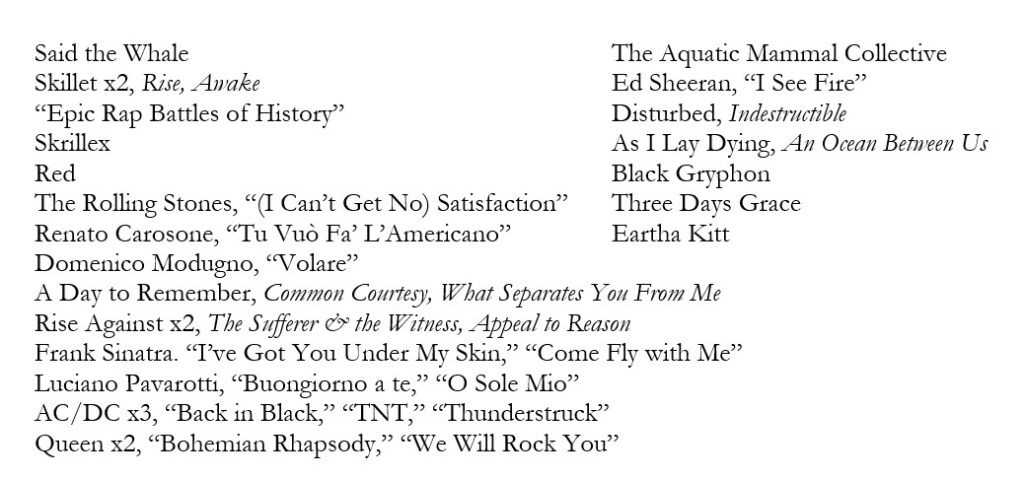
I hope you aren’t disappointed by this article or you find it misleading.  Like Colin Mochrie, I try to stay pretty current with the latest vernacular of the younger generation, especially since we at Redeeming Pandora like to keep it fresh.  My students are certainly aware of my intuitive grasp of the latest lingo, but despite what you may have thought from the title of this article, it’s not really about diction.  Instead, having recommended a number of quality movies, books, albums, and games over the issues, I thought it would be good to hear from some of the youth today.  What movies, series, and artists/albums do they find worthwhile?  What classics resonant within this generation?  What contemporary aesthetic delights should I and my elders experience?  We have kept the responders anonymous, in part to avoid the excessive adulation and further requests for recommendations that no doubt will follow (and in part so you don’t get mad at anyone specifically if you think any of these are inappropriate — I assume they mean the clean versions of whatever selection you find distasteful).  Any multiple-responder recommendations are noted with an “x#.”  As always, no grown-ups are to blame for what happens next.

Well, there you have it.  The people have spoken.  Rousseau is happy.  Before you start clamoring for a “Here’s What Good Culture Is, You Philistine Youth!” elective (which, actually, isn’t such a bad idea), remember even Bach was “pop culture” long ago.  Perhaps these may not have Bach’s staying power, but who better to keep us informed on what’s current than the youth?  So go check out some of the new good stuff, as the kids say.  Or keep enjoying the good old stuff, whichever.  Either way, delight in something beautiful and share it with others.

Aggression and Mortality vs. Immortality

Nicole Moore Sanborn

Renaissance writers often employ the same theme, simultaneously demonstrating their own unique style and flair. Popular Renaissance themes include love, beauty, and immortality of verse. Although Spenser and Shakespeare write about the same theme of immortality of verse, Shakespeare utilizes animal imagery and a more aggressive tone in his “Sonnet 19”, whereas Spenser utilizes dialogue and a happier tone in his “Sonnet 75”. The varying aforementioned aspects, specific words, and imagery of each sonnet join together to create coherent ideas and reveal the overall themes.

In the first line of each sonnet, the speaker reveals the tone. Although the same theme is employed, the tones are disparate from one another, as Shakespeare is aggressive while Spenser is happy. Shakespeare begins with “Devouring Time,” (19.1) whereas Spenser begins with “One day” (75.1). Devouring is a very strong term. In this case, devouring has a negative connotation, as it is followed by time, as time causes destruction. This means Time is personified here, indicated immediately by the fact that it is capitalized and it is devouring, an aggressive action. The capitalization suggests Time is a name, and nonliving things cannot act or devour. Spenser’s “One day” (75.1) implies a story, as many romances and fairy tales begin with those two words. Spenser’s sonnet reveals a more positive tone in the first two words, as fairy tales are considered to have happy endings and Spenser’s sonnet begins in the same manner as a fairy tale. These tones hold true for the remainder of each sonnet.

Although the first two words of each sonnet successfully and intentionally reveal the respective tones of the poems, these words accomplish different things in revealing the theme. The first two words of Shakespeare’s “Sonnet 19” reveal the theme of the sonnet, while the first two words of Spenser’s “Sonnet 75” do not. Shakespeare’s “Devouring Time” (19.1) relates strongly to revealing the theme of immortality of verse. Immortality is the ultimate defeater of time, because immortality lasts forever. Therefore, immortality deceases when time deceases, because the ending of time marks the ending of forever. Although Shakespeare does not fully engage in the theme of immortality of verse in line one, he begins to imply it, whereas the first two words of Spenser’s sonnet imply a story is about to be told and therefore do not relate as strongly to the overall theme. “One day” (75.1) does indeed relate to time, but relates to mortality rather than immortality, as the words refer to one day in mortal human history. Rather, the first two words are a set up for the rest of the sonnet, where the theme is revealed later. Spenser’s first two words set the foundation for the dialogue in the rest of his poem.

Shakespeare uses animal imagery with three specific examples: a lion, a tiger, and the phoenix. These examples lead up to the turn of the sonnet and to the speaker’s confrontation of time (19.8).  As each animal used is a fierce and majestic creature, the specific examples are important to the overall meaning and in providing more evidence for the sonnet’s aggressive tone. The speaker tells time to “blunt the lion’s paws” (19.1) and “pluck” teeth from the “fierce” tiger (19.3). Lions and tigers are both powerful animals, and any human attempting to blunt a lion’s paws or pluck the tiger’s teeth will be mauled in the process, thereby separating time as a transcendent power. Time devours these fierce animals that humans can hardly tame. Shakespeare tells time to “burn the long-lived phoenix” (19.4), which is a reference to the legend that every 500 years the phoenix burst into flames and death, where from the ashes a new baby phoenix would emerge. An aggressive tone and the personification of time are also demonstrated here; as Time burns, which is a verb. The specific examples used mean and demonstrate that time is intently and aggressively devouring and destroying fierce animals on the earth. Personification of Time is also demonstrated here because the imagery declares the physical action of time, as demonstrated through the speaker’s use of aggressive words. Specific examples used here, therefore, are carefully and artfully chosen to relate to the aggressive tone and ideal of the sonnet.

The speaker in Shakespeare’s poem tells time to do whatever it would like “to the wide world and all her fading sweets” (19.7), which sets him up for the turn in his sonnet and the change in argument. At the turn, the speaker expresses the thought that time can do whatever, except for one thing. Forbidding Time to commit one “heinous” crime (19.8), the turn of the sonnet occurs and the theme is revealed. The specific examples and animal imagery used demonstrate clearly the actions of Time, however Time is not tied into writing and verse specifically until later in the poem. The speaker commands Time not to touch his love. “O carve not with thy hours” (19.9) commands time not to touch his lover like it ages the phoenix, preparing the reader for the final line, which explicitly states the theme of immortality of verse. The final line states directly that love shall “ever live young” (19.14) in his verse, implying immortality. He implies immortality through use of “ever” (19.14) meaning forever. These words also specifically defy time, as she shall forever be young in his verse, thereby bringing all of the examples of what time will devour and conquer into fruition through this counterexample. The counterexample also becomes the main theme of the sonnet and brings the reader resolution.

Spenser tells a story in his sonnet rather than directly confronting and personifying time before he reveals his theme. In the first quatrain of Spenser’s “Sonnet 75”, the speaker writes his lover’s name on the sand at the beach twice, but the tide washes it away both times. In story format, these occurrences set up the author’s theme of immortality of verse, revealed more clearly in the first quatrain than in Shakespeare’s “Sonnet 19”. Though Shakespeare’s sonnet is clearly about time, time has not yet been related to writing or verse. However, Spenser automatically reveals the theme of immortality of writing and verse because he writes his lover’s name on the sand. Writing on sand is far from immortal as sand shifts and waves crash over the beach, erasing what was once there. Beaches change by the minute and hour, and the beach will hardly look the same after one day. Later in the sonnet, the lover calls the speaker a “vayne man” (75.5) and proceeds to note that just like her name on the sand, “I my selve shall lyke to this decay” (75.7), meaning she will also decay and will not last forever. Here, the speaker immortalizes mortal things purposefully, to prepare the reader for the idea of verse being immortal. That being said, the second quatrain sets up immortality of verse in a different way, by noting the mortality of earthly things such as sand and humanity.

Another interesting aspect of Spenser using the image of writing a name on sand is that it involves sea imagery. In other sonnets by Shakespeare and other authors, sea imagery is used; however it is used more steadfastly as the authors and speakers in the poems allude to steadfastness of a lighthouse or of a strong ship as opposed to gentle sand and writing being washed away. Spenser’s different use of sea imagery sets his theme up well, as it demonstrates that not everything involving the sea and the ocean is steadfast. He essentially uses sand as a counterpoint to the reveal his point that although sand does not last forever, his poetry will.

In the second half of the third quatrain in Spenser’s sonnet, the speaker more directly reveals the theme of the sonnet: immortality of verse. The speaker says, “My verse your vertues rare shall eternalize” (75.11), stating he will write about her not only in the sand but also in his verse. In the couplet ending the sonnet, the speaker mentions that death will swallow up the world, but their love shall live through his verse. The speaker is extremely direct here and states the theme directly, there is no speculation as to what he is saying. The theme is resolved here, as the speaker writes in a non-permanent way, is reminded of mortality, and then directly states that his verse shall live and their love shall live in it, or, his verse shall be eternal after the world is subdued. The idea is that the sonnet will be passed down among generations, thereby immortalizing it.

The turn of Spenser’s sonnet occurs at the beginning of the third quatrain. The turn also takes place when the speaker of the poem engages in dialogue in response to the mistress. The turn begins to direct the reader to the sonnet’s theme, as highlighted earlier. The speaker presents the turn of the poem, as he begins with “Not so” (75.9), indicating a contradiction of belief. The speaker contradicts the mistress’s speech of decay to reveal the theme when he declares she “shall live by fame” (75.10) within his verse in an immortal manner. Though the final line of the sonnet gives resolution to the theme of the poem, the theme begins to flesh out in the third quatrain right after the turn, in the quoted line above. Next, the idea of her living in his verse is directly stated “My verse your vertues rare shall eternize” (75.11), contradicting the earlier decay she mentions in line seven. Spenser’s “examples” and means to reveal the tone and theme of his sonnet is dialogue as opposed to specific animal examples, making it such that Spenser employs his theme in a different manner than Shakespeare.

Shakespeare begins his turn with “But” (19.8). In this line, the speaker directly challenges time and begins his command, indicated by the colon at the end of the line. The use of the colon is very important to the sonnet, as it indicates to the reader that the command to time will be explicitly stated in the next few lines. Beginning in line nine, Shakespeare reveals the theme of immorality of verse more clearly, yet without dialogue. In the rest of the sonnet, Shakespeare acknowledges the ability of time to devour even the fiercest of creatures as well as tarnish the whole “wide world” (19.7), thereby personifying time. The theme is not explicitly stated until line fourteen of the sonnet, where Shakespeare writes, “My love shall in my verse ever live young.” (19.14). Commanding time to leave his lover alone, the speaker hints that he will write about her through using the words “antique pen” (19.10), making a direct reference to writing. Shakespeare’s sonnet differs from Spenser’s sonnet, therefore, in that Shakespeare does not use dialogue but specific examples and in that Shakespeare waits until the very end of the poem to definitely resolve the poem and explicitly state theme of immortality of verse. Both sonnets provide resolution at the end.

Spenser and Shakespeare present two extremely interesting examples of utilizing different means to go about revealing the same theme. Shakespeare uses aggression and fiercely aggressive animals, while Spenser uses dialogue and a happier tone. Both “Sonnet 19” and “Sonnet 75” provide resolution at the end, and both authors use the turn of their sonnet to transition from specific examples or dialogue to a more direct statement of the theme. Fortunately for the reader, both authors resolve the theme of their sonnets. Both brilliant authors, Spenser and Shakespeare are extremely successful at employing the same theme through completely different attitudes, examples, and lenses, and are therefore two brilliant authors among Renaissance writers.

Top Ten Most Irksome Things on Facebook

Kaitlyn Thornton Abbott

1. Instagram-ing Portraits of One’s Food

Maybe my mind has not caught up with the ever changing pace of the teenage culture of today, but to me, it seems a bit outrageous to take portraits of one’s food and post it on the Internet.  The only reasonable explanation I can think of photographing food would be to put it on a cooking/recipe Web site.  There may be a fair few who actually do that, but as a generalization, these photos are “instagramed” and linked to someone’s Facebook account, usually with the title, “Eating healthy!” or, “Mmmmm chocolate #gonnagetfat #sorrynotsorry.”

2. Hashtagging

What are hashtags, anyways?  Most of us hear the word all the time and see the pound (#) symbol with words without spacing and don’t really understand the significance of it.  The Twitter help center defines hashtag: The # symbol, called a hashtag, is used to mark keywords or topics in a Tweet.  It was created organically by Twitter users as a way to categorize messages.  People use hashtags before a relevant keyword or phrase (no spaces) in their Tweet to categorize those Tweets and help them show more easily in Twitter Search.  Clicking on a hashtagged word in any message shows you all other Tweets marked with that keyword.  Hashtags in and of themselves aren’t bad; don’t misconstrue what I’m saying.  For the use of Twitter, they are extremely helpful and relevant.  What is annoying about them is when people translate them over to Facebook.  Instead of using them to sort messages, hashtags have now become the fad on Facebook to describe an emotion, usually after a very emotional status that implies the emotion through the tone.

3. Political Fights/Tangents

If you are connected to any form of a social networking site, you have observed some form of a political rant, tangent, fight, etc.  People feel the need to discuss their political ideology on a social forum so scores of people can see how they know how to run the government much better than the current administration.  People create “memes” to make light of the situation, but it honestly is just a form of disrespect to whoever the meme is of.  Facebook has become the breeding ground for drama and discussions.  Instead of sitting down face to face and discussing the presidential debates, they instead resort to posting their immediate thoughts and emotional responses to Facebook.  For example, and these are just a few I noticed over the past election, “Forget Obama AND Romney; Gary Johnson all the way!”  “Ew, Obama.  You disgust me.”  “Biden, try being respectful during debates.”  “Mitt Romney is the savior of our country!”  And so on and so forth.

4. Everyday Life Status

None of us care that you’re “off to the gym with Susie!” or “dinner time!” or, my favorite, “Breathing in that air!”  I’m sure there are some people dying to know what you’re doing every second of the day, but as a majority, the Facebook community is fairly irritated by these status updates, which means we have to go in and hide you in our newsfeed or delete you.  The latter doesn’t seem too harsh, I’ll admit, but with the amount of Facebook changes that take place, it’s far too difficult to spend the time trying to figure it out every time the privacy settings change.  Now, deleting you seems like a fairly simple conclusion, yes?  The problem that arises here is if someone notices you have deleted them, it becomes a personal attack, feelings become hurt, and their pride is bruised.

5. Facebook Relatives

Many of us have THAT relative, whether it be a grandmother attempting to work technology and be cool, or an over-protective aunt, or even one’s own parent(s).  There is a lot of jesting on the Internet.  Our generation is one rich in sarcasm and quite fluent in it — it’s been adapted into our language; it’s second nature at this point.  Most adults don’t realize this, a lot of the time.  Instead, they take every joke as an insult or the actual attitude the teenager has.  For example, there’s a meme that shows a person with a fist in the air with a speech bubble, 1st quarter: “GET ALL A’s!” and then, the same picture with the words, Rest of the year: “JUST DON’T FAIL!”  I, myself, posted this picture to Facebook merely as a joke — I found it amusing, but my family members did not.  This picture ended up with comments from my mother and father saying they work too hard and pay too much for my education to goof off and not care about my studies.  They went on to say I needed to get off of Facebook and to begin my homework.  Later that evening, an older cousin of mine messaged me, giving me a lecture that went along the lines of, “You’re only a senior.  You have so much more schooling ahead of you.  If you continue to have this attitude you will not get into college, which means you will not get a job, which means you will end up sad, alone, and with twelve cats.”  Point being, adults don’t understand sarcastic humor.

6. Self Portraits

My father asked me the other day why people take pictures in the bathroom mirror.  I honestly could not explain it.  Why people decide to take pictures of their (usually) filthy bathroom mirror astounds me.

Another aspect of self-portraits, or “selfies,” is the now ever-so-famous duck face.  How this is attractive … I don’t know.  What is the duck face, you ask?  Well, the duck face is the face girls make when they’re attempting to look attractive by pursing their lips into a “seductive” kissy face.  It’s really amusing to see this face.

When taking selfies, a lot of people don’t know how to do it appropriately, and, as a result, end up revealing a lot more of themselves than needed.  My advice?  Put on more modest clothing, and we wouldn’t have this issue.

Selfies with you kissing your significant other.  This is annoying; some things need to be private — that is one of them.  Nobody wants to see this; it looks dumb, and when, not if, when, you break up with “the best boyfriend everrrrr,” you’ll realize how dumb these pictures look.

7. Antagonists on Social Media

Although this fits in rather well to the point about political tangents, it is a tad different.  These are the people who specifically post things to start arguments.  Instead of posting uplifting statuses about life, or inspirational quotes, they, instead, decide to post something they know will get people riled up, merely for the sake of their own enjoyment.  Examples of this are, “Cheerleading is not a sport.”  Cheerleaders are some of the most intense people when it comes to defending what they do, of course it’s going to get a rise out of them.  Also, “Women don’t have the right to choose what to do to their body.”  The abortion argument is such a heated topic nowadays, if one even mentions the words “pro-life” or “pro-choice,” an argument will ensue.

The flip side to the antagonists on Facebook are those who post passive-aggressive statuses to the antagonists.  These are the people who see themselves as better than everyone commenting on the status, so they decide it’d be better to make a pointed, yet vague status at the person starting the argument.  It usually includes something along the lines of, “People are so immature when they feel the need to post statuses about _________.”  They completely use circular logic, and it’s quite annoying to have to deal with.

8. PeOpLE WhO TypE LYkE Dis

I sincerely hope that hurt your eyes to read, because it hurt my mind to type.  People who type like that, one, need to learn proper spelling, grammar, and punctuation; and two, need to realize how incredibly obnoxious this is.  Nobody wants to read something that resembles hieroglyphics they have to decipher.  You completely lose the respect of the people you’re trying to converse with, and you project this uneducated image of yourself.  I beg of you, never do this.

9. Game Requests

I am so tired of game requests.  If you want to play games with a few of your friends, by all means, go right ahead.  But for the majority of us, we are tired of game requests.  Farmville, Tetris, Castleville, etc. are clogging up both my newsfeed and my invites page.  I do not want to receive your pumpkin, nor do I want my sheep to eat your carrots, nor do I want to play Tetris.  Stop.  Sending.  These.  I cannot emphasize enough how obnoxious it is having to constantly go in and block not only people, but multiple people who keep sending the same invitation over and over and over.

10. People who have Started Confusing Facebook with Real Life

Facebook is only a projection of what we want people to see.  If you post Bible verses all the time, people will begin to get the impression you are a Godly person.  If you post pictures of you going out and partying, people will get the impression that you’re a partier.  People don’t post about their financial troubles, their gross health issues, or anything too personal.  They only post what they want you to see, and people need to realize Facebook doesn’t give you the whole picture.

This brings me to the last point: Facebook envy.  Stop getting so emotional because you see pictures of your friends hanging out or someone you kind of know posting about how busy they always are.  Don’t get envious of their apparent social life.  Again, you don’t know what else is going on in their life.

The Real Shakespeare

Lia Waugh Powell

For years the question “Who truly wrote Shakespeare’s plays and poems?” has been asked.  There are many speculations as to who wrote the works, and if Shakespeare really did not write them, why did they cover it up?  The idea of a fake Shakespeare may seem absurd, but scholars have been debating this for over 500 years.  Everyone would prefer to leave Shakespeare as he appears: a vivid poet and playwright who wrote deeply and loved even deeper.  But the oppression of the so-called “artful class” forces us to analyze all the best parts of every writer out of the picture.  This topic has become so heated the movie Anonymous was recently released, based on this controversial topic (though the reviews of the movie reveal that this movie contains many untrue statements and scenarios, thus making it completely inaccurate).

One reason it is suspected Shakespeare was made up, or just a false identity, is because the purported Shakespeare could not have possibly known about all of the things he wrote about.  This is because Shakespeare has such a modest background: he grew up in a working class family, therefore he could not have had the brain capacity to contain all of the knowledge necessary for him to write about what he did, and he could not have had access to the libraries he would need to write as well.  Some scholars also argue Shakespeare could not have traveled much either, which would mean the descriptions of places in his works would be inaccurate. Such as in The Merchant of Venice, Shakespeare could not possibly have written the descriptions of Venice, because he had never been there.  Also, in the 1600s, scholars say 98% of working class families could not even sign their names; Shakespeare has at least six known signatures.  As stated in the credited article of The Observer:

All we know for certain is that Shaxpere, Shaxberd, or Shakespear, was born in Stratford in 1564, that he was an actor whose name is printed, with the names of his fellow actors, in the collected edition of his plays in 1623.  We know that he married Anne Hathaway, and died in 1616, according to legend, on his birthday, St George’s Day.  The so-called “Stratfordian” case for Shakespeare rests on these, and a few other facts, but basically, that’s it.

Into this vacuum, a bizarre fraternity, including Mark Twain, Charlie Chaplin, Orson Welles and Sigmund Freud, have projected a “Shakespeare” written by a more obviously accomplished writer: Edward de Vere (the 17th earl of Oxford), Sir Francis Bacon and the playwright Christopher Marlowe, to name the leading contenders in a field that also includes Sir Walter Raleigh, John Donne and even Elizabeth, the Virgin Queen herself.

One view of who could have written Shakespeare’s works is Christopher Marlowe.  Marlowe was a 16th-century playwright and poet, born in 1564, the same year as Shakespeare.  He was recognized for his exceptional writing abilities in his school years.  Unlike any other candidate to the “who really wrote Shakespeare’s works” debate, Marlowe is the only writer who matched with Shakespeare’s wit and writing style.  When comparing Marlowe’s and Shakespeare’s works, it is obvious both are very similar in the way they sound and how they are presented.  Marlowe’s story is more interesting than that, though.  It is recorded Marlowe was stabbed to death on May 30, 1593.  However, Shakespeare’s plays did not start being published and acknowledged until after Marlowe’s death.  People believe Marlowe’s death was faked, so he could write the plays and poetry.  He faked his death because people wanted to kill him because he was a suspected of being a spy for the Queen and, worse, an atheist and heretic.  Marlowe was even reported as claiming Jesus was a pervert, who engaged in homosexual relationships and was not the Son of Man.  With all of these titles and suspicions from other people upon him, he had no choice but to fake his death so he could continue writing, as Shakespeare.

Another candidate for writing Shakespeare’s works is the Earl of Oxford.  Some logical reasoning that supports this theory is because of the many influential people and foreign places mentioned in the plays and poems are connected to Edward de Vere.  Born in 1550 (14 years before Shakespeare’s birth), he became the Earl of Oxford at the age of fourteen and hid his love for literary works and art because it would not have been acceptable for his reputation in court.  De Vere’s life also is paralleled in many of the plays, such as Hamlet.  De Vere also has the exact education and social class to have the knowledge about politics, other countries, and important historical figures displayed in Shakespeare’s plays.  Another compelling and convincing fact that could prove de Vere is the true Shakespeare is de Vere was once described with “Thy countenance shakes spears”  in a royal court.  This means de Vere could have been acknowledged as “Shakespeare” during his days.  De Vere also spent many years in Italy, and 14 of Shakespeare’s plays occur in Italy.

Sir Francis Bacon is also a candidate for writing Shakespeare’s plays.  This theory was suggested by none other than Mark Twain in the 19th century.  Bacon graduated from Cambridge at the age of twelve.  One piece of evidence that can be used to prove Bacon was the true Shakespeare is that in one of his works he uses the line “All is not gold that glistens,” and in Shakespeare’s play The Merchant of Venice is written, “All that glisters is not gold.”  The interesting part of the Baconian theory is the claim he is the true writer because of Baconian ciphers, cryptograms, and codes found in Shakespeare’s plays.  Baconians say, “Bacon, who was a leader in early scientific thought, and who invented ciphers to ensure posterity would remember him as Shakespeare, inserted secret messages in his plays.”  According to Baconians, an epitaph is on his tombstone: “FRA BA WRT EAR AY.”  This is interpreted as “Francis Bacon wrote Shakespeare’s Plays.”  Though this may seem absurd, this theory is not to be cast aside because proven throughout history many great minds have used cryptograms and such to reveal hidden messages and secrets to those who are supposed to know certain things.

However, none of these, in my opinion, beside de Vere, can truly be the real Shakespeare besides Shakespeare himself.  William Shakespeare was born in April 1564.  He grew up in a working class family and married Anne Hathaway.  He then joined a troupe of actors and traveled all the way to London.  He became one of the leaders in the most recognized theater company at the time, the Lord Chamberlain’s Men.  Shakespeare then wrote plays and became a sharer at the Globe Theater.  Proof of his existence and that he is, in fact, the writer of the poems, is that his name appears on the poems and plays, such as The Rape of Lucrece, Romeo and Juliet, Henry IV, and Hamlet, where his name is signed and attributed to the works.

More proof Shakespeare is the true author is he was an actual actor in a theater company that acted out his plays (The Lord Chamberlain’s Men).  On March 13, 1602, John Manningham recorded in his diary a racy note about Shakespeare and Richard Burbage:

Upon a time when Burbidge played Richard III there was a citizen grew so far in liking with him, that before she went from the play she appointed him to come to her that night unto her by the name of Richard III.  Shakespeare, overhearing their conclusion, went before, was entertained and at his game ere Burbage came.  Then message being brought that Richard III was at the door, Shakespeare caused return to be made that William the Conqueror was before Richard III.  Shakespeare’s name [is] William.

Shakespeare was not just a playwright; he wrote his plays with specific actors and settings in his mind.  This proves he wrote his plays because his characters and settings are all very detailed.  Shakespeare traveled with a specific group of people, he knew their appearances, their strengths and weaknesses, so we can logically assume he wrote accordingly.

William Shakespeare the Globe-sharer is the same person as William Shakespeare of Stratford-upon-Avon.  William Shakespeare, the Stratford-born actor, was titled “gentleman” after his name by right of being granted a coat of arms.  This is proven in a mortgage deed of trust in October 7, 1601 by Nicholas Brend to John Bodley, John Collet, and Matthew Browne, where Bodley was given control of the Globe, which is  described as being occupied by “Richard Burbadge [sic] and Willm Shackspeare [sic] gent.”

The reason the Shakespeare debate is large and ongoing is because Shakespeare’s name is registered so differently.  But in actuality, Shakespeare went through many titles as his social status went up.  As mentioned earlier, Shakespeare may not have had a great social status as a child, thus he could not have been very well educated.  But that really means nothing; Shakespeare may have had the ability to learn quickly, and while he toured with The Lord Chamberlain’s Men, his knowledge of different lands and countries must have expanded while he traveled.  It is inevitable to learn about new things when you are living in different environments.  Interestingly enough, there are even poems addressed to Shakespeare acknowledging him.

To our English Terence, Mr. Will. Shake-speare.

Some say (good Will) which I, in sport, do sing,
Had’st thou not plaid some Kingly parts in sport,
Thou hadst bin a companion for a King;
And, beene a King among the meaner sort.
Some others raile; but, raile as they thinke fit,
Thou hast no railing, but a raigning Wit:
And honesty thou sow’st, which they do reape;
So, to increase their Stocke which they do keepe.

These historical documents are proof Shakespeare was exactly who he is said to be.  Though The Earl of Oxford is very much qualified to have been “Shakespeare” because of his social class, environment in which he was raised in, and his connections to the court and politics, his writing skills were nowhere near as genius as Shakespeare’s were.

Christopher Marlowe was the only man who wrote as eloquently as Shakespeare did, but his life and death are too different from any of the other candidates to be qualified as the real Shakespeare.  He “died” at the age of twenty-nine, but still did not have the experience needed to write Shakespeare’s works, and he is not recognized as an author or actor, nor does he have any historical documents that prove he wrote much of anything besides his own plays, whereas Shakespeare was recorded acting in his own plays and also signed his works.

Sir Francis Bacon also does not have much of a stand on being the true Shakespeare either.  He is recorded as being extremely intellectual and a good writer, but other than that, he is not very well connected to Shakespeare’s plays and poems besides similarities in writing styles.  Another fact to take into account is, why would these authors, all who are well known in society, write anonymously?  In the 1500s and 1600s artists dreamed of being well known, much like today.  So why would anyone, besides Christopher Marlowe who was in hiding, assume a secret identity?  They would most certainly want the credit as the original playwright and poet of Shakespeare’s works.

As a result, Shakespeare is truly Shakespeare, and the conspiracies surrounding his existence and authenticity are made up because we as humans question everything; that is our nature.  Shakespeare, the Shakespeare who still lives in the works of literature that bear his name, would not want future generations to sit around analyzing how his life dictated his writing but rather how his writing applied and influenced our lives and our writing.  Instead of debating who wrote what, we should enjoy Shakespeare’s art.  His literary talents are unique to this day.  No other writer has been able to match his style exactly, and no other writer has captivated the hearts of millions of people throughout the centuries like Shakespeare has.  His works should not be debated over but enjoyed thoroughly in society and appreciated among all literary scholars.

Bibliography

Kathman, David. “The Shakespeare Authorship Page.” Shakespeare Authorship. Web. <http://shakespeareauthorship.com/&gt;.

The Marlowe Society. Web. <http://www.marlowe-society.org/&gt;.

McCrum, Robert. “Who Really Wrote Shakespeare? | Culture | The Observer.” Latest News, Sport and Comment from the Guardian | The Guardian. The Observer. Web. 12 Mar. 2010. <http://www.guardian.co.uk/culture/2010/mar/14/who-wrote-shakespeare-james-shapiro&gt;.

Milner, Cork. “Christopher Marlowe — Shakespeare.” Netplaces. About.com. Web. <http://www.netplaces.com/shakespeare/shakespeares-rivals/christopher-marlowe.htm&gt;.

—. “The Baconian Stance — Shakespeare.” Netplaces. Web. <http://www.netplaces.com/shakespeare/did-shakespeare-write-shakespeare/the-baconian-stance.htm&gt;.

What has Christianity to do with Horror?

Christopher Rush

Finally, brethren, whatever is true, whatever is honorable, whatever is right, whatever is pure, whatever is lovely, whatever is of good repute, if there is any excellence and if anything worthy of praise, dwell on these things.

Philippians 4:8, NASB

Admittedly, some passages of the Bible are rather abstruse and benefit from some commentary study (and a good Bible degree program from wise and learnèd expositors).  Philippians 4:8, however, as with most of Philippians, seems to be as overt and pellucid as the New Testament gets.  As Christians, on what should we set our hearts and minds, on what should our attitudes and dispositions of our souls dwell?  Whatever is true, honorable, right, pure, lovely, of good repute, of excellence, and/or worthy of praise.  Some might say “it sounds easier than it is,” as if because it is difficult it is not worth attempting, perhaps.  Our purpose here, though, is not to wrangle over the daily difficulties of living the Christian life in this dark world and wide, nor is it to minimize the deleterious effects of sin and the genuine, malicious diabolical forces of reality.  The point is to exhort you, as Christians, to stop willingly dwelling on the diabolical and demonic — namely, horror films.

Some might say, “couldn’t you say that about anything that isn’t the Bible?”  Of course one could, but we are talking now about something far more serious and sinister than reading ancient Greek poetry or indulging in re-runs of Barney Miller or playing Super Mario Bros. video games.  The key of Philippians 4:8 is “dwell.”  I do not disagree that indulging in anything too much (even what is good) beyond an active, lifelong pursuit of becoming Christ-like is inappropriate.  It’s not good to spend more time learning about God than spending time with God, abiding in Him and His word.  By dwelling on what is true, honorable, right, pure, lovely, of good repute, excellent, and praiseworthy, not only are we thus dwelling on attributes of God and things that must point us to God, but also we are, clearly, doing what God has told us to do.  We have said again and again that goodness, beauty, and truth can be found and enjoyed in sources that might not always be “Christian” — and since we are all created imago dei, certainly we can (and should) appreciate what is true, beautiful, and good wherever it occurs.  But, honestly, what is in any way true, beautiful, or good (or honorable, or pure, or right, or lovely, or of good repute, or excellent, or worthy of praise) about horror movies?

When I was younger, I enjoyed renting movies from movie rental places, especially on weekends, but I began to be fearful of Movies America.  One time a fun place to visit, especially because it was the only rental place close to home that had a fresh movie theater popcorn machine, and we would often get popcorn with our weekend rentals, it also had fun drawings/raffles, which we would occasionally win, being fairly regular customers.  The trepidation came, though, because they were one of the few rental places also to have mounted televisions throughout the store — and it seemed most of the time they were running trailers for horror movies.  As a young boy, I really had no interest in hearing or seeing these intentionally frightening and disconcerting sounds and images.  Being a somewhat prolific reader (as well as most likely naturally endowed with the faculty), I developed a quite active and fecund imagination.  Even though I was only being exposed to snippets and clips of these diabolically-oriented experiences pretending to be “entertainment,” I was not so easily capable of leaving the brief sensory intrusions behind.  When, later in life, we had more ready access to cable television, unfortunately concomitant with that came the multifaceted sinister nature of the advertisement industry and the ubiquitous trailers not only for the theatrical release of so many reprehensible films but also, several months later, for when the film was then being released on the newly-invented device known as the video cassette recorder.  I was quite glad for the invention of the remote control, but that did not become a part of our viewing experience until much later.  I have no conception how anyone would willingly sit through such a film: what good does it bring our souls?  How does it help us, in any slight or remote way, understand reality better, even from a fallen perspective?

I am not denouncing suspenseful movies or action thrillers — that ilk can provide some interesting and possibly meaningful kinds of sensory-rational-emotional experiences.  Neither am I saying one should never ride roller coasters.  Nor am I saying never play RPGs (I have surely made my personal enjoyment of them clear in other articles), though I would certainly urge caution against the dangers of over-indulgence in role-playing with the underworld no matter how fantastical or unrealistic (never, though, would I or hopefully any Christian condone playing with Ouija boards — that should be clearly unacceptable).  Thus, I am clearly not saying “never be scared or thrilled in a potentially hazardous way.”  The kinds of experiences horror movies engender (and the same could be said of similar video games and even literature), though, especially the slasher-horror genre (if such a fine word can be used for such a thing), are nothing at all akin to the intelligent constructions of some dramatic thrillers.  Because of this distinction, without fear of contradiction or hypocrisy I can advocate watching Rear Window and not Psycho, though both are from Alfred Hitchcock.  In like fashion, though I am a tremendous fan of Gregory Peck and Richard Burton, I will never watch The Omen or Exorcist II.  I am a fan (of lesser intensity) of Jeff Goldblum, but I will never watch The Fly (Jurassic Park and Independence Day, yes, but Jurassic Park is close to the borderline).

The fundamental problem of slasher-horror movies is their appeal to the basest, most depraved aspect of the sin nature.  They are not an attempt to understand, calculate, quantify, and equip the audience with the dangers and natures of demons, serial killers, or the otherwise mentally unbalanced.  They are not documentaries on the occult (nor am I suggesting that you should even explore those — as much a fan of Sir Arthur Conan Doyle as I am, I will probably not ever get to  his Edge of the Unknown).  Neither, let us be clear, are they metaphors or allegories of “good vs. evil.”  The “good” characters in these sorts of movies are often overly-sexed, under-dressed teenagers who are only in the position they are in because they have willfully gone to some place they know they should not have gone or done something they know they should not have done.  Admittedly, that is a generalization, but I think all should agree it is an accurate précis of most of the tropes of the slasher-horror formula.  Most others deal with some sort of demonic incarnation in an unsuspecting suburban setting with, perhaps, more “innocent” people, but we should be far more chary of the demonic realm than those movies want us to be — did we learn nothing from Reverend Hale of Beverly in The Crucible? — such movies want us to think the right amount of ectoplasm, the right amount of sincerity, the right amount of rational cleverness in the face of such irrational folly, the right amount of good ol’ human ingenuity and know-how, or, perhaps, enough willingness to become just as monstrous as the monster to defeat it, and then all will be right in the end (until the sequel).  Most slasher-horror films are part excuse for pornography and part indulgence in other, base elements of the human psyche (why should any of these be indulged?), but it is possible the worst aspect of them is their intentional lie to the audience that the devil can be cozened, outmaneuvered, and defeated by we mighty mortals.  If Michael the Archangel is hesitant even to bring a verbal condemnation against Lucifer, surely we should not even consider being “entertained” by him!  This is what horror films want us to do: find Satan fun.

We don’t read Milton because he’s delightful (and hopefully we all reject the Postmodern misreading Satan is the hero or anti-hero of Paradise Lost).  Even C.S. Lewis in Screwtape Letters admits he grew weary of thinking and writing from the diabolical mindset — clearly we have enough resources out there to know what (little) we need to know about it.  Bono’s Mr. MacPhisto persona, patterned after what Lewis did in Screwtape as evidenced by the “Hold Me, Thrill Me, Kiss Me, Kill Me” music video, was, likewise, a tool for the purpose satirizing a point — that eventually ended when the time was right to move on to more directly uplifting thoughts.

If you want the thrill of “good vs. evil,” read The Faerie Queene or The Lord of the Rings or The Space Trilogy by Lewis or the countless other high-quality uplifting books, poems, plays, and essays readily available for centuries.  The summer reading lists are surfeited with such authors fit to provide you with a lifetime of quality emotional-rational experiences to supplement and support your life-long pursuit of Christ-likeness.  Admittedly, it also has a small number of suspense and horror writers such as Gaiman, Blackwood, and Le Fanu.  It is certainly possible that reading horror writers may be worse than watching horror movies — thus, without trying to sound hypocritical, I shall just urge extreme caution when setting out to read something like that.  Don’t feel bad, though, if your gothic horror taste (if you even must have one) never develops beyond Shelley, Poe, James, Hawthorne, and Irving.

If you want to watch a movie for some suspense and thrills, though, why not watch one of the classics that has nothing to do with the demonic?  It might be fair to say all of the best movies of all time have nothing to do with such slasher-horror ideas.  Check out the stars of yesterday: William Powell, Clark Gable, Cary Grant, David Niven, Humphrey Bogart, Peter O’Toole, Richard Burton, Rex Harrison, the Marx Brothers, Myrna Loy, Bette Davis, Carole Lombard, Katharine Hepburn, Audrey Hepburn, and the rest of the gang.  That should keep you visually entertained for the rest of your days in far most satisfying ways than what horror films offer.  And if you absolutely must watch a scary movie (not just a thrilling suspenseful movie), be sure it stars Abbott and Costello — that should suffice.

Jerusalem and Athens have more in common than Tertullian may have wanted, but Christianity/Christians and horror films should have nothing to do with each other.  Dwell on what Philippians 4:8 requires instead.  Not only will you sleep better at night, but your life as a whole will thrive more gloriously.

Pandora Redeemed

Christopher Rush

It’s Not About Vengeance…

Despite the sudden proliferation of “Pandora”-titled things this past year, none of them were the inspiration for the name of this scholarly journal.  Similarly, before the theme of the 2010-2011 was announced to us as being about “redemption,” the title for this scholarly journal was already “in the works,” as the kids say.  So though it may have appeared to be a combination of recent things, the name has its origin in older, far different sources.

The “Pandora” is, as you can probably suspect, the Pandora of classic Western mythology, especially out of Hesiod’s works (though you may have heard of her from other summary/anthology sources).  Since she opened the jar (it wasn’t a box, really) out of curiosity and not malice, as an individual she doesn’t need “redemption” in that sense, as if she had willfully done something wrong and needed internal restitution, even though some accounts of her tale make her out to be somewhat tawdry.  The history of Pandora, her story, and its variations is complicated — fortunately, though, the most genuine origin of the inspiration of the title does not really come from those literary sources (not directly).  The real source of both parts of the scholarly journal’s title is the video game series God of War (the main trilogy, not the miscellaneous sub-stories).  The God of War series is M-rated, for good reasons.  We are not urging you to go out and play them, especially if you are under seventeen, and even then not without parental (and conscience) consent.  There’s a lot of violence/gore, some unclothedness, and some intense scenes of ruthlessness — it’s definitely not for the faint of heart or young of spirit.  The point, then, here, is to look at the story and explain why it’s so good (despite the saucy parts), good enough to supply the title of this journal.

Ares Unleashed

The first God of War game is mostly a flashback frame story: it begins about five minutes before the game is over, with Kratos (the…hero) giving into despair, believing “the gods on Olympus have abandoned me.”  Throughout the game, various incidents and encounters trigger further flashbacks into Kratos’s history: once the proudest, strongest Spartan warrior, Kratos’s life was about to end at the hands (and hammer) of the Barbarian King.  Before the Barbarian King can finish him off, Kratos appeals to Ares: if Ares will help him destroy his enemies, Kratos will become Ares’s servant.  Ares responds by bestowing (after a fashion) the Blades of Chaos on Kratos, the weapons that allow for such rapid gameplay (much better than the button-mashing of street-fighting games).  Kratos serves Ares for years waging a war on all of Greece until the fateful night Kratos attacks a village of Athena worshippers.  Defying the village oracle, Kratos storms a hut and accidentally kills his own wife and daughter, whom he thought were far away.  He knows Ares is behind it: Ares intended to use the removal of this final connection to humanity to make Kratos into a heartless, machine-like warrior; instead, Kratos renounces his affiliation to Ares.  The oracle curses Kratos as the hut burns to the ground; the ashes of his family are bound to his body, turning him into the “Ghost of Sparta.”  For ten years, Kratos serves the other gods in hopes they will remove his nightmares and guilt.  They do not.  Poseidon asks Kratos to kill the Hydra and save his seas; this is when the player gets control over Kratos and the game begins.  After working through the first level and killing the Hydra (the first of only 3 bosses in the game), Kratos’s patience with the gods is at an end.  Athena asks him to do one last favor and the gods of Olympus will finally forgive him: kill Ares, who is now out of control and destroying Athens itself.  Kratos agrees, believing he will be able to avenge his family and finally be rid of his nightmares.

Kratos fights into, around, through, under, and above Athens for a good third of the game, sometimes aided by the gods and their magic/weapons (including an easy victory over Medusa).  After a mysterious encounter with a gravedigger, Kratos meets Athens’s oracle, who tells Kratos the key to destroying rampaging Ares is finding Pandora’s Box, which is strapped to the back of mighty Cronos in the Desert of Lost Souls.  Kratos wends through the desert, killing some Sirens along the way, and summons Cronos.  After three days of climbing up him, Kratos comes to Pandora’s Temple.  This is the majority of the game (at least it feels like it).  Kratos fights through the many levels and tests of the Temple, solving puzzles and slaying monsters all the while.  Once Kratos secures Pandora’s Box (a very large, intimidating box of fire), the player wonders how he is supposed to carry this all the way down Cronos and through the desert back to Athens.  Ares solves that problem by killing Kratos, sending him down to Hades, and capturing Pandora’s Box for himself.  Kratos struggles through Hades and is rescued by the mysterious gravedigger just in time to find he is too late to save the Athenian oracle.  With a little bit more Olympian help, Kratos confronts Ares for the last time.  Through physical and psychological battles, Kratos eventually conquers Ares…only to find the gods of Olympus forgive his blasphemy but will not take away his memories of his family, bringing us back to the beginning of the game.  Athena prevents Kratos from ending his life and gives him new blades as the replacement god of war.  Kratos takes his place on Olympus.

Fate Unravelled

Kratos has not done much better than Ares as the new god of war, and the gods of Olympus regret their decision.  Kratos has been leading his Spartans against Greece again; during an assault on Rhodes and its Colossus, Zeus tricks Kratos into sacrificing his divine powers, eventually killing him with the same sword that he used to end the War of the Titans so long ago.  In Hades a second time, Kratos meets Gaia and becomes a part of her plan to lead the Titans in revenge against Zeus.  In order to do so, he must turn back time and conquer the Sisters of Fate: Lakhesis, Atropos, and Clotho.  With Pegasus’s assistance, Kratos begins his next adventure.  With the aid of Titans (sometimes at their expense), Kratos finds the Island of Creation, wrangles the Steeds of Time, and wages a one-man campaign against the myths of Greece: Prometheus, Icarus, Theseus, Perseus, Euryale (Medusa’s sister, but you knew that already, right?), and even the Barbarian King again all get in Kratos’s way…oops. 

Kratos defeats Cerberus (after he finishes munching Jason) and filches the Golden Fleece out of his throat.  After defeating Icarus (and taking his wings), Kratos encounters Atlas and learns more of Zeus’s story and why the Titans are against him.  With his help, Kratos resumes his quest for the Sisters of Fate.  At the Palace of the Fates, Kratos does some dastardly deeds, kills the Kraken, and resurrects the Phoenix, who takes him, finally, to the Temple of the Fates.  After the most annoying bell-ringing sequence you’ll ever experience in your life, Kratos works his way to the Sisters of Fate, dispatching them in appropriate fashion.  Once Kratos controls the Loom of Fate, he returns to the moment of Zeus’s betrayal, igniting the final boss battle of the game.  During his multi-part confrontation with Zeus, Kratos learns from Athena that he is Zeus’s son!  Zeus did not want his own son to usurp him like he did his father Cronos.  This only motivates Kratos more.  Returning to the Loom, Kratos travels back to the War of the Titans and brings them back with him to the present, setting the stage for the final chapter.

Pandora Unchained

The finale of Kratos’s story (or is it…?) came out for PS3, ratcheting up the graphics, details, gameplay, and, unfortunately, the sauciness.  Some might be disappointed in that most of the “new” weapons in this game are just minor variations on the familiar blades; additionally, the story is much more vertical, in contrast to the widespread horizontal levels in the first two games (this is due, primarily, to the nature of the game being mainly an assault on Mt. Olympus, so it couldn’t be helped too much).  The game is also shorter than the first two, which made the initial PS3 release price a bit of a challenge (though that shouldn’t be a problem by now).  These niggles aside, it’s an impressive game.  The creative studio is different from the first two, so the design and story changes are quite noticeable; we might never know fully what the original ending would have looked like had David Jaffe and the original team finished the story themselves; even so, the story and ending provided by the God of War III we have is a great gaming and emotionally-moving experience.

Picking up right where God of War II left off, Kratos and the Titans assault Mt. Olympus.  The first twenty minutes of the game is as incredible a gaming experience (especially the Poseidon battle) comparable to the opening twenty minutes of Saving Private Ryan as any you’ll play (rivaling many individual scenes even of Final Fantasy VI, but not the entire game).  During the early conflict, the Titans cast off Kratos as a means to an end.  Having been completely betrayed by virtually the entire pantheon of Greek mythology, Kratos resolves to bring it all to an end.  His final journal is started by a resurrected Athena — though she has changed quite a bit from the being Kratos once knew (the similarities to the end of Assassin’s Creed II are eerie).  Along the way, Kratos returns to Hades, is tested by the Judges of the Underworld (Minos, Rhadamanthus, and Aeacus), climbs the Chain of Balance, and quenches the Flame of Olympus.  He also encounters (read “kills”) Peirithous, Hephaestus, Hermes, Hercules, Hades, Helios, Hera, Poseidon, Daedalus, Perses, and Cronos himself.  It’s pretty intense.  During the mostly-vertical journey, Kratos learns that the key to final victory is, once again, Pandora’s Box.  In order to get to it this time, he needs the help of a rather unlikely source…Pandora herself.

After each victory over a god of Olympus, Kratos makes the world worse: Hades’s death means the chaotic release of the souls in torment, Helios’s death darkens the sun, Hermes’s death results in a plague, Hera’s death is an end to plant life — it seems the game is about destruction, vengeance, and chaos…but it’s not.

Once Kratos breaks the Chain of Balance and raises Daedalus’s Labyrinth up to the heights of Mt. Olympus so Pandora can quell the fires of Olympus and open her Box, he realizes that the only way Pandora can “open” the Box is by her own death.  With Zeus looking on and taunting them both, Kratos decides at the end to prevent Pandora from killing herself — he won’t let another innocent girl die because of him.  Pandora, though, will not listen to him.  In a chaotic scene, Pandora sacrifices herself for the good of others and the Box is opened again.  This time, instead of giving Kratos the power to destroy a god, the Box is empty.  Enraged, he assaults Zeus again.  Gaia intervenes, resulting in her own death and seeming death of Zeus through Kratos impaling them with the Blade of Olympus.  Before Kratos can depart, though, the spirit of Zeus sends Kratos into his own psyche.  Feeling the weight of his life and crimes, Kratos sinks into despair again, only to be rescued by Pandora.  She saves him and leads us to one of the most touching moments in video game history, the reconciliation of Kratos and his family, as he finally forgives himself for what he did.  With this renewed self-awareness, Kratos frees himself from his past and can finally conquer Zeus once and for all.

…It’s About Hope

When it is all over, the mystical Athena returns for the contents of Pandora’s Box, refusing to believe Kratos that it was empty.  We now learn why Zeus betrayed Kratos in the first place and the true nature of Pandora’s Box.  Zeus sealed all the evils in the world in the Box; knowing it would be opened one day, Athena placed hope inside it as well before Zeus shut it.  When Kratos first opened it against Ares, the evils of the world infected not mankind but the Olympians.  Athena wants the hope back so she can rebuild the now-chaotic natural world and hold dominion over the mortals her way.  Kratos will not let this happen; he plunges the Blade of Olympus into himself one last time, releasing hope and its power back for all mankind.  Athena, enraged and disappointed, abandons Kratos as he fades away.  After the credits, a trail of blood intimates Kratos may still be alive.

The story is all about hope.  Hope is not for the weak, despite Kratos’s claim: hope, says Pandora, is what makes us strong, what makes us human; it is why we are here.  There is a monumental amount of truth in what she says.  Hope is one of the three key virtues according to 1 Corinthians 13:13.  True, love is more important, but that does not mean we should ignore genuine hope.  Hope is not a groundless, amorphous “gee, wouldn’t it be swell if…” emotion that flitters about willy-nilly.  “Hope is the thing with feathers.”  Hope is that ground upon which our faith is based, the assurance that God is Who He is, whether we see it (believe it) clearly in the moment or not.

“Babylon 5 was the last of the Babylon stations.  There would never be another.  It changed the future and it changed us.  It taught us that we have to create the future or others will do it for us.  It showed us that we have to care for one another, because if we don’t, who will?  And that true strength sometimes comes from the most unlikely places.  Mostly, though, I think it gave us hope, that there can always be new beginnings.  Even for people like us.”

God of War is about hope.  Redeeming Pandora is about hope, joining Pandora’s willing sacrifice to make hope a palpable part of who we are, how we think, how we live…and how we die.  Being a Christian — being human — is about…hope.

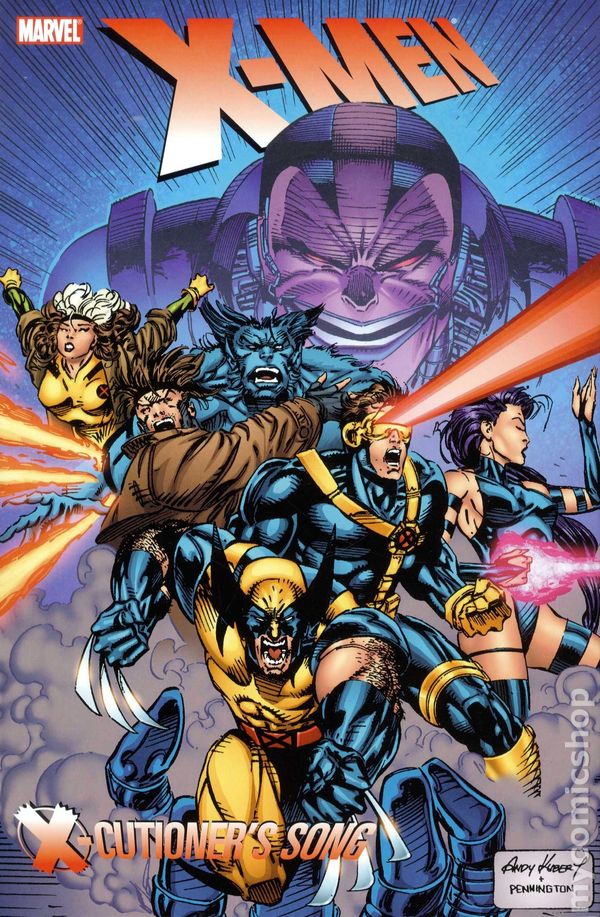
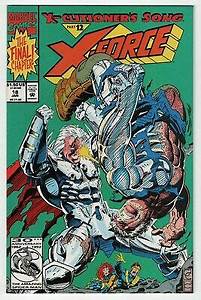
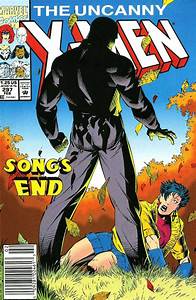
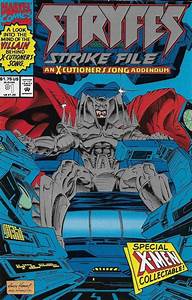
The Song Remains Supreme – A Reflection on X-Cutioner’s Song

Christopher Rush

It Was 1992…

Scott and Jean were not yet married (though she was still alive again).  Cable was still a mysterious figure.  We weren’t sure who Stryfe was.  The newly-launched X-Men and X-Force titles had not-yet participated in a major X-Titles crossover.  The New Mutants had recently become X-Force and were, in effect, part of the problem now.  Bishop had just arrived from the future, and we still didn’t know what he meant to the team.  We had so many questions, but we were certain that the future would be impressive — like the Edwardian Age, optimism abounded.  What came next did not disappoint (not the real fans).

X-Cutioner’s Song is an oft-overlooked great crossover in the history of the Children of the Atom.  Before Onslaught, the House of M, and Grant Morrison came along and changed everything (again and again), the revitalized X-Titles were hitting a new stride, despite the great talents of yesteryear (Chris Claremont, especially) no longer being a part of the process.  A simplicity still existed that seems lost today.  X-Cutioner’s Song, about to turn twenty years old, deserves a second look.  As is our wont, we won’t reveal all the plots, subplots, and exquisite details that abound throughout the series — you should read it for yourself, even if you don’t know the difference between Cyclops and Havok.

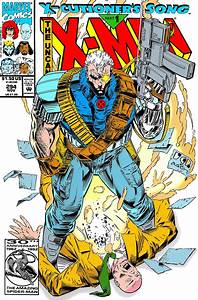
Part 1 — Uncanny X-Men 294: “Overture”

Though this will sound rather hyperbolic, Uncanny X-Men 294 is about as close to perfect as a comic book can get.  The better issues of comics, for me, fall in two categories: monumental (and believable) significant changes and laid-back, “day in the life” episodes — admittedly, two ends of a rather vast spectrum.  UXM 294 has both.  For most of the issue, we see various X-Teams going about their day: Scott and Jean are relaxing at Harry’s Hideaway; Bobby and Peter are shopping for groceries; Warren is on a date; Guido, Jamie, and Pietro are sitting down to watch Charles Xavier on television.  Bishop and Rogue are on perimeter detail, discussing previous occurrences (it’s always nice when the characters remember events from previous issues), and so are Ororo and Remy (two unlikely pairings), all surreptitiously guarding Xavier as he prepares to address the gathered crowd about unwarranted mutant bigotry.  As is often the case, these relaxed “day in the life” experiences are interrupted: Scott and Jean are attacked and kidnapped by Apocalypse’s Horseman and Stryfe (pretending to be Cable) shoots Xavier in front of everyone.  Just like that, the relaxing day becomes the beginning of a very good and vastly underrated cross-over: X-Cutioner’s Song.  The only thing that prevents this from being a full five-star great issue is the ambiguity of Scott and Jean’s kidnapping: one moment the roof is collapsing, the next we are told they have been spirited away — a minor confusion, but it is still confusing.  Other than that, the issue is remarkable for its brief character moments and its scenes of conflict and tension.

Part 2 — X-Factor 84: “Tough Love”

A great deal of the success of this issue is the unique pencil work of Jae Lee.  For the longest time, when first reading X-Factor back in ’92 when these issues came out, I could not tell why the artwork was so much edgier for the issues in this crossover than the issues before and after it; it was not until much later I realized (by looking at the credits, finally) the penciler, Jae Lee, did his only X-Factor work on the three issues of this event.  Though his exaggerations of muscles (Bishop’s especially) can get a bit extreme, his artwork for this issue is admirably suited to the story; his penciling of the characters and their taut emotions both in their concern for Xavier and their anger at having to fight their own, albeit temporarily rogue, friends and former understudies is fitting.  Equally fitting is Peter David’s writing.  He has admitted to being a character-driven writer, and this issue exemplifies that important attribute of better comics, even in the midst of a story-driven multi-part crossover.  Archangel’s moment of anger at Apocalypse, Strong Guy’s humor even in the most awkward moments, and Quicksilver’s lines throughout the issue are all great examples of Peter David’s skills.  Being the second part of a series is a challenging role to fill, and X-Factor 84 does a remarkable job keeping the pace and tension going after Uncanny X-Men 294.

Part 3 — X-Men 14: “Fingers on the Trigger”

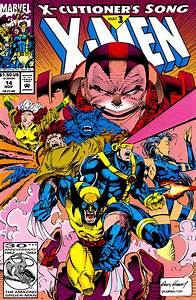
The cover of X-Men 14 is a bit misleading, considering Cyclops is in suspended animation during the issue, being transported by Mr. Sinister to the Mutant Liberation Front.  Additionally, this issue suffers (though only slightly) in that it has to be a joining episode of a multi-part story arc essentially acting as the set-up issue to the exciting second part of the battle between the X-Men/X-Factor unit and X-Force, completed next in X-Force 16.  Since it is a set-up issue, we have a lot of travelling panels, “here’s what we’re going to do next” conversations, and rapid oscillation among the various plot threads and teams involved.  That’s not necessarily a bad thing, for the overall story, but it does diminish the enjoyment of this particular issue qua issue; however, some of the brief character moments make this issue worthwhile and surprisingly enjoyable even for a transition issue.  Havok’s internal struggles over confronting and capturing X-Force are a great touch, elaborated on further in X-Force 16: he works for the government, but he is still a part of Xavier’s dream.  The discussion of said dream is also one of the better moments in this issue, as Wolverine (ever the cynical one) intimates it might be time to give up on the “dream” and realize it is all a “nightmare.”  Having to attack their former pupils (for attempting to assassinate their mentor, no less) certainly adds to the uncertainty of this time in the X-Teams’ existences and personal lives.

Part 4 — X-Force 16: “Jacklighting”

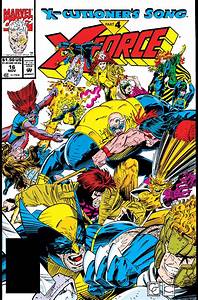
Underlying this crossover is Xavier’s dream: humans and mutants can live together in harmony, free of hatred and bigotry.  In the previous installment, Gambit and Wolverine speculated it was past time the X-Men realized the dream was illusory and the pragmatic realities of their day should make them realize the world is a “nightmare.”  The dream is tested in X-Force 16, as X-Factor and the Blue Team X-Men fight X-Force again.  Cannonball’s leadership is also tested again: he knows they are no match for the older, more experienced teams, and he even has to leave some wounded mates behind in their tactical retreat; eventually he surrenders, knowing full well Wolverine would kill them to get what he wanted.

The changing nature of the X-Universe is furthered in the issue by Bishop’s confrontation with Mr. Sinister.  Bishop’s lack of hesitation in pulling the trigger pleases Sinister, which is not a good sign for the Dream.  Wolverine, Bishop, Cable — they and their interactions all point to the changes in Xavier’s dream in the years ahead, climaxing (for now) in the events of the Second Coming event and its aftereffects.  The storyline of the X-Cutioner’s Song moves ahead with this issue: Sinister tells Val Cooper who is behind it all, Cable prepares to confront him, and Stryfe reveals himself to Cyclops and Jean Grey.  The final page of the issue, though, is the best part: once X-Force is in captivity, Havok asks in desperation, “What do we do now?”  He is clearly not just asking about how to save Xavier’s body — if the followers of Xavier’s Dream can’t even trust each other, how can the Dream survive outside of mutantkind?

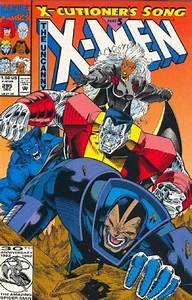
Part 5 — Uncanny X-Men 295: “Familiar Refrain”

Part of the interesting nature of the X-Cutioner’s Song crossover is the relative newness of many characters we now take for granted, especially Bishop and Cable.  Cable had only been around for a couple of years; we still did not know if he was Cyclops’s son taken into the future (or if Stryfe was).  Before the traitor of the X-Men turned out to be Xavier (and later Bishop himself), Bishop was a mysterious young man from the future, like Cable, who didn’t yet fit in despite his commitment to them.  With those mysteries going on, Archangel’s unresolved anger over Apocalypse’s transformation of him from the Angel adds to the tension of seeking out Apocalypse’s help to rescue Xavier, the father of the X-Men as a whole.  Stryfe’s first encounter with Cyclops and Jean Grey in the previous installment of the crossover included him calling them his father and mother (in quotation marks), and now his revenge on them begins in earnest (though since his mother is Madelyne Pryor, not Jean Grey, his anger with her is misplaced) — all for the purpose of finding out why they treated him the way they did, sending him into the future (though it was actually Cable).  Even before The Adventures of Cyclops and Phoenix, the effects of that series shaped the direction of the X-Men for a time.  Though Stryfe does not become a major villain in the future of the X-Men, his existence is important here and now.  The issue is fairly strong, especially with all of its sub-plots.  The one irritating aspect of it is that suddenly Wolverine and Bishop have gone off to Department K, though we never knew they were going there.  Their unexpected run-in with Cable is a little forced, but the humor sprinkled in the issue, especially from Wolverine, helps alleviate the slightly jarring plot progression.

Part 6 — X-Factor 85: “Snikts and Bones”

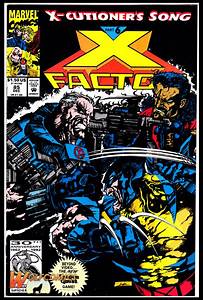
Though this issue is another “transition” episode between major points along the X-Cutioner’s Song plotline, Peter David’s emphasis on character moments make this a much more engaging transition than X-Men 14.  The unique (and dark) Jae Lee pencil work makes the melee combat scenes extra taught (especially Bishop’s muscles).  Cannonball’s decision to help the X-Teams in their investigation into the Mutant Liberation Front is a good one (for his maturation), though I would have liked to have seen a scene of him telling the rest of the imprisoned X-Force that he is going out on a work visa.  Wolverine is especially lucid in this issue, showing his open-mindedness in listening to Cable — which is also a good decision for his character, but it strikes as a little odd, especially with his “anti-Dream” talk earlier in the crossover.  Cyclops’s scene of impulsive frustration (though after hours of solitary incarceration) is a sign of his tough-as-nails personality in post-M-Day issues a decade after this storyline, but it seems a smidge out of place here.  His reaction to the realization he just optic blasted children and Jean is fitting with his character.  It is a good coupling with Stryfe’s scene with Jean in the previous installment, but the episodes are too brief, especially since the crossover is now half-over.  The most interesting scene is Archangel’s accidental decapitation of Kamikaze.  Archangel’s reaction is apropos; Boom Boom’s reaction is likewise apropos for her character, and the juxtaposition of her immaturity and his maturity is remarkable — especially after all of Archangel’s talk about wanting to assassinate Apocalypse.

Part 7 — X-Men 15: “The Camel’s Back”

This may be the weakest link in the chain of X-Cutioner’s Song.  It’s not that we expect non-stop action and major plot points throughout all twelve episodes in the crossover; the story is certainly allowed to transition from set piece to set piece with intervening respites.  What sets X-Men 15 apart from other linking issues, though, is that it lacks the good character moments that bolster the story-movements in those other episodes.  Though Colossus has a good moment pondering his brother’s recent actions, Strong Guy’s interruption does not improve the scene, even in a comedic way.  Similarly, Stryfe’s moment of humiliation for Scott and Jean in this issue is too bizarre to provide a good continuation of his vengeance scheme.  The dialogue throughout the issue suffers: Reaper is too casual at the beginning, Stryfe is too congenial with Zero, Beast is too easily angered with Moira, and Scott and Jean — despite being major motivations for the story — have again almost nothing to say.  The X-Teams get beat up in this issue: Boom Boom’s jaw is broken (perhaps fitting punishment for her juvenile reaction to Kamikaze’s death in the previous episode) and Rogue is temporarily blinded.  Stryfe’s quick dismantling of the Dark Riders begs the question — why would Apocalypse have such a weak team around him?  Havok again has to ask someone for advice on what to do next — before it was a sign of his deep emotional struggle with their plight; now he just looks indecisive and weak.  The story moves along a little bit, thanks to Stryfe and the dismantling of the Mutant Liberation Front, but little overall progress is made.

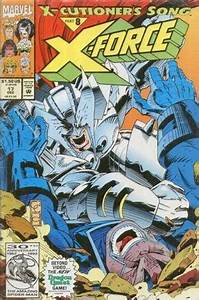
Part 8 — X-Force 17: “Sleeping with the Enemy”

Part of the impressive and enjoyable aspect of this crossover is that the “big battles” come in a progressive series: the story presents the one about to happen as the real climactic battle, but when it’s over, we know the next one is going to be even more significant.  Such development does not happen as successfully in many crossovers.  The battle between Stryfe and Apocalypse seems like it should be bigger, even though it occurs at the beginning of the issue.  When it ends, we know that more important things are about to happen.  Finally, we hear from Cable about his history with Stryfe — that he doesn’t even know yet why they have the same face is part of the creative atmosphere of the time: here was an interesting mystery in the X-Universe that did not require major retcons or total multi-series changes (Disassembled, Civil War, Dark Siege, etc.).  The Stryfe/Apocalypse connection is also enjoyable, but a bit confusing if you are unfamiliar with their appearances/history.  Why Stryfe is glad the Dark Riders so quickly turn to him is odd, considering his disgust with them in the previous installment for being so weak — perhaps having weak acolytes is acceptable if they are your weak acolytes.  The comedic snippets in this issue are better than the attempts in X-Men 15: Wolverine’s struggle with Graymalkin’s anti-smoking programming is a highlight.  Other character moments help this issue succeed: Rahne’s talk with her former teammates, Siryn’s realization she was involved not with Madrox but one of his duplicates, and Cannonball’s confrontation with Havok reminds us he (Guthrie) is fit to lead after all (Havok again comes off as a bit weak and thoughtless).  Finally Scott and Jean get to do something again, though it’s only for a couple of panels.  Their relationship is presented well as something good in this issue — the later destruction of it will forever be a dark spot in Marvel’s history.  Archangel’s confrontation with Apocalypse at the close of the issue is a good reminder of their connection and just how integral Apocalypse was in the development of the X-Universe in the ’80s and beyond.

Part 9 — Uncanny X-Men 296: “Crescendo”

This issue does a fair amount with not much material, which is impressive considering the couple of flaws in it: the beginning is confusing, made more so by the incorrect footnote from Bob Harras on page one; when did Cyclops and Jean encounter the Dark Riders?; the missing footnote on page 22 (though the issue doesn’t have page numbers for some reason) — the references to years-ago back issues are more important than references to issues in the same crossover.  It’s also a bit confusing how the Dark Riders got to the moon so quickly from Egypt, after Stryfe just swayed them over in the previous episode.  Aside from those aspects, this issue does have some good moments.  The “story thus far” recap by Bishop, Cable, and Wolverine is interesting enough to prevent being tedious.  Cyclops and Jean’s kiss before they head into more danger is another great aspect of their good relationship in the good ol’ days, before more recent writers felt free to destroy one of the best things about the X-Men and Marvel Universe.  It’s about time Scott and Jean finally got to do something substantial for the first time since the beginning of the crossover (before they were captured by Caliban).  Stryfe’s reaction to their sacrificial response to his test is great, even though one could make the argument not enough time in the series has been given to him and them.  Some might prefer his realization to be in subconscious thought bubbles instead of editorial rectangles, but that is not as important as the event itself.  Stryfe is no longer certain Scott and Jean abandoned him…what has he left now?

Part 10 — X-Factor 86: “One of These Days…Pow!  Zoom!”

So late into a crossover, one might expect an issue to drag any potential momentum down — not so with this final David/Lee match-up.  This pair did great things with these three X-Factor issues, but Lee may steal the show here.  The best moments in this great issue are wordless images from Lee.  Few great authors would allow the images do all the narrating, even in comics — Peter David proves his greatness by letting Lee’s images tell everything we need, both in a comic scene and a heart-wrenching romantic scene.  The image progression of Scott and Jean running out of oxygen and turning to spend their last moments embracing is one of the best moments in Marvel’s history.  Later, the comic wordless scenes of Cable, Wolverine, and Bishop waiting for Graymalkin to recalibrate for the Moon are a great progression (especially Cable whittling a Domino statuette).  David does get some great character lines in, though: Havok gets some leadership skills back with his humor, Strong Guy’s comedic moment is far superior to the weak scene with Colossus a few issues before, and Cable’s “hour and a half” line is priceless.  Stryfe’s tearful confrontation of Cyclops and Jean is what the series (at least their section of it) has been waiting for — genuine emotion.  That Storm and Havok listen to Warren in letting Apocalypse finish saving Xavier from the techno-organic virus is a good testament not only to their good leadership skills but also Warren’s strength as a character and original X-Man.  This is a stupendous issue.

Part 11 — X-Men 16: “Conflicting Cathexes”

Admittedly, this issue suffers structurally, in that it is the final set-up piece before the grand finale of the crossover, so we shouldn’t be too harsh on it.  It does have some good character moments: Cannonball’s brief confrontation with Cable and Archangel’s lines to Bishop are great — “His life has been marked by pain and loss,” says Bishop of Apocalypse.  “And that’s an excuse, Bishop?  Which one of us hasn’t gone through the same?  You just don’t see us choosing to mark everyone else’s life with the same brand of hatred that’s inflicted on us,” replies Warren.  That sums up ’90s X-Men, pretty much.  By this point in their lives, all of the X-Men had gone through an awful lot of turmoil and heartbreak…but they were still there, fighting to protect a world that hated and feared them — even fighting against other mutants.  It was never about sheer force, which Bishop acknowledges.  That the beginning of the issue tries to reject that (in Wolverine) is part of why the issue is somewhat flawed.  Other smaller scenes and tidbits detract from the issue as well, but it does serve its overall purpose of drawing the various plot strands and character groups together for the final act.

Part 12 — X-Force 18: “Ghosts in the Machine”

Sometimes the finale of a major crossover can be a giant letdown; sometimes the payoff is not worth the investment.  Neither of these is true of X-Force 18: this is a marvelous conclusion, bringing us fully (and finally) to the heart of what Stryfe and X-Cutioner’s Song have been about from the beginning — family (one could make the case for “love” as well).  In one sense, there was no “need” to bring in Apocalypse to the story at all.  Stryfe could have certainly shot Xavier with a regular plasma gun or something, not a techno-organic virus only Apocalypse could cure.  The reason he was brought in to the series seems to be the great scene of weakened Apocalypse and Archangel here: Warren declares (and possibly realizes for the first time) the true part of him that makes him himself was not altered by Apocalypse — he is not truly his son.  Havok’s weak moments throughout the series are forgotten in his personal confrontation with Stryfe: he finally voices his perspective at being a Summers but not Scott Summers, and he seems to begin to cope pretty well (for the time being — he’s one of the worst-treated characters in Marvel’s history).  Underlying this crossover is the question “who is Cable?”  Is Stryfe or Cable the son Cyclops had to send into the future?  Though this crossover was supposed to answer that question, it didn’t…which is much more satisfying as an ending, surprisingly enough.  That Scott starts to suspect that Cable is, to Jean’s surprise, is a great way to conclude the song.  Keeping the mystery alive (especially while delivering an emotionally moving conclusion) is far superior to answering the question and then having the writers retcon it all twelve years later (the current fashion).  Some may think Stryfe’s desire for togetherness is too sappy of a motivation — they are mistaken.  The epilogue, Stryfe’s “pox on all mutantkind,” is of course the release of the Legacy Virus.  That later writers of X-Books did not know what to do with it is not the fault of this storyline.  Sinister’s stoic response to being tricked by Stryfe is consistent with his equipoise throughout the series.  X-Cutioner’s Song is a story about family, about belonging, being together, and how (much) the Children of the Atom have to sacrifice in order to do that, even a little.  This is a great story that shows us the heart of many of these great characters.

Epilogue — Uncanny X-Men 297: “Up and Around

This is the best comic issue I have ever read.  As an epilogue to a great crossover, Uncanny X-Men 297 has the perfect mood: quiet.  Some might argue the issue needs Cyclops and Jean to reflect on what just happened to them: perhaps, but they already did that (albeit briefly) in X-Force 18.  Now is the time for the other refrains of the song to reach their codas.  Rogue and Gambit spend some time together as she recovers (on the roof) from her temporary blinding in the crossover, though in a way that finally allows Rogue to speak her mind about what she needs, her desire for Gambit, and her great disappointment (irately so) that they can’t be together: Gambit’s power is to charge up objects and throw them away — Rogue certainly doesn’t want that to happen to her; she’s a woman, not a thing.  After some hours of separation, Gambit finally returns and offers Rogue what he can, a blanket and some reassuring words — for now, his presence is enough.  The thread of Warren and Hank rebuilding Harry’s Hideaway is the greatest series of panels probably ever.  What’s great about it, as with the entire issue, is the genuineness of the emotions and dialogue.  Finally we get some reflection on where the original X-Men used to be, how things were in the old days before Hank and Warren turned blue (literally and figuratively).  It’s so easy to forget they started out as students, as kids, writing term papers and struggling with their personal issues before Magneto, Apocalypse, the Sentinels, and the M’Kraan Crystal changed everything (again and again).  Hank’s laughter and Warren’s reflection on his old attitude are superb.  Better still is Hank’s encouragement to Warren, especially after Warren’s own confession to Apocalypse the day before: he has struggled through his experiences (we all have), but he has come through them truly human and mature.  The final thread of the issue is Professor X’s moments with Jubilee, as he enjoys a few hours’ ability to walk again.  That he spends them with Jubilee is a great touch — the two ends of the good X-Universe spectrum.  The quiet scenes of his reflections on losing his mobility, gaining it again, and imminently losing it again are excellent character and narrative moments.  The final two pages are some of the most moving in X-Men history, rivaling the great Cyclops and Jean moments earlier in the crossover.  This issue shows us what Professor Xavier’s Dream is all about: it’s not about fighting evil mutants and bigoted humans; it’s about love.

Addendum – Stryfe’s Strike File

Being a completist, I had been searching for this comic since 1992.  I finally found it for 25 cents in 2010.  Shortly thereafter, I began finding it in every comic store I visited — strange how that happens.  The issue serves its purpose well, and the writing, though defamed by some, is aptly written as the writings of the deluded and maniacal Stryfe.  It’s challenging to view the X-world through the eyes of a recently-arrived crazy man.  The first appearance of Holocaust is here; more notable is Stryfe’s comment that he isn’t supposed to be in this timeline — two years before the Age of Apocalypse.  Similarly, Threnody’s first appearance is here, almost a year before she appears in X-Men 27.  Before Colossus becomes an Acolyte, Stryfe says it’s coming.  It’s odd to think of Bishop and Wolverine as lesser players than they think they are, especially considering Wolverine’s stratospheric popularity.  Too bad Stryfe could not see Scarlet Witch’s future destruction of the X-Universe a decade in the future.  His comments about Cannonball are perhaps the kindest things ever said about Sam Guthrie.  The frame story of Professor X reading through these files is a nice narrative device, but it’s more impressive that, despite his desire to know what Stryfe knew, he purges the files — the X-Men will face the future, together, without the perspective and machinations of madmen like Stryfe.

The Song Remains Supreme

The good news for you is we are living in an age in which Marvel has recommitted to releasing its classic crossovers and series in remastered hardcover and trade paperback sets (some at better prices than others if ordered on-line).  Instead of trying to track down the separate issues in the various comic book stores around town, you can simply wait a couple of months and order the future hardcover release scheduled to come out August 2011 (with both Uncanny X-Men 297 and Stryfe’s Strike Files, you lucky duck, you — no waiting eighteen years needed).  True, it might be more enjoyable to track down the issues and look at the advertisements for Aladdin the movie and Hook the SNES game, but if you are just interested in reading one of the better X-Men stories at a time before the crazy retconning and character destructions of the 2000s, getting a copy of X-Cutioner’s Song is the way to go.  It’s a great story with some of the best character moments in X-Men history.

Intellectual Culture: Allegiance to Truth

Christopher Rush

Two quotations form the foundation of this lecture:

Cicero:  “Just as a field, even if it is fertile, cannot bear fruit without cultivation, so also a spirit without culture.”

Psalm 46:10: “Be still, and know that I am God; I will be exalted among the nations, I will be exalted in the earth.”

Before you go running off and influencing culture, (in that totally enthusiastic way you have of doing things people tell you to do) perhaps it would be helpful to understand culture a little better.  The words “cultivation” and “culture” come from the same German and Latin roots of agriculture: what translator Gerald Malsbary calls the “repetitive, persistent, and loving care of the farmer” (Pieper 51, n. 1).  From this origin, “culture” gains a sociological sense, being applied to refining a person’s character, primarily through education.  In the nineteenth century, the term takes a larger scope, forming the basis for understanding a social group as an entity, especially in terms of its potential or ideals.  “Culture” becomes a different idea in the twentieth century with the rise of various anthropological studies, losing its original meaning in favor of a defining attribute of people groups and their ability to understand and communicate symbolically.  Now, “culture” in lay terms is a loose amalgamation of many of these definitions, often used interchangeably for “society” or “value system,” depending on the context.  For our purposes here, I shall use “culture” predominantly (and admittedly loosely) to mean “a group’s unique identity,” especially in the sense of a people grouped together by distinguishing commonalities.  I’ll probably also make some self-serving remarks about the superiority of one kind of culture over another, for the purpose of convincing you that what I am saying is true and worth believing by you.

Cicero’s quotation and Malsbary’s explication remind us that work is fundamental to both the cultivation of agriculture and the proper enculturation of the human spirit.  Tilling a garden and becoming a fuller, better person require effort, time, and practice.  Yet, we must remember that work is not the defining element of these tasks.  It is necessary and important and valuable, but work is not the goal.  The basis for culture is not work, as Josef Pieper reminds us, but leisure.

Pieper’s leisure, as some of you know, is not “leisure time” to sit around watching Thundarr the Barbarian while stuffing yourself full of circus peanuts.  Leisure is not just “down time” so you have more energy to get back to work so you can work long and hard to earn money so you can afford the next season of The Transformers and more circus peanuts.  We, as individuals and members of a culture, do not rest so we can be more productive later.  Work and leisure are integrally connected, but in the opposite way most people think.  Please do not misunderstand me.  We are not just “working for the weekend.”  Work is not something we just “have to do” so we can afford goofing off time.  We work so we can be at leisure.  Genuine leisure, the foundation of every culture, is the freedom to know and understand reality accurately, primarily for the purpose of accurately understanding and worshipping God.

Obviously the world’s culture has no desire to experience leisure accurately.  As Pieper says, “Leisure cannot be realized so long as one understands it to be a means, even as a means to the end of ‘rescuing the culture of [our world].’  The celebration of God’s praises cannot be realized unless it takes place for its own sake.  But this — the most noble form of harmony with the world as a whole — is the deepest source of leisure” (58).  As you can probably tell, my approach today for you in confronting culture is not exactly to go out and do something.  We have heard several messages this year about the various ways that you can make a difference in the world — and those have been great, especially the ones that can be done from the comfort of your own home without requiring too much time and effort out of you.  I’m sure you found those the best and most exciting ways to influence the culture (especially without having to go out and get infected by it.  After all, why be “in and not of” when you can be neither?).

I digress.  My message today for you is that, while doing things are important and indeed, as James says “faith without works is dead” — I certainly agree, we cannot neglect the importance of first knowing and understanding the culture.  It is good to rebuild homes, supply food, and inoculate against diseases.  But, frankly, we must remember that those must be secondary, ultimately.  What better good can we do for people than to help them think accurately about reality?  What is more important than knowing truth?  And that is the main point for today.  Everything we do, both in knowing our culture and in knowing the culture we are going to change, must be aligned with serving truth.

It was good for us to hear the diverse ways it is possible for you to benefit and improve culture, don’t get me wrong, but the cultures that those improvements make are only a part of the totality of the culture at large.  There is a larger, more fundamental component to reality that we have heretofore mostly ignored: intellectual culture.  Do you know the nature of the postmodern intellectual world?  This is the world into which you will be going and living your day-to-day lives.  Many of you are under the erroneous impression that because you are going to be working with your hands all the days of your lives, or because you are going to be singers, engineers, or generous fillers of frypods, that you don’t have to pay any substantial attention to the intellectual culture.  The world of poetry, the world of ideas, that’s fine for some — but that’s not real.  Those of you who believe that are, no offense, “brimming over with wrongability,” as Arnold Rimmer would say.  I say again, most of you will soon be moving body, mind, and soul into a postmodern Western world, a world shaped more by intellectuals than by common day laborers.  The subcultures of advertising and entertainment, in both of which you will be very involved, the subcultures of politics and social institutions (at least, what will be left of them by the time you graduate) are all very much influenced by the postmodern intellectual world.  It doesn’t matter if you are going to a Christian college, a utilitarian college, the workforce, the armed forces, or staying at home: the culture out there has been and is being shaped by the postmodern intellectual culture, a culture you must understand in order to effectively influence it.

English philosopher and intellectual conservative (a redundancy, I know) Roger Scruton reminds us of a handful of the many creators of the intellectual Postmodern culture:

there is the neo-Marxist approach of Fredric Jameson; the structuralism of Roland Barthes; the post-structuralist theory associated with Michel Foucault; there is feminist criticism, either in its staid American version typified by Judith Butler or in the flamboyant and anarchic vision of Luce Iragaray and Julia Kristeva (who also adds a Marxist and a structuralist flavour).  There is the “Deconstruction” of Jacques Derrida, the postmodernism of Jean-François Lyotard, the New Historicism of Stephen Greenblatt, the post-colonialism of Edward Said, the New Pragmatism of Richard Rorty (5).

If you do not know the work of these people, you do not know the nature of the intellectual culture into which you are headed.  We do discuss a fair amount of these thinkers in 12th grade Bible class, to be sure, but not everybody.  (You wouldn’t listen if we did, anyway.)  The point is that culture is shaped by ideas, and the ideas that are shaping the culture out there are as diverse and irrespective of truth more virulently and unabashedly than ever before in the history of the world.  You are not going to effect much change in the culture if you do not know the nature of it.  “A spirit without culture,” said Cicero, “will not bear much fruit,” and that culture is the hard work and effort required to be a Christian intellectual aligned with truth, for only an alliance with the absolute standards of truth, right, and wrong, explained in part through the Word of God and fully indwelt in the character of Our Savior, will the effort of education and intellectual pursuits bear such fruit for which the intellectual Postmodern culture is dying and begging and desperately demanding.

This leads to a somewhat challenging but insightful quotation from English scholar Christopher Dawson, author of several books on cultural history, including this from Religion and Culture:

What then are the conditions which made a fruitful cooperation between religion and culture possible?  On the one hand, the assertion of the absolute transcendent spiritual claims of religion must not be interpreted as a denial of the limited, historically conditioned and temporal values of culture, and on the other the forms of a particular culture, even when they are inspired or consecrated by a religious ideal, must not be regarded as possessing universal religious validity (qtd. in Schall 1).

Father James Schall, professor of government at Georgetown University, provides an excellent explication of Dawson’s idea concerning culture’s dependency on religion:

In the Dawson citation, the great English historian of culture and religion is concerned to show the existence of absolute transcendent religious claims, valid for all cultures.  The denial of such claims risks the very meaning of our common humanity with its destiny.  Yet, the expression of such positions will be made differently from time to time, from place to place.  In acknowledging such different expressions of the same truth, Dawson seeks to preserve the relative “autonomy” or legitimacy of different cultures and languages.  A valid freedom exists but not on the basis of approving everything no matter what is proposes.  Dawson did not deny that universal standards remained.  In these truths, all men share even if, because of a freedom that includes the possibility of rejecting the truth, anyone is capable of rejecting them.  The fact that some or many deny universal propositions does not necessarily argue against their truth, any more than the fact of murder implies its licitness (10).

Essentially, just because the postmodern intellectual culture denies the validity and very existence of truth, let alone absolute truth, does not actually negate the necessity of truth as the only fundamental source of revivification for a failing society.  E. I. Watkin knew this over seventy years ago, when he wrote in his 1932 work Catholic Art and Culture, “Without a living religion a culture perishes and disintegrates like the human body when the soul has departed” (qtd. in Schall 8).  The postmodern intellectual culture needs the religious, i.e., Christian, adherence to truth brought by you — yes, it needs your help in restoring the material infrastructure of buildings, health, and food, but more importantly it needs intellectual and spiritual restoration with reality.

The reason Postmodernism has taken such a hold, unfortunately, is because Christianity has ceded the intellectual, political, and cultural ground.  As Mark Noll states in his work The Scandal of the Evangelical Mind, “the scandal of the evangelical mind is that there is not much of an evangelical mind” (3).  This is, in part, why Summit Christian Academy exists, to counter the recent trend of main-stream American Christianity that has seen the persistent withdrawal from culture.  Pastor Kenney spoke of this at our inaugural chapel.  In his day, organized Christianity ignored kairotic cultural events and intellectual movements, and that dis-association has led us to where we are today.  With the gaping abysm of what intellectual Christianity used to fill in the cultural mentality, denial of absolute truth, relative morality, sexual licentiousness, and self-actualized utilitarian social interaction have taken hold.

Scruton clarifies why the decline of authentic Christian intellect in America has allowed the postmodern usurpation to infect the intellect of society, even to the point of destroying culture:

A common culture is a form of membership, and the high culture that has grown from it perpetuates the memory of that membership and exalts it into something natural, unchangeable and serene.  When religious faith declines it becomes difficult for intellectuals to believe that they really belong to the same community as ordinary people.  Their claims to priesthood have been exploded, and their isolation in academies sets them at an impassable distance from the ordinary church-going people whose idea of adventure is to go out and mow the lawn (16).

Christianity no longer fits in the intellectual culture of Postmodern America because it has given intellectual culture into the hands of the relativistic philosophers; isolationism has bred isolation.  Again, we no longer know the nature of the conflict.  We do well to remember the simple truth: “Knowing is half the battle.”

Schall encourages us in the importance of regaining intellectual domination in the conflict of cultures, the importance of knowing the nature of culture before trying to make it something else.  Work, you recall, is the means to restore culture — work is not the goal or meaning of culture.  Work and leisure must both be sufficient and intrinsically valuable.  Genuine culture is an intellectual enterprise worthy of itself:

There is nothing so abstract about human intelligence that it does not seek some incarnation.  Yet, the tradition of “leisure” as the basis of culture, the Greek idea of things worthy for their own sakes, things of play and of solemnity, are expressions of the abundance, indeed the superabundance of things.  [Yves] Simon puts it well: “What is needed to have the fullness of culture is something more, something that in some way is above necessity, is independent of need, and is fulfilling no laws except perhaps its own.”  Cultures do need to stand the test of philosophy and revelation.

We need, therefore, to know the “form” of what cultures are.  This “knowing” is very demanding intellectual exercise, the “work,” as it were, of intelligence, the effort to know what even “things that can be otherwise” are.  But though we must live, eat, and prepare the land, itself an effort of increasingly practical intelligence and not sheer drudgery, we are open to infinity, even in this world and in this life (21-22).

Schall’s words return us to where we started: that the intellectual problem can best be solved by a renewed Christian culture, a renaissance of intellectualism aligned to truth.

T.S. Eliot defined culture as “what makes life worth living,” says Mark Henrie (12).  The intellectual culture of leisure, the worshipful lifestyle, is why we work, and, in part, makes life worth living as an intrinsically valuable mode of existence.  The aesthetic, artistic, intellectual heritage we have as inheritors of Western Civilization is as rich a cultural investment any being could hope for.  Scruton elaborates on the connection between the Western artistic culture and the Christian intellectual heritage so prevalent until the comparatively recent abnegation of the evangelical mind:

Western art and literature shares the enquiring spirit of the common culture upon which it broods.  It is not a vehicle for religious or political propaganda, and even when presenting a Christian cosmology, like Dante in The Divine Comedy, or a vision of Christian redemption, like Bach in the St. Matthew Passion, it uses a lingua franca that assumes no specific religious belief.  As Santayana once pointed out, the greatest poet in the English language, [Shakespeare] whose plays used to form the core curriculum in English studies, nowhere reveals the colour of his religious beliefs or even whether he has any.  His works are reflections on the human condition which can be understood and enjoyed by anyone.

A curriculum centred on the high culture of Western civilisation will inculcate just the kind of self-critical distance that we associate with the Enlightenment.  This does not mean that it cherishes the open mind or is hostile to religious commitment.  It is a culture that aspires to universality, and to the widest possible understanding of and sympathy with the human condition (13).

We are now starting to find a solution to the problem of the postmodern intellectual culture: the shared intellectual heritage of Western civilization.  This might seem somewhat contradictory, in that most postmodern philosophers (admittedly an oxymoron) deny the validity of “Western Civ.” in favor of multiculturalism.  However, the intrinsically valuable works of art and literature, many of which we study at Summit, do provide a valid entrée into the intellectual discussion, perhaps even more than quoting Bible verses out of context and without sufficient exegesis — if a postmodernist will not converse about Paul and John, perhaps they will at least engage in discourse over Homer and Shakespeare — and if not Homer and Shakespeare, break out your knowledge of Joyce, Eliot, Woolf, Marquez, Mann, Kafka, Borges, and Solzhenitsyn.

You can probably tell where I am going with this.  If you have no idea who Joyce, Eliot, Woolf, Marquez, Mann, Kafka, Borges, and Solzhenitsyn are, you should learn.  Obviously this is after you have become thorough adept at the classics: Homer, Virgil, Horace, Ovid, Cicero, Aurelius, Augustine, Plato, Aristotle, Aquinas, Pascal, Chaucer, Dante, Montaigne, Bacon (Roger, Francis, and Clerval) Shakespeare, etc., etc.  Then become adept at the modern authors: Keats, Pirandello, Yeats, Arnold, Belloc, Dryden, Burgess, Auden, Austen, Lewis, Pieper, Weaver, Kirk, Chesterton, Sayers, Barfield, Postman, Williams, Wise, Newman, etc.  Then read everyone on the summer extra credit reading lists, see my list of 10 books you should read before college, and sign up for the critical reading elective next year.  Also, start reading some recent authors who combat postmodernism: Raymond Tallis, George Grant, Roger Kimball, Michael Polanyi, Christopher Dawson, James Schall, and then read the people they cite throughout their works.  Then, when you need a break from reading, watch the few intellectual shows that will help you think: Lost, Battlestar Galactica, Farscape, Stargate SG-1, Deep Space 9, Mystery Science Theater 3000, Red Dwarf, and, of course, most importantly, Babylon 5, primarily to become familiar with the key thoughts and ideas that make us what we are.

The main way you can prepare to combat the dilapidated intellectual culture is to become, yourself, intellectually cultured.  Schall tells us “Both man and nature, it seems, were designed to be completed by human knowledge and active work” (9).  If you want to be a valuable, worthwhile human being, let alone an effective culture changer, you do have to work hard.  One of Schall’s influences, great Catholic thinker A.G. Sertillanges, makes the systematic approach to becoming a better intellectual almost embarrassingly clear in his outstanding work The Intellectual Life: Its Spirit, Conditions, Methods.

It would take a while to summarize Sertillanges’s book — besides, you should all read it for yourself — but allow me to highlight some of his essential points in how to become an intellectual person.  First, organization: Sertillanges advocates simplification of life and work space, solitude, and silence.  It is difficult to get good at anything surrounded by distractions.  As a brief aside, Sertillanges does not address the postmodern notion of multitaskers, most likely because he could not foresee anyone being so irrational as to think that it would be possible to do more than one thing well at once.  Please don’t take this as a personal attack, but if you are a person who thinks that you are good at multitasking, what that means in reality, is that you are good at doing more than one thing poorly simultaneously.  Don’t be proud of being such a person.  Perhaps, be a little more like Charles Emerson Winchester III: do one thing at a time, do it very well, and then move on.  If your activity is not worth your full time and attention, is it really worth doing at all?  Returning to Sertillanges, he then encourages the proper spirit of intellectual work: including ardor in research, concentration, proper breadth of outlook, and the right sense of mystery, acknowledging that no matter how intellectual one gets, there is always more to be learned.  The longest section of his treatise, preparation for work, is certainly the most practical.  His commentary on reading is instructive and worth examining time and again, but he does make the point of being selective in the reading you do.  Becoming knowledgeable about the diversity of the world of literature and writing is important, he admits, but life is short — to commit to something important enough as becoming an intellectual is requires sacrifice.  You won’t have time to read everything — no one in this room feels the pain of that idea more than I do.  Selectivity is important in order to make what we read and who we become meaningful.  Once you have decided the primary focus of your reading life, make what you read a significant part of who you become.

In addition to wise reading, Sertillanges provides helpful ideas on memorization and the management of memory.  With the recent inventions of the Interweb and personal computadores, more and more people seem to think that, since it is so easy to access information these days, there really isn’t any point in memorizing too much.  I know you recognize immediately the total asininity of such a notion, believing that memorizing things is not necessary because you can just “google it” (what a great adulteration the Internet is doing for our once majestic language) or “look it up” when you need it.  Remember how totally stupid you felt when you realized you didn’t have any of your friends’ or families’ phone numbers memorized the last time you switched cell phones?  This just in: speed of information access is not making people any smarter.  Owning a cell phone and having access to the Internet is not making you a better person.

Sertillanges next talks about the importance of note taking, classifying notes, using notes (you should really check that part out), putting all that preparation into creative output, and, finally, the importance of living.  Just as Telemachus learns that epic heroes are not made in the classroom and must put his newfound heroism into practice, Sertillanges reminds us (and me) that the intellectual must keep in contact with life, its trials and joys, and know how to relax and enjoy the fruits of his labor.

Relaxing and enjoying the fruits of labor returns us to our second foundational quotation for this lecture, Psalm 46: 10 — “Be still, and know that I am God; I will be exalted among the nations, I will be exalted in the earth.”  Becoming an intellectual is hard work, but it is worth the effort.  But effort, remember, is not the end goal — culture is founded on leisure, leisure done rightly.  The authors and ideas I rattled off moments ago are intrinsically valuable, to be sure, but what most of them have in common (and what the postmodernists are desperately lacking) is their allegiance to truth.  Genuine art is aligned with beauty; genuine philosophy is the love of wisdom, which is also the active search for truth, for what is; Paul instructs us that knowledge without love and truth puffs up, as Proverbs reminds us genuine wisdom begins with the fear of the Lord.

The command “Be still and know that I am God” is not just a palliative for stressful circumstances and busyness, as in “okay, I just need to relax and let God take care of my problems.”  That’s not what this verse is saying.  I could be mistaken, but I am pretty certain that Psalm 46:10a has two injunctive verb parts: 1) be still, 2) know.  “Knowing that God is God” is not permission to “call it a day.”  This is an active knowing, providing Biblical support for the cultivating efforts of intellect leading to the cultivation of the soul.  Leisure, the basis of culture, the command “be still,” is the setting for worship: leisure is not “recharging your batteries” time for more work later, though Sertillanges wisely notes that rest time used effectively is necessary for the intellectual life.  A good night’s rest can be an act of worship, if done rightly and for the right reasons.  Leisure is for worship.  Why else should we “be still”?  What can be more important in this life than an accurate knowledge of who God is leading to a proper worshipful response, followed by an accurate understanding of who we are, the nature of reality, and how we are to live?  As noted above, without restoring the proper intellectual culture of an accurate Biblical mind, all you are doing is cosmetic work — and plastic surgery never does any good for the health of the organism.  Why become an intellectual?  What is the purpose of reading all those authors and more?  To align yourself with truth.  Jesus, the Way, the Truth, and the Life, is the Word made flesh, the logos who pitched his tent and dwelt among us.  Truth has become incarnate.  Truth is intellectual.  Jesus is not the pathos made flesh, though he had feelings and expressed them accurately and appropriately at all times.  The answer to Lorien’s question, which came first the word or the thought behind the word is simple for the Christian — in the beginning, the word and the thought was.  The Incarnate Christ is language, thought, communication, and, essentially, truth.  Why must the intellectual be aligned with truth?  The pessimistic, meaningless postmodern intellectual culture inherited from its Enlightenment forebears demonstrates the alternative, and, frankly, it’s not working.

Truth, Sertillanges reminds us, “steadies and strengthens us; it gives us delight; in its company we are consoled for our own shortcomings and those of others; its discovery is a reward, its manifestation a noble vengeance on days of contradiction.…  Every truth is life, direction, a way leading to the end of man” (250, 13).  Truth is truth, regardless of its packaging: the shepherds knew to look beyond the accoutrement of the stable.  You must read those authors so you know what mankind has to say, then you will have something to say.  You study — study — the Bible so you know what God has to say, then you will have something to say.  All the while, you, as an intellectual, must be aligned with truth.  The reason the postmodernists don’t have much of anything to say is because they are not aligned with truth — they deny its existence then hypocritically expect you to believe them and what they are saying is true.  You, as a Christian intellectual, must be aware of what little they have to say so you can, like Jesus, reach people where they are, and, not being content with that, engage them intellectually, bringing them into the light of Incarnate Truth, to be changed into conformity with Jesus.

“By practicing the truth that we know,” says Sertillanges, “we merit the truth that we do not yet know” (19).  Doesn’t Jesus’ parable of the faithful servants support that?  The first two who lived rightly with what they had were rewarded with more.  The Christian intellectual must submit “to the discipline of truth.  This submission to truth is the binding condition for communion with it,” Sertillanges instructs us (130).  Truth demands uncompromising dedication from you.

Prompt obedience is what invites it to visit us.  To this sacred meeting we must bring a respectful soul.  Truth will not give itself to us unless we are first rid of self and resolved that it shall suffice us.  The intelligence which does not submit is in a state of skepticism, and the skeptic is ill-prepared for truth.  Discovery is the result of sympathy; and sympathy is the gift of self.…

Yielding ourselves up to truth, and formulating it for ourselves as best we can but without any criminal infidelity, we perform an act of worship to which … God will respond by … communing with our soul.  In that, as with everything, self-will is the enemy of God.  This submission implies humility (130, 131)

reminds Sertillanges.  “Intellectually, pride is the father of aberrations and of artificial and pretentious productions” — what better description of the postmodern intellect that says truth (which doesn’t exist) is created by every reader and thinker?  In contrast, says Sertillanges, “humility is the eye which reads in the book of life and in the book of the universe” (131).

“Profound work consists in this,” he continues, “to let the truth sink into one, to be quietly submerged by it, to lose oneself in it, not to think that one is thinking, nor that one exists, nor that anything in the world exists but truth itself” (133) and then one is ready to be still and know that God is God.  “To love truth ardently enough to concentrate on it and so be transported into the universal, into what is, into the heart of abiding truths, is the attitude of contemplation and of fruitful production.…

“Do not then discourage this spirit if it visits you, driving it away in favor of some artificial and external form of work,” he cautions (133).  Don’t you dare say “I don’t have time to think, I must get out there and do something!”  Return instead to the intellectual, contemplative spirit that allows for the proper intellectual worship in leisure.

Sertillanges mirrors the wisdom of Clerval Bacon when he notes that “The more precious an idea is, the less it matters where it comes from.  Train yourself to indifference about sources.  Truth alone has a claim, and it has that claim wherever it appears.  As we must not swear allegiance to anyone, so still less must we disdain anyone; and if it is not expedient to believe everybody neither must we refuse to believe anyone who can show his credentials” (135).  That is why we read Aristotle, Shakespeare, Lewis, and Huxley.  Truth is truth whether it is Miranda’s brave new world or Bernard’s.

That is our great liberty.  This readiness to accept truth brings so rich a reward that it would tempt even avarice itself, if the avaricious thinker did not imagine it wiser to sit guarding his own coffers.  We like to believe that we possess everything, that we are capable of everything, and we give but an inattentive hearing to the voice of others.  We make a few favored exceptions, men or books; they have our ear and afford us inspiration.  Now in reality there is inspiration everywhere; the breath of the Spirit fills the valleys just as it blows upon the mountaintops.  In the meanest intelligence is a reflection of infinite Wisdom, and deep humility is able to recognize it….  Wherever the God of truth has left something of Himself, we must eagerly welcome it, venerate it religiously and utilize it diligently.  Where the eternal Sower has passed, shall we not gather in the harvest (135-36)?

“It is intolerable pride to try to force truth into our personal mold, and it ends in stupidity” (211).  “Seek the approval of God; be intent only on truth, for yourself and others,” (213) and you will be ready to be still and know that God is God.

The measurement of success in the intellectual life is how closely we are aligned to Truth incarnate, Jesus Our Savior, for only in the proper understanding of reality, the reality created by and for Him, can we effectively help the redemption of that creation.  What the postmodern intellectual culture needs, even more than it needs a refurbished infrastructure, is the restoration of intellect from Christians who know God is God because they can be still and can discern truth from folly.  It is time to move beyond “daily devotions.”  I do not want to sound presumptuous or abuse my position from the lectern, but I have serious doubts that God is terribly pleased by casual Christians who read the Bible a few verses at a time, feel good about it, and then move on with their day as if nothing really happened.  Perhaps the reason so many chapel speakers this year have made the point that it is time for Christians to stop having Bible studies and start getting out into the world and doing things is because too many Christians have no idea what real Bible study is.  It is time to take Psalm 46:10 seriously: be still and know that God is God.  Study the Bible, and then read Ryrie, Schaeffer, Lewis, Spurgeon, Chafer, Walvoord, Zuck, Fleming, McCloud, Smith, Catron, Moody, Darby, Thiessen, Ironside, Rushdoony, Stott, etc., etc.  I can give you more specific lists if you really are serious about becoming and being an intellectual Christian who can effectively change culture and, more importantly, worship God.  For that is what this life is truly about.  If you really want to worship God, you have to know who he is.  He is logos — the word, the truth.  Postmodern intellectual culture — more accurately, anti-intellectual culture — can only be combated through the truth of the Christian logos, leading to redemption.

Schall reminds us that this now-alien Christian culture “needs to be expressed and made living on no other basis than it is true.  Leisure is the basis of culture.  So is truth.  So is freedom.  So is work.  So is worship.  We seek to know the things that cannot be ‘otherwise.’  But, on finding them, we strive to express them in ways that are closer to why the birds sing unnecessarily wondrous songs than to our self-creation of a world based on an arbitrary will that sees nothing but itself and sees all things simply as diverse and relative” (22).  We work to be at leisure, we are at leisure so we can worship.  We worship best and most accurately — most meaningfully — when we know who God is.  That knowing takes time and effort, the most rewarding, most important effort you can give in your life.  Then you can be an effective culture changer; then can you be still.

“Just as a field, even if it is fertile, cannot bear fruit without cultivation, so also a soul without culture.”

“Be still and know that he is God.”

Works Cited

Henrie, Mark C. “Culture: High, Low, Middlebrow, and Popular.” Ingersoll Symposium on “The Importance of Culture.” Belmont Abbey College, Belmont, NC. 15 Oct. 2004.  ISI Lectures. 8 Feb. 2009 <http://www.isi.org/lectures/text/pdf/henrie10-15-04.pdf&gt;.

Pieper, Josef.  Leisure: The Basis of Culture. Trans. Gerald Malsbary. South Bend: St. Augustine’s Press, 1998, 1948.

Schall, James V. “Culture is Never Neutral.” Ingersoll Symposium on “The Importance of Culture.” Belmont Abbey College, Belmont, NC. 15 Oct. 2004. ISI Lectures. 8 Feb. 2009 <http://www.isi.org/lectures/text/pdf/schall10-15-04.pdf&gt;.

Scruton, Roger. “Culture Matters.” Ingersoll Symposium on “The Importance of Culture.” Belmont Abbey College, Belmont, NC. 15 Oct. 2004. ISI Lectures. 8 Feb. 2009 <http://www.isi.org/lectures/text/pdf/scruton10-15-04.pdf&gt;.

Sertillanges, A.G. The Intellectual Life: Its Spirit, Conditions, Methods. Trans. Mary Ryan. Washington, D.C.: Catholic University of America Press, 1998, 1946.

This essay is adapted from a chapel address given May 15, 2009.