
Category Archives: Year 7

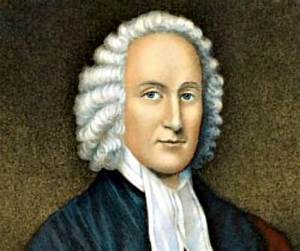
The Great Awakening: Jonathan Edwards’s Mastery of the Sermon

John Alex Touchet

The Great Awakening constituted an explosive revitalization of 18th-century Christianity and had a longstanding and formative impact on Protestantism in both North America and Protestant England. Like no religious awakening before it, The Great Awakening is described by the historian Sydney E. Ahlstrom as “Reformed in its foundations, Puritan in its outlook, fervently experiential in its faith, and tending, despite strong countervailing pressures, towards Arminianism, perfectionism, and activism” (470). The Great Awakening was not the definitive work of one individual by any means but rather was the result of many different figures such George Whitefield, Gilbert Tennent, and others. However, the source of this 18th-century revival can be traced primarily to the work of one man.

Historical Context

Jonathan Edwards is often pronounced the leading figure of the Great Awakening, and rightly so. Edwards spent much time defending Calvinism from Arminianism and releasing many works over the course of his adult life, but his most influential work in the realm of the Great Awakening was his sermons. The origin of his persuasive mastery of preaching and sermons comes into question: how did Edwards learn so effectively to capture and persuade a congregation to the point of the congregation being “extraordinarily melted … almost the whole assembly being in tears for a great part of the time” (Galli and Olsen)? What was it about this man that, even though “He scarcely gestured, or even moved; and he made no attempt, by the elegance of his style, or the beauty of his pictures, to gratify the taste, and fascinate the imagination,” he still managed to convey “eloquence … with overwhelming weight of argument, and with such intenseness of feeling … so that the solemn attention of the whole audience is riveted, from the beginning to the close” (Edwards, Rogers, and Dwight 232)? This paper shall attend to those things that made the sermons of Jonathan Edwards so great: 1) his rhetorical approach and 2) his use of tactile and truly sensational preaching.

Jonathan Edwards was born with a natural tendency for theology. He was enrolled at Yale shortly before turning 13 and eventually graduated as valedictorian. During his years at university, Edwards underwent a formative conversion experience that, in many ways, shaped the method by which he would approach the Bible and theology for the rest of his life. This conversion, and the theological revelations that followed, was the epiphany that sparked within Edwards the flame that would engulf British America and Protestant England in the years to follow.

After graduation, he apprenticed under his grandfather for two years and met his wife. Finally, Edwards became the sole pastor of the Northampton parish of Massachusetts church in 1729, succeeding his late grandfather Solomon Stoddard. He remained there until 1750, when his congregation severed ties with him over a dispute centered around the church’s policy on communion and regenerate/unregenerate members. It was during this intermediate period Edwards produced his most influential sermons that shaped the Great Awakening in America and England alike.

Mastery of the Sermon

Edwards was a very formal preacher, but he was far from conventional. Clint Heacock wrote of Edwards’s style, “During the course of his thirty-plus years of preaching, Edwards fully exploited the potential of the Puritan preaching form while never substantially departing from its tradition” (17). Edwards was not only a preacher but also an apologist and a rigorous intellectual. He had the “unique ability to reshape ideas inherited from abroad in light of the needs and interests of the American situation” (18). Even though Edwards held strictly to formal method and doctrine, he still managed to innovate and create some of the most influential and emotionally-engaging sermons in American history. His rhetorical mastery can be traced to two main sources: the Puritan preaching of his father and grandfather, and the rhetorical style of 16th-century philosopher Petrus Ramus.

Familial Influences

Young Edwards grew up listening to the sermons of his father and grandfather, both exemplifying what a preacher should do and be to Jonathan throughout his childhood. Timothy Edwards, his father, commonly used the basic “tripartite formula” in his sermons. This method utilized “Text, Doctrine, and Applications” as separate sections of the sermon, each divided internally with an enumerated structure. “These sermons demonstrate that Timothy Edwards made use of the more complex seventeenth-century Puritan preaching mode of multiple doctrines and many subheads” (Heacock 20), but at times he also employed the simplified 18th century method of a simple tripartite form, which consisted of a scriptural text, a doctrinal teaching, and a single application of the doctrine. These made up many of the sermons Jonathan Edwards experienced throughout his formative childhood years.

Later, Edwards became the associate pastor under his grandfather from 1726 to 1729 in Northampton, Connecticut. During this time, the tripartite Puritan method was further reinforced by Edwards’s grandfather. Like Timothy Edwards, Solomon Stoddard also used the more simplified 18th-century format but lowered the complexity of the doctrinal subheadings for the sake of a more basic approach. “… Stoddard discovered hidden rhetorical resources in the ‘plain style’ by insisting upon the evaluation of rhetoric in psychological terms that were more comprehensive and subtle than either the old logic or the new Reason” (21). Stoddard also exemplified the importance of the “rhetoric of terror” for young Edwards by example: “As a preparationist who held that God underwent a distinct process for preparing sinners for conversion, Stoddard believed the psychology of ‘fear was an important emotion for awakening the conscience of the slumbering sinner’” (21). This was further enforced to Edwards by the inculcation of the imagery of a sermon being used as an arrow used to pierce the heart of a sinner. During and after his time as associate pastor at Northampton, Edwards’s sermons acquired a more damning tone than his work previous to his associate pastorship, which until then had focused on the “pleasantness of religion” and the “beauty of God” (21). This influence becomes even more clear in sermons such as Edwards’s infamous “Sinners in the Hands of an Angry God.”

Philosophical Influences

Second on the list of Edwards’s formative rhetorical influences is the philosopher Petrus Ramus. It is important to note Ramus, who never attempted to discuss theological issues, dealt solely with the attempted reform of the contemporary arts curriculum of his time (Sellberg). Before Ramus, philosophers such as Cicero thought of rhetoric as a unified but multi-layered progression: invention, arrangement, style, delivery, and memory. Ramus decided this system had become obsolete after fading into vagueness and repetition. He decided to split the former quintuple-layered system into two segments, assigning style and delivery to the sphere of rhetoric, and invention and disposition to the sphere of logic; the fifth tenet of memory was discarded in favor of this new system. “Ramus’ comprehensive new development of logic and rhetoric gained lasting favour among Calvinist scholars and preachers alike and his humanism formed the philosophic backbone of much of Calvinist theology by the late sixteenth century” (Heacock 25-26).

In this system, the preacher’s first goal was to establish doctrinal propositions, followed by the secondary obligation to “rouse emotions and raise the affections.” “The Puritan plain sermon would ideally impress the hearers’ minds first with its logic, while also arousing their hearts to action by secondly appealing to rhetoric” (26). Through this method, Ramean thought was established as the first and foremost influence on Puritan preaching in the 16th and 17th centuries, preliminary to the Great Awakening. Because of the prevalence of Ramean thought in the academic sphere during the 18th century, Edwards likely experienced Ramus’s philosophy during his time at Yale. This placement in his formative educational years proved to be highly influential later in his work.

The typical Puritan sermon style Edwards inherited therefore focused on the presentation of a logical doctrine before the use of emotional rhetoric. This method in its purest form contrasted in some ways with Edwards’s personal beliefs about how religious affections directly motivate behavior. Edwards had argued in Freedom of the Will a truly free moral agent is free from persuasion and rationality: “This notion of liberty and moral agency frustrates every attempt to draw men to virtue by instruction — i.e. by persuasion, precept, or example” (Edwards 88). Because of this, only “appealing to the rationality of the sinner would surely be ineffective; one’s will or heart had to be moved first in order for the intellect to comprehend and respond” (Heacock 27).

Edwards’s Use of Metaphor and Tactile Imagery

Edwards’s use of the bodily senses in sermons as sensationally involving as his “Sinners in the Hands of an Angry God” is one of the most notable traits in his preaching and one of the causes for the emotional outpouring that occurred in Enfield, Connecticut in 1741. Stephen Williams, an eyewitness, wrote, “before the sermon was done there was a great moaning and crying went out through ye whole House…. ‘What shall I do to be saved,’ ‘Oh, I am going to Hell,’ ‘Oh, what shall I do for Christ,’ and so forth.” Edwards had to cease his preaching until the congregation stilled, after which the power of God was exhibited through the following conversions and “cheerfulness and pleasantness of their countenances” (Farley).

The mastery he displays in this sermon is notable because it embodies the skill with which Edwards approached every theological task during his life. The “hellfire and brimstone” stereotype of Edwards’s “Sinners in the Hands” does not act as a microcosm for Edwards’s focus in his subject matter, but the sermon does demonstrate the rhetorical and sensational skill he utilizes in his work as a general rule. As an example, this is an excerpt from “Sinners in the Hands of an Angry God”:

That the Reason why they are not fallen already, and don’t fall now, is only that God’s appointed Time is not come. For it is said, that when that due Time, or appointed Time comes, their Foot shall slide. Then they shall be left to fall as they are inclined by their own Weight. God won’t hold them up in these slippery Places any longer, but will let them go; and then, at that very Instant, they shall fall into Destruction; as he that stands in such slippery declining Ground on the Edge of a Pit that he can’t stand alone, when he is let go he immediately falls and is lost (4).

Edwin Cady summarizes the way in which Edwards appeals to the senses in the most basic but effective way possible: “The freshest imagery … communicates Edwards’s sense of the eerie suspension of the sinner upon almost nothing and intensifies it by adding a nightmarish feeling of his fatal weight” (69). Further, Edwards used complex metaphors to make a mental connection between God’s wrath and his own Enfield congregation.

The wrath of God is like great waters that are dammed for the present; they increase more and more, and rise higher and higher, till an outlet is given; and the longer the stream is stopped, the more rapid and mighty is its course, when once it is let loose … the waters are constantly rising, and waxing more and more mighty; and there is nothing but the mere pleasure of God, that holds the waters back, that … press hard to go forward. If God should only withdraw his hand from the flood-gate, it would immediately fly open, and the fiery floods of the fierceness and wrath of God, would rush forth with inconceivable fury… (Cady 66).

Cady mentions New Englanders were familiar with the water-powered mills that powered their communities, as well as the exciting dangers of floods and other water-based weather. Edwards takes the ideas in the heads of those in his congregation, raises the intensity, and brings his imagery to life within them. “Picture, idea, and emotion existed together in the minds of speaker and listeners; the work of artistic communication had been done” (66). Every metaphor and every image utilized by Edwards is done in a way that can be identified with and understood by his congregation. This form of powerful communication proved to be one of Edwards’s most essential tactics in his nurturing of the Great Awakening.

Assessment of Findings

It appears Edwards’s extensive training in the philosophical and theological realms at Yale did not merely result in an “intelligent student,” but one of the most prominent religious thinkers in American history. The methodology behind the Puritan sermon method and the theological grasp necessary to truly exploit such a system are far more complex than any summary on the “harshly judgmental nature” of “Sinners in the Hands of an Angry God” would indicate. All the sermons of Jonathan Edwards, not just “Sinners,” demonstrate his complete grasp of both the Puritan sermon method and Christian theology. Edwards was truly a master of the sermon and responsible as an agent of God’s sovereignty for the spark that would eventually engulf both British America and England as the Great Awakening.


References

Ahlstrom, S. A Religious History of the American People, New Haven and London, Yale University Press. 1972.

Cady, E. “The Artistry of Jonathan Edwards.” The New England Quarterly, 22 (1), 61-72. 1949.

Edwards, J. Freedom of the Will. 1754.

—. Religious Affections. London: Andrew Melrose. 1898.

—. (1797). “Sinners in the Hands of an Angry God. A Sermon Preached at Enfield, July 8th, 1741.” 1797.

Edwards, J., H. Rogers, S. Dwight. The Works of Jonathan Edwards, A.M. London: William Ball. 1834.

Farley, W. P. “Jonathan Edwards and the Great Awakening.” Enrichment Journal. 2002.

Galli, M., & T. Olsen. 131 Christians Everyone Should Know. Nashville, TN: Broadman & Holman. 2000.

Heacock, C. “Rhetorical Influences upon the Preaching of Jonathan Edwards.” Homiletic (Online)36 (2). 2001.

Sellberg, E. “Petrus Ramus.” E. N. Zalta, ed. The Stanford Encyclopedia of Philosophy Summer 2016 Edition.

Steele, T. J., & E. R. Delay. “Vertigo in History: The Threatening Tactility of ‘Sinners in the Hands.’” Early American Literature18 (3), 242-256. 1983.

Zakai, A. “The Conversion of Jonathan Edwards.” The Journal of Presbyterian History (Philadelphia, PA: 1997)76 (2), 127-138. 1998.

Forgotten Gems: Welcome to the Real World

Christopher Rush

An Album of Absolutes

In the midst of the glory days of the ’80s (the 1980s, not to be confused with the glory days of the 1380s, for example), Mr. Mister released their second album to much acclaim and well-deserved fanfare.  Not too many albums, for example, have two Billboard #1s in succession, but Welcome to the Real World achieved just that with “Kyrie” and “Broken Wings.”  Yes, it’s that album.  But as with virtually all of our “Forgotten Gem” albums, it behooves us to remember this album is far more than two or three pop hits and some other stuff.  Oh no.  This is a top notch album — not just “solid,” but top notch, especially when one sees the whole picture this album offers.  Of the first five songs, four could very well be valid opening songs for the album.  They are that peppy and grand in scope.  More importantly, this album conveys to us the importance of living by absolutes: right and wrong exist, there is a proper way to live life, and reality is objective.  What more could one want from an ’80s pop rock album?

Black/White

From the opening track, Mr. Mister tells us the world is a paradox of opposites: we are both weak and strong, we draw ourselves to each other and we push each other away.  We have passionate difficulty treating each other consistently.  This is the relativistic kerfuffle we create for ourselves.  Into this confusion comes the reminder life is not truly a relativistic spectrum: absolutes exist.  Change can occur, surely — growth is possible, and so are mistakes.  At the beginning of the album we aren’t sure what those absolutes are, but the tangible dichotomies of day and night and black and white propel us toward the path of delighting in absolutes.  And love is the path: because of love, we know there is right.  Love, as strange as it is experientially, is right.  Love changes us, and we change because of love.

Uniform of Youth

A second solid candidate for opening number, “Uniform of Youth” is definitely grumpier lyrically than “Black/White,” which is likely why it was not chosen as the first thing audiences heard on the LP.  It would make for a good starting track, though, because it presents that youthful petulance of discontent one experiences when not living freely under the absolutes of God’s reality.  Such discontentment with the way things are materially and superficially seem to lend themselves to flight (“I don’t know if I’ll stick around / I don’t know, I just might leave town”).

Considering the song in its present location as the second on the album, we can consider some time passing from the opening song.  The juvenile transient love has brought discontent and irritation, and yet it has also brought a growing understanding of the failings of life (“Nothing’s perfect anyway / No one said that the world was fair”).  Even though absolutes reign, we flawed and selfish beings can make a mess of things.  The hero of this saga takes some small comfort (in a rather rousing musical chorus) in his youth while adjusting to what life is supposedly requiring of him (“I’ll just do what I’ve got to do” … “I wear the uniform of youth and I hold on”).  He is starting to be more aware of the need for meaningful growth and change in his life, which must be initiated by genuine love (“All I want is someone to care”), not the ephemeral, self-serving (though naively quaint) love of “Black/White.”

Don’t Slow Down

Another peppy track that would work well musically for the opening number, though that would mess with our narrative progress through the album, “Don’t Slow Down” picks up the emotional momentum once again.  No longer content with fitting in and passively letting love and society determine what happens to him, our hero has come to terms with previous failures and is finally prepared to commit to the love in front of him (“I look into your eyes, I see the dream that I’ve been searching for / I’ll search no more”).  Unfortunately, despite his enthusiasm for commitment, his enthusiasm is overweening, as evidenced by the chorus: “So don’t slow down, the wheels are turnin’ / The fire’s burnin’ in us now / Don’t slow down, don’t lose the magic / We’ve come too far to turn back now.”  Assuming for the moment this is not a plea for premarital physical dalliances (which would be unlikely anyway, considering the album and people writing the songs), we can interpret this as an ardent plea for nothing more than a continuation of the present experiences of life and love.  Whatever happy feelings and camaraderie they are experiencing, he simply wants it to continue with the same verve in which it is currently occurring.  The immaturity persists, despite the progress: he is too content with the little maturity he has made to give himself fully to absolute love.

Run to Her

Despite his attempts to keep the momentum going, their relationship has slowed down after all, along with the speed of the album.  “Run to Her” is the only slow song on the album, but it is not the typical fluff of ’80s ballads (1380s ballads, let’s not get confused).  In a sense, this is a mirrored, almost dream-like version of the previous song.  Lyrically it is similar: he is still looking into her eyes, reflecting on how much he enjoys being in relationship with her.  Yet there is a significant difference here: he has come to realize time is not something you can outrun.  Time’s wingèd chariot never loses its race.  “Time, it passes much too fast / And time, I want to make it last” — clearly his priorities are starting to mature, though they are still hampered by too much connection to this world.  His love for her is no longer just about sustaining the enjoyment of the relationship regardless of circumstances or consequences — now, the importance of it has developed into the beginnings of mutual respect and worth (“The sun was shining brightly / As we talked into the night”) — finally a genuine relationship is building.  He is starting to understand the absolutes of life lived correctly … but he still has some work to do.

Into My Own Hands

Continuing our hypothesis of potential opening tracks, “Into My Own Hands” makes an excellent candidate following our interpretive framework: were this the opening number, we would be introduced to a young fellow full of salt and vinegar (I think that’s how the expression goes, at least in Canada), confronted with everything this album is about: the nature of the world (whether ’tis absolute or relativistic), one’s place in the world, the brevity of life, how to grow into maturity, and the rôle(s) of love and fellowship in life.  Protracting the hypothesis, we would be faced with a rather impressive philosophical album (which we are regardless of this track’s proper position): the desperation of the singing narrator reminds us how crucial the proper answers to these issues are.

But we must examine the song where it is, and as such the interpretation is just as engaging.  After the maturity of grasping the brevity of life and the importance of actually living it, our hero shows a painful resurgence of his impetuousness: he’s going to both “[t]ake this life into [his] own hands” and “[t]ake this world into [his] own hands.”  He has indeed learned some lessons and lost some lessons.  “How wrong could I be?” he asks.  Well, pretty wrong it turns out, if one takes the obvious interpretation to hand: he thinks he’s got to be ruler of his domain, king of his castle, master of his fate.  But perhaps it’s not so self-serving.  Perhaps he is simply looking around at life, seeing some things that need improving, and realizes he is a big boy, he can help make his world a better place.  He’ll “take [his] stand” for justice and truth and righting all wrongs.  That sounds good, doesn’t it?

Is it Love

And just like that, once the record is flipped over to side two, our hero is met with the consequences of trying to live life his way, regardless of his intentions.  Now, the song appears to lead us toward believing our hero is asking this question of his lady and/or the world around him he is trying to save/improve/ameliorate/whatever.  The fault is with you people out there, our hero is implying, ignoring the fact his self-serving attempt at making people better and “loving” her is instigating fear in her, not reciprocated love.  We know better, of course.  He is asking this question of others, that’s true, but he is asking because the voices in his head, the dreams he’s been having these last few songs, have been asking him this very question: do you really want genuine love? is that what you are after? is that a value you want your heart to pursue, to embody?  There’s only one source for Real Love.

Perhaps you are skeptical of such an interpretation, and I admit it is rather generous on my part, but I think this total view of this song, in relation to the flow of the whole album to date (especially when paying keen attention to those lyrics, the key phrases about absolutes and the real world most especially — and real love is truly an absolute), this interpretation fits rather well.  Because then comes the next song.

Kyrie

Ahhh … yes.  This is the track we’ve been waiting for.  Don’t get me wrong (as often happens) — I’ve already said this is a top notch album in toto (not that Richard Page was ever in Toto beyond contributing background vocals).  But this is unquestionably the greatest song on the album.  We haven’t made much mention of the musical aspects of this album, replete as it is with synthesized drums, Bowser palace-like riffs, orchestra hits, and a panoply of ’80s (1980s) technological gems.  But I defy you to find anywhere, anywhere I say, a more energizing, heart-pounding, soul-uplifting moment in music history than the truly awesome moment in the post-bridge modulation mostly acapella chorus when the guitars and drums kick back in.  As great as Beethoven, U2, and the rest of the gang are in breadth and scope, this moment has got to be the best of all time.  And now back to our story.

Our hero has finally experienced (and understood) his moment of transcendental connection with the Divine — not in a pantheistic sort of sense, though wind is the force reaching into his soul.  Finally the One True God has gotten ahold of our hero, and he realizes how much he needs God, God’s love, and God’s way of living life.  By trying to take the world into his own hands, by asking other people if they want love, these were just variations on blending in with his uniform of youth — just his entire life of running away from the black and white nature of the real world of absolutes, of the divine: he has been hiding his whole life, hiding away from what he has suspected all along, and now God “reaches in to where [he] cannot hide” any more.  But it is not just about baring his fears and failures, oh no.  God “sets [his] feet upon the road,” allowing him to finally live life correctly.  Now that he has matured through his experiences, he can honestly reflect on his life:

When I was young I thought of growing old, of what my life would mean to me

Would I have followed down my chosen road, or only wished what I could be

We have seen his thoughts and hopes for his life in the first six songs of the album, and we know (and now so does he) what he would have made of it all, since it is the same for all of us.

Regardless of whether I have interpreted the verses correctly (and I, as always, am likely off at least a smidge here and there), there is no denying the chorus, especially in the way the song is sung (and the fact the music video frequently features band members, mostly frontman Richard Page, pointing up toward Heaven at appropriate moments in the song):

Kyrie eleison down the road that I must travel

Kyrie eleison through the darkness of the night

Kyrie eleison where I’m going will you follow

Kyrie eleison on a highway in the light

Note well: that third line is not a question.  He is not asking if God will accompany him along his journey of faith.  It’s simply a syntactical inversion to allow the vocalization of the lyric more efficient (and keeping in more with the medieval feel, say circa 1380s, instigated by the Latin).  Our hero has arrived at the point of calling upon God for mercy.  He knows this life is the life he has been called to live, and whether things go easily (“highway in the light”) or not so easily (“darkness of the night”), he knows God will follow (accompany, enable, abide, strengthen) him to live this life to which he has been called.

And now that he has finally reconciled with God and been redeemed (and thus enabled to love correctly and live correctly), it is time to reconcile with his lady love and the world he was trying to reshape into his world.

Broken Wings

Admittedly a few words in verse one make what would otherwise be an impeccable progression through the story of this album a bit tricky, but I think a little bit of exegetical prestidigitation will do wonders for our purposes.  Taking the position our hero has reconciled with God and been born again, he initially is somewhat discombobulated why he can’t just magically repair the damage his earlier self-centeredness did to their relationship now that he has found God.  What he does know correctly, at least, is their relationship will completely end if he can’t make it clear to her how crucial it is for her to experience the same transcendent justification sung about in the previous song.  The “I need you so” bits are not just frothy romance (okay, lust) lines typical of the, yes, 1980s: more than that, he feels she is “The One” for him (we’ll put discussions about the Biblicality of such a concept on the back burner for now), but more importantly he desires her to come to the same saving relationship with the Merciful God to whom he has sung so recently.

The question remains, then, whose broken wings are being sung of so hauntingly in this number.  Option A: they are our hero’s former broken wings, no longer needed since he has been reborn and is traveling through life with the Lord of Mercy down the highway in the Light.  Thus the broken wings are a symbol of his hiding (the uniform of youth, his desire to take the world/his life/their love into his own hands), his failures to live life according to the absolute standards of Real Love and Mercy designed and instituted by God (the “take what was wrong / And make it right” aspect of verse two would then be metonymous for taking the broken wings and learning to fly again).  Now that he is giving them over to her, he is both demonstrating his personal restoration with God and His world and asking for her forgiveness of the wrong he has done her, and thus showing her how she, too, can find restoration (her broken wings will be replaced and she will be reborn) and new life.

Option B: they are her wings.  Much of the above interpretation would still hold.  The second verse’s lines “We can take what was wrong / And make it right” may sound like all their renewal and rebirth will be instigated by their human efforts (possibly through physical dalliances, as many would erroneously interpret this song), but it’s important to remember the accompanying musical video features our hero in a church with the light of God shining upon him when it gets to the climactic chorus lines “And when we hear the voices sing / The Book of Love will open up / And let us in.”  That’s the only way her broken wings can be repaired/replaced and she can be reborn.  Our hero knows it’s not about human efforts.  The voices that have prompted him to call out Kyrie eleison are now urging them both to put their faith and find their renewal in the Book of Love, and clearly from the entire context that is the Bible.  Living by the Word of God is how we “learn to fly again” and “learn to live so free.”  Where else is freedom but where the Spirit of the Lord is? (cf. 2 Corinthians 3:17).

Now that we understand the Biblical subtext of the song, we can easily see the end of verse two (“Baby it’s all I know / That you’re half of the flesh / And blood that makes me whole / I need you so”) is not just some far-fetched (19)80s power ballad palaver.  Nor is it heretical “Jesus’ blood is not enough to save me” nonsense.  It’s not “your” half of the flesh, but “you’re” half.  It may be a small grammatical point, but it’s worth noting.  It’s about her personhood, not her maidenhead.  What else is he referring to but the created order of things in God’s real world?  When Adam was made, was he complete?  Not according to the Word of God.  Adam was not complete until a part of his flesh was removed, reformed into something like him but different, and then returned to him.  And what was this but marriage itself?  And what is marriage but a symbol of our relationship with God?  You bet your boots he “needs [her] so,” just, contextually, as he needs the Lord of Mercy.  As do we all.

And now that he has reconciled with her (I think it’s safe to assume this conversation has a eucatastrophic ending with her personal redemption in Christ), our hero can focus (with her assistance, no doubt) on reconciling with the world he tried to take into his own hands.

Tangent Tears

A few moments ago, we (okay, I) made a mild disclaimer of a caveatish nature concerning potentially mildly loose interpretation of the lyrics.  Well here we are again.  Most likely this song is about a guy sad because his gal has broken up with him against his will and he’s really sad and crying a lot, possibly so hard his tears are barely touching his cheeks (and thus “tangent” to his face).  In all likelihood, the premise for this lyric was a catchy alliteration Richard Page and/or John Lang found neat-o, and they built a song around it.  But let’s return to our High Narrative view of the album and try something out together.

What if our hero, having reconciled with God and his sweet boo, returns his gaze to the world and finally sees it for what it is, not what he wants it to be … and what he sees is the world in its true, fallen condition.  The world is a mess and seeing it for what it is brings him to tears.  Let’s not stretch the point too finely, saying the line “Who’s playin’ on your team, he has a certain flair” is about Satan or anything like that.  But if we stretch it just a skosh, the second verse (“you made my heart go blind / You act so cold but you still look so fine”) could be about how tempting the world looks even when one understands it for what it is. Something like that.  He can’t reconcile the world by himself, of course, but that’s not his job.  Now that he sees the world for what it is, the only thing he can do is to help other people see what the world is really like.

Welcome to the Real World

With a proper understanding of God, nature, himself, love, truth, right, and wrong, our hero has finally arrived where he needs to be, where we all need to be, and now his mission is clear: tell us what reality is really like.  His tears are of pain because of the sin in the world, surely, and his tears of joy most likely come from his newfound life and faith and his sweet boo’s new life.  Possibly, some time has passed as well, and he and his wife are welcoming a new child into the world and they are starting off well by teaching their child what reality is really like.  I will accept either perspective.  A happy ending all around.

Our hero has learned the Real World is one of absolutes: right and wrong exist as clearly as black and white (and just as starkly different).  You don’t really have the authority to live life however you feel like.  There is a right way (and sundry wrong ways) to live the human life.  The Lord of Mercy is in charge, and it’s best to let Him put your feet on the path you should take in life, not try to reshape the world into your own image or desires (and definitely don’t try to reshape your love interest into your image of ideal love).  The world has many wondrous things to experience (using “the world” in just the diverse totality of human experience and God’s created order, not in the “this world has nothing for me” super-spiritual sense).  “There’s so much to learn,” indeed.

The sooner we learn the lessons of Welcome to the Real World (the album), the better off we will be.  The “chains that were choking [us]” of our sinful natures will soon be but a memory.  We will know real love.  We will know how to treat other people.  We will know what our life’s purpose is — directing everyone we meet to the Lord of Mercy.  And here you just thought this was just another pop rock album of the ’80s.  Good thing we’re here for you.

See you next issue, friends!

Kyrie Eleison!