
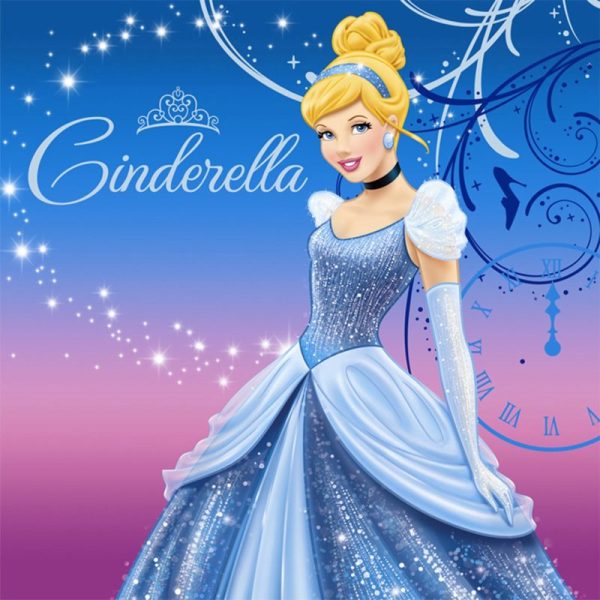
Tarah Leake
Written by (among others) the Brothers Grimm, the story of Cinderella has survived for decades. About one hundred twenty-five years later, Disney produced a film based on the Grimms’ tale. Today, Cinderella presents a beautiful princess who marries a charming man and lives happily ever after. However, this story is not to be taken casually; rather, the telling of Cinderella’s family, trials, and outcome holds intrinsic educational value for the real world. In both versions, characters demonstrate inverse and similar characteristics, themes of humility and judgment transpire, and symbolism is apparent.
After her mother dies of ailment, young Ella is lost in a world with her dreadful stepsisters and stepmother. She is treated awfully and forced to sleep by the fireplace, covering her in cinders and deriving the nickname, “Cinderella.” Even after this, Cinderella remains humble and grateful for what she does possess. The stepsisters and stepmother, on the other hand, are selfish and arrogant. In the Grimms’ tale, when Cinderella’s father goes to a fair, he promises to bring back gifts for the girls. The stepsisters request dresses, pearls, and jewels. Cinderella, however, simply asks for the first branch that knocks off her father’s hat. This demonstrates Cinderella accepts her life and is not concerned with obtaining carnal, materialistic desires. When the stepsisters are preparing for the ball, Cinderella helps them with their hair and dresses instead of focusing on herself. This shows maturity, because the stepsisters would never help Cinderella prepare for the ball; they treat her like a slave, and yet she still offers up her assistance.
The stepmother is conceited and demanding. She places her personal satisfaction above others’ needs. She marries Cinderella’s father, not because she loves him, but rather she loves his money. She does everything in her power to eliminate competition for the prince’s hand in marriage; in her mind, forcing Cinderella to stay home and do chores confirms the choosing of one of her daughters. This shows the stepmother recognizes Cinderella’s elegance and feels threatened by it. Disney makes a point of highlighting the stepmother’s extreme jealousy of Cinderella’s beauty and her hatred of the young girl. The Grimm Brothers demonstrate this hatred by the stepmother’s constant attempt at the humiliation of Ella. When Cinderella asked if she could go to the ball, the stepmother reprimanded her for even considering going to the ball looking as vile as she does. The stepsisters assumed their mother was trying to help them; however, once again the stepmother was conceited and wanted her daughters to marry the prince so she could be recognized and respected. The stepmother was also quite demanding and cruel in both stories. According to the Grimm Brothers, the stepmother poured lentils into the hearth and told Cinderella she must pick all of the lentils out if she desired to go to the ball. In Disney’s story, she forced Cinderella to cook all of their meals, do their laundry, and clean the house. Even with how dreadful she treated Cinderella, Cinderella never disrespected her. Not only was the stepmother demanding of Cinderella, but even to her own daughters. In the Grimms’ tale, when the messenger arrived with the golden shoe looking for the owner, the stepsisters’ feet were too large. The mother was so determined to have her daughters marry the prince, she forced them to cut off parts of their feet so the shoe would fit, finishing with the cruel demand to swallow the pain. This is far removed from anything Cinderella would do especially to her own children. This shows, yet again, the inverses of characters’ morals in this classic.
Along with these varying morals and aspirations, two major themes are scattered throughout the story: sacrifice and judgment. Self-sacrifice was seen with the stepsisters when they brutally removed portions of their body in order to be accepted by the prince, which proved useless in the end. Cinderella made self-sacrifices by choosing to be humble and respectful to her stepmother and by choosing to help the stepsisters with their dresses rather than make her own. This theme pairs perfectly with Christ’s words in Mark 10:45, “For even the Son of Man came not to be served but to serve, and to give his life as a ransom for many.” The second major theme is judgment. The stepsisters’ hearts were full of arrogance and conceit, and they were judged accordingly. The Grimm Brothers describe the haunting event where the stepsisters’ eyes were plucked out by the bird on Cinderella’s shoulder during the wedding. Judgment is not always bad, simply a conclusion based on one’s choices. Cinderella was humble, kind, and a servant to others and was ultimately rewarded for her actions. The Bible often announces the rewards of humility and kindness; James 4:10 says, “Humble yourselves before the Lord, and he will lift you up.” Proverbs 22:4 explains the wages of humility are riches, honor, and life. This is applicable to eternal life as well: Matthew 20:16 says, “So the last will be first, and the first will be last.” In the end, the sacrifices and responses of Cinderella were judged accordingly, and she was granted a beautiful life and husband. The stepsisters and stepmother, however, who desired only to please themselves, paid the ultimate price in the end.
The use of symbolism is frequent in both versions of Cinderella. In many ways, Cinderella represents a Christ-like attitude. She was rejected and terribly punished in her own home, yet continued to serve others with love, willingness, and humility. Christ also came to the world to serve others and demonstrate love and humility even when persecuted. When the stepsisters arrived at Cinderella’s wedding in the original, they desired to befriend Cinderella so they could share in her wealth and recognition. They attempted to beg Cinderella for forgiveness, however, Cinderella ignored the sisters, and the once beautiful girls lived in pain and blindness the remainder of their lives. This is symbolic of people in the world who choose to neglect God’s word and live out their carnal desires. When the bird removed the sisters’ eyes, Proverbs 30:17 comes to mind. It reads, “The eye that mocks a father, that scorns an aged mother, will be pecked out by the ravens of the valley, will be eaten by the vultures.” Just as Cinderella ignored the sisters, so will Christ ignore the evil on the Day of Judgment. 2 Thessalonians 1:9 reads, “They will be punished with everlasting destruction and shut out from the presence of the Lord and from the glory of his might.” Matthew 7:23 reads, “Then I will tell them plainly, ‘I never knew you. Away from me, you evildoers!’” Another example of symbolism is the likeness of Cinderella’s relationship with her stepsisters to the Biblical story of Lazarus and the Rich Man. Luke 16:19-31 describes the story of how a rich man mistreats poor Lazarus. When both men die, the rich man calls up to Lazarus from Hell and requests just a drop of water to quench his thirst. Likewise, in the story of Cinderella, the stepsisters were tormented by their judgment and sought refuge in the very individual they disgraced. The final demonstration of symbolism is the false promises of the stepmother. Three times the stepmother promised Cinderella permission to attend the ball as long as she completed her tasks. Each time, however, Cinderella was met with rejection and disappointment. This represents how Satan can promise individuals their innermost desires in exchange for something else; however, he never fulfills his agreements and many are left disappointed like Cinderella.
Although written during different centuries and varying in minor details, both the Grimm and Walt Disney versions share similar values and lessons. Cinderella is often regarded as a light-hearted fairytale with the classic happy ending; however, when truly analyzed, it outlines many real-life applications of consequences and judgment, humility and reward, and biblical symbolisms. Cinderella showed humility and respect in the presence of cruelty and arrogance. The stepsisters chose selfish desires over good morals and were judged accordingly, spending the rest of their lives as cripples. The stepmother was the epitome of jealous hatred and conceit, the opposite of Cinderella’s gentle nature. Elements of the story symbolize the rewards God honors the humble with, judgment upon the wicked, and deceitful promises of the Devil. Cinderella is not simply a fairy-tale for children; rather it is comprised of moral lessons that individuals of any age can benefit from.
Bibliography
BibleGateway.com: A Searchable Online Bible in over 100 Versions and 50 Languages. Web. 1 Dec. 2015.
“Cinderella.” Grimms’ Fairy Tales. Web. 12 Nov. 2015. <https://www.cs.cmu.edu/~spok/grimmtmp/016.txt>.
“Cinderella’s Story — Disney Princess.” Disney Princess. Disney Entertainment. Web. 22 Nov. 2015. <http://princess.disney.com/cinderellas-story>.

 Redeeming Pandora