
Category Archives: Issue 17

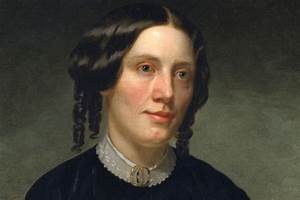
Harriet Beecher Stowe

Sydney Harris

In the struggles of feminists and those who simply love equality, women in American and worldwide history were subjected and depicted as needed only in the kitchen and the bedroom.  I believe the phrase in plain terms is “barefoot and pregnant.”  Although this was the norm and still is in some areas of the world, we as women and citizens of the United States have pressed and worked relentlessly to have the freedoms and rights we do today.

Numerous ways and vessels have been used to get us to the point we are at today.  One of the various methods by which we have expressed ourselves is through writing.  Writing is a medium of human communication that represents language and emotion through the inscription or recording of signs and symbols.  As females they were not able to successfully relay their thoughts through speaking, so writing was a breakthrough.  One of the earlier and most influential female writers through the generations was Harriet Beecher Stowe.  Stowe was the author of the beloved and well-known novel Uncle Tom’s Cabin.

Stowe was born June 14, 1811, in Litchfield, Connecticut.  Her father, Lyman Beecher, lived his life committed to social justice.  She was an author and philanthropists, Stowe was awarded with national fame when she released anti-slavery story Uncle Tom’s Cabin.  Her novel added to the heat of sectionalism before the Civil War.  She died in her home state in 1896.

She and her 12 siblings were raised by their father, a religious leader, and his wife, Roxanne Foote Beecher, who died when Harriet was a child.  Her 7 older brothers all became ministers, including famous leader Henry Ward Beecher.  One of her sisters, Catharine, was an author as well, shaping Harriet’s views.  Another, Isabella, was a leader in the fight for women’s rights.  She learned how to make logical arguments around the table from the boarders they housed from Tapping Reeve’s Law School.  She started her formal education at Sarah Pierce’s Academy, one of the earliest to push girls to study academics and not only the arts.  Stowe attended a school run by Catharine, run the same classical way of learning usually only provided to men.

At 21, she moved to Cincinnati, where her father was the head of the Lane Theological Seminary.  Lyman took a strong abolitionist stance against pro-slavery in 1836.  Stowe found friends with like beliefs in a local literary association called Semi-colon Club.  This is where she met fellow member and seminary teacher Calvin Ellis Stowe.  The two later married and together became a powerful couple in the fight for the abolition of slavery.

In 1850 Congress passed the Fugitive Slave Law, creating stress among abolitionists and free slaves in the North.  Stowe decided to express her feelings in the only way she knew, through a literary representation of slavery.  She attributed her book on the life of Josiah Henson and her own observations and beliefs.  The first part of Uncle Tom’s Cabin appeared in the National Era in 1851.  It was published as a story the next year and immediately became a best seller.  Her emotive depiction of the devastation slavery had brought upon families and kids caught the attention of the entire nation.  The book was accepted with open arms by the North but both Stowe and her novel provoked hostility in the South.

Her book was staged by fans in performances and the main characters of Tom, Eva, and Topsy achieved great iconic status.  She met Abraham Lincoln when she traveled to Washington D.C. during the Civil War.  Stories say he greeted her saying, “So you are the little woman who wrote the book that started this great war.”  She explains herself when asked why she wrote the book that, “I wrote what I did because as a woman, as a mother, I was oppressed and broken-hearted with the sorrows and injustice I saw, because as a Christian I felt the dishonor to Christianity — because as a lover of my county, I trembled at the coming day of wrath.”

So, she pressed on and wrote more books like The Mayflower: Sketches of Scenes and Characters among the Descendants of the Pilgrims in 1843.  “The Coral Ring,” the same year, was a short story that promoted temperance and an anti-slavery tract.  She also produced numerous articles, essays, and short stories regularly published in newspapers and journals.  She wrote for the rest of her life.  None of her later works compared to the reaction she received from Uncle Tom’s Cabin, but she remained well-known and respected in the North and in the communities of reformed minds.

She passed away in Hartford when she was 85.  She was buried at Phillips Academy in Massachusetts.  Her epitaph reads “Her Children Rise up and Call Her Blessed.”  There are many landmarks dedicated to all of her accomplishments, and her memory will last forever across the eastern United States and probably farther.  The Harriet Beecher Stowe House in Maine is where she lived and wrote her historical book.  Bowdoin College bought the house, and today it’s a museum with items of Stowe’s and a library.  Samuel Clemens, otherwise known as Mark Twain, is her neighbor and the houses are open to the public.

Her passion for writing in a time when women and their thoughts were not even acknowledged allowed her to speak in public and direct her thoughts and views when it was rare for females to hold their own voice.  She could also contribute to the Stowe family household income.  She said in a comical but true quotation, “If you see my name coming out everywhere — you may be sure of one thing, that I do it for the pay.” A female legend she was and will forever be.

Bibliography

“Harriet Beecher Stowe’s Life.” Harriet Beecher Stowe’s Life. Harriet Beecher Stowe Center, 2015. Web. 06 October 2015.

“Harriet Beecher Stowe.” Bio.com. A&E Networks Television, n.d. Web. 06 October 2015.

Alexander Fleming and the Importance of Penicillin

Mark Erichsen

Throughout American history have been various groundbreaking advances in medicinal technology and treatment, one of them being the discovery of a certain mold named Penicillin.  Alexander Fleming was the first in his field of Bacteriology to discover the potential benefits mold could have in fighting infections.  Through his constant research, Alexander Fleming changed the way of American life and inspired many scientists such as Howard Florey, Ernst Chain, and Norman Heatley to follow in his footsteps.

Alexander Fleming was born in the small town of Lochfield, in Ayrshire, Scotland on August 6th, 1881.  During his youth, he attended many different primary schools such as Louden Moor, Darvel Academy, and Kilmarnock Academy.  Before officially starting the brunt of his schooling and research at Saint Mary’s Medical School, he worked for four years at a small post office in London.  After finishing his schooling in 1906, he began his research in bacteria and its natural effects on the human body under Sir Almroth Wright.  Around the year 1914, he served as a Captain of the Medical Corps in the army during World War I.  He returned to Saint Mary’s Medical School in 1918 to resume his studies, and the rest is history.  Alexander Fleming passed away on March 11th, 1955 and was buried in Saint Paul’s Cathedral.

During Alexander Fleming’s work on the influenza virus and vaccine in 1928, he made an accidental discovery.  On a discarded petri dish of a bacteria called staphylococcus, he noticed a circle of mold forming; however, he could tell something was different about it.  Throughout Alexander Fleming’s work experience and research, he had always seen different colonies of bacteria and mold grow together.  So, when he saw a small green circle of mold with a bacteria-free circle around it, he realized he might have stumbled across something he could not take for granted.  He was then inspired by the experiment and started a continuous study on the mold he had found in his abandoned petri dish.  He soon discovered a concentrated mold culture of this “mystery organism” could withstand and kill bacteria such as staphylococcus even after being diluted up to eight hundred times.  After further research and study, he named this “mystery organism” Penicillin.  The reason why Penicillin killed other harmful bacteria was it released an antibacterial agent called Bellis.

Keeping Penicillin in mind, he continued older research on bacteria in the blood and tissue of animals and humans.  After testing Penicillin in animal tissues, he saw it was non-toxic and could possibly be used on human subjects.  After various theories and hypotheses, he turned the mold Penicillin into a wonder drug that could kill different types of disease carrying/causing bacteria in the human body.  In the year 1929, Alexander Fleming published his findings and said if produced in mass quantities, Penicillin could have the potential to save countless lives in the medical field.

As mentioned before, three scientists named Howard Florey, Ernst Chain, and Norman Heatley stepped onto the scene.  Almost ten years later, in 1938 at Oxford University in London, all three scientists began to study Alexander Fleming’s work in earnest.  The three of them began to expand on Fleming’s work.  They understood Penicillin in mass quantities had the potential to save millions of lives, so they began work on how to properly cultivate and grow mass colonies of the wonder drug.  The only problem was Penicillin was extremely costly to produce in mass quantities, and the three scientists had no way of acquiring factory resources in order to manufacture it.  This is where war stepped in.  By the time Florey, Chain, and Heatley’s research began to show real promising results, World War II had begun.  Because of World War II, much of England’s governmental and industrial resources were drained.  However, the devastation World War II caused also sparked an interest in the United States in the wonder drug Penicillin.

Scientists, along with generals in the Army and the United States Congress, finally saw the potential life-saving benefits Penicillin could procure.  No one wanted a repeat of World War I, where soldiers would survive their wounds but perish due to bacterial infection and illness such as Pneumonia.  In 1941, Florey, Chain, and Heatley’s research was moved to the United States for more funding and project flexibility.  The research continued, but the over-arching problem of inefficient production still loomed over the heads of the many scientists involved.

Florey, Chain, Heatley and their team of scientists were now in a race against time to efficiently produce the drug before more soldiers died on the battlefield.  Finally in late 1941, Florey, Chain, Heatley and their team were able to dramatically increase the production rate and yield of Penicillin.  In 1943, the clinical trials needed were finally able to be administered.  After the trials, Penicillin became the most effective anti-bacterial agent in history.  Production of Penicillin skyrocketed, and soon after enough Penicillin was produced to treat all the soldiers involved in D-Day.  At the end of the year, so much Penicillin was produced hospitals were able to treat over seven million patients per year, and the wonder drug was still being made.  It soon became so accessible and widely used the price per dosage of Penicillin went from twenty dollars down to only fifty-five cents.

Thanks to Alexander Fleming and his groundbreaking research and the accidental discovery of the wonder drug Penicillin, the field of medical treatment, and more importantly the world, changed for the better.  The impact of Penicillin was most greatly experienced during World War I and World War II.  In World War I, millions of soldiers died from infection and Pneumonia.  It was one of the greatest killers of the war, but after Penicillin’s administration, the death rate of soldiers from Pneumonia dropped from about eighteen percent down to below one percent.  Because of his research, Fleming was awarded the Nobel Prize in Physiology/Medicine in 1945.  His work greatly impacted American healthcare and changed the American way of life for the better.

Bibliography

Coffey, Alaina.  “20th Century Medical Advancements & American History.” Blogspot. Web. 03 October 2015.

Nobel Media. Nobelprize.org. 2015. Nobel Media. Web. 03 October 2015.

What is a Cowboy?

Destiny Phillips Coats

When one thinks of the Wild West, many different components come to mind like bison, Indians, farms, horses, whiskey and more.  Film after film and novel after novel have been made that try to capture the perfect idea of the West and what it brings to viewers and readers everywhere.  The most famous constituent of the Wild West is most definitely the cowboy.  In the hearts and minds of children everywhere, they see cowboys as strong handsome men who herd cattle, live on farms, and fight the Indians.  The question is, however, who were cowboys really and how have they influenced literature and film?

The cowboy was a term coined for the cattle herder in Texas during the era of the open range and great cattle drivers of 1886-1896.  Due to the scarcity of cattle up North, the Texans saw promise in the economic value of selling cattle.  In Texas of 1886, a steer worth 4 dollars was valued at 40 dollars in the North.  Cowboys began taking cattle up north to the train station in Sedalia, Missouri to send to their new business partners.

The adventurous and dangerous lifestyle of the cowboy came from the travelling aspect of their job.  With the migration of their cattle, the cowboy crossed over farm land and Indian Territory.  Confrontation indeed arose from the cattle trampling crops and the homelands of the Indians.  These conflicts were inspiration for the stories that portrayed cowboys as lawless and adventurous men who fought the Indians and lived freely in the Wild West.

Merriam Webster says the cowboy is “a man who rides a horse and whose job is to take care of cows or horses especially in the western U.S.”  This definition can seem boring in light of our connotation with a cowboy being much more dreamy and adventurous.  Where does the strong, handsome, courageous, and dreamy cowboy come from?  The answer to that question is literature.

The Virginian by Owen Wister, written in 1902, was the first novel that portrayed the cowboy as what we see him today.  This novel about a cowboy who falls in love with an eastern school teacher started a revolution in American literature about the cowboy and his adventures.  Owen Wister was from Philadelphia and graduated from Harvard College.  Experiencing the freedom of the West on a hunting trip inspired him to write The Virginian.  The way he portrays the beauty and free mind of the western citizen inspired others to create stories to take readers on an adventure of the cowboy in the “land of the free” and “home of the brave.”  Countless other books have been written that express the meaning of our connotation of the word “cowboy.”  They include Lonesome Dove, Riders of the Purple Sage, Hondo, All the Pretty Horses, and so many more.  As technology advanced and film making became a part of media, cowboys leaped off the pages onto the big screen.

Cowboys came onto the film scene in 1903 with the making of The Great Train Robbery by Edwin S. Porter.  Cowboys have taken on so many roles and influenced the hearts and minds of Americans for generations. TV shows like Bonanza; Walker, Texas Ranger; and Gunsmoke are just three examples of the numerous western TV series with main characters of cowboys.

The explanation of why cowboys are so amazing and great characters for literature and media is said perfectly in the following excerpt.

The men who worked the cattle in the treeless expanses of the West, at least one-fourth of them blacks, became known as cowboys.  The image of the courageous, spirited horseman living a dangerous life carried with it an appeal that refuses to disappear.  Driving a thousand to two thousand cattle hundreds of miles to market; facing lightning and cloudbursts and drought, stampedes, rattlesnakes, and outlaws; sleeping under the stars and catching chow at the chuckwagon — the cowboys dominated the American galaxy of folk heroes.

More than just the spirit of the cowboy influenced literature and film.  The cowboy’s distinct yet necessary dress has penetrated the realm of American fashion.  Each article of clothing had a purpose for the cowboy.  From the soles of his feet to the top of his head, the cowboy took every opportunity to make use of what he had on the vast plains of the Midwest.  The boots with thick heels and spurs made it easier to rest their feet in the stirrups on horseback and dig into the ground while catching a calf.  The flannel or wool shirt kept him warm during the cool days and nights on the western terrain.  The vest was worn for protection from cold nights in the vast plains of the west.  A bonus to the vest was the many pockets it had, which often carried tobacco.  The bandana often seen in western movies around their necks was used to cover their mouths and noses from dust that circulated in the flatlands.  The wide flexed rim of the hat blocked the hot sun, held water, and even worked as a pillow during a night’s rest on the flat surface of the Midwest earth.  Flannel shirts and cowboy boots have been a fashion trend since the time of the cowboy in 1886-1896.  With the strong influence the West has had on who Americans are and our heritage, cowboy fashion will never go out of style.

With all the portrayals of brave men who love and ride hard in novels, film, and fashion, how do we separate who they really are versus how we see them?  We can’t and we won’t.  The cowboy we love so much has become an American hero, and changing how we see them would be taking a part of our history away.  They are a symbol of American pride and adventure.  They are representative of the free spirit and beauty of the west.  They are inspiration for so many wonderful characters, from Woody in Toy Story to Walker in Walker, Texas Ranger.  Cowboys will never be forgotten.  They were important to society then, now, and forever.

So who is a cowboy?  He is an American hero.

Bibliography

“Cowboys.” History.com. A&E Television Networks, n.d. Web. 04 October 2015.

Merriam-Webster. Merriam-Webster, n.d. Web. 07 Oct. 2015.

“The Ways of the Cowboy.” Ushistory.org. Independence Hall Association, n.d. Web. 04 Oct. 2015.

The Weight of Words

Kasamira Wojcik

To quote people simply means to repeat their words.  It does not seem complicated, nor does it seem very important.  What is really important, though, is the meaning behind those words.  That is the whole reason why people take the time to repeat what another has said, because they recognize those words hold meaning behind them and they are worth repeating.  One of the things people tend to quote often is literature, such as the book A Farewell to Arms by Ernest Hemingway.  People quote lines from this book because they understand the meaning behind Hemingway’s words and desire to share it with others.

One quotation from this book is: “‘A coward dies a thousand deaths, the brave but one’….  [The man who first said that] was probably a coward….  He knew a great deal about cowards but nothing about the brave.  The brave dies perhaps two thousand deaths if he’s intelligent.  He simply doesn’t mention them.”  With this particular quotation, Hemingway is actually critiquing another quotation.  Most people have heard others say a coward dies a thousand deaths, but the brave only dies once.  Hemingway is saying he disagrees, and  the man who was the first to say that obviously did not know what it was like to be brave.  Hemingway is quite possibly speaking from experience, because he was in World War I as an ambulance driver for the Italians and was badly wounded while performing his duties.  So, it is very likely he knows what it means to be brave.

When saying the brave die perhaps two thousand times, Hemingway is implying those who are brave have faced death many times, and, because they are intelligent, they were able to come back alive.  The coward, on the other hand, only has to face the shame of his cowardice.  When saying the brave do not mention their “deaths,” he means the brave know coming back alive from facing those horrible things is not something to boast about, but instead it is something to be thankful for.

A second quote is: “No, that is the great fallacy: the wisdom of old men.  They do not grow wise.  They grow careful.”  People often consider older people to be wise because they have gone through life and its trials and survived.  As a result, they know more about how they should act or respond to different things and, because of that, they are considered wise.  Hemingway suggests a different point of view.  Rather than considering them as wise, he instead says they have grown careful.  The definition of wise is “having the ability to discern or judge what is true, right, or lasting.”  The definition of careful is “attentive to potential danger, error, or harm.”  Hemingway is basically saying rather than being better able to discern truth, older people are instead more attentive to danger and are, therefore, better able to avoid it.

One of the most well-known quotations from A Farewell to Arms is “If people bring so much courage to this world the world has to kill them to break them, so of course it kills them. The world breaks everyone and afterward many are strong at the broken places. But those that will not break it kills. It kills the very good and the very gentle and the very brave impartially. If you are none of these you can be sure it will kill you too but there will be no special hurry.”

Hemingway had a rather morbid point of view, and he was depressed.  This can be seen throughout his writing, especially in this quotation.  This can be broken up into two sections: “If people bring…those that will not break it kills,” and “It kills the very good…there will be no special hurry.”

The main thing Hemingway is saying in the first part is the world attempts to break everyone, no matter who you are, though it puts more effort into breaking than others.  For the ones it can break, they become stronger because of it, but for those it cannot, the world, instead, kills them.  Hemingway is implying the world is an unforgiving place and for those who will not go the way the world wants them to go, who have courage to stand firm against it, the world will kill them.  In the second part, Hemingway is saying no matter if you are “good,” “gentle,” or “brave,” the world will kill you just the same.  For those who are not any of those things, the world will still kill you, but there is not a big rush to do so.

When Hemingway says “the world,” he is referring to the circumstances and the situations people have to face.  For the ones who are exceptional, it stands to reason they would put themselves out into the world and experience situations the ordinary person would not.  Those situations they put themselves in will be more dangerous than if they had decided to do nothing.  So, it is really no surprise “the world” would “break” or “kill” them more quickly than the average person.  The ordinary person, though, will still eventually die because no one can escape death.

Another quotation is “I’m not brave any more darling.  I’m all broken.  They’ve broken me.”  This holds a lot of meaning, especially in light of the previous quotation analyzed.  The one who is saying this line is Catherine, the love of the main character, Henry.  She says this to him after she gives birth to their stillborn child and is dying from multiple hemorrhages.  Up until now, she has withstood many trials, not only by her own strength, but with Henry’s as well.  She was good, gentle, and brave, and the world had already tried to break her but could not.  So, it killed her.  In doing so, it broke her.  That is why she says she is no longer brave and is now broken.  When she says “they’ve broken me,” she is referring to the world and the situations she has faced.  It is finally too much for her.

There is so much one can do with words.  They could be used to weave a fanciful story to tell a child as she goes to sleep.  They could be used to express their deepest feelings to another.  They could be used to teach someone how the world works.  They could also be used to tell lies to someone or verbally abuse one.  Words can be a dangerous tool, and one never knows when something one says could end up being repeated by another.  Therefore, one must be careful with them.  Words and the meaning behind them are powerful, so use them wisely.

Transcendentalism

Christian Tullos

Man is a unique creation.  What separates him from every other creature on earth are his questions: Why am I here?  Where am I going?  What purpose do I have?  Is there a greater power?  Is there truth?  Through history man searched for answers to many deep questions.  Many religions, beliefs, and philosophies have been established in hope to answer man’s questions.  Transcendentalism is one of these philosophies.

The Transcendental movement sprouted in New England around 1836.  The leaders of the movement were Henry David Thoreau, Margaret Fuller, and Ralph Waldo Emerson.  The members and leaders of Transcendentalism met in the Boston home of George Ripley.  Though the members were loosely connected, they considered Emerson their leader.

Ralph Emerson: “What lies behind you, and what lies in front of you, pales in comparison to what lies inside of you?”  This lies at the heart of their philosophy.  Truth, spirituality, and peace can be found inside of a man; they just need to be unlocked.  Transcendentalism hinges on the belief man is naturally good.

The crux of Transcendentalism is the issue of the origin of truth.  Transcendentalism itself is a philosophy that says man’s knowledge of reality comes from an analysis of his own thought process.  In essence: truth comes from inside man.  Transcendentalism, being influenced by Romanticism, places emphasis on emotion and feeling as the sources of truth.  Transcendentalists attained their name because of their method of enrichment.  Stemming from the belief emotions are the key to unlocking the truth within, members try to transcend the distractions of the world to become one with themselves.

Similar to the Christian belief the Holy Spirit lives in people, Transcendentalists believe all men have a piece of the “Over-soul” living inside of them.  This belief contributes to the lack of a need for organized Church-like gatherings among them.  If all men contain the “Over-soul,” they are connected in spirit, which negates the need for shallower physical connections.

As the very nature of a Transcendentalist’s views on truth is relative and determined by the individual, Transcendentalists have a difficult time defining their core beliefs.  The lack of a unifying vision also hindered the cohesion of the movement.  Henry David Thoreau himself pointed out the difficulty of understanding Transcendentalism in his popular journal entry for March 5, 1853:

The secretary of the Association for the Advancement of Science requests me . . . to fill the blank against certain questions, among which the most important one was what branch of science I was specially interested in . . . I felt that it would be to make myself the laughing-stock of the scientific community to describe to them that branch of science which specially interests me, inasmuch as they do not believe in a science which deals with the higher law.  So I was obliged to speak to their condition and describe to them that poor part of me which alone they can understand.  The fact is I am a mystic, a transcendentalist, and a natural philosopher to boot.  Now that I think of it, I should have told them at once that I was a transcendentalist.  That would have been the shortest way of telling them that they would not understand my explanations.

Transcendentalism clearly eluded succinct definition in Thoreau’s time as much as it does in our own.

Even Emerson had difficulty explaining his beliefs.  Transcendentalism fractured into many beliefs and practices.  Some of the questions posed to Emerson regarded the purpose and outlook.  What was the goal they strove for in themselves and society?  In his 1842 lecture “The Transcendentalist,” Emerson suggested the goal of a purely transcendental outlook on life was impossible to attain in practice:

You will see by this sketch that there is no such thing as a transcendental party; that there is no pure transcendentalist; that we know of no one but prophets and heralds of such a philosophy; that all who by strong bias of nature have leaned to the spiritual side in doctrine, have stopped short of their goal.  We have had many harbingers and forerunners; but of a purely spiritual life, history has afforded no example.  I mean, we have yet no man who has leaned entirely on his character, and eaten angels’ food; who, trusting to his sentiments, found life made of miracles; who, working for universal aims, found himself fed, he knew not how; clothed, sheltered, and weaponed, he knew not how, and yet it was done by his own hands.…  Shall we say, then, that transcendentalism is the Saturnalia excess of Faith; the presentiment of a faith proper to man in his integrity, excessive only when his imperfect obedience hinders the satisfaction of his wish.

In some ways Emerson is running around the question.  He is stating no Transcendentalist has achieved perfection. that none has fully submitted to the truth within and have fallen short of his goals for which he strives.  Yet he fails to state the goal of Transcendentalism or define it specifically.

All actions come from beliefs.  Beliefs are formed out of philosophy and philosophy flows from what a person believes to be true.  As Luke 6:45b states: “Out of the overflow of the heart the mouth speaks.”  The truths a man stores in his heart are revealed in the way he acts.  Every religion, belief, or philosophy will influence a man’s outlook on life as well as his actions.  Transcendentalism lacks the basic principles of a moral and spiritual standard.  It attempts to provide clarity, a sense of truth, but cannot even provide the true definition of itself.  In its own confusion many people have taken an idea here or there and run with it.  Individuals use Transcendentalism as a basis for moral relativism.  This  tool allows individuals to become their own higher power, their own authority, they own “Over-soul.”

Emerson and the others in his party attempted to free the minds of men but achieved the opposite.  In searching for clarity, they kicked up a bunch of dust.  Even with all of Emerson’s intellect, he still failed to see what Isaiah 53:6 says: “Those who rely on their own intuition and ‘good sense’ to lead them to spiritual truth will find themselves being led astray.”  In trying to be wise, Emerson became the fool.

Bibliography

Goodman, Russel. Transcendentalism. http://plato.stanford.edu/entries/transcendentalism/. 3 October 2015.  Web.

Lewis, Jone. Transcendentalism. http://www.transcendentalists.com/what.htm 2 . 2 October 2015. Web,

Miller, Perry. The American Transcendentalists: Their Prose and Poetry. Garden City: Double Day Anchor Books, 1957.

U.S. History. 2008-2014. http://www.ushistory.org/us/26f.asp. 5 October 2015. Web.

The Space Race: A New Frontier

Matthew Nalls

Coming upon the heels of World War 2, a new, almost entirely hushed war “roared” to life by 1946.  A fierce duel between the United States and Soviet Russia ensued for nearly five decades, which English author George Orwell deemed a “cold war” in his book You and the Atomic Bomb.  This term stuck, and the war descended into infamy known precisely as the Cold War.  Despite the ominous state of the Cold War at the time, one invaluable benefit emerged from the silent struggle: The Space Race.  Beginning in the 1950s, the Space Race became a heated contest between the two superpowers.  The goal was to achieve undeniable scientific and technological superiority in space, the new arena of competition.  What made this contest a benefit to society was the rapid necessary technological advances made at the time.  These breakthroughs scientifically pushed society along faster than at any recorded time in history, all while making its own history in the process.

In 1957, Soviet Russia took the lead in the first leg of the race.  On October 4th, carried into space by a Soviet R-7 intercontinental ballistic missile from Kazakhstan, the first satellite-probe achieved orbit around the Earth.  Known as Sputnik, the rough Russian translation for “traveler,” the satellite shocked, frightened, and even terrified Americans.  Although its purpose was to study the upper atmosphere of the Earth, as the first man-made object put into orbit, coincidentally by a rival and hostile country on the back of a powerful ballistic missile, it is not difficult to understand the fear Americans across the country faced.  To their benefit, the United States was not far behind in the launching of its own satellite, known as Explorer-1Explorer-1 achieved its own orbit in 1958, serving as an equalizer in the tense match between the two countries.

Despite this step in leveling-out with the Russians, the United States again found itself in second.  In April of 1961, Soviet Russia put the first human into space.  Yuri Alekseyevich Gagarin spent a total of one hour and forty-eight minutes in space in his spacecraft, Vostok 1.  After completing his set orbit and surviving an intense re-entry into the atmosphere, Gagarin became a sacred Soviet icon.  One month later, Alan Shepard became the first American to achieve orbit in space.  The United States’ supposed preeminence in science and technology came under doubtful questioning.  To not only combat this scrutiny, but also to restore and inspire American morale, President John Fitzgerald Kennedy boldly proclaimed the United States would be the first to successfully transport the first humans to the Moon and safely return them.  In an inspirational speech at Rice Stadium in Houston, Texas on the notably hot day of September 12, 1962, President Kennedy confidently exclaimed: “We choose to go to the Moon! … We choose to go to the Moon in this decade and do the other things, not because they are easy, but because they are hard; because that goal will serve to organize and measure the best of our energies and skills, because that challenge is one that we are willing to accept, one we are unwilling to postpone, and one we intend to win….”

Through increasing NASA’s budget by nearly 500 percent, significant progress was made regarding achieving President Kennedy’s vow to the world.  On July 16, 1969, Neil Armstrong, Edwin Aldrin, and Michael Collins set off on the Apollo 11 mission to the Moon.  On July 20th, the three intrepid voyagers successfully landed on the cold surface of the Moon, becoming the first men to set foot upon another world.

By the return of Apollo 11, and the collapse of Soviet Russia’s space program afterward, new technologies were discovered and utilized, and the Space Race essentially ended.  Subsequently, the breakthroughs made during the Space Race paved the way for future technology to be forged.  For every major feat made by the two countries, new technology needed to be created to achieve each feat.  This technology, which would generally become exploited worldwide, included satellite TV, satellite navigation, the laptop, power tools, smoke or carbon monoxide detectors, telemedicine (and other health applications), non-reflective displays, ear thermometers, and many more applications.  The technology seen and produced worldwide sprouted from products created to overcome obstacles faced by both countries’ space programs (i.e., power tools to collect moon samples, laptops as small, yet powerful onboard computers, satellite communications to stay in contact with astronauts).

With this evidence, it is safe to agree through every milestone made during the Space Race, certain benefits in the realm of science and technology came from it through the discovery and creation of modern technologies, among certain other ways.  These technologies further advanced society along, serving as the catalyst to forge the technologically advanced society many live in today, all while making it plausible to argue the same could be achieved today if space exploration were as competitive and “interesting” as it was during the Cold War era.

Bibliography

Mead, Rob. “10 Tech Breakthroughs to Thank the Space Race for.” Techradar. Future PLC, 20 July 2009. Web. 19 September 2015.

Podelco, Grant. “Kennedy’s Famous ‘Moon’ Speech Still Stirs.” Radio Free Europe. Radio Liberty, 12 October 2012. Web. 19 September 2015.

“Space Race.” National Cold War Exhibition. Royal Air Force Museum. N.d. Web. 9 September 2015.

“The Space Race.” The History Channel. A+E Networks Digital, N.d. Web. 9 September 2015.

Diagnostics of Movie Effectualness: Horror Genre

Elissa Newton

The strange thrill of the unknown has always caused many to be lured in to the search of things out of the ordinary, such as the supernatural or the mysterious. This is no exception when it comes to the popular movie genre of horror, where the frightening portrayals and other contributing elements of the films give a satisfying adrenaline rush to thrill seekers.  As the movie progresses, common factors typical of horror can create this adrenaline and the general feeling of being unsafe during the showing of this genre.  From the soundtrack, to the imagery, and all the way even to the framework and focus of each of the scenes, each portion of the movie is carefully laid out to give the sense of the monsters shown to the audience breathing down one’s neck, or perhaps hiding in the shadows of the darkened room surrounding the unsuspecting persons.

It is no shock and most certainly a standard of horror movies the sounds given in the course of the run time are intended to give a scare to the audience.  The subtleties of the sounds, or perhaps in some cases, their intensity, create a feeling of tension, insecurity, and the sensation of being watched or followed, making viewers jumpy and more prone to being scared.  These sounds can range from the creak of a rusty door hinge, the heavy patter of approaching footsteps amidst a tense scene, a sudden shriek of pain or fear, a violin playing in a minor key whilst building in volume, and even the sounds of heavy or strained breathing.  Each of these sounds, both individually and combined, create an atmosphere of tension around the characters in the scene, and begins to warn the viewer of the movie something is about to happen.  This, in turn, conjures up the feeling of wariness within the watchers, getting the heart rate to increase and the adrenaline to flow within their blood in anticipation of what is to come.  Another unheard contributor of the terror is something called infrasound.  It is below the human hearing range, but even though unheard, can cause several factors of ideal horror sensations in someone who hears it for a long enough time.  These feelings include chills down the spine or nervous feelings of revulsion or fear, according to a study done on infrasound in Manchester, England on September 8, 2003.  When these feelings are generated, the horror movie has done its job in creating the creepy factor intended to scare its audiences.

Along with the sounds placed within the movie, the imagery in the scenes of a movie are also extremely well placed and orchestrated to generate further feelings of unease and terror.  Without the images, and the placement of said images, there would be little that would truly scare the watcher, even if the aim is to be more psychologically directed than the average horror film.  The imagery of a horror movie can include a wide range of products to achieve the sensations of fear highly sought after.  Gore, which is not uncommonly used in several of the films of this genre, is always something that can get the audience’s blood pumping, especially if the appearance is sudden or unexpected.  It triggers the natural sense of danger nearby and a need for staying away from said danger, whatever it may be portrayed as in the film.  Another aspect of the visual uses is the suddenness of certain portions of each scene.  A murderer very suddenly grabbing his chosen victim from behind while in the shadows would beget a shock from the audience, as well as the accompaniment of the aforementioned sounds already present in the scene.  Yet another contributing factor to the visuals of the movies is the way the actors are shown for the movie.  Desperation, fear, and or many other select emotions on the protagonist’s, or the victim’s, face will also portray the desired effect for the chosen scene.

A crucial part of the horror movies is the framework, which fits hand in hand with the visual aspects of the horror movies, yet is its own category in a way.  With each scene within a film, there are things one sees, typically to the forefront of the focus, and things one will not see on the screen.  It is the things one does not see that cause the most fear in the horror genre.  The frames of the scene are set precisely at certain widths and on certain characters or objects that will produce the greatest feelings of fear within the audience.  Oftentimes, there will be a danger that will not be present on the screen, and yet there is the knowledge something is there, and that stirs up the adrenaline and wariness the filmmakers seek to create in their audiences.  The focus of a scene will also bring these sensations within the frame of each scene of the movie.  For example, the focus of the scene could be on the character speaking, but something in the shadows could move behind him, out of the focus and in the unknown.  Even though it was not within the focus of the scene, it has created more tension and given the question of whether or not the characters are truly secure in the scene to the audience.  It is this factor of the unknown that builds more fright and makes the audience question their own safety.

As shown in the points of interest and structures above, the sounds, imagery, frames, and focus of each scene all pull together during each movie to stimulate the need of security and the fear of that which is not known in an audience.  Even that which is not seen and that which is not heard can create the effects of being afraid in an individual.  All of the components must work together to frighten and thrill the audience and give the desired effect of a horror movie.

Bibliography

The Exorcist. Dir. William Friedkin. Warner Bros. 1973. Film.

“Infrasound Linked to Spooky Effects.” NBC News. NBC News, 4 October, 2015. Web. 7 September, 2003.

A Nightmare On Elm Street. Dir. Wes Craven. New Line Cinema. 1984. Film.

You’re Next. Dir. Adam Wingard. Hanway Films. 2013. Film.

The Influence of Witchcraft on American Literature

Shannon Glock

In the early days of America, religion heavily influenced every aspect of life, especially literature, because America was founded upon freedom of religion; so, many different places had many different religions and beliefs.  Many of these religions were based off Protestantism or Catholicism.  These religions believed in the powers of not only God but also of Satan.  This was especially prominent in places where the main religion was Puritanism.  Because of a strong belief in the Devil’s power, many people believed witches were present in their communities.  This belief and fear of witchcraft affected the lives of many Americans and influenced the literature of the time period.  The influence of witchcraft in society at the time was obvious.  It can be seen in the infamous witch trials and the harsh punishment of those accused and in the hysteria caused by fear of this.

The Crucible is one of the most well-known pieces of literature about the witch trials.  It is a play written by Arthur Miller based on real events.  He uses the names of real people and bases it on the Salem witch trials.  In The Crucible, a group of young girls are discovered dancing in the forest by a reverend.  One of the girls passes out and the small, Puritan town is filled with rumors of witchcraft.  Confession after confession and accusation after accusation cause confusion and hysteria in the town.  Those close to the accused witches try to convince them to confess falsely to save their lives, for in the witch trials, those who confessed and repented of their sins were spared and those who became hostile and denied the accusations were put to death.  In the end, none of the accused confess for they do not want to accept the shame and reputation that comes with it, and they are all sent to the gallows to be executed.  This play is not completely fact, but it does show what the witch trials were like and how much hysteria and unrest it caused in communities.

Abigail Williams is one of the major female characters in The Crucible.  She is the one leading the group of girls dancing in the woods.  She is one of the biggest troublemakers out of all the girls because she is not afraid to accuse even her dearest friends.  This can be seen when she said, “Let either of you breathe a word, or the edge of a word, about the other things, and I will come to you in the black of some terrible night and I will bring a pointy reckoning that will shudder you.  And you know I can do it; I saw Indians smash my dear parents’ heads on the pillow next to mine and I have seen some reddish work done at night, and I can make you wish you had never seen the sun go down!” (Act 1)

She fully understands the consequences of being found guilty of witchcraft and knows confessing falsely and declaring she repented and is with Jesus again will save her from execution.  She also decides to accuse multiple other women when she confesses. “I want the light of God, I want the sweet love of Jesus!  I danced for the Devil; I saw him, I wrote in his book; I go back to Jesus; I kiss His hand.  I saw Sarah Good with the Devil!  I saw Goody Osburn with the Devil!  I saw Bridget Bishop with the Devil!” she proclaimed.  This shows how in the witch trials, those who were deceitful and dishonest were spared and those who were innocent but did not want to accept shame or bring others into it were not.

Being accused as a witch could potentially ruin someone’s career, reputation, or life.  Those who confessed and were not put to death were feared and shunned by others, for they were believed to at one time had made a pact with the Devil and no other citizens would want to associate themselves with someone who could do such evil.  This can clearly be seen when John Proctor goes to confess and repent but refuses to once he is told the confession must be made public.  Not only did John Proctor fear for his reputation because he was an accused witch, but also because he feared an affair he had earlier in the play would be made public as well.  He declared, “Because it is my name!  Because I cannot have another in my life!  Because I lie and sign myself to lies!  Because I am not worth the dust on the feet of them that hang!  How may I live without my name?  I have given you my soul; leave me my name!”

The influence of witchcraft can also be seen in the teachings and sermons of the time.  Jonathan Edwards’s “Sinners in the Hands of an Angry God” is all about the wrath of God and the eternal fire of Hell for those who turn away from God.  It is not directly about witchcraft, but the influence can still be seen through the tone and harshness of the sermon.  The tone is very dark and disturbing.  Edwards tells of the “great furnace of wrath” and “a wide bottomless pit full of the fire of wrath” (Edwards 98).  This is very similar to the preacher, Mr. Parris, from The Crucible.  John Proctor speaks of Mr. Parris this way: “I have trouble enough without I come five miles to hear him preach only hellfire and bloody damnation.  Take it to heart Mr. Parris.  There are many others who stay away from church these days because you hardly ever mention God anymore” (Miller 28-29).

Witchcraft strongly influenced American literature and still does today.  For example, the Harry Potter series (though British in origin, clearly extremely popular in America) is based on witchcraft.  The tone of literature of and at the time of the witch trials is very gloomy and disturbing.  In some cases, like The Crucible, the influence is very obvious, but in some, such as Edwards’s sermon, it is more indirect.  Whether it is the direct plot or just sways the tone, witchcraft and the witch trials have had a heavy impact on American Literature.

Bibliography

Burns, Margo. “Arthur Miller’s The Crucible: Fact & Fiction.” 10 Oct. 2012. Web. 07 Oct. 2015.

Edwards, Jonathan. “Sinners in the Hands of an Angry God.” The American Experience. Eds. Linda Ellis, et al. Upper Saddle Ridge: Pearson, 2000. 98-101.

Miller, Arthur. The Crucible. New York: Viking, 1953. Print.

“Puritans Beliefs on Satan and Witchcraft.” N.p., n.d. Web. 07 Oct. 2015.

Tess. “Similarities between Jonathan Edwards’ ‘Sinners in the Hands of an Angry God’ and Miller’s The Crucible.” Tess Junior Honors English Blog. N.p., n.d. Web. 07 Oct. 2015.

“Witches in Western Literature.” Goodmantheatre.org. Goodman Theatre, 2015. Web. 07 Oct. 2015.

Witkowski, Monica C. “Witchcraft in Colonial Virginia.” Encyclopedia Virginia. Virginia Foundation for the Humanities, 30 May. 2014. Web. 07 Oct. 2015.

The Power of Prayer

Jocelyn Gunter

In the book, Essence of Christianity, Ludwig Feuerbach attempts to present the arguments or essence of Christianity and then refute them with his own beliefs.  This book is considered dangerous to Christians because if not taken carefully, one can fall into the trap of agreeing with some of his more eloquent points.  It is especially hazardous to those who are new Christians or weak in their faith because the arguments can be so compelling.  One of these arguments is prayer.  Feuerbach believes prayer is man talking to himself, revealing his deepest desires.  To Feuerbach, prayer can be likened to the saying in the Disney movie Cinderella, “A dream is a wish your heart makes.”

Feuerbach writes in chapter 12, the chapter dedicated to the “Mystery of Prayer,” “what is prayer but the wish of the heart expressed with confidence in its fulfilment?”  Prayer is the simplest act of religion according to Feuerbach.  Prayer isn’t outwardly to God far away but in the heart.  “God is the affirmation of human feeling; prayer is the unconditional confidence of human feeling in the absolute identity of the subjective and objective, the certainty that the power of the heart is greater than the power of Nature.”

Feuerbach, when talking about prayer, means man talks to a muscle, to express his greatest wishes, and know there is no limit to what he may ask of God.  It is very interesting Feuerbach believes prayer is with the heart.  Throughout the book, it seems to the reader he is analyzing Christianity without the spiritual aspect drawn into his judgements on Christianity.  Feuerbach is analyzing Christianity only physically, completely forgetting the spiritual.  The problem with this is Christianity cannot be taken just as physical.  Not only Christianity cannot be taken that way, but the whole world cannot be taken as completely physical.  Yet, many people, including Feuerbach, don’t seem to notice the whole world cannot be explained with science.  The beginning of the world cannot be duplicated through science, as much as they try, to explain the world began through a big bang or evolution.  Scientists cannot explain things like miracles with science.  As much as doctors would like to take credit for it, they cannot explain the miracle of someone having 100+ tumors in her body one day and the next day is cancer free.  Medicine is not that good.  So it’s very curious Feuerbach believes prayer is with the heart.  If Feuerbach does not believe in spiritual things, then he must think the heart is only a muscle.  Yet how can a muscle be talked to, how can it be told your innermost wishes and desires?  Feuerbach writes, “Prayer is the self-division of man into two beings — a dialogue of man with himself, with his heart.”  One cannot have a conversation with the heart if it is a muscle.  Feuerbach contradicts himself with this point, because throughout the book he takes things as physical only, trying to explain everything with logic and science.  Yet, everything cannot be taken like that; one must take things with some faith.

With his argument on prayer, he believes man is his own god.  Man takes all of the perfect virtues he strives for and makes them into a perfect god, a perfect being, a being that lives for man.  He states this again in his definition of prayer, through the fact he believes since man is his own god, or this god lives in man, man would talk inwardly.  Yet, if man is his own god, then why does he need to confess his deepest desires to his heart?  His heart would already know his deepest desires, if it were not only a muscle like Feuerbach believes.  That point seems contradictory, too.

Feuerbach’s argument on prayer is the opposite of what Christians believe.  Christians believe prayer is not something our heart can give to us.  Only God can.  God is not something we created for our own purposes.  We are created for God.  We are made in His image, and since God desires relationships with His people, we desire earthly relationships and a spiritual relationship with the Father.  Part of this relationship is prayer, or talking to God.  Yes, it is telling God the deepest desires, whether through pleading for a miracle in our lives, or confessing our sinful desires to Him.  Yes, prayer is in a way inward, because the Holy Spirit lives within Christians, and Jesus resides in the heart and soul.  The heart Christians believe God resides in, though, is spiritual.  They do not believe God lives in the muscle.  1 Corinthians 6:19 states, “Or do you not know that your body is a temple of the Holy Spirit within you, whom you have from God? You are not your own.”  This verse is an example of what Christianity really is, not what Feuerbach believes it is.  Prayer is a powerful tool in the Christian walk.  It is how we ask for forgiveness, for help, for strength, for patience, for wisdom, etc.  It may be “the simplest act of religion,” but sometimes the simplest things are the most important, the most powerful.  Prayer is what makes a Christian’s relationship with Christ more personal, and it is not only the human who prays, but also the Holy Spirit intercedes when Christians do not know what to say to God.  Feuerbach leaves out this special part, the spiritual part. Prayer is not prayer if it is missing the spiritual aspect.

Another point Feuerbach makes on prayer is “In prayer man turns to the Omnipotence of Goodness; which simply means, that in prayer man adores his own heart, regards his own feelings as absolute.”  First, goodness is a virtue, a characteristic.  Goodness is not omnipotent.  It does not have the power to grant miracles or save people.  It is offensive to a Christian, which is what Feuerbach is trying to do, to say good can save.  Only a perfect being could save this messed up world.  It is amazing to think Feuerbach can believe man is not sinful, which he seems to hint at earlier in the book.  If the world is not sinful, then why is there murder, death, evil, etc.?  Murder is not “good.”  The world needed a perfect Savior and still needs something like prayer to help with confession and forgiveness.  Second, prayer does not adore man’s heart or regard his feelings as absolute.  Yes, God hears his people cry out, just like He heard the Israelites cry out to Him in Egypt.  Yet, God can choose to ignore our prayer, so therefore man’s feelings are not made absolute, because God can ignore man’s feelings if he chooses.  Again, God is not for man; man is for God.  Third, prayer is through the heart, through soul.  The heart and soul are not adored, though, through prayer.  They are the Christian’s way of communication.  Jesus intercedes for Christians between them and God.  Christ is the middle man, the bridge between the two.  The heart and soul are from which prayer comes from, revealing our sins, desires, wishes, etc.  Prayer is an inward process, sometimes spoken out loud, to an outwardly God.  His Spirit resides within the heart, but He is in Heaven, and everywhere else because He is omnipresent.

Prayer is more than what Feuerbach makes it out to be.  It is powerful and a necessary part to Christianity.  Without prayer, Christians could not truly know God or His plan for their lives.  Prayer is special and important.  It is spiritual and not a dialogue between man and a muscle.  It is a conversation between the Maker and His creation.  It is a simple sentence or cry for help.  It is a silent prayer when one does not know what to say or a fervent prayer.  Prayer is during the good times and the bad times.  Prayer is constant, like text messages between teenagers.  Prayer should be a priority and not a last resort.  Prayer is not man depending on his own heart, his own feeling, like Feuerbach states.  The heart is evil, and in prayer man is dependent on God, not himself or others, because everyone will fail, but God will not.  Prayer is conversation between God and man, not man and himself.  It is not a conscience; it is words, reasoning, and thought, addressed to God.  Finally, Romans 12:12 states, “Rejoice in hope, be patient in tribulation, be constant in prayer.”

The Mystery of Prayer

Destiny Phillips Coats

“Out of the pen of Feuerbach, the truth flows.”  This is a false statement.  Throughout the entirety (that we have read) of The Essence of Christianity, Ludwig Feuerbach has made many false statements.  The multitude that has pained me the most are in chapter 12, “The Omnipotence of Feeling, or the Mystery of Prayer.”  As Christians, we believe the complete truth is presented to us in God’s Word.  Anything we hear outside of God’s Word should be judged accordingly with the Word to see if it holds true.  Nine times out of ten, Feuerbach’s “truth” does not.

Feuerbach thinks he has an understanding of Christianity.  A non-believer reading this book would probably be fooled by his big words and long points that fly over the head of the average person.  We (believers) must guard our hearts (Proverbs 4:23) from false truths presented to us.  Not only should we divert from them, but also we must understand how to disprove them with truth: Scripture.

Throughout chapter 12, Feuerbach gives many absolute statements for what prayer is; each time however, he is wrong.  “Prayer is the unconditional confidence of human feeling in the absolute identity of the subjective and objective, the certainty that the power of the heart is greater than the power of Nature, that the heart’s need is absolute necessity, the fate of the world” (123).  This is his first “definition” of prayer.  What does God say prayer is?  Psalm 145:18, “The LORD is near to all them that call on him, to all that call on him in truth.”  Prayer is seeking after God’s heart.  It is revealing to God our heart so He might hear us and commune with us.  In simpler terms, it’s how we communicate with God.  Feuerbach’s idea of prayer is a selfish outpouring of one’s heart to combat the laws of nature; the power of the heart is strong enough to give it all its desires.  God’s Word tells us He will give us the desires of our heart.

Feuerbach says “the power of the heart is greater than the power of Nature … heart’s need is absolute necessity.”  At first glance these could appear to mean the same thing, but just a few words change the meanings of each.  God says He will give us the desires of our heart. He did not say our hearts are strong enough to overcome nature.  That is the root of this first falsehood by Feuerbach.  He did not come to the knowledge God is the creator and He alone has power to give us the desires of our heart.  He instead decided because there is no God, the only explanation for prayer is a selfish outpouring of one’s heart and strong belief the human heart separate from God can make our desires happen.

“Prayer alters the course of Nature; it determines God to bring forth an effect in contradiction with the laws of Nature” (123).  Feuerbach was actually pretty close with this one, but yet so far.  Psalm 107:28-30 says, “Then they cried to the LORD in their trouble, and he delivered them from their distress.  He made the storm be still, and the waves of the sea were hushed.  Then they were glad that the waters were quiet, and he brought them to their desired haven.”  Prayer does change the circumstances around us — nature.  Feuerbach went wrong when he said prayer “determines God to bring … contradiction with the laws of Nature.”  God created the world; therefore, He wrote the laws of nature.  He can choose whether He wants to operate within them or not.  Because He is God, we cannot put earthly limitations on a spiritual being.  He does not have to operate within the limits nature has put upon us.

“Prayer is the self-division of man into two beings, a dialogue of man with himself, with his heart” (123).  Feuerbach got this all wrong.  Prayer is a conversation between believers and the great intercessor, Jesus, who then communicates our desires to God the Father.  Because of sin, mankind has separated himself from God.  God is perfect and cannot commune with imperfect beings.  This is why God sent His son Jesus to redeem us.  God desires relationship with us.  Relationships are built around communication.  Jesus is the redeemer who washed away our sin, so we might be made perfect in Him to once again communicate with God.  This goes to show without a true knowledge of Christianity as a relationship between God and man, head knowledge will cause a person to interpret the things of God (spiritual) with his own (earthly) knowledge.

“It is an extremely superficial view of prayer to regard it as an expression of the sense of dependence.  It certainly expresses such a sense, but the dependence is that of man on his own heart, on his own feeling” (124).  This is the complete opposite of what Christians believe. Christianity in its core is coming to the knowledge and understanding on one’s own, one is nothing.  One must turn from his old ways and become completely dependent on God to fill the void in his heart and to supply all his needs.  We are not co-dependent in our relationship with Christ.  God does not need us.  He wants us.  There’s a difference.  She wants the cookie.  She needs the water or she will die.  God does not need us.  We need God.  Without God, humanity would not exist.  Without a relationship with God and coming to the knowledge of Jesus as our Savior, man is damned for eternity in Hell.  This is an example of how Feuerbach has wrongfully accused Christians of thinking highly of themselves to believe their own hearts can supply their needs.  Even without knowing it, non-believers are solely dependent upon God the Father.  They just choose not to believe it.

“The omnipotence to which man turns in prayer is nothing but the Omnipotence of Goodness, which, for the sake of the salvation of man, makes the impossible possible; is, in truth, nothing else than the omnipotence of the heart, of feeling, which breaks through all the limits of the understanding, which soars above all the boundaries of Nature, which wills that there be nothing else than feeling, nothing that contradicts the heart” (125).  Feuerbach is saying the heart is so powerful it can cause Christians to see/believe the reality they picture within their hearts.  This in a way is true, but not true regarding prayer.  The mind is strong enough to cause people to stumble upon a false reality.  The mind is not powerful enough to make that reality true outside the mind, nor is your heart.  God is the only power that can overcome the constraints of our natural realm.  Only through God can believers have a glimpse of God’s reality.  Hearts alone cannot bring things into fruition, only God can.

Feuerbach’s final false statement in this chapter alone is, “in prayer man turns to the Omnipotence of Goodness; which simply means, that in prayer man adores his own heart, regards his own feelings as absolute” (125).  This can be disproved with intercession.  If prayer was just this shallow definition implying a huge amount of selfishness, why would we believe that by praying for others unselfishly, Christians can bring about change in the lives of others?  It cannot!  Prayer can be used selfishly, but prayer in and of itself is not a selfish thing.

Ludwig Feuerbach constantly makes absolute statements about Christianity when he does not really understand it.  If he did understand it, he probably would have been a believer.  With arguments like these against Christianity, he as a believer could have done exploits for Christ’s kingdom.  Feuerbach is a prime example of wrong interpretation of the Word of God.  It can bring people to the wrong conclusions about the truth.  The only way we can rightly interpret Scripture is with the Holy Spirit.  We must ask for salvation to come to the correct knowledge of who God is.