Hello, friends. Welcome to Volume 5! Pretty exciting stuff. As indicated the last time we were together, a good deal of the past summer was spent board-gaming and not much of it was spent reading. Caverna, Le Havre, Lords of Waterdeep, Bohnanza, Mage Wars, Keyflower, Nations: The Dice Game, Agricola: All Creatures Big and Small, Chinatown, and probably a few others were played for the first time and several more times after that. In this sense, it was a good summer. I even got to take a day to play a four-person game of Through the Ages, currently my favorite board game. Part of the fun of that day was listening to some ’70s-era Beach Boys albums all the while, which was part of the inspiration for a forthcoming article this season.
Even so, I did manage to squeeze in some time for a few books here and there — almost none of them on my proposed reading list or the books I started years ago and really need to get back to someday. Since a lot of you are, understandably and correctly, eager to know my reactions to every book I read, I added a few books I read before the summer began, just for giggles.
There you have it — a good deal of my summer reading (with a bit of springtime reading sprinkled in for fun). I read a few Star Wars books I will include next issue, and I finally got the gumption up to read the Chronicles of Prydain again for the first time in donkey’s years, and they have held up unsurprisingly well. I will also include my reviews for them next issue. They certainly deserve more than just terse book reviews, possibly a series of papers, but we’ll see how the time goes in the months ahead. You never know what the kids are going to write about, or what analytical mood will strike me in the close of 2015.
Certainly some more intentional discussion should be given to many of the fine games we have been playing this year, especially the games mentioned at the outset of this collection of reviews. I did play some wargames with Dad over the summer, don’t get me wrong: we worked through the Battles of the Ardennes quadrigame, and we had a nice time dabbling with the Crimean War during their visit in late July. Recently we have reenacted the battle of Raphia as well. Naturally, I lost most of those games, but a decent amount of good times were had all in all. I don’t mean to give you the impression I’m losing the fire for historical conflict simulations — that’s not the case, indeed, but boardgames have come along way since Milton Bradley’s heyday (where, apparently, most of the population of Summit Christian Academy still resides), so it’s time you were made aware of the delights out there.
Anyway, that’s all another story. Enjoy those pumpkin-spice flavored everythings for a few more weeks, friends. Christmas bells are on the horizon! Until then!
That was a whole lot of Safire, that’s for sure. It was good, but the heft of it all gets to you somewhere in the middle and you realize why people would read this day by day in the paper (or week by week — it’s not really clear, since it was published at a time when everyone just knew it, very unhelpful for posterity) and not all in one lump sum. His cleverness and facility with language are enjoyable, certainly, which is likely why he had the various positions in society he held for so long. Sadly, much of it is rather dated, especially the political entries, which may be a significant drawback, especially to people younger than me (which accounts for most of the world’s population, apparently). Many of the entries deal with people whose time on the world stage ended almost 25 years ago (I was about to type “15,” but, yeah, well…), so their currency has dwindled. How many Secretaries of State from the 1980s can you name? Exactly. Many names rang the tocsins of long-distant memories, but that’s about it (not to be confused with “toxins”). Some may enjoy this for the response letters included, hearing from such used-to-be-famous people such as Jacques Barzun, George Carlin, Colin Powell, Mrs. John Steinbeck, and others you may or may not recognize. I enjoyed many of the linguistically-driven entries, of course, being me, and I’m glad I read it, but it’s a total package that today may be slightly less than the sum of its parts, no disrespect intended to Mr. Safire who is today, years after he died, still far more intelligent than I am.
Goldfinger, Ian Fleming ⭐⭐⭐
Most of the book deserves a 2.5 stars, perhaps maybe just 2, but the intensity of the last few chapters and the double-ending motivated me to round it up a bit. The book is mostly dull. There’s a lot of watching Bond do fairly simple, almost routine things: he’s driving, he’s golfing, he’s checking out a house, he’s doing office work. Yes, there’s a patina of tension and suspense and intrigue, but it’s also very rough going for much of the middle. Once again Bond is the big hero thanks to a good deal of coincidence, happenstance, and luck. Also, his attitudes are far less admirable in this than in Doctor No (which gets too much flack for this issue): he’s quite a bit racist and misogynistic in this one, and Fleming’s take on Ms. Galore and her “turn” to Bond at the end is likely rather cringe-worthy (and not just because “it’s the 21st century”). Yes, Tilly Masterson does help bring about her own demise, but Fleming also transmogrifies her from a competent, intelligent woman to a panicky dolt just before her end, which was disappointing.
The eponymous character certainly steals the show, especially in the latter half of the story. We don’t necessarily want Goldfinger to win or get away, but Fleming does present him as a worthwhile opponent for Bond (who has apparently become very famous and even his secret code number is recognizable all over America, which seems a bit detrimental to a secret agent!). His self-made empire is nearly impregnable, especially with his second-in-command, Oddjob. The resurgence of Smersh doesn’t really add anything, especially since most of us would prefer SPECTRE instead of Smersh, but there it is. The real highlight is certainly the end, and the pacing helps make it even more impressive (even if it is a tough slog to get there), especially in the way it ends twice. The double ending helps us forgive the almost outlandishly fortuitous nature of how Bond single-handedly (sort of) crumbles Operation Grand Slam (thanks to the timely nature of the airport cleaning service and the uber-fortunate travel plans of Felix Leiter). The real ending is top-notch Bond (other than the Ms. Galore stuff), even, ironically, in the way he has to become totally unlike himself (as he’s had to do that for most of it) to get the job done. The psychological component of whether Bond is responsible for all the Fort Knox deaths or not (could he have done more?) is also a refreshing component to this mid-career Bond adventure. Does it completely erase all the flaws? No, not at all, but it does salvage the entire work well.
Jesus Christ and the Life of the Mind, Mark A. Noll ⭐⭐
This was supposed to be the year I focused on reading good books, books I knew I was going to enjoy, the high-quality books I haven’t gotten around to yet that would make my life much better. Yet here we are. This really isn’t that good of a book, no offense to Mr. Noll or his family or friends or publishing team. Diction-wise, I have no clue for what audience this is addressed: even for a book that’s supposed to be a tier or two above the usual common level, it’s such an ungainly use of language reading it is too difficult to either enjoy or be challenged by it. Most of the book feels like Mr. Noll is trying not to say “here are three books I’ve read recently, so I’m working my book reviews into a sort of analytical book” or something to that effect. It suffers from an absence of cohesion and unity, despite the purported attempt to apply “Christian-minded scholarly enthusiasm” (not his term) to various branches of human intellectual endeavor. In one section, we are led to believe the hero is classical Creeds and Confessions (nothing wrong with that), in another B.B. Warfield (nothing wrong with that, either), and in another the hero is Peter Enns (no one is sure why). Despite the generally fine subject matter upon which Noll treats, the absence of coherent and meaningful (and useful) interaction makes the work as a whole unhelpful and unnecessary. As usual, Noll refers us constantly to other things he has written, as if his oeuvre is the only one worth exploring. Yes, he has a decent suggested reading list at the end, but that only underscores the frustration of “why am I reading this book when I could be reading them instead?”
For no clear reason, Noll wants us to shove Theology over to make room for post-Darwinian evolutionary schema. He doesn’t want us to understand one in light of the other (though he pretends to say that sporadically) — no, we are to make sure Theology moves out of the way for whatever Science has to say, ensuring we interpret the Bible to accommodate science. Hmm. Likewise, especially almost 5 years later, we can quite easily dismiss his apologetic for Peter Enns (again, no offense to the Enns family and circle of friends) based on what all involved have done recently.
Finally, Noll rides his 1-trick pony of “the state of Evangelicalism” with a half-hearted attempt to show “well, you know, when I wrote that book 20 years ago I guess I didn’t do any significant research about what Evangelical schools, churches, magazines, or enterprises were actually doing, since most of my book was based on observations of people I met one Thursday night at a Bible study.” Again, that is not a direct quotation, but that is the impression we get from his epilogue (which was also not a wholly new creation for this book, but a twice- or thrice-warmed over reworking of an earlier article recycled every 5 or 10 years).
I don’t know what purpose this book serves for any portion of the Christian community. If any facet of contemporary Christianity still thinks “we shouldn’t think or use our brains for Jesus,” this book certainly won’t address that problem. Nor is it a helpful “here’s what to do next now that you’ve embraced thinking as an avocation.” Skip it.
The Past as Pilgrimage: Narrative, Tradition, and the Renewal of Catholic History, Christopher Shannon and Christopher Blum ⭐⭐
I admit wholeheartedly from the beginning a significant percentage of my low rating may come from simply not being a member of the intended audience, which seems to consist mainly of fellow Catholic historians. The final paragraph in the conclusion attempts to include the rest of us as the audience, but it is insufficient and too late for a meaningful embrace of us non-Catholic historians. My disappointment with it, though, is not driven by not being a member of the target audience, but more so because the promises made on the book’s covers are not fulfilled by the pages within those covers. They don’t truly “argue for the compatibility of faith and reason in the study of the past.” That thought is mentioned a couple of times, yes, but it is not a major focus in a way to mention it on the cover. Likewise, we are told by the back cover “[t]heir argument seeks to foster a conversation about the ways in which Catholic historians can integrate their faith traditions into their professional work while still remaining open to and engaged with the best of contemporary, non-Catholic thinking and writing about history,” yet this, too, has percentage-wise little to do with the book. Yes, they do mention those ideas, indeed, but it is not a significant area of focus.
So what is the book about? The beginning is about lesser-known saints and their stories, which is fine, but no attempt is made to explain things about them for people whom the book purports to be outside of Catholic historians. We are not given enough reason to understand what is being said about these saints or why they should be principle characters in whatever this book is supposed to be about. Indeed, the diversity of topics and lack of coherency throughout the book is a significant deterrent to recommending, following, or even enjoying the book. From this we are led through a perplexing series of “here are some historians who may or many not be Catholic with whom we may or may not agree” sketches. One gets the impression Shannon and Blum are trying to reassure us they are knowledgeable about the field of historians, yet they communicate that knowledge in a way as to make their comments and intended message muddled and outright lost.
Further into the book, we are deluged with “members-only” terminology, distancing those of us who are neither Catholic nor post-graduate study card-carrying historians. Again, this would have been more acceptable if the book didn’t purport to be more inclusive than that. It turns out to be more like minutes of an invitation-only meeting: either you know what they are talking about (and whom) or not — no explanation or context are given. This is all the more bizarre, considering they seem at times to be arguing for the writing of history more accessible to the people as a whole, whether Catholic or not! This book may be a call for that sort of thing, but it certainly is not an exemplar of it.
Adding to the perplexity, the authors even specifically mention in a not-too-veiled derisive way their disapprobation for “popular” historians such as David McCullough. Which is it, fellows? Should history reach a wide audience or not? Can it cross religious “boundary” lines or not? I’m more bemused by this book than encouraged or refreshed, which is highly unlikely their purpose. Adding to the frustration, Shannon and Blum end up being all-too-typical “read all the other things we’ve written” authors, as the final two chapters of the book are redressed papers previously published (and thus as ill-fitting to the book in hand as the Thane of Cawdor’s robes on MacBeth) and many footnotes encourage us to read more about this diverse topics mostly out of works these two have published elsewhere. What purported to be something fresh and meaningful ends up being typical tenure-track recycled self-referential palaver, made all the more disheartening by their own claims of disapprobation against that very same practice.
The solution to all this, apparently, is for Catholic historians to return to guilds instead of endlessly churning out degree-ed, unemployable History majors. No insight is given as to how the guilds should function, where they should function, what their purposes should be (beyond the amorphous “make it all better” sort of idea). Even the cautions against unhelpful historical practices such as Postmodernism are diluted by notions such as “well, we can still learn something from their ideas, though” or some such conciliatory talk. On one hand, we are apparently to uphold fine examples such as Bossuet and possibly Cardinal Newman, but on the other we are to avoid “Victorian” models. Wasn’t Cardinal Newman in the Victorian era? It’s a confusing, muddled book that can’t decide what its purpose is or its audience is … and if it does, it certainly was not clear to me (and I read it). I very much wanted to enjoy it and be refreshed by it, but those didn’t happen. Feel free to respond differently to it.
Seeing Beauty and Saying Beautifully: The Power of Poetic Effect in the Work of George Herbert, George Whitefield, and C.S. Lewis, John Piper ⭐⭐
I have now read four John Piper books in my lifetime. If some country doesn’t make me their king soon I will have lost all faith in civilization. Perhaps you are wondering initially why the generous rating of 2 entire stars instead of the usual 1, or perhaps you are wondering why I even bothered to read yet another John Piper book when so many alternative life choices are available. Well, I’m an incredibly generous person, let’s get that straight, plus it was a gift more for the subject matter than the author, I’m sure. So I read it. I read it quickly and relatively effortlessly, but that’s to be expected from most of Mr. Piper’s oeuvre, I have come to believe. The second star: because he quotes so many outstanding poems by George Herbert, the book gets a second star — but it’s not a very good book, at least the parts generated by Mr. Piper. The quotations from Herbert, Whitefield, and Lewis are certainly top-notch, and the worthwhile portions of the book, but that’s about it.
Once again Mr. Piper confuses “sheer repetition” with “proving and supporting one’s point.” Though this is fortunately a comparatively short book, most of it is redundant. Piper quotes an author toward the beginning of the chapter, then a few pages later he quotes the same passage, acting as if it is new material we have never seen before. At times in the following chapters, the same earlier citations will briefly reappear often without warrant. Later, in the wholly unnecessary conclusion, the same passages are referenced yet again and the same observations about them rehashed. The conclusion of the book is of the same caliber as junior high book reports whose conclusions are copied-and-pasted from their introductions, yet lacking the trenchant insights often found in such material.
Early in the book Mr. Piper wants us to believe his main purpose is about “seeing and saying and savoring,” but he never explains what those mean in the book in any meaningful way, as is his wont. He says that slogan again and again, never supporting it, never cogently defining it, always effectively assuming we know what he means. Of course, we do, making the entire book unnecessary. Mr. Piper spends an inordinate amount of time talking about what he is not talking about, as if there is a single Christian alive today who could possibly be under the impressions “Saint Paul is not a fan of eloquent words, and the Bible hates poetry.” Where he gets the notion those need refuting is beyond me, but then again so is the reputation of Mr. Piper as a quality communicator of needed ideas. I don’t mean that as negatively as it likely sounds, but it’s been a strange day and I am rather perplexed by the people who think this is a good book. It isn’t.
Most of the chapters dedicated to the three not-silent Swans are biographical sketches. Mr. Piper spends comparatively little time drawing conclusions from the lives and works of these people. He does it a bit, to be fair, but most of the book is information that doesn’t really help whatever point he is purportedly making coupled with irritatingly-recycled snippets and quotations without apparent purpose (as, I freely admit, I have already indicated). Not terribly surprisingly, Mr. Piper defeats some of his own purpose by claiming the main thesis is “poetic effort,” but then he has to modify it with “well, George Whitefield wasn’t a poet, so his ‘poetic effort’ was more like ‘skilled sermonizing’” (or something to that effect). He can’t even generate a unifying device that binds the three subjects together without apologizing for it and transmogrifying it multiple times. I don’t get it. Read the poems of George Herbert. They truly are some of the best the world has ever been given. Read the sermons of George Whitefield, even if they are theatrical and emotionally-driven. Read the works of C.S. Lewis (your suspicions of Mr. Piper in choosing Lewis so he could rehash stuff he’s already said multiple times over the last forty-some years instead of drawing our attention to someone “new” we should know about are likely well-founded) — we all know we should do that. This book, however, will not tell you anything you need to know or can’t get from some other more coherent, enjoyable source.
The Wheel of Time #3: The Dragon Reborn, Robert Jordan ⭐⭐⭐⭐
WHY DO THESE “HEROES” NEVER TELL EACH OTHER ANYTHING?!? That said, I really liked this book. It could quite easily be my favorite of the whole series, though I’ll have to read 11 or so more books to find out for sure. The series really gets going with this third installment, which, I admit, is rather a misleading thing to say, since Book 1 (The Eye of the World) ends with this heavy ominous sense of “this marks the beginning of the end of the world,” but over 1,000 pages and two books later, “the end of the world” is still slowly building, chapter by chapter, month by month. It has been a few years since I read Book 2 (The Great Hunt), but Mr. Jordan does a great job of recalling to our mind the major events and characters from the previous installments (though mainly the ones that affect the current novel — some significant supporting characters/happenings may be overlooked if consequences don’t directly affect the book in hand), so I could quite easily get back into the main flow of it all.
One element I really enjoyed is the almost complete absence of Rand, our main “hero.” It’s not that I dislike Rand, but he is in a very bizarre place now, still coming to grips with whether or not he is The Dragon Reborn, what that may mean, what he’s supposed to do, what that means for his friends (are they even still friends? can you be friends with the Destroyer of the World?) — and leaving him out of the spotlight until he gets to a spot of truly significant and interesting movement, letting us spend time getting to know the ever-expanding cast of supporting and other top-tier characters, really is a highlight of the book. I liked how his presence was more felt than seen, as the main core of focus characters are tracking and following him, so we see the effects of Rand’s progress to the next big event, which, when he returns and does his thing, is pretty exciting.
Another enjoyable aspect of the book is the dearth of negative things. It does have the requisite Trolloc attack toward the beginning, a couple of sad minor character deaths, and Nynaeve and the girls get roughed up toward the end, but on the whole it’s a generally positive book. Perrin has some rough moments, sure, but I’m pretty sure it will get worse for him later. Thom is still suffering from his loss from Book 2 (quite reasonably), but he adjusts as the book develops. Mat, finally, is an interesting character again, after being mostly sick and dying and irritating for much of The Great Hunt (if memory serves). He is finally back to health toward the end of the book, and he gives us some very humorous moments. That is part of the enjoyment of this book: it has genuinely funny moments throughout, which will likely be few and far between as the seriousness of the time and events increases.
Not everything in the book is enjoyable, but it is far better than much (if not most) of the criticism against it warrants. I was told over a decade ago it was around this point in the series it gets a bit more sexual, and that is true. Mr. Jordan does tend to add unnecessary sexual comments here and there (and there’s more in Book 4, from what I’ve read so far), which is disappointing and unnecessary, but hopefully that will go away soon.
The main irritation for me was the continuing commitment of these heroes not to tell each other anything, as I mentioned at the beginning. Moraine is certainly the most guilty of this, but her taciturnity is developing into an interesting part of the other characters’ growth. These Two Rivers characters are no longer the simple, backwaters hicks she found and rescued at the beginning of Book 1: they have grown and developed in the intervening months, and she can no longer bully and control them, though she would not likely consider herself doing that. The real irritating thing about everyone’s silence is the basic fact they are all supposedly united against the Shadow, you’d think they’d pool their resources and confide and help each other out, but no — they all keep to themselves, they all carry their own burdens, they all stop trusting each other bit by bit. A bit irritating, not because it’s badly written (which some people think, for no good reason) but simply because we want these heroes to get their acts together and knock off the silliness.
Yet, the mistrust issue is what helps separate this series from what many mistakenly think is basic Fantasy stereotyping. The Wheel of Time intentionally uses familiar ideas and characters (that’s the point!), but it is not typical: Mr. Jordan crafts it all in palpably distinct ways. Rand is not “the hero who can do no wrong.” In short order, his childhood friends can no longer trust him, because he may very well be The Dragon Reborn, a great hero of old who may very well defeat the Dark One and save the world, but he is potentially someone who will perhaps slay all those close to him and destroy the world while saving it. That’s no Aragorn. The Aes Sedai are here to help, right? But the Reds are willing to destroy even our heroes, and the Blacks are aligned with the Dark One, and Moraine … well, whose side is she really on? Lan would not be with her if she were truly bad, definitely, but if she is fighting for good, why does she keep everything secret? Why does everything have to be done her way? The Amyrlin Seat, likewise, gets the opportunity to show off her strengths in this book. The Aes Sedai are no Bene Gesserit knockoff.
The prophecies and hints and dreams and things may get a bit tedious and tiresome, but a positive spin on them shows there are bigger and bigger things ahead, another distinction from lesser fantasy series. One of the other interesting, distinct aspects of this is how long we stay with each narrative group. Many times at the end of certain chapters, we think “oh, that was neat, where are we going next?” and then the next chapter is following the same group two seconds later. Basically, we follow each group until that group is about to leave whatever town it is in, so the narrative jumpcuts are fewer. This series really delves into the details of these characters and these events. That’s certainly part of why it is so long, and why it may turn off so many, but if you really want a series that gives us a great deal of time with the characters, this is that series. We are with them far longer than we think we will be, but that should appeal to fans more than it should irritate. The only irritating thing is we switch points of view when things are really about to explode, saving the big explosions (literally, in this book) for the slam-bang finish … which Moraine then says is small potatoes compared to what’s coming next.
As I said, the sense of Doom and Destruction hangs heavy, but somehow Mr. Jordan gives us slow, steady progress from key moment to key moment. Most of the books seem to be primarily progressing to the slam-bang finish, but you can’t overlook the important foreshadowings, character developments, introductions of new characters, love-relationship progressions (they all have to get married sometime, even with the destruction of the world looming), humorous scenes, returns of forgotten friends and foes … there’s a lot going on. For its humor, its mostly-safe story-line progressions, the growths of the characters (certainly not as quickly as we may want), this was a very good book in the series, and it will likely propel your interest even further, easily overcoming the feeling of “oh no, 11 more!” Tish and pish. This is a very enjoyable series and is getting better all the time (so far, yes).
The Wheel of Time #4: The Shadow Rising, Robert Jordan ⭐⭐⭐
Pacing, pacing. This book has a lot of words in it, and while that may be a deterrent to some, it is worth it if you like the series, which is a bit of a tautology, I admit. The Shadow is definitely rising in this one: the bad guys make some significant and somewhat surprising strikes throughout — it’s not nearly as funny or happy as the previous book, though significant positive things happen as well. Book three ended so well, most will likely be frustrated by the beginning of this book: instead of continuing the general positive feelings from where we left off, most of the characters find ways to get mad at each other and fakey sequel/20-minutes-left-in-the-Romantic-Comedy discord that is totally nonsensical and only irritates the patient audience. Unlike the 15 minutes it takes Romantic Comedies to resolve that (about two minutes before the credits role), it takes TWoT about 350 pages (or more) to resolve the initial character silliness (in this instance, about 650 pages).
Some very sad things happen in this book, especially things to Perrin and the good Aes Sedai. Irritating things happen with some of the supporting characters, especially Gawyn and Galad (but definitely Gawyn: he does some mind-boggling things in this one, totally destroying an interest we had for him). Mat makes a slight return to Irritating Mat, in that he could have finally spoken his mind/heart and told Rand things and such, but of course he doesn’t, and while he does some fairly semi-heroic things, he still is waffling, which is fairly irritating (more so with the absence of the humorous moments we so enjoyed in book 3). Rand, likewise, does some irritating things, but this is probably the most enjoyable book of him so far, as he grows in acceptance of his role, identity, and such (even if he, too, is too tacit about things — none of these “sure, we’ll save the world!” heroes communicate nearly enough). The ending duel this time around is different enough to be engaging, as it propels us all down a new path (as usual).
What were the positives of this? We learn more about the Aiel, who are becoming far more significant than we thought a book or two ago; great movement occurs in the White Tower (not positive, certainly, but it is definitely significant change); Perrin finally finds love; Mat and Rand are slowly coming around to heroism (in their own ways, naturally); old characters come back and are helpful; the ladies are growing in their Aes Sedai skills (finally); and though I don’t necessarily like it, it’s “positive” for the sake of the grandeur of the book we have some different enemies now (some may not like it, saying “why wouldn’t all the humans just team up and stop the Trollocs and Dark One?” but life isn’t like that now). Another interesting aspect of this is the glimpses into the past of the world, as misty and unclear as they were (they used to have rocket cars?).
This is worth the lengthy trek.
The Dragon King #2: The Warlords of Nin, Stephen R. Lawhead ⭐⭐⭐
I wanted to give this a higher rating, in part because it has a lot of impressive surprises and fine moments, but I couldn’t quite bring myself to do so, so let’s call this a 3.5 rounded down, howabout. Instead of picking up where we left off from the first volume, Lawhead skips us ahead 10 years, which is more helpful than not, except that many of the characters don’t give us the impression they, too, have aged or matured in 10 years. Quentin, our hero again, is more mature for much of it, though he does go through his existential crisis for awhile over whether he is really hero material, which is a bit annoying, and you can guess where he finally ends up (even though we don’t get a whole lot of evidence to support his heroic nature, just his basic decency). Most of the other characters seem 10 years younger: Durwin, Theido, Toli, and Ronsard don’t seem to have aged at all. Durwin, especially, is far feistier than he used to be. Only Biorkis, really, has seemed to age. He, and King Eskevar, who has more withered than aged, but that is tied in to the main plotline. King Eskevar is an intriguing part of this book: we didn’t see him all that much in the first one, but we feel we know him well, and when this book starts, he is basically at death’s door, not because he is weak but because he loves Mensandor (the country) so much and can feel his country’s pain. This is one of the positives of the book, but it is also a weakness, because while many characters say they are aware of Eskevar’s psychic connection to his country and its pain, they also seem to forget it and just think he is weak and crazy by the end.
The main storyline is the world’s great despot (of whom no one has heard), Nin, has arrived on the shores simply because he, like locusts, loves to conquer and absorb everything. He is considered a god, he has thousands under his command, and 4 main warlords who rule over 4 sub-armies. We only meet 1 of them, briefly, though we are given a glimpse of all of them early on. They are all very terrifying and impressive, but most of the suspense of this mighty army’s slow march to Askelon (the main capitol) is narratively distant from these 5 villains. Lawhead does a fine job of making them powerful and dangerous, almost Borg-like in their unstoppability, but, then, like “Best of Both Worlds, pt. 2,” the good guys have to win out so they just do. Because. That is one of the main irks of this: after 200 pages of slow-building menace and destruction, with 20 pages left we think “this must be part one,” but suddenly it’s all over and we’re wondering what happened.
Some of the other irksome aspects of the book are the dropped storylines: we spend some time with the Dekra ruling council early on, giving us the impression this old mighty town and its fate is connected to the story, but soon we never see them again and all the action takes place elsewhere. Similarly, Biorkis is somehow defrocked and excommunicated from the priesthood, which is a really big deal, considering they seem to be the only main priests in the entire continent, but no mention is ever made of the fact bad people have now taken over the nation’s priesthood — and it wasn’t even a necessary plot point to get him from the monastery to the castle. He could have just as easily been visiting the castle without the other components (it was like early Discworld books without the humor). All of these ideas are fine, but considering they never go anywhere or get resolved, especially considering so much time is spent on other things that could have easily been trimmed (like the protracted mining scene so late in the book), it’s a bit annoying. Likewise, a big deal is made (almost in an attempt to give Eskevar something to do in the middle of the book) about the other lords and rulers joining Eskevar’s ride against the onslaught, and when some lords don’t join the fight (a bit sketchy why some wouldn’t join up — it’s a bit forced, I felt), Eskevar is all upset, naturally, and they ride out to meet the enemy … only to retreat the same day and come right back to the castle! All that hemming and hawing about needing to ride out and attack, and nothing. (The passage of time among the three different character groups toward the end is also irksome and unwieldy.)
Perhaps the weakest aspect of the book is its treatment of the female characters. In the first book, Queen Alinea was a ball of fire: active, witty, together, all despite the fact her husband was a captive and potentially dead. Here, after 10 more years of peace and happy marriage she likely shouldn’t have gotten, she is a wreck. Now, her husband’s death is imminent, and her emotions are valid and true and all that, but she comes across as weak and soppy throughout, which was a disappointment. Additionally, Lawhead brings in another new character simply because “Toli needs a girlfriend,” not really for any other plot reasons. The seemingly necessary plot movements Princess Esme brings in the beginning are soon erased because all the info she brings is also brought more meaningfully by other characters. The female characters midway through the game have lost all luster and identity. A bit of a shame, since the first book and the beginning of this one had real women characters.
On the whole, it was good, though the many flaws (and Lawhead’s “medieval language” style is in full bloom, like pollen) prevent it from making it great. It has impressive things, as I said: Lawhead does things in here you wouldn’t expect in book 2 (a book 3, maybe, but not a book 2). The book gives us insight into the fact there is a whole rest of the world out there beyond this country (a world with many cultures and nations, apparently). Quentin’s faith becomes substantial here, finally (what was he doing for 10 years?). Other people come to a genuine faith in The Most High God in believable, subtle ways (Lawhead again does a fine job of working faith into it smoothly and realistically and not heavy-handedly). It has flaws, as I enumerated, it drags on for quite a bit in the middle, but it has some very impressive and exciting scenes. It has humorous and warm moments early on. It has very touching moments toward the end. It probably deserves at least a 3.5 after all. This series has impressed me a lot more than I thought it would thus far.
The Complete Fighter’s Handbook, Aaron Allston ⭐⭐⭐
Considering what this is, for what it was intended and such, this is a fairly helpful resource. It’s not “literature,” so giving it 3 stars doesn’t mean I think it’s a better “book” than others I’ve given 2 stars (necessarily), but for a supplement on making your AD&D fighters more interesting, experienced, and “realistic,” it’s a very good resource. Obviously if you are not interested in playing AD&D you aren’t going to look for this, and obviously if you are not playing as a fighter in your AD&D experiences you aren’t going to look for this either, but if you fit the (rather small) niche, this is for you. Likely you already have it or had it, so it’s not going to be a surprise to you in that sense, either. Among the more helpful aspects of this are the additions of fighting style proficiencies, weapons and armor for geographic fighters (such as samurai), and fighting techniques and specialization ideas (especially helpful for those actually role-playing as a fighter, not just silently soloing modules like I do inside my imagination).
I was pleasantly surprised by the affability of the author/narrator/voice whomever who is occasionally directly addressing the reader, in that so many times we are encouraged “if you don’t like this part, don’t use it; if you like it, use it.” I suspected it would have a stricter attitude to some things like “if you want to use this, you have to then add this, that, and this,” but there’s none of that. It’s really a collection of potentially helpful/interesting ideas to make the gaming experience better for those who want it.
I may be somewhat chronologically mistaken about this, but I believe this originally came out toward the beginning of the 2E resource glut (from that magic time of around ’89 to ’97 or so), so the proofreading/editing attention did not seem a high priority, especially toward the end of the handbook (which certainly doesn’t help the general perception of the public toward AD&D players), but these things happen (especially in the 2E resources glut). On the whole, though, it’s a fine resource for pre-3E AD&D fighters.
The Grand Duchy of Karameikos, Aaron Allston ⭐⭐⭐
We can all agree, I believe, all of our reviews for these 2E supplement-type things can begin with the basic caveat of “within the limits of its purpose and intended audience….” So feel free to think that at the beginning of the rest of my 2E resource reviews (if any more are forthcoming). This rather intriguing idea for a resource line (as so many of the 2E Golden Age Glut resources were) gives us great detail about the families, organizations, ins and outs, and other whatnots of Karameikos life. Those who may think the creative team has spent way too much time making up this sort of thing for people who don’t really exist are certainly not going to pick this up anyway (or, likely, any other work of fiction), so there’s no need to be bothered by that. Since most of my early AD&D experiences were in Mystara (though I didn’t know First Quest was Mystara at the time), this peals that nostalgia bell loudly and crisply. If there are any drawbacks to it, it is the lack of references to the novels featuring Mystara/Karameikos and these characters, though it’s possible none of those were written when this came out, so that may be more of an anachronistic drawback. It does list the modules featuring Karameikos, which is rather helpful, but it does highlight the potential frustration in that there weren’t more Mystara “official” Karameikos modules at the time, yet it is also one of the highlights of the time: instead of dictating everything that was acceptable to be done in this world, DMs were rather free to take these interesting NPCs with interesting relationships and intrigues and do what good DMs did/do — create and be imaginative. True, someone’s Karameikan campaign could clash with what some future story or module did with the characters, but that would be easily remedied by a good DM. For the players, this module doesn’t have too much other than backstory and NPC info, but it does provide some helpful stats on character generation for Karameikan native characters. This is, I believe, the shortest of the Gazetteer entries, and perhaps the broadest, and thus also perhaps the most helpful. I liked it.
The Castle Guide, Grant Boucher, Arthur Collins, Troy Christensen ⭐⭐⭐
Probably should be 2.5 stars, but I rounded up just because I wanted to be more generous to this, in part because of all the really lousy stuff I’ve been reading lately (in the year I was to read mostly good stuff; oh well). Coming at a time when AD&D 2E was flooding the market with seemingly non-stop manuals, worlds, modules, accessories, and everything else, we see with this part of the problems of so much content being generated so quickly by so few. The first 75% of it (or more) features at least 1 typo per page. It gives us the impression “proofreading” was not a high priority. I don’t want to be too harsh on this point, having published more than my share of accidents and oopsies, but I wasn’t charging $15 for my hastily-edited material. The tone at the beginning, likewise, gives us the sense we aren’t supposed to be taking this all that seriously. And while that is certainly true, we shouldn’t take RPGs very seriously, indeed, the tone at times dances between “yeah, it’s just a fun game, take it easy” and “you are into this? you weirdo.” I know that’s not the intention, certainly, but even with the HQ mandates of getting things out quickly, the creative staff should certainly be respectful enough to the audience and consumer. Still, it’s not terribly frequent, and it gets much better a couple of chapters in.
I wanted to rate this higher, but structurally it ends up being far less helpful than it should have been. If ever a handbook/guide needed appendices of “here are all the ‘how to design and build an AD&D castle’ charts and diagrams we gave you” charts and diagrams, this was certainly it. But no such appendices exist. Thus, in order to find the particular kind of idea, design, material, weather, whatever you want, you have to skim and skim and flip through and flip through and dig and search and almost end up reading it again. It’s not very user-friendly. The charts are sort of helpful, and it is certainly replete with ideas on castle building (morale of construction workers, weather/terrain/calendar effects, magic item assistance, and much more), but the sheer absence of helpful structure and accessibility is counterproductive and ultimately destructive to the enterprise. The main drawback (if what I just said wasn’t the main drawback, which it actually may be) is the voluminous amount of material discussing not really Castle Design and Building but “Castle Destroying.” So much of this volume is a lengthy follow-up to their Battlesystem … system, one gets the impression the design meeting went something like “Chief, we have too little Castle Design info to make it a full volume, and we have too little Siege Warfare Supplement for Battlesystem to make it a full volume,” to which Chief said, “Put it ’em together, doesn’t matter if they are for different audiences. They’ll buy anything. It’s 1992.” (Ah, that was a magical time, indeed.) Truly, two halves of this present guide are for two different purposes and two different audiences, but here they are combined into one less-useful-than-one-would-hope-it-would-be volume.
The sample castles are likewise not as helpful as you might think, unless you basically copy one you like, but it does have a lot of good ideas you might not otherwise have thought about. And that’s why this should get at least 2.5 stars, typos and (very lengthy) irrelevancies aside. It gives you a great deal of DM creative castle building context and ideas without giving you the sense of “you have to do this a certain way or you are doing it wrong.” It still gives you, DM or player, really, a good deal of control. I would certainly have liked far less Battlesystem stuff and far more “here are ideas on how to design and build a good castle,” but it does give some good historical info, plenty of good (if terse) ideas, and at least one decently helpful sample castle. Could have been better, but it’s better than nothing.
Guards! Guards!, Terry Pratchett ⭐⭐⭐⭐
This was a much more enjoyable entry than Pyramids, which was a welcome relief for me. The humor is more constant, even though it is slanted to a few kinds of jokes and patter toward the end. Some of it is ambiguous and a bit confusing (why would a two-foot swamp dragon court a 6-storey regular dragon successfully? and why would that suddenly solve everyone’s problems?), but one of the general traits of Discworld is things just sort of happen because they need to happen (and sometimes it’s up to us to turn that trait into a treat, sometimes Sir Pratchett does that for us). Here we are introduced to some more likable characters (in their own Discworld way): Sam Vimes, Carrot Ironfoundersson, especially, though other readers may like other characters. Finally we have some interesting time with the Patrician, whether we agree with him or not, giving us a peek into what makes him tick. I don’t know too much about the later books (since I haven’t read them yet, mainly), but I vaguely know a lot of these characters come back, which is a welcome change from the parade of spotlighted characters who never return or may be mentioned briefly in passing three novels later. The Villain-of-the-Novel follows many of the same in his spot from previous books, so there is a growing amount of sameness in these books, but the rest of the book is so fast-paced and enjoyable, especially Vimes’s growth/rebirth (interesting how the book starts off giving us the impression Carrot is going to be the new focus, but then Vimes takes over and that works out rather well), so overall it’s a very enjoyable read (despite the saltiness). Is this the first appearance of CMOT Dibbler? I dunno, but it’s a good book.
This is the egregiously over-priced and over-sized version I read.
Eric, Terry Pratchett ⭐⭐⭐
More Discworld? Hooray! Rincewind’s back? Double-hooray! Rincewind is enthralled by a promiscuous 14-year-old-boy? Um … boo. Overt Faust parody? Well, okay. At least this is short, I suppose. Poor Josh Kirby, gets some credit for something in some places but not in others. The litany of Discworld books tells us Josh Kirby was partly responsible for this book, but nowhere in the printing of the book itself is that contribution acknowledged. Either HarperCollins is getting lazy in their old age, or some alternative scenario to make this hypothetical dichotomy workable. Speaking of HarperCollins, their latest batch of printing editions of Discworld books is pretty horrendous. The size is taller than the older editions, which is ludicrous in itself, the font is comparatively gargantuan, and the prices are so high I thought it was published on Mir. $7.99 for barely 100 pages of an over-sized paperback? Disgusting. Making it worse, whomever is in charge of the back cover write-ups for these Discworld novels either hasn’t read the books or doesn’t care about presenting things accurately and meaningfully, or likely some combination of those two. The back cover for Guards! Guards! was especially execrable. Eric, as a book, is clever at times but generally tedious, though that, too, is saved frequently by the rapid pacing of the book and its general shortness. It’s great to see Rincewind, especially for so long in the book, but Eric is annoying, the parrot is super annoying, and the obvious Faust parody gets too heavy. Yes, I know that’s the whole point, but still, it wears thin very quickly.
At least earlier printings had more self-aware cover art.
Somehow, though, Sir Pratchett makes it worthwhile as a whole, and it was enjoyable (mainly, though, because it was such a fast read).
Peter Pan is a big jerk. The narrator is a bigger jerk, though. What did Barrie mean by “heartless”? Does he mean “cruel and thoughtless”? or did it mean something more gentle to him? Are we supposed to be amused by Peter and his antagonism to mothers, especially since the narrator seems to present mothers as part of “the problem” anyway? or are we to shake our heads at Peter and Wendy and John and Michael and encourage our own children to grow up “the right way”? I didn’t like this book all that much, and my daughter didn’t like it either, though we disliked it for different reasons. She was disappointed Jake and Cubby and Sharkey and Bones weren’t in it. I was disappointed because of the violence, the indecisiveness of Barrie’s narrator (or Barrie himself) as to which side is being presented as the “proper” side, and how repetitious and tedious it was. This is probably a “classic” because of the “ideas of Peter Pan and Neverland,” not the actual content — which is fair, since that is likely why people are enthusiastic about Allan Quatermain. The movie versions have salvaged both of these “classics,” rescuing the worthwhile ideas buried under the morasses of tendentious Victorian rambling. And don’t get me wrong, I am an ardent enthusiast of quality Victorian writing: Tennyson, Arnold, Newman, Ruskin, et cetera, et cetera. Certainly the list of great Victorian writers, authors, poets, critics could go on for dozens of entries. But Peter Pan the novel is not very good. Children are presented as idiots. Parents are presented as idiots. The narrator is too cynical for his/its own good. Now we know.
The Wonderful Wizard of Oz, L. Frank Baum ⭐⭐
As with Peter Pan, the reading of this American Classic was a bit disappointing from this side of childhood. My daughter seemed to enjoy it well enough, which was fine, and she wasn’t scared by the Wicked Witch’s demise (primarily because she made me tell her what happens to her before we started the book), which was another nice aspect of this reading. The book, however, is chock full of cynical asides and unhumorous commentary. The characters are monolothic and shallow. Dorothy is not impressive as a heroine. The Scarecrow, Tin Woodman, and Cowardly Lion just magjickally get their own kingdoms to rule just because. There’s nothing “wonderful” about the Wizard: he has his people just as enslaved as the Witch does. Plus, the plot is very dull — the events are more disconnected than the adventures Huckleberry Finn has. I acknowledge this is all for the benefit of children, but it seems almost antagonistic to children to give their imaginations such shallow fodder upon which to feed. Perhaps if the ideas were developed longer instead of meeting such diverse characters for five pages then never seeing or hearing about them again, the discordancy of the work may have been ameliorated, but oh well. It’s basically the literary version of an episode of Sesame Street: every five minutes something new and flashy with very little time to explain, ponder, digest, evaluate. Sure, you’re thinking “children can’t do that!” Not if we treat them that way, that’s for sure. Am I saying this is a bad book? Not really. It’s just one of those books with lots of interesting potential, but it has no desire to develop any of the intriguing ideas. If the children are supposed to do that themselves, great, but why read this book, then? I know, I know: it’s a classic. We should all love it. Better still, love the idea of it, and then shake your head with irritation at all the cynical moments.
The Marvelous Land of Oz, L. Frank Baum ⭐⭐
Once again the “ideas” of Oz are more important than what actually happens in the story. I certainly don’t fault Mr. Baum for going in a slightly different direction, though that direction becomes rather similar to what we’ve already seen before too long. Once again a young person meets some bizarre characters, and they go on a trip to someplace only to turn right around and go somewhere else then turn right around again and go back to where they started. This time, the purpose of the journeys are far less significant than in the first book, the political satire is so sexist it couldn’t even be funny back in the day, and the characters are poor imitations of the original crew (including the returning characters, yes). Then the super-big-surprise twist at the end, which, blah blah blah, is as predictable as it is banal and uncomfortable. It does have a few humorous moments, but the inexplicable anger of the wooden horse, especially in his antagonism with Jack and others, the puns and such of the Woggle-Bug, the nonsensical wish scene and jackdaw scene (why not just wish to be back where they want to be?), the whole Jinjur stuff and the Jellia Jamb stuff … this book is more tedious than enjoyable (for grown-ups … kids may still like the weirdness of it all).
Another enjoyable entry in the Nero Wolfe/Archie Goodwin legacy (it will be difficult to find one we don’t like, I’m sure). The three short adventures for me got successively less enjoyable, but that doesn’t mean they weren’t good. The first story, “The Gun with Wings,” was very enjoyable and one of the more detective-engaging stories. By this I mean sometimes as the reader we aren’t all that interested in the resolution to the mystery or murder or whatever the issue is — our main interest is time with Wolfe and Archie and seeing how they wrap it up, regardless of how it wraps up. This story, though, with the murder weapon’s ability to change places multiple times, is so refreshingly different as a problem Wolfe is needed to solve and we really want to know the answer — especially when we think we get the answer but, like Archie in the book, become incredulous when Wolfe says we are only halfway to the solution! It was a very good story.
“Bullet for One” was less enjoyable, but perhaps that’s only because of how engaging the first story was, not because it is a dud itself. It has its irritating moments, especially when some nobody cop takes umbrage with Archie: even with their “hijinks,” you’d think the police force would appreciate Archie and Wolfe by now — it’s almost as irritating as Gotham policeman never trusting Batman (or Hogwarts kids not believing Harry from like the third book on), but it doesn’t drag out at least. It was a decent story, I suppose.
“Disguise for Murder” has always perplexed me, and finally reading it hasn’t alleviated any of that perplexion. The main twist, which I shan’t mention here, never seems all that believable to me, which hinders my enjoyment of this story. The resolution scene likewise seems rather bizarre and far-fetched and … bizarre. Here’s a dangerous murderer, who has killed two people, almost kills a third, comes close to killing Archie, but with a snap of the fingers the murderer is stopped and overcome and ba-ba-boo it’s all over. Shrug. The Hutton/Chaykin version of this is somewhat different, connecting as it does to another story in the series, but some of those differences are improvements, especially the “For the police there will be no sandwiches!” line, one of my favorites, which is not in the book version. Still, it’s a Nero Wolfe/Archie Goodwin story. It’s worth it.
Triple Jeopardy ⭐⭐⭐
I want to go with 3.5 stars, but the system won’t let me. Technology hasn’t gotten to the point in 2Q 2015 enabling us to give partial stars on Internet book review Web sites, much like the inability to indent paragraphs on Web sites. I say that for the sake of posterity, when this review will be read, mainly for its historical commentary interest. The three stories in this collection are diverse and bring unusual moods to the audience (different “feels” to the stories, which I say as a plurality of “feel,” not in the inane way many people seem to use it in 2015 — again, a comment for historical flavor).
“Home to Roost” was likely the most obvious Rex Stout-influenced story (at least it has been so far), in the sense of his personal antagonism against Communism (Socialism, really, or Marxist-Leninism if you prefer) driving the story overtly. It is a fairly dry story, but that shouldn’t be taken as a derision. It’s fairly straightforward without any wholly unusual scenes in some stories, if memory serves, but again that’s not a slight. It’s a good story driven by the political flavoring and an exciting twist of a conclusion/solution. It may seem dated today, with the necessary acceptance of all sorts of worldviews (even if you don’t agree with them) except old-fashioned ones that are true, but most likely the people who read good older books aren’t swayed by that sort of nonsense and will likely agree with Wolfe/Stout on this one.
I was fairly familiar with “Cop Killer” thanks to the Hutton/Chaykin series, even though that was one of my least favorite episodes, likely because of the weird photography of it, but it was still enjoyable to read. It almost drags on a bit too much by the end, feeling like Archie makes one too many trips to and from the barbershop where most of the story occurs, but it does have a few very enjoyable moments that make the story remarkable and make up for the pacing, especially the “the purpose of the front room is to keep the killers” jibe against Cramer, but he sort of deserves it for still not trusting Wolfe or Archie. The ending is atypical, in that Wolfe leaves his home to conclude the case for which he is not getting paid, and while the conclusion makes sense it is based on things we don’t really know and seems a bit of a stretch, even for Wolfe, even though reading it when knowing how it ends enables us to see a lot of the clues Stout gives us more overtly than usual. One other drawback of this story is the lowdown way Archie treats the non-paying clients: it’s one of those stories in which Archie seems far harsher than we want him to be, especially since Timothy Hutton is far nicer in his version of this story. Wolfe, too, is nicer in the TV version, especially in the denouement: in the book version, Wolfe is reluctant to help the refugee couple; in the television version, Wolfe eagerly assists them in citizenship, knowing his own hardships of being a refugee.
“The Squirt and the Monkey” is one of those stories I really tend to dislike — anytime guest stars or whoever come along to the episode or story and don’t like the main characters we always root for or intentionally make things difficult for them are stories/episodes I usually despise. This is definitely one of those stories, in which Archie is set up by a few people to take the fall for murder (with his own gun, no less), but the speed and unusual nature of the story (again, the “feel” of it) overcame for me my usual dislike, and I really enjoyed it. While we can always rely on the “well, we know our heroes are going to fix it by the end” standby, that doesn’t always make the experience of that novel/story/episode more palatable. Somehow, this time it did, perhaps because Archie gets his own gun back so soon. Another irritating aspect of this story was again how nonsensically Cramer treats Goodwin: you’d think he wouldn’t do this nonsense, even with the legitimacy of the charges, but I guess Cramer really takes a deep-seated umbrage to the frequency of Wolfe and Goodwin solving his crimes. I would think he would be more grateful for the capturing of murderers, but he is eager to take any legitimate opportunity of making things difficult for Wolfe and Goodwin, even if it irritates us almost as much as it does our heroes. Still, the unusual nature of the story makes it very enjoyable, especially with the very atypical maneuverings involved in the revelation of the murderer. Is it the monkey? Read it and find out.
Murder By the Book ⭐⭐⭐
Another enjoyable Wolfe/Archie adventure, and that’s, as usual, all we want. The premise is rather distinct this time: people who have read a manuscript are getting murdered … but Wolfe and Archie have to figure out if that is truly the motive, who did it, and who wrote the book itself — a very intriguing mix. It may remind diverse readers of The Shadow of the Wind and The Name of the Rose, but it’s not nearly as huge as those. It also features some victims’ family members more than usual, which one might think would detract a bit from it (not to sound heartless), but it ends up adding to the whole, especially at the shocking (perhaps “stunning” would be more accurate) finale. This entry suffers a bit from a rather protracted trip of Archie’s to California, and the unusual nature of that is more detracting than refreshing. Also, Archie makes some awkward remarks about a married woman throughout implying he’d be happy if she lost her husband so he could go after her (after she just lost her brother!), which isn’t nearly as pleasant as Archie’s usual banter. Still, it’s a good solid entry all in all. It has a good number of twists and surprises (but you were going to read it anyway, weren’t you?).
Prisoner’s Base ⭐⭐⭐
This is certainly among the saddest of the Wolfe mysteries, mainly because of who is killed (not because it mildly irks Archie’s and Wolfe’s consciences). Because it starts off on such a sour note, especially for Archie, it’s a bit more difficult to enjoy this one, since no one is having much fun. It starts out with some humorous moments, but just as on the Galactica, you know if people are smiling and laughing for more than a moment, some bomb is going to explode somewhere, which is effectively what happens here. The “humor” at the beginning is one-sided, puts Archie and Wolfe at an impasse, and results, perhaps somewhat circuitously, in the death of a prospective client, leaving everyone grumpy and out for their kind of vengeance. It’s a decent mystery, with Wolfe and Archie desperate for clues and information for most of the book, but some of the twists are a bit of a stretch and only make the book sadder (more death of a character we like, making Archie even grumpier). One highlight of this, even in Archie’s misery for the last half of the work (his guilt, his imprisonment, and so on), is the positive presentation of the police. Archie, in his multi-faceted desperation, works alongside Cramer and Stebbins, and we see them both presented very competently and positively, which is good, since we don’t want to conceive of them as hopeless without Wolfe’s help. Stebbins and Archie even have a friendly lunch. The TV version of this adventure made an interesting choice of trimming out some supporting characters, which curtailed some of the sorrow from the book. Another fine entry, though more sorrowful than even Wolfe on the run.
The Golden Spiders ⭐⭐⭐
Another of the sadder Nero Wolfe stories, this one is also among the more frustrating, primarily because an innocent boy is killed and Archie and Wolfe don’t feel all that bad about it. Wolfe’s dander is up more because people get killed who have been to his house (bad for business) more so than because they are people who are killed. This was so far my least favorite (at least within working memory) mystery, in part because of their strange attitudes, the slow pace of the investigation at times, and the general neglect of the poor boy’s mom after her first appearance. Plus, the whole thing hinges on the implausible scenario of only one pair of earrings in the entirety of New York City in the shape of spiders, which may have been likely at the time but is so foreign to present experience it’s just strange. Things just seem off for most of this, as in the scene with Archie, Saul, Fred, and Orrie all together overcoming some torturers: Archie is willing to see how much Fred can take before jumping in to save him! A bit off-putting. It has its fine moments, of course, as all Wolfe mysteries do, but I wouldn’t recommend starting here for first-timers or anything.
Three Men Out ⭐⭐⭐⭐
This was a very enjoyable collection, though I can’t explain too much why I thought so. It’s not that the mysteries were superlative or incredibly extraordinary, but for some reason (perhaps the period in my life in which I read them) this was a refreshing group of stories. The first story about the dangers of upsetting extended family in-laws was the least sparkling of the group, but the bizarre twists during the story, especially Archie tricking Wolfe into coming to the scene, make it different enough to be enjoyable. The second story, similarly, is another impressive mix of little movement in the story, a whole lot of Wolfe talking to people, Archie appearing at the wrong place at the wrong time (as is his wont), and a very clever twist that would be more frustrating to us ignorant boffs were it handled/presented by a lesser writer. The extended red herring throughout (especially the way it builds and builds upon itself as we become more aware of it) was definitely an enjoyable misdirection. The final story is a strange mix of baseball skullduggery and a wholly atypical scene of genuine danger, with Archie really shining on his own, though likely in ways in which we may not approve. This was a very fine mix of unusual stories that really sparked well with me.
From the world’s perspective, “Christian education” is many things — none of them positive, if it is even considered genuine “education” at all! Genuine education, according to worldly criteria, resembles essentially the opposite of what Christian educators present to their students on a daily basis, especially in primary areas of religious and philosophical thought, such as why are we here? what is the purpose of life? what are right and wrong? and such like that. This paper identifies three major philosophical paradigms undergirded worldly, or secular, education today, three areas “lacking” in Christian education: secularism (in general), relativism, and modern pragmatism. “Lacking” is used in an ironical sense, as the world would certainly deem Christian “education” as lacking these important areas … yet Christian education, conversely, replaces these with infinitely superior ideas and values, as shall be discussed below.
Lack of Secularism
Secularism, which in reality is atheistic, promotes the idea “the needs of man” are what are most important. When man’s needs are made the chief concern in life, then science and technology are looked to as the source of what will save us from stagnation. Since secularism claims there is no “sin” to be saved from, man focuses on saving himself, given enough education, time, and the elimination of transcendental notions (like Biblical morality). Secularism looks at the existence of man as an accident with no great purpose beyond survival, though making the world a better place is often substituted, since most people don’t like to take the “logic” of secularism to its extreme yet necessary conclusions. Since the human race looks to itself for all of the answers, it exhibits beliefs such as majority rules, whoever is most loudly offended is right, and truth is subordinate to political power and/or popular opinion.
Since secular schools are established and run by the government in a society that embraces, and even promotes secularism, it is not surprising these schools reflect the same philosophy. Faust (2005) wrote, “Secularism does not accept many things as absolutes. Its principal objectives are pleasure and self-interest. Often, those who embrace secularism have a different look about them.” Teaching evolution as truth, working hard to eliminate Biblical/Christian elements and influences from education, and making decisions based on the desire to “not offend” are all evidences of the embrace of secularism in schools.
At the opposite end of the spectrum is Christian education. Christian schools should not only “lack” secularism, but also it should work hard to combat it as each student and faculty member struggles against it, battling to put off the old self and put on the new, since they were “created after the likeness of God in true righteousness and holiness.” (Eph. 4:22-24) Unlike the man-centered focus of secularism, Christian education is completely God-centered. Pazmino (2008) states, “Education at its best must be God-centered, seeing God as the source. Educators are called to integrate all areas of knowledge with God’s revelation” (p. 33). Rather than seeking to gain happiness and doing whatever it takes to accomplish it, Christian education is about teaching students that glorifying God and living in obedience to and in relationship with Him are where true happiness and right living are found. C.S. Lewis (1952/1996) wrote:
God made us: invented us as a man invents an engine. A car is made to run on gasoline, and it would not run properly on anything else. Now God designed the human machine to run on Himself. He Himself is the fuel our spirits were designed to burn, or the food our spirits were designed to feed on. There is no other. That is why it is just no good asking God to make us happy in our own way without bothering about religion. God cannot give us a happiness and peace apart from Himself because it is not there. There is no such thing (p. 54).
What does this look like in Christian education? It should be much more than having Bible class or chapel. Everything is to be taught in the framework of the Bible, the character of God, and the gospel. Pazmino (2008) describes it like this, “…Christian education involves the effort to share biblical content, to grapple with its implications for life, and to suggest avenues for appropriate response” (p. 24). Christian education replaces secularism with a God-centered focus for not only education as an enterprise but for the very existence of the students (and teachers) as people. This significant difference is, as with the other areas evaluated later in this paper, not a “lack” at all, but a life-affirming, reality-conforming superior mode of education and philosophical attitude.
Lack of Relativism
Although our society increasingly embraces relativism, it should be missing in Christian education. Relativism is the belief there is no absolute truth, no one “right” way to be a human (other than not hurting or offending people). With this philosophy comes the idea people should unapologetically be themselves; it insists we have no right to impose our views on others and declares truth is determined by society at the time, based on its evolutionary progress. In Wisdom and Eloquence, Littlejohn and Evans describe the current state of modern, secular education like this:
Modern education has replaced faith as a foundational element of certainty with skepticism. It seems ironic, but the result of rationalism or anti-supernaturalism in education is a great deal of uncertainty about what is real. Students in most schools these days are taught a confusing epistemology in which certainty, especially regarding anything outside of the sciences, is looked upon as a sign of intellectual arrogance. Knowing and depending upon a cultural tradition equates with intellectual laziness (p. 25).
This presumed “arrogance” encourages students to view traditional sources of knowledge and authority with such skepticism, promoting their own ill-educated, un-experienced views and opinions on how life should be as equally valid if not superior to those with whom the students may disagree (especially if religious in origin or nature).
Why do so many young adults believe truth is relative, that “anything goes” so long as you are happy, and correction/accountability is considered almost criminal behavior? Many of them were taught by parents and schools that embrace and promote such ways of thinking, and now their children will be taught the same, as long as it is present in our education system. Discussing how relativism became dominant in public schools, Duke Pesta (2011) wrote:
It starts at the top, in the journal articles and published books that secure tenure and impose the ideological dictates determining the construction of curricula, the pedagogy taught in graduate programs, and the way we train teachers from kindergarten through high school and beyond. At the highest levels of academia, the tenured professoriate — and the professors, deans, provosts, chancellors, and university presidents who almost always arise from the privileged ranks of this tenured class — there exists a dangerously monolithic echo chamber, where relativistic, post-modern ideas about the world, culture, and truth have become calcified.
Ironically, relativism has become the accepted standard of intellectual conformity, especially in the post-secondary educational arena.
Christian education, however, must lack relativism. Christ as the center of Christian education results in the belief absolute truth exists. Jesus Christ Himself declared He is “the way, the truth, and the life.” (John 14:6) He called the Holy Spirit the Spirit of truth (John 16:12) and the Bible frequently instructs on the importance of doing what is right and speaking truth (e.g., Psalm 15:2). Christian schools should operate according to the truth of God’s Word, and work to be consistent as they do. God’s Word does not change: what is true and right and appropriate for human conduct and belief do not change simply because of adaptations in dress, transportation, technology, and leisure habits. Discipleship with accountability among and between teachers and students can be effective in promoting Christ-like living and the understanding of the truths of Scripture. Pazmino (2008) wrote,
Christian education is the deliberate, systematic, and sustained divine and human effort to share or appropriate the knowledge, values, attitudes, skills, sensitives, and behaviors that comprise or are consistent with the Christian faith. It fosters the change, renewal, and reformation of persons, groups, and structures by the power of the Holy Spirit to conform to the revealed will of God as expressed in the Scriptures and preeminently in the person of Jesus Christ, as well as any outcomes of that effort (p. 91).
Truth-seeking and truth-living, not relativism, are what Christian schools are about. Unashamedly, Christian education promotes conformity, not to one’s personal desires or cravings, but to the character of Christ Himself. Such is the only way to live correctly, to view reality accurately, and love other people properly … and the only way to be truly educated.
Lack of Modern Pragmatism
The third thing “lacking” in Christian education is modern pragmatism. This belief declares the purpose of education is the “here and now,” the acquisition of knowledge and skills for the work force and the benefit of the global economy. It also supports the free model of education where students select what to learn along with an element of the focus being on students having fun for the learning to be considered worthwhile. For example, schools should never bother teaching “dead” languages such as Latin – instead, only languages that will help them achieve international business or political success, such as Mandarin or Arabic, should be pursued. Under this penumbra, the classical Liberal Arts are subservient to the Sciences … not for the sake of learning sciences primarily but for their economic/national competitive value.
Although gaining the knowledge and skills needed for a job are important, they are not the highest or sole purposes of obtaining an education. Christian education says there is much more to an education. Jacques Maritain in Education at the Crossroads (1943) wrote, “…the education of man, in order to be completely well grounded, must be based upon the Christian idea of man….” (p. 6). Since the purpose of education is to better know God, His creation, and our own selves, which will lead us to better enjoy God and glorify Him, we can’t offer a genuine education focused solely on temporal worldly skills and measures of success. Another view of the purpose Littlejohn and Evans (2006) describe states, “So, the purpose of Christian education is always twofold. We want our students to grow spiritually, intellectually, and socially, and we want them to foster similar growth in society” (p. 18). Christian education indeed values skills and life-relevance. Yet, it does not solely aim for them. In aiming for eternal values and ideas, Christian education garners in the “useful” educational achievements of life as well, while contextualizing those achievements, skills, and learning far better than a secular, pragmatic education can do, especially in that a Christian education is grounded in how reality is, why man exists, and what the purpose for his rational/emotional/kinesthetic skills are for as well.
Conclusion
Whereas secular education is focused on generating a productive workforce and a like-minded generation (like-minded with the secularistic, relativistic, and pragmatic views of the moment), Christian education is focused what Jesus did in his earthly ministry. Jesus went about doing his Father’s will and taught people how to be in a right relationship with God and each other. He also was an excellent example of how to impact the world so more would come to a saving knowledge of him.
Christian education, properly considered, always includes the goal that students will use their schooling to impact the world around them. Not only do we expect our graduates to exercise discernment over their own lives and lifestyles, but we also expect them to be able to persuasively articulate a better way of life to those around them” (Littlejohn & Evans, 2006, p. 18).
Christian education, then does not truly lack the underlying principles aimed at by secularism, relativism, and pragmatism. Christian education does address how to live in the here and now, how to solve man’s problems, how to live in relationship with other nations and belief systems. Christian education does believe the needs and skills of this life are important and must be resolved and are fit subject matter for educational experiences … but beyond the here and now only, Christian education transcends students back to God and His Word and His purposes, providing for students a glimpse of the realities and truths to which our present educational and life experiences are preparatory. While “lacking” the narrow focus on this world only, Christian education supplements that “lack” with an education far more rich, far more fulfilling, and far more accurate than secularism, relativism, and pragmatism can ever hope to achieve.
Lewis, C. S. (1996). Mere Christianity. New York, NY: Simon and Shuster. (Original work published 1952).
Littlejohn, R. & Evans, C.T. (2006). Wisdom and Eloquence: A Christian Paradigm for Classical Learning. Wheaton, IL: Crossway Books.
Maritain, J. (1943). Education at the Crossroads. New Haven, CT: Yale University Press.
Pazmino, R. W. (2008). Foundational Issues in Christian Education: An Introduction in Evangelical Perspective (3rd ed.). Grand Rapids, MI: Baker Books.
Throughout the medieval time period were many versions of Arthur and his knights of the Round Table circulating. Whether Arthur truly existed is still heavily debated to this day, but if he did exist, he would have been alive between 400 AD and 600 AD. The main early source that shaped the Arthurian Legends is Historia Regum Britanniae (History of the Kings of Britain) by Geoffrey of Monmouth. In his book, he told Arthur’s whole story from his conception at Tintagel to his death and final appearance at Avalon. Characters such as Sir Lancelot, Guinevere, and Merlin have their first appearance as well in Monmouth’s epic tale. But perhaps the most famous tale of Arthur and his knights is Le Morte d’Arthur by Thomas Malory. Malory’s version tells of how Arthur was the son of Uther Pendragon but was raised by another family and became king when he pulled Excalibur out of the stone. Arthur is advised by the magician Merlin and marries Guinevere. Morgan le Fey also plays a part in trying to betray her brother Arthur and take her rightful place as Queen of Camelot. Many parts of the legend have been adapted in the modern age in tv shows and movies. One of these such adaptations is the tv show Merlin. This show relates the story of Arthur and Merlin in their early years. There are many differences in Merlin from Malory’s original work. Most significant are Arthur’s rise to becoming king, the role of Guinevere, and the role of Merlin.
As stated before, in Malory’s Le Morte d’Arthur, Arthur becomes king when he pulls Excalibur out of the stone. In Merlin, the story is quite different. Arthur is born and raised as the prince of Camelot in Merlin. The role of Excalibur does not even come in until much later. Merlin uses Excalibur to restore Arthur’s faith in himself. After Morgana (Morgan le Fey) temporarily takes over Camelot, Arthur begins to doubt whether he is the rightful king of Camelot. Merlin tricks Arthur into thinking only the true king could pull the sword out of the stone, when in reality, it was just Merlin using his magic to release it from the stone. In Merlin, Arthur becomes king after his father, Uther Pendragon, is murdered.
As Merlin is the tale of Arthur and Merlin in their early days, it doesn’t show many of the stories in Le Morte d’Arthur, but it does address Guinevere’s role. Guinevere, usually called Gwen in Merlin, is just a servant girl, not a noble or a princess. She is the maidservant of Morgana and close friends with Merlin. Even though Arthur and Gwen keep their relationship secret for a while, there is still tension with Lancelot, who is not a knight to begin with. As opposed to Malory’s tale, Lancelot does not engage in an affair with Gwen, as he respects Arthur too much to hurt him. After Lancelot dies in Merlin, Morgana, trying to destroy Arthur and his knights, creates a shade of Lancelot that uses magic to make Gwen fall in love with him again. This cause a rift between Arthur and Gwen and he banishes her. After seeing her again after Morgana takes over Camelot, Arthur allows her to come back and marries her, making her queen of Camelot (after Uther’s death). In one episode, Arthur lets Uther’s spirit loose into the world where he wrecks havoc on the knights and tries to kill Gwen, saying Arthur was destroying Camelot by marrying a servant girl. Needless to say, not everyone approves of Arthur and Gwen’s union.
The character of Merlin in Le Morte d’Arthur was quite different from the character in Merlin. In Malory’s work, he is a wise, older magician who leads Arthur down the right, and sometimes wrong, path as king. He can see the future but ultimately lets Arthur make his own decisions, like marrying Guinevere even though he knows it ends badly. He meets his end when he falls in love with a sorceress named Nenyve, who then imprisons him in stone after learning magic from him. However, in Merlin, Merlin is the same age as Arthur and becomes his manservant after saving his life. Quite different from Malory’s tale, Arthur is somewhat arrogant and conceited when it comes to dealing with Merlin in the show. As time progresses, you see the change as Arthur starts to trust Merlin and take his advice to heart. Although he is still wise and advises Arthur as king, he cannot reveal his magic to him because magic is banned, unlike in the legends. Uther banned magic before Arthur became king in what was called the Purge, as he rounded up many magicians and murdered them. Because of this, Arthur is raised to believe magic was evil. In one episode Merlin says (disguised as a woman), “There is no evil in sorcery, only in the hearts of men.” Merlin finally reveals his magic in the last episode where Arthur rejects him at first and then slowly accepts Merlin for who he was and all he did for Camelot before dying.
One of the biggest parts of the legend is Arthur will be reborn one day, “when Albion’s need is greatest,” hence the phrase “Once and Future King.” In Merlin, Merlin outlives Arthur and is shown in present day waiting for Arthur to return from Avalon.
The Arthurian Legends have so many different versions and stories of Arthur, Merlin, and Guinevere. The contrasts between Le Morte d’Arthur and Merlin are apparent, even though many of the elements are the same. The power of Excalibur is clear in both versions. In Malory’s tale, it is put in the stone by Merlin to show who the true king of Camelot was. In Merlin, Merlin also puts it in the stone but only to keep anyone else from using it besides Arthur and then to restore Arthur’s faith in himself as king of Camelot. Guinevere’s role in Malory’s work is to be a light to the knights and part of the love triangle with Arthur and Lancelot. In Merlin, Guinevere’s role is transformed to serve less of her affair with Lancelot and more with her love of Arthur and her love of Camelot. Merlin’s character is probably the most evident of change as he is older and falls prey to Nenyve in Le Morte d’Arthur and more of a friend to Arthur instead of just a guide in Merlin. Though modern adaptations have given their own twist to the story of King Arthur and his knights, the key elements and ideas stay the same.
George Eliot was not a man. She was one of many women who used a male pen name to ensure their works were taken seriously. During this era, all that was expected of female writers was a lighthearted romance novel. Throughout her career, Eliot wrote with a politically astute pen. Eliot presented the cases of social outsiders and small-town persecution in many of her novels. The roots of her realist philosophy can be found in her review of John Ruskin’s Modern Painters in Westminster Review in 1856. As with any classic writer, this was influenced by her surroundings and her upbringing.
During the 19th century Britain was transformed by the Industrial Revolution. At the time of the first census in 1801, only about 20% of the population lived in towns. By 1851 this had risen to include over half the population. By 1881 it had risen to over 66%. Also in 1801, the majority of the population still worked in agriculture or related industries. The majority of goods were made by hand, and many craftsmen worked on their own, with perhaps a laborer and an apprentice. By the late 1800s factories were common and most goods were made by a machine.
The early 19th century was also an era of political and social unrest in Britain. During this time a group of Evangelical Christians called the Clapham Sect were active in politics. They campaigned for an end to slavery and cruel sports. Then on May 11, 1812, a man named John Bellingham shot the Tory Prime Minister Spencer Perceval — the only British prime minister ever to be assassinated. While Bellingham was a lone madman, in 1820 there was a plot to kill the entire cabinet. However, the conspirators were caught and hanged.
Meanwhile in 1811-1816 textile workers in the Midlands and the north of England rioted and broke machines for fear they would cause unemployment. These wreckers were called Luddites and if caught they were likely to be hanged. In March 1817 textile workers from Manchester (called “blanketeers” due to the fact many carried blankets) attempted to march to London to petition the Prince Regent. However, although the march was peaceful, the blanketeers were stopped by soldiers at Stockport. Then on August 16, 1819, a crowd of almost 60,000 people gathered at St Peter’s Field in Manchester to hear a man named Henry Hunt. Even though the crowd was unarmed and peaceful the authorities sent in soldiers. 11 people were killed and hundreds more were wounded. People later called the event “The Peterloo Massacre” in a grim mockery of Waterloo. In 1830 farm laborers in Kent and Sussex broke agricultural machinery because they thought it would take away jobs. The riots were called the Swing Riots because a man supposedly named Captain Swing led them. 4 men from these riots were hanged and 52 were transported to Australia. In 1834 six farm laborers in Tolpuddle, Dorset tried to form a trade union. However they were prosecuted for making illegal oaths. (Not for forming a union, which was legal.) They were sentenced to transportation to Australia. The case caused an outcry, and they returned to Britain in 1838.
As for political reform, a uniform system of town government was formed. In the middle of the 19th century Britain was the richest and most powerful nation in the world. However, come the late 19th-century Britain’s power declined. Such a decline was inevitable. Britain was the first country to industrialize, and therefore had a head start over other nations, but soon the other countries in Europe began to catch up. France, Germany, and USA industrialized. By the end of the 19th century, Russia, Sweden, Northern Italy, and Japan were also industrializing, and Britain became relatively less important.
In the midst of all this upheaval, Mary Ann Evans was born in Nuneaton, Warwickshire, England. She was the second child of Robert Evans and Christiana Evans, the daughter of a local mill owner. She had several siblings, both full and from her father’s previous marriage. In early 1820 the family moved to a house named Griff, between Nuneaton and Bedworth. The young Evans was obviously intelligent and a voracious reader. Because she was not considered physically beautiful, and thus not thought to have much chance of marriage, and because of her intelligence, her father invested in an education not often afforded women.
From ages five to nine, she boarded with her sister Chrissey at Miss Latham’s school in Attleborough, from ages nine to thirteen at Mrs. Wallington’s school in Nuneaton, and from ages thirteen to sixteen at Miss Franklin’s school in Coventry. At Mrs. Wallington’s school, she was taught by the evangelical Maria Lewis — to whom her earliest surviving letters are addressed. In the religious atmosphere of the Miss Franklin’s school, Evans was exposed to a quiet, disciplined belief opposed to evangelicalism. After age sixteen, Evans had little formal education. Thanks to her father’s important role on the estate, she was allowed access to the library of Arbury Hall, which greatly aided her self-education and breadth of learning. Her classical education left its mark; drawing heavily on Greek literature and tragedies. Her frequent visits to the estate also allowed her to contrast the wealth in which the local landowner lived with the lives of the often much poorer people on the estate, and different lives lived in parallel would reappear in many of her works.
The other important early influence in her life was religion. She was brought up within a low church Anglican family, but at that time the Midlands was an area with a growing number of religious dissenters. Eliot began contributing to the Westminster Review, a leading journal for philosophical radicals, in 1850 and later became the editor. Through this she reached the center of a literary circle in which she met George Henry Lewes, with whom she lived until his death in 1878. Lewes was married and their relationship caused a scandal, and because of this Eliot was shunned by friends and family. Lewes encouraged Eliot to write. In 1856, she began Scenes of Clerical Life, stories about the people of her native Warwickshire, which were published in Blackwood’s Magazine. Her first novel, Adam Bede, followed in 1859 and was a great success.
In the end, George Eliot’s novels were released to the public to enjoy. The popularity of Eliot’s novels brought social acceptance, and Lewes and Eliot’s home became a meeting place for writers and intellectuals. Now, luckily, it is not necessary for female writers to hide behind a male surname in order to get their books to sell. Perhaps this gift could be traced back to Eliot and others like her.
Wilfred Owen is recognized as the greatest English poet of the First World War. Wilfred Owen from the age of 19 knew he wanted to be a poet and therefore immersed himself into authors like Keats and Shelley. In late October 1915 he enlisted into the British Military being persuaded by propaganda. He was deployed to France in 1916 and fought on the front lines. He slept 70 yards away from a heavy gun that fired almost every minute. Within a month he had officially seen the worst of the war, and it truly changed his perspective. This rapid change of perspective led him to write war poetry. In October 1918 he received the Military Cross but died only a month later near the village of Ors. He wrote 46 war poems in all in his lifetime (warpoetry.co.uk).
One of his most famous poems is “Anthem for Doomed Youth.” This short and rather gloomy poem talks about the horrors of trench warfare on the front lines. Since he enlisted at 19, this poem almost has the ring of a warning poem, trying to keep other young men away from the battle. The opening line says: “What passing bells for these who die as cattle?” These passing bells are exactly what they sound like: they are bells rung after someone passes away. He is comparing the trench warfare in France to the slaughterhouse for cows. He is making a very vivid comparison. “Only the monstrous anger of the guns. Only the stuttering rifles’ rapid rattle can patter out their hasty orisons.” He sets a very descriptive picture up here. He is describing the sound of the battlefield with the anger of the guns and the stuttering rifles. This clearly doesn’t mean rifles stutter, but rather there are simply so many guns on the field shooting at once it sounds like a few stuttering rifles. Then he says only this extremely loud and unending noise silences their hasty orisons. Or in other words, it’s so loud you can’t hear the soldiers’ hasty prayers. “No mockeries now for them; no prayers nor bells; Nor any voice of mourning save the choirs, The shrill, dementedchoirs of wailing shells; and bugles calling for them from sad shires.” Here he is trying to convey the idea there will be no funeral or mourning for those lost but rather just a loud chorus of bombshells falling. There is such a bleak outlook on life presented in there lines. It’s almost as if Wilfred Owen doubts he will make it home alive.
“What candles may be held to speed them all? Not in the hands of boys, but in their eyes shall shine the holy glimmers of goodbyes. The pallor of girls’ brows shall be their pall; their flowers the tenderness of patient minds, and each slow dusk a drawing-down of blinds.” These last few lines really have to do with the effects the war has at home. The candles refer to the candles one would see at a funeral. He then switches from the physical candle to the light in a young boy’s eyes as they stare in disbelief at an empty casket. He is really hitting close to home for a lot of people during this time. Most if not all men were off fighting in the war, leaving mostly woman and younger men at home to deal with all the domestic problems. The very last line “and each slow dusk a drawing-down of blinds” is Owen bringing the poem and the metaphorical day to a close. On the battlefield the end of the day is symbolized by the sun setting whereas at home it’s symbolized by the blinds being closed. This poem was one of the first he wrote almost immediately after enlisting. His distaste for the war and the devastation it brought upon Europe is very apparent.


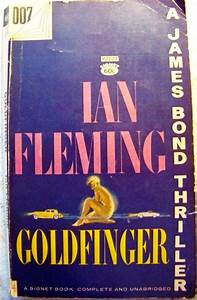
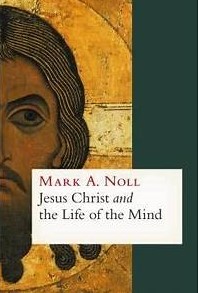
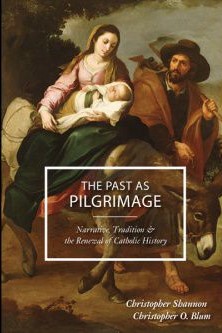

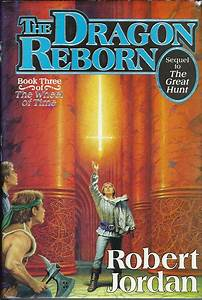
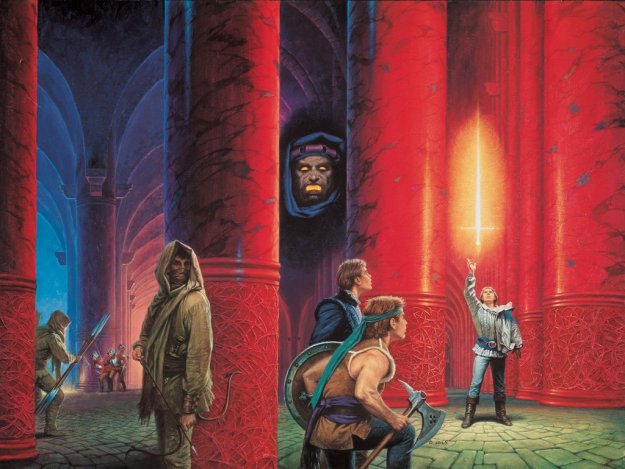
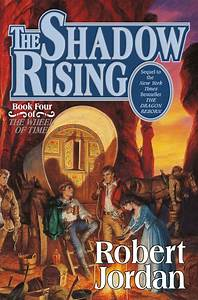
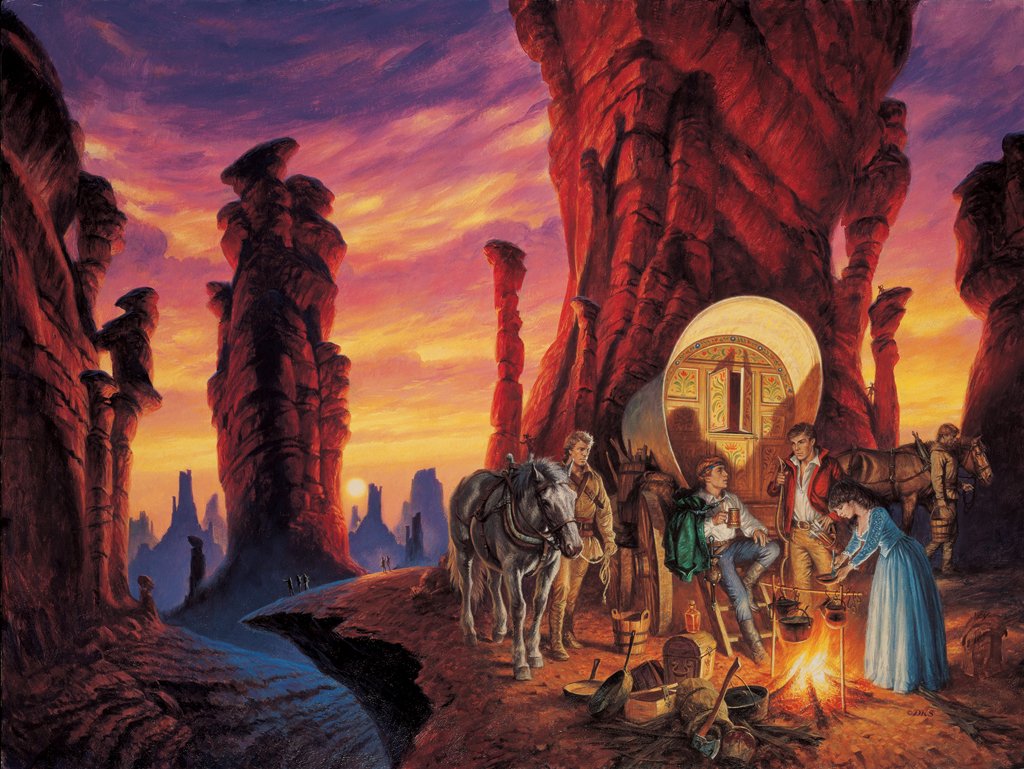
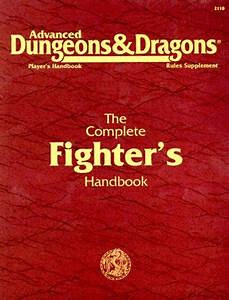
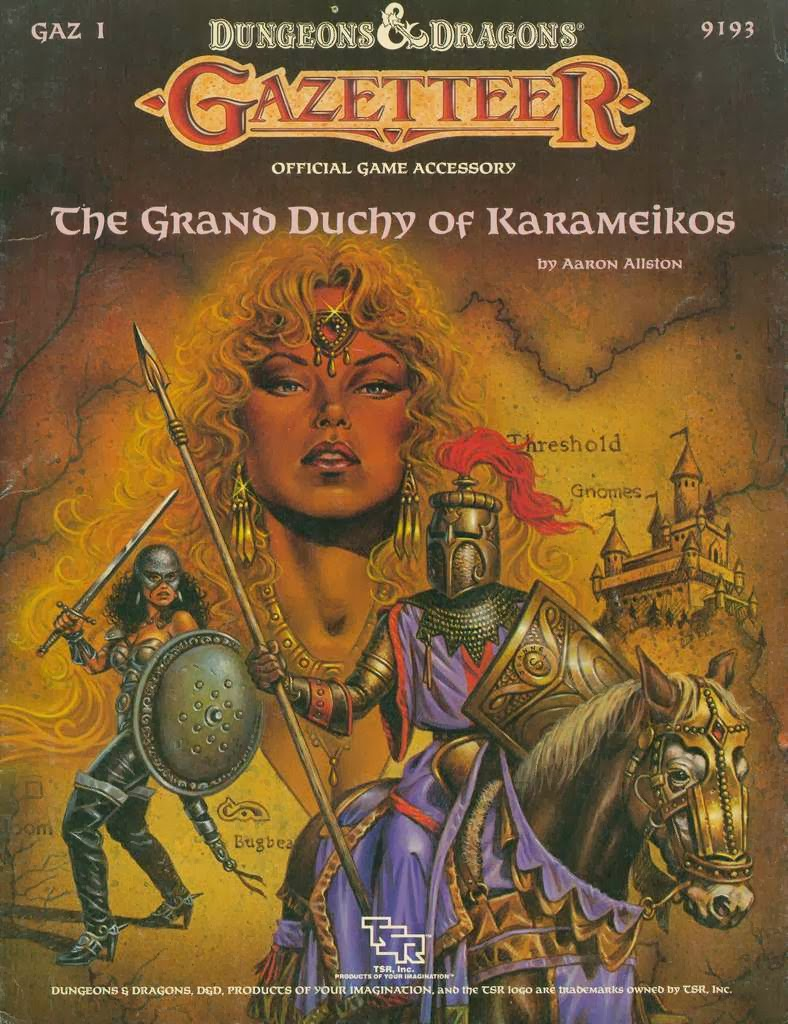
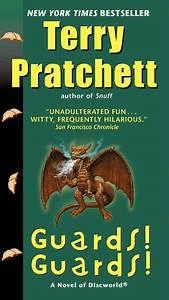
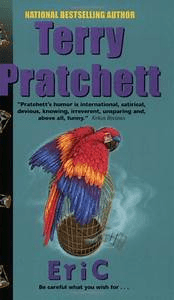
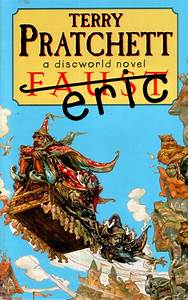



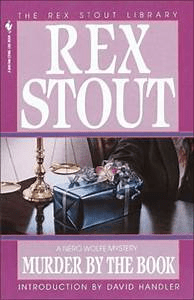


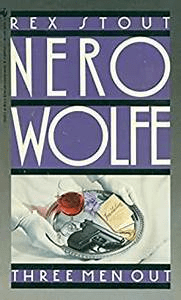

 Redeeming Pandora