Category Archives: Issue 13

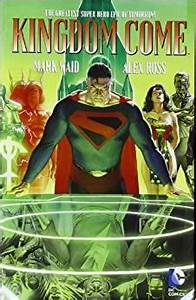
Review: Kingdom Come, Mark Waid (author) and Alex Ross (artist) ⭐⭐⭐+⭐

Christopher Rush

I give the whole thing a tepid 3 stars but 1 bonus star for the Aftermath alone.  In stark contrast to the overly effusive introduction by Elliot S! Maggin (apparently it is really an exclamation mark, not a period, in his name), this is not the Iliad.  It does not teach us any new life lessons or expose groundbreaking, introspective arcana about the human experience.  Nor should we be in awe of its 20-year-oldness: let’s not be surprised in 2014 that comics before the turn of the century had some substance.  And this does have some substance — I’m not saying it’s a bad story.  It’s just not the Iliad.

It has some definite weaknesses: the mediocre treatment of Revelation, the whole Pastor-off-his-faith device (not really original — in fact, McCay really comes off underdeveloped and more of an ironic deus ex machina at the end, which is probably the point, but it wasn’t all that spectacularly delivered), the MLF (Mankind Liberation Front, or something like that, a great idea) goes nowhere, the UN Secretary-General’s name is Wyrmwood (honestly…), too many characters (new and old) don’t allow for much time with any of them beyond the Big Three, Batman is offended by The Gulag (apparently he forgot about Arkham?), and the entire antagonism between humans and metahumans is confusing: Superman can’t be a jerk for both going away and coming back.  Regular humans are never called to the carpet for choosing Magog’s version of heroism: it’s always the fault of the metahumans for being antiheroes.  Yes, there is all the “we have to get our destiny back” sort of talk here and there, but humanity doesn’t have to face responsibility for considering morality, truth, and justice “old hat,” nor is the decision to send a nuclear strike on the metahumans dealt with beyond our requisite sympathy for the burden on Wyrmwood’s shoulders for making such a decision.

Still.  It’s a good series.  Ross’s paintings are fantastic.  Waid does a fine job with concocting a potential future for the heroes, even if we don’t like what happens to Batman or Wonder Woman (or anyone else).  Waid shows a proper respect for the DC universe and its characters, even if the final battle (which does seem to drag on) ends unexpectedly for some characters (and channels its own revised “Did You See the Sunrise?” moments).  Waid gives us some great moments, especially Bruce Wayne’s “so that’s how that feels” scene, and a nod to Victor Buono’s King Tut.

The aftermath, as a I said, is the real highlight of the story — I’m sorry for the fans that didn’t get it in the original issues.  Some may think the final moments of it are corny and out of temper with the rest of the series, and it’s true — but that’s why it works so well: time has past; mourning has made way for rebuilding; humanity is back on its feet and back in the pews at church.  We’re going to make it after all.

This isn’t The Dark Knight Returns or Watchmen (or V for Vendetta) — but it’s not really trying to be.  What makes it so good is not that it tries to redefine truth or justice for the 21st century (as the first two series just mentioned sort of do) — it reminds us the ol’ fashioned definitions are worth re-embracing (even though it could have emphasized that a bit stronger).  We need Superman, Batman, and Wonder Woman together in balance — in balance with regular humans putting on their manpants and doing their part, too.  It could be better, it could treat religion with more respect, but it’s a good story.  It’s no Iliad, but it’s a good story with an even better epilogue.
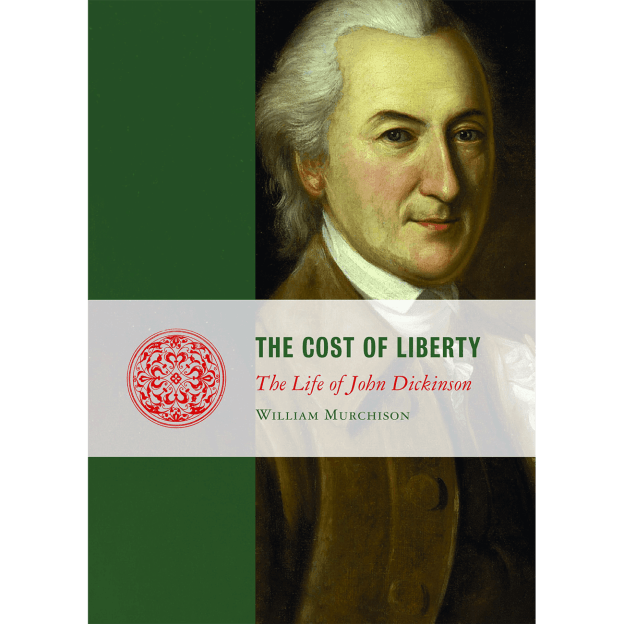
Review: The Cost of Liberty: The Life of John Dickinson, William Murchison ⭐⭐⭐

Christopher Rush

As much of a fan as I am of 1776, I was glad to learn somewhat recently that John Dickinson was a much better person in real life than he is portrayed in the movie, so when I also recently learned a new biography about him had come out, I finagled a copy (as well as the rest in this set from our friends at ISI Books).  I would have been glad to give this another star or two, but ofttimes Murchison gets in the way of one’s enjoyment of the work.  It’s not that his vocabulary is too erudite for us monolingual public school graduates, it’s more often his tone of amused-at-the-entire-goings-on.  Clearly Murchison is lauding Dickinson, as well he should, but far too frequently Murchison detracts from the important work of explicating an unjustly forgotten Founding Father with a demeanor of blasé chuckling (as contradictory as that sounds, it’s the best I’ve been able to conjure for this strange component of an otherwise fine work).  For me another slight deterrent is Murchison’s attitude to 1776 — true, the movie is inaccurate with some things, but Murchison is also somewhat unfair.  By his accounts, the attitude of Dickinson and the Southern Colonies are more akin to their 1775 attitudes, so not the wholly inaccurate perspective Murchison accuses the movie of portraying.  There is more truth to the movie as a representation of the attitudes and conflicts of the Continental Congress of its duration simply compacted into the span of the film than Murchison is willing to credit it, which is disappointing.

I have nothing with which to compare Murchison’s presentation of the other parts of Dickinson’s life beyond a public school education (and, thus, a total absence of knowledge of Dickinson outside of a lifetime of watching 1776), so I did appreciate reading and learning about his pre- and post-Declaration abstinence life, especially his oft ignored Articles of Confederation life (a period of time glossed over if not wholly ignored in most “U.S. History” courses).  That Adams and Jefferson and others came to a calm “reconciliation” with Dickinson was good to learn.  That he was welcome by most and befriended by others (Meade, Rodney, Rush) and useful to Delaware and Pennsylvania for the rest of his days was likewise a reassuring experience to read.

I recommend this book with only the slight misgivings of Murchison’s sometimes failed attempt at what he supposes to be humor — it is, on the whole, a worthwhile read, especially to repair our misunderstanding if not absent-understanding of a truly important historical figure and, more importantly, especially if the final chapter is to be believed, a humble God-fearing man who lived his life in the pursuit of liberty, justice, and truth for all.  Read this book, flaws and all: you will gain for yourself a new hero.

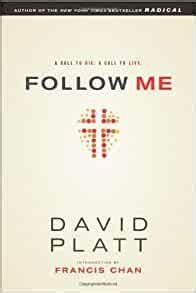
Review: Follow Me: A Call to Die. A Call to Live, David Platt ⭐

Christopher Rush

Ugh.  I promise you I was hoping this was good.  The first chapter wasn’t too shabby … but it continued.  And continued.  And continued.  The longer it goes on, the worse it gets.  Somewhere in there Mr. Platt recites a letter he wrote to his now-wife from “back in the day,” and he complains about his diction, tone, and content.  Guess what, Mr. Platt: it’s just as bad today.  Once again Mr. Platt gives us his version of Christianity, an insular, eisegetical Christianity.  Apparently the only way to be a true, authentic Christian is a) adopt a child from overseas and b) go overseas as a missionary (maybe for a short time, maybe for a long time).  Anyone, especially an American, who tries to be a Christian without going overseas as a missionary is a failure (at best).

But before Mr. Platt gets there, he spends an inordinate amount of time deconstructing the lingo of contemporary American Christianity for no other reason than to pad out this pseudo-book.  According to Mr. Platt, a “church” is a group of Christians, not a building.  I was shattered when I read that.  Also, “accepting Jesus into your heart” is not actually what happens when you “get saved.”  Heavens.  The revelations keep coming.  I don’t know any Christians who don’t know that, but then again I don’t pastor a mega-church.  One suspects if Platt is aware of a lot of misunderstanding concerning these pressing issues, perhaps mega-church pastors should do a better job teaching truth.  Just a suggestion.  Though one wonders when Mr. Platt has any time to actually do any pastoring.

This book is replete with travelogue escapades.  One moment Platt is in Karachi, another he is in Jakarta.  Now he is in Beijing, now Tunisia.  Okay, those may not be the actual places he mentions, but he does have too many stories of his missions trips to several places in Asia, Africa, and probably other continents as well — though certainly no stories of missionary work in America.  That is not genuine Christianity.  When is he actually being a pastor?  Maybe these stories are rare experiences over several years.  Fine.  That does not eliminate the fact he gives us no real substance on how to “Follow Jesus.”  It can’t just be going on overseas missions trips.  Platt derides religion, as if Christianity is not a religion.  Newsflash: Christianity is a religion — unashamedly so!  It’s not “just a relationship.”  If it were, what would be wrong about making Jesus “your personal Lord and Savior” (another pet peeve of Platt’s he spends too much time vainly attempting to refute)?

Toward the end of the book, Platt realizes he needs to start telling his audience what Christianity is after spending a hundred-some pages about what he doesn’t want it to be.  Church life does not seem all that important to Platt, which probably wouldn’t resonate too well with his mega-congregation (though since they are his congregation, they’ll likely lap up whatever he says anyway).  Apparently the church is a docking station for refreshment, a time for palling around for a bit on the way back out to the mission field.  Realizing it might sound like the church isn’t important, Platt tosses out more meaningless ideas such as “do life together as you grow.”  As usual, Platt offers no meaningful explanations for anything he says.  He wants us simultaneously to abhor Christian jargon and passively accept it as if it is beyond explanation.  Platt gives us example after example of “true” Christians who go overseas (the only mark of authenticity) and transform their businesses and lives … but then he says “not every Christian is supposed to be like this.”  Except all his examples are like this!

This book is a mess.  Platt even goes so far as to say the Disciples were not the ones who spread the gospel to other lands: generic no-name Christians were!  The support he gives for this is … well, none.  Likely because there is none.  He doesn’t even stop to consider the implications of his declaration: if we are to “follow Jesus” like the Disciples did, we would be failures since the Disciples, according to Platt, didn’t do what they were supposed to do!  Plus, he totally gets the “witnesses” thing wrong.  Christians today are not “witnesses” the way the Disciples were — we didn’t see Jesus do what He did.  Platt doesn’t understand this.  He assumes there is no difference between what the Disciples did and what we should do (other than their apparent failure at spreading the gospel).

Platt is in love with extraneous endnotes — next time, just put the Bible verse in parentheses in-text, please.  Though, most of the time Platt feels like his paraphrases are more worth reading than the actual Bible verses.  Perhaps that’s why so few Christians know how to do Christianity “the right way.”  He even cites verses that refute what he is trying to prove, but he wheedles out of it with more blather.  Surprising no one (but the author), Platt also complains about how he has received questions from readers of Schmadical (a better title of his last output) asking him about how to “do” Christianity correctly!  Platt seems to have forgotten he prescribed a 5-part checklist on how to “do” Christianity correctly.  Now we are to add “go overseas as a missionary” to the list.

Correct me if I’m wrong, but I don’t think Platt ever says anything about personal Bible study, committed prayer life, financial generosity, and other things.  I could be wrong, though.  Are we to plant churches, train leaders, disciple, translate languages?  (Platt never says one word about spending time learning foreign languages or cultures — apparently we are only to go overseas where we can be understood from moment one.)  Apparently not.  Just go.  Rub shoulders.  Tell people about Jesus being Lord and Savior (certainly not their “personal” Lord and Savior) and make sure they don’t pray a prayer — that would be wholly unscriptural if they pray a prayer.  Just entrust them to God and go back home.  Then go out to another missions trip.  Tell people about what you witnessed … of Jesus saving you, apparently.

I’m sorry, America.  David Platt will not accept anyone being a missionary to you.  You don’t count, apparently.  If only David Platt had written a book about what it means to follow Jesus.  That might be worth reading.

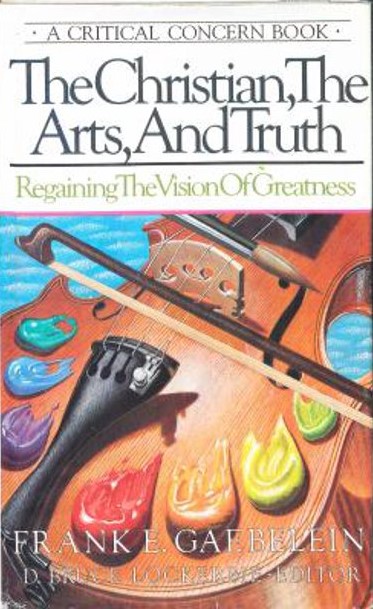
Review: The Christian, the Arts, and Truth: Regaining the Vision of Greatness, Frank E. Gabelein ⭐⭐⭐⭐

Christopher Rush

I wanted to give this 5 stars, since I agree with so much of it, but some structural deficiencies and thinness in some of the later essays warrants this at least a strong 4 stars.  Bruce Lockerbie is partly to blame: after a fine biographical sketch of Frank Gaebelein, he lets us know his disappointment this is not the book Gaebelein wanted to write.  Gaebelein wanted to write a cohesive, extensive book about Christianity and the Arts (apparently), but the twilight of his life prevented it.  Instead, we have a collection of essays apparently gathered from throughout Gaebelein’s life.  That wouldn’t have been so bad if 1) Lockerbie hadn’t made such a big deal about how this book wasn’t what Gaebelein wanted (setting us up for concomitant disappointment) and 2) Lockerbie had bothered to indicate where, when, and why these essays originally sprang into existence.  He mentions the origin of two or three of them but not all, which seems a bit of a failure on his editorial part.  These are small irritants; the content of what Gaebelein has written is mostly impressive and refreshing work.

It has been sitting on my shelf for some time (as many thousands of works have been doing), but the time arrived when I needed to read it, mainly because I am soon speaking about this very topic (Christians and the Arts) [see the address included earlier in this issue] and because I needed to read something I knew would be good, as my literary diet has been mostly disappointing New 52 releases [see next issue] and even-more-so disappointing “Christian” works [some of which are in this very collection of reviews].  Gaebelein delivers trenchant, timeless (mostly — one gets the feeling he is writing some of his disparaging remarks about the plight of “contemporary” Christian music in Keith Green’s direction) thoughts about Arts, Beauty, Truth — the usual worthwhile material.  He does a pretty good job of defining these “controversial” themes and defending his positions, all the while reminding us how thoroughly facile living a Bible-centric life is (including, as it does, a life of hard work).

Some may scoff at his upbringing and “breaks” he had in life as if they preclude one from attempting to raise one’s family to believe what is true the way he did: delighting and immersing oneself and one’s loved ones in the “things that matter” and not time-wasting nonsense.  Gaebelein gives us no room for excuses for not living an Art-focused, Beauty-driven, Truth-immersed, Bible-centered life.  Don’t waste time lamenting “Oh, what might have been had Gaebelein been able to write something better than this!”  This collection is quite stupendous.  In the collection it remains (for me to read again, perhaps, but definitely for my children to read someday soonish).

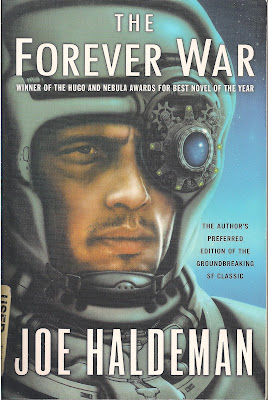
Review: The Forever War, Joe Haldeman ⭐⭐⭐

Christopher Rush

I was going to give this only a couple of stars, but the ending alone (primarily the epilogue and what is implied) deserves another star itself.  I know this is a beloved classic, and far be it from me to disparage a classic, but I didn’t really like this all that much, at least most of it.  After a smidgeon of pseudo-research, I learn I have read the abridged early version, not as definitive or swell as the finalized authoritative version, so I have no qualms giving this copy away.  Perhaps some day I will return to this universe and read the proper version and its sequels.

Being me, the language for the first half of the work was off-putting, enough to make this a 3-star book instead of a 4-star book.  I get what it’s about, especially after my smidgeon of pseudo-research, but still.  So it’s a Vietnam story not a space story after all.  I suppose that could somewhat assuage the Del Ray-like limited science fiction vision of the future, but the absence of futuristic vision was disappointing, especially after Haldeman did such an intense job cramming real science down our throats for much of the work.  That was another source of my reaction.  I’m all for science (sort of), but what I thought was supposed to be a novel seems more like Haldeman trying to show off his science chops — I like Moby-Dick more than most people, but I didn’t want to read Moby-Dick in Space when I picked up The Forever War.  Knowing as much science and its progress as Haldeman did, especially knowing Star Trek like he did, he should have at least created computers and data processing in the 22nd century to be less clunky than what is here.

Small points, perhaps, but then one never knows about these things.  The sections I did enjoy were the brief moments of happiness between Mandella and Marygay and, as noted above, the epilogue.  I suspect those are the bits many fans enjoy as well, but what do I know.  The second half is generally much better than the first half, even with the heartbreaking separation in the middle — perhaps it’s Mandella’s resignation and almost accidental maturity (or just resignation) that makes it more enjoyable (like Jack Shepherd’s attitude, finally, in season 6 of Lost).  The war itself and its explanation was a bit obvious, especially Haldeman’s message, and that combined with his treatment of what Earth becomes in the meanwhile seemed forced, but knowing as I now do that he has more to say in the unabridged version is a small comfort.  It’s a good book.  It didn’t blow me away, and it did frustrate me at times, but that tells you more about me than the book.  You’ll probably really like it.

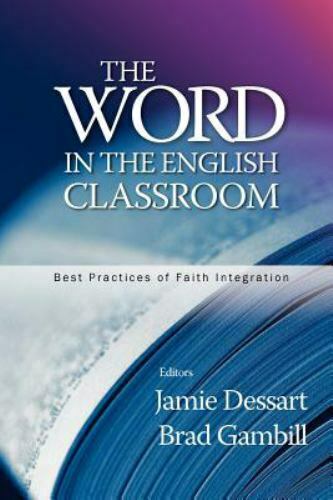
Review: The Word in the English Classroom: Best Practices of Faith Integration, eds. Jamie Dessart and Brad Gambill ⭐

Christopher Rush

Caveat: I have nothing positive to say about this book.  Who is the audience for this work?  I truly suspect the intended audience was the CVs of the contributors, especially the supposed editors.  This is certainly one of the worst books I have ever read.  I thought about giving it 0 stars, but I didn’t want to give John Piper and David Platt comfort one book exists that is worse than theirs.  The only good anyone can get from this (other than “look, prospective employee, I published an essay in a book!  It’s on my CV!”) is to write down the names of the contributors and warn any loved ones not to take their classes ever.  That may sound harsh, but consider it just saving the registrars the trouble of having to drop them after they want to drop their classes anyway.  I truly don’t mean to sound libelous, but I read every single word of these essays and they did not provide what they promised.  If these are the “best practices of faith integration,” we are all in serious, grave, deep trouble.

The first few essays treat “faith integration” more like “be sure to make room in your lukewarm Christianity for secular writings, because they are good stuff and you have no right not to appreciate them.”  One of the early essays goes so far as to decry being dogmatic about one’s faith, especially in the classroom!  Several essays throughout the collection warn the prospective teacher against being authoritative, as if all contributions are points of view are valid.  In other words, all faiths are equal, effectively, and if your version of Christianity is not flexible enough to applaud Dickinson, Faulkner, Darwin, Marx (multiple authors casually mention their use of feminist and Marxist criticism as if they are truly the ways to read works!), then your “Christianity” needs to be integrated with more faith — faith in the “don’t judge ever” interpretation of Matthew 7, apparently.

This is indeed one of the most disappointing books I have ever read.  One contributor at the end even goes so far as to admit she never really integrated her faith overtly into her classroom experience!  How does that help us?  Several contributors say effectively “since we are Christian college professors at Christian schools, we integrate our faith in the English classroom by reading Lewis and O’Connor.”  Wow.  “Brilliant strategy — thanks, Napoleon!”

The essay about using R-rated movies in courses likewise embarrasses throughout: since we are all basically inured to “adult content,” it’s okay to get the audience thinking, just never correct any of their statements — conversation is more important than truth.  Now, the essay doesn’t say that (none of them outrightly say that), but that is the impression the attentive reader draws from these exercises in puerility.  I thought of many more scathing remarks to make about these while I was reading them, but, fortunately, my mind has forgotten them.  If you are looking for a book on how to integrate Christian faith into the English classroom, a more useful book than this might be the Advanced Dungeons and Dragons 2nd Edition Player’s Handbook.  The alternatives for “integrating one’s faith” presented in this present book are 1) “read Lewis and O’Connor” or 2) “water down your faith so you can delight in Whitman, Faulkner, and everyone who disagrees with Christianity — don’t be dogmatic or stodgy! Get with the times!”  No thanks.

I was truly embarrassed by this book.  It made me sad to read this is what is passing for “best integration practices” at many colleges today.

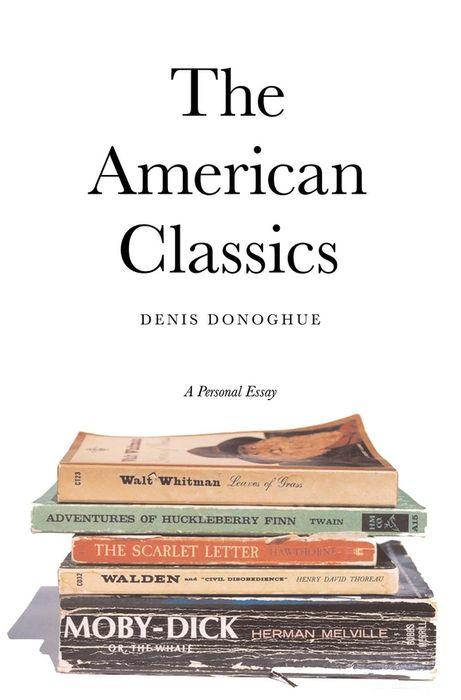
Review: The American Classics: A Personal Essay, Denis Donoghue ⭐

Christopher Rush

I’d be willing to give this 1.5 stars, out of the wealthspring of mine own munificence, but my level of irritation is forcing me to round it down.  With possibly not all due respect to Mr. Donoghue, I can’t perceive this book as one worth writing.  True, most of them aren’t, but this one proves it from the beginning.  What purports to be a personal essay about Mr. Donoghue’s personal experience with the five American classics pictured on the cover (Huck Finn, Moby-Dick, Walden, Scarlet Letter, Leaves of Grass) is, in actuality, a mildly deconstructionist survey of the critics and thinkers that have “informed” (oh, that word) Mr. Donoghue throughout his many decades as an expatriate Irish smartypants (perhaps he’s not an expatriate, and perhaps “smartypants” is inaccurate).  And while I am on record as preferring by far authorial voices with authority (“this is how it is!” instead of “I’m only trying to start a conversation”), Mr. Donoghue’s smugness overrides his authority — which is likely a wholly misrepresentative thing to say, as Mr. Donoghue’s smugness only appears rarely.  Yet when it appears, it appears in full throttle, often in the form of wholly irrelevant attacks against President Bush (43).

Another reason my irritation prevents me from giving Mr. Donoghue the whole 1.5 stars is his not-so-covert hypocrisy in the chapter purportedly about Moby-Dick.  After excoriating the 1940s critics who apparently read Moby-Dick incorrectly, blinded as they were by their culture and world circumstances, Mr. Donoghue follows up with asking us “how are we to read Moby-Dick today in light of the post-9/11 world?” (or words to that effect, which also include a vitriolic epithet toward President Bush not-so-subtly associating him with despots).  If the “right” way to read Moby-Dick is not to be limited by one’s time, why would being in a “post-9/11 world” matter?

Donoghue, like Socrates, rarely gives us the “right” way to read things (too high praise for him, even in derogation).  He is willing to drop names that should have delighted me (Trilling, Eliot), yet he does so in a way of dismissal that borders on “I just read about them on the Internets, so I know all about them.”  Mr. Donoghue does casually mention toward the end of the book he met T.S. Eliot, but he gives no indication it was a positive memory.  Further, Donoghue demonstrates an inability to stick to the point.  The thread of Emerson runs throughout the work, and while that is not necessarily a problem, he states the chapters are about different works.  The Moby-Dick chapter is sometimes about Moby-Dick, sometimes about other things by Melville, sometimes about Emerson.  The Scarlet Letter chapter is mostly about other things Hawthorne wrote, rarely about Scarlet Letter, and never in a way that makes us feel like Donoghue “gets it.”  Even the Moby-Dick chapter makes us feel like Donoghue, and potentially the coterie of critics Donoghue often cites (usually with favor but occasionally to correct them), didn’t even understand what Moby-Dick was about.  The Walden chapter is more often about other Thoreau works, and while it is more pertinent to speak of Emerson here, Emerson tends to occlude the purpose of the chapter.  And so on.

What was, then, the purpose?  To explicate these classics?  Nope.  To deconstruct them as not worthy of being classics?  Perhaps.  If so, Donoghue’s discursiveness prevents us from knowing.  To highlight the “crimes” of President Bush?  At times.  (One wonders what Mr. Donoghue has to say about the present incumbent.)  To point to the critics whose opinions we should share?  I can’t honestly tell.  Then, having waded through it all, we learn the sinister secret we suspected all along: many of these chapters previously appeared in discrete magazines over the years.  Yes, Mr. Donoghue is recycling old work to make money.  And while that is certainly his right and perhaps something I might try to do myself some day, it only gives us one more reason to ignore pretty much everything he has said.  What’s the 1 star for, then?  Because he does give some insights worth pondering (mainly from the quotations of other critics), and reading such a deconstructionist load of piffle encourages me to read these classics again (or for the first time, in the cases of Walden and Leaves of Grass; I haven’t read them in their entirety yet).  Oh, well.  It would have been great if this were a good book.

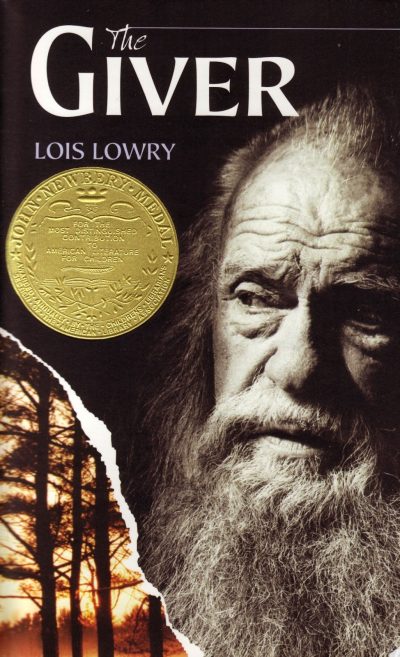
Review: The Giver, Lois Lowry ⭐⭐

Christopher Rush

Umm … nah.  To be fair, though, I suspect if I read it for the first time as an early teenager, without much reading experience (not that I have stellar experience now), and I only had, say, Bridge to Terebithia to compare to this, I would possibly have thought this a mighty fine story.  Now, though, it reads like a slipshod, hastily slap-dashed ramshackle of a half-story.  Lowry presents us with partially developed ideas — and many of them are worth engaging, definitely, but she doesn’t engage them, either through our “hero” or in commentary form.  Where is the confrontation between Jonas and his father after seeing the “release” video?  Where is the payoff for Jonas no longer taking his morning pills?  And are we completely sure the “best” plan is “run away”?  Have they truly thought out all the potential ways in which they can improve the society? especially since Jonas only has some of the memories and the Giver clearly still has a great deal of them.  The entire “giver/receiver” process is rather suspect as well.  Allowing for the otherwise-incredible notion the Giver is the repository of all human knowledge and memory of all time before the instatement of this society apparently the world over, which is a rather big allowance, that one Giver could majickally transfer a memory or portion of a memory to another and then wholly forget the memory (except in “wisps”) is rather a strain of credulity, even for this tale.  Now the ending. If we could, as Dave Lister has suggested elsewhen, turn the dial to Reality FM for a moment?  The ending is pure laziness on the part of Ms. Lowry.  Ambiguity is one thing.  Modernist Uncertainty/Subjectivity is another.  The ending of The Giver, though, is sheer laziness.  Nothing more needs be said.

This book has some fine ideas.  While it begins to present them well, it feels like it gives up rather quickly (and honors the characters who have given up and run away, which seems like a poor trait to encourage in a teenage audience).  I suspect the youth who enjoyed it “back in the day” might find on reading it again now it just does not hold up well, even to its most stalwart defender (likely based solely on 20-some-year-old nostalgia).  On the other hand, if one wants to read a classic “children’s” book that definitely holds up well, re-read The Westing Game. That certainly stands the test of time (unlike The Giver).

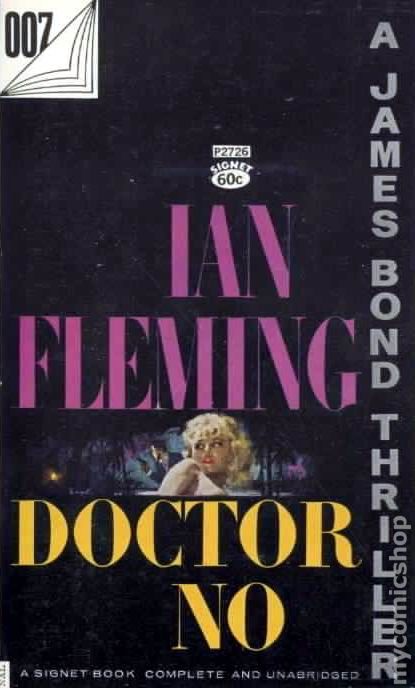
Review: Doctor No, Ian Fleming ⭐⭐⭐

Christopher Rush

I really don’t understand the backlash against this book.  Is Bond racist in this book?  No, he isn’t.  Bond doesn’t shoot badguys because they are “Chinese negroes” (as Fleming has other characters say), he shoots them because they are trying to kill him and he wants to stay alive.  He never says “because these people are of this race, I don’t like them.”  Similarly, he is not misogynistic toward “Honey” Ryder.  Yes, he is a little patronizing to her at the beginning, but his initial impressions of her are accurate: she is a young girl (of 20) with no experience of “civilization” beyond being assaulted by a drunken guy once, who has spent most of her life on her own adapting to Nature.  His comments about her broken nose are a tad overboard at first, but they go away soon, especially once she proves her strength toward the end.  Let’s remember, too, it’s Honey who is in charge and aggressive at the end, not Bond.  He never forces himself on her.  He tries to protect her.  He tries to protect Quarrel — he cares about him.  Bond is perhaps at his most human in this book, feeling the anger at the losses he encounters more than in the other books so far.  If the antagonistic readers should be mad at anyone, they should be mad at Ian Fleming for Honey’s real name and the attitudes of the other characters toward the other races, certainly not at Bond.  Bond even admits his failings and feels like apologizing to M a couple of times.  Yes, Fleming does get a bit heavy-handed with the prose at times, but some of the dramatic scenes (okay, there are two) are rather intense and engaging.  And there’s actually a real epilogue, not just a stoppage of action.  So what’s the deal, people?  Why the antagonism?

Two from Neil Gaiman

Christopher Rush

Murder Mysteries ⭐⭐

Not Mr. Gaiman’s best work, that’s for sure, but Murder Mysteries does have some interesting points.  His imagining (though this may also be more the brilliance of P. Craig Russell) of the angels’ home was a high point, so to speak, and the mysterious nature/history of the narrator of the story-within-the-story was mildly intriguing.  Other than that, though, these stories fell somewhat flat.  “Mystery” is not “ambiguity.”  Some stories/authors can generate ambiguity that adds to the overall effect of the work, and we all know Gaiman is capable of that, but the ambiguity here is more akin to disinterest.  We are left with a narrator as unattached as possible to the story he has heard, the terrible events he may or may not be connected to, and even his own fate — and we don’t really care, either.  On top of that, Gaiman wants us to feel sorry for Lucifer, consider God a sadistic jerk who does unfair things on purpose to make Lucifer fall, and believe Love somehow magically creates Jealousy just because, and this story and its characters don’t achieve those aims.  I suspect Mr. Gaiman used up all his brilliance for 2002 on American Gods, which is certainly a tough act to follow anyway.  If this is a low point in Mr. Gaiman’s oeuvre, that’s not such a bad thing (especially if you can overlook the heresy with only a disconsolate grimace).

Creatures of the Night ⭐⭐⭐

I’m not usually a fan of dark and mysterious and spooky (if “not usually” means “never”), but this was a surprisingly fine read.  Tepid praise, perhaps, but I prefer to consider it more effusive than tepid, considering my aforementioned distaste for dark and mysterious.  Despite this, as contradictory as it may be, I usually make exceptions for Neil Gaiman, who rarely disappoints (only a smidge of what I’ve read of Sandman was disappointing, and Murder Mysteries fell a bit flat), and while I can’t nudge this into Poe-like literature, it is macabre to be sure yet moralistic enough to escape mere supernatural fetishism.  That’s a good sentence.  You have my permission to start bandying it about ’round the water cooler.

Gaiman is all kinds of genius, and more importantly he has respect for Art.  That protects most things he does from failing (not everything, but he’s okay with that, and we should be, too), and it protects this pair of weird tales.  The first story achieves the kind of successful ambiguity lacking in Murder Mysteries: we don’t know what’s going to happen, but we are actually interested and hopeful (though the story does not give us much room for optimism).  The second is not quite as scary as the first, and it is a bit more typical than uniquely-Gaiman (since he’s his own subculture of creativity), but one gets the impression it’s the story he wanted to write along these lines, and he’s glad he’s done it and we can be, too.  As I said, a surprisingly fine read (not that we should ever be surprised by Mr. Gaiman).