Category Archives: Issue 11

Let Me Be Frank about Frank: Or, It’s Nice to be Nice to the Nice

Christopher Rush

TV’s Franks

As we continue to wend our way down the long and winding road to completion of this journey, it’s about time we paid tribute to some of my favorite loveable TV villains: TV’s Frank from Mystery Science Theater 3000 and Frank Burns from M*A*S*H.  Admittedly, these two rapscallions aren’t always “nice,” in that one is trying to help his boss take over the world by unleashing the worst movie ever made upon an unsuspecting populace and the other is a somewhat hypocritical hypochondriac whose parsimony is surpassed only by his pedantry.  Despite this, these two have given us some unforgettable and highly enjoyable moments from two of TV’s best shows of all time, and it’s time we be nice to them for all they’ve given us.

Push the Button, Frank

TV’s Frank is that remarkable mixture of loveable sidekick and cuddly antagonist few shows ever get right (though many try).  It’s hard at times to remember Dr. Clayton Forrester and TV’s Frank are the villains of the show, considering the more time we spend with them the more we enjoy having them around.  I’ve always thought the better episodes are the ones that have a lot of Dr. Forrester and Frank in them, even if they are being unusually cruel (“Deep hurting!” from experiment #410 Hercules Against the Moon Men) or plotting to get rid of Mike (#512 Mitchell).  Though he’s definitely a sidekick or lackey (dressed as he usually is in a chauffeur outfit) and not a mad scientist (what can one expect from a former Arby’s employee with the nickname “Zeppo”?), Frank holds his own with Dr. F, despite being killed several times (always to be resurrected no later than the next episode) and comes to befriend Joel, Mike, and the ’bots before being assumed to Second-Banana Heaven (though he soon leaves for new adventures).

As a primarily supportive character, even as an antagonist, Frank doesn’t always get a lot of lines, but nearly every episode has Frank give us something memorable (at least something worth the while of watching it) during his tenure in seasons 2 through 6.  Whether he is apathetic toward Dr. F (such as during Clay’s supervillain conference at the end of #504 Secret Agent Super Dragon) or a willing supporter of his schemes (such as cheering on “Proposition: Deep 13” in #621, The Beast of Yucca Flats), Frank provides the gooey, nougatey center the show didn’t have before he arrived.

Is Frank my favorite MST3K character?  It’s hard to say.  Just as I can’t really choose which Collective Soul song is my favorite (which is rather akin to trying to choose which was my favorite slice of pizza I’ve had in my lifetime or which was my favorite DQP with cheese), I can’t really choose which MST3K character is my favorite.  It possibly depends on which episode I am watching at the time.  Some people can choose definitively between Crow and Tom — I’m not one of those people.  I certainly lean more toward Joel than Mike, but that’s more about the movies themselves, not Mike as a character/person.  I prefer Frank to Larry and the Sci-Fi channel episodes, but that isn’t saying all that much.  Every character is necessary, at least in seasons 2-7.  Even Magic Voice.  Similarly, you can’t separate Clayton and Frank — they are a unit.  Frank’s indispensableness is clear even to Dr. Forrester, as evidenced by his song of farewell to Frank after Frank is taken away at the end of season 6.  Things aren’t the same anymore for anyone, and the show itself is transformed in drastic ways for season 7 and even more so for the Sci-Fi channel seasons 8-10.

Though a litany of some of my favorite Frank moments wouldn’t mean much to you if you haven’t seen the show, chances are you probably aren’t reading this even you aren’t either familiar with it or interested in reading whatever I say anyway, so here are some of my favorite Frank moments.  As noted above, since Frank is a supporting character early on, it takes a while for him to be featured more regularly.  The later seasons, when the show spends more time with the Mads, are sometimes more enjoyable to watch because of the developed nature of the characters by that point.  For Frank, his greatness often comes in his delivery: the way he says his lines are often central to his magic.  His line “he’s got to want to change!” is perhaps the best example of this.  His emphasis on “want” is pure gold.  I have already mentioned another of my favorite Frank moments: at the end of Secret Agent Super Dragon, Clay hosts a “how to be a supervillain” conference, presumably for Joel and the ’bots, which doesn’t make much sense considering he is trying to control them, not give them insider tips on how he does what he does.  The gem, though, is Frank’s total lack of interest in the conferences, sleeping through it, then reading his already-prepared questions in as apathetic a voice as possible, including the stage direction.  He is supposed to read his question eagerly, but he says the word “eagerly” along with everything else without any zeal or eagerness at all.  Though this description does not do the moment justice, it is a beautiful moment after one of the more enjoyable episodes in the series.

The times Clay and Frank have to do what Joel and ’bots do are also great moments.  When Clay and Frank try to show them it’s not hard to make jokes through bad movies by sampling a few moments of #323, The Castle of Fu Manchu, Frank comes to the realization it would be a lot easier to do it if the movies weren’t so bad, which totally dispels Clay’s victory over Joel and the ’bots, giving them new energy to continue their lives out in space.  The other similar occurrence, when the magnetic storm sends them into a “Mirror, Mirror”-like parallel world in #611, The Last of the Wild Horses, allows us to see Dr. Forrester and TV’s Frank in the movie theater riffing on the movie for an entire segment, as well as doing some call-backs to memorable earlier episodes’ moments. I wish the entire episode was like that, but it’s only the first twenty minutes or so.

Frank gets to sing some of the better songs during the series, but certainly his best is “Nummy Muffin Coocol Butter” from #605, Colossus and the Headhunters.  Nummy Muffin Coocol Butter is an engineered puppy created by the Mads to overpower the world through cuteness, but Frank refuses to give him up and laments his loss exceedingly throughout the episode, culminating in this great song.  At the end of the episode, the Mads are thwarted by their plans once again, since Mike returns Nummy to them and they can do nothing but be enamored of the cutest pet in the world.  It’s hard not to love TV’s Frank.

Thank you, TV’s Frank, for teaching us how to laugh about love.  Again.

You Tell ’em, Ferret Face

Whereas TV’s Frank had the opportunity to grow and do diverse things (such as both support Dr. Forrester and be antagonist in different episodes), Frank Burns on M*A*S*H was for the most part a monolithic antagonist to the “good guys” on the show, Hawkeye, Trapper, and B.J, and yet he, too, solidified the show for most of his tenure.  Though often the receiving end of jabs, jokes, and not-always-good-natured ribbing, Frank Burns regularly gives us priceless lines delivered in as brilliant a way as possible.  Larry Linville took that character to the mountain; it’s no wonder he was highly regarded by his castmates.

As with many of the characters in the first couple of seasons, it took some time for Frank (and the writers) to find his best niche.  The many episodes of Frank in command reveal a mixed bag of personality traits, best summed up himself by his desire not “to be derelict in [his] officiousness” (“Henry in Love”). Season one is its own entity throughout, considering the revisions made later (Hawkeye from Maine instead of Vermont, the number and ages of Henry’s children, Radar’s personality), and so Frank’s perniciousness in “Henry, Please Come Home” feels out of character even for Frank in retrospect (especially the use of an armed sergeant to confiscate the ’still).  This also accounts for the contradiction of Frank “never knocking a team [he’s] on” and betting against the 4077th in “Requiem for a Lightweight.”  Frank does truly have a mean streak in him: he is unnecessarily cruel to Ginger in “Major Fred C. Dobbs,” and he gets downright scary in “The Bus.”  A complex and contradictory man, Frank Burns is at his best both when he knows he is right and when he is at his most vulnerable.

His contradictory nature is apparent from the beginning, since he claims to be standing for morality and American decency, yet at the same time engages in an extra-marital affair with Margaret.  His bedside manner, likewise, leaves a great deal to be desired for a follower of the Hippocratic Oath (“Deal Me Out,” “It Happened One Night”).  One of his more intriguing complications is his ambivalent relationship with Klinger: Frank usually seems to want Klinger out of the army, but he is never willing to sign the section 8 release form.  He gets close on one of his birthdays, but he never follows through with evicting Klinger from the army, even going as far as threatening to promote him if he continued dressing as a woman (“Welcome to Korea”).

Another enjoyable aspect of his contradictory nature is his infatuation with all the branches of the military.  His several naval and Air Force comments are so ubiquitous even Radar notices (“Are you sure you’re in the right branch of the service?” he asks in “Henry, Please Come Home”).  They are too numerous to list here, but one of my favorites is his plan to put the camp on pontoons and head for the high seas (“A Smattering of Intelligence” — his arm motion makes it perfect, even though Hawkeye and Trapper mock it).

Perhaps his most bizarre contradiction is the often-forgotten fact Frank is primarily responsible for the 4077th getting their Officers Club.  He arranged it with General Mitchell.  Frank, the alcohol-banning, “strength through obedience,” “‘m’ stands for ‘mobile,’” “this was a great war ’til you guys showed up” hypochondriac arranged for an Officers Club.  He is an enigma, that one.

When Frank knows he is right, he gives us some of his best lines: “There’s a war on, and we’ve no time for violence!” (“Deal Me Out”); “My morale’s fine; I love it here” (“Dear Peggy”); “Unless we all conform, unless we obey orders, unless we follow our leaders blindly, there is no possible way we can remain free” (“The Novocaine Mutiny”; this episode gives us many of my favorite Frank lines: “It was one of those days that, more than most, reminds us that war, no matter how much we may enjoy it, is no strawberry festival”); and, of course, “Individuality’s fine, as long as we all do it together” (“George”).  I could go on and on.  “It’s nice to be nice to the nice” is a classic.  Another gem is “I want fox holes: there, there, there, and there — each smartly dug” (“There is Nothing Like a Nurse”).  The words by themselves aren’t anything, but Larry Linville’s intonation turns it into pure gold.

One of the best self-assured Frank moments is at the beginning of “The Incubator,” when he refuses to scold Hawk and Trap: “Whatever happened to those two bright-eyed and bushy-tailed young surgeons I used to know?”  Some of his better lines come when he’s angry (or bizarrely responding to Hawk or Trap or BJ’s cordial greetings: “that’s for me to know and you to find out,” “go peddle your fish,” “oh go practice your putts,” “that strikes me funny, not” — and, let’s not forget “nertz to you” and “phooey to youey”), but when Frank knows he is right, we all win (except for Klinger when he makes him cry).

Vulnerable Frank is another impressive aspect to his character.  We see it with some regularity, and when we do, Frank is nearly admirable.  Frank’s attempt at sangfroid in “The Army-Navy Game,” just before he faints, is an early such moment, showing us Frank is not quite the leadership material he wants us to think he is.  Though he cowers throughout “The Sniper,” Frank shows us some willingness to be “a real man” and face the danger with his gun, though he doesn’t get very far — it’s still a good scene for him.  Frank dealing with his hernia in “As You Were” and resigning not to write the report against George in “George” are other great facets to Frank’s personality.  “The Novocaine Mutiny” is a great Frank episode filled with great lines and emotional scenes, both for and against him, but the ending always leaves me feeling sorry for Frank.  Despite trying to get Hawkeye court martialed, Frank’s utter look of isolation and being totally unwelcome at their poker game as he shrinks back out of the room gets me every time.

When he gets sick, naturally we see a very confused and vulnerable Frank: “Carry On, Hawkeye,” “As You Were,” and the greatness of “Soldier of the Month”: not only do I flinch every time Frank’s head hits the furniture when he faints, but also I have to recite with him “my friend, my comrade, my li-i-i-ittle soldier.”

Vulnerable Frank is prolonged throughout season 5, which warrants its own essay, no doubt.  The combination of Colonel Potter being openly hostile to Frank by the end of season 4 and the loss of Margaret’s intimacy starting in “Margaret’s Engagement” at the beginning of season 5 propels Frank down a spiral culminating with his final breakdown, promotion, and transfer (off screen in “Fade Out, Fade In,” the opener of season 6).  Frank experiences his initial breakdown in “Margaret’s Engagement,” culminating in detaining the Korean family and holding Potter, Hawkeye, and BJ at gunpoint.  When Radar rescues them with the phone call to Frank’s mom, we get to see what I think is the real Frank Burns: the genuinely vulnerable guy who grew up basically alone and has no friends.  His brother gave him the nickname “Ferret Face.”  Even his dad pretended to like him.  We get glimpses of this side of Frank earlier, true, especially in his great conversation with Trapper in season 3’s “O.R.,” but the loss of Margaret (and command back in season 4) sent him over the edge.  He recovers somewhat, as evidenced by his great jab at Margaret at the end of the episode, but as Margaret says later in the season in “38 Across,” his marbles are already shaken loose, beyond repair.

As evidenced by his final scenes in “Margaret’s Marriage,” I truly think Frank really cared for Margaret — not as “Hot Lips” or a mere physical plaything during a time of war, but as a genuine companion.  She truly was his “snug harbor.”  His litany of things they do together in “Bombed” is Frank’s genuine plea for their camaraderie, coupled by their calm spring day together in “Springtime.”  Certainly this is a point of tension for Margaret, as evidenced by her remarks in “Hot Lips and Empty Arms” and her understandably irate reaction to his phone call to his wife in “Mail Call … Again.”  But as she realizes somewhat too late (“Fade Out, Fade In”), Frank wasn’t all that bad.

Despite this impressive humanity in Frank, he is mostly the villain in a show never running out of antagonists: the army with a big “A,” the enemy, disease, bombs, bullets, the weather, boredom, and more.  Frank embodies, unfortunately, unthinking conservative right-wing politics (with a dollop of hypocritical Christianity).  It is clear from the beginning of the series his monolithic flag-waving is in stark contrast to the protagonist views of Hawkeye and Trapper: life and health are more important than national boundaries and patriotism.  I don’t wholly disagree with them, but the older I get the more I agree with Frank on multiple things (not everything, of course).

Sometimes Frank is right, even when everything in the episode disagrees with him.  That deep into the Korean War, it is too late for pacifism.  Why not fight to win?  Certainly peace is preferable to war in philosophical, general human culture terms: clearly I’m not joining the army anytime soon — but Frank is right about either committing to war or exiting altogether.  Why should they really laugh at an enemy bomber attacking them every day?  This is war — blast Charlie out of the sky; don’t gamble on him.  (Strangely enough, this makes Frank quite similar to the Ancient Mariner of Coleridge’s poem, the 4077 gang represents the other sailors, and Charlie is the albatross.)  Halfhearted commitment to war certainly didn’t help the wounded any.  “Better dead than Red?”  Well … quite possibly, yes.

This is part of the great irony of his character: he is clearly supposed to portray improper thinking, but a good deal of the time he is philosophically accurate; he is just often wrong in his implementation of his ideas (not that I’m condoning his anti-foreigners mentality or infidelity).  “Strength through obedience” is philosophically correct.  Certainly as Christians, we know our identity, purpose, and meaning are found in proper relationship to Christ the King, by whom we were created and to whom we submit.  Additionally, whereas Hawkeye is frequently referring to Sigmund Freud as some sort of doyen of human behavior, Frank doesn’t “put any stock in the Freud stuff” — and he shouldn’t, and neither should we, really.

Unlike Henry (as much as I love him), Frank realizes more the importance and pressures of command — he just falters (almost completely) in application and usage of power.  But Frank did try to keep the camp in shape, with calisthenics and regular mobility exercises: when Col. Potter laments the softness of the camp in “The M*A*S*H Olympics,” it certainly wasn’t Frank’s fault.  Perhaps his address to the troops at the beginning of “Henry in Love” best captures the schism between Frank’s intentions and applications:

As you all know, tonight Colonel Blake will resume his command after a week in Tokyo.  Unless I made a few remarks about my recent stint as your temporary supreme commander, I would be derelict in my officiousness.  I think you’ll all agree that by trying to introduce more discipline, more order, I have hopefully made this a more enjoyable war for all of us.  Leadership is a lonely business.  Your Napoleons, your Kaisers, your Attilas the Hun, we’re all alone there in the front office as I have been this week.  I have thought of you.  I know you have thought of me.  But some of the notes in the suggestion box were really below the belt.  I mean, why drag my mother into this?

Hawkeye and Trapper naturally represent less discipline and less order (outside of the O.R.), so naturally they can’t get along with Frank most of the time, especially when he is in one of his power swings.  But leadership is a lonely business, indeed, and Frank is willing to make the hard decisions — but like Barney Fife before him and Saul Tigh after him, he may not be cut out for command material.  Perhaps if Frank were a better surgeon, Hawkeye and Trapper and BJ would get along with him more.  As evidenced in “Dr. Pierce and Mr. Hyde,” Frank values democracy, freedom, and justice.  He just gets sidetracked by appearances and political squabbles.  If Frank could truly balance a leadership mixture of Napoleon, Kaiser, and Attila with a genuine Bible-believing morality (in contrast to his “thou shalt not admit adultery” version … perhaps Frank himself “rewrote the commandments”?), he may have made a great leader.  Unfortunately, he is too concerned with “looking right.”

But sometimes he is right.  And these are generally my favorite episodes of his.  Sadly for Frank, they usually occur when Margaret is not in the episode.  For the sake of time, we’ll focus on what I think is Frank’s best episode, season two’s “The Chosen People.”  Frank is the only one to get anything done in this episode.  He solves both plot points, essentially single-handedly (as far as the 4077 gang is concerned).  Despite the fact the episode begins with Hawkeye railing against Frank’s unwillingness to learn Korean and his insistence he is an American who doesn’t need to, Frank solves everyone’s problems in this episode.  True, he does get off to a rough start with the Korean family, and Sam Pak has to step in with his knowledge of the Korean language (being Korean himself), but Sam doesn’t provide any solutions to either the 4077th’s problems or the Korean family’s problems.  He just communicates in words what everyone already knew: they were there to set up house.

Later, while everyone is standing around wringing their hands over Radar’s supposed fatherhood, Frank comes in and suggests a solution: take a blood test of those involved.  The other doctors sarcastically applaud, but Frank’s right — and that’s exactly what they do.  They were just sitting around doing nothing, but Frank, the man of action, got the solution in motion.  Returning to the Korean family, Henry makes an ineffective phone call to Civilian Affairs, again offering no solution to anyone’s problems.  It is not until Frank calls and gets CA to send someone to help move them somewhere else does anything productive get done (despite the misunderstanding Frank gets himself in over the phone).  Trapper and Hawkeye don’t like the idea of moving the family, but would it really be good for the family to stay on a hospital site?  Certainly not.  And their adoption of the young mother and the baby (who isn’t Radar’s) brings something positive to both parties.  Frank gets them all transferred to a better place, and the family is even relieved and glad to go.  Frank solves all the problems.  Hawkeye ends by comforting Radar with the apparently solacing news he will someday lose his virginity.  How is that good advice?  How does that genuinely help Radar?  Frank’s somewhat bellicose upbraiding for Radar’s inappropriate dalliance is far better advice: don’t do that.  Frank has kids, yes, but he’s married, so it’s okay he has children (not okay that he is unfaithful, certainly).  Despite the hostile attitudes and words toward him throughout the episode, Frank saves the day all around.

Additionally, there’s Indecisive Frank in “Bombed,” Pecuniary Frank in “Bulletin Board,” Envious Frank in “The Gun,” and Disappointed Frank in “Change of Command.”  Economical Frank in “Some 38th Parallels” does exactly what Colonel Potter’s beloved Army wants him to do: sell trashy substances.  Lastly, we should mention Regular Guy Frank.  Despite usually being the antagonist (even when representing better ideas if not better actions), once in a great while Frank stops being snotty and pals around.  Unfortunately, more often that is a result of some manipulation by Hawkeye and Trapper, as seen in “Germ Warfare” and “5 o’clock Charlie.”  Frank genuinely enjoys working with Hawkeye and Trapper, only to find out the only reason they are talking to him is so he can’t get to his gun and shoot Charlie down.  Fortunately, though, thanks to the restoration of the entire episode on the dvd releases, we finally get to see the actual ending of the episode with Frank admitting he can’t stay mad at them, despite all their needling.

At the end of season two, in “Mail Call,” Hawkeye brings some of these feelings back and considers Frank is potentially worth humanizing, despite doing it in a slightly mean-spirited way through the Pioneer Aviation trick.  At least Hawkeye recognizes some humanity in Frank, and some nice lines throughout the next few seasons (rare though they may be) reflect that.  Perhaps this culminates in “Der Tag,” when Frank finally gets to play poker with the gang and unwind and have some fun.  Hawkeye and BJ ruin it somewhat at the end, though, which perhaps is another factor in sending Frank over the edge soon (coupled with “The Novocaine Mutiny” later), but it is nice to see Frank happy even for only a few minutes.

Henry, you are a bit mistaken: Frank, you aren’t always wrong, but even by being wrong sometimes, that is what’s so right about you.  He does willingly give Ho-John his mother’s precious silver frame.  That should count for something.  He’s not all bad, after all.  He’s not a great doctor, he’s not a doctor for the right reasons, he’s unfaithful to his wife (but it’s not like Trapper or Henry hold the high ground there), but he can give as good as he gets (“Showtime”), and he cares about America and freedom.  He loves his mother, tapioca, and chocolate pudding.

So long, Ferret Face.  I hope you find your tortoise-shelled scrub brush.

You Were Enjoyed

Such ends our tribute to two of the greatest Franks in TV history.  If you are not familiar with them, I exhort you to go out and start watching Mystery Science Theater 3000 and M*A*S*H.  There’s always time for what matters.

I’d like to close this article with the lyrics to “The Greatest Frank of All,” and though it was originally sung to TV’s Frank, I think it applies just as equally to Frank Burns, MD (manic depressive).

Frank, the sun never shone upon our love before,

Until there was Frank.

Up for you from me to you

Sweet floppy Frank

We’ve had a lifetime of Frank.

Endless Frank will always flow

For all we know.

For all we know.

Right from the first day

I knew your name

I never knew love was the same.

Never knew love was the same.

Hopin’ to find

Sweet Frank on the line,

Nothin’ but sweet lovin’ Frank.

Cause it’s Frank

Cause it’s knowin’ that love

Could be Frank if only

The sun and the moon

Would collide to be Frank.

Let me be frank about Frank,

Let me be frank about Frank.

Let me be frank about Frank,

’Cause Frank is the best Frank

That’s ever happened to me.

Goodnight, Franks.  You were enjoyed.

An Analysis of Lord of the Flies

Audrey Livingstone

In Lord of the Flies, a group of young English boys (their ages range from about six to twelve years old) are marooned on an island after a plane crash.  The book’s main character is Ralph who, after wandering around, finds another boy nicknamed “Piggy.”  After conversing for a while, they start to look around the beach, wondering if any other boys had survived.  Then Piggy sees a conch shell and tells Ralph they could use it to make some sort of sound off to figure out if any other boys had survived the crash.  Ralph blows the conch, and boys begin to come through the trees and onto the beach.  Along with the boys from the crash, there is a boys’ choir, dressed in long black robes, with a leader named Jack.  Little did they know, there would soon be significant power struggles and conflicts between Ralph and Jack.

At first, most of the boys are delighted to be on an island where there are no grownups and therefore no rules.  However, they soon find out life is not so easy without civilization and a structured environment.  Ralph is chosen by the vast majority of the boys as leader.  Jack, an alpha male by nature, is quite upset by this decision; but, he is soon consoled when he is appointed hunter.  Quickly realizing they need to have order and structure to stay civilized, they take action toward that end.  Unfortunately, it swiftly falls apart.  For example, they had all decided it would be a good idea to have a fire going at the top of the mountain so that if a ship passed by, it would see the smoke and come to the boys’ rescue.  Jack’s hunting group had been the first group in charge of keeping the fire going, but they abandoned the job to go hunting.  Piggy got angry and pointed out to them one of the youngest boys, named Percival, had been at the top of the mountain with them but was now nowhere to be found.  Piggy had pointed out the hunting group had been responsible for the possible death of a child.

The signal fire represented their first attempt at keeping order and civilization.  If they kept the fire going, they were still making an actual effort to be rescued and return to civilization.  If they let it burn out, they no longer cared about order — if they let it burn out, they were more preoccupied with power and killing than civilization.  Jack was the first to begin the fall into decivilization.  Maybe because he was marooned even before the plane crash, or maybe because he had a more savage nature.  But he was the leader of the hunting group, and he was the one to suggest hunting for meat was more important than being rescued and returning to civilization.

Jack was not only the first to show signs of decivilization, he also led others into the same descent.  He had been the runner up for leader, so he did have some sort of hold over the boys — just not as much as Ralph.  Ralph, however, cared more about order than bloodlust and hunting.  For example, when it appeared as though Jack and the rest of his group always seemed to be hunting while important work needed to be done, Ralph became irritated, wanting to keep their life on the island as orderly as possible.  Because of this, they soon had their first verbal argument — even though a mutual dislike and power struggle had been festering since the beginning.  Ralph was very popular among the boys and was a good leader, but Jack began gaining power bit by bit.

Compared to Jack, Ralph seemed extremely orderly and civilized — but if he were to be placed back in his original environment (he had lived in England), he would looked upon as very decivilized — possibly even almost savage, which also speaks volumes about how much Jack has increasingly descended into decivilization.  For example, Jack and his hunting group failed to keep the signal fire going for a second time, during which a ship was actually passing, and they missed their chance of being rescued.  Ralph became enraged at Jack and told him Jack had warped priorities, that he cared more for hunting and bloodlust than being rescued.  He then said  Jack didn’t want was best for everyone — which was returning to civilization.  Ralph did.

In response, Jack paints his face like a savage and assaults Piggy.  Piggy had always been picked on, especially when the older boys wanted to feel more in charge.  But nobody had ever actually hurt him.  Physical abuse was the extent of their community’s decivilization.

One night while the boys were all sleeping, military planes (from World War II) fought in the sky.  Sam and Eric, who were supposed to be keeping the signal fire going, fell asleep.  While the island is asleep, a dead parachutist falls down from the sky and onto the island.  When Sam and Eric wake up, they see the parachute moving with the wind and the dead man’s mangled body in the shadows and assume it is the infamous “beastie” some of the younger children thought existed.  They run down from the mountain and find Ralph, telling him they were assaulted by the beast.  Ralph immediately calls an assembly, in which Sam and Eric give their account of seeing this beast.  And even though all the older boys have assured everyone there is no beast, fear still grips them.

At the beginning, Ralph had a strong hold over the boys and could keep a moderate amount of order among them.  However, as decivilization began to break them down, Jack became more of a leader than Ralph and had more of a hold over the boys.  The difference was the boys had respected Ralph and his leadership, whereas they feared Jack and were afraid of what would happen if they didn’t obey him.

When Jack and Ralph lead a group of boys on a hunting expedition to find the beast, they have no idea it will end with savagery.  They find pig droppings, and Jack suggests they hunt the pig while they try to find the beast.  Ralph had never understood why some of the boys had liked hunting but began to understand the excitement while hunting the boar.  They surround the animal but don’t succeed in killing it.  Still excited from the hunt, they are not discouraged; they form a circle around it in an attempt to reenact it.  Robert acts as the boar and thinks no harm will come to him.  However, the boys are so overcome with bloodlust and excitement they almost beat Robert to death in the reenactment.  Jack then suggests they kill one of the younger boys since they didn’t get to kill the boar.  Everyone laughs at the idea, but their lightness of heart on the subject shows their fall into decivilization continues to progress.

After the hunt is completely over, and everyone is back at the end of the island they’re normally at, Jack calls an assembly.  He demands Ralph be removed from his place of leadership, but nobody seconds his motion.  Beside himself with anger, Jack walks away from everyone and declares he’s making his own tribe, and anyone who would like to join him is welcome to.  None of the boys go with him at the assembly, but many of them sneak away during the night to join him.

Ralph is extremely disappointed and feels utterly defeated later that night when Jack’s tribe attacks them.  Jack and his boys become very savage, and when they hunt and kill a sow, they take its head and put it on a stick in the woods as an offering to the beast they think exists.  When Simon (one of the main characters who supports order and civilization) realizes there is no beast, he runs down to the shore to tell the rest of the boys.  However, Jack’s tribe, along with Ralph and Piggy, are caught up in their hunting dance, and in the excitement of the moment, kill Simon, thinking he is the beast.  And just as Simon is now gone, so is every trace of order and civilization in their community on the island.

After Simon’s death, all of Ralph’s power is gone and now belongs to Jack.  The boys no longer answer to Ralph but to Jack.  Jack uses the boys’ fear of the beast to control them; he convinces them Simon really was the beast, and his death was a good thing.  Jack is essentially trying to convince the boys they have a clearer state of mind while in a state of savagery and bloodlust than in a right and civilized state.

Soon after this, Jack and Ralph’s tribes enter into one of the most central conflicts of the novel, and it ends in the death of Piggy and the destroying of the conch — both very important symbols.  Piggy was the intellect and civilization of their community, and the conch was the order.  Now that both of them are gone, so are order and civilization.

At the end of the novel, Jack’s hunters set the signal fire into a full-blown forest fire in an attempt to kill Ralph.  Ralph runs out of the forest and onto the shore, hoping for the best — hoping to survive.  Ironically, his wish comes true.  Because of the great size of the fire, a nearby ship sees the smoke and comes to rescue them.  A naval officer comes to Ralph and asks him how long they have been stranded and how many boys there are.  Ralph says he doesn’t know.  He also tells him there have been murders, and the officer is appalled, thinking a bunch of British boys would be able to keep order.  Realizing the reality of actually being rescued, Ralph begins to weep — but not necessarily out of joy.  He knows life will never be the same after coming to the island of the Lord of the Flies.

“Ralph wept for the end of innocence, the darkness of man’s heart, and the fall through the air of a true, wise friend called Piggy.”

They are all forever changed by their experiences on the island.

The Fascination of Ireland

Kaitlyn Thornton Abbott

Far superior to most European countries, this little island sometimes goes unmentioned when talking about the wonders of the continent.  When talking about Europe, most people will quickly be able to list off their favorite countries (most of which they haven’t been to, but that’s another can of worms).  When talking about Europe, what countries or scenery jump to mind — probably the Eiffel Tower, or London, or Barcelona; all of which are great cities.  But when I think of Europe, my mind is taken on a wonderful adventure into the hills of Ireland, with the water crashing into the cliffs.

When Ireland is discussed, many don’t realize what they’re talking about; see, Ireland is actually two different countries.  There is the Republic of Ireland, and then there is Northern Ireland, which is actually a part of the United Kingdom.  The Republic of Ireland contains four provinces: Ulster (northeast), Leinster (south-eastern), Munster (south-west), and Connaught (northwest).  There are thirty-two counties, twenty-six of which actually belong to the Republic of Ireland.

Ireland has a rich culture and an even richer history.  The first known settlements of Ireland were around 6,000 B.C. when Mesolithic hunter-gatherers migrated over from Britain.  They settled on the eastern coast, since they were hunters and fishers by trade.  There’s little archeological evidence surrounding this history, but their descendants and Neolithic arrivals were responsible for the founding of historical sites such as Newgrange.  The Gaels, a Celtic-speaking people group from Western Europe, settled between 600 B.C. and 150 A.D.  By the time of Christ, the island had been organized into five “kingdoms,” which are known today as the “Five Fifths of Ireland.”  By 400 A.D., two more “kingdoms” had evolved.  Many of these kings raided their neighbors, which included the continent of Europe and Britain.  On one of these raids, a young boy was captured and sold into slavery.  Eventually he escaped but returned to Ireland to bring the gospel.  This man was none other than St. Patrick.  Patrick brought Christianity to the Celtic region, and by the year 600 A.D., it had completely engulfed the nation.

From 837 A.D. on, Viking invasions wreaked havoc on the poor, working Irish families.  Their war ships came up the mouth of the River Liffey.  Five years later, Dublin was taken by force; they attacked the monastic culture and the cities.  They plundered the villages and stole the women in the midst of the night.  But the Irish proved their strength and fought back vigorously, causing the Vikings to flee.  Seventeen years later, however, the Vikings returned under the command of Olaf the White, and they made a permanent settlement in Dublin.  Once English mercenaries set their sights on Ireland, there was no going back.  Mercenaries came under the direct orders of Richard de Clare, 2nd Earl of Pembroke, in 1169.  This original invasion of Ireland opened the door for the next 700 years of direct British involvement and control of Ireland and its people.  In 1177, Prince John Lackland was dubbed Lord of Ireland by his father King Henry II of England.

From the latter half of the twelfth century to about 1400 A.D., many of the Normans moved to Ireland from England and settled on the eastern part of the island, particularly around Dublin.  The Irish strongly resented these colonists, but in 1367, English Parliament enacted a law to keep the two populations separate. England essentially left Ireland to its own devices, operating as it always had until King Henry VIII.  When he removed papal authority, he asserted complete dominance over the island.  The English Reformation was an idea Henry VIII tried to force in Ireland but subsequently failed due to the Irish having no loyalty to the crown.  King Henry continued to question the loyalty of the Irish, and between the years 1534 and 1691, there was a series of Irish military campaigns.  Because of the influx of militaristic movement in Ireland, Scottish and English settlers were sent to live there.  The rise of the Scottish and English presence in Ireland led to a rise of Catholicism, as well.  Eventually, this led to a militaristic and political defeat of Gaelic Ireland.

During the reign of King James I of England, Catholicism experienced a lot of suppression and persecution.  All Catholic organizations such as schools were shut down, and instead the children were taught in the Protestant faith.  Any segregation that had been drawn up due to racial prejudices now shifted to religious lines instead.  The sides were clear: Protestant and Catholic, although a majority of the island leaned toward the Catholic side.  When Cromwell took control of England, he also continued the English hold over Ireland and tried to force Protestantism by taking over all of the Catholic institutions.  Once he died, the Irish struck back at England and, in 1690, regained control of their historic land.  They signed a treaty with London that granted the Irish rights, but, alas, it was rejected by a Protestant-controlled Irish Parliament.  This religious war continued on.  In 1727, no self-proclaimed Catholic was allowed to run for office, nor were they allowed to vote.

The latter half of the nineteenth century did not bode well for the Irish.  Already having suffered an incredible amount of hardship due to restrictions of the British, they then had to face what is known today as the Great Famine.  Essentially, it was caused by a potato blight that attacked all of the crops between 1845-1849.  Over a million Irish men, women, and children died from starvation, and even more fell prey to sicknesses such as typhus.  Over two million immigrated to other countries, such as the United States, the United Kingdom, Canada, and Australia.  Over the course of the famine, a total of six million Irish fled the land.  Because of the diaspora of the Irish, scholars think around eighty million Irish descendants are worldwide (within three or four generations).

Following the famine, however, Catholics in Ireland were slowly gaining in prosperity.  A demand of a national self-government arose, and as the Catholics grew in parliamentary power, they used this as leverage to gain a home government, and in 1914, a home rule bill was enacted, but due to World War I could not be put into effect.  However, throughout the course of the twentieth century, the situation in Ireland remained essentially unsettled.  “The Government of Ireland Act” in 1920 set up separate parliaments for Northern and Southern Ireland, but only the southern parliament ever got anything accomplished or even remotely functioned.  When 1921 rolled around, Britain and Ireland signed a treaty establishing Ireland as a free state, which meant while Ireland had the power to be a self-governing state, it was still considered under British rule.  As a result of the treaty, a civil war broke out between pro- and anti-treaty supporters.  In 1937, the parliament of southern Ireland drafted a new constitution, through which the new state of Eire was born.  This state was a republic in every sense of the word, the only catch was the technicality of the name — they were still under British rule.  This state lasted only eleven years, and the ties between northern and southern Ireland were completely severed; because of these severed ties the Republic of Ireland was born.  In 1972, Northern Ireland was completely dissolved and put under direct British rule.  That same year, Ireland joined the European Economic Community (EEC) along with its neighbors the UK and Denmark.

Ireland’s history isn’t an easy one: it’s struggled and overcome many difficulties, and its culture has had an impact on American society and history as well.  A slight side note, the common phrase you hear “tying the knot” comes from Irish descent.  It was a common practice in Ireland for the pastor, or whoever was doing the ceremony, to have the bride and groom cross arms and a ribbon tied around their right hands; thus, tying the knot.

Ireland’s culture and landscape are painted with its history.  From the waves that crash into the Cliffs of Moher to the rolling hills; from the farmer, to the owner of the local pub; from the songs of the people to the patriotism in their hearts — Ireland is a country like no other; it’s a story waiting to be discovered.

Foreign Invasion, pt. 2

Elsa Lang Lively

Hopefully many of you have been able to familiarize yourselves with four of our current exchange students, Enrique, Loïc, Andréanne, and Andreas, after reading the most recent compilation of exchange student interviews in Redeeming Pandora.  Due to the incredible success of the first article, we thought it necessary to do some more hard-hitting interviews so you can get to know two more of your fellow students this year, James and Emilia.

Won Chul James Lee is a native of Seoul, South Korea, where he lives with his parents and younger brother.  Back home, he enjoys spending time with his friends and playing soccer and baseball.  He describes his daily life back in South Korea as a student as being very long, with the school day starting early in the morning and ending around ten o’clock at night.  Living in the capital city of Seoul, he has grown up in a highly-populated area with lots to do.  If he had to describe himself in three words, he would say “Korean, shy, and precise.”

He shared he has always wanted to come to America to improve his English.  When the opportunity arose for him to spend an academic year in the States, he stopped high school in Seoul, obtained a student visa, and took an English placement test to see if he qualified to participate in the exchange student program, which he passed.  Unlike the experiences of other exchange students at Summit, the process for him to be placed in a program in America only lasted about three to four months.  Before attending Summit, he was first placed in a private school in Houston but was transferred to Virginia in hopes of having a more positive experience here.

Since arriving at Summit in September, he described his experience thus far as being both enjoyable yet difficult.  He said he has made some really good friends at Summit, but he also misses his friends and family back home as well as his everyday life back in South Korea.  During his down time, he enjoys spending time with friends, watching Korean TV shows, and playing baseball.  His favorite memory of being in America so far was road tripping to New York City with some friends.  He has also visited famous American cities such as Houston, Philadelphia, and Washington D.C., and hopes to spend time in Miami, Boston, and Seattle in the near future.

When asked about stereotypes Koreans have about America or Americans, he answered they think Americans are fat, which is similar to what our European exchange students answered during previous interviews.  He also said there are stereotypes about American high schools because of popular movies that take place at extravagant and enormous high schools in the States.  If he could change one thing about America, he would change the public transportation system.  In Seoul, he explained, there is no pressing need for cars because the transportation system covers large areas of the city and as well as surrounding areas.  He would also change the curfew of midnight for minors here in Virginia, because he is not accustomed to needing to be home at specific time of the night.

Upon finishing the academic year up at Summit, he plans on returning home to South Korea to see his family and friends and renewing his student visa. This coming school year, he hopes to study social science at a university in California.  He plans on pursuing a career in America or with an international organization, which would require a high level of English.  Overall, he sees his year here at Summit as being a good opportunity to learn how to speak and communicate English fluently and to prepare him for a higher education in the States in the future.

Emilia Rizzi calls Castiglione delle Stiviere, Italy home, where she lives with her parents and older sister, who is currently studying law.  She shared all her immediate relatives live in the same town, where they all attend church together every week.  One of her favorite memories from growing up in Italy was going to the seaside with her family ever year, where they would all stay in the same hotel and enjoy down time together.  If she had to describe herself in three words, she would say “nice, adventurous, and Italian.”  Her interests include playing sports such as basketball, volleyball, and soccer, and improving her guitar and bass guitar skills.

Her main motivation for coming to America was to improve her English while meeting people from other cultures.  Attending school in the States appealed to her because she has always enjoyed watching American movies and reading books by American authors.  Although she originally wanted to be placed in England, she realized America would be a better fit because the program in the United Kingdom is extremely expensive and requires a very high level of English to attend school there.  She first applied for the exchange program back in November of 2011 and was placed in a program here at Summit over a year later after a host family was found for her.

Since arriving here at the beginning of second semester, Emilia said the first few weeks of school and living in America were really exciting at first because everything was new and different, but the reality of schoolwork and grades set in soon after.  She shared attending an English-speaking school is difficult and can put a lot of pressure on her because the grades she receives at Summit count on her Italian transcripts for her high school.  Once she finishes the academic year here, she has one more year of high school in Italy before continuing on to college.

So far, she is enjoying playing soccer for the first time on an organized girls’ league and spending time with her new friends and host family.  She says back in Italy, very few girls play soccer, as it is considered a men’s sport.  Now she looks forward to being able to play with her dad on his recreational league when she returns home this summer.  Another cultural difference she noticed immediately upon arriving at Summit was the stark contrast between the public school she attends in Italy and Summit, being a private, Christian school.  She enjoys the intimate aspect of attending a smaller school where she can get to know the students and teachers better.  She also appreciates the fact religion and worldview can be discussed in school, as public school in Italy is very secular.

Upon finishing her last year of high school in her hometown next year, she hopes to study Hispanic Studies in either England or Scotland, where will learn how to speak Spanish and Portuguese.  Her interest in learning languages has led her to pursue a future career as either an interpreter or as a person who helps to immerse immigrants into a new culture.  She explained it is vital to speak English well if you want to pursue an international career.  She said if you do not have an adequate knowledge of English, you are cut out of the international world.

Her favorite American memory so far is going to homecoming and having a sleepover with some of the senior girls after the big game.  If she had to change something about the American lifestyle or culture, she would change the food.  She explained it is very difficult to eat healthy food here with the high popularity of eating quickly on the go.  Despite having a positive experience in Virginia so far, she also misses spending time with her family and friends back home.  One favorite tradition of hers is going out with her friends for pizza in her hometown.  All in all, however, she is enjoying her time at Summit and in the States and looks forward to attending Soirée and seeing more of the States before she heads back to Italy.

As fourth quarter rapidly approaches and we prepare for the winding down of the school year, keep in mind these last few months of school will be the last we share with these foreign exchange students.  All of these students have displayed great willpower and courage, opening themselves to living away from their families and the familiar ways of their home countries to have a new kind of cultural experience.  Continue to get to know these students, as they all have unique thoughts and opinions to share.  Be open to learning about and appreciating their cultures, just as they have done for our own culture.  And most importantly, remember to encourage them in their efforts while representing America well!

A Return to Wargaming

Christopher Rush

When I was young, every time I walked through the mud room on the way out the backdoor to do some outdoor activity (basketball, tennis, or some epic war involving all the “guys” — what are apparently today called “action figures”), I noticed stacks on stacks of thin, black boxes piled on top of the filing cabinets.  I never knew what was in them growing up, but I did notice the one standing upright in the corner in front of the window had some strange German words on it: “Wacht am Rhein.”  I had a vague notion they were games in there, somehow, but they didn’t look like any games we were used to playing, certainly not from the side.  We did play a few of those games once in a while, particularly War of the Ring, and I did play some sports games, but most of them never got to the table.

Don’t get the misunderstanding we did not play board games when I was young.  It wasn’t all video games, you know.  We had regular game nights throughout my youth.  We regularly played Careers, Trivial Pursuit, Hail to the Chief, Scrabble, Pit, Clue, Pick-It, card games, and a whole lot of other games.  I even got them to play Dungeons & Dragons … once.  There was a Risk session … once.  That caused more frustration than happiness, perhaps because of our impatient youthfulness (and the imminence of MacGyver).  Perhaps that was a main factor none of those thin black games from the mud room ever made it to the table.

As you probably haven’t guessed by now, those stacks upon stacks of thin, black plastic games were my dad’s extensive SPI wargames collection (though our friends over at Simulations Publications, Inc. would prefer we call them “conflict simulations”).  This is probably the point of this reflection when I should say “if only I’d known then what I know now …” or words to that effect about regret, perhaps in a wistful voice.  But I’m not going to do that.  I have enough things I have done to regret without adding things I haven’t done to the list.  Besides, I don’t know if I would have been all that ready for them.  It wasn’t like I was totally ignorant of military history: I had seen 1776 and Gettysburg several times … but that was about it, so no real chance of recreating anything remotely historical existed.  (I’m still rather skeptical I’m all that ready for them now, as far as having a good grasp of the historical situations upon which the games/simulations are based.)  Additionally, looking back upon that time, sure there are some things here and there I would change if I were Sam Beckett, as most of us probably have, but it’s not like there is a big gaping hole of “missing family time” it would replace.  As I said, we had regular family game nights my entire life, so in that sense it would have been more of a lateral movement.

I grew up listening to and watching Jack Benny, Fibber McGee & Molly, Abbott and Costello, the Marx Brothers, Danny Kaye, Martin and Lewis, M*A*S*H, Star Trek, MST3K, Red Dwarf, and countless others (see our forthcoming final issue), playing board games with my family, basketball, baseball, soccer, tennis, golf, flag football (usually only for one season, true, but it still happened), youth symphony, Awana, and a lot more things that would shame any of today’s “I’m too busy” youth.  They have no idea what it’s truly like to be busy.  And I still had time for comic books and video games, somehow.  When CCGs came out, my brother and I got in on that, emphasizing the first “c” more than the “g,” but we did manage to play sometimes.  So I don’t have a lot of things to regret from back then in this way; I’d have difficulty choosing what to replace with wargames.  True, more time with Dad would have been nice, but he was never too busy when I wanted him to go out and play catch or take me to Comic World.  As I said, I probably wasn’t ready for wargames too much, so I don’t know if that would have helped.

The good news, really, is we are in a second golden age of boardgaming, and wargames are benefitting from that as well.  Many of the first generation of giants upon whose shoulders the rest of us stand are gone (H.G. Wells, obviously, Charles S. Roberts, Redmond A. Simonsen) or out of the biz (Jim Dunnigan), but many of that early generation are still churning out games (Mark Herman, Richard H. Berg, Don Greenwood, etc.) and not only are they still making quality manual war boardgames, they are continuing to expand and improve their game depth, designs, and mechanics (beyond the traditional hex-and-counter, we are seeing the surgence of card-driven games, point-to-point movement, impulse movement, “fog of war,” and more variations).  Instead of only Avalon Hill and SPI vying for the market, we have GMT Games, MMP, Victory Point Games, Worthington Games, Columbia Games, Clash of Arms Games, and more.  Also, just as we saw a few issues ago with comic books, modern shifts in marketplaces (such as eBay) are allowing a great deal of used products to get from unwanted homes to new homes, so the older games and companies (Victory Games, 3W, The Gamers, Game Research/Design, etc.) long out of print can reach new generations of fans.  Yard sales, too, provide hope and possibilities for rescuing old treasures.

Interest in military history is as high as ever, if not even increasing, as recent trends in actual military combat have triggered (if you’ll allow the expression) interest in COIN (counterinsurgency) and guerilla tactics and conflicts.  The Vietnam War (and its combatants) is finally becoming socially acceptable discussion material (thanks, in no small part, to Tim O’Brien).  Moviemakers and television studios will never tire of recreating historical conflicts, and the demands for accuracy are perhaps higher than ever (which, admittedly, tends to lend itself to graphic content more often than not).  This has also led to waves of revisionism as well, no doubt, but if Jared’s articles are even remotely true (and I suspect he is far more accurate than most want him to be), it would be better for all of us to appraise history more circumspectly, especially if we are driven by a desire to know the truth and not just postmodernly critique/lambaste former heroes for the sake of critique: truth can surely stand the scrutiny.

And few things are undergoing more scrutiny by intelligent people (actually intelligent people, not just self-serving degree holders) than military history.  Strategy & Tactics is still going strong.  Despite the doomsayers who prognosticate the end of the printed word, the wargaming tribe is recalcitrantly ignoring such trends, as several printed war history magazines (with or without accompanying games) are being published each year (World at War, Modern War, Against the Odds, etc.).  Concurrently, the wargaming tribe is also embracing modern technology — it’s not wholly constituted by sexagenarians who refuse to role anything not cube-shaped.  Check out BoardGameGeek.com.  That, along with ConSimWorld.com, is a major gathering point for wargamers to discuss (we can call it that), share videos, critique, assist, and further the hobby.  Most “grognards” (old-time “hardcore” wargamers, taken from the complaining Old Guard of Napoleon’s army) are generous enough to offer advice or strategy — or at least keep the hobby alive.  Additionally, Mark Herman, one of the near-original gang at SPI back in the day, recently published a Battle of the Bulge game for the iPad.  The company that put it out, Shenandoah Studios, was co-founded by another of the early SPI gang, Eric Lee Smith.  We should not be surprised wargamers are also on or around the cutting edge of technology.  Wells, Roberts, and Dunnigan were innovators, not followers.  I recently heard it said of Jim Dunnigan he has always been so far ahead of the curve it’s flat where he is (or words to that effect).  That was from, I believe, Ed Wimble, designer of several Napoleonic games.  I heard it on a podcast, one of the more respected podcast series about wargames, Guns, Dice, & Butter (if it wasn’t Ed Wimble, I apologize, but it was someone on an early podcast of GDB).  I’m not big into podcasts, but the wargaming tribe moves with the times — or, perhaps as more likely, the times move with the wargaming tribe.

They are a knowledgeable bunch.  Most of them are into wargames because they know about history, intimately, and are interested in working it out for themselves, checking out possible scenarios, historical what-ifs, and the like.  They are not into wargames because they want to pretend to be Adolf Hitler and wipe out non-Aryan Europe.  That sort of piffle can be left where it originated.  Just listen to a few early podcasts of Guns, Dice, & Butter.  Listen to Mark Herman or Ed Wimble or Nick Karp talk about history.  You’ll think you never heard anything about history before.  I’ve started to understand why my history-major librarian father has been into wargames for so long: they combine knowing things with fun.  That’s what the kids call a “no-lose situation.”

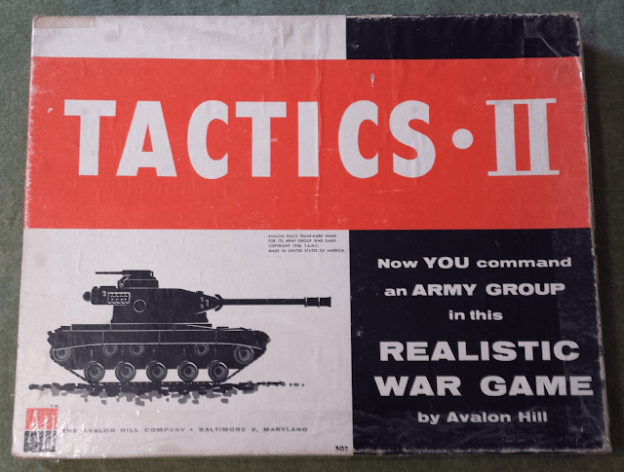
My dad no longer has his mighty collection.  He gave me the War of the Ring game and sold most of the rest of the collection years ago to help pay for my brother’s college education.  Again, let’s not lament anything — life’s too short.  The good news is somehow we have both returned to wargaming.  Not surprisingly, it was instigated by my dad a few years ago.  I can’t quite remember the order of events, but somewhere along the line on some visit back home we played, fittingly enough, Tactics II, the revised version of Tactics, the first board wargame.  It has a square grid, but all the basic components of wargaming are right there.  Shortly after that he ordered me a few other classic Avalon Hill games: Waterloo, D-Day, Battle of the Bulge, Gettysburg, and Midway.  We have even played Waterloo together.  Then, he gave me his remaining copies of Blue & Gray I and II, two classic SPI-quadrigames, four smaller games in one package all from one war or general idea (like four modern battles, four battles of the middle ages, things like that).  He recently got another copy of B&G I, and we have been playing them by e-mail for the last few months (part of the benefit of these earlier, simpler games is they are driven by what some disparagingly call “IGO-UGO” systems, but they lend themselves brilliantly to long-distance play).  Since we trust each other, we can be honest with what combat results happened, and then we can retreat each other’s pieces when necessary to the other person’s best advantage, just as if it was happening in person.  Now that he has gotten back into playing, and I have enjoyed getting into it as well, our collections are both increasing once again.  They will never match what once was, but in a way they will be even better, since now these collections will have been played.  So there is no need to lament what “might have been” – it’s happening now, probably better than it would have been.  I’m also getting my daughter started on wargaming as well.  True, we don’t play according to the written rules, but she is getting really good at punching out counters and shuffling cards.  It’s never too late or too soon to start wargaming.

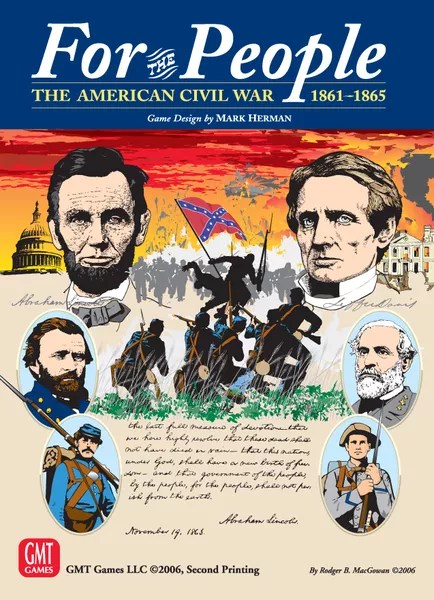
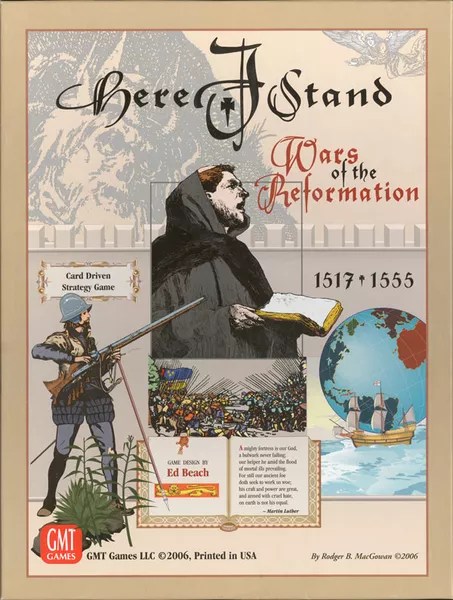
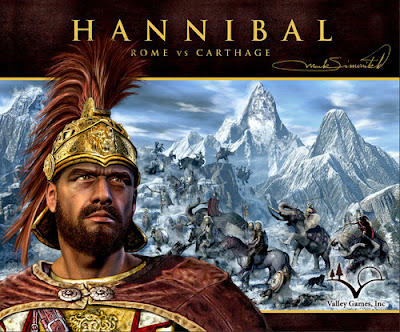
As with most things I do at Summit, I founded the Strategic Gaming Club a few years ago primarily so I could play my games and have a good time.  Once in a while I do things for the benefit of the students, but usually it’s primarily for me.  The good part about that is, as a generous giver, I share and let whoever is willing to join me on these journeys come along for the ride.  Though we haven’t quite played as many of the classic wargames as I would have liked, I certainly have had a good time playing Diplomacy, Civilization (in the Michael Wood elective — I mean “Intro. to Archaeology”), and Settlers of Catan (I am not calling Settlers a wargame, so please don’t tell the BGG people I did) with the kids over the years.  I’m hoping, though, that next year’s Intro. to Historical Gaming (aka “Intro. to Wargaming”) elective will allow me the opportunity to play a lot more of these games, especially some of the new ones I have gotten recently (thanks, mainly, to my dad, who helped increase my gaming collection tremendously in 2012: Here I Stand, For the People, Fall of Rome, Hannibal: Rome vs. Carthage, Through the Ages, among others.  These are the games Julia and I have been “playing” together.  She’s also good at making up rules.).  EBay has also been helpful to me in the last few months, as I have been able to get many old and classic OOP games (not to forget my gracious wife’s willingness to let me get them as well).  I’m definitely planning on playing them (even more than I’m definitely planning on reading all the books in my house).  Having a class will make that plan come to fruition even sooner, I hope.  Of course, I’ll also need to be familiar with them before class starts so I can teach them and provide enjoyable learning/gaming experiences to the students as well.

I suppose this means I’ll need to spend much of the summer playing wargames and studying military history.  Shucks.

North Unjustified

Jared Emry

The American Civil War divided the country; neighbor against neighbor and brother against brother.  About one hundred fifty years later the division still exists, the war appears to still be waging, even though the Union managed to conquer the Confederacy.  The separation exists now over the motives and justifications of the war.  The CNN Opinion Research Corporation found forty-two percent of the population does not believe slavery was the motive behind the North’s invasion, yet the schools teach it was the fundamental reason behind the war.  Were there other reasons?  If so, why are they not so as much mentioned in modern textbooks?  The division of thought in the nation begs the justification of the North into question.  There is an old saying history is always written by the victor, and the victor tends to bend truths and rewrite history in order that posterity will look kindly upon them.  The American Civil War is a unique example of that because the right to free speech in America allows for extra difficulty to alter the histories.  George Orwell said in his book 1984 “Who controls the past controls the future.  Who controls the present controls the past.”  The Union controls the past to prevent one from seeing the Union was morally unjustified in its conduct concerning the American Civil War.

The popular view of the American Civil War is taught in all public schools, most private schools, and popular television.  The view is basically stated as there being two sides, the Southern Confederacy and the Northern Union.  The view portrays the South as being evil slave-owners and the North being Righteous Liberators, forgetting the fact it was the North that sold the slaves to the South, and the North had built their economy based upon it before diversifying into industry (Greene 319).

This argument, embraced almost universally by New England abolitionists made good sense as part of a strategy to heap blame for everything wrong with American society on Southern Slavery, but it also had an advantage, to Northern ear, of conveniently shifting accountability for a locally specific situation away from the indigenous institution from which it had evolved (Melish 222-23).

However, “history books have misled today’s Americans to believe to believe the war was fought on the basis to free slaves” (Williams).  “[Charles] Dickens stubbornly resisted ascribing the American Civil War to the conflict over slavery, instead accusing the Union of hypocrisy” (Lee 128).  Dickens said,

I take the facts of the American slave quarrel to stand thus.  Slavery has in reality nothing to do with it….  Every reasonable person may know, if willing, that the North hates the Negro, and that it was convenient to make a pretense that sympathy with him was the cause of the war, it hated the abolitionists and derided them uphill and down dale.

Dickens was certainly right about the war, yet the view is never shown today.

President Abraham Lincoln is considered one of the greatest presidents of all time.  He is considered great for freeing the slaves because he believed all men are created equal and slavery was an abomination, right?  “If Lincoln was such a saint, why can’t his record speak for itself?” (DiLorenzo 12).  Lincoln believed in white supremacy as is evident in the way he conducted himself.  He believed inter-racial marriage was an abomination.  He believed America should be an all-white nation and all black Americans should be expelled into labor “colonies” (DiLorenzo).  “It was an article of faith to [Lincoln] that emancipation and deportation went together like firecrackers and July Fourth, and you couldn’t have one without the other,” historian and scholar Leron Bennett, Jr. states in his controversial book Forced into Glory.  Another little known fact about the “great” man, Lincoln, is he supported the abominable Corwin Amendment, which would have made slavery perpetually legal (Encyclopedia Britannica).  In his first inaugural address, Lincoln stated,

Apprehension seems to exist among the people of the Southern States that by the accession of a Republican Administration their property and their peace and personal security are to be endangered.  There has never been any reasonable cause for such apprehension.  Indeed, the most ample evidence to the contrary has all the while existed and been open to their inspection.  It is found in nearly all the published speeches of him who now addresses you.  I do but quote from one of those speeches when I declare that “I have no purpose, directly or indirectly, to interfere with the institution of slavery in the States where it exists.  I believe I have no lawful right to do so, and I have no inclination to do so.”

Yet later, as the war waged on, the Proclamation of Emancipation was given by President Abraham Lincoln, which cited slavery as the primary cause of the war.  Incidentally, the Anti-Slavery Society of London did not side with the North until after this proclamation, because they recognized the war as not being about slavery prior to this document.  Abraham Lincoln himself stated in a letter to Horace Greeley in 1862,

My paramount objective in this struggle is to save the Union, and it is neither to save or destroy slavery.  If I could save the Union without freeing any slave I would do it, and if I could save it by freeing all the slaves I would do it; and if I could save it by freeing some and leaving others alone I would also do that.  What I do about slavery, and the colored race, I do because I believe it helps to save the Union; and what I forbear, I forbear because I do not believe it would help to save the Union.

Thus he had previously undermined any credibility of the war being about the termination of slavery.  The Proclamation was not a humanitarian gesture but a piece of propaganda that would hurt the Confederacy’s international relations.  The Emancipation Proclamation also did not include northern and border slaves, allowing for northern slavery to continue.  Lincoln also is known for imprisoning thousands of northern citizens for disagreeing with his politics.  He censored telegraphs, sheet music, and sermons.  He closed down anti-war newspapers.  He waged a pitiless war against the South, killing six hundred thousand soldiers, laying to waste entire cities while leaving their citizens starving and homeless (DiLorenzo).  He even ordered the arrest of Roger Taney, the Chief Justice of the United States Supreme Court, for calling him a despot for suspending habeas corpus (a writ requiring a person under arrest to be brought before a judge or into court, especially to secure the person’s release unless lawful grounds are shown for their detention) (American Oxford Dictionary) without consent of the Congress; the Circuit Court had overruled Lincoln’s executive order and Lincoln had ignored Taney and his court, which is illegal (DiLorenzo).  That was the Union’s leadership, a man who craved a drastic intensification in federal power, a racist tyrant who used slavery as a scapegoat for a bloody war.  “The North’s lack of large-scale slavery is not due to morality, but with climate and economy” (Melish xii).  Lincoln’s war was inexcusable.

Abraham Lincoln was a man who reflected the popular view of the North: from Webster arguing for immediate deportation of all none-whites for purposes of constructing a white utopia, to that of the New York press from where Walt Whitman was fired for being anti-slavery.  What did the North base its war on, if not slavery?  The call to arms for the Union was from the start “Preserve the Union,” so the war was based on an ideology.  The ideology itself is not bad, except it happened to be illegal and resulted in the deaths of about six hundred thousand Americans.  The war was illegal because it was not authorized by Congress and because habeas corpus was illegally suspended during the war’s beginning.  Also constitutionally, the states had the right to leave the Union in the same way one might leave a club: one resigns and then leaves.  This right was guaranteed by the Tenth Amendment, which reads as follows: “The powers not delegated to the United States by the Constitution, nor prohibited by it to the States, are reserved to the States respectively, or to the people.”  Quite simply put, the Constitution does not give the federal government the right to kick a state out of the Union; therefore, the states have the right to kick themselves out of the Union.  Also, Article Four shows quite clearly the states are admitted to the Union in the same way as one might enter a club; so why not leave it similarly?  The Union’s war was illegal.

The first shot of the war was indeed Confederate, but it was after secession.  The Confederacy had Union forts in it and, since they were different countries, asked politely if President Lincoln would take his troops and leave.  He promptly replied, no you will have to force us out of your country, so the Confederacy had to take action and open fire.  Thus the blame for the war is on the Union who aggravated the Confederacy to fire by not respecting the Confederacy’s right as a sovereign nation (Encyclopedia Britannica).  Lincoln had vowed not to be the first to fire a shot, so he provoked the South into starting the war so he would not break his vow, and because it looks better politically.

The war that followed Lincoln’s bombastic stubbornness resulted in hundreds of thousands of deaths, most of which were slow painful deaths caused by starvation or infection.  The prisoner of war camps caused great suffering to the prisoners.  In the South were not enough supplies to give to the men in the prisoner of war camps, but even the guards were malnourished.  The difference was in the North the supplies were there to give to the prisoners, but the prisoners there starved while the guards had more than enough to eat.  Yet, it was the man in charge of the camp at Andersonville, Henry Wirz, found to be a war criminal and executed, not the man in charge of Camp Douglas, the Northern Counterpart to Andersonville with a death rate just as high; strangely enough the official government documents that list the deaths have been “lost,” and there may be even more Confederates in the earth there than what is now understood, as can be seen by other documents like the Chicago Tribune that demonstrated thousands of Confederate Soldiers were still unaccounted for: “Mortality rates increased as Colonel Sweet complained on October 11, 1864, that mortality at the camp was up to 35% since June.  In November 1864, the death toll was 217; another 323 died in December, 308 in January 1864, and 243 in February.”

Elmira, “The Camp of Death,” had unparalleled death rates over any other prisoner of war camp, a rate of a stunning twenty-five percent, resulting in more than seven thousand deaths within a year.  If Elmira had lasted as long as Andersonville did, it would have surpassed Andersonville in deaths (Horigan).  This is another North camp as bad, or worse, than Andersonville, yet is not conventionally mentioned.

Why were those responsible for Douglas, with its one in five death rate, and Elmira, with its one in four death rate, not also tried for war crimes?  Douglas with its twenty percent death rate, Elmira with its twenty-five percent death rate, or Andersonville with its twenty-seven percent death rate; which is worst?  Andersonville, yet it is was only two percent different from Elmira.  Is it morally justified only to try Wirz and not the other Commandants?  Especially when such atrocities happened in Camp Douglas such as the following: When the smallpox epidemic broke out in camp, the Confederacy sent medicine to its prisoners of war, but the Union confiscated the medicine as contraband; deprivation of food, blankets, and clothing; and tortures ranging from firing shots into the barracks, hanging people by their feet, forcing them to stand in the snow in bare feet for hours, making them sit on the snow for hours, whipping them if they tried to relieve themselves from the torture, or simply beating them with the side of the belt with the metal buckle in order to enhance bruising (Pritchett).

Also, is the respect for the Confederate dead the same as for the Union dead?  No, the Union dead at Andersonville get a cemetery with individual gravestones in a four hundred, seventy-five acre park with a monument.  The Confederate dead at Douglas were all buried in a mass grave in one acre of swampy land.  The monument placed there in 1895 was provided by the family and friends of the dead, not the government like in Andersonville; there aren’t even any highway directional signs for this monument.  What about Elmira? The Confederate soldiers had called that place “Hellmira.”  It is considered to have been the worst prison camp of the North, worse even than Douglas.  At Elmira, “one rat could be traded for five chaws of tobacco, one haircut, or a number of other items.”  There was also a disparity between Andersonville and Elmira in the amount of doctors available.  The North had the majority of the doctors in America; the South had to make do with less.  Yet one doctor at Elmira boasted he had killed more Confederates than any of the soldiers had.  The death rate at Andersonville was due to fewer doctors and supplies while the death rates at Camp Douglas and Elmira were due to cruelty of the Union.  Actually, in the town of Elmira was even an observation deck where people could see the suffering inside the camp from town.  It became quite popular and soon became an industry of entertainment.  The commandant of Elmira was not tried, nor was the commandant of Camp Douglas (Horigan).  That disparity is unjustified.

Overall, the North had impure motives, mainly of white supremacy, racism, and illegally preserving the Union causing the ultimate destruction of the Union through a sudden increase in federal power.  The suffering caused by the war falls onto the heads of the North, because they were ultimately responsible for causing the war in the first place.  They are also unjustified by the way they treated the Confederate dead, refusing proper burial, and failing to continue to keep the graves in good condition in direct violation of Public Law 38 (National Park Service).  They are unjustified in keeping their own atrocities and war crimes hidden and untried.  The North was morally unjustified in its conduct concerning the American Civil War.

Works Cited

“American Civil War.” Encyclopædia Britannica. Encyclopædia Britannica Online. Encyclopædia Britannica Inc., 2011. Web. 03 Dec. 2011. <http://www.britannica.com/EBchecked/topic/19407/American-Civil-War&gt;.

American Oxford Dictionary. Widget.

Bennett, Lerone. Forced into Glory: Abraham Lincoln’s White Dream. Chicago: Johnson Pub. Co., 2000.

“Camp Chase — Reading 2.” U.S. National Park Service. Web. 06 Dec. 2011. <http://www.nps.gov/nr/twhp/wwwlps/lessons/123camp_chase/123facts2.htm?vm=r&gt;.

“Civil War Still Divides Americans.” CNN. CNN.com Blogs. 03 Dec. 2011. <http://politicalticker.blogs.cnn.com/2011/04/12/civil-war-still-divides-americans/&gt;.

Crawford, Martin. “Confederate States of America.” Dictionary of American History. 2003. Encyclopedia.com. 3 Dec. 2011. <http://www.encyclopedia.com&gt;.

Confederate States of America. The Constitution. 11 March 1861.

Dickens, Charles. “Letter to W.F. De Cerjat.” 1 Oct. 1850. The Letters of Charles Dickens. Vol. 6. Oxford: OUP, 1988. 183-84. Print.

DiLorenzo, Thomas J. “Forward.” The Law. By Frederic Bastiat. Auburn: Ludwig von Mises Institute, 2007. v-ix.

—. Lincoln Unmasked: What You’re Not Supposed to Know about Dishonest Abe. New York: Crown Forum, 2006. Print.

—. The Real Lincoln: a New Look at Abraham Lincoln, His Agenda, and an Unnecessary War. Roseville, CA: Prima, 2002. Print.

Greene, Lorenzo J. The Negro in Colonial New England. New York: Atheneum, 1968. Print.

Horigan, Michael. Elmira: Death Camp of the North. 1st ed. Mechanicsburg: Stackpole Books, 2002. Print.

Lee, Julia S. The American Slave Narrative. Oxford: OUP, 2010. Print.

Melish, Joanne Pope. Disowning Slavery: Gradual Emancipation and “Race” in New England, 1780-1860. Ithaca: Cornell UP, 1998. Print.

Morley, Henry. “The Morill Tariff.” Ed. Charles Dickens. All Year Round. 28 Dec. 1861. Print.

“Northern Profits from Slavery.” Slavery in the North. 04 Dec. 2011 <http://www.slavenorth.com/profits.htm&gt;.

Orwell, George. 1984. San Diego: Harcourt Brace Jovanovich, 1984. Print.

Pritchett, C. W. “P.O.W.’s From Cumberland Gap.” RootsWeb Mailing List Archives. The Kilgore Archives. Web. 04 Dec. 2011. <http://listsearches.rootsweb.com/th/read/KILGORE/2004-02/1076396675&gt;.

“Remembering the American Civil War.” Encyclopædia Britannica. Encyclopædia Britannica Online. Encyclopædia Britannica Inc., 2011. Web. 03 Dec. 2011. <http://www.britannica.com/EBchecked/topic/1763580/Remembering-the-American-Civil-War&gt;.

Scroggins, Steve. “The Ugly Rock ‘Cenotaph’ in Chicago’s Oak Woods Cemetery — Insult to Camp Douglas Confederate POWs.” Sons of Confederate Veterans Camp 1399. Sons of Confederate Veterans. Web. 04 Dec. 2011. <http://scvcamp1399.org/uglyrock.php&gt;.

Thomas, Hugh. The Slave Trade: The Story of the Atlantic Slave Trade, 1440-1870. New York, NY: Simon & Schuster, 1997. Print.

United States Constitution, Amendment 10.

Warnke, Joe. “US Support for CS Vets.” Critical History. Web. 06 Dec. 2011. <http://www.criticalhistory.info/html/us_support_for_cv.html?vm=r&gt;.

William, Walter E. “The Civil War Wasn’t About Slavery.” Jewish World Review (1998). Walter Williams Archive. Web. 4 Dec. 2011. <http://www.jewishworldreview.com/cols/williams1.asp&gt;.

Chocolate Dreams: Ghirardelli Style

Nicole Moore Sanborn

This article will take a look at one of the world-renowned chocolate companies, Ghirardelli Chocolate.  The major highlights in the history of this institution will be observed, from the company’s meager beginnings to present times.  A list of some of Ghirardelli Chocolate Company’s products will be included.  I hope you will enjoy this delightful look at this chocolate company founded in our very own country.

In 1849, Domingo Ghirardelli immigrated to the United States from Italy, harboring dreams of striking it rich in the California Gold Rush.  Domingo attempted, and failed, at mining, and instead settled on opening a tent store in Stockton, California, selling various supplies and confectioners to miners.  Several months later, due to the success of his store in Stockton, he opened a second store on the corner of Broadway and Battery in San Francisco, his first establishment in the city.  Unfortunately, a major fire in 1851 destroyed his business.  The fifth of a series of San Francisco fires destroyed approximately 1,500 buildings, including Ghirardelli’s Battery Street location.  A few days later, a runaway fire leveled half of Stockton, and Domingo’s two businesses disappeared.  Domingo rebuilt.  After the fires, he consolidated his salvaged assets and opened the Cairo Coffee House on San Francisco’s Commercial Street.  Much to Domingo’s dismay, the Cairo Coffee House proved unsuccessful.  He did not give up.  Domingo formed a new confectionary company called Ghirardely & Girard on the corner of Kearny and Washington.  Ghirardely & Girard was to become the modern-day Ghirardelli Chocolate Company with over 150 years of traditional chocolate manufacturing.  Business flourished, and Domingo sent for his family, who, though Italians, resided in Peru. He changed the company name to Mrs. Ghirardelli & Co.  Records show the company imported 200 pounds of cocoa beans in that year (a high amount for the time period), a number that would continue to increase as the company grew.  In 1853, the company was moved to the corner of Jackson and Mason.  Business continued to flourish, and the company moved again in 1855 to the corner of Greenwich and Powell.

1865 brought an important observation in the factory.  By hanging a bag of chocolate in a warm room, the cocoa butter drips out.  This leaves a residue that can be processed into ground chocolate.  This technique is called the Broma process and is generally used in chocolate manufacturing.  By 1884, the company had over 30 employees and shipped products all over the Western and Eastern United States, China, Japan, and Mexico.  Business boomed.  The company dropped its previously developing line of wine, cordials, and liquors, and sold only coffee, chocolate, and spices.  1893 left the company needing additional space once again.  The company purchased the Pioneer Woolen Mill Building on San Francisco’s northern waterfront.  Manufacturing moved to the new location.  This is the present location of Ghirardelli Square.  Yes, there is not only the Ghirardelli factory in San Francisco, but it is called the Ghirardelli Square!  I want to go to San Francisco for this reason and many others, as I am a chocolate aficionado.  In 1900, six years after Domingo’s death, the company sold its coffee and spice business, limiting products to chocolate and mustard (yes, you read that correctly, mustard…).  A two-story warehouse was built on North Point Street, now called the Cocoa Building.  The business grew in the “Roaring Twenties.”  In 1923, the company added two stories to their Cocoa Building.  The four-story structure became the base for the 15-foot-high illuminated letters spelling “Ghirardelli.”  The sign was visible for miles, and, as a result, became a welcoming sight to ships passing through the Golden Gate.

In 1963, the Golden Grain Macaroni Company, owned and operated by the De Domenico family, purchased the Ghirardelli Chocolate Company.  Included in the purchase was the company name, products, formulas, and equipment.  Ghirardelli Square underwent a renovation and officially opened as a festival marketplace on November 29, 1964.  The renovation included shoring up old buildings and strengthening them structurally.  San Francisco declared Ghirardelli Square an official city landmark in 1965.  Production facilities moved to San Leandro, California in 1967.  Northwestern Mutual Life Insurance Company and Real Property West (companies with established ties to San Francisco) became the new owners of Ghirardelli Square in 1968.  The companies pledged to maintain the flavor and integrity of Ghirardelli upon making this purchase.

The owners applied for and were granted National Historic Register status for Ghirardelli Square in 1982, and the management at the Square sought to enhance and improve the ambience of the Square.  To accomplish this, more greenery, trees, and flowers were added to the landscaping.  New outdoor umbrellas enlivened (and continue to enliven) the interior of the Square, contributing to the visual appeal and atmosphere.  Ghirardelli Square became a model for the restoration of classic buildings throughout the country, with more than 75 tenants offering cuisine, art, and merchandise from around the word.  The company changed hands again in 1986, when the Quaker Oats Company acquired Golden Grain and Ghirardelli Chocolate.  Quaker Oats sold the Ghirardelli Chocolate division to a private investment group headed by John J. Anton and the Thomas H. Lee Company in 1992.  At this time, John J. Anton became the president and CEO of the Ghirardelli Chocolate Company.

1998 brought another stark change in management for the beloved chocolate company.  Lindt and Sprungli Chocolate, out of Switzerland, acquired Ghirardelli Chocolate Company as a wholly-owned subsidiary of its holding company.  The largest plant expansion in its history began for Ghirardelli Chocolate Company.  The expansion included 50,000 square feet of new production and 20,000 square feet of laboratory and office space.  In 1999, the company launched one of my favorite kinds of chocolate ever: their famous filled Squares chocolates, including their ever-popular flavor Milk Chocolate with Caramel Filling.  Ghirardelli Squares are quite famous and are one of my favorite chocolate desserts.  Their deliciousness is difficult to match.  In 2002, Ghirardelli Chocolate celebrated its well-deserved 150th Anniversary.

In 2003, Ghirardelli opened its first Factory Store at the site of the headquarters and manufactory in San Leandro, California.  Ghirardelli Chocolate Company launched its first national television advertising campaign in 2004.  Also in 2004, the company launched its first limited edition flavors, inspired by the holiday seasons’ most popular flavors: Peppermint Bar and Eggnog.  2005 brought the re-launching of its Dark Squares chocolate with new and improved recipes and became the first widely-available chocolate to declare cacao content on its packaging (60% cacao, etc.).  Ghirardelli launched its first national print advertising campaign for its baking chocolate in the same year.  Also in 2005, Ghirardelli Ice Cream and Chocolate Shops launched a new Dark Chocolate version of their hot fudge sauce.  In 2006, Ghirardelli introduced new Intense Dark Bars with luxuriously deep and velvety chocolate fused with sophisticated ingredients (according to their boastful website; I have not tasted this product).

I will now take time to discuss their Ghirardelli Chocolate Squares, which are the whole reason I am writing my article on Ghirardelli.  On the bag I just finished of the Ghirardelli Squares (I’ve been eating it slowly; this bag has been mine for quite some time) is written “Take time to slow down and savor each bite of intense, slow-melting Ghirardelli Squares chocolate.  You’ll experience the perfect balance of chocolate intensity and rich ingredients.  Enjoy as the chocolate pleasure lingers and time stands still.”  The flavors of squares advertised on the bag I currently have (not all of these flavors were in the bag) include milk caramel, peanut butter, dark, mint, raspberry, and dark caramel.  Each type of square is delicious, and I highly recommend experiencing Ghirardelli chocolate for yourself (you know, for that delicious, first-hand research).

Ghirardelli also sells chocolate bars of many different varieties.  Varieties of bars tend to have fillings in them, basically a larger version of their Squares.  Flavors (of their bars with fillings) include caramel, mint, orange, raspberry, and strawberry.  Also manufactured are the sea salt bar and peppermint bark.  Some specialty bars include Sublime White Cookies Jubilee Bar, Sublime White Vanilla Bean Dream Bar, 32% Cacao Creamy Devotion, Gourmet Milk Coconut Rendezvous, Intense Dark Cabernet Matinee, Intense Dark Toffee Interlude, Intense Dark Hazelnut Heaven, as well as Intense Dark chocolate bars with 60%, 72%, and 86% cacao.  The three intense dark bars are branded as the Cacao Evening Dream, the Cacao Twilight Delight, and the Cacao Midnight Reverie, respectively.  Ghirardelli also manufactures a five-pound chocolate bar!  Ghirardelli also manufactures drink mixes.  Among them include two types of hot cocoa mix: double chocolate and chocolate mocha; Ghirardelli also makes a premium white mocha mix.  Coffee mixes include whole bean coffee, white mocha coffee set, as well as the double chocolate coffee kit.  Two kinds of frappes are manufactured: double chocolate and classic white.  Ghirardelli makes chocolate, white, and caramel sauce and baker’s chocolate. Products also include chocolate covered delicacies.  Among these delicacies are almonds, cherries, blueberries, espresso beans, malt balls, peanuts, raisins, pretzel balls, wafers, and nonpareils (the little chocolate chips with the white dots on them, very tasty).

Ghirardelli Square holds a chocolate festival each year.  Tickets are bought, and people travel to this festival in masses.  In 2013, the festival will be held on September 14th and 15th.  Festival goers have the opportunity to experience the latest “chocolate trends” while surrounding themselves in the rich history of one of America’s longest-operating chocolate companies.  The festival began in 1996 and has been held each year since.  The festival has been a tremendous success, so much success the festival has extended down to Beach Street and occupies the Plaza in San Francisco Square as well as an entire San Francisco block.

I am a chocolate aficionado myself.  However, chocolate, like any sugary treat, is to be enjoyed in moderation.  I am not trying to sound like your mother attempting to steer you away from sweets.  Consuming too much chocolate is damaging to health, as it has little nutrients and is high in calories and fat (compared to fruit and vegetables).  I love chocolate; however, I felt as a responsible writer I should warn my readers of consuming chocolate in excess.  I encourage you to taste and enjoy Ghirardelli’s delicious treats.  I have tried very few of the abundance of products listed previously in this article.  I have not seen most of these products in stores in the area.  However, if you go to http://www.ghirardelli.com, a full list of their products can be observed, and you can search which stores to buy their products as well as check out the “Ghirardelli Online” button.  The “Ghirardelli Online” button is one of the three small buttons and is the blue one.  These three buttons are listed below the price of each product (which is listed below each product).

I hope this article has been enjoyable.  I also hope you will sample for yourself the delicious products the Ghirardelli Chocolate Company has to offer.  I also hope this sampling has provided insight into the history of this beloved company.

Source

http://www.ghirardelli.com

5 Reasons Why I Love Being American

Elsa Lang Lively

Since all the articles I have previously written for the Scholarly Journal have been focused on travelling and international affairs, I thought it might be interesting to shake things up a bit and talk about the country I know better than any other, my own country.  Because this is an opinion piece, I am only speaking from my own observations and personal experience after living seventeen years as an American citizen, and I know there are many more reasons than just five to love America; however, these are the first five reasons that come to mind when I think about why I am proud to be an American.

1.  Freedom of religion.  I know it is a pretty widely known fact the right to the free exercise of religion is a guaranteed right in the first amendment, and we as Americans have been putting this right to good use before America even became a nation.  Hearing stories about people being martyred for their faith in places like China and Saudi Arabia are good reminders to us all persecution is still very much alive today, and we should be thanking God every day for the blessing to live in a country where we can freely practice our beliefs.

What I have just become aware of in recent months, however, is the blessing to have grown up in a country where the fundamentals of Christianity are present everywhere and the actual practice of Christianity is commonplace.  Many countries, typically the more Westernized ones, have freedom of religion built into their respective constitutions; however, the right to practice religion does not guarantee the people of a country will actually have a high religious population.  According to the Pew Forum on Religion and Public Life from 2010, the United States has the highest Christian population in the world.  Although this does not necessarily mean all self-proclaimed Christians in America truly have personal relationships with Christ, this statistic reflects the amount of Americans who are at least aware of the fundamentals of Christianity and are familiar with the practice of Christianity.  I was astonished when some European friends I made from France and Austria this summer said the majority of the people they knew were not Christians and had never actually heard the Gospel, much less the key beliefs of Christianity.  It is very possible to grow up in a country that permits the practice of religion but never even hear about the Gospel.  Although this is true even for those living in America, I would venture to say the high amount of churches, especially here in Hampton Roads, as well as our nation’s original founding under God, have caused the United States to be a nation where the practice of Christianity is common and accepted.

2. Our military.  Growing up in a military family, I have always viewed the United States military in a particular light.  Having my father and other relatives frequently deploy to the Middle East or other areas around the world has helped me not to take our daily freedoms for granted.  I will always remember my dad telling me he was proud to serve in the military because he believed in helping those in countries who could not help themselves.  Truly, those serving in the military are modern-day heroes who protect not only the freedoms of our own country but also fight for the rights of those who are not yet free.

I will never stop feeling a surge of pride whenever I hear our national anthem or when each branch of the military’s song is played on the fourth of July.  I love how our country is so patriotic and proud of all who serve to defend our country.  When I was staying with my French host family this past summer, I distinctly remember the father telling me the French were not particularly proud of their military, and only the school drop-outs joined the military because they were not smart enough to get accepted into a good university.  He said the only time the military was showcased and celebrated is on their national day of independence, when the soldiers take part in a parade in Paris.  I am so glad our military is not celebrated and remembered only once per year but throughout the year because of the daily sacrifices they make.

3. The food.  I’m going to be completely honest here and say as much as I enjoy authentic French bread and Italian gelato, there’s nothing like a good ol’ American barbeque and a huge Saturday breakfast of waffles and (turkey) bacon.  America often gets a bad rap for having so many fast food chains and a high obesity rate, but food is an integral part of our culture.  By this I am referring to quantity and not quality.  We Americans delight in the sheer amount of food our bodies can withstand during each meal.  I know my family chooses a restaurant based upon not just the taste of the food but also the portion size of the food.  We marvel at the monstrous size of burgers and platters of fries that accompany our meals and feel gypped if free refills are not permitted.  Buffet outings and all-you-can-eat nights are anxiously awaited by Americans all across the country, and the winners of eating contests are treated as local heroes.  While it probably is not ideal to revel in excess, it is rather refreshing to be able to indulge every once in a while and feel good about doing it.

4. The music.  Although I am probably biased on the subject, I would argue Americans have produced some very entertaining music over the years.  From Big Band and jazz to rock-and-roll and hip hop, America has been entertaining the rest of the world musically for many years.  Recently, I was looking at the top ten music charts in various European countries and was pleasantly surprised to find they all had the same top music hits we have here in America.  Of course, whether or not American music is “good” depends upon one’s personal taste.  But if people all around the world are enjoying artists like Michael Jackson and Macklemore just as much as we are, then maybe the American music industry is on the right track….

5. The diversity.  It is so neat to be able to say our nation is a “melting pot” or a “tossed salad,” if you will.  It shows just how much people from all walks of life can be united simply because they are Americans.  I love reading about the stories of immigrants in the early 1900s who wanted to live the American Dream and start a new life in a new country despite the odds.  Although it was not always easy for those coming to America to be incredibly prosperous right away, they worked hard to earn a living and had opportunities to pursue their dreams and passions.

I have always marveled at the immigration story of my great-grandmother, Elsa Swanson, who immigrated to America from Sweden when she was only sixteen years old.  Her family had raised enough money for her passage to Ellis Island, and she left behind her family to make a new life in America.  When she arrived, she moved to Chicago and worked as a housemaid for an elderly female author who published her works with a man’s pen name.  I cannot imagine leaving behind my family and working in a new country without knowing a single bit of the national language.  Yet my great-grandma worked hard and adapted to a new culture and language because she wanted to raise her future children and grandchildren in a country of opportunity and freedom.  It is for this reason I love living in a country where so many diverse people groups can all call America home.

As I have previously mentioned, this is only a short list of many reasons why I love America.  I know this is not a perfect country, and there are many things our country could be doing to improve socially, politically, and spiritually.  Nevertheless, I am so grateful to have lived my life in a country where I am surrounded by people I love and am encouraged to work hard while serving God.  Next year, I am scheduled to study abroad in Scotland and hope to live overseas someday with my future job.  Yet no matter how far my travels may take me and no matter what environment I will find myself in, I will always be proud to call myself an American and will never get tired of returning home, to the United States, and being with the people I love in the place I love.

The Pledge of Allegiance

Jared Emry

The Pledge of Allegiance continues to be widely accepted in America.  Some people dislike it, but most of them just want it tweaked to leave out a part they don’t like.  Almost everyone agrees to keep the pledge in schools, camps, and other areas where children might be.  Unfortunately, few people know anything about the history of the pledge or the implications of the pledge in relation to its history.  It is also worth noting the effect such a pledge can have on a nation that is brought up saying it.

The author is an important subject to study when trying to understand the purpose of the pledge.  The Pledge of Allegiance was written by Francis Bellamy in 1892.  Bellamy was a Baptist preacher who spoke a social gospel but was forced out of his position for his teachings.  He later stopped attending church.  His most famous sermon was entitled “Jesus was a Socialist.”  Francis Bellamy was also known as one of the greatest advocates of public education, which fit perfectly with his ideas of economic egalitarianism.  Bellamy also joined the Nationalist movement, which sought to create government-owned monopolies of public service including education, healthcare, and transportation.  Nationalism has been defined as “the aim to promote the wellbeing of the whole nation or some groups of its citizens by inflicting harms on foreigners,” especially by “discrimination in the economic sphere” of life.  He became a major player in the Nationalist movement.  Francis and his cousin Edward were honored by the movement by having hundreds of Nationalist “Bellamy Clubs” appear throughout the country.  Francis Bellamy and his colleagues saw the best way to enact change in the nation was through the de-privatized school system.  Bellamy also happened to be one of the first people to mix the ideologies of Nationalism and Socialism.

He published his original version of the pledge in the Youth’s Companion magazine, the magazine Bellamy worked for in its premium department.  The magazine was an ardent supporter of the schoolhouse flags movement and began to popularize the use of America’s flag in the class room while selling flags to schools as a premium to magazine subscription.  By the time the pledge was published, Bellamy had already sold 26,000 flags.  His pledge became an immediate hit.  The pledge was aimed directly at the children of the nation in order to promote his ideologies.  Bellamy thought of his pledge as a vaccine against “insufficiently patriotic Americans” and immigrants.  He wrote “every dull-witted or fanatical immigrant admitted to our citizenship is a bane to the commonwealth.”  The original pledge was phrased “I pledge allegiance to my Flag and the Republic for which it stands, one nation, indivisible, with liberty and justice for all.”  The pledge originally was said with the kids standing outside in military formation.  The kids started with a military salute followed through with the arm extended toward the flag with the palm facing downward.  The salute was named the Bellamy Salute.  This same salute continued to be the official salute for the pledge until the 1940s, when it was discontinued because the National Socialist (Nazi) party in Germany used an almost identical salute.  The salute was replaced with the right hand placed over the heart.  The Nazi salute and the Italian Fascist salute were supposedly based off an ancient Roman salute; however, there is no Roman text about such a salute, and the only Roman artworks that feature salutes all have salutes that bear little, if any, resemblance to the Nazi or Fascist salute.  The oldest known reference to that kind of salute is Bellamy’s Salute.

There may be great similarities between the Nazi Salute and the Bellamy Salute, but there must be a reason as to why such totalitarian governments would adopt a similar salute.  The reason can best be found in the Third Wave Experiment.  In 1967, Ron Jones, a history teacher, was attempting to explain how even democratic societies can become a dictatorship.  The sophomore class believed society had become too educated to fall for the appeal of tyranny.  Jones was also unable to get the students to understand how the German people could plead ignorance to the Holocaust.  He decided since he could not explain the concept to the students, he would show it to them.  He began a movement based on a few simple concepts.  The movement was called the Third Wave, and it was explicitly stated to the students the movement was meant to eliminate democracy.  The name came from the “fact” every third wave in nature is stronger, larger, and generally better than all other waves in a sequence.  The” fact” was a lie Jones made up in order to have the movement be based in a false assumption.  Using the “fact” as an example, Jones told the students the individuality in democracy was a drawback.  He initiated a short pledge for the movement: “Strength through discipline, strength through community, strength through action, strength through pride.”  On the first day he drilled them on proper seating until the class could enter the classroom and quietly take their seats within 30 seconds.  At the end of the first day, the students were given a few rules.  They had to be sitting at attention before the bell.  They had to stand to answer or ask questions.  They were allowed only three words to ask or answer while having to start each question or answer with “Mr. Jones.”  On the second day the class became a fully disciplined community, and he gave them a salute similar to the Nazi salute.  On the third day, the movement moved beyond the class of 30 to 200 students throughout the school, and each student was given a job.  Some students built a flag, other students created member cards.  Some students were even told to prevent non-member students from entering their classes.  The students even reported other members who failed to comply with the movement’s rules.  The students would police each other without prompting.  On the fourth day, Ron Jones stopped the experiment because he was losing control over it.  The significance of this experiment was it focused almost entirely on a pledge and a salute.  In three days a high school teacher had created a mini Nazi Germany in a California high school.  Psychologically, a group of people chanting and acting together in a certain way reinforces the behavior.  As Dr. Philip Zimbardo put it, “It is the perversion of the incredible power of the human mind that can do almost anything, all the magical things the mind does in terms of creativity, can be perverted to justify any evil or any transgression.”  The Pledge of Allegiance creates the same group mentality as it was designed to by Bellamy.  The difference is the Pledge of Allegiance has been around for more than a hundred years instead of three days.  The effect the Pledge of Allegiance has had must be exponentially greater than that of the pledge of the Third Wave.

Instead of directing the focus on one man, the Pledge of Allegiance directs the focus to the state in general.  Initially the Pledge reinforces the idea of the state as being the authority, with the newest version even claiming divine right in the monarchial sense.  The Pledge pushes for obedience to the state from the earliest years of childhood.  It is indoctrinating children into the values of the state.  The Pledge specifically refers to “liberty and justice for all,” but there is nothing to prevent those words from meaning anything.  All of the worst regimes in history promised liberty and justice.  The Pledge allows for the current leader of the country to define what that means.  In essence, the pledge is a dangerous weapon.  Fortunately for America, the leader has never called for some of the radical, violent, and oppressive policies that were in the Third Wave Experiment.  Unfortunately, America’s record isn’t that clean.  Since the Pledge appeared, America happened to lock up all the Japanese Americans during WWII, re-segregate the public schools, and go into a few dozen illegal wars.  Look at the anti-terror hype following 9/11.  American rights were suddenly thrown out the window in pursuit of justice.  The Patriot Act allowed for surveillance of all citizens and the recent NDAA now allows for the assassination of American Citizens.  The state claimed to be going to war for “justice.”  The state now claims it is striving for the “freedom (or liberty) from terrorism” while violating basic human rights including liberty in the classical sense.  The state merely has to warp the definitions of a few words in order to change the entire nation.  All of this can be linked directly to the Pledge of Allegiance.

The Pledge of Allegiance is dangerous because it is nothing more than a method of indoctrination to accepting a status quo.  If the Pledge of Allegiance isn’t there to teach the students something, then why is it a required part of the school day in all public schools?  Its sentimental value is basically worthless in school because the elementary school kids are just being introduced to it.  It must have a purpose for it to be included in the curriculum.  The logical assumption is it is there for the children to learn.  The purpose of the children learning this pledge can only be one thing, and that one thing is its stated purpose.  The purpose of the Pledge of Allegiance is to act as an inoculation against the virus of unloyalty or “insufficient patriotism” to the state.  Patriotism can be defined as the desire for good for one’s country.  The point of insufficient patriotism is indefinable as an absolute and must be entirely subjective to the authority, and patriotism cannot be measured.  The Pledge can produce only a blind patriotism: patriotism focused on what the authority considers to be patriotism.  The Pledge shifts the patriotism from the country to the government; from the people to the state.  This is the curse of the Pledge.

The Pledge of Allegiance is a dangerous tool that can be used to shape generations.  The Pledge is inherently designed to have kids become used to country planning, something only found in heavily socialistic or nationalistic societies.  The Pledge is introduced before the children are old enough to really begin thinking for themselves, and so the ideologies in the Pledge are reinforced in the children’s minds.  Nazi Germany, Fascist Italy, Maoist China, and other such regimes have all used similar pledges resulting in hundreds of millions of deaths worldwide.  The implications of the Pledge are enormous yet vastly ignored.

You thought that you were the elect.  That you were better than those outside this room.  You bargained your freedom for the comfort of discipline and superiority.  You chose to accept that group’s will and the big lie over your own conviction.  Oh, you think to yourself that you were just going along for the fun.  That you could extricate yourself at any moment.  But where were you heading?  How far would you have gone? … Through the experience of the past week we have all tasted what it was like to live and act in Nazi Germany.  We learned what it felt like to create a disciplined social environment.  To build a special society.  Pledge allegiance to that society.  Replace reason with rules.  Yes, we would all have made good Germans.  We would have put on the uniform.  Turned our head as friends and neighbors were cursed and then persecuted.  Pulled the locks shut.  Worked in the “defense” plants.  Burned ideas.  Yes, we know in a small way what it feels like to find a hero.  To grab a quick solution.  Feel strong and in control of destiny.  We know the fear of being left out.  The pleasure of doing something right and being rewarded.  To be number one.  To be right.  Taken to an extreme we have seen and perhaps felt what these actions will lead to. — Ron Jones

Bibliography

http://libcom.org/history/the-third-wave-1967-account-ron-jones.

https://www.youtube.com/watch?v=XaHCGYjz6Z8.

Kubal, Timothy. Cultural Movements and Collective Memory : Christopher Columbus and the Rewriting of the National Origin Myth. Basingstoke, Hampshire, Great Britain: Palgrave Macmillan, 2008.

Mises, Ludwig Von. Omnipotent Government, the Rise of the Total State and Total War. New Haven: Yale UP, 1944.

“The Pledge of Allegiance — A Short History.” Oldtimeislands.org. Retrieved February 2, 2013.