In early 1991, one of the few long-lasting rock supergroups released its second album, Lean Into It. That band’s name was (and still is today) Mr. Big. What distinguishes Mr. Big from many bands of its ilk are quality lyrics and quality musicianship. True, conflict and tensions saw one short-term personnel change in the late ’90s and one lengthy hiatus for most of the ’00s, but the original group is back together again (as of this writing) and still putting out more fine work. Though they are much bigger in Japan than in the United States (a sad commentary on American standards), Mr. Big is still a good band worth knowing, even if one is not a fan of guitar shredding and power/hard rock: Mr. Big is hard to quantify, since its sounds and styles are often developing and shifting not just between albums but within albums as well.
As sturdy a powerhouse quartet as we may ever see, Mr. Big was first formed by its most famous member, bass player Billy Sheehan. Well-renowned front man (especially on the Asian circuit) Eric Martin joined shortly thereafter; technical masters Paul Gilbert (guitar) and Pat Torpey (drums, after he finished touring with Robert Plant — you know you’re a great drummer if Neil Peart is impressed by your work) filled out the supergroup.
Their self-titled debut album did not fare too well in America, but their fame in Japan was almost instantaneous. That changed somewhat, as indicated above, with their second album in 1991, Lean Into It, perhaps their tightest, most enjoyable album from beginning to end, and another forgotten gem of recent music history.
Electric Drills in Perfect Harmony
“Daddy, Brother, Lover, Little Boy” is one of those quintessential tongue-in-cheek hair band songs from the late ’80s-early ’90s. True, it gets mildly saucy (just a smidge piquant) at the end of the second verse, but it is mediated well by metaphors and power chords. Despite the lack of seriousness in the lyrical content, the song immediately demonstrates the band’s musical skills. Though this opening number borders on thrashing guitar rock, it’s the fastest song on the album and not really representative of the album’s style — as mentioned above, the style changes frequently. It is the fastest song on the album, but possibly not the loudest/heaviest. Don’t let that dissuade you from the song or the album, though — Mr. Big is not a typical hair band (or post-hair hair band in their later oeuvre); though this song is intentionally lyrically shallow, this does not represent typical Lean Into It (or typical Mr. Big). It is, as said just now, a humorous number designed more to show off their musicality (including Martin’s vocal oomph, if not his range). The highlight is certainly the most unexpected moment of the song: even though the subtitle denotes this as “The Electric Drill Song,” it is not until the brief moment of the harmonious electric drills one understands why it has that title. The feedback of the guitar at the beginning prestidigitates the audience only; the real thing comes as impressively and suddenly as the skill of the band as a whole. All in all, it’s a great, energetic start to the album.
Unexpected Enjambment with Hard Rock Claps
“Alive and Kickin’” is the jauntiest number on the album, which is fitting, since the lyrics enjoin us to “keep [our] love alive and kickin’” throughout. It’s a typical tale: a young guy and gal (experiencing mild regret — “tears in her eyes”) are running away from their families and starting a new life together. Before we get too frustrated or judgmental, though, the girl writes in her goodbye letter to her mother she is running away with her love “Just like you did, momma.” Since her mother did it, clearly it must be acceptable for her to do it; besides, they have “everything [they] own in the trunk and on the roof / And she’s got baby-sitting money in her pocket.” They’ll be fine. What could possibly go wrong when you are driven by love, doing it your way, “Pedal to the metal shooting down the highway”?
The title, and the way it’s sung throughout the song, leads the audience to think both verbs are equal: certainly the final line of the song supports such an interpretation. The verbs, though, are not equal: primarily, we are to keep our love alive; secondarily, we are to keep our love first “kickin’ / Down the door” because “it’s what we’re livin’ for” and second “kickin’ / Down the walls” because “that’s when / Freedom calls.” It’s impressive enjambment, especially since the subordination of the phrases following each “kickin’” is emphasized (in a roundabout fashion) by the diminished vocals: not every band can pull off changing the vocal dynamics partway through a major line of the chorus/song, but Eric Martin and Mr. Big do it well here. Though the “kickin’ / Down the door (then, walls)” lines may seem akin to stereotypical “hair band” lyrics, the final reminder from Martin “kickin’ / Down the walls, that’s when / Freedom calls” is reminiscent of virtually every well-respected, highly-esteemed Romantic poem (and quite a few Symbolist poems, as well) in the last two hundred+ years — it’s much more meaningful than a cursory dismissal of their appearance/style allows. The groovy hand claps accompanying the chorus toward the end of the song maintain the overall fun atmosphere of the album. Though we would not advocate young children (even those “in love”) running away from home and going “Rockin’ side by side,” it’s still a good song to enjoy (especially for vicarious living).
Thirty Is the New Old
Eric Martin tells us “old movies” from the ’60s have a green tint to them in “Green-Tinted Sixties Mind” (considering it was around 1990 — or even earlier — when he wrote that, how would he feel twenty years later, now that he is old?). Perhaps the televisions on the road, especially in Japan, gave him that impression. Today, with the advent of high fidelity, the song may seem dated, but the older the song gets the less time really affects it, strangely enough: it attempts to capture a moment in or attitude of the ’60s, which it does fairly well, despite the at-times goofy lyrics.
The second verse contains some of the best lyrics on the album: “She keeps her memories locked away / But they are always escaping / Neglect won’t make them fade away” — good stuff (and it goes on from there). The overall emphasis of the song comes in the second version of the chorus, belying the verses’ attempts to capture a moment of time: “Gotta face the day / There is no other way / To clear the fog inside your mind / Fill it up with dreams” (and et cetera). Later we are told (it applies to the person first being directly addressed, but it can be extrapolated to all of us) you “Could’ve made it if you tried.” If we want to improve our lives, we should be active about it. This is certainly good advice as well; and, coupled with an appropriate Christian perspective on actively/expectantly waiting on/for the Lord, it is a fine song that transcends its own attempts to chronologically date/freeze itself.
Do Not Adjust Your CD Player
The first time I heard this song I thought my cd player had suddenly malfunctioned: this was possibly Mr. Big’s intention, but that seems more malicious than they otherwise appear to be. We are told by various other sources the song’s title, “CDFF — Lucky This Time,” is so called because the CDFF does precisely what we just thought happened: the cd fast forwards through the song “Addicted to That Rush” from their debut album. Why, I don’t know, but it does sound somewhat interesting (or “cool,” as the kids say). The main song, written by friend of the band Jeff Paris, is superficially a typical hard rock love song, but it soon demonstrates its suitability in the Mr. Big oeuvre with its heart: the lyrics are not about “getting” lucky (as the kids also say) but about “being” lucky — this very may well be the relationship that works out for both of them, says the song. Though she (and, presumably, he) has been hurt by other failed romances before and has thus built “a wall between [her] dreams and the madness,” and though he reaches out his hand to her and she responds by running and hiding away, if she heeds his advice (“Open your heart to mine”) she will not be sorry this time — she will be lucky this time. (This is a dominant theme in Mr. Big’s optimistic output.) The second verse is a shatteringly lucid portrayal of love in the modern world: “No guarantees when you risk your emotion / So you surrender and it all went astray / Bitter and hopeless in your cold isolation / But you my love won’t ever fade away.” (I believe it avoids the triteness others suspect it falls into.) The tone shifts to a very optimistic and encouraging rescue away from the despoiling consequences of isolation: continue to seek out love — preferably in the right location — for though the risk (and sometimes cost) is high, it is not nearly as costly as the alternative.
Not Your Zydeco Kind of Creole
“You get what you pay for / You get what you pray for” is the message of “Voodoo Kiss.” This is a true story and well worth heeding. This song is perhaps the saltiest on the album, not because the lyrics are bad, but because it implies a few situations in which most decent citizens probably would not want to find themselves (“A touch of the sweet and nasty” indeed). This is the dark and seamy side of Creole Cajun territory, in contrast to the pleasant and socially acceptable side from Graceland. Most people will want to eschew such territory (all people should, but some people — those in the kingdom of darkness — delight in those places/things). Because it is genuinely talking about some dark and dangerous activities, some people might find the tone of the song too light to be acceptable, as if the spryness of the number trivializes the evil/inappropriateness being recounted here. That is certainly a fair point. The same could be made for the movie version of Live and Let Die, in which Roger Moore’s James Bond does not take the voodoo accoutrements too seriously (in contrast to Ian Fleming’s novel, in which Bond takes most of it quite seriously). We should, indeed, never delight in representations of what is sinister or evil, especially ones that trivialize or denigrate their reality or seriousness (as has been addressed in earlier Redeeming Pandora articles). However, we should not preclude the possibility Eric Martin is creating a persona for this song: instead of intimating he himself (or any otherwise fine upstanding citizen) has had and is currently craving such sordid and mystical experiences masquerading as sensually salubrious situations, he is, rather, telling a rhetorically distant story from the perspective of a persona, and thus indirectly didacticizing about the true dangers concomitant with such a deleterious lifestyle or habit. As fun as the song makes it sound, we are, in fact, being warned against it, in much the same way C.S. Lewis styled The Screwtape Letters. I tend to favor the later interpretation, though I do not seek this song out for repeated listenings separate from entire album digestments.
The Way it Ought to Be
As great as the final song is, “Never Say Never” has possibly become my favorite song on the album. It is the best-paced song of the bunch — not as frenetic as “Daddy, Brother, Lover, Little Boy,” not as off-kilter as “Voodoo Kiss” or “Road to Ruin,” not as jaunty as “Alive and Kickin’” — all good songs, of course, but “Never Say Never” achieves the best driving tempo for the message involved. The opening few measures re-hone the hard edge of the album without devolving into overly raucous noise and cacophony. Some may object to the lyrics of this song not because they are inappropriate but because they may come across as trite and typical for “love songs from guys with big hair.” Admittedly, the song utilizes many of the popular tropes of interpersonal communication popularized in ballads and whatnot from time immemorial — what’s wrong with that? Nothing. The song uses what is familiar in a pleasing, satisfying way; sometimes, that’s exactly what we want from a song, especially one so optimistic as this. Additionally, it moves significantly beyond merely the ordinary with the harder edge from the rhythm section and Eric Martin’s vocalizations. Then, the end: the powerful ending of univocal “oohs,” which does not sound nearly as impressive here as it comes through in the song, is a surprisingly energizing conclusion to the fast-paced (but not too fast-paced) rock song, making it from beginning to end one of the better constructed rock songs of the ’90s, if not of all time.
One Part Sour, Two Parts Sweet
As its title indicates, “Just Take My Heart” is the sad break-up song of the album, typical of that sub-genre of hard rock to which Mr. Big sometimes ascribes (but more often transcends, as this article has attempted to posit). Like most other songs on Lean Into It, I would suggest the combination of soulful guitar work and sincere lyrical presentation surpasses the typical: “Where is our yesterday / You and I could use it right now” — golden. Certainly we are not in favor of broken relationships, or ones in which either or both might find themselves unable to sleep late at night “Wondering why so many questions have no answers” or “searching for the reason why we went wrong” — but, sometimes, listening to and living vicariously through such pathos in a quality song like this helps us better frame our own experiences and self-awareness, assisting our own introspection and relationship assessments. We all get in that mood, even if our lives are going fairly well on the whole, in which we want to listen to a sad song (just as we find ourselves at times watching a sad movie or perhaps reading a tragic classical or Shakespearean play). “Just take my heart when you go / I don’t have a need for it anymore / I’ll always love you, but you’re too hard to hold / Just take my heart when you go” — with a chorus like that, you know it will get the job done. Don’t overindulge in the sorrow, of course, but we could all certainly benefit (in that sort of cathartic way) from adding “Never Say Never” to the short list of such quality experiences (or simply enjoying the musicality of it in its own right, whichever).
Picture Perfect, Song Imperfect
“My Kinda Woman” is a decent number, sure. It starts out quite well, nice and strong, but then it fades and sort of hangs on for a while. Let’s be honest, every album has its weak link: “Baby Be Mine,” “Oh Daddy,” “Red Hill Mining Town” (and calling these songs “weak links” is admittedly a bit of a stretch, since they come from close to perfect albums). “My Kinda Woman” is Lean Into It’s weak link. Let’s not get upset: I’m not declaring Lean Into It is in the same league as Thriller, Rumours, and The Joshua Tree. It’s a very good album, true, and a forgotten gem from the early ’90s, but I’m not saying that. All I’m saying is “My Kinda Woman” is, according to my sound judgment, the weakest song on the album. It’s not terrible — as mentioned above, the opening bars are good and strong. The message is also not terrible: a guy laments a lost love who, unfortunately for him, was a silver screen actress from 1946. The song is not explicit as to which one, but certainly many potential candidates exist: Rosalind Russell, Rita Hayworth, Myrna Loy, Lana Turner, Jane Wyman, Gene Tierney, Ingrid Bergman, Olivia de Havilland, Dorothy Lamour, Judy Garland, Anne Baxter, Donna Reed, Ava Gardner, Jean Simmons, Lillian Gish, Irene Dunne, Jennifer Jones, Gina Lollabrigida, Marjorie Reynolds, Loretta Young — no wonderthe singer wants to go back to that time! True, not all of them played femme fatales,but so what? Now that I think about it, the singer actually has a really good idea considering the age of great movies (true, we’d have to endure the ’60s again, I suppose — maybe we should just get and enjoy the dvds). Feel free to disagree with me (about the stars of 1946, my estimation of “My Kinda Woman” as the weakest track on the album, or the wink leaks of those aforementioned albums) once you listen to the album — we at Redeeming Pandora are always open to reproof, emendation, and/or positive reinforcement from our fan base.
A Little Too Saucy in Oklahoma City
Well … actually, this (“A Little Too Loose”) might be the sauciest song on the album, again, fortunately, mediated somewhat through metaphors and other figures of thought and speech. Not that I’m excusing this song or its message — though at least the message is another warning against such life decisions. If you ever become a famous rock ’n’ roller and tour long and hard on the road, don’t betray the girl or guy you have back home. The song is salvaged, at least in a musical sense, by the variety of musical tempos and sections. That the most enjoyable musical section of this song accompanies the sauciest lyrics of the song … well, that’s just one of those things. It can’t be helped, really.
The Road More Travelled
The penultimate song on this forgotten gem of an album, “Road to Ruin,” is a more socially-acceptable version of the previous song. The message is essentially the same, completing the trilogy of “don’t do this yourself” songs about the dangers and disastrous consequences of fraternizing with debauched women. It’s the most rock-edged and rock-tempoed song of the trilogy, as evidenced by the musical accompaniment once it gets started. The near-a cappella introduction is another fresh entry on the album, belying any notion all Mr. Big songs are alike. Once the rhythm section is fully engaged in the song, it takes off at a good pace, complementing the straightforward (yet still highly figurative) lyrics appropriately. It probably won’t be your favorite track on the album, but it most likely won’t be your least favorite (not the greatest praise for the song, true, but it’s one of those kind songs: better than average but not superlative). Again, if you disagree, all to the good.
This is Where We Came In
“To Be With You,” the closing track on the album, is most likely where you first (and perhaps only) experienced the musical styling of Mr. Big. Such was my experience: I heard “To Be With You” on the radio, thought it was a very good (perhaps even great) song, and acquired the album (by asking my dad to buy it for me, along with AC/DC’s Back in Black, the first two cds I ever owned, actually). Though I believe I have come to enjoy “Never Say Never” even more (as indicated above), this is still a good and worthy candidate for everyone’s favorite Mr. Big song. It’s not one of those “famous for being famous” things people sometimes rebel against (like La Gioconda and Hamlet sometimes are considered, erroneously by feckless wastrels) — it truly deserves to be enjoyed and appreciated. Admittedly, the line “Waited on a line of greens and blues” is thoroughly inscrutable and most likely intentionally inane, but that’s fine. The rest of it congeals (in a good way) into a worthy hit song. Some criticism takes the tack the song is about an overly-dated girl being sought after by a desperately patient (and inexperienced) guy who doesn’t fully understand love (“A broken heart can’t be that bad”) — this is a cynical, malevolent interpretation worth no further attention. As with many songs written for fun and lighthearted delight, the sentiment behind the lyrics is more important than the diction and denotations utilized. The fact a group of hard-edged long-haired rock ’n’ rollers can also enjoy playing this laid back acoustic ditty should convince us all of its truth and beauty. Enjoy. Again and again.
Hard Rock Zero (Caffeine Still Included)
Mr. Big is a good band to enjoy for those interested in harder-edged music that does not indulge in grotesque display or cacophonous “musical” demonstration. Some may find it still too rough, but underneath that rough exterior is a gooey, nougatey goodness of genuine heart and musicality. They are worth knowing, and their second album, Lean Into It, is a great place to start — though it is their best, most replete album, it can also be a viable starting point for another new favored band. Get the whole set and, again, enjoy.
In our culture, the mindset prized above all is else to be logical and efficient. America was born through hard work and innovation. As Christians in America, it is easy to twist, ever so slightly, the Biblical teachings of Scripture to fit the new modern version of American Christianity. We need to recognize the dangers this new way of thinking presents and re-educate ourselves to think and act in a true Christian manner.
Since America was founded, Christian values have been chipped away to leave just a basic form of Christianity that questionably meets the requirements for the faith. The non-believers of our society have constantly repeated the same messages of hedonism and acceptance of new beliefs so much even Christians are affected by them. What we are left with is a re-defined religion that is a far cry from Christianity. Part of that way of thinking has been heavily influenced by the American media.
The morality of movies and television shows has declined dramatically. America started off with films like Casablanca and Singing in the Rain and is now producing movies like Saw and Sex in the City. Saw features gratuitous, unlawful violence and hatred, while Sex in the City is a flick about middle-aged women who seduce anyone they can. Television shows are just as bad, if not worse. Every episode of every show is at least half an hour long, so the writers need to pack as much as they can into the program. Each hour of a show is packed with about as much information as a whole movie. Programs are filled with mindless violence, unashamed sex, and blasphemy. Such themes in early America would be unthinkable. The sad part is many Christians view this as the norm. Most do not speak out against such obvious infractions of the Bible. Just as American secular values have dropped in the film industry, so have Christian values. We’ve accepted this change because it came slowly over time.
These decisions not only affect our social life but issues in our government as well. Operating strictly pragmatically doesn’t always pertain to the governmental budget. Being pragmatic could entail performing abortions. Why shouldn’t a woman be allowed to murder her child because she can’t afford to keep it? She claims it would be an inconvenience, and therefore it would be pragmatic to abort her child. This is not an extreme example at all. It happens every day. This is one of the worst permissible activities in America today. Surprisingly (yet now unsurprisingly), a fair amount of professing Christians believe abortion is an acceptable, pragmatic alternative to not being a parent. Right here Christianity has been “sanitized” to the American mindset.
A milder, yet still wrong belief of the Christian-American public is the hoarding of income. When I say hoarding, I mean the denial of and lack of participation in tithes, donations, charities, etc., all of which are activities Christians are called to participate in by God. Now, the American culture preaches to save, invest, and spend your income at your leisure. Many Christians now totally ignore this seemingly insignificant command. It is not pragmatic to give money to the church; it isn’t pragmatic to give money to charities or organizations. They want it for themselves. They want to spend it as they see fit. It doesn’t matter as long as they are saved, right? Other Christians realize God has commanded their tithes at least, but rationalize the “problem” of giving away. These are the ones who always have bills to pay, children to send to college, or whatever. All are important, but what is possibly more important than following a command from God Himself? The answer should be absolutely, unequivocally “nothing.” Those who don’t give to God: why should God give to you? God says He will provide for you no matter what life may throw at you. Holding on to income with a loose hand is a Christian virtue, yet sadly ignored, forgotten, or rationalized away by the general Christian-American public.
An example of my personal experience with pragmatism and my Christian walk can be seen in my class’s discussion of the morality of the death penalty relating to Christianity. For the longest time I fully supported the death penalty. “Why should recidivist murderers be given yet another chance at life in the public? It is far more costly to house inmates for sustained periods of time in federal prison than it is for them to be executed. If they reject Christianity now then they’ll always reject it, and we’ve done all we can as Christians.” These are the issues circulating in my head. I’m still undecided what I believe on this point, but let’s take a step back and look at this issue through the eyes of Christianity and Christ Himself. God commands us to love all, so that applies to recidivist murderers, too. Have we truly done all we can to persuade these people Christ is the key to salvation? Does their refusal to accept Christ merit an execution, or should we incarcerate them for life? These are all questions and observations for abolishing the death penalty. All are scripturally inspired. Now, there are similar questions and observations in favor of a death penalty that are scripturally based, and so the debate for this issue continues, but notice how the way of thinking changed from a strictly pragmatic way of thinking to one using only scripture to support ideas and arguments. This is exactly how we as Christians should think and ultimately act, especially regarding policies dealing with levels of morality. The death penalty is not an issue to take lightly. Maybe God frowns upon America’s use of the death penalty, and all we have to do is think not about what would be logical, but what is Christian.
Shifting our mindset from a pragmatic to a truly Christian mindset will be difficult. It’s not supposed to be easy. For any issue regarding morality and belief, consult the Bible to see what it says. It is usually black and white. Do not steal, do not rape, do not have sex before marriage, let your mind dwell on all that is wholesome and uplifting, etc. If you ever are participating in something or thinking something you feel any reservation about, you need to examine thoroughly what it is you are doing. Would God approve? It sounds trite and overused, but that’s because we don’t follow the advice, no, commands of God and the Bible. Think about it.
A pilgrimage: it sounds old and like something only people in the Middle Ages did. Many people these days still go on pilgrimage, but why would they decide to do such a thing? Are all these people Catholic or Muslims? Where can one go on a pilgrimage? All important questions to consider, but first pilgrimage must be defined. A “pilgrimage” as defined by the Catholic Catechism is “any journey in which one desires to grow closer to God.” So is a pilgrim just someone who takes one of these journeys? The word “pilgrim” comes from the Latin peregeniusi which means “foreigner.” The Orthodox Church teaches all Christians at heart are pilgrims, because all our life is a spiritual journey, and also because this is not our true world. As C.S. Lewis puts it, “We must always remember that we are like spies in enemy territory; we’re here but this is not our home.” Is pilgrimage something for just Catholics and the Orthodox? No. There are many reasons why a pilgrimage is good for everyone’s spiritual walk.
Now when most people hear the word “pilgrim” they think about Thanksgiving. The first thing that comes to mind is the Puritan pilgrims who landed on Plymouth Rock and who spread peace and love to the Natives (at first), but why are they called pilgrims? Because they were foreign to England, they needed to escape in order to get closer to Jesus. This was the Puritans’ quest: they were after religious freedom; in their old world they were persecuted and put down. They decided to leave; it seemed to be the most sensible option, so they separated from their world to grow closer to God. Now whether or not that was all of their purpose is a question for another time. For now, we should ask what does one need to do to earn this title? A pilgrim is anyone who looks to get closer contact with God, and that is just one demonstration of a protestant pilgrimage, but where and how did pilgrimages start, and why did people start doing them?
The first pilgrimages can be dated back to the Old Testament in Deuteronomy 16:16-17: “Three times in a year shall all thy males appear before the Lord thy God in the place which he shall choose: in the feast of unleavened bread, in the feast of weeks, and in the feast of tabernacles. No one shall appear with his hands empty before the Lord: but every one shall offer according to what he hath, according to the blessing of the Lord his God, which He shall give him.” This is the first pilgrimage shown in the Bible; God commands all men to go to a point that He appointed in order that they may receive blessing. When Jews would go on this pilgrimage, they would sing the “pilgrims song,” Psalms 119-133. This pilgrimage lasted until Jesus’ day: when He got separated from Mary and Joseph in the temple, He was on this same pilgrimage. This pilgrimage would continue until the temple was destroyed in the 1st century ad.
The New Testament also gives us an example of pilgrimage; Jesus Himself gives us the example. In Mathew, Mark, and Luke, Jesus ventures into the desert and is confronted by the Devil. This is a great example of what a modern day pilgrimage should be; the destination doesn’t matter as much as the journey. It should be something done to help deal with temptations and spiritually cleanse one’s self. Jesus also gives us a command in Mathew 16:24: “If any man come after Me, let him deny himself, and take up his cross and follow Me.”
There are a few places in history to which major pilgrimages happened and are still happening. In the early church most pilgrimages were made to Jerusalem; the spiritual meaning of this city can never be understated. Another popular route was to Rome. For those who lived in the western part of Europe, (later to become the Roman Catholic part) Rome was far more accessible than Jerusalem, and in the early days of the church considered almost as important. It was known as “The City of Martyrs” because there the two great fathers of the early church, Peter and Paul, were martyred and buried.
Another route that became very popular and is still popular today is the pilgrimage of “Santiago de Compostela.” This pilgrimage started in the fourth century and begins in Saint Jean, France and ends in Santiago de Compostela, Spain. What’s so great about Santiago de Compostela? It is where St. James the Apostle is buried. Unlike some other former sites of Catholic pilgrimages where apostles were said to be buried and weren’t, it is proved with historical documentation Santiago de Compostela is where his remains are. This route is still one of the most traveled routes in the world.
Geoffrey Chaucer immortalized the fourth-most used pilgrimage route, which is, of course, to Canterbury. Pilgrims really started to flock to Canterbury after the death of Thomas Becket in 1170. Becket was considered a martyr for the faith because of how he stood up for the rights of the Church over the rights of his king. This is still one of the most popular pilgrimages in the world, especially to the English.
To the Orthodox one of the most traveled pilgrimages is to Mount Athos in Greece; this mountain is the sight of many miracles. There are 13 monasteries on the mountain. Access to the mountain is very limited: they only allow 100 visitors on it per day. To the Orthodox, especially the Greek Orthodox, it is a very important place.
A pilgrimage, however, is not really about the destination; it is about the journey. Jesus’ “pilgrimage” was into the desert: there was no temple to visit, no remains of saints to see. Jesus shows that the pilgrimage is all about humbling oneself. One is to go on a pilgrimage like Jesus did with no earthly goods or riches to slow oneself down. The focus should always be on God. In the old days, pilgrims were supposed to rely on God and the kindness of others to make it through their journeys. This is so all the thanks for making it through the journey goes to God. Jesus gives the command to all pilgrims in Mathew 16:24, “…let him deny himself, and take up his cross and follow Me.”
The main point of a pilgrimage is to deny ourselves. A pilgrimage forces one to rely on God. We walk away from society in order that we may grow closer to God; it is like a retreat, but the main thing is the journey not the destination. A pilgrimage gives us the chance to put away the world for a bit and just be in God’s presence. On a pilgrimage, God will provide; it is our chance to be reminded of that. A pilgrimage also reminds us this earth is not our home; we are foreigners wandering with a God who is looking out for us. A pilgrimage should not be a chore but a deep and meaningful vacation away from all the worries of the world and into God’s peace.
For years the question “Who truly wrote Shakespeare’s plays and poems?” has been asked. There are many speculations as to who wrote the works, and if Shakespeare really did not write them, why did they cover it up? The idea of a fake Shakespeare may seem absurd, but scholars have been debating this for over 500 years. Everyone would prefer to leave Shakespeare as he appears: a vivid poet and playwright who wrote deeply and loved even deeper. But the oppression of the so-called “artful class” forces us to analyze all the best parts of every writer out of the picture. This topic has become so heated the movie Anonymous was recently released, based on this controversial topic (though the reviews of the movie reveal that this movie contains many untrue statements and scenarios, thus making it completely inaccurate).
One reason it is suspected Shakespeare was made up, or just a false identity, is because the purported Shakespeare could not have possibly known about all of the things he wrote about. This is because Shakespeare has such a modest background: he grew up in a working class family, therefore he could not have had the brain capacity to contain all of the knowledge necessary for him to write about what he did, and he could not have had access to the libraries he would need to write as well. Some scholars also argue Shakespeare could not have traveled much either, which would mean the descriptions of places in his works would be inaccurate. Such as in The Merchant of Venice, Shakespeare could not possibly have written the descriptions of Venice, because he had never been there. Also, in the 1600s, scholars say 98% of working class families could not even sign their names; Shakespeare has at least six known signatures. As stated in the credited article of The Observer:
All we know for certain is that Shaxpere, Shaxberd, or Shakespear, was born in Stratford in 1564, that he was an actor whose name is printed, with the names of his fellow actors, in the collected edition of his plays in 1623. We know that he married Anne Hathaway, and died in 1616, according to legend, on his birthday, St George’s Day. The so-called “Stratfordian” case for Shakespeare rests on these, and a few other facts, but basically, that’s it.
Into this vacuum, a bizarre fraternity, including Mark Twain, Charlie Chaplin, Orson Welles and Sigmund Freud, have projected a “Shakespeare” written by a more obviously accomplished writer: Edward de Vere (the 17th earl of Oxford), Sir Francis Bacon and the playwright Christopher Marlowe, to name the leading contenders in a field that also includes Sir Walter Raleigh, John Donne and even Elizabeth, the Virgin Queen herself.
One view of who could have written Shakespeare’s works is Christopher Marlowe. Marlowe was a 16th-century playwright and poet, born in 1564, the same year as Shakespeare. He was recognized for his exceptional writing abilities in his school years. Unlike any other candidate to the “who really wrote Shakespeare’s works” debate, Marlowe is the only writer who matched with Shakespeare’s wit and writing style. When comparing Marlowe’s and Shakespeare’s works, it is obvious both are very similar in the way they sound and how they are presented. Marlowe’s story is more interesting than that, though. It is recorded Marlowe was stabbed to death on May 30, 1593. However, Shakespeare’s plays did not start being published and acknowledged until after Marlowe’s death. People believe Marlowe’s death was faked, so he could write the plays and poetry. He faked his death because people wanted to kill him because he was a suspected of being a spy for the Queen and, worse, an atheist and heretic. Marlowe was even reported as claiming Jesus was a pervert, who engaged in homosexual relationships and was not the Son of Man. With all of these titles and suspicions from other people upon him, he had no choice but to fake his death so he could continue writing, as Shakespeare.
Another candidate for writing Shakespeare’s works is the Earl of Oxford. Some logical reasoning that supports this theory is because of the many influential people and foreign places mentioned in the plays and poems are connected to Edward de Vere. Born in 1550 (14 years before Shakespeare’s birth), he became the Earl of Oxford at the age of fourteen and hid his love for literary works and art because it would not have been acceptable for his reputation in court. De Vere’s life also is paralleled in many of the plays, such as Hamlet. De Vere also has the exact education and social class to have the knowledge about politics, other countries, and important historical figures displayed in Shakespeare’s plays. Another compelling and convincing fact that could prove de Vere is the true Shakespeare is de Vere was once described with “Thy countenance shakes spears” in a royal court. This means de Vere could have been acknowledged as “Shakespeare” during his days. De Vere also spent many years in Italy, and 14 of Shakespeare’s plays occur in Italy.
Sir Francis Bacon is also a candidate for writing Shakespeare’s plays. This theory was suggested by none other than Mark Twain in the 19th century. Bacon graduated from Cambridge at the age of twelve. One piece of evidence that can be used to prove Bacon was the true Shakespeare is that in one of his works he uses the line “All is not gold that glistens,” and in Shakespeare’s play The Merchant of Venice is written, “All that glisters is not gold.” The interesting part of the Baconian theory is the claim he is the true writer because of Baconian ciphers, cryptograms, and codes found in Shakespeare’s plays. Baconians say, “Bacon, who was a leader in early scientific thought, and who invented ciphers to ensure posterity would remember him as Shakespeare, inserted secret messages in his plays.” According to Baconians, an epitaph is on his tombstone: “FRA BA WRT EAR AY.” This is interpreted as “Francis Bacon wrote Shakespeare’s Plays.” Though this may seem absurd, this theory is not to be cast aside because proven throughout history many great minds have used cryptograms and such to reveal hidden messages and secrets to those who are supposed to know certain things.
However, none of these, in my opinion, beside de Vere, can truly be the real Shakespeare besides Shakespeare himself. William Shakespeare was born in April 1564. He grew up in a working class family and married Anne Hathaway. He then joined a troupe of actors and traveled all the way to London. He became one of the leaders in the most recognized theater company at the time, the Lord Chamberlain’s Men. Shakespeare then wrote plays and became a sharer at the Globe Theater. Proof of his existence and that he is, in fact, the writer of the poems, is that his name appears on the poems and plays, such as The Rape of Lucrece, Romeo and Juliet, Henry IV, and Hamlet, where his name is signed and attributed to the works.
More proof Shakespeare is the true author is he was an actual actor in a theater company that acted out his plays (The Lord Chamberlain’s Men). On March 13, 1602, John Manningham recorded in his diary a racy note about Shakespeare and Richard Burbage:
Upon a time when Burbidge played Richard III there was a citizen grew so far in liking with him, that before she went from the play she appointed him to come to her that night unto her by the name of Richard III. Shakespeare, overhearing their conclusion, went before, was entertained and at his game ere Burbage came. Then message being brought that Richard III was at the door, Shakespeare caused return to be made that William the Conqueror was before Richard III. Shakespeare’s name [is] William.
Shakespeare was not just a playwright; he wrote his plays with specific actors and settings in his mind. This proves he wrote his plays because his characters and settings are all very detailed. Shakespeare traveled with a specific group of people, he knew their appearances, their strengths and weaknesses, so we can logically assume he wrote accordingly.
William Shakespeare the Globe-sharer is the same person as William Shakespeare of Stratford-upon-Avon. William Shakespeare, the Stratford-born actor, was titled “gentleman” after his name by right of being granted a coat of arms. This is proven in a mortgage deed of trust in October 7, 1601 by Nicholas Brend to John Bodley, John Collet, and Matthew Browne, where Bodley was given control of the Globe, which is described as being occupied by “Richard Burbadge [sic] and Willm Shackspeare [sic] gent.”
The reason the Shakespeare debate is large and ongoing is because Shakespeare’s name is registered so differently. But in actuality, Shakespeare went through many titles as his social status went up. As mentioned earlier, Shakespeare may not have had a great social status as a child, thus he could not have been very well educated. But that really means nothing; Shakespeare may have had the ability to learn quickly, and while he toured with The Lord Chamberlain’s Men, his knowledge of different lands and countries must have expanded while he traveled. It is inevitable to learn about new things when you are living in different environments. Interestingly enough, there are even poems addressed to Shakespeare acknowledging him.
To our English Terence, Mr. Will. Shake-speare.
Some say (good Will) which I, in sport, do sing, Had’st thou not plaid some Kingly parts in sport, Thou hadst bin a companion for a King; And, beene a King among the meaner sort. Some others raile; but, raile as they thinke fit, Thou hast no railing, but a raigning Wit: And honesty thou sow’st, which they do reape; So, to increase their Stocke which they do keepe.
These historical documents are proof Shakespeare was exactly who he is said to be. Though The Earl of Oxford is very much qualified to have been “Shakespeare” because of his social class, environment in which he was raised in, and his connections to the court and politics, his writing skills were nowhere near as genius as Shakespeare’s were.
Christopher Marlowe was the only man who wrote as eloquently as Shakespeare did, but his life and death are too different from any of the other candidates to be qualified as the real Shakespeare. He “died” at the age of twenty-nine, but still did not have the experience needed to write Shakespeare’s works, and he is not recognized as an author or actor, nor does he have any historical documents that prove he wrote much of anything besides his own plays, whereas Shakespeare was recorded acting in his own plays and also signed his works.
Sir Francis Bacon also does not have much of a stand on being the true Shakespeare either. He is recorded as being extremely intellectual and a good writer, but other than that, he is not very well connected to Shakespeare’s plays and poems besides similarities in writing styles. Another fact to take into account is, why would these authors, all who are well known in society, write anonymously? In the 1500s and 1600s artists dreamed of being well known, much like today. So why would anyone, besides Christopher Marlowe who was in hiding, assume a secret identity? They would most certainly want the credit as the original playwright and poet of Shakespeare’s works.
As a result, Shakespeare is truly Shakespeare, and the conspiracies surrounding his existence and authenticity are made up because we as humans question everything; that is our nature. Shakespeare, the Shakespeare who still lives in the works of literature that bear his name, would not want future generations to sit around analyzing how his life dictated his writing but rather how his writing applied and influenced our lives and our writing. Instead of debating who wrote what, we should enjoy Shakespeare’s art. His literary talents are unique to this day. No other writer has been able to match his style exactly, and no other writer has captivated the hearts of millions of people throughout the centuries like Shakespeare has. His works should not be debated over but enjoyed thoroughly in society and appreciated among all literary scholars.
After delighting ourselves so long last year in our trek through the Gabriel years of Genesis, the time has come to survey a more diverse field by recalling to mind the merits of many worthwhile and enjoyable albums that have, for no good or explicable reason, fallen out of contemporary consciousness and appreciation. Perhaps it is because of the current fascination with whatever is (pretending to be) new and now, though that argument is used with every generation as its tastes and fads begin to override the tastes and fads of the previous generation. Whatever the cause, these albums are not as appreciated and enjoyed as much as they should be, so we shall attempt to rectify that here. I make no promises the format you see depicted here will be followed throughout the entirety of the series: let’s just enjoy.
Graceland
Paul Simon’s 1986 release is his most successful album since his post-Garfunkel, post-’70s initial solo success. Not to disparage the successes of Rhythm of the Saints and So Beautiful or So What, Graceland is the apex of Simon’s late career. Utilizing several musical styles, Graceland is also noted for bringing to mainstream American popularity the musical stylings of Ladysmith Black Mambazo known as isicathamiya, despite the tensions of South African apartheid at the time.
An inexplicable backlash against the album has arisen recently, though none of the sources for it are credible or worth any investment of our time. Admittedly, some call that a “blanket statement,” but it is accurate enough for our purposes. Others may consider the album too atypical to qualify as “real” Paul Simon, but considering Paul Simon is such a talented, diverse artist who continually reinvents himself and his style(s), calling Graceland a commercial sell-out or other such nonsense demonstrates a misunderstanding both of Simon as an artist and what the album intrinsically is: a successful amalgam of diverse world music and attitudes. In light of the 25th anniversary of the album (and a special tour upon which Simon soon plans to embark, recently announced during the writing of this article), let us reminisce (or experience for the first time) about that somewhat-forgotten gem.
“These Are the Days of Miracle and Wonder”
“The Boy in the Bubble” sets the tone for the world music kaleidoscope of Graceland. The mixture of instruments and meter is unlike most mainstream albums of the time, quite unlike the popular synthesizer strains dominating the scene. The despondent lyrics, though, betray the bouncy, up-tempo rhythms. The comforting message of the chorus (“And don’t cry baby, don’t cry / Don’t cry”) is not substantiated by any true source of hope. We are not certain where the miracles and wonders come from, especially in contrast to the pervasive militaristic and technological destructions abounding. Even the celestial natural world, the signs of the stars, is just a series of constellations “dying in the corner of the sky.” Perhaps the most frightening aspect of the song is the prognostication of the digital revolution: “Staccato signals of constant information,” ten years before the mainstream popularization of the Internet, fifteen-some years before “Information Technology” majors, and the downloading overload of today. Even so, Simon insists we be comforted during these uncertain times. Miracles and wonders exist — don’t cry. It’s easy to listen to him, especially since it is good advice; of course, coupled with a Christian understanding of hope, faith, and reality, it becomes great advice.
“We all will be received / In Graceland”
The eponymous second track continues the up-tempo movement of the album paradoxically supporting lyrics of loss, heartache, and discontentment. The most noted element of the song is Simon’s obvious dual-layering of the lyrics: Graceland is, of course, at once the final resting place of Elvis Presley and a kind of kenning for Heaven (the propinquity of the poor and pilgrims also on a journey to Graceland makes this dualism self-evident). Various sources remind us Simon’s short-lived marriage to Carrie Fisher is the main primary inspiration for the lyrics of this song, the most heartrending lines being “losing love / Is like a window in your heart / Everybody sees you’re blown apart / Everybody sees (later, feels) the wind blow.” Divorce, no matter how amicable, is an irreparable rending of hearts and lives, and it’s never just about the two people most directly involved. And no matter how jaunty the musical accompaniment, it’s always “ghosts and empty sockets.” Unlike the first track, though, Simon has a substantial locus for possible restoration (if not mild amelioration): not only will he and his son be received in Graceland, but all of us (Christians) will be received in Graceland (the one not in Tennessee). His uncertainty whether he’ll have to “defend / Every love, every ending” or if he can leave the past where it is because “there’s no obligations now,” the most ambiguous lines in the song, come too late to be too central to the thought. The point is restoration and resolution are attainable (but not in the Mississippi delta).
“Who am I / To blow against the wind”
After the first two serious numbers covertly couched under sprightly melodies, Simon changes the lyrical pace drastically in “I Know What I Know” to what could best be described as the “sherry party” mentality and dialogue Harry Blamires excoriates in The Christian Mind. The main conflict of individuality struggling against inane conformity and social scene status is self-explanatory throughout the three verses and chorus. The whooping-call (and other vocal sounds) outro is confusingly appropriate for the song. The flowing lyrical content, especially the style and ease with which Simon sings this number, makes it, in an odd way, almost quintessential Paul Simon: there is nothing there, but he makes it something deep and casual and impressive (in his innate vocal way as only he can).
“Breakdowns come / And breakdowns go”
Simon continues the transition away from profundity in the human condition with a song more in the declamation mode (à la Rex Harrison) than actual singing throughout “Gumboots.” This is appropriate, though, since the song is another series of brief dialogue interchanges supplemented by near-philosophical introspective self-assessments by the narrator of the song. The musical accompaniment is supported by the actual gumboot style of dancing (isicathulo) from South Africa, similarly appropriate considering the song itself as well as the overall purposes of the album. This, then, makes one pause: considering the gumboots dance itself is in part a subversive rebellion against colonial suppression in South Africa, Simon, then, may be meaning more than he lets on with the seemingly-simple lyrics. “You don’t feel you could love me but I feel you could” must be some secret insight into the phenomenological substructure of metaphysical reality. Though, considering how intelligent Simon is, he probably knows we would assume he meant something of that nature with this song, and thus would counter with actually unassuming and genuinely unpretentious lyrics. But, knowing that we would know that he knows that we know that he knows….
“Ta na na na / Ta na na na na”
“Diamonds on the Soles of Her Shoes” is a bit tricky, at least for anyone not thoroughly familiar with the Zulu language and local customs of South African life, which describes me well. Cursory research indicates possibly the opening Zulu preface is a lighthearted introduction (matching the musical beat correctly this time) about love (or something like it, perhaps) approaching along with the approaching girls. We see how it happens, they say, too. Simon continues the thought in English, focusing on one rich girl who “don’t try to hide it,” prominently displaying her diamonds on the soles of her shoes (one of the key tensions of the song, since if she were flaunting her wealth it makes little sense it would be on the part of her attire no one would really ever see unless briefly while she is in motion).
Her travelling companion is, in contrast, a poor boy “[e]mpty as a pocket,” a great line, “Empty as a pocket with nothing to lose.” Despite her apparent and flaunted wealth, she is suffering from some sort of depression (“Walking blues”) and loneliness (her poor boyfriend has been “taken [her] for granted” because of her wealth). Some interpreters believe she is actually the intellectually honest member of the pair, since she is not really flaunting her wealth in a braggadocious way, just as a simple expression of who she is and her financial status. He, however, is the superficial one only with her because she has wealth and merely wants to be seen with a wealthy companion. He is the one who feels compelled “To compensate for his ordinary shoes” with after-shave and a new shirt. Their internal sentiments and soul-dispositions are fundamentally misaligned, as evidenced by the most ambiguous English lines of the song “She makes the sign of a teaspoon / He makes the sign of a wave.” Many theories exist behind the meaning of these strange symbols; the most sensible is the “sign of a teaspoon” is a taxi direction indicating one wants to go downtown; the “sign of the wave” is the opposite direction toward the coast — thus, the couple are headed in two different directions in life.
Somehow, though, they get together and both end up with diamonds on the soles of their shoes (even though she wanted to go dancing but they ended up “sleeping / In a doorway / By the bodegas and the lights on / Upper Broadway”). Most likely she came down to his level, like all Shakespearean heroines eventually must in the end. Simon’s/the narrator’s response to this indicates the progression of love in a positive way, at least. Before, no one really knew what he was talking about, but now everybody here knows what he is talking about: he’s talking about diamonds. Now, he, too, has diamonds on the soles of his shoes. Apparently, we should all embrace this sort of carefree life of love and acquiesce — be who you are, not who you ought to be (there is some Shakespearean truth in that, too, but it must also be tempered with a Christian perspective — and, if done accurately that way, it also becomes genuinely excellent advice).
“I want a shot at redemption”
Perhaps best known for the Chevy Chase-driven music video, “You Can Call Me Al” is the most big-band sounding song on the album. The beat and palindromic slap bass solo especially always reminds me of Seinfeld (which is appropriate, since the show was, like the album, superficially about nothing yet always doing more than just being mindless entertainment). The suspicious nature of Simon’s lyrical self-effacing pseudo-inanity reaches the album’s high-water mark here as well. Combining a mid-life crisis of introspection with more “sherry party” misidentifications (though, considering it is Los Angeles, probably something a bit stronger than sherry), the song is mostly self-explanatory despite the repetitious attempts at confusing banality (though these are also for musical emphasis).
The most intriguing part is the final verse:
A man walks down the street,
It’s a street in a strange world.
Maybe it’s the Third World.
Maybe it’s his first time around.
He doesn’t speak the language,
He holds no currency.
He is a foreign man,
He is surrounded by the sound, sound …
Cattle in the marketplace.
Scatterlings and orphanages.
He looks around, around …
He sees angels in the architecture,
Spinning in infinity,
He says, “Amen!” and “Hallelujah!”
The verse is a microcosm of the album as a whole, as it mixes in seemingly uncertain yet successful (almost miraculous) ways the cultural mainstream and ethnically diverse. In the Third World, we, who are acculturated to, well, Western Culture, are the foreigners who don’t speak the language and have no currency and easily get lost walking down the streets (most likely because they have no names). This is to our detriment, though; we should be more familiar with isicathamiya and isicathulo; we should realize as this stranger in a strange land soon does God operates in other parts of the world as well — there are “angels in the architecture” outside of D.C. and the Vatican, and the sooner we realize that we, too, will be saying “Amen!” and “Hallelujah!” I do not read any satire in this final verse. Even if it is the same man in all verses, who is clearly going through a mid-life existential crisis and, like Odysseus during his wanderings, is engaging in morally suspect activities, the fact he comes to some genuinely true revelations at the end and, perhaps, a more sincere realization of the need for and source of the “shot at redemption” is not diminished by that (nor am I encouraging it as an acceptable road to travel, of course, but if the destination is correct, that should be hurrahed).
“This is the story of how we begin to remember”
“Under African Skies” was probably my least favorite track growing up, but now that I am older and, hopefully, somewhat more mature, I realize now this track is likely the most important song on the album. Some may disagree, in part since it is somewhat buried halfway through the second side (or second half of the cd) of the album. I used to think the Joseph of the song was the Joseph, i.e., Mary’s husband who went to Bethlehem for Augustus’ census, but that is probably inaccurate. The essential truths of the song, that we are connected and all, in fact, sons of Abraham, are incontrovertible and need no further comment. The mythic emphasis on rhythm and memory and love and community make this a much better song than I used to think it was, since it is one of the few songs to take itself seriously throughout its almost too-short duration.
“Somebody cry, ‘why, why, why?’”
Again, my ignorance of the linguistic intricacies of the Zulu language bows to various sources: the introduction denotes something to the effect of “On the cliffs — hey mister, we sleep on the cliffs.” This explains why the first English section of the song repeats the eponymous notion of the singers being “homeless” — and even the moon is without a home, since it sleeps on the midnight lake. The second Zulu section of the number reads, effectively, “My heart, my heart, my heart — the cold has already killed me.” The second English passage, “Strong wind destroy our home / Many dead, tonight it could be you,” is, too, self-explanatory. The next Zulu section (after the likewise self-explanatory “somebody say/sing/cry” interlude) shifts the tone and mood quite a bit (for those who understand Zulu) — no longer is the lyric a melancholy lament but now is a joyful triumph: “We are the champions/winners/victors. We defeated the whole nation. We were victorious in England.” One gets the sense of “he who always wins” in this section, not just a past victory but now a present state of success, supremacy, and, perhaps, freedom (depending on how political the song is). The final epilogue is a similar expression of newfound success that must be shared and celebrated: Kuluman / Kulumani, kulumani sizwei ≈ “Talk, talk (plural indicating more than two people) so we can hear.” Singenze njani ≈ “What can we do?” Bayajabula abasithandayo / Ho ≈ “They are happy/rejoicing, those that love us.” No doubt this barely captures the essence of what this song is about, and certainly a dry, faulty translation of the language comes nowhere close to capturing the exquisite experience of this song. Musically, it is a great song, even if one does not know what the words mean. This little paragraph does not do the number any version of justice, so go listen to this song yourself, especially if you haven’t yet heard any of this album. You will be glad you did.
“I don’t want no part of this crazy love”
The album starts to return to its beginnings with “Crazy Love, Vol. II,” the bitterest song on the album (again mismatched with the positive music). The characters exemplify the lack of gravitas in this one immediately. The song may be working on multiple levels like so many of the other selections on this album, but the pervasive apathy and rejection of discourse, relationship, love, and affection throughout the song make any attempt at finding another level or subtext for the lyrics daunting and ultimately fruitless. If the lyrics are about contemporary society (and I see no reason why they shouldn’t be), the overt contempt for listless culture and its unwillingness to commit to anything (marriage, love, personal health, even communication and opinion-holding at all) come through essentially from the downbeat, hover around for four cumbersome minutes, and finally fade away. The music of the chorus attempts to vitalize the song/society, but all momentum is drained by the verses. I realize this sounds like I think it’s a bad song — I don’t mean to imply that, so please don’t infer that. Clearly Simon is making divorce, apathy, and the pervasive melancholy of the evening news out to be bad things, and the song as a whole as a clarion call for us to change our own existences is a true message and worth heeding — but it’s almost too lethargic a clarion call to fully reach its potential. Simon’s musical diversity and ability shine through, though, despite this being the weakest link on the album (the overriding tone is perhaps its deepest flaw; this, and not the dominance of techno beats, is also why Pop is U2’s weakest album — a story for another time), and it really shouldn’t be skipped over during any listen-through of the album as a whole.
“If that’s my prayer book / Lord let us pray”
“That Was Your Mother” is the successful version of what “Crazy Love, Vol. II” failed to be: a peppy, satirical commentary on contemporary mores, seasoned with just enough homage to regional American music to avoid the (unfounded and erroneous) accusations of tendentious pretention Rattle and Hum suffered two years later.
Keeping the narrator straight in this one is likewise a bit tricky, since the opening verses intimate the speaker/singer (again Simon is declaiming more than singing here) is a father talking to his son in a slightly repulsively antagonistic way (“You are the burden of my generation / I sure do love you / But let’s get that straight” — is that really love?). He tells the boy about the good times back before he was married and a father (“When life was great”) — not the nicest thing for a father to tell his son. The father, a travelling salesman proving all the limericks and folktales about them true, prowls the street, eyeing the Louisiana “Cajun girls / Dancing to zydeco.”
Continuing the world music panoply of the album, the musical accompaniment of this song indeed utilizes a zydeco-like sound. For those who don’t know, zydeco is a French Creole sound driven by accordion and washboard, often up-tempo (like this number), with a smattering of blues and rhythm & blues. Simon even namedrops the “King of the Bayou,” Clifton Chenier, whose shadow dominated the scene (and still may, as far as I know, even though Chenier died about a year after Graceland was released).
The man gets what he wants: a beautiful young dancing girl comes up to him, they go out for some red wine and dancing, and eventually they get married and have the son. The tricky part comes in the final stanza: I take it the new narrator is the boy, now grown up — and he is doing exactly what his father did years before: “standing on the corner of Lafayette / Across the street from The Public / Heading down to the Lone Star Café / Maybe get a little conversation / Drink a little red wine / Standing in the shadow of Clifton Chenier / Dancing the night away.” Either the father’s antagonism has not meant much to him and he is off living his own life, or the antagonism has stuck with him and he has become a mirror image of his father — but again, the musical accompaniment is too celebratory for the song to truly indulge in excessive negativity and unbreakable filial patterns of despondency. Simon is not that hypocritical. The joyous zydeco beats bring the song and the album to an enjoyable and satisfactory finish. Until …
“That’s why we must learn to live alone”
Graceland is one of those odd double-ending albums, like Līve’s Throwing Copper and The Black Crowes’ Shake Your Money Maker. “All Around the World or The Myth of Fingerprints” is somewhat anti-climactic lyrically, since it returns to more of the pessimism that flawed “Crazy Love, Vol. II.,” but the music returns the sounds to the more “world music” focus dominating the whole album. The pessimism is not as strong here, but the message is one of subtle indirection: the former talk-show host (emphasis on “former”) has made a critical error and declared fingerprints are some sort of myth (they are all the same). This is an utterly bemusing way to end the album, since the album seems to be showcasing and highlighting various acts and genres from all around the world (from the Everly Brothers to Linda Ronstadt to Ladysmith Black Mambazo) with the intent of showing us that though we are all superficially different, we should embrace our differences and see the unity and importance of all of us as significant human beings with similar concerns, hopes, and dreams (though it never gets as sappy as this line makes it sound). Why Simon ends with the (insincere) line “that’s why we must learn to live alone” from the perspective of the washed-up former talk-show host who mistakenly thought fingerprints are myths is typical mature Simon: inscrutability. (From a Christian perspective, though, there is some truth in it — though we are made for community, genuine leisure, as we know, is about our individual, solitary, intellectual pursuit of God and truth, worshipping Him alone. We must learn to worship God by ourselves before we can accurately worship Him corporately.)
The slightly more comprehensible middle verse, about the former army post long-since abandoned in the Indian Ocean, adds a covert cynicism to this closing number: wars are fought because people refuse to understand we are more alike than different, and if we realize and accept this, we can spend our energies celebrating mankind and its diversities instead of slaughtering each other over them. Like Mark Antony saying “Brutus is an honorable man,” we know clearly when Simon sings “there’s no doubt about it,” we should believe the opposite of what comes next. We should not learn to live alone: we should learn to live together (though, as just mentioned above, we must learn how to live both ways as Christians). It’s an odd way to end the album, with more misdirection than is present in the rest of the songs, but it is musically and thematically a fitting conclusion to a great album, one of the forgotten gems of recent musical history.
Listen to it and enjoy it. Trust me: you’ll like it.
I was approaching a large ship with a few friends I had picked up while eating a very fulfilling lunch. We were all completely content, and we skipped along a path made of dirt. It was a narrow path and curtains were surrounding us. We did not see any people, but we saw multiple animals. We laughed together. It was a beautiful day. When we passed the area with curtains, we were exposed to a large clearing. The ship was in sight but seemed like a few days’ travel to get to. My friends and I hopped in a car and drove really fast in the direction of the ship. All of us held lunchboxes, and we compared our food with one another for the majority of the trip. The friend who was driving had the skinniest face I have ever seen. It was as if his head had been smashed in between two trucks, but he was still able to live normally. We all teased him because he looked really silly. It was all fun and games, though. He laughed with us, and we continued to pal around and listen to music in the car. Suddenly, in the middle of the road arose a large shadow. It scared us, so skinny-face swerved, and we hit a rock. Our tires popped off, and all of us began to run around the broken car screaming as loud as we could. Our screams hurt our own ears. My head was throbbing because my friends continued to scream and shriek. It was like we were being forced to use all of our muscles for the sole purpose of screaming. The shadow came over to us and began talking to us. He told us a story of his upbringing and how every day was a struggle for him to live because his family had no respect for him. He then grabbed us all by the chests and began to tear open our ribs to retrieve our lungs. He said he needed them for some reason. We willingly let him do this because he seemed rather nice, and it was relatively painless. Once he completed his extraction of our lungs, he set us down and disappeared into the air. We were sad to see him leave, but we were glad we could continue to venture toward our destination. Fortunately, it was not any harder to breathe without our lungs so we could continue with ease. Unfortunately, our car remained broken from smashing into the rock, so we began walking the rest of the way. The ship was still far away, so we decided to make rope swings that would make the trip a little easier. My friends and I took hundreds upon hundreds of ropes and tied them together. We then lassoed the ropes around the ship and began swinging toward it. It was tiresome, so we decided we would just pull the ship to us. So we did.
The ship was completely white and could probably hold about 50,000 people. We stepped aboard and a man greeted us with some flyers written in some foreign language. I learned to speak and write this language and then translated the flyers for my friends. We liked what the flyers said, so we ran through the ship with spears in our hands. Cottages were burning and people were screaming. Every corner we turned there was some sort of destruction happening. We, being the nice people we were, tried to help everyone. We built a pool for the kids to swim in to get away from the fire. We built a slide for some dogs who could not move their mangled legs. Our help was much appreciated, but there was too much to be done to make a true impact on the situation. The ship set sail, and we embarked to a place called “Little Creek.” My friends and I decided to find shelter and build fortifications for security. No one knew what exactly we were trying to defend ourselves from, but we were positive we needed to do it. We took hundreds of stones and set them up in a circular fashion. We then sat around in our circular stone structure, and I talked to myself about college. A loud bang startled me, and I began to rally the men to stand by my side and defend ourselves. But we were no match for the nothingness we faced. My friends began to fall apart, literally. It began with their fingers and eventually they were nothing but heads flopping around on the floor. I was lucky enough to stay intact and safe from whatever was attacking us. I picked up all of my friends’ heads and decided to put them in a bag I could haul around everywhere. This was annoying, but I figured I owed them the best seeing as how they had been my friends for all of the trip to the ship. They talked in the bag to themselves, and I had to repeatedly tell them to be quiet because it could blow my cover. I did not want anyone knowing who I was. People would probably try to hurt me if they found out I was the one dreaming this situation into existence. It was my reality I was forming and creating, and most of the people hated it. For instance, as I carried the bag of heads around, people were looking at me with disgust, and then they would simply fall on the ground and die. This happened multiple times, and I did not understand why everyone looked so negatively at me. I had disguised myself well, but they continued to single me out and stare at me. If they stared at me, I would stare right back and watch them fall to the ground. It was sad but necessary. The ship set sail, and we left the hill we had sat upon and headed out onto the sea.
The ship approached a large mass of trees floating in the ocean. We penetrated the trees and began traveling much faster. We were moving on a small creek that should have in no way been able to support the weight of our ship. It was a twisty creek, and our ship eventually tipped over. Everyone aboard fell and climbed off on to dry ground. I was lugging my bag of heads with me and began to get tired of it, so I gave the bag to one of the woodsmen. In return, he gave me some fishing line and a hook. I began to run away from everyone and separate myself from the crowds. I fashioned a kite out of the fishing line and hook and flew into the air. The air was cold, and it hurt my lungs, so I decided to go pick up a drink. I picked up some chocolate milk and headed back to the broken ship. I resolved I was going to kill whatever was hurting so many of my fellow friends. I charged into the ship. It was dark and gloomy. Not one person followed me. As I paced up and down the halls of the ship, I sung a song I made up. It was about my favorite television show, The Office. As I sung out different names of the different characters in the show, they appeared behind me with weapons, ready to fight. Jim, Creed, Dwight, and Kevin became my army. Jim held a mallet. Creed held a large stool. Dwight held a sword longer than twenty normal swords, and Kevin had a lion on a leash. We ran through the hallways of the ship, screaming. We could not find anything that appeared to be dangerous, so we decided to turn around and just go back to the village on dry ground. But then, out of nowhere, a frog the size of a normal frog leaped out onto our pathway. He began speaking in a foreign language Creed was lucky enough to have known. Creed was too scared to translate it for us, though, and died on the spot. We buried Creed and made sure everyone knew he had, in fact, been too scared to translate anything. We then resumed our confrontation with the frog. He had eyes that could melt away a skull and legs that could propel him to the moon. I squashed him, and we left the ship laughing.
Jim, Dwight, and Kevin decided to go home, so I drove them to the airport and said my “goodbye”s. Once they left, I decided to go back to the village and help start up the new colony. I helped everyone build houses, libraries, and restaurants. It was a nice town. It was free from the worries of the modern world, and we liked the isolation. We only ate pineapple, but it never got old. I met a nice girl and decided to marry her. We had several kids, and they grew up faster than you could imagine. I became a lumberjack and made a good sum of money that comfortably provided for my family. One day, I approached a tree I was supposed to cut down, and I looked inside it. Something grabbed my face and engulfed me into what seemed like a whirlpool of colors. I tried to push it off, but it was inevitable I was going to get swallowed alive. The whirlpool of colors became my new home. I hated it. It was like living in a bubble only big enough for your body; lights were flashing color into my eyes, and it was absolutely silent. I could not hear myself talking or even thinking. I bounced around in my color bubble, oblivious to my surroundings. All I could think about was my family, but I realized I was never going to be able to see them again. This thought made me sad, so I decided to stop moving and just sit in my bubble and ponder a way to escape. I fashioned a needle out of some strands of yellow and blue and popped the bubble.
I was startled to see I now stood in a desert, but instead of sand it was full of tiny plastic beads. Although it was not the best place in the world, it certainly was better than that colorful bubble. I ran through the plastic beads and rejoiced. I eventually reached a hill and began to ascend the hill. As I ascended, it began to turn in to more of a mountain; a really tall mountain. I put on some conveniently placed climbing gear and began to scale the vertical walls of the mountain. I knew at the top of the mountain I would find some sort of prize. I was about forty feet from the top of the mountain, and then I lost all feeling in my hands and feet. Not only did I lose feeling, but I lost the capability to grab anything or move. As frustrating as this was, I began to use my forehead to slowly but surely scoot my way up to the top. My feet and hands fell off completely now, and my throat was parched from not drinking enough water. After three days of constant hiking, I reached the top of the mountain. Sure enough, at the peak, there was a gift. It was wrapped up in red packaging tape and in a box about the size of a desk. I unwrapped it and opened the box. Inside the box was a bag. Inside the bag were the heads of all of my companions. I slowly looked up in despair and saw the frog I had squashed laughing at me. He snapped his fingers and the world around me changed into its original form. So once again I sat trapped in a color bubble longing for my release. Then I woke up.
New York, September 11th, 2001: as the Twin Towers collapsed, the world watched in horror. Everyone was in shock at the destruction of one of America’s greatest landmarks, but the towers weren’t the only buildings destroyed on 9/11. On that fateful morning another building was opened before the towers; Matins at St. Nicolas Greek Orthodox Church began at six am. Matins, thankfully, were over when the first plane struck, and the church was empty when the towers collapsed right on top of it. St. Nicolas was the only place of worship destroyed on 9/11. It had been in New York since 1916, but it has taken ten years to finally reach an agreement on it being rebuilt.
In recent years there has been quite a controversy over the building of a mosque at Ground Zero. Mayor Bloomberg has been in full support of this mosque and has let the proper paper work come through; St. Nicolas is a different story. It is a story with a lot of mystery and a lot of finger pointing. The parish of St. Nicolas has been fighting for many years now; St. Nicolas isn’t just a place of worship to the parishioners, however: it has a deep history; it has the history of their ancestors.
St. Nicolas was founded in 1832 by Greek immigrants. These immigrants were very poor and not very well accepted in the local community. They had a hard time finding funds to pay the priest, let alone build a building. The church was started in a house on Liberty Street in New York. For the Greeks it was their place of worship that still reminded them of home. To those immigrants, it allowed them to hold gatherings and talk about their old country. In the eastern United States, this is how Orthodoxy spread; it was carried to America by immigrants.
The church continued switching from house to house. The church’s community was growing quickly, though, and house churches were no longer working, so in 1899 the church moved outside. The church had no permanent building because the Greek Archdiocese couldn’t raise money for it. The Greek immigrants were very poor at this point in time; they were struggling to make ends meet. Then, in 1916, a bishop of the Russian Archdiocese, (Saint) Raphael made an appeal back to Russia to send funds to help the struggling Orthodox community of New York. The letter sent back to Russia did not make it into the hands of the church authorities but rather into the Tsar’s. He gave a very generous donation; the amount is still unknown, but it was enough for the construction of a new church building.
The building itself was one of the last gifts ever given by a Tsar to a foreign country. After the building went up, it didn’t just serve as a house of worship but also as a gathering place for all Orthodox Christians. It was an important staple in the community until the day it was destroyed. St. Nicolas was the only religious non-World Trade Center building destroyed on 9/11. The Orthodox community lost one of the oldest standing Orthodox churches on the east coast. Perhaps more shocking than the church’s destruction, however, is how long it has taken just to get a deal to rebuild it. It has taken ten years just to make a deal on beginning construction. Both sides don’t trust each other, and the outcome of the current deal still looks bleak according to the Greek Archdiocese.
The confusion started in 2003, when the Greek Archbishop went to go meet with the head of the New York Port Authority to discuss reconstruction efforts. The appointment never happened. The Port Authority said no appointment was scheduled and that he’d have to come back. The Archbishop did come back at a later time, but the Port Authority did not offer much help. Negotiations on the rebuilding of the church would take place over ten years. Every time the two sides would reach an agreement, a little while later the other side would ask for more. The church was asking for some funds in the form of a loan to help the rebuilding process; when that happened in 2008, the Port Authority stopped all discussion.
The church was outraged, but it could do nothing. The church and the Port Authority were locked in a stalemate. Both sides, of course, blamed each other for the fact no agreement could be reached. Mayor Bloomberg also got his say in the matter; he wanted to raise the price of the building permit of the new church by 5 million dollars. This was just kicking a man while he was down — the church at this point had decided to yield somewhat to the Port Authority, but when Mayor Bloomberg asked for the raise in permit cost, the church took it as an insult.
What Mayor Bloomberg didn’t realize was he got himself involved in a case that would show his own hypocrisy more than anything else he’d done while in office. When Mayor Bloomberg raised the price and talks started to stall, it was in 2010, right at the height of the “Ground Zero Mosque” debate. Mayor Bloomberg defended the mosque by talking about freedom of religion and equality for all.
The Mayor wanted to build a mosque at Ground Zero, but he refused to even try to help St. Nicolas, the only place of worship destroyed in the 9/11 attacks. The debate of there being a mosque at Ground Zero is a debate for another time. The point is Mayor Bloomberg defending the rights of the mosque by saying it will show “American principals of equality” is just a lie, really. He treated the Muslims better than the Christians. He was going to charge the Church more to rebuild than he was going to charge the mosque to start building. That was his plan, but some news organizations got ahold of the story.
Fox News was the first tv station to run a nationwide story on the church. It was now becoming a point of public outrage in New York City. Eventually, the mayor yielded; he dropped the permit price back to normal. After that, talks started back up, and after much passionate debate and arguing, the Port Authority and the Greek Orthodox Archdiocese reached an agreement in October of 2011. The agreement states the Port Authority will give the church land three blocks from its old location, and the Port Authority will also give 20 million dollars to help make the building’s parking garage bomb-proof.
This story will not be the last of its kind. In modern day America is an obsession of being politically correct. This means we should all be more accepting of other cultures and religions; what this is starting to lead to, however, is a disdain for Christianity. Christianity does teach to respect people of other backgrounds, but it also says that those religious backgrounds are wrong. In this new politically correct world some of the media and people in charge are trying to make, there will be no such thing as “right” or “wrong” — only what one’s culture teaches. This goes against Biblical Christianity, and as a result the backlash against Christianity will be harsh; it is already seen in the media. Christians are often pictured as narrow minded and judgmental. We must show love to all humans, even the lost ones, instead. The warning signs are there: Christianity is no longer “politically correct,” and it will be treated that way in the media and by government officials, such as Mayor Bloomberg.
Bibliography
Abdal, Fr. N. “St. Nicolas and the Mosque.” The Word. 13 June 2011: 23-30. Print.
Our generation is a breeding ground of average. This sounds harsh, but after much observation I have come to this final conclusion. This is strictly an opinion and simply a theory.
The promotion, even celebration, of average is the norm for the youth of American society. Generally, most middle school through high school students lack motivation to truly learn, experience knowledge, and apply themselves. The mindset now is one of “getting by.” Students often perform under or just up to the required scholastic standards. It’s actually a scary prospect if we take a step back and look at this. I urge you not to immediately and belligerently cry foul and defend your age group but listen to the assertions.
Excellence is discouraged by peers. Those who are not gifted with intellect or are too lazy to apply themselves scoff at those who do. This has been a recurring theme in every generation to attend school. We see it in the old ’50s movies, where the dumb brute makes the smart nerd do his homework. We see it in the ’70s and beyond where the smart guy stays behind while the popular kids race off in their fancy cars with the insensitive jocks laughing at the poor fellow working ahead. Now in the 21st century we’re faced with the same problem: being smart is not cool. Those who are blessed with intellectual talents or even just the desire to work hard at something are put down by the rest of middle/high school society. Many capable people often abandon their pursuit of excellence to become one of the group, cool, and accepted.
For one to break the bonds of average and rise above mediocreville is something actually looked down upon. If one is seen working ahead in homework during free time, he is questioned by the group of guys asking, “Why are you doing that? I didn’t do that and neither should you. Do you think you’re better than us?” Excellence is looked on as a fluke and is often shied away from because of the criticism that follows. People gifted in a certain area, say dancing, singing, musical instruments or even writing, are seen through jealous eyes. That’s where the real root of the problem is. Jealousy is what fuels the lazy to ridicule the industrious. Compliments of talents today are even very discreetly backhanded. In response to excellence people say, “That’s crazy, man. That’s insane/ridiculous. You’re too good.” These compliments, if one looks at the real meaning, are said as beneficial statements, but at the same time let the one who is excelling know he stands alone in that area.
Many intellectual or excellent events such as Model UN and Boys/Girls State used to be a place where only the smart kids went. Why would anyone who’s “worth something” go to one of these seminars? The answer today is, it’s all about the résumé. Average students toward the end of their high school career are realizing college is the key to success. Not that they want to go to get a real education; they go only to graduate and have a solid, decent-paying job. Their goal now is to attend esteemed organizations college interviewers look favorably upon, just to put it on the résumé. I know this when I attended both mentioned programs: this type of person made up the majority of the attendees. For example at Model UN, people did not want to contribute to the program in any way; they just wanted to be there and get credit for it. They sat at the back of the room, joked with each other the entire time, and made fun of those who actually wanted to excel in the organization. It eventually turned into a social and hook up time for the guys and girls attending. An important and helpful program has been downgraded to another bullet on the résumé.
A mindset like this that inhibits creativity could present a more grave consequence in the future. When our generation is grown and produces the then-current decision makers in politics and economics, this way of thinking could be detrimental. If Americans in the years to come are lax in policies and don’t pursue innovations and new ideas, then America will lose her world dominance. Our economy is bad enough as it is. Picture American society comprised of men and women who just didn’t care. The Model UN people are now adults. If they continue down the “I don’t care” path, then what type of country will we live in? A country that has shifted from a booming industrial and creative culture to a lazy, self-serving, average culture. For an entire society to lose the passion and will to compete, strive, and pursue the unknown is shattering. Many European countries have lost this very will: Greece is almost a third-world country, any Eastern European country is almost unheard of, and Italy is near bankruptcy. It’s disheartening to see any once great country fall, but they should serve as warnings to America not to be average.
It all starts with us. We need to ignore the naysayers and avidly pursue a career and way of thinking that inspires creativity and industry. The day we stop is the day our country falls down the slippery slope. Continue to excel and rise above the curse of average.
In September of 1963, the hardworking creative team of Stan Lee and Jack Kirby followed up their tremendously successful Fantastic Four with their latest two modern-age heroic teams: the Avengers, a gathering of adult, costumed, science-powered heroes (and the god of thunder), many of whom had been recently introduced in the long-running anthology series Tales of Suspense, Tales to Astonish, and Journey into Mystery; and the X-Men, a gathering of genetically-mutated teenagers banded together with the common goal of creating a world in which humans (homo sapiens) and mutants (homo superior) could live in peace and harmony. With these releases, the modern (now known as the Silver Age) Marvel Comics Group was born, and the world of comics was changed forever. Shortly thereafter, the Marvel universe we know today (generally speaking) came into existence: Dr. Strange, Daredevil, Nick Fury, and, of course, your friendly neighborhood Spider-Man (not to mention all the villains). The ’60s were certainly a remarkably fecund time for creativity, and I certainly wouldn’t want to disparage the talents of any of these world-changing men … but sometimes Stan Lee’s writing gets a bit silly. The preponderance of exclamation marks, especially, is noticeably embarrassing, as well as the Bullpen’s unwillingness to take their own work seriously (at least as evidenced by the letters columns in so many early issues of these series — though it is certain Lee, Ditko, Kirby, Rosen, and the gang did take their work seriously, their overly-self-effacing tone is irritating at best). Without giving away too many plot spoilers, below is a collection of reviews for the first nineteen issues of the X-Men canon, written by me mostly this past summer when the sun was shining and the birds were singing and I was delighting in staying inside reading comic books.
1) “X-Men”
Little remains to be said about this issue that hasn’t been said several times in several ways. One thing that stood out to me when re-reading this was the meticulous precision Xavier requires: three seconds for this, three seconds for that. I suppose that is a good tactic, but their training sessions in the first few issues seem so brief it’s hard to tell when they actually do their real training (in between issues/major battles, most likely). Another noteworthy element is their teenage antics and rivalries. It’s easy to forget after so many decades’ worth of issues and stories they started out as petulant, hormone-driven, brash neophytes. Bobby Drake, in his snowman form, plays the class clown well; his antagonism with Warren is intriguing, almost as much as his disinterest in Jean’s arrival. Warren is as overconfident as the rest, despite the fact all they’ve done is train in Xavier’s study (not even the basement, let alone called the Danger Room yet). Hank is not yet the mathematical/scientific genius he becomes soon — he is just a muscle-bound gruff who takes no orders from “Slim” Summers. They really are not a team at this point. We do not yet know how long they have been doing this, but it must have been some time — even though Jean is thrown into combat with Magneto on her first day at the school! The cockiness of the X-Men combined with Xavier’s willingness to just send them against Magneto makes for an odd beginning point on reflection, but there is none of Xavier and Magneto’s backstory here, not yet. Xavier knows there are evil mutants in the world, but we don’t know how he knows this yet.
Perhaps the oddest thing is the army’s appreciation for what the X-Men do — no real antagonism for the X-Men here (though maybe they weren’t paying attention and don’t think the X-Men are mutants). It is quite telling reading this so close to having read Graphic Novel #4 and the premiere of the New Mutants — despite the team’s success against Magneto, Xavier’s reticence to let the New Mutants combat evil mutants makes this original mission of the real first class of X-Men almost foolhardy. Other little details make this more quaint than anything else: Xavier’s Rolls Royce, the mind-powered airplane, Magneto’s Wicked Witch of the West impersonation with the message in the sky, Cyclops’s slicing through Magneto’s magnetic waves — strange, in retrospect. At least “The Dream” of humans and mutants living in harmony is there from the beginning. We shouldn’t expect fifty years of accretions and connections to be there from the premiere. Another positive is the absence of clear origins allows for more detailed character development later on. It’s a decently good start, all in all.
2) “No One Can Stop the Vanisher”
Somehow, not only have the X-Men gained some sort of notoriety in New York for fending off Magneto down in Florida, but also the populace knows their code names. Why the Angel is a favorite among the ladies is unclear, considering his face is covered by a mask like Scott and Hank — perhaps the ’60s girls liked the wings. The beginnings of limitations on their powers is a good development especially this early in the series — despite their overconfidence (perhaps because of), it wouldn’t be good to have a group of teenage mutants with no limitations beyond inexperience. Bobby Drake is still the source of humor; his riding in the back of an ice cream truck (and stealing three chocolate chip pops) is a lighthearted highlight missing from issues these days. Hank’s linguistic style is starting to form, which is another nice development into the more-familiar version of the character, but it’s definitely in the early stages — he’s still more brute muscle with a touch of ego than physicist at this point. The X-Men still do not function well as a team; their antagonisms toward each other drive them more than following Xavier’s Dream, as well as their desire (the guys, at least) to impress Jean.
The Vanisher is an oddly-designed villain. Though he at least wants something tangible, his ability to vanish shouldn’t make him that much of a threat, which is probably why he has hired hooligans to take care of things just in case. He apparently can’t teleport things he can’t carry, so if the government just stopped keeping secret plans on tabletops he wouldn’t be much of a problem. The FBI liaison Fred Duncan is an odd addition as well, considering Xavier is supposedly the strongest mind on the planet (who insists on keeping his connection to the X-Men a secret). Why he’d need a special machine to amplify his thoughts (especially since he piloted a plane with all X-Men aboard from New York to Florida in the first issue without one) from New York to D.C. makes little sense. Certainly the most intriguing aspect of the issue is Professor Xavier’s willingness to mind-wipe the Vanisher with little to no moral hesitation — it took the mutilation of Wolverine for him to do it to Magneto in the impressive Fatal Attractions storyline 30 years later! Well, it’s still early yet. Lee is still working out who they are and why they do what they do. We can take comfort in the fact moral implications for their actions will become a more palpable aspect of these characters and their stories, especially when Chris Claremont takes the reins.
3) “Beware the Blob”
Everybody loves Jeannie. But few of them will admit it. Xavier’s reticence to announce his love for Jean is based on his physical shortcomings, not any relational transgressions between student and teacher. Now-Scott (no longer “Slim”) Summers’s reticence is based on his fear of losing control over his optic blast, finally adding a sympathetic aspect to his character. Unfortunately this sympathy is short-lived once he attacks the Blob (from behind!) with no real provocation, making the X-Men seem more like the Yancy Street Gang. Further character development comes in Hank’s refinement into both a student of advanced mathematics and a humorist as nimble vocally as he is physically. Even with these advancements (and Warren’s first indication of his wealth), the X-Men show all their individual training has made them individual fighters, with little ability to work together as a team. Once again they get captured individually and need Xavier to save the day, and once again Xavier mind-wipes the bad guys with little to no moral hesitation. Since he is only erasing their knowledge of the school’s location and their identities (by which I assume Stan Lee means what they look like under their masks), it is slightly less malicious than what he did to the Vanisher. They may have triumphed together, but only because Xavier saved them. They still have a lot to learn.
4) “The Brotherhood of Evil Mutants”
Meanwhile, one year later … (have the X-Men really been training for a year since Jean arrived in issue 1?) With this issue, X-Men begins to hit its initial stride. Lee and Kirby finally deliver an issue with layers of conflict, genuine motivation, and a satisfactory payoff. The House of Ideas was big on beginning their new series with origin stories, but the X-Men did not really get one, nor do the Brotherhood of Evil Mutants. Though Xavier told us a bit of his origin in issue 1 (being born to parents who worked on the A-bomb and in the wheelchair because of a childhood accident — which soon is either retconned, proven a lie, or forgotten by Lee), we don’t yet know of any of the origins of the X-Men themselves (Jean did say she has had this power all her life, not since puberty, which becomes the typical moment for x-power appearances later in the X-Universe). The Scarlet Witch comes closest to having the next origin revealed, though we aren’t certain it is the first appearance of her hex power, since the enraged villagers know her already, nor do we know why Quicksilver wasn’t there to help but Magneto was. Quicksilver from the beginning is set as a morose, morally ambiguous character whose main concern is the safety of his sister: since she feels obligated to stay with Magneto, he stays with her (even though he does prevent the destruction of innocent civilians at the end). Though this issue is before we know of Magneto’s Nazi-affected past, it’s difficult not to find something odd in his use (through Mastermind at first) of very Nazi-like soldiers in his usurpation of Santo Marco. His genocidal tendencies against homo sapiens becomes very complex once that aspect of his past is uncovered. The great astral plane confrontation between Xavier and Magneto is a nice (albeit brief) beginning to their conflict (until we find out they knew each other long ago, rewriting what Xavier says here and in the first issue): “You have made your choice — forever we are mortal foes!” declares Magneto; a very chilling, exciting moment.
Once again the X-Men have great difficulty in working as a team, though their vocal antagonisms to each other are fading away a bit (Bobby still seems to love ice cream). Considering how powerful Xavier is supposed to be, it doesn’t make too much sense he has to throw himself from his chair to protect them from the blast instead of just mentally forcing these youngsters to stop in their tracks. As mentioned above, the X-Men need someone else to save the day — this time it’s Quicksilver, and Magneto escapes again. With Xavier’s powers gone, and the X-Men on a losing streak, they really need to get their teamwork together. After a whole year, they should be better at this “stopping evil mutants” career, even if they are still teenage students with only four known battles’ worth of experience.
5) “Trapped: One X-Man!”
Stride: broken. This supposed year of training did not really prepare them for this extra-terrestrial adventure, despite what Xavier says at the end. Once again the X-Men prove they are not yet a fighting team — they care more for each other’s well-being than for accomplishing their mission. I’m not saying these young heroes should not care for each other, but most of their battles against their doppelgängers (the inaccurately-named “Brotherhood” of Evil Mutants) consist of getting initially ambushed, stopping their pursuit to help each other out, then catching up and somehow figuring out how to end it in some coincidental fashion. Marvel Girl can lift a half-dozen girls up onto a theater marquee but she can’t lift Beast? Why not just have her engulfed by the mob instead of too weak to raise him up? Her parents visit for five minutes after her being away for an entire year? How did Xavier get so many government contacts before the X-Men even went semi-public? Why did Magneto send a rocket to pick up Toad after he said he’d rather have Angel anyway? Why did he let the X-Men escape with it if he controls the rockets himself? This issue may have been written a bit too hastily. The populace has gone from “in love with the X-Men” to “willing to assassinate the Toad for making a mockery of Track and Field,” which at least makes Xavier’s Dream a bit more necessary. The Danger Room is set on automatic — a terribly careless design. The lack of leadership by Cyclops continues, and Beast is the more decisive one in the assault on Asteroid M. Scarlet Witch’s surprise at Magneto’s willingness to kill the Angel is bizarre, considering he was just willing to blow up millions of civilians back in Santo Marco (either a day ago according to the X-Men, or weeks ago according to the Brotherhood — time passes by differently in outer space, after all). Angel finally shows some internal strength in his ability to withstand Magneto’s sensory inundation torture, which is at least one small positive aspect to this issue.
The series of magical conclusions at the end makes for a disappointing finish to the impressive first part of this conflict in the previous issue: Magneto forgets about the X-Men while confronting Quicksilver, Marvel Girl hurls a canister through “unbreakable” glass, all the X-Men have to do to survive the thousands of deadly darts is duck behind the doorway, someone somewhere somehow started detonating bits and pieces of Asteroid M, Mastermind goes from being able to mesmerize an entire nation to someone whose illusions are easily ignored, Iceman creates an ice tunnel that protects Cyclops and Angel from the vacuum of space, Magneto allows the X-Men to escape on his magnetically-controlled rocket, and Xavier was pretending to have lost his powers to test the X-Men against the Brotherhood as their final exam! The X-Men have faced three foes (if you lump Magneto and the Brotherhood together as one): Magneto escaped, Xavier mind-wiped the Vanisher and the Blob, Quicksilver disarmed the bomb and saved Santo Marco, and the Brotherhood escaped — how could he realistically consider them passing their “final exam”? Don’t get me wrong — I enjoy X-Men and the X-Universe very much (at least until, basically, Onslaught), but this issue is definitely a step backward in the creative process of developing the heroes, villains, and consistency (if I may use such a term) of the X-Universe.
6) “Submariner Joins the Evil Mutants”
Scott Summers finally puts on his man pants. At least one leg — he still has some work to do. He finally smiles and cracks some wise with his co-students (who, despite having “graduated” last issue still have student routines and relationships) during dinner. Hank, having read up on his calculus, has for some reason retrograded to Advanced Math. No mention is given about Jean or anyone having redesigned their uniforms (at least not that I could see), so why she has changed into a Scarlet Witch/Batgirl pastiche is as mysterious as how the team first got together, why Magneto insists on using (or not) his powerful weapons, and why Magneto is strong enough to carry a fully-loaded, fully-manned tanker 50 miles but can’t contain the X-Men who still aren’t masters of their own powers.
One of the few bright spots (along with a better appearance for Wanda and Pietro than last issue, as well as a nice turn from Namor) in this issue is the development of Scott Summers. Not only is he showing some diverse emotions and humor, but also he finally starts commanding the X-Men in battle — true, Warren does not listen, but since he gets into trouble for not listening and Cyclops comes pretty close to rescuing him and Hank, Cyclops seems finally to be taking some leadership in the field (after Angel called most of the shots last issue and Hank’s leadership turn in Fantastic Four 28). Also, Scott says he is finally starting to master the diverse fields and ranges of his power beam, which is good since it’s been over a year. He has already demonstrated control over fine-tune beams (Hank’s hand here, the lock on the door last issue); it’s about time he starts manipulating angles and field widths as well as increasing his stamina with the more intense blasts.
Bobby is still an anomaly: he clowns around out of costume still (he’s only, what, 15 or so?) and really loves cake and pie, but in the field he has demonstrated so far the most efficient attacks and extemporaneous moves. His control over his powers is the best developed so far, even though some years down the road he laments his inability to reach his full potential. Xavier, also, seems to have learned a lesson from the Blob — the X-Men should not force anyone to join them, so he “lets” Pietro and Wanda return to Magneto. Though some of the sub-plots are forgotten by the end (and Stan Lee loves to talk about Namor in terms of taut steel bands), this issue is definitely a return to the progress made in issue 4.
7) “The Return of the Blob”
Scott Summers’s man pants: fully on. Though the villains are making little progress, the X-Men are finally developing both as individual characters and as a team. For two issues in a row now, in far better style than their “final exam” on Asteroid M, the X-Men operate as a team. True, there are still some flaws in their strategies (like flying a metallic helicopter to meet Magneto) and they do sometimes focus more on their own safety than securing the mission, but they are finally more fluidly attacking their enemies with concerted efforts. This is just in time, too, since Xavier bows out from not only their education but also their militaristic/peace-keeping endeavors. We do not know where he is going (or why Cerebro is so large and must be watched constantly), but he has definitely left the right man in charge. Scott is becoming the man we know from the ’90s — decisive, humble, concerned for others. He’s not there yet, but his ready acknowledgement Beast is more intelligent and Angel is more charismatic is a good sign for his administrative skills. His “lonely at the top” persona also begins as he wishes the other graduates well while he stays behind to listen to Cerebro beep incessantly. He does get a bit too insistent as they dress for their latest ultimate clash with the Brotherhood of Evil Mutants, but since it’s their first fight under his leadership without Xavier (against the Blob and the Brotherhood, no less), we can forgive his martinet dunning.
We also get treated to the first off-campus hangout for the gang, Coffee A Go Go — it’s not Harry’s Hideaway, but it is a good start (though awfully dated with the Beatnik satire from Lee). Beast and Iceman get a bit careless with their mutant talk and actions, but who will believe Beatniks, anyway? The Blob’s reaction to Magneto’s treachery, while similar to Namor’s last issue, is new enough and one of the best moments in the entire series to date (seven issues in). He realizes neither “good” nor “evil” side of the mutants has much to offer at this point, and he is correct: both the X-Men and Magneto have yet to fully mature in their motives and tactics. A few niggling points: no, Art Simek, you didn’t spell all the words correctly (“all right” is two words, not one); the graduation photo at the beginning, while neat, would have made more sense out of costume — especially if they ever want to show it to anyone! If Magneto is so powerful, why does he still insist on using weaponry, and why has he been saving this warehouse for just such an occasion? and if his strategy included Xavier helping the X-Men, why would it fail if he wasn’t there — why would he need to come up with a better plan without accounting for him? A good niggling point may be Jean is back to being strong enough to actually lift more than her weight, and Wanda shows more backbone both against Mastermind and in the battle. The love triangle among Jean, Scott, and Warren gets some more believable development as well (complicated slightly by Warren’s brief infatuation with Wanda). The issue on the whole, especially for all of these character moments (and others like Mastermind’s humanity and desire for both assistance and Wanda — though a bit lecherous — as well as the continuing disintegration of Wanda and Pietro’s loyalty to Magneto) makes this another good step in the right direction.
8) “Unus the Untouchable!”
After facing Magneto five times in their first seven issues, the X-Men finally get a break against Unus the Untouchable. We have been waiting for sensible strategies from both the X-Men and the Brotherhood, and strangely enough Magneto is the one to provide it: sending Mastermind as a scout to persuade Unus to join them, instead of attacking full force like with Namor and the Blob. Fortunately, there is no scene of Magneto’s inexplicable mental powers here; having seen him explore the spaceways and undersea depths in his astral plane form like he’s Doctor Strange, it’s a bit refreshing to see some limitations and even sensibility in Magneto. Unfortunately, the X-Men do not seem to be on the same plane yet; they are still teenagers, despite now doing their “post-graduate” work. Why is Jean always training on hands-free huswifery? When would it possibly be necessary in their mission for Jean to be able to overhand stitch without any hands? Though Unus’s power is never explained or explored to any meaningful degree, Jean’s telekinetic power certainly could have been of some use — she doesn’t even get to join in the attack! Considering how careful the X-Men have been for each other’s safety so far, Scott certainly doesn’t need to shout out a secret attack code for “catch me and lower me gently to the ground.”
Hank is the most intriguing aspect of the issue, in his hasty resignation from the team and his apathy toward the fate of humanity. Though we are shown the first real signs of homo sapiens antagonism to homo superior since the Toad’s track and field display in issue 5, surely Hank hasn’t faced so much he can really be fed up, especially since he was carried away in triumph out of the coffee bar last issue. Beast’s mathematical skill is finally demonstrated, but why he can’t spend thirty seconds to explain to the team why he is back and enhancing Unus’s powers is bizarre, reminiscent of Reed Richards’s passivity in their recent FF crossover. The ending, again, is wrapped-up a bit too neatly, especially since the reason Hank quit in the first place still exists, and Cyclops’s apology is thoroughly disingenuous. The issue is saved to a degree from its illogical aspects by the continuing tension of Angel/Cyclops/Marvel Girl, Bobby developing his ice form instead of his snowman form, the mystery of Xavier searching for Lucifer, Cyclops’s growing leadership skills, and the advent of a new opponent.
9) “Enter, the Avengers!”
Two steps forward, one step back. This issue was my first experience of the X-Men, from the 1983 collection Mighty Marvel Team-Up Thrillers. Back then I couldn’t understand why the X-Men were supposedly teenagers, since they looked a lot older than the teenagers I knew around the neighborhood and school. Additionally, there is very little of the teenage hijinks/dialogue that detracts from some of the other early issues (not that I had read them back then), so the X-Men do not seem like teenagers, especially now that Hank’s dialogue is cementing into his intellectually verbose style. The issue is a refreshing change for the first half of the story: the X-Men are on vacation of a sort, and they actually show concern for each other (mostly Scott) at a time other than when they should be focusing on conquering the villain of the week. Another nice touch is they are off on the vacation because Xavier told Scott to bring the X-Men there, despite his earlier declaration he was no longer with the team. Xavier gets to do something on his own, which is nice, although Lucifer does not prove to be much of an antagonist.
As nice as it is to see the X-Men meet the Avengers finally, and that there is some acknowledgement they exist in the same universe and have both heard of each other, there is no logical need for the teams to fight — all Xavier has to do (purportedly the world’s most powerful mind) is tell both teams at the beginning what the situation is and not wait until the end and just tell Thor. Though Stan Lee does use the conflict as the crux that allows Xavier to conquer Lucifer, the lack of logical plotting is still a bit disappointing. The match of Avenger and X-Man is a quaint part of the story and the closest the issue comes to character development, but the Wasp defeating Marvel Girl with the old “hair in the eyes” trick is a bit embarrassing. The only other character bits are Marvel Girl’s internal recognition that Scott can’t requite her love since he is their leader, which is a good progression from previous issues that had her more petulant at his lack of reciprocation. The team-work of Cyclops and Xavier in diffusing the bomb is the most impressive aspect of the issue, in that it finally acknowledges the limitations of Xavier’s telepathic abilities (not his non-existent telekinetic abilities he has sometimes displayed) as they work in conjunction with Cyclops’s controlled fine-field blast. He still needs to work on his endurance, especially as the “interim” leader of this group, but he’s getting his act together.
The ending, though, is a mixture of the emotionally moving and the mind-blowingly inane: Xavier gets to show some personal emotion about the loss of his legs years ago, which is great to see, and the X-Men finally actually defeat a foe without resorting to morally-questionable mind tampering (not counting Xavier’s knock-out work earlier), and what do they do once they have prevented Lucifer from destroying the world? … Let him go with a “see, we beat you, so there”! No, it is not enough he has been defeated; it is not enough there is no place too remote to escape their retribution (it took 10 years for Xavier to find him this time!). The X-Men have to stop letting their enemies go, otherwise there is no real point in their existence. The X-Universe needs an Arkham Asylum.
10) “The Coming of … Ka-Zar!”
Issue 10 sees some progress in the main structure of the series, though some common elements present from the beginning are still around (some good, some bad). Instead of the next “go find the latest mutant” story, we know from the beginning Ka-Zar is not a mutant — but the X-Men are so bored of just training/post-graduate practice they beg to seek him out anyway (even though Washington apparently knows nothing needs to be done, despite the news coverage). This is an issue that could have used some more follow-up to the previous issue. Professor X has just returned from his mysterious absence, which turned out to be a personal vigilante expedition against mostly-feckless Lucifer (whom he just let go!), only to return to the mansion without any explanation or justification. It is good Cyclops is taking the lead, now that we have some clarity to the hierarchy of leadership, but Professor X seems to have lost a fair amount of authority lately. Similarly, Angel’s lack of diligence goes unnoticed. It makes sense he would be the one with the most contact with the outside world, since he is part of a financially substantial organization/family, but shouldn’t he be tending to his responsibilities and not just watching the news? Another unfortunate hangover from their “graduate studies” is the attack-first mentality, and Cyclops still is one of the main culprits. They know they are there to investigate, but instead of explaining things to Ka-Zar they just acquiesce to brawling. Suddenly, Ka-Zar is willing to forgive them and help rescue Angel and Jean, which makes little sense. At least Jean finally is starting to detect something more in Scott’s attitude toward her (shouldn’t she be able to read his thoughts?). This issue has less X-member antagonisms in it, which is a welcome relief — they should be working better as a team by now, which they finally are, whether they like each other or not. Hank is becoming more like the technical genius/linguistic humorist we know him to be as well. Overall, the issue is a nice break from what has become a somewhat tired formula, though it still is hampered by these little flaws and the fact though they are “introducing” Zabu, he really isn’t featured all that much. The issue is a sign of their maturity heading in the right direction, but they still aren’t fully there yet.
11) “The Triumph of Magneto!”
Though this issue relies on the too-familiar structure of most X-Men issues to date, it breaks the mold (finally) by the end for an actually satisfying deus ex machina ending. The cover sets the tone for something different: finally Lee and Kirby do not clutter the cover with the juvenile slogans and graphic art that have distracted most of the Marvel covers up to this issue. By this point, the reader base had to have been big enough they didn’t need to draw childish attention to themselves (though the comments in the letters section and occasional writing intimate Lee still isn’t taking this Universe too seriously yet). The too-familiar structure begins with Xavier rallying the post-grads together with a “Cerebro has detected a new mutant, so we have to get to him before Magneto does.” Like the previous issue with Ka-Zar, Xavier indicates it is someone beyond a “regular” mutant, once Cerebro’s new imaging power system gets defeated (somewhat disappointing for the first time of a new feature).
A highlight of this transitional issue is the acknowledgement the X-Men are growing out of their previous pre-grad antics — even though Bobby gets a bit carried away, and Xavier reprimands him — and Bobby is increasing in his powers perhaps better than anyone else on the team. Another highlight is the lack of explanation of who the Stranger is and the source/origin of his powers. The Marvel Universe has a fair amount of supernatural beings, but at this point in its inception, most of them are Norse gods and beings. It’s about time serious supernatural beings with inexplicable powers start to appear (outside of the FF). Magneto’s defeat, as mentioned above, is satisfying in that it is high time the self-styled “strongest mutant” on the planet gets his comeuppance with nothing but a thought from the Stranger. His arrogance had debilitated his character — hopefully, when he finally returns from the Stranger’s collection, he will not be so one-sided. Another fine resolution (in a sense) here is Wanda and Pietro’s abandonment of the Brotherhood of Evil Mutants. They finally realize they no longer owe Magneto anything and leave; their decision is almost meaningless, though, since Mastermind is encased in carbonite and Toad and Magneto are off with the Stranger: there is no more Brotherhood. The tension between Jean and Scott is still alive, now to the point of Jean’s jealousy appearing pretty quickly. The cliffhanger is a bit over the top, but one must remember the era. The cheesy moments are still here (especially in Cerebro having cardstock nameplates for its warning device — you’d have hoped a bit more forward thinking would rule out, but even Lester Del Rey had difficulties with that), but it is another good issue heading in the right direction.
12) “The Origin of Professor X”
From a rational perspective, the main premise of this issue is a bit cheesy: Xavier is fearful the worst menace ever to attack the X-Men is pounding its inexorable way to the mansion, so he takes this opportunity to tell them the story of his childhood. Either Juggernaut is terribly slow, or Charles’s storytelling pace is quite rapid. Perhaps the most groan-worthy aspect of the issue is the sudden realization “oh, wait, we have a gigantic metal inner wall of protection — I just remembered that!” and it is during this scene of heightened urgency to raise this last line of defense Warren, Bobby, and Hank resume their recently-abandoned hijinks and in-fighting. The third, and smallest, niggle in this issue is actually resolved well — the other X-Men learning of Cerebro. Why Charles and Scott wanted it a secret from the others for so long makes no sense, especially since they just talked about its visualizing capability in the previous issue in front of everyone. It’s good finally to let the others know part of the mechanism responsible for sending them on so many seek-and-invite missions, especially now that they are graduates.
With the three main blemishes of the issue out of the way, we can highlight some of the good merits of this issue. As a whole, the issue works (putting the timing element aside) quite well, both as an increasing suspense build-up and as a set-up for the next issue. Though we have already had two-part-like issues with the X-Men, this is really the first preview (admittedly in a very microcosmic form) of the longer cross-over/extended storylines to come. We have had several stand-alone issues already, almost to the point of A-Team-like predictability and formula. Though some may argue (rightly) today we have too many mega-crossovers and events and not enough simple, self-contained stories, this does not take away from the necessity at this point in the X-Universe to develop longer stories and rounded characters. Making Cain Marko Charles’s step-brother instead of half-brother or true brother distances the intrigue somewhat — it would have been much more interesting (especially before the Cassandra Nova nonsense) to make them true brothers, since Magneto’s early connection to Charles hadn’t been invented yet. The drama with their parents is rescued from sheer melodrama by Kurt’s dying regrets and sincerity. Charles’s early life is more reminiscent of Magneto in a way, with the feeling of superiority over mere mortals. It seems rather unlikely Charles and Cain would be serving together in the same platoon in Korea, coupled with the unlikelihood that Cyttorak’s temple just so happens to be slightly off their patrol lines fully open for anyone to enter. Charles’s excuse for abandoning Cain, that he no longer exists because he has been possessed by the gem, is rather weak. Perhaps some of his guilt for abandoning him helps motivate Charles to become a protector of mankind and advocate for equality.
13) “Where Walks the Juggernaut!”
Delivery: failure. Here is another example of the problem with the early Marvel Age: incredible villains, too powerful to be beaten realistically. After a pretty intense build-up/introduction in the previous issue, with Xavier proclaiming how unstoppable he was all the time, we probably should have been prepared for a letdown with how the X-Men were going to defeat a supposedly unconquerable foe. The brief cameo by Daredevil is a nice touch; the lengthier appearance of Johnny Storm is also a nice aspect of the issue — especially since he isn’t terribly crucial to the solution, despite Xavier’s declarations. Perhaps the most confusing element is the identity of Cain Marko/Juggernaut. Is there such a person, still, as Cain Marko or not? Xavier didn’t think so back in the Korean War, which was part of his justification in abandoning him under all that rubble. Juggernaut himself says for most of this issue there is no Cain Marko. But, at the end, without his telepathy-proof helmet, Cain’s juvenile petulance emerges again, with his motivation for killing Xavier coming out as a whine. Though this works on one level, it betrays the entire “there is no Cain Marko” buildup — why would Juggernaut even feel motivated to seek out Xavier in the first place if there was no Cain Marko psyche fueling him? It’s just confusing.
Xavier is morally ambiguous again, mind-wiping friend and foe alike then following it up with an attempt at broom humor. Before Wolverine and Cable were the major loose cannons, Xavier was the real loose cannon of the X-Men. He may look like Picard, but he’s definitely Kirk at heart. If we look at Jean’s ability to pick up Juggernaut fairly easily (if only briefly) compared to her inability to even move Blob not as a mistake, it then is a good sign of her continued growing facility with her abilities. The team is working together well (though Xavier intimates most of it was by his power, amplified by his latest machine), even better than ever. The Juggernaut’s strength perhaps is best seen not in his easy defeat but in the fact the X-Men are actually wounded for the first time in a significant way. The set-up does not really pay off too well as a whole, but there are enough bits and pieces that salvage this issue and the direction in which the series is going.
14) “Among Us Stalk … the Sentinels!”
This issue has a lot of things going for it in terms of developing and expanding the X-Universe, making it the multifaceted dangerous place (especially for mutants) we know it to be today (at least before M-Day). Though it does still utilize the tired “this … no, this … no, this is the most dangerous foe we’ve ever encountered!” structure (even Professor Xavier, as smart as he is, should be tired of saying that each time they encounter someone new), at least the foe this time is not the latest Cerebro-discovered mutant. We are here introduced to Bolivar Trask and his Sentinels, though they don’t remain “his” for very long. With his proclamation (and the utter gullibility of the world’s newspapermen, apparently), the pockets of anti-mutant sentiment burgeon into outright bigotry and hysteria. Xavier displays his great political power in a quick response, in that he can basically order the major television network to give him an on-air debate with Trask immediately. (This is a bit of a plot hole: if the Sentinels attack the next evening, why is Jean still on the train? why is Angel only just getting home?) Considering the ease with which Xavier has been mind-wiping his foes for most of the series’ run, it’s somewhat bemusing he doesn’t just read Trask’s mind right away to understand what he is about and then discover the Sentinels before they attack — especially since he has no compunction against keeping an entire studio full of civilians brain-locked just so they can’t see his association with the X-Men. The still-diminished power of the X-Men is another frustrating aspect of this still-early issue: we are continually told they have been training and fighting intolerance for years — so why are their powers still so weak? Why does Cyclops need to recharge after every big blast? Why does Jean still need to take a break after raising things with her mind? I understand they are still teenagers, but if we are to believe they are capable of defeating so many otherwise unstoppable foes and saving mankind from itself, they have to start getting really good at what they do.
With that said, the Sentinel story is a welcome change (even though it does take away from the more-interesting anti-mutant storyline with Trask). The all-too brief character moments are another welcome addition, and the issue would certainly have benefited from more of them instead of making all their vacation scenes end so abruptly. The close-up panels on Scott are some of the better panels in several issues, in part because we get the feeling we are really connecting with him, just like we do in a roundabout way when Xavier watches Scott leave for his secret vacation. Like many of these early issues, this has its flaws, but like many of these early issues, it has its bright spots that keep our interest going in the world’s most unusual teenagers. “Now” (to them), the original readers only had to wait one month for the next installment (despite the protests by the Bullpen Gang only a few issues before they didn’t have the staff to make X-Men a monthly magazine). We’ll see if it is a disappointing conclusion like the end to the Juggernaut story was — but again, the main thing to remember is that even though the logic and details are somewhat sketchy, the X-Universe is finally becoming a rich, diverse place.
15) “Prisoners of the Mysterious Master Mold!”
Again the Marvel Comics Group proves it has difficulties with multiple-part storylines. There are some good moments in this issue, as with most of them, but the lack of planning/thinking-through who/what the Sentinels are becomes even more apparent than it was in their inaugural issue. The Sentinels are supposed to be connected and aware of what is going on (in a Borg-like hive-mind), but some of them do not know the X-Men are mutants or that they are even under attack, despite the fact the automatic defenses are blaring and blasting away. Why some Sentinels don’t attack the X-Men on sight is unclear and confusing. So, too, is Xavier’s need to remind them they have been training for two years for this very thing: shouldn’t they have this down by now? Bolivar Trask’s rather quick change of heart concerning the X-Men and mutants is another short-sighted element of this still-early story. Trasks’s ability to create the sentient demagogue Master Mold is similarly inexplicable.
The Beast’s backstory is disappointingly reminiscent of Professor X’s history: are all mutants the same, or was the creative team so overwhelmed with monthly issues they couldn’t actually be creative? I’m uncertain whether Xavier’s astral form danger is interesting and dramatic or just corny — magnetic discharges affect the astral plane? The best part of the issue is the continuing development of the X-Men fighting and operating as a team (though the flying ice disc is remarkably inane). This is also the first issue (of the X-Men series, at least) in which the Bullpen gets its own separate page, freeing up the letters pages to concentrate on letters and their insincere replies. We also learn the “Marvel Pop-Art Productions” signs on recent issues were a serious attempt to change the name of the company — we can be very grateful they realized so soon how idiotic that notion was. After some impressive years of burgeoning success with the FF, Avengers, Spider-Man, Daredevil, X-Men, and others, why is the Marvel Comics Group still not taking itself seriously?
16) “The Supreme Sacrifice!”
Back on track (again). This issue is much better than the middle section of the story and one of the better issues in quite some time, despite the continual deus ex machina-like resolutions. It’s nice Stan Lee is a fan of classical theater, but its overuse has become trite, along with the “this is our most dangerous foe yet” dialogue still hampering the story at times (especially Xavier’s opening recap-lines, though, fortunately, it is not as prevalent as in the earlier issues). As nice as it was to have a resolution to the collapsing Sentinel two issues ago, making it a giant crystal that just so happens to be dangling from a nearby building is a bit far-fetched, even for a series based on mutant teenagers.
It’s interesting to note the opening pages of the issues no longer refer to the X-Men as the “most unusual teenagers of all time,” as if the by-now years’ worth of training has seen them move into adulthood (or, at least, their twenties). This maturity is seen in the diminishing hijinks (especially at the most inopportune times — though Hank still cracks wise at odd times), Scott’s great line encouraging Bobby he’s a man and no longer just a silly kid, and their increasing functionality as a team. Their teamwork is shown well in their preempted escape from the gravity bubble, made even better by the absence of nonsensical attack pattern names (“Angel, attack plan D-33!” or some such nonsense they used to have that was thankfully dropped — except here Stan Lee takes the time to insert a wisecrack about the lack of rationality/science of the Sentinels’ machines, totally disrupting the seriousness/reality of the situation!).
It is also interesting to note Bobby does not automatically de-ice when he loses consciousness — it’s not a major point, just a small addition to his powers that is nice to know. Now it is Angel’s turn to feel useless, with no super powers other than his wings — but again the team assures him of his usefulness as he helps them escape, working in tandem with Marvel Girl, who is likewise finally using her powers in skillful, advanced ways. Her ability to telekinetically work locks is a good development, even if the sudden appearance of a lock mechanism is suspicious. Trask’s sacrifice is no big surprise and too long in developing, but it is a nice touch. Again Xavier has no problem mind-wiping allies still in an effort to keep his association from the X-Men a secret — but since Washington already knows about it, his motivation is continually confusing in this area. The nice resolution is hampered by both Stan Lee’s overt moralizing and the final “whose shadow is approaching the mansion?” panel — just let the story tell itself, Aesop. There is no need for suspenseful endings by now, either. This storyline (and its moral) will be a popular form for the X-Men over the years, perhaps most notably with Chris Claremont’s God Loves, Man Kills in the early ’80s. The Sentinels themselves, a great idea though flawed by lack of thorough planning, will become much better, sleeker opponents in the years ahead, as well.
17) “… And None Shall Survive”
“The way it ought to be!” Incorporating haunted house suspense into fine character moments, Lee and Co. deliver a pretty impressive issue with only a few flaws. Hank betrays some brief sexism when he jokes Jean needs her constant chatter just like a woman, but Jean possibly indicates she knows he is joking; it would be a relief to know the smartest X-Man is not gender-biased. The only other glaring flaw in this issue is Jean “forgets” she can levitate herself with her TK ability. After all their practice, and the great success she had last issue, why would she just forget she can do that? Other than those brief moments, the issue as a whole is rather lucid (except for why Magneto is placing the X-Men in a giant steel gondola). Xavier covers his connection to the X-Men well, the way Magneto traps the X-Men is believable (albeit corny at times) and mildly suspenseful especially as he doesn’t use his magnetic powers to reveal his identity, and the tension of the Worthingtons’ visit supplies some good moments as well. Xavier admits the families of the students are the weakest links in their identities/security (even though they have all “graduated”), and the Worthingtons’ unwillingness to postpone their visit is good proof of that. Even though Cyclops told Iceman he was a man like the rest of them in the previous issue, unconscious Bobby still struggles with his need to prove himself, an issue that will not be resolved for several decades. The first half of the issue focuses on character moments, which adds a great deal of depth (if not verisimilitude) to the X-Universe, as the team has to recover from their Sentinel battle and spend some time being themselves (though still their costumed hero selves). These sorts of issues really help the series grow.
18) “If Iceman Should Fail!”
The previous issue saw the older X-Men demonstrate a healing power far superior to Wolverine’s recuperative abilities (no doubt this is dropped soon). Bobby Drake, unfortunately, does not seem to have such good health … until Dr. Thomas injects him with the miraculous, experimental sulfa. Bobby does a fairly decent job standing up against Magneto, even though not too many people seem to take this issue seriously (including the creative team and characters within it). Magneto, fresh from his bitterness against the failure of the Brotherhood, decides the best way to take over the world would be to do it himself … by creating a synthetic army from the genes of the Worthingtons using the machines Xavier already has lying around. The entire steel gondola plan betrays Magneto’s claims to ruthlessness — why not just kill them? How is he going to take over the world if he can’t even eliminate his biggest enemies when he has the chance? The Stranger coming at the last moment (looking like the North Wind) to chase away Magneto is another example of the creative team’s inability to come up with a thorough, solid story. They caved in to fan mail asking to bring Magneto back, brought him back with no real purpose or motivation, and whisked him away again, letting down the interesting potential of some of the moments in this issue: the Worthingtons visiting the school and Bobby having to face Magneto alone. Bobby does a decent job, as mentioned above, especially in his debilitated condition, hopefully earning him more respect from others (even though Cyclops assured him before he was a man and their equal). The real outsider left is Jean, wearing her apron in the final panel like the hired help, not the most dangerous telekinetic mind on the planet, who got no thanks at all for her part in rescuing them from the steel gondola. It’s an up and down issue that falters a bit too much (e.g., Xavier’s mental instruction to Bobby: “You must leave [the hospital] unnoticed! Form an ice slide at the window!” An ice slide won’t get him noticed?).
The final point worth mentioning is Xavier’s possession of a “counter ego,” a mental-identity that can perform telekinetic feats when his brain is otherwise incapacitated. Perhaps this is really the source of Onslaught? I truly wish this interesting element had received more attention in the intervening years and issues. Xavier deserves better treatment (as do they all).
19) “Lo! Now Shall Appear the Mimic!”
As innovative a creator and enthusiastic a personality Stan Lee is, it is quite clear by issue 19 of X-Men he had pretty much run out of ideas. The Mimic is innovative, sure, but his origin story is fundamentally no different from Xavier’s origin and Beast’s origin: atomic or chemical explosion/accident followed by dominance at everything in school coupled with loss of social acceptance. Not only does Calvin Rankin copy the powers around him, but his story is a re-hash of most stories we’ve seen already. The issue does have a good premise with Rankin as the Mimic, as I said before, but Lee fails to follow through in a meaningful way. He is clearly a mutant (even he knows it), but Cerebro doesn’t register him as one. The X-Men give up on their defeat of Rankin too quickly, perhaps because of their hubris at the beginning of the issue with their too-easy training. They had a vacation cut short again and seem to be sick of being X-Men for some inexplicable reason. Things are too easy, even when confronted by their own powers — the only thing too difficult is having successful romantic lives or being allowed to finish a vacation. Xavier finishes up the re-hashed episode with once again mind-wiping the foe, this time while he is already down and unconscious from the trickery of Rankin’s father and power-absorbing machine that still works after being buried in rubble for an undisclosed period of time. If that wasn’t enough, the teaser for the next issue promises the return of three old villains: Unus, the Blob, and Lucifer — that’s supposed to be exciting? It was time for a writing change, indeed.
House of Ideas: A Dream Defended
Before the X-Universe became thoroughly convoluted by ubiquitous “franchise-wide events” and retconning (though it didn’t actually take them long to start rethinking the origins of these characters), the X-Universe was a fairly simple, straightforward place: Jean Grey was just a girl with telekinetic abilities; Hank McCoy was a human-looking mathematical genius; Bobby Drake was a youthful prankster who loved ice cream; Warren Worthington III was a blonde, natural-feathered millionaire; Scott Summers was a standoffish, Jean-loving leader-in-training; and Charles Xavier was a man with a dream who had never met Magneto before. The times were simple, but, then again, so, too, were the stories and conflicts. The development, especially through the Claremont era, made it a much more interesting and enjoyable universe — it is just a shame the writers of today, especially, feel the need to destroy the foundations and characters of yesteryear in order to make the stories of today so shattering and revolutionary (I’m talking to you, Morrison and Bendis). The characters and stories of the original Stan Lee era are perhaps overly simple, and oftentimes incomplete, but, to be fair, they did lay the foundation for some thrilling and heartbreaking characters, conflicts, and stories to come in a universe that, while not always safe and happy, is always driven by an optimistic dream: freedom and life itself are worth fighting (and dying) for.
Editor’s Note:
Now is the best time to begin reading these classic stories, if you only know of the X-Men and other Marvel superheroes from the recent motion pictures. We are living in an age of affordable re-prints and trade paperbacks (and collector’s hardcover publications) the like of which has never been seen before. Fine, reputable local merchants and on-line distributers offer an incredible selection of collections at more-than-reasonable prices, of either the individual titles/series themselves or collections of major cross-over storylines and events. Additionally, the GIT Corporation released a few years ago several Marvel titles on dvd-rom, collecting digital pdf copies of over 40 years’ worth of complete issues (complete with original covers, advertisements, and letters pages unavailable in the other re-print trades) of the Fantastic Four, X-Men, Avengers, Silver Surfer, Amazing Spider-Man, Ghost Rider, Invincible Iron Man, Captain America, and more. Though these are out of print currently, they always re-appear on the market sooner or later. Finally, wonderful Web sites such as newkadia.com and mycomicshop.com have mind-blowing collections of individual issues at unbeatable prices to complete any missing gaps in any collection. It truly is the best time to catch up on the great past of Marvel (and DC) comics and read some incredible stories. Excelsior!
Those who know me very well, which in all honesty at Summit only consists of very few people, know I am absolutely in love with studying Systematic Theology. I never even knew what that meant before I stepped through the threshold of Summit, for which I am very grateful. I would have been completely unaware of the many topics Christians should be very educated in — predestination, transubstantiation, the meaning of Jesus’ sacrifice, etc.: essentially, the main topics that divide the church to this very day. For some odd reason, people began to think they could fully understand God and decided if people are against their beliefs and interpretations of what the Bible says, then the people need to leave. This is where humanity’s biggest issues lie — pride. We all think we know more than the other person, and we all immediately judge, whether we admit it or not, when someone disagrees with us.
For example, since the time I have been at Summit, I have heard the argument about predestination versus free will countless times: “This person believes that; oh my goodness, they are going to Hell. How can they believe that?” “Well, if God is the type to predestine people to Hell or Heaven before they even live, then He’s not a God I want to serve. That is not love.” You get my point. Where I stand on this subject has wavered countless times as I let people manipulate me into believing one thing. This is why I strongly advise whether you agree or disagree with my stance on this subject, you research and read the Bible yourself and get a good, solid understanding of what you believe. My beliefs are my beliefs; I am not pressuring you, saying you are wrong, or anything of that nature. I am simply stating my belief and why I believe it with Biblical support along with other theologians’ ideas and my ideas as well. Where you stand on the predestination versus free will “argument” is your choice, and it certainly will not affect whether you go to Heaven or Hell. Just know what you believe and live it out is all I am asking.
Now after that preface, here is my stance. (Please do not start the “Pie a Senior” Contest again; just leave only my bucket out there to collect the money.) I believe in predestination. And here is why: first, we must fully understand the term “predestined,” and we must understand it from a Biblical perspective. The Greek word for “predestination” (the word from where we derived predestination, the very word in the original text of the Bible) is proorizw (proorizō), which means “to determine beforehand.” Therefore, no logical arguments can be made against the term “predestination” or misinterpreting it, because that is the very definition used in the original text.
Now, from the time I’ve been at Summit I’ve wrestled with this belief. If God were a God of love, why would He predestine people? That is not fair; it does not seem right. As I was uneducated with the area (I am NOT saying those who are for “free will” are uneducated, do NOT twist my words around, or I will refer you back to this very line), I could not understand nor wrap my mind around this idea. As I’ve researched it more, I realized my problem. I envisioned Santa Claus as God. I envisioned the God who patted my back when I sinned and gave me presents and blessing when I asked. To me, God loved everyone, and He would fulfill me, give me what I want, and get me into Heaven when I die. This, unfortunately, is the God multiple people believe in. But it is incredibly wrong. Our God is not fair — he is just. “Fair” means “superficially pleasing” and “just” means “guided by truth and reason.”
Those who are parents, or who have ever babysat a kid, know very well being “fair” is not the way to go in parenting. For example, Little Susie is 7 years old and could be described as rowdy, loud, and rebellious. Yet your other daughter, Little Betsy, is 8 years old, more mature, and listens to adults. Little Betsy would be allowed to attend sleepovers because you can trust her, and you know she will behave. However, Little Susie cannot attend sleepovers yet, because she is not at the maturity level to leave the house alone. Susie would see that as unfair, but it is indeed just. Even though there is only one year separating Susie and Betsy, Betsy is far more mature than Susie is and can be trusted. Being “fair” is not being wise — it’s being pleasant. And we do not, as the faulty human beings we are, filled with disgusting sin and drenched with burdens and shame, do not by any means need a “fair” omnipotent power. If God were fair, He would not truly love us. Nor would He be a trustable God; I know I would not want to put my faith in a God who blessed people by saying, “Oh hey, Corey hasn’t received a car yet but Missy has, so I should get on that.” That actually seems a bit lazy. If God were fair, everyone would receive what they think they deserve.
This brings me to the question, “Why would God create people if He knew some would go to Hell?” That is also something I struggled with for a very long time. Here is the deal. God is God. How, under any circumstances, can we ever question His actions? You and I are so far below His intellect and wisdom. Let me phrase this in a real-life situation the way my pastor once did.
In 2004, Oprah Winfrey gave away 271 free cars, fully loaded with gas and everything, to every person in her audience that day. Now how would you feel if you had just been on the show a day prior to that? Or the day after? A bit gypped? I know I would. But if you were to go ask Oprah, “Oprah, what is up with this? I was just at your show…. Are you sure you don’t have one more set of keys somewhere around here? One more car? Even just a free fill up for my gas tank?” And you know what Oprah would say? “Nope!” And you know why? Because it is her show! She did not need to buy everyone in her audience a car. She didn’t need to get them anything. It’s her show. She can choose what she wants to do!
And that is where we are with God. God did not have to give us His only Son to be beaten to a state no man ever should be beaten. Jesus Christ did not have to come to Earth to experience the heartache and temptations we go through every day. He did not need to carry a rugged cross only to be hung on it Himself to die for someone as evil and wicked as myself, or for you. He did not have to have His flesh torn, His hands and feet pierced, nor did He have to be spit on and mocked and hated by many. But He did, and He did it for you and me. We have been predestined — OUT OF LOVE — so we may be able to be in the very presence of our God and Savior for all eternity: “For He chose us in Him before the creation of the world to be holy and blameless in His sight. In LOVE He PREDESTINED us for adoption to sonship through Jesus Christ, in accordance with His pleasure and will — to the praise of His glorious grace, which He has freely given us in the One He loves” (Ephesians 1:4-7).
Also, in scripture God has chosen/appointed people and favored others multiple times. God loved Jacob, but hated Esau. God chose David over his other, more accomplished brothers, to defeat the giant. God favored the Jews. Those are only some of the examples; I could continue on, but I trust you can also think of some on your own from your own Bible study. But just because God favors some does not mean He ever rejects anyone who turns his/her heart to Him. In fact, I am willing to bet my life on the fact God will never turn away someone who truly searches for Him, with all of his or her heart and soul. But God is also outside of time. This means He already knows who will accept Him and who will not. In addition to God predestining us, we must also choose Christ in order to be saved. “Because, if you confess with your mouth that Jesus is Lord and believe in your heart that God raised Him from the dead, you will be saved. For with the heart one believes and is justified, and with the mouth one confesses and is saved” (Romans 10:9-10). You are not saved without giving your life to Christ, but because of God’s sovereignty He already knows who will do so. For it is said, “No one can come to me unless the Father who sent me draws him. And I will raise him up on the last day” (John 6:44).
I determined I believe in predestination because it is what I feel is the most Biblical belief. I do not want to believe in something not supported by scripture, because to me that seems self-righteous. I have, and always will, lean toward what the Bible says, regardless of my emotions. However, I do not feel in any way predestination is a “wrong” belief as far as the moral spectrum. This is because I know God is a just God, as well as a God of love. I know He knows more than I will ever be able to conjure through my time on Earth. I know God is a God of order, thus He has a plan, for everything and everyone. Predestination does not scare me; it does not make me see God as this terrible being. If anything, it is the exact opposite. But, my opinion can very well be as faulty as the next; I am not telling you what to believe. This is what is important to know: I do not deserve grace. You do not deserve grace. We deserve to be in a burning lake of fire for all eternity. Seem a bit harsh? Reflect on your thought life this past week. Reflect on the images that passed along your computer screen, or the words you uttered under your breath or to another person. Reflect on the gossip or lies you spread because someone upset you. We need to face the facts — we deserve Hell. The belief in predestination does not mean if you are predestined you can go out and do whatever your heart desires because you are getting to Heaven anyways. That is unbelievably wrong. If you claim to be a Christian, you need to live the life. You can raise your hands in church to a worship song, and you can go get baptized, but those do not mean your heart is aligned with God’s. Anyone can do those things. As a Christian, you should be set apart from the crowd, and you should be proud of your love for Christ. You should display His love to others through your actions and words, and you shouldn’t just be that way on Sunday morning. We aren’t going to be able to achieve this (obviously) all of the time — but we do need to strive toward it.

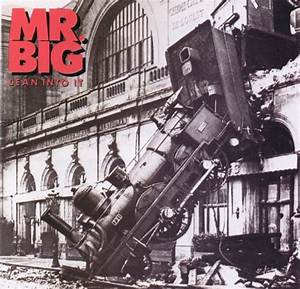




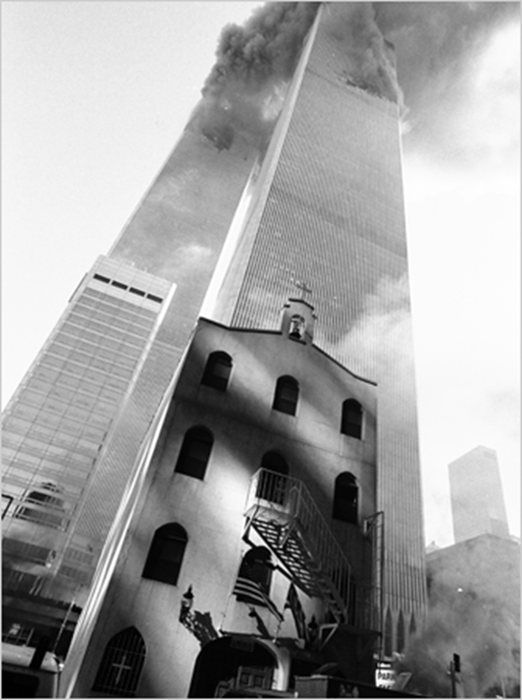
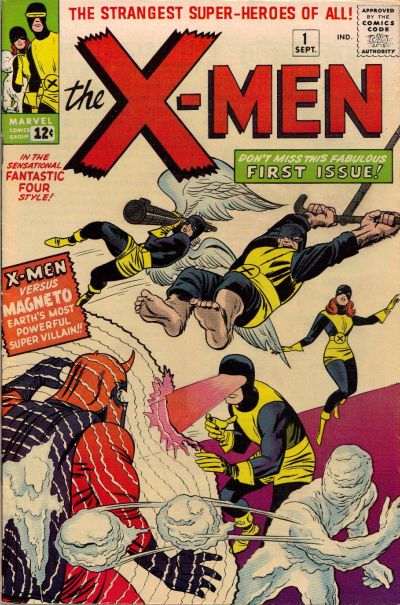







 Redeeming Pandora