Every year countries develop new and different experimental weapons and methods to achieve respect and fear from other nations in a time of war. These experiments contribute heavily to the advancement of society, the progress of mankind, and the expansion of nations. America has had such an experiment and development in science. The Manhattan Project, the atomic bombing of Japan, and the aftermath of the bomb were pivotal moments in world events.
On the second of August in 1939, Albert Einstein and others wrote to President Franklin D. Roosevelt telling of the Nazis’ attempts to purify uranium-235. This process would be used to create an atomic bomb that had the potential to destroy cities in a matter of seconds. Shortly after the letter, the United States began the multi-billion-dollar assignment known as The Manhattan Project. The Manhattan Project was an extensive scientific experiment that could, in fact, change the world of war forever (Purohit).
The goal of the project was to develop a formula for refining uranium-235. It was not to create the actual bomb, as many mistakenly think. Over the span of six years, 1939-1945, more than two billion dollars were spent on the Manhattan Project. Some of the most brilliant men on the planet were working together to develop formulas for refining uranium. The hardest part of creating the project was to produce enough “enriched” uranium to sustain a chain reaction for a certain amount of time. A huge enrichment laboratory was made in Tennessee. An extraction system was developed that could separate the very useful U-235 and the completely useless U-238 isotopes. Robert Oppenheimer was the chief among the master minds who unleashed the atom bomb. He oversaw the project from beginning to completion ( Bellis). Progress on the project was slow and uneventful until August of 1942. At this time The Manhattan Project was reorganized and placed under the control of the United States Army. The official name of the project was actually The Manhattan Engineer District. More than one hundred and forty thousand civilians worked at various locations on The Manhattan Project. Some of these workers did not know what they were working on. The project was extremely classified.
On December 7, 1941, Japan attacked America at Pearl Harbor. This attack on American soil sparked a war in the Pacific. Almost immediately, on December 8, 1941, America responded with a declaration of war on Japan. President Roosevelt ordered the atomic bomb after getting word the bomb could be made and The Manhattan Project was indeed successful. Colonel J.C. Marshall was told to set up the top secret assignment of creating an atomic bomb so powerful it could destroy a city (Gonzales 33). Two different bombs were produced through this assignment. Both of the bombs worked differently. The bombs were named “Little Boy” and “Fat Man.” “Little Boy” was smaller than “Fat Man” and not as powerful (59). On July 16, 1945, a test bomb was unleashed at 5:29 in the morning. Many scientists believed the bomb would not work. Some prayed it would not because they knew the power it could have and were afraid of the destruction the bomb could cause. Nevertheless, the bomb succeeded in the test. The explosion was massive, and the flash was blinding. Later newspapers said a blind girl could see the flash from one hundred and twenty miles away. The bomb was ready. America had in its possession an item that could truly destroy a city along with millions of lives (Purohit).
Many of the creators of the terrifying bomb had mixed reactions. Some believed it should not be used. Many immediately signed petitions saying the “monster” should not be unleashed. Robert Oppenheimer was extremely excited about the success of the project but was also very scared. He quoted a fragment of the Bhagavad Gita by saying, “I am become death, the destroyer of worlds.” Isidor Rabi, another extremely important contributor to the creation of the bomb, thought equilibrium in nature had been mixed up, as if mankind had become a threat to the world it inhabited. This discovery would mark the beginning of the atomic age of warfare, a huge advancement for all nations.
On August 6, 1945, a B-29 bomber named the Enola Gay took off from the island of Tinian and made the six-hour journey to Japan. The pilot of the aircraft was Colonel Paul Tibbets. The bomber’s main target was the city of Hiroshima. Hiroshima had a civilian population of three hundred thousand. It was an extremely important military center, containing forty-three thousand soldiers (DOE). The atomic bomb named “Little Boy” was released from the Enola Gay at 8:15 in the morning. The bomb measured 9.84 feet long and had a diameter of twenty-eight inches. It weighed a remarkable 8,900 pounds. The bomb was dropped at an elevation of thirty-one thousand feet (“Dimensions”). The city was alive with activity. People were walking in the streets, kids playing before school, and men and women were making their way to work. The people closest to the explosion died instantly. Their bodies were obliterated into black char. Birds were incinerated in mid-air. Shadows of bodies were burned onto walls, and clothing was melted onto skin. Fires broke out everywhere, creating one massive firestorm blowing furiously across the land destroying anyone who had withstood the first part of the blast (DOE). Staff Sergeant George Caron, the tail gunner of the Enola Gay, describes what he saw: “The Mushroom cloud was a spectacular sight, a bubbling mass of purple and gray smoke, and you could see it had a red-core in it and everything was burning inside. It looked like lava molasses covering a whole city.” Two-thirds of the city was destroyed instantly. The co-pilot, Captain Robert Lewis, stated, “Where we had seen a clear city two minutes before, we could no longer see a city. We could see smoke and fires creeping up the sides of mountains.” Within three miles of the explosion, sixty thousand buildings were completely demolished. A survivor of the attack described the victims as follows:
The appearance of people was … well, they all had skin blackened by burns. … They had no hair because their hair was burned, and at a glance you couldn’t tell whether you were looking at them from in front or in back. … They held their arms bent [forward] like this … and their skin — not only on their hands, but on their faces and bodies too — hung down. … If there had been only one or two such people … perhaps I would not have had such a strong impression. But wherever I walked I met these people. … Many of them died along the road — I can still picture them in my mind — like walking ghosts (Rosenberg).
The goal of this bombing was not to merely destroy military forces; it was to demolish a city (Rosenberg).
All communications were destroyed in the bombing leaving Hiroshima stranded. The government eventually received different reports from the outskirts of the city about fires and large amounts of smoke. Sixteen hours later, the Japanese government finally received confirmation of what had happened. They realized America had unleashed the most powerful weapon known to mankind on the city of Hiroshima (DOE).
America was not done with its unleashing of weapons of mass destruction. Although America did give Japan the chance to surrender between bombings, Japan refused. The next target was the city of Kokura. Kokura was a massive collection of war industries. The second option was Nagasaki. They ended up having to settle for Nagasaki due to inclement weather. The plane carrying the second bomb was named Bock’s Car (“Bombing”). Piloting the aircraft was Charles W. Sweeney. Sweeney said his greatest fear was “goofing up.” He also stated, “I would rather face the Japanese than Tibbets in shame if I made a stupid mistake.” The second bomb, “Fat Man,” was much heavier than “Little Boy.” This made the aircraft more difficult to pilot.
The bombing of Nagasaki seemed jinxed from the beginning. Many things went wrong such as bad weather, bad visibility, faulty communications, and even a malfunction with the bomb itself. Despite the many close calls, Sweeney still accomplished his goal. They left Tinian Island at 3:40 in the morning on August 9. The plane headed for Kokura, but due to inclement weather and malfunctions with the extra fuel supply, they had to settle for the second option of Nagasaki. Nagasaki was a major ship building city and military port (Glines). The second atomic bomb exploded over the city of Nagasaki at 11:02 am. A reporter flying in the plane behind the Bock’s Car said, “We watched a giant pillar of purple fire, 10,000 feet high, shoot upward like a meteor coming from earth instead of from outer space” (Glines). About two hundred thousand people were in the city of Nagasaki when the bomb exploded. A survivor of the Nagasaki bombing explains a scene he remembers distinctly as follows:
The pumpkin field in front of the house was blown clean. Nothing was left of the whole thick crop, except that in place of the pumpkins there was a woman’s head. I looked at the face to see if I knew her. It was a woman of about forty. She must have been from another part of town — I had never seen her around here. A gold tooth gleamed in the wide-open mouth. A handful of singed hair hung down from the left temple over her cheek, dangling in her mouth. Her eyelids were drawn up, showing black holes where the eyes had been burned out. … She had probably looked square into the flash and gotten her eyeballs burned (Rosenberg).
Numerous secondary fires erupted throughout the entire city. The fires were nearly impossible to put out due to the break of water lines (DOE). The devastation was incredible.
The effects of these two bombings were absolutely devastating. They left Japan emotionally destroyed. America, within the course of three days, had left Japan completely dumbfounded and awestruck. The bombing of Hiroshima instantly killed sixty-six thousand to sixty-nine thousand people. One hundred thousand more died by 1945. And by 1950, over two hundred thousand had died from various lingering effects (“Dimensions”). Everything up to one mile from the target was completely destroyed with the exception of certain concrete structures made to withstand a blast. Everything was flattened and desolate. It looked like a wasteland (Purohit).
The effects of the Nagasaki bombing were not as severe as Hiroshima, even though the bomb was more powerful and bigger. This is mainly because Nagasaki is located in a mountainous area (Avalon). But even with the mountains acting as barriers, the bombing of Nagasaki took a substantial toll on Japanese citizens. Forty-two thousand citizens were instantly killed, and forty thousand were severely injured. The bomb completely destroyed thirty-nine percent of the buildings in Nagasaki.
Both cities, Hiroshima and Nagasaki, suffered many strange and sometimes unexpected diseases and symptoms after the bombings. Survivors developed symptoms such as blood cell abnormalities, high fevers, chronic fatigue, diarrhea, vomiting, hair loss, and extreme depression. All people after the bombing were more prone to infection and cancer. Three years following the radiation exposure leukemia rates peaked. The exact amount of casualties is unknown, but many continued to perish up to ten years after the detonation of the atomic bomb (Anhalt)!
In addition to the immediate and long-term diseases and injuries of the Japanese people who were struck by the bomb was also an immense amount of emotional damage and sheer terror. The bombings struck an intense fear into all the citizens witnessing the event. Many citizens ran away and hid for long periods of time due to the hysteria the bombing forced into their lives. Before the atomic bombings people would pay no attention to a single plane, but after the nuclear bombing seeing a single plane would put more fear into Japanese citizens than seeing a mass of planes. This terror would never cease to exist (Avalon). It undoubtedly shaped the way mankind sees warfare.
Arguably the biggest deal concerning the bomb was the effect it had on the ongoing world war. The atomic bombing of Japan undoubtedly ended World War 2. Japan surrendered after seeing the massive amount of damage and casualties of their own land and people. Japan offered their surrender on August 10, 1945. The only condition was the emperor be allowed to remain the nominal head of state. America accepted the conditions of their surrender, but said the emperor could only remain for ceremonial purposes. Japan was not happy and delayed their response. During this delay America continued conventional raids, which killed thousands of more Japanese people. Finally the emperor remarked, “I can not endure the thought of letting my people suffer any longer.” On August 15, the emperor announced his plan to surrender. It took a few weeks but finally on September 2, 1945, the official ceremony of surrender took place and the war was over (DOE).
Countries continue to develop different weapons and methods to gain fear from other nations. The atomic bomb may have been one of the biggest discoveries ever made. The invention of this nuclear weapon has changed the way nations look at warfare and political matters. The Manhattan Project, the atomic bombing of Japan, and the aftermath of the bomb were pivotal moments in world events.
Newspaper headlines and documentaries have recently exposed the horrors and corruptions within the food industry. Most people today have a basic idea of what goes on behind closed doors in the food industry; few know exactly what happens. This day and hour, animals are being produced, transported, and slaughtered in larger quantities than ever before. This high demand creates a need for efficiency and quickness resulting in unfair and inhumane treatment for commercial purposes.
Factory farming, according to the ASPCA, is “a large-scale industrial operation that houses hundreds or thousands of food animals in extremely restricted conditions and treats them as non-sentient economic commodities.” The mistreatment begins in the process of raising the animals. Factory farms begin with force breeding, in which animals are made to reproduce at unnaturally accelerated rates. This causes the animals to become exhausted and stressed, putting their immune systems at higher risk for disease. Because all of the animals resulting from force breeding need to be stored, the unnatural overpopulation causes them to be cramped into small areas. They have no room to move, causing animals to get trampled to death or badly injured. The lack of space makes ventilation sparse and disease easily spreadable. To control the diseases among animals, the farm workers consistently feed them normally unnecessary antibiotics and hormones. In addition, these antibiotics are used to kill intestinal bacteria, stimulating growth to speed up production along with the hormones with which they’re injected.
The abuse is far from over with the raising of the animals. When the farm workers transfer the animals to the slaughterhouse, they still do not treat the animals as if their treatment could inflict pain. As animals are transferred, they are crammed into trailers, mostly in harsh temperatures. As cold weather worsens, animals start to freeze to the sides of the trailers. The skin of the pigs or cows sticks to the side, and when they are roughly being pulled off to enter the slaughterhouse, their skin remains on the trailer. Many who got sick or injured along the way are forced from the trailers with a bulldozer and piled with the other dead animals, waiting to join them in death. The U.S. Department of Agriculture says each year about ten percent or nine hundred million animals never reach the slaughterhouse.
After arriving from the farms, the animals are put in line to be slaughtered. Federal law requires animals be unconscious during processing, but unfortunately, that is not always the case. The majority of slaughterhouses use electrical wands or what the industry calls a “captive bolt” to make the animals unconscious, but these are not always effective. An account from a worker of a factory farm recounts, “To get done with them faster, we’d put eight or nine of them in the knocking box at a time. You start shooting, the calves are jumping, and they’re all piling up on top of each other. You don’t know which ones got shot and which didn’t. They’re hung anyway and down the line they go, wriggling and yelling, to be slaughtered, fully conscious.” Even with this requirement, some observations tell us thirty percent of animals being processed are still conscious while they go through the assembly line. One worker confessed, “A lot of times the skinner finds a cow is still conscious when he slices the side of his head and the cow starts kicking wildly. If that happens, the skinner shoves a knife into the back of its head to cut the spinal cord. This only paralyzes them, it doesn’t stop the pain.” The blame for this is put on faulty equipment or improper training of the workers. The U.S. Department of Agriculture conducted a survey among all United State slaughtering houses, showing barely thirty-six percent were using “acceptable” slaughtering techniques.
The inhumane act of slaughtering does not only affect the animals, it takes a toll on the workers emotionally and physically as well. A worker shares his experience with working in a slaughterhouse: “I’ve taken my job pressure and frustration out on the animals, my wife and on myself with heavy drinking. With an animal that makes you angry, you don’t just kill it. You blow the windpipe; make it drown in its own blood, spit in its nose. I would cut its eye out and the hog would just scream. One time I sliced off the end of a hog’s nose. The hog went crazy, so I took a handful of salt brine and ground it into its nose. Now that hog really went nuts….” Not only emotionally, the lack of training the staff has acquired can stay with them the rest of their lives. With bloody floors, sharp instruments, and thrashing animals surrounding, it’s easy to slip and injure yourself. Without closely paying attention, the heavy machinery could cause major injury. A worker testifies his observations: “The conditions are very dangerous and workers aren’t well trained for machinery. One machine has a whirring blade that catches people in it. One woman’s breast got caught in it and it was torn off. Another’s shirt got caught and her face was dragged into it.” Those disabled by machines and complain of the dangers are almost always replaced.
Those in the field of animal processing are not the only people affected by this way of producing. The consumers eating these meats produced by factory farms are also harmed. The antibiotics and hormones animals are required to eat because of the conditions they live in have harmful effects in humans who consume them. The animals are fed these antibiotics all of their lives, and they become part of their body. When we eat them, we also get the antibiotics and hormones they were given. Consuming these can create a long-term problem with our own health. The overdose of antibiotics can build up in our system, creating immunity from medicines used to fight certain strains of bacteria and illnesses. Overdoses in hormones also affect us negatively. Too much of a hormone can create growth problems in humans, just as it would make an animal grow unnaturally. Within the food we eat are also defects as a result of factory farming and inhumane slaughter. The food product from mass producing farms such as meat, eggs, and dairy products suffers in nutrition. Using improper slaughtering techniques results in blood-spattered meat only acceptable for low-grade meat products, such as hamburgers. As for eggs and dairy products, the force breeding and being injected with hormones to speed up the production affects the quality of the product. There are not as many health benefits and nutrition as a natural, healthy process would produce.
Yet another way factory farming affects the world around us is environmentally. When hundreds of animals are confined to one area, the surrounding land is harmed. So many animals create much more waste than land can support, as well as putting chemicals in the air through processing. This pollutes our soil, air, and water quality. The excessive amount of waste is stored in waste lagoons, which often leak, admitting the manure into our ground and waterways, adding bacteria. Side effects from this can result in Blue Infant Syndrome and other diseases. The manure is also taken by companies to spray as fertilizer, releasing chemicals into the air we breathe and a gas dangerous to those in close proximity to a large amount called hydrogen sulfide. Side effects range from sore throat to seizures and death.
In an attempt to stop this inhumane slaughtering, Congress recognized the Humane Methods of Animal Slaughter Act on August 27, 1958: “Congress finds the use of humane methods in the slaughter of livestock to prevent needless suffering; resulting in safer and better working conditions for persons engaged in the slaughtering industry; brings about improvement of products and economies in slaughtering operations; and produces other benefits for producers, processors and consumers which tend to expedite an orderly flow of livestock and livestock products in the interstate and foreign commerce. It is therefore declared to be the policy of the United States that the slaughter shall be carried out only by humane methods.” Though this held up while the demand for food was in smaller quantities, as it grew so did the inhumane treatment of animals. This created the need for President Bush to sign into law the “Farm Security and Rural Investment Act of 2002.” This includes a resolution the Humane Methods of Slaughter Act of 1958 be fully reinforced to prevent this needless suffering of animals. It also requires the Secretary of Agriculture to track volitions and report them to Congress annually. This poses the question: if these requirements are laws to be reported annually, why has factory farming continued to be a problem? According to Arthur Hughes, Vice-Chairmen of the National Council of Food Inspection, the new federal regulations have given slaughterhouses more responsibility to comply with plant operation, but requirements have left them powerless to enforce them. He explains in an interview, “Drastic increases in production speeds, lack of support from supervisors in plants, new inspection policies which significantly reduce our enforcement authority, and little or no access to the areas of the plants where animals are killed, have significantly hampered our ability to ensure compliance with humane regulations.”
With all of the problems of factory farming evident above, the question comes to mind, “what can be done to change this?” Simply stepping up for the rights of animals made clear in the Humane Methods of Slaughter Act can change the way these factories are run. In 1999, McDonald’s and other fast food companies received word of what was happening inside these slaughtering houses. McDonald’s showed up to investigate if the safety concerns were true. They then set up newer guidelines for workers to follow, but nothing more. Ways to ensure you are not supporting this horrific issue is by buying products marked as organic or free range. They both mean cows, chickens, and pigs have not eaten pesticides and are not being raised in factory farms. This not only does not feed the fast food business money and encourage them to keep producing, but it also supports local farmers. Another thing to look into is http://www.localharvest.org/, a Web site that allows you to find local farms near you and regularly order fresh produce and other foods with a good cause.
Works Referenced
Bonné, Jon. “Can the Animals You Eat Be Treated Humanely?” Msnbc.com Web. 14 December 2011.
Farm Sanctuary. Farmsanctuary.org. Web. 14 December 2011.
People for the Ethical Treatment of Animals (PETA): The Animal Rights Organization. PETA.org. Web. 14 December 2011.
U.S. Food and Drug Administration Home Page. Web. 14 December 2011.
In the book Hitler’s Willing Executioner’s, Daniel Jonah Goldhagen talks about how the German people under the Nazi regime were all willing to help Hitler commit his crimes against humanity. It is important, however, to acknowledge the fact there were Germans who disagreed with Hitler and who protested his policies. These people cannot be forgotten; they stood in the face of evil and defied it. These groups carried some of the most brilliant minds of the twentieth century from Sophie Scholl to one of the most famous theologians, Dietrich Bonhoeffer. Some of these groups were non-violent, such as the White Rose society, who simply protested Hitler’s policies through writing. Other groups such as the Valkyrie plot and the Abwehr plot tried to eliminate Hitler and replace his government. Both violent and non-violent German resistance to Hitler under the Nazi regime was effective in discrediting and weakening the Nazi government.
The German resistance to Hitler was not made up of one organization. The resistance was made by many different efforts, and it manifested itself in many different ways. The first real resistance to Hitler came before he even got power. The first people to protest Hitler were the communists and socialists; during Hitler’s campaign for election, they protested against Hitler. After he took power, these communists and socialists helped Jews and political prisoners escape to friendly countries. When war broke out with Russia, they helped the invading Russian army with food, money, supplies, and information.
The communists and socialists never united into one single movement; they were rather scattered efforts throughout Germany. Three other major united movements or groups within Germany, who stood against Hitler, though. The first was a non-violent group known as the White Rose Society. The White Rose Society was established in 1942 at the University of Munich. It was founded by three students: Christoph Probst, Hans Scholl, and Sophie Scholl. These students did not lead any coup attempts or try to start a civil war. These students simply spoke about living in an inhumane society.
Hans and Sophie Scholl both originally supported the Nazi government. They were both proud members of the Hitler youth. Their parents were never supportive of the Nazi’s, however. Hans’s and Sophie’s view began to radically change when the Nazis started to invade other countries. Though their views changed in the 1930s, they didn’t start writing until 1942. This is when they began to write about the “Enslavement” of the German people under the Nazis.
In the summer of 1942, the White Rose Society started writing their first leaflets. The leaflets were entitled “Leaflets of the White Rose.” The first leaflet was dropped in the fall of 1942. It started some real disorder in Germany. People began printing copies and distributing them to other cities. The writings impacted some students in Hamburg so much they started their own “White Rose Society.” In Munich, anti-Nazi graffiti began to spread rapidly. The leaflets were even given to U.S. soldiers before they invaded North Africa. In the winter of 1943, the publications had to stop because Hans and Christoph were both sent to fight on the Eastern Front against the Russians. Once they returned in February, they started work on a second pack of leaflets entitled the “The Leaflets of Resistance.” Only two of these were published, however, before they were all arrested on February, 18, 1943. On February 22, their trial began. The three founding members stood bravely, but on February 23, all three were beheaded.
Hans Scholl, Christoph Probst, and Sophie Scholl served as martyrs for the academic community who stood against Hitler. Unfortunately, the Hamburg branch of the White Rose Society was also caught and many were sentenced to death. These examples served to inspire others to speak out against Hitler. This is the most well-known non-violent resistance to Hitler. There were many coup attempts on Hitler. Some of these attempts were non-violent; they simply wanted to overthrow Hitler, with no blood shed. Others were full-on assassination plots. These coup attempts came from many different places within German society. The most famous ones and the ones that almost worked, though, came from inside Hitler’s own military.
General Ludwig Beck was the Chief of General Staff of the German army. When Hitler announced Germany was going to invade the ethnically German parts of Austria, Beck was outraged. Beck said he would refuse to carry through any order pertaining to the invasion of Austria. Beck did not have to carry through any orders to invade Austria. Austria was annexed as part of Germany and did not put up any fight. In 1938, Hitler announced plans to invade the ethnically German part of Czechoslovakia. General Beck had a major problem with killing any Germans, even it was just through ethnicity. Beck again protested, suggesting all generals of the German army should resign because it would be a crime to kill other Germans.
He sent the following letter to his fellow generals: “The very existence of the nation is at stake. History will attribute a blood-guilt to leaders that do not act in accordance with their professional expertise and political conscience. Your military duty to obey [orders] ends where your knowledge, your conscience and your responsibility forbids the execution of an order. If in such a situation, your advice and warnings are ignored, then it is your right and your duty before the Nation and History to resign from your positions” (Schrader, “The First Coup”).
This failed not because other generals didn’t agree with him, but because they were afraid of what might happen to them. Beck resigned his post, but Franz Halder agreed with Beck. Franz Halder and General Hans Oster, head of counter intelligence, made a plan to arrest Hitler. They made a plan down to the tee to execute if Hitler ordered the invasion of Czechoslovakia. Unfortunately, the English and the French signed away Czechoslovakia, and there was no fight over it. So the generals could never carry out their plans, because there was no invasion.
After the first unsuccessful coup attempt, Hitler began to conquer all of Europe. By 1941, Hitler had conquered from the Arctic Circle to the Mediterranean Sea. Among the German public he was very popular. Hitler began to lose popularity in December of 1941, when he tried to invade Russia. Now Generals Beck, Olbricht, and Bussche began to make a plan to overthrow the Nazi regime. They were just waiting for Hitler to get more unpopular. General Olbricht wrote a plan in case of an uprising known as plan “Valkyrie.” Valkyrie detailed the set-up of a new government in the case of Hitler’s death or a rebellion. The plan was constructed so when Hitler was killed the Nazi regime would be taken out. In 1943, Oster and Tresckow joined the plot. In the summer of that year, Tresckow obtained plastic explosives from the English and placed it on Hitler’s plane. This attempt did not succeed. The bomb didn’t go off.
There were many other assassination attempts. One included all the conspirators shooting Hitler at lunch, but many objected saying it wasn’t honorable. They agreed on one plan in July of 1944. The plan was to have Colonel Claus Von Stauffenberg plant a bomb in one of Hitler’s meetings. This was the best option so that way the bomb wouldn’t just kill Hitler, it would kill his advisers as well. The plan was originally set for July 12, but it was delayed because Hitler’s right-hand man wasn’t present.
On July 15, however, Von Stauffenberg asked for permission to carry out the plan and plant the bomb. Olbricht could no longer wait and gave the order to go ahead and plant the bomb. The bomb went off but did not kill Hitler; the bomb was behind a leg of the oak table. Hitler’s life would have ended if the bomb was just half a foot to the right or left. They still tried to carry out plan Valkyrie. It didn’t work. The Nazis quickly stopped the plan. All the conspirators were caught; most were shot on sight.
The next attempt on Hitler’s life was led by one of the most famous theologians of the 20th century, Dietrich Bonhoeffer. Dietrich Bonhoeffer mixed the two types of resistance: at the beginning of the Nazi rule over Germany, he was passive. He simply was protecting the church; once the war started happening, Bonhoeffer realized violent action was necessary. He decided Hitler must be killed.
Dietrich Bonheoffer was born February 4, 1906. He was homeschooled in his early years. Bonheoffer graduated from Union Seminary in New York in 1930. In 1931, he began teaching at the theological faculty in Berlin. In 1933, Hitler’s rise to power sparked much debate within the German protestant church. There was a debate if they should let “non-Aryans” serve as pastors. Bonhoeffer was opposed to this idea of the Church putting a race restriction on pastors. Bonhoeffer was getting worried the Nazi regime was starting to take too much power in the church. Bonhoeffer formed his own church, called the confessing church. The Nazis were infuriated by Bonhoeffer’s teaching, and they outlawed his church. The fact the Nazis outlawed it did not make a huge impact, however; Bonheoffer still had an underground seminary for his church.
In 1939, Dietrich Bonhoeffer decided to join the “Abwehr” plot to kill Hitler. He continued on with the church until he was arrested in April 1943, after it was discovered he had given money to help Jews escape to Switzerland. The Abwehr plot still carried on, though, and on July 20, 1944, five days after the Valkyrie plot, the Abwehr plot tried to kill Hitler but failed. It was discovered Bonhoeffer was part of this plot. He was then sentenced to death and was executed in April 1945.
All of these groups showed great courage in the face of evil. They all stood up for what they believed was right and paid for it. It is important to recognize not all Germans supported the Nazis; some fought and gave their lives trying to defeat the Nazis. Others simply spoke the truth. In the end, all these groups succeeded in making the Nazi regime less powerful. They made other Germans realize what a twisted organization the Nazis were.
Bibliography
Barnett, Victoria. “Dietrich Bonhoeffer.” Ushmm.org. 1st ed. National Holocaust Memorial Museum, 2009. Web. 10 October 2010.
The following is the mildly-edited final document I wrote for my Master’s Thesis. It has only been edited to keep the focus on the content, eliminating the extraneous elements required concerning the process of writing the work itself. Part Two and the conclusion will be printed in the forthcoming issue. (Unexpurgated copies are available on request for a small nominal stipend or honorarium, whichever you prefer.)
Introduction
The ancient epics of Greece are foundational to Western Civilization’s literary heritage. From the poets collectively known as “Homer,” operating in an oral culture, come the Iliad and the Odyssey, two contrasting yet connected examples that set the standard for the Western epic. After the exploits of Achilles and Odysseus, other stories and heroes come from a variety of cultures, crafted in new ways representing different values and ideals, each new epic and poet/author remaking and expanding the epic genre itself. Peter Toohey, author of Reading Epic: An Introduction to the Ancient Narratives, declares the ancient world knew several different kinds of epics: mythological, miniature, chronicle, commentary, didactic, and comic are examples of the diverse sub-genres of the epic (2-6). With such variety in authors, cultural background, purpose, and content, it is perhaps impossible to define “the epic” in any satisfactory manner that will account for so many differences. Thus, in order to make this present examination manageable, I focus solely on the two epic poems of Greece, the Iliad and the Odyssey, as the pattern of the epic of Western Civilization refashioned by Babylon 5.
Before examining the texts of the Iliad, Odyssey, and Babylon 5, some initial, albeit broad, definitions of what constitutes the Western epic will help introduce the specific genre of narrative discussed throughout this paper. Charles Rowan Beye, author of Ancient Epic Poetry, a work surveying the genre, provides a valuable historical perspective on the beginnings of the Western epic:
The term epic has come a long way from its origins as the Greek word epos, from the verb eipein, “to utter,” “to sing,” thus, the utterance of the song. Over time, a professional guild of singers cooperated in the evolution of the Iliad and the Odyssey narratives as well as in a host of others now lost to us. The Greeks understood the epic to be a genre of long narratives in dactylic hexameter telling stories that encompassed many peoples, many places with sufficient detail and dialogue to give depth, psychological complexity, and, most important, a historical context. These epic poems contained their history, the history of peoples, the history of the world (284, emphasis in original).
Emphasizing the oral origin of the epic, Beye’s definition begins this understanding of epic as a sensory enterprise: epic was not originally a reading experience but an aural experience for the audience, which Babylon 5, as a television program, similarly provides, while adding a more precise visual component. More significantly, Beye indicates the Western epic is a substantial work that contains “depth, psychological complexity, and … a historical context.” To these essential components Toohey adds that it “concentrates either on the fortunes of a great hero or perhaps a great civilization and the interactions of this hero and his civilization with the gods” (1). Thus the context of the Homeric epics concerns not only the human element of the heroes involved, but also humanity’s interaction with something transcendent: fate, destiny, the divine, and the importance of understanding oneself and one’s place in the universe.
These definitions, taken together, provide a meaningful conception of the major components of the Western epic: 1) a lengthy narrative with a definite structure and shape; 2) a defined central hero surrounded by and relating to other significant, defined characters; 3) a plot of historical significance for the characters and their world; and 4) a thematic element of how the characters come to a better, transcendent understanding of themselves, reality, and their connection to society. The Iliad, Odyssey, and Babylon 5 all utilize these basic epic elements (and more). My purpose, however, is not simply to highlight elements of Babylon 5 as if it is an allegory of the Homeric epics, such as declaring “this character is like Achilles,” or “these episodes resemble a journey like the Odyssey.” The similarities presented are not allegorical but instead serve as examples of Babylon 5’s utilization and reinvention of the various components of the Western ancient epic genre.
In demonstrating the epic natures of the Iliad, Odyssey, and Babylon 5, this thesis utilizes formalist criticism and historical analysis. Through these two analytical tools, I examine the texts of the poems and the episodes of Babylon 5, aided extensively by secondary sources. The Homeric epics have a long history of analysis, though much has focused on their authorship and construction as oral narratives. As that is extraneous to this present examination, I rely predominantly on the content-based historical analyses of the authors who helped define the epic above, Toohey and Beye. Additionally, informing much of my understanding of the structure of epic poetry used throughout the first part of this paper are the narrative composition ideas from Cedric Whitman and the archetypal journey insights from Joseph Campbell.
Drawing upon extensive research (his single-spaced bibliography is twelve pages long), Toohey’s Reading Epic provides an introductory chapter about the general content and style of what constitutes the ancient epic, in addition to the aforementioned history of the epic as a literary genre. Its pertinence and utility are apparent. His emphasis on the heroic code, additionally, which contrasts Achilles and Odysseus as different kinds of heroes, provides several helpful insights for this investigation. Toohey’s knowledge of and extensive research on the subject is clear throughout his work.
Beye’s Ancient Epic Poetry is even more beneficial for my particular focus on the constituent elements of the epic. Offering a more recent work (2006) than Toohey’s (1992), Beye’s commentary provides several useful ideas about Achilles and Odysseus as epic heroes, in addition to the heroic code highlighted by Toohey. Unlike Toohey’s simple bibliographic list, Beye offers a narrative history of Homeric and other ancient epic scholarship. He discusses the aforementioned dominant topic of composition in the field of ancient epic scholarship, citing landmark critics Friedrich August Wolf, Milman Parry, and C.M. Bowra (among several others). Beye laments the dearth of scholarship on the Argonautica and Gilgamesh, though his revised 2006 edition addresses some of the advancements made since his first edition in 1993. His motivation in including commentary on the Argonautica and Gilgamesh, as rectifications of previously-ignored important works, mirrors the motivation of this present inquiry in analyzing Babylon 5 as a serious literary text in the media of televised science-fiction and contemporary epics.
Supplementing the major ideas of Toohey and Beye, the earlier Homeric scholarship of Cedric Whitman provides additional criticism. His Homer and the Heroic Tradition supplies most of the ideas about the dominant structure of the ancient epic, though his focus is admittedly on the Iliad. Like Toohey and Beye, Whitman is clearly fluent in Homeric scholarship. His work is a frequently-cited landmark in the field, though I concentrate primarily on his poetic structure commentary here. Further implementation of his work would only benefit any examination of the epic genre.
Joseph Campbell’s The Hero with a Thousand Faces is cited heavily concerning the archetypal epic journey used throughout the chapters on the Odyssey and Babylon 5. Campbell’s theories are based in part on the archetypal criticism of Carl Jung, for whom the archetype was a fluid exploration of the “collective unconscious” of a people. Jung’s notions about archetypes as processes are quite fitting not only for Campbell’s epic hero journey pattern but also for Babylon 5 as a whole, whose primary heroes embark on archetypal journeys. Like Whitman, Campbell offers more insight into the epic genre than can be adequately incorporated here, so the focus is intentionally limited.
Other critics cited throughout this thesis such as noted scholars Gilbert Murray, Northrop Frye, and Peter J. Leithart of New Saint Andrews College supply additional helpful ideas, though not to the extent of Toohey, Beye, Whitman and Campbell.
Much of the research cited throughout this work comes from easily accessible sources to the lay reader (Beye makes a similar point in his annotated bibliography). Secondary sources used to supplement the formalist analysis of the individual episodes of Babylon 5 come predominantly from recent interviews and bonus features on the dvd releases of the individual seasons of the series. As the creator of the series, J. Michael Straczynski offers pertinent insight into the television show, its structure, and its message. With the exception of rare, out of print magazine articles and Internet websites (such as “The Lurker’s Guide to Babylon 5,” which provides episode analyses, Straczynski’s commentary, and interaction with the series’ fans), few secondary sources exist analyzing Babylon 5 as a serious, significant literary artifact, which has in part inspired this investigation. The recent interviews of the series’ creative team and cast, from the dvd releases, provide interesting (albeit biased) ideas for this thesis, supplementing analysis of the specific episodes themselves. Other important reference works not cited below include David Bassom’s behind the scenes books such as Creating Babylon 5 and The A-Z of Babylon 5 and Jane Killick’s episode guides, one for each of the five seasons. Their interviews with cast and crew members provide similar backgrounds to the show, but as they are not pertinent to Babylon 5 as a rebirth of the ancient epic, they are acknowledged here only in passing. (Editor’s note: though the original bibliographic information came at the conclusion of the entire work, the works cited throughout part one will be listed at the close of this issue.)
While the Homeric poems themselves are unquestionably worthwhile for any literary analysis, and have been for thousands of years, some critics may question the serious value in attempting to elevate a television show to their status. My thesis posits an affirmative response that it is. Babylon 5 reforms the Homeric epic in style and content, and there is great value in analyzing and understanding it. Babylon 5 gives witness that the influence of the Western ancient epic genre still exists, that the elements that created the ancient epic still resonate in new cultures, new settings, and new media. Their similar hopeful messages of the importance of life given by the responsibility to live well and make wise choices apply to all cultures and all times. The human condition, mankind’s struggle to find a place in the universe despite mortality, resonates as strongly in Homer’s epic past as it does in Babylon 5’s epic future.
Part one of this thesis examines the various contributions of the Iliad and Odyssey to my initial four-part definition of the ancient epic. I do not spend time arguing about the identity of “Homer,” but rather accept the content of the poems as available to the lay reader today through translations. The differences in transmission between an oral culture and the audio-visual medium of television are so apparent that they would distract from the content-driven emphasis of this present work. Chapter one defines the epic elements specific to the Iliad, while chapter two focuses on the Odyssey.
Part two of this work analyzes Babylon 5, how it utilizes the foundational epic components listed above, as well as how it modifies those elements in the ever-changing (yet stable) epic form. Babylon 5 is the major emphasis of this paper, as I seek to contribute to the nascent body of serious criticism on science fiction as a meaningful genre. Part two, likewise, has two chapters. Chapter three addresses the characters: first the two main epic heroes, Commander Jeffrey Sinclair and Captain John Sheridan; and second, alien ambassadors Londo Mollari and G’Kar as different kinds of characters distinct from Babylon 5’s epic heroes. Chapter four addresses the remaining three elements by which I define the Western ancient epic. First are the series’ structure and shape and its plot of historical significance. The grand scale of the program, combined with several layers of internal and external conflicts, makes the show very complicated but cohesive, much like the structured ancient poems. Babylon 5’s dominant transcendent themes of accurate self-understanding and finding one’s place in the universe culminate this exploration of the series as a refashioning of the Western epic genre in a new medium.
Finally, the conclusion focuses on how the fundamental message of hope permeating Babylon 5 at once connects it to the human, mortal core of the Iliad and the Odyssey and also offers a relevant message for all audiences: that life is meaningful and worth fighting for, even with all its flaws and brevity. Babylon 5, like the Homeric epics, engages the audience in the importance of making choices and facing the consequences of those choices with responsibility. Only through accurate self-understanding and a proper knowledge of the nature of reality and one’s place in it can bring a right perspective on the importance and value of all life. In this way Babylon 5 transcends its Western epic foundation and transforms the genre into what its original epic heroes wanted but were denied: the ability to shape one’s own life through free choices.
Part One: The Western Ancient Epic
Chapter One – The Iliad
Structure and Shape
The unifying narrative structure throughout the Iliad is a device interchangeably called “ring composition” by some critics and “chiastic arrangement” (after the Greek letter χ, the chi) by others. The narrative that employs ring composition comes “full circle” in the sense that its end was sufficiently foreshadowed by the beginning of the tale, which essentially returns to the point at which it began. The necessities of plot, even for an epic tale, demand progress and movement, so the nature of the return or completion is sometimes more symbolic than literal, but this does not detract from the efficacy of this narrative technique. This pattern pervades the Iliad in each facet of its structure, from the overarching schema of the entire work to the order of scenes within individual books.
Peter Leithart provides the following diagram, which summarizes many of Cedric Whitman’s ideas about the arrangement of the Iliad:
According to Leithart’s diagram, the poem clearly ends in a similar place to where it began: a Trojan requesting a child from an Achaean. The plot requires the particulars of each request to be different, but the formal structure of the poem is a unifying ring. The cleverness of such a device allows the necessary progression of plot and character movement (even if only internally) while still providing the appearance of similarity in shape and content. Such parallel events bring familiarity and the sense of completeness without the banality of exact repetition. It is this creative structure that gives form to the Western epic genre.
Ring composition guides the progression of time in the Iliad in addition to the direction of its overall plot. Whitman provides a similar diagram delineating the chronology of the poem. The shape of these diagrams resembles an “x” or the Greek χ, hence the term “chiastic” structure.
Again, though the plot content is not precisely identical, the ring similarity concerning the chronological length of the mirrored episodes is remarkably consistent. The length of the mirrored episodes in its written form does not need to be identical — such a limitation would unnecessarily hamper the poem. The key is the mirrored/ring nature of the time as well as the plot itself, which Whitman sufficiently proves.
But ring composition does not just inform the overarching structure of the Iliad. It can also be seen in smaller sections within the poem. Book five, relating Diomedes’s mighty battle exploits while Achilles is away from combat, similarly depicts such a pattern in another diagram from Whitman:
Whitman further explains that book five, “[l]ike so many parts of the Homeric narrative, falls into four primary phases, each developed with smaller episodes, and these lie symmetrically on either side of the brief meeting of the hero with Apollo” (266). That Diomedes’s key scene in the poem revolves around his interaction with one of his gods foreshadows here the key epic theme of interacting with some transcendent element of the universe, but since he confronts the gods with physical force and not transcendent understanding, he gains only a temporary (and ultimately inconsequential) victory. This example, as Whitman says, is one of many throughout the poem and thus serves to illustrate clearly that the Iliad uses ring composition or chiastic structure from its overarching plot and time to its individual scenes or episodes.
Ring composition, then, is a fundamental component of what constitutes the Western ancient epic genre. As the first example of this genre, the Iliad’s guiding structure and shape set the pattern for the narrative structure Western epics use to tell their tales, whether as a unifying device or simply in discrete episodes. Regardless of whether the Iliad is a series of stitched-together, disparate tales from an oral composition heritage, the extant poem we have now called the Iliad, as demonstrated by Leithart and Whitman, employs such a narrative structure. Now, the Iliad is a cohesive tale bound together through ring composition, the narrative base for the Western epic. Each epic poem is different and contributes unique variations to the genre, and not all epics utilize ring composition to the extent the Iliad does. Even so, the Iliad, the Odyssey, and Babylon 5, as examples of the Western epic genre, all employ this key narrative structure.
A Central Hero amid Others
Without question, the central hero of the Iliad is Western literature’s first and (perhaps) greatest hero: swift-footed Achilles. Despite his lengthy disappearance in the middle of his poem, the Iliad is Achilles’s story, a story Richmond Lattimore considers a tragedy, which is an unusual thought, considering Achilles survives the Iliad, and his actions in slaying Hector portend the downfall of Troy. Harold Bloom agrees with Lattimore adding that while Achilles “retains the foremost place, [he] cannot overcome the bitterness of his sense of his own mortality. To be only half a god appears to be Homer’s implicit definition of what makes a hero tragic” (70). Son of the human Peleus and the divine water nymph Thetis, Achilles believes at the outset of the Iliad he has inherited only the worst trait from his heritage: mortality. The Homeric Achilles has no invulnerability, and he knows it only too well.
Achilles is continually reminded of his mortality throughout his poem, most notably when his dear friend and kinsman Patroclus is killed by Hector. This sudden loss forces Achilles to seriously ponder his own mortality, especially since Patroclus was acting as Achilles’s proxy on the battlefield — even wearing Achilles’s armor — at Achilles’s insistence. Two other essential scenes, Agamemnon’s envoy to Achilles in book nine and Priam’s plea for Hector’s corpse in book twenty-four, include appeals to Achilles’s mortal father to guide his actions. The envoy and loss of Patroclus contribute to what Bloom calls “the bitterness of [Achilles’s] sense of his own mortality.” By the time of the climactic confrontation with Priam, Achilles is no longer bitter over his mortality. Achilles’s struggle with his mortality, his place and purpose in the universe, his relation to fate and the gods is a significant theme of the Iliad and will be addressed below. Suffice it to say here, the majority of Achilles’s story is a tragedy because of his struggle with mortality and, though he makes peace with it (and Priam) by the end, he knows he will soon die. Yet it is not only his pressing mortality that makes Achilles a tragic hero.
Achilles, as a hero and a mortal, makes free will choices and decisions (though without the ability to shape his destiny). Achilles has a tragic flaw (which Lattimore considers noble), part pride, part occasional subservience to anger, and yet this flaw does not negate Achilles’s freedom to make choices. These choices lead to disaster, culminating in the loss of Patroclus, and this, too, contributes to Achilles’s tragic nature.
Achilles, though, within the confines of the Iliad at least (if not the portentous nature of its tragedy), partly overcomes his own tragedy through the sheer greatness of his personality. Superficially, Gilbert Murray sees him as “young, swift, tall, and beautiful” (206), and though his physical attributes help distinguish him from his fighting comrades (Odysseus’s shortness is frequently mentioned, for instance), there is certainly more to him than that. Lattimore adds that Achilles “is a man of culture and intelligence; he knows how to respect heralds, how to entertain estranged friends. He presides over [Patroclus’s funeral] games with extraordinary courtesy and tact. He is not only a great fighter but a great gentleman” (49). Perhaps, then, Achilles did inherit some positive mortal attributes. Certainly the gods of the Iliad are not characterized by “extraordinary courtesy and tact,” even in their best moments. Even Thetis herself seems only interested in effecting glory and a kind of justice for her son (though some might argue she is being a good mother, her willingness to sacrifice many of her son’s compatriots as attrition for her son’s justice exceeds proper motherly behavior). True, Achilles is not always characterized by “extraordinary courtesy and tact,” but the battlefield is certainly not the place for that. When Agamemnon arbitrarily steals from Achilles and disparages his honor in front of all his fighting peers, Achilles prepares to commit regicide. Since Agamemnon unjustly sullies his honor in a culture that values honor so highly, Achilles may well be within his rights to kill him. Athena intervenes — not because killing Agamemnon is wrong, but because patience will be more beneficial to Achilles later. That he freely yields to Athena (if only for the promise of future gain) exemplifies both his ability to make choices and his heroic connection to the transcendent gods of his universe. As Lattimore describes, Achilles’s “tragedy is an effect of free choice by a will that falls short of omniscience and is disturbed by anger … and his character can be invaded by the human emotions of grief, fear, … and, above all, anger” (47, 48). His anger is thus an essential component of his character and his function as a tragic hero.
The poem wastes no time in bringing up Achilles’s anger: it is the first word in the Greek text. The Iliad is the story of Achilles’s anger: what causes it, what happens because of it, and how it is satisfied and released. His anger “is the anger of pride,” says Lattimore, “the necessary accompaniment of the warrior’s greatness” (48). Because he is great, not only militarily, Achilles knows when his greatness is being challenged, which Agamemnon does. His wounded pride kindles his anger and begins the epic. Though he later treats Agamemnon’s envoy cordially, even greeting them enthusiastically, his response to their entreaties is “clouded” and he “acts uncertainly” Lattimore explains (48) because he is still angry. Appealing to Achilles’s father and, hence, his mortality, does not help as his anger has not yet been satisfied. He rejects their offers and their multifaceted avenues of restoration with Agamemnon. After the death of Patroclus, Achilles transfers his anger from Agamemnon to Hector, transmuting it from a reaction to disgrace into a desire for vengeance, but not even killing Hector slates his anger. It is not until Achilles reconciles with his own mortality that the final appeal to his father by Priam moves him to dissolve his anger and return Hector to his father. Achilles’s anger — what Barry Powell specifies as “the destructive power of anger” (115) — as a unifying motif of the Iliad connects the poem’s ring composition with the nature of the epic hero. The poem opens with a king breaking fellowship with a warrior and concludes with the warrior gaining restoration with not only the king but also the kingly father whose son he brutally murders in anger. Achilles’s anger results in Patroclus’s death, but Achilles is not free from culpability because of an emotion. It is Achilles’s choice to withdraw from battle and send Patroclus out in his stead. That ability (and responsibility) to choose even in his anger also relates to the epic’s theme of the hero understanding his place in society and relationship with the gods, discussed below.
Lastly is Achilles’s motivation. More than his anger, which primarily occurs as a reaction to circumstances, and his struggle to cope with his mortality, Achilles’s fundamental goal in the Iliad explains C.M. Bowra “is not ease, but glory, and glory makes exacting demands. A man who is willing to give his life for it wins the respect of his fellows, and when he makes his last sacrifice, they honour him” (58). By choosing to stay at Troy and ending his short-lived embargo on fighting, Achilles demonstrates that he is a man of action, a warrior, and desirous of his culture’s supreme good: battlefield glory. Vengeance for Patroclus is only part of Achilles’s motivation to return. He knows he can only fully regain his sullied honor by gaining it where it is earned, in combat. He desires to reunite with his culture, as can be seen by his acting as judge and gift giver during Patroclus’s funeral games. He wants to be a part of society, knowing it will soon kill him, since he desires eternal fame, which can only be won on the battlefield. Toohey calls this yearning for glory the “heroic impulse” (9). Though he would prefer to be immortal or at least change the impetuous gods, he realizes he cannot, so he willingly chooses to regain his status and personal glory through combat. For want of glory he allows his comrades to die during his retreat. For the restoration of his eternal glory he willingly chooses the path he knows will result in his own death. Achilles cannot change the end of the heroic impulse in his culture; neither can Odysseus, who similarly follows the Homeric heroic impulse to the restoration of culture through combat. The heroes of Babylon 5 do have the ability not only to change their universe but also the heroic impulse itself. Achilles, unfortunately for him, is forced to resign himself to his mortality and the heroic impulse of his warrior culture, which he willingly embraces after all.
The greatness of Achilles as a hero and member of the warrior culture is depicted in juxtaposition with the other characters in the Iliad. Both the Achaeans and Trojans are heroic, but not to the degree of Achilles, since it is his story. His greatness is pronounced and heightened by the quality of those he overcomes, most notably Hector.
As the Trojan’s last, best hope, Hector provides the best test of Achilles’s greatness. Lattimore explains that unlike Achilles, who willingly abnegates the community of warriors and the heroic impulse for a time, Hector “fights finely from a sense of duty and a respect for the opinions of others” (47). The hero of Troy is caught up in the heroic ideal and heroic culture of combat and glory-winning, but unlike Achilles who tries not to be concerned with the opinions of others, Hector only lives and dies by others’ esteem. That attachment to others is part of his subordination to Achilles and his doom. Lattimore continues, “Some hidden weakness, not cowardice but perhaps the fear of being called a coward, prevents him from liquidating a war which he knows perfectly well is unjust. This weakness, which is not remote from his boasting, nor from his valour, is what kills him” (47). Achilles is not brought down in the Iliad by ignorance or weakness. He chooses willingly what will eventually bring him down. Hector, however, can live only as long as he is deemed valiant by those he defends.
A second major distinction between Achilles and Hector is found in Hector’s key scene of book six, in which Hector leaves the battlefield and returns behind the walls of Troy. Hector, the general by necessity not nature, is normally more comfortable here at home with his parents, wife, and child, yet this farewell scene is fraught with impatience and unease. Hector has not the time to socialize with his family, even though it is clear he would stay here if he could. Hector sacrifices his happiness for his fundamental motivation of fulfilling his duty as the personified final defense of Troy. Hector is more clearly associated with hearth and home than the battlefield, however, and his scenes in book six show this. Certainly, as Bloom notes, “we cannot visualize Achilles living a day-to-day life in a city” (69). As the embodiment of the life Achilles ultimately rejects, Hector is an essential counterpoint to the poem’s hero. Hector is recognized and beloved in the city, i.e., culture, and is fit more for the Odyssey than the Iliad. Since he is in Achilles’s poem, though, he is doomed from the start. James Redfield furthers this representational conflict: “The action of the Iliad is an enactment of the contradictions of the warrior’s role. The warrior on behalf of culture must leave culture and enter nature. In asserting the order of culture, he must deny himself a place in that order. That others may be pure, he must become impure” (91). Achilles, as untamed, uncivilized nature, is an unstoppable force on the battlefield. Hector, since he acts contrary to his true character, has no chance of victory. By itself, that gives no positive reflection on Achilles’s greatness — he is not impressive if his enemy has no chance to beat him. What makes Hector a worthy adversary is his sacrificial character. Hector’s sense of duty (even if driven by a fear of being considered a coward) overrides his desire for comfort, ease, and family living, much like Achilles’s desire for glory overrides his desire for long life and comfort. Achilles meets his inward match in Hector. Hector sacrifices his identity as a father and husband to be a general, assuming his society’s heroic impulse, though futilely. Achilles may not enjoy the heroic impulse either, but he has no satisfactory alternative like Hector does. Unfortunately for Hector, the society of the Iliad values the natural character over the character of culture. Under prepared and overmatched, Hector cannot defeat Achilles.
By conquering his Trojan counterpart, Achilles asserts both his own status as the hero of the poem and his own attributes as the desirable heroic qualities, if not the qualities that simply succeed in this incarnation of the epic heroic impulse. Achilles understands that by choosing to follow the heroic impulse again, even if he would prefer a different life, his fate is an imminent death. He accepts it and faces the consequences of his decision (though others suffer the immediate consequences in the poem itself). Hector, in his final moments with his family, likewise foresees the results of his choice to face Achilles. Unlike Achilles, Hector does not embrace the doom of Troy he presages with his death, including the heartbreaking fate of his wife and child, and tries to avoid it, failing utterly. Hampered by his need to be what others want him to be and his fear of disappointing them (and being considered a coward), Hector’s otherwise admirable self-sacrificial character comes to naught. Despite his greatness, Hector is no match for who Achilles is and what he represents, ensuring Achilles’s place as the epic hero of the Iliad.
Plot of Historical Significance
Little needs to be said here, surely, about the plot of the Iliad. Its chiastic/ring structure in the narrative construction, as well as its thematic cohesion through the rise and fall of Achilles’s anger, shows much of its content. It is possible the lay reader is more familiar with what is not in the Iliad than what is in it. The Iliad does not mention the Golden Apple and the judgment of Paris (except perhaps briefly at the beginning of book twenty-four), Tyndareus’s oath (Helen’s father) of Helen’s suitors to protect her if she is ever abducted, Agamemnon’s sacrifice of Iphigenia, Achilles’s vulnerable heel, or the wooden horse gambit used to end the war.
Essentially, the Iliad concerns only a few days of fighting highlighted by the deaths of Patroclus of the Achaeans and Hector of Troy, bookended by forty-six days (twenty-three and twenty-three) days of virtual inactivity. This occurs in the tenth year of a siege by the Achaeans on Troy, following nine years of coastal plundering, most recently the area of Chryseia. The perplexity (if not part of the beauty) of the Iliad is that its storyline does not fundamentally concern the Trojan War itself — it is more about the rise and fall of Achilles’s anger, and Achilles himself is not even terribly concerned with the war. As he makes clear in book one to Agamemnon and those listening, he has no personal stake in the Trojan War other than surviving and gaining glory and plunder. The cause behind the war, Paris’s abduction of Helen, is only briefly referenced. As a tale of war, combat dominates the middle section of the poem through several duels and large-scale melee battles, especially during Achilles’s absence. When he returns to the foreground, everything else becomes subordinate to the choices and actions of the dominant hero of the epic.
Even though he is the best warrior and the superlative hero of the poem, his own personal journey of choosing glory and accepting his fate is not as momentous a tale as the entirety of the Trojan War itself. What gives the poem historical significance, then, comes from its ancillary components: its background of large-scale conflict, the internal significance to the characters’ personal attachment to the circumstances in which they find themselves, and the poem’s thematic element dealing with the transcendent.
Michael Wood, noted British archaeologist and author, proffers the notion whether or not the Homeric story is real, evidence exists for the possibility of “a” Trojan War, if not “the” Trojan War, and that this conflict between Achaea and Ilios seems to conclude the Bronze Age and the Mycenaean Empire. More recent archaeology supports his ideas, thus his general conclusions about the aftereffects of an empire’s destruction will illuminate the historical significance of the Iliad’s background as a story of what happens/could happen when one people (try to) destroy another:
The central political organization collapses or breaks up; its central places (“capitals”) decline; public building and work ends; military organization fragments…. The traditional ruling elite, the upper class, disintegrates…. The centralised economy collapses…. There is widespread abandonment of settlements and ensuing depopulation (244).
Agamemnon’s merciless attitude (cf. book six) will not be satisfied after ten years with anything less than the destruction of Troy. Since Wood’s summary of what happens to cultures after such destruction is relevant, the Iliad has great historical significance, regardless of the poem’s historical accuracy. As a tale of the fall of a kingdom (through the destruction of Priam’s home and progeny), the Iliad concerns not only the mortality of the individual but of social institutions at large. Additionally, every level of society present in the poem takes its events seriously: this is life and death in palpable form.
The fate of so many characters in the poem is tied to the fate of Troy: once Hector falls, Troy is essentially doomed and so are its inhabitants; Achilles’s choice to stay and kill Hector seals his personal destiny; Agamemnon (as attested to throughout the Odyssey) will have an unwelcome (and brief) return to Mycenae, despite his military victory. The events of the Iliad are meaningful to all its characters, not the least of whom are the dozens of men whose rapid deaths are lamented in the several battle scenes of the poem. As warriors, their lives are given extra significance by their battlefield glory. The terse biographical sketches of so many warriors humanize the poem while simultaneously reminding the reader that the epic poem is fundamentally about humanity in all its facets — vengeance, love, strength, and sacrifice. Mortality and its significance are ever-present in the Iliad. Summarily, the disparate characters react to the grand tale of war in different ways, and each character contributes something different (even if only minutely) to the poem’s overall significance not only as a tale of war but also as a tale of individuals caught up in such a conflict, trying to understand themselves and their world.
A Theme of Transcendent Understanding
The final component of what constitutes the Western ancient epic genre is its thematic element of transcendent understanding. More than just a long, well-structured tale with a mighty hero doing mighty things that transform a culture, the epic features the essential struggle of mankind trying to understand itself, its purpose, and how to interact with the immaterial forces at work in the universe such as fate, destiny, and the divine. The Iliad focuses on how Achilles comes to understand himself, his culture, his fate, and his relation to the gods. Some comments on the Homeric gods themselves will provide a context before examining Achilles’s struggle with the reality beyond the material world.
Few critics see much good within the gods of the Greek pantheon, at best viewing them as amplified humans full of pettiness and greed. Because the sovereign deities of the Iliad universe are licentious, Beye declares they provide “no ideal to which mankind should strive” (57). It is little wonder that Homeric heroes are forced to judge the importance of their lives by tangible standards such as public renown and the amount of booty plundered in war. The gods do not genuinely care for the mortals who do virtually everything on behalf of them; not even Zeus, who supposedly operates throughout the poem for Achilles’s best interest and glory, truly cares for the people. He regrets being forced to allow Sarpedon to die, but he is only “forced” because he esteems fate more than humanity. Aphrodite saves Paris and Aeneas from death, more for her pleasure than because she truly loves them — even though Aeneas is her son. The gods are a significant component of the epic, but their ultimate importance is limited as Powell states because they “are unconstrained by the seriousness of human life … [because] their immortality cheats them of the seriousness that attends human decisions and human behavior. Our acts count because we are going to die, but the gods are free to be petty forever” (47). Powell emphasizes again the importance of free choice as a mark of quality life — the heroes of the Iliad are responsible for their actions because the gods, according to Lattimore, “do not change human nature. They manipulate [the characters], but they do not make them what they are. The choices are human; and in the end, despite all divine interferences, the Iliad is a story of people” (55). The significance of being a free mortal human manipulated by the gods is what Achilles struggles with throughout his poem.
As the central hero of the poem, Achilles’s struggle with his identity and culture is the most significant struggle of this kind. Diomedes’s encounters with the gods affect him, but he soon disappears from the story. Hector has the ability for a time to know himself and his future, but he does not accept what he sees and so is destroyed. Redfield makes this point clear, that this transcendent ability is central to the Western epic genre:
It is a peculiarity of the epic that its heroes can, at certain moments, share the perspective of poet and audience and look down upon themselves…. Achilles tests the limits of the heroic; when he commits himself to the killing of Hector, he sees his own death also before him and accepts it. He is thus an actor who both acts and knows his own actions as part of an unfolding pattern (89).
Achilles, Odysseus, and the characters of Babylon 5 thus have a unique ability as epic heroes: they can, when the time is right, see beyond their own situations and know where they fit in with their reality. Epic heroes such as Achilles are aware that their actions are choices, that those choices have consequences, and that they must face those consequences with responsibility for having freely chosen to do what they do. Not all characters in the Western epic are aware of themselves and their place in their culture — only heroes have that ability, what Lattimore calls prescience, to see beyond themselves.
In order to understand himself, his culture, and how he fits in, Achilles must first be separated from his culture, which occurs when he chooses to leave the battlefield after Agamemnon insults him in book one. Because Agamemnon cares only for his material wealth and status, he has no chance of understanding his culture (he accepts it readily) or transcending it, and so he cannot be a true epic hero like Achilles. Achilles is so upset with Agamemnon’s insult that he eschews the culture and heroic impulse that drove him to Troy nine long years ago. As a warrior withdrawing from battle, notes Toohey, “Achilles begins to reject the heroic world; as a way of life … it is suddenly making demands upon him that he cannot tolerate” (124). If the heroic impulse allows a leader who is only a leader because of material prosperity and not inner quality to steal property and besmirch honor in front of those who bestow such honor, Achilles will have no more of it, and so “he retreats from his society to take refuge in what is left, his individuality” (125), allowing him to slowly come to know his culture from an external vantage, and thus can become a full, unique epic hero.
When he learns of Patroclus’s death, and that he has tarried from the battlefield and his heroic culture too long, Achilles the epic hero gains his first moment of heroic prescience or transcendent understanding. Achilles is aware that his response to the death of his friend (his freely made choice) will seal his fate at Troy in what Murray calls his “special supernatural knowledge that his revenge will be followed immediately by his death” (142). As a hero, he is both bound by fate and a partial maker of his own destiny through his choices. Having spent enough time away from the heroic culture, Achilles knows that it is flawed, but he accepts at last that it is the only way of life for him, but he now understands it, unlike the other mortals. He never claims that the heroic impulse lifestyle is morally wrong or fundamentally uncharitable; he simply realizes that it is terribly costly, and, knowing the cost, chooses to return to the heroic world.
Achilles’s greatest militaristic achievement in the Iliad, the slaying of Hector, is bookended by his two heroic moments of heightened understanding. During the action, he has not the time to think or philosophically observe — that is part of the tension of his function as an epic war hero; he can understand his actions and himself before and after what he chooses to do, but he also has to act. Once he accepts his mortality and his fate by choosing to kill Hector he loses his transcendent understanding for a time (as evidenced by his mistreatment of Hector’s corpse) but regains it again at the close of the poem when Priam asks for the return of his son’s body.
Achilles’s confrontation with Priam is a remarkably different scene and tone compared to the beginning confrontation with Agamemnon, though it fulfills the ring composition structure of the poem. Instead of the anger of book one, Achilles responds to the Trojan’s request with a silent, introspective gaze. Priam appeals to Achilles’s father, reminding him again of his mortality, but Achilles has already accepted this. Murray elucidates that this quiet deliberation again “enables Achilles to know his situation and no longer merely experience it. What was baffling in its immediacy becomes lucid at a distance. Achilles surveys and comprehends his world and himself” (87). There is no longer any need for anger, since Achilles the epic hero finally understands his role in life and accepts his own mortality. As he makes clear to Priam, he has even begun to understand the gods themselves, at least from his limited, mortal perspective.
Before returning Hector’s body, Achilles tells Priam a story of Zeus’s two jars, one of good and one of evil, which Zeus sprinkles out indiscriminately on humanity. According to Achilles, humanity can get no grace, no direction, no hope from the gods. His frustration is ironic, considering Zeus has been manipulating the events of the Iliad to help Achilles regain his glory. Zeus refutes Achilles’s notion early in the Odyssey when he declares humanity blames the gods for their misfortunes when they actually receive what they deserve based on their free choices. Achilles’s logic is flawed, but his final conclusion is correct: mankind is responsible for its actions, regardless of the gods. He understands this as an epic hero. He chooses to return Hector to Priam just as he chose to kill Hector earlier, even believing the heroic world is flawed and ruled by disinterested deities. He cannot do anything to change it, since only he understands it, but he does what he can and returns Hector to his father, easing a fellow mortal’s suffering.
This is not to say Achilles is a completely changed person. Epic heroes are essentially monolithic. They learn the true nature of themselves, the universe, and mankind’s place in it, and they make decisions and face the consequences of their actions, but they are not inwardly transformed. Achilles returns to his flawed heroic world because it is the only culture around — and he truly values it, even after he more fully understands it and mankind with all its faults. Epic heroes do not always understand themselves or their universe — it is an attribute they must learn and develop — but when they face their most critical decisions, epic heroes distinguish themselves from their companions not only by their superior physical traits but also their superior mental awareness and transcendent understanding.
The Western epic explores the important questions of life, such as meaning, purpose, and destiny, and epic heroes grapple with these issues, sometimes with, sometimes against the gods of their universe. The gods do what they do, but so do humans. As mortals, humans have a limited time to live meaningfully, and heroes of the Western epic embody the importance of life lived well. Mankind is responsible for his choices, and Achilles’s acceptance of that responsibility is part of what makes the Iliad a meaningful story about the worth of humanity, in part because of its ability to make choices and live well in what little time it has.
Chapter Two — The Odyssey
Structure and Shape
Unlike the Iliad, the Odyssey does not have the same over-arching ring composition or chiastic structure, though the most famous part of it — Odysseus’s magical journey — does have a loose chiastic arrangement in which each hostile episode is followed by an equally dangerous peaceful episode, all attempting to prevent Odysseus from returning home, according to Leithart (cf. 180-181). This makes sense, as the Iliad is a grand war poem whose characters do not physically go anywhere and the Odyssey is Western literature’s archetypal journey story. The Odyssey is a series of six quartets in the chapter/book arrangement in which the poem exists today. Without belaboring the plot synopsis here, it is possible to define the structure of the epic with another diagram:
As a journey story whose theme is restoration from disorder to order, it makes sense the ring composition technique is not as applicable to the Odyssey. If Odysseus ends where he begins, even in a symbolic way, then he has failed in his quest and his epic poem is a complete disappointment. Even with little of the ring composition that dominates the Iliad, the Odyssey is a lengthy tale with a definite structure and shape. It is a journey toward restoration of both Ithaca and its king’s family.
A Central Hero amid Others
In addition to its limited use of ring composition while incorporating a new narrative structure, the Odyssey’s hero also expands the nature of the Western epic begun by the Iliad. Odysseus is the antithesis of Achilles. Instead of the emotional hero who gains understanding and reconciliation, Lattimore explains that “Odysseus has strong passions, but his intelligence keeps them under control” (51). Odysseus never acts out of uncertainty or confusion. Throughout the Iliad Odysseus distinguishes himself from his compatriots. He restores order when Agamemnon’s test of the troops backfires; he upbraids Achilles twice, privately and publically. He is deemed responsible as a spy and warrior during the night raid, and he is trusted as the diplomat to return Chryseis to her father. As a different kind of man, Odysseus takes the epic hero role in a new direction.
Odysseus, as a different kind of man, survives both the battlefield and the different obstacles on his supernatural journey back home. By choosing mortality and war-won glory, Achilles’s peace at the end of the Iliad is tenuous at best, and since he is fit only for the battlefield, he would not survive the world Odysseus conquers. Odysseus’s goal is to return home and restore his kingdom, and when he does, the reader is left with the sense that Odysseus’s line is secure in the person of Telemachus, his son. In order to survive his return and complete his restoration, the new hero must use his cleverness and guile — Achilles-like brute strength will not defeat Sirens or a Cyclops.
Through his mental cleverness, Odysseus frees his men from the cave of the Cyclops. Knowing brute strength would never enable them to remove the stone barrier keeping them captive, Odysseus tricks the Cyclops into both believing he is “nobody” so no consequences will come from his identity and also drinking too much wine so they can effect their escape. Odysseus’s identity, which he frequently abandons during his journey, is the Odyssey’s key theme of dealing with the transcendent: self-knowledge in a world of transformative magic and death. Similarly, Odysseus’s cleverness allows him to keep his men safe from the Sirens’ song. While he allows himself to hear their beautiful song and is tempted to follow it, his cleverness ensures his security. Strength cannot conquer the call of the Sirens; only a new kind of epic hero with wits to supplement prowess can survive the post-war challenges of the Odyssey.
As an epic hero, Odysseus is multifaceted, just as Achilles was more than just an angry warrior. Not just a clever survivor, Odysseus is also a liar. Beye translates this otherwise nefarious trait into a necessary element for Odysseus as a survivor in such a dangerous, complex world: “Never a straightforward person, he is cunning and always suspicious” (149). Beye sees Odysseus’s liberal use of deception as his “greatest strength” (149). In a world dominated by amoral deities, it is understandable that an epic hero is not bound by any inner or external compunction of morality. “Everybody lies,” says Commander Sinclair of Babylon 5. Odysseus rarely tells the truth because survival is key, not being “good.” As a survivor of a different kind of battle (the voyage home), Odysseus expands the limits of the Western epic hero by using whatever resources he needs (such as cleverness and moral liberality) to overcome any situation in order to survive. Like Achilles, Odysseus chooses to be the hero he must be in his circumstances. Achilles must follow his heroic impulse back to the battlefield; Odysseus must follow his heroic impulse to complete his epic journey. Odysseus’s journey is not only an important variation of the epic story but also a key aspect of his heroic nature. Joseph Campbell’s delineation of the various paths of the archetypal hero journey in The Hero with a Thousand Faces demonstrates Odysseus’s epic path in three main stages: departure, initiation, and return.
Departure
The hero’s journey begins with his departure from what he knows, heeding what Campbell refers to as the “call to adventure” (36). Odysseus and his companions heeded Agamemnon’s call to adventure ten years before, beginning the Trojan War. Odysseus now heeds the call to return home. As an epic poem, the Odyssey begins in medias res (in the middle of things), so Odysseus has already begun his return home when the poem begins. The next phase of the departure is the advent of supernatural aide or “protective figure” (69). Athena provides this function for Odysseus throughout both Homeric poems, most notably by transforming him into an unrecognizable old beggar upon his return to Ithaca so he can reconnoiter his situation secretly.
Even with divine assistance, Odysseus encounters many conflicts during his journey, especially while on his magical journey of fantastical creatures recounted in books nine through twelve (the section using ring composition). It is during this phase of his journey that he has no divine help from Athena, allowing his true greatness as a new kind of epic hero, utilizing strength, cleverness, and deceit to shine. The final element of the departure is the “belly of the beast” (69), which Campbell describes as a passage into “a form of self-annihilation” (91). This is fitting, since meeting the Cyclops is Odysseus’s first test of preservation by non-physical means, and here Odysseus begins his thematic journey of self-understanding in his world through his ever-changing identity. By calling himself “Nobody” or “No-man,” Odysseus further distinguishes himself from Achilles as an epic hero who outwits his opponents instead of simply out fighting them, simultaneously fulfilling Campbell’s “self-annihilation” by destroying or disguising his true identity throughout his journey.
Initiation
Few literary protagonists encounter stranger characters and trials than Odysseus does in his poem, especially during his return section, which Campbell calls “a dream landscape of curiously fluid, ambiguous forms” (97) and a “long and really perilous path” (109). Odysseus, as a hero unlike Achilles, cannot solve his problems by accepting his fate and killing his foes. Leithart considers Odysseus on his journey “a ‘man of twists and turns,’ who wears disguises and assumes false identities, who adapts himself and waits patiently for his opportunity to strike … [as] a man of cunning words” (150). The battlefield never changes; Achilles only changes in his understanding of it. Odysseus’s journey changes at every stop, and he must change and adapt too quickly during his initiation phase for transcendent self-understanding or prescience to do him any good.
The next sub-phase of the initiation according to Campbell is the confrontation with the Mother Goddess figure or the Temptress, and Circe fulfills both of these roles well. Campbell describes the Goddess as “the paragon of all paragons of beauty, … the incarnation of the promise of perfection” (110, 111). Circe beguiles Odysseus’s men, and Odysseus willingly beds her to restore his non-clever crew. This is another example of Odysseus’s readiness to be and do whatever is necessary to achieve his amoral goal of returning home. Despite his claims of love and faithfulness to his wife Penelope, Odysseus chooses to abandon physical fidelity to restore his family. As the Temptress, Circe temporarily succeeds in delaying Odysseus for her pleasure, but he eventually resumes his return; Circe then acts as the Mother Goddess figure, directing Odysseus to the next source of guidance and information: Tiresias in Hades.
Odysseus’s encounter with Tiresias represents a metaphorical fulfillment of the next aspect of Campbell’s hero adventure, the “atonement with the father” (36-7). It is metaphorical because Odysseus reunites and atones with his literal father at the end of the poem. Here, Tiresias represents wisdom and lucidity, attributes clever and guileful Odysseus needs. By making a sacrifice that appeases Tiresias, yielding to his nature and wisdom, Odysseus recognizes that he does not have everything alone he needs to complete his quest. He will need Athena’s help later, and here he needs the advice and guidance of Tiresias to reach his destination and become a full, self-aware epic hero.
After the reconciliation with the father, Campbell recognizes the archetypal hero achieves a kind of apotheosis, a “divine state to which the human hero attains who has gone beyond the last terrors of ignorance” (151). Odysseus travels into the Underworld, gains wisdom and advice from Tiresias, and safely navigates out. He is about to lose his crew and possessions, but he surpasses the fears of ignorance and knows where to go and what to do, which is for him the last phase of the initiation, the “ultimate boon” (37). Odysseus will not be fully satisfied until his quest is complete, but he knows how to do it.
In an ironic way, Odysseus is offered the enjoyments of the ultimate boon without fully returning home. After losing his crew and possessions, Odysseus encounters Calypso, another Temptress figure who succeeds in wooing Odysseus for seven years with the ultimate boon of a home and rest from his journey. When his resolve to return home to his family overcomes his desire to be through with his journey, Odysseus again receives the supernatural aid of Athena, and he begins the final phase of his quest.
Return
Odysseus’s final phase begins when he receives what Campbell calls “the rescue from without” (37), which come in the forms of King Alcinous and the Phaecians. This final stop before Ithaca completes the ring structure section of the Odyssey. Odysseus arrives at Troy with nothing and leaves with the spoils of war; he arrives at Phaecia with even less (no army, not even clothes) and leaves with more treasures than he earns at Troy and, more important, a better understanding of himself and his limitations.
Completing the symmetry of the hero’s journey, Campbell refers to the “crossing of the return threshold” (37), adding that it is a brief time of reflection in which “[m]any failures attest to the difficulties of this life-affirmative threshold” (218). Odysseus loses his crew, his Trojan plunder, and twenty years with his wife and child — Telemachus’s lifetime. He uses his cunning, strength, and guile to succeed, even relying on supernatural and human aid to return home. Yet his work is not done, for according to Campbell the “returning hero, to complete his adventure, must survive the impact of the world” (226). For Odysseus, this is his confrontation with the suitors.
Having learned what he needs to learn as an epic hero, Odysseus is finally able to slough off all of his hidden identities and resume his place as husband of Penelope and ruler of Ithaca. With his son’s assistance, Odysseus mercilessly eradicates the suitors and his disloyal servants. He fulfills Campbell’s penultimate sub-phase of the return as the “Master of the Two Worlds” (37), as master both of his physical territory and family and master of his sense of self and place in the world. With Athena’s intervention in eliminating any retribution from the suitors’ families, the knowledge that his son will be a worthy successor, and restoration with his wife and father, Odysseus completes his quest and ends his heroic journey with what Campbell calls the “freedom to live” (37). He knows who he is and restores his kingdom, but he has not lost his guile. Epic heroes do not change. Odysseus, finally at home, will live fully content with his unchanging nature.
Like Achilles, Odysseus is surrounded by complementary characters who further distinguish his status as the epic hero of the poem. In a tale of household restoration set against the backdrop of the heroic world, it is fitting to contrast Odysseus as a hero at the end of his quest with his son Telemachus the burgeoning hero.
Telemachus is a hero in miniature, and through him the poem demonstrates how Western ancient epic heroes are made. Not every man in the ancient world is a hero, as this poem shows distinctly through the self-centered groups of Odysseus’s crewmates and Penelope’s suitors. Growing up surrounded by women, servants, and un-heroic gluttons, Telemachus has no initiation into the life of the hero until he embarks on his own quest to find his father. In doing so, he also seeks himself, his identity as a warrior’s son in a heroic world, for he cannot learn what it means to be an epic hero in his childhood company at home. Beye points out that “Telemachus emerges from the perversion of human behavior that the suitors are enacting in his childhood home to encounter proper behavior at Pylos and Sparta” (183). By literally leaving his home, he figuratively leaves behind childish things, including the immature lifestyle of indulgence and lasciviousness of the suitors. Under the experienced tutelage of Menelaus at Sparta, Nestor at Pylos, and Nestor’s son Peisistratus who models what Telemachus should be, the son of an epic hero and warrior, continues Beye, Telemachus “becomes more aware of his heroic parentage, [and] he does achieve heroic stature himself” (155).
But epic heroes are not made in the classroom; Telemachus needs an opportunity to apply his newfound heroism, and reuniting with his father is not enough. The destruction of the suitors is Telemachus’s passage to manhood and final preparation for the heroic life. By the end of the poem, Telemachus puts his mother in her proper place, unites with his father, and rebukes the suitors before aiding his father in slaughtering them all as a warrior. The Ithacan line is secure with a third generation epic hero.
Plot of Historical Significance
The historical significance of the Odyssey comes more from its thematic components than the direct plot itself: battling Cyclops and Sirens are not commonplace, and slaughtering suitors is not a typical method of restoring one’s home and family. One key theme of the Odyssey with substantial ramifications today is its expression of social behavior. The Iliad portends the causes and effects of the destruction of a city and civilization; the Odyssey exemplifies how people live together and restore civilization.
The demonstration of hospitality is the Odyssey’s main expression of proper social behavior. Each member of the Ithacan royal family encounters the improper abuse and proper use of hospitality in many ways: the Cyclops’s dearth of hospitality results in the death of seven of Odysseus’s crewmen; Circe’s and Calypso’s surfeit of hospitality result in the wastage of several years during Odysseus’s quest to return home; the suitors’ abuse of Penelope’s hospitality is the major trial she must overcome in the poem and motivates Telemachus to begin his quest for maturity. The Phaecians’ hospitality to Odysseus ensures his safe return to Ithaca. Through their hospitality, Odysseus’s faithful servants distinguish themselves from those loyal to the suitors. Because of her hospitality to him while he is disguised as a beggar, Odysseus gains hope that Penelope is still faithful to him. Telemachus receives much hospitality from Nestor and Menelaus, and through their actions he becomes a proper hero in a proper society, a man who is kind and generous to strangers and others in need. The Odyssey clearly emphasizes hospitality as a distinguishing aspect of proper society. Those who abuse it, the suitors and Odysseus’s crew, are all punished, usually with death. As a theme of society’s right conduct, the Odyssey’s message of the importance of hospitality is still significant today. Choosing to be gracious and hospitable, especially to strangers and those in need, is an admirable quality worth emulating, and helps maintain a proper society.
A Theme of Transcendent Understanding
More than their historical value, proper hospitality and social conduct — how to live in society — are part of the Odyssey’s theme of transcendent understanding. The poem from beginning to end is about restoring broken societies. Ithaca at large is crumbling and must be mended; Ithaca’s ruling family also needs to be reunited. This tension is continually compared to Agamemnon’s failed family and his son Orestes’s slaying of his own mother and her lover. Orestes’s actions are praised throughout the Odyssey, and Telemachus is often enjoined to be like him if it becomes necessary. Not only do the heroes of the poem require proper social conduct, but the gods do also. Toohey claims “that Zeus does indeed desire a just world and that he will act through heroes such as Orestes and Odysseus … to establish this state” (46). The restoration of proper social conduct, with correct hospitality as one crucial aspect of it, then, is mandated by Olympus. Orestes is praised for avenging his father’s murder. Odysseus is praised for eliminating the suitors because they abuse hospitality and proper social conduct. Odysseus’s crew is justly killed because they transgress divine social boundaries by eating Helios’s cattle. The greatest injustice in the Odyssey is the abuse of proper social conduct, which is punished by the gods through the free agency of mortal heroes.
Those who choose to obey and restore right social relationships are the epic heroes of the Odyssey, joining the poem to the Iliad. Achilles separates himself from his peers in part because he hates Agamemnon’s abuse of hospitality when he takes something that was rightfully given to him by his peers; in one sense Achilles restores the proper social structure by his generosity to the combatants in Patroclus’s funeral games in book twenty-three and, most significantly, by returning Hector’s body to Priam at the end of the poem. Achilles learns that his connection to the gods and his society is intertwined with proper social behavior, which he demonstrates by his actions. Similarly, Odysseus and Telemachus learn the connection of the epic hero to society and the gods through proper social action. Hospitality is a choice made by epic heroes because they understand the nature of their world better than non-heroic people; they know their choices have consequences for themselves and others, and only through proper human interaction can society be maintained. Odysseus spends twenty years returning home after a great social injustice (Paris’s kidnapping of Helen); he is certainly motivated to choose to restore right social interaction, especially in his own home.
Choice is essential in the Odyssey. Beye notes that “Athena gives Telemachus advice, but he acts upon it and gets the story moving” (151). As a nascent epic hero, Telemachus quickly learns the importance of choices and facing their consequences. Since he is a hero, separate from his fellows, his responsibility is greater, in part, because he, like all epic heroes, understands the universe and his place in it better than others. As a man and future ruler of a kingdom, he learns to be generous and hospitable to those in need, not just because the gods prefer it, but because it is the proper way for society to interact, especially epic heroes who understand society better than non-heroes do.
Odysseus, as an epic hero, chooses to restore order and punish those who abuse proper social conduct. He does this not only as an epic hero who knows the gods and the nature of the universe (clearly better than his crew does), but as a hero who, like his son, is on a quest for self-knowledge. Achilles knows himself when he knows his place in the universe and chooses to stay and fight, spending most of his time willingly apart from society. Odysseus, however, spends most of his poem trying to get back to society while eschewing his identity. Beye says of Odysseus that he “is a man whose need to reinvent himself motivates his stoic determination to get home and resume the mantle of husband, father, squire as much as it does his notable artistry in creating new identities whenever he is asked who he is” (203). Odysseus’s multiplicity of identities may be more ubiquitous in the Odyssey than lessons on hospitality. He tells the Cyclops he is “No-man,” he is transformed into an old beggar by Athena; he creates a persona within that persona to test his servants. He even creates false identities to test Penelope and his own father at the close of the poem despite the fact he has already secured his kingdom. Clever, guileful Odysseus utilizes trickery and deception throughout to achieve his ends.
Twice, at crucial points in his journey, he is prevented from using his usual tactics, and both times Odysseus recovers his true identity and gains self-understanding. The first is his encounter with Tiresias in the Underworld, when he must acknowledge he needs wisdom and advice beyond his own ability to succeed. Odysseus’s second encounter with self-understanding is with the Phaecians, when he is directly asked the important question of identity, “who are you?” Having just wept at a song of the Trojan War, Odysseus can no longer hide his identity. Toohey comments that “[r]eliving the past forces him, first to disclose his identity, and second to emerge from the shell of self-pity, negativism, and self-interest caused by the loss of his fleet and his companions” (52). Like with Tiresias, Odysseus gets the assistance and reward necessary to complete his return home, but only after he abjures his false identities and guile and reveals himself with complete honesty. He already understands his universe of hospitality and proper social structure and enjoys mostly uninterrupted harmony with the gods on his journey. Self-knowledge, and his acceptance of it, is Odysseus’s transcendent path to success.
In different but equally important ways, Achilles and Odysseus as epic heroes successfully embrace the Western epic’s theme of transcendent understanding: Achilles learns the true nature of his society, his gods, and his place in the universe; Odysseus learns and accepts his identity and self-awareness, choosing mortality over isolated immortality, with all of its (and his) shortcomings. Epic heroes make choices, for good or bad, and face the consequences of those choices as representatives of all humanity, knowing that others do not have the transcendent heroic understanding to know what is necessary to live the full, heroic life. The Western ancient epic asks important questions about life, the value of mankind, and proper understanding of reality. These questions, like humanity itself, have not changed since the Homeric epic age. They are still relevant today. Babylon 5, the rebirth of the Western ancient epic for a contemporary audience, asks them again in a new way.
Works Cited In Part One
Beye, Charles Rowan. Ancient Epic Poetry: Homer, Apollonius, Virgil with a Chapter on the Gilgamesh Poems. Wauconda: Bolchazy-Carducci Publishers, Inc., 2006.
Bloom, Harold. Where Shall Wisdom be Found? New York: Riverhead, 2004.
Bowra, C.M. “Some Characteristics of Literary Epic.” Virgil: A Collection of Critical Essays. Twentieth Century Views. Ed. Steele Commager. Englewood Cliffs: Prentice Hall, Inc., 1966.
Campbell, Joseph. The Hero with a Thousand Faces. 2nd Edition. Bollingen Series XVII. Princeton: Princeton UP, 1968, 1949.
Homer. TheIliad. Trans. Richmond Lattimore. Chicago: U Chicago P, 1951.
—. TheOdyssey. Trans. Richmond Lattimore. New York: Harper and Row, 1967.
Lattimore, Richmond. Introduction. TheIliad. By Homer. Trans. Richmond Lattimore. Chicago: U of Chicago P, 1951.
Leithart, Peter J. Heroes of the City of Man: A Christian Guide to Select Ancient Literature. Moscow: Canon Press, 1999.
Murray, Gilbert. The Rise of the Greek Epic. 4th ed. New York: OUP, 1960.
Powell, Barry B. Homer. Blackwell Introductions to the Classical World. Oxford: Blackwell Publishing, 2004.
Redfield, James M. “Nature and Culture in the Iliad: Purification.” Modern Critical Interpretations: The Iliad. Ed. Harold Bloom. New York: Chelsea House, 1987.
Toohey, Peter. Reading Epic: An Introduction to the Ancient Narratives. London: Routledge, 1992.
Whitman, Cedric H. Homer and the Heroic Tradition. New York: Norton, 1958.
Wood, Michael. In Search of the Trojan War. Updated Ed. Berkley: U California P, 1996, 1985.
According to David Platt, author of Radical: Taking Back Your Faith from the American Dream, one becomes a Christian by having faith in Jesus. So far so good. We should reconsider the needs of people around the world and live more sacrificially. Those warrant a gold star. Unfortunately, then, comes the other 99.4% of the book. In order to be a Christian, according to David Platt, one must adopt at least one child from an impoverished country, have a heart for the entire world, and spend time evangelizing in some part of the world that has not yet heard the gospel. Well … no. He is incorrect. Like most of the unfortunate “popular Christian authors” of the recent past (Wilkinson’s Prayer of Jabez, Piper’s Desiring God, Eldredge’s Captivating, Warren’s Purpose Driven Life, in no particular order), Platt takes a couple of verses he thinks are most important, declares they are the sum total of the Bible/message of God/ontology of Christianity, and glosses over verses that contradict or qualify what he wants the Bible to say. As with most disingenuous self-effacing scribblers, Platt spends a good deal of time prevaricating and apologizing for his examples and how he doesn’t want to make anyone feel bad for challenging their views and beliefs. Why he continues to use so many specific examples and follow them with “these may not be typical of your experience” is beyond me, and it discredits the entire purpose of using specific examples or narrative samples. His insinuation if we don’t make the same choice he made about adopting a child from an impoverished country we are not biblical Christians is so ludicrous he almost makes John Piper sound orthodox. Almost.
Like many of his compeers, Platt’s ideas are built on the faulty premise the church is built on Matthew 28:18-20, not Acts 2:42. Since his beginning premise is wrong, it follows just about all of his conclusions are wrong. Similarly embarrassing is his definition of “making disciples.” Platt can’t even exegete Matthew 28:18-20 sensibly. First Platt says the verses are a series of commands, and then he says baptizing and teaching are subordinate to and consist of making disciples. It’s a bit confusing, as I said, since he surfeits his work with seemingly stellar examples of how the people in his “faith community” (he can’t even say “local church” without being embarrassed, apparently) have done such wonderful things (at the end of the book he apologizes again by saying his “faith community” doesn’t always get things right) using this interpretation, but it might not be for everyone.
One example of Platt’s glossing over verses that qualify (or outright refute) his claims is his treatment of Ephesians 4:11. Platt acknowledges Paul said some people are given to the church as apostles, some as evangelists, some as pastors-teachers, but then Platt essentially says “but really everyone in the church is supposed to be an overseas evangelist in order to be a genuine Christian, since Jesus told the disciples in Mt. 28:18-20 to go.” Another eisegetical passage is his treatment of Romans 10. Platt seems to interpret verse 15a (“And how can anyone preach unless they are sent?”) to mean “since Jesus told the disciples to go in Mt. 28:18-20, everyone has been sent to be an overseas missionary to the parts of the world that haven’t yet heard the gospel.” Let’s consider the repercussions if Platt is correct: all genuine Christians (whom he inanely and incessantly describes with his pet phrase “radical abandonment” and variations thereon) leave America for the un-gospelled areas of the world. Who will support them financially? (God, true, but why then does the church need to exist at all?) If the church exists solely to be a mode of evangelism to un-gospelled areas of the world, why did God give various people to the church who aren’t evangelists? Why do spiritual gifts other than evangelism exist? Now we begin to see why Platt is wrong: he homogenizes the church into nothing but individuals with a heart for the world (in his own definition) who spend time overseas evangelizing the un-gospelled (who then must have to adopt at least one child from an impoverished country to be radically abandoned to the gospel).
Another key failing of this book is Platt’s contradictory definition of “the world.” To him, “having a heart for the world” can only mean “going where the gospel has not yet been preached.” To him, people who “have a heart for their own city or region in America” are just lazy people who are too much in love with their possessions to really be authentic Christians (who are people who go overseas to evangelize unreached people). Italy, Germany, France — they aren’t “the world.” Only people who haven’t heard the gospel yet are “the world.” This reminds us, then, of what would happen if all American Christians followed what he says — no one in America would be Christians, leaving the entire country unchurched. Would it be okay, then, for Christians to go to America and spread the gospel? Most likely not, since authentic Christianity (being radically abandoned to Jesus) means spreading the gospel only to people who haven’t heard it yet (so why all the stories of how he spread the gospel in New Orleans and how other members of his “faith community” reach American inner-city people?).
Despite the subtitle, Platt does not spend much time actually refuting the American Dream. The only relevant parts of the “American Dream” to him are materialism (the acquisitive kind, not the philosophical synonym to naturalism) and sloth. At the end of the book, amidst his other apologies, Platt offers some platitudes (I had to do it some time) about how he loves America and is glad for the freedoms God has allowed him to have in America — but, really, he wants us to feel bad for being Americans. American Christians don’t take Christianity seriously is what he implies throughout the book — otherwise why would he spend so much time comparing American Christians with their luxury cars, luxury clothes, million-dollar buildings, luxury tvs, and luxury everything else with the many Christians around the world he’s visited who have to hide their faith and go many miles out of their way to meet secretly in fear of the government? Americans aren’t real Christians, because they are too comfortable with their faith and the government, which doesn’t ever persecute Christians (he’s not joking, either). It’s nice Platt admits his own “faith family” is a hypocrite in this, being a four thousand-member group with their own multi-million-dollar estate — but does he say he is doing anything about it? No. They continue to worship in their overly-comfortable multi-million-dollar estate as they send missionaries out to unreached sections of the world. Leaving aside the question of biblical authenticity of “megachurches” for another time, shouldn’t Platt admit he is doing more in his own sphere of pastoral authority to conform his own church (see we not clearly now the dangers of contradicting Biblical church authority structure of a plurality of lay elders and lay deacons?) to his interpretation of what authentic Christianity looks like in abandoning American materialism? Yes, he should, but like most of his ilk, he distances himself at the end by saying he is only trying to start the discussion and get his audience thinking — he’s not actually making points that must be followed for the good of everyone (even though he also says throughout he is right and those who don’t do what he says are not living authentic Christian lives radically abandoned to Jesus).
Though he doesn’t come right out and say it explicitly, as said above Platt wants us to feel guilty for being born in America, as if God made a bit of a mistake putting us here instead of some unreached, pre-industrial area that follows after God authentically without distractions. True, Platt ineffectively says “material goods and riches aren’t intrinsically bad, and sometimes God gives people things,” but he follows that up with the New Testament never says God blesses people financially like he did in the OT (which isn’t exactly what anyone I trust would call “accurate”), and pretty much everything we have in America is a luxury we can sacrifice for the spread of the gospel, according to him. Perhaps that last thought is true, and it’s nice he doesn’t come right out with a socialistic declaration “genuine Christianity means redistributing wealth equally to all the ends of the earth,” but he gets rather legalistic toward the end about it (even though he says he doesn’t want to be). I agree most of us have more than we need, and we could certainly give more than we do (if statistics are anything to go by), but that does not equate with “only overseas missions work is the mark of genuine Christianity.” Isn’t it just possible some of us are put into America (or England, or Germany, or Italy) to minister to the people here, making disciples here, reaching the lost here? If Christians are only to go to places that haven’t heard the gospel, do we really love the people in countries that have access to the Bible but don’t believe yet by ignoring them and going only to yet-unreached places? That strikes me as the very opposite of love.
Perhaps the most destructive refutation to Platt’s arguments (calling them “arguments” for the sake of generosity) comes from Platt himself. During his final chapter enumerating his one-year plan of radical abandonment, Platt gives it all away multiple times. His first self-damaging point is his claim “we should only try to do this for a year, because we might not be able to sustain it for longer.” What? If this is the right way to actually live the authentic Christian life, why should we only do it for one year? Is he placating us by saying we only have to feel bad about being luxurious Americans for only one year and then we can go back to what we temporarily abjured? His ambiguous notion we will be changed forever by it may be true, but that doesn’t explain why we can only afford to do this for one year. He expresses one of his few cogent thoughts here, though, when he says we would all do well to pray for the world through Patrick Johnstone’s important Operation World. I agree, but I didn’t need David Platt to tell me to do it.
His second point is “read through the Bible in a year.” How is that radical? Does he tell us to study it, to memorize it, to learn the languages and read it in Greek, Hebrew, and Aramaic? No, just read it. Check it off the list — go to your grave knowing one year (only once, since it’s too costly a program to do for more than one year) you read through the Bible.
Point three is to sacrifice your money for a specific purpose: he hesitates to tell us to whom (and apparently one’s own local church is not good enough), and selling your luxuries and giving that money away is likewise not good enough. Only sacrificially is good enough, lowering your standard of living until you are more like the real Christians in nonindustrial countries. Throughout the book he refers to the oft-misunderstood “rich young ruler” encounter in Mark 10. Lucidly, Platt makes the point Jesus doesn’t tell everyone who wants to follow Him to “sell all you have and give to the poor,” which was refreshingly accurate — but then he contradicts himself and intimates we are to do it, and if we don’t, we aren’t being radically abandoned enough to be an authentic follower of Christ. Jesus doesn’t tell everyone to sell all and give it to the poor, but David Platt does. (But only for a year.)
The most self-destructive part of the work comes in point four of the one-year plan: spend time in another context. Several times, Platt tells us the real Christian life is not just checking off a “to-do” list (which he himself asks us to do with reading the Bible, and the rest of this chapter, basically), and genuine Christianity is solely about spreading the gospel overseas, making disciples of previously unreached people. Now, though, Platt gives it all away: it doesn’t matter where we go, it doesn’t matter how long we go, it only matters that we go, he says. As incredulous as I was for the first eight chapters, when I read that thought from Platt I truly could not believe Multnomah Books actually let that through. According to David Platt, God’s will for our lives is so undefined it’s up to us to decide where we are to go and for how long. We can’t possibly be wrong as long as we go for a brief time to some place that hasn’t yet heard the gospel. But, if it doesn’t matter how long we stay, how does that align with the need to “make disciples”? Doesn’t that take a while? Never you mind — what really matters is that we have gone. Check it off the list, and you are being radically abandoned to Jesus (and thus, the only authentic Christians in the world). Is it possible for non-American Christians to be radically abandoned to Jesus, since they can’t abjure American luxury and go overseas? Apparently they are so innately Christian they don’t need to follow the plan Platt has for them. Just go and get it over with, backslidden American pseudo-Christians.
If that completely self-refuting point was not enough, Platt wraps it up with point five: commit to a multiplying community (which is his phrase for an authentic local church — but since America doesn’t have any authentic churches being too consumed by materialism, one must go overseas to find the real thing). Once you have fulfilled your radical conscription to temporarily go someplace where the gospel has never been heard before, you can come back and relax and support the church as it sends out the next batch of radically abandoned short-term missions trip recruits. But if the whole point of the church is solely to send out overseas missionaries, how will the church grow in ways other than numerically? Perhaps this is where all the other parts of the Bible Platt has ignored or inaccurately commentated on could help the church grow in non-numerical ways, but Platt has run out of room and time to expound on them.
Finally, now, we have the Five Pillars of Authentic Radically Abandoned Christianity. If we need more assistance, Platt tells us his website has more encouraging stories and insights by which to live radically, and we should also contribute our stories to the site while we are on and once we have completed our one-year radical commitment (but, isn’t the Internet just another American luxury distracting us from authentic Christianity? and if we have a computer, shouldn’t we be selling that to give sacrificially to a good cause?). More we could say, but I think even this little response has said enough about why this book from the world’s youngest pastor of a megachurch (please turn down your hypocrisy meters, where applicable) can easily be eschewed. Had Platt actually taken the time to Biblically refute key (and specific!) flaws of the contemporary incarnation of the “American Dream,” this may have been a pretty good book. It is, instead, just a long-winded rant about David Platt’s personal misinterpretations about the gospel message and his own pet definition of “Christian.” His ubiquitous “radical abandonment” phrase is never defined (only imaged through diverse and contradicting examples) and gets rather annoying by the end (of chapter one). Yes, we should give sacrificially and be more concerned with the entire world, but that doesn’t mean we are all called to go overseas (and certainly not on little short-term missions trip jaunts of our own design and duration) or that checking off these five pillars/procedures is in anyway radical or even authentic Christianity. The “whole world” includes our own neighborhood and our own country (is Acts 1:8 true as well as Matthew 28:18-20?); some send missionaries overseas, some support them, some are them. Not everyone in the body of Christ fulfills the same function. Fortunately, those of us who know God’s role for us (at least in its present form) feel not one iota of shame or compunction that we don’t match up to David Platt’s standards or definitions. Perhaps he will someday write the book the subtitle of this book suggests — I might want to actually read it; but that’s not what this book is about. This book is about what David Platt wants Christianity to be. He is not correct.
The following is a paper written by alumnus Steven Lane for a Film Studies/Faulkner course.
Perception is reality. This colloquialism reminds people to be careful of their actions because what others see is often what becomes. There are two works of art that confront this idea while endeavoring to answer a much more difficult question, what is truth? Truth can be seen but the act of seeing and understanding are often not the same. In As I Lay Dying and Courage Under Fire, characters deal with the hardship of understanding memories and more importantly truth. These two works are stories, fabrications in order to relate events to a listening world. For each story there are creators, gods amidst the tale. Truth is debatable. The works reveal the obscurity of truth and meddle with the existence of reality outside of truth. Reality is a creation; each storyteller reveals a reality — their reality.
Each work must be understood alone before it can become a comparison. There must be a standard set before analysis. Therefore Courage Under Fire will allow the perception of truth and the manipulation of said truth to be explained. After this explanation the work of William Faulkner will shed light upon the necessity of manipulation. This manipulation happens haphazardly and honestly habitually, as seen in As I Lay Dying.
Courage Under Fire exemplifies storyteller’s lies. The lies are not really important. I mean it is relatively unimportant as to what happened or didn’t happen. The truth in itself means very little, but revelation of that truth to the world impacts everyone. Lt. Col. Serling seeks the answers because he feels he owes it, not to himself or any one person but to the idea of truth. This story is different from the following example because it happened. It is in the past. Memory redefines truth. Memory is a fourth dimension within a three-dimensional world. There is a tangible axis system plotted in the x, y, and z directions. This fourth dimension exists outside of that plot and revolves around a time contingent. Memory would then be the unit of time. This dimension is malleable and manipulation. One can change the past acts by merely believing something other than actual events, actual truth. The other belief then becomes memory; that memory becomes truth. Mankind operates in this manipulation constantly.
In Courage Under Fire, Monfriez changes the past to cover up his actions. He remembers Walden as a hero the first time. When questioned again he remembers his own heroism. Finally, on the tracks with an approaching train he remembers reality, the actual truth. Those three manipulations are not important. The importance lies in the ability to manipulate. The perceptions propagated permanently permeate the film. They twist the truth, the history, and the lives of those involved. This ability inherently alters the film’s storyline. Each storyteller brings something different to reality. This ability to create seems to drive this godlike tendency to yearn for creative powers. Since we can create we are drawn to it. The perception might be completely diluted from actual events, but since we have chosen to view it in a particular way, the event is that particular way. Memory allows for each storyteller to play god. Why play god in a non-existent world? Because we can. It seems to me this innate sense, this ability to create without purpose, without knowledge of even creating occurs because we can. There is no sense to lies. Sure, some momentary gain or fleeting feeling of satisfaction from deception, but in the grandiose scheme of the universal existence of man, there is no sense. The ability is the cause.
The ability to tell a story, to master a domain leads each character to tell their story. Serling seeks to tell the truth. Truth being defined as the actual occurrence of events recounted. He tells the general, “In order to honor a soldier like Karen Walden, we have to tell the truth, General, about what happened over there. The whole, hard…cold truth. And until we do that, we dishonor her and every soldier who died, who gave their life for their country” (IMDB). This truth drives Serling to sift through the lies and produce the closest retelling of the actual events. Whether or not he arrives at the truth is irrelevant because whatever he decides happened is recorded and becomes memory. That memory defines the time that passed and thus becomes reality.
Moving from the film to the novel might seem awkward but it really is not. The issues are the same. How can one discern reality from a webbing of lies and misreports? There is no factual backing other than the narrators’ beliefs. These understandings are reality because their perception is the only understanding of reality they have.
Faulkner’s As I Lay Dying has been analyzed and criticized yet a full understanding cannot be attained. I would argue Faulkner did not comprehend his story’s complexities completely. The primary purpose I propose for the work is much like the characters’ in Courage Under Fire; each character wishes to tell a story. Whether the characters are conscious of their contribution to the canon Faulkner created is irrelevant. William J. Handy wrote a piece on the story and said, “Similarly with each of the other characters — their existence as participants in a journey is generically different from their existence as living, experiencing beings” (437). The characters are not aware of the story around them; if they were, then the narration would be useless because of the inherent nature of man; that is, they would lie and report differently than in the candid setting.
Each character is a member of the journey. They are journeying to Jefferson but more importantly they journey to a sense of closure and the beginning of a new chapter in life. The characters’ interpretations of actions and events evolving around them define them. Vardaman is the prime example. He is young and unable or unwilling to cope with his mother’s death. The concept has never been explained or never understood, so Vardaman relates the passing to something he does understand. “My mom is a fish” (84). This confusion of death displaced on a fish illustrates the struggle to understand death. Vardaman sees the caught fish and smells the potency of decaying flesh. Both lie still and are non-living — not dead, just not living. Vardaman then connects the two concepts and makes a logical leap: fish is non-living. Mother is non-living. Fish is mother. He still does not understand death but tells the story in a manner that is relatable, a manner of translation, from confusion to understanding.
Vardaman’s reality is void of death; there only ceases to be. He creates a story where animals and humans operate on the same plane.
Darl says that when we come to the water again I might see her and Dewey Dell says, She’s in the box; how could she have got out? She got out through the holes I bored, into the water I said, and when we come to the water again I am going to see her. My mother is not in the box. My mother does not smell like that. My mother is a fish (196).
Vardaman experiences life as a sensual being, seeing and feeling but rarely comprehending. That comprehension is not necessary. Vardaman understands within his world, his story, everything that happens. Handy’s article talks about Darl’s communication and understanding the inner Darl, but this same idea could be applied to each character. Vardaman seems simplistic in thought but not necessarily simple to understand. Handy says, “Darl’s doing, his external acts, the part he plays in the unfolding of events, become more understandable in the light of our insight into the reality of his felt experience” (438). Reality is defined by the storyteller. Darl’s story is vast in the work and easily overshadows the other voices. Darl does not create reality. Vardaman does not create it, either. No one creates it, but Faulkner uses different voices and views to create a reality that exists. Each narrator believes their reality is the true reality. We believe every piece put together is the true reality. There is no definite answer to this, only a puzzling perplexity. Reality is personal. Every understanding comes from within the mind. Creativity then magnifies reality and twists its existence.
Creativity is one of the most remarkable human conditions. Without the contingent of creativity, we are cursed to boredom, inextricably motioning robots destined for our pre-programmed solution. Creativity allows people to realize reality is what they make of it. One reality is independent of another. Yes, we assume certain absolutes among the coalition of human beings, but there is empirically no data to factually support the truth of any one reality. Perception lends itself useful in this category. The point of view, the standing and viewing of an object, could be completely identical, but two people will see two separate things. They can concur on a common definition of that being or item, but it will never be perfectly described for everyone because there is no perfect definition of something’s existence. Creativity then renders itself perfectly required. One must word something to appear to the masses as true universally where that is completely false. It seems potentially controversial to state this, but I cannot find any evidence to the contrary. There seems to be something un-seemingly eerie in the unreliability of the existence of truth. Truth personally defined is just that, a personal decision based upon the inputs of human senses and outputs of understanding. The truth of a songbird’s melody, beautiful as it may seem, is lost on the deaf ear. This is not “cheating” the system, rather it understands the uniqueness of every person’s inexhaustible intelligence. Momentary actions constantly redefine the world in which a person lives, and those definitions are not based upon a dictionary, a gathering of collected agreements and compromises of the weak minded, but rather upon the personal interpretation of man’s existence and the world in which he was blessed to live.
This creativity allows Vardaman to create a world in which his mother is a fish. A barn is red and then red again but non-existent. “The barn was still red, but it wasn’t a barn now” (Dying 223). The barn burned to the ground almost with the livestock in it, and Vardaman knows who is responsible. The truth is whatever is understood. The judgment cannot be passed. Darl started the fire to cremate his mother. Vardaman saw. Cash reminds the reader the realities of each individual are personal and cannot be judged as right or wrong. “But I aint so sho that ere a man has the right to say what is crazy and what aint. It’s like there was a fellow in every man that’s done a-past that sanity of the insanity, that watches the sane and the insane doings of that man with the same horror and the same astonishment” (238). The personal experiences are based upon the perspective of the one telling the story. Darl goes crazy in Vardaman’s story, but in Darl’s stories he is perfectly justified. F aulkner seems to argue reality’s reliance on interpretation justifies multiple views. The story can never be completely from one person. However, the story is never really complete.
The stories are all contingent upon time. There is an understood timeline. Rational humans inhabiting the earth generally work along this same timeline and have agreed to its existence and performance. Time is an adverbial concept. It disclaims those actions performed everyday providing a sense of surrounding and belonging. “I ate.” That simple sentence is understood but stands lonely in the vast eternity of life. “I ate at noon.” This small disclaimer now provides the reader with a sense of belonging; to further the reader’s understanding the author could say, “I ate at noon, yesterday, the fourth of July, 1994.” Now the reader completely understands the setting as long as the reader participates in the commonly understood frame of reference that time holds (Cole). If however that frame of reference is not set, then the reader cannot understand the placement in eternity. Faulkner addresses this phenomenon in The Sound and the Fury and Absalom, Absalom! These works void the conventional sense of time recreating the frame of reference completely. The storyteller becomes god by controlling time. This idea seems prudent to expound upon. God or a god-like entity outside of the constraints of humanity is the only one able to work outside of time. Every rational being realizes the emptiness in a life without time. Without an extinction of time there is no time. Without death, the extinction of time, there is no life. Thus, without time there is no life for those under the constraints of humanity.
The irrational being cannot understand this concept. Benjy, from The Sound and the Fury, reflects this non-existence. Faulkner created Benjy to act outside of the constraints of time. The perspective on life is drastically different when there is no end of life threat. The state of merely existing gives the storyteller a completely different view from a time-obsessed character such as Quentin. Benjy tells his existence, his only story, through sensory feelings and views. His perspective creates a reality outside of time. This reality cannot be untrue but does not apply to rational beings, because they cannot truly understand the limitlessness of Benjy’s world.
Benjy relates everything to the understandable senses he feels. He smells trees and thinks of Caddy. The closing paragraph of his chapter reveals his thoughts perfectly. It is as follows:
Then the dark came back, and he stood black in the door, and then the door turned black again. Caddy held me and I could hear us all, and the darkness, and something I could smell. And then I could see the windows, where the trees were buzzing. Then the dark began to go in smooth, bright shapes, like it always does, even when Caddy says that I have been asleep (Sound 75).
Benjy relates the nighttime ritual not with a time but with darkness in the door. The trees are buzzing outside his window; visual and audial references completely limit him to sensory understanding. In Benjy’s reality there is no time. Since there is no time, there is no death. He cannot understand his mother’s death, because he does not understand time.
Benjy is the Vardaman of The Sound and the Fury. Both boys are mentally incapable of comprehending death. They relate death to what they can understand. They take the truths from their realities and attempt to apply them to the realities of the rational reasoning world. Their memories are defined realities, but their perspective does not lie. It cannot lie, because it cannot know the truth. Courage Under Fire lets the storytellers know the truth. The only one uncertain is Rios. He is critically injured and can only recall the fire. He knows something happened, something horrific that should not have happened. He cringes and dopes up at the thought of it. He is the Benjy, the Vardaman, in the film. These realities come from perspectives, but the perspective is insufficient for truth. Serling cannot use the knowledge from Rios’s delusional groaning.
In film, the reality is not always created through memory or a specific character’s perspective. The director is the true storyteller in the film; the actors are merely his mouthpiece. In Apocalypse Now, Francis Coppola designs reality. He comments throughout the film similarly to Faulkner’s works and Courage Under Fire. The characters are not remembering a time or creating a reality per se,but rather are living in a created reality. In this reality the insane seem sane. Coppola creates a horror-filled reality. Kurtz’s monologue to Willard explains part of this reality. “It’s impossible for words to describe what is necessary to those who do not know what horror means. Horror … horror has a face … and you must make a friend of horror” (IMDB). This horror is the reality in which Kurtz lives. His perspective on life has substantially been tainted by the horrors of war. Thus the perspective that creates his reality is horror.
Absalom, Absalom! builds a story based upon perceptions. Shreve tries to recreate the reality of the South but cannot. He does not understand the setting. The time, manner, and place are foreign so his perceptions from Quentin are his only source of knowledge. When the two discuss Miss Rosa’s death, Shreve mistakenly calls her “Aunt Rosa,” which any southerner would align with a black woman, whereas the title “Miss” assumes a white southern lady. From Quentin’s stories, Shreve attempts to piece together information, to create the reality in which Quentin lives.
All right all right all right. –that this old—this Aunt R—all right all right all right all right. –that hadn’t been out there, hadn’t set foot in the house even in forty-three years, yet who not only said there was somebody hidden in it but found somebody that would believe her, would drive that twelve miles out there in a buggy at midnight to see if she was right or not? (Absalom 183).
Quentin has revealed truth to Shreve for his interpretation. There are truths and lies intermittently sprinkled throughout. Shreve is left with a chaotic jumble to sort. He tries to understand but cannot. The perspectives are not the same. Shreve will never be able to truly understand the southern aristocracy, just as Quentin will never be able to understand the southern flaw. The perception has created two realities, Quentin’s and Shreve’s. Both are based off the same information, but the foreknowledge each possess is vastly different. Each has a separate reality then, because each has interpreted the same scene differently.
Later, Mr. Compson describes a scene to Quentin. The actual scene is irrelevant; the importance comes in Quentin’s realization at the end. “…he could see it; he might even have been there. Then he thought No. If I had been there I could not have seen it this plain” (198). Quentin delights in the fabrication from his father. The scene is more spectacular and more detailed than anyone could understand. Mr. Compson’s memory created elements that did not exist. They glorified or debased elements, which changes the truth. But the truth isn’t necessary. At least the true truth isn’t necessary. The memory is truth. Truth describes reality. Reality is defined by the perception of the rational being in that moment.
I am the storyteller. In this reality, this creation of critical analysis and understanding I rule. Perception of events creates reality. Those events are of little importance; their interpretation is much more valuable. Faulkner gave me a commentary on time and the necessary knowledge to comprehend its importance. He also explained knowledge is not king; rather, the person holding the knowledge, the truth, is king. The ability to reason defines humans as rational beings, beings that are creators out of the sheer ability to create. Memory proves this facet of fiction. The god within the story chooses which elements to remember. The storyteller extols a fleeting moment, while nothing really happened but that memory is now a past reality. A past reality is truth. This idea of time relates only to the rationally acting person. If there is no element of time, then the fourth dimension can be ignored and events occur sporadically. The randomness of senses reflects the world outside of reason, outside of time.
Vardaman perceives his mother is a fish. She is a fish to him, because he cannot understand time and must relate his perceptions to his understanding of reality. Benjy likewise cannot comprehend age or time and reflects his knowledge through sensory feelings. Serling seeks the truth from a cast of people that has altered the truth, changing their memory, thus changing reality. The characters give him truth, their truth. He wants the real truth and is forced to dive into the past, to reveal the actual events. His initial perceptions support the created reality. He is outside of the event, outside of the timeline, and thus outside of the creation. It is not his reality but theirs. He forces a recounting of the tale where the focus shifts. The truth is never confirmed. No one actually knows what happened. The reader and the viewer assume that the author or director have given them the insider’s view, a view of the creation. There is no validation, however. The stories are there; the perceptions from differing characters reveal alternating realities. Perception is reality.
Works Cited
Cole, Peter. Radical Pragmatics. New York: Academic, 1981. Print.
Faulkner, William. Absalom, Absalom!: the Corrected Text. New York: Modern Library, 1993.
—. As I Lay Dying: the Corrected Text. New York: Modern Library, 2000.
—. The Sound and the Fury: the Corrected Text. New York: Vintage, 1990.
Handy, William J. “As I Lay Dying: Faulkner’s Inner Reporter.” JSTOR. The Kenyon Review, July-Aug. 1959. Web. 8 Dec. 2010.
IMDB. Apocalypse Now. Quotes. 8 Dec. 2010.
IMDB. Courage Under Fire. Quotes. 8 Dec. 2010.
Works Consulted
Ross, Stephen M. “‘Voice’ in Narrative Texts: The Example of As I Lay Dying.” JSTOR. PMLA, Mar. 1979. Web. 7 Dec. 2010.
The following article is an analysis of selections from The Liberal Imagination by Lionel Trilling, a collection of critical essays ranging from literature to psychology. The numbers indicate a separation between the different essays being analyzed.
1. “The Function of the Little Magazine” is an essay explaining how little magazines are the things in modern day culture which preserve our literature. This is because these magazines write for a small audience. This allows these magazines not to have to worry about offending people as much because their audience is more targeted. “…There exists a great gulf between our educated class and the best of our literature.” The reason Trilling makes this statement is because he believes the literature of his time has no energy or imagination. This leads to bad political ideals, and these ideals should be blamed on the education system.
The literature of today has picked up a bit more energy and imagination than before. One of the main reasons Trilling says literature is declining is because it has no political drive; it no longer inspires people. There have been people since Trilling’s time who have inspired people with literature. Glen Beck managed to basically start a whole new political party (The Tea Party) based off his writings. It is true there aren’t as many great authors to move people as there used to be, but society today does have more access to great literature than people of Trilling’s time. Society today has more conflict within modern day literature, which is a good thing: it inspires people to think more.
2. In the “Huckleberry Finn” essay, Trilling discusses how a boy views truth. “No one, as he (Mark Twain) well knew, sets a higher value on truth than a boy.” Trilling then goes on to explain truth to a young boy is the most important thing. This is because truth is always affiliated with fairness. A young boy will therefore not trust adults; a young boy believes adults lie all the time. Because they believe this, it makes it okay to lie to adults because they are liars.
This is a true statement; this is why Mark Twain chose to write Huckleberry Finn through the perspective of a young boy. It is how Mark Twain is able to make political statements. A boy will not hold back the truth because he wishes to express all of it. The truth is so important all of the truth must be expressed in the novel from the view of a boy. This means nothing should be held back, because truth must be fully understood.
3. In “The Sense of the Past,” Trilling states Shakespeare “is contemporaneous only if we know how much a man of his own age he was….” This statement is saying Shakespeare must be taken in context. No literary work can be understood out of context. One must understand times in which a literary work was written in order to understand its importance.
Context truly does shape a literary work. What might be considered daring or cutting edge today might be mediocre and mundane tomorrow. In order to understand how great something is one must understand the circumstances and times in which it was written. Any literary work, even the Bible for example, taken out of context can be misused and misinterpreted. For full understanding of a work, context is extremely important.
4. In “F. Scott Fitzgerald,” Trilling states Fitzgerald uses the ideal voice of the novelist in The Great Gatsby. Trilling believes the reason Fitzgerald’s use of language is so perfect is because of the emotion you feel with the characters. The language he uses adds a deepness and tone to each character. Fitzgerald has just the right amount of fact telling with emotional connection.
This truly is the ideal novelist voice. It is what grabs one in and makes one connected with the characters. If one does not connect with the characters, then the novel has no point, but if there is only the emotion of the characters then plot becomes rather dull. There must be a perfect mix; Fitzgerald masters this mix. It is often the subtlety of the language he uses that creates that mix. He uses soft words enough to make one connected but not overbearing with long dramatic description.
5. In “The Immortality Ode,” Trilling states “Criticism … must be concerned with the poem itself.” What he is saying is a poem should not be judged on details it may have left out. A poem should be judged only for the content in the poem, not the factuality behind it. With the first statement he rejects the view of criticizing poems based on the belief they in some way must be rooted in fact.
When Trilling then analyzes the poem, he contradicts himself and uses that same view. He brings in the idea a poem creates its own reality, therefore a poem cannot just be judged upon words but it must also be judged upon the world it creates. A poem may be based in reality, but it doesn’t need to be. A poem creates its own world with its own meaning. This world a poem creates can be criticized though, and should be for it is a part of the poem.
6. “Manners, Morals, and the Novel” is another Trilling essay that deals with context. Just as with “The Sense of the Past,”when one analyzes a literary work one must know the culture from which it came. Culture is extremely important in how one must interpret the work. A novel follows characters from a culture; in order to understand how characters interact with each, one must understand the culture. “The novel is a perpetual quest for reality, the field of its research being always the social world, the material of its analysis being always manners as the indication of a man’s soul.” Every literary work creates its own reality.
In the novel that reality is drawn from real culture. This is why a novel is a “perpetual quest for reality,” because a novel seeks to show some reality through the culture it represents. Novelists, even when writing science-fiction, will always bring aspects of their reality or their idea of reality in their novels. Novels must always convey the culture the novel takes place in, which is why it is a quest. The novelist must find the reality in which he wishes to set his novel and the reality he wishes to convey.
Twenty years now … where’d they go? Twenty years … I don’t know. I sit and I wonder sometimes where they’ve gone. Regardless, twenty years ago, the House of Ideas gave us one of the last truly great crossovers in the Avengers universe: Operation: Galactic Storm. A 19-part maxi-series (not counting the prologue and epilogue issues), Operation: Galactic Storm is an interstellar masterpiece of storytelling precision, daring yet consistent characterization, and climax and dénouement rarely surpassed in what the denizens of Highbrow Street call “literature.” Best of all, perhaps: it’s a great story. I don’t know how 20 years have passed since I first delighted and dismayed through its greatness, but I could tell even then it was truly something rare and wonderful. Even though it is longer than X-Cutioner’s Song, the X-Men crossover we reflected upon last season, it is better paced, has no filler parts, has a larger cast, and tells perhaps a better story on an even larger scale. Let us travel back now to a simpler time and delight ourselves once again (or for most of you, for the first time — a journey you won’t regret, especially if you go out and get the two volume TPB collection to read for yourself) in the magnificence that was, is, and always will be Operation: Galactic Storm.
By “Interlude” we mean “Prologue”
The unofficial prologue to Operation: Galactic Storm begins (for me, if no one else since it’s not in the first TPB) in Avengers 344, “Echoes of the Past.” The majority of the issue is the continuation of a confrontation between the Avengers (which had recently had a roster change as it so often has during its 50-some year existence…where has that time gone?) and an old teammate thought dead now returned (not as uncommon in the Marvel Universe as one might suppose).
Perhaps the most intriguing aspect of this issue is its position in Avengers history and future, augmented by its own self-awareness of its position in that spectrum. The old Swordsman is back, apparently, though he is unstable and antagonistic to his former team, just as old friends are back (also unstable but not quite as antagonistic): Crystal the Immortal has joined recently, Sersi the Eternal is back, and Thor has recently been born anew in Eric Masterson, soon to be called Thunderstrike, bridging past and future. As Dane Whitman, the current Black Knight, is confronted with part of his past, so too Sersi suffers from an identity crisis. Even in the Avengers’ kitchen, past and present collide as Jarvis’s cooking and authority is questioned for the first time by Marilla in an amusing (if not familiar) comic relief break during the danger and uncertainty the other Avengers are experiencing elsewhere at that moment. The issue presages the storyline of Proctor and the Gatherers, though we aren’t sure of their connection to Sersi until several issues later — a conflict that affects the Avengers for some time, making it a fitting beginning for such a transforming crossover.
The self-awareness of the issue is most overtly seen in the three interludes (though one of the interludes is at the end of the issue, and should probably be an “epilogue” or “postlude”) sprinkled throughout, hinting at terrible and catastrophic things closer than we think: aboard intergalactic solar observatory Starcore, Dr. Peter Corbeau — Marvel’s go-to interstellar genius, roommate to Bruce Banner, friend to Charles Xavier — discovers the sun is close to going nova. You know you are in trouble when Uatu shows up all worried. What worries him, we now know, is the arrival of one of the greatest crossovers of all time: Operation: Galactic Storm. These three “interludes” are the only connection in the issue to the crossover, so it is understandable most people don’t consider this issue essential to the story. Though the intergalactic winds of the storm are not fully swirling, they are starting to gather on the horizon.
Part One — Captain America 398, “It Came from Outer Space”
The storm begins with a disastrous premonition: the Kree Empire is going to explode and only Captain America is going to survive … but it’s not Captain America — it’s the deposed leader of the Kree, the Supreme Intelligence. It’s all a dream, of course, but it’s a startlingly disconcerting way for the crossover to begin. Rick Jones, former friend and ally of Steve Rogers, is the sufferer of this portent, hundreds of miles away from Captain America in Arizona (and hundreds of light years away from the Kree Empire). The crossover element begins already, since Rick is back with his original pal Bruce Banner (the Hulk), guesting among the secret Pantheon of near-immortals. In an effort to understand his dream, Rick is counseled to speak directly to Cap about it, despite the fact they still aren’t close friends having never fully recovered from their fallout almost 300 issues ago (which was only a few years, Marvel reckoning, according to Rick). The narrative focus shifts to Captain America once Rick contacts him, and he is only too eager to meet him and discuss the issue, since Cap is that kind of guy (at least he was, back in the ’90s).
Cap is also having his own problems at the time, including his girlfriend having just gone missing and his personal pilot John Jameson getting snippy and mildly insubordinate. These problems (which become the main thrust of the rest of the year in Cap’s series after the crossover ends) soon are forgotten as Cap joins Rick for a spot of breakfast. As is so often the case in the Marvel Universe, our heroes’ breakfast is interrupted by the arrival of an alien: this time, Warstar of the Shi’ar Imperial Guard arrives to kidnap Rick Jones for some inexplicable reason. Despite his lingering antagonism, Rick is somewhat grateful Cap is there to fight off Warstar and help him get away, though his escape is short-lived, since the rest of the Imperial Guard soon arrive to finish what Warstar started. Considering how much time Rick Jones spends getting caught up in the squabbles of intergalactic empires, his growing antagonism toward most superheroes is understandable.
The main story ends with more questions than answers, which is where the first part of a 19-part giant crossover should end: Cap is stranded in Arizona wondering what is going on and why the Shi’ar came after Rick (and what happened to his girlfriend and his pilot); Rick is prisoner of the Shi’ar, who somewhat hardheartedly consider abandoning Warstar after his failure to secure Rick; and suddenly the issue comes full circle, as the Kree Supreme Intelligence awakens after a long dormancy his android receptacle for a portion of his mighty intellect, Supremor, ready to create something called the Starforce. Perhaps the being in Rick’s dream at the beginning was Supremor and not the Supreme Intelligence … only time (and the next issues) will tell. The winds of intergalactic war are starting to swirl indeed. (The issue concludes with a continuing sub-plot of some of Captain America’s other foes, as many issues do. We shall try to limit our focus solely on the main crossover-related aspects of these issues.)
Part Two — Avengers West Coast 80, “Turn of the Sentry”
Picking up directly after part one, AWC 80 is an incredibly packed issue a decade before 24 made the time-conscious narrative popular (but over a decade after the M*A*S*H episode “Life Time”). Rick Jones’s assumption the Kree are kidnapping him is understandable, considering they are inquiring after the Kree Captain Mar-Vell, and he just had the dream about the Kree homeworld. The rapid backstory review might be confusing to readers who weren’t around to read comics in the late ’60s and ’70s like I wasn’t, but the mind of a youth reading it accepts it as a nice rapid summary of a story without even realizing it refers to earlier comics. The letters page at the close of the issue explains whence the stories came, which wasn’t too helpful back in the day, but now with the benefits of various websites and classic TPB reprints, they are much more easily attainable. After the backstory, we return to the Avengers West Coast, training and recovering from their recent run-in with the Night Shift (though no sweet sounds came down other than the sweet sound of silent victory). Their temperamental differences contrasted with the East Coast Avengers is displayed rather well, with the high tensions between exes Hawkeye and Mockingbird, Living Lightning’s hesitation and acclimation, and Iron Man’s perpetual antagonism with Captain America. The writing, especially in subtle ways (such as the “yes” connections between both narrative foci) is quite good, even for an issue still preliminary to the main conflict featuring a second extended fight scene. Avengers West Coast always strikes me as a much better series than its recognition status, which is ironically appropriate considering it chronicled a team who felt the same way (since never were the New York-based Avengers called “East Coast,” as Spider-Woman points out in this very issue).
We still do not know why the Shi’ar are interested in Kree technology and information, especially since Oracle has such a hostile reaction to being called a Kree, but that only further piques our interest in what is really going on in this crossover. X-Men fans are quite familiar with the Shi’ar and may be surprised at the Avengers’ ignorance, but it is an impressive point in favor of the realistic quality of the Marvel Universe (if such a consideration may be allowed) that not everyone has heard of everyone else, just because they all have the same publishing imprint. Cap’s concern for rescuing Rick is rewarded with a brief but good panel, which is impressively balanced with the AWC’s general discontent Cap is around giving them orders as if everyone is always automatically under his authority (as Living Lightning is quick to point out) — though he is, since he’s the Avengers CEO. The mêlée ends with mixed results: the Kree sentry and outpost are destroyed, but the Shi’ar get away with the Psyche-Magnetron (a matter-reshaping device), no one knows what their plan is, and Rick Jones’s fate is unclear (though we soon find he has been rescued). To prevent their escape, Cap contacts Quasar in outer space and the narrative shifts to him at the close of the issue, demonstrating how well-plotted this crossover is. Quasar fails to capture the Shi’ar because a black solar flare interferes, tying in nicely to one of the “prologue interludes” from Avengers 344. The final panels bring the issue full-circle, as we return to the tomb of Captain Mar-Vell and the ominous revelation someone else is there, too. “Are we in for a Kree/Shi’ar War this time?” Cap asks, not wanting to know the answer. Hold on, Cap — you ain’t seen nothing, yet. This storm is just getting started.
Part Three — Quasar 32, “The Tomb of Mar-Vell”
Continuing the impressive narrative concision of this crossover, Quasar quickly shifts from failing to stop the Shi’ar from departing to connecting with the Starcore crew, learning from them what the readers found out back in Avengers 344: the sun is suffering egregious deleterious effects from the warping of space, an example of which Quasar has just seen for himself. It is mildly bemusing Dr. Corbeau is not in this issue, but the information is transferred in any event.
Quasar travels to Mar-Vell’s tomb (having been sent there by the Avengers after learning of the disturbance at the tomb hinted at the end of AWC 80). There, he rendezvous with another interstellar Marvel denizen, Starfox the Eternal, resident of Titan. Someone is breaking into Mar-vell’s tomb. The “someone” is actually two people: Captain Atlas and Dr. Minerva, the Kree’s go-to scientists and troublemakers (and love interests). Captain Atlas admits to Quasar and Starfox the Kree are indeed at war with the Shi’ar, and they are there to retrieve Mar-vell’s Nega-Bands, essentially to keep them out of Shi’ar hands (somehow they already know the Shi’ar have the Psyche-Magnetron).
During all this, Quasar and Starfox engage in another massive battle, the third in as many issues, each bigger than its predecessor — yet, somehow, each battle is well-scripted, well-paced, and well-received. Never does one get the feeling of “oh yes, another ‘epic’ battle — must be a crossover.” Each battle features different combatants, though all have been against the Shi’ar Imperial Guard, which makes the trio even more impressive. The surprise twist to this battle (I shan’t spoil it for you) is especially clever, abetted by its discovery not by our hero but by Dr. Minerva, an antagonist. The battle also showcases the first of this crossover’s many two-page “splashes” (as they are called in the business), each one an extraordinary display of artistry and emotional impact.
Meanwhile, in the Kree Galaxy, another seemingly-unconnected event occurs. A brilliant scientist, more aware of the decay and decadence growing in the Empire (in part because of the recent accession to power by the current rulers of the Kree, whom the scientist considers usurpers of the former ruler, the Supreme Intelligence we’ve heard so much about lately), unofficially exiled to a backwater planet, has not stood idly by but has instead continued his pursuit of cyber-genetic engineering. He tries out his work on himself, transforming into Korath the Pursuer, a mighty power intent on shaking the Kree Empire “to its foundations!” The plots and sub-plots start to ravel.
The narrative concision and precision of this series, as we have and shall continue to iterate, continues unobtrusively, as demonstrated during the major mid-issue battle scene: the action breaks to return our attention back to the Avengers West Coast at their Compound, where Captain America and the AWC discuss with Rick Jones (somewhat one-sidedly) what to do with him (ending the confusion of his whereabouts somewhat glossed over in AWC 80). Unwilling to return Rick to the Hulk just yet, Cap entrusts him to the 24-hour care of Simon Williams, a.k.a. Wonder Man. Meanwhile, as Quasar and Starfox bring the mighty battle to a conclusion (aided indirectly by Dr. Minerva, who virtually finishes the fight single-handedly), Captain Atlas recovers Mar-Vell’s Nega-Bands and makes Wonder Man’s job a whole lot more difficult: with a simple clang, Captain Atlas escapes Quasar and Rick Jones appears in his place — about to suffocate and explode in the vacuum of space! (Talk about your intense endings!) It’s a great issue, with humor (Quasar: “So where are the tomb-raiders?” Starfox: “In the tomb, I’d imagine.”), philosophy (Captain Atlas: “It is the mind that matters, not its house of flesh.”), a great fight scene, vulnerable heroes, dangerous villains, intriguing movement in all plot strands while adding more, an impressive two-page splash, and an intense ending demanding the reader dive into the next part of the series.
Part Four — Wonder Man 7, “Shared Space”
Picking up immediately where Quasar 32 left off, fortunately for Rick Jones, Captain Atlas begins his barrage against Simon Williams, demanding to know where he is. Wonder Man responds in kind, demanding to know where Rick Jones is. Neither is happy with the answers: Atlas is disgusted with being on “this backwater planet,” and Simon is disgusted with his immediate failure in his bodyguard role (as well as disgusted by the stupid Kree names).
Again the smooth flowing nature of the crossover is demonstrated well here in the language connections of the narrative shift oscillations: Wonder Man asks about “Nega-Bands” in one panel and the next shows Quasar, still at Mar-Vell’s tomb, responding to Rick with “What do you mean, ‘Nega-Bands’?” For a time, Rick is the only person who knows what is going on and explains to Quasar how the Nega-Bands allow the wearer to trade places with him (see AWC 80).
The title of the issue, “Shared Space,” is rather intelligent, considering all the layers of narrative to which it applies: immediately, Captain Atlas and Rick Jones “share space” thanks to the powers of the Nega-Bands; likewise, the primary reason the series occurs (other than a kairotic metaphoric treatment of the first Iraq War) is because the “shared space” of the Terran solar system between the Kree Empire and Shi’ar Imperium is in danger thanks to their stargate usage. In smaller, subtler ways, the title also relates to the continuing Wanda/Vision/Wonder Man conflict, as the personality/identity of Simon Williams is still a matter of “shared space” between the Vision and Wonder Man, and Wanda herself is a kind of “shared space” (in no demeaning way). Similarly, both the East and West Coast Avengers conflict over the “shared space” of Avenger name and identity. Simon’s inability to “share space” with his girlfriend adds to the genuine pathos of the conclusion of the issue, as Simon can’t ever find a way to live a “normal” life. This is an impressive, tightly constructed issue from title to conclusion.
The majority of the issue is another battle scene, yet once again the creative forces behind the series have come up with another interesting variation. Here, it is an extended duel between Wonder Man and Captain Atlas, which may seem dull in a prose summary, until one knows the particular twist on what could have been a conventional comic book trope in lesser creative hands: once Atlas figures out the transposition side-effects of the Nega-Bands, he utilizes them in an unusual hit-and-run strategy until Wonder Man figures out a successful countermeasure. It takes Simon some time, considering every time he winds up to smash Atlas in the face, before his hand connects Rick appears where Atlas just stood. Simon’s countermeasure, essentially aligning his windup with Atlas’s timing, results in the second great two-page splash of the series: one of the biggest, most memorable knockout punches in the history of comicdom. It’s mighty impressive.
In the lengthy conclusion to the issue, Wonder Man 7 continues the integration of multiple plot strands: Rick is finally returned to the Hulk (after a nice resolution to his conflict with Wonder Man, if not entirely sincere), Simon spends some time with his personal life, Scarlet Witch’s continual friction with Simon is given a few nice lines of dialogue, and Cap sets up the next issue by arranging for all Avengers (even reservists) to join him in New York. Additionally, the next in the series of Kree warriors is called by the Supreme Intelligence: this time it is Ultimus, the Demon Druid who has been hanging around in the misty back alleys of the Marvel Universe since 1973. Playing on familiar elements of the series, the issue does so in different and engaging ways. Even the time spent with Wonder Man’s supporting characters is fresh, in that we see Simon experience some of the psychological trials of being a superhero, wondering if he will ever return from the latest intergalactic mission, wondering if he will ever have the chance to enjoy a “normal” life, as mentioned above — an enjoyably refreshing close to the issue, considering Simon spends so much of the time hiding behind a façade of bravura, especially among his fellow superheroes. This pathos is made especially poignant when the narrative focus shifts to Simon’s landlady, who supposes he is flying off to some incredible adventure giving her a vicarious thrill she would be only too glad to know a posteriori. That she doesn’t understand his own hesitancy and despondency only adds to our own empathy with Simon: how could a superhero be embarking upon anything other than a grand adventure?
With the Avengers finally making some positive progress (capturing Captain Atlas and Dr. Minerva, gaining some intel on what is going on), the pieces are in place for the next major developments of the story … and suddenly the scene oscillates again to Starcore, where Dr. Corbeau is leading an emergency evacuation of the entire crew — a solar flare is about to destroy Starcore! The storm winds are turning into a mighty gale.
Part Five — Avengers 345, “Storm Gatherings”
Some time passes: Rick Jones’s time on stage is complete (much to his relief), and Captain America returns him (behind the scenes) to the Hulk, presumably on his way back to Avengers Headquarters in New York (ahead of the West Coast Avengers who are still preparing to rally later). Additionally, enough time has passed for the Avengers to rendezvous with Quasar (leaving Starfox and the captive Kree tomb-raiding twosome at HQ) and send an away team to respond to the emergency broadcast from Starcore. This brief reconnaissance trip produces an important secondary effect: Eric Masterson, the newly-made Thor, gets to test his powers and succeed at something — though he still needs more practice both in wielding his powers and coalescing with the Avengers (an already testy bunch at this point, considering everything going on lately). The moment the Avengers ascertain the Starcore crew is safe, the Shi’ar create another space rift, this time with an entire armada of warships on their way to the Kree Empire. The main Shi’ar vessel identifies the Avengers and, after some intriguing philosophical and ethical debate, opens fire. Quasar sends the Starcore crew to safety, and we never hear from them (or this armada, strangely enough) again.
Meanwhile, the impending conjunction of both coasts of Avengers fills everyone with discomfort. Crystal is uncertain which worries her more: intergalactic war or “being reunited with [her] estranged husband’s sister,” to which the Black Knight responds for us all: “It’s nice to know you can keep things in perspective. Then again, choosing between an angry Scarlet Witch and a space battle with little green men, I think I’d vote for the battle.” Understated mistrust and dissension runs through the team before they even leave home. Cap, too, is unsettled at the thought of so many Avengers together, lamenting the long-gone days of a small team and simpler problems.
The latest battle is again unique: this time, the four Avengers in outer space combat a Shi’ar warship, an unusual pairing for a fight. The commander of the warship, who advocated attacking the Avengers, turns out to be the shape-shifting Hobgoblin of the Shi’ar Imperial Guard, complicating the issue even further. Soon, Dane’s remark about Wanda is frighteningly applicable to Sersi: she has every intention of moving in “for the kill,” disturbing Quasar with her sheer brutality.
As can be expected, Captain America’s response learning of Sersi’s threat is not one of delight. Before the war commences, Avenger is pitted against Avenger, morality pitted against pragmatism. “It’s a slippery, muddy road once you being making death threats and incarcerating people … and I don’t want to see the Avengers … despite the best of intentions … get caught in the muck,” he says. Hank Pym has shrunk Dr. Minerva, Captain Atlas, and the crew of the Shi’ar warship (after the praetor surrendered) down to portable size. (Presumably, the crew of Starcore has also been rescued by now. The armada, apparently, went to wait out the war, not directly assault the Kree.)
Once the tempers cool, the Avengers get down to business: getting the Shi’ar and the Kree to stop their war. Mockingbird raises the good point: what right do the Avengers have to tell those races how to live (the parallel to the first Iraq War becomes clear, though it wasn’t clear to me reading it for the first time when I was 11). The Avengers, though, have an impeccable reason for urging the cessation of the conflict: the sun will go nova if the war continues. Instead of just acting like the police officers of the galaxy, the Avengers are compelled by pragmatism more than a personalized version of morality (this makes it easier for the creative team to prevent philosophical or religious backlash, though it would have been interesting had they sent the Avengers to do it simply “because it was the right thing to do”).
After much behind-the-scenes deliberation (most likely while the space quartet brought the Shi’ar warship back to Avengers headquarters), Cap separates the Avengers into three teams: one envoy to the Kree, one to the Shi’ar, and a reserve team to guard the home front. After an odd side scene of part humor and part antagonism, Hawkeye finds a way, thanks to Hank Pym, to switch from the home guard to the Kree team, much to the chagrin of U.S. Agent, who now has to stay behind, adding to the dissention in the ranks. Quasar stays behind to send the two teams to their destinations and resume his main rôle as Protector of the Universe (keeping an eye on the stargates).
Continuing the pattern of ending with a shocking epilogue, we oscillate for the first time to the Shi’ar homeworld. Fans of the X-Men are certainly familiar with Lilandra, Empress-Majestrix of the Shi’ar Imperium, and the burden of rule she constantly bears. Though she, too, expresses dissatisfaction with having to go to war, she, as most rulers seem to do, can find no alternative. We still don’t know what particular issue is driving this conflict, considering the Kree and Shi’ar more often travel different orbits in the Marvel Universe, or to what act of vengeance Lilandra refers, but the weight of the no-longer-impending conflict is about to reach its tipping point. The shocking epilogue this time is the arrival of Deathbird, Lilandra’s older sister, hinting at mysterious failsafe devices Lilandra not-so-covertly has up her long, metallic sleeves and offering a more palatable conclusion to the conflict in ways only the conscience-unencumbered Deathbird can provide. The winds of war just got quite a bit chillier. It’s a pragmatic sort of issue, featuring arguments about pragmatism and fulfilling the function of an intermediary issue, drawing the exposition to a close, setting the stage for the main conflicts ahead. Considering all the tensions among all the combatants, we know it is going to be a powerful ride.
Part Six — Iron Man 278, “Decisions in a Vacuum”
With the extended exposition complete and the instigating event of the teams splitting up for the Kree and Shi’ar galaxies recently occurring, the rising action begins. As Len Kaminski (writer of this issue) declares: “Now’s when things really get interesting.” With three main groups of characters to balance in mind, the planners of the series intelligently split up the teams to match the series in which the story occurs: in Iron Man 278, here, we focus on the Kree Empire away team of Iron Man, Captain America, Sersi, Hawkeye (as Goliath), Black Knight, Hercules, and Crystal. The team arrives in the Kree Empire and encounters a giant space station (it’s no moon). The lack of like-mindedness evident in Avengers 345 continues to rile the team from the beginning, as not everyone agrees they should land and investigate. Even as they work their way into the station, the Avengers can’t stop verbally sniping at each other, despite the gravity of the situation. Since it is Iron Man’s issue, much of the focus is on him; we even see from his computerized perspective in his spacesuit-version of his armor. Despite Captain America being the leader of the team, Iron Man takes the initiative to tear his way into the Kree communications network, using his computer technology to reconnoiter their situation and investigate the best way to get where they need to go next.
Meanwhile, the Supreme Intelligence, aware the Avengers have entered Kree space, orders the completion of the last member of his hand-picked Starforce: Shatterax, the Borg-like combination of Kree person and computer exoskeleton weapon. Everything is falling into place, says the Supreme Intelligence — which can’t be good for the Avengers.
While Iron Man spends precious time hacking his way through the Kree protocol network (keeping in mind this story was written in 1991, only months after the inauguration of the World Wide Web and four years before the commercialization of the Internet), the Avengers lollop about until suddenly attacked, surprisingly, by Shi’ar Commandos. What is even more confusing is the Shi’ar disintegrate when defeated, adding much mystery to the situation. While the Avengers hold off their improbable foes, Iron Man works through the Kree network to discover Shatterax is on his way to either arrest or execute them. Instead of explaining this to the Avengers, Iron Man takes off to intercept him on his own, irritating Cap to no end (not for the first time, and certainly not for the last — Cap’s frustration is one of the few humorous moments of the issue, as we totally empathize with Cap when he says “I hate it when he does that!” as Iron Man flies away). The interesting thing is, even though Iron Man may be violating protocol and ignoring his leader, he is doing the right thing for the needs of the situation. He truly does not have time to explain it to Captain America.
Shatterax arrives and joins Iron Man in combat, the latest battle with a twist. It’s a duel, like Wonder Man versus Captain Atlas, but this time it is a fully airborne assault, with long-range computerized weaponry. Despite his bravado, Iron Man can’t do very much in combat in his spacesuit. Despite his trickery and tactics, Iron Man is no match for Shatterax, a living weapon. It’s an intense battle, despite its brevity, made more thrilling by the perspective of seeing out of Tony Stark’s eyes inside his armor: we assess his status and the situation with him during the battle.
As Iron Man assesses his options, we learn why the issue is called “Decisions in a Vacuum,” though there really is only one decision to be made. In a clever narrative oscillation, we return to the rest of the Avengers who have defeated their foe and await whatever is next. We share their surprise as the next thing they see is Iron Man a manacled captive of Shatterax. Iron Man has surrendered the Avengers to the Kree Empire. The bickering between Cap and Iron Man heats up again under their breaths, but despite Cap’s irritation, Iron Man is right again: if he hadn’t done what he did, they may not have survived. At least now they have that slim chance….
It’s a fast-paced issue with little narrative depth, but it gets the job done well of moving the characters to where they want to be, sprinkling enough brief character moments and tensions to keep the multiple conflicts alive and enjoyable. Things are not going well for the Avengers, but they are going extremely well for the reader of this magnum opus.
Part Seven — The Mighty Thor 445, “The War and the Warrior”
Concurrent with Iron Man 278, Thor 445 shows us the Shi’ar away team: Thor (Eric Masterson), Wonder Man, Vision, Scarlet Witch, Captain Marvel (Monica Rambeau), Starfox, and the Living Lightning, young recent recruit of AWC — certainly an odd group for such an important mission, but as all recent issues have shown, the Avengers are currently experiencing as much stress and instability as the sun is. After a brief comical moment of the Scarlet Witch landing on Thor’s arm, the issue gets serious. The Avengers stumble on a Shi’ar world under attack by a Kree starfighter. Before its destruction, the world sends a distress signal to the homeworld, intercepted by Gladiator, the nearly invulnerable leader of the Imperial Guard, who assumes the Avengers are guilty and starts to attack them. Before he arrives, Captain Marvel and Living Lightning investigate the remains of the Kree starfighter, only to find a Skrull — hated enemy of the Kree — onboard. The mysteries increase. The pair of flyers evacuates the ship just before the Skrull destructs it.
In contrast to the big splashes of previous installments, this issue does some of its finest work in small 3”x3” panels. One of the best is on page 6, as Starfox and Scarlet Witch simply turn to Thor in response to his query “Who’d be dumb enough to try such a crazy stunt [like intercept Gladiator]?” The minimalist approach works brilliantly. Wonder Man volunteers for the job, brusquely dismissing the young replacement Thor who is “obviously out of his depth,” though he soon regrets being so harsh to the guy. Despite his attempts at diplomacy, Wonder Man has already done his duel in the series, and Gladiator quickly disposes of him while Thor broods over his own cowardice and insufficiencies. In another series of minimal yet rich panels, Thor stops Vision from taking his place a second time. Letterer Michael Heisler does a tremendous job sizing Tom DeFalco’s great writing, matching the intensity of Thor’s resolve with the quietness of his utterance. With a powerful kamikaze dive and ¾-page splash into Gladiator’s back, Thor joins the fray and regains the central narrative focus of his own issue.
The third quarter of the issue is dominated by the duel between Thor and Gladiator. In contrast to the short-lived outer space battle between Shatterax and Iron Man which approached Iron Man’s deficiencies in an almost ascetic, computerized manner, this present duel is a philosophical treatise on the morality of war and the role of the warrior (hence the title of the issue). Thor is powerful yet inexperienced; Gladiator is powerful and thoroughly experienced. Thor jokes and attempts to distract with sarcasms; Gladiator waxes on the horrors of war and the duty of warriors (in contrast to the poets who glorify war without having experienced it). Both are defending their homeworlds; neither is motivated to care for the other’s. Thor is driven by a need to prove himself; Gladiator is driven by his responsibility to his people and his duty to his Empress. It’s an impressive conflict, again forcing the reader to think through the ideas being contested, as we start to realize Gladiator is right, but his unwillingness to care for Earth as well as his own people taints his moral superiority. The inexperienced Thor has no chance against Gladiator, until he sees Living Lightning escaping from the Kree starship. Using the Asgardian power of Mjolnir, Thor summons Living Lightning to crash into Gladiator, stunning them both. With one mighty full-page splash, Thor drives his Uru hammer into Gladiator, knocking him out.
Unfortunately for young Eric Masterson, in order to beat “the monster,” he starts to become “the monster.” Borrowing Gladiator’s own language, he starts railing on about his own duty to his own people, including his own loved ones, and how they are more important than Gladiator’s Shi’ar people, and how he will come after every single terrorizing bully who claims to be superior or endanger others with war — all the while pummeling the unconscious Gladiator with his hammer.
Fortunately for young Eric Masterson, Wonder Man recovers and prevents him, with Vision’s help, from killing Gladiator. While Captain Marvel learns how to reach the Shi’ar homeworld, Living Lightning forces Thor to ponder the morality of using his teammate without respect, even for what appears to be “a good reason.” If they have to resort to the tactics and moral stance of their enemy, are they truly any better? Thor isn’t quite ready to listen, though, and impulsively sends Gladiator through the Shi’ar stargate, using Mjolnir to seal it closed forever, imploding their only path home, yet enabling them perhaps to complete their mission.
While using the information Captain Marvel gathered to get to the Shi’ar homeworld, the Avengers debate briefly the morality of choices made in “total war,” and whether “no sacrifice is too great.” Captain Marvel is not for it, holding to the stance the Avengers are “supposed to be the good guys,” and thus should be above the “all’s fair in love and war” mentality. Living Lightning, one of the new recruits in the new generation, is starting to come around to Thor’s side, though. The chasm between Avengers is ever widening. The debate is curtailed suddenly as their starship is suddenly surrounded by an entire Shi’ar fleet. Things are just not going well for them in any galaxy. It’s a thought-provoking issue, despite the assumptions the reader immediately makes about it being a simple “muscle-bound blockheads engaging in senseless battle” story from the cover. Serving to progress the story along and move the characters where they need to be, the issue asks more questions than it answers, while forcing us to examine the Avengers and their motivations and morality not just for this mission but for their very existence.
Part Eight — Captain America 399, “Twenty Million Light Years from Earth”
The Kree Avengers team arrives at Hala, the Kree homeworld — prisoners. The bickering between Cap and Iron Man hasn’t stopped, and Cap won’t concede Iron Man got them to their destination in one piece, since it wasn’t the way he wanted. Since it’s his issue, Cap’s internal monologue drives most of the narration. Almost immediately, Shatterax is forced to hand the Avengers over to Ronan the Accuser, equivalent to the chief of police for the entire empire, once Ronan is finished dressing him down in front of everyone. The Avengers take the opportunity in the embarrassing confusion to make a break for it, propelled by Sersi’s matter-transformation magic, disguising them in Accuser uniforms. Shortly into their getaway, Iron Man pulls rank on Cap again (being a founding member of the Avengers, regardless of whoever is field leader) and splits away again to fly reconnaissance. Hawkeye joins him, and the team is effectively split up again. Nothing seems to be going right for them during this critical mission.
Meanwhile, the Supreme Intelligence’s diverse team of warriors finally gathers in another corner of Hala for the first time. Like the Avengers, this team is disunified, though with much better reason, having been mysterious called individually by a disembodied voice, not a long-term team of superheroes willingly banded together to fight injustice. Supremor, the host for the Supreme Intelligence, joins the disparate band (Ultimus, Shatterax, and Korath) and provides them with purpose: help the Supreme Intelligence regain the throne — exactly what the Avengers didn’t need.
The rest of the Avengers wander through the main city of the Kree homeworld, observing the squalid conditions of the oppressed underclasses. Iron Man checks in to direct them where they need to go next, and the Avengers naturally hijack their own flying wanted billboard/zeppelin to do it. The only thing standing in their way now is Korath, who finally gets some action. The duel in this issue is brief and reminiscent of the fight between Shatterax and Iron Man, but it is distinct in that Captain America is not a naturally airborne combatant. Instead, he uses his acrobatic skills to defeat him in midair through quick energy and using Korath’s weapons against him. With a little assistance from Dane Whitman, Cap shakes Korath off (for now), and the Avengers head to their rendezvous with Iron Man. It’s a short, mostly fast-paced issue, since the final five pages of the issue are given to a supporting story. The fast pace helps keep it interesting, along with the progress of the Starforce finally gathering together. The continuing antagonism between Cap and Iron Man is potentially leading to something disastrous, which even Hercules can sense. At least they have managed to escape captivity, so something is going right.
Part Nine — Avengers West Coast 81, “They Also Serve…”
Back at the ranch (the “ranch” being Project Pegasus in New York and not either Avengers Headquarters), U.S. Agent is still irate Hawkeye usurped his place and is taking it out on, of all people, She-Hulk. That tells you everything you need to know about John Walker, U.S. Agent (and why he’s not Steve Rogers, Captain America). Most of the home guard aren’t happy about being left behind (especially the active Avengers East and West) except for Gilgamesh, who is pretty relaxed most of the time. Prevented from coming to blows (barely), Agent is reminded he and Mockingbird are supposed to be guarding the miniaturized prisoners. Agent proves he really isn’t pretending to be a jerk when he tells Mockingbird the reason he wanted her on the AWC: “even if you can’t really do all that much, you’d sure improve the scenery” (emphasis in original). Yes, ladies, that’s John Walker, superhero, circa 1992. Mockingbird does the right thing and flips him over onto his backside. Before their discussion can go further, Nightside of the Shi’ar Imperial Guard shows up, stuns them, and proceeds to release the captives with the help of her miniaturized teammate Scintilla. We knew it was going to be one of those days, Miltonian allusion in the title notwithstanding.
The Shi’ar Imperial Guard rarely get the chance to demonstrate their (for lack of a better word) humanity, especially in their distinct personalities, since they are usually shown in a combative sense, but these few panels showing some of their interaction (just like in the previous AWC issue) are impressive and enjoyable character moments, making it more difficult to think of them as “the bad guys.” Before they can fully rescue their comrades, She-Hulk stumbles onto them while attempting to apologize to U.S. Agent and manages to peal the classic rallying cry “Avengers Assemble!” before getting knocked out. It’s not really a battle this time, since the Avengers overpower the Shi’ar fairly quickly. While this rapid action ensues, Dr. Minerva and Captain Atlas escape from their imprisonment and miniaturization and make good their escape. Or do they….
Once the Avengers realize the Kree have escaped, they chase them to no avail. U.S. Agent takes the opportunity to cement his impulsiveness by jumping on their getaway spaceship, under the delusion he is Indiana Jones, but the Kree shake him off quickly. Spider-Woman and She-Hulk break his fall, saving his life, to which he responds with an antagonist barb at the East Coast Avengers. That’s the spirit, John.
Onboard the escaping Kree vessel, Captain Atlas is confused why Dr. Minerva is taking them to rendezvous with a Shi’ar starcruiser. Atlas is further confused by the presence of the Imperial Guard. Confronting her, Atlas is shocked to find Dr. Minerva is actually the Shi’ar Hobgoblin, whom last we saw causing a to-do on the Shi’ar craft in Avengers 345. With Captain Atlas in their power, the Shi’ar finally get Mar-Vell’s Nega-Bands. This cannot be good.
Back in New York, Mockingbird discovers the real Dr. Minerva, who tells them what just happened. She helps the Avengers solely out of revenge against her enemies. She-Hulk contacts Quasar to intercept the Shi’ar vessel before it’s too late … and he fails a second time, though it’s not a solar flare that prevents him this time: it’s Starbolt and Neutron, who stay behind to allow the starship to get the Nega-Bands to Lilandra, propelling the action straight into Quasar 33. It’s a good “home front” issue that manages to propel the main story along as well, a rare, impressive feat.
Part Ten — Quasar 33, “Spatial Deliveries”
Half-way through the epic crossover, Quasar is given another transitional episode. His repeated failure at preventing anyone from using the stargates makes wonder why exactly he was left behind, since he isn’t doing much good — not that we blame him or doubt his efficacy as Protector of the Universe: one being against two interstellar fleets is a bit much to ask. With help, he effectively defeats Starbolt and Neutron, though too late, using what is becoming standard Avenger tactics: hit-and-run maneuvers combined with warping his enemy away from home. Quasar manages to track down the Shi’ar vessel, but not before they drain Atlas of information and beam the Nega-Bands back to the homeworld (hence the title “spatial deliveries”). Page 9 of the issue clarifies what appeared to be a dropped plot thread in AWC 81: the Shi’ar rescue team did escape the Avengers, most likely while they ran out to see U.S. Agent prove he’s not Indiana Jones (or even Encyclopedia Brown). It’s tough to outmaneuver alien empires with interstellar transportation capabilities.
The middle of the issue is a bit awkward, though it matches Quasar’s awkwardness in a way: barging straight into the Shi’ar vessel, Quasar demands the return of Atlas and the Nega-Bands, threatening (as he learned from Sersi in Avengers 345) to take them all on. Unfortunately for Quasar, he is dealing with the Imperial Guard this time, not a crew of mortal Shi’ar soldiers. As mentioned above, he is already too late to do anything meaningful, so he takes Atlas and heads to the heart of the Shi’ar Imperium in an attempt to regain the Nega-Bands.
The scene oscillates to Chandilar, throneworld of the Shi’ar, picking up the trail from Thor 445. Thor gratefully lets Captain Marvel do the negotiating with Prime Minister Araki, until his newfound impudence rears its head again. Continuing his descent into Gladiator-mode, Thor threatens to bring the planet down around their ears, infuriating everyone. Thor defends himself with the “it got the job done” reasoning, sliding further into pragmatism and away from the moral high ground the Avengers are quickly abandoning.
Just outside, Quasar has made his way to Chandilar with Captain Atlas in tow. Continuing the unusual nature of the issue, Binary (the former Ms. Marvel, Carol Danvers) shows up to confront Quasar; though she is a Starjammer (enemies of the Imperial Guard), she is working with the Imperial Guard in the effort to delay Quasar’s interference. The Imperial Guard captures Atlas again, though Shatterax rescues him at the close of the issue. Soon Quasar gets hoisted on his own petard, as the Imperial Guard do to him what he just did to Neutron. With Quasar out of the way (for now), Lilandra learns the secret experiment with the Nega-Bands is now a success: billions of Kree are in serious trouble. The odd, unexplained elements mar the issue somewhat, but the story moves along and increases in menace. The Avengers continue their descent into misrule and can’t manage to do anything successfully, but the readers are still treated well with a high-quality story.
Part Eleven — Wonder Man 8, “Death Adrift”
Staying in the Shi’ar Imperium, the focus returns to the Avengers. Some brief time has passed, since the Avengers have finally been allowed to meet Lilandra, who is overseeing the departure of the tool designed to end the war: the Nega-Bomb, though she is telling everyone it’s just a portal. The question of morality is raised again throughout the issue: first, Corsair refuses to be a part of it. Lilandra’s response is reminiscent of Gladiator’s: is the safety of one planet more important than an empire’s security? The rest of the Starjammers agree with Lilandra and accept the commission to tow the Nega-Portal into the Kree Empire, though they worry about losing so many crewmates (explaining the confusion in the previous episode why Binary was with the Imperial Guard and not the Starjammers). Simon Williams, Wonder Man, though, will have none of it: he knows what it truly is. Grabbing Vision, he leaps onto the departing Nega-Bomb, ignoring the pleas of the remaining Avengers. Nothing good seems to happen when the Avengers act impulsively.
The rest of the issue is a marvelous two-fold philosophical treatise on the nature of humanity and the morality of war from the soldier’s perspective. Vision, ever the unemotional rationalist, cautions him against trying to disrupt the bomb: it would be more efficient to let the Shi’ar win this way. “I won’t let people die in the name of efficiency!” is Wonder Man’s response. Compounding his frustration is his continued battle with the loss of his humanity. Vision used to be based on Simon’s personality, giving Simon a tenuous hold on his humanity (it’s complicated, but their discussion throughout the issue makes it far more lucid than a brief summary could here) which is increasingly dissipating. Dying and being reborn as an ionic entity does that to people.
The Starjammers realize they have stowaways, and the second philosophical discussion begins (after a brief brouhaha and another two-page splash). Wonder Man soon calms the Starjammers down long enough to explain the situation to them: they aren’t ferrying technology to aid the war effort; they are ferrying a bomb big enough to wipe out the entire Kree Empire, destroying billions of lives — can they live with that? will it be enough to say “I was just following orders”? Wonder Man does not tell them what to do; he does not foist his definition of war morality on them. Instead, he does what no general ever does for his troops: he gives them an accurate understanding of what they are being asked to do and then gives them a choice. The entire discussion is worth reading and debating, especially during an age of modern warfare.
The Starjammers choose not to taxi the bomb to its destination, willing to risk Lilandra’s wrath over their own seared consciences. Hastily, they sever the ties between their ship and the bomb, leaving Wonder Man and the Vision trapped in Shi’ar space adrift on the universe’s most dangerous weapon. Though lesser readers will see this as a political diatribe against war-happy/-hungry presidents (the same dull-witted folk who thought M*A*S*H was merely a mockery of the Vietnam War), better readers will recognize this as a philosophical inquiry into the connection between morality and war. If there isn’t one, there’s no hope for war (and those who love it). If there is (and this issue acknowledges there is), war must be waged morally — the best way to do that, perhaps, is to give the soldiers the same information the leaders/generals have. Deception, even in the name of “efficiency,” is unacceptable. As if that weren’t enough to make a rare, great comic, Simon’s continuing quest to understand and regain his humanity makes this truly a challenging, enjoyable read even by itself — which is not something often said about a part 11 of a 19-part series.
Part Twelve — Avengers 346, “Assassination”
Though the cover and title of this issue give away the ending rather boldly, by the time we get to it, we are still surprised and shocked by what happens. Back in the Kree Empire, the Avengers (minus Iron Man and Hawkeye) are poised to enter the capitol citadel of Kree-Lar on Hala. The narrator, again, is the Supreme Intelligence, and the reader is reminded from the beginning of the issue he is the grand designer of these events, or at least he thinks he is. He is the master weaver tightening all the threads, preparing to trim the loose frays, finishing his tapestry in which all the players are merely pawns deceiving themselves they have the freedom to act willfully. It’s an unnerving issue from beginning to end, even 20 years later.
The Avengers feel the disquiet and can’t help but comment on it: how could they have so easily gotten so far into the heart of the Kree Empire? Sersi, in her discordant way, likens their journey to storming the Bastille: an appropriately ironic allusion, since they are escaped prisoners about to storm the stronghold of government. For the first time in the series, we see the co-rulers of the Kree: Ael-Dan and Dar-Benn. Again, the Supreme Intelligence tells us (on page 3!) they will be dead before the day is over. The bluntness of the issue adds to its unnerving atmosphere.
Two-thirds into the series, the Supreme Intelligence tells us the “endgame” begins with the arrival of Deathbird on Hala. He has no respect for the Avengers (or any Earthers), and he has no respect for Deathbird as a person, but he does admit to some mild impressiveness with her abilities to bring death (her name is fitting) — yet we are chilled again when he intimates even though this is the “endgame” of one plan, it is only the prelude to the true “nightmare” to come.
One page later we finally see the culmination of the Supreme Intelligence’s gathering of disparate Kree warriors: Starforce is together! At least, version one. By the end of this issue, the roster will be modified already. Even with such a finely-paced crossover, once or twice a plot thread is moved inexplicably from one location to another (that it only happens a couple of times in a 19-part crossover is a testament to the fine crafting and skill of the creative teams involved, abilities seemingly lost — if not temporarily misplaced — by the end of the decade). Case in point: Dr. Minerva. When last we saw her in AWC 81, she was still a prisoner of the Avengers home guard. The partially inattentive reader will think this is a mistake: though we can guess she, too, was rescued by Shatterax, her real “escape” will be clarified in AWC 82. As with all the teams in this crossover, Starforce is disunified from their onset. Oddly enough, Ultimus is the one who urges unity based on remembering “what it means to be Kree,” which he hadn’t known he was until just recently. Though, as always when dealing with the Supreme Intelligence, we are dubious as to what he says and why. Immediately after Ultimus’s brief laud, the Supreme Intelligence tells Starforce the Avengers are here to assassinate Ael-Dann and Dar-Benn, which some readily believe, though Minerva is skeptical the Avengers are in league with the Shi’ar. They all tow the company line soon enough and head out for the latest battle in the crossover. Hercules is more right than he knows: the Supreme Intelligence does not overlook the passions of free men in his empire.
The battle is the most typical of the battles to date, and thus unique that way, but it does include one important scene. Recognizing they are outnumbered and outgunned (without Iron Man and Hawkeye), Dane Whitman makes the declaration: “It’s time for drastic measures.” That’s always the sign something horribly bad and morally bankrupt is about to happen. Dane says he’s switching his neural-sword setting to kill. Cap, naturally, is having none of it: “No! The day I countenance a move like that is the day I leave the Avengers! Understood?” Dane understands. This time. It’s a brief moment and thus easy to overlook — but don’t.
Somehow the battle leads into the Imperial Citadel, and Deathbird is already there watching from the rafters. The battle ends abruptly, though the Avengers don’t know why: Ael-Dan and Dar-Benn have arrived. Full of pompous recriminations, the pair castigate the Avengers and the members of Starforce, condemning them all to death for not operating the way they want. Cue: Deathbird. As is their wont, a force field springs up around the Avengers and Starforce, forestalling their interference. Deathbird swoops down, puts Ael-Dan and Dar-Benn in their places and sends them to their maker. We knew it was coming, but it is still starting in its swiftness and her brutality. Her exit speech is equally startling: she is willing to consider the Kree and Shi’ar even, but if they continue their assault, all the Kree will pay. It’s an issue bursting with irony and foreshadowing.
The Supreme Intelligence wastes no time in resuming his throne (metaphorically, considering he is a disembodied projection of eons’ worth of Kree leaders, thinkers, and scientists). Dane is right: now they are in real trouble. The Supreme Intelligence links in to the Kree network: instantly he blames the death of the leaders on the Shi’ar and the Avengers, declaring the Shi’ar will pay in total war and the Avengers will be put to death publically the next day. Ronan the Accuser takes over as the head of Starforce on a new mission to bring back the head of Lilandra; Minerva and Atlas stay behind to watch the Avengers. With all the pieces in place, and his master plan of resuming the throne successful, the Supreme Intelligence concludes the issue like he began it, ruminating on the life and death of billions. Despite the superiority and contentment he has instilled in his people, the Supreme Intelligence knows it is all a façade: the real conclusion is yet to come — the death of the Kree Empire. It’s a haunting issue, made more so by the distance the reader feels to the events. With the narration driven by the passively observant Supreme Intelligence, we feel even more distanced from the action than usual, like we are watching some horrible series of car crashes and explosions, knowing the worst is about to happen but we can’t look away. This sense of stasis is oddly set off by the rapid pace of the issue. It’s a chilling issue that’s tough to enjoy but impossible not to be astounded by. The winds of war are at full blast.
Part Thirteen — Iron Man 279, “Bad Judgment”
Picking up moments after the last installment, we find Iron Man and Hawkeye wondering what to do, oblivious to the Supreme Intelligence’s loudspeaker declarations the Avengers face imminent execution. More concerned with how Iron Man’s cloaking field makes him itchy, Hawkeye does not notice the propaganda film blaring in front of his face until halfway through the story. Once they realize what is going on, their reactions to the accusations are unsurprising: Hawkeye is irate at the notion Avengers could commit murder (“That’s not how we operate!”); Iron Man is quietly embittered (“Hardly surprising, though. I would’ve expected authentic justice to be in short supply here. We’ll just have to make some of our own.”). Oh dear. We’ve seen throughout the series the sharp differences among the Avengers, particularly in their philosophies to war, justice, and morality. Iron Man clearly represents situational morality and justice, as if that somehow will prove more just than the Kree’s situational justice. After more bickering (Hawkeye truly does complain a lot, even though he thinks he’s being funny), the final two free Avengers split up.
With Iron Man as the central focus again, we return to his computerized perspective. He’s still in bad shape after his encounter with Shatterax, and assaulting the Kree Citadel of Justice singlehandedly is not going to help matters much. Even though the panels showing Tony Stark’s mental state are scarce, we still get a good, meaningful grasp of his increasing sense of desperation. The “bad judgment” of the title again cleverly relates to multiple narrative elements: not only was the Supreme Intelligence’s vindictive judgment against the Avengers bad (as in “thoroughly unjust”), but also Tony Stark is losing his ability to make sound decisions (leading to “bad judgment”).
The narration shifts again inside the Citadel. Captain America is being taken away for individual trial, stoically claiming “[t]he innocent have nothing to fear from true justice.” Either he’s not paying attention or he’s quickly proving himself an ossified relic no longer fit for the contemporary world of situational justice. (Or perhaps the creative teams are telling us he’s the only one with a grasp on true justice, and he alone should be heeded, despite majority or pragmatic popularity.) Another brief moment of “bad judgment” comes as Hercules charges against his captors, unheeding the laser-beam bars until they zzrrap him into docility. Higher up in the Citadel, the Supreme Intelligence has his final revenge on Ael-Dan and Dar-Benn, assimilating them into himself.
Iron Man begins his one-man assault on the Kree, only to stumble immediately upon Ronan the Accuser (as the cover indicates would happen), who is himself desperate to prove his worth to his disembodied leader. It’s an interesting issue as far as location oscillation, shifting from the uppermost reaches of the Citadel where the Avengers are captive, to the street level where Iron Man and Ronan battle, and down to the sewers where Hawkeye stumbles upon Deathbird — in the manner of loudly sneaking up on her from the front using Iron Man’s tracking device, which she shoots with her laser pistol getting the drop on Hawkeye in the process. Hawkeye is certainly the comic relief, though much more respectable and likable than U.S. Agent (bolstered by his moral strength and long-lasting career with the Avengers). Ever cool under pressure (most of the time, anyway), Hawkeye turns the tables on Deathbird and convinces her to help him clear the Avengers’ names.
Iron Man’s duel with Ronan is short and intense, and though it doesn’t quite stick out in uniqueness like so many battles in the series, it is remarkable for Iron Man’s rapid acceptance of what he considers his inevitable demise. Most poignant is Tony’s acceptance of his culpability as well: he may have been right to surrender to Shatterax and thus get the Avengers arrested in the first place, but he is still responsible for where they are now, and he is in some way responsible for getting them out. His willingness to sacrifice himself (and take out Ronan in the process) strikes the right emotional chord, even if the reader is not a fan of Tony Stark and/or Iron Man.
The rapid slam-bang finish of the issue is intense, to say the least. It has a 24-like finish, a decade before 24. Hawkeye and Deathbird rescue the Avengers in time for them to save Iron Man from Ronan and self-slaughter — the appearance of the rallying cry “Avengers Assemble” in the rescue reminds us how rarely we have heard it during this crossover, when few moments of enthusiasm have been appropriate for Earth’s Mightiest Beleaguered Heroes. Deathbird stealthily disappears as is her wont, and Hawkeye (in his Goliath persona) brings down the roof to allow the Avengers to disappear much more conspicuously, motivated with the knowledge from Deathbird the Shi’ar are prepared to launch the Nega-Bomb against the Kree. With this literal ticking time bomb added to the equation, Iron Man makes the tough decision as only a leader can do: the Avengers have to abandon Captain America and go after the Nega-Bomb (more “bad judgment”). Most agree, but, bringing this and the last Iron Man issue full circle, Hawkeye dissents and rebels, heading out to rescue Cap. Even though he did the same thing last time, Iron Man will not tolerate it in another Avenger here: he stuns Hawkeye and carries him back to the Quinjet. The Avengers, stunned metaphorically, tacitly follow. As if that was not enough of a dramatic conclusion, the epilogue takes us quickly back to the Nega-Bomb still floating in space. Who should stumble across it but the mysterious race sporadically appearing at the most inexplicable times throughout this crossover — the Skrulls! “Very interesting,” says the Skrull captain. Very interesting, indeed!
Part Fourteen — The Mighty Thor 446, “Now Strikes the Starforce!”
The Shi’ar Avengers have finally arrived at the Palace Regal on Chandilar, throneworld of the Shi’ar Imperium. The Imperial Guard, what remains of it, is unhappy about escorting them to Lilandra, for various reasons. Lilandra, in full regalia, is likewise irritated with them — perhaps if they were the X-Men, she would have been a bit happier to see them. The tensions are ratcheted up by Prime Minister Araki, who mimics Guardian’s argument the needs of “a single, insignificant, little backwater planet” pale in comparison to the needs of “the entire Shi’ar Empire!” He still believes they are in league with the Kree who assaulted their outpost. That Thor trounced Gladiator and closed their stargate and Wonder Man highjiacked their Nega-Portal doesn’t make their claims for peace all that palpable. Thor’s hotheadedness rears its hot head again, infuriating Lilandra (and making Captain Marvel none too happy, as well). The meeting is adjourned.
The Kree Starforce arrives at that moment, splitting up to track down Lilandra as quickly as possible. In a nice nod to the series’ continuity, the reader is privy to Korath’s thoughts they would have been their sooner had Ronan not taken the time to fight Iron Man in the previous installment. While Captain Marvel upbraids Thor and his continuing lack of impulsiveness, Araki and Lilandra discuss the progress of the war. In the solitude of her chambers, we finally see Lilandra’s softer side as she begins to lament the damage the war is doing to the Shi’ar, Earth, and even the Kree. Araki, displeased with Lilandra’s weakening, secretly prepares to assassinate her himself, saving Starforce the trouble, but he is prevented by the Imperial Guardsman Earthquake and his report. Suddenly, none of it matters as the Starforce and Imperial Guard finally join in combat throughout the palace.
This latest battle is unique mainly because the Avengers are mostly ancillary components for so much of it. The cover is quite accurate: it is a battle between the Kree Starforce and Shi’ar Imperial Guard, with the Avengers caught in the middle. Since they are there to enlist Shi’ar assistance, the Avengers soon join in with the Imperial Guard, which likewise helps heal the wounds and irritations noted earlier in the issue (though it’s not as simple and sappy as this last sentence made it out to be — fast, perhaps; neat, sure; but it works well, since the conflicts come more to an uneasy truce than genuine camaraderie). Living Lightning’s appreciation for Thor increases throughout the issue, and Thor gets some narrative focus, since it’s his series, but not as much as in the previous issue. The brief duel between Ronan with his Universal Weapon and Thor with Mjolnir is a good couple of panels, but the needs of the star-studded issue prevent it from getting enough elaboration. While this mega brouhaha rages, the scene briefly shifts to Wonder Man and Vision, who feel the effects of the Skrull’s discovery of the Nega-Bomb. Now they, too, know the Skrulls are playing some inscrutable role in this perplexing conflict between the Shi’ar and Kree.
The real highlight of the issue is Starfox’s encounter with Ultimus. Already shown to be the most conscience-affected member of Starforce, Ultimus struggles not just to overcome Starfox but also understand him, though in the end he is too limited by the biases of his recent “education” from the Supreme Intelligence to heed the higher call of mercy, since it “is not the way of the Kree” — a telling declaration in a war riven by the seeming incompatibility of morality and justice.
Though he’s there to save her, Starfox is saved by Lilandra, but she gets to the heart of the issue — Starfox’s willingness to die for her, choosing “honor above expediency” (the other key motif in the series), inspires and shames her. For the first time she calls the Nega-Portal by its proper name, the Nega-Bomb. She declares it will be recalled and the war will end by negotiations not attrition. Unfortunately for her conscience (and the lives of the Kree), we know it is essentially too late: the Skrulls are going to detonate the Nega-Bomb in Kree space. Wonder Man was right: if one waits too long for morality to rule out, stopping the war machines in time may become impossible.
Part Fifteen — Captain America 400, “Murder by Decree!”
On Hala, Captain America is about to be engulfed in a giant explosion — is it the Nega-Bomb? No, though the reader is not certain for a few pages just what is going on, an impressive tension this late into the crossover. When we last saw Cap, he was being led away from the rest of the Avengers to face individual judgment. We know the Avengers have just left him behind to try to prevent the Nega-Bomb from entering Kree space, and a brief look into the Quinjet reveals everyone is still stunned by the turn of events. Iron Man maintains his stoic leadership position on the outside, but inside he fears he will be responsible for the death of one of America’s greatest heroes — an interesting position considering their constant antagonism over the years.
Cap awakes alone in the dark, far from the rubble and human debris under which he was just smothered. In a brief flashback, Cap recounts for us what just happened: the guards led him to the Supreme Intelligence, who was about to execute him when the building exploded around him. Now he is alone in an empty room, until he is suddenly attacked from behind.
To honor 400 issues of Captain America (perhaps more than to continue the actual crossover story, which takes a little breather here), Captain America is attacked by six of his most deadly enemies: King Cobra, Batroc, Flag-Smasher, Viper, Crossbones, and the Red Skull. We aren’t certain how the Supreme Intelligence managed to transport them here just to destroy Cap, but it does provide an interesting twist in the long series of battles (a 6-on-1 handicap match). Captain America does his best to overcome the odds, and for a long time he succeeds. Eventually, though, as can be expected, they overpower him. Moments before the Red Skull finally destroys his adversary, Batroc helps Cap break free and take out the other five, preferring to be a gentleman and not let Cap be defeated in such an unfair war. Cap soon figures out they aren’t really real, just projections from his own memory. The Supreme Intelligence reappears to congratulate Cap for being so resourceful and clinging so desperately to life. Unfortunately this means he won’t have the “honor” of being integrated into the Supreme Intelligence’s collective mind. The Supreme Intelligence flings him back into the darkness telling him he only has moments to live anyway. Cap’s not sure what that means, but we are reminded in the final panel of the Skrull ship towing the Nega-Bomb slowly toward Kree space. The end is imminent.
Like most “anniversary” issues, Captain America 400 is a giant-sized issue packed with supporting stories and the obligatory “famous story reprint.” The famous reprint is Avengers 4, Cap’s resurrection in the modern world (of 1964), having spent the last two decades in suspended animation on an ice floe. The second of two new supporting stories is a continuing look at what is going on with Rachel Leighton, Cap’s villainous girlfriend, Diamondback, who is a prisoner of Crossbones. The first supporting story briefly ties in to Operation: Galactic Storm. An old friend and teammate of Cap’s, Dennis Dunphy (D-Man), thought killed several years ago in the Marvel-wide Inferno epic story (though only a year has passed in the Marvel sense of time), has reappeared alive in the Arctic. Flag-Smasher tells the Avengers to come get him (as part of a plot to lure Cap to his doom). The home front Avengers get the message, and Falcon and U.S. Agent (an unlikely pairing) head off to rescue D-Man. It’s a brief little action-adventure story, supported by amusing character moments (U.S. Agent isn’t quite as jerky as he usually is, though he wouldn’t have gotten the job done without the Falcon). The unlikely team gets the job done and return D-Man to his friends, though he isn’t in much of a condition to celebrate. Though Cap is apparently about to die in the heart of the Kree Empire, at least his friends are okay (sort of).
Part Sixteen — Avengers West Coast 82, “Shi’ar Hatred”
Though we have postulated throughout this reflection the crossover is an impressively-plotted story, we have admitted a couple of places seem not to fit. This issue clears up one such point but replaces it with another. Still, only a couple of niggling points in a 19-part crossover (with a prelude and multiple epilogues) is an impressive feat. The cover, likewise, is a smidge misleading, but it is better understood not as an indicator of what happens inside but directly after it.
The issue begins with the confusing part: when last we saw Lilandra, she was expressing her shame for attacking the Kree with little apparent provocation and clamoring for the recall of the Nega-Bomb. However, apparently her magnanimity does not apply to the Starforce: clearly she wants them dead. Likewise, despite all the mutuality of the Avengers and Imperial Guard during their recent duel with the Starforce, the amity is short-lived as tensions boil over rapidly. Again, unfortunately, it is mainly Thor’s fault: he clobbers one of the Guardsmen, again infuriating Captain Marvel, again setting the rest of the Imperial Guardsmen off — battle ensues, this time without the Starforce. As confusing as it appears to be, if one remembers the result of the recent battle was not genuine camaraderie but an uneasy truce, it’s not all that surprising, especially if Thor refuses to be mature. It does provide the next enjoyable two-page splash while we are treated to a variation on the Avengers’ battle cry: this time it’s “Avengers Attack!” — a telling difference, considering the diminishing morality involved on every side of this galactic storm. The winds of war are swirling in all directions, debilitating everyone, including allies.
The impetuousness of this new generation of Avengers finally brings one positive result: Living Lightning, fed up with Prime Minister Araki, blasts him with a bolt of lightning. Instead of knocking him out, it reveals Araki is actually a Skrull! Clearly the Skrulls have played a much more active role in this war than all have suspected. The revelation brings an immediate cessation to the conflict and helps restore Lilandra’s previous desire for peace. She awakens Ultimus from stasis (in which the Starforce have been kept) and asks him to be her messenger back to the Kree. Ultimus, shown to be more introspective and honorable than the rest of the Starforce, displays his philosophically mature side again here. Despite the positive turn things seem to be taking, Lilandra informs everyone the Nega-Bomb is missing (though we know the Skrulls have it).
Meanwhile, the narrative oscillates back to the home guard, and our confusion over Dr. Minerva is cleared up. The AWC have returned home, since the East Coast Avengers don’t have many prisoners left to watch. We are told the AWC actually let Dr. Minerva go in exchange for her brief assistance in tracking the escaping Shi’ar. It’s a small point, and many may consider it not worth belaboring, but the fact the creative teams did such a good job keeping track of all the little plot/characters strands is a major aspect to the impressiveness of this crossover.
The scene shifts again to the Nega-Bomb. Vision relates to Wonder Man their present status: the Skrulls have hijacked the bomb and are taking it through the stargate into Earth space, reminding us it was this very behavior that brought the Avengers into this dispute in the first place. Returning to the impressive issue connection style that began this crossover, the issue ends with the Shi’ar Avengers preparing to seek out the Nega-Bomb (as most likely indicated on the cover). Quasar calls to tell them he knows where it is, sending us directly to the next installment in Quasar’s own series. Despite the at-first confusing elements of the issue and the initially flimsy excuse for another battle scene, AWC 82 is a great example of characterization utilized well to tell an interesting story, balancing several plot threads and diverse character conflicts in one full issue.
Part Seventeen — Quasar 34, “The Scorched Sun”
Throughout the crossover, various characters have asked whether the needs of one little planet such as Earth outweigh the needs of an entire galaxy. Quasar finally has to answer that question as the Skrull ship attempts to enter Kree space. The Super-Skrull makes a cameo appearance, but Quasar is able to dispose of him quickly. The Skrulls make it a clear choice: either let them tow the Nega-Bomb through the gate or they will blow it up next to Earth. Quasar, thinking he will be able to stop them later, lets them through the gate (essentially failing for the third time to prevent people from using the stargate — the main reason he was left behind in the first place). With this final stargate activity, the sun is in dire straits: things are not looking good for any galaxy.
The sun is about to go nova. The solution comes in an intriguing fashion: Binary — Carol Danvers, former Ms. Marvel, current Shi’ar Starjammer (and apparent moonlighter, so to speak, for the Imperial Guard). As a bridge between the aggressors and the “innocent bystander victims” from Earth, Binary is a fitting and thoroughly clever way to bring a successful conclusion to the impetus for the Avengers’ involvement in the war. Quasar, as Protector of the Universe, does his best to contain and eliminate the deleterious anti-matter sunspots, but he is not powerful enough to do it, even with his Quantum Bands (which, as their name indicates, are only good for interacting with positive matter). In some stunning panels, Binary takes the entirety of the sun’s destruction into herself, saving the solar system through as heroic a sacrifice as the entire crossover has seen. Everyone has talked about sacrifice and heroism and morality and justice — but Binary, one of the most ill-treated characters in the Marvel Universe (by her fellow characters, not the creative teams responsible), has actually done it.
Quasar finally does something successful and rescues Binary before she is completely consumed by the anti-matter. With the sun finally healed, and at least one galaxy saved, Quasar returns Binary to Avengers Headquarters, with Earth none the wiser how close to destruction it had been. At HQ Quasar learns Binary used to be the Avenger Ms. Marvel, so someone has learned something through all this, at least. Grabbing a quick bite for lunch, Quasar heads out to intercept the Nega-Bomb. With everyone racing to intercept the Nega-Bomb, we know it’s going to be an intense conclusion in the penultimate installment. The winds of war are at full blast. The issue feels a little cramped, which is odd, considering it has the fewest characters (other than Wonder Man). The cramped feeling comes, I think, from the rapid conclusion to the Super-Skrull fight and the panels with Her and Epoch seeming almost obligatory more than central to the story. Perhaps had they focused more on Binary’s internal debate it would have been more successful — but it’s still a very good installment of the series, even this late into it. The crossover has lost no momentum even with the several narrative shifts and is only picking up speed heading into the completely predicted but wholly startling conclusion.
Part Eighteen — Wonder Man 9, “Big Decisions”
With time running out, Wonder Man makes the big decision to deactivate the Nega-Bomb (somehow). Vision, however, has other plans. All the intelligent philosophical discussion in the previous issue was lost on Vision: “Logic must prevail over emotion, Wonder Man,” he says. He still is in favor of efficiency. What makes this battle unique in the long series of battles throughout the crossover is it is Avenger vs. Avenger. Vision, driven by his program to protect the Earth, can’t allow Wonder Man to endanger humans even if it means sacrificing the Kree. Wonder Man, having already escape death once, despite not quite being human anymore, will not tolerate such a xenophobic perspective. The concept of death convinces Vision he is not qualified to make this big decision after all, since he cannot die. “Death does seem to be the defining element of human existence. It might be argued that I can never understand the decisions life poses, if I do not know death.” The Homeric spirit is alive and well — maybe that’s why this is such a good crossover.
While Wonder Man and Vision fight through their discussion, the Kree Avengers (minus Captain America) finally track down the Nega-Bomb and assault the Skrull ship towing it. While Hercules and Iron Man lead the assault, the Shi’ar Avengers heave into range. While one group of Skrulls defend their ship from the Avengers, another assault team attacks Vision and Wonder Man inside the heart of the Nega-Bomb, right in front of the Negative Zone core. Their discovery of it is another impressive two-page splash. Vision, going along with Simon’s plan to defuse the bomb, must ward off the Skrull attackers first. Just when it seems as if they are about to succeed … we are treated to one of the most arresting penultimate pages of a comic ever. It is brilliant in its simplicity. (I’m not saying it’s Beethoven’s Fifth Symphony brilliant, but it’s an impressive page in a long crossover filled with impressive pages.)
The final page is likewise stunning. We knew it was coming from the first page of part one, way back in Captain America 398, but when it finally comes … no one is ready for it. No one.
Part Nineteen — Avengers 347, “Empire’s End”
Avengers 347 is an incredible issue, to be sure, but it’s hard to “like” it, if you know what I mean. It’s all about the destruction of the Kree Empire, and the deterioration of Captain America’s faith in the Avengers, himself, and everything for which he has fought his entire life. It’s a devastating issue from beginning to end, and though we have gone perhaps a little overboard on the plot synopses throughout this reflection, we won’t do that here. It’s too powerful an issue to be summarized here. It has almost everything: loss, sacrifice, heroism, vengeance, betrayal, and failure. What it doesn’t have, though, is hope. That comes in the epilogue, Captain America 401.
At the close of the issue, Empress Lilandra arrives, claiming the Kree Empire as her own. Lilandra dismisses Captain America and the Avengers, claiming the stargates by the sun will not be used again and the Shi’ar must pick up the pieces of the war alone. “Return to Earth and leave us to our destiny,” she says.
Fittingly, Captain America is given the final words of the story. It is a lengthy but appropriate response to Lilandra and the incomprehensible events of this final installment:
We wish you luck, Lilandra. You’ve assumed an awesome responsibility. Today you’ve become one of the most powerful beings in the universe. A day in which we witnessed the expression of authority so absolute that the sanctity of life meant nothing before the destiny of empires and the cause of self-righteousness. It’s a story as old and sad as time and one that must end now before there are more Nega-Bombs, more dead. You have a great opportunity to do that … to be powerful enough to cherish life … not destroy it. But you were right about one point, Majestrix…. Things will never be the same.
This penultimate panel as Cap walks away alone while uttering his final sentence is as gut-wrenching a panel you will ever find in comic history (which says a lot more than most of you think it does).
The terse finale brings a variety of responses: the Supreme Intelligence prepares to wait “the fruits of this day. My plan went perfectly … and I can afford to be patient.” It was all part of his plan. Some antagonistic to religion may see it as a vengeful perspective of God, allowing and even orchestrating catastrophic events for some inscrutably selfish master plan, but I see none of those implications here. The Supreme Intelligence is clearly in the wrong, regardless of whether his plan was “successful” or not. Captain America is right, just as Wonder Man was in his own issues earlier: mercy is not subordinate to efficiency. The needs of the many do not outweigh the needs of the few (or the one). It’s a remarkable issue from beginning to end, concluding one of the last of the great crossovers. The final dénouement issues guide us gently through our emotional and intellectual responses to this mighty experience, but Avengers 347 is a fitting conclusion all its own.
Aftermath — Quasar 35-36, “Empire of Dust” and “Soul Cage”
(Admittedly, I did not read these two issues until I began writing this reflection: I did not own them until just recently, thanks in part to the wonders of modern technology and delightful Web sites such as www.newkadia.com and www.comicvine.com. Though both sites have their flaws, I recommend them to anyone who enjoys living and wants to do it correctly.)
Though the first few pages of Captain America 401 take place before this issue, it is probably best to read these first. Quasar 35 picks up from Quasar’s perspective after page six of CA 401, as Quasar, having just resigned from the Avengers (doing what Cap can’t quite do), heads off to begin anew his role as Protector of the Universe. Taking on himself some responsibility for not knowing about the Shi’ar-Kree War in time to do any good, Quasar plans to perform his interstellar role much better by first returning to the Kree and seeing what good he can do for the survivors.
Again instead of a lengthy plot summary, let us say simply, while the two issues are flawed by poor pacing and occasional discordant dialogue from Quasar (who inexplicably finds difficulty dealing with the supernatural), it is an interesting wrap-up to the series. The main focus of these two issues, eventually, is the fate of the billions of Kree who were destroyed by the Nega-Bomb at the climax of the crossover. Quasar fulfills his role as Protector in a most unusual way, bringing peace not to the survivors but to the fallen, finally doing some good (through encouragement, not activity). Inexplicably, Quasar 36, part two of the two-part aftermath, isn’t in the TPB, but it is worth reading.
Epilogue — Captain America 401, “After the Storm”
Back on Earth, all the Avengers (minus the Falcon and U.S. Agent still returning from their side-mission in the previous issue) have gathered again for a somber, heavy-hearted debriefing. In a two-page splash reminiscent of Avengers 345 (when they were dividing up who was going to go where), the Avengers, worn out from both the mission and the debriefing, react with astonishment to Cap’s request for a vote to have him stand down as commander of the Avengers. No one will vote for that. They have just voted against punishing the Avengers for what they did in Avengers 347 (I can’t spoil it), and apparently everyone just wants to forget the whole thing except for Cap. Urging everyone to attend a seminar on “superhuman ethics” that night, Cap dismisses everyone. Quasar catches him on his way out to resign (leading straight into Quasar 35-36), and though Quasar tries to encourage Cap by reminding him of his greatness, Steve Rogers is in no mood for flattery.
Things continue to get worse as Cap learns not only is his girlfriend Rachel is still missing after three weeks, his pilot John Jameson now missing. Even the news his old friend D-Man might still be alive after presumably being killed a year ago can’t cheer him up. After an aside showing some movement in the Crossbones and Diamondback subplot, we see Cap still unable to function effectively in his office. His interior conflict continues to rage: is he a fit leader for the Avengers in this modern world? With heroes like Cable, Wolverine, and the Punisher fighting for good, are his 1940s tactics and values still relevant to the world today? Cap’s faith in himself continues to wane.
As the time for Cap’s seminar approaches, we see a roomful of empty chairs and only the Black Widow, Hawkeye, and the Scarlet Witch ready to listen to Steve. As soon as he walks into the empty hall, we are treated with one of the most telling 3”x1½” panels in comic history: Steve’s stunned eye and face say it all. The three Avengers try to cheer him up with reasons why the others couldn’t make it, but as is always the case, the people who need to be at the meetings are the ones who skip them. Cap walks away again in bitter disappointment, apologizing for wasting their time. Thor barges in hoping he isn’t late (he certainly is one of the group who needed to hear what Cap had to say on ethics), making it worse. The others decide Hawkeye, as one of Steve’s oldest friends, needs to take him out on the town and cheer him up for his own good.
In a humorous scene, Hawkeye convinces Cap to join him, since he won’t take no for an answer. Adding a bit of pathos to the scene, Diamondback calls to say she is fine (though we know she is not), but the Black Widow won’t let Cap be interrupted even to investigate her disappearance, since taking a break from all his worries sure would help a lot. Hawkeye takes him to the Laughing Horse Bar, which somehow happens to be inhabited by a panoply of famous characters as not-so-covert Easter eggs for the attentive reader: Popeye, Groucho, the Addams Family, the real Avengers (John Steed and Emma Peel), Dick Tracy, and quite a few others most of us would need footnotes to understand. Cap unloads his burdens onto Hawkeye, who does his best to rally his spirits using everything from reverse psychology to outright blandishments. It almost seems to be going well until who should show up (in a bar!) but Tony Stark.
Tony and Steve rehash some of their recent conflicts, going back to the Armor Wars and up through the recent decisions in Operation: Galactic Storm. Despite his gruff exterior, Tony admits his desire to regain his friendship with Steve, admitting he’s not as perfect as Steve, which Steve quickly rejects. The two finally come to an amicable end to their rivalry (though we know it will be broken several times over the years, not the least of which during the disassembly of Avengers West Coast and the Marvel Universe Civil War). After this surprisingly positive turn, Cap and Hawkeye return to Avengers headquarters to find Falcon and U.S. Agent have returned with Cap’s old friend Dennis Dunphy. He is so elated he even calls U.S. Agent his pal, much to the Agent’s surprise. Knowing his friends still care for him, despite their professional differences, and they all still respect him, his methods, and his values, Steve Rogers realizes he will get by “with a little help from his friends.” The winds of war, both interstellar and interpersonal, have (for now) come to rest.
Winds of Change
Cap was right: it’s not the same after this. Sure, there were some rather enjoyable crossovers and events (I’m much more a fan of the Infinity Trilogy than most people seem to be) after this, especially the Age of Apocalypse, but by the time we get to the Onslaught era and all the series reboots, things just aren’t what they used to be. The creative teams started to treat the old Avengers and X-Men and Fantastic Four (and the gang) like Iron Man treats Captain America here: yesterday’s news, no longer viable or interesting for a “modern” world. Unfortunately, they don’t seem to treat Steve Rogers the way Tony Stark does, realizing the need not for change but for growth; reconciliation, not rejection/rebooting. The good news is that we can still read the great works themselves, and they are still as meaningful and powerful as they were when they first came out. Read Operation: Galactic Storm. It’s one of the last of the great crossovers. Sometimes late at night, when I’m bathed in the firelight, the moon comes callin’ in a ghostly white, and I recall. I recall where the twenty years went, and, like Steve Rogers (and Ringo) says, it’s gone by just fine with a little help from my friends.
Since the beginning of man, war has existed. With each passing time period, the weapons, armor, and overall technology improve, become more sophisticated and deadly. Open declared war between country and country has been non-existent for the past thirty years. Taking its place is irregular warfare: warfare adapted to specifically combat terrorism. This has been adopted by America as well as many other prominent countries. Developing military technology, such as weaponry, armor, and defensive machinery has better paved the way for better executing irregular warfare as well as reduced military and civilian casualties.
In Afghanistan, the military situation has remained constant, constant meaning fragile and dire. American soldiers’ lives are still being lost, and efforts to instill democracy in the region are being fought every step of the way politically and forcefully. Since 2001, over 1,000 military fatalities have occurred. Currently we have 33,000 American soldiers deployed in Afghanistan (Dwyer and Martinez).
Open, drawn out warfare between countries not an option for terrorists. Their military strength is absolutely no match for open combat, case in point being the Persian Gulf War, which lasted only several hours and resulted in the near annihilation of Saddam Hussein’s military. Terrorism is essentially extremely brutal guerilla warfare that tries to shock its enemies into either submission or giving in to the requested demands. Terrorists in the Middle Eastern countries are no exception. Their methods of opposing military forces are very simplistic, yet if directed properly, devastating to American forces. When the Soviet Union occupied Afghanistan, they introduced their weaponry as well. After the dramatic fall of the Soviet Empire, the struggling Communists sold much of their military equipment to the rebel Afghanis. Of that equipment, two weapons are so readily used by terrorists they have become nearly synonymous with them: the AK-47 and the RPG (Rocket Propelled Grenade). The AK-47 was developed by a Soviet national named Kalashnikov, who desired to design a standard Soviet assault rifle that was durable and powerful. The only drawback for this weapon is it isn’t very accurate. The RPG was used by the Soviets as an anti-tank weapon. This lethal projectile weapon is commonly used against American convoys, helicopters, etc. Upon impact and detonation of the target, the warhead will fragment into hundreds of metal shards and tear through the target. The most detrimental weapon that has killed most American soldiers, however, is the IED (Improvised Explosive Device). These home-made bombs come in various forms such as a standard package, a suicide bomber, or disguised in a vehicle. Protection and effective retaliation against these three threats is vital to effectively combat terrorism (Terrorism Team).
As a counter to the IED, vehicles such as the ILAV, the “Bull,” and the EM Tronic have been created to repel such attacks. The ILAV (Iraqi Light Armored Vehicle) is a troop transport that so effectively handles IED detonations, reports show more deaths in ILAVs are contributed to the vehicle rolling over than the IED itself. The ILAV is eight feet tall and weighs a total of 33,000 lbs. (Brown). A second vehicle called “The Bull” also repels such attacks as effectively as the ILAV. As well as withstanding IEDs, “The Bull” also resists EFPs (Explosively Formed Penetrators). This armored vehicle is being evaluated by the Marine Corps currently (Brook). Finally, the EM Tronic is a light reconnaissance vehicle used for detection of chemical, biological, radiological, and nuclear materials (CBRN). The Tronic can also be set up via a standalone system (a Tronic controlled through a computer on an onsite location) or a deployable chemical and biological laboratory (EM Tronic).
Although vehicles provide exceptional defense against insurgent threats, the human body itself needs individual protection as well. Body armor has been the subject of many military experiments. What type of body armor can the standard American soldier wear that will completely protect him yet give him freedom of movement? This technology will not be seen for years down the road, but increased torso protection has been made available. Dragon Skin Armor, made by Pinnacle Armor, can withstand nearly any small arms fire. The vest is composed of ceramic composite discs overlapping each other to spread the shock of impacting bullets and prevent penetration. After a grueling 120-round test with mp5, m4, and AK-47 rounds, absolutely no penetration showed through on the other side of the vest or damage to the dummy wearing the Dragon Skin. This is especially exciting, because rounds from the AK-47 usually pierce standard body armor (Discovery Channel). Enhanced Kevlar vests will soon be made ready to the military known now as Liquid Body Armor. Essentially, Liquid Body Armor is Kevlar treated with a polyethylene glycol embedded with millions of nanoparticles. This covers the Kevlar in a relaxed state, but when aggravated, instantly becomes rigid. This causes the bullets to bounce off the soldier wearing the armor, not penetrating the Kevlar. This technology is not perfected but is very close to completion (Scien Central Inc.). Not quite body armor but just as helpful is the Lockheed and Martin HULC exoskeleton. The HULC exoskeleton consists of robotics applied to the wearer’s body that conforms to it, sensing and reacting appropriately to its movements. Such technology greatly enhances a soldier’s ability to carry more equipment, possibly heavier. The HULC exoskeleton takes the strain of carrying equipment and transfers it to the ground a soldier walks (Lockheed Martin).
For the average American soldier, ease of access is a valuable thing, especially in a firefight on the battlefield when every second is crucial. Technology has improved enough to reveal the SDR, the fuel cell, and the Dräger rebreather system. The SDR (Software defined Radio) will greatly improve combat communication. The SDR is viable for nearly any type of radio frequency. This is vital, because for joint-forces operations, meaning missions where Marines, Army, Air Force, and Navy all are coordinating together constantly, instead of normally communicating on radio wavelengths unique to each branch of the service, information can be passed directly between services increasing the mission’s potential for success (Thane). Another less complicated yet efficient machine is the fuel cell that may eventually replace the battery. A fuel cell is like a battery, performing the same functions except with superior durability and easier access. A fuel cell can last much longer than the typical battery. Fuel cells come in cartridge form and are far lighter than batteries, allowing soldiers to carry more fuel cells and making swapping expended fuel cell cartridges for fresh ones quicker and easier, giving that soldier the extra few precious seconds he needs. As a bonus, fuel cells are biodegradable and can assimilate into the environment, unlike batteries (Hawkes). In some Special Forces missions, it is required for the infiltrating Special Forces team to be submerged and scuba dive to a point to complete the mission. A scuba system leaves a trail of bubbles on the surface of the water, which may alert hostiles to the soldier’s presence. The Dräger rebreather (LAR 5000) allows for a soldier to be completely submerged and leave absolutely no bubble trail. This occurs because the rebreather mixes gases in the system to filter oxygen out of the water alone and not from an oxygen tank (Dräger).
Protection is nothing without great offensive measure. Since World War II, the technology surrounding guns has quickly ascended to produce more deadly, powerful, and accurate guns. One particular gun that marked a new era of guns was the Trench gun, first used in Vietnam (Creveld 265). The 1950s brought on the development of laser-guided weapons and missiles and rockets powered by a small computer chip or electronic signal (268). The M249 SAW Light Machine Gun (LMG) is the United States variant of the Belgian FN Minimi. Currently, the SAW is the standard light machinegun for the U.S. Army and Marine Corps. This gun is used as a suppressive firing rifle. While engaged in a firefight, American soldiers need to move to take up strategic positions to outmaneuver the enemy and neutralize them. The SAW lays down a wall of protection as it strafes the enemy position, causing the hostiles to take cover. During this time, American soldiers move to their desired location of attack and resume fighting (Willbanks 248).
Many of these firefights take place in urban settings. A perfect assault rifle for urban warfare has recently been developed by the Israeli government. The Cornershot gun is a shorter gun with a hinge in the middle that can collapse and allow the user to put the end around the corner of a building and neutralize the targets behind it without revealing his own body. This is made possible due to the small screen on the gun near the handgrip. A small camera is near the tip of the gun, and images are transferred to the screen in real time so the user can react accordingly. This Cornershot gun, although small and hinged, comes equipped with night vision. One of the main worries about this gun was the power behind it and if it would stop an enemy in no more than two shots. Also, the use of a smaller caliber to accommodate the Cornershot gun’s radical design came into question. The developers took all this into consideration and designed the gun to have the same power as an M16 assault rifle: the American standard assault rifle (Strategy Page).
As efficient as the SAW is, Heckler and Koch, a German weapons manufacturer, has developed a replacement for the SAW. The HK IAR is seriously being considered by the American Army to replace the SAW. Both weapons take the same ammunition; however, the advantage lies with the IAR. The SAW is box fed ammunition. This holds a great quantity, but the reload time is very long. The IAR is magazine fed, like the M4 or the M16. The IAR still holds 100-150 rounds, which is plenty for a suppressive firing weapon. In fact, the IAR can even interchange magazines with the M4 assault rifle. The IAR is gas operated and has a closed bolt system, which is unique to a gun of such purpose. A closed bolt system allows for rapid cooling to occur inside the gun, which makes firing the weapon repeatedly not a problem for overheating, unlike the SAW (Lamothe).
As critical as good infantry weaponry is needed, the first step to winning a war is to control the skies. The F117A Nighthawk is a stealth bomber nearly invisible to radar. This is because the plane was constructed to have no curves anywhere on the craft, only flat planes. The flat planes as well as the flat black paint with which the craft is painted bounce radar waves off to avoid detection entirely (Berliner 13-14). The Nighthawk was instrumental in the Persian Gulf War. The F-117A was used by the United States Military to destroy the Iraqi Army’s anti-aircraft guns before the main attack (6, 9). On January 17, 1991 during Operation Desert Storm, the F-117A Nighthawk attack became the world’s first mass attack of stealth bombers (10). The B2 Stealth Bomber is literally a flying wing. It has no body or tail but has all of the necessary components inside (26). The B2 is composed of a graphite-epoxy as opposed to steel. This composition is stronger than aircraft aluminum and absorbs radar waves instead of reflecting them. The B2 can fly for over 5,000 miles without having to refuel. For reference points, that’s the length of Missouri to Kosovo, Eastern Europe. The total cost for a B2 Bomber is one billion dollars (27).
Different from the Nighthawk or the B2 is the F22 Raptor. The Raptor is the world’s first stealth fighter jet as well as supersonic. Supersonic is the ability to travel faster than the speed of sound. Not much has been released about this craft because of its secrecy and new development (28).
A UAV is an Unmanned Aerial Vehicle and comes in several forms. The American Military uses theses UAVs or “drones” as a way to penetrate enemy airspace in a smaller craft with no danger to the pilot. The Predator RQ-1 is the most prominent UAV and is equipped with warheads and satellite imaging. The RQ-1 locates a possible target, analyzes it, and destroys it if the target is indeed hostile. The Predator RQ-1 can be controlled by a pilot or set on an autopilot (Air Force Technology).
A brand new way to keep convoys safe while en route to a point is through the CHK program (Cooperative Hunter Killer). The Hunters are small hand-thrown planes that continually circle the progressing convoy monitoring the surroundings searching for potential hostiles. If located, the Hunter sends a message to the Killer (probably a Predator or a fighter jet) giving it the location of the potential hostile. The Killer locates the target and neutralizes it before it can affect the convoy. The Hunters also have the capability to locate IEDs and direct the convoy along a safer route or to take a detour before the IED detonates. This program uses Air Force/Army/Navy cooperation. This program is still in its experimental stage, and not all details have been released to the public (JFEX Journal).
Terrorists use their brutal and bent ways to exploit humanity’s fears and leave none of us alive. Military technology is being developed overall to keep Americans safe, be they civilian or military. With deadlier, more effective weaponry, the United States Military can bring swift hard justice to those who threaten American livelihood. Protecting those who risk their lives to keep Americans safe is not easy, but with the application of science, such revelations like the Dragon Skin by Pinnacle Armor can be greatly utilized by our troops. With America’s superior technology and strategies, Americans can rest assured this great nation will resist terrorism everywhere, and that the United States will win.
Works Cited
Airforce Technology. “Predator RQ-1/MQ-1/MQ-9 Reaper — Unmanned Aerial Vehicle (UAV).” Air Force Technology. 2010. Web. 14 Oct. 2010.
Berliner, Don. Stealth Fighters and Bombers. Berkeley Heights: Enslow, 2001.
Brook, Tom Vanden. “Military Tests New Armored Vehicle.” USATODAY.com. 28 June 2007. Web. 18 Oct. 2010.
Brown, Crystal Lewis. “New Vehicles Used in Anti-IED Training.” The United States Army Homepage. Web. 14 Oct. 2010.
Creveld, Martin Van. Technology and War: from 2000 B.C. to the Present. New York: Free, 1989.
Dräger. “Dräger LAR 5000.” Dräger USA. 2010. Web. 14 Oct. 2010.
Dwyer, Devin, and Luis Martinez. “Afghanistan War: U.S. Military Exceed 1,000 Deaths in Afghanistan, Pakistan, Uzbekistan.” ABCNews.com. 28 May 2010. Web. 13 Oct. 2010.
EM Tronic. “Chemical, Biological, Radiological and Nuclear Detection for Light Armoured Vehicles and Stand-Alone Protection.” Army Technology. 2010. Web. 14 Oct. 2010.
Hawkes, Alex. “Batteries Not Included: The Implementation of Fuel Cells.” Army Technology. 1 Sept. 2010. Web. 14 Oct. 2010.
Lamothe, Dan. “H&K Is Frontrunner in IAR Competition.” Marine Corps Times. 4 Dec. 2009. Web. 14 Oct. 2010.
The following questions and answers came from a semester-long interchange primarily during 12th Grade Bible class during the first semester of the 2011-2012 school year. Caitlin Montgomery wrote her questions on index cards and gave them to me (Mr. Rush) after class, and I typed my answers to them throughout the term. Most of the questions relate to topics addressed in the curriculum, though some (usually the more interesting ones) stray somewhat afield. They are presented here in their original order for your edification and joy. Note: the beliefs, ideas, and opinions expressed herein solely belong to Redeeming Pandora and do not necessarily reflect the beliefs, ideas, and opinions of either Summit Christian Academy or Peninsula Community Church.
Q1. Christians believe that all parents should raise their own kids & that the gov. should not have a part. What about kids from secular humanist parents (who believe it’s the gov’s job to raise their kids, so they don’t)? If the Christians got their way then those kids would be “reared” neither by their parents NOR by the government…so would they just have to get thrown into life and learn on their own?
A1. Despite the comparative volume of those who advocate governmental rearing of children, few people (even atheists) truly want the government to raise their own children — I suspect most of the talk is from people who don’t actually have children. (Percentages, even in 2011, are rather small on the side of those who truly embrace socialistic tendencies in the home and education — though, unfortunately, most of that percentage consists of high and influential decision makers.) Similarly, if Christians truly “got their way,” the parents would be Christians themselves; I’m not too certain too many Christians really are motivated to take children away from atheistic parents simply because they aren’t Christians (certainly direct physical/emotional abuse is another issue). Christians would more likely prefer the parents raise their children over the government in virtually every case (for a variety of reasons, tax dollars not the least), since Christians in the sphere of influence of that home would be able to lovingly and respectfully influence the home for Godly outcomes. I truly doubt Christians would really want kids to be “thrown into life” without any actual parenting or rearing — even if giving them a library card would do more for them than a contemporary public school education. (Depending on the teachers, once in a great while a public school education can be all right, though certainly a Christian education is, hopefully, going to be more accurate.)
Q2. Is it right to say that the original meaning of separation of church & state or 1st amendment is that there would be no one religion established? If so, then isn’t the teaching of the “secular humanist” religion in classroom contradictory to the idea of separation of church and state because it does establish a (de facto) religion?
A2. Mostly and yes. Mostly: the “separation of church and state,” though not a legal aspect in the Constitution per se, element of the 1st Amendment was designed (keeping in mind I’m no expert on the Constitution) to prevent governmental intrusion in the religious lives of the country’s citizens — that was, in part, why the Pilgrims (some of them) left Great Britain in the first place. The Pilgrims/Separatists of the 17th century inherited the religious turmoil of Henry VIII’s schism from Rome (as you recall from Michael Wood); the Founding Fathers (to an extent) desired to prevent the same thing from happening again by preventing the government from declaring what religion the people could/could not embrace. Yes: those who inaccurately demand the “separation of church and state” today, i.e., secular humanists, want “church” out of “state,” not “state” out of “church” (they do want the secular state to muck around with the church, that’s for sure). This means they want the Christians out of the way so they can teach atheism in public schools as a fact, promulgating the religion of atheism, indeed. Of course, with most hypocrisy, they feel they are doing the right thing and thus not really being hypocritical. Good use of “de facto,” as well.
Q3. Do you think the standards for good government can be derived from Natural Law alone?
A3. You should read Frédéric Bastiat’s The Law (we are reading it now for Intro. to Humanities). It’s a good question. Augustine linked Natural Law with man’s pre-fallen condition, so Man can’t really uphold Natural Law anymore with his sin nature (plus the fallen condition of Nature itself). I’d hesitate to disagree with St. Augustine. Paul seems to imply in Romans Natural Law is somewhat akin to conscience, which would also make sense, since God created the rest of reality and thus everything we conceive of as “natural” is/was made by God. As far as “good government,” though, I would hesitate to say Natural Law is sufficient, especially because of the fallen condition of Nature now as well as man’s fallen condition (or even the war of natures going on in Christians). Because Nature itself is fallen and needs restoration, it is not a sufficient model of legality or corporate behavior. Even Adam and Eve needed divine law (or at least guidance) to most benefit from their unfallen state. Fallen man can still create beautiful and true things (because of their imago dei), but it’s not a sufficient standard for law (likewise, as much as I enjoy Romantic poetry, I know it is flawed because Nature, no matter how beautiful, is never superior to the Creator). Certainly the basic laws of nature (or God’s created pattern) of life, subordinated to Divine Law would be the way to go.
Q4. Do you think Hitler had a different standard of morality (like he really believed Aryans were superior) than everyone else, or did he know what he was doing was wrong?
A4. This question will be asked and somewhat answered in our final video journey toward the end of 4th quarter, The Question of God. I think Hitler, like most dictators and despots, embraced a thoroughly atheistic view of life and morality — without trying to sound insensitive, we shouldn’t be surprised when natural man is allowed to live out what sin is truly about or when we see its effects. We sometimes think the Holocaust is some sort of aberration, but any honest appraisal of the late 20th century around the world (Darfur, Somalia, Rwanda, et al. — not to mention the US government’s “Indian Removal Act” a century earlier) should remind us sinful man truly does not pursue good in any substantial way. I would not be surprised if Hitler truly believed Aryans were superior (or at least was so antagonistic to his enemies, begun, in part, by the Allies’ treatment of Germany at the end of WW1, he felt the need to eradicate them). Did he know what he was doing was wrong? I doubt it. The Bible does tell us people can harden their hearts (like Pharoah did at times) and so damage their consciences they no longer can suspect the difference between basic right and basic wrong. Hate and anger can easily lead to hardened hearts, which is most likely why Paul says in Ephesians not to let the sun go down on one’s anger. We should all do well to remember, though, every person outside of the kingdom of light has a “different standard of morality,” one totally depraved (imago dei not withstanding). We are all born into a state of rebellion against God — the fact people can transcend their sinful state at times to make beautiful music or a humorous movie or something along those lines (and aren’t necessarily taking up arms against fellow human beings or promulgating genocide or hate speech en masse)should not make us forget fundamentally their souls are against God.
Q5. Is it bad for Christians to believe in separation of church and state since we believe the state should enforce God’s laws?
A5. Christians should not accept and embrace the secular misunderstanding of either the 1st Amendment or Thomas Jefferson’s letter to the Danbury Baptist Association. Christians should be more aware of the genuine nature of the issues and vote/be active more accurately. Of course, Christians should not confuse the need for symptom reform (politics) with a more fundamentally important “disease” reform (salvation/evangelism). Though we should understand we are in “enemy occupied territory,” as C.S. Lewis calls Earth, we shouldn’t let that mean we continue to cede territory over to him, even if his minions are seemingly-decent atheist chaps who want everyone to get along and be nice to one another. If only one Reality exists, and it operates only one “right” way, we shouldn’t just sit back and keep our fingers crossed hoping Jesus will come back any day now and believe whatever the secular majority (especially if it’s in actually a minority, percentage-wise) says we should accept/believe. Paul refutes that lackadaisical attitude pretty thoroughly in 2 Thessalonians 3. If the state is not enforcing God’s laws, it is not truly operating in accordance with reality, genuine law, or authentic justice. (This is not to say I think the church should be running the government — I’m not in favor of a theocracy this side of the millennial kingdom — as we said in class, the state has its role, the family has its role, and the church has its role. Thus, Christians should be individually operating in these roles and levels of society, without fear their “religious” views are affecting their job performances, in much the same way secular humanists do the very same thing today but with tacit governmental approval.)
Q6. How can we expect courts to apply “God’s justice” if the justices aren’t Christian? Is that really practical?
A6. There’s nothing more practical than truth. However, we can’t really expect non-Christians to apply “God’s justice,” no — which is why America desperately needs authentic Christians in every area of civil/government life! America needs Christian lawyers, auto mechanics, politicians, court judges, fry cooks, homemakers, novelists, school teachers, musicians, actors. Remember what Dr. Noebel says in UTT: “Christians should be involved in every area of society: in education as teachers, administrators, board members, and textbook selection committees; in government as leaders at the local, state, and federal levels; as artists, developing the best art, recording the most inspiring music, and writing books and producing cutting edge movies with compelling storylines that capture the imagination of every reader or viewer; in families, as loving parents and role models; in communities, as business leaders and civic club members; in the media, as reporters and writers who are seen and read by millions. In the midst of these endeavors, we should share God’s wonderful love story with those who will listen. When we participate in the Great Commission conjoined with the Cultural Commission, we are fulfilling God’s purpose for us during our earthly sojourn” (281). If we continue to allow residents of the kingdom of darkness make and interpret laws and morality for us, we shouldn’t complain when they take prayer out of schools, replace “Merry Christmas” with “Happy Holidays,” and legalize same-sex marriage. Remember: power is never taken; it is always given.
Q7. Why is communion so important?
A7. Considering communion was one of two ordinances Jesus gave us to do (the other being the one-time event of baptism), it’s a very significant element of the Christian life. Paul’s elaboration in 1 Corinthians 11 indicates it is a continual and regular aspect of corporate church life: essentially, whenever we get together in a corporate church setting, we are to “do this in remembrance of [Him].” Acts 2:42, as I mentioned in class before, makes it pretty clear the New Testament church did four things: apostles’ teaching, fellowship, breaking of bread, and prayer. That seems pretty clear how important and regular it was (and should be). Those groups of Christians who celebrate communion or “the Lord’s Supper” (or the Eucharist) every week, often with a special service dedicated primarily for it, such as the Plymouth Brethren (though not all agree that’s what their name is) are the Christians who really have it right. Why Virginia churches think getting together every week for an hour for the sole purpose of singing hymns, praying, and discussing the Bible culminating in doing exactly what Jesus said to do could ever get dull or boring (or that we could ever run out of things to say about Jesus) is preposterous and borderline heretical. I suspect the church leaders who advocate “doing communion” only on special occasions do so because, frankly, they aren’t really good at being church leaders. Perhaps they didn’t go to a good Bible college or majored in “Youth Ministries” or something (not that there’s truly anything wrong with majoring in “Youth Ministries” — some of my best friends were Youth Ministries majors). Such is the danger, though, of having paid leaders and one “head pastor” instead of following the New Testament’s directions on plurality of elders and deacons (who don’t “get paid” for doing it). Of course, I could be wrong — and I know, dimly, how difficult being a church leader is, so I’m not trying to defame anyone. My main point is the Bible makes the regular (not quarterly) celebration of the Lord’s Supper a main, foundational element of corporate church life. Those who don’t do so are not doing what the Bible says.
Q8. Why should the church not be the main method of evangelism? Are you saying that the church should equip individuals and then evangelism is the individual’s job?
A8. To answer your second question first, yes — rephrase your question as a statement and you’ve pretty much got it. As indicated above, the four-fold function of the church is enumerated overtly in Acts 2:42. All the missiology work done throughout Acts was done by small groups (sometimes pairs or even individuals) sent out by the church, fully supported by the church, but not directly the purview of the church, per se. Paul makes it clear throughout his epistles Christians have different spiritual gifts for the growth and betterment of the entire whole. The church corporate is primarily an inward-looking body, designed for the strengthening and developing of itself to enable its members, and thus itself, toward Christlikeness through the four-fold functions of Acts 2:42. This is, then, why the church should not be the main method of evangelism in that sense as a corporate body. It should be fully invested in evangelistic and missionary efforts, of course. I’m not saying church meetings should never talk about missions work, since Paul makes the cooperation of the church and missionaries clear in Romans 10. Certainly the church should train up and send out missionaries, as mentioned above in your second question. These should be long-term, mainly, though. The recent fad of short-term missions trips is not good (perhaps mainly, as I’ve said before, in its presentation — since moving to Virginia, the only things I’ve heard about short-terms missions trips is they benefit the people who go, not that they are intrinsically important or beneficial to those who need to hear the gospel; a very selfish sort of enterprise, really, especially since the “Great Commission” indicates the process of making disciples is a long-term investment, not a two-week “go help people for a couple of weeks without much strain on your life and then you’ll feel really good about yourself” thing missions work is often conceived of as being today, sadly. A close reading of Acts tells us most of Paul’s missionary work was longer than two week little jaunts to places; he stayed quite a while, developed leaders to replace him, and then went back regularly (when the Spirit allowed) to follow up (and then he wrote letters to them, too). Paul and his little team went together, with support from various local churches, to places that hadn’t heard the gospel yet — but he made it clear in several epistles that wasn’t necessarily the pattern others were to follow, so those who look at his short trips to various places as a model to follow for short-term trips today are not really accurate. Churches are to raise, train, educate, send, and support missionaries, but the church is designed to corporately “do” Acts 2:42.
Q9. Why is gambling bad?
A9. Primarily gambling is “bad” for two reasons: 1) it believes in a made-up thing called “luck,” instead of believing in the sovereignty of God over all situations in life; and 2) it is horrible stewardship of the money God has given people. It doesn’t matter at all how much money the dog track donates to the fine arts of the community or how many textbooks they purchase for the schools. God has given us resources to use wisely and responsibly for His service: spending money in the blind hope more will be gotten from it, even if with the delusion “I’ll give a whole lot of it to the church if I win,” is essentially a rejection of both the skills and abilities God has given us to use to earn sustenance and pursue genuine leisure (again see 2 Thessalonians 3), while simultaneously wasting money that could itself be given to the church or other Godly organizations for furthering His kingdom. Saying “maybe it’s God’s will I win the lottery” is outright nonsense. Certainly God can (and does) use the effects of badness to work His will as Romans 8 makes clear, but Romans 6 also reminds us we shouldn’t pursue sin or other detrimental things so God can shine His mercy or grace through even more.
Q10. Isn’t it wrong to mandate Christian values (like no gay marriage or abortion) to a gov’t who is not expected to obey them since it’s “living in the dark”? At least on the sole basis that those things are against our worldview. Shouldn’t we try to outlaw them from a secular point of view? (P.S.: I know that is probably wrong but I don’t know why!)
A10. Since reality is the way God made it, it is not wrong to mandate Christian values in the public sphere (provided they are truly biblical in authenticity and not just preferential — e.g., hymns vs. “praise and worship”). What is truly wrong has been Christianity’s relinquishing of public well-being to atheistic values and relativistic morality. As above, the genuine solution, though, is not through politics — fundamentally, the solution is through regeneration: proclamation of the gospel to the effect of people being born again, putting off the old self and putting on the new self, transferring them from “living in the dark” to “living in the light” (done by the power of the Spirit, not our wise words and rhetorical eloquence solely). That is the only effective way to bring about social reform or governmental effectiveness. Of course, electing Christian politicians and governmental officials (in every area of the government) would be a wise and efficacious policy, as well (the response, I believe, from, as you said, a “secular point of view,” using the system as it is designed in a democratic republic) — giving the people what they need instead of what they want (akin to the way a parent must raise and discipline a child, giving the child veggies and fruit instead of marshmallows and M&M™s for dinner). As you indicated above, secular humanism is doing exactly what it claims Christianity should not be doing: foisting its religious (atheistic) views on society, claiming it is for the good of all (particularly those who have been oppressed and suppressed in the past). Thus, it’s not just changing political or legal policy simply because “it is the Christian worldview” as opposed to a “secular worldview” (though it would in part be doing it according to the “secular worldview,” in that it is the same comparable argument, just accurately phrased and supported) — it is because the Biblical Christian worldview is the only view of private and public life that conforms to actual reality.
Q11. What is so bad about John Piper?
A11. This would take a lot more time and effort to create an adequate response, so I shall begin the discussion by quoting an edited (for mistakes in the original, only) brief book review I wrote last year (2010) after reading Desiring God. Admittedly, some might find the tone juvenile and petulant, but such was my honest reaction when reading a book that poses as an asset to genuine Christianity. In the rating system for which this review was written, I gave the book 1½ stars out of 5.
Finally I’ve read Desiring God by John Piper. I am experiencing great joy now that I’ve read it, only because it’s finally over and done with — done over with — and I can move on to books that actually bear some resemblance to reality. I gave this book one star for its quotations of Bible verses and half a star for its sporadic quotations of other sources worth reading. What Piper does with these quotations, though, is ridiculous. I know (since I’ve now read the book) that he tries to defend calling his pet project “Christian Hedonism,” and his companion dictionaries apparently give him permission to use “hedonism” in that liberal sense, but for the rest of us who live in this actual reality, when we hear “hedonism,” we don’t think of “pursuing God’s pleasure on the missionary field sacrificing immediate sinful pleasures for the joy of enjoying God’s joy,” even when he slaps “Christian” on it. Piper makes it clear he doesn’t really know what “hedonism,” “Epicureanism,” or, frankly, “Christian” means. This book has great contradictory tensions throughout it: are we to pursue “our” joy or God’s glory? which is it? If they are the same, why call it different things? Why, after almost 300 pages of licking Jonathan Edwards’s boots, does Piper suddenly say “sacrifice on the missionary field is the key point of life as a Christian,” as if the only way to honor God is by becoming a missionary in the 10-40 window? He certainly does not make missionary work appealing with all the stories of missionaries who went to the field and had all their children die. Piper never adequately deals with the objections to his ideas (and I would say they are his — and Edwards’s — ideas, not St. Paul’s or St. Peter’s). Like high school students trying their hand at refutation for the first time, Piper basically says “yes, you say that, but let me repeat my fabricated proofs for my points without addressing the substance of your counterargument, thus restating my own points again as if that substantiates what I claim.” Even with the verses he quotes that directly contradict what he is trying to preach (Jesus talking about not expecting anything in return!), Piper ignores the aspects he apparently feels he can’t honestly make fit his program. Another poor tactic Piper uses is his lack of interaction with his quotations, as if stepping back, slapping a lengthy quotation down, and walking away is somehow self-evident and earthshattering. Not everyone is called to the mission field, which the Bible itself makes clear. What Piper forgets is that discipling and instructing Christians into growing Christlikeness (sanctification) is just as important as “spreading the gospel” (justification). For those of us given as teachers and preachers, we know our roles are just as important to the health of Christ’s body. Piper’s section on 1 Corinthians 15, about how Christians are the most to be lamented if they are wrong, is probably the most embarrassingly eisegetical section in the work — as if Roman hedonists thought “eat and drink for tomorrow we die” meant “enjoy casual, decent life-affirming portions of food and drink without going overboard”! As I said above, Piper does not display any understanding of the differences between hedonism and Epicureanism. When I finished this book, I had no clear idea of what “desiring God” meant, and how it was supposedly different from pursuing my own joy. Perhaps that’s why Piper wrote so many other books about this subject. I think I will pursue my joy, though, by eschewing them.
Now that about a year has passed since reading Desiring God, though, I think I may contradict the final sentence and read others of his books (I currently own two others by him, given to me as gifts, which I will get to soon) to see if his lack of expositional accuracy continues throughout his oeuvre. Having recently read Radical by David Platt (and seeing many of the same flaws and glaring inaccuracies) [Editor’s note — see the review later in this very issue], I am increasingly saddened by the state of Christian writing today (such a sorrowful heritage in “popular Christian works” in recent years — Prayer of Jabez, Purpose Driven Life, Desiring God, Radical) and am wondering if God is perhaps calling me to write more (accurate) books for better, biblical, sanctification of His people. I don’t say this to sound hubristic, merely to voice my concern for the genuine well-being of the body of Christ in the 21st century. I don’t think I have all the answers, or that I’m better than C.S. Lewis or the best writer of all time, or that Piper, Platt, Warren, and the gang should be excommunicated (or executed), but I do know a great majority of what they claim to be biblical Christianity is not, in fact, actual biblical Christianity.
Q12. Is rap bad even if it’s Christian rap?
A12. In one way, I addressed that above, with John Piper’s misappropriation of “hedonism” and attaching “Christian” to it. As with most Christian reactions and responses to movements in the, for lack of a better word, secular world, suspicion and skepticism naturally (perhaps justifiably) follow. Certainly a great deal of disagreement exists (in all cultures and sub-cultures of the world) about the origins, natures, purposes, and expediencies of rap and hip-hop (and all the other offshoots in recent decades), and I certainly am no expert on the subject. My limited experience with it has been one of disappointment in that most “Christian rappers” “back in the day” were merely copying the sounds, styles, and forms of their not-as-Christian peers in the industry, most likely to reach the kids while missing out completely on what the real message and mode of the movements were truly about. This only made being a Christian more embarrassing (especially while many high schoolers around the country were wearing “Austin 3:16” t-shirts). Perhaps the authenticity and skills of Christian rappers today are more in touch with not only musical/lyrical skill but also reaching the people with what they need (not what they want), and if that is the case, perhaps I would be more accepting of Christian rap as an, if you’ll allow the expression, art form. But, much like “gym nights” at most youth groups around the country (perhaps), giving the kids 98% contemporary culture and 2% “Jesus loves you” is neither evangelism nor what Christianity is about. There is still great truth (and caution) in the expression “what you win them with is what you win them to,” and that’s true not only for Christian rap but everything else as well. True, many rappers and hip-hop artists (if you’ll allow the expression) are quite adept at rhyme, rhythm, and ingenuity (though I still am too much wrapped up in traditionalism to liken it to a Shakespearean sonnet, and I’m not yet at the point of considering the Sistine Chapel as a forerunner of graffiti, no matter how skillfully the graffiti is done), and, provided the lyrical content and musical background conform to Truth and Beauty, could, no doubt, be truly enjoyed. (I think, as a personal aside, most of us can agree that dc Talk became a much more skillful and enjoyable band when they put aside their early musical styling in favor of more melodic and musical sound at the end of their career on Jesus Freak and Supernatural, but perhaps they are an exception.) The issue, really, as indicated above, is what the movement is fundamentally about, and whether or not it aligns with Christianity. If so, and if genuine Christian rappers/hip-hop artists can reach a population of the fallen world for Christ that most likely couldn’t be reached in other avenues, certainly the world needs Christian rappers to bring the truth of the gospel there (just as the world needs Christian lawyers, Christian athletes, Christian judges, etc.). But, if it is just parroting the forms with shoddy craftsmanship (Facing the Giants) just because it is the “in thing” the kids enjoy or misappropriating terms and showing how ignorant Christians are about their world (Desiring God), it needs to stop at once. Certainly we would never embrace a “Christian Adult Film Industry” in the hopes of winning pornography-addicted people to the gospel (would we?). If the cultures/ontologies of “rap”/“hip hop” and “Christianity” are fundamentally incompatible, then they should not mix (which is different from “associate,” mind you). If, though, it is possible for Christian rap to be truly both “Christian” and “rap,” go for it.
Q13. Is secular humanist natural law transcendent? I think it couldn’t be if it’s found in nature, so then wouldn’t morality change with culture? Then it wouldn’t be objective!
A13. Secular humanists differ in law, remember: some still cling to a form of Natural Law outside of man but separate from God — as you indicate, this is a contradiction most no longer embrace with positivist law. Natural Law is somewhat transcendent, being outside of man but still subject to evolution, as you said and thus not absolute or immutable. Positivist law ignores this conflict by fully embracing a materialistic evolutionary approach to law, claiming laws do in fact change with the culture that makes them, adapting to the needs of the moment. Positivist law denies objectivity anyway, claiming everything is evolutionary, ephemeral, and subjective (except for “the needs of humanity” in general).
Q14. Does the fact that slavery used to be considered moral in 19th-century America (was it?) support the idea that morality evolves over culture/time?
A14. “Right” and “wrong” never change, considering they are grounded in and originate from the immutable character of God. Just because people get things wrong (for a time) does not validate evolutionary moral theory. There was a time in which at least 50% of the human race thought God said “don’t touch the fruit” when, in fact, He hadn’t. Certainly a section of America (even before and after the 19th century) believed slavery was moral (or, at least, justifiably expedient), but that didn’t make it so: majority ≠ right “just because.” People have been misinterpreting and misapplying the Bible for a few thousand years (America’s constant use of slavery and the Holocaust as the only examples of morality shows its ignorance in the history of ideas and is rather disheartening — though I understand your question is a reaction to things we discussed in class), but that doesn’t mean morality is depending upon custom or consensus.
Q15. You said that according to secular humanism, humans couldn’t have moral responsibility since they don’t have free will. But we as Christians see that humans are free agents and how that makes us special. But if it’s true that animals have moral responsibility, aren’t they free agents, too? If animals are free agents, is that somehow bad for Christianity?
A15. Actually, I said if secular humanism would be consistent with its own claims, they would have to claim no free will (since we are products of environment and behaviorists, they claim) and thus they aren’t “responsible” for anything they do since they have no choice to do otherwise (which is why secularism spends so much time blaming society and social systems instead of culpable individuals). All systems of thought devalue mankind and the importance of individuals except Christianity. I’m not sure animals have moral responsibility, since they act according to instinct and were not created as culpable free moral agents in the image of God (like mankind was). Since animals are not free agents, Christianity is not negatively affected in any way.
Q16. Do Postmodernists believe that science is real only to the scientific community?
A16. Since Postmodernism primarily deals with the Humanities (sorry to say), it and its adherents have little to do with science, certainly the Natural/Formal Sciences. One of the basic inconsistencies within Postmodernism is it claims nothing is true or absolute for everyone, everywhere, always — except their declaration truth, morality, legality, et. al. are decided by the community. Thus, claims to truth to which all must adhere (be they Christian or atheist) must be rejected. With no credence in the existence of a metaphysical, objective reality to be fully understood in any way (that would be true for all, be it through science or intuition or revelation), Postmodernism considers “science” to be, in effect, “scientism,” just one more faulty view of reality ignorant people are trying to foist on other communities. Because the scientific community is trying to impose its findings on everyone, Postmodernists may go so far as to deny even the scientific community’s right to claim it for themselves — but I don’t know of anyone who has actually done it so blatantly or totally. Less stringent Postmodernists might, indeed, claim “science” is only true for the “scientific community,” since it works for them as one “little narrative” among others, and thus they are free to live by it so long as they keep it to themselves (though, not-so-deep down, they would deny its validity since it claims absolute truth for all).
Q17. If Postmodernism comes after Modernism, what’s next?
A17. Some consider “Postmodern” a misnomer, in that much of what loosely constitutes “Postmodernism” is actually, they say, the natural outgrowth of Modernism; thus it should be called “Late Modernism.” Others, such as CNU’s own Dr. Silverman, claim outright Pragmatism is the next cultural step and that, in fact, we are pretty much there already. Rejecting the need to be bound and/or driven by the declarations of the community, people will be (and are) driven solely by what works: what works for them, what works best (for them), what works fastest (for them). Only time will tell, and that’s about all I can accurately say about the foreseeable future (sorry if that sounds like a “cop-out”). I can say, though, soon enough what is coming is the rapture, the seven-year tribulation culminating in the return of Jesus and the inauguration of His millennial kingdom, the judgment of the living and the dead, the destruction of the present heavens and earth and creation of the New Heavens, New Earth, and the descent of New Jerusalem, followed by the rest of eternity. If the Word of God is anything to go by.
Q18. Should the Bible be interpreted figuratively or literally? If some parts can be taken figuratively, isn’t that a step toward Postmodernism?
A18. The Bible should be taken literally, unashamedly so, including the parts that are figurative. Understanding the Bible as accurately as possible depends, in part, on understanding and knowing the different genres and intents of its various parts: some parts are history, some law, some poetry, some prophecy, some hortatory, some proverbial wisdom. It should be understood according to itself, and what its different sections ontologically are. When Jesus tells parables, those sections should be understood and exegeted as such. The proverbs do not contradict each other, since they are different (inspired) bits of proverbial wisdom that apply at different times/situations in our lives (without being “relativistic”). When the prophetic sections of the Bible use figurative language, symbols, and types, those elements should be understood and interpreted (as accurately as possible) as figures and symbols and types. Interpreting the Bible based on what it actually is/says is good hermeneutics, not Postmodernism. Postmodernism claims no intrinsic meaning to a text exists: all is cultural, relative interpretation. That’s a far cry from interpreting a work based on its actual, innate content/genre/theme/meaning. The same hermeneutical principles apply to virtually every other writing in the history of mankind. The Bible, though, just happens to be fully inspired by God Himself, too. Dr. David Reid’s Web site “Growing Christians Ministries” located at (www.growingchwristians.org) is a great resource for hermeneutical treasures. Check out the heading on the left-side panel. [Editor’s note: it is with a heavy heart I must report since this answer was first created, Dr. Reid passed away suddenly on January 31. 2012. We take great comfort knowing he is much better off than we are at home with the Lord, and take further comfort and pleasure from the lifetime’s worth of insights, materials, and resources Dr. Reid left behind for us to continue to worship God accurately by rightly dividing the Word of Truth through good hermeneutics. “More we could say….”]
Q19. How is the church giving in to Postmodernism? As in what do they believe/do differently than a Bible-believing church?
A19. With all the different possibilities of Postmodernism, it’s hard to say “the church” is doing “such-and-such.” Churches that value contemporary interpretation/applications over accurate/innate/traditional meanings most likely are on that slippery slope. (Certainly churches that encourage their constituents to go out and read only the latest works — or even singing only the recent songs — instead of familiarizing themselves with church history, the Church Fathers, and the great works of the past are in great danger of trending toward postmodern tendencies.) The church has been fighting various heresies since its inception; Postmodernism is not really anything new. Those that focus on the love of God over His other attributes are in danger of “tickling the ears of its hearers” instead of giving them the entire truth of the Bible. Those that don’t follow Acts 2:42 as the basis for what they are about are misrepresenting what a New Testament biblical church is — that may not be “Postmodern,” per se, but it certainly isn’t good. Churches that feel compelled to enlarge their buildings instead of planting new churches with new leaders may be dabbling in contemporary, community-driven elements of Postmodernism. Churches that don’t have time for regular communion celebrations but have plenty of time for emotive sermons devoid of Biblical exegesis may be more postmodern than biblical. Some may argue churches with female pastors are more postmodern than biblical. Certainly churches with homosexual pastors are more postmodern than biblical. As with the “gym night” sort of practices discussed above, anything a church does that is more like the world than it is biblical principle is, in some form, postmodern. Some may even argue “trunk or treat” nights as a “safe alternative” to regular “trick or treating” could be essentially a thin church-patina over an essentially secular-world practice or culture. True, it may be more generically secular than postmodern, but it is still a good example of the basic idea behind your question. Certainly any church that considers Biblical texts open to contemporary interpretations based on the needs of the time regardless of what they meant when initially written (the essence of deconstruction) are abhorrently postmodern. Any time a Bible story or verse is taken out of context to placate or groundlessly hearten an audience, postmodern eisegesis is taking place. Certainly Jeremiah 29:11 and Philippians 4:13 are the most abused verses in this respect: most Christians who “claim” either of these verses as “their favorite” do so only because the words make them feel good, not because they understand what the verses actually mean in context (in other words, what they actually mean). Any time a speaker (especially a guest speaker) offers a “new interpretation” on a passage, or calls for a “new understanding” or appraisal, or wants to “redefine Christianity for the 21st century,” we should be alert and prepared to refute what may very well be nothing but a postmodern manipulation of the past for the exigency of the moment. Thus we must be like the Bereans (Acts 17:11), always weighing what our churches, friends, family members, teachers, co-workers, social network associates, employers, media personalities, and anyone else we encounter against what the Bible actually says and means. If you aren’t sure what the Bible says/means, enroll at Emmaus Bible College (www.emmaus.edu).
Q20. Which worldview do most Americans have?
A20. As indicated above, America is such an unwieldy, diverse place, it’s difficult to accurately estimate (even by voting results) what most Americans believe. Statistically, most Americans claim to be Christians, but I think it’s safe to say most Americans don’t actually know (let alone believe or follow) what the Bible even says. I wouldn’t be surprised if Dr. Silverman is correct, in that most Americans embrace (whether they can cogently voice or acknowledge such a belief) a kind of pragmatism: they value what works, what works now, what works fast (if the course of technology in America is any signifier of what its citizenry delights in and values). Thus, it’s a most likely a syncretism of a modified Secular Humanism/Modernism and Postmodernism, trending toward outright Pragmatism.

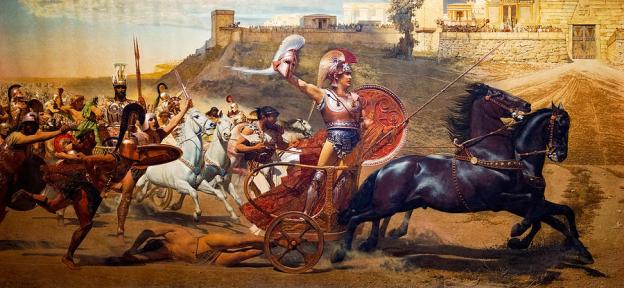
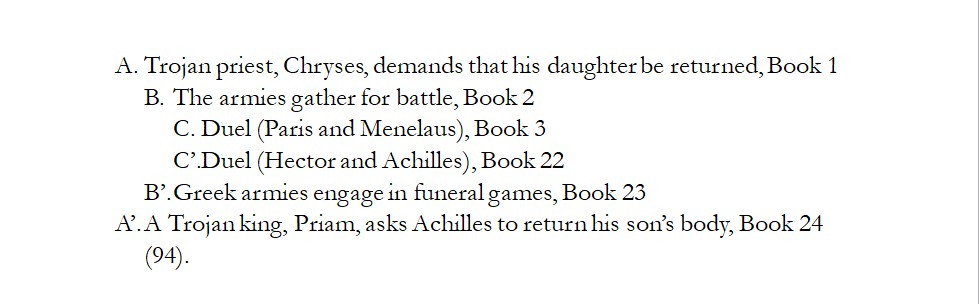
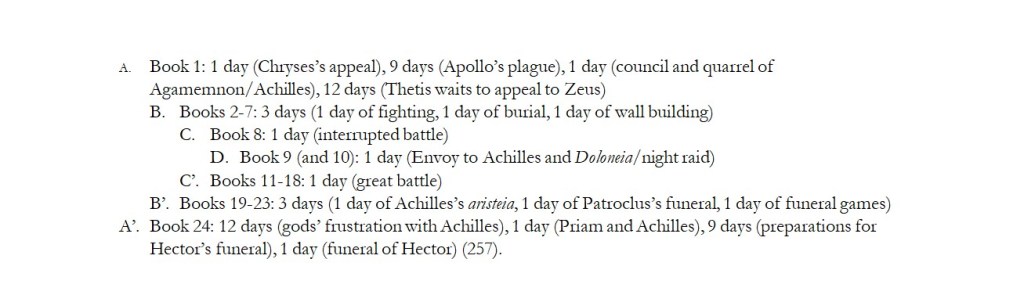
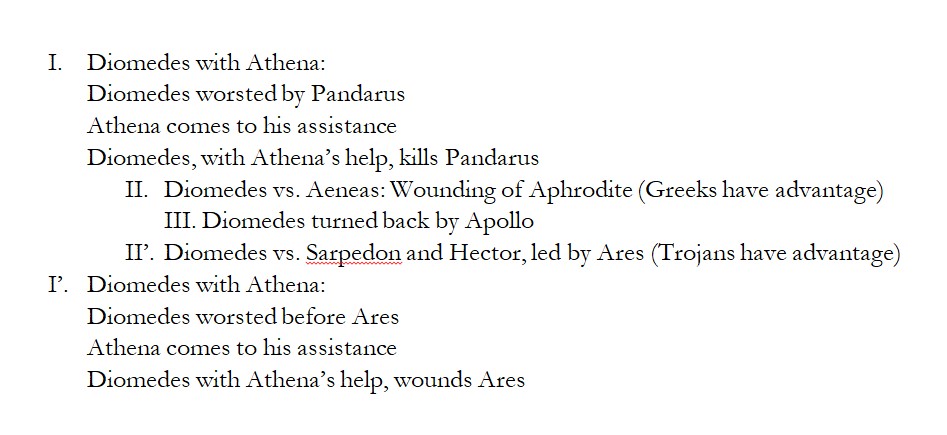
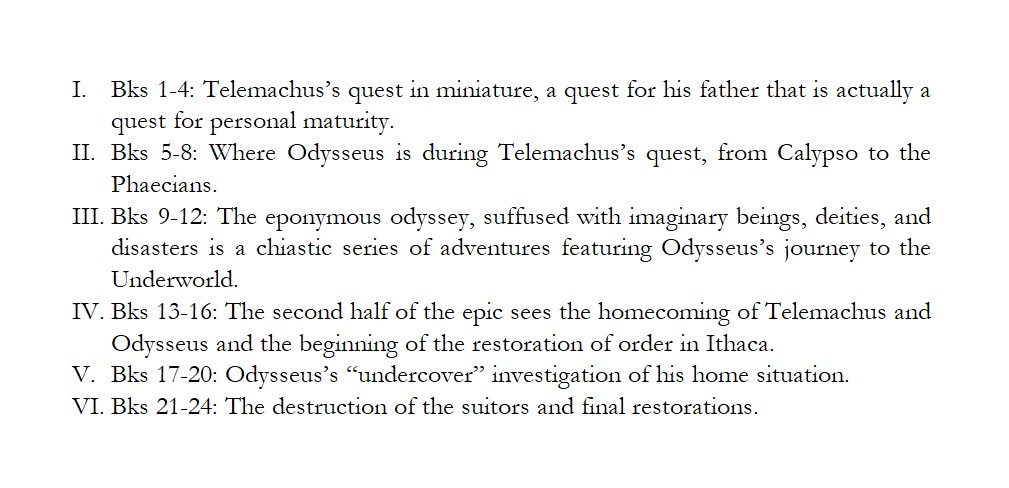








 Redeeming Pandora