Category Archives: Issue 6

Yuletide Recipes

Redeeming Pandora Family

Caramel Rolls

Put 18 frozen Rhodes dinner rolls in a buttered bunt pan.  Sprinkle ½ box dry butterscotch pudding mix (not instant pudding) over rolls.  Melt ½ c. butter with ½ c. brown sugar; pour over rolls (add nuts and raisins, if desired).  Cover with aluminum foil and then a towel.  Let set overnight in the oven.  Bake in the morning (after removing the towel, not the foil) at 350° for 30 minutes.  A cookie sheet under the pan to catch the caramel drippings might be a good idea.

Meringue Cookies

Beat 3 egg whites with 1 c. sugar until very stiff; add ½ tsp. of any flavoring (usually peppermint) and coloring; fold in 6 oz. small chocolate chips (minis).  Place on ungreased baking sheet lined with parchment paper.  Preheat oven to 375° — put it in oven, then turn it off and leave overnight without opening the door.

Almond Pinecones

  • 1¼ c. whole natural almonds
  • 18 oz. package cream cheese
  • ½ c. mayonnaise
  • 5 slices crisp bacon crumbled
  • 1 Tbsp. chopped green onion
  • ½ tsp. dill weed
  • ⅛ tsp. pepper

Spread almonds in single layer in shallow pan.  Bake at 300° for 15 minutes, stirring often, until almonds just begin to turn color.  Combine soft cream cheese and mayonnaise, mix well, add bacon, onion, dill weed, and pepper.  Mix well.  Cover, chill overnight.  Form cheese mixture into shapes of 2 pinecones on serving platter.  Press almonds at angle in rows.  Overlap rows until covered.  Garnish with artificial pine sprigs (1½ c.)

Cranberry Bread

Mix together:

  • 2 c. flour
  • 1 c. sugar
  • 1½ tsp. baking powder
  • ½ tsp. baking soda
  • ½ tsp. salt

Add, combining only until dry ingredients are moist:

  • 1 beaten egg
  • ½ c. orange juice
  • 2 Tbsp. melted shortening
  • 2 Tbsp. hot water

Fold in:

  • 1 c. whole cranberries
  • ½ c. chopped walnuts (optional)
  • grated orange rind (some)

Bake in greased and floured loaf pan for 70 minutes at 325°.

Medieval Gingerbread

  • 1 lb. honey
  • Bread crumbs (approximately one pound,
  • unseasoned, finely ground, not soft)
  • Ginger (up to 1 Tbsp.)
  • Cinnamon (up to 1 Tbsp.)
  • Ground white pepper (up to ½ tsp.)
  • Pinch of saffron (if desired)
  • Few drops of red food coloring (if desired)

Bring the honey to a boil and skim off any scum.  Keeping the pan over very low heat, add the spices, adjusting the quantities to suit your taste.  Add the food coloring if you want it red.  Then begin to slowly beat in the bread crumbs.  Add just enough bread to achieve a thick, stiff, well-blended mass.  Remove from the heat and turn the mixture onto a lightly greased (cooking spray works fine) square or rectangular baking sheet or shallow pan, ½- to 1-inch thick.  Take a rolling pin and spread the gingerbread evenly out into the pan.  Turn the pan over on wax paper or parchment paper, and tap gently until the gingerbread falls from the pan.  Turn the gingerbread over once again, then cut into 20 small squares to serve (or stars or diamonds).  Decorate with small candy (optional).

Maria’s Traditional Stollen (German Christmas Sweet Bread)

Makes 4 small loaves.

Needs 8 hours of fridge time — so do the first part the day before you eat it.

Day 1

4½ tsp. yeast (≈2 pkgs.), dissolved in large bowl with 1½ c. warm water

Add…

  • 1 cup sugar
  • 1 tsp. salt
  • 7 eggs
  • 1 egg yolk (save the white for glaze)
  • 1 c. melted butter
  • 2½ c. flour

Beat with electric mixer for 5-6 minutes.

Stir in (with spoon)…

  • 4½ c. flour
  • 1 c. slivered almonds
  • ½ c. raisins
  • 1 8-oz. container of mixed candied fruit (cherries, citron, etc.)
  • Grate finely a lemon (to get as much grated lemon peel as possible)
  • Very sticky — did not kneed — just mix thoroughly.
  • Let sit in bowl with tea towel over it to rise in warm place for 2 hours (if it doesn’t look like it rises much, that is okay).
  • Plop on sheets of saran wrap; wrap and place in a bowl.  Put into fridge overnight.

Day 2

  • Take out of fridge — let sit for an hour.
  • Divide in to 4.  Take one section at a time on floured counter.
  • Press in to oval with hands.
  • Melt ¼ butter.  Spread melted butter on the oval.
  • Fold one side of oval shape onto the other side, the long way.
  • Repeat process with other 3 ovals.
  • Place the 4 “folded over” ovals close together on greased (Pam) cookie sheet.
  • Take egg white from yesterday, mix with 1 Tbsp. of water.  Brush over tops.
  • Let rise for an hour.
  • Preheat oven to 380°.
  • Bake for 25 minutes.
  • Can lightly glaze with confectionary sugar mixed with milk.

The Best Cookies You Could Ever Possibly Imagine

Total Prep & Baking Time: 1 hour 30 minutes, plus 24 hours to chill the dough

Yield: 18-20 large cookies

  • 2 c. minus 2 Tbsp. cake flour
  • 1 2/3 cups bread flour
  • 1½ tsp. baking powder
  • 1¼ teaspoons baking soda
  • 1½ tsp. coarse salt
  • 2½ sticks (1¼ c.) unsalted butter, room temp.
  • 1¼ c. light brown sugar, packed
  • 1 c. plus 2 Tbsp. granulated sugar
  • 2 large eggs, room temperature
  • 2 tsp. pure vanilla extract
  • 1 1/3 lbs. bittersweet chocolate disks or fèves, at least 60% cacao content (regular chocolate chips are acceptable, but you will not get the gooey texture the fèves will provide)
  • sea salt or fleur de sel, for sprinkling

1. Sift together the cake flour, bread flour, baking soda, baking powder, and salt in a medium-sized bowl and set aside.

2. In the bowl of your mixer, cream together your butter and sugars until light and fluffy, about 3-5 minutes.  Add in the eggs, one at a time, until combined, scraping down the bowl as needed.  Add in the vanilla and mix.  Gradually add in the dry ingredients, until just moistened.  Fold in your chocolate until evenly added throughout the dough.  Press plastic wrap against the dough, making sure it is completely covered, and refrigerate between 24 and 72 hours (I left mine for 36 hours).

3. When you are ready to bake, bring the dough to room temperature so that you can scoop it out, and preheat your oven to 350°.  Line and/or grease your baking sheets.  Scoop your dough onto the sheets.  I used a #40 ice cream scoop, which is about the size of 2 Tbsp., but you can make them even larger, if you like.  Do not press the dough down — let it stay the way it is.  Sprinkle the cookies lightly with a bit of fleur de sel or sea salt.  Bake 10-12 minutes for smaller cookies (mine took about 11 minutes), or 18-20 minutes for larger cookies.

4. Allow the cookies to cool slightly on your baking sheet, then move them to another surface to cool completely.  You can enjoy these warm, room temperature, or cold.  Store in an air-tight container at room temperature for up to 3 days, or freeze for up to 2 months.

Grandma’s Cookie Recipe

  • 2 c. butter
  • 2 tsp. baking powder
  • 2 c. sugar
  • 2 tsp. baking soda
  • 2 c. brown sugar
  • 24 oz. chocolate chips
  • 4 eggs
  • 1 8-oz. Hershey bar, grated (freeze bar before grating)
  • 2 tsp. vanilla
  • 3 c. of chopped nuts
  • 5 c. blended oatmeal (measure and blend in blender to a fine powder)
  • 1 tsp. salt

Cream butter and both sugars.  Add eggs and vanilla.  Mix together with flour, oatmeal, salt, baking powder, and baking soda.  Add chips, chocolate, and nuts.  Roll into balls and place two inches apart on a cookie sheet.  Bake for 6 minutes at 375°.  Makes 112 cookies, but the recipe can be halved.

Peppermint Bark

  • 8 oz. white chocolate, chopped or chips
  • 4 red & white peppermint sticks, 6 inches long (King Leo sticks or Red Bird)
  • 2 drops peppermint oil or extract

Melt chocolate. 

Place the peppermint sticks in a heavy, zip-locked plastic bag and crush them finely.  There are many methods to choose from — find something hard like a rolling pin, and then take turns whacking and rolling the peppermints!  This can prove to be extremely beneficial, even pro-active, during the holidays.  When the peppermint sticks resemble the size of crushed ice, stop whacking.  When chocolate is melted, stir in peppermint oil.  Next stir in all but 2 tablespoons of the crushed peppermint pieces and spread mixture out, about ¼-inch thick, on a cookie sheet (lined with parchment paper or a non-stick baking mat).  It may not fill the pan completely.

Sprinkle the remaining peppermint pieces over the top.  Let sit at room temperature until hardened, about 2 hours, or refrigerate for 30 minutes to harden more quickly.

Once hardened completely, use your hands (or the trusty “whacker”) to break in to pieces.  Store in an airtight container for up to 2 weeks — if they last that long!

Cream Cheese Pumpkin Roll

Ingredients for cake part:

  • 3 eggs
  • 1 c. sugar
  • 2/3 cup canned pumpkin
  • ¾ c. flour
  • 1 tsp. baking soda
  • 1 tsp. cinnamon
  • 1 tsp. nutmeg

Preheat oven to 350°.  Set out all ingredients, including cream cheese filling, to bring to room temperature.  Mix all ingredients together and pour onto a greased cookie sheet.  If using a large cookie sheet or jelly roll pan, double all ingredients, including cream cheese filling.

Bake for 12-18 minutes (oven times vary; pan size/cake thickness will determine bake time).  Let cool until it is touchable but still very warm.  (The cooler the cake, the greater potential there is for cracking.)  Place a clean towel/cheesecloth on counter, then place wax paper over the towel.  Sprinkle powdered sugar over wax paper (to prevent sticking), and then dump the cake out onto the wax paper.  Using the wax paper and towel for support, say a prayer, and begin to gently roll your cake long side to long side, with wax paper rolled into it as well, until it has been rolled up.  Place the roll into the fridge for one hour or the freezer for 20-30 minutes to set it.  If it cracks, all is not lost!  Allowing it to set and cool will help it gel together, almost sealing itself back together.

While the roll is cooling, mix up the filling.

Ingredients for filling:

  • 8 oz. cream cheese
  • 1 c. powdered sugar
  • 4 Tbsp. butter (⅛ a stick)
  • 1 tsp. vanilla

Blend all ingredients until soft and smooth (don’t forget to double if cake ingredients were doubled!).  Unroll pumpkin roll slowly, and gently spread filling all over.  Reroll cake (making sure not to roll your wax paper back into the roll!).  Dusting the area with powdered sugar will help the cake not stick.  Wrap with wax paper and store in the fridge.  Foil is good for helping the roll hold its shape — add a holiday ribbon and you are ready to go!  (Remember, a roll with a crack or two still tastes the same!)  Slice and serve once filling has set and cake has chilled.  Enjoy!

Reindeer Munch (aka Christmas Crunch, Santa Surprise, Jingle Junk)

  • 1½ c. pretzels
  • 2 c. bite-sized square rice and/or corn cereal
  • 2 c. round toasted oat cereal
  • 1 c. peanuts, almonds, or mixed nuts
  • 10 oz. vanilla flavored candy coating (or use white chocolate)
  • 1 c. candy-coated pieces

Line a baking/cookie sheet with wax paper.  Make sure all dry items are bite-sized and mix everything but candy coating and candy pieces together and set aside.  Melt candy coating or white chocolate in a saucepan (or double boiler) over low heat.  Stir continuously until melted OR microwave coating for 1½ minutes, stirring every 30 seconds.

Quickly pour melted coating over cereal/nut mixture and toss to coat.  Add candy pieces and toss.  Pour mixture onto prepared baking sheet in an even layer.  Cool completely.  Break into pieces and store in an airtight container at room temperature.  There are many ways to vary this recipe and make it your own.  Add or omit any ingredient.  Have fun inventing and munching on your own creation of this Christmas time crunch!

Hot Cider

Mix in crock pot:

  • ½ gal. apple juice or apple cider
  • 1 qt. cranberry juice
  • ¼ c. lemon juice
  • ¾ c. orange juice
  • 1/3 c. brown sugar
  • 8 whole cloves
  • 2 cinnamon sticks

Let simmer until hot.

Thanks to Tracey Rush, Amy Rush, Teresa Foster, Maria Cochrane, Sara Gaus, and Marilyn Lane for the recipes!

On the Value of No-Shave November

Mackenzie Carlson Howard

This past November, I took upon myself a challenge.  More like a test, I should say.  It was a journey toward greater self-knowing, an adventure to lands far outside my comfort zone.  It was a trial to prove to myself, and others, that the importance of physical appearance is far less substantial than that of internal character.  It was the magnificent challenge that is No-Shave November.

I’ve always wanted to participate in this seemingly males-only event.  Females do, of course, occasionally hold similar special events, like No-Makeup Monday and Fasting Friday.  However, while No-Shave November often seems to enhance the physical appeal of the participating males, these female-oriented events seem only to be detrimental to the appearance of the partaking ladies and the general well-being of those around them.

Perhaps it is because males have been created to be more adventurous and self-confident than their female counterparts that this phenomenon occurs.  Almost no sane female would deign to participate in No-Makeup March or Sweets September.  Although, in every female’s heart, the idea of participating in one of these events is enticing, the reality of what would happen to her physical appearance (and, therefore, self-worth) is enough to keep them confined to single days of insanity.

And let me say, before continuing on any further, that this description does not fit every female.  There exist, occasionally, those brave souls who face the world with a bare and natural face, and who eat sweets on Saturdays, and on Mondays, Thursdays, and Fridays, too.  If you are one of those rare women, stop reading this now and congratulate yourself with a chocolate bar.  However, as a female myself and as an observer of humanity for 17 long years, I feel this general observation of the female sex is accurate.

Thus, while some extraordinary women have progressed far enough in their journeys toward self-confidence they would have no problem participating in these events, most of us haven’t.  And that is why No-Makeup March and Sweets September do not exist.

Males, on the other hand, seem to find their worth in actions more than in physical appearance.  To be the starting point guard on the varsity basketball team or to score an 800 on the SAT mathematics section is to be worthwhile.  To work out and have the biggest calves among all the guys or to get a Saab for a birthday is to be worthwhile, to a guy.  Therefore, No-Shave November seems almost like a friendly competition for males, not an awkward day of insecurity like similar female extravaganzas.  The male who is able to grow the best beard is, at least in some sense, “cooler” than the others.  (Unless, of course, that particular male was born sporting a beard.)

I may be totally wrong about the male sex.  After all, I am only a spectator.  17 years of being a female is barely enough time to begin to understand the opposite sex.  Again, though, I am basing my assertions on generally accepted notions.  If you are a male who particularly cares about matching your shoes to the color of your shirt, stop reading this now and buy a pair of black shoes (they go with pretty much everything).

All that to say, No-Shave November isn’t really for females.  The idea and motivation behind this event seem to originate in male culture and is socially looked down (or quizzically) upon in regard to female participation.  However, like I said before, I have always been interested in partaking in this event but could not muster up the courage to do so until this past November.  I figured there is no better time than senior year to try something crazy.  Of course, my goal was not to grow a beard.  This feat, except in rare cases, is impossible for the female sex.  Instead, my goal was to not shave my legs.

This challenge promised to be particularly difficult for me because, as a female of strong, hardy European stock, my hair grows incredibly fast.  Thus, I find it necessary to shave at least every other day, if not every day.  To go a whole month without shaving, therefore, would be to grow a winter coat on my legs.  And although this new outerwear may be useful, especially when considering the approaching winter months, an entire month without the razor would be just crazy.  So, my goal was to go as long as possible sans le rasoir.  A dear friend of mine set the minimum at 10 days, which, even though barely a week and a half, looked like eternity to me.  However, I had announced to my friends and family my razor-less plans and was determined to accomplish my goal.

I made it 11 days.  My European stock proved to be hardier than even I expected, and my “winter coat” was almost fully grown by then.  I couldn’t take it anymore.  I shall spare you the gruesome details, but I must say that even some of the guys were impressed with the amount of leg hair I had.  “Comparable to the fur on a grizzly bear,” one honest male stated.

And although my No-Shave November stint lasted only 11 days, its effects have stayed with me.  My goal in this endeavor was to prove to myself that physical appearance does not determine worth.  As a female, in high school, with a gorgeous sister only two years my junior, I have always struggled with that notion.  No-Shave November was a chance to understand what it means to be judged by character and not complexion.  I must admit it started out as a crazy idea during some summer afternoon siesta.  As time went on, though, and as my hair grew longer, my motivation for doing this experiment turned into a challenge toward furthering self-confidence.  Interestingly enough, despite my furry legs, my friends stayed my friends, and my family still let me eat with them.  I was not deemed “worthless” or of lower value because of my unshorn legs.

Although it seems silly, I think many females do base their self-value on petty things like nicely-shaven legs.  The world tells women that to be “worthwhile” is to wear fashionable clothes, weigh less than a koala, and wake up with perfectly-curled hair.  However, we are reminded in 1 Samuel 16:7 that “man looks at the outward appearance, but the Lord looks at the heart.”  As fallen human beings, our first instinct is to judge based on physical appearance.  Yet, as Christians, created by God and saved through His grace, it is important to realize we are not of this world and therefore should not live by the world’s standards.  The world is concerned only with the physical, but God cares about character.  Is it not more important to please the Creator than other creations?  Although the concept is simple, most females (and even most males) struggle with realizing this idea.  I know I do.  Only when we step out of our comfort zone, be it through No-Shave November or not, do we realize that value is based upon character.  And so, though it was short-lived, No-Shave November impacted my view of values and worth in a way that nothing else in my 17 years of life has.

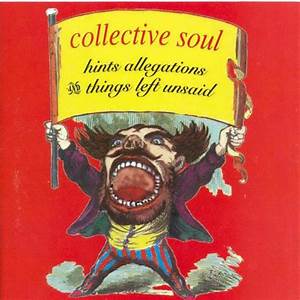
Forgotten Gems: Hints Allegations and Things Left Unsaid

Christopher Rush

Hints Allegations and Things Left Unsaid

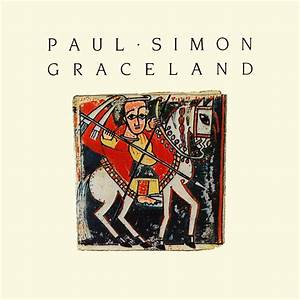
When this project was first conceived and the list of worthy albums first compiled, I did not consciously associate the albums by any criterion other than my personal desire for them to regain more public consciousness.  On further reflection, however, I realized the first three albums are connected in other ways as well: Graceland and Lean Into It both address various musical forms/situations in bayou country, and Collective Soul’s debut album took its name from “You Can Call Me Al” on Graceland.  Thus, it is fitting to bring them all to your attention in this issue.

Collective Soul is one of the few ’90s bands with any staying power.  This most likely is due to their skill and intellect.  Let’s be honest: Collective Soul’s music is beautiful and their lyrics are true — if any other requirement is needed for a band to be great and worth knowing/enjoying again and again, I don’t know of it.  Certainly all of Collective Soul’s oeuvre could be considered “forgotten gems,” and possibly their self-titled second album has fallen further in public esteem, but Hints Allegations and Things Left Unsaid should be the beginning place of anyone’s newfound appreciation for one of the few great bands today.

Ye— oop, wait for it … Yeah!

“Shine” is arguably Collective Soul’s biggest hit.  Supposedly it was to be their one hit, making them simply another one-hit wonder from the ’90s.  Six number one songs later, Collective Soul is still around.  “Shine” was my first experience of Collective Soul, hearing it on the radio (which is exactly what they wanted, I must admit).  It was one of those songs Neyens and I made our own for a while, going to/from band practice, singing along with the chorus (at least the “yeah”s) whenever it came on over the radio (he was always the one doing the driving, of course — perhaps that’s where my affinity for singing in the car along with the radio/cd arose, bolstered later by the gang’s penchant for Eve 6’s “Inside Out”).

The song itself is straightforward enough: like most contributions to the Collective Soul oeuvre, it’s about love.  God created the universe by and out of love, not logic or mathematics.  Collective Soul recognizes this far better than most bands publishing under “Christian” labels.  The repeated request “Heaven let your light shine down” is true and right and something we should all desire, just as we should all actively pursue the ameliorative effects of Heaven’s light as the final lines enjoin.  It’s a great song all around.

Lyrical Genius at Play

I don’t want to step on any toes (especially my father’s) by intimating Ed Roland is in the same conversation of musical geniuses as Brian Wilson, but his lyrical ability is quite adroit, especially as evidenced in this song.  “Goodnight, Good Guy” asks very sincere questions from the perspective of genuine faith.  It would take quoting the entire lyrics to begin to capture the depths of the song, but for a good sampling peruse the second verse:

I’ll break the bread of a new day and wonder

If faith would carry me along

But days are longer as my heart gets weaker and

I can only stay so strong

Well, I’ll just sit here like a wounded soul

Who’s finding difficult to just let go

Let it go

Pretty powerful stuff, especially when supported by the laid-back musical offerings of the band.  It’s a great optimistic song despite (because of?) the questions it asks and the adherence to the divine protection of the Lord.  It’s certainly a great song that deserves far more appreciation and recognition than it has heretofore gotten from most music lovers.

A Great Use of Time

“Laid-back” is probably the best description of the entire album, despite the more famous zest from songs such as “Shine” and “Breathe.”  Nowhere is that better captured in a rock-n-roll form than “Wasting Time,” almost a misnomer of a song, since it is one of the most catchy, enjoyable, repeat-worthy songs one will ever listen to in one’s lifetime.  The mellow introduction breaks out all the Latin Percussion instruments most dabblers in percussion own.  Added to that comes more pensive, soulful lyrics from Ed Roland that, despite their potential to weigh down in despondency, avoid such a miasma by the song’s (and album’s) ever-present embrace of optimism: “Well something’s going wrong inside of you / Burdens bearing down and seeping through / Well, I don’t wanna bleed anymore for you / Oh and I don’t wanna breathe any hatred too.”  The second verse ends with probably my favorite line in the entire Collective Soul oeuvre: “And I don’t want to cling to our ‘used to be’s.”  From that great line about, truly, putting off the old self and putting on the new (and now), the song ratchets up the tempo and vocal emphasis with a sincere and loving (in a “tough love” sort of way) enjoinder to all who are unwilling to cast their cares on the Lord and cling to them desperately for comfort to “take your heart, just take your soul / Just get yourself on out of here / Just take your hurt, just take your pain / Just get yourself on out of here,” because clinging to past hurts and failures is simply “wasting time.”  It’s time to pick up the pieces (all right) and move on.  All of this beauty in under three and one-half minutes.  It’s definitely an album worth listening to from beginning to end, again and again.

No Tears Needed

The same theme continues in “Sister Don’t Cry,” though it’s a much more comforting kind of song.  The music transforms into more of a funk groove, though only slightly, as the synthesized Hammond organ-like sounds propel the song through its sundry sections.  The simple chorus belies the simplicity of its messages: as with “Wasting Time,” genuine life must be lived now; with salvation reigning over us now; we must put aside all the pain we’ve been through (as much as possible) and don’t cry anymore.  Life is a communal journal of relationships and co-mutual restoration through shared sorrows and joys.  Be not afraid of it; cry when it’s time to cry, but (as we learned so well in Twelfth Night) when it’s time to stop crying, stop crying and live again.

Higher and Higher

Most of the selections on Hints Allegations and Things Left Unsaid are unified songs, making “Love Lifted Me” the most disparate song on the album with three distinct sections.  The first and third sections (the verses and the bridge) are among the most strident moments on the album (certainly “Scream” is the harshest).  This makes the up-tempo dolce middle section (the chorus) seem out of place, at least at first.  With enough repetition, the song leaves one with the impression it all works well together, like another crunchy nutty candy shell and a gooey, nougat-centered treat.  It is a variation on “Amazing Grace,” perhaps, but that theme is true enough to hold up under countless reinventions (lazy contemporary adaptations simply attaching a new “praise chorus” to the old lyrics notwithstanding, a despicable practice worthy of excoriation which Roland masterfully avoids): “Once, I was down and couldn’t see / Then love lifted me. / Yeah, love; it was love / Oh I believe, that love lifted me.”  True indeed.

Brevity is the Soul of Life

Continuing the pervasive “laid-back” style of the album, “In a Moment” is another impressive display of Ed Roland’s lyrical creativity.  Behold the second verse: “Well, it’s a shame our world / Responds to life / As a puzzle in disguise / I wish our course / Would lead us towards / The peace and loving kind.”  The first three lines are excellent (forgiving the overly-informal “well”).  The secular atheist world around us does indeed consider the world to be a puzzle needing decoding (or deconstructing), but too much of life is inexplicable by scientific means alone as if the real source/truth of life is disguised to us in our present inferior material evolutionary state.  Certainly as Christians we know the proper solutions to these confusions, and Roland sings of them quite lucidly: “We’ll never walk hand in hand / Until we let old wounds mend / And we’ll never sing songs as one/ Until we find love.”  The entire album is really an interconnected whole; each song leads into the next and builds upon what has come before.  Some of the unfounded negativity against the album is the seemingly simplistic lyric content: “In a moment, it could happen / We could wake up and be laughin’ / In a moment, it could happen / We could forgive and be happy.”  The truth, especially the truth of the gospel, is linguistically straightforward and simple — and the atheistic world around us is too infatuated with “hard work” to accept this.  It’s merely the practical application of the simple truth that is complicated and difficult.  Fortunately, though, Collective Soul has already given us the answer: love lifts us while Heaven’s light shines down on us.  The redemptive power of Eternal Love only takes a moment to change our lives to enjoy the abundant life we have not just in the life to come but now as well.

Speaking of The Abundant Life…

With the exception of U2 (which is akin to any fantasy discussion beginning with the requisite “with the exception of Tolkien”), no one composes songs about eternity better than Collective Soul does (though Steve Winwood and Three Dog Night come close).  “Heaven’s Already Here” is a great example of Collective Soul’s ability to capture what abiding in Christ is about — true, it’s not just about the life to come, but as Jesus makes clear in John 10:10, eternity is not a “yet forthcoming” thing anyway.  We are in eternity right now (the notion there are two eternities, one that ended when the universe and Time were created and another that will commence when the events of Revelation occur, is, I think we can all agree, preposterous).  The Holy Spirit is within us now — we are, in one very real sense, in Heaven now: at the least, Heaven is in us now.  For the first few years of listening to this album and this song, I completely misunderstood what Ed Roland was trying to get us to realize.  I thought it was some sort of Cosmic Humanist/Transcendentalist malarkey about the “divine essence of monistic spiritual divinity is within so all we must do is seek there to be in harmony with the metaphysical energy of existence,” which made me quite sad for a while — here was an artistically skillful band with many lyrically moving and cogent points, but smack dab in the middle of the album was this song potentially discrediting their other fantastic works.  Finally, though, after taking a pretty decent Sunday school course on “the abundant life,” I was not only reawakened to the truths of John 10:10, but I was also awakened to the Christian verity of this song.  Roland is not urging us to commune with the “occult relation between man and the vegetable” as Emerson enjoins us to do in “Nature.”  Rather, Roland is reminding us of another simple truth Jesus revealed to us so long ago: “Who could bring me Heaven / When Heaven’s already here?”  The brief lyric of the entire song is worth reading through (note the exquisiteness of the second verse — Roland often seems to peak lyrically in the second verse):

v1

Wake up to a new morning

Got my babe by my side

Now I won’t yield to new warnings

’Cause I got my piece of mind.

chorus

Who could bring me Heaven

When Heaven’s already here?

Who could bring me Heaven

When Heaven’s already here?

v2

No more living in darkness

Now that love lights my way

I don’t need any new changes

To make me love today

chorus x2

Combined with the music, this is as about as perfect a song as anyone has ever or could ever compose.  But just when you think the album couldn’t possibly get any better…

Beautiful, More Like

“Pretty Donna” is admittedly not a rock song, but one would be hard-pressed to find a song on a rock album more beautiful than this (Genesis’s “Horizons” comes close from Foxtrot, but I think “Pretty Donna” surpasses it — but only just).  If you are looking for something sublime for a wedding, look no further.  It’s one of those songs that must be experienced to be understood, so listen to it as soon as you can.  Again and again for the rest of your life.

The Trilogy

“Reach,” “Breathe,” and “Scream” have always seemed to me to be a thematic trilogy, increasing in volume, tempo, and temper.  “Reach” is another great example of early Collective Soul’s simple, laid-back style, providing more thoughtful lyrics from the creative mind of Ed Roland: “Should I thirst for meanin’? / Can I beg you for some water? / Should I fight your battles? / Or can I rest upon your shoulders?”  Verse two: “Should I beg for mercy? / Can I be the one you treasure? / Should I question knowledge / Or can I have all of your answers? / Hope I’m able to find love today / Or can I ask you just to light my way?”  Without trying to sound redundant, it’s a great song.  Those listeners who require more “oomph” in their songs might disapprove of the mellow nature of this delightful song, but Beauty needs not apologize to anyone, especially to those whose aesthetic tastes are in need of refinement (or vivification).

“Breathe” brings back a little bit of the groove from “Sister Don’t Cry,” but neither of these early songs is nearly as funky as selections on later albums in Collective Soul’s career.  The lyrics of this ditty are true but most likely the weakest on the album (something has to be).  Continuing the thematic importance of love, love is now a seed and a tune: cultivate it and it will grow, and others will join in on the tune.  Additionally, love is to be the air we breathe (though this may have the weakest lyrics of the album, this song is far better than Michael W. Smith’s semi-recently popular “Breathe” with barely-similar content).  If we breathe love, even in little increments, certainly that will be contagious (in a good way) and help make society what it should become.

“Scream” may be the weakest song on the album (in terms of being the least desirable to listen to again), but only because it is the hardest-pounding song on an album that is mostly, as we keep saying, laid-back and mellow.  It doesn’t seem to fit too much (akin to “Bullet the Blue Sky”’s jarring position on The Joshua Tree), but in other ways it is a natural culmination of the recent lyric progression.  Though later songs in the Collective Soul canon (especially from Blender) are louder and more driving, the song ties elements of trying to understand life’s questions and answers from “Reach” and needing more room to breathe from “Breathe” to an angry, irritated desire for resolution, bringing the trilogy to a full (and dynamic) conclusion.  Even though the beat may perturb, Ed Roland does manage to squeeze in some thoughtful lines: “I don’t want to be some puppet on a string / I don’t want to learn from things you can’t explain / And I don’t want to have your views on everything,” quite similar to W.H. Auden’s point in “The Unknown Citizen.”  In the third verse, Roland gets his most cosmically irritated: “Well God is great and God is good / But God you’ll never be.”  True, but Roland’s motivation for saying this is unclear, unless he is now confronting pseudo-Christian hypocrisy of the time or perhaps just general atheistic destructive and malfeasant attitudes and actions to what life should really be about: “I don’t want to be your hospitality / I don’t want to live with false reality / See I’m the one obsessed with truth and honesty / I just want to scream.”  Most likely we all feel that way (increasingly so) in this dark world and wide as it continues careering away (increasingly so) from Biblical truth toward the morass of diabolical relativism, pragmatism, and Brave New Worldism.

A Double Ending

With all of his ire and energy purgated in the cathartic “Scream,” Roland begins to draw this pristine album to a close with the first of the album’s double-ending songs (another connection to Graceland).  I consider it a double ending because either “Burning Bridges” here or the final song, “All,” could serve equally well as the album’s final musical and lyrical offering.  The music here is self-explanatorily beautiful and needs no further comment.  The sentiment behind the song some obdurate-centered people may find more maudlin than sweet, but the opinions of those people never need be considered.  Sentimentality is painfully underrated today.  The chorus is especially ideal: “So I’ll lift you up and hold you near / I’ll warm your heart and calm your fears / See I don’t want to lose this love I found / So I’ll burn my bridges, burn them down.”  The title might make one presuppose “burning bridges” is a negative thing, since it is so often thought of as a drastic, anti-social event.  Here, though, Roland upends our limited perceptions and connotations by presenting “burning bridges” positively: don’t “keep your options open,” people, he says.  Commit.  John Adams knew it, Ed Roland knows it, God knows it, we should all know it and embrace it.  Commitment.  Love is a commitment, not a fleeting feeling.  The singer hurts when he is not with the one he loves — so do we all.  He is willing to change himself to conform to what love requires of him — so should we all.  It is a great song — so say we all.

As with so much of this album, the thoughts of one song blend into the next, and that is true for its double conclusion.  The solidarity and commitment embraced in “Burning Bridges” continues throughout “All,” especially as evidenced in the chorus: “Yeah, all is all I can give you / All is all I can do / All is all I wish for when I’m with you.”  The pervasive laid-back tempo is present again here, as well.  The quality of musical accompaniment is a dominant factor in Collective Soul for most of its canon (the electronic-driven Blender is a main exception, but it, too, has some very gentle music at times).  Their unique admixture of energy, gentleness, melody, harmony, and intelligent lyrics has dominated the album, and perhaps it reaches an emotional zenith with the bridge of this final song: “Well, I’ll push the clouds away so you can have sunshine / And I’ll give you anything that your heart desires.”  With everything else from Collective Soul, it must be heard to truly be understood and appreciated.  Fortunately, the time taken to listen to their often under forty-minute albums is time wisely and well spent.  You won’t regret it, no matter how many times you do so.

A Double Ending Yields a Double Beginning

By his own admission, most of this debut album was the work of Ed Roland.  Though the band restructured the arrangements and performances somewhat for their early touring, and not all of the band members noted on the album may have actually contributed as much as the liner notes intimate, it is certainly fair to say Hints Allegations and Things Left Unsaid is the nascence of Collective Soul’s career.  Though the band may consider their self-titled 1995 release their genuine debut album (as a band), and though later sounds and instrumentation of their later work (especially in their electronic phase) are in noticeable ways distinct from this album’s sounds, enough similarities continue and (perhaps inchoately so) tendencies that later return in more mature forms are still extant and evident here: the predominance of one-word-entitled songs, most songs ranging between 3 and 4 minutes in length, Biblical Christian themes and ideas underpinning most lyrics, the impressive mixture of intelligent lyrics and beautiful melodic and harmonic lines, and the cohesion of the entire album as a unified whole more than the sum of its parts.  Similar to Genesis’s From Genesis to Revelation and Trespass (as we saw last year), Collective Soul truly does begin at Hints Allegations and Things Left Unsaid.  It is truly an enjoyable album from beginning to end, one worth experiencing again and again forever.

Reflections on the Church of Jesus Christ of Latter-Day Saints (Mormonism)

Caitlin Montgomery Hubler

Most people have Mormon friends or have been in the church themselves, and I think what is widely perceived is The Church of Jesus Christ of Latter-Day Saints is just another denomination of Christianity.  After all, Jesus is in the name of their church, how could they not be?  First, I’ll go through the fundamental differences between orthodox Christianity and Mormonism.  However, the main reason I am writing this is because I believe Mormonism, on a purely evidential basis, to be false.  I believe the Book of Mormon was not divinely inspired, and Joseph Smith was a false prophet.  I hope no one will take offense to that without first reading why I have this position.

My first point is Mormonism is fundamentally different from Christianity.  Merely because the Mormon church’s official name is “The Church of Jesus Christ of Latter-Day Saints” does not make it Christian.  It is a religion’s beliefs that are its foundation — not its name.  In fact, Mormonism differs from Christianity in two very central issues to each doctrine: 1) How are we saved/what happens after we die?  and 2) Who is Jesus?

How are we saved/what happens after we die?

Mormonism’s answer: Depending on the life one lives, there are 4 different possibilities for what happens after you die.  The best you can hope for is to become a god yourself, but that only happens if you have been completely cleansed of sin and lived a life full of good works.

There are three main kingdoms of Heaven according to LDS doctrine:

1. The Celestial kingdom is for those who accepted Jesus, received the necessary ordinances (such as baptism), and followed the commandments.  This level is divided — and the upper half consists of the people who will become gods themselves because of the greatness of their works.

2. The Terrestrial kingdom is for those who lived good lives but did not accept Jesus in their lifetimes.

3. Lastly, the Telestial kingdom is for those who did not accept Jesus nor live good lives.

The only people who go to Hell are the really wicked people — we’re talking like a Cain or a Judas here.  Hell, called “outer darkness,” is really not an option for most of humanity.

Take this excerpt from an article on the LDS doctrine of salvation (reformatted for simplicity’s sake here, all emphases in original source):

Salvation, according to Mormonism, can mean many things.  LDS doctrinal authority Bruce R. McConkie, for many years one of the 12 “apostles” of the Mormon Church, taught that there are three distinct categories of salvation.  In his highly respected book, Mormon Doctrine, McConkie wrote:

1. Unconditional or general salvation, that which comes by grace alone without obedience to gospel law, consists in the mere fact of being resurrected.  In this sense salvation is synonymous with immortality; … [this] salvation eventually will come to all mankind, excepting only the sons of perdition …

But this is not the salvation of righteousness, the salvation which the saints seek.  Those who gain only this general or unconditional salvation will still be judged according to their works and receive their places in a terrestrial or a telestial kingdom.  They will, therefore, be damned; their eternal progression will be cut short; they will not fill the full measure of their creation, but in eternity will be ministering servants to more worthy persons.

2. Conditional or individual salvation, that which comes by grace coupled with gospel obedience, consists in receiving an inheritance in the celestial kingdom of God.  This kind of salvation follows faith, repentance, baptism, receipt of the Holy Ghost, and continued righteousness to the end of one’s mortal probation. (D. & C. 20:29; 2 Ne. 9:23-24.) … [D. & C. = Doctrine & Covenants, one of the books considered to be Mormon Scripture; 2 Ne. = 2 Nephi, one of the books contained in the Book of Mormon.]

Even those in the celestial kingdom, however, who do not go on to exaltation, will have immortality only and not eternal life.  Along with those of the telestial and terrestrial worlds they will be “ministering servants, to minister for those who are worthy of a far more, and an exceeding, and an eternal weight of glory.”  They will live “separately and singly” in an unmarried state “without exaltation, in their saved condition, to all eternity” (D. & C. 132:16-17).

3. Salvation in its true and full meaning is synonymous with exaltation or eternal life and consists in gaining an inheritance in the highest of the three heavens within the celestial kingdom.  With few exceptions this is the salvation of which the scriptures speak.  It is the salvation which the saints seek.  It is of this which the Lord says, “There is no gift greater than the gift of salvation” (D. & C. 6:13).  This full salvation is obtained in and through the continuation of the family unit in eternity, and those who obtain it are gods (D. & C. 131:1-4; 132).  (Article by Dave Johnson, “The Mormon View of Salvation.”)

Christianity’s answer: There are only two possibilities for the afterlife: Heaven or Hell.  The only way to get to Heaven is through faith in Jesus Christ.  “Salvation” and “eternal life” have the same meaning because there is only one Heaven.  “Whoever believes in Him [Jesus] is not condemned, but whoever does not believe stands condemned already because he has not believed in the name of God’s one and only begotten Son” (John 3:18).  “Whoever believes in the Son has eternal life, but whoever rejects the Son will not see life, for God’s wrath remains on him” (John 3:36).

These verses make it very clear that unless one has faith in Christ as the one who made it possible to be right with God, he will not enter Heaven — in fact, he will be eternally condemned to Hell.  This stands opposite to Mormon teaching, which states that even if one does not accept Christ he can still avoid Hell and even go to Heaven, if only the telestial or terrestrial kingdoms.

There is also a faith versus good works issue here.  Christians believe we are saved by grace through faith: “For it is by grace you have been saved, through faith — and this not from yourselves, it is the gift of God, so that no one can boast” (Ephesians 2:8).  It is clear from the passages from Mormon doctrine above that in order to receive full and individual salvation, much more than faith is required.  This idea one can ascend to godhood through a combination of good works and baptism is central to the next point of disagreement between Mormons and Christians — the person of Jesus Christ.

Who is Jesus?

Mormonism’s answer: There was no true virgin birth — Jesus is the human child of Mary and God the Father.  “The birth of the Saviour was as natural as are the births of our children; it was the result of natural action.  He partook of flesh and blood — was begotten of his Father, as we were of our fathers,” (Journal of Discourses, vol. 8, p. 115).  “Christ was begotten by an Immortal Father in the same way that mortal men are begotten by mortal fathers” (Mormon Doctrine, Bruce McConkie, p. 547).

To support their view of Jesus being the physically conceived son of God, Mormons appeal to John 3:16, which states Jesus is the “only begotten.”  The Greek word used there is monogenes, which means “unique” or “one of a kind.”  It does not mean “procreated,” but emphasizes “uniqueness.”

Mormons also appeal to Colossians 1:15, which calls Christ the “Firstborn over all creation.”  The Greek word for firstborn is prototokos, meaning “first in rank, preeminent one.”  It carries the idea of positional supremacy.  Christ is the firstborn in the sense He is preeminent over all creation.  Also, Jesus was born in Jerusalem (Book of Mormon, Alma 7:9, 10) and is of the Tribe of Benjamin.

Jesus is not eternally God — He started out as a human, and through His good works, ascended into godhood, or attained the state of exaltation.  He is the physical first-born spirit child of God the Father, who was also once a mere human.

Central to Mormon doctrine is the idea God the Father, God the Son, and God the Holy Spirit are not just three persons but three different Gods altogether, therefore claiming the Christian doctrine of the “three-in-one” trinity as heretical.  “It is the first principle of the Gospel to know for a certainty the character of God. … He was once a man like us; … God himself, the Father of us all, dwelt on an earth, the same as Jesus Christ himself did” (Teachings of the Prophet Joseph Smith, p. 345-46, emphasis added).  Also, Jesus practiced polygamy (Journal of Discourses, vol. 4, p. 259).

There was nothing special about Jesus (as in, He was not divine to begin with) other than that He did enough good works to ascend into godhood.

Christianity’s answer: Jesus was born of the virgin Mary (Isaiah 7:14, Matthew 1:23).  “According to the Bible, Jesus was born in Bethlehem, of the Davidic, kingly line of Judah (Matthew 2:1, Hebrews 7:14).  Jesus is the Lion of the Tribe of Judah (Revelation 5:5).  Jesus is a descendant of David, a Bethlehemite (Matthew 1:6, 1 Samuel 16:1).  Several other verses refer to Jesus as ‘Son of David’ (Matthew 15:22, 21:9; Mark 10:47).  The line of King was through the Tribe of Judah and not Benjamin (Genesis 49:9-10)” (Christian Apologetics & Research Industry).

Jesus was born in Bethlehem and is of the Tribe of David.  Jesus is God incarnate.  “Jesus Christ is the same yesterday, and today, and forever” (Hebrews 13:8).  “In the beginning was the Word, and the Word was with God, and the Word was God … All things were made by him … He was in the world, and the world was made by him, and the world knew him not …  And the Word was made flesh, and dwelt among us” (John 1:1, 3, 10, 14).  “I [Jesus] and my Father are one” (John 10:30).  “For there are three that bear record in heaven, the Father, the Word, and the Holy Ghost: and these three are one” (1 John 5:7, emphases added).  The last verse also supports the doctrine of the trinity that Mormons reject.  Lastly, according to the Bible, Jesus was not married and did not have wives.

It can be seen the Book of Mormon and the Bible contradict on central issues.  It is for this reason Mormons must accept the Bible only as far as it is translated correctly — “We believe the Bible to be the word of God as far as it is translated correctly…” (8th Article of Faith of the Mormon Church).  These differences are at the core of each religion — issues such as the nature of God, Jesus, the Holy Spirit, and the afterlife are doctrinal essentials.

It is interesting that for most of Mormon history, their church refused to be equated with the mainstream Christian church: “And he said unto me: Behold there are save two churches only; the one is the church of the Lamb of God, and the other is the church of the devil; wherefore, whoso belongeth not to the church of the Lamb of God belongeth to that great church which is the mother of abominations; and she is the whore of all the earth” (1 Nephi 14:10).  “My object in going to inquire of the Lord was to know which of all the sects was right, that I might know which to join.…  I was answered that I must join none of them, for they were all wrong; … their creeds were an abomination in his sight” (Pearl of Great Price, “Joseph Smith — History” 1:18, 19).  However, it makes sense for Mormons to insist nowadays they are Christians.  It is easier to obtain converts if those converts from Christian denominations are unsuspecting of the true nature of Mormonism.

It is clear that since Mormonism and Christianity differ on the most significant and foundational ideas of their respective faiths they cannot be one and the same.  In fact, either one is true and the other is false, or they are both false.  If Mormonism is true, then Biblical Christianity is a lie, but if Biblical Christianity is true, then Mormonism is a lie.

Now, once it is understood that Mormonism and Christianity cannot both be true, the real task of showing Mormonism false begins.  Note that if Mormonism is false, that has no effect on the truth of Christianity.

Mormons are part of The Church of Jesus Christ of Latter-Day Saints, meaning they believe in another prophet of God — a man named Joseph Smith.  A man living in the early 19th century in Palmyra, New York, he claims to have received a revelation from God written on golden plates.  It is his translation of these plates that we know today as the Book of Mormon.

Joseph Smith’s background, trustworthiness, and character must be examined in order to support the truth or falsehood of his famous claims.  The first question needing to be addressed with regard to Mormonism is “Did Joseph Smith stand to gain by making this all up?”  Of course, even if he did, that in itself is not nearly enough to disprove Mormonism — but it is just one piece of circumstantial evidence which can be used in this argument.

There are usually three main motives detectives look for when building a case against someone: sexual lust, financial gain, and power.  If someone stood to gain one or more of those by committing whatever crime, the case against him strengthens.  Did Joseph Smith stand to gain any of these three?  The answer is yes — he stood to gain in all three of these areas.

1) Sexual lust: Joseph Smith gained through justifying his polygamy.  He had 30 wives, many of whom were underage — but if he could prove polygamy was a holy practice condoned by God, there would be no problem.

[I]f any man espouse a virgin, and desire to espouse another, and the first give her consent, and if he espouse the second, and they are virgins, and have vowed to no other man, then is he justified; he cannot commit adultery for they are given unto him; for he cannot commit adultery with that that belongeth unto him and to no one else.  And if he have ten virgins given unto him by this law, he cannot commit adultery, for they belong to him, and they are given unto him; therefore is he justified.  For they are given unto him to multiply and replenish the earth, according to my commandment (Doctrine & Covenants 132:61-62, emphases added).

Note Smith justifies polygamy in so far as it helps reproduce more spirit-children for God.  However, take this quotation from historian Todd Compton, a faithful LDS member himself:

In the group of Smith’s well-documented wives, eleven (33 percent) were 14 to 20 years old when they married him.  Nine wives (27 percent) were twenty-one to thirty years old.  Eight wives (24 percent) were in Smith’s own peer group, ages thirty-one to forty.  In the group aged forty-one to fifty, there is a substantial drop off: two wives, or 6 percent, and three (9 percent) in the group aged fifty-one to sixty….  The teenage representation is the largest, though the twenty-year and thirty-year groups are comparable, which contradicts the Mormon folk-wisdom that sees the beginnings of polygamy were an attempt to care for older, unattached women.  These data suggest that sexual attraction was an important part of the motivation for Smith’s polygamy… (emphasis added).

One of Joseph Smith’s own followers pointed out that Smith may have had an ulterior motive for including the doctrine of polygamy in his translation of the golden plates.

2) Financial gain: Joseph Smith also gained financially from sharing about his revelation with God in the Book of Mormon.  He claimed God told him to start a bank that, as is shown in the quotation below, would be the best there ever was.

Warren Parrish, who had been an officer in the bank and had apostatized from the Church, made this statement: “I have listened to him [i.e., Smith] with feelings of no ordinary kind, when he declared that the audible voice of God, instructed him to establish a banking/anti-banking institution, who like Aaron’s rod shall swallow up all other banks (the Bank of Monroe excepted) and grow and flourish and spread from the rivers to the ends of the earth, and survive when all others should be laid in ruins” (Painesville Republican, February 22, 1838, qtd.  in Conflict at Kirtland, p. 297, cited from Mormon Shadow or Reality? p. 531).

The fate of that institution is worth noting: “ … The bank failed.  This affected Joseph’s status.  People who were convinced that Joseph had intended a swindle at the outset attacked him verbally and threatened him physically.  This disruption forced Joseph to leave the city frequently….  In April 1837 Joseph went into hiding without seeing Emma [his wife] before he left” (Mormon Enigma, p. 62).

3) Power: Joseph Smith claimed to be the singular spokesperson for God Himself — talk about influence!  His followers of that time called him “King of the Kingdom of God.”  He also ran in the 1844 Presidential race but died before the race was over.  (It is also noteworthy that he predicted America would fall within a couple of years of around 1843, and that didn’t happen.)

There certainly stood much to be gained if Joseph Smith created the Book of Mormon himself.  Again, even if he had a motive, that fact alone does not prove Mormonism false.  However, this is just the beginning of the case against the Church of Jesus Christ of Latter-Day Saints.  To better understand the Mormon faith, we must next examine the environment in which it arose.

Joseph Smith was born in Vermont in 1805 but at the age of about 10 moved to the city of Palmyra, New York, around which Mormonism originated.  It is significant that this is one of the areas most affected by the 2nd Great Awakening, which began in 1800 but really took off in 1820.  This awakening was a time of spiritual revival in which church membership soared.  Heightened emotion was no doubt a part of this, and it gave rise to many new religious groups.  The problem with this was people who had made decisions to convert out of mere emotion did not make for long-lasting converts, and the church seemed more interested in short-term revival than long-term discipleship.  There was little guidance for these new converts after the revivals, and this is perhaps what led to so many new groups being created.  Some of these new churches were the Seventh-day Adventists from which we have the Jehovah’s Witnesses, the Evangelical Christian Church of Canada, Christian Church of Disciples of Christ, and, of course, Mormonism.

These new churches, like Mormonism, hold beliefs that seem similar at first, but when truly examined have fundamental differences.  Many, like the Jehovah’s Witnesses, claimed to be the “restoration of Christianity” and the “one true church.”  All of these spin-offs on Christianity emerged around the same time, around the same place, in response to and as a result of the 2nd Great Awakening.  Certainly, this does not necessarily prove Mormonism false; at this point perhaps only a hint of suspicion is warranted.

Now we have to look at the character of Joseph Smith.  Was he the humble, uneducated, virtuous and sincere man Mormonism depends on him to be?  Was he inexperienced in treasure digging, making the discovery of the golden plates more miraculous?  If he was a man of great moral standing, this would make the divine inspiration of the Book of Mormon more believable.  However, the evidence points in the opposite direction — that which causes more doubt to be cast on the validity of the Mormon scriptures.

The first point needing to be established is that Joseph Smith was by no means aimless — he worked as a local treasure digger near Palmyra, and even assisted others with finding treasure.  Smith operated using a “seer stone,” a magical stone he claimed to use to find treasure.  He claimed to see ghosts and spirits, as well as jewels through it, and learned its use from a local magician.

Once, two men hired Smith to find treasure for them — Josiah Stole and Isaac Hale (whose daughter Emma soon became Smith’s wife).  He never found the treasure he had been hired to find, and his employers eventually became tired of waiting.  We see from this quotation not only did he not accomplish the task of finding treasure, but he was arrested for fraud:

In late 1825 a wealthy Pennsylvania farmer named Josiah Stowell (sometimes spelled Stoal) came 150 miles to hire Smith because of Smith’s reputation.  Smith was hired to help Stowell locate a supposed old Spanish silver mine on Stowell’s farm.  During this time two significant things happened.  First, Smith met his future wife, Emma Hale, and in later interviews her father explained how he didn’t like Joseph Smith when he first met him because Smith was a money-digger, and Mr. Hale didn’t want any criminals marrying his daughter!  Perhaps even more damaging, however, was the fact that Smith was tried and convicted in court in March 1826 for “glass-looking.”  The charge had been brought up by Stowell’s nephew, who saw through the con that his uncle didn’t.  Mormon historians now acknowledge that this trial happened and that Smith was convicted on this charge….  [Of significance] are the affidavits and statements made by a number of Smith’s neighbors in Palmyra, about Smith’s lifestyle in the 1820’s.  Several neighbors have stated that Joseph Smiths Senior and Junior were both money-diggers, and that Jr. (i.e., the Mormon founder) was particularly good at it and was the head of a group of money-diggers (History of the Church, vol. 1, chapter 2, emphases added).

Peter Ingersoll (family neighbor and friend of Joseph Smith) Affidavit, Palmyra, Wayne County. N. Y. Dec. 2, 1833 (emphases added):

In the month of August, 1827, I was hired by Joseph Smith, Jr. to go to Pennsylvania, to move his wife’s household furniture up to Manchester, where his wife then was.  When we arrived at Mr. Hale’s, in Harmony, PA. from which place he had taken his wife, a scene presented itself, truly affecting.  His father-in-law (Mr. Hale) addressed Joseph, in a flood of tears: “You have stolen my daughter and married her.  I had much rather have followed her to her grave.  You spend your time in digging for money — pretend to see in a stone, and thus try to deceive people.”  Joseph wept, and acknowledged he could not see in a stone now, nor never could; and that his former pretensions in that respect, were all false.  He then promised to give up his old habits of digging for money and looking into stones.

Smith admits all his accounts from the seer stone were false.  That will become very significant once we discuss how he translated the golden plates into the Book of Mormon.

A closing quotation summarizes Smith’s character: “We have not only testimony impeaching the moral characters of the Smith family, but we show by the witnesses, that they told contradictory stories, from time to time, in relation to their finding the plates, and other circumstances attending it, which go clearly to show that none of them had the fear of God before their eyes, but were moved and instigated by the devil” (Mormonism Unveiled, p. 232).

It is clear from these quotations from the Mormons’ own church history as well as eyewitness accounts that Joseph Smith was less than virtuous.  He was arrested while doing what he claimed to do to find the Book of Mormon.  Smith was still involved in fraud when he was making discoveries about the golden plates.  Which is more likely: that he was a true prophet of God, or a charlatan?

Now for the important discussion of how the golden plates were translated.  While many paintings and pictures in Mormon visitor centers depict a prayerful Smith concentrating on the plates, many eyewitnesses admit Smith used only his seer stone and a hat for this translation.  Take this excerpt from Mormonism Research Ministry’s article, “A Seer Stone and a Hat: ‘Translating’ the Book of Mormon” (slightly reformatted for our purposes here):

“In his Comprehensive History of the Church (CHC), LDS historian and Seventy Brigham H. Roberts quotes Martin Harris, one of the three witnesses whose name is found in every edition of the Book of Mormon since its original edition.  Harris said that the seer stone Smith possessed was a ‘chocolate-colored, somewhat egg-shaped stone which the Prophet found while digging a well in company with his brother Hyrum.’  Harris went on to say it was by using this stone that ‘Joseph was able to translate the characters engraved on the plates’ (CHC 1:129).

“Martin Harris was one of the scribes Joseph Smith used to record the writing on the plates.  This enabled him to give a first-hand account of how Smith performed this translation.  Harris noted, ‘By aid of the Seer Stone, sentences would appear and were read by the Prophet and written by Martin, and when finished he would say “written”; and if correctly written, the sentence would disappear and another appear in its place; but if not written correctly it remained until corrected, so that the translation was just as it was engraved on the plates, precisely in the language then used’ (CHC 1:29).

“Harris’s description concurs with that of David Whitmer, another one of the three witnesses whose testimony appears at the front of the Book of Mormon.  Whitmer details exactly how the stone produced the English interpretation.  On page 12 of his book An Address to All Believers in Christ, Whitmer wrote,

I will now give you a description of the manner in which the Book of Mormon was translated.  Joseph Smith would put the seer stone into a hat, and put his face in the hat, drawing it closely around his face to exclude the light; and in the darkness the spiritual light would shine.  A piece of something resembling parchment would appear, and under it was the interpretation in English.  Brother Joseph would read off the English to Oliver Cowdery, who was his principal scribe, and when it was written down and repeated to brother Joseph to see if it was correct, then it would disappear, and another character with the interpretation would appear.  Thus the Book of Mormon was translated by the gift and power of God, and not by any power of man.

Robert N. Hullinger, in his book Joseph Smith’s Response to Skepticism, cites a personal interview….  [He writes,] ‘Smith’s wife Emma supported Harris’s and Whitmer’s versions of the story in recalling that her husband buried his face in his hat while she was serving as his scribe.’”

We see the plates were simply not used in the translation process whatsoever.  In fact, Smith refused to let anyone see the plates and even hid them in the woods for safe keeping.  He relied entirely on the “revelation from God” he received through the seer stone.  Remember that he previously admitted he could never see through the stone and hence he himself invalidates the Book of Mormon’s claim to divinity!

Another point is the way Smith described the golden plates would have made them over 200 pounds.  According to Joseph Smith, the Book of Mormon was “engraven on plates which had the appearance of gold, each plate was six inches wide and eight inches long and not quite so thick as common tin….  The volume was something near six inches in thickness…” (Joseph Smith, Times and Seasons, 3:9, March 1, 1842, 707).  “[T]his mass of gold plates, as they were not so compactly pressed as boxed tin, would have weighed nearly 200 lbs.” (John Hyde, Mormonism, Its Leaders).  This casts more doubt on the supposed fact of him carrying them while running from captors through the woods toward his house.

The plates were secreted about three miles from home…Joseph, on coming to them, took them from their secret place, and wrapping them in his linen frock, placed them under his arm and started for home….  After proceeding a short distance, he thought it would be more safe to leave the road and go through the woods.  Traveling some distance after he left the road, he came to a large windfall, and as he was jumping over a log, a man sprang up from behind it, and gave him a heavy blow with a gun.  Joseph turned around and knocked him down, then ran at the top of his speed.  About half a mile further he was attacked again in the same manner as before; he knocked this man down in like manner as the former, and ran on again; and before he reached home he was assaulted the third time.  In striking the last one he dislocated his thumb, which, however, he did not notice until he came within sight of the house, when he threw himself down in the corner of the fence in order to recover his breath.  As soon as he was able, he arose and came to the house (Lucy Mack Smith, mother of Joseph Smith, in Biographical Sketches of Joseph Smith the Prophet, 1853, p. 104-105; reprinted by Bookcraft Publishers in 1956 under the title History of Joseph Smith by His Mother, p. 107-108).

Mormon apologists maintain that critics’ calculations are wrong, that the plates were truly only 50-60 pounds.  Even if this is true, it is still highly unlikely that anyone could run 3 miles with 50-pound golden plates while escaping from and assaulting various attackers, as well as dislocating his thumb on the way.

Certainly, if Joseph Smith is telling the truth here, God could have performed a miracle and given Smith the strength to carry these plates.  This piece of evidence cannot be laid out on its own, only on top of other pieces, to establish the unlikelihood of Smith being able to carry these plates without divine intervention.  The reason I add this piece of evidence is not to say it was impossible for Smith to have carried these plates, but to say without the divine access Smith claimed to be connected with, (and indeed my task is to prove that divine access less and less likely) it would have been physically impossible for him to carry these plates.

However, I’m afraid this is only the beginning of the troubles with the inconsistencies in the Book of Mormon.  There are three main eye-witnesses mentioned in every copy of the Book of Mormon: Oliver Cauldry, David Whitmer, and Martin Harris.  Credible eyewitnesses add believability, so it is important to examine these witnesses and their real relationship to Mormonism.  History has proved these witnesses unreliable: first, Oliver Cauldry was later excommunicated from the LDS church because of the fact he publicly renounced the faith.  He even described Smith as “a leader of scoundrels of the deepest degree.”  This does not sound like a very faithful eyewitness!  David Whitmer was also later excommunicated from the LDS church — he claimed to see the golden plates “through the eye of faith,” yet kept changing his story.  Martin Harris was perhaps the most faithful of the three, as he was technically excommunicated, but it was never official.  The point is these three weren’t exactly the loyal witnesses the LDS church paints them to be.

After realizing his witnesses weren’t really going to do him any good, Joseph Smith grouped 8 other people to show them the plates and have them sign saying they had seen them.  All 8 of these people were either Joseph Smith’s or David Whitmer’s close relatives.  The five from Whitmer’s family eventually were excommunicated, and it turns out the only witnesses who stayed faithful were Joseph Smith’s father and two brothers.  Though it is true these three never recanted their testimony, “in 1838 a former Mormon leader, Stephen Burnett, claimed Martin Harris had told him that ‘the eight witnesses never saw [the plates] & hesitated to sign that instrument for that reason, but were persuaded to do it’” (“Facts On The Book Of Mormon Witnesses”).

If we are serious with ourselves when we look at the evidence, there are no credible testimonies that affirm the Book of Mormon as a divine book, or even that the golden plates existed.

Another instance worth noting was during the translation process when Martin Harris asked permission to take some pages home to show his skeptical wife Lucy.  Eventually, this was allowed, and the pages were never returned.  It is widely believed Martin’s wife burned them.  The reasoning behind this is if God was the source of the translation, re-translating the plates word-for-word for the 116 pages that were stolen would be an easy feat.  Joseph Smith was very distraught upon hearing the news about the pages, but then reports another revelation from God.

He was told that he should not retranslate those lost pages because Satan’s cunning plan was to have evil men alter the words in the original translation and wait until Joseph retranslated those pages.  The evil men would then produce the original lost 116 pages with the alterations to prove that Joseph was a fraud.  God, of course, knew of Satan’s eventual plan and had Nephi make two sets of plates that cover essentially the same material but written a little differently.  Joseph was instructed to now translate from the smaller, abridged plates of Nephi, instead of from the larger plates of Nephi that he had translated from earlier.  This way the same basic information that should be included in the Book of Mormon was there, but it would not be expected to match exactly the original lost 116 pages that were first translated by Joseph (Mormonthink.com, “The Lost 116 Pages of the Book of Mormon”).

If this is true, then God, foreseeing that the 116 pages of the Book of Mormon would be stolen, told the ancient prophet Nephi (500-400bc we’re talking) to make two copies of the same plates of information (one with many details and one vaguer).  If not, then Joseph Smith simply had to re-fabricate the story and didn’t include as many details the second time because he was afraid if the lost pages were somehow recovered and he had misremembered its details, he would be called out as a false prophet.  Ask yourself: with the new knowledge of Joseph Smith’s character, and lack of any credible witnesses to attest to his work, which is more likely?

However, there is still more evidence proving the incredulous nature of the Book of Mormon.  Perhaps it will be helpful to begin with a swift summarization of the events recorded in it.  The Book of Mormon is an account of Jesus visiting and interacting with two fighting groups of Native Americans, the Lamanites and the Nephites.  A more detailed account follows:

[The Book of Mormon] tells the story of a man named Lehi, his family, and several others as they are led by God from Jerusalem shortly before the fall of that city to the Babylonians in 586BC.  The book describes their journey across the Arabian peninsula, and then to the promised land, the Americas, by ship.  These books recount the group’s dealings from approximately 600BC to about 130BC, during which time the community grew and split into two main groups, which are called the Nephites and the Lamanites, that frequently warred with each other…  The book of 3 Nephi is of particular importance within the Book of Mormon because it contains an account of a visit by Jesus from heaven to the Americas sometime after his resurrection and ascension.  The text says that during this American visit, he repeated much of the same doctrine and instruction given in the Gospels of the Bible and he established an enlightened, peaceful society which endured for several generations, but which eventually broke into warring factions again…  The book of Mormon is an account of the events during Mormon’s [a prophet-historian and narrator of the entire Book of Mormon] life…  The Book of Moroni [the final book] then details the final destruction of the Nephites and the idolatrous state of the remaining society.  It mentions a few spiritual insights and some important doctrinal teachings, then closes with Moroni’s testimony and an invitation to pray to God for a confirmation of the truthfulness of the account” (Book of Mormon Chronology Chart).

The first point to make about the translation Joseph Smith completed is it is in the formal King James Version style.  For the time period in which he lived, many terms used in 17th-century England were obsolete, appearing nonsensical to 19th-century American readers!  It would have made much more sense for God, being all-powerful, to give Smith a vernacular translation so people could understand it.  For example, 2 Nephi 13:18-23, uses terminology for women’s jewelry very specific to the culture in which the King James Version was written: “In that day the Lord will take away the bravery of their tinkling ornaments, and cauls, and round tires like the moon; the chains and the bracelets, and the mufflers; the bonnets, and the ornaments of the legs, and the headbands, and the tablets, and the ear-rings; the rings, and nose jewels; the changeable suits of apparel, and the mantles, and the wimples, and the crisping-pins; the glasses, and the fine linen, and hoods, and the veils.”  By the time the Book of Mormon is even supposedly given to Smith, these terms were largely obsolete and nonsensical to his audience.  This was taken directly from the King James Bible, without modification.

Secondly, the Book of Mormon contains pages upon pages of exact quotations from the Old Testament — it is not a complete, original document.  2 Nephi 12-24 is literally Isaiah 2-14.  13 chapters of straight verbatim prophecy from Isaiah is copied, and that’s just one instance of this!  That’s quite a quotation!  In addition, the scribal errors later found to be contained in the KJV were transferred into the Book of Mormon.  It is literally a word-for-word copy in many areas.  Again, if this were divinely inspired text, it would be no problem for God to prevent those small errors from entering the Book of Mormon.

In addition, there are a number of passages within the King James Version of the Bible which we know now are really just late additions to the text — with the more ancient manuscripts we find, we see these additions were not present in the earliest writings and are able to be corrected.  One such passage is Matthew 6:9-13, also known as the Lord’s Prayer: “Our Father which art in heaven, hallowed be Thy name.  Thy kingdom come.  Thy will be done on earth, as it is in Heaven.  Give us this day our daily bread.  And forgive us our debts, as we forgive our debtors.  And lead us not into temptation, but deliver us from evil: for Thine is the kingdom, and the power, and the glory, forever.  Amen.”  We now know this last line, “For Thine is the kingdom, and the power and the glory, forever,” is a late addition to the text — it was not originally part of the inspired Scripture.

This is why modern translators such as those of the NIV and NASB versions have either removed the line altogether or marked it out as not having belonged to the earliest and most trustworthy manuscripts.  However, when Joseph Smith quotes the Lord’s Prayer in 3 Nephi 13:9-13, this passage is kept!  If God was guiding the translation process, it does not make sense for Him to have left those passages uncorrected.

Another example of this is in the use of Mark 16:16-18 (from the KJV) found in Mormon 9:23-24: “He that believeth and is baptized shall be saved; but he that believeth not shall be damned.  And these signs shall follow them that believe; in my name shall they cast out devils; they shall speak with new tongues; they shall take up serpents; and if they drink any deadly thing, it shall not hurt them; they shall lay hands on the sick, and they shall recover.”  This, too, is a late addition to the text, and now we see it was not originally part of the divine scriptures.  Yet Smith still quotes it verbatim in the Book of Mormon!  Smith is lifting entire passages out of the KJV and placing them in the Book of Mormon, including those passages which did not even exist originally!  Surely if God were guiding the process of translation, He would correct the error out of the newly-inspired text.  However, the evidence is just not there for the Book of Mormon.

These examples are just a couple of what are called the “textual anachronisms” in the Book of Mormon, meaning “the state or condition of being chronologically out of place.”  From a point of view which rejects the divine authority of the Book of Mormon, these essentially are times when Joseph Smith forgot he was supposed to be translating records of events which happened 2,000 years before his time and inserted details or events that would not become known until hundreds of years later.  Perhaps the textual anachronism most threatening to the LDS doctrine is its quotation of Jesus hundreds of years before He lived or the New Testament hundreds of years before it was written.  For example, take John 10 when Jesus uses the analogy for Him and His followers of a shepherd and His sheep, saying “there shall be one flock and one shepherd” in verse 16.  This is found also in 1 Nephi 13:41, where supposedly Jesus states, “for there is one God and one shepherd over all the earth.”  Remember 1 Nephi was supposed to have been written around 588bc.  Besides the fact the Nephi quotation is clearly a paraphrase of the New Testament gospel not written until hundreds of years later, it also quotes Jesus — who wasn’t alive and wouldn’t have been alive for hundreds of years.

In addition, the Book of Mormon quotes other passages from the New Testament before it was written.  For example, the phrase “Jesus is the same yesterday, today, and forever,” found in Hebrews 13:8, is seen in many verses in the Book of Mormon.  Here are two examples (emphases added): “And I would exhort you, my beloved brethren, that ye remember that he is the same yesterday, today, and forever” (Moroni 10:19).  “For he is the same yesterday, today, and forever; and the way is prepared for all men from the foundation of the world, if it so be that they repent and come unto him” (1 Nephi 10:18).  This same phrase is also used in 2 Nephi 23:27, Alma 31:17, and Mormon 9:9.

The Book of Mormon quotes not only the gospels before they were written, but it also quotes New Testament letters: “For this corruptible must put on incorruption, and this mortal must put on immortality,” found in 1 Corinthians 15:33.  Note that this is a very unique phrase; however, Smith inserts it into the mouths of various Book of Mormon characters centuries before it was first written from Paul to the Corinthian church.  Here are three examples (emphases added): “Even this mortal shall put on immortality, and this corruption shall put on incorruption, and shall be brought to stand before the bar of God” (Mosiah 16:10).  “Behold, I say unto you, that there is no resurrection — or, I would say, in other words, that this mortal does not put on immortality, this corruption does not put on incorruption — until after the coming of Christ” (Alma 40:2).  “Therefore, all things shall be restored to their proper order, everything to its natural frame — mortality raised to immortality, corruption to incorruption” (Alma 41:4).

Another such example is a saying from Jesus that we find instead later in Paul’s letter to the Corinthians.  “For whoso eateth and drinketh my flesh and blood unworthily eateth and drinketh damnation to his soul” (3 Nephi 18:29).  This passage is strikingly similar to 1 Corinthians 11:29, “For he that eateth and drinketh unworthily, eateth and drinketh damnation to himself” (emphasis added).

Another anachronism is found when Jesus appears to be quoting Peter’s sermon at the Day of Pentecost in 3 Nephi 20:23-26:

Behold, I am he of whom Moses spake, saying: A prophet shall the Lord your God raise up unto you of your brethren, like unto me; him shall ye hear in all things whatsoever he shall say unto you.  And it shall come to pass that every soul who will not hear that prophet shall be cut off from among the people.  Verily I say unto you, yea, and all the prophets from Samuel and those that follow after, as many as have spoken, have testified of me.  And behold, ye are the children of the prophets; and ye are of the house of Israel; and ye are of the covenant which the Father made with your fathers, saying unto Abraham: And in thy seed shall all the kindreds of the earth be blessed.  The Father having raised me up unto you first, and sent me to bless you in turning away every one of you from his iniquities; and this because ye are the children of the covenant.

This seems to be directly quoting Peter from the Day of Pentecost, Acts 3:22-25:

For Moses truly said unto the fathers, A prophet shall the Lord your God raise up unto you of your brethren, like unto me; him shall ye hear in all things whatsoever he shall say unto you.  And it shall come to pass, that every soul, which will not hear that prophet, shall be destroyed from among the people.  Yea, and all the prophets from Samuel and those that follow after, as many as have spoken, have likewise foretold of these days.  Ye are the children of the prophets, and of the covenant which God made with our fathers, saying unto Abraham, And in thy seed shall all the kindreds of the earth be blessed.

Often the writers of the New Testament will quote or paraphrase something from the Old Testament in their writings.  Another problem with the Book of Mormon is that instead of quoting or paraphrasing from the Old Testament, it takes the New Testament paraphrase of the Old Testament.  This is a problem because the events in the Book of Mormon were supposed to have taken place before the New Testament was written.  It is a giveaway of sorts.  For example, let’s examine this quotation from the Book of Mormon: “A prophet shall the Lord your God raise up unto you, like unto me; him shall ye hear in all things whatsoever he shall say unto you” (1 Nephi 22:20).  That sounds an awful lot like Deuteronomy 18:18: “And God told Moses: ‘I will raise them up a Prophet from among their brethren, like unto thee, and will put my words in his mouth; and he shall speak unto them all that I shall command him.’”  However, Joseph Smith is not quoting this passage from the Old Testament; he is quoting its paraphrase in Acts 3:22, which states, “A prophet shall the Lord your God raise up unto you of your brethren, like unto me; him shall ye hear in all things whatsoever he shall say unto you.”  This passage is nearly identical to the one found in the Book of Mormon.  How could Smith have had access to the New Testament paraphrases of the Old Testament when the New Testament would not have been written for at least another 500 years?  This simply doesn’t add up.

In addition, the writers of the New Testament repeatedly mention the message of the gospel was a mystery until the incarnation of Christ.  It did not become fully understandable, fully clear, or fully known, until that point.  We see that in Paul’s letter to the Ephesians 3:2-5 (emphasis added): “If ye have heard of the dispensation of the grace of God which is given me to you: How that by revelation He made known unto me the mystery; (as I wrote afore in few words, whereby, when ye read, ye may understand my knowledge in the mystery of Christ) which in other ages was not made known unto the sons of men, as it is now revealed unto His holy apostles and prophets by the Spirit.”  There is clearly this idea that in other ages before the incarnation of Christ, salvation could not be fully understood.  This idea is repeated in Colossians 1:26, 1 Peter 1:1-12, and Romans 16:25-26.

However, Joseph Smith disregards this.  The characters in the Book of Mormon reveal the gospel exactly how the New Testament writers reveal it, whereas the New Testament writers state that before their time all the specifics on salvation were a mystery.  He reveals this out of sequence — about 570 years prior to the coming of Christ.

There are also several conceptual anachronisms present in the Book of Mormon chronology, discrepancies between the Bible and the Book of Mormon as to when certain concepts were introduced.  For example, the church is described far before it was actually founded.  Matthew 16:18 states the church is something yet to come, not already present: “And I tell you that you are Peter, and on this rock I will build my church, and the gates of Hades will not overcome it” (emphasis added).  This is Jesus talking, and note He indicates the building of His church as a future act.  The church is not something already existing prior to the incarnation.  In Acts 2:47 this idea is repeated.  In contrast, the Book of Mormon claims the church was founded around 147bc.  “And they were called the church of God, or the church of Christ, from that time forward.  And it came to pass that whosoever was baptized by the power and authority of God was added to his church” (Mosiah 18:17, emphasis added).  The time of this writing, around 147bc, clearly precedes Jesus’ own words about the timing of the founding of the church.

Additionally, discrepancy occur as to when followers of Christ were first called “Christians.”  As Acts 11:26 states, “And when he found him, he brought him to Antioch.  So for a whole year Barnabas and Saul met with the church and taught great numbers of people.  The disciples were called Christians first at Antioch” (emphasis added).  Again, Smith has a different idea.  “And those who did belong to the church were faithful; yea, all those who were true believers in Christ took upon them, gladly, the name of Christ, or Christians as they were called, because of their belief in Christ who should come” (Alma 46:15, emphasis added).  At least as early as when the events in this book supposedly took place, 73bc, Smith is stating Christians had their name.

A third difference is the timing of the bestowing of the Holy Spirit.  “I am going to send you what My Father has promised; but stay in the city until you have been clothed with power from on high” (Luke 24:49).  The Bible teaches the Holy Spirit was not received by anyone until the day of Pentecost (in the New Testament era).  Jesus promises it right before His ascension, but it is not actually bestowed until that day.  The coming of the Holy Spirit is described in Acts 2:1-4: “When the day of Pentecost came, they were all together in one place.  Suddenly a sound like the blowing of a violent wind came from heaven and filled the whole house where they were sitting.  They saw what seemed to be tongues of fire that separated and came to rest on each of them.  All of them were filled with the Holy Spirit and began to speak in other tongues as the Spirit enabled them” (emphasis added).

However, Smith writes in 2 Nephi 31:12-13, “And also, the voice of the Son came unto me, saying: He that is baptized in my name, to him will the Father give the Holy Ghost, like unto me; wherefore, follow me, and do the things which ye have seen me do.  Wherefore, my beloved brethren, I know that if ye shall follow the Son, with full purpose of heart, acting no hypocrisy and no deception before God, but with real intent, repenting of your sins, witnessing unto the Father that ye are willing to take upon you the name of Christ, by baptism — yea, by following your Lord and your Savior down into the water, according to his word, behold, then shall ye receive the Holy Ghost; yea, then cometh the baptism of fire and of the Holy Ghost; and then can ye speak with the tongue of angels, and shout praises unto the Holy One of Israel” (emphases added).  The Book of Mormon describes the bestowing of the Holy Spirit as early as 545bc — this is centuries before the Bible describes it as being bestowed.

There are not only literary and conceptual anachronisms, but also physical or cultural anachronisms found in the Book of Mormon.  Certain details were included in the Book of Mormon describing various physical items or parts of culture in 5th-century bc America we know to be false.  Remember that in writing the Book of Mormon, Smith is claiming to chronicle the history of the American continent.  If his claims are true, then we should find what we know about items available in 5th-century bc America lines up with how he describes it.

From the perspective of paleontology, Smith’s claims do not add up.  The first anachronism of this type worth discussing is the Book of Mormon’s repeated mentioning of horses — we see this in many verses: “Behold, he is feeding thy horses.  Now the king had commanded his servants, previous to the time of the watering of their flocks, that they should prepare his horses and chariots, and conduct him forth to the land of Nephi” (Alma 18:9, emphases added).  “And it came to pass in the seventeenth year, in the latter end of the year, the proclamation of Lachoneus had gone forth throughout all the face of the land, and they had taken their horses, and their chariots, and their cattle, and all their flocks, and their herds, and their grain, and all their substance” (3 Nephi 3:22, emphasis added).  The allusion to horses is also made in Alma 18:12 and throughout Alma 26.  Horses are clearly something Smith supposes to be commonplace in 5th-century bc America.  We know from history horses were in fact present on the North American continent at some point, however they had long gone extinct before this time period, by about 8,000bc.  In fact, horses did not reappear on the North American continent until they were imported by the Spaniards in the 15th and 16th centuries.

Ether 1:19 is another verse mentioning not only horses but elephants as well, which were not present in 5th-century bc America either: “And they also had horses, and asses, and there were elephants and cureloms and cumoms; all of which were useful unto man, and more especially the elephants and cureloms and cumoms” (emphases added).  We know creatures such as mastodons and mammoths lived in primordial, very ancient times (they also vanished by about 8,000bc), but again, they would be extinct long before this civilization supposedly took place.  Such is the case with the Book of Mormon’s mentioning of cows, goats, and pigs.  “[The house of Emer had] also all manner of cattle, of oxen, and cows, and of sheep, and of swine, and of goats, and also many other kinds of animals which were useful for the food of man” (Ether 9:18, emphases added).  “And it came to pass that we did find upon the land of promise, as we journeyed in the wilderness, that there were beasts in the forests of every kind, both the cow and the ox, and the ass and the horse, and the goat and the wild goat, and all manner of wild animals, which were for the use of men” (1 Nephi 18:25, emphases added).  Smith is implying these cows, goats, and pigs were domesticated by the people of North America.  However, there is simply no evidence of any of these animals even being present on the North American continent at this time.  Not until Europeans bring them over in the 15th and 16th centuries do we see evidence of their existence, much too lengthy a gap for the Book of Mormon to be considered historically accurate.

In addition to these animals, we also have food being described here in the Americas long before it was ever harvested.  For example, barley and wheat are described as present throughout the Book of Mormon.  We know barley and wheat are not native to North America, and they, too, are only introduced after the Europeans brought them after Columbus.

However, the most alarming physical anachronism found in the Book of Mormon is its description of weapons used by its characters.  For example, chariots are often mentioned either as an everyday method of transportation or a war-time vehicle.  “The king had commanded his servants, previous to the time of the watering of their flocks, that they should prepare his horses and chariots, and conduct him forth to the land of Nephi….  Now when king Lamoni heard that Ammon was preparing his horses and his chariots he was more astonished, because of the faithfulness of Ammon” (Alma 18:9-10, emphases added).  The fact is simply no evidence exists for the use of any wheeled vehicle at this time in the history of the American continent.  The wheel is completely unknown to pre-Columbian cultures.  We do not see its use in any other culture of this time; even the Incan culture then reflected a similar lack of wheeled vehicles.

The insertion of the use of metal swords into the Book of Mormon narrative is another physical or cultural anachronism found.  “And I, Nephi, did take the sword of Laban, and after the manner of it did make many swords, lest by any means the people who were now called Lamanites should come upon us and destroy us” (2 Nephi 5:14, emphases added).  “And again, they have brought swords, the hilts thereof have perished, and the blades thereof were cankered with rust” (Mosiah 8:11, emphases added).  Again, there is a clear lack of evidence when it comes to the use of metal swords in the time period these events supposedly took place.  There is no evidence these people even had the ability to create swords in the first place.  On the other hand, ample evidence supports  the use of other weapons: wooden clubs, stone weapons, even wooden swords — however, the description of swords in the Book of Mormon describes them as rusting, meaning they were supposedly metal swords.  Historical evidence shows this as merely a false, unsupported claim.

At the famous Mormon temple in Utah, in the films shown throughout the temple center, it seems the Mormons themselves have to admit to this anachronism.  These films depict events from the Book of Mormon, and during battle scenes only wooden weapons are depicted.  It is interesting even the Mormons themselves see this allusion to metal swords to be an anachronism and choose to simply remove them from the original narrative and insert the use of a more reasonable weapon into their films.

In addition to weapons are other chronological problems in the Book of Mormon.  Other inventions are supposedly being often used before they were even created.  Metal-based exchange systems are one such invention.  The idea a monetary exchange system took in place in 5th-century bc America using precious metals is seen throughout Alma 11, yet the same problem occurs in this claim of Smith’s: there is no archeological or historical evidence to suggest this metal-based exchange system existed in this time period.  The most common exchange system in Meso-America (around Central America) at this time was that of cocoa beans, but we have no evidence for any culture using metal-based exchange systems at this time.

The use of silk is another anachronism in many Book of Mormon verses: “And it came to pass in the eighth year of the reign of the judges, that the people of the church began to wax proud, because of their exceeding riches, and their fine silks, and their fine-twined linen” (Alma 4:6, emphasis added).  “And they did have silks, and fine-twined linen; and they did work all manner of cloth, that they might clothe themselves from their nakedness” (Ether 10:24, emphasis added).  Allusions to silk are also found in 1 Nephi 13, Alma 1:29, and Ether 9:17.  Silk was certainly common to Joseph Smith in his time, but it did not arrive in the Americas until the 15th and 16th centuries with the Europeans.

The Book of Mormon also includes a wealth of references to the use of compasses.  “And it came to pass that as my father arose in the morning, and went forth to the tent door, to his great astonishment he beheld upon the ground a round ball of curious workmanship; and it was of fine brass.  And within the ball were two spindles; and the one pointed the way whither we should go into the wilderness” (1 Nephi 16:10).  “And now, my son, I have somewhat to say concerning the thing which our fathers call a ball, or director — or our fathers called it Liahona, which is, being interpreted, a compass; and the Lord prepared it” (Alma 37:38, emphasis added).  Remember the invention of the compass doesn’t occur until in China around 1100ad.  In addition, no remains of this device supposedly in existence in 5th-century bc America have been found: another cultural anachronism building the case the Book of Mormon is historically and archeologically incorrect.

Smith’s description of windows also presents a problem in the Book of Mormon’s chronology.  “And the Lord said unto the brother of Jared: What will ye that I should do that ye may have light in your vessels?  For behold, ye cannot have windows, for they will be dashed in pieces; neither shall ye take fire with you, for ye shall not go by the light of fire” (Ether 2:22-23).  Note Smith is putting forth the idea a type of window that could be “dashed into pieces” as the text reads (apparently meaning a modern window with glass panes) was extant at the time of the Jeredites.  According to the Book of Mormon itself, the Jeredites supposedly came out of the Towel of Babel — many hundreds of years before the first invention of such windows in 11th-century Germany.  To be fair, glass in the form of beads was certainly present even in ancient Egyptian times.  However, saying there existed glass windows capable of being “dashed into pieces” in this time period is an unfounded claim as far as history goes.

Smith also uses yet another form of anachronism in the Book of Mormon: he employs words that did not exist at the time the events supposedly took place.  For example, the word “Bible” was not used until centuries after the characters in the Book of Mormon supposedly lived; however, it seems to be commonplace in the narrative: “And because my words shall hiss forth — many of the Gentiles shall say: A Bible!  A Bible!  We have got a Bible, and there cannot be any more Bible … Thou fool, that shall say: A Bible, we have got a Bible, and we need no more Bible.  Have ye obtained a Bible save it were by the Jews?” (2 Nephi 29:3, 6).  In these two verses the word “Bible” is used 8 times.  This is a problem because the Greek word biblos is not used as the title for the Christian canon of Scripture until the 5th-century ad, ranging from centuries to a millennium later.

The use of the word “Christ” or “Messiah” also presents a chronological problem for the Book of Mormon.  We have these characters from the Book of Mormon using the term centuries before the term was used, and centuries before the Greek word Christos, transliterated to the word “Christ,” had its origin.  “And now, my sons, remember, remember that it is upon the rock of our Redeemer, who is Christ, the Son of God, that ye must build your foundation” (Helaman 5:12).  This term is being used here about 545 years before the term “Christ” is coined.

Smith’s use of the word “synagogue” is also premature.  He uses this term in Alma 16:13: “And Alma and Amulek went forth preaching repentance to the people in their temples, and in their sanctuaries, and also in their synagogues, which were built after the manner of the Jews” (emphasis added).  Scholars now know the synagogue did not exist in the way we know it today before the destruction of the temple and the Babylonian captivity.  This concept would have been nonsense to Jews before that time, and therefore nonsense to all of these Book of Mormon characters Alma is supposedly speaking to, including himself.

Finally, Smith also puts the French word “adieu” into the mouths of the Book of Mormon characters.  “And I, Jacob, saw that I must soon go down to my grave; wherefore, I said unto my son Enos: Take these plates … and to the reader I bid farewell, hoping that many of my brethren may read my words.  Brethren, adieu” (Jacob 7:27, emphasis added).  This word is being used hundreds of years before the creation of the French term — Jacob would not even know the meaning of this word, yet Smith inserts it into his language as if the term were commonplace.

Even some names of the Book of Mormon characters are names not in use until long after these characters supposedly lived.  For example, the name “Isabel” in Alma 39:3: “And this is not all, my son.  Thou didst do that which was grievous unto me; for thou didst forsake the ministry, and did go over into the land of Siron among the borders of the Lamanites, after the harlot Isabel” (emphasis added).  This name does not come into use until the later Middle Ages in French and Germany — quite a jump from 5th-century bc North America.  This name would not be known to anyone nor used by anyone before that time.

Another kind of anachronism the Book of Mormon deals with is events, often describing in the past tense events which have actually not yet occurred if the narrative is in the time period it claims to be.  The most notable example of this is the coming, death, and resurrection of Christ.  These events, which did not even occur until centuries after the Book of Mormon was supposedly written, are described as already having happened by the Book of Mormon characters:

And now, I would ask of you, my beloved brethren, wherein the Lamb of God did fulfill all righteousness in being baptized by water?  Know ye not that he was holy?  But notwithstanding he being holy, he showeth unto the children of men that, according to the flesh he humbleth himself before the Father, and witnesseth unto the Father that he would be obedient unto him in keeping his commandments.  Wherefore, after he was baptized with water the Holy Ghost descended upon him in the form of a dove (2 Nephi 31:6-8, emphases added).

“I glory in plainness; I glory in truth; I glory in my Jesus, for he hath redeemed my soul from hell” (2 Nephi 33:6, emphasis added).

Notice all the past-tense verbs in the above passages.  Again, 2 Nephi is supposed to have been written 5 or 6 centuries before Christ, much before these events even took place.  If the Book of Mormon’s chronology is correct, Nephi would not have stated Christ’s redemption as already having taken place since we know for a fact it does not happen until centuries later.  He easily could have instead said, “for he will redeem my soul from hell,” but that is not what Smith translates him as saying.  What he does insert we know to be an anachronism, further building up the case against Mormonism.

Keep in mind through all of this that although these events, concepts, or items were foreign to what we know of 5th-century bc North America, they would have been commonplace notions to Joseph Smith in the time he was writing the Book of Mormon.  Smith had access to the New Testament writings and lived after the incarnation of Christ.  He would not have had to think twice if horses or pigs existed in his time period.  Terms such as “Christ” and “adieu” were not unusual, but commonplace terms with which he would have been familiar.  Having said this, let’s examine again which option is more likely: that Joseph Smith was a true prophet of God who recorded true events which coincidentally do not line up with anything else we find in history, or that while making up his own story he occasionally forgot certain events, concepts, or ideas available to him were not available to the characters in the time period he was supposed to be chronicling?

At this point, the case for the divinity of the Book of Mormon is not promising.  However, still more evidence remains to be put forth before a final verdict is reached.  As has been shown, the Book of Mormon contains a lengthy set of anachronisms: many events, concepts, or items are claimed to be present in a time and place the rest of history rejects.  These anachronisms are all internal evidences proving the Book of Mormon as not divinely inspired.  I would venture to say that even if we did not have these inconsistencies within the Book of Mormon itself, sufficient external evidence exists to support its falsehood as well.

The Book of Mormon bears a striking resemblance to another work written about 5 years before the Book of Mormon was published called The View of the Hebrews.  Written by a man named Ethan Smith (no relationship to Joseph), the book’s main thesis argues the Native Americans were descended from the Hebrews.  In several ways, this literary work seems to parallel the Book of Mormon.  As examples, both use extensive quotations from Isaiah; both describe the future gathering of Israel and reuniting of the tribes; both describe a migration with a religious motive of the Native Americans and their breaking into two groups, the civilized and the uncivilized; both argue the Native Americans were descended from the Hebrews; both describe the Native American government moving from a monarchy to a republic; and both describe the spreading of the gospel in North America.

The fact there is a work this similar to the Book of Mormon, which preceded the Book of Mormon, and would have been prominent around the time Joseph Smith wrote the Book of Mormon, should concern us.  In fact, all those parallels were pointed out by Mormon apologist B. H. Roberts, who himself began to doubt the validity of the Mormon scriptures after discovering the similarities.  Doesn’t it seem more likely Joseph Smith merely stole Ethan Smith’s story and added a divine twist to it than that he was actually recording true events ironically similar to another book circulating at the time?

But setting even that aside, if we really wanted to look for some way to validate the truth claims of the Book of Mormon, there is one simple way.  Remember that the Book of Mormon is said to be deeply rooted in the history of the American continent.  Like the Bible, it claims to be the true recorded history of a vast population — a civilization that built buildings, engaged in commerce, waged wars, developed a complex culture, and so on.  We see archeologists have been able to verify many of the details of the Bible from their research.  If the Book of Mormon is claiming to be divine Scripture just as the Bible does, we must submit both to the same methods of examination.  An easy way for the Mormon to prove his case reasonably is simply to point out some piece of archeological evidence proving the historical account of the Book of Mormon.  Can the Mormon provide us with even this as an evidential basis for his beliefs?  No; there has never been an archeological discovery confirming a specific detail of the Book of Mormon.  If the events recorded in it actually took place, we should undoubtedly find something indicating that.  But not a single coin, not a single weapon, not a single wheel, not a single skeleton has been found.  Given the vast history recorded in the Book of Mormon, isn’t it reasonable to expect to find thousands of such artifacts?  Of all the cities talked about, shouldn’t we find foundations of ruined cities?  But we have found nothing of the sort.

During the same period of time when archeologists have made hundreds of discoveries about the Bible which confirm its reliability and accuracy, not one has been made to verify the Book of Mormon.  The typical Bible contains a number of detailed maps of the Holy Land, showing where certain events took place.  These events are archeologically verified.  Such is not the case with the Book of Mormon — no single map depicting any events exists because no geography can be found to match the Book of Mormon.  Even the best Mormon scholars can only produce rough sketches or diagrams of the geography described, and these sketches lack archeological support as well.

Two trustworthy institutions, the National Geographic Society and the Smithsonian, refuse to conclude there is any archeological evidence supporting the Book of Mormon.  The National Geographic Society, in a 1998 letter to the Institute for Religious Research, stated, “Archaeologists and other scholars have long probed the hemisphere’s past and the society does not know of anything found so far that has substantiated the Book of Mormon.”  During the early 1980s, rumors were circulating within the LDS church it was being used by the Smithsonian to guide their research.  Once this report reached the ears of one of the Smithsonian directors in 1996, a letter was sent to the church clearing up this misconception, along with a list of reasons why the Smithsonian considered the narrative of the Book of Mormon “historically unlikely.”

At this point we have to go back again and examine where we stand in light of the evidence that has been offered.  Along the way, while new pieces of evidence were being introduced, we stopped occasionally to consider in light of the building evidence which case was more reasonable: the divine inspiration of the Book of Mormon or lack thereof.  Now we have come to a point where we need to do that again.  Can we really say Mormonism has an evidential basis to its faith in light of what has been offered?  Or is it more likely Mormonism is a complex lie invented by Joseph Smith for his sexual, monetary, and influential gain, in which Smith does a poor job of lining up the narrative of his story with historical fact and known archeological and geographical evidence, borrowing the content of his narrative from writers before him?

If we were to stop here, I think we have a pretty solid case.  But there is one more crucial piece of evidence.  If one is at all on the fence at this point, this is likely the point after which the case can be closed.  Indeed if we knew no other piece of evidence but this, it is a strong indicator by itself the book of Mormon is not divinely inspired.

Joseph Smith is known to have translated another ancient text — the Book of Abraham.  The only difference between this and his translation of the Book of Mormon is we actually have the original papyri from which Smith translated the Book of Abraham.  We may not have the original plates for the Book of Mormon, but by examining how effectively and truthfully Smith translated the Book of Abraham, we are able to examine his methods of translation in this way as well.  When those originals were discovered, they were found to be nothing at all like what Smith had translated them to be.  There is not a single parallel.  Smith translated the Book of Abraham from Egyptian hieroglyphics from his claimed divine inspiration.  It is important to know during the time in which Smith lived, 19th-century America, these hieroglyphics were undecipherable.  He was free to tell the story of the Book of Abraham any way he wanted since no one else would be able to check his work.  However, today we do have that capability, and we see no parallels between the original and Smith’s translation.  This says a lot about Joseph as a prophet and exposes him for what he is.  If we’re looking for a test that examines the ability of Smith to translate ancient texts effectively, the Book of Abraham is that test — and he fails that test miserably.  Even if one could somehow justify all the other evidence presented thus far, it simply cannot be reconciled with the Book of Abraham.

This, I would say, is the final nail in the coffin for the divine inspiration of the Book of Mormon, and therefore the truth claims for Mormonism as a whole.  Now we have to ask ourselves this question one last time: which is more likely?

Mormonism arose in an environment prime for spinoffs of Christianity as a result of a historical happenstance, not divine influence.  It shouldn’t surprise us something like this would emerge.  We know Joseph Smith stood to gain by founding this new religion of Mormonism.  We know Smith had a past of fraudulent activity, in which he was still involved while making important discoveries about the golden plates.  We know Smith fraudulently utilized his childhood knowledge of using a seer stone to convince others he was translating ancient texts.  We know Smith dictated the Book of Mormon while falsely claiming he was translating an ancient text because of its wealth of anachronisms.  We know the Book of Mormon contains no archeologically verifiable information.  Lastly, we know Smith was ultimately exposed as a fraudulent author of a text he claimed was Scripture from God, the Book of Abraham.  In light of this, it can be reasonably concluded Mormonism is a lie, and Joseph Smith is a false prophet.

I know this will sound terribly harsh to anyone who is a Mormon, but my point in writing this is certainly not to bash Mormons in any way for their beliefs.  Neither would I advocate fellow Christians using these arguments to intentionally bash the beliefs of Mormons for the sake of appearing intellectually superior — as 1 Peter 3:15 states, we are to defend our faith with gentleness and respect.  However, I sincerely believe Mormonism to be false, from the basis of looking at the evidence.  I believe it is my duty as a Christian to “not be tossed back and forth by the waves, and blown here and there by every wind of teaching and by the cunning and craftiness of men in their deceitful scheming,” and to encourage others to do the same.  If Mormonism is false, then the 13,824,854 Mormons in the world are believing a false gospel, indeed, “which is really no gospel at all,” according to Galatians 1:7.

I would like to emphasize it is from a purely evidential standpoint I believe Mormonism to be false.  Undoubtedly there are many kind, generous Mormons in the world, but there are also many kind, generous atheists, Buddhists, Muslims, you name it — and surely many unpleasant Christians as well!  It is the beliefs and evidential basis of a religion that make it true or false, not the character of its followers — and Mormonism simply does not pass the test or critical examination.

However, I know many Mormons do not in fact see the need to even examine their faith from an evidential standpoint — instead, they believe all that is necessary is a “burning in the bosom,” a mere feeling given by God Mormonism is the one true religion, the one correct lens through which to view reality.  In fact, here is an excerpt from an actual message sent to me by a missionary from the Church of Jesus Christ of Latter-Day Saints during a discussion:

I encourage you to read at least the first 26 verses [of the history of Joseph Smith] and then ponder the good things he did that follow the invitations God has given us to ask and knock when we need things.  Finally, when you feel it is appropriate, honestly ask God if this account is true or how He feels about it and what He wants you to learn from it.  That’s what I did, and I can logically see good fruits of the restored Gospel (as explained in Matthew) as well as have felt a confirming peace and conviction of truth through God’s Spirit on multiple occasions.

So, is a feeling of a conviction of truth good enough?  This idea would assume God, the author of reason, wants us to abandon reason so we are able to believe in Him — which on its face doesn’t make sense.  Neither does this claim make sense when weighed against the Bible, specifically the book of Acts.  In Acts 1:3 Jesus appeared to the apostles after His resurrection and “showed Himself to these men and gave many convincing proofs that He was alive.”  In addition, we see it was Paul’s routine to reason with the people to whom he witnessed.  Acts 17:2-3 states, “He reasoned with them from the Scriptures, explaining and proving that the Christ had to suffer and rise from the dead.”  Because of this, as recorded in Acts 17:4, “Some of the Jews were persuaded and joined Paul and Silas.”  God intends us to use the reasoning skills He has given us to examine everything — and the Bible is clear He is not offended when we use these skills to examine our own faith.

We know we must use reasoning and evidence to be able to “provide an answer to everyone who asks us the reason for the hope that we have,” as 1 Peter 3:15 commands, and that reason must be grounded in evidence, not emotion, as seen throughout Acts.  I invite you to consider this and other evidence for yourself and make your own decision regarding which worldview is the most reasonable.  As the famous astronomer Galileo, a Christian, stated, “I do not feel obliged to believe that the same God who has endowed us with sense, reason, and intellect has intended us to forgo their use.”


Forgotten Gems: Lean Into It

Lean Into It

In early 1991, one of the few long-lasting rock supergroups released its second album, Lean Into It.  That band’s name was (and still is today) Mr. Big.  What distinguishes Mr. Big from many bands of its ilk are quality lyrics and quality musicianship.  True, conflict and tensions saw one short-term personnel change in the late ’90s and one lengthy hiatus for most of the ’00s, but the original group is back together again (as of this writing) and still putting out more fine work.  Though they are much bigger in Japan than in the United States (a sad commentary on American standards), Mr. Big is still a good band worth knowing, even if one is not a fan of guitar shredding and power/hard rock: Mr. Big is hard to quantify, since its sounds and styles are often developing and shifting not just between albums but within albums as well.

As sturdy a powerhouse quartet as we may ever see, Mr. Big was first formed by its most famous member, bass player Billy Sheehan.  Well-renowned front man (especially on the Asian circuit) Eric Martin joined shortly thereafter; technical masters Paul Gilbert (guitar) and Pat Torpey (drums, after he finished touring with Robert Plant — you know you’re a great drummer if Neil Peart is impressed by your work) filled out the supergroup.

Their self-titled debut album did not fare too well in America, but their fame in Japan was almost instantaneous.  That changed somewhat, as indicated above, with their second album in 1991, Lean Into It, perhaps their tightest, most enjoyable album from beginning to end, and another forgotten gem of recent music history.

Electric Drills in Perfect Harmony

“Daddy, Brother, Lover, Little Boy” is one of those quintessential tongue-in-cheek hair band songs from the late ’80s-early ’90s.  True, it gets mildly saucy (just a smidge piquant) at the end of the second verse, but it is mediated well by metaphors and power chords.  Despite the lack of seriousness in the lyrical content, the song immediately demonstrates the band’s musical skills.  Though this opening number borders on thrashing guitar rock, it’s the fastest song on the album and not really representative of the album’s style — as mentioned above, the style changes frequently.  It is the fastest song on the album, but possibly not the loudest/heaviest.  Don’t let that dissuade you from the song or the album, though — Mr. Big is not a typical hair band (or post-hair hair band in their later oeuvre); though this song is intentionally lyrically shallow, this does not represent typical Lean Into It (or typical Mr. Big).  It is, as said just now, a humorous number designed more to show off their musicality (including Martin’s vocal oomph, if not his range).  The highlight is certainly the most unexpected moment of the song: even though the subtitle denotes this as “The Electric Drill Song,” it is not until the brief moment of the harmonious electric drills one understands why it has that title.  The feedback of the guitar at the beginning prestidigitates the audience only; the real thing comes as impressively and suddenly as the skill of the band as a whole.  All in all, it’s a great, energetic start to the album.

Unexpected Enjambment with Hard Rock Claps

“Alive and Kickin’” is the jauntiest number on the album, which is fitting, since the lyrics enjoin us to “keep [our] love alive and kickin’” throughout.  It’s a typical tale: a young guy and gal (experiencing mild regret — “tears in her eyes”) are running away from their families and starting a new life together.  Before we get too frustrated or judgmental, though, the girl writes in her goodbye letter to her mother she is running away with her love “Just like you did, momma.”  Since her mother did it, clearly it must be acceptable for her to do it; besides, they have “everything [they] own in the trunk and on the roof / And she’s got baby-sitting money in her pocket.”  They’ll be fine.  What could possibly go wrong when you are driven by love, doing it your way, “Pedal to the metal shooting down the highway”?

The title, and the way it’s sung throughout the song, leads the audience to think both verbs are equal: certainly the final line of the song supports such an interpretation.  The verbs, though, are not equal: primarily, we are to keep our love alive; secondarily, we are to keep our love first “kickin’ / Down the door” because “it’s what we’re livin’ for” and second “kickin’ / Down the walls” because “that’s when / Freedom calls.”  It’s impressive enjambment, especially since the subordination of the phrases following each “kickin’” is emphasized (in a roundabout fashion) by the diminished vocals: not every band can pull off changing the vocal dynamics partway through a major line of the chorus/song, but Eric Martin and Mr. Big do it well here.  Though the “kickin’ / Down the door (then, walls)” lines may seem akin to stereotypical “hair band” lyrics, the final reminder from Martin “kickin’ / Down the walls, that’s when / Freedom calls” is reminiscent of virtually every well-respected, highly-esteemed Romantic poem (and quite a few Symbolist poems, as well) in the last two hundred+ years — it’s much more meaningful than a cursory dismissal of their appearance/style allows.  The groovy hand claps accompanying the chorus toward the end of the song maintain the overall fun atmosphere of the album.  Though we would not advocate young children (even those “in love”) running away from home and going “Rockin’ side by side,” it’s still a good song to enjoy (especially for vicarious living).

Thirty Is the New Old

Eric Martin tells us “old movies” from the ’60s have a green tint to them in “Green-Tinted Sixties Mind” (considering it was around 1990 — or even earlier — when he wrote that, how would he feel twenty years later, now that he is old?).  Perhaps the televisions on the road, especially in Japan, gave him that impression.  Today, with the advent of high fidelity, the song may seem dated, but the older the song gets the less time really affects it, strangely enough: it attempts to capture a moment in or attitude of the ’60s, which it does fairly well, despite the at-times goofy lyrics.

The second verse contains some of the best lyrics on the album: “She keeps her memories locked away / But they are always escaping / Neglect won’t make them fade away” — good stuff (and it goes on from there).  The overall emphasis of the song comes in the second version of the chorus, belying the verses’ attempts to capture a moment of time: “Gotta face the day / There is no other way / To clear the fog inside your mind / Fill it up with dreams” (and et cetera).  Later we are told (it applies to the person first being directly addressed, but it can be extrapolated to all of us) you “Could’ve made it if you tried.”  If we want to improve our lives, we should be active about it.  This is certainly good advice as well; and, coupled with an appropriate Christian perspective on actively/expectantly waiting on/for the Lord, it is a fine song that transcends its own attempts to chronologically date/freeze itself.

Do Not Adjust Your CD Player

The first time I heard this song I thought my cd player had suddenly malfunctioned: this was possibly Mr. Big’s intention, but that seems more malicious than they otherwise appear to be.  We are told by various other sources the song’s title, “CDFF — Lucky This Time,” is so called because the CDFF does precisely what we just thought happened: the cd fast forwards through the song “Addicted to That Rush” from their debut album.  Why, I don’t know, but it does sound somewhat interesting (or “cool,” as the kids say).  The main song, written by friend of the band Jeff Paris, is superficially a typical hard rock love song, but it soon demonstrates its suitability in the Mr. Big oeuvre with its heart: the lyrics are not about “getting” lucky (as the kids also say) but about “being” lucky — this very may well be the relationship that works out for both of them, says the song.  Though she (and, presumably, he) has been hurt by other failed romances before and has thus built “a wall between [her] dreams and the madness,” and though he reaches out his hand to her and she responds by running and hiding away, if she heeds his advice (“Open your heart to mine”) she will not be sorry this time — she will be lucky this time.  (This is a dominant theme in Mr. Big’s optimistic output.)  The second verse is a shatteringly lucid portrayal of love in the modern world: “No guarantees when you risk your emotion / So you surrender and it all went astray / Bitter and hopeless in your cold isolation / But you my love won’t ever fade away.”  (I believe it avoids the triteness others suspect it falls into.)  The tone shifts to a very optimistic and encouraging rescue away from the despoiling consequences of isolation: continue to seek out love — preferably in the right location — for though the risk (and sometimes cost) is high, it is not nearly as costly as the alternative.

Not Your Zydeco Kind of Creole

“You get what you pay for / You get what you pray for” is the message of “Voodoo Kiss.”  This is a true story and well worth heeding.  This song is perhaps the saltiest on the album, not because the lyrics are bad, but because it implies a few situations in which most decent citizens probably would not want to find themselves (“A touch of the sweet and nasty” indeed).  This is the dark and seamy side of Creole Cajun territory, in contrast to the pleasant and socially acceptable side from Graceland.  Most people will want to eschew such territory (all people should, but some people — those in the kingdom of darkness — delight in those places/things).  Because it is genuinely talking about some dark and dangerous activities, some people might find the tone of the song too light to be acceptable, as if the spryness of the number trivializes the evil/inappropriateness being recounted here.  That is certainly a fair point.  The same could be made for the movie version of Live and Let Die, in which Roger Moore’s James Bond does not take the voodoo accoutrements too seriously (in contrast to Ian Fleming’s novel, in which Bond takes most of it quite seriously).  We should, indeed, never delight in representations of what is sinister or evil, especially ones that trivialize or denigrate their reality or seriousness (as has been addressed in earlier Redeeming Pandora articles).  However, we should not preclude the possibility Eric Martin is creating a persona for this song: instead of intimating he himself (or any otherwise fine upstanding citizen) has had and is currently craving such sordid and mystical experiences masquerading as sensually salubrious situations, he is, rather, telling a rhetorically distant story from the perspective of a persona, and thus indirectly didacticizing about the true dangers concomitant with such a deleterious lifestyle or habit.  As fun as the song makes it sound, we are, in fact, being warned against it, in much the same way C.S. Lewis styled The Screwtape Letters.  I tend to favor the later interpretation, though I do not seek this song out for repeated listenings separate from entire album digestments.

The Way it Ought to Be

As great as the final song is, “Never Say Never” has possibly become my favorite song on the album.  It is the best-paced song of the bunch — not as frenetic as “Daddy, Brother, Lover, Little Boy,” not as off-kilter as “Voodoo Kiss” or “Road to Ruin,” not as jaunty as “Alive and Kickin’” — all good songs, of course, but “Never Say Never” achieves the best driving tempo for the message involved.  The opening few measures re-hone the hard edge of the album without devolving into overly raucous noise and cacophony.  Some may object to the lyrics of this song not because they are inappropriate but because they may come across as trite and typical for “love songs from guys with big hair.”  Admittedly, the song utilizes many of the popular tropes of interpersonal communication popularized in ballads and whatnot from time immemorial — what’s wrong with that?  Nothing.  The song uses what is familiar in a pleasing, satisfying way; sometimes, that’s exactly what we want from a song, especially one so optimistic as this.  Additionally, it moves significantly beyond merely the ordinary with the harder edge from the rhythm section and Eric Martin’s vocalizations.  Then, the end: the powerful ending of univocal “oohs,” which does not sound nearly as impressive here as it comes through in the song, is a surprisingly energizing conclusion to the fast-paced (but not too fast-paced) rock song, making it from beginning to end one of the better constructed rock songs of the ’90s, if not of all time.

One Part Sour, Two Parts Sweet

As its title indicates, “Just Take My Heart” is the sad break-up song of the album, typical of that sub-genre of hard rock to which Mr. Big sometimes ascribes (but more often transcends, as this article has attempted to posit).  Like most other songs on Lean Into It, I would suggest the combination of soulful guitar work and sincere lyrical presentation surpasses the typical: “Where is our yesterday / You and I could use it right now” — golden.  Certainly we are not in favor of broken relationships, or ones in which either or both might find themselves unable to sleep late at night “Wondering why so many questions have no answers” or “searching for the reason why we went wrong” — but, sometimes, listening to and living vicariously through such pathos in a quality song like this helps us better frame our own experiences and self-awareness, assisting our own introspection and relationship assessments.  We all get in that mood, even if our lives are going fairly well on the whole, in which we want to listen to a sad song (just as we find ourselves at times watching a sad movie or perhaps reading a tragic classical or Shakespearean play).  “Just take my heart when you go / I don’t have a need for it anymore / I’ll always love you, but you’re too hard to hold / Just take my heart when you go” — with a chorus like that, you know it will get the job done.  Don’t overindulge in the sorrow, of course, but we could all certainly benefit (in that sort of cathartic way) from adding “Never Say Never” to the short list of such quality experiences (or simply enjoying the musicality of it in its own right, whichever).

Picture Perfect, Song Imperfect

“My Kinda Woman” is a decent number, sure.  It starts out quite well, nice and strong, but then it fades and sort of hangs on for a while.  Let’s be honest, every album has its weak link: “Baby Be Mine,” “Oh Daddy,” “Red Hill Mining Town” (and calling these songs “weak links” is admittedly a bit of a stretch, since they come from close to perfect albums).  “My Kinda Woman” is Lean Into It’s weak link.  Let’s not get upset: I’m not declaring Lean Into It is in the same league as Thriller, Rumours, and The Joshua Tree.  It’s a very good album, true, and a forgotten gem from the early ’90s, but I’m not saying that.  All I’m saying is “My Kinda Woman” is, according to my sound judgment, the weakest song on the album.  It’s not terrible — as mentioned above, the opening bars are good and strong.  The message is also not terrible: a guy laments a lost love who, unfortunately for him, was a silver screen actress from 1946.  The song is not explicit as to which one, but certainly many potential candidates exist: Rosalind Russell, Rita Hayworth, Myrna Loy, Lana Turner, Jane Wyman, Gene Tierney, Ingrid Bergman, Olivia de Havilland, Dorothy Lamour, Judy Garland, Anne Baxter, Donna Reed, Ava Gardner, Jean Simmons, Lillian Gish, Irene Dunne, Jennifer Jones, Gina Lollabrigida, Marjorie Reynolds, Loretta Young — no wonder the singer wants to go back to that time!  True, not all of them played femme fatales, but so what?  Now that I think about it, the singer actually has a really good idea considering the age of great movies (true, we’d have to endure the ’60s again, I suppose — maybe we should just get and enjoy the dvds).  Feel free to disagree with me (about the stars of 1946, my estimation of “My Kinda Woman” as the weakest track on the album, or the wink leaks of those aforementioned albums) once you listen to the album — we at Redeeming Pandora are always open to reproof, emendation, and/or positive reinforcement from our fan base.

A Little Too Saucy in Oklahoma City

Well … actually, this (“A Little Too Loose”) might be the sauciest song on the album, again, fortunately, mediated somewhat through metaphors and other figures of thought and speech.  Not that I’m excusing this song or its message — though at least the message is another warning against such life decisions.  If you ever become a famous rock ’n’ roller and tour long and hard on the road, don’t betray the girl or guy you have back home.  The song is salvaged, at least in a musical sense, by the variety of musical tempos and sections.  That the most enjoyable musical section of this song accompanies the sauciest lyrics of the song … well, that’s just one of those things.  It can’t be helped, really.

The Road More Travelled

The penultimate song on this forgotten gem of an album, “Road to Ruin,” is a more socially-acceptable version of the previous song.  The message is essentially the same, completing the trilogy of “don’t do this yourself” songs about the dangers and disastrous consequences of fraternizing with debauched women.  It’s the most rock-edged and rock-tempoed song of the trilogy, as evidenced by the musical accompaniment once it gets started.  The near-a cappella introduction is another fresh entry on the album, belying any notion all Mr. Big songs are alike.  Once the rhythm section is fully engaged in the song, it takes off at a good pace, complementing the straightforward (yet still highly figurative) lyrics appropriately.  It probably won’t be your favorite track on the album, but it most likely won’t be your least favorite (not the greatest praise for the song, true, but it’s one of those kind songs: better than average but not superlative).  Again, if you disagree, all to the good.

This is Where We Came In

“To Be With You,” the closing track on the album, is most likely where you first (and perhaps only) experienced the musical styling of Mr. Big.  Such was my experience: I heard “To Be With You” on the radio, thought it was a very good (perhaps even great) song, and acquired the album (by asking my dad to buy it for me, along with AC/DC’s Back in Black, the first two cds I ever owned, actually).  Though I believe I have come to enjoy “Never Say Never” even more (as indicated above), this is still a good and worthy candidate for everyone’s favorite Mr. Big song.  It’s not one of those “famous for being famous” things people sometimes rebel against (like La Gioconda and Hamlet sometimes are considered, erroneously by feckless wastrels) — it truly deserves to be enjoyed and appreciated.  Admittedly, the line “Waited on a line of greens and blues” is thoroughly inscrutable and most likely intentionally inane, but that’s fine.  The rest of it congeals (in a good way) into a worthy hit song.  Some criticism takes the tack the song is about an overly-dated girl being sought after by a desperately patient (and inexperienced) guy who doesn’t fully understand love (“A broken heart can’t be that bad”) — this is a cynical, malevolent interpretation worth no further attention.  As with many songs written for fun and lighthearted delight, the sentiment behind the lyrics is more important than the diction and denotations utilized.  The fact a group of hard-edged long-haired rock ’n’ rollers can also enjoy playing this laid back acoustic ditty should convince us all of its truth and beauty.  Enjoy.  Again and again.

Hard Rock Zero (Caffeine Still Included)

Mr. Big is a good band to enjoy for those interested in harder-edged music that does not indulge in grotesque display or cacophonous “musical” demonstration.  Some may find it still too rough, but underneath that rough exterior is a gooey, nougatey goodness of genuine heart and musicality.  They are worth knowing, and their second album, Lean Into It, is a great place to start — though it is their best, most replete album, it can also be a viable starting point for another new favored band.  Get the whole set and, again, enjoy.

The Pragmatic Christian

Erik Lang

In our culture, the mindset prized above all is else to be logical and efficient.  America was born through hard work and innovation.  As Christians in America, it is easy to twist, ever so slightly, the Biblical teachings of Scripture to fit the new modern version of American Christianity.  We need to recognize the dangers this new way of thinking presents and re-educate ourselves to think and act in a true Christian manner.

Since America was founded, Christian values have been chipped away to leave just a basic form of Christianity that questionably meets the requirements for the faith.  The non-believers of our society have constantly repeated the same messages of hedonism and acceptance of new beliefs so much even Christians are affected by them.  What we are left with is a re-defined religion that is a far cry from Christianity.  Part of that way of thinking has been heavily influenced by the American media.

The morality of movies and television shows has declined dramatically.  America started off with films like Casablanca and Singing in the Rain and is now producing movies like Saw and Sex in the CitySaw features gratuitous, unlawful violence and hatred, while Sex in the City is a flick about middle-aged women who seduce anyone they can.  Television shows are just as bad, if not worse.  Every episode of every show is at least half an hour long, so the writers need to pack as much as they can into the program.  Each hour of a show is packed with about as much information as a whole movie.  Programs are filled with mindless violence, unashamed sex, and blasphemy.  Such themes in early America would be unthinkable.  The sad part is many Christians view this as the norm.  Most do not speak out against such obvious infractions of the Bible.  Just as American secular values have dropped in the film industry, so have Christian values.  We’ve accepted this change because it came slowly over time.

These decisions not only affect our social life but issues in our government as well.  Operating strictly pragmatically doesn’t always pertain to the governmental budget.  Being pragmatic could entail performing abortions.  Why shouldn’t a woman be allowed to murder her child because she can’t afford to keep it?  She claims it would be an inconvenience, and therefore it would be pragmatic to abort her child.  This is not an extreme example at all.  It happens every day.  This is one of the worst permissible activities in America today.  Surprisingly (yet now unsurprisingly), a fair amount of professing Christians believe abortion is an acceptable, pragmatic alternative to not being a parent.  Right here Christianity has been “sanitized” to the American mindset.

A milder, yet still wrong belief of the Christian-American public is the hoarding of income.  When I say hoarding, I mean the denial of and lack of participation in tithes, donations, charities, etc., all of which are activities Christians are called to participate in by God.  Now, the American culture preaches to save, invest, and spend your income at your leisure.  Many Christians now totally ignore this seemingly insignificant command.  It is not pragmatic to give money to the church; it isn’t pragmatic to give money to charities or organizations.  They want it for themselves.  They want to spend it as they see fit.  It doesn’t matter as long as they are saved, right?  Other Christians realize God has commanded their tithes at least, but rationalize the “problem” of giving away.  These are the ones who always have bills to pay, children to send to college, or whatever.  All are important, but what is possibly more important than following a command from God Himself?  The answer should be absolutely, unequivocally “nothing.”  Those who don’t give to God: why should God give to you?  God says He will provide for you no matter what life may throw at you.  Holding on to income with a loose hand is a Christian virtue, yet sadly ignored, forgotten, or rationalized away by the general Christian-American public.

An example of my personal experience with pragmatism and my Christian walk can be seen in my class’s discussion of the morality of the death penalty relating to Christianity.  For the longest time I fully supported the death penalty.  “Why should recidivist murderers be given yet another chance at life in the public?  It is far more costly to house inmates for sustained periods of time in federal prison than it is for them to be executed.  If they reject Christianity now then they’ll always reject it, and we’ve done all we can as Christians.”  These are the issues circulating in my head.  I’m still undecided what I believe on this point, but let’s take a step back and look at this issue through the eyes of Christianity and Christ Himself.  God commands us to love all, so that applies to recidivist murderers, too.  Have we truly done all we can to persuade these people Christ is the key to salvation?  Does their refusal to accept Christ merit an execution, or should we incarcerate them for life?  These are all questions and observations for abolishing the death penalty.  All are scripturally inspired.  Now, there are similar questions and observations in favor of a death penalty that are scripturally based, and so the debate for this issue continues, but notice how the way of thinking changed from a strictly pragmatic way of thinking to one using only scripture to support ideas and arguments.  This is exactly how we as Christians should think and ultimately act, especially regarding policies dealing with levels of morality.  The death penalty is not an issue to take lightly.  Maybe God frowns upon America’s use of the death penalty, and all we have to do is think not about what would be logical, but what is Christian.

Shifting our mindset from a pragmatic to a truly Christian mindset will be difficult.  It’s not supposed to be easy.  For any issue regarding morality and belief, consult the Bible to see what it says.  It is usually black and white.  Do not steal, do not rape, do not have sex before marriage, let your mind dwell on all that is wholesome and uplifting, etc.  If you ever are participating in something or thinking something you feel any reservation about, you need to examine thoroughly what it is you are doing.  Would God approve?  It sounds trite and overused, but that’s because we don’t follow the advice, no, commands of God and the Bible.  Think about it.

The Importance of Pilgrimage

Connor Shanley

A pilgrimage: it sounds old and like something only people in the Middle Ages did.  Many people these days still go on pilgrimage, but why would they decide to do such a thing?  Are all these people Catholic or Muslims?  Where can one go on a pilgrimage?  All important questions to consider, but first pilgrimage must be defined.  A “pilgrimage” as defined by the Catholic Catechism is “any journey in which one desires to grow closer to God.”  So is a pilgrim just someone who takes one of these journeys?  The word “pilgrim” comes from the Latin peregeniusi which means “foreigner.”  The Orthodox Church teaches all Christians at heart are pilgrims, because all our life is a spiritual journey, and also because this is not our true world.  As C.S. Lewis puts it, “We must always remember that we are like spies in enemy territory; we’re here but this is not our home.”  Is pilgrimage something for just Catholics and the Orthodox?  No.  There are many reasons why a pilgrimage is good for everyone’s spiritual walk.

Now when most people hear the word “pilgrim” they think about Thanksgiving.  The first thing that comes to mind is the Puritan pilgrims who landed on Plymouth Rock and who spread peace and love to the Natives (at first), but why are they called pilgrims?  Because they were foreign to England, they needed to escape in order to get closer to Jesus.  This was the Puritans’ quest: they were after religious freedom; in their old world they were persecuted and put down.  They decided to leave; it seemed to be the most sensible option, so they separated from their world to grow closer to God.  Now whether or not that was all of their purpose is a question for another time.  For now, we should ask what does one need to do to earn this title?  A pilgrim is anyone who looks to get closer contact with God, and that is just one demonstration of a protestant pilgrimage, but where and how did pilgrimages start, and why did people start doing them?

The first pilgrimages can be dated back to the Old Testament in Deuteronomy 16:16-17: “Three times in a year shall all thy males appear before the Lord thy God in the place which he shall choose: in the feast of unleavened bread, in the feast of weeks, and in the feast of tabernacles.  No one shall appear with his hands empty before the Lord: but every one shall offer according to what he hath, according to the blessing of the Lord his God, which He shall give him.”  This is the first pilgrimage shown in the Bible; God commands all men to go to a point that He appointed in order that they may receive blessing.  When Jews would go on this pilgrimage, they would sing the “pilgrims song,” Psalms 119-133.  This pilgrimage lasted until Jesus’ day: when He got separated from Mary and Joseph in the temple, He was on this same pilgrimage.  This pilgrimage would continue until the temple was destroyed in the 1st century ad.

The New Testament also gives us an example of pilgrimage; Jesus Himself gives us the example.  In Mathew, Mark, and Luke, Jesus ventures into the desert and is confronted by the Devil.  This is a great example of what a modern day pilgrimage should be; the destination doesn’t matter as much as the journey.  It should be something done to help deal with temptations and spiritually cleanse one’s self.  Jesus also gives us a command in Mathew 16:24: “If any man come after Me, let him deny himself, and take up his cross and follow Me.”

There are a few places in history to which major pilgrimages happened and are still happening.  In the early church most pilgrimages were made to Jerusalem; the spiritual meaning of this city can never be understated.  Another popular route was to Rome.  For those who lived in the western part of Europe, (later to become the Roman Catholic part) Rome was far more accessible than Jerusalem, and in the early days of the church considered almost as important.  It was known as “The City of Martyrs” because there the two great fathers of the early church, Peter and Paul, were martyred and buried.

Another route that became very popular and is still popular today is the pilgrimage of “Santiago de Compostela.”  This pilgrimage started in the fourth century and begins in Saint Jean, France and ends in Santiago de Compostela, Spain.  What’s so great about Santiago de Compostela?  It is where St. James the Apostle is buried.  Unlike some other former sites of Catholic pilgrimages where apostles were said to be buried and weren’t, it is proved with historical documentation Santiago de Compostela is where his remains are.  This route is still one of the most traveled routes in the world.

Geoffrey Chaucer immortalized the fourth-most used pilgrimage route, which is, of course, to Canterbury.  Pilgrims really started to flock to Canterbury after the death of Thomas Becket in 1170.  Becket was considered a martyr for the faith because of how he stood up for the rights of the Church over the rights of his king.  This is still one of the most popular pilgrimages in the world, especially to the English.

To the Orthodox one of the most traveled pilgrimages is to Mount Athos in Greece; this mountain is the sight of many miracles.  There are 13 monasteries on the mountain.  Access to the mountain is very limited: they only allow 100 visitors on it per day.  To the Orthodox, especially the Greek Orthodox, it is a very important place.

A pilgrimage, however, is not really about the destination; it is about the journey.  Jesus’ “pilgrimage” was into the desert: there was no temple to visit, no remains of saints to see.  Jesus shows that the pilgrimage is all about humbling oneself.  One is to go on a pilgrimage like Jesus did with no earthly goods or riches to slow oneself down.  The focus should always be on God.  In the old days, pilgrims were supposed to rely on God and the kindness of others to make it through their journeys.  This is so all the thanks for making it through the journey goes to God.  Jesus gives the command to all pilgrims in Mathew 16:24, “…let him deny himself, and take up his cross and follow Me.”

The main point of a pilgrimage is to deny ourselves.  A pilgrimage forces one to rely on God.  We walk away from society in order that we may grow closer to God; it is like a retreat, but the main thing is the journey not the destination.  A pilgrimage gives us the chance to put away the world for a bit and just be in God’s presence.  On a pilgrimage, God will provide; it is our chance to be reminded of that.  A pilgrimage also reminds us this earth is not our home; we are foreigners wandering with a God who is looking out for us.  A pilgrimage should not be a chore but a deep and meaningful vacation away from all the worries of the world and into God’s peace.

The Real Shakespeare

Lia Waugh Powell

For years the question “Who truly wrote Shakespeare’s plays and poems?” has been asked.  There are many speculations as to who wrote the works, and if Shakespeare really did not write them, why did they cover it up?  The idea of a fake Shakespeare may seem absurd, but scholars have been debating this for over 500 years.  Everyone would prefer to leave Shakespeare as he appears: a vivid poet and playwright who wrote deeply and loved even deeper.  But the oppression of the so-called “artful class” forces us to analyze all the best parts of every writer out of the picture.  This topic has become so heated the movie Anonymous was recently released, based on this controversial topic (though the reviews of the movie reveal that this movie contains many untrue statements and scenarios, thus making it completely inaccurate).

One reason it is suspected Shakespeare was made up, or just a false identity, is because the purported Shakespeare could not have possibly known about all of the things he wrote about.  This is because Shakespeare has such a modest background: he grew up in a working class family, therefore he could not have had the brain capacity to contain all of the knowledge necessary for him to write about what he did, and he could not have had access to the libraries he would need to write as well.  Some scholars also argue Shakespeare could not have traveled much either, which would mean the descriptions of places in his works would be inaccurate. Such as in The Merchant of Venice, Shakespeare could not possibly have written the descriptions of Venice, because he had never been there.  Also, in the 1600s, scholars say 98% of working class families could not even sign their names; Shakespeare has at least six known signatures.  As stated in the credited article of The Observer:

All we know for certain is that Shaxpere, Shaxberd, or Shakespear, was born in Stratford in 1564, that he was an actor whose name is printed, with the names of his fellow actors, in the collected edition of his plays in 1623.  We know that he married Anne Hathaway, and died in 1616, according to legend, on his birthday, St George’s Day.  The so-called “Stratfordian” case for Shakespeare rests on these, and a few other facts, but basically, that’s it.

Into this vacuum, a bizarre fraternity, including Mark Twain, Charlie Chaplin, Orson Welles and Sigmund Freud, have projected a “Shakespeare” written by a more obviously accomplished writer: Edward de Vere (the 17th earl of Oxford), Sir Francis Bacon and the playwright Christopher Marlowe, to name the leading contenders in a field that also includes Sir Walter Raleigh, John Donne and even Elizabeth, the Virgin Queen herself.

One view of who could have written Shakespeare’s works is Christopher Marlowe.  Marlowe was a 16th-century playwright and poet, born in 1564, the same year as Shakespeare.  He was recognized for his exceptional writing abilities in his school years.  Unlike any other candidate to the “who really wrote Shakespeare’s works” debate, Marlowe is the only writer who matched with Shakespeare’s wit and writing style.  When comparing Marlowe’s and Shakespeare’s works, it is obvious both are very similar in the way they sound and how they are presented.  Marlowe’s story is more interesting than that, though.  It is recorded Marlowe was stabbed to death on May 30, 1593.  However, Shakespeare’s plays did not start being published and acknowledged until after Marlowe’s death.  People believe Marlowe’s death was faked, so he could write the plays and poetry.  He faked his death because people wanted to kill him because he was a suspected of being a spy for the Queen and, worse, an atheist and heretic.  Marlowe was even reported as claiming Jesus was a pervert, who engaged in homosexual relationships and was not the Son of Man.  With all of these titles and suspicions from other people upon him, he had no choice but to fake his death so he could continue writing, as Shakespeare.

Another candidate for writing Shakespeare’s works is the Earl of Oxford.  Some logical reasoning that supports this theory is because of the many influential people and foreign places mentioned in the plays and poems are connected to Edward de Vere.  Born in 1550 (14 years before Shakespeare’s birth), he became the Earl of Oxford at the age of fourteen and hid his love for literary works and art because it would not have been acceptable for his reputation in court.  De Vere’s life also is paralleled in many of the plays, such as Hamlet.  De Vere also has the exact education and social class to have the knowledge about politics, other countries, and important historical figures displayed in Shakespeare’s plays.  Another compelling and convincing fact that could prove de Vere is the true Shakespeare is de Vere was once described with “Thy countenance shakes spears”  in a royal court.  This means de Vere could have been acknowledged as “Shakespeare” during his days.  De Vere also spent many years in Italy, and 14 of Shakespeare’s plays occur in Italy.

Sir Francis Bacon is also a candidate for writing Shakespeare’s plays.  This theory was suggested by none other than Mark Twain in the 19th century.  Bacon graduated from Cambridge at the age of twelve.  One piece of evidence that can be used to prove Bacon was the true Shakespeare is that in one of his works he uses the line “All is not gold that glistens,” and in Shakespeare’s play The Merchant of Venice is written, “All that glisters is not gold.”  The interesting part of the Baconian theory is the claim he is the true writer because of Baconian ciphers, cryptograms, and codes found in Shakespeare’s plays.  Baconians say, “Bacon, who was a leader in early scientific thought, and who invented ciphers to ensure posterity would remember him as Shakespeare, inserted secret messages in his plays.”  According to Baconians, an epitaph is on his tombstone: “FRA BA WRT EAR AY.”  This is interpreted as “Francis Bacon wrote Shakespeare’s Plays.”  Though this may seem absurd, this theory is not to be cast aside because proven throughout history many great minds have used cryptograms and such to reveal hidden messages and secrets to those who are supposed to know certain things.

However, none of these, in my opinion, beside de Vere, can truly be the real Shakespeare besides Shakespeare himself.  William Shakespeare was born in April 1564.  He grew up in a working class family and married Anne Hathaway.  He then joined a troupe of actors and traveled all the way to London.  He became one of the leaders in the most recognized theater company at the time, the Lord Chamberlain’s Men.  Shakespeare then wrote plays and became a sharer at the Globe Theater.  Proof of his existence and that he is, in fact, the writer of the poems, is that his name appears on the poems and plays, such as The Rape of Lucrece, Romeo and Juliet, Henry IV, and Hamlet, where his name is signed and attributed to the works.

More proof Shakespeare is the true author is he was an actual actor in a theater company that acted out his plays (The Lord Chamberlain’s Men).  On March 13, 1602, John Manningham recorded in his diary a racy note about Shakespeare and Richard Burbage:

Upon a time when Burbidge played Richard III there was a citizen grew so far in liking with him, that before she went from the play she appointed him to come to her that night unto her by the name of Richard III.  Shakespeare, overhearing their conclusion, went before, was entertained and at his game ere Burbage came.  Then message being brought that Richard III was at the door, Shakespeare caused return to be made that William the Conqueror was before Richard III.  Shakespeare’s name [is] William.

Shakespeare was not just a playwright; he wrote his plays with specific actors and settings in his mind.  This proves he wrote his plays because his characters and settings are all very detailed.  Shakespeare traveled with a specific group of people, he knew their appearances, their strengths and weaknesses, so we can logically assume he wrote accordingly.

William Shakespeare the Globe-sharer is the same person as William Shakespeare of Stratford-upon-Avon.  William Shakespeare, the Stratford-born actor, was titled “gentleman” after his name by right of being granted a coat of arms.  This is proven in a mortgage deed of trust in October 7, 1601 by Nicholas Brend to John Bodley, John Collet, and Matthew Browne, where Bodley was given control of the Globe, which is  described as being occupied by “Richard Burbadge [sic] and Willm Shackspeare [sic] gent.”

The reason the Shakespeare debate is large and ongoing is because Shakespeare’s name is registered so differently.  But in actuality, Shakespeare went through many titles as his social status went up.  As mentioned earlier, Shakespeare may not have had a great social status as a child, thus he could not have been very well educated.  But that really means nothing; Shakespeare may have had the ability to learn quickly, and while he toured with The Lord Chamberlain’s Men, his knowledge of different lands and countries must have expanded while he traveled.  It is inevitable to learn about new things when you are living in different environments.  Interestingly enough, there are even poems addressed to Shakespeare acknowledging him.

To our English Terence, Mr. Will. Shake-speare.

Some say (good Will) which I, in sport, do sing,
Had’st thou not plaid some Kingly parts in sport,
Thou hadst bin a companion for a King;
And, beene a King among the meaner sort.
Some others raile; but, raile as they thinke fit,
Thou hast no railing, but a raigning Wit:
And honesty thou sow’st, which they do reape;
So, to increase their Stocke which they do keepe.

These historical documents are proof Shakespeare was exactly who he is said to be.  Though The Earl of Oxford is very much qualified to have been “Shakespeare” because of his social class, environment in which he was raised in, and his connections to the court and politics, his writing skills were nowhere near as genius as Shakespeare’s were.

Christopher Marlowe was the only man who wrote as eloquently as Shakespeare did, but his life and death are too different from any of the other candidates to be qualified as the real Shakespeare.  He “died” at the age of twenty-nine, but still did not have the experience needed to write Shakespeare’s works, and he is not recognized as an author or actor, nor does he have any historical documents that prove he wrote much of anything besides his own plays, whereas Shakespeare was recorded acting in his own plays and also signed his works.

Sir Francis Bacon also does not have much of a stand on being the true Shakespeare either.  He is recorded as being extremely intellectual and a good writer, but other than that, he is not very well connected to Shakespeare’s plays and poems besides similarities in writing styles.  Another fact to take into account is, why would these authors, all who are well known in society, write anonymously?  In the 1500s and 1600s artists dreamed of being well known, much like today.  So why would anyone, besides Christopher Marlowe who was in hiding, assume a secret identity?  They would most certainly want the credit as the original playwright and poet of Shakespeare’s works.

As a result, Shakespeare is truly Shakespeare, and the conspiracies surrounding his existence and authenticity are made up because we as humans question everything; that is our nature.  Shakespeare, the Shakespeare who still lives in the works of literature that bear his name, would not want future generations to sit around analyzing how his life dictated his writing but rather how his writing applied and influenced our lives and our writing.  Instead of debating who wrote what, we should enjoy Shakespeare’s art.  His literary talents are unique to this day.  No other writer has been able to match his style exactly, and no other writer has captivated the hearts of millions of people throughout the centuries like Shakespeare has.  His works should not be debated over but enjoyed thoroughly in society and appreciated among all literary scholars.

Bibliography

Kathman, David. “The Shakespeare Authorship Page.” Shakespeare Authorship. Web. <http://shakespeareauthorship.com/&gt;.

The Marlowe Society. Web. <http://www.marlowe-society.org/&gt;.

McCrum, Robert. “Who Really Wrote Shakespeare? | Culture | The Observer.” Latest News, Sport and Comment from the Guardian | The Guardian. The Observer. Web. 12 Mar. 2010. <http://www.guardian.co.uk/culture/2010/mar/14/who-wrote-shakespeare-james-shapiro&gt;.

Milner, Cork. “Christopher Marlowe — Shakespeare.” Netplaces. About.com. Web. <http://www.netplaces.com/shakespeare/shakespeares-rivals/christopher-marlowe.htm&gt;.

—. “The Baconian Stance — Shakespeare.” Netplaces. Web. <http://www.netplaces.com/shakespeare/did-shakespeare-write-shakespeare/the-baconian-stance.htm&gt;.

Forgotten Gems: Graceland

Christopher Rush

Forgotten Gems

After delighting ourselves so long last year in our trek through the Gabriel years of Genesis, the time has come to survey a more diverse field by recalling to mind the merits of many worthwhile and enjoyable albums that have, for no good or explicable reason, fallen out of contemporary consciousness and appreciation.  Perhaps it is because of the current fascination with whatever is (pretending to be) new and now, though that argument is used with every generation as its tastes and fads begin to override the tastes and fads of the previous generation.  Whatever the cause, these albums are not as appreciated and enjoyed as much as they should be, so we shall attempt to rectify that here.  I make no promises the format you see depicted here will be followed throughout the entirety of the series: let’s just enjoy.

Graceland

Paul Simon’s 1986 release is his most successful album since his post-Garfunkel, post-’70s initial solo success.  Not to disparage the successes of Rhythm of the Saints and So Beautiful or So What, Graceland is the apex of Simon’s late career.  Utilizing several musical styles, Graceland is also noted for bringing to mainstream American popularity the musical stylings of Ladysmith Black Mambazo known as isicathamiya, despite the tensions of South African apartheid at the time.

An inexplicable backlash against the album has arisen recently, though none of the sources for it are credible or worth any investment of our time.  Admittedly, some call that a “blanket statement,” but it is accurate enough for our purposes.  Others may consider the album too atypical to qualify as “real” Paul Simon, but considering Paul Simon is such a talented, diverse artist who continually reinvents himself and his style(s), calling Graceland a commercial sell-out or other such nonsense demonstrates a misunderstanding both of Simon as an artist and what the album intrinsically is: a successful amalgam of diverse world music and attitudes.  In light of the 25th anniversary of the album (and a special tour upon which Simon soon plans to embark, recently announced during the writing of this article), let us reminisce (or experience for the first time) about that somewhat-forgotten gem.

“These Are the Days of Miracle and Wonder”

“The Boy in the Bubble” sets the tone for the world music kaleidoscope of Graceland.  The mixture of instruments and meter is unlike most mainstream albums of the time, quite unlike the popular synthesizer strains dominating the scene.  The despondent lyrics, though, betray the bouncy, up-tempo rhythms.  The comforting message of the chorus (“And don’t cry baby, don’t cry / Don’t cry”) is not substantiated by any true source of hope.  We are not certain where the miracles and wonders come from, especially in contrast to the pervasive militaristic and technological destructions abounding.  Even the celestial natural world, the signs of the stars, is just a series of constellations “dying in the corner of the sky.”  Perhaps the most frightening aspect of the song is the prognostication of the digital revolution: “Staccato signals of constant information,” ten years before the mainstream popularization of the Internet, fifteen-some years before “Information Technology” majors, and the downloading overload of today.  Even so, Simon insists we be comforted during these uncertain times.  Miracles and wonders exist — don’t cry.  It’s easy to listen to him, especially since it is good advice; of course, coupled with a Christian understanding of hope, faith, and reality, it becomes great advice.

“We all will be received / In Graceland”

The eponymous second track continues the up-tempo movement of the album paradoxically supporting lyrics of loss, heartache, and discontentment.  The most noted element of the song is Simon’s obvious dual-layering of the lyrics: Graceland is, of course, at once the final resting place of Elvis Presley and a kind of kenning for Heaven (the propinquity of the poor and pilgrims also on a journey to Graceland makes this dualism self-evident).  Various sources remind us Simon’s short-lived marriage to Carrie Fisher is the main primary inspiration for the lyrics of this song, the most heartrending lines being “losing love / Is like a window in your heart / Everybody sees you’re blown apart / Everybody sees (later, feels) the wind blow.”  Divorce, no matter how amicable, is an irreparable rending of hearts and lives, and it’s never just about the two people most directly involved.  And no matter how jaunty the musical accompaniment, it’s always “ghosts and empty sockets.”  Unlike the first track, though, Simon has a substantial locus for possible restoration (if not mild amelioration): not only will he and his son be received in Graceland, but all of us (Christians) will be received in Graceland (the one not in Tennessee).  His uncertainty whether he’ll have to “defend / Every love, every ending” or if he can leave the past where it is because “there’s no obligations now,” the most ambiguous lines in the song, come too late to be too central to the thought.  The point is restoration and resolution are attainable (but not in the Mississippi delta).

“Who am I / To blow against the wind”

After the first two serious numbers covertly couched under sprightly melodies, Simon changes the lyrical pace drastically in “I Know What I Know” to what could best be described as the “sherry party” mentality and dialogue Harry Blamires excoriates in The Christian Mind.  The main conflict of individuality struggling against inane conformity and social scene status is self-explanatory throughout the three verses and chorus.  The whooping-call (and other vocal sounds) outro is confusingly appropriate for the song.  The flowing lyrical content, especially the style and ease with which Simon sings this number, makes it, in an odd way, almost quintessential Paul Simon: there is nothing there, but he makes it something deep and casual and impressive (in his innate vocal way as only he can).

“Breakdowns come / And breakdowns go”

Simon continues the transition away from profundity in the human condition with a song more in the declamation mode (à la Rex Harrison) than actual singing throughout “Gumboots.”  This is appropriate, though, since the song is another series of brief dialogue interchanges supplemented by near-philosophical introspective self-assessments by the narrator of the song.  The musical accompaniment is supported by the actual gumboot style of dancing (isicathulo) from South Africa, similarly appropriate considering the song itself as well as the overall purposes of the album.  This, then, makes one pause: considering the gumboots dance itself is in part a subversive rebellion against colonial suppression in South Africa, Simon, then, may be meaning more than he lets on with the seemingly-simple lyrics.  “You don’t feel you could love me but I feel you could” must be some secret insight into the phenomenological substructure of metaphysical reality.  Though, considering how intelligent Simon is, he probably knows we would assume he meant something of that nature with this song, and thus would counter with actually unassuming and genuinely unpretentious lyrics.  But, knowing that we would know that he knows that we know that he knows….

“Ta na na na / Ta na na na na”

“Diamonds on the Soles of Her Shoes” is a bit tricky, at least for anyone not thoroughly familiar with the Zulu language and local customs of South African life, which describes me well.  Cursory research indicates possibly the opening Zulu preface is a lighthearted introduction (matching the musical beat correctly this time) about love (or something like it, perhaps) approaching along with the approaching girls.  We see how it happens, they say, too.  Simon continues the thought in English, focusing on one rich girl who “don’t try to hide it,” prominently displaying her diamonds on the soles of her shoes (one of the key tensions of the song, since if she were flaunting her wealth it makes little sense it would be on the part of her attire no one would really ever see unless briefly while she is in motion).

Her travelling companion is, in contrast, a poor boy “[e]mpty as a pocket,” a great line, “Empty as a pocket with nothing to lose.”  Despite her apparent and flaunted wealth, she is suffering from some sort of depression (“Walking blues”) and loneliness (her poor boyfriend has been “taken [her] for granted” because of her wealth).  Some interpreters believe she is actually the intellectually honest member of the pair, since she is not really flaunting her wealth in a braggadocious way, just as a simple expression of who she is and her financial status.  He, however, is the superficial one only with her because she has wealth and merely wants to be seen with a wealthy companion.  He is the one who feels compelled “To compensate for his ordinary shoes” with after-shave and a new shirt.  Their internal sentiments and soul-dispositions are fundamentally misaligned, as evidenced by the most ambiguous English lines of the song “She makes the sign of a teaspoon / He makes the sign of a wave.”  Many theories exist behind the meaning of these strange symbols; the most sensible is the “sign of a teaspoon” is a taxi direction indicating one wants to go downtown; the “sign of the wave” is the opposite direction toward the coast — thus, the couple are headed in two different directions in life.

Somehow, though, they get together and both end up with diamonds on the soles of their shoes (even though she wanted to go dancing but they ended up “sleeping / In a doorway / By the bodegas and the lights on / Upper Broadway”).  Most likely she came down to his level, like all Shakespearean heroines eventually must in the end.  Simon’s/the narrator’s response to this indicates the progression of love in a positive way, at least.  Before, no one really knew what he was talking about, but now everybody here knows what he is talking about: he’s talking about diamonds.  Now, he, too, has diamonds on the soles of his shoes.  Apparently, we should all embrace this sort of carefree life of love and acquiesce — be who you are, not who you ought to be (there is some Shakespearean truth in that, too, but it must also be tempered with a Christian perspective — and, if done accurately that way, it also becomes genuinely excellent advice).

“I want a shot at redemption”

Perhaps best known for the Chevy Chase-driven music video, “You Can Call Me Al” is the most big-band sounding song on the album.  The beat and palindromic slap bass solo especially always reminds me of Seinfeld (which is appropriate, since the show was, like the album, superficially about nothing yet always doing more than just being mindless entertainment).  The suspicious nature of Simon’s lyrical self-effacing pseudo-inanity reaches the album’s high-water mark here as well.  Combining a mid-life crisis of introspection with more “sherry party” misidentifications (though, considering it is Los Angeles, probably something a bit stronger than sherry), the song is mostly self-explanatory despite the repetitious attempts at confusing banality (though these are also for musical emphasis).

The most intriguing part is the final verse:

A man walks down the street,

It’s a street in a strange world.

Maybe it’s the Third World.

Maybe it’s his first time around.

He doesn’t speak the language,

He holds no currency.

He is a foreign man,

He is surrounded by the sound, sound …

Cattle in the marketplace.

Scatterlings and orphanages.

He looks around, around …

He sees angels in the architecture,

Spinning in infinity,

He says, “Amen!” and “Hallelujah!”

The verse is a microcosm of the album as a whole, as it mixes in seemingly uncertain yet successful (almost miraculous) ways the cultural mainstream and ethnically diverse.  In the Third World, we, who are acculturated to, well, Western Culture, are the foreigners who don’t speak the language and have no currency and easily get lost walking down the streets (most likely because they have no names).  This is to our detriment, though; we should be more familiar with isicathamiya and isicathulo; we should realize as this stranger in a strange land soon does God operates in other parts of the world as well — there are “angels in the architecture” outside of D.C. and the Vatican, and the sooner we realize that we, too, will be saying “Amen!” and “Hallelujah!”  I do not read any satire in this final verse.  Even if it is the same man in all verses, who is clearly going through a mid-life existential crisis and, like Odysseus during his wanderings, is engaging in morally suspect activities, the fact he comes to some genuinely true revelations at the end and, perhaps, a more sincere realization of the need for and source of the “shot at redemption” is not diminished by that (nor am I encouraging it as an acceptable road to travel, of course, but if the destination is correct, that should be hurrahed).

“This is the story of how we begin to remember”

“Under African Skies” was probably my least favorite track growing up, but now that I am older and, hopefully, somewhat more mature, I realize now this track is likely the most important song on the album.  Some may disagree, in part since it is somewhat buried halfway through the second side (or second half of the cd) of the album.  I used to think the Joseph of the song was the Joseph, i.e., Mary’s husband who went to Bethlehem for Augustus’ census, but that is probably inaccurate.  The essential truths of the song, that we are connected and all, in fact, sons of Abraham, are incontrovertible and need no further comment.  The mythic emphasis on rhythm and memory and love and community make this a much better song than I used to think it was, since it is one of the few songs to take itself seriously throughout its almost too-short duration.

“Somebody cry, ‘why, why, why?’”

Again, my ignorance of the linguistic intricacies of the Zulu language bows to various sources: the introduction denotes something to the effect of “On the cliffs — hey mister, we sleep on the cliffs.”  This explains why the first English section of the song repeats the eponymous notion of the singers being “homeless” — and even the moon is without a home, since it sleeps on the midnight lake.  The second Zulu section of the number reads, effectively, “My heart, my heart, my heart — the cold has already killed me.”  The second English passage, “Strong wind destroy our home / Many dead, tonight it could be you,” is, too, self-explanatory.  The next Zulu section (after the likewise self-explanatory “somebody say/sing/cry” interlude) shifts the tone and mood quite a bit (for those who understand Zulu) — no longer is the lyric a melancholy lament but now is a joyful triumph: “We are the champions/winners/victors.  We defeated the whole nation.  We were victorious in England.”  One gets the sense of “he who always wins” in this section, not just a past victory but now a present state of success, supremacy, and, perhaps, freedom (depending on how political the song is).  The final epilogue is a similar expression of newfound success that must be shared and celebrated: Kuluman / Kulumani, kulumani sizwei ≈ “Talk, talk (plural indicating more than two people) so we can hear.” Singenze njani ≈ “What can we do?”  Bayajabula abasithandayo / Ho ≈ “They are happy/rejoicing, those that love us.”  No doubt this barely captures the essence of what this song is about, and certainly a dry, faulty translation of the language comes nowhere close to capturing the exquisite experience of this song.  Musically, it is a great song, even if one does not know what the words mean.  This little paragraph does not do the number any version of justice, so go listen to this song yourself, especially if you haven’t yet heard any of this album.  You will be glad you did.

“I don’t want no part of this crazy love”

The album starts to return to its beginnings with “Crazy Love, Vol. II,” the bitterest song on the album (again mismatched with the positive music).  The characters exemplify the lack of gravitas in this one immediately.  The song may be working on multiple levels like so many of the other selections on this album, but the pervasive apathy and rejection of discourse, relationship, love, and affection throughout the song make any attempt at finding another level or subtext for the lyrics daunting and ultimately fruitless.  If the lyrics are about contemporary society (and I see no reason why they shouldn’t be), the overt contempt for listless culture and its unwillingness to commit to anything (marriage, love, personal health, even communication and opinion-holding at all) come through essentially from the downbeat, hover around for four cumbersome minutes, and finally fade away.  The music of the chorus attempts to vitalize the song/society, but all momentum is drained by the verses.  I realize this sounds like I think it’s a bad song — I don’t mean to imply that, so please don’t infer that.  Clearly Simon is making divorce, apathy, and the pervasive melancholy of the evening news out to be bad things, and the song as a whole as a clarion call for us to change our own existences is a true message and worth heeding — but it’s almost too lethargic a clarion call to fully reach its potential.  Simon’s musical diversity and ability shine through, though, despite this being the weakest link on the album (the overriding tone is perhaps its deepest flaw; this, and not the dominance of techno beats, is also why Pop is U2’s weakest album — a story for another time), and it really shouldn’t be skipped over during any listen-through of the album as a whole.

“If that’s my prayer book / Lord let us pray”

“That Was Your Mother” is the successful version of what “Crazy Love, Vol. II” failed to be: a peppy, satirical commentary on contemporary mores, seasoned with just enough homage to regional American music to avoid the (unfounded and erroneous) accusations of tendentious pretention Rattle and Hum suffered two years later.

Keeping the narrator straight in this one is likewise a bit tricky, since the opening verses intimate the speaker/singer (again Simon is declaiming more than singing here) is a father talking to his son in a slightly repulsively antagonistic way (“You are the burden of my generation / I sure do love you / But let’s get that straight” — is that really love?).  He tells the boy about the good times back before he was married and a father (“When life was great”) — not the nicest thing for a father to tell his son.  The father, a travelling salesman proving all the limericks and folktales about them true, prowls the street, eyeing the Louisiana “Cajun girls / Dancing to zydeco.”

Continuing the world music panoply of the album, the musical accompaniment of this song indeed utilizes a zydeco-like sound.  For those who don’t know, zydeco is a French Creole sound driven by accordion and washboard, often up-tempo (like this number), with a smattering of blues and rhythm & blues.  Simon even namedrops the “King of the Bayou,” Clifton Chenier, whose shadow dominated the scene (and still may, as far as I know, even though Chenier died about a year after Graceland was released).

The man gets what he wants: a beautiful young dancing girl comes up to him, they go out for some red wine and dancing, and eventually they get married and have the son.  The tricky part comes in the final stanza: I take it the new narrator is the boy, now grown up — and he is doing exactly what his father did years before: “standing on the corner of Lafayette / Across the street from The Public / Heading down to the Lone Star Café / Maybe get a little conversation / Drink a little red wine / Standing in the shadow of Clifton Chenier / Dancing the night away.”  Either the father’s antagonism has not meant much to him and he is off living his own life, or the antagonism has stuck with him and he has become a mirror image of his father — but again, the musical accompaniment is too celebratory for the song to truly indulge in excessive negativity and unbreakable filial patterns of despondency.  Simon is not that hypocritical.  The joyous zydeco beats bring the song and the album to an enjoyable and satisfactory finish.  Until …

“That’s why we must learn to live alone”

Graceland is one of those odd double-ending albums, like Līve’s Throwing Copper and The Black Crowes’ Shake Your Money Maker.  “All Around the World or The Myth of Fingerprints” is somewhat anti-climactic lyrically, since it returns to more of the pessimism that flawed “Crazy Love, Vol. II.,” but the music returns the sounds to the more “world music” focus dominating the whole album.  The pessimism is not as strong here, but the message is one of subtle indirection: the former talk-show host (emphasis on “former”) has made a critical error and declared fingerprints are some sort of myth (they are all the same).  This is an utterly bemusing way to end the album, since the album seems to be showcasing and highlighting various acts and genres from all around the world (from the Everly Brothers to Linda Ronstadt to Ladysmith Black Mambazo) with the intent of showing us that though we are all superficially different, we should embrace our differences and see the unity and importance of all of us as significant human beings with similar concerns, hopes, and dreams (though it never gets as sappy as this line makes it sound).  Why Simon ends with the (insincere) line “that’s why we must learn to live alone” from the perspective of the washed-up former talk-show host who mistakenly thought fingerprints are myths is typical mature Simon: inscrutability.  (From a Christian perspective, though, there is some truth in it — though we are made for community, genuine leisure, as we know, is about our individual, solitary, intellectual pursuit of God and truth, worshipping Him alone.  We must learn to worship God by ourselves before we can accurately worship Him corporately.)

The slightly more comprehensible middle verse, about the former army post long-since abandoned in the Indian Ocean, adds a covert cynicism to this closing number: wars are fought because people refuse to understand we are more alike than different, and if we realize and accept this, we can spend our energies celebrating mankind and its diversities instead of slaughtering each other over them.  Like Mark Antony saying “Brutus is an honorable man,” we know clearly when Simon sings “there’s no doubt about it,” we should believe the opposite of what comes next.  We should not learn to live alone: we should learn to live together (though, as just mentioned above, we must learn how to live both ways as Christians).  It’s an odd way to end the album, with more misdirection than is present in the rest of the songs, but it is musically and thematically a fitting conclusion to a great album, one of the forgotten gems of recent musical history.

Listen to it and enjoy it.  Trust me: you’ll like it.

A Dream: Ship Fun

David Lane

I was approaching a large ship with a few friends I had picked up while eating a very fulfilling lunch.  We were all completely content, and we skipped along a path made of dirt.  It was a narrow path and curtains were surrounding us.  We did not see any people, but we saw multiple animals.  We laughed together.  It was a beautiful day.  When we passed the area with curtains, we were exposed to a large clearing.  The ship was in sight but seemed like a few days’ travel to get to.  My friends and I hopped in a car and drove really fast in the direction of the ship.  All of us held lunchboxes, and we compared our food with one another for the majority of the trip.  The friend who was driving had the skinniest face I have ever seen.  It was as if his head had been smashed in between two trucks, but he was still able to live normally.  We all teased him because he looked really silly.  It was all fun and games, though.  He laughed with us, and we continued to pal around and listen to music in the car.  Suddenly, in the middle of the road arose a large shadow.  It scared us, so skinny-face swerved, and we hit a rock.  Our tires popped off, and all of us began to run around the broken car screaming as loud as we could.  Our screams hurt our own ears.  My head was throbbing because my friends continued to scream and shriek.  It was like we were being forced to use all of our muscles for the sole purpose of screaming.  The shadow came over to us and began talking to us.  He told us a story of his upbringing and how every day was a struggle for him to live because his family had no respect for him.  He then grabbed us all by the chests and began to tear open our ribs to retrieve our lungs.  He said he needed them for some reason.  We willingly let him do this because he seemed rather nice, and it was relatively painless.  Once he completed his extraction of our lungs, he set us down and disappeared into the air.  We were sad to see him leave, but we were glad we could continue to venture toward our destination.  Fortunately, it was not any harder to breathe without our lungs so we could continue with ease.  Unfortunately, our car remained broken from smashing into the rock, so we began walking the rest of the way.  The ship was still far away, so we decided to make rope swings that would make the trip a little easier.  My friends and I took hundreds upon hundreds of ropes and tied them together.  We then lassoed the ropes around the ship and began swinging toward it.  It was tiresome, so we decided we would just pull the ship to us.  So we did.

The ship was completely white and could probably hold about 50,000 people.  We stepped aboard and a man greeted us with some flyers written in some foreign language.  I learned to speak and write this language and then translated the flyers for my friends.  We liked what the flyers said, so we ran through the ship with spears in our hands.  Cottages were burning and people were screaming.  Every corner we turned there was some sort of destruction happening.  We, being the nice people we were, tried to help everyone.  We built a pool for the kids to swim in to get away from the fire.  We built a slide for some dogs who could not move their mangled legs.  Our help was much appreciated, but there was too much to be done to make a true impact on the situation.  The ship set sail, and we embarked to a place called “Little Creek.”  My friends and I decided to find shelter and build fortifications for security.  No one knew what exactly we were trying to defend ourselves from, but we were positive we needed to do it.  We took hundreds of stones and set them up in a circular fashion.  We then sat around in our circular stone structure, and I talked to myself about college.  A loud bang startled me, and I began to rally the men to stand by my side and defend ourselves.  But we were no match for the nothingness we faced.  My friends began to fall apart, literally.  It began with their fingers and eventually they were nothing but heads flopping around on the floor.  I was lucky enough to stay intact and safe from whatever was attacking us.  I picked up all of my friends’ heads and decided to put them in a bag I could haul around everywhere.  This was annoying, but I figured I owed them the best seeing as how they had been my friends for all of the trip to the ship.  They talked in the bag to themselves, and I had to repeatedly tell them to be quiet because it could blow my cover.  I did not want anyone knowing who I was.  People would probably try to hurt me if they found out I was the one dreaming this situation into existence.  It was my reality I was forming and creating, and most of the people hated it.  For instance, as I carried the bag of heads around, people were looking at me with disgust, and then they would simply fall on the ground and die.  This happened multiple times, and I did not understand why everyone looked so negatively at me.  I had disguised myself well, but they continued to single me out and stare at me.  If they stared at me, I would stare right back and watch them fall to the ground.  It was sad but necessary.  The ship set sail, and we left the hill we had sat upon and headed out onto the sea.

The ship approached a large mass of trees floating in the ocean.  We penetrated the trees and began traveling much faster.  We were moving on a small creek that should have in no way been able to support the weight of our ship.  It was a twisty creek, and our ship eventually tipped over.  Everyone aboard fell and climbed off on to dry ground.  I was lugging my bag of heads with me and began to get tired of it, so I gave the bag to one of the woodsmen.  In return, he gave me some fishing line and a hook.  I began to run away from everyone and separate myself from the crowds.  I fashioned a kite out of the fishing line and hook and flew into the air.  The air was cold, and it hurt my lungs, so I decided to go pick up a drink.  I picked up some chocolate milk and headed back to the broken ship.  I resolved I was going to kill whatever was hurting so many of my fellow friends.  I charged into the ship.  It was dark and gloomy.  Not one person followed me.  As I paced up and down the halls of the ship, I sung a song I made up.  It was about my favorite television show, The Office.  As I sung out different names of the different characters in the show, they appeared behind me with weapons, ready to fight.  Jim, Creed, Dwight, and Kevin became my army.  Jim held a mallet.  Creed held a large stool.  Dwight held a sword longer than twenty normal swords, and Kevin had a lion on a leash.  We ran through the hallways of the ship, screaming.  We could not find anything that appeared to be dangerous, so we decided to turn around and just go back to the village on dry ground.  But then, out of nowhere, a frog the size of a normal frog leaped out onto our pathway.  He began speaking in a foreign language Creed was lucky enough to have known.  Creed was too scared to translate it for us, though, and died on the spot.  We buried Creed and made sure everyone knew he had, in fact, been too scared to translate anything.  We then resumed our confrontation with the frog.  He had eyes that could melt away a skull and legs that could propel him to the moon.  I squashed him, and we left the ship laughing.

Jim, Dwight, and Kevin decided to go home, so I drove them to the airport and said my “goodbye”s.  Once they left, I decided to go back to the village and help start up the new colony.  I helped everyone build houses, libraries, and restaurants.  It was a nice town.  It was free from the worries of the modern world, and we liked the isolation.  We only ate pineapple, but it never got old.  I met a nice girl and decided to marry her.  We had several kids, and they grew up faster than you could imagine.  I became a lumberjack and made a good sum of money that comfortably provided for my family.  One day, I approached a tree I was supposed to cut down, and I looked inside it.  Something grabbed my face and engulfed me into what seemed like a whirlpool of colors.  I tried to push it off, but it was inevitable I was going to get swallowed alive.  The whirlpool of colors became my new home.  I hated it.  It was like living in a bubble only big enough for your body; lights were flashing color into my eyes, and it was absolutely silent.  I could not hear myself talking or even thinking.  I bounced around in my color bubble, oblivious to my surroundings.  All I could think about was my family, but I realized I was never going to be able to see them again.  This thought made me sad, so I decided to stop moving and just sit in my bubble and ponder a way to escape.  I fashioned a needle out of some strands of yellow and blue and popped the bubble.

I was startled to see I now stood in a desert, but instead of sand it was full of tiny plastic beads.  Although it was not the best place in the world, it certainly was better than that colorful bubble.  I ran through the plastic beads and rejoiced.  I eventually reached a hill and began to ascend the hill.  As I ascended, it began to turn in to more of a mountain; a really tall mountain.  I put on some conveniently placed climbing gear and began to scale the vertical walls of the mountain.  I knew at the top of the mountain I would find some sort of prize.  I was about forty feet from the top of the mountain, and then I lost all feeling in my hands and feet.  Not only did I lose feeling, but I lost the capability to grab anything or move.  As frustrating as this was, I began to use my forehead to slowly but surely scoot my way up to the top.  My feet and hands fell off completely now, and my throat was parched from not drinking enough water.  After three days of constant hiking, I reached the top of the mountain.  Sure enough, at the peak, there was a gift.  It was wrapped up in red packaging tape and in a box about the size of a desk.  I unwrapped it and opened the box.  Inside the box was a bag.  Inside the bag were the heads of all of my companions.  I slowly looked up in despair and saw the frog I had squashed laughing at me.  He snapped his fingers and the world around me changed into its original form.  So once again I sat trapped in a color bubble longing for my release.  Then I woke up.