Music: it is known as the universal language. All cultures have some form of music, and just as cultures change, so does music. Music is a building that will never be completed; each trend and fad contributes to the next. Think that if some primitive man didn’t think to tighten an animal skin over a circular piece of wood, we would never have the snare, tom, and bass drums we have today. Every musician throughout all of history has been influenced by someone else; Mozart to Lil’ Wayne have/had an influence. This is even true today with the rise of electronic music such as dubstep, techno, dance hall, etc. It is true the instruments for these genres to even exist are somewhat recent inventions, but nonetheless their roots can be clearly traced. To truly understand a genre of music or an artist, one must trace their influence.
We now stand on the verge of a new musical era; the days of rock and hip-hop dominating the radio are coming to an end. Now there are all sorts of new kinds of music; techno has been sweeping Europe for the past decade, and now dubstep looks to take over America. Where did these kinds of music come from, though? The recent rage over electronic music can be easily traced. The first major event to get the ball rolling was the invention of the electric guitar.
In 1931, Adolph Rickenbacker introduced the first patent to make a guitar that could be played through an electric amplifier. This invention was later improved with a solid body by Gibson Les Paul and Leo Fender (who actually came up with the idea first is widely debated) in 1941. The invention of the electric guitar was the first step in bring electronics into music. The next invention was similar to the guitar: the electric bass guitar. The electric bass was invented in 1947 by Leo Fender (that’s not debated). The invention of both these instruments may not seem important to modern day electronic music, but many inventions for the recording of these instrument are crucial to the start of electronic music. These inventions also got many music engineers and producers to start exploring other ways to make more instruments electronic.
The next invention to start the electronic era is obvious. In the 1940s, many people made claims to its invention including the Russian government; no one can say for certain when it was introduced or who made it, but in the 1940s the synthesizer was made. When the synthesizer first came out, most people didn’t even think to put it in music. The original synthesizer was made more for scientific experiments in order to understand sound waves rather than used for music. Then in 1958, Dr. Robert Moog, an American scientist, made some of his own modifications to the original synthesizer; he made it more “musically usable.” Dr. Moog added smoother tones and more keys to make it easy to play.
Dr. Moog’s invention was not well received by most musicians. It would take years for his instrument to become more popular. In July 1965, a major event happened in the history of electronic music. A young graduate of the UCLA film school named Ray Manzarek was walking on Venice Beach in Los Angeles, when he came upon another UCLA film school graduate writing poetry. The man’s name was Jim Morrison, and that chance meeting was the creation of The Doors. The Doors put a demo together and managed to release it just two months after getting together. The demo was well received by the local Los Angeles crowd but got no national attention.
The Doors were revolutionary in their use of the Moog synthesizer, but before they could make it big another band had to pave the way. The Beach Boys were the first band to use a Moog synthesizer to break onto the charts. In October 1966, the Beach Boys released the single “Good Vibrations”; the song took 90 hours to complete and was at the time the most expensive song ever recorded, costing $40,000. It was the first song ever to be a number one hit using a Moog synthesizer. This opened the door for The Doors.
In November 1966, The Doors released their self-titled album; they also released their first single “Break on Through,” which did not have much radio success. The band decided to edit their seven-minute ballad “Light My Fire” down to three minutes, releasing it as their second radio single. “Light My Fire” achieved great radio success and brought The Doors popularity with the masses. Critics did not all find this new use of the synthesizer pleasing to the ear. Many critics complained that the synthesizer wasn’t a real instrument, that it took no skill to play, and that it sounded too spacey. The synthesizer had been used in songs before 1966, but no song with a synthesizer reached the popularity that “Good Vibrations” and “Light My Fire” did.
The Doors brought major attention to the use of the synthesizer as a lead instrument; they revolutionized the use of electronic music. The Beach Boys may have had the first hit using a synthesizer, but it was The Doors who really made it popular. Shortly after the release of The Doors’ album, other bands began to experiment with the synthesizer. The following year The Beatles released the album Sgt. Pepper’s Lonely Hearts Club Band; the album has a few songs using the new electronic instrument, mainly on “A Day in the Life.”
Jim Morrison in a later interview before his death said, “I see a new era in music, a mix between the rock we have now and electronics. I see a single man using tapes and a keyboard being able to replace whole bands.” Morrison would never live to see his vision come true, but if one looks at modern day music, it has come. The modern day DJ only needs himself and a keyboard. Listen to dubstep or techno and see the advances in musical technology since the ’60s. Jim Morrison never got see what he started, but, nonetheless, it was the band he started that got the public interested in electronic music; The Beach Boys helped, but The Doors were the real original electronic band.
When last we were together, our parting thoughts were about the impending excitement of the forthcoming summer and the potential for enjoyable, self-directed reading time. I hope you were able to spend some portion of this past summer break doing just that: reading what you wanted, free from assignments, discussions, and tests — of course, ideally you did discuss what you were reading with friends and family, sharing and gathering thoughts, reactions, and insights about how your reading aligned, to whatever degree, with reality. Ideally, at times, you read for the sheer pleasure of doing it, too. True, some of your reading was no doubt for the required summer work, so you had to write some brief responses to some easy questions, but that never interferes with too much of your vacation time.
My plan for the summer, enumerated for all the world to see, certainly helped me at times, but, as is often the case, I was carried by various unnamed whims and fancies to read other things I had not even thought of when I first made that list last spring. Ironically enough, shortly after school started this fall, I began reading The Pleasures of Reading in an Age of Distraction by Alan Jacobs. His main premise is reading is and should be pleasurable, and the best way to maintain that experiential satisfaction is to read what we feel like reading, not just reading books from people’s lists of “must-read” books, since that is more of a chore than a quality reading experience. He convolutes his ideas by arbitrarily distinguishing between whim and “Whim,” a neologistic piece of thaumaturgy no one who can outwit a used teabag will find convincing, and arguing against an outright hedonistic approach to reading by urging us to read higher quality things. I could tell early on, from his initial diatribe against Mortimer Adler as an elitist (as if that is somehow a bad thing), it wasn’t going to be a good book. His premise is somewhat sound, but the notion we shouldn’t read books just because they are on “must-read” lists and someone tells us to do it instead of letting “Whim” lead us to the book at the right time is, fundamentally, preposterous. Most of the great reads we experience are from recommendations or gifts from people we trust — at least that’s how it’s been for me. Perhaps you disagree — in that case, read Jacobs’s book and tell me what you think. Of course, if you do, you will contradict what you claim you believe. A nasty pickle.
My motivation for going off the lists for a time may seem akin to what Jacobs urges, but I wasn’t intentionally rejecting any external authority to guide my reading. I did read a few things from the list I made, and I enjoyed some of them more than others. Unlike Jacobs, I have no problem reading things because people tell me they are good — most of the time, they are right. I don’t always think “the classics” are great, but usually they are. I found King’s Solomon’s Mines horrible, but I finished it and now can explain to people why I don’t like it primarily because I finished it. Jacobs’s urging to stop reading books we don’t like is rather weak-willed. So, too, is his argument against “having read” things. There’s nothing fundamentally wrong with reading books primarily to “have read” them. The experiential pleasure of the moments of reading is so ephemeral, he seems to be arguing, as mentioned above, for a hedonistic approach to reading with no substantial foundation for it. “Having read” books is a great position to be in, even if you were only motivated to read the books because you got them from some list or were assigned to do it, even if you didn’t like the book you read.
The book I read first was my required reading, Saving Leonardo by Nancy Pearcey. Apparently some confusion existed about whether this was actually the book assigned to the faculty to read during the summer, but I can distinctly remember being told to read it, so I did. It’s fairly easy to tell how influential Dr. Schaeffer was on Pearcey, which is not a negative thing, but it soon makes one wish one was reading Dr. Schaeffer instead of Ms. Pearcey. Saving Leonardo is her humanities sequel to her previous work Total Truth (God in science). It was fine, and it gave me quite a few helpful ideas for Intro. to Humanities, but again, it might be better to go with the works of Dr. Schaeffer instead, if you need a Christian perspective on art.
I made some minor progress through Mason & Dixon, but I got carried away with my rediscovered enjoyment of comic books and graphic novels to really want to struggle through Pynchon’s painfully-clever prose. I had a fine time reading Chris Claremont’s From the Ashes, Wolverine, and X-Tinction Agenda (though he didn’t write all those issues), and they motivated me to read more of the Chris Claremont issues I have long owned without yet reading: I finally read Mutant Massacre, too. It was quite interesting to see the development in the teams and their stories at a quick pace, reading different crossover events over a decade’s time in rapid succession. As we all hopefully know, Chris Claremont is widely regarded as the greatest writer in X-Men history, creating some of the most memorable characters and storylines of all time. Ironically enough, the first X-Men comic I ever bought was Uncanny X-Men 281, the first issue after Claremont’s 15-year run, so I have been playing catch-up ever since. Finally reading many of his stories this summer was enjoyable, though he certainly did earn his reputation as a verbose wordsmith. It takes a lot longer to read his issues than, say, Peter David’s issues (as you may recall from last year’s article on the great X-Cutioner’s Song crossover), but the effort is well worth it. Having finally acquired the four issues of the Magik limited series, I read that early into the summer — it was far more sorrowful than I was prepared for, but the resolution of it was quite impressive. Toward the end of the summer, I finally acquired and read the thoroughly astounding God Loves, Man Kills graphic novel, which is so far superior to X2 it’s not even worth discussing. Everyone should read God Loves, Man Kills, even those who are not fans of comic books, graphic novels, or the X-Men (if such people even exist). Another Claremont highlight of the summer was finally getting started on the New Mutants. I’ve been collecting those back issues for a while now, but since the earliest ones are often quite expensive (I have been avoiding ordering comics on-line, since deep down I feel like that’s sort of cheating), I haven’t read any of them yet — until I recently learned many of them have been collected in fine quality, comparatively inexpensive trade paperbacks: the recent reissuing of so many classic Silver, Bronze, and Copper Age stories and series is the only good decision Marvel has made for about a decade (everything seemed to fall apart with the whole Onslaught thing). Some might say buying trade paperbacks is even worse cheating than ordering individual issues, but that’s a price I and my honor are willing to pay (especially if I get them as gifts). I enjoyed New Mutants Classic 1, including long-sought-after Marvel Graphic Novel #4, and just before the school year started, I ordered and began New Mutants Classic 2. Good times. Then I decided to start X-Men from the beginning — this is taking some time, but it is quite interesting to see where it all began (and in order).
With my decade-long hiatus from graphic novels complete, I thought it was also time (now that I’m now firmly entrenched in adulthood) to move on to more grown-up kinds of graphic novels, so I began reading Fables, Y: The Last Man, and, at the end of the summer, The Sandman. These are series you definitely want to wait for; though they are all “good” in their own narratively-creative ways, journeying through them must be intentional for intellectual purposes, since they offer few accurate insights into reality — but knowing their fallen answers can be beneficial in a roundabout way, too, if done at the right time, after one is firmly secure in one’s proper Biblical spiritual maturity.
Also toward the end of the summer, I slogged my way through Shadow Lord by Laurence Yep. This was supposedly a Star Trek novel, but Yep communicates quite clearly and early he has no genuine intention of writing a Star Trek novel, but instead he is one of those “I want to be a serious writer, but only the Star Trek people are accepting submissions, so I’ll pretend to write a Star Trek book even though I have no idea who these characters are or how to write (for) them, and that way I’ll be a published author” writers. The book is not a total washout, but it is thoroughly disappointing as a Star Trek book. Unlike The Final Reflection, Shadow Lord does not succeed as an atypical Star Trek book, primarily because, as I just mentioned, Yep has no interest in writing about the Star Trek characters accurately. His Mr. Spock characterization is especially atrocious. Yep has him making jokes, grabbing hands, and several other inaccuracies that anyone even mildly familiar with his character would not make (certainly not anyone earnestly trying to tell a Star Trek story). The story is a jumbled conglomeration of things Yep likes: cavalier swordplay, “witty” heroes, Indiana Jones-like serials, samurai, and pre-Victorian musketry. It’s almost like he thought “I wonder what would happen if Indiana Jones and d’Artagnan found themselves under a shōgunite.” As I said, it’s a bit of a mess. The one saving element of the story is Lord Bhima, the last survivor of the old guard, who is willing to sacrifice himself and, more importantly, his honor, to side with the (lacking in discernible motivation) antagonist even in horrific regicide (which is downplayed in seriousness, unfortunately, and utterly forgotten by the end of the book) — all to prevent their planet from succumbing to a far-worse fate: Federation influence. Had Yep made this a real Star Trek book, from the perspective of a world divided over its willingness to join/be influenced by the Federation, and not just crammed all his hobbies into one book without caring about the Star Trek universe, this could have been something good. I’m not glad about the content, but I’m glad I have now read it.
Since I’m still not half-way through Mason & Dixon, I knew it wouldn’t be right to start Don Quixote, so I didn’t. I tossed in Voyages of the Imagination and Elfstones of Shannara more for giggles, since Voyages is an incredibly long (and useful) resource on the history of Star Trek fiction, which I am slowly working through, but it’s not really a book designed to be read through. I started Elfstones several years ago, and my bookmark is still where I left it, but the motivation to return to it is another ephemeral sensation. I read the first half of “Madame Crowl’s Ghost” by Le Fanu (not the book, just that story), learned a fortiori why Le Fanu is considered a master of suspense and terror, waited several weeks to finish it (once my sleeping patterns had returned to normal), and decided I really did not need to read the rest of Le Fanu’s book (this became part of the motivation for an article appearing later).
I was quite surprised (in a thoroughly disappointed sort of way) how few resources are out there related to the kind of program Intro. to Humanities is supposed to be. Most of them are variations on what we already do in the English department, just at exorbitant prices and from atheistically-biased perspectives. This enabled me (in a thoroughly out of desperate necessity sort of way) to create the program from scratch. Due to the time-consuming nature of such an endeavor, I was forced to eschew the plan to complete Colossians and Philemon from Prison Epistles last year. Some day. No doubt the same day I get around to Copleston.
The other two from the list I got to were Slaughterhouse-Five and Where There’s a Will. I got the Vonnegut book from Sarah Haywood, one of the most underappreciated students we’ve ever had at Summit. It was typical Vonnegut and better than Cat’s Cradle, and I’m glad I got the chance to read it (even if he is usually wrong about how the world works). Rex Stout’s Where There’s a Will was a very good Nero Wolfe mystery. It was a fast-paced, sleek mystery showing off his improved pacing over the earlier stories.
Off the list, I read some more Italo Calvino (Why Read the Classics?), got back into Centennial, Avengers: The Contest (another recent TPB I’ve been trying to get ahold of for years), Literature: A Crash Course, Books are Tremendous (books are, but this little pamphlet wasn’t), The Historical Novelist’s Obligation to History (a difficult pamphlet to find from the author of Andersonville, but worth it), and lastly The Core: Teaching Your Child the Foundations of Classical Education (seriously … don’t bother). The books I most enjoyed reading not on my list were the final four M*A*S*H books: M*A*S*H Goes to Texas, M*A*S*H Goes to Montreal, M*A*S*H Goes to Moscow, and M*A*S*H Mania. When I say “enjoyed reading,” though, I don’t mean that I necessarily enjoyed the content. Texas was certainly the worst of all the Herbert Butterworth installments, and Richard Hooker’s finale with Mania is painfully flawed on many levels. They had good moments, though, enough to make reading them worthwhile (in addition to the great pleasure of having finally read all installments in the series), despite what Jacobs says about reading “just because.” After that, I moved to the James Bond series. I finished Casino Royale during the calm, quiet moments when we were without electricity during the recent hurricane and Live and Let Die a few weeks after that. Be prepared to find few similarities with the movie incarnations early in the novel series.
All in all, it was a good reading summer (one of the few highlights of an otherwise taxing and draining season), mainly because I went into it with a plan and also enjoyed the freedom to follow whatever reading mood I was in when I wanted to be more spontaneous. I’m still looking forward to reading The Demon Princes, TheMan in the High Tower, Othello, Last and First Men, Asking the Right Questions, and The Princess Casamassima (and the other 11,000 works sitting around the house). It would be good to read those. At the very least, it will be good to have read those.
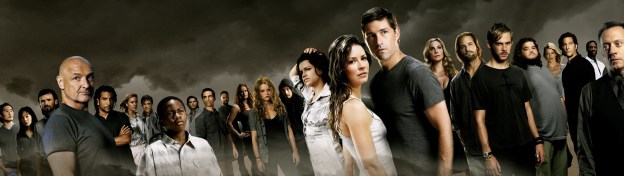
Murder, monsters, unity, and magic are all regularly seen on the exciting show Lost. Every episode either ends on a maddening cliff hanger or a warm feeling of love and peace among all the stranded people on the island. While Lost is intriguing and enjoyable to watch, there are many issues I have with the program.
A great deal of events or key things the show makes a point to center on are just not tied in well to the plot or just dropped all together. When Desmond Hume is first seen on the show, he is working out in the first hatch, makes breakfast, and then injects himself with some sort of serum from a cabinet. Again in the show, when Desmond runs away from the hatch and leaves the button-pushing to Locke and Shepherd, he grabs food and supplies, including the mysterious serum from the cabinet with a pneumatic injector. What the serum is used for is completely unknown. After continuing to watch Lost, no mention of this serum ever arose again. There was one point where a pneumatic injector was used to treat Claire’s sickness, but the serum used for the treatment was not the same as Desmond’s. The writers didn’t use the serum again or explain it for the rest of show, which I find annoying because they made such a point to film it and its use.
Michael’s son Walt was another writing error by the staff of Lost. He was abducted by “the Others” after Michael, Sawyer, and Jin tried to find the shipping lanes after constructing a raft out of bamboo and plane parts. While the abduction was occurring, “the Others” stated Walt was a special boy, and they had use for him. Later in the plot after Michael went out into the island alone to look for Walt, he was captured by “the Others.” They again told him his son Walt was a very special boy. Michael and Walt left the island soon after that incident, and Walt and his father were gone from the story for a while. Walt later resurfaced in a vision to John Locke and told him to finish his job. Why did John Lock see Walt and not someone else? For Locke to have seen the ghost of Boone would have made much more sense. Lock was actually close to Boone, not so much Walt. What was ever special about Walt in the beginning to merit abduction by “the Others”? These are the kind of gaps in the writing of Lost that reflect the writers’ negligence.
Throughout the Lost series was a main recurring theme: everyone is equal, and we can all get along no matter what our backgrounds are. Consider the evidence. In the plane crash is an Iraqi Muslim soldier, an American doctor, an American murderer, a conman, a crippled man, and a Korean couple as the main characters. As the show progressed, oftentimes the episodes would end playing slow inspiring music showing all of the characters looking out for each other, loving each other, living in harmony. In and of itself, it’s not a bad message; in fact, the opposite: it’s an inspiring message. What the writers of Lost were trying to do was show the pettiness of fighting over trifling things like race, background, or preferences. In the end we’re all human. The writers went too far when in the final episode of the final season they directly compared Eastern mysticism, Islam, and Christianity as equal. Jack Shepherd was talking with his father in the back room of the church in front of a stained glass window. On this window was a Christian cross, the Islamic crescent moon, the yin-yang, and the Star of David, among other religious symbols. They finally reached the crux of their main point: all religions are the same, and all paths lead to heaven, their heaven being unity and fellowship in their own personal heaven where nothing goes wrong for them. Christ said “I am the way, the truth and the life, and no one comes to the Father but through me.” The Bible clearly says that Christianity is the only way to salvation, yet the writers of Lost ignore that.
What is the bright light that must be guarded from misuse by evil mankind? No one ever knows. In fact, Jacob doesn’t even know what the bright light is, what it is used for, why it exists, and why it must be protected. Those same questions were asked enough by the characters themselves, but the customary responses were, “It doesn’t matter,” “We have to keep moving,” or “You’re not ready to know yet.” Ignoring the question all together was also another response. Did the writers just not want to explain it, or did they just not know what to make the light be without it being too absurd? Another loose end in the Lost plot, I suppose.
My biggest issue with the plot of Lost was the portrayal of Jacob’s brother, also the Black Smoke Monster, as evil. What has he done that’s so evil? He’s killed people, yes, but only because he was provoked to do so out of necessity. When Jacob and his brother were born, their mother was murdered by a woman on the island guarding this mysterious light in a cave. She raised the boys as her own, but then Jacob’s brother discovered the truth about his origins and tried to go back across the sea to his homeland. His mother’s murderer knocked him unconscious and destroyed his means of getting home. All that Jacob’s brother wanted to do was go to his real home, be with his real mother (impossible now since the woman killed her, for no reason at all, and if so, left unexplained) and see the world. Those were never bad things.
Jacob’s brother then killed his mother’s murderer and in turn was murdered by his own brother. If anyone is evil it should be Jacob. He was jealous of his brother because his fake mother loved him more than she did Jacob. Jacob threw his brother into the bright light, which turned him into the Black Smoke Monster (another fact unexplained). So, the main characters of Lost are being directed and ordered by Jacob, a man who killed his own brother out of a jealous rage because he avenged the death of their real mother and only wanted to go to his real home.
All in all, Lost is enjoyable, interesting, and a fun show to watch. Six seasons of 45-minute episodes with only these discrepancies is not that bad of a review. If you can’t stand dropped plot points then don’t watch it, because the end of the series will be a severe disappointment to you, and all the countless hours you’ve spent in watching it will seem like one big waste.
The whiteness of my surroundings grabbed me. Everything was white. There was nothing beneath me and nothing above me. I was floating in an endless space of white. I decided to leave this place and travel to a hilly area with trees taller than mountains and mountains smaller than pebbles. I liked it there. The fan that I held in my hand must have been battery powered because I struggled to find an outlet anywhere. Many kids were playing by a tree, so I approached them to see if I could find some food. One kid, taller than the rest but also uglier than the rest, came out from the crowd and told me to follow them into a door located on a tree. Of course, I had to follow them because they all had screwdrivers for teeth. As I stepped through the door, they all grabbed me and threw me on a table and began to saw off my leg. Fortunately, it did not hurt. But I was afraid that not having a leg would hinder my ability to move. So I began to kick the kids off of me. I punted them as far as I could. The room we were in was not lacking in space and all of the walls were made of rubber. This made it hard for me to completely ward off all of the kids. I continued to kick them to the other side of the room, which probably could be measured by the length of four or five microwaves. We were all very small. I used the many spears that were strategically placed around the room to ward off my opponents.
After a gruesome five hour battle of standing in one place with one leg (they had succeeded in the amputation of my other leg), I decided to jump on a raft and leave the kids alone. The raft I boarded was sturdy, and I made sure that it could float by weighing it on a scale nearby. It was deemed floatable by my good friend, Targus. Targus was a talking backpack, and I never went anywhere without him. He had the responsibility of carrying all of my necessary personal belongings such as ham, my laptop, and a few other miscellaneous possessions. The raft we boarded was moving fast, too fast. I could not stand up any longer because the power of the wind forced me to kneel. My surroundings were blurry blobs of Jell-O and Targus was excited, too excited. He began to jump all around and sing songs about his homeland. Not knowing what else to do, I joined in. We sang for what seemed like hours upon hours about friends, family, and food. He told of his origins and of his family back home. He told me of his urges to make more of his life and accomplish goals and tackle great feats. I pushed him off the raft because I decided he would be better off dead than a backpack incapable of doing anything with his life.
The raft had not slowed down, and I was wondering how and when I should get off. This thought was timely and appropriate because a sign was coming up on the left that read, “David, get off here, right now.” I hopped off the raft and proceeded toward the sculpture of a dolphin that was located approximately 90 miles ahead of me. My vision was pretty good, I guess. A 90-mile walk on one leg seemed somewhat miserable, so I decided to fashion a prosthetic leg out of a nearby branch. The branch did not work as a leg, so I burned it and cooked some sort of ill-smelling meat over it. The dolphin sculpture seemed too good to be true, so I decided I would turn around and get back on the raft. Disappointed in my failure to reach the dolphin, I hopped slowly with my head hung low, too low. My head was so low that I began to step on my face. I crushed my eyes with my leg. My face began to bleed, and I couldn’t see anything. Everything was red. For hours I hopped while crushing my own face and bleeding profusely through the opening’s of my skull. The trek was tiresome, but eventually I reached the raft.
It was then that I decided to lift up my head and forget my failures of not reaching the dolphin. So I wiped off my face with the towel that appeared in my hand. Luckily, the towel was red so I would not have to worry about my mom getting mad about the blood staining it. I had to weigh the raft again so I knew for certain it could float still. So I took it to a weighing station over by the dolphin that I could not reach earlier. But then I realized I had made it to the dolphin so I did not need to use the raft anymore. The dolphin was large and made of pure marble. I sat down beside it and cooked some meat over a fire. I looked in the distance and saw a mob of very angry looking geese approaching me extremely rapidly. I thought back to math class; good times there. The geese looked as if they wanted to hurt me so my natural reaction was to hurt them. They began to flap their feathers and everything slowed down. The light dimmed, and the music began playing. The geese flocked towards me, and I propelled them in different directions with the use of my incredibly fast Neo-like fists. Feathers flew everywhere and were so dense and thick that I had to use Clorox window cleaner to clean the skies. This was a daunting task because the sky is so big. With no motivation I eventually gave up. My loss of motivation must have been contagious because the herds of geese began to turn away seeing that they were never going to get to me. I sat back down and continued eating my meat. The music stopped and the lights brightened. It was time for rest. So I went to sleep.
My eyes closed and I began to dream of my childhood friends. We ate ice cream on my front porch; we played tag in my backyard; we watched the sun go down on a hill near my house. Everything seemed right and most of all, true. My family was there for me, and my heart was at ease. Truth was living in my dreams, and the tasks I performed earlier in the day melted away by the sweet simplicity of indifference. Waking up was harder than ever. My body felt heavy like a rock and I felt like the air was water, pressing down on my every ligament. But I got up anyways and hopped away from the sculpture which had so perfectly acted as my dwelling place. I began to hop faster and faster, striving to reach a destination unknown to me. My arms pumped rigidly, back and forth. My leg pulsated with the sound of my heart. Eventually I reached a hole in the ground. I jumped in and regretted the act immediately. Harrison Ford was standing on his tippy-toes whipping snakes. I wanted to leave this hole full of snakes so I called for Targus. He came, as always. He has never let me down. He pulled me out of the hole, and I hugged him and threw him on my back. I then floated away from that place and traveled to a pool where Targus and I could listen to music and swim. We did flips off the diving board, and I hobbled around the pool making fun of myself for losing my leg. The sky became dark and from the clouds appeared a man who told us he was going to kill us. He blew wind stronger than a hundred hurricanes toward our direction, and Targus and I went inside. As I was making my way to my car, a tree fell on my only leg. I screamed, woke up, went to the bathroom, got dressed, ate breakfast, brushed my teeth, drove to school, and began to learn.
Ever since 9/11 this has become a more and more important question. A couple days after the event, George Bush called for a National Day of Prayer at the National Cathedral. At the service, there were members of many different religions present — Hindus, Muslims, Christians, Judaists, Buddhists, etc. They had prayers that addressed God collectively — as “The God of Abraham, the God of Muhammad, and the father of Jesus Christ.” On Oprah a couple weeks later, the statement was made that “We all worship the same God.” This raises the question. Aren’t all religions basically the same? Don’t they all lead to the same God, just through different ways? It’s a question worth examining.
I think the objection that all religions are the same assumes little knowledge of religions in general. If this idea is really researched, we find all religions are fundamentally different. The main disputed idea between religions is also the most central — WHAT is God? Does a being called God exist? Is there one God, or many? Many African religions believe there are many gods; some Buddhists believe there is no God. The three main monotheistic religions — Judaism, Christianity, and Islam — agree that there is one God. BUT they disagree on who He is and what He’s like. Jews and Muslims believe God is personal — Christians believe that and more — that He is triune, three persons and one God. Neither Muslims nor Jews agree that Jesus is God incarnate — and reject the crucifixion and therefore resurrection (the cornerstone of the Christian faith). Most Buddhists and Hindus agree that God is not personal. So not only can the world’s religions not agree on what God is, but who He is and what He is like, as well.
We could try to reduce these religions to commonality, even just for the three monotheistic religions. They all believe in one God, and that we should be good to our fellow man. That’s the basis of religion, right? The fatal problem comes in that when we reduce religions to their “least common denominator,” we are robbing them of the distinctions that makes them what they are. The reason Muslims do good is so they will be accepted by God — this is fundamentally different from Christians, who do good because they are already accepted and loved by God. What is real and true is the foundation for what is good and right. The fact that both religions attempt to follow the golden rule cannot be separated from the fact of WHY they follow it! The difference there reveals the bigger difference of who they think God is (purely judgmental vs. loving and judgmental). We cannot take those characteristics of God away in order to make the religions agree with each other for the simple reason that we are taking away core beliefs of each religion. They are irreconcilable differences.
Now that we see how all religions cannot be the same, we face the objection that “even if they all contradict each other, they can all be equally true.” This is simply not true. A common objection to Christianity is that it is hateful to claim one religion to be true and all the others false. Isn’t that unfair and judgmental? The very nature of truth HAS to be exclusive. For example, either God exists or He does not. Both cannot be true at the same time. If it is true my pencil is red, then it is false it is blue, green, purple, pink, yellow, or any other color other than red. That’s not judgmental; it’s simply the nature of truth. All religions claim they have the truth that leads to God and by that must reject all other claims of truth.
Of course, some people hold to the objection that truth really IS relative, meaning it is definable for each person — in that case it really would be judgmental to say that one person’s religion is right and everyone else’s is wrong. First of all, the statement “All truth is relative” is itself absolute and therefore contradictory. Secondly, if I decide my own truth then I decide my own morals. Then there should be no laws against murder, rape, or child abuse. After all … isn’t it my right to choose it is moral for me to murder someone? In that case laws against such things would be unjust … and that’s obviously not the case! We can’t create our own morals, and we can’t create our own truth. The nature of truth is exclusive, so either Christianity is true and Islam is false, or Islam is true and Christianity is false — same with every religion.
Of course that does not mean tolerance is not important — there is a difference between arguing your position and killing someone for not accepting it. Everyone has the right to his own opinion, and if you’re going to argue you’re right, I think you’d better have a good reason for it, while showing respect to the other position. “It is the mark of an educated mind to be able to entertain an idea without accepting it.” — Aristotle.
To examine this all from a Christian perspective, we can see though all religions are fundamentally different, it is undeniable some religions do have things in common — like believing there is one God. From my perspective, it is evidence for Christianity that we see some bits of truth in other religions — because I believe that man is made in the image of God and reflects Him necessarily, even if only to a small degree.
The famous line “We Will Never Forget” is extremely proper — everyone born before the date of September 11, 2001 will never forget where they were when they heard about the terrorist attacks. I was seven years old sitting in a classroom struggling to read a book aloud in front of my class. I was so frustrated being in front of my peers and not being able to read as eloquently as they did. So when the principal of my school ran into our room and quickly made all of us sit in the main hallway where the television was playing, I didn’t mind. I hadn’t taken into account the tears that were streaming down her face or the gasps of terror that were going on around me. I was just so happy for the attention to be off of me. When each of my classmates had taken a seat in front of the television I began to soak in what I was seeing. I watched a plane hit one of the towers of the World Trade Center. I saw images of people jumping out of buildings and the people running from a building that had just collapsed. They were covered in white dust. Immediately, as a seven-year-old child, I panicked thinking my mom was working in the building that had been struck. She was due to give birth to my sister that day. My mom, being my mom, must have known how scared I was because she called the school. She reassured me that she was okay, and that she wasn’t in the buildings. She also told me that my uncle, who was coming down from New York to be with us when my sister was born, was all right, too.
2,996 people died that day. Approximately only twenty people were rescued from the rubble. On September 4, 2011, I had the privilege to meet the last survivor pulled out from the debris, Genelle Guzman-McMillan. Her day started off as any other day. She arrived at work at 8:05 AM. She got to her office, which was on the 64th floor and started catching up with her friends on what they had done over the weekend. Then the building shook, and her coworkers all exchanged concerned looks. She didn’t think it was very important though, because she was from Trinidad and thought it was just an earthquake. They resumed their day. No alarms went off. No warnings were issued — they were completely unaware a plane had just struck 30 floors above. After an hour or so they felt the building shake again. This is when Genelle knew something was wrong. She looked out her window and saw papers flying in the sky and a smoky haze. Genelle and her friends hurried to their conference room and turned the television on. This is when they saw there had been a possible terrorist attack, and the planes had struck both of the buildings. Genelle and her coworkers all decided to walk down the stairs; she then called her boyfriend and told him to meet her outside the building. As they traveled down the stairs, they were not in a hurry. They figured the building was sturdy enough — they even had passed a fireman on the way down who told them they were doing okay and they should be fine. Genelle was holding her good friend Rosa’s hand to help comfort her. When they reached the 13th floor, Genelle needed to remove her boots that she had just bought a week prior to 9/11; they were four inches high. She let go of Rosa’s hand and as soon as she bent over, the walls caved in. She was pinned to the floor and fell thirteen stories. She remained conscious the entire time. She remembers the falling sensation, the people’s screams and cries. When she hit the ground her head was pinned between two concrete pillars, her legs crossed and her body in a fetal position. The only thing that was free to move was her left arm.
Genelle told herself repeatedly, “This cannot be happening, it is just a dream. Just a dream.” She closed her eyes and opened them again hoping that she would wake up. The dust was in her nose and mouth. She realized it wasn’t a dream — she was alive, and a 110-story building had just collapsed on top of her. She heard a man’s voice call out for help three times — and then it stopped. Genelle laid under the rubble. She wanted to cry but her body was incapable of producing tears. She felt like her head was going to explode. Genelle recalls extreme temperatures — at one point she was so hot she was sure she was going to burn alive, as if a fire were right underneath her. And another time she was so cold, her teeth were chattering. She moved her left arm around to feel around her, looking for anything to pull over her body to keep her warm. She felt a piece of cloth and pulled on it but could not get it. She later found out it was a fireman’s body; she was tugging on his coat. Genelle laid there for 27 hours, giving up the will to survive. She did not care to live a Christian life before; she always thought she’d get “right” with the Lord around the age of 65. She didn’t care to live a “conservative” life as Christians do; she’d rather party and get drunk every night. Suddenly Genelle began to think of her daughter who was 12 at the time. She began to think of her boyfriend, her family. She wanted to live, to see her daughter and family again. She thought of her mother who was a Christian; she always called Genelle and asked her to change her life and follow Christ, and every time Genelle dismissed her. Genelle decided to cry out to God, begging for his forgiveness and his mercy to pour over her. She asked God to save her, promising him if he did she would live for him. She asked for a sign, anything to show her he existed and he loved her, that she would survive. She cried out that same prayer for about an hour.
Genelle then decided to reach her arm up, to feel around so maybe someone would see her. A hand grabbed hers and said “Genelle, I’ve got you.” She did not tell him her name, but a wave of relief came upon Genelle. She said, “Thank you, God,” and then asked his name. “Paul,” he said. “I’m going to stay with you until they find you. I’m not going to let go of your hand. They will be here soon; I’m not going to leave you.” Paul held her hand until rescue workers found her. It took the workers one hour to remove all of the rubble from on top of her. She had been buried for twenty-seven hours. A line of people had formed, and they all passed her down to the ambulance. The people cheered and clapped as she was brought to the hospital. She was the last person alive to be recovered from the tragedy. All of her coworkers had died. When she got to the hospital her boyfriend rushed to her side in tears. Immediately, Genelle told him to write down the name Paul, the man who saved her life. He did, and to this day she has not been able to find him. She believes he is an angel.
When I heard her story, I couldn’t stop myself from crying. I had met Genelle when I was twelve years old, but I wasn’t mature enough to understand the weight of what had happened to her. Five years later, she was sitting before me with her husband (her boyfriend during 9/11); they married in November, as soon as she was released from the hospital. She has two children with him, one is six years old, the other is two. Genelle’s survival was a miracle. She survived one of the worst acts of terrorism the world has ever seen. She fell thirteen stories and had 97 floors crumble on top of her, and she is still fully functional: mentally and physically. But this Genelle is not the Genelle before September 11, 2001. She is now a best selling author for her book Angel in the Rubble and travels the world telling people about God and how he saved her. Her story has saved thousands of souls. A day so tragic to our nation — God has used to save many people. We will never forget September 11, 2001. And we should never forget that only our God can use something so terrible to show his love for us and to bring glory to him.





 Redeeming Pandora