
Category Archives: Issue 5

The Arab Spring and America

Connor Shanley

The times in which we live are becoming more and more unpredictable and uncertain.  The world in which we live is changing rapidly, every day events are taking place around the world we don’t even know about.  These events are changing the world in which we live.  Recently there’s been a very strange thing happening in the Middle East; it has been popularly called the “Arab Spring.”  The Arab Spring refers to the recent increase in protest and civil disputes throughout the Middle East.  The Arabs are now trying to overthrow the oppressive regimes.  In many countries this would seem to be a good thing for the church and for Christians.  In some counties where these protests are occurring, the regimes have been oppressive to the Christian community.  In many cases, though, once the government is overthrown the chaos the protest and riots had will often be continued on to the Church.  This is why the Arab Spring is something the United States should be watching very closely.

The first country to start this Arab spring was started in Tunisia, on December 18, 2010; protest began in Tunisia to show public disapproval of government corruption.  The protests at first were going peacefully, but then various uprisings throughout the country resulted in over 1,000 deaths.  The protests only grew after that, though, and president and prime minister of Tunisia both stepped down from office.  The protests are still on going; the protesters still want to see major government reform.  Tunisia was the start of the Arab Spring, but it is definitely not the most well-known country with current civil unrest.  The country most noted for really being the start of the Arab Spring is Egypt.

On January 25, 2011, Egypt took after Tunisia’s example and started its protests and demonstrations.  Egyptians were sick of their government and their president Hosni Mubarak.  The protests in Egypt often grew violent; in one protest in Cairo, 846 people were killed and 6,000 were injured.  One seemingly good thing coming out of the protests though was Christians and Muslims were uniting to have their voices heard.  A sight seen very often during the protests was Christians forming protective barriers around Muslims during their 5 o’clock prayers.  Likewise, Muslim violence against Christians subsided for a time.  On February 11, Mubarak stepped down from office.  It was taken as a great moral victory for the protesters.  The success of the protest was not just felt in Egypt but in other Arab nations as they decided to follow Egypt and Tunisia.  Protest started to break out all over the Middle East; four days after Mubarak stepped down, Libyan rebel forces began a Civil War.

The aftermath in Egypt, though, was not all freedom and equality.  The government was now gone, and political chaos was taking over.  Violent protests were still going on, and at night people described Cairo as a war zone.  Much of the violence, however, was directed toward Christians.  Prior to the protests, the Christians in Egypt were already being persecuted, partially helped by the government, but the government did keep some peace.  Now that police can no longer enforce curfew, mobs of Muslim extremists are burning down churches and killing civilians.

Now many accounts of massacres of Christians throughout the Middle East exist.  Countries like Syria, Lebanon, and Algeria are having massive protests against the government, but because the police are so distracted by these protests they can’t protect the Christians.  The Christians are being overwhelmed; at first many thought this Arab spring would be a good thing for the unification of Muslim and Christian communities.  The Arab Spring has just sparked more anti-Christian violence.  Many believe the rise in violence is only reserved to some parts of the protest.  They believe as a whole, though, the Arab Spring will still be good for the unification of Christian and Muslim communities; they believe over all the Arab Spring is very good thing.

Many members of the media portray the Arab Spring as a good change.  The Arab Spring shows the Middle East is becoming more democratic.  The media on the left see it as the Middle East somewhat conforming to our way through wanting the common people to have a say in political matters.  There is a very dark side behind the Arab Spring, however: the rise in persecution.  Christians know behind these protests are people wanting to overthrow a regime not because it is not democratic but because the regime isn’t Muslim enough.

The problem now brewing in the Middle East is two types of protesters being seen; one type is the kind the leftist media love.  These protesters are the genuine young who want the right to vote and who want to put an end to their tyrannical government.  Then there is the other type, usually the older ones, who look to overthrow their government because their government has been too friendly to the West.  These protesters are angry their government is trying to impress America.  It is now a proven fact these protest leaders are members of terrorist organizations.  It taints the whole idea these protests are just all about freedom, and all this political unrest has become the perfect time for terrorists to try to get as much power as possible.

The Arab Spring, which at first looked to be a positive step forward, is now a dangerous threat to America.  The terrorists we are fighting every day are looking to take advantage of the political unrest.  The uncertainty of the outcome of the Arab Spring is endless; America could manage to gain many allies out of this.  For example, Libya (at least for a short time) should be on our side given we supported the rebels’ side.  Still, even Libya could turn on us, and now because of all the recent uprisings more weapons are in the Middle East than any agency can keep track of.  Most of these guns are just floating around the region with no one to keep track or regulate distribution of them.  Many of these weapons have already ended up in the hands of mobs that persecute Christians; those same people are the ones who will support the terrorists.

In conclusion, America must keep a very watchful eye on all this civil unrest.  If America uses the Arab Spring to its advantage, it could help stabilize the Middle East for years to come, but if America is not watchful, the wrong people may take control, and America could have a growing list of enemies.
Farewell, SCA Today, We Hardly Knew Ye

Christopher Rush

We kid because we love.  For the last few years, despite what light-hearted comments we may have made, in all sincerity we know that several of you worked many long hours (especially Mrs. Spaulding) putting together the quarterly newspaper for Summit Christian Academy.  We at Redeeming Pandora would like to salute your effort by including a list of rejected names for the newspaper.  We shall always think of it as SCA Today, but our hope is that as we peruse and delight in this list of rejected names, we shall always remember the good work you did.

1. We Did This Instead of our Homework

2. The Monthly Newspaper: Published Once a Month

3. Eagle Droppings of News

4. Summit Shenanigans

5. News: Fresh and Moist

6. Naturally Smooth News

7. News So Good You Could Spit

8. Piddlings, Twiddlings, and Resolvings

9. Yesterday’s News Today

10. Daily Summit Pantograph

11. Heraldic Triumph

12. Chiliast Reports

13. Achtung!  It’s Newstime!

14. Uncovered Items of Varying Interest

15. Now You Know

16. Big Bethel Tidbits

17. Hill of Beans

18. News: Hot and Saucy — Texas Style!

19. Straight from the J-Team’s Mouths!

20. Read This

21. The Last Newspaper of Your Lifetime

22. Not For the Squeamish

23. You Have to be This Tall to Read the News

24. Underclass Assessments

25. Kiss Me: I’m on the J-Team

26. We Could Have Done This Without You

27. Cheap News for Cheap Students

28. Fowl Ups

29. Egrets?  I’ve Had a Few…

30. Hydrophobic News for the Unwashed

31. News: Raw and Unshaven

32. WWJRTN?: Why Wouldn’t Jesus Read This Newspaper?

33. Behold, the News!

34. Quiet Please!  News in Progress

35. News to Cheer You Up or Depress You (Whichever)

36. Spauldinglicious

37. News You Can Trust (ish)

38. News for People Who Don’t Read Newspapers

39. News We Broke on Purpose

40. With 6 You Get Eggrolls

41. Which Newspaper Title Will Win?

42. Poindexter Press

43. Hearken to Our News Stories

44. News to Cleanse Your Shame

45. The Bee’s Knees Newspaper

46. Dishwasher and Microwave Safe News

47. Property of PCC

48. News So Clean You Could Lick It

49. E-News on Paper

50. Cheesy Gordita News Crunch

51. No I.D. Needed News

52. News Even Koalas Would Like

53. News to Your Mother

54. News with a Gooey, Nougat Center

55. You Don’t Rock

56. The Rest of the Rest of the Story

57. Value Added News (So You Don’t Have To)

58. Postnews, Postmodern Style

59. Wha-Bam!

60. usNews

61. Headlines Don’t Sell Papes: The J-Team Sells Papes

62. Covenantal Colloquy

63. Terpsichorean Twaddle

64. News to Gird Your Loins By

65. In That Day

66. Sorry I’m Late!

67. No Hands Allowed

68. Plundered News Booty

69. Based on Real Events

70. So Easy Even Summit Can Do It

71. Newslift: No Botox Included

72. This News May Include Peanuts

73. News for Sissy Britches

74. We’ve Got Your News Right Here!

75. Hot Fudge News

76. Don’t Go There

77. Oh Yes We Did!

78. Oh My!

79. News You Don’t Have to Write Home About

80. Headlines?  I Barely Know You

81. Snap, Crackle, News!

82. It All Started in a 500-Watt Newspaper Press in Yorktown, Virginia

83. News You Can Stick Anywhere

84. Splenda™-coated News

85. ¡Contenido Caliente!

86. Loquacivity

87. Extra Pulp News

88. Monozygotic Diatribe

89. Purified by Reverse Peristalsis

90. SCAtalogue

91. No Word from Our Sponsors

92. Screw This To Your Sticking Place

93. RenWeb Approves

94. It’s About to Get all Newsworthy Up in Here!

95. Go Ahead: Try Me

96. Buckle Up!  It’s About to Get Bumpy!

97. Flammable

98. Solitary Dialectics

99. For the Bumptious Articles Within All of Us

100. Reheats as Well as Macaroni and Cheese

101. Lather, News, Repeat

102. My Other Newspaper is a Scholarly Journal

103. We Tried

104. Goes Great with Stuffing

105. Shouldn’t You?

106. Giggles Aplenty

107. Deposits of Orichalcum

108. Lost Monologues of Plato

109. Michael Wood’s Hand-me-Downs

110. Who Watches the J-Team?

111. Translated from Linear B Texts

112. Intellectual Placebos

113. Silver and Gold Gilding

114. Eric Sevareid’s Forgotten Memoirs

115. Mimetic Reports

116. News for Commonfolk

117. Dispatches from the Near-Front

118. Candied Yams for the Mind

119. Join Us

120. Bigger Bethel Broadcast

121. Chongo-longo!

122. Bronze Age Nibbles

123. Come Rub Elbows with the J-Team

124. Stick a Fork in Us

125. You’ll Like It: It’s Not a Fundraiser

126. No Prescription Necessary

127. Wait ’til You See the Swimsuit Issue!

128. Florescent Light Orchestra

129. Earwood Lang Overdrive

130. Águila Discharge

131. Use Your Imagination

132. Wash Before Reading

133. Don’t Wait for the Movie

134. Recycle Later

135. Tú Madre

136. Free Dress Day Coupon Inside

137. Everything You Ever Wanted to Know About Summit (But Were Afraid to Ask)

138. News for the Untucked

139. Night Train to Newstown

140. Top Shelf News

141. Good Times

142. Why Not?

143. The Joy of Summit

144. Available in Magenta

145. This Will Make Your Blood Boil

146. No Nuts

147. Summit Fried News

148. Scotch-Guarded Missives

149. Lemon Bars are Extra

150. Top Off Your News

151. News from the Hoodie

152. Ding!

153. “Go Home and Study”

154. Lubricant for the Soul

155. Obligation-Free Notions

156. This is Pretty Much It

157. Dial: 4209

158. The Entrée Today: Summit News

159. Feelin’ Newsy?

160. Can I Tell You About the News?

161. A Good Ol’ News Rag that Will Help Wipe Up Your Personal Messes

162. Front-to-Back, Back-to-Front: It’s News

163. It’s the News, Baby

164. Here, Have Some News

165. Newspaper Today, Wrapping Paper Tomorrow

166. Fish-n-chips Free

167. Oh Snap! and Other Current Events

168. Bag of Chips Not Included

169. Stuffed to the Hilt with News

170. News — Unplugged After a Fashion

171. Seats 5 … Okay, 6

172. Time to Snuggle with the News

173. Kept at a Suitable Temperature

174. Twice-Baked News

175. Ready-Made News Fronds

176. Silent Lunch?  Seriously?

177. In English (Because You’re American)

178. Choose Your Own News

179. Tax Free for Now

180. Read This for Honors Credit

181. Newsflash Dances (Rain Extra)

182. Oh Yes

183. Say…!

184. Not Available for Downloading

185. Truly Magisterial

186. Periodic News

187. What Else Do You Have to Do?

188. Just Enough Bias to Make it Interesting

189. Bite-sized

190. Use Your Illusion III

191. A — E — I — Oh You Know It!

192. Today Yorktown, Tomorrow the World!

193. News: Pre-Dropped Low

194. Thank You For Your Custom

195. Aboriginal Inquiry

196. It’s Like a Petting Zoo for News

197. Organic News Harvested from Free-Range Reporters

198. Love-encrusted News

199. Ensconced in News

200. It Takes Time, Okay?

201. Postgnostications

202. What Sort of Hijinks Has Summit Gotten Itself into Now?

203. Situational Newsality

204. News: Double-dipped, Double-awesome

205. Come Bathe in Our News

206. Bringing Dignity to this Troubled Peninsula

207. You Can’t Make This Stuff Up

208. Newsborne Pathogens

209. Old Chansons in a New Key

210. We Hold These News to be Self-evident

211. You Dropped the News on Us

212. Spangled Globules of News

213. Putting on Eyries

214. Gentle News Caresses

215. Mostly Graham

216. If It’s Not Here, It Didn’t Happen

217. A Lovely Day for News

218. Won’t You Be Our Reader?

219. Newstastic

220. I Think Your Paper’s Fabulous!

221. You Can’t Afford Not to Read This

222. Caffeine-Free News

223. Good for the Gander

224. News d’Amour

225. Come News Away with Me

226. Steele in the News

227. Scrumptious News Offerings

228. A Third Ordinance

229. Tweetless

230. News ‘n’ Peppa

231. Stocking Stuffers

232. That’s What We Said, That’s What the J-Team Said, We Said That!

233. Take It or Leave It

234. Bright Shining News All Over

235. News from the Loft

236. News: Head Coverings Optional

237. Your News (Even if You Have a Man Purse)

238. Get Out Your 12-sided Dice: The News is Here

239. News in Low-Def

240. Hoo-Boy!

241. News from the 16th Hole

242. Oh Yeah!

243. Just Plain Radical

244. Actually, We Are College Prep

245. News to Shepherd Your Inmost Desires

246. Fifth Army Gazette

247. News for Left-handed Moths

248. It’s Either This or Study Hall

249. News by Which to Better Understand Wolves

250. More Than the Minium

251. Tessellated Patterns of Beauty

252. N*E*W*S

253. In Glorious Black and White (No Offense)

254. Classically Delicious

255. Newswich with a Side of Awesome

256. Idylls of the … Thing

257. Rock, Paper, Scissors — News!

258. News Up In Your Grille

259. Newsical Goo Goo, Newsical Ga Ga

260. It’s a Party (and You’re Invited)

261. News Box Hero

262. Better Than Cool

263. Remedial News Awash in Fortune

264. Hope for the Newsless

265. Could It Possibly Get Any Better Than This?

266. News?  More Like a Lifestyle

267. News to Save Your Love Life

268. Teenage Newsland

269. Caution: News At Play

270. Smile: The News is Watching

271. You Sunk My Newspaper!

272. Why Can’t It Be Us?

273. It’s Up to Us: Choose Now

274. News.  Plain.

275. News Outside, Joy Inside

Those were good times.  We were all so young.  The sun was bright, the birds were singing … people seemed to laugh more then.  It was a good run while it lasted, J-Team.  You did some good work back there.  Don’t think of these names as a jab or slight — remember, we kid because we love.  This list is included as a fun, fond farewell to the exciting opportunity you gave us to think of a name for you.  Every time we look at this list, we’ll think of you.  I know we kid around once in a while, but if we can be serious for a moment: you did something you can truly be proud of when you look back on your high school career.  Hail and farewell.

The Work of Our Hands, the Wisdom of Our Hearts – Redeeming the Time: Psalms 90-91

Christopher Rush

Presented as a chapel message on Friday, May 20, 2011, culminating the theme of “redemption.”

Introduction

Forgive me if this perspective is redundant, but I thought that an appropriate focus for our final exploration of the topic of redemption this year is “redeeming the time.”  As we prepare to begin our summer break, which for some inexplicable reason for many of us portends to be even busier than the school year, a few final moments’ reflection on what it means to “redeem the time” are in order.  When one thinks of the phrase “redeeming the time,” perhaps what spring to mind immediately are the verses Ephesians 5:15-16: “Be very careful, then, how you live — not as unwise but as wise, making the most of every opportunity, because the days are evil” in the NIV.  More archaic (in a good way) translations, such as The King James Version and the Darby Translation, phrase “making the most of every opportunity” as “redeeming the time.”  The parallel passage in another of Paul’s prison epistles, Colossians 4:5, phrases the notion “Be wise in the way you act toward outsiders; make the most of every opportunity.”  The contexts for the same thought are different, though: in Ephesians, we are to redeem the time in the way we live the entirety of our lives because the days are evil.  In Colossians, Paul enjoins us to redeem the time kairotically when we interact with non-Christians, making sure those opportunities to represent Christ well and accurately are not wasted.  These are certainly great verses on the importance of redeeming the time, but since I have spoken of them (at least Ephesians 5) at length in other settings this year, my focus this morning is on what may be considered a less-obvious passage that provides insight on both the importance of redeeming the time and some ways to go about doing it.  We all, by now, surely believe in the importance of redeeming the time, living our lives wisely and well, and surely we believe that the days are evil, despite the preponderance of advertisements to the contrary.  The question, then, is how do we do it?  Let us turn to Psalms 90 and 91 to find out.  I will read the NASB, to which you may compare your NIV translation.

Psalm 90

A Prayer of Moses, the man of God.

1Lord, You have been our dwelling place in all generations.  2Before the mountains were born or You gave birth to the earth and the world, even from everlasting to everlasting, You are God.  3You turn man back into dust and say, “Return, O children of men.” 4For a thousand years in Your sight are like yesterday when it passes by, or as a watch in the night.  5You have swept them away like a flood, they fall asleep; in the morning they are like grass which sprouts anew.  6In the morning it flourishes and sprouts anew; toward evening it fades and withers away.  7For we have been consumed by Your anger and by Your wrath we have been dismayed.  8You have placed our iniquities before You, our secret sins in the light of Your presence.  9For all our days have declined in Your fury; we have finished our years like a sigh.  10As for the days of our life, they contain seventy years, or if due to strength, eighty years, yet their pride is but labor and sorrow; for soon it is gone and we fly away.  11Who understands the power of Your anger and Your fury, according to the fear that is due You?  12So teach us to number our days, that we may present to You a heart of wisdom.

13Do return, O LORD; how long will it be?  And be sorry for Your servants.  14O satisfy us in the morning with Your lovingkindness, that we may sing for joy and be glad all our days.  15Make us glad according to the days You have afflicted us, and the years we have seen evil.  16Let Your work appear to Your servants and Your majesty to their children.  17Let the favor of the Lord our God be upon us; and confirm for us the work of our hands; yes, confirm the work of our hands.

Psalm 91

1He who dwells in the shelter of the Most High will abide in the shadow of the Almighty.  2I will say to the LORD, “My refuge and my fortress, My God, in whom I trust!”  3For it is He who delivers you from the snare of the trapper and from the deadly pestilence.  4He will cover you with His pinions, and under His wings you may seek refuge; His faithfulness is a shield and bulwark.  5You will not be afraid of the terror by night, or of the arrow that flies by day; 6of the pestilence that stalks in darkness, or of the destruction that lays waste at noon.  7A thousand may fall at your side and ten thousand at your right hand, but it shall not approach you.  8You will only look on with your eyes and see the recompense of the wicked.  9For you have made the LORD, my refuge, even the Most High, your dwelling place.  10No evil will befall you, nor will any plague come near your tent.  11For He will give His angels charge concerning you, to guard you in all your ways.  12They will bear you up in their hands, that you do not strike your foot against a stone.  13You will tread upon the lion and cobra, the young lion and the serpent you will trample down.  14“Because he has loved Me, therefore I will deliver him; I will set him securely on high, because he has known My name.  15“He will call upon Me, and I will answer him; I will be with him in trouble; I will rescue him and honor him.  16“With a long life I will satisfy him and let him see My salvation.”

It is argued in certain Talmudic circles that since no superscription occurs before Psalm 91, the authorship is tacitly understood to belong to the most recently-named author.  If this were true, and certainly the content of both psalms are similar enough not to discredit such speculation, we may very well have a two-part meditation by Moses on God, man, the connection between the two, and how to make that connection meaningful and lasting.

I wish to focus today on two key thoughts from this passage as aspects of “redeeming the time”: the aspect of “confirming the work of our hands” from Psalm 90:17, and the aspect of “presenting to God a heart of wisdom” from Psalm 90:12, with verses from Psalm 91 as corroborations and elaborations of these main ideas.  Hopefully by the time this message is over, you will notice these two facets cover the two important aspects of life: doing and being.

The Work of Our Hands

I am not implying that Moses was wrong when he discussed wisdom before action; only that as gatekeeper of the Realms of Gold, I understand that being (genuine leisure) is ultimately superior to doing — but since faith without works is dead, doing is an integral aspect of the Christian life that should not be ignored.  Thus, what does it mean to have the Lord “confirm the works of our hands,” and how can we “redeem the time” through that?

Other translations indicate that “confirm” in verse 17 can also mean “give permanence to.”  If God is going to give permanence to the work of our hands, of course even that “permanence” will have its limits — all the great works of art, the magnificent architecture, the grandeur of all sunsets will one day come to a cataclysmic end when the heavens and earth are wiped away and made new.  So the “permanence” is naturally of a limited fashion.  Since you are an intelligent audience, we can skip right to the sorts of work upon which God would indeed be glad to shine His favor and give permanence to: Bible study, evangelism, discipling, the works of Acts 2:42 (heeding the apostles’ teaching, fellowship, breaking of bread, prayer).  Certainly those are the overt, important mildly-flannel-board related works of our hands.  Any life committed to those would certainly receive the favor of the Lord.  That sort of behavior is not exhaustive, of course: the lists of spiritual gifts throughout the New Testament also model behavior that God would confirm: teaching, administration, faith, healing, helps, mercy, giving, service, celibacy, and others.  These get down to the day-to-day activities and lifestyles outside and around corporate church life.

What about going to a ball game, playing the piano, reading graphic novels, and playing video games?  Are those “non-spiritual” activities things upon which God could shine His favor, works of our hands He would confirm?  I’m not sure about going to a ball game — ice hockey, certainly — but definitely the rest of them are meaningful actions with tangible, permanent results.  The unifying element of the activities already mentioned is not that they are “super spiritual,” but that they reflect the heart of wisdom Moses urged in verse 12.  To genuinely have a heart of wisdom, one must pursue knowing God and reality accurately and fully.  The behaviors in which we engage demonstrate that ever-growing conception of and pursuit of God and His reality.  Playing musical instruments, composing works of literature, painting, sculpture, papier-mâché, reading great works of literature, including the better comic books and graphic novels, are not less real or less meaningful than going to youth group (in many cases, they might even be more important).  Can time spent playing video games be truly considered “redeemed” in the sense we are discussing? redeemed for the glory of God and the light of His favor?  Of course!  If they are the better games, that is – the kinds of games that instruct us, challenge us, encourage us to think through the important philosophical questions of life: what is real, what is good, what is evil, who is man, what is his purpose?  Playing Final Fantasy VI or ChronoTrigger (or others of that ilk) can be just as meaningful to your life as reading a great novel by Dostoyevsky.  Some may disagree, but they are wrong.  Trust me; I’m a published author.  And I play video games and read comic books and watch fine, quality television series.  So I know.

If everything we do we do for the glory of God, whether it’s building bridges in Uganda or inviting our unsaved neighbor over for some philosophical video game play and discussion (accompanied by appropriate tasty snacks), we are redeeming the time God has given us.  Stop thinking of reality as a compartmentalized series of “secular” and “sacred” subfunctions.  All created reality is an unnecessary demonstration of God’s love and beauty — stop taking it too seriously in the wrong way.  Underlying all this, as mentioned moments ago, is the importance of the heart of wisdom, to which we now turn.

The Wisdom of Our Hearts

According to Moses, the primary reason why need to redeem the time, or “number our days,” is that we may present to God a heart of wisdom.  Of course when we are judged at the end time we will be judged according to our deeds — the Bible makes that clear enough (it’s certainly not just whether or not you “believe in Jesus”).  The thing so many Christians seem to forget, though, is that without the proper heart of wisdom, no good deeds can ever be done.  In order for the work of our hands to be made permanent by God, they must be performed by a heart of wisdom.  If we don’t first secure proper standing with God, a right understanding of who God is and who we are, then what we want and why we are here, the bridges we build and the games we play will be for naught.  Psalms 90 and 91 give us a great picture of Who God is and how grasping that enables us to have a heart of wisdom.

Some translations say “Lord, You have been our dwelling place.”  A more literal term for “dwelling place,” though, is “hiding place” or “place of refuge.”  God is not just where we live, but where we escape from the not-of-God things of reality.  God gave birth to the world, the mountains, and man, and long before those happened, God is.  God’s sense of time is nothing like ours; the rise and fall of human epochs and civilizations is like the grass sprouting in a morning and fading away at dusk.  He knows all the actions and thoughts that have occurred, are occurring, and will occur — and a fair percentage of them rile His anger justly.  Yet He is the same God whose lovingkindness satisfies us (or should) freshly every morning, to which we respond with songs of joy and gladness.  While He tarries for our benefit, He makes us glad — despite the days of affliction and years of evil.  He is our refuge and fortress, the God in whom we trust — a God so powerful that when we abide in Him we are secure even in His shadow.  He is the God who delivers us from traps and pestilence, night and day.

Metaphorically, He is an encovering eagle, a shield, and a bulwark.  When you are secure behind His fortification, you see reality for what it is: you see the nature and purpose of evil, you see the recompense of the wicked.  When you know who God truly is, you understand the power of His anger and fury, and you give the reverential fear due to Him.  When you know who God is, when you have made Him your refuge and dwelling place (not retirement plans and post-graduate degrees), you understand the frailty and ephemerality of humanity.  Then, regardless of what evil and troubles will befall you (for they will indeed befall you), you will be able to accurately contextually that no evil will ultimately befall you — for you are under the protection of the angelic realm as well, empowering you to live the life you are called to live, treading upon the lions and serpents of post-Modernity and pragmatism.  When you know God accurately, you know that true security comes from Him and Him alone — that the love you have for Him must be so intense and consuming that the love you have for your family and friends looks like hate in comparison.  When you know God, you will be truly satisfied in Him, the source of your salvation and honor.

When you know God and understand His reality accurately (including who you are and your place in His cosmic design), then and only then will you be able to present to Him a heart of wisdom: the fear of the Lord is the beginning of wisdom; knowing God is the end of wisdom.  Then, and only then, will the favor of the Lord our God be upon you, and then the work of your hands will be given permanence.

There’s no need to ask God to move in a new way — we come to know Him the way people have always come to know Him: meditating on the book of His word and the book of His work.  Through active participation in the Great Conversation from Thales to Sophocles, Socrates to Copernicus, Wittgenstein to Vonnegut, and everyone in between.  By knowing who you are, what you want, and why you are here.  By acting justly, loving mercy, and walking humbly with God.  By rescuing Peach from Bowser and Zelda from Ganondorf.  By watching Londo and G’Kar forever at each other’s throats, Jack Shepherd finally figure out his purpose, and Adama realize why humanity is worth saving after all.

This is how you present to God a heart of wisdom so the work of your hands will be given permanence.  This is how you redeem the time.

What has Christianity to do with Horror?

Christopher Rush

Finally, brethren, whatever is true, whatever is honorable, whatever is right, whatever is pure, whatever is lovely, whatever is of good repute, if there is any excellence and if anything worthy of praise, dwell on these things.

Philippians 4:8, NASB

Admittedly, some passages of the Bible are rather abstruse and benefit from some commentary study (and a good Bible degree program from wise and learnèd expositors).  Philippians 4:8, however, as with most of Philippians, seems to be as overt and pellucid as the New Testament gets.  As Christians, on what should we set our hearts and minds, on what should our attitudes and dispositions of our souls dwell?  Whatever is true, honorable, right, pure, lovely, of good repute, of excellence, and/or worthy of praise.  Some might say “it sounds easier than it is,” as if because it is difficult it is not worth attempting, perhaps.  Our purpose here, though, is not to wrangle over the daily difficulties of living the Christian life in this dark world and wide, nor is it to minimize the deleterious effects of sin and the genuine, malicious diabolical forces of reality.  The point is to exhort you, as Christians, to stop willingly dwelling on the diabolical and demonic — namely, horror films.

Some might say, “couldn’t you say that about anything that isn’t the Bible?”  Of course one could, but we are talking now about something far more serious and sinister than reading ancient Greek poetry or indulging in re-runs of Barney Miller or playing Super Mario Bros. video games.  The key of Philippians 4:8 is “dwell.”  I do not disagree that indulging in anything too much (even what is good) beyond an active, lifelong pursuit of becoming Christ-like is inappropriate.  It’s not good to spend more time learning about God than spending time with God, abiding in Him and His word.  By dwelling on what is true, honorable, right, pure, lovely, of good repute, excellent, and praiseworthy, not only are we thus dwelling on attributes of God and things that must point us to God, but also we are, clearly, doing what God has told us to do.  We have said again and again that goodness, beauty, and truth can be found and enjoyed in sources that might not always be “Christian” — and since we are all created imago dei, certainly we can (and should) appreciate what is true, beautiful, and good wherever it occurs.  But, honestly, what is in any way true, beautiful, or good (or honorable, or pure, or right, or lovely, or of good repute, or excellent, or worthy of praise) about horror movies?

When I was younger, I enjoyed renting movies from movie rental places, especially on weekends, but I began to be fearful of Movies America.  One time a fun place to visit, especially because it was the only rental place close to home that had a fresh movie theater popcorn machine, and we would often get popcorn with our weekend rentals, it also had fun drawings/raffles, which we would occasionally win, being fairly regular customers.  The trepidation came, though, because they were one of the few rental places also to have mounted televisions throughout the store — and it seemed most of the time they were running trailers for horror movies.  As a young boy, I really had no interest in hearing or seeing these intentionally frightening and disconcerting sounds and images.  Being a somewhat prolific reader (as well as most likely naturally endowed with the faculty), I developed a quite active and fecund imagination.  Even though I was only being exposed to snippets and clips of these diabolically-oriented experiences pretending to be “entertainment,” I was not so easily capable of leaving the brief sensory intrusions behind.  When, later in life, we had more ready access to cable television, unfortunately concomitant with that came the multifaceted sinister nature of the advertisement industry and the ubiquitous trailers not only for the theatrical release of so many reprehensible films but also, several months later, for when the film was then being released on the newly-invented device known as the video cassette recorder.  I was quite glad for the invention of the remote control, but that did not become a part of our viewing experience until much later.  I have no conception how anyone would willingly sit through such a film: what good does it bring our souls?  How does it help us, in any slight or remote way, understand reality better, even from a fallen perspective?

I am not denouncing suspenseful movies or action thrillers — that ilk can provide some interesting and possibly meaningful kinds of sensory-rational-emotional experiences.  Neither am I saying one should never ride roller coasters.  Nor am I saying never play RPGs (I have surely made my personal enjoyment of them clear in other articles), though I would certainly urge caution against the dangers of over-indulgence in role-playing with the underworld no matter how fantastical or unrealistic (never, though, would I or hopefully any Christian condone playing with Ouija boards — that should be clearly unacceptable).  Thus, I am clearly not saying “never be scared or thrilled in a potentially hazardous way.”  The kinds of experiences horror movies engender (and the same could be said of similar video games and even literature), though, especially the slasher-horror genre (if such a fine word can be used for such a thing), are nothing at all akin to the intelligent constructions of some dramatic thrillers.  Because of this distinction, without fear of contradiction or hypocrisy I can advocate watching Rear Window and not Psycho, though both are from Alfred Hitchcock.  In like fashion, though I am a tremendous fan of Gregory Peck and Richard Burton, I will never watch The Omen or Exorcist II.  I am a fan (of lesser intensity) of Jeff Goldblum, but I will never watch The Fly (Jurassic Park and Independence Day, yes, but Jurassic Park is close to the borderline).

The fundamental problem of slasher-horror movies is their appeal to the basest, most depraved aspect of the sin nature.  They are not an attempt to understand, calculate, quantify, and equip the audience with the dangers and natures of demons, serial killers, or the otherwise mentally unbalanced.  They are not documentaries on the occult (nor am I suggesting that you should even explore those — as much a fan of Sir Arthur Conan Doyle as I am, I will probably not ever get to  his Edge of the Unknown).  Neither, let us be clear, are they metaphors or allegories of “good vs. evil.”  The “good” characters in these sorts of movies are often overly-sexed, under-dressed teenagers who are only in the position they are in because they have willfully gone to some place they know they should not have gone or done something they know they should not have done.  Admittedly, that is a generalization, but I think all should agree it is an accurate précis of most of the tropes of the slasher-horror formula.  Most others deal with some sort of demonic incarnation in an unsuspecting suburban setting with, perhaps, more “innocent” people, but we should be far more chary of the demonic realm than those movies want us to be — did we learn nothing from Reverend Hale of Beverly in The Crucible? — such movies want us to think the right amount of ectoplasm, the right amount of sincerity, the right amount of rational cleverness in the face of such irrational folly, the right amount of good ol’ human ingenuity and know-how, or, perhaps, enough willingness to become just as monstrous as the monster to defeat it, and then all will be right in the end (until the sequel).  Most slasher-horror films are part excuse for pornography and part indulgence in other, base elements of the human psyche (why should any of these be indulged?), but it is possible the worst aspect of them is their intentional lie to the audience that the devil can be cozened, outmaneuvered, and defeated by we mighty mortals.  If Michael the Archangel is hesitant even to bring a verbal condemnation against Lucifer, surely we should not even consider being “entertained” by him!  This is what horror films want us to do: find Satan fun.

We don’t read Milton because he’s delightful (and hopefully we all reject the Postmodern misreading Satan is the hero or anti-hero of Paradise Lost).  Even C.S. Lewis in Screwtape Letters admits he grew weary of thinking and writing from the diabolical mindset — clearly we have enough resources out there to know what (little) we need to know about it.  Bono’s Mr. MacPhisto persona, patterned after what Lewis did in Screwtape as evidenced by the “Hold Me, Thrill Me, Kiss Me, Kill Me” music video, was, likewise, a tool for the purpose satirizing a point — that eventually ended when the time was right to move on to more directly uplifting thoughts.

If you want the thrill of “good vs. evil,” read The Faerie Queene or The Lord of the Rings or The Space Trilogy by Lewis or the countless other high-quality uplifting books, poems, plays, and essays readily available for centuries.  The summer reading lists are surfeited with such authors fit to provide you with a lifetime of quality emotional-rational experiences to supplement and support your life-long pursuit of Christ-likeness.  Admittedly, it also has a small number of suspense and horror writers such as Gaiman, Blackwood, and Le Fanu.  It is certainly possible that reading horror writers may be worse than watching horror movies — thus, without trying to sound hypocritical, I shall just urge extreme caution when setting out to read something like that.  Don’t feel bad, though, if your gothic horror taste (if you even must have one) never develops beyond Shelley, Poe, James, Hawthorne, and Irving.

If you want to watch a movie for some suspense and thrills, though, why not watch one of the classics that has nothing to do with the demonic?  It might be fair to say all of the best movies of all time have nothing to do with such slasher-horror ideas.  Check out the stars of yesterday: William Powell, Clark Gable, Cary Grant, David Niven, Humphrey Bogart, Peter O’Toole, Richard Burton, Rex Harrison, the Marx Brothers, Myrna Loy, Bette Davis, Carole Lombard, Katharine Hepburn, Audrey Hepburn, and the rest of the gang.  That should keep you visually entertained for the rest of your days in far most satisfying ways than what horror films offer.  And if you absolutely must watch a scary movie (not just a thrilling suspenseful movie), be sure it stars Abbott and Costello — that should suffice.

Jerusalem and Athens have more in common than Tertullian may have wanted, but Christianity/Christians and horror films should have nothing to do with each other.  Dwell on what Philippians 4:8 requires instead.  Not only will you sleep better at night, but your life as a whole will thrive more gloriously.

The Vikings and their Impact on England

Erik Lang

The year was 793, and Father Declan looked at his progress in copying the New Testament Scripture of Galatians and decided he had earned a break.  It was just nearing nine o’ clock in the morning, and he had already copied well over half of the document.  The morning was cool and sunny, yet slightly overcast, a perfect day for a walk.  He shuffled out into the courtyard, passing Brother James and exchanged pleasantries.  He continued outside past the gate and stopped briefly, gazing at the surf pounding the black cruel rocks that surrounded the island of Lindisfarne.  He took a deep breath and praised God silently for days like these.  As he continued his circuit, something caught his eye on the horizon over the ocean.  It appeared to be four ships with square sails approaching the island.  Stranger yet, their direction seemed to come from the North.  They must be passing by, thought Declan, we have nothing to trade.  The ships didn’t alter course and came straight for the Holy Island.  Father Declan ambled toward the beachhead to greet the travelers and offer lodging.  By now the other monks had noticed the visitors and watched from the monastery walls to see what would unfold.  Father Declan was preparing his welcome speech when flashes of light from the ships caught his eye.  The men were wearing shirts of mail and had steel helmets, many holding bare weapons.  Suppressing pangs of fear he held his ground, confident that no men of God would ever attack a sacred monastery.  The ships grounded on the beach, and the men poured over the sides and sprinted toward the monastery cutting down the Holy Father.  Chaos erupted.  Monks offered themselves to the marauders hoping to be spared, while others ran for their lives or tried to save as many holy relics as they could.  All was to no avail.  The Norsemen slaughtered all, burned all, and stole all.  This was the first Viking raid upon England.

The image of pagan Vikings laughing as they killed is an image set in motion by the English, specifically the Roman Catholic Church.  The Vikings targeted monasteries for the wealth they possessed.  The clergy of Medieval England were exorbitant in their holy taxes upon the people and amassed quite a treasure trove of gold and silver.  The precious metals were either put in their treasuries or used to cover sacred relics or inlay into reliefs, etc.  Before the Vikings started raiding, they were traders and had frequent contact with the English including monasteries.  The Vikings could see the riches that lay in the monasteries and decided they could simply take them.  Thus, the reason for the Vikings receiving the name of godless barbarians who butcher without mercy is partially true, yet also fabricated by the early Catholic Church in order to instill a “divine mission” in the men of England to kill all Vikings whenever they came to the shores of England.

The Vikings weren’t savages.  They were an organized people who had specific military agendas revolving around the acquiring of wealth, but more importantly, the acquiring of honor and a renowned name.  It was common before raids for Norsemen to shout the location of their home village in Scandinavia, as well as their own name and their father’s.  The purpose was to spread their fame.  Fame and honor were just as important as riches, if not more so.  With fame came respect and a larger gathering of men to lead.  In short, Vikings wanted to be like and admired by their countrymen.  A common practice among chiefs was to award arm rings to their men.  Arm rings were symbols of valor in battle and had to be earned.  A chief who provided numerous arm rings to his men was a good chief, and they would spread his fame.

One of the biggest impacts the Vikings had on England was spiritual doubt.  Constant violent raids on settlements and monasteries instilled fear in the populace of England causing doubt in the faith of Christianity.  Many even reverted back to the worship of ancient pagan deities, like the Norse themselves.  They thought if their God wasn’t powerful enough to fight off the Vikings and their gods, then it was time to switch to a hopefully more powerful alternative.  The raid on the monastery of Lindisfarne didn’t help either.  Immediately, the Vikings demoralized the English by desecrating a holy site of worship and looting it.  The attacks only escalated after Lindisfarne.  To the English, they thought that God wasn’t powerful, or that He had abandoned them completely.

Much of Medieval history was lost during the years of the Viking invasions, which has always frustrated historians and literary historians.  Vikings had no use for manuscripts and didn’t understand or care about them at all.  Often times, they burned them or just left them untouched.  The Irish are credited by the entire United Kingdom for being the saviors of literature during that time.  The Irish monks managed to stow away whatever literature they could at the time on the Emerald Isle in the deep recesses of their monasteries.

One thing the Vikings did happen to do in England, if ever so briefly, was to unite England under one king after years of Saxon struggles for rights to the throne.  England was divided into different parts during the years of the Vikings: Northumbria, Wessex, Sussex, and Essex.  Each division would have one or more prominent chiefs who would make their own laws for their lands.  The Vikings preyed upon these divisions one at a time, knowing other chiefs wouldn’t come to their aid.  The Vikings systematically killed each chief and took ownership of the lands he owned.  The Vikings would then incorporate the resources of each kingdom and use them in their invasion of the next one.  The Saxon lords were at a loss but still didn’t want to band together under one ruler, unless they were that king.  The invasions continued until one king remained: Alfred the Great.  Alfred used his title and endorsement by the Catholic Church to bind the remaining Saxons to himself and form an army as well as the first English navy to fight against the Viking fleets.  Under his direction, much of England was reclaimed by the Saxons.  The Vikings were influential in the construction of the first true English monarchy by killing all of the other contenders to the throne.  Yes, this is a good thing.

Some tamer contributions of the Vikings are the addition of names to the modern English language.  Names that end in –thorpe, -by, -strand, or –town are very notable Viking endings for names.  Downtown London is filled with streets with these sorts of names.  The Vikings also introduced the weekly bath to the Saxons, who before bathed usually only twice a year.  Thursdays in the Viking language meant “wash day.”  The Norse were actually thought to be vain of their appearance by the Saxons, because they insisted on being well groomed at all times.

The entire Saxon (Englishmen before Norman invasion) culture was impacted and assimilated into the Norman one after the Battle of Hastings when Harold Godwinson, king of the Saxons, was defeated and killed by the Norman Duke William the Conqueror.  From that point on, royalty was Norman and the serfdom was Saxon.  Over time, the societies began to blend producing the modern day English culture.  This entire process would not have happened had it not been for the Vikings.  The Vikings raided and pillaged all over Europe including France.  Paris was sacked three times by the Vikings driving the French to despair.  In an effort to dissuade further Viking invasions, the French king of the time offered the land of Normandy on the West coast of France to the Vikings.  The terms were acceptable, and the Norwegian Vikings began a new civilization of Normans.  The Normans spoke an odd mixture of French and Norwegian but didn’t lose their taste for battle.  When William the Conqueror invaded England, all of Normandy emptied into England to claim the island as their own.  Without the Vikings, the entire modern British people or Empire would never have come into existence.

On the Pleasures of Singing in the Car

Christopher Rush

As most of you know, I like going places.  I don’t like being places, but I have always enjoyed going places (especially if I’m not driving).  Sometimes the best part of vacations are the several hours in the car or plane, reading or listening to Jack Benny, occasionally falling asleep to one’s head bouncing irregularly off the window.  It was years before music became a regular listening part of my life, much later than usual for a kid, no doubt.  Then there were the rare treats of fast food lunches and ordering pizza with the family in the hotel room for dinner.  Sing-alongs in the car were rare but enjoyable when they occurred: primarily they were Follow that Bird related.  Somehow along the way trips to and from Skate Country became the times to sing “Beloved, Let Us Love One Another” (the 1 John 4:7 and 8 song) pretty much the entire duration of the rides.  This wasn’t a whole family experience, since we never went together as a family, but for school or youth group skate parties, usually with my mom driving.  Those were good opportunities to sing in the car, as well as learn Bible verses.

Now, having the freedom to drive around myself now, on the whole a rather overrated position to be in, since being a passenger able to observe the outside is far more interesting and enjoyable, the one salubrious aspect of driving is the pleasures of singing along with the music playing from the radio or tape player or compact disc player or portable digital music holder.  For the last two years (this being the third year), since getting our new (to us) car with a built-in cd player, I have been listening to my cd collection in order.  Since my driving time each day is exponentially shorter than it was in the early years, it has taken awhile to get through them (it’s not that I have so many, just that I only listen to about four songs a day, on average).  The freedom of driving alone, listening to music I like (free from commercials or advertisements or too many songs I don’t prefer, eliminating any compunction to distract attention from the road by changing stations), is made better by the freedom to sing loudly along with the music.

The key is to feel unashamed to sing loudly with the music despite what people in other cars around you might think or say.  Ideally, your windows are rolled up and the music, though loud, is not loud enough for other cars to hear what song is playing or even hear you actually singing.  I not encouraging you to crank up the bass of your music player so loudly that people in the surrounding neighborhood can feel you approach (nor am I at present deriding such behavior), since that prevents you from being able to hear the music you are supposedly listening to well enough that you can sing along in an enjoyable fashion.  The main point is to be confined within your vehicle so you can hear what you are listening to, no one else, and you are not too self-conscious that the appearance you give to other drivers does not prevent you from singing along.  Of course you want to be aware of what the flow of traffic is doing, and certainly aware of all signs as you drive toward your destination — this is not an encouragement to be haphazard and a danger to others.  Be aware of what is going on but not concerned with what others may think of you as you sing along with your music in a joyful, unashamed way.

Once the barriers of self-consciousness are conquered, your driving experiences will become enjoyable opportunities to revel in musical art — even if you have had neither the training nor natural talent others might find aesthetically pleasing.  Since you have been considerate enough to keep everything but the visual appearance of your performance contained within your vehicle, no one needs to know if you are singing the wrong words at the wrong time or if the key in which you are singing the song does not align with the key in which the artists are performing it.  The joys that accompany this freedom of self-expression are instantly evident, especially if you are singing with an uplifting, energetic song such as “Where the Streets Have No Name” by U2 or Def Leppard’s “Animal” (or other selections of their oeuvre we could mention but shan’t).  Certainly singing fine, classic, high-quality Christian songs written in a bygone era would be apropos, though these would most likely have to be sung along with the recordings on a cd or mp3 player, since not too many radio stations play such quality Christian music these days.

Concomitant with the physical pleasures of being unashamedly free to sing loudly along with the delightful music you enjoy is the added benefit that now the driving experience, once a dolorously vapid experience of daily human necessity (like brushing one’s teeth), becomes an enjoyable component of one’s workday — especially if you are committed to listening to your music collection in some sort of order (most likely alphabetical by musician/band or chronological order of album release).  If you commit to that sort of enterprise, you don’t have to feel bad about listening to songs you don’t normally listen to, since you know the songs you enjoy more are just around the corner (since you probably don’t own too many albums you don’t really like anyway).  The only difficulty comes in those moments when it is time to switch discs or cassettes (if applicable): preferably, wait until the vehicle is not in motion, either at a stoplight/stop sign or parked at your destination.  Given enough practice, depending on the system you have in place, perhaps you can switch cds without frightening oncoming traffic (or worse), but I suggest you practice your technique several times while the vehicle is stopped before you heed the call of the Doobie Brothers and start takin’ it to the streets.

The pleasures of singing in the car are numerous and self-evident.  True, this can certainly be done with a carful of friends and family members and does not have to be done alone.  If with friends, feel free to make this experience a communal enterprise, provided it does not get carried away and dangerous.  If alone, the thing to remember is not to be afraid of what you may look like to other drivers: after all, the joy you demonstrate to them as they see your unabashed musical joie de vivre could very well lift their spirits as well.  They may then start singing unashamedly along with their music and then lift their spirits of others who see them and so on and so on.  You may be doing a kindness to countless others by embracing such an opportunity.  Thus, the next time you are in the car, don’t think of it is a drudgery or chore (even if going to school, work, or some necessary errand): it is an opportunity for a great experience.

What Does God Say About Slavery?

Caitlin Montgomery Hubler

There exist a plethora of passages in the Bible about slavery and how it should be done. Jesus never condemns the act itself, and often gives rules for how it should occur, so it seems like it’s being advocated as moral! Here is the result of my personal research on the subject.

I first want to mention that since the culture the Old Testament was written in was so different from ours today, we have to interpret it as such. We cannot read passages about slavery and assume that the concept was exactly the same thousands of years ago. In order to see if the slavery of that culture was comparable to 19th century American/European version, we have to determine why slavery existed, how people entered into slavery, and how they were treated.

In the 19th century, slavery existed so the masters could have a better life through economic gain, but in the ancient civilization it was for the benefit of the slaves- to pay off their debt, for their OWN economic relief!

Hence Leviticus 25:35-37: “Now in case a countryman of yours becomes poor and his means with regard to you falter, then you are to sustain him, like a stranger or a sojourner, that he may live with you. Do not take usurious interest from him, but revere your God, that your countryman may live with you. You shall not give him your silver at interest, nor your food for gain. If one of your countrymen becomes poor among you and sells himself to you, do not make him work as a slave. He is to be treated as a hired worker or a temporary resident among you; he is to work for you until the Year of Jubilee. Then he and his children are to be released, and he will go back to his own clan and to the property of his forefathers.”

The last part of that passage leads into the next difference between the cultures in which slavery existed- in our day slavery is mandatory, and people are taken into captivity and forced to work without pay or possibility of freedom. In this ancient civilization the path into slavery was varied, and in many cases voluntary.

People who needed assistance with their debt may have turned to a form of voluntary servitude to get by, but the Bible had specific rules about them having to be released after their debt was paid, meaning their work was voluntary and for their own benefit.

Hence Deuteronomy 15:12-15.  :If your kinsman, a Hebrew man or woman, is sold to you, then he shall serve you six years, but in the seventh year you shall set him free. And when you set him free, you shall not send him away empty-handed. You shall furnish him liberally from your flock and from your threshing floor and from your wine vat; you shall give to him as the LORD your God has blessed you. And you shall remember that you were a slave in the land of Egypt, and the LORD your God redeemed you; therefore I command you this today.”

Also, there were very strict Biblical laws preventing Hebrews from holding their fellow citizens as slaves against their will, or harming them:

Deuteronomy 24:7: “If a man is caught kidnapping any of his countrymen of the sons of Israel, and he deals with him violently, or sells him, then that thief shall die; so you shall purge the evil from among you.”

Exodus 21:20: “And if a man strikes his male or female slave with a rod and he dies at his hand, he shall be punished.”

The slaves in this culture were treated like family. How often were slaves in our culture were given fine foods and wine to enjoy like in Deuteronomy 15, and treated like family? This is completely different from what we see in 19th century America.

Slaves also had the right to purchase their freedom by simply paying their debt, or having it paid by their family:

Leviticus 25:47-49: “Now if the means of a stranger or of a sojourner with you becomes sufficient, and a countryman of yours becomes so poor with regard to him as to sell himself to a stranger who is sojourning with you, or to the descendants of a stranger’s family, then he shall have redemption right after he has been sold. One of his brothers may redeem him, or his uncle, or his uncle’s son, may redeem him, or one of his blood relatives from his family may redeem him.”

If slaves were not treated properly by their masters, they could be set free.

Exodus 21:26-27: “And if a man strikes the eye of his male or female slave, and destroys it, he shall let him go free on account of his eye. And if he knocks out a tooth of his male or female slave, he shall let him go free on account of his tooth.”

There really is little in common between the two versions of slavery. Of course Jesus never condemned slavery- as it was laid out in the Old Testament! But obviously the purpose of slavery, methods of entering into it, and treatment of slaves were completely different back then. There is therefore no connection to the idea of Jesus advocating the morality of slavery in our culture!

How the Beatles Changed Music

Connor Shanley

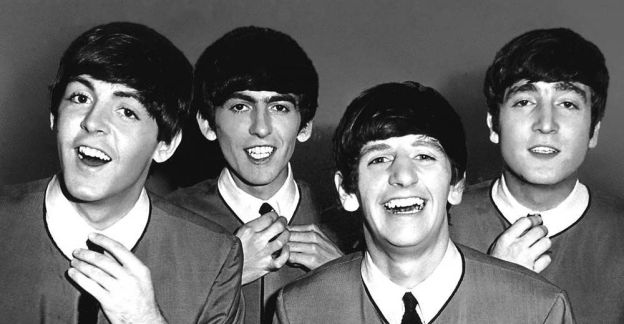
There are certain bands throughout music that impacted music in such a way they cannot be ignored.  Nirvana created “grunge” and was the voice of a whole generation of angry teenagers; Elvis Presley combined blues and country to make what we now know as rock and roll.  Everyone knows who the Beatles are; everyone has at some point in their life heard a Beatles song.  Many people don’t see the Beatles’ true impact on music, however; many people think the Beatles are overrated and over played.  The Beatles are the most influential band in the past century; their influence is so felt in music most people wouldn’t even noticed it, and their influence is so ingrained in modern day music and fashion people just overlook them.  Something people can’t deny though is that for better or worse the Beatles changed music.  Think: a band that was only together from 1962-1970, only six years, and they’re the bestselling band in the history of rock and roll.

The Beatles started in 1955 when Paul McCartney joined John Lennon’s band “The Quarrymen.”  A year later a thirteen-year-old guitar player named George Harrison also joined the band.  In 1960, Peter Best became their drummer, and they renamed the band “The Silver Beatles.”  In 1961, “The Silver Beatles,” now just shortened to “The Beatles,” were making their mark playing in clubs in Hamburg, Germany.  They would return to Liverpool in late 1961; here they began to attract a big following.

When the Beatles returned home and started playing at the Cavern Club, they made a very big impression on Brian Epstein.  Epstein was a young manager who wanted to record a few demos with the Beatles.  Epstein got them into the recording studio but not without one big change, their drummer.  The Beatles were no longer impressed with Peter Best as a drummer; Epstein simply voiced the Beatles’ feelings, and in 1962 Peter Best was kicked out of the Beatles.  The drummer they got to replace Best was the only professional musician prior to being with the Beatles.  His name was Richard Starkey, but in his year of on-stage performance, he earned the nick-name “Ringo Starr.”  “Ringo” was because he liked to wear a lot of rings on both hands, and “Starr” was short for “Starkey.”

In September 1962, the Beatles released their first single, “Love Me Do/P.S. I Love You.”  Their first single was not a great success; it barely broke onto the Britain top 20.  In early 1963, the Beatles released their second single titled after their debut LP, “Please Please Me.”  The LP would be at the top of British music charts for an amazing 30 weeks.  In December of 1963, the Beatles released their first U.S. single, “I Want to Hold Your Hand.”  The single was instantly at the top of the charts in the U.S.  Then they were asked to perform on the Ed Sullivan Show in February of 1964.  After their U.S. tv debut, the Beatles would be a hit like no other band in history.  After the Ed Sullivan Show, the Beatles had the top five singles in the U.S. and the top two albums.

The Beatles were now making movies; their infamous “mop top” haircuts were seen on most young men in the U.S.  In 1964, Beatles merchandise outsold Disney.  The impact the Beatles had on pop culture was clear.  The Beatles brought a very upbeat and happy sound to rock and roll.  In 1965, their image would change.  With the release of their album Rubber Soul, the Beatles did away with their “good boy” image, and their sound also started to change.  Instead of just making upbeat pop, the Beatles started to make more deep meaningful tracks such as “In My Life” and “Norwegian Wood.”  “Norwegian Wood” was the first top ten hit to feature a sitar.

Rubber Soul was its own unique musical experience, and each song showed how the Beatles were changing.  The Beatles began to stray away from their upbeat pop sound.  The Beatles began to explore more influences from the east, and they began to get into eastern mysticism.  The next album after Rubber Soul was Revolver, the album featured the songs “Eleanor Rigby” and “Yellow Submarine.”  The album revolutionized the use of background instrumentation apart from just guitar, bass, and drums in popular music.  The Beatles’ changing style was greatly helped by their producer George Martin, who encouraged the Beatles to experiment.

After Revolver was Sgt. Pepper’s Lonely Hearts Club Band; the album started with a concept by George Martin of two separate tracks working together.  This can be seen in two songs on the album, “Sgt. Pepper’s Lonely Hearts Club Band/With a Little Help from My Friends” and “A Day in the Life.”  The album also showed the contrasting styles of John Lennon and Paul McCartney.  In “A Day in the Life” was a competition between Paul and John to see who could write a better song.  This sort of competition began to drive Paul and John apart; that, combined with the fact their girlfriends were constantly fighting, began to end the Beatles.

The Beatles’ next album was Magical Mystery Tour, which, when it was released, was a huge flop.  The music critics at the time complained the album had too much psychedelic influence; this can be seen in the only top ten hit of the album “I am the Walrus.”  The Beatles even admitted they didn’t put their best effort into the album, which was a soundtrack to a tv movie; the movie was the least successful of the four movies the Beatles starred in.

The next album was a mix of the Beatles’ psychedelic influences and their old pop sound; the album released in 1968 was simply titled The Beatles LP, but it came to be more commonly known as the White Album.  The White Album was the Beatles’ only double album, and it was recorded during a time of great turmoil after a controversial visit with the Maharishi in India.  The album featured the single “Helter Skelter,” which in Ozzy Osborn’s words, “was the first metal song ever made and my greatest inspiration.”  The Beatles were starting to get a bit more into hard rock; this was mainly spurred on by Paul.

There were two albums after the White Album; Let it Be and Abbey RoadLet it Be was recorded first, but the producer George Martin decided to extend the release date because he felt it needed more work.  The Beatles then started to work on their last studio album, Abbey Road.  The album continued a lot of the same ideas Sgt. Pepper’s Lonely Hearts Club Band had.  Both albums are considered to be concept albums, which means songs could be mixed together and could be played one after the other without any pause in between.  The best example of this is the last five songs on Abbey Road, known as “The Abbey Road Medley.”  The last five songs are all really one song.  The last song ever recorded by the Beatles in studio was “I Want You/She’s so Heavy.”  Four days after the recording was finished, John announced to the band he was leaving; he agreed he wouldn’t make a public announcement until certain legal issues with the record company were resolved.  Abbey Road came out in September, 1969.  John Lennon announced publically he was leaving the band in December of 1969.  Let it Be then came out in May of 1970, and Paul released a statement explaining reasons for the break with the album’s release.

It was the end of the Beatles, but what they accomplished in only seven years of making albums is remarkable.  They brought the idea of the concept album to the forefront of music.  They changed pop forever; pop no longer had to be upbeat guitar riffs and songs about girls.  Pop was deeper now; it can be seen in their last single, “Let it Be.”  The Beatles forever changed how music was made and how the public perceived music.  They influenced generations of musician after them from Ozzy Osborn to Michael Jackson.  Without the Beatles it is a fact music as we know it today would not exist.  They changed music forever, and no band after has had as great an impact on music and pop culture as the Beatles.

Bibliography

“Beatles Bio.” Keno.org. Keno, 1999. Web. 27 Sept. 2011.

Costello, Elvis. “Rolling Stone: The Beatles’ 100 Greatest Songs.” New York, NY: Rolling Stone, 2010. Print.

Osborn, Ozzy. “VH1 Special to Take a Look at ‘100 Greatest Artists of All Time.’” Entertainment Close-up. 1 Sept. 2010. Print.

The 5 Things the World Needs to Survive – and We are Running Out

Lia Waugh Powell

Whenever we think of scarce yet important resources, oil immediately pops into our minds.  However, the only reason we think of our lack of oil is because it affects us directly — through gas prices.  But oil isn’t the only thing in the world we are running low on, and it’s going to be the least of our issues if these things continue to become more and more limited.

5) Helium

The increasing lack of this gas is not only going to affect children across the globe because their parents can no longer afford balloons for their birthdays — it can potentially shut down this entire “Technology Era” we are in.  The majority of our technology has been created with the help of helium.  This is because helium has the lowest boiling point out of all of the elements on Earth.  Here are some examples of how helium is so critical to our society:

· Helium is used to cool MRI magnets, the tools hospitals use multiple times every day to observe and diagnose many issues from soft tissue damage to tumors.

· Helium is used to create rocket fuel.

You know when you are at the grocery store when the cashier is scanning items?  That scanner’s laser is made from helium.  As you can tell, helium is quite important.

4) Chocolate

Every year over 13 BILLION dollars is spent on chocolate — in the United States alone.  The problem?  The world’s top supplier of chocolate comes from West Africa, tended by slave children.  Even taking out the slavery aspect of it, the average cocoa bean farmer makes 80 cents a day.  Thus, people are getting smarter and realizing that the 5 years it takes to plant and raise a cocoa tree just isn’t worth only 80 cents a day — not to mention the heat in which the workers have to labor.  The area cocoa beans are grown in isn’t so hot either — it’s one of the world’s most politically unstable regions in the world.  It is predicted that in 25 years chocolate can become just as expensive and as rare as caviar is now.

3) Medical Isotopes

Medical isotopes are used about 50,000 times a day in the United States alone.  They provide short bursts of radiation used for diagnosing bone cancer, kidney malfunctions, and issues within the brain.  Around 80% of medical isotope procedures use Technetium-99m, which only lasts about 12 hours.  This makes it impossible to store it, thus it must be produced freshly over and over again.  Though this is such a crucial part to the examination, the industry only has one supplier, Chalk River Laboratories.  Unfortunately, that company shut down two years ago.  The United States and Canada are both in the process of creating new nuclear reactors to safely produce Technetium-99m, but they will not be finished in quite some time.

2) Phosphorus

Though phosphorus isn’t exactly thought of as “Oh my goodness, this is such an important thing to have,” it actually is.  Every living thing relies on phosphorus.  Phosphorus is used to clean water, treat metal, toothpaste, and pesticides.  Most of all, fertilizer is made out of phosphorus.  Without it, there will be no way to sustain the amount of crops needed to maintain the world’s population — and it’s estimated to run out in 30 years.  Sweden is so concerned about the lack of phosphorus we are heading toward, they made a toilet that will extract it from our urine.  That, ladies and gentleman, is indeed desperation.

1) Water

You probably laughed when you read water was running out.  It’s all around us: the ocean and lakes in and around Virginia alone contain enough water for us to enjoy anytime we please.  But, it’s true; the amount of drinkable water in the world is becoming more and more limited, for many reasons.

One reason is pesticides; there are so many that are accidentally exposed into water many fresh water resources have become considered dead.  Even though oceans, lakes, and rivers surround us, only 0.3% of water on Earth is drinkable, and the majority of this water is groundwater.  The U.S. is not doing its share in protecting water, either.  The average American uses 15-30 gallons of water in the shower, 1-2 gallons of water brushing one’s teeth, 10-15 gallons of water while shaving (if water is kept running), 20 gallons in washing dishes, and 5-7 gallons while flushing the toilet.

A Brief Look at Socialism

David Lane

Socialism has often been seen as a flawed system of government.  People say that socialism would inevitably fail due to the society’s lack of motivation to work.  Could it actually be, in conjunction with Christianity, the most successful and biblically-based form of government known to man?  Could it be better than capitalism?  Socialism is defined as “a theory or system of social organization that advocates the vesting of the ownership and means of production and distribution of all products in the community as a whole.”  Socialism promotes the welfare of all people, it negates the fundamental idea of narcissism shown in capitalism, and it resembles a hope for mankind.

Socialism is a governmental system that endorses the good of all as a number one priority.  Bertrand Russell, a British philosopher and social critic, sums up socialism and the ideal form of government as “communal ownership of land and government.”  This means, “[b]asic economic decisions, as well as political decisions, must reflect the common good.  The entire economy should operate for the good of the entire society, with no one left behind.  No private concentrations of capital or other wealth, and no other types of private concentrations of power.  The end of money’s domination over society.  The end of the priority of property and private greed.  Socialism will complete what democracy began — the transfer of sovereignty in all spheres from elites to the people” (Orwell).  Government should support the good for all people, not for an individual.  This does not mean you do not look after your own welfare in any way.  Rather, it means the welfare of others is equally as important to you as your personal well-being.  Socialism can be a great form of government and all the above can be true but not without Christ as the center of everything.  The main counter argument to socialism is there would be no motivation to do work.  Apart from Christianity this is true, but when we look at the primary source of motivation for Christians we see socialism provides a logical and perfect source of motivation.  Our motives should be solely based on Christ.  We do everything to serve Him and lift His name high.  If our ultimate goal is to serve God, then we as a people group under God could be entirely motivated to live, work, and function for the glory of Him.

Capitalism has a narcissistic view on personal gain and welfare, and socialism supports the Christian ideals of compassion and mercy.  There is no doubt capitalism motivates people to gain for themselves, and that is not wrong in it of itself, but it is wrong when we put our personal desires over the care of those less fortunate.  Capitalism drives us to gain and succeed through the ownership of product.  Karl Marx, when discussing capitalism, says, “Everything in nature and everything that human beings are and can do becomes an object: a resource for, or an obstacle to, the expansion of production, the development of technology, the growth of markets, and the circulation of money.  For those who manage and live from capital, nothing has value of its own.  Mountain streams, clean air, human lives all mean nothing in themselves but are valuable only if they can be used to turn a profit.  If capital looks at (not into) the human face, it sees there only eyes through which brand names and advertising can enter and mouths that can demand and consume food, drink, and tobacco products.  If human faces express needs, then either products can be manufactured to meet, or seem to meet, those needs, or else, if the needs are incompatible with the growth of capital, then the faces expressing them must be unrepresented or silenced.”  Capitalism’s food industry is not about feeding people who need to be fed.  It is about making the cheapest products to make money and in the process people have the option to eat but only if they have the means of purchasing it.  Capitalism turns medical issues such as caring for the sick into a way to get money from people who are forced to spend money in order to live.  In contrast, socialism is a government system that would provide for the needs of all people, and a joint stock of all products would ensure people are fed, people are helped medically, and everyone receives equal opportunities in all areas of life.  In essence, capitalism makes everything about profit, and socialism makes everything about the care of all people as a whole.  Once again, though, this cannot happen without Christ being the foundation of that government.  God has to be first, and His law has to be promoted above all else in order for a socialistic society to be successful.

Socialism presents a hope for man to have the capacity to care for others and live out certain biblical mandates.  Acts 2: 44-45 discusses the fellowship of believers and their desire to share all things and praise God together as a group of equals who are sincere at heart: “All the believers were together and had everything in common.  Selling their possessions and goods, they gave to anyone as he had need.”  This obviously supports socialism, especially in conjunction with Christianity.  As Christians, we should be filled with the love of Christ always and always be willing to share our possessions and live in community with each other with Christ as head.  Later in Acts 4:32-35, Luke explains a perfect picture of government by the disciples that undoubtedly is also a parallel to socialism.  “All believers were one in heart and mind.  No one claimed that any of his possessions was his own, but they shared everything they had.  With great power the apostles continued to testify to the resurrection of the Lord Jesus, and much grace was upon them all.  There were no needy persons among them.  For from time to time those who owned lands or houses sold them, brought the money from the sales, and put it at the apostles’ feet, and it was distributed to anyone as he had need.”  This passage gives hope to mankind.  We do have the capacity to care for one another in a completely sincere and selfless way.  We have the ability to share our possessions and provide for all people as equals, under one God living in community with Him.  On the contrary, capitalism negates this idea of complete equality.  Even if Christians do share their wealth with the poor in a capitalist society, it would not completely account for all the needy.  A government, under God, that provides equal amounts of product and service to all people is the hope found in the Bible.  The hope in capitalism is the hope for more product, while the hope in socialism is the hope for all product to be used for the good of others.  This is exemplified by John D. Rockefeller.  During the Industrial Revolution, he worked endlessly to build up a fortune, but whenever he was asked what his goal was in terms of wealth, he always replied that he wanted just a bit more.  Capitalism encourages corporate giants like John Rockefeller to work for their personal gain.  People like Rockefeller kept their money and merely were content with the power they possessed through capital goods rather than distributing that wealth to those who truly needed it.

Socialism can be a successful form of government.  It must be based on biblical principles, and it must have Christ as the ultimate authority.  Socialism promotes the well-being of all people in a society.  It provides for all.  Socialism does not support the promotion of self but rather the promotion of your neighbor.  It encourages selfless behavior and demotes selfish and greedy behavior.  Socialism presents a hope for mankind to live equally under a gracious God and gives all man an equal ground to live, worship, and work for the glory of God.

Works Cited

“Capitalism or Socialism: Which One Is Biblical??” The Classical Conservative. 11 Mar. 2009. Weblog. 15 Sept. 2011.

Morgareidge, Clayton. “Why Capitalism Is Evil.” Lewis & Clark College. Web. 17 Sept. 2011.

Orwell, George. “Socialism.” Welcome to Bergonia, an Imaginary Country. Web. 17 Sept. 2011.