
Category Archives: Archives

Ecology 101

Tim Seaton

The world as we know it is declining in its beauty and increasing in the amount of pollution that harms it. We see more and more factories in place of the trees. We see more smoke than we do clouds in numerous places. We see the artificial lights of man instead of the stars of the heavens. We see roads and stores where nature used to reside. All of this is because men are taking nature and turning it into places for them to make money. We make the world worse for our gain. If we continue this, we may not have anything left to gain from.

There are lots of negative ways we are making the environment less healthy because of our advancements. Some of them are pollutants leading to acid rain, deforestation, landfills, the creation of nuclear energy that leads to radioactive waste disposal, pesticides, smog, and soil pollution. These are all pollutants men have enabled to happen with the technology we have. We could have none of these if we figured out a way to effectively use and create energy.

First off, there is acid rain. Acid rain is any form of precipitation with high levels of nitric and sulfuric acids. It can also occur in the form of snow, fog, and tiny bits of dry material that settle to Earth. Acid rain comes down and decreases or totally ruins the plant it falls on. We can stop this by decreasing the usage of the objects that create the acid rain. Andrew L. Lewis Jr. said, “Saying sulfates do not cause acid rain is the same as saying that smoking does not cause lung cancer.” He is stating things we do and create are causing us problems as definitely as smoking causes cancer, so we need to stop. We need to stop creating what is making the problems, because, until we do, there will be problems.

Next deforestation is a big problem. Deforestation is the destruction of forests in order to make the land available for other uses. An estimated 18 million acres (7.3 million hectares) of forest, which is roughly the size of the country of Panama, are lost each year. This could be a rain forest or any other type of forest or even just some trees. We can stop illegal deforestation by putting people to patrol areas where it is illegal or have some sort of security measure. We can stop legal deforestation by being content with what we have and not needing to be bigger and better than everyone else. Prince Charles of Wales said, “Forests are the world’s air-conditioning system — the lungs of the planet — and we are on the verge of switching it off.” He knows that as deforestation is happening, the air that flows in the world becomes thicker. Even though each tree makes very little difference, altogether, if every tree is dead, we will be dead. We need to take any efforts to stop deforestation from happening.

Pesticides are another way of pollution. We use pesticides to kill bugs or other harmful organisms. We use harmful substances to the bugs and other organisms, but they end up harming our plants also. When we are using the pesticides, we are basically killing off part of our economy. We use money on the crops and the pesticide and end up wasting them both. We need to stop using pesticides and find something else that will help kill the bugs off but keep the plants alive. Masanobu Fukuoka once said, “The final principle of natural farming is no pesticides. Nature is in perfect balance when left alone.” He is pointing out that before we added harmful things to the plants and nature, it was perfect, so why do we need to add them?

Nuclear Energy is another negative way we affect the environment. We are harming the universe. It is defined as the use of nuclear reactions that release nuclear energy to generate heat, which most frequently is then used in steam turbines to produce electricity in a nuclear power plant. The term includes nuclear fission, nuclear decay, and nuclear fusion. We can stop nuclear energy by finding different ways to create lots of energy efficiently and easily. Mark Z. Jacobson has been quoted saying, “Every dollar spent on nuclear is one less dollar spent on clean renewable energy and one more dollar spent on making the world a comparatively dirtier and a more dangerous place, because nuclear power and nuclear weapons go hand in hand.” He is noting that when we spend a dollar on nuclear energy, we may as well be spending a dollar to make the world dirtier.

Radioactive waste disposal from nuclear energy is also a problem. It is burying what we humans cannot handle. Even when buried, it will slowly spread out, although after a long time the waste will be totally dissipated. In this time, there is the possibility it could seep into waterways or into the ground our animals eat from. It is also harming the ground it is in. That ground will not be able to be used for a long time after that, so we should not even consider this option. James Buchan said, “For 50 years, nuclear power stations have produced three products which only a lunatic could want: bomb-explosive plutonium, lethal radioactive waste and electricity so dear it has to be heavily subsidised. They leave to future generations the task, and most of the cost, of making safe sites that have been polluted halfway to eternity.” He is taking a stance on the fact that right now, we are not doing anything positive with nuclear energy and the waste it makes, so why use it at all.

Next are oil spills. They are made by man’s error in their creations. They are the release of a liquid petroleum hydrocarbon into the environment, especially marine areas, due to human activity and is a form of pollution. The term is usually applied to marine oil spills, where oil is released into the ocean or coastal waters, but spills may also occur on land. It often kills many animals in the water and makes that water unusable, but it also happens on land. It makes the land unusable like water, but it can release fumes that affect the area around it. It can kill wildlife and forests there. It also wastes the oil and the resources spent to obtain it. We can stop this problem by creating objects less flawed or by finding other effective means of getting the oil. Billy Nungesser said this about the BP oil spill in 2010: “They said the black oil wouldn’t come ashore. Well, it is ashore. It’s here to stay and it’s going to keep coming.” Even when we don’t think oil spills could hurt the environment much, we couldn’t be much farther from the truth. Almost every animal who comes in contact with it is hurt for life, if they don’t first die because of it. The land is rendered unusable for a long time after it happens.

Next is smog. Smog is defined as fog or haze combined with smoke and other atmospheric pollutants. Some of the ways we can stop smog are to stop creating smoke or other pollutants. We can have more eco-friendly cars such as electric or hybrid cars that use the sun for some of their “fuel.” We can create objects that will cut down on pollutants. Michael Connelly once said, “The setting sun burned the sky pink and orange in the same bright hues as surfers’ bathing suits. It was beautiful deception, Bosch thought, as he drove north on the Hollywood Freeway to home. Sunsets did that here. Made you forget it was the smog that made their colors so brilliant, that behind every pretty picture there could be an ugly story.” He is stating that even when something like sunsets look beautiful, there is often an ugly story behind it, in this case, the smog.

Another pollutant problem we have is soil pollution. This is when humans put things we are not supposed to into the dirt. Some examples of this are toxic chemicals, pesticides, lead, sewage, and metals. Others include acid, solvents, and herbicides. Leftover ash can get in the ground through coal production and disposal. Pesticides are also a type of soil pollution. When it is sprayed, the excess seeps into the ground and can stay there for longer than 40 years. When we are putting these in the ground, we are putting harmful substances there. We can stop this by just stopping the polluting we are doing. Wendell Berry said about soil pollution, “The soil is the great connector of lives, the source and destination of all. It is the healer and restorer and resurrector, by which disease passes into health, age into youth, death into life. Without proper care for it we can have no community, because without proper care for it we can have no life.” He is saying that with the soil being polluted, we will not have most of our lives and our needs cannot be fulfilled.

Landfills are places where lots of damage is being done. People think landfills are great ideas, but they have their flaws also. They are a place to dispose of refuse and other waste material by burying it and covering it over with soil, especially as a method of filling in or extending usable land. They are harmful, though, in some ways. When we put electronics in landfills, we are accidently putting in toxins such as arsenic, mercury, cadmium, PVC, solvents, and even some lead. All of these are harmful not just to the land but potentially to the humans working there as well. We can eliminate this risk if we find better ways to dispose of the waste, such as recycling our waste. We can use this possibly to create more energy or at least not have to release more pollutants creating more energy. “A landfill-based system presents substantial long-term risks of increased water and air pollution. Landfills are often viewed as nuisances in communities, they provide few jobs to the local economy, and may depress surrounding property values. Once a landfill closes, the land has limited use for future development. Thus, the social costs of shifting to a landfill based system are great, especially in communities.” This shows landfills aren’t that much of a help to the world right now. It lowers the value of everything around it and doesn’t allow for much to be done with it after it is closed.

We also have many good ways we help nature. Some of these are finding ways to create less pollutants, wildlife conservation, recycling, and landfills. They are all ideas that have shown how to create energy efficient ideas that don’t create pollution either. They can be made even better if worked on and spark ideas for even better inventions.

First off, there are many ways we can create less pollutants. One example is alternative fuel/hybrid cars. These are vehicles that run on a fuel other than traditional petroleum fuels. It also refers to any technology of powering an engine that does not involve solely petroleum. Some of these cars are the Toyota Prius, Ford Escape, and the Honda Civic. They all use gas at some times, but their main fuel is the battery that charges between drives. Most companies are starting to develop hybrids that run mostly on fuel. They are able to be used and not be polluting the universe any more than necessary. Companies are making more and more hybrids to save money, gas, and not pollute the earth as much.

Next there is wildlife conservation. This is protecting areas of importance for wildlife, flora, fauna, or features of geological or other special interest, which is reserved and managed for conservation and to provide special opportunities for study. We have been able to keep endangered species from becoming extinct. This has happened with the gray wolf, the brown pelican, the Aleutian Canadian goose, and many others. There are hundreds of wildlife conservations and national parks, which both provide safe havens for animals worldwide. We make more and more every year. Security around some conservations are extra protection for the animals, yet some poachers still get into them and kill animals. We need to try and have all animals in wildlife conservations or other safe havens or they might go extinct as well. With wildlife conservations, we can also protect the plants that are there. We need to protect them because they are a key part of our nature’s way of life also.

Recycling is another great way to protect nature. Recycling is converting waste into reusable material. We do this by first loading our recycling into trucks. We then put items into hoppers in which the material is funneled into different stations where workers sort it into what it is made of. Trash continues on the line and is sent to landfills, and recycling items are sent to be sorted more. They are then put into machines that smash glass bottles and put them in separate containers to be recycled. All the other material goes into a conveyor that drops off metal and plastic and lets cardboard and papers go. These are hand sorted and go into sorting bins that lead to a fiber baler to be recycled. Plastic bottles go into the container baler. Metal cans are put on a separate baler to be recycled. David Korten said,

To achieve true sustainability, we must reduce our “garbage index” — that which we permanently throw away into the environment that will not be naturally recycled for reuse — to near zero. Productive activities must be organized as closed systems. Minerals and other non-biodegradable resources, once taken from the ground, must become a part of society’s permanent capital stock and be recycled in perpetuity. Organic materials may be disposed into the natural ecosystems, but only in ways that assure that they are absorbed back into the natural production system.

He is pointing out the fact we need to be able to return what we have used so we do not run out of resources or make the earth a terrible place. If we do, then we will not have a society that runs or works like we have it intended to.

Finally, there are landfills. As stated earlier, landfills are a place to dispose of refuse and other waste material by burying it and covering it over with soil, especially as a method of filling in or extending usable land. Landfills have some good properties that come along with the bad ones. They are able to extend land that is somewhat useable. They let the government monitor the waste disposal. Maybe the most needed reason for landfills is it allows all the problems stray waste can leave to be concentrated in one area. People may ask, how is this good? It allows all the chemicals to be concentrated in one area, leaving all the other land to be good for things that need soil such as growing crops. It lets us gather waste so the country can know what is being used. We can learn much about people just from the trash and waste they produce.

In conclusion, we definitely need to find more ways to create energy efficiently yet eco-friendly because it is one of the biggest problem causers for pollution. We need to find better ways to kill the nuisances that don’t harm crops, the ground, or the farmers spraying it.  We need to find ways to make oil transportation that will not fail, and we need to find ways to make more safe ways of making energy and eco-friendliness. We need to make the world a better place. We need to take care of the world God gave to us. He wants us to care for it, not make it a place filled with pollution and war. Not a wasteland of hate and ugliness. We need to be better stewards of the land we have been given.
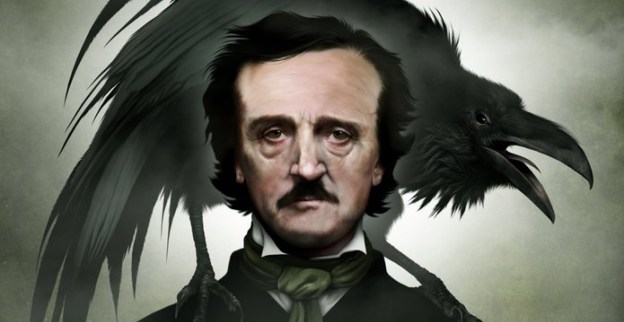
On Edgar Allan Poe

Emma Kenney

Edgar Allan Poe is one of the most well-known writers of the American Romanticism genre of all time. His poems and short stories incorporate many common Romanticism themes and concepts, such as the elevation of emotion over reasoning and nature over civilization. He used descriptive language and fantastical undertones to draw his readers in and earn him the title of one of America’s most famous poets.

Poe was born in Boston, Massachusetts to two professional actors on January 19, 1809. By the time he turned three, his birth parents had passed away and he was taken in by the Allans in Richmond, Virginia. He began writing at a young age but was shamed for it by his foster father, who wanted him to take over the family business. This helped create the rocky relationship between Poe and his foster father, one that would only worsen over the years. Poe received education at one of the best boarding schools in the country and later was accepted into the University of Virginia. Here he met a girl named Sarah Royster, and soon the two were engaged. However, the young man had to drop out of the college a year into his education after his gambling got him into financial trouble. This was the final straw, and Poe and his foster parents had a large falling out that ended with the Allans refusing to help Poe pay off his debt or let him come back home to stay with them until he could pay it off himself. Soon after, Poe discovered Sarah had been cheating on him, and he called off his engagement with her, depressed and broken-hearted.

The man joined the army after this, and it was this year (1827) that his first volume of poetry was published. He published a few more volumes of poetry within the next two years, though they weren’t exactly successful. After his failed first attempt at poetry, Edgar Allan Poe began attending the United States Military Academy at West Point. Though he was an excellent student, Poe once again had to drop out of school because he was financially unable to support himself, and he couldn’t seem to handle the strict military duties that came with the Academy. He once again fought with his foster father, who had remarried after his foster mother passed away. Once again, Poe was told he was not allowed to come home and he would not be receiving any help financially. After this he moved in with his aunt and younger cousin in Maryland, having nowhere else to go.

Then Poe began writing and publishing short stories. He also began writings and editing for various magazines including the Broadway Journal in New York City. He spent the next ten years of his life doing this, during which he married his cousin, who was about 14 at the time. During these ten years Poe published some of his most famous works, including “The Fall of the House of Usher” and “The Raven.” He struggled to get by for a while, but after one of his short stories won a writing competition, Poe became a sensation almost over night. Poe’s foster father passed away during this time, creating even more resentment on the part of Poe when he left him out of the will entirely but included an illegitimate child in it instead.

Poe was a vicious critic; his reviews of books and other writings would eventually create so much drama he would be asked to leave the magazine or change his review style. Poe chose to leave. Some sources say his struggle with alcoholism played into the magazine’s decision to ask him to leave, but so far it hasn’t been proven for sure either way.

A few years after this his wife grew ill and passed away. Poe struggled greatly dealing with this; he became extremely depressed, and his alcoholism reached a new peak. He once again began to struggle financially, as he focused mainly on fueling his desire for alcohol. Eventually his extreme alcohol intake caused him to experience extremely poor health, and it eventually caused him to die of “congestion of the brain” on October 7, 1849.

After his death, one of his literary rivals was granted the task of writing his obituary. This rival purposefully strove to make Poe seem as horrible as possible, calling him not only an alcoholic but also an abuser of women and a deranged psychopath as well. This succeeded in damaging Edgar Allan Poe’s reputation for quite some time after his death. This same man wrote the first ever biography of Edgar Allan Poe, ruining his reputation after death even more. Eventually, however, the general public began reading the works of Poe again, and he finally achieved the renown commonly associated with him today.

Poe is a spectacular example of American Romanticism, which, as previously stated, is defined by characteristics such as the elevation of emotion of reason and the elevation of nature over civilization. It also commonly uses writing techniques such as using what could be considered almost excessive descriptive language.

One of the prime examples of this is his “The Tell-Tale Heart.” This story is about a man who gets a new neighbor. After a short period of time, the man begins to become paranoid, hating one of his neighbor’s eyeballs. He even goes so far as to name it “The Evil Eyeball.” This eye begins to drive the narrator madder and madder. Finally he comes to the conclusion he needs to kill his neighbor after both the eye and the beating of his neighbor’s heart continue to haunt his every hour. The narrator smothers him to death and takes out his heart. He then decides to chop the neighbor up and hide him under the floorboards. However, he still heard the beating of the heart. It drives him madder and madder yet again, until finally he can no longer take it and confesses the crime he committed.

This is a prime example of American Romanticism because right off the bat it elevates emotion over reason. The narrator’s obsession with the eye and heart are by no means reasonable. The beating of the heart after death is certainly emotionally based, as it is illogical to believe it could truly happen in real life. The entire story is about emotion itself; it shows how the emotion of guilt can eat away at a person even if he gets away with something, until finally the guilty person can no longer take it. It shows emotion is a driving force behind human actions. The narrator murders a man simply because he finds his eye annoying, symbolizing that humans will do terrible things and justify them as being okay because it got rid of a situation that was bringing them discomfort.

Overall, Poe is a wonderful example of American Romanticism, and he will most likely be a beloved American poet and short story author for many years to come.

Forgotten Gems: Welcome to the Real World

Christopher Rush

An Album of Absolutes

In the midst of the glory days of the ’80s (the 1980s, not to be confused with the glory days of the 1380s, for example), Mr. Mister released their second album to much acclaim and well-deserved fanfare.  Not too many albums, for example, have two Billboard #1s in succession, but Welcome to the Real World achieved just that with “Kyrie” and “Broken Wings.”  Yes, it’s that album.  But as with virtually all of our “Forgotten Gem” albums, it behooves us to remember this album is far more than two or three pop hits and some other stuff.  Oh no.  This is a top notch album — not just “solid,” but top notch, especially when one sees the whole picture this album offers.  Of the first five songs, four could very well be valid opening songs for the album.  They are that peppy and grand in scope.  More importantly, this album conveys to us the importance of living by absolutes: right and wrong exist, there is a proper way to live life, and reality is objective.  What more could one want from an ’80s pop rock album?

Black/White

From the opening track, Mr. Mister tells us the world is a paradox of opposites: we are both weak and strong, we draw ourselves to each other and we push each other away.  We have passionate difficulty treating each other consistently.  This is the relativistic kerfuffle we create for ourselves.  Into this confusion comes the reminder life is not truly a relativistic spectrum: absolutes exist.  Change can occur, surely — growth is possible, and so are mistakes.  At the beginning of the album we aren’t sure what those absolutes are, but the tangible dichotomies of day and night and black and white propel us toward the path of delighting in absolutes.  And love is the path: because of love, we know there is right.  Love, as strange as it is experientially, is right.  Love changes us, and we change because of love.

Uniform of Youth

A second solid candidate for opening number, “Uniform of Youth” is definitely grumpier lyrically than “Black/White,” which is likely why it was not chosen as the first thing audiences heard on the LP.  It would make for a good starting track, though, because it presents that youthful petulance of discontent one experiences when not living freely under the absolutes of God’s reality.  Such discontentment with the way things are materially and superficially seem to lend themselves to flight (“I don’t know if I’ll stick around / I don’t know, I just might leave town”).

Considering the song in its present location as the second on the album, we can consider some time passing from the opening song.  The juvenile transient love has brought discontent and irritation, and yet it has also brought a growing understanding of the failings of life (“Nothing’s perfect anyway / No one said that the world was fair”).  Even though absolutes reign, we flawed and selfish beings can make a mess of things.  The hero of this saga takes some small comfort (in a rather rousing musical chorus) in his youth while adjusting to what life is supposedly requiring of him (“I’ll just do what I’ve got to do” … “I wear the uniform of youth and I hold on”).  He is starting to be more aware of the need for meaningful growth and change in his life, which must be initiated by genuine love (“All I want is someone to care”), not the ephemeral, self-serving (though naively quaint) love of “Black/White.”

Don’t Slow Down

Another peppy track that would work well musically for the opening number, though that would mess with our narrative progress through the album, “Don’t Slow Down” picks up the emotional momentum once again.  No longer content with fitting in and passively letting love and society determine what happens to him, our hero has come to terms with previous failures and is finally prepared to commit to the love in front of him (“I look into your eyes, I see the dream that I’ve been searching for / I’ll search no more”).  Unfortunately, despite his enthusiasm for commitment, his enthusiasm is overweening, as evidenced by the chorus: “So don’t slow down, the wheels are turnin’ / The fire’s burnin’ in us now / Don’t slow down, don’t lose the magic / We’ve come too far to turn back now.”  Assuming for the moment this is not a plea for premarital physical dalliances (which would be unlikely anyway, considering the album and people writing the songs), we can interpret this as an ardent plea for nothing more than a continuation of the present experiences of life and love.  Whatever happy feelings and camaraderie they are experiencing, he simply wants it to continue with the same verve in which it is currently occurring.  The immaturity persists, despite the progress: he is too content with the little maturity he has made to give himself fully to absolute love.

Run to Her

Despite his attempts to keep the momentum going, their relationship has slowed down after all, along with the speed of the album.  “Run to Her” is the only slow song on the album, but it is not the typical fluff of ’80s ballads (1380s ballads, let’s not get confused).  In a sense, this is a mirrored, almost dream-like version of the previous song.  Lyrically it is similar: he is still looking into her eyes, reflecting on how much he enjoys being in relationship with her.  Yet there is a significant difference here: he has come to realize time is not something you can outrun.  Time’s wingèd chariot never loses its race.  “Time, it passes much too fast / And time, I want to make it last” — clearly his priorities are starting to mature, though they are still hampered by too much connection to this world.  His love for her is no longer just about sustaining the enjoyment of the relationship regardless of circumstances or consequences — now, the importance of it has developed into the beginnings of mutual respect and worth (“The sun was shining brightly / As we talked into the night”) — finally a genuine relationship is building.  He is starting to understand the absolutes of life lived correctly … but he still has some work to do.

Into My Own Hands

Continuing our hypothesis of potential opening tracks, “Into My Own Hands” makes an excellent candidate following our interpretive framework: were this the opening number, we would be introduced to a young fellow full of salt and vinegar (I think that’s how the expression goes, at least in Canada), confronted with everything this album is about: the nature of the world (whether ’tis absolute or relativistic), one’s place in the world, the brevity of life, how to grow into maturity, and the rôle(s) of love and fellowship in life.  Protracting the hypothesis, we would be faced with a rather impressive philosophical album (which we are regardless of this track’s proper position): the desperation of the singing narrator reminds us how crucial the proper answers to these issues are.

But we must examine the song where it is, and as such the interpretation is just as engaging.  After the maturity of grasping the brevity of life and the importance of actually living it, our hero shows a painful resurgence of his impetuousness: he’s going to both “[t]ake this life into [his] own hands” and “[t]ake this world into [his] own hands.”  He has indeed learned some lessons and lost some lessons.  “How wrong could I be?” he asks.  Well, pretty wrong it turns out, if one takes the obvious interpretation to hand: he thinks he’s got to be ruler of his domain, king of his castle, master of his fate.  But perhaps it’s not so self-serving.  Perhaps he is simply looking around at life, seeing some things that need improving, and realizes he is a big boy, he can help make his world a better place.  He’ll “take [his] stand” for justice and truth and righting all wrongs.  That sounds good, doesn’t it?

Is it Love

And just like that, once the record is flipped over to side two, our hero is met with the consequences of trying to live life his way, regardless of his intentions.  Now, the song appears to lead us toward believing our hero is asking this question of his lady and/or the world around him he is trying to save/improve/ameliorate/whatever.  The fault is with you people out there, our hero is implying, ignoring the fact his self-serving attempt at making people better and “loving” her is instigating fear in her, not reciprocated love.  We know better, of course.  He is asking this question of others, that’s true, but he is asking because the voices in his head, the dreams he’s been having these last few songs, have been asking him this very question: do you really want genuine love? is that what you are after? is that a value you want your heart to pursue, to embody?  There’s only one source for Real Love.

Perhaps you are skeptical of such an interpretation, and I admit it is rather generous on my part, but I think this total view of this song, in relation to the flow of the whole album to date (especially when paying keen attention to those lyrics, the key phrases about absolutes and the real world most especially — and real love is truly an absolute), this interpretation fits rather well.  Because then comes the next song.

Kyrie

Ahhh … yes.  This is the track we’ve been waiting for.  Don’t get me wrong (as often happens) — I’ve already said this is a top notch album in toto (not that Richard Page was ever in Toto beyond contributing background vocals).  But this is unquestionably the greatest song on the album.  We haven’t made much mention of the musical aspects of this album, replete as it is with synthesized drums, Bowser palace-like riffs, orchestra hits, and a panoply of ’80s (1980s) technological gems.  But I defy you to find anywhere, anywhere I say, a more energizing, heart-pounding, soul-uplifting moment in music history than the truly awesome moment in the post-bridge modulation mostly acapella chorus when the guitars and drums kick back in.  As great as Beethoven, U2, and the rest of the gang are in breadth and scope, this moment has got to be the best of all time.  And now back to our story.

Our hero has finally experienced (and understood) his moment of transcendental connection with the Divine — not in a pantheistic sort of sense, though wind is the force reaching into his soul.  Finally the One True God has gotten ahold of our hero, and he realizes how much he needs God, God’s love, and God’s way of living life.  By trying to take the world into his own hands, by asking other people if they want love, these were just variations on blending in with his uniform of youth — just his entire life of running away from the black and white nature of the real world of absolutes, of the divine: he has been hiding his whole life, hiding away from what he has suspected all along, and now God “reaches in to where [he] cannot hide” any more.  But it is not just about baring his fears and failures, oh no.  God “sets [his] feet upon the road,” allowing him to finally live life correctly.  Now that he has matured through his experiences, he can honestly reflect on his life:

When I was young I thought of growing old, of what my life would mean to me

Would I have followed down my chosen road, or only wished what I could be

We have seen his thoughts and hopes for his life in the first six songs of the album, and we know (and now so does he) what he would have made of it all, since it is the same for all of us.

Regardless of whether I have interpreted the verses correctly (and I, as always, am likely off at least a smidge here and there), there is no denying the chorus, especially in the way the song is sung (and the fact the music video frequently features band members, mostly frontman Richard Page, pointing up toward Heaven at appropriate moments in the song):

Kyrie eleison down the road that I must travel

Kyrie eleison through the darkness of the night

Kyrie eleison where I’m going will you follow

Kyrie eleison on a highway in the light

Note well: that third line is not a question.  He is not asking if God will accompany him along his journey of faith.  It’s simply a syntactical inversion to allow the vocalization of the lyric more efficient (and keeping in more with the medieval feel, say circa 1380s, instigated by the Latin).  Our hero has arrived at the point of calling upon God for mercy.  He knows this life is the life he has been called to live, and whether things go easily (“highway in the light”) or not so easily (“darkness of the night”), he knows God will follow (accompany, enable, abide, strengthen) him to live this life to which he has been called.

And now that he has finally reconciled with God and been redeemed (and thus enabled to love correctly and live correctly), it is time to reconcile with his lady love and the world he was trying to reshape into his world.

Broken Wings

Admittedly a few words in verse one make what would otherwise be an impeccable progression through the story of this album a bit tricky, but I think a little bit of exegetical prestidigitation will do wonders for our purposes.  Taking the position our hero has reconciled with God and been born again, he initially is somewhat discombobulated why he can’t just magically repair the damage his earlier self-centeredness did to their relationship now that he has found God.  What he does know correctly, at least, is their relationship will completely end if he can’t make it clear to her how crucial it is for her to experience the same transcendent justification sung about in the previous song.  The “I need you so” bits are not just frothy romance (okay, lust) lines typical of the, yes, 1980s: more than that, he feels she is “The One” for him (we’ll put discussions about the Biblicality of such a concept on the back burner for now), but more importantly he desires her to come to the same saving relationship with the Merciful God to whom he has sung so recently.

The question remains, then, whose broken wings are being sung of so hauntingly in this number.  Option A: they are our hero’s former broken wings, no longer needed since he has been reborn and is traveling through life with the Lord of Mercy down the highway in the Light.  Thus the broken wings are a symbol of his hiding (the uniform of youth, his desire to take the world/his life/their love into his own hands), his failures to live life according to the absolute standards of Real Love and Mercy designed and instituted by God (the “take what was wrong / And make it right” aspect of verse two would then be metonymous for taking the broken wings and learning to fly again).  Now that he is giving them over to her, he is both demonstrating his personal restoration with God and His world and asking for her forgiveness of the wrong he has done her, and thus showing her how she, too, can find restoration (her broken wings will be replaced and she will be reborn) and new life.

Option B: they are her wings.  Much of the above interpretation would still hold.  The second verse’s lines “We can take what was wrong / And make it right” may sound like all their renewal and rebirth will be instigated by their human efforts (possibly through physical dalliances, as many would erroneously interpret this song), but it’s important to remember the accompanying musical video features our hero in a church with the light of God shining upon him when it gets to the climactic chorus lines “And when we hear the voices sing / The Book of Love will open up / And let us in.”  That’s the only way her broken wings can be repaired/replaced and she can be reborn.  Our hero knows it’s not about human efforts.  The voices that have prompted him to call out Kyrie eleison are now urging them both to put their faith and find their renewal in the Book of Love, and clearly from the entire context that is the Bible.  Living by the Word of God is how we “learn to fly again” and “learn to live so free.”  Where else is freedom but where the Spirit of the Lord is? (cf. 2 Corinthians 3:17).

Now that we understand the Biblical subtext of the song, we can easily see the end of verse two (“Baby it’s all I know / That you’re half of the flesh / And blood that makes me whole / I need you so”) is not just some far-fetched (19)80s power ballad palaver.  Nor is it heretical “Jesus’ blood is not enough to save me” nonsense.  It’s not “your” half of the flesh, but “you’re” half.  It may be a small grammatical point, but it’s worth noting.  It’s about her personhood, not her maidenhead.  What else is he referring to but the created order of things in God’s real world?  When Adam was made, was he complete?  Not according to the Word of God.  Adam was not complete until a part of his flesh was removed, reformed into something like him but different, and then returned to him.  And what was this but marriage itself?  And what is marriage but a symbol of our relationship with God?  You bet your boots he “needs [her] so,” just, contextually, as he needs the Lord of Mercy.  As do we all.

And now that he has reconciled with her (I think it’s safe to assume this conversation has a eucatastrophic ending with her personal redemption in Christ), our hero can focus (with her assistance, no doubt) on reconciling with the world he tried to take into his own hands.

Tangent Tears

A few moments ago, we (okay, I) made a mild disclaimer of a caveatish nature concerning potentially mildly loose interpretation of the lyrics.  Well here we are again.  Most likely this song is about a guy sad because his gal has broken up with him against his will and he’s really sad and crying a lot, possibly so hard his tears are barely touching his cheeks (and thus “tangent” to his face).  In all likelihood, the premise for this lyric was a catchy alliteration Richard Page and/or John Lang found neat-o, and they built a song around it.  But let’s return to our High Narrative view of the album and try something out together.

What if our hero, having reconciled with God and his sweet boo, returns his gaze to the world and finally sees it for what it is, not what he wants it to be … and what he sees is the world in its true, fallen condition.  The world is a mess and seeing it for what it is brings him to tears.  Let’s not stretch the point too finely, saying the line “Who’s playin’ on your team, he has a certain flair” is about Satan or anything like that.  But if we stretch it just a skosh, the second verse (“you made my heart go blind / You act so cold but you still look so fine”) could be about how tempting the world looks even when one understands it for what it is. Something like that.  He can’t reconcile the world by himself, of course, but that’s not his job.  Now that he sees the world for what it is, the only thing he can do is to help other people see what the world is really like.

Welcome to the Real World

With a proper understanding of God, nature, himself, love, truth, right, and wrong, our hero has finally arrived where he needs to be, where we all need to be, and now his mission is clear: tell us what reality is really like.  His tears are of pain because of the sin in the world, surely, and his tears of joy most likely come from his newfound life and faith and his sweet boo’s new life.  Possibly, some time has passed as well, and he and his wife are welcoming a new child into the world and they are starting off well by teaching their child what reality is really like.  I will accept either perspective.  A happy ending all around.

Our hero has learned the Real World is one of absolutes: right and wrong exist as clearly as black and white (and just as starkly different).  You don’t really have the authority to live life however you feel like.  There is a right way (and sundry wrong ways) to live the human life.  The Lord of Mercy is in charge, and it’s best to let Him put your feet on the path you should take in life, not try to reshape the world into your own image or desires (and definitely don’t try to reshape your love interest into your image of ideal love).  The world has many wondrous things to experience (using “the world” in just the diverse totality of human experience and God’s created order, not in the “this world has nothing for me” super-spiritual sense).  “There’s so much to learn,” indeed.

The sooner we learn the lessons of Welcome to the Real World (the album), the better off we will be.  The “chains that were choking [us]” of our sinful natures will soon be but a memory.  We will know real love.  We will know how to treat other people.  We will know what our life’s purpose is — directing everyone we meet to the Lord of Mercy.  And here you just thought this was just another pop rock album of the ’80s.  Good thing we’re here for you.

See you next issue, friends!

Kyrie Eleison!

“The Black Cat” Analysis

Sarah Mertz Silva

At the beginning of the story “The Black Cat” by Edgar Allan Poe, the narrator states how he is not mad. He continues to explain how appalled he is by his own actions saying “these events have terrified — have tortured — have destroyed me.” He then contradicts himself, however, in saying “I detail with awe, nothing more than an ordinary succession of very natural causes and effects.” He is very aware of his grossly violent actions, but he is ignorant to his own insanity. He describes what he acknowledges as terrible acts to be normal events of normal life, a sure sign of his own madness he is unable to see.

The narrator begins by describing his love for animals, pets in particular. He seems to live a normal, unsuspecting life. His wife is also an animal lover, and together they “had birds, gold-fish, a fine dog, rabbits, a small monkey, and a cat.”

The narrator describes the black cat as “sagacious” and discusses how his wife jokingly spoke of the superstitions of black cats being “witches in disguise.” He says she was never serious about the superstition. This cat, Pluto, seems to be the center of his affection. For some time, this cat is most notably his closest companion, following him around throughout the day. It is a “disease” that appears to alter this companionship. He begins to abuse all of his pets and even his wife. For a time, however, he refrains from abusing his beloved black cat, Pluto, until in its old age it becomes “somewhat peevish.”

One night, the cat seems to avoid his owner, and intoxicated, the narrator grasps the cat by the throat. Consequently, the cat bites him. The narrator is infuriated, takes out a pen-knife, and violently cuts an eye out of the cat.

The narrator, though having claimed not to be mad, has clearly proven his madness at this point in the story. Perhaps he is unaware of his madness because he does not feel he is the one committing the violent acts: “I knew myself no longer. My original soul seemed at once, to take its flight from my body and a more than fiendish malevolence, gin-nurtured, thrilled every fiber of my frame.” It is interesting however, that even in oblivion to his own insanity, he is obviously remorseful of his actions. He says, “I blush, I burn, I shudder, while I pen the damnable atrocity.” In the next paragraph, he describes the following morning when “reason returned.” His remorse is evident when he says “I experienced a sentiment half of horror, half of remorse, for the crime of which I had been guilty,” and he proceeds in drinking away the memory of his previous actions. It is interesting to note, though, he is not fully remorseful, only half remorseful.

He blames his following actions on the soul’s natural tendency to “vex itself.” It appears the narrator is attempting to find any other justification of his actions besides being mad. He states perverseness is “one of the primitive impulses of the human heart,” meaning by his logic his feelings were natural, a connection to his first few words at the beginning of the story.

He then hangs the innocent black cat by a noose on the limb of a tree, claiming it was because he knew it loved him and because it had given him no reason to act out violently against it. He says, “I knew that in doing so I was committing a sin — a deadly sin….”

That night, the narrator’s house is caught aflame. It is difficult for everyone to escape, and the narrator suspects the fire must be linked to the atrocious deed of killing his cat. He proceeds to explain why he feels there is a connection, saying among the rubble of his house, a lone wall still stood, seemingly unaffected by the fire, and upon it was, “as if graven in bas relief,” the image of a black cat with a noose about its neck. His suspicion was the cat had been thrown into the home and compressed into the fresh plaster between the falling walls.

Again, the narrator’s feelings of remorse return, or so it seemed. “For months I could not rid myself of the phantasm of the cat; and, during this period, there came back into my spirit a half-sentiment that seemed, but was not, remorse.” Once again he describes this feeling as being only half remorse, however this time he describes it as seeming to be remorse, and in fact not remorse at all. His insanity seems to be overcoming him rapidly. The narrator then seeks to acquire a new pet, a cat, of similar appearance to replace his old cat Pluto.

The narrator is gazing upon a cat as it sits atop his furniture. In approaching it he notes its close resemblance to Pluto, with the exception of one trait. This new cat had a large splotch of white fur on its breast. The narrator touches the cat and the cat purrs and rubs against him. This cat became the narrator’s new companion, and his wife was happy with the cat as well. Again, over time the cat’s fondness of his owner becomes a nuisance. It is seen the narrator is still unaware of the cause of his feelings saying, “I know not how or why it was — its evident fondness of myself rather disgusted and annoyed.” He refrains from abusing the cat upon remembrance of his abuse toward Pluto. After weeks his hatred turns into complete loathing and disdain as he avoids the cat. His hatred for the cat increased in discovering the cat had been missing its eye similarly to Pluto.

According to the narrator, the cat grew even fonder of him. It is likely, however that due to his pure hatred for the cat, its normal actions would have become increasingly bothersome to him, as every minute thing made him angry. The cat was probably not acting any different than when the narrator first got him, but his hatred caused him to feel so.

It is the constant reminder of the white splotch on the cat’s breast that drives him mad. “Evil thoughts became my sole intimates — the darkest and most evil of thoughts,” he writes, and in the following paragraph he attempts to kill the cat with an axe. Upon his attempts, he is stopped by his wife, by whom he is infuriated and then he “buried the axe in her brain.”

For the first time, the narrator does not even speak of remorse. He felt more remorse for a cat than he did his own wife. Upon deliberation of where to hide the body, he does not once feel any “half-sentiments” as before. At this point, it is clear he has been consumed by his madness. He then decides to hide his wife within a wall. He undoes the brick, places her in, and places the brick back in as if nothing had changed. Any signs of remorse have completely disappeared as he says, “I looked around triumphantly, and said to myself — ‘Here at least, then, my labor has not been in vain.’” The cat has disappeared for a while and the narrator is more than happy. “The guilt of my dark deed disturbed me but little.”

Days later, the police arrive at his home to investigate. Out of triumph, the narrator makes comments about the sturdiness of the walls, taps it with his cane, and out of the wall comes a loud cry. The police began to break open the wall from which the wife’s body fell, and atop the head of the body was the cat.

Guilt seems to be a common theme throughout the short story. After the narrator kills Pluto, his house catches on fire, and the image of the black cat appears in the walls of the rubble, an embodiment of his guilt. The new cat that appears is almost completely similar to his old cat Pluto, and in an even stranger coincidence, the new cat is missing an eye — a reminder of the narrator’s previous actions. The black cat seems to never disappear, as in the end when he returns to the narrator’s disapproval. The black cat could also be a symbol of guilt. Guilt constantly returns to the narrator, even though he does not feel it.

Obscurity of love vs. hatred is also a theme in “The Black Cat.” Love and hate consistently appear throughout the story but continue to be misconstrued in the narrator’s mind. A great contrast exists between his feelings toward Pluto and his new cat. The narrator’s love for Pluto is what drove him to committing the gory atrocities against his cat. With his new cat, it is his pure hatred that keeps him from abusing it. The narrator’s feelings of love and hatred contradict his actions.

Reflections on “Ode to the West Wind”

Sydney Harris

This ode, written by Percy Shelley, is one that tells a story of wishful thinking. The speaker uses the many functions of the wind to convey the power it has. He speaks to the fact wind drives away the autumn leaves, places seeds in the earth, brings thunderstorms and the cyclical “death” of the natural world, and stirs up the seas and oceans. He explains these functions in a way trying to connect with the wind. He pleas to the wind for it to act in the way it does, but on him. He wishes, with the help of the powerful force of nature, to have his ideas and works spread out and dispersed throughout the world. He wants the wind to be as harsh and real in his life as it is in the winter months. He knows the West Wind of autumn is wild and rough but is always followed by spring, a time of beauty and growth. He wants the wind to blow away all of the negative things in his life and create a new spirit in him, like it does for the leaves of the winter or the waves of the ocean. He wishes to be moved into a new version of himself, to fulfill his full potential.

In the beginning of the first canto he addresses the wind, describing it like a breath of Autumn. He talks about it as a magician banishing evil, the way it blows away dead leaves. He then says it carries seeds to their places around the earth and leaves them they’re until Spring comes for them. The wind burying seeds in the ground is like a charioteer taking corpses to their grave. He thinks of the spring wind as blue and as the cause of all revival of nature. He says it blows like a clarion and all the seeds bloom, filling every “plain and hill” with “living hues and odours.” The last few lines depict the speaker describing it as a “Wild Spirit” that’s omnipresent. It’s the “Destroyer and Preserver,” as winter brings death but gives way to revival of spring. He ends saying “hear, oh, hear!”, wanting the wind to hear his unknown request.

The second canto is a continuation of his description of the West Wind. The clouds, in his words, are scattered through the sky like dead leaves in a stream.  The leaves fall from the trees like the clouds fall from the sky, all working together to balance our weather. This is all to indicate a storm that is coming. He uses the simile of clouds being like angels of rain and lightning. He then goes into a detailed description of what the West Wind is like during a storm. The thunderclouds, “locks of the approaching storm,” disperse through the West Wind or the “blue surface.” He says the thunderclouds to the West Wind are like the Mænad’s locks of hair are to the air. A Mænad was one of the fierce women who spent time with the Greek god Dionysus. Their hair was wild and crazy and that’s the point he used to connect the two. He then uses a melancholy metaphor to describe the power the West Wind has. He says it’s like a funereal song played as the past year comes to an end. As the storm comes, the thunder, lightning and rain will be like the tomb being rolled over the grave. He ends, again, asking the wind to hear him but we don’t exactly know what for.

In the third canto, he details the weird and strange things the West Wind does. The Mediterranean is awoken, making the wind and storm begin to come. This happens because the sea had been calm and still during the summer, while on vacation like the Romans. During the summer, the Mediterranean dreams and sees the “old palaces and towers” along Baiæ’s bay, overgrown and unkempt. The Atlantic then breaks itself into “chasms” for the West Wind. He uses all these words to say the wind disrupts the water, creating waves but is at the service and will of the West Wind and all its power. The speaker talks about how all the see plants hear the West Wind and become disheveled and go all over the place in fear and hurt themselves. The canto ends the same way the others have, with the speaker asking for the wind to hear him.

The fourth canto begins to reveal the request the speaker has for the West Wind, beginning with him wishing he was a “dead leaf” or a “swift cloud” the West Wind could carry or he wishes he was a wave that could be rocked by the West Wind’s “power” and “strength.” He has hopes of becoming free and as “uncontrollable” as the West Wind. The speaker will even settle with just having the same type of relationship he had with the wind when he was younger, when they were “comrades.” He reflects on when he was younger and was faster and stronger than the West Wind. He clarifies wanting to feel the same way he did in the past, youthful and strong, is the only reason for coming to the West Wind. He wants to be given the same treatment as the waves, leaves and clouds, saying “I fall upon the thorns of life! I bleed!” Time has made life dull and hard for him along with his spirit, which is no longer “tameless, and swift, and proud” like the West Wind.

The last canto depicts the speaker asking to become an instrument. He wants the West Wind to turn him into a lyre. During his time, the æolian harp, a type of wind chime, was a popular instrument during the Romantic era. The harp is played by simply setting it in the wind, which is what the speaker longs for. The speaker says he wants to be used by the wind in whatever way the West Wind wants to use him. He wishes to be blown by the Wind like the branches are, leaves attached or not. His pride has been stripped of him like the leaves on the trees, and both are dying.

He then goes as far as to ask the “fierce” spirit of the West Wind to take over his soul and live in him. His thoughts are like the dead leaves and if the West Wind could control them, maybe instead of dead leaves, they can be something that dies but can grow again in the springtime. The speaker suggests the words of his poems are being blown around into the world as “sparks” and “ashes.” The speaker describes himself as the “unextinguished hearth” the sparks come from, a fire that is slowly dying but still there.

He ends, returning to his wish of being played like an instrument, referring to himself as a trumpet the wind should blow its prophecy through. His last line is “If Winter comes, can Spring be far behind?” This simple question holds more weight than meets the eye. He needs the answer to be “yes” because he knows he can’t take much more of the torturous winter that is his life at that moment. 

This is composed in a set of separate sonnets brought together. It is formed so that one must continue reading to find out how the story ends. It leaves the reader on edge, going through everything in real time with the author. This has Romanticism seen all throughout it. Romanticism stressed strong emotion, imagination, freedom from classical art forms, and rebellion against social conventions. He provides the reader with the chance to envision what the wind is really like with all his analogies. He had been overtaken, he felt, by society and all that had happened to him and wanted the wind to free and renew him. It provides a sense of hope for things to come and is very optimistic.

From a Christian perspective, this is resonating with me due to personal struggles. In life, there are many ups and downs and as a Christian, it’s hard to believe God hears all my prayers. But, like the speaker had a hope, the faith like a mustard seed, and constant belief that better must come stays alive. God tells us, “Trust in the Lord with all your heart, and do not lean on your own understanding. In all your ways acknowledge him, and he will make straight your paths” (Prov. 3:5, 6). In this verse we can be reassured God will never forsake us and if we continue to praise him in the bad times He will always see us through. This year has been a series of highs and lows for me, and in the bad times I often want to give up and question why God is testing me in the way He is. But, when I get to my lowest point, I step back and think, who am I to be feeling the way I do, and what kind of faith do I have to believe God can’t get me out of my little situation. Trust in God is imperative, especially in the bad times. Even if you don’t believe in God, simply keeping a positive mindset will get you so much farther in life.

In the Bible, the greatest example of faith and hope I know is Job. He had everything he could possibly want and more: family, money, and notoriety. He served God but he had everything; it was easy to. God let Satan attack Job to just show him how strong his servant was. He had literally everything stripped from him even to the point where Satan took away his health and Job was dying. He was in the hardest time in his life, the worst season or the harshest winter. He still believed in God’s plan and the hope that tomorrow will be better than the day before. In God’s timing, he renewed Job’s health and gave him what he had and so much more for his faith.

The speaker in the ode may not have gone through what Job did but he still showed faith and hope and that is recognized. I appreciate this poem and the reminder it gave me personally to do as God says in John 16:33, “I have told you these things, so that in me you may have peace. In this world, you will have trouble. But take heart! I have overcome the world.”

Review of Is Genesis History?

Seraphim Hamilton

The following review was published on Seraphim’s Web site Apologia Pro Ortho Doxa in late February 2017.

I went last night to see the special showing of the new creationist documentary Is Genesis History? The film represents a major improvement upon previous creationist documentaries because those interviewed represent intellectual honesty, creativity, and the best in modern creationism. Kurt Wise, Arthur Chadwick, and Todd Wood are all prominently featured. This makes the film an excellent introduction for those interested in the state of creationist scientific argument today. But even referring to this as a scientific “argument” somewhat misstates the nature of this work, because it is not principally about apologetics. Instead, it represents the classical Christian view of scholarship: faith seeking understanding. Beginning from a position of trust in the God who gave the Scriptures, these scientists seek to understand Earth history simply because of the joy of understanding the creation of the Almighty.

We are introduced to Steve Austin and Andrew Snelling’s fascinating work on the sedimentary record, showing that there are certain features of that record which imply rapid deposition on a worldwide scale. For example, major sedimentary layers in the Americas have counterparts not only across the American continent, but across all continents. This is very significant: instead of arguing, as older creationists unsuccessfully did, that the geologic column is simply a fiction, these scientists point to the very existence of a worldwide pattern in deposition as evidence that the deposition must substantially be the product of a worldwide catastrophe. Indeed, the fact that there is a geologic column is powerful evidence of a flood. Moreover, between sedimentary layers are “unconformities,” thought to represent hundreds of millions of years of “missing time” where there was no sedimentary deposition. Yet, the surfaces of the sedimentary rocks are relatively flat, which is difficult to account for if there were millions of years of weathering and erosion.

Dr. Kurt Wise, arguably the founder of the modern creationist movement, takes a look at fossils, suggesting that the order of fossils in the record are the result of a succession of ecological zones in the antediluvian world. The suggestion that a flood would deposit fossils in mixed heaps simply misunderstands how sedimentation works: floods bury animals basically in place. They don’t float around in the water for an extensive period of time before being buried from fossils from other areas. Since the original creation was created with zones in place, the antediluvian world had an intelligently organized ecosystem with different zones, instead of the modern ecological system, which represents the contingent events of post-flood dispersion and intrabaraminic diversification.

Dr. Todd Wood looks at the creationist view of the kind, or baramin, suggesting that the creationist “kind” is roughly on the level of the biological family, and that after the flood, there was rapid and significant diversification. He extends this to humankind, noting that statistical baraminology, which was developed before it was applied to humans and generally identifies the baramin along the lines of the family, generates a real distinction between humans and other apes, confirming a key creationist prediction. I wish the editors of the film included more material dealing with Wood’s arguments, because it is essential to note that the mechanism of diversification in the creationist model is not Darwinian, but epigenetic. God intentionally frontloaded information into all baramins giving them an intrinsic potential for diversity.

Finally, the film looks to the history of the Tower of Babel, interviewing Douglas Petrovich. It is here that I disagree with the arguments set forth. Dr. Petrovich is a defender of the conventional chronology of the ancient world, which is irreconcilable with the biblical chronology. His archaeological setting of Babel at Eridu cannot be sustained within a creationist framework, because the archaeological context is post-Stone Age. On the creationist model, Stone Age remains postdate the dispersion from Babel. The life of Abraham (archaeologically the late Chalcolithic) occurs merely centuries after the end of the Stone Age, and the traces of Stone Age culture in Genesis are significant — note the use of caves by Abraham and Lot’s home in a cave. These were used by early settlers after Babel until populations were sufficiently large to construct advanced cities — which is misinterpreted by modern anthropologists as the invention of agriculture and civilization. This means that the remains of Babel must predate the so-called Paleolithic, and will likely be conventionally dated anywhere from 200,000 B.C. to 1,000,000 B.C. depending on one’s view of Neanderthals and other hominids. These are undoubtedly human, but I think they represent small dispersions from Babel before the main dispersion. During the time when the majority of the human family lived together in the Near East, I suggest that they homogenized into H. Sapiens, as other families who had left beforehand, during the period of major intrabaraminic diversification, became H. Neanderthalensis, H. Erectus, H. Naledi, H. Floresiensis, and probably A. Sediba. Hence why these fossils generally predate the arrival of Sapiens. Local legends of a small, talking, clothed (speech and clothing are the biblical criteria for humanity) people on the island of Flores suggests that H. Floresiensis may have survived until about 200 years ago.

Anyway, this is to say that Petrovich simply cannot be correct.

Overall, I would highly recommend this film for an accurate, though somewhat dry, presentation of the state of creationist science today — but I would strongly recommend pursuing the writings of these scientists to gain a more comprehensive look.

Out of a Black Hole

Katie Kenney

A black hole is an invisible area of outer space with gravity so strong light cannot get out of it. They are believed to be the outcomes of massive stars collapsing. A black hole is an astronomical term, but there are times in human life when it feels like a black hole has been created by a tragic occurrence. It may feel like nothing happy or good will come into existence ever again. It can be hard to get up in the morning because feelings of worthlessness and hopelessness are overwhelming. Making breakfast and actually consuming it can be the biggest accomplishment you’ve achieved that day. Life can be exhausting and there are times where all you’ll want to do is just lay down for a minute because everything that is happening is too much to handle. Maybe you won’t want to ever get up or maybe you won’t think that you can. But you can get back up and here’s how to do so.

Talking to people can be absolutely terrifying to some people. Laying your feelings and emotions out on the table for someone to asses can make you feel way too vulnerable. You don’t know what they have to say or what they’ll think of you. It may feel like it’s easier to just stay quiet and keep everything inside. This won’t help your situation. It can be incredibly hard to talk to someone, but just talking about what you feel will help you figure things out. This isn’t a new discovery, but reinforcing the importance of it is necessary. Just having someone to confide in can put you at ease. Find someone you trust and talk to them. Their fresh eyes will help you sort out the confusing things. People are ready to be there for you and help you, but they won’t know when to come and help if you keep them in the dark. More people care for you than you can think of. You aren’t alone in this world. Not everyone will understand everything you are going through because they aren’t, and haven’t, gone through the exact same thing as you are. Even people who have experienced the same thing you experienced will perceive and view things differently because no one is the same. Our minds are complex things, with no mind being an exact replica of another. This means no person is an exact replica of another and no one will think in the exact same way. Even though people are different in this sense, they can still comfort you and be there for you. All you need to do is reach out.

Some people don’t want to reach out though. Many people just don’t want to seem weak and won’t ask for help in any situation. They could refuse receiving help when they can’t reach something on the top shelf or they could refuse to receive help when they feel like they are drowning in their own feelings. You are not weak if you ask for help. You can’t do life alone; no one can. Asking for help doesn’t undermine anyone or make someone any less of a man. Everyone needs help at same point in life and asking for it won’t change you fundamentally as a person. It can change your life, though, and for the better. Trying to walk alone in this world will only increase pain and suffering. We need people to hold on to when things get rough and to lean on when you feel like you can’t possibly stand up straight. Asking for help isn’t a sign of weakness and never will be.

You should take things slow. Trying to jump out of quicksand won’t get you out of its grasp; in fact it will only submit you to a stronger hold. In the same way, if you try to jump out of feelings of sadness, anger, or other emotions that can be exhaustive, you will only fall deeper into their hold. Taking baby steps will allow you to make mini accomplishments and slowly get out of your black hole. Getting out won’t happen overnight no matter how badly you want it to. Black holes are tricky things in the human sense, so you must approach them carefully, willing to keep calm and take things slowly. If you rush on in then there is a great possibility you will be submitted to a stronger force of gravity, making it harder for you to escape your black hole.

The world is broken and fallen, so bad things will happen and in turn not go your way. It can make you feel like you will never see the light of day again. Blaming yourself for bad events will only make you feel worse. It may take some time, but it is key you understand you are not the problem. Hurting yourself, emotionally and/or physically, isn’t beneficial, not even in the slightest. You must take into consideration bad things happen to even the best people. This world is broken and fallen, so bad things happen. Blaming yourself for all the problems that occur isn’t logical. There are some things in life you just don’t have control over, no matter how badly you want to dictate how they play out. You aren’t the playmaker of life, so whatever happens, or happened, isn’t your fault.

Your black hole is different from my black hole, which is different from some other person’s black hole. Acknowledging what you’re going through is entirely unique to you will help you get out of the grasp of your emotions. Knowing how your black hole is specific to you will help you figure out how to overcome it. Something could quite possibly help me rise above what I feel, but it could, instead of helping you, cause you to sink further into what you feel. Realizing what helps others might not help you will benefit you in growing stronger. Trying to make something work that just won’t will waste your time and efforts and could cause you to lose hope. Stop trying profusely to make something work that just won’t; it can’t help you.

Overthinking, in all actuality, is not good in any sense. Mulling over every miniscule detail of every little thing you are thinking about won’t bring you peace of mind. It will bring you stress and anxiety as you try to dissect the small prospects of whatever you are thinking about. In most cases, overthinkers are more stressed than those who think about something just once in great detail. If you keep reviewing every conversation you had and everything you think you did wrong, it can make you “find” even more things you messed up. I put quotations around find because you come to a certain point when you overthink you start to make things up. You may deduce a chain of events happened just because you said one wrong word, but that might not be the case. When you try to find bad things about yourself, you will do anything to find them, including make them up, when you are in a black hole. Overthinking can cause a situation to be changed in your mind, and it most likely won’t be changed into a more accurate description of the occurrence. Looking at everything through a magnifying glass won’t help you get away from bad feelings, but it can bring you even closer to them. You do not need to know every single detail about something that happened. It won’t help you. Don’t worry about it; just know it happened and figure out what you can do to overcome the feelings that came out of it.

Let it out. Everything that has been held inside will eventually spill over and be overwhelming to you. Just crying can help. Screaming and yelling just to get the hurt out is so much better than withholding those feelings. When you cry, your body releases endorphins, which helps your body feel better because they relieve stress and ease pain. Letting yourself feel is so much better than shoving everything down inside and willing your tears not to fall. Withholding all your feelings will add to any stress you have and add to the fear of someone finding out about something you don’t want them to. It can be exhausting to constantly worry about information leaking. Just taking some time to cry it out, or scream it out if you would like, can help you come to terms with what you’re feeling. It is impossible to get out of your black hole if you haven’t accepted what you are feeling. You can’t get over feelings by ignoring them because they will still be there, lurking in the background waiting for you to properly address them.

Looking at the past can be hurtful and harmful. It is completely possible to look back fondly at memories, but you can also look back at them and only see the bad in them. Reflecting on the bad memories is okay to a certain extent; you can see how far you’ve come since then and be filled with determination because you want to keep on going and completely conquer whatever has a hold on you. However, if you look too closely at the bad memories for too long, you can feel like there’s no point anymore. Maybe you’ll feel like you haven’t progressed enough or even at all. So, you should avoid dwelling on the past and think about the future and what you can do today to help you in the future. Think about things you can do to be happy. Do things you enjoy and make good memories to look back at later in the future when you are in a more stable and safe place. Focusing on what you can do today is much more beneficial than reviewing the past.

You need to realize you have the power to overcome any obstacles that come in your way. You are stronger than you think. You have hidden talents, abilities, and power you just need to find. You have the ability to rise above things that hurt you, whether they are situations, people, or something entirely different. You never truly know the extent of your abilities. People tend to either overestimate their abilities or drastically underestimate them. And when you’re in a black hole, the underestimation possibility is more probable and common. If you believe you can climb out of your black hole, then you can. Encouraging and believing in yourself will help you achieve your goals in life, where having a bad view of yourself and being discouraged in your abilities will make it so much harder to reach where you want to be. Be nice to yourself. You need to remember you can do this. You have the ability and skills to overcome anything that gets the in the way of where you want to go.

Get up and do something. Figure what brings you joy or just something you like. Do something that makes you happy, whether it be something of the artistic realm, a sport, or just talking to someone about the what ifs of the world. Making an effort to change your state of mind can be hard. It can be so much easier and more appealing to just lie under the covers of your bed alone in your room and mull over everything bad that happened on a certain day, but getting out of bed to do some sort of activity will help you. You may not want to do it, but just trying will help you. It can give a taste of something other than sadness if you let it.

Avoiding certain situations can seem much nicer than going through with them. However, going out of your way to get away from something will hurt you. You need to confront things head on. It can be absolutely terrifying to do so, but you can do it. You have the power to overcome things, so avoiding them is neglecting that ability. Avoiding something can cause you to have a great deal of guilt later on, not to mention the regret. Regretting not doing something is very common when it comes to people who get themselves out of doing things. Adding more feelings and emotions onto your plate obviously doesn’t lighten your load or make it any easier to carry. Just confront it. Go into the situation carefully, but willing to do what you need to do to help yourself. If you do so, the stress you had about being very cautious anywhere close to the situation will go away. You will have a sense of accomplishment because you did something hard for you and that would be a huge accomplishment. It would mean you are progressing and getting further away from your black hole.

Cut out anything and everything toxic. Keeping harmful substances in a room with a baby in it is an obvious hazard to her health. In the same way, keeping harmful people or things in your life is hazardous to the development of your life. Get rid of the things that hurt you. Sometimes something that is hurting you is actually a person. Telling someone to get out of your life sounds pretty harsh, but if they are preventing you from achieving what you want to it isn’t. It can be hard to stop all contact with a person, but it is necessary for you to do so. The things that hurt you won’t magically start to benefit you one day. Keeping them around you only gives them more power to harm you and an easier time finding things to do that will hurt you.

All sorts of people have black holes that seem to keep them captive. Everyone is going through something in their life, it isn’t just you. Different things may work for them that don’t work for you. They may have entirely different coping mechanisms than you do and that is okay. It is also okay to hurt. It’s okay to be sad and have all of these feelings people tell you you can’t have because they aren’t happiness. You are allowed to feel; don’t let anyone tell you otherwise. You have the power to overcome anything that poses a threat to you. You are greater than what tries to hurt you and people are there for you when you feel like you aren’t. People are ready to help you get through any and all struggles you have, you just need to let them know. They can’t help you if they don’t know you need help. It can be scary to tell people what you feel. It can be scary to confront a situation you hate. Life is scary, but when you believe you can get out of the grasp of your black hole, it won’t be as intimidating. You can do this. You can get out of your black hole.

Two Worldviews Outside of Christianity

Destiny Phillips Coats

As young believers in a Christian environment, we often forgot the rest of the world does not think the same as we do. 32 percent of the world is composed of Christians across the globe. 63 percent of Americans claim to be affiliated with a church. That is 247 million people out of roughly 321 million people. With those huge numbers and big percentages, why does it seem like around the world, but specifically America, Christianity is being vehemently opposed? This is because there are strong competing worldviews in direct opposition to Christianity. One’s worldview affects the way he sees himself and those like him, those different from him, and the world itself. Two opposing worldviews to Christianity today are Islam and Marxism. As young Christians, it is extremely important to understand these main worldviews before we enter the adult world so we can be knowledgeable when spreading God’s word and understanding the times.

In examining both of these worldviews, one must know the key terms that build the worldview itself up. When an American hears “Islam,” words like religion, Allah, terrorist, and Muhammad are things that come to his mind. Things like this come to their minds because when America as a nation has interacted with Islam, it is typically associated with these words also. Personal encounters with Islam will cause individuals to have more, less, or different words be associated with Islam also. What is Islam in and of itself? Islam is defined as a theistic worldview centered on the life of the prophet Muhammad that derives its understanding of the world thought the teachings of the Quran, Hadith, and Sunnah. Key words to understanding this definition are theistic, Muhammad, Quran, Hadith, and Sunnah. Theistic is an adjective for something that believes in the existence of god. In the Muslim religion, there is one “true” god. Islam originated from revelation given to Muhammad from the angel Gabriel. Gabriel is an angel from the Christian faith. Muslims, Islam’s followers, believe themselves to worship the same god as the Jews. “God” in Arabic is “Allah.” The Quran is the holy book of Islam. It is full of dictations from Muhammad, which Muslims believe is the direct word of Allah. The “Hadith” is the oral history of Muhammad’s teachings, rulings, and the actions of himself and his early companions. The Sunnah is the specific part of the Hadith describing Muhammad’s exemplary actions. This definition of Islam as a worldview explains where the ideas that shape the worldview come from. Muslims view themselves, others, and the world per the teachings found in their main doctrine, the Quran.

Unlike Marxism, Post Modernism, and Secularism, Islam is not only a worldview but also a religion. Because of the religious practices and teachings of Islam, a perception of life itself is also developed. The three perceptions worldviews deal with are oneself and those like him, others, and the world. “Islam” translated to English is “submission to the will of god.” Based upon the Quran, the world itself is divinely created by the one true Allah. They see the world in complete “submission” to Allah. Because everything is in submission to Allah, everyone is a Muslim at birth. Muslims see themselves as inherently Muslim. They are in submission to Allah. If Islam claims everyone is Muslim, how does it explain the lack of the whole world worshipping Allah as one Islamic body of believers? Those who do not believe in Islam are seen to be in rebellion against Allah. Based on the Islamic worldview, the world is divinely created and in submission to Allah; people themselves are born inherently Muslim; those who deny Islam are in rebellion against Allah. If an entire group of people see everyone unlike them, in rebellion to their deity, what is the action to be taken? In the Quran and exemplified in the Hadith, Muslims are to wage jihad or “holy war” against those in rebellion against Islam.

According to Islam, jihad has two meanings. Translated to “struggle” in English, jihad is both the inner spiritual battle of every Muslim to fulfill his/her religious duties and the outer, physical struggle against the enemies of Islam. Just like any other religion, practices and rituals come with being a part of Islam. These include following Shariah Law and participating in the Five Pillars of Islam. This is the inner jihad. The outer jihad is to physically fight against those who do not believe in or submit to Allah. Do all Muslims believe they are called to fight against those who do not agree with their worldview? No. The population of Muslims who actually wage war on “infidels” or nonbelievers is very little, but those who do are simply following the teachings of their worldview. Both forms of jihad are justified in the Quran. Examples are in Surrahs 3-5.

And their Lord hath heard them (and He saith): Lo! I suffer not the work of any worker, male or female, to be lost. Ye proceed one from another. So those who fled and were driven forth from their homes and suffered damage for My cause, and fought and were slain, verily I shall remit their evil deeds from them and verily I shall bring them into Gardens underneath which rivers flow — A reward from Allah. And with Allah is the fairest of rewards (Surrah 3:195).

This passage is one of many that claims those who fight and perish for the name of Allah will be pardoned from all sin and greatly rewarded by Allah. A lot of Americans think because a very small percentage of Muslims are openly radical, the faith of Islam itself is not a threat, just those specific jihadists (those who practice the outer holy war against infidels). However, what is the danger of a worldview that believes everyone is in direct rebellion against god and is to be warred against? The one word answer is terrorism. Does every Muslim seek to destroy the lives of infidels? No. But Muslims look at the life of Muhammad and his followers like Christians do the first century church. They desire to emulate them. Muhammad and his followers spread Islam by military conquest. They used violent force to convert people to their faith, thus creating a culture of people who believe in Islam as a worldview. They used fear to create Islamic societies. Like the Christian religion, Islam shapes the way you think. The way one thinks will have a huge bearing on his actions. Because of the early Caliphs and how they interpreted their religion, they acted violently toward nonbelievers, creating one of the strongest empires the world has ever seen. What is to stop Muslims today from rising and waging war on all the world for the sake of Allah? People around the world cannot afford to think groups like ISIS, Al-Qaeda, and political powers in Iraq are simply all about power. What they are doing is tied to their faith, their worldview. If the rest of the world is not careful, we will find ourselves fighting a battle we welcomed into our own backyard.

Often people think Communism died with Stalin. That is not true. The average person also is not completely aware of what Communism means or where it comes from. Communism is a societal structure that flourishes under the worldview developed by Karl Marx, Marxism. Marxism is an atheistic and materialistic worldview based on the ideas of Karl Marx that promotes the abolition of private property, public ownership of the means of production (i.e., socialism), and the utopian dream of a future communistic state. Key terms to understanding Marxism as a worldview are communism, socialism, class struggle, atheistic, and materialistic. Communism is the Marxist ideal of a classless and stateless utopian society in which all property is commonly owned and each person is paid according to his or her abilities and needs. Socialism is an economic system based upon governmental or communal ownership of the means of production and distribution of goods and services. Class struggle is the economic and social differences between the upper and lower classes. Atheistic is a descriptor meaning a thing does not believe in the existence and or relevance of God. Materialistic is a descriptor meaning a thing believes nothing exists except the material world we can see and observe.

Like Christianity and Islam, Marxism as a worldview tells a
“metanarrative” — a single, overarching interpretation (or grand story) of reality. Christianity and Islam start with divine creation. Because Marxism is atheistic, it cannot entertain divine creation. The only thing left to believe is evolution. Marxism’s “holy book” is The Communist Manifesto written by Karl Marx himself. Marx starts his metanarrative with the world history of class struggles. In this first portion of the manifesto, Marx explains the historical misfortunes of the world as a struggle between the rich and the poor or the “bourgeoisie” and the “proletariat.” He gives example of master and slave, lord and serf, and upper and lower class. What is the cause for class distinctions? Money! Money is the deciding factor between the bourgeoisie and the proletariat. So to Marx, the problem and solution for mankind is economics.

Before Marx’s time, democracies, republics, feudal systems, monarchies, and dictatorships had been tried. None seemed to work because of the corruption of the bourgeoisie from their money. Marx concluded in a society where everyone works, one is paid according to that work and what he needs to live, with nothing more and nothing less; everyone can be happy and equal. This is communism. Communism is a societal structure in which there is no such thing as “mine” but instead “ours.” Everything within society belongs to the people. No matter how much more work one does over another, he walks away with only what he needs. Everything is owned by everyone. The strong make up for the weak and everyone gets their fair share. This seems all good and fine until one stops and thinks. How many people are going to be willing to release all their revenue to benefit those who did not work for it? Not very many. Marx knew this. He knew communist perfection or “utopia” (an imagined place or state of things in which everything is perfect) could not be obtained without violent overthrow of the bourgeoisie by the proletariat, the oppressor by the oppressed.

The societal enemy of Marxism is the rich or bourgeoisie. The economic enemy of Marxism is capitalism. Capitalism is an economic system in which capital assets are privately owned, and the prices, production, and distribution of goods and services are determined by competition within a free market. Two words that obviously make capitalism an enemy of Marxism are “privately” and “competition.” Marxism is all about the abolition of private anything and everything. Competition implies there will be someone on top and someone on the bottom. Marxism desires for all people to be on an equal playing field at all times. If communism calls for the equal distribution of wealth always in perfect harmony, how does one get there from capitalism? The answer is socialism. According to Marx, socialism is the path to communism and will inevitably always end up at the communist utopia. Socialism is a word more of us are familiar with. Recent presidential candidate Bernie Sanders is a proclaimed socialist. Europe is governed by a social democracy. China and North Korea are governed by a cross between communism and dictatorships with an economic combination of socialism and capitalism as well. We can see from these few examples Marxism is not dead but very much alive and well in influential parts of the world. So as a worldview, how does Marxism view its followers, outsiders, and the world?

Marxism’s view of the world is evolutionary. Evolution is progressive — always moving forward and getting better. If the social end in Marxism is communism, they view the world and people as always progressing toward socialism and eventually to communism. Marxists believe the world will inevitably arrive at utopia through a communist state. Marxist claims those who believe and drive society to this social end is the oppressed, the proletariat. Everyone against this inevitable social end is the rich, the bourgeoisie. The problem with Marxism is not its diagnosis for the world but rather its prescription and treatment. Because Marxism is atheistic, good and evil, moral and immoral do not have a universally understood standard. Instead, good or moral is anything and everything geared toward the advancement of the proletariat and the eradication of the bourgeoisie. Bad is everything in opposition to the proletariat. This definition of good and bad justifies all behavior that progresses the proletariat agenda. This is what must concern the world. Today it might seem like people desiring marriage equality and cheap affordable all-inclusive health care is a simple policy fix. But if a generation of people viewing good as what supports the agenda they have, a violent overthrow like that of Germany during WWII will overtake hundreds of modern day societies.

Unlike Islam, it is not our job as Christians to wage war on nonbelievers. God tells us in Scripture not all of mankind will come to the knowledge of Him. We know there will be those who vehemently deny the faith. We know there will be people who try to manipulate the faith to suit their own ideologies. With that knowledge, what must we do? We are called to love all those who are made in the image of God and spread the Gospel with everyone regardless if they become believers or not. Both Islam and Marxism seek to wrongfully control mankind. Islam seeks to war against all in opposition to it. Marxism claims all actions, no matter how vile, are good if they progress to communism. Moreover, Marxists believe the only way to reach utopia is through violence. What an oxymoron: violence will bring about peace? That goes completely against the current natural order of violence and disorder creating more violence and more disorder. Islam and Marxism believe all who are opposed to them deserve death and punishment. Christianity proclaims those who do not believe are to be loved and witnessed to until the point of death. God does not call us to wage war against His opposers, but rather show them love, thus revealing His character. Scripture contains all the tools necessary to build a case for itself against any argument. God foresaw all the ideas His truth would face. Because God declared we “are the head and not the tail,” we can always come out on top in any argument or situation if we present the truth contained in the Scriptures. However, it is our duty to also understand what we are up against so we might be able to defend the hope within us properly and adequately.

The Problem with the American Foster Care System

Emma Kenney

“Foster Care” is defined by the Merriam-Webster dictionary as “a situation in which for a period of time a child lives with and is cared for by people who are not the child’s parents.” Each year thousands of children make their way through the American foster care system. The point of foster care is to remove children from situations that could be potentially disastrous and place them within a safe and secure environment; however, each year hundreds of these children are placed in environments that are equally as bad, if not worse, than the ones they were previously removed from.

Statistics show a proven 28% of children within the foster care system face abuse each year. However, it is estimated far more are abused each year and are simply conditioned not to speak up about it. According to an article written by psychologist Susanne Babble:

Amy (name altered), an adult client who spent over seven years in the foster care system, told me that roughly nine out of ten fellow foster children she crossed paths with claimed that they had been abused by their foster parents.

She also expressed that foster children are often taught by their circumstances not to speak up and are conditioned to think abuse is “normal.” Additionally, Amy felt that it was not in their best interests to report abuse and risk being relocated, where they might be subject to yet more “unknown” abuse … and also have to endure another drastic change. She explained, “A foster child is already taught that you don’t speak up. It’s dangerous.”

It’s no easy task to find homes for thousands of children, and often the amount of children in the system far outnumbers the amount of foster homes able to care them. This leads to social workers potentially ignoring regulations and requirements for who is legally able to foster a child and allowing men and women with criminal charges of various sorts, including but not limited to drug use and domestic abuse, to become foster parents. While this creates more opportunity for a child to have a home it ultimately defeats the whole point of the system — to ensure the safety of children who have nowhere else to go! This is one of the biggest causes of child abuse within the system.

In 2010 a former foster child, who wishes to be known as John Doe to protect his identity, sued his former foster father John H. Jackson. Jackson had criminal charges for drunken driving, drug abuse, child molestation, and domestic violence when he was approved to foster children. Doe faced hundreds of episodes of sexual and physical abuse while in the care of Jackson. He lived with the man for 4 years until his birth father was able to reclaim him. Other children weren’t as lucky and were forced to remain with Jackson until they aged out of the system or ran away. Jackson now faced life in prison, but the emotional trauma Doe was left with still remains.

Yet another example of this is the story of 17-year-old Jada. Jada and her younger sister Faith, as well as an older girl named Monica, were placed in the care of  Audrey Chatmon when they were 2, less than a year, and 15 respectively. When Chatmon received the three children there had already been multiple cases of child abuse filed against her, all of which had been overlooked and ignored by the social workers who placed the children within her care. In fact, the Department of Children and Family Services even advised Chatmon to formally adopt the three girls. According to Garrett Therolf, a writer for the Los Angeles Times, “The children noticed that Chatmon was often drunk and spent her days buried under her covers. She was surrounded by bottles of drugs to treat her bipolar disorder and was under the care of a county psychologist, according to court records.” It should have been obvious to social workers that Chatmon was unfit to care for foster children, yet they were placed within her care anyway. Unfortunately, neglect wasn’t the worst thing Jada would face while in the care of Chatmon. When Jada was four she was found crouching in the road by local police officers. Over half of the girl’s body was found covered in burns so severe she had to be sedated in order for them to be treated by doctors. However, like Doe, this is not where the damaging effects of her time in foster care ends. The girl, now a teenager, still faces daily emotional trauma as a result of the time she was left in the care of Chatmon. Her adoptive mother, who wishes to remain anonymous to protect Jada’s identity, explained it is obvious the 17-year-old still struggles to live as a normal child, even within a safe environment.

However, more factors exist in Jada’s case than might first meet the eye. When Jada and her two foster sisters were asked if their social workers had ever checked in on them like they were legally required to, all three girls denied ever seeing their social workers after they first left them with Chatmon. There are thousands of children in the American foster care system and not enough social workers to properly keep track of them. This means oftentimes after children are placed into a home, whether fit or unfit, their social workers never come back to make sure they properly adjust and their foster parents are treating them in the right way. Children are being left alone to face scary and potentially dangerous situations. The lack of social workers is one of the contributing factors as to why unfit homes even exist. Periodically, homes and families approved to foster children are supposed to be re-examined to ensure they are still fit and safe for the children being placed in them. However, without a proper number of social workers to manage the workload needed to make the American foster care system succeed, the homes within the system can be left unchecked for much longer periods of time than proper or even indefinitely.

Babbel, who was also a social worker herself, explains:

During my own time working with foster care agencies and group homes, I often witnessed the agency staff become overwhelmed with the number of children they were required to monitor — not to mention the pressure of completing mountains of paperwork. The paperwork would often trump the actual visits in priority because it was required in order to keep the agency funded and our jobs intact. There seemed to be incentives in place to keep children with foster families they were assigned to, which sometimes led to lenience when evaluating conditions. (Foster agencies receive money for each placement. If a child is removed from a placement, the agency can lose the commission. Although foster agencies and social workers usually have the child’s best interests at heart, these factors may contribute to a less than efficient system of properly monitoring foster homes.) Many of the caseworkers (like myself) were fairly young, inexperienced recent graduates of psychology school putting in their time to accumulate enough hours to get their state licensing. Having little experience, we did not always know how to detect abuse or handle the enormous emotional volatility that is inherent in such a job. Other caseworkers were older adults with years of exposure to the failures of “the system” and defeatist attitudes that did not help them in their jobs. Ex-foster children I’ve spoken with reported jaded caseworkers who always seemed to “turn a blind eye,” never asking probing questions or visiting the sleeping areas of their charges. Making things even trickier, there are statutes of limitations and other restrictions in place to prevent prosecution of perpetrators or state agencies too long after-the-fact. In Pennsylvania, for instance: “…the statute of limitations in most civil assault cases is two years from the date of the injury. If the injured victim is under the age of eighteen (18), the victim must file suit before they reach the age of twenty (20).” (This information is according to the law firm Andreozzi & Associates, who specialize in foster care abuse claims.) However, there are sometimes ways around these restrictions. They say that “One exception to the statute of limitations for sexual abuse and molestation in Pennsylvania surrounds what is known as the common law ‘discovery rule.’ The application of this rule allows victims to file suit within two years of the time: (1) they discover the injury; and (2) they discover the source of the injury.’”

This leads to yet another problem with the American foster care system: group homes. Children are placed in group homes with any number of other children in an attempt to compensate for the lack of available foster care families to take care of them and as an alternative to placing them in an unfit home. Unfortunately, these group homes are often just as bad as the unfit homes social workers are trying to avoid. In these homes children often face abuse when they get into fights with other children or don’t follow the rule. Even if children don’t face abuse, these group homes often leave them dealing with emotional detachment disorder. Babbel explains it as follows:

Within the group home system, children are moved around to facilities with varying levels of security and structure depending on their behavior and psychological/emotional growth. A change in level often means a child is immersed in yet another strange new environment. Each time a child is moved to another level, he or she gets new teachers, new therapists, new classmates, new roommates, and a new life. Foster children who have moved multiple times often develop detachment disorder: they become unable to attach to others as a defense mechanism. Sadly, this often results in a child who is not able to form normal long-lasting relationships that are crucial to success later in life.

Foster or group home children generally lack the childhood experiences that teach other children to trust authority figures. What can seem like a lack of emotion or attachment ability in these kids may often be a veiled protection mechanism: they may remain reserved within relationships in order to protect themselves from further hurt. They might innately be aware of the sad truth that they are viewed by caseworkers and foster parents as potentially “troublesome,” and that — unlike most children — they must prove themselves to be trustworthy before they will be fully loved. This can seem like an overwhelming task for an already overly stressed child with compromised coping mechanisms. One former foster care client expressed: “What one has to consider is that foster kids are taught to not trust … so while it seems that we are detached, the truth is, often we know full well what is going on. But yes, we do have to protect ourselves, and hence, what seems like detachment to the clinical eye is simply what a ‘normal’ individual would call ‘reserved.’”

It should be blatantly obvious the American foster care system is broken and in desperate need of reform. A system intended to protect children, to give them their best chance in life, is currently the cause of those children being placed in danger. Hundreds of children are being neglected, beaten, and sexually abused by their foster families as well as ignored by their social workers within a system that promised to make things better for them. Until these children are protected by the American foster care system, it will always be flawed, corrupt, and detrimental to the wellbeing of a future generation.

Works Cited

Babbel, Susanne, Ph.D, M.F.T. “The Foster Care System and Its Victims: Part 2.” Psychology Today. N.p., 03 Jan. 2012. Web. 24 Oct. 2016.

“Estey & Bomberger Announces Jury Awards $30 Million in San Jose Molestation Case.” Business Wire. N.p., 05 Aug. 2010. Web. 25 Oct. 2016.

Gomez, Mark, and Linda Goldston. “South Bay Sex-abuse Lawsuit: Ex-foster Child Awarded $30 Million.” The Mercury News. N.p., 05 Aug. 2010. Web. 25 Oct. 2016.

Therolf, Garrett. “Jada’s Case Highlights Problems in Foster Care System.” Los Angeles Times. Los Angeles Times, 18 Dec. 2013. Web. 27 Oct. 2016.

Drugs

Tim Seaton

Drugs are a growing problem for teens in our society. They affect them negatively in many ways. They are seen being used in schools and not just public schools. Students in private and Christian schools are not immune to the temptation either. Kids are enticed to use them by their friends and sometimes fall prey to the myth using them “just once” won’t hurt them. Drugs are addictive, drawing in users until more and more time and money are spent procuring the drugs and being high on them. Research shows drugs lower life satisfaction, lead to poorer physical and mental health, and increase relationship problems for users. They negatively affect people by numerous means and can have an impact on users for the rest of their lives.

The number one reason for people using drugs is people around them. When kids are able to get their hands on drugs, whether by buying them or by any other means, they are going to make sure their friends know about it. Then their friends might want some of their stash if they use drugs. Most teens see various people using substances. They see parents, friends, and other people smoking, drinking, and sometimes using other substances. The teen social scene often revolves around drinking and smoking. Through social media, kids urge each other to use them and show off when they do. A teen is just as likely to start using a substance if it is readily available. They will use what they can find, whether cigarettes or pot or marijuana. If they see all their friends enjoying it, they are more likely to do it because they want to fit in. In their minds, they see drugs as just another part of a regular teens life.

Popular media is another factor in why kids may want to do drugs. In a recent study, 47% of teens agreed TV shows and movies made it look like drugs were okay to use. It also showed 12-17-year-olds who saw more than three “R”-rated movies per month were seven times more likely to smoke cigarettes, six times more likely to use marijuana, and five time more likely to drink alcohol than kids who hadn’t watched “R”-rated films.

Different rebellious teens choose different substances to use based on their personalities. Alcohol is the drug of choice for the angry teenager because it frees him to behave aggressively. Methamphetamine, or meth, also encourages aggressive, violent behavior, and can be far more dangerous and potent than alcohol. Marijuana, on the other hand, often seems to reduce aggression and is more of an avoidance drug. LSD and hallucinogens are also escape drugs, often used by young people who feel misunderstood and may long to escape to a more idealistic, kind world. Smoking cigarettes can be a form of rebellion to flaunt their independence and make their parents angry. The reasons for teenage drug-use are as complex as teenagers themselves.

Kids also use drugs to escape things or for self-medication. Depending on the substance they are using, they may feel blissfully oblivious, wonderfully happy, or energized and confident. Since the teenage years can be tough and take a toll on them, they often feel depressed. When they are given the chance to use something that can calm them down like marijuana, they will take it. They use any drug that appeals to them at the time that will express their emotions.

Perhaps the most avoidable cause of substance abuse is inaccurate information about drugs and alcohol. Many teenagers have friends who claim to be experts on various recreational substances, and they’re happy to assure her the risks are minimal. Educating teens can be the best way to avoid drug usage in their lives. Parents are also a leading factor for adolescents to stop using drugs. Since they have grown up with them, the child will believe and follow what their parents say most of the time, unless swayed to otherwise by a group of people who have influence over them.

Some signs people may be using drugs are bloodshot eyes, bad grades, loss of interest in topics they are usually interested in, frequent hunger, frequent smell of smoke on clothes, or unusual tiredness. Some other ways to identify if someone you know is abusing drugs is by seeing unusual behavior. If someone starts stealing for no reason when he usually won’t, that is a sign he may be using drugs. Another way to tell is if he stops meeting requirements for work or school he usually meets. Some other ways are slurring of speech, drowsiness and being tired when he shouldn’t be, emotional changes, and a lower body temperature. If you see many of these signs, ask because people are more willing to open up about an addiction if confronted first.

Many teens use drugs often. One in five teens have abused prescription medications, according to the Centers for Disease Control. Approximately 21% of 12th graders have admitted to using marijuana in the past month. 1 in 3 parents believe there is not much they can do to prevent their kids from using drugs despite the fact parents are the leading factor in drug usage prevention. More teens die from prescription drugs than heroin and cocaine combined every year. In 2013, more high school seniors regularly used marijuana than cigarettes. 22.7% used marijuana and only 16.3% smoked. 60% of seniors see marijuana as a harmless substance, even though the “thc” (the harmful substance in marijuana) is nearly 5 times stronger than 20 years ago. By eighth grade, 28% of adolescents have consumed alcohol, 15% have smoked, and 16.5% have used marijuana. Young kids who hear drugs are dangerous are 50% less likely to use them after hearing it from their parents. 6.5% of high school seniors use marijuana daily, up by 5.1% five years ago. Less than 20% of twelfth graders think occasional use is harmful. Around 50% of high school students think it isn’t harmful to use cocaine once or twice.

Many drugs are used by teens now since they are more readily available. One of the most used drugs is marijuana. As stated before, marijuana is a calming drug often used by teens to calm themselves down. In a recent study, more than 1 in 3 Americans said they have used marijuana in their lifetime. Using it often can affect your body and mind. Teens use it in any way they can, whether putting it in food, through drinks, or straight up. No matter how it gets in your body, it still affects you in harmful ways. It affects almost every organ in your body. It also affects your immune system and your nervous system. When you smoke it, the effects take place almost instantly. If the marijuana is used through foods or drinks, the effects may take a little while to start, but both smoking and through food and drink have effects that usually end after 3-4 hours. Smoking it can lead to a heart rate two times greater than normal. This is why some people have a heart attack right after they smoke pot. It can affect your breathing, make you have a lower blood pressure, and can also affect your blood sugar. Research has not been able to show if marijuana affects lung cancer, but we do know it irritates your lungs, which is why smokers will often have a bad coughing and breathing problem. Other physical effects include dizziness, shallow breathing, red eyes and dilated pupils, dry mouth, increased appetite, and slower reaction times. This leads to a doubled chance of an accident while driving after using a substance. Most people use marijuana to make them feel more relaxed, happy, or withdrawn from society. Some mental problems are a distorted sense of time, random thinking, paranoia, anxiety, depression, and short-term memory loss. Like the physical effects, mental effects can wear off after a few hours. Though you may have heard marijuana isn’t addictive, it is. 10% of people who use it say they have become dependent on it. Doctors aren’t sure if marijuana is a gateway drug that leads people to use “harder” drugs like cocaine and heroin. The “thc,” (tetrahydrocannabinol) the main mind-altering object in marijuana, has increased by a wide margin over the past few years. The leaves used to have around 1%-4% of thc in them, and now they have around 7% in them. Scientist are worried this will raise the dependency rate and the psychological effects of the drug. Even when buying it legally as a medicine, it is still hard to tell how much thc is in the medicine, so the effects can be differing. Marijuana can also affect you even more negatively if you have problems like liver disease, low blood pressure, or diabetes. Research shows a link between marijuana use and mental health problems like depression, anxiety, suicidal thoughts, short-term psychosis, and schizophrenia. While it’s not clear if marijuana causes these conditions, it can make them worse.

Another heavily used drug is alcohol. Alcohol has been classified as wine, beer, whiskey, vodka, spirits, gin, liquor, and many others. It is accessible to people through legal means and illegal ways too. They can access it at bars where alcohol is drunk and used as the main source of entertainment. It is used at parties, sometimes legally, sometimes not. It is used at homes in the form of wine and beer. Not all alcohol is bad to use occasionally. Since the age limit for drinking is at 21, kids at or above that age can legally drink and buy alcohol. They can then take it anywhere, and there are no restrictions, they can get drunk with nobody there to keep them in check. They use it, and then they don’t or can’t think and so they go and drive or do something else stupid. Often, this ends up in a car accident and many times death of either them, passengers in their car, or death in another car.

Alcohol can affect many parts of your body. Your brain is interfered with as the alcohol takes effect and so it can’t think right, and it messes with your timing also. It also affects your heart. If you drink over a long period of time or too much at one time, it can cause cardiomyopathy, arrhythmias, stroke, and high blood pressure. Research does show drinking a little bit of alcohol can help protect healthy adults from developing coronary heart disease. Heavy drinking also takes effect on your liver and can lead to many problems and liver inflammations including steatosis, or fatty liver, alcoholic hepatitis, fibrosis, and cirrhosis. Damage can happen to the pancreatitis also. Alcohol causes the pancreas to produce toxic substances that can eventually lead to pancreatitis, a dangerous inflammation and swelling of the blood vessels in the pancreas that prevents proper digestion. Drinking alcohol can also lead to a greater risk of certain cancers, such as mouth, esophagus, throat, liver, and breast. Drinking too much alcohol can also weaken your immune system, making your body easier to target by diseases. Chronic drinkers are more liable to contract diseases like pneumonia and tuberculosis than people who do not drink much. Drinking a lot on one occasion slows your body’s ability to ward off infections, even after up to 24 hours.

Children who have parents who abuse substances are affected even by their parents drinking. Often kids are sexually abused by drunk parents. Sometimes, kids are physically or verbally abused in extreme ways. Sometimes the kids are forced to hide their parent’s addiction for fear of being hurt. Often, these kids are left at home and neglected for hours on end. They are ignored and so their needs aren’t being met, leaving them helpless. Often, people in prison had tumultuous upbringings from drug abusing homes. Lots of them even knew about friends who abused drugs, but their family did it, so they figured it was fine to do.

This goes to show kids aren’t affected by just what they do, but also by those around them. They get influenced and go with what their friends do and what their family does. If you know people who use and abuse drugs, stand up to it and show them it is unsafe, unhealthy, and sinful. We need to have those examples in society of people who have led others to be healthy, God loving people who came out of their addictions because others stood up for what was right. Could you be the person who leads a friend out of an addiction and makes their life so much better? If you think so, have them call 1-888-744-0069 for the addiction hotline for help. Drugs are definitely a negative influence on our lives, planted there by Satan to lead us deeper into the bottomless pit of sin. Don’t let him influence you. Submit yourselves, then, to God. Resist the devil, and he will flee from you.

Bibliography

“10 Reasons Teens Abuse Alcohol or Drugs.” Drug and Addiction Treatment Centers Promises. Promises Treatment Center, 15 Feb. 2016. https://www.promises.com/articles/teens/10-reasons-teens-abuse-alcohol-or-drugs/. 09 Nov. 2016.

“11 Facts About Teens And Drug Use.” DoSomething.org. Dosomething.org, n.d. https://www.dosomething.org/us/facts/11-facts-about-teens-and-drug-use. 09 Nov. 2016.

“Drug Addiction.” Symptoms. Mayo Clinic, n.d. http://www.mayoclinic.org/diseases-conditions/drug-addiction/basics/symptoms/CON-20020970. 09 Nov. 2016.

“The Effects of Alcohol Use.” DrugAbuse.com. Drug Abuse.com, 29 Jan. 2016. http://drugabuse.com/library/the-effects-of-alcohol-use/. 09 Nov 2016.