Category Archives: Archives

Visions of Angels All Around — Trespass: Gabriel’s Genesis Retrospective, pt. 2

Christopher Rush

Moving into the ’70s (Sort Of)

Genesis had parted ways with Jonathan King.  John Silver had been replaced by John Mayhew on drums.  The band was now signed with Charisma Records, a major source of progressive rock in the early 1970s.  With Charisma came Paul Whitehead, the graphic artist who would create the covers of Trespass, Nursery Cryme, and Foxtrot (as well as several other covers for Charisma).  Free from the constraints of Jonathan King, and having some studio recording and live performance experience under most of their belts, Genesis was poised to become one of the premiere prog-rock band of the ’70s.  But first…

Trespassing Between Folk and Prog

Trespass has suffered slight disrepute and ignominy for years (though, perhaps even a bad reputation might be better than the near-total absence of a reputation that their clandestine debut album has), though the final song “The Knife” became the first real hit of the band, both critically and live on stage.  Despite this, the album as a whole is the second part of their maturation process (their “teenage years,” if you will) — on the precipice of full-grown development.  Some may argue that their third album, Nursery Cryme, is the culmination of their maturity, leading to the high-water greatness of Foxtrot, Selling England By the Pound, and The Lamb Lies Down on Broadway before their next great self-reinvention after Peter Gabriel’s departure.  To a degree that is true, and we will discuss Nursery Cryme more in our next issue, but it is an underappreciated album that bears more connection to the three great albums just mentioned than it does to the hybrid-like electric folk and mellotron-powered prog rock of Trespass.

Instrumentally, Anthony Phillips, Michael Rutherford, and Tony Banks have more diversity on this album: the acoustic twelve-string guitar is prevalent, as well as the dulcimer, nylon bass, and Banks’s mellotron (made most famous by the opening sound of Foxtrot).  Without the synthesized strings and brass that mostly plagued From Genesis to Revelation (mainly because the band didn’t want them), the sound of the album is more genuine as a Genesis album.  It has a folksy feel throughout, undeniably, but that isn’t necessarily a detrimental thing.  Peter Gabriel’s vocal abilities shine through far more than they did on the limitations of their pop debut, reaching great emotional peaks during the album, especially in “Visions of Angels,” “Stagnation,” and “The Knife.”  His flute work (and tambourine work) helps create the diverse woodsy, almost Tullian feel scattered throughout.  Many critics consider the sound of the album as invoking the part-Romantic, part-Victorian idyll — though the end of “The Knife” is more of a police riot as the idyllic loss of innocence and natural purity comes to a dramatic conclusion.

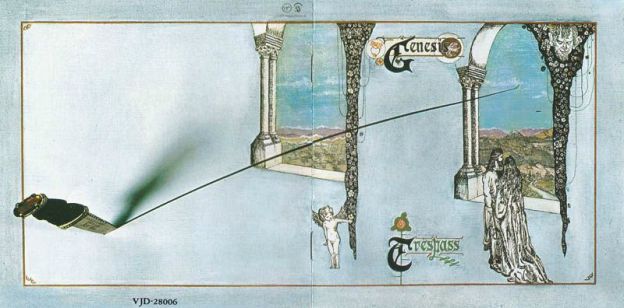
The Paul Whitefield cover may not capture the essence of the album as overtly and succinctly as his covers for Nursery Cryme and Foxtrot do, but once you have listened to the album a few times (with the lyrics in front of you some of those times, though not necessarily the first time through) the relevance to the songs will make sense — it’s not a direct representation but a satisfying pastiche of many of the album’s major ideas.  The dull blue/gray dominance of the cover art might account, in part, for the general dissatisfaction with the album as a whole, but the prevalence of the empty grayness has a great deal to do with the album’s general tenor: the vital, natural days of happiness are disappearing, only to be replaced by empty nothingness.  The panoramic natural view from the window capture the idyllic aspects of the album, while the royal couple gazing upon it provide the narratorship for most of the songs here.  The Cupid-like cherub could be one of the angels all around from “Visions of Angels,” and the floral curtains could be from any song.  The mysterious face in the upper-right corner sometimes looks like a demon, sometimes a faun — perhaps you should figure it out yourself.  The most obvious connection from the cover to the album content is the giant knife cutting a swath through the entire painting — though, of the several different bladed objects mentioned during the album, to which one it is referring (if not a combination of them) is the real question.  Perhaps the most interesting aspect of the cover is the knife itself, clearly a “real” knife cutting through the painting, adding an additional layer of reality to the complexity of Genesis’s transformation.  Just as “The Knife” is about the end of life as we know it (at least the way we are used to it), the knife cuts through the final, forlorn gaze of the noble couple on the life they used to love (perhaps being blanketed by an angel and demon); superimposed on all of that Genesis itself is both cutting ties with its pop roots while also about to sever ties with the overt folk rock of Trespass in favor of all-out prog rock for the remainder of the Peter Gabriel era.

“Looking For Someone”

Genesis’s re-creation begins with an appropriate lyrical comment and attitude: “Looking for someone, I guess I’m doing that.”  The band is definitely looking for a new beginning, certainly looking for an audience, and the lack of certainty in the narrator (“I guess”) fits the transitional nature of the album as a whole — better than From Genesis to Revelation but not yet the level of Nursery Cryme (definitely not Foxtrot or Selling England by the Pound).  The narrator continues with “Trying to find a mem’ry in a dark room / Dirty man, you’re looking like a Buddha / I know you well — yeah.”  The collage of unrelated images is confusing at best, but the “mem’ry” trying to be found for this album is an early glimpse of the antique scene depicted on the cover: the memory of days long ago, better days that have been destroyed by various factors — poor memory not the least of them.  Doubtful it is that we are to associate the “I know you well” with the “Buddha,” as if the narrator has spent time searching out the mystical paths to Enlightenment and inner tranquility; one would suspect the narrator to be more self-assured were that the case — unless, of course, the narrator has spent time with Buddhism and is still confused.  The uncertainty of the narrator continues as the need to “Keep on a straight line, I don’t believe I can” is followed by more difficult tasks ahead: “Trying to find a needle in a haystack / Chilly wind you’re piercing like a dagger / It hurts me so — yeah.”  As mentioned above, the dagger is a pervasive image throughout the album, introduced here.  The brief musical force of the previous line is dimmed subito for the great ironic line, “Nobody needs to discover me / I’m back again” — this is exactly what the audience must do!  Genesis does indeed require the audience to discover them now that they are back again, now with an album more akin to their forthcoming mature sound and style.  The melodic tendency to rapidly crescendo to dramatic hits is next demonstrated by the remainder of the chorus-like section: “You see the sunlight through the / Trees to keep you warm / In peaceful shades of green. / Yet in the darkness of my mind / Damascus wasn’t far behind.”  The king and queen surveying the remnants of their territory on the cover of the album do behold a forested landscape that may well remind them of warmer, brighter days, roaming through forests free from care.  If this album is an English idyll, perhaps the reference to Damascus places the time period of this opening song after the Crusades and Richard I’s defeat (of a sort) of Saladin at the close of the twelfth century, when the king and queen on the cover remember periods of both carefree days (“sunlight through the trees”) and days of war and loss — yet both of those periods are so long ago no one can remember them clearly today.

The time period jumps ahead.  “Lost in a subway, I guess I’m losing time,” he says.  “There’s a man looking at a magazine. / You’re such a fool, your mumbo-jumbo / Never tells me anything — yeah.”  Not even periodicals and modern technology can restore the innocence and intelligence lost so long ago.  The return of the chorus, now in its modern-day dress, brings more resolve on the narrator: no one needs to discover him because he is ready to be his own man.  Genesis did not need the tutelage that led to From Genesis to Revelation, since they wanted to be their own band with their own style — perhaps that cry for independency continues through the rest of this version of the chorus: “You feel the ashes from the / Fire that kept you warm. / Its comfort disappears / But still the only friend I know / Would never tell me where to go.”  All the direction given before has lead nowhere; it is time to be autonomous, to create one’s own style.  The musical interlude that follows, the first real forceful musical outburst of Genesis’ album career, is the beginning of that autonomy (with rare tones from Peter Gabriel’s flute sprinkled throughout).

In Genesis’s attempt to find direction (“Looking for someone”), it has now found itself: “And now I’ve found myself a name” — the name of the band is the same, but the sound and direction are different (though still with the motifs and foreshadowed bits mentioned in the previous article), and the name “Genesis” is starting to become what it will mean during the rest of Gabriel’s direction.  The rest of the lyrics of this song, “Come away, leave me / All that I have I will give. / Leave me, leave me / All that I am I will give” remind the audience of their initial invitation to join them in From Genesis to Revelation, but now that the band is breaking out on its own, it is willing to give of itself all it has, provided it is left alone to be itself.  They are starting to trust their own musical and lyric instincts (still maturing though), and we are to do so as well.

“White Mountain”

“White Mountain” is as close to an E. J. Erichsen Tench fairy tale as rock music will ever get.  The opening music of the piece is mildly reminiscent of medieval Christmas ballads, furthering the pervasive Victorian-idyll mood Trespass emits.  From the opening verse (an inaccurate way to describe the narrative progression of Genesis’s material) we get the first reference to the title of the album: Fang, the traitorous wolf, has trespassed where only the leader of the wolves may go and learned of the secret crown and scepter of, perhaps, the king depicted on the cover of the album, placing the events of this song somewhere between the time periods covered in “Looking for Someone” (from the perspective that the songs on this album are connected).  One-eye, the rightful ruler of the wolves, and his followers are out for retribution, and Fang is surrounded by a web and a sleeping fox: no matter how cunning he can be, it won’t be enough; he will soon be caught, trapped by his own importunate curiosity.

Fang soon encounters the steep path of the mountain, knowing that only descent will save him — but in this, too, he betrays his wolfish nature and clan rules: “A wolf never flees in the face of his foe,” and this is exactly what Fang does, cementing his guilt and forfeiting his life.  One-eye and Fang face off in their climactic duel, but Fate has already decreed against Fang the usurper.  One-eye is said to raise the scepter and use it against Fang, blurring the lines between animal and human — adding a lycanthropic aura to the characters and song.  The next morning, the white mountain stained with Fang’s traitorous blood, One-eye buries the unlawfully uprooted crown and scepter of the gods and peace is restored in the wolf kingdom, the laurels of victory proclaiming One-eye’s rightful authority.  The idyllic twelve-string strums and haunting whistling through the deserted blood-dimmed mountains send this unusual song into the ether.

“Visions of Angels”

The theme of lost innocence and lost youth returns here, straining against musically delightful tones.  The narrator tries to look at the trees “but there’s not even one.”  He runs to the smiling stream nearby “but the water’s dry.”  He looks to his girl’s face and tries to take her hand but “she’s never there.”  Why?  We’re never told.  “I just don’t understand / The trumpets sound my whole world crumbles down.”  That’s pretty serious.  After this realization of the complete absence of life-giving nature and love, the chorus proclaims “Visions of angels all around / Dance in the sky / Leaving me here / Forever goodbye.”  Based on the propinquity of the declaration of the nearby dancing and utterly uninterested angelic realm to the declaration of the narrator’s world crumbling down, the cosmology of this world is getting increasingly desolate.  The music accompanying the talk of angels is fitting for a heavenly realm, but the irony of the angels’ disinterest in the affairs of men is inescapable.

Desperation and despondency continues in verse two: “As the leaves will crumble so will fall my love / For the fragile beauty of our lives must fade / Though I once remember echoes of my youth / Now I sense no past, no love that ends in love.”  The sentiment is clear enough.  If the narrator is the king from the cover (which would make sense, but we are not here to force a thorough-going structure onto the album — even if the narrator of this song is unrelated to the cover or any other song on the album, the interpretation is similar enough), we are back in the decline of the Middle Ages.  Not only are the warm, happy days gone, but also hope itself is fading quickly.  The situation is becoming increasingly embittering to the narrator: “Take this dream the stars have filled with light / As the blossom glides like snowflakes from the trees / In vengeance to a god no-one can reach.”  The impotent angelic realm is joined by an equally uninvolved deity.  Happiness and hope are so far gone the king’s dreams are now just vitriolic attrition against the god that has allowed this destruction to occur.  Musically, the song is part military cadence, part ballroom dance number — the confusion of sounds and styles is fitting for a song about conflicting emotions and reactions.

After another chorus reveling in the angelic realm’s disinterest in the affairs of men, the final verse sees the melancholy nostalgia of the narrator morphed into anger: “Ice is moving and world’s begun to freeze / See the sunlight stopped and deadened by the breeze / Minds are empty bodies move insensitive / Some believe that when they die they really live / I believe there never is an end / God gave up this world, its people long ago / Why she’s never there I still don’t understand.”  Does the king think God is a woman?  Perhaps — or that his thoughts have returned to his wife and her distance from him as well.  His whole world has indeed crumbled down — and the angels keep dancing all around.

“Stagnation”

The preamble to this song returns us to the present age: “To Thomas S. Eiselberg, a very rich man, who was wise enough to spend all his fortunes in burying himself many miles beneath the ground.  As the only surviving member of the human race, he inherited the whole world.”  I’m pretty sure they made this guy up, but if not, he’s one of those eccentric rich British guys from a century or two ago; in other words, a rich British guy.  The song itself is one of the more diverse and impressive on the album: it is probably getting tiresome to read comments about Genesis foreshadowing their future greatness, but this song, even more than the more popular “The Knife” at the close of the album, is a sign of the burgeoning diversity and musicality of the band.

The album thus far has been about stagnation: final glimpses of what is being lost and fading memories of what once was; yet, “Stagnation” is not about giving up and letting go.  By the end of “Stagnation,” the king (again, assuming the narrator of this song is the king from the cover) is determined, like the narrator of Dylan Thomas’s most famous poem, not to go gentle into that good night.  The song as a whole is Gabriel’s best lyrical work to date, unquestionably: “Here today the red sky tells his tale / But the only listening eyes are mine / There is peace amongst the hills / And the night will cover all my pride.”  The synesthesia is delightful, coupled by the few moments of peace in the album; instead of another angry tirade against Fate, impotent supernatural beings, and Nature, we have the quiet acceptance of one’s downfall as so often brought about by hubris.  “Blest are they who smile from bodies free / Seems to me like any other crowd / Who are waiting to be saved” ends the first verse-like section of this song.  Is he referring to the stars smiling down, free? or the previous angels vindicated for their indifference? Perhaps — just as distant and uninvolved as people, waiting to be saved, too passive.  And then comes the great turn.  Musically the song has been fast, almost careering out of control.  The realization of his connection with the natural world, and the fate of others, yields a pause in thought.  The musical interlude is more Pink Floyd than Genesis, but only temporarily.  When the hit comes again, powered by impressive sounds from Tony Banks, the king has a better self-understanding.

“Wait, there still is time for washing in the pool / Wash away the past. / Moon, my long-lost friend is smiling from above / Smiling at my tears. / Come we’ll walk the path to take us to my home / Keep outside the night. / The ice-cold knife has come to decorate the dead / Somehow.”  The knife returns again, promising to destroy all that is known — but now the king will not idly give in.  The queen whose fidelity has been questioned throughout may be back, though the king referring to it as “my home” might belie that — it matters little; what matters is the return of the resolution of the king to live and enjoy the day and keep the night of death at bay for as long as possible.

“And each will find a home / And there will still be time / For loving my friend / You are there / And will I wait for ever beside the silent mirror / And fish for bitter minnows amongst the reeds and slimy water.”  This interlude, both emotionally and musically, is the real highlight of the album.  It is a fine example of Genesis’s ability to becalm a situation and then build up to a powerful climax.  “I, I … said I want to sit down. / I, I … said I want to sit down. / I want a drink — I want a drink / To take all the dust and dirt from my throat / I want a drink — I want a drink / To wash out the filth that is deep in my guts / I want a drink.”  The climax of “Stagnation” rivals later Gabriel-era Genesis songs: Peter Gabriel’s vocal performance here is surpassed only by the unsurpassable finale of “Supper’s Ready” on Foxtrot (though, the greatness is comparatively short, and many other later songs as wholes are better than the whole of “Stagnation”).  His flute work after the climax leads to a satisfying march-like resolution supplied by the ethereal chorus: “Then let us drink / Then let us smile / Then let us go.”  The song winds down — though it certainly doesn’t stagnate — and dusk falls.

“Dusk”

“Dusk” is a good example of the band’s need to grow, especially Gabriel’s need to tighten up his lyrical creations.  The song is simple enough, though hard to place in the dual chronologies of the previous songs.  The Victorian idyll sound dominates with no break or contrary theme, which is not bad, since the song is so short it needs little variety.  It is almost a call-and-response song, with Gabriel’s voice dominating the initial verses and the ethereal chorus replying with an impressively parallel pair of choruses (and a third chorus unlike the first two).

“See my hand is moving / Touching all that’s real / And once it stroked love’s body / Now it claws the past” is verselet one.  The tone of Gabriel’s voice does not sound like the voice in previous songs, making the narrator of this song most likely a different persona from the album thus far.  The thought of the lost past continues, as the hand that once touched the body of a loved one now can only claw at the past (a good verb, though the song as a whole reminds us clearly of Gabriel’s youth and relative inexperience at creating lyrics).  The ethereal chorus responds with “The scent of a flower / The colors of the morning / Friends to believe in / Tears soon forgotten / See how the rain drives away another day.”  The disjunction of the ideas is more reminiscent to us today of any typical contemporary “Christian” chorus of seemingly unrelated Bible words than the depth and brilliance of more mature Genesis lyrics.  The musical interludes, though, help distract us away from the near-inanity of the lyrics, reminding us again of the maturing skill of Banks, Rutherford, and Gabriel (Phillips and Mayhew are maturing as well, but since they depart the band after this album, it almost doesn’t matter — Phillips has a very successful career later, but Mayhew sort of disappears into the mist).

Verse two: “If a leaf has fallen / Does the tree lie broken? / And if we draw some water / Does the well run dry?”  The questions seem deep … but they aren’t, not really, especially since the connection to the ideas that begin the song is tenuous at best.  The most impressive part of the song comes from the second chorus/response and its parallel to the first one, at least initially: “The sigh of a mother / The screaming of lovers / Like two angry tigers / They tear at each other. / See how for him lifetime’s fears disappear.”  Are the sigh and scream the two angry tigers tearing at each other, or just the screaming of the lovers tearing at each other?  I really don’t know, but I suspect neither does Peter Gabriel, so it’s okay.  Another enjoyable yet brief musical interlude sets us up for the final vocals of this brief, ambivalent song.

“Once a Jesus suffered / Heaven could not see Him. / And now my ship is sinking / The captain stands alone.”  We don’t need to get up in arms about Gabriel’s notion about Heaven unable to see Jesus — the brief references to a worse-than-deist god earlier in the album are far worse than this speculation; besides, it may be partially true that Heaven could not see Christ on the cross while He was bearing the sins of the world.  The later couplet is more pertinent to the general direction of the album (since we know Jesus recovered far better than Gabriel could imagine — either of them, really).  Instead of the kingdom sinking and the king standing alone as it has been thus far, now the narrator is a captain of a sinking ship, alone on the bridge.  The chorus’s response is enigmatic but strangely fitting for this song: “A pawn on a chessboard / A false move by God will now destroy me / But wait, on the horizon / A new dawn seems to be rising / Never to recall this passerby born to die.”  Despite the brief optimism, it is nothing like the strong renewed resolution in “Stagnation.”  Here it is another aspect of Gabriel’s lyrical growing pains.  A final twelve-string/piano chord-dominated finish leads us to the final (and one of Genesis’s most frenetic) song of this part-idyll, part-maturing transitional album.

“The Knife”

The original album jacket provides this dedication on this song: “For those that Trespass against us.”  This is the only direct reference to the album’s title other than the lyrical reference to Fang’s trespass crime in “White Mountain,” but the “knife” reference has pervaded the album, leading to this modern metaphorical usage.  Not since the ending of “Looking for Someone” have we been clearly in the contemporary time period on this album, but that changes with a stark reappearance of gun-shooting chaos by the close of this song.  Moments ago, I mentioned that “The Knife” is one of Genesis’s most frenetic songs in its entire oeuvre, and that’s true — that’s not to say they never play fast-paced songs, they do; but the pounding nature of this song, mimicking a growing cacophonous riot between constabulary and a demagogue’s posse, is rare for this band.  Even the pounding opening of “Watcher of the Skies” on Foxtrot (and sections of “Supper’s Ready” on the same album) does not reach the malevolent frenzy of “The Knife.”  The previous “knife” references on the album have been about destroying and ending.  Now, it is personified as a seemingly well-intentioned revolutionary who, essentially, is only using force to establish his own tyranny at the expense of others, bringing life as we know it to a more malicious close than the simple outright destruction of other daggers and knives.  Additionally, it may be about law enforcement representatives who are likewise readily willing to use violence to solve problems and quell disturbances.  Knives allow for little stagnation after all.

The danger of young radicals and their philosophies is delineated in the otherwise fine-sounding lyrics that spring forth with the rapid organ pounding of Tony Banks: “Tell me my life is about to begin / Tell me that I am a hero / Promise me all of your violent dreams / Light up your body with anger. / Now, in this ugly world / It is time to destroy all this evil. / Now, when I give the word / Get ready to fight for your freedom / Now — / Stand up and fight, for you know we are right / We must strike at the lies / That have spread like disease through our minds. / Soon we’ll have power, ever soldier will rest / And we’ll spread out our kindness / To all who our love now deserve.”  Such is the rallying cry of most would-be tyrants and despots who, like Marius and Enjolras, think they are doing the right thing for the right reason.  The problem with this line of “thinking” comes in Gabriel’s pointed couplet at the end of this tirade: “Some of you are going to die — / Martyrs of course to the freedom that I shall provide.”  The motivation is clear: it is about power, not about justice or right — isn’t that often the way?

Any grip on morality is lost by the time verse two comes around: “I’ll give you the names of those you must kill / All must die with their children. / Carry their heads to the palace of old / Hang them high, let the blood flow. / Now, in this ugly world / Break all the chains around us / Now, the crusade has begun / Give us a land fit for heroes / Now —.”  The “stand up and fight” chorus returns after this.  It is clear the narrator does not truly want a land fit for heroes, since real heroes will in turn displace this power-motivated revolutionary, like Robespierre’s fate.  The lyrics of this section were changed slightly during live performances, but those emendations are irrelevant here: the point of the song is the same on the album and live on stage.

Both of those verses come out in a rapid pace, and though the audience probably thinks the song is almost over based on the number of words Gabriel has just sung/chanted at them, we are barely two minutes into a nine-minute song.  Suddenly the speed evaporates and the words disappear, and we are waiting for the mob of “freedom fighters” to attack the police barricade.  Soon a quiet and menacing chant of “We are only wanting freedom” begins, supported by other chants the attentive listener will hear, followed by modern police/riot squad responses: shots are fired over their heads and the battle commences, slowly at first, then forcefully and rapidly.  The pulsating tones during the “battle scene” help one realize why this song was so popular during early live concerts (though it sounds nothing like the “Battle of Epping Forest” forthcoming on Selling England By the Pound).  Soon the rioters win, and we can only guess how many “martyrs of freedom” have suffered for this would-be patriot soon-to-be-dictator.  Though we have come a long way from the idyll reverie of the medieval king from the cover, the pervasive knife of destruction was worked its way along the entire tapestry of the album.

“Tell Me My Life is About to Begin”

Though “The Knife” ends somewhat pessimistically, the album as a whole is a fine beginning to the real initialization of Genesis’s career.  It is an optimistic album, with a sound unlike most albums of its time and certainly unlike most albums created today.  Many more changes were about to occur in the life of the band: “The Knife” was soon released as a single, though the cover of it is anachronistic (an odd charge for the album just discussed, admittedly).  The cover bears the five-member line-up of the “classic years” of Genesis: Peter Gabriel, Phil Collins, Mike Rutherford, Tony Banks, and Steve Hackett — even though Collins and Hackett did not play on “The Knife” or Trespass and only came on after its release to replace John Mayhew and Anthony Phillips, respectively.  This line-up would create the seminal albums of Genesis’s Gabriel-era career: Nursery Cryme, Foxtrot, Selling England By the Pound, and The Lamb Lies Down on Broadway.  Having gone through their lyrical and musical pubescence, Genesis was about to become what it wanted to be: the culmination of progressive rock in the 1970s, and one of the best rock bands of all time.
25 Creative Things to Do with Your Friends

Alice Minium

We were all in such a hurry to grow up — so much so that now we have completely forgotten how to be children.  The world is not an adventure anymore.  The death of your imagination is the death of your lifeblood.  It is a living fact that you cannot learn without an active imagination.  However, while growing up is a necessary evil, monotony is not.  Don’t let adulthood wear you down.  Don’t sentence yourself to a lifelong stretch of ordinary.  Don’t ever be boring.  And don’t ever, ever completely grow up.

1. Agree upon a genre/category (Disney classics, Harry Potter, Lord of the Rings, people you know & like to laugh at, teachers, etc.) and each of you choose a character.  Don’t tell anyone who your character is.  Go to school the next day and ACT LIKE THIS PERSON in every situation; you must maintain character at all times.  After a few hours, you all try to guess each other’s characters.  This can be done outside of school as well.

2. Play dubstep music without words and invent a rap to it as it comes to you.  Must be improv.  Insert beatboxing as needed.  Do not interrupt the beat — you and the beat are one.  Nobody is watching you.  Just kidding: you’re taking a video, ’cause this is going to be really funny in the morning.

3. Create a cardboard sign that says FREE HUGS and go stand on the sidewalk in the city.  Give free hugs.  Make somebody’s day.  (Leave your wallet in the car while you are distributing hugs.)

4. Videotape your fish tank and create different personas for each of the fish.  Each one of you creates a fish’s character and does the voice for it.  Create a sitcom about their lives with spontaneous dialogue and narration.  On YouTube™, there is a man who created a seventeen-episode soap opera about his sea monkeys.  It’s literally him just sitting there doing voices and videotaping his sea monkey tank.

5. Buy a bouquet of flowers and go to the cemetery.  Choose a gravestone and guess the entire person’s life story, ending in the cause of their death.  Then say a short prayer for them and leave a flower at their grave.

6. Crack five glow necklaces.  Leave them as sticks and do not apply connectors.  Toss them onto the ground.  Have each person say what the pile of glowsticks resembles (example: three different people looking at the same pile could all see a bowl of noodles, a campfire, and a pond of fish).  Pick them up again and repeat.  Forty-five times.  You have to do this one forty-five times.  It’s like the game that never ends.

7. Next time you and your friends hang out, invite someone completely random that you would never really talk to.  Hang out with them like everything’s normal and you’re perfectly good friends.  It’s like that movie Dinner for Schmucks, except not really.

8. Create a complex mega-city out of Legos® or a house/neighborhood out of Play-Doh.

9. Make a list of twenty things and send your friend on an Internet scavenger hunt.  Google or other search engines not allowed.  (Example: something “cursed” that is for sale on eBay®; a picture of somebody that looks like someone famous; an article about a REAL conspiracy involving the government that you’d never heard of; an unintentionally funny blog or website preaching on the evils of something totally ridiculous; etc. etc.).

10. Play Beatles™: Rock Band™ until your neighbors file a noise complaint.

11. Have a Candy Land/Uno/Apples to Apples/Hungry Hungry Hippos championship.

12. Play Guess Who? and answer all the questions in the voice you think your character would have.  Play Charades or Pictionary but come up with your own ideas — don’t use cards.

13. Host a dance competition and rate each other as a panel of judges.

14. Consume caffeine and hold a contest to see who can jump on the trampoline the longest.

15. Buy a cactus.

16. Go out and about your regular plans wearing a cape and/or top hat.  Bonus points if you carry around a copy of The Picture of Dorian Gray by Oscar Wilde at all times.

17. Create an improv duet on the piano/keyboard.

18. Go on an expedition in the woods and pretend to be explorers or characters in an adventure/horror movie, keeping in character the entire night.

19. Invite someone you don’t know very well to hang out with you and your friends.  All of you go out to dinner and pretend you’re in a horror movie, keeping a dismal tone and pointing out omens you see everywhere, always acting with a sense of frantic urgency or impending doom.  Seriously freak that person out.

20. Put lollipops in all your neighbors’ mailboxes.

21. Reread your favorite books from your childhood, or watch the tv shows you loved as a kid.  (This will be a much weirder experience than you think.)

22. Watch each other’s home movies from when you were kids.

23. Create a secret society and make t-shirts for each other (Tie-dye/fabric paint/fabric paint pens/stencils/glitter/iron-ons/whatever).

24. Plan your own funeral in the event that you might die — make it awesome, write it down, and entrust the plans unto the care of your friends.

25. Make cookies and deliver them to all your friends’ houses for no apparent reason; extra credit if you include a teacher, enemy, or anyone that would make the delivery extremely awkward.

Most of you wouldn’t actually try most of these ideas.  They do sound really silly.  You may be sitting there thinking to yourself that you are honestly too cool for such silly things.

I would like you to know that you are not.

Centennial: Their Story is Our Story

Christopher Rush

Introduction

The mini-series (perhaps more accurately “maxi-series”) reached its perfection with 1978-79’s mighty Centennial, the 12-part adaptation of James A. Michener’s novel of the same name.  Not as long as War and Remembrance, not as culturally shattering as Shōgun or Roots, Centennial is nonetheless everything that television mini-series adaptations/original stories could be.  This is its story.

Only the Rocks Live Forever

The mini-series opens with a panoramic shot of the mighty landscape of Colorado, and James Michener himself steps forward to introduce the story: in essence, the story of Centennial is a story of the land and its inhabitants – perhaps more the land itself, though its inhabitants are an integral and changing aspect of how the story is constructed.  The Platte River, the farmland, the open plains; trappers, settlers, farmers, cowboys, shepherds — the land and its people create this story of America.  Under Michener’s direction, the mini-series contracts the first three chapters on the formation of the land and the evolutionary progress of the animals into a brief visual effect and David Jannsen voiceover.  What will become northern Colorado is populated by the Arapaho, including a young boy named Lame Beaver (played, eventually, by the powerful Michael Ansara), who, raised by his uncle, learns, among other key lessons, that human life is frail and temporary: only the rocks live forever.  Lame Beaver makes a name for himself by stealing horses from a rival tribe and bringing them to the Arapaho for the first time.  With the new form of transportation, the Arapaho lifestyle is changed forever, as they join the plains horse culture.  Soon Lame Beaver and the audience are immersed in the pelt-trapping days of the mid-18th century through the French Canadian fur trapper/trader Pasquinel.

Pasquinel (played by Robert Conrad with what always appeared to me to be a believable French-Canadian accent — some may disagree, but that is their right as citizens of the world) is the main character of parts one and two of Centennial — though a trapper and trader, Pasquinel knows the land, the rivers, and the animals, which makes him in one sense the ideal inhabitant according to the novel.  Pasquinel embodies the simplicity of living off the land, not taking too much simply for profit but utilizing the cycles of life without disrupting the balance of nature (unless you count selling guns to various tribes), but he is no thoughtless tree hugger.  He sells guns to competing tribes to gain access to more pelts and safe travel.  After being wounded by the Pawnee, Pasquinel is robbed and assaulted by river pirates who take his pelts after months of work.  Returning to St. Louis (“San Looiee”), Pasquinel is forced to partner with Bavarian silversmith Herman Bockweiss (Raymond Burr without a wheelchair) as his financial backer.  With the Pawnee arrow permanently stuck in his back, Pasquinel furthers his ties to St. Louis by marrying Bockweiss’s daughter Lise (Sally Kellerman) — he does love her, in as limited a fashion as he is capable of, but he never hides the fact he is mostly interested in financial support for his fur trading life.

Back in the field, Pasquinel meets the naïve yet thoroughly honest (and, frankly, totally awesome) young Scotchman Alexander McKeag (the one and only Richard Chamberlain, king of the mini-series).  Rescuing him from his own nemeses the Pawnee, Pasquinel trains McKeag in the ways of the American fur trade, and they become life-long friends … of a sort.  Like all epic heroes, McKeag is soon wounded rather drastically, primarily because he doesn’t listen to Pasquinel during an Indian coup.  Pasquinel saves McKeag’s life and helps him regain his confidence, just in time for the major schism in their friendship to occur: her name is Clay Basket (Barbara Carrera); she is Lame Beaver’s daughter.

Clay Basket falls for shy, gentle McKeag, naturally; Lame Beaver, however, demands that she marry Pasquinel, ensuring both her financial security and the continual supply of guns to the Arapaho.  Lame Beaver settles his plans for his family before ending his life-long feud with the Pawnee — but not before he discovers gold in a nearby riverbed, though he doesn’t know its future significance; to him, it is a shiny malleable metal useful for making bullets to kill his enemy.  When McKeag and Pasquinel return the following season, Pasquinel marries Clay Basket and learns about the gold, believing she would know where her father found the gold.  McKeag, knowing his friend does not love her, recognizes the motivation behind Pasquinel’s actions, and their friendship starts to fray.

The Yellow Apron

Years pass and Clay Basket gives birth to Jacques and Marcel.  Pasquinel continues to spend time both in the field with McKeag and his Arapaho family as well as time in St. Louis with Lise.  McKeag does not approve, of course, but remains loyal as long as he can, in part because he cannot part from Clay Basket.  Jacques senses the tension, though he does not understand it.  Pasquinel, upon his return, foolishly determines to take his family to St. Louis; at an army fort, drunken soldiers deride Pasquinel and his half-breed family, resulting in a serious wounding of Jacques, who never forgives the White Man for what happens to him; later, Jacques is also wounded by a Native arrow, cementing his (and his brother’s) isolation from both worlds.  Pasquinel spends time with Lise, letting her know about his Arapaho family (though, being a wife, she had suspected so for a long time, just as Clay Basket does); McKeag tries to teach Jacques and Marcel how to trap in the meantime, though Jacques soon grows tired of his substitute father.  Eventually Jacques takes his frustration out on McKeag, stabbing him nearly to death.  McKeag retaliates briefly but he restrains himself; after all, Jacques is Clay Basket’s son, but he is also “twisted” with rage, and McKeag knows he can no longer stay.

Though Pasquinel salvages a temporarily successful family life with Clay Basket and the boys (and his future daughter), he soon becomes obsessed with discovering Lame Beaver’s gold strike.  Meanwhile, McKeag becomes an isolated mountain man, trapping alone and almost going mad from the lack of community.  Eventually he learns of a Rendezvous of mountain men (one of the many historically accurate events Michener includes throughout his grand saga) and decides to go, if only to see his former friend (and Clay Basket) again.

At the Rendezvous, McKeag releases some pent-up frustration, even wearing the Yellow Apron to show off a classic Highland dance — during which he reunites with Pasquinel, and they are able to set aside their differences and enjoy some time together as old friends.  One of the key traits of Centennial is that noble, generous people often have both a second chance at love and the time to amend past wrongs — not everyone does, but most of the “heroes” of the tale do, primarily because of their goodness.  By this time, Jacques (Jake) and Marcel (Mike) have grown up to be angry young men, though Jacques is far angrier than Marcel.  Jacques can shoot better than most white men, even with their muskets.  The reunion is short-lived, however, as the old arrow wound acts up and causes Pasquinel to pass out.  At Pasquinel’s request, McKeag cuts out the arrowhead, giving it to Jacques as a souvenir.  Pasquinel asks McKeag to join them, at least to see Clay Basket again (who is away, tending their young daughter Lucinda), but McKeag refuses.

Years later, McKeag makes his way to St. Louis and meets Lise and her daughter Lisette, telling Lise the truth about Pasquinel and his life.  Lise in turn convinces McKeag to follow his heart after all these years and confront Pasquinel and try to win Clay Basket for himself (though not out of selfishness to have her husband all to herself — it is too late for that).  McKeag does so, in part because Jacques and Marcel are no longer with their parents.  Pasquinel finally finds Lame Beaver’s gold, only to be mortally wounded by Arapaho warriors.  McKeag and Clay Basket come upon him in his final moments, and Pasquinel entrusts her to McKeag, knowing he will take far better care of her than he ever did.  Not knowing the gold is around them, McKeag leads Clay Basket and Lucinda away to a new life.

The Wagon and the Elephant

Part three sends the story in a new direction while (like Les Misérables) also rejoining the original storyline already in motion.  Parts 1-5 are a loosely unified story about Native Americans and other early inhabitants of the land (trappers, mountain men, and prospectors); parts 3-8 are also the extended story of Levi Zendt, a Mennonite runaway, and his industriousness helping turn the land from its rugged, natural beginnings to a bastion of civilization (with other sub-stories about the land and its inhabitants along the way).  Parts 9-11 resolve some of the other storylines already developed midway through the series, bringing the land into the 20th century.  Part 12 takes place a couple generations later, acting more as a dénouement than a direct resolution, eventually leading to the tale of Centennial being told., bringing the series full-circle (in a Roots-like way).

Levi Zendt (Gregory Harrison) is a young, hardworking, honest Mennonite growing up in Pennsylvania in the middle of the 19th century.  Despite the strenuous and strict lifestyle, Levi finds himself interested in young Rebecca who, unbeknownst to him, is also sought after by his elder brother.  Rebecca knows this, and being one of those girls, coquettes Levi in front of the orphanage, then, as girls of that ilk tend to do, shifts the blame upon Levi, whose reputation is ruined.  He is formally shunned by his family, except his intelligent mother who gives him money and the family horses, telling him to leave and start a new (real) life for himself.  He begins his new life by buying the eponymous wagon and then picking up Elly Zahm (Stephanie Zimbalist at the precipice of her Remington Steele fame), his friend at the orphanage who knew Rebecca was making up the story.  Together, they embark for the west, totally unprepared yet vital and enthusiastic.  Their first stop (after getting married) is St. Louis.  There, they join a group following the Oregon Trail with young and authoritative Captain Maxwell Mercy (Chad Everett) and his wife Lisette Pasquinel Mercy.  Also on the trip is naïve English author Oliver Seccombe (Timothy Dalton before his hardened James Bond days) trying to prove Native Americans derived from Welshmen.  This ragtag group is led by the thoroughly repugnant (both physically and morally) mountain man Sam Purchase (Donald Pleasance in one of his least pleasant roles, which is saying quite a bit for his storied career).  Without Levi’s knowledge, Purchase sells Levi’s family horses for cattle, ending Levi’s last tie with his old life (he’s sort of a mix of Marius and Aeneas, really).  Captain Mercy is on deployment to a frontier army fort (at which McKeag and his family live) in part to set up connections with the western tribes, hoping his wife can make emotional ties to Jake and Mike Pasquinel, now grown up terrors on the plains, since she is their half-sister (to the extreme).

After meeting McKeag, Clay Basket, and now-grown Lucinda, Levi and Elly continue west without the safety of Captain Mercy.  Soon into the trip, Purchase tries to rape Elly, though Seccombe and Levi prevent it (and then Seccombe prevents Levi from killing Purchas).  For Levi and Elly, this is the last straw, the eponymous “elephant” (something so big and devastating that it destroys all hopes for the future and ends their plans in failure).  Upon their forlorn return east, they team up with McKeag and his family to start a new settlement and trading post away from the army fort and closer to Clay Basket’s Arapaho home grounds, in part because Elly is now pregnant and she doesn’t want to head too far in their old wagon in her condition.  Before they can begin this new phase of their life, Elly is bitten by a rattlesnake and dies instantly.  Devastated, Levi leaves the McKeags and their trading post for McKeag’s old mountain man isolated fort, mourning for Elly and their unborn child.

For as Long as the Waters Flow and The Massacre

After what may or may not be an appropriate mourning period, Lucinda McKeag goes to console Levi in his isolation and grief.  Furthering Centennial’s trope of second-chances for love, Levi and Lucinda begin their romantic relationship shortly thereafter.  As that begins, the story adds another element: Hans Brumbaugh (Alex Karras) and his farming.  Brumbaugh does not begin as a farmer; in fact, he begins as a prospector who runs into Spade Larkin, another prospector looking for Lame Beaver’s gold.  Larkin pesters Lucinda too much about the gold, believing she would know where her grandfather’s gold came from, but she obviously doesn’t.  Without her help, Larkin and Brumbaugh find the vein but have an altercation resulting in Larkin’s death.  Brumbaugh feels guilty about Larkin’s accidental death, leaving the gold behind for a new life as a potato farmer, buying land from Clay Basket.

The major focus of parts four and five is the conclusion of the “Indian Problem.”  McKeag’s role in the story comes to a conclusion during Levi and Lucinda’s wedding.  Though she has spent time back in St. Louis developing her literacy (and fending off the romantic pursuit of young Mark Harmon), Lucinda has committed her heart to Levi.  Jake and Mike, taking a break from harassing settlers and farmers (though they believe they are defending their territory from interlopers, and they are probably right), come to see their mother and sister again.  Jake and McKeag even lay aside their life-long grudge for the sake of Lucinda’s happiness and the potential reconciliation of Indian and white settler.  During a revisit of the Highland reel that helped reunite him with Pasquinel, McKeag has a heart attack and dies in Clay Basket’s arms.  With him dies as well any real chance of formal unity between the Indian tribes and the westward-moving American settlers/army.  Major Mercy returns as well to further the negotiations.  Jake and Mike are willing to listen to him, knowing his integrity, and eventually some treaties are signed, granting the Arapaho and other nations certain lands “for as long as the waters flow.”  Levi, having taken over McKeag’s trading post and role as peacemaker, can only do so much to stem the tide of governmental deception concerning the Indian nations.  We all know that despite Mercy’s integrity and willingness to ensure his promises, it is only delaying the inevitable expansion of post-colonial America.  The burgeoning Civil War also marks the end of peaceful cooperation with the Indians.

“The Massacre” is probably the saddest episode of the entire series, bringing to a close all the major storylines and characters that began this saga as well as showing, in a remarkable degree of honesty, the lack of integrity and humanness of 19th-century American governmental and military policy and action.  Centennial really has only two major villains: Frank Skimmerhorn here in part five and Mervin Wendell in parts nine through eleven (three, if you count Wendell’s wife Maude), but Skimmerhorn (played frighteningly well by otherwise-nice guy Richard Crenna) is clearly the worst character in the entire saga.  With the army presence on the frontier decreased due to the Civil War back east, the Pasquinel brothers have been causing a great deal of disturbance.  Playing upon settlers’ excited passions, Skimmerhorn (who already has a preternatural hatred for all-things Indian based on things he experienced back in Minnesota) gathers a militia with official army support and leads a raid on the remnants of the Arapaho people, who by now have no weapons, no warriors, and virtually no horses.  Mark Harmon’s character, Captain McIntosh, returns as a member of Skimmerhorn’s army, though he refuses to join in on the massacre and is temporarily discharged.  The arrant perniciousness of Skimmerhorn is exemplified in his line “nits turn into lice,” when referring to two Arapaho infants being held by one of his acolytes.  The “soldier” assassinates the two infants, revolting young Private Clark who joins Captain McIntosh’s dissenters.  The massacre becomes public knowledge but as a victory against Indian aggression.  During McIntosh’s court martial, adjudicated by General Asher (Pernell Roberts sans stethoscope) who had earlier assisted Mercy’s negotiations with the tribes, Private Clark’s testimony about Skimmerhorn’s actions and comment about the baby Arapaho sway public sentiment against Skimmerhorn, and McIntosh is restored to honor (though he has, of course, forever lost Lucinda to Levi).  Despite the temporary backlash, Skimmerhorn rebounds back into popularity enough to gather a militia to lynch the Pasquinel brothers.  Stephen McHattie’s performance as Jacques (Jake) has been sterling for several episodes, but his performance at the end under Skimmerhorn’s abuse is stellar.  Once they learn of Jake’s death, Levi and Lucinda convince world-weary Mike to turn himself in to the “real authorities,” since only then can he get a “fair trial.”  He never gets one.  On the way to turning himself in, Mike is shot in the back by Skimmerhorn.  Mercy is so enraged by Skimmerhorn’s actions that he challenges him to a duel, willing to abandon his military career to end Skimmerhorn (even though it is essentially too late).  Skimmerhorn’s son John arrives in time to see Mercy beat him nearly to death — though Levi prevents him; sickened by his father’s behavior, John rejects him outright.  Skimmerhorn is banished from Colorado, the damage already done.  The Civil War ends, the army returns, the Indians are gone, and so are all the original characters and storylines from the beginning of the saga.  It is time for a new focus.

The Longhorns and The Shepherds

The new focus comes dramatically and starkly with episode six, “The Longhorns.”  Only a couple of the new stars of the series make brief appearances, and the focus shifts to the new diverse inhabitants of the land: this time, the cattlemen.  Oliver Seccombe returns, having failed as a writer, now giving cattle baron a try on behalf of the Earl Venneford estates of England.  Utilizing the Homestead Act in a rather shady way, Seccombe and the Venneford Ranch eventually overtake over six million acres — in part by claiming the right of contiguity: their cattle can also roam on land contiguous to their own.  Though Seccombe is still trying to be an amiable and honest business man, the pressures of his role and his own lack of experience in cattle ranching eventually overcome his integrity, though not for some time.

Hans Brumbaugh is one of the main opponents of the Venneford, but his antipathy is only touched on here in a brief confrontation with Seccombe.  The majority of the episode is turned over to a new set of characters led by Dennis Weaver as R.J. Poteet.  John Skimmerhorn returns to live down his father’s shame by doing good for the community by assisting Seccombe with a cattle drive from Texas up to Colorado, where the location of the series takes place, in what is now called Zendt’s Farm in the Colorado Territory.  Skimmherhorn gets the assistance of Poteet, the best trail boss in the business, as well as the typical rag-tag group of experienced cattlemen who know all the old jokes; the typical youngster who needs to settle a family debt and become a man, Jim Lloyd (soon played by William Atherton much less smarmy than he is in Die Hard one and two); and even the typical Mexican cook Nacho.  The drive features all the stock Western cattle-drive movie elements: Indian skirmishes, lack of water, internal conflict with the loner, Jim’s struggles coming of age on the drive, losing a few guys we’ve come to love from injury and sickness, and the eventual success of the trip.  Along the way are the occasional Natty Bumppo-like messages about the greatness and grandeur of the natural world, the open range, and how these days are never going to come again, due, ironically enough, because of the very things the cowboys are doing: establishing mega-ranches and centralized townships of power along the frontier, turning it from an untamed, natural wilderness into civilization itself — an irony the Poteet himself wistfully realizes and laments.  Though the episode has all the attributes of a stereotypical treatment of the “ol’ West,” it escapes the syrupy-sweetness of what it could have been and is rather an enjoyable episode, despite having almost no connection to the episodes and characters (and scenery) that have come before.  The characters, though typical, are real and engaging, the conflicts, though typical, are likewise believable, tense, and entertaining.  The message of the episode, as so often occurs throughout Centennial, is present without being heavy-handed, and we end up believing the cowboys and, despite the hardships, miss the days and freedom of the open range.

The ever-changing nature of the passage of time and life is furthered by the next episode, “The Shepherds,” which acts in part as a dénouement to “The Longhorns” as well as another transition to the next few episodes, as the saga of the land and its inhabitants takes on new guises and new conflicts.  Though it is called “The Shepherds,” it is more about the conflict of the land’s new inhabitants: homesteaders, farmers, shepherds, and cattlemen.  The land can only sustain so much, and the arrival of Messmore Garrett and his sheep is the last straw.  As Seccombe and secret agents of the Venneford start gobbling up farm land, Seccombe’s financiers force him to descend into hiring gunmen to drive off homesteaders and shepherds, despite the fact some of the men attacked and killed are former cowboys he hired to bring the cattle to the Venneford in the first place years ago.  Time passes rather quickly between episodes, sometimes confusingly so, but the theme of time passing does not affect our emotional attachment to the new characters, especially as they sometimes meet tragic ends at the hands of other characters we care about.  Adding an extra layer to Seccombe’s character is his romance to Charlotte Buckland (Lynn Redgrave), daughter of one of his visiting financiers.  Their romance continues Centennial’s theme of second chances for love, but we also have the sense that Seccombe is becoming a cattle baron version of Macbeth, despite his growing amour.

The uncontrollable passage of time is shown clearly in this episode during David Jannsen’s voiceover: Zendt’s Farm is now called Centennial, and the Colorado Territories is now a state in the union (called Colorado).  The Arapaho, like most Indian tribes, have been removed to reservations (in a great symbolic scene).  The lawless frontier days are no more, and this new structure and civilization is embodied in husky Sheriff Axel Dumire (Brian Keith in a role that won’t surprise you).  The range war is his major target, and though it reaches an unusual end with a unique amalgamation of the warring factions for a matter of vengeance, Dumire closes the episode by scolding the various warring parties: this battle is over, and time moves on; if one wants to live in a civilized town, one has to comport oneself in a civilized way.  It’s time to bury the dead and let life move on.

The Storm and The Crime

At this point of the series, the character role call has grown rather large, and it is time for both flashbacks of key events and a bit of a clearing out.  Calling “The Storm” another “Longhorns” dénouement would be partly correct, in that we see more of the Poteet cattle drive characters make a brief (and tragic) return, but the episode serves more as a continued transition to the character conflicts of the final episodes.  The timing of this episode is a bit confusing, in that Levi is visiting his Pennsylvania kinsman for the first time in decades, and that trip supposedly only takes a few weeks, but back in Centennial it appears a few months (or more) have passed (the spring of “The Shepherds” has been replaced by an early winter).  The recent theme of the inevitable passage of time is set in stark contrast to the unchanging (stagnation?) of Mennonite Pennsylvania.  Levi is able to finally reconcile with his family and tell Elly’s old friend about her death, but the entire trip is unsatisfactory for him — this is not his home; his home is in Centennial with Lucinda.

Oliver Seccombe’s financial troubles escalate throughout this episode, despite the efforts of Charlotte to encourage him and help him see his good qualities.  Though we completely believe Oliver’s love for the land and his sacrificial tactics to provide for Charlotte, we also know he has engaged in dubious practices to maintain the patina of prosperity for the Venneford backers in England.  The arrival of accountant Finlay Perkin (Clive Revill) furthers Seccombe’s concern, since British accountancy does not align with American-range bookkeeping.  The eponymous storm by the end of the episode destroys the crops, the cattle, and Oliver’s hopes.

Though the episode begins with some of the funnier moments in the series (especially in the later group of episodes), it does not end very humorously.  In addition to the destruction of Seccombe’s hopes and dreams, the storm brings the end of one major story and the beginning of the last story: after his return from his Pennsylvania visit, Levi makes some weighty and impressive (though theme-heavy) comments about man as an individual and his responsibility in the face of Time and History … only to be killed shortly thereafter in a railway accident, filmed in a heartbreakingly perfect way, for all of the irony involved.  Lucinda is still around for awhile, true, but the death of Levi really concludes all ties to the characters and struggles from the beginning of the saga: and appropriately enough, the episode ends with a brief flashback tribute to the characters that had come before, characters who cared more about the land than the people who inhabit it now seem to do.

The last character arc/story begun at the end of “The Storm” is further developed in “The Crime,” and that is the story of the Wendells, travelling actors (con artists more like) that have prior acquaintanceship with Sheriff Dumire.  Though they are struggling actors trying to be honest and make a living at first (or so it appears), their shady past catches up to them and Dumire impounds their earnings, leaving them penniless and homeless — until the gullible preacher comes by, rescues them, and soon falls for Maude Wendell, allowing them to pull the ol’ “badger game” on him, blackmailing him out of a home and steady income.  Soon the Wendells get cocky and careless and the badger game backfires, resulting in the death of a businessman by Maude — their son Philip, witness to the whole event, hides the body in an underground cave in the same area that houses Lame Beaver’s gold strike, though he doesn’t notice.  The Wendells take the businessman’s wealth, but they realize he can’t spend it for that would arouse Dumire’s suspicions.

The last of the old characters ends his story in “The Crime” as well, as Oliver Seccombe, saddened by the loss of the land more than the loss of his cattle empire, commits suicide on the range, leaving Charlotte alone.  She soon returns to England.  The Indians are gone.  The fur traders and mountain men are gone.  The pioneers are now industrialists and businessmen.  Nothing’s the same anymore.

The Winds of Fortune and The Winds of Death

With very little connection to the beginning of this saga, some might find these final episodes dull and irrelevant, but that would be a great disservice to what Michener’s entire purpose is: reminding us that time passes, things change, but the land remains, and we need to be wise stewards of it.

Charlotte returns from her England trip and soon falls for the older Jim Lloyd, though their romance, like all romances in this saga, goes through its initial hiccoughs.  By now Jim is essentially the last of the old cattle drive people; the shepherds have had their way, the cattle are almost no more, and even Brumbaugh and his new beet empire reach their zenith as he, too, has to adapt to new ways of living.  Homesteaders are likewise a thing of the past and the civilized land Dumire helped to establish is quickly becoming the modern world of the twentieth century.

The Wendells’ conflict with Dumire reaches an interesting plateau, as young Philip has to balance his admiration for the strong, noble lawman with his commitment and filial obligations to his shady parents.  Dumire never gives up his suspicions that the Wendells are connected to the mysterious disappearance of that businessman, but before he can prove anything, the previous unsolved mystery of the range war murders from “The Shepherds” comes back to destroy him.  With Dumire out of the way, the Wendells are free to spend their ill-gotten money, investing in land development and real estate — assuredly in ways opposed to Levi Zendt, McKeag, and Pasquinel.

As its name indicates, “The Winds of Death” brings a lot of these later conflicts and characters to a sad conclusion — such is the way of life.  The implication that the 20th century is the worst era of the history of the Platte lands is there for the audience to see, but Michener is always optimistic that we can learn from these mistakes and decisions and return to wise stewardship without expecting the land to do what it cannot do.  The horrible consequences of demanding too much from the land is displayed during the scariest scenes of the entire series at the close of this episode.  Despite warnings from quite old Hans Brumbaugh and almost as old Jim Lloyd, Earl and Alice Grebe buy dry prairie land from the Wendells and try to farm there.  Despite his guilt about his family’s past and his association with Dumire, Philip Wendell soon involves himself in the family business of shady real estate banditry, foreclosing on farmers during the crises of World War I and the Dust Bowl — almost making one yearn for the days of Seccombe and the Venneford, which by this time is much smaller than it used to be but has become its most successful in its new incarnation, thanks to industrious Jim and Charlotte Lloyd.  During the height of the Dust Bowl, and perhaps the scariest incidental music in the history of television, Alice Grebe goes insane, killing most of her family and is then killed by her husband who then commits suicide.  Shortly thereafter, unrelatedly, Jim Lloyd dies and we know the story is almost over.

The Scream of Eagles

By the late 1970s, Centennial, Colorado is barely recognizable from what it once was and now looks very much like a modern American city, still suffering from the Western travails of racial discrimination, opportunism, and the pressures of ecological remediation.  Philip Wendell (now played by Robert Vaughn) is, likewise, no longer recognizable from the morally impressionable young boy he was to the late-middle-aged entrepreneur he has become under his parents’ tutelage.  In contrast is Paul Garrett (David Janssen on screen, finally, after narrating 11 episodes), current owner of the Venneford Ranch and descendent, somehow, of most of the major characters in Centennial’s history: Messmore Garrett, Jim Lloyd, Levi Zendt, Pasquinel, Lame Beaver, and more.  Eventually, Garrett is persuaded to run against Wendell in the upcoming election for Commissioner of Resources, an office that will be responsible for managing the region’s economic growth and historic preservation: the ideologies clashing through the entire saga reach a clear climax.

Meanwhile, Sidney Endermann (Sharon Gless — Cagney, not Lacey)  and Lew Vernor (Andy Griffith) arrive to capture the history of Centennial, finding a valuable resource in Paul Garrett.  Their inquiries into the land and its inhabitants convince Garrett to run for office against Wendell, in part, because of his growing frustration with governmental treatment of, well, everyone and everything.  Instead of giving up or just complaining, Garrett can become part of the system and work effectively to bring about change and restoration: again, the optimistic message of Centennial is clear.  During their investigation, Vernor discovers the old cave that houses the corpse of the man Wendell’s mother murdered years ago, frightening Wendell.  He, in turn, does his best to smear Garrett during their competing campaigns, but it appears by the end (though never explained explicitly) that Garrett wins, furthering the optimism of the saga.  With the future looking bright, provided wisdom and ecological responsibility win out over unbridled acquisitiveness, Vernor and Endermann start writing the history of Centennial, bringing the saga full circle.

Their Story is Our Story

Perhaps you are wondering why I told you the whole story, and why, perhaps, you should bother watching the series now that you know what happens (or why, even, you should read the almost thousand-page novel).  Though it might not seem like it, I certainly did not tell you the entire story.  A saga like this has many more characters, plotlines, conflicts, and themes that can be adequately summarized here — even the main characters and storylines are much more interesting and enjoyable than the treatment given above.  The novel, especially, has a great deal more content than the mini-series has, particularly about the early prehistory of the land and Brumbaugh’s beet industry.  The differences between the versions are not terribly important, though Morgan Wendell is a better person in the book than in the mini-series.  It is a full, involving, quality story (in both versions), and it should be enjoyed be everyone simply because it is a great story: the characters are real, the history is true, and the ideas are engaging and relevant.  Finally available on dvd, though the people who wrote the summaries on the dvd cases sometimes sound like they haven’t seen the episodes, we can watch Centennial whenever we want.  Additionally, the retrospective bonus feature is an enjoyable look back with some of the major actors, sharing memories and interesting tidbits of filming this mega-masterpiece; it’s always nice to hear key actors in major roles talk appreciatively of their parts, their fellow actors (especially the kind things Robert Conrad and Barbara Carrera have to say about Richard Chamberlain), and the cultural significance of the work itself.  Essentially, though, you should read the novel and enjoy the mini-series for the same reason James A. Michener created the story in the first place.  As he says in his introductory monologue

I suppose my primary reason for writing the book Centennial was to ask us, you and me, if we’re aware of what’s happening right now to this land we love, this earth we depend upon for life.…  It’s a big story about the people who helped make this country what it is and the land that makes the people what they are.  And it’s a story about time, not just as a record but also a reminder: a reminder that during the few years allotted to each of us, we are the guardians of the earth.  We are at once the custodians of our heritage and the caretakers of our future.

Centennial is the great adventure of the American West, and this story, their story, is our story.  Its message is as true and relevant today as it was thirty years ago.  That is reason enough to read it, watch it, and treasure it again and again … for as long as the waters flow.

Twelfth Night

Emily Grant Privett

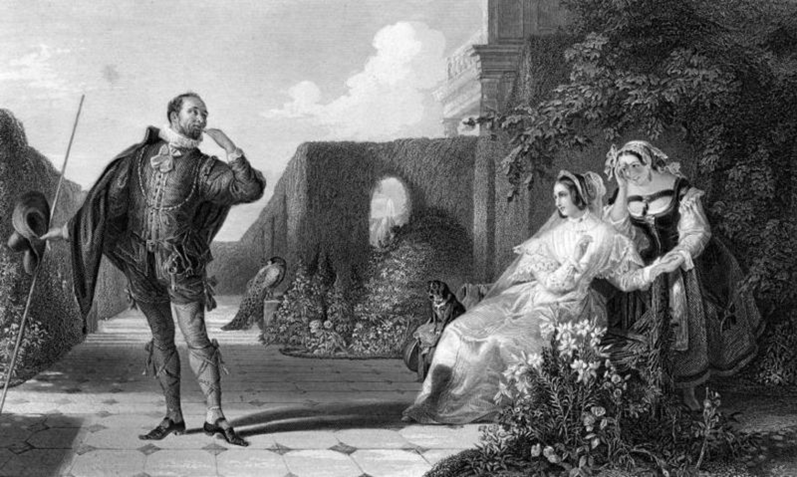
Twelfth Night is an example of Shakespearean “Saturnalian/Satyric” love comedy.  This play is a love comedy.  Comedies usually have aspects of love.  Often in these plays, two lovers must overcome some sort of obstacle; in the end, they often end happily with a marriage or two.  Saturnalia is when characters are released from inhibitions.  It is often based around a holiday.  Satyr is involved in a story that has darkness to it.  It often includes a theme of doomsday.  Also, it may involve foolery or folly.  Characters are often abused, physically or verbally.

Above all, Twelfth Night is an example of a love comedy.  One obvious reason for this is because it ends with marriages and an announcement of love to one another.  Olivia and Sebastian get married, even though Olivia is marrying someone she didn’t intend to.  Sebastian promises to love her and be true to her, and they marry, whether Olivia knows who Sebastian really is or not.  It also ends with Viola and Orsino realizing and expressing their true love for one another.  After this is done, they agree to get married.  These two marriages are followed by a third when Sir Toby Belch and Maria also decide to “tie the knot.”

It is also a comedy because Shakespeare involves several aspects in the play.  He uses twins to have mistaken identities.  Both Sebastian and Viola are mistaken to be someone else.  When Viola dresses up as Cesario, she has a very similar likeness to her twin brother Sebastian, later to be mistaken for Cesario.  Sebastian is confused with his twin sister, dressed as Cesario, when Olivia finds him and confesses her love for Cesario/Viola.  Shakespeare also uses Viola dressed as Cesario to serve as a go-between with the duke and Olivia causing a love triangle to erupt.  It includes romance in the fact that several marriages occur.  Shakespeare also involves several characters such as Sir Toby Belch, Sir Andrew Aguecheek, and Feste the Fool to provide slight comical interludes in the play.

Twelfth Night is an example of a Saturnalian love comedy because of the cross-dressing aspect.  Viola disguises herself as a man, Cesario.  The Saturnalian aspect comes into play here because she doesn’t act like herself.  She is free from inhibitions.  She doesn’t feel self-conscious about the way she acts.  She felt free to do as she wished with no hatred or distaste toward her.  Viola finds herself dressing up as a man after washing ashore after a shipwreck.  It is necessary that she makes a name for herself in this new strange land of Illyria, so she dresses up in men’s clothing to make her way in a man’s world.

This play is also an example of a Saturnalian love comedy because it is based around a holiday.  Saturnalia often is based around a holiday.  In this case it is based around Christmas.  The twelfth night is the last day of Christmas.  This is the day in which everything is revealed.  It is on the twelfth night of the Christmas holiday that Sebastian is recognized as Viola’s brother.  It is also the day that the true identity of Viola/Cesario is revealed.  The true feelings of both the duke and Viola are expressed, causing them to get married, alongside other characters in the play.

In addition to being a Saturnalian love comedy, Twelfth Night is also a Satyric love comedy.  This play involves several aspects of Satyr.  One example of this is the use of death.  The entire story begins when Sebastian and Viola are shipwrecked.  Both believe the other to be dead.  Viola, being the first to arrive on land safely, and thinking that her brother is dead, strives to make a new name for herself and dresses herself in men’s clothing.  Sebastian isn’t found for a number of days and eventually finds himself in Illyria, the same place his sister resides.  The entire play is centered on death in the way that both siblings thought that their sibling was dead.  There is an obvious sense of mortality throughout the play.

Twelfth Night is also considered a Satyric love comedy because it involves trickery, foolishness, and folly.  Malvolio is the sort of character that lives to spoil the fun of other people.  He enjoys revealing plans that were meant to be a secret.  Sir Toby and Maria then strive to take the joy Malvolio gets from this away from him.  They concoct a plan to write a false letter from “Olivia” expressing her love for Malvolio.  Malvolio’s character completely changes.  He does anything in his power that will attract Olivia and draw her attention, thinking that she loves him.  He is in pursuit of something that he believes is true but everyone else knows is false.  He acted as a fool, as Maria and Sir Toby acted in ways of folly.

Finally the play is a Satyric love comedy because it ends with the warning of doomsday.  Twelfth Night ends with a song by Feste.  This song discusses life.  He sings about how life progresses.  It talks about how things in life change and don’t make sense.  It is a reflection on the play that precedes it.  It discusses the wind and the rain and how some things matter but others will always remain the same.  It talks about the mortality of man and how everyone is going to grow up, and therefore, everyone will die.  Once again, the theme of coming death has weaved its way into the play.

Twelfth Night not only possesses the characteristics to be a love comedy, but it also involves the aspects of Saturnalia and Satyr.  The Saturnalian aspects come into play when Shakespeare weaves in the idea of the holiday and the ending of the Christmas celebration.  The Saturnalian aspects also include Viola’s dressing up as a man and being free from inhibitions and contempt.  Satyr is involved because Shakespeare uses many dark elements in his comedy.  The theme of death and doomsday is recurring.  There is also a use of foolery and trickery.  Because of these different aspects, Twelfth Night is considered a “Saturnalian/ Satyric” love comedy.

Secession, Not Slavery

Tanner Rotering

The article in the Richmond Times-Dispatch by Charles F. Bryan, Jr. entitled, “Yes, Slavery Caused the Civil War” (published August 15, 2010) presents a very poor case for Bryan’s point of view.  Bryan argues that without the issue of slavery, the South would have no reason to secede from the Union.  While this is true for the most part, this does not mean that “Slavery Caused the Civil War.”  In reality, the war was primarily concerned with the issue of secession from the Union.  The South fought the North because the North was infringing upon (as the southerners viewed it) their right to secede from the Union and form their own confederacy of states.  While the issue of slavery was the cause of secession, which was the cause of the war, to say that slavery caused the war is taking a logical liberality that is not fully warranted.  It is logical to say that without slavery, the Civil War would have never happened, but it is not logical to say that slavery was the cause of the Civil War, because it was only a motivation behind the cause.  To prove this point, imagine if the North and the South had still disagreed concerning slavery, but the South had not seceded.  Would there have been a war?  Of course not!  Slavery had existed for years beforehand, but no war had resulted.  The instigating factor that caused the war was secession.

There would not have been a civil war if the North had not desired to take back the South, and the North would not have wanted to take back the South if the South had not seceded from the Union.  In his first inaugural address, Lincoln says

I therefore consider that in view of the Constitution and the laws, the Union is unbroken; and to the extent of my ability I shall take care, as the Constitution itself expressly enjoins upon me, that the laws of the Union be faithfully executed in all the States.…  I trust this will not be regarded as a menace, but only as the declared purpose of the Union that will constitutionally defend and maintain itself.…  The power confided to me will be used to hold, occupy, and possess the property and places belonging to the government, and to collect the duties and imposts; but beyond what may be necessary for these objects, there will be no invasion — no using of force against or among the people anywhere.

This clearly illustrates that Lincoln in no way intended to show aggression toward the South except for the purpose of preserving the Union.  In Lincoln’s second Inaugural address he expresses the same notion.

While the inaugeral [sic] address was being delivered from this place, devoted altogether to saving the Union without war, insurgent agents were in the city seeking to destroy it without war — seeking to dissole [sic] the Union, and divide effects, by negotiation.  Both parties deprecated war; but one of them would make war rather than let the nation survive; and the other would accept war rather than let it perish.  And the war came.

One might consider this point to be a contradiction to a point made above concerning the differentiation between a cause and a motivation behind a cause.  Slavery motivated secession and secession motivated the North to take back the South, so wasn’t secession simply another motivation behind the cause of Northern aggression?  Once again, here is a slight misinterpretation of the issue.  The North trying to take back the South was not the cause of the war; it was “the war.”  In general the most immediate and fundamental motivation of the initial aggressor can be considered the cause of a war, and in this case it is secession.  While the North was not technically the first to take military action directed toward the South, it was the first to aggravate the other side by not removing its forces from enemy territory, but instead, sending supplies into aid these forces.  Regardless of whether these actions were justified, the North was the first aggressor and its aggressions were indeed intentional.  Lincoln knew that the conflict would break out between the Union and the Confederate States of America, and he wanted to justify his military actions by allowing the South to take the first shot at Fort Sumter.

Lincoln did not initiate the war to eradicate slavery.  Lincoln began to pursue Emancipation for the slaves only after the war had already begun.  He decided that, in order to put the South at a tactical disadvantage, he would emancipate the slaves in the states that had seceded, but again, this was not the cause of the war; it was a reaction that occurred because of the war.  In 1862, Lincoln said, “If I could save the union without freeing any slaves I would do it; and if I could save it by freeing all the slaves I would do it; and if I could save it by freeing some and leaving others alone I would also do that.”  Also, in his first inaugural speech he says, “It is found in nearly all the published speeches of him who now addresses you.  I do but quote from one of those speeches when I declare that ‘I have no purpose, directly or indirectly, to interfere with the institution of slavery in the States where it exists.  I believe I have no lawful right to do so, and I have no inclination to do so.’”  Congress also had no intention of interfering with the institution of slavery but only of maintaining the Union.  In 1861, Congress adopted a resolution which stated, “This war is not waged … for the purpose of overthrowing or interfering with the established institutions of those States, but to maintain the States unimpaired; and that as soon as these objects are accomplished the war should cease.”  Clearly the North did not begin the war because of slavery but because of secession.

All of Charles F. Bryan, Jr.’s arguments are essentially proving that the South seceded to preserve slavery, but this does not prove that slavery caused the war.  The conflict concerning slavery caused the secession and secession caused the war.  Many people may consider this a trivial distinction, but understanding the cause of the Civil War is a fiery issue today, and if one is going to argue for hours about it, one ought to  pay close attention to this important distinction.

Because of Southerners’ reliance upon slavery they considered states’ rights an important issue.  The Confederate States of America was based upon the idea that states have a right to secede from the Union because the Union was a voluntary organization formed by the consent of the states themselves.  Lincoln, along with many other Northerners, believed otherwise.  He considered the Union to have been formed by the consent of the people, as a perpetual, never-ending institution.  This debate was at the heart of the issue of secession, and this was the real philosophical conflict that lead to the martial conflict known as the Civil War.

The Eucharist

Seraphim Hamilton

What is the historic doctrine of the Eucharist?  The answer to this question is of great importance.  We shall begin at the first document we have speaking of the Eucharist, Paul’s first letter to the Corinthians, written in approximately 56ad.  St. Paul of Tarsus says,

For I received from the Lord what I also handed on to you, that the Lord Jesus, on the night he was handed over, took bread, and, after he had given thanks, broke it and said, “This is my body that is given for you.  Do this in remembrance of me.”  In the same way also the cup, after supper, saying “This cup is the new covenant in my blood.  Do this, as often as you drink it, in remembrance of me.”  For as often as you eat this bread and drink the cup, you proclaim the death of the Lord until he comes.  Therefore, whoever eats the bread or drinks the cup of the Lord unworthily will have to answer for the body and blood of the Lord.  A person should examine himself, and so eat the bread and drink the cup.  For anyone who eats and drinks without discerning the body, eats and drinks judgment on himself.

Here we see that Paul equates the bread and wine with the body and blood, for he says, “Therefore, whoever eats the bread or drinks the cup of the Lord unworthily will have to answer for the body and blood of the Lord.”  It is fairly clear, then, that St. Paul affirms the real presence of Christ in the Eucharist.

Another key element of patristic Eucharistic doctrine is that the Eucharist is a true sacrifice.  It is not a re-sacrifice, however, but a return to the one sacrifice.  The Didache, an early Christian catechism many scholars date to the Apostolic Age, mentions this when it states, “And on the Lord’s own day gather yourselves together and break bread and give thanks, first confessing your transgressions, that your sacrifice may be pure.  And let no man, having his dispute with his fellow, join your assembly until they have been reconciled, that your sacrifice may not be defiled; for this sacrifice it is that was spoken of by the Lord.”

We see several themes in here.  First, the Eucharist is a sacrifice, and it is proper to call it such.  Second, the Eucharist is to be performed every Lord’s Day.  Third, people must do confession before they receive the Eucharist, so that they may be purified.  St. Clement of Rome also refers to the Eucharist as a sacrifice, saying in his Letter to the Corinthians, “Our sin will not be small if we eject from the episcopate those who blamelessly and holily have offered its Sacrifices.”

St. Ignatius of Antioch, a student of the apostle John and second Patriarch of Antioch after the apostle Peter, writes in response to those who believed that Jesus did not have a physical body but was only divine, “Take note of those who hold heterodox opinions on the grace of Jesus Christ which has come to us, and see how contrary their opinions are to the mind of God….  They abstain from the Eucharist and from prayer because they do not confess that the Eucharist is the flesh of our Savior Jesus Christ, flesh which suffered for our sins and which that Father, in his goodness, raised up again.  They who deny the gift of God are perishing in their disputes.”

St. Justin Martyr, writing in 151ad, states regarding the Eucharist, “We call this food Eucharist, and no one else is permitted to partake of it, except one who believes our teaching to be true and who has been washed in the washing which is for the remission of sins and for regeneration and is thereby living as Christ enjoined.  For not as common bread nor common drink do we receive these; but since Jesus Christ our Savior was made incarnate by the word of God and had both flesh and blood for our salvation, so too, as we have been taught, the food which has been made into the Eucharist by the Eucharistic prayer set down by him, and by the change of which our blood and flesh is nurtured, is both the flesh and the blood of that incarnated Jesus.”

We thus see that the second century Church clearly taught that at the words of consecration said by the presbyter, the bread and wine were transformed into the body and blood of the Lord Jesus, and only baptized Orthodox Christians could receive it.  St. Clement of Alexandria, commenting on John 6 in 191ad, states, “‘Eat my flesh,’ [Jesus] says, ‘and drink my blood.’  The Lord supplies us with these intimate nutrients, he delivers over his flesh and pours out his blood, and nothing is lacking for the growth of his children.”

Origen of Alexandria, commenting on John 3 and John 6, applies them to baptism and the Eucharist, respectively, saying, “Formerly there was baptism in an obscure way … now, however, in full view, there is regeneration in water and in the Holy Spirit.  Formerly, in an obscure way, there was manna for food; now, however, in full view, there is the true food, the flesh of the Word of God, as he himself says: “My flesh is true food, and my blood is true drink.”

Aphrahat the Persian Sage, commenting on the Last Supper in 340ad, states, “After having spoken thus [at the Last Supper], the Lord rose up from the place where he had made the Passover and had given his body as food and his blood as drink, and he went with his disciples to the place where he was to be arrested.  But he ate of his own body and drank of his own blood, while he was pondering on the dead.  With his own hands the Lord presented his own body to be eaten, and before he was crucified he gave his blood as drink.”

Serapion, writing in 350ad, records the Eucharistic prayer said at the Divine Liturgy, “Accept therewith our hallowing too, as we say, ‘Holy, holy, holy Lord Sabaoth, heaven and earth is full of your glory.’  Heaven is full, and full is the earth, with your magnificent glory, Lord of virtues.  Full also is this sacrifice, with your strength and your communion; for to you we offer this living sacrifice, this unbloody oblation.”

St. Cyril of Jerusalem, writing in the same year, states regarding the Eucharist, “Then, having sanctified ourselves by these spiritual hymns, we beseech the merciful God to send forth his Holy Spirit upon the gifts lying before him, that he may make the bread the Body of Christ and the wine the Blood of Christ, for whatsoever the Holy Spirit has touched is surely sanctified and changed.  Then, upon the completion of the spiritual sacrifice, the bloodless worship, over that propitiatory victim we call upon God for the common peace of the churches, for the welfare of the world, for kings, for soldiers and allies, for the sick, for the afflicted; and in summary, we all pray and offer this sacrifice for all who are in need.”  We thus see that by the time the Eucharistic words of consecration were recorded, they had taken essentially the same form as used today in the Eastern Orthodox Divine Liturgy.

St. Gregory Nanzianzen comments on the Eucharist as well, saying in 383ad, “Cease not to pray and plead for me when you draw down the Word by your word, when in an unbloody cutting you cut the Body and Blood of the Lord, using your voice for a sword.”  St. John Chrysostom writes regarding the Eucharist in 387ad, “When you see the Lord immolated and lying upon the altar, and the priest bent over that sacrifice praying, and all the people empurpled by that precious blood, can you think that you are still among men and on earth?  Or are you not lifted up to heaven?”

St. Ambrose of Milan, commenting on the Davidic Psalms, says, “We saw the prince of priests coming to us, we saw and heard him offering his blood for us.  We follow, inasmuch as we are able, being priests, and we offer the sacrifice on behalf of the people.  Even if we are of but little merit, still, in the sacrifice, we are honorable.  Even if Christ is not now seen as the one who offers the sacrifice, nevertheless it is he himself that is offered in sacrifice here on Earth when the body of Christ is offered.  Indeed, to offer himself he is made visible in us, he whose word makes holy the sacrifice that is offered.”

Theodore of Mopsuestia says in 405ad, “When [Christ] gave the bread he did not say, ‘This is the symbol of my body,’ but, ‘This is my body.’  In the same way, when he gave the cup of his blood he did not say, ‘This is the symbol of my blood,’ but, ‘This is my blood’; for he wanted us to look upon the [Eucharistic elements] after their reception of grace and the coming of the Holy Spirit not according to their nature, but receive them as they are, the body and blood of our Lord.  We ought … not regard [the elements] merely as bread and cup, but as the body and blood of the Lord, into which they were transformed by the descent of the Holy Spirit.”

St. Augustine of Hippo, writing in 411ad, states in a sermon to newly baptized Christians, “I promised you who have now been baptized, a sermon in which I would explain the sacrament of the Lord’s Table.…  That bread which you see on the altar, having been sanctified by the word of God, is the body of Christ.  That chalice, or rather, what is in that chalice, having been sanctified by the word of God, is the blood of Christ.”

Fulgetius of Ruspe, writing in 524ad, states, “the time of the Old Testament animals were sacrificed by the patriarchs and prophets and priests; and to whom now, I mean in the time of the New Testament … the holy Catholic Church does not cease in faith and love to offer throughout all the lands of the world a sacrifice of bread and wine.  In those former sacrifices what would be given us in the future was signified figuratively, but in this sacrifice which has now been given us is shown plainly.  In those former sacrifices it was fore-announced that the Son of God would be killed for the impious, but in the present sacrifice it is announced that he has been killed for the impious.”

Thus, we see that during the patristic era, the dominant, if not the only viewpoint on the Eucharist was that it was truly the flesh and blood of Jesus Christ.

Mind Games

Alice Minium

If you’re a kid in America and you’ve been to any kind of school, you definitely know what DARE stands for.  You participated in red ribbon week in elementary school, and your mom bought you the t-shirt emblazoned with the bold reminder to Just Say No.  You saw that Above the Influence commercial when the grungy kids smoking cigarettes pressured the anxious-looking girl to take one of their mysterious pills.  While most people you’ve encountered probably aren’t really like those kids, we’ve all known somebody.  Everybody’s told us different things.

Don’t ever believe what somebody says just because you heard somebody say it.  You’ll end up dead, or worse, ignorant.

Many of us have friends who’ve done drugs, and we know what the effects look like firsthand.  Some of us have already experimented with drugs ourselves.  We know what it looks like to be high, and some of us know how it feels.  But how many of us know why drugs make us feel the way they do?  Why do they impair some of our abilities but improve other ones?  Why do we feel different without them?  Why do some drugs excite you with energy and others get you mellow and low?  What is it that makes them dangerous?  What is this really doing to my brain?

Throughout our entire young adulthoods, we have been assaulted left and right with violently clashing messages on what we should do about drugs.  Nobody can make that decision for you, although there will be many people who will try.  Whatever your decision may be, be aware of the changes you’re making and the effects you will experience.  Be the master of your own mind.  Understand what you’re doing to your brain.

Since most of us don’t spend too much time experimenting with LSD, here is a very brief overview of how some basic drugs are working in your brain.  Some of these drugs are considered socially acceptable, but they are drugs nonetheless. It’s funny how rarely we think about the fact that we’re constantly drugging our brains, and it’s funnier still how little we seem to care.  Maybe the time has come for that to change.

Marijuana (THC)

Fact: According to the National Institute on Drug Abuse, as of 2008, 43% of American high school seniors had smoked marijuana in their lifetime.

Fact: According to Paul Hager, Chair of the ICLU Drug Task Force, the ratio of the amount of cannabinoids necessary to get a person intoxicated (or high) relative to the amount necessary to kill them is 1 to 40,000.

Fact: According to the National Institute on Drug Abuse, in 1995, 165,000 people entering drug treatment programs reported themselves to be addicted to marijuana.

What it feels like: Once in your bloodstream, thc typically reaches the brain within seconds and begins to go to work.  Marijuana users often describe the experience of smoking marijuana as initially relaxing and mellowing, creating a feeling of haziness and light-headedness.  The user’s eyes may dilate, causing colors to appear more intense, and other senses may be enhanced.  Sometimes, feelings of paranoia and panic may follow.

How it works: To understand how marijuana affects the brain, you need to know about the parts of the brain that are affected by thc.  Here are the basics: neurons are the cells that process information in the brain.  Chemicals called neurotransmitters allow neurons to communicate with each other.  Neurotransmitters fill the gap, or synapse, between two neurons and bind to protein receptors, which enable various functions and allow the brain and body to be turned on and off.  Some neurons have thousands of receptors that are specific to particular neurotransmitters.  Foreign chemicals, like thc, can mimic or block actions of neurotransmitters and interfere with normal functions.  In your brain, there are groups of cannabinoid receptors concentrated in several different places.  These cannabinoid receptors have an effect on several mental and physical activities, including: short-term memory, coordination, learning, and problem solving.  Cannabinoid receptors are activated by a neurotransmitter called anandamide.  Anandamide belongs to a group of chemicals called cannabinoids.  thc is also a cannabinoid chemical.  thc mimics the actions of anandamide, meaning that thc binds with cannabinoid receptors and activates neurons, which causes adverse effects on the mind and body.  High concentrations of cannabinoid receptors exist in the hippocampus, cerebellum, and basal ganglia.  The hippocampus is located within the temporal lobe and is important for short-term memory.  When the thc binds with the cannabinoid receptors inside the hippocampus, it interferes with the recollection of recent events.  thc also affects coordination, which is controlled by the cerebellum.  The basal ganglia controls unconscious muscle movements, which is another reason why motor coordination is impaired when under the influence of marijuana.

Nicotine

Fact: According to a 2002 report by the World Health Organization, about one in five young teenagers (ages 13 to 15) worldwide are smokers, and evidence shows that about 50% of adolescent smokers will go on to smoke for 15 or 20 more years.

Fact: According to a 2002 report by the World Health Organization, every eight seconds someone dies from a smoking-related death, and for every person who dies from smoking, twenty more will suffer a smoking-related illness.

Fact: According to a 2001 report by the Centers for Disease Control, seventy percent of addicted smokers want to quit.  Less than seven percent ever actually do.

What it feels like: Nicotine has a calming effect by changing the activeness of brain areas, which slow down the manifestation of negative emotions.  Smokers often experience an increase in energy, concentration, and satisfaction because of the endorphins being released.

How it works: Nicotine affects the brain by mimicking neurotransmitters.  Each neurotransmitter is specifically designed to fit with a receptor on another nerve cell.  Once the neurotransmitter locks into the receptor site, it activates the nerve cell and continues the message to the next cell.  Nicotine mainly mimics two neurotransmitters called acetylcholine and dopamine.  Acetylcholine is a neurotransmitter responsible for a variety of bodily operations including breathing, heart rate, muscle movement, and cognition.  Nicotine increases the activity of these receptor sites, which is why many smokers feel an increase of energy or an increase in ability to concentrate directly after smoking a cigarette.  Nicotine can also lock into dopamine receptor sites.  Dopamine is the neurotransmitter most known for feeling pleasure.  It is commonly referred to as the “reward pathway” of the brain.  Dopamine is designed to release a good feeling every time you do something that benefits the body such as eating or exercising.  This reinforces the mind to want to repeat the action at a later time.  The nicotine in tobacco products creates this same pleasurable feeling, reinforcing the need to continue smoking or using other tobacco products.  Nicotine can also trigger the brain to release endorphins, proteins that act as natural pain medicine for the body.  The more nicotine that enters the blood stream, the greater potential for endorphins to be released.

Alcohol

Fact: According to MADD (Mothers Against Drunk Driving), by the time students are in high school, 80% have used alcohol and 62% have been drunk.

Fact: According to the Marin Institute, 95% of alcoholics die from their disease and die approximately 26 years earlier than their normal life expectancy.

Fact: According to the Shaffer Library of Drug Policy, 10% of casual drinkers become alcoholics.

What it feels like: Depending on one’s BAC (Blood Alcohol Content), intoxication can cause feelings of euphoria, increased self-confidence, inhibited judgment, increased sociability, sedation, delayed reactions, impaired memory, blurred vision, and impaired fine muscle coordination.

How it works: Alcohol affects the brain’s neurons in several ways.  It alters their membranes, as well as their ion channels, enzymes, and receptors.  Alcohol also binds directly to the receptors for acetylcholine, serotonin, GABA (an amino acid in the brain that suppresses the action of nerve cells, relaxing the muscles in the body and calming emotions), and the NMDA receptors for glutamate (a receptor usually involved in learning and memory).  GABA’s effect is to reduce neural activity by allowing chloride ions to enter the post-synaptic neuron.  These ions have a negative electrical charge, which helps to make the neuron less excitable.  This physiological effect is amplified when alcohol binds to the GABA receptor, thus explaining the sedative effect.  Alcohol also helps to increase the release of dopamine by a process that is still poorly understood but seems to involve curtailing the activity of the enzyme that breaks dopamine down.

Caffeine (1,3,7-trimethylxanthine)

Fact: According to the Johns Hopkins Bayview Medical Center, 90% of Americans consume caffeine every day.  It is the world’s most used psychoactive drug.

Fact: The American Association of Poison Control Centers’ National Poison Data System reported more than 4,000 instances of caffeine toxicity in 2007.

Fact: The World Health Organization considers caffeine addiction a substance dependency and psychologically-impairing condition.  It is very weak in its addictive properties.

What it feels like: Initially you become more alert, and your brain may work better and faster.  But by the time you start that second cup, you may be anxious and irritable, which is not conducive to clear thinking.

How it works: Caffeine is a stimulant, meaning it accelerates physiological activity — in this case, speeding up the action of your brain and making you more alert.  It does this by binding to adenosine receptors in the brain.  Normally the chemical adenosine (a neurotransmitter involved in sleep initiation) binds to these, causing drowsiness by slowing down nerve cell activity.  The caffeine doesn’t have this effect but does get in the way of the adenosine.  Because the caffeine is blocking the adenosine receptors, your neurons become more active than they otherwise would be.  That is why it seems to be good for the brain.  Then your pituitary gland responds to all the activity as though it were an emergency by releasing hormones that tell the adrenal glands to produce adrenaline.  This is what is sometimes known as the “fight or flight” hormone (and is also called epinephrine), giving you the energy that you associate with caffeine.

Works Referenced

Bonson, Kevin. “How Marijuana Affects the Brain.” Discovery Health “Health Guides.” Web. Accessed 02 Dec. 2010. <http://health.howstuffworks.com/wellness/drugs-alcohol/marijuana3.htm.&gt;

Griffiths, R.R., Juliano, L.M., and Chausmer, A.L. “Information About Caffeine Dependence.” Johns Hopkins University School of Medicine. Web. <http://www.caffeinedependence.org/caffeine_dependence.html&gt;.

“Psychology: The Science of the Brain.” Pearson Higher Education. Web. <http://www.pearsonhighered.com/assets/hip/us/hip_us_pearsonhighered/samplechapter/0205472893.pdf&gt;.

Sherman, Chris. “How Does Nicotine Affect the Brain?” EHow. Web. <http://www.ehow.com/how-does_5117286_nicotine-affect-brain.html&gt;.

Where the Sour Turns to Sweet — From Genesis to Revelation: Gabriel’s Genesis Retrospective, pt. 1

Christopher Rush

Series Introduction

You don’t listen to enough Genesis.  In part to celebrate the band’s induction into the Rock and Roll Hall of Fame (sixteen years late), we present an analytical tribute.  This series of analyses is predicated on the assumption that if you know anything about Genesis, it’s probably that you have heard “Invisible Touch” on the radio and thought it was just Phil Collins.  While that’s a fine start and most likely not really your fault, you are missing out on an amazing musical world of a unique band.  Ideally, this series of analyses will entice you to get your own copies of Genesis’s oeuvre and enjoy them forever.  As much as I might want to just dive in to my favorite albums (Foxtrot, Selling England by the Pound, A Trick of the Tail), it is important to take this systematically from the beginning … sort of.  The point of this series is not to give you a biographical context of the band, its members, or its critical reception (though a bit of that will be done).  Neither are we going to avail ourselves of the too-small library of literature available on the band and their music (biographies, dvd bonus interviews, and the like) — this is primarily a formalist critical approach, one listener to another.  Nor are we endeavoring to analyze Genesis’s place in propinquity with The Moody Blues, King Crimson, or Yes.  Instead, the focus is the music itself, and, so as not to get entirely unwieldy, the focus will primarily limit itself to the main studio album releases themselves.  I envision that time this year will only permit us, at best, to make it though the Peter Gabriel era and, hopefully, just preview the Phil Collins era with A Trick of the Tail.  Essentially, that means we will not get to any of the “radio hits” of the late ’70s and early ’80s incarnation this season — but that is okay.  Our main purpose, then, is to explore the creativity and unsurpassed brilliance of the Peter Gabriel era of Genesis.

In the Beginning

In 1967, four friends at Charterhouse School, Peter Gabriel, Tony Banks, Mike Rutherford, and Anthony Phillips, gathered together and formed the band Genesis, under the direction (after a fashion) of Jonathan King.  Chis Stewart joined the band on drums and soon came the single “The Silent Sun,” an intentional pastiche of the Bee Gees’ sound (from the ’60s, remember, before their now-trademark ’70s Disco style) and nothing like the soon unmistakable Genesis sound.  Another single, “A Winter’s Tale,” followed three months later and so did Chris Stewart’s replacement, John Silver.  As the title of their first album indicates, From Genesis to Revelation is loosely based on the Bible.  Unsurprisingly, many record shops placed the album in their “religious” sections, which might account, in part, for its poor, almost non-existent, reception.  Additionally, the bandmates were 16-18 years old in 1968 when the album was made, without any prior recording experience — From Genesis to Revelation is an inaugural album in every sense of the word, but like most bands’ inaugural albums, it has a certain (perhaps sentimental) aura.

Without the members’ knowledge, producer Jonathan King overdubbed strings and horns and sequenced the songs to cement the “concept”-like nature of the album.  Shortly after its release, Genesis and Jonathan King parted ways.  King wanted to continue the radio-friendly short song format, but Genesis wanted to expand into longer, radio-unfriendly territory.  Fortunately for us all, the young lads of Genesis stuck to their creative daemons (the positive ones).  John Silver was replaced by John Mayhew, the band started working on what would become Trespass, and they signed to Charisma Records.

Though it was released on Decca Records (home of The Moody Blues), From Genesis to Revelation has been licensed to several other recording labels, which thus explains its absence from the recent Genesis 1970-1975 box set.  Its best availability now is on either a one-cd version (that contains some of the non-album singles) or a two-cd version (with even more of the non-album singles and some interview material).

“And it’s all gone wrong”

Though we stated above our primary purpose is to discuss the major studio albums of the Peter Gabriel era, some words on the initial single releases are in order first — even though they aren’t much like the Gabriel Genesis sound as we know it today.  It began with “The Silent Sun,” with “That’s Me” on the B-side.  Released, as we’ve said, as a copy of a sort of the Bee Gees’ ’60s sound, this first single was made, in part, to regain King’s interest in the band, since he was a Bee Gees fan.  As with much of From Genesis to Revelation, music fans of the era might recognize more of The Moody Blues than the Bee Gees.  Listening through these early songs, unless one knew it was Genesis (or could recognize Gabriel’s young voice), one might suspect it was The Moody Blues or The Turtles or possibly even some generic British Invasion assembly line band.  Their early demo work is proof of this: “Image Blown Out,” only recently made available to the public, is pure ’60s British pop music: you think it’s possibly Chad and Jeremy, maybe Herman’s Hermits, and then suddenly The Association shows up to provide the chorus.  “She’s So Beautiful” is better and becomes a template for “The Serpent” on From Genesis to Revelation.  “Patricia” becomes “In Hiding” on the album with lyrics added.  “Try a Little Sadness” is quintessential demo material, though its message on the importance of sadness in a maturing relationship is mildly impressive.  The completists out there (of whom I am trying to be one) will need to get the Genesis Archive 1967-75 and the Genesis 1970-1975 box sets for the rest of the demo material.

The Days of Future Passed influence is palpable in the lyrics of “The Silent Sun” (you do know, right, that Days of Future Passed is the second Moody Blues album, one of the best albums of all time?  If not, get it, listen to it, and begin your lifetime of Moody Blues listening with your lifetime of Genesis listening ).  Lyrically, the song covers a range of natural images: the sun, a tiny stone, a mountain stream chilling the sea, a star-filled night sky, snowflakes healing an otherwise ugly ground.  The variety, as you can imagine, instead of creating a unified whole leads to several discrete thoughts and images about as rambling as every band’s first song usually is.  The chorus is also about as bland as any typical love song can get: “Baby you feel so close / I wish you could see my love, / Baby you’ve changed my life / I’m trying to show you.”  Musically, the song is nice but unremarkable.  The ambiguity of some of the lyrics is the highlight of the song, in that we can see early signs of Gabriel’s lyrical ingenuity, though still in its embryonic stage.

“That’s Me” could easily be mistaken for a musical theater number from the 1960s.  Strangely enough, there’s more connected “sun” language and imagery throughout “That’s Me” than “The Silent Sun.”  As a song, the lyrics are more unified and developed, though the development is slight at best.  We see again the developing lyricism of Peter Gabriel: the narrator, at odds with society and, to a degree, the natural world, is uncertain for most of the song who he is, who he has been, and what his place is in an untrustworthy world.  By the end of the song, the narrator has realized some unsettling things about himself and ends with a plaintive cry for assistance.

The follow-up single release of “A Winter’s Tale”/“One-eyed Hound” is likewise nondescript.  “A Winter’s Tale” is a much more gentle song, lyrically and musically.  The natural world is not as hostile this time.  The chorus is very much Moody Blues-influenced, but it is still nice on its own, though some might find it a bit grating, which would be a sound engineering mixing issue — nothing under the control of the band at that time in their career.  “One-eyed Hound” is an oddity.  It would be easy to see it as a not-so-subtle sexual metaphor: “Night is the time for chasing the one-eyed hound” is repeated throughout — but that is too easy and, in context, erroneous.  The “one-eyed hound” is a person: verse two says “Have you seen the one-eyed hound? / Tell me where he’s going.”  Verse one seems to indicate the one-eyed hound has himself been “[c]hasing dogs in the moonlight,” but for some reason that is “a sin” for which “he never can win.”  The ambiguity of this song is not as impressive, lyrically, as “The Silent Sun” or “That’s Me.”  The other repeated line, “And it’s all gone wrong,” may be a much better summation of Genesis’ career at this point: at odds with their management, unsure of their own musical and lyrical abilities, unknown by the public, and mis-categorized by record stores.

Turning the Sour into Sweet

Though the band doesn’t seem to care much about these early days, and this initial album is only tenuously connected to their main oeuvre, From Genesis to Revelation did provide what all bourgeoning bands need: practice.  With this album, Gabriel got experience writing lyrics, Banks and Rutherford got experience playing and recording in the studio, and the band got experience playing together.  Not everything else was a total loss, though: some of the musical ideas can be heard in more mature forms in later albums, and many of them are turned into fuller instrumental versions during live performances.

The album begins with another musical-theatre-like opening: it sounds at first like the Sharks and the Jets are back.  Instead, Peter Gabriel is inviting the audience to join them on a musical tour of the Bible (after a fashion).  The biblical veracity of Gabriel’s invitation is tenuous at best, but for a pop song, it’s unusually substantial.  By filling our minds with love and searching for the world of future glory full of sunshine gliding in, the darkness inside us will creep out.  At this world of future glory, “where the sour turns to sweet,” we can leave our “ugly selfish shell / To melt in the glowing flames.”  It is certainly a much more Biblical idea that we are naturally selfish than the Rousseauean/Romantic idea we are naturally good.  With this invitation to join the band on a journey to transform from sour into sweet, Genesis’s real musical career begins.

From Genesis to Revelation is a remarkably disjointed album, musically, furthering the kinship to Days of Future Passed.  After the di-melodic “Where the Sour Turns to Sweet,” the album changes melodic directions with “In the Beginning.”  The album we have (in its many variations) is, whether Genesis wanted it as such or not, a concept album, and “In the Beginning” clearly initiates that.  The initial musical aspect of the song is a fine representation of the creation of the material cosmos: it is a very believable “sound of a new born world.”  Lyrically, “In the Beginning” is more reminiscent of Ovid’s Metamorphoses than the Bible.  Instead of immediate design and order, the world fashions itself through flux and a dialectical clash.  Instead of the purpose of a Divine Person, “You’re in the hands of destiny.”  One might wonder at this point why this album is being recommended, if it distorts the actual book of Genesis: the final stanza of the song brings back the lyrical splay into a more Biblical conception, at least the second half of it.  The first half continues the diverse creation myths: “Is that a chariot with stallions gold? / Is that a prince of heaven on the ground? / Is that the roar of a thunderflash?”  The chariot with gold stallions is reminiscent of Helios, and “roar of a thunderflash” has all the appearance of Zeus’s mighty thunderbolts.  The “prince of heaven on the ground” could be Satan, though it seems more likely to be either an angel or even a theophany.  The remainder of this stanza is especially relevant: “This is my world and it’s waiting to be crowned / Father, son, looks down with happiness / Life is on its way.”  Assuming the Father and Son mentioned here are the two-thirds of the Biblical Trinity, God certainly did look down with happiness, especially considering the Biblical language of humanity acting as a crown to God’s creation: life was, indeed, on its way.  Listening to this album is more beneficial than eschewing it, naïvely.

“Fireside Song” is a good foreshadowing of the musical skill that Genesis was to develop in so many of their memorable and mature albums, especially Foxtrot, Selling England By the Pound, and A Trick of the Tail.  The song continues the creation of the material world, filled with personification and evocative imagery that is sometimes undercut by the rough studio mixing.  As has been mentioned above (and will no doubt be repeated ad nauseam during The Lamb Lies Down on Broadway), sometimes Genesis can be … tricky with their lyrics.  It is difficult to tell if “Fireside Song” skips to the fall of mankind or ahead to Revelation’s culmination of the world or what.  Time seems to be passing, as indicated by all the movement words: drifting, slips, creep, pass; as well as the juxtaposition of what the world was like: full of confusion, disappointment, fear, and disillusion, but “[n]ow there’s hope reborn with every morning / See the future clearly at its dawning” — a very optimistic line repeated over a soothing, Tony Banks-driven piano melody (sometimes subordinated under the mysteriously-added strings track).

Following another “concept album musical interlude/transition,” “The Serpent” is perhaps the most obvious Bible-themed song on the album.  It, too, is the forerunner of a common trope Genesis uses in most of their other Gabriel-era albums: different narrators in the same song, not always identified.  “The Serpent” is a bit easier to follow, though, in that the pronoun shift helps distinguish when Satan is talking (the “you”s and “you’re”s) and when man/Adam is talking (“I’m,” “my”).  The melodic line (adapted from the demo “She’s So Beautiful”) conveys the sneakiness of Satan and his serpent guile.  The imago dei incarnation theme is present throughout the song, highlighting in a very short song (and quite reminiscent of Milton) Satan’s estimation of this new world, the incarnation of man as a kind of imaging of God Himself (to a degree), Satan’s conception of the power and danger man will bring to him, Adam’s pristine created nature, and (and this is very Miltonian) mankind’s trepidation concerning the approach of the serpent.  The song ends with confusion for mankind and, unfortunately, confusion for the audience, as the connection to the Bible becomes extremely tenuous for a vast majority of the remainder of the album.

“Am I Very Wrong?” has an almost wedding-like beginning, though connecting that to the creation and marriage of Adam and Eve would be precarious at best.  The plaintive questions of the verses could be reminiscent, again, of Milton’s Satan or Adam, but the ambiguity is too powerful for this listener.  The chorus suddenly marks the return of The Association in a bizarre candy-coated threatening chorus that desires that they “hope your life will never end” — perhaps the “your” is the audience, perhaps it is the individual asking the questions about the mysterious “happiness machine” he/she wants to abjure along with these mindless, hive-like friends that are celebrating this birthday with about as much filial devotion as a horde of cannibalistic zombies.  I’m not even sure Peter Gabriel sings this song, not that that matters too much here.

The unmistakable sound of Peter Gabriel’s voice clearly returns with “In the Wilderness,” which may be referring, albeit highly loosely, to the Israelite years in the Wilderness.  “In the Wilderness” is another forerunner of another well-used Genesis trope: near-paradoxical disjunction between musical texture and lyrical content.  The chorus is an especially cheery rah-rah that has all the appearance of celebrating life and the vitality that music brings, until the thought descends quickly from rain falling lovely onto rooftops then sliding down the drains into the gutters of life as people run aimlessly and self-delusionally like rain through a gutter, splashing out meaninglessly, compartmentalized by time that actually controls their lives, not the other way around.  The days that pass by “[tear] pieces from our lives to feed the dawn,” which is not a pleasant thought, though it may be somewhat (metaphorically) accurate.  The connection to the Israelites potentially comes in a touch with the second verse: “Fighting enemies with weapons made to kill / Death is easy as a substitute for pride / Victors join together, happy in their bed / Leaving cold outside the children of the dead.”  The great ambiguity of the song comes in the otherwise lovely end: Tony Banks (much maligned keyboardist of Genesis for almost all its existence) plays through the chorus in a somber, slightly minor key transposition, bringing the song about death, destruction, and the futility of life to a peaceful, melodic close.

“The Conqueror” begins with a modulated version of the “In the Wilderness” chorus sound on a different instrument, no doubt an effect to continue the “concept album” feel as the classic ’60s, pre-Genesis sound is furthered by “The Conqueror.”  It’s hard to tell who this conqueror is: Satan? Genghis Khan? Robespierre? Napoleon? Antiochus Epiphanes? (I just threw that last one in for fun.)  The song doesn’t tell us.  The diverse cultural occurrences (a castle on a hill, rolling heads) could indicate the conqueror is a general description of evil in every time and generation, and the destruction that dictators, conquerors, despots and others of that ilk bring wherever they go, as long as they are unopposed, even by feckless heroes who squirm “on an empty floor.”  Justice does come eventually, though, as “words of love” seem to be the real solution to ending the conqueror in its/his many forms — words of love replace the position of the conqueror and, ironically, even the feckless hero who could not overcome the conqueror by might.  Though, the a cappella declaration that “the words of love” are lying on the floor could indicate a pyrrhic victory.

“In Hiding” is possibly the most awkwardly disconnected song on the album — even if the album weren’t a semi-concept album, the song is as unwieldy any you’ll hear.  The closest analogy I can think of is this would be the song Richard Cory would sing if he were visiting Willy Wonka’s Chocolate Factory (Gene Wilder’s Willy Wonka).  We have moved from happiness machines to factories of truth.  The song is very much a Romantic lament: away from society, away from the city, safely on a mountain or upon a river, the narrator is “lost in the beauty” of the natural world while “[i]n hiding.”  The chorus indicates the proud self-assurance of the narrator, in that no matter what society does to him, he “[has] a mind of [his] own,” and thus enjoys the solitude, which makes the choice of “hiding” appropriately incongruous with the song.

Following another lovely instrumental transition/introduction, the album moves on to “One Day,” but the song has no apparent connection to the general plan of moving from Genesis to Revelation.  Lyrically, the song is another precursor to later Genesis songs.  Though other songs on the album deal with interactions with the natural world, as we have seen, “One Day” features personal interactions with animals, foreshadowing, perhaps, Gabriel’s on-stage characters of the fox and Batwings from Foxtrot (which led to Gabriel’s other on-stage personas during his tenure with Genesis), as well as so many songs that will be discussed later.

“Window” continues the lack of connection to the Bible, but it does further presage the frequent classical allusions replete in later Gabriel-era albums.  This time, the lyrics are a combination of Pilgrim’s Progress (mountains of truth, slough of despond, pastures of dream day), classical myth (dancing nymphs, beckoning trees), to literature and folklore (an albatross reminiscent of Coleridge plus Jack Frost himself).  After a honky-tonk intro/segue that has nothing to do with either “One Day” or “Window,” this song features one of the album’s prettiest choruses musically.  The entire song is another prime example of Genesis’s pop beginnings, but “Window” is possibly the best of the era.  The Moody Blues parallel may be strongest with this song, but it is still a great example of the potential in young Genesis.

And then suddenly Chicago Transit Authority shows up and starts accompanying The Association on “In Limbo.”  Considering Limbo is not a Biblical concept, this song’s connection to the theme of the album is likewise tenuous at best.  The narrator pleas toward the end to God for clarification on where, exactly, his soul is now, after requesting that he be taken away from the “world of fear” and “the power of [his] ambition.”  Again we see the preference for the natural world: requesting supernatural transportation from the world of fear and ambition and to “the furthest star in the sky” and “the deepest cave of the night,” the narrator is initially pleased to believe that he has “conquered time” but soon realizes that he may no longer be in control of his own destiny and person and finds himself in Limbo.  This is pleasant enough at first, but the absence of motion, direction, purpose, and activity soon becomes too much for the narrator to handle, leading to another plaintive request for the end of his existence.  What this has to do with the Bible is beyond me.  Perhaps only the first side of the album (back in the day when cds were larger, had two playable sides, and were called “records”) was intended to be pertinent to the theme of the album, since side one ended with “In the Wilderness” and side two began with “The Conqueror.”

The general disjunction of the second side or half of the album with its own concept is abetted by the appearance of two minutes and thirteen seconds of “The Silent Sun.”  The disconnected natural imagery is still there, just as it was on the song’s single release months before, but now on the studio album that is supposed to be a concept album of songs based on the Bible, it is even more out of place.  The off-the-rack ’60s pop chorus is as bubble-gummy as a stick of Juicy Fruit™.

The album ends with “A Place to Call my Own,” a song as representative of this uncertain and disjointed album as it is of the musical and lyrical fecundity that Genesis was about to exhibit in its future albums.  In one minute and six lines, Genesis essentially bids adieu to its imposed Biblical structure and theme and embraces the panoply of mythical, textual, and even sub-textual opportunities that awaited it once it sloughed off the confines of being a pop rock band and became a (if not the) progressive rock band (and this coming from the best Jethro Tull, Moody Blues, Pink Floyd, and Rush fan you’ll ever meet — give me time on Yes, King Crimson, and ELP).  The final minute of the song is another musical display of the band’s early talent and potential, ending with a quiet chorus of “ah”s and “la”s.  Genesis’s journey had begun — and so has yours.

Twilight

Emily Grant Privett

People obsess over the little things.  One of which is Stephenie Meyer’s Twilight, later to be followed by New Moon, Eclipse, and Breaking Dawn.  Since the past few years, one cannot walk the street without hearing about this new vampire and werewolf phenomenon.  It is everywhere surrounded by mobs of teen girls and moms, with the occasional male thrown in here and there.  Why did a book of this genre find so much success?  What is its secret?  Why is there such a following?

When this book first came out, I knew practically nothing about it until I was forced to read it by a friend.  I eventually found myself sucked into the event, soon to be considered a wave of enthusiasm about this series.  Little did I know then what this seemingly simple story was about to become.

This is not to say demeaning things about the readers of these books as I too have been sucked into this pop culture phenomenon they call literature, but this is to stand as an argument to convince those from wasting their precious time with such frivolous activities.  This series may be addicting but is not worthy of your time.

Many young girls find comfort in this series because they find the main character relatable.  Yes, young Bella Swan is your seemingly average high school girl, crushing on the not-so-average high school teen or not teen.  She may be clumsy and quiet.  Bella moves to a new town where she feels to be an outcast.  She is a member of a broken family with her father living in Forks, Washington, and her mother and step-father residing in Jacksonville, Florida.  But if you think that you are a clumsy, clueless, helpless girl, living in a small, wet town surrounded by dangerous creatures and an oblivious police force, you have a sad life, my friend.

The world that our protagonist lives in is a complete and utter fairly tale, not in the sense of the world itself, but by the people, or should I say monsters that reside in it.  From nomadic vampires to werewolves and shape-shifters, this universe is entirely surreal.  The innocent townspeople survive “animal attacks” that really happened to be attacks from hungry vampires.  It is strange that these “hungry vampires” only exist in a few places in the world.  Never do we read about vampires attacking the people of  other states, such as Wyoming or Maine, but they all reside in places like Washington, Alaska, and Europe.

It is also strange that when Bella is told that half of her friends are beasts, she finds it so easy to believe.  After accidentally brushing her hand on Edward, and she feels his icy skin, she automatically starts to think that he is non-human.  If I went up to a friend and was like, “Hey, I don’t eat normal food, and my skin is always cold, and my eyes are weird,” the first thing that pops into her head is not going to be the fact that I’m a vampire.  It’s not even that he told her what he was.  She decided to Google his features and easily “discovered” what he was.  She had to believe what the Internet told her, because everyone always knows that the Internet NEVER lies.

Why are people so obsessed over Edward Cullen?  I’m not going to lie, I had a little obsession over him myself, but the more I think about it, I really can’t give a practical explanation why.  The first time we meet this Edward character he looks as if he is about to explode.  Of course she has to sit with him, and of course she thinks he’s a bit strange.  After missing for the next few days, he appears acting completely differently with different-colored eyes.  Upon further investigation, we discover that he is a complete creep.  He stares at her through her window at night by climbing up a tree outside of her room.  He can’t sit in the same room with her without staring at her.  He is completely obsessive over her existence, and this is all before she discovers what he truly is.  After she finds out he is a vampire, she is completely fine with his actions because she loves him.  I’m not sure about you, but someone who shows up everywhere, stares at me while I’m sleeping, and randomly disappears and reappears, doesn’t sound like a romantic to me.  She is willing to believe anything he tells her.  And like a child, she follows his every action.

Time after time, Edward willingly hurts Bella, knowing what kind of effect it will have on her.  He pulls himself away from her after previously forcing himself on her just a few chapters before.  Who would want to live in the footsteps of someone who would continuously hurt her time after time?  She spends all of her time thinking about this creature that is creepy and cold, no pun intended.  Other than his physical attractiveness, what is really attractive about the character of this being?  The reasons for liking him are few.

She spends the majority of her time around Edward and his vegetarian vampire “family”: Edward, a mind reader; Alice, one who can more or less see the future; Jasper, one who can tamper with emotions; Emmet, the strong one; Rosalie; Esme, the mother figure; and the father figure Carlisle, the doctor.  Stephanie Meyer has a sense of humor when she created this family.  She transcends all stereotypical vampire assumptions.  The vampires never sleep, as assumed about most vampires, but unlike fake vampires, these “real” ones have a crucifix in their home, and their father is a doctor, dealing with blood every day.  It no longer affects him and eventually hardly affects any of the other members of the family.  This family is a group of vegetarians.  Instead of living off of human blood, they survive solely on animal blood, as not to kill off the people.

Bella also finds herself living in the midst of werewolves.  When she’s not spending all of her times around bloodsuckers, she is living among the dogs.  The only beings she associates herself around willingly are non-human.  And of course, what kind of story is it without your classic species conflict?  Vampire against werewolf, and both against man.  Not only is this conflict between the two different beasts, but it also evolves into a love triangle.  Edward and Jacob are enemies fighting over the love of their lives, Bella.  Not only has this character found herself stuck in a relationship with a vampire but also with a werewolf.  Needless to say, the situation got hairy.  One attractive fact about this story is that Bella has two “kind of people” fighting for her with their unconditional love.  The fact that Edward and Jacob are willing to do anything to gain her favor is what interests many.

Alongside these two feuding groups of people, there are vampires that are only concerned about themselves and are human killers.  These are the “weird” vampires.  They aren’t “normal” in comparison to the Cullen family.  They go after Bella, and in order to keep them away, Edward kills James.  James is Victoria’s mate, and obviously when James is killed, Victoria has to come back with a vengeance — how else would there be a sequel?

It is strange that the somewhat stereotypical vampire is the one that we classify as strange or evil in these books.  When a vampire is willing to drink animal blood, work in a hospital, or not mind the smell of garlic, we are completely accepting.  But the instant a vampire appears, one that does what vampires are generally thought to do, we find them utterly revolting and unworthy of life.  Now, this is not to say that their actions are pardoned because of their lifestyle, but this is to say that it is interesting to think that these characters are naturally rejected because they are your usual sort of vampire.

Stephenie Meyer’s pop culture sensation has affected the lives of many and not necessarily in a good way.  A countless number of people have thriving obsessions over the characters, and in some cases, these obsessions have impacted their lives.  There is no real reason why this series has become popular, or at least should be popular.  The story is rather predictable and the characters are weak.  It is sad to see what modern “literature” has become, though not worthy of being called literature.  There is no good, logical reason why this series is so popular, other than its ability for others to somewhat relate to it but only in minor ways.  It is full of love triangles and the main character just floats aimlessly through.  So, having said all of this, there is no real point in wasting time reading this pop culture sensation.  There is no real reason for its popularity and success.

The Best First-Person Shooter Game

Tanner Rotering

All right folks, the question of the day is, “What is the best First-Person Shooter Game?”  What do you all have to say?  Is it Call of Duty Modern Warfare 2?  No, of course not!  How about the newest Medal of Honor game?  Not a chance.  Call of Duty Black Ops?  Nope, wrong again.  Perhaps much to your surprise, none of these are correct.  The best first-person shooter game out there is … Battlefield Bad Company 2!  All right, all right, now I understand that many of you gamers in the “audience” are audibly guffawing right now, avidly defending your favorite game with passionate, if not reasonable protests, but this really is a great game.  Admittedly there is no completely objective standard for determining the “best first-person shooter game,” but I would strongly advise you to consider the following arguments for why Bad Company 2 is one of the best, if not the best, first-person shooter games that you could possibly own.

So what makes Battlefield Bad Company 2 such a great first-person shooter game?  Essentially it all boils down to these 7 components of game-play: graphics, realism, weapons and vehicles, customizability, maps, role diversity, and variety in game mode.  These 7 components of Battlefield Bad Company 2 are so skillfully executed that they create a truly one-of-a-kind gaming experience.  Obviously there are other games which may surpass Battlefield Bad Company 2 in one or more of these areas, but I believe that none of these games blends all of these components together as successfully as Bad Company 2.

Let us begin with graphics.  Again, there is really no objective standard for judging these sorts of things, so you will just have to see for yourself … but here are a few key traits of Battlefield Bad Company 2’s graphics.  First of all, the graphics are realistic without being too gory.  You don’t see people’s heads or legs getting blown off like you do in other more “graphic” games.  Instead you simply see a small amount of red when someone is shot (though you will see the occasional soldier flying through the air after a huge explosion).  Another bonus is that the game doesn’t try to be so realistic that it just looks bizarre.  I’m sure that we’ve all seen a game like that before.  You know, the games which don’t have quite enough money to purchase quality software, the ones that make people look just realistic enough that you recognize how much of a failure the graphics really are, the ones that make everyone look like Frankenstein’s monster.

So now that we’ve established what the graphics are not (gory and mediocre) we can delve into what they are.  One exceptionally realistic aspect to the game’s graphics is the landscape.  Foliage is extremely realistic, and the shading is phenomenal.  In fact, you can hide in the shade in sunny maps in the same way that you would be able to in real life.  This is exceptionally helpful for the dedicated sniper who relies heavily upon stealth.  The water is exceptional also.  Buildings, vehicles, and weapons are also extremely realistic when it comes to graphics.

Next is realism.  This is perhaps one of the most impressive aspects to Battlefield Bad Company 2’s game play.  For starters (and this alone sets Bad Company 2 apart from the other contenders) is the fact that the game utilizes a completely destructible environment.  Not only can you knock down trees with your tanks, but you can shoot out holes in cement walls to give yourself a nice protected firing position.  What’s really impressive is that you will even be able to see the gridirons within the cement wall once you blow some of it away, but even this isn’t the best part.  Not only are the foliage and obstacles completely destructible, but so are the buildings themselves.  A player can do anything from knocking down the door, to blowing out a wall, to collapsing the entire building on all of the opponents inside.  Though you can destroy the environment, you can also just shoot through most walls too.  All of these features drastically enhance the strategy and the grandeur of the game.

There are a few more features to the game that enhance the realism of the battlefield experience.  The audio quality is one of these features.  Being able to hear what is going on around you in the combat-zone can be just as important as being able to see what is going on around you.  Whether it is the groan of a collapsing building, the rumble of an approaching tank, the clink of a grenade on the floor next to you, the approach of an enemy soldier, or the sound of your enemy’s knife impacting the wall just inches from your head, if you listen to the surroundings, you can be more adequately prepared for the approaching situation.  The key to the greatness of Battlefield Bad Company 2’s audio is two-fold.  First, the volume of a particular noise is dependent upon how close the source of that noise is to the player, and second, even the smallest actions from reloading your gun to walking through a bush emits an audible noise.

Another component to Battlefield Bad Company 2’s superb realism is the physics behind the trajectory of fired rounds.  In many games, a bullet will continue to fly at the same velocity and altitude across the entire map or until the bullet is stopped.  In Battlefield Bad Company 2, just like in real life, the rounds of tanks, hand-held weapons, etc. actually drop with time.  Thus if you are a sniper, you will have to aim slightly above your target in order to get a head-shot (depending, of course, on how far away the target is).  Also, when you fire a shotgun in real life, you don’t expect the rounds to suddenly stop and fall to the ground after 20 feet, but that’s what happens in many games like Call of Duty Black Ops.  In Battlefield Bad Company 2, however, the shotgun rounds will continue beyond a mere 20 feet even if the rounds aren’t as powerful as they were during the first 20 feet.  As my brother Thomas puts it, “Battlefield did shotguns right.”

The third aspect of Battlefield Bad Company 2 that makes it great are the vehicles and weapons.  Many first-person shooter games do not have any vehicles at all, but Bad Company 2 not only has small vehicles like Quad Bikes (a type of ATV) but also larger vehicles like HUMVs, M3A3-Bradley APCs, M1A2 Abrahm Tanks, T-90 Tanks, two types of boats, and even BMD3-AA Mobile Anti-Aircraft vehicles (a special type of tank that, according to anandtech.com, is equipped with “dual 23mm AA cannons” and a “30mm Grenade Machinegun”1 in addition to two machine guns).  What really sets Battlefield Bad Company 2 apart from many other first-person shooter games, however, is the use of aerial vehicles.  One can fly everything from UAV1 RC Scout choppers (equipped with a machine gun and a target designator capable of summoning an aerial strike), to AH64-Apache Attack Helicopters.  Many of these vehicles have the ability to transport several soldiers who can utilize additional mounted weapons or their own individual arsenals to support the driver/pilot.  These vehicles add an extremely critical component to game play.  Not only do they provide the opportunity to wreak havoc on the enemy through the use of superior firepower, but they also contribute to the formation of a unique class of soldier, the engineer.  The ability to attack from land, sea, or air drastically increases the number of ways to play the game.

The weapons are also extremely well designed.  Each weapon’s unique balance of damage, accuracy, and rate of fire gives it a unique edge in the battlefield.  Other more subtle characteristics of each individual weapon (such as clip size, recoil, and type of iron sights) also make each weapon unique.  In fact, the performance of each gun in general (as well as the way that each gun is maneuvered in the 1st-person view)  is arguably better than that of any other 1st-person video game.

The huge number and type of weapons themselves also improve Battlefield Bad Company 2.  The fire-arms include the AEK 97, the AN94, the 9A91, the UZI, the PKM, the XM8LMG, the M24, the GOL, the M9, the 870 MCS, the USAS12, the NS 2000, the S2OK, the M93R, the M1911, the VSS, the QBY88, the MG36, the M249, the PP 2000, the SCAR, the M416, the XM8, the F2000, the M 16, the XM8C, the UMP 45, the QJY88, the MG3, the SV98, the M95, the MP443, the M1A1, the SPAS12, the SPAS 15, the T194, the MP412, the SVU, the M60, the AKS74u, and the AUG.  If you could actually recognize every one of these guns, I am truly impressed, but even if you know anything at all about guns, you probably recognized names like the M 16, the SCAR, the M1911, the AUG, the UZI, the UMP 45, and some of the AK-47 variants.  The list includes various sniper rifles, automatic assault rifles, shotguns, machine-guns, hand-guns, automatic pistols, and a few other types of weapons.

While the guns are great, one can also use more specialized weapons like RPG7s, various types of rocket launchers including the M136 (which features an optical guidance feature), grenades, Anti-Tank Mines, a power tool (used for repairing friendly vehicles or dismantling enemy vehicles), ammo kits, motion sensors, defibrillators, health packs, mortar strikes, explosives (with a remote detonator), a knife, 40mm grenade launcher attachments … you get the idea.  Many of these special pieces of equipment, like the defibrillator (which enables you to revive fallen comrades), add entirely new potential strategies and entirely new opportunities for destroying the enemy forces.2

This brings us to the fourth key factor which makes Battlefield Bad Company 2 so awesome: customizability.  As was mentioned above, each soldier has a large variety of weapons to choose from.  Most of these weapons can be customized with various attachments and upgrades, while you can also customize your abilities and vehicles with upgrades as well.  Such attachments/upgrades include sights, silencers, precision barrels, lighter equipment, precision ammo, and the like.  Not only do these options provide variety and give one the opportunity to adapt one’s weapon to the situation at hand, but they also serve as rewards for skill and experience.  As one gain’s points from various online accomplishments, one unlocks different weapons, upgrades, and attachments.  The opportunity to “unlock” these options provides for a rewarding gaming experience as well as a competitive hierarchy that distinguishes the rank 50 veteran who has played every day of every week for the past year from the “n00b” who just got the game.  While it is true that other games like Call of Duty Modern Warfare 2 have arguably superior unlock systems with more options, at least in Battlefield you don’t have to exit the match to make your “custom class.”  The vast number of ways to get points also makes the unlock system  more exciting.  One can gain points for getting kills and kill-assists; for saving a team-mate; for avenging your teammate; for destroying vehicles; for getting double or triple kills; for healing, reviving, or resupplying your teammates; for receiving various pins such as M-COM defender pins, submachine gun efficiency pins, savior pins, nemesis pins, combat efficiency pins, and squad retaliation pins; for setting a charge on an M-COM station; for disarming a charge on an M-COM station; for destroying an M-COM station; and the list goes on and on.  You can also collect the dog tags of the players that you knife.  While it may not have the best customizability feature of all the first-person shooter games out there, it does have one of the best and this instantly sets it apart from  many of the lesser quality first-person shooters.

Fifth is “maps.”  The maps in the Battlefield Bad Company series are some of the best videogame maps out there.  Perhaps the key to their greatness is their size.  Each map is extremely large compared to those of games like Call of Duty Modern Warfare 2.  This size allows for many more potential strategies for achieving the desired objective (which varies depending on the game mode) and produces a much larger range of potential engagement situations per map.  For example, in an extremely small map that consists of one building, there is a very limited number of possible ways that you might engage your enemy, i.e. they might come through that door, shoot through that window, come around that corner, or jump off the roof.  In a map like this, game play becomes far too predictable and it becomes too much of a simple test of reaction time.  In larger maps, the number of possible “engagement situations” increases exponentially.  Now you must be prepared to engage the enemy in thousands of different battlefield situations depending on your position, the enemy’s position, your teammates’ positions, etc.  Thus the size of the maps is a key bonus for Battlefield Bad Company 2, but size isn’t the only thing that makes Battlefield Bad Company 2’s maps great.

The balance between urban and rural combat is also superb.  This balance provides opportunities for various different types of combat.  Urban environments produce more fast-paced, close-quarters combat while rural environments are often more prone to involve engagements at longer range.  The tactics involved in these different environments are also different, especially when buildings can be completely demolished.

The diversity of map types also helps to make Battlefield Bad Company 2 much more enjoyable.  The battlefield environments range from deserts to jungles, from islands to mountains, and from submarine bases to refineries.  Lighting also varies from map to map.  It is sunny in some maps and cloudy in others.  It is even night-time at one map, producing a whole new set of challenges.  There are also unique advantages for each team depending on the map (and the game mode).

Role diversity is also an integral aspect to warfare in Battlefield Bad Company 2.  Players can choose from a variety of “classes” between lives, each of which has a different set of weapons.  The four classes are assault, medic, engineer, and recon.  Each class performs a specialized task for the team, and when these classes work together, they can greatly enhance the teamwork capabilities within the match, simulating real warfare.  Each player has the ability to choose to “spawn” at the location of one of his squad-members.  Depending on which class each member of the squad chooses, the cooperative dynamic of that squad can shift dramatically.  If the squad includes a medic, that player can heal his fellow squad members (or anyone on his team for that matter) while another player, who is playing as an assault class soldier, can resupply the engineer in the squad with ammo so that the engineer can protect the squad from enemy vehicles.  All the while, the recon (or sniper) player can provide cover fire as well as the occasional mortar strike.  This is only one possible way to utilize the classes available in Battlefield Bad Company 2, and the possibilities are endless.  Because each player’s class is denoted by a unique symbol, teammates can easily spot imbalances in various areas of the battlefield and act accordingly.

And, last but not least, is the variety in game mode options.  While many first-person shooter games have a plethora of game mode options, Battlefield Bad Company 2 has some of the best.  One of the most unique game modes is “Rush.”  This game mode designates one team as attackers and the other team as defenders.  The defenders are tasked with defending the M-COM stations, while the attackers must destroy the M-COM stations.  The attackers are given a certain number of reinforcements to destroy each pair of M-COM stations and as soon as one pair is destroyed, a new segment of the map is made available until either the attacking team has destroyed all of the M-COM stations or the defending team has depleted all of the attacking team’s reinforcements.  Each side has its own set of challenges and advantages, and this type of game play keeps each game fresh with different opportunities for winning based on the unique strategies of each player.  “Rush,” along with the other game modes, provides the player with many variations of the online multiplayer experience such that it is virtually impossible to have the same battle twice.  Perhaps this strategic element is what makes Battlefield Bad Company 2 great.  The vast number of ways to approach the game, concerning each individual’s use of class, customization, vehicles, teamwork, strategy, etc. all provide countless ways to play the game.

There are so many good things that I could say about Battlefield Bad Company 2, but I simply do not have the time or the patience to tell you all of them.  In fact, just writing this paper is driving me mad, because every second that I spend telling you about how great a game it is, is another second that I wish that I could be playing it myself, right now.  So, instead of listening to me ramble on about my favorite video game, you should get out there and try it for yourself.

End Notes

1The AT Battlefield Bad Company 2 F.A.Q.  http://forums.anandtech.com/showthread.php?t=2020118.  Accessed November 17, 2010.

2YouTube: Battlefield Bad Company 2 Weapons, Gadgets, and Specializations Overlookhttp://www.youtube.com/watch?v=LR3yNYLIN-0.  Accessed November 17, 2010.