It’s not true that I don’t like Christian music. If you read last year’s series on forgotten musical gems, you delighted in some of the most truly Christian music produced in recent memory, regardless of whether the albums were candidates for Dove Awards. I enjoy Christian music. Like all intelligent beings, however, I don’t like things because of their labels but because of their intrinsic merit (and/or potentially their symbolic merit, given the situation). We have already bemoaned elsewhere the general vapidity of what passes for Christian music in popular circles today, so we certainly need not recapitulate that theme here. What is worth noting (as we continue our year-long focus of revisiting old friends and tying up loose ends) is the high-water mark of Christian music: 1995. In addition to the beloved Michael W. Smith album I’ll Lead You Home, 1995 was the year that gave us perhaps the two most important and best Christian albums in the modern musical era: dc Talk’s Jesus Freak and Jars of Clay’s eponymous full-length debut album. Though they were both released late in the year and didn’t start amassing their widespread worthy acclaim until essentially 1996 (the summer we heard those albums nonstop), 1995 was the year the modern era of Christian music began. Yes, Sandi, Amy, the Steves, Keith, and Michael (and Carman and Petra and Psalty) had been doing great stuff in the ’70s and ’80s, but their work had rarely travelled beyond the boundaries of in-house Christian listening circles. Not to say that non-Christian listening audience acceptability is a requisite for good Christian music (often that is a sign of the opposite), but these two landmark albums in question here are an obvious demarcation point in the quality and direction of contemporary Christian music. When I say “quality” I am not saying what came after these albums were necessarily better, I am saying they became the new standard to which all that has since come has been and should be judged. If that is not the case, then they are definitely worthy of being considered forgotten gems.
Jars of Clay
Most of us can agree had Jars of Clay done a Harper Lee and not released another thing after this album, they would still have cemented their status of “mandatory listening.” Upon first listening to this album, opening with “Liquid,” one is immediately struck with the unique Jars of Clay sound. What Emily Dickinson did for poetry, Jars of Clay did for music — no one can copy it because it is truly unique. Musically the album travels a diversity of tonalities and moods, yet somehow they are all recognizable as Jars of Clay. It’s not that they do anything really “groundbreaking” technically. I’m not saying they invented backtracking, overdubbing, or things like that. I’m saying it’s a great album with a distinct, unmatchable sound.
Since this is something you probably have access to, and is only “forgotten” in the sense you haven’t thought about it for a while (which, come to think of it, is exactly what “forgotten” really means) — perhaps in contrast to many of last year’s “forgotten gems” which may have been entirely new to you — we need not dwell on the particulars of this or the next album too much. You probably remember the experiences and feelings of where you were when you first encountered Jars of Clay. As mentioned already, the opening sounds are arresting: part synth, part medieval chant, part deceptively pop — I dunno … it’s just Jars of Clay. The lyrics of “Liquid” are likewise deceptively simple: repetitive, yes, but true. “Sinking” continues the mood and appreciation: we are finally listening to something fresh, something true, and something better than just “contemporary Christian music.” Obviously “Love Song for a Savior” is a top ten (or so) greatest Christian song of the 20th century. Those poor saps in the secular world didn’t know what they were doing when they played it on radio stations and malls the country over (just like “Flood”). That’s fine. People in the kingdom of darkness usually don’t know what they are doing (but we shouldn’t make fun of them for it). It made soundtracks all over and deservedly so. Three songs into the album, three distinct sounds, three remarkable demonstrations of musical skill and devotional precision — this is what Christian music is supposed to be.
“Like a Child” is likewise an enjoyable and encouraging and challenging song. No one is going to stop the album when this comes on. Same for “Art in Me.” It helps remind us of Ephesians 2:10 but not in a pedantic way, which is just what Christian aesthetics should do. By the time we get to “He,” we think we have the “Jars of Clay sound” down, and though the song doesn’t do anything to change our growing impression of who they are, it expands our awareness of their range of topics. They had an ability to sing about topical things as well as transcendental things in a way that made it all important and worth listening to, even if the subject is one we would normally dismiss in anyone but our favorite artists. Some consider it the best song on the album (of course, there are those who say that about every song); some forget it exists — but it’s there. Don’t skip it. The extended outro is a gripping yet comforting reminder of who God is — not in the most profoundly intellectual way, perhaps, but this is a musical album, after all, not a systematic theology monograph. “Boy on a String” is a great reminder of two important things: 1) Jars of Clay is a musically diverse band, and, more importantly, 2) they are here to worship God more than entertain us — that they worship God in a way that also entertains (and challenges and motivates) us is a nice bonus, really.
“Flood” may have been most people’s first experience of Jars of Clay, and that’s just fine. Hearing it on what the kids call “secular radio stations” was a bizarre experience, but I don’t think (if memory serves, which it may not do in this instance) I heard it over the Dubuque airwaves before I heard it toward the end of the album in the kitchen of Lake Geneva Youth Camp. The backlash against Jars of Clay for having a “crossover” hit is inscrutable to me — what part of “in the world but not of the world” is so difficult to grasp? All of it, yes … I know. But it shouldn’t bother us when others also enjoy hearing a song by a Christian musician — it’s not like the message or authenticity of the song or artist was compromised when they wrote it. They weren’t pandering. They were just making superior music, like all Christian artists should be doing. “Worlds Apart” is possibly the finest aesthetic experience of the album, which is saying a great deal, all considered. It asks questions we often ask (with a haunting musical accompaniment we usually imagine for ourselves anyway). “Blind” is a good album closer, despite being musically unlike most of the album. Again we are treated to the diversity and skill of Jars of Clay’s musicality. It is a calming, mellowing conclusion (before the secret bonus conclusion). “Four Seven” is a good bonus, a more up-tempo “by the way, this is who we are and why” secret ending to a top-notch album, all the more remarkable for being a debut album.
Now that you have been reminded of an album you used to listen to with great regularity, I suspect if you were to dig it out again and give it another listen you would be pleasantly reminded why you spent all those hours listening to this exquisite album in the first place.
Jesus Freak
You put this in and you think … wait, is this dc Talk? You check the jewel case and realize yes, yes it is. The new and improved dc Talk. If you need to think of it in these terms, it was the band that made tobyMac happen (does that help?). Hopefully you have a good working memory of this album and have only slightly forgotten it, so little needs be said about it here. But when does that stop us here at Redeeming Pandora?
“So Help Me God” is arguably not the best song on the album, but it does give us a good dose of the new sounds and attitude of the band — despite all the times we listened to Free at Last, Jesus Freak was, frankly, a welcome relief and definitely a step toward full maturity for the band (perhaps realized on Supernatural). “Colored People” was another good song, far more musical and intelligent than a lot of their previous album. It wasn’t my favorite song on the album, but listening to it again now, the musicality of it is refreshing. “Jesus Freak” was probably my least favorite song, perhaps because it seemed to be trying too hard musically to be hip. It was too much like Free at Last for my taste — and I enjoyed Free at Last. The guitar solo also was not pleasant to listen to — and this is coming from a guy who enjoys a great number of Angus Young guitar soli. Part of my disfavor was the term “freak,” most likely. It was part of that whole “the term ‘Christian’ is blasé, now — we need to be fresh and hip for a new generation” movement that did more harm than good for the church. Without trying to sound hubristic, I knew it was shash from the beginning. I get the basic sentiment of the song, what it is intending to say: “don’t be afraid to be a Christian — reputation is less important than piety.” Yes, I get it (and got it even then). But being devoted to Christ is not “freakish.” The world was created by and intended for subservience to God — it’s those who reject that that are the freaks. So for me this is the low point of the album (not counting “Mrs. Morgan” and the “reprise” later). Others lapped it up like syrup on pancakes, and I was fine just letting that go.
Unquestionably, though, one of the real treats of the album is the fourth song, “What If I Stumble?” That is a great song from beginning to end, even if the beginning makes you think your cd player has skipped to a Seals and Crofts album. The sentiment is still powerful, even today (hopefully that’s not a sign of lack of spiritual maturity). dc Talk next takes a once-popular song, “Day By Day,” from a lackluster musical, Godspell (no offense), and makes it interesting and enjoyable. “Between You and Me” continues the atmosphere of greatness. Critics look at this and pick on its lyrical simplicity (again missing the entire point of the worshipful atmosphere). Certainly I’m in favor of intellectual profundity (you have been paying attention these three years, right?) in musical worship and doctrine, but sometimes lyrical concision performs that even with a “simple” hook. Repentance begins with a simple act of realization and confession of one’s wrongdoings — often with a simple declaration as repeated here. “Like It Love It Need It” is a better song than is usually accredited — give it another listen and hopefully you will agree. Even though it says rock-and-roll won’t save you in a rock-and-roll song, it’s not really ironic, since none should be expecting rock-and-roll to save them. Part of the success of the song is its critique of self-righteous Christianity … and we all know there’s enough of that around. Present scholarly journals excepted, of course.
If I say to you “In the Light,” would that be enough to cause you to dig out your old Jesus Freak album and listen to it again? I know it would for me. Don’t feel bad for listening to this song an average of five times an hour for the rest of your life. It is clearly the apex of the album and evokes genuine emotion every time you hear it. I, too, am still a man in need of a Savior.
“What Have We Become?” is a not-so-subtle critique of contemporary Christianity and rightly so. It is strong but not harsh, penetrating but not pejorative. Musically, it is one of the better selections on the album, showing off again the great decision of the group to do real music this time around, singing well and not just rapidly speaking lyrics at us with electronical backbeats. “Mind’s Eye” is another solid song, blending musical skill and intelligent lyrics. “Alas, My Love” ends the diverse album with another new sound: a proem of sorts, finishing up with a solid musical outro both eerie and energizing. Give it all another go.
That was a Year
I can’t prove any cause and effect, but after that came Bloom by Audio Adrenaline (probably made before the two albums discussed) and Newsboys’ Take Me to Your Leader in ’96 (though some would say their Going Public in ’94 was better — let’s not argue). ’96 also saw the debut of Third Day. MercyMe was just starting out and certainly owes a great deal of their success to the albums of ’95 (and ’94 and ’96, sure). The more recent bands the kids seem to like also owe a great deal to these albums: your Casting Crowns, your Switchfoot, your … well, frankly, I would just embarrass myself to guess as to what the kids are listening to these days — let’s just say the whole positive, encouraging crowd owes a great deal of its ontology to Jars of Clay and Jesus Freak. 1995: now that was a year. Go dig these albums out of your garage or wherever you keep your ’90s memory-bilia and remember and re-enjoy a couple of foundational forgotten gems. You may even realize they are much better than the provender being offered to you today as gourmet fare.
It all started on November 7th in Louisiana where a man named Michael E. published a petition asking for Louisiana to be given the chance to peacefully secede from the United States. It was followed by other states. It was followed by other states, Texas being the first to reach the twenty-five thousand signatures needed to be considered by President Obama. There are two sides that need to be addressed regarding this occurrence. The first is a discussion on how these various petitions will probably affect the world. The second is a discussion on whether or not secession is an ideologically plausible form of redress to the grievances of the federal government.
There are various outcomes to what these petitions will bring. Some of the more popular thoughts about them include a second American civil war or simply letting Texas and other states to go their own way. Both of those are not very likely. Firstly, a second American Civil War would be shut down before it really gained momentum. Let’s face it; there are only a few tens of thousands of signatures, hardly enough to stand against the American military. Also, not everyone who signed would be really willing to fight for independence if it came down to such drastic measures. Anyways, the government has the signers’ names and could just assassinate them, because America was unfortunately determined to be a battlefield by the NDAA. It is doubtful that another civil war would be caused by a mere petition. Civil war is not upon America as a direct result of the petitions. On the other hand, there is no way Obama is going to let a state go. Ever since Abraham Lincoln made preserving the Union a rallying cry to be echoed throughout the textbooks and hearts of children, anyone threatening the Federal Governments control over the states, Obama would actually feel obligated to start a second civil war if secession actually did happen, regardless of what these petitions say. Based on the fact Obama is not going to submit to the demands of the petition, no matter how strong, it can be safely assumed no secession will happen as a result of these petitions. Power isn’t something easy for someone to give up; the government will not just allow a state to go.
Regardless of the near impossibility of secession, there will still be some tangible and significant result of these petitions. Firstly, the petitions tell the government a lot of people have a strong dislike for the current Federal Government. In essence these petitions can be viewed as a mass showing of general disapproval. Seen this way, the petitions are a stimulant to many grassroots groups and the Occupy Movements throughout the nation. The “hactivist” group, Anonymous, is sure to use these petitions to fuel their war on the Federal Government. These petitions are probably going to help fuel protests around the country, including the upcoming January 21st inauguration protest. There is no reason to assume the petitions won’t have a large effect, but it won’t produce secession. Slaves aren’t freed by petitioning their masters, at least not initially. These petitions are just little steps in a growing snowball effect. These petitions are dangerous for the Federal Government, just not immediately. The larger consequences of these petitions will probably be in the future. A petition like this probably will have the numbers exaggerated in the years to come.
Considering the groups that gain from the petitions, there will be a worldwide repercussion. The leaderless collective known as Anonymous already openly declared a propaganda war against America’s Federal Government. It would not be surprising if Anonymous uses the petition as proof for the people’s support of their collective. They claim to support the people in everything they do. Anonymous already has one of the world’s best pubic relation operations; additional justification is exactly what they would want to increase their numbers. The Occupy Movement would also gain a significant boost from the petitions for two separate reasons. The first is the petitions themselves will generate new protestors because they will not and cannot be fulfilled. The second reason is Anonymous has allied themselves to the Occupy Movement and that alone means that the more supporters Anonymous gets, the more Occupiers there will be. Other grassroots movements will share a similar benefit. As the petitions are denied, there will be disillusioned people who will turn to any number of grassroots groups. Beyond just population numbers, the Occupiers and Anonymous of the EU will also likely be fueled by the petition, because it will tell them they have continued support from some of America’s people. The many diverse consequences of these petitions are unimaginable but very real.
Secession itself is of another character entirely. Whether or not it will actual happen, secession is a strong action and ideologically has a great effect on the people. Secession is simply the formal leaving a group, but it carries more weight than that. Secession is asking for unconditional separation; in that aspect, it is a lot like a divorce. To attempt to secede is to claim reconciliation is impossible. The War of Northern Aggression was all the more violent because of this simple principle. By seceding, the South claimed the North was so terrible it was worth dying to stay separated, and the South continued to prove the concept by fighting until there was very little left of them. The North paralleled the South by not willing reconciliation after the secession. The North looted almost everything the South had, killed most of the working class, and in turn also proved the South’s cause for secession. In fact, when secession is mentioned nowadays, the American Civil War is almost always thought of. History aside, secession is often considered the ultimate form of civil disobedience to a government. Secession is telling the government it is an illegitimate institution and its laws don’t apply. The significance of such a declaration is astounding. In essence, the petitions are directly stating the signers’ believe themselves to be victims of an abusive relationship between them and the Federal Government. They are ending a harmful relationship.
Secession also happens to have always been a part of America; the American Revolutionary war was also a war of secession. However, it should be noted secession and revolution are not the same. To secede is not necessarily to rebel. To rebel is not necessarily to secede. In the American Revolution, the patriots fought to create and promote a government necessarily opposed to what was their current government. Secession is taking an already existing government or community and claiming it is equal to the governing body of a federation of governments or communities. In essence, rebellion does not have to take place in secession because it is merely invalidating the superiority of another government. Historically, secession is a form of redress against grievances. If one’s friends disregard a member of a circle of friends, does not that member have a right to leave behind those friends in search of new ones? Or maybe even to become a recluse? A state always retains the right to leave an alliance when the alliance is not being honored. It is for this reason secession was legal up until the War of Northern Aggression where the governing body of the alliance violently forced members to stay in the alliance. Essentially, the governing body of the alliance violently rebelled against members of the alliance. It could be considered a coup d’état, except that the military force was technically external instead of internal. Secession is a reasonable form of redress in the American Tradition.
Today there are many reasons motivating a petition for secession. The first and most important reason is human rights are being trampled on, and the government refuses to accept other petitions for redress. That is, however, an extremely broad claim, but there are a few main specificities commonly referenced. The first major issue deserving redress is the national debt and deficit. The national debt reduces the people to the state of slavery; the deficit constantly makes it worse by spending more than we have. The American Dollar is backed by the Gross Domestic Product (GDP). In other words, it is based on the income of the citizens. Essentially, the American people are the collateral behind the money. The citizen loses the rights of life, liberty, and property to the owner of the dollar. The second great trampling comes from the Obamacare law. The people and the states rejected the law with numerous law suits and protests. Every single petition by the states was denied by the Federal Government. This is essential, because it clearly shows the governing body does not care about the members of the alliance. The states were denied their right and duty to redress the federal government as they were meant to be able to do by the Constitution. Essentially, the contract between the states and the Federal Government was shown to have been broken. The states are left trying to uphold only the ghost of the Constitution, while the Federal Government exercises power beyond the binding mandates. The third top issue is probably the NDAA itself. This law gave the Federal Government the right of life and death over every single citizen in America. The Federal Government had decided to finally revoke the right of life. The NDAA also included the suspension of the writ of Habeas Corpus, essentially imposing a weaker form of martial law. The president has signed a bill giving the Federal Government the right to indefinitely detain anyone for any reason without a charge, lawyer, or a trial. Just the fact the NDAA got that far is a shocking sign of how tyrannical the Federal Government has become. The fourth major issue is over the right to property. This is found in a private company known as the IRS. The income tax is nothing short of theft. There is no law mandating the paying of the income tax. About forty percent of the tax goes into the hands of private bankers at the Federal Reserve. This is a clear violation of the right to property. In addition to these main four points are additional grievances too numerous to count.
The petitions to secede from the Federal government may indeed be futile, but they are made of the same essence that made this country. Maybe it won’t be this batch of petitions, but each ignored petition stacks heavily against the oppressor. Each small step affects the country and the world as a whole. It would be ignorant to just write off these petitions as unimportant. As for secession itself, it is just over the horizon. Either the Federal Government will allow for reconciliation, or it will find itself without the members that compose it.
Maybe my mind has not caught up with the ever changing pace of the teenage culture of today, but to me, it seems a bit outrageous to take portraits of one’s food and post it on the Internet. The only reasonable explanation I can think of photographing food would be to put it on a cooking/recipe Web site. There may be a fair few who actually do that, but as a generalization, these photos are “instagramed” and linked to someone’s Facebook account, usually with the title, “Eating healthy!” or, “Mmmmm chocolate #gonnagetfat #sorrynotsorry.”
2. Hashtagging
What are hashtags, anyways? Most of us hear the word all the time and see the pound (#) symbol with words without spacing and don’t really understand the significance of it. The Twitter help center defines hashtag: The # symbol, called a hashtag, is used to mark keywords or topics in a Tweet. It was created organically by Twitter users as a way to categorize messages. People use hashtags before a relevant keyword or phrase (no spaces) in their Tweet to categorize those Tweets and help them show more easily in Twitter Search. Clicking on a hashtagged word in any message shows you all other Tweets marked with that keyword. Hashtags in and of themselves aren’t bad; don’t misconstrue what I’m saying. For the use of Twitter, they are extremely helpful and relevant. What is annoying about them is when people translate them over to Facebook. Instead of using them to sort messages, hashtags have now become the fad on Facebook to describe an emotion, usually after a very emotional status that implies the emotion through the tone.
3. Political Fights/Tangents
If you are connected to any form of a social networking site, you have observed some form of a political rant, tangent, fight, etc. People feel the need to discuss their political ideology on a social forum so scores of people can see how they know how to run the government much better than the current administration. People create “memes” to make light of the situation, but it honestly is just a form of disrespect to whoever the meme is of. Facebook has become the breeding ground for drama and discussions. Instead of sitting down face to face and discussing the presidential debates, they instead resort to posting their immediate thoughts and emotional responses to Facebook. For example, and these are just a few I noticed over the past election, “Forget Obama AND Romney; Gary Johnson all the way!” “Ew, Obama. You disgust me.” “Biden, try being respectful during debates.” “Mitt Romney is the savior of our country!” And so on and so forth.
4. Everyday Life Status
None of us care that you’re “off to the gym with Susie!” or “dinner time!” or, my favorite, “Breathing in that air!” I’m sure there are some people dying to know what you’re doing every second of the day, but as a majority, the Facebook community is fairly irritated by these status updates, which means we have to go in and hide you in our newsfeed or delete you. The latter doesn’t seem too harsh, I’ll admit, but with the amount of Facebook changes that take place, it’s far too difficult to spend the time trying to figure it out every time the privacy settings change. Now, deleting you seems like a fairly simple conclusion, yes? The problem that arises here is if someone notices you have deleted them, it becomes a personal attack, feelings become hurt, and their pride is bruised.
5. Facebook Relatives
Many of us have THAT relative, whether it be a grandmother attempting to work technology and be cool, or an over-protective aunt, or even one’s own parent(s). There is a lot of jesting on the Internet. Our generation is one rich in sarcasm and quite fluent in it — it’s been adapted into our language; it’s second nature at this point. Most adults don’t realize this, a lot of the time. Instead, they take every joke as an insult or the actual attitude the teenager has. For example, there’s a meme that shows a person with a fist in the air with a speech bubble, 1st quarter: “GET ALL A’s!” and then, the same picture with the words, Rest of the year: “JUST DON’T FAIL!” I, myself, posted this picture to Facebook merely as a joke — I found it amusing, but my family members did not. This picture ended up with comments from my mother and father saying they work too hard and pay too much for my education to goof off and not care about my studies. They went on to say I needed to get off of Facebook and to begin my homework. Later that evening, an older cousin of mine messaged me, giving me a lecture that went along the lines of, “You’re only a senior. You have so much more schooling ahead of you. If you continue to have this attitude you will not get into college, which means you will not get a job, which means you will end up sad, alone, and with twelve cats.” Point being, adults don’t understand sarcastic humor.
6. Self Portraits
My father asked me the other day why people take pictures in the bathroom mirror. I honestly could not explain it. Why people decide to take pictures of their (usually) filthy bathroom mirror astounds me.
Another aspect of self-portraits, or “selfies,” is the now ever-so-famous duck face. How this is attractive … I don’t know. What is the duck face, you ask? Well, the duck face is the face girls make when they’re attempting to look attractive by pursing their lips into a “seductive” kissy face. It’s really amusing to see this face.
When taking selfies, a lot of people don’t know how to do it appropriately, and, as a result, end up revealing a lot more of themselves than needed. My advice? Put on more modest clothing, and we wouldn’t have this issue.
Selfies with you kissing your significant other. This is annoying; some things need to be private — that is one of them. Nobody wants to see this; it looks dumb, and when, not if, when, you break up with “the best boyfriend everrrrr,” you’ll realize how dumb these pictures look.
7. Antagonists on Social Media
Although this fits in rather well to the point about political tangents, it is a tad different. These are the people who specifically post things to start arguments. Instead of posting uplifting statuses about life, or inspirational quotes, they, instead, decide to post something they know will get people riled up, merely for the sake of their own enjoyment. Examples of this are, “Cheerleading is not a sport.” Cheerleaders are some of the most intense people when it comes to defending what they do, of course it’s going to get a rise out of them. Also, “Women don’t have the right to choose what to do to their body.” The abortion argument is such a heated topic nowadays, if one even mentions the words “pro-life” or “pro-choice,” an argument will ensue.
The flip side to the antagonists on Facebook are those who post passive-aggressive statuses to the antagonists. These are the people who see themselves as better than everyone commenting on the status, so they decide it’d be better to make a pointed, yet vague status at the person starting the argument. It usually includes something along the lines of, “People are so immature when they feel the need to post statuses about _________.” They completely use circular logic, and it’s quite annoying to have to deal with.
8. PeOpLE WhO TypE LYkE Dis
I sincerely hope that hurt your eyes to read, because it hurt my mind to type. People who type like that, one, need to learn proper spelling, grammar, and punctuation; and two, need to realize how incredibly obnoxious this is. Nobody wants to read something that resembles hieroglyphics they have to decipher. You completely lose the respect of the people you’re trying to converse with, and you project this uneducated image of yourself. I beg of you, never do this.
9. Game Requests
I am so tired of game requests. If you want to play games with a few of your friends, by all means, go right ahead. But for the majority of us, we are tired of game requests. Farmville, Tetris, Castleville, etc. are clogging up both my newsfeed and my invites page. I do not want to receive your pumpkin, nor do I want my sheep to eat your carrots, nor do I want to play Tetris. Stop. Sending. These. I cannot emphasize enough how obnoxious it is having to constantly go in and block not only people, but multiple people who keep sending the same invitation over and over and over.
10. People who have Started Confusing Facebook with Real Life
Facebook is only a projection of what we want people to see. If you post Bible verses all the time, people will begin to get the impression you are a Godly person. If you post pictures of you going out and partying, people will get the impression that you’re a partier. People don’t post about their financial troubles, their gross health issues, or anything too personal. They only post what they want you to see, and people need to realize Facebook doesn’t give you the whole picture.
This brings me to the last point: Facebook envy. Stop getting so emotional because you see pictures of your friends hanging out or someone you kind of know posting about how busy they always are. Don’t get envious of their apparent social life. Again, you don’t know what else is going on in their life.
College applications … for many high school seniors, these two words bring forth a shudder. The dreaded college essay is perhaps more menacing to some. This article seeks to provide a nice overview of the college essay. For many colleges, the application consists of providing basic information about yourself as well as the activities you have done in high school, whether it is sports, music, dance, a job, or anything else one may do. There is usually a section where you get to brag about all of the honors you have received or all of the clubs you have either participated in or led. Then … there is the dreaded section: the essay. Some colleges even provide select students with fee waivers and the prospect of not having to write a college essay. College essays usually provide a variety of prompts the student may choose from. An approximate word count is also provided. For all of the schools I applied to or wrote essays for, the word count was either 250 or 500 words. I have heard some guidance counselors say other schools require a 1,000-word essay. While writing 250, 500, or even 1,000 words in an essay may seem daunting, it is not as many words as one would think.
I intended to apply to four schools for early admission and one for regular admission. I only ended up applying to three schools. After sending in three applications, before the essays for the fourth one were exactly the way I desired, I received my acceptance letter to the college of my dreams (which, yes, I will be attending beginning August of 2013): Auburn University. After receiving my acceptance, I knew I did not need to send any more applications in, because I knew where I needed to be was Auburn University. Now that you, the readers, have some background, let’s take a look at some of my college essays.
Auburn University did not require any formal essays. Instead, the applicants were provided with a small number of short answer questions. The application for Auburn was the easiest one. The other schools I applied to utilized the Common Application. For those unfamiliar, the Common Application is one (long and very detailed) application many colleges choose to use for their applicants. To find out whether a college you are interested in utilizes this application, either check the Common Application website (just Google it) or go to the particular college’s Web site. The one downside to the Common Application is it is long and incredibly detailed. However, the upside is once the base Common Application is done, it is done for however many of the schools you are applying to that use it. Each particular college has a short supplement, sometimes requiring additional essays. The Common Application provides six essay prompts, from which the applicant chooses. The essay is to be approximately 250-500 words. The questions are as follows:
Evaluate a significant experience, achievement, risk you have taken, or ethical dilemma you have faced and its impact on you.
Discuss some issue of personal, local, national, or international concern and its importance to you.
Indicate a person who has had a significant influence on you, and describe that influence.
Describe a character in fiction, a historical figure, or a creative work (as in art, music, science, etc.) that has had an influence on you, and explain that influence.
A range of academic interests, personal perspectives, and life experiences adds much to the educational mix. Given your personal background, describe an experience that illustrates what you would bring to the diversity in a college community, or an encounter that demonstrated the importance of diversity to you.
Topic of your choice.
I chose the first essay prompt. To me, that was the easiest option, and I knew I could write the best essay possible if I chose that one. Here is my answer:
“A significant experience in my life was the major leg surgery I underwent at age nine. I was born with a leg condition in which my bones were inverted. If left in their condition, at age 15 I would contract serious knee pain and by age 21 I would have difficulty walking. When I was nine years old, I had corrective surgery. Although my condition was known as soon as I began walking, I did not have the surgery until age nine because the surgery required my bones to have some growth. The surgeons sawed both of my femurs and my right tibia in half, rotated them outward, and put plates and screws in to enable bone repair. Originally, the surgeons were also supposed to cut my left tibia. However, the condition of my left leg was better than my right. I was also supposed to have casts that covered the entirety of both of my legs. I only had one, knee-high cast on my right leg. After the surgery, I sat in a wheelchair with my legs extended at a 90-degree angle for six weeks, used crutches for a few more weeks, and underwent physical therapy. One year after the first surgery, the surgeons removed the plates and screws, and I attended physical therapy, as well as being aided by a wheelchair and crutches once again. Following the second surgery, my legs were not extended at a 90-degree angle in the wheelchair but instead were placed in the normal sitting position.
“My surgeries impacted me physically and emotionally. Before the surgery, my condition rendered me unable to place my feet in the first position for ballet, unable to run quickly, and ensured difficulty walking. Because of the surgery, I am able to take ballet and play sports. I run cross-country and play soccer, and took three years of ballet lessons in my previous years of high school. I was also able to obtain a varsity letter in soccer. Emotionally, the surgery taught me how to love and have compassion for those with disabilities. My surgery aided in the development of sympathy, empathy, and compassion in my life. I have sympathy for those with leg and bone problems, because I know how they feel to an extent. Most importantly, I have empathy. Since I have spent time in a wheelchair, I know what it is like to require one, and now have empathy for those who require wheelchairs. One of my closest friends underwent ankle surgery recently. Because of my surgery, I knew what it was like to be rendered unable to walk. This aided me in comforting her and supporting her through surgery and recovery. During my surgery and recovery, much love was shown to me. Because I felt love and support, I want to love and support others. Without the surgeries I went through, my life would be completely different. The surgeries impacted me in many important ways, and I am so glad that I went through them.”
I am proud to say the essay above is exactly 500 words (yes, I spent a great deal of time making it exactly 500 words; I wanted it to be just right).
Now, onto the supplements. The three schools I applied to were Auburn University, The University of North Carolina at Chapel Hill, and The University of Miami (the one in Miami, Florida, NOT the one in Ohio). The University of Miami required no additional essays.
UNC-Chapel Hill did, however. UNC required one additional essay to be approximately 500 words. Yes, I tailored this one to exactly 500 words as well. UNC provided six different prompts. In my opinion, some of the UNC prompts were the most quirky, unusual, and fun.
You just put a message in a bottle and threw the bottle out to sea. What is the message?
If you could design and teach your own course, what topic would you cover? What texts, assignments, projects, field trips, or other resources would you use in teaching this course?
What is your comfort food and why?
You just made the front page of the New York Times for doing something important that no one before you has ever thought to do. What did you do and why did you do it?
Carolina encourages students and faculty to solve problems. What problem are you trying to solve, and why is it important to you?
Tell us about a time when you changed your mind about something that mattered to you. What led to that change?
I chose the third prompt. For me, these questions were more difficult to find an answer to. So, I wrote about something very near and dear to my heart: food.
“My comfort food is the prized food of Italy: spaghetti. Spaghetti directs me back to childhood memories. I always ask my father what he puts in his sauce, but he smiles and tells me it is a secret. When I come home from school and smell the sweet scent of spaghetti sauce cooking in the big pot on the stove, it brings a smile to my face. Whenever my father makes spaghetti, he makes it well. My father created his own secret decadent recipe for the sauce, and crafts it to perfection. His sauce is so delicious; rendering the typical supplement of cheese unnecessary. Filled with decadent and juicy flavor, the sauce brings back many sweet memories. I love observing the pot filled with the secret sauce and looking up through the window. Above the stove lies a picture window, revealing the beautiful trees, grass, and bamboo which I call my home. Memories of spaghetti on the stove remind me of my childhood days when I would spend hours running around outside with the neighbors. Memories of my childhood days bring happiness and joy.
“My father always works hard on his spaghetti; when he makes it, it is an expression of his deep love for his family. Every time I look at the spaghetti pot, I look up and out the window, and memories of my old swing set flood my mind. Looking out at the picture window brings memories of the swing set and the love he poured out on me as he would push me on the swing for hours on end, never growing tired. As the scent of spaghetti permeates the air, a smile comes across my face. Spaghetti reminds me of days of old. Spaghetti opens the door to my hopes and dreams. Spaghetti takes me to a different land. When you taste my father’s spaghetti, it will remind you of culture and far off lands.
“Spaghetti is a symbol of the diversity of food cultures I was introduced to at a young age. Whenever I tried something I thought I did not like, my parents would tell me that I did like it and that I needed to finish it. After finishing my food, I would grow to like it and to appreciate culture and diversity, especially regarding food. My father’s spaghetti sauce brings me back to the diversity of flavors that made my childhood sweet. In short, spaghetti is not only a reminder of my father’s love, but a reminder of diversity, culture, far off lands, and days of old. Reminiscing of days of old brings a smile upon my face. In my house, spaghetti is more than just a food. It is a representative of my family’s way of life and of my childhood. Food represents my childhood and all of the lovely experiences that I have had over the years. Spaghetti is more than just a comfort food, but a constant reminder of the love that is so strong in my household.”
Yes, I have more essays to share with you. Although I only applied to the three schools aforementioned, I intended to apply to University of Virginia and Virginia Tech as well. I did not intend to apply to Tech early because their early application option was binding, meaning you are declaring that, upon acceptance, you will for sure attend said university. I wrote my UVA essays and was almost done tailoring them, when I received my acceptance to Auburn University. After my acceptance, I knew where I wanted to be and knew I did not want or need to apply anywhere else. My thought process was this: “I could apply to UVA. I may get in. However, since I already know I am going to Auburn, I have no need to. What if I get accepted when I don’t intend to attend, whereas another student really wants to attend but is waitlisted because of me?” While I did not think this would happen and was not being prideful, I honestly did not want to finish fine-tuning these essays.
UVA’s application required two, 250-word essays. The first essay is contingent upon which department you are planning on entering. I plan to go into Business, which, for UVA, meant I had to do the essay required for people entering the College of Arts and Sciences. The question is as follows: What work of art, music, science, mathematics, or literature has surprised, unsettled, or challenged you, and in what way?
“Crime and Punishment by Fyodor Dostoyevsky challenged and surprised me. At first glance, my expectations were such that about half of the book would lead up to the crime and the other half deal with the punishment. My expectations seemed to make a logical conclusion. However, Raskolnikov committed the crime in the first part of the work, and the rest revealed his punishment. Raskolnikov is not sent to the prison until the final pages. His primary punishment became the emotional and mental turmoil he placed upon himself as a result of committing the crime. Dostoyevsky explored the human psyche through his character. The nature of Raskolnikov’s punishment surprised and intrigued me. I find it quite intriguing when authors look beyond what is seen and explore the human mind. Dostoyevsky explored in detail self-loathing and inner turmoil, and it surprised me the length he successfully accomplished this. Dostoyevsky’s approach challenged me to look beyond the surface when talking to other people and to observe their emotions and feelings. Crime and Punishment also challenged me to not make expectations of what a work of literature will be before reading it. Although I do not ‘judge a book by its cover,’ I do form expectations on how the author will develop the plot before I read the work. Dostoyevsky challenges the readers’ perception of the nature of punishment in regards to murder. Rather than showing Raskolnikov as a bloodthirsty psychopath, Raskolnikov primarily punishes himself for his dastardly deed. This challenges and surprises the reader to look beyond their perceptions of natural punishment. This is how the work challenged me.”
Admittedly, this essay is actually 266 words (Microsoft Word gives you a word count at the bottom!). I never finished fine-tuning it. For the second essay, the applicant chose from four of the following prompts:
What is your favorite word and why?
Describe the world you come from and how that world shaped who you are.
Discuss your favorite place to get lost. (This question was written by U. Va. students who live in one of the residential colleges, Brown College at Monroe Hill.)
Discuss something you secretly like but pretend not to, or vice versa.
This essay is 249 words … darn, one word short. Oh well, now I do not need to finish it.
“Blitzkrieg is my favorite word. The Germanic tone of the word as it rolls off the tongue excites me, and the spelling is exotic. Not only does it bring back fond childhood memories, but it is an enjoyable word to utter. Blitzkrieg was a spelling word I had in the sixth grade. Every time I hear the word it brings back memories of my friends and me trying to pronounce it correctly and coming up with definitions of what we thought it meant. I fondly remember us helping each other learn how to spell it. We took delight in the definition because we were eager to learn its application. Once we learned its definition, our interest was piqued even more. We were so eager to learn the history behind the word and what battles it was successfully used in. Blitzkrieg brings me back to days of old with my friends when we were so carefree and young. Mastering what seemed to be such a big word at a young age left us with hopes and dreams that we could do anything. Blitzkrieg also reminds me of my father. He is a historian and lecturer on history, particularly war history. Since blitzkrieg is a battle word, it reminds me of my loving father and his passion for history and art that was passed on to me. The word reminds me of all of his lessons to me on history and how the world works, and brings a smile to my face.”
When a college e-mails me and tells me they will not require me to write an essay, I am not as thrilled as other students are about it. Writing is something I enjoy (most of the time) and is one of my strengths (or so I’ve been told). If I hated writing essays, I wouldn’t have taken this class. When a college exempts me from writing an essay, I see it not as a blessing but a missed opportunity. I would rather write the essay to prove my writing ability. I hope this article has given some insight into the world of the “dreaded” college essay. I hope this article did not bore you. I also hope this gave the younger readers who aren’t yet at the stage of college essay writing hope the questions can sometimes be fun, and the essays truly aren’t that bad. I hope you have enjoyed reading my essays. Until next time, friends….
Several months ago, Summit launched a new line of internationalized Summiteers — we over here on the Scholarly Journal team like to call this “The Golden Age” (of American wannabees). When our beloved Yoonsil and Jinsil, who were in last year’s junior and freshman classes respectively, took their leave at the end of last school year, they had no idea they had opened the door to a world of new opportunities — quite literally. I (Audrey) was quite baffled when, on the first day of school, a very thick French accent sounded from behind me. I quickly whipped around and saw a curious new face. I discovered later that day Mark Belmonte was Summit’s very own first exchange student (though his stay was very brief, lasting a mere two weeks before his deportation due to the expiration of his visa). Little did any of us Summiteers know this was the tip of the proverbial iceberg!
The school has been more proactively pursuing publicity these past few years. And when ASSE had too many international students to place in public schools, Summit opened its loving arms. Following Mark, we received Andréas-Nicolai Thorsten Friis Bertelsen the Dane, Enrique “Kike” del Campo the Spaniard, Loic Inizan the Frenchman, and Andréanne Bourque the Québécoise. We know you all are extremely perplexed and fascinated by these foreigners, so we took the liberty of jumping the proverbial language barrier and putting ourselves in their shoes to speak with each of them and do some investigative digging to better understand their personal backgrounds, involvement with English/America, and personalities in general. Enough beating around the bush — let’s see some of their responses, shall we?
Andréas, affectionately referred to as “Denmark,” or, depending on the reader, “the German,” was bred and reared in Holden, Denmark, which is about ten miles from the country’s capital, Copenhagen. He speaks a bit of French and German and is really missing Danish meat right about now (he says Danish food has better quality — we beg to differ). He is sixteen years old and leads a fairly normal Danish life. He is a sophomore here in America, but will not graduate until he is nineteen back home. He admits the differences between Danish and American schooling are a bit difficult to explain, but he was able to tell us several things.
The Danish schooling system is a year longer than America’s. High school graduation takes place after what the equivalent of a thirteenth grade would be here, and attending a university is completely free. His classes at home are a bit more relaxed than what he experiences here at Summit. He can’t be sure, since he has only attended private school here, but he assumes his school (teachers, work loads, exams) is similar to an American public school. He adds that one of the biggest differences lies in the foreign language program.
He took his first English course in the fourth grade as a core class. It is now a mandatory class for Danish students. The course started with three classes a week that year but progressed quickly after that. Both of his parents speak English well, so that has helped him considerably. He says while English is currently a mandatory course, only the younger generations speak it well at this point. The more elderly population, who were born before and around World War II, may speak some Norwegian or Swedish apart from Danish but do not speak any English.
Apart from being a student, Andréas plays soccer and enjoys partying and drinking with his friends during his free time (the legal drinking age in Denmark is 16). Andréas tells us the climate surrounding drinking is extremely different here. In Denmark, most teens start drinking around fourteen — the beginning of high school — as a social activity. While partying, clubbing, and drinking are more popular during years of undergraduate studies at university here in America, Danes begin much earlier. University is much more serious in Denmark, he says. Time must be spent doing work, so there is little of it left to party with friends. Because he is quite used to this lifestyle, when asked if he would change one thing about America, he said, “the drinking age!”
When Andréas first applied through ASSE to be an exchange student in America, he had no idea he would be placed at a private or Christian school. He originally applied to attend a public school, but there was a shortage of spots at the public schools involved with the exchange program. He found out just a few short days before his departure he would be attending Summit and staying with the Kucera family (Mrs. Kucera works in the Business Office, and Schyler and Sean are in tenth and eighth grade, respectively). So when he arrived and began classes here, he felt quite shocked and slightly annoyed at the complete shift in lifestyle.
He did not expect any of the religious exposure he has experienced while he has been here. And while it was annoying at first, he says he has grown accustomed to it, and it doesn’t bother him anymore. He tells us he transitioned quite smoothly into speaking English — it took him about a week to get completely comfortable with the language. It took him a bit longer, however, to become accustomed to the work load and strict nature that accompany the oh-so-glorious Summit experience. He finds this helpful for maintaining good structure in his life, though.
When our conversation with Andréas shifted in a more cultural direction, he told us the main difference he sees in American vs. Danish culture is openness about sex. He says in Denmark, teens are very open with each other and have no qualms about talking about those types of things — things of a very personal nature. But he observes it seems off limits to discuss those things in America. On a different note, though, he says Americans celebrate certain holidays in the same way he does in his hometown. For example, his family decorates a Christmas tree, has a nice dinner, and opens presents on either Christmas Eve or Christmas Day.
On a lighter note, Andréas says after he graduates high school and attends a university, he wants to be a pharmacist, like his father. He says his favorite movies and TV shows are South Park and American Pie (all of them), Jersey Shore, Mean Girls, and How I Met Your Mother. He loves listening to Wiz Khalifa and Snoop Dogg (when we told him Snoop Dogg recently abandoned rap for reggae as Snoop Lion, he said, “that’s lame”). If he were any animal, “I would be a lion,” he says. Among his favorite slang expressions are “chillax” and “oh snap.” He describes himself as “confident, athletic, and a winner.” Sean Kucera begs to differ — he describes his new brother as “selfish, prideful, and unsportsmanlike … and ugly.” His best memory so far in the states has been his trip to Washington, D.C. with the Kucera family. “It was cool,” he says.
Our Danish friend came to America to better his English, become more mature, and gain life experience. He feels he has already accomplished this. He says when he returns to Denmark, he will respect Christians much more than he did beforehand. He wants to be more open minded and has already begun this process. He says, “I do not think that all Americans are fat and lazy with their schoolwork anymore.” Good to know, Denmark. Good to know.
Another one of our foreign exchange students is the lovely Andréanne Bourque. She is seventeen and hails from a small town called St-Célestin, which is between Montréal and Québec City. She has lived there her whole life and so is very well established there. Because her town is so small, she goes to school a few towns over at St-Léonard d’Aston. She has one sister, who is fifteen, and one brother, who is twelve. Her father sells tractor parts, and her mother nannies six children during the week.
A few years ago, she chose to begin taking English classes when she began high school. (Interesting fact about Andréanne’s high school: she has every other Friday off!) She came to America to better her English because she needs it for the job she hopes to land after high school. She would like to work in hotels or restaurants, and because of this, she does not need a university degree — she doesn’t plan on applying or attending. Though she had to quit before coming here, she worked at Casse-Croûte Roy et Dionne.
When asked about her cultural preferences, she says she prefers Québécoise music and food. Her favorite foods are lasagna and spaghetti, but she does love poutine (French fries with gravy and cheese curds — a Québécois specialty). Though she misses the food, family, and friends she left behind, she says what she misses most is driving her car. “Missing the family and friends, I was ready for that,” she tells me. She had to sell her car before coming here so it didn’t get ruined from the heavy amounts of snow that blow through her hometown, and she is very excited to buy another one when she returns home.
Like the other foreign students, she was not aware she would be at a private, Christian school, but she says she has really been enjoying it thus far. Her favorite memory to date was a sleepover at sophomore Michaela Seaton’s house. It was the first time she felt truly comfortable speaking in English with the Summit girls. She likes it here, but wishes there were more options for sports. She is currently playing basketball. She describes herself as “shy, a perfectionist, and someone who loves to travel.” If she were an animal, she would be a monkey. She loves America so far and is greatly looking forward to the test of her time here.
Enrique del Campo hails from Salinas, Spain and is fifteen years old. He currently resides at the White household along with his French counterpart, Loic. His interests include, but are not limited to, skiing, surfing, and eating chocolate. If he had to be any animal, he would be a fox or a horse. If he had to describe himself in three words, he would say, “Spaniard, chocoholic, and crazy.”
He describes the process of coming to America as a foreign exchange student as being very long, with significant amounts of paperwork to complete, on top of his schoolwork. After a grueling six-month process of sending in personal information, essays, and pictures, he was selected to spend the academic year in America. He said before the Whites were identified as a potential host family for him, his only other host family option was located in Arizona, an hour away from the high school he would be attending and in the middle of a desert.
Although this is his first year abroad in America, he has previously spent summers abroad in the States. Some differences he has observed about America are the early driving age for teenagers (in Spain, the driving age is eighteen) and how Americans are not as obese as he expected. He explained the majority of Europeans base the majority of their expectations about American culture on American movies and reality television. Contrary to what the American media lead him to believe, he finds Americans to be very friendly and accepting. If he could change one thing about America, he would just change the format of the textbooks in his English class because they are very difficult to understand.
He also shared his thoughts on attending a private Christian school by saying it is not strange for him at all to be a student at a religious school. He comes from a Christian family in Spain, and religion has been a fundamental part of his upbringing. He hopes to finish his high school years at Summit, and after visiting Liberty University in Lynchburg with the White family last month, he would also like to attend Liberty after he finishes high school.
When asked what he hopes to experience in America before leaving at the end of the school year, he said he would like to visit Mount Rushmore and Virginia Beach, as well as play a game of authentic American football. He is also very excited about going to Christmas Town at Busch Gardens and spending the holiday season with his host family. Although Christmas is celebrated differently depending on the country, he explained in Spain they celebrate in a similar way to most Americans: with Christmas trees, lights, and exchanging presents with loved ones.
As far as his musical interests go, he is quite fond of Imagine Dragons and Wiz Khalifa, to name a couple. He strongly dislikes Justin Bieber and One Direction, groups that seem to be most popular among pre-teen and teenage girls. When asked if he enjoys listening to screamo music, he said he wants nothing to do with this genre of music. He describes the sensation he gets from overhearing screamo music as, “Uh, okay, don’t touch me. It’s strange, very strange.”
Another American cultural aspect that has inspired his self-expression through his style is the skater look. He says this clothing style is particularly popular in Spain, and he and his friends enjoy shopping for brands such as Volcom and Quiksilver in their free time. He is particularly fond of colored shoes and skinny jeans and snapbacks.
Not surprisingly, Kike said he misses his parents, older sister, and friends back in Spain tremendously. Specifically, he misses taking pictures in mirrors with his friends and surfing in his free time. Despite feeling homesick from time to time, he has adapted to his temporary American lifestyle for the next seven or eight months and is excited to see what the rest of his stay in Virginia holds in store for him.
Loic Inizan, affectionately referred to as “Lewis” by his American friends, calls Toulouse, France home, where he lives with his parents and younger sister. He is eighteen years old and enjoys swimming, surfing, and spending time with friends in his free time. If he was an animal, he would be a “bad shark … like Jaws,” perhaps because he enjoys spending so much time in the water. He describes himself as being “shy, athletic, and a Frenchman.”
It has always been his dream to come to America to improve his English and experience authentic American culture. Although he already completed his high school education in France, he wanted to take a gap year before beginning his college studies because English-speaking abilities are very helpful to have when finding a job later on. Although he is not certain about what he wants to study in college, he is very fascinated by science and ecology. What he is sure about, however, is he would like to live on the beach later on in life, preferably in the south of France.
Like Kike, Loic shared that the selection process for spending an academic year abroad was very long and tiring. After nine months of interviews and application procedures, he was selected to come to America along with around two hundred other French teenagers. Interestingly enough, one hundred and eighty-five of the students participating in an exchange student abroad wound up in the States to learn English. Many other French students share the same dream of coming to America, mostly due to the popularity of American culture in Europe. Before coming to America, he thought Americans were always eating hamburgers, there were lots of cheerleaders and football players in high school, and bullies dominated the school system.
Because Loic originally thought he would be attending a public school in America, he did not anticipate his enrollment at a private Christian school in the slightest. He said it was strange at first to come to Summit because “nobody in France is Christian,” but he has adapted to the cultural change of living in a Christian home and attending a Christian school. He is interested by the differences between our more religious society and the French secular society.
Since his arrival in Virginia back in September, some of his favorite memories consist of Busch Gardens outings during Howl-o-Scream season and spending time with his new host family. Some of his favorite musical artists include Wiz Khalifa, Snoop Dogg, KiD CuDi, and Mac Miller. His favorite songs at the moment are “Young, Wild, and Free,” “Work Hard, Play Hard,” and “Sorry for Party Rocking.” Because his newly acquired American friends enjoy introducing him to new slang expressions, you can frequently hear him saying things like “Psych,” “Let’s go,” “Check this out,” and “Na meen?” (short for “You know what I mean?”).
Apart from the religious differences between many Americans and French people, Loic also said clothing styles vary greatly between the two cultures. He explained in France, everyone wears very elegant clothes all the time so they always look presentable, no matter the occasion. On the other hand, he observed many Americans dress like bums, wearing jeans with tennis shoes, and they walk into notable establishments such as Wal-Mart and 7-11 wearing sweatpants and pajama bottoms. He wishes to tell Americans who insist on dressing themselves in this manner, “You can’t wear that. It’s forbidden.”
Despite any pet peeves he has regarding American clothing habits, he still has managed to thoroughly enjoy his American exchange experience thus far. Like Kike, he is excited to see Christmas Town in all its splendor this holiday season and celebrate a traditional Christmas with his host family. Apart from those hopes, he is just taking American life one day at a time, making the most of his stay in Virginia.
Hopefully you have all learned a little more about your fellow schoolmates through these interviews. We (Audrey and Elsa) encourage all our readers to take time to make these latest additions to the Summit family feel at home here in America and consider chatting with them about their mother countries. Perhaps you will be able to learn a few tidbits about different cultures and expand your knowledge base about their traditions. You can also expect to see a new student from Italy, Emilia, wandering the Summit hallways beginning in January with the start of the second semester. As lovers of learning and fellowship, let’s try our very best to welcome her into our Summit family and help her to have a wonderful American experience.
Note: James Lee was not interviewed for lack of time. 2nd semester, Elsa and Audrey plan to interview James and Emilia for a follow-up article.
Well, here we are again. A third volume of Redeeming Pandora. And they said it wouldn’t last. In this final year of the journal, we thought we’d go all out and make these final four issues as memorable as possible. We’ll hear from some old friends, tie up some loose ends, and keep bringing you eye-opening and heart-warming articles for the rest of our journey together. Here, just in case you were interested, are some of the works I read and reviewed this past summer. I hope you enjoyed the absence of required summer reading this year. I know I did.
Marvel Masterworks: The X-Men, Vol. 3, Roy Thomas and Werner Roth
Roy Thomas starts off his tenure as writer of the X-Men by showing off his knowledge of Marvel history — this could have been a good thing, had he done something interesting with forgotten characters or former X-Men villains. However, he just sort of parades meaningless moments and characters who should have been forgotten and doesn’t do anything spectacular with them. Yes, he does create the Banshee, but he makes him a confusingly-motivated ancient man and needs several tries before he can do something with him. A great deal of the issues in this collection feature a dead-end plot thread of Jean leaving the team to attend Metro College (enrolling during the summer, for no reason). It’s a dead end because Jean usually finds the time to join them on their missions anyway. Despite initially feeling relief she is no longer a fighter, she apparently takes the time to sew new uniforms for everyone and rejoins them anyway. All supporting plot threads that could have been interesting, such as Ted Roberts, Jean’s classmate who suspects the teens are the X-Men, are inexplicably dropped without any resolution. Thomas even brings the Mimic back as a teammate of the X-Men — at Xavier’s request! — but this goes nowhere, despite some good character moments, since after a few issues Thomas has the Mimic lose his powers again. It’s worth reading because it is classic X-Men, and Thomas does manage to get a few good character moments in there (he finally gets the Scott/Jean romance going after a while), but it’s not the best storytelling done in the X-Universe. I read the individual issues, by the way, not the collection named in the title (it’s just easier to call it that for your ease).
Batman: The Killing Joke, Alan Moore and Brian Bolland
This is not for the faint of heart. Its reputation is well-deserved, even if Alan Moore himself has distanced himself from his work (as is his wont, apparently). Bolland’s artwork abets the grim story in unnerving ways, even without the remastered work in the recent deluxe treatment. The work does not let up in its grotesquery, so don’t read this if you are planning on going to sleep soon. We may never know if this is the real origin of the Joker, which would be all for the best, but it makes frighteningly good sense. It’s short enough to be read in one sitting, which would be the way to go (if you are mature enough to read this). You don’t want to linger, even though it will linger with you for a while. It’s fast-paced, even with the pervasive mix of flashbacks and present-day action, and keeps you gripped, probably more so than any other Batman tale. It’s the Dark Knight at his darkest.
Batman: Knightfall, Vol. 1, Chuck Dixon
Finally, after all this time, it’s come out in a nice TPB and I have read it. Without all the preliminary prologue stuff, non-Batman readers might be a bit lost for a time, such as who Jean Paul is, why Bruce is already beleaguered, when Bane fought Killer Croc, for examples, but it shouldn’t bother people too much. Bane’s origin is dark, but he doesn’t do much except wait throughout the TPB, other than the entire Arkham thing and breaking Bruce Wayne’s back. It’s not nearly as boring as that sounds, since he is a fairly intelligent villain, though the addiction to Venom diminishes him somewhat, since it’s not just about his personal strength and intellect. Anyway, the inevitable backbreaking isn’t the climax of the story, which is more impressive than I thought it might be — the real story is the destruction of Batman, the idea, the symbol. As Bane says toward the end, JP as the new Dark Knight (emphasis on the Dark, not the Knight) does more to destroy Batman than he did, since he just broke Bruce Wayne: turning Batman into no better than the evil he conquers, Jean Paul becomes perhaps a worse nemesis for Bruce Wayne than even Bane is, but we’ll see what happens in part two. The pacing is an odd thing for a 19+-part series, depending on whether you add the non-numbered parts of the story: sometimes issues take place immediately after each other, sometimes days pass, but all of it is fairly rapid in the beginning, following Batman and Robin’s attempts to recapture the inmates from Arkham, though Batman doesn’t treat Robin all that well whether he is Bruce or Jean Paul. Even so, one doesn’t need to pay too much attention to the time factors, since the breakdown of Bruce Wayne is the central idea of volume one, and the creative teams do a fairly fine job with it. The clash of ideas (the nature of good, for example) are highlighted at times, though they take a backseat to the action more often than not, but it’s still a good read that holds up after all these years.
Marvel Masterworks: The X-Men, Vol. 4, Roy Thomas
Unfortunately, Roy Thomas proves himself not very capable of delivering very good stories with these issues. He tries his hand at a major storyline (for the time) with the mysterious Factor Three story, an extended conflict of a mysterious group whose only redeeming value is the introduction of Banshee. Somewhere along the line, Thomas drops the whole “Jean is away at Metro College” thing with no explanation at all, another example of this creative team’s inability to sustain much. At times, Thomas proves he is capable of delivering quite interesting character moments, notably giving Jean a personality for the first time in the series since issue 1. Not only that, but we have the beginning of Jean’s telepathic skills as well, just in time for the startling conclusion in the final issue of this collection: the death of Professor Xavier. The Factor Three main story has some potentially good points, like the “trial” of the X-Men by former foes, but as mentioned above, Thomas never brings the good ideas to successful conclusions. Too often, especially by the end of this collection, Thomas breaks out an inane deus ex machina to finish off the story, often saying the villain was an alien from outer space, destroying all personal interest in the conflicts. This collection also has some of the worst X-Men issues perhaps of all time: the combat with Spider-Man in #35, the Mekano issue in #36, the battle with Frankenstein’s monster in #40 (you read that right), and the utterly inane Grotesk battle in #s 41-42 resulting in the death of Xavier. You know a comic issue is bad when you are longing for the days of El Tigre, the Locust, or even the pirate ship. The new uniforms do nothing for the series other than give Thomas an excuse to stereotype Jean again (despite turning around and giving her one of the best scenes in #42 she’s had since the beginning, as mentioned above). One would think it impossible to make a bad issue starring Spider-Man and the X-Men, but Thomas and Co. somehow managed to do it. All the auguries point to the need for a new creative direction. It is starting to become clear why the X-Men were cancelled.
The Great Hunt (Wheel of Time #2), Robert Jordan
Say what you will about Jordan’s style, he eventually gets around to telling an interest-holding story. Not to say the beginning is boring, since he is creating a rather large world, increasing the cast and conflicts first introduced in The Eye of the World, while adding more layers of time’s repetition as he goes. It’d been a few years since I read TEotW, so I was a bit concerned getting back to the saga whether I would remember enough to make it worthwhile, since starting over would take a fair amount of time; I read some online summaries to refresh my memory, which wasn’t quite as thorough as I thought it was. This was helpful, but Jordan does a pretty good job of reminding his audience of the things worth remembering early on in the first part of The Great Hunt. This was very nice of him, no doubt because his original audience would be reading them a year or two apart as well. There’s a great thickness in these volumes, which makes one think a lot happens, but not much really does in this volume — that’s not a bad thing, though, since he knew he was creating a massive saga occurring essentially at the end of time, just before the Last Battle. He doesn’t have years and years to cover, so a lot of detail happens. Some readers might be put off by this, but if they are, one wonders why they are reading this series in the first place. Jordan didn’t hide the fact he was intentionally recreating a combination of Tolkien, Arthurian Romances, and just about everything else. Knowing that helps enjoy his overt use of myth and archetype — he’s not really trying to say anything new, so readers who get frustrated and say, “oh, that’s just like when that happens in…” are missing the whole point. It’s a slow-building story, but again that’s because it is part 2 of 12/14 — if Jordan just threw every race, every item, every conflict, every character at us all at once, it would be a jumbled mess and not enjoyable. This book was enjoyable, ever more so once I got used again to his style/diction. True, a few threads are left unresolved, again because it is part of a series, but the story is somewhat self-contained even if one hasn’t finished reading TEotW the day before starting this. It has enough twists, turns, and developments to make it an enjoyable read for those willing to take the time to read it.
Fables: The Deluxe Edition, Vol. 5, Bill Willingham
Focusing on characters generally on the periphery to date, the three storylines collected in this edition are rather enjoyable, especially if one has wandered away from the Fables Universe for a while (perhaps mostly waiting, as I am, for the deluxe hardcover editions). Either the language is much more palatable for most of this book or it’s much less noticeable (hopefully the first), which adds to its enjoyment. Time is a sort of tricky thing here, since the first two storylines (the first focusing on Jack, the second on Boy Blue) occur somewhat simultaneously with each other and the previous storyline of Snow and her cubs (seen only briefly here toward the very end of the third storyline collected here). The “rest of the universe” attempt is rather bold — it really didn’t work for Battlestar Galactica, but somehow Willingham pulls it off, perhaps aided by the general familiarity we have with the characters (though that never helps too much with Willingham). It’s nice to see Beauty and the Beast coming into their own, even though it has taken five years (not that we can really tell unless paying close attention). The characters are starting to grow up, which is odd considering it has been hundreds of years since they have been in this plight — perhaps recent events have shaken them out of their comfortable torpor. The third storyline is another clever addition to the Fables Universe, bringing in the Arabian Fables, having been earlier bridged with the return of Mowgli, in a nice touch. It’s a clever story with an ending that works a lot better than the Roy Thomas/Gary Friedrich era of X-Men in the “that’s what you thought” vein. The Adversary is revealed, but that doesn’t help anyone much, allegiances are tested, but as with most endings to the deluxe editions, a kind of peace settles in by the end, ready for the next big thing. Nicely done, this.
Justine (The Alexandria Quartet #1), Lawrence Durrell
Durrell has created an interesting approach to fashioning literature (or at least, followed Joyce and Woolf the way they wanted to be followed): part dream, part memory, part compulsion. It returns to itself quite well, though it doesn’t really lean toward repeated readings, since most readers probably will want to continue on with the series. Just review the beginning again once you’ve gotten to the end and it will be even more impressive. It starts out slowly, sectionally, as if it wants you to take your time in reading it, but that doesn’t help remember it much by the time you get further into the book. Remembering all the characters can also be a bit tricky: Pombal, Pursewarden, Clea, Capodistria, Scobie, Nessim, Memnijian, etc., etc. There’s a large supporting cast, but it’s almost as if you don’t have to pay too much attention, since the focus (when it starts to focus) becomes on the bizarre “love” quadrangle of the main characters (the love is not a real factor in the book, since Durrell is creating a story about human interactions/relationships that are driven by just about everything except love). Durrell’s vocabulary and diction are enticing for much of the book, but stylistically interest comes in waves, receding and gathering. The small sections can work to one’s benefit this way, if the reader perseveres through the middle where Durrell seems to be focusing more on his style than on the content. I understand style was probably his main focus anyway, but it’s almost a bit too thick in the middle. Durrell manages to maintain the style through the entire novel, but he eases up the intensity by the end, making it almost detached (a different kind of detached, since detachment is a key thematic and stylistic marker for the entire book, especially its characters). It wasn’t as gripping as the critics I’ve read make it sound, but that was probably just me. I’m willing to give the rest a try, sooner or later.
Star Wars: The Empire Strikes Back, Donald F. Glut
It was interesting finally reading this book. It was much closer to the movie than the first novel, so it was difficult to find too many differences. Some stand out, though: Yoda is a swift-moving blue creature in the book, one notable difference; Leia and Han’s farewell was also different — instead of the iconic “I know,” we have a different exchange, not nearly as memorable. A few of Lando’s lines are different as well, but not too many different scenes exist — on the whole it is, as I said, interesting but not terribly impressive. I’m not sure why a book was made, beyond the usual pecuniary reasons, I suppose. But still, it is classic Star Wars, at a time when the Expanded Universe could fit on one very small shelf, and thus it is worth reading for that reason. The uncertainty of the characters and their destinies are there, and much more “authentic” than in Splinter of the Mind’s Eye. The characterization of Darth Vader is still slightly discrepant, so his comments and motivation for finding Luke are different and intriguing. I still say it would make more sense to say TESB occurs 6 months after ANH, and RotJ takes place 3 years later, unlike what is “officially” recognized. It still doesn’t make sense why 1) Han would wait 3 years to settle his debts with Jabba, 2) Ben would wait 3 years to tell Luke to seek out more Jedi training, 3) Darth Vader would take so long to track down Luke, as experienced as he is in the Force, and 4) the Rebels are only just now setting up shop on Hoth (where have they been in the meantime, why did they need to leave?) at the beginning of the book. If it were only 6 months between the destruction of the Death Star and this, all of that would make a bit more sense. And it would be more conceivable how Luke could become so much stronger in the Force in a few years between Empire and Return, how they could start to infiltrate Jabba’s palace, and how they could get so far on the Death Star without any mention of it in Empire. But that’s just me. It wasn’t a great book, but it was nice to go back to that time in the Star Wars Universe. Things were so much simpler then.
The Complete Wargames Handbook: How to Play, Design, and Find Them, James Dunnigan
This was a pretty good read, though I was hoping it would be better. The subtitle is somewhat misleading: yes, Mr. Dunnigan spends some time talking about how to play, design, and find wargames, but most of the book is him telling us about himself, his work, and the history of wargames (from his perspective). I would have preferred much more time on what the subtitle says, especially playing and designing them, but since Mr. D indicates multiple times only a small select few are smart enough to really understand the math (and thus the essence of the games), he doesn’t really deign to tell us too much more than that. Perhaps he wants us to go back and get all the back issues of S&T and Moves, which will really explain the things he doesn’t want to go into as much. Since he got into wargames because he wanted to analyze history and learn more information, Mr. D takes the position this is really the best reason to get into wargaming — yes, he does emphasize (once in a while) the importance of “fun” (since they are “games”), but it’s not nearly as important to him (and thus, real wargamers) as the historical inquiry and conflict simulation (since that’s the more “proper” term than “wargame”).
Mr. D’s tone throughout, unfortunately, displays this “I’m really smart, most of you aren’t” attitude. When telling us the history of wargames, he gives a backhanded mention of Avalon Hill, doesn’t name Charles S. Roberts at all, then let’s us now he and SPI saved the wargaming industry single-handedly for a decade, until he wanted to move on to bigger and better things, primarily his writing career. Hopefully his other books are better written, but this had a fair amount of typographical errors (perhaps the big need for a revised edition, 10 years later, prevented time for proofreading). In the appendices, Mr. D gives a decent list of other wargaming companies (as of 1992), and even almost gives some respect to AH, but it’s a little late in coming. The computer wargames section, though, does not hold up well. It isn’t even very interesting from a historical perspective, which is rather ironic considering the whole purpose of the book.
I fondly remember the ol’ 386 days and signing on to play games online (well, starting the dialing process, having a sandwich, reading a Michener novel, and then finish signing on and starting to play), but it wasn’t as great as Mr. D makes it out to be (which is not being said from rose-colored contemporary days, since I don’t play computer games today). Obviously, at the time, it seemed incredible, but since he also says the computers were inferior to the strategic capabilities of manual wargames, it’s a rather weird section, almost as if he needs to validate his career choices in shifting to computer games, or at least promoting them. The book is good, though, and he is helpful at times, even if he does repeat himself quite a bit (in the same paragraph, many times) and does talk down at the reader too much (especially for someone who didn’t really want to get into gaming, left it after an admittedly fecund decade, and moved on, sort of). He does give some helpful ideas in playing and designing (though not nearly as much as I had hoped), and it was worth reading, especially for people starting out in (manual) wargames, if any such person exists.
Marvel Masterworks: The X-Men, Vol. 5, Roy Thomas
Again, I only read the X-Men issues separately, not the other issues included in this oop collection. This really shows why the series was cancelled after another year or so — the quality just was not there. Certainly some exceptions exist in this group, thanks solely to the art of Jim Steranko for a couple of issues, and the introduction of Lorna Dane is a great idea, but it’s an idea that doesn’t go anywhere here. Instead, this run is full of ideas that seemed good at the time but ultimately failed: it picks up with the funeral of Xavier, and the letters pages at the time are adamant in the complete, irreversible nature of Xavier’s death (obviously we know how that turned out); this is followed up with the break-up of the team, by the FBI of all people, as if they have some sort of jurisdiction over the team. This is typical of the issues here: potentially fine ideas hampered by illogicalities, inanities, and failed execution. Had the X-Men volunteered to split up, giving the creative team a chance to highlight different characters in a short series, that could have been great — instead, it contradicts decisions already made, goes nowhere, and provides some of the worst stories in the history of the X-Men. Magneto is brought back, supposedly killed off, and brought back again a couple issues later, with henchman Mesmero we’ve never seen before but is apparently Magneto’s life-long acolyte. Juggernaut is brought back for what almost was a confrontation of Marko’s human side and the loss of his step-brother, but this, too, goes nowhere, and the issue devolves into a meaningless battle and an inane deus ex machina ending. This run suffers from a lack of continuity, coming most likely from the great turnover in writers, artists, and decision makers. We see again a fight with the Avengers begun for no reason and ending simply because the issue has run out of panels. It does have some nice moments, oddly enough from Toad, but they are overshadowed by the general shoddy work. Jim Steranko’s work does a good deal to stave off ennui with the series, though once his contributions end, the series immediately plummets to slipshod work again, as if no one was paying attention to the possibilities of quality work. The last X-Men issue features a humdrum battle with Blastaar (who spends most of the issue facing away from the audience) and some of the worst treatment of Jean in the entire series (with Bobby even joking they never should have allowed women to start voting). The series is sadly and definitely on its last legs here in its initial run.
Reading for Redemption: Practical Christian Criticism, Christian R. Davis
For most of this fortunately short (but not quite short enough) book, Mr. Davis’s title is more true than he probably intended. Most of his interpretations in the body of chapters exhibit “reading for” redemption, indeed, almost to the point of “reading in” (as in “reading redemption into the work”). He stretches his case rather thin for some books (especially Lord of the Rings and Harry Potter), and some works he twists out of shape to make fit his pattern (e.g., Ivanhoe). His standards for popularity are also rather bizarre — drawing upon some arcane source of publishing statistics to identify historically popular novels (Tale of Two Cities, Uncle Tom’s Cabin) to see if his particular formula for successful redemptive works fit the past, with varying degrees of success (but since he is doing all of the quantifying, things work or don’t work mainly by his say so). The postmodern/postcolonial works chapter strikes hollow throughout — he is reading for his formula, not for what is there, judging the works by the presence or lack of his criterion. Likewise, the chapter on lyric poetry stretches his ideas rather thinly, which he himself admits, but an admission does not excuse poor treatment of the subject.
Perhaps the most frustrating aspect of this work is he either expects you, the reader, to be familiar with the works already, or he just doesn’t care if he tells you the ending or reveals the major surprises. Beware: check the table of contents; if you want to read one of the books mentioned without having it spoiled, he will spoil it for you. He rattles off almost all the major plot/character points for each book. It’s one big spoiler alert. Additionally, his diction throughout reminds one of a term paper — perhaps this is his Masters thesis modified into a short nonfiction of semi-criticism. This does not make the work more enjoyable, however; nor do his noncommittal diction and tone (the tone is all “I suggest” this and “please consider” that, though he doesn’t use those specific words too often). I don’t say this to be too disparaging, since he is trying to do something fairly important: returning literary criticism to an important focus, connecting it to what matters in “real life,” too. Mr. Davis does have a fairly good grasp of many topics, as evidenced by his philosophical overviews in the introduction and conclusion. In fact, the introduction, conclusion, and afterword are the best parts of the book. It’s too bad he didn’t just take that sort of tone and approach for his literary explorations in the middle chapters; the book would have been much better.
His survey of Christian criticism in the afterward is again biased by his criteria of successful criticism, and it does seem a very abbreviated survey of Christian criticism, but it’s probably more exposure these other works would get without it, so it’s a fairly nice inclusion. Overall, he does have some good ideas I was glad to read, and his major idea of the necessity of all three parts (creation, fall, redemption) to be a truly real/successful work of literature is a good idea to embrace, but his own application of the theory is a lot of what I try to teach my high school students not to do: mostly plot telling and forcing his theory into the works he addresses. Were this book a sandwich, the bread would be far more digestible than the filling.
Jack Kirby’s Fourth World Omnibus, Vol. 1, Jack Kirby and Vince Colletta
Wowzers. It takes Kirby a little while to get going, until we realize it is all part of the plan and remember Kirby is the King for good reasons. Mark Evanier gives us some interesting insight into “the plan,” though, in the afterward: Kirby was planning on giving these new series away shortly after getting them started, ever desiring to create anew. That doesn’t initially sound like a great plan for a new universe with a structured major story arc, but Kirby had a way of making things work, even if no one else around him could understand what he was doing. It is somewhat discouraging to learn this “Fourth World Omnibus” does not have the great finale Kirby planned, once he was committed to telling the story himself (at least Babylon 5 got to tell its tale; Lost as well). What is it about editors, owners, decision makers, and their near-total inability to make the right decision, to use wisely the great talent under them? Pope Julius II tells Michelangelo, “Paint that ceiling.” DC tells Kirby, “No, you can’t finish your mighty epic.” Sci-Fi channel tells Farscape, “Sorry, you can’t have one more season to finish your story.” Honestly. I suppose it makes sense, though, that the really creative people have the basic sense not to go into top business executive levels and stay down at the creative people level. This is a great place to start, since Kirby makes it all new from issue 1 — you don’t really need a familiarity with the DC universe to know who is who or what is what: Kirby makes it all up as he goes. Despite the lack of a specific plan, the King tells some interesting tales. Sure, there’s the Kirbyesque over-the-top dialogue (but, for a story about a world coming and taking over the world, and New Gods usurping the Old Gods, some over-the-top dialogue is necessary), and there’s the seemingly requisite ’70s racism (meet Flippa Dippa, the African-American Newsboy who always wears scuba gear, and Vykin the Black, the Black New God), but they don’t spoil the entire enterprise. It’s quite a ride, and it’s only beginning.
Han Solo at Stars’ End, Brian K. Daley
To really enjoy this, one must try to remember what life was like before the Expanded Universe was large and complicated. I said that earlier for Empire Strikes Back, but it is still true for Brian Daley’s early Han Solo trilogy. Daley’s Han Solo doesn’t sound too much like “our” Han Solo. Like many people who write sci-fi, he doesn’t quite capture the feel, the characters, the universe, and instead makes the characters talk like they would had they been living in the ’70s. This is frustrating and disappointing at times, but if the reader can just acknowledge it and not let it be so much of a distraction, one can appreciate the effort much more. Similarly, it’s not much of a “Star Wars” book, since it has nothing to do with the Force, the Empire, the Rebellion/Republic, or anything beyond the names “Han Solo,” “Chew-bacca,” and “Milennium Falcon.” Yes, Daley has set himself up for that, creating a kind of backstory for Han before he had personally encountered any of those things, so those familiar elements would of necessity be lacking … but that doesn’t make the enjoyment of it any more palpable. By the end, though, it becomes a mildly enjoyable generic science fiction adventure. The final act is decent and even generates some suspense and interest in the ancillary characters Daley has created. It’s not the greatest, but again the circumstances under which it was written were completely unlike today, so sentimentality wins out again here. It’s nice to have it read after carrying it around for 20-some years.
Batman: A Death in the Family, Jim Starlin, Jim Aparo, and Mike DeCarlo
It’s hard to imagine how this story could have gone any other way. As part of DC’s “you decide” campaign to get the audience more involved in the creative process (which rarely ends up as successfully as you want it to be, since, if the fans were really the creative ones, they’d be doing the actual creating themselves), audiences were allowed to call in to vote on the fate of Jason Todd, Robin 2. By a much smaller percentage than I would have thought, the people chose death for Jason Todd. He didn’t seem to be that likable of a character, and he is partly responsible for his own death, but it was still a fairly significant deal to have him killed, even in a universe that kills off and resurrects characters seemingly constantly. Yes, they did eventually bring him back as a villain, but it took several years. Jason Todd can be seen again in the pages of Red Hood and the Outlaws. Jim Starlin does a good job in making even the usually unlikable Todd meet a heartbreaking end, in circumstances making his death much more tragic. With a four-issue storyline, the reader might expect a thorough conclusion, especially since the introduction and development of the story is well detailed. The story, however, just stops. My initial reaction was frustration, since I had put the time into reading the entire arc: I wanted a good resolution, even knowing in advance what the outcome was going to be.
After thinking it over for a time, I realized Starlin did exactly what needed to be done: the Joker/Batman saga never stops. Battles are fought and finished; the war rages on forever. There was no need to “wrap up” the death of Jason Todd, since it would not be something from which Batman could just accept and move on. It remains with him to this day. In this way, Starlin and Co. have crafted a realistic story that resonates with everyone, even if they are not comic book fans. Death is a meaningful, consequential part of life. It’s not something that can be wrapped up in a few panels or pages. The original audience may have delighted at the possibility of eliminating an irritating character and reveled in contributing to the direction of Batman’s life, but the creative team turned it into a showcase of the best parts of Batman as a hero: sacrificial, caring, grieved by loss and failure, tormented by his commitment not to kill and sink to the level of Joker and others like him. From a distance, this might seem like a “typical” Batman story (Batman vs. Joker, Joker gets away), but it is far from that. It’s a moving story that shows us the heart of Bruce Wayne, why he wears the cowl, and the sacrifices he makes to be a real hero. This book is not to be missed.
Think: The Life of the Mind and the Love of God, John Piper
You know a John Piper book is bad when fans of John Piper don’t think it’s very good. Such is the case with this book. At the beginning, Piper names a few other books written about how Christians are to love the Lord with their minds. Read those instead. Read J.P. Moreland’s and James Sire’s books. This is not a good book. It is written poorly, and though he does say things that are true, none of them are significant revelations necessary for the reading of this book. Do every 3 paragraphs need a new heading? No. John Piper thinks every 2-3 paragraphs need a heading. I can’t explain why. In his impatience to spout all of his repetitive comments, Piper can’t even follow his own train of thought. He says he is going to return to his 1 Corinthians passage at the end of the next chapter; two pages into the next chapter, he is back to it, saying the same thing about it he has been saying for the last three chapters. The book is quite redundant. Piper tries to do something “different” by focusing on a Biblical defense of loving God with the intellect, or at least he says that’s what this is about. It ends up being mostly a “thinking is good for Christians after all” apologetic, harping on a couple of already self-explanatory passages. He doesn’t reveal anything new on the subject, and the notion a substantial portion of genuine Christianity doesn’t think Christians should use their brains is fatuous … isn’t it? Do real Christians still doubt Jesus wasn’t telling a joke when He said “love God with your mind”? If so, as I said, read Moreland and Sire to find out why Jesus wasn’t telling a joke. If you want a better “life of the mind” book, alternatively, read Father James V. Schall’s books, especially The Life of the Mind. It’s a far more Christian book than this intellectual abysm.
—
That was fun. You’re probably wondering, “But Mr. Rush, those had almost nothing to do with your advertised summer reading goals. What happened?” Good question. We watched a lot of Magnum, P.I. this summer. Many of the books on my list are still by my bedside, waiting patiently. For some series, such as Timothy Zahn’s Star Wars trilogy and Chris Claremont’s graphic novels, I decided to read the works ahead of them, in part because of my delight in doing things in order and because I hadn’t read them yet either. I got pretty close to finishing up the first run of X-Men before Chris Claremont came along and salvaged it. I was hoping to read more New Mutants, though I spent that time doing other fun things, such as preparing for 11th Grade Bible, delighting in some Emmaus Bible College Online courses from iTunes University.
This list probably looks like I spent a lot of time reading this summer, but it doesn’t take too long to read those comics. You are probably also wondering why I read all those Batman books, since I’m a confessed bigger fan of Marvel — it’s nice to keep some mystery in our relationship after all these years, nice to know I can still surprise you. I did read a few other things, such as The Hunger Games, and I finally finished Y: The Last Man, and I made some progress on the ol’ Syntopicon and continued my “read through the Bible in a year” plan … but it really wasn’t that much of a reading summer. At least, it didn’t feel like it. Unlike many summers gone by, I didn’t spend too much time playing video games, either. So what did we do this summer? Julia and I engaged on a perpetual non-stop game of Candy Land, for one thing. We all took quite a few family walks around the neighborhood, delighted in yard saling (saleing?), grilling on the grill, and accomplishing a good deal more leisure than we got to last summer. On the whole, it was a pretty good summer. I’m not bragging; I know many of you had summers far less enjoyable, filled with strenuous work and disappointing situations (or worse) — I’ve had summers like that, too. Hang in there, kids — they won’t all be rough. Remember: God won’t leave you in the rough seasons any longer than necessary for your well being and His glory.
We hope you have enjoyed this issue of Redeeming Pandora. Only three more to go! Don’t be sad about that, though. Treasure the good times. We certainly do.
Up next: our 10th Issue Extravaganza! See you next time, Faithful Readers!
In an increasingly globalized world, one would easily conclude that knowing more than one language is incredibly useful. However, there are those who remain under the somewhat dated assumption the difficulties of educating children and/or young adults in a second language outweigh the benefits of achieving and using fluency. Recent medical research and studies prove this incorrect. The value and benefits of bilingualism are great, and the demand for bilingualism is growing with the rise in the globalized nature of the work world.
Before exploring bilingualism’s benefits, there are a few minor worries and misconceptions concerning it worth addressing. Firstly, many parents believe rearing bilingual children causes delayed language development. Secondly, parents assume learning two languages at once causes language confusion. There is no scientific evidence either of these things is true. Annick De Houwer states, “There is no scientific evidence to date that hearing two or more languages leads to delays or disorders in language acquisition.”
Children who take longer to begin speaking and mix both languages in speech are not linguistically confused or delayed. On the contrary, they are showing mastery of their languages through what is called code-switching (the ability to switch from one language to another in conversation). And what is often perceived as linguistic delay is merely a child taking longer than average to begin speaking fluently and develop in either one or both languages. True language delay refers only to significant difficulties with linguistic development.
So, with these most common objections dismissed scientifically, identification and exploration of the value and benefits of bilingualism can begin. Recent scientific studies have shown being bilingual not only improves cognitive functions related to language but also other areas of the brain. Bilingualism literally makes you smarter. For example, studies conducted among a group of monolingual and bilingual young children have proven bilingual children have stronger, more developed executive functions. The executive function is a “command system that directs the attention processes that we use for planning, solving problems and performing various other mentally demanding tasks.” So, a more developed executive function allows for better multi-tasking, a stronger ability to ignore distractions, and the like.
In addition, bilingualism makes for someone who is more aware of their surroundings. Usually, someone who is raised to be bilingual speaks one language with one parent and the second with the other parent. This requires a constant back-and-forth of two languages in everyday life, which in turn requires more awareness of small changes in one’s immediate environment. Now, this effect is lessened with those who are not necessarily raised to be bilingual, who may have learned a second language in middle school or high school years. In that case, said individual is most likely limited to speaking his or her second language for a very small amount of time every day, which generally lessens cognitive effects of bilingualism across the board.
Another extremely important advantage bilinguals possess is the delay of the onset of dementia and Alzheimer’s. Dr. Ellen Bialystok summarizes this in the following manner: “It is rather like a reserve tank in a car. When you run out of fuel, you can keep going for longer because there is a bit more in the safety tank.” Adults who remain bilingual have greater cognitive “reserve,” which is what staves off degenerative mental conditions. The mind remains stronger and more aware later in life for bilinguals.
Bilingualism also opens the door for greater cultural awareness, which is definitely an asset in this day and age. Bilingual (and multilingual) Americans have the ability to strengthen the nation’s international competitiveness. This extends to areas such as the economy, politics, and education. Reaching across different cultural and language barriers is crucial for any nation, but especially America, since the amount of immigrants increases year by year (especially Spanish-speaking immigrants). The United States would benefit tremendously from young adults entering the work world who speak more than one language. This cultural awareness not only benefits America and its international standing and relations but also the individuals themselves. Cultivating knowledge and appreciation of other countries, their language, and their culture makes for a more all-around aware and intellectual individual.
Aside from cognitive and work benefits, bilingualism can have profound personal effects as well. I have experienced this myself. I began studying French almost three and a half years ago during my freshmen year of high school. During my second year, I began to cultivate a deep interest in the language and culture about halfway through my second year of taking the class. This interest grew throughout the next year, and since then has provided me with many amazing opportunities and new friends and relationships I never would have acquired had I not begun studying French.
My most recent experience concerning French was the Virginia Governor’s French Academy, of which I took part in this past summer for three weeks. It was an extensive, competitive, and intimidating application process, but the benefits far outweigh that small imposition. This Academy consisted of sixty Virginian high school students, all ages sixteen and seventeen. For three weeks, we all spoke nothing but French — quite a daunting task for those who only spent about forty-five minutes daily in a classroom speaking basic French. However, it ended up being one of the best experiences of my entire life thus far. I had so much fun and made countless new friends who share my interests and passions.
It was incredible to see a group of young people come together and cultivate their interest for the French language, lifestyle, and culture. Over the course of the three weeks, we took five classes: Contemporary France (modern politics and current events), Belgian History and Culture, Québécois History and Culture, Arabic Language and Culture, and French Phonetics and Linguistics. All of these courses were conducted in French and expanded on our knowledge of international issues, goings on and such. My cultural awareness was cultivated during my time at the Academy and that has impacted me greatly since then.
I believe many Americans live in a sort of bubble. Even if America is the most powerful and successful country on the planet, that does not give us the right to be ignorant concerning other nations and cultures. Up until learning my second language, I didn’t care to know anything on an international scale. I live in America. I am an American. Why did I need to know anything about, say, European or Asian countries, cultures, etc.? It didn’t make sense to me until my intellect and passions began to change.
This was partly due to a missions trip I took part in to Québec, Canada. I was able to efficiently communicate with a Francophone community, which I not only thoroughly enjoyed because I love the French language, but also because I was able to use that in a godly way. Reaching out to the people of Québec through missions was only really possible and effective because of my French. I am able to now enjoy it not only on an emotional and intellectual level, but on a spiritual level as well. Imagine how much more effective missions work would be if more Americans could reach across language barriers more so than we can right now!
In fact, imagine how much more effective you as an individual could be if you were more cultured. The initial challenge of learning a second language is such a small imposition compared to its benefits. If you took interest in another language, a real interest in it, learned it well and did something with it later in life, I believe you would be very pleasantly surprised. Whether that involves working for the government, the schooling system, in the missions field, etc., I firmly believe everyone would greatly benefit from bilingualism on an intellectual, societal, and personal level.
I wish I had been born back when the world was simple. I wish I had born back when the world was still beautiful. I wish I had been born in the early-mid-1900s. The times of our grandparents were better times, and it would do our generation well to return to that mindset. The world of today’s American society and culture is fruitful, full of blessings we can achieve at the press of a button. But it can’t be denied a negative connotation has come with it. Philip Wylie summed it up rather well when he said, “Material blessings, when they go beyond the category of a need, are weirdly fruitful of a headache.” Back in the early-mid-1900s, the mindset of the culture was different. Every day and age has its own mindset, it’s true. But the times of our grandparents were better times, and it would do our generation well to go back to that mindset. Families spent time together, Sundays were the day of rest, kids were healthier, and there were standards. I want you to take a step back from our perspective and look at this with a third-person point of view.
Answer me this: Is it really better of our generation to become antisocial toward our families and lock ourselves in our rooms with our iPods, computers, and cell phones? Is it truly a better idea to spend all of Sunday freaking out over that paper that’s due first period Monday morning, or to spend that day doing chores ALL DAY?
We live in better times, so you say. But is it really better if our generation has to deal with childhood obesity because every little boy out there is stuck inside all day playing Call of Duty: Black Ops? And lastly, is it truly better if there are no standards in relationships or personal worth?
Cell phones, iPods, laptops: what every kid wants for Christmas. Why? So they can be in CONSTANT contact with their friends and because EVERYONE else has one. But all of those have negative aspects that aren’t publicized but are rather well-known by the parents of almost any teenager. If someone has a phone, a laptop, or an iPod, there’s no reason to get out of bed and do anything with your family. This makes kids these days at times socially inept, because all of their social skills are based off of typed words, seen visually instead of having to deal with face to face communication in 80% of their lives, not counting school, according to The Simple Life: Applications Of Living Well by Amy Dacyzyn, the best-selling author of a newspaper dedicated to living without the distractions of today. If we were to take a time machine and go back to the mid-1900s, we’d be shocked at how they lived. Dads went to work, and the work day ended at 5 o’clock, on the dot. They came home to a hot, HOME COOKED (i.e., not fast food) meal, awaiting them, and the family all sat down and ate together.
Geoff Asslet posted this conversation in his blog:
Someone asked the other day, “What was your favorite ‘fast food’ when you were growing up?” “We didn’t have fast food when I was growing up,” I informed him. “All the food was slow.” “C’mon, seriously…. Where did you eat?” “It was a place called ‘home,’” I explained. “Mum cooked every day and when Dad got home from work, we sat down together at the dining room table, and if I didn’t like what she put on my plate, I was allowed to sit there until I did like it.” By this time, the boy was laughing so hard I was afraid he was going to suffer serious internal damage, so I didn’t tell him the part about how I had to have permission to leave the table.
Before dinner, the kids would walk to their friends’ houses, sometimes a couple blocks away, playing outside, riding bikes, playing on the playground and such, using their imagination. Nowadays, you don’t ever see that; all the imagination takes place inside a video game with 3D graphics and effects. Dads are working late hours into the night; moms are busy taking kids to soccer practice and ballet lessons and carpooling a bunch of other kids. Kids are up late hours into the night working on that paper they procrastinated on. Experts all agree spending quality family time together is ESSENTIAL to a child’s emotional, physical, and mental maturity. So if we keep heading in the direction we’re heading in, the future could very possibly consist of emotionally unstable, weak, stupid people. Oh wait…. (Go to Wal-Mart, you’ll see my point.)
Sundays were the day of rest back then. Families spent time together going to church, hanging up the laundry in the back yard on clothes pins; the kids went out and played before having to come home and go to bed so they could be well rested for school the next day. Parents didn’t do much except relax before the upcoming week, except for making dinner, that is. Now, Sundays are the catch-up day, rushing to finish any papers, practice, and football days. The Merriam-Webster online dictionary defines resting as “to refrain from labor or exertion.” Does that sound like any of your Sundays? Or are yours, as well as mine, characterized by homework and chores?
Kids were so much healthier. As I stated earlier in my first point, kids played outside; they had to WALK or RIDE BIKES to a friend’s house. That in and of itself is more exercise than most kids in today’s society get. People, mainly teenagers, are so “busy” they don’t have the time to exercise. I’m sorry but that’s a load of crud. They don’t have the time to exercise, because the time they could be doing that is spent on Facebook, video games, or TV. Back in the day, there was no obesity not medically related. Kids were outside soaking up the Vitamin D and being ACTIVE. Childhood obesity was unheard of, unless you had a medical disorder. They also didn’t have all of the processed junk we have now. McDonald’s hamburger and fries, a Wendy’s Baconator, which I, for one, love, and Chick-fil-A: all of which have preservatives, salt, fat, and grease in them — lots and lots of it.
We figure into today’s life in the fast lane having fast food seems like a blessing. And at times, when you’re pressed for time, it is. But it’s also what kids have come to expect and crave, and it’s leading to a lot of weight problems in our generation. People were not just physically healthier but mentally as well. Since they didn’t have the same tools we do, they had to apply their brains a lot more than what’s required today (cough, calculators, iPads, etc.). We have calculators and computers to do all the thinking for us; we don’t have to. When my great grandfather was alive, he could go to the store and do a percentage in the store. Who do you know who can do that today? Not very many people, I’d say.
1950: people had standards. In his blog about his childhood growing up in the states, Geoff Asslet comments also about how girls present themselves these days. I mean, let’s think about it. Homecoming dresses, for one, make me embarrassed to see girls wearing them — and even things people wear every day? It’s just ridiculous to see girls giving away their bodies to complete strangers. And relationships. For goodness’s sake, what happened to VALUES?! More teenagers nowadays I know are sexually active than would’ve even been accepted back then! Yet society promotes promiscuity. You know it’s culturally mainstream when there’s a Facebook “like” for it.
1950s: Guy comes to the door and asks father’s permission to date his daughter.
1980s: Guy’s at the door and girl just leaves with him.
2000s: Guy calls, “Hey, I’m here.”
2010s: Guy texts girl, “I’m here.”
I mean can you just say WOW?! How much have the standards of respect changed?
I just want to leave you with this thought: Is it truly better of our generation to be socially inept and inadequately prepared for life after high school because we’re too dependent on technology? Maria Robinson once said, “Nobody can go back and start a new beginning, but anyone can start today and make a new ending.” That’s what we need to do now: not try to eradicate what we’ve been blessed with, but use to our advantage instead of wasting our lives on it.
Many historians of today make the absurd claim the Civil War was about the institution of slavery. However, they are wrong. The true reasons behind the illegal war concerned fiscal policies and the very concepts of the original American Revolution. The issue of slavery was only to cover for the illegal and immoral economic reasons that were really the center of the war. The war was a war for Freedom and the preservation of the rights of Nations and People.
Firstly, the South may have fired the first shot, but they did not start the war. After the succession, each State had reaffirmed their positions as free nations(note they had not ceased to be sovereign States prior to the Civil War). Upon throwing off the tyrannical General Government, the Southern States formed a New Union (which was called the Confederacy) under the original principles of the Revolution. Upon the succession, the Union troops in the South’s territory were stationed illegally on another State’s soil. When Lincoln refused to withdraw his troops from Southern land, he committed an act of war. The South responded with a show of force by firing on Fort Sumter. It would be no different if France told the European Union France was succeeding from the Union and all EU troops and officials must get off French territory. If the EU refused to get out, France would have the right to use lethal force to remove the EU. The South’s secession was entirely legal in the same way. The General Government (and Lincoln) were committing an illegal act in attempting to force the Southern Nations to stay in the Union through force. Secession was a right ensured to the states by the Constitution and reaffirmed by the Kentucky Resolve of 1798. The Kentucky Resolve was penned by Thomas Jefferson and goes as follows:
Resolved, that the several States composing the United States of America, are not united on the principles of unlimited submission to their General Government; but by compact under the style and title of a Constitution for the United States and of amendments thereto, they constituted a General Government for special purposes, delegated to that government certain definite powers, reserving each state to itself, the residuary mass of right to their own self Government; and that whensoever the General Government assumes undelegated powers, its acts are unauthoritative, void, and of no force: That to this compact each state acceded as a State, and is an integral party, its co-States forming as to itself, the other party: That the government created by the compact was not made the exclusive or final judge of the extent of the powers delegated to itself; since that would have made its discretion, and not the Constitution, the measure of its powers; but that as in all cases of compact among parties having no common Judge, each party has an right to judge for itself as well of infractions as of the mode and measure of redress.
As can be seen by the Kentucky Resolve, the General Government was a union, or alliance, of Sovereign Nations designed to give the several Republics more leverage in international diplomacy and to settle disputes between the Nations in peaceful manners. Each State of the Union had the right to decide for itself whether or not the General Government had infringed upon the delegated powers. Prior to the Civil War, each State had the ability to nullify anything the General Government did if the State decided the General Government had overstepped their bounds.
The Southern secession was entirely legal, but was the war about slavery? No. The war had nothing to do with slavery and was not caused even by fears surrounding slavery. The majority of the North hated blacks and the only reason why they would care about getting rid of slavery would be to deport them and create an all-white nation. Indiana, Illinois, and Oregon even amended their State’s constitutions to make it illegal for blacks to immigrate to those States. General Ulysses S. Grant even stated, “If the war was about slavery, I would have joined the South.” That statement is probably the most ironic quotation from the war. If the war really was about slavery, like how it is often thought to be, then the only general in the Union who wasn’t afraid of General Lee would have joined the South, and the war would probably have been won by the South. Likewise, since the war wasn’t about slavery, the South lost. Also, Charles Dickens, an extremely famous author and a supporter of abolition said,
I take the facts of the American slave quarrel to stand thus. Slavery has in reality nothing to do with it…. Every reasonable person may know, if willing, that the North hates the Negro, and that it was convenient to make a pretense that sympathy with him was the cause of the war; it hated the abolitionists and derided them uphill and down dale.
The cause of the war obviously could not be based on slavery, because the war itself was entirely unnecessary if it was merely over freeing the slaves. Only six percent of free Southerners even owned slaves. And not all slave owners were Caucasian; there were some very wealthy African Americans who owned hundreds of slaves themselves. That shows slavery had more to do with economics than race. If the war really was entirely about white supremacy, then such wealthy African Americans would not be allowed to reach such a high social standing. Would the remaining ninety-four percent of the free population fight and die for something that had no personal economical value to them? The slaves could have been freed peacefully, yet Lincoln and his fellow party members decided to wage a war instead. But maybe the war wasn’t about slavery and thus comes the need for the war.
The South could, consistently with honor, and probably would, long before this time, and without a conflict, have surrendered their slavery to the demand of the constitution (if that had been pressed upon them), and to the moral sentiment of the world; while they could not with honor, or at least certainly would not, surrender anything to a confessedly unconstitutional demand, especially when coining from mere demagogues, who were so openly unprincipled as to profess the greatest moral abhorrence of slavery, and at time same time, for the sake of office, swear to support it., by swearing to support a constitution which they declared to be its bulwark…. You, and others like you have done more, according to your abilities, to prevent the peaceful abolition of slavery, than any other men in the nation; for while honest men were explaining the true character of the constitution, as an instrument giving freedom to all, you were continually denying it, and doing your utmost (and far more than any avowed pro slavery man could do) to defeat their efforts. And it now appears that all this was done by you in violation of your own conviction of truth.
The truth remains it was the North who were guilty of prolonging slavery for personal gain. Lincoln and his fellow party members were guilty of supporting slavery more than the slaveholders. Lincoln used slavery as nothing more than as a scapegoat for his actions. Since California had joined the Union, an imbalance had appeared in the Congress between the Southern States and the Northern States. This imbalance was in favor of the North’s politics and directly resulted in the Morrill Tariff. Tariffs are always economically destroying to agricultural societies. The Morrill Tariff caused the South to pay eighty percent of the Union’s taxes and forced it to buy primarily from Northern industry. The resulting effect on the South was a more limited market for selling their products and the available markets would be almost unprofitable to the Southerners. The high price for selling resulted in destroying any incentive for freeing slaves because paying wages would mean no profit from any of the South’s agriculture. The Northern States took advantage of their Congressional monopoly and spent most of the money from the tariffs on the South to their exclusive advantage. The South realized they were being taxed without proper representation, so they legally withdrew from the Union. When the source of the North’s spending money had stopped paying, the North could no longer maintain its spending and went into debt. The North initiated the War of Northern Aggression.
The only reason slavery ever became an issue was Abraham Lincoln needed to use it for foreign propaganda to keep Great Britain out of the war. Abraham Lincoln was like many of his Northern brethren by being a white supremacist. The philosopher behind the American abolitionist movement, Lysander Spooner, said to Senator Charles Sumner in 1864,
Upon yourself, and others like you, professed friends of freedom, who, instead of promulgating what you believed to be the truth, have, for selfish purposes, denied it, and thus conceded to the slaveholders the benefit of an argument to which they had no claim, — upon your heads, more even, if possible, than upon the slaveholders themselves, (who have acted only in accordance with their associations, interests, and avowed principles as slaveholders) rests the blood of this horrible, unnecessary, and therefore guilty, war.
Note Mr. Spooner blames the war on Northern heads and says the war was one hundred percent uncalled for. Regardless, there was not sufficient support in the North for a war on slavery. The war wasn’t over slavery, and thus the moral support the North had for the war also falls to Hell. Disregarding what Lincoln falsely postulated, the North had no legal basis for the war. The war also lacked a moral support because it had nothing to do with freeing anyone.
Still some might say regardless of these arguments Lincoln still preserved the Union and that justifies the war. As if preserving the Union was actually a moral! The cause for preserving the Union is entirely legal, having absolutely nothing to do with morality. Beyond that, he actually did the exact opposite of saving the Union, at least if one refers to the original Union designed by the Founding Fathers. In his war, Lincoln tore up and disregarded the Constitution that binds the government under the governed. Lincoln also changed the very foundations of the Republic in another very fundamental way. Lincoln caused the voluntary Union of the several States to no longer be voluntary. At this point, the country became a militaristic despotism forcing States to become slaves to an abusive relationship with the General Government. By declaring war on the secessionist states, Lincoln showed the world the Union was no longer voluntary, but the States would be forced at gunpoint to stay in the Union regardless of the infractions against the Great Compact the General Government could, did, and would inflict. It is no different than if one’s employer forced one to follow his or her work contract at gunpoint regardless of whether or not the employer was breaking his side of the contract. Lysander Spooner stated,
Abraham Lincoln did not cause the death of so many people from a mere love of slaughter, but only to bring about a state of consent that could not otherwise be secured for the government he had undertaken to administer. When a government has once reduced its people to a state of consent (that is, of submission to its will) it can put them to a much better use than to kill them; for it can then plunder them, enslave them, and use them as tools for plundering and enslaving others. And these are the uses to which most governments, our own among the rest, do put their people, whenever they have once reduced them to a state of consent to its will…. The idea that, although government should rest on the consent of the governed, yet so much force may nevertheless be employed as may be necessary to produce that consent, embodies everything that was ever exhibited in the shape of usurpation and tyranny in any country on earth. It has cost this country a million of lives, and the loss of everything that resembles political liberty. It can have no place except as a part of a system of absolute military despotism. And it means nothing else either in this country, or in any other. There is no half-way house between a government depending wholly on voluntary support, and one depending wholly on military compulsion…. Such is the state of things now in this country, and in every other in which government does not depend wholly upon voluntary support. There never was and there never will be, a more gross, self-evident, and inexcusable violation of the principle that government should rest on the consent of the governed, than was the late war, as carried on by the North. There never was, and there never will be, a more palpable case of purely military despotism than is the government we now have.
And there is the true cause of the American Civil War. It has the same cause as almost every other war in the history of mankind. The origin of the Civil War was lust for power. Lincoln wanted to seize absolute power. This can be clearly seen as the only and most obvious cause of the war. The only excuses ever given by the Lincolnite cultists are merely lame excuses based off of a small group of Lincoln’s speeches that ignore Lincoln’s behaviors before and during the war. Lincoln was not the herald of liberty so often claimed by mainstream historians; he was a tyrant on par with Hitler and Stalin, because he had no qualms on waging total war on the people who he claimed were “his own citizens.” Also, the Constitution blatantly called such a war an act of treason under Article 3, Section 3, if Lincoln were right about his idea of preserving the Union. He fought a war on the sole purpose of forcing government and enslaving the population.
…And the government, so called, becomes their tool, their servile, slavish, villainous tool, to extort it from the labor of the enslaved people both of the North and the South. It is to be extorted by every form of direct, and indirect, and unequal taxation. Not only the nominal debt and interest — enormous as the latter was — are to be paid in full; but these holders of the debt are to be paid still further — and perhaps doubly, triply, or quadruply paid…. In short, the industrial and commercial slavery of the great body of the people, North and South, black and white, is the price….
If viewed this way, the slaves never were freed. The entire population of America was enslaved to the holders of the debt. The South was pillaged, raped, and plundered. Human Rights were trampled on, and crimes against humanity committed. The South still has not recovered from the war and is a dying nation. General Sherman killed one out of every four male civilians of working age and permanently maimed another half, leaving a mere twenty-five percent remnant. Beyond that, the soldiers destroyed everything and looted the valuables. Sherman’s men went so far as to dig up graves for valuables. The already war-weakened regions were economically destroyed and remain in poverty. The Union fought to fill its banks even at the costs of hundreds of thousands of lives and centuries of poverty for millions.
The origins of the American Civil war are obvious and largely ignored. Firstly, the United States Federal Government had become tyrannical. Lincoln was a power hungry tyrant bent on enslaving all the people of America in a militaristic despotism that continues to exist to this day. Secondly, the war was fought over the principles of the original Revolution and those principles were forever lost in a sick twist of fate. The fundamentals of the Union were forsaken, the Constitution’s authority lost forever, and the Republic descended into an empire. The emancipation of the slaves came at the price of enslaving entire nations and a million deaths. The once free peoples of America became property to be profited from. The moral reason behind the preservation of the Union as a reason for war is unreal, because the preservation of the Union is not a moral. It is instead a legal argument warped by ignorance. The legal reason behind the preservation of the Union is also lacking on a dilemma: either the secession was legal, which would mean the Union had no legal right to wage a war against the South, or it was illegal which means the North waging the war would have been high treason against the Constitution. And finally, the war was never about the peculiar institution of slavery, and thus had no moral basis either. The North could have had the entire population of slaves freed in an entirely peaceful manner, but chose not to. The North was to be blamed for war and the blood of the millions who died in the war is on their hands. The war was started by the North out of the sickest and most perverted form of greed.
References
The Constitution of the United States of America.
Dickens, Charles. “Letter to W.F. De Cerjat.” 1 Oct. 1850. The Letters of Charles Dickens. Vol. 6. Oxford: Oxford UP, 1988. 183-84.
Jefferson, Thomas. “Section One of the Kentucky Resolve of 1798.” The Kentucky Resolve of 1798. 10 Nov. 1798.
Spooner, Lysander. “Letter to Senator Charles Sumner.” 1864.
—. “No Consent.” December 1873.
—. “No Treason: The Constitution of No Authority.” 1870.
Dance has been common to the world for the entire history of mankind. Song and dance are mentioned in the Bible as well. Merriam-Webster’s definition of dance is “to move the body and feet in rhythm, ordinarily to music.” Many different forms of dance are in existence. Since there are so many forms, I will only list a few. One of the most well-known forms of dance is ballet, which will be elaborated upon later in this article. Other forms include aerial, African, Afro-Caribbean, Azerbaijani, Brazilian, belly-dancing, break dancing, hip-hop, contemporary, lyrical, tap, jazz, improvisation, folk, western, ballroom, and modern. Other cultural styles include various forms of Chinese and Japanese dance, African and Native American dance (particular to various tribes and regions), as well as Latin American dances. Many of the aforementioned ballroom dances are Latin American styles.
Perhaps the most well-known form of dance is ballet. Ballet is considered the basic building-block of most other styles of dance. Ballet is defined as “a classical style of expressive dancing based on precise conventional steps with gestures and movements of grace and fluidity,” and “a theatrical representation of a story or theme performed to music by ballet dancers.” Before the 16th century, ballet emerged as a distinctive form or style of dance in Italy. The first ballet as we think of it today (combining movement, music, a set, and special effects) was presented in France in 1581. This ballet, presented at Catherine de Medici’s court was organized by the violinist Balthasar de Beaujoyeux and was entitled Le Ballet comique de la Reine (“Ballet”). This translates as “the comic ballet of the queen” (Google). Beaujoyeaux’s ballet was the first ballet de cour, the ancestor of modern ballet. Major development of ballet in France did not begin until the 17th century. In about 1610, simple entrees were extended and joined together to form scenes (called divertissements), which eventually culminated into a grand ballet. Louis XIV was a major contributor to the development of ballet in France. He founded the Royal Ballet Academy in 1661, the Royal Music Academy in 1669 (which later became the Paris Opera), and the first National Ballet School in 1672. In modern times, the majority of ballet dancers are girls, but, at the schools Louis XIV founded (at the beginning of their existence), all parts were performed by male dancers, where boys in wigs and masks took on female roles. The Triumph of Love was the first ballet using trained women, performed in 1681. In 1708 in France, the first ballet was commissioned for public performance. Until then, all ballets were performed as court spectacles (“Ballet”).
After this, ballet developed as a separate art form, while the court ballet kept its historic traditions. As choreographic notation came into being, mythological themes were explored. Movements in ballet became more elevated and less horizontal with the increased influence of the Italian school of ballet. The five classic positions of the feet were established at this time by Pierre Beauchamps. These five classic positions form the base for the dancer’s stance and movement. The costumes were also developed further to allow freedom of movement. Originally, the costumes were cumbersome with decoration, long skirts, and high heels (for both men and women). Marie Camargo, a virtuoso dancer, introduced a new style of costume to women by shortening her skirt to mid-calf and wearing tights, as well as what were to be the first ballet slippers (heelless shoes). Marie Salle, the first female choreographer, Camargo’s rival, was the first dancer to wear a filmy, Grecian-style costume. This style of costume was made popular two centuries later by Isadora Duncan. Jean Georges Noverre was a revolutionary 18th-century developer of ballet. He wanted ballet to tell a story, aided by music, décor, and dance, and wanted the performer to interpret his role through the dance, as well as through his own body and facial expression. He simplified the costume and abolished the mask. Technical innovation in dance movement increased after further modification of the ballet costume, because after the costume was modified, it was easier to move and therefore easier to develop movements.
In 1820 in Milan, Carlo Blasis began to set the technique of ballet as we know it today, with its stress on the turned-out leg. The turned-out leg allowed (and allows) a variety of movements, extensions, and perspectives to emerge not previously developed. The production of La Sylpide in 1832 began the Romantic period of ballet. This period ushered in a new era of choreography emphasizing beauty as well as the virtuosity of the prima ballerina. In this production, the filmy, calf-length costume, later to become the standard for classical ballet, was worn. Ballet was consistent with the literature and art of the Romantic Movement, and concerned the conflicts of reality and illusion, flesh and spirit. Mythological themes were replaced with love stories and fairy tales. Dancing on the toes came into favor about the same time. By the end of the 17th century, the blocked toe (pointe shoe) had appeared, and the tutu came into use. For those not familiar, the tutu is a very short, buoyant skirt that completely frees the legs, allowing for more movement. At this time, the male dancer functioned as the partner to support the ballerina, who was the central focus of the dance.
In Russia, it wasn’t until after 1875 that the renaissance in Romantic ballet began. In 1738, the Russian Imperial School of Ballet was founded. During the early 1800s, the Imperial Theater housed over 40 ballet productions staged by Charles Didelot, the celebrated Swedish ballet master. Another instructor, Marius Petipa, rigorously trained his students, indicating in his choreography the direction of intensified Romantic drama the art was to take. He contributed many of the classic ballets still considered as the greatest expressions of ballet, including some of the more well-known ones like Don Quixote and The Sleeping Beauty. With Lev Ivanov, Petipa created Swan Lake, probably the most famous ballet of all time. In 1909, the celebrated Russian Sergei Diaghilev traveled to Paris with his company. This company dominated the world of dance for 20 years, as it displayed the creative talents of many famous choreographers and dancers of the time. After Diaghilev’s death in 1929, offshoots were formed, keeping the Diaghilev tradition alive in the 1930s and later merged with another famous company. To the present day, Russian dancing, especially the Russian ballet, has been maintained at the highest level of excellence. The two foremost Russian companies, ranked among the finest in the world, are Moscow’s Bolshoi Ballet and the Kirov Ballet (which has been called the St. Petersburg Maryinsky Ballet since 1991).
While Italian and Russian ballets are the dominant styles, British and American ballets are also present. In England, around 1918, Enrico Checchetti set down his own method of training with Cyril Beaumont. Cecchetti’s style is still in practice, and he taught many great dancers including Pavlova, Nijinsky, Massine, and Danilova. The Cecchetti Society was founded in 1922 to preserve and protect Cecchetti’s system and style of dance. In 1930, the Ballet Club, which is the first permanent ballet school and company in England, was founded by Marie Rambert. Valois established what is now called the Royal Ballet, once called the Sadler’s Wells Ballet. This company has drawn international attention to the work of many famous choreographers. Rudolf Nureyev (whose attention was drawn to the Royal Ballet) was instrumental in changing the traditional supportive role of the male dancer into a far more significant, dynamic, and athletic place in the realm of ballet. He was both a choreographer and dancer. Since then, many other contemporary choreographers have given male dancers a more flamboyant showcase, rather than just supporting the ladies and prima ballerinas.
In the United States, the American Ballet company was formed in 1934. This company established the first major school of ballet in the country and developed the talents of many notable American dancers. This took place under the direction of George Balanchine as its chief choreographer. Balanchine enormously influenced the creation and development of an American ballet style as parent company to the New York City Ballet, which was founded in 1948. The New York City Ballet company is one of the world’s outstanding companies. The other major American company is the American Ballet Theater (ABT), which was founded in 1939 as an offshoot of Mordkin Ballet. The ABT and NYC Ballet have earned international reputations of a high order through numerous tours. Two other American companies of note include the Joffrey Ballet (founded in 1956) and the Dance Theater of Harlem (founded in 1970). Though there are many active regional ballet companies throughout the United States, including some Christian ballet companies (“Ballet”), the United States does not typically produce the world’s top ballerinas.
On a different note, some believe dance is simply a fun, easy way to express emotion and stay in shape. However, dance is extremely difficult on the body. Dancing takes perseverance and dedication, because most of the techniques are difficult to master. While these techniques are difficult to master and the art takes hours upon hours of dedication to become excellent at it, dance is still worthwhile to take. Not only does it allow for enjoyment not found in other styles of art or in sports, but it is a good stress reliever. Although extremely difficult on the body, my experience with dance is it frees your anxieties. For many, including myself, dance is a stress reliever. While dancing, your form and technique may be perfect, but if there is no passion, the performance is boring. Dancing requires some sort of passion. Dance is a stress reliever because, due to the passion it requires, you can exude all of your energy and emotion through dancing. Once the techniques are mastered, dancers can allow the music to flow through them. As the music flows through them, they feel a kind of freedom.
On the dance floor, nothing can touch you. It’s just you, the music, and the dance floor. Dance allows a type of expression that cannot be found in other forms of art. Dance allows for the overflow of emotion in subtle and grand movements. When dancing, after I’ve finally nailed a combination, my emotion overflows into my movements, and all of my emotions come out. Personally, I’ve tried a few different styles of dance. Each style is unique and difficult in its own way, although some basic techniques of ballet carry over into other styles. Though some discredit ballet and other artistic styles such as gymnastics or ice skating and declare them not to be sports, I disagree. Though they fit into the category of artistic sports, they are still sports. My experience with dance has grown me as a person. It has aided in the development of perseverance, dedication, and passion in my life. Dance has served as an outlet when I am stressed. Dance clears my mind.
Dance is an art form very difficult to master, and all of the prima ballerinas and principal company dancers have spent years in training. Most professional dancers begin at an early age and take dance their whole life so they can become professionals. The realm of professional dance brings lots of pressure to look perfect and dance perfectly all the time, but those who become professionals love dance so much this doesn’t make them shy away from the art. As a whole, the art form is one where I can express myself and is the reason I enjoy it so much.
I hope our journey through the development of ballet has left you with an appreciation for the art of dance. I also hope you will delight yourself in attending a ballet or any type of dance performance (I do not mean strip clubs and pole dancing, however), sometime in your life. As you observe, consider the dedication and discipline necessary to put on a performance, and therefore appreciate the dancer. Appreciate the art, the instructors, and the performers. It will be worth your time and money to observe people who are good at what they do. Bottom line: I hope this article leaves you with a better understanding and appreciation of dance. Fellow dancers can agree with me on this: dance is very rewarding, both emotionally and physically. Dance is a lovely art form, and its various styles have much to offer.



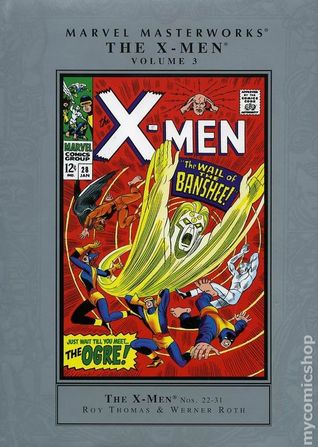

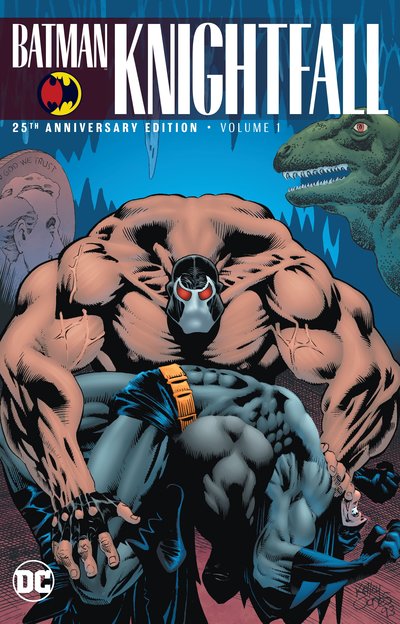
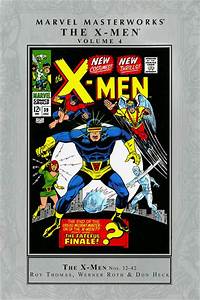
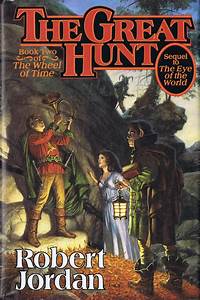
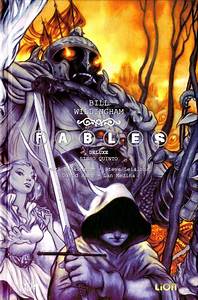

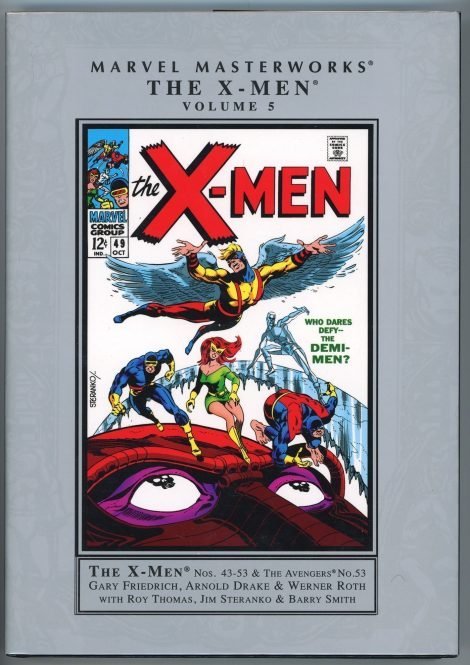


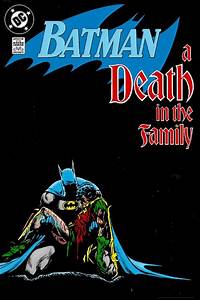
 Redeeming Pandora