Category Archives: Archives

Life and Death of Dennis Wilson

Emily McGovern and Golnar Beikzadeh

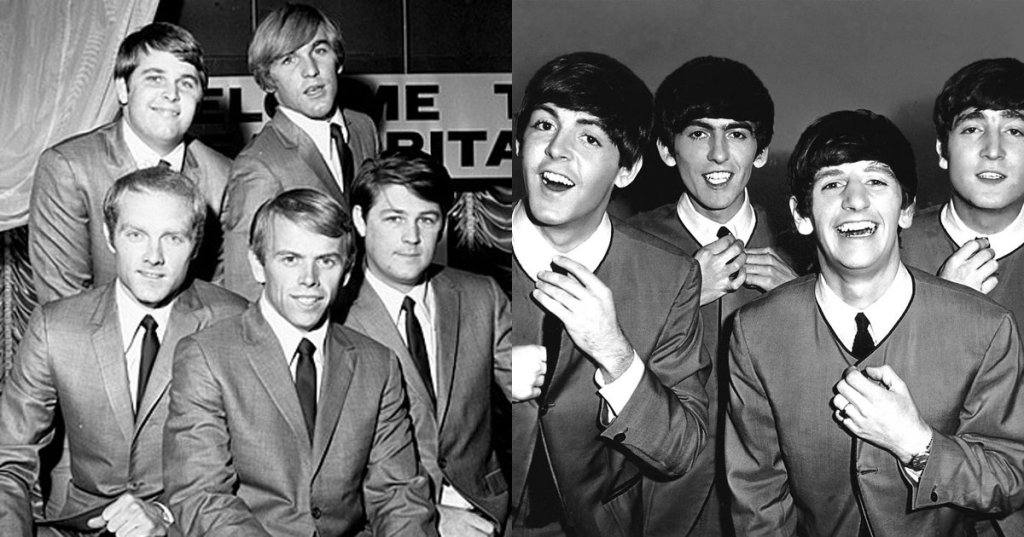
Dennis Wilson was a famous American musician, who co-founded the Beach Boys with his brothers Brian and Carl along with their cousin Mike Love and friend Al Jardine. Dennis, the second child, was born on December 4, 1944, in Inglewood, California to his parents Audree and Murry Wilson. Unfortunately, as children Dennis and his brothers experienced a great deal of abuse at the hands of their father. Dennis often described himself as the black sheep of the family and because of this he was subject to more abuse than his brothers. The Wilson family often had singalong sessions where they would gather and sing; although Dennis often refused to participate, these activities helped develop his love for music.

The Beach Boys were created in the 1960s. If it hadn’t been for Dennis’s mom forcing Brian to add Dennis to the band, he would have never joined. Dennis had a great deal of influence over the music. Most of their earlier songs were about surfing, even though he was the only surfer in the band at the time. The Beach Boys’ first single “Surfin’” released in 1961. Their first album is titled Surfin’ Safari.

In the late 1960s Brian struggled with drug abuse and psychological issues, which led him to withdraw from the group. Even when Dennis wasn’t in the band he was still writing music. Wilson also worked on non-Beach Boy projects. With Billy Preston, he co-wrote the popular song “You Are So Beautiful.” He released his own album in 1977 called Pacific Ocean Blue. It is a beautiful album with twelve songs. The run time is about 37 minutes long.

Dennis Wilson was married five times to three different women. He married his first wife, Carole Freedmen, in 1965. Together they had Jennifer, and Dennis also adopted Carole’s son, Scott. After just three short years of marriage, Dennis and Carole filed for divorce. Dennis started dating his next wife, Barbara Charren, a few months after divorcing Carole. After only one year together Dennis and Barbara decided to tie the knot on August 4th, 1970. Together Dennis and Barbara had two sons, whom they named Michael and Carl Wilson. It is thought some songs written by Dennis, such as “Sweet and Bitter” and “Out In the Country,” are about her. Just like his first, Dennis’s second marriage ended in divorce. On August 6, 1974, just over four years since their wedding, they separated.

For three years after his second marriage Dennis was a bachelor. The next woman legally bound to Dennis via holy matrimony was a lovely lady by the name of Karen Lamm. She and Dennis actually got married twice, the first wedding was on May 21st, 1976: this marriage lasted just over a year and ended on September 19th, 1977. Lamm and Wilson were separated for less than a year before getting remarried. Their second wedding date was July 28th, 1978 but unfortunately yet again, another one of Wilson’s marriages ended in divorce in June of 1980. Despite being married twice, Karen and Dennis did not have children together. The last person who ever married Wilson was Shawn Marie Love. Shawn Marie Love is the daughter of Mike Love, Dennis’s bandmate and cousin. When Dennis married Shawn he married his second cousin. If marrying a woman who was his bandmate’s daughter and his cousin wasn’t bad enough, she was also only seventeen at the time. There was a twenty-two year age difference between them. This marriage also caused tensions to rise greatly within the band. As you can imagine, Mike was not at all pleased with Dennis’s relationship with his daughter. Undeterred by the controversy sparked by their love, Dennis took Shawn as his wife on July 28th, 1983, the fifth anniversary of his second marriage with Lamm. Shawn and Dennis only got to spend exactly 5 months as husband and wife. On December 28th 1983, Dennis Wilson tragically drowned, leaving Shawn, his bride and cousin, as a widow.

One strange and little known controversy surrounding The Beach Boys is their connection with the cult leader and serial killer Charles Manson. The link between the two is Dennis Wilson. For a rather brief period of time in the summer of 1968, Charles Manson and Dennis Wilson were good friends. It all started on one summer afternoon as Dennis was driving down the streets of Hollywood. As he was cruising down the road he noticed two young ladies hitchhiking. He decided to pull over and give them a ride. Little did he know these two ladies were a part of the Manson “family” cult. On their car ride together, the females started up a conversation about their leader, which peaked Wilson’s interest. Dennis was so intrigued by what they were saying he decided to meet Manson. Dianne Lake, who was a member of Manson’s cult, writes about Dennis’s first encounter with Manson:

Dennis and Charlie hit it off right away, which is not surprising, given Charlie’s skills at ingratiating himself with strangers. Dennis, in no rush to leave, hung out for a while, smoked some pot with Charlie, and listened a bit to Charlie’s songs. It was obvious from the start that Dennis liked the girls and admired Charlie’s harem. We sat at Charlie’s feet and looked at him lovingly as he sang and played guitar. We made sure Dennis saw how much we idolized Charlie — we knew that was our job, without Charlie even having to tell us.

Dennis took such a liking to the “family” he even let them move into his house for a few weeks during that summer. At this point in his life, right after Dennis’s divorce, he needed a change, which was provided by the carefree lifestyle of the “family.” Dennis even brought Charlie, an aspiring musician, to the studio a few times. An early version of The Beach Boys song “Never Learn Not to Love” was written by Charles Manson. The original title was “Cease to Exist.” When the song was put on the Beach Boys album, the name was changed and credited only to Dennis; Manson was absolutely infuriated. He left a bullet on Dennis’s bed to scare him, and it worked. This put an end to the their friendship. Later in his life it is clear Dennis was not proud of having been friends with Manson. When Rolling Stone asked him about it in 1979, he said, “As long as I live, I’ll never talk about that.”

On that dreadful day of December 28, 1983, Dennis Wilson’s life came to a tragic end. Dennis for many decades had been abusing drugs and was an alcoholic. On the night of December 28, Wilson decided to go diving in the marina; after his jump into the water, nobody could find him. His friends tried to find his location but couldn’t succeed. They needed some professional help, so they raised the alarm. His body was found around 5:45am following that night. Tests discovered a very high level of alcohol in his dead body along with some dosage of cocaine. He was only 39 when he passed away. His body was cremated and scattered into the Pacific Ocean, one of the few non-naval officers to be awarded such a burial at sea.

Critical Countdowns

Peter Runey, Dylan Fields, Noah Eskew, and Melissa Yeh

Peter Runey’s Critical Listening Top 10

1. “Nobody Loves You (When You’re Down and Out)” by John Lennon

2. “Come Together” by The Beatles

3. “A Hard Day’s Night” by The Beatles

4. “Get Back” (Live on the Rooftop) by The Beatles

5. “Don’t Let Me Down” by The Beatles

6. “Golden Slumbers/Carry That Weight” by The Beatles

7. “Good Vibrations” by the Beach Boys

8. “Band on the Run” by Paul McCartney(/Wings)

9. “The Long And Winding Road” by The Beatles

10. “Lucy In The Sky With Diamonds” by The Beatles

This was extremely difficult to boil down to the top ten, however these are my thought-through, most profound songs of the Critical Listening class this year. While many of these carry real-life meaning to me since they’re attached to a fond memory of mine, some of these I admire purely based on their musical and lyrical quality.

“Nobody Loves You (When You’re Down and Out)” — John Lennon creates one of the most uniquely-sounding songs I’ve heard from him, whether it be from his solo career or from the Beatles. He incorporates a string orchestra as well as trumpets/horns, all the while still retaining the same classic Lennon vibe from the Beatles so many loved. Lyrically, Lennon takes a creative approach to exposing the fact people tend to only show love when they want it in return (“I’ll scratch your back and you scratch mine”), as well as the fact often great people are only admired and recognized for their accomplishments when they’re “six feet in the ground.” Ironically, Lennon gained even more of a following of his ideas upon his assassination.

“Come Together” — Despite the fact Lennon is known to be involved with the use of psychedelics, few can say the Beatles’ music became any less unique when they began using. Lennon crafts an incredibly artistic song beginning with a deep bass masking whispers of “shoot me, shoot me,” most likely referring to heroine. At this point, John Lennon was becoming a figure in many a cultural and even political scene (as an influencer not a participant) and used the song as somewhat of an anthem for the freedom to use psychedelics. Despite its intentions, I find this song to be one of the most creative and catchy songs the Beatles ever produced.

“A Hard Day’s Night” — I could tell an incredibly long story of a memory attached to this song for me. Instead, I’ll just say this song became very relevant to me on one special night in the Shenandoah mountains.

“Get Back” (live on the rooftop) — This song mostly holds its meaning to me since it was the final song to be performed live by the Beatles. I found it amusing that their desire was to be dragged off the venue by police since the concert was considered to be an unannounced public interruption, however the concert ended with a mere “pull of the plug,” so to speak, from the local authorities. It’s not just a special song but also a special performance since it was the last time the four ever played together in public.

“Don’t Let Me Down” — There are a few reasons why I love this song. The first of these is this was also played at the final rooftop concert. Another reason is Paul and John both harmonize beautifully in this song, which makes John’s raw, heartfelt message of love to Yoko Ono that much more special.

“Golden Slumbers/Carry That Weight” — While these are technically two separate songs, the track was ordered so “Golden Slumbers” could carry seamlessly into “Carry That Weight” as part of a 6-part climactic medley in Abbey Road. I love “Golden Slumbers” because it begins simply with Paul and a piano playing a sheet of music he found on his grandfather’s piano with his own words put to it.

“Good Vibrations” — While this is the only Beach Boys song that made the list, it’s definitely one of the most enjoyable listens of the years. I appreciate the upbeat rhythm and lighthearted melody. The Beach Boys have mastered the art of crafting songs perfect for driving in a car with the windows down on a summer day, and this is certainly one of those.

“Band On The Run” — Paul branched out with this song. He begins to step out of his shell of his creativity since he no longer experiences the same pressures of being in the Beatles now that he was in control of his own solo career. On this track, Paul, in a way, mixes three songs into one, making a roller coaster of a song, but not to the point where it’s distracting to the listener. Paul’s musical brilliance really shines when somehow he pulls off a silky-smooth transition from the magnificent blare of brass and electric guitar instruments into an acoustic guitar/drum combination for the rest of the track.

“The Long And Winding Road” This is easily one of the most emotional song from the Beatles, aside from maybe “Blackbird.” Paul takes the listener on a journey down a long and winding road with this song but leaves the listener with little conclusion or sense of achievement. It’s inferred that the end can’t be reached, and it’s unattainable. Obviously, this is how Paul must’ve felt at some point in his life, and he depicts this season of life very effectively and eloquently.

“Lucy In The Sky With Diamonds” — This song is believed to be a reference to a drug known as LSD, which was likely being used by at least one of the band at the time. One thing I do appreciate about the times when the Beatles were under the effects of drug usage is their creative thinking tended to be much more outside the box, which resulted in unique tracks like “Lucy In the Sky.” The song doesn’t make much sense, lyrically, but to me it doesn’t have to in order to appreciate its special sound.

Dylan Fields’s Critical Listening Top 10

1. “A Hard Day’s Night” — Beatles

2. “Come Together” — Beatles

3. “Little Deuce Coupe” — Beach Boys

4. “Don’t Let Me Down” — Beatles

5. “Maybe I’m Amazed” — Paul McCartney

6. “Wouldn’t It Be Nice” — Beach Boys

7. “All Things Must Pass” — George Harrison

8. “Help Me Rhonda” — Beach Boys

9. “Pease Please Me” — Beatles

10. “The Monster Mash” (Live) — Beach Boys

This list was a whole lot harder to make than I anticipated it being. Many of these songs may not be my favorite for their musical aspects but the stories behind them. I will be explaining why each song is special to me throughout the course of this paper.

“A Hard Day’s Night” — This is the epitome of Critical Listening music for me. It may not be my favorite critical song musically but the story behind it makes it what it is to me. In the beginning of the year when Critical Listening was just starting, we had just heard this song and Pete and I were jamming to it non-stop. We literally had this album on repeat every time we were in the car. That being said one day I had the bright idea to go on a road trip/camping trip to the Shenandoah mountains with Pete and Pedro. The trip started off great: we were having a ton of fun and everything was going great. We arrived in the mountains and that’s where things started going wrong. There was a police car involved and we had to stay in an overpriced dirty motel instead of camping out. We got to camp out the second night and it was decently fine from then on out. So fast forward to the ride home, Pete throws on this song and it just made sense. That trip was “A Hard Day’s Night.” So every time I hear this song I think about this trip, the bad parts but mostly the good.

“Come Together” — This song has been one of my favorite Beatles songs since the start of the class. I love the intro of this song. I think the crazy thing about the beginning and throughout the song is John is saying “shoot me” and ends up getting shot and killed; he obviously want talking about guns in the song but it is still ironic. I am going to say this for a lot of these songs and I could probably say this for all of them but this was a song me and Pete loved to jam to in the car.

“Little Deuce Coupe” — I really don’t like this song musically, but the story behind it is what makes it one of my favorite Critical Listening songs. One of the first times we were listening to this song in first semester I think it was Pete that started singing the chorus obnoxiously at a super high pitch, then I would sing low, then Noah would go high with Pete. This turned into a thing we did. We would just sing “Little Deuce Coupe” as obnoxiously as we could. We did it everywhere, in the classroom, in the halls, in the parking lot, everywhere.

“Don’t Let Me Down” — My first memory of this song was the video of them playing on the roof around the time they were breaking up and all the people come out of their houses to watch. After we watched that in class I had it stuck in my head and I was jamming to it non-stop and apparently Pete did too because I was texting him one night and I said I was jamming out to the Beatles and he said he was, too, and I texted him “Don’t Let Me Down” was a banger and as I hit the send button I got a text from him saying basically the same thing. We always kinda joked about that.

“Maybe I’m Amazed” — My words while listing to this song for the first time were “Dang, I like this song … Oh, dang, I really like this song!” This song was one of those rare cases of love at first hearing of a song; most songs take me a couple times to listen to them to really like them. This one was not the case; I had this song stuck in my head for about a whole month after I listened to it one time. I remember jamming to this with Pete while going from thrift shop to thrift shop looking for pianos to cure our addiction to music.

“Wouldn’t it Be Nice” — Every time I hear this song I see Joanna and Sarah on stage at the Battle Cry talent show. This song makes me think of my class and all the memories we shared together. It’s crazy how music will do that to you.

“All Things Must Pass” — This has been my theme song for the past couple of weeks with so much changing. I am going from one huge part of my life to the rest of my life. This is the end of the beginning for me and I can really relate to this song right now. I loved high school and made so many memories here but like everything in life all things must pass, good things or bad they all will pass.

“Help Me Rhonda” — I don’t really have a story behind why I like this song, but this could easily be my favorite Beach Boys song. It’s just so free spirited and groovy and I dig that. This is in my top ten in any genre for jam out sessions in the car.

“Please Please Me” — This was my first song in Critical Listening I really liked. I listened to this song and the entire album a whole lot at the beginning of the class. I still really like this song and it brings me back to Noah, Pete, and me dancing all around room 103 all first semester.

“The Monster Mash” (Live) — I don’t like this song for its musical sense unless it’s around Halloween, but this song was a classic in the first semester of Critical Listening. Noah and I would sing this obnoxiously all the time and it was so much fun. I remember sitting in our second period study all just doing our math homework and singing “He did the mash … He did the monster mash! … It was a graveyard smash.” That song was just a lot of fun to me.

In conclusion, I loved this class and I’ve said it before but I’ll go ahead and put in in writing, this was my favorite and most beneficial class I ever took at Summit. Not to take anything away from the other classes or teachers, but this class had such an impact not only in my taste for music but it really did impact my life. It brought Noah, Pete, and me closer, and they are some of my best friends I have. It also made me open my eyes to music: I discovered so much more music and even made me want to get in the realm of creating music, which I was not successful in at all. It also played a huge roll in choosing my thesis topic because music was constantly on my mind during that time. Mr. Rush, thank you for offering this class and putting up with us even when I was rolling around on the cart or playing with the music stand; I truly appreciated this class.

Noah Eskew’s Favorite Five, yea Six Beatles Albums

What are the top 5 Beatles records? I would put that question in a top 5 list of unanswerable questions. However, I have determined my 6 favorite Beatles records based on the ratio of songs that left a memorable and positive impression on me over the total number of tracks on the LP. The one fault to this method is it doesn’t account for how much I enjoy a specific track; it instead simplifies it to: Did I like it? For example, I thoroughly appreciate the songs “I’ve Got a Feeling,” “For You Blue,” “Across the Universe,” and “Get Back,” which are all featured on Let It Be, but the rest of the album leaves much to be desired. The outcome of this process slightly surprised me (in regards to the resulting order), even though my previous general idea was almost precise.

#5 A Hard Day’s Night

With this album I found seven of the thirteen songs appealed to me. The title track begins with a special strum of a chord. To this day, few can identify what note is exactly being played. The lyrics are highly relatable to anybody who’s been hard at work. Plus, the guitar solo is swung in a manner that’ll make the guitar player and the average listener happy. In this song, the Beatles prove within the context of pop sensibility they can remain true to their musicianship. “I Should Have Known Better,” “If I Fell,” and “I’m Happy Just to Dance with You” also add to what is truly a solid start to this album. “Can’t Buy Me Love” is practically a Beatles staple. With a catchy chorus, and rather true lyrics in the verse, this hit did not disappoint. Lastly, my favorite song of the entire work is without question “You Can’t Do That.” With a jangly guitar intro, John’s impeccable attitude-filled vocals, and Ringo’s driving drum and cowbell groove, this song has placed itself among my favorites.

#4 Magical Mystery Tour

There are seven songs of the twelve on this compilation of which I am fond. The title track kicks off the record with a catchy repeatable chorus, and in between choruses we get a glimpse of the mysteriousness to be experienced in the following minutes of the LP. “Your Mother Should Know” is yet another classic involving Paul and the piano. The piano riff bounces along lightheartedly, while the lyrics are a fun alternative to some of the other strange styles during this period. The hits that have emerged from this compilation included such smashes as “Hello, Goodbye,” “I Am the Walrus,” “Strawberry Fields Forever,” and “All You Need is Love.” Part of the genius behind the Beatles’ discography is their ability to churn out the hits with fun and catchy choruses, but simultaneously the ability to entertain with more eerie sounding progressions as well.

#3 The Beatles (The White Album)

Out of the 30 tracks produced on this double album, I like listening to 18 of them. If I always had the time required, I would not skip any of the first 12 tracks (except maybe “Wild Honey Pie”). The first dozen on disc 1 could be an album by themselves. This, above all the other albums, shows the individual musical personality of each of the four Beatles. This is probably due to the fact the group did not spend much time together in the studio compared to previous sessions. Paul thrives on “Back in the USSR” (the driving rock ‘n’ roll tune), “Ob-La-Di, Ob-La-Da” (the happy and hopeful pop song), “Martha My Dear,” “Birthday,” and “Helter Skelter.” George offers some of my favorite Beatles numbers of all time such as “Savoy Truffle,” “While My Guitar Gently Weeps,” and “Piggies.” John ventures into interesting lyrical processes by incorporating the stories of other Beatle songs into the phrases of “Glass Onion.”

#2 Sgt. Pepper’s Lonely Hearts Club Band

Many magazines and other award-givers rank this work as the greatest album of all time. Combining the sounds of the psychedelic rock movement with those magical Beatle melodies, the Fab Four did indeed produce one of the most revolutionary records ever. Eight of the songs stick with me years after hearing them. Tracks one through five have the flow of a live performance. “Fixing a Hole,” “Getting Better,” and the reprise of the title tracks remain my favorites for their interesting lyrics, simple but solid guitar parts, and energy that really speaks to me.

#1 Tie Between: Revolver & Rubber Soul

Within these two records begins the change of the Beatles’ career. They move from the lovable mop-tops into the genius musicians that have pulled themselves out of live performances in order to further their art. They begin to incorporate eastern influences into their songs, but yet again don’t shy away from their rock ‘n’ roll identity. Each of these albums included 14 tracks, and each of the albums included 9 tracks that I love. “Nowhere Man,” “Think For Yourself,” “What Goes On,” and “I’m Looking Through You” are my favorites from Rubber Soul. “Taxman,” “I’m Only Sleeping,” “She Said She Said,” “Good Day Sunshine,” and “Got to Get You Into My Life” are my favorites from Revolver.

Melissa Yeh on “Band on the Run”

With the Wings album, Paul McCartney released “Band on the Run” in 1973.  The song has different interpretations based on history and listeners agree it is well composed and one of his most memorable.  The most popular and speculated-on theory from this song concerns the reflections and aftermath of the breakup the Beatles underwent from Paul McCartney’s perspective.  He confirms in an interview the song was influenced by one of the many long meetings where George Harrison remarks on the regrets of the events going on at the time.  “If I ever get out of here, thought of giving it all away, to a registered charity.”  For this phrase especially, he wishes they could have spent more time on the music, focusing on the good, and the wealth was not worth that happiness; instead it should have been devoted to charities.  The song then develops his freedom from the tension of the break-up and his ability to pursue what he wants to without being burdened by the obligations the band held over him.  When asked about if the song was in association to the break-up, Paul McCartney responds, “Sort of, yeah.  I think most bands are on the run.”  In another comment, one listener feels the song is not as much about the break-up as people think the song is.  In fact, it’s completely absurd and almost obsessive to relate everything back to the Beatles.  In another part of the song, articles and listeners have alluded to the line “and the jailer man and sailor Sam were searching everyone,” being connected to the incident in Sweden in 1972.  Paul McCartney and all of group Wings were arrested on drug charges.  Thus, the police were searching them at the time.  Later comments express McCartney’s plead for focus away from these types of charges and on what matters most, the music.  Overall, the song is about a prison escape and the shift from captivity to freedom.  “Stuck inside these four walls, sent inside forever,” describe the jailed prisoner, cut off from the outside world.  Again the prison is referred to in “if I ever get out of here.”  The explosion symbolizes the escape and again the band is running from police, “in the town they’re searching for us everywhere, but we never will be found.”

When talking about the instrumental in working with the theme of that escaped prisoner, the composition itself embodies the mood of the song.  Paul McCartney has been noted for his ability to combine multiple songs into one; here there are three distinct melodies. The first transitions into the second from verse one to two, beginning at, “if I ever get out of here.”  The tempo speeds up slightly and moves into a minor key through an instrumental break.  This represents a sense of sadness and regret in the tone of the song.  The third begins after the dramatic instrumental charge into the verse, “Well, the rain exploded with a mighty crash as we fell into the sun.”  The song modulates from A minor into C major, now with a new and happier tone from what it was before.  The movement of the song captures that feeling of relief and freedom.

What moved me to choose this song followed from the moment where as I was sitting in class, I heard the first chord and immediately decided I like this song.  Don’t get me wrong, I enjoyed the music in class, but none of the songs had caught my attention as quickly as this one.  While in the bus in Germany passing through the countryside, I remember going through a tunnel or under a bridge and right as the song changed from the second part into the third, the bus flew into the open again into the light with long fields surrounding us.  That moment McCartney creates of an explosion into freedom was more than what I can describe in words.  With that, this song will always tie me back to the memory with our class, driving past landscapes in Europe.

Bonus Track: Mr. Rush’s 5 Mandatory Beach Boys Non-canonical Albums for Real Fans

1967: Sunshine Tomorrow Wild Honey is one of my favorite BB albums, and this 2017 release of many WH outtakes, alternate versions, and unreleased live cuts, including the entire Lei’d in Hawaii album, make this essential.  As if that wasn’t enough, it has Smiley Smile outtakes and a beautiful a cappella version of my favorite BB song, “Surfer Girl.”  Don’t miss this.

Endless Harmony Soundtrack — This collection of rare cuts accompanying the biopic is a monumental gift.  You’ll get a fresh look at a band you think you know, a fresh look that will only reinforce your love for them.

Hawthorne, CA — Thanks to the success of Endless Harmony, Capitol Records continued to open the vaults of rare cuts, radio spots, demos, and more.  Just when you thought you heard it all, you learn you haven’t heard anything yet.  It’s disjointed at times, but it is more BB tracks, which is what we want.

Made in California 1962-2012 — This 6-cd panoply of the band’s career is pricey but worth it.  It has a lot of rare live tracks, alternate versions, and much forgotten work from Carl and Dennis.  If you’re a real fan, you need this mega-set.

Ultimate Christmas — Not only does this have the entire original Christmas Album, it collects all the tracks for the unreleased second Christmas album plus all the rare promos, singles, and other Christmas goodies.  It’s a must-have.

*2023 Editor Note: Be sure to get the original version of Ultimate Christmas! The recent streaming versions delete the best song on the collection, “Christmastime is Here Again.”

A Tull Trilogy, pt. 2: Heavy Horses

Stringfellow Bartholomew

From the Wood to the Farm

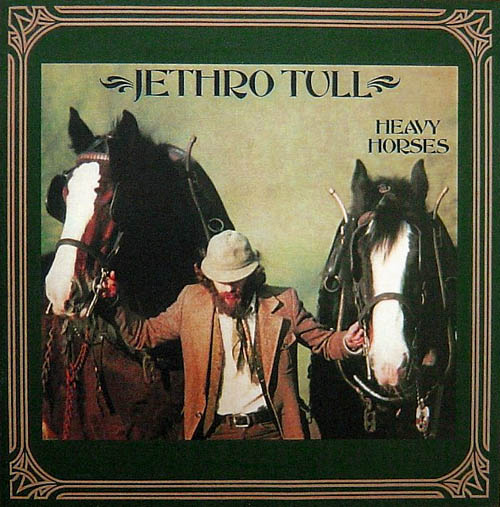
Hello!  I finally get to write my own article for the journal after all this time, and I’m really excited to talk to you about a fantastic album from Jethro Tull, Heavy Horses.  This is the second in the “folk rock trilogy” from Tull, as some have called it, but unlike most sequels, it does not suffer any let-down or disappointment.  In fact, many like it more than Songs from the Wood, which is a remarkable thing to say.  I’m not sure I like it more, but it is definitely growing on me, thanks to listening to it so much lately.  In this outing, Ian Anderson shifts his gaze from the mystical forests of bygone England to the hardworking farmers and their steads, along with the animals who, frankly, do most of the work.  Even though I’m a penguin, I can appreciate the skill and sacrifice of my fellow animals as they have made the world a better place, especially when working in conjunction with you humans.

Where the dance of ages is playing still

This first song gives me some shivers, which is difficult to do for a penguin.  I don’t spend a lot of time around cats, not too many of them where I live most of the time, but cats can be scary.  “…And the Mouse Police Never Sleeps” is also a bit scary because of the odd ending, but that’s mostly just Ian Anderson having some fun, and he knows better than most when he’s having fun and that he’s having fun and laughs at himself when he’s having fun (which is why it ends with his self-aware coughing).  It’s sort of an odd opener to this album, especially in contrast to Songs from the Wood, which gave a nice opener to the theme of that album.  I suppose “Mouse Police” sets the musical tone for the album, and it does get us out of the woods and into the farmhouse, but the metaphor distracts us initially until we have time to reflect on where this album is going.

While it may not be fair to continue the Songs from the Wood comparison going, it’s rather unavoidable, and thus “Acres Wild” seems to me like it would make a better opener for Heavy Horses, since it declaims the setting of this rural/hamlet/agricultural album much better than “Mouse Police” (you didn’t think penguins knew words like “declaims,” did you?).  It’s a very optimistic song, which is important, since this Tull Trilogy gets progressively pessimistic.  Songs is almost wholly optimistic, as we saw last issue.  Heavy Horses is rougher, grittier (certainly not musically, as it may be even more impressive musically, in many cases), and at times harder. Perhaps more melancholic than pessimistic, since many of these songs are rather ebullient, but there is a general tenor of regret for days gone by and the lost lifestyle of the hardworking agricola (though the animals do most of the work).  “Acres Wild” is a jaunty number full of zeal for living a full life, enjoining us to come “where the dance of ages is playing still / through far marches of acres wild,” but it also reminds us the world around us, before those far marches, is decaying and crumbling and a dim memory of what it once was.

Leave it to Ian Anderson to write a song about not singing a lullaby to his newborn son, but leave it to Ian Anderson to justify it because he has no desire to rear his son on false hopes and delusions about how life really is.  He wants to protect his son as much as possible (“There’s a lock on the window; there’s a chain on the door; / A big dog in the hall”), but he’s also open about the dangers of the world.  This is part of that growing edge in this Tull Trilogy of which we’ve been speaking, The dangers of the world require skills and preparation, but if know that, and treat each other with love, it’s possible to put your kids down for bed at night “safe and sound.”  Musically, this is the first of two mini-suites on the album, with multiple musical motifs.  Penguins like alliteration, what can I say.

“Moths” is another almost typical Tull juxtaposition of beautiful music and a warning of the brevity of life.  It ends optimistically, in its way, but it also presents the joy of life akin to a burning candle, and a too long life can be a bad thing.  That’s a strange thought, isn’t it?  Hard to trust lemmings and moths, I suppose.  Still, a beautiful song.  “Journeyman,” too, is a precise, hard-rocking song, bemoaning the difficult life of the hardworking city man.  Probably should be out living in nature, as the rest of the album enjoins us to do.  Be warned by this number, human people: city life is bad for your health; live in nature (but don’t mess it up for us while you do so).  Otherwise, you’ll be lonely and cold and sick and tired and hungry.  But I understand if the crisp, funky groove of the number overshadows the dire warning.  It’s hard not to smile and tap your toes to it and ignore the message.  Well, being a penguin myself, I don’t typically tap my toes, since I just waddle and rock back and forth.  I’m a bit like Ian Anderson that way.

And every day we’ll turn another page

The “B”-side of this album is possibly the third greatest B-side of all time, behind Foxtrot and Magical Mystery Tour.  These four better-than-solid songs are great listening.  “Rover” kicks it off with another solid musical gem.  Tull really was firing on all instrumental cylinders during this lineup, as delineated in the previous issue.  The diverse rhythms and crispness of the different instruments makes “Rover” a fun song, but the melody during “So slip the chain and I’m off again” elevates it to pretty great.  On one level it’s about a dog, right?  And I admit I don’t know much about dogs, since, again, I’m a penguin, but the later verses don’t sound completely like they’re about dogs to me (the last one may be about Gonzo), but it’s still rather jaunty and optimistic.  Maybe I was wrong about this album being more edgy than Songs from the Wood.

“Own Brown Mouse” could be the best song on this album, though sometimes the eponymous track wins out on that one.  But let’s not quibble: it’s not a competition – let’s just enjoy the fact we have multiple great songs on this album.  Here we have another Tullian juxtaposition of musical brilliance and a wistful song.  This wistfulness, though, is not dark or edgy.  It has a bit of sorrow to it, as the narrator and the brown mouse may be in a contest over who is the one in the real cage, but as always the uplifting music and Ian Anderson’s delivery comfort us more than concern us.  The only flaw of this song is it’s not longer.

The grand masterpiece of this album is truly sublime.  Reminiscent of the madrigal, which is perfect for the apex of a trilogy memorializing Merry Ol’ England, “Heavy Horses” is a multi-layered, multi-sectioned opera about the farm and the horses and the way things used to be.  A lot of animals featured in this album.  That’s only part of why it’s so good.  This tribute to the horses that have literally moved the earth of England makes us all yearn for a simple life of honest toil, living off the land, at one with nature.  I’m part of nature myself, and I tend to live off the ocean, but this song makes the rural life appealing even to me.  Part of that is surely the exquisite choral sections and musical brilliance, and the diverse sections keep our interest sustained throughout almost eight minutes of a song about horses and furrows.  Ian warns us the technological-driven world will soon disappoint us, and those of us with refulgent souls will soon yearn for the kind of life we have collectively abandoned.  (I’m not sure if I have a soul, being a penguin, but let’s stay focused here.)  So get back to the land, plant and harvest real food, become one with nature again.

In contradistinction to Songs from the Wood, this album ends not with the nighttime at the end of a hard day’s forestry but with the dawn of a new day.  “Weathercock” signals the kind of weather we’ll have as we start a new day working the land, or at least from what direction the wind is coming today, signaling as well the changing of the seasons.  The passage of time is a steady undercurrent of this album, as Ian Anderson bemoans the loss of anthropological-agricultural unity, but concurrently he reminds us each new day is a new opportunity for good: “Point the way to better days we can share with you,” ends the album.

So Heavy Horses is not so melancholy or cynical after all, as is often declaimed.  It is very aware of the brevity and ephemerality of life, much more so than Songs from the Wood, but that does not make it darker or edgier.  Perhaps it makes the album more Realistic, whereas Songs is more Romantic.  Nothing wrong with either.  They each have their season.  The winds of change that redirect the weathercock were certainly signaling changes for Jethro Tull as well, but that is a subject fit more for the finale of this trilogy, so I will leave that to my good buddy Theodore Aloysius to discuss in his exploration of Stormwatch.  Thanks for reading my analysis of Heavy Horses, everyone.  If you haven’t heard it lately (or at all), do yourself a tremendous boon and get it into your soul.  If the five-disc fortieth anniversary box set is a bit daunting, start with the regular album and work your way up to the goodie-filled, bonus-packed deluxe version.  You’ll be glad you did.  So long!

The Musical Experience

Dylan Fields

Beethoven. Bach. What if these legendary musicians were put into today’s era? Would they be better? Would they be worse? I would argue they would be better at what they do today than they were in their day. They might not be as popular today simply because orchestral music is not popular today, but they would have more tools and more feedback than they had in their day. With the amount of technology they would be able to access today, the quality of sound these musical geniuses would be able to create would be absolutely incredible. Being able to write your music down and hear it as soon as you write it is a tool we have today. If these composers had this tool at their fingertips, they could produce more music and better music as they could fix any and every flaw. With this we would now have more music to enjoy from these great composers today.

Music has been changing for centuries: for better or worse is the issue. Before I explain my thesis I need to define a key term. The phrase “musical experience” means anything directly pertaining to music, such as buying and selling, listening, and the making of it. Music started all the way back in Bible times as we can see from King David being a skilled harp player. Now with more recent advances of music such as the birth of iTunes in April of 2003, we play music out of a speaker.  Music has developed into a predominately but not exclusively electronic base as opposed to the acoustic installments that have been used for centuries before us. This change is important because it is going to change the way music will be made and how we will listen to music for years to come.

My thesis states the experience of music is at its all-time high. I will confirm three reasons why this is true: listening to music has never been easier, music is more diverse than ever; and the recording process is better than ever. I will also refute two counterarguments: first, digital music has decreased revenue for musicians, and, second, music is too perfect.

My first argument to prove the musical experience is at an all-time high is listening to music has never been easier. In the 1950s if you wanted to listen to a certain song you would have to buy the entire album on vinyl, unless of course it was a single. In order to listen to the song you want to hear, you would have to look for and change the record to what you wanted to hear next. Now let’s say after you listened to the song you wanted to hear, you want to listen to a song from a completely different album. You would need to take that record off, put it into its case or sleeve, and then put the other record onto the record player. You would start it and find the right song. The whole music listening experience was just a hassle compared to nowadays, when I can have ten songs from ten different albums on one playlist and not have a single second of downtime in-between each song. Now, all we have to do is click what song we want to listen to and our phones, laptops, iPods or mp3s will play the song for us. We can create playlists with songs from any album from any band or artist we choose and can listen to the songs as many times as we want without having to touch the vinyl player at all. For example, if I was doing my homework, and I wanted a compilation of my favorite Rolling Stones and Beatles hits, then I would have to frequently stop my homework and change the song. This is not as convenient as if I could make a playlist or even just click a button and change it in a matter of a couple of seconds.

Another reason listening to music has improved is the means by which we actually listen to it. The first pair of headphones were released in 1881, long before Sony Walkmans or iPods. Although they were revolutionary for their time, they weighed over ten pounds. That is ten times the weight of Dr. Dre’s Beats headphones today,as some editions of beats weigh less than a pound. Another invention that changed how we listen to music today is the wireless power of Bluetooth. Bluetooth gives us the ability to listen to music not only without cords hanging out of headphones but away from the source of the music. I had used headphones with cords my whole life until recently. My first iPod cracked because I forgot it was hooked into my headphones, and I walked away from it, pulling the iPod and sending it crashing to the ground. Bluetooth eliminates that threat altogether, because we all make careless mistakes like that. Also, I can stand all the way across a room and be playing my music on a speaker or headphones on the other side of the room. For example, when I am working out, I use my Beats headphones that are Bluetooth. I set my phone down on the table across the room and have my headphones on. Working out with a cord hanging out of your pocket is extremely difficult because many times you will get caught on the cord and your phone will rip out of your pocket or your headphones will fall off your head. Another example is when I am training for baseball. I can hit in a batting cage with my phone twenty feet away from me while I have my headphones on. Hitting a baseball with headphones with a cord connecting to a phone would be nearly impossible. This is why Bluetooth is so great. This Bluetooth feature also comes in handy when your device needs to be charged. You can charge your device on one side of the room while wearing your headphones on the other side of the room, or even in a completely different room.

Listening to CDs and radios in cars were both huge steps in the past, but now the next big step is listening to our phone, iPod, or mp3 on Bluetooth or an auxiliary cord. This is better for multiple reasons. Now we can go from what we were listening to before we got into our cars, plug our phone or mp3 in, and continue listening. In addition, we do not have to keep a thousand different CDs in our cars. This feature also gives us the ability to listen to whatever we want while in the car, even beyond music with things like podcasts or sermons. For example, in my morning routine I listen to music all morning. When I’m ready to leave my house, I get into my car and, with the Bluetooth system I have installed, my music automatically goes from playing on my phone to playing on the speaker system in my car.

My second argument is music is more diverse than it has ever been before. There are more types of music, more genres, and more branches of each genres. For example, country in American music was created in the late 1920s. It was more of an Appalachian folk-type music or blues, which featured instruments much more string-based such as the banjo, American fiddle, fretted dulcimer, and guitar. Today’s country music still includes the original Appalachian folk music, but now bands such as Florida Georgia Line or Sam Hunt are the top-selling country artists today. They incorporate a type of hip hop or pop element into their country music. We see this hip hop element in songs including artists in the hip hop genre such a Nelly or The Chainsmokers. This is noteworthy because this new movement of combining genres has been so successful it has become a new genre altogether. Nelly even went on tour with Florida Georgia Line as their opener on their Smooth World Tour. So now there is traditional country music and modernized country music. This sort of change of genres is nothing new, though. We have seen this in the past and it was successful as it created the types of music we listen to now. Rap has changed from Tupac Shakur’s era to big rappers like Lil Pump who recently signed a record deal with Warner Bros. for eight million dollars. The classic elements to rap are the theme of the lyrics, the rhythm, and the rhyming, as well as the bass in most rap songs. We have seen rap change. It really started with artists like Lil Wayne who changed the flow of rap introducing a that no-one had seen before, sometimes slowing it down and mixing up the beat in a unique way. Rap has split its genre so much that now they have gospel rap. Artists such as Lecrae, KB, Andy Mineo, and NF have made their marks in the rap genre from this unique branch of music.

Another aspect of music that has broken music into different genres is the lyrical sense of the songs. Staying with country music, let’s take two artists: Jimmy Buffet and Brantley Gilbert. Jimmy Buffet is known for many of his songs, such as his song with Alan Jackson called “It’s Five O’clock Somewhere,” which spent eight weeks on the top of Billboard’s Hot Country Song list. This song’s lyrics are about not wanting to work anymore, leaving work early, and getting drunk at the bar. Brantley Gilbert’s music is more of a country rock, as one of his top selling songs, “Take It Outside,” talks about “the good ole days,” where if someone had a problem with someone else they could just go outside and fight to settle things. Both artists are technically in the county genre but have completely different styles of music. Brantley Gilbert’s style is more of the “get your hands dirty” type of country music. Jimmy Buffet’s lyrics are quite the opposite, as his are more about resting and partying. These two completely different country artists represent different branches of country music.

In addition to the branches of each genre, there have been new genres created recently that have changed music, such as indie pop, alternative rock, air pop, and EDM. These genres have had huge successes and have been controlling the Billboard charts. Most of these types of music have sounds such as synthetic and computer-based sounds that have never been used as much in music as ever before due to the advanced recording and creation of music that will be discussed later.

My third argument is recording music is easier and has better sound quality than ever before. There are four eras of recording to look at: the acoustic era, the electrical era, the magnetic era, and the digital era. The acoustic era lasted from 1877-1925. During the acoustic era, people recording typically used a large conical horn to collect and focus the physical air pressure of the sound waves produced by the human voice or musical instruments. A membrane or diaphragm, located at the top of the cone, was connected to a scriber or stylus, and as the changing air pressure moved the diaphragm back and forth, the stylus scratched or incised analogue of the sound waves onto a moving recording medium, such as a roll of coated paper, or a cylinder or disc coated with a soft material such as wax or a soft metal. The next era of recording was the electrical era when they used a system of electrical microphones, electronic signal amplifiers, and electromechanical recorders, which was adopted by many music publishers in 1925. Sound could now be captured, amplified, filtered and balanced electronically. This means when you record a sound, you are able to alter the volume, pitch, or frequency of the music. This was a monumental move in the line of music at the time, but something simple enough today. We can do it better now on an iPhone, as the microphone on an iPhone is better quality than anything that had been made in the ’40s. The third era of recording music was the magnetic era, introducing features such as multi-track tape recording (MTR), when different sounds are recorded on different sessions and put together to make a cohesive whole. This was also the introduction of the disc as the primary mastering medium for sound. Fast forward to the digital age, the era in which we are living today. This is the era when digital encoding surpasses all previous recording technologies. Unlike all previous eras of recording, which captured a continuous analogue of the sounds being recorded, the digital era captures very dense and rapid and discrete samples of the sounds, which makes the sounds more crisp, taking out static or background fuzz.

Making music has never been so easy; anyone on any level of musical education can make music. All you need to make music nowadays is a laptop and a music editing application such as Logic Pro X. A few of my friends and I have been making music as a hobby, and we have more capability to record and edit the music than big name music artists had in the ’40s or ’50s. This does not mean the music we make is better than those that have come before us, but if we worked hard enough and developed our talents and abilities, we could make some quality music.

The first counterargument I will refute says the current technology trends in the industry have led to music artists not making as much money as previous artists used to make. The music industry’s profits have dropped a shocking sixty percent in the last decade as we see in charts from RIAA U.S. sales database. This is due to the loss of buying and selling of music. Music used to be put on files of polyvinyl chloride, also known as vinyl. When music was made on vinyl, it was hard to pirate or steal.  As soon as it could be turned into a file, many previous listeners didn’t choose to pay for it anymore. Another factor is about a century ago it was more popular than it is now to buy and listen to entire albums. Today iTunes, the largest music store in the country, sells individual tracks listeners can mix and match in personal audio-collages.

Music has suffered a loss in revenue over the past decade and ever since the beginning of the digital era in general, but lately it has been on the climb. The RIAA (the U.S. sales database) announced sales of recorded music in the U.S. generated $7.7 billion in revenue in 2016, its highest sales figure since 2009. The growth also represents an 11.4 percent increase from the previous year, the best percentage gain since 1998. These gains, the RIAA said, are largely due to an increase in on-demand streams from services like Apple Music, TIDAL, and Spotify’s paid tier, which accounted for $2.5 billion in revenue, more than double from the previous year. Together, on-demand and free streams accounted for $3.9 million in revenue. Although music sales are not what they were in the late ’90s, we may see it there again shortly if music sales follow the 2016 trends we see on the RIAA sales charts.

The second counterargument to refute claims music today is too perfect. There is no room for error in today’s world when it comes to the element of recording music. Editing music today has to be done with almost surgical precision. They remove the types of things that often made music of the past more interesting such as idiosyncrasies, nuances, and inexactitudes. For example, compare two songs, “Louie Louie” from the Kingsmen and “Fancy” from Iggy Azalea. “Louie Louie” was recorded in one take while Iggy Azalea’s song “Fancy” was most certainly not. Another interesting thing is in one part of the Kingsmen’s song, the drummer drops his stick and exclaims a profane word I will not repeat. But nowadays there is no way that would be put into the final cut. It would be edited out so the song would sound more perfect.

Music being too perfect is not a problem to most listeners as we can see by their digitally-edited music sales. This type of digital edited music is pop music as we know it today. Music cannot be too perfect. As humans we should strive for perfection in everything we do; this includes music. If there is a flaw in the music, edit it out or try it again. Any artist in the digital era that doesn’t  perfect every note or cord won’t be as successful as an artist that does. This is due to the fact this generation has grown up in the digital era and have grown used to the “perfect” music, while the older generations have grown up listening to flawed music and appreciate that aspect of the music.

Music has only developed for the better. The progression of technology has led to the progression of music, which we see through the different eras of music and time. The music recording process and distribution is easier and better than ever before. The music industry is bringing in revenue and looking to come back to where they once were. The experience of music is at its peak, and this is something to be excited about.

Bibliography

Beardsley, Roger. “CHARM.” A Brief History of Recording to Ca. 1950, 8 May 2017, http://www.charm.rhul.ac.uk/history/p20_4_1.html.

Craig. “Headphones: Then and Now.” LiGo Blog, 10 Feb. 2015, http://www.ligo.co.uk/blog/headphones-then-and-now/.

Dandridge-Lemco, Ben. “The American Music Industry Had Its Biggest Year In Nearly A Decade Thanks To Streaming.” The FADER, The FADER, 10 Nov. 2017, http://www.thefader.com/2017/03/30/music-industry-revenue-growth-2016-drake-streaming.

“Most Popular.” Forbes, Forbes Magazine, http://www.forbes.com/most-popular/#4a262d707048.

“Music: Top 100 Songs | Billboard Hot 100 Chart.” Billboard, http://www.billboard.com/charts/hot-100.

Quirky. “Great Inventions: History and Evolution of the Headphone.” Quirky, shop.quirky.com/blogs/news/great-inventions-history-of-headphone.

Rabade, Parag. “Bluetooth – A Path Towards an IT Revolution.” Bluetooth – A Path Towards an IT Revolution, tech.af/post/papers/bluetooth-a-path-towards-an-it-revolution/details.

Thompson, Derek. “Has Technology Changed the Experience of Music?” The Atlantic, Atlantic Media Company, 10 June 2010, http://www.theatlantic.com/technology/archive/2010/06/has-technology-changed-the-experience-of-music/57961/.

Voice. “History of the Record Industry, 1920- 1950s  – A Voice. – Medium.” Medium, Medium, 8 June 2014, medium.com/@Vinylmint/history-of-the-record-industry-1920-1950s-6d491d7cb606.

Far From the Madding Crowd

Tarah Leake

Far From the Madding Crowd was written in 1874 by Thomas Hardy and would prove to be his first and greatest literary success. Hardy was a devoted reader of philosophy, science, and Greek literature. Hardy struggled to find a balance between his religious upbringing and his scientific interests influenced by Darwin. In his later years, Hardy had almost completely abandoned the Scriptures and turned to science for knowledge and meaning to life. Fortunately, when Hardy wrote the Romantic novel Far From the Madding Crowd, he still had an appreciation for his religious background and incorporated Biblical values and themes. The major themes in this novel are the rejection of society, the scrutiny of vanity, and the praise of honor and humility. Biblical values are evident in the contrasting qualities of vanity and humility, displayed by Bathsheba, Sergeant Troy, and Gabriel. An evident supporting theme is love’s ability to completely change the mind and attitude of those involved as seen with all characters, especially William Boldwood and Bathsheba. In opposition to these dynamic characters, Gabriel Oak and Sergeant Troy remain true to themselves in both positive and negative ways. The first important theme of this literary work is the rejection of society represented by the title itself.

The title reveals Hardy’s values and view of society; it carries the ideology of reminiscing the “good old days.” Hardy was raised on the English countryside and had an appreciation for hard-working people and simple farm life. As he aged, Hardy witnessed a general depression of work ethic as society became more industrial and modernized. Far From the Madding Crowd illustrates Hardy’s desire to remain separate from the modern city people around him and remain true to the roots of his childhood, which he deemed much more noble. Hardy originally extracted his title for this novel from the poem “Elegy Written in a Country Courtyard” by Thomas Gray. The poem depicts a similar notion of appreciation for a hard day’s work, capturing the typical life of farmers. It is no wonder with this same appreciation for nature and farming, Hardy was inspired by the words of Gray. The line in the poem that inspired Hardy’s novel reads, “Far from the madding crowd’s ignoble strife, their sober wishes never learn’d to stray; / Along the cool sequester’d vale of life they kept the noiseless tenor of their way.”

Hardy’s admiration of a virtuous life is not only evident in the title but also in the personifications of his characters. The characters depict both extremes of vanity and humility. The two main characters (and love interests of the novel) are Gabriel Oak and Bathsheba Everdene. Gabriel Oak, the hero of the novel, is a shepherd and farmer who has the greatest moral disposition of anyone. He is humble, honest, loyal, takes responsibility, and is willing to sacrifice his own comfort for that of others. He begins as a successful farmer whose love is unrequited by the beautiful mistress, Bathsheba Everdene. Even after Bathsheba refuses to marry him, Gabriel promises to drop the matter but swears “I shall do one thing in this life — one thing certain — that is, love you, and long for you, and keep wanting you till I die.” When his sheep die in a tragic accident, Gabriel knows he has lost all of his insurance and means of financial security, yet, his first thought is one of selflessness. Gabriel thanks God Bathsheba refused his marriage, because he could have never supported them financially after the accident. Hardy writes, “It was as remarkable as it was characteristic that the one sentence he uttered was in thankfulness.” Gabriel travels around looking for a job and ends up saving Bathsheba’s farmers from a fire, not knowing it is her farm. He is rewarded with an offer to work on the farm and agrees to it. As he works on the farm, he is bothered by Bathsheba’s cold treatment to her next suitor, Mr. Boldwood. Although Gabriel risks losing his job, he reprimands Bathsheba for her actions not because it benefits him, but because he truly sympathizes with Boldwood. In chapter twenty, Hardy praises the fact Gabriel knows he has no chance with Bathsheba but still restrains himself from attempting to sabotage her future relationships: “Thoroughly convinced of the impossibility of his own suit, a high resolve constrained him not to injure that of another. This is a lover’s most stoical virtue, as the lack of it is a lover’s most venial sin.”

In stark contrast to the virtue and morality expressed by Gabriel, Bathsheba is vain, cold, and self-absorbed for the majority of the novel. The first time Gabriel sees her, she is staring at herself in the mirror and Gabriel tells the gate guard the woman has one fault, vanity. When Gabriel comes to ask Bathsheba’s aunt for her hand in marriage, her aunt warns that her niece has several suitors. Bathsheba cruelly chases after Gabriel to tell him this isn’t true, which Gabriel takes to mean she is interested in him. Then she denies his proposal, clarifying she only meant to tell him “nobody has got me yet as a sweetheart, instead of my having a dozen, as my aunt said; I hate to be thought men’s property in that way.” Bathsheba goes on to say, “A marriage would be very nice in one sense. People would talk about me, and think I had won my battle, and I should feel triumphant… I shouldn’t mind being a bride at a wedding, if I could be one without having a husband. But since a woman can’t show off in that way by herself, I shan’t marry.” Bathsheba reveals the extent of her egotism by this remark; the only part she likes about a wedding is how much attention she would receive but doesn’t want the love or commitment associated with it. As if this does not wound Gabriel enough, she refutes his vow to love her forever by harshly retaliating with the statement, “It wouldn’t do, Mr. Oak. I want somebody to tame me; I am too independent; and you would never be able to, I know.” At this time, she is poor and has not yet been given the farm, yet she still carries a haughty attitude and thinks herself too independent for any simple man.

Another major suitor for Bathsheba is the eligible bachelor, William Boldwood. The name suggests his reserved, wooden persona as he is a difficult man to please; every young woman who has tried to woo him has failed. However, Boldwood’s heart is quickly captured by Bathsheba’s beauty and wealth, and when she sends him a valentine for personal amusement, Boldwood falls completely in love. Boldwood expresses how Bathsheba, without realizing it, has changed his entire mindset: “I had never any views of myself as a husband in my earlier days, nor have I made any calculation on the subject since I have been older. But we all change, and my change, in the matter, came with seeing you. I have felt lately, more and more, that my present way of living is bad in every respect. Beyond all things, I want you as my wife.”

Not only does Bathsheba unwillingly enact a change in Boldwood, but this gentleman also awakens a change within her. Instead of reacting sharply, Bathsheba’s heart “swelled with sympathy for the deep-natured man who spoke simply … She had a strong feeling that, having been the one who began the game, she ought in honesty to accept the consequences.” She even admits to Boldwood she never intended for this to happen and she is “wicked to have made [him] suffer so.” Boldwood is quite disheartened and goes away somber and lost. Hardy writes the “realities then returned upon him like the pain of a wound received in an excitement which eclipses it, and he, too, then went on,” depicting the common trend of one’s heart betraying its owner in this novel. Gabriel had thought Bathsheba’s pursuit was an act of love and Boldwood had thought the valentine one as well. These were far too optimistic notions as Hardy cynically writes, “The rarest offerings of the purest loves are but a self-indulgence, and no generosity at all.” Bathsheba begins to crack under the realization of how she has hurt so many others. She even lowers herself enough to work on the farm alongside Gabriel and asks him for his opinion concerning her conduct with Boldwood. Gabriel scolds her for having tricked Boldwood with the valentine and rebukes her character, calling it “unworthy of any thoughtful, meek, and comely woman.” At this comment, Bathsheba turns red and follows Gabriel’s insults with a few of her own, instructing him to leave the farm by the end of the week. Gabriel remains calm and promises to be gone by the end of the day. Bathsheba puts up the front of being strong and offended by his disrespect for her as a boss, but on the inside, she is deeply saddened because she cares about Gabriel’s opinion of her, even if she doesn’t want to. Shortly after Gabriel leaves, Bathsheba must completely humble herself and beg for his return because the sheep are dying and he is the only one who can heal them. At first, Gabriel refuses to help and her farmhands tell Bathsheba she must use more delicate language with him. She struggles to lower herself to him, but she cannot bear to see the innocent animals suffer (another mark of progression in her character). When she sees Gabriel riding up on his horse, she runs to him and reprimands him saying, “Oh, Gabriel, how could you serve me so unkindly!” Author Thomas Hardy clarifies, “It was a moment when a woman’s eyes and tongue tell distinctly opposite tales. Bathsheba was full of gratitude.” After saving nearly all the sheep, Gabriel rejoins Bathsheba’s crew upon her request.

The final suitor Bathsheba encounters is the reckless and proud Sergeant Troy. They have a flirtatious relationship together and Bathsheba allows him to kiss her and take her on a date, which she would have refused entirely in the past. However, Sergeant Troy is a poor person for Bathsheba to relinquish her independence to and Hardy writes, “When a strong woman recklessly throws away her strength, she is worse than a weak woman who has never had strength to throw away.” Hardy is once again revealing how the haughty rich are undeserving of love, while the honest farmer is far more virtuous. Gabriel and Boldwood know of Troy’s reckless past with the now pregnant and abandoned Fanny Robin. They are concerned and decide to confront Bathsheba about her infatuation with this undesirable man. Bathsheba is crass with Gabriel and refuses to listen to him. She attempts to fire him again, but he refuses to leave for her own safety. When Bathsheba hears others gossiping about her relationship with Troy, she is furious and orders them not to discuss her personal life. She claims she loves Troy but then proceeds to burst into tears as she realizes she has completely lost herself.

Bathsheba finalizes her feelings for Boldwood in a letter clearly expressing her disinterest in marrying him; however, Boldwood cannot let her go. Bathsheba is frightened by Boldwood’s obsession and his threats to bring misery upon Sergeant Troy. Bathsheba defends Troy’s honor and begs Boldwood not to hurt him, but Boldwood is blinded by his jealousy. Bathsheba would have once found it amusing to have men fighting over her, but she is now wrecked with worry and guilt of a possible quarrel ensuing on her behalf. Boldwood offers Troy money to leave or at least honor Bathsheba by marrying her. Troy plays along for a while but then reveals he and Bathsheba are already married. Troy has cruelly humiliated Boldwood and proceeds to lock him out of the house all night. Troy boasts about the secret marriage and patronizes the farmhands. Gabriel sees problems arising in the marriage and sympathizes with the miserable Boldwood. Troy gets all of the male farmhands drunk, demonstrating Troy’s recurring pride and lack of responsibility. Gabriel slips out and realizes there is a terrible storm coming; he is again the hero and single-handedly saves all of the crops and animals from the rainstorm. The only one who comes to his aid in the downpour is Bathsheba. Once again, Bathsheba admits her personal struggle with relationships, seeking approval and guidance from Gabriel. She confesses she did not mean to marry Troy and did so in a state of “jealousy and distraction.” Gabriel cannot form an appropriate response and asks Bathsheba to go inside and rest.

As the marriage ensues, Bathsheba is miserable due to Troy’s irresponsibility with their money. Troy reacts with the cold and immature response, “You have lost all the pluck and sauciness you formerly had.” One day, Troy encounters a woman who turns out to be Fanny Robin, alive and breathing. Troy recognizes her and offers money and shelter, but he swears to Bathsheba he has no idea who this woman is. Shortly after this encounter, Fanny gives birth to Troy’s child, but both she and the baby die in the process. Rumors spread quickly and Bathsheba desires the advice and guidance of Gabriel alone. Despite the crass whispers surrounding her, Bathsheba takes it upon herself to oversee the burial of Fanny and her child, demonstrating a huge growth in maturity and virtue. Sergeant Troy demonstrates his first moment of weakness and remorse as he looks in the coffin of his lawful wife and child; Troy confesses everything to Bathsheba. He tells her he is a bad, black-hearted man, admitting Fanny is his wife in the eyes of God and “I am not morally yours.” Bathsheba spends the night outside; Troy is gone in the morning.

The following months involve Bathsheba believing Troy drowned himself and she relinquishes the farm to Gabriel as she is weakened by the previous events. This surrendering of her main source of income demonstrates her trust and confidence in Gabriel. Boldwood attempts to regain Bathsheba’s love and again asks for her hand in marriage, proving his insane persistence in winning her love. Bathsheba goes to Gabriel for advice worried that if she refuses Boldwood again, he may lose all hope for living; she says this “in a spirit the very reverse of vain” for she is grieved and troubled by it, displaying regret of her past attitudes toward people. Gabriel tells her honestly “the real sin, ma’am in my mind, lies in thinking of every wedding wi’ a man you don’t love honest and true.” In the past, Bathsheba would have been outraged by this comment, but she now simply replies, “That I am willing to pay the penalty of.”

The story comes to a close with Boldwood hosting a suspicious Christmas party, at which he murders Sergeant Troy. Troy had meant to remain hidden, however, when he hears of the possibility of Boldwood’s proposal, he decides to attend the party in disguise. Even in his last moments, Troy is self-obsessed and physically clutching Bathsheba, claiming her as his territory. After committing murder, Boldwood goes into temporary hiding and is sentenced to death by hanging. Gabriel, once again in his infinite compassion, requests the courts to reconsider the case, which results in Boldwood’s pardon. Gabriel and Bathsheba admit their love and decide to get married. Gabriel’s humility has clearly rubbed off on Bathsheba as seen when she requests “the most private, secret, plainest wedding that is possible to have,” an obvious antipode to her narcissistic personality at the beginning of the novel. She has learned the painful price of sitting in the constant spotlight with other lives revolving around her own. Many characters failed to adapt and recognize their faults, and in Troy and Boldwood’s case, they paid the ultimate price for their stubbornness. However, the pure light in Gabriel’s heart is enough to open Bathsheba’s eyes to her sinful ways. Bathsheba no longer desires to be the talk of the town; she is content to be far from the madding crowd with the man she loves.

Redeeming Europe

Emily Grant Privett

Being in the very first edition of Redeeming Pandora, I found it only appropriate to make one final contribution to the last edition. Back in 2015, I was hired to teach science at Summit Christian Academy. It’s funny how God works, opening doors you didn’t even realize existed. As a terrified college senior, I had absolutely no idea what my next move would be. I was fully reliant on God showing the path He had laid out for me. After being hired at Summit, I knew I one day would want to go on another senior trip. As some may know, my senior trip was filled with highs and lows. I had excellent opportunities to form permanent memories with my classmates, but class dynamics and drama between chaperones put a dampener on the experience. I hoped to one day get to encounter the beautiful cities of Paris, Berlin, and Rome again, but with a new positive perspective. The class of 2018 provided me with that opportunity, giving me the unique chance to travel on the Summit Europe trip twice, once as a student and once as a chaperone. 

In all, this trip was awesome. I had the opportunity to build and fortify relationships with the seniors and a few of their parents. I was able to experience 3 foreign countries with my cousin, who very soon is going away to college. I was immersed in German, Italian, and French culture. I was able to eat tons of incredible foods including, but not limited to gelato, cannolis, fresh pasta, pizza, coffee, schnitzel, and German sausages. I even got to talk to and get to know Mr. Rush more in 2 weeks than I had in the entire 10 years we’d known each other. While the trip was excellent and I made memories I’ll never forget, one thing that comes to mind immediately when I think of the senior trip is that God was with us the entire time. I don’t mean this in the Christian school “God is always with us” sense of the phrase. I mean this in a literal, “I witnessed God’s hand at work” kind of way. Having led the 9th grade trip for 3 years now, I’m well aware when things can go wrong, they will go wrong. We’ve dealt with extreme traffic, broken-down cars, lost phones, arguments, etc. There are few times in life when things have a greater chance of going wrong than when you’re traveling with a group of 29 somewhat inexperienced travelers through 3 foreign language speaking countries for 15 days straight. It was incredible to witness how, over 2 weeks, we experienced no major snags, and the things that did happen to go wrong, worked out in the best possible way.

The best way for me to sum up the Europe trip is to talk about the several providential moments God used to display His handiwork. First, the train from Rome. We were rushed after a tour from the Vatican to walk back to the convent from the train station, grab our bags, and make it back to the train station to buy lunch before our train departed, all in about 45 minutes. We had already set aside bags early that morning, so we just had to quickly collect them. Keep in mind, when traveling with 29 people, the word “quickly” doesn’t exist. Ultimately, we all made it aboard with lunch in hand. Then, we noticed one of the nuns from the convent running down the track trying to flag us down. One of our guides recognized her and met her on the platform. It turns out we had left a baseball and a cell phone at the convent. The nuns who operated the convent didn’t know exactly what time our train left, what platform we’d be leaving from, what car we’d be in, or that the items definitely belonged to us, yet somehow she managed to make it on the platform without a boarding pass and effortlessly find us to hand over our belongings before our train departed.

Our train delivered us to Florence, which brings me to God moment #2. After the mile or so walk through the heat to our hostel, we dropped off our bags and left for a tour of town, complete with a visit to Michelangelo’s David. To get into the museum one must go through security, requiring everyone to remove all personal items to go through the metal detector. Everyone passed through security and continued into the museum. After an hour or so had past, just before we were about to leave the museum, a student, who will remain unnamed, realized his/her money belt was missing. For those of you who haven’t traveled internationally in a large group, a money belt is a small, fanny pack-like pouch one can wear under their clothes that holds all valuables like passports, money, identification, etc. They’re worn to protect valuables from pickpockets, which are pretty common in Europe. Needless to say, a stolen money belt would be a major snag in the flow of the trip, especially since we were leaving the country in a matter of days. The student recognized the missing money belt at the perfect time. The student and Mr. Rush took off to find security, where the money belt was waiting for them, with all valuables inside.

We enjoyed the next few days in Tuscany. The next stop on our trip was Normandy, requiring us to fly into Paris and take a private bus to Bayeux. After a moving D-Day tour in France, we headed to Paris to visit iconic locations like the Eiffel Tower and the Louvre. After our stay in Paris we headed to Munich via train. We arrived at the train station early, but the track our train was leaving from wasn’t announced until just a few moments before it was to depart. Like I said, “quickly” doesn’t exist when traveling with a large group of people and their luggage. Needless to say, we had to rush to our train. This was made more difficult because one student had been having knee problems and was struggling to walk. We made it onto the train, found our seats, and had about 3 hours to relax before the 10 minutes we would have to collect our luggage, get off the train, find our new track, then make it onto our next train to continue onto our final destination. About an hour into our train ride, the train stopped. Our 10-minute connection became even shorter. Eventually the train moved again and an announcement was made we were now 20 minutes behind schedule, meaning we were most likely going to miss our connection. The train to Munich ran every hour or so, and we were instructed we could take the next train and there’d be cars designated for us. When our train finally arrived at the station, we no longer had less than 10 minutes to transfer trains, but instead about 45 minutes. This gave opportunities for bathroom breaks and a more leisurely walk to our new track, which happened to be the platform directly next to the one our train came in on. Suddenly, the stress of transferring trains decreased significantly, especially for the student who was limping the entire way. Then, we were given specific cars that would have open seats. We no longer had assigned seats like we would have on the previous train. We didn’t know what end of the platform our cars would be, and in the interest of making the train, we were instructed to get on the train, whether in the proper car or not, and we’d find our seats from there. When the train pulled in, the cars we needed happened to be directly in front of us, and these cars were first class cars with working WiFi. As we reached Munich, the train slowed. We all began to gather our bags as the screen on the train indicated we were approaching the Munich station. They had made an announcement, but it was in German. A fellow passenger approached our guide and said we were preparing to get off at the wrong stop. In the announcement, they stated there are in fact two Munich stations and the second was the one we’d want to take. Because of God working through that stranger we all remained on the train until the correct stop.

These sum up just a few key God moments we witnessed on the trip. On top of those specific moments, we were warned our trip was going to be “the coldest Europe trip yet.” The weather forecasted rain nearly every day and weather in the 40s and 50s. Though we did have a few days that were wet and chilly, overall, we had beautiful weather. We had two free days on the trip, one in Tuscany and one in Rothenburg. Those two free days, where we had opportunities to walk and explore the small Italian and German towns, had some of the sunniest days and warmest temperatures of the entire trip. Though some of these moments seem small, it really emphasized for me the power of God’s providence. He used the ordinary to demonstrate the extraordinary.

This trip is up there as one of the smoothest and highest-quality traveling experience of each of the 4 times I’ve traveled through Europe. Now, as the self-proclaimed resident Europe trip student/chaperone traveling expert, I’d like to give a few tips to ensure you have the best experience possible.

1. Sleep is for the weak. One thing about the Europe trip you’ll quickly realize is sleep is a rarity on the trip. You’ll probably land at 7am after a long red-eye, sleep deprived, but filled with adrenaline. The first day is the worst. Force yourself to stay awake to push through the jet lag. It does get better, I promise. That doesn’t mean you won’t take any and every chance to try to sleep over the course of the two weeks, so bring a neck pillow.

2. Nobody cares about your complaining. Everyone is cold, tired, and hungry. Your endless complaining about how you didn’t sleep well the night before is only fueling a fire of grumpiness in the group. Keep your negativity to yourself.

3. Respect the guides.  This includes the chaperones. You may not always WANT to go on the tour, or you may not WANT to wake up at 3am to catch a flight, but too bad. Every step of the trip is meticulously planned to provide the smoothest experience possible. Debbie from Journeys of Faith worked extremely hard to pick out the perfect guides, select the most conveniently-located hotels, and arrange private busses to transport you from place to place, making the trip as close to perfect as it can be. No detail has gone unnoticed. Also, your chaperones are there to ensure your trip be safe and smooth. The trip is for the students, but the chaperones are there as bumpers to keep everyone in line. The rules put in place aren’t there to ruin your fun. They’re there to ensure you stay safe. By breaking the rules, you’re putting yourself and your chaperones at risk, which leads me to my 4th tip.

4. You’re not there for you. You’re there for the group. Yes, you deserve to enjoy the trip, but ultimately you’re there with about 20 other people. Keep the needs of others in mind. The group is not going to drop everything to meet your individual desires. Find a small group that wants to do the same free time activities as you. You don’t need to spend the entire trip with the same 4 other people.

5. Go with the flow. Things are going to go wrong. It’s okay. But sometimes, even when things go wrong, they turn out better than they could have. Being flexible when traveling is key. Maybe you won’t have time to eat lunch one travel day. Perhaps you’ll miss a train. But, in the end, everything will be fine. Don’t panic and don’t complain. It’s the job of the guides to figure everything out and they’re doing the best they can.

6. Pack your walking shoes. Imagine a lot of walking, and then add 10,000 steps a day. That’s how much walking you’ll be doing on the Europe trip. Especially at the beginning of the trip, you’ll easily be walking from 8am until 10pm. Over the course of 15 days we traveled about 100 miles on foot alone, not including what we traversed on bike. The trip is non-stop. Even though it’s exhausting, you get to experience so much culture and history. So, bring insoles.

7. Don’t hate, appreciate.  You will see so much. It can be overwhelming at times. When I went on the trip as a senior, I realized I didn’t take time to sit back and reflect on anything. I didn’t gain a true appreciation for what I had experienced until months later. Bring a journal. Take a few minutes each night to write about your daily experiences. Having done this for a few trips now, it’s always fun to look back and be reminded of some of the more meaningful experiences. While on the trip, allow yourself to be impacted by what you see. As Mr. Rush put it, “How are you going to let the trip change you?”

8. The trip is what you make it. Attitude is everything. If you go into the trip with low expectations and negativity, then your trip will be underwhelming. Positivity is key. Be flexible when things go wrong. Don’t get frustrated by the little things. There will be moments when even some of your best friends are going to irritate you. Allow yourself to have some space. Be reasonable. Fifteen days of travel in close quarters can become exhausting. Relax as much as you can. Ultimately, if you go in with a positive attitude, your trip will be a positive experience.

I cannot encourage you enough to go on the Europe trip. Yes, it is pricey, but the accommodations and convenience factor of private busses and tours is well worth it and you’re going to learn more than you can imagine. Several of the seniors remarked they felt they learned more in the first few days of the trip than they did in all of their time at Summit. That isn’t to discredit the quality of education you get at Summit, but instead speaks to the value of literally walking the streets Paul walked and taking steps on the beach where soldiers flooded into France on D-Day. In addition to the valuable cultural experiences and lasting memories formed with your classmates, the Summit Europe trip provides a tactile experience with history, something you can’t get from a textbook.

In all, I’m so blessed to have had the opportunity to travel on the senior trip this year. On top of making lasting memories and learning more than I can fathom, I was most impacted by the enduring sovereignty of God through every moment.

Poems

David Lane

Gray

//Maybe things appear gray

Maybe that’s okay

Because when fog flutters away

Love makes its stay with colors coated in the grandeur of gray//

Tears Speak

//Tears speak

When words are foggy photographs

Let your canvas be your cheek

Hide with me until the time has past//

The dance

//An ebb, a flow

A dance so slow

Ever-moving,

Resting still

Here am I,

To abide//

Emmie

//A flame gathers my scattered gaze, she remedies the dark

Holding my sight for ransom

With an incandescent spark

Offering grace, she shows me beauty she masters the dark

Focused on her mystery, I’m guided by her spark//

My chair

//Everyone ought to have a spot.

A place characterized by thought.

Or maybe not.

It could just be a spot, to sit and rot.

But at least it is your own

A nook, a haven, a throne.

A place to be free, a place to sit and see, a spot to simply be//

Mist

//A misty mystery has my eye

Hosting heroes in severed skies

Rocky ridges steeply staring

Toward elusive elegance,

Reappearing.

I can’t see but I can trust

Beyond the mist,

In the mystery,

There is Love//

Sky’s End

//A friend beyond the horizon

Farther than the sky’s end

There, I have a rendezvous

Home bleeding through

As Hope closes in

My friend beyond the horizon//

Ahead

//Look, Wooded glades and a frosty haze, wander forth and find your place

The clearing appearing, mirroring the healing feeling of an open sky ceiling

Is it not freeing? Seeing and breathing in this spacious clearing?//

What’s in a Name?: The Semantics of ‘Ēl Theophoric Personal Names in Late Iron Age Israel

Caitlin Montgomery Hubler

YHWH, the traditional God of Judaism, has a name so holy that for millennia worshippers have dared not even to speak it. Special rituals surrounded the word both written and spoken. When Jewish scribes translated their Scriptures, the divine name would not be transcribed but would be replaced by the equivalent of “LORD.” The divine name was considered so holy as to be literally unpronounceable. To this day, in many religious circles it is considered highly offensive to speak the name of YHWH. While this current state of affairs is often taken as assurance of the inherent bond between YHWH and Israelite religion, recent scholarship has called this assumption into question. Various lines of evidence seem to point to the fact Israel once shared in the polytheism of its Ancient Near Eastern neighbors.1

Undoubtedly, there are portions of the Hebrew Bible that affirm a monotheistic understanding of God. Isaiah 45:18 proclaims, “I am the Lord, and there is no other.” In Deuteronomy 6:4, in the context of teaching the Israelites new commandments, Moses speaks, “Hear, O Israel: The Lord is our God, the Lord alone.” In these and other passages, YHWH is taken to be one and only divine being, certainly the only one worthy of worship. Yet there are other sections of the Bible that seem to offer a quite different portrait of Israelite theology. For example, later on in Deuteronomy, Moses sings of El Elyon, chief god in the Canaanite divine pantheon, giving underling god YHWH the people of Israel over which to rule.2 The Psalmist records a scene of YHWH sitting in a divine council among other gods.3 Multiple texts mention both YHWH and El but as separate figures.4 In general, these passages specifically affirming monotheism are typically dated later in Israel’s history, while the passages that seem to affirm polytheism have been dated earlier.5

Thus, in order to accurately trace the development of Israelite religion over time, we must recognize the diverse historical and theological contexts in which the various authors of the Hebrew Bible wrote. There are varying theologies in the Hebrew Bible affixed to different time periods in Israel’s history. It is through examination of such theologies and the historical circumstances in which they arose that we might begin to reconstruct the development of the religion over time. Because the Israelites were a relatively numerically insignificant people group in the Ancient Near East constantly being dominated by larger and more powerful nations, there were certain ideas about religion and divinity in the Ancient Near East that could not have helped but bleed into Israelite ideas about God. This is simply the milieu out of which Israel emerged. For instance, the idea of a divine pantheon permeated the Ancient Near Eastern religious landscape. The most powerful god in the pantheon was El: supreme god of Canaanite religion.6 El was conceived of as the father and chief of the divine pantheon. At least one scholar has suggested one stage in early Israelite theology, perhaps around the time of the exodus, included El as head of the pantheon directing YHWH, his warrior god based off of texts like the aforementioned Deuteronomy 32:8-9.7

But disparate biblical passages are not the only access the modern historian has to ancient Israelite piety. Almost all ancient Semitic names are theophoric: they convey information about the god worshipped by the bearer of that name. Often, these names are composed of a subject with a divine element (a form of YHWH or ‘ēl, for example) and a predicate (a verb denoting the god’s action). Scholars have thus been able to avail themselves of both biblical and epigraphic names in order to reconstruct the piety of ancient peoples. When carefully interpreted, theophoric names can be an important piece in a larger puzzle reconstructing ancient religion.

Perhaps the most significant ‘ēl name mentioned in the Bible is that of Israel itself. Though YHWH is the god traditionally associated with the people Israel, a closer look at the name’s meaning reveals a more complicated picture. The divine element present in “Israel” is ‘ēl, not YHWH. Though the etymology of the word is contentious, possible meanings include “May El Combat” and “El is just.”8 For this reason, combined with the aforementioned biblical passages that appear to refer to El as a deity distinct from YHWH, Mark Smith maintains the original God of Israel was, in fact, El.9 There would have been nothing preventing the adoption of a Yahwistic name, such as “yisra-yahweh,” or “yisra-yah.”10 In the absence of this, then, it is reasonable to assume Israel initially perceived El as head of the divine pantheon, and only later came to recognize YHWH as the one true God.

Indeed, non-Yahwistic names abound throughout the Hebrew Bible as well as in contemporaneous epigraphic data. The most abundant non-Yahwistic divine element is, as might be expected from Israel’s name, ‘ēl. However, ‘ēl names occur significantly more liberally during certain portions of Israel’s history, particularly prior to the time of David. Even within the biblical corpus, one is able to observe a shift around the time of David from predominantly ‘ēl names to YHWH names.11 This shift appears to be concurrent with the phenomenon of pantheon reduction in Israel.12 One is able to observe a general tendency within the Hebrew Bible wherein the worship of the whole pantheon of gods commonplace in the Ancient Near East dwindled down further and further until YHWH was the only acceptable recipient of Israelite worship.13 Dennis Pardee has located this major religious shift throughout the second half of the Iron Age.14

All of this is complicated by the fact much later in Israel’s history, after the exile, ‘ēl is clearly meant as the generic term for “god.” Independent scholar Ryan Thomas makes the point “there can be little doubt based on its prevalence in post-exilic Hebrew names that the theophoric ‘ēl was used as a designation for the national deity YHWH.”15 Scholars thus run into problems when making straightforward inferences about ancient Israelite piety solely based off the divine element ‘ēl in personal names. Thomas continues, stating “the meaning of the term ‘ēl is often ambiguous in personal names, since it can be used as a proper name, an appellative, or a reference to the personal god, ‘my god.’”16

Thus, at some point in the development of Israelite religion, the semantics of ‘ēl in personal names shifted. While it once referred to the Canaanite god El, father and chief of the divine pantheon, it eventually came to be used as a generic term for “god.” The question of precisely when, why, and how the semantics of ‘ēl shifted is of great interest for biblical scholars looking to reconstruct ancient Israelite religious history. For purposes of this paper, I wish to focus on the “when” question. What is the semantic meaning of the divine element ‘ēl in theophoric names at the time of the late Iron Age? Does ‘ēl refer to the high Canaanite god El, or does it function as a generic term for “god” such that, for the Israelites, it is essentially interchangeable with YHWH? Throughout this paper, I will argue theophoric personal ‘ēl names at the time of the late Iron Age are evidence of lingering fluid notions of divinity within Israel on a familial level.

Only fairly recently in biblical scholarship has it been considered ‘ēl in personal names may not be a title for YHWH. Jeaneane Fowler simply assumes in her 1988 study the both divine elements are semantically equivalent.17 Jeffrey Tigay has argued for the same in 1986.18 However, new research in the field of onomastics by Ryan Thomas does not allow for such a facile identification of these divine elements. My hope is through my presentation and interpretation of his research, what has up until this point been a comfortable consensus view within biblical scholarship will be problematized.

In the Ancient Near East, each theophoric name contains both a divine element, typically as subject, followed by a predicate. For example, the biblical name Abijah (‘abiyah) contains the YHWH divine element and means “YHWH is my father.” Scholars have long been in the practice of putting together collections of theophoric names in order to make comparisons between YHWH and other Ancient Near Eastern deities in the conception of ancient Israelite worshippers.

Recently, Ryan Thomas has combined the work of several earlier scholars to create a composite database of late Iron Age Hebrew personal names.19 Importantly, both biblical and epigraphic data are thus included in this set. Thomas points out methodological problems associated with the sole use of biblical names to reconstruct ancient Israelite religion. Uncertainty about the dating of particular texts as well as the possibility of later redaction present issues with a straightforward interpretation of personal names in biblical texts. Thomas reminds us, “In all likelihood, the names stem from disparate time periods and reflect different stages in the development of a mono-YHWHistic sensibility.”20 Another strength of Thomas’s collection is its exclusion of possibly inauthentic archaeological material.21

When Thomas compared the predicates of the personal names, he found half of all the names occur with predicates attested with either theophoric element (YHWH or ‘ēl). That is to say at least half of the time, YHWH and ‘ēl are essentially interchangeable in terms of the actions they perform or the descriptions afforded to them. Given this evidence alone, he says, “We could reasonably assume that YHWH was the regular proper name of the chief Israelite deity during the monarchic period and later, while El was an additional title reflecting the deity’s historical development from or conflation with Canaanite El.”22

While he acknowledges this evidence may be interpreted as an interchangeability of YHWH and El, thereby upholding the consensus view, a closer look at the data complicates this conclusion. More important than the similarities between the predicative elements are the differences. As it turns out, though half of the YHWH and ‘ēl personal names occur with predicates attested in both, this occurs with a relatively small number of predicates. The actual number of predicates able to be used with either YHWH or ‘ēl is rather low, at 21%. Many (58%) of the predicates are attested only with the YHWH theophoric, but few (20%) are attested only with an ‘ēl theophoric.23 Because of the fact 78% of the individual predicates are exclusive to either YHWH or ‘ēl, Thomas sees reason to believe their onomastic profiles were distinct to the extent they may have still been conceived of as separate deities.24

In fact, some predicates exclusive to YHWH and ‘ēl are found in multiple instances, increasing the likelihood these are part of distinctive onomastic profiles.25 Thus, there are predicates occurring abundantly with ‘yah that have no equivalent in ‘ēl, and vice versa. To make things more interesting, predicates unique to each name can be grouped into particular categories, allowing us to make generalizations about the conception of each deity’s character. For example, the predicates of YHWH names tend to be more closely associated with the following characteristics: strong and powerful, warrior-like, protective, and triumphant, immanent, beautiful, engaged in the birth process, acting as a witness and intercessor, with a need to advance his claims of lordship.26 In many ways, these predicates cohere with the image of YHWH as “warrior god who intervenes in favor of his people.”27 Predicates attested only with El names, on the other hand, emphasize general beneficence, transcendence and firmness, judgeship and authority, force behind the birth process, and his identity as a covenant partner.28 Likewise, this picture of El fits quite nicely with what we know of El as the powerful father of the divine pantheon: the elderly bearded figure who sits enthroned among the divine council.29

One seemingly important difference between YHWH and El deals with the kinship terminology specific to each. Throughout the Ancient Near East, kinship terms are used alongside divine elements in personal names as “divine epithets or appellatives.”30 Certain epithets, such as “paternal uncle” and “father-in-law,” are seen abundantly with ‘ēl but never with YHWH. In contrast, “brother” is attested at least 28 times with YHWH but never with ‘ēl.31 YHWH is, emphatically, “the divine brother,” in contrast to El whose profile is more “parental and ancestral.”32

Based off of these unique emphases, Thomas summarizes what he takes to be the overall difference between YHWH and El: “YHWH is implied to be more of an active, young, interventionist, and warrior deity, whose lordship must be asserted, whereas El is more transcendent, abstract, and secure in his authoritative position.”33 Thomas’s ultimate conclusion on this is we should consider the possibility YHWH and ‘ēl were actually just still separate deities throughout the monarchic period for both Israel and Judah.

There may also be distinctions made between YHWH and El in other late Iron Age epigraphic data. Kuntillet ‘Ajrud has revealed various inscriptions wherein El is praised. While it has generally been taken for granted that, in these cases, El is to be identified with YHWH, Mark Smith has pointed out this is not necessarily the case. It is equally possible El still referred to the high Canaanite god who is the father of the pantheon.34

The divine elements present in Israelite personal names are clearly of religious significance, but the question remains as to what level of religious significance they occupy. We must recall there are different levels of religion in the Ancient Near East: familial, local, and national. It is not necessarily the case all three of these will cohere, though neither is it necessary they will be incompatible.35 Albertz and Schmitt point to the curious absence of any official Israelite tradition in personal names. There are no references to those specific elements of the Hebrew narrative one might expect if one’s name was intended to express the official national religion: elements such as exodus, conquest, kingship, Sinai, Zion, or Bethel.36 “The primary traditions of official Israelite state and temple religion are thus almost entirely absent from both biblical and epigraphic names.” Nor do official cultic activities make appearances in the predicates.37 It is merely the divine element itself, whether YHWH or ‘ēl, that shows up in personal names.

This absence does not suggest a lack of familiarity or disagreement on the part of everyday Israelites with the official religious traditions of their polity. Though familial religion is distinct from state religion, this difference does not necessarily mean there is a conflict between them.38 It merely reinforces the separation of religious spheres of influence present in most Ancient Near Eastern societies more generally. Albertz uses the term “internal religious pluralism” to describe this phenomenon, which may be more helpful than “syncretism” in describing the ways in which social stratification can create divisions between family and state religion.39 As Dennis Pardee comments, “We may conclude that the proper names inform us of a different and broader pantheon in the popular religion perceivable in the proper names, as compared with the official religion of the Bible and of most of the extra-biblical inscriptions….”40 It is thus safe to conclude the religious experiences that resulted in names for children were “almost entirely independent of the official state and temple religion.”41

Rather than relying on the events of their polity’s collective past, Israelite families contained their own reservoirs of religious experience from which to draw when naming a child. Names were often influenced by the religious experiences of mothers during events surrounding the birth of a child. After giving birth, mothers were mandated to spend a given period of time separated from their families as a “cryptic reflection of the intimate encounter with the divine that has happened during birth.”42 It was during this time the mother would come up with a name for the child, often influenced by the religious experiences they had during their period of confinement after the birth. During the joyful reuniting of the mother and new baby with the rest of the family, there was a feast during which the father would have the chance to accept or reject the name chosen by the mother.

Thus, a very robust set of rituals surrounding pregnancy and birth abound in ancient Israel. Indeed, the event of childbirth was an incredibly important time in an Israelite woman’s life, believed to be a supernatural intervention of God.43 As a result, childbirth held incredibly significant events in the life of the entire family. This is substantiated by the large number of personal names that directly refer to the event of childbirth: a remarkable 25.9% of total ancient Israelite personal names contain some reference to birth within their predicates.44 The largest subgroup of these names is composed from the verb natan “to give,” such as ‘ēlnatan “‘ēl has given [the child]” and Netanyahu “YHWH has given [the child].”45

Thus, it is most reasonable to assume it is the religious piety of the family, especially the mother, that provides the impetus for the inclusion or exclusion of either the YHWH or ‘ēl divine element. The fact there exists such a robust onomasticon for ‘ēl, one able to be distinguished from YHWH, begs the question of interpretation. While it is theoretically possible this incongruence in onomastic profiles is merely an accident of historical discovery, and archeologists may one day unearth more epigraphic data to suggest YHWH and El were indeed conceived of more similarly, it is not likely this “incremental aggregation will dramatically alter the basic picture provided by the biblical record as well as the accumulation of inscriptional material over the last century.”46 At any rate, we must reconstruct history with the tools available to us today and be willing to revise them should contradictory evidence come to light.

A deeper understanding of the unique ways in which Ancient Near Easterners conceived of divinity in general is helpful in interpreting these results. I wholeheartedly agree with Thomas there are clearly distinct onomastic profiles associated with YHWH and El. However, I want to challenge the idea distinct onomastic profiles automatically necessitate two ontologically distinct gods. While this is a fairly typical assumption for those of us steeped in Western civilization to make, it is problematic when applied to Ancient Near Eastern religion. Benjamin Sommer helpfully elucidates: “For Ancient Near Eastern religions, gods could have multiple bodies and fluid selves. Greek religion assumed a basic resemblance between mortals and immortals in this respect, whereas Ancient Near Eastern religions posited a radical contrast between them.”47 Thus, worship of two differently named gods ought not be blindly taken as an expression of polytheism. In fact, Ancient Near Eastern ideas about gods are better described along a spectrum of fluidity vs. nonfluidity than one of polytheism vs. monotheism.48

Sommer points to two sorts of divine fluidity present in the Ancient Near East, the first of which is called “fragmentation.”49 Examples exist of multiple gods with a single name who “somehow are and are not the same deity.”50 In this sense, one might find different “iterations” of the same god at specific locales. This sort of divine fluidity is found among gods of the same name. A possible allusion to this concept is found in the epigraphic evidence at Kuntillet ‘Ajrud, which mentions “YHWH of Teman.”51 This may have been what the Deuteronomist was targeting in the Shma.52

However, for purposes of conflation of ‘ēl with YHWH, I am more interested in the second sort of fluidity Sommer outlines, involving “the overlap of identity between gods who are usually discrete selves.”53 He continues by describing several Akkadian texts that “describe one god as an aspect of another god,” and others that “refer to two gods as a single god even though the same texts also refer to each of these gods individually.”54 Even with gods of two different names, this occurs. One prominent example of this concept of fluidity is found in the Babylonian creation epic, the Enuma Elish. At one point in this poem, Anu, Ea, and Enlil, the three high gods of Mesopotamia, are all equated with young Marduk.55 However, perhaps a more instructive example for our purposes is found in this late-second-millennium hymn to the god Marduk:

Sin is your divinity, Anu your sovereignty

Dagan is your lordship, Enlil your kingship,

Adad is your might, wise Ea your perception,

Nabu, holder of the tablet stylus, is your skill,

Your leadership (in battle) is Ninurta, your might Nergal…56

Sommer suggests an “incipient monotheism”57 in this hymn: while it makes reference to gods other than Marduk, it reveals its writers have begun to conceive of the personalities of these other gods as extensions of Marduk rather than ontologically distinct beings. Given the rampant cultural diffusion in the Ancient Near East, it is thus reasonable to suppose even in their pre-exilic references to ‘ēl, ancient Israelites did not conceive of El as ontologically distinct from YHWH but as a manifestation of a particular grouping of YHWH’s qualities.58

Therefore, it is possible in drawing upon the older figure of El in the naming of their children, Israelites of the late Iron Age were actually making a statement about YHWH: mapping onto him characteristics that had, up until that point, been associated only with El. The ancient Israelites were no strangers to the fact El originally referred to the high Canaanite father of the divine pantheon. This would have been a deliberate move that would have expanded rather than constricted the repertoire of YHWH.

This is reasonable partly because it is precisely the move the biblical authors would eventually fully make in explaining Israel’s prior worship of El. The qualities that once belonged to El are mapped onto YHWH in new ways that reinforce the new understanding of YHWH’s transcendence and lordship over all. For example, the Psalmist equates YHWH with Elyon, an epithet hitherto used only of El.59 When Israel adopted YHWH as its chief god rather than El, it did not break whole cloth from previous worship traditions. Instead, as Smith states, “At a variety of sites, Yahweh was incorporated into the older figure El, who belonged to Israel’s original West Semitic religious heritage.”60 The title ‘ēl berit, “El of the covenant,” became a signifier for YHWH.61 When YHWH first reveals his name in Exodus 3, he does so while implying Israel’s ancestors had worshipped him under a different name.62

To make this statement is emphatically not to suggest YHWH and El were essentially interchangeable in the minds of ancient Israelites at the time of the late Iron Age. Again, there does not appear to be firm evidence denoting this phenomenon until after the exile. What I am instead proposing is an intermediate step between the Israelite familial worship of El as a fluid deity and the worship of YHWH as a non-fluid deity: one in which specific states of being and activities traditionally attributed to El are beginning to be thought of as expressions of YHWH’s power. Just as Adad is called the expression of Marduk’s might, so perhaps El had begun to be conceived of as the expression of YHWH’s transcendence.

There is precedent for such a fluid understanding of divinity within ancient Israel as well. Pardee comments:

Moreover, besides the name of the state deity Yahweh, there were several other acceptable divine names which could have been preferred names in one family or clan; these may even have been perceived as separate deities or hypostates — a situation comparable in some ways to the Christian trinity, which theologians have explained to acolytes as consisting of a three-fold expression of one (or the like), but which a significant number of Christians go on understanding simply as three.63

These words are rich with meaning, particularly as we seek to conceive of possible relationships between ancient Israelite worship and Christian theology. Though non-fluid understandings of the divine appear to be quite foreign to many of our contemporary western and Christian notions of divinity, there may be less of this distance than is typically supposed. The concept of the Trinity, that God is somehow both three-in-one and one-in-three, has become central to Christian identity. In Trinitarian theology, it is said each person both is God and yet is not identical to the other persons. To the post-Enlightenment western rationalist, this seems to be an insurmountable illogical denial of the logical property of commutative identity. However, this understanding of divine possibility may have fit especially well in the mind of an ancient Israelite.

One God with multiple personalities, each carrying out a distinct function, can be seen as a parallel to non-fluid ancient Israelite understandings of YHWH and El. It is beyond the scope of this paper to speculate as to whether these ancient notions of non-fluidity played any sort of causal historical role in the development of the Christian doctrine of the Trinity. All the same, we are able to look back on such notions and see definitive parallels in contemporary understandings of a Christian God who is, in some sense, fluid. That such echoes of fluidity persist in Christian theology helpfully collapses some of the distance between the late Iron Age Israelite worship and contemporary religious practice.

The process of pantheon reduction by which YHWH assumed his place as non-fluid Lord of the whole universe was a complex, centuries-long process in Israel. Studying this process, however, is more than mere intellectual gymnastics, and is of value to the Christian theologian. For some, the fact YHWH achieved his place in Israelite history through a slow, meandering process is a threat to YHWH’s power. However, there are other theological angles from which to view this historical development. When Ancient Israelites began to transfer worship to YHWH previously offered to El, they were making a statement that reflected their evolving knowledge of God that preserved the glorious process of an evolving awareness of the totality of God’s power. YHWH is not only the immanent advocate and brother, but is also the transcendent, immensely powerful Father, enjoying power over all of creation. That God is revealed incrementally to God’s people in ways they are able to perceive is a timeless principle of Christian theology, one we would do well to remember still today.

Endnotes

1 Smith, Mark. The Origins of Biblical Monotheism: Israel’s Polytheistic Background and the Ugaritic Texts. (Oxford: Oxford University Press, 2003), 10.

2 Deuteronomy 32:8-9. All biblical references are from The Holy Bible: New Revised Standard Version. 1989. Nashville: Thomas Nelson Publishers, 1989).

3 Psalm 82:1; 6-7.

4 Genesis 49:18; 24-25, Numbers 23-24.

5 Smith, The Origins of Biblical Monotheism, 10.

6 Ibid., 143.

7 Ibid.

8 Römer, Thomas. The Invention of God. (Cambridge: Harvard University Press, 2015), 73.

9 Smith, Mark. The Early History of God: Yahweh and Other Deities in Ancient Israel. (San Francisco: Harper & Row, 1987), 7.

10 Römer, 27-29. Yahwistic names most often occur with an abbreviation of YHWH as the divine element, such as “yah” or “yahu.”

11Breed, Brennan. “Where Does YHWH Come From?” Lecture in “Emergence of Yahwism.” (B614. Decatur, GA: Columbia Theological Seminary, September 19, 2017).

12 Seth Sanders, “When the Personal Became Political: An Onomastic Perspective on The Rise of Yahwism.” Hebrew Bible and Ancient Israel 4 (2015), 59.

13 Smith, The Origins of Biblical Monotheism, 144.

14 Pardee, Dennis. “An Evaluation of the Proper Names from Ebla from a West Semitic Perspective: Pantheon Distribution According to Genre,” in Eblaite Personal Names and Semitic Name-Giving: Papers of a Symposium in Rome July 15–17, 1985 (ed. A. Archi; Archivi Reali di Ebla: Studi, I; Rome: Missione Archaeologica Italiana in Siria, 1988), 119–151.

15 Thomas, Ryan. 2017. “Yahweh and El in Hebrew Personal Names: Identity or Difference?” Paper presented at the Annual Meeting of the Society of Biblical Literature. Boston, MA. November 19. http://www.religionofancientpalestine.com/?page_id=690. Accessed 12/10/2017.

16 Thomas.

17 Fowler, Jeaneane. Theophoric Personal Names in Ancient Hebrew. (Sheffield: Sheffield Academic Press, 1988), 30.

18 Tigay, Jeffrey H. You Shall Have No Other Gods: Israelite Religion in the Light of Hebrew Inscriptions. (Atlanta: Scholars Press: 1986).

19 Thomas’s database includes previous work from Albertz (2012), Fowler (1988), Zadok (1988), and Rechenmacher (2012).

20 Thomas.

21 In their essay “A Provenance Study of Hebrew Seals and Seal Impressions: A Statistical Analysis,” Andrew G. Vaughn and Carolyn Pillers-Dobler warn of the dangers of including material from unknown provenances in one’s research. There are “discernible differences in artifacts from known and unknown provenance and the findings suggest that there may be artifacts of unknown provenance that are not authentic.”

22 Thomas.

23 Ibid.

24 Ibid.

25 Ibid.

26 Ibid.

27 Römer, 47.

28 Thomas.

29 Smith, 136.

30 Thomas.

31 Ibid.

32 Ibid.

33 Ibid.

34 Smith, 141.

35 Albertz, Ranier. “Family Religion in Ancient Israel,” in Household and Family Religion in Antiquity, ed. John Bodel and Saul M. Olyan. (Oxford: Blackwell Publishing, 2008), 90.

36 Albertz & Schmitt, 262.

37 Ibid., 265.

38 Pardee, 144.

39 Albertz, 91.

40 Pardee, 133.

41 Ibid., 269.

42 Ibid., 287. The period of confinement for new mothers differed based upon the sex of the baby. While the birth of a boy required seven days of isolation, the birth of a girl required fourteen.

43 Ibid.,269.

44 Albertz & Schmitt, 277.

45 Ibid., 287.

46 Thomas.

47 Sommer, Benjamin. D. The Bodies of God and the World of Ancient Israel. (Cambridge: Cambridge University Press, 2009), 12.

48 Sommer, 30.

49 Ibid., 13.

50 Ibid. Here Sommer provides the main example of the goddess Ishtar. For example, “Ishtar or Arbela” and “Ishtar of Nineveh” are listed as separate deities on the same treaty, each with separate instructions that seem to presume some degree of distinction between them.

51 Römer, 163.

52 Römer, 202.  The insistence that YHWH is “one” is likely a reflection of the fact that though at one time distinct YHWHs were worshipped at different locales, now YHWH is only to be worshipped at one location. In other words, “there is only the YHWH of Jerusalem, but there is no YHWH of Samaria, YHWH of Teman, YHWH of Bethel, and so on.

53 Ibid., 16.

54 Ibid.

55 Ibid.

56 Ibid. In another late-second-millennium hymn, the god Ninurta is praised by reference to the multiple gods and goddesses that make up various parts of his body.

57 Ibid.

58 From this evidence alone, it might be interpreted YHWH is an expression of El’s qualities rather than the other way around. However, Israel is clearly on a historical trajectory toward the nonfluid and monotheistic worship of YHWH, reflected in the fact the majority of theophoric names are Yahwistic. Thus, I believe it makes more sense to suppose the qualities are being added to YHWH rather than El.

59 Psalm 83:18: “Let them know that you alone, whose name is the LORD (YHWH), are the Most High (Elyon) over all the earth.”

60 Smith, 140.

61 Ibid. See Judges 9:46, cf. 8:33; 9:4.

62 Exodus 3:15-16.

63 Pardee, 130.

Bibliography

Albertz, Ranier. “Family Religion in Ancient Israel,” in Household and Family Religion in Antiquity, ed. John Bodel and Saul M. Olyan. (Oxford: Blackwell Publishing, 2008).

Albertz, Ranier and Rüdiger Schmitt. Family and Household Religion in Ancient Israel and the Levant. (Winona Lake, IN: Eisenbrauns, 2012).

Breed, Brennan. “Where Does YHWH Come From?” Lecture in “Emergence of Yahwism.” (B614. Decatur, GA: Columbia Theological Seminary, September 19, 2017).

Fowler, Jeaneane D. Theophoric Personal Names in Ancient Hebrew: A Comparative Study. (Sheffield: JSOT Press, 1988).

“I Will Speak the Riddles of Ancient Times”: Archaeological and Historical Studies in Honor of Amihai Mazar on the Occasion of His Sixtieth Birthday, ed. A. M. Maeir and P. de Miroschedji. German. (Winona Lake, IN: Eisenbrauns, 2006).

New Seals and Inscriptions, Hebrew, Idumean, and Cuneiform, ed. Meir Lubetski. (Sheffield: Sheffield Phoenix Press, 2007).

Pardee, Dennis. “An Evaluation of the Proper Names from Ebla from a West Semitic Perspective: Pantheon Distribution According to Genre,” in Eblaite Personal Names and Semitic Name-Giving: Papers of a Symposium in Rome July 15–17, 1985 (ed. A. Archi; Archivi Reali di Ebla: Studi, I; Rome: Missione Archaeologica Italiana in Siria, 1988), 119–151.

Römer, Thomas. The Invention of God. (Cambrdge: Harvard University Press, 2015).

Sanders, Seth. “When the Personal Became Political: An Onomastic Perspective on The Rise of Yahwism.” Hebrew Bible and Ancient Israel 4 (2015): 78-105.

Smith, Mark. The Origins of Biblical Monotheism: Israel’s Polytheistic Background and the Ugaritic Texts. (Oxford: Oxford University Press, 2003).

Sommer, Benjamin D. The Bodies of God and the World of Ancient Israel. (Cambridge: Cambridge University Press, 2009).

Thomas, Ryan. “Yahweh and El in Hebrew Personal Names: Identity or Difference?” Society of Biblical Literature 2017 Annual Meeting.

Tigay, Jeffrey H. You Shall Have No Other Gods: Israelite Religion in the Light of Hebrew Inscriptions. (Atlanta: Scholars Press: 1986).

Zevit, Ziony. The Religions of Ancient Israel: A Synthesis of Parallactic Approaches. (London: Continuum, 2001).

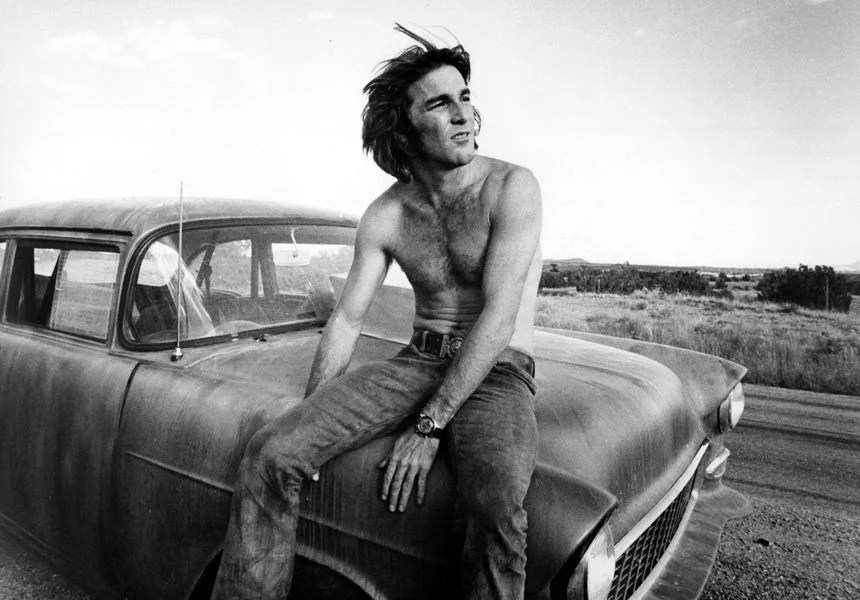
Augustinian Temperance in the Market System

J. Alex Touchet

Christians have struggled for centuries over wealth; while the Bible teaches Christians should be selfless and charitable to the poor, it also teaches those who follow God will be blessed. At first, these two themes may appear to be contradictory. How may one be materially blessed (Deuteronomy 8:18), but avoid pursuing “treasures on earth” (Matthew 6:19)? Further investigation reveals these two themes are not a dichotomy but work together to provide a biblical foundation for a market-based economy through the biblical definitions of private property and stewardship. This synthesis is revealed by Augustine’s “ordering of love” in the Christian life.

Past and contemporary theologians, preachers, and others have leaned from one extreme to the other regarding the appropriate biblical perspective on individual wealth. Prosperity gospel preachers such as Joel Osteen and others are renowned for straying to one far side of the aisle, spouting proclamations such as, “God wants us to prosper financially, to have plenty of money, to fulfill the destiny He has laid out for us.” Some are not so vague: “Georgia-based preacher Creflo Dollar shockingly assured his congregation: ‘I own two Rolls-Royces and didn’t pay a dime for them. Why? Because while I’m pursuing the Lord those cars are pursuing me.’”1 Those on the other side of the aisle might go as far as to proclaim the New Covenant has upended the Old Testament precepts of private property and trade and propose Jesus was essentially teaching a form of Communism, utilizing verses such as Acts 2:44-45 and James 5:1-6.

Augustine provides Christians with a solution to the apparent dichotomy between wealth and the Christian lifestyle. In his work On Christian Doctrine he presents the value of temperance in Christian living. Augustine explains how a Christian must objectively evaluate all things in his life and keep them in the proper hierarchy of importance:

…So that he neither loves what he ought not to love, nor fails to love what he ought to love, nor loves that more which ought to be loved less, nor loves that equally which ought to be loved either less or more, nor loves that less or more which ought to be loved equally.2

Accordingly, the Christian must love God before he loves material possessions. This understanding gives passages such as 1 Timothy 6:10 clarity: wealth does corrupt, but only when it is loved before God. If the Christian has properly ordered his loves, he is not required by his faith to abandon all individual belongings, though he should be aware of the danger of temptation. “Take care, and be on your guard against all covetousness, for one’s life does not consist in the abundance of his possessions” (Luke 12:15, English Standard Version).

The synthesis Augustine provides also sheds light on the biblical foundations for a free-market system. Even though the market system enables, and even encourages, the accumulation of wealth, it is not inherently unbiblical; the Christian knows it is God “who gives [him] power to get wealth, that He may confirm his covenant…” (Deuteronomy 8:18). Hugh G. M. Williamson points out, specifically in the Old Testament context, that “possessions are thus not held for one’s own benefit but for the service of the God who gives in order to do his will in the care and protection of those with less or no means to represent themselves in society.”3 With the addition of Adam Smith’s conceptualization of the market’s “invisible hand,” the market system becomes a place where Christians can contribute to the distribution of wealth among society through free trade. Private property and the market system are not inherently sinful conventions; rather, they are gifts from God.

References

1 Stephens, R. J. (2015). “Understanding the Prosperity Gospel.” Fides Et Historia, 47(2), 55-59.

2 St. Augustine. On Christian Doctrine (p. 18). Grand Rapids, MI: Christian Classics Ethereal Library.

3 Williamson, H. M. (2011). “A Christian view of wealth and possessions: an Old Testament perspective.” Ex Auditu, 271-19.

“Hamming It Up”: The Popularization of American Biblical Literalism

Caitlin Montgomery Hubler

May 28, 2007 was a day many Christians across America had eagerly anticipated. Four thousand visitors flocked from all over the country to Petersburg, Kentucky for the grand opening of the Creation Museum. Judging by its appealing modern architectural style alone, the Creation Museum could be mistaken for any other natural history museum. But setting foot inside the seventy-five thousand square foot architectural feat would quickly reveal it was not like other museums. Inside the Planetarium, creationist cosmological models are depicted in opposition to the Big Bang model. Over 52 videos guide visitors through the exhibits, covering everything from the scientific plausibility of a worldwide flood to the societal consequences of belief in evolution.

The mastermind behind it all? Australian-born American Ken Ham. Despite holding only a Bachelor’s degree in applied science, Ham has spent his career persuading Christians and non-Christians alike of the dangers of belief in evolution. Founder of Answers in Genesis, the creationist ministry responsible for the funding of the Creation Museum, Ham is an influential speaker and key voice in the Young Earth Creationism movement. Central to the group’s identity is a rejection of biological evolution based on the belief the biblical book of Genesis dictates a literal history of the origin of the world. Because Genesis outlines a creation that occurred in six days, proponents of Young Earth Creationism also reject the age of the earth held by modern scientists (approximately 14 billion years) in favor of what they believe to be the biblical model (6,000-10,000 years).

Despite the virtual consensus among credentialed biologists regarding the explanatory power of evolution, the museum has been a success economically: Answers in Genesis estimated in 2013 approximately 1.9 million people visited the museum, with at least 250,000 visitors annually. Furthermore, a 2013 Gallup poll revealed the beliefs espoused by the Creation Museum are far from marginal: 42% of Americans reject evolution in favor of Young Earth Creationism (Newport). At this point, we must pause and ask the question: what term is best used as a descriptor for Ken Ham and his followers? Fundamentalist? Evangelical? Biblicist? For reasons beyond the scope of this paper, I believe there are problems with equating the hermeneutics of Ken Ham with any of these terms. Thus, throughout this paper, I will simply use the term “biblical literalist” to refer to the nature of Ham’s hermeneutic.

This intriguing example of American ideological diversity begs the question: what is the driving hermeneutical force behind Ken Ham’s interpretation of Genesis? This is a complicated question without a single, straightforward answer. In order to better understand the nature and source of Ham’s hermeneutics, one must take a step back and examine him within the larger context of American Christianity in the 20th century. Comprehending the unique challenges faced during this time period will aid us in grasping the motivations that make Ham’s beliefs so compelling to him and his followers. In particular, a crisis of authority within American Christianity caused by higher criticism of the Bible and Darwinian evolution has contributed to the biblical literalism championed by leaders like Ham. His hermeneutic propounds a particular response to this crisis: a response whose nature is especially explicable due to the influence of Scottish Common Sense Realism, shifting scientific paradigms, and a uniquely American spirit of religious entrepreneurialism.

Higher biblical criticism’s rising prominence in the 18th century began to shape new attitudes toward the Bible that were troubling for some Christians. The mere existence of fields such as “redaction criticism” had troubling implications for certain biblical scholars who equated the authority of God’s word with particularly modernist views about its transmission. To suggest there had been alterations to a divinely inspired text, in the minds of modernist American Christians, was to suggest the unthinkable: that God was a liar. For Protestants in particular, for whom Scriptural authority largely replaced ecclesial authority, the discovery of the messiness of the Bible posed a threat to faith’s very foundation. Likewise, Christians were disconcerted by the fact the field of biblical studies was increasingly becoming separated from theology. For those who saw the Bible as God’s special revelation of Godself to humankind, the idea an entire lifetime could be spent studying it without professing faith in God had to be indicative of a failure in method.

Furthermore, historical criticism seemed particularly at odds with Protestant ideals of the perspicuity of Scripture. When years of study in Greek and Hebrew are necessary before one can arrive at a realistic picture of “the world behind the text,” the Bible becomes impossibly complicated for the layperson to interpret. When scholars claimed this esoteric knowledge was not only useful, but necessary for a true interpretation of the Bible, the relevance of Scripture for the common person was challenged.

An equally threatening phenomenon was concurrently taking place: the rise of Darwinian evolution. In addition to the radically different timetables between Genesis and evolution regarding the origin of humanity, Darwin’s insights opened new doors into the history of humankind, threatening certain traditional religious ideas about the nature of humans. Rather than being specially set apart from the rest of creation, as seems to be indicated in Genesis, according to Darwin’s theory, humans were simply more evolved forms of primates. It forced Christians to rethink what it meant for humans to be created “in the image of God.” If humans were merely the product of natural selection, it becomes more difficult to claim humans were intentionally set apart from the very beginning to be like God, as Genesis claims. Moreover, humans only came about by the cold, heartless means of squashing other species and “beating them out” for survival over millions of years of suffering. Is this really what the “image of God” means?

Christians were compelled to respond to these threats. With the rise of higher criticism and the growing popularity of Darwinian evolution, Christians found themselves at a crossroads in the mid-20th century. Cultural tides were shifting as well. With the advent of the 1960s came the Civil Rights Movement, the “Sexual Revolution,” events in Vietnam, and rising levels of religious pluralism, each accentuating the need for an immutable source of truth from which direction could be gleaned for a changing world (Beckman). In this vacuum of authority, Ken Ham saw two choices: jettison the Bible as culturally authoritative, or stand ever firmer in defense of its truth. His choice was clear.

Ken Ham’s most enduring work, The Lie: Evolution, explores the effect he believed the acceptance of evolution would have on various aspects of American society. To Ham, salvation itself is at stake in the question of how to read Genesis properly. Ham’s hermeneutic is essentially one that privileges the “plain sense” of the text. This view takes the Bible at the face value for the reader. Ham believes this ought to be obvious: “If you cannot take what it says to arrive at the meaning, then the English (or any other) language really becomes nonsense” (Ham 89). The argument amounts to a reductio ad absurdum: if Genesis does not “mean what it says,” we have no way of arriving at a meaningful interpretation of the text. Therefore, Genesis must mean what it says. Any suggestion otherwise is noted as a rejection of the text’s authority. Indeed, perhaps the most important aspect of Ham’s interpretation of Genesis is he does not consider it to be an “interpretation” at all. In one of Ham’s many television appearances, this time for commentary on PBS’s Evolution series, Ham is pictured confidently stating, “I don’t interpret Scripture; I just read it (Stephens 48).”

The ideological currents surrounding the crisis of authority perhaps aid us in understanding why Ham responded to it in the way he did. Specifically, with a fuller understanding of the influence of Scottish Common Sense Realism as represented by Thomas Reid, the scientific paradigm shift from Baconian to Humboldtian science, and the American spirit of religious entrepreneurialism nurtured by the 2nd Great Awakening, the popularity of Ham’s hermeneutic is explicable.

In response to the empiricism of philosopher David Hume, Thomas Reid played a large role in the Scottish Enlightenment of the 18th century, particularly in his advancement of Common Sense Philosophy. Advocates of the new Common Sense philosophy rooted themselves in the belief humans are “naturally implanted with an array of common sense beliefs and these beliefs are in fact the foundation of the truth.” Whereas Hume’s philosophy prompted skepticism of any belief for which one did not have direct sensory or experiential evidence, Common Sense philosophy instead encouraged confidence in one’s innate cognitive abilities to deliver the truth about the world.

According to one advocate, James Oswald, common sense is “that power of perceiving and judging peculiar to rational beings” and can be trusted to deliver the truth. Oswald is convinced “men of sound understanding” will essentially agree on primary truths if they are indeed utilizing common sense. Any disagreement in interpretation is ultimately explicable by the fact one party must not be using common sense. In fact, Oswald argued common sense ought to hold even more authority than knowledge gleaned through senses. While sensory knowledge is available to any creature capable of sensing, common sense is a quality unique to rational beings held in addition to these beings’ sensory capacities. It is a higher faculty altogether, and for that reason commands a higher degree of authority.

Of course, what happens in Scotland does not stay in Scotland. For a significant period of the mid-nineteenth century, the philosophy of Common Sense was arguably the single most powerful intellectual influence in educated circles in America. 18th-century philosopher of science Thomas Reid, another key proponent of Common Sense Philosophy, was best known for developing a scientific epistemology based on the dominant scientific paradigm of his lifetime: Baconian science.

Developed by Sir Francis Bacon centuries earlier in his 1620 work Novum Organum, the Baconian paradigm privileged inductive reasoning as the only method by which responsible scientific conclusions may be drawn. This mentality encouraged scientists to realize the limits of their knowledge and to draw conclusions only for which concrete evidence could be offered. Generalization beyond what “the facts” themselves demonstrate was unscientific, because according to Baconian science,  “abstract concepts not immediately forged from observed data have no place in scientific exploration.” The work of Sir Francis Bacon was incredibly influential in both British and American thought even centuries after his lifetime, causing many to refer to him as “the father of science.”  Reid’s Baconian epistemology privileged common sense and the validity of sense perception, and became widely influential as a rebuttal to Hume’s skeptical empiricism.

Such a philosophy grounded in induction and common sense principles is easily detected in biblical literalism. In the mid-nineteenth century, transcendentalist J.D. Morell drew a salient parallel between the process of induction encouraged by Baconian science and his view of Christian theology: “Just as the facts of nature lie before us in the universe, and have to be generalized and systematized by the process of induction, so also the facts of theology lying before us in the Bible, have simply to be moulded into a logical series, in order to create a Christian theology.”

This attitude, in which the Baconian method of induction is essentially commandeered to apply to the realm of constructing theology from the Bible, has been referred to as “the naturalization of Scripture.” The motivation was clear — to find such a straightforward way of reading the Bible that one’s theological conclusions could be as certain as those a scientist could draw from a science experiment. This claim was further explored by J.S. Lamar, theologian and pastor in the Disciples. We might therefore say with the prevailing Baconian philosophy evolved what might be called a Baconian theology as well.

Years later, an emphasis on common sense as a means of establishing truth led many Americans like Ken Ham to believe the correct reading of Genesis 1-2 was not in fact an “interpretation” at all, but was instead simply the only common sense reading of the passage. For biblical literalists, part of what it means for the Bible to be God’s Word is the gap between ancient document and modern reader is either nonexistent or unimportant. The idea their own common sense could not be trusted to interpret the Bible was not only to insult their intelligence, but a denial of God’s ability to stand in the gap and make Scripture comprehensible to the modern lay reader. In this sense, common sense is an incredibly reader-centric hermeneutic. Because Genesis 1 outlines creation as a seven-day process, and because the modern western reader most often hears the word day as a literal 24-hour day, Genesis 1 must have been describing creation as seven 24-hour days. Naturally, this attitude manifested itself in an anti-intellectualism that tended to downplay the importance of being trained in the arts of interpretation, often accompanied by a distrust of academia. Academics were those people who wanted to take their Bible away from them — far more trustworthy were the intuitions of other everyday people who were not corrupted by the liberal, atheistic bias of academia.

Naturally, the belief Scripture counts as “empirical data” as much as does scientific data led to a conflict of interest between Darwin’s theory of evolution and Genesis. Although the denial of evolution has been criticized by many as anti-science, historian George Marsden argues for a more nuanced approach: that we consider anti-evolutionism as a clash between two scientific paradigms. A common misconception about the nature of science is it is essentially a body of facts growing with each generation. What is actually the case is science is a series of revolutions, in which new bodies of knowledge continuously supplant one another. With the advent of each new scientific paradigm comes new base assumptions and presuppositions about experimentation and methodology not present in the previous one.

This was precisely the case when Baconian science faded out of the field of biology. Inductive inference was a key tenet of this scientific paradigm. One was only justified in claiming something scientific could be believed if one had actually observed such an event happen empirically, and could reasonably generalize the event’s occurrence. However, when it was replaced by Humboldtian science, which instead privileged deductive reasoning, such an inductive method was no longer necessary for a theory to be presumed scientifically likely. Many biblical literalists who opposed evolution referred to it as “religion” because the experiments used to support it never reproduced its effects in the way Baconian science would have necessitated. It is important to understand this was not a rejection of the scientific method entirely, but a rejection of a certain scientific paradigm.

Finally, Ken Ham’s actions make sense within the framework of American entrepreneurialism nurtured since the early 19th century. The political refrain of America being a “land of the free” in which hard work and ingenuity pay off had manifested itself not only politically but religiously as well. In particular, the Second Great Awakening brought a rush of spiritual energy that channeled itself into the creation of several new off-shoots of traditional Protestantism, including Mormonism, Seventh-Day Adventism, and additional denominations of Protestantism. Everywhere, people were being encouraged to reject corrupt belief systems and return to the true nature of “pure Christianity” (much of the same impetus for the Reformation a couple centuries earlier).

 Ironically, this drive to return to the pure and essential elements of Christianity led people to consider themselves authoritative on religious matters, and in the case of Ken Ham, hermeneutics. Naturally, when many people from diverse backgrounds all try to conceive of a “pure” Christianity, the ideas are as multifarious as the people. Regardless, this might explain why someone like Ken Ham would have felt he had the authority, as a layman, to call people back to the “true reading” of Genesis. Indeed, his lack of professional biological training, far from being a setback, is arguably one of his main selling points to his audience of biblical literalists, who are more apt to trust the intuition of the common person over the morally bankrupt over-intellectualization they observed in the universities.

Ken Ham’s hermeneutics did not arise in a vacuum, sociologically, culturally, or historically. A fuller knowledge of the context out of which this hermeneutic arose is helpful in at least two ways. Firstly, comprehending the depth of the crisis of authority that led to Ham’s literalism might aid in producing the empathy necessary for productive conversation with his followers. Secondly, it accomplishes the practical goal of providing a starting point for conversation with biblical literalists regarding hermeneutics. During a time of such unprecedented polarization as we now face in America, many doubt it is even possible to have productive conversations with those who we deem ideologically “other.” But the need to empathize and engage with such perspectives is a duty of those engaged in the work of religious studies. Rather than respond with flaming rhetoric, we can use the tools given to us to pave the way for genuine understanding between vastly disparate belief systems. May we rise to the occasion.

Bibliography

Armstrong, Christopher and Grant Wacker. “The Scopes Trial.” National Humanities Center. October 2000. Web. 30 March 2016.

Beckman, Joanne. “Religion in Post-World War II America.” National Humanities Center. October 2000. Web. 30 March 2016.

Ham, Ken. The Lie: Evolution. Green Forest: Master Books, 1987. Print.

“Higher Criticism.” New World Encyclopedia. 22 February 2014. Web. 31 March 2016.

Lee, Michael J. The Erosion of Biblical Certainty. New York: Palgrave Macmillan, 2013. Print.

Marsden, George M. Fundamentalism and American Culture. New York: OUP, 2006. Print.

Newport, Frank. “In U.S., 42% Believe Creationist View of Human Origins.” Gallup. 2 June 2014. Web. 18 December 2015.

Stephens, Randall J. and Karl W. Giberson. The Anointed. Cambridge: HU, 2011. Print.

“Westminster Confession of Faith of 1968.” Presbyterian Church of America Administration Committee. 2015. Web. 30 March 2016.