Author Archives: Christopher Rush

Unknown's avatar

About Christopher Rush

Christopher Rush graduated from Emmaus in 2003. After 15 years teaching high school in Virginia, he has returned to Emmaus and Dubuque to take over the English Department. His wife, Amy, is also an Emmaus graduate (2000). They have two children, Julia and Ethan.

Excitement, Adventure, and Really Wild Things: A Legend’s First Film

Timothy J. Rush

The Hayao Miyazaki oeuvre covers so many beloved classics of anime such as My Neighbor Totoro, Spirited Away, Kiki’s Delivery Service, and Princess Mononoke. Often overlooked is his very first film directorial effort, The Castle of Cagliostro. It’s not hard to see why: it doesn’t quite fit with the themes and elements that characterize much of the rest of his work. There isn’t a young girl protagonist, no moving to a new country home, no emphasis on the importance of preserving nature. Instead, we have a film that is part of a different large body of work, specifically the Lupin the Third series by Monkey Punch, an anime series Miyazaki himself worked on. But let me tell you right now, The Castle of Cagliostro is not merely my favorite animated film of all time, but also in my top three movies (live action or animated) ever.

You see, Castle of Cagliostro has what I like in movies on a base, visceral level: excitement, adventure, and really wild things. Castle of Cagliostro starts with a Monaco casino heist at the height of conflict, our “heroes” Lupin and Jigen running away from the police with arms stuffed so overly full of cash bills stream behind them as they impossibly hurdle over obstacles on their way to their getaway vehicle. The police bumble their way into their own vehicles, which proceed to fall apart in spectacular and equally impossible ways: splitting down the middle, wheels flying off, crunching to a halt after moving mere inches — all of these the product of sabotage by Lupin, as revealed by his taunting note left on the engine compartment of one of the now-useless cars.

This illustrates what is the true hallmark of this movie: portraying a thrilling adventure where the rules of physics shall bend beyond that of reality, but only in ways that enhance the thrills and humor without destroying important dramatic tension. The most obvious example of this is my favorite sequence of the film, a car chase around a winding cliff path with Lupin and Jigen trying to intercede on behalf of a woman being chased by some thugs. At one point in this tense chase, Lupin drives his Fiat 500 (a ridiculous car to even be in such a chase) sideways up the side of the cliff. It’s completely mad, but just wonderful to watch. Yet while physics have been defied, dramatic tension remains — we are still worried for the well being of the woman in the pursued car, as it creeps toward falling off a cliff. Even in later action sequences we still hold our breath, hoping our hero can make it through.

This says nothing of the lavish setting of the movie, where even on his limited budget Miyazaki fills the fictional Grand Duchy of Cagliostro with detail and intricacies. Miyazaki’s love of visual landscapes packed with wonders to explore can be seen even here in his earliest directorial work. There are more than a few long, lingering shots that may not move the plot forward but help immerse you in this little independent city-state where most of the movie takes place.

But of course, we need to address the 500-pound gorilla in the room: can you enjoy The Castle of Cagliostro without knowing a lick about Lupin the Third? Honestly, it’s actually ideal not to have preconceived notions of the Lupin characters. On its initial release in the late seventies, The Castle of Cagliostro was actually criticized for its portrayal of the beloved Lupin the Third characters. For instance, Miyazaki’s Lupin is far more heroic and less arrogant, and his treatment of female lead Fujiko Mine gives her depth and skill as opposed to being a sex object. Miyazaki makes these characters his own, and the movie is better for it. You get all the needed history in the film itself, from Lupin and Fujiko’s mutual admiration to the complex relationship of Lupin and his law enforcement foil Koichi Zenigata.

The Castle of Cagliostro has also stood the test of time for me, personally. As one of the three movies I will pop on the TV whenever I truly need a pick-me-up, it has never failed to put a smile on my face. I have watched it dozens of times, only rivalled in number by the other members of my movie holy trilogy (Jaws and Shaun of the Dead), and it is always the right choice to watch. It is my favorite anime of any sort, movie or series, and you absolutely should give it a try.

Not a Man, pt. 4: Robert Galbraith

Elizabeth Knudsen

There are many different reasons why female authors have chosen to take male pennames. In years past, the reason was political. Authors like Mary Ann Evans (George Eliot) wrote under a male name to ensure their more political novels were taken seriously in an era when women’s rights were practically nonexistent. Other reasons were due to great influence by male authors and the desire to imitate them. An example of this is Amantine-Lucile-Aurore Dupin (George Sand). In more modern times, female authors have still felt they had to write under a male pseudonym to ensure their books were accepted by the male audience, such as Christina Lynch and Meg Howrey (Magnus Flyte). This final essay explores yet another reason a female writer to write under a male pseudonym.

Robert Galbraith is the author of the Comoran Strike series, which presently consists of three books: The Cuckoo’s Calling, The Silkworm, and Career of Evil. It is widely known, however, this award-winning author is not an old war veteran after all, but a pseudonym for J.K. Rowling, the author of the Harry Potter series.

Joanne Rowling was born in July 1965 at Yate General Hospital in England and grew up in Chepstow, Gwent, where she went to Wyedean Comprehensive. She left Chepstow for Exeter University, where she earned a French and Classics degree. She then moved to London and worked as a researcher at Amnesty International among other jobs. The Harry Potter series began during a delayed Manchester to London King’s Cross train journey, and during the next five years, outlined the plots for each book and began writing the first novel. Jo then moved to northern Portugal, where she taught English as a foreign language. She married in October 1992 and gave birth to a daughter, Jessica, in 1993. When the marriage ended, she and Jessica returned to the UK to live in Edinburgh, where Harry Potter & the Philosopher’s Stone was eventually completed. The book was first published by Bloomsbury Children’s Books in June 1997, under the name J.K. Rowling. Her initials were used instead of her full name because her publisher thought a female author would deter the target audience (young boys) from reading the books.

As is known, the Harry Potter series was wildly successful, having sold over 450 million copies in 69 languages. So why then, at the height of her success, would J.K. Rowling write under a male pseudonym?

According to the author herself:

To begin with I was yearning to go back to the beginning of a writing career in this new genre, to work without hype or expectation and to receive totally unvarnished feedback. It was a fantastic experience and I only wish it could have gone on longer than it did. I was grateful at the time for all the feedback from publishers and readers, and for some great reviews. Being Robert Galbraith was all about the work, which is my favorite part of being a writer. Now that my cover has been blown, I plan to continue to write as Robert to keep the distinction from other writing and because I rather enjoy having another persona.

J.K. Rowling wrote under a male pseudonym in order to receive unbiased feedback. This is something to be respected. She didn’t use a penname under some illusion her books wouldn’t sell because she was a woman; she wanted to start again. And her books sold with or without the disguise.

In previous eras, the reasoning for male pseudonyms may have been political, but today more often than not women do it just because. And that’s encouraging. Social justice has come a long way, and now women don’t have to pretend they’re men in order to have their political opinions heard and valued.

Bibliography

Rowling, Joanne. J.K. Rowling. N.p., 2012. Web. 18 May 2016. <www.jkrowling.com/en_GB/#/about-jk-rowling>.

—. Robert Galbraith. N.p., 2014. Web. 18 May 2016. <robert-galbraith.com/about/>.

The Time Machine

Alex Touchet

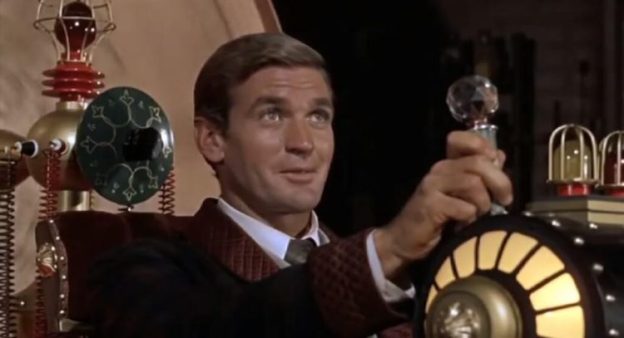
H. G. Wells was one of the singular most formative authors in the genre of science fiction. Wells was among the first of authors to introduce the concept of a “time machine” to popular literature; he even coined the term. The Time Machine, written in 1895, stands apart from other novels of its time as one of the most innovative pieces of literature of its time. The novel’s importance does not come only from its scientific imagining, but the themes presented along with it. H. G. Wells offered his era much more than mere scientific dime novels.

The Time Machine introduced multiple dystopian ideas in a time where literature was often saturated with utopian themes. For example, people such as Edward Bellamy were writing novels such as Looking Backward: 2000–1887 and Equality in the 19th century: these books were very Marxist in nature and often focused on the proposed dangers of capitalism in society versus the success of socialist strategy. H. G. Wells did not take this route when writing his first novel. When his protagonist the Time Traveler travels forward into the future and encounters a strange society filled with shallow and complacent beings, it seems Wells is taking the utopian route. When night falls, however, the Time Traveler discovers the truth of the society he has landed in, and it is far from utopian.

Wells seemed to have some disregard for the utopian presentations of reality prevalent in other literature at the time. He did not write this story to have a happy ending. In fact, it seems rather tragic. The Time Traveler’s adventure does not bring him to a glistening society in which people live together in perfect community, bolstered by technology. Instead, he discovers a primeval food chain where a caricatured “upper class” is juxtaposed against nocturnal ape-like creatures that feast on their flesh. He travels to the literal end of the world, and instead of returning to his time to warn humanity of its impending fate, he disappears from his time. H.G. Wells was not writing to convey wishful fairytales, but to demonstrate what he believed to be the reality of human society. Many of his early works may be described as almost pessimistic (The Invisible Man, The War of the Worlds) in the same manner The Time Machine seems to be.

H.G. Wells was one of the greatest science fiction authors not only because of the revolutionary ideas he presented, but also because of the themes he channeled through his novels. His books were formative to the earliest era of science fiction, and his creation of the term “time machine” spawned countless stories revolving around the theme of time travel. Few authors would be able to say they were the creator of a common literary trope, but H.G. Wells is among the privileged who can.

The Battle of Baklava

Justin Benner

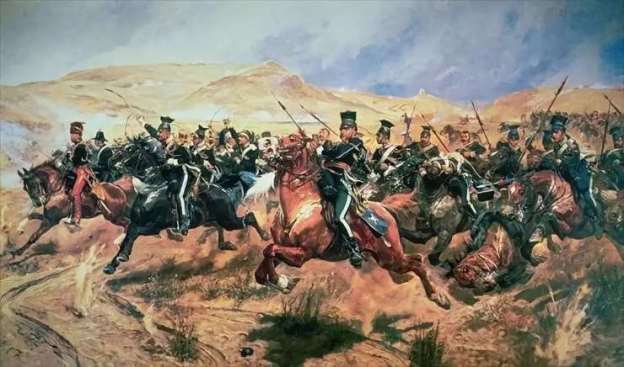
On October 25, 1854 during the Crimean War the Battle of Balaclava was part of the Siege of Sevastopol (1854–1855). This indecisive military engagement of the Crimean War is best known as the inspiration of the English poet Alfred, Lord Tennyson’s “Charge of the Light Brigade.” In this battle, the Russians failed to capture Balaklava, the Black Sea supply port of the British, French, and Turkish forces in the southern Crimea; but the British lost control of their best supply road connecting Balaklava with the heights above Sevastopol, the major Russian naval center under siege.

Early in the battle the Russians occupied the Fedyukhin and the Vorontsov heights, bounding a valley near Balaklava, but they were prevented from taking the town by General Sir James Scarlett’s Heavy Brigade and by Sir Colin Campbell’s 93rd Highlanders, who beat off two Russian cavalry advances. Lord Raglan and his British staff, based on the heights above Sevastopol, however, observed the Russians removing guns from the captured artillery posts on the Vorontsov heights and sent orders to the Light Brigade to disrupt them. The final order became confused, however, and the brigade, led by Lord Cardigan, swept down the valley between the heights rather than toward the isolated Russians on the heights. The battle ended with the loss of 40 percent of the Light Brigade.

This poem is an extremely popular poem. It has been featured in The Blind Side, and was even published in the newspaper after being written. Written shortly after the battle, it outlines one of the biggest military failures for the British.

Half a league half a league,

Half a league onward,

All in the valley of Death

Rode the six hundred:

“Forward, the Light Brigade!

Charge for the guns” he said:

Into the valley of Death

Rode the six hundred.

Tennyson starts at the beginning with the order to charge. “Half a league” in modern terms equates to about 1.25 miles. So the poem starts out by ordering the 600-man Light Brigade to charge the guns a little over a mile away. Tennyson uses Biblical allusions to bring home the sacrifice made by the soldiers by stating “the valley of death.” This is from the Psalm 23, which says: “Yea, though I walk through the valley of the shadow of death, I will fear no evil: for thou art with me; thy rod and thy staff they comfort me.” Clearly there is no belief these men will return from this charge alive.

“Forward, the Light Brigade!”

Was there a man dismay’d?

Not tho’ the soldier knew

Some one had blunder’d:

Theirs not to make reply,

Theirs not to reason why,

Theirs but to do & die,

Into the valley of Death

Rode the six hundred.

This is perhaps the most famous section of the poem. Tennyson starts with a question asking if anyone was dismayed. Not just that, but if anyone thought someone had blundered: clearly there must be some mistake, sending a light brigade to go fight a heavy artillery position over a mile away through a dead man zone makes no sense. One part of this stanza often misquoted is “Theirs but to do and die.” Often people say “to do OR die,” but this gives a totally different and wrong meaning. Tennyson used “to do and die” to show the troops, even in the face of certain death and blunder, will charge for King and country. By saying “to do or die,” you essentially take away the belief they will actually charge. Not only did the light brigade charge, they didn’t question it, or even try to reason themselves out of it; they simply heard the order and went. This takes an extremely large amount of courage and valor.

Cannon to right of them,

Cannon to left of them,

Cannon in front of them

Volley’d & thunder’d;

Storm’d at with shot and shell,

Boldly they rode and well,

Into the jaws of Death,

Into the mouth of Hell

Rode the six hundred.

Flash’d all their sabres bare,

Flash’d as they turn’d in air

Sabring the gunners there,

Charging an army while

All the world wonder’d:

Plunged in the battery-smoke

Right thro’ the line they broke;

Cossack & Russian

Reel’d from the sabre-stroke,

Shatter’d & sunder’d.

Then they rode back, but not

Not the six hundred.

The next two stanzas give a lot of detail on the actual charge itself. We see in the third stanza they are literally surrounded on all sides by cannons. They are being shot at and losing men rapidly, but even with all the odds stacked against them they rode on through the valley of death. It is interesting he uses the terms “jaws of death” and then “into the mouth of hell.” This is another Bible reference this time to Isaiah 5:14: “Therefore death expands its jaws, opening wide its mouth; into it will descend their nobles and masses with all their brawlers and revelers.” He is saying death will literally eat them alive. In stanza 4 we begin to see them draw their swords and begin to reach the line of cannons. Tennyson states they charged while all the world wondered, basically showing no one knew why they charged into a death trap. After they broke through the lines, there was a fight between the Russian Cossacks and the British light brigade. From the last line we can see the Cossacks retreat but not the light brigade.

Cannon to right of them,

Cannon to left of them,

Cannon behind them

Volley’d and thunder’d;

Storm’d at with shot and shell,

While horse & hero fell,

They that had fought so well

Came thro’ the jaws of Death,

Back from the mouth of Hell,

All that was left of them,

Left of six hundred.

“When can their glory fade?

O the wild charge they made!”

All the world wonder’d.

Honour the charge they made!

Honour the Light Brigade,

Noble six hundred!

In stanza 4 we see the immediate aftermath of the skirmish between the Cossacks and the British cavalry. They fought through the far line of the Russian cannons and fought their way out of the jaws of death. The charge amazingly did not wipe out the light brigade but did inflict massive casualties. Most of the force was either dead or wounded. Tennyson wants us to honor the bravery of the 600. They willingly sacrificed themselves on a mistaken order without question.

The Dangers of American Public Schooling

Elizabeth Knudsen

We are exhausted. We are stressed and anxious. We are depressed. We are born with curiosity and given a straightjacket. We are led to believe the sacrifice of our emotional and physical wellbeing is worth twelve years of standardized schooling. We think all we need to know is found in the heavy textbooks that strain our spines (Warner) in our pursuit of facts we forget in a week. This is how the secondary educational system is structured. And it is hurting us. G.K. Chesterton once said “The purpose of compulsory education is to deprive the common people of their common sense” (Pearce). The American public school system is detrimental to the mental and emotional wellbeing of students.

The struggle for educational reform in America has existed for hundreds of years. In colonial New England, education was considered a local responsibility. But education soon started its shift toward being under the government’s control, and as early as 1647, Massachusetts law mandated every town of 50 or more families had to have a school, and every town of 100 or more families must have a Latin school to ensure Puritan children learn to read the Bible and receive basic information about their Calvinist religion. After the American Revolution in 1779, Thomas Jefferson argued the school system should be tax-funded and should teach more than just basic skills and build knowledge of the classics, sciences, and education for citizenship. This was called a two-track educational system (“Historical Timeline”). His pleas were ignored, and local schools continued as the norm in the early days of the U.S. As for teachers, a 1789 Massachusetts law dictated school masters must have a college education and produce a certificate of qualifications and good morals from an established minister or selectman. Despite this, schools were often taught by people whose credentials were often self-exampled knowledge (like Laura Ingalls). The same year this law was passed, another required public schools to serve females as well as males. In 1790 the Pennsylvania state constitution called for free public education, but only for poor children (“Historical Timeline”). The literacy rate of both men and women, who were often home taught, was higher than that of European countries in early America (Iorio 3).

According to raceforward.org, in 1805, “New York Public School Society was formed by wealthy businessmen to provide education for poor children. Schools were run on the ‘Lancasterian’ model, in which one ‘master’ taught hundreds of students in a single room. These schools emphasized discipline and obedience; qualities that factory owners wanted in their workers.” 1820 saw the opening of the first public high school in the U.S., Boston English. Seven years afterwards Massachusetts made all levels of public schooling free. In the 1840s Irish Catholics in New York City fought for local neighborhood control of schools in an attempt to prevent their children from being force-fed a Protestant curriculum. Massachusetts passed its first compulsory school law in 1851 anyway in an attempt to educate the poorer children of foreign immigrants flooding into the U.S., and New York followed suit the year after. By 1865 the number of public schools had increased massively, but the level of education available varied and compulsory attendance did not exist nation-wide. Grammar books called Readers were the dominant form of learning for the reading, writing, and arithmetic core, but school reformers eventually influenced the inclusion of spelling, geography, history, the U.S. Constitution, nature study, physical education, art, and music (Iorio 4).

A set of principles called Scientific Management were introduced to the education system by Frederick Winslow Taylor. Taylor encouraged employers to reorganize for maximum efficiency by subdividing tasks, speeding production, and making workers more interchangeable. This theory of mass production with minimum cost was applied to schooling. It is Taylor we have to thank for standardized records of efficiency ratings, standardized tests, building score cards, teaching loads, standardized conditions of school buildings and classrooms, standardized operations for school personnel and students, and monetary rewards for teachers whose students meet assigned goals. Students were taught by drills, memorization, and regimented routines (Iorio 9).

Progressive educators, such as John Dewey, were swept up in the national enthusiasm for industrial education. The Report of the Massachusetts Commission on Industrial and Technical Education in 1906 claimed the “old-fashioned” type of schooling that existed before the progressive movement caused large numbers of children to leave school early, unprepared to be useful citizens. The commission recommended the majority of children should be trained in school with vocational and commercial studies for jobs in industry, instead of “literary education.” For women, occupations such as clerks, teachers, and nurses were emphasized (Iorio 11).

By the late 1940s many public schools had either partially or wholly embraced progressive schooling, but during the post-Cold War era it lost favor when questions were raised about the liberal roots of its reforms. Rudolf Flesch’s popular study Why Can’t Johnny Read (1955) claimed the progressive “reading in context” approach was inadequate preparation for the next generation of Americans (Iorio 13).

The heir to progressive education movement was constructivism, which argues children are active participants in making meaning and must be engaged in the educational process to effectively learn. In the late ’60s, the open classroom movement seemed to be moving away from Taylor’s industrialism. In this movement, students and teachers worked together without walls separating classrooms, regardless of age or grade level. This helped revitalize some of Dewey’s child-centered reforms. It was James B. Conant, however, who argued for a national testing program and an educational achievement index, and increased federal support for vocational guidance in public schools (Iorio 13, 14).

Recently, institutions like Magnet schools (competitive schools often focusing on a particular vocation) have spread across the nation (Iorio 22). Widespread homeschooling ended with the compulsory attendance laws of the 1800s but has steadily been gaining popularity since the 1960s (Iorio 24). During the Clinton administration, the GOALS 200: Educate America Act became law as an attempt to bolster reform. By 2001 only 22 states had adopted these promoted standards. These goals required high school students to take at least four years of English, three years of math, three years of science, three years of history and/or social studies, half a year of computer science, and college-bound students were required to take two years of a foreign language. By the year 2000, most states had not achieved the Goals 2000 mandate (Iorio 24, 25). Such attempts and failures continued with the presidency of George W. Bush with NCLB (No Child Left Behind) and the “adequate yearly progress” (AYP), the goal of a 100% pass rate by the academic year 2013-2014 (Iorio 25). Any school that does not reach AYP for five years could be closed. As goals for reading and math proficiency become more rigorous, more schools are unable to make AYP and more and more schools face impending reorganization or closure (Iorio 26). In March of 2011 the Washington Post reported more than three-quarters of all public schools in America could be labeled as “failing” based on AYP.

This ever constant struggle and seeming back-and-forth between government and business-centered education and localized education has brought us to where we are today. That is, a mind-numbing machine that very rarely allows for the existence of any personal knowledge or talent. As Sir Ken Robinson, an internationally recognized leader in the development of innovation and human resources once said, “We have sold ourselves into a fast food model of education, and it’s impoverishing our spirit and our energies as much as fast food is depleting our physical bodies.” This is where the public education system exists today.

My thesis is relevant because the next generation — the poorly educated ones graduating from public schools now — are going to be in charge of reforms in the future. These reforms could have a huge impact on the way schooling is done everywhere in America. We can’t hide in the bubble of a private Christian school forever. It is up to us to change the education system now, and for the better, for the sake of our future and our children’s future.

The key terms for my thesis are “education,” “learning,” “compulsory” or “mandatory,” and “mental health.” “Education” is defined by the Encyclopædia Britannica as “discipline that is concerned with methods of teaching and learning in schools or school-like environments as opposed to various non-formal and informal means of socialization.” “Learning” is defined as “the alteration of behavior as a result of individual experience,” also by Britannica. “Compulsory” or “mandatory” is defined by Merriam-Webster as “required by law or rule.” “Mental health” is defined by MentalHealth.gov as “our emotional, psychological, and social well-being.” These are the key terms for my thesis the American public school system is detrimental to the emotional and physical wellbeing of students.

I will prove three arguments to confirm my thesis. First, the structure of the public educational system is detrimental to students. Second, the public educational system is hurting those in it right now. Third, the public school system produces detrimental societal expectations.

I will also refute three counterarguments against my thesis. First, if education is not compulsory, children will not learn. Second, trigger warnings are helpful for people who have suffered traumatic experiences. Third, the stress high-schoolers are made to endure will prepare them for later life.

My first argument is the structure of the public educational system is detrimental to students. This is manifest in the existence of mandatory attendance and excessiveness of testing. In my narration, I defined the terms “learning” and “education” separately. This is because popular society too often believes learning only occurs in a highly structured educational system. This leads to the two entirely different words becoming synonymous in one’s vocabulary. Education should not be mandatory because one cannot force a person to learn. Many students feel they are forced to go to school (which in most cases they are), and they rebel by not putting any effort into learning what they are taught. This occurs because they have to go, but don’t want to. Students like these are a distraction to those who do want to learn and to the teachers. If given the opportunity to leave and enter the work force or even simply vocational training, perhaps they would then see the value of an education and return of their own free will, this time taking responsibility for their lives and choices. And even if they chose not to return, with the students who aren’t interested in learning “freed” from the classroom, the teachers would have more time and energy to focus on improving the quality of education for those who chose to stay. School should certainly be available for primary and secondary school students (through 12th grade), but it should certainly not be mandatory. People cannot be made to care about anything, and they cannot be forced to learn. If school were not mandatory, perhaps the students in the system wouldn’t dread it so much.

Mandatory attendance also eliminates better alternatives and opportunities some students would be far more interested and successful in. The school system may partially acknowledge some students have unique gifts, and offer the basic AP or Honors classes to try and accommodate them, but in the end a standardized, mandatory system just doesn’t know what to do with advanced children. A mandatory system doesn’t account for personal learning paces or strong and weak areas. It is merely an attempt to make sure all the children in America have an at least basic knowledge of something or other.

The public school system, as it is, focuses almost ad nauseum on preparing for “the real world,” giving students unrealistic, materialistic expectations for the life they’re guaranteed to have if they stay the course for twelve, fourteen, eighteen, or more years of schooling. But the fact is the only way those high expectations could ever be achieved is through actual hard work at a real job and a little dash of magic thrown in.

In his 2012 State of the Union address, President Obama proposed “that every state — every state — requires that all students stay in high school until they graduate or turn eighteen.” He claimed the reason for this was “When students are not allowed to drop out, they do better,” (“State of”). But the fact is, states with higher compulsory school attendance (CSA) ages do not have higher graduation rates than states with lower CSA ages. Based on an analysis by Grover J. Whitehurst, a senior fellow in Governance Studies and director of the Brown Center on Education Policy at the Brookings Institution and Sara Whitfield, a Financial and Administrative Assistant in the Brown Center on Education Policy at the Brookings Institution, with or without demographic controls, states with CSA until age 18 have graduation rates 1- to 2-percent lower than the states that only require attendance until age 16 or 17. This has been a steady trend since the 2008-2009 school year (Whitehurst and Whitfield). Mandatory attendance doesn’t just harm the students in the system; it doesn’t even accomplish its purpose in the first place.

Another detriment from the structure of American public schools is the overabundance of testing. Testing does not display knowledge. It merely displays how well a student is at taking tests. Testing does not promote learning. It promotes the downloading of facts into our brains to pull up whenever it will help us pass a test. The American school system is drowning in tests. From individual subject tests, to exams, to SOLs, to the PSAT, to the SAT — a student’s high school career is almost built upon taking harder and harder tests. Dawn Neely-Randall, teacher for more than 25 years in Ohio, told The Washington Post in a 2014 interview she was “sick and tired of the effects that obsessive standardized testing is having on her students.” Neely-Randall said her time and ability to actually teach her fifth-grade students how to read and write was being constantly interrupted by a series of required tests — amounting to over eight hours of testing. She wrote:

Tests, tests, and more freakin’ tests.

And this is how I truly feel in my teacher’s heart: the state is destroying the cherished seven hours I have been given to teach my students reading and writing each week, and these children will never be able to get those foundational moments back. Add to that the hours of testing they have already endured in years past, as well as all the hours of testing they still have facing them in the years to come. I consider this an unconscionable a theft of precious childhood time. . .

. . . Many students didn’t speak out as much as they acted out. Cried. Gave their parents a hard time about going to school. Disengaged in class. Got physically sick. Or became a discipline problem. Struggling students struggled even more (Strauss).

This emphasis on testing must be replaced with an emphasis on learning if students are to remember their high school years with anything but dread.

My second confirmation point to prove my thesis is the public educational system is hurting those in it right now, both psychologically and physically. Psychologically, this can be shown in anxiety levels, the seeming epidemic of teenage depression and Attention Deficit or Hyperactivity Disorder. According to The Washington Post, “Fully 83 percent of teenagers said school was ‘a somewhat or significant source of stress.’ Twenty-seven reported ‘extreme stress’ during the school year, though that number fell to 13 percent in the summer. And 10 percent felt stress had a negative impact on their grades” (Shapiro). In a survey conducted by the American Psychological Association in 2014, the stress levels of teenagers even rival those of adults — especially during the school year. When asked to rate their stress on a scale of 1 to 10, teenagers’ stress levels far exceeded what is thought to be healthy during the school year (an average of 5.8 versus 3.9) and this tops the average adult’s stress level (5.8 for teenagers as opposed to 5.1 for adults). 31% of teenagers also reported feeling overwhelmed by stress, and 30% feel depressed or sad as a result of stress. 36% of teens report fatigue or feeling tired, and nearly a quarter (23%) report skipping a meal due to stress. Despite these statistics, teens are more likely to claim their levels of stress are not detrimental to their physical health (54% of teenagers as opposed to 39% of adults) or their mental health (52% versus 43%) than adults; meaning that while it affects teenagers more, they complain about stress less and are unaware of the harm it is causing them. According to the survey, not many teens claim their stress is decreasing. While 16% reported a decrease, 31% reported an increase in their stress levels, and 34% believe their stress level will increase in the coming year. Almost half of teenagers (42%) are not sure if they are doing enough to manage their stress. More than 1 in 10 (13%) say they never even set aside time to manage stress. These numbers may seem small, but the effects of stress can be extremely detrimental to the development of teenagers (“American Psychology”).

Considering a large amount of teenagers’ time is being consumed by schooling, it is not hard to tie these high levels of stress back to being overworked and over-tested. In a 2014 study of Californian schools published in the Journal of Experimental Education by Denise Pope, senior lecturer at the Stanford Graduate School of Education, researchers sought to examine the relationship between homework load and student well-being and engagement, as well as to understand how homework can act as a stressor in students’ lives. Research showed excessive homework is associated with high stress levels, physical health problems, and lack of balance in children’s lives; 56% of the students in the study cited homework as a primary stressor in their lives. Pope wrote, “We found a clear connection between the students’ stress and physical impacts — migraines, ulcers and other stomach problems, sleep deprivation and exhaustion, and weight loss” (Enayati). On average, teens report sleeping much less than the recommended amount — 7.4 hours on school nights and 8.1 hours on nights they don’t have school, as opposed to the 8.5 to 9.25 hours recommended by the National Sleep Foundation. 36% of teenagers reported feeling tired because of stress in the past month. Stress also affects the exercise and eating habits of students negatively, causing them to binge on eating unhealthy foods, or worse, skipping meals because of stress (“American Psychology”). According to Psychology Today, the average high school student today has the same level of anxiety as the average psychiatric patient in the early 1950s. Stress has a major impact on our later health, and school is a major component of stress in the teenage years. The school system is hurting us psychologically.

The negative effects of psychological damage can be seen later in the child’s life as the damage festers and increases, but purely physical detriments can be traced back to the school system as well. In a 2010 study from Web MD, Jennifer Warner writes “A backpack loaded with books may set your child up for spine strain rather than success.” According to Timothy B. Neuschwander, MD, of the University of California, backpack loads are in fact responsible for the majority of adolescent back pain. In the study, MRI scans were performed on the spines of eight children of the average age of 11. Each child had one scan done with an empty backpack, then one with backpack loads of 10%, 20%, and 30% of their body weight (the average backpack load or 9, 18, and 26 pounds, respectively). The results showed with the loaded backpacks the discs that act as a cushion between the bones of the spine were compressed, the back pain increased with the load size (5 out of 10 with the heaviest load), and most children had to adjust their postures in order to be able to carry the 26-pound load. Warner writes, “Researchers say the results showed that heavy backpacks cause compression of the spinal discs and increased spinal curvature that are related to the back pain reported by children.” In the study, the children wore both straps of the backpack, but researchers say the spinal curvature could be even worse if only one strap were used.

When discussing the psychological effects of the public education system, I mentioned the unhealthy homework load. This amount of work is what causes these backpack loads to be so heavy, causing even physical hurt to students.

My third confirmation point to prove my thesis is the public school system produces detrimental societal expectations, such as being coddled and sheltered from opposing views as they are or were in school. These manifest in claimed “microaggressions” and subsequent demands for “trigger warnings.” In December 2014, Jeannie Suk wrote in an online article for The New Yorker about law students asking her fellow professors at Harvard not to teach rape law — or, in one case, even use the word violate (as in “that violates the law”) lest it cause distress. In February of last year, Laura Kipnis, a professor at Northwestern University, wrote an essay in The Chronicle of Higher Education describing new campus politics of sexual paranoia. She was then subjected to a long investigation after students who were offended by the article and by a tweet she’d sent filed Title IX complaints against her. In June of the same year, a professor wrote under a protective pseudonym an essay describing how gingerly he has to teach. The headline read, “I’m a Liberal Professor, and My Liberal Students Terrify Me.” Many popular comedians have stopped performing on college campuses, such as Chris Rock. Others like Jerry Seinfeld have publicly condemned the oversensitivity of college students. Two terms have risen from this hypersensitivity: microaggressions, defined as small words or actions or word choices that seem on their face to have no malicious intent but are thought of as an act of violence nonetheless; and trigger warnings, meaning alerts professors are expected to issue if something (e.g., books or other course materials or subjects) might cause a strong emotional response. An example of a microaggression is to ask Asian or Latino Americans where they were born, because the question implies they are not real Americans. This question could be completely benign, but the fact such questions are often met with a drastic overreaction is what invalidates the offense. An example of a trigger warning is some students have called for warnings Harper Lee’s To Kill a Mockingbird includes a less than savory name for African Americans, and might “trigger” memories of past trauma or racism (Lukianoff and Haidt).

Recent claims of microaggressions border on the surreal. At Arizona State University, students claimed Walk-Only Zones were discriminatory toward those who could not walk. They started a Change.org petition to rename these paths to Pedestrian-Only Zones or “any other inclusive title.” A flyer advertising the petition featured silhouettes of people using crutches, wheelchairs, and canes, and urged people to “make ASU a more inclusive space for ALL students and faculty” and claimed “Not everyone at ASU can walk, so WHY use the lingo ‘Walk Only’?” They must not have realized pedestrian derives from the Latin pedestere, which means “going on foot” (Beard 4-5). At Brandeis University Asian-American students attempted to “foster a healthy dialogue about racism … and how harmful and pervasive microaggressions can be.” However, several students felt the display itself was a microaggression and the group was forced to apologize (Beard 4). This hypersensitivity in students is fostered by a basic failing of the American education system: students are being taught what to think, not how to think — that is, they are being taught their own personal opinions and categories of what is “offensive” (microaggressions) are more important than an actual learning environment.

This careful, calculated protectiveness can possibly be traced back to before the 1980s. The surge in crime from the ’60s through the early ’90s caused Baby Boomer parents to be far more protective than their own parents. As stories of abducted children flooded the news, parents tightened the reins on their children in the hopes of keeping them safe. This obsession with safety also happened at school. Dangerous play structures were removed from playgrounds; peanut butter was banned from student lunches. After the 1999 Columbine massacre in Colorado, several schools cracked down on bullying, implementing “zero tolerance” policies. In many ways, children born after 1980 got one message from adults: life is dangerous, but adults will do whatever it takes to protect you … not just from strangers, but from each other as well (Lukianoff and Haidt).

Also in the 1980s and ’90s college campuses began censoring such free speech, driven by political correctness in the school system. According to Professor Donald Downs, censorship “go[es] in cycles,” and now censorship is coming back as “liberty and equality are increasingly pitched against each other. This time it’s students who, in the name of equality, are demanding a climate free from offense, waging a war against microaggressions and calling for trigger warnings” (Williams). A world free from offense will never exist while humanity does. People’s demands to censor others because they don’t agree with them is quite plainly an immature way of trying to avoid what they will have to deal with in any situation in life. In today’s postmodern society, it is claimed there is no universal truth; every man has his own truth. But that would mean there is no basis for telling people what they’re saying is wrong in the first place. A person can make a racist or arrogant statement and there is no way to judge whether that statement is right or not. And yet these attempts at censorship and trigger warnings quite clearly are acting on the basis some things are wrong for anyone to say, and this list of censored speech (or microaggressions) is being provided by nothing more than the arbitrary popular culture developed by a culture of hypersensitivity. Early in high school, students are being taught according to this warped worldview.

In some school districts, students are forbidden from using any Christian terms, criticizing Barack Obama, expressing support for the Second Amendment or socialism, or condemning radical Islamic suicide bombers. One school in California was sued by their 2014 salutatorian after he was made to rewrite his speech multiple times due to his inclusion of his Christian faith. He was even made to rewrite it because he mentioned the Bible by name and referred to Jesus Christ as “my savior.” The school said the student had no right of free speech, claiming the salutatory speech was not a private one and thus the student speaker was merely the “school district’s authorized representative.” Through this role, the student became an agent of the state government and could only say what the government deemed appropriate. And yet, due to the United State Supreme Court’s 1969 case of Tinker vs. Des Moines Independent Community School District, students do not forfeit their First Amendment rights when they attend public school (Klukowski).

Students are being taught free speech is only permitted if the government says so. With the overwhelming emphasis on liberalism and racial and gender inequality, it is no wonder most claimed microaggressions are toward women or minorities. Students are being taught only certain people are allowed to be offended, but those who are allowed to be offended is entirely arbitrary. There will always be disagreement over who is wrong and who is right, whether that’s offensive or if it isn’t. It’s a chaotic system that only serves to create unrealistic expectations for later interactions in life. And students are being indoctrinated from a very young age in school.

But there is an even deeper problem with trigger warnings. According to basic tenets of psychology, helping people with anxiety disorders avoid the things they fear is misguided. A person who is trapped in an elevator during a power outage may panic and think she is going to die. That terrifying experience can change neural connections in her amygdala, leading to an elevator phobia. If you actually want this woman to continue to fear for her life, you should help her avoid elevators. However, if you want her to return to normalcy, the idea of elevators must be reintroduced to the woman in a positive light — through exposure therapy. Through the gradual reintroduction of elevators as not being dangerous, the woman’s amygdala will reprogram itself to associate the previously-feared situation with safety or normalcy. The same process can be used to students who call for trigger warnings in order to return to normalcy. Students with PTSD should obviously get treatment, but that does not mean they should try to avoid normal life (Lukianoff and Haidt). Students and faculty should not be limited by hypersensitivity. The school system is setting students up to believe others will change their opinions to match their own if they’re bullied and silenced. They are taught every man is an island and everyone has his own truth, and that’s okay … except when others’ truths offend them. Then those truths are wrong and theirs are right. This is an unrealistic and unhelpful expectation for society.

The first counterargument against my thesis is if education is not compulsory, children will not learn. But the fact of the matter is, learning is not mandatory in the present education structure — school is. And there are examples of how when children explore unprecedented ways of learning, they live very satisfying lives, sometimes even compared to those who went through the system. Some two million families in the United States homeschool — that is, teach their children at home instead of sending them to school — but around ten percent of that two million actually identify as “unschooled.” In a survey of 232 parents who unschooled their children by Peter Gray and his colleague Gina Riley, respondents were overwhelmingly positive about their unschooling experience. Parents said it not only improved their children’s learning, but also their psychological and social wellbeing as well as family harmony. Challenges were mostly defending their choice of learning to their friends and family, as well as overcoming their own deeply ingrained ways of thinking about education (Gray and Riley 1). According to Gray, people learn through “exploration and interaction with their environment.” In the public school system, this means interaction with teachers, same-age peers, textbooks, assignments, tests, et cetera, selected for the child as part of a pre-planned curriculum. While the school system claims to prepare students for the “real world,” unschooling actually makes the child’s classroom the real world. While culture as a whole is moving toward more narrowly defined curricula, more standardized testing, and more hours, days, and years in school, the unschooling movement is growing.

While often considered a branch of homeschooling, the fundamental difference between the two is homeschooling is literally schooling at home, while unschooling is based on learning through everyday experiences, like a baby learning to talk through being spoken to. Also, in unschooling the children choose their experiences and therefore experience things that automatically match their abilities, interests, and learning styles (Gray and Riley 2). When those taking part in the survey were asked to define their unschooling, one parent stated

For us, unschooling is self-directed, interest-driven, freedom-based learning all the time. We do not use curriculum, nor do we have certain days or hours where we schedule learning. We are learning as we live. We view learning as a natural part of humanity, and we believe that learning is naturally joyful and desirable. We value a spirit of wonder, play, and meaningful connections with others. We seek to experience “education” as a meaningful, experiential, explorative, joyful, passionate life.

The majority of families that took place in the survey identified with this definition (Gray and Riley 8). Many of the families’ reasons for unschooling were wasted time, the paltry amount of learning that occurred, and/or their child’s boredom, loss of curiosity, or declining interest in learning. These families felt their children’s love of learning and intrinsic passion was being buried under the busy work and/or homework. More said they pulled their children out of school due to their child’s unhappiness, anxiety, or condition of being bullied at school. One parent said

My older daughter was having test anxiety (it was the first year that No Child Left Behind was implemented) and wasn’t eating at lunchtime, was overcome by the noise and the smells, and was distracted in the classroom. My younger daughter was bored and beginning to refuse to participate in classroom activities…. Things finally got to the breaking point and I pulled them out without having a plan, but I knew I could definitely do better than the school. I was done sending them someplace that made them so sad and created so much tension in our family.

When asked how they transferred from traditional schooling to unschooling, many families described it as a gradual journey, using structured homeschooling or state-supplied curriculum before unschooling (Gray and Riley 10). One parent’s reason for the switch was homeschooling was “taking the problems my son had at public school and [was] just changing the location.” The same parent tried numerous forms of homeschooling, having researched unschooling but unable to trust it would work. He describes his “ah-ha moment” as when his two younger children taught themselves to read (Gray and Riley 10-11). One unschooling mother wrote her husband was teaching at a small high school, and when their oldest child reached school age

the experience of dealing with kids who did not fit the system really opened his eyes. It pained him so many students had simply given up all enthusiasm for learning at that point in their lives. The kids had either learned to jump through the hoops or had completely stopped trying, but there was very little real passion for learning left in them (Gray and Riley 13).

When asked to describe the benefits of unschooling, nearly 60% of the respondents described the greatest advantages were for their children’s learning. They saw their children learning “more efficiently and eagerly, and learning more life-relevant material.” One parent wrote, “The children can participate in the real world, learn real life skills, converse with people of all ages.” Many also said their children retained greater curiosity and interest in learning. A little over 52% described benefits such as their children being happier, less stressed, more self-confident, more agreeable, and/or more socially outgoing and prepared than they would be if they were in school or being schooled at home — unlike the antisocial stereotypes of home and unschoolers — due to the fact they were constantly interacting with people of all ages and backgrounds in a larger community instead of just their same-age peers in a classroom. 57% of the respondents also said they had an increased family closeness due to unschooling. According to Gray, parents “reported greater closeness with their children and improved sibling relationships” (Gray and Riley 16).

Nearly forty percent named a freedom of scheduling as a benefit as well. Since there was no set schedule disrupting the flow of their day, they could travel as a family and continue learning through experience (Gray and Riley 17), the very definition of learning stated in my confirmation! Unschoolers have gone on to complete bachelor’s degrees or higher, and attend and graduate a variety of colleges, from Ivy League universities to state universities and smaller liberal-arts colleges. They (the unschoolers) called the transfer into the college environment fairly easy due to their high self-motivation and capacity for self-direction. Their most frequent complaints, according to Gray, “were about the lack of motivation and intellectual curiosity among their college classmates, the constricted social life of college, and, in a few cases, constraints imposed by the curriculum or grading system,” or in other words, their counterparts limited by mandatory education (Vangelova).

In modern-day America, the word “success” has become synonymous with “schooling.” However, this is not true in either a financial or an intellectual sense. Benjamin Franklin spent only two years in the Boston Latin School before dropping out at age ten and apprenticing as a printer. Einstein dropped out of high school at age 15. John D. Rockefeller, the world’s first recorded billionaire, dropped out of high school two months before graduation to take business courses at Folsom Mercantile College. Walt Disney dropped out at 16 to join the army, but being too young to enlist, he joined the Red Cross with a forged birth certificate (Davies et al.). Tumblr founder David Karp dropped out of high school at the age of 15 and in 2013 sold his startup Tumblr for 1.1 billion dollars. Oscar winner Quentin Tarantino also dropped out of high school at 15, and now he has been nominated for 152 awards and has won 114. Others are Billy Joel, and James H. Clark, the self-made businessman and cofounder of Netscape considered to be the first Internet billionaire (Gillett). The most important thing is not whether you are well-known or financially successful, but whether or not you are doing what you are passionate about. In his famous 2006 Ted Talk (which remains the most-viewed Ted Talk to this day), Sir Ken Robinson, Former Professor of education at University of Warwick, said:

Our education system is predicated on the idea of academic ability. And there’s a reason. Around the world, there were no public systems of education, really, before the 19th century. They all came into being to meet the needs of industrialism. So the hierarchy is rooted on two ideals. Number one, that the most useful subjects for work are at the top. So you were probably steered benignly away from things at school when you were a kid, things you liked, on the grounds that you would never get a job doing that.  Is that right? Don’t do music, you’re not going to be a musician; don’t do art, you won’t be an artist. Benign advice — now, profoundly mistaken. The whole world is engulfed in a revolution. And the second is academic ability, because the universities designed the system in their image. If you think of it, the whole system of public education around the world is a protracted process of university entrance. And the consequence is that many highly-talented, brilliant, creative people think they’re not, because the thing they were good at at school wasn’t valued, or was actually stigmatized. And I think we can’t afford to go on that way. 

He is saying the public education system is set up to try and make people “successful” in very specified areas in which they may or may not be talented. But earning more in a career in science or mathematics is not conducive to happiness. Without compulsory, standardized schooling, students would have more time, effort, and energy to pursue things they actually liked. Thus, compulsory education is not the only way for a child to learn or lead them to what makes them happy, instead it often draws them away from pursuing their passions in favor of a higher salary.

The second counterargument against my thesis is trigger warnings are helpful for people who have suffered traumatic experiences. This idea that words or sensory input can trigger painful memories of past trauma has existed since at least World War I, when psychiatrists began treating soldiers for what is now known as PTSD, or Post-Traumatic Stress Disorder. However, explicit trigger warnings are believed to have originated much more recently on message boards in the early days of the Internet. Trigger warnings, or warnings of potentially sensitive material, became particularly prevalent in self-help and feminist fora, where they allowed readers who had suffered from events like sexual assault to avoid graphic content that might trigger flashbacks or panic attacks. Search-engine trends show the phrase “trigger warning” broke into mainstream use online around 2011, spiked in 2014, and reached an all-time high in 2015. The use of trigger warnings on campus seems to have followed a similar trajectory. That is, seemingly overnight, students at universities across the country have begun demanding their professors issue warnings before covering material that might elicit a negative response (Lukianoff and Haidt). This sounds beneficial, but the real application of “trigger warning demands” are substantially less altruistic.

In 2013, a task force composed of administrators, students, recent alumni, and one faculty member at Oberlin College, in Ohio, released an online resource guide for faculty (later retracted due to faculty pushback) that included a list of topics warranting trigger warnings. These topics included classism and privilege, among many others. It’s hard to imagine how novels illustrating classism and privilege could provoke or reactivate the kind of terror typically implicated in PTSD. The real problem here is trigger warnings are generally demanded for a long list of ideas and attitudes some students find politically offensive, all under the misleading guise of preventing other students from being harmed. This is an example of what psychologists call “motivated reasoning” — we spontaneously generate arguments for conclusions we want to support. Books for which students have called publicly for trigger warnings within the past couple of years include Virginia Woolf’s Mrs. Dalloway at Rutgers for “suicidal inclinations” and Ovid’s Metamorphoses at Columbia for sexual assault. Jeannie Suk compares teaching under demands for trigger warnings to trying to teach “a medical student who is training to be a surgeon but who fears that he’ll become distressed if he sees or handles blood.”

Students struggling from PTSD are not being helped by demands trigger warnings. As a whole, it would be better for them to adjust to normal life in college so they can enter society as healthy, mature adults. Thus, trigger warnings are not helpful for people who have suffered traumatic experiences.

The third counterargument against my thesis is the stress high-schoolers are made to endure will prepare them for later life. Although it is true all human beings will probably encounter stress of various forms and levels in their lives, enduring unhealthy levels of stress at the formative ages of high school can be detrimental later in life (note that “stress” is different from “microaggressions.” Trigger warnings are not demanded in order to avoid stress, but to avoid politically uncomfortable subjects). The fact of the matter is, adults ordinarily fail to recognize the incidence and magnitude of stress in the lives of children. For example, studies have shown “parents perceive children as having lower levels of stress than children perceive themselves having” (Humphrey 8). This is confirmed by a nation-wide survey that concludes “parents underestimate how much children worry” (Witkin 11).

Although stress can provide energy to handle emergencies, make changes, meet challenges, and excel, the long-term consequences of stress are damaging to one’s mental and physical health. If stress is constant and unrelieved, the body has little time to relax and recover. The body is put into overdrive, so to speak, a state scientists call “hyperarousal”; when blood pressure rises, breathing and heart rates speed up, blood vessels constrict, and muscles tense up. Stress disorders such as high blood pressure, headaches, reduced eyesight, stomachaches and other digestive problems, facial, neck, and back pain, can result. High levels of the major stress hormone, cortisol, depress the immune system. A number of studies conducted by institutions like the National Center for Biotechnology, the University of California, and the American Cancer Society found high levels of cortisol (one of three main “stress hormones,” including adrenalin) are often indicators of AIDS, MS, diabetes, cancer, coronary artery disease, and Parkinson’s disease. These problems do not go away when children mature to adults.

“Stressed children are vulnerable to these disorders as well as: sleep disturbances…skin diseases, and infections. Like adults, they become more accident prone. Research suggests that even physical conditions with a genetic basis — like asthma, allergies, and diabetes — can be adversely affected by childhood stress” (Lewis 4). Patterns learned in childhood roll over to adulthood. Dr. Reed Moskowitz, founder and medical director of Stress Disorders Clinic at New York University says “Stress disorders exist at all ages. The physiological consequences of stress build up over years and decades.” Thus, as opposed to positively preparing one for their future, stress caused by mandatory public high school is detrimental to students for the rest of their lives (Tennant).

In my thesis, I have discussed the failings of the American public school system. Changes must be made in order to better prepare students for the world they are set to inherit, or even improve that world before it becomes their responsibility. For it will be the job of the upcoming generation to deal with some of the biggest social, political, and environmental issues to date, such as the definition of gender, ISIL, privacy on the Internet, and Global Warming. The school system as it is is clearly not preparing students to deal with what they will face — it is making it worse. The only way the school system will change is through the dedication and involvement of people who care about the future of this country. So ask yourself; will I live my life in a Christian bubble I’m comfortable in, watch the world burn, and say “I told you so”? or will I shape the world my grandchildren and great-grandchildren will inherit into a better place?

Works Cited

“American Psychology Survey Shows Teen Stress Rivals That of Adults.” American Psychological Association. N.p., 11 Feb. 2014. Web. 25 Jan. 2016. <www.apa.org/news/press/releases/2014/02/teen-stress.aspx>.

Beard, Sterling. “Illiberal Liberalism (or, How to Keep College Students from Ever Encountering an Opinion They Don’t Already Share).” Intercollegiate Review: 4-5. Print.

Davies, Helen, Marjorie Dorfman, Mary Fons, Deborah Hawkins, and Martin Hintz. “15 Notable People Who Dropped Out of School.” How Stuff Works. How Stuff Works, 11 Sept. 2007. Web. 1 Feb. 2016. <people.howstuffworks.com/15-notable-people-who-dropped-out-of-school.htm>.

Enayati, Amanda. “Is homework making your child sick?.” CNN. CNN, 21 Mar. 2014. Web. 22 Mar. 2016. <http://www.cnn.com/2014/03/21/health/homework-stress/&gt;.

Gray, Peter, and Gina Riley. “The Challenges and Benefits of Unschooling, According to 232 Families Who Have Chosen that Route.” Journal of Unschooling and Alternative Learning 1.14 (2013): 1-27. Web. 1 Feb. 2016. <jual.nipissingu.ca/wp-content/uploads/sites/25/2014/06/v72141.pdf>.

Gillett, Rachel. “11 Successful People Who Dropped Out of High School.” TIME: 37 pars. Web. 1 Feb. 2016. <time.com/4099830/successful-high-school-dropouts/>.

“Historical Timeline of Public Education in the U.S.” race forward. N.p., 13 Apr. 2006. Web. 8 Feb. 2016. <www.raceforward.org/research/reports/historical-timeline-public-education-us>.

Humphrey, James. Helping Children Manage Stress. Washington DC: Child & Family Press, 1998. 1-91. Print.

Iorio, Sharon H. “School Reform: Past, Present, and Future.” Wichita State University website. N.p., 25 July 2011. Web. 8 Feb. 2016.

Klukowski, Ken. “School Claims Student Has No First Amendment Rights Against Censorship.” Breitbart. Brietbart, 13 July 2014. Web. 25 Jan. 2016. <www.brietbart.com/california/2014/07/13/school-claims-student-has-no-first-amendment-rights-against-censorship/>.

Leahy, Robert L. “How Big a Problem is Anxiety?” Psychology Today. Psychology Today, 30 Apr. 2008. Web. 25 Jan. 2016. <www.psychologytoday.com/blog/anxiety-files/200804/how-big-a-problem-is-anxiety>.

“Learning.” Encyclopaedia Britannica. 15th ed. 2010. Web. 8 Feb 2016. <www.britannica.com/topic/learning>.

Lewis, Sheldon and Sheila. Stress-Proofing Your Child. New York City: Bantam Books, 1996. 1-216. Print.

Lukianoff, Greg, and Jonathan Haidt. “The Coddling of the American Mind.” The Atlantic Sept. 2015: 60 pars. Web. 25 Jan. 2016. <www.theatlantic.com/magazine/archive/2015/09/the-coddling-of-the-american-mind/399356>.

Pearce, Joseph. “The End of Education.” The Imaginative Conservative. Ed. Stephen Klugewicz. N.p., 18 Feb. 2014. Web. 10 Feb. 2016. <www.theimaginativeconservative.org/2014/02/end-education.html>.

Rampell, Catherine. “Free speech is flunking out on college campuses.” The Washington Post 22 Oct. 2015: 20 pars. Web. 25 Jan. 2016. <www.washingtonpost.com/opinions/free-speech-is-flunking-out-on-college-campuses/2015/10/22/124e7cd2-78f5-11e5-b9c1-f03c48c96ac2_story.html>.

Robinson, Ken, “Do Schools Kill Creativity?” TedTalks. TedTalks, Feb. 2006. Web. 13 Mar. 2016. <www.ted.com/talks/ken_robinson_says_schools_kill_creativity?language=en.>

Shapiro, Margaret. “Stressed-out teens, with school a main cause.” The Washington Post. The Washington Post, 17 Feb. 2014. Web. 25 Jan. 2016. <www.washingtonpost.com/national/health-science/stressed-out-teens-with-school-a-main-cause/2014/02/14/d3b8ab56-9425-11e3-84e1-27626c5ef5fb_story.html>.

“State of the Union Address.” The White House. Washington D.C. 24 Jan. 2012. Web. 25 Feb. 2016. <www.whitehouse.gov/the-press-office/2012/01/4/remarks-presidents-state-union-address>.

Strauss, Valerie. “Teacher: No longer can I throw my students to the ‘testing wolves.’” The Washington Post. The Washington Post, 5 Sept. 2014. Web. 21 Mar. 2016. <www.washingtonpost.com/news/answer-sheet/wp/2014/09/05/teacher-no-longer-can-i-throw-my-students-to-the-testing-wolves/>.

Szyliowicz, Joseph S. Encyclopaedia Britannica. 15th ed. 2010. Web. 8 Feb. 2016. <www.britannica.com/topic/education>.

Tennant, Victoria. “The Powerful Impact of Stress.” John Hopkins School of Education. John Hopkins School of Education, Sept. 2015. Web. 1 Feb. 2016. <www.education.jhu.edu/PD/newhorizons/strategies/topics/Keeping%20Fit%20for%20Learning/stress.html>.

Vangelova, Luba. “How do Unschoolers Turn Out?” KQED News. Mind/Shift, 2 Sept. 2014. Web. 1 Feb. 2016. <ww2.kqed.org/mindshift/2014/09/02/how-do-unschoolers-turn-out/>.

Warner, Jennifer. “Heavy Backpacks Strain Kids’ Spines.” Web MD. Web MD, 3 Feb. 2010. Web. 10 Feb. 2016. <www.webmd.com/children/news/20100203/heavy-backpacks-strain-kids-spines>.

“What Is Mental Health?” MentalHealth.gov. US Department of Health & Human Services, n.d. Web. 21 Mar. 2016. <www.mentalhealth.gov/basics/what-is-mental-health/>.

Whitehurst, Grover J., and Sarah Whitfield. “Compulsory School Attendance: What Research Says and What It Means for State Policy.” Brookings. Brown Center on Education Policy at Brookings, 1 Aug. 2012. Web. 25 Feb. 2016. <www.brookings.edu/~/media/Research/Files/Papers/2012/8/01-education-graduation-age-whitehurst-whitfield>.

Williams, Joanna. “Liberal Academics Let Censorship Happen.” sp!ked 19 Oct. 2015: 9 pars. Web. 25 Jan. 2016. <www.spiked-online.com/newsite/article/liberal-academics-let-censorhip-happen/17549#.VtHIY_A8KrU>.

Witkin, Georgia. KidStress: What It Is, How It Feels, How To Help. Westminster, London: Penguin, 2000. 1-224. Print.

Socialism’s Shortcomings

Alex Touchet

Socialism sounds like a utopia. Imagine a world in which no one goes hungry, everyone has accessible medical care, and college is free. Socialists dream of a world where everyone is provided for equally. For many middle class families, free medical care and food would be extremely beneficial. Socialism’s intent to divide wealth evenly sounds enticing, but how effective are its policies? Would a socialist country even participate in international trade? History does not confirm any of socialism’s wishful thinking. Past examples of socialist takeovers and economic implementation only disprove the effectiveness of socialism in the real world.

It is fair to say history has shown more instances in which socialism fails than in which it succeeds. Russia’s Red Terror during the early 20th century serves as a prime example for how easily a government that feels threatened by a percentage of its population can turn against it in order to preserve the longevity of socialism. Grigory Zinoviev describes the essence of the Soviet Union’s goal in imprisoning, torturing, and murdering scores of its own people: “To overcome our enemies we must have our own socialist militarism. We must carry along with us 90 million out of the 100 million of Soviet Russia’s population. As for the rest, we have nothing to say to them. They must be annihilated” (Winter 13).

Socialism is specifically defined as “a system or condition of society in which the means of production are owned and controlled by the state.” A state is defined as “1) a politically organized body of people usually occupying a definite territory, or 2) a government or politically organized society having a particular character.” Economy is “the structure or conditions of economic life in a country, area, or period; also: an economic system” (Merriam-Webster).

Socialism is an altruistic system. The goal of socialism is to equalize wealth distribution so the ninety-nine percent of people who have less can exist at the same level as the one percent of people who have the most. Socialism’s intent is, ideally speaking, a noble one; in the real world, however, well-intended goals do not always result in a functional system. The essential problem with socialism is not its intent is immoral, but it requires humans to interconnect in a way diametrically opposed to human nature. This truth alone implies such a system would, in the least, have many logistical problems.

This will be a critical analysis of socialism’s blatant failure in both past and present human society. Points pertaining to historical examples and economic theory will be used to explain why this is true. I will first show socialism’s inability to maintain an effective economy compared to an effective capitalist model. I will also explain the greatest ethical flaw of socialism: it requires the human race be altruistic. I will also address and refute arguments for past nations’ lack of relevancy to modern socialism. I will explain how the proposed solution to socialism’s problematic economy through quota implementation has failed before and cannot solve its need for a true market economy, and I will show how a socialist nation in a world of capitalism will never survive. In the end I will address the socialist solution for its unwieldy human populous and its occasional lack of Marxist zeal by demonstrating the past failure of the Bolshevik Takeover.

My first argument will demonstrate socialism’s failure in comparison to capitalism’s modern success. The socialist system fails because it intends to take the basic mechanism for modern capitalism, that of individual economic freedom, and replace it with the authority of the State. The capitalist approach to economic efficiency is, as Milton Friedman puts it, is “misleadingly simple.” His premise is two parties will not voluntarily participate in an exchange if they do not believe they will benefit from it. This basis for economic efficiency functions on more than just the individual level; it applies to all economics. Friedman extrapolates to explain how the principle of supply and demand occurring as a result of voluntary action between people serves to create an efficient system between millions of people which “enables [them] to cooperate peacefully in one phase of their life while each one goes about his own business in respect of everything else” (Friedman 13).

Friedman’s argument is socialism has no realistic substitute for this system of voluntary exchange. He demonstrates how even Russia, “the standard example of a large economy that is supposed to be organized by command” (9), is routinely infiltrated by many capitalist economic traits. Whether legally or illegally, voluntary cooperation between individuals supplants itself where, according to a Marxist model, the state should have unyielding control.

In the labor market individuals are seldom ordered to work at specific jobs; there is little actual direction of labor in this sense. Rather, wages are offered for various jobs, and individuals apply for them — much as in capitalist countries. Once hired, they may subsequently be fired or may leave for jobs they prefer. Numerous restrictions affect who may work where, and, of course, the laws prohibit anyone from setting up as an employer — although numerous clandestine workshops serve the extensive black market. Allocation of workers on a large scale primarily by compulsion is just not feasible; and neither, apparently, is complete suppression of private entrepreneurial activity (10).

My second argument will explain how taking incentives out of an economic system does not serve to equalize wealth, but to destroy the market’s functionality. Within a free market, workers function in accordance with the principle of supply and demand on multiple scales. To feed one’s family, one must attain a certain level of profit on a timely basis. For a company to remain competitive in the business scene, it must meet consumer demands for its stylized brands. For nations to be capable of making beneficial trade deals with other countries, they must first be capable of producing what those countries want. Incentive is a key element in all economic transactions, but socialism intends to function without it.

Mark Perry explains how socialism fails because it does not utilize three major incentive-based components. First, the system of price within the market functions “so flawlessly that most people don’t appreciate its importance.” The mechanism a simple price-tag symbolizes is a crucial element to a functional economy. The existence of a flexible price system broadcasts information about surplus or scarcity within the market and enables it to adapt to the ever-fluctuating economic landscape. Perry uses an example of oil restriction by the Organization of Petroleum Exporting Countries in the 1970s to exemplify how prices affect the market. Oil prices skyrocketed, and both buyers and distributors reacted accordingly. “Consumers … were forced to change their behavior dramatically. [They] reacted to the scarcity by driving less, carpooling more, taking public transportation, and buying smaller cars. Producers reacted to the higher price by increasing their efforts at exploration for more oil.”

Second, socialism lacks a coherent profit and loss system. This system is the mechanic used to gauge the general success of any business within the market. Businesses that do well receive profit while those that do not are met with harmful losses. This functions as a “disciplinary system” that effectively regulates the economy in a way that weeds out the ineffective business firms and rewards the efficient ones. Under a socialist system, however, “there is no efficient way to determine which programs should be expanded and which ones should be contracted or terminated” (Perry).

Third, socialism takes away the right to private property in favor of ownership by the state. An example of how the dissolution of private property is an issue is Britain’s 16th century “tragedy of the commons.” This refers to the occasion in Britain when villages publicly owned certain land for open grazing of cattle. Instead of creating an effective resource for public use, however, the grazing land quickly became overused and barren. The creation of a communal resource did not qualify as a first step to a Marxist utopia of economic equality; it was abused and exploited until it became literally worthless. Perry explains how publicly owned resources are not supported by individual incentives to inspire good stewardship. “While private property creates incentives for conservation and the responsible use of property, public property encourages irresponsibility and waste.” If everyone owns something, then no one owns it; and if no one owns it, then no one will take care of it. Therefore, “the failure of socialism around the world is a ‘tragedy of commons’ on a global scale.”

My third argument will explain the basis for socialism’s failure: it cannot function alongside flawed human nature. Socialism goes against the basic principles humans live by. Very few people can truthfully admit they care about the economic well-being of everyone other than themselves enough to dole out labor for their sake. That idea simply does not mesh with human nature. Socialism ignores this fact entirely. After all, the premise for socialism originated from the Marxist-Leninist belief the ideal world would exist in a state of global communism. People who uphold this principle must believe human nature is inherently altruistic; if they do not, their entire worldview falls apart. The lie of humanity’s altruistic nature is the only reason socialists today have been capable of forging such a large political following. For a functional economic model to exist, those involved in it must see humanity for what it is, not what they want it to be.

Some socialists suggest past examples of socialist experimentation are irrelevant to their proposed “modern model.” More specifically, the first argument is the failures of socialism’s failed implementation in countries such as Russia throughout history are irrelevant to what true socialism aims to achieve. Bertell Ollman states in an article supporting socialism’s vast modern potential, “Where there is little to share, socialism will have difficulty working, but where material abundance already exists and is simply badly distributed, socialism can flourish.” He argues past nations’ failed experimentation in socialism should be attributed to how those nations did not contain the necessary elements for socialism’s success. For socialism to work, he claims, it must have both democratic principles and a populous willing to cooperate with the state. His socialism is one based on individual choice, not just state-based control (ironically so, because socialism requires the dissolution of private property and identity). According to Ollman, even Marx believed countries needed certain material elements before they could successfully function, such as industrialization and an altruistic population.

The author makes some partially correct points, but assumes others that are fairly naïve (rather than progressive). While the fact of Russia’s lack of necessary components (cooperative populous) for an effective socialistic model is correct, the idea a society will one day reach such a level of collective ability to unite in total submission to a state-controlled economy is ludicrous. According to Ollman’s representation of socialism’s extensive list of mandatory components, a viable society would require a population willing to cooperate by both handing away its economic independence and learning to work for the incentive of the “greater good” rather than profit. This argument’s flaw lies not in false representations of history, but in how it assumes a human population is capable of surpassing that which faulted Russia or China. A whole country of people will never be able to transcend the divide between social classes to work together for the common good; it is not that no one wishes for such a reality, but that they do not have the capacity to enable it.

Again, the flaw in a socialist system lies in the problem of the human condition. Humans are imperfect, greedy, and capable of great evil. No individual can achieve in any respect a life devoid of selfishness. Socialism requires humanity to be truly autonomous in nature; since humans are not capable of autonomy, socialism is therefore incapable of functionality. Attempting to force socialism upon society is equivalent to forcing a square peg into a round hole: once it begins to fit, the hole itself has been dealt nearly irreparable damage. Essentially, the idea socialism will not function without the correct conditions is true; however, to believe those conditions are even remotely possible is contrary to human nature itself.

The second point I will refute is socialism’s attempts at reconciling the difficult nature of a population with their altruistic views by demonstrating the consequences of such action. Socialist groups in the past have tried to circumvent this difficulty of human nature by commandeering society to implement their system. Once the state is able to make socialism a reality, its citizens would ideally realize the new position is superior to the capitalist model. This is a hopeful, but false, proposition.

The Bolshevik party of 20th-century Russia tried to accomplish exactly this. The first free elections in Russian history occurred during the Constitutional Convention of 1917. The Bolsheviks held only one-fourth of the seats; ironically, they only represented a minority of the Russian people, even though “Bolshevik” was derived from the Russian word for “majority.” This serves to prove the “People’s Revolution” was never a collective uprising against the government; it was a political minority that felt it necessary to force economic revolution upon over an entire population. Instead of being met with the open arms of civilians hoping for a better, more efficient economic system, the Bolshevik revolutionaries were met with a civil war waged primarily by the White (anti-Bolshevik) Party that lasted five years and resulted in over three million officially documented deaths (Wheatcroft).

As I have explained, socialism is inherently detrimental to society no matter how attractive it may initially appear. Human nature is observably incompatible with the precepts of socialism, as can be derived from both modern and past examples of socialist systems. Sadly, political leaders and social rights activists today do not see this as reality. Whether their motivations are altruistic or not, we must remember the repercussions the institution of socialism can and will have on society. To avoid the possibility of dissolution of private property and a complete takeover by the State, citizens must actively vote against politicians who exhibit a socialist leaning. In the case of socialism’s introduction into society against the will of the populous, it is the moral obligation of the citizenry under such a government to fight against those oppressive policies, for they are not only protecting their right to property and individual identity, but also that of the following generation.

Works Cited

Friedman, Milton, and Rose D. Friedman. Free to Choose: A Personal Statement. New York: Harcourt Brace Jovanovich, 1980. Print.

Ollman, Bertell. “A Bird’s Eye View of Socialism.” A Bird’s Eye View of Socialism. N.p., n.d. Web. 20 Jan. 2015.

Perry, Mark J. “Why Socialism Failed.” FEE Freeman Article. Foundation for Economic Education, 31 May 1995. Web. 6 Dec. 2015.

Wheatcroft, Stephen G. “Victims of Stalinism and the Soviet Secret Police: The Comparability and Reliability of the Archival Data — Not the Last Word.” Europe-Asia Studies 51.2 (1999): 315-45. Web.

Winter, Russ. “The Hidden Suppressed History of Red Terror in Post-WWI Europe.” Winter Watch. 18 Feb. 2016. Web. 20 Feb. 2016.

Liberalism is Detrimental to America

Justin Benner

George Washington once said: “However [political parties] may now and then answer popular ends, they are likely in the course of time and things, to become potent engines, by which cunning, ambitious, and unprincipled men will be enabled to subvert the power of the people and to usurp for themselves the reins of government, destroying afterwards the very engines which have lifted them to unjust dominion” (Farewell Address, 1796). He was very outspoken against political parties and the issues they can cause once established. If we were to bring him back he would probably be ashamed of what we have become. The divide in our nation has become extremely evident. There seems to be no end to the ongoing struggle of power between the Democrat and Republican Party. This power struggle was started due to the rise of Liberalism and started the fight Washington warned us about.

The roots of liberalism can be traced back to John Locke and social contracts. However Liberalism began to take root in America around the time of the Declaration of Independence and really began to show in the writing of the Constitution. One side argued for more government control while another side argued for the rights of the individual. A prime example of this was the struggle between Alexander Hamilton and Thomas Jefferson over the National Bank. Hamilton argued there should be a National Bank. This would expand the power of the government outside of the bounds of the Constitution. Thomas Jefferson did not want a National Bank. He found it to be unconstitutional and thought it would cripple the economy. While these debates were not Democrat versus Republican, the goals were relatively similar. Over time there has been an evolution in the beliefs and arguments of both sides along with the rise and fall of different political parties.

This version of Liberalism we see today is different from the historical or rather classical Liberalism we see throughout history. Classical Liberalism can be defined as “a political ideology which advocates civil liberties and political freedom with representative democracy under the rule of law and emphasizes economic freedom” (Gray 37, 38). Hamilton was a classical Liberal; the Democratic Party are considered Modern Liberals. This new form of Liberalism did not appear until the 20th century. According to the University of Stanford:

What has come to be known as “new,” “revisionist,” “welfare state,” or perhaps best, “social justice,” liberalism challenges this intimate connection between personal liberty and a private property based market order (Freeden, 1978; Gaus, 1983b; Paul, Miller and Paul, 2007). Three factors help explain the rise of this revisionist theory. First, the new liberalism arose in the late nineteenth and early twentieth centuries, a period in which the ability of a free market to sustain what Lord Beveridge (1944:96) called a “prosperous equilibrium” was being questioned. Believing that a private property based market tended to be unstable, or could, as Keynes argued (1973 [1936]), get stuck in an equilibrium with high unemployment, new liberals came to doubt that it was an adequate foundation for a stable, free society. Here the second factor comes into play: just as the new liberals were losing faith in the market, their faith in government as a means of supervising economic life was increasing. This was partly due to the experiences of the First World War, in which government attempts at economic planning seemed to succeed (Dewey, 1929: 551-60); more importantly, this reevaluation of the state was spurred by the democratization of western states, and the conviction that, for the first time, elected officials could truly be, in J.A. Hobson’s phrase “representatives of the community” (1922:49).

This is the form of Liberalism prevalent in America today. The Intercollegiate Review published an article that describes this modern off shoot of Liberalism:

American liberalism is not a closed ideology like Marxism-Leninism or National Socialism, but a very mixed bag with a number of internal contradictions. It is like a compendium of nearly every nonsense that we in the West have produced since the Enlightenment and the French Revolution. In spite of its lack of patriotism it has become part of the American scene, deriving advantage here and there from certain items of American folklore. It can do this because of its intellectual duplicity, which combines a masked elitism with a bogus populism. American liberalism exalts the proverbial three men sitting on cracker barrels in the general store talking politics, but at the same time hides the arrogant contempt the half educated have for the common sense of simple people. What are the com­ponents of this “mixed bag”? Nearly nothing from the Founding Fathers, but a great deal from European democracy, a bit of Marxism, a few items from anarcho-liberalism, and several loans from fashionable trends: philosophic relativism, hedonism, totalitarianism. To thinking persons these internal oppositions might cause concern, but most people tend to feel rather than think. And to many, the approach of American liberalism is agreeable: it is optimistic and carries many promises. Yet unlike a clever pagan existentialism, such as that of Sartre, who told us that life is absurd and that the history of every person is a history of failure, contemporary liberalism is simply ignorant. It ignores the Biblical message that “the mind of every human being from childhood onward is directed towards evil” (Genesis 8:21).

American Liberalism is rooted in an equality-based society. Fair treatment, equal pay, and social utopia are the ultimate goals of Modern American Liberalism. Their plan to achieve this is through expansion of the government and social justice. This goal is becoming a reality in 21st-century America.

In order to avoid confusion I will define a few terms using Merriam-Webster’s dictionary. Liberalism is “a political philosophy based on belief in progress, the essential goodness of the human race, and the autonomy of the individual and standing for the protection of political and civil liberties.” A Liberal is someone who “believ[es] that government should be active in supporting social and political change; relating to or supporting political Liberalism.” And lastly a Conservative is someone who “[believes] in the value of established and traditional practices in politics and society.”

It is important to recognize Liberalism for the threat it is. With a presidential election on our doorstep it is vital to understand what each candidate considers not only important, but what he or she considers true. We cannot afford in such times of worldwide crisis to be uninformed any longer. If we refuse to learn about those who want to hurt us and spread the truth about their intentions and goals then we will not stand a chance when the uninformed go to the poll and vote in someone who does not have our best interests at hand. It is important now more than ever we see Liberalism as detrimental to America.

In order to prove this I will confirm three points: Liberalism seeks to change the Constitution, Liberals are hypocrites, and Liberals are focused on the wrong things. I will then refute two counterarguments: Liberals care for the common man and Conservatives don’t, and Conservatives’ beliefs hold the country back.

My first confirmation point is Liberals seek to change the Constitution. We can see this most clearly in the ongoing struggle about gun control. Liberals seek to restrict and remove the powers associated with the Second Amendment. The Second Amendment states “A well-regulated Militia, being necessary to the security of a Free State, the right of the people to keep and bear Arms, shall not be infringed.”  Presidential candidate Hillary Clinton has come out strongly in favor of what she calls “common sense” gun control. “I don’t know how we keep seeing shooting after shooting, read about the people murdered because they went to Bible study or they went to the movies or they were just doing their job, and not finally say we’ve got to do something about this” (Clinton sec. 1). Her stance is to increase background checks, close loopholes, and ensure the safety of the people is put before the profits of the gun lobby. This, of course, upon first glance seems like a good thing. Ironically the amendment was put there to help citizens keep the government in check, not the other way around. To a Liberal, forcing more regulation and laws to make it harder for criminals and mentally unstable people sounds like a great idea. The only issue is criminals don’t follow laws. Regardless, the stance of “common sense” gun control is quite common amongst Liberals. This is a good example of how Liberals justify fitting the Constitution to their agenda.

Dr. Jill Silos-Rooney, a liberal politics expert, argues law abiding citizens do not have the right to own any weapon. Her position is:

The Supreme Court ruled in McDonald v. Chicago that while private citizens can own weapons, they are also subject to restrictions on those weapons. It’s not your right to build and own a nuclear weapon, nor is toting a pistol in your pocket an unfettered natural right. Minors can’t buy alcohol and we can’t buy cold medicine right off the shelf, because our society decided that we need to protect citizens from drug abuse and trafficking.

She also states “fewer guns overall means fewer crimes overall…. Guns will become more and more difficult to get therefore making it harder for criminals to get their hands on them.” The logic here of making it hard for anyone to get a gun hurts everyone. If all law abiding citizens must turn over their guns, this leaves us with two armed parties: the government and criminals. This puts your everyday American in danger and gives the criminals a wide open target.

Another area in which Liberals seek to change the Constitution is in the expansion of powers. America was founded upon an overseeing federal government and strong states. The duties of the federal government are laid out in Article 1 Section 8 of the Constitution. This is the section that begins with “The Congress shall have Power to lay and collect Taxes, Duties, Imposts and Excises, to pay the Debts and provide for the common Defense and general Welfare of the United States; but all Duties, Imposts and Excises shall be uniform throughout the United States.” Liberal politicians like President Obama, Hillary Clinton, and Bernie Sanders would all have you believe it is the government’s job to provide programs for the people in order to make our lives easier. Some of these government programs include healthcare, social security, and, Bernie Sanders’s favorite, free college. These government programs are nowhere to be found anywhere in the Constitution. They are by very definition unconstitutional. If you go to Bernie Sanders’s Web site, the first thing you will see is this quotation: “No one who works 40 hours a week should be living in poverty.” The implication is it’s the government’s job to fix this. This would add more government programs to an already overburdened, in-debt nation. If you add more spending you have to increase taxes to have money to spend. Free college sounds great until you see the 50-60% income tax from your next pay check.

My second confirmation argument is Liberals are hypocrites. Ann Coulter, a Conservative author and political commentator, said, “Words mean nothing to liberals. They say whatever will help advance their cause at the moment, switch talking points in a heartbeat, and then act indignant if anyone uses the exact same argument they were using five minutes ago” (qtd. In Hawkins par 1). Liberals tend to agree with open mindedness, inclusion, and diversity. They don’t like Conservatives who are close-minded and stand for outdated values, or simply values they themselves don’t hold. This is one reason Millennials are so supportive of the Democratic Party. The issue present is Liberals do not always live up to their own standards.

Al Franken is an example of Liberal hypocrisy. He has been described in high regards by Liberals. Paul Begala, a former Clinton advisor, described him as “a rallying point for Democrats” (Shweizer 60). In the 1990s Franken characterized himself as a “mushy moderate” but since then he has become the host of a nationally heard radio show and has since reclassified himself as a “proud liberal” (61). Franken’s actions have been less than appropriate throughout the years, evident in these key moments: He called Bill O’Reilly a liar to his face at a book expo in 2003 and then proceeded to challenge National Review editor Rich Lowry to a fist fight. He cracked jokes at Senator Bob Dole’s war injuries as well as telling Senator John McCain he “basically sat out the [Vietnam] war” (62). His opinion on Conservatives shows the hypocrisy. He believes Conservatives are “spreading filth, sleaze, and bile through the media apparatus” as well as “extremely mean and nasty…. They lie, distort, manipulate, preach hate, and generally appeal to people’s ‘dark side’” (62). As stated, this man is held in high regard by Liberals but displays very poor character and acts contrary to the values Liberals hold.

Ted Kennedy is another example of Liberal hypocrisy. He was one of the most experienced Liberals of the Senate and had been active for over 40 years. He was relentless and uncompromising in his positions. The Clintons as well as Al Gore and John Kerry proclaimed him to be one of their heroes (Shweizer 70). One issue Senator Kennedy had a strong stance on was taxing the wealthy and cutting off loopholes for tax evasion. If Senator Kennedy were to have followed his own strongly held opinions he would have had his family estate in an American bank and pay a portion equal to that of the other wealthy Americans. However the Kennedy trust fund is actually in Fiji, a small remote island in the Pacific Ocean. Regardless of whether or not he personally put it there, he still bore some responsibility. Having his money there made it possible to avoid scrutiny from the IRS and other federal authorities. Additionally, considering how the current tax system works, the one Kennedy had endorsed as “equal and just,” the tax rate is 49% on any money passed down to children after 2 million. The Kennedy estate after his father died was worth between 300 and 500 million dollars but only paid $134,330.90 (80, 81). Basically his family only paid .04% inheritance tax saving them a lot of money. This is just one of many tax conflicts under Senator Kennedy’s record. For a Senator with such a strong reputation of holding strong opinions, especially on taxes, for this to occur shows he did not meet the same standard he held other wealthy Americans to. This is very harmful to our nation. To have one of our leaders knowingly put money in an offshore account despite vigorously arguing such actions should be illegal shows a very hypocritical nature among our top, beloved leaders. If our nation’s leaders can get away with things they oppose, that sends a message to the American people it’s okay for them, too.

My third confirmation point is Liberals are focused on the wrong things. The Liberal presidential nominees would have the American people believe things like climate change or women’s rights are the biggest concerns of the nation. This simply isn’t the case. According to the New York Times:

Last month, General Joseph Dunford, the incoming chairman of the Joint Chiefs of Staff, told the Senate Russia presented the greatest threat to United States national security. At around the same time, James Comey, the F.B.I. director, declared the Islamic State to be the biggest threat. President Obama has consistently said nuclear terrorism is [the biggest threat].

This tells us, first, the Joint Chief of Staff, the highest ranking military official in our government, says Russia is our biggest threat. Second, the FBI Director, the head of one of the most advanced intelligence agencies in the world, says ISIS is the biggest threat. Only one of these opinions can be true.

Hillary Clinton is a strong proponent of the Climate Change parade purportedly sweeping the Liberals by force. In fact her Web site states “Climate change is an urgent threat and a defining challenge of our time” (Clinton par. 2). Bernie Sanders has a bit more extreme of an opinion:

The scientists are virtually unanimous that climate change is real, is caused by human activity and is already causing devastating problems in the United States and around the world. And, they tell us, if we do not act boldly the situation will only become much worse in years to come in terms of drought, floods, extreme storms and acidification of the oceans. Sadly, we now have a Republican Party that is more concerned about protecting the profits of Exxon, BP and Shell and the coal industry than protecting the planet. While fossil fuel companies are raking in record profits, climate change ravages our planet and our people — all because the wealthiest industry in the history of our planet has bribed politicians into ignoring science (Sanders par. 1).

The Department of Defense has its top issue listed as “Operation Inherent Resolve,” which is the ongoing military operation dedicated to the destruction of ISIS. “As of February 29, 2016, the total cost of operations related to ISIL since kinetic operations started on August 8, 2014, is $6.5 billion and the average daily cost is $11.4 million for 571 days of operations” (DoD par. 2). Senator Ted Cruz holds a bold stance on national security. While Senator Sanders continues to talk about climate change, Senator Cruz states “ISIS seeks to destroy our very way of life. We must defeat them. That starts by calling the enemy by its name — radical Islamic terrorism — and securing the border. Border security is national security.”

From this we can see a couple of things. First we can see the heads of state of our nation’s greatest military and intelligence agencies are telling us ISIS and Russia are the biggest threats to America. However, the Liberal candidates seem to be more interested in talking about climate change, social justice, and how the rich are to blame. Perhaps we should pay more attention to international conflict.

The first counterargument I will refute is Liberals care more about the common man than Conservatives. On Presidential Candidate Bernie Sanders’s Web site he lists 13 ways he will reduce income and wealth inequality in America. The first is “Demanding that the wealthy and large corporations pay their fair share in taxes” (Sanders sec. 1). The theory is by taxing wealthier and larger corporations there will be more government revenue to fund his government programs to help us, the common man. Another key way he plans to help the working class is ensuring no one who works 40 hours a week is in poverty. He does this by increasing minimum wage from $7.50 to $15 by 2020. He would move the cap for taxable income to $250,000 to provide more money and support for the elderly on Social Security. A similar care for the common man is shown by Senator Hillary Clinton. Her plan is “Give working families a raise, and tax relief that helps them manage rising costs, create good-paying jobs and get pay rising by investing in infrastructure, clean energy, and scientific and medical research to strengthen our economy and growth, and close corporate tax loopholes and make the most fortunate pay their fair share” (Clinton sec. 2). Both these candidates have plans to fix things like income inequality, racial divides in America, wealth dispersion, etc. These issues are also at the forefront of their campaigns. Conservatives seem more interested in immigration, national security, and the economic crisis in America. This, however, does not mean Conservatives do not care about the common man.

Presidential Candidate Ted Cruz has shown he cares about the average American with the new policies he will enact as President and with what he has already done in the past as a senator. Three good examples are

1) Rolled out a tax plan to dramatically reduce taxes for American families and individuals, simplify the tax code and spur significant economic growth. 2) Sponsored the Affordable Reliable Energy Now Act (ARENA), to check the President’s overreaching “Clean Power Plan” regulations that infringe on states’ rights, drive up costs for consumers and hamper innovation. 3) Opposed the Internet Sales Tax and spoke against establishment politicians who attempt to impose more unnecessary taxes on Americans (Cruz sec. 5).

One of his major policies he would enact is the Cruz Simple Flat Tax. This is easily accessible from his Web site:

Under the Cruz Simple Flat Tax, all income groups will see a double-digit increase in after-tax income. The current seven rates of personal income tax will collapse into a single low rate of 10 percent. For a family of four, the first $36,000 will be tax-free. The IRS will cease to exist as we know it, there will be zero targeting of individuals based on their faith or political beliefs, and there will be no way for thousands of agents to manipulate the system.

This means low income or middle class families will pay less income tax. This will leave more money in the pockets of the “common man” and help the economy. This would help create jobs all over the country, meaning less unemployment, as well as reduce the amount of people in poverty. By enacting this tax it is hard to justify saying Conservatives don’t care.

The second counter argument I will refute is Conservatives’ beliefs hold the country back. Liberalism is often synonymous with Progressivism. This means Liberals want the country to progress culturally, ethically, etc.  Liberals are all for movements like Feminism, pro-choice, and ecological ones like “going green.” Presidential candidate Clinton has an entire section under her campaign issues on LGBT rights. As president she would fight for federal equal rights to help stop all the unjust discrimination:

Today in America, nearly 65 percent of LGBT individuals report experiencing discrimination in their daily lives. LGBT youth are nearly twice as likely as their peers to be physically assaulted at school, and 74 percent of LGBT students say they’ve been verbally harassed for their sexual orientation. And a recent study found that nearly 50 percent of LGBT elders experienced discrimination when applying for senior housing. Despite this discrimination, 31 states do not have fully inclusive LGBT non-discrimination laws. Hillary will work with Congress to pass the Equality Act, continue President Obama’s LGBT equality executive actions, and support efforts to clarify that sex discrimination includes discrimination on the basis of “gender identity” and “sexual orientation.”

These numbers are far too high and drastic measures should be taken. Bernie Sanders has also taken a strong stance on LGBT rights:

In 1983, during his first term as Mayor of Burlington, Sen. Sanders supported the city’s first ever Pride Parade. He later signed a city ordinance banning housing discrimination.

When he served in the House of Representatives, then-Congressman Sanders voted against “Don’t Ask, Don’t Tell” in 1993 and the so-called “Defense of Marriage Act” in 1996. Sen. Sanders hailed the landmark Supreme Court decisions in 2013 and 2015 which struck down DOMA and recognized same-sex marriage is a right in all 50 states, calling the decisions a “victory for same-sex couples across our country as well as all those seeking to live in a nation where every citizen is afforded equal rights.”

Both Liberal Presidential candidates support LGBT rights, and none of the Conservative Republican candidates will even touch the topic. It would be morally abhorrent to say these statistics are okay. This country cannot move forward until everyone is equal. The question must be asked as to why are Conservatives stuck in the old moral ways.

Conservatives are based in religious roots and believe some version of the following: marriage is between one man and one woman, and to require citizens to sanction same-sex relationships violates moral and religious beliefs of millions of Christians, Jews, and Muslims. Senator Ted Cruz attends a First Baptist Church in Texas, and Donald Trump has pronounced his faith in Christ on TV multiple times. The First Amendment to the Constitution ensures the right of religion and free speech. It is not that Conservatives don’t want to support the rights of the LGBT community, it is that in doing so, they don’t want also to violate their religious beliefs. It’s not that Conservative beliefs are holding back the progress of the nation, but rather Conservatives have a different means to an end. Liberals and Conservatives want the same things: freedom and what they think is best for the nation. The difference is how those are achieved. Liberals want progress by means of social justice and equality for all, while in the process ruining the country. In contrast, the Conservative Party wants to go back to a small government with strict Constitutional interpretation.

In order to prevent Liberals and liberalism from further hurting this great nation we need to inform ourselves. This upcoming presidential election is the most pivotal display to our leadership about the attitude of Americans. We as everyday Americans need to inform ourselves about the policies and beliefs of each candidate in order to make the best decision who should lead this country in such a time of crisis. It is important now more than ever we pick someone who will uphold the values of the Constitution and defend America from all threats both foreign and domestic. If the Liberals had their way and were able to expand the Constitution, then candidates like Bernie Saunders could implement Democratic Socialism. We must conserve capitalism and the representative republic we hold so dear.

We as Christians should be repulsed by what Liberals stand for. Christians need to fill the polls on Election Day and make our opinion heard, not just when a president is being elected, but even for state and local levels. We need more representatives in government who will fight to protect our religious freedoms. Liberals have shown they will support the LGBT community but show no care for the religious community. We need governors, city council members, senators, and congressmen who understand the church and Christians have a huge impact on our nation and trying to silence a large group of people is not wise.

Works Cited

Clinton, Hillary. “Issues.” Hillary Clinton. Web. 8 Feb. 2016. <hillaryclinton.com>.

Cruz, Ted. “Issues.” Ted Cruz 2016. Web. 15 Feb. 2016.

Gray, John. Liberalism. Minneapolis: University of Minnesota Press, 1995. Print.

Hawkins, John. “7 Ways Liberals Are Just as Bad As the People They Hate.” Townhall.com. 10 Jan. 2015. Web. 8 Feb. 2016. <townhall.com/columnists>.

“Liberalism.” Stanford Encyclopedia of Philosophy. 22 Dec. 2014. Web. 23 Mar. 2016.

—. Merriam-Webster. Merriam-Webster. Web. 8 Feb. 2016.

“Operation Inherent Resolve: Targeted Operations Against ISIL Terrorists.” U.S. Department of Defense. Department of Defense. Web. 23 Mar. 2016. <defense.gov>.

Sanders, Bernie. “Issues.” Bernie 2016. Bernie Sanders. Web. 8 Feb. 2016. <berniesanders.com>.

Schweizer, Peter. Do As I Say (Not As I Do): Profiles in Liberal Hypocrisy. 1st ed. New York City: Doubleday, 2005. Print.

Silos-Rooney, Jill, Ph.D. “The Top 3 Liberal Arguments for Gun Control.” About News. 9 Sept. 2014. Web. 1 Feb. 2016. <about.com>.

Von Kuehnelt-Leddihn, Erik. “Liberalism In America.” Intercollegiate Review. Isi.org. Web. 23 Mar. 2016. <home.isi.org>.

“What’s the Greatest Threat to U.S. National Security?” The New York Times. 2 Sept. 2015. Web. 23 Mar. 2016. <nytimes.com>.

Racial Performance: Bamboozled

Mikelah Carlson Taylor

This paper was written for a course called “Racial Performance,” a course examining how media present race and performance by people of that race and by others.  Caution: this has very strong language throughout.

The scene chosen for this paper is from the film Bamboozled, when Honeycutt interacts with the crowd in blackface while Manray prepares to go on stage (1:45:25-1:49:05). It is an influential scene because it is not only shocking and abrasive but also looks at the public reaction to the show and how it has changed. The scene occurs right after Delacroix has an odd encounter with his “jolly nigger bank” where, after Delacroix has fed it several coins, the figurine then moves without being touched and continually flings money into its mouth, seemingly on its own. This is important because it lays the groundwork for the following scene, as it shows a transition from Delacroix controlling the blackface figurine to it taking power on its own, representing Delacroix’s own blackface project becoming an entity out of Delacroix’s control. The figurine can also represent Delacroix himself, indicating he has lost control of himself and is instead controlled by greed and a hunger for power and success. In her article “From New Deal to No Deal,” Alice Maurice comments on the significance of this previous scene in relation to the next, saying “the film ties the loss of black identity to a stereotyped blackness performed for public consumption” (200).

The scene opens with Honeycutt dressed in a blackface Abraham Lincoln costume, dancing and yelling into a microphone. He identifies as “Honest Abe Honeycutt,” which is an interesting mix between his blackface character and a man associated with abolition and black equality. The statement being made there is the crowd should not feel bad about the show, but rather associate it with racial progressivism — a “New Millennium.” He throws his hands forward and his head back and yells, “I just have one thing to say: Whooooooweee!” The crowd, a mix of black, white, and Latino people all dressed in the same clothing and painted up in blackface, responds with an emphatic “Whooowah!” and mimics his behavior. In doing so, the crowd immediately feels connected to each other, all wearing the same clothes and makeup and drawing on each other’s enthusiasm. They also identify with Honeycutt and his “nigger-ness,” and as Honeycutt speaks, they respond with “Uh huh” and “Preach boy.” There is a sense of the audience as a church congregation, with a camera shot looking from behind Honeycutt onto the crowd with his hands out like a proselytizing preacher.  As Maurice phrases it, “the scene suggests television as a mass-mediated church, but here, blackface is its communion” (199). The crowd takes up a posture of borderline worship, which can be seen in their fervency and attitude throughout the rest of the scene. Honeycutt then begins with the Gettysburg Address and changes the second line to, “They was kickin’ our black asses,” repeating himself and evoking laughter in the crowd. Although he is actually black, saying “our” while in blackface allows the crowd to consider themselves a part of the people to which Honeycutt is referring, since they are in blackface as well.

Honeycutt runs into the crowd and asks an older white woman with coiffed hair and pearl earrings, “Grandma, ma’am, is you a nigga?” With her blackface makeup only covering her face, she is so clearly white, in both skin color and stereotype, with her hairstyle, jewelry, and white undershirt. Her whiteness is even reflected in the question, with Honeycutt calling her “Ma’am,” a word associated with the relationship between a black slave and a white mistress. She responds with, “Yessiree Bob, darn tootin’ I’m a nigger,” to which the crowd roars in approval. The camera is close to her face and she says her words with a defiant shaking of the head, knowing she is crossing lines, but doing so with pride. The clear departure from proper grammar and the outrageousness with which she says her words points back to what Lott wrote in his “Blackness and Blackface” article, talking about minstrelsy as a “carnivalizing of race” (20). The next person interviewed is what Donald Bogle would call a “coon” character in his article “Toms, Coons, Mulattoes, Mammies, and Bucks.” He is a white man who rings his hands and hangs his mouth open, breathing heavy and talking with a thick dialect in broken English. This is interesting and important because it is obviously derogatory, but in the background of the shot, a black woman smiles and nods as the man hams up his performance. It indicates a complicity and an approval of this “mimicry of blackness via blackface” as Maurice phrases it.

Other people are interviewed during this scene, but an extremely provocative encounter occurs when a “Sicilian” man is asked by Honeycutt, “Is you a nigga?” The man responds with, “I’m a Sicilian nigga, which means I’m more of a nigga than any nigga in here! You know what they say about Sicilians — we’re darker than most niggers, we’re bigger (looking down) than most niggers, and we rap better than most niggers.” This is an obvious connection between “blackness” and masculinity. Spike Lee is characterizing and personifying the association between being black and somehow being manlier. Lott’s words are appropriate for this performance, writing, “Bold swagger, irrepressible desire, sheer bodily display: in a real sense the minstrel man was the penis…” (25). His “bold swagger” fuels the rap that follows: “I’m white, not black, but not all the time. I’m in blackface and I’m feelin’ fine. No matter what color, no matter what race, you know you’re cool chillin’ when you’re in blackface.” His invitation to find certain privilege in blackface harkens back to Delacroix’s father’s words: “Everybody wanna be black, but nobody wanna be black” (58:30). Blackface is a way to steal the privilege of “blackness” without actually having to be black. This man’s role in the movie is to be an embodiment of this black-masculinity association and the blackface privilege, and to make viewers recognize it for what it is: racist and ridiculous.

Manray plays an important part of this scene as well. While the crowd interviews are occurring, emotional music is playing consistently in the background and the film cuts to bits of Manray going through his routine of putting on blackface before coming on stage. In the first image of Manray getting ready, there is a sign (probably an advertising poster) in the background of the shot that says “SHOCK,” which is exactly what the viewer is experiencing after watching the exaggerated interviews with Honeycutt. The film doesn’t allow the viewer to stay in a state of shock, and rather deepens the emotion with the next shot of Manray, where he is looking into his dressing mirror. In this shot, there are actually two reflections of his face, perhaps indicating the identity schism between his blackface character, Mantan and his actual black self, Manray. The turmoil can be heard in the background noise, with the shouts and cries of the audiences representing Mantan, and the music playing at the same time representing the real Manray.

After the interview with the Sicilian man, the film cuts to a pivotal moment as Manray levels his head and looks into the mirror. Just one face is shown in the reflection, indicating Manray has made up his mind, and the lighting is dark and grim, recognizing the gravity of the decision made. He has thrown down his makeup applicator and leaves the room without putting on his costume, resolute in his choice of identity. Although the scene does not completely end at this point, Manray’s decision has been made, and the viewer feels a sense of doomed understanding. After watching Honeycutt foment the crowd into a blackface-crazed mass, it is clear Manray will not be accepted or appreciated on the stage without blackface, because it shatters the reality they’ve created regarding “blackness.” The scene that follows is the aggressive removal of Manray from the stage, eventually followed by Manray’s murder.

The chosen scene serves to exaggerate and expose the stereotypes knowingly and unknowingly prevalent in the mass media audience. The Bamboozled viewer is reviled by the audience members, but also most likely identifies with them if they are honest with themselves. Spike Lee purposefully puts the shots of the audience interviews in the same scene as the decision for Manray to go out in his real face because it makes the viewer recognize the duality black racial performance contains. It forces the viewer to decide which one is the reality: Mantan and the fervent audience or Manray and the music.

Stop Applauding Charles Dickens: A Bigoted, Aimless, and Opinionated Rant

Daniel Blanton

About five minutes ago, I just finished the very last paragraph on the very last page of one of Dickens’s most beloved novels, Great Expectations: I confess sadly it was too much of a struggle for me to finish it when it was first assigned to me in high school, and even now as I lay the book down I must admit the British Literature course I am currently taking required me to have the book finished a good two weeks ago. So even though I had already taken the test and written a paper or two on the novel, I thought since I was so close to the end it might be a good idea just to finish the darned thing, if only to avoid having to read it again in the future. Upon finishing the novel once and for all, and evaluating it in context with every other Dickens novel I’ve ever read, a startling conclusion presented itself before me: a teacher who makes his students read Charles Dickens and then wonders why their writing is bad is like a mother who decides to live next to a nuclear power plant and then wonders why her children have cancer. So if you come across any particularly bad writing as you read this, please excuse me, as I have been studying Dickens intently for the purpose of writing this and may have been infected.

Now, I do not mean to say Dickens was a bad writer. Instead, I simply mean to say Dickens was a good writer who did a lot of bad writing. Many literary scholars wonder at what kind of great works Samuel Taylor Coleridge may have produced if he had never gotten himself addicted to opium: they see Coleridge’s genius shining through the few poems he did write, and lament he was kept from writing much more. Fans of Dickens will read his work and see the mind of a genius, and when I read something like Great Expectations, I also see the mind of a true master of language. The difference, however, lies in the fact these fans will often perceive Dickens as a visionary in complete control over his creative faculties, whereas I, on the other hand, see him in the same way I see Coleridge: as a writer whose great potential and talent was largely spoiled by unfortunate limitations.

First off, it’s important to remark the following — although an informed opinion — is merely an opinion. With this in mind, you’re now probably at the verge of throwing this rant down to the ground. Who am I to criticize Charles Dickens, after all? Surely I can have nothing of real value to say — but hold on a moment. A few years ago, I would have been incredulous at the thought Charles Dickens produced anything less than high-quality work. One cannot think of classic British literature without his name leaping to mind; as far as 19th-century British literature is concerned, his popularity is matched by no other. The difference between the way I looked at classic novels then and the way I look at classic novels now is now, having read considerably more novels from the time period, I have a standard by which to evaluate new works I encounter. I reference specifically the Russian authors — in fact, I am of a very strong conviction everything written in Russia during the 19th century put together holds more inherent quality than everything written everywhere else in the world during that same time frame. It is rumored in literary circles Hemingway remarked his chief goal as an author was for the very best of his works to surpass in quality the very worst of Dostoevsky’s works; toward the end of his life, he declared he had failed. Finally, of all the novels I have read, I have only encountered five I consider to be perfect: two of them are from 19th-century Russia. I bring this up only to eliminate the argument I am holding Dickens to too high a standard and I must change my usual criteria when evaluating 19th-century works. For if Dostoevsky and Turgenev were able to write what they wrote in their circumstances, then I must hold their contemporary Dickens to the same plumb line and question why he did not produce works of equal measure.

But now an entirely different problem arises: how does one measure literary quality, or any kind of artistic quality in general? To do this, we must examine certain examples individually and parse out positive and negative elements. While we have so many differing opinions on what good music is, somehow bad music is far easier to recognize: so I’ll begin with passages from Dickens that strike me as “bad music.” Let’s begin with Great Expectations.

My father’s family name being Pirrip, and my Christian name Philip, my infant tongue could make of both names nothing longer or more explicit than Pip. So I called myself pip, and came to be called Pip.

Okay, not a bad start. This concise opening clearly informs us about our character’s real name and the origin of his nickname. But then we move down only half a page and we get this gem:

To five little stone lozenges, each about a foot and a half long, which were arranged in a neat row beside their grave and were sacred to the memory of five little brothers of mine — who gave up trying to get a living exceedingly early in that universal struggle — I am indebted for a belief I religiously entertained that they had all been born on their backs with their hands in their trousers pockets, and had never taken them out in this state of existence.

Just when I think I’m beginning to like the book, a sentence like this comes along and makes me want to punch myself in the face. This process repeats itself about every two or three paragraphs on average. First, let’s address what is grammatically wrong with this sentence. Halfway through reading this sentence, I found myself struggling to remember exactly what the sentence was trying to say. This happens because Dickens places the subject of the sentence after the sentence’s midpoint, instead beginning the sentence with a prepositional object. And as if this didn’t disrupt the flow of the sentence enough, Dickens separates the subject from the prepositional object to which it refers with not one, not two, but three dependent clauses and a compound usage of the same “being” verb were. By making you rush through the sentence to discover the significance of the prepositional phrase at the beginning, Dickens makes all of the elaborately melodramatic prose he sets up (“gave up trying to get a living exceedingly early in that universal struggle” … oh, how pithy) entirely superfluous. Rereading the sentence becomes something one does not of admiration for the sentence, but out of a struggle to comprehend it. This is the definition of bad writing. And what is more, the sentence is entirely irrelevant in the grander scheme of what’s going on in this opening chapter. When we begin a book, we care about learning a little bit about a main character, and information relating to the main character’s family is certainly helpful. It’s certainly beneficial here to know Pip has deceased relatives, and in Pip’s five deceased siblings we can see Dickens smuggling in some sly social commentary on Britain’s high infant mortality rate. However, at this point in the novel, do we really care enough about Pip’s inner imaginings to read a ninety-word sentence about fantasies of dead children with their hands in their trouser pockets? Absolutely not! In theory, a child’s whimsical daydreams might certainly enhance the intimacy the story has with our character’s thoughts. Such passages might even provide special insight into the child’s perspective of the world. Yet just as Dickens allows endless phrases and clauses to disrupt the flow of his sentences, he allows his sentences to disrupt the train of thought of the whole paragraph, and by extension the whole narrative he sets up.

I could dig up an example sentence like this from nearly every page in Great Expectations, and I could do the same for nearly every other novel I have read by him. Even the grand opening to A Tale of Two Cities, which I remember liking, fails on the same level. Though grammatically incorrect (it mashes together no less than 14 independent clauses in a row without any kind of conjunction — take note semicolons had been around for at least 300 years at this time, and Dickens still refuses to use them here), the opening to this sentence works because of its contrast:

It was the best of times, it was the worst of times, it was the age of wisdom, it was the age of foolishness, it was the epoch of belief, it was the epoch of incredulity, it was the season of Light, it was the season of Darkness, it was the spring of hope, it was the winter of despair, we had everything before us, we had nothing before us, we were all going direct to Heaven, we were all going direct the other way….

I can’t help but admit this is poetry. It speaks a kind of mournful nostalgia for a time Dickens clearly yearns to have known but was born too late to take part in. But just as the sentence sets itself up for greatness, it has to spiral into this:

— in short, the period was so far like the present period, that some of its noisiest authorities insisted on its being received, for good or for evil, in the superlative degree of comparison only.

Wait … what?! This is the kind of sentence where you can know the meaning of each individual word, but when those words are put together, the obtuseness of the language becomes an indecipherable mess. Like, “being received in the superlative degree of comparison only”? What does that even mean? I would have to diagram this sentence to pick it apart, and I would even have considerable difficulty doing that. And before someone goes off saying, “you ignorant dolt, how can you assume just because you have difficulty understanding a phrase, everyone else does as well?”, I’d like to point out I searched that exact phrase on GoogleTM and immediately I found page after page on all sorts of different sites where people were trying to piece apart that specific phrase. So I’m sorry for insulting this beloved sentence, but the phrasing is just downright awkward.

So why is Dickens’s prose so bizarre? Well, earlier on I mentioned how I viewed Dickens as a genius constrained by limitations — it’s about time to explain what I mean by that. Dickens’s sentences are long because he was paid by the word, thus incentivizing him to write longer sentences. Wait. What’s this? Ladies and gentlemen, someone has just called and informed me Dickens was in fact not paid by the word. But, surely that can’t be true! I’ve had three different English professors confirm it to me! After all, there’s no other explanation for how someone who commands language so beautifully could write so poorly! … Well, turns out those three English professors were wrong. The “paid by the word” story is actually a popular myth generated by frustrated readers trying to explain Dickens’s awful prose. In reality, Dickens was paid per installment, a policy that encouraged him to write very long and bloated novels. And yet, this doesn’t explain his strange sentence structure. The only reason I could provide for that was Dickens, as a writer, was, as many readers believed in the first place, in full control of his faculties …  and he made the decision to write that way consciously. Looking back at these passages I’ve analyzed, a picture begins to emerge — a picture of a writer who goes back and revises his sentences with 100% craft but 0% restraint. It’s like if he comes up with a phrase he perceives as clever, he can’t let go of it. When you’re writing like Charles Dickens, anything that possibly could be said about the subject of your sentence must be said.

Among other public buildings in a certain town, which for many reasons it will be prudent to refrain from mentioning, and to which I will assign no fictitious name, there is one anciently common to most towns, great or small: to wit, a workhouse; and in this workhouse was born; on a day and date which I need not trouble myself to repeat, inasmuch as it can be of no possible consequence to the reader, in this stage of the business at all events; the item of mortality whose name is prefixed to the head of this chapter.

That was the opening sentence to one of his most beloved stories, Oliver Twist. It’s not enough to say there is a building in a town. He feels he has to say he can’t tell you the name of the town; he has to avoid addressing the fact directly the building is a workhouse by prefacing it with “anciently common” and so on; he has to tell us he deliberately avoids telling us the birthday of the main character; he even has to tell us the reason he omits the birthday of Oliver Twist is because at this point we don’t care about what his birthday was! If you know we don’t care, then why are you including this information?! So let’s say you’re writing a novel, and you’re deciding whether or not to provide some piece of interesting exposition on your main character. These are your options.

A) Include that information.

B) Exclude that information.

C) Exclude that information, except tell your readers explicitly you’re not sharing that information with them.

The logical, simple choice for a writer would be A or B, and this would be correct. But if you happen to be a young and impressionable hardcore Dickens fan, I’d put my money on your choosing option C, which would give you this sentence:

On this fine day — and it was as fine a day as any other, as far as fine days are concerned — our hero was born, and as no good child is born without being christened, he was christened with a first, last, and middle name, the latter of which surely would be no matter of interest to you, and for this reason I provide the first and last name of this character only, which you already know because I named this book after him.

Does anyone see for any reason at all why a sentence like that could be somewhat problematic? So as much as it pains me to say it … *breathes in* … it certainly seems as this point Dickens was a … let’s just say “less-than-excellent” writer. You know, at least on some level.

So now a new mystery arises. If Dickens is indeed a … “less-than-excellent” writer … then why is his work so popular? In the end, it all really boils down to his characters. Now why did I say “characters” and not “great stories”? Truth is, despite the fact the “paid by the word” thing was a myth, Dickens was still paid by installments, so even though he told great stories, it takes a heck of a long time for him to tell them. He deliberately stalls for time focusing on minute events and then tries to attach significance to those minute events 200 pages later when he brings characters back around in the most contrived way possible. Oh, remember Jaggers’s maid? I bet you were wondering why he included her in the story and spent such a long time describing her and her relationship with Mr. Jaggers, considering she had no significance to the story at the time. Well, turns out she’s actually Estella’s mother! And Magwitch was the father! Bet you didn’t see that coming, considering it’s the most unbelievable coincidence ever.1 And I understand the same could be said of modern TV shows, how everything is all about building suspense over time and developing and exploring characters — and you know what, writing a 1,000-page novel where characters come back around and interact with each other in extremely coincidental ways over a long period of time is perfectly fine! I mean, Victor Hugo does it in Hunchback of Notre Dame and he does it even more successfully in Les Misérables and neither time does it feel contrived, because the novel is well-paced and way more entertaining (you know, aside from those Grand Canyon-sized detours where Hugo feels there is no possible way he could tell you this story without giving the most in-detail description of the Notre Dame cathedral and the philosophy of architecture in general … but maybe that’s a subject for another rant). I can’t say I don’t have a soft spot for Oliver Twist, but that was mainly because I watched the movie religiously when I was a kid — I shiver in fear knowing some day I’ll have to force myself to read the book. But I have read David Copperfield, which is basically the same semi-autobiographical rags-to-riches story told in both Oliver Twist and Great Expectations, except this time barely anything happens at all. And I also read Great Expectations, of course, which you know my thoughts on. And on top of that, I have read A Tale of Two Cities, which had a pretty touching ending, despite the fact I can’t really remember at all anything that happened during the rest of the book. And then, of course, there’s A Christmas Carol, which is probably the most popular of Dickens’s works, and which I can say is legitimately good; that one gets a free pass. The bottom line here is I believe the specific details of Dickens’s stories are generally not culturally remembered all that well — their characters, rather, are what receive more discussion. We may not remember exactly what happens in a story like Oliver Twist or Great Expectations, but we remember Oliver, Pip, Miss Havisham, Magwitch, Fagin, Bill Sykes, and Dodger. Dickens’s characters are memorable because they are caricatures — and such striking ones at that. Oliver and Pip are exceedingly pitiful and meek; Miss Havisham is exceedingly decrepit and crazy; Dodger is exceedingly friendly, Fagin is exceedingly stingy, Bill Sykes is exceedingly violent, and so on, and so on. Dickens heightens this notion of caricature not only through the behavior of his characters but also through his physical descriptions of them. This certainly creates entertaining and memorable characters, which is why they’re well remembered. But something tells me it limits these characters’ dimensionality. And of course two-dimensional characters would be fine if Dickens were writing merely comedy, but Dickens’s satire is more than light-hearted politics; it is a biting discussion of poverty and terrible working-class conditions, a discussion which oftentimes gets undercut by the light tone and happy endings Dickens prefers to use.

Which brings us to my final point: the seriously underrated Hard Times. Oh, so you think you were reading a long boring rant vilifying a time-honored and popular author? Well, in fact this was all an elaborate ruse: a trap to lure you into a carefully concealed book recommendation. Hard Times is one of the least talked about Dickens works, possibly because it is as every bit as depressing as the title seems to indicate — as if getting people to read a book entitled Bleak House wasn’t hard enough. But the difference between Hard Times and something like Great Expectations is while both make equally apt points about contemporary British society, Hard Times hits these points much harder through its pessimistic attitude. Most of its characters end the novel in an unhappy position, as opposed to Dickens’s lighter novels in which characters will come across good fortune by chance. Within Hard Times we see the full horrific consequences of a defunct social mindset, hence out of all the Dickens books I have read, Hard Times emerges as my personal favorite due to its absolutely jarring impact.

Consider the way the book is divided up: the first segment is entitled “Sowing,” the second “Reaping,” and the third “Garnering.” This is a story in which the behaviors of particular characters are set up, and time is given for their behaviors to result in consequences that extend far beyond their own sphere. “Reaping” and “garnering” often mean the same thing, but here a distinction is made: the “reaping” is the simple cutting of the grain, the emergence of the consequences. By contrast, the “garnering” is where the tragic hero of the story must walk out into the field and gather up the wheat that has been cut: in other words, he must fully face and acknowledge the events taken place are the consequences of his own actions in the past. This book has been praised for its social commentary, but it is far more than mere cultural satire because it dares to fully explore and develop the painful struggle of each of its characters. More specifically, it is a story about characters slowly discovering their own humanity; a cautionary tale about allowing strict reason to rule so supremely emotions are seen as weakness, illustrating how a society founded on such austere principles will ultimately come to ruin. This is demonstrated through the character of Thomas Gradgrind, a schoolteacher who instills this philosophy into the children in his classroom and the children under his own roof. The result: his daughter Louisa suppresses emotion to the extent she resigns herself to a loveless marriage with a man thirty years her senior, and his son Tom entirely loses his emotions altogether, becoming a criminal and encouraging his sister to enter into the aforementioned union for his own financial benefit. Louisa and Tom see absolutely nothing wrong with their actions because they were instructed to see the world that way. And then, all at once, Mr. Gradgrind and children watch their world collapse around them. The book is highly cathartic, as it concludes in such a way we see every character receiving a fitting end, but even more important, it’s delightfully short. Though nowhere near as good as A Christmas Carol, it’s important to point out why this book stands out amongst Dickens’s oeuvre.

My goal here in writing this has not been to defame a great author. Rather, I write this as a means of calling attention to literary flaws we may not notice when we’re not reading an old text as carefully as we could. I don’t wish to see Dickens removed from any school curricula, but I caution any young students interested in writing well to take extra special care as to how they are reading Dickens. And amidst all of these negative points, I want to call attention to my one positive: I have been able to find a great book I like by an author I greatly dislike, and if you feel the same way I do about Dickens, maybe you should give Hard Times a chance. After all, take into consideration while critics who enjoyed the novel have called it one of Dickens’s best, Dickens himself is reported to have disliked it. Perhaps, then, one might conclude Dickens is at his best when what he writes is the least Dickensian.

1I did not make this up. This is actually what happens at the end of Great Expectations.

Same-Sex Eroticism in Romans 1:26-27: The Christian Homosexuality Debate

Caitlin Montgomery Hubler

It is true contemporary debates over homosexuality in many Christian denominations focus less on arguments over specific Biblical passages and more on an overall Scriptural narrative, church tradition, or the value of experience in determining normative ethical judgments. Nonetheless, it remains true debate in some circles over the applicability of certain Pauline texts continues as a central aspect in the discussion over the ethicality of homosexuality. It is an issue that has and continues to divide Christian denominations, churches, and families. Especially for Protestant traditions that pride themselves on Scriptural authority, a thorough exegesis of Biblical passages referring to same-sex eroticism is central to determining the scope of Paul’s claims.

Although multiple passages of interest exist on the topic, in this paper I will limit my comments to Romans 1:18-32. This is arguably the most cited passage of contemporary Christians who claim it to be a clear condemnation of homosexual acts that extends to the present day. See the passage below:

For this reason God gave them up to degrading passions. Their women exchanged natural intercourse for unnatural, and in the same way also the men, giving up natural intercourse with women, were consumed with passion for one another. Men committed shameless acts with men and received in their own persons the due penalty for their error (Romans 1:26-27, NRSV).

I have bolded the word “unnatural” because this Greek phrase “παρὰ  φύσιν” is key for the claim I wish to make in this paper. In contrast to those who would cite Romans 1:26-27 as a condemnation of homosexuality writ large applicable in contemporary Christianity, I will argue it is hermeneutically irresponsible to cite Paul as opposing homosexuality because he opposes same-sex eroticism on different grounds than do contemporary Christians (who cite the passage as a proof text of their own views) who oppose homosexuality. My goals are modest: I do not argue Paul would have been accepting, or even neutral, on the issue of homosexuality. What I will argue is simply to cite the verse as a proof text against homosexuality conceals the complex nature of Paul’s opposition to same-sex eroticism, which depends on elements of Jewish mythological narratives and Greco-Roman culture that many who cite the verses in this way would reject. In order to substantiate this claim, I will evaluate two different exegeses of the phrase “παρὰ  φύσιν” advanced by biblical scholars Dr. John Boswell and Dr. Richard Hays.

Boswell believes Paul’s talk of “nature” in Romans 1 is in reference to the specific, individual “natures” or “characters” of the Gentiles in question and the passage thus refers to heterosexuals engaged in same-sex eroticism as opposed to constitutional homosexuals. Hays counters this by arguing Paul links the Gentile idolatry and same-sex eroticism in such a way as to suggest both are rejections of God’s universal created order as represented in Genesis. Ultimately, I will agree with a third scholar, Dr. Dale Martin, who somewhat side-steps the exegetical question and takes up a hermeneutical one: stating Paul’s opposition to same-sex eroticism stems from entirely different considerations than modern-day Christian opposition to homosexuality. This is important for any hermeneutic of Romans 1 because of the ideological solidarity many Christians assume to have with Paul.

Some preliminary comments about the literary context of the passage in question are now in order. In order to understand how various scholars interpret Paul’s passage in Romans 1, a brief overview of the letter’s main themes and purpose for being written will be useful.

The Apostle Paul had not yet traveled to Rome at the time of his writing the Epistle to the Romans in 56-56 C.E. However, his growing influence in the Greco-Roman Christian world and reputation for counseling churches through ethnic and religious tensions lent him the authority to write this theological treatise to the Christians in Rome. Romans is the work of a developed theological mind, apparently written in response to tensions between Christian Jews and Christian Gentiles in Rome who were confused about how the coming of Jesus affected their relationship to the Mosaic law. Paul counsels the Romans that while the law had its purpose (namely, to reveal the universal human need for grace), the coming of Christ was a major turning point in salvific history. Now, salvation ought not to be understood as a result of meticulous keeping of the law, but as a free gift which comes through belief in Jesus Christ, the Messiah.

Naturally, since Paul had not yet been introduced to the Roman Christians, he had to first find some way of establishing common ground with them. After the formulaic epistolary greeting, Paul runs a clever argument in Romans 1-3 that begins with a condemnation of the Gentile pagans in Rome. Importantly, he apparently thought this condemnation of the pagans to be something that would establish good rapport with both Christian Jews and Christian Gentiles in Rome. Only later does he turn the tables and suggest the Roman Christians perhaps were not so holy themselves — what with all their stubborn insistence on strict adherence to the Mosaic Law and internal ethnic divisions. The purpose of Romans 1 is for Paul to use characteristically Pauline rhetorical strategies to liken his attitudes to those of the Romans, later using this to his advantage pastorally.

Dr. John Boswell argues in his book Christianity, Social Tolerance, and Homosexualityπαρὰ  φύσιν” ought to be understood in the context of how Paul uses the phrase throughout his other letters. Whereas we in 21st-century America tend to think of the natural/unnatural distinction in a way highly influenced by John Locke’s talk of “natural law,” in which “naturalness” and “goodness” are synonymous, Boswell indicates Paul did not have the same framework for these ideas (Boswell). One must be careful not to impose anachronistic categorizations on Paul, for whom “natural” was always to be understood as being possessed by someone or something — something individual (Boswell). Jews are Jews “by nature,” Gentiles are Gentiles “by nature” — but this sort of nature is one of personal character and not moral significance. Never did Paul discuss nature in the universal, abstract sense assumed in the modern West because of Lockean moral philosophy (Boswell).

For clues as to what meaning this term did hold for him, we might look to Romans 11:24, in which God is said to be acting “against nature” in His act of grafting the Gentiles into the olive tree (representing salvation). In this passage, “unnatural” certainly has the connotation of artificiality, in that Gentiles had not always shared the same position as Jews within God’s salvific plan. However, there is no suggestion this grafting, though unnatural, is morally degenerate. Far from it — it is presented as a loving act of God. Boswell summarizes the issue nicely: “‘Nature’ is not a moral force for Paul: men may be evil or good ‘by nature,’ depending on their own disposition” (Boswell).

Literary context is also important for Boswell in determining what Paul might have meant by the phrase “παρὰ  φύσιν.” Interestingly, the same-sex eroticism Paul discusses in verses 26 and 27 is linked to a general, hyperbolic sense of idolatry in verses 18-25. In fact, same-sex eroticism is described as a punishment for this idolatry as opposed to its cause. Paul describes how the Gentiles had the opportunity to recognize the one true God, since “ever since the creation of the world, his eternal power and divine nature … have been understood and seen throughout the things he has made” (Romans 1:20). Instead, they rejected monotheism and “exchanged the glory of the immortal God for images resembling a mortal human being or birds or four-footed animals or reptiles” (Romans 1:23). Boswell likens this as Paul stating the Gentiles’ rejection of their “true nature” in the same way later in the chapter he discusses the Gentiles who rejected their “true nature” as heterosexuals to engage in same-sex eroticism (Boswell).

The principle implication of this distinction is Paul was condemning heterosexuals engaging in same-sex eroticism, and thus made no comment whatsoever on truly homosexual persons. While some have criticized this view to impose anachronistic categories of orientation that would have been foreign to Paul, I do not think this is necessary for the success of Boswell’s argument (Hays 201). I argue not that Paul necessarily delineated between heterosexuality and homosexuality as orientations (for that depends, in part, of the popularity of myths like those of Aristophanes about the origins of same-sex desire, which is difficult to determine historically) (Hubbard 2). Rather, I contend his comments stem from a worldview that had very different ideas about same-sex eroticism than most people today: worldviews so different, in fact, that applying Paul’s comments about same-sex eroticism to modern notions of homosexuality as a biologically natural orientation is more closely eisegesis than exegesis.

However, Dr. Richard Hays looks doubtfully upon Boswell’s exegesis of “παρὰ  φύσιν,” claiming he dangerously confuses exegesis with hermeneutics. He believes Paul’s comments in Romans 1 are a clear condemnation of not only same-sex eroticism, but homosexuality writ large, and any suggestion otherwise is a wistful rejection of the “plain sense” of the text (Hays 196). The thrust of Hays’s argument is his insistence Paul’s condemnation of the pagan Gentiles’ same-sex eroticism is linked to their idolatry in such a way as to associate both with a rejection of God’s natural (morally right) created order. Whereas Boswell believes Paul could have just as easily chosen any other sin with which to rebuke the pagans, Hays maintains the mention of same-sex eroticism is key to Paul’s overall argument. As he states, “The passage is not merely a polemical denunciation of selected pagan vices, it is a diagnosis of the human condition” (Hays 200).

Hays believes in order to define “παρὰ  φύσιν,” one must be cognizant of the common trope of natural vs. unnatural in Greco-Roman moral philosophy. Indeed, although Paul certainly did not understand “natural law” in a strictly Lockean sense, it can be argued the conceptions he would have had from Greco-Roman moral philosophy are not as dissociated from morality as Boswell claims. Stoicism in particular provides a thorough framework for considering the “natural” (κατά φύσιν) vs. “unnatural” (παρὰ  φύσιν) distinction, in which “right moral action is closely identified with action κατά φύσιν” (Hays 192). While there were no equivalent words in Greek for “heterosexual” and “homosexual,” these phrases function with the same meaning. This is evidenced throughout the many Stoic texts cited by Hays that use the category to discuss the morally degenerate “unnatural” phenomenon of same-sex eroticism: most notably, Dio Chrysostom and Plutarch (Hays 192).

These same categories were adopted by Hellenistic Jewish philosophers, with whom Paul would likely have been even more familiar. Not only did they often associate actions “κατά φύσιν” and “παρὰ  φύσιν” with good and evil moral categories, but they did so on the basis of an appeal to Mosaic law. Both Josephus and Philo, Paul’s contemporaries, used “παρὰ  φύσιν” in this exact way (Hays 193). Thus, Hays would strongly contest Boswell’s assertion Paul refers to “nature” in a personalized, specific way to refer to the individual nature of the being in question. Instead, he would assert Paul is playing on categories of “natural” and “unnatural” present and recognized by his contemporaries as clear references to God’s original created order.

The language of “exchange” used in Romans 1:23, 25-26, therefore, carries great rhetorical power for Hays. It is what cements the link between same-sex eroticism and idolatry as both results of a rejection of God’s created order. Just as the pagan Gentiles “exchanged the truth of God for a lie,” also did their women “exchange natural intercourse for unnatural” (Romans 1:25-26). The idea is idolatry is a form of rejecting the order of creation — and this rejection of God as creator is the first major misstep that causes perversions in other areas of the created order as well. Thus, Hays believes Paul’s presumption must have been opposite-sex eroticism is the natural design for humankind.

A third scholar, Dr. Dale Martin, sees several problems with linking Paul’s discussion of idolatry and same-sex eroticism in such a way. Martin accuses Hays of lumping together idolatry and Adam’s fall through “Augustinian lenses,” which would equate the two, whereas Paul would not necessarily have done so (Martin 54). There is no evidence Paul considered Adam’s fall to be an act of idolatry in the same way as the idolatrous acts of the pagans are described in Romans 1 (Martin 52). In fact, Hays argues “Paul presupposes a Jewish mythological narrative about the origins of idolatry,” which would preclude it from occurring simultaneously with the fall (Martin 53). Here Martin cites various rabbinic sources attributing the origins of polytheism/idolatry to “Kenan, Enosh (son of Seth), or the people of Enosh’s generation” — well after the Fall (Martin 53).

Moreover, Martin sees Paul’s diatribe in Romans 1 as possessing another key element of these Jewish mythological narratives: namely, Jewish “decline of civilization” narratives that function in Greek, Roman, and Jewish circles as a means of explaining how Israel is “set apart” from the excessive immorality of the Gentiles (Martin 53). These stories trace Gentile immorality to some point in history at which they became polytheistic, rejecting the one true God and consequently venturing into sexual immorality and general moral corruption. Perhaps the most famous example of this in Judaism is in 1 Enoch, wherein the Genesis 6 account of the fall of the Watchers is expanded to account for Gentile immorality (Martin 53).

This is an attempt to refute Hays’s idea that in connecting idolatry and same-sex eroticism, Paul is implicitly claiming both are rejections of the created order resulting from Adam’s fall. Paul is operating within a different mythological narrative than the fall of man: the “decline of civilization” narrative regarding the origins of idolatry. Where Hays wants to conflate the two, Martin indicates their differences have important implications for any hermeneutic of Romans 1.

Additionally, when Paul makes allusions to the original created order elsewhere, such as later in Romans 5:12 when he speaks of the fall of Adam, he uses language from Genesis: “the fall,” “Adam,” “Eve,” and talking about general humanity as opposed to a specific group of people (Martin 52). Given this language is absent from Romans 1, and Paul would have likely seen idolatry as having origins separate from Adam’s fall, Martin believes nothing in Romans 1 is a gesture toward the created order. He thus believes interpretations of “παρὰ  φύσιν” like Hays’s hijack Paul’s conclusions while dismissing the premises of his arguments.

I find Martin’s arguments persuasive and believe they arise from an attitude toward Biblical hermeneutics that should be forwarded. The principle of examining the premises Paul uses for his argument and not merely taking his conclusions for granted is a noble one in Biblical scholarship. A responsible definition of Biblical authority ought to be one that honestly wrestles with the extent to which contextual and historical considerations come into play when taking moral judgments from ancient authors as authoritative. Far from a devaluation of Biblical authority, what this does is allow the Bible to be evaluated on its own terms. Only then can it be put into conversation with other forms of Christian revelation, namely, nature and experience.

Take for example another instance in Paul’s letters in which he makes a similar appeal to nature, 1 Corinthians 11:13-15: “Judge for yourselves: is it proper for a woman to pray to God with her head unveiled? Does not nature itself teach you that if a man wears long hair, it is degrading to him, but if a woman has long hair, it is her glory? For her hair is given to her for a covering” (1 Corinthians 11:13-15, NRSV).

Most contemporary Christians would reject Paul’s conclusions in this passage (a woman ought to either veil herself or cut off her hair, as per verse 6) because he begins with premises with which they would disagree. The sort of “nature” Paul discusses here may in fact be what he believes is the abstract, universal order of creation set by God in Genesis — but it is historically conditioned by strong views of male-female hierarchy in the ancient Greco-Roman world. Martin identifies within this hierarchy the “implicit devaluation of the feminine,” also a relevant factor when examining ancient attitudes toward same-sex eroticism (Martin 58).

In order to determine why Paul and his contemporaries might have seen same-sex eroticism as self-evidently “unnatural,” it is necessary to examine what role sexual orientation played in the opinions of the populace toward it. It is certain there were myths, like that of Aristophanes, which purported to explain homosexuality alongside heterosexuality as both naturally occurring phenomena. However, this was likely not the predominant view, and indeed, more influential philosophers rejected it (Loader 2). What can be constructed as historically probable is the attitude same-sex eroticism did not arise out of any biologically “natural” orientation, but was instead an extreme expression of heterosexual lust and/or gluttony. It is inordinate desire rather than disoriented desire (Boswell). Dio Chrysostom puts it this way:

The man whose appetite is insatiate in such things, when he finds there is no scarcity, no resistance, in this field, will have contempt for the easy conquest and scorn for a woman’s love, as a thing too readily given — in fact, too utterly feminine — and will turn his assault against the male quarters, eager to befoul the youth who will very soon be magistrates and judges and generals, believing that in them he will find a kind of pleasure difficult and hard to procure (Dio Chrysostom 7:151-52).

The naturalization of gendered hierarchy plays an unmistakable role in the attitudes of the ancients toward same-sex eroticism. For example, Plato agrees same-sex eroticism is “contrary to nature”: but on the grounds a man ought not be mounted “like cattle” (Moralia 751d). A similar justification is used in reference to exegesis of 1 Corinthians 6:9, in which the word “μαλακός,” literally meaning “soft.” is used in a derogatory way to refer to the submissive partner in same-sex male intercourse (Martin 44). In other words, it was the very parts of ancient Greco-Roman culture with which the modern world might most vehemently disagree that were the basis for common attitudes toward the ethicality of same-sex eroticism.

If a disruption of gendered hierarchy is also for Paul what makes same-sex eroticism unnatural, then any Christian who uses Romans 1 as a proof text against homosexuality must also adopt the ancient Greco-Roman ideas of gendered hierarchy in order to fully take Paul’s word as authoritative. In the same way a Christian might reject Paul’s instruction for women to be veiled on the basis of disagreeing with the principle that “nature itself” teaches it, so might a Christian reject Paul’s condemnation of same-sex eroticism on the basis he simply had no concept of homosexuality as a biologically natural orientation. The question also demands to be asked of what relevance is contemporary biological information that suggests homosexuality does contain a natural as well as an environmental component (Mondimore). If Paul operates under a biological paradigm no longer considered accurate, the effect this has on his ethical judgments which are based on such a paradigm is a serious question faced by those seeking to define Biblical authority in a responsible way.

If one is to be a responsible reader and interpreter of the Biblical text, one cannot evaluate Paul’s conclusions apart from the premises he uses to make his arguments. Because his opposition to same-sex eroticism is based on ancient Greco-Roman ideals of gendered hierarchy and an etiology of homosexuality with which modern biology would disagree, it is hermeneutically irresponsible to cite Paul as opposing homosexuality as distinct from merely same-sex eroticism. This is particularly the case if one believes, as Boswell and Martin both claim, “παρὰ  φύσιν” is Paul’s way of referring not to the created order in Genesis, but to the specific pagan Gentiles in question. Importantly, qualifying Paul’s comments in this way does not necessarily constitute a rejection of the authority of Paul: it is simply to recognize the limits of that authority. One might affirm he made authoritative conclusions based on the available information he had at the time while also affirming new information might alter our interpretation and/or application of his comments today.

Paul’s comments regarding same-sex eroticism in Romans 1 demand a response from contemporary Christian communities with a high view of Scripture. Just as they cannot be directly transplanted from the ancient Greco-Roman world that had no concept of a homosexual orientation, there are also problems with tossing them lightly aside as products of the past with no relevance to today. The work done by Biblical scholars balancing exegesis with hermeneutics is valid and necessary for this passage in particular. Debates over the ethicality of homosexuality will continue to rage within denominations and churches, but perhaps responsible Biblical scholarship can serve as a guiding light.

Works Cited

Boswell, John. “The Scriptures.” Christianity, Social Tolerance, and Homosexuality: Gay People in Western Europe from the Beginning of the Christian Era to the Fourteenth Century. Chicago and London: U of Chicago, 1980. Print.

Dio. Dio Chrysostom. Cambridge, MA: Harvard U, 1993. Print.

DeYoung, Kevin. What Does the Bible Really Teach about Homosexuality? Wheaton, IL: Crossway, 2015.

The Harper Collins Study Bible: New Revised Standard Version. General Editor: Harold W. Attridge. San Francisco, CA: HarperCollins Publisheres, 1989.

Hays, Richard B. “Relations natural and unnatural: a response to J Boswell’s exegesis of Rom 1.” Journal of Religious Ethics 14.1 (19860101): 184-.

Hubbard, Thomas K. Homosexuality In Greece and Rome : a Sourcebook of Basic Documents. Berkeley: University of California Press, 2003.

Loader, William. “Same-Sex Relationships: A 1st-Century Perspective.” Hervormde Teologiese Studies 70.1 (2014): 1-9. Academic Search Complete. Web. 30 Oct. 2015.

Martin, Dale B. Sex and the Single Savior: Gender and Sexuality In Biblical Interpretation. Louisville, Ky.:  Westminster John Knox Press, 2006.

Mondimore, Francis Mark. A Natural History of Homosexuality. Baltimore: Johns Hopkins University Press, 1996.

Plutarch, and Grēgorios N. Vernardakēs. Moralia. Lipsiae: B. G. Teubner, 1888.